

Submitted:
20 August 2024
Posted:
21 August 2024
Read the latest preprint version here
Abstract
Costa Rica, renowned for its environmental sustainability, faces a pressing waste management crisis that endangers its ecological and public health achievements. This study provides a detailed analysis of Costa Rica's waste management challenges, particularly in urban areas like San José, where nearly half of the nation's waste is produced. Major issues include insufficient landfill capacity, a low recycling rate of 9.6%, and significant regional disparities in waste practices. Using a hybrid modeling approach with Linear Regression and ARIMA models, the study forecasts waste minimization trends from 2024 to 2050, emphasizing the critical role of public participation in recycling efforts.The findings reveal limited success in government initiatives like the Environmental Health Route and the National Circular Economy Strategy, especially in rural areas. The study underscores the need for improved infrastructure, targeted public education, and the adoption of innovative technologies like AI and blockchain to achieve sustainable waste management. Strategic recommendations are provided to help Costa Rica align its waste management practices with global standards, enhancing its environmental sustainability and addressing the ongoing crisis effectively.
Keywords:
Waste Management
; Recycling Rates
; Environmental Sustainability
; Costa Rica
; Circular Economy Strategies
; Public Participation in Recycling
1. Introduction
Costa Rica is globally recognized for its exemplary environmental stewardship, particularly in biodiversity conservation and renewable energy. The country generates over 98% of its electricity from renewable sources and has designated more than a quarter of its land as protected, underscoring its commitment to sustainability [1,2]. However, beneath this success lies a significant and escalating challenge: waste management. Severe landfill management problems and low public participation in recycling not only threaten to undermine the country’s environmental achievements but also pose serious risks to public health and ecosystems [3,4]. In 2021, Costa Rica sent over 1.2 million tonnes of waste to landfills, with a recovery rate of only 9.6% [5]. These figures highlight the need for comprehensive long-term planning, as current trends indicate that without significant changes, these issues could escalate, placing unsustainable pressure on existing infrastructure.
This study addresses a critical gap in the literature by focusing on Costa Rica’s waste management challenges, an area that has received comparatively less attention in both academic and policy discussions. While extensive research exists on Costa Rica's achievements in renewable energy and conservation, the waste management sector, particularly in urban areas like San José—which generates nearly 47% of the nation's waste—has been plagued by inefficiencies and inadequate infrastructure [6,7]. The closure of major landfills, such as Los Pinos in Cartago, alongside the limited success of government initiatives like the Environmental Health Route policy, further underscores the severity of the situation [8].
In response to these challenges, Costa Rica has enacted several legislative measures aimed at reducing waste and promoting sustainable practices. Notably, the "Ley para Combatir la Contaminación por Plástico y Proteger el Ambiente" (Law No. 9786), enacted in 2019, targets the reduction of single-use plastics and the promotion of circular economy practices. This law prohibits the distribution of plastic straws and non-reusable plastic bags, mandates the inclusion of recycled materials in plastic products, and emphasizes public education on plastic waste reduction [9]. These efforts underscore the government's commitment to tackling plastic pollution, a critical component of the broader waste management strategy.
In addition to infrastructural and logistical challenges, cultural and social factors contribute to the low levels of public participation in recycling programs, with less than 10% of the population actively engaged [10]. This study critiques the effectiveness of current government policies and compares Costa Rica’s situation with global waste management practices, particularly those of Germany and Japan, to identify strategies that could be adapted locally. The findings have broader implications for other developing nations facing similar challenges, offering insights into the effective implementation of sustainable waste management practices.
The objectives of this paper are to analyze the current state of waste management in Costa Rica, identify the primary challenges, evaluate the effectiveness of government initiatives, and propose innovative solutions based on successful practices from both local and international contexts. The paper is structured into three core sections: an overview of waste management in Costa Rica, an analysis of the challenges leading to the crisis, and an evaluation of government responses and policies. Through this structured approach, the study aims to contribute valuable insights into the intersection of waste management and environmental sustainability in developing countries.
2. Methodology
The methodology for this study involved a comprehensive approach that integrated historical data and advanced predictive modeling techniques to forecast trends in waste management practices and CO2e emissions in Costa Rica. Data from Universidad Nacional (2010-2014) served as the baseline for projections related to laboratory waste minimization practices, while broader environmental trends were informed by data from the OECD Environmental Performance Reviews and the Estado de la Nación reports. The analysis employed a hybrid modeling approach, combining Linear Regression (LR) and AutoRegressive Integrated Moving Average (ARIMA) models. The LR model was initially used to establish baseline linear trends in variables such as total waste generation and CO2e emissions, providing a foundation for subsequent analyses. To capture non-linear patterns and temporal dependencies, the ARIMA model was applied to the residuals from the LR model, ensuring a robust prediction of future trends. R Studio was utilized for conducting the linear regression analysis and generating projections, which were then visualized in key figures such as those depicting trends in waste management practices and recovery rates. For more complex modeling tasks, including the combination of linear regression and ARIMA forecasts, Python and the Spyder IDE were employed, particularly in the visualization of CO2e emissions projections from landfills and recycling activities. Cross-validation techniques were used to validate the reliability of the models, with the dataset being split into training and testing subsets to ensure the accuracy and robustness of the projections. This methodological approach provided a data-driven roadmap for understanding the potential impact of ongoing and future waste management initiatives in Costa Rica, as visualized in various figures throughout the study.
3. Current State of Waste Management
3.1. Overview of Waste Production
Despite its global reputation for environmental sustainability, Costa Rica faces significant challenges in effectively managing its waste. Recent studies indicate varying waste generation rates across the country, reflecting diverse socioeconomic conditions and infrastructure capabilities. In the Metropolitan Area of Costa Rica, the average waste generation rate is approximately 0.59 kg per person per day, with organic waste comprising 55.9% of the total waste stream [11]. Similarly, in the Guácimo municipality, the average generation rate is slightly lower at 0.55 kg per person per day, with waste composed of 35% recyclable materials, 45% biodegradable waste, and 20% destined for landfills [12].
The strain on landfill capacities is particularly concerning, with many sites approaching or exceeding their designed capacities, a situation exacerbated by the recent closure of the Los Pinos landfill in Cartago. This has forced municipalities to seek alternative solutions, and the issue is further complicated by regional disparities in waste management practices: while urban areas like San José generate nearly 47% of the nation's waste, placing a substantial burden on existing infrastructure, rural regions struggle with inadequate waste collection services and limited access to recycling facilities [3]. Additionally, the implementation of more accurate leachate movement models tailored to Costa Rica's tropical conditions is essential to enhance the efficiency and longevity of waste disposal sites [13].
Comparing Costa Rica's waste management system with those of other countries in the region reveals shared challenges, such as inadequate recycling infrastructure and high rates of waste leakage into the environment [14]. However, countries like Colombia and Chile have made significant strides in improving their waste management systems through targeted policy reforms and investments in recycling infrastructure. Adopting similar best practices from these countries, particularly in enhancing recycling and waste diversion strategies, could help Costa Rica improve its overall waste management efficiency and better prepare for future increases in waste production [15].
3.1. Landfill Capacities and Regional Waste Management Practices
The concentration of waste production in urban areas, particularly San José, underscores the urgent need for targeted waste management solutions. Effective waste management is crucial to preserving environmental health and ensuring sustainability, especially as Costa Rica experiences rapid urban growth. Notably, organic waste constitutes 58% of San José’s waste stream, presenting a significant opportunity for composting and organic waste treatment initiatives [7,10].
In 2021, Costa Rica's Ministry of Health reported that 1,282,057 tonnes of waste were sent to landfills, yet only 9.6% of this waste was recoverable. This low recovery rate highlights the significant challenges in meeting the country's waste recovery goals, with only 3.9% allocated for recycling, 2.7% for composting, and 2.4% for co-processing. Given the critical situation as of 2024, it is essential to implement targeted improvements in waste recovery infrastructure and policies. Projections for 2050 suggest that, with significant interventions, the proportion of recoverable waste could increase by up to 30-40%, alleviating pressure on landfill capacities and contributing to more sustainable waste management practices [16].
The capacity of landfills in Costa Rica has reached a critical point, with many sites nearing or exceeding their maximum limits. Major landfills, such as La Carpio and Aserrí, each manage approximately 600 tonnes of waste daily and are on the brink of collapse after decades of service, with waste accumulation far exceeding their original design capacities. The recent closure of the Los Pinos landfill in Cartago in January 2024, due to its full capacity and geological risks, underscores the severity of the situation [17]. Figure 3 illustrates the geographic locations of these key landfill sites, highlighting their proximity to urban areas and the environmental challenges they present.
Given the current circumstances, Costa Rica must urgently develop new waste disposal methods to alleviate the pressure on landfills and mitigate greenhouse gas emissions. With 94% of solid waste in the country ending up in landfills, open dumps, or designated waste disposal sites, the risks to surface and groundwater quality are substantial. In urban areas like San José, while waste collection services are more accessible, their efficiency and frequency vary, leading to inconsistent waste management. Rapid urban expansion has exacerbated environmental degradation, exposing groundwater to nitrate pollution and contributing to air pollution-related diseases. In contrast, rural regions face even greater challenges due to logistical issues and inadequate infrastructure, resulting in improper disposal practices such as burning or burying waste. These practices not only pose environmental hazards but also have severe public health implications, as unregulated waste management can lead to soil and water contamination [18,19].
4. Government Initiatives and Policies
Costa Rica is widely recognized for its commitment to environmental sustainability, particularly in the areas of biodiversity conservation and renewable energy. However, the country faces significant challenges in waste management, prompting the government to introduce several key initiatives aimed at enhancing sustainability. One of the most critical of these is the Environmental Health Route policy, introduced in April 2023. This policy sets ambitious targets, including achieving a 25% national recycling rate by 2033 and ensuring regular garbage collection services for at least 34% of the national territory by the end of 2023. To reach these objectives, the policy outlines specific sub-goals such as reducing per capita waste generation by 10% by 2025, expanding public education campaigns on waste separation, and developing new infrastructure for waste sorting and processing in underserved areas [20].Complementing these efforts is the National Circular Economy Strategy, launched in 2023. This strategy seeks to transform waste management practices and reduce emissions by promoting a circular economy model, where materials are reused, recycled, and repurposed to minimize waste. Specific initiatives under this strategy include promoting the use of reusable bags and containers, incentivizing businesses to adopt sustainable packaging, and fostering the development of markets for recycled materials. The strategy not only encourages businesses and consumers to adopt more sustainable practices but also emphasizes the importance of reducing single-use plastics and improving recycling infrastructure [21,22].
Adding to these initiatives, Costa Rica implemented the 'Ley para Combatir la Contaminación por Plástico y Proteger el Ambiente' (Law No. 9786) in 2019. This law aims to drastically reduce the use of single-use plastics through various measures, such as banning plastic straws and non-reusable plastic bags, promoting reusable materials, and integrating plastic waste education into the national curriculum. The law also mandates the creation of special programs for research and innovation to support the transition away from plastics, aligning with the circular economy strategy's goals. The alignment of these initiatives with the 'Ley para Combatir la Contaminación por Plástico y Proteger el Ambiente' underscores Costa Rica's commitment to reducing waste generation through a comprehensive, multi-faceted approach [8].
These initiatives highlight the government's proactive stance in addressing the multifaceted challenges of waste management. The Environmental Health Route policy and the National Circular Economy Strategy are central to this effort, establishing ambitious targets for recycling and waste reduction while also focusing on expanding infrastructure and public education. The success of these initiatives depends heavily on effective implementation, public participation, and ongoing evaluation.
Progress has been made in several areas, such as the ban on plastic bags, which has seen varying levels of success across different communities. In some regions, reusable alternatives have been widely adopted, while in others, challenges remain due to limited access to sustainable options. The expansion of waste collection services under the Environmental Health Route policy has also made significant strides, particularly in urban areas, although rural regions continue to face difficulties with inconsistent service delivery.
The government’s dedication to these initiatives reflects a deep understanding of the need for tailored solutions that address the distinct challenges faced by both urban and rural areas. As Costa Rica continues to advance these efforts, it has the potential to serve as a model for other nations confronting similar waste management challenges. By integrating immediate and long-term goals, these policies aim to minimize environmental impact, promote public health, and drive sustainable economic growth. The emphasis on circular economy practices further underscores the strategic importance of reducing waste generation through innovative approaches. However, the effectiveness of these programs will ultimately depend on overcoming barriers such as public awareness, funding constraints, and technological limitations. Table 1 summarizes these government initiatives and their goals.
These initiatives represent Costa Rica's comprehensive approach to addressing the complexities of waste management. The Environmental Health Route policy and National Circular Economy Strategy are at the forefront of these efforts, setting the stage for significant advancements in recycling and waste reduction while also focusing on the expansion of infrastructure and public education. By integrating immediate and long-term goals, these policies aim to minimize environmental impact, promote public health, and drive sustainable economic growth. As Costa Rica continues to refine and implement these initiatives, it stands poised to strengthen its environmental stewardship and serve as a model for other nations facing similar challenges.
5. Results
5.1. Waste Management Projections and Strategic Analysis
To effectively address the critical challenges in Costa Rica's waste management system, it is essential to prioritize the expansion of recycling programs, invest in composting infrastructure, and explore alternative waste treatment technologies such as waste-to-energy. These strategies have the potential to transform the country’s waste management system from one reliant on landfills to one focused on resource recovery and sustainability by 2050. The introduction of waste-to-energy technologies, including anaerobic digestion, gasification, and incineration, can play a crucial role in this transformation by reducing landfill use while contributing to renewable energy generation, aligning with Costa Rica’s broader environmental goals [17]. Figure 1 details projections for total waste, recoverable waste, and recovery rates in Costa Rica from 2021 to 2050. The data illustrates a significant increase in total waste sent to landfills, underscoring the need for enhanced waste recovery infrastructure and policies to alleviate the pressure on these facilities. With targeted interventions, the recovery rate is expected to improve, potentially reaching 25% by 2033. Figure 2 presents the projected waste composition in San José for the years 2021, 2030, and 2050, highlighting a reduction in organic waste and an increase in recyclable materials such as paper, cardboard, and plastic. These changes reflect the potential impact of ongoing and future waste management initiatives, suggesting improvements in composting and recycling practices over time.
5.2. Landfill Capacities and Geographic Considerations
The challenges in waste management are particularly acute in urban areas like San José, where waste production is concentrated, and landfill capacities are under severe strain. While the current waste recovery rate is low, there is considerable potential for improvement through targeted measures such as expanding recycling programs and investing in composting infrastructure to handle the estimated 58% of organic waste in San José. The adoption of waste-to-energy technologies will also be crucial in reducing landfill reliance. As Costa Rica moves forward, establishing a comprehensive waste management strategy with specific targets—such as achieving a 50% recycling rate by 2050, expanding composting efforts, and integrating waste-to-energy facilities—will be vital for transforming the country’s waste management system into a model of sustainability that aligns with its broader environmental and energy goals.
Additionally, Figure 3 illustrates the geographic locations of key landfill sites, including La Carpio, Aserrí, and the recently closed Los Pinos landfill. The proximity of these sites to urban areas and the environmental challenges they present highlight the urgent need for proactive measures to improve waste disposal practices. Enhancing the management of existing landfills is critical and can be achieved by optimizing operations through improved compaction techniques, the use of liners to prevent leachate contamination, and the implementation of gas collection systems to capture methane emissions. Furthermore, investigating alternative landfill designs, such as bioreactor landfills that maximize waste decomposition, could offer more sustainable solutions for waste disposal.
To further reduce the environmental impact of waste management, Costa Rica must also prioritize waste reduction and prevention at the source. Public education campaigns and policy changes can significantly decrease the amount of waste requiring disposal. Improving waste collection and management practices is equally essential, particularly in underserved rural areas, where expanding regular waste collection services could reduce improper disposal practices like burning and burying waste. Investing in infrastructure, such as new trucks and sorting facilities, would enhance the efficiency and frequency of waste collection, ensuring more consistent waste management across the country. Additionally, promoting waste separation at the source through policies and educational programs could facilitate recycling and composting, making it easier to manage waste streams effectively.
Strengthening regulations and enforcement in the waste management sector is also crucial. Developing clear and stringent regulations governing landfill operations, waste disposal, and recycling is essential to prevent illegal dumping and encourage compliance. Effective enforcement of these regulations will be necessary to hold violators accountable and ensure the success of waste management initiatives. Furthermore, fostering public-private partnerships could bring much-needed innovation and investment into the sector. Encouraging private sector involvement in developing and managing waste disposal facilities, as well as seeking private investment for advanced recycling and composting facilities and waste-to-energy plants, could accelerate the modernization of Costa Rica’s waste management infrastructure.
In summary, by implementing these strategic measures, Costa Rica can address the critical challenges related to landfill capacity and move towards a more sustainable and efficient waste management system. The integration of waste-to-energy technologies, the expansion of recycling and composting efforts, and the strengthening of regulations and partnerships are all essential steps in transforming the country’s waste management practices to align with its broader environmental and energy goals.
5.3. Public Participation and the Ecoins Program
Public participation is critical for achieving Costa Rica's ambitious waste management goals, including the target of a 25% national recycling rate by 2033. To address the current low participation rate (less than 10% of the population) [5], the ecoins program was launched in 2017. The program aims to increase recycling by offering a technological and economic reward system that encourages citizen involvement in solid waste management.
The ecoins program has already established 520 collection sites and attracted 46,162 registered users ("Ecofans") by 2023, collecting 3,762 tonnes of recyclable waste and avoiding 4,592 tonnes of CO2 emissions [16]. Projected values based on the program's growth trajectory suggest that by 2030, the number of collection sites could increase to approximately 1,127, with the program collecting 8,151 tonnes of recyclable waste and avoiding 9,949 tonnes of CO2 emissions. By 2050, the program could potentially expand to 2,860 collection sites, involve 253,891 registered users, and significantly boost Costa Rica's recycling rates, with an estimated 20,691 tonnes of recyclable waste collected and 25,256 tonnes of CO2 emissions avoided [17].
These projections underscore the ecoins program's potential to enhance public participation in recycling, contributing significantly to Costa Rica’s broader waste management goals. However, to realize this potential, continued investment and development are crucial. This includes expanding the program's reach, particularly in rural areas, and exploring innovative incentive structures, such as gamification and blockchain technology, to further engage and motivate the population. Additionally, integrating the program's efforts with other national initiatives like the Environmental Health Route policy and the National Circular Economy Strategy could amplify its impact and help Costa Rica achieve its sustainability objectives.Table 2 highlights the program's achievements from 2017 to 2023, as well as the projected impact for 2030 and 2050.

Table 2.
Impact of the Ecoins Program (2017-2023) and Projections for 2030 and 2050.
| Metric | 2017-2023 | Projected 2030 | Projected 2050 | Ref |
| Collection Sites | 520 | 1126.67 | 2860 | [23] |
| Recyclable Waste Collected (tonnes) | 3,762 | 8,151 | 20,691 | [17] |
| CO2 Emissions Avoided (tonnes) | 4,592 | 9,949.33 | 25,256 | [17] |
| Registered Users ("Ecofans") | 46,162 | 100,017.7 | 253,891 | [17] |
The ecoins program represents a significant step toward increasing public participation in recycling by providing tangible incentives. However, the overall participation rate remains low, indicating that further efforts are needed to enhance engagement. Comparative analysis with similar programs from other countries, such as Brazil’s EcoPontos and South Korea’s Eco Mileage Program, could provide valuable insights into different incentive structures and their effectiveness. For instance, EcoPontos offers discounts on goods and services, which contributed to a 20% increase in recycling rates during its first year [24]. Similarly, South Korea's program resulted in a 15% reduction in household energy consumption by rewarding users for eco-friendly behaviors [25].
To further boost participation, innovative approaches such as gamification and blockchain technology could be explored. Gamification, as demonstrated by Estonia’s Trash and Seek app, can make recycling more engaging and educational by rewarding users for correct sorting and recycling activities [26]. Additionally, integrating blockchain technology could enhance transparency and accountability within the ecoins program by providing immutable records of recycling activities and ensuring the fair distribution of rewards [27].
Expanding the digital presence of the ecoins program through a dedicated mobile app could also be an effective strategy. An app similar to Japan’s Pirika, which tracks recycling habits, offers real-time feedback, and connects users with local recycling initiatives, could significantly improve participation rates [28,29]. These strategies, combined with comprehensive educational campaigns and targeted outreach, particularly in rural areas, could foster a stronger and more inclusive recycling culture across Costa Rica.
The projected growth of the ecoins program underscores its potential to significantly enhance Costa Rica's recycling rates by 2050. Continued investment in the program, along with the integration of innovative technologies and expanded reach, could position Costa Rica as a leader in sustainable waste management. Such efforts would not only contribute to the nation’s Environmental Health Route policy and National Circular Economy Strategy but also inspire other nations to adopt similar approaches in tackling their own waste management challenges.
5.4. Technological Advancements
Recent advancements in waste management and recycling technologies offer promising avenues for improving Costa Rica's waste management systems, aligning with the nation’s broader environmental goals such as achieving a 25% national recycling rate by 2033 and advancing the National Circular Economy Strategy.
Technological Advancements: Developments in hydrological modeling, such as HydroGeoSphere and MODFLOW, have enabled more precise simulations of groundwater flow and contaminant transport, which are critical for landfill management in tropical climates. In Costa Rica, where tropical rainfall and humidity significantly influence leachate production, piloting HYDRUS-2D/3D alongside the HELP model could enhance leachate estimation accuracy by integrating specific climate data and soil characteristics. This approach would improve the overall efficiency and reliability of landfill management practices, supporting Costa Rica's commitment to sustainable waste management [30,31,32].
International Best Practices: Costa Rica’s efforts to reduce plastic waste through single-use plastics bans and recycling programs have made significant strides, yet there is still room for improvement. Comparisons with Japan and Germany highlight areas where Costa Rica could benefit from adopting more robust strategies. For instance, Japan’s stringent recycling laws and Germany’s Green Dot system have effectively increased recycling rates by incentivizing producers and engaging the public. Incorporating similar strategies could enhance Costa Rica's recycling rates and reduce plastic waste more effectively [33,34].
Innovative Financing and Collaboration: The variability in waste management financing across Costa Rican municipalities presents an opportunity for innovation. Implementing Pay-as-You-Throw (PAYT) systems, as seen in South Korea and parts of the United States, could encourage waste reduction by charging residents based on the amount of waste they dispose of. Additionally, fostering Public-Private Partnerships (PPPs), similar to those successfully employed in Singapore's waste management infrastructure, could attract private investment to enhance financial efficiency and sustainability in Costa Rica's municipal waste management [35,36].
Emerging Technologies: Costa Rica’s ongoing collaboration with the Netherlands in promoting a circular economy has shown positive outcomes, particularly in developing sustainable business models and facilitating technology transfers. Expanding these collaborations to include countries like Denmark and Finland, leaders in circular economy practices, could further support Costa Rica’s efforts in sectors such as construction and manufacturing [37,38]. Additionally, integrating Artificial Intelligence (AI) and blockchain technology into waste management presents valuable opportunities. AI can optimize waste collection routes and improve the efficiency of recycling processes, while blockchain can enhance transparency and accountability by providing secure, immutable records of transactions and recycling credits. These technologies, combined with platforms that encourage public participation, could significantly advance Costa Rica's waste management strategies [38,40].
By embracing these technological advancements and international best practices, Costa Rica can significantly improve its waste management systems, contributing to the success of its Environmental Health Route policy and National Circular Economy Strategy. These initiatives will not only minimize environmental impact but also promote economic growth and position Costa Rica as a leader in sustainable waste management, serving as a model for other nations facing similar challenges.
5.5. Waste Minimization Practices
Minimizing waste generated in laboratories is crucial for supporting Costa Rica's national goal of achieving a 25% national recycling rate by 2033 and promoting a circular economy model. These practices are also key for reducing the strain on landfills, which remains a critical challenge in Costa Rica. This section examines the adoption of waste minimization practices in laboratories across Costa Rica, highlighting trends from 2015 to 2050, based on data sourced from Supplementary Tables S1, S2, S3, and S4.
The data indicate a significant increase in the adoption of six key waste minimization practices over the years: substituting nonhazardous materials (SNM), chemical treatment (CT), distillation (D), redistributing surplus chemicals (RSC), reducing the scale of experiments (RS), and purchasing less (PL) (Figure 4a). Additionally, there has been a noticeable rise in laboratories adopting five other practices, including purchase control (PC) and computer simulation (CS) (Figure 4b).
The annual percentage variation for these waste minimization practices demonstrates the effectiveness of training and policy implementation over time. While the adoption continues to grow, the rate of increase gradually stabilizes as these practices become standard within laboratories (Figure 4c and 4d). However, the data reveal that the percentage variation for some practices, such as computer simulation (CS) and chemical treatment (CT), has slowed, indicating potential barriers to wider implementation. These barriers may include high costs, lack of awareness, and challenges in sourcing alternative materials, which can hinder the broader adoption of these practices.
Costa Rica, recognized globally for its environmental sustainability efforts, still faces substantial challenges in effective waste management. The growing implementation of waste minimization strategies in laboratories throughout the country signals progress toward more sustainable practices. Notable increases in activities such as substituting nonhazardous materials and redistributing surplus chemicals highlight the success of current training programs and policy measures. Nonetheless, to further advance waste minimization efforts, it is crucial to continuously identify and address areas needing improvement, particularly for practices with slower adoption rates.
By fostering a culture of sustainability within laboratories and other institutions and embracing innovative waste management practices, Costa Rica can further strengthen its leadership in environmental stewardship. By prioritizing these practices, Costa Rica can not only reduce waste generation but also contribute to achieving its ambitious targets for recycling, promoting a circular economy, and mitigating the environmental impact of its waste management system. Addressing these challenges, particularly for practices like chemical treatment (CT) and computer simulation (CS) that have shown slower adoption rates, through targeted research and strategic interventions will be critical for accelerating the adoption of these practices and achieving the country's ambitious waste management goals.
6. Costa Rica's Recycling Challenge: A Global Perspective
Previous sections have highlighted Costa Rica's current waste management challenges, including a low recycling rate of only 9.6%, with 83.8% of waste ending up in landfills. This section further examines these challenges by comparing Costa Rica's recycling rate to global averages, highlighting key differences that underscore the need for robust reforms. This comparative analysis will identify potential areas for improvement and inform recommendations for advancing Costa Rica's waste management system towards greater sustainability.
Table 3 presents recycling rates from various regions and countries, illustrating where Costa Rica stands in comparison to global standards. Countries like Germany and Sweden boast high recycling rates due to advanced infrastructure, robust public engagement, and effective enforcement of recycling policies. In contrast, Costa Rica’s heavy reliance on landfills and its underdeveloped recycling infrastructure contribute significantly to its lower recycling rate. Germany, for instance, achieves a recycling rate of around 69.3%, driven by stringent waste separation and recycling regulations, while Sweden integrates Waste-to-Energy (WtE) technologies, enabling a recycling rate of 50%.
The data in Table 3 reveal significant variations in recycling rates across different regions and countries. Countries like South Korea and Germany have achieved high recycling rates through public engagement, advanced sorting systems, and strong regulatory frameworks. Costa Rica, on the other hand, faces challenges such as inadequate infrastructure, limited financial resources, and an underdeveloped formal recycling sector, which are compounded by heavy reliance on informal waste pickers and cooperatives.
For instance, the closure of the Los Pinos landfill in Cartago and the inadequate waste collection services in rural areas illustrate some of the systemic issues within Costa Rica’s waste management framework. Costa Rica's "Ley para Combatir la Contaminación por Plástico y Proteger el Ambiente" (Law No. 9786) plays a crucial role in reducing single-use plastics and promoting sustainable alternatives. This law contributes to improving recycling rates and reducing the burden on landfills by fostering a shift towards more sustainable consumption and waste management practices [8].
To address these challenges, potential solutions include investing in advanced recycling infrastructure, implementing comprehensive public education and awareness campaigns, and improving enforcement through technology-driven approaches like digital tracking systems. Expanding partnerships with existing waste picker cooperatives could also integrate informal waste management into the formal system more effectively, increasing the overall efficiency and sustainability of Costa Rica's recycling efforts.
This comparison underscores the need for Costa Rica to adopt more effective strategies for waste management, focusing on the following key elements: addressing challenges, particularly for practices like chemical treatment (CT) and computer simulation (CS) that have shown slower adoption rates, through targeted research and strategic interventions will be critical for accelerating the adoption of these practices and achieving the country's ambitious waste management goals. By achieving higher recycling rates, Costa Rica can not only reduce its environmental impact but also contribute to a more circular economy, fostering sustainable economic growth and promoting its leadership in environmental stewardship.
One promising initiative is Costa Rica's collaboration with the Netherlands in promoting a circular economy. For example, this partnership has led to the establishment of an advanced Material Recovery Facility (MRF) in San José, which processes a wide range of recyclable materials including plastics, metals, and paper. The facility, developed with Dutch expertise, has significantly improved the efficiency of recycling operations in the region, processing over 50,000 tonnes of waste annually and contributing to a 5% increase in local recycling rates. Additionally, the MRF has reduced CO2 emissions by 20,000 tonnes per year, showcasing the tangible benefits of such international collaborations. Scaling such initiatives across other regions of Costa Rica could further accelerate progress toward the country's sustainability goals, creating new green jobs, fostering innovation in recycled products, and enhancing the country’s economic competitiveness [16,34,41].
6.1. Driving Recycling: Policy, Public Engagement, and Infrastructure
Several factors contribute to the varying recycling rates across countries. Table 4 provides a summary of these influencing factors, detailing their impact on recycling rates, offering examples from different countries, suggesting potential strategies for Costa Rica, and projecting the potential impact of implementing these strategies.
Given these findings and the significant challenges related to infrastructure and public engagement, Costa Rica should prioritize investments in modern recycling facilities and the implementation of extensive public education campaigns to achieve its ambitious recycling goals. Strengthening waste management policies, including the enforcement of waste separation laws and the introduction of economic incentives like deposit return schemes, will also be crucial.
By embracing these recommendations, Costa Rica can aim to significantly increase its recycling rate to 35% by 2035 and to 50% by 2050, thereby strengthening its position as a global leader in environmental stewardship, contributing to a more circular economy, fostering sustainable economic growth, and enhancing its international standing as a model for sustainable development. Regular monitoring and evaluation of these initiatives will be crucial to ensure effectiveness, address any challenges that arise, and adapt strategies to maximize their impact.
7. The Carbon Footprint of Waste: Modeling the Future
The forecasts in Figure 5 provide crucial insights into the projected trends in CO2e emissions associated with sanitary landfills and the potential mitigation offered by recycling activities in Costa Rica from 2010 to 2050. Figure 5(a) illustrates a steady increase in emissions from sanitary landfills, rising from approximately 1,195 thousand tonnes of CO2e in 2010 to about 1,409 thousand tonnes of CO2e by 2024, with further increases projected to reach around 1,725 thousand tonnes of CO2e by 2050. This trend mirrors the growth in waste generation across the country and suggests that current waste management practices are insufficient to curtail the rise in emissions. Both Linear Regression and ARIMA models predict a continued upward trajectory, with the ARIMA model introducing a degree of uncertainty through its 95% confidence interval, indicating potential variability in these long-term projections. This variability could be influenced by changes in waste management practices, advancements in technology, or the implementation of more stringent policies [7].
In contrast, Figure 5(b) shows a consistent reduction in emissions due to recycling activities, reflecting the effectiveness of recycling efforts in mitigating greenhouse gas emissions. The emissions reductions are projected to improve from approximately -17.5 thousand tonnes of CO2e in 2010 to about -20.2 thousand tonnes of CO2e by 2024, with further declines potentially reaching -26 thousand tonnes of CO2e by 2050. However, the ARIMA model’s expanding range of uncertainty, particularly as projections extend toward 2050, suggests that while current recycling efforts are impactful, their future effectiveness could vary considerably depending on factors such as technological advancements, policy shifts, and public participation in recycling programs.
The stark contrast between the increasing emissions from landfills and the decreasing emissions from recycling underscores the urgent need for a more comprehensive approach to waste management in Costa Rica. The data suggests that simply expanding current recycling efforts will not be sufficient to counterbalance the rising emissions from landfills. By 2050, landfill emissions are projected to reach approximately 1,725 thousand tonnes of CO2e, while recycling efforts could potentially reduce emissions by about 26 thousand tonnes of CO2e. This significant disparity emphasizes the need for innovative strategies that extend beyond recycling. Such strategies could include waste reduction at the source, enhanced waste diversion practices, and the development of alternative waste treatment technologies capable of significantly lowering the overall carbon footprint of Costa Rica's waste sector [9].
7.1. Stakeholder Perspectives: Shaping Waste Management Policy
Stakeholder perspectives on waste management in Costa Rica highlight a complex interplay of regulatory, cultural, and economic factors that significantly impact the effectiveness of recycling initiatives. Government officials stress the need for comprehensive policies and stricter enforcement, particularly in rural areas where infrastructure deficiencies and traditional waste disposal practices, such as burning or burying waste, persist. This emphasis suggests that future legislative actions may include developing more robust rural waste management infrastructure and implementing stricter penalties for non-compliance with recycling regulations. Additionally, these officials may advocate for legislation that mandates educational programs tailored to address cultural barriers in rural communities, ensuring that waste management practices are adapted to local contexts, as seen in the study by Wang et al. (2021) on rural China [48].
Environmental groups argue for stronger government action and deeper community engagement, asserting that current enforcement mechanisms are insufficient. Without comprehensive public education campaigns that are sensitive to local cultural contexts, they believe recycling initiatives will continue to fall short. These groups may influence the development of policies that integrate Multi-Criteria Decision Analysis (MCDA) frameworks, which balance environmental, economic, and social criteria to create more effective and inclusive waste management strategies, as proposed by Knickmeyer (2020) [49]. Businesses, on the other hand, support economic incentives, such as tax breaks and subsidies, to encourage corporate investment in recycling infrastructure. Their willingness to invest, provided there is adequate regulatory support, highlights the potential for public-private partnerships (PPPs) to drive innovation in waste management. Costa Rica could implement similar economic strategies to those in Chile, fostering greater corporate participation in sustainable waste management through targeted tax incentives and subsidies, as noted by Araya-Córdova et al. (2021) [50].
Advanced methodologies, such as Social Network Analysis (SNA) and Geographic Information Systems (GIS), could further enhance the understanding of stakeholder dynamics and regional influences on waste management. SNA could map relationships and uncover power dynamics among stakeholder groups, providing insights into communication pathways that influence policy implementation and engagement. This could lead to policies that specifically target key influencers in the waste management system, thereby improving policy rollouts. Similarly, GIS tools could inform the spatial planning of waste management infrastructure by identifying regions with the most urgent needs, ensuring that investments in waste management infrastructure are strategically allocated [51]. Predictive modeling techniques, such as System Dynamics Modeling, could play a crucial role in shaping future waste management strategies by offering a forward-looking assessment of the long-term impact of current policies on stakeholder engagement. For example, machine learning models could analyze historical data to forecast the success of educational programs aimed at changing cultural norms around waste management, enabling policymakers to refine strategies and ensure more effective promotion of sustainable waste management practices across Costa Rica [52].
8. Discussion
Costa Rica's commitment to environmental sustainability is globally recognized, yet the reality of its waste management system presents a stark contrast to this reputation. Despite its conservation efforts, the country grapples with a landfill system that is nearing capacity, a recycling rate that lingers at just 9.6%, and ongoing challenges in waste diversion and public engagement. The situation is particularly critical in urban areas, where waste production is concentrated, and in rural regions, where inconsistent waste collection services and informal waste management practices prevail. The analysis reveals a complex interplay of factors contributing to these challenges. The strain on landfill capacities poses significant environmental risks, including the potential for groundwater contamination and methane emissions. The closure of key landfills, like Los Pinos in Cartago, further exacerbates the situation, pushing municipalities to seek alternative, often inadequate, waste disposal methods. Moreover, the country’s low recycling rate underscores the need for comprehensive reforms in both policy and infrastructure, particularly in urban areas like San José, where waste generation is highest.
Despite these challenges, Costa Rica has laid the groundwork for a more sustainable future through initiatives like the Environmental Health Route policy and the National Circular Economy Strategy. These initiatives aim to improve waste management practices, promote recycling, and reduce environmental impacts. However, their success is hindered by several barriers, including limited public awareness, financial constraints, and technological limitations. To bridge the gap between aspiration and achievement, Costa Rica must adopt a multi-faceted approach to waste management. Strengthening existing waste separation laws and ensuring robust enforcement mechanisms are crucial. Implementing a deposit return scheme for beverage containers, akin to Germany's Pfand system, could significantly enhance recycling rates by incentivizing proper waste disposal. Additionally, investing in modern Material Recovery Facilities (MRFs) in urban areas is essential for improving recycling efficiency, while advanced sorting technologies, such as those used in South Korea, should be explored to optimize the processing of recyclable materials.
Comprehensive public education campaigns tailored to the specific needs of different communities, particularly in rural areas, are also vital. Expanding programs like Ecoins, which incentivize recycling, and incorporating innovative elements such as gamification and mobile apps could further boost public participation. Reducing landfill reliance requires prioritizing waste reduction at the source, promoting composting, and exploring alternative waste treatment technologies like anaerobic digestion, gasification, and incineration. These methods can effectively divert waste from landfills while recovering valuable resources. Expanding waste-to-energy technologies, modeled after Sweden's successful approach, could generate renewable energy from non-recyclable waste, thereby reducing the volume of waste sent to landfills and contributing to Costa Rica’s renewable energy goals. Moreover, investigating advanced landfill designs, such as bioreactor landfills, could improve waste decomposition rates and mitigate environmental risks associated with landfill operations.
Effective waste management requires active collaboration between government officials, environmental groups, and businesses. Policies should be developed with input from all stakeholders to address the unique needs of different communities and ensure broad-based support for waste management initiatives. Encouraging private sector investment in waste management infrastructure, particularly in advanced recycling and composting facilities, can bring in much-needed expertise and resources. Public-private partnerships could play a crucial role in modernizing Costa Rica’s waste management system. Additionally, expanding partnerships with countries like the Netherlands, Denmark, and Finland, known for their leadership in circular economy practices, can facilitate the transfer of innovative technologies and provide Costa Rica with access to proven solutions for sustainable waste management.
By embracing these strategies, Costa Rica can transform its waste management system from a significant environmental challenge into a model of sustainability. Addressing the pressing issues of landfill capacity, prioritizing recycling, and fostering innovation and collaboration will be key to achieving the country’s ambitious waste management goals. Through these efforts, Costa Rica can reduce its carbon footprint, enhance its environmental stewardship, and solidify its position as a global leader in sustainable development.
9. Conclusion
This study highlights the critical need for targeted reforms in Costa Rica's waste management system, particularly in addressing the low recycling rates and the over-reliance on landfills. While the government has demonstrated a strong commitment to environmental sustainability, significant challenges remain, especially in rural areas where infrastructure deficiencies and limited public participation are prevalent. Moving forward, the expansion of recycling infrastructure, coupled with enhanced public education efforts, will be essential. Additionally, fostering public-private partnerships and integrating advanced technologies like AI-driven sorting systems and biodegradable materials are vital steps toward modernizing waste management practices. To ensure lasting impact, these strategies must be adaptable to local contexts and supported by robust legislative frameworks. By focusing on these areas, Costa Rica can not only overcome its current waste management challenges but also position itself as a model for sustainable practices on a global scale.
Supplementary Materials
The following supporting information can be downloaded at the website of this paper posted on Preprints.org.
Author Contributions
Andrea Navarro Jimenez conceived and designed the research, collected and analyzed the data, and wrote the manuscript.
Funding
This research received no specific grant from any funding agency in the public, commercial, or not-for-profit sectors.
Conflicts of Interest
The author declares that there are no conflicts of interest regarding the publication of this paper.
References
- Montero, A., Marull, J., Tello, E., Cattaneo, C., Coll, F., Pons, M., & Vargas, M. (2021). The impacts of agricultural and urban land-use changes on plant and bird biodiversity in Costa Rica (1986–2014). Regional Environmental Change, 21. [CrossRef]
- Groves, D., Syme, J., Molina-Pérez, E., Hernandez, C., Victor-Gallardo, L., Godínez-Zamora, G., & Vogt-Schilb, A. (2020). The benefits and costs of decarbonizing Costa Rica's economy: Informing the implementation of Costa Rica's National Decarbonization Plan under uncertainty. Inter-American Development Bank. [CrossRef]
- Fernandez, I. (2024, July 17). Costa Rica on the brink of a garbage crisis. The Tico Times. Retrieved from https://ticotimes.net/2024/07/17/costa-rica-on-the-brink-of-a-garbage-crisis.
- Campos-Rodríguez, R., Quirós-Bustos, N., & Navarro-Garro, A. (2015). Alternatives and actions regarding solid residues, presented by Jimenez and Oreamuno municipalities and their relation to development and sustainability. Tecnología en Marcha. Retrieved from https://typeset.io/papers/alternatives-and-actions-regarding-solid-residues-presented-3uy0tpod8z.
- Jiménez-Antillón, J., Rodríguez-Rodríguez, A., & Pino-Gómez, M. (2019). Recuperación de los residuos sólidos en el Tecnológico de Costa Rica a 15 años de la creación de la actividad permanente Manejo de Residuos Institucionales MADI. Tecnología en Marcha. Retrieved from https://typeset.io/papers/recuperacion-de-los-residuos-solidos-en-el-tecnologico-de-1vnzauhce9.
- Campos-Rodríguez, R., & Soto-Córdoba, S. (2014). Análisis de la situación del estado de la Gestión Integral de Residuos (GIR) en el Cantón de Guácimo, Costa Rica. Tecnología en Marcha. Retrieved from https://typeset.io/papers/analisis-de-la-situacion-del-estado-de-la-gestion-integral-yhxgl9vzn5.
- The Tico Times. (2021, March 18). Waste management ‘one of biggest environmental problems,’ Costa Rica says. The Tico Times. Retrieved from https://ticotimes.net/2021/03/18/waste-management-one-of-biggest-environmental-problems-costa-rica-says.
- Procuradoria de la Republica de Costa Rica: "Ley para Combatir la Contaminación por Plástico y Proteger el Ambiente, N° 9786." Sistema Costarricense de Información Jurídica. Available at: http://www.pgrweb.go.cr/scij/Busqueda/Normativa/Normas/nrm_texto_completo.aspx?nValor1=1&nValor2=90187. Accessed on August 13, 2024.
- Alpízar, F., & Gsottbauer, E. (2015). Reputation and household recycling practices: Field experiments in Costa Rica. Ecological Economics, 120, 366-375. [CrossRef]
- Smith, E. (2021, October 16). Recycling in Costa Rica: Combating renewable waste issues. The Tico Times. Retrieved from https://ticotimes.net/2021/10/16/recycling-in-costa-rica-combatting-renewable-waste-issues.
- Herrera-Murillo, J., Rojas-Marín, J. F., & Anchía-Leitón, D. (2016). Tasas de generación y caracterización de residuos sólidos ordinarios en cuatro municipios del Área Metropolitana Costa Rica. Revista Geológica de América Central. [CrossRef]
- Campos Rodríguez, R., & Soto Córdoba, S. M. (2014). Estudio de generación y composición de residuos sólidos en el cantón de Guácimo, Costa Rica. Tecnología en Marcha, 27, 122-135.
- Baltodano-Goulding, R., & Poveda-Montoya, A. (2023). Unsaturated seepage analysis for an ordinary solid waste sanitary landfill in Costa Rica. E3S Web of Conferences. [CrossRef]
- Brooks, A. L., Wang, S., & Jambeck, J. R. (2020). Plastic Waste Management and Leakage in Latin America and the Caribbean. Marine Pollution Bulletin, 160, 111713. [CrossRef]
- Graham, E. A. (2024). The Role of Geographic Information Systems in Mitigating Plastics Pollution in the Global South. Global Environmental Change, 74, 102432. [CrossRef]
- Chaves Brenes, K. (2024, February 14). San José: ecoins – promoting the circular economy and decarbonisation through public-private partnerships. International Institute for Environment and Development. Retrieved from https://www.iied.org/san-jose-ecoins-promoting-circular-economy-decarbonisation-through-public-private-partnerships.
- OECD. (2023). OECD Environmental Performance Reviews: Costa Rica 2023. OECD Publishing. [CrossRef]
- Quesada Cordero, M. (2024, April 8). How many Costa Ricans participate in recycling? El Colectivo 506. Retrieved from https://elcolectivo506.com/how-many-costa-ricans-participate-in-recycling/?lang=en.
- Ministerio de Ambiente y Energía, Costa Rica. (2023). Estrategias sostenibles de gestión de residuos. Gobierno de Costa Rica. https://www.ministeriodesalud.go.cr/index.php/prensa/43-noticias-2021/866-gobierno-presenta-plan-de-accion-para-la-gestion-integral-de-residuos.
- Ministerio de Salud de Costa Rica. (2023). Informe Anual de Gestión Ambiental 2023. Retrieved from https://www.ministeriodesalud.go.cr/index.php/informes-de-gestion.
- Gómez, C. C. (2023). Circular economy plastic policies in Costa Rica: A critical policy analysis. Circular Innovation Lab. ISBN 978-87-94507-05-9.
- Holland Circular Hotspot. (2021). Waste Management Country Report: Costa Rica. Retrieved from https://hollandcircularhotspot.nl/wp-content/uploads/2021/04/Report_Waste_Management_Costa_Rica_20210329.pdf.
- Hidalgo Arroyo, I. (2021, July 2). Ahora podrá adquirir ecoins cada vez que deposite residuos ordinarios de forma correcta. Delfino CR. Retrieved from https://delfino.cr/2021/07/ahora-podra-adquirir-ecoins-cada-vez-que-deposite-residuos-ordinarios-de-forma-correcta.
- Wilson, D. C., Velis, C., & Cheeseman, C. (2012). Role of informal sector recycling in waste management in developing countries. Habitat International, 30(4), 797-808. [CrossRef]
- Hwang, Y., & Kim, H. (2018). Public Participation in Environmental Management in South Korea: The Eco Mileage Program. Sustainability, 10(11), 4013. [CrossRef]
- Estonian Ministry of the Environment. (2023). Waste prevention country profile: Estonia. Retrieved from: https://envir.ee/media/808/download.
- Rana, R. L., Giungato, P., Tarabella, A., & Tricase, C. (2019). Blockchain Applications and Sustainability Issues. Amfiteatru Economic, 21(Special Issue No. 13), 861-870. [CrossRef]
- Hamari, J., Koivisto, J., & Sarsa, H. (2014). Does gamification work?--a literature review of empirical studies on gamification. In 2014 47th Hawaii International Conference on System Sciences (pp. 3025-3034). IEEE. [CrossRef]
- Choi, Y. J., & Woo, C. (2020). The effect of environmental education on environmental attitudes and behavior: A case study of the Pirika App in Japan. Journal of Environmental Management, 269, 110766. [CrossRef]
- McKenzie-Mohr, D. (2000). Promoting sustainable behavior: An introduction to community-based social marketing. Journal of Social Issues, 56(3), 543-554. [CrossRef]
- U.S. Environmental Protection Agency (EPA). (2004). The Hydrologic Evaluation of Landfill Performance (HELP) model: Engineering documentation for Version 3. U.S. Environmental Protection Agency. Retrieved from https://www.epa.gov.
- Plastic Pollution Coalition. (2021). Costa Rica's battle against plastic pollution. Retrieved from https://www.plasticpollutioncoalition.org.
- Inter-American Development Bank (IDB). (2020). Financing waste management: A comparison among Latin American countries. Retrieved from https://www.iadb.org.
- Netherlands Enterprise Agency. (2021). Circular economy collaboration between the Netherlands and Costa Rica. Retrieved from https://www.rvo.nl.
- Scheinberg, A., Simpson, M. H., & Gupt, Y. (2010). Economic Aspects of the Informal Sector in Solid Waste Management. GIZ (Deutsche Gesellschaft für Internationale Zusammenarbeit). Retrieved from https://www.giz.de.
- Huber, J., Horbach, J., & Schlör, H. (2020). Transition towards a Circular Economy: Municipal Waste Management Case Studies from Germany and Sweden. Sustainability, 12(1), 123. [CrossRef]
- Ghisellini, P., Cialani, C., & Ulgiati, S. (2016). A review on circular economy: The expected transition to a balanced interplay of environmental and economic systems. Journal of Cleaner Production, 114, 11-32. [CrossRef]
- Kirchherr, J., Reike, D., & Hekkert, M. (2018). Conceptualizing the circular economy: An analysis of 114 definitions. Resources, Conservation and Recycling, 127, 221-232. [CrossRef]
- Esmaeilian, B., Wang, B., Lewis, K., & Duarte, F. (2018). Blockchain for Waste Management in Smart Cities: A Survey on Applications and Future Trends. Journal of Environmental Management, 225, 1-12. [CrossRef]
- Hammi, B., Hammi, B., Bellot, P., & Serhrouchni, A. (2018). BCoT: A Blockchain-based IoT Framework for Secure Smart City. Internet of Things Journal, 5(2), 1038-1050. [CrossRef]
- European Environment Agency. (2023). Waste recycling in Europe. Retrieved from https://www.eea.europa.eu/en/analysis/indicators/waste-recycling-in-europe.
- Landgeist. (2024). Germany: Recycling Rate. Retrieved from https://landgeist.com/2024/04/06/recycling-rate/.
- Recycling Partnership. (2024). State of Residential Recycling in the U.S. Retrieved from the uploaded document.Retrieved from: recyclingpartnership.org.
- Gerden, E. (2024). Brazil’s recycling best is yet to come. Retrieved from https://recyclinginternational.com/latest-articles/brazils-recycling-best-is-yet-to-come/57145/.
- Seoul Metropolitan Government. (2023). Seoul to increase recycling rate to 79% by 2026. Retrieved from https://english.seoul.go.kr/seoul-to-increase-recycling-rate-to-79-by-2026/.
- Swedish Environmental Protection Agency. (2024). Swedish recycling and beyond. Retrieved from https://sweden.se/climate/sustainability/swedish-recycling-and-beyond.
- The Costa Rica News. (2023, June 29). Costa Rica launches strategy to become a regional benchmark for the circular economy. The Costa Rica News. https://www.thecostaricanews.com/costa-rica-launches-strategy-to-become-a-regional-benchmark-for-the-circular-economy/.
- Wang, A., Dang, S., Luo, W., & Ji, K. (2021). Cultural consumption and knowledge, attitudes, and practices regarding waste separation management in China. International Journal of Environmental Research and Public Health, 19. [CrossRef]
- Knickmeyer, D. (2020). Social factors influencing household waste separation: A literature review on good practices to improve the recycling performance of urban areas. Journal of Cleaner Production, 245, 118605. [CrossRef]
- Araya-Córdova, P. J., Dávila, S., Valenzuela-Levi, N., & Vásquez, Ó. C. (2021). Income inequality and efficient resources allocation policy for the adoption of a recycling program by municipalities in developing countries: The case of Chile. Journal of Cleaner Production, 309, 127305. 10.1016/J.JCLEPRO.2021.127305 Dornack, C. (2017). Waste policy for source separation in Germany. In Source Separation and Recycling (pp. 3-10). Springer. [CrossRef]
- Caniato, M., Vaccari, M., Visvanathan, C., & Zurbrügg, C. (2014). Using social network and stakeholder analysis to help evaluate infectious waste management: A step towards a holistic assessment. Waste Management, 34(5), 938-951. [CrossRef]
- Guo, H., Hobbs, B., Lasater, M., Parker, C., & Winch, P. (2016). A system dynamics-based evaluation of interventions to promote appropriate waste disposal behaviors in low-income urban areas: A Baltimore case study. Waste Management, 56, 547-560. [CrossRef]
Figure 1.
Projections for Total Waste, Recoverable Waste, and Recovery Rate in Costa Rica (2021-2050).Caption: The figure illustrates the projected increase in total waste sent to landfills and recoverable waste from 2021 to 2050. It also shows the expected improvement in the recovery rate, reaching 25% by 2033, assuming the implementation of targeted waste management strategies. The data underscores the growing need for enhanced waste recovery infrastructure and policies to alleviate the pressure on landfills.
Figure 1.
Projections for Total Waste, Recoverable Waste, and Recovery Rate in Costa Rica (2021-2050).Caption: The figure illustrates the projected increase in total waste sent to landfills and recoverable waste from 2021 to 2050. It also shows the expected improvement in the recovery rate, reaching 25% by 2033, assuming the implementation of targeted waste management strategies. The data underscores the growing need for enhanced waste recovery infrastructure and policies to alleviate the pressure on landfills.
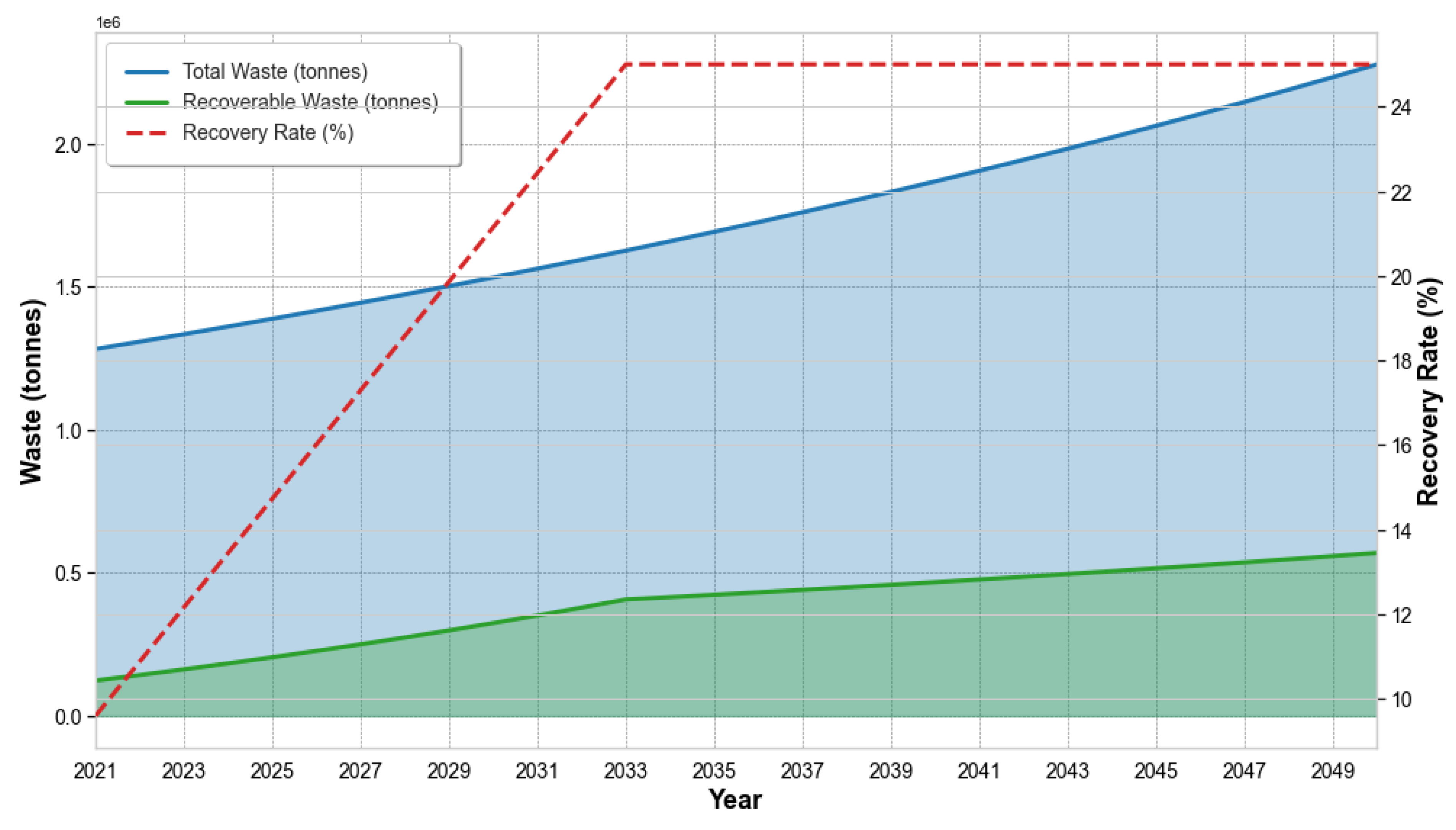
Figure 2.
Projected Waste Composition in San José for the Years 2021, 2030, and 2050. Caption: The figure shows the waste composition in San José, with significant changes projected for 2030 and 2050. It highlights a reduction in organic waste and an increase in recyclable materials like paper, cardboard, and plastic, reflecting the impact of ongoing and future waste management initiatives. These changes indicate potential improvements in composting and recycling practices over time.
Figure 2.
Projected Waste Composition in San José for the Years 2021, 2030, and 2050. Caption: The figure shows the waste composition in San José, with significant changes projected for 2030 and 2050. It highlights a reduction in organic waste and an increase in recyclable materials like paper, cardboard, and plastic, reflecting the impact of ongoing and future waste management initiatives. These changes indicate potential improvements in composting and recycling practices over time.
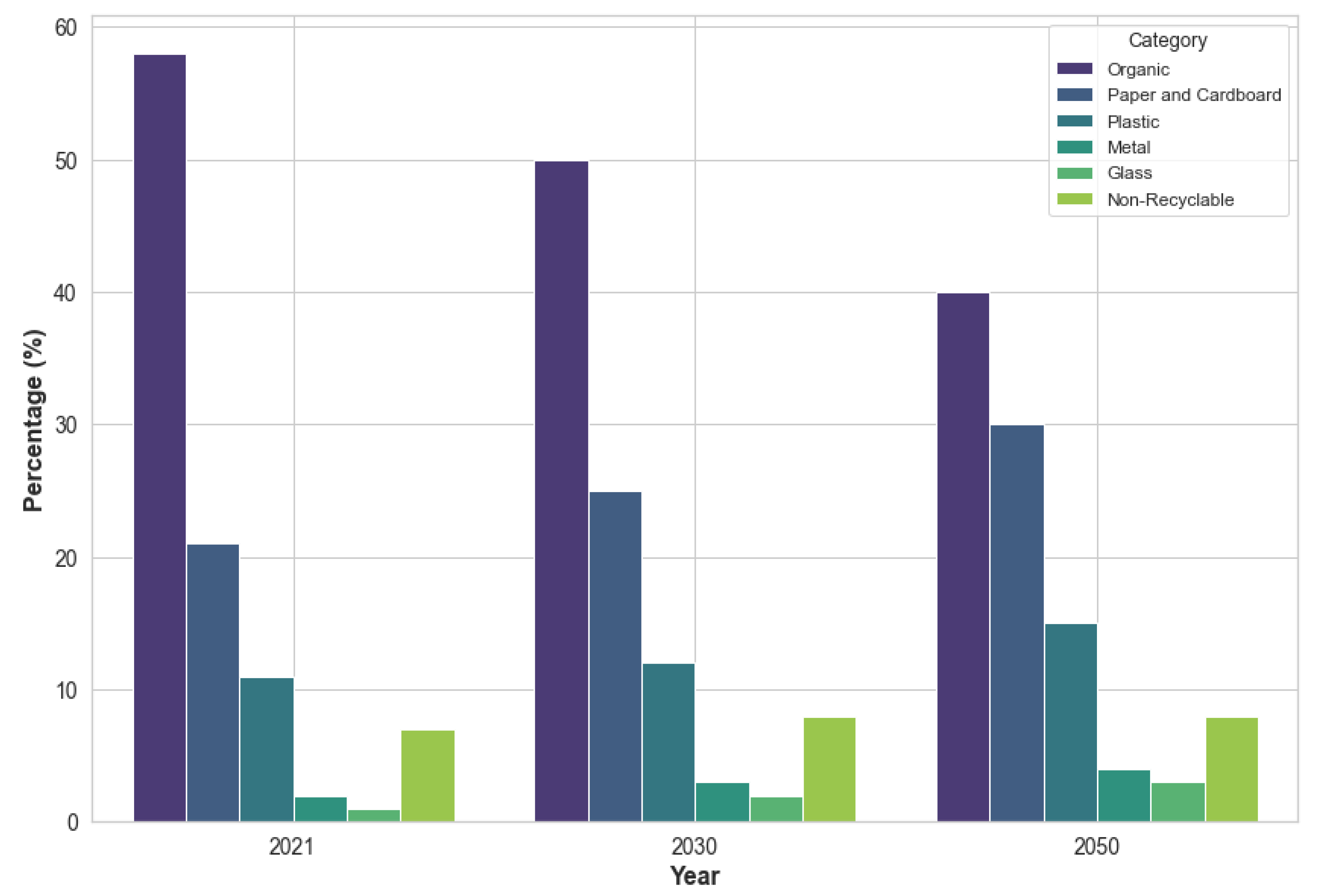
Figure 3.
Satellite imagery of major landfill sites in Costa Rica: (a) La Carpio Landfill, (b) Aserrí Landfill, and (c) Los Pinos Landfill. The Los Pinos landfill was officially closed in January 2024 due to reaching full capacity and structural failures.
Figure 3.
Satellite imagery of major landfill sites in Costa Rica: (a) La Carpio Landfill, (b) Aserrí Landfill, and (c) Los Pinos Landfill. The Los Pinos landfill was officially closed in January 2024 due to reaching full capacity and structural failures.
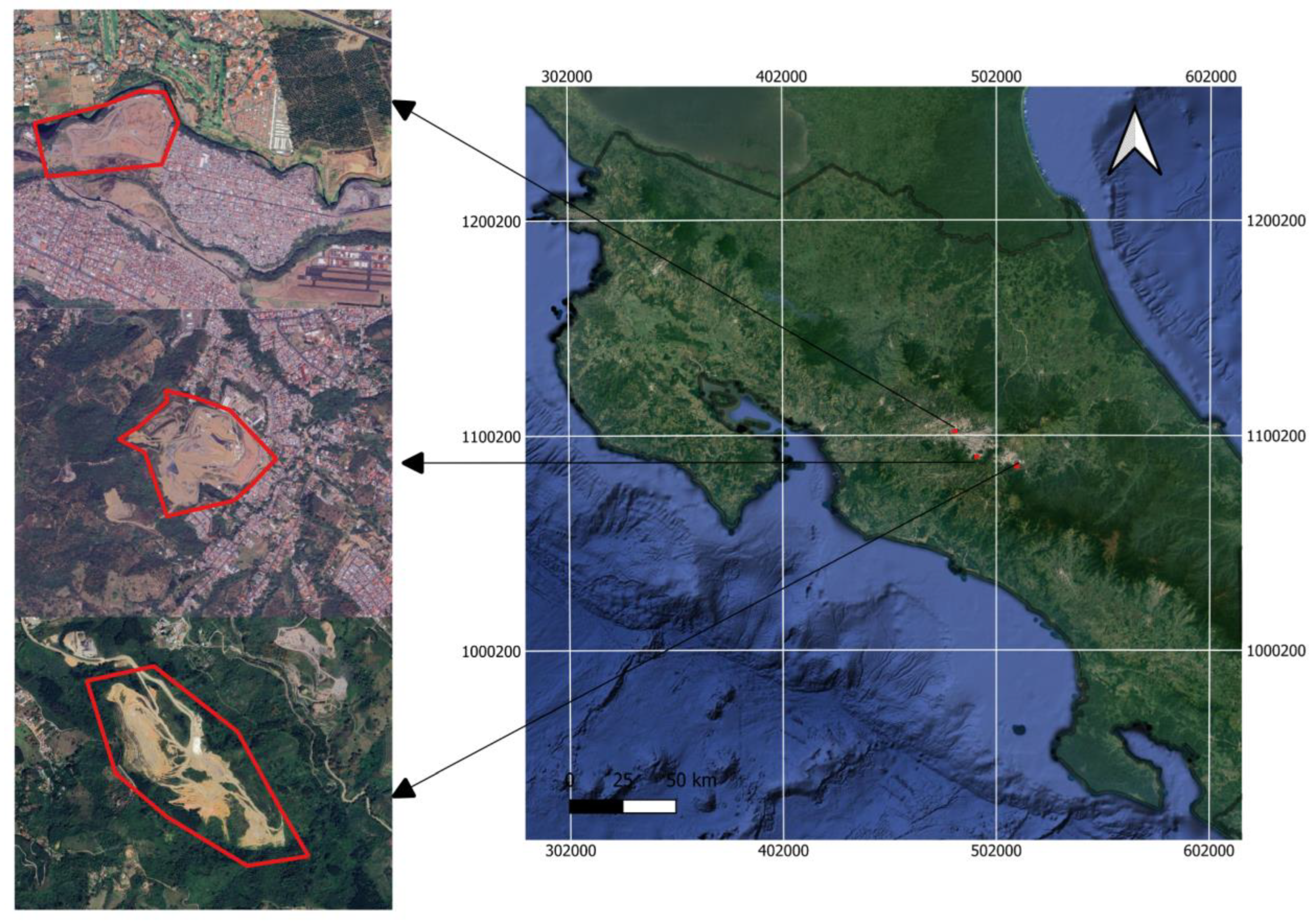
Figure 4.
Number of laboratories performing waste minimization practices and annual percentage variation (2015-2050). Caption: The figure illustrates the trends in the number of laboratories performing six and five waste minimization practices from 2015 to 2050, as well as the annual percentage variation in these practices. Notably, while the overall adoption of these practices has increased, Figure 4d shows that the percentage variation for some practices, such as computer simulation (CS) and chemical treatment (CT), has slowed, indicating potential barriers to wider implementation. Overall, the figure highlights the effectiveness of current strategies and the importance of continued focus on improving waste management practices across the country.
Figure 4.
Number of laboratories performing waste minimization practices and annual percentage variation (2015-2050). Caption: The figure illustrates the trends in the number of laboratories performing six and five waste minimization practices from 2015 to 2050, as well as the annual percentage variation in these practices. Notably, while the overall adoption of these practices has increased, Figure 4d shows that the percentage variation for some practices, such as computer simulation (CS) and chemical treatment (CT), has slowed, indicating potential barriers to wider implementation. Overall, the figure highlights the effectiveness of current strategies and the importance of continued focus on improving waste management practices across the country.
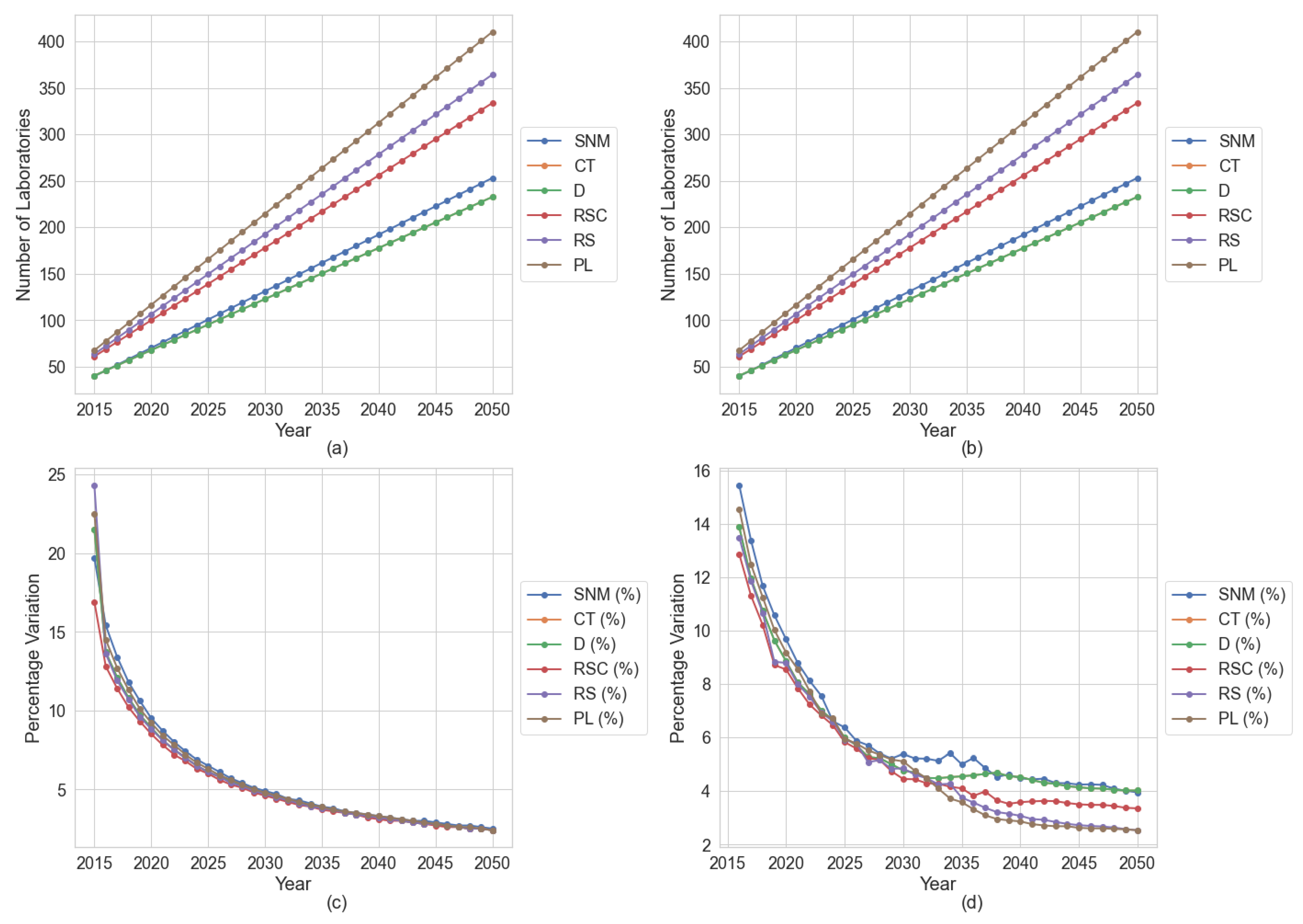
Figure 5.
Projected CO2e Emissions from Sanitary Landfills and Recycling Activities in Costa Rica (2010-2050).Caption:(a) Sanitary Landfills Forecast: Forecast of CO2e emissions from sanitary landfills in Costa Rica from 2010 to 2050. The blue line represents the actual data from 2010 to 2024, the red dashed line indicates the linear regression forecast, and the green dashed line indicates the ARIMA forecast. The green shaded area represents the 95% confidence interval for the ARIMA forecast.(b) Recycling Forecast: Forecast of CO2e emissions reduction due to recycling activities in Costa Rica from 2010 to 2050. The purple line represents the actual data from 2010 to 2030, the orange dashed line indicates the linear regression forecast, and the brown dashed line indicates the ARIMA forecast. The brown shaded area represents the 95% confidence interval for the ARIMA forecast. These forecasts provide insights into the future impact of waste management practices on greenhouse gas emissions in Costa Rica.
Figure 5.
Projected CO2e Emissions from Sanitary Landfills and Recycling Activities in Costa Rica (2010-2050).Caption:(a) Sanitary Landfills Forecast: Forecast of CO2e emissions from sanitary landfills in Costa Rica from 2010 to 2050. The blue line represents the actual data from 2010 to 2024, the red dashed line indicates the linear regression forecast, and the green dashed line indicates the ARIMA forecast. The green shaded area represents the 95% confidence interval for the ARIMA forecast.(b) Recycling Forecast: Forecast of CO2e emissions reduction due to recycling activities in Costa Rica from 2010 to 2050. The purple line represents the actual data from 2010 to 2030, the orange dashed line indicates the linear regression forecast, and the brown dashed line indicates the ARIMA forecast. The brown shaded area represents the 95% confidence interval for the ARIMA forecast. These forecasts provide insights into the future impact of waste management practices on greenhouse gas emissions in Costa Rica.
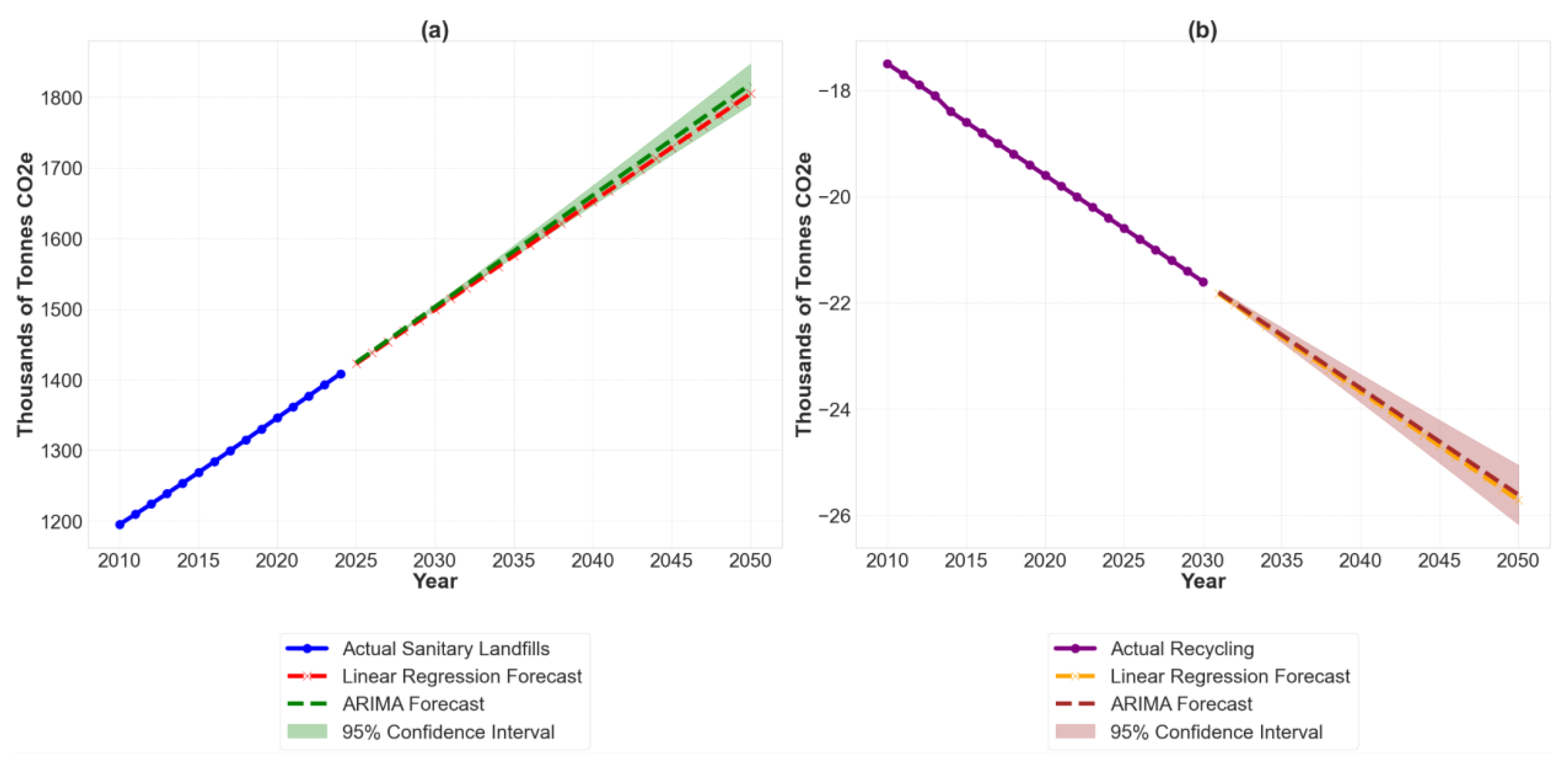
Table 1.
Government Initiatives and Goals.
| Initiative | Goal | Target Year | Reference |
| Environmental Health Route Policy | Increase recycling rate to 25% | 2033 | [20] |
| Environmental Health Route Policy | Ensure regular garbage collection in 34% of the territory | 2023 | [20] |
| Environmental Health Route Policy | Reduce per capita waste generation by 10% | 2025 | [20] |
| National Circular Economy Strategy | Promote circular economy practices | Ongoing | [21,22] |
| Law No. 9786 (Ley para Combatir la Contaminación por Plástico y Proteger el Ambiente) | Drastically reduce single-use plastic usage and promote sustainable alternatives | 2019 | [8] |
Table 3.
Global Recycling Rates.
| Region/Country | Recycling Rate (%) | Key Contributing Factors | References |
| European Union | 46% (2020) | Varies across member states; strong policies and infrastructure | [41] |
| Germany | 69.3% (2024) | Stringent waste separation, strong regulations | [42] |
| United States | 21% (2024) | State-level variations, mixed public participation | [43] |
| Japan | 20% (2023) | Meticulous waste sorting, but lower recycling infrastructure | [44] |
| Brazil | 4% (2024) | Driven by informal sector, lack of formal infrastructure | [45] |
| South Korea | 69% (2023) | Public involvement, advanced waste sorting systems | [46] |
| Sweden | 50% (2024) | High integration of Waste-to-Energy (WtE) technologies | [47] |
| Costa Rica | 9.6% | High landfill dependency, minimal recycling infrastructure | [17] |
Table 4.
Factors Influencing Recycling Rates.
| Factor | Impact | Examples | References | Potential Strategies for Costa Rica | Rationale | Projected Impact |
| Legislation and Policy | Stringent regulations, such as mandatory recycling quotas and financial penalties for non-compliance, lead to higher recycling rates. | Germany (Pfand system), EU (Green Dot system) | [41,42] | Implement mandatory recycling quotas, strengthen enforcement of waste separation laws, and develop a deposit return system for beverage containers. This could drive higher recycling rates and accountability, similar to the success seen in Germany. | Costa Rica should adopt a more robust approach to enforcing its existing waste separation laws, as seen in Germany, to increase accountability and drive higher recycling rates. | Could lead to a 10% increase in recycling rates within two years. |
| Public Awareness | High public involvement and education campaigns significantly increase recycling participation. | Germany, Japan | [42,44] | Launch public education campaigns, including school programs, community events, and media outreach, to raise awareness about recycling and waste reduction. This could lead to a significant increase in public participation in recycling programs, especially in rural and underserved areas. | Raising public awareness is essential for increasing participation in recycling programs, especially in rural and under-served areas of Costa Rica. | Increased awareness could lead to a 10% increase in recycling participation in urban areas. |
| Infrastructure and Technology | Advanced recycling facilities and systems enhance the capacity to process and recycle materials efficiently. | Germany, South Korea, Sweden | [42,46,47] | Invest in modern Material Recovery Facilities (MRFs), particularly in urban and high-waste-generating areas, and explore advanced sorting technologies. This strategy could dramatically improve recycling efficiency and address Costa Rica's infrastructure deficiencies. | Investing in infrastructure, especially in urban centers, can improve the efficiency of recycling and help address Costa Rica's infrastructure deficiencies. | Could increase recycling efficiency by 20% within five years. |
| Economic Incentives | Financial incentives, such as deposit return schemes and tax breaks, boost recycling efforts. | US (state programs), EU (deposit return schemes) | [41,43] | Introduce tax breaks for companies engaged in recycling and explore the potential of deposit return schemes to incentivize recycling. This approach could make recycling more attractive to businesses and consumers, increasing participation rates. | Implementing economic incentives will make recycling more attractive to businesses and consumers, driving higher participation rates. | Could increase recycling participation by 15% within three years. |
| Cultural Norms | Strong cultural norms around waste reduction contribute to higher participation in recycling. | Japan, South Korea | [44,46] | Promote cultural shifts towards sustainability through community-driven initiatives and public recognition of recycling efforts. This could help normalize sustainable practices and embed recycling in the daily routines of Costa Ricans. | Cultivating a recycling culture in Costa Rica will require community involvement and the normalization of sustainable practices. | Could lead to a 5% increase in recycling rates within five years. |
| Market for Recycled Materials | A robust market for recycled materials provides economic value and incentivizes recycling activities. | EU, United States | [41,43] | Develop markets for recycled materials, including partnerships with businesses to create demand for recycled products. Building a strong market for recycled materials could provide economic incentives and reduce waste sent to landfills. | Building a market for recycled materials in Costa Rica can provide economic incentives and reduce waste sent to landfills. | Could reduce waste sent to landfills by 10% within five years. |
Disclaimer/Publisher’s Note: The statements, opinions and data contained in all publications are solely those of the individual author(s) and contributor(s) and not of MDPI and/or the editor(s). MDPI and/or the editor(s) disclaim responsibility for any injury to people or property resulting from any ideas, methods, instructions or products referred to in the content. |
© 2024 by the authors. Licensee MDPI, Basel, Switzerland. This article is an open access article distributed under the terms and conditions of the Creative Commons Attribution (CC BY) license (http://creativecommons.org/licenses/by/4.0/).
Copyright: This open access article is published under a Creative Commons CC BY 4.0 license, which permit the free download, distribution, and reuse, provided that the author and preprint are cited in any reuse.


