

Submitted:
02 March 2024
Posted:
05 March 2024
You are already at the latest version
Abstract
The consistent and continuous growth in the world’s population is creating many challenges for public policymakers in the different life areas, including dealing with the increasing amounts of waste that are generating problems involving air and land pollution and a shortage of land for waste disposal. This study presents the results of public policy on managing municipal waste, as manifested in the quantity and rate of waste collected throughout Israel in recent years and disposed of in the various landfills and in analysis of the political and economic factors affecting this policy. The study combines a quantitative and qualitative approach, where the quantitative study includes analysis of statistical data based on information from the Central Bureau of Statistics, the Ministry of Environmental Protection, the Ministry of Finance, and others, and the qualitative study relies on reading and analyzing primary documents of the different government ministries on Israel’s waste disposal policy and information in the media on this issue. The research findings attest to an increase in the amount of municipal waste dumped in Israel, a merely slight decrease in the rate of landfilling as a proportion of all municipal waste disposal, and a merely slight increase in the rate of municipal waste recycled in recent years. The research conclusions stress the effects of the landfill levy and the Cleanliness Maintenance Fund on one hand, and of the government instability in the Ministry of Environmental Protection, the positivist policy embraced by decision makers in the Ministry of Environmental Protection, and the power struggles between Israel’s different ministries on the other, as the respective economic and political factors affecting Israeli policy on municipal waste management.
Keywords:
Waste Disposal
; Municipal Waste
; Environmental Quality
; Public Policy
; Recycling
1. Introduction
The consistent and continuous growth in the world’s population is creating many challenges for public policymakers in different areas of life, such as housing (Cohen, 2018; Gong & Yao, 2021), transportation (Fowkes et al, 2002), education and higher education (Siniscalco, 2000; Klemencic & Fried, 2007), health (Harper, 2015; Eggleston, 2020), and others. This reality requires decision makers in the different countries to seek and find technological and regulatory solutions for dealing with its various consequences (Gendreau, 2010; James, 2011). Israel too is coping with the ramifications of its population growth, which is more predominant than in other developed countries (Schellekens & Anson, 2017; Weinreb, 2020). The growth in Israel’s population stems from a combination of three main elements:
First, the high migration rate of Jews from other countries to Israel, usually for ideological and Zionist reasons (Eckstein & Weiss, 2004). Second, the rise in life expectancy resulting (among other things) from the development and improvement in the healthcare services (Dwolatzky et al, 2017). Third, the relatively high marriage, childbirth, and fertility rates, for religious, cultural, and traditional reasons (Szajnbrum, 2009; Okun, 2013; Okun, 2017; Weinreb et al, 2018).
These circumstances are challenging Israel’s decision makers, who must find solutions for the increasing traffic congestion (Cohen, 2019; Cohen, 2023), gradually growing shortage of nursing care workers for the elderly population (Cohen, 2020), need to create employment sources for new immigrants (Friedberg, 2001), increasing crowding in hospitals and worsening lack of medical staff (Rosen et al, 2009; Aiken & McHugh, 2014), insufficient supply of residential real estate and the rapid rise in their prices (Cohen, 2022; Cohen, 2023), and need for solutions for the growing quantities of waste that are creating problems related to air and land pollution and a shortage of landfill sites (Sumanthi et al, 2008; Orenstein & Hamburg, 2010).
Waste management is a fairly demanding enterprise in all countries, with significant implications for human health, environmental conservation (Sauve & Van Acker, 2020), and issues of sustainability and circular economics (recycling). Though the sanitary landfill method for final removal of waste has remained the most customary and prevalent method around the world (due to its relatively low cost), since landfilling uses a large amount of land, creates pollution, odor nuisances, and greenhouse gases that cause climate crisis (Lackner & Jospe, 2017; Vaverková, 2019; Fei et al, 2021), many countries in the developed world are seeking to utilize more advanced solutions for waste removal, such as recycling (Farzadkia et al., 2021), biogas (Bong et al., 2017), and composting (Cui et al, 2023).
1.1. Public Policy around the World on Utilizing Landfills
The issue of utilizing landfills, with their various benefits, has been on the agenda for many decades (Perlack & Willis, 1985; Dinan, 1993); with the development of modern systems of waste management, a considerable rise has been observed in the distance waste is transported for landfilling (Salhofer et al, 2007). Therefore, the issue of generating waste and of its disposal has become one of the most conspicuous and challenging topics (Browning et al, 2021) among policymakers in many countries, including European Union countries (Mazzanti & Zoboli, 2008; Burnley, 2001), China (Aslam et al, 2020), India (Nanda & Berruti, 2021), the United States (Kollikkathhara et al, 2009; Mukherjee et al, 2020), South Africa (Mannie & Bowers, 2014), and others (Ahmad et al, 2014).
Nevertheless, in the last three decades there is a rising awareness of topics related to environmental issues, including threats to the environment as a result of the growing quantity of waste. The landfill method has many disadvantages, as in “waste burial” sites the waste remains as is. Thus, there is a danger of ground and water pollution in the vicinity of these sites. Therefore, throughout the western world there is a growing trend of transitioning from the landfill method to a policy of waste incineration (Li et al, 2015) or recycling (Björklund & Finnveden, 2007; Moh & Abd Manaf, 2014). Accordingly, in the European Union, for example, the current policy is to avoid burying waste that has not been pretreated. Furthermore, according to European Union policy the proportion of buried waste shall not exceed 24% of the total waste in each country.
One customary means for reducing use of the landfill method is raising the levies on use of landfills (Turner et al, 1998), with the aim of bringing its cost to a level equaling that of waste recycling and thus encouraging the elements in charge of treating waste to give preference to recycling waste over using landfills. Another advantage of the developing sorting and recycling industry is creating employment opportunities. Hence, a policy of imposing taxes on use of landfills began to emerge around the world (in the late 1980s and during the 1990s), where several countries began to apply a policy that imposes fines for using landfills, with the aim of reducing their use. For instance, in Austria (in 1989), France (in 19921), and Britain (in 1996), laws were introduced, imposing a tax on the use of landfills. The main purpose of this legislation is, as stated, to reduce the rate of landfilling and encourage waste recycling or its utilization to produce energy. At the same time, although a report published in 20062 claimed that the tax policy applied in these countries did not lead to any considerable decline in the extent of landfilling, this policy did help halt the rise in the quantity of buried waste and the relative rate of buried waste within all waste treated.
1.2. Israel’s Landfilling Policy
As mentioned, landfilling is the waste treatment method with the lowest priority, due to its various environmental and economic shortcomings (Ayalon et al, 2006) and its relatively high environmental cost relative to recycling (Lavee & Regev, 2010). Nonetheless, most waste in Israel is still disposed of in landfills (Ben Sasson et al, 2022), unlike the policy applied at present in western countries which encourages, as stated, a transition to recycling. Israel’s waste management policy has, however, gone a long way since landfills were considered the only solution for waste treatment.
In 1984, the Maintenance of Cleanliness Law was enacted. The law imposes fines for disposing of waste in the public domain and determined that regulated landfills would be opened (until then waste was disposed of with no supervision). In 1986 the Cleanliness Maintenance Fund3 was established and fines were imposed to boost waste treatment. In 1989 a national outline plan was approved, determining the planning procedure necessary to open waste disposal sites, setting high standards for establishing waste treatment infrastructure, and helping close sites that did not meet these standards. In 1993 the Israeli government decided to close all non-regulated landfills in Israel4 (Nissim et al, 2005) and enacted several amendments to the national outline plan that included setting the location of central landfills and granting financial aid to local authorities for transporting waste to these sites. From 2001 to 2006, five regional masterplans for treating solid waste were embraced, determining landfilling rules and rules for rehabilitating existing landfills (Rosen-Zvi, 2007).
In 2006, a masterplan was approved in Israel for treating solid waste. The plan determined policy for integrated waste treatment (as in other OECD countries) and defined new aims for landfilling and recycling in Israel. In 2007, a landfill levy came into effect. The levy was intended to reflect the real price of landfilling and to allow fair competition for advanced treatment methods such as recycling and producing energy from waste (Lavee & Regev, 2009). With the aim of significantly reducing the amount of waste disposed of in landfills, in 2009 the Ministry of Environmental Protection led a recycling revolution that included a plan for separating waste at source, funding and establishing recycling facilities, and educating the population to use designated waste containers for recycling household waste. In 2012, regional outline plans were publicized for end facilities to process mixed waste. These plans served as a planning tool for the local authorities and for private companies that sought to establish high-grade landfill sites. In 2018, the Strategic Plan for the Treatment of Waste by 2030 was approved. The plan is expected to make the waste market more efficient, reduce landfilling, increase the rate of recycling, and reduce pollution and environmental risks. And in 2020 the Ministry for Environmental Protection publicized a national strategy paper on sustainable waste.5
At present (2023), fourteen regulated landfill sites are operating in Israel, some of which are limited in the volume of daily waste that they can absorb and in the quantity of daily waste: the division is between small sites (up to about 500 tons a day), medium-sized sites (500-1,500 tons a day), and large sites (more than 1,500 tons a day). In addition, nine of the fourteen regulated landfill sites are also aimed at treating and rehabilitating waste. Most of the landfills are in peripheral areas of the country, namely, in northern or southern Israel.
While previous studies examined Israel’s public policy for treating waste and its different challenges (Daskal et al, 2018) or the current and anticipated costs (Lavee & Nardiya, 2013), the current study seeks to present the actual results of the municipal waste treatment policy (for household and commercial waste), as manifested in the quantity and rate of waste collected in local authorities in Israel and disposed of in the various landfills in recent years, and to analyze the political and economic factors affecting this policy. These factors create incentives for continued implementation of the landfill policy, as well as constituting barriers to relinquishing the landfill policy and embracing a waste recycling policy.
2. Methodology
This study will combine two approaches: the quantitative and the qualitative. This combination will allow broad observation of the landfilling policy in Israel and will reduce possible bias when using only one of these research methods. Underlying the idea of combining methods is the desire to benefit from the advantages of each of the methods (Tashakkori & Teddlie, 2021). This will allow not only learning about the extent of landfilling in Israel but also understanding the different factors influencing the public policy implemented in this area.
The quantitative part of the study will include analyzing statistical data extracted from the data of the Central Bureau of Statistics, the Ministry of Environmental Protection, the Ministry of Finance, and others. These data will help show the extent of landfilling in Israel and trends of increase or decrease in this regard. On the other hand, they will allow analysis of the economic benefits deriving from this reality for different stakeholders in the central government, local authorities, and business environment.
The qualitative part of the study will be based on reading and analyzing primary documents of the various government ministries related to the landfill policy in Israel and on information in the media on this issue. This, with the aim of reaching a thorough understanding of the economic and political factors that affect the shaping of related public policy and the resultant incentives and barriers to retaining the existing policy or replacing it with another (respectively). These insights will serve as a source of recommendations for focused and effective public policy on the issue of waste treatment, which might lead to a real reduction in the extent of landfilling on one hand and to a rise in the extent of waste recycling on the other.
3. Findings
3.1. The Increase in the Amount of Landfill-Disposed Waste in Israel
One of the essential services that all municipalities must provide their residents is waste disposal from public areas and disposal of household waste, yard waste, and bulky waste from the area under its jurisdiction. Municipal employees or external contractors use designated trucks to remove the waste from garbage containers to a transit point. At the transit point, the waste is sorted and its volume reduced, and from there it is taken to landfills or to recycling facilities. One of the consequences of the consistent growth in Israel’s population (mentioned above) is the increase in (household and commercial) waste produced throughout Israel annually, as evident from Figure 1 below.
Following the increase in the amount of waste produced in Israel, an increase is also evident in the amount of waste sent to the various landfill sites, which rose from a total of more than 4,100 tons in 2015 to 4,700 tons (approximately) in 2021 and 2022. Moreover, the research findings presented in Figure 2 below indicate a merely moderate drop6 in the rate of municipal landfilling as a proportion of all waste produced, constituting as it did some 75.7% of Israel’s total waste in 2021 (nearly double the average annual rate of landfilling in OECD countries, which was only 42%)7. No significant change was evident in this rate from 2018 to 2022, meaning that the amount of waste buried in Israel in these years gradually increased.
Considering this state of affairs, Israel is seeking emergency solutions for expanding its landfill sites, which is generating many economic and environmental problems involving allocating land for landfills, the costs of transportation and of air pollution, pollution of land and water sources, and emission of greenhouse gasses, which are considerably distancing Israel from its climate goals as determined in commitments to the UN8.
3.2. Economic Aspects of the Waste Disposal Policy
Landfilling, as well as recycling, are by nature distinct public acts. They are essential for the proper and healthy existence of a civilized society, actions that should be executed irrespective of their economic benefits. Therefore, municipalities are expected to find land that can be used for landfills, similar to other public usages for which it is responsible. Since this activity depends at present on the economic viability of private landfill sites, however, this service is considered a market failure (a public product), which the municipality is required to provide to the public at its expense despite the high financial costs involved.
3.2.1. Waste Disposal Costs
The landfilling policy has, as stated, many costs. These include the landfill levy, transportation costs, and entrance fees to the different landfill sites, as follows:
3.2.1.1. Landfill Levy
The Maintenance of Cleanliness Law determines that operators of waste disposal sites shall pay a landfill levy to a designated fund called the Cleanliness Maintenance Fund. The main purpose of the money accumulated in the fund is to pay for processes of developing, establishing, and increasing the efficiency of alternative means that can replace landfilling and are less environmentally harmful than landfills. The purpose of the levy is to reflect the true price of landfilling, including the costs of land, air pollution, groundwater pollution, etc. In this way, the economic viability of this method will be reduced versus environmentally preferable treatment methods, giving a competitive edge to advanced treatment methods such as recycling and waste-to-energy solutions. The levy is paid by the organ responsible for waste disposal and is not supposed to have any direct impact on the behavior of citizens and households. The landfill levy is paid into the Cleanliness Maintenance Fund, which is managed by the Ministry of Environmental Protection. The money is paid by the municipalities to the waste collection sites and part of it is transferred to the fund by operators of the waste disposal sites9.
The research findings indicate that although Israel’s landfill levy did not rise considerably from 2015 to 2022, but this tariff did increase gradually at a total rate of more than 1,000% from 2007, when the policy of taxing landfilling commenced, to 202210, as shown in Figure 3 below. Nonetheless, the gradual increase in the landfill levy tariff over the years led to a merely moderate decline in the rate of municipal landfilling in Israel, which remained nearly double the average rate in OECD countries, as stated.
3.2.1.2. Landfill Entrance Fees and Waste Transportation Costs
Landfills in Israel are owned by municipalities, conurbations, and private companies. Some private companies also own subsidiaries that operate other parts of the waste management chain (such as transit points and waste disposal contractors for transporting the waste to areas outside the town). In addition to the landfill levy, landfill operators also charge an entrance fee for operating the sites, for the service, and for the treatment they provide. To reduce costs, municipalities prefer to transport the waste for disposal to the site nearest them. Municipalities located in the vicinity of landfill sites send their garbage trucks directly to the site, while those more distant from these sites transport the waste to transit points.
The State Comptroller’s report from 2022, which addressed this issue,11 raised several problems with which municipalities must contend in the context of the various landfill sites. These problems include entrance fees that are not uniform for all clients12, the refusal of landfill sites to accept waste due to the shortage of land for this purpose, and limitations related to activity hours at the sites. As a result of these limitations, municipalities are compelled to transport their waste to more distant landfills that charge at times high entrance fees. In these cases, the municipalities must also compensate their waste disposal contractors for higher travel expenses and longer work hours required to provide the service to the municipality at the expense of completing additional rounds, which raises the waste disposal costs of the municipalities. This state of affairs is evidence that Israel’s landfill industry is highly centralized, as manifested in the limited number of those engaged in this field and the low degree of competition between the different landfills (State Comptroller, 2022). Accordingly, the State Comptroller report for 2022 includes a proposal for operating against the centralization in the industry and enhancing supervision of landfilling prices.
Hence, it seems that although the landfilling alternative in Israel involves multiple costs for municipalities (high landfill levies and growing transportation costs) and has considerable faults (a centralized market and nonuniform and unsupervised entrance fees to landfill sites), this alternative is still considered cheaper than other waste management methods. Therefore, so long as dumping is relatively cheap and easily available it will be hard to establish alternative and more advanced waste management facilities in this market.
3.2.2. The Financial Costs Deriving from the Landfilling Policy and the Cleanliness Maintenance Fund
As stated, the landfill levy collected produces money that is accumulated in the Cleanliness Maintenance Fund operated by the Ministry of Environmental Protection. Landfill levy funds are transferred to the landfill levy account at the Cleanliness Maintenance Fund. These funds are utilized first for purposes of development; at the end of each year the balance (up to 35% of the landfill levy funds received that year) can be utilized for other purposes such as developing, establishing, and increasing the efficiency of alternative means that can replace landfilling, which are less harmful to the environment than landfills, and encouraging their use; rehabilitating waste disposal sites; management of asbestos hazards; educational and informative activities aimed at proper environmental management in municipalities classified as belonging to low socioeconomic clusters (1 to 5); treatment of waste hazards; establishing infrastructure for waste management and regular assistance with waste management; and others13. The revenues of the fund from the landfill levy (which are its main source of income14) have increased over the years, as detailed in Figure 4 below.
The data in the figure presented above show that from 200815 to 2022 the revenues of the fund from the landfill levy rose by 670%(!); these data primarily reflect the rise in the landfill levy tariff, side by side with the moderate decline in waste burial rates. Moreover, the figure attests to revenues of more than 500 million shekels annually (from 2017 and henceforth), transferred to the Cleanliness Maintenance Fund from landfill levy funds collected. As a result, over the years the fund amassed billions of shekels that were to be used, as stated, for developing, establishing, and advancing the efficiency of alternative means to replace landfilling.
The research findings (based on the State Comptroller’s report for 2022) show that the large amounts accumulated in the account of the Cleanliness Maintenance Fund, of which one of the main goals is to act to reduce landfill rates in Israel and encourage the use of alternative methods of waste management, were utilized only partially16, despite the constant rise in the fund’s revenues and the consistent increase in the excess funds amassed over the years.
The large extent of landfilling in Israel and the partial utilization of the fund’s money indicates multiple faults in the fund’s functioning, manifested in its insufficient activity towards achieving its defined aims, investment of the money in projects that are ineffective for attaining the goals and are not included in the ministry’s strategic plan for municipal waste management17, the failure to remove barriers to executing projects budgeted by it, which do not allow its effective utilization to realize its goals in this area, as well as the ineffectiveness of the landfill levy mechanism for reducing landfilling.
Moreover, the State Comptroller’s report determined that aside from the limited utilization of the fund’s money it also does not monitor the effectiveness of its operations, rather seeks short-term solutions manifested in expansion of existing landfills, which is contributing to a rise in Israel’s landfilling rates, in complete contrast to the fund’s original aim. Furthermore, the State Comptroller’s report shows that money accumulated in the fund from the landfill levy is transferred to the state coffers18, such that in practice the fund serves as another budgetary source for funding government operations, inconsistent with its designation and with the Law for Maintenance of Cleanliness (State Comptroller, 2022).
In response to the State Comptroller’s report, the fund’s conduct was strongly criticized also by various environmental organizations and municipal leaders. A conspicuous example is the response of the environmental organization “Adam Teva V’Din”, which claimed that the conduct of the Cleanliness Fund over the years, as evident from the State Comptroller’s report, amounts to grave negligence. The organization called upon the Ministry of Environmental Protection to complete the process of changing the organizational structure of the fund’s management and to present a plan ensuring that the fund’s money is allocated in such a way that by 2030 the rate of landfilling in Israel will drop to 20% (as determined in the strategic plan of the Ministry of Environmental Protection). Moreover, there was a demand for the Cleanliness Fund to arrange for the prompt return of the billions of shekels loaned to the state treasury together with the appropriate returns, as customary.19
Another example of criticism leveled against the fund is the letter sent by the Federation of Local Authorities in Israel20 to Idit Silman, Minister of Environmental Protection, in early 2023, claiming that raising the landfill levy is unjustified, as instead of utilizing these funds to build suitable waste management facilities that could indeed lead to a reduction in the amount of buried waste and as a result to a reduction of the levy, they are transferred to the Cleanliness Maintenance Fund and used for “various different purposes”, including loans to the state coffers21.
Therefore, it seems that the landfill levy imposed on the municipalities and the money accumulated in the Cleanliness Maintenance Fund constitute an economic incentive for the Ministry of Environmental Protection and the Ministry of Finance to retain the landfill policy instead of serving as an efficient budgetary source for promoting and developing alternatives for managing municipal and industrial waste in favor of reducing the rate of landfilling.
3.2.3. The Barriers to Transitioning from a Landfill Policy to an Alternative Policy
As stated, there are many alternatives to landfilling, such as reducing the amount of waste produced, reuse, recycling dry materials (paper, plastic, glass, etc.), producing organic waste, and even producing energy from garbage. All are environmentally preferable to the landfill alternative, but also more expensive and require cooperation between multiple elements (developers, households, municipalities, recycling plants, and others). Developers are not eager to establish waste treatment facilities despite the generous grants offered for this purpose, as they are unsure that the municipalities will provide a regular supply of waste. Then again, the municipalities are unwilling to make a commitment to send their waste to the prospective facilities as landfills are still cheaper than the other methods of waste treatment. In addition, many mayors (mainly in central Israel) are doing everything they can to prevent the establishment of waste treatment facilities in their jurisdiction for concern of residents’ reaction (including submitting petitions to the courts and repeat objections to the planning institutions) and it is much easier for them to transport the waste to peripheral areas that have become the “national garbage dump”.
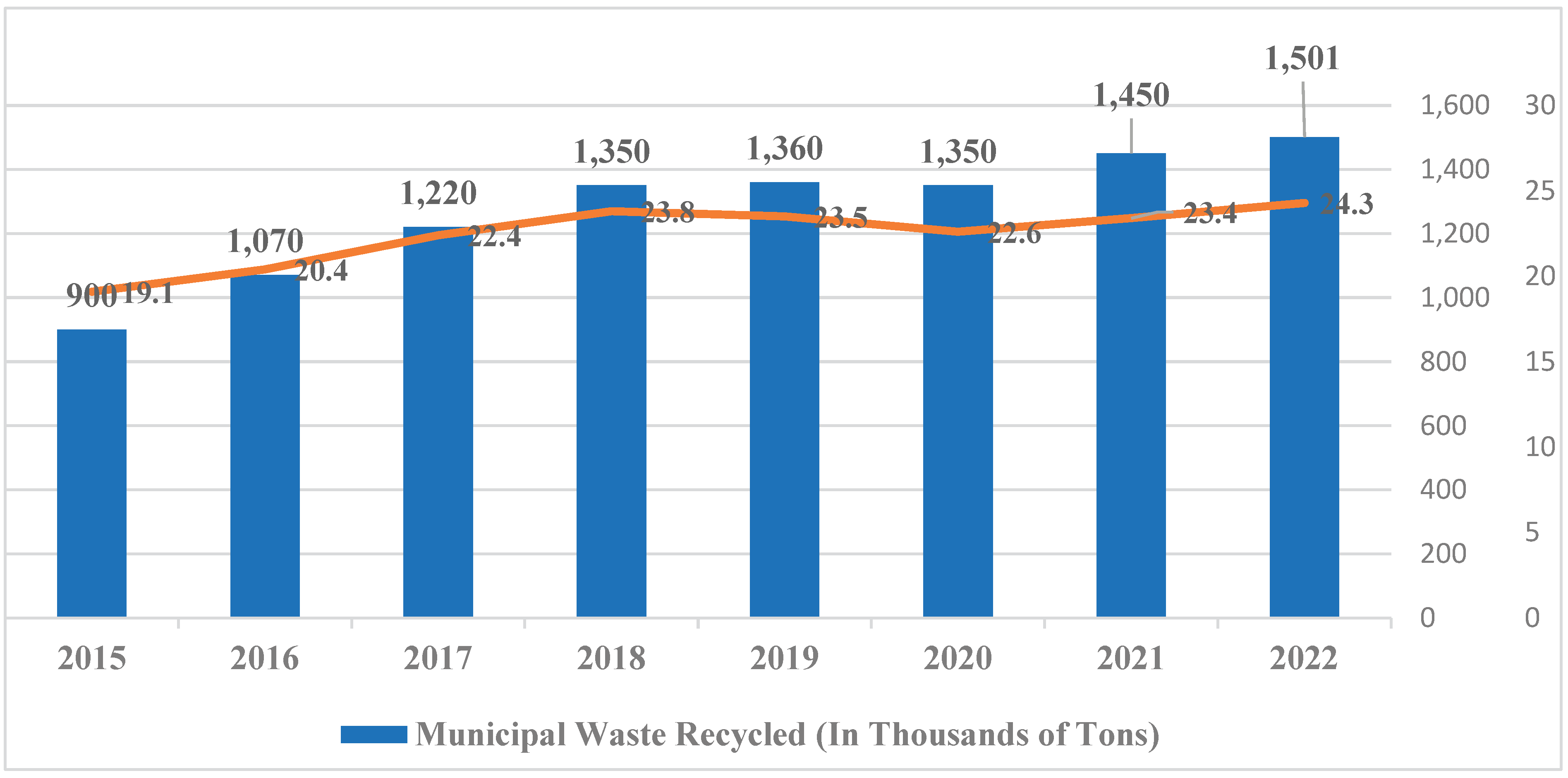
Hence, as a result of the mutual dependency of the various factors in the waste treatment chain, the high costs of transition, the political and economic interests of the mayors, and the high degree of uncertainty concerning the future success of innovative waste treatment facilities as a consequence of the volatile demand for recycled materials which makes it hard to make long-term plans (Lavee, 2007), a critical barrier has been formed over many years, delaying the transition from landfilling to recycling. This barrier exists, as stated, concurrent with the budgetary incentive deriving from continued application of the landfilling policy, which generates financial returns for both the Ministry of Environmental Protection and the state coffers22. Therefore, there is no real incentive for promoting the waste recycling alternative in Israel and, as a result, the total amount of municipal waste collected throughout Israel and sent for recycling has not increased significantly over the years, as shown in Figure 5 below.
Despite attempts by the Ministry of Environmental Protection to promote a strategy for treating municipal waste, reduce the rate of landfill use, and raise the rate of recycling, the data in the figure above show that the rate of waste recycling of all municipal waste collected has only slightly increased. Indeed, from 2015 to 2018 there was a gradual increase in the rate of recycling (from 19% in 2015 to 23.8% in 2018), but from that year until 2022 no improvement was evident in this measure, which remained at 24% (approximately). Moreover, it is evident that from 2019 to 2020 the recycling of municipal waste even declined.23
3.3. Political Aspects of Israel’s Waste Disposal Policy
3.3.1. Deficient Functioning of the Ministry of Environmental Protection
Israel’s various environmental laws define the regulator’s obligations concerning public transparency. To update the public about the different laws implemented, the Ministry of Environmental Protection must report (usually once a year) to the Knesset’s Interior and Environmental Protection Committee on its progress in implementing the laws and on how this benefits the public. In this way, the Interior Committee can supervise implementation of the laws and find out whether they are effective. Nonetheless, the Ministry of Environmental Protection has been strongly criticized by the Knesset Interior Committee for systematically violating its reporting obligations. In its meeting in February 2022, the committee determined that the Ministry of Environmental Protection has not been fulfilling its duty to report on the implementation of laws legislated by the Knesset or has been doing so at a considerable delay for years. In addition, at the same meeting it was also claimed that the ministry is not meeting the goals of the strategic plan for waste treatment declared in 2018. This claim is associated with the minimal contribution of the landfill levy to the drop in landfilling.
As stated, the purpose of the landfill levy imposed on the municipalities for landfilling is to create a financial incentive that will encourage the municipalities to promote and develop alternatives to use of landfills, such as reuse, recycling, and recovery for purposes of energy, and to provide a funding source to promote these alternatives. Since the policy does not compel the municipalities to reduce their rate of landfilling utilized or to meet any goals (such as reducing the rate of landfilling and increasing the rate of waste recycling), the municipalities have continued to implement the landfilling policy despite its many environmental shortcomings. Furthermore, as stated, the State Comptroller strongly criticized the heads of the Ministry of Environmental Protection concerning the inefficient use of money accumulated in the Cleanliness Maintenance Fund, which includes high budgetary commitments to aims that are not part of the strategic plan.
3.3.2. Government Instability in the Ministry of Environmental Protection
Previous studies examined the political instability in Israel in recent decades. Most of these focused on examining its impact on various life areas (Gina, Catrinel & Ştefania, 2017; Fielding, 2003; Hermann, 2012) while others examined its impact on government performance (Cohen, 2016). These studies indicated that the most prominent negative effect of the political instability in Israel is the resultant impaired management capacity of the government. Indeed, although very large long-term projects have been planned in Israel in various fields (transportation, energy, environmental issues, and others), their actual implementation has encountered considerable problems as a result of bureaucratic faults on one hand and the government instability on the other, which are restricting leaders’ execution capacity (Nachmias & Arbel-Ganz, 2005).
Accordingly, it can be said that an efficient policy for waste management in general and for the treatment of municipal waste in particular requires planning long-term public policy and collaboration between the various government ministries, between the national government and the local government, between the local government and private developers, as well as information, education, and changing citizens’ behavior patterns. All these necessitate time, planning, and cognitive efforts, as well as true intentions by decision makers to promote wide public interests, irrespective of who will receive the credit for the future success of the policy. However, the instability of Israel’s central government, with the consequent frequent elections24, has resulted in constant minister turnover in the different government ministries in general and in the Ministry of Environmental Protection in particular, where eight different ministers have held the position from 2013 to 2023(!)25, preventing any planning of long-term policy.
3.3.3. Development of a Positivist Worldview in the Government Ministries in General and in the Ministry of Environmental Protection in Particular
The government instability in Israel in general and in the different government ministries in particular might facilitate positivist thinking (Çelik & Çorbacıoğlu, 2008) among decision makers, preventing them from promoting long-term policy for concern that the products of this policy will be evident only when they are no longer in their current position and they will therefore not enjoy the political and electoral gains. These circumstances impress upon Israeli politicians that their time in government is short and limited and therefore they must do whatever they can to utilize their temporary position in power to obtain immediate benefits for their constituents, so that they will be able to prove these achievements to them in the next elections. Hence, the state budget in general and the budgets of the different government ministries in particular become a political more than an economic tool, whereby public policy often serves only to provide short-term relief instead of planning long-term strategies for achieving permanent solutions (Goldberg, 2005). Therefore, it is no surprise that the money in the Ministry of Environmental Protection’s Cleanliness Maintenance Fund has constituted the focus of political struggles between various ministers and government ministries who wished to get their hands on it to promote sectorial interests.
These struggles were evident in a discussion held in a government meeting on February 19, 2023, on a “draft resolution”26 to transfer the fund to the joint management of the Ministry of Environmental Protection and the Ministry of the Interior, controlled by the sectorial Shas party, further to the coalition agreements with this party. This intention met with the strong objection of the Ministry of Environmental Protection, for concern that it might lead to a budget allocation policy that would not serve the goal of promoting policy for waste management27, as well as of the “Adam Tev V’Din” environmental organization, which expressed a concern that it would lead to Israel’s transformation into “one big garbage dump”28. Ultimately, the Ministry of the Interior relinquished the idea of receiving an authoritative position within the management of the Cleanliness Fund and the fund remained under the exclusive authority of the Ministry of Environmental Protection.
Thus, two political aspects can be identified regarding the policy of the Ministry of Environmental Protection concerning municipal waste disposal: One is that the government instability that results in high minister turnover reduces (or even eliminates) the incentive of the minister to promote long-term policy steps with the aim of achieving a permanent solution to the issue of treating municipal waste. The second is that prioritizing narrow sectorial political returns at the expense of the wide public interest gives the Ministry of Environmental Protection an incentive to accumulate money in the Cleanliness Maintenance Fund and a desire to control it for the purpose of obtaining political power on one hand and ways of promoting sectorial policy on the other. The incentive for accumulating money in the Cleanliness Maintenance Fund is in complete contradiction of the fund’s original designation, which as stated was not formed with the purpose of enriching the coffers of the Ministry of Environmental Protection but rather to give the municipalities an incentive to reduce the amount of waste sent to landfills. Hence, effective policy would have led to a drop in the amount of money accumulating in the Cleanliness Maintenance Fund, meaning a reduction in the municipal waste sent to landfills.
4. Conclusions
This study presented the public policy in Israel on treating municipal waste, its various results evident in the waste landfill and recycling rates, and the economic and political aspects that affect the shaping of this policy. The study was based on different documents and reports related to shaping the policy on one hand and on examination and criticism of the policy on the other. Data on landfilling and recycling in recent years was presented, extracted from the website of the Central Bureau of Statistics and the Ministry of Environmental Protection. Analysis of the information and data presented in the study led to the following detailed conclusions:
4.1. An Increase in the Rate of Municipal Use of Landfilling
The declared goals of the Ministry of Environmental Protection for reducing the rate of landfilling, as presented in 2018 in the strategic plan for the treatment of waste by 2030, have clearly yet to be attained. The rate of municipal landfilling has remained high (more than 75% of all municipal waste annually) and no real reduction is evident over the years despite the landfill levy policy applied in Israel ever since 2007. Moreover, since the amount of municipal waste collected in Israel is increasing annually (Figure 1), the relatively stable landfilling rates over the years (as a percentage of all municipal waste collected each year) mean in fact an increase in the total amount of waste dumped, in contrast to the goals of the Ministry of Environmental Protection’s strategic plan.
4.2. Low Rate of Waste Recycling as a Proportion of All Municipal Waste
The main alternative to the policy of dumping municipal waste is, as stated, recycling waste. The research findings presented in Figure 5 show that the total amount of municipal waste recycled and the rate of recycling as a proportion of all municipal waste collected in Israel indeed rose slightly from 2015 to 201829. At the same time, from that year until 2021, despite the continued increase in the total amount of waste sent for recycling, the relative rate of the waste recycled as a proportion of the total amount of municipal waste collected remained completely stable (at about 24%), indicating that the goals of the strategic plan were not met.
4.3. Economic Factors Affecting the Public Policy for Treating Municipal Waste
The research findings attest to two prominent economic factors influencing the public policy implemented in Israel concerning treating municipal waste, as follows:
4.3.1. The Landfill Levy
The landfill levy, paid by the municipalities to waste intake sites and transferred in part to the Cleanliness Maintenance Fund by the operators of the waste disposal sites, constitutes a conspicuous factor affecting the public policy implemented in the context of treating municipal waste in Israel. The research findings presented in Figure 3 show that the gradual rise in the landfill levy tariff over the years did not lead to a reduction of municipal landfilling. This is because despite the many costs related to the landfill alternative (landfill levy, entrance fees to the landfills, and the cost of transporting the waste) this alternative is still considered cheaper than other waste treatment methods.
Therefore, under circumstances where the central government does not obligate the local government to implement a specific policy considered better for the wide public interest, municipal leaders will grant the economic consideration added and decisive value in their decisions and will tend to choose the economically preferable alternative despite the associated social and environmental costs. Namely, despite the great public significance of embracing more advanced treatment methods that are less environmentally harmful, economic considerations have a decisive effect on the judgment of municipal leaders and have the effect of causing them to choose the landfill alternative that is preferable for them. Thus, so long as landfilling is relatively cheap and readily available and so long as the choice of public policy on waste treatment remains up to the local government, it will be very difficult to overcome the many barriers to establishing more advanced alternative facilities for treating municipal waste and to apply the declared policy of the Ministry of Environmental Protection on this issue.
Public policy needed to facilitate meaningful change must provide a response to barriers known to delay the transition from the landfilling policy to a recycling policy, which involve as stated the high costs of the transition, the higher operational price, the uncertainty among municipal leaders concerning the success of this step for all participants, as well as providing a response to the necessary coordination mechanisms between all factors involved in the process of waste recycling. Indeed, the State Comptroller’s report for 2022 called for opening the landfill market to make it less centralized and even suggested supervising prices in order to reduce the cost of landfilling. But the goal should be to reduce the costs of the recycling alternative with the purpose of encouraging the authorities to transition from landfilling to recycling.
4.3.2. The Cleanliness Maintenance Fund
The second economic factor concerns the Cleanliness Maintenance Fund, where the money from the landfill levy accumulates, collected from the municipalities and intended, as stated, for developing, establishing, and increasing the efficiency of alternative means to replace landfilling that are less damaging to the environment than landfills, as well as encouraging their use, etc. The research findings presented in Figure 4 attest that the fund’s revenues from the landfill levy have grown over the years and, as a result, billions of shekels have entered the fund’s coffers. The research findings show that despite the constant rise in the fund’s revenues and the consistent increase in the excess money accumulated over the years, this money was used only partially towards achieving the declared goals of the Ministry of Environmental Protection’s strategic plan.
Similarly, the State Comptroller’s report for 2022 indicated a list of faults in the fund’s functioning and inefficient utilization of the money accumulated in it, as well as the fact that it does not monitor the effectiveness of its operations but rather seeks short-term solutions manifested in the expansion of existing landfills, which contribute to a rise in the rate of landfilling in Israel, in complete contrast to its original goal. Moreover, the report showed that money accumulated in the fund from the landfill levy was transferred to the state coffers, such that the fund served in fact as another budgetary source for covering government operations, unrelated to its designation and not according to the Law on the Maintenance of Cleanliness. Therefore, it seems that the landfill levy imposed on the municipalities and the accumulation of money in the Cleanliness Maintenance Fund constitute an economic incentive for the Ministry of Environmental Protection and the Ministry of Finance to retain the landfill policy instead of an efficient budgetary source for promoting and developing other alternatives to treating municipal and industrial waste in favor of reducing landfilling.
4.4. Political Factors Affecting Public Policy on Treating Municipal Waste
The research findings attest to several political factors affecting public policy implemented in Israel on treating municipal waste, as follows:
4.4.1. Government Instability in the Ministry of Environmental Protection
The research findings indicate an extremely high turnover of ministers in the Ministry of Environmental Protection, deriving from the government instability in Israel in recent years and particularly since 2019. The rapid minister turnover is affecting the ministry’s long-term planning and the promotion of reforms essential for Israeli society in the context of environmental protection in general and treatment of municipal waste in particular. These circumstances motivate decision makers to shape, promote, and implement a short-term policy that involves minimal political conflict, with political returns that they can utilize in the next election campaign.
4.4.2. Embracing a Positivist Policy by Decision Makers in the Ministry of Environmental Protection
Embracing a short-term pattern of thinking by decision makers in the Ministry of Environmental Protection, as a result of the government instability, reflects the characteristics of the positivist public policy guided by the position of the decision maker. Therefore, when the different ministers who headed the Ministry of Environmental Protection in recent years refrained from compelling municipal leaders to apply the ministry’s policy and to reduce the use of landfills for municipal waste despite being cheaper than the other existing alternatives for treating waste (such as recycling), this involved positivist considerations. These considerations are related to the desire of the ministers to avoid conflict with the municipal leaders, which might have negative electoral consequences for them in the future.
Moreover, the research findings indicate that the Cleanliness Fund, which is based on the landfill levy, constitutes a real barrier to rejecting landfilling, as it allows accumulation of large sums of money, used cynically by leaders of the Ministry of Environmental Protection to promote political interests instead of the goals for which it was intended to begin with as defined in the ministry’s strategic plan.
4.4.3. Power and Control Struggles between the Different Government Ministries
The research findings show that the money of the Ministry of Environmental Protection’s Cleanliness Maintenance Fund constitutes a focus of political struggles between different ministers and government ministries who wish to get their hands on the money accumulating in the fund to promote sectorial interests. Despite the failure of ministers in the different government ministries to eat away at the fund’s money and utilize its budgets for the ministries under their charge, it seems that beside the economic value the Cleanliness Fund also has considerable political significance for the Minister of Environmental Protection by virtue of its very existence, as it grants the minister strength and control of large budgetary resources. Therefore, it appears that decision makers in the Ministry of Environmental Protection have a fairly low incentive to promote other alternatives for treating municipal waste that will reduce the use of landfills and thus decelerate the flow of cash to the Cleanliness Maintenance Fund.
Funding
No funding was received for this study.
Conflict of Interest
The authors declare no conflict of interest.
References
- Ahmad, S.Z.; Ahamad, M.S.S.; Yusoff, M.S. Spatial effect of new municipal solid waste landfill siting using different guidelines. Waste Manag. Res. J. Sustain. Circ. Econ. 2013, 32, 24–33. [Google Scholar] [CrossRef]
- Aiken, L.H.; McHugh, M.D. Is nursing shortage in Israel inevitable? Isr. J. Heal. Policy Res. 2014, 3, 1–4. [Google Scholar] [CrossRef]
- Aslam, M.S.; Huang, B.; Cui, L. Review of construction and demolition waste management in China and USA. J. Environ. Manag. 2020, 264, 110445. [Google Scholar] [CrossRef] [PubMed]
- Ayalon, O.; Becker, N.; Shani, E. Economic aspects of the rehabilitation of the Hiriya landfill. Waste Manag. 2006, 26, 1313–1323. [Google Scholar] [CrossRef] [PubMed]
- Ben Sasson, M., Raveh, A., Zlatkin, O., & Domb, A. (2022). Mountains of plastic and greenhouse gases: The challenge of lessening landfilling without emissions. Ecology and Environment Journal, 13(1), 1-17. (Hebrew).
- Björklund, A.E.; Finnveden, G. Life cycle assessment of a national policy proposal – The case of a Swedish waste incineration tax. Waste Manag. 2007, 27, 1046–1058. [Google Scholar] [CrossRef] [PubMed]
- Bong, C.P.C.; Ho, W.S.; Hashim, H.; Lim, J.S.; Ho, C.S.; Tan, W.S.P.; Lee, C.T. Review on the renewable energy and solid waste management policies towards biogas development in Malaysia. Renew. Sustain. Energy Rev. 2017, 70, 988–998. [Google Scholar] [CrossRef]
- Browning, S.; Beymer-Farris, B.; Seay, J.R. Addressing the challenges associated with plastic waste disposal and management in developing countries. Curr. Opin. Chem. Eng. 2021, 32, 100682. [Google Scholar] [CrossRef]
- Burnley, S. The impact of the European landfill directive on waste management in the United Kingdom. Resour. Conserv. Recycl. 2001, 32, 349–358. [Google Scholar] [CrossRef]
- elik, S., & Çorbacıoğlu, S. (2008). Multiple approaches in public policy snalysis: A vritique of positive approach. Sosyal Bilimler Dergisi/Journal of Social Sciences, 32(1).
- Cohen, E. (2016). The nature of Israel’s public policy aimed at curbing the rise in property prices from 2008-2015, as a derivative of the country’s governance structure. Economics & Sociology, 9(2), 73. [CrossRef]
- Cohen, E. The rise in Israel’s real estate prices: Sociodemographic aspects. Isr. Aff. 2018, 24, 108–127. [Google Scholar] [CrossRef]
- Cohen, E. Traffic congestion on Israeli roads: Faulty public policy or preordained? Isr. Aff. 2019, 25, 350–365. [Google Scholar] [CrossRef]
- Cohen, E. Israel’s public policy for long-term care services. Isr. Aff. 2020, 26, 889–911. [Google Scholar] [CrossRef]
- Cohen, E. Regulating demand or supply: Examining Israel’s public policy for reducing housing prices during 2015–2019. Hous. Policy Debate 2022, 32, 533–548. [Google Scholar] [CrossRef]
- Cohen, E. The unregulated private rental sector and the impact on Israeli housing market. J. Policy Model. 2023, 45, 362–376. [Google Scholar] [CrossRef]
- Cohen, E. The increase in the number of vehicles and the shortage of parking in Israel’s urban areas - economic and political factors. Econ. Sociol. 2023, 16, 37–55. [Google Scholar] [CrossRef]
- Cui, D.; Xi, B.; Tan, W. Composting industry under the Chinese municipal solid waste sorting policy: Challenges, opportunities, and directions. Environ. Sci. Pollut. Res. 2023, 30, 19513–19519. [Google Scholar] [CrossRef]
- Daskal, S.; Ayalon, O.; Shechter, M. The state of municipal solid waste management in Israel. Waste Manag. Res. 2018, 36, 527–534. [Google Scholar] [CrossRef] [PubMed]
- Dinan, T.M. Economic efficiency effects of alternative policies for reducing waste disposal. J. Environ. Econ. Manag. 1993, 25, 242–256. [Google Scholar] [CrossRef]
- Dwolatzky, T.; Brodsky, J.; Azaiza, F.; Clarfield, A.M.; Jacobs, J.M.; Litwin, H. Coming of age: Health-care challenges of an ageing population in Israel. Lancet 2017, 389, 2542–2550. [Google Scholar] [CrossRef]
- Eggleston, K. (2020). Demographic and health care challenges. In Fateful decisions, Chapter 6 (pp. 151-179). Stanford University Press.
- Eckstein, Z.; Weiss, Y. On The Wage Growth of Immigrants: Israel, 1990-2000. J. Eur. Econ. Assoc. 2004, 2, 665–695. [Google Scholar] [CrossRef]
- Farzadkia, M.; Mahvi, A.H.; Baghani, A.N.; Sorooshian, A.; Delikhoon, M.; Sheikhi, R.; Ashournejad, Q. Municipal solid waste recycling: Impacts on energy savings and air pollution. J. Air Waste Manag. Assoc. 2021, 71, 737–753. [Google Scholar] [CrossRef]
- Fei, X.; Fang, M.; Wang, Y. Climate change affects land-disposed waste. Nat. Clim. Chang. 2021, 11, 1004–1005. [Google Scholar] [CrossRef]
- Fielding, D. Counting the cost of the Intifada: Consumption, saving and political instability in Israel. Public Choice 2003, 116, 297–312. [Google Scholar] [CrossRef]
- Fowkes, T., May, T., Nash, C., Siu, Y. L., & Rees, P. (2002). Forecasting road traffic growth: Demographic change and alternative policy scenarios. In Transport Policy and the Environment (pp. 50-61). Routledge.
- Friedberg, R.M. The impact of mass migration on the Israeli labor market. Q. J. Econ. 2001, 116, 1373–1408. [Google Scholar] [CrossRef]
- Gendreau, F. (2010). The demographic challenges. Challenges in African Agriculture (p. 9-33).
- Gina, S., Catrinel, D., & Ştefania, A. (2017). The impact of political instability and terrorism on the evolution of tourism in destination Israel. Romanian Economic and Business Review, 12(4), 98-108.
- Goldberg, E. Particularistic considerations and the absence of strategic assessment in the Israeli public administration: The role of the state comptroller. Isr. Aff. 2005, 11, 434–444. [Google Scholar] [CrossRef]
- Gong, Y.; Yao, Y. Demographic changes and the housing market. Reg. Sci. Urban Econ. 2021, 95, 103734. [Google Scholar] [CrossRef]
- Harper, S. (2015). The challenges of twenty-first-century demography. In Challenges of Aging (pp. 17-29). Palgrave Macmillan, London.
- Hermann, T. (2012). Something new under the sun: Public opinion and decision making in Israel. The Institute for National Security Studies (Hrsg.): Strategic Assessment, 14(4), 41-57.
- James, K.S. India’s demographic change: Opportunities and challenges. Science 2011, 333, 576–580. [Google Scholar] [CrossRef] [PubMed]
- Klemencic, M.; Fried, J. Demographic challenges and future of the higher education. Int. High. Educ. 2015. [Google Scholar] [CrossRef]
- Kollikkathara, N.; Feng, H.; Stern, E. A purview of waste management evolution: Special emphasis on USA. Waste Manag. 2009, 29, 974–985. [Google Scholar] [CrossRef]
- Lackner, K. S., & Jospe, C. (2017). Climate change is a waste management problem. Issues in Science and Technology, 33(3), 83-88.
- Lavee, D. Is municipal solid waste recycling economically efficient? Environ. Manag. 2007, 40, 926–943. [Google Scholar] [CrossRef]
- Lavee, D., & Regev, A. (2009). An alternative to landfill tax in Israel. The Economic Quarterly, 56(1), 29-45. (Hebrew).
- Lavee, D.; Regev, U. A proposal for alternative government policy to reduce landfill of household waste in Israel. Isr. Econ. Rev. 2010, 8, 91–110. [Google Scholar]
- Lavee, D.; Nardiya, S. A cost evaluation method for transferring municipalities to solid waste source-separated system. Waste Manag. 2013, 33, 1064–1072. [Google Scholar] [CrossRef]
- Li, Y.; Zhao, X.; Li, Y.; Li, X. Waste incineration industry and development policies in China. Waste Manag. 2015, 46, 234–241. [Google Scholar] [CrossRef]
- Mannie, N., & Bowers, A. (2014). Challenges in determining the correct waste disposal solutions for local municipalities - a South African overview. Civil Engineering= Siviele Ingenieurswese, 2014(9), 17-22. https://hdl.handle.net/10520/EJC161422.
- Mazzanti, M.; Zoboli, R. Waste generation, waste disposal and policy effectiveness: Evidence on decoupling from the European Union. Resour. Conserv. Recycl. 2008, 52, 1221–1234. [Google Scholar] [CrossRef]
- Moh, Y.C.; Manaf, L.A. Overview of household solid waste recycling policy status and challenges in Malaysia. Resour. Conserv. Recycl. 2014, 82, 50–61. [Google Scholar] [CrossRef]
- Mukherjee, C.; Denney, J.; Mbonimpa, E.; Slagley, J.; Bhowmik, R. A review on municipal solid waste-to-energy trends in the USA. Renew. Sustain. Energy Rev. 2019, 119, 109512. [Google Scholar] [CrossRef]
- Nachmias, D.; Arbel-Ganz, O. The crisis of governance: Government instability and the civil service. Isr. Aff. 2005, 11, 281–302. [Google Scholar] [CrossRef]
- Nanda, S.; Berruti, F. Municipal solid waste management and landfilling technologies: A review. Environ. Chem. Lett. 2021, 19, 1433–1456. [Google Scholar] [CrossRef]
- Nissim, I.; Shohat, T.; Inbar, Y. From dumping to sanitary landfills – solid waste management in Israel. Waste Manag. 2005, 25, 323–327. [Google Scholar] [CrossRef] [PubMed]
- Okun, B.S. Religiosity and fertility: Jews in Israel. Eur. J. Popul. 2017, 33, 475–507. [Google Scholar] [CrossRef] [PubMed]
- Okun, B. S. (2013). Fertility and marriage behavior in Israel: Diversity, change, and stability. Demographic Research, 28, 457-504.
- Orenstein, D.E.; Hamburg, S.P. Population and pavement: Population growth and land development in Israel. Popul. Environ. 2010, 31, 223–254. [Google Scholar] [CrossRef]
- Perlack, R.D.; Willis, C.E. Multi-objective decision-making in waste disposal planning. J. Environ. Eng. 1985, 111, 373–385. [Google Scholar] [CrossRef]
- Rosen, B., Samuel, H., Merkur, S., & World Health Organization. (2009). Israel: Health system review.
- Rosen-Zvi, I. (2007). Whose garbage is it anyway?! Garbage disposal and environmental justice in Israel. Law Studies, 23(2), 487-558. (Hebrew).
- Salhofer, S.; Schneider, F.; Obersteiner, G. The ecological relevance of transport in waste disposal systems in Western Europe. Waste Manag. 2007, 27, S47–S57. [Google Scholar] [CrossRef]
- Sauve, G.; Van Acker, K. The environmental impacts of municipal solid waste landfills in Europe: A life cycle assessment of proper reference cases to support decision making. J. Environ. Manag. 2020, 261, 110216. [Google Scholar] [CrossRef] [PubMed]
- Schellekens, J., & Anson, J. (2017). Israel’s destiny: Fertility and mortality in a divided society (pp. 1-12). Routledge.
- Siniscalco, M. T. (2000). Achieving education for all: Demographic challenges.
- State Comptroller. (2022). A report on audit in the local government- waste disposal in the authorities the locality and its burial. Israeli State Comptroller.
- Sumathi, V.; Natesan, U.; Sarkar, C. GIS-based approach for optimized siting of municipal solid waste landfill. Waste Manag. 2008, 28, 2146–2160. [Google Scholar] [CrossRef] [PubMed]
- Szajnbrum, L. (2009). Birth in Israel. International Journal of Childbirth Education, 24(4), 13.
- Tashakkori, A.; Teddlie, C. SAGE Handbook of Mixed Methods in Social & Behavioral Research; SAGE Publications: Thousand Oaks, CA, USA, 2010. [Google Scholar]
- Turner, R.; Salmons, R.; Powell, J.; Craighill, A. Green taxes, waste management and political economy. J. Environ. Manag. 1998, 53, 121–136. [Google Scholar] [CrossRef]
- Vaverková, M.D. Landfill impacts on the environment. Geosciences 2019, 9, 431. [Google Scholar] [CrossRef]
- Weinreb, A. (2020). Population projections for Israel 2017–2040. Policy Paper, 4.
- Weinreb, A., Chernichovsky, D., & Brill, A. (2018). Israel’s exceptional fertility. Retrieved April 19, 2020.
Figure 1.
Total waste (household and commercial) collected in Israel in the years 2015-2022 (thousands of tons). Source: Central Bureau of Statistics, Table 2: Household and Commercial Waste Collected and Transferred to Recycling and Recovery.
Figure 1.
Total waste (household and commercial) collected in Israel in the years 2015-2022 (thousands of tons). Source: Central Bureau of Statistics, Table 2: Household and Commercial Waste Collected and Transferred to Recycling and Recovery.
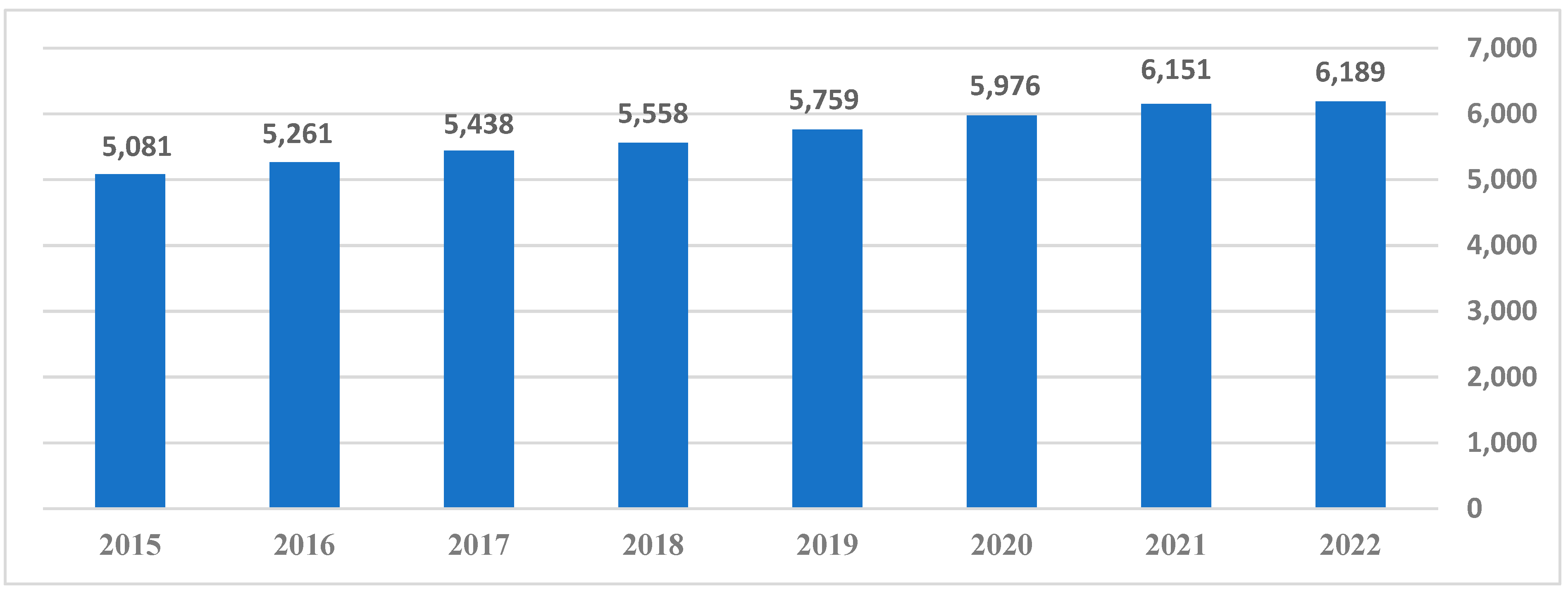
Figure 2.
Waste (domestic and commercial) sent to landfills in Israel in the years 2015-2022 (thousands of tons). Source: Central Bureau of Statistics, Table 2: Household and Commercial Waste Collected and Transferred to Recycling and Recovery.
Figure 2.
Waste (domestic and commercial) sent to landfills in Israel in the years 2015-2022 (thousands of tons). Source: Central Bureau of Statistics, Table 2: Household and Commercial Waste Collected and Transferred to Recycling and Recovery.
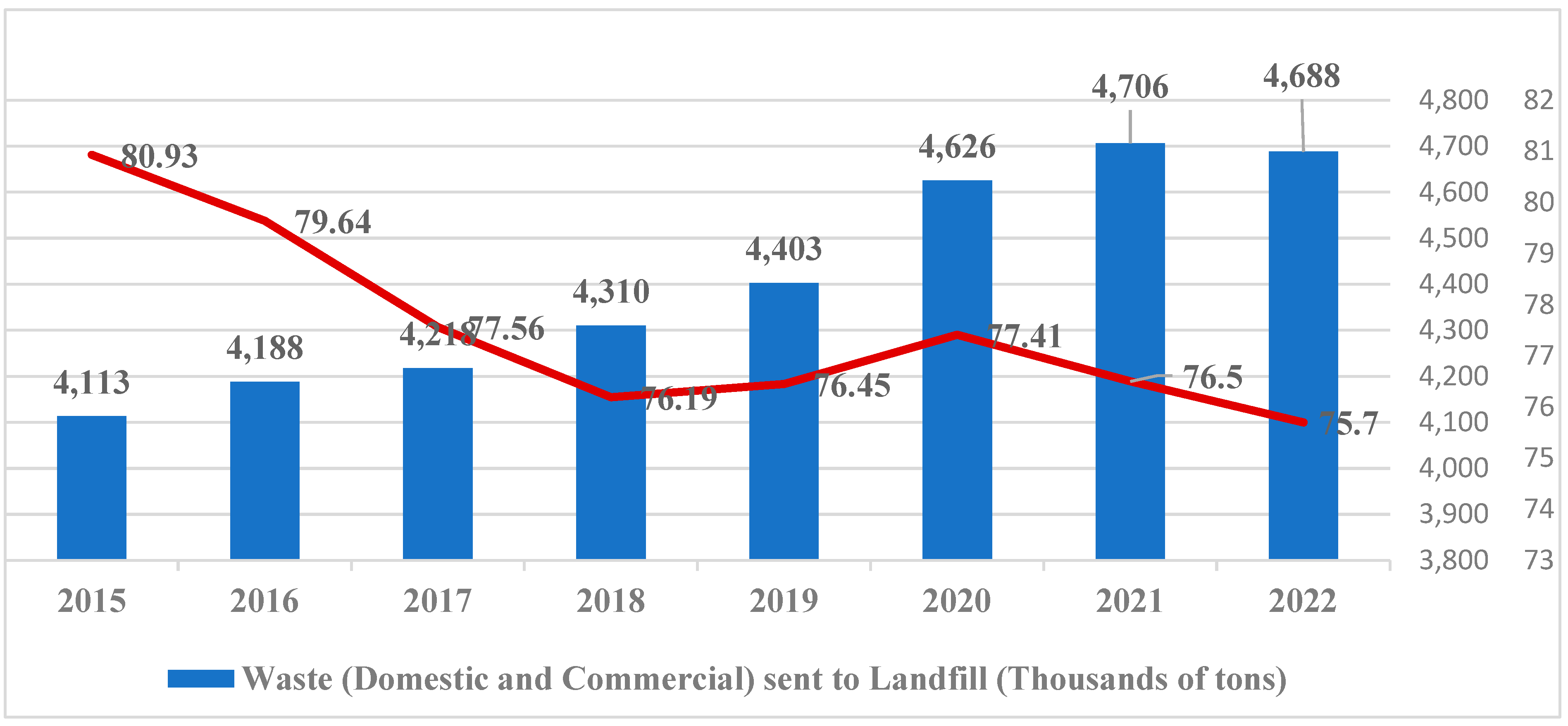
Figure 3.
- The price of the waste landfill levy imposed on sites for the disposal of mixed waste in the years 2007-2022 (in shekels). Source: Landfill levy price lists for the years 2007-2022, Ministry of Environmental Protection.
Figure 3.
- The price of the waste landfill levy imposed on sites for the disposal of mixed waste in the years 2007-2022 (in shekels). Source: Landfill levy price lists for the years 2007-2022, Ministry of Environmental Protection.
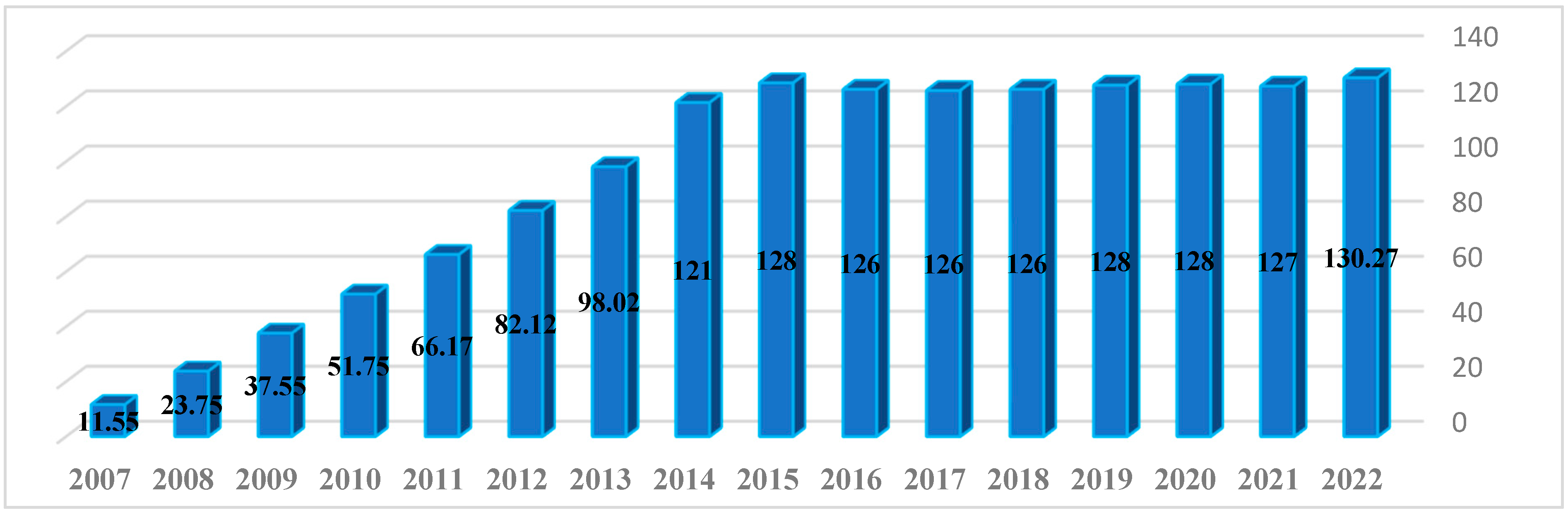
Figure 4.
Revenues of the Cleanliness Maintenance Fund from landfill levies in the years 2007-2022 (in thousands of shekels). Source: Audited financial reports of the Cleanliness Fund for the years 2007-2022. https://www.gov.il/he/departments/publications/reports/maintenance_of_cleanliness_fund_annual_reports.
Figure 4.
Revenues of the Cleanliness Maintenance Fund from landfill levies in the years 2007-2022 (in thousands of shekels). Source: Audited financial reports of the Cleanliness Fund for the years 2007-2022. https://www.gov.il/he/departments/publications/reports/maintenance_of_cleanliness_fund_annual_reports.
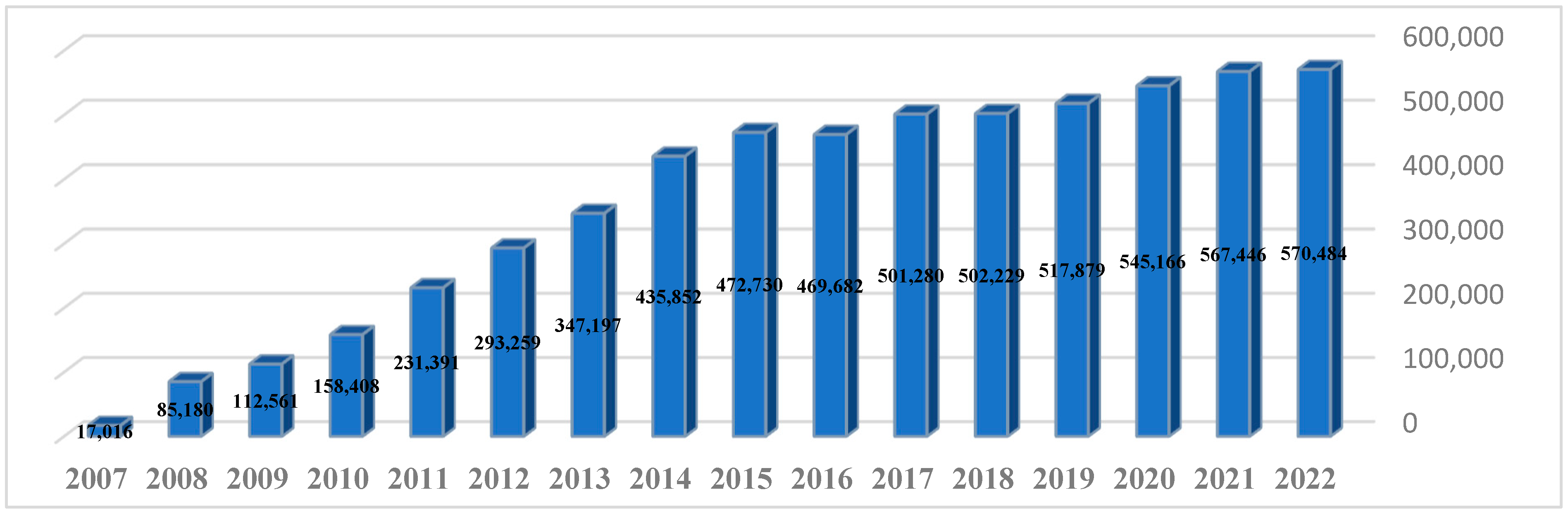
Figure 5.
Municipal waste recycling rate in Israel in the years 2015-2022. Source: Israeli Central Bureau of Statistics, Table 2: Household and Commercial Waste Collected and Transferred to Recycling and Recovery.
Figure 5.
Municipal waste recycling rate in Israel in the years 2015-2022. Source: Israeli Central Bureau of Statistics, Table 2: Household and Commercial Waste Collected and Transferred to Recycling and Recovery.
| 1 | This law constitutes an amendment to the federal law legislated as early as 1975. |
| 2 | |
| 3 | The fund was established under section 10 of the Maintenance of Cleanliness Law 1984 and was intended to concentrate financial means for treating environment issues. https://www.gov.il/en/Departments/Guides/maintenance_of_cleanliness_fund
|
| 4 | |
| 5 | |
| 6 | In 2015, nearly 81% of all waste produced was buried, while in 2021 the burial rate was only 76.5%. |
| 7 | |
| 8 | As part of its commitments to the UN, Israel made a commitment to reduce its emission of greenhouse gasses by 27% until 2030 and by 85% until 2050. |
| 9 | The collection sites charge the landfill levy and a management fee in a single sum, such that the municipalities pay the landfill levy for 100% of the waste collected, while only the relative amount for the waste buried in practice is transferred to the Cleanliness Maintenance Fund. The site operator retains the difference. |
| 10 | The landfill levy amounts are index linked and are updated on January 1st of each year. |
| 11 | State Comptroller (2022). A Report on Audit in the Local Government - Waste Disposal in the Authorities the Locality and its Burial. Israeli State Comptroller. |
| 12 | The audit showed that the difference between the entrance fees to the various landfill sites can be as much as 300%. Moreover, the entrance fees that each landfill charges different clients, including the municipalities, are not uniform, and the difference can be as much as 100%. |
| 13 | Cited from the Maintenance of Cleanliness Law (temporary injunction applied in 2013-2020). |
| 14 | As of 2020, the fund’s revenues derive from four accounts: landfill levies (91.6%), plastic bag account (6.9%), deposit account (0.003?), and general account (1.5%). Source: State Comptroller (2022). |
| 15 | Revenues from the landfill levy were received beginning from the latter half of 2007. |
| 16 | At a rate of only 40% of the fund’s total revenues. |
| 17 | In 2021, a total of 1.6 billion shekels were utilized for goals not included in the strategic plan for management of municipal waste. Source: The Knesset’s Research and Information Center, Budget Control Department, Analysis of the financial reports of the Cleanliness Fund in 2020 and 2021. Page 5, Table 3. |
| 18 | From 2016-2021, a total of 1.66 billion shekels from the fund’s money were transferred to the State Budget and in 2021 the management of the fund approved the transfer of another 600 million shekels in 2022. According to the proposed state budget for 2023 and 2024 – since the money was not transferred in practice, the validity of this decision will be extended until the end of 2024. |
| 19 | Source: https://www.calcalist.co.il/local_news/article/ryo3uydu9 (May 10, 2022). |
| 20 | An organization that encompasses all municipalities in Israel. |
| 21 | |
| 22 | The landfill levy produces about 600 million shekels a year for the Cleanliness Maintenance Fund. |
| 23 | Moreover, it is evident that from 2019 to 2020 there was even a drop in the rate of municipal waste recycling of all waste collected; this may be related to the closure of the Amir transit recycling station in that year. |
| 24 | Five consecutive elections were held in Israel in a short span of only three and a half years (from April 2019 to November 2022). |
| 25 | From 2009 to 2013, Minister for Environmental Protection Gilad Erdan served in this position. From then to the present, seven other ministers have served, as follows: Amir Peretz, Benjamin Netanyahu, Avi Gabay, Ze’ev Elkin, Gila Gamliel, Tamar Zandberg, and Idit Silman (currently). |
| 26 | Link to the draft resolution: https://ynet-pic1.yit.co.il/picserver5/wcm_upload_files/2023/02/18/Hkajxo06o/Seder_Gov_seder_gov2023_n117.pdf
|
| 27 | |
| 28 | |
| 29 | In 2015, 900 thousand tons were sent for recycling, constituting 19% of all municipal waste collected that year, where in 2018 1.35 million tons were recycled, constituting 24% of the total amount of municipal waste collected that year. |
Disclaimer/Publisher’s Note: The statements, opinions and data contained in all publications are solely those of the individual author(s) and contributor(s) and not of MDPI and/or the editor(s). MDPI and/or the editor(s) disclaim responsibility for any injury to people or property resulting from any ideas, methods, instructions or products referred to in the content. |
© 2024 by the authors. Licensee MDPI, Basel, Switzerland. This article is an open access article distributed under the terms and conditions of the Creative Commons Attribution (CC BY) license (http://creativecommons.org/licenses/by/4.0/).
Copyright: This open access article is published under a Creative Commons CC BY 4.0 license, which permit the free download, distribution, and reuse, provided that the author and preprint are cited in any reuse.


