

Submitted:
01 August 2024
Posted:
03 August 2024
You are already at the latest version
Abstract
The existing environmental imbalances and the need to promote actions that minimize the impact and promote awareness and behavior change is now a primary need. This paper aims to show how the activities developed under FISU's Healthy Campus (HC) program can be an asset in promoting the environment, sustainability and social responsibility in Higher Education Institutions. The methodology used includes (1) diagnosis, (2) drawing up the action plan and (3) preparation, development and monitoring of activities. The methodology approach adopted to analyze the activities uses: (1) mentimiter tool; (2) mind map and (3) SWOT analysis. Results show that when activities are designed in a collaborative and participatory way, they end up towards the aspirations of the participants, allowing for greater involvement of people and growth of the institution in the aspects of the environment, sustainability, and social responsibility. The HC program is an asset program to align, HC requirements, Sustainable Development Goals (SDGs), integrated and transdisciplinary approach, and people's environmental awareness and sustainable mindset.
Keywords:
well-being
; education for sustainability
; mind map
1. Introduction
United Nations 2030 Agenda for Sustainable Development is a unique and necessary opportunity to support sustainable, regenerative and inclusive growth, without which it will be impossible to tackle the climate emergency, the rampant loss of biodiversity and social inequalities and asymmetries.
Sustainable development is understood as socio-economic development that takes into account the rights of nature and dignified life for future generations [1]. In line with this, sustainability considers a holistic integration of economic, environmental, and social components to promote development, including life quality, health, and well-being.
Looking for meaningful words to define sustainability, dos Santos et al. [2] obtained, as most common answers of a questionnaire applied to a sample of 49 interviewed citizens, “change, knowledge, reuse, reduction, family, and health”. These authors have also conceptualized sustainability as “the proposal of a life model that guarantees the survival of ecosystems, where the human being is included and grounded in the web of life, where we can all live harmoniously within the interconnected systems of economic, social, cultural, political, and environmental relationships”.
According to the International Institute for Sustainable Development [3] only 16% of the Sustainable Development Goal (SDG) targets are on track to be achieved by 2030, with the remaining 84% showing limited progress or its reversal. Among the 167 countries evaluated, Portugal ranks 16th, with a score of 80.28 [4]. Most of the SDGs worked on in Portugal achieved a performance of over 50%. As pointed out by Medeiros [5], local governments have been called upon to participate and to transform the global SDG agenda into a local reality. In Portugal, the SDG Local Platform, a municipal platform for the Sustainable Development Goals [6], already shows several good practices developed by municipalities. The way forward is now to join forces so that other levels of government and other players in society, together with the Academy, can help transform our current social, economic, environmental, and political reality. Drawing up targets and indicators that are appropriate to each specific local reality, is an opportunity to rethink local development, understand the new dynamics, and search together for alternatives to the challenges of the coming years, collectively in each community.
The way human beings relate to nature, the environment, and consumption promotes imbalances, it is therefore important, on the one hand, to develop actions that minimize the impacts of human activity and, on the other hand, to promote greater awareness to change behavior. According to Hudson [7] young people have an increased sense of environmental consciousness and are interested in ways to protect and save the planet. This can be explained by the existence of different programs and projects covering different levels of learning, and/or the information/awareness conveyed in the media. For example, the study carried out by Barreiros et al. [8] regarding HEI’ Students’ Literacy in Sustainable Use of Potable Water, showed that the main sources of information identified by the students are social communication, internet/social networks, and family background. This indicates that, although some environmental awareness has increased, there is still a long way to go, and this should also be promoted at HEI level.
Since it’s clear that human action has a major influence on environmental problems, educational processes have been working on environmental and sustainability issues for a long time. The terms environmental education, education for sustainability or education for global citizenship give rise to specific concepts for working on these issues.
Environmental education is a lifelong learning process that aims to promote informed and active citizenship, ensuring the involvement and commitment of each citizen and the organizations, to a sustainable future [9].
The Portuguese Strategy for Environmental Education [10] provides 16 measures framed by strategic objectives, which serve three (3) central pillars of the government’s environmental policy, namely: (1) decarbonizing society (climate, energy efficiency, sustainable mobility); (2) making the economy circular (dematerialization, collaborative economy and sustainable consumption, product design and efficient use of resources, waste recovery) and (3) enhancing the territory (spatial planning, sea, and coast, water, natural values, landscape, air, and noise). However, as pointed out by Coelho et al. [11] to achieve global social transformation, it is essential that citizens have access to an education that puts real-world experiences at the centre of learning, encourages reflection and critical thinking, and prepares people for diversity; only by developing participation and a sense of belonging to a shared humanity, which individual can move towards education for global citizenship as advocated in the national strategy for Development Education in Portugal 2018-2022 [12]. Development Education is understood as “a lifelong learning process committed to the integral formation of people, the development of critical and ethically informed thinking, and citizen participation” [13] (p. 3197). Development Education ultimate aim is “the formation of responsible citizens, committed to a process of social transformation in order to build more just, supportive, inclusive, sustainable and peaceful societies”[12] (p. 16).
Education for sustainability emphasizes the need to respect human dignity and, diversity, and protect our planet’s environment and resources [1], which, to a certain extent, systematizes the objectives of environmental education and education for global citizenship.
Klein [14] states that transdisciplinary collaboration involving stakeholders to solve complex societal problems enables the development of new knowledge, theories, and frameworks that transcend the contributions of single or integrated disciplinary knowledge. However, Guimarães, Jacinto, Isidoro, & Pohl [15] concluded that the transdisciplinary is not a conventional approach to problem-solving, it depends on the context and, encompasses different disciplines that work with actors outside the academy, and when there is interaction, knowledge is created. This corroborates what Udovychenko, et al. [16] pointed out, transdisciplinary education is an education that harmoniously combines various disciplines to build new knowledge, and it forms cognitive abilities, stable knowledge and, skills in an individual. Rigolot [17] states that being transdisciplinary, in a way, is a matter of applying transdisciplinary principles at a very personal level and for most global questions.
Schmidt, L. [18] argues that it is essential to activate the necessary factors for an ethic of practical action, which requires: (1) public awareness - obtained through educational processes; (2) civic-environmental culture - requires the mobilization of civil society with more and better information; (3) political leadership and decision-making - requires new forms of governance with processes of openness and learning, involving different actors and testing multi-scale models. These are also essential dimensions in education for global citizenship, where the political sense of action is promoted, the ethics of care, where processes are seen as learning possibilities, and where collaborative work forms a matrix that weaves the network. However, there is a need for action and a lack of collaboration between the Portuguese higher education community to allow an advanced sustainability implementation in HEI.
So how can HEIs deal with environmental problems in a structural way? As Barros et al. [19] point out, networks are, an important path for systemic change towards sustainability in HEI although, in Portugal, there is still no legislation to defend the importance of these networks. There is a consensus on how the promotion of environmental education and the adoption of sustainability-oriented practices are important and, also the minimization of the environmental impacts, promoted by human activities, is a priority and essential. Various programmes help with this; the Eco Schools and the Healthy Campus (HC) are two examples of such programmes. With their specific methodology, they promote the adoption of environmentally friendly practices and help methodologically in recording, monitoring, and validating these practices, which can be adopted by any HEI, since it signs up and follows their methodologies.
Eco-Schools is a program operated and coordinated at international, national, regional, and school level. This multi-level coordination allows for the convergence of common objectives, methodologies, and criteria that respect the specificity of each school concerning its students and the characteristics of the surrounding environment. The international level coordination is made by the Foundation for Environmental Education (FEE), which encourages young people to engage in their environment by allowing them the opportunity to actively protect the environment [20]. This program is considered the largest Environmental Education program of different levels in the world (99 countries) (Figure 1) [21], and it has grown with the constant and ambitious mission to improve literacy and change environmental behaviors.
Through the Eco-school program, students, teachers, and staff experience a sense of achievement in being able to have a say in their school’s environmental management policies, ultimately leading to certification and the prestige that comes with being awarded the Green Flag. This program is developed in Portugal, since 1996 by European Blue Flag Association (Associação Bandeira Azul de Ambiente e Educação - ABAAE) which aims to encourage action and recognize the quality work carried out by the school in the field of Environmental Education for Sustainability. Despite this, HEI in Portugal only joined the program in 2006 [22], although in recent years there has been an exponential increase in HEIs joining the program. Whereas in the post-pandemic period, the number of HEIs has dropped significantly, it is to be expected that the program’s uptake will continue to increase as shown in Figure 2.
The four schools that belong to Polytechnic Institute of Beja (IPBeja) are nowadays Eco-Schools, although they joined the program at different times namely: School of Health (ESS) joined in 2010/11 even though, it subsequently withdrew from the program for a few years, and, renewed its membership in 2017/18; School of Agriculture (ESA) joined in 2014/15; School of Technology and Management (ESTIG) and School of Education (ESE) joined in 2015/16. To date, all the work done allowed the win of the Green Flag award for ESA nine, for ESTIG, and ESS eight, and for ESE seven [23].
Healthy Campus (HC) is a very recent program proposed and developed by the International University Sports Federation (FISU) aimed to enhance all aspects of well-being for students and the campus community (students, teachers, and staff). This program aimed to promote health and wellness among HEI communities. The management of HC approach includes different fields, with several activities, resources, and services integrates, namely: (1) HC management; (2) physical activity and sport; (3) nutrition; (4) disease prevention; (5) mental and social health; (6) risk behaviour and (7) environment, sustainability and social responsibility [24]. This approach is designed to support teachers, staff and mainly students in making healthy lifestyle choices, and it includes physical activities, access to nutritious food options, mental health support services, sensibilisation and awareness-raising workshops or inclusive campus environmental activities.
According to FISU [25] there are 130 universities from 39 countries registered since 2020 (Figure 3). A recent visit (June 2024) to FISU website, reveals that only 73 HEIs from 26 countries are certified in the programme. This might mean that there are registered HEIs that have not yet obtained certification.
One of the goals of the HC program is to help students prioritize their health and well-being while pursuing their academic goals. Looking to reverse the well-established trend of young adults compromising their health during their academic careers, the initiative is already having a positive impact on the lives and lifestyles of HEI students around the world [26].
In 2021, the FISU legacy began to value other aspects besides sport. A sustainability focus area was adopted to preserve the values of HEI sport worldwide for future generations, using the United Nations 2030 Agenda and SDG [27]. FISU as a signatory of the International Union for Conservation of Nature, commits to the following principles: (1) protecting nature and avoiding damage to natural habitats and species; (2) restoring and regenerating nature when possible; (3) understanding and reducing risks to nature in supply chains and (4) educating and inspiring positive action for nature across and beyond sport [27].
To monitor compliance with the program’s performance in HEIs, FISU uses a 100-point checklist of best practices in the concerned areas covered by the programme [28].
There are different categories of certification namely: certificate, bronze, silver, gold, and platinum. Figure 4 depicts the certified HEI, in number since the program started (2020/21). It can be observed that in 2021/2022 the adherence of HEI was higher than other years. There is a linear increase for categories of: silver, gold, and platinum from 2020/21 to 2022/23. This situation may be due to the degree of demand to reach the next level.
From a total of 73 HEI certified in this program, 10 HEI are Portuguese, of which 8 are platinum, 1 is silver and 1 is gold [29].
Applications to obtain the FISU certificate, at IPBeja, began in March 2022, and in June 2022, November 2023, and August 2023, the bronze, silver, gold, and platinum certificates were obtained respectively.
Both programs Eco-schools [30] and HC [27] work towards Sustainable Development Goals (SDG) in an organized manner and get into leading HEI rankings, regarding these programs.
But why do the HEIs adopt two programmes? What do those programs have in common or different? And how do they complement and benefit each other? Since each programme adopts a set of items to be fulfilled in specific areas, there is complementarity in the way of looking at each of those areas. While, the Eco-schools programme gives a topic to be addressed (for example for the water resource): 1) information on the importance of the topic/resource, 2) a set of problem questions, 3) key concepts and 4) ideas for activities [31], in the Healthy Campus Programme there are no such recommendations and it moves on to monitoring: 1) the existence of partnerships that facilitate the implementation of actions; 2) the adoption of environmentally friendly practices and 3) the adoption of the “cycle of continuous improvement” environmental policy. This means, in fact, the possibility of complementing teams and environmental work which, as a result, creates synergies which means more sustainable HEIs.
2. Aim
This work aims to show how FISU’s HC program can be an asset in promoting the environment, sustainability, and social responsibility in the academic communities of HEIs.
For this purpose, the specific goals are: (1) present the collaborative action plans carried out by the Environmental, Sustainability and Social Responsibility (ESSR) group at IPBeja; (2) show the developed activities from May 2022 to March 2024; and (3) exemplify how the Academic Community can contribute to the collective reflection on “what campus we want”.
3. Materials and Methods
3.1. Study Area Characterization
IPBeja is an HEI located in the city of Beja, in the south of Portugal, an inland region (Baixo Alentejo) with a low population density (13.5 inhabitants/km2 in 2022) [32]. IPBeja integrates four schools (ESA, ESE, ESS and ESTIG) and, its fundamental aim is to promote solid scientific and cultural training, as well as the development of technical and professional skills, with a view to lifelong learning.
The courses taught at IPBeja cover short courses (21), bachelor’s degrees (17), master’s degrees (15), and postgraduate (7) in various areas of knowledge namely: Arts, Humanities and Sport, Biosciences, Business Sciences, Education and Social and Behavioral Sciences, Engineering, Mathematics and Physical Sciences, Technologies and Applied Sciences, and Health [33].
The IPBeja academic community is comprised of a total population of 3588 people (3136 students, 138 staff, and 314 teachers), in 2022/23 [34].
IPBeja’s joining the two programs (Eco-school and HC) has made it possible to develop initiatives and activities with the community, in a systematic, integrated, and inclusive way, in favor of the environment, social responsibility, and well-being. In this sense, some previous results from the Eco-school programme were used as evidence for the subsequent registration in the HC programme on the FISU platform.
3.2. Methodology
The Environment, Sustainability, and Social Responsibility (ESSR) core group is formed by a leadership team of 3 people. The members of the academic community can join the group voluntarily to build the action plan and initiatives in a collaboratively way.
The methodologic work must seek to combine different aspects, taking into account the different knowledge and experiences in the community’s institution, the students’ learning needs and, align these aspects with the global development priorities and aspirations that the 2030 Agenda tries to address. Finally, the group also wants to meet the requirements defined by the FISU programme. In the year in which the program was implemented (2022), the ESSR core group began by carrying out a diagnosis to know and understand perceptions of the Healthy Campus concept, which helped to design activities that would respond to the needs of all community. The diagnosis was performed using Jamboard, a free tool from Google which allows each participant to record their ideas.
3.2.1. Action Plan Design
The action plan is defined in a face-to-face meeting with all the community members who wish to take part. Throughout the year, and whenever possible, the leadership team, continues to listen to other ideas and voices. The proposed activities are then developed and can be done in smaller/specific groups when this makes sense for the activity itself.
The session plan of face-to-face meetings is defined by the leadership team in accordance with the contributions required for the work to be carried out. The structure of these meetings in the 1st and 2nd years of the programme is as follows:
- Session plan for the 1st (year) meeting
In the first year of the programme (2022-2023), after presenting the HC programme to the participants and the diagnosis made previously, the activities were prioritized to define which ones would be carried out and who was committed to developing each one.
- Session plan for the 2nd (year) meeting
In the second year of the HC programme (2023-2024) the meeting started with an ice-breaker activity. After that, the HC programme and its objectives were explained, as well as the work already carried out and the results achieved. Groups of 4-5 members were then organized, to list and propose a set of activities for the academic year. In addition to this meeting and during the welcome session of Erasmus Students, where the HC programme is presented, the leadership team, also gathered more ideas.
The ice-breaker activity was performed with the Mentimeter tool, where participants were asked to describe in 3 words the meaning of HC.
During the Erasmus welcome session, after presenting the HC program, it was applied, by using Mentimiter tool two questions: (1) describe in 3 words the meaning of Healthy Campus (closed question), and (2) write your idea about the activities that an HC, can carry out (open question).
3.2.2. Data Analysis
- Table of activities
Analysis of the activity was performed using tables to align the activity, with SDG, and HC requirement grades.
- Mentimeter tool
The results of the Mentimeter tool allowed the construction of a word-cloud regarding the question about what the participants understand to be an HC.
For the open question, the results were categorized according to the responses given by the participants and the “point checklist aspects” of an HC, should meet in the concerned area (Environmental, Sustainability, and Social Responsibility).
The sample number was 15 and 60 participants for the 2nd action plan meeting and Erasmus welcome session, respectively.
- Mind Map
The activities carried out since IPBeja joined the HC program (2022) were organized in a Mind Map in which: (1) curricular and non-curricular activities were included, (2) the SDGs worked on were identified, and (3) the contributions to the aspects of the HC checklist, specifically concerning the items (95, 96, 97, 98, 99 and 100 of the 100 points checklist) required.
- SWOT Analysis
The SWOT analysis was carried out to help the leadership team of ESSR group identify the strengths and weaknesses, as well as the opportunities and threats that may exist with the implementation of the HC program at IPBeja.
4. Results and Discussion
4.1. Action Plan
The action plan is always developed collaboratively. Invited by e-mail, all those involved attend the meeting voluntarily.
As a result of the action plan, each idea, and its objectives are defined by the group members. Then, the action is scheduled, and its monitoring and assessment are planned (Figure 5).
4.1.1. Session Plan for the 1st Year (Meeting)
In March 2022, students from bachelor’s degrees in Environmental Engineering and Bioanalytics were heard to help dream up the campus as shown in Figure 6a. In the sequence of collected and listed ideas (Figure 6b), the academic community prioritized those that would be developed; an example is shown in Figure 6c.
The 2022/23 action plan did not take the SDGs into account, although they have been worked indirectly to reach the HC recommended targets.
4.1.2. Session Plan for the 2nd Year (Meeting)
The meeting took place in November 2023 and after presenting the previous results and the context of the program, with an emphasis on the 2030 agenda, the participants began working in groups, as shown in Figure 7. After that, each group explained their idea of activities to develop, indicated the SDG to achieve, the schedule that the activity will run, and the resources needed to reach the proposed activity. As a result, 15 activities were proposed.
4.1.2. Ice-Break Activity (Mentimiter)
The results of ice-break activities, regarding action plan 2023/24 (number of responses 31) and Erasmus students 2023/24 (number of responses 78) reveal a variety of words associated with the concept of HC, highlighting the term Healthy, as physical, mental, social and environmental, in both situations (Figure 8).
The results show that the categories obtained through the results of Erasmus students respondents, regarding the open question concerning their ideas about the activities that an HC can carry out, performed by Mentimiter tool are: (1) green spaces and leisure (SDG14- quality Education and SDG15- life on land); (2) sustainable mobility (SGD11- sustainable cities & communities); (3) energy consumption and waste solids (SDG11- sustainable cities & Communities and SDG12- responsible consumption & production); (4) healthy food (SDG2- zero hunger.); (5) well-being and working with the community (SDG3- good healthy & well-being and SDG17- partnership for the goals). These 5 categories correspond to the key aspects of a Healthy Campus.
4.2. Mind Map
Evaluating the activities carried out during the period under review (Figure 9), it can be observed that item 95 (accessibilities) is not included in the Mind Map, because the activities, concerning this item are dependent on the management governance of IPBeja and were highlighted and improved since the first year of adherence to HC program.
The results also show that: (1) all the activities/initiatives carried out address SDG4 as expected; (2) even though the key aspects of the HC are associated with one or two SDGs, the activities carried out also contribute to other SDGs; (3) curricular activities, such as transdisciplinary visits, seminars, documentaries, etc. although organized within a particular course/discipline, were open to the whole community, and boosted partnerships (SDG17); (4) 15 partnerships were established which 2 of them are international partnerships; (5) information is disseminated internally and externally (scientific and technical events).
Four initiatives are presented and discussed as examples.
4.2.1. Open Lectures
To encourage critical thinking and discussions about environmental topics or other topics that promote well-being, open lectures/seminars were organized, where invited speakers (local, national and international), gave informed talks regarding subjects such as environmental impact assessment, different methodologies for measuring quality in analytical processes for instance laboratories or industry. Although open classes can be lectures, many are also hands-on activities, such as yoga classes or lip balm production, using natural and local resources. These kinds of activities uphold knowledge in a transdisciplinary way, promoting cognitive abilities, and individual skills.
4.2.2. Nature Walks
One way of promoting physical and mental well-being can be through group physical activities. Every year the ESSR group organizes a nature walk - Steps that make the difference: more sport, less waste, and more nature - with the collaboration of various stakeholders in the surrounding community. Plogging takes place at the same time.
The route chosen in 2022/23 was 7 km in a rural area starting from IPBeja facilities to the 5 Reis beach. In addition, it was observed the nature, and the waste collected in the plogging, was of circa of 20 kg.
According to the Carbon Footprint tool available at [35], this activity allowed to estimate the CO2 emissions of 252,5 kg CO2/year, regarding the mode of transport and considering that the same route was taken by a private light vehicle (maximum displacement 1.4). This result was disseminated to the community, to inform and promote awareness of good environmental practices.
In 2023/24, the route chosen was urban pedestrian, around 4 km (cycle path), with the CO2 emissions estimated based on the waste collected during the plogging activity. As a result, emissions were reduced by 40 kg of CO2eq. Considering the same condition as previously, the CO2 emission [35] estimated was 158,2 kg CO2/year. As the route walk is urban, despite the shorter distance and the lower number of participants in the academic year 2023/24 (50 participants) compared to 2022/23 (150 participants), the amount of waste collected (mostly plastic) was 2 times higher than in the previous walk. This result is not surprising since the route with the highest amount of waste collected, although smaller than the previous one, is an urban route used for frequent walks by the city’s residents.
4.2.3. Electrical Consumption Monitoring
Since IPBeja joined the Eco-Schools program, energy, water and gas consumption has been monitored by schools to implement measures to reduce consumption. The evaluation of these consumptions is also required in the HC program. The results of monitoring electrical energy consumption by the four schools of IPBeja are shown in Figure 10.
The results of the electricity consumed per month in the two years under analysis (2022 and 2023) show that these have remained constant, demonstrating that there are no significant variations in each school. The ESE and ESA schools have the highest consumption; this can be explained by the energy spent on heating water (related to the sports activity that is only practiced in the ESE school) and the high consumption of research activity (associated laboratories), respectively. It is important to maintain electrical consumption monitoring and control but also, promote awareness-raising activities. The awareness campaigns were launched to reduce electrical consumption.
4.2.4. Water Consumption Monitoring
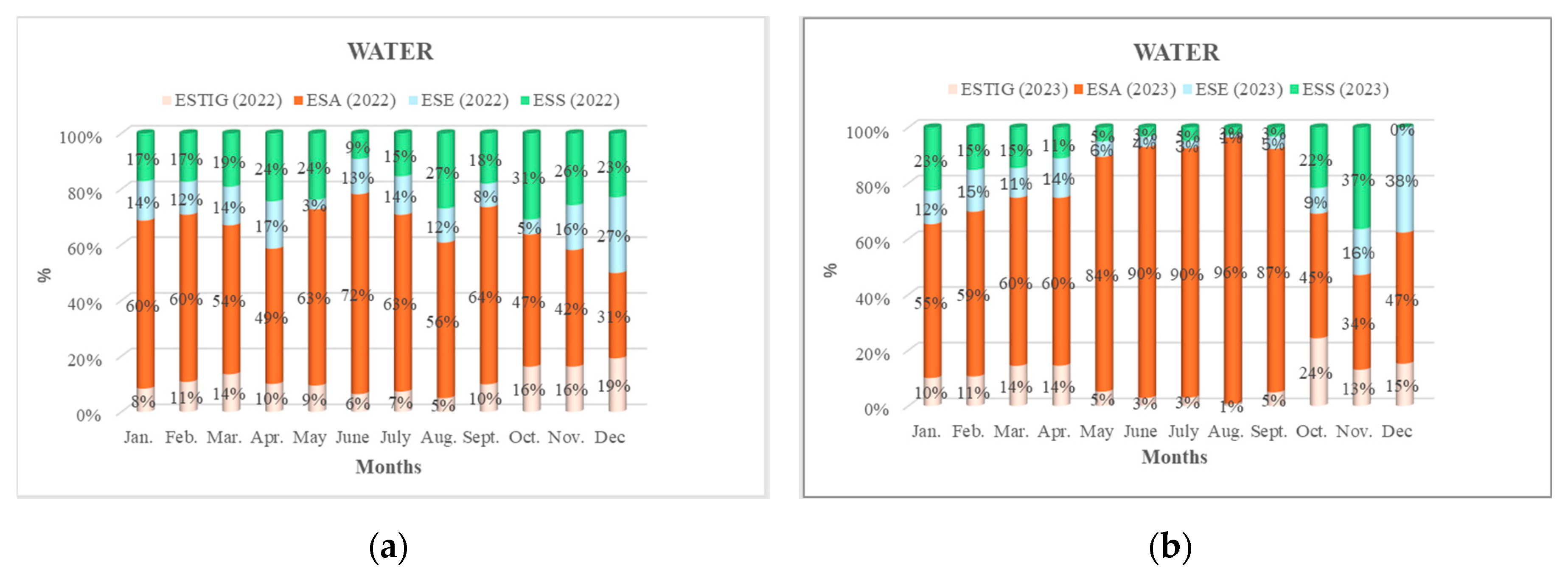
Water is an essential resource for human beings and ecosystems and a strategic economic resource since its quantitative and qualitative availability is structural to the human health and management of this resource. Portugal is considered one of the countries with high water stress (20-80%), occupying 43rd place of raking [36]. It is therefore important to monitor water consumption and promote awareness campaigns for efficient water use. Despite the existence of campaigns on the efficient use of water, the results of monitoring water consumption by schools show high consumption (Figure 11). This can mean, that awareness-raising campaigns, need to be objectives, and continuous, as new students join every year, and the behavioral change isn’t immediate.
The results of the water consumed per month in the two years under analysis (2022 and 2023) show there are quiet differences, demonstrating that the ESA school is the biggest water consumer. This can be justified by the intensity of laboratory activities, during the summer months (from May to September). It is important to raise awareness of the rational consumption of this resource, on focus in laboratories.
The water dispensers have been installed in each school to reduce the consumption of plastic water bottles and, also, to promote tap water consumption because it’s safe, economical, and healthy. An awareness campaign was launched.
4.3. SWOT Analysis
The results of the SWOT analysis show that:
- Strengths:
(1) development of activities with a strong focus on the SDGs; (2) expansion of partnerships and greater collaboration with other colleagues in the academic community; (3) creation of a cost center for HC.
- Weaknesses:
(1) lack of time allocated for the development and performance of tasks; (2) low student motivation; (3) lack of incentives to recognize and validate student participation (diploma supplement), and (4) lack recognition of the importance of community service (valuing knowledge, skills, and attitudes).
- Opportunities:
(1) interdisciplinary work; (2) strengthening relationships between staff, teachers, and students; (3) validating the extent to which the institution works towards the 2030 agenda; (4) innovating activities that have never been carried out before; (5) becoming aware of aspects and valuing others that were otherwise unknown.
- Threats:
(1) lack of time to carry out certain activities; (2) activities whose development depends on other entities; (3) some resistance of academics to incorporating the need to work outside the conventional teaching space as a vehicle for learning and acquiring skills.
5. Final Consideration
This paper exemplifies how the Academic Community can contribute to collective thinking about “what campus we want”, as well as, come up with ideas for activities to improve the environment, sustainability, social responsibility, and well-being.
The HC is a program that moves on monitoring, and prioritizing partnerships, that can facilitate the implementation of actions, as well as, the adoption of environmentally friendly practices to enhance continuously human and planet well-being.
While planning, implementation, monitoring and evaluation are essential components, participant feedback and/or ideas help the ESSR group continuously improve the practical actions developed in the HC program. Despite the short time of running the HC program at IPBeja (28 months), the ESSR group, already gave a positive response to meet the six (6) items: (1) accessibility; (2) social inclusion; (3) sustainable mobility; (4) green spaces; (5) use of infrastructures and resources and (6) energy consumption, by significantly improving institutional processes and practices.
The mind map cross-referencing the items on the HC program’s checklist with the activities carried out shows that each activity can work on several SDGs. Those play an important role in citizenship as they include an action plan for the future, aligned with the 5P principles of 2030 Agenda: People (SDG1,2,3,4,5,6); Planet (SDG6,11,12,13,14); Prosperity (development and quality of life dimension - SDG7,8,9,10,11) and strengthening Peace (SDG16) and Partnerships (SDG17) [37].
It can be concluded that when: (1) activities are designed and organized collaboratively with all members of the academic community, the inclusion and well-being of the community are enhanced; (2) academic community is called upon to participate/contribute, the activities to be developed are more targeted to their aspirations, allowing for greater involvement of people and growth of the institution in aspects of the environment, sustainability and social responsibility; HC is an asset for work and alignment between pre-defined requirements and the SDGs. In any case, some constraints weaken the effectiveness and impact of HC program, namely a lack of time allocated for the development and performance of tasks and low student motivation.
The work carried out integrating most of the SDGs, highlights SDG4, specifically target 4.7 related to the acquisition of knowledge and skills, to promote sustainable development, adoption of sustainable lifestyles, global citizenship, and appreciation of cultural diversity, improving awareness but also transforming citizens through actions.
The HC program in HEIs corroborates the idea that in addition to the curricular space, HEIs can contribute to education for sustainability, promoting the ability to transform ourselves and prosper, while respecting the limits of the planet.
For future work, intends to continue with the proposed methodology and, above all, the integration and involvement of stakeholders to contribute to the realization of activities that respond to the SDGs at a local, national, and international level and to promote a sustainable mindset, and environmentally conscious people.
Author Contributions
Conceptualization, A.D.; T.C. and A.R.; methodology, A.D.; T.C. and A.R.; formal analysis, A.D.; T.C. and A.R.; writing A.D.; T.C. and A.R,; writing—review and editing, A.D.; T.C. and A.R. All authors have read and agreed to the published version of the manuscript.
Funding
Not applicable.
Institutional Review Board Statement
Not applicable.
Informed Consent Statement
Not applicable.
Data Availability Statement
Not applicable.
Acknowledgments
The authors would like to thank the: all the academic community, partnership entities; CREATE - Center for Sci-Tech Research in EArth sysTem and Energy; FinEnTech-Fibrous Materials and Environmental Technologies; and Fundação para a Ciência e a Tecnologia (FCT, Portugal), through the strategic projects UIDB/04292/2020 (https://doi.org/10.54499/UIDB/04292/2020) and UIDP/04292/2020 (https://doi.org/10.54499/UIDP/04292/2020) granted to MARE - Marine and Environmental Sciences Centre, and the project LA/P/0069/2020 (https://doi.org/10.54499/LA/P/0069/2020) granted to the Associate Laboratory ARNET - Aquatic Research Network.
Conflicts of Interest
The authors declare no conflicts of interest.
References
- Ciepiela M, Nagorniuk O., Sobczyk W. Ecological Education as a Function of the International Idea of Sustainable Development. Journal of Education, Technology and Computer Science. 2022, 3(33), pp46-50. [CrossRef]
- dos Santos, I.A.; Raposo, A; Durão, A; Rocha, C; Vasconcelos, L. Melting Pot: The New Sustainability in a World of Emerging Pandemics. In Handbook of Sustainability, Science in the Future, Leal Filho, W., Azul, A.M., Doni, F., Salvia, A.L., Eds.; Publisher: Springer, Cham, Frist on-line, 2022; pp 1- 21. [CrossRef]
- IISD. 2024. Ahead of Summit of the Future, SDSN Report Offers Recommendations for UN 2.0. SDG Knowledge Hub. Available online: https://sdg.iisd.org/news/ahead-of-summit-of-the-future-sdsn-report-offers-recommendations-for-un-2-0/). (accessed on 30 June 2024).
- Sachs, J.D., Lafortune, G., Fuller, G. 2024. The SDGs and the UN Summit of the Future. Sustainable Development Report 2024. Paris: SDSN, Dublin: Dublin University Press. Available online: https://s3.amazonaws.com/sustainabledevelopment.report/2024/sustainable-development-report-2024.pdf (accessed on 30 June 2024). [CrossRef]
- Medeiros, G. L. 2019. Uma Freguesia com Objetivos Globais. Policy Paper DSLab-CEsA CSG. Lisboa: ISEG. Available online: https://oficinaglobal.org/wp-content/uploads/2021/04/Projeto-JFM-ODS-2019-2030_compressed.pdf ((accessed on 22 April 2024).
- ODSLocal. 2024. Local Sustainable Development Goals. Available online: https://odslocal.pt/ (accessed on 103 March 2024).
- Hudson, E. 2023 Ten ways to incorporate environmental education in the classroom. Available online: https://westchestereducation.co.uk/ten-ways-to-incorporate-environmental-education-in-the-classroom/ (accessed on 26 June 2024).
- Barreiros, A.M.; Durão, A.; Galvão, A.; Matos, C.; Mateus, D.; Araújo, I.; Neves, L.; Mourato, S. Higher Education Institutions Students Literacy in Sustainable Use of Potable Water. Sustainability 2024, 16(12), 5217. pp1-21 . [CrossRef]
- APA – Environmental Portuguese Agency. Presentation of the National Environmental Education Strategy. Available online: https://enea.apambiente.pt/content/apresentacao?language=pt-pt (accessed on: 02 June 2024).
- ENEA (2024). National Environmental Education Strategy. Available online: https://enea.apambiente.pt/ (accessed on: 02 June 2024).
- Coelho, La Salete; Raposo, A.; Piedade, A.; Marques, H.; Teixeira L.; Uva, M.; Fernandes, S.; Gonçalves, T.; Silveira, M.; Martins, C; Bergano, S. Escolas transformadoras: Colaboração, transformação e políticas educativas em educação para a cidadania global. Sinergias: Diálogos Educativos para a Transformação Social. 2020 11, pp57-74. https://hdl.handle.net/20.500.12207/5581.
- ENED 2018-2022. Available online: https://cidadania.dge.mec.pt/sites/default/files/pdfs/ened2018-2022ingles.pdf (accessed on: 13 May 2024).
- Resolução do Conselho de Ministros n.º 94/2018, de 16 de julho. Diário da República, 1.ª série – N.º 135. Estratégia Nacional de Educação para o Desenvolvimento 2018-2022 (ENED 2018-2022), 3190-3202. Available on https://bit.ly/37HhPOs. (accessed 10 May 2024).
- Klein, J.T. Learning in Transdisciplinary Collaborations: A Conceptual Vocabulary. In Transdisciplinary Theory, Practice and Education, D. Fam, L. Neuhauser, and P. Gibbs, Eds.; Springer, Cham: Switzerland, 2018; pp11–23.
- Guimarães, M.H.; Jacinto, G.; Isidoro, C.; Pohl, C. Assessment of transdisciplinarity by its participants: the case of Tertúlias do Montado, Alentejo, Portugal. Sustainability Science 2024 19 pp1021–1038 . [CrossRef]
- Udovychenko,L.; Pyatnitska-Pozdnyakova, I.; Sliar, I.; Pavliv, A.; Fonariuk, O. A transdisciplinary approach to teaching and building a higher education system. Revista de Tecnología de Información y Comunicación en Educación 2022, 16, 3 pp91-105. [CrossRef]
- Rigolot, C. Transdisciplinarity as a Way of Being: A New Perspective on Personal Engagement for Sustainability Transformations. Short Letters on Social & Environmental Challenges for a Sustainable World 2022 13. [CrossRef]
- Schmidt, L. Implicações éticas da cidadania ambiental In Ética Aplicada. Ambiente Neves, M., Soromenho- Marques, V. Eds. Edições 70: Lisboa, Portugal, 2017 pp 369-392 ISBN 978-972-44-2073-8 http://hdl.handle.net/10451/31806.
- Barros, M.; Caeiro, S.; Disterheft, A.; Madeira, A.C.; Manteigas, V.; Gomes Martins, A.G.; Teixeira, M.R.; Soares, A.M. The Portuguese Sustainable Campus Network: A Knowledge Collaboration for Sustainability Transformation in Higher Education Institutions. In Higher education for sustainability: the Portuguese case, Machado, C., Davim, J.P. Eds.; Springer Cham, 2023; pp 1-34. [CrossRef]
- FEE- Foundation for Environmental Education (FEE) How Does it Work (2023). Available online: https://www.ecoschools.global/how-does-it-work (accessed on 21 May 2024).
- FEE Ecoschools Global. Available online: https://www.ecoschools.global/national-offices (accessed on 21 May 2024).
- Sousa, S. Some Reflections on the Role of the Eco-Schools Program in the Promotion of Sustainable HEIs: A Case Study in Portugal. Administrative Sciences 2022, 12: 149 pp1-13 . [CrossRef]
- ABAAE - Associação da Bandeira Azul Europa Available online: https://ecoescolas.abaae.pt/escolas-e-municipios/escolas/ (accessed 14 May 2024).
- FISU - Fédération Internationale du Sport Universitaire. Healthy Campus Standard. Available online: https://www.fisu.net/app/uploads/2023/08/healthycampus_regulations_30.pdf (accessed 22 June 2024).
- FISU Best Practices 2021-22. Available online: https://www.fisu.net/programmes/healthy-campus/ (accessed 02 June 2024).
- FISU. Programmes Healthy Campus. Available online: https://www.fisu.net/programmes/healthy-campus/ (accessed 03 June 2024).
- FISU. Programmes Sustainability. Available online: https://www.fisu.net/programmes/sustainability/ (accessed 03 June 2024).
- FISU Healthy Campus, 2022. Available online: https://www.fisu.net/2022/10/21/fisu-healthy-campus-awards-presented-in-australia/ (accessed 04 June 2024).
- FISU Directory. Available online: https://www.fisuhealthycampus.sport/directory (accessed 21 June 2024).
- ABAAE. Quem Somos. Síntese. Available online: https://ecoescolas.abaae.pt/wp-content/uploads/sites/3/2018/09/Programa-Eco-Escolas-SINTESE.pdf (accessed 21 June 2024).
- ABAAE. Guia Ecoescolas. Available online: https://ecoescolas.abaae.pt/wp-content/uploads/sites/3/2014/09/Guia-do-professor.pdf (accessed 21 June 2024).
- GEE – Gabinete de Estratégia e Estudos Available Online: https://www.gee.gov.pt/pt/docs/doc-o-gee-2/estatisticas-regionais/nut-ii-nut-iii/alentejo/baixo-alentejo/3307-baixo-alentejo/file (accessed 11 July 2024).
- IPBeja. Missão Available Online: https://www.ipbeja.pt/SobreIPBeja/Paginas/Miss%C3%A3o.aspx (accessed 11 July 2024).
- Conselho para Avaliação e Qualidade. Relatório Síntese de Avaliação de Cursos 1º ciclo, 2º ciclo, CTeSP e Pós graduações 2022/23. 2024 Document for internal circulation. 130p.
- ABAAE. Calculadora Pegada Carbónica Available online: https://ecoescolas.abaae.pt/recursos/documentacao/#tab-1715184252149-1 (accessed 21 June 2024).
- Kuzma, S.; Saccoccia, L.; Chertock, M. 2023. 25 Countries, Housing One-quarter of the Population, Face Extremely High Water Stress. Available online: https://www.wri.org/insights/highest-water-stressed-countries (accessed on 27 May 2024).
- Agência Espanhola de Cooperação Internacional para o Desenvolvimento (AECID) Geração 5p –Criamos Mudanças Positivas - Guia de apresentação dos Recursos. 2022, 31p, Lisboa.
Figure 1.
Eco-school program in the world (source: [21]).
Figure 1.
Eco-school program in the world (source: [21]).
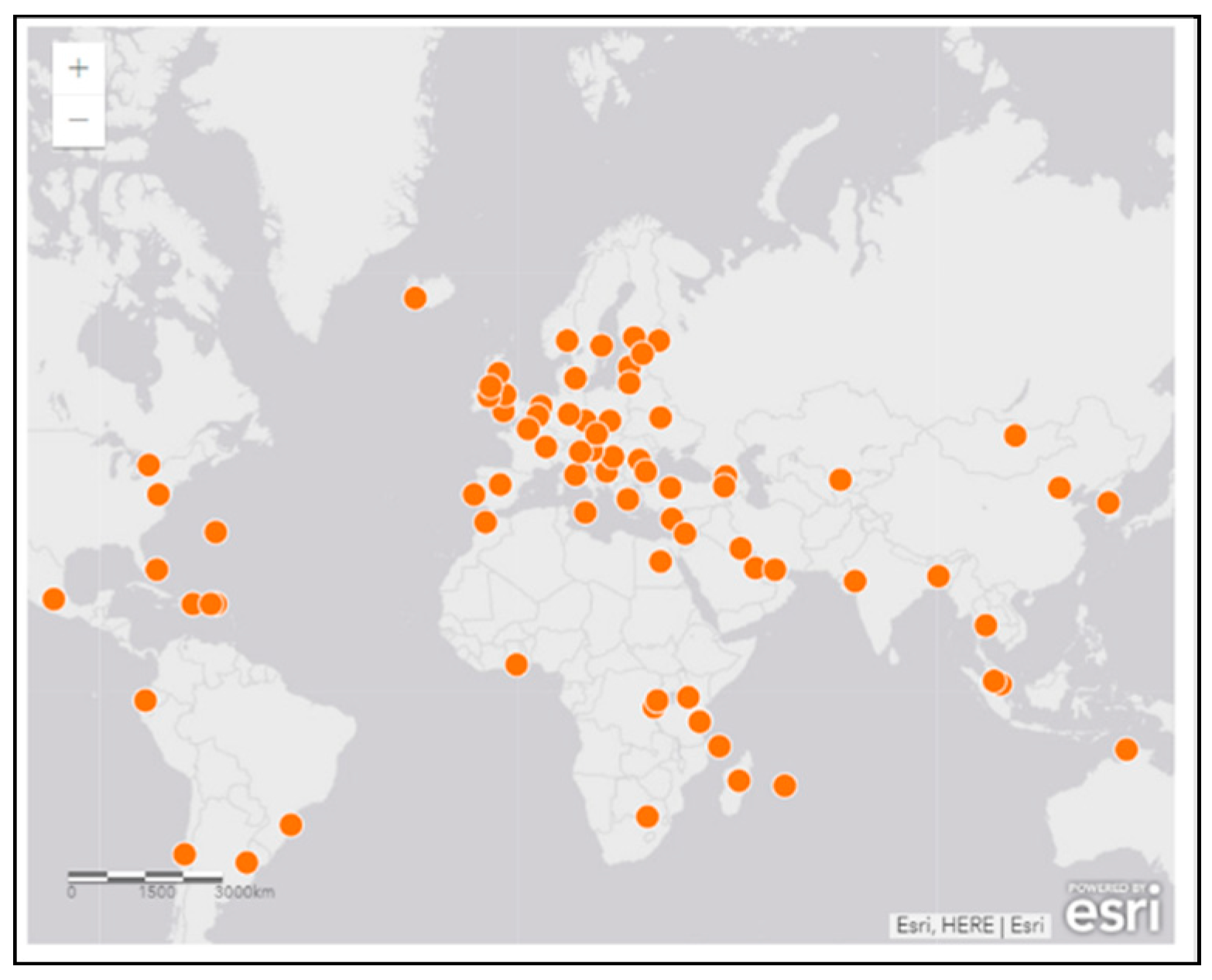
Figure 2.
The evolution of Higher Education Institutions in Portugal joined the Eco-schools program since 2006 (source: [23]).
Figure 2.
The evolution of Higher Education Institutions in Portugal joined the Eco-schools program since 2006 (source: [23]).
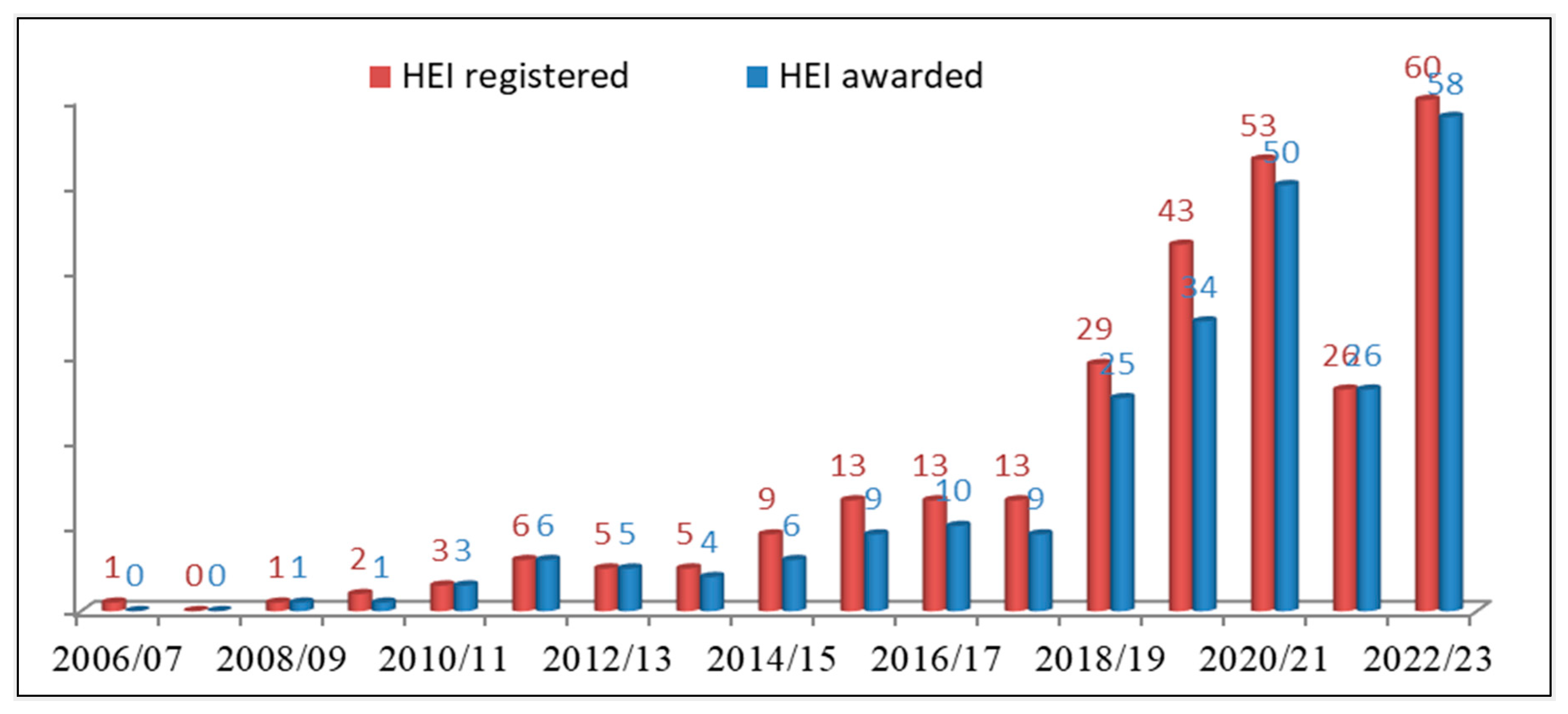
Figure 3.
Healthy campus program in the world (source: [25]).
Figure 3.
Healthy campus program in the world (source: [25]).
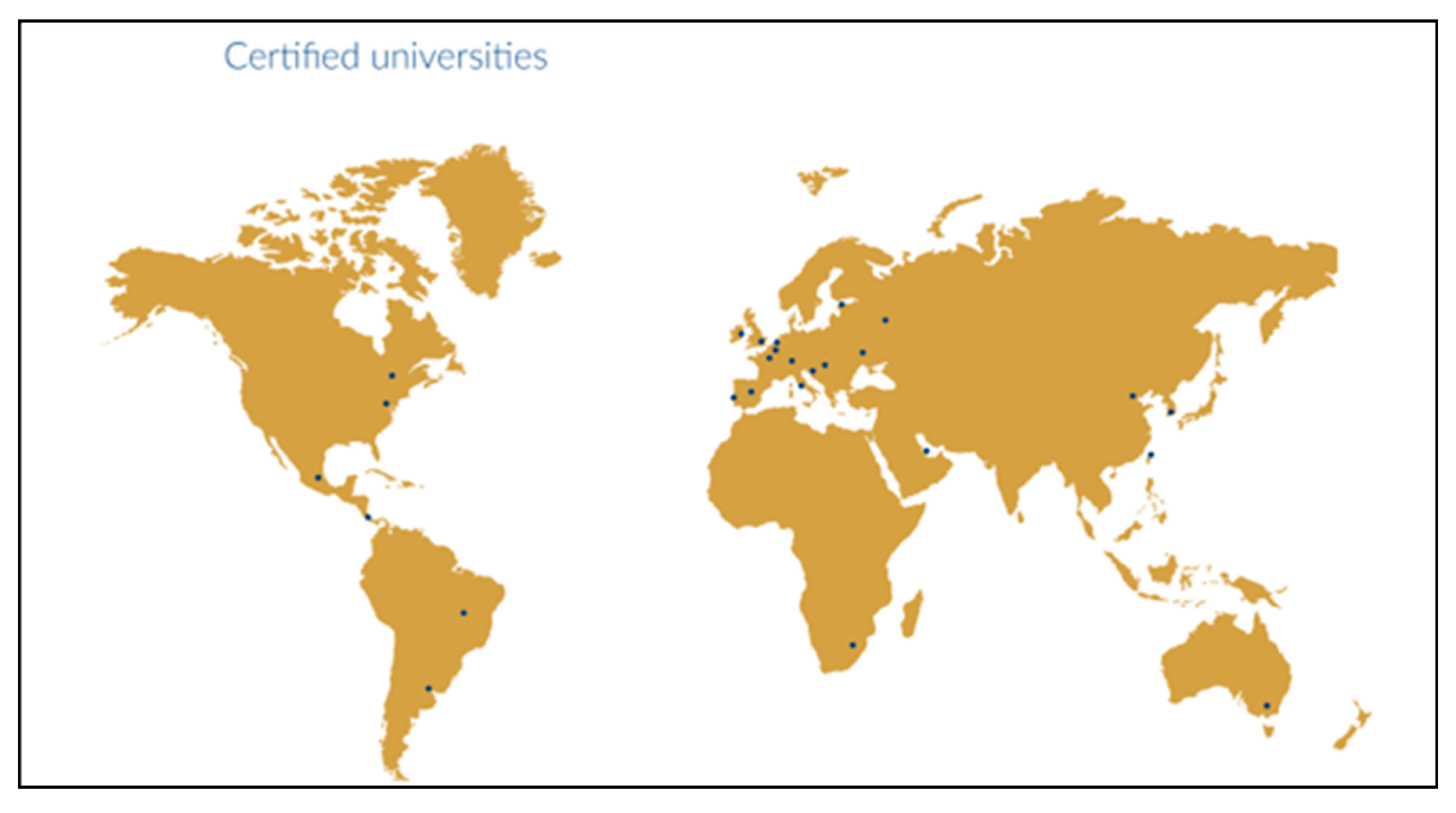
Figure 4.
Evolution of Healthy Campus in number of High Education Institutions awarded in the world by academic year.
Figure 4.
Evolution of Healthy Campus in number of High Education Institutions awarded in the world by academic year.
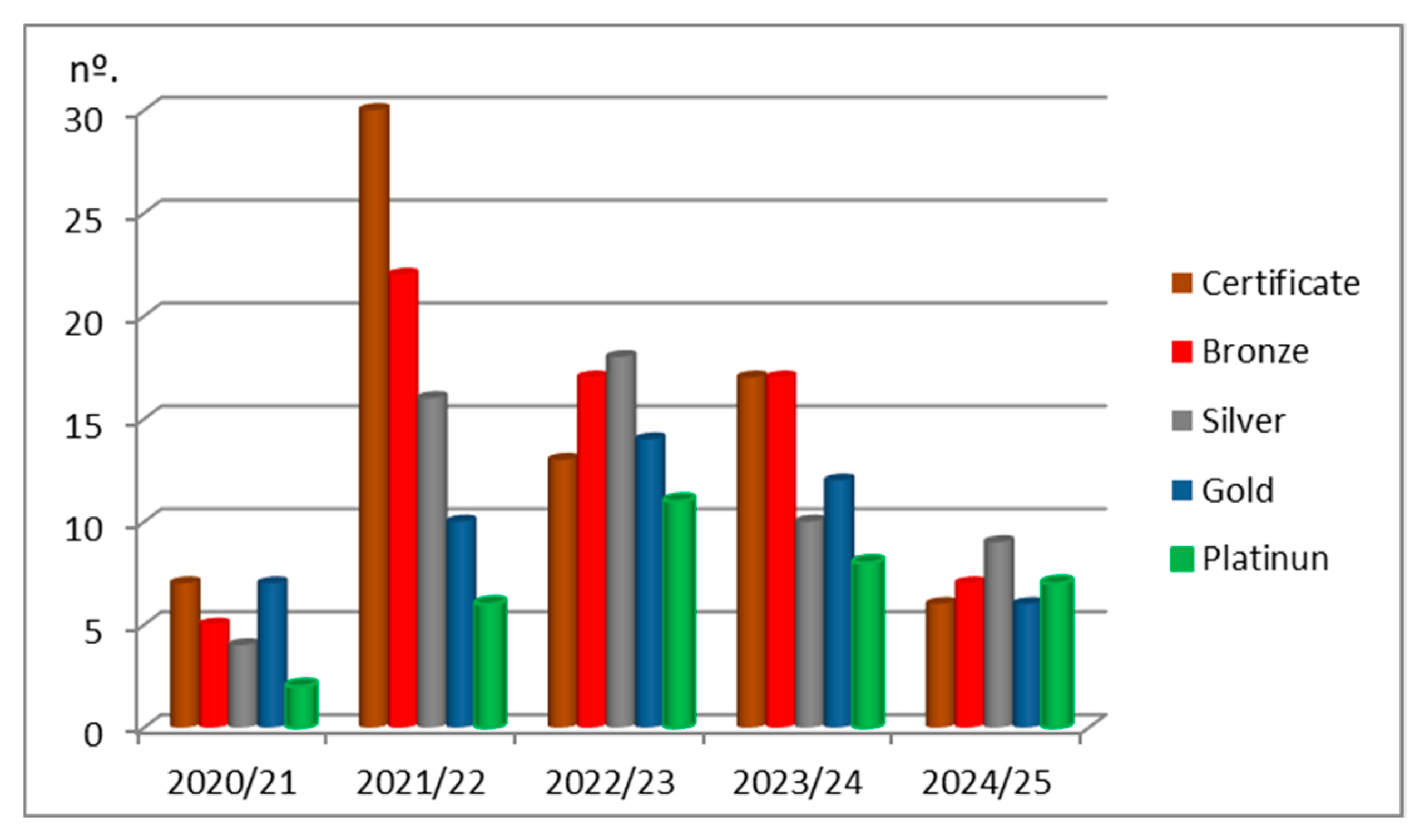
Figure 5.
Steps of action plan carried out in the academic year.
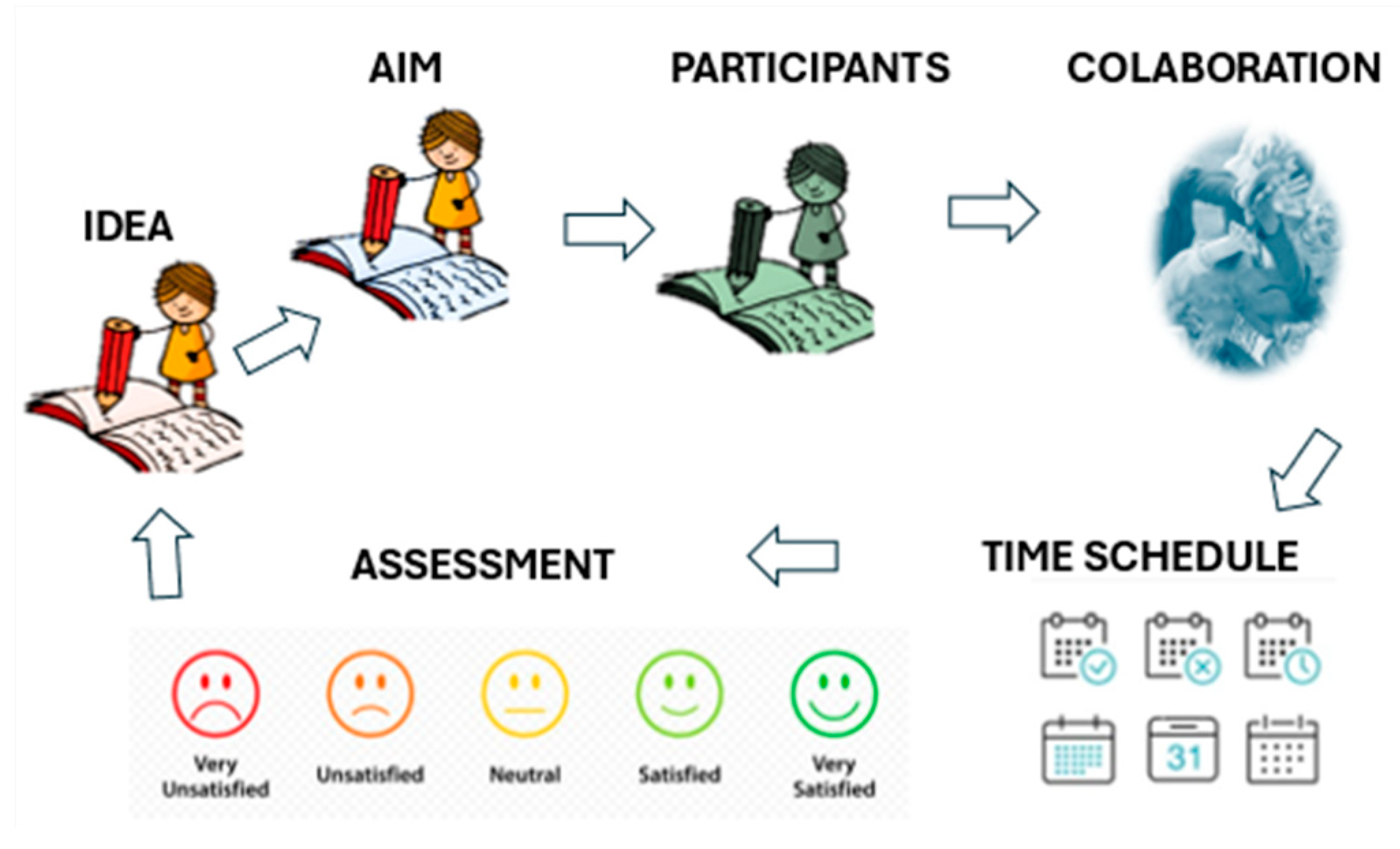
Figure 6.
Steps of action plan carried out in the academic year 2022/23: (a) collecting ideas, (b) list of ideas, and example of an idea prioritization.
Figure 6.
Steps of action plan carried out in the academic year 2022/23: (a) collecting ideas, (b) list of ideas, and example of an idea prioritization.
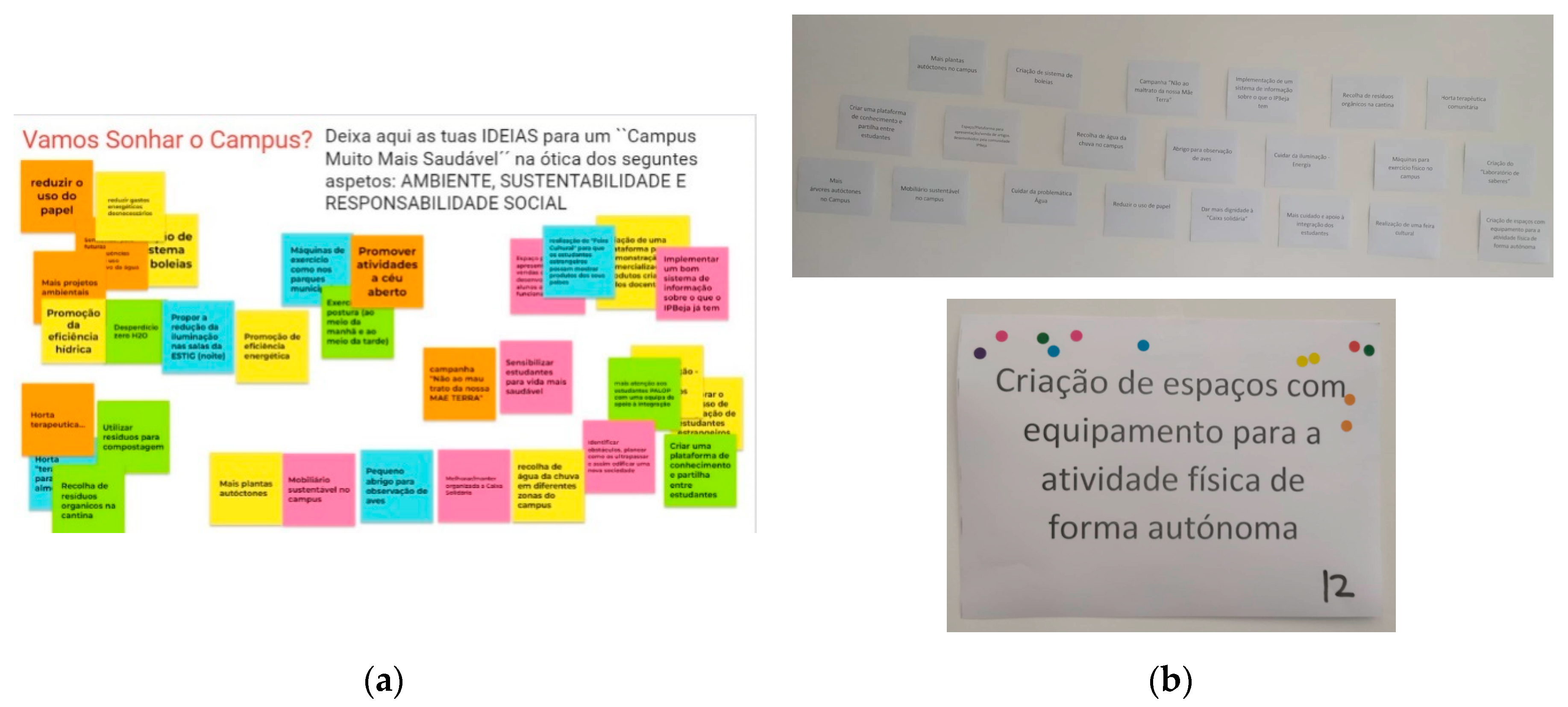
Figure 7.
Steps of action plan carried out in the academic year 2022/23: a) collecting ideas; (b) list of ideas; (c) example of prioritization of ideas.
Figure 7.
Steps of action plan carried out in the academic year 2022/23: a) collecting ideas; (b) list of ideas; (c) example of prioritization of ideas.
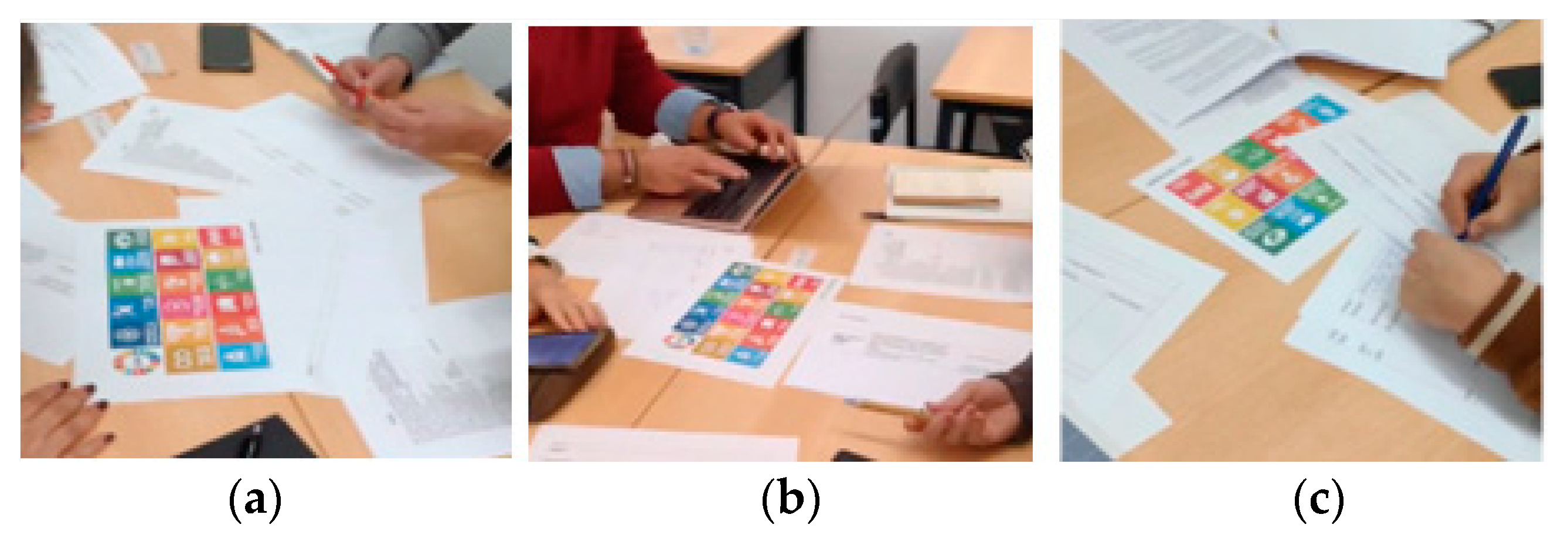
Figure 8.
Healthy Campus meanings regarding the participant’s view of: (a) action plan meeting; (b) Erasmus students’ welcome session.
Figure 8.
Healthy Campus meanings regarding the participant’s view of: (a) action plan meeting; (b) Erasmus students’ welcome session.
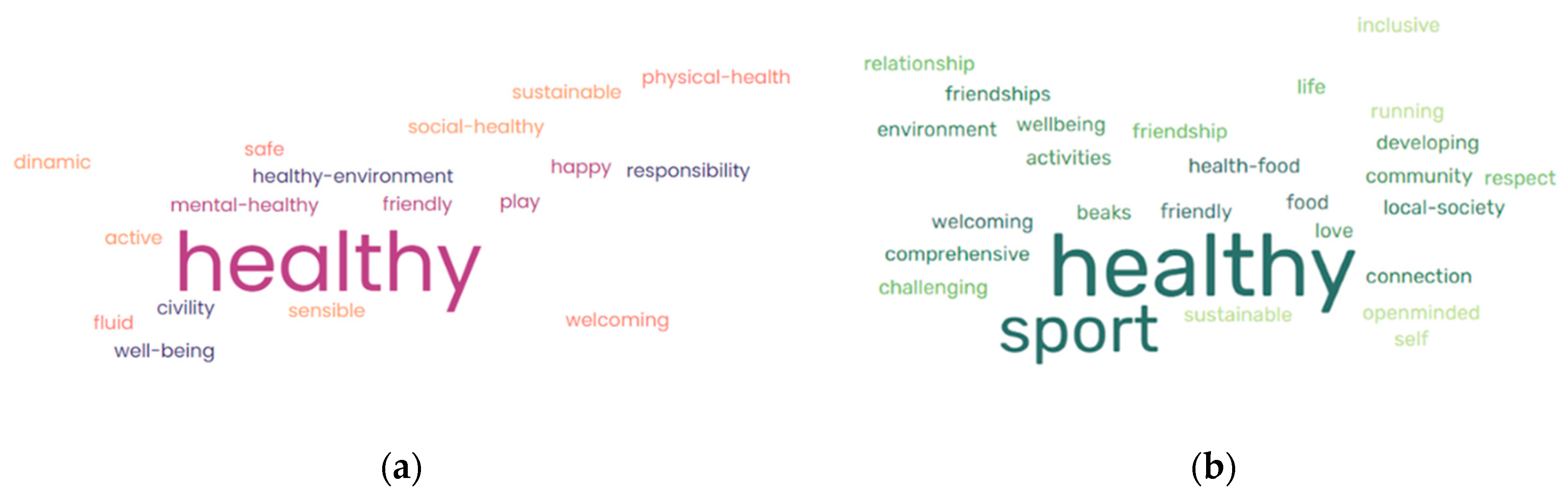
Figure 9.
Mind map to systematize the work done.
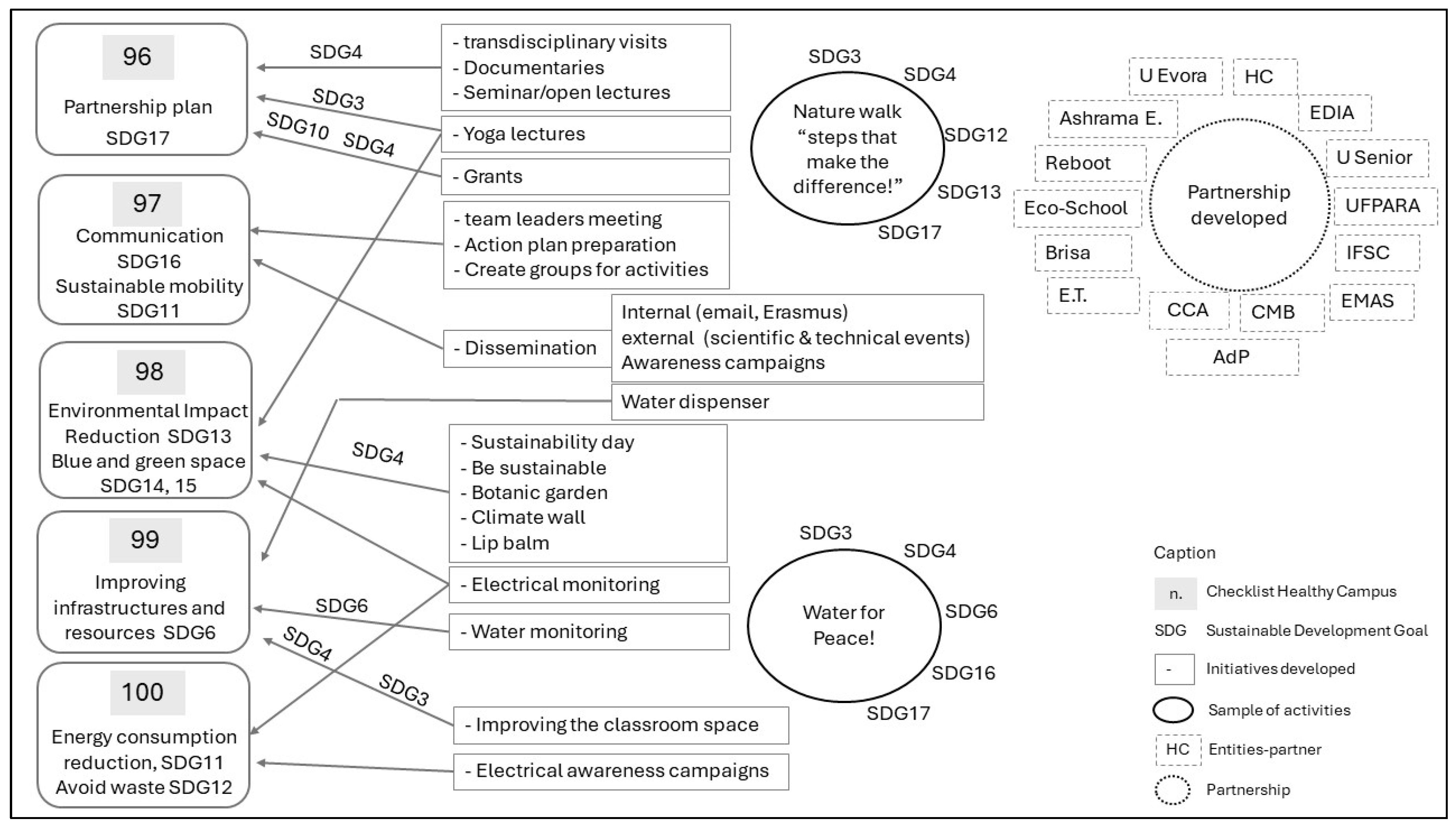
Figure 10.
Electrical energy consumption in (%) by schools per month: (a) in 2022; (b) in 2023.
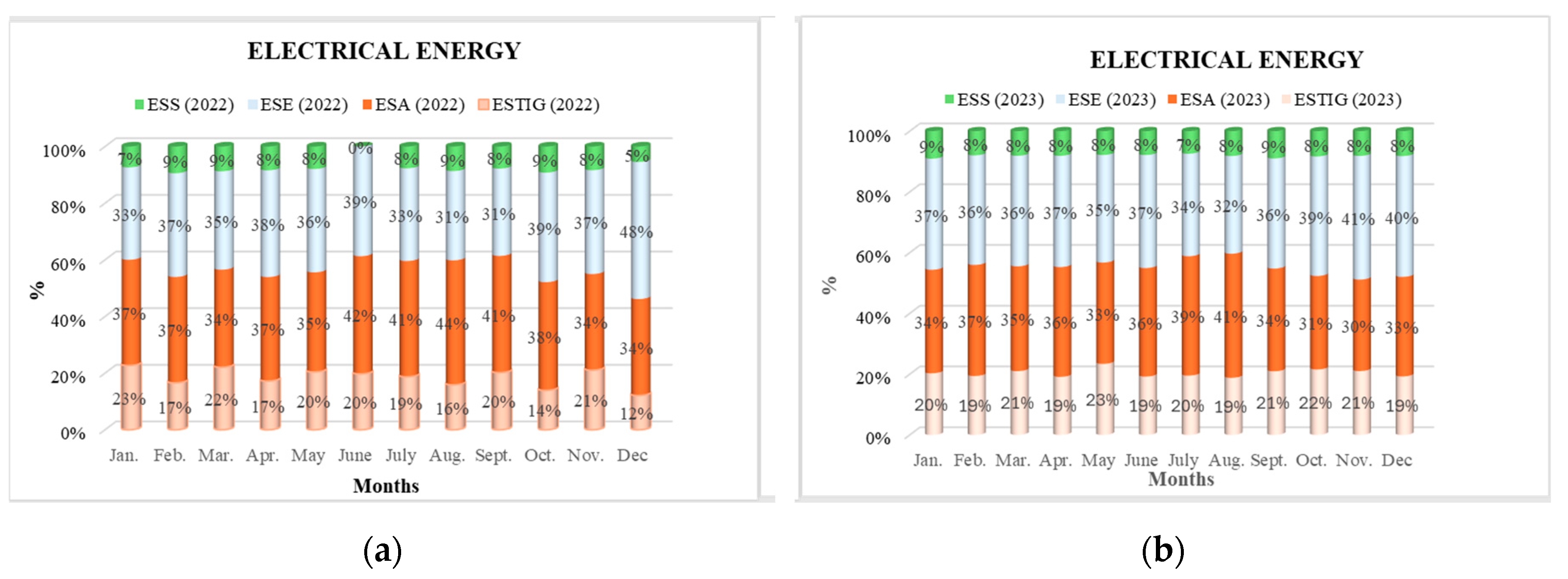
Figure 11.
Water consumption in (%) by schools per month in: (a) 2022; (b) 2023.
Disclaimer/Publisher’s Note: The statements, opinions and data contained in all publications are solely those of the individual author(s) and contributor(s) and not of MDPI and/or the editor(s). MDPI and/or the editor(s) disclaim responsibility for any injury to people or property resulting from any ideas, methods, instructions or products referred to in the content. |
© 2024 by the authors. Licensee MDPI, Basel, Switzerland. This article is an open access article distributed under the terms and conditions of the Creative Commons Attribution (CC BY) license (http://creativecommons.org/licenses/by/4.0/).
Copyright: This open access article is published under a Creative Commons CC BY 4.0 license, which permit the free download, distribution, and reuse, provided that the author and preprint are cited in any reuse.


