

Submitted:
25 July 2024
Posted:
26 July 2024
You are already at the latest version
Abstract
This review details the extraction, characterization and utilization of seaweed-derived biopolymers for future packaging applications. The review is contextualized within the broader scope of the challenge of plastic pollution and the current urgent need for more sustainable packaging materials. Macroalgae (or seaweed) has been highlighted as a promising source of biopolymers, most commonly sodium alginate, agar and carrageenan, for reasons such as a rapid growth rate and decreased environmental impact when compared to terrestrial plant-life. Extraction methods detailed include the traditional solvent-based extraction to more sustainable developments such as ultrasound assisted extraction, microwave assisted extraction and bead milling. The review additionally presents the characterization techniques most pertinent in determining the applicability of these biopolymers in packaging applications. Properties of key importance to the development of sustainable packaging materials such as thermal properties, mechanical strength, barrier properties and biodegradability are highlighted in comparison to conventional petroleum-based plastics. This review concludes by realistically identifying the challenges faced by implementing seaweed-based biopolymers into packaging structures, such as cost-effectiveness, scalability, performance while suggesting future directions to mitigate these issues and improve the commercial viability of these materials for the packaging industry.
Keywords:
macroalgae
; seaweed
; polymers
; packaging
1. Introduction
Humanity currently generates in excess of 350 million metric tons (MMt) of plastic waste annually [1]. Without the effective implementation of additional regulations or alternative materials this volume is expected to double by 2050 and more than triple by 2100 [2]. Of the approximately 400 MMt of plastic produced annually, 14 MMt ends up in ocean environments, accounting for 80% of all marine debris [3]. The impact of oceanic plastic pollution can be directly observed in its impact on marine life. Marine plastic may injure and kill ocean life and studies have shown plastic impacting 44% of seabird species, 56% of marine mammals and up to 100% of sea turtle species [4]. These impacts involve death via ingestion, suffocation, starvation, entanglement and infection [5]. The vast volume of generated plastic waste and improper disposal thereof, particularly with unintentional release into marine environments, has led to a global environmental crisis, with the UN anticipating ocean plastic leakage to triple by 2040 [6,7]. This crisis has driven the ever-accelerating interest in development and commercialisation of more sustainable, environmentally-friendly materials. Despite their undoubted versatility and beneficial attributes, synthetic petroleum-derived polymers have been defined as the primary contributor to the ocean plastic crisis due to their non-degradability, persisting for decades in oceanic environments [8]. Though there exists a vast array of sustainable biopolymer sources within the terrestrial realm, their extraction and use may lead to excess land usage, water usage or removal of potential food sources. Macroalgae-derived biopolymers have therefore become promising candidates as they do not require or detract from any of the previously mentioned criteria.
Plastics have long been regarded as the pinnacle of versatility in the context of material applications. While metals still remain a superior option in some cases for their excellent thermal conductivity and durability this gap is being closed by the introduction of better plastic composites and extensive characterisation of traditional polymers. Polymers have become staple materials in modern industry due to their ability to be substantially altered on a molecular level to achieve specific material properties [9]. This versatility has led to plastics being able to fulfil a significant number of prerequisites for both common commercial components for mass production [10] and niche medical applications in drug delivery [11]. While plastics are lauded for their diversity and have evidently benefited from massive market growth since their inception these materials have had a severe environmental impact. This is an indirect result of these synthetic materials’ centuries long degradation period [12] and the data shows that synthetic polymers will persist in the environment so long as they are not disposed of correctly. It has been a common trend to attribute this material property to the significant environmental consequences that currently dominate the planet, however, it is primarily a result of the consistent and gross mismanagement of these materials on a global scale that has propelled the issue of plastic waste into a global crisis [13]. Plastic waste production exceeded 400 million tonnes in recent years [14] and is predicted to surpass 600 million tonnes in the next decade [15]. The exponential increase in plastic waste is supplemented by poor waste management with only 12% of plastics being recycled and over 50% going to landfill [16]. The scope and permanence this issue presents has resulted in positive innovation and developments in the area of sustainable and renewable biopolymers. These materials offer promising alternatives to traditional synthetics and their introduction and growth in the commercial market will act to significantly reduce the issue of non-degradable waste by providing fast and effective degradation rates which have been observed in materials such as PLA, PHB and a wide range of algae based polysaccharides [17,18].
Macroalgae (commonly referred to as seaweed), are a rapidly renewable, sustainable, biopolymer rich material. Compared to terrestrial plants, seaweed shows a significantly faster growth rate. Farmed seaweed has displayed a harvested mass of 13.1 kg.m2 over a period of 7-months whereas conventional land plants have shown a harvestable mass of 0.5-4.4 kg.m2 over 12-months [19]. Additional benefit regarding the utilisation of farmed seaweed for polymer extraction is gained from the fact that seaweed farms do not require fertile land, fertilisers or additional water-usage, all of which carry significant economic outlay [20,21]. Seaweed in general is characterised as belonging to one of three families, depending on the pigmentation of the seaweed: red (rhodophyta), green (chlorophyta) or brown (phaeophyta) [22]. Predominantly, carrageenan, agar and alginate have been the biopolymers extracted from these species of most interest for packaging materials.
The market for biopolymers is still relatively small , accounting for 1%-10% of the plastic market [23] although this figure is predicted to rapidly increase as the global demand for sustainability in both materials and processes has seen a notable rise in recent years [24]. A consistent barrier to full commercialisation of these materials is the high cost involved with their production. Feedstocks for biomaterials can contribute to over 50% of the total cost of production and in many instances can incur a large cost[25]. This causes biopolymers to cost many times more than traditional synthetics to produce reducing their viability in the market [26,27]. Seaweed based biomaterials have been of particular interest in recent times and their have many distinct advantages of terrestrial biomaterials. Seaweeds or Macroalgae offer extremely abundant and arable materials with growth rates as much as ten times that of terrestrial materials [28]. Polysaccharide and protein content are also notably high in these materials ranging from 4%-76% and 5%-47% respectively [29] making them ideal candidates for biomaterial production.
Seaweed polysaccharides provide a number of desirable characteristics for commercial use including considerable mechanical properties, impermeability and film-forming abilities [30]. These properties are seen in presently developed agar, alginate and ulvan composites [31]. The primary attraction of these composites lies in their ability to be enhanced to provide unique properties for packaging materials. In many instances these materials provide additional protection in food packaging applications when compared to traditionally used synthetics. Composite materials created with agar have shown antibacterial properties against e-coli, salmonella, staph and enhanced UV barriers while maintaining functional mechanical properties [32,33].
While these materials represent a promising future in sustainable and low impact processing there are barriers to production that require further research and development to overcome. Seaweed based polysaccharides can suffer from poor mechanical and barrier properties when used as a single material [34]. As well as historically having extraction techniques that employed toxic non degradable organic elements [35] these materials and the methods of processing are still in their infancy and require a multi-faceted approach to be considered a viable alternative to traditional synthetics.
This body of work aims to offer a comprehensive review of the three most pertinent seaweed-derived biopolymers (agar, carrageenan and alginate) and their applicability to the packaging industry; both for food and non-food items. It highlights the extraction and characterisation methods employed, properties and applications in the packaging sector and looks at the future directions and challenges associated with seaweed-derived biopolymers within the context of improving packaging sustainability. This body of work aims provide a comprehensive review of common seaweed polysaccharides namely agar carrageenan and alginate with reference to additional data relating to ulvan and fucoidan. This overview reviews a significant range of literature with the purpose of exploring the commercial viability of polysaccharide-based films through analysis of extraction, purification and formulation techniques as well as extensive data on characterisation and the development of new applications through these channels. Many of the challenges faced with the commercialisation of algae polysaccharides are discussed and analysed while the physiological benefits, future directions and the impact of these polysaccharides as a sustainable and renewable alternative to traditional synthetics are considered in detail.
2. Extraction and Characterization of Seaweed Biopolymers
2.1. Extraction Methods
The extraction process used to obtain the biopolymers from the seaweed biomass is a pivotal selection as it may influence both the purity and yield of the biopolymer in question. So too may it impact the applicability and functionality of the material, especially as it pertains to packaging materials. Pertaining to phytophytae, dependent on the specific species utilised and extraction solvents used, the yield of alginate may range from 8% (Colpomenia peregrina) to 52% (Laminaria digitata) [36,37]. The conventional extraction methods for seaweed biopolymers have been criticised for their reliance on toxic solvent use, timeframe and energy usage [38], which in combination muddy the concept of a sustainable material. The focus of research in recent years has been to shift towards more sustainable, time efficient and environmentally-friendly extraction methods. This section provides an overview of the most prevalent extraction methodologies used today.
2.1.1. Traditional Methods
The traditional extraction process for biopolymers from seaweed (Solvent extraction) involves four steps; pre-treatment, dissolution, filtration and purification and recovery and drying. Though these are generally the four steps involved, the exact manner by which they are performed differs depending on if agar, carrageenan or sodium alginate are the biopolymer in question as outlined in Figure 1.
2.1.1.1. Agar
Agar is a polysaccharide found within the cell walls of certain species of rhodophytae [40]. Agar is derived predominantly from rhodophyta, primarily the species Gelidium, Gracilaria and Pterocladia [40]. It is a versatile biopolymer with excellent gel-forming ability, stabilisation and thickening properties and has found use in industries ranging from culinary to microbiological [41]. Due to its gelling and thickening properties, agar is extracted and used as a food safe additive [42]. Comprised of agarose and agaropectin, both fractions possess a similar galactose backbone, however agaropectin possess a more complex structure owing to the many variants possible [43].
Figure 2.
Chemical structure of agar.
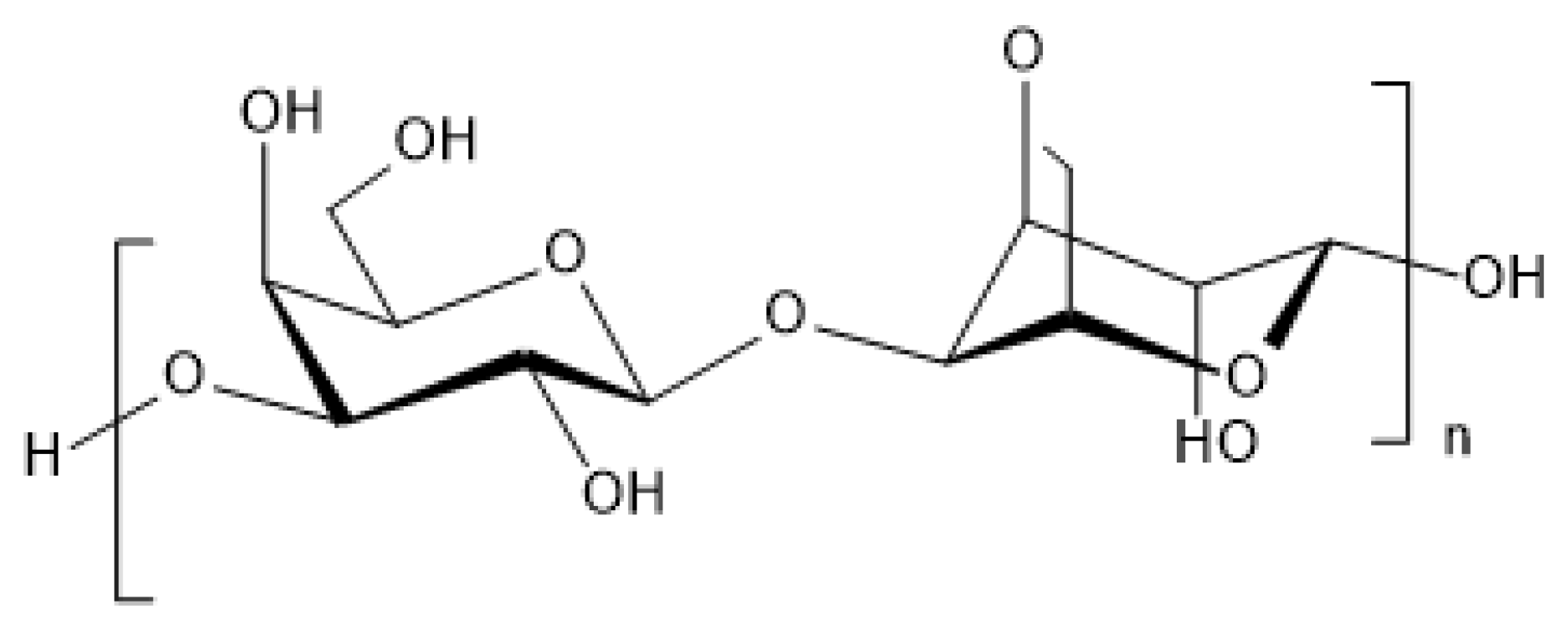
Agar extraction from red seaweed primarily consists of alkali pre-treatment, extraction, filtration, concentration and drying. The specific conditions of the alkali pre-treatment differ according to species. If Gelidium is the chosen species, the pre-treatment occurs with a mild concentration alkali solution whereas if Gracilaria is used a sodium hydroxide solution (.05-7%) at elevated temperatures (85-90°C) for 1-2 hours is required. The treated biomass is subsequently washed in water prior to undergoing acidic extraction at a pH range of 6.3-6.5. Following filtration, the concentration of the extracted agar is carried out through several rounds of freeze-thawing or using a syneresis method.
2.1.1.2. Carrageenan
Carrageenan is a high molecular weight sulphated galactan found in the cell walls of rhodophyate. It is composed of alternating units of 3,6 anhydro-galactose and D-galactose joined by α-1,3, and β-1,4- glycosidic linkages [44]. Initially used in the food industry as a thickening ingredient, their gelation, emulsifying and stabilising properties have today allowed them to find usage in a diverse array of fields [45].
Figure 3.
Chemical structure of carrageenan. (1) Lambda [λ] (2) Kappa [κ] and (3) Iota [ι].
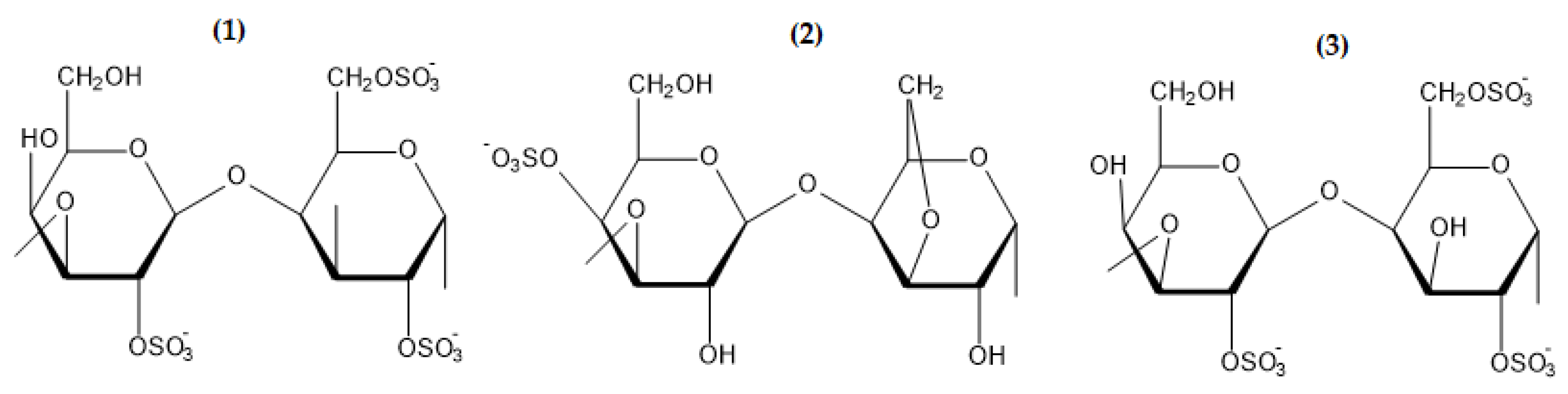
The extraction of carrageenan from red seaweed occurs primarily using two methods, both utilising alkaline solutions for extraction. In the first method, the carrageenan is recovered via precipitation using an alcohol (e.g. IPA). The second method, known as the gel press process, involves the formation of a carrageenan gel with potassium chloride. The first method, alcohol precipitation, is applicable to all varieties of carrageenan whereas the gel press process is only applicable to the extraction of κ-carrageenan [46,47].
2.1.1. 3 Sodium Alginate
Alginate forms naturally as a cell wall polysaccharide in phytophytae (brown seaweeds). The presence of alginate within the cell walls allows for the plant to possess flexibility and maintain a strong overall structure to prevent injury when exposed to tidal forces [48].
Figure 4.
Chemical structure of sodium alginate.
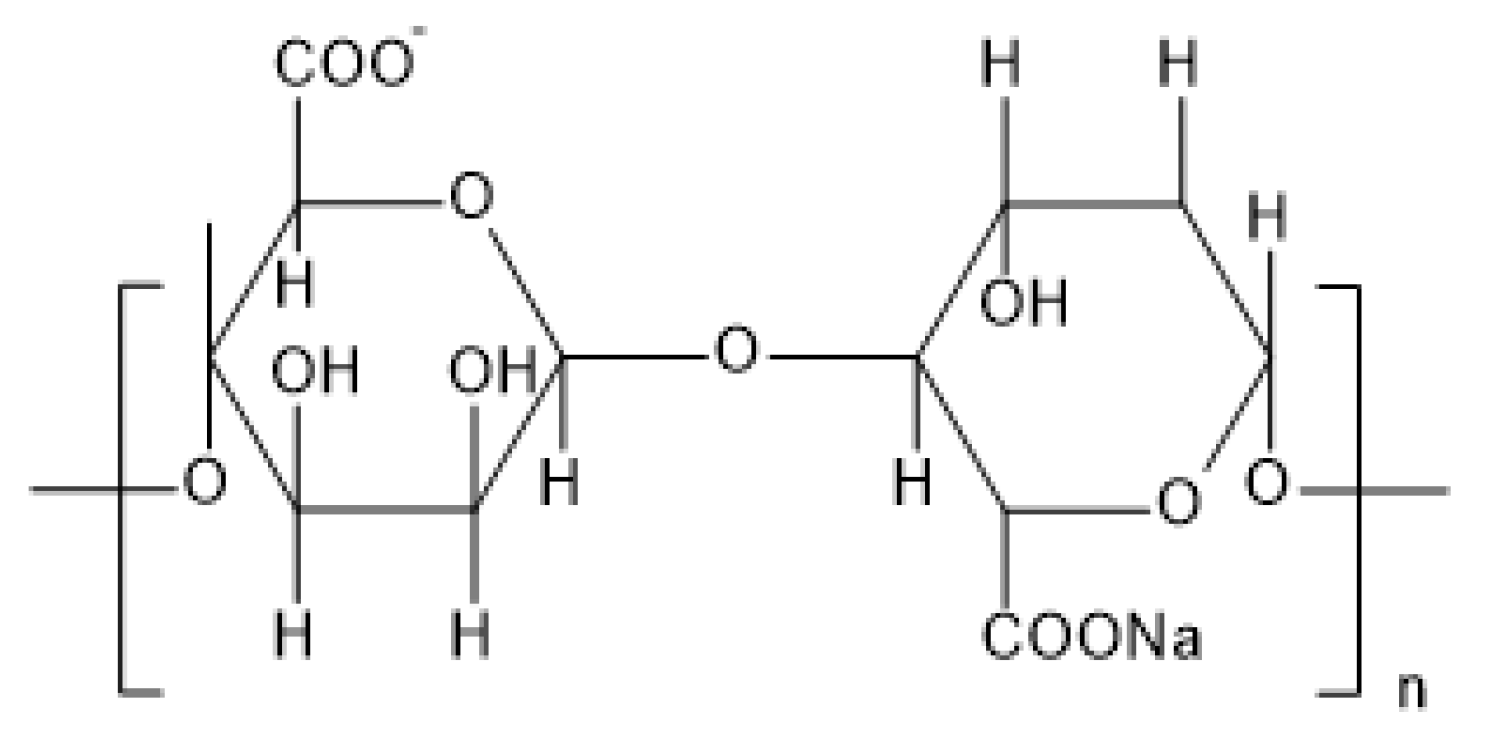
The extraction of sodium alginate (NaAl) involves alkaline treatment, typically with sodium carbonate (NaCO3), of phaeophyta which leads to solubilization of NaAl [49]. Subsequent acidification precipitates the alginate as alginic acid [50]. Neutralization of this solution further leads to the formation of NaAl. The extraction process may be varied and tailored to obtain NaAl with various molecular weights (Mw) and compositions dependent on the requirements of the NaAl [38].
2.1.2. Enzyme-Assisted Extraction
Though the conventional method SE is effective at extracting biopolymers from seaweed strains, it is not without its limitations, chief amongst them being the reliance on heavy solvent usage and the overall time-consuming manner of the extraction method. As such over the years, more sustainable methods have been sought out. One promising alternative is enzyme-assisted extraction (EAE). EAE is a promising, eco-friendly alternative to SE owing to its lack of solvents, high efficiency and gentle extraction conditions [38]. Though this method utilises enzymes that are food-safe and suitable for large-scale production, certain enzymes are cost-prohibitive which has limited their widespread industrial usage [51]. Primarily, proteases and cellulases are used in order to disrupt the structural integrity of the cell wall. Various factors such as pH, enzyme concentration and time may influence both the specificity and selectivity of the enzymes. These factors must, therefore be considered prior to commencing the extraction process in order to optimize the enzymatic reaction [51]. As the enzymes have specific affinity for substrates, they may be used to effectively target and subsequently release the biopolymer in question, thereby increasing the yield. Though EAE has shown such advantages compared to conventional extraction methodologies, it is increasingly being used as a pre-treatment method prior to extraction via ultrasound-, microwave-, or subcritical water extraction [52,53,54].
2.1.3. Microwave-Assisted Extraction
A further developed sustainable extraction method is that of microwave assisted extraction (MAE). As the name implies, this utilises microwave energy, commonly in using frequencies of 915 MHz or 2.45 GHz, to heat up the solvent and seaweed biomass in a rapid and uniform manner which in turn leads to an accelerated extraction of biopolymers [53,55]. In principle this method relies on the interaction of microwaves with molecules found within the seaweed matrix via ionic conduction and dipole rotation [56,57]. The electromagnetic microwaves result in a homogenous distribution of heat that accelerates cell wall degradation and allows the biopolymeric compounds to diffuse into the extraction solvent [58,59]. In general, compounds extracted from seaweed via MAE tend to display higher yields, use less energy, time and solvents compared to the conventional methods thus presenting a more eco-friendly approach to biopolymer extraction [60,61].
2.1.4. Ultrasound-Assisted Extraction
Ultrasound waves are mechanical waves that propagate through media, be it gas, liquid or solid above frequencies detectable by the human ear, i.e. >20 kHz [62,63]. The mode of propagation, compression and rarefaction, leads to the creation of areas with negative pressure within a liquid. When the pressure exceeds the tensile strength of the surrounding liquid, vapour bubbles are formed and when exposed to strong ultrasound fields, implode in a phenomenon called cavitation [64]. This process of cavitation, when occurring near the liquid/solid interface forces a high pressure stream of liquid through the open cavity at surface level, thus leading to peeling, erosion and particle breakdown thereby allowing for biopolymer release from the seaweed matrix [64]. The use of UAE for biopolymer extraction can reduce the overall timeframe of extraction, prevent excess solvent usage and lower the process cost. Martínez-Sanz et al. have demonstrated that implementing UAE can significantly reduce the extraction time of agar from red seaweed with no significant effect on the yield of agar [65]. Though UAE presents such benefits, it is not without its limitations, with additional studies showing reduced yields compared to conventional methods. Goméz Barrio et al. compared the conventional extraction method to UAE for the extraction of agar from Gelidium sesquipedale. The conventional method provided a total yield (extraction and re-extraction) of 37.7% whereas from the UAE method a total yield of 28.16% [66]. Promising work has been performed using a combination of UAE as a pre-treatment method followed by EAE for biopolymer extraction in order to overcome the limitations of the two methods. Li et al. have found that utilising these methods in combination can increase the agar yield 2-6 fold compared to a non-enzymatic extraction while the incorporation of ultrasonication reduces the process time to below one hour [67].
2.1.5. Supercritical Fluid Extraction
Supercritical fluids are liquids exposed to temperatures and pressures exceeding the critical point. As the temperature increases the density of the liquid decreases owing to thermal expansion, meanwhile as the pressure increases, so too does the density of the gas. The point at which these densities are identical is termed the critical point and at this point the distinction between the liquid and gaseous phases disappears [68]. For the majority of applications involving the extraction of natural compounds (>90%) supercritical carbon dioxide (Sc-CO2) is used as the solvent for supercritical fluid extraction (SFE) [69]. The use of Sc-COs as solvent of choice has been due to its wide abundance, non-toxicity, low critical conditions and being both non-flammable and non-explosive [70,71,72].
Previous extraction techniques have posed several disadvantages, chiefly being time-consuming, having low selectivity and requiring large volumes of high purity organic solvents. In response to these disadvantages sub and supercritical fluid extraction (SFE) using supercritical CO2, or subcritical water as the solvents were developed. As a process, SFE can be described in four steps. (i) single extraction and fractional separation. Through decreasing pressure in the separation devices, the bioactive compounds extracted in a single step may be fractionated. (ii) Sequential extraction involving progressively increased severity. The initial steps mild conditions are enhanced through further extraction of the solid residues.
Supercritical fluid extraction, particularly with carbon dioxide (CO2), offers a green alternative to traditional solvent-based methods. At supercritical conditions, CO2 possesses unique solvent properties that can efficiently extract biopolymers from seaweed. This method eliminates the need for toxic organic solvents and reduces energy consumption by operating at lower temperatures than conventional extraction processes. Supercritical CO2 extraction is also known for its high selectivity and ability to produce biopolymers of exceptional purity and quality.
2.1.6. Subcritical Water Extraction
As discussed, the heavy use of organic solvents is seen as a major disadvantage of conventional extraction techniques owing to the non-sustainability of the chemicals. The ideal extraction solvent from both an environmental and toxicity perspective is water, though water at low temperatures presents poor extraction efficiency [73]. Water that is maintained in the liquid state at temperatures between 100°C (boiling point) and 374°C (critical point) at pressures below 1-22.1 MPa (critical pressure) is referred to as subcritical water [74]. To enhance the yield of extracted biopolymers, an ionic liquid (IL) catalyst may additionally be used. ILs have gained recognition as an environmentally benign alternative to traditional organic solvents as they possess the ability to dissolve a wide array of both organic and inorganic substances, show low vapour pressure and display high thermal stability [75].
2.1.7. Bead Milling
Bead Milling offers a sustainable and effective method for polysaccharide extraction. This method of extraction uses mechanically agitated beads in a circular vessel which collide with solid particles to form nanoparticulate powders. The process is commonly aided with a solvent or liquid such as KCL and ethanol and is referred to as “wet beading”. Bead milling is a promising method as it offers a fast and efficient extraction of both proteins (lipids) and carbohydrates (polysaccharides) from the seaweed [76]. Recent studies by Postma et al and Firdayanti et al have explored the potential advantages of bead milling as an extraction method with positive results. In both studies polysaccharide yields were as high as 67%, 62%, 46% and 40% for carrageenan, chlorella vulgaris, tetraselmis suecica and neochlori oleoabundans respectively [76,77]. The total time taken for a 99% protein release was relatively quick at 400[s] in the study by Postma et al and a polysaccharide yield maximum recorded at 50 [mins] in the study by Firdayanti et al. The fast processing times and relatively high yields make bead milling a notable candidate for the larger scale production requirements common to packaging films.
2.2. Characterization Techniques
Within the context of using seaweed-based biopolymers for the development of various packaging structures, the specific characterisation techniques employed are an essential selection in order to ascertain applicability to the production processes involved. The overall complexity of the structures requires a comprehensive suite of analytical techniques to determine the physicochemical, mechanical and functional properties of the individual materials. This section provides an overview of the most relevant analyses used to characterise seaweed-derived biopolymers for the purpose of packaging applications.
2.2.1. Molecular Weight Determination
As is the case for conventional petro-derived polymers, the molecular weight (Mw), of seaweed biopolymers directly influences various physical properties such as viscosity, barrier properties and tensile strength [78,79], essential criteria for the development of packaging structures. The literature has reported a variety of methods to determine the Mw of seaweed biopolymers such as gel permeation chromatography (GPC), sedimentation analysis in analytical ultracentrifugation, intrinsic viscosity and light scattering [80,81,82,83]. As mentioned it is imperative to characterise the Mw of the biopolymer as it directly influences the resultant properties of the polymer. Ureña et al. examined the effect of Mw and the ratio of mannuronic to guluronic acid (M/G) of the properties of aqueous solutions of alginate and the resultant films. The aqueous solutions of high-Mw alginate displayed a greater apparent viscosity and shear-thinning effect than the lower-Mw alginates. The resultant films however, showed no significant difference in regards both their mechanical (Youngs modulus, tensile strength and elongation at break) and barrier (O2 and water vapour) properties [84]. Freile-Pelegrín et al. examined the tensile properties of agar films exposed to rural-urban atmospheric conditions over a period of 90-days. The films displayed a progressive deterioration in mechanical properties, with a 50% reduction in tensile strength noted by day-45. This reduction in tensile properties was posited as being due to a reduction in Mw caused by chain scission induced by photodegradation [85].
2.2.2. Spectroscopic Analysis
Materials can be identified with a unique “fingerprint” based on the visual spectra produced in a spectroscopy, many of which are commercially available for reference and comparison with lab results. Fourier transform infrared spectroscopy (FTIR) works by measuring the absorbance of infrared light on the y-axis versus the infrared spectrum (intensity) on the x-axis. Materials are typically identified through analysis of their absorbance bands or peaks at certain ranges in the spectra. These can be either group frequencies or fingerprint frequencies seen at ranges of >1,500 cm-1 and <1500 cm-1 respectively [86]. Functional groups represent specific ranges of infrared used to identify the presence of particular covalent bonds such as esters, ethers and alcohols which all have unique absorption frequencies [87].
Spectroscopic analysis of algae provides a non-invasive, non-destructive method of characterisation. A study carried out by Pereira et al. used both FTIR-ATR and FT-Raman spectroscopy to identify polysaccharides and characterise a broad range of algae through analysis of their functional groups. Vibrational spectroscopic results of iota carrageenan produced strong Raman bands at 845 cm-1 and 930 cm-1. This identified the backbone molecule for carrageenan-galactose-4-sulphate and the molecule 3,6-anhydro-D-galactose consistent with the commercially available kappa-carrageenan spectra. An additional peak occurred at 805 cm-1 which verified the presence of sulphate esters which is characteristic of iota carrageenan used in the experimental procedure [88]. Spectroscopic analysis remains an important tool to analyse the molecular makeup of materials, identifying functional groups and the presence of unexpected elements and to characterize materials based on these functional groups.
2.2.3. Thermal Analysis
Seaweeds continue to be a promising bio-alternative to synthetic polymers, however to fully understand the capabilities and limits of algae-based polysaccharides the thermal properties must be fully investigated. Data has shown that algae could function as a promising biomass for use as feedstock and presents as a viable biofuel [89] .
A study carried out by Das et al investigated thermochemical methods for the conversion of algal biomass to energy through torrefaction, pyrolysis and gasification. Fossil fuel reserves continue to be diminished and as they begin to become dangerously finite research into biofuel alternatives is essential and is the primary driver of the study. Biofuel was created as a by-product of these thermochemical processes in liquid, solid and gas form where it was concluded that supercritical water gasification was the most economically viable and energy efficient method from a range of pyrolysis, torrefaction and gasification methods. Gasification eliminates the drying process using samples of up 70wt% moisture [90]. Paired with the low environmental impact it provided the highest yields of tar, biochar and bio-oils [91]
A dominant focus of seaweed-based polysaccharides is their ability to be formed into films. The glass transition and thermal transition temperatures of the materials as such are key parameters for this process and have been documented in a number of studies. Research completed in 2020 by El-Naggar et al on the algae chlorella vulgaris gave a comprehensive review of both differential scanning calorimetry and thermogravimetric analysis which showed exothermic transition crystallisation temperature peaks of 144.1°C, 162.3°C and 227.7°C as well as the thermostability maximum temperature of 240°C. The ability to study these parameters is essential for both understanding and setting processing conditions for commercial use.
3. Properties of Seaweed Biopolymers
In order to successfully integrate seaweed derived biopolymers as a sustainable packaging material, a thorough understanding of the materials intrinsic properties is required. These seaweed biopolymers possess unique characteristics that only differentiate them from synthetic petro-polymers but so too display their potential for usage as packaging materials. The packaging industry as a whole is one of if not the most informed industry in terms of material requirements, two of the most critical being barrier properties (food packaging) and mechanical properties (food & non-food packaging). This section places emphasis on the properties of seaweed biopolymers namely their mechanical and barrier properties, biodegradation and compatibility with conventional polymers, underlying their attractiveness for packaging applications.
3.1. Biodegradability
Of vast concern to modern day life is the effective disposal of plastic waste produced by our consumer-heavy lifestyle. In order to offset the growing environmental hazards caused by plastic pollution and incineration of conventional petroleum-based plastics, much interest is being observed into polymers which may biodegrade into non-harmful, inert compounds in the environment. These biodegradable plastics, comprised of natural materials or chemically derived from non-petroleum sources, are being designed in order to display a minimal carbon footprint, recyclability or be entirely biodegradable with no potential to cause harm [92].
A leading factor in the accelerating interest in seaweed-derived biopolymers is their inherent biodegradability. The increased demand for sustainable packaging solutions driven by environmental concern and new legislation surrounding the use of petroleum-plastics is making the market accelerate rapidly. It has been demonstrated that while seaweed-derived bioplastics are biodegradable, the specific extraction methodology can affect the resultant biodegradation. Ling et al. prepared bioplastic films comprised of agar extracted from Malaysian red seaweed (Gracilaria Salicornia) via two methods: alkali extracted (AE) and photo bleaching (PB). Buried in three different soil types for a period of 30 days, the AE films presented a mass loss ranging from 61.51% whilst the PB extracted agar displayed a mass loss ranging from 25.78-43.27%. The rationale posited is that the PB extraction method yielded a denser molecular structure which in turn led to a reduced capacity for water absorption and subsequent microbial growth [93]. Sari et al. similarly displayed the biodegradation of red seaweed (Kappaphycus Alvarezii) in combination with glycerol. The biodegradation of the developed films, buried in soil could be tailored through variation of the ratio of seaweed:glycerol with a 1:3 ratio displaying the highest degree of biodegradation (81.8%) over the testing period [94]. It is evident that though the biodegradability may be tailored, this alone does not quantify seaweed to be a sufficient packaging material and this property must be balanced with sufficient mechanical and barrier properties.
3.2. Mechanical Strength
Petroleum plastics have become the undoubted packaging material for a variety of reasons, one of the main being tailorable mechanical strength, an essential criteria t ensure adequate protection of the contained product. In order for a seaweed-based biopolymer to be implemented as an alternative packaging material, it will need to display comparable mechanical properties to these conventional materials. The mechanical properties most relevant to packaging materials are the materials tensile strength and elongation at break [95]. Within the packaging industry, the most commonly employed materials are polyethylene (PE), polypropylene (PP), polystyrene (PS), polyvinyl chloride (PVC) and polyethylene terephthalate (PET). An overview of these materials mechanical properties is shown in Table 1.
As is evident from Table 1, there is a diverse array of mechanical properties available to packaging manufacturers and seaweed-derived biopolymers must be comparable in order to retrofit existing packaging equipment. Though seaweed-based biopolymers are inherently flexible, oftentimes they require reinforcement, compounding or other alteration in order to meet the high standards of petroleum plastics. Giz et al. demonstrated that the plasticization of sodium alginate with increasing proportions of glycerol and calcium increased the tensile strength from 71.1 to 134.8 MPa (0% Ca) and 60.6 to 146.5 MPa (0.5% Ca) [101]. Similarly, Bhatia et al. have shown that the tensile strength of carrageenan films can be improved from 65.2 MPa to 98.21 MPa through the incorporation of grapefruit essential oil (GFO) [102]. Hernández et al. have likewise studied alterations of the tensile properties of agar for packaging applications. Utilizing a formulation containing 1% agar and 0.31% glycerol yielded an ultimate tensile strength of 22.69 MPa. Such studies show that seaweed-derived polymers, much like petro-polymers, display tunable and tailorable mechanical properties.
A common methodology in polymer processing for improving mechanical properties is to reinforce the base polymer with fillers or additional additives. For the purpose of enhancing the mechanical properties of seaweed-biopolymers, cellulose nanofibers (CNF) have been the most studied reinforcement material. It has been shown that addition of up to 15% CNF can significantly improve the tensile properties of carrageenan polymers owing to the formation of hydrogen bonds between the CNF and carrageenan thus increasing the polymeric crosslinkages formed. Above 15% the CNF tends to form agglomerates, incompatible with the carrageenan matrix thus leading to a reduction in tensile strength [103]. A comparison of the mechanical properties of various seaweed biopolymer/filler composites is shown in Table 2.
3.3. Barrier Properties
The term “barrier properties” refers to the ability of a packaging material to prevent the migration of low molecular weight compounds (such as organic aromas, water vapour or gasses) through the packaging. Within the food packaging sector this is of critical importance in order to maintain food safety and quality. Exposure to the aforementioned compounds may lead to lipid oxidation, microbial spoilage and deterioration of organoleptic properties [110]. Typically, the gasses of interest, and indicative markers of food spoilage, are water vapour, oxygen and carbon dioxide. Thus, the barrier properties of packaging materials are commonly quantified by the permeability rates of these gasses.
Within the packaging industry it has been difficult to obtain singular materials that meet the entire demands with respect to barrier properties thus leading to the growth of multilayer films in recent decades. In general, these structures tend to have defined layers that impart a water vapour barrier or O2 barrier with subsequent layers imparting additional properties such as increased tensile strength, puncture resistance, tear strength, etc. As seaweed-derived biopolymers are themselves generally water-soluble, they have commonly displayed good barrier to O2 but poor water vapour barrier properties. Sodium alginate films prepared by Kaczmarek displayed promising values for O2 impermeability, however it was noted that the water vapour transmission rate (WVTR) was much higher than that of petro-plastics and as such would be inapplicable for dry foods or fresh meat [111]. Carrageenan too has displayed moderate barrier properties though not sufficiently comparable to conventional materials. carrageenan, as a linear polysaccharide film-forming material has also been shown to be an effective barrier to O2 and CO2 thus decreasing loss of food quality during storage and transport. As films composed of carrageenan are swellable when exposed to water they display poor barrier to water vapour thus limiting its use [112,113]. Carrageenan may be obtained as a base material, semi-refined or refined though with each additional refinement step there is additional cost. Semi-refined is now the preferred option for the development of edible packaging films as compared to the refined form it presents a lower economic output whereas compared to the base form it displays improved physicochemical and barrier properties [114].
As is the case with enhancing the mechanical performance of seaweed-biopolymers, the barrier properties may be further enhanced through manufacture of composite materials or through the use of additives. For the improvement of WVTR, essential oils of various descriptions are commonly used.
3.4. Compatibility with Other Materials
Due to the stringent requirements on food packaging materials in terms of mechanical, optical and barrier properties, seaweed-derived biopolymers may not be sufficient as a standalone packaging material. As a result, manufacture of polymeric composites or reinforced seaweed biopolymers have allowed for tailorable properties in these regards. Seaweed biopolymers have displayed a wide array of compatibilities with both natural and synthetic polymers, fillers, fibers and additives. Such compatibility and development of biopolymer composites allows for tailored functionalities such as improved mechanical strength, improved barrier properties or imparting antimicrobial activity. Data has shown polysaccharide composites have had success in both food packing with agar and nano clay [115] and drug delivery with alginate and montmorillonite [116]. Composites using seaweeds and other biomaterials are of particular interest due to the natural abundance of seaweeds its ability to be blended with more expensive commercial biopolymers such as PLA as a form of cost reduction, while the data is not significant there have been some studies carried out. Adli et al characterised a PLA/Algae powder composite for use in the packaging industry where optimal material performance in mechanical and thermal was found to be 3%wt algae loading. A more comprehensive study carried out by Bulota & Budtova tested red, brown and green seaweeds at concentration of 2-40% wt.% and particle size <50μm and 200μm-400μm. The results indicated that further improvements were required to overcome poor stress transfer in most of the test samples, however it was found that at 40%wt with large particles of green seaweeds the modulus was superior to the neat PLA [117]. The compatibility of different biomaterials can be beneficial for cost reduction and in some cases material performance, while studies on the material interactions with PLA are limited, further characterisation of PLA/Algae and other biocomposites may be beneficial towards the commercialisation of these materials.
4. Applications in Packaging
4.1. Food Packaging
On an annual basis roughly 30% of all produced food is wasted at each step along the supply chain and disposed of into landfill, a volume of food worth in excess of one trillion USD [118,119]. To mitigate this loss of otherwise perfectly edible food, the importance of effective food packaging cannot be understated. Due to the lightweight nature and broad versatility, petroleum-based plastics have become the dominant packaging material for the preservation of food produce. The inherent lack of sustainability of these materials along with legislation aiming to limit the usage and wastage of these materials and increased consumer demand for more sustainable options have driven the growth of biodegradable and bio-based packaging structures. Seaweed-derived polymers have emerged as a frontrunner for the development of these new packaging structures due to their abundance, unique physico-chemical characteristics and tailorable mechanical properties. This section discusses the application of these seaweed-derived biopolymers in food packaging, placing an emphasis on performance, innovations and consumer perceptions.
4.1.1. Innovations in Seaweed Biopolymer-Based Food Packaging
Though traditional, conventional packaging structures simply acted as a mechanical barrier to prevent contamination or damage to the contained produce, over time there has been a desired shift to enhanced functionality of the packaging structure into so called smart-packaging. Smart packaging is broadly categorised as either active or intelligent packaging [120]. The differentiation arises based on whether there are additives incorporated into the structure to enhance or improve shelf-life (active) [121] or possessing the capability to carry out functions such as sensing, tracing or communicating without interacting with the product (intelligent) [122].
Technological developments in recent years have led to seaweed-based biopolymers being examined for various food packaging applications. Carrageenans, agar and alginate have been extensively studied for their capability to develop edible and biodegradable films and coatings for fresh fruit, dairy and meat products [123,124,125]. Such developments not only contribute to an enhanced sustainability in reducing packaging, but so too improve food preservation by providing an additional barrier to moisture, oxygen and microbial contamination. Additional innovation such as incorporation of natural bioactive compounds such as antimicrobial agents or antioxidants allow for further extension of the shelf-life of the contained good and improve the overall safety of the packaging [126,127].
One notable innovation is the development of intelligent packaging systems utilizing seaweed biopolymers. These systems can interact with food or the environment to provide real-time information about the food's condition, such as pH changes indicating spoilage. By integrating natural pH indicators into alginate-based films, researchers have created packaging that changes color in response to microbial growth, offering a visible signal of food quality and safety to consumers. Han et al. prepared a dual function smart-active composite film based on carrageenan with nanoparticles of curcumin-zein-EGCG-carrageenan for the improvement in fresh fish shelf life. As the process of fish spoilage occurs, high levels of total volatile basic nitrogen (TVB-N) are produced which causes a pH increase within the packaging structure. The carrageenan films produced undergo colour change in response to pH changes and so can act as an early indicator of spoilage to the consumer. Additionally, the carrageenan films displayed lower TVB-N values than those of the control group after a 3-day period. As such it was concluded that the carrageenan-based composite films showed the capability to simultaneously monitor and control the freshness of the produce [128].
4.1.2. Performance Evaluation
Biomaterials offer a sustainable and greener alternative to synthetic petrochem processing, many of their attributes are directly beneficial to human physiology with an extensive range of benefits including anti-cancer, anti-inflammatory and anti-bacterial properties [129]. Although biomaterial production only accounts for 0.5%-2% of annual plastic production their status as fully renewable resources has led to positive predictions for exponential growth in the coming years [130].
Seaweed based polysaccharides overcome some common issues prevalent with other biopolymers namely their ability to be cultivated and harvested much faster and cheaper than bio alternatives such as PLA and PHB [131]. For these materials to be considered as total replacements to synthetic polymers they must have adequate performance comparable to the most commonly used commercial materials. Many biomaterials including seaweed polysaccharides suffer from poor material performance when exposed to adverse conditions. Evaluating the performance of these materials requires an understanding of the scope of their application in a given setting and what the purpose of that application is. These details allow for the performance criteria of the material to be fully considered and in the context of packaging films these are commonly associated with mechanical, barrier, rheological and optical properties [132]. This characterisation of properties and performance for polysaccharide packing materials is essential for the development of reliable films that conform to industry standards and has been successful in the creation of many seaweed polysaccharide composites and mixtures for film applications [133,134,135].
4.1.3. Consumer and Environmental Benefits
As mentioned seaweed poses a major benefit compared to terrestrial plant life in that it does not take up excess land or food sources in order to grow. Farming of seaweed allows for the growth of the crop to be controlled and prevent potential damage to marine ecosystems such as coral reefs. The farming of seaweed thereby increases the rate of primary production via photosynthesis with significant contribution to the carbon, oxygen and nutrient cycles of the globe [136]. This process additionally reduces the rate of eutrophication and emission of greenhouse gases [137]. Seaweeds may reduce the eutrophication through removal of excess nutrients from marine systems and release oxygen as a by-product [138]. The two major environmental impacts provided by seaweed farming are sequestration of environmental carbon dioxide (CO2) and deacidification of marine systems.
CO2 is far and above the greatest contributing gas to global warming, totalling 37.1 billion metric tons (GtCO2) in 2022 [139]. Owing to the rapid economic development of developing nations, the CO2 emissions are expected to continue to rise, as such it is imperative to implement measures to mitigate atmospheric CO2 in order to offset and prevent environmental damage [140]. Farming of seaweed species is a promising route to mitigate global warming as seaweeds have the potential to fix higher carbon and more effectively remove atmospheric CO2 than both microalgae and terrestrial plant life [141].
4.2. Edible Films & Coatings
The seaweed-derived biopolymers (agar, carrageenan and alginate) have found most use within the field of edible film and coating development owing to their excellent film forming abilities and non-toxicity. The rapid film forming capabilities of the biopolymers allow for a rapid packaging of the product with total conformation to the products shape with no material waste, thus providing an effective physical barrier to microbial spoilage. Sodium alginate films have the capability of possessing such qualities as high gloss, resistance, imparting no taste or odour to the produce and low permeability to O 2 [142]. Sodium alginate plasticised by glycerol has been used extensively as a film-forming coating for fresh fruit and vegetables, delaying spoilage and microbial contamination. Additionally, this coating allows for the preservation of colour by preserving the polyphenol and anthocyanin content thereby improving the post-harvest quality of the produce [143,144,145].
4.2.1. Formulation and Development
The data pertaining to the formulation and development of seaweed-based polysaccharides is continually expanding, currently there are a broad range of composites and mixtures that achieve enhanced material performance and specific functionalities. A considerable list of both potential and successful additives have been identified through research and development of algae materials with many of them significantly enhancing the base material. [146] While polysaccharides exhibit strong film forming capabilities additives or composite materials are often necessary. This comes from polysaccharides tendency for hydrolysis. This hydrophilic nature leads to poor barrier properties and paired with the poor mechanical properties observed in some seaweed polysaccharides lead to the consideration of other organic additives such as proteins starches and cellulose fibres. [147]. The development of packaging film made from polysaccharides has seen much development in recent years, with increases in strength, permeability and microbial resistance. While the applications of seaweed polysaccharides are still primarily packaging based there are still many new and distinct developments within this category. Research has shown applications as packaging [148], active packaging [149] and coatings [150] . The development of alternative applications for seaweed-based polysaccharides will require further testing and development of these materials so that more versatile characteristics can be incorporated through organic additives or composites.
4.2.2. Properties and Performance
Algae biomass can be considered a third generation feedstock or one that doesn’t require the presence of arable land to be developed or cultivated [151]. These materials have gained traction due to their renewability and composition which make them excellent candidates for material production. Seaweed based materials are known for their high protein and polysaccharides (carbohydrate) content with values ranging from 25%-77% and 5%-43% with smaller lipid content of 1%-5%. [152]. Seaweed polysaccharides are typically anionic due to the presence of sulphate ester groups in their molecular structure [153]. This negative charge allows for a range of property alterations in the presence of oppositely charged (cationic) materials. [154] The tunability of seaweeds based polysaccharides makes them desirable for material processing applications with particular interest in the previously mentioned packaging industry and in recent years their application in the medical industry using hydrogels [155,156]. The versatility of algae polymers and the ability to alter their properties to fit a specific or niche roles in industry is not yet fully explored, much of the data resides primarily in the regions of food packaging applications with some breakthrough studies into hydrogel medical applications. Further studies have posited and explored its applications as a nutraceutical [157] and as a food additive to stabilise and thicken products [158], however, the bulk of data remains in packaging films and medical industry. Further exploration into the advantageous health boosting properties of these biomaterials and their application in medicine could lead to a much more diverse range of capabilities in the future.
4.2.3. Commercial Viability and Challenges
Biopolymers are considered to be the most desirable option for long term sustainability and to replace finite petrochemical based polymers. Many polysaccharides and biopolymers in general can be broken down into their base monomers through enzymatic degradation or hydrolysis. This characteristic alone generates particular interest in these materials as it promotes a circular practices in terms of processing, allowing large percentages of the material to be reclaimed and reprocessed into new product. [159,160,161]. In recent years there has been a notable shift in the area of circular practices with many corporations and countries shifting to more sustainable mindsets [162,163]. The shift towards more environmentally safer processing and renewability has indirectly increased the commercial viability of biopolymers and their production is forecast to grow annually by 17% between 2023 and 2028 [164]. While algae-based polysaccharides have become a subject of interest, particularly in the food packaging industry their commercial viability is restricted by a number of challenges. The data on algae polysaccharides focuses heavily on its application as a food packaging material with some data existing in medical applications using hydrogels and drug development [165], while the packaging industry is significant in terms of scope it still presents a restriction in terms of versatility for algae based polysaccharides. More direct challenges that are present is the lack of suitable extraction and purification methods, as there are thousands of species of algae which differing compositions many extraction methods and their relative success can be mutually exclusive dependant on the species being studied [166]. Extraction and purification methods involving solvents were previously brought into question for their lack of sustainability and have been substituted in favour of greener methods such as bead milling and supercritical extraction, these methods are promising but an all-encompassing and expandable method of extraction and purification still needs development. The challenges facing seaweed-based polysaccharides can be alleviated through further development of their processing and further research to expand their range of applications in industry.
5. Challenges & Future Directions
5.1. Scalability and Cost-Effectiveness
Seaweed based polysaccharides present the opportunity for large scale harvesting and high cost effectiveness. This is due to the lack of time required to grow and the ability to grow in both salt and freshwater depending on the species. Algae is reported to grow up to ten times faster than conventional crops on land [167] giving it a distinct advantage in terms of scalability. While the abundance and easy harvest of seaweed is a notable positive the process of extracting polysaccharides from them and purification is a consistent issue, as previously discussed many past methods of extraction used toxic solvents as a form of extraction and removing unwanted elements such as chlorophyll i.e. purification.[168] Over the years this has seen major improvements but still lacks consistent and reliable methods that can be upscaled for mass production. Biopolymers suffer from high cost of production and the cost of feedstock for these materials can incur as much as 50% of the cost [131,169]. As better methods of extraction become available for polysaccharides their natural abundance can be fully utilized to generate a large scale and cost-effective process which would make them a dominant candidate in the field of biomaterials. Seaweed based polysaccharides have the potential for large scale commercial production bringing a large range of benefits when compared to more traditional polymers and their rapid growth gives them a clear advantage over traditional biopolymers created from land-based feedstocks, the lack of expandable extraction methods is a significant inhibitor to the mass production of polysaccharide materials and further development is necessary to better utilize these materials.
5.2. Performance Under Diverse Conditions
With a primary focus on packaging materials the biodegradable nature of seaweed based polysaccharides paired with their medicinal and physical benefits gives them an advantage over traditional materials, however, these materials must also exhibit an ability to withstand harsh external factors while retaining an acceptable level of performance [170]. Understanding how polysaccharides will perform under diverse conditions is crucial to developing materials that are acceptable under commercial standards, detailed characterisation of seaweed polysaccharides will provide a platform for accurate and specific material selection for a range of applications. While used as external packaging materials will be expected to exhibit some level of chemical, abrasion and impact resistance as well as good barrier and tensile properties [171]. Many of these characteristics have been studied extensively and the data relating to UV-resistance [172,173] , barrier properties/permeability [174,175] and mechanical properties [176,177] are all readily available, yet data of the effects of low and high PH elements’ interactions [178] , optical properties and other forms of radiation. As these materials will be heavily considered in the field of medicine and the food industry sterilisation is necessary, many forms of sterilisation can impact material performance and involve heat, moisture, humidity and radiation and as such the full range of effects these phenomena induce in the material are required to understand material performance.
5.2. Regulatory Approval and Consumer Acceptance
For regulatory approval in the EU packaging must conform to a range of standards set out to ensure the safety of the consumer and provide a framework for producers to avoid contamination and serious health and safety violations. Regulations such as the European framework Regulation NO 1935/2004 outlines specific requirements for packaging that is in direct contact with food and incorporates active and intelligent packaging as well as coverings and coatings [179]. Other regulations for recyclability are included in the EU Packaging and packaging waste directive which aim to reduced environmental impacts and regulations related to labelling and traceability are commonly contained within ISO 9001 (Quality Management System). Seaweed based polysaccharides are materials that produce no toxic by-products and can fully degrade in the presence of water, these properties allow for a strict adherence to many of the regulations put in place for traditional materials.
Although these materials represent a sustainable and renewable option for packaging film products, the commercial success of these materials will be heavily influenced by the consumers’ willingness to purchase and accept these new materials. A study carried out by Uehara et al explored an important factor of these materials that was the consumers understanding and ability to differentiate categories of materials. Different words such as bioplastic, biodegradable, biomass was presented to a control group of 30,000 Japanese consumers where it was found over 50% had little knowledge of the terms. The results of the study showed a relatively lower environmental concern amongst Japanese consumers when compared to similar European studies [180]. A similar meta-analysis of over 50 scientific journals articles and papers by Ruf et al suggested that many consumers are not aware of the existence of biobased materials, and could not identify their respective labels or brands. It was also noted that many consumers would select non-biomaterial products that were more functional or cheaper when given the option [181].
Seaweed based polysaccharides present a group of materials that can safely adhere to current regulations while providing greener and renewable sources for producers, however for these materials to be a commercial success consumer need to be aware of and understand their benefits, the cost of these products must also compete with traditional prices to have the greatest chance of success in the market.
5.4. Future Directions
Assessing the future directions of seaweed polysaccharides requires an intimate understanding of their benefits, challenges and overall potential as sustainable materials. The necessity of extensive and complete characterisation of these biomaterials has become increasingly important with much of the observable data pointing to a higher degree of efficacy and material performance when polysaccharides are contained within a polymer blend or composite. This requirement has been a consistent trend through a large portion of the research discussed and their characterisation of seaweed polysaccharides has deemed the base materials to be lacking in mechanical and barrier properties. These materials are extremely promising in the space of biomaterials with many positive attributes Their abundance and considerable growth rate give seaweeds a distinct advantage over traditional biomaterials and these properties alone have led to them being labelled as the third generation of feedstock requiring no terrestrial land to produce. Many studies have also proven the extensive physiological benefits these materials provide, not only for physical health in the context of a nutraceutical but also their medicinal value with anticancer, anticoagulant and antimicrobial properties.
Much of the data pertaining to these materials is biased towards their applications in the food industry as packaging films and coatings, however, there are some data covering their potential applications in tissue engineering and wound healing [182,183]. The benefits of adopting biodegradable materials are clear in that one of the most prominent and critical issues facing the modern world is with waste and environmental pollution and are problems that are alleviated through the intrinsic qualities of these materials. The recent push for more circular practices has directly benefitted seaweed polysaccharides and other biomaterials by helping businesses understand the concept of a circular economy and the cost reductions across the board associated with the life cycle of biodegradable materials. The business case for the adoption of biomaterials such as seaweed base polysaccharides is becoming a more likely scenario as renewability and sustainability are becoming more central and desirable industry metrics.
The implementation of these materials on a commercial or industrial scale is still met with significant challenges, while the abundance and ability to grow seaweed in any environment is advantageous, the lack of reliable and expandable extraction and purification methods is a persistent issue and while the data is plentiful on extraction techniques there has not been an all-encompassing method developed for all families of seaweeds. The poor mechanical properties and permeability of these materials has also led to their viability being questioned but many promising composites have since been developed with advances in bio composites and nanomaterials these polysaccharides have been solidified as a notable contender amongst other biomaterials.
This review has assessed the extraction, characterisation and utilisation of seaweed base polysaccharides in industry today through an extensive review of the available data and literature. The analysis and consideration of the future of these materials lies primarily in the development of reliable and efficient techniques for mass extraction and by proxy mass production, it is clear that the extreme variance of organic content across seaweed families and species is a prominent barrier to expandable extraction processes and the progression of these materials from small scale to large scale production will be heavily influenced by research in this area. A secondary issue faced by these materials has historically been their performance under adverse conditions. Further research is required to obtain a greater degree of characterisation and the creation of more durable and resistant materials through blending or composites to alleviate this issue and allow these materials to compete with traditional synthetics and eventually replace them.
Author Contributions
Conceptualisation, D.M.C; Writing – original draft, E.M & D.M.C; Writing – review & editing, D.M.C.
Funding
This research was funded by Enterprise Ireland.
Data Availability Statement
N/A.
Conflicts of Interest
The author declares no conflict of interest.
References
- Alves, B. Plastic waste worldwide - statistics & facts. Statista 2024. https://www.statista.com/topics/5401/global-plastic-waste/ (accessed April 15, 2024).
- Stegmann, P.; Daioglou, V.; Londo, M.; van Vuuren, D.P.; Junginger, M. Plastic futures and their CO2 emissions. Nature 2022, 612, 272–276. [Google Scholar] [CrossRef]
- IUCN. Marine plastic pollution 2021.
- Kühn, S.; van Franeker, J.A. Quantitative overview of marine debris ingested by marine megafauna. Mar. Pollut. Bull. 2020, 151, 110858. [Google Scholar] [CrossRef]
- Laist, D.W. Impacts of Marine Debris: Entanglement of Marine Life in Marine Debris Including a Comprehensive List of Species with Entanglement and Ingestion Records. In: Coe JM, Rogers DB, editors. Marine Debris: Sources, Impacts, and Solutions, New York, NY: Springer; 1997, p. 99–139. [CrossRef]
- Bertolazzi, S.; Cuttitta, A.; Pipitone, V. Addressing marine plastic pollution: a systematic literature review. Curr. Opin. Environ. Sustain. 2024, 68. [Google Scholar] [CrossRef]
- Fletcher S, Roberts K, Shirian Y, Virdin J, Conesa Alcolea I, Brown A, et al. Policy Options to Eliminate Additional Marine Plastic Litter by 2050 under the G20 Osaka Blue Ocean Vision: An International Resource Panel Think Piece. United Nations Environment Programme; 2021.
- Krause, S.; Molari, M.; Gorb, E.V.; Gorb, S.N.; Kossel, E.; Haeckel, M. Persistence of plastic debris and its colonization by bacterial communities after two decades on the abyssal seafloor. Sci. Rep. 2020, 10, 1–15. [Google Scholar] [CrossRef]
- Marturano, V.; Cerruti, P.; Ambrogi, V. Polymer additives. Phys. Sci. Rev. 2017, 2. [Google Scholar] [CrossRef]
- Tajeddin B, Arabkhedri M. Chapter 16 - Polymers and food packaging. In: AlMaadeed MAA, Ponnamma D, Carignano MA, editors. Polymer Science and Innovative Applications, Elsevier; 2020, p. 525–43. [CrossRef]
- Liechty, W.B.; Kryscio, D.R.; Slaughter, B.V.; Peppas, N.A. Polymers for Drug Delivery Systems. Annu. Rev. Chem. Biomol. Eng. 2010, 1, 149–173. [Google Scholar] [CrossRef]
- Chamas, A.; Moon, H.; Zheng, J.; Qiu, Y.; Tabassum, T.; Jang, J.H.; Abu-Omar, M.; Scott, S.L.; Suh, S. Degradation Rates of Plastics in the Environment. ACS Sustain. Chem. Eng. 2020, 8, 3494–3511. [Google Scholar] [CrossRef]
- Smith, O.; Brisman, A. Plastic Waste and the Environmental Crisis Industry. Crit. Criminol. 2021, 29, 289–309. [Google Scholar] [CrossRef]
- Pilapitiya, P.N.T.; Ratnayake, A.S. The world of plastic waste: A review. Clean. Mater. 2024, 11. [Google Scholar] [CrossRef]
- Ritchie H, Samborska V, Roser M. Plastic Pollution. Our World in Data 2023.
- Lange, J.-P. Managing Plastic Waste─Sorting, Recycling, Disposal, and Product Redesign. ACS Sustain. Chem. Eng. 2021, 9, 15722–15738. [Google Scholar] [CrossRef]
- Arias-Nava, E.H.; Sullivan, B.P.; Valles-Rosales, D.J. Biopolymer Degradation Analysis: Accelerated Life Testing Study to Characterize Polylactic Acid Durability. Materials 2021, 14, 5730. [Google Scholar] [CrossRef]
- Silva, R.R.A.; Marques, C.S.; Arruda, T.R.; Teixeira, S.C.; de Oliveira, T.V. Biodegradation of Polymers: Stages, Measurement, Standards and Prospects. Macromol 2023, 3, 371–399. [Google Scholar] [CrossRef]
- Wi, S.G.; Kim, H.J.; Mahadevan, S.A.; Yang, D.-J.; Bae, H.-J. The potential value of the seaweed Ceylon moss (Gelidium amansii) as an alternative bioenergy resource. Bioresour. Technol. 2009, 100, 6658–6660. [Google Scholar] [CrossRef]
- Tullberg, R.M.; Nguyen, H.P.; Wang, C.M. Review of the Status and Developments in Seaweed Farming Infrastructure. J. Mar. Sci. Eng. 2022, 10, 1447. [Google Scholar] [CrossRef]
- Hasselström, L.; Thomas, J.-B.; Nordström, J.; Cervin, G.; Nylund, G.M.; Pavia, H.; Gröndahl, F. Socioeconomic prospects of a seaweed bioeconomy in Sweden. Sci. Rep. 2020, 10, 1–7. [Google Scholar] [CrossRef] [PubMed]
- Ruslan FS, Susanti D, Noor NM, Aminudin NI, Taher M. Bioactive Compounds, Cosmeceutical And Nutraceutical Applications of Green Seaweed Species (Chlorophyta). Squalen Bulletin of Marine and Fisheries Postharvest and Biotechnology 2021;16:41–55.
- Júnior, A.I.M.; Soccol, C.R.; Camara, M.C.; Aulestia, D.T.M.; Vandenberghe, L.P.d.S.; de Carvalho, J.C. Challenges in the production of second-generation organic acids (potential monomers for application in biopolymers). Biomass- Bioenergy 2021, 149. [Google Scholar] [CrossRef]
- Verma, S.K.; Prasad, A.; Sonika; Katiyar, V. State of art review on sustainable biodegradable polymers with a market overview for sustainability packaging. Mater. Today Sustain. 2024, 26. [Google Scholar] [CrossRef]
- Al Mahmud, Z.; Mobarak, H.; Hossain, N. Emerging trends in biomaterials for sustainable food packaging: A comprehensive review. Heliyon 2024, 10, e24122. [Google Scholar] [CrossRef]
- Montava-Jordà, S.; Torres-Giner, S.; Ferrandiz-Bou, S.; Quiles-Carrillo, L.; Montanes, N. Development of Sustainable and Cost-Competitive Injection-Molded Pieces of Partially Bio-Based Polyethylene Terephthalate through the Valorization of Cotton Textile Waste. Int. J. Mol. Sci. 2019, 20, 1378. [Google Scholar] [CrossRef] [PubMed]
- Chavez, B.A.; Raghavan, V.; Tartakovsky, B. A comparative analysis of biopolymer production by microbial and bioelectrochemical technologies. RSC Adv. 2022, 12, 16105–16118. [Google Scholar] [CrossRef] [PubMed]
- Zhang, L.; Liao, W.; Huang, Y.; Wen, Y.; Chu, Y.; Zhao, C. Global seaweed farming and processing in the past 20 years. Food Prod. Process. Nutr. 2022, 4, 1–29. [Google Scholar] [CrossRef]
- Gullón, P.; Astray, G.; Gullón, B.; Franco, D.; Campagnol, P.C.B.; Lorenzo, J.M. Inclusion of seaweeds as healthy approach to formulate new low-salt meat products. Curr. Opin. Food Sci. 2020, 40, 20–25. [Google Scholar] [CrossRef]
- Lim, C.; Yusoff, S.; Ng, C.; Lim, P.; Ching, Y. Bioplastic made from seaweed polysaccharides with green production methods. J. Environ. Chem. Eng. 2021, 9. [Google Scholar] [CrossRef]
- Thiviya, P.; Gamage, A.; Liyanapathiranage, A.; Makehelwala, M.; Dassanayake, R.; Manamperi, A.; Merah, O.; Mani, S.; Koduru, J.R.; Madhujith, T. Algal polysaccharides: Structure, preparation and applications in food packaging. Food Chem. 2023, 405. [Google Scholar] [CrossRef]
- Contessa, C.R.; da Rosa, G.S.; Moraes, C.C. New Active Packaging Based on Biopolymeric Mixture Added with Bacteriocin as Active Compound. Int. J. Mol. Sci. 2021, 22, 10628. [Google Scholar] [CrossRef] [PubMed]
- Abdollahzadeh, E.; Hosseini, H.M.; Fooladi, A.A.I. Antibacterial activity of agar-based films containing nisin, cinnamon EO, and ZnO nanoparticles. J. Food Saf. 2018, 38, e12440. [Google Scholar] [CrossRef]
- Martins, B.A.; de Albuquerque, P.B.S.; de Souza, M.P. Bio-based Films and Coatings: Sustainable Polysaccharide Packaging Alternatives for the Food Industry. J. Polym. Environ. 2022, 30, 4023–4039. [Google Scholar] [CrossRef]
- Yahaya, N.; Mohamed, A.H.; Sajid, M.; Zain, N.N.M.; Liao, P.-C.; Chew, K.W. Deep eutectic solvents as sustainable extraction media for extraction of polysaccharides from natural sources: Status, challenges and prospects. Carbohydr. Polym. 2024, 338, 122199. [Google Scholar] [CrossRef]
- Rostami, Z.; Tabarsa, M.; You, S.; Rezaei, M. Relationship between molecular weights and biological properties of alginates extracted under different methods from Colpomenia peregrina. Process. Biochem. 2017, 58, 289–297. [Google Scholar] [CrossRef]
- Fertah, M.; Belfkira, A.; Dahmane, E. montassir; Taourirte, M.; Brouillette, F. Extraction and characterization of sodium alginate from Moroccan Laminaria digitata brown seaweed. Arab. J. Chem. 2017, 10, S3707–S3714. [Google Scholar] [CrossRef]
- Bojorges, H.; López-Rubio, A.; Martínez-Abad, A.; Fabra, M.J. Overview of alginate extraction processes: Impact on alginate molecular structure and techno-functional properties. Trends Food Sci. Technol. 2023, 140. [Google Scholar] [CrossRef]
- Kadam, S.U.; Álvarez, C.; Tiwari, B.K.; O’Donnell, C.P. Extraction of biomolecules from seaweeds. In Seaweed Sustainability; Elsevier BV: Amsterdam, The Netherlands, 2015; pp. 243–269. [Google Scholar]
- Lee, W.K.; Lim, Y.Y.; Leow, A.T.C.; Namasivayam, P.; Ong Abdullah, J.; Ho, C.L. Biosynthesis of agar in red seaweeds: A review. Carbohydr. Polym. 2017, 164, 23–30. [Google Scholar] [CrossRef] [PubMed]
- Chen, X.; Fu, X.; Huang, L.; Xu, J.; Gao, X. Agar oligosaccharides: A review of preparation, structures, bioactivities and application. Carbohydr. Polym. 2021, 265, 118076. [Google Scholar] [CrossRef] [PubMed]
- Rhein-Knudsen, N.; Meyer, A.S. Chemistry, gelation, and enzymatic modification of seaweed food hydrocolloids. Trends Food Sci. Technol. 2021, 109, 608–621. [Google Scholar] [CrossRef]
- Nishinari, K.; Fang, Y. Relation between structure and rheological/thermal properties of agar. A mini-review on the effect of alkali treatment and the role of agaropectin. Food Struct. 2017, 13, 24–34. [Google Scholar] [CrossRef]
- Bose, I.; Nousheen; Roy, S. ; Yaduvanshi, P.; Sharma, S.; Chandel, V.; Biswas, D. Unveiling the Potential of Marine Biopolymers: Sources, Classification, and Diverse Food Applications. Materials 2023, 16, 4840. [Google Scholar] [CrossRef] [PubMed]
- Pacheco-Quito, E.-M.; Ruiz-Caro, R.; Veiga, M.-D. Carrageenan: Drug Delivery Systems and Other Biomedical Applications. Mar. Drugs 2020, 18, 583. [Google Scholar] [CrossRef] [PubMed]
- Rupert, R.; Rodrigues, K.F.; Thien, V.Y.; Yong, W.T.L. Carrageenan From Kappaphycus alvarezii (Rhodophyta, Solieriaceae): Metabolism, Structure, Production, and Application. Front. Plant Sci. 2022, 13, 859635. [Google Scholar] [CrossRef]
- Lipnizki, F. Basic aspects and applications of membrane processes in agro-food and bulk biotech industry. Comprehensive Membrane Science and Engineering, vol. 4, Elsevier Science Publishers B.V.; 2010, p. 165–94.
- Venkatesan J, Nithya R, Sudha PN, Kim S-K. Chapter Four - Role of Alginate in Bone Tissue Engineering. In: Kim S-K, editor. Advances in Food and Nutrition Research, vol. 73, Academic Press; 2014, p. 45–57. [CrossRef]
- Saji, S.; Hebden, A.; Goswami, P.; Du, C. A Brief Review on the Development of Alginate Extraction Process and Its Sustainability. Sustainability 2022, 14, 5181. [Google Scholar] [CrossRef]
- Guo, Y.; Zhang, S. New extraction technology and characterization of sodium alginate. IOP Conf. Series: Earth Environ. Sci. 2020, 474. [Google Scholar] [CrossRef]
- Garcia-Vaquero, M.; Rajauria, G.; O'Doherty, J.; Sweeney, T. Polysaccharides from macroalgae: Recent advances, innovative technologies and challenges in extraction and purification. Food Res. Int. 2017, 99, 1011–1020. [Google Scholar] [CrossRef] [PubMed]
- Mena-García, A.; Ruiz-Matute, A.; Soria, A.; Sanz, M. Green techniques for extraction of bioactive carbohydrates. TrAC Trends Anal. Chem. 2019, 119, 115612. [Google Scholar] [CrossRef]
- Ummat, V.; Sivagnanam, S.P.; Rajauria, G.; O'Donnell, C.; Tiwari, B.K. Advances in pre-treatment techniques and green extraction technologies for bioactives from seaweeds. Trends Food Sci. Technol. 2021, 110, 90–106. [Google Scholar] [CrossRef]
- Nadar, S.S.; Rao, P.; Rathod, V.K. Enzyme assisted extraction of biomolecules as an approach to novel extraction technology: A review. Food Res. Int. 2018, 108, 309–330. [Google Scholar] [CrossRef] [PubMed]
- López-Hortas, L.; Domínguez, H.; Torres, M.D. Valorisation of edible brown seaweeds by the recovery of bioactive compounds from aqueous phase using MHG to develop innovative hydrogels. Process. Biochem. 2019, 78, 100–107. [Google Scholar] [CrossRef]
- Soria AC, Ruiz-Aceituno L, Ramos L, Sanz ML. Microwave assisted extraction of polysaccharide | DIGITAL.CSIC. Polysaccharides: Bioactivity and biotechnology, Springer Nature; 2015, p. 987–1008.
- Xu, Z. Solubility of Polysaccharides. BoD – Books on Demand; 2017.
- Mussatto, SL. Microwave-Assisted Extraction of Fucoidan from Marine Algae. Natural Products From Marine Algae, vol. 1308, 2015.
- Vázquez-Delfín, E.; Robledo, D.; Freile-Pelegrín, Y. Microwave-assisted extraction of the Carrageenan from Hypnea musciformis (Cystocloniaceae, Rhodophyta). J. Appl. Phycol. 2013, 26, 901–907. [Google Scholar] [CrossRef]
- Nesic, A.; De Bonis, M.V.; Poggetto, G.D.; Ruocco, G.; Santagata, G. Microwave Assisted Extraction of Raw Alginate as a Sustainable and Cost-Effective Method to Treat Beach-Accumulated Sargassum Algae. Polymers 2023, 15, 2979. [Google Scholar] [CrossRef]
- Vinatoru, M.; Mason, T.; Calinescu, I. Ultrasonically assisted extraction (UAE) and microwave assisted extraction (MAE) of functional compounds from plant materials. TrAC Trends Anal. Chem. 2017, 97, 159–178. [Google Scholar] [CrossRef]
- Boffito DC, Van Gerven T. Process Intensification and Catalysis☆. Reference Module in Chemistry, Molecular Sciences and Chemical Engineering, Elsevier; 2019. [CrossRef]
- Ostasevicius, V.; Jurenas, V.; Mikuckyte, S.; Vezys, J.; Stankevicius, E.; Bubulis, A.; Venslauskas, M.; Kizauskiene, L. Development of a Low-Frequency Piezoelectric Ultrasonic Transducer for Biological Tissue Sonication. Sensors 2023, 23, 3608. [Google Scholar] [CrossRef]
- Kadam, S.U.; O'Donnell, C.P.; Rai, D.K.; Hossain, M.B.; Burgess, C.M.; Walsh, D.; Tiwari, B.K. Laminarin from Irish Brown Seaweeds Ascophyllum nodosum and Laminaria hyperborea: Ultrasound Assisted Extraction, Characterization and Bioactivity. Mar. Drugs 2015, 13, 4270–4280. [Google Scholar] [CrossRef] [PubMed]
- Martínez-Sanz, M.; Gómez-Mascaraque, L.G.; Ballester, A.R.; Martínez-Abad, A.; Brodkorb, A.; López-Rubio, A. Production of unpurified agar-based extracts from red seaweed Gelidium sesquipedale by means of simplified extraction protocols. Algal Res. 2019, 38, 101420. [Google Scholar] [CrossRef]
- Barrio, L.P.G.; Cabral, E.M.; Zhao, M.; García, C. .; Senthamaraikannan, R.; Padamati, R.B.; Tiwari, U.; Curtin, J.F.; Tiwari, B.K. Comparison Study of an Optimized Ultrasound-Based Method versus an Optimized Conventional Method for Agar Extraction, and Protein Co-Extraction, from Gelidium sesquipedale. Foods 2022, 11, 805. [Google Scholar] [CrossRef]
- Li, Y.; Zhao, M.; Gomez, L.P.; Senthamaraikannan, R.; Padamati, R.B.; O'Donnell, C.P.; Tiwari, B.K. Investigation of enzyme-assisted methods combined with ultrasonication under a controlled alkali pretreatment for agar extraction from Gelidium sesquipedale. Food Hydrocoll. 2021, 120, 106905. [Google Scholar] [CrossRef]
- Clifford, A.A.; Williams, J.R. Introduction to Supercritical Fluids and Their Applications. In Supercritical Fluid Methods and Protocols; Springer Science and Business Media LLC, 2003; Volume 13, pp. 1–16.
- Uddin MdS, Sarker MdZI, Ferdosh S, Akanda MdJH, Easmin MstS, Shamsudin SHBt, et al. Phytosterols and their extraction from various plant matrices using supercritical carbon dioxide: a review. Journal of the Science of Food and Agriculture 2014;95:1385–94.
- Sahena, F.; Zaidul, I.; Jinap, S.; Karim, A.; Abbas, K.; Norulaini, N.; Omar, A. Application of supercritical CO2 in lipid extraction – A review. J. Food Eng. 2009, 95, 240–253. [Google Scholar] [CrossRef]
- Idris, S.A.; Rosli, N.R.; Aris, R.M.A.R. Supercritical carbon dioxide extraction of fatty acids compounds from tamarind seeds. Mater. Today: Proc. 2022, 63, S462–S466. [Google Scholar] [CrossRef]
- Patel A, Matsakas L, Sartaj K, Chandra R. Chapter 2 - Extraction of lipids from algae using supercritical carbon dioxide. In: Inamuddin, Asiri AM, Isloor AM, editors. Green Sustainable Process for Chemical and Environmental Engineering and Science, Elsevier; 2020, p. 17–39. [CrossRef]
- Ju, Z.; Howard, L.R. Subcritical Water and Sulfured Water Extraction of Anthocyanins and Other Phenolics from Dried Red Grape Skin. J. Food Sci. 2006, 70, S270–S276. [Google Scholar] [CrossRef]
- Ramos, L.; Kristenson, E.; Brinkman, U. Current use of pressurised liquid extraction and subcritical water extraction in environmental analysis. J. Chromatogr. A 2002, 975, 3–29. [Google Scholar] [CrossRef]
- Gereniu, C.R.N.; Saravana, P.S.; Chun, B.-S. Recovery of carrageenan from Solomon Islands red seaweed using ionic liquid-assisted subcritical water extraction. Sep. Purif. Technol. 2018, 196, 309–317. [Google Scholar] [CrossRef]
- Postma, P.; Suarez-Garcia, E.; Safi, C.; Yonathan, K.; Olivieri, G.; Barbosa, M.; Wijffels, R.; Eppink, M. Energy efficient bead milling of microalgae: Effect of bead size on disintegration and release of proteins and carbohydrates. Bioresour. Technol. 2017, 224, 670–679. [Google Scholar] [CrossRef]
- Firdayanti, L.; Yanti, R.; Rahayu, E.S.; Hidayat, C. Carrageenan extraction from red seaweed (Kappaphycopsis cottonii) using the bead mill method. Algal Res. 2023, 69. [Google Scholar] [CrossRef]
- Jiao, W.; Chen, W.; Mei, Y.; Yun, Y.; Wang, B.; Zhong, Q.; Chen, H.; Chen, W. Effects of Molecular Weight and Guluronic Acid/Mannuronic Acid Ratio on the Rheological Behavior and Stabilizing Property of Sodium Alginate. Molecules 2019, 24, 4374. [Google Scholar] [CrossRef] [PubMed]
- Costa, M.J.; Marques, A.M.; Pastrana, L.M.; Teixeira, J.A.; Sillankorva, S.M.; Cerqueira, M.A. Physicochemical properties of alginate-based films: Effect of ionic crosslinking and mannuronic and guluronic acid ratio. Food Hydrocoll. 2018, 81, 442–448. [Google Scholar] [CrossRef]
- Ci, S.X.; Huynh, T.H.; Louie, L.W.; Yang, A.; Beals, B.J.; Ron, N.; Tsang, W.-G.; Soon-Shiong, P.; Desai, N.P. Molecular mass distribution of sodium alginate by high-performance size-exclusion chromatography. J. Chromatogr. A 1999, 864, 199–210. [Google Scholar] [CrossRef] [PubMed]
- Maleki, N.; Roomiani, L.; Tadayoni, M. Microwave-assisted extraction optimization, antimicrobial and antioxidant properties of carrageenan from red algae (Gracilaria acerosa). J. Food Meas. Charact. 2022, 17, 1156–1166. [Google Scholar] [CrossRef]
- Diogo AC, Alvarenga NB. Progress in Rheology of Biological and Synthetic Polymer Systems. Instituto Politécnico de Beja; 2004.
- Xu, R.; Zheng, L.; Zhang, S.; Huang, M.; Zhao, M. Complex coacervation of type II collagen with anionic polysaccharides: Effects of solution pH and molecular conformation of polysaccharide. Food Hydrocoll. 2023, 144. [Google Scholar] [CrossRef]
- Ureña, M.; Carullo, D.; Phùng, T.T.-T.; Fournier, P.; Farris, S.; Lagorce, A.; Karbowiak, T. Effect of polymer structure on the functional properties of alginate for film or coating applications. Food Hydrocoll. 2024, 149. [Google Scholar] [CrossRef]
- Freile-Pelegrín, Y.; Madera-Santana, T.; Robledo, D.; Veleva, L.; Quintana, P.; Azamar, J. Degradation of agar films in a humid tropical climate: Thermal, mechanical, morphological and structural changes. Polym. Degrad. Stab. 2006, 92, 244–252. [Google Scholar] [CrossRef]
- Smith, B. A Process for Successful Infrared Spectral Interpretation 2016;31:14–21.
- Berna, F. Fourier Transform Infrared Spectroscopy (FTIR). In: Gilbert AS, editor. Encyclopedia of Geoarchaeology, Dordrecht: Springer Netherlands; 2017, p. 285–6. [CrossRef]
- Pereira, L.; Gheda, S.F.; Ribeiro-Claro, P.J.A. Analysis by Vibrational Spectroscopy of Seaweed Polysaccharides with Potential Use in Food, Pharmaceutical, and Cosmetic Industries. Int. J. Carbohydr. Chem. 2013, 2013, 1–7. [Google Scholar] [CrossRef]
- Mahmood, T.; Hussain, N.; Shahbaz, A.; Mulla, S.I.; Iqbal, H.M.; Bilal, M. Sustainable production of biofuels from the algae-derived biomass. Bioprocess Biosyst. Eng. 2022, 46, 1077–1097. [Google Scholar] [CrossRef] [PubMed]
- Supercritical Water Gasification - an overview | ScienceDirect Topics n.d. https://www.sciencedirect.com/topics/engineering/supercritical-water-gasification (accessed , 2024). 9 July.
- Das, P.; V. P., C.; Mathimani, T.; Pugazhendhi, A. Recent advances in thermochemical methods for the conversion of algal biomass to energy. Sci. Total. Environ. 2021, 766, 144608. [Google Scholar] [CrossRef] [PubMed]
- Babu, R.P.; Oconnor, K.; Seeram, R. Current progress on bio-based polymers and their future trends. Prog. Biomater. 2013, 2, 8. [Google Scholar] [CrossRef] [PubMed]
- Hii S-L, Lim J-Y, Ong W-T, Wong C-L. AGAR FROM MALAYSIAN RED SEAWEED AS POTENTIAL MATERIAL FOR SYNTHESIS OF BIOPLASTIC FILM 2016.
- Sari WM, Supartono W, Suharno. Characterization of Biodegradable Films from Raw Seaweed (Kappaphycus Alvarezii) and Glycerol. IOP Conf Ser: Earth Environ Sci 2024;1364:012081. [CrossRef]
- Jost, V. Packaging related properties of commercially available biopolymers – An overview of the status quo. Express Polym. Lett. 2018, 12, 429–435. [Google Scholar] [CrossRef]
- Elhrari, W.; Shebani, A.; Klash, A.; Elhabishi, R.; Abdsalam, S.; Elbreki, H. The Influence of LDPE Content on the Mechanical Properties of HDPE/LDPE Blends. Res. Dev. Mater. Sci. 2018, 7, 1–7. [Google Scholar] [CrossRef]
- Castro-Landinez, J.F.; Salcedo-Galan, F.; Medina-Perilla, J.A. Polypropylene/Ethylene—And Polar—Monomer-Based Copolymers/Montmorillonite Nanocomposites: Morphology, Mechanical Properties, and Oxygen Permeability. Polymers 2021, 13, 705. [Google Scholar] [CrossRef] [PubMed]
- Naik, J.B.; Mishra, S. The Compatibilizing Effect of Maleic Anhydride on Swelling Properties of Plant-Fiber-Reinforced Polystyrene Composites. Polym. Technol. Eng. 2006, 45, 923–927. [Google Scholar] [CrossRef]
- Jia, P.; Zhang, M.; Liu, C.; Hu, L.; Feng, G.; Bo, C.; Zhou, Y. Effect of chlorinated phosphate ester based on castor oil on thermal degradation of poly (vinyl chloride) blends and its flame retardant mechanism as secondary plasticizer. RSC Adv. 2015, 5, 41169–41178. [Google Scholar] [CrossRef]
- Dardmeh, N.; Khosrowshahi, A.; Almasi, H.; Zandi, M. Study on Effect of the Polyethylene Terephthalate/Nanoclay Nanocomposite Film on the Migration of Terephthalic Acid into the Yoghurt Drinks Simulant. J. Food Process. Eng. 2015, 40. [Google Scholar] [CrossRef]
- Giz, A.S.; Berberoglu, M.; Bener, S.; Aydelik-Ayazoglu, S.; Bayraktar, H.; Alaca, B.E.; Catalgil-Giz, H. A detailed investigation of the effect of calcium crosslinking and glycerol plasticizing on the physical properties of alginate films. Int. J. Biol. Macromol. 2020, 148, 49–55. [Google Scholar] [CrossRef]
- Bhatia, S.; Shah, Y.A.; Al-Harrasi, A.; Jawad, M.; Koca, E.; Aydemir, L.Y. Enhancing Tensile Strength, Thermal Stability, and Antioxidant Characteristics of Transparent Kappa Carrageenan Films Using Grapefruit Essential Oil for Food Packaging Applications. ACS Omega 2024, 9, 9003–9012. [Google Scholar] [CrossRef] [PubMed]
- Yahaya, W.A.W.; Azman, N.A.M.; Adam, F.; Subramaniam, S.D.; Hamid, K.H.A.; Almajano, M.P. Exploring the Potential of Seaweed Derivatives for the Development of Biodegradable Plastics: A Comparative Study. Polymers 2023, 15, 2884. [Google Scholar] [CrossRef] [PubMed]
- M, H.; Chong, E.; Jafarzadeh, S.; Paridah, M.; Gopakumar, D.A.; Tajarudin, H.; Thomas, S.; Khalil, H.A. Enhancement in the Physico-Mechanical Functions of Seaweed Biopolymer Film via Embedding Fillers for Plasticulture Application—A Comparison with Conventional Biodegradable Mulch Film. Polymers 2019, 11, 210. [Google Scholar] [CrossRef]
- Abdul Khalil HPS, Tye YY, Chow ST, Saurabh CK, Paridah MT, Dungani R, et al. Cellulosic pulp fiber as reinforcement materials in seaweed-based film. BioRes 2017;12:29–42.
- Khalil, H.P.S.A.; Lai, T.K.; Tye, Y.Y.; Paridah, M.T.; Fazita, M.R.N.; Azniwati, A.A.; Dungani, R.; Rizal, S. Preparation and Characterization of Microcrystalline Cellulose from Sacred Bali Bamboo as Reinforcing Filler in Seaweed-based Composite Film. Fibers Polym. 2018, 19, 423–434. [Google Scholar] [CrossRef]
- Abdul Khalil HPS, Yap SW, Tye YY, Tahir PM, Rizal S, Nurul Fazita MR. Effects of corn starch and Kappaphycus alvarezii seaweed blend concentration on the optical, mechanical, and water vapor barrier properties of composite films. BioRes 2018;13:1157–73.
- Abdul Khalil HPS, Tye YY, Ismail Z, Leong JY, Saurabh CK, Lai TK, et al. Oil palm shell nanofiller in seaweed-based composite film: Mechanical, physical,and morphological properties. BioRes 2017;12:5996–6010.
- Kumar, U.S.U.; Paridah, M.T.; Owolabi, F.A.T.; Gopakumar, D.A.; Rizal, S.; Amirul, A.A.; Rahman, A.A.; Alfatah, T.; Mistar, E.M.; Aprilia, N.A.S.; et al. Neem leaves extract based seaweed bio-degradable composite films with excellent antimicrobial activity for sustainable packaging material. BioResources 2018, 14, 700–713. [Google Scholar] [CrossRef]
- Marano, S.; Laudadio, E.; Minnelli, C.; Stipa, P. Tailoring the Barrier Properties of PLA: A State-of-the-Art Review for Food Packaging Applications. Polymers 2022, 14, 1626. [Google Scholar] [CrossRef] [PubMed]
- Kaczmarek, B. Improving Sodium Alginate Films Properties by Phenolic Acid Addition. Materials 2020, 13, 2895. [Google Scholar] [CrossRef]
- Bedane, A.H.; Eić, M.; Farmahini-Farahani, M.; Xiao, H. Water vapor transport properties of regenerated cellulose and nanofibrillated cellulose films. J. Membr. Sci. 2015, 493, 46–57. [Google Scholar] [CrossRef]
- Aider, M. Chitosan application for active bio-based films production and potential in the food industry: Review. LWT 2010, 43, 837–842. [Google Scholar] [CrossRef]
- Farhan, A.; Hani, N.M. Characterization of edible packaging films based on semi-refined kappa-carrageenan plasticized with glycerol and sorbitol. Food Hydrocoll. 2017, 64, 48–58. [Google Scholar] [CrossRef]
- Rhim, J.-W. Effect of clay contents on mechanical and water vapor barrier properties of agar-based nanocomposite films. Carbohydr. Polym. 2011, 86, 691–699. [Google Scholar] [CrossRef]
- Kevadiya, B.D.; Joshi, G.V.; Patel, H.A.; Ingole, P.G.; Mody, H.M.; Bajaj, H.C. Montmorillonite-Alginate Nanocomposites as a Drug Delivery System: Intercalation and In Vitro Release of Vitamin B1 and Vitamin B6. J. Biomater. Appl. 2009, 25, 161–177. [Google Scholar] [CrossRef]
- Bulota, M.; Budtova, T. PLA/algae composites: Morphology and mechanical properties. Compos. Part A: Appl. Sci. Manuf. 2015, 73, 109–115. [Google Scholar] [CrossRef]
- Mak, T.M.; Xiong, X.; Tsang, D.C.; Yu, I.K.; Poon, C.S. Sustainable food waste management towards circular bioeconomy: Policy review, limitations and opportunities. Bioresour. Technol. 2019, 297, 122497. [Google Scholar] [CrossRef]
- Prezkop L, Stone A, Baker GA, Johnson LK, Deutsch J. Challenges and initiatives in reducing food losses and waste: United States. Preventing food losses and waste to achieve food security and sustainability, Burleigh Dodds Science Publishing; 2019.
- Schaefer, D.; Cheung, W.M. Smart Packaging: Opportunities and Challenges. Procedia CIRP 2018, 72, 1022–1027. [Google Scholar] [CrossRef]
- Kerry, J.; O’grady, M.; Hogan, S. Past, current and potential utilisation of active and intelligent packaging systems for meat and muscle-based products: A review. Meat Sci. 2006, 74, 113–130. [Google Scholar] [CrossRef]
- Biji, K.B.; Ravishankar, C.N.; Mohan, C.O.; Gopal, T.K.S. Smart packaging systems for food applications: a review. J. Food Sci. Technol. 2015, 52, 6125–6135. [Google Scholar] [CrossRef] [PubMed]
- Dwivany, F.M.; Aprilyandi, A.N.; Suendo, V.; Sukriandi, N. Carrageenan Edible Coating Application Prolongs Cavendish Banana Shelf Life. Int. J. Food Sci. 2020, 2020, 1–11. [Google Scholar] [CrossRef]
- Guitián, M.V.; Ibarguren, C.; Soria, M.C.; Hovanyecz, P.; Banchio, C.; Audisio, M.C. Anti-Listeria monocytogenes effect of bacteriocin-incorporated agar edible coatings applied on cheese. Int. Dairy J. 2019, 97, 92–98. [Google Scholar] [CrossRef]
- Alexandre, S.; Vital, A.C.P.; Mottin, C.; Prado, R.M.D.; Ornaghi, M.G.; Ramos, T.R.; Guerrero, A.; Pilau, E.J.; Prado, I.N.D. Use of alginate edible coating and basil (Ocimum spp) extracts on beef characteristics during storage. J. Food Sci. Technol. 2020, 58, 3835–3843. [Google Scholar] [CrossRef] [PubMed]
- Reyes-Avalos, M.; Minjares-Fuentes, R.; Femenia, A.; Contreras-Esquivel, J.; Quintero-Ramos, A.; Esparza-Rivera, J.; Meza-Velázquez, J. Application of an Alginate–Chitosan Edible Film on Figs (Ficus carica): Effect on Bioactive Compounds and Antioxidant Capacity. Food Bioprocess Technol. 2019, 12, 499–511. [Google Scholar] [CrossRef]
- Lopes, A.I.; Melo, A.; Caleja, C.; Pereira, E.; Finimundy, T.C.; Afonso, T.B.; Silva, S.; Ivanov, M.; Soković, M.; Tavaria, F.K.; et al. Evaluation of Antimicrobial and Antioxidant Activities of Alginate Edible Coatings Incorporated with Plant Extracts. Coatings 2023, 13, 1487. [Google Scholar] [CrossRef]
- Han, Y.; Zhou, M.; McClements, D.J.; Liu, F.; Cheng, C.; Xiong, J.; Zhu, M.; Chen, S. Investigation of a novel smart and active packaging materials: Nanoparticle-filled carrageenan-based composite films. Carbohydr. Polym. 2023, 301, 120331. [Google Scholar] [CrossRef] [PubMed]
- Baranwal, J.; Barse, B.; Fais, A.; Delogu, G.L.; Kumar, A. Biopolymer: A Sustainable Material for Food and Medical Applications. Polymers 2022, 14, 983. [Google Scholar] [CrossRef] [PubMed]
- Rosenboom, J.-G.; Langer, R.; Traverso, G. Bioplastics for a circular economy. Nat. Rev. Mater. 2022, 7, 117–137. [Google Scholar] [CrossRef] [PubMed]
- Wellenreuther, C.; Wolf, A.; Zander, N. Cost competitiveness of sustainable bioplastic feedstocks – A Monte Carlo analysis for polylactic acid. Clean. Eng. Technol. 2022, 6. [Google Scholar] [CrossRef]
- Sangroniz, A.; Zhu, J.-B.; Tang, X.; Etxeberria, A.; Chen, E.Y.-X.; Sardon, H. Packaging materials with desired mechanical and barrier properties and full chemical recyclability. Nat. Commun. 2019, 10, 1–7. [Google Scholar] [CrossRef] [PubMed]
- Guerrero, P.; Garrido, T.; Leceta, I.; de la Caba, K. Films based on proteins and polysaccharides: Preparation and physical–chemical characterization. Eur. Polym. J. 2013, 49, 3713–3721. [Google Scholar] [CrossRef]
- Sonchaeng, U.; Wongphan, P.; Pan-Utai, W.; Paopun, Y.; Kansandee, W.; Satmalee, P.; Tamtin, M.; Kosawatpat, P.; Harnkarnsujarit, N. Preparation and Characterization of Novel Green Seaweed Films from Ulva rigida. Polymers 2023, 15, 3342. [Google Scholar] [CrossRef]
- Perera, K.Y.; Sharma, S.; Pradhan, D.; Jaiswal, A.K.; Jaiswal, S. Seaweed Polysaccharide in Food Contact Materials (Active Packaging, Intelligent Packaging, Edible Films, and Coatings). Foods 2021, 10, 2088. [Google Scholar] [CrossRef] [PubMed]
- Chung, I.K.; Sondak, C.F.A.; Beardall, J. The future of seaweed aquaculture in a rapidly changing world. Eur. J. Phycol. 2017, 52, 495–505. [Google Scholar] [CrossRef]
- Jagtap AS, Meena SN. Chapter 23 - Seaweed farming: A perspective of sustainable agriculture and socio-economic development. In: Jhariya MK, Meena RS, Banerjee A, Meena SN, editors. Natural Resources Conservation and Advances for Sustainability, Elsevier; 2022, p. 493–501. [CrossRef]
- Behera, D.P.; Vadodariya, V.; Veeragurunathan, V.; Sigamani, S.; Moovendhan, M.; Srinivasan, R.; Kolandhasamy, P.; Ingle, K.N. Seaweeds cultivation methods and their role in climate mitigation and environmental cleanup. Total. Environ. Res. Themes 2022, 3-4. [Google Scholar] [CrossRef]
- Global CO2 emissions by year 1940-2023. Statista n.d. https://www.statista.com/statistics/276629/global-co2-emissions/ (accessed February 27, 2024).
- Banerjee A, Jhariya MK, Raj A, Yadav DK, Khan N, Meena RS. Energy and Climate Footprint Towards the Environmental Sustainability. In: Banerjee A, Meena RS, Jhariya MK, Yadav DK, editors. Agroecological Footprints Management for Sustainable Food System, Singapore: Springer; 2021, p. 415–43. [CrossRef]
- Duarte CM, Wu J, Xiao X, Bruhn A, Krause-Jensen D. Can Seaweed Farming Play a Role in Climate Change Mitigation and Adaptation? Frontiers in Marine Science 2017;4.
- (Puscaselu), R.G.; Gutt, G.; Amariei, S. The Use of Edible Films Based on Sodium Alginate in Meat Product Packaging: An Eco-Friendly Alternative to Conventional Plastic Materials. Coatings 2020, 10, 166. [Google Scholar] [CrossRef]
- Chiabrando V, Giacalone G. Effects of alginate edible coating on quality and antioxidant properties in sweet cherry during postharvest storage. Italian Journal of Food Science 2015;27:173–80. [CrossRef]
- Tavassoli-Kafrani, E.; Shekarchizadeh, H.; Masoudpour-Behabadi, M. Development of edible films and coatings from alginates and carrageenans. Carbohydr. Polym. 2016, 137, 360–374. [Google Scholar] [CrossRef] [PubMed]
- Maftoonazad, N.; Ramaswamy, H.S.; Marcotte, M. Shelf-life extension of peaches through sodium alginate and methyl cellulose edible coatings. Int. J. Food Sci. Technol. 2008, 43, 951–957. [Google Scholar] [CrossRef]
- Abdul Khalil, H.P.S.; Tye, Y.Y.; Saurabh, C.K.; Leh, C.P.; Lai, T.K.; Chong, E.W.N.; Nurul Fazita, M.R.; Hafiidz, J.M.; Banerjee, A.; Syakir, M.I. Biodegradable polymer films from seaweed polysaccharides: A review on cellulose as a reinforcement material. Express Polym. Lett. 2017, 11, 244–265. [Google Scholar] [CrossRef]
- Khalil, H.P.S.A.; Saurabh, C.K.; Tye, Y.Y.; Lai, T.K.; Easa, A.M.; Rosamah, E.; Fazita, M.R.N.; Syakir, M.I.; Adnan, A.S.; Fizree, H.M.; et al. Seaweed based sustainable films and composites for food and pharmaceutical applications: A review. Renew. Sustain. Energy Rev. 2017, 77, 353–362. [Google Scholar] [CrossRef]
- Wu, Y.; Weller, C.; Hamouz, F.; Cuppett, S.; Schnepf, M. Moisture Loss and Lipid Oxidation for Precooked Ground-Beef Patties Packaged in Edible Starch-Alginate-Based Composite Films. J. Food Sci. 2001, 66, 486–493. [Google Scholar] [CrossRef]
- Kanmani, P.; Rhim, J.-W. Development and characterization of carrageenan/grapefruit seed extract composite films for active packaging. Int. J. Biol. Macromol. 2014, 68, 258–266. [Google Scholar] [CrossRef]
- Chaudhary, S. Seaweed polysaccharide coatings/films for meat based foods. Food Humanit. 2023, 1, 777–792. [Google Scholar] [CrossRef]
- Singh, A.; Prajapati, P.; Vyas, S.; Gaur, V.K.; Sindhu, R.; Binod, P.; Kumar, V.; Singhania, R.R.; Awasthi, M.K.; Zhang, Z.; et al. A Comprehensive Review of Feedstocks as Sustainable Substrates for Next-Generation Biofuels. BioEnergy Res. 2022, 16, 105–122. [Google Scholar] [CrossRef]
- Third-generation bioethanol: status, scope, and challenges n.d. https://wgbis.ces.iisc.ac.in/energy/paper/Third-generation%20bioethanol%20status,%20scope,%20and%20challenges/introduction.htm (accessed July 12, 2024).
- Souza, P.R.; de Oliveira, A.C.; Vilsinski, B.H.; Kipper, M.J.; Martins, A.F. Polysaccharide-Based Materials Created by Physical Processes: From Preparation to Biomedical Applications. Pharmaceutics 2021, 13, 621. [Google Scholar] [CrossRef]
- Nosrati, H.; Khodaei, M.; Alizadeh, Z.; Banitalebi-Dehkordi, M. Cationic, anionic and neutral polysaccharides for skin tissue engineering and wound healing applications. Int. J. Biol. Macromol. 2021, 192, 298–322. [Google Scholar] [CrossRef]
- Vorwald, C.E.; Gonzalez-Fernandez, T.; Joshee, S.; Sikorski, P.; Leach, J.K. Tunable fibrin-alginate interpenetrating network hydrogels to support cell spreading and network formation. Acta Biomater. 2020, 108, 142–152. [Google Scholar] [CrossRef] [PubMed]
- Miao, F.; Liu, T.; Zhang, X.; Wang, X.; Wei, Y.; Hu, Y.; Lian, X.; Zhao, L.; Chen, W.; Huang, D. Engineered bone tissues using biomineralized gelatin methacryloyl/sodium alginate hydrogels. J. Biomater. Sci. Polym. Ed. 2021, 33, 137–154. [Google Scholar] [CrossRef]
- Muthukumar, J.; Chidambaram, R.; Sukumaran, S. Sulfated polysaccharides and its commercial applications in food industries—A review. J. Food Sci. Technol. 2020, 58, 2453–2466. [Google Scholar] [CrossRef] [PubMed]
- Saha, D.; Bhattacharya, S. Hydrocolloids as thickening and gelling agents in food: a critical review. J. Food Sci. Technol. 2010, 47, 587–597. [Google Scholar] [CrossRef]
- Collén, P.N.; Lemoine, M.; Daniellou, R.; Guégan, J.-P.; Paoletti, S.; Helbert, W. Enzymatic Degradation of κ-Carrageenan in Aqueous Solution. Biomacromolecules 2009, 10, 1757–1767. [Google Scholar] [CrossRef]
- Gacesa, P. Enzymic degradation of alginates. Int. J. Biochem. 1992, 24, 545–552. [Google Scholar] [CrossRef]
- Chi, W.-J.; Chang, Y.-K.; Hong, S.-K. Agar degradation by microorganisms and agar-degrading enzymes. Appl. Microbiol. Biotechnol. 2012, 94, 917–930. [Google Scholar] [CrossRef] [PubMed]
- Quincey, J. The Coca-Cola Company 2022 Business & Sustainability Report 2022.
- Circular Economy and Waste Statistics Highlights Report 2021. Food Waste n.d.
- Skoczinski P, Carus M, Tweddle G, Ruiz P, Hark N, Zhang A, et al. Bio-based Building Blocks and Polymers – Global Capacities, Production and Trends 2023–2028. nova-Institut GmbH; 2024. [CrossRef]
- Nigam, S.; Singh, R.; Bhardwaj, S.K.; Sami, R.; Nikolova, M.P.; Chavali, M.; Sinha, S. Perspective on the Therapeutic Applications of Algal Polysaccharides. J. Polym. Environ. 2021, 30, 785–809. [Google Scholar] [CrossRef] [PubMed]
- Ale, M.T.; Meyer, A.S. Fucoidans from brown seaweeds: an update on structures, extraction techniques and use of enzymes as tools for structural elucidation. RSC Adv. 2013, 3, 8131–8141. [Google Scholar] [CrossRef]
- Zhang, L.; Liao, W.; Huang, Y.; Wen, Y.; Chu, Y.; Zhao, C. Global seaweed farming and processing in the past 20 years. Food Prod. Process. Nutr. 2022, 4, 1–29. [Google Scholar] [CrossRef]
- Matos, G.S.; Pereira, S.G.; Genisheva, Z.A.; Gomes, A.M.; Teixeira, J.A.; Rocha, C.M.R. Advances in Extraction Methods to Recover Added-Value Compounds from Seaweeds: Sustainability and Functionality. Foods 2021, 10, 516. [Google Scholar] [CrossRef] [PubMed]
- Sanaei, S.; Stuart, P.R. Systematic assessment of triticale-based biorefinery strategies: techno-economic analysis to identify investment opportunities. Biofuels, Bioprod. Biorefining 2018, 12, S46–S59. [Google Scholar] [CrossRef]
- Alamri, M.; Qasem, A.A.; Mohamed, A.A.; Hussain, S.; Ibraheem, M.A.; Shamlan, G.; Alqah, H.A.; Qasha, A.S. Food packaging’s materials: A food safety perspective. Saudi J. Biol. Sci. 2021, 28, 4490–4499. [Google Scholar] [CrossRef] [PubMed]
- pw2017_flexible_playbook_v6_opt.pdf n.d.
- Li, Y.; Li, H.; Huang, J.; Huang, L.; Chen, L.; Ni, Y.; Zheng, Q. An environmentally friendly and highly transparent ZnO/cellulose nanocomposite membrane for UV sensing and shielding. Cellulose 2022, 29, 4439–4453. [Google Scholar] [CrossRef]
- Roy, S.; Ramakrishnan, R.; Goksen, G.; Singh, S.; Łopusiewicz. Recent progress on UV-light barrier food packaging films – a systematic review. Innov. Food Sci. Emerg. Technol. 2024, 91. [Google Scholar] [CrossRef]
- Liu, J.; Wang, H.; Wang, P.; Guo, M.; Jiang, S.; Li, X.; Jiang, S. Films based on κ-carrageenan incorporated with curcumin for freshness monitoring. Food Hydrocoll. 2018, 83, 134–142. [Google Scholar] [CrossRef]
- Hambleton, A.; Debeaufort, F.; Bonnotte, A.; Voilley, A. Influence of alginate emulsion-based films structure on its barrier properties and on the protection of microencapsulated aroma compound. Food Hydrocoll. 2009, 23, 2116–2124. [Google Scholar] [CrossRef]
- Hanry E, Surugau N. Characterization of bioplastics developed from Kappaphycus alvarezii crosslinked with commercial sodium alginate. 2023. [CrossRef]
- Hanry, E.L.; Surugau, N. Characteristics and Properties of Biofilms Made from Pure Carrageenan Powder and Whole Seaweed (Kappaphycus sp.). J. Adv. Res. Fluid Mech. Therm. Sci. 2020, 76, 99–110. [Google Scholar] [CrossRef]
- Paoletti, S.; Donati, I. pH Effects on the Conformations of Galacturonan in Solution: Conformational Transition and Loosening, Extension and Stiffness. Polysaccharides 2023, 4, 271–324. [Google Scholar] [CrossRef]
- Regulation - 1935/2004 - EN - EUR-Lex, n.d. https://eur-lex.europa.eu/eli/reg/2004/1935/oj (accessed July 18, 2024).
- Uehara, T.; Nakatani, J.; Tsuge, T.; Asari, M. Consumer preferences and understanding of bio-based and biodegradable plastics. J. Clean. Prod. 2023, 417. [Google Scholar] [CrossRef]
- Ruf, J.; Emberger-Klein, A.; Menrad, K. Consumer response to bio-based products – A systematic review. Sustain. Prod. Consum. 2022, 34, 353–370. [Google Scholar] [CrossRef]
- Chummun I, Ramphul H, Jhurry D, Bhaw-Luximon A. Chapter 8 - Bionanomaterials for wound healing applications. In: Barhoum A, Jeevanandam J, Danquah MK, editors. Bionanotechnology : Emerging Applications of Bionanomaterials, Elsevier; 2022, p. 259–304. [CrossRef]
- Carvalho DN, Inácio AR, Sousa RO, Reis RL, Silva TH. Chapter 18 - Seaweed polysaccharides as sustainable building blocks for biomaterials in tissue engineering. In: Torres MD, Kraan S, Dominguez H, editors. Sustainable Seaweed Technologies, Elsevier; 2020, p. 543–87. [CrossRef]
Figure 1.
Traditional extraction of (A) agar, (B) carrageenan, and (C) sodium alginate [39].
Figure 1.
Traditional extraction of (A) agar, (B) carrageenan, and (C) sodium alginate [39].
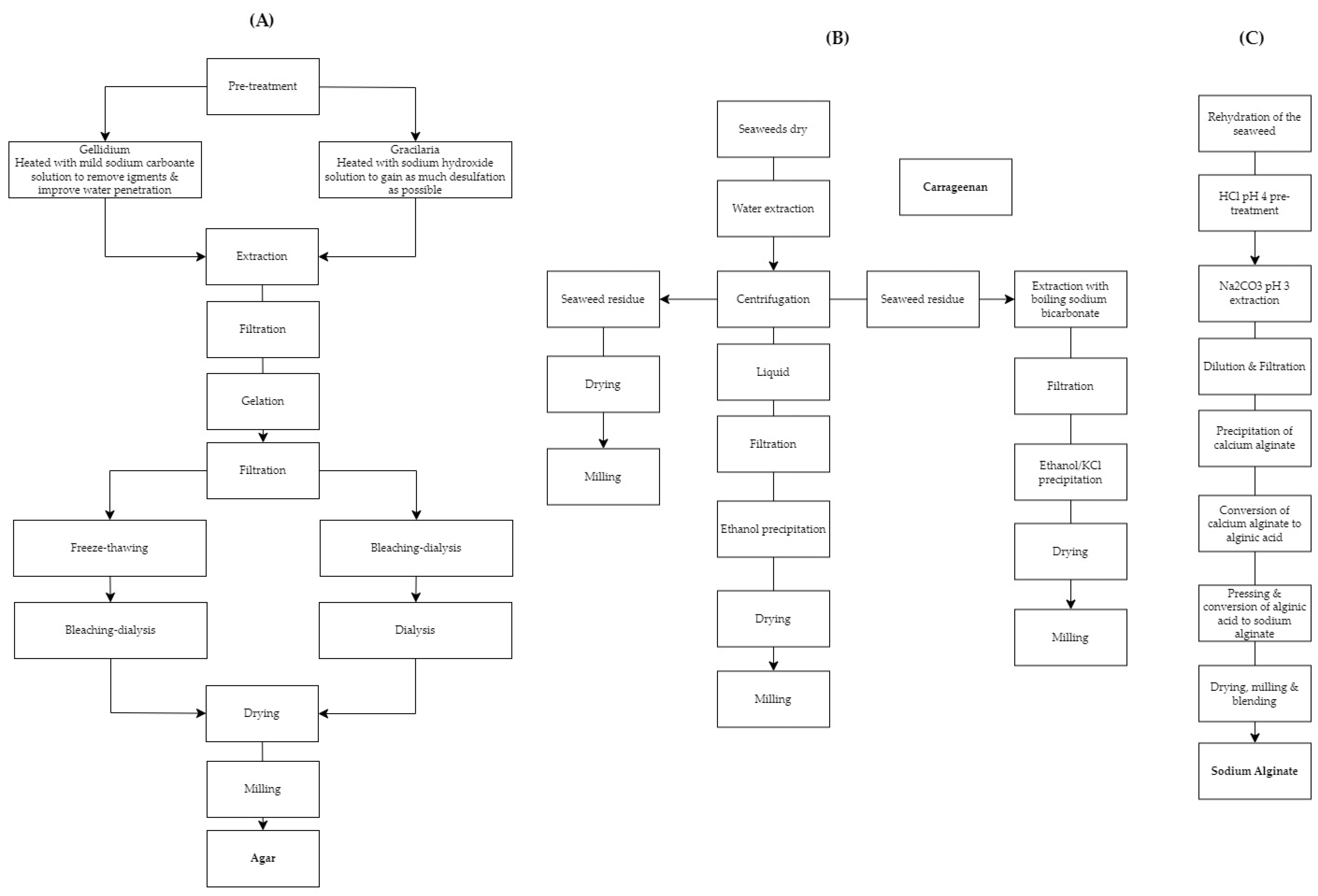

Table 1.
Packaging specific mechanical properties of conventional petro-polymers.
| Polymer | Elongation at break (%) | Tensile strength (MPa) | Ref |
|---|---|---|---|
| HDPE | 2131.1 | 27.93 | [96] |
| LDPE | 349.0 | 9.93 | [96] |
| PP | 690 | 22.3 | [97] |
| PS | 3.35 | 20.64 | [98] |
| PVC | 180.37 | 30.33 | [99] |
| PET | 1.87 | 40.02 | [100] |
Table 2.
Mechanical properties of seaweed-based composite materials [104].
Table 2.
Mechanical properties of seaweed-based composite materials [104].
| Material | Filler/Additive | Elongation at break (%) | Tensile strength (MPa) | Ref |
|---|---|---|---|---|
| Seaweed | Cellulosic pulp fiber | 2.5-5.4 | 45-81 | [105] |
| Seaweed | Microcrystalline cellulose | 13.57-19.17 | 20.21-29.76 | [106] |
| Seaweed/Starch | - | 6.17-18.4 | 41.37-65.73 | [107] |
| Seaweed | Oil palm shell nanofiller | 2.08-3.30 | 31.4-44.8 | [108] |
| Seaweed | Neem leaves | 17.64-20.73 | 34.55-39.95 | [109] |
Disclaimer/Publisher’s Note: The statements, opinions and data contained in all publications are solely those of the individual author(s) and contributor(s) and not of MDPI and/or the editor(s). MDPI and/or the editor(s) disclaim responsibility for any injury to people or property resulting from any ideas, methods, instructions or products referred to in the content. |
© 2024 by the authors. Licensee MDPI, Basel, Switzerland. This article is an open access article distributed under the terms and conditions of the Creative Commons Attribution (CC BY) license (https://creativecommons.org/licenses/by/4.0/).
Copyright: This open access article is published under a Creative Commons CC BY 4.0 license, which permit the free download, distribution, and reuse, provided that the author and preprint are cited in any reuse.


