

Submitted:
22 July 2024
Posted:
23 July 2024
You are already at the latest version
Abstract
The concept of Digital Twins has been in the field for a long time, constantly challenging the specification, modeling, design, implementation, and exploitation of complex cyber-physical systems. Despite the various foundations, standards, and platforms in Systems Engineering, there are ongoing challenges with Verification and Validation methodology. This study aims to establish a generic framework that addresses the various aspects of Digital Twinning. The multifaceted nature of the problem requires raising the abstraction level in both the Real (Actual) and Virtual domains, effective dissemination of information resources, and a design inspired by verification and validation. The proposed framework combines the Quintuple Helix model with the Problem and Operational Domains of a Real (Actual) Twin, the Solution and Implementation Domains of a Virtual Twin, and the Execution Domain as the bridge that links them. Verification and Validation dimensions follow the Meta Object Facility abstraction layers (Instance, Model, Meta-model, and Meta-meta-model) mapping over five Helices. Embedding the complexity reduction mechanisms in the proposed framework builds a suite for extendible and verifiable digital twinning in simulation and real-time scenarios.
Keywords:
Verification
; Validation
; Digital Twins
; System of Systems
; Domain Specific Modeling
; Verification Frameworks
; Helix models
; Quintuple Helix Model
; Cyber-critical systems
; Meta Object Facility
1. Introduction
Verification and validation of complex cyber-critical systems are challenging aspects that require extensive engineering and scientific research. They are essential for assessing the maturity level of the engineering process and the sustainability of the coexistence of real-world systems and their digital counterparts. From an engineering process perspective, design involves a forward-looking combination of specification, modeling, design, and implementation activities, methods, techniques, and platforms. Verification and validation are backward-looking activities performed to confirm the proper alignment of the vision and solution and to assess the quality of operation according to the system's metrics. Process management involves guiding the overall life cycle stages of cyber-critical systems. Frameworks that support creativity in forward-looking and critical thinking in backward-chaining cognition are highly desirable in complex engineering efforts. Although raising the abstraction level decreases the reuse capacity of engineered artifacts, it is a powerful characteristic of a mature mental model. This research aims to combine digital twinning, multidimensional cognition processes, and systems engineering methodology to build an extendable, generic, configurable, and usable framework that supports the specification, modeling, design, verification, and validation of sustainable cyber-critical systems. Model-based approaches require careful integration into the systems engineering process. Defining the granularity level of a particular model presents two opposite challenges. If the model is coarse-grained, it is not well-suited for analytical evaluation and the generation of reliable guidelines for further implementation. The development of a detailed model requires significant effort to convert it into a usable implementation [1]. Modeling systems based on their delivered values provides new perspectives on verification and validation. The continuous delivery of value throughout the system's lifecycle, in accordance with the system values model, is crucial in various domains [2]. There is still a lack of common understanding regarding the formality level that justifies the incorporation of verification and validation in the early stages of Model-Based Systems Engineering. Research has shown that Systems Modeling Language (SysML) is the most commonly used formalism for specifying system descriptions [3]. The study also indicates that the requirements specification is significantly less focused on than the design phase, with reducing the risk of late defect detection being the major motivating factor [3]. Currently, there are various formalisms that rely on transforming behavioral models into corresponding analytical models. While these formalisms offer flexibility due to the range of analytical languages and notations available, it is widely agreed that they introduce additional complexity and require proper handling. The interoperability of different tools, general-purpose or domain-specific languages, and integrated production environments supporting simulations is one of the most challenging issues for further research and engineering directions. Our approach to the proposed framework model specification has been directly influenced by general findings adopted from [3] and visualized as a Mind-map diagram (Figure 1).
The concept of Digital Twins (DT) has been around for quite some time, continuously challenging the specification, modeling, design, implementation, and exploitation of complex Cyber-critical systems [4,5]. With the rise of the Smart Internet of Things (IoT) and the use of machine learning models, there are several challenging research and engineering directions such as Cyber-physical systems (CPS), data science, optimization, and security and privacy [6,7]. Current research questions about DT revolve around the impact of modeling, different data sources, communication between Real (Actual) and Digital (Virtual) twins, problem domains, purpose, validation principles, and the elements and their potential reusability [8,9]. The practical aspects of DT, such as state synchronization and deployment within the DT network, deserve particular attention from a dynamic (behavioral) modeling perspective [10]. These characteristics position DT as a potential analytical framework that focuses on modeling and model-based engineering through integrated modeling environments. DT, as the virtual representation of a physical asset, is directly influenced by different problem domains, catering to the interests of specific stakeholders. While DT holds the promise of revolutionizing the operations, support, and sustainability of deployed systems, it faces several industrial barriers. The development time and costs associated with building a DT and particular domain expertise make it difficult to undertake for many organizations [11]. Digital Engineering Strategy (DES) positions DTs as a natural framework for tracking and reporting the engineered system's physical condition. It enables employing prediction and health management (PHM) technology principles to transform systems sustainability support by condition-based maintenance (CBM) platforms. One of the problems of having two systems (the physical one and its digital replica) is that their behavior may not always be consistent. The fact is that physical systems possess inherent uncertainty, and it is a challenging endeavor to determine the actual cause of potential differences considering the possible uncertainties built in their digital counterpart. Engineering adaptive systems (systems that regularly change their structural and behavioral characteristics to cope with context disorders) additionally question the applicability of DTs [12]. Concerning the DT maturity model [13], the highest maturity level corresponds to Intelligent DT as a virtual system model of the physical twin with adaptive AI and reinforcement learning. The comprehensive study of the DT Maturity Model foundation [14] assesses Digital Twins in seven categories (context, data, computing capabilities, model, integration, control, and human-machine interface) with 31 ranked characteristics. It is a generalized model for Digital Twins evaluation purposes (Figure 2).
Dealing with multilevel uncertainty is a significant challenge when relying on Digital Twins (DTs) as part of Verification and Validation frameworks or when trying to verify and validate their structure and behavior. An important question arises: who validates the Validator and verifies the Verifier? Another source of uncertainty in DTs is their human-centric nature. While technology aims to replace human involvement in repetitive tasks through procedural-declarative specifications [15], integrating human cognition with technology frameworks remains unavoidable. With a focus on humans, DT-based frameworks can become non-deterministic, discrete socio-technical systems. Incorporating robots into production systems demands enhanced collaboration between intelligent robots and human operators [16]. In recent research, DT development frameworks have used various virtual concepts, including mirror space models, product agents, product avatars, digital threads, prototypes, workshops, data, and features. Feature-based DT analysis (FEDA) identifies essential features that may exist in the DT of a specific asset, such as data link, coupling, identifier, security, data storage, user interface, simulation model, analysis, artificial intelligence, and computation. These features serve as the foundation for the assessment methodology of conceptual DT frameworks based on a holistic score scale (see Figure 3) [17].
Regarding DT architecting, two main approaches direct contemporary research activities. One relies on Systems Architecting, while the other favors Software Architecting with a noticeable shift from Systems to Software Architecting approach. The research in DT architecting usually starts with a Referent Architecture Model (RAM) validated with a Validation by Example method [18]. DTs are software-intensive systems with a broad set of Quality Attributes (QAs), with possibly hidden interdependences that affect the assessment process and results. As such, they justify the application of existing software architectural patterns as DT core architectural models, reducing the need for reinventing the novel RAMs. Although there is a lack of widely accepted architectural solutions for digital twins, the dominant ones are the layered and service-oriented architectural patterns (Figure 4).
The digital transformation of contemporary business systems justifies the combination of Enterprise and Service-Oriented Architectures. The Enterprise Architecture Modeling approach integrates the heterogeneous elements of a business system, while Service-Oriented-Architecture tends to harmonize business and Information Technology (IT) dimensions [19]. With the current proliferation of micro-services scripting as an challenging, language based, technology for the distributed architectures, the requirement-driven DT Microservice framework architectures bust. In [20], the authors propose DT tree-tired Microservice framework architecture, composed of the Business Layer (modeled with the Business Process Modeling Notation - BPMN), the Functional Layer (Message Broker Architecture), and the Information Layer (Smart Data Services supported by the Federated SPARQL Endpoint - with Resource Description Framework format). Each layer is formally specified through the set of functional and nonfunctional requirements extracted from the RAMI 4.0 Reference Architectural Model for Industry 4.0 [21].
Systems Engineering and System-of-Systems paradigms are well-suited contexts for model-based decision-making concerning the requirements phase of DT development [22]. The issue with complex systems is not the complexity if one assumes the deterministic behavior in fulfilling their specified mission while producing desired outcomes. The main problem with complex systems is the discreet nature with configuration (context) dependent emergent properties and non-proportional relation between applied stimulus and the reflected outcomes. It may result in potentially dramatic failures without a prior warning or even an indirect announcement. The potential benefits of DT are that, through modeling and simulation over virtual twins, it is possible to catch and explore the emergent system properties without exposing the physical twin to potentially harmful outcomes [23]. The unavoidable role of prototyping in mission-critical systems design exhibits a perspective approach for a prototyping framework based on verifiable formal specifications involving meta-meta, meta, and modeling abstractions [24]. The Artificial Intelligence (AI) principles and methods play a significant role in DT framework development and enable constant improvement through integrated transfer learning capabilities [25,26]. The enhancement of design, verification, validation, and continuous improvement of AI-controlled cyber-critical systems demands novel methodologies that leverage machine learning while coping with their inherent non-linearity and complexity [27]. Engineering cognitive and intelligent systems currently lack suitable formalisms that enable specification, modeling, and formal verification at multiple abstraction levels while combining the open and closed principles on informational and functional domains [28]. The traditional Verification and Validation methods of safety-critical systems, with AI components in their software core, seem inappropriate and thereby crucially demand the development of novel approaches [29].
Digital Twins-based Verification and Validation ranges from functional to non-functional and safety-critical requirements. The survey [30] cross-relates the essential elements of Digital Twins that serve as a foundation for Verification and Validation purposes. Modeling and models are founded as fundamental sources, while simulations and operational data usage appear significantly less utilized. The growing reliance on modeling and simulation results coupled with operational data to guide system design and operational Verification and Validation increases the importance of making those results reliable in different contexts. The collaborative safety-critical systems demand parallelism modeling and bring the System-of-Systems (SoS) Verification and Validation to contemporary research focus, particularly with IoT, and synchronization of reactive components of complex cyber-physical systems [31,32,33,34]. With the proliferation of Agent-Based Modeling and Simulation (ABMS) methods, the lack of mutually accepted approaches and standards for assessing the simulation is a significant obstacle. The main question is how to select the relevant subset of validation-supporting mechanisms and raise the credibility level of applied models from different stakeholders' aspects [35]. The addressed mechanisms cluster into two main groups. One is the Foundation group, which clusters mandatory mechanisms, and the other is the Advanced group, which clusters the exceptional ones (Figure 5).
The validation of DT models demands a creative combination of expert knowledge gained through critical analysis, with the operational data gathered from the sparse network of IoT sensor devices incorporated into the architecture of an actual system. DT modeling needs a balanced combination of sufficient details that bust the resolution level and high enough fidelity to mimic the actual system properly. DT servicing layer demands the effective acquisition of real-time data, responsive analytics, and the efficient dissemination of feedback. The current lack of a systematic framework for DT validation is the main obstacle but, at the same time, a challenging issue. In [36], the authors elaborate on the general validation strategies (manual/visual inspections, property testing, model-based testing, and machine learning) and the opened problems (modeling realism, data uncertainty, system dynamics, use case alignment, and reporting invalid models). They end up with the conceptual DT validation framework/strategy that relies on the synergy of expert knowledge and the combination of historical and operational data.
The framework-based approach to engineering complex systems has a long tradition that favors top-down architecting with early-stage verification and validation capabilities. A framework is either a physical or a conceptual skeleton that guides a particular artifact construction by expanding and specializing the generic structure that specifies a family of interrelated products or procedures. It favors reusability by managing the control flow and orchestration of dynamically configured components in an inversion of control manner. The conceptual framework is an analytical tool that enables critical analysis of various concepts to develop new ones. It focuses solely on concepts and lacks factors and variables that naturally belong to the conceptual model successor. There are two major categories of contemporary frameworks: non-software empowered (usually represented as a set of structured and semi-structured documents), and software empowered (software-supported collaborative/cooperative environments supporting the digital transformation of problem domain) [37]. Software-empowered interoperability frameworks are of greater importance for this research perspective. They demand intensive, time-consuming specification, modeling, and meta-modeling activities performed and managed within the scope of related projects or portfolios. The development of the verification framework usually incorporates the mechanism for statistical correlations and parametric space search, with probabilistic coverage guarantees, to determine potential parameter regions (configurations) that complies or violate predefined specifications [38,39]. Regarding the role and importance of early verification in engineering complex systems, the confidence level in verification methodology and obtained results may vary due to the experiences gained through the previous design phases. That is why it is essential to adapt the optimal verification strategy selection mechanisms through a belief-based model [40] or AI mechanisms that aid the critical analysis phase in deductive reasoning [41,42]. Integrating digital twin technology in cyber-physical systems (CPS) and the Internet of Things (IoT) boosts their intelligence and enables DT model refinements without disrupting the operation of an Actual System. The promising networking platforms (5G and 6G) with highly connected cells enable collaborative model improvements like blockchain middleware as a framework (CoTwin) [43] and Zero-Touch Network management secured framework [44]. Visual analytics for DT play a critical role in effectively navigating humans through twin data but currently lacks guidance to fully integrate human domain experience and cognitive abilities into the intelligent decision-making process of digital twin systems [45]. DT framework operation mechanism crucially depends on the quality of the data integration layer and the means used in Twin Model verification and validation processes. Twin data origins from heterogeneous sources need explicit marking by the spatial-temporal and modal qualifiers, are naturally multidimensional, and serve as a foundation for application services in optimization, model construction, interaction, and decision feedback frameworks' states. The Tensor-Based representation of heterogeneous, multidimensional data instances, with different orders of tensor [46], represents a challenging formalism for data fusion in DT data models and instances. Data Analysis Workflows (DAWs) represent the structured specifications that guide data sets' analytical processes. Their popularity emerges with the rise of dataset complexity, progressive growth of interdependencies, and the number of individual data instances. With the proliferation of Not-only-SQL (NoSQL) repositories and the possibility of topological and operational distribution, locating the data handling mechanisms outside the actual code busts the dynamic multiplatform execution abilities. Formal, conceptual model of logical and physical DAWs, the infrastructure and execution semantics, and static and dynamic DAWs validity constraints abstractions, defined in [47], serve as the foundation for concrete Validity Constraints (VCs) specification (setup-related, task-related, and file-related). In the verification prototype, the authors have extended the NextFlow (a Domain Specific Language (DSL) for creating scalable, portable, and reproducible workflows [48]) with two directives (require and promise), thereby avoiding a novel VC specification language. The utilization of well-known scripting platforms, like Apache Groovy [49], and the associated frameworks, like Gradle [50] and Grails [51], has influenced the platform-oriented abstraction with the bridge for the concrete platforms extendibility as an architectural foundation of our conceptual framework.
The industrial applications of digital transformation (DT) generate a lot of interest in both academic and production settings. The rise of Industry 4.0, 5.0, and 6.0 paradigms continues to influence methodologies, methods, and technologies in modern industries. Virtually every industrial sector is heavily involved in digital transformation [52]. Research in the most significant domains (Figure 6) indicates uneven coverage, with Manufacturing, Construction, Energy management, and Education being the most significant in that order.
Intelligent systems in any industrial sector can greatly benefit from the automatic generation of DT simulation models that are updated in real-time. This can lead to increased productivity, cost reduction, improved decision-making, safety, better design, planning, maintenance, remote access, and optimization in various engineering stages. The need for rapid decision-making support is growing, requiring a high level of automation in the decision-making process. There are four main decision-driving forces: table-driven (fast, event-driven with static connectivity between event and appropriate event handler), process-driven (strategy building, algorithmic, rule-based, with dynamic binding), data-driven (parametric, dynamic, adaptive, with binding over external data sources) [53], and knowledge-based (evolutionary, adaptive, generative, with continuous improvement). Providing support for different core decision-making strategies is crucial for creating a sustainable DT verification and validation framework specification.
The operation of a real-time system requires continuous optimization of strategies and configurations, along with support for leveraging the structure and behavior of the Digital Twin (DT) [54,55,56]. Model-based simulations, enhanced by learning mechanisms and big data utilization, involve gradual tuning of the Actual System Model (ASM). Due to the diverse applications and complex models of DT, there is a focus on developing a surrogate modeling approach for building the ASM, leading to the development of the DT Mediator (DTM) as a core component of the proposed framework [57]. The DTM facilitates communication between the Actual System (AS) and its corresponding Digital Twin (DT), handling the collaboration responsibilities.
The acquisition, storage, retrieval, and visualization of key performance indicators related to domain-specific Digital Twins represents an important set of framework features. Modern software tools primarily rely on Graphical User Interface (GUI), which is typically implemented as parameterized dashboards with an extendible set of views [58]. Digital Twins that support the product assembly process heavily rely on the accuracy and compliance of actual assembling geometry and its 3D model. Currently, there is a lack of efficient model-sharing and management mechanisms [59]. In the construction sector, the spatial arrangement of different construction equipment and their interaction shows a higher dynamic level over the stages of building environment progression, in correlation with the built facilities, compared with manufacturing (production) lines. This ultimately demands Digital Twin integration with 6D Building Information Management (BIM), Geographic Information System, corresponding Enterprise Information System [60,61], Six M (Machine, Manpower, Material, Measurement, Milieu, and Method) strategy [62], and emerging Digital Twins Information Systems [63]. Some obstacles in the currently available solutions for Digital Twins applications in Building and Construction Engineering are the lack of sustainable support for data integration and interoperability, data accuracy and completeness, scalability and complexity issues, privacy and security, and standards and governance support [64]. Automated visual quality assessment in virtual and augmented reality extends Digital Twin visualization capabilities and aids framework visualization, simulation, and animation quality [65].
The main focus of analyzed references is on the real-time aspects of applying Digital Twins. However, there is little attention given to systems built on event-driven architectures in socio-technical domains. By raising the level of abstraction, we believe it is possible to elevate the Digital Twin paradigm beyond the traditional real-time and sensor-focused connection with the actual system. This can be done by abstracting the event coupling mechanisms which hide the physical characteristics of the specific coupling through mediator services. This leads to a challenging concept of Virtual Twins that offer end-to-end infrastructure that accelerates the collaboration of the actual systems at arbitrary abstraction or hierarchy levels.
The previously discussed challenges have directly influenced our research approach. Our ultimate motivation is to formally and conceptually specify the extensible hyper-framework for the verification and validation of Digital Twins through multilevel and multidimensional virtual or digital twinning.
2. Materials and Methods
The analysis indicates a lack of framework-based integration of DT Design, DT Verification, DT Validation, and DT Operation. DT Design frameworks usually focus on various aspects of the DT design process, including formalisms, models [66], and mimicking object-oriented software development integrated environments [67]. The reference architecture of network aggregated DTs and service orchestration, with six steps and four stages, represents a challenging starting point [68]. We argue that Verification and Validation are not isolated steps in the DT Design and Operation processes, similar to testing in software development. When integrated into design activities, they form a mental discipline that ensures the lowest possible risk level for utilizing an engineered system. We have defined DT Competence ontology, a Quintuple Helix generative architecture, Meta-object-facility layered architecture, standards and standardization, and bridging of the abstraction and implementation in favor of heterogeneity as five main pillars of the proposed conceptual framework specification.
The first pillar relies on the Digital Twin Consortium's Digital Twin Ecosystem Capabilities Periodic Table, containing a systematic collection of referent capabilities and the associated semantics. Developed to bust the acquisition process and the comparative analysis of different DT use cases, it enables leveraging the quality level of the domain-specific DT requirement models. From our perspective, it represents an unavoidable starting point in building the generative conceptual framework architecture, fully compliant with relevant referent specifications. We have reorganized the original Periodic Table as a Hub-Mind map diagram, with general groups presented in Figure 7.
The DT capabilities groups differ in the contained number of level-1 capabilities. Figure 8 correlates level-1 capabilities as a radar diagram and indicates the contemporary domination of Data, Intelligence, and Use Experience groups. We have additionally sub-structured the individual groups, as appropriate, to add further fidelity tuning mechanisms. For example, Figure 9 represents the sub-structured (Data Harvesting, Data Management, and Persistency) grouping of a Data group as a Mind-map diagram.
The hub-mind-maps of the Management, Intelligence, User Experience, Trustworthiness, and Integration, build the reference capability model foundation (Figure 10, Figure 11, Figure 12, Figure 13 and Figure 14, respectively).
Regarding the presented capability model, it is possible to define a family of related specific frameworks or a single, generic integrated hyper-framework with the opened set of capabilities, each with extendible nesting features.
The combination of run-time pluggable, strategy-driven, DT configuration building with delegated construction of individual capabilities dimensions has inspired the use of extendible builder combined with factory method creation and strategy pattern-directed building as a core framework service.
The second pillar relies on generative potentials of the DNA helix model with the built-in combinatorial complexity replicating within two back-bones coupled by four-dimensional nucleotides (Figure 15). DNA model has inspired many research endeavors outside its natural life science domain. Operational Research, Computer Science, Economy, Knowledge, Business, Social Sciences, Education, Technology, Smart Cities, and Innovations are typical examples. With the structural expansion of the genuine DNA model either by single (Figure 16) or double (Figure 15) helixes, the family of derived higher-order models emerged (Triple, Quadruple, Quintuple, and beyond). The higher-order helix models have dominantly appeared in different socio-technical domains.
The relative comparison of different helix model referenced searched in favor of this article and roughly correlated over last four years, is presented in Figure 17.
The results show the relative dominance of Double and Triple Helix elaborations with the stable growth of Quadruple and Quintuple instances. N-tuples helix models are beyond the scope of statistical error. The application of helix models dominantly belongs to the conceptualization of knowledge-based economy studies and social sciences. The traditional triple helix model sublimates academia, industry, and government interactions. The transition from triple to quadruple engages the additional helix associated with democratic aspects (civil society) of a knowledge-based economy and community, while the transition from quadruple to quintuple assumes extension by additional ecology and ecological sensitivity helix [70,71,72,73]. The quintuple helix mode is additionally analyzed as a paradigm of future studies and digital technology foresight [74], promoting general sustainable development [75] and specific industries [76]. The cross-related domain analysis of the quintuple helix model application in different problem domains, adapted from [77], is represented by a radar diagram in Figure 18.
We found the Quintuple Helix model the most suitable for the proposed Conceptual Framework architecting. The relevant details appear in the Results section of this article.
A third pillar relies on the unified conceptualization approach to reasoning about framework entities and stages. The assumption that human intelligence and cognitive processes build an arbitrary configuration through the dynamic instantiation of abstract concepts aligns well with commonsense reasoning [78]. With the proliferation of intelligent DTs, delegating mental tasks to an arbitrary physical or virtual automata instance is a challenging mainstream. With AI reasoning, dealing with the dynamically unpredictably ambiguities, emergent properties, and the social context of operation appoints the reflection as a currently missing mechanism. The abstracting mechanism has to be closed and self-modifiable to cope with the reflective changes in the execution context [79]. The closeness principle has to guarantee fully standardized specification and dedication of individual layers. The self-modifiability offers the inherent intra-layer transformation mechanism with the absolute (unlimited) gaining potential.
The Meta-Object-Facility (MOF) is the Object-Management-Group (OMG) standard for writing meta-models (models of models). It provides a typed system for building the architecture of complex systems in the context of model-driven engineering and fully supports closeness and self-modifiability. An advantage of meta-concepts generally is that they enable the use of concepts without prior knowledge of the concepts’ specific features. There are two distinct aspects of closed-layered architectures, the intra and inter-layer. Intra-layer defines different entities at the same level of abstraction. The inter-layer specifies the same entity at the different abstraction levels. Each concept, appearing on an inner layer, is fully described by the abstract concepts from the upper layer, excluding the final layer with auto-definable properties. The OMG MOF is composed of four abstraction layers. The M0 is the instance layer (object), M1 the model layer, M2 the meta-model layer, and the self-specifiable M3 the meta-meta-model layer (aka language). The core specification of OMG MOF appears in
[80]. The traditional MDE references M0 and M1 layers and appears in object-oriented modeling tools. Digital Twin Definition Language (meta-meta-model abstraction layer) is an example of a language for describing models and interfaces for IoT digital twins. It is defined as JSON-LD, leveraging JSON-based and Resource Description Framework (RDF) systems, and contains a set of meta-model classes (Interface, Command, Component, Property, Relationship, Telemetry, and data types), and semantic type annotation
[81].
The additional elaboration on the MOF as the multilayered Reference Architecture foundation for the main architectural constituents, the modeling abstraction, and the information resource abstraction appear in Section 3.
A fourth pillar relies on the standards and standardization issues being inseparable from the engineering endeavors, virtually from their first announcements by Charles Le Maistre, a pioneer of international standardization [82]. They have been defined or prescribed with the general mission to ensure quality product and process development and are avoidable in the early stages of research or engineering projects. With the proliferation of standard organizations and domain-specific standardization, the main obstacle is to recognize what exactly Standards standardize and to what degree of formalization. In [83], the author cross-examines five relevant standards for modeling digital twins in digitalized factories. In the context of this article, the most referenced is ISO 23247 - Digital Twin Framework for Manufacturing, which provides a generic development framework with a set of standardized building blocks and assembling support for configuring specific DT implementations based on IoT [84,85,86]. The next referent is the IEC62541, the Open Platform Communication Unified Architecture (OPC UA), for data exchange between sensors and cloud applications [87]. Interoperability between Digital Twin standards and specifications is a challenging issue primarily motivated by the diversity in their operational use [88,89,90]. The interoperability within an open set of relevant related standards is a framework's must.
Bridging the abstract specification and the diverse repertoire of implementation platforms establishes a fifth framework's pillar that favors heterogeneity instead of homogeneity while harmonizing the involved specification, development, modeling, implementation, and execution platforms. Digital Twins are software systems, and thereby ultimately specified, modeled, implemented, verified, validated, and operated having software in mind. According to the detailed enumeration [91], software vendors have recognized the opportunities to support the DT paradigm in different stages of the engineering life cycle. Although [91] elaborates on the wide range of related technologies and tools, we may conclude that there is still a lack of research articles that address the overall integration capabilities. The requirements set, derived for the comparison purposes of three commercially available integrated DT platforms [92] and evaluated through the experimental smart-room case study, shows significant compliance with the respectable number of partially or fully satisfied requirements.
We hope the proposed conceptual framework, joined with similar approaches concerning the requirement specification of future frameworks [93], will open new perspectives in that direction.
3. Results
The proposed Conceptual Framework represents a novel approach to modeling and interconnecting multidimensional constituents of DT-based conceptual framework with built-in Verification and Validation features that may aid the entire life cycle stages of Cyber-physical-Systems model-driven engineering.
3.1. The Requirements Modeling and Specification
We first specify the requirement model of the capabilities of a novel proposed conceptual framework. The model classifies the capabilities into three main groups: Essential, Highly Desirable, and Desirable (Figure 19). The adopted classification is neither absolute nor determines the order of components' development and integration in the assumed framework's architecture. It favors the capabilities we find novel regarding the other cross-related frameworks.
Table 1 sublimates the detailed requirements derived through the critical analysis presented in the Introduction and Materials and Methods sections and used as the foundation for the creative phase of novel conceptual framework specification development.
3.2. Quintuple Helix Foundation of DT Verification and Validaion Conceptual Framework
We propose five essential domains that constantly appear at the highest abstraction level of system and software engineering endeavors. The first two originate from the actual system/software specification stage. The third and fourth emerge from the engineering stage, while the fifth belongs to sustainable exploitation.
We roughly represent the Real-world system under consideration with one Double Helix composed of Problem and Operation Domains. The corresponding Digital Twin forms another Double Helix composed of a Solution and Implementation Domain. To integrate them, we need an additional Single Helix abstracting the Execution Domain. The selection of a generic Quintuple Helix Model is thereby fully justified (Figure 20).
Problem and Operation domains form the Actual Twin that models the structure and the behavior of the value chain for a concrete-engineered system. The Solution and Implementation domains build the Virtual Twin as a software counterpart of the concrete-engineered system. The Execution helix represents a real-time dimension that integrates previous helixes with the concrete deployment configuration instances of the engineered system.
According to the foundations presented in the Materials and Methods section, we define a Framework Helix as a link that bridges two ends of a Framework Wormhole Modeling Abstractions End (Figure 21) and the Information Resource Abstractions End (Figure 22).
The Resource Abstraction End model relies on the Meat-Object-Facility, Four Layers Wrapper, with the Instance layer as the lowest and the Mata-meta-model as the highest abstraction layer. Following the abstraction hierarchy, every inner layer concept derives from the abstract concepts of the upper neighboring layer. The last one is an exception, a self-defined, and thereby ends the abstraction hierarchy. The end-to-end connections of each layer instances of the encapsulated Single Helix, leading to the equivalent layer of another arbitrary Single Helix, build the communication network that enables design, management, verification, validation, and execution flows over the dynamic configuring paths.
The Information Resource Abstraction concept specifies different resources that compose the essential part of DT architecture, the data. According to the MOF concept, with four abstraction layers, with the Data Layer as the lowest and the Wisdom Layer as the highest abstraction level. The Information Resource Abstraction is a two-folded concept with persistent and dynamic sides. The persistent side abstracts storage and retrieval forms and mechanisms, while the dynamic side abstracts run-time accessible data structure representations.
Additionally, we define a Framework Nucleotide as an abstract, freely associable atomic building block template (capsule) with temporal (time) and modal (type) marking abilities (Figure 23).
The Framework Nucleotide (FN) encapsulates internal characteristics with the interfacing mechanisms and enables configuring the Core Conceptual Framework Quintuple Helix architecture instances with time and topology dimensioning of one of the currently defined specializations Process and the Product. Considering Verification and Validation as FN specializations embedded in the process and product assets, it is essential to supply the multilayered connectivity mechanisms supporting the multipath traversals and traceability through the navigation space of associatively connected model abstractions (instance, model, meta-model, and meta-metamodel), dynamic and persistent information resource instances (data, information, knowledge, and wisdom), and externally or internally orchestrated services.
The FN specifies seven interfaces:
- Abstraction Interface - that bridges the modeling abstraction layers (Instance, Model, Meta-model, and Meta-meta-model) ;
- Data Structure Interface - that bridges the Data Structure Resource, a complex abstract concept encapsulating dynamic Resource collection representing Data, Information, Knowledge, or Wisdom abstractions;
- Repository Interface - that bridges the Repository Resource, a complex abstract concept encapsulating persistent Resource collection representing Data, Information, Knowledge, or Wisdom abstractions;
- Association Interface - that encapsulates the connectivity mechanisms (connect and disconnect services);
- Repository Interface - that bridges the Repository Resource, a complex abstract concept encapsulating persistent Resource collection representing Data, Information, Knowledge, or Wisdom abstractions;
- Association Interface - that encapsulates the connectivity mechanisms (connect and disconnect services);
- Accept Visitor Interface - that enables the hosting of external, visiting, set of services attached to the Framework Nucleotide Instance;
- Internal Service Interface - that enables the formation of an extendible set of internally implemented services, accessible through referencing the universal abstract method implemented by an arbitrary implementer deliver(s: Service, o: SelectedObject, f: Filter). Semantically, run a service (s: Service) on a selected object (o: SelectedObject) and restrict the delivery with security and privacy policy-based dynamic filtering (f: Filter); and
- External Service Interface - that enables access to externally offered services by referencing the universal abstract method implemented by an arbitrary external implementer to perform(s: Service, o: SelectedObject, f: Filter). Semantically, execute external service (s: Service) on the selected object (o: SelectedObject) and restrict the execution by the security and privacy policy-based dynamic filtering (f: Filter).
3.3. Quintuple Helix Conceptual Framework for DT Verification and Validation Spots
The transfer of control between participating objects in Model-Based-System-Engineering phases, mapped to the corresponding Digital Twins and supported referent resource objects that foster the interactions, relays on the Verification (red) and the Validation (black) spots embedding in the proposed conceptual framework behavior modeled as activity diagrams (Figure 24 and Figure 25).
The behavioral model contains six vertical partitions, split into Figure 24 and Figure 25, that correspond to the course grained phases in Model-Based-Systems-Engineering paradigm (Concept, Primary Design, Detailed Design, Implementation, Test and Evaluation, and deployed Operation and Maintenance), and three horizontal partitions that correspond to MBSE Outputs, mapping partition, and Digital Twin Development partition. The Verification spots, marked with a red diamond, define the points of control at which the embedded verification mechanism triggers. The Validation spots, marked with a black diamond, define the points of control at which the embedded validation mechanism triggers. The inter-phases exchange objects represent resources that accompany the horizontal transfer of control between MBSE main phases. These resources serve as a foundation for feeding the Mapping to DT activity zone and guiding DT Development activity zone.
3.4. Quintuple Helix Conceptual Framework Mediation
We have nominated the extendibility as a mandatory capability of the specified conceptual framework. Due to the inherent complexity of individual conception framework configuration instances, hiding the resulting complexity is a must. The universal conceptual model of the mediation mechanism enables the complexity hiding while connecting the Actual System (AS) and the related DT Element instances (Figure 26).
The proposed conceptual framework establishes multilayered and multidimensional architecture with bridging mechanisms that support virtually unlimited extendibility. It creatively combines different challenging features and builds the foundation for further research that will need deeper diving into each of the presented dimensions. With the embedded mechanisms, its architecture converges to a collaborative hyper-framework, the interoperable configuration of different frameworks (a framework-of-frameworks-(FoF)).
All of the elaborated concept models relate to the essential group of requirements and justify the proposed approach. The rest of the specified requirements are an open challenge for further critical analysis and creative development activities.
4. Discussion
Establishing a sustainable and trustworthy comparative analysis of independently developed creative solutions is a demanding and usually "rotten" problem. We consider the problem rotten if it may be correctly solved, if and only if it has been previously incorrectly solved at least once. Selecting relevant research topics is probably the most demanding step toward the valuable discussion. With current scientific and technical production, the composition of search criteria, and the rationality of article namespace and keywords, it is possible to waste energy and time with relatively low benefits.
The other obvious obstacle was a different sense of a word framework found in particular research instances explicitly mentioning framework as a keyword. The inflation of frameworks tends to convert them into buzzwords and ruins the importance of framework-based architecting. Through the introductory and materials and methods sections, we have selected a group of references and formed the union of addressed features. We ended up with 25 extracted features and used them for cross-comparative analysis by example. Table 2 contains feature identification and a short description.
After that, we cross-compared individual references (a total of 15) and the proposed conceptual framework (CF) over a complete set of extracted features with a simple on-off signature, designating feature presence with a black dot and absence with a white dot. After that, we counted the coverage for each item and added them at the bottom of the table (Table 3).
The main requirements stated for the proposed conceptual model, generality, abstracting, bridging, mediating, and configuring, have, as expected, caused the most significant coverage of all of the compared sources.
We particularly emphasize one of the most fuzzy course-grained concepts - the standardized ontology that we have classified as a Desirable requirement. The all-inclusive Digital Twin ontology specification endeavor [94] appears controversial and over-specified to a certain degree but is tailorable, which qualifies it as a potential extension of the proposed conceptual framework. We are looking forward to seeing further refinements of the ontology dimension that have the potential for easy incorporation into any framework.
Figure 27 visualizes the absolute possible envelope (the Absolute rate), the individual coverage (Reference Covers), and the individual Gap of the compared frameworks.
One of the open challenges for further research is the formation of a representative dataset with an extendible classification mechanism that would enable the application of machine-learning mechanisms and Large Language Models to gradually refine framework-related publications concerning model-based-engineering of complex cyber-physical and socio-technical systems and thereby enhance the fidelity and relevance of future comparisons.
The proposed conceptual framework is only one of the milestones that marks the future research directions. The conceptualization and abstraction levels demand further refinements to fully transform from the conceptual framework to the collection of related conceptual models, with enough details to support the transformation into extendible integrated development that enables the creation and tailoring of arbitrary framework instances in virtually unlimited number of configurations with embedded verification and validation and digital twinning support.
We find each formulated requirement (Table 1) as a challenging component and designate it as a domain framework. The proposed concepts trace the road to the framework-of-frameworks architecting.
5. Conclusions
A lack of frameworks integrating the DT Design, DT Verification, DT Validation, and DT Operation in currently published scientific and engineering research is the essential motivation factor for this article's launching. We argue that Verification and Validation are not isolated steps in the DT Design and Operation stages, similar to testing in software development. When integrated into design and operational activities, they form a mental discipline that ensures the lowest possible risk level for utilizing an engineered system.
With that in mind, we have defined five pillars of the proposed conceptual framework specification:
- the Digital Twin Consortium's Digital Twin Ecosystem Capabilities Periodic Table, containing a systematic collection of referent capabilities and the associated semantics;
- the generative potentials of the DNA helix model with the built-in combinatorial complexity replicating within two back-bones coupled by four-dimensional nucleotides;
- the unified conceptualization approach to reasoning about framework entities and stages that relays on applied MOF model to abstracting framework resources;
- · the standards and standardization support extendibility; and
- Bridging of the abstract specification and the diverse repertoire of implementation platforms favoring the heterogeneity and harmonization of specification, development, modeling, implementation, and execution platforms involved.
The proposed framework combines the Quintuple Helix model with the Problem and Operational Domains of a Real (Actual) Twin, the Solution and Implementation Domains of a Virtual Twin, and the Execution Domain as the bridge that links them. Verification and Validation dimensions follow the Meta Object Facility abstraction layers (Instance, Model, Meta-model, and Meta-meta-model) mapping over five Helices. Embedding the complexity reduction mechanisms in the proposed framework builds a suite for extendible and verifiable digital twinning in simulation and real-time scenarios.
Author Contributions
Conceptualization, Branko Perisic; methodology, Ana Perisic and Branko Perisic; formal analysis, Branko Perisic; investigation, Ana Perisic; data curation Ana Perisic and Branko Perisic; modeling, Branko Perisic; writing—original draft preparation, Branko Perisic; writing—review and editing, Ana Perisic; visualization, Ana Perisic. All authors have read and agreed to the published version of the manuscript.
Funding
This research received no external funding.
Data Availability Statement
No separate data sources used in preparing the article.
Conflicts of Interest
The authors declare no conflicts of interest.
References
- Johan Cederbladh. Towards Early Validation and Verification of System Behavior With Heterogeneous Models in Systems Engineering, PhD Thesis, Mälardalen University Press Licentiate Theses No. 352, School of Innovation, Design, and Engineering, 2024, ISBN 978-91-7485-633-0, ISSN 1651-9256, Printed by E-Print AB, Stockholm, Sweden.
- Lavi E; Reich Y. Cross-disciplinary system value overview towards value-oriented design. Research in Engineering Design - Theory, Applications, and Concurrent Engineering. 2024 Jan;35(1):1-20. [CrossRef]
- Johan Cederbladh; Antonio Cicchetti; Jagadish Suryadevara. Early Validation and Verification of System Behaviour in Model-based Systems Engineering: A Systematic Literature Review. ACM Transactions on Software Engineering and Methodology. 33, 3, Article 81 (March 2024), 67 pages. [CrossRef]
- Tao, Fei; He Zhang; Ang Liu; and Andrew YC Nee. Digital twin in industry: State-of-the-art., IEEE Transactions on industrial informatics 15, no. 4. 2018: pp.2405-2415. [CrossRef]
- Singh, M.; Fuenmayor, E.; Hinchy, E.P.; Qiao, Y.; Murray, N.; Devine, D. Digital Twin: Origin to Future. Applied System Innovation. 2021, 4, 36. [CrossRef]
- Qian, C.; Liu, X.; Ripley, C.; Qian, M.; Liang, F.; Yu, W. Digital Twin—Cyber Replica of Physical Things: Architecture, Applications and Future Research Directions. Future Internet 2022, 14, 64. [CrossRef]
- Botín-Sanabria, D.M.; Mihaita, A.-S.; Peimbert-García, R.E.; Ramírez-Moreno, M.A.; Ramírez-Mendoza, R.A.; Lozoya-Santos, J.d.J. Digital Twin Technology Challenges and Applications: A Comprehensive Review. Remote Sensing. 2022, 14, 1335. [CrossRef]
- Muctadir, H.M.; Manrique Negrin; D.A., Gunasekaran; et al. Current trends in digital twin development, maintenance, and operation: an interview study. Software and Systems Modeling. 2024. [CrossRef]
- Angira Sharma; Edward Kosasih; Jie Zhang; Alexandra Brintrup; Anisoara Calinescu. Digital Twins: State of the art theory and practice, challenges, and open research questions, Journal of Industrial Information Integration, Volume 30, 2022, 100383,ISSN 2452-414X. [CrossRef]
- Wu, H.; Ji, P.; Ma, H.; Xing, L. A Comprehensive Review of Digital Twin from the Perspective of Total Process: Data, Models, Networks and Applications. Sensors 2023, 23, 8306. [CrossRef]
- Bickford, J; Van Bossuyt, DL; Beery, P; Pollman, A. Operationalizing digital twins through model-based systems engineering methods. Systems Engineering. 2020;1–27. [CrossRef]
- Deantoni, J. ; Muñoz, P. ; Gomes, C. ; Verbrugge, C. ; Mittal, R. ; Heinrich, R.; Bellis, S. ; Vallecillo, A. Quantifying and combining uncertainty for improving the behavior of Digital Twin Systems. ArXiv,2024,2024. [CrossRef]
- Madni, A.M.; Madni, C.C.; Lucero, S.D. Leveraging Digital Twin Technology in Model-Based Systems Engineering. Systems 2019, 7, 7. [CrossRef]
- J.-F. Uhlenkamp; J. B. Hauge; E. Broda; M. Lütjen; M. Freitag; K. -D. Thoben. Digital Twins: A Maturity Model for Their Classification and Evaluation, in IEEE Access, vol. 10, pp. 69605-69635, 2022. [CrossRef]
- Boy, G. A. ; Masson, D. ; Durnerin, É. ; Morel, C. PRODEC for human systems integration of increasingly autonomous systems. Systems Engineering, 2024. [CrossRef]
- Alessio Baratta; Antonio Cimino; Francesco Longo; Letizia Nicoletti. Digital twin for human-robot collaboration enhancement in manufacturing systems: Literature review and direction for future developments, Computers & Industrial Engineering, Volume 187,2024,109764,ISSN 0360-8352. [CrossRef]
- J. Autiosalo; J. Vepsäläinen; R. Viitala; K. Tammi. A Feature-Based Framework for Structuring Industrial Digital Twins, In IEEE Access, vol. 8, pp. 1193-1208, 2020. [CrossRef]
- E. Ferko; A. Bucaioni; M. Behnam. Architecting Digital Twins, in IEEE Access, vol. 10, pp. 50335-50350, 2022. [CrossRef]
- Ilin I; Levina A; Borremans A; Kalyazina S. Enterprise Architecture Modeling in Digital Transformation Era. In Energy management of municipal transportation facilities and transport , 2019 Dec 10, (pp.124-142). Springer International Publishing, (Available at: https://www.researchgate.net/profile/Anastasia-Levina/publication/344003444_Enterprise_Architecture_Modeling_in_Digital_Transformation_Era/links/602ba7a892851c4ed575714c/Enterprise-Architecture-Modeling-in-Digital-Transformation-Era.pdf).
- Steindl, G.; Kastner,W. Semantic Microservice Framework for Digital Twins. Applied Science. 2021, 11, 5633. [CrossRef]
- RAMI 4.0 Reference Architectural Model for Industrie 4.0, (Accesed on 10 July 2024. https://www.isa.org/intech-home/2019/march-april/features/rami-4-0-reference-architectural-model-for-industr).
- Ali Gharaei; Jinzhi Lu; Oliver Stoll; Xiaochen Zheng; Shaun West, et al. Systems Engineering Approach to Identify Requirements for Digital Twins Development, IFIP International Conference on Advances in Production Management Systems (APMS), Aug 2020, Novi Sad, Serbia. pp.82-90. hal-03630920. [CrossRef]
- Michael Grieves; John Vickers. Digital Twin: Mitigating Unpredictable, Undesirable Emergent Behavior in Complex Systems, Chapter in F.-J. Kahlen et al. (eds.), Transdisciplinary Perspectives on Complex Systems, Springer International Publishing, 2017, pp.111-112. [CrossRef]
- A. Barbie; and W. Hasselbring. From Digital Twins to Digital Twin Prototypes: Concepts, Formalization, and Applications, in IEEE Access, vol. 12, pp. 75337-75365, 2024. [CrossRef]
- Yan Zang. Artificial Intelligence for Digital Twin. In Digital Twin Architectures, Networks and Applications; Springer: Gewerbestrasse 11, 6330 Cham, Switzerland, 2023; pp. 23–39. [CrossRef]
- Kobayashi, K.; Daniell, J; Alam, S. B. Improved generalization with deep neural operators for engineering systems: Path towards digital twin. Engineering Applications of Artificial Intelligence, 131, 2024, 107844. [CrossRef]
- Wael Fatnassi. Formal Verification of AI-Controlled Cyber-Physical Systems Using Polynomial Approximations: Constraints Solver, Model Checkers, and Applications, PhD Dissertation, University of California Irvine, 2024, Available online: https://escholarship.org/uc/item/41t4b6w9 (accessed on 25 Jun 2024).
- Shadab, N.; Cody, T.; Salado, A.; Beling, P. A Systems-Theoretical Formalization of Closed Systems. ArXiv. /abs/2311.10786, 2024. [CrossRef]
- J. Renkhoff; K. Feng; M. Meier-Doernberg; A. Velasquez; and H. H. Song. A Survey on Verification and Validation, Testing and Evaluations of Neurosymbolic Artificial Intelligence,. in IEEE Transactions on Artificial Intelligence, 2024. [CrossRef]
- A. Löcklin; M. Müller; T. Jung, N. Jazdi; D. White; and M. Weyrich, Digital Twin for Verification and Validation of Industrial Automation Systems – a Survey, 2020 25th IEEE International Conference on Emerging Technologies and Factory Automation (ETFA), Vienna, Austria, 2020, pp. 851-858. [CrossRef]
- Nazakat Ali; Sasikumar Punnekkat; Abdul Rauf. Modeling and safety analysis for collaborative safety-critical systems using hierarchical colored Petri nets, Journal of Systems and Software, Volume 210, 2024, 111958, ISSN 0164-1212. [CrossRef]
- Felicien Ihirwe; Davide Di Ruscio; Katia Di Blasio; Simone Gianfranceschi; Alfonso Pierantonio. Supporting model-based safety analysis for safety-critical IoT systems,Journal of Computer Languages,Volume 78,2024,101243,ISSN 2590-1184. [CrossRef]
- Daisuke Ishii. A Hypergraph-based Formalization of Hierarchical Reactive Modules and a Compositional Verification Method, 16 Mar 2024. arXiv:2403.10919v1. [CrossRef]
- Pe´rez-Gaspar M; Gomez J; Ba´rcenas E; Garcia F. A fuzzy description logic based IoT framework: Formal verification and end user programming. PLoS ONE 19(3): e0296655.,2024. [CrossRef]
- Collins, Andrew; Koehler, Matthew ; Lynch, Christopher. Methods That Support the Validation of Agent-Based Models: An Overview and Discussion. Journal of Artificial Societies and Social Simulation 27 (1) 11,2024. [CrossRef]
- E. Y. Hua; S. Lazarova-Molnar; D. P. Francis. Validation of Digital Twins: Challenges and Opportunities, 2022 Winter Simulation Conference (WSC), Singapore, 2022, pp. 2900-2911. [CrossRef]
- Perišić A; Perišić B. The Foundation for Open Component Analysis: A System of Systems Hyper Framework Model. Chapter, In Advances in Principal Component Analysis. IntechOpen; 2022. Available from:. [CrossRef]
- Xin Qin; Yuan Xia; Aditya Zutshi; Chuchu Fan; Jyotirmoy V. Deshmukh. Statistical Verification using Surrogate Models and Conformal Inference and a Comparison with Risk-Aware Verification. ACM Trans. Cyber-Phys. Syst. 8, 2, Article 22 (April 2024), 25 pages. [CrossRef]
- Roos, C.; Biannic, J.-M. ; Evain, H. A new step towards the integration of probabilistic μ in the aerospace V&V process, CEAS Space Journal, vol. 16, no. 1, Springer, pp. 59–71, 2024. [CrossRef]
- Kulkarni AU; Salado A; Xu P; Wernz C. An evaluation of the optimality of frequent verification for vertically integrated systems. Systems Engineering. 2021; 24: 17–33. [CrossRef]
- Zhan Ling; Yunhao Fang; Xuanlin Li; Zhiao Huang; Mingu Lee; Roland Memisevic; Hao Su. Deductive verification of chain-of-thought reasoning. In Proceedings of the 37th International Conference on Neural Information Processing Systems (NIPS '23). Curran Associates Inc., Red Hook, NY, USA, 2024,Article 1580, 36407–36433.
- Marisol García-Valls; Alejandro M. Chirivella-Ciruelos. CoTwin: Collaborative improvement of digital twins enabled by blockchain, Future Generation Computer Systems, Volume 157,2024, Pages 408-421,ISSN 0167-739X. [CrossRef]
- Randhir Kumar; Ahamed Aljuhani; Danish Javeed; Prabhat Kumar; Shareeful Islam; A.K.M. Najmul Islam. Digital Twins-enabled Zero Touch Network: A smart contract and explainable AI integrated cyber-security framework, Future Generation Computer Systems, Volume 156,2024,Pages 191-205,ISSN 0167-739X. [CrossRef]
- Jonas Friederich; Deena P. Francis; Sanja Lazarova-Molnar; Nader Mohamed. A framework for data-driven digital twins of smart manufacturing systems, Computers in Industry, Volume 136, 2022,103586,ISSN 0166-3615. [CrossRef]
- Zheng, Hangbin;Liu,Tianyuan;Liu,Jiayu;Bao, Jinsong.Visual analytics for digital twins: a conceptual framework and case study Journal of Intelligent Manufacturing,Volum 35, Issue 4,pp.1671-1686. [CrossRef]
- Qian, W.; Guo, Y.; Cui, K.; Wu, P.; Fang, W.; Liu, D. Multidimensional Data Modeling and Model Validation for Digital Twin Workshop. ASME. Journal of. Computing and Information Science in Engineering,2021, 21(3): 031005. [CrossRef]
- Schintke, F.; De Mecquenem, N.; Frantz, D.; Guarino, V. E.; Hilbrich, M.;Lehmann, F.;Sattler, R.; Sparka, J. A.; Speckhard, D.; Stolte, H.;Vu, A. D.; Leser, U. Validity Constraints for Data Analysis Workflows. ArXiv. /abs/2305.08409. [CrossRef]
- Nextflow. https://www.nextflow.io/docs/latest/index.html (accessed on 11 of July 2024).
- Apache Groovy. https://groovy-lang.org/, (accessed on 11 of July 2024).
- Gradle. https://gradle.org/releases/, (accessed on 11 of July 2024).
- Grails. https://docs.grails.org/6.2.0/guide/single.html, (accessed on 11 of July 2024).
- Singh, M.; Srivastava, R.; Fuenmayor, E.; Kuts, V.; Qiao, Y.; Murray, N.; Devine, D. Applications of Digital Twin across Industries: A Review. Applied Science, 2022, 12, 5727. [CrossRef]
- Harel, D. ; Yerushalmi, R. ; Marron, A; et al. Categorizing methods for integrating machine learning with executable specifications. Sci. China Inf. Sci. 67, 111101, 2024. [CrossRef]
- Eisenberg, M. ; Lehner, D. ; Sindelar, R. ; Wimmer, M. Towards Reactive Planning with Digital Twins and Model-Driven Optimization. In: Margaria, T., Steffen, B. (eds) Leveraging Applications of Formal Methods, Verification and Validation. Practice. ISoLA 2022. Lecture Notes in Computer Science, vol 13704. Springer, Cham. [CrossRef]
- Kamburjan, Eduard; Crystal Chang Din; Rudolf Schlatte; S. Lizeth Tapia Tarifa; Einar Broch Johnsen. Twining-by-construction: ensuring correctness for self-adaptive digital twins. In International Symposium on Leveraging Applications of Formal Methods, pp. 188-204. Cham: Springer International Publishing, 2022.
- S. Fur; M. Heithoff; J. Michael; L. Netz; J. Pfeiffer; B. Rumpe; A. Wortmann. Sustainable Digital Twin Engineering for the Internet of Production. In: Digital Twin Driven Intelligent Systems and Emerging Metaverse, E. Karaarslan, Ö. Aydin, Ü. Cali, M. Challenger (Eds.), pp. 101-121, Springer Nature Singapore, April 2023. www.se-rwth.de/publications/.
- Bárkányi, Á.; Chován, T.; Németh, S.; Abonyi, J. Modeling for Digital Twins—Potential Role of Surrogate Models. Processes 2021, 9,476. [CrossRef]
- Papacharalampopoulos, A.; Giannoulis, C.; Stavropoulos, P.; Mourtzis, D. A Digital Twin for Automated Root-Cause Search of Production Alarms Based on KPIs Aggregated from IoT. Applied Science, 2020, 10, 2377. [CrossRef]
- Wärmefjord, K.; Söderberg, R.; Schleich, B.; Wang, H. Digital Twin for Variation Management: A General Framework and Identification of Industrial Challenges Related to the Implementation. Applied Science, 2020, 10, 3342. [CrossRef]
- Sepasgozar, S.M.E. Differentiating Digital Twin from Digital Shadow: Elucidating a Paradigm Shift to Expedite a Smart, Sustainable Built Environment. Buildings 2021, 11, 151. [CrossRef]
- Zhao, Y.; Wang, N.; Liu, Z.; Mu, E. Construction Theory for a Building Intelligent Operation and Maintenance System Based on Digital Twins and Machine Learning. Buildings 2022, 12, 87. [CrossRef]
- Hu,W.; Lim, K.Y.H.; Cai, Y. Digital Twin and Industry 4.0 Enablers in Building and Construction: A Survey. Buildings,2022, 12, 2004. [CrossRef]
- Galyna Ryzhakova; Oksana Malykhina; Vadym Pokolenko; Oksana Rubtsova; Oleksandr Homenko; Iryna Nesterenko; Tetyana Honcharenko. Construction Project Management with Digital Twin Information System, International Journal of Emerging Technology and Advanced Engineering, Volume 12, Issue 10, 2022. [CrossRef]
- Omrany, H.; Al-Obaidi, K.M.; Husain, A.; Ghaffarianhoseini, A. Digital Twins in the Construction Industry: A Comprehensive Review of Current Implementations, Enabling Technologies, and Future Directions. Sustainability, 2023, 15, 10908. [CrossRef]
- Roullier, B.; McQuade, F.; Anjum, A. et al. Automated visual quality assessment for virtual and augmented reality based digital twins. Journal of Cloud Computing 13, Article number 51, 2024. [CrossRef]
- Eric VanDerHorn; Sankaran Mahadevan. Digital Twin: Generalization, characterization and implementation, Decision Support Systems,Volume 145, 2021,113524,ISSN 0167-9236. [CrossRef]
- J. Moyne et al., A Requirements Driven Digital Twin Framework: Specification and Opportunities, in IEEE Access, vol. 8, pp. 107781-107801, 2020. [CrossRef]
- C. Human; A.H. Basson; K. Kruger. A design framework for a system of digital twins and services, Computers in Industry,Volume 144,2023,103796,ISSN 0166-3615. [CrossRef]
- Digital Twins Consorcium, Digital Twin Capabilities Periodic Table. https://www.digitaltwinconsortium.org/initiatives/capabilities-periodic-table/, (accessed on 7 of July 2024).
- Taratori, R.; Rodriguez-Fiscal, P.; Pacho, M.A.; Koutra, S.; Pareja-Eastaway, M.; Thomas, D. Unveiling the Evolution of Innovation Ecosystems: An Analysis of Triple, Quadruple, and Quintuple Helix Model Innovation Systems in European Case Studies. Sustainability 2021, 13, 7582. [CrossRef]
- Carayannis, E.G; Campbell, D.F.J; Grigoroudis, E. Helix Trilogy: the Triple, Quadruple, and Quintuple Innovation Helices from a Theory, Policy, and Practice Set of Perspectives. Journal of Knowledge Economy 13, 2272–2301, 2022. [CrossRef]
- Rodrigues-Ferreira, A., Afonso, H., Mello, J. A., & Amaral, R. Creative economy and the quintuple helix innovation model: a critical factors study in the context of regional development. Creativity Studies, 16(1), 158–177, 2023. [CrossRef]
- Kunwar, R. R.; Ulak, N. Extension of the Triple Helix to Quadruple to Quintuple Helix Model. Journal of APF Command and Staff College, 7(1), 241–280, 2024. [CrossRef]
- Martini Elvira. A quintuple helix model for foresight: Analyzing the developments of digital technologies in order to outline possible future scenarios, Frontiers in Sociology. 7:1102815, 2023. [CrossRef]
- Kholiavko, N.; Grosu, V.; Safonov, Y.; Zhavoronok, A.; Cosmulese, C. G. QUINTUPLE HELIX MODEL: INVESTMENT ASPECTS OF HIGHER EDUCATION IMPACT ON SUSTAINABILITY. Management Theory and Studies for Rural Business and Infrastructure Development, 43(1), 111–128, 2021. [CrossRef]
- González-Carrasco V; Robina-Ramírez R; Gibaja-Romero D-E; Sánchez-OroSánchez M. The Quintuple Helix Model: Cooperation system for a sustainable electric power industry in Mexico. Front. Sustain. Energy Policy 1:1047675, 2023. [CrossRef]
- Hadi Naghavi pour; Jasmine Begum; Vee Meng; et al. Pragmatic and Symbiotic Quintuple Helix Model Mitigating Emerging Technologies Disruption: A Vision, Strategy, and Policy. TechRxiv. February 06, 2024. [CrossRef]
- Mutian He; Tianqing Fang; Weiqi Wang; Yangqiu Song. Acquiring and modeling abstract commonsense knowledge via conceptualization, Artificial Intelligence,Volume 333,2024,104149,ISSN 0004-3702. [CrossRef]
- Lewis, P.R; Sarkadi, Ş. Reflective Artificial Intelligence, Minds & Machines 34, 14,2024. [CrossRef]
- OMG Meta Object Facility (MOF) Core Cpecification, Version 2.5.1., document number : formal/2019-10-01, October 2019. https://www.omg.org/spec/MOF/2.5.1/PDF.
- Digital Twin Definition Language. https://azure.github.io/opendigitaltwins-dtdl/DTDL/v2/DTDL.v2.html, (accessed on 20 of June 2024).
- Pioneering the international standards and standardization. https://www.iec.ch/blog/150th-anniversary-father-international-standardization (accessed on 16 of July 2024).
- Guodong Shao. Use Case Scenarios for Digital Twin Implementation Based on ISO 23247, NIST, US Department of Commerce, 2021. [CrossRef]
- Guodong Shao; Joe Hightower; William Schindel. Credibility consideration for digital twins in manufacturing, Manufacturing Letters,Volume 35,2023, Pages 24-28,ISSN 2213-8463. [CrossRef]
- Anaya, V.; Alberti, E.; Scivoletto, G. ; A Manufacturing Digital Twin Framework. In: Soldatos, J. (eds) Artificial Intelligence in Manufacturing. Springer, Cham., pp. 181-193, 2024. [CrossRef]
- Caiza, G.; Sanz, R. Immersive Digital Twin under ISO 23247 Applied to Flexible Manufacturing Processes. Applied Science.2024, 14, 4204. [CrossRef]
- OPC Foundation, The Industrial Operability Standards. https://opcfoundation.org/ (accessed on 16 of July 2024).
- Cavalieri, S.; Gambadoro, S. Proposal of Mapping Digital Twins Definition Language to Open Platform Communications Unified Architecture. Sensors 2023, 23, 2349. [CrossRef]
- Axel Busboom. Automated generation of OPC UA information models — A review and outlook, Journal of Industrial Information Integration,Volume 39,2024,100602,ISSN 2452-414X. [CrossRef]
- Schmidt, C.; Volz, F.; Stojanovic, L.; Sutschet, G. Increasing Interoperability between Digital Twin Standards and Specifications: Transformation of DTDL to AAS. Sensors 2023, 23, 7742. [CrossRef]
- Qinglin Qi; et al. Enabling technologies and tools for digital twin,Journal of Manufacturing Systems, Volume 58, Part B,2021,Pages 3-21,ISSN 0278-6125. [CrossRef]
- Lehner, D.; Pfeiffer, J.; Tinsel, E. F.; Strljic, M. M.; Sint, S.; Vierhauser, M.; Wimmer, M. Digital twin platforms: requirements, capabilities, and future prospects. IEEE Software, 39(2), 53-61.,2021. [CrossRef]
- J. Moyne; et al. A Requirements Driven Digital Twin Framework: Specification and Opportunities. in IEEE Access, Vol. 8, pp. 107781-107801, 2020. [CrossRef]
- Duan H, Gao S, Yang X and Li Y. The development of a digital twin concept system [version 2; peer review: 3 approved with reservations]. Digital Twin 2023, 2:10. [CrossRef]
- Zhao, J., Zhao, Y., Yao, P., Zeng, F., Zhan, B., & Ren, KKBX: Verified Model Synchronization via Formal Bidirectional Transformation. ArXiv, 2024, abs/2404.18771. [CrossRef]
- Flammini Francesko. Digital Twins as run-time predictive models for the resilience of cyber-physical systems: a conceptual framework, Philosophical Transactions. R.Soc.A.379,20200369, 2021. [CrossRef]
- Dahmen, U., Osterloh, T. and Roßmann, J., Verification and validation of digital twins and virtual testbeds. Int J Adv Appl Sci, 11(1), pp.47-64, 2022.
- C. Human; A.H. Basson; K. Kruger. A design framework for a system of digital twins and services, Computers in Industry, Volume 144,2023,103796,ISSN 0166-3615. [CrossRef]
- Igiri Onaji; Divya Tiwari; Payam Soulatiantork; Boyang Song; Ashutosh Tiwari. Digital twin in manufacturing: conceptual framework and casestudies, International Journal of Computer Integrated Manufacturing, 35:8, 831-858, 2022. [CrossRef]
- Negri, E.; Berardi, S.; Fumagalli, L.; Macchi, M. MES-integrated digital twin frameworks. Journal of Manufacturing Systems, 56, 58-71. 2020. [CrossRef]
- Hangbin Zheng; Tianyuan Liu; Jiayu Liu; Jinsong Bao. Visual analytics for digital twins: a conceptual framework and case study. J. Intell. Manuf. 35, 2024, 1671–1686. [CrossRef]
- Sabah Suhail; Rasheed Hussain; Raja Jurdak; Alma Oracevic; Khaled Salah; Choong Seon Hong; Raimundas Matulevičius. Blockchain-Based Digital Twins: Research Trends, Issues, and Future Challenges. ACM Computing Surveys, 54, 11s, Article 240, 2022. [CrossRef]
- E. C. Balta; M. Pease; J. Moyne; K. Barton; D. M. Tilbury. Digital Twin-Based Cyber-Attack Detection Framework for Cyber-Physical Manufacturing Systems," in IEEE Transactions on Automation Science and Engineering, vol. 21, no. 2, pp. 1695-1712, April 2024.
- Jürgen Dobaj; Andreas Riel; Thomas Krug; Matthias Seidl; Georg Macher; Markus Egretzberger. Towards digital twin-enabled DevOps for CPS providing architecture-based service adaptation & verification at runtime. In Proceedings of the 17th Symposium on Software Engineering for Adaptive and Self-Managing Systems (SEAMS '22). Association for Computing Machinery, New York, NY, USA, 132–143. 2022. [CrossRef]
- Hugh Boyes; Tim Watson. Digital twins: An analysis framework and open issues, Computers in Industry, Volume 143,2022,103763, ISSN 0166-3615. [CrossRef]
- Worden, K.; Cross, E. J.; Barthorpe, R. J.; Wagg, D. J.; Gardner, P. On Digital Twins, Mirrors, and Virtualizations: Frameworks for Model Verification and Validation. ASME. ASME J. Risk Uncertainty Part B. September 2020; 6(3): 030902. [CrossRef]
Figure 1.
Verification and Validation MBSE Challenges (Adapted from [3]).
Figure 1.
Verification and Validation MBSE Challenges (Adapted from [3]).
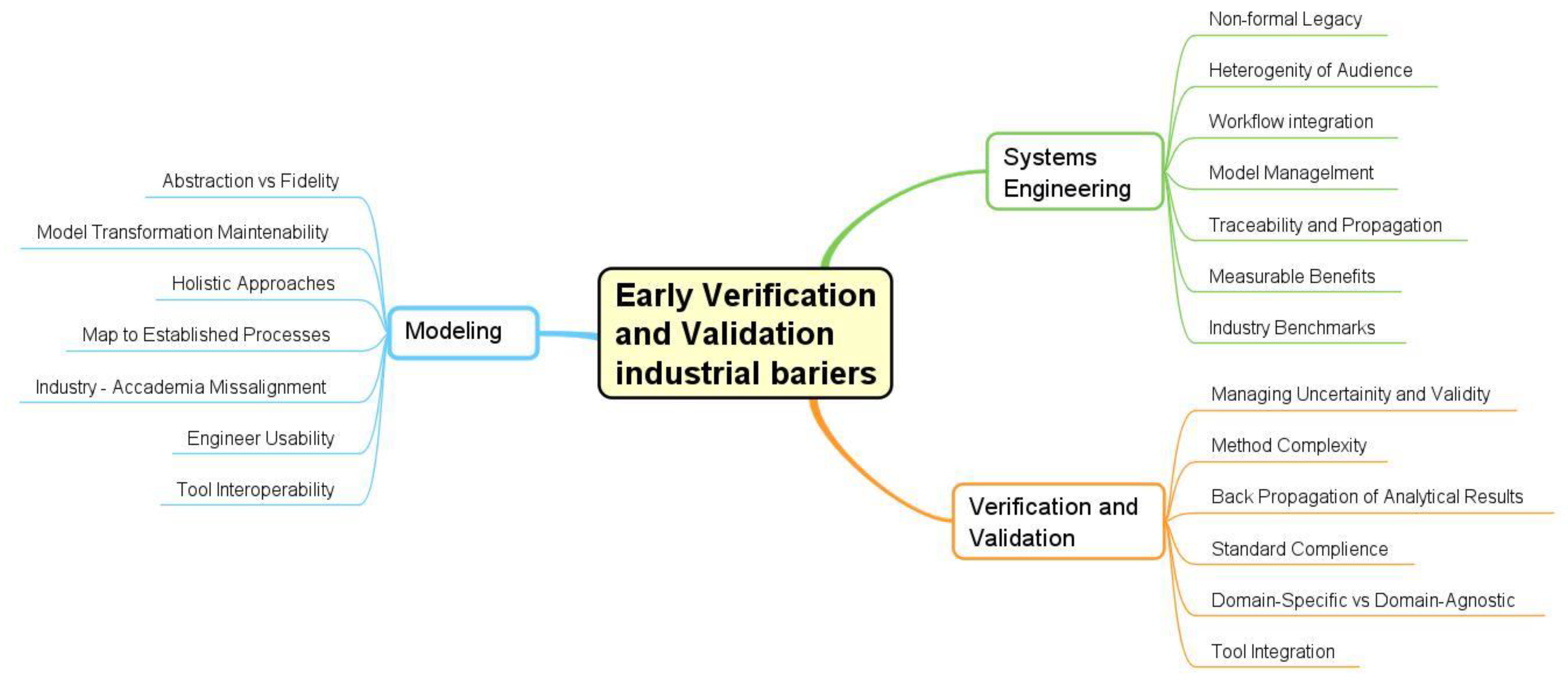
Figure 2.
DT Matyrity Model (Adapted from [14]).
Figure 2.
DT Matyrity Model (Adapted from [14]).
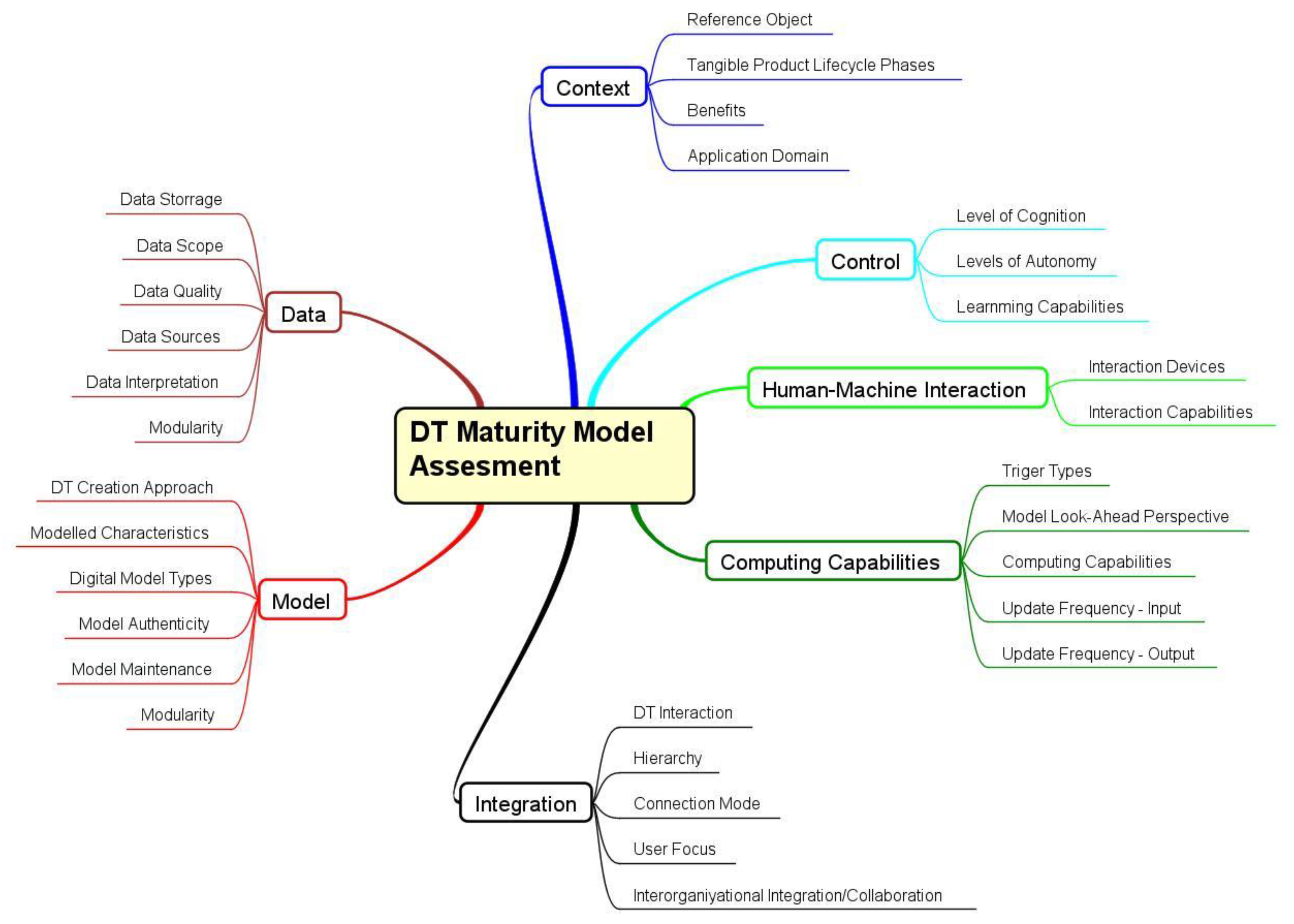
Figure 3.
Feature-Based DT assesment heuristics (Adapted from [17]).
Figure 3.
Feature-Based DT assesment heuristics (Adapted from [17]).
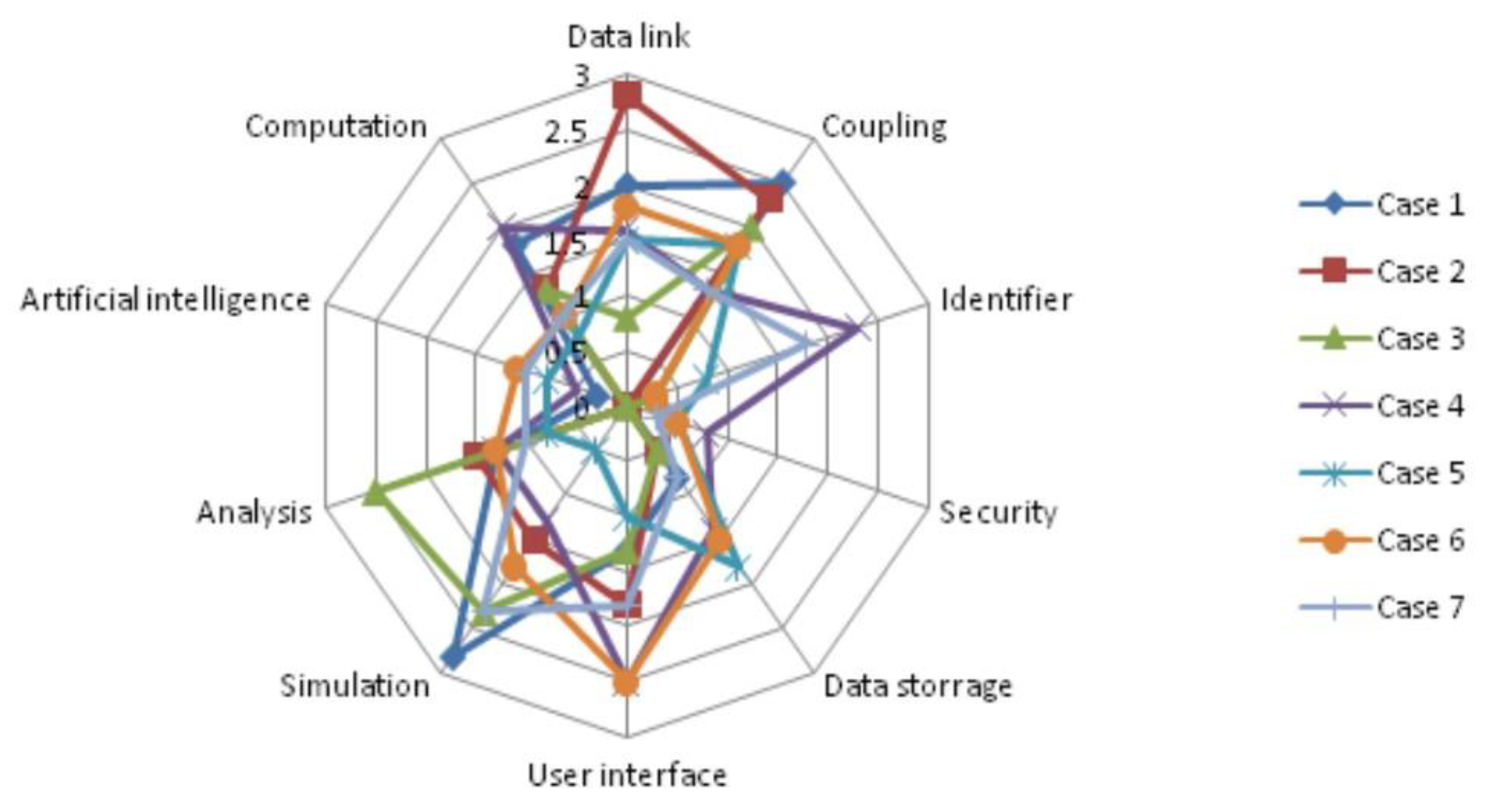
Figure 4.
DT Architectural Patterns utilization (Adopted from [18]).
Figure 4.
DT Architectural Patterns utilization (Adopted from [18]).
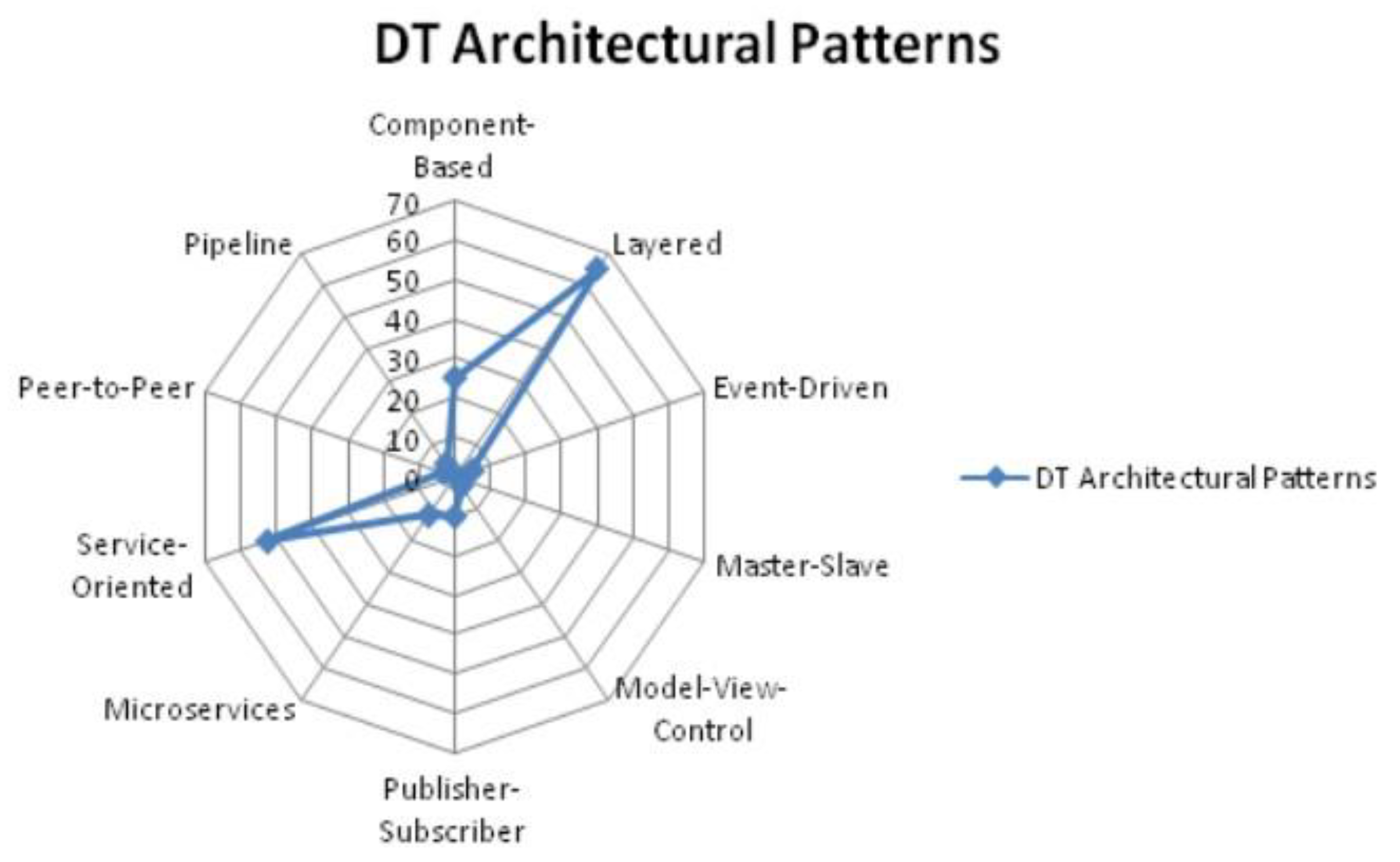
Figure 5.
ABMS Validation Mechanisms (Adapted from [35]).
Figure 5.
ABMS Validation Mechanisms (Adapted from [35]).
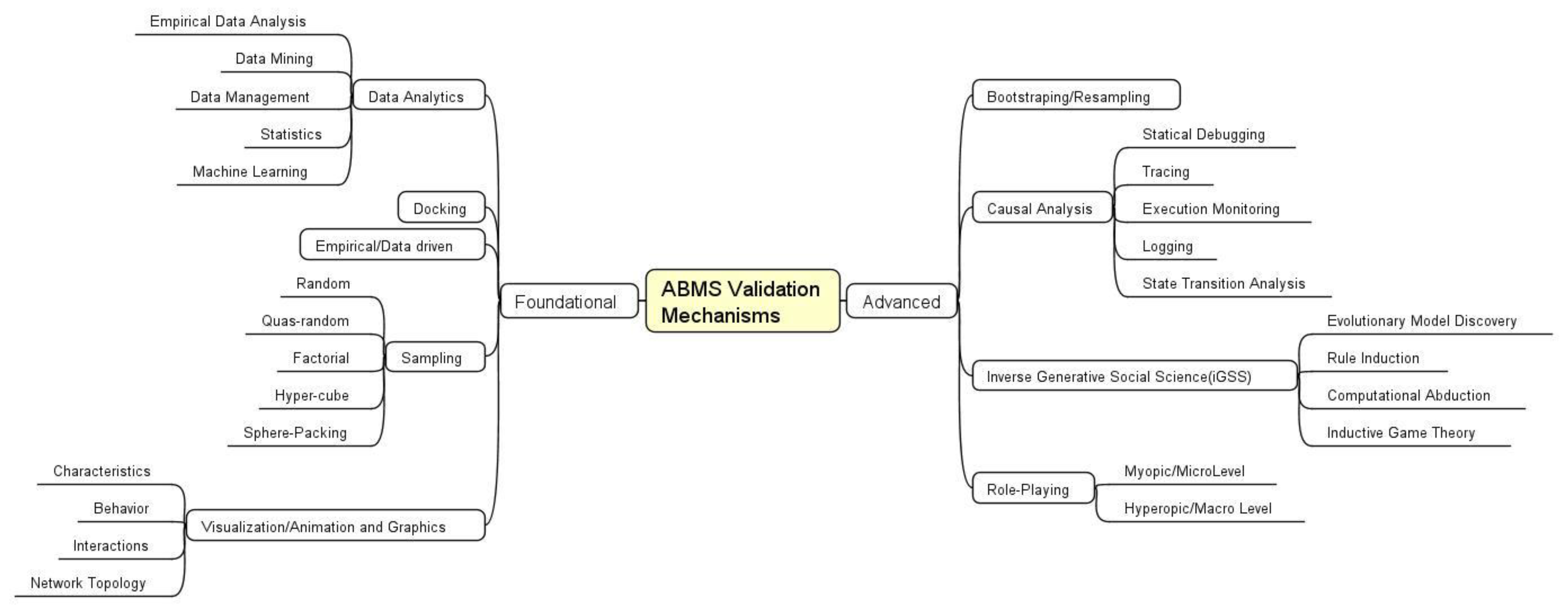
Figure 6.
Scientific production over industrial sectors (Adapted from [52]).
Figure 6.
Scientific production over industrial sectors (Adapted from [52]).
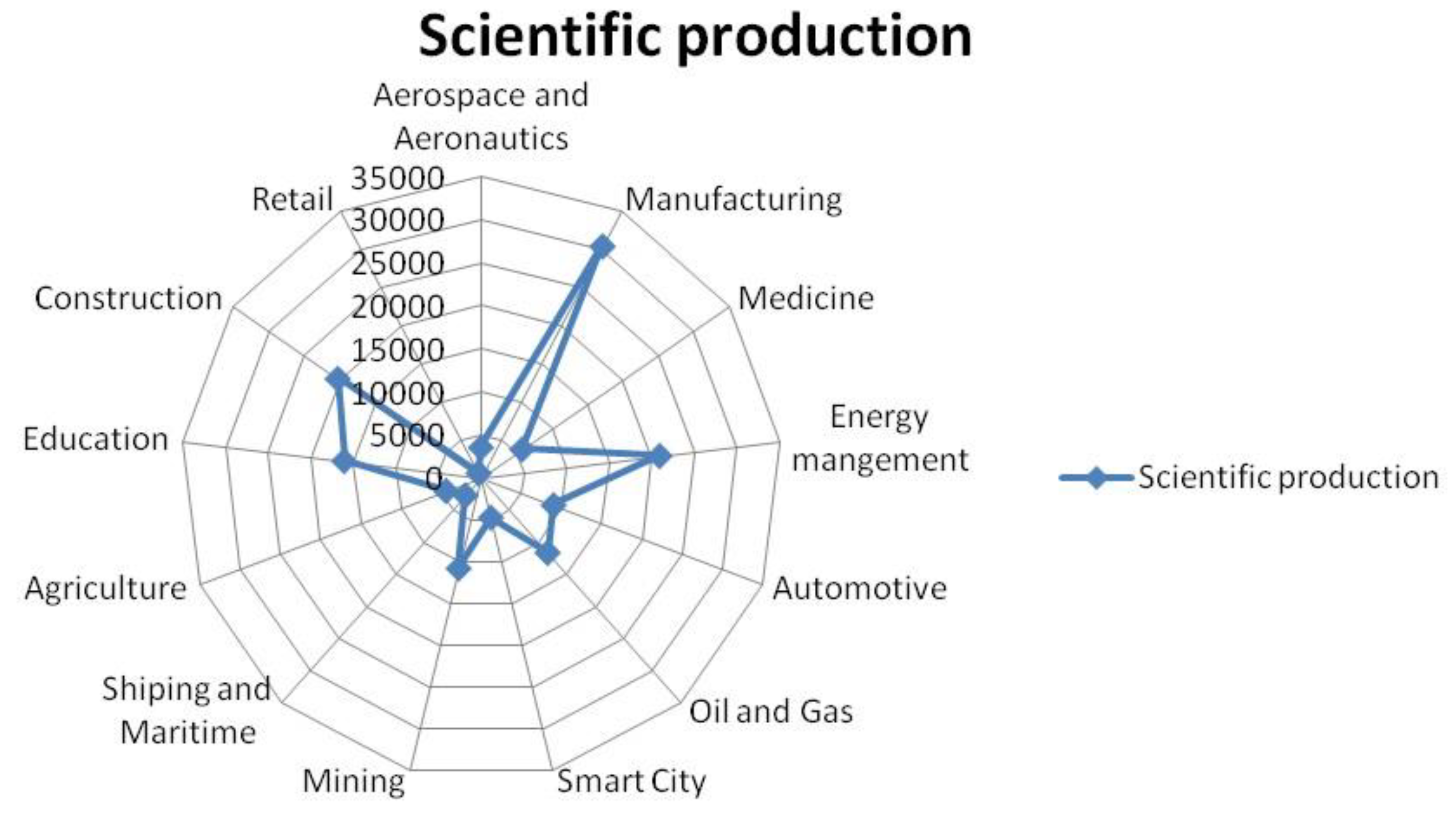
Figure 7.
Digital Twin Capabilities Hub (Adapted from [69]).
Figure 7.
Digital Twin Capabilities Hub (Adapted from [69]).
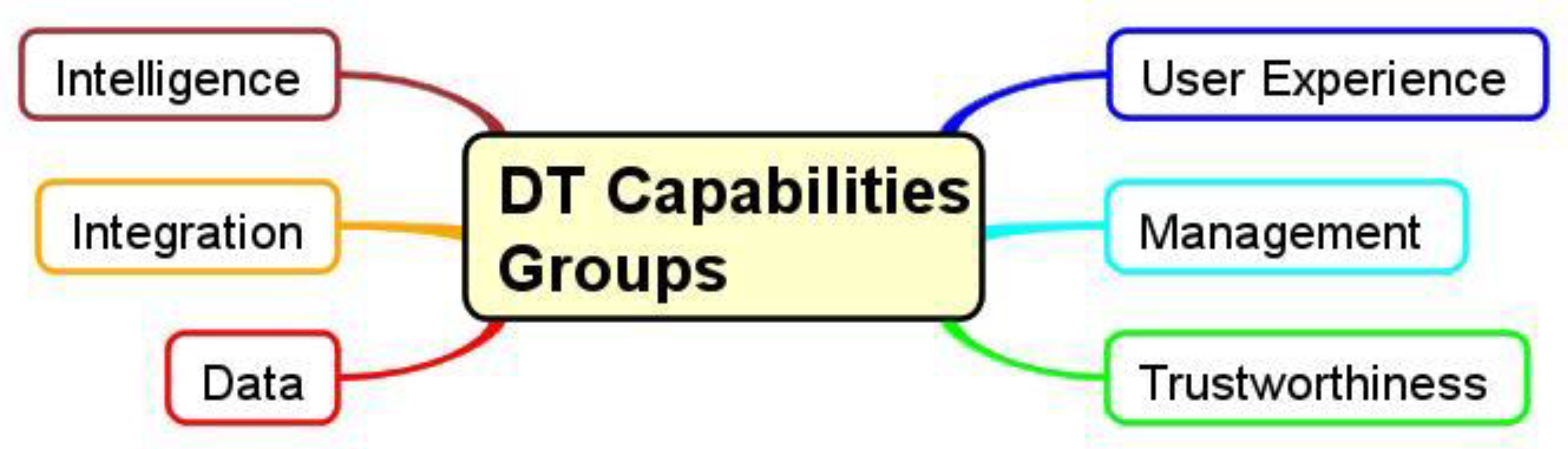
Figure 8.
DT capabilities number per groups (Adapted from [69]).
Figure 8.
DT capabilities number per groups (Adapted from [69]).
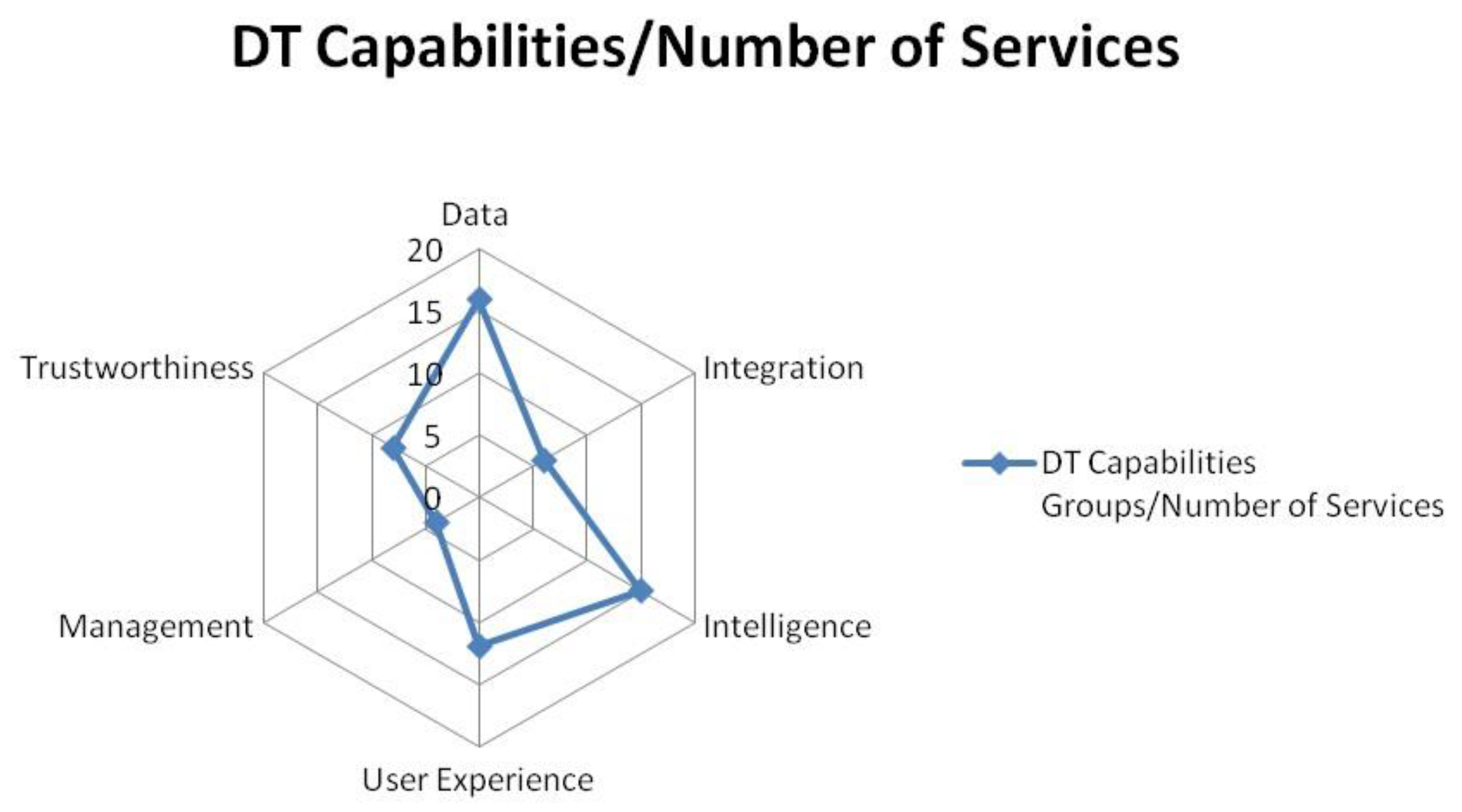
Figure 9.
Detailed structure of Data group (Adapted from [69]).
Figure 9.
Detailed structure of Data group (Adapted from [69]).
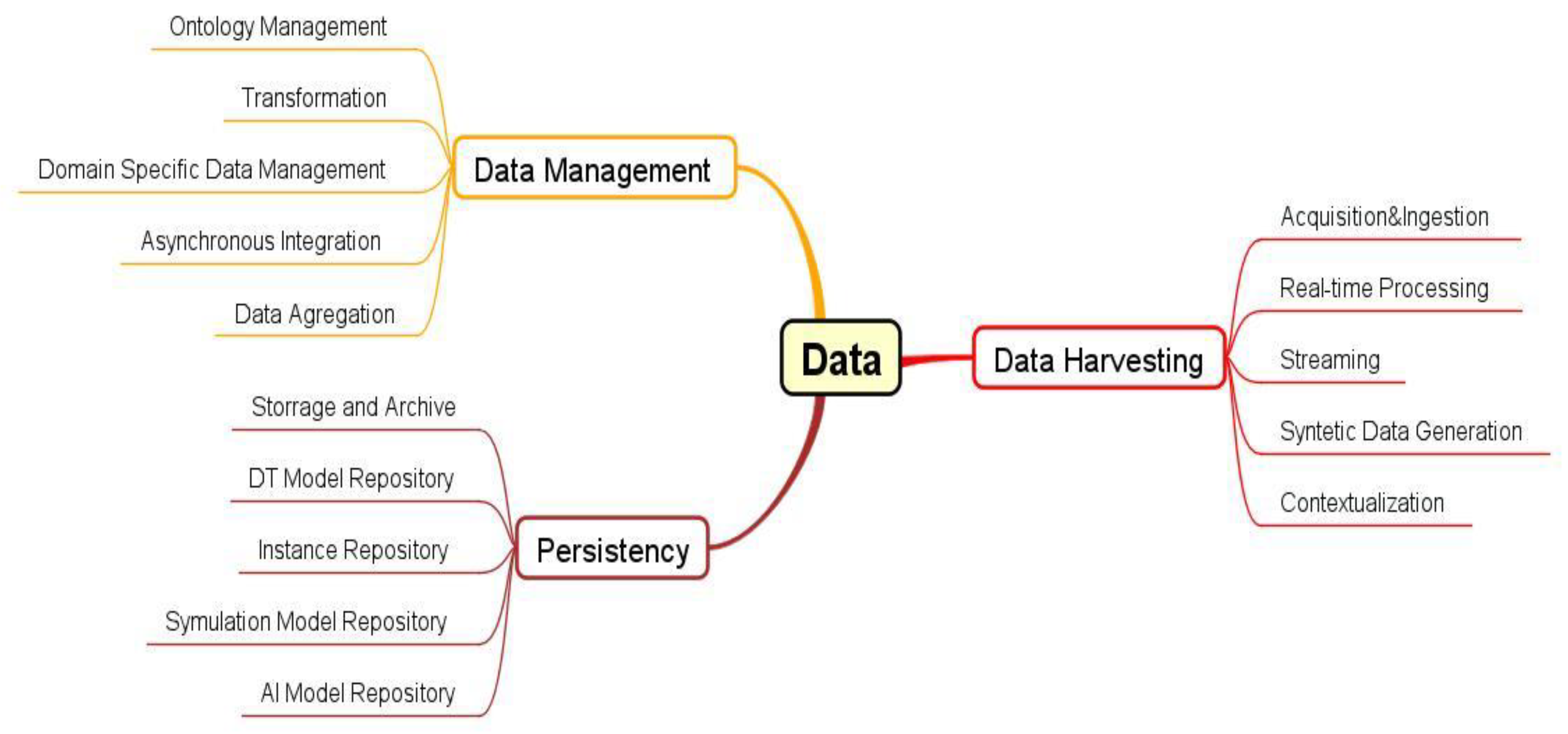
Figure 10.
Detailed structure of Management group (Adapted from [69]).
Figure 10.
Detailed structure of Management group (Adapted from [69]).

Figure 11.
Detailed structure of Intelligence group (Adapted from [69]).
Figure 11.
Detailed structure of Intelligence group (Adapted from [69]).
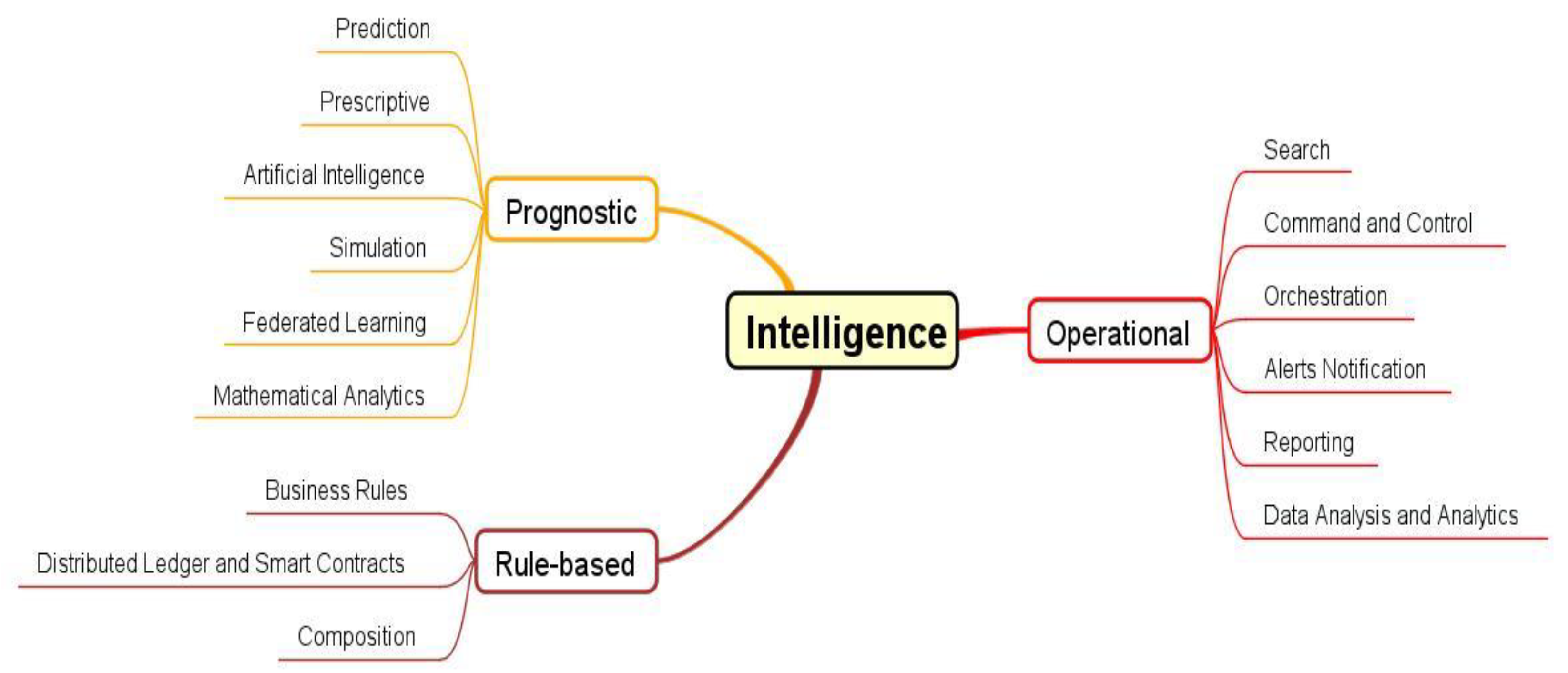
Figure 12.
Detailed structure of Eser Experience group (Adapted from [69]).
Figure 12.
Detailed structure of Eser Experience group (Adapted from [69]).
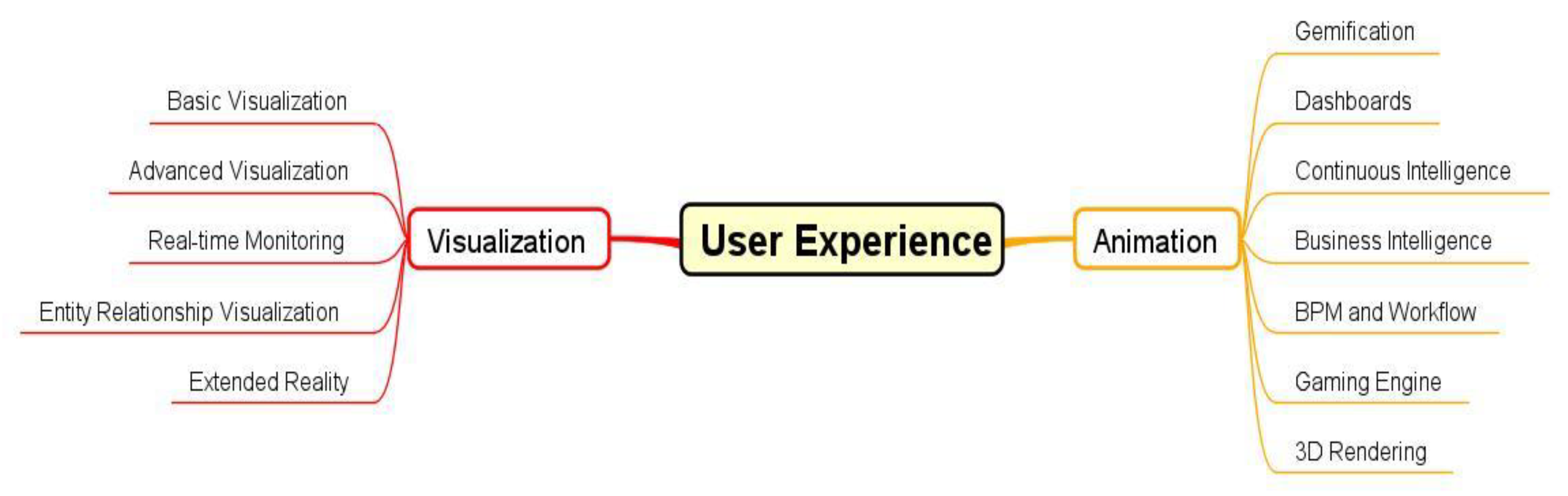
Figure 13.
Detailed structure of Trustworthines group (Adapted from [69]).
Figure 13.
Detailed structure of Trustworthines group (Adapted from [69]).
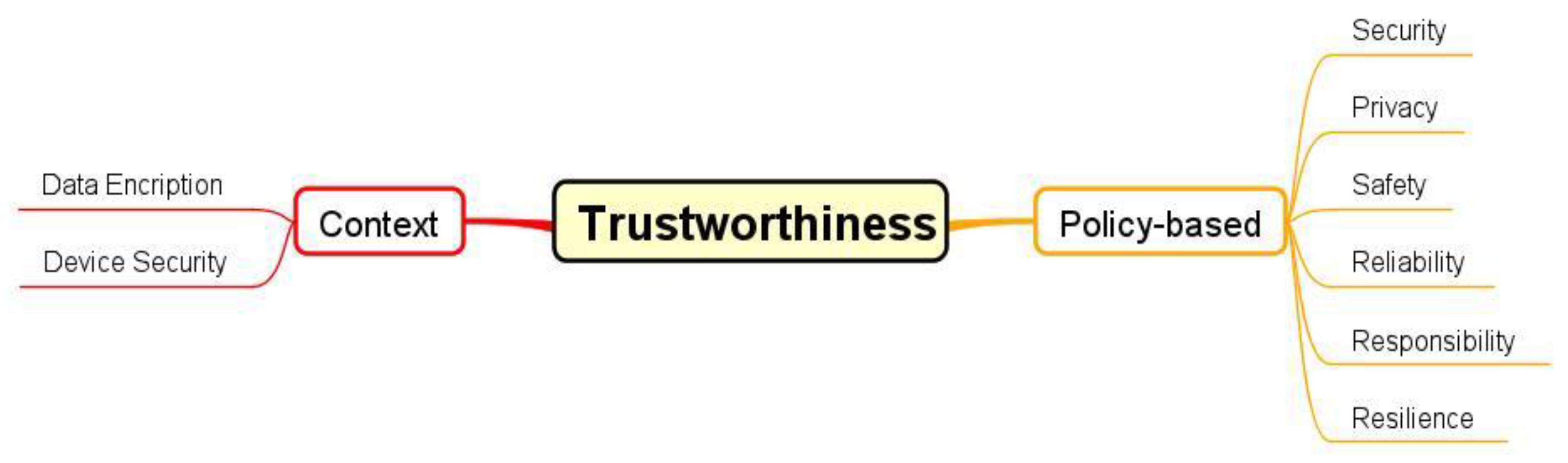
Figure 14.
Detailed structure of Integration group (Adapted from [69]).
Figure 14.
Detailed structure of Integration group (Adapted from [69]).
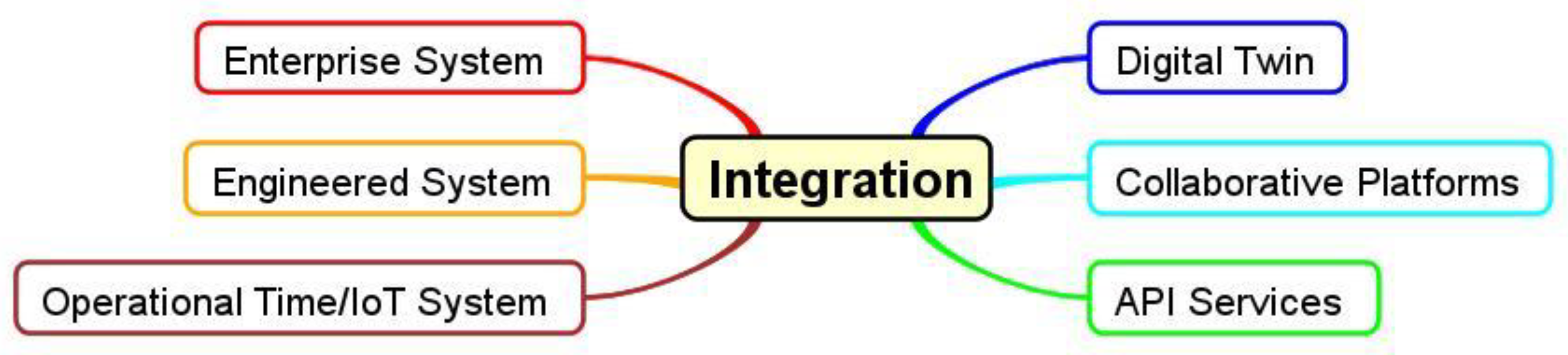
Figure 15.
The Basic Double Helix Model.

Figure 16.
Single Helix.

Figure 17.
The relative comparisom of different helix models apperiance frequency.
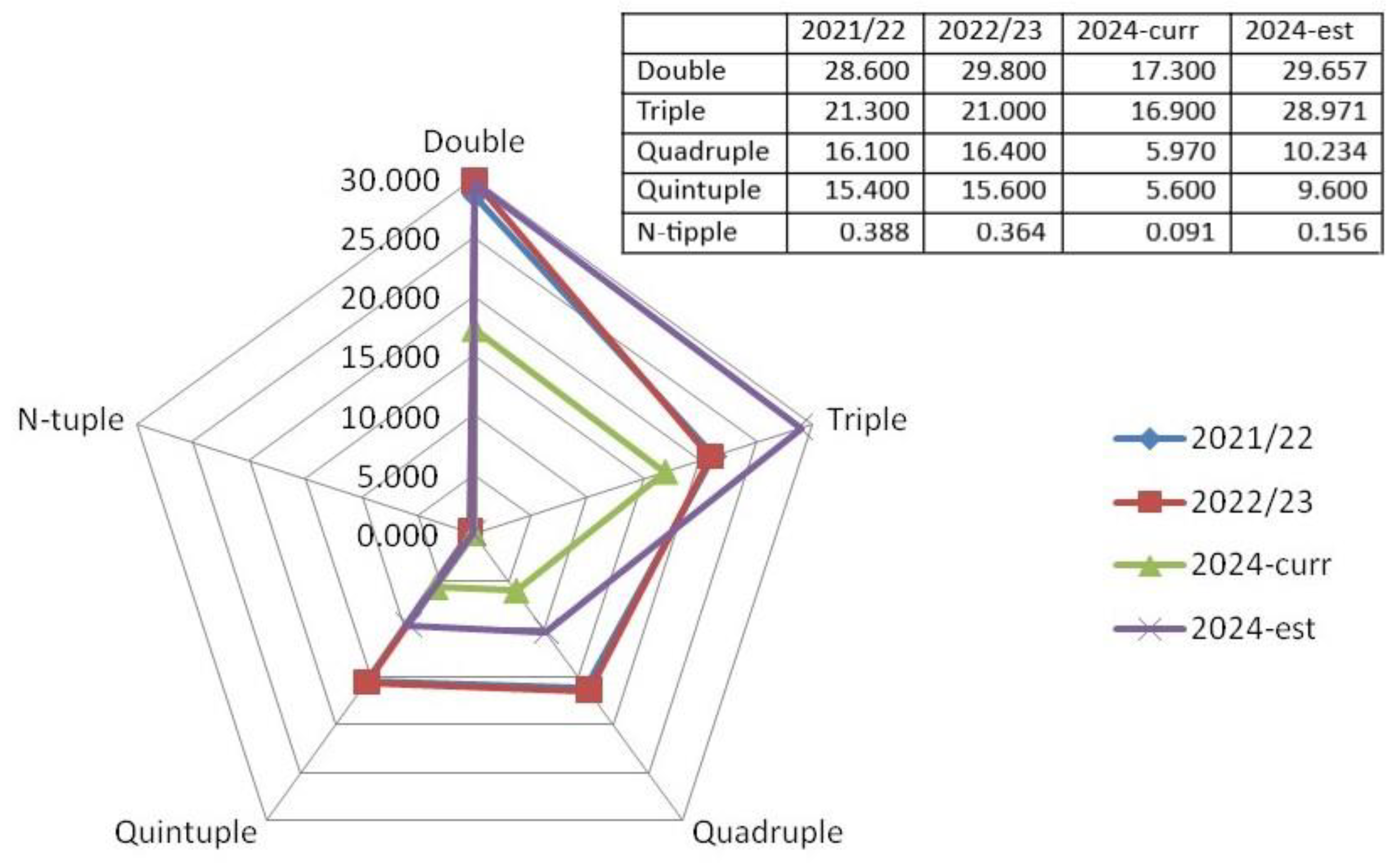
Figure 18.
Quantuple Helix Model domains (Adapted from [77]).
Figure 18.
Quantuple Helix Model domains (Adapted from [77]).
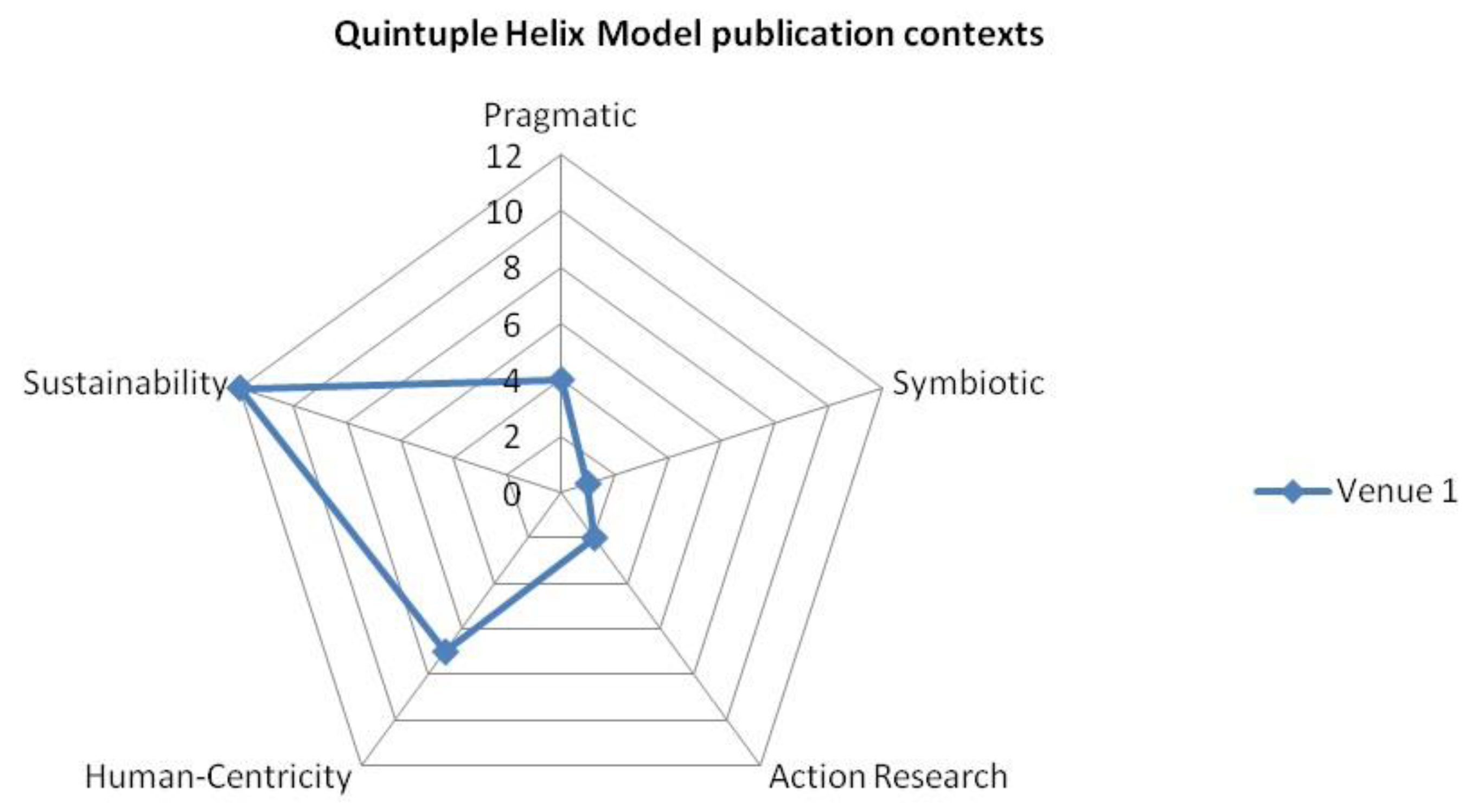
Figure 19.
SySML based Conceptual Framework Capagilities Groups.
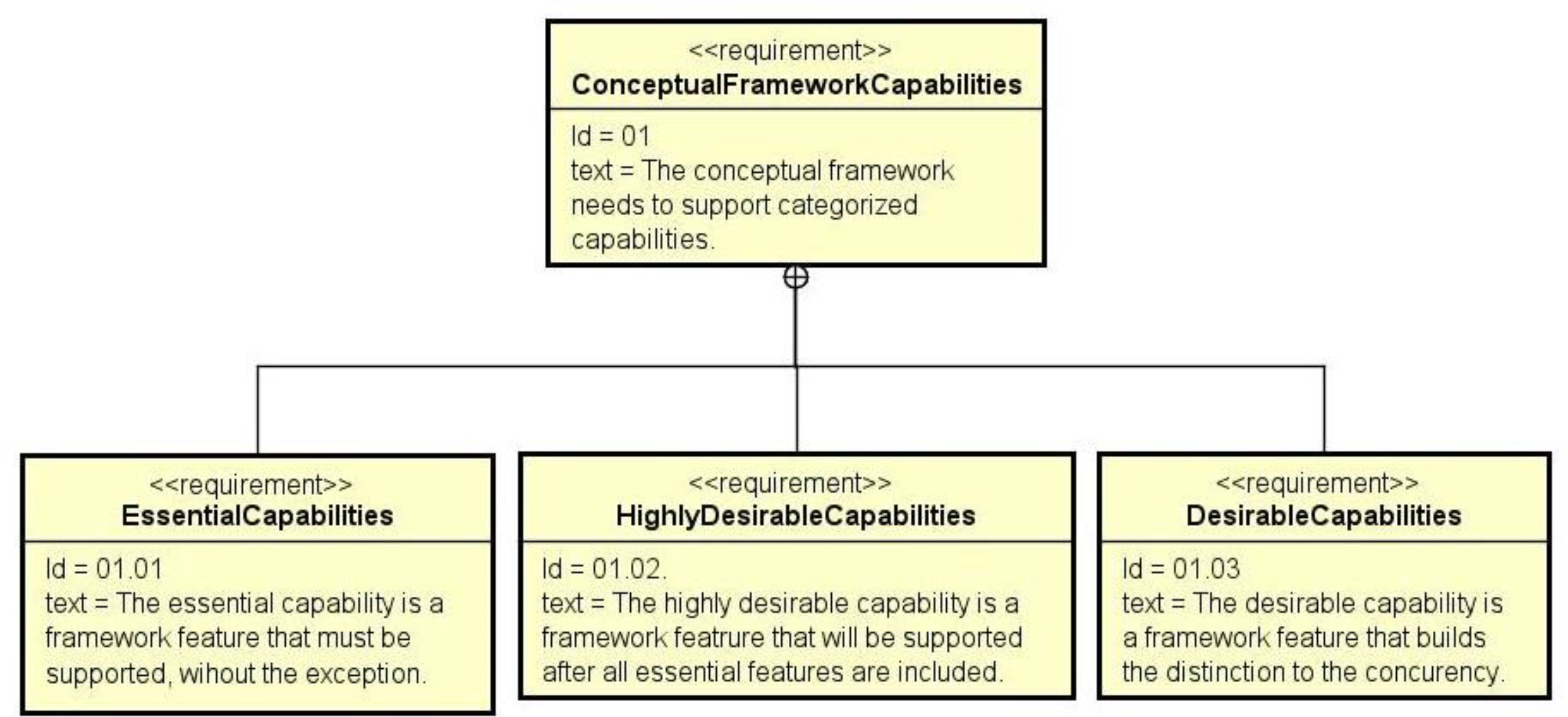
Figure 20.
The Integrated Quantuple Helix Model (the Frameworks' second pillar).
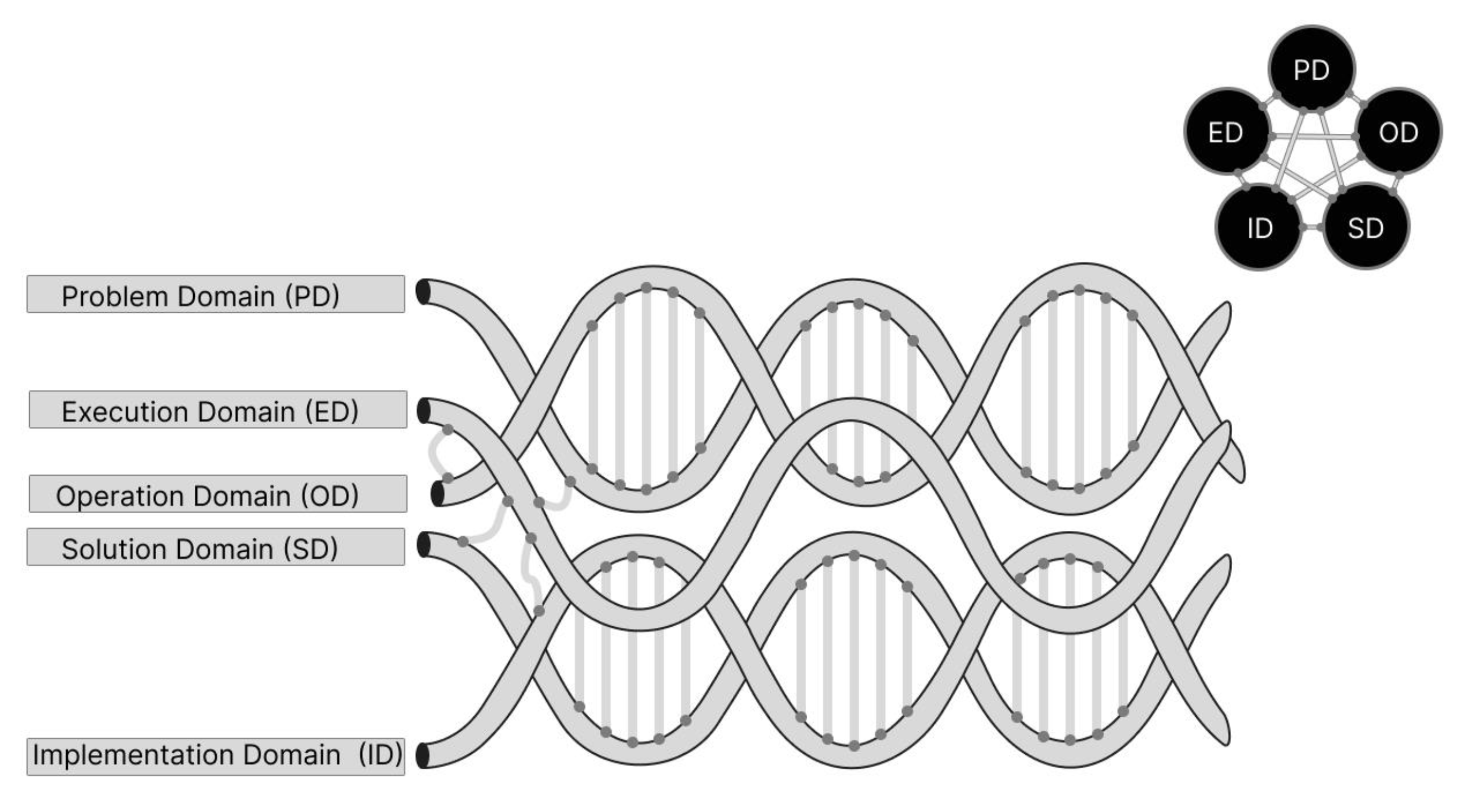
Figure 21.
The Resource Abstractions End of a Framework Helix Wormhole.
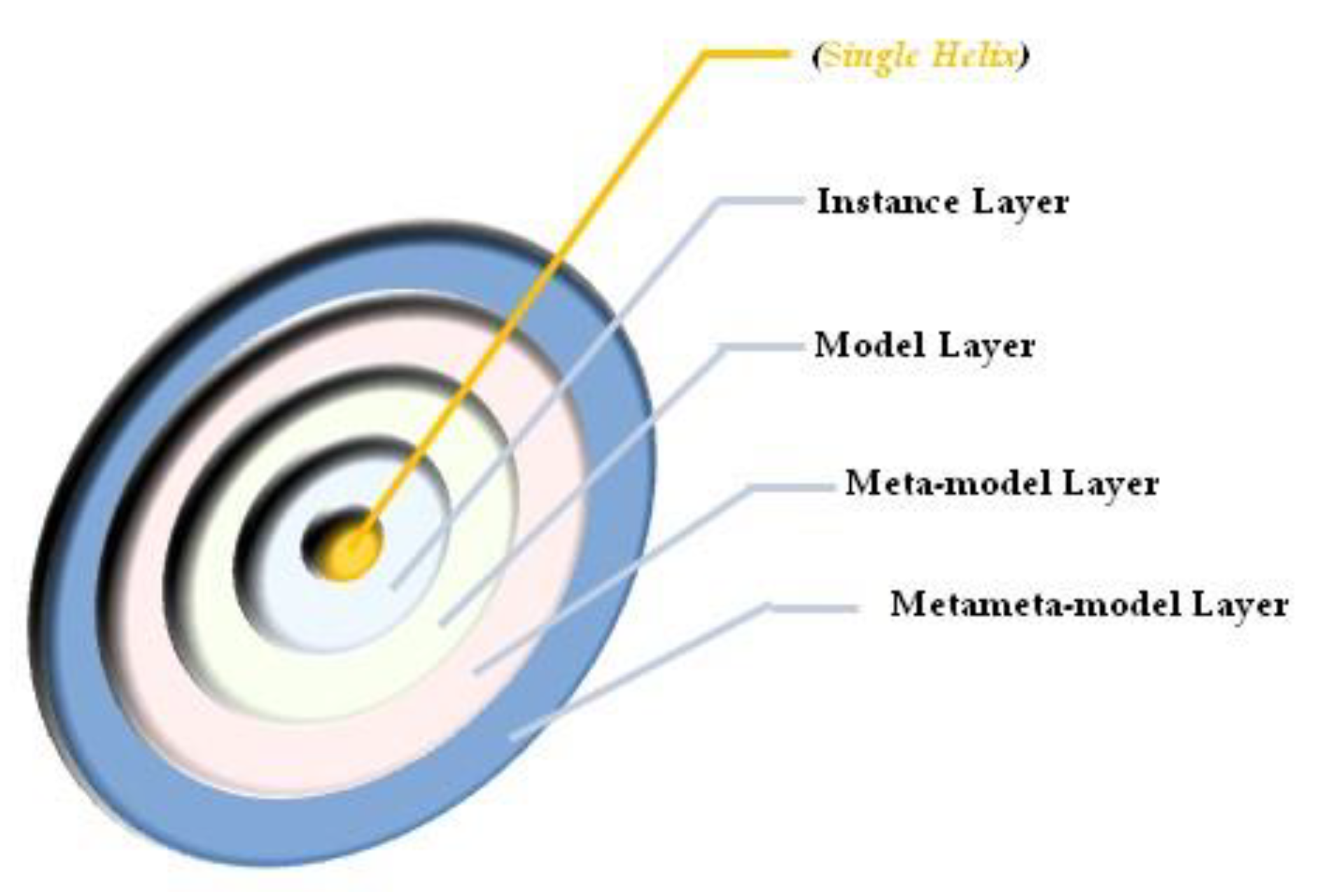
Figure 22.
The Information Resource Abstractions End of a Framework Helix Wormhole.
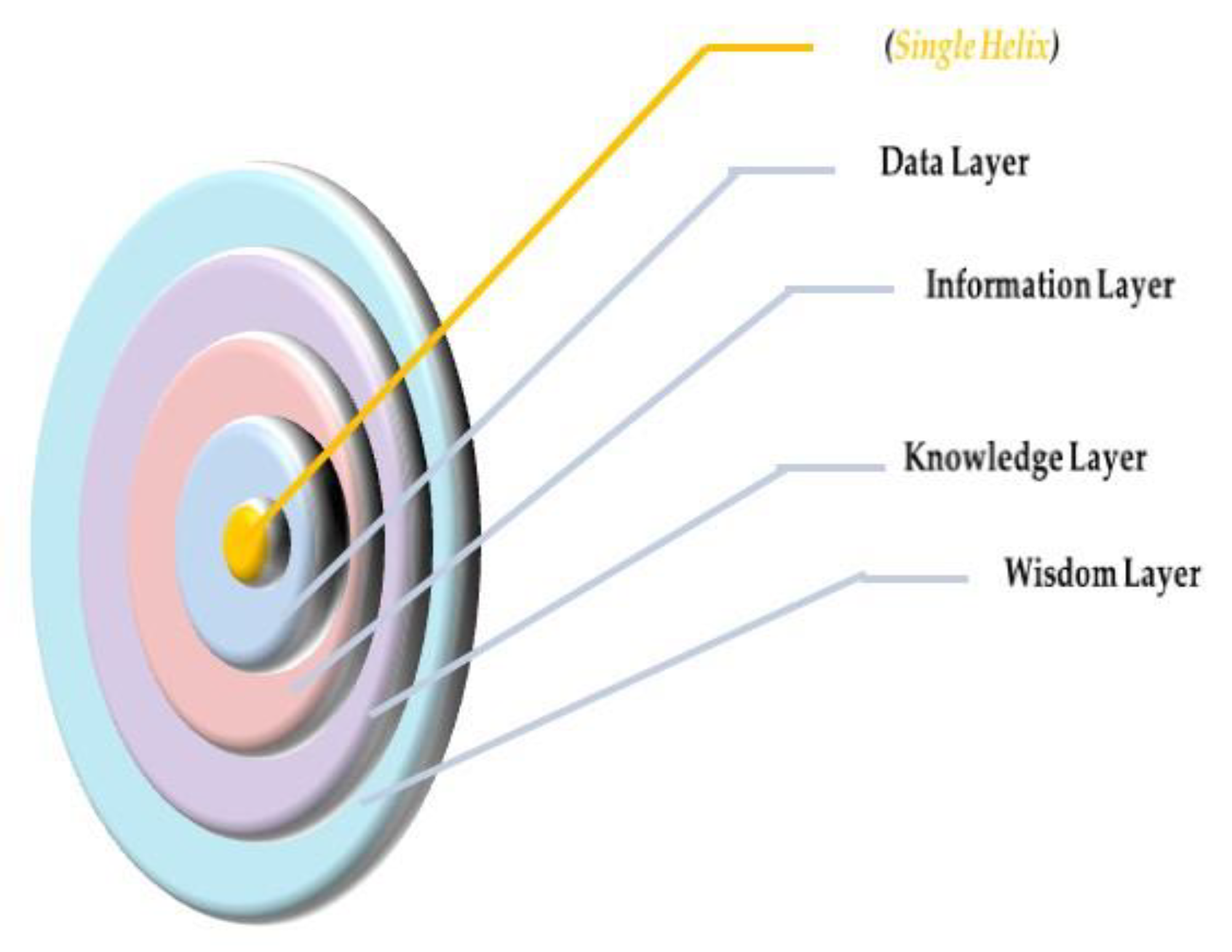
Figure 23.
Framework Nukleotide conceptual object model.
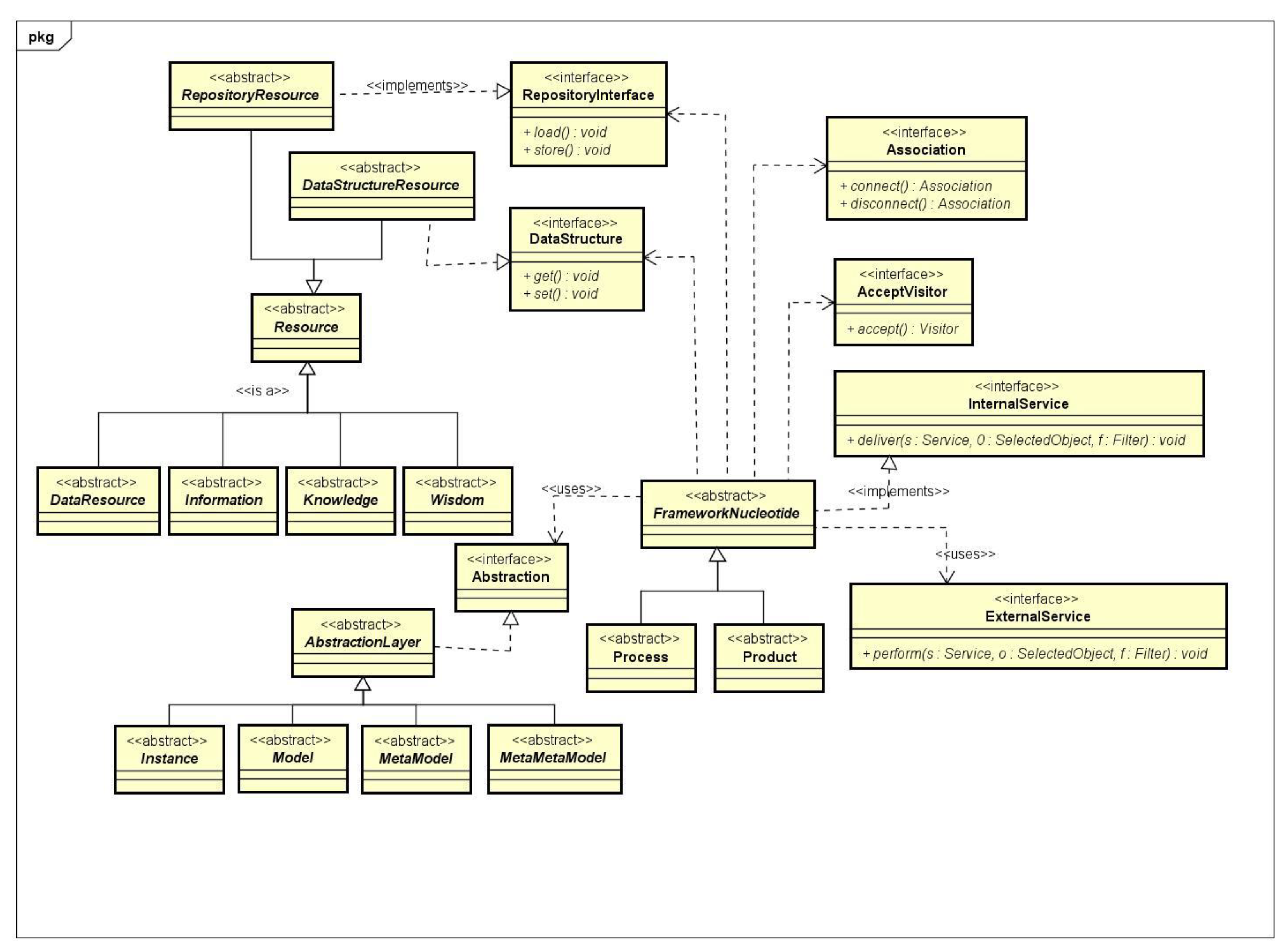
Figure 24.
Integrated DT with MBSE with Verirfication Feedback Spots (Modified from [11]).
Figure 24.
Integrated DT with MBSE with Verirfication Feedback Spots (Modified from [11]).
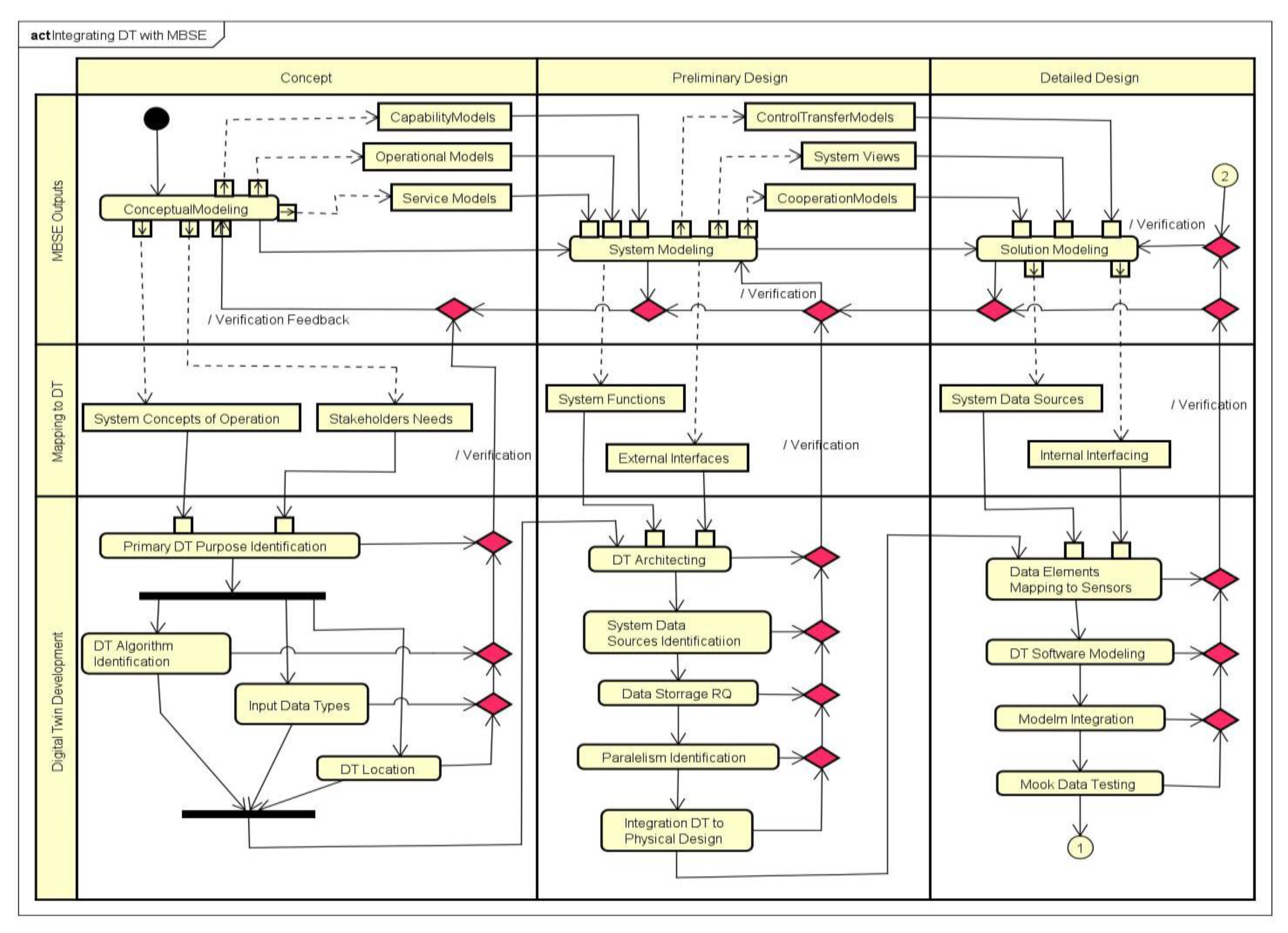
Figure 25.
DT with MBSE with Verification and Validation Feedback Spots (Modified from [11]).
Figure 25.
DT with MBSE with Verification and Validation Feedback Spots (Modified from [11]).
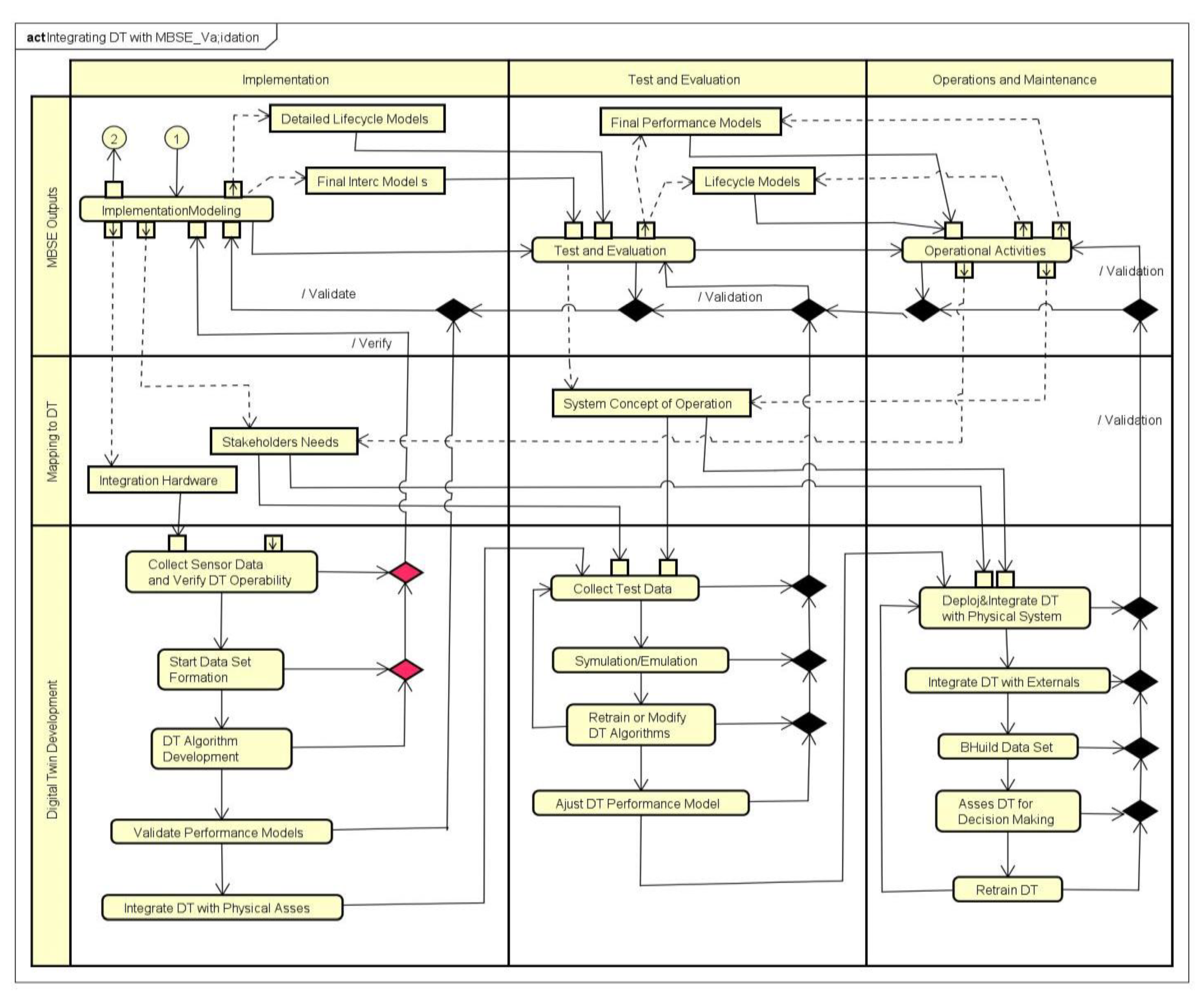
Figure 26.
The Conceptual Framework Bridge Mediator.
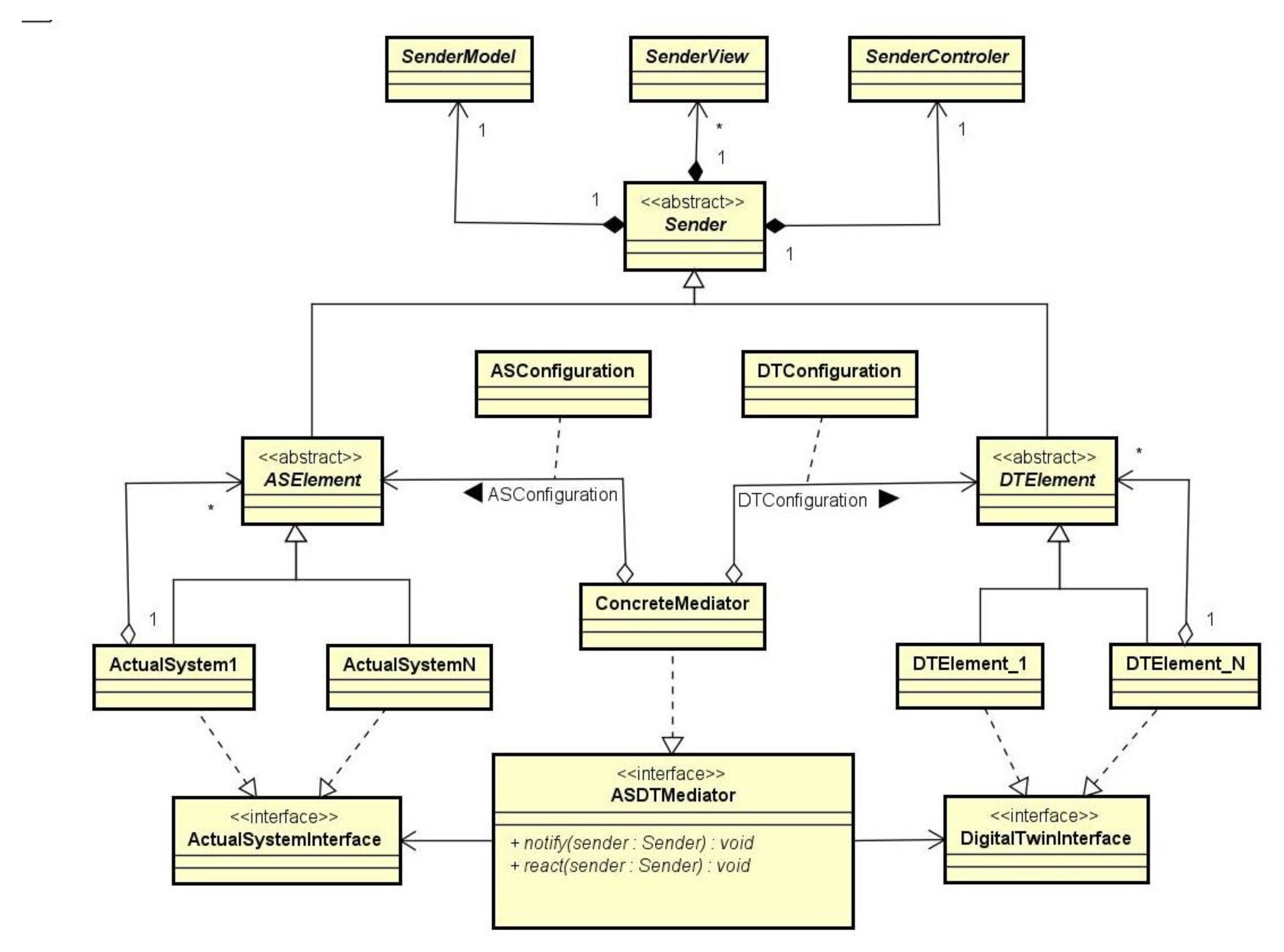
Figure 27.
Absolute and relative feature coveridge (Table 3).
Figure 27.
Absolute and relative feature coveridge (Table 3).
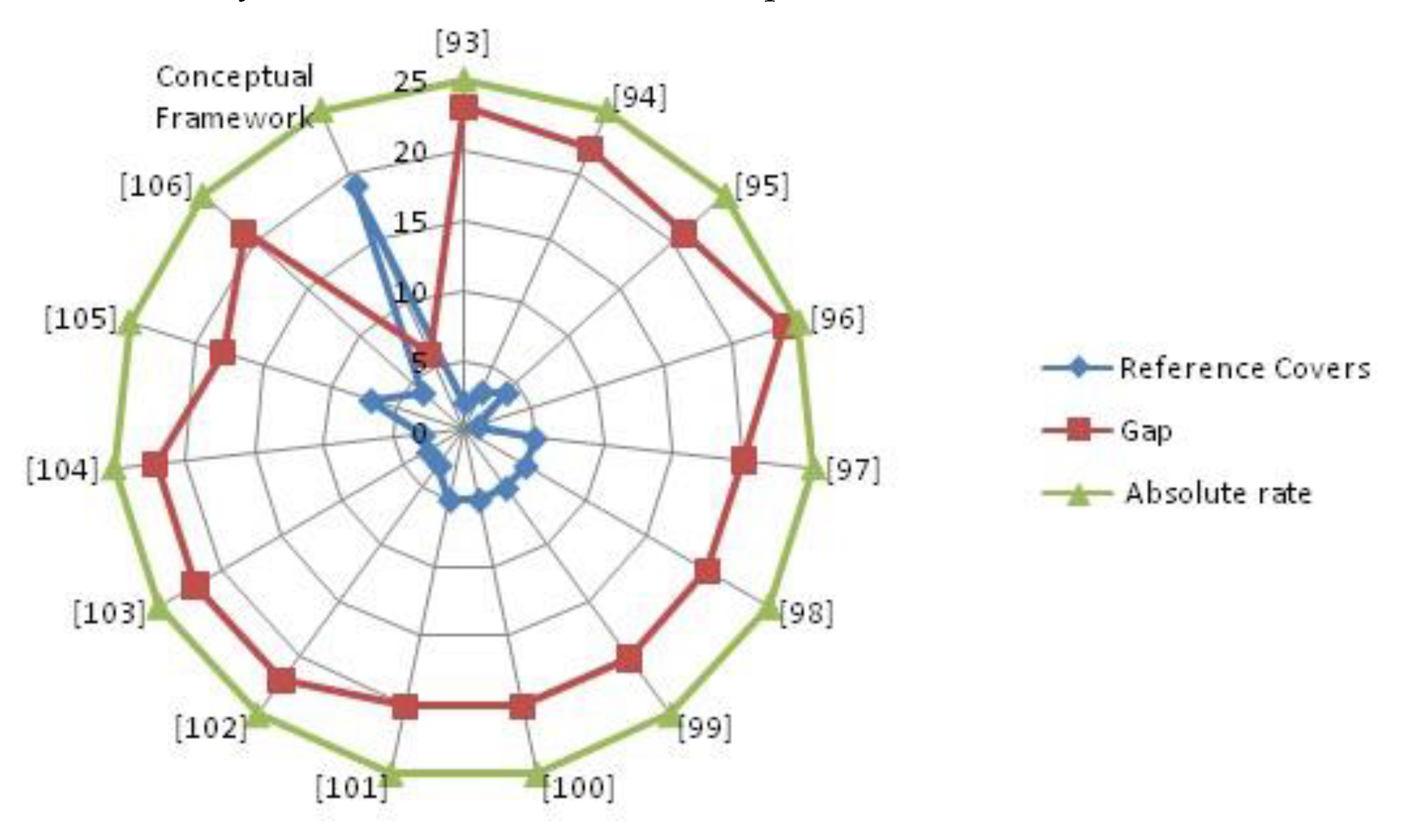

Table 1.
The detailed conceptual framework requirements.
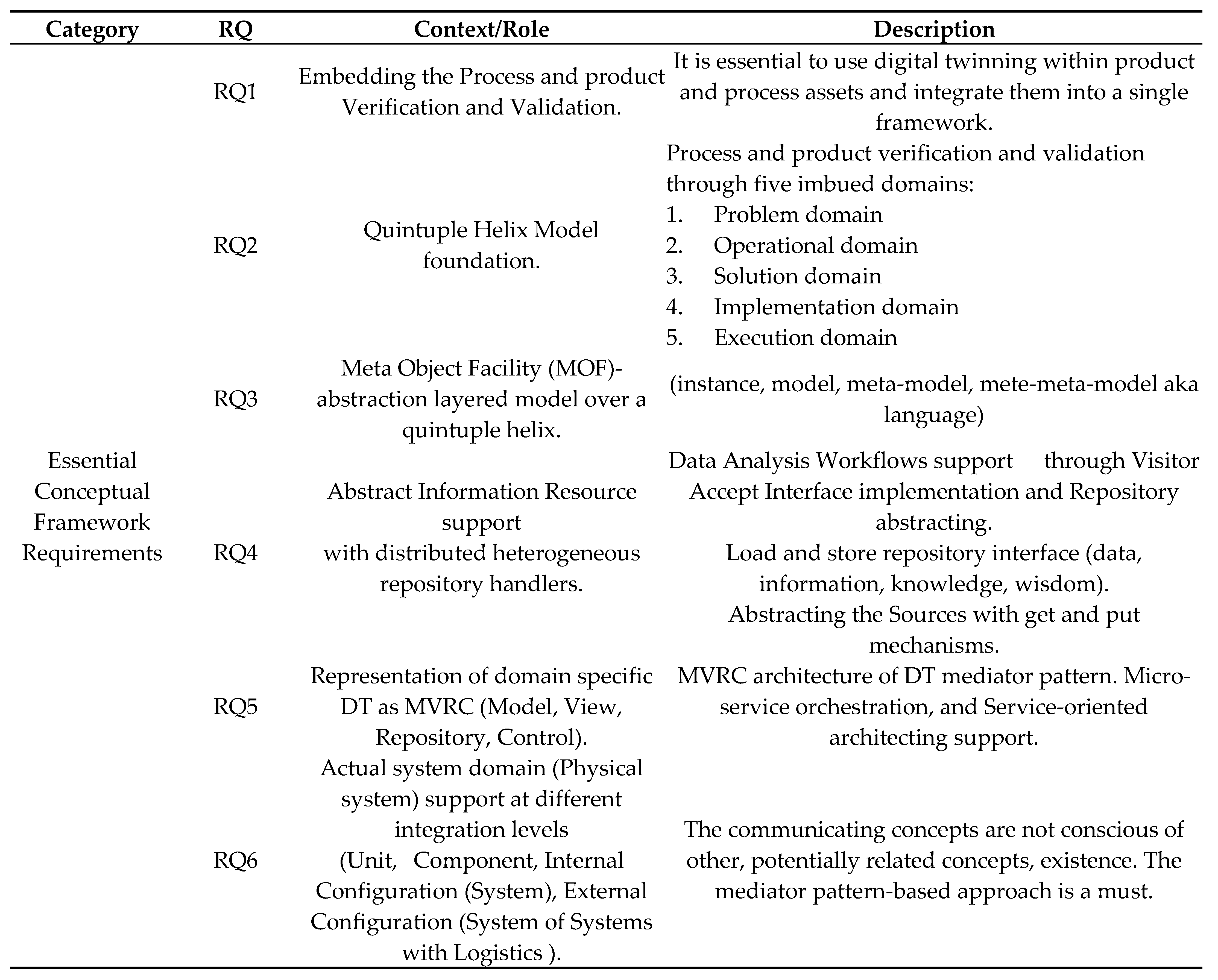
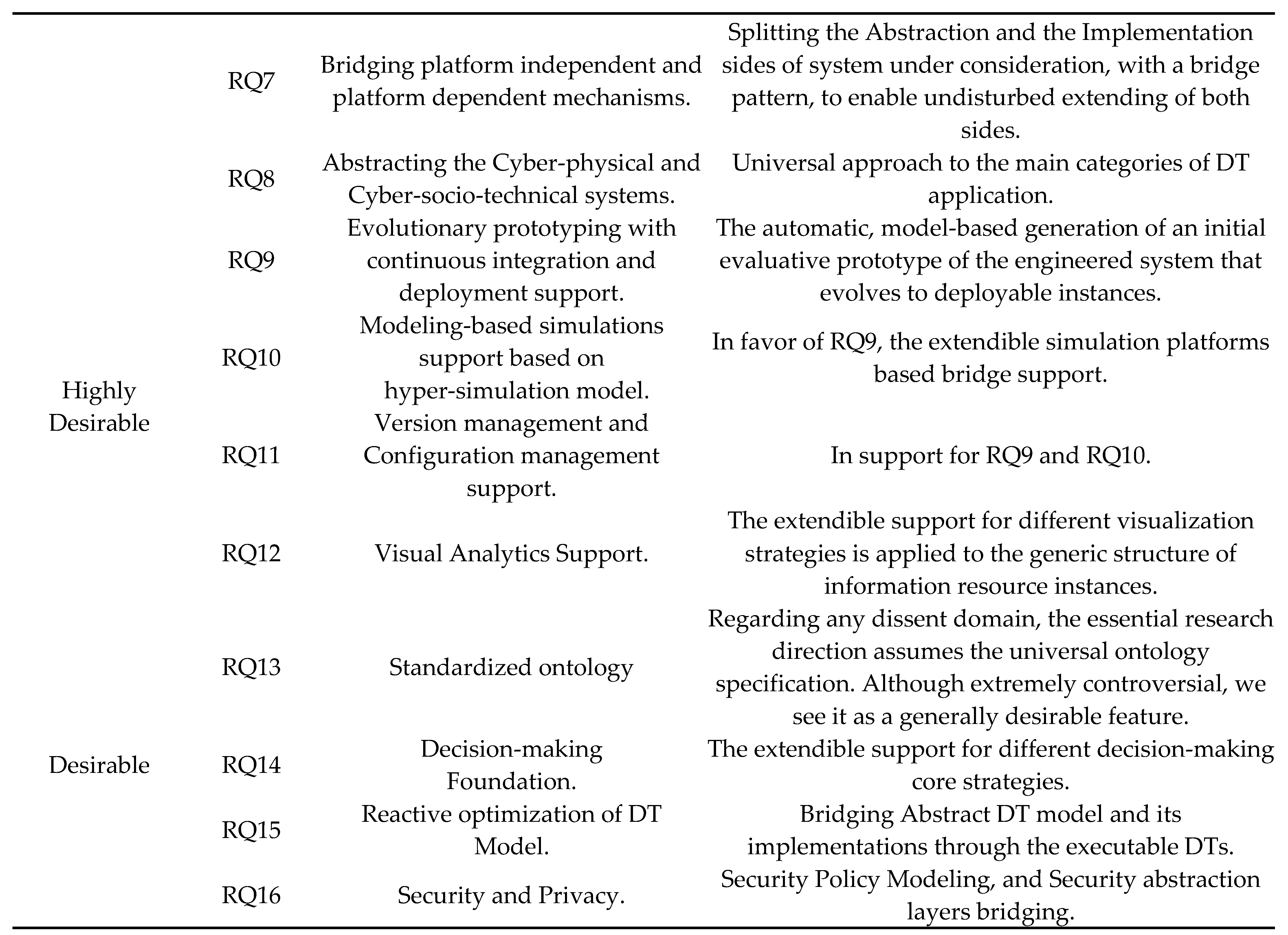
Table 2.
Extracted features.
| Feature | Description |
|---|---|
| F01 | Verification and Validation Framework |
| F02 | Digital Twin Development Framework |
| F03 | Integrated Framework |
| F04 | System of Digital Twins |
| F05 | Covers Specific Digital Twin Capability |
| F06 | Ontology Framework |
| F07 | Trustworthy (Security and Privacy) |
| F08 | Name Space and Definitions |
| F09 | Reference Architecture |
| F10 | Prototyping Support |
| F11 | Ilustrated with Case Studies |
| F12 | Model verification and validation |
| F13 | Bidirectional model synchronization |
| F14 | Simulations |
| F15 | Verification and validation of scenarios |
| F16 | Automatic verification and validation support |
| F17 | Digital Twins configuration |
| F18 | Data Integration |
| F19 | Service Oriented Architecture (SOA) |
| F20 | Entire Life Cycle Support |
| F21 | Decision making support |
| F22 | Analytics |
| F23 | Visualization |
| F24 | Extendibility |
| F25 | Generality (covering cyber-physical and socio-technical systems) |
Table 3.
Frameworks cross-relations (Features based on Table 2 instances).
Table 3.
Frameworks cross-relations (Features based on Table 2 instances).
| Referenced Frameworks | |||||||||||||||
| Feature | [93] | [94] | [95] | [96] | [97] | [98] | [99] | [100] | [101] | [102] | [103] | [104] | [105] | [106] | CF |
| F01 | ○ | ○ | ○ | ○ | ● | ○ | ○ | ○ | ○ | ● | ○ | ○ | ○ | ● | ● |
| F02 | ○ | ○ | ○ | ○ | ○ | ● | ○ | ○ | ○ | ○ | ○ | ● | ○ | ○ | ● |
| F03 | ○ | ○ | ○ | ○ | ○ | ○ | ○ | ● | ○ | ○ | ○ | ○ | ● | ○ | ● |
| F04 | ○ | ○ | ○ | ○ | ○ | ● | ○ | ○ | ○ | ○ | ○ | ○ | ○ | ○ | ● |
| F05 | ○ | ○ | ○ | ● | ○ | ○ | ● | ● | ● | ● | ● | ● | ○ | ● | ○ |
| F06 | ○ | ● | ○ | ○ | ○ | ○ | ○ | ○ | ○ | ○ | ○ | ○ | ● | ○ | ○ |
| F07 | ○ | ○ | ○ | ○ | ○ | ○ | ○ | ○ | ○ | ● | ○ | ○ | ○ | ○ | ○ |
| F08 | ● | ● | ○ | ○ | ○ | ○ | ● | ○ | ○ | ○ | ○ | ○ | ● | ○ | ○ |
| F09 | ○ | ○ | ○ | ○ | ○ | ● | ○ | ○ | ○ | ○ | ● | ● | ● | ○ | ● |
| F10 | ○ | ○ | ○ | ○ | ○ | ○ | ○ | ○ | ● | ○ | ○ | ○ | ○ | ○ | ● |
| F11 | ○ | ○ | ○ | ○ | ○ | ● | ● | ● | ● | ○ | ○ | ○ | ○ | ● | ○ |
| F12 | ○ | ○ | ● | ○ | ● | ● | ○ | ○ | ○ | ○ | ○ | ○ | ○ | ● | ○ |
| F13 | ○ | ○ | ● | ○ | ○ | ○ | ○ | ● | ○ | ○ | ○ | ○ | ○ | ○ | ● |
| F14 | ○ | ○ | ● | ○ | ● | ○ | ○ | ● | ○ | ○ | ○ | ○ | ● | ○ | ● |
| F15 | ○ | ○ | ○ | ○ | ● | ○ | ○ | ○ | ○ | ○ | ○ | ○ | ○ | ○ | ● |
| F16 | ○ | ○ | ● | ○ | ● | ○ | ○ | ○ | ○ | ○ | ○ | ○ | ○ | ○ | ● |
| F17 | ○ | ○ | ○ | ○ | ○ | ○ | ○ | ○ | ○ | ○ | ○ | ○ | ○ | ○ | ● |
| F18 | ○ | ○ | ○ | ○ | ○ | ○ | ○ | ○ | ○ | ○ | ○ | ○ | ○ | ○ | ● |
| F19 | ○ | ○ | ○ | ○ | ○ | ○ | ○ | ○ | ○ | ○ | ○ | ○ | ○ | ○ | ● |
| F20 | ● | ● | ○ | ○ | ○ | ○ | ○ | ○ | ○ | ○ | ○ | ○ | ○ | ○ | ● |
| F21 | ○ | ○ | ○ | ○ | ○ | ○ | ● | ○ | ○ | ○ | ○ | ○ | ○ | ○ | ● |
| F22 | ○ | ○ | ○ | ○ | ○ | ○ | ● | ○ | ● | ○ | ○ | ○ | ● | ○ | ● |
| F23 | ○ | ○ | ○ | ○ | ○ | ○ | ○ | ○ | ● | ○ | ○ | ○ | ● | ○ | ● |
| F24 | ○ | ○ | ○ | ○ | ○ | ○ | ○ | ○ | ○ | ○ | ○ | ○ | ○ | ○ | ● |
| F25 | ○ | ○ | ○ | ○ | ○ | ○ | ○ | ○ | ○ | ○ | ○ | ○ | ○ | ○ | ● |
| 25 | 2 | 3 | 4 | 1 | 5 | 5 | 5 | 5 | 5 | 3 | 3 | 3 | 7 | 4 | 19 |
Disclaimer/Publisher’s Note: The statements, opinions and data contained in all publications are solely those of the individual author(s) and contributor(s) and not of MDPI and/or the editor(s). MDPI and/or the editor(s) disclaim responsibility for any injury to people or property resulting from any ideas, methods, instructions or products referred to in the content. |
© 2024 by the authors. Licensee MDPI, Basel, Switzerland. This article is an open access article distributed under the terms and conditions of the Creative Commons Attribution (CC BY) license (http://creativecommons.org/licenses/by/4.0/).
Copyright: This open access article is published under a Creative Commons CC BY 4.0 license, which permit the free download, distribution, and reuse, provided that the author and preprint are cited in any reuse.


