

Submitted:
22 July 2024
Posted:
23 July 2024
Read the latest preprint version here
Abstract
Aloe vera is well known for its biological properties as a bioflavonoid-anti-inflammatory, antibacterial agent. It has been used frequently in the food sector as food coating for its hygroscopic properties and as an ingredient in the lucrative industry. Studies have also included Aloe vera as an eco-friendly green solution based on these properties. The current research focuses on the use of Aloe vera gel in printing pastes as an alternative sustainable solution to synthetic thickeners, evaluating its wet performance and ease of fabric stitching, and has been inspired by studies that similarly used this substance measuring its effect on the fabric's coefficient of friction and antimicrobial action. In the current study, printing pastes with natural colourants and Aloe vera gel thickener derived from natural leaves from Crete increased the fabric's mechanical resistance to abrasion compared to the untreated pastes. The measured performance did not differ substantially from prints with traditional synthetic pastes, hence tolerating the substitution with the non-contaminant variant. The enhanced resistance to abrasion and wear prolongates the fabric's serviceable life and resulting garments, decreasing the need for high industry processing volumes and, as a result, reducing pollution. The resistance to wear was evaluated using the dominant method in textile testing of the Martindale apparatus, which measured the cycles to failure, weight loss, and general appearance deterioration using the official photographic standards.
Keywords:
aloe vera printing
; aloe vera coating
; fabric wear
; green fashion
1. Introduction
The apparel and fashion industry, in general, is known to be one of the most polluting sectors on the planet, according to the U.N. and NRDC [1,2], where 93 billion m3 of water is used annually, and around half a million tons of microfibre is being dumped into the ocean yearly. Husaini et al. [3] reported that only a few industries treat their effluents according to Pakistan’s accepted national environmental quality standard, a country well known to produce many of today’s textile goods [4].
The term serviceability of a garment is a generic term that composes several aspects exceeding the limits of the garment’s properties. A fully functional but old stylish garment can still be considered unserviceable, as in the case of a lightly discoloured formal suit in the elbows area [5,6]. Based on this concept, consumers are encouraged to buy and discard clothes and textile goods frequently, in general, through constantly changing collections at low prices as the old collections become unserviceable. Consequently, wear-resistance characteristics are usually overlooked as the garments are not intended to have a prolonged short life. Low-cost and quality garments tend to abrade, discolour or change in appearance faster than average and often, their useful life terminates even sooner. Modern sustainable trends require reusing cloths as raw materials for new ones [7]. Based on these facts, it is essential to improve the resistance to wear of the fabric.
Wear is determined by several factors, such as the abradant, abrasion conditions, lubrication and inherent mechanical properties of the fabric [6,8]. The abrasion can assess wear evaluation to failure point where holes are prominent in the fabric, change of appearance with fuzzing and pill formation or with percentage mass loss reflecting the impact on all mechanical properties related to mass density.
Microorganisms, such as moisture, nutrients, and temperature, are present on almost every surface when conditions allow them to [9]. The growth of microorganisms on textiles can be a hazard to the user, leading to pathogenic or odour-causing microorganisms. At the same time, the garment itself may suffer damage caused by mould, mildew or rot-producing microorganisms, leading to functional, hygienic and aesthetic difficulties such as stains [10]. Man-made fibres exhibit higher resistance to microbial attacks than natural fibres due to their hydrophobicity. Protein fibres and carbohydrates in cotton can be a source of nutrients themselves [9]. Their susceptibility explains the importance of using antimicrobial properties on these fibres.
Colour is a fundamental aspect of fashion as it characterises collections and can be achieved in yarn or garment form; however, fabric colouring is the most usual case and can be implemented using dyeing and printing methods. For many years, synthetic dyes were used for this scope; however, the need for a greener process gave rise to alternative sources based on natural dyes and resources [11].
Aloe vera is a plant belonging to the Liliaceae family. It has been used frequently in the food sector as a food coating for its hygroscopic properties [12] and as an ingredient in the lucrative industry [13]. It is cultivated in many farms worldwide, and it could lead to promising cultivation in Greece if a direct market chain with the pharmaceutical and cosmetic industries is established [14,15]. In conjunction with these industries, the textile industry can also raise the need for the plant, as discussed later. Historically, Aloe vera has been used for medicinal purposes, and it has been known as a “healing plant” as it possesses some biological activities that include the promotion of wound healing, antifungal activity, hypoglycaemic or anti-diabetic effects, anti-inflammatory, anticancer and gastroprotective properties. Following that path in this modern generation, researchers claim that Aloe vera treatment can speed wound healing [16,17], offer U.V. protection, and has antioxidant [18] and antimicrobial properties [19,20,21] when used in textiles.
Aloe vera leaves contain polysaccharides, and it is viscous and colourless, making it possible to be used as a thickener agent accompanied by natural dyes and avoid the harmful effects of synthetic thickeners and dyes [22,23,24]. Researchers have used aloe by padding and coating as an ingredient in the printing paste in moderate concentrations and measured changes in the coefficient of friction and antimicrobial performance [9,25]. The current study, as a supplementary study of previous work on the use of natural colourant prints, incorporates more significant volumes of aloe to substitute the commercial thickening agent while measuring the impact of the print on the wear resistance characteristics of the fabric, using the same natural occurring dyes from saffron, curcumin and annatto. These natural dyes are known for their low toxicity and are readily used in the food industry. At the same time, in their application on textiles, they have proven to impart delicate shades on cotton fabrics [26]. The fabric’s wear resistance is evaluated by abrading the fabric using the Martindale apparatus and measuring cycles to failure, percentage mass loss and change of appearance. Similar multifunctional antimicrobial-abrasion-resistant coatings have been reported in the literature for use on silk fibres [27]. The eco-friendly printed fabric with the combined aloe-natural colour pastes and fabric printed with commercial thickener-natural dye paste were tested and compared against their untreated scoured cotton of woven and knitted fabric construction to claim possible benefits in abrasion resistance, implying longer-lasting serviceable garments.
2. Materials and Methods
2.1. Scope
The scope of the current work was to determine whether the eco-friendly printing paste containing natural dyes and aloe vera thickening agent intended to substitute the commercial thickener can contribute to abrasion resistance to demote wear and extend the useful product life of garments as part of a sustainable textile solution. Consequently, using aloe as a thickening agent can reduce the need for high textile production volumes, leading to pollution.
2.2. Materials
The substrate composition was selected to be 100% cotton owing to their microbial susceptibility, as mentioned in the introduction, in the form of the two main fabric constructions. Namely, knitted single jersey fabric with a mass density of 170g*m-2 and woven poplin of a 1/1 plain weave fabric of 192 g*m-2 were used. Substrates were prepared to undergo desize and bleaching without optical brightening agents before use, achieving absorbability and forming the control (untreated) samples. The ingredients for the preparation of the printing pastes were the following: the acrylic binder Novabind 1001H, Prochimica Novarese, Italy, soft 100%, the acrylic thickener Kahaptrint RCF, Kyke Hellas SA and the fixing agent Novabind ICP: Prochimica Novarese, Italy, isocyanate based free of formaldehyde. Annatto and Curcumin powders supplied by Alps Industries Ltd. (India) were used without further purification for all printing processes. A commercial sample of saffron stigmas (Cooperative de Saffron, Crocus, Kozani, Greece) was used. The standard 100% wool fabric from SDC was used as an abradant in the Martindale apparatus, conforming to the ISO12947–2 standard.
2.3. Methods
The overhand mixer used was obtained from IKA-WERCK (RW 14H). The ultrasonic processor used was the UP 100H from Hielscher. Printing paste was incorporated using the screen-printing method by applying a uniform film, and the weight and fabric thickness were checked before and after printing with acceptable discrepancies considering the natural origin of the substrate (CV<5%). Microscopic analysis was performed using the Scan Electron Microscope (SEM) JEOL model JSM-IT500 and the Meiji Techno MX9430 polarising microscope.
Percentage dry mass gain and percentage thickness gain are presented in Table 1 for the woven and knitted structure.
The printing pastes were prepared using the recipes in Table 2.
The Martindale abrasion and pilling testing apparatus (Gester) was used to abrade the samples, which were cut to a diameter of 38mm under the pressure of 12 kPa (ISO 12947–2) and abraded at the speed of 47.5 cycles per minute using the standard woollen abradant, as presented in the set up in Figure 1. The masses before and after specified abrasion cycles were measured, and the mass loss was calculated and reported as a percentage of the initial specimen mass (ISO 12947–3). The percentage mass loss and cycles to failure were measured at the point where two different threads broke for the woven fabric and one thread for the knitted (ISO 12947-1). A minimum of four specimens per run was used to obtain statistically significant results. Statistical analysis was conducted using SPSS v.13 at a 95% confidence level. Deterioration of the appearance and pilling was evaluated using standard photographic gradings (ISO 12945-2). The comparison was conducted at pre-determined suggested points and critical points of abrasive wear, taking notes on crucial observations. The assessment was carried out using the light cabinet, illuminating the samples at 5°-15° with the fluorescent source while observing them at right angles from a distance of 30-50cm under the same atmospheric conditions to avoid the influence of any other factor, as temperature and humidity as aloe vera is known to be hygroscopic.
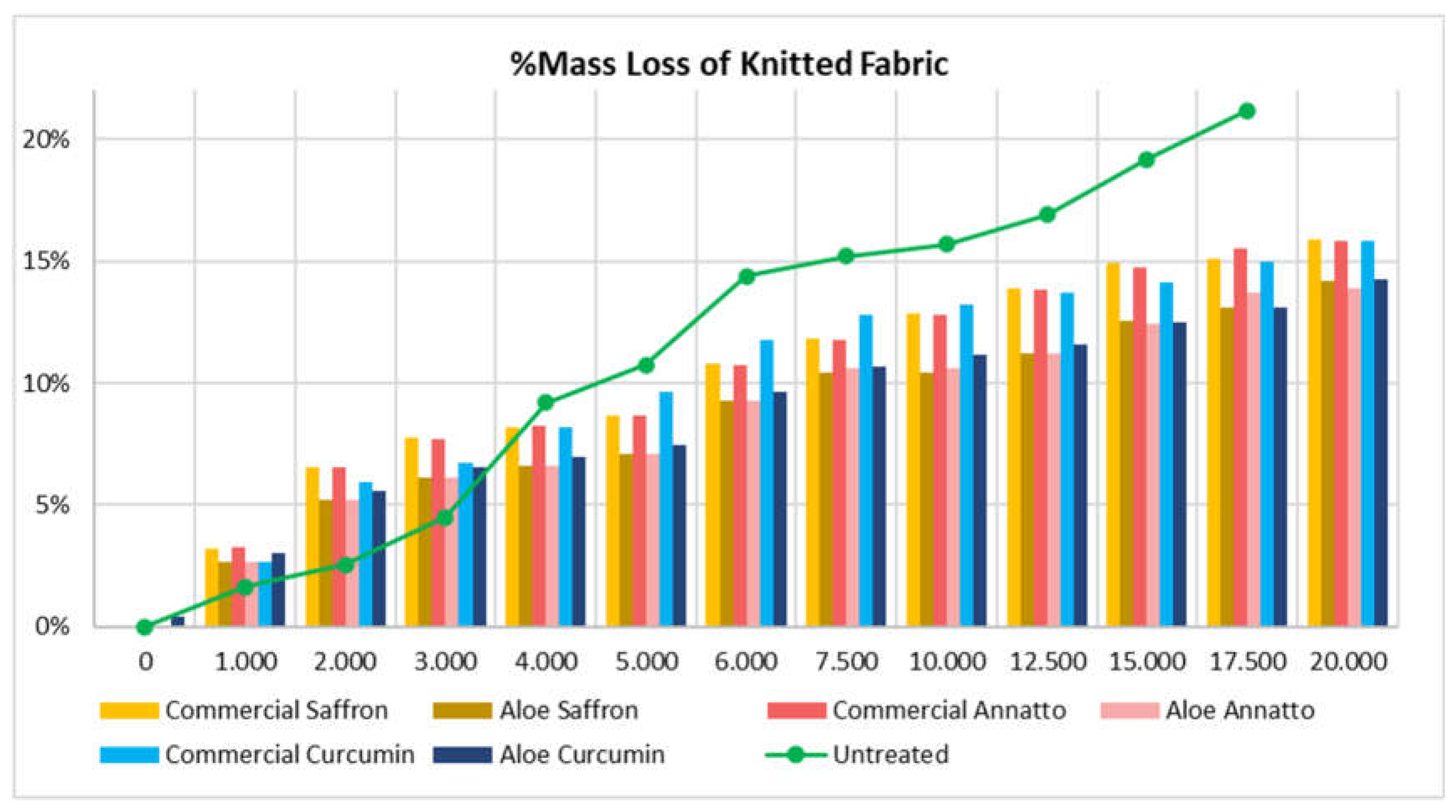
Additionally, Figure 4 and Figure 5 show that all printed samples with commercial and aloe thickeners suffer a significant percentage of mass loss in the early 1000-5000 cycles. This loss evens out in the following cycles until it reaches a sudden failure. Untreated samples show a more symmetrical and progressive deterioration in mass loss, which can be attributed to the superficial printed paste (coating) loss, which acts as a protective intermediate layer that absorbs the impact from the first part of the abrasion test cycles. Since the untreated sample’s fabric failure occurs earlier than the printed fabric, mass loss measurement of the untreated sample can not be performed at the ultimate stage. Additionally, not all samples break at the same time. Some fail before the ultimate stage, leaving some positions in the Martindale inactive. Mass measurements only for the printed samples at the ultimate stage were plotted in Figure 4 and Figure 5 but should not be considered as the average can become inconsistent. This trend conforms with the literature where, according to the disciplines of tribology, under standard mechanical and practical procedures, the rate of wear passes under three main stages [28]. Initially, the two surfaces adapt to each other, and the duration of this stage depends on the morphology and softness of the surfaces. In the primary stage, the adhesive-shearing wear occurs at the contact points where the normal force exerts an initially high pressure, i.e., higher than the elastic limit or the yield value, causing deformation of the junctions and increase in the contact area, reducing the pressure to the point that the force deforms the material mainly elastically [29]. The second stage is the longest, with a steady rate of wear and in the third, the components are subjected to rapid failure due to the extreme rate of wearing.
3. Results and Discussions
Initially, the untreated control fabrics for knitted and woven versions were compared against the printed ones with both types of thickeners, commercial and aloe, as represented in Figure 2 and Figure 3.
Results show that the influence of both types of printing pastes promotes abrasion resistance, expanding the life span of the samples. As seen from Figure 2 and Figure 3, a considerable increase in the abrasion resistance to failure by approximately 2500 to 5000 cycles is exerted by the printed samples of both versions of paste thickeners, commercial and aloe. The increase is highly prominent on the knitted substrate, which could be attributed mainly to the following factors.
Firstly, the printing paste acts as an intermediate film separating the yarns of the substrate and keeping from coming into direct contact with the woollen abradant. This action protects the fibres until the coating film itself wears out. It should be noted that the polymerised binder on the fabric surface is in solid form with near to zero rheological properties, whereas the abrasion takes place at low speeds with a rough textile surface; hence, hydrodynamic or semi-boundary lubrication cannot be claimed [29]. Tribological analysis of boundary or semi-boundary lubrication was off the scope of the current work. Ibrahim et al. [13] presented only minor differences in the dynamic coefficient of friction, as in the case of abrasion testing. He mentioned that the antibacterial properties of aloe were not detected as the molecules were trapped within this binder film. It would be interesting to check whether friction releases aloe molecules, allowing them to exhibit the antibacterial properties as observed by the padding application [9,21] or by the microencapsulated nanoparticle application, which is triggered by biodegradation, friction, or pressure against the human body [17].
Secondly, the binder linkages enhance the fibre cohesion in the substrate, which is a crucial factor in fabric abrasion [8,28]. The scope of the binder is to bind the printing paste to the substrate; however, a secondary action seems to fix the adjacent fibres within the yarn of the abraded fabric, promoting abrasion resistance and offering a longer serviceable garment life. Very similar trends in the abrasion resistance between the untreated and printed samples have been reported by Kokol et al. for flame-resistance-treated fabrics [30].
Yarn crossings occur in every successive warp and weft thread in the plain weave, which locks the fibres in place and promotes cohesion. In addition, crown points are formed, leading to higher abrasion resistance, especially in the balanced warp-to-weft yarn crimp fabrics [28,31,32,33]. The looser structure of the knitted fabric, where the yarn in the loops forms longer floats compared to the woven fabric, which is more susceptible to wear [34]. Therefore, the knitted structure benefits more from the binder fibre fixing effect analysed earlier, which is reflected in the results of percentage mass loss.
Figure 4 and Figure 5 also show that all printed samples with commercial and aloe thickeners suffer a significant mass loss in the early stage 1000-5000 cycles. This loss evens out in the following cycles until it reaches a sudden failure. Untreated samples show a more symmetrical and progressive deterioration in mass loss, which can be attributed to the superficial printed paste (coating) loss, which acts as a protective intermediate layer to absorb the impact from the first part of the abrasion test cycles. This trend conforms with the literature where, according to the disciplines of tribology, under standard mechanical and practical procedures, the rate of wear passes under three main stages [28]. Initially, the two surfaces adapt to each other, and the duration of this stage depends on the morphology and softness of the surfaces. In the primary stage, the adhesive-shearing wear occurs at the contact points where the normal force exerts an initially high pressure, i.e., higher than the elastic limit or the yield value, causing deformation of the junctions and increase in the contact area, reducing the pressure to the point that the force deforms the material mainly elastically [29]. The second stage is the longest, with a steady rate of wear and in the third, the components are subjected to rapid failure due to the extreme rate of wearing.
Figure 4.
Percentage mass loss due to abrasion for knitted fabric.
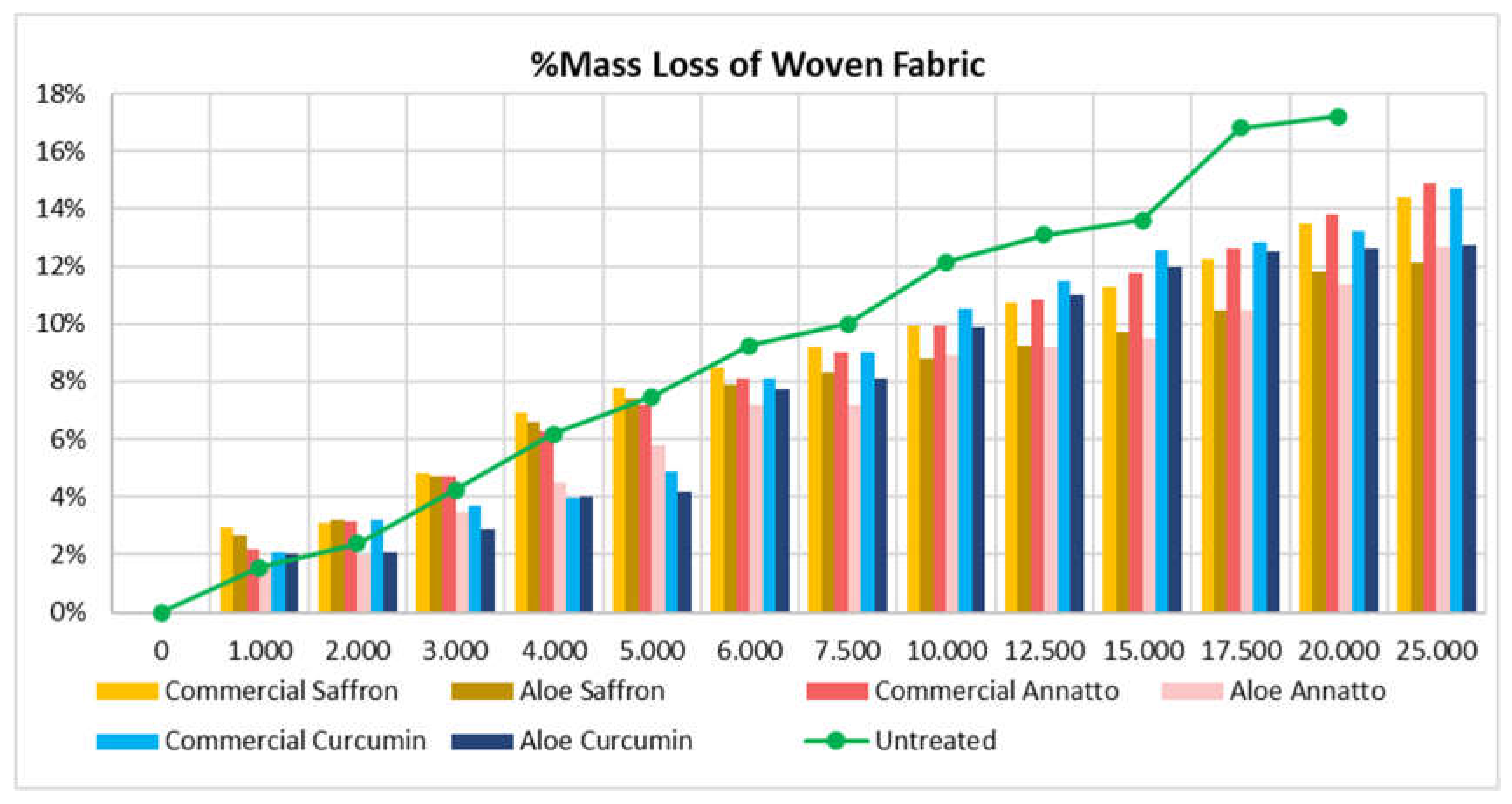
Figure 5.
Percentage mass loss due to abrasion for woven fabric.
Aloe is known for its hygroscopic nature [12,26], which influences the heat dissipation at the ‘cold junctions’ formed by the textile fibres during abrasion [29], while humidity directly affects the viscoelastic behaviour of the fibres through tensile creeping and energy absorption [8,17,28,33]. Saville states that the ability to absorb energy is more critical than high tensile strength for achieving high abrasion resistance [8]. Fabric treated with aloe tends to have a slightly higher abrasion resistance, which is less prominent in knitted fabric than woven fabric, as the latter’s tighter and less elastic structure benefits more.
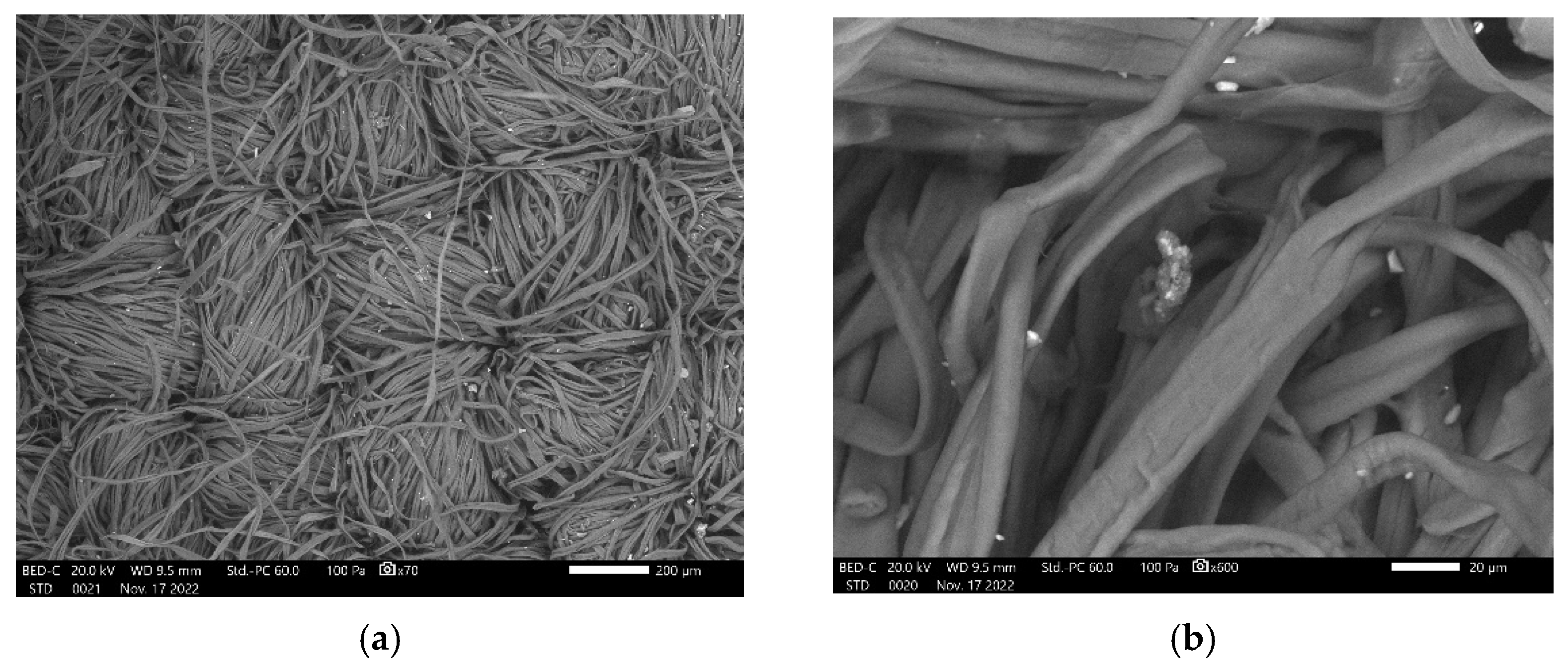
Pictures at a microscopic level (Appendix A, Figure A1) and at lower magnification were taken, although the latter was more beneficial for appearance evaluation. Pictures confirm the findings where the fabric surface fuzzing is prominent in the untreated samples compared to the printed of both thickener types, Figure 7.
The selected fabrics used for substrate were of good quality combed cotton yarn, which exhibits good resistance to abrasion [28,32] and, therefore, surface appearance change and pilling formation were minimal in most of the fabrics but especially in the printed samples with both thickening agents, Table 3 and 4. The lack of surface change in the evaluation system is reflected by number 5, while 4-5 indicates minimal changes. The untreated fabric has reached level 3-4 after 15,000 cycles for the knitted fabric, indicating poor performance and 4-5 for the woven samples of which the yarns are more densely interweaved. All treated fabrics, especially those coated with aloe vera, exhibited no surface alteration and pill formation and received the punctuation 5.
An interesting observation was noted. Samples printed with the aloe thickener paste present a smoother surface with the broken fibrils equally protruding from the fabric surface, similar to a “peach skin effect”, which deliberately is caused on lyocell fabric for enhanced ‘fabric hand’ [35], Figure 8. A combination of the previously discussed effect of long yarn floating and fibre fixing in yarn by the binder could be responsible. Saville explains that the initial impact of abrasion on the fabric’s surface is the appearance of fuzzing as the result of the brushing up of free fibre ends not enclosed within the yarn structure and the transformation of loops into free fibre ends by the pulling out of one of the two ends of the loop [8].
As mentioned before, a marginal gain in the abrasion resistance is recorded with the aloe thickening agent for mainly saffron and curcumin-printed pastes, which can be related to aloe’s hygroscopic and lubricating nature. At the same time, similar findings have been reported on the coefficient of friction, drape and resistance abrasion applied by padding [9,21].
Statistical analysis confirms the previous findings. Besides the low degrees of freedom, the test of homogeneity of variance permitted ANOVA between the sample categories, followed by the Tuckey post hoc test at a 0.05% level of significance. A statistical difference between the untreated and printed fabrics for both thickeners has been confirmed with significance values below the limit of 0.05 (0.044 for woven and 0.031 for knitted). Similarly, no significant difference exists between the two thickeners used for the knitted sample Sig. 0.178 and marginally for the woven substrate with Sig. 0.059 reflecting the marginal property gains by aloe thickener incorporation into the paste for this substrate, as discussed earlier, which confirms that aloe vera can successfully replace the commercial thickening agent with equal or superior properties. Increased abrasion resistance and decreased flexural rigidity have been reported on aloe vera-treated silk [36]. The structure, with reduced resistance to deformation, flexes, stretches, and bends easier, which enhances softness. The latter can be attributed to a secondary effect from the water content of the hygroscopic character of aloe vera [12].
4. Conclusions
The findings showed that the abrasion resistance of printed fabrics is improved compared to untreated fabrics, and this is reflected in the visual assessment of surface appearance, cycles to failure, and percentage mass loss. Aloe vera can be used as a thickening agent in the printing paste, promoting a sustainable textile solution substituting the commercial thickeners with equally or marginally superior properties, considering the secondary antimicrobial behaviour, marginal gains on abrasion resistance and handle but mainly in the sustainability achieved. Aloe vera increases the life of the fabrics during abrasion only by a margin when applied to cotton, which was not confirmed by statistics. An increase in abrasion resistance of aloe vera-treated silk has been reported, as well as a decrease in flexural rigidity, which means a softer and more pleasant fabric [36]. At the same time, aloe vera offers additional benefits compared to commercial thickeners, including wound healing, antifungal activity, hypoglycaemic or anti-diabetic effects, anti-inflammatory, anticancer and gastroprotective properties, wound healing accelerator [16,17], U.V. protection, antioxidant [18] and antimicrobial properties [19,20,21].
Author Contributions
Conceptualisation, M.K. and E.G.A.; methodology, M.K., M.Z. and A.K.; investigation, M.K., M.Z. and A.K.; data curation, M.K. and A.S.; writing—original draft preparation M.K., M.Z. and A.S.; writing—review and editing, M.K.; visualisation, M.K. and E.G.A.; supervision, M.K.; project administration, M.K. funding acquisition, M.K. All authors have read and agreed to the published version of the manuscript.
Funding
This research received no external funding.
Institutional Review Board Statement
Not applicable.
Informed Consent Statement
Not applicable.
Data Availability Statement
Not applicable.
Acknowledgments
The authors thank Maria Zarkogianni for contributing to the investigation stage.
Conflicts of Interest
The authors declare no conflict of interest. No external funders were present to take any role in the design of the study; in the collection, analysis, or interpretation of data; in the writing of the manuscript; or in the decision to publish the results.
Appendix A
Figure A1.
The abraded fabric under SEM analysis. (a) low magnification; (b) and high magnification.
Figure A1.
The abraded fabric under SEM analysis. (a) low magnification; (b) and high magnification.
References
- United Nations UN Launches Drive to Highlight Environmental Cost of Staying Fashionable. Available online: https://news.un.org/en/story/2019/03/1035161 (accessed on 20 May 2024).
- Natural Resources Defense Council Encourage Textile Manufacturers to Reduce Pollution. Available online: https://www.nrdc.org/issues/encourage-textile-manufacturers-reduce-pollution (accessed on 20 April 2024).
- Husaini, S.N.; Zaidi, J.H.; Matiullah; Akram, M. Comprehensive Evaluation of the Effluents Eluted from Different Processes of the Textile Industry and Its Immobilization to Trim down the Environmental Pollution. J Radioanal Nucl Chem 2011, 288, 903–910. [Google Scholar] [CrossRef]
- Sabanoglu, T. Top Textile Exporting Countries Worldwide 2022 2023.
- Karypidis, M.; Savvidis, G. The Effect of Wear and Softeners on the Sewability of Woven Structures. IJSR 2020, 9, 919–923. [Google Scholar]
- Booth, J.E. Principles of Textile Testing: An Introduction to Physical Methods of Testing Textile Fibres, Yarns and Fabrics, 3rd ed.; Heywood Books: London, UK, 1968; ISBN 0-592-06325-9. [Google Scholar]
- Warren, L. These 6 Brands Offer Textile Recycling Programs to Keep Your Clothes Out of Landfills. Available online: https://sourcingjournal.com/denim/denim-brands/levis-madewell-north-face-zara-reformation-textile-recycling-denim-179386 (accessed on 20 April 2024).
- Saville, B.P. Serviceability. In Physical Testing of Textiles; Elsevier, 1999; pp. 184–208 ISBN 978-1-85573-367-1.
- Ibrahim, W.; Sarwar, Z.; Abid, S.; Munir, U.; Azeem, A. Aloe Vera Leaf Gel Extract for Antibacterial and Softness Properties of Cotton. J Textile Sci Eng 2017, 07. [Google Scholar] [CrossRef]
- Schindler, W.D.; Hauser, P.J. Antimicrobial Finishes. In Chemical Finishing of Textiles; Elsevier, 2004; pp. 165–174 ISBN 978-1-85573-905-5.
- Scott, A. Cutting Out Textile Pollution. Chem. Eng. News Archive 2015, 93, 18–19. [Google Scholar] [CrossRef]
- Soltanizadeh, N.; Mousavinejad, M.S. The Effects of Aloe Vera (Aloe Barbadensis) Coating on the Quality of Shrimp during Cold Storage. J Food Sci Technol 2015, 52, 6647–6654. [Google Scholar] [CrossRef] [PubMed]
- Javed, S.; Atta-ur-Rahman Aloe Vera Gel in Food, Health Products, and Cosmetics Industry. In Studies in Natural Products Chemistry; Elsevier, 2014; Vol. 41, pp. 261–285 ISBN 978-0-444-63294-4.
- Liontakis, A.; Tzouramani, I. Economic Sustainability of Organic Aloe Vera Farming in Greece under Risk and Uncertainty. Sustainability 2016, 8, 338. [Google Scholar] [CrossRef]
- Solomou, A.; Germani, R.; Georgakopoulou, M. ECOLOGICAL VALUE, CULTIVATION, UTILISATION AND COMMERCIALISATION OF ALOE VERA IN GREECE. THE JAPS 2020, 30. [Google Scholar] [CrossRef]
- Chelu, M.; Musuc, A.M.; Popa, M.; Calderon Moreno, J. Aloe Vera-Based Hydrogels for Wound Healing: Properties and Therapeutic Effects. Gels 2023, 9, 539. [Google Scholar] [CrossRef]
- Mondal, Md.I.H.; Saha, J.; Rahman, Md.A. Functional Applications of Aloe Vera on Textiles: A Review. J Polym Environ 2021, 29, 993–1009. [Google Scholar] [CrossRef]
- Hossen, M.M.; Hossain, M.L.; Mitra, K.; Hossain, B.; Bithi, U.H.; Uddin, M.N. Phytochemicals and In-Vitro Antioxidant Activity Analysis of Aloe Vera by-Products (Skin) in Different Solvent Extract. Journal of Agriculture and Food Research 2022, 10, 100460. [Google Scholar] [CrossRef]
- Chelu, M.; Musuc, A.M.; Aricov, L.; Ozon, E.A.; Iosageanu, A.; Stefan, L.M.; Prelipcean, A.-M.; Popa, M.; Moreno, J.C. Antibacterial Aloe Vera Based Biocompatible Hydrogel for Use in Dermatological Applications. IJMS 2023, 24, 3893. [Google Scholar] [CrossRef]
- Maduna, L.; Patnaik, A. A Review of Wound Dressings Treated with Aloe Vera and Its Application on Natural Fabrics. Journal of Natural Fibers 2023, 20, 2190190. [Google Scholar] [CrossRef]
- Mondal, Md.I.H.; Saha, J. Antimicrobial, UV Resistant and Thermal Comfort Properties of Chitosan- and Aloe Vera-Modified Cotton Woven Fabric. J Polym Environ 2019, 27, 405–420. [Google Scholar] [CrossRef]
- Hamman, J.H. Composition and Applications of Aloe Vera Leaf Gel. Molecules 2008, 13, 1599–1616. [Google Scholar] [CrossRef] [PubMed]
- Ni, Y.; Tizard, I.R. Analytical Methodology: The Gel-Analysis of Aloe Pulp and Its Derivatives. In Aloes. The genus Aloe; CRC Press: BocaRaton, 2004; pp. 111–126. ISBN 978-0-429-20414-2. [Google Scholar]
- El-Zairy, E.M. NEW THICKENING AGENT BASED ON ALOE VERA GEL FOR DISPERSE PRINTING OF POLYESTER. AUTEX Research Journal 2011, 11, 66–70. [Google Scholar] [CrossRef]
- Chauhan, P.; Kumar, A. Development of a Microbial Coating for Cellulosic Surface Using Aloe Vera and Silane. Carbohydrate Polymer Technologies and Applications 2020, 1, 100015. [Google Scholar] [CrossRef]
- Zarkogianni, M.; Karypidis, M. The Use of Aloe Vera as a Natural Thickening Agent for the Printing of Cotton Fabric with Natural Dyes. IJSR 2019, 8, 147–151. [Google Scholar] [CrossRef]
- Aslanidou, D.; Karapanagiotis, I. Superhydrophobic, Superoleophobic and Antimicrobial Coatings for the Protection of Silk Textiles. Coatings 2018, 8, 101. [Google Scholar] [CrossRef]
- Arora, A. Effect of Abrasion Resistance on the Woven Fabric and Its Weaves. IJSBAR 2020, 50, 9–19. [Google Scholar]
- Gupta, B. Fundamental Concepts of Friction and Lubrication Affecting Textile Fibers. In Friction in Textile Materials; Elsevier, 2008; pp. 37–66 ISBN 978-1-85573-920-8.
- Kokol, V.; Vivod, V.; Peršin, Z.; Kamppuri, T.; Dobnik-Dubrovski, P. Screen-Printing of Microfibrillated Cellulose for an Improved Moisture Management, Strength and Abrasion Resistant Properties of Flame-Resistant Fabrics. Cellulose 2021, 28, 6663–6678. [Google Scholar] [CrossRef]
- Seyam, A.M. Developments in Jacquard Woven Fabrics. In Specialist Yarn and Fabric Structures; Elsevier, 2011; pp. 223–263 ISBN 978-1-84569-757-0.
- Kubra, K.; Topalbekiroglu, M. Influence of Fabric Pattern on the Abrasion Resistance Property of Woven Fabrics. Fibres & Textiles in Eastern Europe 2008, 16, 54–56. [Google Scholar]
- Backer, S. The Relationship Between the Structural Geometry of a Textile Fabric and Its Physical Properties: I: Literature Review. Textile Research Journal 1948, 18, 650–658. [Google Scholar] [CrossRef]
- Abdullah, I.; Blackburn, R.S.; Russell, S.J.; Taylor, J. Abrasion Phenomena in Twill Tencel Fabric. J of Applied Polymer Sci 2006, 102, 1391–1398. [Google Scholar] [CrossRef]
- Karypidis, M.; Wilding, M.A.; Carr, C.M.; Lewis, D.M. The Effect of Crosslinking Agents and Reactive Dyes on the Fibrillation of Lyocell. AATCC Magazine 2001, 1, 40–44. [Google Scholar]
- Nadiger, V.G.; Shukla, S.R. Antimicrobial Activity of Silk Treated with Aloe-Vera. Fibers Polym 2015, 16, 1012–1019. [Google Scholar] [CrossRef]
Figure 1.
Experimental set-up of . (a) abrasion resistance on Martindale abrasion apparatus, (b) microscope and (c) test specimen failing point
Figure 1.
Experimental set-up of . (a) abrasion resistance on Martindale abrasion apparatus, (b) microscope and (c) test specimen failing point
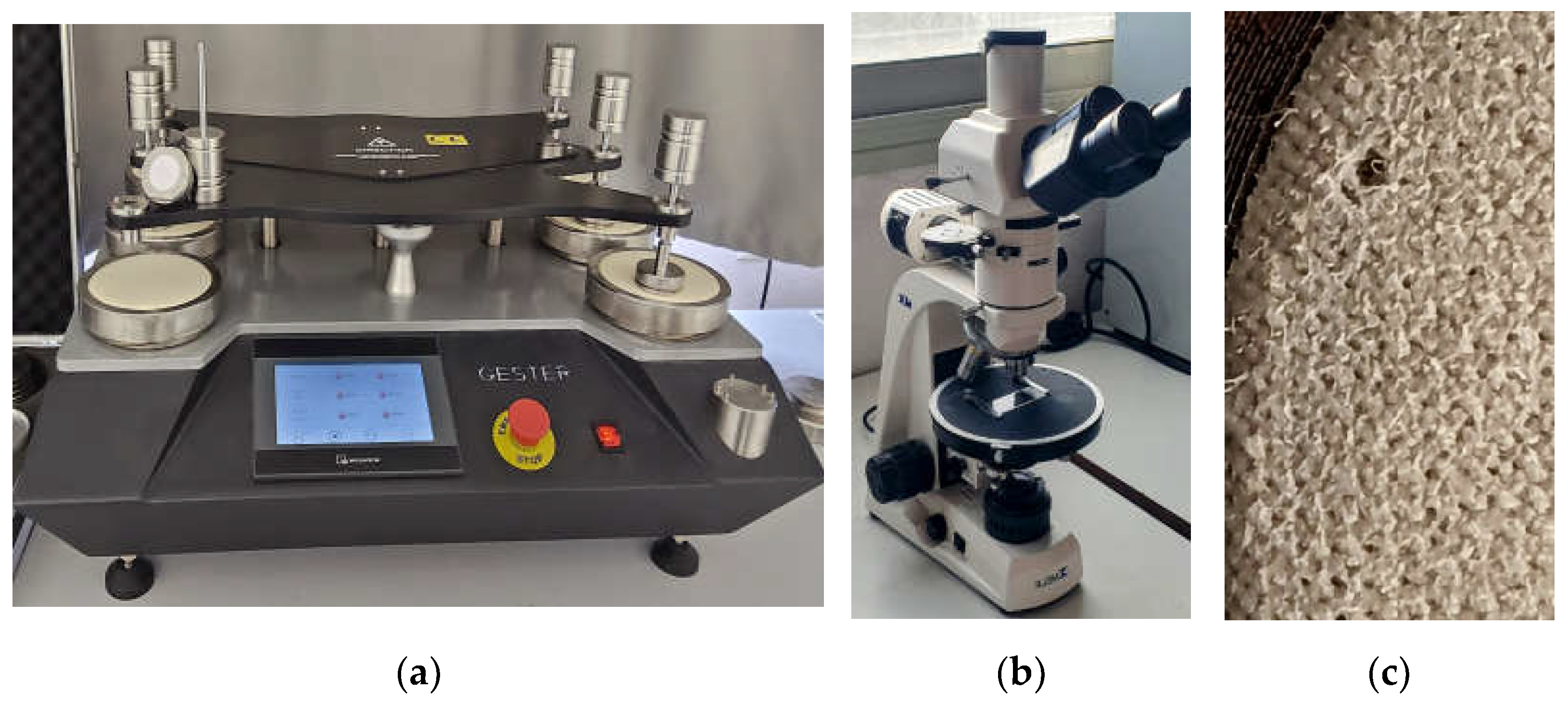
Figure 2.
Abrasion resistance cycles to failure for knitted fabric.
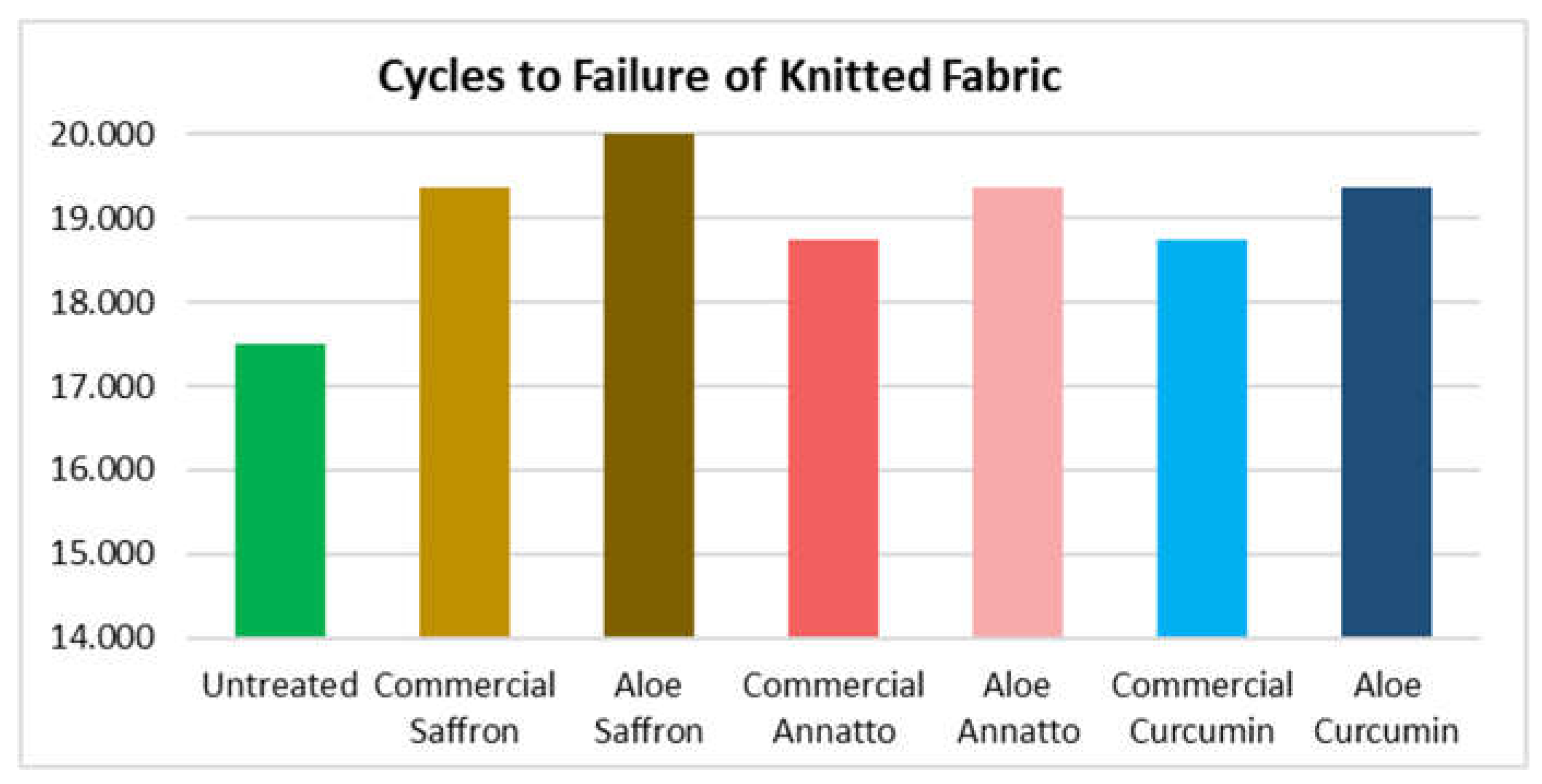
Figure 3.
Abrasion resistance cycles to failure for woven fabric.
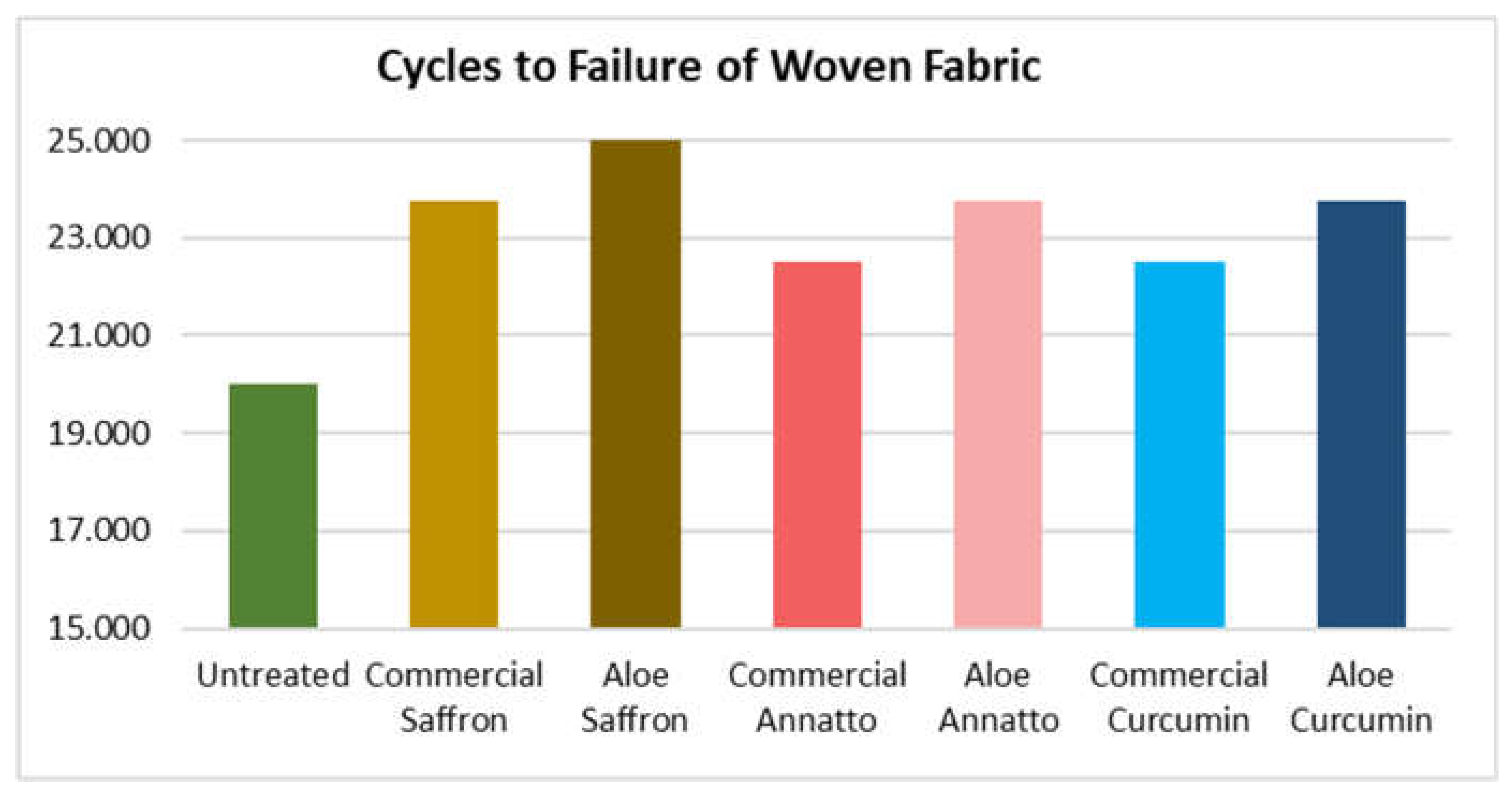
Figure 7.
Surface fuzzing of fabric samples comes at a later stage in coated samples. (a) untreated knitted fabric; (b) printed knitted fabric; (c) untreated woven fabric; (d) printed woven fabric.
Figure 7.
Surface fuzzing of fabric samples comes at a later stage in coated samples. (a) untreated knitted fabric; (b) printed knitted fabric; (c) untreated woven fabric; (d) printed woven fabric.
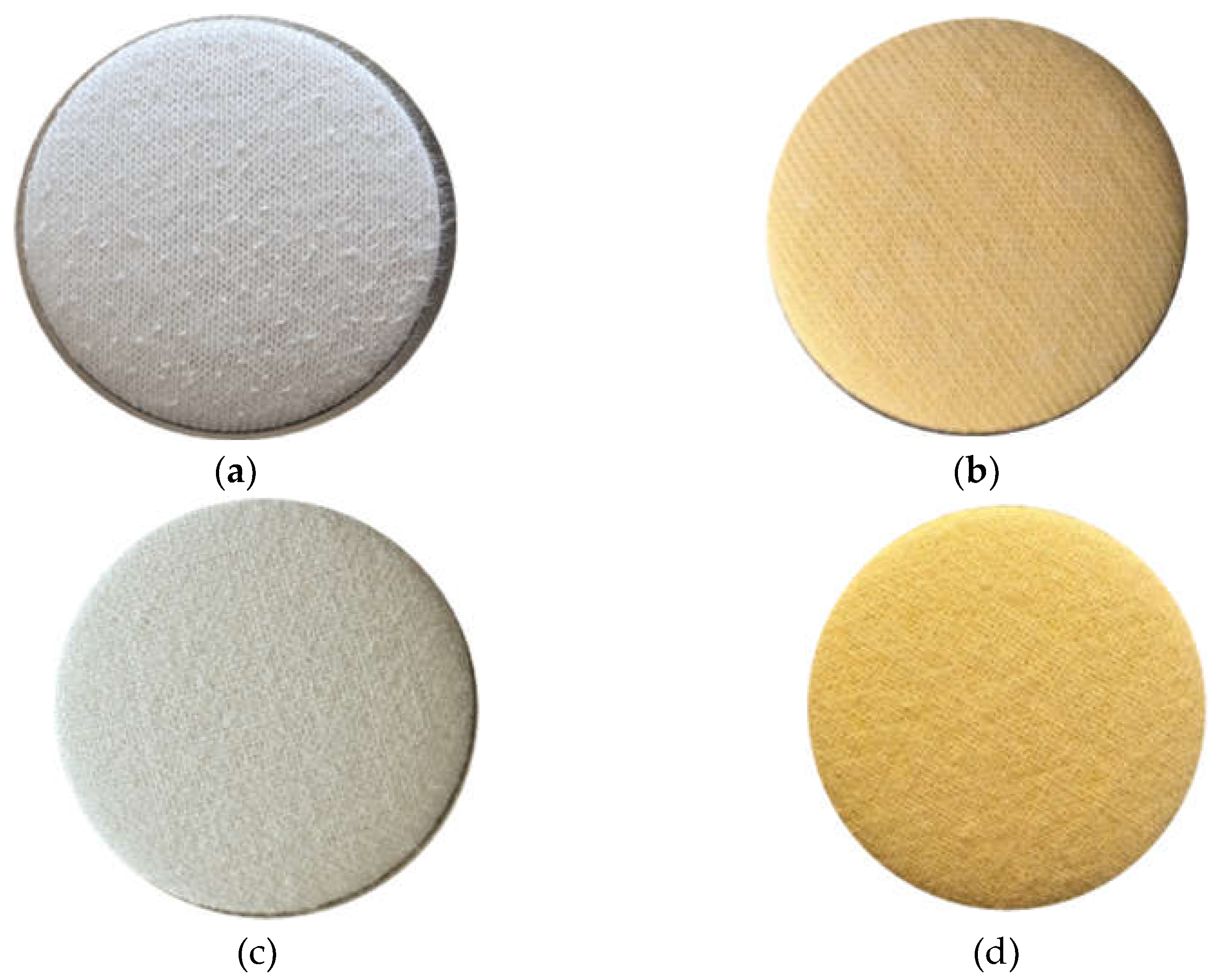
Figure 8.
Longer fibrils protruding from the surface of the (a) untreated samples compared to (b) aloe-treated pastes coated samples.
Figure 8.
Longer fibrils protruding from the surface of the (a) untreated samples compared to (b) aloe-treated pastes coated samples.
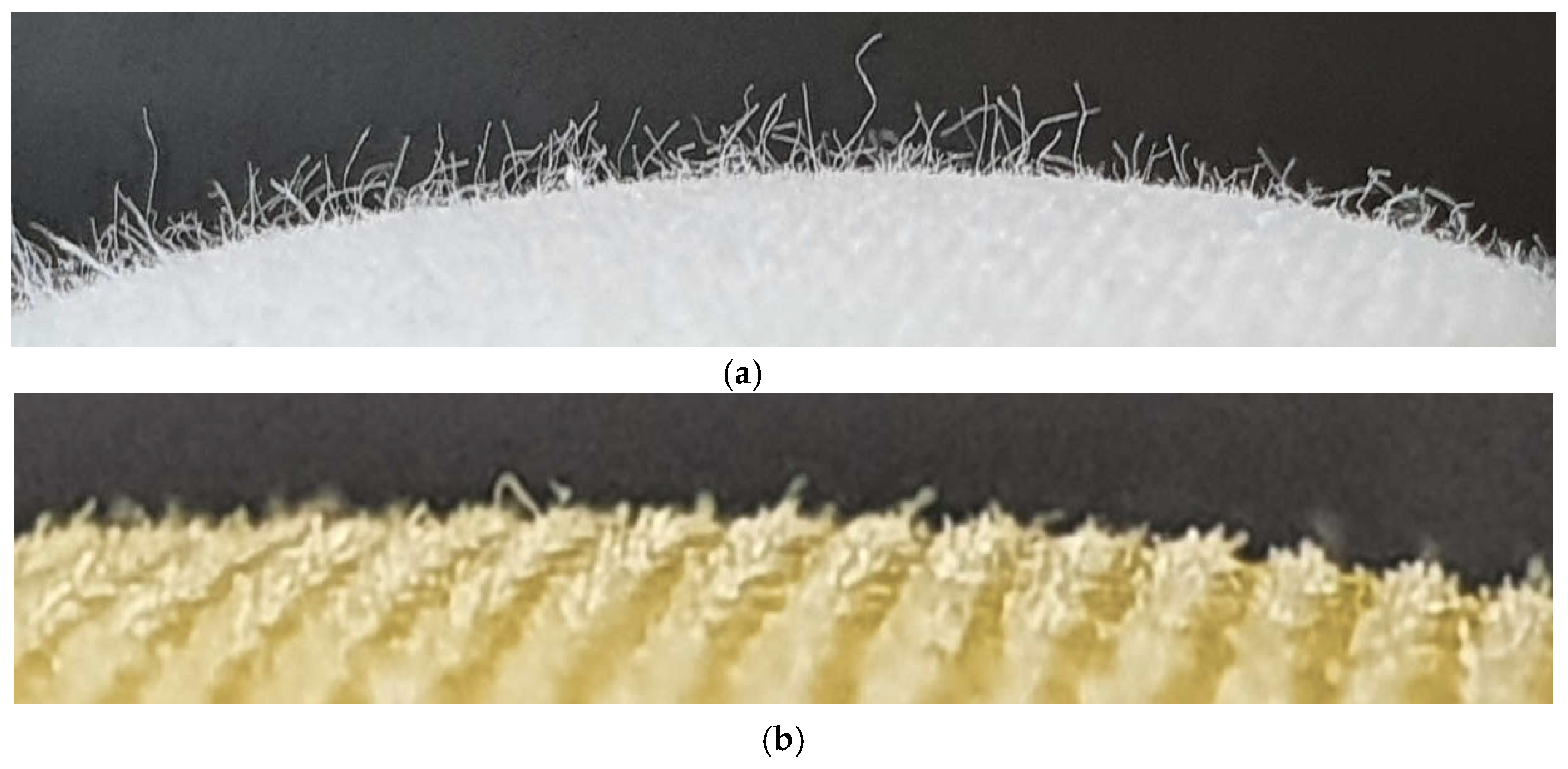

Table 1.
Sample preparation properties.
| Property | Woven | Knitted |
|---|---|---|
| Dry mass gain (%) | 9.85 | 10.70 |
| Thickness increase (%) | 10.81 | 13.25 |
Table 2.
Printing paste recipes of Aloe vera Gel and Commercial Thickener.
| Ingredients (gr/100gr paste) |
Thickening Agents | |
|---|---|---|
| Aloe vera Gel | Commercial | |
| Natural dye | 2 | 2 |
| Thickening agent | 80 | 1 |
| Sodium Alginate | 2 | - |
| Binder | 15 | 15 |
| Fixer | 1 | 1 |
| Water | - | 81 |
Table 3.
Pilling surface evaluation for knitted fabric.
| Knitted Substrate | Abrasion Cycles | ||||||
|---|---|---|---|---|---|---|---|
| 1,000 | 2,000 | 5,000 | 7,000 | 10,000 | 15,000 | ||
| Untreated | 5 | 5 | 5 | 4-5 | 4-5 | 3-4 | |
| Printed Saffron AV | 5 | 5 | 5 | 5 | 5 | 5 | |
| Printed Saffron Comm | 5 | 5 | 5 | 5 | 5 | 5 | |
| Printed Annatto AV | 5 | 5 | 5 | 5 | 5 | 5 | |
| Printed Annatto Comm | 5 | 5 | 5 | 5 | 5 | 4-5 | |
| Printed Curcumin AV | 5 | 5 | 5 | 5 | 5 | 5 | |
| Printed Curcumin Comm | 5 | 5 | 5 | 5 | 5 | 4-5 | |
Table 4.
Pilling surface evaluation for woven fabric.
| Knitted Substrate | Abrasion Cycles | ||||||
|---|---|---|---|---|---|---|---|
| 1,000 | 2,000 | 5,000 | 7,000 | 10,000 | 15,000 | ||
| Untreated | 5 | 5 | 5 | 5 | 5 | 4-5 | |
| Printed Saffron AV | 5 | 5 | 5 | 5 | 5 | 5 | |
| Printed Saffron Comm | 5 | 5 | 5 | 5 | 5 | 5 | |
| Printed Annatto AV | 5 | 5 | 5 | 5 | 5 | 5 | |
| Printed Annatto Comm | 5 | 5 | 5 | 5 | 5 | 4-5 | |
| Printed Curcumin AV | 5 | 5 | 5 | 5 | 5 | 5 | |
| Printed Curcumin Comm | 5 | 5 | 5 | 5 | 5 | 5 | |
Disclaimer/Publisher’s Note: The statements, opinions and data contained in all publications are solely those of the individual author(s) and contributor(s) and not of MDPI and/or the editor(s). MDPI and/or the editor(s) disclaim responsibility for any injury to people or property resulting from any ideas, methods, instructions or products referred to in the content. |
© 2024 by the authors. Licensee MDPI, Basel, Switzerland. This article is an open access article distributed under the terms and conditions of the Creative Commons Attribution (CC BY) license (http://creativecommons.org/licenses/by/4.0/).
Copyright: This open access article is published under a Creative Commons CC BY 4.0 license, which permit the free download, distribution, and reuse, provided that the author and preprint are cited in any reuse.