
Submitted:
19 July 2024
Posted:
19 July 2024
You are already at the latest version
Abstract
The digital revolution has significantly impacted many Chinese Time-Honored businesses, particularly those slow to adapt to environmental changes, resulting in challenges related to long-term marketing capabilities and declining performance. This study explores the relationship between ambidextrous marketing capabilities and corporate performance. Utilizing a survey involving 91.8% of middle and upper-level managers across 47 Chinese time-honored firms, we construct a research model that demonstrates how the application of ambidextrous marketing capabilities can foster the development of Sustainable marketing capability, which in turn positively influence corporate performance. Sustainable marketing capability mediate the effect of ambidextrous marketing capabilities on corporate performance. Additionally, enhancements in market conditions or legislation may further amplify the impact of Sustainable marketing capability on business performance. In the context of Chinese time-honored firms, these findings offer managerial insights into building Sustainable marketing capability, enhancing performance, and achieving competitive advantages.
Keywords:
Time-Honored Enterprises
; Marketing Exploration
; Marketing Exploitation
; Sustained Marketing
; Corporate Performance
1. Introduction
Numerous conventional businesses worldwide are struggling to reverse negative trends due to digitalization [1]. Chinese time-honored firms face similar challenges in survival and growth, compounded by the significant effects of the COVID-19 pandemic from 2021 to 2023 [2]. As of December 2023, only 1,073 Chinese time-honored brands were listed by the People's Republic of China's Ministry of Commerce, a dramatic decrease from approximately 16,000 in 1949. These businesses often lag in innovation, technology R&D, and adaptability to shifts in the consumer landscape [3].Additionally, they struggle to adapt to the ever-changing environment, highlighting a lack of sustainable marketing capabilities [4]. Maintaining marketing capacity is crucial for organizational survival; it encompasses more than a single marketing strategy, involving the relationships between employees, clients, and other stakeholders. Organizing connections within the marketing system is essential for building sustainable marketing capabilities, which are internally shaped by the business [5]. Achieving long-term success amidst environmental instability requires simultaneous exploration and exploitation [6,7]. This approach enables improved performance and survival in a highly competitive industry. Our goal is to explore how marketing exploration and exploitation shape the Sustainable marketing capability of time-honored firms, ultimately affecting corporate performance. We will focus on the internal enterprise architecture.
Recent years have seen substantial academic research on sustained competitive advantage[8,9,10]. However, the specific aspect of sustained marketing capability has received comparatively less attention[11,12]. There has been limited discussion on the relationship between ambidextrous marketing and business performance. Additionally, the contentious topic of ambidexterity's "duality" remains debated [13]. Currently, there is a lack of research linking sustained marketing, ambidextrous marketing, and company performance. Today, topics such as brand innovation, brand inheritance, consumer psychology, and brand extension are being explored through quantitative research from the management perspective of time-honored businesses[8,14,15,16]. However, the ambidextrous component has not been sufficiently discussed. This analysis proposes three research questions to address the observed research gaps:
1.1 How does ambidextrous marketing impact the development of sustainable marketing capability in established businesses?
1.2 How is the performance of established businesses affected by ambidextrous marketing? What role do Sustainable marketing capability play in this?
1.3 How can a generalized model be developed to illustrate the impact of ambidextrous marketing on the development of sustainable marketing capability and its subsequent effect on the performance of time-honored enterprises?
The theoretical Contributions of this study: (1) This study develops a generalized model to bridge a knowledge gap in the literature regarding the connection between corporate performance, sustainable marketing capability, and ambidextrous marketing. (2) It provides empirical evidence from a specific field on the "duality" issue in the current ambidextrous problem, enhancing understanding and advancing ambidexterity theory. Moreover, it fills the research gap on intermediary variables between ambidextrous activities and firm performance by identifying factors influencing performance and explaining the existence of duality. (3) This study represents a crucial advancement for future research on innovative business marketing models and the sustainability of effective marketing approaches.
The study's practical significances are: (1) This study provides time-honored enterprises with strategic guidance to help them formulate and adjust strategic decisions more effectively. (2) It examines the role of marketing exploration and exploitation in shaping sustainable marketing capability, helping time-honored enterprises balance the relationship between innovation and stability, optimize resource allocation, and improve operational efficiency. (3) This study contributes to shaping the enduring marketing capability of time-honored enterprises, enabling them to achieve long-term development and obtain lasting competitive advantages.
2. Literature Review and Hypotheses
2.1. Ambidexterity Theory
The term "ambidexterity" originates from Latin, meaning "the capacity to use both hands at the same time." To address the organizational productivity dilemma that emerged in the 1970s, Duncan [17] introduced the idea of ambidexterity into management. However, Duncan's work went largely unnoticed until March revisited the concept. Building on Duncan's work, March [18], diverged from organizational learning theory and emphasized that ambidexterity encompasses both exploitation and exploration activities. Exploitation includes search, variation, experimentation, play, adaptability, discovery, and creativity, while exploration involves production, efficiency, selection, refinement, implementation, and execution. Consequently, "exploitation" and "exploration" became fundamental terms in ambidextrous studies. March's perspective was eventually widely adopted to define ambidextrous competence, suggesting that organizations must discover new capabilities while utilizing existing ones to adapt to their environments. To seize new opportunities, organizational resources must be reconfigured[19,20]. According to March's viewpoint, a company's sustainability depends on balancing both competencies simultaneously. Overemphasizing exploitation can lead to a "success trap," prioritizing short-term gains over long-term progress. Conversely, excessive emphasis on exploration can result in a "failure trap," where the focus on exploration jeopardizes the business's survival by neglecting short-term gains. Thus, later scholars extensively examined how companies might balance the relationship between exploitation and exploration to support organizational progress effectively[21,22,23].The categories of ambidextrous research expanded to include organizational behavior[24,25], strategic management [26,27], technological innovation[28], social networks [29,30], management philosophy [31,32,33], and other areas, enriching the research content. An analysis of the literature revealed that structural theory [18,21,34], organizational learning [22], organizational innovation [28], contingency theory[35], leadership theory [36], and social network theory [30] have all influenced the development of ambidexterity theory research. Most previous research has validated ambidexterity concerns from a static viewpoint. However, ambidextrous states are dynamic and evolve over time. Therefore, future ambidexterity research will likely integrate dynamic capabilities with ambidexterity theory. This research focuses on ambidexterity in the marketing domain, particularly on the strategic management aspect of cultivating ambidextrous marketing proficiency for established businesses. The subsequent section addresses the ability to market ambidextrously.
2.2. Ambidextrous Marketing Capability
Kyriakopoulos and Moorman [37] were pioneers in applying ambidextrous thinking to the marketing industry, focusing on the strategic aspects of exploitation and exploration. Prange and Schlegelmilch's [38] study investigates marketing tactics from a strategic approach, suggesting that enhancing marketing plan procedures incrementally improves management effectiveness through marketing exploitation. In contrast, marketing exploration involves developing and creating new marketing strategies to adapt to changing market conditions. Their findings acknowledge the complementary nature of exploration and exploitation, showing that new products perform better with a stronger market orientation. Vorhies et al. [39] build on March's (1991) organizational learning theory, arguing that updating and improving marketing knowledge is critical for dynamic capabilities. Marketing exploration involves learning new skills, while exploitation focuses on maximizing current knowledge and extracting value. These capabilities form the foundation of adaptive marketing for organizations. Scholars have since explored the balance between these qualities and their impact on performance. He & Wong [21] examined the effects of exploratory and exploitative innovation on performance in Malaysian and Singaporean enterprises, finding a positive association between the interplay of these innovation strategies and sales growth, and a negative correlation between their relative imbalance and sales growth. Cao et al. [40]. extended He and Wong's work by investigating Chinese firms that employ balanced and interactive dualisms, clarifying the mechanisms behind both capacities. The studies revealed that balanced and participatory approaches to "exploitation and exploration" can improve company performance, although the magnitude of this effect varies among environments. Ho and Lu [41] found that businesses pursuing high levels of both marketing exploitation and exploration underperform their competition. This endeavor depletes company resources and management attention, reducing the efficacy of marketing capabilities in establishing market influence. A balanced corporation may allocate resources to marketing programs with the highest returns but might also misallocate resources to marginal projects. Peng et al. [42] discovered that marketing exploration and exploitation in founding teams have a binary balancing relationship, with their interplay positively influencing business performance. After more than two decades of research, the ambidexterity issue has progressed beyond the initial stage of trade-off and balancing, effectively resolving the paradox, and is now moving towards ambidextrous coordination and collaboration. Recent studies have emphasized the relationship between exploration and exploitation, focusing on methods such as balanced configuration or high-level interaction to create organizational forms for effective ambidexterity[43,44,45,46,47]. In conclusion, this study indicates that marketing exploration capability involves an organization's focus on utilizing fresh market knowledge to generate new skills, processes, and product combinations. Conversely, marketing exploitation capability entails firms improving and enhancing existing technology, products, processes, and marketing abilities. Building on these theoretical foundations, this paper investigates how time-honored businesses can maximize existing resources while balancing exploration and exploitation.
2.3. Sustained Marketing Capability
Sustained marketing capability refers to a subset of the marketing capability study. Early discussions among marketing researchers focused on functions [48], the transition from functions to capabilities, and the integration of marketing functions. However, these tasks have not been thoroughly explored as components of a comprehensive marketing system. Day [49] defined marketing capability as an organization's ability to successfully use multiple resources to gain a competitive edge in the market. Marketing skills are divided into three categories based on the stage of the marketing process: external, internal, and integrated. Vorhies and Morgan [50] defined marketing capability as a company's ability to select anticipated value propositions for target customers and allocate resources to deliver these value propositions to achieve the intended objectives. Although a consistent conceptual definition of marketing capability is lacking, various research perspectives have developed, including. (1) The Resource-Based View: This perspective emphasizes that marketing capability is a critical resource owned by companies for marketing management and innovation [49,51,52]. (2) The Strategic Perspective: This examines marketing competence from a company's broader strategic standpoint. It connects hierarchical models from conceptual to execution layers, recognizing critical marketing competencies at each level [11,53,54]. (3) The Knowledge Viewpoint: This perspective emphasizes the importance of knowledge as a company's primary strategic resource. Knowledge resource differentiation can lead to performance variances between firms[49,50]. (4) The Dynamic View: This recognizes that the market is constantly changing, and understanding and evaluating marketing capabilities in a dynamic setting is critical[52,55,56].These diverse viewpoints have broadened the scope of marketing capability research and improved the theory's application.
In summary, this study views sustained marketing competency as a strategic interpretation of the entire value exchange process. Focusing primarily on short-term advantages may lead to "marketing myopia," hindering a company from achieving long-term benefits. To address this, Kotler [11] introduced the notion of sustained marketing, asserting that marketing must be a strategic management concept that considers the interests of consumers, organizational staff, and shareholders. In his book, Kotler analyzed the performance of various exceptional Asian firms, highlighting the need for sustainable marketing capabilities. He also created the Sustainable Marketing Enterprise (SME) model, which conveyed the concept of sustained marketing competence without explicitly defining it. Subsequent studies, although not always using the term "sustained marketing capability," have addressed the concept from several strategic perspectives. Hooley [57] using the resource-based view, emphasized that a company's capabilities, particularly those related to culture and strategy, which are difficult to replicate, can establish sustained competitive advantages. According to Wang and Xu [12], sustained marketing competency is based on internal customer satisfaction, orientation toward external consumers and competitors, efficient communication with the external market, and coordination of internal organizational components. This is achieved by accumulating knowledge and developing effective marketing strategies, allowing the firm to grow over time. Wang [58] stated that marketing culture and reliance on an enterprise's capital are critical components in improving and maintaining marketing capabilities in a dynamic environment. Kamboj and Rahman [59] demonstrated that, under the premise of market orientation, marketing competency contributes to long-term innovation in firms. Hunt [60] proposed that marketing, as an intrinsic concept to sustainable economic development, contributes to its growth. Therefore, sustainability should be incorporated into a company's mission, values, beliefs, norms, marketing goals, and operations. Ćorić et al. [61] discussed the consequences of sustainable marketing in three dimensions: strategic integration, social engagement, and ethical capacity. Appiah-Nimo and Chovancová [62] described how market orientation fosters long-term enterprise performance. Ling et al. [63] investigated how improving digital transformation helps enhance sustained innovation within firms, thereby aiding the process of building sustained marketing competency. As the breadth of marketing activities broadens, some researchers have taken a more macro-level perspective, considering corporate marketing sustainability in economic, social, and environmental dimensions [9,64,65]. Although the research viewpoints listed above vary, we can outline certain features of sustained marketing competency based on these studies: (1) Sustained marketing capability is a valuable, unique, and challenging-to-replicate element. (2) Sustained marketing capability is dynamic, formed through continuous learning and accumulation within the company. (3) Sustained marketing capability is an integrated set of capabilities and responsibilities, incorporating elements such as the company, employees, stakeholders, society, and the ecological environment into the strategic process of sustainable development.
Therefore, based on the above review and summarizing the essence of previous research, this study provides the following definition of sustained marketing capability: it is a unique, valuable, and irreplaceable ability that companies develop through the integration of internal and external resources during long-term learning and accumulation. This capability encompasses various relationships, including customers, employees, the enterprise, and stakeholders, driving the company's development in a dynamic environment through sustained innovation and excellent marketing practices. By integrating sustainability into the company's mission and values, sustained marketing capability becomes a core element supporting the enterprise's sustainable development strategy, providing a solid foundation for achieving long-term competitive advantages and excellent performance. The purpose of this study is to investigate, from the standpoint of internal company development, the problem of maintaining marketing capability in time-honored brands. Using the resource-based view as a foundation and taking cues from Wang and Xu [12], the study explores how businesses build their Sustainable marketing capability from three primary angles: marketing operations, marketing culture, and marketing learning.
2.4. Ambidextrous Marketing Capability and Sustained Marketing Capability
There is currently a discernible lack of direct studies examining the connection between Sustainable marketing capability and ambidextrous marketing capabilities. However, examining related studies offers some insights into possible impact correlations between these two capabilities. The effects of sustained and ambidextrous marketing capabilities on business performance have been independently verified by earlier research. For instance, Zhang and Qiu[66] found that both exploratory and exploitative market innovations significantly enhance company performance through different processes. Exploitative innovation generally builds cost benefits, while exploratory innovation primarily fosters differentiation advantages. Kunieda & Takashima [13] suggested that adjusting resource allocation related to exploration and exploitation positively impacts future financial performance and market evaluation (Tobin’s Q). Jiang [67] established an upward concave curve in the effect of marketing duality on sales growth. Li and Zheng [68] found that exploitative innovation and marketing capability had a favorable impact on company performance, while exploratory innovation had an indirect impact through marketing capability. According to Xu and Wang [69], marketing learning capability and marketing operations capability positively impact both long-term and short-term company performance. Zhang et al. [8] discovered that balanced ambidextrous innovation has an inverted U-shaped influence on short-term financial performance while benefiting long-term competitiveness. Ćorić et al. [61] demonstrated how sustained marketing orientation enhances startup performance. While these studies have varied origins, they converge on similar conclusions, prompting discussions on the correlation between ambidextrous marketing and Sustainable marketing capability, especially in specific contexts. However, prior literature has overlooked such discussions, leaving this research area largely unexplored. Addressing this gap requires a thorough examination of the relationship between ambidextrous and sustainable marketing capabilities, grounded in absorptive theory, to understand how enterprises develop sustainable marketing capabilities under ambidextrous influences.
Secondly, a wider range of academics have verified the beneficial impact of the "ambidextrous" notion on sustainability. Understanding the influence of dual strategies on long-term business performance necessitates considering multiple factors such as leadership, innovation, and organizational culture. Lyu et al. [70] validated the positive effect of ambidextrous leadership capabilities on sustained effectiveness. Zhang et al. [10] discussed how ambidextrous innovation strategies mediate the relationship between big data capabilities and sustainable competitive advantages. Steering sustained procurement programs requires an ambidextrous approach, as Li et al. [71] demonstrated. The mediation function of ambidextrous innovation synergy in bridging dynamic capability and sustainable competitive advantage was emphasized by Qian and Peng [4], providing insightful explanations of how dynamic skills might improve sustainable business performance. The impact that ambidextrous tactics have on businesses' capacity for sustainability is complex and multifaceted. Xing et al.[72] highlighted the sequential mediation function of environmental commitment and innovation in the relationship between environmental legislation and sustainable development, emphasizing the importance of dedication and creativity in achieving sustainable outcomes. Sijabat et al. [73]demonstrated the critical connection between duality and corporate success by showing how ambidextrous innovation mediates to increase firm performance and competitive advantage through entrepreneurial inventiveness. Zeng et al. [74] underscored the value of ambidextrous abilities in promoting development and offered practical advice for resolving the innovation dilemma in sustainable ecosystems. These studies highlight the complex interplay between organizational culture, innovation, and ambidextrous strategies, all of which support sustainable business capabilities. They also demonstrate how ambidextrous approaches affect development in various ways, including supply chain management, leadership, innovation, and organizational structure. Although these studies do not directly establish a link between ambidextrous strategies and sustained marketing, they provide a theoretical foundation for exploring their correlation. Consequently, this study presents the following hypotheses:
Ha: Ambidextrous marketing capabilities enhance a company's Sustainable marketing capability.
Ha1: Marketing exploration positively influences marketing culture.
Ha2: Marketing exploration positively influences marketing learning.
Ha3: Marketing exploration positively influences marketing operations.
Ha4: Marketing exploitation positively influences marketing culture.
Ha5: Marketing exploitation positively influences marketing learning.
Ha6: Marketing exploitation positively influences marketing operations.
2.5. Sustainable Marketing Capability and Corporate Performance
Xu & Wang's [69] investigation into the effect of sustained marketing capability on company performance closely aligns with our findings. They contend that a strong marketing culture indisputably increases corporate performance by satisfying both internal and external customers. By fostering collaboration between enterprise units, marketing learning capability adds value for target customers and creates a sustainable competitive advantage. Operational marketing strategy aids in "capturing customer mindshare" and enables the enterprise to "gain market share." The company's performance is directly impacted by the specific marketing operations, strategies, and initiatives implemented. Comparable studies, such as Mumel et al. [75], illustrate the favorable influence of market orientation on customer loyalty and business performance, underscoring its significance in propelling business performance. Sampaio et al. [76] establish that the dynamic rational configuration between exploration and exploitation influences future financial performance and market evaluation, providing insights into the impact of these activities on business performance. Kunieda & Takashima [13], using service quality as an intermediary, illustrate a positive correlation between market orientation and business performance. Based on these findings, our study posits the following hypotheses:
Hb: Sustainable marketing capability significantly positively influences corporate performance.
Hb1: Marketing culture significantly contributes to corporate performance.
Hb2: Marketing learning significantly enhances corporate performance.
Hb3: Marketing operations significantly improve corporate performance.
2.6. The Mediating Role of Sustainable Marketing Capability
Asree [77] examined the role of sustained marketing capability as a mediator between the ambidextrous supply chain and business performance, evaluating its influence on innovation. The study highlights the mediating function of innovation in firm performance within the context of the ambidextrous supply chain, offering insights into how the ambidextrous supply chain affects innovation and performance. He et al. [46] investigated the impact of marketing exploration capability on innovation performance using exploratory market-oriented innovation, highlighting its partial mediating function. They also examined how marketing development competence affects innovation performance, emphasizing the partly moderating role of exploitative, market-oriented innovation in this relationship. This demonstrates how marketing competency mediates between innovation performance and business performance. Zhang et al. [10] explored how ambidextrous innovation strategy mediates the relationship between big data capabilities and sustainable competitive advantage, providing insights into the comprehensive characteristics that partially mediate this relationship. Lyu et al. [70] investigated the interaction between employee green creativity and green product innovation, examining how it mediates the association between ambidextrous leadership and sustainable development success. The study emphasized the power of ambidextrous leadership to encourage employee green innovation, ultimately improving the company's sustainable development performance and demonstrating sustained marketing's mediation role in achieving sustainable development goals. These studies provide crucial evidence confirming the mediating function of ambidextrous innovation strategy in determining sustainable competitive advantage, a factor closely related to business performance. As a result, this study's hypotheses are as follows:
Hc: Sustainable marketing capability serves as a mediator in the impact process of ambidextrous marketing on corporate performance.
Hc1: Marketing culture acts as a mediator in the influence of marketing exploration capability on corporate performance.
Hc2: Marketing learning capability serves as a mediator in the influence of marketing exploration capability on corporate performance.
Hc3: Marketing operation capability acts as a mediator in the influence of marketing exploration capability on corporate performance.
Hc4: Marketing culture acts as a mediator in the influence of marketing exploitation capability on corporate performance.
Hc5: Marketing learning capability serves as a mediator in the influence of marketing exploitation capability on corporate performance.
Hc6: Marketing operation capability acts as a mediator in the influence of marketing exploitation capability on corporate performance.
2.7. The Moderating Effect of Policy and Market Environments
Institutional theory states that the external environment influences a company's decision-making behavior [78,79], affecting its performance in both market and policy environments. This study aims to explore how market and policy environments regulate the impact of sustained marketing on firm performance. Previous literature has revealed intricate interactions among sustained marketing, market conditions, and policy dynamics, providing insights into the complex relationships that support firm performance. Peng et al. [80] studied the impact of marketing innovation on company performance, discovering that market conditions had varying effects on the relationship between marketing innovation and firm performance. According to the study, technological turbulence favorably moderates the influence of market-driven marketing innovation on firm performance, highlighting the necessity of considering market dynamics when determining marketing initiative outcomes. Similarly, Appiah-Nimo & Chovancová [62] investigated how external and internal business environments, specifically market orientation, mediated and moderated the relationship between marketing strategies and corporate long-term success. The study confirmed the importance of market orientation in driving corporate success, emphasizing the significance of market dynamics in planning sustainable marketing strategies. The policy environment plays a regulatory role in the relationship between sustained marketing and company success. Luan et al. [81] investigated the regulatory effect of environmental regulations on business economic sustainability, providing useful insights into how policy settings influence firm performance. The study demonstrated the role of environmental regulations in affecting enterprises' economic sustainability, underlining the necessity of incorporating policy dynamics into sustainable business plans. Tshuma [82] also stressed the importance of developing a sustainable customer database, particularly in terms of addressing ecological changes and customer preferences impacted by environmental management and health concerns. The study proved the need to use green marketing to maintain a competitive edge in the face of environmental change, emphasizing the impact of policy dynamics in determining marketing strategies and company performance. In summary, previous studies offer valuable evidence indicating the regulatory role of market and policy environments in shaping the relationship between sustained marketing and firm performance. These studies highlight the importance of considering market and policy dynamics in formulating and implementing sustainable marketing strategies to enhance firm performance. The research findings underscore the necessity for organizations to adjust their marketing initiatives based on current market and policy conditions to achieve sustainable and competitive performance. Therefore, this study proposes and will validate the following hypotheses:
Hd: Enhancement in the policy environment strengthens the impact of Sustainable marketing capability on corporate performance.
Hd1: Enhancement in the policy environment promotes the impact of marketing culture on corporate performance.
Hd2: Enhancement in the policy environment strengthens the impact of marketing learning on corporate performance.
Hd3: Enhancement in the policy environment strengthens the impact of marketing operations on corporate performance.
He: Enhancement in the market environment strengthens the impact of Sustainable marketing capability on corporate performance.
He1: Enhancement in the market environment promotes the impact of marketing culture on corporate performance.
He2: Enhancement in the market environment strengthens the impact of marketing learning on corporate performance.
He3: Enhancement in the market environment strengthens the impact of marketing operations on corporate performance.
3. Methodology
3.1. Measurement
To ensure the reliability and validity of our research findings, we carefully controlled the number of questions and based our study on well-established scales from respected international journals. These scales encompass six major factors and two moderating variables. We initially translated, back-translated, and evaluated these scales, making adjustments based on feedback from experts and real-world business contexts in marketing, strategic management, financial management, and industrial economics. Scale reliability was ensured using confirmatory factor analysis and reliability testing. Following pre-surveys, expert opinions, and thorough results from in-depth interviews, we amended and refined the measuring items to construct the official research questionnaire. All major variables were assessed using a 7-point Likert scale, reflecting our commitment to achieving accurate research results.
(1) Ambidextrous Marketing Capabilities: Scales developed by Vorhies, Peng et al., and Wang & Sun were used to assess ambidextrous marketing capabilities. The questionnaire is designed around the characteristics of marketing exploration and marketing exploitation, with a total of ten items. A rating of 1 means "strongly agree," while 7 means "strongly disagree," consistent with the descriptions of each level in the subsequent scales (2 and 4). [39,42,83].
(2) Sustainable Marketing Capability: This comprises Marketing Culture, Marketing Learning, and Marketing Operations. Marketing Culture developed based on scales from Wei, Narver & Slater, and Conduit & Mavondo, comprising 5 questions [5,84,85]; Marketing Learning draws inspiration from scales by Narver & Slater and Hult & Ferrell, with 5 questions [84,86]; Marketing Operations designed based on research by Dess & Davis, Doty et al., and Vorhies et al., also comprising 5 questions [87,88,89].
(3) Corporate Performance: Two measurement methods exist for corporate performance: the objective measurement method, using objective data for assessment [90] , and the subjective measurement method, where respondents subjectively assess performance[91,92]. Govindarajan [93] contends that reasonably pairing objective performance data in cross-enterprise studies is challenging due to the confidentiality of a company's indicators, making the objective method inconvenient for respondents. Consequently, the subjective measurement method is more commonly adopted. Although results from this method may contain errors, such errors do not exhibit systematic differences among different respondents[94], maintaining high credibility. Research also indicates a strong positive correlation between results obtained using the subjective method and the objective method [95]. Churchill et al. [96] found that the subjective measurement method of performance does not increase the correlation between dependent and independent variables and can provide the same results as the objective method. Therefore, this study chose the subjective method to gauge performance, requiring respondents to compare the average performance indicators of the past three years with those of major competitors and express their satisfaction level. The performance scale, drawing from Govindarajan's scale focusing on short-term and long-term performance [87] and empirical studies by Celuch et al. [97] Zehir et al. [98], and Xu & Wang [69], comprises 10 questions.
(4) In terms of moderating variables, the policy environment section uses research scales developed by Li & Atuahene-Gima [99] and Li et al. [100], totaling 5 questions; the market environment section uses research scales developed by Waldman et al., Lu & Yang, and Jiang & Ma, totaling 5 questions [101,102,103].
3.2. Sampling
The sample companies were selected from a list of 1,073 Chinese time-honored brands released by the Ministry of Commerce of the People's Republic of China. The study employed a stratified sampling approach to compile the number of time-honored firms in each Chinese province based on geographical divisions. Provinces were then ranked according to the number of time-honored brands they had. Subsequently, the top ten provinces or directly governed municipalities were chosen, representing 752 time-honored brand enterprises. Random sampling within these ten provinces yielded 118 time-honored brand enterprises as sample companies, accounting for 15.69% of the target enterprises (118/752).
4. Results
4.1. Sample Characteristics
This study examined sample companies from December 2023 to April 2024, issuing 1,200 questionnaires through phone, email, and online methods. A total of 542 questionnaires were gathered. After screening and removing invalid replies, 352 valid questionnaires were preserved from 47 companies, representing 6.25% of the target companies (47/752). The effective rate was 29.33% (352/1,200). Table 1 shows the descriptive statistical results of this survey.
(1) Type of Business Entity: The majority of responses in Type I are from limited liability corporations (208, 59.1%), followed by limited firms (138, 39.2%), with only a few samples from sole proprietorships (6, 1.7%). Type II includes 252 questionnaires (71.6%) from private enterprises, 78 questionnaires (22.2%) from state-owned enterprises, 12 questionnaires (3.4%) from foreign investment enterprises, and 10 questionnaires (2.8%) from enterprises with investments from Hong Kong, Macao, or Taiwan. (2) Age Distribution of Businesses: Of the valid questionnaires, 306 come from businesses with an operating age between 21 and 50 years, accounting for 86.9%. Questionnaires from businesses with an operating age between 11 and 20 years total 31, accounting for 8.8%. There are 10 questionnaires from businesses with an operating age exceeding 51 years, constituting 2.8%. Questionnaires from businesses with an operating age of less than 5 years are 5, making up 1.4%. (3) Business Size: Medium enterprises received the most questionnaires (157, 44.6%), followed by large enterprises (130, 36.9%), small enterprises (37, 10.5%), and micro-enterprises (28, 8%). (4) Survey Respondents: Since this study focuses on internal company construction difficulties, the survey subjects are predominantly managerial individuals from diverse businesses. According to the survey, 91.8% of questionnaires were collected from mid-level and above managers in various enterprises, including 11 from the chairman of the board (3.1%), 71 from the vice president of marketing (20.2%), 78 each from middle managers and general managers (22.2%), and 85 from other vice presidents (24.1%). General staff responded with 29 questionnaires (8.2%). (5) Geographical Distribution: The source provinces of businesses are the top ten provinces or municipalities with the largest concentration of well-known brand ownership. The top three areas are Shanghai (76, 21.6%), Beijing (52, 14.8%), and Jiangsu Province (45, 12.8%). See Table 1 for additional ranks. (6) Industry Representation: Pharmaceuticals and biotechnology (50, 14.2%) are the most represented industries in the valid questionnaires, followed by liquor production (47, 13.4%) and food (45, 12.8%). There are also responses from 13 different industries.
Overall, the valid questionnaires in this study represent a diverse sample in terms of business type, age, scale, employee position structure, regional distribution, and industry, essentially covering the characteristics of the majority of Chinese Time-Honored brands, demonstrating good representativeness.
4.2. Reliability and Validity
(1) Reliability Analysis: Using Cronbach's α coefficient, this study evaluated the measuring scales' reliability. Table 2 presents the specific findings. The primary variables have α values of 0.861、0.843、0.877、0.860、0.862, and 0.944 for their measurement scales, marketing exploration, marketing exploitation, marketing culture, marketing learning, marketing operation, and corporate performance, in that order. Good scale reliability is indicated by the α values for the measurement scales above the standard of 0.700 [104].
(2) Validity Analysis: Content and structural methodologies were used to validate the measuring scales in this study. The original scales were empirically verified in the Chinese context before being published in widely recognized, internationally reputable journals. Expert opinions and pre-surveys were incorporated into the modified version, which focused on Chinese time-honored brands and ensured high content validity. Structural validity was verified by confirmatory factor analysis after being refined using mature scales. The KMO value for the scales is 0.935, and Bartlett's test was significant (χ2/df = 9.868, p<0.000), showing data appropriateness and evident factor structure. Second, AMOS performed confirmatory factor analysis, and the results in Table 2 show standardized factor loading values for corresponding items of each variable ranging from 0.515 to 0.961 which exceeds the 0.500 standard [105]. Thus, all structural validity metrics for the scales perform satisfactorily. Additionally, each factor's AVE and CR values are above 0.5 and 0.7, respectively, demonstrating the variables' strong internal consistency and structural dependability [106]. When discriminant validity is examined, it can be seen from Table 3's square root of AVE values and inter-variable correlation coefficients that each variable's square root of AVE exceeds the correlation coefficients between variables [107], suggesting that the scales have good discriminant validity.
4.3. Means, Standard Deviations, and Correlation Analysis of Variables
Table 3 presents the means, standard deviations, and inter-variable correlation coefficients for each variable in this study. The observed means for all variables are notably high, indicating a potential need for reinforcing dual marketing capabilities among the majority of Chinese time-honored brands. Strengthening these capabilities could effectively foster the development of Sustainable marketing capability, ultimately boosting corporate performance. Additionally, the evident positive correlations among the main variables in this study establish a crucial foundation for the subsequent hypothesis testing.
4.4. Structural Model Analysis
The analysis reveals that each research variable in this study is reliable and legitimate. The study's structural model was analyzed using AMOS to test the conclusions of Hypotheses Ha and Hb. Table 4 shows the path findings and fit indices. The path test results show positive coefficients for all nine sets of variables, with p-values for each association less than 0.001, supporting both hypotheses Ha and Hb. The fit indices values are adequate, indicating a decent overall fit for the structural model used in this investigation. Thus, the proposed theoretical model is deemed suitable.
4.5. Mediation Analysis
Using the Bootstrap approach, this study validates Hc by evaluating the mediating function of Sustainable marketing capability in the relationship between dual marketing and corporate performance. A bias-corrected confidence level of 95% and 2000 samples for Bootstrap are used in the study, which is carried out using AMOS software. With positive standardized effect values for every association, Table 5 presents the findings. P-values are significant at the 0.01 level, and the confidence intervals for two-tailed tests do not include 0. In light of this, hypotheses Hc1 through Hc6 are validated.
4.6. Moderating Effects Test
Using AMOS software, this study investigates how the market and policy environments moderate the relationship between company performance and sustainable marketing capacities. Table 6 shows the results. For hypothesis Hd, the slope graphs in Figure 2, Figure 3 and Figure 4 correspond to Hd1-Hd3, and for hypothesis He, the slope graphs in Figure 5, Figure 6 and Figure 7 belong to He1-He3. The p-values for Hd1 and Hd3 are significant at the 0.001 level, and the p-value for Hd2 is significant at the 0.05 level. The standardized coefficients in these associations are positive. Figure 2 through 7 show how the policy and market contexts have positive moderating effects, supporting He and Hd's theories.
5. Conclusions
5.1. Research Finding
This study develops a model of sustainable marketing capabilities for t time-honored enterprises based on the "Input-Transformation-Output" theory and the absorption theory. It links ambidextrous marketing, sustained marketing, and corporate performance (Figure 8). (1) The model confirms the positive impact of dual marketing on Sustainable marketing capability (Ha), aligning with previous studies [61,66,67,70] that inferred a connection between ambidextrous marketing and sustained marketing. Moreover, the study did not manifest the exploration and utilization of "duality," suggesting that time-honored enterprises must simultaneously engage in exploratory and exploitative activities to effectively develop Sustainable marketing capability. (2) The positive impact of sustainable marketing capability on corporate performance is substantiated (Hb), aligning with the findings of Xu & Wang, and Mumel et al [69,75]. The collective results of Ha and Hb reinforce the perspective put forth by Boumgarden et al [6], and Lee & Kim [7] that concurrent exploration and exploitation are vital for long-term success in enterprises. (3) The hypothesis that sustainable marketing capability plays a positive mediating role in the impact of ambidextrous marketing capability on corporate performance is validated (Hc). This result aligns with the perspectives of Zhang et al. [10] and Lyu et al. [70], indicating a complete "Input-Transformation-Output" process. (4) The hypothesis, validated as (Hd), confirms that the market and policy environments moderate the impact of sustained marketing on corporate performance. This aligns with the findings of Peng et al., Appiah-Nimo & Chovancová, Luan et al., Tshuma, and other scholars [62,80,81,82]. This suggests that time-honored enterprises' marketing effectiveness relies on the support of the external environment during marketing communication. Moreover, shaping marketing capabilities cannot be considered separately from environmental influences. (5) The theory of ambidextrous marketing is equally relevant to time-honored enterprises. This is supported by effectively validating the research model within such enterprises. It delineates paths from dual marketing to sustained marketing and from sustained marketing to corporate performance. Additionally, it illustrates the mediating factors between dual marketing and corporate performance, as well as the moderating factors between sustained marketing and corporate performance. This outcome not only presents fresh evidence for marketing research in time-honored enterprises but also sets a new trajectory for future management studies in these firms.
5.2. Management Insights
Modern businesses primarily focus on marketing, which makes marketing management the most important factor to take into account while managing an organization. Sustained development in enterprises necessitates a systematic internal force, namely sustainable marketing capability, viewed through the lens of modern marketing management and systems theory. Presently, most Chinese time-honored enterprises adopt a passive marketing approach, lacking deep and foundational sustainable marketing capabilities and relying on outdated guiding ideologies and methods. Some time-honored enterprises find themselves directionless in cultivating marketing capabilities, highlighting fundamental weaknesses in sustainable marketing capabilities. These issues extend beyond a mere lack of surface-level marketing capabilities, indicating potential long-term risks and severe consequences. Past empirical research demonstrates that enterprises can enhance performance by improving sustainable marketing capabilities, with ambidextrous marketing capabilities playing a crucial role in shaping them. Marketing exploration leads to continuous learning, fostering an understanding of changes in the external environment, and establishing a marketing culture that embraces these changes. This is reflected in the marketing operational process. On the other hand, marketing exploitation involves an in-depth exploration of existing marketing models, processes, and experiences, effectively using resources to improve marketing cultures, enhance learning, and increase operational efficiency. While this study doesn't extensively demonstrate the interaction and dual-balance relationship of ambidextrous marketing capabilities, it emphasizes the need to balance exploration and exploitation. Overemphasizing exploration can lead to a "failure trap," while excessive focus on exploitation may neglect learning, resulting in a "capability/success trap." Time-honored enterprises should reasonably allocate the proportion between marketing exploration and exploitation based on their development stage, adapting to the situation's timing to promote sustainable marketing capabilities effectively.
5.3. Limitations and Future Research
The study has several limitations that pave the way for future research. First, the exploration of the interaction mechanism between ambidextrous marketing and sustained marketing is still in its early stages. Some variables acting as potential mediators or moderators might not be integrated into the model, leading to an incomplete summary of influencing factors in constructing Sustainable marketing capability. Future research could refine these influencing factors and explore the intrinsic origins of Sustainable marketing capability from diverse perspectives. Second, the study did not specifically delve into the interaction and binary relationship between marketing exploration and marketing exploitation. The research on how these two forces impact sustained marketing lacks specificity. Subsequent research should deepen the study of interactive relationships and binary connections, providing more reliable ambidextrous matching strategies for time-honored enterprises across different industries, scales, and development stages. Lastly, the study collected data from only 47 time-honored enterprises, primarily through questionnaire surveys, and relied heavily on retrospective data. This approach may be influenced by respondent subjectivity, and the study lacks sufficient qualitative data, potentially introducing deviation or distortion in the information collected and impacting the interpretability of conclusions. Future research should broaden the survey scope, increase the number of sampled enterprises, and employ diverse research methods. Combining qualitative and quantitative approaches will enhance the data and enable a comprehensive analysis of the research results from various perspectives.
References
- Li, C.; Cui, Z.; Chen, J.; Zhou, N. Brand Revitalization of Heritage Enterprises for Cultural Sustainability in the Digital Era: A Case Study in China. Sustainability 2019, 11, 1769. [CrossRef]
- Zhang, S.-N.; Li, Y.-Q.; Liu, C.-H.; Ruan, W.-Q. A Study on China’s Time-Honored Catering Brands: Achieving New Inheritance of Traditional Brands. Journal of Retailing and Consumer Services 2021, 58, 102290. [CrossRef]
- Ke, D.; Li, G.; Jiang, Y.; Li, Y.; Liu, Y. Research on the Innovation of Time-Honored Brands from the Perspective of Dual Ethical Patterns. Front. Psychol. 2023, 13, 1041022. [CrossRef]
- Qian, J.; Peng, C. The Effect of Dynamic Capability on Sustained Competitive Advantage of Enterprise: The Mediating Role of Ambidextrous Innovation Synergy. In Proceedings of the 2022 4th International Conference on Economic Management and Cultural Industry (ICEMCI 2022); Mallick, H., B., G.V., San, O.T., Eds.; Advances in Economics, Business and Management Research; Atlantis Press International BV: Dordrecht, 2023; Vol. 231, pp. 1096–1105 ISBN 978-94-6463-097-8.
- Wei, H, S. Study on the Relationship between Sustainable Marketing Capability of Xinjiang SMES and Enterprises Performance. Science Technology and Industry 2015, 15, 9–14. [CrossRef]
- Boumgarden, P.; Nickerson, J.; Zenger, T.R. Sailing into the Wind: Exploring the Relationships among Ambidexterity, Vacillation, and Organizational Performance. Strategic Management Journal 2012, 33, 587–610. [CrossRef]
- Lee, J.; Kim, N. Know Yourself and Find Your Partners: Achieving Ambidexterity and Inter-Organizational Collaboration. MRR 2019, 42, 1333–1352. [CrossRef]
- Zhang, C, L., Shen, H., Zhang, J., Huang, Y. Slack Resources, Ambidextrous Innovation and Sustained Competitive Advantages—Based on the Perspective of Resource Bricolage. East China Economic Management. 2017, 31, 124–133. [CrossRef]
- Lučić, A. Measuring Sustainable Marketing Orientation—Scale Development Process. Sustainability 2020, 12, 1734. [CrossRef]
- Zhang, Z.; Shang, Y.; Cheng, L.; Hu, A. Big Data Capability and Sustainable Competitive Advantage: The Mediating Role of Ambidextrous Innovation Strategy. Sustainability 2022, 14, 8249. [CrossRef]
- Kotler P. Rethinking Marketing: Sustainable Market-ing Enterprise in Asia Text and Cases. Beijing. China Renming University Press, 2004, P3; ISBN 978-7-300-05092-8.
- Wang,L,Z., & Xu,Z,L. A research on the structure of sustainable marketing capability of enterprises. Journal of Industrial Technological Economics 2007, 11–14.
- Kunieda, Y.; Takashima, K. Dynamic Resource Allocation between Exploration and Exploitation. MRR 2021, 44, 738–756. [CrossRef]
- Xu,W.,Yang,W,C.,Li,Y,F. The Innovation Achievement Path and Its Model of Time-Honored Brand. Chinese Journal of Management. 2020, 17, 1535–1543. [CrossRef]
- Wang.D.S, Yang.Z.H, Jie.H. The Influencing Mechanism of Time-honored Brand Story Theme on Brand Attitude. Journal of Central University of Finance & Economics, 2021, 88–99. [CrossRef]
- Zhu. X.T, Luo. M.T. Research on the influence of brand extension of time-honored products on consumer loyalty. Price: Theory & Practice, 2022, (12),132–136. [CrossRef]
- Duncan, B.L. Differential Social Perception and Attribution of Intergroup Violence: Testing the Lower Limits of Stereotyping of Blacks. Journal of Personality and Social Psychology 1976, 34, 590–598. [CrossRef]
- March, J.G. Exploration and Exploitation in Organizational Learning. Organization Science 1991, 2, 71–87. [CrossRef]
- Helfat, C.; Raubitschek, R. Product Sequencing: Co-Evolution of Knowledge, Capabilities and Products. Strategic Management Journal 2000, 21. [CrossRef]
- Holmqvist, M. Experiential Learning Processes of Exploitation and Exploration Within and Between Organizations: An Empirical Study of Product Development. Organization Science 2004, 15, 70–81. [CrossRef]
- He, Z.-L.; Wong, P.-K. Exploration vs. Exploitation: An Empirical Test of the Ambidexterity Hypothesis. Organization Science 2004, 15, 481–494. [CrossRef]
- Gupta, A.K.; Smith, K.G.; Shalley, C.E. The Interplay Between Exploration and Exploitation. AMJ 2006, 49, 693–706. [CrossRef]
- Sirén, C.A.; Kohtamäki, M.; Kuckertz, A. Exploration and Exploitation Strategies, Profit Performance, and the Mediating Role of Strategic Learning: Escaping the Exploitation Trap. Strategic Entrepreneurship 2012, 6, 18–41. [CrossRef]
- Jansen, J.J.P.; Van Den Bosch, F.A.J.; Volberda, H.W. Exploratory Innovation, Exploitative Innovation, and Performance: Effects of Organizational Antecedents and Environmental Moderators. Management Science 2006, 52, 1661–1674. [CrossRef]
- O’Reilly, C.A.; Tushman, M.L. Organizational Ambidexterity: Past, Present, and Future. AMP 2013, 27, 324–338. [CrossRef]
- Ireland, R. A Model of Strategic Entrepreneurship: The Construct and Its Dimensions. Journal of Management 2003, 29, 963–989. [CrossRef]
- Mihalache, D.; Mazilu, D.; Malomed, B.A.; Lederer, F. Stable Vortex Solitons Supported by Competing Quadratic and Cubic Nonlinearities. Phys. Rev. E 2004, 69, 066614. [CrossRef]
- Smith, W.K.; Tushman, M.L. Managing Strategic Contradictions: A Top Management Model for Managing Innovation Streams. Organization Science 2005, 16, 522–536. [CrossRef]
- Lavie, D.; Kang, J.; Rosenkopf, L. Balance Within and Across Domains: The Performance Implications of Exploration and Exploitation in Alliances. Organization Science 2011, 22, 1517–1538. [CrossRef]
- Simsek, Z.; Heavey, C.; Veiga, J.F.; Souder, D. A Typology for Aligning Organizational Ambidexterity’s Conceptualizations, Antecedents, and Outcomes. J Management Studies 2009, 46, 864–894. [CrossRef]
- Luo, Y.; Rui, H. An Ambidexterity Perspective Toward Multinational Enterprises From Emerging Economies. Academy of Management Perspectives 2009.
- Li, Y.; Peng, M.W.; Macaulay, C.D. Market–Political Ambidexterity during Institutional Transitions. Strategic Organization 2013, 11, 205–213. [CrossRef]
- Fang, T. Yin Yang: A New Perspective on Culture. Manag. Organ. Rev. 2012, 8, 25–50. [CrossRef]
- Raisch, S.; Birkinshaw, J.; Probst, G.; Tushman, M.L. Organizational Ambidexterity: Balancing Exploitation and Exploration for Sustained Performance. Organization Science 2009, 20, 685–695. [CrossRef]
- Gibson, C.B.; Birkinshaw, J. THE ANTECEDENTS, CONSEQUENCES, AND MEDIATING ROLE OF ORGANIZATIONAL AMBIDEXTERITY. Academy of Management Journal 2004.
- Shen, J. Retrospect, Analysis and Prospect of Organizational Ambidexterity. Forum on Science and Technology in China, 2011, 07, 114–121. [CrossRef]
- Kyriakopoulos, K.; Moorman, C. Tradeoffs in Marketing Exploitation and Exploration Strategies: The Overlooked Role of Market Orientation. International Journal of Research in Marketing 2004, 21, 219–240. [CrossRef]
- Prange, C.; Schlegelmilch, B.B. The Role of Ambidexterity in Marketing Strategy Implementation: Resolving the Exploration-Exploitation Dilemma. Bus Res 2009, 2, 215–240. [CrossRef]
- Vorhies, D.W.; Orr, L.M.; Bush, V.D. Improving Customer-Focused Marketing Capabilities and Firm Financial Performance via Marketing Exploration and Exploitation. J. of the Acad. Mark. Sci. 2011, 39, 736–756. [CrossRef]
- Cao, Q.; Gedajlovic, E.; Zhang, H. Unpacking Organizational Ambidexterity: Dimensions, Contingencies, and Synergistic Effects. Organization Science 2009, 20, 781–796. [CrossRef]
- Ho, H. (Dixon); Lu, R. Performance Implications of Marketing Exploitation and Exploration: Moderating Role of Supplier Collaboration. Journal of Business Research 2015, 68, 1026–1034. [CrossRef]
- Peng,Z,L., He,P,X., and Li,Z. Balance of Ambidextrous Marketing Capabilities, Strategic Positional Advantages and New High-tech Service Venture Performance. Journal of Management Science, 2015, 28(03), 115–129. doi: 0.3969/j.issn.1672-0334.2015.03.010.
- Sun, W.; Price, J.M. Implications of Marketing Capability and Research and Development Intensity on Firm Default Risk. Journal of Marketing Management 2016, 32, 179–206. [CrossRef]
- Mehrabi, H.; Coviello, N.; Ranaweera, C. Ambidextrous Marketing Capabilities and Performance: How and When Entrepreneurial Orientation Makes a Difference. Industrial Marketing Management 2019, 77, 129–142. [CrossRef]
- Ho, H.; Osiyevskyy, O.; Agarwal, J.; Reza, S. Does Ambidexterity in Marketing Pay off? The Role of Absorptive Capacity. Journal of Business Research 2020, 110, 65–79. [CrossRef]
- He, P.; Pei, Y.; Lin, C.; Ye, D. Ambidextrous Marketing Capabilities, Exploratory and Exploitative Market-Based Innovation, and Innovation Performance: An Empirical Study on China’s Manufacturing Sector. Sustainability 2021, 13, 1146. [CrossRef]
- Su, L.; Cui, A.P.; Samiee, S.; Zou, S. Exploration, Exploitation, Ambidexterity and the Performance of International SMEs. EJM 2022, 56, 1372–1397. [CrossRef]
- Hunt, S.D. The Nature and Scope of Marketing. Journal of Marketing 1976.
- Day, G.S. The Capabilities of Market-Driven Organizations. Journal of Marketing 1994, 58, 37–52. [CrossRef]
- Vorhies, D.W.; Morgan, N.A. Benchmarking Marketing Capabilities for Sustainable Competitive Advantage. Journal of Marketing 2005, 69, 80–94. [CrossRef]
- Barney, J. Firm Resources and Sustained Competitive Advantage. Journal of Management 1991, 17, 99–120. [CrossRef]
- Day, G. Closing the Marketing Capabilities Gap. Journal of Marketing 2011, 75, 183–195. [CrossRef]
- Webster, F.E. The Changing Role of Marketing in the Corporation. Journal of Marketing 1992, 56, 1–17. [CrossRef]
- Hooley, G.; Broderick, A.; Möller, K. Competitive Positioning and the Resource-Based View of the Firm. Journal of Strategic Marketing 1998, 6, 97–116. [CrossRef]
- Morgan, N.A. Marketing and Business Performance. J. of the Acad. Mark. Sci. 2012, 40, 102–119. [CrossRef]
- Pfajfar, G.; Mitręga, M.; Shoham, A. Systematic Review of International Marketing Capabilities in Dynamic Capabilities View – Calibrating Research on International Dynamic Marketing Capabilities. IMR 2023. [CrossRef]
- Hooley, G.; Fahy, J.; Cox, T.; Beracs, J.; Fonfara, K.; Snoj, B. Marketing Capabilities and Firm Performance: A Hierarchical Model.
- Wang, A, P. The Choices for the Approaches Enhancing Enterprise Marketing Capabilities in the Age of Knowledge Economy. On Economic Problems, 2017, 05, 79–83. [CrossRef]
- Kamboj, S.; Rahman, Z. Market Orientation, Marketing Capabilities and Sustainable Innovation: The Mediating Role of Sustainable Consumption and Competitive Advantage. MRR 2017, 40, 698–724. [CrossRef]
- Hunt, S.D. Strategic Marketing, Sustainability, the Triple Bottom Line, and Resource-Advantage (R-A) Theory: Securing the Foundations of Strategic Marketing Theory and Research. AMS Rev 2017, 7, 52–66. [CrossRef]
- Sinčić Ćorić, D.; Lučić, A.; Brečić, R.; Šević, A.; Šević, Ž. An Exploration of Start-Ups’ Sustainable Marketing Orientation (SMO). Industrial Marketing Management 2020, 91, 176–186. [CrossRef]
- Appiah-Nimo, C.; Chovancová, M. Improving Firm Sustainable Performance: The Role of Market Orientation. Proceedings of the International Conference on Business Excellence 2020, 14, 780–787. [CrossRef]
- Ling, H., Li, X, Y., and Xu, H, N. Digital Transformation, Dual Ability, and Enterprise Persistent Innovation. Journal of Technological Economics, 2023, 42, 48–57. [CrossRef]
- Lim, W.M. A Blueprint for Sustainability Marketing: Defining Its Conceptual Boundaries for Progress. Marketing Theory 2016, 16, 232–249. [CrossRef]
- Sheth, J.N.; Parvatiyar, A. Sustainable Marketing: Market-Driving, Not Market-Driven. Journal of Macromarketing 2021, 41, 150–165. [CrossRef]
- Zhang, F.,& Qiu, W. Mechanism and Balance of Exploratory and Exploitative Market-based Innovation. Journal of Management Science, 2021, 51–61. [CrossRef]
- Jiang, Y, Y.(2021). A research on relationship among marketing ambidexterity, absorptive capacity, and marketing performance. Journal of Guizhou University of Finance and Economics.2,51-61.
- Li,J,X.,& Zheng, R,K. Impact of Entrepreneurial Culture on High-Tech Firm Performance: Roles of Ambidextrous Innovation and Marketing Capability. Journal of Beijing University of Aeronautics and Astronautics (Social Sciences Edition), 2021, 34, 85–93. [CrossRef]
- Xu,Z,L., & Wang,L,Z. Relationships between sustainable marketing capability and business performance. Jilin University Journal Social Sciences Edition, 2007, 62–70.
- Lyu, C.; Peng, C.; Li, R.; Yang, X.; Cao, D. Ambidextrous Leadership and Sustainability Performance: Serial Mediation Effects of Employees’ Green Creativity and Green Product Innovation. LODJ 2022, 43, 1376–1394. [CrossRef]
- Li, L.; Shan, S.; Shou, Y.; Kang, M.; Park, Y.W. Sustainable Sourcing and Agility Performance: The Moderating Effects of Organizational Ambidexterity and Supply Chain Disruption. Australian Journal of Management 2023, 48, 262–283. [CrossRef]
- Xing; Liu; Wang; Shen; Zhu Environmental Regulation, Environmental Commitment, Sustainability Exploration/Exploitation Innovation, and Firm Sustainable Development. Sustainability 2019, 11, 6001. [CrossRef]
- SIJABAT, E.A.S.; NIMRAN, U.; UTAMI, H.N.; PRASETYA, A. Ambidextrous Innovation in Mediating Entrepreneurial Creativity on Firm Performance and Competitive Advantage. The Journal of Asian Finance, Economics and Business 2020, 7, 737–746. [CrossRef]
- Zheng, J.; Wu, G.; Xie, H.; Xu, H. Ambidextrous Leadership and Sustainability-Based Project Performance: The Role of Project Culture. Sustainability 2017, 9, 2336. [CrossRef]
- Mumel, D.; Hocevar, N.; Snoj, B. How Marketing Communications Correlates With Business Performance. JABR 2011, 23. [CrossRef]
- Fernandes Sampaio, C.A.; Hernández Mogollón, J.M.; De Ascensão Gouveia Rodrigues, R.J. The Relationship between Market Orientation, Customer Loyalty and Business Performance: A Sample from the Western Europe Hotel Industry. Tourism and Hospitality Research 2020, 20, 131–143. [CrossRef]
- Asree, S. Ambidextrous Supply Chain in an Emerging Market: Impacts on Innovation and Performance. IJSCOR 2016, 2, 1. [CrossRef]
- Meyer, J.W.; Rowan, B. Institutionalized Organizations: Formal Structure as Myth and Ceremony. American Journal of Sociology.
- Pan, C.; Abbas, J.; Álvarez-Otero, S.; Khan, H.; Cai, C. Interplay between Corporate Social Responsibility and Organizational Green Culture and Their Role in Employees’ Responsible Behavior towards the Environment and Society. Journal of Cleaner Production 2022, 366, 132878. [CrossRef]
- Peng, J.; Qin, Q.; Tang, T. (Ya) The Influence of Marketing Innovations on Firm Performance under Different Market Environments: Evidence from China. Sustainability 2021, 13, 10049. [CrossRef]
- Luan, C.; Tien, C.; Wu, P. Strategizing Environmental Policy and Compliance for Firm Economic Sustainability: Evidence from Taiwanese Electronics Firms. Bus Strat Env 2013, 22, 517–546. [CrossRef]
- Tshuma, S. Embrace Green Marketing or Lose Competitive Advantage: An Insight on the Performance of Small and Medium-Sized Enterprises in the Foundry Sector in Zimbabwe. Econ. manag. sustain. 2022, 7, 63–69. [CrossRef]
- Wang,X,J., & Sun,B. Transformational Business Model, Ambidextrous Marketing Capabilities and Value Creation. Journal of Guangdong University of Finance and Economics, 2017, 32, 34–45.
- Narver, J.C.; Slater, S.F. The Effect of a Market Orientation on Business Profitability. Journal of Marketing 1990, 54, 20–35. [CrossRef]
- Conduit, J.; Mavondo, F.T. How Critical Is Internal Customer Orientation to Market Orientation? Journal of Business Research 2001, 51, 11–24. [CrossRef]
- Hult, G.T.M.; Ferrell, O.C. Global Organizational Learning Capacity in Purchasing: Construct and Measurement. Journal of Business Research 1997, 40, 97–111. [CrossRef]
- Dess, G.G.; Beard, D.W. Dimensions of Organizational Task Environments. Administrative Science Quarterly 1984, 29, 52. [CrossRef]
- Doty, D.H.; Glick, W.H.; Huber, G.P. FIT, EQUIFINALITY, AND ORGANIZATIONAL EFFECTIVENESS: A TEST OF TWO CONFIGURATIONAL THEORIES. Academy of Management Journal 1993, 36, 1196–1250. [CrossRef]
- Vorhies, D.W.; Harker, M.; Rao, C.P. The Capabilities and Performance Advantages of Market-driven Firms. European Journal of Marketing 1999, 33, 1171–1202. [CrossRef]
- Lawrence, P.R.; Lorsch, J.W. Differentiation and Integration in Complex Organizations. Administrative Science Quarterly 1967, 12, 1. [CrossRef]
- Hayes, D.C. The Contingency Theory of Managerial Accounting. The Accounting Review 1977, 52, 22–39.
- Merchant, K.A. The Design of the Corporate Budgeting System: Influences on Managerial Behavior and Performance. The Accounting Review 1981, 56, 813–829.
- Govindarajan, V. Appropriateness of Accounting Data in Performance Evaluation: An Empirical Examination of Environmental Uncertainty as an Intervening Variable. Accounting, Organizations and Society 1984, 9, 125–135. [CrossRef]
- Sohi, R.S. The Effects of Environmental Dynamism and Heterogeneity on Salespeople’s Role Perceptions, Performance and Job Satisfaction. European Journal of Marketing 1996, 30, 49–67. [CrossRef]
- Pearce, J.A.; Robbins, D.K.; Robinson, R.B. The Impact of Grand Strategy and Planning Formality on Financial Performance. Strategic Management Journal 1987, 8, 125–134. [CrossRef]
- Churchill, G.A.; Ford, N.M.; Hartley, S.W.; Walker, O.C. The Determinants of Salesperson Performance: A Meta-Analysis. Journal of Marketing Research 1985, 22, 103. [CrossRef]
- Celuch, K.G.; Kasouf, C.J.; Peruvemba, V. The Effects of Perceived Market and Learning Orientation on Assessed Organizational Capabilities. Industrial Marketing Management 2002, 31, 545–554. [CrossRef]
- Acar, A.Z.; Zehir, C.; Tanriverdi, H. Identifying Organizational Capabilities as Predictors of Growth and Business Performance. The Business Review, Cambridge 2006, 5, 109–116.
- Li, H.; Atuahene-Gima, K. PRODUCT INNOVATION STRATEGY AND THE PERFORMANCE OF NEW TECHNOLOGY VENTURES IN CHINA. Academy of Management Journal 2001, 44, 1123–1134. [CrossRef]
- Li, Y, T., Gao, S, X., and Zhang, F. Research on the effect firm capabilities on green management under external environment—based on resource based view and institutional theory. Chinese Journal of Management, 2016, 13, 1851–1858. [CrossRef]
- Waldman, D.A. DOES LEADERSHIP MATTER? CEO LEADERSHIP ATTRIBUTES AND PROFITABILITY UNDER CONDITIONS OF PERCEIVED ENVIRONMENTAL UNCERTAINTY. 2001.
- Lu, L.Y.Y.; Yang, C. The R&D and Marketing Cooperation across New Product Development Stages: An Empirical Study of Taiwan’s IT Industry. Industrial Marketing Management 2004, 33, 593–605. [CrossRef]
- Jiang,X., & Ma,Y,Y. Environmental Uncertainty, Alliance Green revolution, and Alliance performance. Management Review, 2018, 30, 60–71. [CrossRef]
- Hair, J.F. Multivariate Data Analysis; Prentice Hall, 1998; ISBN 978-0-13-894858-0.
- Bagozzi, R.P.; Yi, Y. On the Evaluation of Structural Equation Models. JAMS 1988, 16, 74–94. [CrossRef]
- Bagozzi, R.P.; Yi, Y.; Singh, S. On the Use of Structural Equation Models in Experimental Designs: Two Extensions. International Journal of Research in Marketing 1991, 8, 125–140. [CrossRef]
- Fornell, C.; Larcker, D.F. Structural Equation Models with Unobservable Variables and Measurement Error: Algebra and Statistics. Journal of Marketing Research 1981, 18, 382. [CrossRef]
Figure 1.
The research model.
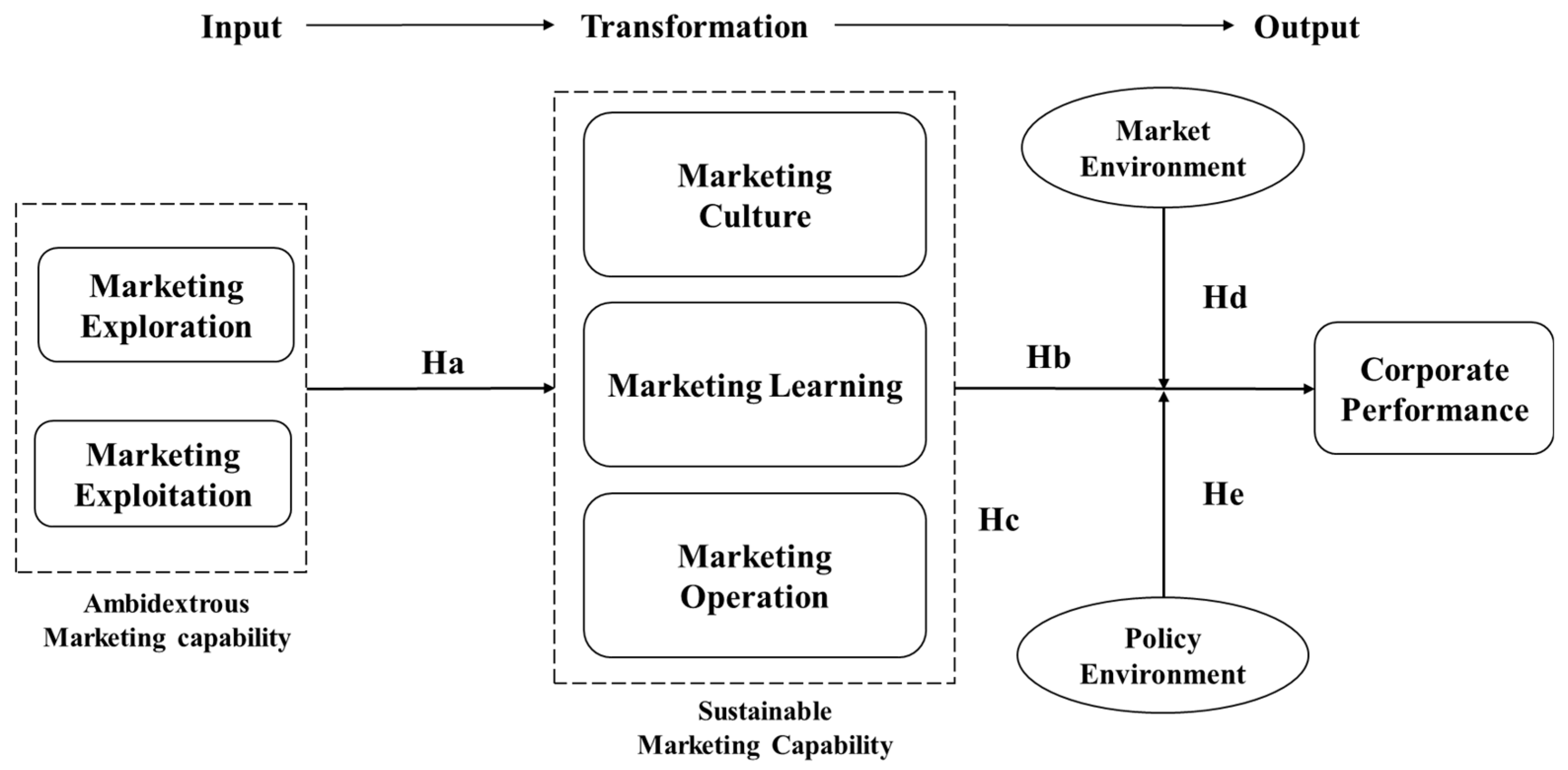
Figure 2.
Moderating Effect of Policy Environment between MC and Performance.
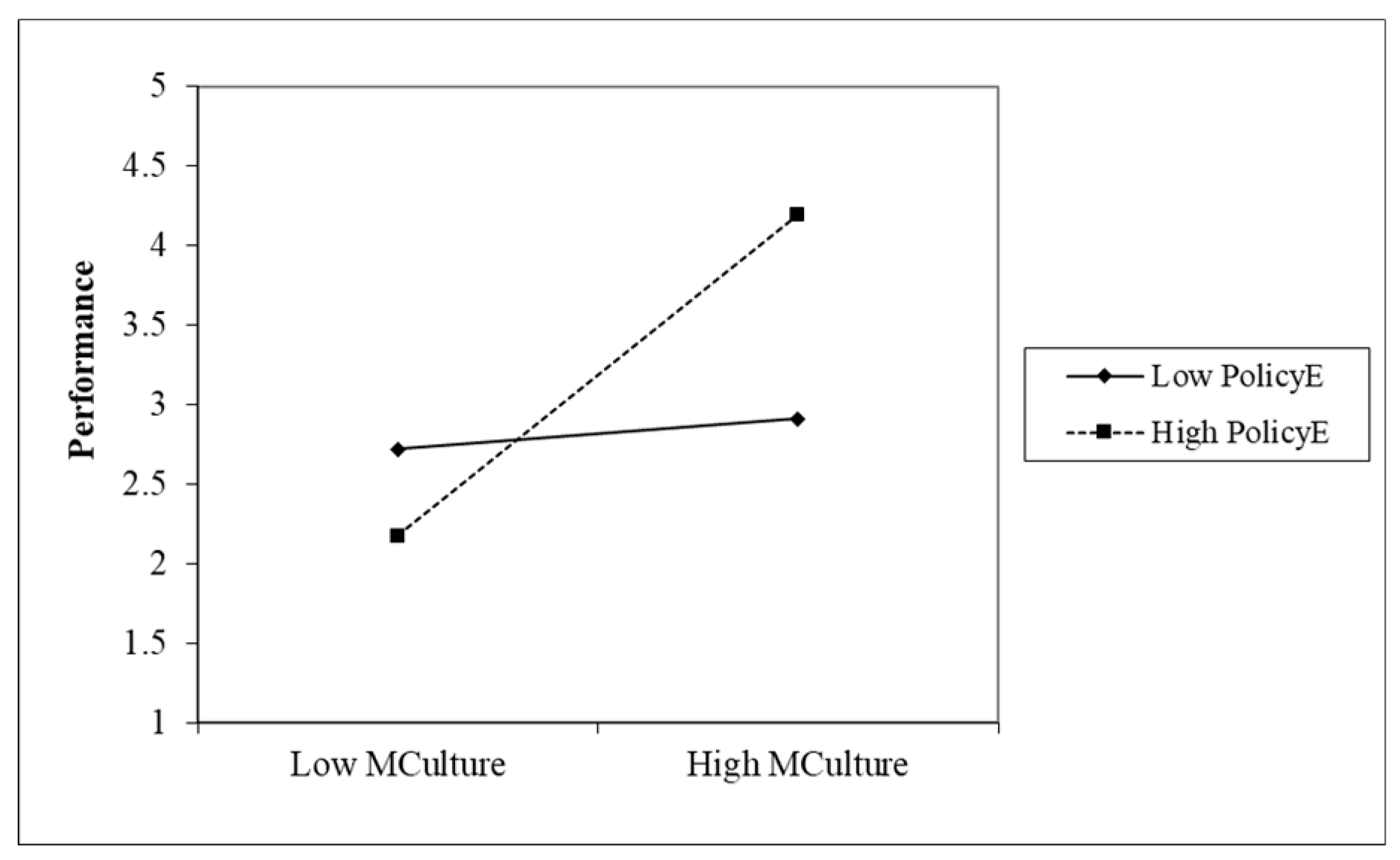
Figure 3.
Moderating Effect of Policy Environment between ML and Performance.
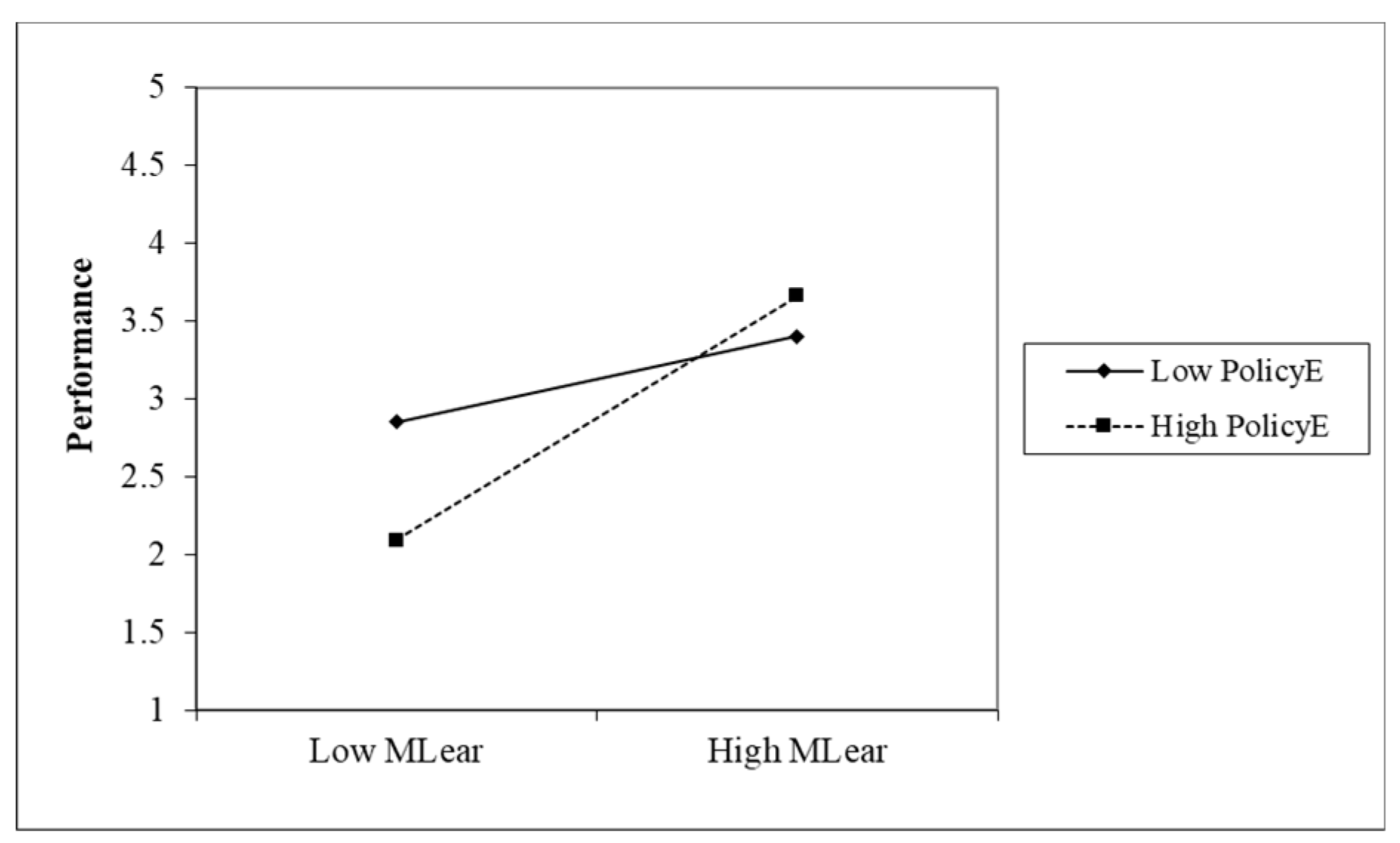
Figure 4.
Moderating Effect of Policy Environment between MO and Performance.
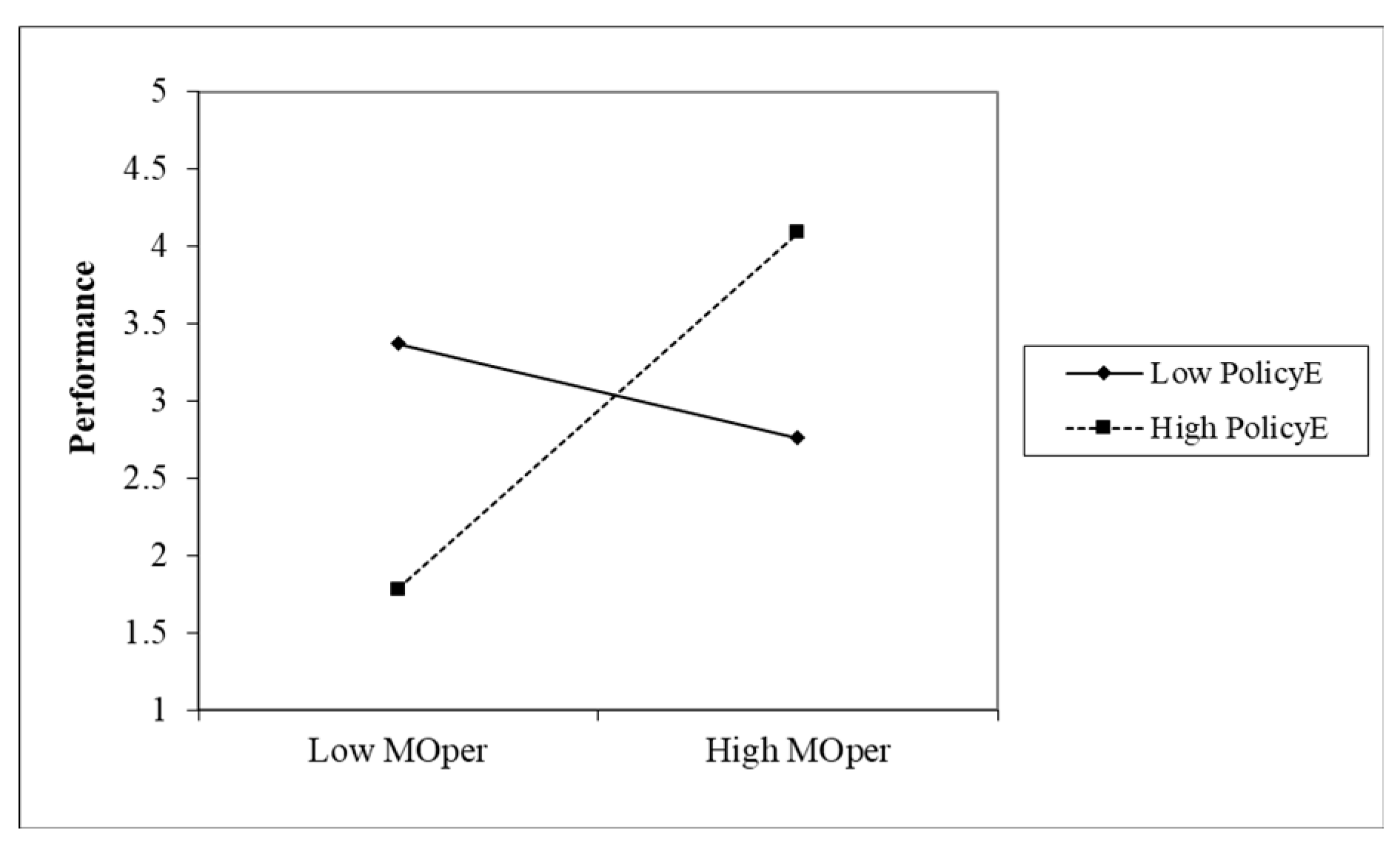
Figure 5.
Moderating Effect of Market Environment between MC and Performance.
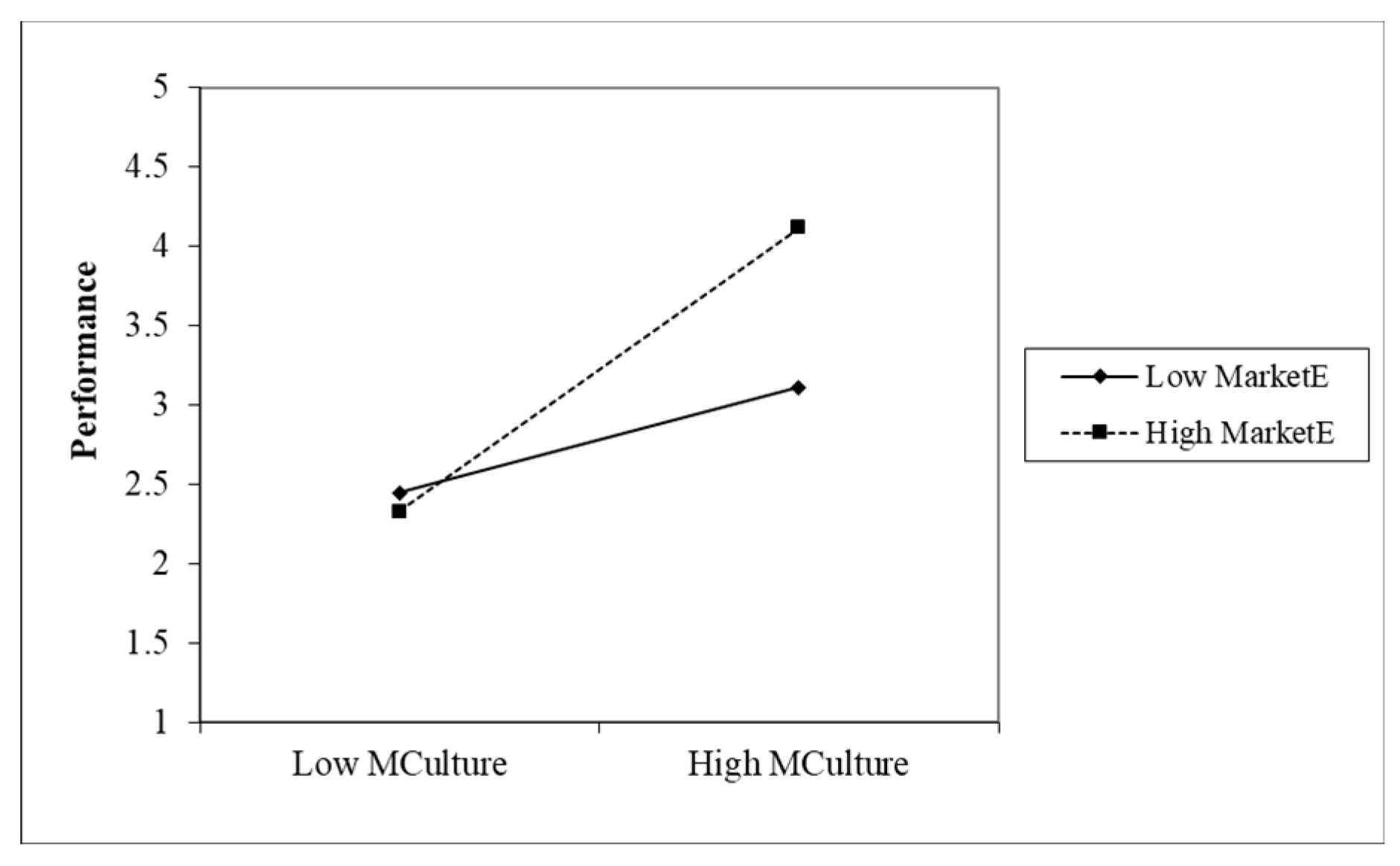
Figure 6.
Moderating Effect of Market Environment between ML and Performance.
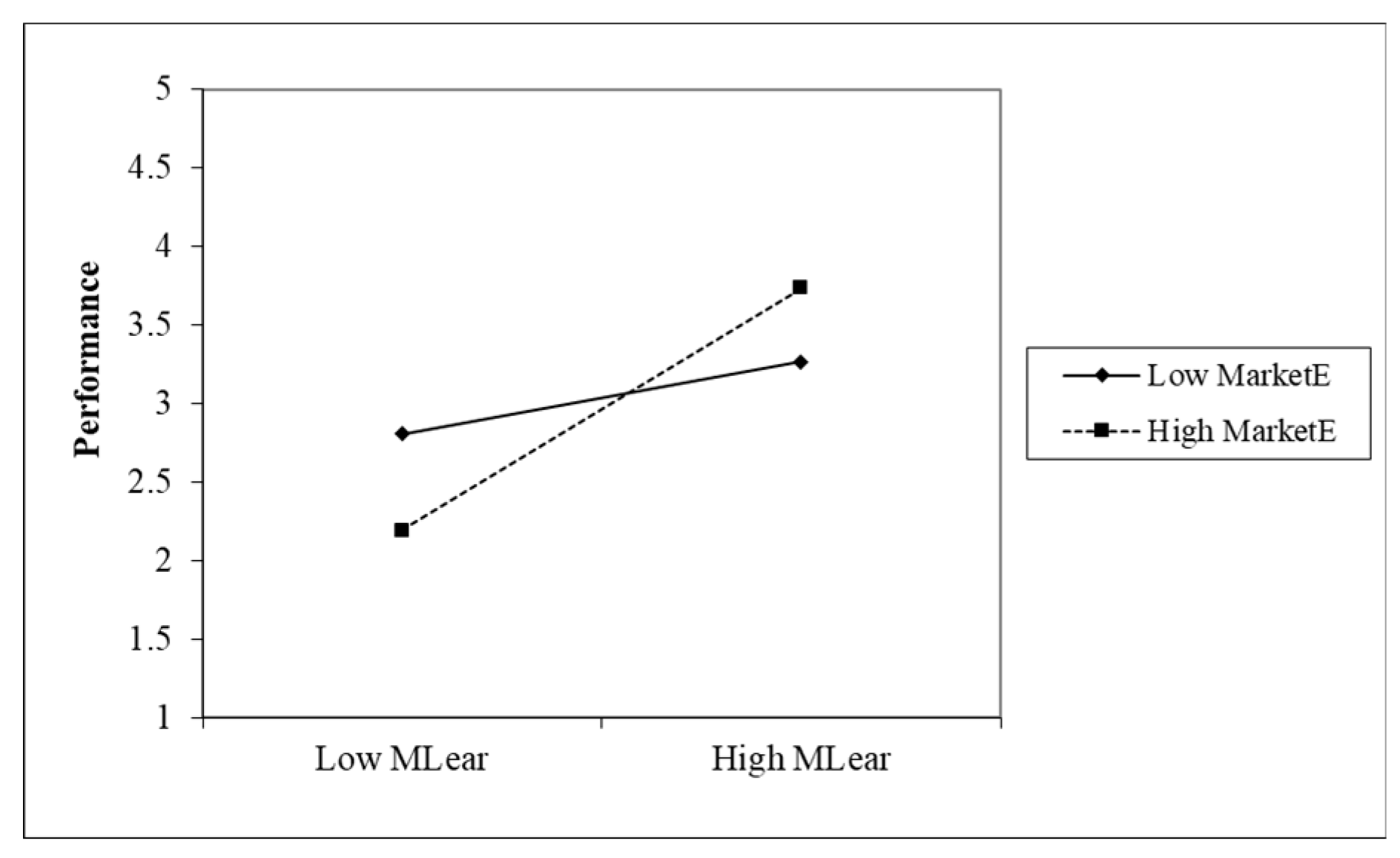
Figure 7.
Moderating Effect of Market Environment between MO and Performance.
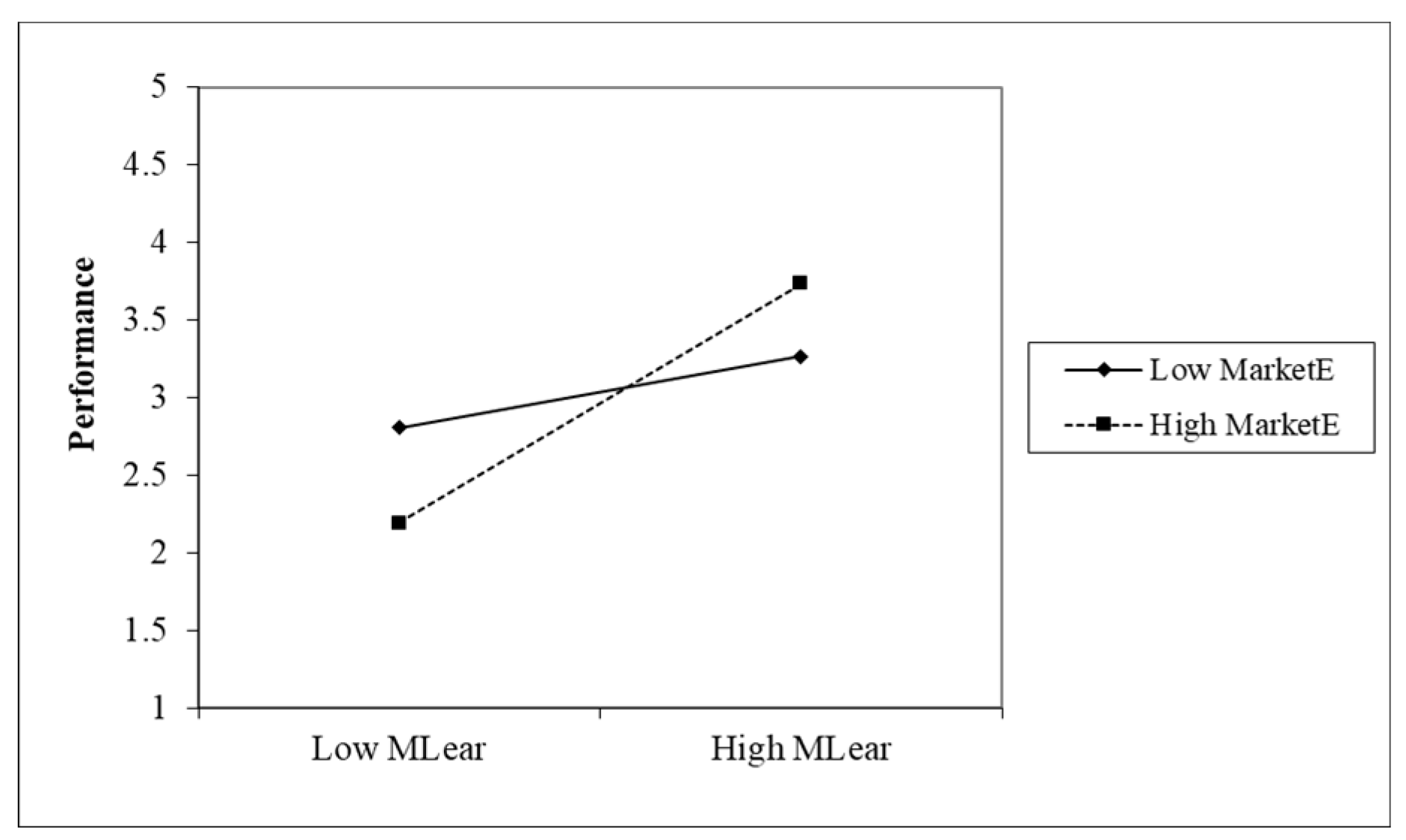
Figure 8.
Research Results.
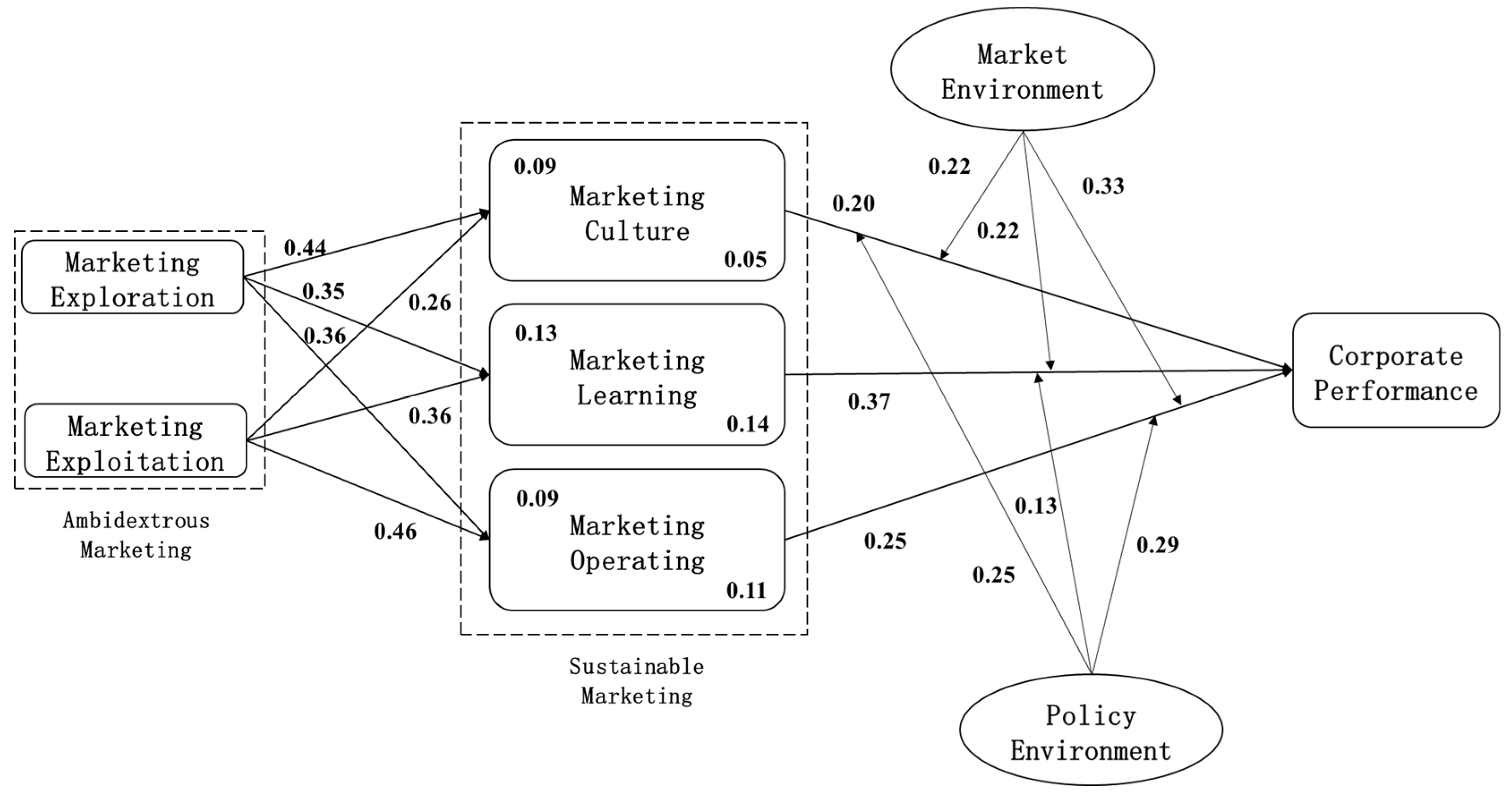

Table 1.
Results of Descriptive Analysis (N= 352).
| Indexes | Category | Frequency | % | Indexes | Category | Frequency | % |
|---|---|---|---|---|---|---|---|
| Firm Types | Firm Types II | ||||||
| Limited Liability Company | 208 | 59.1 | Private Enterprise | 252 | 71.6 | ||
| Limited company | 138 | 39.2 | State-owned enterprise | 78 | 22.2 | ||
| Sole Proprietorship | 6 | 1.7 | Foreign Investment | 12 | 3.4 | ||
| Hong Kong, Macao, and Taiwan | 10 | 2.8 | |||||
| Firm Age | Firm Size | ||||||
| 21 - 50 years | 306 | 86.9 | Medium enterprise | 157 | 44.6 | ||
| 11 - 20 years | 31 | 8.8 | Large enterprise | 130 | 36.9 | ||
| More than 51 years | 10 | 2.8 | Small Enterprise | 37 | 10.5 | ||
| Less than 5 years | 5 | 1.4 | Microenterprise | 28 | 8 | ||
| Respondent’s Position | Firm Industry | ||||||
| Other vice presidents | 85 | 24.1 | Pharmaceuticals & Biotechnology | 50 | 14.2 | ||
| General manager | 78 | 22.2 | Liquor production | 47 | 13.4 | ||
| Middle manage | 78 | 22.2 | Food | 45 | 12.8 | ||
| Vice President Marketing | 71 | 20.2 | Retailing | 44 | 12.5 | ||
| General staff | 29 | 8.2 | Catering services | 42 | 11.9 | ||
| Chairman of the board | 11 | 3.1 | Chemical industry | 22 | 6.3 | ||
| Firm Location | Commercial trade | 18 | 5.1 | ||||
| Shanghai | 76 | 21.6 | Diversified finance | 14 | 4 | ||
| Beijing | 52 | 14.8 | Durable goods | 14 | 4 | ||
| Jiangsu | 45 | 12.8 | Hospitalities | 11 | 3.1 | ||
| Zhejiang | 43 | 12.2 | Raw materials | 11 | 3.1 | ||
| Shandong | 30 | 8.5 | Industrial & Business services | 10 | 2.8 | ||
| Tianjin | 29 | 8.2 | Agricultural products | 9 | 2.6 | ||
| Guangdong | 25 | 7.1 | Textile, Apparel, and Jewelry | 9 | 2.6 | ||
| Sichuan | 21 | 6 | Sports | 4 | 1.1 | ||
| Liaoning | 16 | 4.5 | Power Equipment | 2 | 0.6 | ||
| Fujian | 15 | 4.3 | |||||
Table 2.
Measurement items and Result of Reliability and Validity.
| Items | SFL | AVE | CR | Cronbach’s α |
|---|---|---|---|---|
| 1. Marketing Exploration | 0.554 | 0.861 | 0.861 | |
| We will regularly introduce bold, adventurous, or avant-garde marketing processes. | 0.804 | |||
| We will consistently develop innovative marketing processes that starkly differ from past marketing approaches. | 0.730 | |||
| We will continuously apply market knowledge to devise entirely new strategies that diverge from existing marketing processes. | 0.703 | |||
| We will employ market knowledge to break traditional patterns and create novel marketing processes that have not been utilized before. | 0.734 | |||
| We will continually acquire new marketing knowledge or skills that are groundbreaking for the company and even the entire industry. | 0.747 | |||
| 2. Marketing Exploitation | 0.520 | 0.844 | 0.843 | |
| We will focus on revolutionizing marketing processes to enhance efficiency and implementation effectiveness. | 0.690 | |||
| We will continually examine information from existing projects and learning experiences to improve our established marketing processes. | 0.716 | |||
| Throughout the development of new marketing processes, we will consistently adhere to and adapt existing concepts. | 0.741 | |||
| We will progressively refine or elevate our existing marketing processes. | 0.701 | |||
| We excel in summarizing and distilling current marketing experiences and accumulating systematic marketing knowledge. | 0.757 | |||
| 3. Marketing Culture | 0.589 | 0.877 | 0.877 | |
| The company's competitive advantage is built upon a thorough understanding of customer needs. | 0.795 | |||
| Employees who provide excellent service to customers can receive corresponding rewards within the company. | 0.722 | |||
| The company can swiftly respond to competitive actions that pose threats. | 0.786 | |||
| Each department of the company is capable of providing products and services with genuine value to its associated departments. | 0.760 | |||
| During cross-departmental collaboration, departments treat each other as customers. | 0.771 | |||
| 4. Marketing Learning | 0.552 | 0.860 | 0.860 | |
| The company can quickly identify changes in customer preferences for products. | 0.748 | |||
| The company conducts consumer evaluations of its products or services at least once a year. | 0.738 | |||
| When recognizing customer expectations for product or service improvements, all relevant departments in the company collaborate to meet these needs. | 0.728 | |||
| Supervisors from each department of the company regularly visit customers or potential customers. | 0.734 | |||
| Managers in the company know how to motivate each employee to create value for customers. | 0.765 | |||
| 5. Marketing Operations | 0.558 | 0.863 | 0.862 | |
| The company's management has clearly articulated the strategic approach to achieving marketing objectives. | 0.745 | |||
| The company's marketing strategy aligns with the current market conditions. | 0.744 | |||
| By offering differentiated products or services, the company gains a competitive advantage in the market. | 0.686 | |||
| The company's marketing mix strategy is more effective than that of competitors. | 0.790 | |||
| The company establishes long-term relationships with customers through the sale of products and services. | 0.765 | |||
| 6. Enterprise Performance | 0.629 | 0.944 | 0.944 | |
| Net Profit | 0.813 | |||
| Sales Profit Margin | 0.780 | |||
| Cash Flow | 0.773 | |||
| Return on Investment (ROI) | 0.804 | |||
| Operating Costs | 0.807 | |||
| Sales Growth Rate | 0.808 | |||
| Market Share | 0.775 | |||
| Development of New Products | 0.780 | |||
| Market Expansion | 0.780 | |||
| Research and Development Achievements | 0.807 | |||
| 7.Market Environment | 0.630 | 0.735 | 0.873 | |
| Customer demands change rapidly | 0.953 | |||
| Market competition is difficult to predict | 0.623 | |||
| Competition among peers is becoming increasingly intense | 0.615 | |||
| Most new products in the market are achieved through technological breakthroughs | 0.621 | |||
| The pace of technological change within the industry is very fast | 0.668 | |||
| 8.Policy Environment | 0.612 | 0.703 | 0.824 | |
| Government provides policies and projects conducive to the development of our company | 0.961 | |||
| The government provides necessary technical information and technical support to our company | 0.640 | |||
| The government provides direct fiscal policies to our company, including taxation and government subsidies | 0.616 | |||
| The government encourages companies to protect intellectual property rights | 0.561 | |||
| The government provides necessary legal support for our company to enter new markets | 0.515 | |||
| KMO=.935 Bartlett's χ2/ df =9.868,p < 0.000 | ||||
Table 3.
Discriminant Validity: Pearson Correlation and AVE Square Root.
| Variables | Mean | SD | Explor | Exploit | MC | ML | MO | Perfo | PE | ME |
|---|---|---|---|---|---|---|---|---|---|---|
| Explor | 5.536 | 0.616 | 0.744 | |||||||
| Exploit | 5.554 | 0.596 | .460** | 0.721 | ||||||
| MC | 5.503 | 0.654 | .460** | .356** | 0.767 | |||||
| ML | 5.571 | 0.617 | .394** | .409** | .420** | 0.743 | ||||
| MO | 5.540 | 0.598 | .437** | .479** | .396** | .429** | 0.747 | |||
| Perfo | 5.636 | 0.641 | .439** | .353** | .432** | .509** | .457** | 0.793 | ||
| PE | 5.580 | 0.625 | -.255** | -0.102 | -.495** | -.204** | -.243** | -.193** | 0.794 | |
| ME | 5.513 | 0.727 | -.257** | -0.073 | -.561** | -.276** | -.226** | -.173** | .692** | 0.782 |
Notes:**. Significance at the 0.01 level (two-tailed). The diagonal numbers represent the square root values of the AVE for each factor.
Table 4.
Results of Structural Model Analysis.
| Variable Relationships | Estimates | P-Value | Hypothesis | Result |
|---|---|---|---|---|
| Marketing Exploration→Marketing Culture | 0.44 | *** | Ha1 | accepted |
| Marketing Exploration→Marketing Learning | 0.35 | *** | Ha2 | accepted |
| Marketing Exploration→Marketing Operating | 0.36 | *** | Ha3 | accepted |
| Marketing Exploitation→Marketing Culture | 0.26 | *** | Ha4 | accepted |
| Marketing Exploitation→Marketing Learning | 0.36 | *** | Ha5 | accepted |
| Marketing Exploitation→Marketing Operating | 0.46 | *** | Ha6 | accepted |
| Marketing Culture→Enterprise Performance | 0.20 | *** | Hb1 | accepted |
| Marketing Learning→Enterprise Performance | 0.37 | *** | Hb2 | accepted |
| Marketing Operating→Enterprise Performance | 0.25 | *** | Hb3 | accepted |
| χ2 = 724.891 df = 544 χ2/df = 1.333 RMSEA = 0.031 GFI = 0.900 NFI = 0.902 TLI(NNFI) = 0.971 CFI = 0.973 | ||||
Table 5.
Mediation Analysis Results.
| Variable Relationships | Estimates | SE | Lower | Upper | P-Value | Hypothesis | Result |
|---|---|---|---|---|---|---|---|
| Explore→MC→Performance | 0.09 | 0.038 | 0.030 | 0.180 | 0.003 | Hc1 | accepted |
| Explore→ML→Performance | 0.13 | 0.041 | 0.062 | 0.223 | 0.001 | Hc2 | accepted |
| Explore→MO→Performance | 0.09 | 0.033 | 0.034 | 0.161 | 0.001 | Hc3 | accepted |
| Exploit→MC→Performance | 0.05 | 0.023 | 0.018 | 0.108 | 0.002 | Hc4 | accepted |
| Exploit→ML→Performance | 0.14 | 0.042 | 0.066 | 0.230 | 0.001 | Hc5 | accepted |
| Exploit→MO→Performance | 0.11 | 0.037 | 0.051 | 0.198 | 0.000 | Hc6 | accepted |
Table 6.
Results of Interaction Relationship Tests.
| Variable Relationships | Estimates | P-Value | Hypothesis | Result |
|---|---|---|---|---|
| Marketing Culture*Policy environment→Enterprise Performance | 0.246 | *** | Hd1 | accepted |
| Marketing Learning*Policy environment→Enterprise Performance | 0.132 | * | Hd2 | accepted |
| Marketing Operation*Policy environment→Enterprise Performance | 0.294 | *** | Hd3 | accepted |
| Marketing Culture*Market environment→Enterprise Performance | 0.224 | *** | He1 | accepted |
| Marketing Learning*Market environment→Enterprise Performance | 0.222 | *** | He2 | accepted |
| Marketing Operation*Market environment→Enterprise Performance | 0.329 | *** | He3 | accepted |
Disclaimer/Publisher’s Note: The statements, opinions and data contained in all publications are solely those of the individual author(s) and contributor(s) and not of MDPI and/or the editor(s). MDPI and/or the editor(s) disclaim responsibility for any injury to people or property resulting from any ideas, methods, instructions or products referred to in the content. |
© 2024 by the authors. Licensee MDPI, Basel, Switzerland. This article is an open access article distributed under the terms and conditions of the Creative Commons Attribution (CC BY) license (http://creativecommons.org/licenses/by/4.0/).
Copyright: This open access article is published under a Creative Commons CC BY 4.0 license, which permit the free download, distribution, and reuse, provided that the author and preprint are cited in any reuse.


