

Submitted:
08 July 2024
Posted:
10 July 2024
You are already at the latest version
Abstract
Some business license commitments in online single submission (OSS) currently only consist of an independent statement from the business actor, and there is no time limit for fulfilling the license, especially for low-risk bio-business licenses. Therefore, a system design is needed to monitor the fulfillment of business license commitments and to provide confidence to the public regarding the business provided. The system design started with discussing the importance of smart governance tools, defining the requirements for monitoring the commitment of bio-business licenses, selecting documents, determining important words and document types, and proposing a design. This research produces a prototype of a business license monitoring system. This smart governance tool checks the validity of business license documents. The proposed smart governance tool will overcome the complexity of the integration process for fulfilling business licenses from the Indonesian government units or agency systems with the OSS system. Apart from that, it is also very effective by looking at the thousands of government applications that currently exist and the desire to become one application solution that contains many functions that can fulfill the many needs of business actors for simple and transparent business licenses.
Keywords:
smart city
; smart governance tool
; system design
; text summarization
; prototype
1. Introduction
Every Indonesian agency has several electronic services that the public can use. Several similar services have been consolidated into one one-stop-shop service to provide convenience and speed. One example of a one-stop-shop service is a business licensing service using an OSS application. Every business actor in Indonesia, whether micro, small, medium or large, must have a business license applied via the OSS application. OSS as one-stop-shop service is a service that integrates several services from government units or agencies (K/L); for all abbreviations related to government units or agencies, refer to Table A1 in the Appendix. In its implementation, integration between systems sometimes requires the data validation process. This integration process is needed when applying for licenses and to monitor the fulfillment of the license requirements documents. For example, in this case, bio-business licensing.
The successful implementation of one-stop-shop services hinges on meticulous planning and several key factors, including management commitment, mindset and culture, human resources, and infrastructure [1] . In light of the current capabilities of ICT infrastructure, there is a clear opportunity to develop a transparent business licensing system that can bolster public trust [2]. The commitment of government leaders and regional heads is pivotal in fostering a more efficient and effective business licensing service orientation [3]. This commitment is instrumental in determining the success of a license for this one-stop service. The simplification of licenses and the streamlining of the process for investors can potentially stimulate investment [4].
One example of bio-business licensing is palm oil licensing. Factors influencing licensing implementation's success are socialization, information transformation, improving human resources, and clear procedures [5]. The regional government is committed to realizing environmentally friendly palm oil plantations by implementing legal and limited licensing aspects to the principles of Indonesian Sustainable Palm Oil (ISPO) [6]. Implementing legal, licensing, and limited aspects will also overcome the problem of palm oil productivity in smallholder plantations [7]. Another example of bio-business licensing is chili farming, which has consistent supply and demand and requires commitment and collaboration from various stakeholders [8].
These requires a simple, transparent, and limited business licensing monitoring system. This solution can be used to fulfill licenses in central and regional government institutions, which still require commitment from management to adjust applicable regulations and are challenging to integrate. This research aims to design and develop a system that makes it possible to:
- monitor the fulfillment of bio-business business licenses,
- monitor the status of the fulfillment of bio-business licenses and
- support an easy and transparent licensing fulfillment process for actors or bio-business venture.
2. The Importance of Smart Governance For Collaboration In Government Services
The components of intelligence, which have emerged as significant elements in the smart governance framework for bio-business licensing services [9], are of paramount importance. Previous research has underscored the crucial role of systems and technology in the implementation of business licenses, particularly for small and medium businesses [10]. Hence, it is imperative to delve into the components of intelligence that have been the focus of previous smart governance literature studies.
The intelligence concept, when implemented, has the power to transform several domains [11]. These include:
- Smart City: by interconnecting elements within the city, such as government, society, and business, using sensor technology, computer networks, and decision-making. Government use applications for planning and governance, energy regulation, population mobility, and government services. Generally, the technology used is 5G, IoT, robotics, virtual and augmented reality (VR/AR), and AI.
- Smart home implements network communications to connect and remotely control devices and services such as air conditioning, air ventilation, lighting, household appliances, and security systems via cellular telephone devices and tablets. The goal is to improve the quality of life with the help of tools such as the IoT (Internet of Things).
- Smart Industry/Factory: In line with the implementation of Industry 4.0, how can the industry/factory personalize products and services according to customer needs? The technology used is the Cyber-Physical System (CPS), Internet of Things (IoT), personalization of products and services, and decentralization of decision-making.
- Smart Service System. The service system focuses on searching for concepts through a literature review. Text mining from many scientific papers and articles use machine learning algorithms.
Aspects of an intelligent system consist of technology, knowledge, learning, adaptation, sensing, and actuation. This smart system consist of several domains, such as smart service systems, smart cities, smart homes, and smart industries and factories. The smart city domain interconnects between government, entrepreneurs, society, and technology. One of the components of a smart city is smart governance. An overview of the components is in Figure 1. Literature studies regarding smart cities and governance are very high, starting in 2016 [12]. Some common topics in smart governance literature studies concern how technology supports collaborative processes and transparency. Very few smart governance tools support this collaborative process (see Table A2 in Appendix). Meanwhile, the most widely discussed smart governance components are related to public services and bureaucratic management, although some also discuss public policy. Therefore, this system of monitoring the implementation of business licensing will become a smart governance tool that supports a collaborative bio-business licensing service process (involving many ministries and institutions) and transparency for both business actors and licensing providers.
The latest technology and the application of AI can also be considerations for future system development other than this monitoring system. For instance, Gartner has released the latest technology hype cycle and AI applications in 2023; some of these applications, such as AI-powered anomaly detection for system security, or AI-driven predictive maintenance for system reliability, are mentioned below.
- Generative AI: using systems like ChatGPT for content creation and process automation to improve the customer experience.
- Cloud-native: utilization of cloud computing technology, including its ability to provide services such as Data Lake SaaS and API-centric SaaS.
- Computer Vision: technology for extracting contextual information from capturing and analyzing images and videos. OCR is used to recognize text in an image.
Some previously nonexistent technologies exist, such as blockchain, which is widely used in the logistics sector for supply chains or tracking goods. For example, Walmart uses blockchain to track the origin of its food products. Another technology is drones, which are widely used for monitoring agricultural land. For instance, farmers use drones to monitor crop health. IoT (Internet of Things) technology is widely used for automation processes in households, such as controlling lights, doors, and air conditioning. AI technology is widely used in the transportation sector to reduce the number of accidents. And most recently, there is generative AI such as ChatGPT, which can provide complete information to users regarding the topics they want to know. For example, OpenAI's ChatGPT is used by various news organizations to generate news articles.
The seven categories of smart governance tools are context, stakeholders, structure, process, exchange settings, technology, and results [13]. The most innovative governance tools are those related to processes. Several new technologies and AI applications that support the business licensing process have been produced (see Table 1). The focus is to develop supervision process in number six.
3. Methodology for the Development of a Monitoring System for the Commitments of Bio-Business Licensing
Government system services to support collaboration between ministries and government agencies need support from the smart system. The component of a smart city that supports this service is smart governance. Therefore, this research stage will focus more on developing the need to monitor the bio-business service license system. System development and testing will be the subject of further research—details of the research stages are visible in Figure 2.
- Identify the need for a bio-business license commitment monitoring system. While there are numerous potential solutions, we will focus on two specific approaches. The first solution involves [detailed description of the first solution], while the second solution [detailed description of the second solution]. We will compare these two solutions from the perspective of integration requirements between systems.
- Select documents as samples of bio-business business licenses. Based on the solution chosen, we will discuss what documents are prerequisites for the business license. Therefore, only two documents required for a business license were selected.
- Determine keywords for each type of document. These critical words chosen from several previously selected document examples. Later, these crucial words will determine the validity of the document.
- Design a smart governance tool to monitor bio-business license commitments. This design will discuss the user journey and Graphical User Interface (GUI) for accessing and uploading compliance with bio-business licensing documents. Besides that, there are also detailed technical specifications for developing the solution. Developing smart governance tools uses the SDLC (software development life cycle) method: system design, system development, system testing, and evaluation.
- The requirement’s gathering process has been carried out at points 1 and 4. The system testing method, which uses a black box approach, involves testing the main functions of the prototype system without considering its internal structure or implementation details. This approach ensures that the system is tested from a user's perspective, providing a comprehensive evaluation of its functionality and usability.
4. Results
4.1. Identify the Need for a Commitment Monitoring System
The design of this business commitment's monitoring system as part of the current OSS system (government regulation number 5/2021 concerning the implementation of risk-based business licensing). The OSS system comprises three sub-systems: information services, business licensing, and supervision (see Figure 3). The information service sub-system is a system that contains a library of information services such as general explanations, guides, regulations, FAQs (frequently asked questions), and others. The business licensing sub-system is where business actors fill out business license applications. In this sub-system, there is a validation process for business actor information such as Identity Number (NIK), Tax Identity Number (NPWP), reference data (such as business actor profile, basic requirements, SLA (service-level agreement), the Indonesian Business Field Standard Classification (KBLI) and a risk matrix based on risk assessment, land area, buildings, and others.
The supervision sub-system, a vital component of the OSS, consists of several activities carried out regularly, such as routine, annual, and incidental supervision. In this sub-system, there is also a supervisory assignment letter, the supervision results, profiles of business actors, and the imposition of sanctions. The proposed commitment monitoring module for business actors will be seamlessly integrated into this sub-system, enabling real-time monitoring of these business actors' commitments and enhancing the overall supervision process.
From the results of the above explanation, OSS has some integration and non-integration processes with systems from other K/L. That is:
- Integration using a gateway (via API, file transfer, or others) to validate business actor data.
- Integration using a link to the application from the K/L system. Examples: Food and Drug Supervisory Agency (BPOM) distribution license, The Indonesian National Certificate (SNI),
- There is no integration, and the Business Identification Number (NIB) is the basis for the commitment process. Halal certificate (currently only an independent statement from MSME actors), SSO licensing, and the National Industrial Information System (SIINas) are examples.
- There is no integration because requirements are fulfilled already in OSS. Example: building approvals (PBG).
Therefore, the process of integrating systems in K/L into the OSS system is being carried out gradually, a systematic approach that should reassure the audience. However, not everything has become integrated into the OSS system. As a first step, several systems have used the NIB from the OSS system as unique data for business actors. The second step is to provide application link information for K/Ls that are targets for business actors to fulfill their commitments. These two steps are included in the low-effort steps because the process is easy to do. Meanwhile, the other two steps, namely integration between systems by using a gateway system and adding function modules from the K/L system to the OSS system, are high-effort steps. Because it requires coordination and agreement between the two institutions, including integration costs.
Adding function modules from the K/L system to the OSS system also requires several considerations. The first is related to the costs invested so far in the solution. By the profits obtained (net book value = 0), the risk of the costs should be acceptable. The second is adding complexity to the OSS system, which will be critical. Lastly, there will be additional infrastructure costs if needed for the new module. Therefore, the author proposes a solution with a system that uploads certification documents resulting from related ministries and agencies centrally in the OSS system. It is a form of monitoring the fulfillment of commitments from business actors, especially micro, small and medium enterprises (UMKM) or those with low risk. The advantages (pros) and disadvantages (cons) of the proposed document upload system resulting from this commitment are visible in Table 2.
With the OSS-RBA system, a testament to its success is the increase in the number of business and investment licenses, as has also happened in the regions. This success story should inspire confidence in the proposed solution. However, there are also problems with its implementation, especially monitoring business licenses [14]. Other business licensing in other countries, such as the Philippines, where the e-BPLS (Electronic Business Licensing and Licensing System) can speed up service responses that previously used manual processes [15]. Apart from the system, businesses that do not comply with regulations should have their business licenses rejected, such as the Turkish BRSA (Banking Regulation and Supervision Agency) for fintech that ignore regulations [16].
4.2. Select Documents as Samples for Fulfilling Business Licensing Documents
The selection of two document criteria as samples in this prototype is not arbitrary; it's because they reflect the very specifics of bio-business licensing (see Table 3). This is a deliberate choice, a limitation of the system being developed, but one that is crucial in its simplicity and focus. It's only implemented in two documents and only involves two K/Ls, but it's a starting point, a foundation that can later be expanded to document fulfillment in other K/Ls. An example of a business license that is not included in bio-business is a mining business license or a special mining business license (IUP or IUPK).
As mentioned in previous research, bio-business includes biotechnology, human health technology, bioindustry, and agriculture biotechnology [17]. These are not just abstract concepts, but areas that require specific certificates for fulfilling business commitments. These certificates, issued by relevant ministries and institutions [18], are not mere formalities, but essential requirements for business licensing obligations in the selected [19].
- NIB is issued by the OSS system (oss.go.id) at Capital Investment Coordinating Board (BKPM).
- Halal certification is issued by Halal Product Guarantee System (SPJH), which the Halal Product Guarantee Organizing Agency (BPJPH) organizes. For example, for MSEs that register their business through OSS, there is an independent statement that the business product is halal and must be registered as a halal product with no time limit [20]. Then, the business actor will process the halal certification of his product through Halal Product Guarantee System (halal.go.id) [21].
- The BPOM Distribution License is issued by the BPOM e-certification system (e-sertifikasi.pom.go.id). For example, to obtain Business Licensing to Support Business Activities (PB-UMKU) - Good Processed Food Production Methods (CPPOB), business actors apply for the license through OSS by selecting the appropriate KBLI, and the OSS system will direct them to the e-certification system [22].
- The National Standardization Body (BSN) issues SNI. For example, micro and small enterprises (UMK) with low risk will receive the SNI bina-UMK mark after committing to fulfill SNI through the OSS application. After receiving the NIB, the perpetrator applies for SNI certification via binaumk.bsn.go.id by fulfilling the required requirements (such as photo and video evidence). Of the 145,936 UMKM who are entitled to free SNI-UMK coaching, there are 1,100 UMKM who receive SNI coaching [23].
- Security, health, and environmental preservation (K3L) certificate issued by The Ministry of Trade of the Republic of Indonesia (Kemendag). Issuance of registration of goods related to K3L can now be done through the Ministry of Trade Licensing SSO Single Sign On's (SSO) application integrated with OSS [24]. Like the previous process, business actors can apply for registration of K3L-related goods via OSS by selecting the appropriate PB-UMKU and KBLI, and the OSS system will direct them to the simpktn.kemendag.go.id application [25]. After complying with all requirements, OSS will issue a digital signature and a printable goods registration [26].
- Industrial data is submitted to SIINas of The Ministry of Industry of the Republic of Indonesia (Kemenperin). Companies operating in the industrial sector must register at SIINas (siinas.kemenperin.go.id) and report their business periodically [27].
- PBG is issued by Building Management Information System (simbg.pu.go.id) from the Ministry of Public Works and Public Housing (Kementerian PUPR). As of February 2023, applications for PBG and Functional Eligibility Certificates (SLF) launched at OSS. Business actors must fill in building data correctly until the relevant parties contact them, and the license must be printable while issued[28].
In the 2020 KBLI, there are not just a few, but 21 categories, each with its own unique role in the bio-business landscape. Among these, those selected for bio-business are A (agriculture, forestry, and fishing), C (processing industry), and I (providing accommodation and providing food and drink). This diversity is not just a list of numbers, but a testament to the wide range of bio-business opportunities in Indonesia. Of the 21 categories, there are 1349 KBLI, and for example, for the Department of Agriculture, there are 56 KBLI (See Table 4).
4.3. Determine Keywords for Each Document
As previously mentioned, there are two checking activities in the data checking process: checking document types and keywords. This study had two critical documents as samples, namely a halal certificate and a BPOM license—a detailed explanation of why only two documents mentioned in section 3.3. After checking the document type, the next step is checking the keywords for each document (see Table 5). If these keywords match, then other data in the document will be retrieved to complete the information from the uploaded document. This supporting data includes the certificate number, product information, and product identity, such as name, address, and validity date.
4.4. Design and Development of Monitoring System for Compliance with Business Licensing Documents
The meticulous design and development stages of this monitoring system are a testament to the precision and care we put into our work. It all starts with the design process, which includes a sequence diagram, database design, and document upload design. On the other hand, the development process involves setting up the environment, displaying the login form, registering, checking the status, uploading documents, validating documents, and testing the status (dashboard). The application development process, OCR, and E2E (end-to-end) process checks before testing are a continuation of the process. The testing process consists of scenario design, sample preparation, and test execution. The process of calculating research results and analyzing the results is part of the evaluation process.
A use case diagram provides an overview of the system's interaction with its environment (see Figure 4). The system has two actors: the user/business actor and the admin/officer. Users or business actors can log in, register, upload documents to check their validity, and submit documents if they are valid. Valid documents will be checked by the administrator or officer using a random method (sampling). In general, the programming structure of the monitoring system consists of four parts: filling in user data, uploading documents, submitting documents, and checking document suitability by the admin (see Figure 5).
In this research, the expected user journey is: (1) Users can access the business licensing document upload form. (2) Process document uploads according to the type of document required; (3) The system will determine the summary of the uploaded document. (4) The system will record important words previously defined in the document. (5) The system will assess whether the document is valid; if it is not, it will provide a notification or warning to the user. (6) If all documents are complete, the user can submit the document.
In the prototype for monitoring business actors' commitments, we have implemented stringent security measures in the authentication methods. There are two processes, namely the process of logging in to the monitoring form and the process of downloading commitment documents. The login process can use the login process currently in the OSS application, but a link needs to be added to see the status of fulfilling the commitment document. The login process begins with the user or business actor entering a username and password into the application. Authentication processes can be added to the system, such as 2FA (two-factor authentication) by adding a code in the application other than the username and password, or MFA (multi-factor authentication), which is a login process that not only uses the username and password but also enters a code sent via email, answers secret questions, or uses biometric scans such as fingerprint or face recognition. The next process is the document download process. The document download process will produce a user database and files (see Figure 6).
The next process is the document upload process. There are three processes when uploading documents: the process of entering data, the process of checking data, and the process of uploading data into the system. In the process of entering data, users can add more if they want to enter more than one document. Users can also delete or remove documents that are not needed. After confirming the number of documents to be downloaded, the user can select the documents to be uploaded from the files on his computer. Then the user can upload the document until the process is successful. You can refer to the visual guide in Figure 7 for a better understanding of this process.
The following process is the data-checking process. If the file entered is incorrect, there will be a message or notification that the file is wrong. If the document is appropriate, a message will be successfully uploaded. Users can upload other documents, and if succeed, then users can submit the appropriate documents. The final process is uploading data into the system. If the data has finished uploading, there will be a message indicating whether it was successful (completed) or not (rejected) (see Figure 8).
From the above process, there are several characteristics of a smart system
- Keywords from each required document represent embedded knowledge in the system.
- There is a response if the document is valid or by the stored knowledge.
- Communication between the user and the system is subject to the information received about whether the uploaded document is valid.
In conducting this research, it is necessary to first delve into several concepts of text recognition. In document classification processes such as text mining, determining important words in documents is very necessary. Examples include determining plant genetic resources [29]. But beyond this, the complexity of the task is further revealed in the need to summarize the document [30]. Text summarization, a process that can use soft computing methods (subject, predicate, and object rules) and fuzzy logic [31], or a word embedding approach [32], such as SummCoder or autoencoder, and sentence embedding [33], is a multifaceted challenge that requires careful consideration and understanding.
Another important thing is the text classification process, which determines whether the text falls into a predetermined category [34]. Text classification can be knowledge-based, corpus-based, or learning-based [35]. Text classification can also use feature selection methods like Hebb rules [36]. Other methods of text classification with a semantic approach are role labeling and explicit semantic analysis [37], taxonomy [38], the hidden Markov model (HMM) for opinion mining [39], a new term weighting approach using Least Information Theory (LIT) is adopted for hierarchical classification [40]; and the standard inverse moment of gravity formula [41]. To improve computational efficiency, another approach to document categorization is a feature projection method that selects the very first layer of fusion information [42] and a very deep Convolutional Neural Network (CNN) [43].
The development of this solution is initial and enhance its capabilities, namely supporting sustainable development. There is a close relationship between artificial intelligence (AI) and sustainable development targets, especially with the cultural shift towards digital [44]. The existence of AI is not just a trend but can also change business models and the global economy [45].
One use of AI in recognizing text is with OCR (optical character recognition). Text recognition using the OCR flask and Tesseract has an average accuracy above 90% [46]. Therefore, it is widely used in record-management systems [47]. To increase accuracy, document classification using OCR can also be combined with the Naïve Bayes Classifier [48] or other methods to obtain document classification automatically [49].
- System development.
The system development process begins with setup, development, and testing environments. The specifications are as follows:
- a.
- OS: MS Windows Server
- b.
- Server (VPS: https://my.idcloudhost.com)
- 1)
- CPU: 2 cores
- 2)
- Memory: 8 GB;
- 3)
- Storage: 20 GB
- c.
- OCR algorithm: Easyocr 1.7.1 Deep Learning using convolutional neural networks. Ref: https://pypi.org/project/easyocr/.
- d.
- Application:
- 1)
- Frontend template: Bootstrap 5
- 2)
- Apps: Python 3.12.2
- 3)
- Framework: Flask
- 4)
- API: Rest API
- 5)
- Database: MySQL
4.5. System Testing and Evaluation
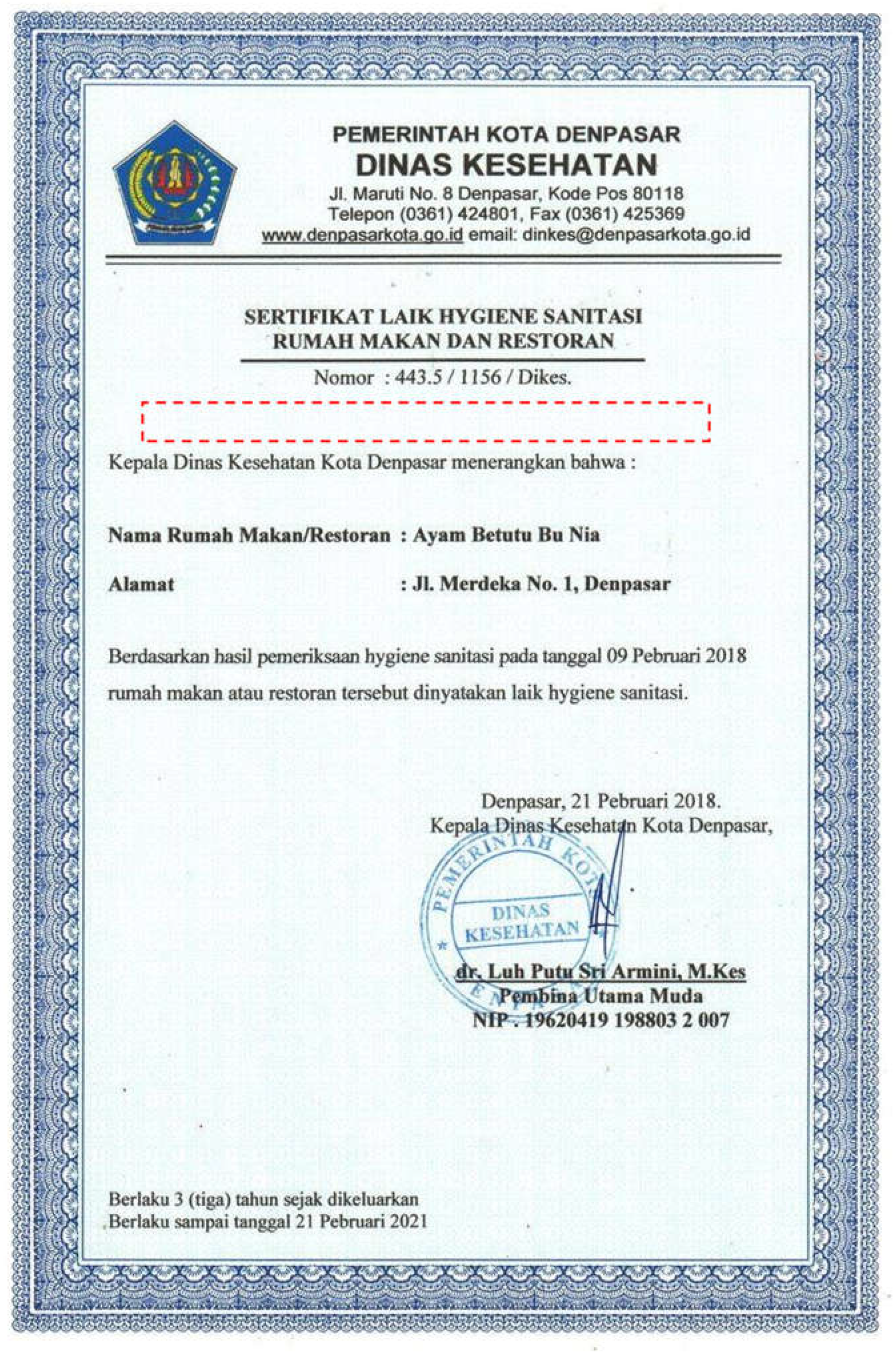
Testing uses the black box method with several variables for developing business license prototypes. The test data consists of several halal certificates and BPOM licenses taken from the internet, with two samples of valid halal certificates, seven samples of valid BPOM certificates, and two samples of invalid certificates (see Figures A1, A2, and A3 in Appendix). This test data has yet to be available online and is still a hardcopy document. (see Table 6).
A proposed solution for uploading documents to fulfill business license commitments has the following system assumptions:
- a)
- b)
- Using the Tesseract OCR (Optical et al.) package or library to get text summaries from documents (images).
- c)
- The text summary extraction results match the previously defined keywords.
- d)
- Keywords are defined early, so the system has no modules or functions to add, subtract, or change them.
While System Limitations are:
- a)
- The system built stands alone (a stand-alone application); there is no integration process with the current system (OSS).
- b)
- These do not include email, SMS, or otherwise notifications to users.
- c)
- There has been no feedback from the officer (admin) if there is an incorrect document.
The evaluation compares the number of successful scenarios with the total number of scenarios in Equation 1.
N = Number of successful scenarios ÷ Number of total scenarios × 100% (1)
There is a note from the process that has been executed. The file size determines the length of the extraction process by OCR. A BPOM-valid marketing authorization file with a size of 2.6 MB can be processed by OCR within 35 seconds (see Figure 13). A halal-valid certificate file with a size of 382 kB can be processed by OCR within 25 seconds (see Figure 14), and an invalid document file with a size of 63 kB can be processed by OCR within 5 seconds (see Figure 15). The machine learning (ML) algorithm runs on a cloud's virtual private server (VPS).
Therefore, an additional Graphics Processing Unit (GPU) is needed so that the processing of this ML algorithm can be faster. GPUs are different from high-performance computing (high-performance computing, or HPC for short), which can process large data sets quickly with parallel computing processes. The combination of GPU and HPC will likely quickly increase the processing capabilities of ML and AI algorithms that use big data.
Another solution is to use better ML algorithms. The easyOCR algorithm can be changed using the GPT4 OCR/image recognition algorithm developed by OpenAI. Of course, further research is required to confirm this, especially the implementation of OCR on the documents used in this research. If the expected time for document processing with OCR is within a specific time limit, limiting the maximum file size is necessary. For example, the maximum limit for the processed file is 100 kB with an expected processing time of 10 seconds.
5. Discussion
As an illustration, monitoring the bio-business license commitment only involves six institutions, especially for small and medium business licenses, considering that each K/L only has six applications apart from OSS. The government has more than 27 thousand applications planned to be simplify to focus on digital transactions, digital identity, and secure data exchange, which will become the basis of the e-government of Indonesian (SPBE) [52]. An example of an application that Kominfo has built is info.go.id [53], which is expected to unite news information from all K/Ls and may become one super application (Super Apps). Even now, with the increasing development of user needs, super apps not only function as one application but have become a new platform that can determine the adoption of a service based on the number of services provided [54]. Of course, this information service available in web form and a mobile application, which will significantly impact public information access [55].
In general, there are three stages of the development of e-government from a public value perspective: the information stage, the transaction stage, and the engagement stage [56]. For this matter, info.go.id is still at the information stage, focusing on disseminating public information as widely as possible to citizens. Of course, this requires developing the function of the application so that it can move to the next stage, namely the transaction stage, where citizens, business actors, and others can contact the government online at any time, reducing paper forms and the cost of visiting government offices, such as in the bio-business licensing process. The third stage is the engagement stage, where citizens and business actors also play an active role in consulting, collaborating, and participating in the government governance process, especially in forming public policy.
Meanwhile, if compared with the maturity level of e-government of Indonesian service capabilities, which consist of levels of (1) information, (2) interaction, (3) transactions, (4) collaboration, and (5) optimum, this bio-business business licensing service is already at levels 4 (collaboration) and 5 (optimum) [57]. In this service, there is already collaboration and integration between the OSS system and other K/L systems, which needs to be continuously improved to adapt to the needs of users or business actors. In the future, the possibility of using machine learning methods to help monitor the whole process is due to the vast usage of this approach in many diverse applications, such as for predicting software defects [58],[59].
6. Conclusions and Future Work
This business license's commitment monitoring system is one of the best options currently, considering the complexity of the integration process of the OSS system with other K/L systems, especially for bio-business business services. Ideally, all government licensing services become a single e-government application with public information and transactions (end-to-end), starting from the licensing fulfillment process to the payment process or super apps, and become a new platform. This system process will complement the existing OSS system monitoring domain functions.
Another consideration is the large number of applications currently built by the government, where there may also be many applications in one ministry that still need to become one enterprise system due to gaps in different levels of e-government management maturity. Another thing is that investment in e-government systems also needs time to provide benefits based on their development objectives by integrating their functions into the OSS system later. The costs of integrating and adding this new module become consideration for having the bio-business license monitoring system using text summarization as a quick-win program.
The characteristics of the intelligent system in the business license monitoring system are communication capabilities, embedded knowledge, and control capabilities. Communication capabilities are demonstrated by exchanging data and information between elements (entrepreneurs, systems, and officers). Embedded knowledge is in the form of keywords and information in documents that users must upload. The system has control capabilities that can determine whether uploaded documents are valid. Other smart system characteristics added in subsequent developments, such as the ability to reason, learn, and perceive. This research focuses on smart governance processes; there is system development but limited discussion (around 10–25%).
The process of monitoring business license commitments will complement existing functions in the OSS system monitoring domain. This smart governance tool for fulfilling business licenses applies to the OSS system and fulfills documents for other government ministries and agencies. The author believes that with the large number of existing KBLIs and the number of existing applications, there are still many functions, modules, and capabilities of these applications not duplicated so that their functions are still maintained today. Therefore, application development that begins with creating a framework will achieve the expected goals.
Developing a prototype system for summarizing the fulfillment of business licenses can also be improved in function by creating a module that does not stand alone, testing it directly with the current system, and carrying out testing and improvements by getting input from the business actors themselves. The text summarization algorithm can also be a research focus to increase the speed of recognizing business license documents. Returning to the initial goal is to create a simple and transparent system and make it easier for business actors to immediately obtain business licenses to open up job opportunities and hopefully meet community needs and reduce unemployment.
Author Contributions
M.M.M., A.I.S., Y.N. and K.B.S. have contributed equally to this study. All.authors have read and agreed to the published version of the manuscript.
Funding
No external funding.
Institutional Review Board Statement
Not applicable.
Informed Consent Statement
Not applicable.
Data Availability Statement
Not applicable.
Acknowledgments
The authors would like to express their great appreciation to Muhammad Rayhan for his input regarding the latest technology. The authors also convey deep appreciation and thanks to Afif A Iskandar and Farhan Agryan for their support in developing the prototype of this business license monitoring system so that it can be realized. Thank you also to Fuad I Amal and Ghilman Fatih for their support.
Conflicts of Interest
The authors declare no conflict of interest.
Appendix A

Table A1.
Abbreviation and Description.
| Abbreviation | Description |
|---|---|
| BKPM | “Badan Koordinasi Penanaman Modal” or Capital Investment Coordinating Board |
| BPJPH | “Badan Penyelenggara Jaminan Produk Halal” or Halal Product Guarantee Organizing Agency |
| BPOM | “Badan Pengawas Obat dan Makanan” or Food and Drug Supervisory Agency |
| BSN | “Badan Standardisasi Nasional” or the National Standardization Body |
| CPPOB | “Cara Produksi Pangan Olahan yang Baik” or Good Processed Food Production Methods |
| KBLI | “Klasifikasi Baku Lapangan Usaha Indonesia” or the Indonesian Business Field Standard Classification |
| Kemendag | “Kementerian Perdagangan Republik Indonesia” or The Ministry of Trade of the Republic of Indonesia |
| Kemenperin | “Kementerian Perindustrian Republik Indonesia” or The Ministry of Industry of the Republic of Indonesia |
| Kementerian PUPR | “Kementerian Pekerjaan Umum dan Perumahan Rakyat Republik Indonesia” or the Ministry of Public Works and Public Housing of the Republic of Indonesia |
| Kominfo | “Kementerian Komunikasi dan Informatika Republik Indonesia” or the Ministry of Communication and Information Technology of the Republic of Indonesia |
| K3L | “Keselamatan, Keamanan, Kesehatan dan pelestarian lingkungan” or safety, security, health, and environmental preservation |
| K/L | “Kementrian/Lembaga” or ministry/agency functions |
| LPPOM | “Lembaga Pengkajian Pangan, Obat-obatan dan Kosmetika” or Institute for the Study of Food, Drugs and Cosmetics MUI |
| MUI | “Majelis Ulama Indonesia” or Indonesian Council of Ulama |
| NIB | “Nomor Induk Berusaha” or the Business Identification Number |
| NIK | “Nomor Induk Kependudukan” or Identity Number |
| NPWP | “Nomor Pokok Wajib Pajak” or Tax Identity Number |
| PBG | “Persetujuan Bangunan Gedung” or building approvals |
| PB-UMKU | “Perizinan Berusaha Untuk Mendukung Kegiatan Usaha” or Business Licensing to Support Business Activities |
| SIINas | “Sistem Informasi Industri Nasional” or the National Industrial Information System |
| SLF | “Sertifikat Laik Fungsi” or Functional Eligibility Certificates |
| SIMBG | “Sistem Informasi Manajemen Bangunan Gedung” or the Building Management Information System |
| SNI | “Standar Nasional Indonesia” or The Indonesian National Certificate |
| SPBE | “Sistem Pemerintahan Berbasis Elektronik” or e-government |
| SPJH | “Sistem Jaminan Produk Halal” or Halal Product Guarantee System |
| UMK | “Usaha Mikro dan kecil” or micro and small enterprises |
| UMKM | “Usaha Mikro, Kecil dan Menengah” or micro, small and medium enterprises |
Table A2.
Smart Governance Literature Review Summary.
| Year | References | Title | General Summary | Keywords | Components* | ||
| 1 | 2 | 3 | |||||
| 2016 | [60] | Smart Governance: Using a Literature Review and Empirical Analysis to Build a Research Model | Produce a model for research on implementation strategies (ideas and actions), smart governance arrangements (organization, technology and innovation), and smart governance outcomes (organizational change and urban improvement) | Organization, technology, Innovation | √ | √ | - |
| [61] | Governing the smart city: a review of the literature on smart urban governance | Smart governance is not a technology issue: we must study smart governance as a complex process of institutional change and acknowledge the political nature of a compelling vision of socio-technical governance | Socio-technical, technological | √ | √ | - | |
| 2018 | [62] | Smart governance in the context of smart cities: A literature review | Provide a definition of 'smart city governance' and contribute to developing a framework to build new smart governance models in addressing society's digital challenges, collaborative governance, information sharing, citizen engagement, transparency and openness. | Model, collaborative, transparency | √ | √ | - |
| [63] | The governance of smart cities: A systematic literature review | A systematic literature review shows that various definitions of smart city governance exist. Also, the study uncovered substantial variances in contextual factors, measurement techniques and outcomes among smart city governance concepts | Contextual, metric, results | √ | √ | - | |
| 2019 | [64] | Modelling the smart governance performance to support smart city program in Indonesia | The proposed model produces 29 indicators in three different domains (public services, bureaucracy, public policy) and seven aspects of assessment (public administration services, basic needs facilities, service facilities, internal policies, bureaucratic governance, public aspirations and open access). This model can serve as a reference for smart governance performance evaluation to support smart cities initiatives in Indonesia. | Bureaucracy, public service, public policy | √ | √ | √ |
| [65] | Smart Governance For Sustainable Cities: Findings from a Systematic Literature Review | Empirical evidence for expected sustainability benefits is scant. In addition, the picture that emerges is ambiguous because it reports negative positive impacts on the achievement of smart governance sustainability. This study identifies the contextual condition of smart governance as important. Our paper points to the need for more empirical research and developing an agenda to examine the relationship between smart governance and sustainability outcomes. | Contextual, sustainable results | √ | √ | √ | |
| 2020 | [66] | Smart City Governance in Developing Countries: A Systematic Literature Review |
Tech-enabled smart cities in developing countries can only be realized when socioeconomic, human, legal, and regulatory reforms are instituted. The government needs to increase its efforts to meet people's basic infrastructure needs, increase income, establish a clear regulatory framework to mitigate the technological risks involved, develop human capital, ensure digital inclusivity, and promote environmental sustainability. | Technology, people, regulation | √ | - | √ |
| [67] | A Literature Review on Smart City and Smart Governance | Research on the theme of Smart City and Smart Governance and its implementation by the government is still very minimal in Asian countries and other countries outside Europe. Research on Smart Cities and Smart Governance was very high in 2016 and beyond. Urban communities are very important to be involved in the urban planning process because they are the ones who will be the beneficiaries of its implementation | Implementation, planning, community | √ | - | √ | |
| 2022 | [68] | A Systematic Literature Review of Smart Governance | Smart governance is the ability or capacity to carry out smart activities, whether using technology that supports collaboration to produce efficient decision making or not. There are three main characteristics of smart governance, namely participation and partnership, collaboration, and transparency. The study also found that there are still few models, frameworks, or architectures for smart governance. Most research has created models, frameworks, or architectures for smart cities. With this fact, research on the development of smart governance models, frameworks, or architectures is still open for further research | Technology, transparency, participation, models/ frameworks | √ | √ | √ |
| 2023 | [13] | Smart Governance Toolbox: A Systematic Literature Review | Certain parts of the 'smart governance toolbox' remain almost empty: there are very few tools to assess the context of smart collaborative governance, facilitating collaborative structure, addressing technology issues, and measuring the results of smart city practices. | Tools, collaborative, technology | √ | √ | - |
Note: * 1 = Public service, 2 = Bureaucratic management, 3 = Public policy
Figure A1.
Sample of valid halal certificate (source: https://www.pancabudi.com/Halal-Panca-Budi-Id.aspx).
Figure A1.
Sample of valid halal certificate (source: https://www.pancabudi.com/Halal-Panca-Budi-Id.aspx).
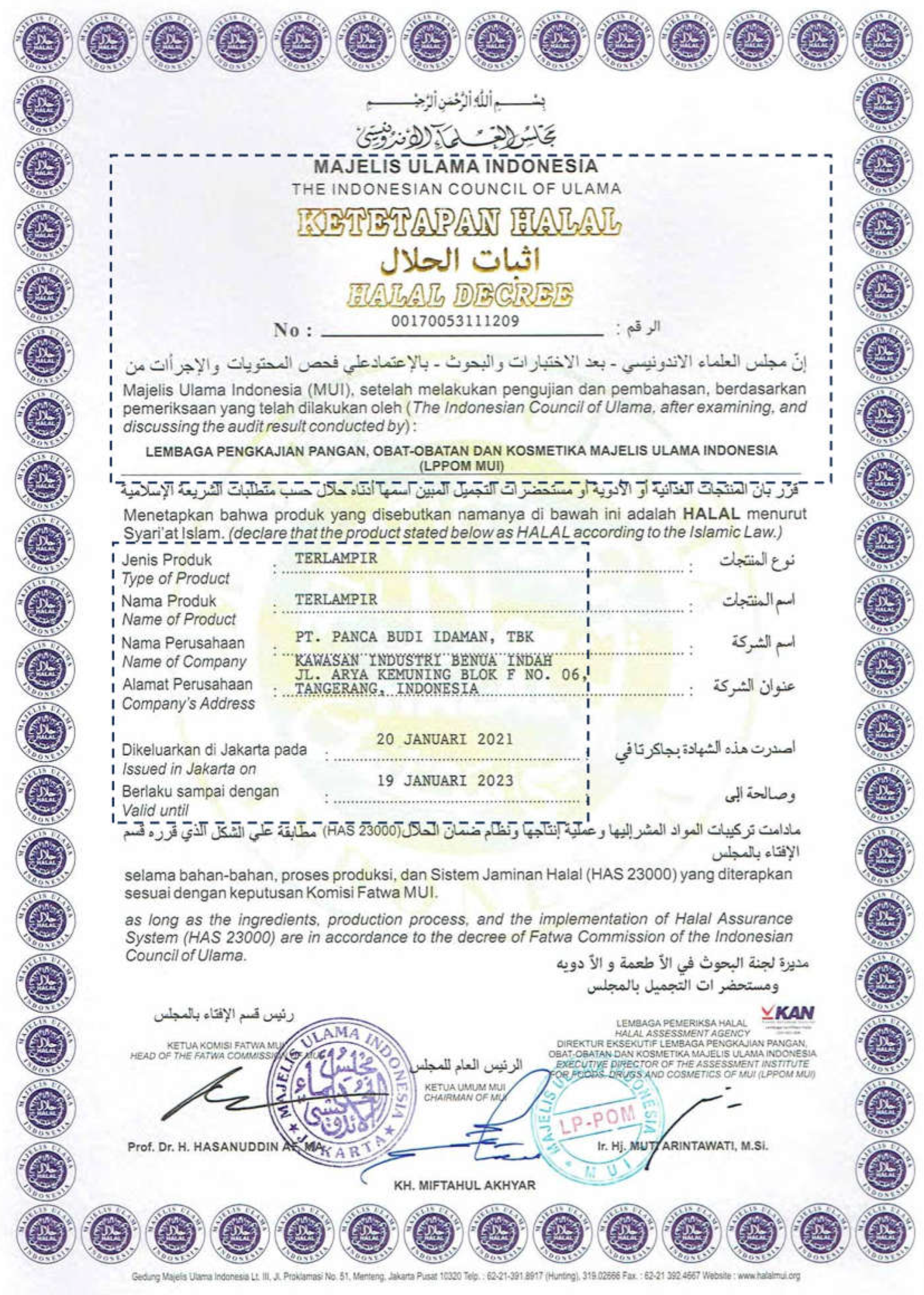
Figure A2.
Sample of valid BPOM distribution license (source: https://wowinfood.co.id/sertifikat.php?id=4).
Figure A2.
Sample of valid BPOM distribution license (source: https://wowinfood.co.id/sertifikat.php?id=4).
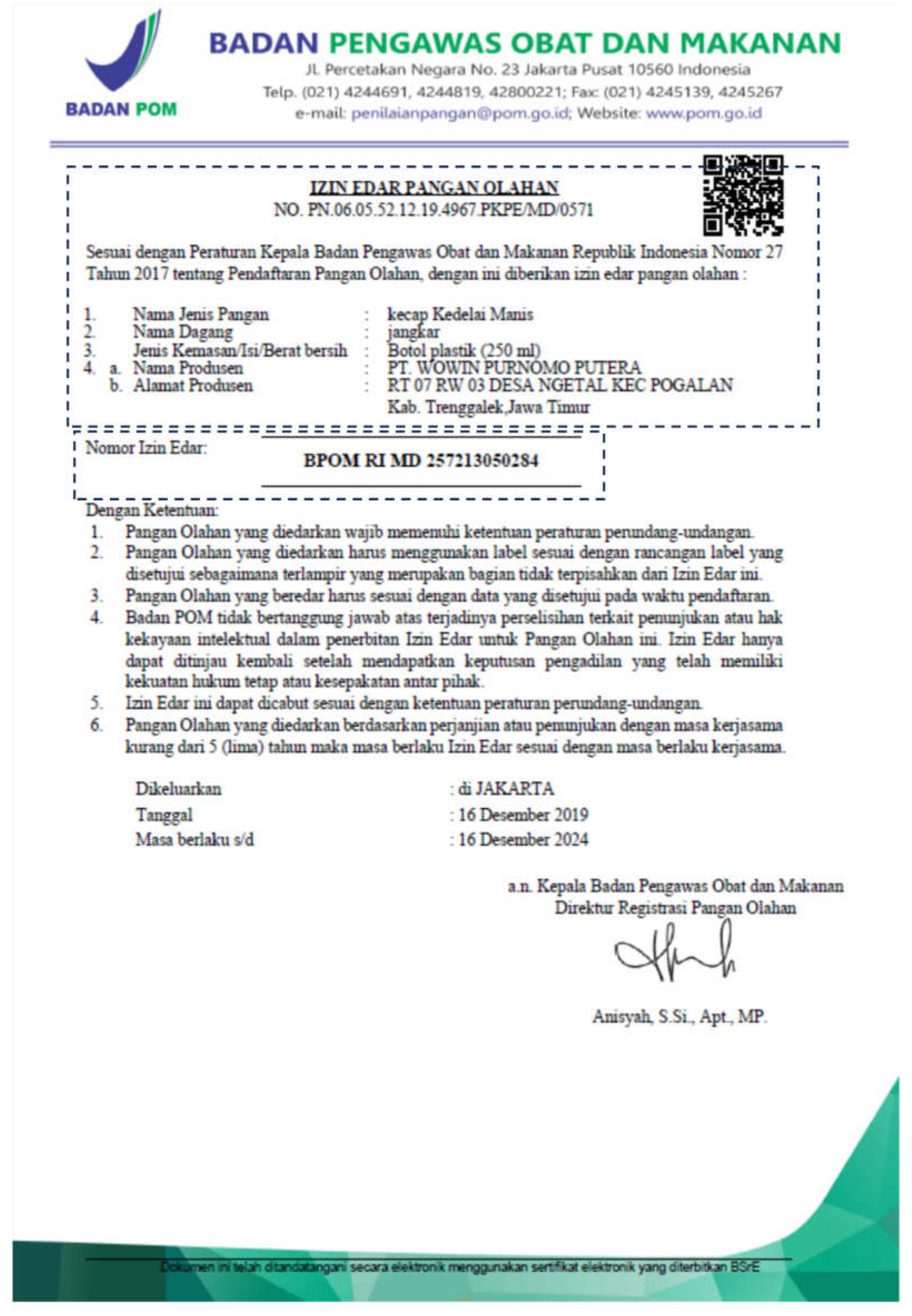
Figure A3.
Invalid Certificate Sample (source: https://ibunia.com/sertifikasi/).
Figure A3.
Invalid Certificate Sample (source: https://ibunia.com/sertifikasi/).
References
- Wijayanti, R.; Herusantoso, K.; Rianto, Y.; Muliahati, R. Integrating ICT in One-Stop Services Model: Case Study on Government Institution in Indonesia. In Proceedings of the International Conference on ICT for Smart Society; IEEE: Jakarta, Indonesia, June 2013; pp. 1–4. [Google Scholar]
- Barokah, S.; Nurhadryani, Y.; Nurrahmi, H. E-Government Development: Online Industrial Business License Services System in Indonesia. In Proceedings of the 2013 International Conference on Advanced Computer Science and Information Systems (ICACSIS); IEEE: Sanur Bali, Indonesia, September 2013; pp. 77–82. [Google Scholar]
- Digdowiseiso, K.; Sugiyanto, E.; Setiawan, H.D. Business Licensing And The Indonesia‘s Master Plan 2011 – 2025. 2020, 9.
- Cahyaningtyas, R.N. The Effect of RBA OSS-Based Company Licensing on Domestic Investment. Bp. Int. Res. Crit. Inst. BIRCI-J. 2022. [Google Scholar] [CrossRef]
- Rusli, Z. The Implementation of Palm Oil Plantation Business Licensing. Int. J. Law Manag. 2018, 60, 770–776. [Google Scholar] [CrossRef]
- Umayah, D.; Purnomo, E.P.; Fadhlurrohman, M.I.; Fathani, A.T.; Salsabila, L. The Implementation of Indonesian Sustainable Palm Oil (ISPO) Policy in Managing Oil Palm Plantation in Indonesia. IOP Conf. Ser. Earth Environ. Sci. 2021, 943, 012022. [Google Scholar] [CrossRef]
- Suroso, A.I.; Pahan, I.; Maesaroh, S.S. New Plantation Moratorium Policy and Smallholders Palm Oil Rejuvenation for Increasing Productivity of Indonesian Palm Oil. J. Manaj. Dan Agribisnis 2020. [Google Scholar] [CrossRef]
- Rachmaniah, M.; Suroso, A.I.; Syukur, M.; Hermadi, I. Supply and Demand Model for a Chili Enterprise System Using a Simultaneous Equations System. Economies 2022, 10, 312. [Google Scholar] [CrossRef]
- Maulana, M.M.; Suroso, A.I.; Nurhadryani, Y.; Seminar, K.B. Smart Governance Design for One-Stop Government of Licensing Services in Bio-Business. In Proceedings of the 2021 International Conference on Intelligent Technology, System and Service for Internet of Everything (ITSS-IoE); IEEE: Sana’a, Yemen, 1 November 2021; pp. 1–6. [Google Scholar]
- Maulana, M.M.; Suroso, A.I.; Nurhadryani, Y.; Seminar, K.B. Enterprise System Modeling for Business Licensing Services. In Proceedings of the 2021 International Conference on Informatics, Multimedia, Cyber and Information System (ICIMCIS); IEEE: Jakarta, Indonesia, 28 October 2021; pp. 343–348. [Google Scholar]
- Romero, M.; Guédria, W.; Panetto, H.; Barafort, B. Towards a Characterisation of Smart Systems: A Systematic Literature Review. Comput. Ind. 2020, 120, 103224. [Google Scholar] [CrossRef]
- Fauzi, E.A.; Nurmandi, A.; Pribadi, U. A Literature Review on Smart City and Smart Governance. 2020.
- Ruijer, E.; Van Twist, A.; Haaker, T.; Tartarin, T.; Schuurman, N.; Melenhorst, M.; Meijer, A. Smart Governance Toolbox: A Systematic Literature Review. Smart Cities 2023, 6, 878–896. [Google Scholar] [CrossRef]
- Hermawan Online Single Submission (OSS) System: A Licensing Services Breakthrough in Local Government? Int. J. Innov. Creat. Change 2020, 10, 284–296.
- Onate, J.J.S.; Omorog, C.D.; Babol, A.S. Development of Electronic Business Permit and Licensing System (eBPLS). In Proceedings of the 2018 IEEE 10th International Conference on Humanoid, Nanotechnology, Information Technology,Communication and Control, Environment and Management (HNICEM); IEEE: Baguio City, Philippines, November 2018; pp. 1–6. [Google Scholar]
- Degerli, K. Regulatory Challenges and Solutions for Fintech in Turkey. Procedia Comput. Sci. 2019, 158, 929–937. [Google Scholar] [CrossRef]
- Maulana, M.M.; Suroso, A.I.; Nurhadryani, Y.; Seminar, K.B. Smart Governance for One-Stop-Shop Services of Bio-Business Licensing in Indonesia : A Literature Review. In Proceedings of the 2020 International Conference on Computer Science and Its Application in Agriculture (ICOSICA); IEEE: Bogor, Indonesia, 16 September 2020; pp. 1–6. [Google Scholar]
- Kementrian Investasi/BKPM, O. KBLI 2020 No. 10799 - Other Food Products Industry. Available online: https://oss.go.id/informasi/kbli-kode?kode=C&kbli=10799 (accessed on 25 June 2022).
- Maulana, M.M.; Suroso, A.I.; Nurhadryani, Y.; Seminar, K.B. The Smart Governance Framework and Enterprise System’s Capability for Improving Bio-Business Licensing Services. Informatics 2023, 10, 53. [Google Scholar] [CrossRef]
- Maghfirotun,; Wirdyaningsih, Kedudukan Penyelia Halal Dalam Sertifikasi Halal Setelah Berlakunya Undang-Undang Cipta Kerja Pada Sektor UMK. PALAR PAKUAN LAW Rev. 2022, 8, 463–472. [CrossRef]
- Utama, L.; Purwowidhu, C. Daftar Sertifikasi Halal Gratis, Begini Caranya. Available online: https://mediakeuangan.kemenkeu.go.id/article/show/daftar-sertifikasi-halal-gratis-begini-caranya (accessed on 18 September 2023).
- POM, B. E-Sertifikasi Badan POM. Available online: https://e-sertifikasi.pom.go.id (accessed on 16 September 2023).
- Suranto, G.; S, U. Penerapan SNI bagi UMK, Mudah, Tanpa Biaya dan Menguntungkan. Available online: https://infopublik.id/kategori/nasional-sosial-budaya/725164/penerapan-sni-bagi-umk-mudah-tanpa-biaya-dan-menguntungkan (accessed on 18 September 2023).
- admin, J.G. Memudahkan Pelaku Usaha Dalam Mengurus Perizinan Di Indonesia. Available online: https://jangkargroups.co.id/sso-perizinan-kemendag-terintegrasi-oss/ (accessed on 25 May 2023).
- Kemendag RI, D. Portal Aplikasi PKTN. Available online: https://simpktn.kemendag.go.id/index.php/k3l/Permohonan/proses_permohonan/1 (accessed on 16 September 2023).
- PANRB, S. Penerbitan Registrasi Barang Terkait K3L. Available online: https://sippn.menpan.go.id/pelayanan-publik/8194845/upp-direktorat-standardisasi-dan-pengendalian-mutu/penerbitan-registrasi-barang-terkait-k3l (accessed on 23 September 2023).
- Purworejo, D. SIINas (Sistem Informasi Industri Nasional). Available online: https://dinperintransnaker.purworejokab.go.id/siinas-sistem-informasi-industri-nasional/ (accessed on 16 September 2023).
- Bantul, D. Panduan Pengajuan PBG Atau SLF Untuk Kegiatan Berusaha Melalui OSS. Available online: https://dpmptsp.bantulkab.go.id/web/berita/detail/721-panduan-pengajuan-pbg-atau-slf-untuk-kegiatan-berusaha-melalui-oss (accessed on 18 September 2023).
- Popchev, I.; Orozova, D. Text Mining in the Domain of Plant Genetic Resources. In Proceedings of the 2020 IEEE 10th International Conference on Intelligent Systems (IS); IEEE: Varna, Bulgaria, August 2020; pp. 596–600. [Google Scholar]
- Tayal, M.A.; Raghuwanshi, M.M.; Malik, L.G. ATSSC: Development of an Approach Based on Soft Computing for Text Summarization. Comput. Speech Lang. 2017, 41, 214–235. [Google Scholar] [CrossRef]
- Patel, D.; Shah, S.; Chhinkaniwala, H. Fuzzy Logic Based Multi Document Summarization with Improved Sentence Scoring and Redundancy Removal Technique. Expert Syst. Appl. 2019, 134, 167–177. [Google Scholar] [CrossRef]
- Alami, N.; Meknassi, M.; En-nahnahi, N. Enhancing Unsupervised Neural Networks Based Text Summarization with Word Embedding and Ensemble Learning. Expert Syst. Appl. 2019, 123, 195–211. [Google Scholar] [CrossRef]
- Joshi, A. SummCoder: An Unsupervised Framework for Extractive Text Summarization Based on Deep Auto-Encoders. Expert Syst. Appl. 2019. [Google Scholar] [CrossRef]
- Mirończuk, M.M.; Protasiewicz, J. A Recent Overview of the State-of-the-Art Elements of Text Classification. Expert Syst. Appl. 2018, 106, 36–54. [Google Scholar] [CrossRef]
- Altınel, B.; Ganiz, M.C. Semantic Text Classification: A Survey of Past and Recent Advances. Inf. Process. Manag. 2018, 54, 1129–1153. [Google Scholar] [CrossRef]
- Wang, H.; Hong, M. Supervised Hebb Rule Based Feature Selection for Text Classification. Inf. Process. Manag. 2019, 56, 167–191. [Google Scholar] [CrossRef]
- Mohamed, M.; Oussalah, M. SRL-ESA-TextSum: A Text Summarization Approach Based on Semantic Role Labeling and Explicit Semantic Analysis. Inf. Process. Manag. 2019, 56, 1356–1372. [Google Scholar] [CrossRef]
- Škrlj, B.; Martinc, M.; Kralj, J.; Lavrač, N.; Pollak, S. Tax2vec: Constructing Interpretable Features from Taxonomies for Short Text Classification. Comput. Speech Lang. 2021, 65, 101104. [Google Scholar] [CrossRef]
- Kang, M.; Ahn, J.; Lee, K. Opinion Mining Using Ensemble Text Hidden Markov Models for Text Classification. Expert Syst. Appl. 2018, 94, 218–227. [Google Scholar] [CrossRef]
- Du, Y.; Liu, J.; Ke, W.; Gong, X. Hierarchy Construction and Text Classification Based on the Relaxation Strategy and Least Information Model. Expert Syst. Appl. 2018, 100, 157–164. [Google Scholar] [CrossRef]
- Dogan, T.; Uysal, A.K. Improved Inverse Gravity Moment Term Weighting for Text Classification. Expert Syst. Appl. 2019, 130, 45–59. [Google Scholar] [CrossRef]
- Mirończuk, M.M.; Protasiewicz, J.; Pedrycz, W. Empirical Evaluation of Feature Projection Algorithms for Multi-View Text Classification. Expert Syst. Appl. 2019, 130, 97–112. [Google Scholar] [CrossRef]
- Hossain, Md.R.; Hoque, M.M.; Siddique, N.; Sarker, I.H. Bengali Text Document Categorization Based on Very Deep Convolution Neural Network. Expert Syst. Appl. 2021, 184, 115394. [Google Scholar] [CrossRef]
- Di Vaio, A.; Palladino, R.; Hassan, R.; Escobar, O. Artificial Intelligence and Business Models in the Sustainable Development Goals Perspective: A Systematic Literature Review. J. Bus. Res. 2020, 121, 283–314. [Google Scholar] [CrossRef]
- Soni, N.; Sharma, E.K.; Singh, N.; Kapoor, A. Artificial Intelligence in Business: From Research and Innovation to Market Deployment. Procedia Comput. Sci. 2020, 167, 2200–2210. [Google Scholar] [CrossRef]
- Divya, P.; Varma, M.; Ratna Mouli, U. ; Srinivas; Garima; Nikhil; Vishistha WITHDRAWN: Web Based Optical Character Recognition Application Using Flask and Tesseract. Mater. Today Proc. 2021, S221478532038487X. [Google Scholar] [CrossRef]
- Jayoma, J.M.; Moyon, E.S.; Morales, E.M.O. OCR Based Document Archiving and Indexing Using PyTesseract: A Record Management System for DSWD Caraga, Philippines. In Proceedings of the 2020 IEEE 12th International Conference on Humanoid, Nanotechnology, Information Technology, Communication and Control, Environment, and Management (HNICEM); IEEE: Manila, Philippines, 3 December 2020; pp. 1–6. [Google Scholar]
- Phoenix, P.; Sudaryono, R.; Suhartono, D. Classifying Promotion Images Using Optical Character Recognition and Naïve Bayes Classifier. Procedia Comput. Sci. 2021, 179, 498–506. [Google Scholar] [CrossRef]
- Goodrum, H.; Roberts, K.; Bernstam, E.V. Automatic Classification of Scanned Electronic Health Record Documents. Int. J. Med. Inf. 2020, 144, 104302. [Google Scholar] [CrossRef]
- Nur Faiz, M.; Rahadi, N.W.; Adi Prasetya, N.W. Online Presence System Development Website-Based Using Prototype Methods. Appl. Technol. Comput. Sci. J. 2021, 4, 1–9. [Google Scholar] [CrossRef]
- Walker, M.; Takayama, L.; Landay, J.A. High-Fidelity or Low-Fidelity, Paper or Computer? Choosing Attributes When Testing Web Prototypes. Proc. Hum. Factors Ergon. Soc. Annu. Meet. 2002, 46, 661–665. [Google Scholar] [CrossRef]
- Indonesia, C. Jokowi Beberes, 27.000 Aplikasi Pusat & Daerah Dipangkas! Available online: https://www.cnbcindonesia.com/news/20230922133330-4-474768/jokowi-beberes-27000-aplikasi-pusat-daerah-dipangkas#:~:text=Jakarta%2C (accessed on 27 September 2023).
- Indonesia, C. 27.400 Aplikasi Pemerintah Gabung Jadi 1, Bisa Cari Semuanya (accessed on 27 September 2023).
- Zhu, Y.-Q.; Fang, Y.-H.; Lim, S.-Y. Investigating Drivers of Service Extension Success for a Super App. Comput. Hum. Behav. 2023, 149, 107928. [Google Scholar] [CrossRef]
- Castilla, R.; Pacheco, A.; Franco, J. Digital Government: Mobile Applications and Their Impact on Access to Public Information. SoftwareX 2023, 22, 101382. [Google Scholar] [CrossRef]
- Zhang, Y.; Kimathi, F.A. Exploring the Stages of E-Government Development from Public Value Perspective. Technol. Soc. 2022, 69, 101942. [Google Scholar] [CrossRef]
- Hidayah, E.S.; Almadani, M. Analisis Tingkat Kematangan Sistem Pemerintahan Berbasis Elektronik (SPBE) pada Pemerintah Provinsi Sulawesi Selatan. J. Teknol. Dan Komun. Pemerintah. 2022, 4, 49–67. [Google Scholar] [CrossRef]
- Bahaweres, R.B.; Imam Suroso, A.; Wahyu Hutomo, A.; Permana Solihin, I.; Hermadi, I.; Arkeman, Y. Tackling Feature Selection Problems with Genetic Algorithms in Software Defect Prediction for Optimization. In Proceedings of the 2020 International Conference on Informatics, Multimedia, Cyber and Information System (ICIMCIS); IEEE: Jakarta, Indonesia, 19 November 2020; pp. 64–69. [Google Scholar]
- Hidayat, N.F.; Satwiko, P. The Implementation of Artificial Intelligence in the Environmental Licensing Process:; Yogyakarta, Indonesia, 2022.
- Bolívar, M.P.R.; Meijer, A.J. Smart Governance: Using a Literature Review and Empirical Analysis to Build a Research Model. Soc. Sci. Comput. Rev. 2016, 34, 673–692. [Google Scholar] [CrossRef]
- Meijer, A.; Bolívar, M.P.R. Governing the Smart City: A Review of the Literature on Smart Urban Governance. Int. Rev. Adm. Sci. 2016, 82, 392–408. [Google Scholar] [CrossRef]
- Pereira, G.V.; Parycek, P.; Falco, E.; Kleinhans, R. Smart Governance in the Context of Smart Cities: A Literature Review. Inf. Polity 2018, 23, 143–162. [Google Scholar] [CrossRef]
- Ruhlandt, R.W.S. The Governance of Smart Cities: A Systematic Literature Review. Cities 2018, 81, 1–23. [Google Scholar] [CrossRef]
- Herdiyanti, A.; Hapsari, P.S.; Susanto, T.D. Modelling the Smart Governance Performance to Support Smart City Program in Indonesia. Procedia Comput. Sci. 2019, 161, 367–377. [Google Scholar] [CrossRef]
- Tomor, Z.; Meijer, A.; Michels, A.; Geertman, S. Smart Governance For Sustainable Cities: Findings from a Systematic Literature Review. J. Urban Technol. 2019, 26, 3–27. [Google Scholar] [CrossRef]
- Tan, S.Y.; Taeihagh, A. Smart City Governance in Developing Countries: A Systematic Literature Review. Sustain. Switz. 2020, 12. [Google Scholar] [CrossRef]
- Fauzi, E.A.; Nurmandi, A.; Pribadi, U. Literature Review: Smart City and Smart Governance in Analysis. JPPUMA J. Ilmu Pemerintah. Dan Sos. Polit. Univ. Medan Area 2020, 8, 84–89. [Google Scholar] [CrossRef]
- Purba, Febri Naldy; Arman, Arry Akhmad A Systematic Literature Review of Smart Governance. In Proceedings of the 2022 International Conference on Information Technology Systems and Innovation (ICITSI); IEEE: Bandung, Indonesia, December 14 2022; pp. 70–75.
Figure 1.
Domains and components of a smart system [11] and its connection to smart governance.
Figure 1.
Domains and components of a smart system [11] and its connection to smart governance.
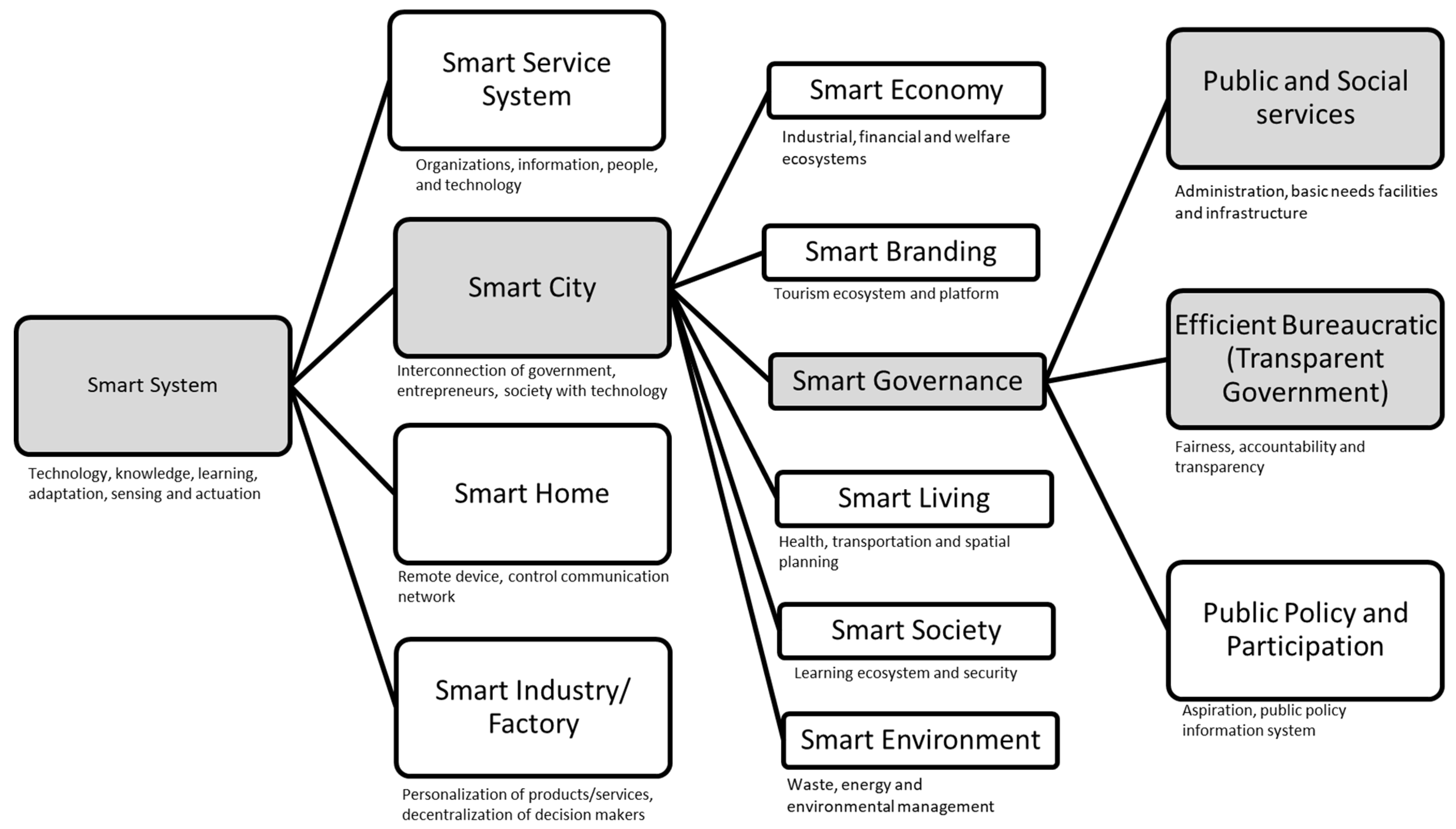
Figure 2.
Research method from identify requirements until testing and evaluation.

Figure 3.
Proposed prototype system in OSS solutions.
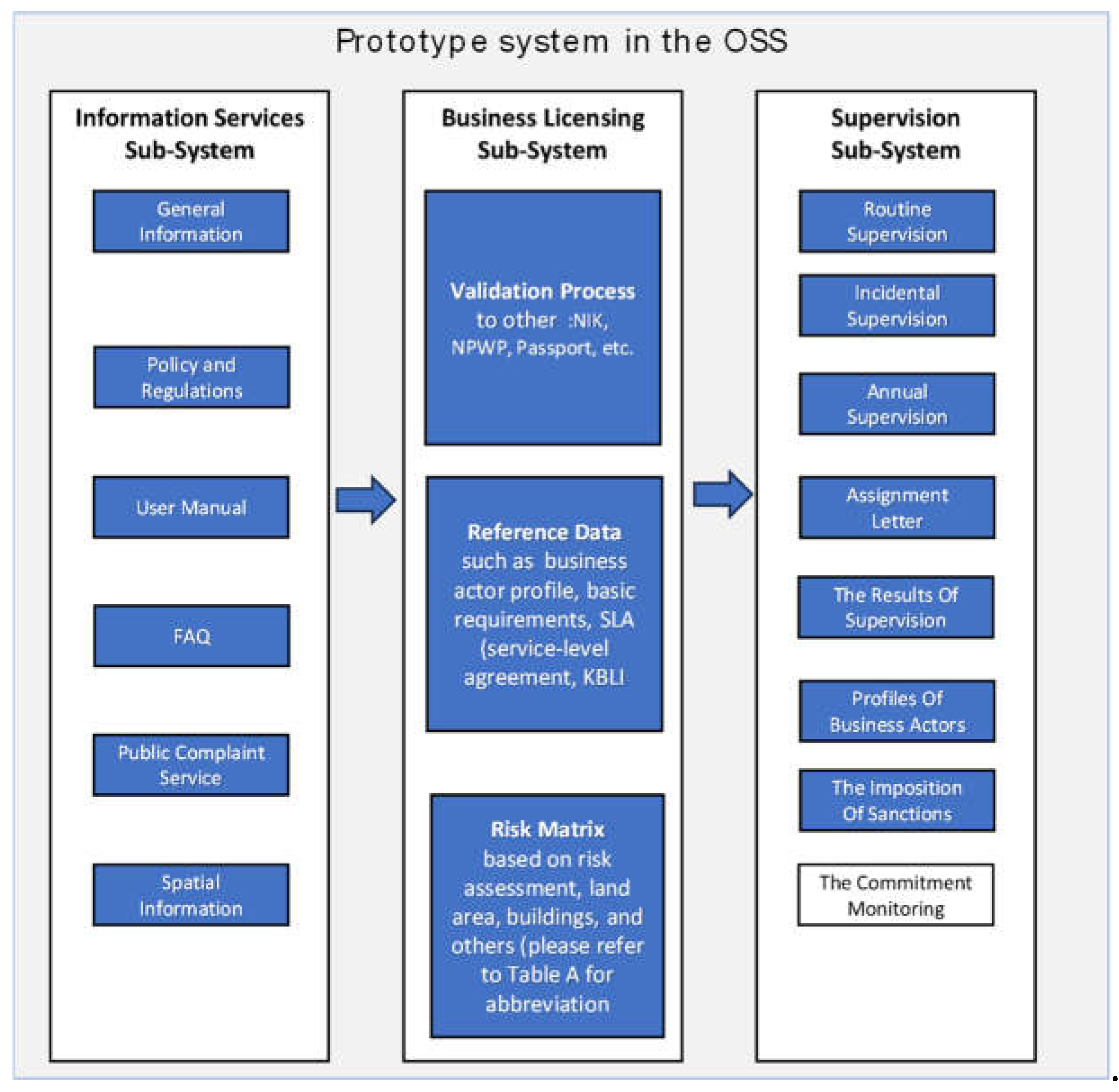
Figure 4.
Use case diagram for monitoring bio-business license.
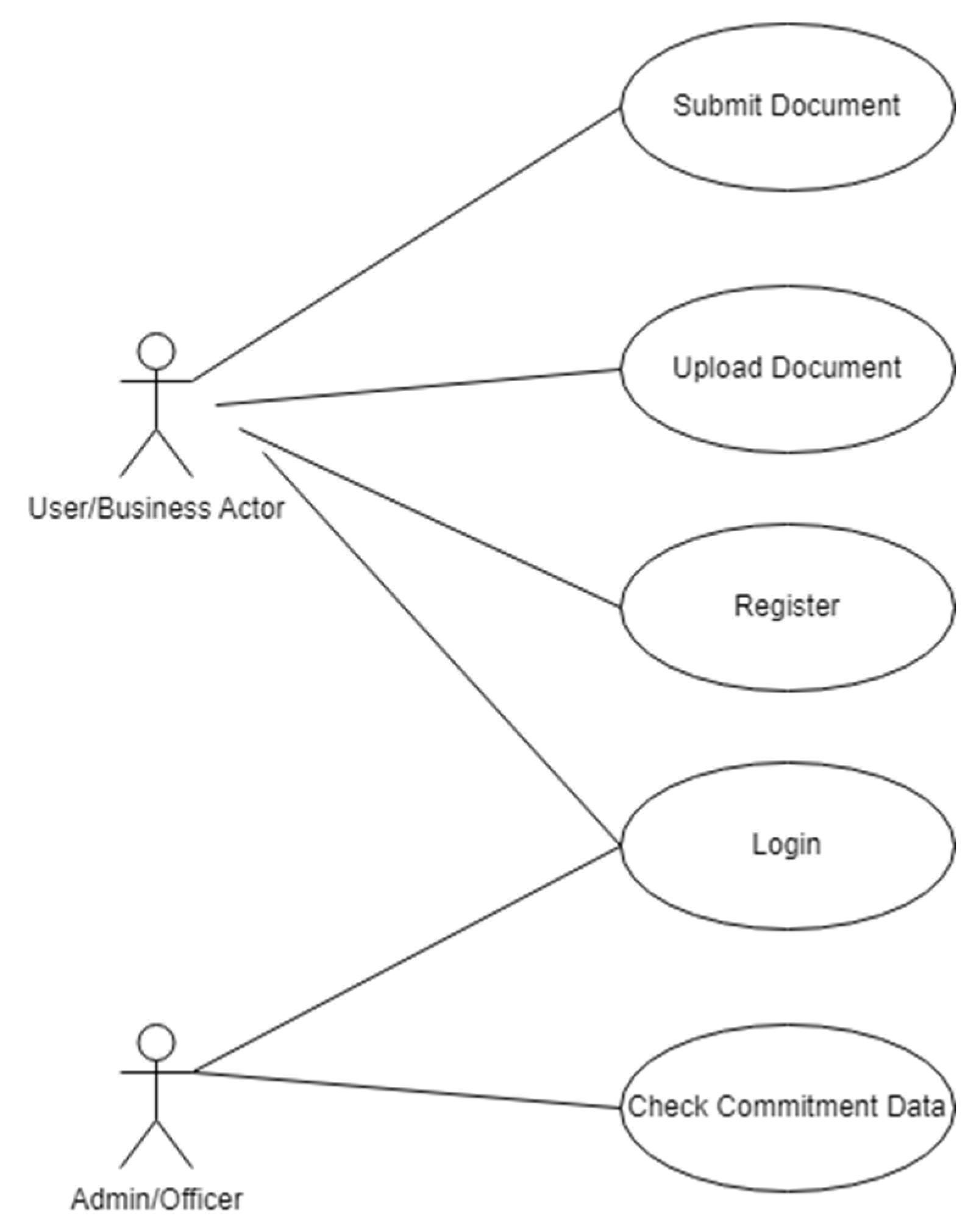
Figure 5.
Programming structure of bio-business license monitoring.
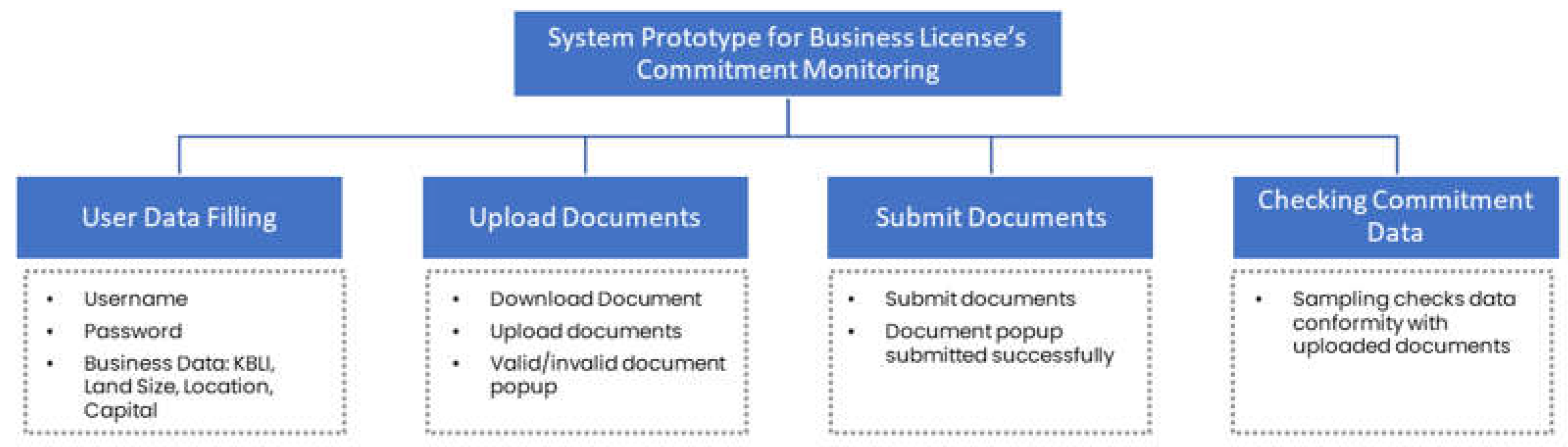
Figure 6.
Database design.
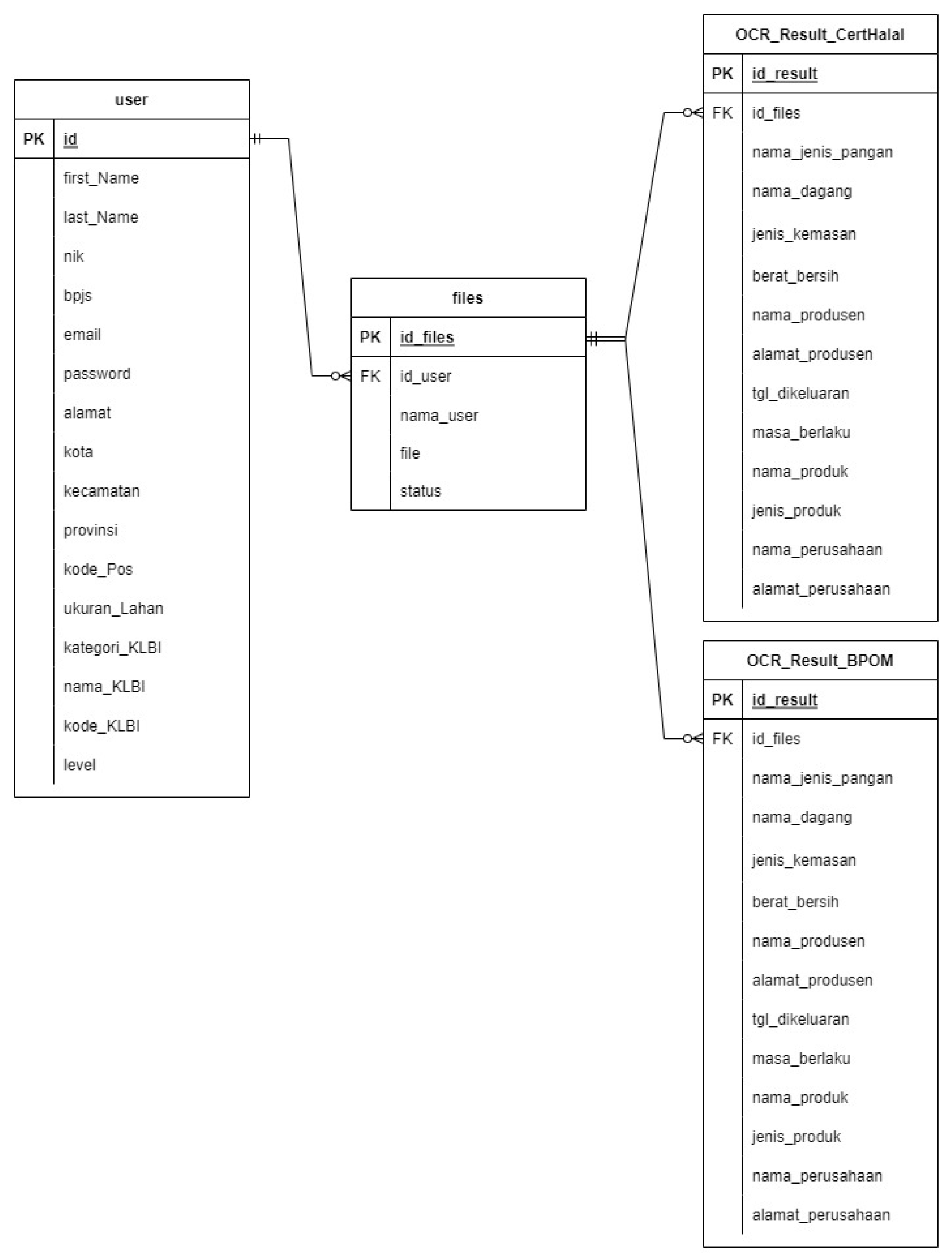
Figure 7.
Sequence diagram for registration form, upload, submit and check documents.
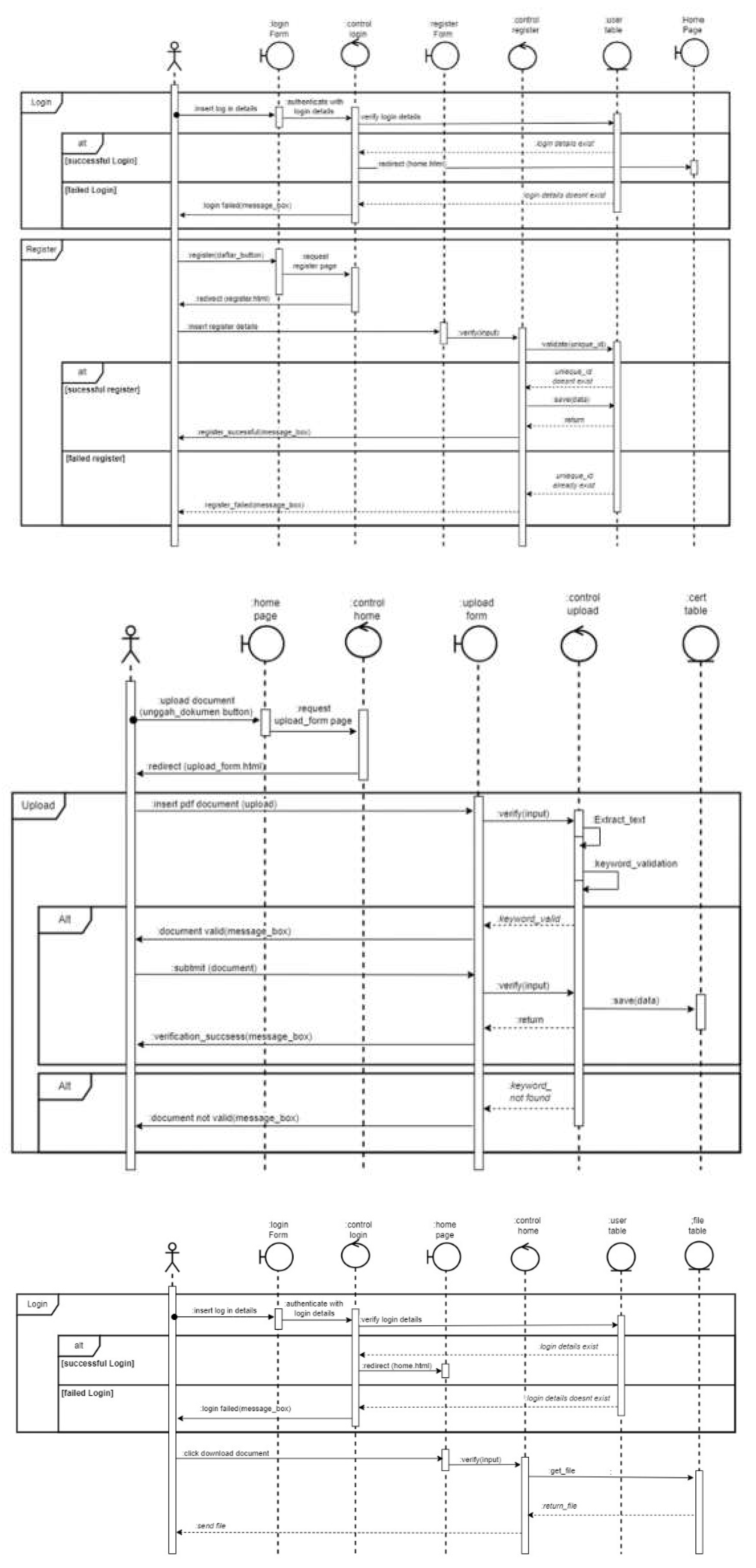
Figure 8.
GUI Display for fulfillment of bio-business business license documents.
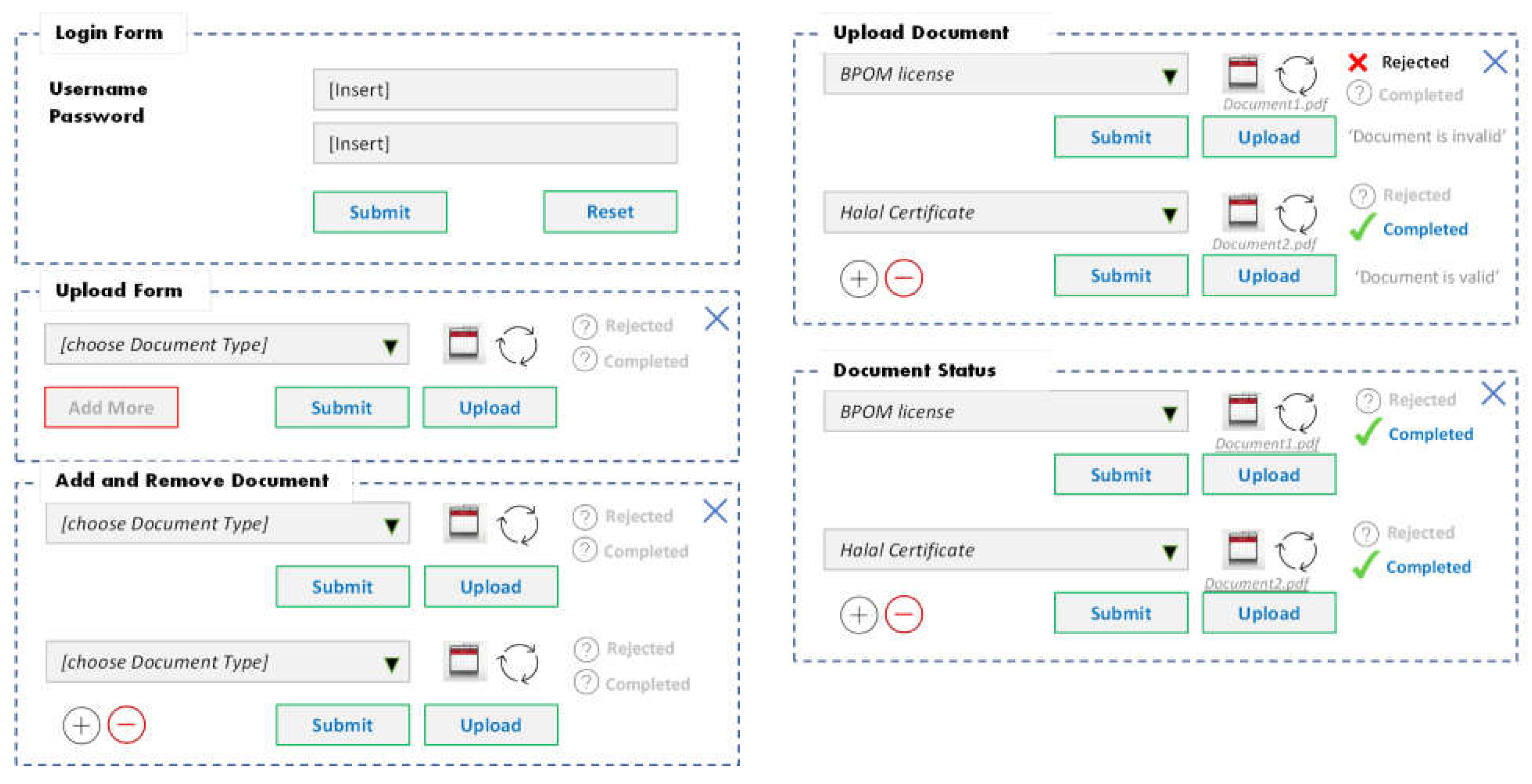
Figure 9.
Login form.
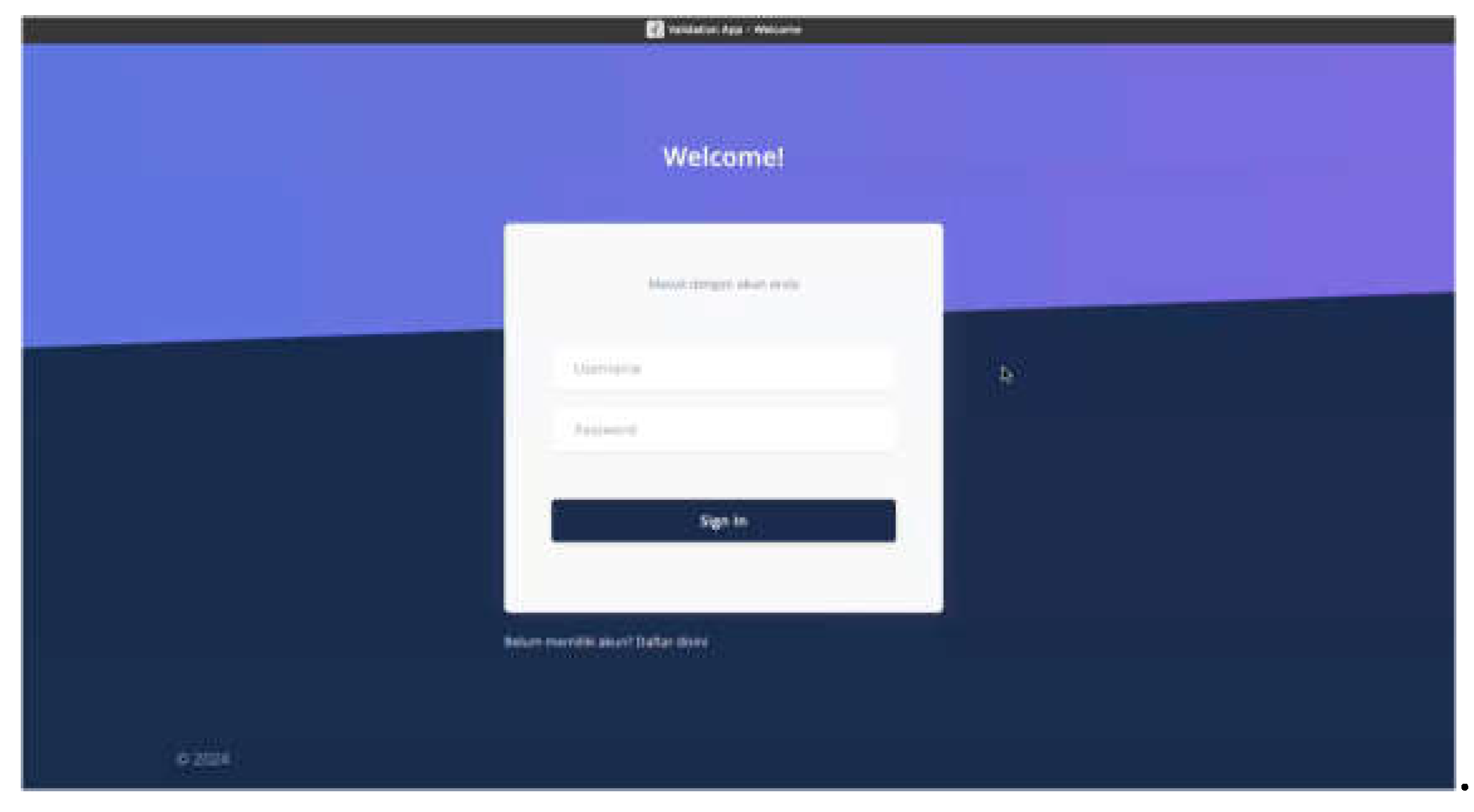
Figure 10.
Registration form.
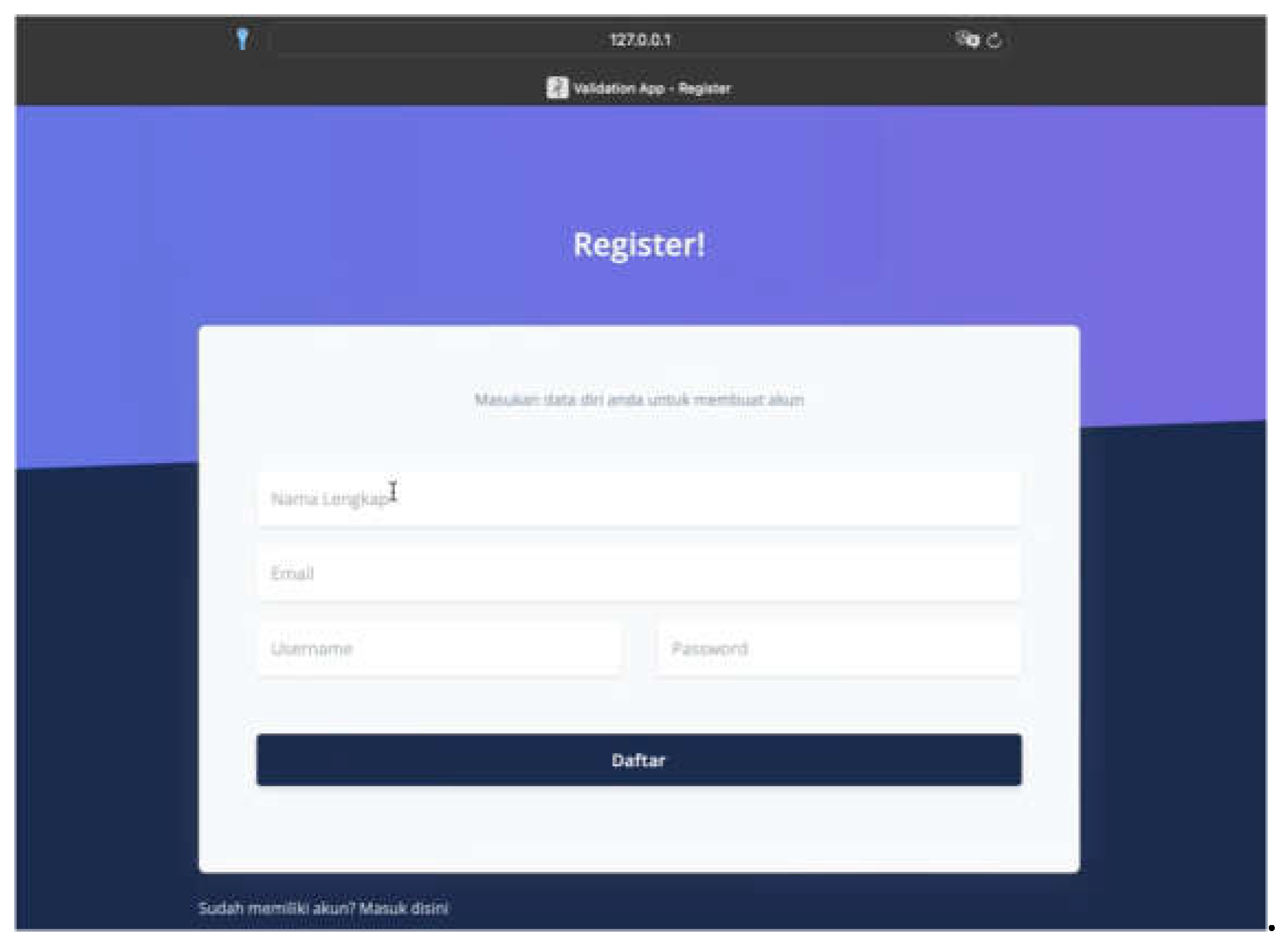
Figure 11.
Homepage form.
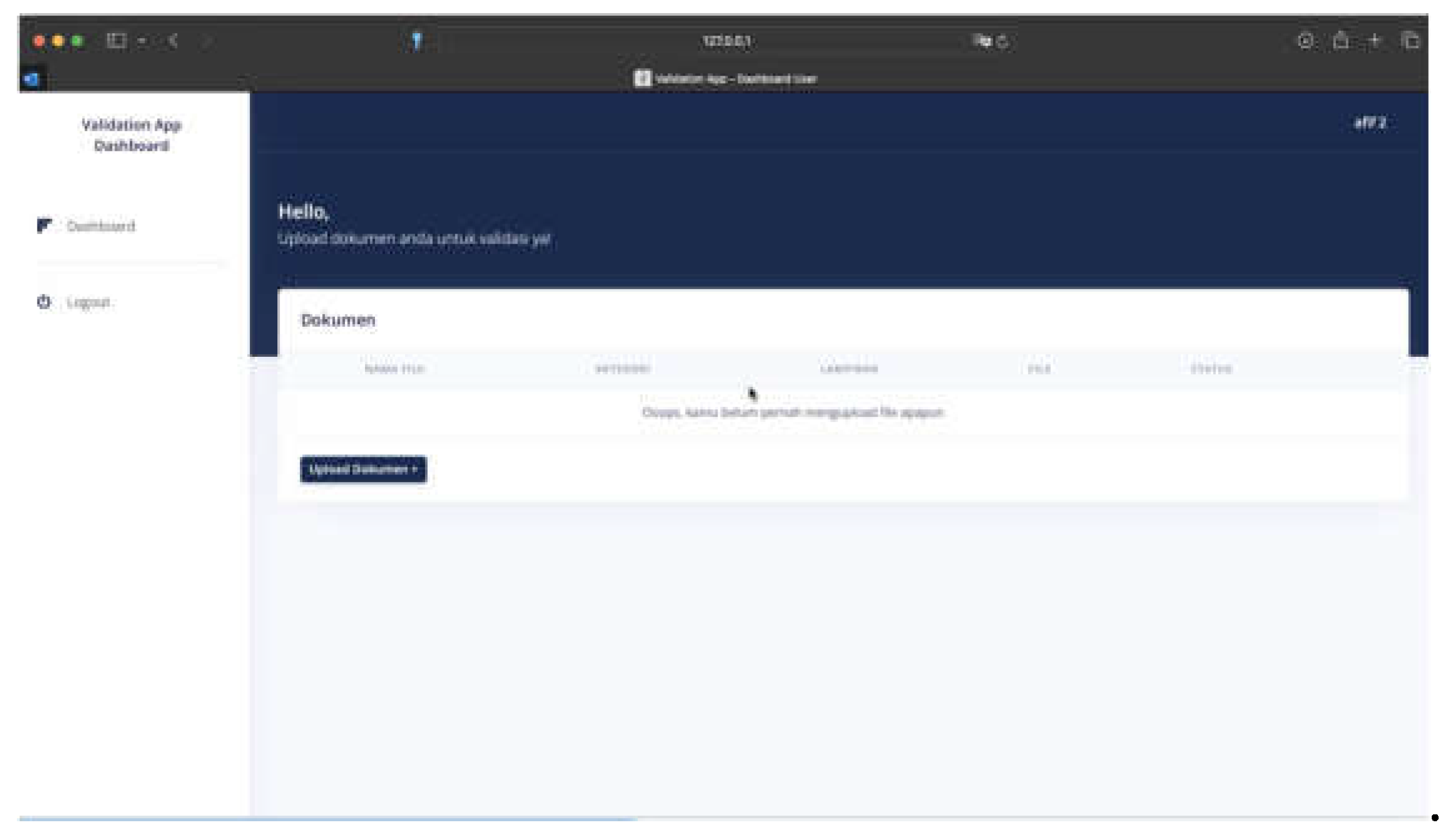
Figure 12.
Dashboard form to upload and send documents.

Figure 13.
Text extraction process for valid BPOM distribution license documents.
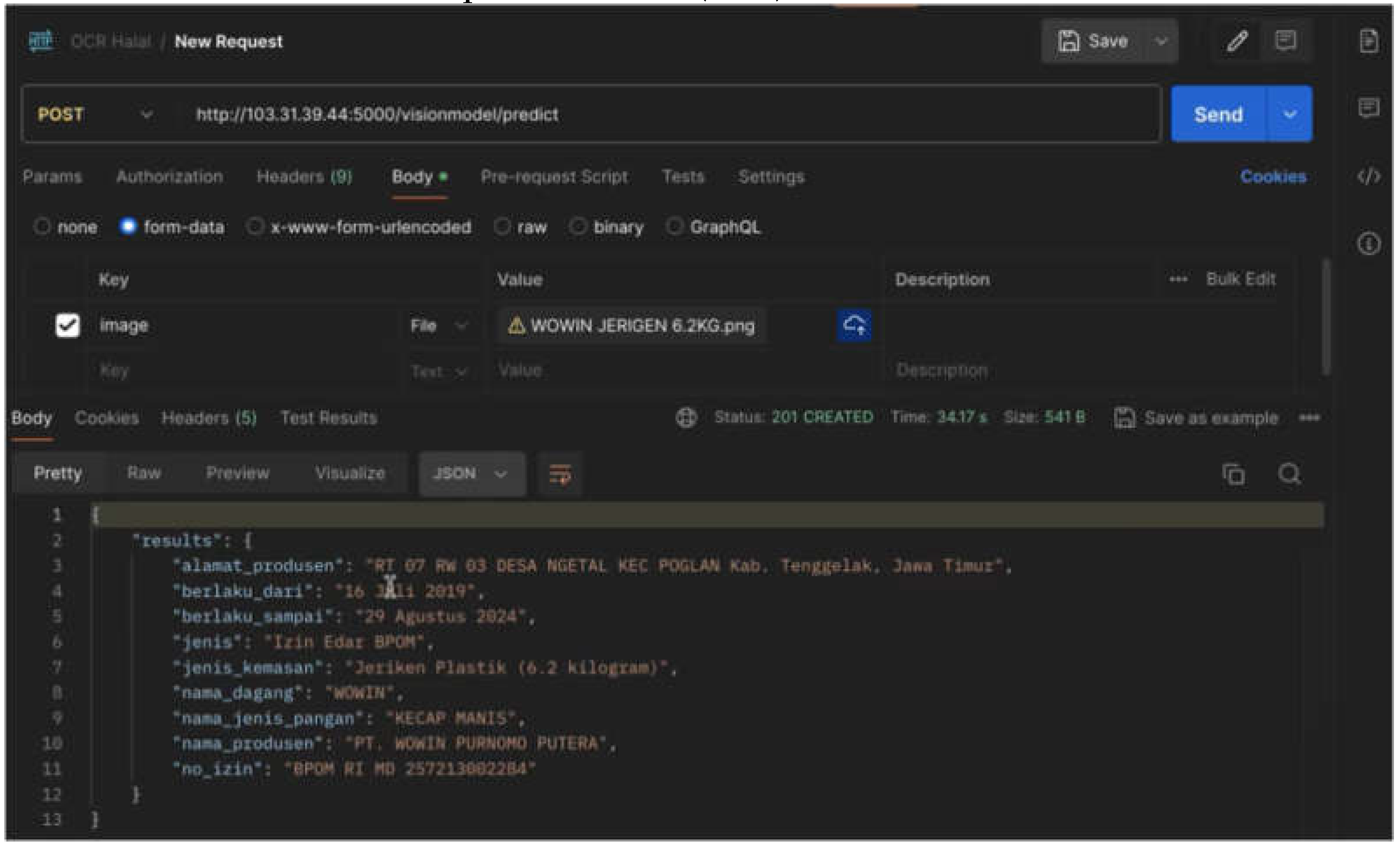
Figure 14.
Halal-valid certificate document text extraction process.
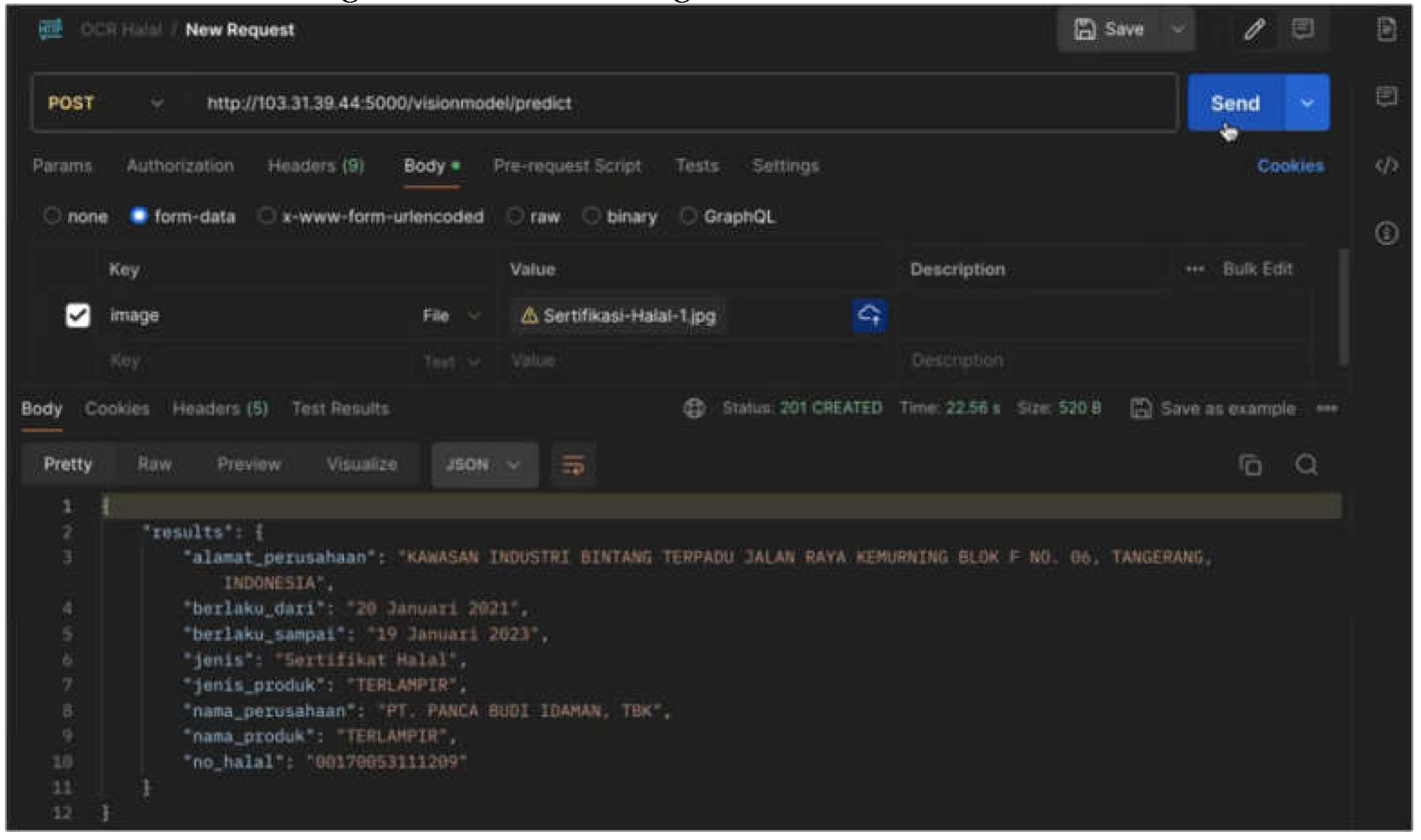
Figure 15.
Invalid-document text extraction process.
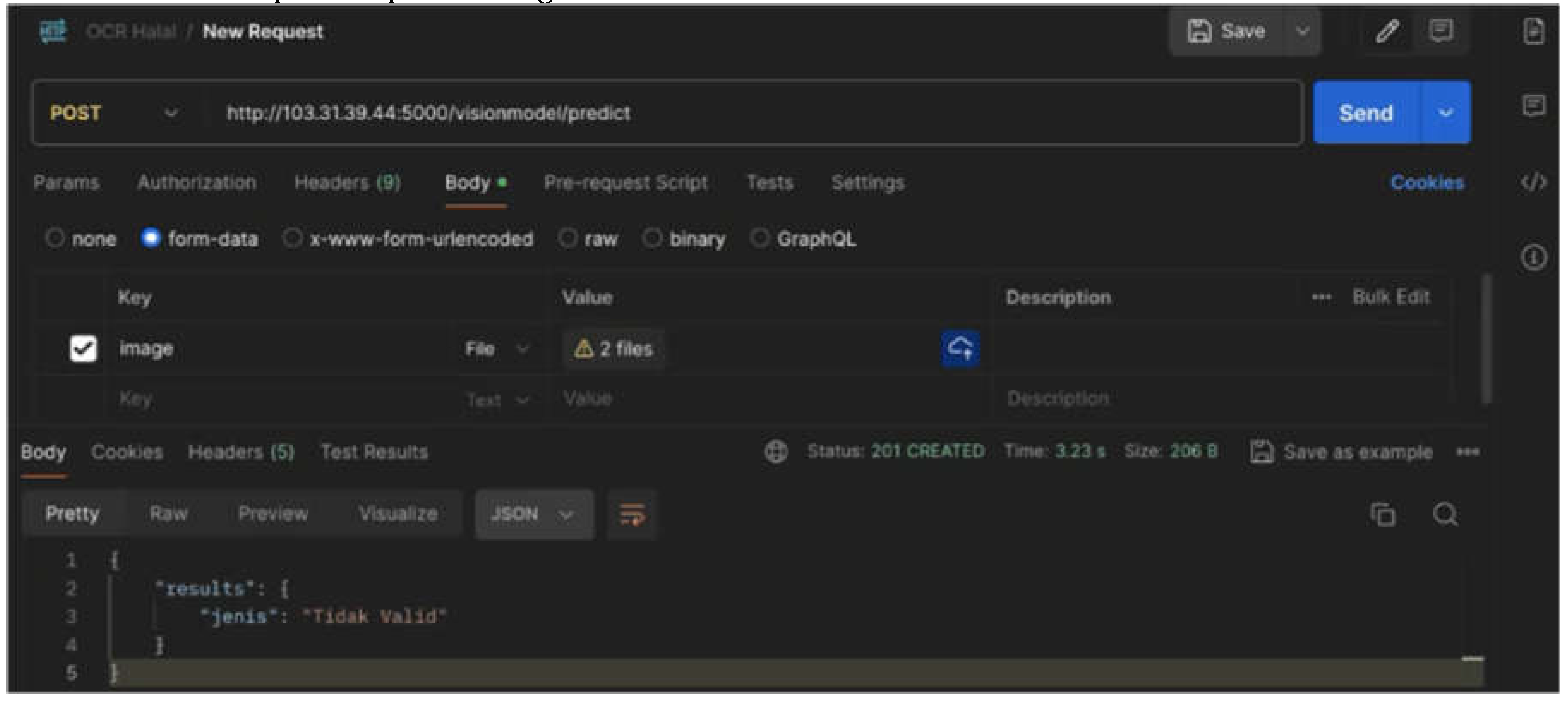
Table 1.
Potential smart system to support the business licensing process.
| No | Processes | Domain | Smart System Technologies |
|---|---|---|---|
| 1 | Validation | Authentication & Authorization | Single Sign-on / OAuth |
| 2 | Integration | Integration & Partnership | RESTful OPEN API 2.0 |
| 3 | Licensing verification | Document verification | Blockchain |
| 4 | Data Governance | Big Data | Data Lake on SaaS |
| 5 | Data Security | Data Protection | Homomorphic encryption |
| 6 | Licensing Monitoring | Computer vision | Optical Character recognition (OCR) |
| 7 | Complaint Handling | Customer Service Support/ Chat/ FAQ | GenerativeAI |
Table 2.
Pros and cons of bio-business licensing supervision prototype.
| Approach | Pros | Cons |
|---|---|---|
|
|
|
|
|
|
Table 3.
Bio-business licensing certificate.
| Bio-Business Licensing2 | Other Licensing | Ministries/Agencies |
|---|---|---|
| NIB | NIB | BKPM |
| Halal Certificate | - | BPJPH |
| BPOM Distribution License | - | BPOM |
| SNI | SNI | BSN |
| K3L | K3L | Kemendag |
| Comply to SIINas | Comply to SIINas | Kemenperin |
| PBG | PBG | Kementrian PUPR |
| - | IUP/IUPK | Local Government |
2 business licensing obligations in the selected KBLI.
Table 4.
Bio-business licensing certificate.
| KBLI 2020 (21 CATEGORIES)3 |
|---|
| A. Agriculture, Forestry, and Fisheries |
| B. Mining and Quarrying |
| C. Processing Industry |
| D. Procurement of Electricity, Gas, Steam/Hot Water, and Cold Air |
| E. Water Treatment, Waste Water Treatment, Waste Material Treatment and Recovery, and Remediation Activities |
| F. Construction |
| G. Transportation and Warehousing |
| H. Wholesale and Retail Trade; Car and Motorbike Repair and Maintenance |
| I. Provision of accommodation and provision of food and drink |
| J. Information and Communication |
| K. Financial and Insurance Activities |
| L. Real Estate |
| M. Professional, Scientific, and Technical Activities |
| N. Rental and leasing activities without options, employment, travel agents, and other business support |
| O. Government Administration, Defense, and Mandatory Social Security |
| P. Education |
| Q. Human Health Activities and Social Activities |
| R. Arts, Entertainment and Recreation |
| S. Other Service Activities |
| T. Household Activities as Employers; Activities that Produce Goods and Services by Households that are Used to Meet Their Own Needs |
| U. Activities of International Agencies and Extra International Agencies |
3 refer to KBLI 2020.
Table 5.
Bio-business licensing certificate Data.
| Document1 | Keywords | Supporting Data |
|---|---|---|
| 1. Halal Certificate | Halal, MUI, LPPOM |
|
| 2. BPOM License | BPOM, Distribution License |
|
1 from 5-6 samples that available on the internet.
Table 6.
Test scenarios.
| No | Scenario | Success Criteria |
|---|---|---|
| 1 | User has successfully logged in | Pass |
| 2 | User failed to login | Fail |
| 3 | Users can upload valid halal certificate documents | Pass |
| 4 | Users can upload BPOM certificate documents – valid | Pass |
| 5 | User failed to upload certificate document – invalid | Fail |
| 6 | Users can submit valid halal certificate documents | Pass |
| 7 | The submitted data appears successfully | Pass |
| 8 | User has successfully logged out | Pass |
Disclaimer/Publisher’s Note: The statements, opinions and data contained in all publications are solely those of the individual author(s) and contributor(s) and not of MDPI and/or the editor(s). MDPI and/or the editor(s) disclaim responsibility for any injury to people or property resulting from any ideas, methods, instructions or products referred to in the content. |
© 2024 by the authors. Licensee MDPI, Basel, Switzerland. This article is an open access article distributed under the terms and conditions of the Creative Commons Attribution (CC BY) license (http://creativecommons.org/licenses/by/4.0/).
Copyright: This open access article is published under a Creative Commons CC BY 4.0 license, which permit the free download, distribution, and reuse, provided that the author and preprint are cited in any reuse.


