

Submitted:
17 June 2024
Posted:
20 June 2024
You are already at the latest version
Abstract
The physical properties of nano-fertilizers (NFs) are important in determining their performance, efficacy, and environmental interactions. Nano-fertilizers, due to their small size and high surface area-to-volume ratio, enhance plant metabolic reactions, resulting in higher crop yields. The properties of nano-fertilizers depend on the synthesis methods used. The nanoparticle's nutrient use efficiency (NUE) varies among plant species. This review aims to analyze the relationship between the physical properties of NF and their influence on crop performance and nutrient uptake efficiency. The review focuses on the physical properties of NFs, specifically their size, shape, crystalline, and agglomeration. This review found that smaller particle-sized nanoparticles exhibit higher nutrient use efficiency than larger particles. Nano-fertilizer-coated additives gradually release nutrients, reducing the need for frequent application and addressing limitations associated with chemical fertilizer utilization. The shapes of nano-fertilizers have varying effects on the overall performance of plants. The crystalline structure of nanoparticles promotes a slow release of nutrients. Amorphous nano-fertilizers improve the NUE and, ultimately, crop yield. Agglomeration results in nanoparticles losing their nanoscale size, accumulating on the outer surface, and becoming unavailable to plants. Understanding the physical properties of nano-fertilizers is crucial for optimizing their performance in agricultural applications.
Keywords:
Nano-fertilizers
; surface area
; nutrient use efficiency
; physical properties
; agglomeration
1. Introduction
In recent years, the utilization of nano-fertilizers (NFs) has gained significant attention in the field of agriculture. These innovative fertilizers offer a promising solution to enhance plant nutrient uptake by employing precisely formulated delivery mechanisms [1]. Nano-fertilizers possess dimensions ranging between 1-100 nm [2] and exhibit distinct physico-chemical properties that distinguish them from traditional bulk materials [3,4]. One of the notable distinguishing characteristics of nanoparticles, in comparison to their larger counterparts composed of identical material, lies between surface effects and quantum phenomena. These two factors contribute to the unique properties exhibited by nanoparticles [3,4]. The small particle size of nanomaterials results in high surface energy, spatial confinement, and high surface area. The size and surface area of any material determine how it interacts with any biological system [5]. The adoption of this innovative approach for agricultural improvement is increasingly gaining momentum as a viable alternative to traditional fertilizers [6,7,8]. The classification of nano-fertilizers is primarily based on their formulation, which can be categorized into three main types, as depicted in Figure 1.
Nanoscale fertilizers are composed of nanoparticles that contain nutrients [11]. These fertilizers have been engineered or synthesized to contain particles or an emulsion at the nanoscale level [12]. Nanoscale additives are materials that incorporate nanoscale particles or substances into larger-scale products or inputs. These additives are not intended to serve as direct nutrients but rather to enhance the properties of the larger inputs. Nanomaterials are utilized in a limited manner within this context, substituting a small portion of larger macroscale inputs. Their main purpose is to improve the overall performance or characteristics of the final product [12]. Nanoscale coating fertilizers involve encapsulating macroscale fertilizers with a nanoscale coating or film. The film potentially contains nanoscale pores that gradually release soluble nutrients [12].
Nanoparticles can be synthesized using both the top-down and bottom-up approaches (Figure 2). The top-down approach involves breaking down larger particles into smaller nanoparticles through the application of mechanical forces [13,14]. In contrast, the bottom-up approach uses chemical processes to build up nanoparticles from atomic molecules [15]. The choice of synthesis method is critical as it influences the morphology, size, dispersion and shape of nanoparticles, which subsequently affect the overall performance of the nanoparticles [16]. The bottom-up approaches, namely double emulsion-solvent evaporation and nano crystallization, produce solid nanostructures characterized by spherical shape with narrow size distribution [17]. In contrast, the top-down approach of high-pressure homogenization techniques can result in nanoparticles with irregular shapes and wide size distribution [18]. In addition, the synthesis method impacts the biocompatibility and stability of nanoparticles [19].
Nutrient uptake efficiency (NUE) is greatly influenced by fertilizer management, and its primary aim is to optimize the overall performance of crops by ensuring that the crop receives optimum nourishment [20]. The nature of nanoparticles influences the uptake of nutrients [21], and every plant species is unique and possesses its own optimum nutrient range and a minimum requirement level [22]. Plants exhibit symptoms of nutrient deficiency when they receive nutrients below their minimum nutrient requirement. Concurrently, excessive nutrient uptake potentially results in poor plant growth and toxicity [23]. Therefore, it is imperative to closely observe the assimilation and translocation of nutrients to prevent the occurrence of both nutrient toxicity and deficiency in crops.
There are multiple ways in which nanoparticles can enter the plant system, including through root hairs, cracks on the leaf surface, and stomata [2]. There are numerous methods for delivering nanoparticles, including root application, feeding/ injecting directly into plant tissue and foliar application [24]. Nanoparticles can traverse the plant system via bulk flow, phloem loading and diffusion after entering the plant [25]. Understanding the mechanism by which plants absorb and transport nano-fertilizers is imperative for the development of the most efficient formulations [26]. Examining the mechanism of action and bioaccumulation of these nano-fertilizers may provide valuable insights regarding their biological safety and recommendations for their safe use [27]. This review seeks to evaluate the relationship between the physical properties of nano-fertilizers and their performance. By exploring how these unique properties influence factors such as plant response, nutrient uptake and plant growth parameters.
Search Strategy
All articles and studies were identified based on ScienceDirect, ResearchGate, and Google Database searches dating from 2008 to 2024. The keywords and phrases in relation to this review article, including “Size of nano-fertilizers, shape of nano-fertilizers, high surface area of nano-fertilizers, slow-release of nano-fertilizers, nutrient uptake of nano-fertilizers, agglomeration of nanoparticles, crystalline structure of nano-fertilizers, and amorphous nano-fertilizers. In total, 106 relevant articles were selected.
2.1. The Particle Size of Nanoparticles
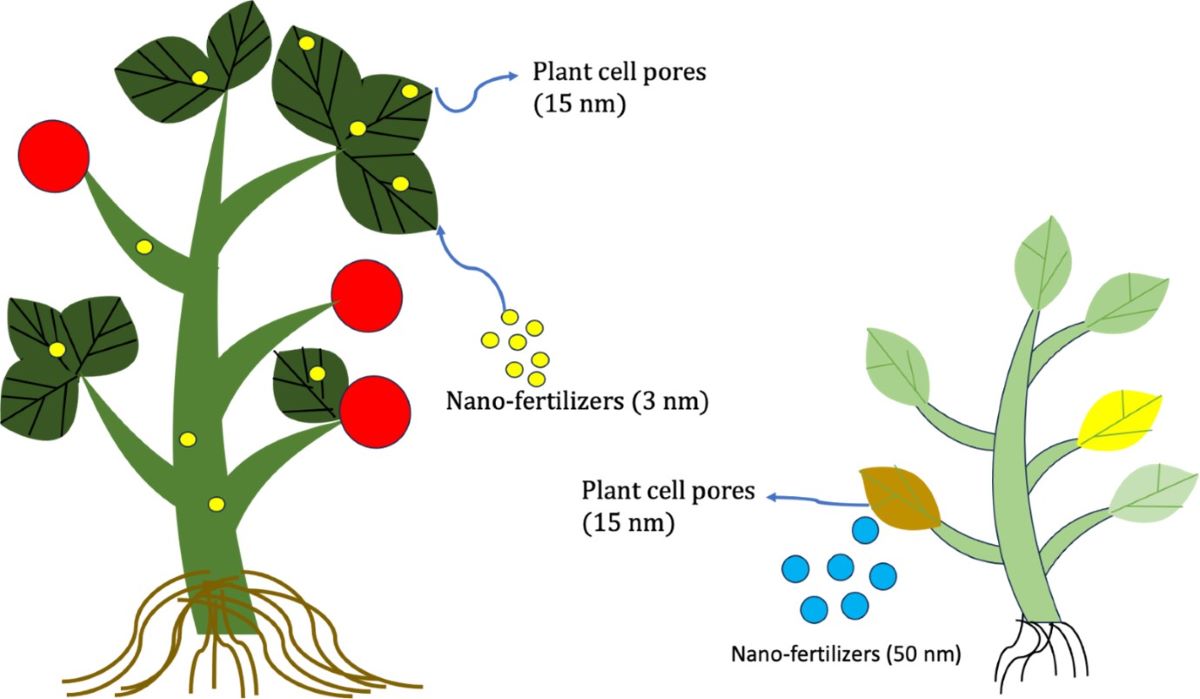
The efficacy of NPs as delivery system depends on their ability to adhere and penetrate the external protective layers of plants (such as endodermis in roots, cuticle, and bark), and their physical ability to traverse the cell wall matrix and ultimately reach their target cells [30]. Particle size determines the extent to which nanoparticles are effectively absorbed and permeable by cells [31]. Nanoparticles with smaller sizes have been observed to successfully pass through the cell wall pores and enter the cell membrane [32,33]. In contrast, nanoparticles that exceed the size of the cell wall pores have been found to accumulate outside the cell wall because they are unable to penetrate and enter the cell [34,35] (Refer Figure 2).
For instance, Hu et al (2018) conducted hydroponic experiments with the aim of examining the absorption of selenium nanoparticles (SeNPs) in wheat plants. The researchers synthesized selenium nanoparticles (SeNPs) with varying dimensions, specifically 40 nm, 140 nm, and 240 nm. Subsequently, they conducted an analysis to examine the absorption properties of these nanoparticles. The research results indicated that the uptake of SeNPs by wheat roots was influenced by the size of the particles. The absorption of 40 nm SeNPs was found to be 1.8-2.2 times higher compared to that of 140 nm and 240 nm SeNPs [34].
In their study, Yusefi-Tanha et al. (2020) aimed to investigate the effect of copper oxide nanoparticles (CuONPs) on soybean plants and the implications for human health. Over the course of a comprehensive 120-day study, the effects of CuONP particles of varying sizes (25 nm, 50 nm, and 250 nm) on root system architecture, soil-root interface, and Cu transport and accumulation were examined. The results highlighted that higher copper uptake was observed for CuONPs with a particle size of 25 nm compared to the nanoparticles containing 50 nm and 250 nm. The effect of CuONP-25 nm was significantly greater in dry root weight compared to the treatments with larger-sized CuONP. Furthermore, the results obtained by Yusefi-Tanha et al [35] suggest that soil amendment with CuONPs, specifically the smallest size CuONPs of 25 nm, could significantly enhance the nutritional copper value in soybean seeds [35].
In a related study, Zhang et al [36] set out to explore how ceria nanoparticles (Ceria NPs) are absorbed and distributed within cucumber plants. The researchers prepared two different sizes of ceria nanoparticles, measuring 7 nm and 25 nm, respectively. Their results revealed that cucumber roots exhibited a higher uptake of 7 nm ceria nanoparticles compared to the larger 25 nm particles [36].
Kumar et al [37] conducted research that aligns with the earlier findings of Yusefi-Tanha et al [35] Kumar and his colleagues observed that nano-urea, also known as Nano Nitrogen, possesses the ability to efficiently penetrate plant cell walls and reach the plasma membrane. This capability is attributed to the small particle size of nano-urea, which typically falls within the range of 18 to 30 nm [37].
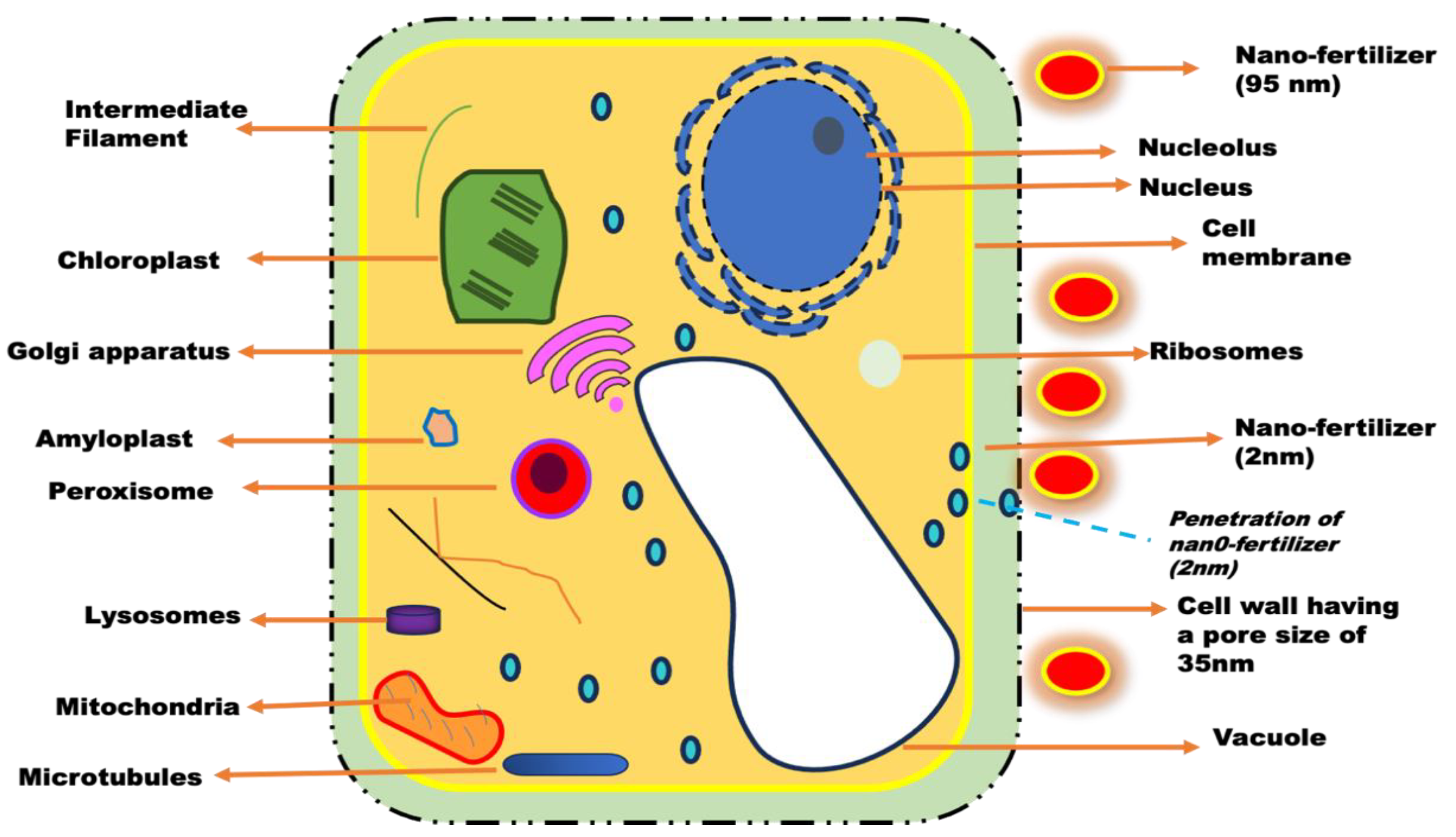
Figure 2 depicts a schematic representation of a plant cell. The representation illustrates a plant cell wall with a pore size of 35 nm, and this size restricts any material above 35 nm to only material with a pore size less than 35 nm. The nano-fertilizer with a particle size of 2 nm was able to penetrate the plant cell wall, while the nano-fertilizer with a particle size of 95 nm was unable to penetrate due to the cell wall pores being 35 nm.
Based on the data presented in Table 1, it can be inferred that there is a positive correlation between smaller particle sizes and increased nutrient uptake compared to larger particles. Plants easily absorb nanoparticles that are small in size, while they poorly absorb those that are large in size. The nano-fertilizers that contain 20 nm particles exhibit a higher uptake of nutrients from gold nanoparticles in watermelon compared to those with a size of 60 nm. Similarly, the 3.5 nm gold nanoparticles exhibit a greater uptake in Nicotiana xanthi compared to the 18 nm nanoparticles. It has been observed that all the small-sized nanoparticles mentioned in the table are easily absorbed compared to their bulky or large counterparts.
It is important to recognize that the morphology of plants varies, and this variation has a significant impact on nutrient absorption. The uptake of nanoparticles is influenced by the pores in the plant cell wall, and different plants have different types of cell wall pores. These pores act as barriers for the plant cell, preventing materials larger than the size of the plant cell wall pores from entering the cell. They accumulate on the outer surface of the plant cell and are not easily accessible for the plant's utilization. This statement is in agreement with the report by Carpita et al. In their study, researchers found that the diameter of pores in the cell wall of Raphanus sativus roots ranged from 3.5 nm to 3.8 nm. The limiting diameter for Gossypium hirsutum fibers was found to be between 3.8 nm and 4.0 nm. According to their findings, particles larger than the determined diameters were unable to penetrate the cell [41]. It has been observed that watermelon cells can allow the penetration of gold nanoparticles, which are smaller than 20 nm in size, through their cell walls. However, it has also been observed that in Nicotiana xanthi, gold nanoparticles larger than 18 nm were unable to penetrate the cells. The cells of Nicotiana xanthi only allow nanoparticles that are smaller than 3.5 nm in size. Therefore, it is important to consider the size of the plant cell membrane when applying nanoparticles. It is crucial to ensure that the nanoparticles are smaller than the pores in order to effectively penetrate the membrane. This will help prevent the accumulation of nutrients on the cell membrane’s outer surface.
2.2. The Surface area-to-Volume Ratio of a Nanoparticle
Nanoparticles possess a remarkable characteristic known as a high surface area to volume ratio due to their small size [42,43]. The surface area refers to the complete outer covering of a material [44], while the volume represents the amount of space occupied by the material [45]. The high surface area is a significant physical property of nanoparticles [46], and it plays a crucial role in various fields, including medicine and pharmaceuticals, agriculture, the food industry, electronics, chemical catalysis, and many others [47]. It has been observed that there is a relationship between the surface area to volume ratio of nanoparticles that is dependent on their size. The smaller the size of the particles, the greater the surface area. On the other hand, as the particle size increases, the surface area to volume ratio decreases [48]. Figure 3 depicts two materials that demonstrate a correlation between particle size and the ratio of surface area to volume. One material has larger particles (bulk material) and a lower surface area, while the other material consists of smaller particles (nanoparticles) with a higher surface area. The volume of the two materials remains constant.
Compared to their bulk counterparts, the high surface area to volume ratio of nanoparticles, facilitates increased exposure and accessibility of active sites. This promotes interactions with other substances [49]. Due to their high surface area to volume ratio, nano-fertilizers offer a greater area for photosynthesis. This leads to increased absorption of sunlight and ultimately, higher crop yields [50]. Nanoparticles encapsulating nutrient particles have the ability to retain nutrients due to their distinct surface properties. These properties enable targeted and gradual release of nutrients, unlike the conventional material surfaces used in the production of chemical fertilizers [51].
Nano-porous zeolites have been recognized as an outstanding source of slow-release nutrient fertilizers. These zeolites exhibit a distinct structure characterized by a network of interconnected pores at the microscopic level. This pore structure allows them to effectively retain nutrients and release them slowly to plants in a controlled manner. The use of nanoporous zeolites as slow-release fertilizers has numerous advantages. Firstly, it helps to reduce the loss of nutrients, which are typically prone to volatilization or leaching when conventional fertilizers are applied. Zeolites function as reservoirs by entrapping nutrients within their porous structure, ensuring their sustained availability to plants and preventing their premature loss. Furthermore, the extensive surface area and high reactivity of nanoporous zeolite make them suitable for replacing nutrients that are substituted by other ions through a cation exchange process [52]. Researchers have reported that nano-fertilizers can gradually release nutrients over a period of 40-50 days. In contrast, synthetic fertilizers achieve full nutrient release within a much shorter timeframe of 4-10 days [53].
The controlled and gradual release of nutrients through the use of nano-fertilizers has been found to improve the efficiency of nutrient utilization [60]. The manner in which nutrients are released is greatly influenced by the design of the fertilizer [61]. As a result, researchers have developed fertilizers coated with nanomaterials to ensure a gradual release of nutrients that match the specific needs of crops [62]. The data presented in Table 2 illustrates that utilizing nano-fertilizer coated additives improves nitrogen use efficiency (NUE) by releasing nutrients gradually over an extended duration, as opposed to conventional fertilizers. The study conducted by Ghorbanpour et al [54] reported that urea coated with nanoparticles exhibited a prolonged release of nitrogen over 50 days. In contrast, uncoated urea required a shorter duration of 10-12 days to release nutrients.
In their study, Hidayat et al. [55] assessed the effectiveness of urea/APTMS-modified zeolite as a slow-release nitrogen fertilizer. The zeolite modified with APTMS exhibited a prolonged release of nitrogen, with a release time of 120 minutes (equivalent to approximately 2 hours), in contrast to the rapid release of nitrogen observed with regular urea, which occurred within 10 minutes. The gradual release of nitrogen can be attributed to the surface modification of zeolite using APTMS. These findings are consistent with the results reported by Kottegoda et al. [49] who investigated the efficacy of urea-modified hydroxyapatite nanoparticles encapsulated under pressure into cavities of the soft wood of Gliricidia sepium. The nitrogen release of the nano-fertilizer composition was investigated by conducting a study using soil samples collected from three different elevations in Sri Lanka, with pH levels of 4.2, 5.2, and 7. Comparing the nitrogen release of the nano-fertilizer composition with that of a commercially available fertilizer, the authors observed that the nano-fertilizer exhibited an initial rapid release followed by a gradual and sustained release even on day 60. The commercial fertilizer, on the other hand, demonstrated a significant early release followed by a subsequent release of lower and uneven quantities until approximately day 30.
The rapid release of nutrients associated with conventional fertilizers has been identified as a cause of several environmental problems, including air, water, and soil pollution. This is a significant and ongoing global issue as we work towards achieving a healthy and sustainable environment [63]. The utilization of a slow-release mechanism for nutrients effectively decreases the need for frequent fertilizer application, thereby enabling farmers to mitigate the expenses associated with such regular applications [64]. Nano-fertilizers can be designed to control their nutrient release in various ways [65].
2.3. Shape of Nanoparticles
The shape of a material refers to its external form, outline, or contours, regardless of its actual size. However, the distinction between shape and size is unclear. Additionally, as the size of the particles decreases, the shape undergoes a transformation. This transformation primarily occurs during the process of milling and crushing [29]. Researchers have demonstrated that temperature, pH, and reaction time can influence the shape of liquid nanoparticles during the formation stage. For instance, the increase in reaction rate caused the morphology of liquid silver nanoparticles to vary with pH, indicating a relationship between nanoparticle size, reaction pH, and acid type [67]. Similarly, the pH of the precursor solution significantly influenced the shape of nanorods in the synthesis of ZnO nanostructures, while the reaction time and temperature affected the size of the nanoparticles [68].
The shape of nanoparticles plays a crucial role in the synthesis of materials with desired functions [69]. The shape of nanoparticles depends on various factors, including their interaction with stabilizers and inductors, as well as the methods used to synthesize these materials [70]. Nanoparticles can take on various shapes, as shown in Figure 4. Nanoparticles (NPs) display a wide range of interfacial properties because of their various shapes. This leads to variations in the surface area of the nanoparticles and the contact angles observed when they interact with the plant surface. These factors ultimately influence the regulation of nanoparticle absorption [71]. Researchers have found that carbon-based nanomaterials, including carbon nanotubes (CNTs), fullerenes, and graphene, possess a high surface area to volume ratio due to their nanoscale structure. This allows them to attract and release molecules effectively [72].
The shape of nanoparticles is characterized by using various powerful tools such as Transmission Electron Microscope (TEM), High-Resolution Transmission Electron Microscope (HRTEM), and Scanning Electron Microscope (SEM) [73]. The variations related to shape have been found to influence the absorption of nanoparticles directly [74]. A study conducted by Zhang et al compared the absorption and internalization of rod-shaped gold nanoparticles and spherical nanoparticles. The results of their study showed that, even though the nanoparticles had similar sizes, the rod-shaped nanoparticles were more likely to be absorbed and taken up by Arabidopsis leaves [75].

Table 3.
The Relationship between Nanoparticle Shape and Plant Performance in Various Crop Species.
| Crop | Nanoparticle type | Concentration | Nanoparticle shape | Germination (%) |
Plant development | Reference |
|---|---|---|---|---|---|---|
| Lentil | AuNPs | 5 ppm | Spherical | There was no significant difference observed. | Plant height= 17.90 cm. Number of leaves= 14.33. Biomass production = 6.70 gm |
[76] |
| 10 ppm | No significant difference observed | Plant height= 23.23 cm Number of leaves= 17.67 High biomass production = 8.20 gm. |
||||
| 25 ppm | 26.7 | Plant height = 15.10 cm Number of leaves= 13.33 Biomass production= 5.57 gm |
||||
| 50 ppm | 53.3 | Plant height = 12.90 cm Number of leaves= 10.33 Biomass production= 3.80 (gm) |
||||
| 100 ppm | 66.7 | Plant height = 10.77 cm Number of leaves= 8.00 Biomass production= 2.77 gm |
||||
| Phaseolus vulgaris | AgNPs | 15 mg L−1 | Spherical | 100 | Moderate effect observed for all studied parameters | [77] |
| 30 mg L−1 | 100 | Moderate effect observed for all studied parameters | ||||
| 60 mg L−1 | 100 | Higher shoot growth Higher plant height High number of leaves |
||||
| 120 mg L−1 | 93.33 | Higher root growth observed High root length |
||||
| 240 mg L−1 | 80 | Lower shoot and root growth | ||||
| 480 mg L−1 | 73.33 | Lower shoot and root growth Lower root length Less number of leaves Lower plant height |
||||
| Green pea | AgNPs | 20 mg/L | Spherical | 98 | High root length of 20 cm High root fresh weight Lower root deformation |
[78] |
| 40 mg/L | 96 | Lower root fresh weight | ||||
| 80 mg/L | 87 | Moderate effect for studied parameters | ||||
| 160 mg/L | 85 | Lower root length of 10 cm Lower root fresh weight High root deformation |
||||
| Blackgram | ZnONPs | 100 mg/L | Spherical | 67 | Lower shoot length Lower root length |
[79] |
| 200 mg/L | 68 | Moderate shoot and root length | ||||
| 300 mg/L | 69 | Moderate shoot and root length | ||||
| 400 mg/L | 70 | Moderate shoot and root length | ||||
| 500 mg/L | 72 | Moderate shoot and root length | ||||
| 600 mg/L | 74 | Higher shoot length Higher root length |
||||
| Wheat | ZnONPs | 10 mg/L | Spherical | 78 | Lower plant fresh biomass Lower leave length |
[80] |
| 25 mg/L | 80 | Moderate results for all parameters studied | ||||
| 50 mg/L | 80 | Higher fresh biomass Higher number of roots Higher leave length |
||||
| 100 mg/L | 80 | Moderate results for all parameters studied | ||||
| Brassica oleracea var italic | ZnONPs | 50 µg/L | Spherical | 87.5 | Lower plant height = 16.6 cm | [81] |
| 100 µg/L | 100 | - | ||||
| 200 µg/L | 87.5 | Higher root length | ||||
| 400 µg/L | 87.5 | Plant height= 19.8 cm | ||||
| 800 µg/L | 87.5 | Plant height = 20 cm Higher number of leaves =8.66 Higher leaf area= 62.48 cm² Higher root length= 57.44 cm |
||||
| 1000 µg/L | 87.5 | Higher plant height= 20.33 cm | ||||
| green gram Vigna radiata | ZnONPs | 100 mg/L | Rod | Lower germination% compared to the other concentration Lower germination% compared to the other concentration |
- | [82] |
| 200 mg/L | Higher germination% compared to the other concentration | Higher shoot length =16 cm Higher root length =6 cm |
||||
| 300 mg/L | Lower germination% compared to the other concentration | - | ||||
| 400 mg/L | Lower germination% compared to the other concentration | - | ||||
| Groundnut | ZnONPs | 500 (mg /kg 1) | Rod | 58 | Lower shoot length =18.40 cm Lower root length =15.67 cm |
[83] |
| 750 (mg /kg 1) | 63 | Shoot length =19.88 cm Root length 17.98 cm |
||||
| 1000 (mg /kg 1) | 75 | Higher shoot length =20.98cm | ||||
| 1250 (mg /kg 1) | 71 | shoot length =20.28 cm Root length =17.98 cm |
The data presented in Table 2 demonstrates that the concentration of nano-fertilizers has a noteworthy influence on the performance of nanoparticles with a spherical shape. The study conducted by Verma et al [77] demonstrated the superior performance of spherical silver nanoparticles at low concentrations. The authors observed germination percentages of 100% at concentrations of 15 mg L−1, 30 mg L−1, and 60 mg L−1. In contrast, when exposed to higher concentrations of 120 mg L−1, 240 mg L−1, and 480 mg L−1, the germination percentages were observed to be 93.33%, 80%, and 73.3% respectively. Moreover, previous studies have demonstrated that the utilization of spherical silver nanoparticles (AgNPs) at a low concentration of 60 mg L−1 can effectively improve multiple plant growth parameters in Phaseolus vulgaris [77]. The application of higher concentrations of AgNPs resulted in a decrease in the number of leaves, plant height, and root length, as observed in the study by Abd El-Aziz & Al-Othman [76]. Thus, silver nanoparticles at lower concentrations can potentially augment germination and various plant growth parameters.
In contrast, the germination percentage of spherical-shaped ZnONPs is higher at higher concentrations compared to lower concentrations. For example, when ZnONPs were applied to Blackgram at a concentration of 100 mg/L, a germination rate of 67% was observed. On the other hand, 600 mg/L of the same ZnONPs resulted in the highest germination rate, reaching 74% [78]. The researchers observed the same phenomenon in the plant growth parameters, exhibiting a notable enhancement in shoot and root length when ZnONPs were administered at a concentration of 600 mg/L compared to lower concentrations of spherically shaped ZnONPs.
2.4. Agglomeration
Agglomeration of nanoparticles is the phenomenon in which individual nanoparticles come together to create larger clusters, also known as agglomerates [84]. The agglomeration of nanoparticles inside plant cells can result in uneven distribution, causing nanoparticles to remain clustered in specific areas instead of being dispersed uniformly [85]. Agglomeration of nanoparticles can influence the penetration of nanoparticles into plant cells, which can impact the bioavailability of nutrients to the plant. Du et al [86] discovered that TIO2 NPs, owing to their agglomeration status, adhered to the cell walls of the wheat plant, and they couldn't penetrate the roots, whereas the ZnO NPs were easily absorbed by the wheat cell and tissues. These findings underscore the crucial role of agglomeration in influencing the infiltration and behavior of nanoparticles within plant cells [87]. The distribution of agglomerated nanoparticles can be influenced by the synthesis method selected. Bruinink et al [88] observed that citrate–stabilized nanoparticles exhibited an even distribution on the barley leaf surface; they avoided entering the stomates, whereas plant extracts –stabilized nanoparticles formed a thin layer and accumulated on all areas of the leaf, including the stomates.
In order to address the issue of agglomeration, researchers have proposed various strategies. One such strategy involves the manipulation of the zeta potential of nanomaterials to augment the repulsive forces acting between particles. By increasing the zeta potential, the electrostatic repulsion between particles is enhanced, thereby discouraging their aggregation. Another approach is to optimize the hydrophilicity or hydrophobicity of the nanomaterial. This can be achieved by modifying the surface properties of the particles, allowing for better dispersion and reduced tendency for agglomeration. Additionally, adjusting the pH and ionic strength of the suspension medium has been identified as a potential strategy. By carefully controlling these parameters, researchers aim to create an environment that discourages particle aggregation and promotes stability [47]. Maintaining the dispersity of nanomaterials is essential to preserve their surface effects, as strong, attractive interactions between particles can lead to agglomeration and aggregation, negatively impacting their surface area and nanoscale properties [89].
2.5. Crystalline Structure
A crystal structure consists of a unit cell, a set of atoms arranged in a specific pattern. This arrangement is periodically repeated in three dimensions on a lattice [90]. The crystalline structure consists of single or multi-crystal solids, but they can also be non-crystalline, which is known as the amorphous structure [91]. Starch-based nano-fertilizers consisting of nanocrystals can be readily dissolved in water [92]. Fast-dissolving fertilizers have been associated with high nutrient uptake by plants [93]. Therefore, starch-based nano-fertilizers with nanocrystal structures can have high nutrient uptake. The crystalline structure of nanoparticles influences their translocation within the plant [94]. Carmona et al α [95] found that the structure and shape of nanoparticles greatly influence their dissolution rate. Researchers found that crystalline nanoplatelets released nitrate more slowly, while spherical amorphous nanoparticles, due to their surface chemistry, exhibited fast nutrient release. Ramírez-Rodríguez et al [96] initially synthesized nano-PK and nano-NPK, both exhibiting an amorphous calcium phosphate structure, which resulted in the rapid release of nutrients. They then doped these nanoparticles with urea to create nanoU-NPK. Researchers found that nanoU-NPK had a crystalline structure and gradually released nutrients. The study observed increased growth in durum wheat when treated with nanoU-NPK. Researchers have reported that the slow release of nutrients enables a better synchronization between nutrient availability and plant demand, leading to increased nutrient uptake and utilization efficiency [97].
Elsabagh et al [98] demonstrated that the use of nano-sized water treatment residuals (nWTR) containing amorphous aluminum, iron, and silicon enhanced the soil properties and nutrient absorption compared to traditional fertilizers. The authors reported that the high concentration of amorphous aluminum and iron can significantly influence the absorption of potassium and phosphorus. Additionally, the presence of amorphous iron and aluminum in the soil significantly altered the ionic charge, ion adsorption, particularly for phosphorus, and the formation of aggregates and swellings. The improvement of the soil properties resulted in improved water and nutrient retention in the soil and increased the growth parameters of the maize crop compared to the traditional fertilizers. Carmona et al β [99] reported that amorphous calcium phosphate (ACP) demonstrates high solubility compared to nanocrystalline apatite (nAp) and exhibits higher surface reactivity, allowing ACP to have larger nutrient payloads compared to nAp. According to Sakhno et al [100], amorphous calcium phosphate (ACP) has been found to be a viable substitute for conventional fertilizers. This is because ACP can be enriched with important micronutrients, has adjustable solubility for phosphorous release, and possesses a large specific surface area. In a research conducted by Sakhno et al [100], it was discovered that the use of citrate-stabilized amorphous calcium phosphate nanoparticles (ACPc) with added micronutrients (zinc, boron, magnesium, and copper) resulted in a 22% increase in lettuce crop yield compared to the use of monocalcium phosphate (MCP). The doped ACPc showed superior phosphorous use efficiency compared to MCP.
When it comes to selecting the ideal nano-fertilizer, it depends on the specific agricultural needs and desired outcomes. Researchers have reported that nano-fertilizers release nutrients gradually, ensuring a prolonged and consistent supply of nutrients. The gradual release of nutrients minimizes environmental concerns associated with rapid release while maintaining optimal crop yield [101]. Amorphous nano-fertilizers have a rapid release of nutrients and high solubility, ensuring that nutrients are immediately available to plants. Additionally, the high surface area and higher nutrient loading capacity of these nano-fertilizers make them flexible enough for use as nutrient carriers. The high surface area of amorphous nano-fertilizers improves their reactivity and ultimately increases crop productivity [100]. However, the rapid release of amorphous nano-fertilizers is associated with environmental concerns [102]. Fast release fertilizers can have a negative effect on aquatic ecosystem. This is because they dissolve quickly, which can result in excessive amounts of nutrients being applied to plants. As a result, these nutrients can runoff into water bodies and result in eutrophication [103].
2.6. Nutritional Value of Nano-Fertilizers
The utilization of nano-fertilizer has been observed to induce changes in the availability of nutrients through the regulation of their quantity and quality, ultimately leading to enhancements in the nutritional composition of plants [104,105,106]. The nutritional value of nano-fertilizers lies in their ability to enhance nutrient availability to crop plants through increased surface area. The increase in the rate of reaction or synthesis process in the plant system contributes to improving quality parameters, including protein, oil, and sugar. The utilization of nanoformulations containing zinc and iron has been observed to result in an augmentation of various essential components within crop grains. Specifically, applying these nanoformulations has been shown to enhance the overall levels of carbohydrates, starch, indole-3-acetic acid (IAA), chlorophyll, and protein content [107].
Researchers have reported that the availability of nutrients during the growing cycle of the plant significantly influences its nutritional content [98]. Al-Juthery et al [58] discovered nanoamino acids, and nanopotassium increased the nutritional value of wheat by increasing the concentration of essential micronutrients (Zn, Mn, Fe, and Cu) in the grain. Another study by Rahman et al [99] revealed that applying nano-fertilizer resulted in high nutrient use efficiency and significantly improved the nutritional value of tomatoes. Thus, it is imperative to ensure that plants have access to nutrients during their growing cycle to produce food with a high nutritional value and high yield that will meet the nutritional requirements of the population.
Conclusions
The role of physical properties in the behavior and performance of nano-fertilizers in plants has been observed to be significant. The determining feature for a material to be classified as a nanomaterial is its small particle size, typically ranging from 1-100 nm. This characteristic appears to be crucial in facilitating the uptake of nutrients by nano-fertilizers. This review found that nano-fertilizers with smaller particle sizes are more readily absorbed compared to those with larger particle sizes. However, the absorption of these nano-fertilizers is dependent on the specific plant species, as different plants have varying physiological structures. The size-dependent relationship between the surface area to volume ratio of nanoparticles allows them to exhibit significantly higher reactivity compared to their bulk material. The slow-release mechanisms of nano-fertilizers are attributed to their large surface area, which allows them to effectively retain nutrients and release them gradually in a controlled manner. The shape of the nanofertilizer plays a significant role in its performance, particularly in relation to concentration and nanoparticle type. Specifically, spherical shaped AgNPs have been observed to enhance plant parameters when applied at low concentrations. On the other hand, ZnONPs exhibit the opposite effect. Due to their tendency to agglomerate, nanoparticles often fail to penetrate plant cells, making them unavailable for plant use and causing them to accumulate on the soil surface, which can lead to toxicity. The crystalline structure of nanoparticles plays a crucial role in the slow release of nutrients, thereby improving plant performance.
Recommendations
- Cytotoxicity studies should be conducted prior to the application of nano-fertilizers, as several researchers have expressed concerns about the potential toxicity of nanoparticles due to their small particle size and large surface area, which can lead to increased reactivity. The effects of accidentally ingesting the residue of nanoparticles from plants remain unknown.
- Further studies should focus on investigating the impact of different nanoparticle shapes on nutrient uptake and plant growth. It is important to determine the most suitable nanoparticle shape for different plant species in order to enhance the effectiveness of nano-fertilizers and improve overall plant performance. Additionally, researchers should aim to synthesize nano-fertilizers with specific shapes designed to meet the requirements of different plant species.
- There is scarce information about what happens when nanoparticles enter plant cells or tissues, making it uncertain whether they aggregate into agglomerates. Researchers should develop sensors to monitor nanoparticle behavior once inside plant cells or tissues. This will assist in tailoring the properties of nano-fertilizers to enhance their efficacy.
References
- Verma, K.K.; Song, X.-P.; Joshi, A.; Tian, D.-D.; Rajput, V.D.; Singh, M.; Arora, J.; Minkina, T.; Li, Y.-R. Recent Trends in Nano-Fertilizers for Sustainable Agriculture under Climate Change for Global Food Security. Nanomaterials 2022, 12, 173. [Google Scholar] [CrossRef] [PubMed]
- Yadav D, Dey A, Upadhyay PK. Nanofertilizers In Sustainable Agriculture: Benefits and Drawbacks. Souvenir&. 2021 Dec 13.
- Abdalla, Z.F.; El-Sawy, S.; El-Bassiony, A.E.M.; Jun, H.; Shedeed, S.; Okasha, A.M.; Bayoumi, Y.; El-Ramady, H.; Prokisch, J. Smart Fertilizers vs. Nano-fertilizers: A Pictorial Overview. Environ. Biodivers. Soil Secur. 2022, 6, 191–204. [Google Scholar] [CrossRef]
- Jakhar, A.M.; Aziz, I.; Kaleri, A.R.; Hasnain, M.; Haider, G.; Ma, J.; Abideen, Z. Nano-fertilizers: A sustainable technology for improving crop nutrition and food security. NanoImpact 2022, 27, 100411. [Google Scholar] [CrossRef] [PubMed]
- Zohra E, Ikram M, Raja NI, Omar AA, Mohamed AH, Zahedi SM, Abbas A. Nanomaterials as Nano-Fertilizers. InBiotic Stress Management of Crop Plants using Nanomaterials 2023 May 18 (pp. 35-51).
- Kumar Y, Singh T, Raliya R, Tiwari KN. Nano fertilizers for sustainable crop production, higher nutrient use efficiency and enhanced profitability. Indian Journal of Fertilisers. 2021 Nov;17(11):1206-14.
- Zuma, M.; Arthur, G.; Coopoosamy, R.; Naidoo, K. Incorporating cropping systems with eco-friendly strategies and solutions to mitigate the effects of climate change on crop production. J. Agric. Food Res. 2023, 14. [Google Scholar] [CrossRef]
- Kumar, M.; Singh, Y.K.; Maurya, S.K.; Maurya, S.K.; Maurya, D.K.; Sachan, R.; Gautam, M.K.; Tiwari, A. Efficient Use of Nano-fertilizer for Increasing Productivity and Profitability along with Maintain Sustainability in Rice Crop: A Review. Int. J. Environ. Clim. Chang. 2023, 13, 1358–1368. [Google Scholar] [CrossRef]
- Mejias, J.H.; Salazar, F.; Amaro, L.P.; Hube, S.; Rodriguez, M.; Alfaro, M. Nanofertilizers: A Cutting-Edge Approach to Increase Nitrogen Use Efficiency in Grasslands. Front. Environ. Sci. 2021, 9. [Google Scholar] [CrossRef]
- Rautela I, Dheer PA, Thapliyal PR, Shah DH, Joshi M, Upadhyay S, Gururani P, Sinha VB, Gaurav NA, Sharma MD. Current scenario and future perspectives of nanotechnology in sustainable agriculture and food production. Plant Cell Biotechnol. Mol. Biol. 2021 Mar 1;22:99-121.
- Avila-Quezada, G.D.; Ingle, A.P.; Golińska, P.; Rai, M. Strategic applications of nano-fertilizers for sustainable agriculture: Benefits and bottlenecks. Nanotechnol. Rev. 2022, 11, 2123–2140. [Google Scholar] [CrossRef]
- Mahaletchumi, S. Review on the use of nanotechnology in fertiilzers. Journal of Research Technology and Engineering. 2021;2:60-72.
- Yuvaraj M, Subramanian KS. Novel slow release nanocomposite fertilizers. InNanotechnology and the Environment 2020 Dec 2. IntechOpen.
- Zulfiqar, F.; Navarro, M.; Ashraf, M.; Akram, N.A.; Munné-Bosch, S. Nanofertilizer use for sustainable agriculture: Advantages and limitations. Plant Sci. 2019, 289, 110270. [Google Scholar] [CrossRef] [PubMed]
- Bhandari, G.; Dhasmana, A.; Chaudhary, P.; Gupta, S.; Gangola, S.; Gupta, A.; Rustagi, S.; Shende, S.S.; Rajput, V.D.; Minkina, T.; et al. A Perspective Review on Green Nanotechnology in Agro-Ecosystems: Opportunities for Sustainable Agricultural Practices & Environmental Remediation. Agriculture 2023, 13, 668. [Google Scholar] [CrossRef]
- Triphati A, Pirzadah TB. Synthesis methods of nanoparticles and their key applications. InSynthesis of bionanomaterials for biomedical applications 2023 Jan 1 (pp. 57-76). Elsevier.
- Alcalá-Alcalá S, Casarrubias-Anacleto JE, Mondragón-Guillén M, Tavira-Montalvan CA, Bonilla-Hernández M, Gómez-Galicia DL, Gosset G, Meneses-Acosta A. Melanin Nanoparticles Obtained from Preformed Recombinant Melanin by Bottom-Up and Top-Down Approaches. Polymers. 2023 May 19;15(10):2381.
- Hajalilou A, Tavakoli M, Parvini E. Insight into the Synthesis of Nanostructured Magnetic Materials.
- Fernandes C, Jathar M, Sawant BK, Warde T. Scale-Up of Nanoparticle Manufacturing Process. InPharmaceutical Process Engineering and Scale-up Principles 2023 Jul 4 (pp. 173-203). Cham: Springer Nature Switzerland.
- Wang, X.; Xie, H.; Wang, P.; Yin, H. Nanoparticles in Plants: Uptake, Transport and Physiological Activity in Leaf and Root. Materials 2023, 16, 3097. [Google Scholar] [CrossRef]
- Fixen P, Brentrup F, Bruulsema T, Garcia F, Norton R, Zingore S. Nutrient/fertilizer use efficiency: measurement, current situation and trends. Managing water and fertilizer for sustainable agricultural intensification. 2015 Jan;270:1-30.
- Pacheco I, Buzea C. Nanoparticle uptake by plants: beneficial or detrimental?. Phytotoxicity of nanoparticles. 2018:1-61.
- Malhotra, H.; Sharma, S.; Pandey, R. Phosphorus nutrition: Plant growth in response to deficiency and excess. In Plant Nutrients and Abiotic Stress Tolerance; Hasanuzzaman, M., Fujita, M., Oku, H., Nahar, K., Hawrylak-Nowak, B., Eds.; Springer: Singapore. 2018; pp. [CrossRef]
- Su, Y.; Ashworth, V.; Kim, C.; Adeleye, A.S.; Rolshausen, P.; Roper, C.; White, J.; Jassby, D. Delivery, uptake, fate, and transport of engineered nanoparticles in plants: a critical review and data analysis. Environ. Sci. Nano 2019, 6, 2311–2331. [Google Scholar] [CrossRef]
- Zhu, M.; Nie, G.; Meng, H.; Xia, T.; Nel, A.; Zhao, Y. Physicochemical Properties Determine Nanomaterial Cellular Uptake, Transport, and Fate. Accounts Chem. Res. 2012, 46, 622–631. [Google Scholar] [CrossRef] [PubMed]
- Vega-Vásquez, P.; Mosier, N.S.; Irudayaraj, J. Nanoscale Drug Delivery Systems: From Medicine to Agriculture. Front. Bioeng. Biotechnol. 2020, 8, 79. [Google Scholar] [CrossRef] [PubMed]
- Khan I, Awan SA, Rizwan M, Hassan ZU, Akram MA, Tariq R, Brestic M, Xie W. Nanoparticle’s uptake and translocation mechanisms in plants via seed priming, foliar treatment, and root exposure: A review. Environmental Science and Pollution Research. 2022 Dec;29(60):89823-33.
- Findik, F. Nanomaterials and their applications. Periodicals of Engineering and Natural Sciences. 2021 Jun 13;9(3):62-75.
- Ulusoy, U. A Review of Particle Shape Effects on Material Properties for Various Engineering Applications: From Macro to Nanoscale. Minerals 2023, 13, 91. [Google Scholar] [CrossRef]
- Etxeberria, E.; Gonzalez, P.; Bhattacharya, P.; Sharma, P.; Ke, P.C. Determining the Size Exclusion for Nanoparticles in Citrus Leaves. HortScience 2016, 51, 732–737. [Google Scholar] [CrossRef]
- Pérez-De-Luque, A. Interaction of Nanomaterials with Plants: What Do We Need for Real Applications in Agriculture? Front. Environ. Sci. 2017, 5. [Google Scholar] [CrossRef]
- Ghorbanpour M, Bhargava P, Varma A, Choudhary DK, editors. Biogenic nano-particles and their use in agro-ecosystems. Singapore:: Springer; 2020 Mar 20.
- Abbas, Q.; Liu, G.; Yousaf, B.; Ali, M.U.; Ullah, H.; Ahmed, R. Effects of biochar on uptake, acquisition and translocation of silver nanoparticles in rice (Oryza sativa L.) in relation to growth, photosynthetic traits and nutrients displacement. Environ. Pollut. 2019, 250, 728–736. [Google Scholar] [CrossRef]
- Hu, T.; Li, H.; Li, J.; Zhao, G.; Wu, W.; Liu, L.; Wang, Q.; Guo, Y. Absorption and Bio-Transformation of Selenium Nanoparticles by Wheat Seedlings (Triticum aestivum L.). Front. Plant Sci. 2018, 9, 597. [Google Scholar] [CrossRef]
- Yusefi-Tanha E, Fallah S, Rostamnejadi A, Pokhrel LR. Root system architecture, copper uptake and tissue distribution in soybean (Glycine max (L.) Merr.) grown in copper oxide nanoparticle (CuONP)-amended soil and implications for human nutrition. Plants. 2020 Oct 8;9(10):1326.
- Zhang, Z.; He, X.; Zhang, H.; Ma, Y.; Zhang, P.; Ding, Y.; Zhao, Y. Uptake and distribution of ceria nanoparticles in cucumber plants. Metallomics 2011, 3, 816–822. [Google Scholar] [CrossRef]
- Kumar Y, Singh T, Raliya R, Tiwari KN. Nano fertilizers for sustainable crop production, higher nutrient use efficiency and enhanced profitability. Indian Journal of Fertilisers. 2021 Nov;17(11):1206-14.
- Tarafdar JC, Xiong Y, Wang WN, Quinl D, Biswas P. Standardization of size, shape and concentration of nanoparticle for plant application. Applied Biological Research. 2012;14(2):138-44.
- Sabo-Attwood, T.; Unrine, J.M.; Stone, J.W.; Murphy, C.J.; Ghoshroy, S.; Blom, D.; Bertsch, P.M.; Newman, L.A. Uptake, distribution and toxicity of gold nanoparticles in tobacco (Nicotiana xanthi) seedlings. Nanotoxicology 2011, 6, 353–360. [Google Scholar] [CrossRef]
- Eichert, T.; Kurtz, A.; Steiner, U.; Goldbach, H.E. Size exclusion limits and lateral heterogeneity of the stomatal foliar uptake pathway for aqueous solutes and water-suspended nanoparticles. Physiol. Plant. 2008, 134, 151–160. [Google Scholar] [CrossRef] [PubMed]
- Carpita, N.; Sabularse, D.; Montezinos, D.; Delmer, D.P. Determination of the Pore Size of Cell Walls of Living Plant Cells. Science 1979, 205, 1144–1147. [Google Scholar] [CrossRef] [PubMed]
- Khan I, Saeed K, Khan I. Nanoparticles: Properties, applications and toxicities. Arabian journal of chemistry. 2019 Nov 1;12(7):908-31.
- Sohrabi, Y.; Kalyani, F.S.; Heydari, M.; Yazdani, M.; Omer, K.M.; Yousefi, A.R. Plant-based nano-fertilizer prepared from Paulownia Tomentosa: fabrication, characterization, and application on Ocimum basilicum. Chem. Biol. Technol. Agric. 2022, 9, 1–13. [Google Scholar] [CrossRef]
- Greco, G.H.; Mazzucchi, S.; Pagani, E.M. Peano on definition of surface area. Rendiconti Lince- - Mat. E Appl. 2016, 27, 251–286. [Google Scholar] [CrossRef]
- Denison E, Cawthray R. The Big Book of Packaging Prototypes: Templates for Innovative Cartons, Packages, and Boxes. RotoVision; 2010.
- Gómez-Tena MP, Gilabert J, Toledo J, Zumaquero E, Machí C. Relationship between the specific surface area parameters determined using different analytical techniques. Proceedings of the XII Foro Global Del Recubrimiento Cerámico, Universitat Jaume I, Castellón, Spain. 2014 Feb 14:17-8.https://www.researchgate.net/profile/Maria-Pilar-Gomez-Tena/publication/260298466_RELATIONSHIP_BETWEEN_THE_SPECIFIC_SURFACE_AREA_PARAMETERS_DETERMINED_USING_DIFFERENT_ANALYTICAL_TECHNIQUES/links/00b7d5386114fad0e6000000/RELATIONSHIP-BETWEEN-THE-SPECIFIC-SURFACE-AREA-PARAMETERS-DETERMINED-USING-DIFFERENT-ANALYTICAL-TECHNIQUES.
- Joudeh, N.; Linke, D. Nanoparticle classification, physicochemical properties, characterization, and applications: a comprehensive review for biologists. J. Nanobiotechnology 2022, 20, 1–29. [Google Scholar] [CrossRef] [PubMed]
- Andrievski, R.A. Review of thermal stability of nanomaterials. J. Mater. Sci. 2013, 49, 1449–1460. [Google Scholar] [CrossRef]
- Saikia J, Ramakrishnan V. Peptide nanocatalysts. InDe Novo Peptide Design 2023 Jan 1 (pp. 173-206). Academic Press.https://www.sciencedirect.com/science/article/pii/B9780323999175000068.
- Rahale S. Nutrient release pattern of nanofertilizer formulation. PhD (Agri.) Thesis, Tamilnadu Agricultural University, Coimbatore. 2011. [google scholar].
- Yadav, A.; Yadav, K.; Abd-Elsalam, K.A. Nanofertilizers: Types, Delivery and Advantages in Agricultural Sustainability. Agrochemicals 2023, 2, 296–336. [Google Scholar] [CrossRef]
- Naderi MR, Danesh-Shahraki A. Nanofertilizers and their roles in sustainable agriculture.https://www.cabidigitallibrary.org/doi/full/10.5555/20133304426.
- Tarafder, C.; Daizy, M.; Alam, M.; Ali, R.; Islam, J.; Islam, R.; Ahommed, S.; Aly, M.A.S.; Khan, Z.H. Formulation of a Hybrid Nanofertilizer for Slow and Sustainable Release of Micronutrients. ACS Omega 2020, 5, 23960–23966. [Google Scholar] [CrossRef] [PubMed]
- Ghorbanpour M, Bhargava P, Varma A, Choudhary DK, editors. Biogenic nano-particles and their use in agro-ecosystems. Singapore:: Springer; 2020 Mar 20.https://link.springer.com/content/pdf/10.1007/978-981-15-2985-6.pdf.
- Hidayat R, Fadillah G, Chasanah U, Wahyuningsih S, Ramelan AH. Effectiveness of urea nanofertilizer based aminopropyltrimethoxysilane (APTMS)-zeolite as slow release fertilizer system. African Journal of Agricultural Research. 2015 May 13;10(14):1785-8.https://www.academia.edu/download/52651767/article1429362190_Hidayat_20et_20al.pdf.
- Kottegoda N, Munaweera I, Madusanka N, Karunaratne V. A green slow-release fertilizer composition based on urea-modified hydroxyapatite nanoparticles encapsulated wood. Current science. 2011 Jul 10:73-8. https://www.jstor.org/stable/24077865.
- Pereira, E.I.; da Cruz, C.C.T.; Solomon, A.; Le, A.; Cavigelli, M.A.; Ribeiro, C. Novel Slow-Release Nanocomposite Nitrogen Fertilizers: The Impact of Polymers on Nanocomposite Properties and Function. Ind. Eng. Chem. Res. 2015, 54, 3717–3725. [Google Scholar] [CrossRef]
- Al-Juthery, H.W.; Lahmod, N.R.; Al-Taee, R.A. Intelligent, Nano-fertilizers: A New Technology for Improvement Nutrient Use Efficiency (Article Review). IOP Conf. Series: Earth Environ. Sci. 2021, 735. [Google Scholar] [CrossRef]
- Saleem, I.; Maqsood, M.A.; Rehman, M.Z.U.; Aziz, T.; Bhatti, I.A.; Ali, S. Potassium ferrite nanoparticles on DAP to formulate slow release fertilizer with auxiliary nutrients. Ecotoxicol. Environ. Saf. 2021, 215, 112148. [Google Scholar] [CrossRef] [PubMed]
- Nongbet, A.; Mishra, A.K.; Mohanta, Y.K.; Mahanta, S.; Ray, M.K.; Khan, M.; Baek, K.-H.; Chakrabartty, I. Nanofertilizers: A Smart and Sustainable Attribute to Modern Agriculture. Plants 2022, 11, 2587. [Google Scholar] [CrossRef] [PubMed]
- Timilsena, Y.P.; Adhikari, R.; Casey, P.; Muster, T.; Gill, H.; Adhikari, B. Enhanced efficiency fertilisers: a review of formulation and nutrient release patterns. J. Sci. Food Agric. 2014, 95, 1131–1142. [Google Scholar] [CrossRef] [PubMed]
- Vejan, P.; Khadiran, T.; Abdullah, R.; Ahmad, N. Controlled release fertilizer: A review on developments, applications and potential in agriculture. J. Control. Release 2021, 339, 321–334. [Google Scholar] [CrossRef] [PubMed]
- Mohammadi, H.; Mohammadi, A.M.; Nojavan, S. Factors Affecting Farmer’s Chemical Fertilizers Consumption and Water Pollution in Northeastern Iran. J. Agric. Sci. 2017, 9. [Google Scholar] [CrossRef]
- Fincheira, P.; Hoffmann, N.; Tortella, G.; Ruiz, A.; Cornejo, P.; Diez, M.C.; Seabra, A.B.; Benavides-Mendoza, A.; Rubilar, O. Eco-Efficient Systems Based on Nanocarriers for the Controlled Release of Fertilizers and Pesticides: Toward Smart Agriculture. Nanomaterials 2023, 13, 1978. [Google Scholar] [CrossRef] [PubMed]
- Saraiva, R.; Ferreira, Q.; Rodrigues, G.C.; Oliveira, M. Nanofertilizer Use for Adaptation and Mitigation of the Agriculture/Climate Change Dichotomy Effects. Climate 2023, 11, 129. [Google Scholar] [CrossRef]
- Marciniak, L.; Nowak, M.; Trojanowska, A.; Tylkowski, B.; Jastrzab, R. The Effect of pH on the Size of Silver Nanoparticles Obtained in the Reduction Reaction with Citric and Malic Acids. Materials 2020, 13, 5444. [Google Scholar] [CrossRef] [PubMed]
- Rai P, Jo JN, Wu XF, Yoon JM, Yu YT. Synthesis of well dispersed, regular shape ZnO nanorods: effect of pH, time and temperature. Journal of Nanoscience and Nanotechnology. 2011 Jan 1;11(1):647-51. https://www.ingentaconnect.com/contentone/asp/jnn/2011/00000011/00000001/art00116.
- Sajanlal, P.R.; Sreeprasad, T.S.; Samal, A.K.; Pradeep, T. Anisotropic nanomaterials: structure, growth, assembly, and functions. Nano Rev. 2011, 2. [Google Scholar] [CrossRef]
- Khodashenas, B.; Ghorbani, H.R. Synthesis of silver nanoparticles with different shapes. Arab. J. Chem. 2019, 12, 1823–1838. [Google Scholar] [CrossRef]
- Sun, H.; Lei, C.; Xu, J.; Li, R. Foliar uptake and leaf-to-root translocation of nanoplastics with different coating charge in maize plants. J. Hazard. Mater. 2021, 416, 125854. [Google Scholar] [CrossRef]
- Sundén B. Hydrogen, batteries and fuel cells. Academic Press; 2019 Jul 2. https://books.google.com/books?hl=en&lr=&id=eCugDwAAQBAJ&oi=fnd&pg=PP1&dq=+Sundén,+B.,+2019.+Hydrogen,+batteries+and+fuel+cells.+Academic+Press.&ots=Xddl8xJjrp&sig=PSghe3cvZP3uaPjgAOWrWoUcuDA.
- Salah, M.; Yehia, S.; Ali, R.T. Cytogenetic effect of some nanostructure polymers prepared via gamma irradiation on Vicia faba plant. Chem. Biol. Technol. Agric. 2022, 9, 1–16. [Google Scholar] [CrossRef]
- Wang, X.; Xie, H.; Wang, P.; Yin, H. Nanoparticles in Plants: Uptake, Transport and Physiological Activity in Leaf and Root. Materials 2023, 16, 3097. [Google Scholar] [CrossRef]
- Zhang, H.; Goh, N.S.; Wang, J.W.; Pinals, R.L.; González-Grandío, E.; Demirer, G.S.; Butrus, S.; Fakra, S.C.; Flores, A.D.R.; Zhai, R.; et al. Nanoparticle cellular internalization is not required for RNA delivery to mature plant leaves. Nat. Nanotechnol. 2021, 17, 197–205. [Google Scholar] [CrossRef] [PubMed]
- Abd El-Aziz AR, Al-Othman MR. Gold nanoparticles biosynthesis using zingiber officinale and their impact on the growth and chemical composition of lentil (lens culinaris medic.). Pak. J. Bot. 2019 Apr 1;51(2):443-50. http://mail.pakbs.org/pjbot/papers/1550951878.pdf.
- Verma, D.K.; Patel, S.; Kushwah, K.S. Green biosynthesis of silver nanoparticles and impact on growth, chlorophyll, yield and phytotoxicity of Phaseolus vulgaris L. Vegetos 2020, 33, 648–657. [Google Scholar] [CrossRef]
- Labeeb M, Badr A, Haroun SA, Mattar MZ, El-Kholy AS, El-Mehasseb IM. Ecofriendly synthesis of silver nanoparticles and their effects on early growth and cell division in roots of green pea (Pisum sativum L.). Gesunde Pflanz. 2020 Jun 1;72:113-27. https://www.researchgate.net/profile/Aziza-El-Kholy/publication/337948557_Ecofriendly_Synthesis_of_Silver_Nanoparticles_and_Their_Effects_on_Early_Growth_and_Cell_Division_in_Roots_of_Green_Pea_Pisum_sativum_L_Umweltfreundliche_Synthese_von_Silber-Nanopartikeln_und_ihre_Aus/links/5df795d2a6fdcc283724a04b/Ecofriendly-Synthesis-of-Silver-Nanoparticles-and-Their-Effects-on-Early-Growth-and-Cell-Division-in-Roots-of-Green-Pea-Pisum-sativum-L-Umweltfreundliche-Synthese-von-Silber-Nanopartikeln-und-ihre-Aus.pdf.
- Raja, K.; Sowmya, R.; Sudhagar, R.; Moorthy, P.S.; Govindaraju, K.; Subramanian, K. Biogenic ZnO and Cu nanoparticles to improve seed germination quality in blackgram (Vigna mungo). Mater. Lett. 2018, 235, 164–167. [Google Scholar] [CrossRef]
- Awasthi, A.; Bansal, S.; Jangir, L.K.; Awasthi, G.; Awasthi, K.K.; Awasthi, K. Effect of ZnO Nanoparticles on Germination of Triticum aestivum Seeds. Macromol. Symp. 2017, 376. [Google Scholar] [CrossRef]
- Awan, S.; Shahzadi, K.; Javad, S.; Tariq, A.; Ahmad, A.; Ilyas, S. A preliminary study of influence of zinc oxide nanoparticles on growth parameters of Brassica oleracea var italic. J. Saudi Soc. Agric. Sci. 2020, 20, 18–24. [Google Scholar] [CrossRef]
- Suganya, P.; Rajamohan, C.; Mahalingam, P.U. Synthesis and surface modification of Zinc Nano rods using vermiwash of Eudrilus eugeniae and Functionalization to seed germination of green gram Vigna radiata. Mater. Res. Express 2018, 6, 025409. [Google Scholar] [CrossRef]
- Shyla KK, Natarajan N. Customizing zinc oxide, silver and titanium dioxide nanoparticles for enhancing groundnut seed quality. Indian Journal of Science and Technology. 2014 Sep 30:1376-81. https://ischolar.sscldl.in/index.php/indjst/article/view/59479.
- Zare, Y. Study of nanoparticles aggregation/agglomeration in polymer particulate nanocomposites by mechanical properties. Compos. Part A Appl. Sci. Manuf. 2016, 84, 158–164. [Google Scholar] [CrossRef]
- Sharma P, Chauhan NS. Effect on nanoparticles on plant cell morphology, physiology, and metabolism. InThe Impact of Nanoparticles on Agriculture and Soil 2023 Jan 1 (pp. 95-113). Academic Press. https://www.sciencedirect.com/science/article/pii/B978032391703200004X.
- Du, W.; Sun, Y.; Ji, R.; Zhu, J.; Wu, J.; Guo, H. TiO2 and ZnO nanoparticles negatively affect wheat growth and soil enzyme activities in agricultural soil. J. Environ. Monit. 2011, 13, 822–828. [Google Scholar] [CrossRef] [PubMed]
- Halamoda-Kenzaoui, B.; Ceridono, M.; Urbán, P.; Bogni, A.; Ponti, J.; Gioria, S.; Kinsner-Ovaskainen, A. The agglomeration state of nanoparticles can influence the mechanism of their cellular internalisation. J. Nanobiotechnology 2017, 15, 1–15. [Google Scholar] [CrossRef] [PubMed]
- Bruinink, A.; Wang, J.; Wick, P. Effect of particle agglomeration in nanotoxicology. Arch. Toxicol. 2015, 89, 659–675. [Google Scholar] [CrossRef] [PubMed]
- Bini, M.; Brancolini, G.; Tozzini, V. Aggregation behavior of nanoparticles: Revisiting the phase diagram of colloids. Front. Mol. Biosci. 2022, 9, 986223. [Google Scholar] [CrossRef] [PubMed]
- Tilley RJ. Crystals and crystal structures. John Wiley & Sons; 2020 Aug 3. https://books.google.com/books?hl=en&lr=&id=VU7iDwAAQBAJ&oi=fnd&pg=PR9&dq=Tilley,+R.J.,+2020.+Crystals+and+crystal+structures.+John+Wiley+%26+Sons.&ots=CK1H94TTe_&sig=sbXXeV0p7Qw6S-3rqBi2IyzYwes.
- Haydar, S.; Ghosh, D.; Roy, S. Slow and controlled release nanofertilizers as an efficient tool for sustainable agriculture: Recent understanding and concerns. Plant Nano Biol. 2024, 7. [Google Scholar] [CrossRef]
- Martins, P.C.; Latorres, J.M.; Martins, V.G. Impact of starch nanocrystals on the physicochemical, thermal and structural characteristics of starch-based films. LWT 2022, 156. [Google Scholar] [CrossRef]
- Cahyono, O.; Minardi, S. Effect of Fast Dissolved Phosphorus Fertilizer on the Growth, Seed Product, and Phosphorus Uptake Efficiency of Soybean (Glycine max L.). AGRIVITA J. Agric. Sci. 2022, 44, 21–30. [Google Scholar] [CrossRef]
- Kalia, A.; Sharma, S.P.; Kaur, H. Nanoscale Fertilizers: Harnessing Boons for Enhanced Nutrient Use Efficiency and Crop Productivity. In Applications of Nanotechnology for Green Synthesis; Springer: Cham, Switzerland, 2019; pp. 191–208. [Google Scholar]
- Carmona, F.J.; Dal Sasso, G.; Bertolotti, F.; Ramírez-Rodríguez, G.B.; Delgado-López, J.M.; Pedersen, J.S.; Masciocchi, N.; Guagliardi, A. The role of nanoparticle structure and morphology in the dissolution kinetics and nutrient release of nitrate-doped calcium phosphate nanofertilizers. Sci. Rep. 2020, 10, 12396. [Google Scholar] [CrossRef]
- Ramírez-Rodríguez, G.B.; Dal Sasso, G.; Carmona, F.J.; Miguel-Rojas, C.; Pérez-De-Luque, A.; Masciocchi, N.; Guagliardi, A.; Delgado-López, J.M. Engineering Biomimetic Calcium Phosphate Nanoparticles: A Green Synthesis of Slow-Release Multinutrient (NPK) Nanofertilizers. ACS Appl. Bio Mater. 2020, 3, 1344–1353. [Google Scholar] [CrossRef]
- Jayanudin; Lestari, R. S.D. FERTILIZER ENCAPSULATION TO IMPROVE THE NUTRIENTS USE EFFICIENCY OF PLANT THROUGH SLOW/CONTROLLED RELEASE TO ENSURE FOOD SECURITY. Rasayan J. Chem. 2020, 13, 1074–1082. [Google Scholar] [CrossRef]
- Elsabagh, S.S.; Elkhatib, E.A.; Rashad, M. Novel nano-fertilizers derived from drinking water industry waste for sustained release of macronutrients: performance, kinetics and sorption mechanisms. Sci. Rep. 2024, 14, 1–16. [Google Scholar] [CrossRef] [PubMed]
- Carmona, F.J.; Guagliardi, A.; Masciocchi, N. Nanosized Calcium Phosphates as Novel Macronutrient Nano-Fertilizers. Nanomaterials 2022, 12, 2709. [Google Scholar] [CrossRef] [PubMed]
- Sakhno, Y.; Degli Esposti, L.; Adamiano, A.; Borgatta, J.; Cahill, M.; Vaidya, S.; White, J.C.; Iafisco, M.; Jaisi, D.P. Citrate-Stabilized Amorphous Calcium Phosphate Nanoparticles Doped with Micronutrients as a Highly Efficient Nanofertilizer for Environmental Sustainability. ACS Agric. Sci. Technol. 2023, 3, 845–854. [Google Scholar] [CrossRef]
- Rehana, M.R.; Gladis, R.; Joseph, B. Controlled Release of Nutrients for Soil Productivity- A Review. Curr. J. Appl. Sci. Technol. 2022, 34–46. [Google Scholar] [CrossRef]
- Wesołowska M, Rymarczyk J, Góra R, Baranowski P, Sławiński C, Klimczyk M, Supryn G, Schimmelpfennig L. New slow-release fertilizers-economic, legal and practical aspects: a Review. International Agrophysics. 2021;35(1):11-24. https://bibliotekanauki.pl/articles/2083050.
- Chaudhary, I.J.; Neeraj, A.; Siddiqui, M.A.; Singh, V. Nutrient Management Technologies and the Role of Organic Matrix-Based Slow-Release Biofertilizers for Agricultural Sustainability: A Review. Agric. Rev. 2020, 41, 1–13. [Google Scholar] [CrossRef]
- Nagargade M, Tyagi V, Kumar D, Shukla SK, Pathak AD. Nanofertilizers: Importance in Nutrient Management. InNanotechnology in Agriculture and Environmental Science 2022 Nov 17 (pp. 69-80). CRC Press. https://www.taylorfrancis.com/chapters/edit/10.1201/9781003323945-6/nanofertilizers-importance-nutrient-management-mona-nagargade-vishal-tyagi-dileep-kumar-sk-shukla-ad-pathak.
- Yomso J, Menon S. Impact of nanofertilizers on growth and yield parameters of rice crop; A Review. J. Pharm. Innov. 2021;10:249-53. https://www.thepharmajournal.com/archives/2021/vol10issue6/PartD/10-5-213-129.
- Cheng, B.; Wang, C.; Yue, L.; Chen, F.; Cao, X.; Lan, Q.; Liu, T.; Wang, Z. Selenium nanomaterials improve the quality of lettuce (Lactuca sativa L.) by modulating root growth, nutrient availability, and photosynthesis. NanoImpact 2023, 29, 100449. [Google Scholar] [CrossRef]
- Rahman, H.; Hasan, N.; Nigar, S.; Ma, F.; Aly, M.A.S.; Khan, Z.H. Synthesis and Characterization of a Mixed Nanofertilizer Influencing the Nutrient Use Efficiency, Productivity, and Nutritive Value of Tomato Fruits. ACS Omega 2021, 6, 27112–27120. [Google Scholar] [CrossRef]
Figure 1.
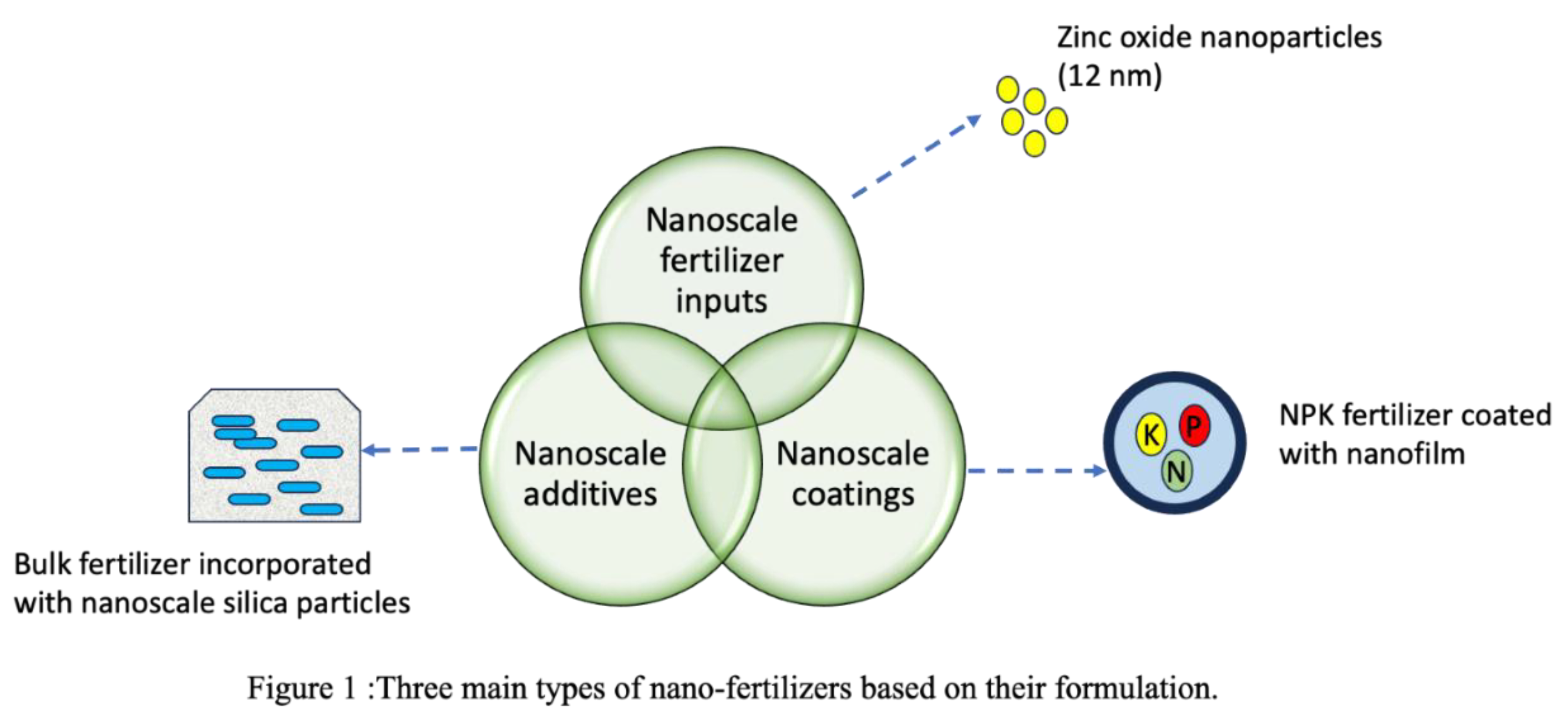
Figure 2.
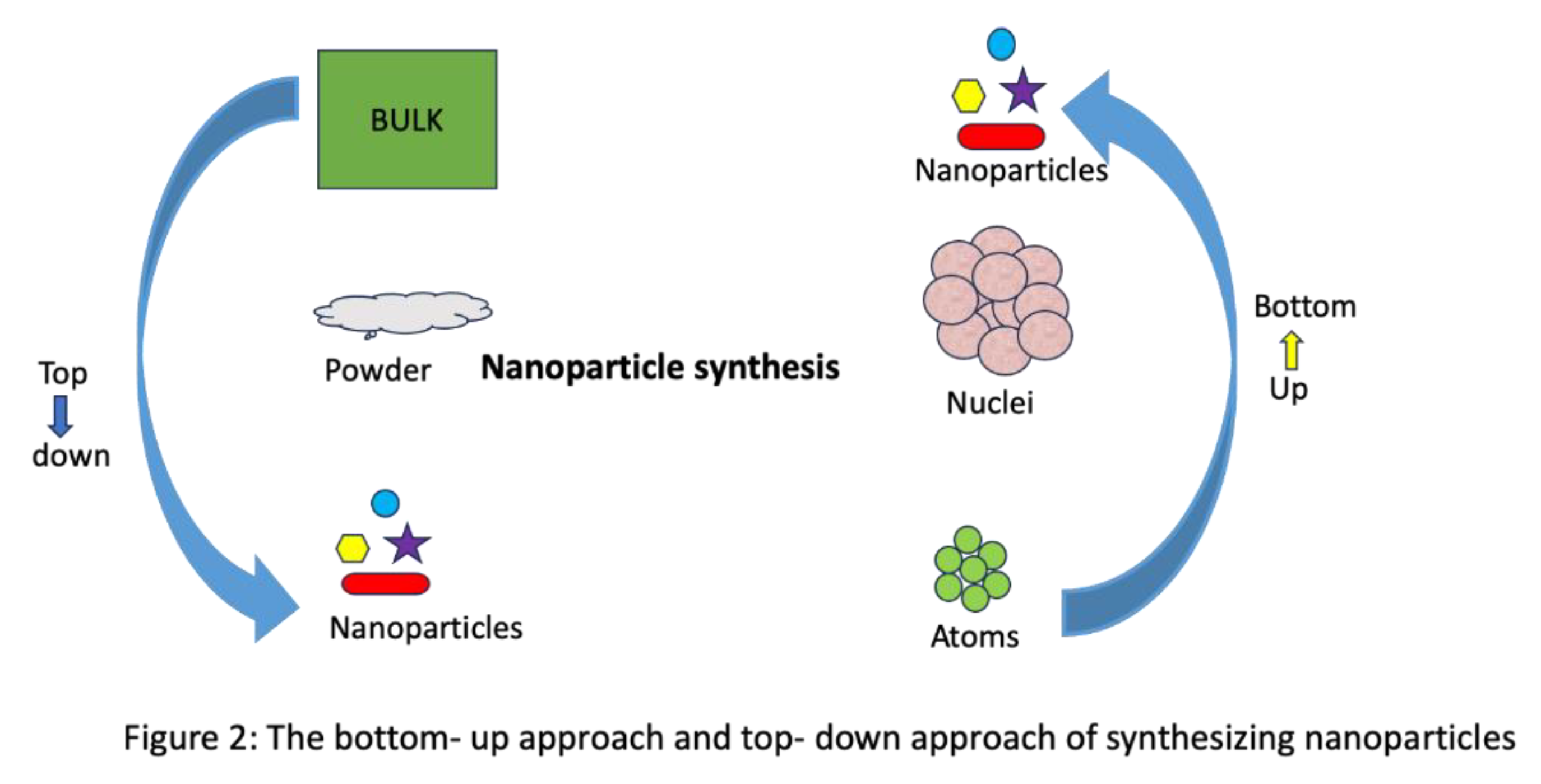
Figure 3.
shows a relationship between particle size and surface area.
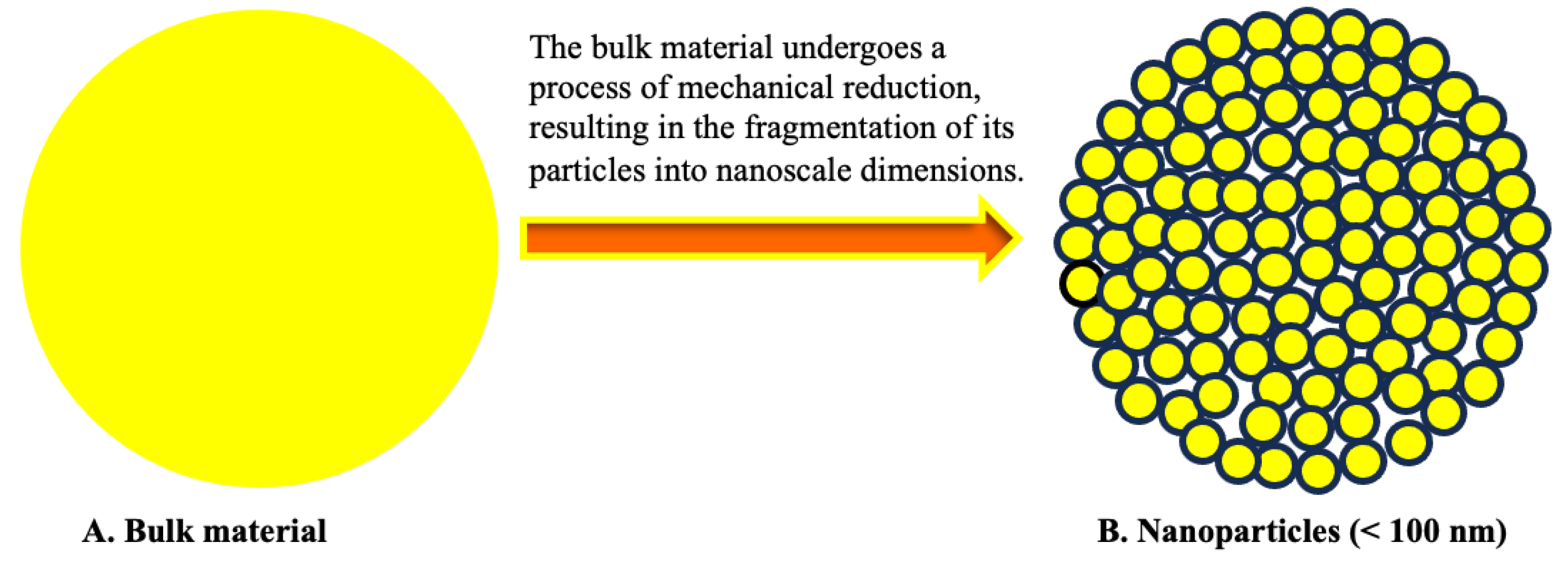
Figure 4.
Shape of nanoparticles.
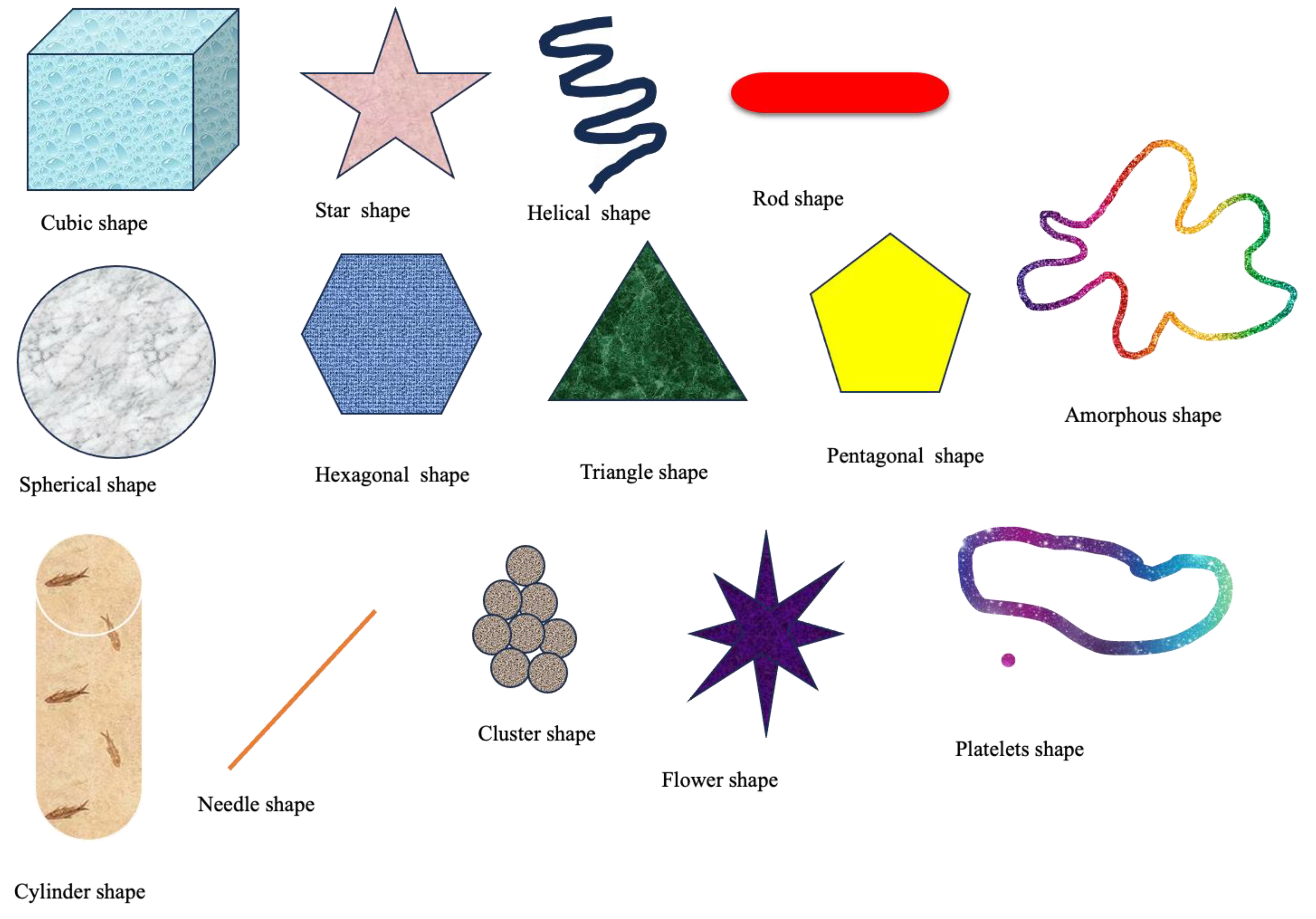
Table 1.
The relationship between particle size and uptake by plant.
| Crop type | Nanoparticle type | Nanoparticle size | Effect on nutrient uptake | Reference |
|---|---|---|---|---|
| Watermelon | AgNPs | 20 nm |
|
[38] |
| 60 nm |
|
|||
| Nicotiana xanthi | AgNPs | 3.5 nm |
|
[39] |
| 18 nm |
|
|||
| Soybean | CuONPs | 25 nm |
|
[35] |
| 50 nm |
|
|||
| Wheat | SeNPs | 40 nm |
|
[34] |
| 140 nm |
|
|||
| Cucumber | Ceria NPs | 7 nm |
|
[36] |
| 25 nm |
|
|||
| Allium porrum | water-suspended fluorescent polystyrene NPs | 43 nm |
|
[40] |
| 1100 nm |
|
Table 2.
represents the slow-release mechanism of nano-fertilizers in comparison to their bulk materials.
Table 2.
represents the slow-release mechanism of nano-fertilizers in comparison to their bulk materials.
| Type of fertilizers | Nanoparticle material release time | Bulk material release time | Reference |
|---|---|---|---|
| Nitrogen-based fertilizer | 1000 hours (about 1 and a half months) | 500 hours | [50] |
| Nitrate nitrogen fertilizer | Exceeded 50 days | 10-12 days | [54] |
| APTMS-modified zeolite | 120 minutes (2 hours) | 10 minutes | [55] |
| urea- hydroxyapatite fertilizer | 60 days | 30 days | [56] |
| Urea-loaded polycaprolactone nanocomposite | > 90 hours | < 25 hours | [57] |
| Phosphate fertilizer | 40-50 days | 10-12 days | [58] |
| DAP | 60 days | 15 days | [59] |
Table 3.
Different ways in which nano-fertilizers are designed or engineered to release nutrients.
| Control-release fertilizers | Properties | Reference |
|---|---|---|
| 1. Slow-release fertilizer |
|
[66] |
| 2. Quick release fertilizer |
|
[12] |
| 3. Specific-release fertilizer |
|
[13] |
| 4. Moisture release fertilizer |
|
[12,13] |
| 5. Heat release fertilizer |
|
[12] |
| 6. pH release fertilizer |
|
[13] |
| 7. Ultrasound release |
|
[66] |
| 8. Magnetic release |
|
[12] |
Disclaimer/Publisher’s Note: The statements, opinions and data contained in all publications are solely those of the individual author(s) and contributor(s) and not of MDPI and/or the editor(s). MDPI and/or the editor(s) disclaim responsibility for any injury to people or property resulting from any ideas, methods, instructions or products referred to in the content. |
© 2024 by the authors. Licensee MDPI, Basel, Switzerland. This article is an open access article distributed under the terms and conditions of the Creative Commons Attribution (CC BY) license (http://creativecommons.org/licenses/by/4.0/).
Copyright: This open access article is published under a Creative Commons CC BY 4.0 license, which permit the free download, distribution, and reuse, provided that the author and preprint are cited in any reuse.


