

Submitted:
11 June 2024
Posted:
12 June 2024
You are already at the latest version
Abstract
The term immersive technology refers to various types of technologies and perspectives that are constantly changing and developing. It can be used for different purposes and domains such as: education, healthcare, entertainment, arts, and engineering. This research paper aims to examine which training method is more effective between the traditional approach, using PowerPoint and the immersive technology approach, through mixed reality using a HoloLens 2 device. The experiment involves comparing two groups of students who received different training methods: the first group saw a PowerPoint slide with an image of the human muscular system, while the second group saw a 3D hologram of the human body that showed the same muscle groups as in PowerPoint. The researchers wanted to test whether mixed reality devices could enhance students' cognitive functions and to investigate if the IQ of the participants had any influence in the effectiveness of the teaching method. The main finding of this study is that the instructions given with mixed reality technology, via the Microsoft HoloLens 2 device, are more appropriate for participants who have an IQ score below 100 points. For the other participants, with an IQ score above 100 points, the PowerPoint support was more suitable.
Keywords:
Cognitive Ability
; Education
; Mixed Reality
; PowerPoint
; Teaching Methods
1. Introduction
Educational Technology or EdTech is a systematic approach to educational processes and resources to improve student performance. This allows identifying students’ needs and adapting the instructive-educational process to them to ensure student development. Educational technology is a field that combines educational hardware, software, theory, and practice to enhance the quality and effectiveness of education [1]. It is also an industry that creates and provides various technological tools and environments for education [2]. One of the emerging forms of educational technology is immersive technology, which includes virtual reality (VR), augmented reality (AR), and mixed reality (MR) [3].
Immersive technology offers lifelike experiences [4], enhancing learning in healthcare [5], education [6], and crisis response [7,8]. These tools engage users’ thinking, feelings, and actions, leading to better learning outcomes.
While immersive technology is diverse and ever-changing, with applications across education, healthcare, and more [4,9,10,11,12], it’s set to grow, bringing new opportunities and hurdles. It is effective for learning, offering tailored feedback and engaging experiences. Yet, it faces technical, ethical, and access challenges that need addressing through further research [13,14,15].
To differentiate these three technologies, we need to look at them from the user’s perspective (see Table 1 and Table 2). In VR, the user is totally immersed in a complete simulation environment in which he has the possibility to interact only with the virtual environment, without having the possibility to relate to the elements in the physical environment. To use VR, the minimum technology required consists of head-mounted virtual reality glasses and a computer that will do the graphics processing. Instead, AR adds digital elements to the real world via a device such as a smartphone or tablet through which the user observes the real environment. MR is a technology that combines elements of virtual reality and augmented reality by using “glasses” that have a transparent screen that allows viewing 3D digital objects, like holograms, and interaction with these digital objects is most done through hand gestures, voice commands or simply fixing the gaze at a specific point.
Looking at immersive technology on the Gartner Hype Cycle [18], we can see that it is located at the border between existing technologies that we will be able to apply in higher education and technologies that are already in use.
Mixed reality (MR) in education offers significant advantages over traditional teaching methods, as evidenced by various studies. Ali et al. found that medical students showed high satisfaction levels with MR models for anatomy learning [19], while Minty et al. demonstrated that HoloLens 2 is a valid and robust tool for objectively assessing clinical competency in medical students through Objective Structured Clinical Examinations (OSCEs) [20]. Pregowska et al. highlighted how MR, especially through devices like HoloLens 2, can revolutionize education by providing immersive experiences in subjects like medicine, anatomy, and biochemistry, enhancing both remote and traditional learning modalities [21]. Additionally, Daling et al. emphasized the usefulness of MR in remote teaching, showing that it improves students’ understanding and provides a realistic experience compared to traditional methods, particularly in practical fields like mining engineering [22]. Overall, MR in education shows great promise in enhancing learning outcomes and student engagement when compared to traditional approaches. Furthermore, the use of mixed reality gadgets in educational settings has shown promising results, with applications designed for training and education purposes demonstrating benefits over traditional teaching methods, as observed in experiments with secondary school students [23].
While existing research emphasizes the potential of Mixed Reality (MR) to enhance teaching methods and improve information retention, no prior study has specifically explored the interaction between IQ and instructional approaches. Our approach aims to investigate the individual impact of participants’ IQ levels on learning outcomes. Given the absence of similar studies in the literature, this paper examines the implications of using mixed reality technologies in the learning process, including their effects on students’ memory. The study evaluates the effectiveness of immersive technologies, with a particular focus on mixed reality, in educational contexts compared to traditional teaching methods, while also considering participants’ IQ as a distinguishing factor
In traditional education systems, PowerPoint presentations are commonly utilized due to their accessible interface and customizable templates. However, this method has its limitations, including a slow adaptation to new technologies and a potential restriction on active learning due to an over-reliance on slides. Nevertheless, the incorporation of mixed reality in education is still in its early stages, requiring substantial investment in equipment and training. Furthermore, it’s important to note that not all educational content may be appropriate or effective when presented in a mixed reality format.
The relation between MR and IQ in the educational environment presents an exciting opportunity for research. One of the research questions of this study is “How do MR and IQ interplay to optimize educational efficacy?” This analysis is fundamental as it explores the hypothesis that MR, when aligned with the learner’s IQ, can significantly enhance the effectiveness of educational outcomes.
MR technology, with its immersive and interactive capabilities, stands as an educational innovation [24,25], offering a stark contrast to the passive learning modes associated with traditional tools like PowerPoint presentations [26,27]. The integration of MR in education promises a more dynamic and engaging learning environment, where students can interact with complex concepts in a three-dimensional space, fostering deeper understanding and retention [9,11].
However, the effectiveness of MR is not uniform across all learners; it is hypothesized that individual differences in cognitive abilities, as indicated by IQ, may influence the degree to which students benefit from MR-based education [28,29,30]. This study posits that a student’s IQ could be a critical factor in determining the optimal level of MR immersion and interactivity, thus maximizing educational efficacy.
By investigating the relation between MR and IQ, this research aims to provide empirical evidence on the customization of educational technologies to individual cognitive profiles. This could lead to a paradigm shift in educational practices, moving away from a one-size-fits-all approach to a more nuanced, intelligence-informed pedagogy. The findings could have far-reaching implications for the design of future educational tools and curricula, ensuring that the transformative potential of MR is fully realized in enhancing learning experiences.
2. Immersive Technologies in Education
The term immersive technology refers to the integration of virtual content with the physical environment in a way that allows the user to naturally engage with mixed reality. The origin of immersive technology can be traced back nearly 60 years, when the first immersive prototype of human-computer interaction, the “Human Machine Graphic Communication System”, was built by Sutherland [31]. Since then, different types of immersive technologies have emerged, such as VR, AR, MR, holography, telepresence, digital twins, and FPV drone flight [4].
However, there is no consensus on the definition of immersive technology among researchers. Some researchers focus on the quality and quantity of sensory information provided by technology, such as Slater [32], which sees immersive technology as technology that provides users with a high quality or volume of sensory information. Other researchers emphasise the immersiveness of the technology, such as H.-G. Lee, Chung and Lee [33], who perceive immersive technology as technology that makes the line between the real world and the virtual world blur, creating a sense of immersion. A third group of researchers consider both aspects of sensory information and immersion, such as Díaz-López et al., [34], which define immersive technology as creating a realistic digital landscape that allows users to feel as if they are indoors and interact with that environment.
These technologies create simulated or enhanced environments that allow learners to interact with realistic scenarios and objects [35,36]. Immersive technologies can support effective teaching methods that align with learning goals and outcomes [4,11,37,38]. They may also encourage constructivist and experiential learning approaches that allow students to build their own knowledge, learn by doing, develop creativity, and understand abstract concepts [39]. As stated by the Association for Medical Education in Europe, “Projects for effective medical e-learning must reflect the dynamics and details of real-world practice, as well as provide effective learning opportunities” [40,41]. Therefore, immersive technologies can provide valuable opportunities for medical education and training, as well as other disciplines that require practical approaches and problem-solving skills [3,4,42,43].
The use of such immersive technologies has intensified in education, particularly in health and science [3,4,10,44]. These technologies offer students the opportunity to explore complex topics and scenarios in a realistic and interactive way, which can improve their learning outcomes compared to traditional methods such as lectures, textbooks or slideshows. However, evidence on the effectiveness of immersive technologies in education is still limited and inconsistent [9,38,45,46].
The current state of the art in this area is based on a growing body of research investigating the effects of AR, VR, and MR on various aspects of learning, such as motivation, commitment, self-efficacy, cognitive task, self-regulation, and knowledge acquisition and transfer [4,9,10,44].
A systematic review by Hamilton et al., [9] examined 29 experimental studies published since 2013 in which quantitative learning outcomes using immersive VR based on head mounted display were compared to less immersive pedagogical methods. The study found that most studies have demonstrated benefits in terms of learning outcomes when using immersive VR compared to less immersive learning methods. A smaller number of studies did not find any significant advantage, regardless of the pedagogical method used. Only two studies found clear harmful effects of immersive VR use [47,48]. However, this analysis also highlighted some limitations of existing research, such as short intervention times, lack of information retention measures, focus on scientific topics, and inadequate evaluation methods [49,50].
Another systematic review conducted by Ryan et al., [3] evaluated 29 randomised controlled trials (N=2722 students) comparing traditional learning methods with VR, AR, or MR for the education of medical and nursing students. The analysis found that knowledge acquisition was equal when immersive technologies were compared to traditional ways of learning. However, the learning experience has grown with immersive technologies. This study also reported that learning outcomes such as student satisfaction, self-efficacy, and engagement all increased with the use of immersive technology, suggesting that it is an optimal tool for education.
A third systematic review by Butt et al., [37] looked at 18 studies (N=1090 participants) that investigated the use of immersive VR for training healthcare professionals in various clinical skills. The analysis found that immersive VR training was associated with improved performance, knowledge retention, and confidence compared to traditional training methods. This study identified some challenges and barriers to implementing immersive VR training in health care education, such as technical issues, cost, affordability, and ethical concerns.
These studies indicate that immersive technologies have the potential to improve students’ learning outcomes in health and science education by providing them with a rich, interactive, engaging, and safe learning experience while emphasising the transferability of skills in clinical settings. However, more rigorous and consistent research is needed to establish the optimal design, implementation, and evaluation of immersive technology-based interventions in education.
However, there are still many gaps and challenges in immersive learning research, such as the lack of rigorous experimental studies, diversity of definitions and measures, ethical and practical aspects of implementing immersive technologies in real-world contexts, and the need for closer interdisciplinary collaboration between researchers and practitioners [24,51,52]. Furthermore, there is a lack of research on how individual differences between learners, such as their IQ, may influence their immersive learning experience [53,54,55]. IQ is a measure of general cognitive ability that can affect various aspects of learning, such as memory, problem solving, reasoning, and metacognition [56]. It is possible that IQ interacts with immersion level, controls, and representative fidelity of immersive technologies to affect learners’ presence and cognitive load [57].
3. IQ as a Predictor of Academic Success: Evaluating the Evidence
The relationship between IQ and academic performance is a subject of considerable interest in educational psychology. Research indicates that IQ scores are a strong predictor of academic success, but they are not the sole factor [29,58,59]. Cognitive ability, as measured by IQ tests, often correlates with better academic outcomes because it reflects a person’s ability to think abstractly, solve problems, and grasp complex ideas [60,61].
However, studies also suggest that non-cognitive factors such as personality traits, motivation, and learning strategies can significantly influence academic performance [58,62]. For instance, conscientiousness has been linked to better study habits and academic achievement, while traits like curiosity and openness may foster a love for learning that transcends raw cognitive ability [63].
Moreover, the environment plays a crucial role in shaping academic outcomes [64,65]. A supportive educational setting, access to resources, and quality instruction can enhance the academic performance of students, regardless of their IQ. Socioeconomic status and parental involvement are also critical factors that can impact educational achievement.
The relationship between IQ and academic performance has been extensively studied, revealing a multifaceted connection. Rohde and Thompson [60] found that general cognitive ability, measured by tools like the Raven’s Advanced Progressive Matrices and the Mill Hill Vocabulary Scales, was a significant predictor of academic achievement, even when controlling for specific cognitive abilities. Rushton et al. [28] demonstrated that performance on the Raven’s Matrices correlated with academic success among diverse student groups, suggesting that general intelligence plays a role across different cultures.
Ablard and Mills [66] highlighted the Raven’s Matrices as effective for identifying academically talented students, indicating that higher-order cognitive abilities are linked to academic competency. Zax and Rees [62] explored the impact of IQ on earnings and found that while IQ does affect earnings, its influence is less significant when accounting for family and academic performance. Heaven and Ciarrochi [67] argued that intellect, a component of cognitive ability, is associated with higher academic performance, particularly among those with high ability.
Mayes et al. [29] identified IQ as the best single predictor of academic achievement, with other neuropsychological tests contributing to the prediction of specific academic skills. Chamorro-Premuzic and Furnham [58] found that personality traits and learning approaches also play a role in academic performance, with ability effects mediated by these factors. Byington and Felps [68] provided a sociological perspective, suggesting that the predictive power of IQ on job performance may be due to institutional factors that grant individuals with high IQ scores greater access to developmental resources.
Iqbal et al. [30] examined medical students and found a positive relationship between IQ and academic performance, reinforcing the notion that cognitive ability is a crucial factor in educational success. Collectively, these studies underscore the importance of IQ in academic achievement while also recognizing the influence of personality, learning approaches, and sociocultural factors.
Lastly, Allor et al. [69] established that tailoring pedagogical strategies and the broader educational framework to align with students’ intellectual capacities, thereby catering to their specific requirements, can significantly enhance the efficacy of learning outcomes. In summary, while IQ is an important aspect of academic performance, it is part of a broader constellation of factors that include individual characteristics, environmental influences, and the interplay between them. This holistic view acknowledges that intelligence is not fixed and that a variety of elements contribute to academic success [59].
4. Experimental Methodology
This paper aims to compare the effectiveness of immersive technologies used in education, namely mixed reality, generated with Microsoft HoloLens 2, with traditional teaching methods. The study was conducted on N = 98 students of Lucian Blaga University of Sibiu, from the Faculty of Engineering and the Faculty of Social and Human Sciences. The selected students were surveyed beforehand to identify if they had any knowledge of the didactic material, which affected the result obtained.
4.1. Research Hypothesis
After reviewing the existing literature, we have developed a research hypothesis for our study, which speculates the following: “Educational experiences enhanced by immersive technologies surpass the efficacy of conventional teaching approaches. It is anticipated that students’ learning outcomes will vary depending on the type of instructions received (MR or PPT) and the results will also be influenced by the participant’s IQ score.” Moreover, through this approach, we can also study which instructional method is more suitable to different IQ levels. We plan to validate this hypothesis by examining how different instructional methods and student IQ levels influence learning outcomes within an educational framework that utilizes both traditional and immersive technological approaches.
4.2. Justification for Selecting Human Anatomy as the Study Focus
Human anatomy is a foundational subject that supports many fields of study within both the sciences and the humanities. Its complex nature, characterized by complex structures and interdependent systems, poses significant challenges for traditional educational methods. The spatial and three-dimensional aspects of human anatomy often require more than simple images or textual descriptions to be understood effectively. This complexity makes it an ideal candidate for the application of mixed reality (MR) technologies.
MR, with its ability to overlay digital information onto the real world, offers a unique opportunity to augment the learning experience by providing students with interactive, three-dimensional visualizations of anatomical structures. This can lead to a deeper understanding and retention of the subject matter, which is less achievable through conventional two-dimensional teaching aids.
Furthermore, the study of human anatomy serves as a critical litmus test for the effectiveness of MR in education due to its universal relevance and the necessity for precision in learning. Unlike subjects such as mathematics, history, or art, which can be effectively taught using traditional methods like lectures and textbooks, human anatomy requires a more immersive approach to grasp the full scope of the body’s complexity.
By focusing on human anatomy, this study aims to explore the potential of MR to transform educational practices in subjects where traditional methods fall short. The exclusion of other subjects is intentional, as they may not provide the same level of challenge or necessity for three-dimensional comprehension that human anatomy does. This focus allows for a clear assessment of MR’s impact on learning outcomes, particularly when correlated with students’ IQ levels, thereby providing valuable insights in-to the future of educational technology.
4.3. Experiment Execution
Only students without knowledge of body anatomy were included in this study to test the hypothesis of this work, which assumes that the teaching material provided through MR helps in the learning process. The study consists of comparing the learning outcomes of two groups of students who were self-trained using mixed reality and traditional teaching materials.
To test whether mixed reality instruction is more effective than PowerPoint instruction for improving student learning outcomes, participants were trained with the two methods mentioned above and then their knowledge was tested using a multiple-choice test. A group of participants received a HoloLens device and were allowed to study the hologram individually for 10 minutes. The image displayed showed the human muscular system, highlighting muscle groups in different colours, and the names of the most important muscles were shown next to the hologram, as shown in Figure 1.
The second group of participants was trained with a traditional method. They were presented with a PowerPoint slide showing the muscular system and the same muscle groups were identified according to Figure 2.
In both scenarios, participants were self-trained. There was no interaction between students and an instructor. The researchers informed participants that they had 10 minutes to try to absorb as much information as possible from what they were going to see, and that they would be tested afterwards to show how much knowledge they had gathered.
The experiment was executed as depicted in Figure 3, involving the steps outlined below:
- Introduction and Consent: Participants were welcomed, briefed about the study’s purpose and procedure, and asked to sign a consent form. They also completed a demographic questionnaire and followed by 60 questions aimed at testing participants’ IQ using Raven’s standard progressive matrices.
- Pre-Test: A pre-test was administered to gauge participants’ existing knowledge of the human muscular system. This test was interview based with questions about basic muscle anatomy, physiology, and their relative positioning.
- Group Assignment and Study Session: Participants were randomly allocated to the Mixed Reality (MR) group or the PowerPoint (PPT) group. They were then directed to separate rooms and given 10 minutes to self-study the material using either the HoloLens 2 device (MR group) or a laptop and projector displaying PowerPoint slides (PPT group).
- Post-Test: Following the study session, participants took a post-test to assess their learning outcomes. This test consisted of 20 multiple-choice questions covering similar topics as the pre-test. It was administered online via Google Forms and had a 15-minute time limit.
- Feedback Collection: After the post-test, participants were asked to share their learning experience and satisfaction with the material and device used. This feedback was collected through a structured questionnaire.
- Data Analysis and Result Interpretation: The data from the post-test, and feedback questionnaire were analyzed. The learning outcomes were measured, and the effectiveness of each teaching method was compared. The influence of participants’ IQ on the effectiveness of the teaching methods was also examined.
- Conclusion and Debriefing: Finally, conclusions were drawn based on the results. The potential implications of the findings for the fields of education and immersive technology were discussed.
4.4. Data Analysis
The data collection tool was an online questionnaire, which included 85 questions. There were 5 classification questions, followed by 60 questions aimed at testing participants’ IQ using Raven’s standard progressive matrices [70], and 20 questions to test acquired information about the human muscular system. Data was interpreted using Microsoft Excel and MiniTab 20.
To analyse the data, the authors employed various statistical methods that were appropriate for the research questions and the type of data. First, they computed the Cronbach’s Alpha coefficient to evaluate the internal consistency of the items in the anatomy test. A high value of Cronbach’s Alpha indicates that the items measure the same construct and are reliable. Second, they performed the Anderson-Darling normality test to check whether the data followed a normal distribution. This is an important assumption for parametric tests, such as t-test and regression. Third, they applied the 2-Sample t Test to compare the means of two independent groups (i.e., the anatomy test scores for the two different instruction methods) and to test whether they were significantly different or not. This is a common statistical technique for testing hypotheses about group differences. Fourth, they conducted simple linear regression to model the relationship between two continuous variables and to estimate the effect of one variable on the other. For example, they used simple linear regression to examine how IQ score predicted anatomy test score. This is a useful method for exploring causal relationships and predicting outcomes. Fifth, they used multiple regression to analyse the relationship between a dependent variable (i.e., the anatomy test scores) and two or more independent variables (e.g., IQ score and instruction method). This is an extension of simple linear regression that allows for controlling confounding variables and testing interactions. The authors found that both IQ score and instruction method were significant predictors of anatomy test score, and there was a significant interaction between them. This means that the effect of the instruction method on anatomy test score depended on IQ score. The authors chose these statistical methods because they were suitable for answering their research questions and testing their hypotheses. They also followed the guidelines and recommendations from previous studies that used similar methods in educational research [71,72].
4.5. Research Questions
In this study, a learning method using MR technology was compared to traditional teaching materials. Students were asked to study the teaching material and a quasi-experimental study was conducted to test the impact of the learning method on the academic performance of university students and to explore whether their IQ is relevant to the effectiveness of the learning methods tested. The study focused on the following research questions:
- Do students who use the MR-based learning method exceed the performance of those who learn by the conventional method?
- Do students with higher IQ perform better using MR-based learning methods compared to using conventional learning methods?
4.6. Purpose
This research paper aims to compare the effectiveness of two different training methods: PowerPoint presentations and mixed reality using a HoloLens device. The authors hypothesized that mixed reality devices could enhance students’ cognitive functions by providing them with immersive and interactive learning experiences. To test this hypothesis, they conducted an experimental study with two groups of students who received either PowerPoint or mixed reality training on a specific topic. The learning outcomes of the two different training methods were measured using a 20 questions anatomy test.
4.7. Sample
5. Results and Interpretation of Data
5.1. Validity of the Assessment Method for the Learning Outcomes
In this study, we calculated Cronbach’s Alpha for the set of 20 questions that were used to measure the knowledge gained by participants after studying the teaching material (hologram for group 1 and PowerPoint for group 2). Correct answers were scored 1, while wrong answers were marked 0. The results showed that Cronbach’s alpha for the 20 questions was 0.7961, meaning that the questions had a good level of internal consistency and reliability. The detailed calculation of consistency and reliability of the 20 research elements is presented in Table 4.
This implies that the questions were well designed and captured the same basic construction of knowledge about the human muscular system. It also suggests that participants answered questions consistently and honestly. Therefore, we can use the scores from the 20 questions as a valid and reliable measure of the knowledge gained in our analysis. Furthermore, upon examining Figure 5, we observe that the data follows a Gaussian distribution. The data is symmetrically distributed, with a nearly constant mean and variation. This provides evidence supporting the accuracy and reliability of the obtained data.
5.2. Age Distribution
Figure 6 details the age distribution of participants which is non-normal, but explained by the environment from which the target group was selected. The age of participants ranged from 19 to 52 years old, as distance learning students were also involved in the research. The age distribution shown in Figure 6 shows that the 2 groups had similar profiles. Group 1, which was trained with the HoloLens 2 device, has an average age of 22.78, while Group 2, trained with PowerPoint, has an average age of 23.7.
5.3. IQ Score Distribution
Each participant was asked to complete an IQ test using Raven’s standard progressive matrices (Figure 7). The test consisted of 60 questions, and the IQ score was calculated according to the authors’ instructions [70].
The average IQ score of participants in group 1 is 107.27 with a standard deviation of 12.62 points, while the second research group, trained with PowerPoint, had an average score of 104.74 points, with a standard deviation of 14.84.
The utilisation of histograms allows for a graphical depiction of the distribution of IQ scores within each group, aiding in the assessment of potential variations. The overlap observed in Figure 7 indicates that the distributions of IQ scores for both groups exhibit similar patterns, suggesting a lack of substantial disparities in terms of IQ levels.
5.4. Anatomy Test Results
Figure 8 presents the results of the anatomy test, comparing the performance of the two study groups. The histograms for both groups show a normal distribution, with a higher standard deviation for the second group trained with PowerPoint (4.73) compared to the first group trained with HoloLens (3.62). The results indicate that the second group performed slightly better, with an average of 8.76 correct answers out of a maximum of 20, while the first group had an average of 8.35 correct answers.
The 2-Sample t Test (see Figure 9) was used to determine whether the means of the Anatomy Test Scores for the two study groups are different.
The analysis shows that the mean of the anatomy test results of students who were instructed with the MR method is not significantly different from the mean of students who were instructed with traditional methods
5.5. Relationship between IQ Score, Gender and Learning Outcomes
The regression analysis from Figure 10 provides a comprehensive view of the relationship between students’ IQ scores and their anatomy test results. With a sample size of n = 98, the study has enough data points to yield a precise estimate of this relationship. The narrow confidence interval and small margin of error enhance the reliability of the correlation coefficient. The p-value, which is less than 0.001, is well below the significance level of 0.05, underscoring the statistical significance of the findings. The R-squared value of 0.4145 indicates that approximately 41.45% of the variance in the anatomy test scores can be accounted for by the IQ scores. This is a substantial proportion, suggesting that IQ is a strong predictor of academic performance in this context. Additionally, the positive correlation coefficient of ( r = 0.64 ) implies that as IQ scores increase, anatomy test scores tend to increase as well, reinforcing the idea that higher intelligence is associated with better academic outcomes in anatomy.
Following we performed a multiple regression analysis to determine if more factors have an impact on the academic performance of the subject. Besides IQ score, we considered the instruction method and the gender of the participants. Figure 11 shows that out of these 3 variables the IQ score has the highest impact.
Figure 11 presents an analysis that underscores the limited influence of gender on learning outcomes in various teaching settings. The data shows a slight advantage for male participants over female participants; however, with a correlation coefficient of ( r = 0.36 ) and an R-squared value of 13.22%, it is clear that gender does not play a significant role in the academic success of students, as measured by anatomy test scores, irrespective of the instructional method employed. The most influential variable affecting anatomy test results is the IQ score. The study further reveals that participants with an IQ score below 100 derive greater benefit from instructional methods utilizing mixed reality technology, such as the Microsoft HoloLens 2. On the other hand, participants with an IQ score above 100 appear to respond better to traditional educational materials presented through PowerPoint presentations. This suggests that the effectiveness of instructional methods may vary depending on the cognitive abilities of the learners.
A multiple linear regression analysis to examine the relationship between the scores of each series of the Raven’s Standard Progressive Matrix Test and the anatomy test results was also performed (see Figure 12). The Raven’s test is a widely used measure of general intelligence that consists of five series of 12 questions, each with increasing difficulty and complexity. The series are labelled A, B, C, D and E, and they assess different cognitive abilities such as observation, classification, analogy, reasoning and synthesis. The E series questions are particularly challenging and require the ability to abstract and dynamically synthesise information from complex patterns and sequences. According to [70], the E series reflects the highest level of cognitive functioning and the most advanced stage of mental development. Therefore, we observed that the E series scores have the strongest correlation with the anatomy test results, as shown in Figure 12,
To further analyse the effect of the instruction method on the students’ performance, we conducted a multiple regression test for the series with the highest impact on the model, namely series E, as shown in Figure 13. The results of the multiple regression test indicated that there was a significant interaction between the instruction method and the number of correct answers to series E (p < 0.05). Specifically, we observed that the students who scored less than 3 out of 12 in series E performed better when instructed with HoloLens, while the students who scored more than 3 out of 12 in series E performed much better when instructed with traditional methods, namely PowerPoint as depicted in Figure 13.
5.6. Does the High School Profile or Age of the Students Influence the Learning Outcomes?
The participants had graduated from 5 different high school profiles: Mathematics, Science, Individuals and Societies, Arts and Language and Literature (see Figure 4). Statistical analyses were performed, and no correlations were observed. Therefore, the 5 profiles were further grouped into 2 categories: Mathematics and Sciences were grouped into a category titled “Sciences”, while the other 3 profiles were grouped into a category titled “Humanities”.
As shown in Figure 14, we performed a linear regression analysis to examine the relationship between the high school profiles and the learning outcomes of the students. The linear regression equation was y = 7.741 + 1.6541x, where y is the learning outcome score and x is the high school profile (1 = Sciences and 0 = Humanities). The coefficient of determination (R-squared) was 0.0359, indicating that only 3.59% of the variation in the learning outcomes can be explained by the variation in the high school profiles. The p-value of the slope was 0.062, which means that there is a 6.2% chance of obtaining a slope as extreme or more extreme than 0.01 by random chance. Therefore, we conclude that the relationship between the high school profiles and the learning outcomes is not statistically significant at the 0.05 level of significance. This implies that there is no strong evidence to support the hypothesis that the high school profiles have an impact on the learning outcomes of the students, or that the impact is negligible compared to other factors.
One of the factors that might affect the learning outcomes of the students is their age. To examine the relationship between the age of the students and their performance on the anatomy test, two types of regression analyses were conducted. The first one was a simple regression, where the age was the only predictor variable, and the post-test score was the outcome variable. The second one was a multiple regression, where the age, the instruction method and the IQ score were all included as predictor variables and the post-test score was again the outcome variable. The results of this analysis are shown in Figure 15, which displays the coefficients and the significance levels of each predictor variable. By comparing these two analyses, it is possible to evaluate how much of the variance in the post-test score can be explained by the age alone and how much can be explained by the combination of the age and other factors (namely IQ score and instruction method).
The correlation coefficient between the anatomy test scores and the age of the students was 0.28, which indicates a very weak positive linear relationship. This means that as the age of the students increases, their test scores tend to increase slightly, but not in a consistent or predictable way. The p-value of the t-test was 0.006, which is less than 0.05 and suggests that there is a statistically significant difference in the mean test scores of younger and older students. However, this does not imply that age is the cause of the difference in test scores, or that age is an important factor in explaining the variation in test scores. It only means that the difference is unlikely to be due to chance alone.
When analysed together with the instruction method and IQ score, the age of the participants appears to have no impact on the learning outcomes. As shown in Figure 15, the grey background suggests that the variable (in this case the age) is not included in the prediction model.
6. Discussion
The study sought to investigate the effectiveness of MR technology compared to traditional pedagogical methods, such as PowerPoint presentations, in enhancing educational outcomes. Additionally, it examined the interplay between students’ Intelligence Quotient and the choice of educational medium. Our findings highlight the complex relationship between technological innovation, individual cognitive abilities, and learning outcomes.
6.1. Effectiveness of MR vs. Traditional Methods
The results of our study revealed nuanced insights into the differential impacts of MR and traditional methods on learning outcomes [29,59]. Contrary to initial hypotheses, we did not find a clear superiority of MR over PowerPoint in improving educational performance. Instead, our findings suggest that the effectiveness of instructional methods may vary depending on individual characteristics, particularly IQ levels.
While MR offers immersive and interactive learning experiences, the novelty effect associated with this technology may influence participants’ engagement and attention [46].
6.2. Role of IQ in Educational Efficacy
One of the contributions of our study is the exploration of IQ as a determinant of educational outcomes. Consistent with previous research [29,60,62], our findings suggest that students’ cognitive abilities significantly influence their response to different instructional methods. Participants with higher IQ scores demonstrated better performance when exposed to traditional PowerPoint presentations, while those with lower IQ scores benefitted more from MR-based learning environments.
The differential impact of IQ on learning outcomes highlights the need for personalized educational approaches [69] that cater to individual cognitive profiles. Educators and instructional designers should consider students’ cognitive strengths and weaknesses when selecting pedagogical strategies, leveraging technology to accommodate diverse learning preferences and abilities.
6.3. Implications for Education
Our study highlights the importance of adopting a nuanced approach to educational technology integration. While MR holds promise for enhancing learning experiences, its effectiveness is contingent upon various factors, including individual cognitive abilities and prior exposure to technology. Educators should attempt to strike a balance between leveraging innovative tools and addressing the cognitive needs of diverse learners.
The study also contributed to the existing literature on immersive technology in education, which has shown that AR and MR can create immersive and interactive learning environments that foster motivation, collaboration, and creativity of learners [6,11,73]. AR and MR can also augment the physical world with digital content, such as 3D models or holograms, that can enhance the learning experience and facilitate comprehension of complex concepts [74].
7. Conclusion
The study aimed to investigate whether immersive technology, specifically MR, could improve the learning outcomes of students compared to traditional learning methods such as PowerPoint presentations. The study involved a quasi-experimental design, where students were asked to study the teaching material, and their academic performance was evaluated. The research questions focused on whether students who used the MR-based learning method performed better than those who used the conventional method, and whether students with higher IQ performed better using MR-based learning methods compared to conventional learning methods.
This research paper demonstrates the significant influence of IQ on the learning outcomes of students who use immersive technologies in education. The study argues that the teaching method is less relevant than the individual differences in IQ when it comes to the benefits of immersive technologies for learning. The literature review provides an overview of the current state of research on immersive technologies in education, and shows that they can create engaging and interactive learning environments that can enhance motivation, attention, and retention. However, the literature review also reveals that there is a lack of empirical evidence on the effectiveness of immersive technologies in education, and that more research is needed to examine how they interact with other factors, such as IQ, learning styles, and prior knowledge. The study uses a quasi-experimental design to compare the learning outcomes of students with different levels of IQ who use immersive technologies versus traditional methods. The results show that students with higher IQ scores achieved better learning outcomes than students with lower IQ scores, regardless of the teaching method. The study concludes that IQ is a more important predictor of learning outcomes than the teaching method and highlights the importance of considering individual differences in IQ when designing and implementing immersive technology in education.
In conclusion, our study contributes to the growing body of research on immersive technologies and educational efficacy. By highlighting the complex interplay between MR, IQ, and learning outcomes, we provide valuable insights for educators, policymakers, and technology developers seeking to optimize educational practices in the digital age. Further research is warranted to explore the multifaceted nature of educational technology integration and its implications for student learning and engagement.
Study Limitations
Some of the limits of our approach are related to the fact that due to the anonymization of participants’ data, they can no longer be contacted to test how much information they retain several months after it has been provided to them. Although participants who used MR said they would enjoy learning through this technology, motivation for learning could not be verified, requiring a long-term study. The sample should be extended to students from several fields (excluding medicine) and from different geographical locations. This study did not consider the type of learning that each individual prefers. Participants solved the tests after exams, for organisational reasons. This can contribute to poor performance from respondents. The IQ test is lengthy (approx. 35 min.), with many participants stating that it is “boring”. The sample consisted of 98 participants, which may not be enough to capture the diversity and complexity of the population under investigation. Moreover, the age range of the participants was wide, from 19 to 52 years old, which may introduce confounding variables and reduce the generalizability of the findings. A larger and more homogeneous sample, with a narrower age distribution, would have increased the statistical power and validity of the study.
Another limitation of this study is the potential influence of the novelty effect associated with MR technology on the cognitive capacity of participants. Given that none of the participants had prior experience with MR technology before this study, many were intrigued by the novel graphics and immersive experience provided by the MR device. As a result, some participants may have been more focused on exploring the technological features and visualizations rather than engaging deeply with the instructional material. This fascination with the MR environment could have led to a reduced attentional allocation towards the instructional content, potentially impacting their cognitive processing and learning outcomes.
Moreover, while our study provides valuable insights into the effectiveness of MR and PPT in education, we acknowledge the limitations of our experimental design. To strengthen our findings, we propose incorporating a crossover study design in future research. Future research should also aim to recruit more participants and control for age-related factors.
Declaration of generative AI and AI-assisted technologies in the writing process
During the preparation of this work the authors used “Microsoft Bing Chatbot” in order to improve language and readability. After using this tool/service, the authors reviewed and edited the content as needed and take full responsibility for the content of the publication.
Author Contributions
Conceptualization, R.E.P., V.G., M.B.C and E.T.T; methodology, R.E.P., V.G., M.B.C. and E.T.T; formal analysis, R.E.P. and V.G.; investigation, R.E.P., V.G. and M.B.C.; data curation, R.E.P. and V.G.; writing—original draft preparation, R.E.P. and V.G.; writing—review and editing, R.E.P., V.G. and E.T.T.; visualisation, R.E.P.; supervision, V.G.; funding acquisition, V.G. and E.T.T. All authors have read and agreed to the published version of the manuscript.
Funding
Project financed by Lucian Blaga University of Sibiu & Hasso Plattner Foundation research grants LBUS-IRG-2023-09.
Institutional Review Board Statement
The experiments were conducted with the approval of the ULBS Ethical Committee - no.28/12.06.2023
Informed Consent Statement
Informed consent was obtained from all subjects involved in the study.
Data Availability Statement
All data that was used for this research is available upon request.
Acknowledgments
The authors thank the 98 students who participated in the study.
Conflicts of Interest
The authors declare no conflict of interest. The funders had no role in the design of the study; in the collection, analysis, or interpretation of data; in the writing of the manuscript, or in the decision to publish the results.
References
- Zhang, K.; Aslan, A.B. AI Technologies for Education: Recent Research & Future Directions. Comput. Educ. Artif. Intell. 2021, 2, 100025. [Google Scholar]
- Luan, H.; Geczy, P.; Lai, H.; Gobert, J.; Yang, S.J.; Ogata, H.; Baltes, J.; Guerra, R.; Li, P.; Tsai, C.-C. Challenges and Future Directions of Big Data and Artificial Intelligence in Education. Front. Psychol. 2020, 11, 580820. [Google Scholar] [CrossRef] [PubMed]
- Ryan, G.V.; Callaghan, S.; Rafferty, A.; Higgins, M.F.; Mangina, E.; McAuliffe, F. Learning Outcomes of Immersive Technologies in Health Care Student Education: Systematic Review of the Literature. J. Med. Internet Res. 2022, 24, e30082. [Google Scholar] [CrossRef] [PubMed]
- Tang, Y.M.; Chau, K.Y.; Kwok, A.P.K.; Zhu, T.; Ma, X. A Systematic Review of Immersive Technology Applications for Medical Practice and Education - Trends, Application Areas, Recipients, Teaching Contents, Evaluation Methods, and Performance. Educ. Res. Rev. 2022, 35, 100429. [Google Scholar] [CrossRef]
- Zhao, M.; Ong, S.-K.; Nee, A.Y. An Augmented Reality-Assisted Therapeutic Healthcare Exercise System Based on Bare-Hand Interaction. Int. J. Human–Computer Interact. 2016, 32, 708–721. [Google Scholar] [CrossRef]
- Di Serio, Á.; Ibáñez, M.B.; Kloos, C.D. Impact of an Augmented Reality System on Students’ Motivation for a Visual Art Course. Comput. Educ. 2013, 68, 586–596. [Google Scholar] [CrossRef]
- Bacon, L.; MacKinnon, L.; Cesta, A.; Cortellessa, G. Developing a Smart Environment for Crisis Management Training. J. Ambient Intell. Humaniz. Comput. 2013, 4, 581–590. [Google Scholar] [CrossRef]
- Sebillo, M.; Vitiello, G.; Paolino, L.; Ginige, A. Training Emergency Responders through Augmented Reality Mobile Interfaces. Multimed. Tools Appl. 2016, 75, 9609–9622. [Google Scholar] [CrossRef]
- Hamilton, D.; McKechnie, J.; Edgerton, E.; Wilson, C. Immersive Virtual Reality as a Pedagogical Tool in Education: A Systematic Literature Review of Quantitative Learning Outcomes and Experimental Design. J. Comput. Educ. 2021, 8, 1–32. [Google Scholar] [CrossRef]
- Kavanagh, S.; Luxton-Reilly, A.; Wuensche, B.; Plimmer, B. A Systematic Review of Virtual Reality in Education. Themes Sci. Technol. Educ. 2017, 10, 85–119. [Google Scholar]
- Khan, M.N.R.; Lippert, K.J. Immersive Technologies in Healthcare Education. In Intelligent Systems and Machine Learning for Industry; CRC Press, 2022; pp. 115–138.
- Petruse, R.E.; Grecu, V.; Chiliban, B.M. Augmented Reality Applications in the Transition towards the Sustainable Organization.; Springer, 2016; pp. 428–442.
- Mallam, S.C.; Nazir, S.; Renganayagalu, S.K. Rethinking Maritime Education, Training, and Operations in the Digital Era: Applications for Emerging Immersive Technologies. J. Mar. Sci. Eng. 2019, 7, 428. [Google Scholar] [CrossRef]
- Van Krevelen, D.; Poelman, R. A Survey of Augmented Reality Technologies, Applications and Limitations. Int. J. Virtual Real. 2010, 9, 1–20. [Google Scholar] [CrossRef]
- Grecu, V.; Deneș, C.; Ipiña, N. Creative Teaching Methods for Educating Engineers. Appl. Mech. Mater. 2013, 371, 764–768. [Google Scholar] [CrossRef]
- Petruse, R.E.; Matei, A.; Kayser, M.; Maier, M.; Ćuković, S. Academia-Industry Collaboration for Augmented Reality Application Development.; 2019; Vol. 3, pp. 243–250.
- HoloAnatomy® Software Suite | Case Western Reserve University Available online:. Available online: https://case.edu/holoanatomy/ (accessed on 26 February 2024).
- Gartner Identifies Key Emerging Technologies Expanding Immersive Experiences, Accelerating AI Automation and Optimizing Technologist Delivery Available online:. Available online: https://www.gartner.com/en/newsroom/press-releases/2022-08-10-gartner-identifies-key-emerging-technologies-expanding-immersive-experiences-accelerating-ai-automation-and-optimizing-technologist-delivery (accessed on 26 February 2024).
- Ali, A.; Baseer, N.; Huma, Z.; Yousafzai, Y.M.; Shah, I.; Zia, A.; Alorini, M.; Sethia, N. Mixed Reality Model for Learning and Teaching in Anatomy Using Peer Assisted Learning Approach. Eur. J. Anat. 2023, 27, 129–138. [Google Scholar] [CrossRef]
- Minty, I.; Lawson, J.; Guha, P.; Luo, X.; Malik, R.; Cerneviciute, R.; Kinross, J.; Martin, G. The Use of Mixed Reality Technology for the Objective Assessment of Clinical Skills: A Validation Study. BMC Med. Educ. 2022, 22, 639. [Google Scholar] [CrossRef] [PubMed]
- Pregowska, A.; Osial, M.; Dolega-Dolegowski, D.; Kolecki, R.; Proniewska, K. Information and Communication Technologies Combined with Mixed Reality as Supporting Tools in Medical Education. Electronics 2022, 11, 3778. [Google Scholar] [CrossRef]
- Daling, L.M.; Khoadei, S.; Kalkofen, D.; Thurner, S.; Sieger, J.; Shepel, T.; Abdelrazeq, A.; Ebner, M.; Ebner, M.; Isenhardt, I. Evaluation of Mixed Reality Technologies in Remote Teaching. In Proceedings of the Learning and Collaboration Technologies. Novel Technological Environments; Zaphiris, P., Ioannou, A., Eds.; Springer International Publishing: Cham, 2022; pp. 24–37. [Google Scholar]
- Lopez-Espada, C.; Linares-Palomino, J. Mixed Reality: A Promising Technology for Therapeutic Patient Education. Vasa 2023, 52, 139–140. [Google Scholar] [CrossRef] [PubMed]
- Liberatore, M.J.; Wagner, W.P. Virtual, Mixed, and Augmented Reality: A Systematic Review for Immersive Systems Research. Virtual Real. 2021, 25, 773–799. [Google Scholar] [CrossRef]
- Banjar, A.; Xu, X.; Iqbal, M.Z.; Campbell, A. A Systematic Review of the Experimental Studies on the Effectiveness of Mixed Reality in Higher Education between 2017 and 2021. Comput. Educ. X Real. 2023, 3, 100034. [Google Scholar] [CrossRef]
- Ankolekar, V.H.; Souza, A.D.; Souza, A.S.D.; Hosapatna, M. Effectiveness of Power Point Presentations in Teaching Anatomy: A Students’ Perspective. Adv. Sci. Lett. 2017, 23, 1977–1979. [Google Scholar] [CrossRef]
- Craig, R.J.; Amernic, J.H. PowerPoint Presentation Technology and the Dynamics of Teaching. Innov. High. Educ. 2006, 31, 147–160. [Google Scholar] [CrossRef]
- Rushton, J.P.; Skuy, M.; Fridjhon, P. Performance on Raven’s Advanced Progressive Matrices by African, East Indian, and White Engineering Students in South Africa. Intelligence 2003, 31, 123–137. [Google Scholar] [CrossRef]
- Mayes, S.D.; Calhoun, S.L.; Bixler, E.O.; Zimmerman, D.N. IQ and Neuropsychological Predictors of Academic Achievement. Learn. Individ. Differ. 2009, 19, 238–241. [Google Scholar] [CrossRef]
- Iqbal, K.; Chaudhry, S.R.; Lodhi, H.N.; Khaliq, S.; Taseer, M.; Saeed, M. Relationship between IQ and Academic Performance of Medical Students. Prof. Med. J. 2021, 28, 242–246. [Google Scholar] [CrossRef]
- Sutherland, I.E. Sketch Pad a Man-Machine Graphical Communication System.; 1964; pp. 6–329.
- Slater, M. Place Illusion and Plausibility Can Lead to Realistic Behaviour in Immersive Virtual Environments. Philos. Trans. R. Soc. B Biol. Sci. 2009, 364, 3549–3557. [Google Scholar] [CrossRef] [PubMed]
- Lee, H.-G.; Chung, S.; Lee, W.-H. Presence in Virtual Golf Simulators: The Effects of Presence on Perceived Enjoyment, Perceived Value, and Behavioral Intention. New Media Soc. 2013, 15, 930–946. [Google Scholar] [CrossRef]
- Díaz-López, L.; Tarango, J.; Contreras, C.-P. Strategies for Inclusive and Safe Education Using Virtual Reality: From the Digital Library Perspective. Digit. Libr. Perspect. 2019. [Google Scholar] [CrossRef]
- Parham, G.; Bing, E.G.; Cuevas, A.; Fisher, B.; Skinner, J.; Mwanahamuntu, M.; Sullivan, R. Creating a Low-Cost Virtual Reality Surgical Simulation to Increase Surgical Oncology Capacity and Capability. ecancermedicalscience 2019, 13. [Google Scholar] [CrossRef]
- Krueger, K.; Lakti, X.; Vosseler, C.; Petruse, R.E.; Cukovic, S.; Meixner, G. Implementation of a Microsoft Hololens 2 for Supporting Diagnosis and Monitoring Treatment of Scoliosis. 2022. [CrossRef]
- Butt, A.L.; Kardong-Edgren, S.; Ellertson, A. Using Game-Based Virtual Reality with Haptics for Skill Acquisition. Clin. Simul. Nurs. 2018, 16, 25–32. [Google Scholar] [CrossRef]
- Petruse, R.E.; Grecu, V.; Gakić, M.; Gutierrez, J.M.; Mara, D. Exploring the Efficacy of Mixed Reality versus Traditional Methods in Higher Education: A Comparative Study. Appl. Sci. 2024, 14, 1050. [Google Scholar] [CrossRef]
- Salzman, M.C.; Dede, C.; Loftin, R.B.; Chen, J. A Model for Understanding How Virtual Reality Aids Complex Conceptual Learning. Presence Teleoperators Virtual Environ. 1999, 8, 293–316. [Google Scholar] [CrossRef]
- Ellaway, R.; Masters, K. AMEE Guide 32: E-Learning in Medical Education Part 1: Learning, Teaching and Assessment. Med. Teach. 2008, 30, 455–473. [Google Scholar] [CrossRef] [PubMed]
- Harden, R.M.; Laidlaw, J.M. Effective Continuing Education: The CRISIS Criteria. Med. Educ. 1992, 26, 407–422. [Google Scholar] [CrossRef]
- Desselle, M.R.; Brown, R.A.; James, A.R.; Midwinter, M.J.; Powell, S.K.; Woodruff, M.A. Augmented and Virtual Reality in Surgery. Comput. Sci. Eng. 2020, 22, 18–26. [Google Scholar] [CrossRef]
- Fong, K.N.; Tang, Y.M.; Sie, K.; Yu, A.K.; Lo, C.C.; Ma, Y.W. Task-Specific Virtual Reality Training on Hemiparetic Upper Extremity in Patients with Stroke. Virtual Real. 2022, 1–12. [Google Scholar]
- Mathew, P.S.; Pillai, A.S. Role of Immersive (XR) Technologies in Improving Healthcare Competencies: A Review. Virtual Augment. Real. Educ. Art Mus. 2020, 23–46. [Google Scholar]
- Cummings, J.J.; Bailenson, J.N. How Immersive Is Enough? A Meta-Analysis of the Effect of Immersive Technology on User Presence. Media Psychol. 2016, 19, 272–309. [Google Scholar] [CrossRef]
- Hopp, M.; Pfiel, S.; Schuster, R.M.; Tiefenbacher, F.; Reiner, M. A Debate about Implementing Immersive Technology for Higher Education: Pre-Study Examining the Usability of Virtual Reality for Lectures. Hum. Syst. Manag. 2020, 39, 565–571. [Google Scholar] [CrossRef]
- Makransky, G.; Terkildsen, T.S.; Mayer, R.E. Adding Immersive Virtual Reality to a Science Lab Simulation Causes More Presence but Less Learning. Learn. Instr. 2019, 60, 225–236. [Google Scholar] [CrossRef]
- Parong, J.; Mayer, R.E. Learning Science in Immersive Virtual Reality. J. Educ. Psychol. 2018, 110, 785. [Google Scholar] [CrossRef]
- Jensen, L.; Konradsen, F. A Review of the Use of Virtual Reality Head-Mounted Displays in Education and Training. Educ. Inf. Technol. 2018, 23, 1515–1529. [Google Scholar] [CrossRef]
- Reed, D.A.; Cook, D.A.; Beckman, T.J.; Levine, R.B.; Kern, D.E.; Wright, S.M. Association between Funding and Quality of Published Medical Education Research. Jama 2007, 298, 1002–1009. [Google Scholar] [CrossRef]
- Christopoulos, A.; Mystakidis, S.; Pellas, N.; Laakso, M.-J. Arlean: An Augmented Reality Learning Analytics Ethical Framework. Computers 2021, 10, 92. [Google Scholar] [CrossRef]
- Vlahovic, S.; Suznjevic, M.; Skorin-Kapov, L. A Survey of Challenges and Methods for Quality of Experience Assessment of Interactive VR Applications. J. Multimodal User Interfaces 2022, 16, 257–291. [Google Scholar] [CrossRef]
- Coxon, M.; Kelly, N.; Page, S. Individual Differences in Virtual Reality: Are Spatial Presence and Spatial Ability Linked? Virtual Real. 2016, 20, 203–212. [Google Scholar] [CrossRef]
- Li, P.; Legault, J.; Klippel, A.; Zhao, J. Virtual Reality for Student Learning: Understanding Individual Differences. Hum. Behav. Brain 2020, 1, 28–36. [Google Scholar] [CrossRef]
- Walkowiak, S.; Foulsham, T.; Eardley, A.F. Individual Differences and Personality Correlates of Navigational Performance in the Virtual Route Learning Task. Comput. Hum. Behav. 2015, 45, 402–410. [Google Scholar] [CrossRef]
- Schraw, G. Promoting General Metacognitive Awareness. Instr. Sci. 1998, 26, 113–125. [Google Scholar] [CrossRef]
- Cheung, J.C.-W.; Ni, M.; Tam, A.Y.-C.; Chan, T.T.-C.; Cheung, A.K.-Y.; Tsang, O.Y.-H.; Yip, C.-B.; Lam, W.-K.; Wong, D.W.-C. Virtual Reality Based Multiple Life Skill Training for Intellectual Disability: A Multicenter Randomized Controlled Trial. Eng. Regen. 2022, 3, 121–130. [Google Scholar] [CrossRef]
- Chamorro-Premuzic, T.; Furnham, A. Personality, Intelligence and Approaches to Learning as Predictors of Academic Performance. Personal. Individ. Differ. 2008, 44, 1596–1603. [Google Scholar] [CrossRef]
- York, T.T.; Gibson, C.; Rankin, S. Defining and Measuring Academic Success. Pract. Assess. Res. Eval. 2019, 20, 5. [Google Scholar]
- Rohde, T.E.; Thompson, L.A. Predicting Academic Achievement with Cognitive Ability. Intelligence 2007, 35, 83–92. [Google Scholar] [CrossRef]
- Tikhomirova, T.; Malykh, A.; Malykh, S. Predicting Academic Achievement with Cognitive Abilities: Cross-Sectional Study across School Education. Behav. Sci. 2020, 10, 158. [Google Scholar] [CrossRef]
- Zax, J.S.; Rees, D.I. IQ, Academic Performance, Environment, and Earnings. Rev. Econ. Stat. 2002, 84, 600–616. [Google Scholar] [CrossRef]
- Cropley, A.J.; Cropley, D. Fostering Creativity: A Diagnostic Approach for Higher Education and Organizations; Hampton Press Cresskill, NJ, 2009; ISBN 1-57273-889-8.
- Legewie, J.; DiPrete, T.A. School Context and the Gender Gap in Educational Achievement. Am. Sociol. Rev. 2012, 77, 463–485. [Google Scholar] [CrossRef]
- Zysberg, L.; Schwabsky, N. School Climate, Academic Self-Efficacy and Student Achievement. Educ. Psychol. 2021, 41, 467–482. [Google Scholar] [CrossRef]
- Ablard, K.E.; Mills, C.J. Evaluating Abridged Versions of the Raven’s Advanced Progressive Matrices for Identifying Students with Academic Talent. J. Psychoeduc. Assess. 1996, 14, 54–64. [Google Scholar] [CrossRef]
- Heaven, P.C.; Ciarrochi, J. When IQ Is Not Everything: Intelligence, Personality and Academic Performance at School. Personal. Individ. Differ. 2012, 53, 518–522. [Google Scholar] [CrossRef]
- Byington, E.; Felps, W. Why Do IQ Scores Predict Job Performance?: An Alternative, Sociological Explanation. Res. Organ. Behav. 2010, 30, 175–202. [Google Scholar]
- Allor, J.H.; Mathes, P.G.; Roberts, J.K.; Cheatham, J.P.; Otaiba, S.A. Is Scientifically Based Reading Instruction Effective for Students With Below-Average IQs? Except. Child. 2014, 80, 287–306. [Google Scholar] [CrossRef]
- Raven, J.C. 1998.
- Kurtz, A.K.; Mayo, S.T. Statistical Methods in Education and Psychology; Springer Science & Business Media, 2012; ISBN 1-4612-6129-5.
- Novick, M.R.; Jackson, P.H. Statistical Methods for Educational and Psychological Research.; McGraw-Hill, 1974; ISBN 0-07-047550-4.
- Pribeanu, C.; Balog, A.; Iordache, D.D. Measuring the Perceived Quality of an AR-Based Learning Application: A Multidimensional Model. Interact. Learn. Environ. 2017, 25, 482–495. [Google Scholar] [CrossRef]
- Mavrikios, D.; Alexopoulos, K.; Georgoulias, K.; Makris, S.; Michalos, G.; Chryssolouris, G. Using Holograms for Visualizing and Interacting with Educational Content in a Teaching Factory. Procedia Manuf. 2019, 31, 404–410. [Google Scholar] [CrossRef]
Figure 1.
Group 1 teaching material – holographic image of the human muscular system displayed using a HoloLens.
Figure 1.
Group 1 teaching material – holographic image of the human muscular system displayed using a HoloLens.
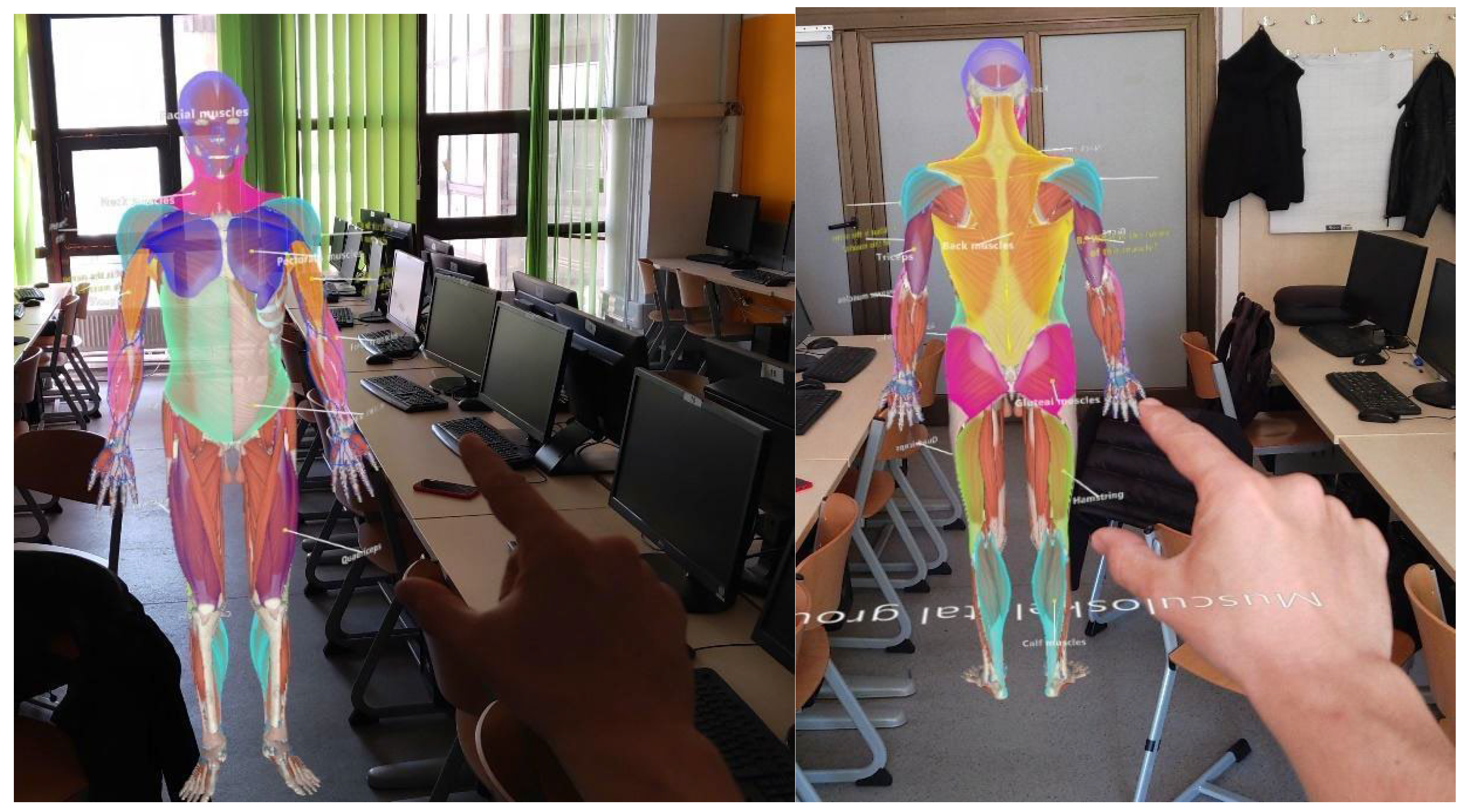
Figure 2.
Group 2 teaching material – PowerPoint slide of the human muscular system (source: https://depositphotos.com/stock-photos/muscle.html).
Figure 2.
Group 2 teaching material – PowerPoint slide of the human muscular system (source: https://depositphotos.com/stock-photos/muscle.html).
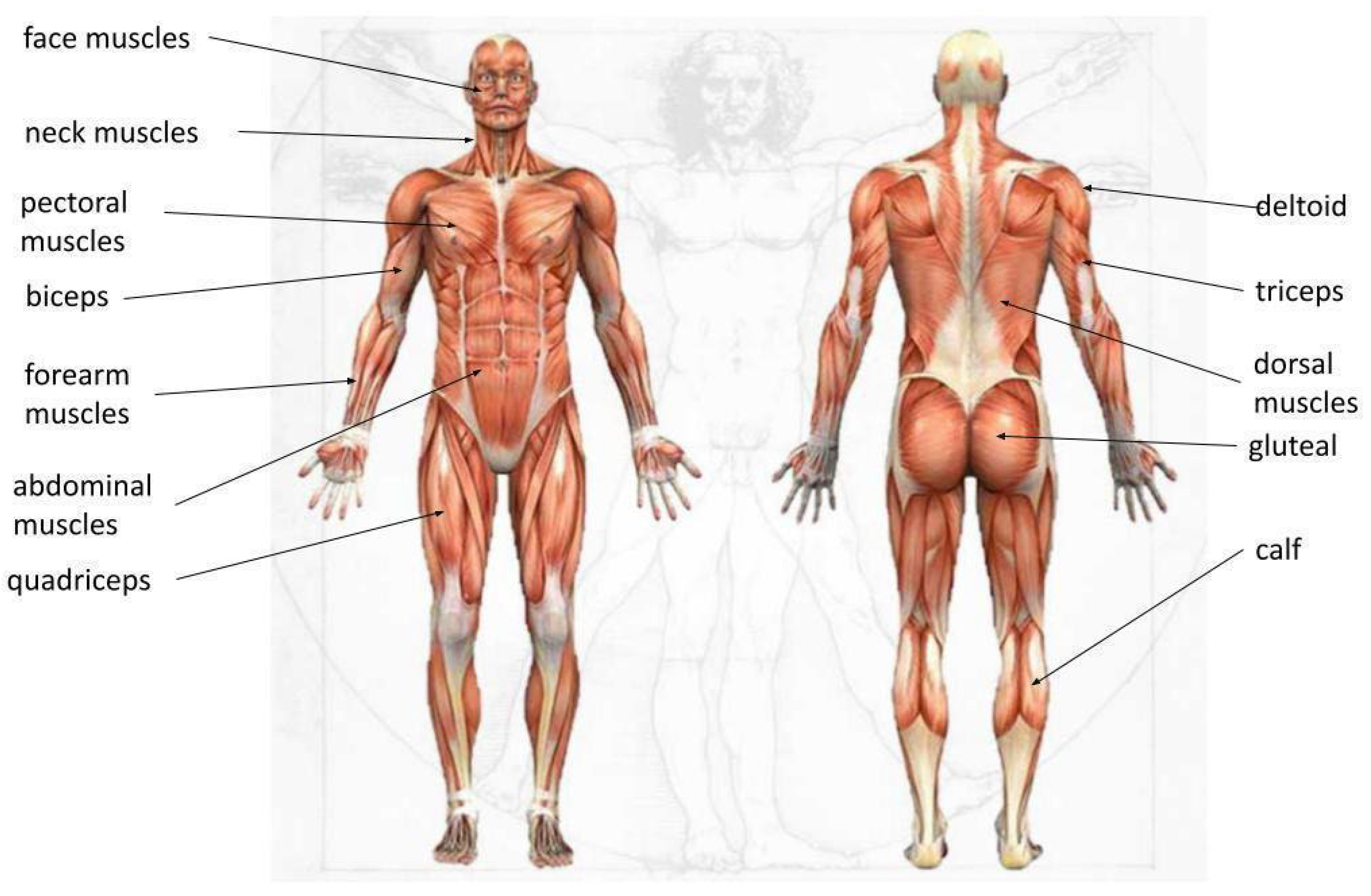
Figure 3.
Workflow of the experiment execution.
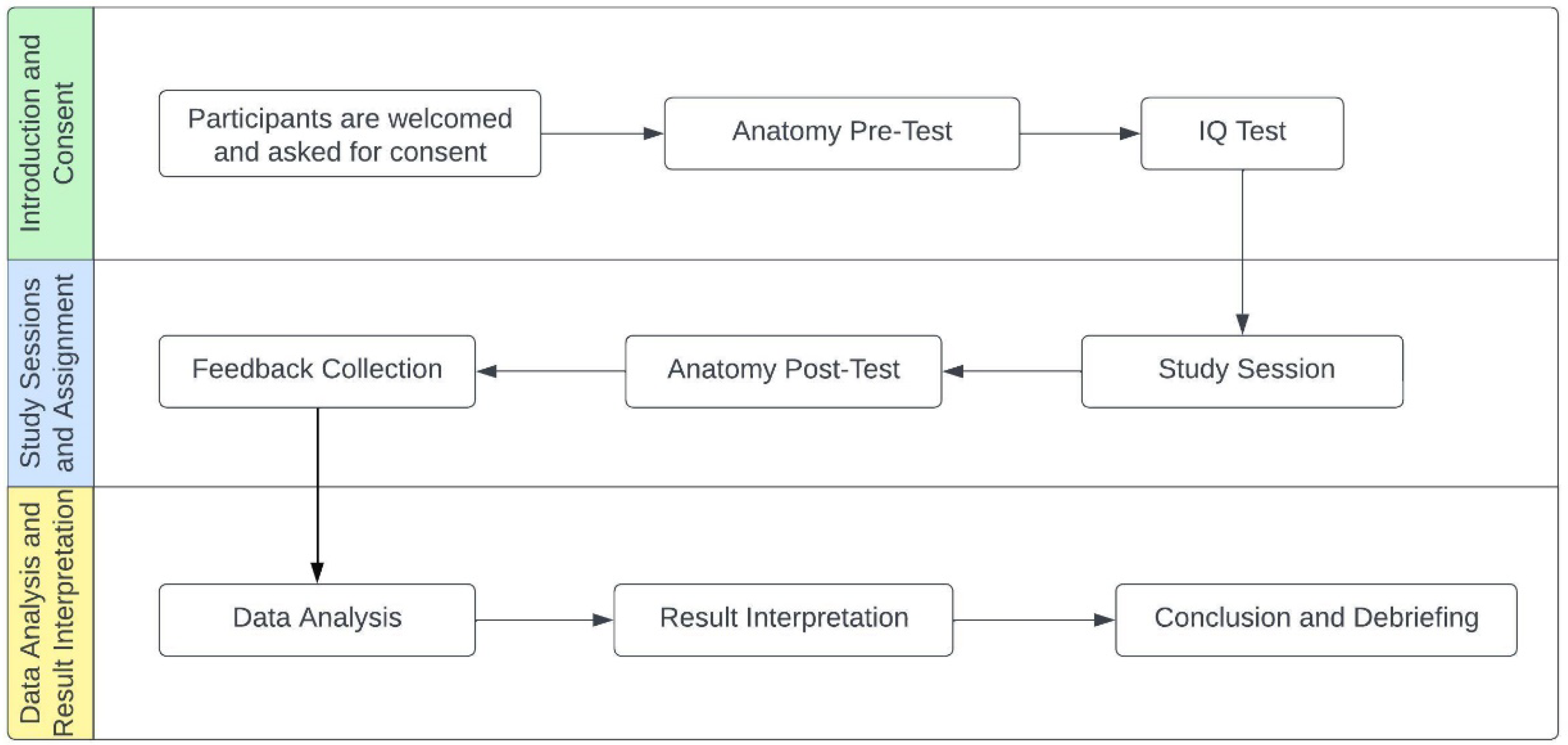
Figure 4.
Highschool profile of participants
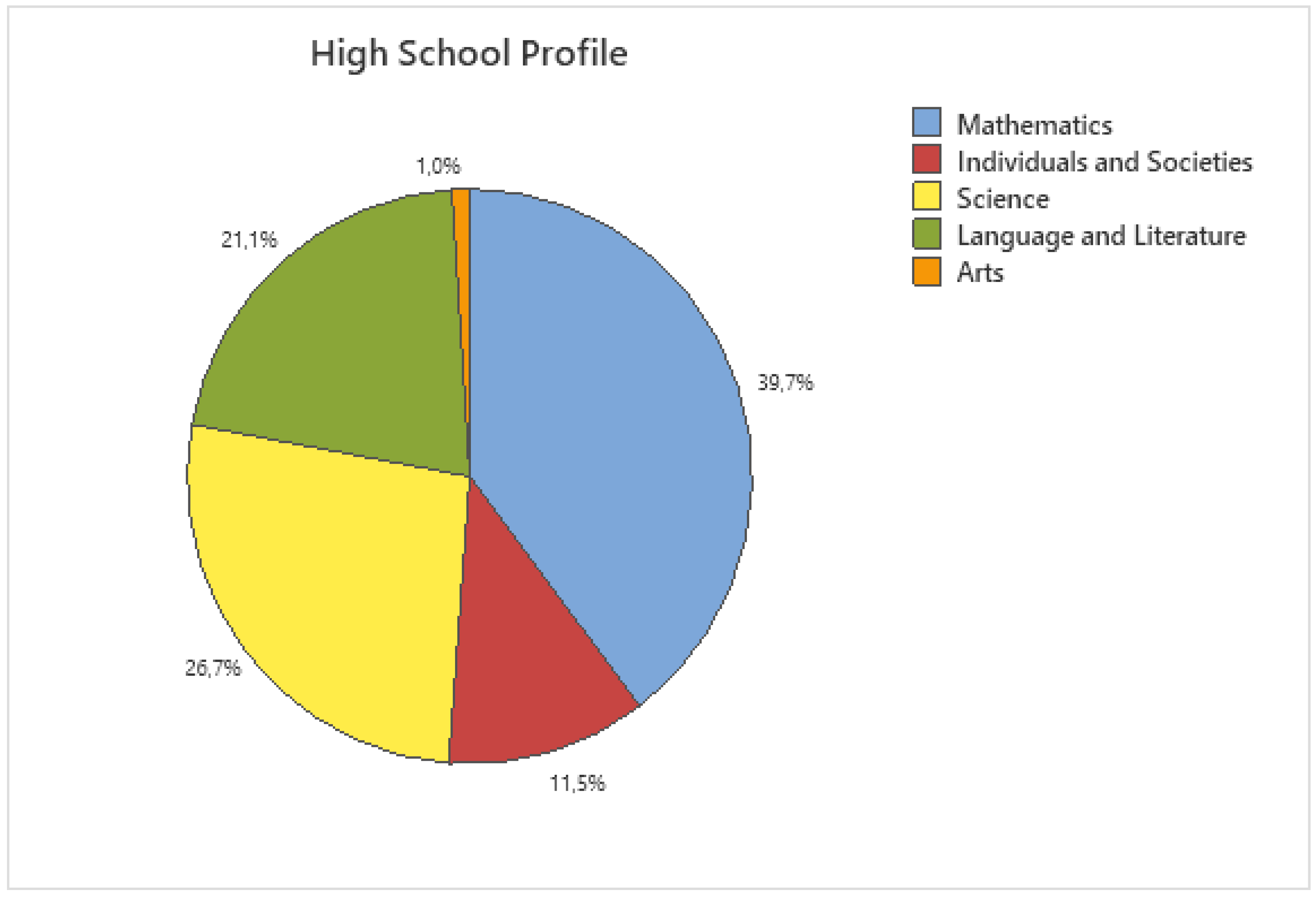
Figure 5.
Figure 5. Graphical Summary of Anatomy Test Score
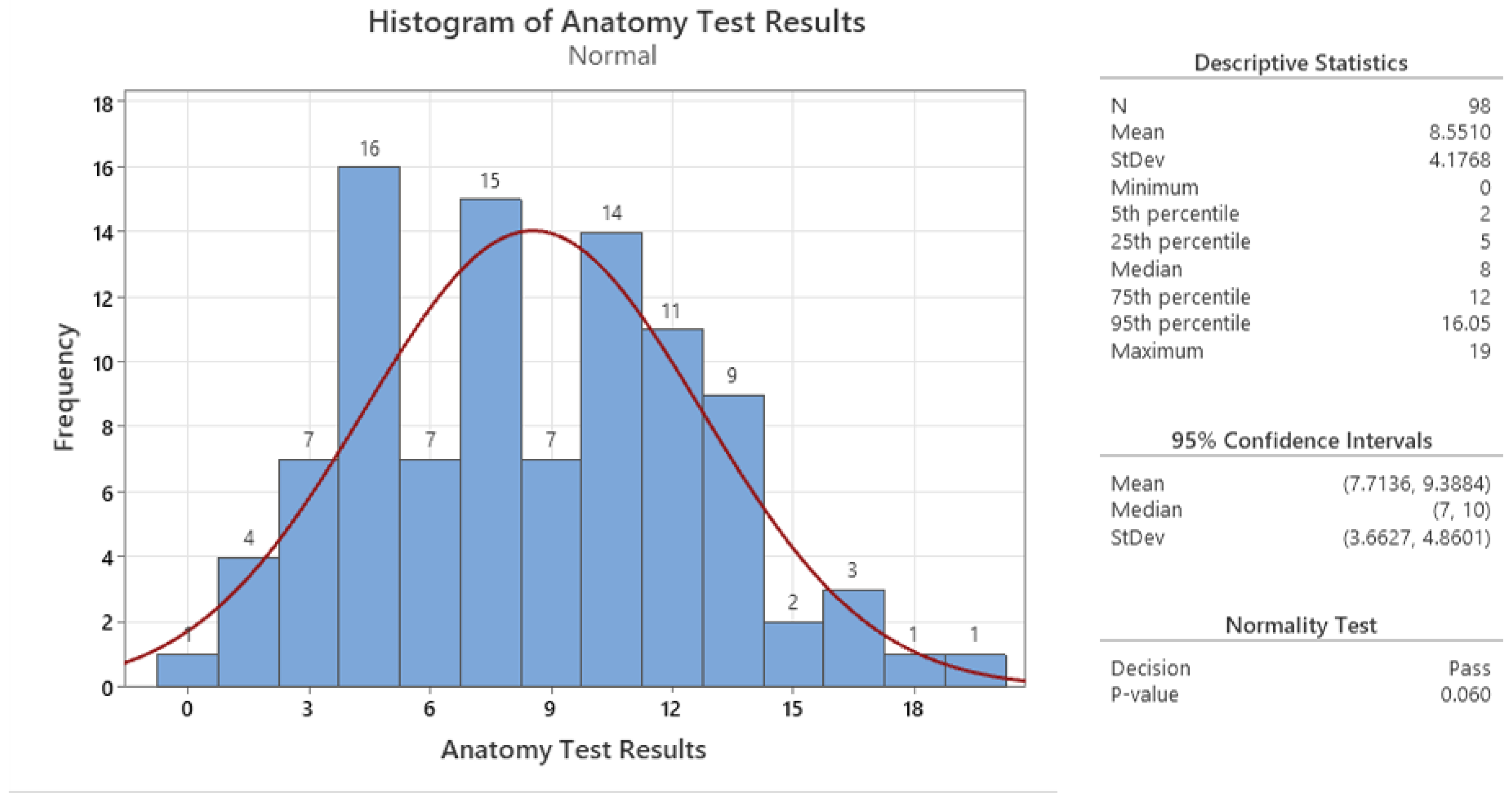
Figure 6.
Age distribution of participants
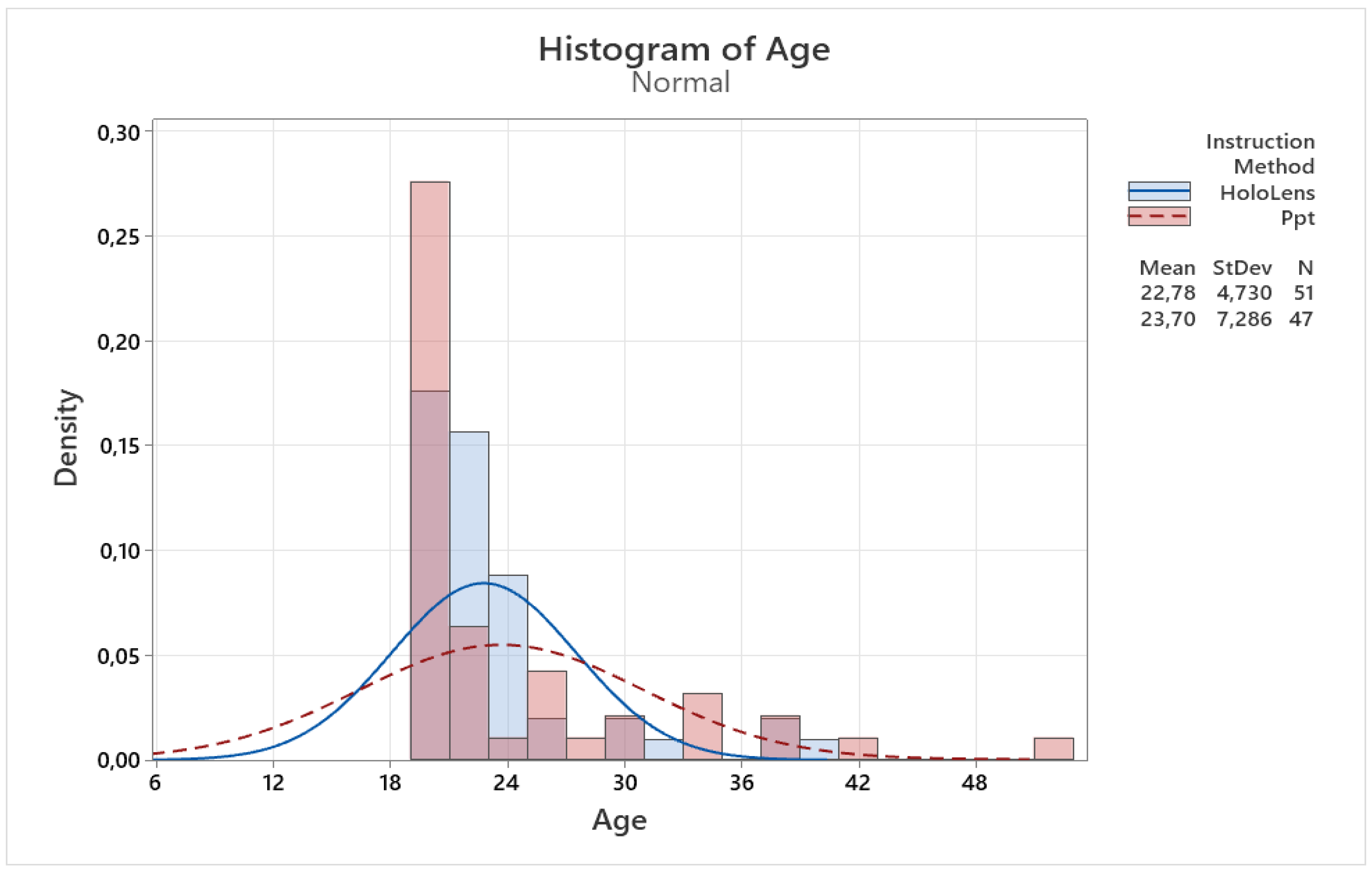
Figure 7.
IQ score data distribution
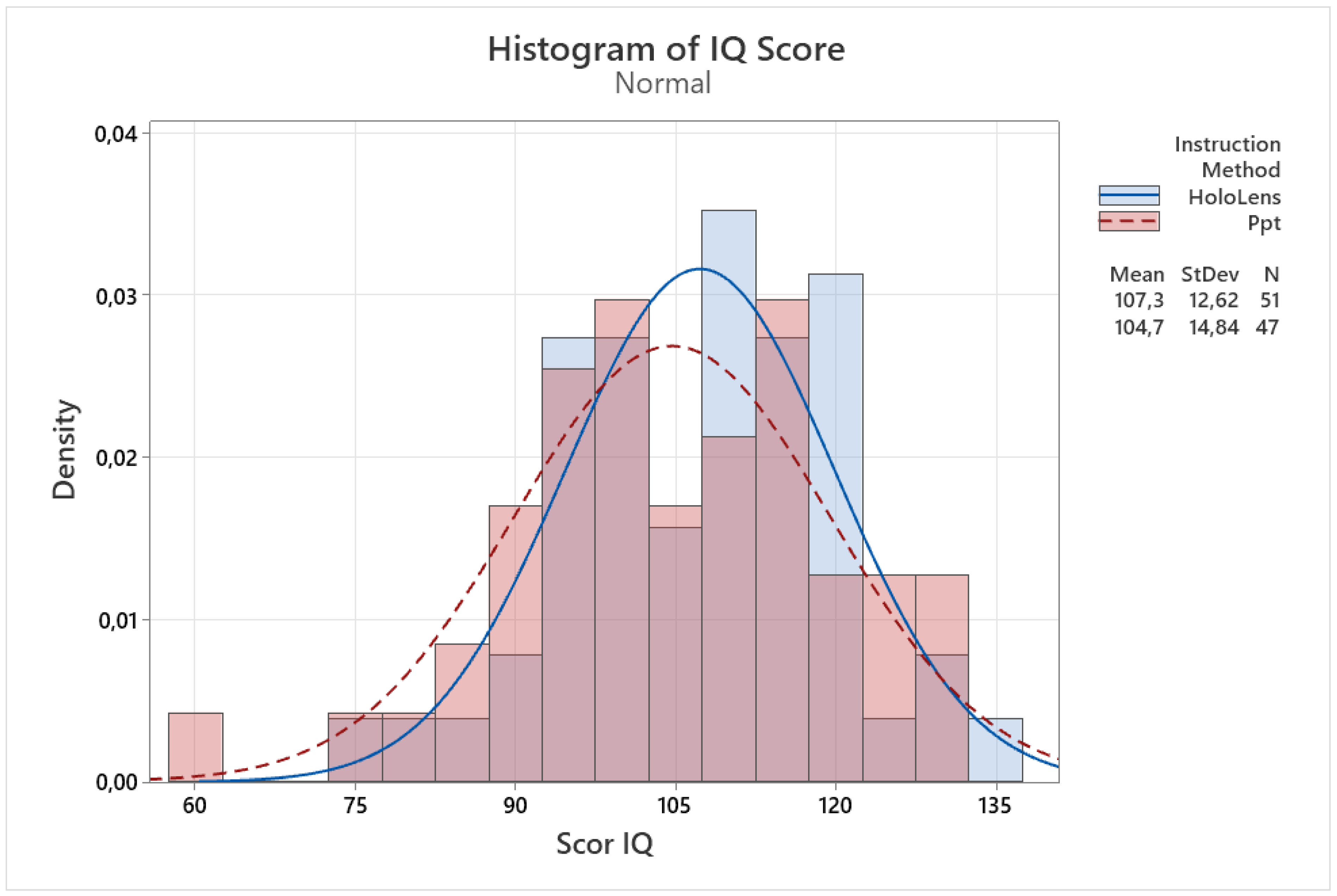
Figure 8.
Distribution of data for anatomy test results.
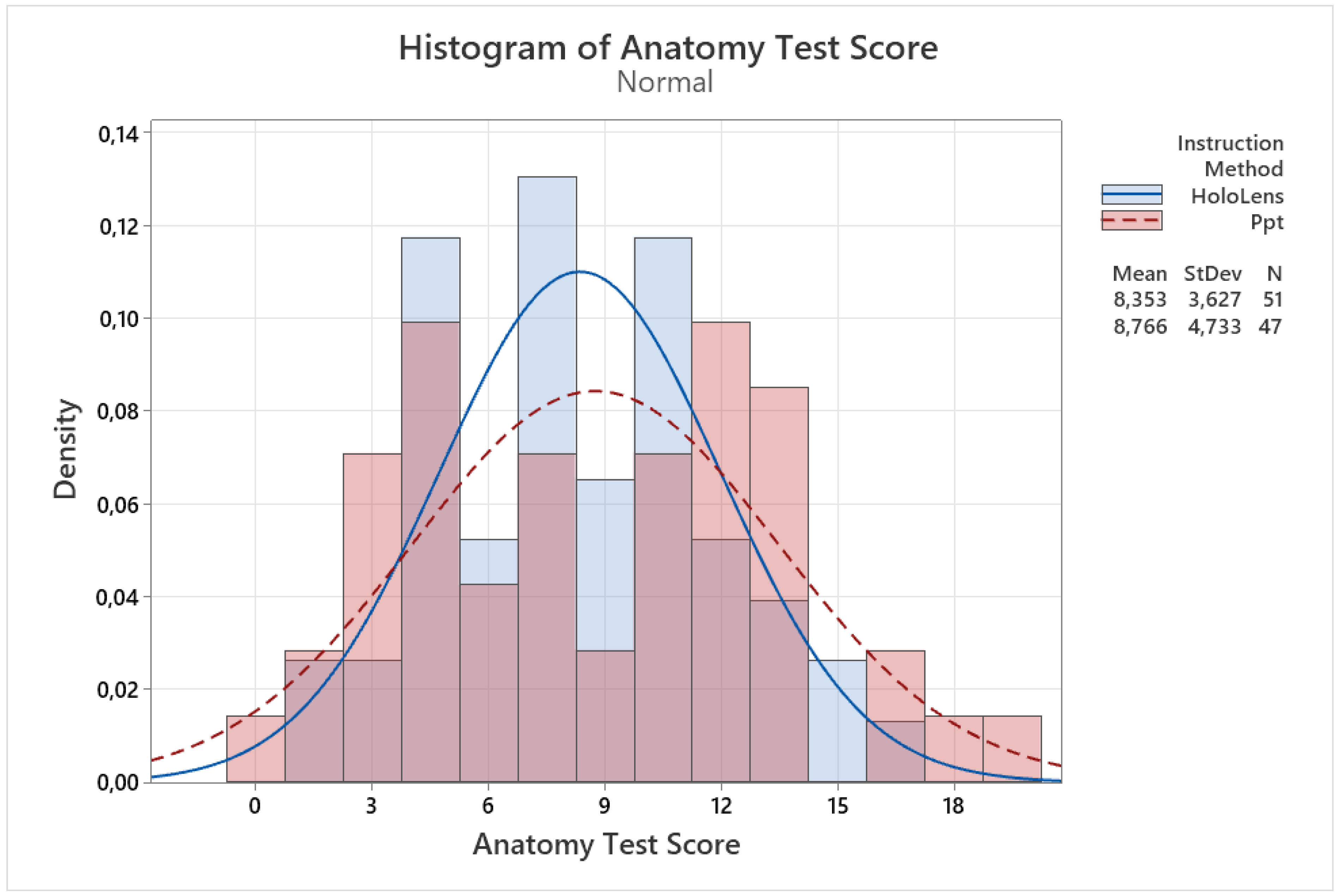
Figure 9.
2 Sample t Test for Anatomy Test Results.
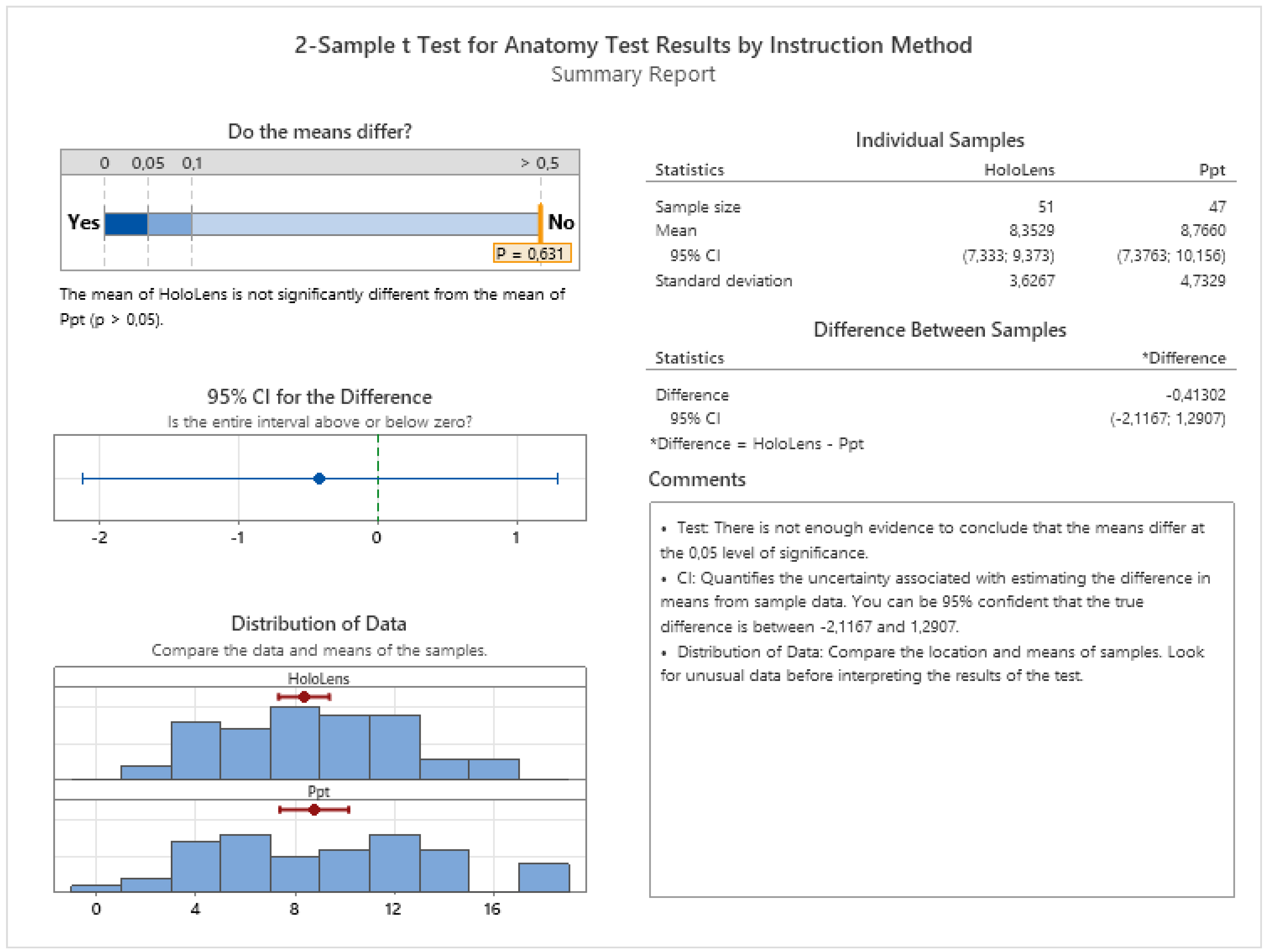
Figure 10.
Regression for Anatomy Test Score vs IQ Score.
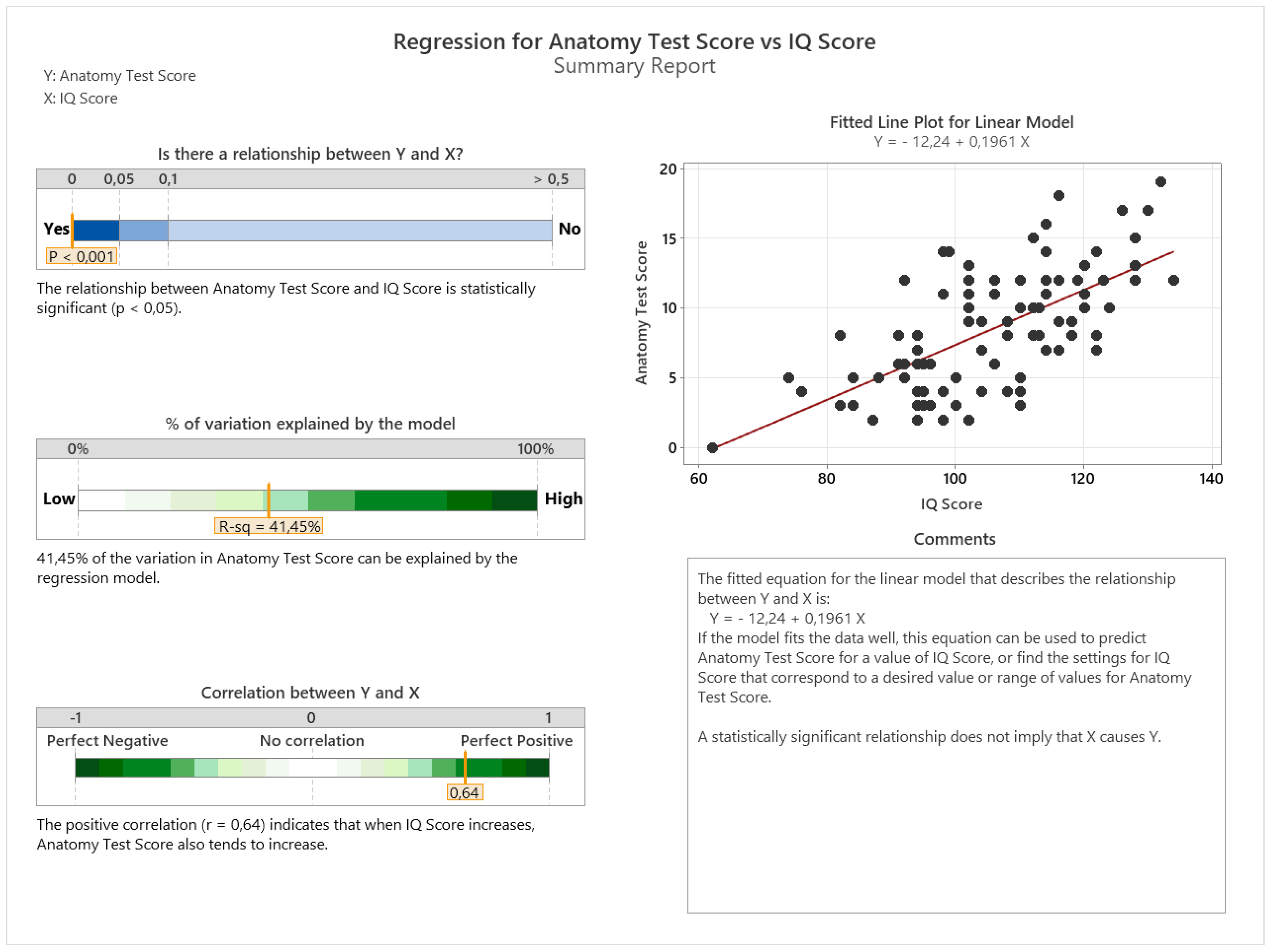
Figure 11.
Influence of type of teaching material, gender and IQ score on anatomy test results.
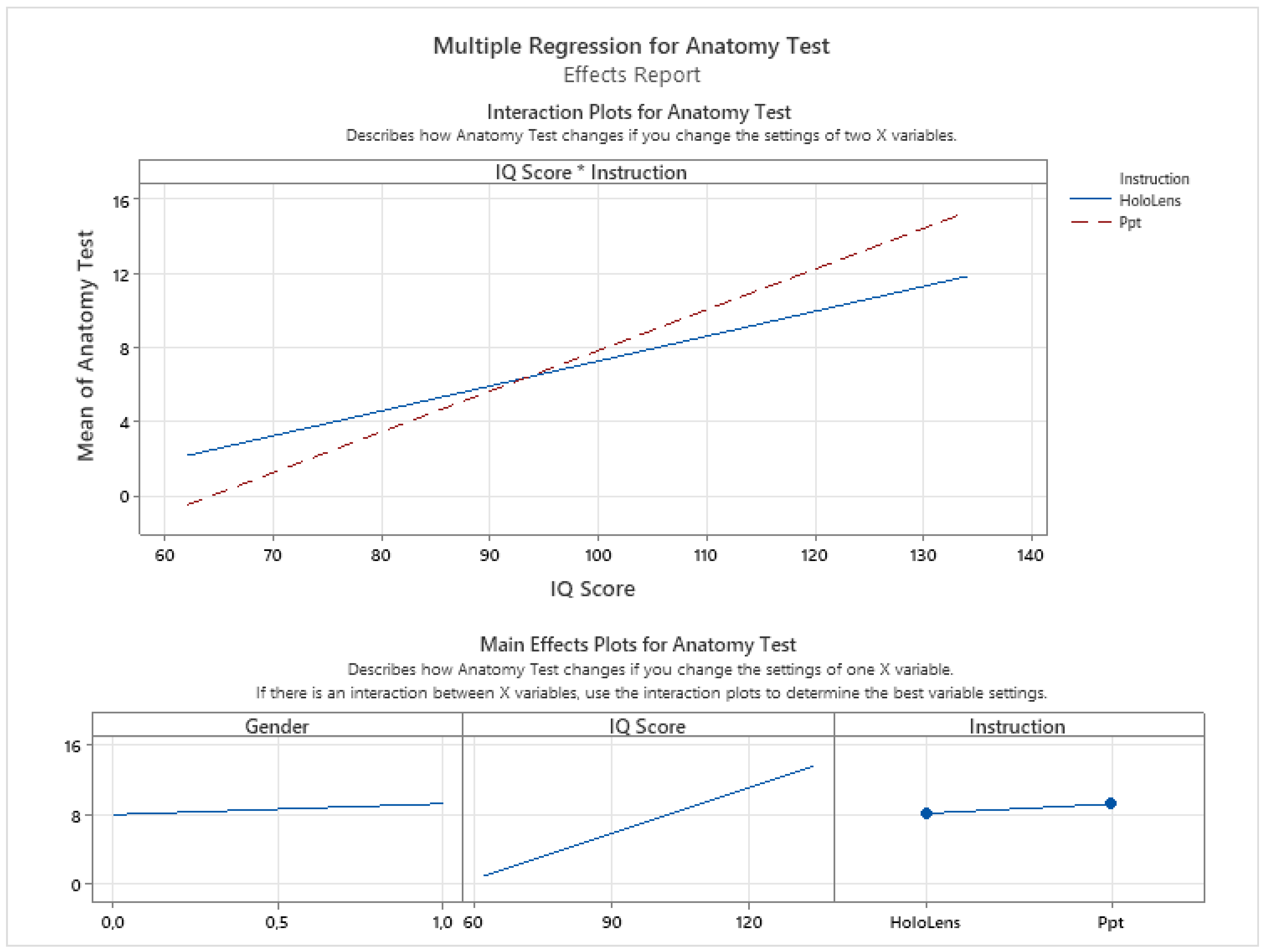
Figure 12.
Regression for Raven’s Standard Progressive Matrix Test vs Anatomy Test Score.
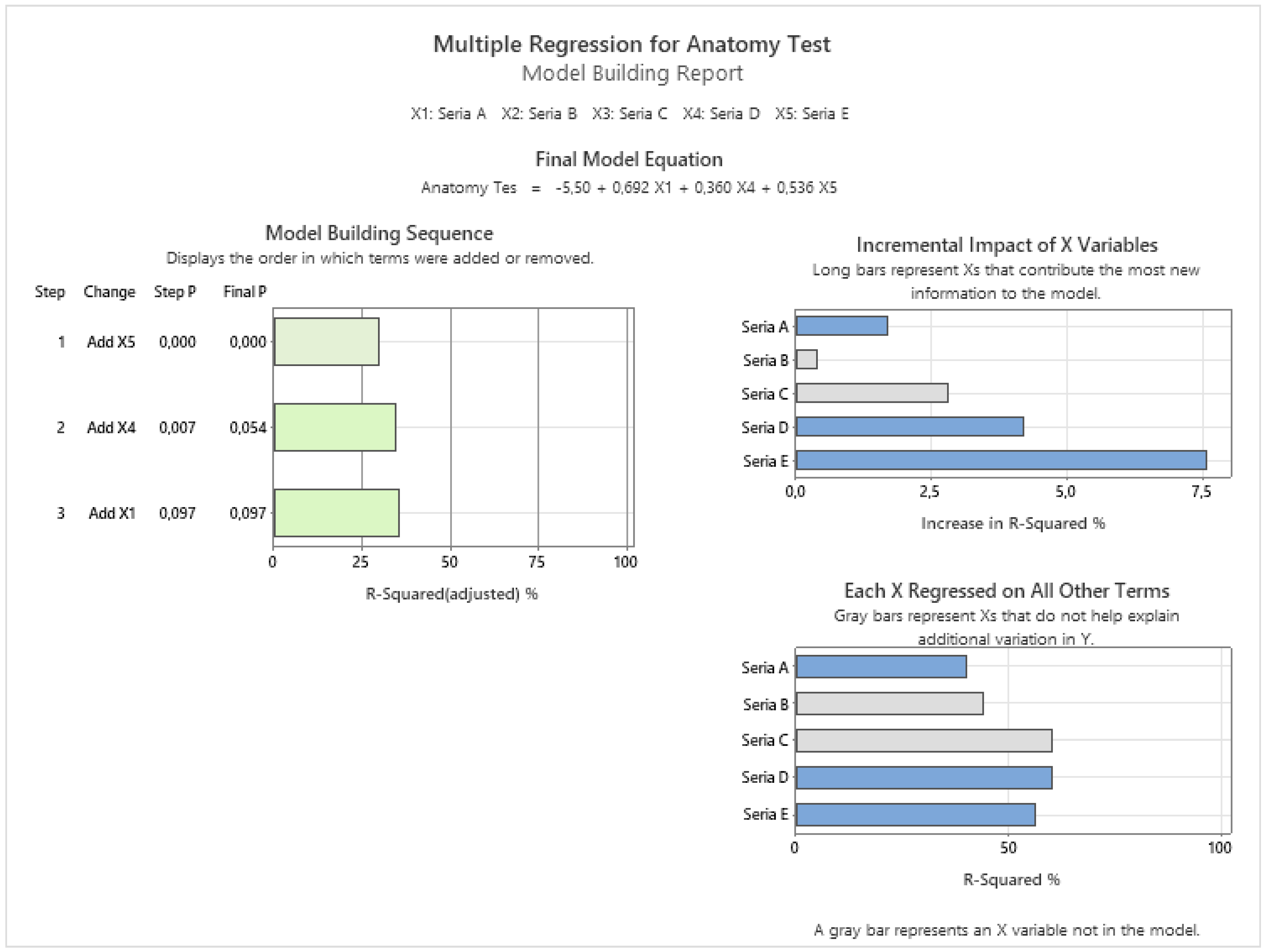
Figure 13.
Multiple Regression for Raven’s Standard Progressive Matrix E Series vs Anatomy Test Score.
Figure 13.
Multiple Regression for Raven’s Standard Progressive Matrix E Series vs Anatomy Test Score.
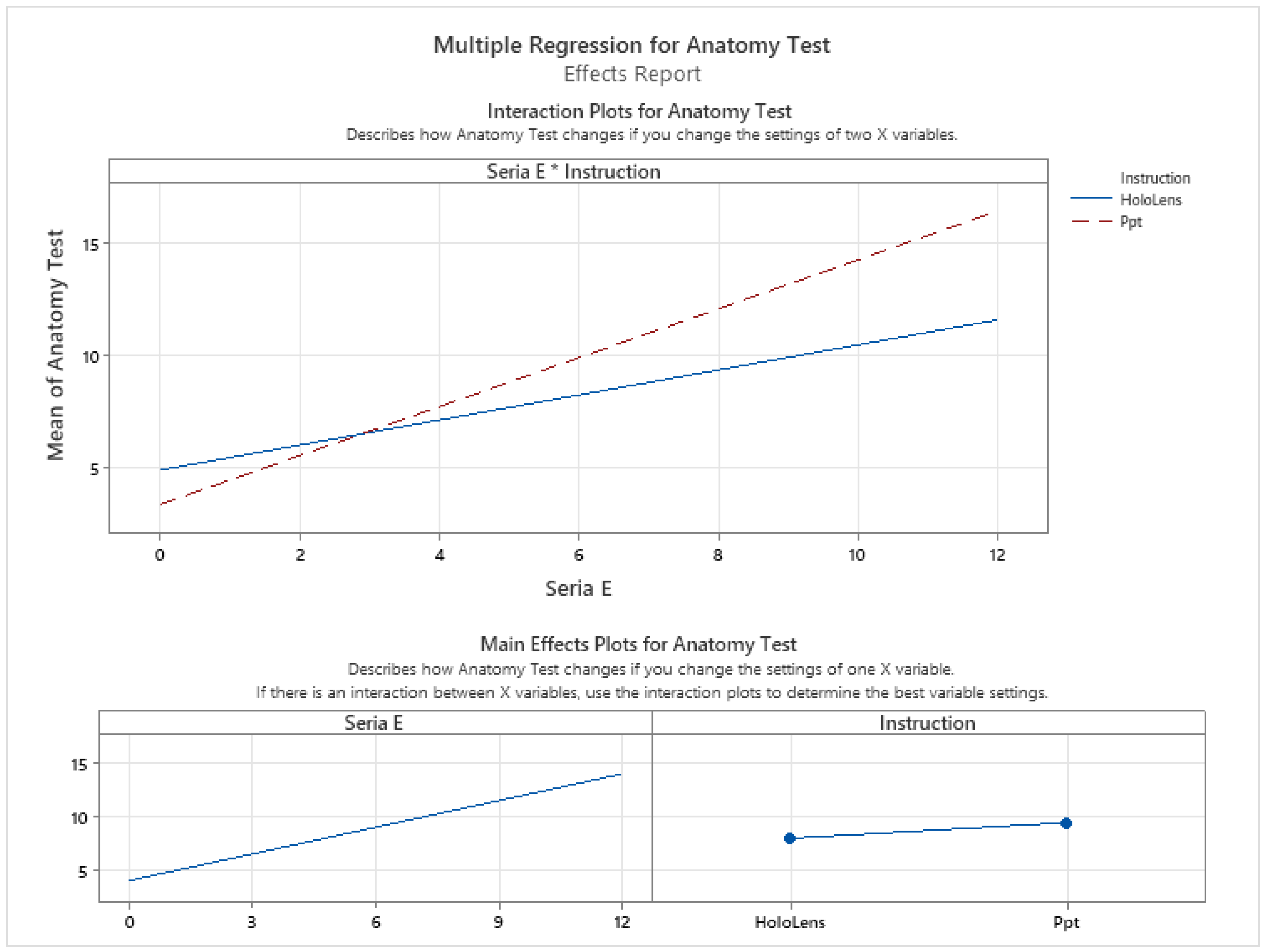
Figure 14.
Regression for Anatomy Test Results vs High School profile.
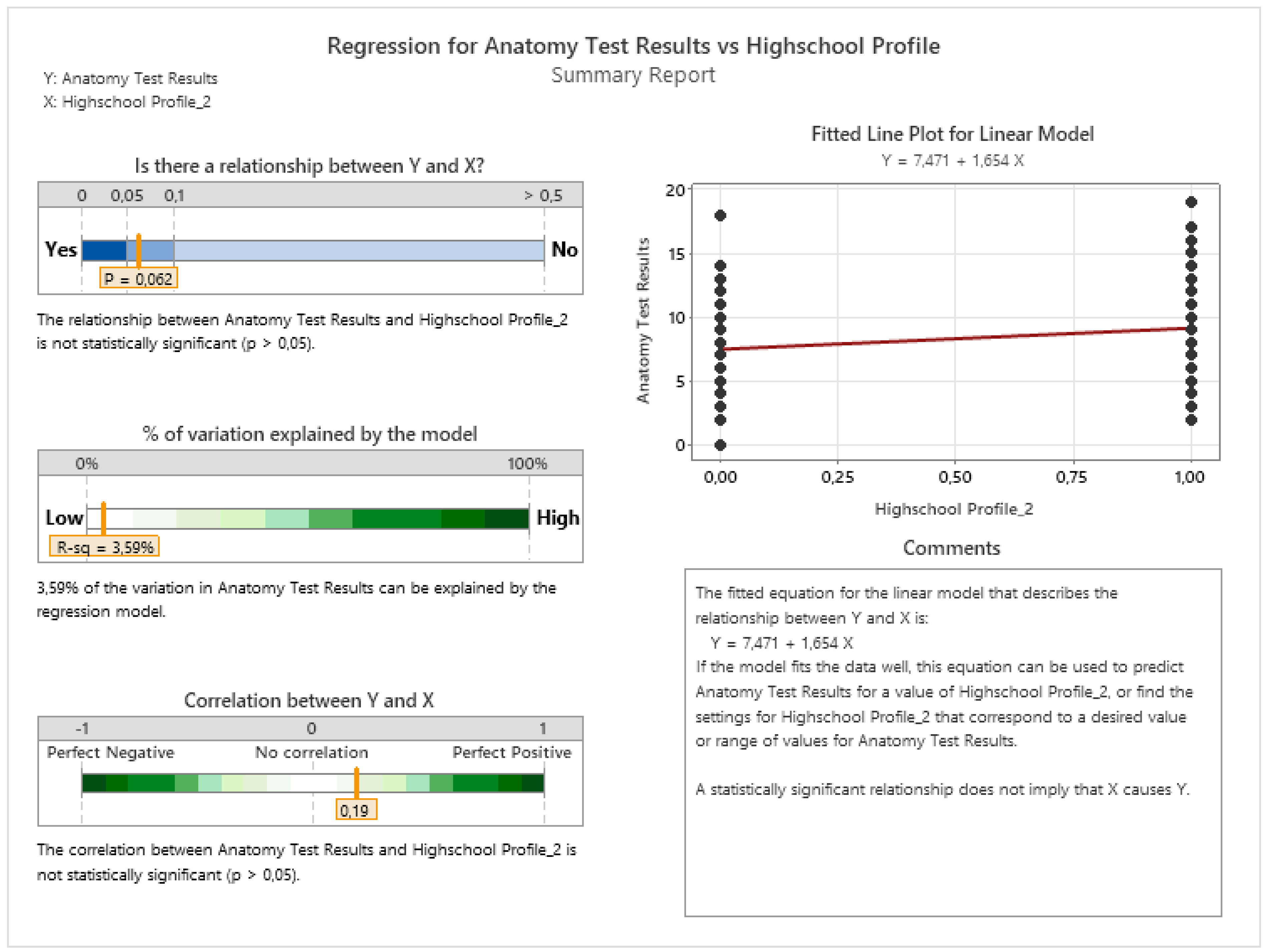
Figure 15.
Multiple Regression for Anatomy Test Results vs Age vs IQ Score vs Instruction Method.
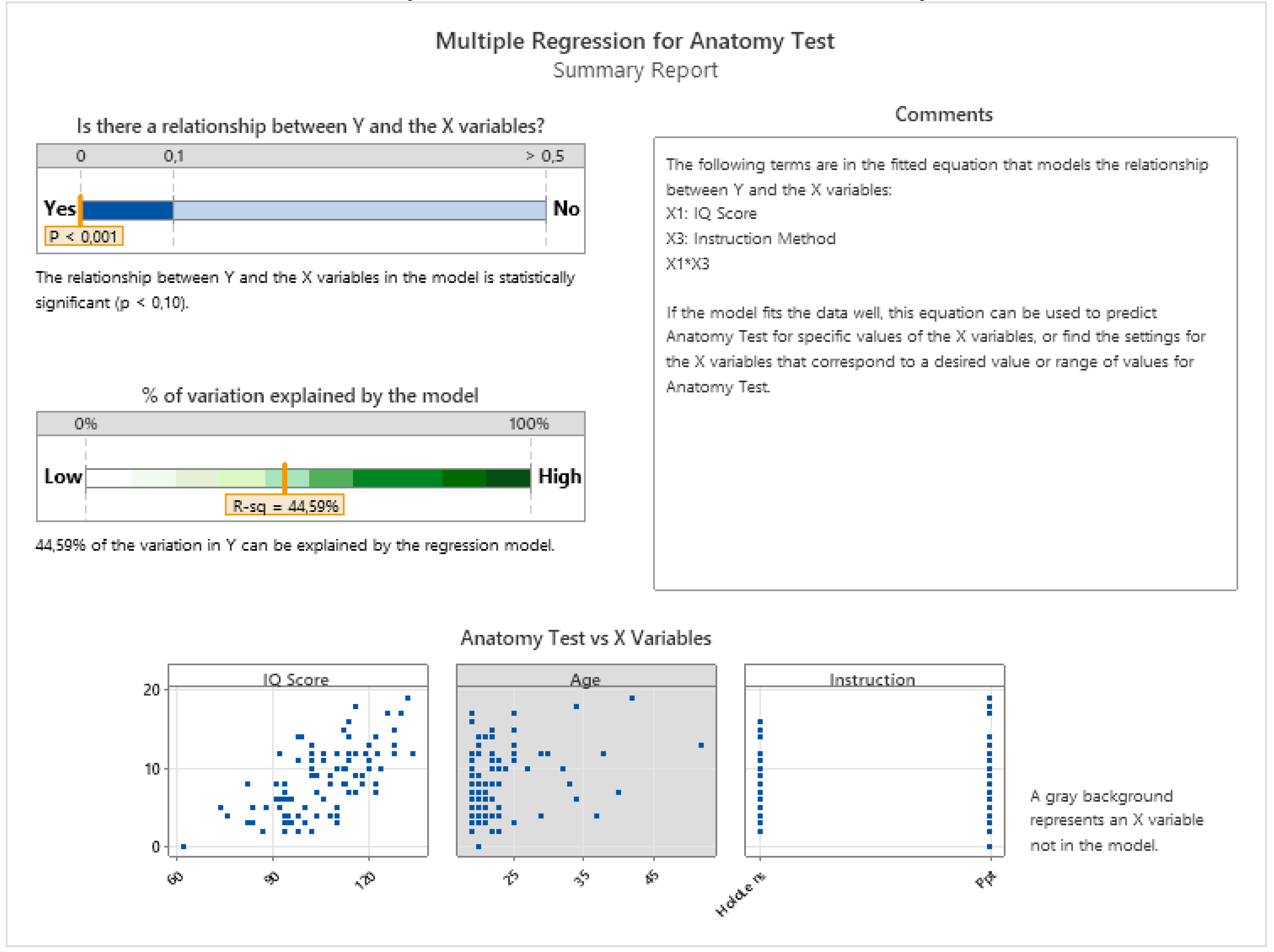

Table 1.
Differences between VR, AR, and MR.
| Virtual Reality | Augmented Reality | Mixed Reality | |
|---|---|---|---|
| Working environment | Artificial, totally immersive | Real, with digital objects superimposed | Artificial, but with the possibility of seeing the real environment |
| Required technology | VR glasses + proximity sensors | Smartphone or tablet | MR glasses |
| Interaction Type | VR controllers that enable interaction with the virtual environment | Touch screen gestures on your smartphone or tablet | Hand gestures, voice commands, focus |
Table 2.
Table 2 User experience with immersive technologies.
| VR (original content) | AR[16] | MR (HoloAnatomy app Case Western Reserve University, n.d.) [17] |
Table 3.
Age of participants grouped by gender and instruction method.
| Gender | N | Mean | SE Mean | StDev | Minimum | Q1 | Median | Q3 | Maximum | |
| Female | HoloLens | 19 | 21.74 | 1.00 | 4.37 | 19.00 | 19.00 | 20.00 | 22.00 | 37.00 |
| Ppt | 26 | 22.269 | 0.960 | 4.895 | 19.000 | 19.750 | 20.000 | 22.750 | 38.000 | |
| Male | HoloLens | 32 | 23.406 | 0.865 | 4.891 | 19.000 | 21.000 | 22.000 | 23.000 | 40.000 |
| Ppt | 21 | 25.48 | 2.03 | 9.28 | 19.00 | 19.00 | 20.00 | 31.00 | 52.00 |
Table 4.
Item analysis for the 20 anatomy test questions
| Omitted variable | Alpha of Cronbach |
| 1. The muscles of the upper limbs are: | 0.7877 |
| 2. The muscles of the trunk include: | 0.8055 |
| 3. The abdominal muscles are found: | 0.7868 |
| 4. What muscles are shown in this picture? | 0.7900 |
| 5. Identify deltoid muscle in the following pictures: | 0.7902 |
| 6. What muscles connect the trunk to the upper limb? | 0.7935 |
| 7. Which of the following muscles are involved in walking? | 0.7909 |
| 8. Which muscle is located closest to the gluteal muscles? | 0.7801 |
| 9. Adjacent to the moss in the picture are: | 0.7767 |
| 10. Which of the following muscles is inferior to the dorsal muscle? | 0.7811 |
| 11. What muscle is activated when moving the upper limb? | 0.7909 |
| 12. Which muscle is located inferior to the gluteal muscles? | 0.7836 |
| 13. Which of the following statements are true? | 0.7827 |
| 14. Which of the following claims are false? | 0.7922 |
| 15. What is the correct order of muscles from head to toe? | 0.7799 |
| 16. Which of the following muscles is not visible from front view of the body? | 0.7808 |
| 17. Which of the following muscles is visible from a back view of the body? | 0.7846 |
| 18. What muscles are activated when we laugh? | 0.8015 |
| 19. Identify the muscles of the upper limb. | 0.7872 |
| 20. What is the correct order of muscles from floor to top of head? | 0.7835 |
Disclaimer/Publisher’s Note: The statements, opinions and data contained in all publications are solely those of the individual author(s) and contributor(s) and not of MDPI and/or the editor(s). MDPI and/or the editor(s) disclaim responsibility for any injury to people or property resulting from any ideas, methods, instructions or products referred to in the content. |
© 2024 by the authors. Licensee MDPI, Basel, Switzerland. This article is an open access article distributed under the terms and conditions of the Creative Commons Attribution (CC BY) license (https://creativecommons.org/licenses/by/4.0/).
Copyright: This open access article is published under a Creative Commons CC BY 4.0 license, which permit the free download, distribution, and reuse, provided that the author and preprint are cited in any reuse.


