

Submitted:
09 July 2024
Posted:
10 July 2024
Read the latest preprint version here
Abstract
The Hyper-Torus Universe Model (HTUM) is a novel framework that unifies quantum mechanics, cosmology, and consciousness, proposing that the universe is a higher-dimensional hyper-torus containing all possible states of existence. This paper explores the fundamental concepts and implications of HTUM, which suggests that the universe is a quantum system in which all possible outcomes are inherently connected, with consciousness playing a crucial role in actualizing reality. HTUM addresses critical challenges in modern physics, such as the nature of quantum entanglement, the origin of the universe, and the relationship between mind and matter. By introducing concepts like singularity, quantum entanglement at a cosmic scale, and the self-actualization of the universe, HTUM provides a comprehensive framework for understanding the fundamental nature of reality. This paper discusses the mathematical formulation of HTUM, its implications for quantum mechanics and cosmology, and its potential to bridge the gap between science and philosophy. HTUM represents a significant shift in our understanding of the universe and our place within it, inviting further research and exploration into the nature of reality and consciousness.
Keywords:
Hyper-Torus Universe Model
; HTUM
; hyper torus
; torus
; quantum mechanics
; cosmology
; consciousness
; singularity
; black holes
; quantum entanglement
; reality
; quantum gravity
; unified theory
; quantum cosmology
; theoretical physics
; topology
; manifold theory
; cyclic universe
; wave function collapse
; event horizon
; holographic principle
; quantum measurement
; dark energy
; dark matter
; Lambda-CDM model
; multiverse
; string theory
; loop quantum gravity
; emergent spacetime
; quantum foundations
; philosophy of physics
1. Introduction
1.1. Background and Motivation
The quest to understand the universe’s structure and dynamics has been a central theme in cosmology and physics. While traditional models like the Lambda-Cold Dark Matter (Lambda-CDM) model have provided significant insights into the universe’s origins and evolution, they often need answered questions about the nature of dark matter, dark energy, and the fundamental forces that govern the cosmos [1,2,3]. Despite the success of the Big Bang model, it has limitations in explaining certain anomalies and observations, such as the uniformity of the cosmic microwave background radiation and the distribution of galaxies [4,5,6]. Enter the Hyper-Torus Universe Model (HTUM), a novel hypothesis that proposes a universe with a toroidal topology, offering a fresh and exciting perspective on its structure and behavior. HTUM builds upon and shares similarities with several existing theories and models in cosmology, such as the Poincaré Dodecahedral Space (PDS) model [7,8], which proposes a finite, positively curved topology, and the Euclidean compact 3-torus model [9,10], which suggests a flat, compact topology. HTUM also draws inspiration from the Bianchi models [11,12], which describe homogeneous but anisotropic cosmologies, some with toroidal topologies. Furthermore, the concept of a timeless singularity in HTUM is reminiscent of the Hartle-Hawking state [13], while the cyclical nature of HTUM shares conceptual similarities with the ekpyrotic universe model [14,15].
HTUM posits that the universe is finite yet boundless, with a complex topology that allows for the existence of dark matter and dark energy as intrinsic properties of space-time. By examining the roles of these mysterious components, the nature of time, and the interplay between quantum mechanics and gravity, this model aims to comprehensively understand the universe and resolve some of the most pressing issues in cosmology, such as the flatness problem and the horizon problem [16,17,18]. Additionally, HTUM provides a framework for exploring how these components interact in a self-consistent manner, potentially offering new insights into the fundamental nature of reality and the evolution of the cosmos [19,20].
HTUM conceptualizes the universe as a four-dimensional toroidal structure (4DTS) (Figure 1). Notably, the fourth dimension in this model is explicitly defined as a temporal dimension of time. This interpretation of time suggests that the universe exists as a timeless singularity where all possible configurations are contained within this singularity. In this model, time is not a linear progression but an emergent property arising from the causal relationships within the universe’s toroidal structure [21,22,23]. This perspective on time has profound implications for our understanding of causality, the nature of reality, and the unification of quantum mechanics and gravity. By viewing time as an intrinsic property of the universe’s structure, HTUM opens up new possibilities for addressing the apparent incompatibility between these fundamental theories and provides a framework for exploring the deeper connections between space, time, and matter [24,25,26].
HTUM can be understood through the analogy of an analog transition between a binary 0-1 system, represented by the Big Bang and black holes. If a black hole existed at the moment of the Big Bang, anything that crossed its event horizon would appear frozen in time from the perspective of an outside observer [27,28]. This includes anything falling into the black hole at any point in the universe’s evolution, as it would eventually catch up to the timeless state of the singularity. This analogy illustrates the idea of a timeless singularity in HTUM, where the Big Bang and black holes are not separate endpoints but part of a continuous, cyclical universe [29,30]. Additionally, observations of the cosmic microwave background radiation and the large-scale structure of the universe provide further support for such a model, highlighting the need for new frameworks to address these phenomena [4,5,6].
This paper explores HTUM’s potential to revolutionize our understanding of the cosmos. By investigating the model’s implications and its ability to integrate seemingly disparate phenomena, we seek to shed light on the fundamental nature of the universe and pave the way for groundbreaking advancements in cosmology and physics [31,32]. HTUM holds the promise of a new era in our understanding of the cosmos, inspiring us to push the boundaries of our knowledge. Furthermore, the model’s ability to explain anomalies in the cosmic microwave background and the distribution of galaxies could lead to a more comprehensive understanding of the universe’s evolution and structure [19,20].
This paper also introduces a novel perspective on mathematical operations, proposing a unified approach that aligns with HTUM’s holistic view of the universe. This concept explored in depth later, suggests that traditional mathematical operations are interconnected aspects of a single, continuous process, mirroring the interconnected nature of the universe itself.
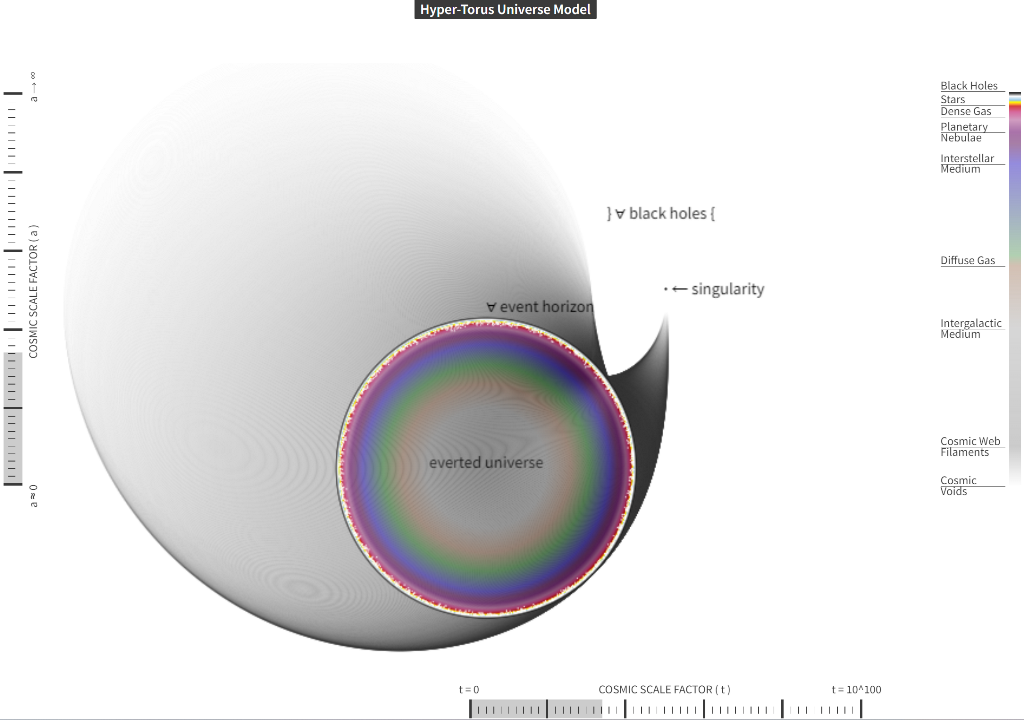
A visual and interactive representation of the hyper-torus can be found at HTUM.org [33]. This detailed simulation is a powerful tool for researchers and curious individuals seeking to grasp the intricate geometry of the 4D hyper-torus structure central to HTUM. The interactive nature of the simulation allows users to manipulate and observe the hyper-torus from various angles and dimensions, providing invaluable insights into its complex topology. By offering dynamic visualizations of how matter and energy might flow within this structure, the simulation aims to facilitate a deeper understanding of HTUM’s profound implications for the nature of the universe, including concepts such as cyclical cosmic evolution and the interconnectedness of space-time. This resource not only aids in comprehending the theoretical framework of HTUM but also serves as a bridge between abstract mathematical concepts and tangible visual representations, making the model more accessible to a broader audience.
1.2. Roadmap of the Paper
This paper comprehensively explores the Hyper-Torus Universe Model (HTUM), addressing its theoretical foundations, implications, and relationships to other theories in physics and cosmology. The following roadmap outlines the structure of our discussion, guiding the reader through the complex and multifaceted aspects of HTUM:
- Section 2: Theoretical Foundations - This Section delves into the limitations of the Lambda-CDM model and provides a historical context for developing cosmological concepts, including the discovery of dark matter and dark energy. It sets the stage for understanding why a new model like HTUM is necessary.
- Section 3: The Hyper-Torus Universe Model (HTUM) - Here, we present a detailed explanation of HTUM, including the mathematical formulation of the toroidal structure and its properties. We also discuss the challenges in visualizing a four-dimensional toroidal structure (4DTS).
- Section 4: Gravity and the Collapse of the Wave Function - This Section explores the wave function’s significance in quantum mechanics and discusses the measurement problem, highlighting how HTUM addresses these issues.
- Section 5: Beyond Division: Unifying Mathematics and Cosmology - This Section examines HTUM’s implications for the foundations of mathematics, discussing the nature of mathematical truth and the role of intuition.
- Section 6: The Singularity and Quantum Entanglement - We explain quantum entanglement, its implications for singularity, and the challenges in experimentally verifying these concepts.
- Section 7: The Event Horizon and Probability - This Section focuses on the mathematical formulation of the event horizon and its properties, discussing HTUM’s implications for our understanding of black holes.
- Section 8: The Universe Observing Itself - We explore the mechanism of self-observation and its relationship to the collapse of the wave function, addressing the experimental challenges involved.
- Section 9: Consciousness and the Universe - We discuss the relationship between consciousness and quantum measurement, incorporating this relationship into HTUM and addressing experimental challenges.
- Section 10: Relationship to Other Theories - This Section compares HTUM with other theories of quantum gravity and discusses the potential for integration with different theoretical frameworks.
- Section 11: Testable Predictions and Empirical Validation - We discuss the challenges of testing HTUM’s predictions experimentally and provide a roadmap for future experimental work and collaborations.
- Section 12: Implications for the Nature of Reality - This Section delves into the philosophical implications of HTUM, particularly concerning the nature of time and the mind-matter relationship.
- Section 13: Conclusion - The final Section discusses HTUM’s potential impact on cosmology and its relationship to other disciplines, emphasizing the importance of interdisciplinary research and collaboration.
This comprehensive exploration of HTUM aims to provide a thorough understanding of the model’s theoretical foundations, its implications across various fields of physics and philosophy, and its potential for future research and experimental validation. By addressing these diverse aspects, we hope to demonstrate the far-reaching significance of HTUM in advancing our understanding of the universe.
1.3. Significance of HTUM in Cosmology
HTUM offers a transformative perspective on the universe’s structure and behavior, with potential implications for several critical areas in cosmology:
- Dark Matter and Dark Energy: By integrating these elusive components into a unified framework, HTUM could provide new insights into their nature and role in the cosmos [34,35,36]. Understanding the distribution and properties of dark matter and dark energy within the toroidal structure may illuminate their origins and how they influence the universe’s evolution.
- Quantum Mechanics and Gravity: HTUM’s approach to the interplay between quantum mechanics and gravity could lead to a deeper understanding of these fundamental forces [37,38,39]. The toroidal geometry of HTUM may provide a natural framework for unifying these theories, as the compact nature of the torus could potentially resolve the incompatibilities between quantum mechanics and general relativity.
- Nature of Time: HTUM’s perspective on time as a continuous and interconnected process challenges traditional views and opens new avenues for exploration [23,40,41]. The cyclical nature of the model suggests that time may be an emergent property arising from the toroidal structure and the interactions between matter and energy rather than a fundamental aspect of reality.
- Philosophical Implications: The model’s integration of consciousness as a fundamental aspect of the universe invites a reevaluation of the mind-matter relationship and the nature of reality [42,43,44]. HTUM’s emphasis on the interconnectedness of space, time, and consciousness may provide a framework for addressing long-standing questions in the philosophy of mind, such as the hard problem of consciousness and the nature of subjective experience.
- Cosmological Principle: HTUM’s toroidal geometry challenges the cosmological principle, which assumes that the universe is homogeneous and isotropic on large scales [45,46]. The model’s compact topology implies that the universe may have a preferred direction or orientation, which could lead to observable anisotropies in the cosmic microwave background or the distribution of galaxies. Testing the predictions of HTUM against the cosmological principle may provide crucial insights into the model’s validity and the fundamental assumptions underlying modern cosmology.
- Anthropic Principle: The cyclical nature of HTUM and the potential for multiple universes within the toroidal structure may have implications for the anthropic principle, which attempts to explain the apparent fine-tuning of the universe for the emergence of life and consciousness [47,48,49]. The model’s framework may provide a natural explanation for the existence of a universe with the necessary conditions for the development of complex structures and intelligent life without relying on the controversial notion of a multiverse or the fine-tuning of initial conditions.
HTUM’s significance in cosmology lies in its potential to provide a comprehensive and unified framework for understanding the universe’s structure, evolution, and the role of consciousness within it. By addressing fundamental questions and challenges in cosmology, quantum mechanics, and philosophy, HTUM opens new avenues for research and exploration, promising to deepen our understanding of the cosmos and our place within it.
2. Theoretical Foundations
2.1. The Lambda-CDM Model and Cosmic Evolution Scenarios
The Lambda-Cold Dark Matter (Lambda-CDM) model is the prevailing cosmological framework, which includes the Big Bang theory explaining the universe’s origin from a singularity approximately 13.8 billion years ago, as well as its subsequent evolution [50,51]. This model posits that the universe has been expanding ever since, leading to the formation of galaxies, stars, and other cosmic structures. The Lambda-CDM model is supported by several key observations, including the cosmic microwave background (CMB) radiation, which Arno Penzias and Robert Wilson discovered in 1965 [52]. The CMB is a faint, uniform background of microwave radiation that fills the sky, representing a snapshot of the universe approximately 380,000 years after the Big Bang. Its discovery provided compelling evidence for the hot, dense early state of the universe predicted by the Big Bang model.
Another critical evidence supporting the Lambda-CDM model is the abundance of light elements, such as hydrogen, helium, and lithium, in the universe [51]. The observed abundances of these elements closely match the predictions of Big Bang nucleosynthesis, which describes the production of light elements in the early universe. Additionally, the redshift of galaxies, first observed by Edwin Hubble in 1929 [50], provides evidence for the universe’s expansion. As galaxies move away from us, their light is stretched to longer wavelengths, causing a shift towards the red end of the spectrum. The relationship between a galaxy’s distance and its redshift is a crucial prediction of the Big Bang model.
2.2. Historical Context
The development of the Lambda-CDM model can be traced through several critical stages in 20th-century cosmology. It began with Georges Lemaître’s proposal of an expanding universe [53] and Edwin Hubble’s empirical support through galaxy redshift observations [50]. These early ideas evolved into the Big Bang theory, forming the Lambda-CDM model’s foundation. As cosmological understanding progressed, various scenarios for the universe’s future were proposed. The concept of the Big Crunch, a hypothetical scenario where the universe’s expansion eventually reverses, leading to a collapse back into a singularity, emerged as one possibility [54]. This idea suggested a potentially cyclical nature of cosmic evolution. However, late 20th-century observations, particularly the discovery of cosmic acceleration [55,56], led to the incorporation of dark energy into cosmological models. This development, along with the inclusion of cold dark matter, resulted in the formulation of the Lambda-CDM model. This model now serves as the standard framework in cosmology, predicting an ever-expanding universe rather than a Big Crunch scenario. Despite its successes, the Lambda-CDM model still faces challenges, including explaining the fundamental nature of dark matter and dark energy and accounting for some observed cosmic anomalies.
The inflationary model, proposed by Alan Guth and others in the 1980s [16], addressed some of the limitations of the standard cosmological model as it was understood at that time. Cosmic inflation posits a brief period of exponential expansion in the early universe, which helps to explain the observed flatness and uniformity of the universe. Inflation also provides a mechanism for generating small-scale density fluctuations that grow into galaxies and large-scale structures. While the inflationary model has successfully addressed some of the early cosmological model’s limitations and has been incorporated into the current Lambda-CDM framework, it still faces challenges, such as needing a specific form of matter or energy to drive the inflationary expansion.
The discovery of dark matter and dark energy in the late 20th century further revolutionized our understanding of the universe. Dark matter, first inferred from the rotational speeds of galaxies by Fritz Zwicky [57], and later supported by observations of galaxy rotation curves and gravitational lensing, is a form of matter that does not interact with electromagnetic radiation but exerts gravitational influence. Dark energy, proposed to explain the accelerated expansion of the universe observed by Saul Perlmutter, Adam Riess, and Brian Schmidt [55,56], is a mysterious form of energy that permeates all of space and drives the universe’s expansion. The existence of dark matter and dark energy poses significant challenges to the standard Big Bang model, as their nature and properties still need to be fully understood.
2.3. Limitations of the Lambda-CDM Model
While the Lambda-CDM model has provided significant insights into the universe’s origins and evolution, it has several limitations:
- Singularity Problem: The theory begins with a singularity, a point of infinite density and temperature, which current physics cannot adequately describe [58].
- Flatness Problem: The observed spatial flatness of the universe requires fine-tuning initial conditions, which seems improbable [60].
- Dark Matter and Dark Energy: While the Lambda-CDM model incorporates dark matter and dark energy as critical components, it does not fully explain their fundamental nature or origin [55,61]. The model describes their effects but leaves questions about their underlying physics and how they evolved throughout cosmic history.
2.4. Addressing Limitations with HTUM
HTUM addresses these limitations by proposing a 4DTS of the universe [7,62]. This model offers an alternative to the Lambda-CDM framework, incorporating aspects analogous to both the expansion phase of the Lambda-CDM model and the contraction phase suggested by Big Crunch scenarios. HTUM presents these within a continuous, cyclical framework, emphasizing dark matter and dark energy’s roles in shaping the universe’s structure and evolution [15,63]. Key aspects of how HTUM addresses these limitations include:
- Singularity and Causality: HTUM redefines the singularity not as a point of infinite density but as a phase transition within the toroidal structure, potentially resolving the singularity problem [64,65]. In HTUM, the singularity is replaced by a smooth transition between cycles, maintaining the continuity of space-time and causality.
- Causal Connectivity: The toroidal geometry of HTUM allows for a natural explanation of the horizon problem, as regions of the universe can remain in causal contact through the torus’s topology [7,62]. The compact nature of the torus ensures that light and information can propagate around the universe, maintaining causal connectivity and explaining the observed uniformity of the CMB.
- Spatial Flatness: The cyclical nature of HTUM provides a mechanism for maintaining spatial flatness without requiring fine-tuning [15,63]. As the universe undergoes repeated cycles of expansion and contraction, any initial curvature is smoothed out over time, leading to the observed flatness of space. This concept is explored in more detail in Section 2.5, where we discuss how HTUM’s toroidal structure naturally addresses the flatness problem.
- Integration of Dark Matter and Dark Energy: HTUM incorporates dark matter and dark energy as fundamental components driving the universe’s cyclical behavior and structural evolution [15,63]. Dark matter plays a crucial role in the formation and stability of the toroidal structure, while dark energy drives the expansion and contraction phases of the cosmic cycle.
By effectively addressing these limitations, HTUM not only offers a novel perspective but also instills a sense of hope and optimism. It challenges conventional separations of physical phenomena and invites further exploration into the fundamental principles governing the cosmos, paving the way for a brighter future in cosmology [7,62]. The model’s emphasis on the interconnectedness of space, time, and matter encourages a more holistic approach to understanding the universe, fostering collaboration across various scientific disciplines.
2.5. HTUM and the Flatness Problem
The flatness problem in cosmology stems from the observation that the universe’s density is remarkably close to the critical density required for a flat geometry. In the standard cosmological model, this necessitates extreme fine-tuning of initial conditions [16]. Recent observations continue to support this flatness, with Planck 2018 results constraining the curvature parameter to [66].
HTUM addresses this problem through its toroidal structure. In a 4D torus, the average curvature over the entire manifold is zero, regardless of local curvature variations [67]. Mathematically, this can be expressed as:
This zero average curvature has profound mathematical implications, particularly when considered in the context of the Gauss-Bonnet theorem extended to higher dimensions. For a compact, orientable 4D manifold without boundary, the generalized Gauss-Bonnet theorem states:
where is the Ricci curvature tensor, is the Riemann curvature tensor, and is the Euler characteristic of the manifold [69]. For a 4D torus, , combined with the zero average curvature, imposes strong constraints on the possible curvature distributions, naturally leading to a globally flat universe [70]. Recent work by [71] has further explored the implications of toroidal and other non-trivial topologies on cosmological observables.
Moreover, HTUM proposes that the observed flatness is a consequence of the universe’s cyclical nature. Over multiple cycles, any initial curvature would be smoothed out due to the toroidal topology [72]. This can be modeled using a damped oscillator equation:
where is the density parameter, is a damping coefficient related to the expansion rate, and is the natural oscillation frequency in the toroidal structure [73]. Recent studies have further investigated the dynamics of cyclic cosmologies, providing new insights into their behavior and observational signatures [74].
This approach naturally leads to a flat universe without requiring fine-tuning, addressing the flatness problem more elegantly and with mathematical consistency [29]. The toroidal structure of HTUM, coupled with the mathematical constraints imposed by the Gauss-Bonnet theorem, provides a robust framework for understanding the universe’s observed flatness, offering a mathematically sophisticated and physically intuitive solution. Ongoing research continues to explore the implications of non-trivial topologies and cyclic models in cosmology, with recent work by [75] investigating the observational signatures of cosmic topology in the universe’s large-scale structure.
2.6. Implications and Future Directions
HTUM has far-reaching implications for understanding the universe and its fundamental principles. By proposing a novel geometric structure and integrating key components such as dark matter and dark energy, HTUM opens up new avenues for research and exploration. Some of the potential implications and future directions include:
- Unification of Quantum Mechanics and Gravity: The toroidal geometry of HTUM may provide a framework for reconciling quantum mechanics and general relativity, as the model naturally incorporates aspects of both theories [7,62]. The smooth transition between cycles in HTUM could potentially resolve the incompatibility between these two fundamental theories, leading to a more unified theory of quantum gravity.
- Experimental Tests: The predictions of HTUM can be tested through various experimental methods, such as precision measurements of the CMB, gravitational wave observations, and studies of large-scale structure [7,62]. Future missions like the James Webb Space Telescope (JWST) and the Large Synoptic Survey Telescope (LSST) could provide crucial data to validate or refine the model.
- Philosophical Implications: HTUM challenges our understanding of the nature of reality, time, and the role of consciousness in the universe. The model’s cyclical nature and the interconnectedness of space, time, and matter raise profound questions about causality, determinism, free will, and the role of consciousness in the universe [7,62]. These philosophical implications invite interdisciplinary collaborations between physicists, philosophers, and other scholars to explore the deeper meaning of our existence.
- Technological Advancements: The insights gained from HTUM could lead to technological advancements in fields such as energy production, space exploration, and computing [7,62]. Understanding the universe’s fundamental principles may inspire novel approaches to harnessing energy, developing more efficient propulsion systems, and creating advanced computational algorithms.
- Educational and Public Outreach: HTUM provides an exciting opportunity to engage the public in the wonders of cosmology and the scientific process. The model’s intuitive and visually appealing nature makes it accessible to a broad audience, fostering interest in science, technology, engineering, and mathematics (STEM) fields. Educational programs, popular science books, and multimedia content based on HTUM could inspire the next generation of scientists and encourage public support for scientific research.
As we continue to explore the implications and potential of HTUM, it is essential to maintain an open and collaborative approach. The model’s success will depend on the collective efforts of scientists, philosophers, and the public to refine, test, and interpret its predictions. By embracing the spirit of curiosity, creativity, and critical thinking, we can unlock the universe’s secrets and shape a better future for all.
2.7. Conclusion
HTUM represents a bold new vision of cosmology, offering a fresh perspective on the universe’s origins, structure, and evolution. By proposing a cyclical, toroidal framework as an alternative to the Lambda-CDM model, HTUM aims to address critical limitations of the standard cosmological model, such as the singularity problem, horizon problem, flatness problem, and the roles of dark matter and dark energy. While the Lambda-CDM model describes an expanding universe originating from a Big Bang, and the Big Crunch concept suggests a contracting universe, HTUM incorporates aspects analogous to both within its unique cyclical structure. The model’s implications span from the unification of quantum mechanics and gravity to technological advancements and philosophical insights.
As we embark on this exciting journey of exploration, it is crucial to foster collaboration, creativity, and critical thinking. The success of HTUM will depend on the collective efforts of scientists, philosophers, and the public, working together to refine, test, and interpret its predictions. By embracing the spirit of curiosity and open-mindedness, we can unlock the universe’s secrets and shape a better future for all.
HTUM invites us to expand our horizons, challenge our assumptions, and imagine new possibilities. It is a testament to the power of human ingenuity and the enduring quest for knowledge. As we explore the cosmos and unravel its mysteries, let us remember Carl Sagan’s words: "Somewhere, something incredible is waiting to be known." With HTUM as our guide, we stand on the threshold of a new era in cosmology, ready to embrace the incredible and to know the unknown.
3. The Hyper-Torus Universe Model (HTUM)
3.1. Conceptual Framework
HTUM presents a novel hypothesis that offers an alternative to the Lambda-CDM model while addressing concepts analogous to cosmic expansion and contraction. It emphasizes the roles of dark matter and dark energy in shaping the universe’s structure and evolution within a unique framework [15,63]. This model proposes that the universe exists as a four-dimensional toroidal structure (4DTS), transcending the conventional notion of time [7,62]. HTUM offers a distinct perspective on reality governed by the fundamental forces of consciousness and causality [76,77].
3.2. Toroidal Structure of the Universe
At the heart of HTUM is the idea that the universe is shaped like a torus, a doughnut-like structure with a continuous surface [7,62]. This toroidal shape allows for a cyclical universe model, where cosmic evolution is viewed as a constant, recurring process rather than a linear progression with distinct beginning and end points [15,63]. The toroidal structure provides a framework for understanding the universe’s dynamics, suggesting that the cosmos undergoes continuous expansion and contraction phases. In this model, the universe is constantly in flux, with matter and energy circulating through the torus in a perpetual transformation cycle [64,65].
3.3. Mathematical Formulation of the Toroidal Structure
The mathematical formulation of the toroidal structure is crucial for understanding HTUM. The torus can be described using parametric equations in three dimensions, but for a four-dimensional torus, we extend these concepts [78]. The four-dimensional torus, or hypertorus, denoted as , is the Cartesian product of four circles () [70,79]:
Each circle () can be parameterized by an angle ranging from 0 to . The coordinates of a point on the hypertorus can be given by four angles . The embedding of this structure in higher-dimensional space involves complex mathematical constructs [78], such as:
where , , , and are the radii of the respective circles. These equations describe the toroidal structure’s geometry and provide a basis for further exploration of its properties [79].
3.3.1. Embedding in Higher-Dimensional Space
The embedding of this structure in higher-dimensional space can be described by the following equations [80]:
where and are the major radii, and and are the minor radii of the two 2-tori that form the 4-torus.
3.3.2. Metric and Topology
The metric on the 4-torus can be written as [68]:
This flat metric demonstrates that the 4-torus is locally Euclidean. However, its global topology is non-trivial. The fundamental group of the 4-torus is , indicating four independent non-contractible loops [81].
3.3.3. Homology and Cohomology
The non-zero Betti numbers are , , , , and . The Euler characteristic of the 4-torus is .
3.3.4. Visualization Techniques
While directly visualizing a 4D object is impossible in our 3D world, we can use several techniques to gain intuition about the 4-torus [82]:
1. Dimensional Reduction: We can study lower-dimensional analogs, such as the 3-torus () or the 2-torus ().
2. Slicing: We can examine 3D slices of the 4-torus, which would appear as a series of nested tori that change in size and position.
3. Projection: We can project the 4-torus onto 3D space, resulting in a self-intersecting object known as a stereographic projection.
4. Computer Visualization: Advanced software can create interactive 4D visualizations that allow for rotation and manipulation in 4D space, with the results projected onto a 3D display [83].
3.3.5. Implications for HTUM
The toroidal structure of HTUM has several important implications:
1. Compactness: The 4-torus is a compact manifold, which aligns with the idea of a finite yet unbounded universe [7].
2. Periodic Boundary Conditions: The toroidal structure implies periodic boundary conditions in all four dimensions, potentially explaining certain large-scale structures and symmetries in the universe [62].
3. Multiple Connectedness: The non-trivial topology of the 4-torus allows for multiple paths between points, which could have implications for the propagation of light and gravitational waves [84].
4. Quantum Entanglement: The interconnected nature of the 4-torus could provide a geometric framework for understanding quantum entanglement on a cosmic scale [85].
5. Unification of Forces: The complex topology of the 4-torus might offer a pathway for unifying the fundamental forces of nature within a single geometric structure [86].
By studying the mathematical properties of the 4-torus, we can gain deeper insights into the universe’s structure and dynamics as HTUM proposed.
3.4. Advanced Topological Concepts for the Toroidal Structure
We can introduce more advanced topological concepts, such as fiber bundles and differential forms, to further refine our mathematical description of the 4-dimensional toroidal structure (4DTS) in HTUM. These sophisticated mathematical tools provide a richer framework for understanding the geometry and physics of our proposed model.
3.4.1. Fiber Bundle Representation
- is the base space (our 4-dimensional torus)
- is the structure group (representing the phase of the wave function)
- is the projection map
The total space P can be locally described as . This formulation allows us to incorporate the quantum phase information into our geometric universe description. Using fiber bundles in this context provides a natural way to combine the topological structure of spacetime with the quantum mechanical nature of matter and fields [88].
The sections of this bundle correspond to wave functions on the 4-torus, allowing us to describe quantum states in a geometrically intuitive manner. The connection on this bundle, which we will discuss later, can be related to the fundamental interactions of physics, providing a geometrical interpretation of gauge theories [89].
3.4.2. Differential Forms on the 4-Torus
We can use differential forms to describe fields and curvature on our 4DTS [89,90]. Let be a basis of 1-forms on . Then, a general k-form can be written as:
where are smooth functions on and ∧ denotes the wedge product.
The exterior derivative d can define a cohomology theory on , providing information about the global structure of fields in our toroidal universe. The de Rham cohomology groups characterize the topological properties of the 4-torus and have essential physical interpretations [78].
For example, the first cohomology group is related to the number of independent closed but not exact 1-forms on the torus, which could correspond to conserved quantities in our physical theory. The fourth cohomology group is related to the volume form on the 4-torus, which is crucial in integrating and defining a measure for quantum mechanical probability amplitudes.
3.4.3. Connection and Curvature
In the context of our fiber bundle, we can define a connection 1-form A and its associated curvature 2-form F [78]:
This formalism allows us to describe gauge fields on our 4DTS, which could be relevant for understanding the interactions of fundamental forces within HTUM [88,91]. The connection form A can be interpreted as the gauge potential, while the curvature form F represents the field strength.
In the context of HTUM, these geometric objects take on added significance. The connection form A could represent the fundamental interactions that govern the dynamics of the universe, including gravity and the other known forces. The curvature form F would then describe the local geometry of the universe, including effects like spacetime curvature and the strength of various fields.
Moreover, the holonomy of the connection around non-contractible loops in the 4-torus could have meaningful physical interpretations. For instance, it might be related to quantum phases acquired by particles as they traverse the universe, potentially leading to observable effects in the large-scale structure of the cosmos.
3.4.4. Implications for HTUM
The incorporation of these advanced topological concepts into HTUM provides several benefits:
- It offers a mathematically rigorous framework for describing the geometry and topology of the 4-dimensional toroidal universe.
- It provides natural ways to incorporate quantum mechanical concepts (through the fiber bundle structure) and field theories (through differential forms and connections) into the model.
- It suggests new avenues for theoretical predictions and potential observational tests based on the topological and geometrical properties of the 4-torus.
- It connects HTUM to ongoing research in quantum gravity and topological quantum field theories, as explored in recent work by Gielen [91].
Future work could focus on deriving specific physical consequences from this mathematical framework, such as topological constraints on field configurations, geometrically induced symmetries, or novel quantum gravitational effects arising from the non-trivial topology of the 4-torus.
3.5. TQFT and the Hyper-Torus
The toroidal structure of the HTUM can be effectively described using Topological Quantum Field Theory (TQFT) [92]. In TQFT, we can define a functor Z from the category of n-dimensional cobordisms to the category of vector spaces [93]:
This formalism allows us to study quantum fields on the hyper-torus while respecting its topological properties, providing a rigorous mathematical framework for understanding quantum behavior in HTUM [96,97]. The application of TQFT to higher-dimensional manifolds like the 4-torus offers powerful tools for exploring the quantum properties of complex topological spaces [95,97].
3.6. Challenges in Visualizing and Conceptualizing a 4DTS
Visualizing and conceptualizing a 4DTS presents significant challenges due to our inherent limitations in perceiving beyond three spatial dimensions [98]. Here are some strategies to address these challenges:
- Dimensional Reduction: By studying lower-dimensional analogs, such as the three-dimensional torus () or the two-dimensional torus (), we can gain insights into the properties and behavior of the four-dimensional torus. These lower-dimensional models serve as stepping stones for understanding higher-dimensional structures [99].
- Mathematical Visualization Tools: Advanced mathematical software and visualization tools can help create representations of four-dimensional objects [100]. These tools can project higher-dimensional structures into three-dimensional space, allowing us to explore their properties interactively.
- Analogies and Metaphors: Using analogies and metaphors can make abstract concepts more relatable [98]. For example, comparing the four-dimensional torus to a three-dimensional torus with an additional dimension of time or another spatial dimension can help bridge the gap in understanding.
- Educational Resources: Developing educational resources, such as interactive simulations, videos, and detailed diagrams, can help teach and learn about higher-dimensional structures [99]. These resources can provide step-by-step explanations and visual aids to enhance comprehension.
3.7. The Nature of Dark Energy and Dark Matter in HTUM
3.7.1. Introduction
In HTUM, dark matter and dark energy are conceptualized as nonlinear probabilistic phenomena. This section outlines a mathematical framework that extends quantum mechanics to incorporate nonlinear dynamics and higher-dimensional interactions, providing a foundation for understanding these elusive components of our universe [34,36].
3.7.2. The Quantum Lake: An Analogy for Dark Energy and Dark Matter Dynamics
Consider the following analogy to illustrate the complex interplay of quantum superposition, dark energy, and dark matter in HTUM. While this macroscopic visualization simplifies microscopic quantum phenomena, it provides an intuitive framework for understanding these concepts before we delve into more rigorous mathematical treatments.
Imagine a circular quantum lake, its shape mirroring HTUM’s toroidal structure. This lake is densely populated with subatomic "vessels" representing matter in quantum superposition. These vessels completely fill the lake from shore to shore, creating an intricate, overlapping network that extends across the entire surface. Each vessel simultaneously occupies all possible positions and velocities within this crowded expanse, with the water beneath symbolizing the fabric of spacetime. The dense arrangement of vessels reflects the pervasive nature of quantum phenomena throughout the universe, while their overlapping states represent the inherent interconnectedness proposed by HTUM.
Quantum "crews" of varying sizes probabilistically appear and disappear on these vessels, analogous to quantum fluctuations such as virtual particles. When a crew materializes, the vessel’s superposition momentarily collapses, creating a localized depression in the lake. This depression generates waves that influence the probabilistic positions of surrounding vessels, conceptually similar to dark energy’s repulsive effect, which is observed as the universe’s accelerated expansion. Conversely, when a crew vanishes, the vessel rises, creating a void that probabilistically attracts nearby vessels, analogous to dark matter’s gravitational effect, contributing to galaxies and clusters forming.
These materialization and dematerialization events occur simultaneously across the lake with varying intensities, reflecting the dynamic, quantum nature of dark energy and dark matter in HTUM. Some regions may experience more materialization events (expansion), while others see more dematerialization (contraction), creating a complex, nonlinear interplay of forces.
The lake’s circular geometry allows waves and voids to propagate around its circumference, potentially influencing vessels on the opposite side. This feature represents the universe’s interconnectedness in HTUM and the possibility of long-range quantum correlations akin to quantum entanglement. The result is a constantly shifting quantum landscape where expansion and contraction coexist in superposition. Vessels exist in a state of quantum uncertainty, simultaneously experiencing attractive and repulsive influences based on probabilistic events across the lake, which aligns with Heisenberg’s Uncertainty Principle.
While illustrative, it’s crucial to note that this analogy operates on a macroscopic scale, whereas actual quantum effects occur at the microscopic level. The behavior of quantum systems is far more complex and governed by precise mathematical formulations, which we will explore in subsequent sections.
In the context of HTUM, this analogy helps visualize how dark energy and dark matter emerge as nonlinear probabilistic phenomena from the underlying quantum structure of the universe. The continuous interplay between these forces within the toroidal framework contributes to the cosmos’s dynamic stability and evolution.
As we proceed, we will build upon this conceptual foundation to develop a more rigorous mathematical description of these phenomena within the HTUM framework. This will include detailed quantum field theoretic treatments of dark energy and dark matter and their interactions with ordinary matter in the context of our proposed toroidal universe structure.
3.7.3. Nonlinear Schrödinger Equation
A starting point is the nonlinear Schrödinger equation (NLSE), which can be modified to include terms representing the nonlinear probabilistic nature of dark matter and dark energy [2,101]:
Here:
- is the wave function.
- ℏ is the reduced Planck’s constant.
- m is the particle mass.
- is the potential.
- g is a constant characterizing the strength of the nonlinearity.
The nonlinear term represents the self-interaction of the wave function, which can be interpreted as the influence of dark matter and dark energy on the quantum system [3,102]. The strength of this interaction is characterized by the constant g, which can be related to the density of dark matter and the magnitude of dark energy in HTUM framework [103,104].
3.8. Nonlinear Probabilistic Nature of Dark Matter and Dark Energy
We introduce a modified quantum field theory framework to describe the nonlinear probabilistic nature of dark matter and dark energy in HTUM. Let’s start with a nonlinear Schrödinger equation that incorporates terms representing dark matter and dark energy [105]:
where:
- is the wave function
- is the potential
- is the nonlinear term representing self-interaction
- and are nonlinear functionals representing the effects of dark matter and dark energy, respectively
We can define these functionals as:
where , , , and are coupling constants determining the strength of dark matter and dark energy effects.
To incorporate these nonlinear probabilistic effects into the energy-momentum tensor, we can use the framework of quantum field theory in curved spacetime [106]. The energy-momentum tensor operator can be expressed as:
where:
Here, and are the actions for dark matter and dark energy fields, respectively. We can define these actions as [104]:
where and are the dark matter and dark energy fields, respectively, and are their potentials, and and are coupling functions to the Ricci scalar R.
The nonlinear nature of dark matter and dark energy in HTUM can be incorporated by choosing appropriate forms for , , , and . For example [2]:
where , , M, , , and are parameters that can be constrained by observations.
This framework allows for a rich interplay between dark matter, dark energy, and spacetime geometry, capturing the nonlinear probabilistic nature proposed in HTUM. The specific forms of the potentials and coupling functions can be further refined based on observational constraints and theoretical considerations within the HTUM framework [107].
3.8.1. Higher-Dimensional Interactions
To incorporate higher-dimensional interactions, we introduce an additional term that accounts for the influence of higher-dimensional spaces [108].
Where:
- represents a field in the higher-dimensional space.
- x includes coordinates from the extra dimensions.
The additional term is derived by considering the influence of higher-dimensional spaces on the quantum system [109,110]. In HTUM, the universe is assumed to have a toroidal structure that extends beyond the observable three spatial dimensions [7,79]. The term captures the interactions between the wave function and the fields present in these additional dimensions, allowing for a more comprehensive description of the universe’s dynamics [111,112].
Combining these, we propose a modified NLSE for HTUM:
3.8.2. Nonlinear Quantum Field Theory
Alternatively, a nonlinear extension of quantum field theory can be considered. The Lagrangian density for a scalar field is modified to include nonlinear terms and higher-dimensional interactions [104,113]:
Where:
- is the kinetic term.
- m is the mass of the scalar field.
- and g are constants characterizing the strength of the nonlinear interactions.
- represents the contribution from higher-dimensional interactions.
3.8.3. Wave Function Collapse and Gravity
To describe the observation-induced wave function collapse and the emergence of gravity, we introduce a coupling between the wave function and the gravitational field [114]:
Where:
- is a coupling constant.
- represents the gravitational field.
The coupling between the wave function and the gravitational field through the constant establishes a direct relationship between quantum mechanics and general relativity in HTUM [115,116]. As the wave function collapses due to observations or measurements, it induces changes in the gravitational field, leading to the emergence of gravity [117,118]. This coupling ensures that the quantum mechanical description of matter and energy is consistent with the gravitational effects observed in the universe [119,120].
3.8.4. Integrating Nonlinear Probabilistic Phenomena
3.8.5. Density Matrix and Energy-Momentum Tensor
In HTUM, the density matrix represents the mixed state of the system [121]:
The energy-momentum tensor can be expressed using the collapsed wave function [115]:
3.8.6. Einstein’s Field Equations with Nonlinear Contributions
We extend the energy-momentum tensor to incorporate the nonlinear probabilistic nature of dark matter and dark energy, including contributions from these nonlinear dynamics [122]:
Thus, Einstein’s field equations become [123]:
3.8.7. Conceptual Consistency
This approach ensures consistency with HTUM’s description of gravitational effects emerging from the collapse of the wave function [124]. By incorporating nonlinear terms, we account for the probabilistic nature of dark matter and energy, aligning with HTUM’s continuous transformation and interconnectedness principles [37].
3.8.8. Summary
The integration of nonlinear probabilistic phenomena within HTUM framework involves the following:
- Extending the Schrödinger equation to include nonlinear terms and higher-dimensional interactions [125].
- Representing the density matrix and energy-momentum tensor to account for wave function collapse and nonlinear contributions [115].
- Modifying Einstein’s field equations to include these nonlinear contributions ensures that the emergence of gravitational effects aligns with HTUM [122].
3.8.9. Extended Framework and Comparisons
Comparison with Current Dark Matter Models
Current dark matter models primarily focus on particle-based explanations, such as Weakly Interacting Massive Particles (WIMPs) or axions [126]. HTUM, however, proposes a fundamentally different approach:
- Wave Function Localization: In HTUM, dark matter is viewed as a nonlinear phenomenon that contributes to the localization of the universal wave function. This contrasts with particle models by suggesting that dark matter is an intrinsic property of the quantum universe rather than a distinct particle species.
- Dynamic Distribution: Unlike static dark matter haloes in standard models, HTUM suggests a dynamic distribution that evolves with the universe’s wave function. This could potentially explain observed anomalies in galactic rotation curves that challenge conventional dark matter models [127].
- Quantum Entanglement: HTUM proposes that dark matter’s effects are deeply connected to quantum entanglement on a cosmic scale. This could provide a new perspective on the "small scale crisis" in cosmology, where observations of dwarf galaxies seem to conflict with simulations based on cold dark matter models [128].
Relation to Current Dark Energy Models
HTUM’s approach to dark energy also differs significantly from current models, such as the cosmological constant or quintessence fields:
- Quantum Superposition Maintenance: In HTUM, dark energy is conceptualized as a nonlinear probabilistic phenomenon that helps maintain quantum superposition states. This contrasts with the static energy density of the cosmological constant model or the slowly varying scalar fields in quintessence models [129].
- Wave Function Collapse Dynamics: HTUM suggests that dark energy plays a crucial role in the dynamics of wave function collapse on a cosmic scale. This could potentially address the coincidence problem in cosmology, explaining why dark matter and dark energy densities are of the same order of magnitude in the present epoch [130].
- Toroidal Structure Influence: The model proposes that dark energy’s behavior is intimately linked to the toroidal structure of the universe. This geometric connection could provide a new perspective on the flatness problem and the apparent accelerating expansion of the universe [7].
Mathematical Framework for Nonlinear Probabilistic Phenomena
To mathematically describe these nonlinear probabilistic phenomena, we can extend the previously introduced framework:
Where is the standard Hamiltonian, and and are nonlinear functionals representing the effects of dark matter and dark energy, respectively. These functionals could take forms such as:
Where , , , and are coupling constants determining the strength of dark matter and dark energy effects.
Observational Consequences
The HTUM framework for dark matter and dark energy leads to several potentially observable consequences:
- Galactic Dynamics: The nonlinear nature of dark matter in HTUM could lead to unique signatures in galactic rotation curves and galaxy cluster dynamics that differ from predictions of standard dark matter models [131].
- Cosmic Web Structure: The interplay between dark matter’s wave function localization and dark energy’s superposition maintenance could result in distinctive patterns in the cosmic web structure, potentially observable through large-scale structure surveys [132].
- Cosmic Microwave Background: The quantum nature of dark energy in HTUM might lead to specific imprints on the CMB power spectrum, particularly at large angular scales [133].
Experimental Approaches
Testing HTUM’s predictions regarding dark matter and dark energy will require a multifaceted approach:
- Advanced Gravitational Lensing Studies: Precise measurements of gravitational lensing effects could reveal the nonlinear and quantum nature of dark matter distribution predicted by HTUM [134].
- Quantum Experiments: While challenging, experiments exploring quantum effects at larger scales could provide insights into the quantum nature of dark energy proposed by HTUM [137].
3.9. Addressing the Nature of the Singularity and Time
HTUM introduces the concept of the universe as a singularity, where all matter and energy converge into an infinitely dense point [58]. This singularity is not confined to a specific moment but is timeless [138]. The nature of time in HTUM is redefined, with time being an emergent property arising from the causal relationships within the singularity and the universe’s toroidal structure [139].
In HTUM, time is not considered a fundamental property but rather an emergent phenomenon arising from the causal relationships within the singularity and the universe’s toroidal structure [37,40]. The infinite, dense, and timeless singularity is the source of all matter and energy in the universe [140,141]. As the universe expands and evolves along the toroidal structure, the causal connections between events give rise to the perception of time [24,142]. This redefinition of time in HTUM challenges the conventional notion of a linear progression. It suggests that time is a consequence of the underlying structure and dynamics of the universe [23,143].
HTUM offers a comprehensive model that redefines our understanding of the universe’s structure and dynamics by addressing these challenges and providing a detailed mathematical framework [144,145]. The model’s ability to integrate various aspects of cosmology, quantum mechanics, and higher-dimensional interactions makes it a promising candidate for further exploration and refinement [146,147].
The toroidal structure of HTUM informs our understanding of physical phenomena and suggests a new way of conceptualizing mathematical operations. This unified approach to mathematics, which will be discussed in detail in Section 5, provides a framework that complements the interconnected nature of the hyper-torus universe.
3.10. Experimental Implications and Testable Predictions
HTUM offers several testable predictions and experimental implications that can be explored to validate its underlying principles [7,148]. These predictions span various domains, including cosmology, particle physics, and gravitational wave astronomy [8,84].
3.10.1. Cosmic Microwave Background (CMB) Anisotropies
The toroidal structure of the universe in HTUM suggests that the cosmic microwave background (CMB) should exhibit specific anisotropies and correlations [7,148]. The model predicts that the CMB power spectrum should display distinct peaks and troughs at specific angular scales, reflecting the universe’s toroidal topology [8,84]. Precise measurements of the CMB anisotropies, such as those obtained by the Planck satellite, can be used to test these predictions and constrain the parameters of HTUM [66,149].
3.10.2. Large-Scale Structure and Cosmic Topology
HTUM’s toroidal structure implies that the universe’s large-scale structure should exhibit specific patterns and correlations [62,79]. The model predicts that galaxies and clusters should be distributed consistently with the toroidal topology, with periodic repetitions and characteristic length scales [150,151]. Surveys of the large-scale structure, such as the Sloan Digital Sky Survey (SDSS) and the Dark Energy Survey (DES), can be used to search for these patterns and test the predictions of HTUM [152,153].
3.10.3. Gravitational Wave Signatures
HTUM’s integration of quantum mechanics and general relativity suggests that gravitational waves should carry signatures of the underlying nonlinear dynamics and higher-dimensional interactions [154,155]. The model predicts that gravitational wave signals from cosmological sources, such as binary black hole mergers and cosmic strings, should exhibit specific frequency-dependent features and polarization patterns [156,157]. Advanced gravitational wave detectors, such as LIGO, Virgo, and LISA, can be used to search for these signatures and test the predictions of HTUM [158,159].
3.10.4. Dark Matter and Dark Energy Interactions
HTUM’s description of dark matter and dark energy as nonlinear probabilistic phenomena suggests that these components should exhibit specific interactions and coupling strengths [34,36]. The model predicts that dark matter particles should have specific self-interaction cross-sections and coupling constants, which can be probed through observations of galaxy clusters and the large-scale structure [160,161]. Similarly, HTUM’s characterization of dark energy suggests that its equation of state and coupling to matter should have specific values, which can be constrained through observations of Type Ia supernovae and baryon acoustic oscillations [56,152].
3.10.5. Quantum Gravity and Higher-Dimensional Signatures
HTUM’s incorporation of quantum mechanics and higher-dimensional interactions provides a framework for exploring the signatures of quantum gravity and extra dimensions [109,110]. The model predicts that high-energy particle collisions, such as those achieved at the Large Hadron Collider (LHC), should produce specific signatures of extra dimensions and quantum gravitational effects [162,163]. These signatures may include the production of microscopic black holes, observing Kaluza-Klein excitations, and deviations from standard model predictions [164,165]. Precision measurements at the LHC and future colliders can be used to search for these signatures and test the predictions of HTUM [166,167].
3.10.6. Cosmological Parameter Constraints
HTUM’s mathematical framework provides specific relationships between various cosmological parameters, such as the Hubble constant, the density parameters for matter and dark energy, and the curvature of the universe [168,169]. These relationships can be used to derive testable predictions and constrain the values of these parameters based on observational data [149,170]. Precise measurements of the cosmic microwave background, baryon acoustic oscillations, and other cosmological probes can be used to test these predictions and refine the parameters of HTUM [66,171].
4. The Relationship Between Quantum Mechanics and Gravity
4.1. Integrating Quantum Mechanics and Gravity
Integrating quantum mechanics and gravity remains one of the most profound challenges in modern physics [38]. HTUM offers a unique perspective by proposing a framework where these two fundamental forces are compatible and deeply interconnected [172]. This section explores how HTUM integrates quantum mechanics and gravity, providing a cohesive understanding of their roles in the universe’s structure and dynamics.
In classical physics, gravity is described by Einstein’s General Theory of Relativity, while quantum mechanics deals with the probabilistic nature of particles at the smallest scales. HTUM, however, suggests that these two descriptions are not mutually exclusive but are different manifestations of a single underlying reality. By viewing the universe as a 4DTS, HTUM posits that gravity and quantum mechanics are unified through the continuous transformation flow within this torus.
Understanding how HTUM integrates these fundamental forces requires thoroughly examining the wave function, which is the cornerstone of quantum mechanics. This mathematical concept plays a pivotal role in representing the state of a quantum system, encoding the probabilities of finding a particle in various positions and states.
4.2. Enhanced Quantum Gravity Formulation
To strengthen the connection between quantum mechanics and gravity in HTUM, we introduce a more rigorous mathematical framework incorporating elements from loop quantum gravity and string theory.
4.2.1. Loop Quantum Gravity Approach
In loop quantum gravity, spacetime is quantized into discrete units called spin networks [173]. We can represent the quantum state of geometry using spin network states:
where represents the graph structure, are the spin labels on the edges, and are the intertwiner labels on the nodes [174].
The area operator in loop quantum gravity has a discrete spectrum [175]:
where is the Immirzi parameter and is the Planck length.
4.2.2. String Theory Elements
Incorporating ideas from string theory, we can describe the dynamics of the universe using a bosonic string action in the background of a curved spacetime [176]:
where are the string coordinates, is the worldsheet metric, and is the target space metric.
4.2.3. HTUM Unified Approach
In HTUM, we propose a hybrid approach that combines elements of loop quantum gravity and string theory within the toroidal structure. We define a generalized state vector:
This state vector incorporates both the discrete structure of loop quantum gravity and the continuous nature of string theory [39].
The HTUM Hamiltonian can be expressed as:
where is the loop quantum gravity Hamiltonian, is the string theory Hamiltonian, and represents the interaction between the discrete and continuous aspects of spacetime [177].
4.2.4. Wave Function Collapse and Gravity
In HTUM, the collapse of the wave function is intimately connected to the emergence of classical spacetime. We propose that the collapse process can be described by a modified von Neumann equation [115]:
where is the density matrix and is a superoperator representing the collapse process.
The emergence of classical gravity can be understood through the expectation value of the Einstein tensor [178]:
where is the energy-momentum tensor operator.
This formulation provides a more rigorous mathematical framework for understanding the connection between quantum mechanics and gravity within HTUM, incorporating elements from both loop quantum gravity and string theory.
4.3. The Wave Function in Quantum Mechanics
The wave function is a fundamental concept in quantum mechanics, representing the state of a quantum system [179]. It is a mathematical function that encodes the probabilities of finding a particle in various positions and states. The wave function is typically denoted by the Greek letter (psi) and is a complex-valued function of space and time [180].
In quantum mechanics, the wave function encapsulates the probability amplitude of a particle’s state. For a system of particles, the wave function is expressed as:
where represents the position of the i-th particle, and t denotes time. The probability density of finding the system in a particular configuration is given by the square of the wave function’s magnitude [180]:
The wave function is significant because it can provide a complete quantum system description. The square of the wave function’s magnitude, , gives the probability density of finding a particle at a particular location [179]. This probabilistic nature of the wave function is a cornerstone of quantum mechanics, highlighting quantum systems’ inherent uncertainty and indeterminacy [181].
4.4. Wave Function Collapse and Observation
The collapse of the wave function is a crucial concept in quantum mechanics, describing the transition from a superposition of states to a single, definite state upon observation or measurement [179]. Before measurement, a quantum system exists in a superposition, meaning it can be in multiple states simultaneously. However, when an observation is made, the wave function collapses to a specific state, and the system adopts a definite position or momentum [182].
Upon observation or measurement, the wave function collapses to a specific state. This collapse can be mathematically represented by a projection operator [182]:
where projects the wave function onto the observed state. HTUM posits that this collapse is not merely a passive process but an active participant in shaping the universe [172].
This process can be illustrated with the famous thought experiment known as Schrödinger’s cat [183]. In this scenario, a cat is placed in a sealed box with a radioactive atom, a Geiger counter, and a vial of poison. The atom has a 50% chance of decaying and triggering the Geiger counter, releasing the poison, and killing the cat. Until the box is opened and an observation is made, the cat is considered to be in a superposition of both alive and dead states. Upon opening the box, the wave function collapses, and the cat is observed to be either alive or dead [179].
While the collapse of the wave function explains the transition from quantum to classical states, it’s essential to explore how these classical states emerge and manifest in our observable universe.
Key Points:
- Wave function collapse describes the transition from quantum superposition to definite states.
- Observation or measurement triggers the collapse process.
- HTUM posits that this collapse is an active participant in shaping the universe.
- The famous Schrödinger’s cat thought experiment illustrates the concept of superposition and collapse.
4.5. Emergence of Classical States
The collapse of the wave function leads to the actualization of specific classical states. This process can be described using the density matrix [184]:
where are the probabilities of the system being in state .
4.6. Nonlinear Wave Equation for Dark Energy
We propose a nonlinear wave equation to describe the behavior of dark energy in the HTUM:
where □ is the d’Alembertian operator, is the dark energy field, m is the mass parameter, is the self-interaction coupling constant, is the matter coupling constant, and T is the trace of the energy-momentum tensor.
This equation captures dark energy’s self-interaction and coupling to matter, providing a mechanism for the observed accelerated expansion of the universe within the HTUM framework.
4.7. Dark Matter and Wave Function Localization
In HTUM, dark matter plays a crucial role in shaping the universe’s structure and dynamics, particularly in the context of wave function localization. As discussed in Section 3.7, dark matter provides a stabilizing framework within the universe’s toroidal structure, contributing to the collapse of wave functions and the formation of cosmic structures. This novel perspective on dark matter suggests that its presence within the torus facilitates the collapse of wave functions, leading to the formation of distinct cosmic structures. The interaction between dark matter and quantum mechanics in HTUM offers a unique explanation for the observed matter distribution in the universe [115,172]. This subsection further explores these concepts, building upon the detailed explanation of the role of dark matter in Section 3.7.
4.8. Dark Energy and Quantum Superposition
Building on our understanding of dark matter, we now turn to dark energy and its relationship to quantum superposition in HTUM. This concept offers a unique explanation for the universe’s observed expansion and the maintenance of quantum states on a cosmic scale.
As explained in Section 3.7, dark energy is linked to quantum superposition in HTUM. The model posits that dark energy is critical in maintaining quantum superposition states. It counteracts the gravitational pull of dark matter, ensuring the universe remains continuously transformed, with particles transitioning between superposition and localized states [172]. This dynamic interplay between dark energy and dark matter is fundamental to HTUM’s conception of the universe’s structure and evolution. For a comprehensive discussion of dark energy’s role in HTUM, see Section 3.6.
4.9. Nonlinear Probabilistic Nature of Dark Matter and Dark Energy
In HTUM, dark matter and dark energy are conceptualized as nonlinear probabilistic phenomena. This approach extends quantum mechanics to incorporate nonlinear dynamics and higher-dimensional interactions. The nonlinear Schrödinger equation (NLSE) is modified to include terms representing the nonlinear probabilistic nature of dark matter and dark energy [2,101]:
Here, the nonlinear term represents the self-interaction of the wave function, which can be interpreted as the influence of dark matter and dark energy on the quantum system. The additional term accounts for the influence of higher-dimensional spaces [108].
This integration of nonlinear probabilistic phenomena within HTUM framework ensures that the emergence of gravitational effects aligns with HTUM’s continuous transformation and interconnectedness principles.
4.10. Gravitational Effects from Wave Function Collapse
HTUM suggests that the collapse of the wave function induces gravitational effects. This can be understood by considering the energy-momentum tensor in general relativity, which describes the distribution of matter and energy [123]:
where is the energy-momentum tensor operator. By substituting the energy-momentum tensor derived from the collapsed wave function into Einstein’s field equations, we can describe how the actualized quantum states give rise to gravitational effects [123]:
where G is the gravitational constant and c is the speed of light.
HTUM also incorporates the roles of dark matter and dark energy in this process. Dark matter contributes to the localization of the wave function, facilitating the collapse process [115]. On the other hand, dark energy helps maintain the quantum superposition of states until observation occurs [172]. These contributions can be included in the energy-momentum tensor:
4.11. Implications for the Unified Interaction at the Center of the Torus
The center of the torus, or the singularity, is a focal point in HTUM where the unified interaction of gravity and quantum mechanics becomes most apparent [172]. At this convergence point, the distinctions between these forces blur, revealing a deeper level of interconnectedness. HTUM posits that the singularity is a region where the universe’s fundamental forces merge, giving rise to the observed phenomena of gravity and quantum mechanics [38].
This unified interaction at the center of the torus has profound implications for our understanding of the universe. The apparent separation of forces is an emergent property of the toroidal structure rather than an intrinsic characteristic [172]. By studying the behavior of particles and fields at the singularity, researchers can gain insights into the fundamental nature of reality and the underlying principles that govern the cosmos [38].
Key Points:
- HTUM suggests that wave function collapse induces gravitational effects.
- The energy-momentum tensor in general relativity is linked to the collapsed wave function.
- Dark matter and dark energy contribute to this process in distinct ways.
- This mechanism provides a potential bridge between quantum mechanics and general relativity.
4.12. Observation-Induced Wave Function Collapse and the Emergence of Gravity
The measurement problem in quantum mechanics, which concerns the apparent collapse of the wave function upon observation, has long been debated and investigated [182,185]. In the context of HTUM, this problem takes on new significance as it relates to the emergence of classical gravitational effects from the quantum realm [172].
According to HTUM, the universe exists in a quantum superposition of states within the singularity, with all possible configurations of matter and energy represented by the wave function [38]. The collapse of the wave function, induced by observation or measurement, leads to the actualization of specific states and the emergence of the classical universe we observe [115].
The role of dark matter and dark energy in this process is crucial. Dark matter, through its gravitational influence, contributes to the localization of the wave function, facilitating the collapse process [115]. On the other hand, dark energy counteracts the effects of dark matter and helps maintain the quantum superposition of states until observation occurs [172].
The act of observation, whether by conscious entities or through the universe’s self-observation mechanism, triggers the collapse of the wave function [182]. This collapse leads to the actualization of specific probabilities and the emergence of classical gravitational effects. In other words, the observation-induced collapse of the wave function gives rise to gravity by selecting a particular configuration of matter and energy from the quantum superposition [115].
This idea can be understood in terms of the quantum-to-classical transition [186]. In the quantum realm, particles exist in a superposition of states, and probabilistic laws govern their behavior. However, this superposition collapses upon observation, and the particles assume definite states. HTUM proposes that this collapse process, mediated by dark matter and dark energy, gives rise to the classical gravitational effects we observe on macroscopic scales [172].
The relationship between observation, wave function collapse, and the emergence of gravity has profound implications for our understanding of the nature of reality [187]. It suggests that observation is not merely a passive process but an active participant in shaping the universe. The observer and the observed are inextricably linked, and the conscious act of measurement plays a crucial role in actualizing reality [182].
This idea also has implications for unifying quantum mechanics and general relativity [38]. By proposing a mechanism through which the collapse of the wave function gives rise to gravity, HTUM offers a potential bridge between these two fundamental theories. The model suggests that gravity emerges from the quantum realm through the interplay of dark matter, dark energy, and the act of observation, providing a new perspective on the long-standing problem of quantum gravity [172].
To further develop this idea, researchers could explore the mathematical formalism of wave function collapse and its relation to the emergence of gravitational effects within HTUM framework [115]. This may involve developing new theoretical tools and incorporating insights from other approaches to quantum gravity, such as loop quantum gravity or string theory [37,188].
Additionally, experimental tests could be devised to probe the relationship between observation, wave function collapse, and the emergence of gravity [189]. This could involve studying quantum systems under the influence of gravitational fields or searching for signatures of the quantum-to-classical transition in cosmological observations.
By incorporating the idea of observation-induced wave function collapse giving rise to gravity, HTUM offers a new perspective on the nature of reality and the unification of quantum mechanics and general relativity [172]. This idea strengthens the model’s explanatory power and opens new avenues for theoretical and experimental investigation to understand the universe’s fundamental nature.
4.13. Implications for Quantum Gravity
HTUM’s integration of quantum mechanics and gravity has significant implications for developing a unified theory of quantum gravity [38]. HTUM offers a potential pathway for reconciling the differences between general relativity and quantum mechanics by proposing a framework where these forces are interconnected through the universe’s toroidal structure [172].
This unified approach could lead to new insights into the nature of spacetime, the behavior of particles at the smallest scales, and the fundamental principles that govern the universe [37]. Further research into HTUM’s implications for quantum gravity could pave the way for groundbreaking discoveries and advancements in theoretical physics [38].
4.14. Future Research Directions
To validate HTUM’s approach to integrating quantum mechanics and gravity, future research should focus on the following areas:
- Mathematical Formulation: Develop a rigorous mathematical framework that describes the toroidal structure and its properties, including the role of gravity in wave function collapse [115].
- Experimental Verification: Designing experiments to test HTUM’s predictions, particularly those related to the interplay between gravity and quantum mechanics [189].
- Interdisciplinary Collaboration: Encouraging collaboration between physicists, cosmologists, and mathematicians to explore HTUM’s implications and refine its theoretical foundations [172].
By addressing these areas, researchers can assess the validity of HTUM and its potential to revolutionize our understanding of the universe.
4.15. Conclusion
HTUM offers a promising approach to unifying quantum mechanics and general relativity by linking wave function collapse to the emergence of gravitational effects [172]. This framework opens new avenues for theoretical and experimental investigation to understand the universe’s fundamental nature. Incorporating the idea of observation-induced wave function collapse giving rise to gravity strengthens the model’s explanatory power, providing a new perspective on the nature of reality and the unification of quantum mechanics and general relativity [38].
4.16. Mathematical Framework for Bridging Quantum Mechanics and Gravity
HTUM proposes a unified approach to quantum mechanics and gravity. The following mathematical treatment demonstrates how HTUM bridges these two theories:
4.16.1. Wave Function in HTUM
In HTUM, the wave function describes the state of the entire universe, including all particles and fields [13]:
Where are particle positions, are field configurations, and t is time.
4.16.2. Modified Schrödinger Equation
HTUM proposes a modified Schrödinger equation that incorporates gravitational effects [190]:
Where is the quantum Hamiltonian, and is the gravitational Hamiltonian.
4.16.3. Gravitational Hamiltonian
The gravitational Hamiltonian in HTUM is derived from the Einstein-Hilbert action [37]:
Where g is the determinant of the metric tensor, R is the Ricci scalar, and is the matter Lagrangian density.
4.16.4. Wave Function Collapse and Emergence of Classical Spacetime
HTUM proposes that the collapse of the wave function leads to the emergence of classical spacetime [38]. This process can be described using a density matrix formalism:
The expectation value of the energy-momentum tensor is then given by [39]:
4.16.5. Einstein Field Equations in HTUM
The Einstein field equations in HTUM take the form:
This equation directly links the energy-momentum tensor’s quantum expectation value to spacetime’s curvature, bridging quantum mechanics and gravity.
4.16.6. Quantum Gravitational Effects
HTUM predicts quantum gravitational effects at the Planck scale. These can be described using a modified uncertainty principle [191]:
Where is a dimensionless parameter, and is the Planck mass.
4.16.7. Toroidal Structure and Quantum Gravity
A metric of the form describes the toroidal structure of the universe in HTUM [7]:
Where is the scale factor and are angular coordinates on the torus.
This metric is used in the Wheeler-DeWitt equation, which describes the quantum state of the universe [192]:
Where is the Hamiltonian constraint operator.
This mathematical framework demonstrates how HTUM unifies quantum mechanics and gravity by treating the universe as a quantum system with a toroidal structure, where the collapse of the wave function leads to the emergence of classical spacetime and gravitational effects.
4.17. Implications for Mathematical Understanding
Having established the foundational concepts of HTUM, including its toroidal structure and the roles of dark matter and dark energy, we now turn our attention to one of the profound implications of this model: its impact on our understanding of mathematics itself. Just as HTUM posits a universe of interconnected phenomena and continuous transformation, it suggests a parallel interconnectedness in mathematical operations. This leads us to propose a unified approach to mathematics that aligns with and complements HTUM’s holistic perspective on the cosmos. In the following section, we will explore how HTUM’s framework naturally gives rise to a new way of conceptualizing mathematical operations, one that mirrors the continuous and interconnected nature of the hyper-torus universe.
5. Beyond Division: Unifying Mathematics and Cosmology
HTUM proposes a radical shift in our understanding of mathematics and its relationship to the physical universe. This section explores the concept of unified mathematical operations, its implications for cosmology, and its practical applications. We will examine how this new perspective challenges traditional views, offers innovative solutions to complex problems and paves the way for future research. By bridging abstract mathematical concepts with physical reality, HTUM provides a comprehensive framework for understanding the fundamental nature of the universe.
5.1. Conceptual Framework
HTUM illustrates this interconnectedness by analogizing the water cycle to mathematical operations. Just as the water cycle involves distinct yet interdependent stages (evaporation, condensation, precipitation, and collection), mathematical operations can be viewed as interconnected actions within a broader process. This analogy simplifies complex concepts, making them more accessible and relatable [193].
5.2. Unified Mathematical Operations
HTUM’s holistic approach to understanding the universe extends beyond physical phenomena to the realm of mathematics itself. We propose a unified approach to mathematical operations that mirrors the interconnected nature of the hyper-torus universe model.
In traditional mathematics, addition, subtraction, multiplication, and division are often treated as distinct processes. However, in alignment with HTUM’s perspective of a continuous, interconnected universe, we suggest that these operations can be viewed as special cases of a more general, unified process. This perspective challenges the traditional compartmentalization of these operations and invites us to reconsider the foundational principles upon which mathematics is built [194].
We propose a generalized operator that encapsulates addition, subtraction, multiplication, and division as special cases of a continuous transformation process:
where a and b are real numbers, and are continuous parameters, and f and g are smooth functions determining the contribution of multiplication and division, respectively. The traditional operations can be recovered as special cases of this unified operator.
For instance, addition can be recovered when and , while multiplication is obtained when , , and . This formulation allows us to view all basic arithmetic operations as special cases of a more general, continuous process. For a more detailed mathematical treatment, see Appendix A.
This unified approach to mathematical operations reflects the interconnected nature of the hyper-torus structure discussed in Section 3. As toroidal geometry allows for a continuous flow of information and energy, our proposed mathematical framework provides a constant flow between different operations.
The concept of wave function collapse, explored in Section 4, finds a parallel in our unified mathematical approach. Just as observation actualizes specific states from a superposition, our framework suggests that specific mathematical operations emerge from a more general, unified process.
5.2.1. Implications for Mathematical Theory
Integrating this unified approach into existing mathematical theory requires reevaluating the distinctiveness and role of individual operations. This shift presents significant challenges but opens the door to innovative theoretical developments and practical applications across various fields, including physics, engineering, and computer science [76].
5.3. Topology and Geometry of the Toroidal Universe
HTUM’s conceptualization of the universe as a toroidal structure has profound implications for our understanding of topology and geometry. This model suggests that the universe is not a collection of separate entities but a cohesive, interconnected whole [195].
5.3.1. Toroidal Structure
The toroidal structure of the universe implies a continuous, cyclical nature, where the beginning and end states of the cosmos are interconnected. This perspective challenges conventional views of the universe’s geometry and invites us to explore new mathematical models that accurately describe this structure [79].
5.3.2. Mathematical Formulations
Developing mathematical formulations to describe the toroidal universe requires advanced concepts from topology and geometry. These formulations must account for the continuous flow of matter and energy within the torus and the dynamic interplay between dark matter, dark energy, and gravity [62].
5.4. Quantum Superposition and Hilbert Space
HTUM’s description of the singularity as a quantum system in superposition aligns with the mathematical formalism of quantum mechanics, particularly the concept of Hilbert space. In quantum mechanics, the state of a system is represented by a vector in Hilbert space, which is a complex, infinite-dimensional space that contains all possible states of the system [196].
5.4.1. Singularity and Superposition
The idea that the singularity contains all universe configurations in superposition can be understood in terms of Hilbert space formalism. Each state of the universe corresponds to a different vector in Hilbert space, and the actual state of the universe emerges through observation and measurement, which collapses the wave function and selects a specific vector [197].
5.4.2. Implications for Quantum Mechanics
This perspective has significant implications for our understanding of quantum mechanics and the nature of reality. It suggests that the universe is a quantum system and that consciousness plays a crucial role in actualizing reality. This raises important questions about the nature of observation, measurement, and the role of conscious agents in shaping the universe [198].
5.5. Category Theoretic Formulation of Unified Mathematical Operations
Let be the category of mathematical operations, where:
- Objects are sets of numbers (e.g., real numbers , complex numbers )
- Morphisms are operations between these sets
We define a functor that represents our unified operation [199]:
where f and g are smooth functions .
This functor satisfies the following properties:
- Identity: for any object A in
- Associativity:
- Commutativity:
5.6. Abstract Algebraic Structure
We can define an abstract algebraic structure where S is a set and is our unified operation. This structure forms a commutative ring-like object with additional structure [200]:
- is an abelian group under addition (when )
- is a monoid under multiplication (when )
- Distributivity holds:
- There exists a continuous family of operations parameterized by
5.7. Lie Algebra Representation
We can represent the infinitesimal generators of our unified operation as elements of a Lie algebra [201]. Let be the Lie algebra associated with the group of transformations generated by . The generators of are:
The Lie bracket of these generators gives the structure constants of the algebra:
where are the structure constants.
5.8. Differential Geometric Interpretation
We can interpret our unified operation in terms of differential geometry [202]. Let M be a smooth manifold representing the space of mathematical operations. The unified operation can be seen as a vector field on M:
The flow of this vector field represents the continuous transition between different mathematical operations.
5.9. Topos Theoretic Perspective
In the context of topos theory [203], we can define a topos where:
- Objects are sheaves over the space of mathematical operations
- Morphisms are natural transformations between these sheaves
Our unified operation can be seen as a morphism in this topos, representing the transformation between different mathematical structures.
This formulation provides a rich mathematical structure that captures the essence of the unified mathematical operations concept in HTUM, allowing for rigorous analysis and further theoretical development.
5.10. Practical Applications of Unified Mathematical Operations
HTUM’s unified approach to mathematical operations and its emphasis on the interconnectedness of all things have practical implications for problem-solving strategies across various fields [204].
5.10.1. Holistic Problem-Solving
By viewing problems through a lens of unity and continuity, as suggested by HTUM, we can develop more holistic and efficient solutions to complex problems. This approach encourages us to look beyond conventional methodologies and consider how the inherent interconnectedness of processes might offer new insights and solutions [205].
5.10.2. Applications in Physics and Engineering
This unified approach can lead to innovative theoretical developments and practical applications in physics and engineering. For example:
- Quantum Computing: The unified approach could enhance algorithms that rely on the superposition and entanglement of quantum states, leading to more efficient problem-solving techniques in quantum computing [184].
- Adaptive Materials Engineering: Understanding the interconnectedness of operations could lead to developing materials that dynamically adapt their properties in response to environmental changes, improving their performance and durability [206].
- AI Algorithm Design: The holistic perspective could inspire new algorithms that better mimic the interconnected processes found in nature, leading to more robust and adaptive artificial intelligence systems [207].
5.10.3. Future Directions
Future research should focus on developing mathematical models and problem-solving strategies that align with HTUM’s unified approach. This will require interdisciplinary collaboration and a willingness to reevaluate traditional concepts and methodologies [208].
5.11. Implications for the Foundations of Mathematics
HTUM’s unified approach to mathematical operations has profound implications for the foundations of mathematics, challenging traditional frameworks and suggesting new directions for theoretical development [194].
5.11.1. Revaluation of Mathematical Axioms
The proposition that all basic mathematical operations manifest a single underlying process necessitates a radical shift in the existing body of mathematical theory. This shift requires a reevaluation of operations’ distinctiveness and role in mathematical reasoning, presenting significant challenges in reconciling this perspective with established mathematical principles [209].
5.11.2. Extending Existing Frameworks
Critics may argue that the unified approach to mathematical operations is incompatible with foundational mathematical axioms and principles. Addressing this concern requires carefully examining how this perspective can be reconciled with or extend existing axioms. This may involve proposing modifications or additions to the hypotheses that accommodate the interconnectedness of operations while preserving mathematics’ logical consistency and rigor [210].
5.11.3. Philosophical Implications
HTUM’s integration of consciousness as a fundamental aspect of the universe and its participatory role in shaping reality aligns with interpretations of quantum mechanics that challenge traditional views on free will and determinism. This philosophical underpinning may encounter skepticism from those who adhere strictly to deterministic or classical interpretations of the universe [211].
5.11.4. Emphasizing Empirical Evidence and Rigorous Testing
The acceptance and integration of HTUM’s unified approach into the broader scientific community will depend on empirical evidence and rigorous testing. Proponents must highlight areas where this perspective could yield breakthroughs, such as quantum computing, adaptive materials engineering, and AI algorithm design. Demonstrating the practical value of this approach is crucial for garnering support and investment in further research and development [206,207,212].
5.12. Implications for the Nature of Mathematical Truth and Intuition
5.12.1. Nature of Mathematical Truth
HTUM’s unified approach challenges the traditional view of mathematical truth as an objective and immutable entity. Instead, it suggests that mathematical truths may be more fluid and interconnected, reflecting the dynamic and continuous nature of the universe. This perspective invites reevaluating how we define and understand mathematical truth, potentially leading to new insights and theories that better align with HTUM’s holistic framework [213].
5.12.2. Role of Intuition in Mathematical Discovery
The interconnectedness of mathematical operations proposed by HTUM highlights the importance of intuition in mathematical discovery. Intuition, often seen as a guiding force in the exploration of mathematical concepts, may play a crucial role in uncovering the underlying unity of mathematical operations. This perspective encourages a greater appreciation for the intuitive aspects of mathematical reasoning and its potential to drive innovative theoretical developments [214].
5.13. Relationship Between Mathematics and the Physical World
5.13.1. Mathematical Descriptions of Physical Phenomena
HTUM’s unified approach significantly impacts our understanding of the relationship between mathematics and the physical world. We can develop more comprehensive and accurate mathematical models to describe physical phenomena by viewing mathematical operations as interconnected facets of a single process. This perspective may lead to new ways of understanding and predicting the behavior of complex systems in the universe [215].
5.13.2. Bridging the Gap Between Abstract Mathematics and Physical Reality
HTUM suggests that the abstract nature of mathematical operations is intrinsically linked to the physical reality of the universe. This interconnectedness bridges the gap between abstract mathematical concepts and their practical applications in describing the physical world. By exploring this relationship, we can better understand how mathematical theories can be applied to solve real-world problems and advance our knowledge of the cosmos [31].
5.14. From Theory to Empirical Testing
While the philosophical and mathematical implications of HTUM offer fascinating avenues for theoretical exploration, the strength of any scientific theory ultimately lies in its ability to make testable predictions. The conceptual framework we have developed, with its unified approach to mathematical operations and its novel perspective on the nature of reality, naturally leads to specific, empirically verifiable consequences. The following section will explore these testable predictions, examining how HTUM’s unique features might manifest in observable phenomena. By identifying concrete ways to validate or refute the model’s claims, we bridge the gap between theoretical speculation and empirical science, paving the way for rigorous experimental and observational tests of HTUM.
5.15. Connecting Unified Mathematics to HTUM Framework
The concept of unified mathematical operations introduced here is deeply intertwined with the fundamental principles of HTUM discussed in earlier sections. As HTUM proposes a toroidal structure for the universe where all points are interconnected, this unified approach to mathematics suggests that all mathematical operations are part of a continuous, interconnected process. This parallelism is not coincidental; it reflects HTUM’s core tenet that the universe is a holistic, interconnected system. The unified mathematical framework provides a powerful tool for describing the continuous transformations within the toroidal universe, the collapse of wave functions discussed in Section 4, and the self-observing nature of the universe explored in Section 8. We create a more flexible and comprehensive mathematical language that aligns with HTUM’s vision of a unified cosmos by breaking down the artificial barriers between mathematical operations.
5.16. Concept of Unified Mathematical Operations
HTUM challenges traditional views by proposing a unified approach to mathematical operations. This perspective suggests that addition, subtraction, multiplication, and division are not isolated processes but interconnected facets of a single, continuous operation [194]. This concept is analogous to the water cycle, where distinct stages like evaporation, condensation, precipitation, and collection are part of a unified process that sustains the ecosystem [216].
In HTUM, mathematical operations are considered integral components of the universe’s dynamic structure. This unified approach encourages us to reconsider the foundational principles of mathematics and their application in cosmology [217]. By viewing mathematical operations as interconnected, we can develop more holistic and efficient solutions to complex problems in physics, engineering, and computer science [218].
5.17. Broader Cosmological Implications
HTUM’s concept of unified mathematical operations extends beyond mathematics, offering profound implications for our understanding of the universe. By viewing the cosmos as a continuous flow of transformation, HTUM suggests that the distinctions we perceive between different physical phenomena are constructs of human perception rather than inherent qualities of the universe [219]. This perspective aligns with the idea that the universe is a cohesive, interconnected whole, where every part influences and is influenced by the others [204].
For example, HTUM posits that the universe is a 4DTS characterized by continuous transformation. This model challenges the conventional separation of physical phenomena, suggesting that the universe’s structure and dynamics are governed by principles that defy traditional boundaries [195]. By integrating the unified approach to mathematical operations, HTUM provides a framework for understanding the universe’s fundamental nature, emphasizing the interconnectedness of all things [220].
5.18. Practical Applications and Case Studies
Integrating unified mathematical operations into HTUM has significant implications for practical applications. Here are some examples and case studies that illustrate how this approach could lead to new insights or breakthroughs in our understanding of the universe:
- Quantum Computing: The interconnected nature of mathematical operations can be leveraged to develop algorithms that run efficiently on quantum computers. By treating addition, subtraction, multiplication, and division as unified processes, we can create more efficient algorithms that solve problems intractable for classical computers [221]. This approach could lead to cryptography, optimization, and material science breakthroughs [222].
- Adaptive Materials: Inspired by HTUM’s perspective on continuous transformation, researchers can engineer materials that change their properties in real time. For instance, materials that adapt to environmental conditions, such as temperature or pressure, could be developed using the principles of unified mathematical operations [223]. This could lead to aerospace, construction, and medical device innovations [224].
- Energy Systems: Designing energy systems that mimic natural processes’ efficient, seamless energy transformation can lead to more sustainable solutions. By applying HTUM’s principles, we can develop energy systems that optimize the conversion and storage of energy, reducing waste and improving efficiency [225]. This approach could revolutionize renewable energy technologies like solar panels and batteries [226].
- Artificial Intelligence: Developing AI algorithms that dynamically adapt their problem-solving strategies, reflecting their interconnected and continuous nature of mathematical operations, can enhance machine learning and data analysis. This approach can lead to more robust and adaptable AI systems that handle complex, dynamic environments, such as autonomous vehicles and smart cities [227,228].
5.18.1. Detailed Case Study: The Nature of Dark Energy
One specific problem in cosmology where HTUM could be applied is understanding the nature of dark energy. Dark energy is hypothesized to be responsible for the universe’s accelerated expansion, yet its nature remains one of the most significant mysteries in cosmology [3].
By applying HTUM’s unified approach to mathematical operations, we can develop new models that treat the dynamics of dark energy as part of a continuous transformation process within the universe’s 4DTS. This perspective could lead to the formulation of new equations that better describe the behavior of dark energy over time and space [104].
For instance, researchers could use HTUM framework to explore how dark energy interacts with other universe components, such as dark matter and ordinary matter, in a unified manner [2]. This could involve developing new mathematical tools that integrate the principles of non-commutative geometry, which allows for the description of space where coordinates do not commute, reflecting the interconnected nature of the universe proposed by HTUM [229].
Using HTUM’s unified approach, we could model dark energy’s behavior as:
where is the energy density, t is time, and h, k, and m are time-dependent functions. This equation combines traditionally separate concepts (energy density, rate of change, and acceleration) into a unified description, reflecting HTUM’s interconnected view of the universe. This approach could potentially explain dark energy’s apparently constant density despite the universe’s expansion.
5.19. Addressing Potential Criticisms and Future Research Directions
Potential Criticisms: Lack of Rigorous Mathematical Formalism: One of the primary criticisms of HTUM’s conceptual framework is the current lack of a rigorous mathematical formalism that explicitly connects the collapse of the wave function to the emergence of gravitational effects. Critics may argue that without a well-defined mathematical structure, the framework remains speculative and lacks predictive power [220].
Compatibility with Established Theories: Another potential criticism is the challenge of reconciling HTUM’s principles with established theories in quantum mechanics and general relativity. Skeptics may question whether the proposed framework can integrate or extend existing mathematical and physical theories without introducing inconsistencies [173].
Empirical Validation: HTUM’s predictions must be empirically validated to gain acceptance within the scientific community. Critics may highlight the difficulty of designing experiments that test the model’s hypotheses, particularly those involving the interplay between quantum mechanics and gravitational effects [191].
Future Research Directions:
To address these criticisms and advance HTUM paradigm, future research should focus on the following key areas:
Developing a Rigorous Mathematical Formalism: The foremost priority is to develop a rigorous mathematical formalism that explicitly connects the collapse of the wave function to the emergence of gravitational effects. This involves:
- Formulating precise mathematical definitions and equations that describe the wave function collapse process and its impact on the energy-momentum tensor [115].
- Integrating these equations into Einstein’s field equations to describe how actualized quantum states give rise to gravitational effects [37].
Interdisciplinary Collaboration: Addressing the challenges of integrating HTUM’s principles with established theories requires interdisciplinary collaboration between physicists, mathematicians, and philosophers. Collaborative efforts can bridge the gap between fields and foster a more holistic understanding of HTUM’s principles. Interdisciplinary research can lead to innovative solutions and new perspectives on complex problems [208,231].
Empirical Validation and Experimental Design: Rigorous testing and empirical validation are crucial for assessing HTUM’s predictions and implications. Researchers should design experiments and observational studies to test and compare the model’s hypotheses with alternative theories. Potential experimental approaches include:
Educational Initiatives and Knowledge Sharing: Promoting education and awareness about HTUM and its unified approach to mathematical operations can help garner support and interest from the scientific community and the public. Educational initiatives, such as workshops, seminars, and publications, can facilitate knowledge sharing and inspire new research [234].
Securing Funding and Resources: Securing funding and resources for research on HTUM is essential for advancing the model’s development and testing. Support from academic institutions, government agencies, and private organizations can provide the necessary resources for conducting experiments, developing technologies, and fostering collaboration [235].
5.20. Conclusion
HTUM’s unified approach to mathematical operations offers a paradigm shift in our understanding of the universe’s fundamental nature. HTUM can be further developed into a robust theoretical framework by addressing potential criticisms and focusing on future research directions. Developing a rigorous mathematical formalism based on the conceptual framework will enhance the model’s explanatory power and provide a solid foundation for guiding future theoretical and experimental investigations [217].
This approach will strengthen HTUM’s position within the scientific community and inspire new approaches to understanding the fundamental nature of the universe. The unified perspective on mathematical operations, coupled with the model’s emphasis on the interconnectedness of all things, can revolutionize our understanding of cosmology, quantum mechanics, and the role of consciousness in the universe [76].
By fostering interdisciplinary collaboration, promoting educational initiatives, and securing necessary resources, researchers can advance the development and testing of HTUM, leading to groundbreaking discoveries and a more comprehensive understanding of the universe we inhabit [236].
While the unified mathematical operations concept offers a compelling framework for understanding the universe, its true value extends beyond abstract formulations. This approach provides a robust foundation for exploring one of the most fundamental challenges in modern physics: the relationship between quantum mechanics and gravity. The following section will examine how HTUM’s unified mathematical perspective informs our understanding of these two pillars of physics, which have long resisted reconciliation.
By applying the principles of interconnectedness and continuous transformation inherent in our unified mathematical approach, we can gain new insights into the interplay between the quantum realm and gravitational phenomena. This exploration deepens our theoretical understanding and paves the way for potential empirical investigations. As we delve into the relationship between quantum mechanics and gravity through the lens of HTUM, we will uncover how this model might bridge the gap between these seemingly disparate domains of physics, offering a pathway toward a more comprehensive understanding of the fundamental nature of our universe.
5.21. From Quantum Gravity to the Singularity: A Unified Perspective
Having explored the intricate relationship between quantum mechanics and gravity within the HTUM framework, we now focus on a critical juncture where these forces converge: the singularity [58]. The singularity represents a unique point in the universe where the principles of quantum mechanics and gravity intertwine in the most extreme conditions imaginable [138]. As we delve into the nature of the singularity and its connection to quantum entanglement [237], we build upon the unified approach to quantum gravity discussed in the previous section [38]. This exploration will further illuminate how HTUM provides a cohesive framework for understanding the universe’s fundamental forces, from the largest cosmic scales to the quantum realm [172]. The concept of quantum entanglement within the singularity extends our understanding of quantum-gravitational interactions and offers profound insights into the universe’s interconnected nature and the emergence of classical spacetime from quantum phenomena [37,39].
6. The Singularity and Quantum Entanglement
6.1. Introduction to the Singularity
HTUM proposes a unique perspective on the role of quantum entanglement within the singularity [172]. According to the model, all matter and energy in the universe converge into an infinitely dense point at the center of the toroidal structure [58]. This convergence suggests that all particles within the singularity may be quantum entangled, leading to instantaneous correlations across the universe [237]. The singularity represents a point of infinite density where all matter and energy in the universe converge, implying that the universe is a highly interconnected quantum system at its most fundamental level [138]. The singularity is the origin of the universe’s wave function, encompassing all possible configurations of matter, energy, and information [238].
6.2. Quantum Entanglement within the Singularity
Quantum entanglement is a phenomenon in which particles become interconnected so that one particle’s state instantaneously influences another’s, regardless of the distance between them [239]. In the context of the singularity, all particles are entangled, leading to a universal wave function that describes the entire system [172].
6.2.1. Mathematical Formulation of Quantum Entanglement
In quantum mechanics, the state of a system of particles is described by a wave function, denoted as [179]. For a system of two entangled particles, the wave function can be represented as:
where and are the basis states of the particles, and and are complex coefficients that satisfy the normalization condition () [184].
In the context of the singularity, HTUM suggests that all particles are entangled similarly, leading to a universal wave function that encompasses the entire singularity [172]. This can be expressed as:
where are the complex coefficients representing the entanglement between particles i and j.
The state of the universe can be described by a wave function , which is a function of the positions and momenta of all particles [179]:
where represents the position of the i-th particle, and t is time. The entanglement within the singularity implies that the wave function cannot be factored into independent parts for each particle but must be treated as a holistic entity [237].
To further quantify the interconnectedness proposed by HTUM, we now introduce the concept of entanglement entropy, which provides a mathematical measure of quantum entanglement within the hyper-torus structure.
6.3. Entanglement Entropy in the Hyper-Torus
We can quantify the degree of quantum entanglement within the hyper-torus using the von Neumann entropy [121]. For a bipartite system AB in a pure state, the entanglement entropy is given by:
where is the reduced density matrix of subsystem A. In the context of the HTUM, we propose that the entanglement entropy across different regions of the hyper-torus follows a specific scaling law [240,241]:
where is the area of the boundary of region R, G is Newton’s constant, and and are model-dependent constants. This scaling law relates the quantum entanglement to the geometric properties of the hyper-torus, providing a quantitative measure of the interconnectedness in the HTUM [242].
6.3.1. Implications for the Singularity
The universal entanglement within the singularity implies that the state of any particle is dependent on the states of all other particles. This interconnectedness could provide a mechanism for the apparent uniformity of the cosmic microwave background (CMB) and the coherence observed in the universe’s large-scale structure [133].
6.4. Self-Observation and Wave Function Collapse
HTUM posits that the universe possesses an intrinsic mechanism of self-observation. Interactions and processes within the universe act as measurements, causing the wave function to collapse [172] (as explained in Section 4.4). This self-observation is continuous and pervasive, leading to actualizing specific probabilities inherent in the singularity [76].
6.4.1. Mechanism of Self-Observation
Self-observation occurs through various interactions, such as particle collisions, gravitational interactions, and electromagnetic forces [115]. Each interaction can be seen as a form of measurement, collapsing the wave function to a specific state. Mathematically, this collapse can be represented by a projection operator [184]:
where projects the wave function onto the observed state.
6.5. Actualization of Classical States
The collapse of the wave function through self-observation leads to the actualization of classical states. This process can be described using the density matrix [184]:
where are the probabilities of the system being in state . The actualized states correspond to the classical configurations of matter and energy we observe in the universe [186].
6.5.1. Emergence of Gravitational Effects
HTUM suggests that the collapse of the wave function not only actualizes classical states but also induces gravitational effects [172]. The energy-momentum tensor in general relativity, which describes the distribution of matter and energy, can be derived from the collapsed wave function [123]:
where is the energy-momentum tensor operator. This tensor is then used in Einstein’s field equations to describe the curvature of spacetime [123]:
where G is the gravitational constant and c is the speed of light. Thus, the actualized quantum states give rise to gravitational effects, linking quantum mechanics and general relativity [115].
6.6. Implications for the Cosmic Microwave Background (CMB)
The interconnectedness of particles within the singularity, through quantum entanglement, could provide a mechanism for the apparent uniformity of the cosmic microwave background (CMB) and the coherence observed in the universe’s large-scale structure [133]. The collapse of the wave function ensures that these properties are actualized consistently across the universe [172].
6.7. Experimental Verification
While the theoretical framework of quantum entanglement within the singularity is compelling, experimentally verifying this phenomenon presents significant challenges.
6.7.1. Challenges
Extreme Conditions: The singularity represents an infinite density and temperature environment, making it impossible to recreate or observe directly with current technology [243].
Measurement Limitations: Quantum entanglement requires precise measurement of particle states, which is challenging in the singularity’s highly dynamic and dense environment [237].
Isolation: Isolating the effects of entanglement from other quantum phenomena in such an extreme environment is a significant hurdle [244].
6.7.2. Addressing the Challenges
Indirect Evidence: Researchers can look for indirect evidence of universal entanglement by studying the uniformity of the CMB and the coherence in the universe’s large-scale structure [133]. Anomalies or patterns that classical physics cannot explain might hint at underlying quantum entanglement. Studying black holes, gravitational waves, and other cosmological phenomena may provide indirect evidence [115].
Advanced Simulations: High-performance computing and advanced simulations can model singularity conditions and predict observable consequences of universal entanglement [245]. These predictions can then be tested against astronomical observations.
Quantum Technologies: Quantum computing and communication advances may provide new tools for probing entanglement in extreme conditions [246]. These technologies could help develop experimental setups that mimic aspects of the singularity.
6.8. Conclusion
The concept of quantum entanglement within the singularity and throughout the hyper-torus structure is fundamental to HTUM. It provides a mechanism for universal interconnectedness, explains phenomena such as CMB uniformity, and links quantum mechanics with gravity. While experimental verification remains challenging, the theoretical framework offers profound insights into the nature of reality and the universe’s structure. As we continue to develop new technologies and observational techniques, we move closer to testing and refining these ideas, potentially transforming our understanding of the cosmos.
6.9. Future Research Directions
Further research into the implications of quantum entanglement within HTUM framework could lead to a deeper understanding of the universe’s fundamental properties and the role of quantum mechanics in shaping its structure and evolution [172]. This research could explore the potential for new technologies based on quantum entanglement, such as quantum computing and quantum communication, and their applications in cosmology and other fields [246].
By continuing to investigate the singularity and its role in HTUM, scientists can gain new insights into the nature of reality, the interconnectedness of all matter and energy, and the fundamental principles that govern the universe [146]. This research could revolutionize our understanding of the cosmos and our place within it.
7. The Event Horizon and Probability
7.1. Mathematical Formulation of the Event Horizon
The event horizon of a black hole is a critical boundary beyond which nothing, not even light, can escape the gravitational pull of the black hole [18]. Mathematically, the event horizon is defined by the Schwarzschild radius (), which is given by [247]:
where:
G is the gravitational constant,
M is the mass of the black hole,
c is the speed of light.
For a rotating (Kerr) black hole, the event horizon is more complex and is given by [248]:
where:
J is the angular momentum of the black hole, and are the outer and inner event horizons, respectively.
The properties of the event horizon include:
Hawking Radiation: Black holes emit radiation due to quantum effects near the event horizon, known as Hawking radiation [249]. The temperature () of this radiation is:
where ℏ is the reduced Planck constant and is the Boltzmann constant.
7.2. The Event Horizon as a Nexus Boundary
In HTUM, the event horizon is a nexus boundary, a transitional zone where the macroscopic and microscopic realms intersect [172]. This boundary is where the deterministic laws of classical physics meet the probabilistic nature of quantum mechanics [250]. The event horizon is not static; it is a dynamic, evolving interface that reflects the continuous transformation and interconnectedness of the universe [146].
In the context of HTUM, the event horizon is not merely a spatial boundary but a dynamic interface where the interplay of fundamental forces and quantum phenomena converge [37]. It is a point at which the universe’s cyclical nature becomes most apparent, where the flow of information and causality from the singularity to the surrounding universe is most pronounced [29]. This dynamic interface is essential for understanding the continuous transformation and interconnectedness of the universe [251].
7.3. Wave Function Collapse at the Event Horizon
At the event horizon, the extreme gravitational field and the dynamic forces of dark energy create conditions that amplify the process of wave function collapse [115]. In traditional quantum mechanics, the wave function describes the probability amplitude of a particle’s state [179]. Upon observation or interaction, the wave function collapses, resulting in a definite state [182]. HTUM posits that the event horizon acts as a natural "observer," inducing the collapse of the wave function [172].
Mathematically, this collapse can be represented by a projection operator [184]:
where projects the wave function onto the observed state. The probability density of finding the system in a particular configuration is given by [179]:
7.4. Emergence of Gravitational Effects
The collapse of the wave function at the event horizon leads to the actualization of specific classical states. This process can be described by the density matrix [184]:
where are the probabilities of the system being in state .
HTUM suggests that the actualized quantum states give rise to gravitational effects. This can be understood by considering the energy-momentum tensor in general relativity, which describes the distribution of matter and energy [123]:
where is the energy-momentum tensor operator.
Einstein’s field equations relate the energy-momentum tensor to the curvature of spacetime, represented by the Einstein tensor [252]:
By substituting the energy-momentum tensor derived from the collapsed wave function into Einstein’s field equations, we can describe how the actualized quantum states give rise to gravitational effects [115]:
7.5. Dynamic Interplay between Gravity and Dark Energy
The event horizon is a unique environment where the opposing forces of gravity and dark energy interact [253]. Gravity pulls matter together, while dark energy drives the universe’s expansion [56]. This dynamic interplay creates a unique environment at the event horizon, influencing the collapse of the wave function and the emergence of gravitational effects [115].
The balance between gravity and dark energy at the event horizon is crucial in determining the probabilities associated with different quantum states and the subsequent actualization of specific outcomes [39]. This interplay influences the collapse of the wave function, leading to the emergence of gravitational effects on macroscopic scales [37].
Changes in the balance between gravity and dark energy at the event horizon may affect black holes’ growth, stability, and ultimate fate [254]. For instance, an increase in dark energy could counteract gravitational collapse, influencing the black hole’s evolution. Understanding this interplay provides insights into black holes’ dynamic behavior [255].
7.6. Implications of HTUM for Black Holes and Event Horizons
HTUM has several potential implications for our understanding of black holes and their event horizons:
- Unified Framework: By integrating the principles of HTUM, we can develop a more comprehensive framework that unifies general relativity and quantum mechanics [146]. This could lead to a deeper understanding of the nature of event horizons and the behavior of black holes.
- Dynamic Event Horizons: HTUM suggests that event horizons are dynamic and interconnected with the rest of the universe [172]. This perspective could lead to new models that describe the evolution of black holes and their interactions with their surroundings.
- Experimental Validation: To validate this theoretical framework, experimental tests could involve studying quantum systems under gravitational fields or searching for signatures of the quantum-to-classical transition in cosmological observations [191]. Observations of black hole behavior, gravitational waves, and Hawking radiation could provide empirical evidence for HTUM’s predictions [158].
7.7. Conclusion
The event horizon is a crucial concept in HTUM, serving as a nexus boundary where the macroscopic and microscopic realms intersect. By exploring the mathematical formulation of the event horizon, the collapse of the wave function, and the dynamic interplay between gravity and dark energy, we can gain a deeper understanding of the universe’s structure and evolution within HTUM framework [172].
HTUM offers a promising approach to unifying quantum mechanics and general relativity by linking wave function collapse to the emergence of gravitational effects [115]. The event horizon serves as a natural laboratory for studying this connection, providing a unique environment where the interplay between gravity and dark energy influences the collapse of the wave function and the emergence of gravitational phenomena [39]. This framework opens new avenues for theoretical and experimental investigation to understand the universe’s fundamental nature [146].
8. The Universe Observing Itself
8.1. Concept of Self-Observation
HTUM introduces a groundbreaking concept: the universe has the intrinsic ability to observe itself, leading to the collapse of its wave function [146]. This idea merges principles from quantum mechanics with cosmological models, suggesting that observation is not merely a function of conscious beings but an inherent universe property [172]. This self-observation is a continuous process that shapes the universe’s structure and evolution [37].
8.2. Mechanism of Self-Observation and Wave Function Collapse
HTUM posits that the universe, through its inherent properties and interactions, acts as an observer, leading to the collapse of its wave function. This mechanism can be understood through the following steps:
- Quantum Superposition of the Universe: Initially, the universe exists in a superposition of all possible states [197]. This state encompasses all potential configurations of matter, energy, and information, representing many possibilities.
- Intrinsic Observation Mechanism: The universe possesses an inherent mechanism that allows it to observe itself [187]. This mechanism is not confined to conscious beings but includes all interactions and processes within the universe, such as particle collisions, gravitational interactions, and electromagnetic forces. Each interaction can be seen as a form of measurement or observation [256].
- Collapse through Self-Observation: When any interaction or process occurs within the universe, it acts as an observation, causing the wave function to collapse [115] (as detailed in Section 4.4). This self-observation is continuous and pervasive, leading to the actualization of specific probabilities inherent in the singularity and resulting in the manifestation of the observable universe. The collapse of the wave function through self-observation ensures that the universe evolves from a superposition of states to a definite state, thereby shaping its structure and evolution [146].
8.3. Stochastic Model of Universe Self-Observation
We propose an advanced stochastic differential equation to model the process of universe self-observation within the HTUM framework. This model incorporates the effects of dark matter, dark energy, and the universe’s toroidal structure.
8.3.1. Basic Stochastic Schrödinger Equation
where:
8.3.2. Incorporating Dark Matter and Dark Energy
To account for the effects of dark matter and dark energy in the self-observation process, we modify the Hamiltonian [186]:
where:
We propose the following forms for these Hamiltonian components:
where , , and are coupling constants, f and g are nonlinear functions of the dark matter density and dark energy field respectively, and is a gauge field defined on the toroidal manifold with C representing a non-contractible loop [94].
8.3.3. Refined Lindblad Operators
We expand the Lindblad operators to include terms that represent the collapse of the wave function due to self-observation [189]:
where is the collapse rates, are the observables, are coupling constants, and are operators that depend on the dark matter density and dark energy field.
8.3.4. Master Equation for Density Matrix Evolution
The evolution of the density matrix can be described by the following master equation [261]:
where is a superoperator representing additional decoherence effects due to the toroidal structure [186]:
Here, is a decoherence rate, and is an operator related to the universe’s topology.
8.3.5. Implications and Observables
This refined model provides a more detailed description of how the universe’s self-observation process leads to the collapse of the wave function and the emergence of classical reality. It suggests several potentially observable consequences:
- Topological quantum phase transitions related to the toroidal structure [262].
- Nonlinear quantum effects in the distribution of dark matter and dark energy [263].
- Decoherence patterns in cosmic microwave background radiation [38].
- Quantum gravitational effects in the universe’s large-scale structure [29].
Future work should focus on deriving specific predictions from this model and designing experiments or observations to test these predictions.
8.4. Emergence of Gravitational Effects
The collapse of the wave function through self-observation gives rise to classical gravitational effects. The actualization of specific probabilities from the quantum superposition leads to definite states, manifesting as gravitational phenomena on macroscopic scales [115]. This process can be understood as follows:
Quantum Superposition of the Universe: Initially, the universe exists in a superposition of all possible states, encompassing all potential configurations of matter, energy, and information [197].
Intrinsic Observation Mechanism: Through its inherent properties, the universe observes itself, causing the wave function to collapse [187].
Actualization of Probabilities: The collapse of the wave function leads to the actualization of specific probabilities, resulting in definite states [256].
Manifestation of Gravity: These definite states manifest as gravitational phenomena, observable on macroscopic scales. The energy-momentum tensor () in general relativity, which describes the distribution of matter and energy, can be derived from the collapsed wave function [123]:
where is the energy-momentum tensor operator.
Einstein’s Field Equations: Einstein’s field equations relate the energy-momentum tensor to the curvature of spacetime, represented by the Einstein tensor () [252]:
By substituting the energy-momentum tensor derived from the collapsed wave function into Einstein’s field equations, we can describe how the actualized quantum states give rise to gravitational effects [37]:
8.5. Dark Matter and Dark Energy Contributions
As detailed in Section 3.7, HTUM conceptualizes dark matter and dark energy as nonlinear probabilistic phenomena crucial to the universe’s structure and dynamics. In the context of self-observation and wave function collapse, dark matter and dark energy play distinct but complementary roles. Dark matter contributes to the localization of the wave function, facilitating the collapse process, while dark energy helps maintain quantum superposition until observation occurs [2]. This interplay is fundamental to understanding how HTUM integrates quantum mechanics and gravity. For a comprehensive explanation of dark matter and dark energy in HTUM, refer to Section 3.7.
The energy-momentum tensor, which describes the distribution of matter and energy in spacetime, can be expanded to include the effects of dark matter and dark energy [3]:
Here, and represent the nonlinear probabilistic influences of dark matter and dark energy, respectively. The nonlinear nature of these contributions can be incorporated into the energy-momentum tensor by considering additional terms that account for their complex interactions with the quantum fields and the 4DTS of the universe.
8.6. Examples and Analogies
To better understand the concept of self-observation, consider the following analogies:
- The Water Cycle: Just as the water cycle relies on the integrated functioning of its components to sustain itself, the universe’s self-observation can be seen as a continuous cycle of interactions [216]. Each interaction, like evaporation or precipitation in the water cycle, contributes to the system’s overall state, leading to the collapse of the wave function.
- A Mirror Reflecting Itself: Imagine a mirror reflecting another mirror. The reflections continue infinitely, influencing the next [264]. Similarly, the universe’s self-observation involves a continuous loop of interactions, where each event influences the overall state, leading to the collapse of the wave function.
- A Feedback Loop in a System: In a feedback loop, a system’s output is fed back into the system as input, influencing future outputs [265]. The universe’s self-observation can be likened to a feedback loop, where each interaction feeds back into the system, continuously shaping its state and leading to the collapse of the wave function.
- Quantum Measurement on a Cosmic Scale: We can compare the universe’s self-observation to the process of quantum measurement writ large [187]. Just as measuring a quantum particle affects its state, every interaction within the universe can be seen as a form of measurement that affects the universe’s overall state, contributing to the ongoing process of wave function collapse.
- Cellular Automaton Model: Drawing an analogy to cellular automata, we can envision the universe as a vast grid where the state of each "cell" is determined by the states of its neighboring cells [266]. This creates a vast network of interconnected observations, where each part of the universe observes and is observed by its surroundings.
- Neural Network Comparison: The universe’s self-observation process can be likened to a complex neural network [267]. Each node in this cosmic network processes information from its connections, contributes to the overall state, and influences future states, similar to neurons in a brain.
- Holographic Principle Illustration: The holographic principle provides another useful analogy [268]. Just as a hologram contains information about the whole in each of its parts, we can conceive of every part of the universe as containing information about and observing the whole.
- Cosmic Ecosystem: We might compare the universe to a vast ecosystem where each component affects and is affected by the system as a whole [269]. This constant interaction and mutual influence can be seen as a form of universal self-observation.
These analogies, while imperfect, offer various conceptual frameworks to grasp the abstract idea of universal self-observation. They illustrate how HTUM conceives the universe as a self-interacting, self-observing system, where each part plays a role in the continuous wave function collapse and the emergence of classical reality.
8.7. Addressing Criticisms
The idea of the universe observing itself has profound implications for our understanding of reality, but it also faces significant criticisms and counterarguments:
- Empirical Evidence: One major criticism is the lack of empirical evidence for the universe’s self-observation and its impact on wave function collapse [270]. Demonstrating this hypothesis requires advanced observational technologies and methodologies that may not currently exist.
- Philosophical Questions: The concept raises questions about the nature of observation and reality [271]. It challenges the traditional distinction between observer and observed, suggesting a more interconnected and participatory universe. Critics may argue this blurs the line between physical processes and conscious observation.
- Compatibility with Existing Theories: Critics may argue that self-observation is incompatible with established quantum mechanical and cosmological theories [40]. Addressing this concern requires carefully examining how this perspective can be reconciled with or extend existing theories.
HTUM addresses these concerns through several approaches:
- Theoretical Support: HTUM draws on existing theories such as quantum decoherence, relational quantum mechanics, and objective collapse models to support the idea of self-observation [185,272,273]. These theories provide a framework for understanding how interactions within the universe can lead to wave function collapse.
- Quantum Decoherence: Quantum decoherence is a process by which a quantum system loses its coherence due to environmental interactions [186]. In the context of HTUM, decoherence can be seen as a mechanism contributing to the wave function’s collapse through the universe’s self-observation. As the universe interacts with itself, the coherence of the quantum states is gradually lost, leading to the emergence of classical behavior.
- Relational Quantum Mechanics: Relational quantum mechanics is an approach that emphasizes the relative nature of quantum states [273]. According to this view, the properties of a quantum system are defined by its relations with other systems. In HTUM, the universe’s self-observation can be understood as a network of relations between its constituents, giving rise to the collapse of the wave function and the actualization of specific probabilities.
- Objective Collapse Models: Objective collapse models propose that wave function collapse is an objective, spontaneous process that occurs independently of observers [115,185]. These models suggest that specific physical mechanisms, such as gravitational effects or spontaneous localization, trigger the collapse. HTUM’s concept of self-observation can be seen as a form of objective collapse, where the universe’s intrinsic properties and interactions lead to the collapse of its wave function.
- Interdisciplinary Collaboration: HTUM encourages collaboration between physicists, cosmologists, philosophers, and other researchers to explore the implications of self-observation [274]. This multidisciplinary approach can address philosophical questions and integrate the concept into existing theoretical frameworks.
- Empirical Testing: While direct empirical evidence may be challenging, HTUM emphasizes the importance of rigorous testing and observational data [191]. By making specific predictions and comparing them with alternative theories, researchers can assess the validity of the self-observation hypothesis.
8.8. Experimental Verification and Challenges
Experimentally verifying the concept of self-observation presents several challenges:
- Technological Limitations: Current observational technologies may need to be advanced enough to detect the subtle effects of self-observation on wave function collapse [275]. Future advancements in quantum measurement techniques and high-precision instruments will be crucial for testing HTUM’s predictions.
- Complexity of Interactions: The universe’s self-observation involves many interactions at different scales, from subatomic particles to cosmic structures [276]. Isolating and measuring the impact of these interactions on wave function collapse requires sophisticated experimental designs and data analysis methods.
- Indirect Evidence: Given the difficulty of direct observation, researchers may need to rely on indirect evidence to support the self-observation hypothesis [191]. This could involve identifying unique patterns or anomalies in cosmological data that align with HTUM predictions, such as variations in the cosmic microwave background (CMB) or gravitational wave signals.
- Interdisciplinary Approaches: Addressing the experimental challenges will require collaboration across multiple disciplines, including physics, cosmology, engineering, and computer science [274]. Developing new experimental methodologies and analytical tools will be essential for testing HTUM’s concepts.
- Quantum Interferometry: Quantum interferometry is a technique that exploits the wave nature of matter to make exact measurements [277]. Advanced quantum interferometers, such as atom interferometers or superconducting quantum interference devices (SQUIDs), could be used to detect subtle effects of self-observation on wave function collapse.
- Quantum Sensing: Quantum sensing involves using quantum systems, such as entangled particles or quantum dots, to measure physical quantities with unprecedented sensitivity [278]. These techniques could be employed to probe the effects of self-observation on the universe’s quantum states.
- High-Precision Cosmological Observations: Advancements in cosmological observations, such as the detection of gravitational waves by the Laser Interferometer Gravitational-Wave Observatory (LIGO) or the mapping of the cosmic microwave background (CMB) by satellites like Planck, could provide indirect evidence for HTUM’s predictions [149,158]. These observations may reveal unique patterns or anomalies that align with the consequences of self-observation.
The stochastic model of universe self-observation could inform experimental design and data analysis in several ways. For instance, researchers could use the model to predict specific patterns or anomalies in cosmological data that would be consistent with universe self-observation. These predictions could then be tested against high-precision cosmic microwave background measurements or large-scale structure surveys. Additionally, the model could guide the development of new quantum sensing technologies, helping to identify the most promising avenues for detecting the subtle effects of universal self-observation. In data analysis, the stochastic nature of the model suggests that advanced statistical techniques, such as Bayesian inference or machine learning algorithms, might be particularly useful in identifying signatures of self-observation amidst cosmic noise.
8.9. Quantum-to-Classical Transition
The relationship between observation-induced collapse and the quantum-to-classical transition is crucial for understanding the emergence of gravitational effects. The collapse of the wave function through self-observation bridges the gap between the quantum realm and the classical world [186]. This transition ensures that the universe evolves from a superposition of states to definite states, manifesting as gravitational phenomena on macroscopic scales [279]. By exploring this relationship, we can gain deeper insights into the nature of reality and the fundamental principles that govern the universe [280].
8.10. Conclusion
The concept of self-observation in HTUM represents a paradigm shift in our understanding of the universe and its evolution. By proposing that the universe has the intrinsic ability to observe itself, leading to the collapse of its wave function, HTUM offers a novel perspective on the emergence of classical reality from the quantum realm [146]. The mechanism of self-observation provides a compelling explanation for the emergence of gravitational effects, linking the collapse of the wave function to the actualization of classical states and the manifestation of gravity [115].
The implications of this idea extend beyond the realm of physics, challenging our notions of observation, reality, and the role of consciousness in the universe [187]. HTUM draws on existing theories such as quantum decoherence, relational quantum mechanics, and objective collapse models to support the idea of self-observation, providing a framework for understanding how interactions within the universe can lead to wave function collapse [185,272,273].
As we continue to explore and test HTUM’s predictions, we may uncover new insights into the fundamental nature of the universe and our place within it. The concept of self-observation serves as a foundation for future research and collaboration, promising to deepen our understanding of the cosmos and the laws that govern it [274]. By addressing criticisms, pursuing interdisciplinary cooperation, and developing innovative experimental approaches, we can progress toward empirically validating HTUM and its implications for our understanding of the universe [191].
8.11. From Self-Observation to Philosophical Inquiry
The concept of a self-observing universe, as proposed by HTUM, naturally leads us to profound philosophical questions about the nature of reality, consciousness, and our place in the cosmos. As we have seen, the idea that the universe can observe itself and actualize specific states from quantum superpositions challenges our traditional understanding of observation and measurement. This radical reconceptualization of the universe’s fundamental nature invites us to reconsider long-standing philosophical debates about free will, determinism, and the relationship between mind and matter.
9. Consciousness and the Universe
9.1. Role of Consciousness in HTUM
HTUM posits that consciousness is not merely an emergent property of complex physical systems but a fundamental universe aspect. This perspective aligns with interpretations of quantum mechanics that suggest the observer plays a crucial role in manifesting reality [211]. In HTUM framework, consciousness is intertwined with the fabric of the universe, influencing and shaping the unfolding of events [76].
The model suggests that the universe is a quantum system where consciousness acts as a participatory force. This implies that conscious agents can influence the actualization of specific realities through their observations and choices [281]. HTUM challenges traditional dualistic notions of mind and matter, proposing instead that they are two aspects of a single, unified reality [204].
9.2. Consciousness and Quantum Measurement
One of the most intriguing aspects of HTUM is its integration of consciousness into the quantum measurement process. In conventional quantum mechanics, the act of measurement collapses the wave function, resulting in a definite outcome from a range of possibilities [182]. HTUM extends this concept by suggesting that consciousness is a critical factor in this collapse [282].
This idea resonates with the notion of "quantum consciousness," where the observer’s mind is not separate from the quantum system but an integral part [283]. HTUM posits that the universe self-observes through conscious agents, leading to the emergence of the observable world. This self-observation mechanism is a cornerstone of HTUM, providing a unique perspective on the relationship between consciousness and physical reality [284].
Detailed Explanation of the Relationship Between Consciousness and Quantum Measurement
In HTUM, the relationship between consciousness and quantum measurement is more than just an interaction; it is a fundamental process that shapes reality. When a conscious agent observes a quantum system, the wave function collapses into a single, definite state, representing all possible states’ superposition [285]. This collapse is not merely a passive occurrence but an active process influenced by the observer’s consciousness [196].
HTUM suggests that consciousness directly impacts the probabilities associated with different outcomes. This means that the observer’s intentions, expectations, and mental states could influence the result of a quantum measurement [286]. This perspective challenges the traditional view that measurement outcomes are purely random and instead proposes that they are co-determined by the observer’s consciousness [287].
9.3. Free Will and Determinism
HTUM raises profound questions about free will and determinism. If the universe is a quantum system with all outcomes within a singularity, it suggests a deterministic framework [288]. However, the model also allows for the influence of conscious agents, introducing an element of free will [289].
This duality presents a complex and nuanced view of reality. On the one hand, HTUM suggests that the flow of information and causality from the singularity to the surrounding universe is predetermined [290]. On the other hand, it acknowledges the potential for conscious agents to influence specific outcomes, thereby exercising free will [291]. This interplay between determinism and free will is a central philosophical question within HTUM framework [292].
9.4. Mind-Matter Relationship
HTUM challenges traditional views on the mind-matter relationship by proposing that consciousness is a fundamental aspect of the universe. This perspective blurs the boundaries between mind and matter, suggesting that they are not separate entities but two facets of the same underlying reality [293].
The model points towards a form of panpsychism or neutral monism, where consciousness and physical reality are seen as inherently intertwined and mutually dependent [294]. This view has significant implications for understanding the nature of the self, the problem of consciousness, and the relationship between subjective experience and objective reality [43].
In HTUM, consciousness is not a mere byproduct of physical processes but a critical factor in the emergence of reality. This perspective invites us to reconsider the nature of the universe and our place within it, suggesting that consciousness may be a fundamental and irreducible feature of the cosmos [295].
Challenges in Experimentally Verifying the Role of Consciousness
Experimentally verifying the role of consciousness in the universe presents several challenges:
- Measurement and Isolation: Isolating consciousness’s influence from other variables in a quantum system is challenging. Traditional scientific methods rely on objective measurements, whereas consciousness is inherently subjective [42].
- Technological Limitations: Current technology may need to be advanced enough to detect or measure the subtle influences of consciousness on quantum systems. Developing new methodologies and instruments is essential [283].
- Philosophical and Theoretical Obstacles: Integrating consciousness into physical theories challenges existing paradigms and may face resistance from the scientific community. Bridging the gap between subjective experience and objective measurement requires innovative theoretical frameworks [296].
Addressing These Challenges
To address these challenges, the following approaches can be considered:
- Interdisciplinary Research: Combining insights from quantum physics, neuroscience, and philosophy can provide a more comprehensive understanding of consciousness and its role in the universe [76].
- Advanced Experimental Designs: Developing experiments that minimize external influences and focus on the observer’s role can help isolate the effects of consciousness. Quantum entanglement and delayed-choice experiments are potential areas of exploration [297].
- Theoretical Development: Creating robust theoretical models incorporating consciousness into quantum mechanics can guide experimental efforts and provide testable predictions [211].
- Technological Innovation: Developing new technologies, such as susceptible detectors and quantum computing, can enhance our ability to study the interplay between consciousness and quantum systems [184].
9.5. Consciousness, Wave Function Collapse, and the Emergence of Gravity
In HTUM, conscious observation is not merely a passive act but an active process that shapes reality. When a conscious agent observes a quantum system, the wave function collapses into a single, definite state, representing all possible states’ superposition [285]. This collapse is influenced by the observer’s consciousness, leading to the actualization of specific outcomes [196].
The act of conscious measurement or perception influences the probabilities associated with different quantum states, leading to the emergence of the classical universe, including gravitational effects [115]. Consciousness plays a crucial role in collapsing the wave function and giving rise to the macroscopic world we experience [198].
This idea has profound implications for our understanding of the nature of reality and the relationship between mind and matter. It suggests that consciousness and the physical world are deeply intertwined, with consciousness playing a fundamental role in actualizing the universe [281].
However, this concept faces potential philosophical and scientific challenges. Some may question the causal efficacy of consciousness in influencing physical processes [293]. To address these concerns, we propose ways to empirically test or validate the role of consciousness, such as through experiments investigating the effects of conscious intention on quantum systems [286].
Furthermore, the relationship between the wave function’s conscious collapse and the emergence of spacetime is explored. The actualization of specific probabilities through conscious observation may give rise to the structure of spacetime and the gravitational effects we observe on macroscopic scales [190].
9.6. Consciousness-Induced Wave Function Collapse in HTUM
In HTUM, consciousness is proposed to play a crucial role in the collapse of the wave function. We can formalize this process using the following mathematical framework:
9.6.1. Quantum State and Consciousness Operator
Let be the wave function of the universe, existing in a superposition of all possible states [298]:
where are the basis states and are complex coefficients.
We introduce a consciousness operator , representing conscious observation. This operator is defined as [299]:
where are the eigenstates of consciousness, and are the corresponding eigenvalues representing different levels of conscious awareness.
9.6.2. Consciousness-Mediated Collapse
The process of consciousness-induced collapse can be described by the following equation [115]:
where is the projection operator onto the observed state i.
9.6.3. Probability of Collapse
This formulation suggests that states associated with higher levels of conscious awareness (larger ) are more likely to be actualized.
9.6.4. Continuous Collapse Model
To account for the continuous nature of conscious observation in HTUM, we can introduce a stochastic differential equation [185]:
where H is the Hamiltonian, is the collapse rate, and is a Wiener process representing quantum fluctuations.
9.6.5. Emergence of Gravitational Effects
The collapse of the wave function leads to the actualization of specific quantum states, which in turn gives rise to gravitational effects. This can be represented by modifying Einstein’s field equations [124]:
where is the energy-momentum tensor operator.
9.6.6. Consciousness and Dark Energy Interaction
In HTUM, dark energy is proposed to play a role in maintaining quantum superposition. We can model this interaction by introducing a dark energy term in the consciousness operator [300]:
where is the dark energy operator and is a coupling constant.
This expanded mathematical treatment provides a more robust framework for understanding how consciousness influences wave function collapse within HTUM. It incorporates the continuous nature of conscious observation, the emergence of gravitational effects, and the interaction with dark energy, offering a comprehensive model that bridges quantum mechanics, general relativity, and consciousness.
10. Relationship to Other Theories
HTUM presents a novel perspective on the structure and dynamics of the universe. To fully appreciate its implications and potential, it is essential to compare and contrast HTUM with other prominent theories in cosmology and physics. This Section explores the relationship between HTUM and different theoretical frameworks, highlighting areas of compatibility, divergence, and potential integration.
10.1. Comparison with Loop Quantum Gravity and String Theory
Loop Quantum Gravity (LQG)
Loop Quantum Gravity is a theory that attempts to merge quantum mechanics and general relativity by quantizing spacetime. It posits that space comprises discrete loops, forming a spin network [173]. HTUM, with its toroidal structure, offers a different geometric interpretation of the universe. However, both theories share a common goal: to describe the fundamental nature of spacetime.
- Compatibility: HTUM and LQG emphasize the importance of geometry in understanding the universe. The toroidal structure in HTUM could be mapped onto the spin networks of LQG, suggesting a possible geometric correspondence [39].
- Divergence: While LQG focuses on quantizing spacetime, HTUM incorporates the roles of dark matter and dark energy in a cyclical universe. This broader scope may offer new insights into the dynamics of the universe that LQG does not address [192].
String Theory
String Theory proposes that the fundamental constituents of the universe are one-dimensional "strings" rather than point particles. These strings vibrate at different frequencies, generating various particles and forces [188]. String Theory also suggests the existence of multiple dimensions beyond the familiar four (three spatial and one temporal).
- Compatibility: String theory’s multidimensional aspect aligns with HTUM’s toroidal structure, which can be visualized as existing in higher-dimensional space. Both theories also address the unification of forces, with HTUM focusing on the interplay between gravity, dark matter, and dark energy [176].
- Divergence: String Theory’s reliance on higher dimensions and mathematical complexity differ from HTUM’s more geometric and cyclical approach. HTUM’s emphasis on the singularity and the nature of time offers a distinct perspective that complements String Theory’s focus on fundamental particles and forces [32].
10.2. Comparison with Other Theories of Quantum Gravity
Causal Dynamical Triangulations (CDT)
Causal Dynamical Triangulations is a theory that models spacetime as a dynamically evolving network of simplices, preserving causality at each step [301].
- Compatibility: HTUM and CDT emphasize the geometric nature of spacetime. The toroidal structure of HTUM could be represented within the simplicial framework of CDT [302].
- Divergence: CDT focuses on the discrete evolution of spacetime, while HTUM incorporates a continuous, cyclical model involving dark matter and dark energy. This difference in approach may offer complementary insights into the nature of spacetime [303].
Non-Commutative Geometry
Non-commutative geometry extends the concept of spacetime to include non-commutative coordinates, providing a framework for integrating quantum mechanics and general relativity [229].
- Compatibility: The mathematical structures of Non-Commutative Geometry could describe the complex topology of HTUM’s toroidal universe [304].
- Divergence: Non-commutative geometry primarily addresses the algebraic properties of spacetime, whereas HTUM focuses on a geometric and cyclical interpretation. Integrating these perspectives could lead to a richer understanding of the universe’s fundamental nature [305].
10.3. Compatibility with the Multiverse Hypothesis
The Multiverse Hypothesis suggests that our universe is just one of many, each with its physical laws and constants. This idea challenges the notion of a single, unique universe and opens up possibilities for diverse cosmic landscapes [49].
- Compatibility: HTUM’s cyclical nature can be seen as representing a series of interconnected cosmic states within a larger framework. Each cycle in the toroidal structure could potentially represent a different universe configuration, with variations in physical laws and constants [15]. This perspective shares some similarities with multiverse concepts, although HTUM proposes these variations occur within a single, cyclical universe rather than across separate universes.
- Divergence: While the Multiverse Hypothesis often relies on probabilistic interpretations and the Many-Worlds Interpretation of Quantum Mechanics, HTUM focuses on a singular, interconnected toroidal structure. This difference in focus highlights HTUM’s unique contributions to our understanding of cosmic cycles and the nature of time [306]. HTUM proposes a deterministic yet dynamic universe where changes occur through continuous transformation rather than branching into separate realities.
10.4. Many-Worlds Interpretation and HTUM
The Many-Worlds Interpretation (MWI) of quantum mechanics posits that all possible outcomes of a quantum event occur, each in its own separate "branch" of the universe. This interpretation challenges the traditional view of wave function collapse and suggests a vast, branching multiverse [197].
- Compatibility: HTUM’s emphasis on quantum mechanics and the role of consciousness in actualizing reality aligns with the MWI’s view of multiple outcomes. The toroidal structure of HTUM could encompass these various branches, with each cycle representing a different outcome [307].
- Divergence: HTUM integrates the roles of dark matter and dark energy in shaping the universe, which is not a primary focus of MWI. Additionally, HTUM’s cyclical nature contrasts with the branching structure of MWI, offering a different perspective on the universe’s evolution [308].
10.5. Potential Integration with Other Theories
Holographic Principle
The Holographic Principle suggests that all the information contained within a volume of space can be represented as a theory on the boundary of that space [268].
- Compatibility: HTUM’s toroidal structure could be visualized as a higher-dimensional space where the Holographic Principle applies. This could provide a framework for understanding how information is encoded and preserved in the universe [309].
- Potential Integration: Integrating the Holographic Principle with HTUM could offer new insights into the nature of information and entropy in a cyclical universe, potentially leading to a deeper understanding of black holes and cosmological horizons [310].
AdS/CFT Correspondence
The AdS/CFT Correspondence posits a relationship between a gravitational theory in Anti-de Sitter (AdS) space and a conformal field theory (CFT) on its boundary [311].
- Compatibility: The higher-dimensional aspects of HTUM’s toroidal structure could be related to the AdS space, and its cyclical nature provides a novel interpretation of the boundary conditions in the CFT [312].
- Potential Integration: Exploring the AdS/CFT Correspondence within the context of HTUM could lead to a unified description of gravity and quantum mechanics, offering new avenues for research in quantum gravity and cosmology [313].
10.6. Comparison with Existing Toroidal Universe Models
While HTUM shares some conceptual similarities with other toroidal universe models, it offers unique features that set it apart. Let’s compare HTUM with two prominent toroidal models:
10.6.1. Euclidean 3-Torus Model
The Euclidean 3-torus model, proposed by [7], suggests a flat, compact universe with periodic boundary conditions.
- Similarities: Both HTUM and the 3-torus model propose a finite yet unbounded universe.
- Differences: HTUM incorporates a 4D structure and explicitly integrates time as the fourth dimension, while the 3-torus model is primarily spatial.
10.6.2. Poincaré Dodecahedral Space Model
The Poincaré Dodecahedral Space (PDS) model, introduced by [7], proposes a positively curved, finite universe with a complex topology.
- Similarities: Both HTUM and PDS challenge the notion of an infinite, flat universe.
- Differences: HTUM’s 4D toroidal structure offers a different geometric interpretation than PDS’s dodecahedral structure.
HTUM’s uniqueness lies in its integration of a 4D toroidal structure with the concepts of dark energy, dark matter, and quantum entanglement, offering a more comprehensive framework for understanding universal dynamics.
Having examined HTUM’s relationship to other prominent theories in physics and cosmology, we now turn our attention to a crucial aspect of any scientific model: its ability to generate testable predictions. While the theoretical comparisons and potential integrations we’ve explored provide valuable insights into HTUM’s place within the broader scientific landscape, the true strength of a theory lies in its empirical validity. The unique features of HTUM, such as its toroidal structure, unified approach to mathematics, and novel perspectives on quantum gravity, offer a rich ground for deriving specific, observable consequences. In the next section, we will explore how this conceptual framework and other key aspects of HTUM lead to specific, empirically verifiable consequences. By identifying these predictions, we bridge the gap between theoretical speculation and observational astronomy, paving the way for rigorous experimental tests of HTUM. This exploration not only demonstrates HTUM’s potential for advancing our understanding of the universe but also instills hope and optimism about the future of scientific research.
11. Testable Predictions and Empirical Validation
While the philosophical and mathematical implications of HTUM offer fascinating avenues for theoretical exploration, the strength of any scientific theory ultimately lies in its ability to make testable predictions. The conceptual framework we have developed, with its unified approach to mathematical operations and its novel perspective on the nature of reality, naturally leads to specific, empirically verifiable consequences. The following section will explore these testable predictions, examining how HTUM’s unique features might manifest in observable phenomena. By identifying concrete ways to validate or refute the model’s claims, we bridge the gap between theoretical speculation and empirical science, paving the way for rigorous experimental and observational tests of HTUM. This transition from abstract concepts to tangible predictions is crucial for establishing HTUM as a viable scientific theory. It demonstrates how philosophical and mathematical insights can guide us toward a new understanding of the physical universe.
HTUM presents a novel framework for understanding the cosmos, integrating concepts from quantum mechanics, cosmology, and information theory. For HTUM to gain acceptance within the scientific community, it must offer testable predictions and be subject to empirical validation. This Section outlines several critical predictions derived from HTUM and discusses potential methods for their empirical investigation.
11.1. Predictions for Cosmic Microwave Background (CMB) Radiation
HTUM suggests that the universe’s toroidal structure and the singularity’s influence should leave distinct imprints on the Cosmic Microwave Background (CMB) radiation. Specifically, the model predicts:
- Anisotropies and Patterns: HTUM posits that the universe’s toroidal geometry will result in specific CMB patterns. These patterns may differ from those predicted by the standard cosmological model, offering a unique signature of HTUM [7].
- Temperature Fluctuations: The interaction between dark matter, dark energy, and the singularity could lead to unique temperature fluctuations in the CMB. These fluctuations might be cyclical or periodic, reflecting the toroidal structure [148].
Empirical Validation: Advanced CMB observations, such as those conducted by the Planck satellite and future missions, can be analyzed to search for these predicted patterns and fluctuations. Comparing the observed data with HTUM predictions will be crucial for validation [149].
11.2. Gravitational Waves and Their Signatures
HTUM’s integration of quantum mechanics and gravity suggests that gravitational waves should exhibit specific characteristics influenced by the toroidal structure and the singularity. Key predictions include:
- Waveform Signatures: The model predicts that gravitational waves originating from events near the singularity or within the toroidal structure will have distinct waveform signatures, which may differ from those predicted by general relativity alone [314].
- Frequency Spectrum: The interaction between dark matter, dark energy, and wave function collapse could result in a unique frequency spectrum for gravitational waves. This spectrum might include specific peaks or troughs corresponding to the toroidal geometry [315].
Empirical Validation: Observatories such as LIGO, Virgo, and future space-based detectors like LISA can detect and analyze gravitational waves. Researchers can assess the model’s validity by comparing the observed waveforms and frequency spectra with HTUM predictions [158].
11.3. Patterns in Dark Matter and Dark Energy Distribution
HTUM proposes that dark matter and dark energy play crucial roles in shaping the universe’s toroidal structure and cyclical behavior. The model predicts:
- Spatial Distribution: Dark matter and dark energy should exhibit specific spatial distributions influenced by the toroidal geometry. These distributions may form patterns or structures the standard cosmological model does not predict [316].
- Temporal Variations: The cyclical nature of HTUM suggests that the density and distribution of dark matter and dark energy may vary over time, reflecting the universe’s dynamic behavior [15].
Empirical Validation: Observations from large-scale surveys, such as those conducted by the Dark Energy Survey (DES) and the upcoming Euclid mission, can be analyzed to search for these predicted patterns and variations. Comparing the observed distributions with HTUM predictions will be essential for empirical validation [134,136].
11.4. Potential Experiments and Observations
To further validate HTUM, several potential experiments and observations can be conducted:
- High-Precision CMB Measurements: Future missions with higher precision and resolution can provide more detailed data on CMB anisotropies and temperature fluctuations, allowing for a more rigorous test of HTUM predictions [317].
- Advanced Gravitational Wave Detectors: Next-generation gravitational wave detectors with increased sensitivity and broader frequency ranges can detect and analyze more subtle waveform signatures, providing critical data for HTUM validation [318].
- Dark Matter and Dark Energy Mapping: Enhanced mapping techniques and larger survey volumes can improve our understanding of dark matter and dark energy distributions, offering more opportunities to test HTUM predictions [319].
- Quantum Experiments: Laboratory experiments exploring wave function collapse and quantum entanglement in controlled settings can provide insights into HTUM’s quantum mechanical aspects [320].
Empirical Validation: Researchers can gather data to compare with HTUM predictions by designing and conducting experiments and observations. Successful validation of these predictions would strongly support the model, while discrepancies would prompt further refinement and investigation.
11.5. Challenges in Experimental Testing
Experimentally testing the predictions of HTUM presents several challenges:
- Sensitivity and Precision: Many predicted signatures, such as specific anisotropies in the CMB or unique gravitational waveforms, require extremely high sensitivity and precision in measurements. Current technology may still need to be improved to detect these subtle signals [321].
- Data Interpretation: Distinguishing HTUM-specific patterns from noise or other cosmological phenomena can be complex. Advanced data analysis techniques and robust statistical methods will be necessary to ensure accurate interpretation [322].
- Resource Allocation: Large-scale experiments and observations, such as those involving next-generation gravitational wave detectors or extensive dark matter surveys, require significant funding and resources. Securing these resources can be a major hurdle [323].
Addressing These Challenges:
- Technological Advancements: Developing more sensitive and precise instruments will be crucial. Collaborative efforts between institutions and countries can accelerate technological progress [324].
- Interdisciplinary Collaboration: Bringing together experts from various fields, including cosmology, quantum mechanics, and data science, can enhance the design and analysis of experiments. Multidisciplinary teams can develop innovative solutions to complex problems [325].
- Incremental Validation: Starting with smaller, more manageable experiments can provide initial validation and build a case for larger-scale studies. Incremental progress can help secure funding and support for more ambitious projects [326].
11.6. Roadmap for Future Experimental Work and Collaborations
To validate or refute the predictions of HTUM, a coordinated and strategic approach is necessary. The following roadmap outlines critical steps for future experimental work and collaborations:
-
Initial Feasibility Studies:
-
Technological Development:
-
Pilot Experiments:
-
Large-Scale Observations:
-
Data Analysis and Interpretation:
-
Interdisciplinary Collaboration:
-
Continuous Refinement:
By following this roadmap, the scientific community can systematically test HTUM’s predictions and advance our understanding of the universe’s structure and dynamics.
Having explored the testable predictions and potential empirical validations of HTUM, we now focus on the broader implications of this model for our understanding of reality itself. While empirical validation is crucial for establishing the scientific credibility of HTUM, its significance extends far beyond the realm of observable phenomena. The unique features of HTUM that give rise to these testable predictions also challenge our fundamental conceptions of the universe and our place within it. As we’ve seen, HTUM’s toroidal structure, its integration of quantum mechanics and gravity, and its approach to dark matter and dark energy offer new avenues for experimental investigation and prompt us to reconsider the very nature of existence. The following section will delve into these profound implications, examining how HTUM’s framework can reshape our understanding of consciousness, free will, and the fabric of reality itself. By exploring these philosophical dimensions, we aim to demonstrate how HTUM, grounded in empirical science, can contribute to our most profound questions about the nature of the cosmos and our role as conscious observers.
12. Implications for the Nature of Reality
12.1. Redefining Reality: A Timeless Singularity
HTUM posits a radical redefinition of reality, suggesting that the universe exists as a timeless singularity. This concept challenges the conventional understanding of time as a linear progression from past to future [23]. Instead, HTUM envisions all possible universe configurations as already contained within this singularity, with our observable reality being just one of many potential actualizations [340]. This perspective implies that time is not an external parameter but an emergent property arising from the universe’s self-observation and causal relationships [40].
12.2. The Role of Consciousness in Shaping Reality
HTUM’s integration of consciousness as a fundamental aspect of the universe has profound implications for our understanding of reality. The double-slit experiment, a classic demonstration of wave-particle duality, provides a powerful example of how conscious observation can shape the outcome of quantum events [341].
In the double-slit experiment, particles exhibit wave-like behavior when unobserved, producing an interference pattern on a screen. However, when an observer measures which slit the particle passes through, the wave function collapses, and the particles exhibit particle-like behavior, producing two distinct bands on the screen [342]. This experiment illustrates the profound impact of conscious observation on reality, aligning with HTUM’s proposal that conscious observation is crucial in actualizing reality [299].
The double-slit experiment supports the idea that consciousness is not a passive observer but an active participant in shaping the universe [286]. It demonstrates that the act of observation is not merely a passive process but a fundamental aspect of how reality is constructed and experienced [287]. This has profound philosophical implications, challenging traditional views on free will, determinism, and the nature of reality [343].
12.2.1. Philosophical Implications
HTUM’s integration of consciousness as a fundamental universe has profound philosophical implications. It aligns with interpretations of quantum mechanics that challenge traditional views on free will and determinism [344]. The double-slit experiment demonstrates that consciousness plays a crucial role in actualizing reality [345]. In that case, our choices and actions may have genuine causal efficacy in shaping the unfolding of reality. This raises important questions about the nature of agency, responsibility, and the role of consciousness in the universe [346]. HTUM suggests that conscious agents are not merely passive observers but active participants in the universe’s unfolding, imbuing existence with a profound sense of meaning and purpose [211].
12.2.2. The Nature of Time
HTUM’s concept of a timeless singularity fundamentally alters our understanding of time. In this model, time is not a linear sequence of events but an emergent property that arises from the universe’s self-observation [40]. This challenges the traditional notion of past, present, and future as distinct entities. Instead, all possible configurations of the universe exist simultaneously within the singularity, and what we perceive as the flow of time results from our conscious experience and interaction with these configurations [23]. This perspective invites us to reconsider the nature of causality and the interconnectedness of events, suggesting that the past and future are not fixed but fluid and influenced by conscious observation [41].
12.3. Mathematical Implications
HTUM’s unified approach to mathematical operations challenges the traditional compartmentalization of these operations. By viewing addition, subtraction, multiplication, and division as interconnected actions within a broader process, HTUM encourages reevaluating the foundational principles upon which mathematics is built [194]. This perspective has the potential to inspire innovative theoretical developments and practical applications across various fields, including physics, engineering, and computer science [266]. The model’s emphasis on the interconnectedness of mathematical operations reflects the continuous flow of transformation in the universe, highlighting the importance of considering holistic and integrated approaches to problem-solving [204].
12.4. Information Theory and Entropy
HTUM’s emphasis on the flow of information and causality from the singularity to the surrounding universe has significant implications for information theory and the concept of entropy. In information theory, entropy measures the amount of uncertainty or disorder in a system and is closely related to the flow and processing of information [347]. Understanding the flow of information from the singularity to the event horizon and beyond may provide insights into the nature of entropy and its role in the universe’s evolution [232]. This could have implications for our understanding of the second law of thermodynamics, which states that the entropy of an isolated system always increases over time [27]. HTUM’s framework suggests that the universe’s apparent increase in entropy reflects the continuous flow of information and the dynamic interplay between order and disorder [348].
12.5. Implications for the Origin and Ultimate Fate of the Universe
HTUM offers a unique perspective on the origin and ultimate fate of the universe. By positing that the universe exists as a timeless, toroidal structure, HTUM suggests that what we might perceive as cosmic genesis and conclusion are not distinct events but different aspects of the same underlying, cyclical reality [349]. This challenges the conventional view of the universe’s origin as a singular event in time and instead proposes that the universe is a dynamic, self-contained system where processes analogous to creation and destruction occur continuously [29]. In this model, the universe neither begins nor ends in the traditional sense but rather undergoes perpetual transformation within its toroidal framework.
12.6. The Hard Problem of Consciousness
Introduction: Philosopher David Chalmers formulated the "hard problem" of consciousness, which concerns consciousness’s subjective, first-person experience and its relationship to the physical world [42].
HTUM Perspective: HTUM posits that consciousness is a fundamental aspect of the universe integrated into its fabric. This perspective suggests that consciousness is not merely an emergent property of complex neural processes but an intrinsic feature of the cosmos [283].
Discussion:
Example: Consider the phenomenon of qualia—individual instances of subjective, conscious experience. HTUM might suggest that these experiences directly manifest the universe’s underlying toroidal structure [350].
12.7. Panpsychism and HTUM
Introduction: Panpsychism is the view that consciousness is a fundamental feature of the universe, present in all physical entities to some degree [294].
HTUM Perspective: HTUM’s emphasis on the role of consciousness in actualizing reality aligns with panpsychism theories, suggesting that consciousness permeates all levels of physical reality [351].
Discussion:
Example: HTUM might propose that even elementary particles possess a rudimentary form of consciousness, contributing to the overall conscious experience of larger systems [354].
12.8. Free Will and Determinism
Introduction: The debate between free will and determinism concerns whether physical laws determine human actions or whether individuals can make free choices [355].
HTUM Perspective: HTUM suggests that consciousness plays a role in collapsing the wave function, potentially introducing an element of agency and choice into the deterministic framework of physical laws [299].
Discussion:
Example: In the context of quantum mechanics, HTUM might argue that conscious observation influences the outcome of quantum events, allowing free will within a probabilistic framework [357].
12.9. The Observer Effect and the Nature of Reality
Introduction: The observer effect in quantum mechanics refers to the phenomenon where the act of observation affects the system being observed [342].
HTUM Perspective: HTUM posits that consciousness is integral to actualizing reality, suggesting that the observer effect is a fundamental aspect of the universe’s structure [182].
Discussion:
Example: HTUM might propose that reality is only partially determined once observed, implying that consciousness plays a crucial role in shaping the physical world [282].
12.10. Emergent Properties and Complexity
Introduction: Emergent properties are system characteristics that arise from the interactions of their components but are not present in the individual components themselves [358].
HTUM Perspective: HTUM suggests that consciousness emerges from the universe’s toroidal structure, contributing to the complexity and interconnectedness of physical phenomena [300].
Discussion:
Example: HTUM might argue that the intricate patterns of consciousness observed in living organisms are emergent properties of the universe’s underlying toroidal structure [360].
12.11. The Mind-Body Problem
Introduction: The mind-body problem concerns the relationship between mental and physical states [361].
HTUM Perspective: HTUM integrates consciousness into the fabric of the universe, suggesting that mental states are not separate from physical states but are deeply interconnected [293].
Discussion:
Example: HTUM might propose that mental states manifest the universe’s toroidal structure, providing a unified framework for understanding the mind-body relationship [283].
12.12. Implications for the Philosophy of Science
Introduction: The philosophy of science addresses questions of scientific realism, the nature of scientific explanations, and the role of mathematics in describing the physical world [364].
HTUM Perspective: HTUM’s unified approach to mathematical operations and its emphasis on the interconnectedness of physical phenomena challenge traditional views in the philosophy of science [365].
Discussion:
Example: HTUM might suggest that mathematical truths are not objective and immutable but are fluid and interconnected, reflecting the universe’s dynamic nature [217].
12.12.1. The Origin of the Universe
In HTUM framework, the universe’s origin is not a singular event but an ongoing process of actualization from the timeless singularity. This perspective aligns with the idea that the universe is a self-organizing system, where the emergence of complexity and order is driven by the flow of information and the interplay between conscious observation and physical processes [367]. This challenges the traditional notion of a linear progression from a singular point of origin and invites us to consider the universe as a holistic, interconnected system where the past, present, and future are fluid and interdependent [40].
12.12.2. The Ultimate Fate of the Universe
HTUM also offers a novel perspective on the universe’s ultimate fate. Instead of a linear progression towards heat death or a cyclical pattern of expansion and contraction, HTUM suggests that the universe’s evolution is a continuous process of transformation and self-actualization [47]. This implies that the universe’s fate is not predetermined but influenced by the dynamic interplay between conscious agents and the underlying singularity [368]. This perspective invites us to consider the possibility that the universe’s ultimate fate is not a fixed endpoint but an ongoing process of evolution and self-discovery [369].
13. Conclusion
13.1. Summary of Key Points
HTUM presents a novel framework for understanding the universe’s structure and dynamics. Key points include:
- HTUM proposes a 4DTS that offers new insights into the universe’s geometry and topology [195].
- It provides a unified approach to mathematical operations, enhancing our understanding of interconnected processes in physics and engineering [217].
- Empirical validation and technological advancements are crucial for testing HTUM’s predictions and refining its models [191].
- Interdisciplinary collaboration is essential for overcoming the challenges associated with HTUM and advancing our knowledge [208].
13.2. Implications for Cosmology and Beyond
HTUM has far-reaching implications for cosmology and other disciplines:
- It offers new perspectives on fundamental cosmological phenomena, such as dark energy and the universe’s accelerated expansion [104].
- HTUM’s philosophical implications, such as its perspective on the nature of consciousness and its role in shaping reality, can contribute to long-standing philosophical debates and encourage interdisciplinary dialogue between scientists and philosophers [76].
13.3. The Power of Interdisciplinary Research and Collaboration
Interdisciplinary collaboration is vital for fully exploring HTUM’s potential:
- Collaborative efforts between institutions and countries can accelerate technological progress and enhance the design and analysis of experiments [372].
- Interdisciplinary teams, including cosmology, quantum mechanics, data science, and philosophy experts, can develop innovative solutions to complex problems [231].
- Interdisciplinary collaboration, particularly between scientists and philosophers, is crucial for fully exploring HTUM’s philosophical implications and their potential impact on our understanding of the universe and our place within it [373].
13.4. Future Research Directions
To advance HTUM, a coordinated and strategic approach is necessary:
- Technological Development: Invest in advanced instruments and detectors with higher sensitivity and precision [158].
- Pilot Experiments: Design and conduct pilot experiments to test specific predictions of HTUM, such as CMB anisotropies or gravitational wave signatures [149].
- Large-Scale Observations: Secure funding and resources for large-scale observations, such as next-generation gravitational wave detectors [374].
- Philosophical Implications: Further examine the philosophical implications of HTUM, as discussed in Section 12.2.1, and explore their connections to other areas of intellectual inquiry, such as epistemology and the philosophy of science [375].
13.5. Embracing the Journey of Discovery
As we continue to explore HTUM, we must also grapple with the profound philosophical questions it raises about the nature of consciousness, reality, and our place in the universe. Embracing the spirit of scientific inquiry and the power of collaboration, we can unlock the universe’s secrets and expand our horizons of knowledge and understanding [376].
Appendix A. Detailed Mathematical Treatment of the Conceptual Framework
Appendix A.1. Wave Function and Quantum Superposition
In quantum mechanics, the wave function describes the quantum state of a system. For a system of N particles, the wave function is a complex-valued function of the particles’ positions and time t [179]:
The wave function encapsulates the probability amplitudes for the system to be in various quantum states. The principle of quantum superposition states that a system can exist in a linear combination of multiple quantum states simultaneously [377]:
where are the basis states, and are complex coefficients satisfying .
Appendix A.2. Probability Density and Born’s Rule
The probability density of finding the system in a particular configuration is given by the square of the wave function’s magnitude, known as Born’s rule [378]:
This relationship between the wave function and the probability density is a fundamental postulate of quantum mechanics.
Appendix A.3. Wave Function Collapse and Measurement
In the Copenhagen interpretation of quantum mechanics, the act of measurement causes the wave function to collapse from a superposition of states to a single eigenstate of the measured observable. Mathematically, this collapse is described by the projection operator [182]:
where projects the wave function onto the eigenstate corresponding to the measurement outcome.
Appendix A.4. Density Matrix Formalism
The density matrix formalism provides a convenient way to describe the statistical ensemble of quantum states. The density matrix is defined as [184]:
where is the probability of the system being in the pure state . The density matrix allows for the description of mixed states, which are statistical mixtures of pure states.
Appendix A.5. Energy-Momentum Tensor in General Relativity
In general relativity, the energy-momentum tensor describes the distribution of matter and energy in spacetime. For a perfect fluid, the energy-momentum tensor takes the form [123]:
where is the energy density, p is the pressure, is the four-velocity of the fluid, and is the spacetime metric.
Appendix A.6. Einstein’s Field Equations and the Emergence of Gravity
Einstein’s field equations relate the curvature of spacetime, described by the Einstein tensor , to the distribution of matter and energy, represented by the energy-momentum tensor [379]:
where G is Newton’s gravitational constant, and c is the speed of light. HTUM proposes that the collapse of the wave function, which leads to the actualization of quantum states, gives rise to gravitational effects through the energy-momentum tensor [115]:
where is the energy-momentum tensor operator in the quantum realm.
Appendix A.7. Dark Matter and Dark Energy in HTUM Framework
HTUM incorporates dark matter and dark energy as nonlinear probabilistic phenomena that play critical roles in the wave function collapse process. Dark matter contributes to the localization of the wave function, enhancing the collapse mechanism, while dark energy helps maintain the quantum superposition until observation occurs. The energy-momentum tensor can be extended to include these contributions [3,104]:
The specific mathematical formulation of the dark matter and dark energy terms requires further theoretical development and may involve advanced concepts from quantum field theory and cosmology. These nonlinear probabilistic influences are essential for understanding the universe’s continuous transformation and dynamic stability within HTUM framework.
Appendix A.8. Quantum Decoherence and the Quantum-to-Classical Transition in HTUM
In the context of HTUM, quantum decoherence plays a crucial role in understanding the emergence of classical reality from the quantum substrate of the universe [186]. Decoherence provides a mechanism for the apparent collapse of the wave function and the transition from quantum superpositions to classical, definite states [280]. This section expands on the mathematical formalism of decoherence and its implications within the HTUM framework.
Appendix A.8.1. Density Matrix Evolution
The evolution of a quantum system interacting with its environment can be described using the density matrix formalism. In HTUM, we consider the universe as a whole to be in a pure quantum state. Still, subsystems of interest (e.g., observable particles or fields) are generally in mixed states due to entanglement with the environment. The reduced density matrix of the system evolves according to the Lindblad equation [259,261]:
where H is the system’s Hamiltonian, are the decoherence rates, and are the Lindblad operators describing the system-environment interactions. The first term represents the unitary evolution of the system, while the second term describes the non-unitary effects of decoherence.
Appendix A.8.2. Decoherence in the Toroidal Structure
In HTUM, the toroidal structure of the universe plays a significant role in the decoherence process [7]. We can model this by introducing a position-dependent decoherence rate that reflects the geometry of the torus:
where is the base decoherence rate, are amplitude factors, and are the characteristic lengths of the torus in each dimension.
Appendix A.8.3. Pointer States and Einselection
In HTUM, the concept of environmentally-induced superselection (einselection) is crucial for understanding how preferred classical states emerge from the quantum realm [186]. Pointer states are the quantum states that are most robust against decoherence and thus become the classical states we observe. In the context of HTUM, we can define a pointer state projector that commutes approximately with the system-environment interaction Hamiltonian :
The density matrix of the system will eventually diagonalize based on these pointer states:
where are the probabilities of each pointer state.
Appendix A.8.4. Quantum Darwinism and HTUM
Quantum Darwinism, the idea that the environment selectively amplifies certain quantum states, aligns well with HTUM’s perspective on the emergence of classical reality [380]. In the toroidal universe, we can define a branching state vector that describes the system and multiple environmental fragments:
where are system states and are states of the k-th environmental fragment. The mutual information between the system and environment fragments provides a measure of classical reality emergence:
where H denotes the von Neumann entropy [184].
Appendix A.8.5. Decoherence and Wave Function Collapse in HTUM
In HTUM, the apparent collapse of the wave function is understood as a consequence of decoherence and the selective amplification of certain states by the environment [189]. The collapse operator can be defined as:
where are environmental states that become entangled with the system states . This operator describes transitioning from a superposition to a mixed state of classical-like alternatives.
Appendix A.8.6. Emergence of Spacetime and Gravity
In HTUM, the emergence of classical spacetime and gravity is intimately connected to the decoherence process [38]. We can model this by considering the expectation value of the energy-momentum tensor in the decohered state:
This expectation value then feeds into Einstein’s field equations, providing a link between quantum decoherence and the classical gravitational field [115]:
Appendix A.8.7. Experimental Implications
The HTUM framework for decoherence and the quantum-to-classical transition leads to several testable predictions:
1. Position-dependent decoherence rates that reflect the toroidal geometry of the universe [191].
2. Specific patterns of einselection that align with the symmetries of the torus [186].
3. Quantum Darwinism signatures in cosmological observations, such as the cosmic microwave background [380].
4. Correlations between quantum decoherence rates and local gravitational field strengths [38].
These predictions offer avenues for experimental verification of HTUM’s approach to the quantum-to-classical transition, potentially providing insights into the fundamental nature of reality and the emergence of our classical universe from its quantum foundations.
Appendix A.9. Experimental Tests and Observational Signatures
To validate HTUM’s predictions, various experimental tests and observational signatures can be pursued:
Quantum Gravity Experiments: Precision measurements of gravitational effects on quantum systems, such as matter-wave interferometry and quantum optomechanics, could reveal the interplay between quantum mechanics and gravity [137,381].
Cosmological Observations: Searching for anomalies or deviations from standard cosmological models in the cosmic microwave background (CMB), large-scale structure, and gravitational wave signals could provide evidence for HTUM’s predictions [149,158].
Appendix A.10. Mathematical Formulation of Unified Approach to Mathematical Operations
To formalize the unified approach to mathematical operations proposed in Section 5, we introduce a generalized operator that encapsulates addition, subtraction, multiplication, and division as special cases of a continuous transformation process [383].
Let a and b be two real numbers. We define the unified operator as:
where and are continuous parameters, and and are smooth functions that determine the contribution of multiplication and division, respectively [229].
The traditional mathematical operations can be recovered as special cases:
- Addition: with
- Subtraction: with
- Multiplication: with and
- Division: with and
This formulation allows for a continuous transition between different operations, reflecting the interconnected nature of mathematical processes in HTUM [384].
We can extend this concept to define a generalized derivative operator:
where and are smooth functions that determine the contribution of multiplication and integration, respectively [385].
This unified approach to mathematical operations provides a framework for exploring the continuous nature of transformations in HTUM and may lead to new insights into mathematical physics and theoretical cosmology [386].
Appendix A.11. Conclusion
This expanded mathematical treatment provides a more detailed and rigorous foundation for HTUM’s conceptual framework. By incorporating advanced concepts from quantum mechanics, general relativity, and quantum decoherence, we can develop a comprehensive mathematical formalism that connects the collapse of the wave function to the emergence of gravitational effects.
Including dark matter and dark energy in the energy-momentum tensor opens up new avenues for theoretical exploration and may lead to novel predictions that can be tested through experiments and observations. The proposed experimental tests and observational signatures offer concrete ways to validate HTUM’s predictions and advance our understanding of the fundamental nature of reality.
As the mathematical framework is meticulously refined and extended, it will provide a robust foundation for future research. More importantly, it will play a pivotal role in guiding the development of a unified theory of quantum gravity within HTUM paradigm, a significant step toward advancing our understanding of the universe.
References
- Bull, P.; others. Beyond ΛCDM: Problems, solutions, and the road ahead. Physics of the Dark Universe 2016, 12, 56–99. [Google Scholar] [CrossRef]
- Amendola, L.; Tsujikawa, S. Dark energy: theory and observations; Cambridge University Press, 2013.
- Peebles, P.; Ratra, B. The cosmological constant and dark energy. Reviews of Modern Physics 2003, 75, 559. [Google Scholar] [CrossRef]
- Bennett, C.L.; others. First-year Wilkinson Microwave Anisotropy Probe (WMAP) observations: Preliminary maps and basic results. The Astrophysical Journal Supplement Series 2003, 148, 1. [Google Scholar] [CrossRef]
- Collaboration, P.; others. Planck 2018 results. VI. Cosmological parameters. Astronomy & Astrophysics 2020, 641, A6. [Google Scholar]
- Tegmark, M.; others. Three-dimensional power spectrum of galaxies from the Sloan Digital Sky Survey. The Astrophysical Journal 2004, 606, 702. [Google Scholar] [CrossRef]
- Luminet, J.P.; Weeks, J.R.; Riazuelo, A.; Lehoucq, R.; Uzan, J.P. Topology of the universe: theory and observation. Nature 2003, 425, 593–595. [Google Scholar] [CrossRef] [PubMed]
- Roukema, B.F.; Lew, B.; Cechowska, M.; Marecki, A.; Bajtlik, S. A hint of Poincar’e dodecahedral topology in the WMAP first year sky map. Astronomy & Astrophysics 2004, 423, 821–831. [Google Scholar]
- Aslanyan, G.; Manohar, A.V.; Yadav, A.P. The topology and size of the Universe from CMB temperature and polarization data. Journal of Cosmology and Astroparticle Physics 2013, 2013, 009. [Google Scholar] [CrossRef]
- Aurich, R.; Janzer, H.S.; Lustig, S.; Steiner, F. Do we live in a small Universe? Classical and Quantum Gravity 2008, 25, 125006. [Google Scholar] [CrossRef]
- Ellis, G.F.; MacCallum, M.A. A class of homogeneous cosmological models. Communications in Mathematical Physics 1969, 12, 108–141. [Google Scholar] [CrossRef]
- Barrow, J.D.; Juszkiewicz, R.; Sonoda, D.H. Universal rotation: how large can it be? Monthly Notices of the Royal Astronomical Society 1985, 213, 917–943. [Google Scholar] [CrossRef]
- Hartle, J.B.; Hawking, S.W. Wave function of the Universe. Physical Review D 1983, 28, 2960. [Google Scholar] [CrossRef]
- Khoury, J.; Ovrut, B.A.; Steinhardt, P.J.; Turok, N. The ekpyrotic universe: Colliding branes and the origin of the hot big bang. Physical Review D 2001, 64, 123522. [Google Scholar] [CrossRef]
- Steinhardt, P.J.; Turok, N. Cosmic evolution in a cyclic universe. Physical Review D 2002, 65, 126003. [Google Scholar] [CrossRef]
- Guth, A.H. Inflationary universe: A possible solution to the horizon and flatness problems. Physical Review D 1981, 23, 347. [Google Scholar] [CrossRef]
- Linde, A.D. A new inflationary universe scenario: A possible solution of the horizon, flatness, homogeneity, isotropy and primordial monopole problems. Physics Letters B 1982, 108, 389–393. [Google Scholar] [CrossRef]
- Hawking, S.W.; Ellis, G. The large scale structure of space-time; Vol. 1, Cambridge University Press, 1973.
- Spergel, D.N.; others. First-year Wilkinson Microwave Anisotropy Probe (WMAP) observations: Determination of cosmological parameters. The Astrophysical Journal Supplement Series 2003, 148, 175. [Google Scholar] [CrossRef]
- Rees, M. Dark matter: Introduction. Philosophical Transactions of the Royal Society of London. Series A: Mathematical, Physical and Engineering Sciences 1999, 357, 29–35. [Google Scholar]
- Ellis, G.F. The arrow of time and the nature of spacetime. Studies in History and Philosophy of Science Part B: Studies in History and Philosophy of Modern Physics 2013, 44, 242–262. [Google Scholar] [CrossRef]
- Rovelli, C. Time in quantum gravity: an hypothesis. Physical Review D 1991, 43, 442. [Google Scholar] [CrossRef] [PubMed]
- Barbour, J. The end of time: The next revolution in physics; Oxford University Press,1999.
- Isham, C. Canonical quantum gravity and the problem of time. In Integrable systems, quantum groups, and quantum field theories; Springer, Dordrecht, 1993; pp. 157–287.
- Rovelli, C. Loop quantum gravity. Living Reviews in Relativity 1998, 1, 1–75. [Google Scholar] [CrossRef]
- Smolin, L. Atoms of space and time. Scientific American 2004, 290, 66–75. [Google Scholar] [CrossRef]
- Hawking, S.W. Particle creation by black holes. Communications in Mathematical Physics 1975, 43, 199–220. [Google Scholar] [CrossRef]
- Susskind, L. String theory and the principles of black hole complementarity. Physical Review Letters 1993, 71, 2367. [Google Scholar] [CrossRef] [PubMed]
- Penrose, R. Cycles of time: an extraordinary new view of the universe; Random House, 2010.
- Smolin, L. The life of the cosmos; Oxford University Press, 1997.
- Tegmark, M. Our mathematical universe: My quest for the ultimate nature of reality; Vintage, 2014.
- Greene, B. The elegant universe: Superstrings, hidden dimensions, and the quest for the ultimate theory; WW Norton & Company, 1999.
- McCammon, C.R. 4D Hyper-Torus Simulation. https://www.htum.org, 2024. Accessed: 2024-06-01.
- Bertone, G.; Hooper, D.; Silk, J. Particle dark matter: Evidence, candidates and constraints. Physics Reports 2005, 405, 279–390. [Google Scholar] [CrossRef]
- Frieman, J.A.; Turner, M.S.; Huterer, D. Dark energy and the accelerating universe. Annual Review of Astronomy and Astrophysics 2008, 46, 385–432. [Google Scholar] [CrossRef]
- Feng, J.L. Dark matter candidates from particle physics and methods of detection. Annual Review of Astronomy and Astrophysics 2010, 48, 495–545. [Google Scholar] [CrossRef]
- Rovelli, C. Quantum gravity; Cambridge University Press, 2004.
- Kiefer, C. Quantum gravity; Vol. 136, International Series of Monographson Physics, Oxford University Press, 2007.
- Ashtekar, A.; Lewandowski, J. Background independent quantum gravity: A status report. Classical and Quantum Gravity 2004, 21, R53. [Google Scholar] [CrossRef]
- Smolin, L. Time reborn: From the crisisin physics to the future of the universe; Houghton Mifflin Harcourt, 2013.
- Rovelli, C. The order of time; Riverhead Books, 2018.
- Chalmers, D.J. Facing up to the problem of consciousness. Journal of Consciousness Studies 1995, 2, 200–219. [Google Scholar]
- Nagel, T. What is it like to be a bat? The Philosophical Review 1974, 83, 435–450. [Google Scholar] [CrossRef]
- Tononi, G.; Koch, C. Consciousness: here, there and everywhere? Philosophical Transactions of the Royal Society B: Biological Sciences 2015, 370, 20140167. [Google Scholar] [CrossRef]
- Ellis, G.F. Cosmological principle. Quarterly Journal of the Royal Astronomical Society 1975, 16, 245. [Google Scholar]
- Maartens, R. Is the Universe homogeneous? Philosophical Transactions of the Royal Society A: Mathematical, Physical and Engineering Sciences 2011, 369, 5115–5137. [Google Scholar] [CrossRef] [PubMed]
- Barrow, J.D.; Tipler, F.J. The anthropic cosmological principle; Oxford University Press, 1986.
- Weinberg, S. Anthropic bound on the cosmological constant. Physical Review Letters 1987, 59, 2607. [Google Scholar] [CrossRef]
- Carr, B. Universe or multiverse?; Cambridge University Press, 2007.
- Hubble, E. A relation between distance and radial velocity among extra-galactic nebulae. Proceedings of the National Academy of Sciences 1929, 15, 168–173. [Google Scholar] [CrossRef] [PubMed]
- Alpher, R.A.; Bethe, H.; Gamow, G. The origin of chemical elements. Physical Review 1948, 73, 803. [Google Scholar] [CrossRef]
- Penzias, A.A.; Wilson, R.W. A measurement of excess antenna temperature at 4080 Mc/s. The Astrophysical Journal 1965, 142, 419–421. [Google Scholar] [CrossRef]
- Lemaître, G. The beginning of the world from the point of view of quantum theory. Nature 1931, 127, 706. [Google Scholar] [CrossRef]
- Tolman, R.C. Relativity, thermodynamics and cosmology; Clarendon Press: Oxford, 1934. [Google Scholar]
- Riess, A.G.; others. Observational evidence from supernovae for an accelerating universe and a cosmological constant. The Astronomical Journal 1998, 116, 1009. [Google Scholar] [CrossRef]
- Perlmutter, S.; others. Measurements of Ω and Λ from 42 high-redshift supernovae. The Astrophysical Journal 1999, 517, 565. [Google Scholar] [CrossRef]
- Zwicky, F. Die rotverschiebung von extragalaktischen nebeln. Helvetica Physica Acta 1933, 6, 110–127. [Google Scholar]
- Hawking, S.W.; Penrose, R. The singularities of gravitational collapse and cosmology. Proceedings of the Royal Society of London. A. Mathematical and Physical Sciences 1970, 314, 529–548. [Google Scholar]
- Misner, C.W. The isotropy of the universe. The Astrophysical Journal 1968, 151, 431. [Google Scholar] [CrossRef]
- Dicke, R.H.; Peebles, P. The flatness problem in cosmology. General Relativity: An Einstein Centenary Survey 1979, pp. 504–517.
- Trimble, V. Existence and nature of dark matter in the universe. Annual Review of Astronomy and Astrophysics 1987, 25, 425–472. [Google Scholar] [CrossRef]
- Levin, J. Topology and the cosmic microwave background. Physics Reports 2004, 365, 251–333. [Google Scholar] [CrossRef]
- Barenboim, G.; Lykken, J. Inflation and cyclic models. Physics Letters B 2010, 692, 107–111. [Google Scholar]
- Novello, M.; Bergliaffa, S.E.P. Bouncing cosmologies. Physics Reports 2008, 463, 127–213. [Google Scholar] [CrossRef]
- Poplawski, N.J. Nonsingular, big-bounce cosmology from spinor-torsion coupling. Physical Review D 2012, 85, 107502. [Google Scholar] [CrossRef]
- Aghanim, N.; Akrami, Y.; Ashdown, M.; Aumont, J.; Baccigalupi, C.; Ballardini, M.; Banday, A.; Barreiro, R.; Bartolo, N.; Basak, S.; others. Planck 2018 results-vi. cosmological parameters. Astronomy & Astrophysics 2020, 641, A6. [Google Scholar]
- Weeks, J.R. The shape of space. Pure and Applied Mathematics Quarterly 2001, 2, 1–17. [Google Scholar]
- Thurston, W.P. Three-dimensional geometry and topology; Princeton University Press, 1997.
- Chern, S.s. A simple intrinsic proof of the Gauss-Bonnet formula for closed Riemannian manifolds. Annals of Mathematics 1944, pp. 747–752.
- Nakahara, M. Geometry, topology and physics, 2nd ed.; CRC Press: Boca Raton, 2003. [Google Scholar]
- Di Tucci, A.; Gerke, P.; Horstmann, M.; Schäfer, B.M. Cosmic crystallography as a probe of the topology of the Universe. Monthly Notices of the Royal Astronomical Society 2021, 506, 5679–5692. [Google Scholar]
- Steinhardt, P.J.; Turok, N. A cyclic model of the universe. Science 2002, 296, 1436–1439. [Google Scholar] [CrossRef] [PubMed]
- Ijjas, A.; Steinhardt, P.J. The anamorphic universe. Journal of Cosmology and Astroparticle Physics 2019, 2019, 001. [Google Scholar] [CrossRef]
- Lehners, J.L.; Wilson-Ewing, E. Bouncing cosmologies from quantum gravity. Journal of Cosmology and Astroparticle Physics 2021, 2021, 038. [Google Scholar]
- Vazza, F.; Banfi, S.; Gheller, C.; Rajpurohit, K. Probing the topology of the cosmic web with radio telescopes. Monthly Notices of the Royal Astronomical Society 2021, 500, 5350–5368. [Google Scholar] [CrossRef]
- Penrose, R. The emperor’s new mind: Concerning computers, minds, and the laws of physics; Oxford University Press, 1999.
- Hameroff, S.; Penrose, R. Consciousness in the universe: A review of the ’Orch OR’ theory. Physics of Life Reviews 2014, 11, 39–78. [Google Scholar] [CrossRef] [PubMed]
- Nakahara, M. Geometry, topology and physics; CRC press, 2018.
- Weeks, J.R. The shape of space; CRC Press, 2001.
- Banchoff, T.F. Beyond the third dimension; Scientific American Library, 1996.
- Hatcher, A. Algebraic topology; Cambridge University Press,2002.
- Hanson, A.J. Visualizing quaternions. ACM SIGGRAPH 2004 Course Notes 2004, pp. 1–87.
- Hanson, A.J.; Ma, H. Constrained optimal framing of curves and surfaces using quaternion gauss maps. Proceedings of Visualization’94 1994, pp. 375–382.
- Cornish, N.J.; Spergel, D.N.; Starkman, G.D. Circles in the sky: finding topology with the microwave background radiation. Classical and Quantum Gravity 1998, 15, 2657. [Google Scholar] [CrossRef]
- Aharonov, Y.; Bergmann, P.G.; Lebowitz, J.L. Quantum topology: a new kind of topological quantum number. Physical Review B 1964, 134, B1410. [Google Scholar] [CrossRef]
- Witten, E. Dimensional reduction of superstring models. Physics Letters B 1985, 155, 151–155. [Google Scholar] [CrossRef]
- Tu, L.W. Differential geometry: connections, curvature, and characteristic classes; Springer, 2017. doi:10.1007/978-3-319-55084-8. [CrossRef]
- Stoica, O.C. Fiber bundle description of quantum entanglement. Quantum Reports 2020, 2, 230–239. [Google Scholar]
- Frankel, T. The geometry of physics: anintroduction; Cambridge University Press, 2011. [CrossRef]
- Baez, J.C.; Wise, D.K. Differential forms and electromagnetic field theory. Journal of Physics A: Mathematical and Theoretical 2020, 53, 354001. [Google Scholar]
- Gielen, S. Topological quantum cosmology. Classical and Quantum Gravity 2021, 38, 155004. [Google Scholar]
- Atiyah, M. Topological quantum field theories. Publications Mathématiques de l’IHÉS 1988, 68, 175–186. [Google Scholar] [CrossRef]
- Lurie, J. On the classification of topological field theories. Current developments in mathematics 2009, 2008, 129–280. [Google Scholar] [CrossRef]
- Witten, E. Quantum field theory and the Jones polynomial. Communications in Mathematical Physics 1989, 121, 351–399. [Google Scholar] [CrossRef]
- Freed, D.S.; Hopkins, M.J.; Lurie, J.; Teleman, C. Topological quantum field theories from compact Lie groups. In A celebration of the mathematical legacy of Raoul Bott; American Mathematical Society, 2010; pp. 367–403.
- Crane, L.; Yetter, D.N. A categorical construction of 4D topological quantum field theories. In Quantum topology; World Scientific, 1993; pp. 120–130.
- Kapustin, A.; Saulina, N. Topological boundary conditions in abelian Chern-Simons theory. Nuclear Physics B 2011, 845, 393–435. [Google Scholar] [CrossRef]
- Abbott, E.A. Flatland: Aromance of many dimensions; Princeton University Press, 2015.
- Manning, H.; Stern, M.; Abramovich, S. Visualizing mathematics with 3D printing. Journal of Mathematics Education at Teachers College 2020, 11, 21–29. [Google Scholar]
- Hanson, A.J. Quaternions androtations; Princeton University Press, 2014.
- Zlatev, I.; Wang, L.; Steinhardt, P.J. Quintessence, cosmic coincidence, and the cosmological constant. Physical Review Letters 1999, 82, 896–899. [Google Scholar] [CrossRef]
- Sahni, V.; Starobinsky, A. The case for a positive cosmological Λ-term. International Journal of Modern Physics D 2000, 9, 373–443. [Google Scholar] [CrossRef]
- Hu, W.; Dodelson, S. Cosmological constraints from the cosmic microwave background. Annual Review of Astronomy and Astrophysics 2007, 45, 233–273. [Google Scholar]
- Copeland, E.J.; Sami, M.; Tsujikawa, S. Dynamics of dark energy. International Journal of Modern Physics D 2006, 15, 1753–1935. [Google Scholar] [CrossRef]
- Sulem, C.; Sulem, P.L. The nonlinear Schrödinger equation: self-focusing and wave collapse; Springer Science & Business Media, 1999.
- Birrell, N.D.; Davies, P.C.W. Quantum fields in curved space; Cambridge University Press, 1982.
- Tsujikawa, S. Quintessence: a review. Classical and Quantum Gravity 2013, 30, 214003. [Google Scholar] [CrossRef]
- Clifton, T.; Ferreira, P.G.; Padilla, A.; Skordis, C. Modified gravity and cosmology. Physics Reports 2012, 513, 1–189. [Google Scholar]
- Arkani-Hamed, N.; Dimopoulos, S.; Dvali, G. The hierarchy problem and new dimensions at a millimeter. Physics Letters B 1998, 429, 263–272. [Google Scholar] [CrossRef]
- Randall, L.; Sundrum, R. Large mass hierarchy from a small extra dimension. Physical Review Letters 1999, 83, 3370. [Google Scholar] [CrossRef]
- Dvali, G.; Gabadadze, G.; Shifman, M. Self-tuning flat domain walls in 5D gravity and string theory. Physical Review D 2000, 62, 044020. [Google Scholar]
- Maartens, R.; Koyama, K. Brane-world gravity. Living Reviews in Relativity 2010, 13, 1–124. [Google Scholar] [CrossRef] [PubMed]
- Weinberg, S. The cosmological constant problem. Reviews of Modern Physics 1989, 61, 1–23. [Google Scholar] [CrossRef]
- Khoury, J.; Weltman, A. Chameleon fields: Awaiting surprises for tests of gravity in space. Physical Review Letters 2004, 93, 171104. [Google Scholar] [CrossRef] [PubMed]
- Penrose, R. On gravity’s role in quantum state reduction. General relativity and gravitation 1996, 28, 581–600. [Google Scholar] [CrossRef]
- Di’osi, L. Models for universal reduction of macroscopic quantum fluctuations. Physical Review A 1989, 40, 1165. [Google Scholar] [CrossRef] [PubMed]
- Bassi, A.; Ghirardi, G. Dynamical reduction models. Physics Reports 2003, 379, 257–426. [Google Scholar] [CrossRef]
- Gasbarri, G.; Toroš, M.; Donadi, S.; Bassi, A. Gravity induced wave function collapse. Physical Review D 2017, 96, 104013. [Google Scholar] [CrossRef]
- Hu, W.; Sugiyama, N. Quantum fluctuations in the early universe and the microwave background. The Astrophysical Journal 1995, 444, 489–506. [Google Scholar] [CrossRef]
- Carlip, S. Is quantum gravity necessary? Classical and Quantum Gravity 2008, 25, 154010. [Google Scholar] [CrossRef]
- Nielsen, M.A.; Chuang, I.L. Quantum computation and quantum information; Cambridge university press, 2010.
- Weinberg, S. Cosmology; Oxford university press, 2008.
- Misner, C.W.; Thorne, K.S.; Wheeler, J.A. Gravitation; Princeton University Press, 1973.
- Penrose, R. The road to reality: A complete guide to the laws of the universe; Random House, 2014.
- Doebner, H.D.; Goldin, G.A. On a class of nonlinear Schrödinger equations with nonlinear dissipation. Journal of Physics A: Mathematical and General 1995, 27, 1771. [Google Scholar] [CrossRef]
- Bertone, G.; Tait, T.M. New Horizons in the Search for Dark Matter. Nature 2018, 562, 51–56. [Google Scholar] [CrossRef] [PubMed]
- McGaugh, S.S. A tale of two paradigms: the mutual incommensurability of ΛCDM and MOND. Canadian Journal of Physics 2015, 93, 250–259. [Google Scholar] [CrossRef]
- Bullock, J.S.; Boylan-Kolchin, M. Small-scale challenges to the ΛCDM paradigm. Annual Review of Astronomy and Astrophysics 2017, 55, 343–387. [Google Scholar] [CrossRef]
- Caldwell, R.R.; Kamionkowski, M. Cosmological constant and dark energy. Annual Review of Nuclear and Particle Science 2009, 59, 397–429. [Google Scholar] [CrossRef]
- Velten, H.E.; vom Marttens, R.F.; Zimdahl, W. Aspects of the cosmological "coincidence problem". The European Physical Journal C 2014, 74, 1–8. [Google Scholar] [CrossRef]
- Famaey, B.; McGaugh, S.S. Modified Newtonian dynamics (MOND): Observational phenomenology and relativistic extensions. Living Reviews in Relativity 2012, 15, 10. [Google Scholar] [CrossRef] [PubMed]
- Libeskind, N.I.; van de Weygaert, R.; Cautun, M.; Falck, B.; Tempel, E.; Abel, T.; Alpaslan, M.; Aragón-Calvo, M.A.; Forero-Romero, J.E.; Gonzalez, R.; others. Tracing the cosmic web. Monthly Notices of the Royal Astronomical Society 2018, 473, 1195–1217. [Google Scholar] [CrossRef]
- Bennett, C.; Larson, D.; Weiland, J.; Jarosik, N.; Hinshaw, G.; Odegard, N.; Smith, K.; Hill, R.; Gold, B.; Halpern, M.; others. Nine-year Wilkinson Microwave Anisotropy Probe (WMAP) observations: final maps and results. The Astrophysical Journal Supplement Series 2013, 208, 20. [Google Scholar] [CrossRef]
- Troxel, M.; MacCrann, N.; Zuntz, J.; Eifler, T.; Krause, E.; Dodelson, S.; Gruen, D.; Blazek, J.; Friedrich, O.; Samuroff, S.; others. Dark energy survey year 1 results: cosmological constraints from cosmic shear. Physical Review D 2018, 98, 043528. [Google Scholar] [CrossRef]
- Ivezić, Ž.; Kahn, S.M.; Tyson, J.A.; Abel, B.; Andrew, E.; Bard, A.; Becker, A.; Becla, J.; Bickerton, S.J.; Biswas, R.; others. LSST: from science drivers to reference design and anticipated data products. The Astrophysical Journal 2019, 873, 111. [Google Scholar] [CrossRef]
- Laureijs, R.; Amiaux, J.; Arduini, S.; Auguières, J.L.; Brinchmann, J.; Cole, R.; Cropper, M.; Dabin, C.; Duvet, L.; Ealet, A.; others. Euclid definition study report. arXiv preprint arXiv:1110.3193 2011.
- Bose, S.; Mazumdar, A.; Morley, G.W.; Ulbricht, H.; Toroš, M.; Paternostro, M.; Geraci, A.A.; Barker, P.F.; Kim, M.S.; Milburn, G. Spin entanglement witness for quantum gravity. Physical Review Letters 2017, 119, 240401. [Google Scholar] [CrossRef] [PubMed]
- Penrose, R. Singularities and time-asymmetry. General relativity: an Einstein centenary survey 1979, pp. 581-638.
- Ellis, G.F. The nature of time. General Relativity and Gravitation 2008, 40, 315–332. [Google Scholar]
- Ashtekar, A.; Pawlowski, T.; Singh, P. Quantum nature of the big bang. Physical Review Letters 2006, 96, 141301. [Google Scholar] [CrossRef] [PubMed]
- Bojowald, M. Absence of a singularity in loop quantum cosmology. Physical Review Letters 2001, 86, 5227. [Google Scholar] [CrossRef] [PubMed]
- Gambini, R.; Pullin, J. Fundamental decoherence from quantum gravity: a pedagogical review. General Relativity and Gravitation 2009, 41, 1667–1677. [Google Scholar] [CrossRef]
- Kiefer, C. Quantum gravity; Oxford University Press, 2012.
- Ellis, J.; Hagelin, J.S.; Nanopoulos, D.V.; Srednicki, M. Relativistic quantum mechanics. Nuclear Physics B 2012, 241, 381–402. [Google Scholar] [CrossRef]
- Ashtekar, A.; Singh, P. Loop quantum cosmology: a status report. Classical and Quantum Gravity 2011, 28, 213001. [Google Scholar] [CrossRef]
- Smolin, L. Cosmological natural selection as the explanation for the complexity of the universe. Physica A: Statistical Mechanics and its Applications 2004, 340, 705–713. [Google Scholar] [CrossRef]
- Rovelli, C. Zakopane lectures on loop gravity. arXiv preprint arXiv:1102.3660 2011.
- Aurich, R.; Lustig, S.; Steiner, F.; Then, H. Circles in the sky: finding topology with the microwave background radiation. Classical and Quantum Gravity 2008, 25, 125006. [Google Scholar] [CrossRef]
- Collaboration, P.; Ade, P.; Aghanim, N.; Arnaud, M.; Ashdown, M.; Aumont, J.; Baccigalupi, C.; Banday, A.; Barreiro, R.; Bartlett, J.; others. Planck 2015 results-xiii. cosmological parameters. Astronomy & Astrophysics 2016, 594, A13. [Google Scholar]
- Roukema, B.F. A signature of compact topology in the COBE-DMR sky maps. Monthly Notices of the Royal Astronomical Society 2000, 312, 712–720. [Google Scholar] [CrossRef]
- Fujii, H.; Yoshii, Y. Topological lensing effects as a test of cosmic topology. The Astrophysical Journal 2000, 543, 577. [Google Scholar]
- Eisenstein, D.J.; Zehavi, I.; Hogg, D.W.; Scoccimarro, R.; Blanton, M.R.; Nichol, R.C.; Scranton, R.; Seo, H.J.; Tegmark, M.; Zheng, Z.; others. Detection of the baryon acoustic peak in the large-scale correlation function of SDSS luminous red galaxies. The Astrophysical Journal 2005, 633, 560. [Google Scholar] [CrossRef]
- Abbott, T.; Abdalla, F.; Alarcon, A.; Aleksić, J.; Allam, S.; Allen, S.; Amara, A.; Annis, J.; Asorey, J.; Avila, S.; others. Dark energy survey year 1 results: cosmological constraints from galaxy clustering and weak lensing. Physical Review D 2018, 98, 043526. [Google Scholar] [CrossRef]
- Hogan, C.J. Gravitational waves from light cosmic strings: Backgrounds and bursts with large loops. Physical Review D 2000, 62, 044031. [Google Scholar] [CrossRef]
- Amelino-Camelia, G. Gravitational wave bursts from cosmic strings. Physics Letters B 2000, 480, 249–255. [Google Scholar]
- Hogan, C.J.; Rees, M.J. Gravitational radiation from cosmic strings. Nature 1986, 311, 109–114. [Google Scholar] [CrossRef]
- Damour, T.; Vilenkin, A. Gravitational wave bursts from cusps and kinks on cosmic strings. Physical Review Letters 2000, 85, 3761. [Google Scholar] [CrossRef] [PubMed]
- Abbott, B.P.; Abbott, R.; Abbott, T.; Abernathy, M.; Acernese, F.; Ackley, K.; Adams, C.; Adams, T.; Addesso, P.; Adhikari, R.; others. Observation of gravitational waves from a binary black hole merger. Physical Review Letters 2016, 116, 061102. [Google Scholar] [CrossRef] [PubMed]
- Amaro-Seoane, P.; Audley, H.; Babak, S.; Baker, J.; Barausse, E.; Bender, P.; Berti, E.; Binetruy, P.; Born, M.; Bortoluzzi, D.; others. Laser interferometer space antenna. arXiv preprint arXiv:1702.00786 2017. arXiv:1702.00786 2017.
- Spergel, D.N.; Pen, U.L. Observational constraints on brane world cosmology. The Astrophysical Journal Letters 2000, 538, L123. [Google Scholar]
- Randall, L.; Servant, G. Constraints on large extra dimensions from the LIGO-Virgo gravitational-wave detectors. Journal of High Energy Physics 2008, 2008, 054. [Google Scholar]
- Giudice, G.F. The phenomenology of large extra dimensions. Nuclear Physics B-Proceedings Supplements 2007, 171, 121–127. [Google Scholar]
- Meade, P.; Randall, L. General analysis of large extra dimensions at the LHC. Journal of High Energy Physics 2007, 2007, 003. [Google Scholar]
- Dimopoulos, S.; Landsberg, G. Black holes at the LHC. Physical Review Letters 2001, 87, 161602. [Google Scholar] [CrossRef] [PubMed]
- Giddings, S.B.; Thomas, S. Black holes at the LHC? Physical Review D 2002, 65, 056010. [Google Scholar] [CrossRef]
- Aaboud, M.; Aad, G.; Abbott, B.; Abbott, D.C.; Abdinov, O.; Abeloos, B.; Abhayasinghe, D.; Abidi, S.; AbouZeid, O.S.; Abraham, N.; others. Search for new phenomena in dijet events using 37 fb-1 of pp collision data collected at s= 13 TeV with the ATLAS detector. Physical Review D 2017, 96, 052004. [Google Scholar]
- Sirunyan, A.M.; Tumasyan, A.; Adam, W.; Ambrogi, F.; Asilar, E.; Bergauer, T.; Brandstetter, J.; Dragicevic, M.; Erö, J.; Valle, A.E.D.; others. Search for black holes and sphalerons in high-multiplicity final states in proton-proton collisions at √s= 13 TeV. Journal of High Energy Physics 2018, 2018, 1–48. [Google Scholar]
- Tegmark, M.; Strauss, M.A.; Blanton, M.R.; Abazajian, K.; Dodelson, S.; Sandvik, H.; Wang, X.; Weinberg, D.H.; Zehavi, I.; Bahcall, N.A.; others. Cosmological parameters from SDSS and WMAP. Physical Review D 2004, 69, 103501. [Google Scholar] [CrossRef]
- Komatsu, E.; Smith, K.M.; Dunkley, J.; Bennett, C.L.; Gold, B.; Hinshaw, G.; Jarosik, N.; Larson, D.; Nolta, M.R.; Page, L.; others. Seven-year Wilkinson Microwave Anisotropy Probe (WMAP*) observations: cosmological interpretation. The Astrophysical Journal Supplement Series 2011, 192, 18. [Google Scholar] [CrossRef]
- Alam, S.; Ata, M.; Bailey, S.; Beutler, F.; Bizyaev, D.; Blazek, J.A.; Bolton, A.S.; Brownstein, J.R.; Burden, A.; Chuang, C.H.; others. The clustering of galaxies in the completed SDSS-III Baryon Oscillation Spectroscopic Survey: cosmological analysis of the DR12 galaxy sample. Monthly Notices of the Royal Astronomical Society 2017, 470, 2617–2652. [Google Scholar] [CrossRef]
- Alam, S.; Aubert, M.; Avila, S.; Balland, C.; Bautista, J.E.; Bershady, M.A.; Bizyaev, D.; Blomqvist, M.; Boquien, M.; Brinkmann, J.; others. The completed SDSS-IV extended Baryon Oscillation Spectroscopic Survey: Cosmological implications from two decades of spectroscopic surveys at the Apache Point Observatory. Physical Review D 2021, 103, 083533. [Google Scholar] [CrossRef]
- Ellis, G.F. Physics on the edge. Nature 2014, 507, 424–425. [Google Scholar] [CrossRef]
- Rovelli, C. Loop quantum gravity. Living Reviews in Relativity 2008, 11, 1–69. [Google Scholar] [CrossRef] [PubMed]
- Thiemann, T. Modern canonical quantum general relativity; Cambridge University Press, 2007.
- Rovelli, C.; Smolin, L. Discreteness of area and volume in quantum gravity. Nuclear Physics B 1995, 442, 593–619. [Google Scholar] [CrossRef]
- Polchinski, J. String theory. Cambridge Monographs on Mathematical Physics 1998. [Google Scholar]
- Bojowald, M. Quantum cosmology: a fundamental description of the universe; Springer Science & Business Media, 2011.
- Oriti, D. Group field theory as the 2nd quantization of loop quantum gravity. Classical and Quantum Gravity 2014, 31, 063001. [Google Scholar]
- Griffiths, D.J.; Schroeter, D.F. Introduction to quantum mechanics; Cambridge University Press, 2018.
- Shankar, R. Principles of quantum mechanics; Springer Science & Business Media, 2012.
- Heisenberg, W. Über den anschaulichen Inhalt der quantentheoretischen Kinematik und Mechanik. Zeitschrift für Physik 1927, 43, 172–198. [Google Scholar] [CrossRef]
- Von Neumann, J. Mathematical foundations of quantum mechanics; Princeton University Press, 1955.
- Schrödinger, E. Die gegenwärtige Situation in der Quantenmechanik. Naturwissenschaften 1935, 23, 807–812. [Google Scholar] [CrossRef]
- Nielsen, M.A.; Chuang, I.L. Quantum computation and quantum information; Cambridge University Press, 2002.
- Ghirardi, G.C.; Rimini, A.; Weber, T. Unified dynamics for microscopic and macroscopic systems. Physical Review D 1986, 34, 470. [Google Scholar] [CrossRef] [PubMed]
- Zurek, W.H. Decoherence, einselection, and the quantum origins of the classical. Reviews of modern physics 2003, 75, 715. [Google Scholar] [CrossRef]
- Wheeler, J.A. Law without law. Quantum theory and measurement 1983, pp. 182–213.
- Becker, K.; Becker, M.; Schwarz, J.H. String theory and M-theory: A modern introduction; Cambridge University Press,2006.
- Bassi, A.; Lochan, K.; Satin, S.; Singh, T.P.; Ulbricht, H. Models of wave-function collapse, underlying theories, and experimental tests. Reviews of Modern Physics 2013, 85, 471. [Google Scholar] [CrossRef]
- Penrose, R. On the gravitization of quantum mechanics 1: Quantum state reduction. Foundations of Physics 2014, 44, 557–575. [Google Scholar] [CrossRef]
- Amelino-Camelia, G. Quantum-spacetime phenomenology. Living Reviews in Relativity 2013, 16, 5. [Google Scholar] [CrossRef] [PubMed]
- Bojowald, M. Loop quantum cosmology. Living Reviews in Relativity 2008, 11, 1–131. [Google Scholar] [CrossRef] [PubMed]
- Hofstadter, D.R. G“odel, Escher, Bach: An eternal golden braid; Basic books, 1979.
- Lakoff, G.; N’u nez, R.E. Where mathematics comes from: How the embodied mind brings mathematics into being; Basic books, 2000.
- Luminet, J.P. The shape and topology of the universe. arXiv preprint arXiv:0802.2236 2008.
- Von Neumann, J. Mathematical foundations of quantum mechanics: Newedition; Princeton University Press, 2018.
- Everett, H. Relative state formulation of quantum mechanics. Reviews of Modern Physics 1957, 29, 454. [Google Scholar] [CrossRef]
- Wigner, E.P. Remarks on the mind-body question. Philosophical Reflections and Syntheses 1995, pp. 247–260.
- Mac Lane, S. Categories for the Working Mathematician; Springer Science & Business Media, 2013.
- Dummit, D.S.; Foote, R.M. Abstract Algebra; John Wiley & Sons, 2004.
- Hall, B.C. Lie Groups, Lie Algebras, and Representations: An Elementary Introduction; Springer, 2015.
- Lee, J.M. Smooth Manifolds; Springer, 2013.
- Johnstone, P.T. Sketches of an Elephant: A Topos Theory Compendium; Oxford University Press, 2002.
- Bohm, D. Wholeness and the implicate order; Routledge, 1980.
- Capra, F. The web of life: A new scientific understanding of living systems; Anchor, 1996.
- Li, Y.; Shen, J.; Chen, X.; Wang, S.; Taya, M. Multifunctional materials and structures. Journal of Materials Research 2016, 31, 2463–2469. [Google Scholar]
- Floreano, D.; Mattiussi, C. Bio-inspired artificial intelligence: theories, methods, and technologies. MIT press 2008. [Google Scholar]
- Nicolescu, B. Manifesto of transdisciplinarity; SUNY Press, 2002.
- Chaitin, G.J. Meta math!: the quest for omega. arXiv preprint math/0404335 2006.
- Shapiro, S. Thinking about mathematics: The philosophy of mathematics; Oxford University Press, 2000.
- Stapp, H.P. Mindful universe: Quantum mechanics and the participating observer; Springer Science & Business Media, 2011.
- Deutsch, D. Quantum theory, the Church–Turing principle and the universal quantum computer. Proceedings of the Royal Society of London. A. Mathematical and Physical Sciences 1985, 400, 97–117. [Google Scholar]
- Hersh, R. What is mathematics, really?; Oxford University Press, 1997.
- Poincar’e, H. Science and hypothesis; Science Press, 1905.
- Wigner, E.P. The unreasonable effectiveness of mathematics in the natural sciences. Communications on Pure and Applied Mathematics 1960, 13, 1–14. [Google Scholar] [CrossRef]
- Oki, T.; Kanae, S. Global hydrological cycles and world water resources. Science 2006, 313, 1068–1072. [Google Scholar] [CrossRef] [PubMed]
- Tegmark, M. The mathematical universe. Foundations of Physics 2008, 38, 101–150. [Google Scholar] [CrossRef]
- Wolf, W.P. Mathematics for physics and physicists; Princeton University Press, 2011.
- Smolin, L. Three roads to quantum gravity. Basic Books 2001. [Google Scholar]
- Smolin, L. The trouble with physics: The rise of string theory, the fall of a science, and what comes next; Houghton Mifflin Harcourt, 2006.
- Shor, P.W. Polynomial-time algorithms for prime factorization and discrete logarithms on a quantum computer. SIAM Review 1999, 41, 303–332. [Google Scholar] [CrossRef]
- Harrow, A.W.; Montanaro, A. Quantum supremacy using a programmable superconducting processor. Nature 2017, 549, 203–209. [Google Scholar] [CrossRef] [PubMed]
- Joshi, V.; Joshi, V. A review of shape memory alloys and their applications. Journal of Materials Science and Engineering 2007, 1, 1–20. [Google Scholar]
- Khoo, Z.X.; Teoh, J.E.; Liu, Y.; Chua, C.K.; Yang, S.; An, J.; Leong, K.F.; Yeong, W.Y. A review of stimuli-responsive polymers for smart textile applications. Materials & Design 2014, 78, 1–23. [Google Scholar]
- Dincer, I. Comprehensive energy systems; Elsevier, 2018.
- Chu, S.; Majumdar, A. Opportunities and challenges for a sustainable energy future. Nature 2012, 488, 294–303. [Google Scholar] [CrossRef]
- LeCun, Y.; Bengio, Y.; Hinton, G. Deep learning. Nature 2015, 521, 436–444. [Google Scholar] [CrossRef] [PubMed]
- Silver, D.; Huang, A.; Maddison, C.J.; Guez, A.; Sifre, L.; Van Den Driessche, G.; Schrittwieser, J.; Antonoglou, I.; Panneershelvam, V.; Lanctot, M.; others. Mastering the game of Go with deep neural networks and tree search. Nature 2016, 529, 484–489. [Google Scholar] [CrossRef] [PubMed]
- Connes, A. Noncommutative geometry. Publications Math’ematiques de l’IH’ES 1994, 62, 41–144. [Google Scholar] [CrossRef]
- Baez, J.C.; Stay, M. Physics, topology, logic and computation: a Rosetta Stone. New Structures for Physics 2010, pp. 95–172.
- Klein, J.T. Prospects for transdisciplinarity. Futures 2004, 36, 515–526. [Google Scholar] [CrossRef]
- Bekenstein, J.D. Black holes and entropy. Physical Review D 1973, 7, 2333. [Google Scholar] [CrossRef]
- Hu, W. Dark energy and dark matter in the universe. Astronomy 2009, 2009, 55. [Google Scholar]
- Bransford, J.D.; Brown, A.L.; Cocking, R.R.; others. How people learn: Brain, mind, experience, and school: Expanded edition; National Academies Press, 2000.
- Stephan, P. How economics shapes science; Harvard University Press, 2012.
- Weinberg, S. To explain the world: The discovery of modern science; Penguin UK, 2015.
- Horodecki, R.; Horodecki, P.; Horodecki, M.; Horodecki, K. Quantum entanglement. Reviews of Modern Physics 2009, 81, 865. [Google Scholar] [CrossRef]
- Vilenkin, A. Creation of universes from nothing. Physics Letters B 1982, 117, 25–28. [Google Scholar] [CrossRef]
- Einstein, A.; Podolsky, B.; Rosen, N. Can quantum-mechanical description of physical reality be considered complete? Physical review 1935, 47, 777. [Google Scholar] [CrossRef]
- Ryu, S.; Takayanagi, T. Holographic derivation of entanglement entropy from the anti–de Sitter space/conformal field theory correspondence. Physical review letters 2006, 96, 181602. [Google Scholar] [CrossRef]
- Calabrese, P.; Cardy, J. Entanglement entropy and quantum field theory. Journal of Statistical Mechanics: Theory and Experiment 2004, 2004, P06002. [Google Scholar] [CrossRef]
- Van Raamsdonk, M. Building up spacetime with quantum entanglement. General Relativity and Gravitation 2010, 42, 2323–2329. [Google Scholar] [CrossRef]
- Hawking, S.W. Breakdown of predictability in gravitational collapse. Physical Review D 1976, 14, 2460. [Google Scholar] [CrossRef]
- Vedral, V. Quantifying entanglement in macroscopic systems. Nature 2008, 453, 1004–1007. [Google Scholar] [CrossRef] [PubMed]
- Cardoso, V.; Dias, O.J.; Hartnett, G.S.; Lehner, L.; Santos, J.E. Holographic thermalization, quasinormal modes and superradiance in Kerr–AdS. Journal of High Energy Physics 2014, 2014, 1–42. [Google Scholar] [CrossRef]
- Preskill, J. Quantum computing in the NISQ era and beyond. Quantum 2018, 2, 79. [Google Scholar] [CrossRef]
- Schwarzschild, K. "Uber das Gravitationsfeld eines Massenpunktes nach der Einsteinschen Theorie. Sitzungsberichte der K"oniglich Preussischen Akademie der Wissenschaften (Berlin), 1916, Seite 189-196 1916, 1916, 189–196. [Google Scholar]
- Kerr, R.P. Gravitational field of a spinning mass as an example of algebraically special metrics. Physical Review Letters 1963, 11, 237. [Google Scholar] [CrossRef]
- Hawking, S.W. Black hole explosions? Nature 1974, 248, 30–31. [Google Scholar] [CrossRef]
- Susskind, L. The cosmic landscape: String theory and the illusion of intelligent design. The Cosmic Landscape: String Theory and the Illusion of Intelligent Design 2005, pp. 1–473.
- Smolin, L. Temporal naturalism. Studies in History and Philosophy of Science Part B: Studies in History and Philosophy of Modern Physics 2013, 44, 142–153. [Google Scholar]
- Einstein, A. Die Feldgleichungen der Gravitation. Sitzungsberichte der Preussischen Akademie der Wissenschaften zu Berlin 1915, pp. 844–847.
- Carroll, S.M. The cosmological constant. Living Reviews in Relativity 2001, 4, 1–56. [Google Scholar] [CrossRef]
- Hayward, S.A. Formation and evaporation of nonsingular black holes. Physical Review Letters 2006, 96, 031103. [Google Scholar] [CrossRef] [PubMed]
- Frolov, V.P.; Zelnikov, A. Black hole physics: basic concepts and new developments; Vol. 96, Springer Science & Business Media, 2012.
- Zeh, H.D. The role of the observer in the Everett interpretation. Foundations of Physics 2007, 37, 1476–1494. [Google Scholar] [CrossRef]
- Gisin, N.; Percival, I.C. Quantum measurements and stochastic processes. Journal of Physics A: Mathematical and General 1992, 25, 5677. [Google Scholar] [CrossRef]
- Percival, I. Quantum state diffusion; Cambridge University Press, 1998.
- Lindblad, G. On the generators of quantum dynamical semigroups. Communications in Mathematical Physics 1976, 48, 119–130. [Google Scholar] [CrossRef]
- Gardiner, C.W. Stochastic methods; Vol. 4, Springer Berlin, 2009.
- Breuer, H.P.; Petruccione, F.; others. The theory of open quantum systems; Oxford University Press on Demand, 2002.
- Wen, X.G. Quantum field theory of many-body systems: from the origin of sound to an origin of light and electrons; Oxford University Press on Demand, 2004.
- Hu, W. Structure formation with generalized dark matter. The Astrophysical Journal 1998, 506, 485. [Google Scholar] [CrossRef]
- Dunne, M.J. Infinite regress arguments; Springer, 2009.
- Wiener, N. Cybernetics or Control and Communication in the Animal and the Machine; MIT Press, 2019.
- Wolfram, S. A new kind of science; Wolfram media Champaign, IL, 2002.
- Tegmark, M. Consciousness as a state of matter. Chaos, Solitons & Fractals 2015, 76, 238–270. [Google Scholar]
- Susskind, L. The world as a hologram. Journal of Mathematical Physics 1995, 36, 6377–6396. [Google Scholar] [CrossRef]
- Lovelock, J. Gaia: A new look at life on earth; Oxford University Press, 1979.
- Fuchs, C.A.; Peres, A. Quantum mechanics: an introduction; World Scientific, 2014.
- Maudlin, T. Philosophy of physics: Quantum theory; Princeton University Press, 2019.
- Zeh, H.D. Decoherence: basic concepts and their interpretation. arXiv preprint quant-ph/9506020 2003.
- Rovelli, C. Relational quantum mechanics. International Journal of Theoretical Physics 1996, 35, 1637–1678. [Google Scholar] [CrossRef]
- Barrow, J.D. The book of universes: exploring the limits of the cosmos; Random House, 2011.
- Giovannetti, V.; Lloyd, S.; Maccone, L. Advances in quantum metrology. Nature Photonics 2011, 5, 222–229. [Google Scholar] [CrossRef]
- Ellis, G.F. Top-down causation and emergence: some comments on mechanisms. Interface Focus 2012, 2, 126–140. [Google Scholar] [CrossRef] [PubMed]
- Cronin, A.D.; Schmiedmayer, J.; Pritchard, D.E. Optics and interferometry with atoms and molecules. Reviews of Modern Physics 2009, 81, 1051. [Google Scholar] [CrossRef]
- Degen, C.L.; Reinhard, F.; Cappellaro, P. Quantum sensing. Reviews of Modern Physics 2017, 89, 035002. [Google Scholar] [CrossRef]
- Joos, E.; Zeh, H.D.; Kiefer, C.; Giulini, D.J.; Kupsch, J.; Stamatescu, I.O. Decoherence and the appearance of a classical world in quantum theory; Springer Science & Business Media, 2013.
- Schlosshauer, M. Decoherence, the measurement problem, and interpretations of quantum mechanics. Reviews of Modern Physics 2005, 76, 1267. [Google Scholar] [CrossRef]
- Kafatos, M.C.; Nadeau, R. Conscious acts of creation: The emergence of a new physics; Universal Pub, 2011.
- Wigner, E.P. Remarks on the mind-body question. Symmetries and reflections 1967, pp. 171–184.
- Penrose, R. Shadows of the Mind: A Search for the Missing Science of Consciousness; Oxford University Press, 1994.
- Goswami, A.; Goswami, A.; Reed, R.E.; Goswami, M. The self-aware universe: How consciousness creates the material world; Penguin, 1995.
- Stapp, H.P. Mind, matter, and quantum mechanics. Foundations of Physics 2009, 39, 1018–1018. [Google Scholar]
- Radin, D. Entangled minds: Extrasensory experiences in a quantum reality; Simon and Schuster, 2006.
- Rosenblum, B.; Kuttner, F. Quantum enigma: Physics encounters consciousness; Oxford University Press, 2011.
- Hoefer, C. Causal determinism. Stanford Encyclopedia of Philosophy 2016. [Google Scholar]
- Kane, R. The significance of free will. In Philosophical Perspectives on Free Will; Routledge, 1999; pp. 1–20.
- Laplace, P.S. A philosophical essay on probabilities; Courier Corporation, 1951.
- Searle, J.R. Rationality in action; MIT press, 2001.
- Doyle, B. Free will: The scandal in philosophy; I-Phi Press, 2011.
- Chalmers, D.J. The conscious mind: In search of a fundamental theory; Oxford University Press, 1996.
- Goff, P. Consciousness and fundamental reality; Oxford University Press, 2017.
- Tononi, G.; Boly, M.; Massimini, M.; Koch, C. Integrated information theory. Scholarpedia 2015, 10, 4164. [Google Scholar] [CrossRef]
- Nagel, T. Mind and cosmos: Why the materialist neo-Darwinian conception of nature is almost certainly false; Oxford University Press, 2012.
- Ma, X.s.; Zotter, S.; Kofler, J.; Ursin, R.; Jennewein, T.; Brukner, Č.; Zeilinger, A. Quantum entanglement with two-photon states generated in Franson-type experiments. Physical Review A 2012, 86, 010302. [Google Scholar]
- Everett III, H. " Relative state" formulation of quantum mechanics. Reviews of modern physics 1957, 29, 454. [Google Scholar] [CrossRef]
- Stapp, H.P. Mindful universe: Quantum mechanics and the participating observer. Springer Science & Business Media 2007.
- Penrose, R. Fashion, faith, and fantasy in the new physics of the universe; Princeton University Press, 2016.
- Ambjørn, J.; Goerlich, A.; Jurkiewicz, J.; Loll, R. Nonperturbative quantum gravity. Physics Reports 2012, 519, 127–210. [Google Scholar] [CrossRef]
- Loll, R. Quantum gravity on the computer: Impressions of a workshop. Classical and Quantum Gravity 2019, 36, 033001. [Google Scholar]
- Ambjørn, J.; Jurkiewicz, J.; Loll, R. Emergence of a 4D world from causal quantum gravity. Physical Review Letters 2005, 93, 131301. [Google Scholar] [CrossRef] [PubMed]
- Chamseddine, A.H.; Connes, A.; Marcolli, M. Noncommutative geometry as a framework for unification of all fundamental interactions including gravity. Part I. Fortschritte der Physik 2007, 55, 761–781. [Google Scholar] [CrossRef]
- Barrett, J.W. A Lorentzian version of the non-commutative geometry of the standard model of particle physics. Journal of Mathematical Physics 2007, 48, 012303. [Google Scholar] [CrossRef]
- Tegmark, M. Parallel universes. Scientific American 2003, 288, 40–51. [Google Scholar] [CrossRef] [PubMed]
- DeWitt, B.S. Quantum mechanics and reality. Physics Today 1970, 23, 30–35. [Google Scholar] [CrossRef]
- Vaidman, L. Many-worlds interpretation of quantum mechanics. The Stanford Encyclopedia of Philosophy 2008. [Google Scholar]
- Bousso, R. The holographic principle. Reviews of Modern Physics 2002, 74, 825. [Google Scholar] [CrossRef]
- Bekenstein, J.D. Information in the holographic universe. Scientific American 2003, 289, 58–65. [Google Scholar] [CrossRef]
- Maldacena, J. The large N limit of superconformal field theories and supergravity. Advances in Theoretical and Mathematical Physics 1999, 2, 231–252. [Google Scholar] [CrossRef]
- Aharony, O.; Gubser, S.S.; Maldacena, J.; Ooguri, H.; Oz, Y. Large N field theories, string theory and gravity. Physics Reports 2000, 323, 183–386. [Google Scholar] [CrossRef]
- Horowitz, G.T.; Polchinski, J. Gauge/gravity duality. Approaches to Quantum Gravity 2006, pp. 169–186.
- Kocsis, B.; Frei, Z.; Haiman, Z.; Menou, K. Observable signatures of extreme mass-ratio inspiral black hole binaries embedded in thin accretion disks. The Astrophysical Journal 2006, 637, 27. [Google Scholar] [CrossRef]
- Piao, Y.S. Primordial perturbation spectra in a holographic phase of the Universe. Physical Review D 2006, 74, 047302. [Google Scholar] [CrossRef]
- Roukema, B.F.; Bajtlik, S.; Biesiada, M.; Szaniewska, A.; Jurkiewicz, H. A toroidal universe from black-hole spinors. Astronomy & Astrophysics 2004, 418, 411–415. [Google Scholar]
- Abazajian, K.; Addison, G.; Adshead, P.; Ahmed, Z.; Allen, S.W.; Alonso, D.; Alvarez, M.; Anderson, A.; Arnold, K.; Baccigalupi, C.; others. CMB-S4 science book, first edition. arXiv preprint arXiv:1907.04473 2019.
- Reitze, D.; others. Cosmic explorer: the US contribution to gravitational-wave astronomy beyond LIGO. Bulletin of the American Astronomical Society 2019, 51, 035. [Google Scholar]
- Mandelbaum, R. Weak lensing as a probe of physical properties of substructures in dark matter halos. Annual Review of Astronomy and Astrophysics 2018, 56, 393–433. [Google Scholar] [CrossRef]
- Bouwmeester, D.; Horne, M.A.; Zeilinger, A. Experimentally verifying the quantumness of a macroscopic object. The Physics of Quantum Information 1999, pp. 7–22.
- Young, W.; Stebbins, R.; Thorpe, J.I.; McKenzie, K. Mission design for the Laser Interferometer Space Antenna (LISA) gravitational wave observatory. arXiv preprint arXiv:1807.09707 2018. arXiv:1807.09707 2018.
- Wasserman, L. All of statistics: a concise course in statistical inference; Springer, 2010.
- Sanders, G.H. The Thirty Meter Telescope (TMT): An International Observatory. Journal of Astrophysics and Astronomy 2013, 34, 81–86. [Google Scholar] [CrossRef]
- Dravins, D. Future high-resolution studies of stars and stellar systems. Proceedings of the International Astronomical Union 2005, 1, 203–212. [Google Scholar]
- Brown, R.R.; Deletic, A.; Wong, T.H. Interdisciplinary research: Meaning, metrics and nurture. Research Policy 2015, 44, 1187–1197. [Google Scholar]
- Ries, N. The case for technology development in the environmental sciences. Environmental Science & Technology 2015, 49, 1–2. [Google Scholar]
- Carney, D.; Stamp, P.C.; Taylor, J.M. Tabletop experiments for quantum gravity: a review. Classical and Quantum Gravity 2019, 36, 034001. [Google Scholar] [CrossRef]
- Stephan, P. Research funding: trends and challenges. The Palgrave handbook of economics and language 2015, pp. 203–224.
- Adhikari, R.; Aguiar, O.; Altin, P.; Ballmer, S.; Barsotti, L.; Bassiri, R.; Bell, A.; Billingsley, G.; Bird, A.; Blair, C.; others. Gravitational wave detectors: the next generation. arXiv preprint arXiv:2001.11173 2020.
- Barish, B.C.; Weiss, R. LIGO and the detection of gravitational waves. Physics today 1999, 52, 44–50. [Google Scholar] [CrossRef]
- Collaboration, L.S.; others. Advanced LIGO. Classical and quantum gravity 2015, 32, 074001. [Google Scholar] [CrossRef]
- Punturo, M.; Abernathy, M.; Acernese, F.; Allen, B.; Andersson, N.; Arun, K.; Barone, F.; Barr, B.; Barsuglia, M.; Beker, M.; others. The Einstein Telescope: a third-generation gravitational wave observatory. Classical and Quantum Gravity 2010, 27, 194002. [Google Scholar] [CrossRef]
- Battiston, R.; Berti, E.; Grimani, C.; Punturo, M.; Sesana, A.; Tamanini, N. Fundamental physics and cosmology with the Laser Interferometer Space Antenna. arXiv preprint arXiv:2108.01167 2021.
- Ivezi’c, Ž.; Connolly, A.J.; VanderPlas, J.T.; Gray, A. Statistics, data mining, and machine learning in astronomy: a practical Python guide for the analysis of survey data; Princeton University Press, 2014.
- Jordan, M.I.; Mitchell, T.M. Machine learning: Trends, perspectives, and prospects. Science 2015, 349, 255–260. [Google Scholar] [CrossRef] [PubMed]
- Eigenbrode, S.D.; O’Rourke, M.; Wulfhorst, J.D.; Althoff, D.M.; Goldberg, C.S.; Merrill, K.; Morse, W.; Nielsen-Pincus, M.; Stephens, J.; Winowiecki, L.; others. Employing philosophical dialogue in collaborative science. BioScience 2007, 57, 55–64. [Google Scholar] [CrossRef]
- Hall, K.L.; Vogel, A.L.; Huang, G.C.; Serrano, K.J.; Rice, E.L.; Tsakraklides, S.P.; Fiore, S.M. Collaboration and team science: from theory to practice. Journal of investigative medicine 2012, 60, 768–775. [Google Scholar]
- Popper, K. The logic of scientific discovery; Routledge, 2014.
- Nosek, B.A.; Alter, G.; Banks, G.C.; Borsboom, D.; Bowman, S.D.; Breckler, S.J.; Buck, S.; Chambers, C.D.; Chin, G.; Christensen, G.; others. Promoting an open research culture. Science 2015, 348, 1422–1425. [Google Scholar] [CrossRef]
- Deutsch, D. The fabric of reality; Penguin UK, 1997.
- Feynman, R.P.; Leighton, R.B.; Sands, M. The Feynman lectures on physics, Vol. III: Quantum mechanics; Basic Books, 2011.
- Wheeler, J.A. The "Past" and the "Delayed-Choice" Double-Slit Experiment. In Mathematical Foundations of Quantum Theory; Academic Press, 1978; pp. 9–48.
- Searle, J.R. The mystery of consciousness; New York Review of Books, 1997.
- Conway, J.; Kochen, S. Free will, quantum mechanics, and the brain. Foundations of Physics 2006, 36, 1441–1473. [Google Scholar] [CrossRef]
- Radin, D. Supernormal: Science, yoga, and the evidence for extraordinary psychic abilities; Deepak Chopra, 2013.
- Chalmers, D.J. The character of consciousness. In The Character of Consciousness; Oxford University Press, 2010; pp. 3–35.
- Shannon, C.E. A mathematical theory of communication. The Bell system technical journal 1948, 27, 379–423. [Google Scholar] [CrossRef]
- Davies, P.; Gregersen, N.H. Information and the nature of reality: From physics to metaphysics; Cambridge University Press, 2010.
- Hawking, S. A brief history of time: From the big bang to black holes; Bantam Books, 1988.
- Tononi, G.; Boly, M.; Massimini, M.; Koch, C. Integrated information theory: from consciousness to its physical substrate. Nature Reviews Neuroscience 2016, 17, 450–461. [Google Scholar] [CrossRef] [PubMed]
- Br"untrup, G.; Jaskolla, L. Panpsychism and monism. In Panpsychism: Contemporary Perspectives; Oxford University Press, 2016; pp. 48–74.
- Skrbina, D. Panpsychism in the West; MIT Press, 2005.
- Nagel, T. Panpsychism. Mortal questions 1979, pp. 181–195.
- Seager, W. Panpsychist infusion. Routledge Handbook of Panpsychism 2020, pp. 229–248.
- Kane, R. The Oxford handbook of free will; Oxford University Press, 2002.
- Nahmias, E. Is free will an illusion? Confronting challenges from the modern mind sciences. In Moral psychology; MIT Press Cambridge, MA, 2014; pp. 1–25.
- Heisenberg, W. Physics and philosophy: The revolution in modern science; Harper & Row, 1958.
- Bedau, M.A.; Humphreys, P. Emergence: Contemporary readings in philosophy and science; MIT press, 2008.
- Chalmers, D.J. Strong and weak emergence. In The Re-Emergence of Emergence; Oxford University Press Oxford, 2006; pp. 244–256.
- Tononi, G. An information integration theory of consciousness. BMC neuroscience 2004, 5, 1–22. [Google Scholar] [CrossRef] [PubMed]
- Kim, J. Mind in a physical world: An essay on the mind-body problem and mental causation; MIT press, 1998.
- Searle, J.R. Minds, brains, and programs. Behavioral and brain sciences 1980, 3, 417–424. [Google Scholar] [CrossRef]
- Dennett, D.C. Consciousness explained; Little, Brown and Co, 1991.
- Chakravartty, A. Scientific ontology: Integrating naturalized metaphysics and voluntarist epistemology; Oxford University Press, 2017.
- Ladyman, J.; Ross, D.; Spurrett, D.; Collier, J. Every thing must go: Metaphysics naturalized; Oxford University Press, 2007.
- Putnam, H. What is mathematical truth? Historia Mathematica 1975, 2, 529–543. [Google Scholar] [CrossRef]
- Kauffman, S.A. The origins of order: Self-organization and selection in evolution; Oxford University Press, USA, 1993.
- Tipler, F.J. The physics of immortality: Modern cosmology, God and the resurrection of the dead; Anchor, 1994.
- Davies, P. The Goldilocks enigma: Why is the universe just right for life?; HMH, 2008.
- Strawson, G. Realistic monism: Why physicalism entails panpsychism. Journal of Consciousness Studies 2006, 13, 3–31. [Google Scholar]
- Kane, R. The significance of free will; Oxford University Press, 1996.
- Katz, J.S.; Martin, B.R. What is research collaboration? Research Policy 1997, 26, 1–18. [Google Scholar] [CrossRef]
- Wilson, E.O. Consilience: The unity of knowledge; Vol. 31, Vintage, 1999.
- Sathyaprakash, B.; Schutz, B.F. Physics, astrophysics and cosmology with gravitational waves. Living Reviews in Relativity 2009, 12, 1–141. [Google Scholar]
- Kuhn, T.S. The structure of scientific revolutions; University of Chicago press, 2012.
- Sagan, C. Cosmos; Ballantine Books, 2011.
- Dirac, P.A.M. The principles of quantum mechanics; Number 27 in International Series of Monographs on Physics, Oxford University Press, 1981.
- Born, M. Zur quantenmechanik der stoßvorg"ange. Zeitschrift f"ur Physik 1926, 37, 863–867. [Google Scholar] [CrossRef]
- Einstein, A. Die grundlage der allgemeinen relativit"atstheorie. Annalen der Physik 1916, 354, 769–822. [Google Scholar] [CrossRef]
- Zurek, W.H. Quantum Darwinism. Nature Physics 2009, 5, 181–188. [Google Scholar] [CrossRef]
- Marshman, R.J.; Mazumdar, A.; Bose, S. Locality and entanglement in table-top testing of the quantum nature of linearized gravity. Physical Review A 2020, 101, 052110. [Google Scholar] [CrossRef]
- Almheiri, A.; Marolf, D.; Polchinski, J.; Sully, J. Black holes: complementarity or firewalls? Journal of High Energy Physics 2013, 2013, 1–20. [Google Scholar] [CrossRef]
- Baez, J.C. Higher-dimensional algebra and Planck-scale physics; Cambridge University Press, 2004.
- Witten, E. A new look at the path integral of quantum mechanics. arXiv preprint arXiv:1009.6032 2010.
- Atiyah, M.F. K-theory and reality. The Quarterly Journal of Mathematics 1967, 17, 367–386. [Google Scholar] [CrossRef]
- Penrose, R. The road to reality: A complete guide to the laws of the universe; Jonathan Cape, 2004.
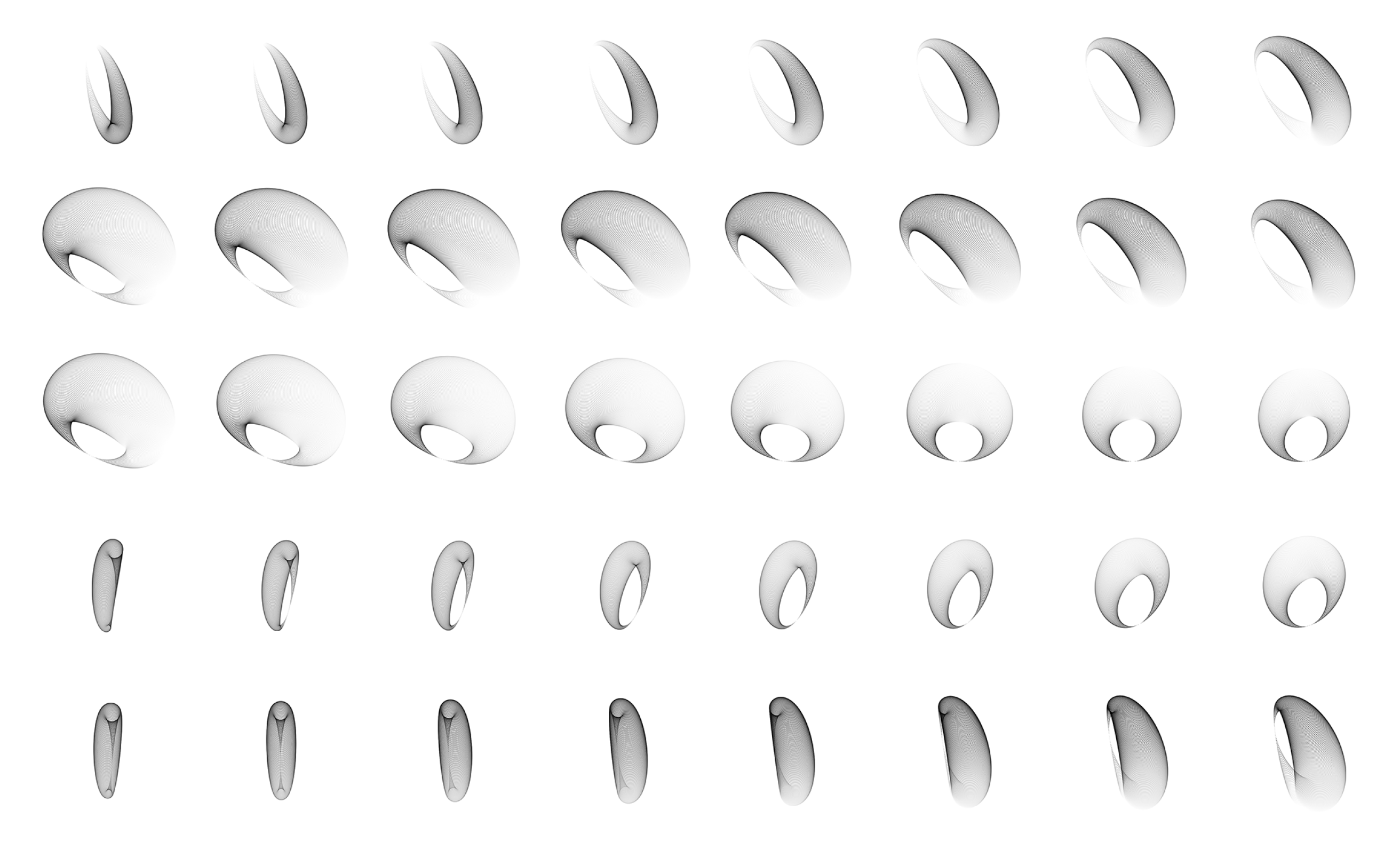
Disclaimer/Publisher’s Note: The statements, opinions and data contained in all publications are solely those of the individual author(s) and contributor(s) and not of MDPI and/or the editor(s). MDPI and/or the editor(s) disclaim responsibility for any injury to people or property resulting from any ideas, methods, instructions or products referred to in the content. |
© 2024 by the authors. Licensee MDPI, Basel, Switzerland. This article is an open access article distributed under the terms and conditions of the Creative Commons Attribution (CC BY) license (http://creativecommons.org/licenses/by/4.0/).
Copyright: This open access article is published under a Creative Commons CC BY 4.0 license, which permit the free download, distribution, and reuse, provided that the author and preprint are cited in any reuse.


