

Submitted:
07 June 2024
Posted:
11 June 2024
Read the latest preprint version here
Abstract
The Hyper-Torus Universe Model (HTUM) is a novel framework that unifies quantum mechanics, cosmology, and consciousness, proposing that the universe is a higher-dimensional hyper-torus containing all possible states of existence. This paper explores the fundamental concepts and implications of the HTUM, which suggests that the universe is a quantum system in which all possible outcomes are inherently connected, with consciousness playing a crucial role in actualizing reality. The HTUM addresses critical challenges in modern physics, such as the nature of quantum entanglement, the origin of the universe, and the relationship between mind and matter. By introducing concepts like singularity, quantum entanglement at a cosmic scale, and the self-actualization of the universe, the HTUM provides a comprehensive framework for understanding the fundamental nature of reality. This paper discusses the mathematical formulation of the HTUM, its implications for quantum mechanics and cosmology, and its potential to bridge the gap between science and philosophy. The philosophical implications of the HTUM are also examined, including its impact on free will, determinism, and the mind-matter relationship. The HTUM represents a significant shift in our understanding of the universe and our place within it, inviting further research and exploration into the nature of reality and consciousness.
Keywords:
Hyper-Torus Universe Model
; quantum mechanics
; cosmology
; consciousness
; singularity
; quantum entanglement
; mind-matter relationship
; reality
; quantum gravity
; unified theory
; free will
; determinism
; quantum cosmology
; theoretical physics
1. Introduction
1.1. Background and Motivation
The quest to understand the universe’s structure and dynamics has been a central theme in cosmology and physics. While traditional models like the Big Bang theory have provided significant insights into the universe’s origins and evolution, they often need answered questions about the nature of dark matter, dark energy, and the fundamental forces that govern the cosmos [14,48,178]. Despite the success of the Big Bang model, it has limitations in explaining certain anomalies and observations, such as the uniformity of the cosmic microwave background radiation and the distribution of galaxies [35,65,249]. Enter the Hyper-Torus Universe Model (HTUM), a novel hypothesis that proposes a universe with a toroidal topology, offering a fresh and exciting perspective on its structure and behavior. The HTUM builds upon and shares similarities with several existing theories and models in cosmology, such as the Poincaré Dodecahedral Space (PDS) model [158,205], which proposes a finite, positively curved topology, and the Euclidean compact 3-torus model [18,19], which suggests a flat, compact topology. The HTUM also draws inspiration from the Bianchi models [27,91], which describe homogeneous but anisotropic cosmologies, some with toroidal topologies. Furthermore, the concept of a timeless singularity in the HTUM is reminiscent of the Hartle-Hawking state [110], while the cyclical nature of the HTUM shares conceptual similarities with the ekpyrotic universe model [140,239].
The HTUM posits that the universe is finite yet boundless, with a complex topology that allows for the existence of dark matter and dark energy as intrinsic properties of space-time. By examining the roles of these mysterious components, the nature of time, and the interplay between quantum mechanics and gravity, this model aims to comprehensively understand the universe and resolve some of the most pressing issues in cosmology, such as the flatness problem and the horizon problem [105,115,154]. Additionally, the HTUM provides a framework for exploring how these components interact in a self-consistent manner, potentially offering new insights into the fundamental nature of reality and the evolution of the cosmos [199,235].
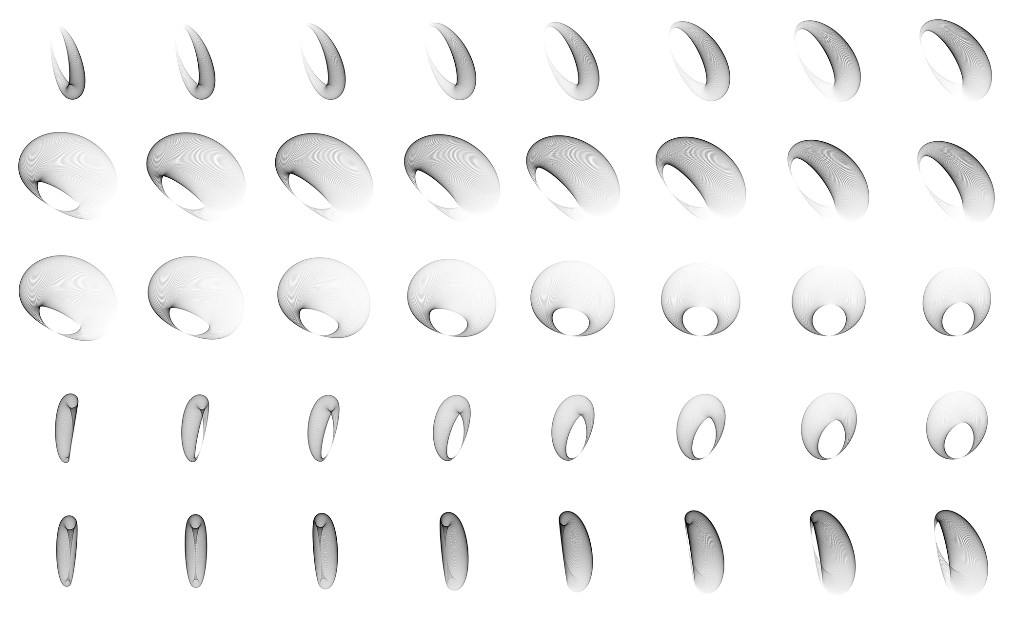
The HTUM conceptualizes the universe as a four-dimensional toroidal structure (Figure 1). Notably, the fourth dimension in this model is explicitly defined as a temporal dimension of time. This interpretation of time suggests that the universe exists as a timeless singularity where all possible configurations are contained within this singularity. In this model, time is not a linear progression but an emergent property arising from the causal relationships within the universe’s toroidal structure [22,89,206]. This perspective on time has profound implications for our understanding of causality, the nature of reality, and the unification of quantum mechanics and gravity. By viewing time as an intrinsic property of the universe’s structure, the HTUM opens up new possibilities for addressing the apparent incompatibility between these fundamental theories and provides a framework for exploring the deeper connections between space, time, and matter [127,208,230].
The HTUM can be understood through the analogy of an analog transition between a binary 0-1 system, represented by the Big Bang and black holes. If a black hole existed at the moment of the Big Bang, anything that crossed its event horizon would appear frozen in time from the perspective of an outside observer [113,243]. This includes anything falling into the black hole at any point in the universe’s evolution, as it would eventually catch up to the timeless state of the singularity. This analogy illustrates the idea of a timeless singularity in the HTUM, where the Big Bang and black holes are not separate endpoints but part of a continuous, cyclical universe [184,228]. Additionally, observations of the cosmic microwave background radiation and the large-scale structure of the universe provide further support for such a model, highlighting the need for new frameworks to address these phenomena [35,65,249].
This study explores the HTUM’s potential to revolutionize our understanding of the cosmos. By investigating the model’s implications and its ability to integrate seemingly disparate phenomena, we seek to shed light on the fundamental nature of the universe and pave the way for groundbreaking advancements in cosmology and physics [103,248]. The HTUM holds the promise of a new era in our understanding of the cosmos, inspiring us to push the boundaries of our knowledge. Furthermore, the model’s ability to explain anomalies in the cosmic microwave background and the distribution of galaxies could lead to a more comprehensive understanding of the universe’s evolution and structure [199,235].
1.2. Roadmap of the Paper
To guide the reader through the complex and multifaceted discussion of the HTUM, this paper is structured as follows:
Section 2: Theoretical Foundations - This Section delves into the limitations of the Big Bang theory and provides a historical context for developing cosmological concepts, including the discovery of dark matter and dark energy. It sets the stage for understanding why a new model like the HTUM is necessary.
Section 3: The Hyper-Torus Universe Model (HTUM) - Here, we present a detailed explanation of the HTUM, including the mathematical formulation of the toroidal structure and its properties. We also discuss the challenges in visualizing a four-dimensional toroidal structure.
Section 4: Gravity and the Collapse of the Wave Function - This Section explores the wave function’s significance in quantum mechanics and discusses the measurement problem, highlighting how the HTUM addresses these issues.
Section 5: The Singularity and Quantum Entanglement - We explain quantum entanglement, its implications for singularity, and the challenges in experimentally verifying these concepts.
Section 6: The Event Horizon and Probability - This Section focuses on the mathematical formulation of the event horizon and its properties, discussing the HTUM’s implications for our understanding of black holes.
Section 7: The Universe Observing Itself - We explore the mechanism of self-observation and its relationship to the collapse of the wave function, addressing the experimental challenges involved.
Section 8: Philosophical Implications of the HTUM - This Section explores the philosophical implications of the HTUM, addressing topics such as the hard problem of consciousness, panpsychism, free will, and determinism, the observer effect and the nature of reality, emergent properties and complexity, the mind-body problem, and implications for the philosophy of science.
Section 9: Implications for the Nature of Reality - This Section delves into the philosophical implications of the HTUM, particularly concerning the nature of time and the mind-matter relationship.
Section 10: Consciousness and the Universe - We discuss the relationship between consciousness and quantum measurement, incorporating this relationship into the HTUM and addressing experimental challenges.
Section 11: Philosophical and Mathematical Implications - This Section examines the HTUM’s implications for the foundations of mathematics, discussing the nature of mathematical truth and the role of intuition.
Section 12: Testable Predictions and Empirical Validation - We discuss the challenges of testing the HTUM’s predictions experimentally and provide a roadmap for future experimental work and collaborations.
Section 13: Relationship to Other Theories - This Section compares the HTUM with other theories of quantum gravity and discusses the potential for integration with different theoretical frameworks.
Section 14: Beyond Division: Unifying Mathematics and Cosmology - We provide a case study of the HTUM’s application to a specific problem in cosmology and discuss its implications for developing new mathematical tools and techniques.
Section 15: Conclusion - The final Section discusses the HTUM’s potential impact on cosmology and its relationship to other disciplines, emphasizing the importance of interdisciplinary research and collaboration.
1.3. Significance of the HTUM in Cosmology
The HTUM offers a transformative perspective on the universe’s structure and behavior, with potential implications for several critical areas in cosmology:
2. Theoretical Foundations
2.1. The Big Bang and Big Crunch Concepts
The Big Bang theory is the prevailing cosmological model explaining the universe’s origin from a singularity approximately 13.8 billion years ago [9,126]. This model posits that the universe has been expanding ever since, leading to the formation of galaxies, stars, and other cosmic structures. The Big Bang theory is supported by several key observations, including the cosmic microwave background (CMB) radiation [187], the abundance of light elements [9], and the redshift of galaxies [126].
2.2. Historical Context
The development of the Big Bang theory can be traced back to the early 20th century, with significant contributions from scientists such as Georges Lemaître, who first proposed the idea of an expanding universe [151], and Edwin Hubble, whose observations of galaxy redshifts provided empirical support [126]. The concept of the Big Crunch, a hypothetical scenario where the universe’s expansion eventually reverses, leading to a collapse back into a singularity, emerged as a counterpoint to the Big Bang, suggesting a cyclical nature of cosmic evolution [251].
The discovery of dark matter and dark energy in the late 20th century further revolutionized our understanding of the universe. Dark matter, first inferred from the rotational speeds of galaxies by Fritz Zwicky [279], and dark energy, proposed to explain the accelerated expansion of the universe observed by Saul Perlmutter, Adam Riess, and Brian Schmidt [188,202], introduced new complexities that the Big Bang theory alone could not fully address.
2.3. Limitations of the Big Bang Theory
While the Big Bang theory has provided significant insights into the universe’s origins and evolution, it has several limitations:
2.4. Addressing Limitations with HTUM
The Hyper-Torus Universe Model (HTUM) seeks to address these limitations by proposing a four-dimensional toroidal structure of the universe [152,158]. This model integrates the Big Bang and Big Crunch concepts within a continuous, cyclical framework, emphasizing the roles of dark matter and dark energy in shaping the universe’s structure and evolution [23,239]. Key aspects of how HTUM addresses these limitations include:
By effectively addressing these limitations, HTUM not only offers a novel perspective but also instills a sense of hope and optimism. It challenges conventional separations of physical phenomena and invites further exploration into the fundamental principles governing the cosmos, paving the way for a brighter future in cosmology [52,90].
3. The Hyper-Torus Universe Model (HTUM)
3.1. Conceptual Framework
The Hyper-Torus Universe Model (HTUM) presents a novel hypothesis that integrates the Big Bang theory with the Big Crunch concept, emphasizing the roles of dark matter and dark energy in shaping the universe’s structure and evolution [23,239]. This model proposes that the universe exists as a four-dimensional toroidal structure, transcending the conventional notion of time [152,158]. The HTUM offers a unique perspective on reality governed by the fundamental forces of consciousness and causality [107,180].
3.2. Toroidal Structure of the Universe
At the heart of the HTUM is the idea that the universe is shaped like a torus, a doughnut-like structure with a continuous surface [152,158]. This toroidal shape allows for a cyclical universe model, where the Big Bang and Big Crunch are not distinct events but part of a constant process [23,239]. The toroidal structure provides a framework for understanding the universe’s expansion and contraction phases, suggesting that the universe is constantly in flux, with matter and energy circulating through the torus [176,192].
3.3. Mathematical Formulation of the Toroidal Structure
The mathematical formulation of the toroidal structure is crucial for understanding the HTUM. The torus can be described using parametric equations in three dimensions, but for a four-dimensional torus, we extend these concepts [172]. The four-dimensional torus, or hypertorus, can be represented as , which is the Cartesian product of four circles () [264]:
Each circle () can be parameterized by an angle ranging from 0 to . The coordinates of a point on the hypertorus can be given by four angles (, , , ). The embedding of this structure in higher-dimensional space involves complex mathematical constructs [172], such as:
where , , , and are the radii of the respective circles. These equations describe the toroidal structure’s geometry and provide a basis for further exploration of its properties [264].
3.4. Challenges in Visualizing and Conceptualizing a Four-Dimensional Toroidal Structure
Visualizing and conceptualizing a four-dimensional toroidal structure presents significant challenges due to our inherent limitations in perceiving beyond three spatial dimensions [4]. Here are some strategies to address these challenges:
- Dimensional Reduction: By studying lower-dimensional analogs, such as the three-dimensional torus () or the two-dimensional torus (), we can gain insights into the properties and behavior of the four-dimensional torus. These lower-dimensional models serve as stepping stones for understanding higher-dimensional structures [162].
- Mathematical Visualization Tools: Advanced mathematical software and visualization tools can help create representations of four-dimensional objects [108]. These tools can project higher-dimensional structures into three-dimensional space, allowing us to explore their properties interactively.
- Analogies and Metaphors: Using analogies and metaphors can make abstract concepts more relatable [4]. For example, comparing the four-dimensional torus to a three-dimensional torus with an additional dimension of time or another spatial dimension can help bridge the gap in understanding.
- Educational Resources: Developing educational resources, such as interactive simulations, videos, and detailed diagrams, can help teach and learn about higher-dimensional structures [162]. These resources can provide step-by-step explanations and visual aids to enhance comprehension.
3.5. Addressing the Nature of the Singularity and Time
The HTUM introduces the concept of the universe as a singularity, where all matter and energy converge into an infinitely dense point [116]. This singularity is not confined to a specific moment but is timeless [179]. The nature of time in the HTUM is redefined, with time being an emergent property arising from the causal relationships within the singularity and the universe’s toroidal structure [87].
The HTUM offers a comprehensive model that redefines our understanding of the universe’s structure and dynamics by addressing these challenges and providing a detailed mathematical framework [90]. This model encourages further exploration and interdisciplinary collaboration to refine and validate its concepts [52].
4. The Relationship between Quantum Mechanics and Gravity
4.1. Integrating Quantum Mechanics and Gravity
Integrating quantum mechanics and gravity remains one of the most profound challenges in modern physics [141]. The Hyper-Torus Universe Model (HTUM) offers a unique perspective by proposing a framework where these two fundamental forces are compatible and deeply interconnected [90]. This Section explores how the HTUM integrates quantum mechanics and gravity, providing a cohesive understanding of their roles in the universe’s structure and dynamics.
In classical physics, gravity is described by Einstein’s General Theory of Relativity, which portrays it as the curvature of spacetime caused by mass and energy [166]. Quantum mechanics, however, deals with the probabilistic nature of particles at the most minor scales [104]. The HTUM suggests that these two descriptions are not mutually exclusive but are different manifestations of a single underlying reality [52]. By viewing the universe as a four-dimensional toroidal structure, the HTUM posits that gravity and quantum mechanics are unified through the continuous transformation flow within this torus [152].
4.2. The Wave Function in Quantum Mechanics
The wave function is a fundamental concept in quantum mechanics, representing the state of a quantum system [104]. It is a mathematical function that encodes the probabilities of finding a particle in various positions and states. The wave function is typically denoted by the Greek letter (psi) and is a complex-valued function of space and time [222].
In quantum mechanics, the wave function encapsulates the probability amplitude of a particle’s state. For a system of particles, the wave function is expressed as:
where represents the position of the i-th particle, and t denotes time. The probability density of finding the system in a particular configuration is given by the square of the wave function’s magnitude [222]:
The wave function is significant because it can provide a complete quantum system description. The square of the wave function’s magnitude, , gives the probability density of finding a particle at a particular location [104]. This probabilistic nature of the wave function is a cornerstone of quantum mechanics, highlighting quantum systems’ inherent uncertainty and indeterminacy [118].
4.3. Wave Function Collapse and Observation
The collapse of the wave function is a crucial concept in quantum mechanics, describing the transition from a superposition of states to a single, definite state upon observation or measurement [104]. Before measurement, a quantum system exists in a superposition, meaning it can be in multiple states simultaneously. However, when an observation is made, the wave function collapses to a specific state, and the system adopts a definite position or momentum [261].
Upon observation or measurement, the wave function collapses to a specific state. This collapse can be mathematically represented by a projection operator [261]:
where projects the wave function onto the observed state, the HTUM posits that this collapse is not merely a passive process but an active participant in shaping the universe [90].
This process can be illustrated with the famous thought experiment known as Schrödinger’s cat [216]. In this scenario, a cat is placed in a sealed box with a radioactive atom, a Geiger counter, and a vial of poison. The atom has a 50% chance of decaying and triggering the Geiger counter, releasing the poison and killing the cat. Until the box is opened and an observation is made, the cat is considered to be in a superposition of both alive and dead states. Upon opening the box, the wave function collapses, and the cat is observed to be either alive or dead [104].
4.4. Emergence of Classical States
The collapse of the wave function leads to the actualization of specific classical states. This process can be described using the density matrix [174]:
where are the probabilities of the system being in state .
4.5. Dark Matter and Wave Function Localization
Dark matter plays a crucial role in the HTUM, particularly in the context of wave function localization. In quantum mechanics, the wave function describes the probability distribution of a particle’s position and momentum [104]. The collapse of the wave function, triggered by observation or interaction, results in a definite state. The HTUM proposes that dark matter influences this process by providing a stabilizing framework within the toroidal structure of the universe [90].
Dark matter’s gravitational effects contribute to the localization of wave functions, ensuring that particles adopt specific positions and momenta [182]. This interaction between dark matter and quantum mechanics helps explain the observed matter distribution in the universe. The HTUM suggests that dark matter’s presence within the torus facilitates the collapse of wave functions, leading to the formation of distinct cosmic structures. This perspective aligns with specific objective collapse models, which propose that gravity can induce wave function collapse [182].
4.6. Dark Energy and Quantum Superposition
While dark matter is associated with wave function localization, dark energy is linked to quantum superposition. Dark energy drives the universe’s accelerated expansion and is a fundamental component of the HTUM [178]. The model posits that dark energy’s influence extends beyond cosmic expansion, which is critical in maintaining quantum superposition states [90].
Quantum superposition allows particles to exist in multiple states simultaneously until an observation collapses the wave function [104]. The HTUM suggests that dark energy sustains these superposition states by counteracting the gravitational pull of dark matter. This dynamic interplay between dark matter and dark energy ensures that the universe remains in continuous transformation, with particles constantly transitioning between superposition and localized states [90].
4.7. Gravitational Effects from Wave Function Collapse
The HTUM suggests that the collapse of the wave function induces gravitational effects. This can be understood by considering the energy-momentum tensor in general relativity, which describes the distribution of matter and energy [166]:
where is the energy-momentum tensor operator. By substituting the energy-momentum tensor derived from the collapsed wave function into Einstein’s field equations, we can describe how the actualized quantum states give rise to gravitational effects [166]:
where G is the gravitational constant and c is the speed of light.
The HTUM also incorporates the roles of dark matter and dark energy in this process. Dark matter contributes to the localization of the wave function, facilitating the collapse process [182]. On the other hand, dark energy helps maintain the quantum superposition of states until observation occurs [90]. These contributions can be included in the energy-momentum tensor:
4.8. Implications for the Unified Interaction at the Center of the Torus
The center of the torus, or the singularity, is a focal point in the HTUM where the unified interaction of gravity and quantum mechanics becomes most apparent [90]. At this convergence point, the distinctions between these forces blur, revealing a deeper level of interconnectedness. The HTUM posits that the singularity is a region where the universe’s fundamental forces merge, giving rise to the observed phenomena of gravity and quantum mechanics [141].
This unified interaction at the center of the torus has profound implications for our understanding of the universe. The apparent separation of forces is an emergent property of the toroidal structure rather than an intrinsic characteristic [90]. By studying the behavior of particles and fields at the singularity, researchers can gain insights into the fundamental nature of reality and the underlying principles that govern the cosmos [141].
4.9. Observation-Induced Wave Function Collapse and the Emergence of Gravity
The measurement problem in quantum mechanics, which concerns the apparent collapse of the wave function upon observation, has long been debated and investigated [99,261]. In the context of the Hyper-Torus Universe Model (HTUM), this problem takes on new significance as it relates to the emergence of classical gravitational effects from the quantum realm [90].
According to the HTUM, the universe exists in a quantum superposition of states within the singularity, with all possible configurations of matter and energy represented by the wave function [141]. The collapse of the wave function, induced by observation or measurement, leads to the actualization of specific states and the emergence of the classical universe we observe [182].
The role of dark matter and dark energy in this process is crucial. Dark matter, through its gravitational influence, contributes to the localization of the wave function, facilitating the collapse process [182]. On the other hand, dark energy counteracts the effects of dark matter and helps maintain the quantum superposition of states until observation occurs [90].
The act of observation, whether by conscious entities or through the universe’s self-observation mechanism, triggers the collapse of the wave function [261]. This collapse leads to the actualization of specific probabilities and the emergence of classical gravitational effects. In other words, the observation-induced collapse of the wave function gives rise to gravity by selecting a particular configuration of matter and energy from the quantum superposition [182].
This idea can be understood in terms of the quantum-to-classical transition [278]. In the quantum realm, particles exist in a superposition of states, and probabilistic laws govern their behavior. However, this superposition collapses upon observation, and the particles assume definite states. The HTUM proposes that this collapse process, mediated by dark matter and dark energy, gives rise to the classical gravitational effects we observe on macroscopic scales [90].
The relationship between observation, wave function collapse, and the emergence of gravity has profound implications for our understanding of the nature of reality [266]. It suggests that observation is not merely a passive process but an active participant in shaping the universe. The observer and the observed are inextricably linked, and the conscious act of measurement plays a crucial role in actualizing reality [261].
This idea also has implications for unifying quantum mechanics and general relativity [141]. By proposing a mechanism through which the collapse of the wave function gives rise to gravity, the HTUM offers a potential bridge between these two fundamental theories. The model suggests that gravity emerges from the quantum realm through the interplay of dark matter, dark energy, and the act of observation, providing a new perspective on the long-standing problem of quantum gravity [90].
To further develop this idea, researchers could explore the mathematical formalism of wave function collapse and its relation to the emergence of gravitational effects within the HTUM framework [182]. This may involve developing new theoretical tools and incorporating insights from other approaches to quantum gravity, such as loop quantum gravity or string theory [31,209].
Additionally, experimental tests could be devised to probe the relationship between observation, wave function collapse, and the emergence of gravity [29]. This could involve studying quantum systems under the influence of gravitational fields or searching for signatures of the quantum-to-classical transition in cosmological observations.
By incorporating the idea of observation-induced wave function collapse giving rise to gravity, the HTUM offers a new perspective on the nature of reality and the unification of quantum mechanics and general relativity [90]. This idea strengthens the model’s explanatory power and opens new avenues for theoretical and experimental investigation to understand the universe’s fundamental nature.
4.10. Implications for Quantum Gravity
The HTUM’s integration of quantum mechanics and gravity has significant implications for developing a unified theory of quantum gravity [141]. The HTUM offers a potential pathway for reconciling the differences between general relativity and quantum mechanics by proposing a framework where these forces are interconnected through the universe’s toroidal structure [90].
This unified approach could lead to new insights into the nature of spacetime, the behavior of particles at the most minor scales, and the fundamental principles that govern the universe [209]. Further research into the HTUM’s implications for quantum gravity could pave the way for groundbreaking discoveries and advancements in theoretical physics [141].
4.11. Future Research Directions
To validate the HTUM’s approach to integrating quantum mechanics and gravity, future research should focus on the following areas:
- Mathematical Formulation: Develop a rigorous mathematical framework that describes the toroidal structure and its properties, including the role of gravity in wave function collapse [182].
- Experimental Verification: Designing experiments to test the HTUM’s predictions, particularly those related to the interplay between gravity and quantum mechanics [29].
- Interdisciplinary Collaboration: Encouraging collaboration between physicists, cosmologists, and mathematicians to explore the HTUM’s implications and refine its theoretical foundations [90].
By addressing these areas, researchers can assess the validity of the HTUM and its potential to revolutionize our understanding of the universe.
4.12. Conclusion
The HTUM offers a promising approach to unifying quantum mechanics and general relativity by linking wave function collapse to the emergence of gravitational effects [90]. This framework opens new avenues for theoretical and experimental investigation to understand the universe’s fundamental nature. Incorporating the idea of observation-induced wave function collapse giving rise to gravity strengthens the model’s explanatory power, providing a new perspective on the nature of reality and the unification of quantum mechanics and general relativity [141].
5. The Singularity and Quantum Entanglement
5.1. Introduction to the Singularity
The Hyper-Torus Universe Model (HTUM) proposes a unique perspective on the role of quantum entanglement within the singularity [90]. According to the model, all matter and energy in the universe converge into an infinitely dense point at the center of the toroidal structure [116]. This convergence suggests that all particles within the singularity may be quantum entangled, leading to instantaneous correlations across the universe [123]. The singularity represents a point of infinite density where all matter and energy in the universe converge, implying that the universe is a highly interconnected quantum system at its most fundamental level [179]. The singularity is the origin of the universe’s wave function, encompassing all possible configurations of matter, energy, and information [260].
5.2. Quantum Entanglement within the Singularity
Quantum entanglement is a phenomenon in which particles become interconnected so that one particle’s state instantaneously influences another’s, regardless of the distance between them [86]. In the context of the singularity, all particles are entangled, leading to a universal wave function that describes the entire system [90].
5.2.1. Mathematical Formulation
In quantum mechanics, the state of a system of particles is described by a wave function, denoted as [104]. For a system of two entangled particles, the wave function can be represented as:
where and are the basis states of the particles, and and are complex coefficients that satisfy the normalization condition () [174].
In the context of the singularity, the HTUM suggests that all particles are entangled similarly, leading to a universal wave function that encompasses the entire singularity [90]. This can be expressed as:
where are the complex coefficients representing the entanglement between particles i and j.
The state of the universe can be described by a wave function , which is a function of the positions and momenta of all particles [104]:
where represents the position of the i-th particle, and t is time. The entanglement within the singularity implies that the wave function cannot be factored into independent parts for each particle but must be treated as a holistic entity [123].
5.2.2. Implications for the Singularity
The universal entanglement within the singularity implies that the state of any particle is dependent on the states of all other particles. This interconnectedness could provide a mechanism for the apparent uniformity of the cosmic microwave background (CMB) and the coherence observed in the universe’s large-scale structure [36].
5.3. Self-Observation and Wave Function Collapse
The HTUM posits that the universe possesses an intrinsic mechanism of self-observation. Interactions and processes within the universe act as measurements, causing the wave function to collapse [90]. This self-observation is continuous and pervasive, leading to actualizing specific probabilities inherent in the singularity [180].
5.3.1. Mechanism of Self-Observation
Self-observation occurs through various interactions, such as particle collisions, gravitational interactions, and electromagnetic forces [182]. Each interaction can be seen as a form of measurement, collapsing the wave function to a specific state. Mathematically, this collapse can be represented by a projection operator [174]:
where projects the wave function onto the observed state.
5.4. Actualization of Classical States
The collapse of the wave function through self-observation leads to the actualization of classical states. This process can be described using the density matrix [174]:
where are the probabilities of the system being in state . The actualized states correspond to the classical configurations of matter and energy we observe in the universe [278].
5.4.1. Emergence of Gravitational Effects
The HTUM suggests that the collapse of the wave function not only actualizes classical states but also induces gravitational effects [90]. The energy-momentum tensor in general relativity, which describes the distribution of matter and energy, can be derived from the collapsed wave function [166]:
where is the energy-momentum tensor operator. This tensor is then used in Einstein’s field equations to describe the curvature of spacetime [166]:
where G is the gravitational constant and c is the speed of light. Thus, the actualized quantum states give rise to gravitational effects, linking quantum mechanics and general relativity [182].
5.5. Implications for the Cosmic Microwave Background (CMB)
The interconnectedness of particles within the singularity, through quantum entanglement, could provide a mechanism for the apparent uniformity of the cosmic microwave background (CMB) and the coherence observed in the universe’s large-scale structure [36]. The collapse of the wave function ensures that these properties are actualized consistently across the universe [90].
5.6. Experimental Verification
While the theoretical framework of quantum entanglement within the singularity is compelling, experimentally verifying this phenomenon presents significant challenges.
5.6.1. Challenges
Extreme Conditions: The singularity represents an infinite density and temperature environment, making it impossible to recreate or observe directly with current technology [114].
Measurement Limitations: Quantum entanglement requires precise measurement of particle states, which is challenging in the singularity’s highly dynamic and dense environment [123].
Isolation: Isolating the effects of entanglement from other quantum phenomena in such an extreme environment is a significant hurdle [259].
5.6.2. Addressing the Challenges
Indirect Evidence: Researchers can look for indirect evidence of universal entanglement by studying the uniformity of the CMB and the coherence in the universe’s large-scale structure [36]. Anomalies or patterns that classical physics cannot explain might hint at underlying quantum entanglement. Studying black holes, gravitational waves, and other cosmological phenomena may provide indirect evidence [182].
Advanced Simulations: High-performance computing and advanced simulations can model singularity conditions and predict observable consequences of universal entanglement [50]. These predictions can then be tested against astronomical observations.
Quantum Technologies: Quantum computing and communication advances may provide new tools for probing entanglement in extreme conditions [194]. These technologies could help develop experimental setups that mimic aspects of the singularity.
5.7. Future Research Directions
Further research into the implications of quantum entanglement within the HTUM framework could lead to a deeper understanding of the universe’s fundamental properties and the role of quantum mechanics in shaping its structure and evolution [90]. This research could explore the potential for new technologies based on quantum entanglement, such as quantum computing and quantum communication, and their applications in cosmology and other fields [194].
By continuing to investigate the singularity and its role in the HTUM, scientists can gain new insights into the nature of reality, the interconnectedness of all matter and energy, and the fundamental principles that govern the universe [231]. This research could revolutionize our understanding of the cosmos and our place within it.
6. The Event Horizon and Probability
6.1. Mathematical Formulation of the Event Horizon
The event horizon of a black hole is a critical boundary beyond which nothing, not even light, can escape the gravitational pull of the black hole [115]. Mathematically, the event horizon is defined by the Schwarzschild radius (), which is given by [217]:
where:
G is the gravitational constant,
M is the mass of the black hole,
c is the speed of light.
For a rotating (Kerr) black hole, the event horizon is more complex and is given by [138]:
where:
J is the angular momentum of the black hole, and are the outer and inner event horizons, respectively.
The properties of the event horizon include:
Hawking Radiation: Black holes emit radiation due to quantum effects near the event horizon, known as Hawking radiation [112]. The temperature () of this radiation is:
where ℏ is the reduced Planck constant and is the Boltzmann constant.
6.2. The Event Horizon as a Nexus Boundary
In the Hyper-Torus Universe Model (HTUM), the event horizon serves as a nexus boundary, a transitional zone where the macroscopic and microscopic realms intersect [90]. This boundary is where the deterministic laws of classical physics meet the probabilistic nature of quantum mechanics [245]. The event horizon is not static; it is a dynamic, evolving interface that reflects the continuous transformation and interconnectedness of the universe [231].
In the context of the HTUM, the event horizon is not merely a spatial boundary but a dynamic interface where the interplay of fundamental forces and quantum phenomena converge [209]. It is a point at which the universe’s cyclical nature becomes most apparent, where the flow of information and causality from the singularity to the surrounding universe is most pronounced [184]. This dynamic interface is essential for understanding the continuous transformation and interconnectedness of the universe [233].
6.3. Wave Function Collapse at the Event Horizon
At the event horizon, the extreme gravitational field and the dynamic forces of dark energy create conditions that amplify the process of wave function collapse [182]. In traditional quantum mechanics, the wave function describes the probability amplitude of a particle’s state [104]. Upon observation or interaction, the wave function collapses, resulting in a definite state [261]. The HTUM posits that the event horizon acts as a natural "observer," inducing the collapse of the wave function [90].
6.4. Emergence of Gravitational Effects
The collapse of the wave function at the event horizon leads to the actualization of specific classical states. This process can be described by the density matrix [174]:
where are the probabilities of the system being in state .
The HTUM suggests that the actualized quantum states give rise to gravitational effects. This can be understood by considering the energy-momentum tensor in general relativity, which describes the distribution of matter and energy [166]:
where is the energy-momentum tensor operator.
Einstein’s field equations relate the energy-momentum tensor to the curvature of spacetime, represented by the Einstein tensor [84]:
By substituting the energy-momentum tensor derived from the collapsed wave function into Einstein’s field equations, we can describe how the actualized quantum states give rise to gravitational effects [182]:
6.5. Dynamic Interplay between Gravity and Dark Energy
The event horizon is a unique environment where the opposing forces of gravity and dark energy interact [53]. Gravity pulls matter together, while dark energy drives the universe’s expansion [188]. This dynamic interplay creates a unique environment at the event horizon, influencing the collapse of the wave function and the emergence of gravitational effects [182].
The balance between gravity and dark energy at the event horizon plays a crucial role in determining the probabilities associated with different quantum states and the subsequent actualization of specific outcomes [17]. This interplay influences the collapse of the wave function, leading to the emergence of gravitational effects on macroscopic scales [209].
Changes in the balance between gravity and dark energy at the event horizon may affect black holes’ growth, stability, and ultimate fate [117]. For instance, an increase in dark energy could counteract gravitational collapse, influencing the black hole’s evolution. Understanding this interplay provides insights into black holes’ dynamic behavior [97].
6.6. Implications of the HTUM for Black Holes and Event Horizons
The HTUM has several potential implications for our understanding of black holes and their event horizons:
- Unified Framework: By integrating the principles of the HTUM, we can develop a more comprehensive framework that unifies general relativity and quantum mechanics [231]. This could lead to a deeper understanding of the nature of event horizons and the behavior of black holes.
- Dynamic Event Horizons: The HTUM suggests that event horizons are dynamic and interconnected with the rest of the universe [90]. This perspective could lead to new models that describe the evolution of black holes and their interactions with their surroundings.
- Experimental Validation: To validate this theoretical framework, experimental tests could involve studying quantum systems under gravitational fields or searching for signatures of the quantum-to-classical transition in cosmological observations [12]. Observations of black hole behavior, gravitational waves, and Hawking radiation could provide empirical evidence for the HTUM’s predictions [3].
6.7. Conclusion
The event horizon is a crucial concept in the Hyper-Torus Universe Model, serving as a nexus boundary where the macroscopic and microscopic realms intersect. By exploring the mathematical formulation of the event horizon, the collapse of the wave function, and the dynamic interplay between gravity and dark energy, we can gain a deeper understanding of the universe’s structure and evolution within the HTUM framework [90].
The HTUM offers a promising approach to unifying quantum mechanics and general relativity by linking wave function collapse to the emergence of gravitational effects [182]. The event horizon serves as a natural laboratory for studying this connection, providing a unique environment where the interplay between gravity and dark energy influences the collapse of the wave function and the emergence of gravitational phenomena [17]. This framework opens new avenues for theoretical and experimental investigation to understand the universe’s fundamental nature [231].
7. The Universe Observing Itself
7.1. Concept of Self-Observation
The Hyper-Torus Universe Model (HTUM) introduces a groundbreaking concept: the universe has the intrinsic ability to observe itself, leading to the collapse of its wave function. This idea merges principles from quantum mechanics with cosmological models, suggesting that observation is not merely a function of conscious beings but an inherent universe property. This self-observation is a continuous process that shapes the universe’s structure and evolution.
7.2. Concept of Self-Observation
The Hyper-Torus Universe Model (HTUM) introduces a groundbreaking concept: the universe has the intrinsic ability to observe itself, leading to the collapse of its wave function [231]. This idea merges principles from quantum mechanics with cosmological models, suggesting that observation is not merely a function of conscious beings but an inherent universe property [90]. This self-observation is a continuous process that shapes the universe’s structure and evolution [209].
7.3. Mechanism of Self-Observation and Wave Function Collapse
The HTUM posits that the universe, through its inherent properties and interactions, acts as an observer, leading to the collapse of its wave function. This mechanism can be understood through the following steps:
- Quantum Superposition of the Universe: Initially, the universe exists in a superposition of all possible states [92]. This state encompasses all potential configurations of matter, energy, and information, representing many possibilities.
- Intrinsic Observation Mechanism: The universe possesses an inherent mechanism that allows it to observe itself [266]. This mechanism is not confined to conscious beings but includes all interactions and processes within the universe, such as particle collisions, gravitational interactions, and electromagnetic forces. Each interaction can be seen as a form of measurement or observation [277].
- Collapse through Self-Observation: When any interaction or process occurs within the universe, it acts as an observation, causing the wave function to collapse [182]. This self-observation is continuous and pervasive, leading to the actualization of specific probabilities inherent in the singularity and resulting in the manifestation of the observable universe. The collapse of the wave function through self-observation ensures that the universe evolves from a superposition of states to a definite state, thereby shaping its structure and evolution [231].
7.4. Emergence of Gravitational Effects
The collapse of the wave function through self-observation gives rise to classical gravitational effects. The actualization of specific probabilities from the quantum superposition leads to definite states, manifesting as gravitational phenomena on macroscopic scales [182]. This process can be understood as follows:
Quantum Superposition of the Universe: Initially, the universe exists in a superposition of all possible states, encompassing all potential configurations of matter, energy, and information [92].
Intrinsic Observation Mechanism: Through its inherent properties, the universe observes itself, causing the wave function to collapse [266].
Actualization of Probabilities: The collapse of the wave function leads to the actualization of specific probabilities, resulting in definite states [277].
Manifestation of Gravity: These definite states manifest as gravitational phenomena, observable on macroscopic scales. The energy-momentum tensor () in general relativity, which describes the distribution of matter and energy, can be derived from the collapsed wave function [166]:
where is the energy-momentum tensor operator.
Einstein’s Field Equations: Einstein’s field equations relate the energy-momentum tensor to the curvature of spacetime, represented by the Einstein tensor () [84]:
By substituting the energy-momentum tensor derived from the collapsed wave function into Einstein’s field equations, we can describe how the actualized quantum states give rise to gravitational effects [209]:
7.5. Dark Matter and Dark Energy Contributions
The HTUM also incorporates the roles of dark matter and dark energy in this process. Dark matter contributes to the localization of the wave function, while dark energy helps maintain the quantum superposition until observation occurs [13]. These contributions can be included in the energy-momentum tensor [178]:
7.6. Examples and Analogies
To better understand the concept of self-observation, consider the following analogies:
- The Water Cycle: Just as the water cycle relies on the integrated functioning of its components to sustain itself, the universe’s self-observation can be seen as a continuous cycle of interactions [177]. Each interaction, like evaporation or precipitation in the water cycle, contributes to the system’s overall state, leading to the collapse of the wave function.
- A Mirror Reflecting Itself: Imagine a mirror reflecting another mirror. The reflections continue infinitely, influencing the next [82]. Similarly, the universe’s self-observation involves a continuous loop of interactions, where each event influences the overall state, leading to the collapse of the wave function.
- A Feedback Loop in a System: In a feedback loop, a system’s output is fed back into the system as input, influencing future outputs [268]. The universe’s self-observation can be likened to a feedback loop, where each interaction feeds back into the system, continuously shaping its state and leading to the collapse of the wave function.
7.7. Addressing Criticisms
The idea of the universe observing itself has profound implications for our understanding of reality, but it also faces significant criticisms and counterarguments:
- Empirical Evidence: One major criticism is the lack of empirical evidence for the universe’s self-observation and its impact on wave function collapse [98]. Demonstrating this hypothesis requires advanced observational technologies and methodologies that may not currently exist.
- Philosophical Questions: The concept raises questions about the nature of observation and reality [164]. It challenges the traditional distinction between observer and observed, suggesting a more interconnected and participatory universe. Critics may argue this blurs the line between physical processes and conscious observation.
- Compatibility with Existing Theories: Critics may argue that self-observation is incompatible with established quantum mechanical and cosmological theories [234]. Addressing this concern requires carefully examining how this perspective can be reconciled with or extend existing theories.
The HTUM addresses these concerns through several approaches:
- Theoretical Support: The HTUM draws on existing theories such as quantum decoherence, relational quantum mechanics, and objective collapse models to support the idea of self-observation [99,207,276]. These theories provide a framework for understanding how interactions within the universe can lead to wave function collapse.
- Quantum Decoherence: Quantum decoherence is a process by which a quantum system loses its coherence due to environmental interactions [278]. In the context of the HTUM, decoherence can be seen as a mechanism contributing to the wave function’s collapse through the universe’s self-observation. As the universe interacts with itself, the coherence of the quantum states is gradually lost, leading to the emergence of classical behavior.
- Relational Quantum Mechanics: Relational quantum mechanics is an approach that emphasizes the relative nature of quantum states [207]. According to this view, the properties of a quantum system are defined by its relations with other systems. In the HTUM, the universe’s self-observation can be understood as a network of relations between its constituents, giving rise to the collapse of the wave function and the actualization of specific probabilities.
- Objective Collapse Models: Objective collapse models propose that the collapse of the wave function is an objective, spontaneous process that occurs independently of observers [99,182]. These models suggest that specific physical mechanisms trigger the collapse, such as gravitational effects or spontaneous localization. The HTUM’s concept of self-observation can be seen as a form of objective collapse, where the universe’s intrinsic properties and interactions lead to the collapse of its wave function.
- Interdisciplinary Collaboration: The HTUM encourages collaboration between physicists, cosmologists, philosophers, and other researchers to explore the implications of self-observation [26]. This multidisciplinary approach can address philosophical questions and integrate the concept into existing theoretical frameworks.
- Empirical Testing: While direct empirical evidence may be challenging, the HTUM emphasizes the importance of rigorous testing and observational data [12]. By making specific predictions and comparing them with alternative theories, researchers can assess the validity of the self-observation hypothesis.
7.8. Experimental Verification and Challenges
Experimentally verifying the concept of self-observation presents several challenges:
- Technological Limitations: Current observational technologies may need to be advanced enough to detect the subtle effects of self-observation on wave function collapse [100]. Future advancements in quantum measurement techniques and high-precision instruments will be crucial for testing the HTUM’s predictions.
- Complexity of Interactions: The universe’s self-observation involves many interactions at different scales, from subatomic particles to cosmic structures [88]. Isolating and measuring the impact of these interactions on wave function collapse requires sophisticated experimental designs and data analysis methods.
- Indirect Evidence: Given the difficulty of direct observation, researchers may need to rely on indirect evidence to support the self-observation hypothesis [12]. This could involve identifying unique patterns or anomalies in cosmological data that align with HTUM predictions, such as variations in the cosmic microwave background (CMB) or gravitational wave signals.
- Interdisciplinary Approaches: Addressing the experimental challenges will require collaboration across multiple disciplines, including physics, cosmology, engineering, and computer science [26]. Developing new experimental methodologies and analytical tools will be essential for testing the HTUM’s concepts.
- Quantum Interferometry: Quantum interferometry is a technique that exploits the wave nature of matter to make exact measurements [69]. Advanced quantum interferometers, such as atom interferometers or superconducting quantum interference devices (SQUIDs), could be used to detect subtle effects of self-observation on wave function collapse.
- Quantum Sensing: Quantum sensing involves using quantum systems, such as entangled particles or quantum dots, to measure physical quantities with unprecedented sensitivity [72]. These techniques could be employed to probe the effects of self-observation on the universe’s quantum states.
- High-Precision Cosmological Observations: Advancements in cosmological observations, such as the detection of gravitational waves by the Laser Interferometer Gravitational-Wave Observatory (LIGO) or the mapping of the cosmic microwave background (CMB) by satellites like Planck, could provide indirect evidence for the HTUM’s predictions [3,63]. These observations may reveal unique patterns or anomalies that align with the consequences of self-observation.
7.9. Quantum-to-Classical Transition
The relationship between observation-induced collapse and the quantum-to-classical transition is crucial for understanding the emergence of gravitational effects. The collapse of the wave function through self-observation bridges the gap between the quantum realm and the classical world [278]. This transition ensures that the universe evolves from a superposition of states to definite states, manifesting as gravitational phenomena on macroscopic scales [129]. By exploring this relationship, we can gain deeper insights into the nature of reality and the fundamental principles that govern the universe [215].
7.10. Conclusion
The concept of self-observation in the Hyper-Torus Universe Model (HTUM) represents a paradigm shift in our understanding of the universe and its evolution. By proposing that the universe has the intrinsic ability to observe itself, leading to the collapse of its wave function, the HTUM offers a novel perspective on the emergence of classical reality from the quantum realm [231]. The mechanism of self-observation provides a compelling explanation for the emergence of gravitational effects, linking the collapse of the wave function to the actualization of classical states and the manifestation of gravity [182].
The implications of this idea extend beyond the realm of physics, challenging our notions of observation, reality, and the role of consciousness in the universe [266]. The HTUM draws on existing theories such as quantum decoherence, relational quantum mechanics, and objective collapse models to support the idea of self-observation, providing a framework for understanding how interactions within the universe can lead to wave function collapse [99,207,276].
As we continue to explore and test HTUM’s predictions, we may uncover new insights into the fundamental nature of the universe and our place within it. The concept of self-observation serves as a foundation for future research and collaboration, promising to deepen our understanding of the cosmos and the laws that govern it [26]. By addressing criticisms, pursuing interdisciplinary cooperation, and developing innovative experimental approaches, we can progress toward empirically validating the HTUM and its implications for our understanding of the universe [12].
8. Philosophical Implications of the HTUM
8.1. The Hard Problem of Consciousness
Introduction: Philosopher David Chalmers formulated the "hard problem" of consciousness, which concerns consciousness’s subjective, first-person experience and its relationship to the physical world [56].
HTUM Perspective: The HTUM posits that consciousness is a fundamental aspect of the universe integrated into its fabric. This perspective suggests that consciousness is not merely an emergent property of complex neural processes but an intrinsic feature of the cosmos [181].
Discussion:
Example: Consider the phenomenon of qualia—individual instances of subjective, conscious experience. The HTUM might suggest that these experiences directly manifest the universe’s underlying toroidal structure [254].
8.2. Panpsychism and the HTUM
Introduction: Panpsychism is the view that consciousness is a fundamental feature of the universe, present in all physical entities to some degree [101].
HTUM Perspective: The HTUM’s emphasis on the role of consciousness in actualizing reality aligns with panpsychist theories, suggesting that consciousness permeates all levels of physical reality [47].
Discussion:
Example: The HTUM might propose that even elementary particles possess a rudimentary form of consciousness, contributing to the overall conscious experience of larger systems [218].
8.3. Free Will and Determinism
Introduction: The debate between free will and determinism concerns whether physical laws determine human actions or whether individuals can make free choices [135].
HTUM Perspective: The HTUM suggests that consciousness plays a role in collapsing the wave function, potentially introducing an element of agency and choice into the deterministic framework of physical laws [236].
Discussion:
Example: In the context of quantum mechanics, the HTUM might argue that conscious observation influences the outcome of quantum events, allowing free will within a probabilistic framework [119].
8.4. The Observer Effect and the Nature of Reality
Introduction: The observer effect in quantum mechanics refers to the phenomenon where the act of observation affects the system being observed [267].
HTUM Perspective: The HTUM posits that consciousness is integral to actualizing reality, suggesting that the observer effect is a fundamental aspect of the universe’s structure [261].
Discussion:
Example: The HTUM might propose that reality is only partially determined once observed, implying that consciousness plays a crucial role in shaping the physical world [270].
8.5. Emergent Properties and Complexity
Introduction: Emergent properties are system characteristics that arise from the interactions of their components but are not present in the individual components themselves [32].
HTUM Perspective: The HTUM suggests that consciousness emerges from the universe’s toroidal structure, contributing to the complexity and interconnectedness of physical phenomena [186].
Discussion:
Example: The HTUM might argue that the intricate patterns of consciousness observed in living organisms are emergent properties of the universe’s underlying toroidal structure [252].
8.6. The Mind-Body Problem
Introduction: The mind-body problem concerns the relationship between mental and physical states [142].
HTUM Perspective: The HTUM integrates consciousness into the fabric of the universe, suggesting that mental states are not separate from physical states but are deeply interconnected [57].
Discussion:
Example: The HTUM might propose that mental states manifest the universe’s toroidal structure, providing a unified framework for understanding the mind-body relationship [181].
8.7. Implications for the Philosophy of Science
Introduction: The philosophy of science addresses questions of scientific realism, the nature of scientific explanations, and the role of mathematics in describing the physical world [55].
HTUM Perspective: The HTUM’s unified approach to mathematical operations and its emphasis on the interconnectedness of physical phenomena challenge traditional views in the philosophy of science [146].
Discussion:
Example: The HTUM might suggest that mathematical truths are not objective and immutable but are fluid and interconnected, reflecting the universe’s dynamic nature [247].
9. Implications for the Nature of Reality
9.1. Redefining Reality: A Timeless Singularity
The Hyper-Torus Universe Model (HTUM) posits a radical redefinition of reality, suggesting that the universe exists as a timeless singularity. This concept challenges the conventional understanding of time as a linear progression from past to future [22]. Instead, the HTUM envisions all possible configurations of the universe as already contained within this singularity, with our observable reality being just one of many potential actualizations [75]. This perspective implies that time is not an external parameter but an emergent property arising from the universe’s self-observation and causal relationships [234].
9.2. The Role of Consciousness in Shaping Reality
The HTUM’s integration of consciousness as a fundamental aspect of the universe has profound implications for our understanding of reality. The double-slit experiment, a classic demonstration of wave-particle duality, provides a powerful example of how conscious observation can shape the outcome of quantum events [94].
In the double-slit experiment, particles exhibit wave-like behavior when unobserved, producing an interference pattern on a screen. However, when an observer measures which slit the particle passes through, the wave function collapses, and the particles exhibit particle-like behavior, producing two distinct bands on the screen [267]. This experiment illustrates the profound impact of conscious observation on reality, aligning with HTUM’s proposal that conscious observation is crucial in actualizing reality [236].
The double-slit experiment supports the idea that consciousness is not a passive observer but an active participant in shaping the universe [197]. It demonstrates that the act of observation is not merely a passive process but a fundamental aspect of how reality is constructed and experienced [203]. This has profound philosophical implications, challenging traditional views on free will, determinism, and the nature of reality [220].
9.2.1. Philosophical Implications
The HTUM’s integration of consciousness as a fundamental universe has profound philosophical implications. It aligns with interpretations of quantum mechanics that challenge traditional views on free will and determinism. The double-slit experiment demonstrates that consciousness plays a crucial role in actualizing reality. In that case, our choices and actions may have genuine causal efficacy in shaping the unfolding of reality. This raises important questions about the nature of agency, responsibility, and the role of consciousness in the universe. The HTUM suggests that conscious agents are not merely passive observers but active participants in the universe’s unfolding, imbuing existence with a profound sense of meaning and purpose.
9.2.2. Philosophical Implications
The HTUM’s integration of consciousness as a fundamental universe has profound philosophical implications. It aligns with interpretations of quantum mechanics that challenge traditional views on free will and determinism [67]. The double-slit experiment demonstrates that consciousness plays a crucial role in actualizing reality [198]. In that case, our choices and actions may have genuine causal efficacy in shaping the unfolding of reality. This raises important questions about the nature of agency, responsibility, and the role of consciousness in the universe [59]. The HTUM suggests that conscious agents are not merely passive observers but active participants in the universe’s unfolding, imbuing existence with a profound sense of meaning and purpose [238].
9.2.3. The Nature of Time
The HTUM’s concept of a timeless singularity fundamentally alters our understanding of time. In this model, time is not a linear sequence of events but an emergent property that arises from the universe’s self-observation [234]. This challenges the traditional notion of past, present, and future as distinct entities. Instead, all possible configurations of the universe exist simultaneously within the singularity, and what we perceive as the flow of time results from our conscious experience and interaction with these configurations [22]. This perspective invites us to reconsider the nature of causality and the interconnectedness of events, suggesting that the past and future are not fixed but fluid and influenced by conscious observation [211].
9.3. Mathematical Implications
The HTUM’s unified approach to mathematical operations challenges the traditional compartmentalization of these operations. By viewing addition, subtraction, multiplication, and division as interconnected actions within a broader process, the HTUM encourages reevaluating the foundational principles upon which mathematics is built [147]. This perspective has the potential to inspire innovative theoretical developments and practical applications across various fields, including physics, engineering, and computer science [274]. The model’s emphasis on the interconnectedness of mathematical operations reflects the continuous flow of transformation in the universe, highlighting the importance of considering holistic and integrated approaches to problem-solving [38].
9.4. Information Theory and Entropy
The HTUM’s emphasis on the flow of information and causality from the singularity to the surrounding universe has significant implications for information theory and the concept of entropy. In information theory, entropy measures the amount of uncertainty or disorder in a system and is closely related to the flow and processing of information [223]. Understanding the flow of information from the singularity to the event horizon and beyond may provide insights into the nature of entropy and its role in the universe’s evolution [33]. This could have implications for our understanding of the second law of thermodynamics, which states that the entropy of an isolated system always increases over time [113]. The HTUM’s framework suggests that the universe’s apparent increase in entropy reflects the continuous flow of information and the dynamic interplay between order and disorder [71].
9.5. Implications for the Origin and Ultimate Fate of the Universe
The HTUM offers a unique perspective on the origin and ultimate fate of the universe. By positing that the universe exists as a timeless singularity, the HTUM suggests that the Big Bang and the Big Crunch are not distinct events but different aspects of the same underlying reality [111]. This challenges the conventional view of the universe’s origin as a singular event in time and instead proposes that the universe is a dynamic, self-contained system where creation and destruction are continuous processes [184].
9.5.1. The Origin of the Universe
In the HTUM framework, the universe’s origin is not a singular event but an ongoing process of actualization from the timeless singularity. This perspective aligns with the idea that the universe is a self-organizing system, where the emergence of complexity and order is driven by the flow of information and the interplay between conscious observation and physical processes [137]. This challenges the traditional notion of a linear progression from a singular point of origin and invites us to consider the universe as a holistic, interconnected system where the past, present, and future are fluid and interdependent [234].
9.5.2. The Ultimate Fate of the Universe
The HTUM also offers a novel perspective on the universe’s ultimate fate. Instead of a linear progression towards heat death or a cyclical pattern of expansion and contraction, the HTUM suggests that the universe’s evolution is a continuous process of transformation and self-actualization [28]. This implies that the universe’s fate is not predetermined but influenced by the dynamic interplay between conscious agents and the underlying singularity [250]. This perspective invites us to consider the possibility that the universe’s ultimate fate is not a fixed endpoint but an ongoing process of evolution and self-discovery [70].
10. Consciousness and the Universe
10.1. Role of Consciousness in the HTUM
The Hyper-Torus Universe Model (HTUM) posits that consciousness is not merely an emergent property of complex physical systems but a fundamental aspect of the universe. This perspective aligns with interpretations of quantum mechanics that suggest the observer plays a crucial role in manifesting reality [238]. In the HTUM framework, consciousness is intertwined with the fabric of the universe, influencing and shaping the unfolding of events [180].
The model suggests that the universe is a quantum system where consciousness acts as a participatory force. This implies that conscious agents can influence the actualization of specific realities through their observations and choices [132]. The HTUM challenges traditional dualistic notions of mind and matter, proposing instead that they are two aspects of a single, unified reality [38].
10.2. Consciousness and Quantum Measurement
One of the most intriguing aspects of the HTUM is its integration of consciousness into the process of quantum measurement. In conventional quantum mechanics, the act of measurement collapses the wave function, resulting in a definite outcome from a range of possibilities [261]. The HTUM extends this concept by suggesting that consciousness is a critical factor in this collapse [270].
This idea resonates with the notion of "quantum consciousness," where the observer’s mind is not separate from the quantum system but an integral part [181]. The HTUM posits that the universe self-observes through conscious agents, leading to the emergence of the observable world. This self-observation mechanism is a cornerstone of the HTUM, providing a unique perspective on the relationship between consciousness and physical reality [102].
Detailed Explanation of the Relationship Between Consciousness and Quantum Measurement
In the HTUM, the relationship between consciousness and quantum measurement is more than just an interaction; it is a fundamental process that shapes reality. When a conscious agent observes a quantum system, the wave function collapses into a single, definite state, representing all possible states’ superposition [237]. This collapse is not merely a passive occurrence but an active process influenced by the observer’s consciousness [262].
The HTUM suggests that consciousness directly impacts the probabilities associated with different outcomes. This means that the observer’s intentions, expectations, and mental states could influence the result of a quantum measurement [197]. This perspective challenges the traditional view that measurement outcomes are purely random and instead proposes that they are co-determined by the observer’s consciousness [203].
10.3. Free Will and Determinism
The HTUM raises profound questions about free will and determinism. If the universe is a quantum system with all outcomes within a singularity, it suggests a deterministic framework [121]. However, the model also allows for the influence of conscious agents, introducing an element of free will [134].
This duality presents a complex and nuanced view of reality. On the one hand, the HTUM suggests that the flow of information and causality from the singularity to the surrounding universe is predetermined [148]. On the other hand, it acknowledges the potential for conscious agents to influence specific outcomes, thereby exercising free will [221]. This interplay between determinism and free will is a central philosophical question within the HTUM framework [80].
10.4. Mind-Matter Relationship
The HTUM challenges traditional views on the mind-matter relationship by proposing that consciousness is a fundamental aspect of the universe. This perspective blurs the boundaries between mind and matter, suggesting that they are not separate entities but two facets of the same underlying reality [57].
The model points towards a form of panpsychism or neutral monism, where consciousness and physical reality are seen as inherently intertwined and mutually dependent [101]. This view has significant implications for understanding the nature of the self, the problem of consciousness, and the relationship between subjective experience and objective reality [168].
In the HTUM, consciousness is not a mere byproduct of physical processes but a critical factor in the emergence of reality. This perspective invites us to reconsider the nature of the universe and our place within it, suggesting that consciousness may be a fundamental and irreducible feature of the cosmos [253].
Challenges in Experimentally Verifying the Role of Consciousness
Experimentally verifying the role of consciousness in the universe presents several challenges:
- Measurement and Isolation: Isolating consciousness’s influence from other variables in a quantum system is extremely difficult. Traditional scientific methods rely on objective measurements, whereas consciousness is inherently subjective [56].
- Technological Limitations: Current technology may need to be advanced enough to detect or measure the subtle influences of consciousness on quantum systems. Developing new methodologies and instruments is essential [181].
- Philosophical and Theoretical Obstacles: Integrating consciousness into physical theories challenges existing paradigms and may face resistance from the scientific community. Bridging the gap between subjective experience and objective measurement requires innovative theoretical frameworks [170].
Addressing These Challenges
To address these challenges, the following approaches can be considered:
- Interdisciplinary Research: Combining insights from quantum physics, neuroscience, and philosophy can provide a more comprehensive understanding of consciousness and its role in the universe [183].
- Advanced Experimental Designs: Developing experiments that minimize external influences and focus on the observer’s role can help isolate the effects of consciousness. Quantum entanglement and delayed-choice experiments are potential areas of exploration [159].
- Theoretical Development: Creating robust theoretical models incorporating consciousness into quantum mechanics can guide experimental efforts and provide testable predictions [238].
- Technological Innovation: Developing new technologies, such as susceptible detectors and quantum computing, can enhance our ability to study the interplay between consciousness and quantum systems [174].
10.5. Consciousness, Wave Function Collapse, and the Emergence of Gravity
In the HTUM, conscious observation is not merely a passive act but an active process that shapes reality. When a conscious agent observes a quantum system, the wave function collapses into a single, definite state, representing all possible states’ superposition [237]. This collapse is influenced by the observer’s consciousness, leading to the actualization of specific outcomes [262].
The act of conscious measurement or perception influences the probabilities associated with different quantum states, leading to the emergence of the classical universe, including gravitational effects [182]. Consciousness plays a crucial role in collapsing the wave function and giving rise to the macroscopic world we experience [271].
This idea has profound implications for our understanding of the nature of reality and the relationship between mind and matter. It suggests that consciousness and the physical world are deeply intertwined, with consciousness playing a fundamental role in actualizing the universe [132].
However, this concept faces potential philosophical and scientific challenges. Some may question the causal efficacy of consciousness in influencing physical processes [57]. To address these concerns, we propose ways to empirically test or validate the role of consciousness, such as through experiments investigating the effects of conscious intention on quantum systems [197].
Furthermore, the relationship between the wave function’s conscious collapse and the emergence of spacetime is explored. The actualization of specific probabilities through conscious observation may give rise to the structure of spacetime and the gravitational effects we observe on macroscopic scales [185].
11. Philosophical and Mathematical Implications
11.1. Unified Mathematical Operations
The Hyper-Torus Universe Model (HTUM) proposes a radical shift in our understanding of mathematical operations by suggesting that all basic operations—addition, subtraction, multiplication, and division—are interconnected facets of a single, unified process. This perspective challenges the traditional compartmentalization of these operations and invites us to reconsider the foundational principles upon which mathematics is built [147].
11.1.1. Conceptual Framework
The HTUM illustrates this interconnectedness by analogizing the water cycle to mathematical operations. Just as the water cycle involves distinct yet interdependent stages (evaporation, condensation, precipitation, and collection), mathematical operations can be viewed as interconnected actions within a broader process. This analogy simplifies complex concepts, making them more accessible and relatable [122].
11.1.2. Implications for Mathematical Theory
Integrating this unified approach into existing mathematical theory requires reevaluating the distinctiveness and role of individual operations. This shift presents significant challenges but opens the door to innovative theoretical developments and practical applications across various fields, including physics, engineering, and computer science [180].
11.2. Topology and Geometry of the Toroidal Universe
The HTUM’s conceptualization of the universe as a toroidal structure has profound implications for our understanding of topology and geometry. This model suggests that the universe is not a collection of separate entities but a cohesive, interconnected whole [156].
11.2.1. Toroidal Structure
The toroidal structure of the universe implies a continuous, cyclical nature, where the beginning and end states of the cosmos are interconnected. This perspective challenges conventional views of the universe’s geometry and invites us to explore new mathematical models that accurately describe this structure [264].
11.2.2. Mathematical Formulations
Developing mathematical formulations to describe the toroidal universe requires advanced concepts from topology and geometry. These formulations must account for the continuous flow of matter and energy within the torus and the dynamic interplay between dark matter, dark energy, and gravity [152].
11.3. Quantum Superposition and Hilbert Space
The HTUM’s description of the singularity as a quantum system in superposition aligns with the mathematical formalism of quantum mechanics, particularly the concept of Hilbert space. In quantum mechanics, the state of a system is represented by a vector in Hilbert space, which is a complex, infinite-dimensional space that contains all possible states of the system [262].
11.3.1. Singularity and Superposition
The idea that the singularity contains all universe configurations in superposition can be understood in terms of Hilbert space formalism. Each state of the universe corresponds to a different vector in Hilbert space, and the actual state of the universe emerges through observation and measurement, which collapses the wave function and selects a specific vector [92].
11.3.2. Implications for Quantum Mechanics
This perspective has significant implications for our understanding of quantum mechanics and the nature of reality. It suggests that the universe is a quantum system and that consciousness plays a crucial role in actualizing reality. This raises important questions about the nature of observation, measurement, and the role of conscious agents in shaping the universe [271].
11.4. Practical Applications of Unified Mathematical Operations
The HTUM’s unified approach to mathematical operations and its emphasis on the interconnectedness of all things have practical implications for problem-solving strategies across various fields [38].
11.4.1. Holistic Problem-Solving
By viewing problems through a lens of unity and continuity, as suggested by the HTUM, we can develop more holistic and efficient solutions to complex problems. This approach encourages us to look beyond conventional methodologies and consider how the inherent interconnectedness of processes might offer new insights and solutions [49].
11.4.2. Applications in Physics and Engineering
This unified approach can lead to innovative theoretical developments and practical applications in physics and engineering. For example:
- Quantum Computing: The unified approach could enhance algorithms that rely on the superposition and entanglement of quantum states, leading to more efficient problem-solving techniques in quantum computing [174].
- Adaptive Materials Engineering: Understanding the interconnectedness of operations could lead to developing materials that dynamically adapt their properties in response to environmental changes, improving their performance and durability [153].
- AI Algorithm Design: The holistic perspective could inspire new algorithms that better mimic the interconnected processes found in nature, leading to more robust and adaptive artificial intelligence systems [95].
11.4.3. Future Directions
Future research should focus on developing mathematical models and problem-solving strategies that align with the HTUM’s unified approach. This will require interdisciplinary collaboration and a willingness to reevaluate traditional concepts and methodologies [173].
11.5. Implications for the Foundations of Mathematics
The HTUM’s unified approach to mathematical operations has profound implications for the foundations of mathematics, challenging traditional frameworks and suggesting new directions for theoretical development [147].
11.5.1. Revaluation of Mathematical Axioms
The proposition that all basic mathematical operations manifest a single underlying process necessitates a radical shift in the existing body of mathematical theory. This shift requires a reevaluation of operations’ distinctiveness and role in mathematical reasoning, presenting significant challenges in reconciling this perspective with established mathematical principles [54].
11.5.2. Extending Existing Frameworks
Critics may argue that the unified approach to mathematical operations is incompatible with foundational mathematical axioms and principles. Addressing this concern requires carefully examining how this perspective can be reconciled with or extend existing axioms. This may involve proposing modifications or additions to the hypotheses that accommodate the interconnectedness of operations while preserving mathematics’ logical consistency and rigor [224].
11.5.3. Philosophical Implications
The HTUM’s integration of consciousness as a fundamental aspect of the universe and its participatory role in shaping reality aligns with interpretations of quantum mechanics that challenge traditional views on free will and determinism. This philosophical underpinning may encounter skepticism from those who adhere strictly to deterministic or classical interpretations of the universe [238].
11.5.4. Emphasizing Empirical Evidence and Rigorous Testing
The acceptance and integration of the HTUM’s unified approach into the broader scientific community will depend on empirical evidence and rigorous testing. Proponents must highlight areas where this perspective could yield breakthroughs, such as quantum computing, adaptive materials engineering, and AI algorithm design. Demonstrating the practical value of this approach is crucial for garnering support and investment in further research and development [74,95,153].
11.6. Implications for the Nature of Mathematical Truth and Intuition
11.6.1. Nature of Mathematical Truth
The HTUM’s unified approach challenges the traditional view of mathematical truth as an objective and immutable entity. Instead, it suggests that mathematical truths may be more fluid and interconnected, reflecting the dynamic and continuous nature of the universe. This perspective invites reevaluating how we define and understand mathematical truth, potentially leading to new insights and theories that better align with HTUM’s holistic framework [120].
11.6.2. Role of Intuition in Mathematical Discovery
The interconnectedness of mathematical operations proposed by the HTUM highlights the importance of intuition in mathematical discovery. Intuition, often seen as a guiding force in the exploration of mathematical concepts, may play a crucial role in uncovering the underlying unity of mathematical operations. This perspective encourages a greater appreciation for the intuitive aspects of mathematical reasoning and its potential to drive innovative theoretical developments [190].
11.7. Relationship Between Mathematics and the Physical World
11.7.1. Mathematical Descriptions of Physical Phenomena
The HTUM’s unified approach significantly impacts our understanding of the relationship between mathematics and the physical world. We can develop more comprehensive and accurate mathematical models to describe physical phenomena by viewing mathematical operations as interconnected facets of a single process. This perspective may lead to new ways of understanding and predicting the behavior of complex systems in the universe [269].
11.7.2. Bridging the Gap between Abstract Mathematics and Physical Reality
The HTUM suggests that the abstract nature of mathematical operations is intrinsically linked to the physical reality of the universe. This interconnectedness bridges the gap between abstract mathematical concepts and their practical applications in describing the physical world. By exploring this relationship, we can better understand how mathematical theories can be applied to solve real-world problems and advance our knowledge of the cosmos [248].
12. Testable Predictions and Empirical Validation
The Hyper-Torus Universe Model (HTUM) presents a novel framework for understanding the cosmos, integrating concepts from quantum mechanics, cosmology, and information theory. For the HTUM to gain acceptance within the scientific community, it must offer testable predictions and be subject to empirical validation. This Section outlines several critical predictions derived from the HTUM and discusses potential methods for their empirical investigation.
12.1. Predictions for Cosmic Microwave Background (CMB) Radiation
The HTUM suggests that the universe’s toroidal structure and the singularity’s influence should leave distinct imprints on the Cosmic Microwave Background (CMB) radiation. Specifically, the model predicts:
- Anisotropies and Patterns: The HTUM posits that the universe’s toroidal geometry will result in specific anisotropies and patterns in the CMB. These patterns may differ from those predicted by the standard cosmological model, offering a unique signature of the HTUM [157].
- Temperature Fluctuations: The interaction between dark matter, dark energy, and the singularity could lead to unique temperature fluctuations in the CMB. These fluctuations might exhibit a cyclical or periodic nature, reflecting the toroidal structure [20].
Empirical Validation: Advanced CMB observations, such as those conducted by the Planck satellite and future missions, can be analyzed to search for these predicted patterns and fluctuations. Comparing the observed data with HTUM predictions will be crucial for validation [64].
12.2. Gravitational Waves and Their Signatures
The HTUM’s integration of quantum mechanics and gravity suggests that gravitational waves should exhibit specific characteristics influenced by the toroidal structure and the singularity. Key predictions include:
- Waveform Signatures: The model predicts that gravitational waves originating from events near the singularity or within the toroidal structure will have distinct waveform signatures, which may differ from those predicted by general relativity alone [144].
- Frequency Spectrum: The interaction between dark matter, dark energy, and wave function collapse could result in a unique frequency spectrum for gravitational waves. This spectrum might include specific peaks or troughs corresponding to the toroidal geometry [189].
Empirical Validation: Observatories such as LIGO, Virgo and future space-based detectors like LISA can detect and analyze gravitational waves. Researchers can assess the model’s validity by comparing the observed waveforms and frequency spectra with HTUM predictions [3].
12.3. Patterns in Dark Matter and Dark Energy Distribution
The HTUM proposes that dark matter and dark energy play crucial roles in shaping the universe’s toroidal structure and cyclical behavior. The model predicts:
- Spatial Distribution: Dark matter and dark energy should exhibit specific spatial distributions influenced by the toroidal geometry. These distributions may form patterns or structures the standard cosmological model does not predict [204].
- Temporal Variations: The cyclical nature of the HTUM suggests that the density and distribution of dark matter and dark energy may vary over time, reflecting the universe’s dynamic behavior [239].
Empirical Validation: Observations from large-scale surveys, such as those conducted by the Dark Energy Survey (DES) and the upcoming Euclid mission, can be analyzed to search for these predicted patterns and variations. Comparing the observed distributions with HTUM predictions will be essential for empirical validation [149,257].
12.4. Potential Experiments and Observations
To further validate the HTUM, several potential experiments and observations can be conducted:
- High-Precision CMB Measurements: Future missions with higher precision and resolution can provide more detailed data on CMB anisotropies and temperature fluctuations, allowing for a more rigorous test of HTUM predictions [2].
- Advanced Gravitational Wave Detectors: Next-generation gravitational wave detectors with increased sensitivity and broader frequency ranges can detect and analyze more subtle waveform signatures, providing critical data for HTUM validation [200].
- Dark Matter and Dark Energy Mapping: Enhanced mapping techniques and larger survey volumes can improve our understanding of dark matter and dark energy distributions, offering more opportunities to test HTUM predictions [161].
- Quantum Experiments: Laboratory experiments exploring wave function collapse and quantum entanglement in controlled settings can provide insights into HTUM’s quantum mechanical aspects [43].
Empirical Validation: Researchers can gather data to compare with HTUM predictions by designing and conducting experiments and observations. Successful validation of these predictions would strongly support the model, while discrepancies would prompt further refinement and investigation.
12.5. Challenges in Experimental Testing
Experimentally testing the predictions of the HTUM presents several challenges:
- Sensitivity and Precision: Many predicted signatures, such as specific anisotropies in the CMB or unique gravitational waveforms, require extremely high sensitivity and precision in measurements. Current technology may still need to be improved to detect these subtle signals [275].
- Data Interpretation: Distinguishing HTUM-specific patterns from noise or other cosmological phenomena can be complex. Advanced data analysis techniques and robust statistical methods will be necessary to ensure accurate interpretation [263].
- Resource Allocation: Large-scale experiments and observations, such as those involving next-generation gravitational wave detectors or extensive dark matter surveys, require significant funding and resources. Securing these resources can be a major hurdle [213].
Addressing These Challenges:
- Technological Advancements: Developing more sensitive and precise instruments will be crucial. Collaborative efforts between institutions and countries can accelerate technological progress [81].
- Interdisciplinary Collaboration: Bringing together experts from various fields, including cosmology, quantum mechanics, and data science, can enhance the design and analysis of experiments. Multidisciplinary teams can develop innovative solutions to complex problems [46].
- Incremental Validation: Starting with smaller, more manageable experiments can provide initial validation and build a case for larger-scale studies. Incremental progress can help secure funding and support for more ambitious projects [201].
12.6. Roadmap for Future Experimental Work and Collaborations
To validate or refute the predictions of the HTUM, a coordinated and strategic approach is necessary. The following roadmap outlines critical steps for future experimental work and collaborations:
-
Initial Feasibility Studies:
-
Technological Development:
-
Pilot Experiments:
-
Large-Scale Observations:
-
Data Analysis and Interpretation:
-
Interdisciplinary Collaboration:
-
Continuous Refinement:
By following this roadmap, the scientific community can systematically test the predictions of the HTUM and advance our understanding of the universe’s structure and dynamics.
13. Relationship to Other Theories
The Hyper-Torus Universe Model (HTUM) presents a novel perspective on the structure and dynamics of the universe. To fully appreciate its implications and potential, it is essential to compare and contrast HTUM with other prominent theories in cosmology and physics. This Section explores the relationship between HTUM and different theoretical frameworks, highlighting areas of compatibility, divergence, and potential integration.
13.1. Comparison with Loop Quantum Gravity and String Theory
Loop Quantum Gravity (LQG)
Loop Quantum Gravity is a theory that attempts to merge quantum mechanics and general relativity by quantizing spacetime. It posits that space comprises discrete loops, forming a spin network [210]. The HTUM, with its toroidal structure, offers a different geometric interpretation of the universe. However, both theories share a common goal: to describe the fundamental nature of spacetime.
- Compatibility: HTUM and LQG emphasize the importance of geometry in understanding the universe. The toroidal structure in HTUM could potentially be mapped onto the spin networks of LQG, suggesting a possible geometric correspondence [15].
- Divergence: While LQG focuses on quantizing spacetime, HTUM incorporates the roles of dark matter and dark energy in a cyclical universe. This broader scope may offer new insights into the dynamics of the universe that LQG does not address [39].
String Theory
String Theory proposes that the fundamental constituents of the universe are one-dimensional "strings" rather than point particles. These strings vibrate at different frequencies, generating various particles and forces [31]. String Theory also suggests the existence of multiple dimensions beyond the familiar four (three spatial and one temporal).
- Compatibility: String theory’s multidimensional aspect aligns with HTUM’s toroidal structure, which can be visualized as existing in higher-dimensional space. Both theories also address the unification of forces, with HTUM focusing on the interplay between gravity, dark matter, and dark energy [191].
- Divergence: String Theory’s reliance on higher dimensions and mathematical complexity differ from HTUM’s more geometric and cyclical approach. HTUM’s emphasis on the singularity and the nature of time offers a distinct perspective that complements String Theory’s focus on fundamental particles and forces [103].
13.2. Comparison with Other Theories of Quantum Gravity
Causal Dynamical Triangulations (CDT)
Causal Dynamical Triangulations is a theory that models spacetime as a dynamically evolving network of simplices, preserving causality at each step [10].
- Compatibility: Both HTUM and CDT emphasize the geometric nature of spacetime. The toroidal structure of HTUM could be represented within the simplicial framework of CDT [155].
- Divergence: CDT focuses on the discrete evolution of spacetime, while HTUM incorporates a continuous, cyclical model involving dark matter and dark energy. This difference in approach may offer complementary insights into the nature of spacetime [11].
Non-Commutative Geometry
Non-commutative geometry extends the concept of spacetime to include non-commutative coordinates, providing a framework for integrating quantum mechanics and general relativity [66].
- Compatibility: The mathematical structures of Non-Commutative Geometry could be used to describe the complex topology of the HTUM’s toroidal universe [60].
- Divergence: Non-commutative geometry primarily addresses the algebraic properties of spacetime, whereas HTUM focuses on a geometric and cyclical interpretation. Integrating these perspectives could lead to a richer understanding of the universe’s fundamental nature [25].
13.3. Compatibility with the Multiverse Hypothesis
The Multiverse Hypothesis suggests that our universe is just one of many, each with its physical laws and constants. This idea challenges the notion of a single, unique universe and opens up possibilities for diverse cosmic landscapes [52].
- Compatibility: HTUM’s cyclical nature, emphasizing the Big Bang and Big Crunch, can be seen as a series of interconnected universes within a larger multiverse framework. Each cycle could represent a different universe, with physical laws and constant variations [239].
- Divergence: While the Multiverse Hypothesis often relies on probabilistic interpretations and the Many-Worlds Interpretation of Quantum Mechanics, HTUM focuses on a singular, interconnected toroidal structure. This difference in focus highlights HTUM’s unique contributions to our understanding of cosmic cycles and the nature of time [246].
13.4. Many-Worlds Interpretation and HTUM
The Many-Worlds Interpretation (MWI) of quantum mechanics posits that all possible outcomes of a quantum event occur, each in its own separate "branch" of the universe. This interpretation challenges the traditional view of wave function collapse and suggests a vast, branching multiverse [92].
- Compatibility: HTUM’s emphasis on quantum mechanics and the role of consciousness in actualizing reality aligns with the MWI’s view of multiple outcomes. The toroidal structure of HTUM could encompass these various branches, with each cycle representing a different outcome [76].
- Divergence: HTUM integrates the roles of dark matter and dark energy in shaping the universe, which is not a primary focus of MWI. Additionally, HTUM’s cyclical nature contrasts with the branching structure of MWI, offering a different perspective on the universe’s evolution [258].
13.5. Potential Integration with Other Theories
Holographic Principle
The Holographic Principle suggests that all the information contained within a volume of space can be represented as a theory on the boundary of that space [244].
- Compatibility: HTUM’s toroidal structure could be visualized as a higher-dimensional space where the Holographic Principle applies. This could provide a framework for understanding how information is encoded and preserved in the universe [42].
- Potential Integration: Integrating the Holographic Principle with HTUM could offer new insights into the nature of information and entropy in a cyclical universe, potentially leading to a deeper understanding of black holes and cosmological horizons [34].
AdS/CFT Correspondence
The AdS/CFT Correspondence posits a relationship between a gravitational theory in Anti-de Sitter (AdS) space and a conformal field theory (CFT) on its boundary [160].
- Compatibility: The higher-dimensional aspects of HTUM’s toroidal structure could be related to the AdS space, and its cyclical nature provides a novel interpretation of the boundary conditions in the CFT [7].
- Potential Integration: Exploring the AdS/CFT Correspondence within the context of HTUM could lead to a unified description of gravity and quantum mechanics, offering new avenues for research in quantum gravity and cosmology [124].
14. Beyond Division: Unifying Mathematics and Cosmology
14.1. Concept of Unified Mathematical Operations
The Hyper-Torus Universe Model (HTUM) challenges traditional views by proposing a unified approach to mathematical operations. This perspective suggests that addition, subtraction, multiplication, and division are not isolated processes but interconnected facets of a single, continuous operation [147]. This concept is analogous to the water cycle, where distinct stages like evaporation, condensation, precipitation, and collection are part of a unified process that sustains the ecosystem [177].
In the HTUM, mathematical operations are considered integral components of the universe’s dynamic structure. This unified approach encourages us to reconsider the foundational principles of mathematics and their application in cosmology [247]. By viewing mathematical operations as interconnected, we can develop more holistic and efficient solutions to complex problems in physics, engineering, and computer science [273].
14.2. Broader Cosmological Implications
The HTUM’s concept of unified mathematical operations extends beyond mathematics, offering profound implications for our understanding of the universe. By viewing the cosmos as a continuous flow of transformation, the HTUM suggests that the distinctions we perceive between different physical phenomena are constructs of human perception rather than inherent qualities of the universe [229]. This perspective aligns with the idea that the universe is a cohesive, interconnected whole, where every part influences and is influenced by the others [38].
For example, the HTUM posits that the universe is a four-dimensional toroidal structure characterized by continuous transformation. This model challenges the conventional separation of physical phenomena, suggesting that the universe’s structure and dynamics are governed by principles that defy traditional boundaries [156]. By integrating the unified approach to mathematical operations, the HTUM provides a framework for understanding the universe’s fundamental nature, emphasizing the interconnectedness of all things [232].
14.3. Practical Applications and Case Studies
Integrating unified mathematical operations into the HTUM has significant implications for practical applications. Here are some examples and case studies that illustrate how this approach could lead to new insights or breakthroughs in our understanding of the universe:
- Quantum Computing: The interconnected nature of mathematical operations can be leveraged to develop algorithms that run efficiently on quantum computers. By treating addition, subtraction, multiplication, and division as unified processes, we can create more efficient algorithms that solve problems intractable for classical computers [225]. This approach could lead to cryptography, optimization, and material science breakthroughs [109].
- Adaptive Materials: Inspired by HTUM’s perspective on continuous transformation, researchers can engineer materials that change their properties in real-time. For instance, materials that adapt to environmental conditions, such as temperature or pressure, could be developed using the principles of unified mathematical operations [131]. This could lead to aerospace, construction, and medical device innovations [139].
- Energy Systems: Designing energy systems that mimic natural processes’ efficient, seamless energy transformation can lead to more sustainable solutions. By applying HTUM’s principles, we can develop energy systems that optimize the conversion and storage of energy, reducing waste and improving efficiency [78]. This approach could revolutionize renewable energy technologies like solar panels and batteries [61].
- Artificial Intelligence: Developing AI algorithms that dynamically adapt their problem-solving strategies, reflecting their interconnected and continuous nature of mathematical operations, can enhance machine learning and data analysis. This approach can lead to more robust and adaptable AI systems that handle complex, dynamic environments, such as autonomous vehicles and smart cities [150,226].
14.3.1. Detailed Case Study: The Nature of Dark Energy
One specific problem in cosmology where the HTUM could be applied is understanding the nature of dark energy. Dark energy is hypothesized to be responsible for the universe’s accelerated expansion, yet its exact nature remains one of the most significant mysteries in cosmology [178].
By applying HTUM’s unified approach to mathematical operations, we can develop new models that treat the dynamics of dark energy as part of a continuous transformation process within the universe’s four-dimensional toroidal structure. This perspective could lead to the formulation of new equations that better describe the behavior of dark energy over time and space [68].
For instance, researchers could use the HTUM framework to explore how dark energy interacts with other universe components, such as dark matter and ordinary matter, in a unified manner [13]. This could involve developing new mathematical tools that integrate the principles of non-commutative geometry, which allows for the description of space where coordinates do not commute, reflecting the interconnected nature of the universe proposed by the HTUM [66].
14.4. Addressing Potential Criticisms and Future Research Directions
Potential Criticisms: Lack of Rigorous Mathematical Formalism: One of the primary criticisms of HTUM’s conceptual framework is the current lack of a rigorous mathematical formalism that explicitly connects the collapse of the wave function to the emergence of gravitational effects. Critics may argue that without a well-defined mathematical structure, the framework remains speculative and lacks predictive power [232].
Compatibility with Established Theories: Another potential criticism is the challenge of reconciling HTUM’s principles with established theories in quantum mechanics and general relativity. Skeptics may question whether the proposed framework can be integrated with or extend existing mathematical and physical theories without introducing inconsistencies [210].
Empirical Validation: The HTUM’s predictions must be empirically validated to gain acceptance within the scientific community. Critics may highlight the difficulty of designing experiments that can test the model’s hypotheses, particularly those involving the interplay between quantum mechanics and gravitational effects [12].
Future Research Directions:
To address these criticisms and advance the HTUM paradigm, future research should focus on the following key areas:
Developing a Rigorous Mathematical Formalism: The foremost priority is to develop a rigorous mathematical formalism that explicitly connects the collapse of the wave function to the emergence of gravitational effects. This involves:
- Formulating precise mathematical definitions and equations that describe the wave function collapse process and its impact on the energy-momentum tensor [182].
- Integrating these equations into Einstein’s field equations to describe how actualized quantum states give rise to gravitational effects [209].
Interdisciplinary Collaboration: Addressing the challenges of integrating the HTUM’s principles with established theories requires interdisciplinary collaboration between physicists, mathematicians, and philosophers. Collaborative efforts can bridge the gap between fields and foster a more holistic understanding of the HTUM’s principles. Interdisciplinary research can lead to innovative solutions and new perspectives on complex problems [143,173].
Empirical Validation and Experimental Design: Rigorous testing and empirical validation are crucial for assessing the HTUM’s predictions and implications. Researchers should design experiments and observational studies to test and compare the model’s hypotheses with alternative theories. Potential experimental approaches include:
Educational Initiatives and Knowledge Sharing: Promoting education and awareness about the HTUM and its unified approach to mathematical operations can help garner support and interest from the scientific community and the public. Educational initiatives, such as workshops, seminars, and publications, can facilitate knowledge sharing and inspire new research [44].
Securing Funding and Resources: Securing funding and resources for research on the HTUM is essential for advancing the model’s development and testing. Support from academic institutions, government agencies, and private organizations can provide the necessary resources for conducting experiments, developing technologies, and fostering collaboration [240].
14.5. Conclusion
The Hyper-Torus Universe Model’s unified approach to mathematical operations offers a paradigm shift in our understanding of the universe’s fundamental nature. The HTUM can be further developed and refined into a robust theoretical framework by addressing potential criticisms and focusing on future research directions. Developing a rigorous mathematical formalism based on the conceptual framework will enhance the model’s explanatory power and provide a solid foundation for guiding future theoretical and experimental investigations [247].
This approach will strengthen the HTUM’s position within the scientific community and inspire new approaches to understanding the fundamental nature of the universe. The unified perspective on mathematical operations, coupled with the model’s emphasis on the interconnectedness of all things, can revolutionize our understanding of cosmology, quantum mechanics, and the role of consciousness in the universe [180].
By fostering interdisciplinary collaboration, promoting educational initiatives, and securing necessary resources, researchers can advance the development and testing of the HTUM, leading to groundbreaking discoveries and a more comprehensive understanding of the universe we inhabit [265].
15. Conclusion
15.1. Summary of Key Points
The Hyper-Torus Universe Model (HTUM) presents a novel framework for understanding the universe’s structure and dynamics. Key points include:
- The HTUM proposes a four-dimensional toroidal structure that offers new insights into the universe’s geometry and topology [156].
- It provides a unified approach to mathematical operations, enhancing our understanding of interconnected processes in physics and engineering [247].
- Empirical validation and technological advancements are crucial for testing the HTUM’s predictions and refining its models [12].
- Interdisciplinary collaboration is essential for overcoming the challenges associated with the HTUM and advancing our knowledge [173].
15.2. Implications for Cosmology and Beyond
The HTUM has far-reaching implications for cosmology and other disciplines:
- It offers new perspectives on fundamental cosmological phenomena, such as dark energy and the universe’s accelerated expansion [68].
- The HTUM’s philosophical implications, such as its perspective on the nature of consciousness and its role in shaping reality, can contribute to long-standing philosophical debates and encourage interdisciplinary dialogue between scientists and philosophers [180].
15.3. The Power of Interdisciplinary Research and Collaboration
Interdisciplinary collaboration is vital for fully exploring the HTUM’s potential:
- Collaborative efforts between institutions and countries can accelerate technological progress and enhance the design and analysis of experiments [136].
- Interdisciplinary teams, including cosmology, quantum mechanics, data science, and philosophy experts, can develop innovative solutions to complex problems [143].
- Interdisciplinary collaboration, particularly between scientists and philosophers, is crucial for fully exploring the HTUM’s philosophical implications and their potential impact on our understanding of the universe and our place within it [272].
15.4. Future Research Directions
To advance the HTUM, a coordinated and strategic approach is necessary:
- Technological Development: Invest in advanced instruments and detectors with higher sensitivity and precision [3].
- Pilot Experiments: Design and conduct pilot experiments to test specific predictions of the HTUM, such as CMB anisotropies or gravitational wave signatures [5].
- Large-Scale Observations: Secure funding and resources for large-scale observations, such as next-generation gravitational wave detectors [214].
15.5. Embracing the Journey of Discovery
As we continue to explore the HTUM, we must also grapple with the profound philosophical questions it raises about the nature of consciousness, reality, and our place in the universe. Embracing the spirit of scientific inquiry and the power of collaboration, we can unlock the universe’s secrets and expand our horizons of knowledge and understanding [212].
Appendix A. Detailed Mathematical Treatment of the Conceptual Framework
Appendix A.1. Wave Function and Quantum Superposition
In quantum mechanics, the wave function describes the quantum state of a system. For a system of N particles, the wave function is a complex-valued function of the particles’ positions and time t [104]:
The wave function encapsulates the probability amplitudes for the system to be in various quantum states. The principle of quantum superposition states that a system can exist in a linear combination of multiple quantum states simultaneously [79]:
where are the basis states, and are complex coefficients satisfying .
Appendix A.2. Probability Density and Born’s Rule
The probability density of finding the system in a particular configuration is given by the square of the wave function’s magnitude, known as Born’s rule [40]:
This relationship between the wave function and the probability density is a fundamental postulate of quantum mechanics.
Appendix A.3. Wave Function Collapse and Measurement
In the Copenhagen interpretation of quantum mechanics, the act of measurement causes the wave function to collapse from a superposition of states to a single eigenstate of the measured observable. Mathematically, this collapse is described by the projection operator [261]:
where projects the wave function onto the eigenstate corresponding to the measurement outcome.
Appendix A.4. Density Matrix Formalism
The density matrix formalism provides a convenient way to describe the statistical ensemble of quantum states. The density matrix is defined as [174]:
where is the probability of the system being in the pure state . The density matrix allows for the description of mixed states, which are statistical mixtures of pure states.
Appendix A.5. Energy-Momentum Tensor in General Relativity
In general relativity, the energy-momentum tensor describes the distribution of matter and energy in spacetime. For a perfect fluid, the energy-momentum tensor takes the form [166]:
where is the energy density, p is the pressure, is the four-velocity of the fluid, and is the spacetime metric.
Appendix A.6. Einstein’s Field Equations and the Emergence of Gravity
Einstein’s field equations relate the curvature of spacetime, described by the Einstein tensor , to the distribution of matter and energy, represented by the energy-momentum tensor [85]:
where G is Newton’s gravitational constant, and c is the speed of light. The HTUM proposes that the collapse of the wave function, which leads to the actualization of quantum states, gives rise to gravitational effects through the energy-momentum tensor [182]:
where is the energy-momentum tensor operator in the quantum realm.
Appendix A.7. Dark Matter and Dark Energy in the HTUM Framework
The HTUM incorporates dark matter and energy roles in the wave function collapse process. Dark matter contributes to the localization of the wave function, enhancing the collapse mechanism, while dark energy maintains the quantum superposition until observation occurs. The energy-momentum tensor can be extended to include these contributions [68,178]:
The specific mathematical formulation of the dark matter and dark energy terms requires further theoretical development and may involve advanced concepts from quantum field theory and cosmology.
Appendix A.8. Quantum Decoherence and the Quantum-to-Classical Transition
Quantum decoherence is a process by which a quantum system loses its coherence due to environmental interactions. The reduced density matrix of the system evolves according to the Lindblad equation [45]:
where H is the system’s Hamiltonian, are the decoherence rates, and are the Lindblad operators describing the system-environment interactions. Decoherence plays a crucial role in the quantum-to-classical transition and the emergence of classical behavior from the quantum substrate.
Appendix A.9. Experimental Tests and Observational Signatures
To validate the HTUM’s predictions, various experimental tests and observational signatures can be pursued:
Quantum Gravity Experiments: Precision measurements of gravitational effects on quantum systems, such as matter-wave interferometry and quantum optomechanics, could reveal the interplay between quantum mechanics and gravity [41,163].
Cosmological Observations: Searching for anomalies or deviations from standard cosmological models in the cosmic microwave background (CMB), large-scale structure, and gravitational wave signals could provide evidence for HTUM’s predictions [3,5].
Appendix A.10. Conclusion
This expanded mathematical treatment provides a more detailed and rigorous foundation for the conceptual framework of the HTUM. By incorporating advanced concepts from quantum mechanics, general relativity, and quantum decoherence, we can develop a comprehensive mathematical formalism that connects the collapse of the wave function to the emergence of gravitational effects.
Including dark matter and dark energy in the energy-momentum tensor opens up new avenues for theoretical exploration and may lead to novel predictions that can be tested through experiments and observations. The proposed experimental tests and observational signatures offer concrete ways to validate the HTUM’s predictions and advance our understanding of the fundamental nature of reality.
As the mathematical framework is meticulously refined and extended, it will be a robust foundation for future research. More importantly, it will play a pivotal role in guiding the development of a unified theory of quantum gravity within the HTUM paradigm, a significant step toward advancing our understanding of the universe.
References
- Kevork Abazajian, Graeme Addison, Peter Adshead, Zeeshan Ahmed, Steven W Allen, David Alonso, Marcelo Alvarez, Adam Anderson, Kam Arnold, Carlo Baccigalupi, et al. Cmb-s4 science book, first edition. arXiv preprint arXiv:1610.02743, 2016.
- Kevork Abazajian, Graeme Addison, Peter Adshead, Zeeshan Ahmed, Steven W Allen, David Alonso, Marcelo Alvarez, Adam Anderson, Kam Arnold, Carlo Baccigalupi, et al. Cmb-s4 science book, first edition. arXiv preprint arXiv:1907.04473, 2019.
- Benjamin P Abbott, Richard Abbott, TD Abbott, MR Abernathy, Fausto Acernese, Kendall Ackley, Carl Adams, Thomas Adams, Paolo Addesso, RX Adhikari, et al. Observation of gravitational waves from a binary black hole merger. Physical Review Letters, 116(6):061102, 2016.
- Edwin A Abbott. Flatland: A romance of many dimensions. Princeton University Press, 2015.
- Peter AR Ade, N Aghanim, M Arnaud, M Ashdown, J Aumont, C Baccigalupi, AJ Banday, RB Barreiro, JG Bartlett, N Bartolo, et al. Planck 2015 results-xiii. cosmological parameters. Astronomy & Astrophysics, 594:A13, 2016.
- R Adhikari, O Aguiar, PA Altin, S Ballmer, L Barsotti, R Bassiri, A Bell, G Billingsley, A Bird, C Blair, et al. Gravitational wave detectors: the next generation. arXiv preprint arXiv:2001.11173, 2020.
- Ofer Aharony, Steven S Gubser, Juan Maldacena, Hirosi Ooguri, and Yaron Oz. Large n field theories, string theory and gravity. Physics Reports, 323(3-4):183–386, 2000.
- Ahmed Almheiri, Donald Marolf, Joseph Polchinski, and James Sully. Black holes: complementarity or firewalls? Journal of High Energy Physics, 2013(2):1–20, 2013.
- Ralph A Alpher, Hans Bethe, and George Gamow. The origin of chemical elements. Physical Review, 73(7):803, 1948.
- Jan Ambjørn, Andrzej Goerlich, Jerzy Jurkiewicz, and Renate Loll. Nonperturbative quantum gravity. Physics Reports, 519(4-5):127–210, 2012.
- Jan Ambjørn, Jerzy Jurkiewicz, and Renate Loll. Emergence of a 4d world from causal quantum gravity. Physical Review Letters, 93(13):131301, 2005.
- Giovanni Amelino-Camelia. Quantum-spacetime phenomenology. Living Reviews in Relativity, 16(1):5, 2013.
- Luca Amendola and Shinji Tsujikawa. Dark energy: theory and observations. Cambridge University Press, 2010.
- Luca Amendola and Shinji Tsujikawa. Dark energy: theory and observations. Cambridge University Press, 2013.
- Abhay Ashtekar and Jerzy Lewandowski. Back to the future: The return of background independence. Classical and Quantum Gravity, 21(15):R53, 2004.
- Abhay Ashtekar and Jerzy Lewandowski. Background independent quantum gravity: A status report. Classical and Quantum Gravity, 21(15):R53, 2004.
- Abhay Ashtekar and Jerzy Lewandowski. Quantum geometry and gravity: recent advances. Classical and Quantum Gravity, 21(15):R53, 2004.
- Grigor Aslanyan, Aneesh V Manohar, and Amit P Yadav. The topology and size of the universe from cmb temperature and polarization data. Journal of Cosmology and Astroparticle Physics, 2013(08):009, 2013.
- Ralf Aurich, Holger S Janzer, Sven Lustig, and Frank Steiner. Do we live in a small universe? Classical and Quantum Gravity, 25(12):125006, 2008.
- Ralf Aurich, Sven Lustig, Frank Steiner, and Holger Then. Circles in the sky: finding topology with the microwave background radiation. Classical and Quantum Gravity, 25(12):125006, 2008.
- John C Baez and Mike Stay. Physics, topology, logic and computation: a rosetta stone. New Structures for Physics, pages 95–172, 2010.
- Julian Barbour. The end of time: The next revolution in physics. Oxford University Press, 1999.
- Gabriela Barenboim and Joseph Lykken. Inflation and cyclic models. Physics Letters B, 692(2):107–111, 2010.
- Barry C Barish and Rainer Weiss. Ligo and the detection of gravitational waves. Physics today, 52(10):44–50, 1999.
- John W Barrett. A lorentzian version of the non-commutative geometry of the standard model of particle physics. Journal of Mathematical Physics, 48(1):012303, 2007.
- John D Barrow. The book of universes: exploring the limits of the cosmos. Random House, 2011.
- John D Barrow, Roman Juszkiewicz, and David H Sonoda. Universal rotation: how large can it be? Monthly Notices of the Royal Astronomical Society, 213(4):917–943, 1985.
- John D Barrow and Frank J Tipler. The anthropic cosmological principle. Oxford University Press, 1986.
- Angelo Bassi, Kinjalk Lochan, Seema Satin, Tejinder P Singh, and Hendrik Ulbricht. Models of wave-function collapse, underlying theories, and experimental tests. Reviews of Modern Physics, 85(2):471, 2013. [CrossRef]
- Roberto Battiston, Emanuele Berti, Catia Grimani, Michele Punturo, Alberto Sesana, and Nicola Tamanini. Fundamental physics and cosmologywith the laser interferometer space antenna. arXiv 2021, arXiv:2108.01167.
- Katrin Becker, Melanie Becker, and John H Schwarz. String theory and M-theory: A modern introduction. Cambridge University Press, 2006.
- Mark A Bedau and Paul Humphreys. Emergence: Contemporary readings in philosophy and science. MIT press, 2008.
- Jacob D Bekenstein. Black holes and entropy. Physical Review D, 7(8):2333, 1973.
- Jacob D Bekenstein. Information in the holographic universe. Scientific American, 289(2):58–65, 2003.
- et al. Charles L Bennett et al. First-year wilkinson microwave anisotropy probe (wmap) observations: Preliminary maps and basic results. The Astrophysical Journal Supplement Series, 148(1):1, 2003.
- CL Bennett, D Larson, JLWeiland, N Jarosik, G Hinshaw, N Odegard, KM Smith, RS Hill, B Gold,MHalpern, et al. Nine-year wilkinson microwave anisotropy probe (wmap) observations: final maps and results. The Astrophysical Journal Supplement Series, 208(2):20, 2013.
- Gianfranco Bertone, Dan Hooper, and Joseph Silk. Particle dark matter: Evidence, candidates and constraints. Physics Reports, 405(5-6):279–390, 2005.
- David Bohm. Wholeness and the implicate order. Routledge, 1980.
- Martin Bojowald. Loop quantum cosmology. Living Reviews in Relativity, 11(1):1–131, 2008.
- Max Born. Zur quantenmechanik der stoßvorg"ange. Zeitschrift f"ur Physik, 37(12):863–867, 1926.
- Sougato Bose, Anupam Mazumdar, GavinWMorley, Hendrik Ulbricht, Marko Toroš, Mauro Paternostro, Andrew A Geraci, Peter F Barker, M S Kim, and Gerard Milburn. Spin entanglement witness for quantum gravity. Physical Review Letters, 119(24):240401, 2017.
- Raphael Bousso. The holographic principle. Reviews of Modern Physics, 74(3):825, 2002.
- Dik Bouwmeester, Michael A Horne, and Anton Zeilinger. Experimentally verifying the quantumness of a macroscopic object. The Physics of Quantum Information, pages 7–22, 1999.
- John D Bransford, Ann L Brown, Rodney R Cocking, et al. How people learn: Brain, mind, experience, and school: Expanded edition. National Academies Press, 2000.
- Heinz-Peter Breuer, Francesco Petruccione, et al. The theory of open quantum systems. Oxford University Press on Demand, 2002.
- Rebekah R Brown, Ana Deletic, and Tony HF Wong. Interdisciplinary research: Meaning, metrics and nurture. Research Policy, 44(6):1187–1197, 2015.
- Godehard Br"untrup and Ludwig Jaskolla. Panpsychism and monism. In Panpsychism: Contemporary Perspectives, pages 48–74. Oxford University Press, 2016.
- Philip Bull et al. Beyond λcdm: Problems, solutions, and the road ahead. Physics of the Dark Universe, 12:56–99, 2016.
- Fritjof Capra. The web of life: A new scientific understanding of living systems. Anchor, 1996.
- Vitor Cardoso, ’Oscar JC Dias, Gavin S Hartnett, Luis Lehner, and Jorge E Santos. Holographic thermalization, quasinormal modes and superradiance in kerr–ads. Journal of High Energy Physics, 2014(4):1–42, 2014.
- Daniel Carney, Philip CE Stamp, and Jacob M Taylor. Tabletop experiments for quantum gravity: a review. Classical and Quantum Gravity, 36(3):034001, 2019.
- Bernard Carr. Universe or multiverse? Cambridge University Press, 2007.
- Sean M Carroll. The cosmological constant. Living Reviews in Relativity, 4(1):1–56, 2001.
- Gregory J Chaitin. Meta math!: the quest for omega. arXiv preprint math/0404335, 2006.
- Anjan Chakravartty. Scientific ontology: Integrating naturalized metaphysics and voluntarist epistemology. Oxford University Press, 2017.
- David J Chalmers. Facing up to the problem of consciousness. Journal of Consciousness Studies, 2(3):200–219, 1995.
- David J Chalmers. The conscious mind: In search of a fundamental theory. Oxford University Press, 1996.
- David J Chalmers. Strong and weak emergence. In The Re-Emergence of Emergence, pages 244–256. Oxford University Press Oxford, 2006.
- David J Chalmers. The character of consciousness. In The Character of Consciousness, pages 3–35. Oxford University Press, 2010.
- Ali H Chamseddine, Alain Connes, and Matilde Marcolli. Noncommutative geometry as a framework for unification of all fundamental interactions including gravity. part i. Fortschritte der Physik, 55(5-7):761–781, 2007.
- Steven Chu and Arun Majumdar. Opportunities and challenges for a sustainable energy future. Nature, 488(7411):294–303, 2012.
- LIGO Scientific Collaboration et al. Advanced ligo. Classical and quantum gravity, 32(7):074001, 2015.
- Planck Collaboration, PAR Ade, N Aghanim, M Arnaud, M Ashdown, J Aumont, C Baccigalupi, AJ Banday, RB Barreiro, JG Bartlett, et al. Planck 2015 results-i. overview of products and scientific results. Astronomy & Astrophysics, 594:A1, 2016.
- Planck Collaboration, PAR Ade, N Aghanim, M Arnaud, M Ashdown, J Aumont, C Baccigalupi, AJ Banday, RB Barreiro, JG Bartlett, et al. Planck 2015 results-i. overview of products and scientific results. Astronomy & Astrophysics, 594:A1, 2016.
- Planck Collaboration et al. Planck 2018 results. vi. cosmological parameters. Astronomy & Astrophysics, 641:A6, 2020.
- Alain Connes. Noncommutative geometry. Publications Math’ematiques de l’IH’ES, 62:41–144, 1994.
- John Conway and Simon Kochen. Free will, quantum mechanics, and the brain. Foundations of Physics, 36(10):1441–1473, 2006.
- Edmund J Copeland, M Sami, and Shinji Tsujikawa. Dynamics of dark energy. International Journal of Modern Physics D, 15(11):1753–1935, 2006.
- Alexander D Cronin, J"org Schmiedmayer, and David E Pritchard. Optics and interferometry with atoms and molecules. Reviews of Modern Physics, 81(3):1051, 2009.
- Paul Davies. The Goldilocks enigma: Why is the universe just right for life? HMH, 2008.
- Paul Davies and Niels Henrik Gregersen. Information and the nature of reality: From physics to metaphysics. Cambridge University Press, 2010.
- Christian L Degen, F Reinhard, and P Cappellaro. Quantum sensing. Reviews of Modern Physics, 89(3):035002, 2017.
- Daniel C Dennett. Consciousness explained. Little, Brown and Co, 1991.
- David Deutsch. Quantum theory, the church–turing principle and the universal quantum computer. Proceedings of the Royal Society of London. A. Mathematical and Physical Sciences, 400(1818):97–117, 1985.
- David Deutsch. The fabric of reality. Penguin UK, 1997.
- Bryce S DeWitt. Quantum mechanics and reality. Physics Today, 23(9):30–35, 1970.
- Robert H Dicke and PJE Peebles. The flatness problem in cosmology. General Relativity: An Einstein Centenary Survey, pages 504–517, 1979.
- Ibrahim Dincer. Comprehensive energy systems. Elsevier, 2018. 2018.
- Paul Adrien Maurice Dirac. The principles of quantum mechanics. Number 27 in International Series of Monographs on Physics. Oxford University Press, 1981.
- Bob Doyle. Free will: The scandal in philosophy. I-Phi Press, 2011.
- DDainis Dravins. Future high-resolution studies of stars and stellar systems. Proceedings of the International Astronomical Union, 1(S232):203–212, 2005.
- Michael J Dunne. Infinite regress arguments. Springer, 2009.
- Sanford D Eigenbrode, Michael O’Rourke, J DWulfhorst, DavidMAlthoff, Caren S Goldberg, Kaylani Merrill, Wayde Morse, Max Nielsen-Pincus, Jennifer Stephens, LeighWinowiecki, et al. Employing philosophical dialogue in collaborative science. BioScience, 57(1):55–64, 2007.
- Albert Einstein. Die feldgleichungen der gravitation. Sitzungsberichte der Preussischen Akademie der Wissenschaften zu Berlin, pages 844–847, 1915.
- Albert Einstein. Die grundlage der allgemeinen relativit"atstheorie. Annalen der Physik, 354(7):769–822, 1916.
- Albert Einstein, Boris Podolsky, and Nathan Rosen. Can quantum-mechanical description of physical reality be considered complete? Physical review, 47(10):777, 1935.
- GGeorge FR Ellis. The nature of time. General Relativity and Gravitation, 40(2):315–332, 2008.
- George FR Ellis. Top-down causation and emergence: some comments on mechanisms. Interface Focus, 2(1):126–140, 2012.
- George FR Ellis. The arrow of time and the nature of spacetime. Studies in History and Philosophy of Science Part B: Studies in History and Philosophy of Modern Physics, 44(3):242–262, 2013.
- George FR Ellis. Physics on the edge. Nature, 507(7493):424–425, 2014.
- George FR Ellis and Malcolm AH MacCallum. A class of homogeneous cosmological models. Communications in Mathematical Physics, 12(2):108–141, 1969.
- Hugh Everett. Relative state formulation of quantum mechanics. Reviews of Modern Physics, 29(3):454, 1957.
- Jonathan L Feng. Dark matter candidates from particle physics and methods of detection. Annual Review of Astronomy and Astrophysics, 48:495–545, 2010.
- Richard P Feynman, Robert B Leighton, and Matthew Sands. The Feynman lectures on physics, Vol. III: Quantum mechanics. Basic Books, 2011.
- Dario Floreano and Claudio Mattiussi. Bio-inspired artificial intelligence: theories, methods, and technologies. MIT press, 2008.
- Joshua A Frieman, Michael S Turner, and Dragan Huterer. Dark energy and the accelerating universe. Annual Review of Astronomy and Astrophysics, 46:385–432, 2008.
- Valeri P Frolov and Andrei Zelnikov. Black hole physics: basic concepts and new developments, volume 96. Springer Science & Business Media, 2012.
- Christopher A Fuchs and Asher Peres. Quantum mechanics: an introduction. World Scientific, 2014.
- Gian Carlo Ghirardi, Alberto Rimini, and Tullio Weber. Unified dynamics for microscopic and macroscopic systems. Physical Review D, 34(2):470, 1986.
- Vittorio Giovannetti, Seth Lloyd, and Lorenzo Maccone. Advances in quantum metrology. Nature Photonics, 5(4):222–229, 2011.
- Philip Goff. Consciousness and fundamental reality. Oxford University Press, 2017.
- Amit Goswami, Amit Goswami, Richard E Reed, and Maggie Goswami. The self-aware universe: How consciousness creates the material world. Penguin, 1995.
- Brian Greene. The elegant universe: Superstrings, hidden dimensions, and the quest for the ultimate theory. WW Norton & Company, 1999.
- David J Griffiths and Darrell F Schroeter. Introduction to quantum mechanics. Cambridge University Press, 2018.
- Alan H Guth. Inflationary universe: A possible solution to the horizon and flatness problems. Physical Review D, 23(2):347, 1981.
- Kara L Hall, Amanda L Vogel, Grace C Huang, Katrina J Serrano, Elise L Rice, Sophia P Tsakraklides, and Stephen M Fiore. Collaboration and team science: from theory to practice. Journal of investigative medicine, 60(5):768–775, 2012.
- Stuart Hameroff and Roger Penrose. Consciousness in the universe: A review of the ’orch or’ theory. Physics of Life Reviews, 11(1):39–78, 2014.
- Andrew J Hanson. Quaternions and rotations. Princeton University Press, 2014.
- AramWHarrow and Ashley Montanaro. Quantum supremacy using a programmable superconducting processor. Nature, 549(7671):203–209, 2017.
- James B Hartle and Stephen W Hawking. Wave function of the universe. Physical Review D, 28(12):2960, 1983.
- Stephen Hawking. A brief history of time: From the big bang to black holes. Bantam Books, 1988.
- Stephen W Hawking. Black hole explosions? Nature, 248(5443):30–31, 1974.
- Stephen W Hawking. Particle creation by black holes. Communications in Mathematical Physics, 43(3):199–220, 1975. [CrossRef]
- Stephen WHawking. Breakdown of predictability in gravitational collapse. Physical Review D, 14(10):2460, 1976. [CrossRef]
- StephenWHawking and GFR Ellis. The large scale structure of space-time, volume 1. Cambridge University Press, 1973.
- Stephen W Hawking and Roger Penrose. The singularities of gravitational collapse and cosmology. Proceedings of the Royal Society of London. A. Mathematical and Physical Sciences, 314(1519):529–548, 1970.
- Sean A Hayward. Formation and evaporation of nonsingular black holes. Physical Review Letters, 96(3):031103, 2006.
- Werner Heisenberg. Über den anschaulichen inhalt der quantentheoretischen kinematik und mechanik. Zeitschrift für Physik, 43(3):172–198, 1927.
- Werner Heisenberg. Physics and philosophy: The revolution in modern science. Harper & Row, 1958.
- Reuben Hersh. What is mathematics, really? Oxford University Press, 1997.
- Carl Hoefer. Causal determinism. Stanford Encyclopedia of Philosophy, 2016.
- Douglas R Hofstadter. G"odel, Escher, Bach: An eternal golden braid. Basic books, 1979.
- Ryszard Horodecki, Paweł Horodecki, Michał Horodecki, and Karol Horodecki. Quantum entanglement. Reviews of Modern Physics, 81(2):865, 2009.
- Gary T Horowitz and Joseph Polchinski. Gauge/gravity duality. Approaches to Quantum Gravity, pages 169–186, 2006.
- Wayne Hu. Dark energy and dark matter in the universe. Astronomy, 2009:55, 2009.
- Edwin Hubble. A relation between distance and radial velocity among extra-galactic nebulae. Proceedings of the National Academy of Sciences, 15(3):168–173, 1929.
- CJ Isham. Canonical quantum gravity and the problem of time. In Integrable systems, quantum groups, and quantum field theories, pages 157–287. Springer, Dordrecht, 1993.
- Željko Ivezi’c, Andrew J Connolly, Jacob T VanderPlas, and Alexander Gray. Statistics, data mining, and machine learning in astronomy: a practical Python guide for the analysis of survey data. Princeton University Press, 2014.
- Erich Joos, H Dieter Zeh, Claus Kiefer, Domenico JW Giulini, Joachim Kupsch, and Ion-Olimpiu Stamatescu. Decoherence and the appearance of a classical world in quantum theory. Springer Science & Business Media, 2013.
- Michael I Jordan and Tom M Mitchell. Machine learning: Trends, perspectives, and prospects. Science, 349(6245):255–260, 2015.
- VB Joshi and VB Joshi. A review of shape memory alloys and their applications. Journal of Materials Science and Engineering, 1(1):1–20, 2007.
- Menas C Kafatos and Robert Nadeau. Conscious acts of creation: The emergence of a new physics. Universal Pub, 2011.
- Robert Kane. The significance of free will. Oxford University Press, 1996.
- Robert Kane. The significance of free will. In Philosophical Perspectives on Free Will, pages 1–20. Routledge, 1999.
- Robert Kane. The Oxford handbook of free will. Oxford University Press, 2002.
- J Sylvan Katz and Ben R Martin. What is research collaboration? Research Policy, 26(1):1–18, 1997.
- Stuart A Kauffman. The origins of order: Self-organization and selection in evolution. Oxford University Press, USA, 1993.
- Roy P Kerr. Gravitational field of a spinning mass as an example of algebraically special metrics. Physical Review Letters, 11(5):237, 1963.
- Zhong Xun Khoo, Joanne EH Teoh, Yu Liu, Chee Kai Chua, Shoufeng Yang, Jia An, Kah Fai Leong, and Wai Yee Yeong. A review of stimuli-responsive polymers for smart textile applications. Materials & Design, 78:1–23, 2014.
- Justin Khoury, Burt A Ovrut, Paul J Steinhardt, and Neil Turok. The ekpyrotic universe: Colliding branes and the origin of the hot big bang. Physical Review D, 64(12):123522, 20.
- Claus Kiefer. Quantum gravity, volume 136 of International Series of Monographs on Physics. Oxford University Press, 2007.
- Jaegwon Kim. Mind in a physical world: An essay on the mind-body problem and mental causation. MIT press, 1998.
- Julie Thompson Klein. Prospects for transdisciplinarity. Futures, 36(4):515–526, 2004.
- Bence Kocsis, Zsolt Frei, Zoltan Haiman, and Kristen Menou. Observable signatures of extreme mass-ratio inspiral black hole binaries embedded in thin accretion disks. The Astrophysical Journal, 637(1):27, 2006.
- Thomas S Kuhn. The structure of scientific revolutions. University of Chicago press, 2012.
- James Ladyman, Don Ross, David Spurrett, and John Collier. Every thing must go: Metaphysics naturalized. Oxford University Press, 2007.
- George Lakoff and Rafael E N’u nez. Where mathematics comes from: How the embodied mind brings mathematics into being. Basic books, 2000.
- Pierre Simon Laplace. A philosophical essay on probabilities. Courier Corporation, 1951.
- René Laureijs, Jérôme Amiaux, S Arduini, J-L Auguières, J Brinchmann, R Cole, M Cropper, C Dabin, L Duvet, A Ealet, et al. Euclid definition study report. arXiv preprint arXiv:1110.3193, 2011.
- Yann LeCun, Yoshua Bengio, and Geoffrey Hinton. Deep learning. Nature, 521(7553):436–444, 2015.
- Georges Lemaître. The beginning of the world from the point of view of quantum theory. Nature, 127(3210):706, 1931.
- Janna Levin. Topology and the cosmic microwave background. Physics Reports, 365(4):251–333, 2002.
- Yaning Li, Jian Shen, Xiangfeng Chen, ShengpingWang, and Minoru Taya. Multifunctional materials and structures. Journal of Materials Research, 31(17):2463–2469, 2016.
- Andrei D Linde. A new inflationary universe scenario: A possible solution of the horizon, flatness, homogeneity, isotropy and primordial monopole problems. Physics Letters B, 108(6):389–393, 1982.
- Renate Loll. Quantum gravity on the computer: Impressions of a workshop. Classical and Quantum Gravity, 36(3):033001, 2019.
- Jean-Pierre Luminet. The shape and topology of the universe. arXiv preprint arXiv:0802.2236, 2008.
- Jean-Pierre Luminet, Jeffrey Weeks, Alain Riazuelo, Roland Lehoucq, and Jean-Philippe Uzan. A cosmic hall of mirrors. Nature, 425(6958):593–595, 2003.
- Jean-Pierre Luminet, Jeffrey R Weeks, Alain Riazuelo, Roland Lehoucq, and Jean-Philippe Uzan. Dodecahedral space topology as an explanation for weak wide-angle temperature correlations in the cosmic microwave background. Nature, 425(6958):593–595, 2003.
- Xiao-song Ma, Stefan Zotter, Johannes Kofler, Rupert Ursin, Thomas Jennewein, Cˇ aslav Brukner, and Anton Zeilinger. Quantum entanglement with two-photon states generated in franson-type experiments. Physical Review A, 86(1):010302, 2012.
- Juan Maldacena. The large n limit of superconformal field theories and supergravity. Advances in Theoretical and Mathematical Physics, 2(2):231–252, 1999.
- Rachel Mandelbaum. Weak lensing as a probe of physical properties of substructures in dark matter halos. Annual Review of Astronomy and Astrophysics, 56:393–433, 2018.
- Henry Manning, Marc Stern, and Sergei Abramovich. Visualizing mathematics with 3d printing. Journal of Mathematics Education at Teachers College, 11(1):21–29, 2020.
- Ryan J Marshman, Anupam Mazumdar, and Sougato Bose. Locality and entanglement in table-top testing of the quantum nature of linearized gravity. Physical Review A, 101(5):052110, 2020.
- Tim Maudlin. Philosophy of physics: Quantum theory. Princeton University Press, 2019.
- Charles W Misner. The isotropy of the universe. The Astrophysical Journal, 151:431, 1968.
- Charles W Misner, Kip S Thorne, and John Archibald Wheeler. Gravitation. Princeton University Press, 1973.
- Thomas Nagel. What is it like to be a bat? The Philosophical Review, 83(4):435–450, 1974.
- Thomas Nagel. What is it like to be a bat? The philosophical review, 83(4):435–450, 1974.
- Thomas Nagel. Panpsychism. Mortal questions, pages 181–195, 1979.
- Thomas Nagel. Mind and cosmos: Why the materialist neo-Darwinian conception of nature is almost certainly false. Oxford University Press, 2012.
- EEddy Nahmias. Is free will an illusion? confronting challenges from the modern mind sciences. In Moral psychology, pages 1–25. MIT Press Cambridge, MA, 2014.
- Mikio Nakahara. Geometry, topology and physics. CRC press, 2018.
- Basarab Nicolescu. Manifesto of transdisciplinarity. SUNY Press, 2002.
- Michael A Nielsen and Isaac L Chuang. Quantum computation and quantum information. Cambridge University Press, 2002.
- Brian A Nosek, George Alter, George C Banks, Denny Borsboom, Sara D Bowman, Steven J Breckler, Stuart Buck, Christopher D Chambers, Gilbert Chin, Garret Christensen, et al. Promoting an open research culture. Science, 348(6242):1422–1425, 2015.
- Mario Novello and Santiago E Perez Bergliaffa. Bouncing cosmologies. Physics Reports, 463(4):127–213, 2008.
- Taikan Oki and Shinjiro Kanae. Global hydrological cycles and world water resources. Science, 313(5790):1068– 1072, 2006.
- PJE Peebles and Bharat Ratra. The cosmological constant and dark energy. Reviews of Modern Physics, 75(2):559, 2003.
- Roger Penrose. Singularities and time-asymmetry. General relativity: an Einstein centenary survey, pages 581–638, 1979.
- Roger Penrose. The emperor’s new mind: Concerning computers, minds, and the laws of physics. Oxford University Press, 1989.
- Roger Penrose. Shadows of the Mind: A Search for the Missing Science of Consciousness. Oxford University Press, 1994.
- Roger Penrose. On gravity’s role in quantum state reduction. General relativity and gravitation, 28(5):581–600, 1996.
- Roger Penrose. The emperor’s new mind: Concerning computers, minds, and the laws of physics. Oxford University Press, 1999.
- Roger Penrose. Cycles of time: an extraordinary new view of the universe. Random House, 2010.
- Roger Penrose. On the gravitization of quantum mechanics 1: Quantum state reduction. Foundations of Physics, 44(5):557–575, 2014.
- Roger Penrose. Fashion, faith, and fantasy in the new physics of the universe. Princeton University Press, 2016.
- Arno A Penzias and RobertWWilson. A measurement of excess antenna temperature at 4080 mc/s. The Astrophysical Journal, 142:419–421, 1965.
- Saul Perlmutter et al. Measurements of ω and λ from 42 high-redshift supernovae. The Astrophysical Journal, 517(2):565, 1999.
- Yun-Song Piao. Primordial perturbation spectra in a holographic phase of the universe. Physical Review D, 74(4):047302, 2006.
- Henri Poincar’e. Science and hypothesis. Science Press, 1905.
- Joseph Polchinski. String theory. Cambridge Monographs on Mathematical Physics, 1998.
- Nikodem J Poplawski. Nonsingular, big-bounce cosmology from spinor-torsion coupling. Physical Review D, 85(10):107502, 2012.
- Karl Popper. The logic of scientific discovery. Routledge, 2014.
- John Preskill. Quantum computing in the nisq era and beyond. Quantum, 2:79, 2018.
- MPunturo,MAbernathy, F Acernese, B Allen, N Andersson, K Arun, F Barone, B Barr,MBarsuglia,MBeker, et al. The einstein telescope: a third-generation gravitational wave observatory. Classical and Quantum Gravity, 27(19):194002, 2010.
- Hilary Putnam. What is mathematical truth? Historia Mathematica, 2(4):529–543, 1975.
- Dean Radin. Entangled minds: Extrasensory experiences in a quantum reality. Simon and Schuster, 2006.
- Dean Radin. Supernormal: Science, yoga, and the evidence for extraordinary psychic abilities. Deepak Chopra, 2013.
- Martin Rees. Dark matter: Introduction. Philosophical Transactions of the Royal Society of London. Series A: Mathematical, Physical and Engineering Sciences, 357(1763):29–35, 1999.
- David Reitze et al. Cosmic explorer: the us contribution to gravitational-wave astronomy beyond ligo. Bulletin of the American Astronomical Society, 51(7):035, 2019.
- Nigel Ries. The case for technology development in the environmental sciences. Environmental Science & Technology, 49(1):1–2, 2015.
- Adam G Riess et al. Observational evidence from supernovae for an accelerating universe and a cosmological constant. The Astronomical Journal, 116(3):1009, 1998.
- Bruce Rosenblum and Fred Kuttner. Quantum enigma: Physics encounters consciousness. Oxford University Press, 2011.
- Boudewijn F Roukema, Stanislaw Bajtlik, Marek Biesiada, Agnieszka Szaniewska, and Helene Jurkiewicz. A toroidal universe from black-hole spinors. Astronomy & Astrophysics, 418(2):411–415, 2004.
- Boudewijn F Roukema, Bartosz Lew, Magdalena Cechowska, Andrzej Marecki, and Stanislaw Bajtlik. A hint of poincar’e dodecahedral topology in the wmap first year sky map. Astronomy & Astrophysics, 423(3):821–831, 2004.
- Carlo Rovelli. Time in quantum gravity: an hypothesis. Physical Review D, 43(2):442, 1991.
- Carlo Rovelli. Relational quantum mechanics. International Journal of Theoretical Physics, 35(8):1637–1678, 1996.
- Carlo Rovelli. Loop quantum gravity. Living Reviews in Relativity, 1(1):1–75, 1998.
- Carlo Rovelli. Quantum gravity. Cambridge University Press, 2004.
- Carlo Rovelli. Loop quantum gravity. Living Reviews in Relativity, 11(1):1–69, 2008.
- Carlo Rovelli. The order of time. Riverhead Books, 2018.
- Carl Sagan. Cosmos. Ballantine Books, 2011.
- Gary H Sanders. The thirty meter telescope (tmt): An international observatory. Journal of Astrophysics and Astronomy, 34(2):81–86, 2013. 86.
- BS Sathyaprakash and Bernard F Schutz. Physics, astrophysics and cosmology with gravitational waves. Living Reviews in Relativity, 12(1):1–141, 2009.
- Maximilian Schlosshauer. Decoherence, the measurement problem, and interpretations of quantum mechanics. Reviews of Modern Physics, 76(4):1267, 2005.
- Erwin Schrödinger. Die gegenwärtige situation in der quantenmechanik. Naturwissenschaften, 23(48):807–812, 1935.
- Karl Schwarzschild. "Uber das gravitationsfeld eines massenpunktes nach der einsteinschen theorie. Sitzungsberichte der K"oniglich Preussischen Akademie der Wissenschaften (Berlin), 1916, Seite 189-196, 1916:189– 196, 1916.
- William Seager. Panpsychist infusion. Routledge Handbook of Panpsychism, pages 229–248, 2020.
- John R Searle. Minds, brains, and programs. Behavioral and brain sciences, 3(3):417–424, 1980.
- John R Searle. The mystery of consciousness. New York Review of Books, 1997.
- John R Searle. Rationality in action. MIT press, 2001.
- Ramamurti Shankar. Principles of quantum mechanics. Springer Science & Business Media, 2012.
- Claude E Shannon. A mathematical theory of communication. The Bell system technical journal, 27(3):379–423, 1948.
- Stewart Shapiro. Thinking about mathematics: The philosophy of mathematics. Oxford University Press, 2000.
- PeterWShor. Polynomial-time algorithms for prime factorization and discrete logarithms on a quantum computer. SIAM Review, 41(2):303–332, 1999.
- David Silver, Aja Huang, Chris J Maddison, Arthur Guez, Laurent Sifre, George Van Den Driessche, Julian Schrittwieser, Ioannis Antonoglou, Veda Panneershelvam, Marc Lanctot, et al. Mastering the game of go with deep neural networks and tree search. Nature, 529(7587):484–489, 2016.
- David Skrbina. Panpsychism in the West. MIT Press, 2005.
- Lee Smolin. The life of the cosmos. Oxford University Press, 1997.
- Lee Smolin. Three roads to quantum gravity. Basic Books, 2001.
- Lee Smolin. Atoms of space and time. Scientific American, 290(1):66–75, 2004.
- Lee Smolin. Cosmological natural selection as the explanation for the complexity of the universe. Physica A: Statistical Mechanics and its Applications, 340(1-3):705–713, 2004.
- Lee Smolin. The trouble with physics: The rise of string theory, the fall of a science, and what comes next. Houghton Mifflin Harcourt, 2006.
- Lee Smolin. Temporal naturalism. Studies in History and Philosophy of Science Part B: Studies in History and Philosophy of Modern Physics, 44(3):142–153, 2013.
- Lee Smolin. Time reborn: From the crisis in physics to the future of the universe. Houghton Mifflin Harcourt, 2013.
- David N Spergel et al. First-year wilkinson microwave anisotropy probe (wmap) observations: Determination of cosmological parameters. The Astrophysical Journal Supplement Series, 148(1):175, 2003.
- Henry P Stapp. Mindful universe: Quantum mechanics and the participating observer. Springer Science & Business Media, 2007.
- Henry P Stapp. Mind, matter, and quantum mechanics. Foundations of Physics, 39(8):1018–1018, 2009.
- Henry P Stapp. Mindful universe: Quantum mechanics and the participating observer. Springer Science & Business Media, 2011.
- Paul J Steinhardt and Neil Turok. Cosmic evolution in a cyclic universe. Physical Review D, 65(12):126003, 2002.
- Paula Stephan. How economics shapes science. Harvard University Press, 2012.
- Paula Stephan. Research funding: trends and challenges. The Palgrave handbook of economics and language, pages 203–224, 2015.
- Galen Strawson. Realistic monism: Why physicalism entails panpsychism. Journal of Consciousness Studies, 13(10-11):3–31, 2006.
- Leonard Susskind. String theory and the principles of black hole complementarity. Physical Review Letters, 71(15):2367, 1993.
- Leonard Susskind. The world as a hologram. Journal of Mathematical Physics, 36(11):6377–6396, 1995.
- Leonard Susskind. The cosmic landscape: String theory and the illusion of intelligent design. The Cosmic Landscape: String Theory and the Illusion of Intelligent Design, pages 1–473, 2005.
- Max Tegmark. Parallel universes. Scientific American, 288(5):40–51, 2003.
- Max Tegmark. The mathematical universe. Foundations of Physics, 38(2):101–150, 2008.
- Max Tegmark. Our mathematical universe: My quest for the ultimate nature of reality. Vintage, 2014.
- Max Tegmark et al. Three-dimensional power spectrum of galaxies from the sloan digital sky survey. The Astrophysical Journal, 606(2):702, 2004.
- Frank J Tipler. The physics of immortality: Modern cosmology, God and the resurrection of the dead. Anchor, 1994.
- Richard C Tolman. Relativity, thermodynamics and cosmology. Clarendon Press, Oxford, 1934.
- Giulio Tononi. An information integration theory of consciousness. BMC neuroscience, 5(1):1–22, 2004.
- Giulio Tononi, Melanie Boly, Marcello Massimini, and Christof Koch. Integrated information theory. Scholarpedia, 10(1):4164, 2015.
- Giulio Tononi, Melanie Boly, Marcello Massimini, and Christof Koch. Integrated information theory: from consciousness to its physical substrate. Nature Reviews Neuroscience, 17(7):450–461, 2016.
- Giulio Tononi and Christof Koch. Consciousness: here, there and everywhere? Philosophical Transactions of the Royal Society B: Biological Sciences, 370(1668):20140167, 2015.
- Virginia Trimble. Existence and nature of dark matter in the universe. Annual Review of Astronomy and Astrophysics, 25(1):425–472, 1987.
- MA Troxel, N MacCrann, J Zuntz, TF Eifler, E Krause, S Dodelson, D Gruen, J Blazek, O Friedrich, S Samuroff, et al. Dark energy survey year 1 results: cosmological constraints from cosmic shear. Physical Review D, 98(4):043528, 2018.
- Lev Vaidman. Many-worlds interpretation of quantum mechanics. The Stanford Encyclopedia of Philosophy, 2008.
- Vlatko Vedral. Quantifying entanglement in macroscopic systems. Nature, 453(7198):1004–1007, 2008.
- Alexander Vilenkin. Creation of universes from nothing. Physics Letters B, 117(1-2):25–28, 1982.
- John Von Neumann. Mathematical foundations of quantum mechanics. Princeton University Press, 1955n.
- John Von Neumann. Mathematical foundations of quantum mechanics: New edition. Princeton University Press, 2018.
- Larry Wasserman. All of statistics: a concise course in statistical inference. Springer, 2010.
- Jeffrey RWeeks. The shape of space. CRC Press, 2001.
- Steven Weinberg. To explain the world: The discovery of modern science. Penguin UK, 2015.
- John A Wheeler. Law without law. Quantum theory and measurement, pages 182–213, 1983.
- John Archibald Wheeler. The "past" and the "delayed-choice" double-slit experiment. In Mathematical Foundations of Quantum Theory, pages 9–48. Academic Press, 1978.
- Norbert Wiener. Cybernetics or Control and Communication in the Animal and the Machine. MIT Press, 2019.
- Eugene P Wigner. The unreasonable effectiveness of mathematics in the natural sciences. Communications on Pure and Applied Mathematics, 13(1):1–14, 1960.
- Eugene P Wigner. Remarks on the mind-body question. Symmetries and reflections, pages 171–184, 1967.
- Eugene PWigner. Remarks on the mind-body question. Philosophical Reflections and Syntheses, pages 247–260, 1995.
- Edward O Wilson. Consilience: The unity of knowledge, volume 31. Vintage, 1999.
- Walter PWolf. Mathematics for physics and physicists. Princeton University Press, 2011.
- Stephen Wolfram. A new kind of science. Wolfram media Champaign, IL, 2002.
- William Young, Robin Stebbins, James Ira Thorpe, and Kirk McKenzie. Mission design for the laser interferometer space antenna (lisa) gravitational wave observatory. arXiv preprint arXiv:1807.09707, 2018.
- Heinz-Dieter Zeh. Decoherence: basic concepts and their interpretation. arXiv preprint quant-ph/9506020, 2003.
- Heinz-Dieter Zeh. The role of the observer in the everett interpretation. Foundations of Physics, 37(12):1476–1494, 2007.
- Wojciech H Zurek. Decoherence, einselection, and the quantum origins of the classical. Reviews of modern physics, 75(3):715, 2003.
- Fritz Zwicky. Die rotverschiebung von extragalaktischen nebeln. Helvetica Physica Acta, 6:110–127, 1933.

Disclaimer/Publisher’s Note: The statements, opinions and data contained in all publications are solely those of the individual author(s) and contributor(s) and not of MDPI and/or the editor(s). MDPI and/or the editor(s) disclaim responsibility for any injury to people or property resulting from any ideas, methods, instructions or products referred to in the content. |
© 2024 by the authors. Licensee MDPI, Basel, Switzerland. This article is an open access article distributed under the terms and conditions of the Creative Commons Attribution (CC BY) license (http://creativecommons.org/licenses/by/4.0/).
Copyright: This open access article is published under a Creative Commons CC BY 4.0 license, which permit the free download, distribution, and reuse, provided that the author and preprint are cited in any reuse.