
Submitted:
06 June 2024
Posted:
07 June 2024
You are already at the latest version
Abstract
Our study focused on investigating the impact of Instagram use on body satisfaction and self-esteem among participants aged 20 to 40 years (N = 95) through a cross-sectional survey design in which the Rosenberg Self-Esteem Scale, the Body Shape Questionnaire (BSQ), and ad hoc designed questions were administered. The results highlight the influence of Instagram on body dissatisfaction (p = .005) but not on self-esteem (p = .211). Gender was not found to be an influential factor (p = .173). However, it was found that greater body satisfaction correlates with higher self-esteem and vice versa (p < .001). Finally, we concluded that the number of hours users in the sample spend on Instagram is related to greater body dissatisfaction but not to lower self-esteem.
Keywords:
body dissatisfaction
; self-esteem
; Instagram
; body image
1. Introduction
The multidimensional paradigm shift brought about by social networks has altered, among many other aspects, individuals' relationship with themselves concerning body satisfaction and self-esteem. Numerous studies have shown that constant exposure to social networks like Instagram, which daily bombards its users with images of perfect and idealized bodies, promotes physical comparison behaviors [1], body dissatisfaction [2,3], and low self-esteem [4] due to the pressure generated by unattainable beauty standards that have evolved significantly in recent years and are now greatly influenced by social networks [5]. Body dissatisfaction, as well as damaged self-esteem, increase the likelihood of suffering from an eating disorder (ED) [6,7] or disorders such as muscle dysmorphia or body dysmorphia [3], as well as presenting low emotion regulation [8], depression, or anxiety [9,10]. Additionally, social network addiction increases body dissatisfaction and predisposes to low self-esteem [3]. For all these reasons, this research is relevant as it aims to analyze how exposure to Instagram is a risk factor for body satisfaction and self-esteem in early adulthood, as well as to establish gender differences, given that most studies in this area are limited and scarce.
1.1. Self-Esteem: Conceptualization
Following the descriptions of various experts in the field, self-esteem is configured as an essential principle of psychology, defined as the subjective appreciation that a person makes of their own worth, influenced by their social environment and personal experiences. Rosenberg [11] defines self-esteem as "the positive evaluation an individual makes of themselves in terms of respect and worth (p.30) [11]. These factors, along with individual perception, play a determining role in the formation of self-esteem.
Abdel-Khalek [12] considers that the simplest way to define self-esteem is to understand it as the general satisfaction with oneself. Meanwhile, Branden [13] explains it as the experience that prepares us for the challenges life presents, which primarily depend on the context, our confidence to deal with problems, as well as all the emotional responses we experience in relation to our own ethnic identity, physical appearance, sports skills, or work and academic performance. This makes self-esteem a multidimensional concept that affects various areas of our lives [12]. The formation of self-esteem is a long and complicated process that is especially prominent during the transition periods between developmental stages due to the transformations that occur during these times. However, adolescence is a critical moment due to the psychological changes we experience during this period, as well as the integration of our own identity. Additionally, there is a significant influence from family, teachers, and peers [12]. Therefore, self-esteem is a global evaluation of our worth that involves our beliefs and emotions in relation to our self-concept, competencies, abilities, the level of appreciation we feel, and the amount of affection we believe we deserve. Moreover, self-esteem is quantified on a continuum that ranges from positive to negative, resulting in high or low self-esteem depending on the outcome of this evaluative process.
1.2. Low Self-Esteem as a Risk Factor
The study of the relationship between self-esteem and gender has been extensive and diverse. The literature states that men tend to have better self-esteem than women, seeing themselves as more valuable and skilled. This trend begins in adolescence and persists until adulthood, balancing out once old age is reached. These differences are due to both sociocultural context and genetic and biological processes that go beyond culture [14,15].
People with low self-esteem feel inferior, less important, and competent, suffer from greater emotional instability, and are more likely to associate with people with low self-esteem, feeling irritated in the presence of people with higher self-esteem [12,13]. Regarding technology use, Casale et al. [16] state that low self-esteem increases smartphone dependency, impulsivity, sensation-seeking, and substance use. Liu et al. [17] have evidenced that low self-esteem is a risk factor for the development of mental health problems such as depression, anxiety, or ED, being related to academic stress and suicidal ideation [18], as well as a reduced capacity to cope with problems [12] and a higher likelihood of experiencing burnout syndrome [19].
1.3. Body Satisfaction: Conceptualization
We live in a body-worshiping society. We are surrounded by stimuli that exalt and idealize physical appearance, from media, social networks, the fashion industry, cinema, advertising, and toys to the amount of money and effort invested in improving appearance through diets, physical exercise, and cosmetic enhancements. These factors influence body image, and more specifically, satisfaction with physical appearance [20]. To understand body satisfaction, Taylor [21] emphasizes that it is essential to distinguish between how an individual perceives their body size and the concern they feel about their body shape, as these are not equivalent terms and might not be linked. A person can misjudge how they perceive themselves physically and not feel dissatisfaction with their image, and vice versa [21]. Once this distinction is made, body satisfaction can be understood as a person's contentment with various parts of their body or their overall appearance, as well as the comfort they feel with their body in different contexts [22]. Body image satisfaction is a construct closely related to general self-esteem. Authors affirm that women are the most dissatisfied and concerned about their figure, weight, or physical shape [20,23]. However, authors like Baile [24] have shown that gender differences are decreasing, as men also suffer from body image issues, specifically tending to worry more about their muscle mass and being toned and defined. Nevertheless, no significant gender differences were found in how social networks impact body dissatisfaction [25]. Finally, Saiphoo and Vahedi [26] state that there is a significant relationship between body dissatisfaction and heavy social media use. Tiggemann et al. [20] highlight that Instagram use increases women's dissatisfaction with their facial features. Lastly, Lowe and Grieve [27] warn about the danger of following many fashion influencers, as this can negatively affect users' body satisfaction.
1.4. Distorted Perception of Body Image
The construction of body image encompasses perceptual, cognitive, affective, and behavioral aspects [28,29]. The perceptual aspect influences our body satisfaction [30] and refers to how accurately an individual perceives their body size, shape, or weight. Body image is said to be distorted when the individual’s evaluation of their image leads to overestimating or underestimating their appearance disproportionately [31]. This occurs when there is a significant difference between a person's actual physical size or shape and their self-evaluation or subjective judgment [32]. Distorted body image can affect physical and psychological health, damaging self-esteem, mood, sense of competence, or social functioning [29], and can even precipitate the development of mental health disorders such as eating disorders (EDs) or body dysmorphic disorders [33]. In individuals with anorexia, there is a perceptual distortion regarding weight or body constitution, as they tend to evaluate themselves as heavier than they actually are. In body dysmorphic disorders, there is significant distress due to perceived physical imperfections that are not noticeable to others. Individuals with muscle dysmorphia show excessive concern about their muscle mass, perceiving themselves as thinner and weaker than they are [33]. The association between social media exposure and distorted body image has been scarcely explored in scientific studies, indicating a need for more research in this specific area. However, Parrillo and Troncoso [34] found significant results regarding Instagram use and its impact on body perception.
1.5. Body Dissatisfaction as a Risk Factor
Those who feel significantly dissatisfied with their physical appearance are more predisposed to engage in strict diets, intense exercise routines, undergo surgeries to alter their appearance, and consequently develop mental health issues such as eating disorders (EDs), body dysmorphic disorder, or muscle dysmorphia [24,33]. Additionally, stress, low self-esteem, and experiences of bullying have also been shown to trigger body dissatisfaction issues [35]. Exposure to social networks is a risk factor in developing body dissatisfaction, which in turn contributes to a higher risk of developing EDs [36]. Romano et al. [37] determined that body dissatisfaction correlates with an increase in binge eating, purging, restriction, excessive exercise, and behaviors aimed at increasing muscle mass. Furthermore, comments about physical appearance from parents during childhood and adolescence are related to greater body dissatisfaction [38]. Dissatisfaction increases the likelihood of experiencing obsessive concern about one or more body parts, as well as paying excessive attention to areas considered defective. This symptomatology is exacerbated if users physically compare themselves with photos of other profiles on social networks [3]. Regarding muscle dysmorphia, the likelihood of developing it increases with greater physical or muscular dissatisfaction [39]. Some of the most common symptoms include concern about not being sufficiently muscular, avoiding social situations where they have to expose or show their physique, continuous physical checks in mirrors or shop windows, rigid and strict dietary behaviors, compulsive physical exercise, low self-esteem, social comparison, body image distortion, and impact on work, social, or personal life, among other aspects [24,40]. These symptoms intensify at higher levels of body dissatisfaction [24]
1.6. Instagram and Its Impact on Body Image
Instagram is a platform dominated by content related to physical appearance. Users of this platform tend to feel more dissatisfied with their body image, initiate dieting behaviors, restrict food, binge eat, have worse self-talk regarding their image, seek more external approval, and engage in higher levels of social comparison [41]. Additionally, addiction to physical exercise, anxiety, and depression related to body image are magnified, there is an increase in the use of pharmacological substances or anabolic steroids, and a significant decrease in the quality of life of individuals [42]. Yang et al. [43] describe that continuous use of social media and constant exposure to images of normative physiques that reinforce the internalization of beauty standards are associated with a decrease in body self-esteem. This can lead to concern about external evaluation, body dissatisfaction, and an increase in physical comparison. It has been demonstrated that high exposure to social media increases the development of EDs and body dysmorphia [44]. Furthermore, social media use is related to feelings of loneliness, low self-esteem, and low body self-esteem [45]. Vuong et al. [46] state that social media expands the thin and muscular beauty ideal. The integration of this beauty ideal correlates with body dissatisfaction in both genders equally [25,46] The widespread beauty canon exalts perfect and unattainable shapes and figures; this perfectionism propagated on social media is a significant risk factor in the development of dysmorphic disorders [47].
1.7. Sociocultural Factors
Vuong et al. [46] clarify that the sociocultural context is fundamental to understanding body dissatisfaction. The cultural macrosystem surrounding an individual involves beauty standards, ethnicity or culture, and the influence of the media. The meso and microsystems involve peers, family, education, and personal experiences. All these factors form the Tripartite Influence Model [48] which describes these factors as pathways through which we internalize and reinforce beauty ideals. The beauty canon has evolved over the years. Currently, the male ideal is characterized by the pursuit of a muscular and lean body (broad back, wide shoulders, abdominal muscles, narrow waist, and hips). However, the female beauty ideal predominantly desires thinness, though muscularity is increasingly sought after in women [24,49]. Both female and male bodies strive to meet indicators of youth and have tanned skin [49]. Additionally, shapes and sizes tend to be sexualized, especially in girls, highlighting full lips, voluptuous breasts and buttocks, and a small waist [50]. Since these factors are practically unattainable in a natural and healthy way, both men and women become disappointed and frustrated, feeling dissatisfied and more likely to resort to unhealthy behaviors to alleviate this dissatisfaction, such as obsessive dieting, excessive exercise, or the use of anabolic substances [49]. Exposure to social networks, media, cinema, advertising campaigns, the fashion industry, family, and close surroundings act as transmitters and maintainers of the beauty canon, leading to frequent comparison behaviors with other physiques [49], severely affecting self-esteem and body satisfaction [51].
1.8. Personal Factors
Personality traits, low self-esteem, experiences of bullying, low emotional intelligence, life stage, and even gender have been closely linked to body dissatisfaction. Regarding personality traits, those that predispose individuals to greater body dissatisfaction include high scores in neuroticism and low levels of extraversion and conscientiousness [52] as well as low self-esteem [9]. Internal dialogue acts as a mediator between thoughts, emotions, and behavior and the perception of one's body image as valuable. A healthy internal dialogue can facilitate the development of strategies to manage anxiety, sadness, anger, dissatisfaction, or guilt that may arise from not feeling comfortable with one's appearance [53]. In fact, emotional intelligence reduces the likelihood of feeling dissatisfied with physical appearance [54]. Moreover, traumatic life experiences, such as bullying or other forms of severe humiliation, can trigger higher levels of body dissatisfaction [35,55]. The most vulnerable life stage is adolescence, as it corresponds with the formation of identity [54,55]. However, few studies have investigated early adulthood concerning body image. Quittkat et al.'s [56] meta-analysis revealed that women tend to feel more dissatisfied with their image as they age, while men typically place more importance on their physique when they are young but become more dissatisfied as they get older. Lastly, it has always been considered that women are more affected by body dissatisfaction [56,57,58]. However, gender differences are diminishing, especially concerning muscularity and leanness, as opposed to thinness [24].
2. Materials and Methods
2.1. Design
Our research follows a cross-sectional survey design with a non-probabilistic general population sample [59]. We collected quantitative data from a general sample at a single point in time through an online questionnaire, without conducting follow-up over time.
2.2. Participants
We selected participants non-randomly, considering a series of inclusion and exclusion criteria. The sampling type is an intentional convenience with snowball recruitment, which involves selecting participants who are close contacts of the initial participants, thus increasing the likelihood of finding individuals who meet the study's inclusion criteria. The total sample consisted of 95 participants. The inclusion criteria for the sample are as follows: participants aged between 20 and 40 years (inclusive), participants must have a smartphone, be Instagram users, and understand Spanish. The exclusion criteria for the sample are individuals under 18 years of age and individuals currently experiencing a diagnosed eating disorder.
2.3. Assessment Tools
The instruments used to measure the study variables were as follows:
- Body Shape Questionnaire (BSQ): Developed by Cooper et al. [22] and adapted into Spanish by Raich et al. [60], this questionnaire measures dissatisfaction with body image, as well as concern about one's own image and self-perception. The BSQ consists of 34 items evaluated on a 6-category ordinal scale (Never, Rarely, Sometimes, Often, Very Often, Always). It assesses body image satisfaction and dissatisfaction, the frequency and type of thoughts about physical appearance, social comparisons, feelings about one's own physique, and compensatory behaviors to regulate anxiety generated by body image dissatisfaction. The BSQ scores are obtained by summing the total scores, with a minimum of 34 points (high body satisfaction) and a maximum of 204 points (high body dissatisfaction). Neither Cooper et al. [22] nor other researchers establish universal benchmarks; thus, this study established the following categorical ranges: high satisfaction (34-76), moderate satisfaction (77-119), low satisfaction (120-160), and very low satisfaction (161-204).
- Rosenberg Self-Esteem Scale: Developed by Rosenberg [11] and adapted into Spanish by Atienza et al. [61], this scale measures the subjective evaluation of one's own self-esteem in terms of self-respect and self-worth. The Rosenberg Self-Esteem Scale has 10 items evaluated on a 4-category ordinal scale (Strongly Disagree, Disagree, Agree, Strongly Agree). It assesses thoughts, beliefs, and feelings about one's abilities, value, and competence. The results are interpreted considering the following categorical groups: low self-esteem (10-15), medium-low self-esteem (16-21), medium self-esteem (22-27), high self-esteem (28-33), and very high self-esteem (34-40).
- Single-Item Self-Esteem Scale: Developed by Trzesniewski [62] and translated into Spanish for this study, this scale measures the overall perceived level of self-esteem of the individual. The Single-Item Self-Esteem Scale consists of one item: "I have high self-esteem in general," evaluated on a Likert scale with numerical categories from 1 to 7, where 1 is "Not very true of me" and 7 is "Very true of me." This scale does not have specific cutoff points as it is a subjective and simplified assessment of self-esteem. Therefore, the results are interpreted according to numerical categories: intervals from 1-3 approximately relate to low self-esteem perception, interval 3-4 to moderate self-esteem, and interval 5-7 to high self-esteem.
- Ad Hoc Interest Questions: These questions were developed to complement the necessary information for the study. The selected questions gather information about physical comparison behaviors, the impact of Instagram on self-esteem and satisfaction, concern about one's image and figure, concern about musculature, the influence of sociocultural factors on satisfaction and self-esteem, and cognitive, emotional, and behavioral aspects related to body image, among other issues.
2.4. Procedure
To collect the data of interest, we created an online questionnaire using the Google Forms platform. The primary objectives of this survey were to gather information about the participants' body satisfaction and self-esteem. The previously mentioned instruments and tests were used to achieve these objectives. The questionnaire was primarily distributed to attendees of a psychoeducational workshop on body image, and they were asked to share the form link with friends or family members who met the study's inclusion criteria. The introductory part of the form explains the purpose of the study. To complete the form, participants must read and give their consent through a confidential document. The first section of the form corresponds to sociodemographic data. Next, participants fill out the Instagram activity section, which includes questions related to their use of the platform. Following this, the self-esteem section contains questions related to the participants' subjective perception of their self-esteem. Finally, the body satisfaction section includes questions associated with the satisfaction and dissatisfaction generated by their physical appearance. The form takes approximately 12 to 15 minutes to complete, and the responses are collected in an Excel document for subsequent analysis.
2.5. Data Analysis
The statistical program SPSS Statistics version 29.0 for Windows was used for data analysis. First, descriptive statistics were performed for the sample description variables and sociodemographic factors. Specifically, the mean, standard deviation, and minimum and maximum ranges of the quantitative variables were calculated, and frequencies and percentages were calculated for the categorical variables. Subsequently, the Mann-Whitney U test and Kruskal-Wallis H test were applied to the sociodemographic variables and the explanatory factors of the self-esteem and body satisfaction variables. The reliability of the BSQ and the Rosenberg Self-Esteem Scale in their application to the sample was determined using Cronbach's alpha coefficient. Secondly, an exhaustive analysis of the study variables (self-esteem, Instagram use, and body satisfaction) was conducted. The mean, standard deviation, and minimum and maximum ranges, as well as frequencies and percentages, were calculated. To test the hypotheses, the Shapiro-Wilk normality test was first performed on the variables of Self-Esteem (Rosenberg Self-Esteem Scale), Body Satisfaction (BSQ), and Instagram Use. All these tests were not significant (p < .005), thus rejecting the normal distribution of the variables. Consequently, non-parametric tests were applied: the Mann-Whitney U test, the Kruskal-Wallis H test, and the Spearman correlation test, depending on the type of analysis and variables to be studied. According to the Spearman correlation test, the following correlation ranges were considered to interpret the correlation strength between variables: weak (< 0.3), moderate (0.4 - 0.6), and high (> 0.6).
3. Results
3.1. Sample Description
The total number of participants was 104, of which 9 were excluded for not meeting the inclusion criteria, resulting in a final study sample of 95 participants. The mean age was 25.83 (SD = 4.25) within a range of 20-39 years. Of these, 25.3% (n = 24) were men, 73.7% (n = 70) were women, and 1.1% (n = 1) were non-binary individuals. A total of 69.4% (n = 66) of the respondents were pursuing a university degree or postgraduate studies, with 93.7% (n = 89) of the total participants being of Spanish nationality. Detailed information on the educational level, nationality, place of residence, profession, history of eating disorders (ED), frequency of comparison, time spent thinking about defects, purpose of the Instagram account, and modifications in appearance or lifestyle is presented in Table 1.
3.2. Explanatory Factors Associated with Self-Esteem and Body Satisfaction
To understand the differences in self-esteem and body satisfaction scores according to explanatory factors such as sociodemographic data (age, gender, nationality, place of residence, educational level, profession, and history of past eating disorders), frequency of comparison, time spent thinking about physical defects, purpose of the Instagram account, as well as modifications in appearance or lifestyle, a series of non-parametric statistical tests were conducted, specifically the Mann-Whitney U test and the Kruskal-Wallis H test. The variables that were statistically significant are presented in Table 2.
3.3. Results Related to Body Satisfaction of the Sample
The mean total score of the sample for this instrument was 82.45 (SD = 32.40, range 34 – 204), placing it in a moderate range (77 – 119). The detailed results for the total sample, according to the BSQ interpretation, are presented in Table 3.
3.4. Relationship between Instagram Use and Body Satisfaction of the Sample
To assess the correlation between Instagram use and body satisfaction, the Spearman correlation test was applied to the data collected from the total sample. The results showed a weak positive correlation between the two variables (r = .285, p = .005). This association indicates a moderate significance between Instagram use and body dissatisfaction, suggesting that as Instagram use increases, body dissatisfaction also increases.
Furthermore, the overall sample was divided into two groups. The first group (n = 71) consisted of users with high-moderate body satisfaction, and the second group (n = 24) included users with low-very low body satisfaction. An analysis of variance (ANOVA) was then conducted to examine the differences between groups regarding Instagram use. The results revealed significant differences between groups (p = .035, F = 4.580). These findings indicate that the level of body dissatisfaction varies according to differences in platform use, with those who use Instagram more (> 3 hours) showing worse body satisfaction compared to those who use Instagram less (< 1 hour).
3.5. Relationship between Gender and Body Satisfaction of the Sample
Firstly, the non-parametric Mann-Whitney U test was applied, which proved to be non-significant (p = .173), indicating that gender does not appear to influence the variable of satisfaction. Figure 1 provides a detailed view of the differences in scores obtained on the test according to gender. The ranges vary from high satisfaction to very low satisfaction. As shown, most of the sample exhibits a high level of satisfaction. However, the group of women with moderate, low, and very low satisfaction is proportionally higher compared to men and non-binary individuals.
This figure highlights that although the overall level of high satisfaction is prevalent, women tend to have a higher representation in categories of moderate to very low satisfaction compared to men and non-binary individuals. This suggests that while gender does not significantly influence the overall body satisfaction score statistically, there are notable differences in the distribution of satisfaction levels among different genders.
3.6. Results Related to Self-Esteem of the Sample
The tests were scored as indicated by Rosenberg (1965). Participants' self-esteem scores range from 10 (low self-esteem) to 40 (high self-esteem) with the following categorical subgroups: low self-esteem, medium-low self-esteem, medium self-esteem, high self-esteem, very high self-esteem. The mean score of the sample was 30.06 (SD = 5.56). Most of the sample (n = 50) falls within the very high self-esteem range (34 - 40), followed by a smaller group (n = 20) in the low self-esteem range (10 - 15). The results for the total sample, according to the interpretation of the Rosenberg Self-Esteem Scale, are detailed in Table 4.
This table provides a clear distribution of self-esteem levels within the sample, indicating that more than half of the participants have very high self-esteem. This detailed breakdown offers valuable insights into the overall self-esteem of the participants and highlights the variability in self-esteem perceptions among the sample.
3.7. Relationship between Instagram Use and Self-Esteem of the Sample
A Spearman correlation test was conducted to analyze the relationship between Instagram use and participants' self-esteem. The results obtained (r = .129, p = .211) indicate a lack of statistical significance between Instagram use and the self-esteem of the sample.
The low significant relationship between these variables should not be taken as sufficient reason to dismiss the association between Instagram use and self-esteem levels. Therefore, the overall sample was divided into two subgroups: one group (n = 71) included participants with medium-high, high, and very high self-esteem, and the second group (n = 24) comprised users with medium-low and low self-esteem. An analysis of variance (ANOVA) was then performed to examine the differences between groups regarding Instagram use. In this case, the results did not show statistically significant relationships between higher or lower Instagram use and self-esteem levels based on the comparison groups (p = .656).
3.8. Relationship between Body Satisfaction and Self-Esteem of the Sample
A Spearman correlation test was applied to the variables of self-esteem and body satisfaction to analyze the relationship between them. The findings revealed a moderate negative significant correlation (r = -.457, p < .001). This indicates that as self-esteem levels increase, body dissatisfaction decreases and vice versa.
3.9. Relationship between Gender and Self-Esteem of the Sample
The non-parametric Mann-Whitney U test was applied, and the findings showed no significant differences between gender and self-esteem levels (p = .463). Therefore, gender does not seem to significantly influence the self-esteem of the sample.
As observed in Figure 2, the number of women in the sample with high self-esteem is significantly higher compared to men and non-binary individuals. This suggests that while there is no statistically significant difference in self-esteem levels between genders, women tend to report higher self-esteem more frequently than men and non-binary individuals in this sample.
4. Discussion
The general objective of this project was to analyze the impact of Instagram use on the level of body satisfaction and self-esteem in young adults aged 20 to 40 years. Additionally, the study aimed to understand the relationship between body satisfaction and self-esteem within the sample, as well as determine the variability in self-esteem and body satisfaction levels according to gender.
After administering an online questionnaire and scoring the evaluation instruments—the BSQ and the Rosenberg Self-Esteem Scale—a data analysis was performed based on the sample results, which followed a non-normal distribution.
To begin, several explanatory factors were considered that presented significant differences in the levels of self-esteem and body satisfaction in the study sample. First, differences in participants' professional choices explain the variability in self-esteem scores. Individuals diagnosed with an eating disorder (ED) in the past seem to show significantly different results in both self-esteem and body satisfaction compared to those without such a diagnosis. As Liu et al. [17] established, low self-esteem is a risk factor for developing an ED, and similarly, body dissatisfaction serves as both a cause and consequence of EDs [24,33]. Therefore, it is not surprising that a history of such disorders explains differences in current levels of self-esteem and body satisfaction. Other explanatory factors analyzed included the frequency with which participants compare themselves to others on Instagram, which aligns with the research of Yang [43] and Ryding and Kuss [63]; the time spent thinking about physical defects, and the tendency to modify appearance or lifestyle, which significantly impact fluctuations in self-esteem and body satisfaction scores within the sample. Finally, how participants perceive their overall level of self-esteem and body satisfaction also influences the scores of each variable. Contrary to theory, in the studied sample, factors such as age, gender, nationality, place of residence, educational level, and the purpose of the Instagram account did not significantly influence the variability in self-esteem and body satisfaction scores.
Regarding the first hypothesis (H1), which posited that a greater number of hours spent on Instagram would correlate with higher levels of body dissatisfaction, sufficient statistical evidence was found to accept this hypothesis. However, the correlation is weak (< 0.3), which may be related to the small sample size or the limited number of study variables, so these conclusions should be interpreted with caution. Nonetheless, the study results align with the established scientific literature by authors such as Uchôa et al. [36] or Rounsefell et al. [41], who assert that exposure to social networks is a risk factor for feeling dissatisfied with one's figure. Similarly, statistically significant differences were also found regarding Instagram use between subgroups: people with high-moderate body satisfaction and people with low-very low body satisfaction, thereby fully accepting H1.
As for the second hypothesis (H2), which stated that a greater number of hours spent on Instagram would correlate with higher levels of low self-esteem, no sufficient statistical results were found in the sample to accept it, and it had to be rejected. These results differ from studies such as those by Rizwan et al. [44] or Pop et al. [45], which demonstrated a close association between Instagram use and low self-esteem.
The third hypothesis (H3) proposed that users with high self-esteem would show greater body satisfaction, while users with low self-esteem would show lower body satisfaction. The sample results are sufficient to accept this hypothesis, which aligns with scientific studies by authors such as Baile [24], who establish the relationship between low self-esteem and body dissatisfaction. These results coincide with Liu et al. [17], who state that high self-esteem is related to a better self-view in terms of abilities, skills, and better body perception. On the other hand, Yang et al. [43] determined the relationship between low body self-esteem and poorer body image satisfaction.
The fourth hypothesis (H4) posited that body dissatisfaction is significantly higher in females than in males. However, after analyzing the sample results, no significant differences were found, leading to the rejection of the fourth hypothesis, contrary to what was established by Cash and Smolak [64], who postulated differences in body dissatisfaction levels by gender. Other authors specify the increase in body dissatisfaction among women [20,57,58]. However, Marques et al. [65] did not find substantial differences in body dissatisfaction based on gender.
Finally, the fifth hypothesis (H5) proposed that low self-esteem is significantly higher in females than in males. Based on the study results, this hypothesis is rejected. Nonetheless, studies by authors such as Casale [16] and Josephs et al. [15] indicate that men show a greater tendency than women to have higher self-esteem. Therefore, even though the hypothesis is rejected, the results coincide with findings from other research [66,67,68,69,70].
4.1. Limitations
One of the main limitations of the study was the sample size, as valid information was obtained from only 95 participants. For studies of this type, it would be advisable to use larger samples with a normal data distribution, which would allow for the application of more powerful statistical tests. Another limitation was the gender imbalance, with 73.7% of the sample being women and 25.3% being men. This imbalance may have influenced and biased the interpretation of the results. The participant selection process constitutes another significant limitation of the study, as a snowball sampling methodology was followed. This method prevents direct control over the selection of participants or the preferred sociodemographic characteristics. Another limitation was the use of few standardized instruments with well-defined correction scales, as well as the development of ad hoc questions that lack reliability and validity. Additionally, some variables that could have been explored in greater depth (e.g., profession) were selected without analyzing aspects related to different professions (e.g., professions related to image, body, sports centers, fashion, etc.). Finally, we cannot rule out the possibility that participants committed social desirability bias when answering the questions, as a significant percentage of the responses obtained differ significantly from what is indicated in the scientific literature (e.g., when asking about the time spent on social media, or questions related to their self-esteem and body satisfaction).
4.2. Prospective Directions
We have outlined several avenues for future research to address the issues identified in this project. Therefore, for future studies, we propose:
- Expand and Balance the Sample: Increase the sample size and ensure gender balance to allow for the application of more robust and representative statistical tests.
- Utilize Updated Instruments: Employ a variety of contemporary instruments to detect social desirability and body dysmorphia, in addition to collecting detailed data on Instagram usage and its impact on users.
- Conduct Longitudinal Studies: Implement a longitudinal study design to examine changes over time in Instagram usage and its effects on self-esteem and body satisfaction.
- Include Control and Experimental Groups: Consider the inclusion of control and experimental groups, and stratify the analysis by gender and age ranges.
- Investigate the Impact on Eating and Dysmorphic Disorders: Explore the impact of Instagram on eating disorders and body dysmorphic disorders, given the links between these disorders and self-esteem.
- Develop Intervention Programs: Create intervention programs aimed at addressing issues of low self-esteem, body dissatisfaction, and social media addiction to mitigate the associated distress.
These recommendations are intended to enhance the rigor and depth of future research in this area, ultimately leading to more comprehensive and actionable insights.
5. Conclusions
The primary objective of this research was to analyze the relationship between Insta-gram use and the levels of self-esteem and body satisfaction in young adults aged 20 to 40 years. Additionally, the study evaluated the impact of gender, sociodemographic factors, and other explanatory variables on these relationships. The conclusions de-rived from the objectives and hypotheses are presented as follows:
- Instagram Use and Body Satisfaction: The number of hours that users in the sample spend on Instagram correlates significantly with the level of body dissatisfaction they experience.
- Instagram Use and Self-Esteem: There was insufficient evidence in the data to deter-mine that the number of hours users spend on Instagram negatively affects their level of self-esteem.
- Self-Esteem and Body Satisfaction: Users in the sample with higher self-esteem tended to exhibit higher levels of body satisfaction. Conversely, those with lower self-esteem showed greater levels of body dissatisfaction.
- Gender Influence: Gender was not found to be an influential variable on the self-esteem and body satisfaction of the participants. However, it is important to con-duct further studies to deeply analyze the influence of gender, considering the sample size limitations of this study.
- Research Design Recommendations: Future studies should consider the following de-sign characteristics:
- Include larger sample sizes to enhance the power and representativeness of the findings.
- Aim for a balanced gender representation in the sample.
- Use a varied number of standardized instruments to ensure reliability and validity.
- Include a control group (non-Instagram users) and an experimental group (Instagram users).
- Develop intervention programs addressing issues of self-esteem and body satisfaction.
- Investigate the impact of Instagram on the development of eating disorders (EDs) and body dysmorphic disorders.
These conclusions highlight the need for more comprehensive research designs to better understand the intricate relationships between social media use, self-esteem, and body satisfaction.
Author Contributions
Conceptualization, C.F.M.; methodology, C.F.M & C.C-T.; software, C.F.M.; validation, C.F.M & C.C-T.; formal analysis, C.F.M.; investigation, C.F.M.; resources, C.F.M.; data curation, C.F.M.; writing—original draft preparation, C.F.M & C.C-T.; writing—review and editing, C.F.M & C.C-T.; visualization, C.F.M & C.C-T.; supervision, C.C-T.; project administration, C.F.M.; funding acquisition, not applicable. All authors have read and agreed to the published version of the manuscript.
Funding
This research received no external funding.
Institutional Review Board Statement
The study was conducted in accordance with the Declaration of Helsinki and approved by the Institutional Review Board (or Ethics Committee) of Universidad Internacional de La Rioja (protocol code 2023_3181 and 03/11/2023 date of approval).
Informed Consent Statement
Informed consent was obtained from all subjects involved in the study.
Data Availability Statement
Data is unavailable due to privacy or ethical restrictions.
Acknowledgments
We would like to express our sincere gratitude to all the individuals who generously participated in this study, whose collaboration has been fundamental to the development and conclusion of this research project. Without their commitment and willingness, this project would not have been possible.
Conflicts of Interest
The authors declare no conflicts of interest.
References
- Scully, M.; Swords, L.; Nixon, E. Social comparisons on social media: online appearance-related activity and body dissatisfaction in adolescent girls. Ir. J. Psychol. Med. 2023, 40, 31–42. [Google Scholar] [CrossRef]
- Jarman, H.K.; A McLean, S.; Slater, A.; Marques, M.D.; Paxton, S.J. Direct and indirect relationships between social media use and body satisfaction: A prospective study among adolescent boys and girls. New Media Soc. 2021, 26, 292–312. [Google Scholar] [CrossRef]
- Ryding, F.C.; Kuss, D.J. The use of social networking sites, body image dissatisfaction, and body dysmorphic disorder: A systematic review of psychological research. Psychol. Popul. Media 2020, 9, 412. [Google Scholar] [CrossRef]
- Jan, M.; Soomro, S.A.; Ahmad, N. Impact of Social Media on Self-Esteem. Eur. Sci. J. ESJ 2017, 13, 329–341. [Google Scholar] [CrossRef]
- Maymone, M.B.C.; Neamah, H.H.; Secemsky, E.A.; Kundu, R.V.; Saade, D.; Vashi, N.A. The Most Beautiful People: Evolving Standards of Beauty. JAMA Dermatol. 2017, 153, 1327–1329. [Google Scholar] [CrossRef]
- Colmsee, I.-S.O.; Hank, P.; Bosnjak, M. Low Self-Esteem as a Risk Factor for Eating Disorders. Z. Fur Psychol. Psychol. 2021, 229, 48–69. [Google Scholar] [CrossRef]
- Frieiro, P.; González-Rodríguez, R.; Domínguez-Alonso, J. Self-esteem and socialisation in social networks as determinants in adolescents' eating disorders. Heal. Soc. Care Community 2022, 30, E4416–E4424. [Google Scholar] [CrossRef]
- Sim, L.; Zeman, J. The Contribution of Emotion Regulation to Body Dissatisfaction and Disordered Eating in Early Adolescent Girls. J. Youth Adolesc. 2006, 35, 207–216. [Google Scholar] [CrossRef]
- Moradi, M.; Mozaffari, H.; Askari, M.; Azadbakht, L. Association between overweight/obesity with depression, anxiety, low self-esteem, and body dissatisfaction in children and adolescents: a systematic review and meta-analysis of observational studies. Crit. Rev. Food Sci. Nutr. 2020, 62, 555–570. [Google Scholar] [CrossRef]
- Yalçınkaya-Alkar, Ö. Is self esteem mediating the relationship between cognitive emotion regulation strategies and depression? Curr. Psychol. 2020, 39, 220–228. [Google Scholar] [CrossRef]
- Rosenberg, M. (1965). Rosenberg Self-Esteem Scale. Journal of Religion and Health, 21(4), 139-153.
- Abdel-Khalek, A. M. (2016). Introduction to the Psychology of Self-Esteem. In F. Holloway (Ed.), Self-Esteem (p. 1). Nova Science Publishers, Inc. ISBN: 978-1-53610-294-9.
- Branden, N. (2021). The power of self-esteem. Deerfield Beach, FL: Health Communications, Inc.
- Casale, S. (2020). Gender Differences in Self-esteem and Self-confidence. In The Wiley Encyclopedia of Personality and Individual Differences: Personality Processes and Individual Differences (pp. 185-189). [CrossRef]
- Josephs, R.A.; Markus, H.R.; Tafarodi, R.W. Gender and self-esteem. J. Pers. Soc. Psychol. 1992, 63, 391–402. [Google Scholar] [CrossRef]
- Casale, S.; Fioravanti, G.; Benucci, S.B.; Falone, A.; Ricca, V.; Rotella, F. A meta-analysis on the association between self-esteem and problematic smartphone use. Comput. Hum. Behav. 2022, 134, 107302. [Google Scholar] [CrossRef]
- Liu, Q.; Jiang, M.; Li, S.; Yang, Y. Social support, resilience, and self-esteem protect against common mental health problems in early adolescence: A non-recursive analysis from a two-year longitudinal study. Medicine 2021, 100, e24334. [Google Scholar] [CrossRef]
- Nguyen, D.T.; Wright, E.P.; Dedding, C.; Pham, T.T.; Bunders, J. Low Self-Esteem and Its Association With Anxiety, Depression, and Suicidal Ideation in Vietnamese Secondary School Students: A Cross-Sectional Study. Front. Psychiatry 2019, 10, 698. [Google Scholar] [CrossRef]
- Johnson, A.R.; Jayappa, R.; James, M.; Kulnu, A.; Kovayil, R.; Joseph, B. Do Low Self-Esteem and High Stress Lead to Burnout Among Health-Care Workers? Evidence From a Tertiary Hospital in Bangalore, India. Saf. Health Work. 2020, 11, 347–352. [Google Scholar] [CrossRef]
- Tiggemann, M. (2011). Sociocultural perspectives on human appearance and body image. In T. F. Cash & L. Smolak (Eds.), Body image: A handbook of science, practice, and prevention (pp. 12–19). The Guilford Press.
- Taylor, M. J. (1987). The nature and significance of body image disturbance (Doctoral dissertation, University of Cambridge).
- Cooper, P. J. , Taylor, M. J., Cooper, Z., & Fairburn, C. G. (1987). Body Shape Questionnaire (BSQ). Retrieved from: https://www.uv.es/lisis/instrumentos/forma-corporal.
- Fischetti, F.; Latino, F.; Cataldi, S.; Greco, G. Gender differences in body image dissatisfaction: The role of physical education and sport. J. Hum. Sport Exerc. 2020, 15, 241–250. [Google Scholar] [CrossRef]
- Baile, J. I. (2005). Vigorexia: Cómo reconocerla y evitarla. Síntesis.
- Marques, M.D.; Paxton, S.J.; McLean, S.A.; Jarman, H.K.; Sibley, C.G. A prospective examination of relationships between social media use and body dissatisfaction in a representative sample of adults. Body Image 2022, 40, 1–11. [Google Scholar] [CrossRef]
- Saiphoo, A.N.; Vahedi, Z. A meta-analytic review of the relationship between social media use and body image disturbance. Comput. Hum. Behav. 2019, 101, 259–275. [Google Scholar] [CrossRef]
- Lowe, M.R.; Grieve, F.G. Body image dissatisfaction, social physique anxiety, and eating behaviors in female exercisers. Body Image 2020, 36, 1–4. [Google Scholar] [CrossRef]
- Cash, T.F. y Pruzinsky, T. (1990). Body images: development, deviance and changes. Nueva York. Guilford Press. [CrossRef]
- Hosseini, S. A. , & Padhy, R. K. (2019). Body image distortion.
- Ben Ayed, H.; Yaich, S.; Ben Jemaa, M.; Ben Hmida, M.; Trigui, M.; Jedidi, J.; Sboui, I.; Karray, R.; Feki, H.; Mejdoub, Y.; et al. What are the correlates of body image distortion and dissatisfaction among school-adolescents? Int. J. Adolesc. Med. Heal. 2019, 33. [Google Scholar] [CrossRef]
- Salaberria, K. , Rodríguez, S., & Cruz, S. (2007). Percepción de la imagen corporal. Osasunaz, 8(2), 171-183.
- Gardner, R. M. (2011). Perceptual measures of body image for adolescents and adults. In T. F. Cash & L. Smolak (Eds.), Body image: A handbook of science, practice, and prevention (2nd ed., pp. 146–153). The Guilford Press.
- American Psychiatric Association. (2013). Diagnostic and statistical manual of mental disorders (5th ed.). [CrossRef]
- Parillo Pérez, P. , & Troncoso Quispe, M. G. (2019). Influencia de la red social Instagram en la percepción de la imagen corporal en adolescentes.
- Collison, J.; Harrison, L. Prevalence of Body Dysmorphic Disorder and Predictors of Body Image Disturbance in Adolescence. Adolesc. Psychiatry 2020, 10, 206–218. [Google Scholar] [CrossRef]
- Uchôa, F.N.M.; Uchôa, N.M.; Daniele, T.M.d.C.; Lustosa, R.P.; Garrido, N.D.; Deana, N.F.; Aranha. C.M.; Alves, N. Influence of the Mass Media and Body Dissatisfaction on the Risk in Adolescents of Developing Eating Disorders. Int. J. Environ. Res. Public Heal. 2019, 16, 1508. [Google Scholar] [CrossRef]
- Romano, K.A.; Heron, K.E.; Henson, J.M. Examining associations among weight stigma, weight bias internalization, body dissatisfaction, and eating disorder symptoms: Does weight status matter? Body Image 2021, 37, 38–49. [Google Scholar] [CrossRef]
- Hart, E.; Chow, C.M. “I just don’t want to be fat!”: body talk, body dissatisfaction, and eating disorder symptoms in mother–adolescent girl dyads. Eat. Weight. Disord. - Stud. Anorexia, Bulim. Obes. 2020, 25, 1235–1242. [Google Scholar] [CrossRef]
- Skemp, K.M.; Elwood, R.L.; Reineke, D.M. Adolescent Boys are at Risk for Body Image Dissatisfaction and Muscle Dysmorphia. Californian J. Heal. Promot. 2019, 17, 61–70. [Google Scholar] [CrossRef]
- Martenstyn, J.A.; Maguire, S.; Griffiths, S. A qualitative investigation of the phenomenology of muscle dysmorphia: Part 1. Body Image 2022, 43, 486–503. [Google Scholar] [CrossRef]
- Rounsefell, K.; Gibson, S.; McLean, S.; Blair, M.; Molenaar, A.; Brennan, L.; Truby, H.; McCaffrey, T.A. Social media, body image and food choices in healthy young adults: A mixed methods systematic review. Nutr. Diet. 2020, 77, 19–40. [Google Scholar] [CrossRef]
- Cataldo, I.; De Luca, I.; Giorgetti, V.; Cicconcelli, D.; Bersani, F.S.; Imperatori, C.; Abdi, S.; Negri, A.; Esposito, G.; Corazza, O. Fitspiration on social media: Body-image and other psychopathological risks among young adults. A narrative review. Emerg. Trends Drugs, Addict. Heal. 2021, 1. [Google Scholar] [CrossRef]
- Yang, H.; Wang, J.J.; Tng, G.Y.Q.; Yang, S. Effects of Social Media and Smartphone Use on Body Esteem in Female Adolescents: Testing a Cognitive and Affective Model. Children 2020, 7, 148. [Google Scholar] [CrossRef]
- Rizwan, B.; Zaki, M.; Javaid, S.; Jabeen, Z.; Mehmood, M.; Riaz, M.; Maqbool, L.; Omar, H. Increase in body dysmorphia and eating disorders among adolescents due to social media: Increase In Body Dysmorphia and Eating Disorders Among Adolescents. Pak. Biomed. J. 2021, 5. [Google Scholar] [CrossRef]
- Pop, L.M.; Iorga, M.; Iurcov, R. Body-Esteem, Self-Esteem and Loneliness among Social Media Young Users. Int. J. Environ. Res. Public Heal. 2022, 19, 5064. [Google Scholar] [CrossRef]
- Vuong, A.T.; Jarman, H.K.; Doley, J.R.; McLean, S.A. Social Media Use and Body Dissatisfaction in Adolescents: The Moderating Role of Thin- and Muscular-Ideal Internalisation. Int. J. Environ. Res. Public Heal. 2021, 18, 13222. [Google Scholar] [CrossRef]
- Foroughi, A.; Khanjani, S.; Asl, E.M. Relationship of Concern About Body Dysmorphia with External Shame, Perfectionism, and Negative Affect: The Mediating Role of Self-Compassion. Iran. J. Psychiatry Behav. Sci. 2019, 13. [Google Scholar] [CrossRef]
- Thompson, J.K.; Heinberg, L.J.; Altabe, M.; Tantleff-Dunn, S. Exacting beauty: Theory, Assessment, and Treatment of Body Image Disturbance; American Psychological Association (APA): Washington, DC, USA, 1999. [Google Scholar]
- Tiggemann, M. (2012). Sociocultural perspectives on body image. In T. F. Cash (Ed.), Encyclopedia of Body Image and Human Appearance (Vol. 2, pp. 758-765). Academic Press. [CrossRef]
- García Fernández, J. L. (2020). Tus hijos ven porno. ¿Qué vas a hacer? Amazon.
- Chang, L.; Li, P.; Loh, R.S.M.; Chua, T.H.H. A study of Singapore adolescent girls’ selfie practices, peer appearance comparisons, and body esteem on Instagram. Body Image 2019, 29, 90–99. [Google Scholar] [CrossRef]
- Allen, M.S.; Robson, D.A. Personality and body dissatisfaction: An updated systematic review with meta-analysis. Body Image 2020, 33, 77–89. [Google Scholar] [CrossRef]
- Tort-Nasarre, G.; Pocallet, M.P.; Artigues-Barberà, E. The Meaning and Factors That Influence the Concept of Body Image: Systematic Review and Meta-Ethnography from the Perspectives of Adolescents. Int. J. Environ. Res. Public Heal. 2021, 18, 1140. [Google Scholar] [CrossRef]
- Pollatos, O.; Georgiou, E.; Kobel, S.; Schreiber, A.; Dreyhaupt, J.; Steinacker, J.M. Trait-Based Emotional Intelligence, Body Image Dissatisfaction, and HRQoL in Children. Front. Psychiatry 2020, 10, 973. [Google Scholar] [CrossRef]
- Fowler, L.A.; Kracht, C.L.; Denstel, K.D.; Stewart, T.M.; Staiano, A.E. Bullying experiences, body esteem, body dissatisfaction, and the moderating role of weight status among adolescents. J. Adolesc. 2021, 91, 59–70. [Google Scholar] [CrossRef]
- Quittkat, H.L.; Hartmann, A.S.; Düsing, R.; Buhlmann, U.; Vocks, S. Body Dissatisfaction, Importance of Appearance, and Body Appreciation in Men and Women Over the Lifespan. Front. Psychiatry 2019, 10, 864. [Google Scholar] [CrossRef]
- Fischetti, F.; Latino, F.; Cataldi, S.; Greco, G. Gender differences in body image dissatisfaction: The role of physical education and sport. J. Hum. Sport Exerc. 2020, 15, 241–250. [Google Scholar] [CrossRef]
- Tiggemann, M.; Hayden, S.; Brown, Z.; Veldhuis, J. The effect of Instagram “likes” on women’s social comparison and body dissatisfaction. Body Image 2018, 26, 90–97. [Google Scholar] [CrossRef]
- Montero, I. , & León, O. G. (2002). Clasificación y descripción de las metodologías de investigación en Psicología. International Journal of Clinical and Health Psychology, 2(3), 503-508. Retrieved from: https://www.redalyc.org/articulo.oa?id=33720308.
- Raich, R. M. (1996). Body image: A handbook of theory, research, and clinical practice. Guilford Press: New York, USA.
- Atienza, F. L. , Balaguer, I., & Moreno, Y. (2000). Análisis de la satisfacción corporal en adolescentes españoles. Revista de Psicología del Deporte, 9(1), 45-56.
- Trześniewski, K. H. (2001). Single-Item Self Esteem Scale.
- Ryding, F.C.; Kuss, D.J. The use of social networking sites, body image dissatisfaction, and body dysmorphic disorder: A systematic review of psychological research. Psychol. Popul. Media 2020, 9, 412–435. [Google Scholar] [CrossRef]
- Cash, T. F. , & Smolak, L. (2011). Body Image: A Handbook of Science, Practice, and Prevention (2nd ed.). Guilford Press.
- Marques, M.D.; Paxton, S.J.; McLean, S.A.; Jarman, H.K.; Sibley, C.G. A prospective examination of relationships between social media use and body dissatisfaction in a representative sample of adults. Body Image 2022, 40, 1–11. [Google Scholar] [CrossRef]
- Wang, S.B.; Haynos, A.F.; Wall, M.M.; Chen, C.; Eisenberg, M.E.; Neumark-Sztainer, D. Fifteen-Year Prevalence, Trajectories, and Predictors of Body Dissatisfaction From Adolescence to Middle Adulthood. Clin. Psychol. Sci. 2019, 7, 1403–1415. [Google Scholar] [CrossRef]
- Harris, M.A.; Orth, U. The link between self-esteem and social relationships: A meta-analysis of longitudinal studies. J. Pers. Soc. Psychol. 2020, 119, 1459–1477. [Google Scholar] [CrossRef]
- Jarman, H.K.; A McLean, S.; Slater, A.; Marques, M.D.; Paxton, S.J. Direct and indirect relationships between social media use and body satisfaction: A prospective study among adolescent boys and girls. New Media Soc. 2021, 26, 292–312. [Google Scholar] [CrossRef]
- Martinez-Pecino, R.; Garcia-Gavilán, M. Likes and Problematic Instagram Use: The Moderating Role of Self-Esteem. Cyberpsychology, Behav. Soc. Netw. 2019, 22, 412–416. [Google Scholar] [CrossRef]
- Kim, J.-H.; Lennon, S.J. Mass Media and Self-Esteem, Body Image, and Eating Disorder Tendencies. Cloth. Text. Res. J. 2007, 25, 3–23. [Google Scholar] [CrossRef]
Figure 1.
Body Satisfaction Scores by Gender.
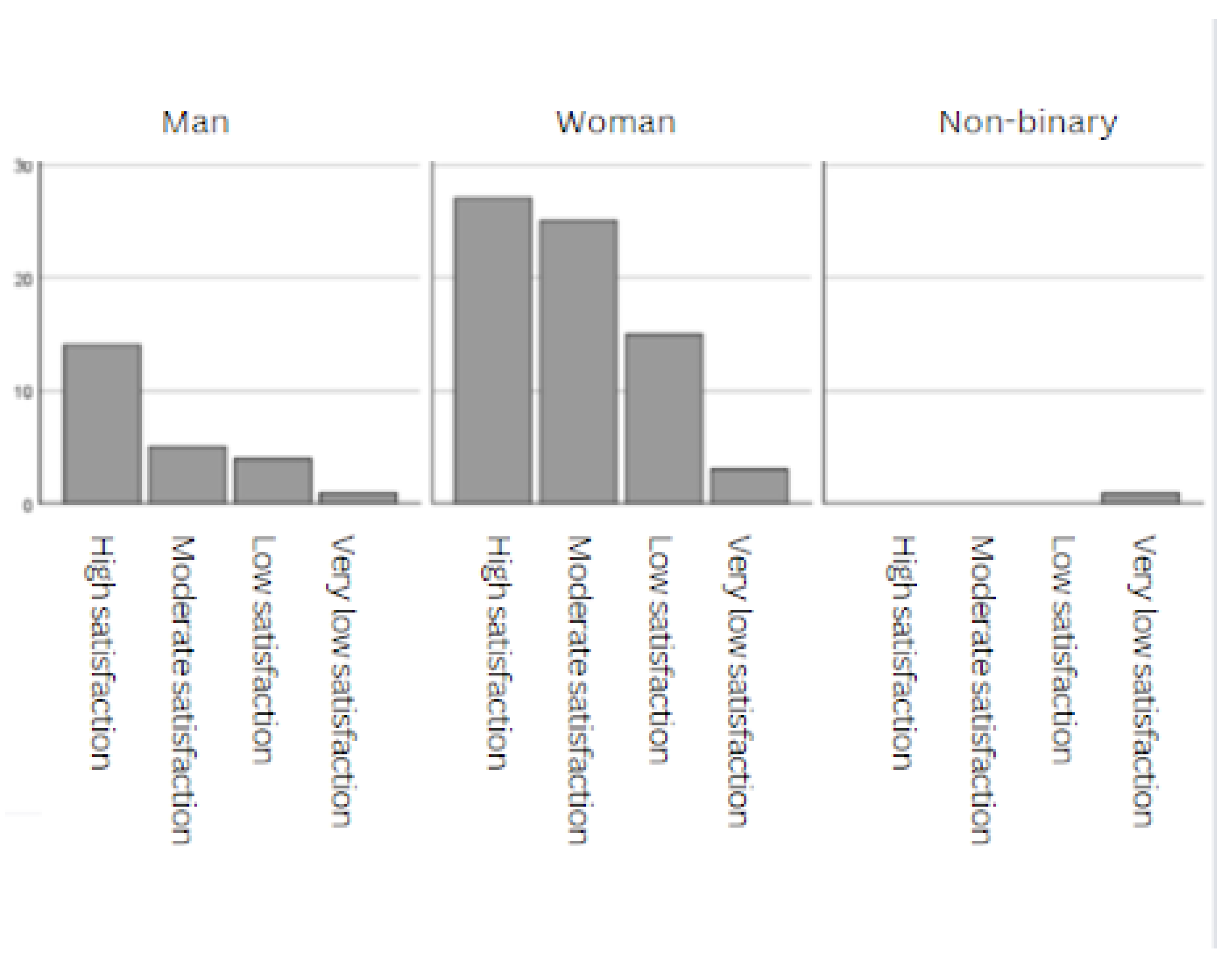
Figure 2.
Rosenberg Self-Esteem Scale Scores by Gender.
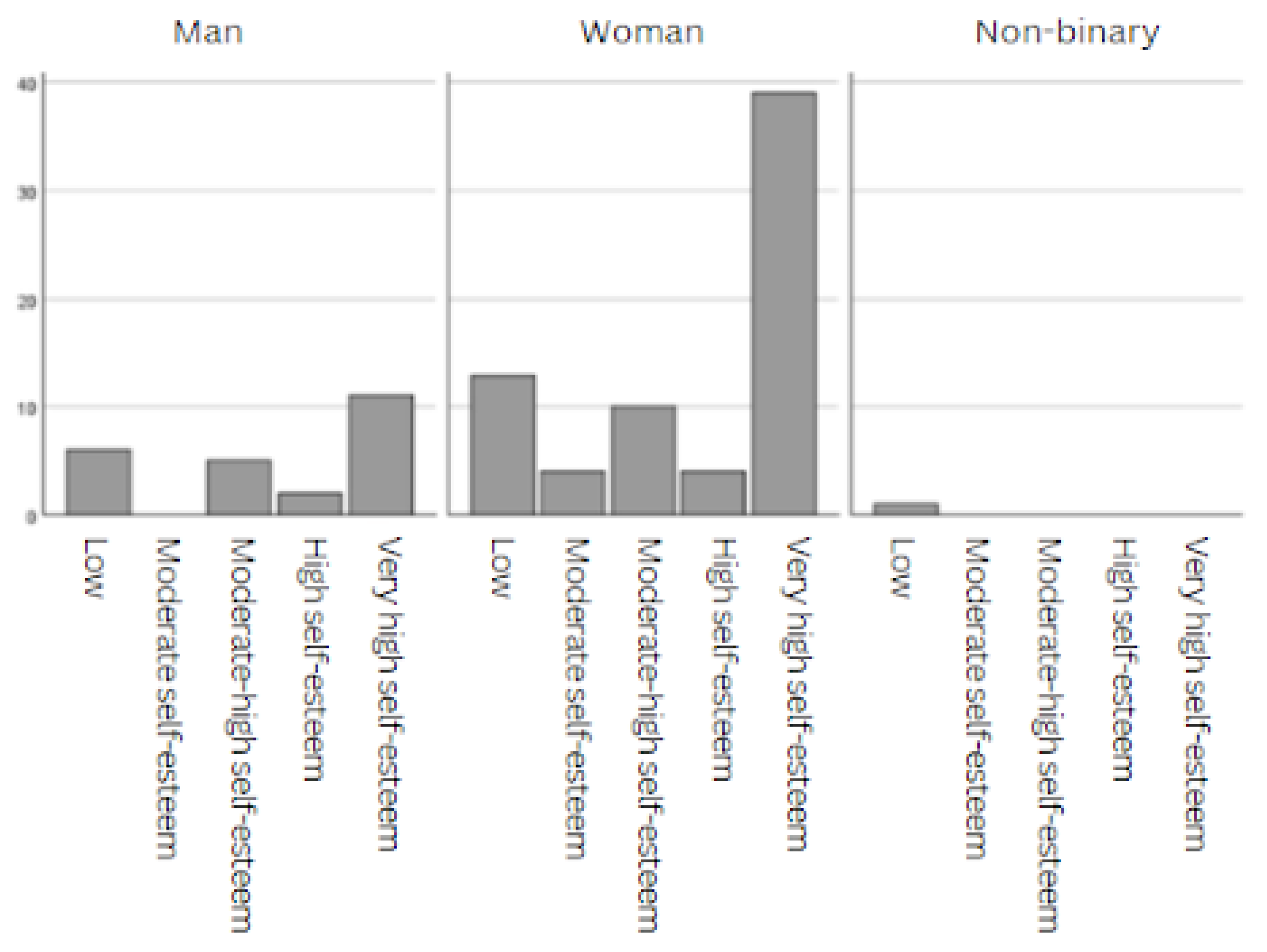

Table 1.
Sociodemographic and Descriptive Characteristics of the Sample (N = 95).
| Variable | Frequency (n) | Percentage (%) |
|---|---|---|
|
Educational level Compulsory Secondary Education (ESO) High School Diploma Vocational training (FP) University Degree Postgraduate/Master's Degree Doctorate/PhD Competitive Exam Candidate |
1 4 13 33 33 2 9 |
1.1% 4.2% 13.7% 34.7% 34.7% 2.1% 9.5% |
|
Nationality Spain France Brazil Peru Germany |
89 1 2 2 1 |
93,7% 1.1% 2.1% 2.1% 1.1% |
|
Residence location Extremadura Comunidad Valenciana Madrid Salamanca Sevilla Málaga Others |
38 25 13 7 4 3 5 |
39.47% 26.32% 13.68% 7.37% 4.21% 3.16% 5.26% |
|
Profession Student Psychologist Teacher / Professor Social Worker Veterinarian Translator Others |
36 12 9 2 3 2 31 |
37.89% 12.63% 9.47% 2.11% 3.16% 2.11% 32.63% |
|
History of ED No Yes |
89 6 |
93.70% 6.30% |
|
Frequency of comparison Generally, I don't do it Frequently Sometimes |
54 13 28 |
56.8% 13.7% 29.5% |
|
Time spent thinking about defects >1 hour <1 hour |
15 80 |
15.8% 84.2% |
|
Purpose of Instagram Account Leisure Personal Business Other |
45 40 7 3 |
47.4% 42.1% 7.4% 3.2% |
|
Modifications in appearance or lifestyle Yes No From time to time |
13 57 25 |
13.7% 60% 26.3% |
Table 2.
Statistically Significant Variables Associated with Self-Esteem and Body Satisfaction.
| Self-esteem | Body satisfaction | |
|---|---|---|
| Variable | Test and significance level | |
| Profession | H = 17.88 p = .007* |
|
| History of ED | U = 135.50 p = .028* |
U = 106.50 p = .009* |
| Frequency of comparison | H = 22.09 p < .001* |
H = 17.69 p < .001* |
| Time Spent Thinking about Defects | U = 179.00 p < .001* |
U = 224.50 p < .001* |
*The p-value indicates statistical significance (p < .05, CI = .95).
Table 3.
Body Satisfaction Scores according to BSQ (N=95).
| Body Satisfaction Category | Score range | Frequency (n) | Percentage (%) |
|---|---|---|---|
| High Satisfaction | 34 - 76 | 41 | 43.2% |
| Moderate Satisfaction | 77 - 119 | 30 | 31.6% |
| Low Satisfaction | 120 - 160 | 19 | 20.0% |
| Very Low Satisfaction | 161 - 204 | 5 | 5.3% |
Table 4.
Self-Esteem Scores According to the Rosenberg Self-Esteem Scale (N=95).
| Self-Esteem Category | Score range | Frequency (n) | Percentage (%) |
|---|---|---|---|
| Low Self-Esteem | 10 - 15 | 20 | 21.1% |
| Medium-Low Self-Esteem | 16 - 21 | 4 | 4.1% |
| Medium Self-Esteem | 22 - 27 | 15 | 15.8% |
| High Self-Esteem | 28 - 33 | 6 | 6.3% |
| Very High Self-Esteem | 34 - 40 | 50 | 52.6% |
Disclaimer/Publisher’s Note: The statements, opinions and data contained in all publications are solely those of the individual author(s) and contributor(s) and not of MDPI and/or the editor(s). MDPI and/or the editor(s) disclaim responsibility for any injury to people or property resulting from any ideas, methods, instructions or products referred to in the content. |
© 2024 by the authors. Licensee MDPI, Basel, Switzerland. This article is an open access article distributed under the terms and conditions of the Creative Commons Attribution (CC BY) license (https://creativecommons.org/licenses/by/4.0/).
Copyright: This open access article is published under a Creative Commons CC BY 4.0 license, which permit the free download, distribution, and reuse, provided that the author and preprint are cited in any reuse.


