

Submitted:
31 May 2024
Posted:
31 May 2024
You are already at the latest version
Abstract
With buildings accounting for a significant portion of global energy consumption and greenhouse gas emissions, the application of artificial intelligence (AI) holds promise for enhancing sustainability in the building lifecycle. This systematic literature review addresses the current understanding of AI's potential to optimize energy efficiency and minimize environmental impact in building design, construction, and operation. A comprehensive literature review and synthesis were conducted to identify AI technologies applicable to sustainable building practices, examine their influence, and analyze the challenges of implementation. The review was guided by a meticulous search strategy utilizing keywords related to AI application in sustainable building design, construction, and operation. The findings reveal AI's capabilities in optimizing energy efficiency through intelligent control systems, enabling predictive maintenance, and aiding design simulation. Advanced machine learning algorithms facilitate data-driven analysis and prediction, while digital twins provide real-time insights for informed decision-making. Furthermore, the review identifies barriers to AI adoption, including cost concerns, data security risks, and challenges in implementation. AI presents a transformative opportunity to enhance sustainability in the built environment, offering innovative solutions for energy optimization and environmentally conscious practices. However, addressing technical and practical challenges will be crucial for the successful integration of AI in sustainable building practices.
Keywords:
Artificial Intelligence
; Sustainability
; Building Life Cycle
; Design Optimization
; Digital Twins
; Internet of Things
1. Introduction
In recent years, sustainable building practices have attracted critical focus within the construction industry, a focus driven by growing concerns about the environmental impacts of traditional design and construction methods. With buildings accounting for nearly 40% of global energy consumption and contributing up to 30% of annual greenhouse gas emissions [1], there is a pressing need to address these issues. Moreover, as the world’s urban population is projected to double by 2050 [2], the imperative to enhance sustainability of buildings and infrastructure has never been more urgent.
Amidst these challenges, there is a deep sense of optimism surrounding the potentials of emerging technologies, particularly artificial intelligence (AI) [3,4,5,6], to revolutionize the way we approach sustainable building practices. By leveraging AI across various stages of the building lifecycle, from design and construction to operation and maintenance, there exists a unique opportunity to mitigate systemic inefficiencies and drive meaningful change [7] One of the most pressing issues facing the building industry is the staggering amount of waste generated during construction. Globally, an estimated 11-15% of materials are wasted on construction sites [8], highlighting the need for more efficient processes and resource utilization. Furthermore, operational inefficiencies contribute significantly to carbon footprints. For example, lighting, heating, and cooling accounted for nearly 28% of commercial building energy use in the United States [9], commercial and residential buildings in China contributed 41.10% to energy consumption [10]. In fact, residential buildings alone, accounted for over 80% of the total energy consumed in Nigeria [11].
Furthermore, as AI technologies continue to advance, there is growing focus on leveraging decentralized and autonomous systems to optimize building operations and resource management. For example, AI-driven decentralized energy systems can optimize energy generation [12], storage [13], and distribution [14] within buildings and across smart grids, enhancing resilience and sustainability while reducing dependence on centralized energy sources. While the potentials of AI to enhance building sustainability has been widely studied, few studies have synthesized current knowledge on implemented applications spanning the lifecycle of buildings; design, construction, and operations phases. Indeed, this is a unfolding critical body of knowledge and highly potential field of study. Despite this great significance, there exists, little systematic review on how AI can enhance sustainability of buildings throughout the buildings’ lifecycle; design, construction, and operations stages. Furthermore, although AI technologies like machine learning and computer vision are gaining ground for enhancing building sustainability, most current applications focus on the operational stage, with less attention on the design and construction stages. This systematic literature review was therefore conducted to fill that gap. This review aims to gather existing research on AI technologies applied in sustainable building, with focus on the less-studied areas. and identify remaining gaps needing investigation.
Immense untapped and significant potentials exist regarding leveraging AI for various building aspects like. generative design, construction automation, predictive maintenance, and lifecycle optimization, practices that would reduce the environmental footprint of buildings. However, attention must also be given to the challenges inherent in the technology which include, data availability, validation, and industrial adoption.
The study was therefore aligned to literature published on AI applications that have been used at the different stages of building lifecycle. It presents how the applications have enhanced sustainability.as well as identified the challenges of applying them in the building industry. The study further identified potential solutions to these challenges, with the aim of assessing the application of artificial intelligence (AI) in the building lifecycle, with a view to enhancing sustainable building delivery. To attain the aim, this review was guided by the following research questions:
- What is understood by AI in sustainable building?
- What are the AI technologies applicable to sustainable building lifecycle?
- How does AI application influence sustainable building lifecycle?
- What are the barriers to AI application in sustainable building lifecycle?
- What knowledge can be drawn from existing studies on AI application in sustainable building lifecycle.
The systematic literature review on the use of AI in sustainable building lifecycle was conducted to answer these questions. Among the research works reviewed were those related to AI, AI application in sustainable construction, AI technology tools, and challenges to AI application in sustainable buildings, which were analyzed comprehensively. The gaps were also identified and discussed. By answering these review questions, the study contributes to knowledge and also impacted on the improvement and understanding of AI integration with sustainable building practices. Thus, this paper makes a modest contribution to the discuss on AI technology tools and their applications to sustainable building. It serves as guide for designers and construction personnel on the appropriate deployment of AI technologies.
Specifically, the review is significant to the application of relevant AI technologies and tools before, during and after buildings are constructed, toward meeting a sustainable building lifecycle.
2. Materials and Methods
Essentially, this review categorized documented applications of AI in sustainable building lifecycle across the three primary stages; design, construction, and operations. Moreover, the review focused on literature that reported demonstrated applications and implementations of AI technologies, rather than just conceptual proposals. The systematic review of published literature was conducted as the basic research design, and was conducted by adopting the methodological model proposed by Brocke [15], which stressed the importance of rigor in the documentation of literature search process. The model is based on a five phases framework for the literature search process, which are: (1) Definition of review scope, (2) Conceptualization of topic, (3) Literature search strategy, (4) Literature analysis and synthesis, (5) Research agenda. Subsequently, these phases were explained with particular reference to application of artificial intelligence (AI) in sustainable building lifecycle appropriately.
2.1. Definition of Review Scope
To clearly define the scope of this systematic literature review, reference was made to an established taxonomy presented by Cooper [16] who established six characteristics of literature review as being, Focus, Goal, Organization, Perspective, Audience. and Coverage. Regarding the Cooper’s [16] taxonomy of the review scope discussed earlier; Table 1 summarizes the choices made in this review by the author.
It should be noted that, certain constraints served to limit the scope; only literature from 2013 to 2023 were considered, focusing on modern deep learning advances. Further, only English language publications related to residential and commercial buildings were included. The defined scope and purpose allowed a focused synthesis of the emerging field of AI in sustainable building practices.
2.2. Conceptualization of the Review Topic
Brocke [15] suggested that, “a review must begin with a broad conception of what is known about the topic and potential areas where knowledge may be needed.” Therefore, the conceptualization of this study topic evolved through a meticulous process of understanding and synthesizing existing knowledge. The study commenced with a broad exploration of the fields of artificial intelligence (AI) and sustainable building practices. By delving into the extensive literature on theses, foundational insights were gained into the potential intersections between the domains.
As the review progressed, attention was shifted towards identifying specific areas within the building life cycle where AI could offer innovative solutions to sustainability challenges. That involved examining the prevailing environmental issues faced by the construction industry, such as energy inefficiency, material wastage, and carbon emissions. Concurrently, an appreciation for the increasing importance of sustainable practices in building design, construction, and operation emerged, driven by global imperatives such as climate change mitigation and resource conservation.
Furthermore, the conceptualization process entailed recognizing the transformative capabilities of AI technologies in addressing these sustainability challenges. It analyzed the potential applications of AI across the various stages of a building life cycle, from design optimization to operational efficiency enhancement.
2.3. Literature Search Strategy
To carry out the process of literature search, this study took the following strategic steps:
First, for the need to choose the database source among the available ones, the online databases of Science Direct and Google Scholar were selected. The choice was based on the fact that, they included a broad base of publications, made up of, journal articles, books, citations and patents, much of which focused on the subject of study, but especially the first two.
Second, the most suitable keywords and search criteria were identified in order to extract representative subsets from the selected online databases. The databases were searched using the words “AI in the building life cycle” OR “AI in Sustainable building life cycle” with the search filters set to find the keywords, ‘only in the title of the paper’, ‘abstract’, and ‘keywords’, excluding all citations and patents. With those parameters, the search results included 237,839 papers, out of which 4,839 came from Science Direct while 233,000 came from Google Scholar. The databases were then queried to sort all the results by year of publication within the 2013–2023 range. The review chose this 10-year range in order to have a reasonably representative set of literature, excluding works in progress, hence the range excluded 2024. Having filtered the search results using the year range, the results reduced to 21,688 papers, out of which 3,488 came from Science Direct while 18,200 came from Google Scholar.
Third, consideration was given, whether to apply ‘backward and forward search.’ However, the substantial volume of literature already identified through the initial process, resulting in a diverse array of sources; journals, conference proceedings, book chapters, and industry reports, was resolved to be adequate. The pool of literature provided a comprehensive foundation for exploring the application of AI in the sustainable building life cycle. Therefore, additional ‘backward and forward search was deemed unnecessary, as the breadth and depth of the literature already accessed were considered sufficient to support the research objectives and facilitate a thorough review of the research topic.
Fourth, evaluation in “all phases mean limiting the amount of literature identified by keyword search to only those articles relevant to the topic at hand” [15]. The literature evaluation process was done manually, and some criteria were applied to restrict the search. The manual method was used due to the absence of a Literature Review Storage Database (LRS-DB), usually used as a source input platform. The process served to remove duplicates, theses, PowerPoint presentations, white papers, book introductions, competition announcements, all works not in the English language and without full abstract available, and all unpublished works which did not undergo peer review. The review also adopted three sets of criteria for inclusion and exclusion. Firstly, the articles were selected based on how relevant they were to the study themes, using a rating system; “1” meant ‘low significance’, “2” meant ‘moderate significance’, and “3” meant ‘high significance.’ This assessment scale had been utilized by earlier researchers [17,18,19]. Each article’s applicability was evaluated according to its methodological rigor and conclusions. As a result, all publications that provided case studies and practical applications of AI adoption in sustainable building life cycles received a “3” rating and were added to the review. Secondly, articles having a high number of citations were prioritized, and a select few were added to the review. All other articles which did not fall within the “2” and “3” ratings, indicated their low significance to the review. Contents of the articles were restricted to the application of AI in the life cycle of sustainable buildings, excluding roads, bridges, and other construction practices in the building industry. Majority of the articles that were chosen for evaluation, were published within the last five (5) years. The application of these criteria resulted in the exclusion of many literatures, resulting in a total of 900 relevant to the present review. This search strategy is depicted in Figure 1.
2.4. Literature Analysis and Synthesis
After collecting sufficient literature on the topic, the processes of analysis and synthesis were conducted [15]. To accomplish that goal, the 900 papers were systematically organized to align with the following three investigative foci:
2.4.1. Relevance to Research Questions
The first aspect of investigation involved assessing the relevance of each paper to the research questions posed. It ensured that the literature reviewed, directly addressed the inherent objectives research questions. Papers were therefore evaluated based on their alignment with the key themes and topics of interest related to the application of artificial intelligence (AI) in sustainable building life cycle. Any paper that did not directly contribute to answering the research questions was filtered out to maintain the focus and coherence of the review.
2.4.2. Practical Applications and Implementations
Another critical aspect of the investigation was to ascertain whether the literature primarily reported, demonstrated applications and implementations of AI techniques or merely presented conceptual proposals. This criterion ensured that, the review focused on practical, real-world examples of AI integration in sustainable building life cycle rather than theoretical discussions or speculative ideas. Further, the papers were evaluated based on their ability to provide empirical evidence, case studies, or documented implementations of AI technologies in actual building projects across the various phases of the building life cycle.
2.4.3. Inclusion of AI Across the Building Lifecycle
Lastly, the investigation sought to determine the extent to which the literature addressed the inclusion of AI technologies across the entire building lifecycle. It therefore involved analyzing the papers covering AI applications in all stages of the building lifecycle; design, construction, and operations, thereby providing a comprehensive understanding of how AI contributes to sustainability across building life cycle.
Overall, these three investigative foci ensured that the collected literature was systematically analyzed and synthesized to address the research objectives effectively. By prioritizing relevance, practical applications, and comprehensive coverage of a building lifecycle, the review offered valuable insight into the role of AI in advancing sustainability in the built environment. More filtering efforts were made to read the abstracts of the 900 articles and in some cases their methodologies and findings. From that filtering exercise, the articles relevant to the research questions were identified, where only 119 articles met the criterion, hence were the ones used for this review.
2.5. Distribution of Identified Literature
From the searches conducted in the two online databases, Science Direct and Google Scholar, to identify relevant publications on AI applications in sustainable building practices, 24 (20%) of all identified resources were from the Science Direct, while 95 (80%) were from the Google Scholar (Figure 2). The Figure 2 also revealed the types of literature identified from the online searches, showing that, for Science Direct, 9 (38%) were review articles, 14 (58%) were research papers, and 1 (4%) was a book chapter. For Google Scholar, 26 (27%) were review articles and 69 (73%) were research papers.
3. Findings and Discussions
3.1. Artificial Intelligence in Sustainable Building
Artificial intelligence (AI) encompasses tasks that can be automated using self-governing mechanical and electronic devices with intelligent control [20]. According to McLean [21], There are three conceptualizations of AI: Artificial Narrow Intelligence (ANI), Artificial General Intelligence (AGI), and Artificial Super Intelligence (ASI). ANI is utilized in language translation and weather forecasting, AGI is envisioned to solve complex problems independently, incorporating mental models and personality features, while ASI, a futuristic concept, could potentially surpass human abilities in various fields, as Bughin [21] claimed.
According to Debrah [23], Artificial Intelligence (AI) in sustainable buildings refers to the adoption and integration of AI technologies basically in the optimization of energy efficiency, reduction environmental impact, and enhancement of overall sustainability of buildings. AI holds much promise in enhancing collaboration and communication among stakeholders throughout the building lifecycle [24]. By facilitating data sharing and real-time collaboration, AI platforms can streamline project management processes [25], improve decision-making [26], and foster innovation in sustainable building practices [27]. For example, AI-powered digital twins enable virtual simulations and predictive modeling [28], allowing stakeholders to anticipate performance outcomes and optimize building designs for sustainability and resilience [29].
The integration of artificial intelligence with conventional techniques such as, modeling, simulation, and analytics, have the potential to revolutionize the various stages of building design, construction, and operations [30]. At the stage of building design, advancements in artificial intelligence offer unprecedented capabilities to optimize sustainability goals within various architectural and engineering parameters [23,31]. Artificial intelligence-driven generative design for instance, can rapidly analyze multiple design options, considering various parameters, to minimize embodied carbon and enhance overall sustainability [31]. By iteratively generating and evaluating designs, AI-driven processes can identify optimal solutions that significantly reduce environmental impact compared to conventional processes. Furthermore, AI simulation tools play a crucial role in assessing building performance early in the design process [32]. By simulating factors such as energy consumption and indoor environmental quality, these tools enable designers to make informed decisions that prioritize sustainability without compromising functionality or comfort [33]. For instance, AI algorithms can analyze various design options and select the most sustainable one based on specific criteria [18]. This proactive approach ensures that sustainability measures are integrated seamlessly from the outset, minimizing the need for costly retrofits in later stages [18,33,34].
At the construction stage, AI technologies offer capabilities that enhance efficiency, especially in the reduction of waste. Through the application of computer vision and AI-driven analytics, construction sites can be monitored in real-time to identify inefficiencies and mitigate risks [35]. For example, AI-enabled tracking of materials and equipment has been shown to reduce waste by over 40% [36], leading to significant cost savings [37] and environmental benefits [38]. Additionally, AI-powered analysis of project data can identify potential safety hazards, allowing for proactive risk management and improved construction site safety [39]. Yet again, AI-powered robots can perform tasks such as welding, drilling, and cutting with high precision and efficiency, minimizing errors and reducing material waste. Further, AI integration can be utilized to predict material performance [40], durability [41], and embodied carbon emissions [42], enabling more informed material selection and construction methods.
At the operation stage, once buildings are operational, AI continues to play a crucial role in maximizing efficiency and performance. Smart building systems leverage ‘machine learning algorithms’ to optimize the control of various building systems, such as lighting, HVAC, and security, based on real-time data and occupancy patterns [43]. By dynamically adjusting system settings in response to changing conditions, AI-enabled automation can significantly reduce energy consumption and operational costs while maintaining occupants’ comfort and productivity [44]. Studies have suggested that, AI-driven building automation could lead to energy savings of 20-30% in commercial buildings [45] while in residential buildings, a savings of 8.48 % in energy and 7.52 % in cost [46]. According to De Wilde [47], in the aspect of maintenance and repairs, considered to be part of building operation stage, AI helps in prediction and diagnosing of maintenance and repair needs, thereby reducing downtime and improving building performance. Typical example is where AI-powered predictive maintenance systems can analyze data from building sensors and predict when equipment is likely to fail, allowing for proactive maintenance and reducing equipment downtime. At this stage also, there is renewable energy integration, where AI can help integrate energy sources like solar and wind, into building systems, thereby optimizing energy production and consumption. For instance, AI-powered energy management systems can analyze real-time data from renewable energy sources and building loads, adjusting energy production and consumption accordingly to maximize efficiency and reduce energy costs [46,48].
Moreover, ongoing commissioning and fault detection, facilitated by AI-powered analytics, enable proactive maintenance and troubleshooting [47]. By analyzing data from building systems and equipment, AI algorithms can detect anomalies and potential issues before they escalate, minimizing downtime and prolonging the lifespan of building assets. This predictive maintenance approach not only enhances operational efficiency but also contributes to overall sustainability by reducing resource consumption and waste. In order to provide a structured approach to understanding the application of AI technologies in various aspects of construction projects, with focus on building lifecycle stages, it is important to establish a theoretical underpinning for the discuss.
3.2. Theoretical Underpinning for AI Integrated Sustainable Buildings Lifecycle
In addressing the knowledge gap regarding the application of AI technologies, a number of theories can be subscribed to as theoretical underpinning. The first theory underpinning this study is the Technology Acceptance Model (TAM), developed by Fred Davis in 1985 and first proposed in his 1989 paper [49], has been widely utilized for understanding and predicting the application and use of new technologies such as AI. The Model basically postulates that, the perceived usefulness and perceived ease of use as being key determinants of a person’s intention to use a particular technology. Perceived usefulness in the context of lifecycle of buildings, points to the disposition that, stakeholders such as construction professionals and facility managers, may perceive AI technologies as useful if they believe such can enhance their performance, productivity, or decision-making abilities [50,51]. For example, AI-powered predictive maintenance systems may be perceived as useful by facility managers, since they can assist in anticipating equipment failures and optimization of maintenance schedules, leading to cost savings and improved building operations. Similarly, AI-driven design optimization tools may be perceived as useful by architects and engineers, because they can be used to generate more efficient building designs and reduce construction costs.
In the aspect of perceived ease of use, users’ beliefs in the friendliness and effortlessness of AI technologies can impact their intention to use these technologies in the lifecycle of building. For example, AI-powered building information modeling (BIM) tools may be perceived to be intuitive and easy to navigate. As a result, construction professionals may be more inclined to adopt them for coordinating design, planning, and construction activities. Conversely, if AI-based energy management systems, for example, are perceived as complex and difficult to configure, facility managers may be less likely to utilize them for optimizing building energy performance.
The TAM has been continuously studied and expanded, with two major upgrades being the TAM 2 [53] and the Unified Theory of Acceptance and Use of Technology (UTAUT) [54]. In the context of construction, TAM helps to understand the factors that influence the acceptance and adoption of AI technologies, tools, and systems by construction professionals, factors such as perceived benefits and ease of use.
Another applicable theory, that of Innovation Diffusion, developed by Everett Rogers [54], basically examines how new ideas, practices, or technologies spread within population gradually, rather than all at once. It focuses on the process in which an innovation, such as AI, is communicated through certain channels over time among members of a social system, in addition to identifying factors that influence rate of their adoption. It further includes their relative advantages based on perceived benefits, compatibility with existing processes, complexity, ability to be tried, and ability to be observed. In the context of construction, the theory covers a broad scope of thought assisting research in understanding the various factors that influence awareness and adoption of AI technologies in the various construction stages within the lifecycle of a building.
Looking further into the diffusion of AI technologies in the lifecycle of buildings, through the lens of the innovation diffusion theory, an example can be seen in the adoption of AI-powered building information modeling (BIM) tools too. That may start with innovative construction firms and gradually spread to the broader industry as the benefits of the technology become more apparent. The adoption of AI-driven energy management systems in buildings may follow a similar diffusion pattern, with early-adopting facility managers leading the way, then influencing the broader adoption by other building owners and managers. The innovation diffusion theory further identifies several key factors that influence the successful spread of innovations, such as the characteristics of the innovation itself, the communication channels used, the social system in which the innovation is introduced, and the time it takes for the innovation to be adopted
3.3. AI Technologies Applicable to Sustainable Building Lifecycle
Acording to Regona [20], building industry products are rapidly integrating into a networked ecosystem of hardware and software, forming customized “constellations” based on validated use cases. Notable constellations, as depicted in the building industry technology map, include; supply chain optimization, robotics, digital twin technology, modularization, AI, and analytics. Some of the technologies like, digital twins, 3D printing, and AI plus analytics, are anticipated to have revolutionary effects.
In the short term, the building sector is poised to benefit from fundamental technologies such as blockchain, AI, Internet of Things (IoT), big data analytics, and information communication technology (ICT). Table 2 outlines major AI technologies currently deployed globally, systematically organized based on their methods of application and specific purposes within distinct areas, all contributing cohesively to the realization of a more sustainable building lifecycle. Digital twins, a pivotal component of this technological revolution, enabling seamless integration with various projects, offering real-time activity capture for predictive decision-making [55]. These digital replicas empower project and facility managers to create virtual construction sites and sustainable functional building models accessible remotely via network technologies [56]. They further lay the groundwork for intelligent 3D models that enhance planning, design, and infrastructure management efficiency [57].
The integration of AI technologies, including image recognition, not only identifies unsafe practices but also contributes to ongoing worker training, marking a paradigm shift towards a more technology-driven, efficient, and safer future in the building industry [60]. All of these technologies are seen to be applied across the building lifecycle, which have been underpinned by appropriate theoretical propositions.
3.3.1. Application
The integration of big data and data analytics significantly enhances building lifecycle sustainability by providing detailed insights into energy consumption patterns, enabling real-time adjustments for energy efficiency. Predictive maintenance ensures proactive scheduling, preventing equipment failures and extending lifespan, while lifecycle cost analysis aids decision-making on economic and environmental impacts. Robotics and automation play a pivotal role in sustainable construction, reducing time, enhancing precision, and minimizing errors. Data and system integration enable seamless communication, optimizing energy efficiency and waste reduction. Mobility and wearable technologies streamline construction management, enhance occupant well-being, and contribute to energy monitoring. Real-time monitoring and management across multiple dimensions optimize energy usage, water conservation, waste management, and enhance building security. Automated control of building systems focuses on operational efficiency, resource conservation, and performance enhancement, contributing to grid stability and carbon emission reduction. Table 3 provides information on the purpose and their applications. For the purpose of providing specific data source regarding the identified major AI applications, they have been matched with pertinent literature.
3.4. AI Applications Deployed in Stages of a Building Lifecycle
Artificial Intelligence (AI) has been shaping building methods, becoming a well-established and influential force in the building sector. Several authors have reached a consensus on the beneficial subsets of AI in the building industry, including design and construction, maintenance, and even decommissioning. These subsets are intricately categorized based on their applications and specific roles at different stages of the building lifecycle. As previously highlighted, the widespread use of AI across various building practices is expected to significantly transform the traditional building lifecycle into a more sustainable and efficient paradigm.
A number of studies within the reviewed literature, covered the three stages of a building lifecycle in their studies. Among them were Tchana [20], Regona [62] and Regona [66], who emphasized AI’s impact on performance throughout the three stages, in the aspects of facilitating early detection of deficiencies and cost savings. Collaboration, also cutting across the three stages, was identified as a significant advantage, streamlining communication between customers and designers through AI-driven digital twins, IoT, and machine learning [87], thereby fostering transparency [29] and efficiency [28].
3.4.1. AI in Construction Stage of Sustainable Building Lifecycle
Artificial Intelligence (AI) is revolutionizing traditional construction methods, ushering in a new era for the building industry. AI involves creating intelligent devices and programs that mimic cognitive processes to effectively address complex problems [88]. Despite significant global investments exceeding USD26 billion in engineering and construction technology including AI, over the past five years (2014–2019), the basic construction procedures have remained largely unchanged for the last four decades. Various obstacles, such as inadequate business models, a lack of essential skills, and industry-wide knowledge gaps, have hindered the widespread adoption of AI in building development and lifecycle processes [89,90,91].
3.4.2. AI in the Operation Stage of Sustainable Building Lifecycle
With regards to the operation stage in a building lifecycle specifically, many researchers have emphasized the importance of AI-related uses. These include, machine learning, digital twins, and the Internet of Things (IoT), and described them as critical components that enhance operations within sustainable building life cycles. Examples of those researchers were, De Wilde [47], Petri [65], Yvan [62], Boje [68], Baduge [71], Adu-Amankwa [72], Lucchi [73], Su [75], Alanne [58], Kineber [59], Boje [86], and Arowoiya [79]. While direct application of AI may be limited, these technologies served as crucial connections that enable effective enhancement of operations. In line with this, various authors, including Wang [92], Chen [93], You [48], and Yu [94], and with relation to AI, highlighted the significance of digital twin systems integrating deep learning with machine learning. These systems improved collective building energy management, optimized renewable energy source load, and managed building systems efficiently.
Furthermore, Pieter [47] categorized AI application into intelligent or smart buildings, highlighting responsiveness to human and organizational needs, through the integration of IoT which creates a network of connected devices, enabling wireless data collection and sensing. Additionally, digital twins serve as real-time counterparts, enabling better interventions, financial savings, improved performance, and societal benefits. He went further to show that, within the realm of sustainable building lifecycle, various technologies play interconnected roles. Building Performance Simulation (BPS) models predict physical building performance, while Machine Learning (ML) models introduce data-driven intelligence for optimizing energy usage and predicting maintenance needs. Digital Twins act as real-time counterparts, offering dynamic representations of buildings, and Building Information Models (BIM) provide comprehensive digital representations.
Pieter [47] still showed that, Artificial Intelligence (AI) served as a central force, integrating insights from BPS models, learning capabilities from ML models, real-time representation from Digital Twins, and comprehensive data from BIM, ultimately enhancing overall intelligence and efficiency. Conceptual overlaps include ML improving BPS precision, the interconnectedness of real-time insights (Digital Twins) and comprehensive data representation (BIM). Each technology contributes distinctive features, such as ML’s data-driven intelligence and Digital Twins’ focus on real-time monitoring. The literature underscored the symbiotic relationship of digital twins, IoT, and machine learning with AI, showcasing their transformative impact on making buildings more intelligent, responsive, and efficient. The complex inter-relationships are depicted in Figure 3.
3.5. Influence of AI Application in Sustainable Building Lifecycle
Building industry practitioners should consider both the positive influences and potential challenges associated with AI application in projects. To avoid inefficiencies and maintain momentum in adopting AI-related technologies, it is crucial for professionals to establish clear short-term and long-term objectives. Effective prioritization of research, development, and investment in AI technologies is essential, focusing efforts when the positive influences outweigh the challenges. Additionally, a proactive approach involves identifying potential risks affecting AI implementation, facilitating strategic planning, and ensuring a smooth business transition. The positive influences have been derived from common discussion principles in the reviewed literature. However, it is pertinent to start this discuss with identifying key AI technologies deployed in the three stages of a building lifecycle.
The integration of emerging technologies, particularly adaptive manufacturing, presents significant opportunities in construction, offering cost reduction and heightened efficiency [20,32,66]. Adaptive manufacturing, involving flexible machines for customizable part production, can revolutionize building methods and reshape job roles by integrating planning, design, and construction tasks. Recognizing the advantages of AI is crucial for effective integration into construction projects [95]. Results from the review revealed that, impact of AI spans various facets of a building lifecycle (Table 4).
Machine learning algorithms, a subset of AI, are instrumental in optimizing energy efficiency within buildings [63,64]. These algorithms continuously analyze real-time data from sensors embedded in building systems to understand patterns in energy consumption and environmental conditions. By processing this data, machine learning algorithms can dynamically adjust settings for HVAC systems, lighting, and other building equipment to minimize energy usage while maintaining occupant comfort. For example, during periods of low occupancy or favorable weather conditions, machine learning algorithms may automatically adjust thermostat settings or dim lighting to conserve energy without compromising comfort. This adaptive approach to energy management helps buildings operate more efficiently, resulting in significant energy savings and reduced environmental impact over time.
Predictive analytics, another subset of AI, revolutionizes maintenance practices by predicting equipment failures before they occur [62,66]. By analyzing historical performance data and detecting patterns indicative of impending failures, predictive analytics algorithms can forecast when equipment is likely to malfunction. This proactive approach enables maintenance teams to schedule repairs or replacements during planned downtime, minimizing disruptions to building operations and avoiding costly emergency repairs. For example, predictive maintenance algorithms may identify early signs of equipment degradation in HVAC systems based on deviations from normal operating parameters, such as increased vibration or temperature fluctuations. By addressing these issues preemptively, predictive maintenance extends the lifespan of critical building systems and enhances operational efficiency.
Data analytics tools, powered by AI techniques, provide comprehensive insights into the economic and environmental impacts of building materials throughout their lifecycle [47]. These tools analyze data related to material sourcing, manufacturing processes, transportation, installation, maintenance, and disposal to quantify the total cost of ownership and environmental footprint associated with different building materials. By considering both financial and environmental factors, decision-makers can evaluate the long-term sustainability and cost-effectiveness of various material options. For instance, data analytics algorithms may assess the lifecycle costs and environmental implications of using renewable materials versus traditional alternatives, helping stakeholders make informed choices that align with sustainability goals and budget constraints.
Smart building systems leverage AI-driven technologies to enhance occupant comfort and productivity through personalized environmental control [69]. These systems integrate sensors, actuators, and feedback mechanisms to monitor occupant preferences and adjust indoor conditions accordingly. For example, smart thermostats equipped with machine learning algorithms can learn occupants’ temperature preferences over time and automatically adjust settings to maintain optimal comfort levels. Similarly, lighting systems with occupancy sensors and daylight harvesting capabilities can dynamically adjust lighting levels to minimize energy usage while ensuring adequate illumination for occupants. By tailoring environmental conditions to individual preferences and activities, smart building systems create more comfortable and productive indoor environments.
Data analytics tools enable the tracking and analysis of waste generation, recycling rates, and material usage throughout the building lifecycle [69,86]. These tools leverage AI techniques to identify inefficiencies and opportunities for improvement in waste management practices. For example, data analytics algorithms may analyze historical waste data to identify trends and patterns, such as peak waste generation periods or recurring sources of waste. Armed with this information, stakeholders can develop targeted strategies to reduce waste generation, increase recycling rates, and optimize material usage. By minimizing waste and maximizing resource efficiency, buildings can reduce their environmental footprint and contribute to a more sustainable built environment.
Big data analytics, coupled with AI algorithms, play a crucial role in evaluating and monitoring a building’s carbon footprint [23,71]. These analytics tools analyze data on energy consumption, transportation emissions, and material usage to quantify the greenhouse gas emissions associated with building operations. For example, AI-powered algorithms may analyze energy consumption data from smart meters and building management systems to calculate carbon emissions from electricity usage. By providing insights into the primary sources of carbon emissions and their environmental impact, big data analytics enable stakeholders to develop targeted strategies for reducing carbon footprint. These strategies may include implementing energy efficiency measures, adopting renewable energy sources, optimizing transportation logistics, and promoting sustainable procurement practices. By mitigating carbon emissions, buildings can contribute to global efforts to combat climate change and create a more sustainable future.
Computational techniques and advanced algorithms facilitate the simulation and optimization of building designs before construction begins [71,72]. These tools enable architects and engineers to explore various design alternatives, predict performance outcomes, and optimize design parameters to achieve specific objectives such as energy efficiency, comfort, and sustainability. For example, simulation software powered by AI algorithms can simulate the thermal performance of building envelopes under different climatic conditions, allowing designers to evaluate the effectiveness of insulation materials and glazing configurations. By iteratively refining designs based on simulation results, designers can optimize building performance and minimize environmental impact even before breaking ground.
3.6. Influence of AI Application in Sustainable Building Lifecycle
Despite significant advancements in AI technologies, the construction industry has been relatively slow in adopting these innovations [30,66]. This lag can be attributed to several factors, including the complexity of construction projects, the traditional nature of the industry, and the lack of awareness or understanding of AI’s potential benefits. Unlike other sectors that have embraced AI more readily, such as finance or healthcare, the construction industry has been cautious in adopting new technologies due to concerns about disruption, risk aversion, and reliance on established practices. Thus, the literature review brought to the fore, key concerns that have led to the slow integration with, or adoption of AI in, sustainable building lifecycle, which can be viewed as the challenges facing this technology (Table 5).
While AI holds much promise of significant long-term benefits, such as improved productivity, cost savings, and enhanced decision-making, the initial costs of implementing AI solutions can be prohibitive for many construction firms [96,97,98]. These costs typically include investments in hardware, software, training, and infrastructure upgrades. Additionally, there may be hidden costs associated with customization, integration with existing systems, and ongoing maintenance and support. To overcome this barrier, construction firms need to carefully evaluate the potential return on investment (ROI) of AI initiatives and develop strategic plans to manage upfront costs while maximizing long-term benefits [99,100,101,102].
With the increasing digitization of construction processes and the proliferation of IoT devices, ensuring security and privacy of sensitive data has become a paramount concern [62,66]. Construction projects involve the collection and storage of vast amount of data, including proprietary designs, financial information, and personal data of workers and clients. Any breach of this data could have severe consequences, including financial losses, damage to reputation, and legal liabilities. Therefore, construction firms have had to, and must still, implement robust cybersecurity measures, such as encryption, access controls, and regular security audits, so as to safeguard sensitive information and ensure compliance with data protection regulations [103,104].
The absence of standardized frameworks and protocols for AI in the construction industry hinders interoperability, collaboration, and scalability [105,106]. Unlike other sectors where industry-wide standards have been established, such as HL7 in healthcare [107,108] or ISO 9000 in manufacturing [109,110], the construction industry lacks standardized frameworks for data exchange, interoperability, and quality assurance. This lack of standardization makes it challenging for different AI systems to communicate effectively with each other and with existing building systems, leading to slow implementations, inefficiencies, and compatibility issues [111]. Therefore, there is a pressing need for the development of industry-wide standards and protocols to promote interoperability and facilitate the seamless integration of AI technologies into construction workflows.
The shortage of skilled professionals with expertise in AI, data science, and related fields poses a significant challenge to the widespread adoption of AI in the construction industry [83,112]. Building and deploying AI solutions require specialized knowledge and technical skills, including programming, machine learning, and data analysis. However, there is a significant gap between the demand for AI talent and the supply of qualified professionals [113,114]. Addressing this skills gap requires concerted efforts from industry stakeholders, educational institutions, and government agencies to develop training programs, certification courses, and workforce development initiatives tailored to the needs of the construction sector [115,116]. By investing in talent development and upskilling initiatives, construction firms can build a workforce capable of harnessing the full potential of AI technologies and driving innovation in the industry [116].
Ensuring seamless communication and integration among different AI systems and with existing building systems poses technical challenges [66]. Construction projects involve multiple stakeholders, each using different software platforms, tools, and technologies. Integrating these disparate systems and ensuring interoperability can be complex and time-consuming, leading to delays, cost overruns, and project disruptions [117,118]. To overcome interoperability issues, construction firms need to adopt open-source platforms, standardized interfaces, and middleware solutions that facilitate data exchange and communication among different systems. Additionally, collaborative approaches such as Building Information Modeling (BIM) and Integrated Project Delivery (IPD) can help streamline workflows and improve coordination among project stakeholders, leading to more efficient project delivery and better outcomes [117,118,119].
As AI technologies become more prevalent in the construction industry, ethical considerations related to algorithmic bias, transparency, and accountability must be addressed [66,103]. AI algorithms have the potential to perpetuate or exacerbate existing biases and inequalities if not carefully designed and monitored [120]. For example, biased algorithms used in hiring or resource allocation decisions could lead to discrimination or unfair treatment. Therefore, construction firms must prioritize ethical considerations in the development, deployment, and use of AI technologies. This includes implementing fairness and transparency measures, conducting regular audits and reviews of AI systems, and ensuring compliance with ethical guidelines and regulations [120,121].
Adhering to evolving regulations and legal requirements related to AI implementation is crucial for construction firms [121]. As AI technologies become more prevalent in construction projects, regulators are increasingly scrutinizing their use and impact on safety, privacy, and other regulatory concerns [122]. Construction firms must stay informed about relevant regulations, engage with regulatory bodies, and integrate compliance measures into their AI initiatives to mitigate legal risks and ensure regulatory compliance [116,120]. This may involve conducting privacy impact assessments, obtaining necessary approvals or permits, and adhering to industry-specific regulations governing data protection, safety, and environmental impact [120,121,122,123].
The success of AI applications in construction depends on the quality and reliability of data used for training and inference [58,73]. Construction projects generate vast amount of data from various sources, including sensors, IoT devices, and historical records [124]. However, this data may be incomplete, inaccurate, or outdated, leading to biased or erroneous AI predictions and decisions [125]. Therefore, construction firms must implement robust data quality assurance measures, including data validation, cleansing, and normalization, to ensure the accuracy, completeness, and reliability of data used for AI applications [124,125]. This may involve deploying data management platforms, establishing data governance frameworks, and conducting regular data quality audits to identify and address data quality issues proactively.
4. Key Findings
The systematic literature review highlights the transformative potential of artificial intelligence (AI) in promoting sustainability across the three stages of a building’s lifecycle: design, construction, and operation. Several key findings emerged from the review.
In the building design stage, AI-driven generative design offers unprecedented capabilities to optimize sustainability goals by rapidly analyzing multiple design options and considering factors like embodied carbon and environmental impact [23,31]. Furthermore, AI simulation tools play a crucial role in assessing building performance early in the design process, enabling designers to make informed decisions that prioritize sustainability without compromising functionality or comfort [32,33].
During the construction stage, AI technologies present opportunities to enhance efficiency, particularly in waste reduction. AI-enabled tracking of materials and equipment has been shown to reduce waste by over 40%, leading to significant cost savings and environmental benefits [36,37,38]. AI-powered robots can perform tasks like welding, drilling, and cutting with high precision and efficiency, minimizing errors and material waste [20]. Additionally, AI integration can predict material performance, durability, and embodied carbon emissions, enabling more informed material selection and construction methods [40,41,42].
In the building operation stage, machine learning algorithms optimize energy efficiency by dynamically adjusting HVAC, lighting, and building systems based on real-time data and occupancy patterns, leading to potential energy savings of 20-30% in commercial buildings [43,44,45,46]. AI-powered predictive maintenance systems analyze data from building sensors to predict equipment failures, allowing for proactive maintenance and reduced downtime [47]. AI-powered energy management systems can optimize energy production and consumption by integrating renewable energy sources like solar and wind into building systems [46,48].
Beyond the specific lifecycle stages, the review identified several overarching benefits of AI integration in promoting sustainability across the building lifecycle. Machine learning algorithms continuously analyze real-time data from sensors to understand patterns in energy consumption and environmental conditions, enabling dynamic adjustments to building systems for minimizing energy usage [63,64]. Predictive analytics algorithms forecast equipment failures by analyzing historical performance data, extending the lifespan of critical building systems [62,66].
AI-powered data analytics tools provide insights into the economic and environmental impacts of building materials throughout their lifecycle, enabling informed decision-making on material selection [47]. Smart building systems leverage AI-driven technologies to enhance occupant comfort and productivity through personalized environmental control [69]. Data analytics tools enable tracking and analysis of waste generation, recycling rates, and material usage, identifying opportunities for improvement in waste management practices [69,86]. Big data analytics, coupled with AI algorithms, quantify a building’s greenhouse gas emissions associated with energy consumption, transportation, and material usage, facilitating targeted strategies for carbon footprint reduction [23,71].
Moreover, computational techniques and AI algorithms facilitate the simulation and optimization of building designs before construction, enabling architects and engineers to explore various alternatives, predict performance outcomes, and optimize design parameters for energy efficiency, comfort, and sustainability [71,72].
Despite these significant benefits, the literature review highlighted several challenges in the application of AI in sustainable building lifecycle. These challenges include initial implementation costs [96,97,98], data security and privacy concerns [62,66,103,104], lack of standardization [105,106,111], skills gap [83,112,113,114,115,116], interoperability issues [66,117,118,119], ethical considerations [66,103,120,121], and regulatory compliance [116,120,121,122,123]. The construction industry’s relatively slow adoption of AI can be attributed to factors such as the complexity of construction projects, the traditional nature of the industry, and a lack of awareness or understanding of AI’s potential benefits [30,66].
Additionally, the success of AI applications in construction depends on the quality and reliability of data used for training and inference [58,73,124,125]. Construction firms must implement robust data quality assurance measures to ensure the accuracy, completeness, and reliability of data used for AI applications.
The literature review underscores the transformative potential of AI in revolutionizing sustainable practices across the building lifecycle while recognizing and addressing the challenges in its adoption. The integration of AI technologies, such as digital twins, robotics, and data analytics, presents opportunities for optimizing energy efficiency, reducing waste, and minimizing environmental impact throughout the design, construction, and operation stages of buildings.
5. Research Contributions
This review explored the integration of artificial intelligence (AI) with sustainable building lifecycle, aiming to synthesize current literature on the topic. The review made several significant contributions to the understanding of AI applications in the building sector and their potential impact on sustainability.
One of the primary contributions of this review is the consolidation of current knowledge on the use of AI across the lifecycle of buildings, highlighting its potential to enhance sustainability [20,23,31,32,33,36,37,38,40,41,42,43,44,45,46,47,48,62,63,64,69,71,72,86]. By compiling and analyzing findings from various studies, the review provides a comprehensive overview of the ways in which AI applications can optimize energy efficiency, predictive maintenance, lifecycle cost analysis, occupant comfort and productivity, waste reduction and recycling, carbon footprint reduction, and simulation and design optimization throughout the design, construction, and operation stages of buildings.
The review also delineated and categorized different forms of AI applications within the building sector, elucidating their specific uses and contributions [20,58,59,62,63,64,65,66,67,68,69,70,71,72,73,74,75,76,77,78,79,80,81,82,83,84,85,86]. This categorization included technologies such as machine learning, robotics and automation, pattern recognition, digital twins, and the Internet of Things (IoT), each with distinct roles and applications in promoting sustainability across the building lifecycle.
Furthermore, the review identified the potential advantages and challenges of integrating AI towards creating a sustainable building lifecycle [20,23,32,47,58,62,63,64,66,69,70,72,73,83,86,95,96,97,98,103,104,105,106,111,112,113,114,115,116,117,118,119,120,121,123,124,125]. While highlighting the benefits, such as energy efficiency optimization, predictive maintenance, and waste reduction, the review also addressed challenges like initial implementation costs, data security and privacy concerns, lack of standardization, skills gap, interoperability issues, ethical considerations, and regulatory compliance.
By organizing data into clusters derived from a comprehensive review of 119 pieces of literature, the study formed a solid basis for analyzing AI technologies and their applications in the building sector. This data analysis and clustering approach allowed for a systematic examination of AI applications in key stages of a building lifecycle, particularly the design, construction, and operation stages.
Importantly, the review recognized that the application of AI in the construction industry is a relatively new and emerging concept [30,66], contributing to enhancing the understanding of this dynamic subject. This recognition underscores the significance of the review in laying the groundwork for future research in the evolving field of AI in the building sector.
The insights gathered in this review offer a foundation for further research endeavors to continue exploring the obstacles to AI adoption and the opportunities it presents for the building sector. Future studies can build upon the findings and recommendations presented in this review, further advancing the integration of AI technologies in promoting sustainable building practices.
Overall, this systematic literature review contributes to the body of knowledge by synthesizing and consolidating current research on the intersection of AI and sustainable building lifecycle, delineating specific AI applications, identifying benefits and challenges, and providing a basis for future investigations in this rapidly evolving field.
6. Implication of the Study
This systematic review has several important implications for the construction industry and its pursuit of sustainable building practices. By consolidating the current knowledge on the integration of artificial intelligence (AI) with the building lifecycle, the study highlights the transformative potential of AI technologies in achieving sustainability goals across the design, construction, and operation stages of buildings.
One significant implication is the recognition of the specific AI applications that can drive sustainability improvements in the building sector. From AI-driven generative design and simulation tools in the design stage to predictive maintenance systems and energy management optimization during operations, this review provides a comprehensive understanding of the various AI solutions that can be leveraged by industry stakeholders. This knowledge can inform strategic decision-making processes and guide investments in the most promising AI technologies for enhancing sustainability.
Furthermore, the identification of potential advantages and challenges associated with AI integration has critical implications for the industry’s readiness and preparedness. By acknowledging the benefits, such as energy efficiency optimization, waste reduction, and carbon footprint mitigation, the review underscores the importance of embracing AI as a key enabler of sustainable building practices. Simultaneously, by highlighting challenges like implementation costs, data security concerns, and skills gaps, the study emphasizes the need for proactive measures to overcome these hurdles and facilitate successful AI adoption.
The review’s acknowledgment of AI applications in the construction industry as a relatively new and emerging concept also carries implications for industry stakeholders. It emphasizes the importance of staying informed about the latest advancements, fostering a culture of innovation, and investing in workforce development to build the necessary skills and expertise required to leverage AI effectively.
Moreover, the study’s contribution to the body of knowledge and its provision of a solid foundation for future research have implications for academic and research communities. By identifying gaps and areas for further exploration, the review can stimulate and guide future investigations, ultimately driving the development of more advanced AI solutions and sustainable building practices.
Overall, this systematic review has far-reaching implications for the construction industry, policymakers, researchers, and other stakeholders involved in the pursuit of sustainable building practices. It highlights the transformative potential of AI, underscores the need for preparedness and strategic planning, and paves the way for continued research and innovation in this rapidly evolving field.
7. Conclusion and Recommendations
Despite the acknowledged limitations, further research and development efforts are crucial to overcome these obstacles and unlock the full potential of AI in revolutionizing sustainable building practices.
Future research should focus on exploring practical technological advancements within the constraints identified in this review. Particular attention should be given to developing cost-effective solutions that address the high initial implementation costs, which can be a significant barrier for many construction firms. Additionally, research efforts should investigate innovative approaches to mitigate data security and privacy concerns, as these concerns may deter stakeholders from fully embracing AI solutions. Robust frameworks and protocols to safeguard sensitive information are essential to promote trust and facilitate the broader adoption of AI technologies in the construction industry.
Furthermore, this review has highlighted the pressing need to address the skills gap that currently exists within the industry. Future research should explore targeted initiatives and strategies to upskill the workforce and foster a culture of innovation that embraces AI technologies. Collaborative efforts involving industry stakeholders, educational institutions, and government agencies could prove invaluable in developing specialized training programs, certification courses, and workforce development initiatives tailored to the needs of the construction sector.
To enhance the practicality and relevance of future research endeavors, a blend of interviews and surveys could provide a more thorough understanding of AI technologies and their applications in the building sector. Qualitative insights from industry professionals and stakeholders could offer valuable perspectives on factors such as cost considerations, implementation challenges, and strategies for promoting the adoption of AI in sustainable building practices.
While this review has outlined several challenges, including interoperability issues, ethical considerations, and regulatory compliance, further research is needed to delve deeper into their implications and develop comprehensive solutions. Interoperability challenges, for instance, necessitate the development of standardized frameworks and protocols to ensure seamless communication and integration among different AI systems and existing building systems. Ethical considerations surrounding algorithmic bias, transparency, and accountability must be rigorously addressed to maintain public trust and ensure the responsible deployment of AI technologies. Furthermore, ongoing research is required to stay informed about evolving regulations and legal requirements related to AI implementation, enabling the industry to proactively adapt and ensure compliance.
Additionally, this review has highlighted the critical importance of data quality and reliability in ensuring the success of AI applications in construction. Future research should focus on developing robust data quality assurance measures, including data validation, cleansing, and normalization techniques, to ensure the accuracy and completeness of data used for training and inference in AI systems.
This Review has underscored the transformative potential of AI in reshaping sustainability practices across the building lifecycle. By elucidating key challenges, identifying research priorities, and highlighting practical implications, this review lays the foundation for meaningful progress towards a more resilient and environmentally conscious built environment. Through continued research, collaboration among stakeholders, and a commitment to innovation, the construction industry can harness the power of AI to drive sustainable building practices, optimize resource efficiency, and mitigate environmental impacts, ultimately contributing to a more sustainable future.
Author Contributions
Conceptualization, B.A.A. and V.O.E.; methodology, B.A.A., V.O.E., B.F.O. and C.O.A.; software, V.O.E.; validation, B.A.A., B.F.O., V.O.E. and C.O.A.; formal analysis, V.O.E. and B.A.A.; investigation, V.O.E. and B.A.A.; resources, B.A.A., B.F.O. and V.O.E.; data curation, V.O.E. and B.A.A.; writing—original draft preparation, V.O.E.; writing—review and editing, B.A.A., V.O.E., B.F.O. and C.O.A.; visualization, V.O.E. and C.O.A.; supervision, B.A.A., B.F.O. and C.O.A.; project administration, B.A.A., V.O.E., B.F.O. and C.O.A. All authors have read and agreed to the published version of the manuscript.
Funding
This research received no external funding.
Data Availability Statement
Not applicable
Acknowledgments
The authors would like to acknowledge Covenant University Centre for Research, Innovation, and Discovery (CUCRID) for their support in providing facilities which facilitated the completion and publication of this work.
Conflicts of Interest
The authors declare no conflict of interest.
References
- International Energy Agency (IEA). Global Status Report for Buildings and Construction 2019. Available online: https://www.iea.org/reports/global-status-report-for-buildings-and-construction-2019 (accessed on 29 May 2024).
- United Nations Environment Programme (UNEP). 2019 Global Status Report for Buildings and Construction: Towards a Zero-Emission, Efficient and Resilient Buildings and Construction Sector. Available online: https://www.worldgbc.org/news-media/2019-global-status-report-buildings-and-construction (accessed on 29 May 2024).
- Bajaj, T.; Koyner, J.L. Cautious optimism: Artificial intelligence and acute kidney injury. Clin. J. Am. Soc. Nephrol. 2023, 18, 668–670. [Google Scholar] [CrossRef] [PubMed]
- Escotet, M.Á. The optimistic future of Artificial Intelligence in higher education. Prospects 2023. [Google Scholar] [CrossRef]
- Flavián, C.; Pérez-Rueda, A.; Belanche, D.; Casaló, L.V. Intention to use analytical artificial intelligence (AI) in services–the effect of technology readiness and awareness. J. Serv. Manag. 2022, 33, 293–320. [Google Scholar] [CrossRef]
- Brynjolfsson, E.; Rock, D.; Syverson, C. Artificial intelligence and the modern productivity paradox. Econ. Artif. Intell.: An Agenda 2019, 23, 23–57. [Google Scholar]
- Kazeem, K.O.; Olawumi, T.O.; Osunsanmi, T. Roles of Artificial Intelligence and Machine Learning in Enhancing Construction Processes and Sustainable Communities. Buildings 2023, 13, 2061. [Google Scholar] [CrossRef]
- Ajayi, S.O.; Oyedele, L.O.; Akinade, O.O.; Bilal, M.; Alaka, H.A.; Owolabi, H.A.; Kadiri, K.O. Waste effectiveness of the construction industry: Understanding the impediments and requisites for improvements. Resour., Conserv. Recycl. 2015, 102, 101–112. [Google Scholar] [CrossRef]
- US Energy Information Administration. 2012 Commercial Buildings Energy Consumption Survey: Energy Usage Summary. Available online: https://www.eia.gov/consumption/commercial/reports/2012/energyusage/ (accessed on 29 May 2024).
- Ahmad, T.; Zhang, D. A critical review of comparative global historical energy consumption and future demand: The story told so far. Energy Rep. 2020, 6, 1973–1991. [Google Scholar] [CrossRef]
- Kwag, B.C.; Adamu, B.M.; Krarti, M. Analysis of high-energy performance residences in Nigeria. Energy Efficiency 2019, 12, 681–695. [Google Scholar] [CrossRef]
- Thapa, N. AI-driven approaches for optimizing the energy efficiency of integrated energy system. Available online: https://osuva.uwasa.fi/handle/10024/14257 (accessed on 29 May 2024).
- Ning, K. Data driven artificial intelligence techniques in renewable energy system [PhD Thesis, Massachusetts Institute of Technology]. Available online: https://dspace.mit.edu/handle/1721.1/132891 (accessed on 29 May 2024).
- Stecyk, A.; Miciuła, I. Harnessing the Power of Artificial Intelligence for Collaborative Energy Optimization Platforms. Energies 2023, 16, 5210. [Google Scholar] [CrossRef]
- Vom Brocke, J.; Simons, A.; Niehaves, B.; Niehaves, B.; Reimer, K.; Plattfaut, R.; Cleven, A. Reconstructing the giant: On the importance of rigour in documenting the literature search process. Available online: https://aisel.aisnet.org/cgi/viewcontent.cgi?article=1145&context=ecis2009 (accessed on 29 May 2024).
- Cooper, H.M. Organizing knowledge syntheses: a taxonomy of literature review. Knowledge Society 1988, 1, 104–126. [Google Scholar] [CrossRef]
- Laryea, S.; Ibem, E.O. Patterns of Technological Innovation in the use of e- Procurement in Construction. J. Inf. Technol. Construct. 2014, 19, 104–125. [Google Scholar]
- Babalola, O.; Ibem, E.O.; Ezema, I.C. Implementation of lean practices in the construction industry: A systematic review. Build. Environ. 2019, 148, 34–43. [Google Scholar] [CrossRef]
- Ibrahim, A.K.; Kelly, S.J.; Adams, C.E.; Glazebrook, C. A systematic review of studies of depression prevalence in university students. J. Psychiatr. Res. 2013, 47, 391–400. [Google Scholar] [CrossRef] [PubMed]
- Regona, M.; Yigitcanlar, T.; Xia, B.; Li, R.Y.M. Artificial Intelligent Technologies for the Construction Industry: How Are They Perceived and Utilized in Australia? J. Open Innov. Technol. Mark. Complex. 2022, 8, 16. [Google Scholar] [CrossRef]
- McLean, S.; Read, G.J.; Thompson, J.; Baber, C.; Stanton, N.A.; Salmon, P.M. The risks associated with artificial general intelligence. Available online: http://pure-oai.bham.ac.uk/ws/portalfiles/portal/171548092/The_risks_associated_with_Artificial_General_Intelligence_A_systematic_review.pdf (accessed on 29 May 2024).
- Bughin, J.; Hazan, E.; Ramaswamy, S.; Chui, M.; Allas, T.; Dahlstrom, P.; Trench, M. Artificial Intelligence: The Next Digital Frontier; McKinsey Global Institute: Washington, DC, USA, 2017. [Google Scholar]
- Debrah, C.; Chan, A.P.; Darko, A. Artificial intelligence in green building. Autom. Constr. 2022, 137, 104–192. [Google Scholar] [CrossRef]
- Mohammadpour, A.; Karan, E.; Asadi, S. Artificial intelligence techniques to support design and construction. In Proceedings of the International Symposium on Automation and Robotics in Construction ISARC, Berlin, Germany, 20–25 July 2018. [Google Scholar]
- Weng, J.C. Putting Intellectual Robots to Work: Implementing Generative AI Tools in Project Management. Available online: http://archive.nyu.edu/handle/2451/69531 (accessed on 29 May 2024).
- Stone, M.; Aravopoulou, E.; Ekinci, Y.; Evans, G.; Hobbs, M.; Labib, A.; Laughlin, P.; Machtynger, J.; Machtynger, L. Artificial intelligence (AI) in strategic marketing decision-making: A research agenda. Bottom Line 2020, 33, 183–200. [Google Scholar] [CrossRef]
- Yigitcanlar, T.; Desouza, K.C.; Butler, L.; Roozkhosh, F. Contributions and risks of artificial intelligence (AI) in building smarter cities: Insights from a systematic review of the literature. Energies 2020, 13, 1473. [Google Scholar] [CrossRef]
- Samuel, P.; Saini, A.; Poongodi, T.; Nancy, P. Artificial intelligence–driven digital twins in Industry 4.0. In Digital Twin for Smart Manufacturing; Elsevier, 2023; pp 59–88. https://www.sciencedirect.com/science/article/pii/B978032399205300002X.
- Rane, N. Integrating Leading-Edge Artificial Intelligence (AI), Internet of things (IoT), and big Data technologies for smart and Sustainable Architecture, Engineering and Construction (AEC) industry: challenges and future directions. Soc. Sci. Res. Netw. 2023. [CrossRef]
- Bigham, G.F.; Adamtey, S.; Onsarigo, L.; Jha, N. Artificial intelligence for construction safety: Mitigation of the risk of fall. In Proceedings of the SAI Intelligent Systems Conference, Amsterdam, The Netherlands, 2–3 September 2021. [Google Scholar]
- Aste, N.; Manfren, M.; Marenzi, G. Building automation and control systems and performance optimization: A framework for analysis. Renew. Sustain. Energy Rev. 2017, 75, 313–330. [Google Scholar] [CrossRef]
- Delgado, J.M.D.; Oyedele, L.; Ajayi, A.; Akanbi, L.; Akinade, O.; Bilal, M.; Owolabi, H. Robotics and automated systems in construction: Understanding industry-specific challenges for adoption. J. Build. Eng. 2019, 26, 100868. [Google Scholar] [CrossRef]
- Nguyen, A.T.; Reiter, S.; Rigo, P. A review on simulation-based optimization methods applied to building performance analysis. Appl. Energy 2014, 113, 1043–1058. [Google Scholar] [CrossRef]
- Abioye, S.O.; Oyedele, L.O.; Akanbi, L.; Ajayi, A.; Delgado, J.M.D.; Bilal, M.; Ahmed, A. Artificial intelligence in the construction industry: A review of present status, opportunities and future challenges. J. Build. Eng. 2021, 44, 103299. [Google Scholar] [CrossRef]
- Chen, Y.; Luo, H. A BIM-based construction quality management model and its applications. Autom. Constr. 2014, 46, 64–73. [Google Scholar] [CrossRef]
- Suboyin, A.; Eldred, M.; Sonne-Schmidt, C.; Thatcher, J.; Thomsen, J.; Andersen, O.; Udsen, O. AI-Enabled Offshore Circular Economy: Tracking, Tracing and Optimizing Asset Decommissioning. Abu Dhabi Int. Pet. Exhib. Conf. 2023, D041S129R003. https://onepetro.org/SPEADIP/proceedings-abstract/23ADIP/4-23ADIP/535063.
- Javaid, M.; Haleem, A.; Singh, R.P.; Suman, R. Artificial Intelligence Applications for Industry 4.0: A Literature-Based Study. J. Ind. Integr. Manag. 2022, 07, 83–111. [Google Scholar] [CrossRef]
- Alahi, M.E.E.; Sukkuea, A.; Tina, F.W.; Nag, A.; Kurdthongmee, W.; Suwannarat, K.; Mukhopadhyay, S.C. Integration of IoT-enabled technologies and artificial intelligence (AI) for smart city scenario: Recent advancements and future trends. Sensors 2023, 23, 5206. [Google Scholar] [CrossRef]
- Zhang, G.; Raina, A.; Cagan, J.; McComb, C. A cautionary tale about the impact of AI on human design teams. Des. Stud. 2021, 72, 100990. [Google Scholar] [CrossRef]
- Dinesh, A.; Prasad, B.R. Predictive models in machine learning for strength and life cycle assessment of concrete structures. Autom. Constr. 2024, 162, 105412. [Google Scholar] [CrossRef]
- Elenchezhian, M.R.P.; Vadlamudi, V.; Raihan, R.; Reifsnider, K.; Reifsnider, E. Artificial intelligence in real-time diagnostics and prognostics of composite materials and its uncertainties—A review. Smart Mater. Struct. 2021, 30, 083001. [Google Scholar] [CrossRef]
- Gaur, L.; Afaq, A.; Arora, G.K.; Khan, N. Artificial intelligence for carbon emissions using system of systems theory. Ecol. Inform. 2023, 102165. [Google Scholar] [CrossRef]
- Zhao, J.; Lasternas, B.; Lam, K.P.; Yun, R.; Loftness, V. Occupant behavior and schedule modeling for building energy simulation through office appliance power consumption data mining. Energy Build. 2014, 82, 341–355. [Google Scholar] [CrossRef]
- Yan, K.; Zhou, X.; Yang, B. AI and IoT applications of smart buildings and smart environment design, construction and maintenance. Build. Environ. 2022, 109968. [Google Scholar] [CrossRef]
- Miller, C.; Meggers, F. The building data genome project: An open, public data set from non-residential building electrical meters. Energy Procedia 2017, 122, 439–444. [Google Scholar] [CrossRef]
- Long, L.D. An AI-driven model for predicting and optimizing energy-efficient building envelopes. Alex. Eng. J. 2023, 79, 480–501. [Google Scholar] [CrossRef]
- De Wilde, P. Building performance simulation in the brave new world of artificial intelligence and digital twins: A systematic review. Energy Build. 2023, 292, 113171. [Google Scholar] [CrossRef]
- You, M.; Wang, Q.; Sun, H.; Castro, I.; Jiang, J. Digital twins based day-ahead integrated energy system scheduling under load and renewable energy uncertainties. Appl. Energy 2022, 305, 117899. [Google Scholar] [CrossRef]
- Davis, F.D. Technology acceptance model: TAM. Al-Suqri, MN, Al-Aufi, AS: Information Seeking Behavior and Technology Adoption 1989, 205, 219. [Google Scholar]
- Na, S.; Heo, S.; Choi, W.; Kim, C.; Whang, S.W. Artificial intelligence (AI)-based technology adoption in the construction industry: A Cross National Perspective Using the Technology Acceptance Model. Buildings 2023, 13, 2518. [Google Scholar] [CrossRef]
- Na, S.; Heo, S.; Han, S.; Shin, Y.; Roh, Y. Acceptance model of artificial intelligence (AI)-based technologies in construction firms: applying the technology acceptance model (TAM) in combination with the technology–organization–environment (TOE) framework. Buildings 2022, 12, 90. [Google Scholar] [CrossRef]
- Malatji, W.R.; Eck, R.V.; Zuva, T. Understanding the usage, modifications, limitations and criticisms of technology acceptance model (TAM). Adv. Sci., Technol. Eng. Syst. J. 2020, 5, 113–117. [Google Scholar] [CrossRef]
- Williams, M.D.; Rana, N.P.; Dwivedi, Y.K. The unified theory of acceptance and use of technology (UTAUT): A literature review. J. Enterp. Inf. Manag. 2015, 28, 443–488. [Google Scholar] [CrossRef]
- Rogers, E.M.; Singhal, A.; Quinlan, M.M. Diffusion of innovations. In An integrated approach to communication theory and research; Routledge, 2014; pp 432–448. https://www.taylorfrancis.com/chapters/edit/10.4324/9780203887011-36/diffusion-innovations-everett-rogers-arvind-singhal-margaret-quinlan.
- Mahbub, R. An Investigation into the Barriers to the Implementation of Automation and Robotics Technologies in the Construction Industry. Ph.D. Thesis, Queensland University of Technology, Brisbane, Australia, 2008. [Google Scholar]
- Omrany, H.; Al-Obaidi, K.M.; Husain, A.; Ghaffarianhoseini, A. Digital twins in the construction industry: A comprehensive review of current implementations, enabling technologies, and future directions. Sustainability 2023, 15, 10908. [Google Scholar] [CrossRef]
- Rezaei, Z.; Vahidnia, M.H.; Aghamohammadi, H.; Azizi, Z.; Behzadi, S. Digital twins and 3D information modeling in a smart city for traffic controlling: A review. J. Geogr. Cartogr. 2023, 6, 1865. [Google Scholar] [CrossRef]
- Alanne, K.; Sierla, S. An overview of machine learning applications for smart buildings. Sustain. Cities Soc. 2022, 76, 103445. [Google Scholar] [CrossRef]
- Kineber, A.F.; Singh, A.K.; Fazeli, A.; Mohandes, S.R.; Cheung, C.; Arashpour, M.; Ejohwomu, O.; Zayed, T. Modelling the relationship between digital twins implementation barriers and sustainability pillars: Insights from building and construction sector. Sustain. Cities Soc. 2023, 99, 104930. [Google Scholar] [CrossRef]
- Ribeirinho, M.J.; Mischke, J.; Strube, G.; Sjödin, E.; Luis, J. The next normal in construction. 2020.
- Kineber, A.F.; Singh, A.K.; Fazeli, A.; Mohandes, S.R.; Cheung, C.; Arashpour, M.; Ejohwomu, O.; Zayed, T. Modelling the relationship between digital twins implementation barriers and sustainability pillars: Insights from building and construction sector. Sustain. Cities Soc. 2023, 99, 104930. [Google Scholar] [CrossRef]
- Tchana, Y.; Ducellier, G.; Remy, S. Designing a Unique Digital Twin For Linear Infrastructure Life Cycle Management. Procedia CIRP 2019, 84, 545–549. [Google Scholar] [CrossRef]
- Ramakrishnan, J.; Seshadri, K.; Liu, T.; Zhang, F.; Yu, R.; Gou, Z. Explainable semi-supervised AI for green performance evaluation of airport buildings. J. Build. Eng. 2023, 79, 107788. [Google Scholar] [CrossRef]
- Asmone, A.S.; Conejos, S.; Chew, M.Y. Green maintainability performance indicators for highly sustainable and maintainable buildings. Build. Environ. 2019, 163, 106315. [Google Scholar] [CrossRef]
- Petri, I.; Rezgui, Y.; Ghoroghi, A.; Alzahrani, A. Digital twins for performance management in the built environment. J. Ind. Inf. Integr. 2023, 33, 100445. [Google Scholar] [CrossRef]
- Regona, M.; Yigitcanlar, T.; Xia, B.; Li, R.Y.M. Opportunities and Adoption Challenges of AI in the Construction Industry: A PRISMA Review. J. Open Innov. Technol. Mark. Complex. 2022, 8, 45. [Google Scholar] [CrossRef]
- Van Stijn, L.C.; Malabi Eberhardt, B.; Wouterszoon Jansen, A.; Meijer, A. A Circular economy Life cycle assessment (CE-LCA) model for building components. Resour. Conserv. Recycl. 2021, 174, 105683. [Google Scholar] [CrossRef]
- Boje, C.; Guerriero, A.; Kubicki, S.; Rezgui, Y. Towards a semantic Construction Digital Twin: Directions for future research. Autom. Constr. 2020, 114, 103179. [Google Scholar] [CrossRef]
- Pan, Y.; Zhang, L. Roles of artificial intelligence in construction engineering and management: A critical review and future trends. Autom. Constr. 2021, 122, 103517. [Google Scholar] [CrossRef]
- An, Y.; Li, H.; Su, T.; Wang, Y. Determining uncertainties in AI applications in AEC sector and their corresponding mitigation strategies. Autom. Constr. 2021, 131, 103883. [Google Scholar] [CrossRef]
- Baduge, S.K.; Thilakarathna, S.; Perera, J.S.; Arashpour, M.; Sharafi, P.; Teodosio, B.; Shringi, A.; Mendis, P. Artificial intelligence and smart vision for building and construction 4.0: Machine and deep learning methods and applications. Autom. Constr. 2022, 141, 104440. [Google Scholar] [CrossRef]
- Adu-Amankwa, N.A.N.; Rahimian, F.P.; Dawood, N.; Park, C. Digital Twins and Blockchain technologies for building lifecycle management. Autom. Constr. 2023, 155, 105064. [Google Scholar] [CrossRef]
- Lucchi, E. Digital twins for the automation of the heritage construction sector. Autom. Constr. 2023, 156, 105073. [Google Scholar] [CrossRef]
- Genkin, M.; McArthur, J.J. B-SMART: A reference to architecture for artificially intelligent automatic smart buildings. Eng. Appl. Artif. Intell. 2023, 121, 106063. [Google Scholar] [CrossRef]
- Su, S.; Zhong, R.Y.; Jiang, Y.; Song, J.; Fu, Y.; Cao, H. Digital twin and its potential applications in construction industry: State-of-art review and a conceptual framework. Adv. Eng. Inform. 2023, 57, 102030. [Google Scholar] [CrossRef]
- Pham, L.; Palaneeswaran, E.; Stewart, R. Knowing maintenance vulnerabilities to enhance building resilience. Procedia Eng. 2018, 212, 1273–1278. [Google Scholar] [CrossRef]
- Prabhakar, V.V.; Xavier, C.S.B.; Abubeker, K.M. A review on challenges and solutions in the implementation of AI, IoT and Block chain in construction Industry. Mater. Today Proc. 2023. [Google Scholar] [CrossRef]
- Xiang, Y.; Chen, Y.; Xu, J.; Chen, Z. Research on sustainability evaluation of green building engineering based on artificial intelligence and energy consumption. Energy Rep. 2022, 8, 11378–11391. [Google Scholar] [CrossRef]
- Arowoiya, V.A.; Moehler, R.C.; Fang, Y. Digital twin technology for thermal comfort and energy efficiency in buildings: A state-of-the-art and future directions. Energy Built Environ. 2024, 5(5), 641–656. [Google Scholar] [CrossRef]
- Kuzina, O. Information technology application in the construction project life cycle. IOP Conf. Ser.: Mater. Sci. Eng. 2020, 869, 062044. [Google Scholar] [CrossRef]
- Zabin, A.; González, V.A.; Zou, Y.; Amor, R. Applications of machine learning to BIM: A systematic literature review. Adv. Eng. Inform. 2022, 51, 101474. [Google Scholar] [CrossRef]
- Habash, R. 4-Building as a smart system. In Sustainability and Health in Intelligent Buildings. Woodhead Publishing Series in Civil and Structural Engineering; 2022; pp 95-128. [CrossRef]
- Musarat, M.A.; Alaloul, W.S.; Qureshi, A.H.; Ghufran, M. Construction waste to energy, technologies, economics, and challenges. In Elsevier eBooks; 2023. [CrossRef]
- Yüksel, N.; Börklü, H.R.; Sezer, H.K.; Canyurt, O.E. Review of artificial intelligence applications in engineering design perspective. Eng. Appl. Artif. Intell. 2023, 118, 105697. [Google Scholar] [CrossRef]
- Nishant, R.; Kennedy, M.; Corbett, J. Artificial intelligence for sustainability: Challenges, opportunities, and a research agenda. Int. J. Inf. Manag. 2020, 53, 102104. [Google Scholar] [CrossRef]
- Boje, C.; Menacho, Á.J.H.; Marvuglia, A.; Benetto, E.; Kubicki, S.; Schaubroeck, T.; Gutiérrez, T.N. A framework using BIM and digital twins in facilitating LCSA for buildings. J. Build. Eng. 2023, 76, 107232. [Google Scholar] [CrossRef]
- Trakadas, P.; Simoens, P.; Gkonis, P.; Sarakis, L.; Angelopoulos, A.; Ramallo-González, A.P.; Skarmeta, A.; Trochoutsos, C.; Calvo, D.; Pariente, T. An artificial intelligence-based collaboration approach in industrial iot manufacturing: Key concepts, architectural extensions and potential applications. Sensors 2020, 20, 5480. [Google Scholar] [CrossRef]
- Baum, S.; Barrett, A.; Yampolskiy, R.V. Modeling and interpreting expert disagreement about artificial superintelligence. Informatica 2017, 41, 419–428. [Google Scholar]
- Goertzel, B.; Wang, P. A foundational architecture for artificial general intelligence. Adv. Artif. Gen. Intell. Concepts Archit. Algorithms 2007, 6, 36. [Google Scholar]
- Na, S.; Heo, S.; Han, S.; Shin, Y.; Roh, Y. Acceptance Model of Artificial Intelligence (AI)-Based Technologies in Construction Firms: Applying the Technology Acceptance Model (TAM) in Combination with the Technology–Organisation–Environment (TOE) Framework. Buildings 2022, 12, 90. [Google Scholar] [CrossRef]
- Yun, J.J.; Lee, D.; Ahn, H.; Park, K.; Yigitcanlar, T. Not deep learning but autonomous learning of open innovation for sustainable artificial intelligence. Sustainability 2016, 8, 797. [Google Scholar] [CrossRef]
- Wang, W.; Guo, H.; Li, X.; Tang, S.; Xia, J.; Lv, Z. Deep learning for assessment of environmental satisfaction using BIM big data in energy efficient building digital twins. Sustain. Energy Technol. Assess. 2022, 50, 101897. [Google Scholar] [CrossRef]
- Chen, K.; Zhu, X.; Anduv, B.; Jin, X.; Du, Z. Digital twins model and its updating method for heating, ventilation and air conditioning system using broad learning system algorithm. Energy 2022, 251, 124040. [Google Scholar] [CrossRef]
- Yu, W.; Patros, P.; Young, B.; Klinac, E.; Walmsley, T.G. Energy digital twin technology for industrial energy management: Classification, challenges and future. Renew. Sustain. Energy Rev. 2022, 161, 112407. [Google Scholar] [CrossRef]
- Pillai, V.S.; Matus, K.J. Towards a responsible integration of artificial intelligence technology in the construction sector. Sci. Public Policy 2020, 47, 689–704. [Google Scholar] [CrossRef]
- McNamara, A.J.; Sepasgozar, S.M. Intelligent contract adoption in the construction industry: Concept development. Autom. Constr. 2021, 122, 103452. [Google Scholar] [CrossRef]
- Olanrewaju, O.I.; Kineber, A.F.; Chileshe, N.; Edwards, D.J. Modelling the relationship between Building Information Modelling (BIM) implementation barriers, usage and awareness on building project lifecycle. Build. Environ. 2022, 207, 108556. [Google Scholar] [CrossRef]
- Yevu, S.K.; Yu, A.T.; Darko, A. Digitalization of construction supply chain and procurement in the built environment: Emerging technologies and opportunities for sustainable processes. J. Clean. Prod. 2021, 322, 129093. [Google Scholar] [CrossRef]
- Abdel-Tawab, M.; Abanda, F.H. Digital technology adoption and implementation plan: A case of the Egyptian construction industry. In Proc., 4th Int. Conf. on Building Information Modeling, 2021; pp 1-20.
- Ardani, J.A.; Utomo, C.; Rahmawati, Y.; Nurcahyo, C.B. Review of previous research methods in evaluating BIM investments in the AEC industry. In Lecture notes in civil engineering; 2022; pp 1273–1286. [CrossRef]
- Rampini, L.; Khodabakhshian, A.; Cecconi, F.R. Artificial intelligence feasibility in construction industry. In Computing in Construction; 2022. [CrossRef]
- Waugh, S.M. Ensuring a Return on Investment from Digital Initiatives in the Public Sector. Doctoral dissertation, University of Maryland University College, 2022.
- Rafsanjani, H.N.; Nabizadeh, A.H. Towards digital architecture, engineering, and construction (AEC) industry through virtual design and construction (VDC) and digital twin. Energy Built Environ. 2023, 4, 169–178. [Google Scholar] [CrossRef]
- Omrany, H.; Al-Obaidi, K.M.; Husain, A.; Ghaffarianhoseini, A. Digital Twins in the Construction industry: A comprehensive review of current implementations, enabling technologies, and future directions. Sustainability 2023, 15, 10908. [Google Scholar] [CrossRef]
- Lewis, D.; Hogan, L.; Filip, D.; Wall, P.J. Global challenges in the standardization of ethics for trustworthy AI. J. ICT Standardisation 2020. [Google Scholar] [CrossRef]
- Auth, G.; Johnk, J.; Wiecha, D.A. A Conceptual Framework for Applying Artificial Intelligence in Project Management. In 2021 IEEE 23rd Conference on Business Informatics (CBI); 2021. [CrossRef]
- Setyawan, R.; Hidayanto, A.N.; Sensuse, D.I.; Kautsarina, N.; Suryono, R.R.; Abilowo, K. Data Integration and Interoperability Problems of HL7 FHIR Implementation and Potential Solutions: A Systematic Literature Review. In 2021 5th International Conference on Informatics and Computational Sciences (ICICoS); 2021. [CrossRef]
- Bezerra, C. a. C.; De Araújo, A.M.C.; Times, V.C. An HL7-Based middleware for exchanging data and enabling interoperability in healthcare applications. In Advances in intelligent systems and computing; 2020; pp 461–467. [CrossRef]
- Hussain, T.; Eskildsen, J.K.; Edgeman, R. The intellectual structure of research in ISO 9000 standard series (1987–2015): a Bibliometric analysis. Total Qual. Manag. Bus. Excell. 2018; 31, 1195–1224. [Google Scholar] [CrossRef]
- Talha, M.; Tariq, R.; Sohail, M.; Tariq, A.; Zia, A.; Zia, M. ISO 9000:(1987-2016) a trend’s review. Rev. Int. Geogr. Educ. Online 2020, 10, 831–841. [Google Scholar]
- Manziuk, E.; Barmak, O.; Krak, I.; Mazurets, O.; Skrypnyk, T. Formal Model of Trustworthy Artificial Intelligence Based on Standardization. In IntelITSIS; 2021; pp 190–197. http://ceur-ws.org/Vol-2853/short18.
- Chen, X.; Chang-Richards, A.; Ling, F.Y.Y.; Yiu, T.W.; Pelosi, A.; Yang, N. Digital technologies in the AEC sector: a comparative study of digital competence among industry practitioners. Int. J. Constr. Manag. 2024. [Google Scholar] [CrossRef]
- Alekseeva, L.; Azar, J.; Giné, M.; Samila, S.; Taska, B. The demand for AI skills in the labor market. Labour Econ. 2021, 71, 102002. [Google Scholar] [CrossRef]
- Grennan, J.; Michaely, R. Artificial Intelligence and High-Skilled Work: Evidence from Analysts. Soc. Sci. Res. Netw. 2020. [Google Scholar] [CrossRef]
- Johnson, M.; Jain, R.; Brennan-Tonetta, P.; Swartz, E.; Silver, D.; Paolini, J.; Mamonov, S.; Hill, C. Impact of big data and artificial intelligence on industry: Developing a Workforce Roadmap for a data Driven economy. Glob. J. Flex. Syst. Manag. 2021, 22, 197–217. [Google Scholar] [CrossRef]
- Dwivedi, Y.K.; Hughes, L.; Ismagilova, E.; Aarts, G.; Coombs, C.; Crick, T.; Duan, Y.; Dwivedi, R.; Edwards, J.; Eirug, A.; Galanos, V.; Ilavarasan, P.V.; Janssen, M.; Jones, P.; Kar, A.K.; Kizgin, H.; Kronemann, B.; Lal, B.; Lucini, B.; Williams, M.D. Artificial Intelligence (AI): Multidisciplinary perspectives on emerging challenges, opportunities, and agenda for research, practice and policy. Int. J. Inf. Manag. 2021, 57, 101994. [Google Scholar] [CrossRef]
- Rane, N. Integrating Building Information Modelling (BIM) and Artificial intelligence (AI) for smart construction schedule, cost, quality, and safety management: Challenges and opportunities. Soc. Sci. Res. Netw. 2023. [Google Scholar] [CrossRef]
- Rane, N.; Choudhary, S.; Rane, J. Artificial Intelligence (AI) and Internet of Things (IoT) - based sensors for monitoring and controlling in architecture, engineering, and construction: applications, challenges, and opportunities. Soc. Sci. Res. Netw. 2023. [Google Scholar] [CrossRef]
- Almusaed, A.; Yitmen, I.; Almssad, A. Reviewing and Integrating AEC Practices into Industry 6.0: Strategies for Smart and Sustainable Future-Built Environments. Sustainability 2023, 15, 13464. [Google Scholar] [CrossRef]
- Liang, C.J.; Le, T.H.; Ham, Y.; Mantha, B.R.; Cheng, M.H.; Lin, J.J. Ethics of artificial intelligence and robotics in the architecture, engineering, and construction industry. Autom. Constr. 2024, 162, 105369. [Google Scholar] [CrossRef]
- Arroyo, P.; Schöttle, A.; Christensen, R. A Shared Responsibility: Ethical and Social Dilemmas of Using AI in the AEC Industry. In Lean Construction 4.0; Routledge, 2022; pp 68-81.
- Emaminejad, N.; Akhavian, R. Trustworthy AI and robotics: Implications for the AEC industry. Autom. Constr. 2022, 139, 104298. [Google Scholar] [CrossRef]
- Shamreeva, A.; Doroschkin, A. Analysis of the influencing factors for the practical application of BIM in combination with AI in Germany. In CRC Press eBooks; 2021; pp 536–543. [CrossRef]
- An, Y.; Li, H.; Su, T.; Wang, Y. Determining Uncertainties in AI Applications in AEC Sector and their Corresponding Mitigation Strategies. Autom. Constr. 2021, 131, 103883. [Google Scholar] [CrossRef]
- Panagoulia, E.; Rakha, T. Data Reliability in BIM and Performance Analytics: A Survey of Contemporary AECO practice. J. Archit. Eng. 2023, 29. [Google Scholar] [CrossRef]
Figure 1.
Search strategy for systematic review.
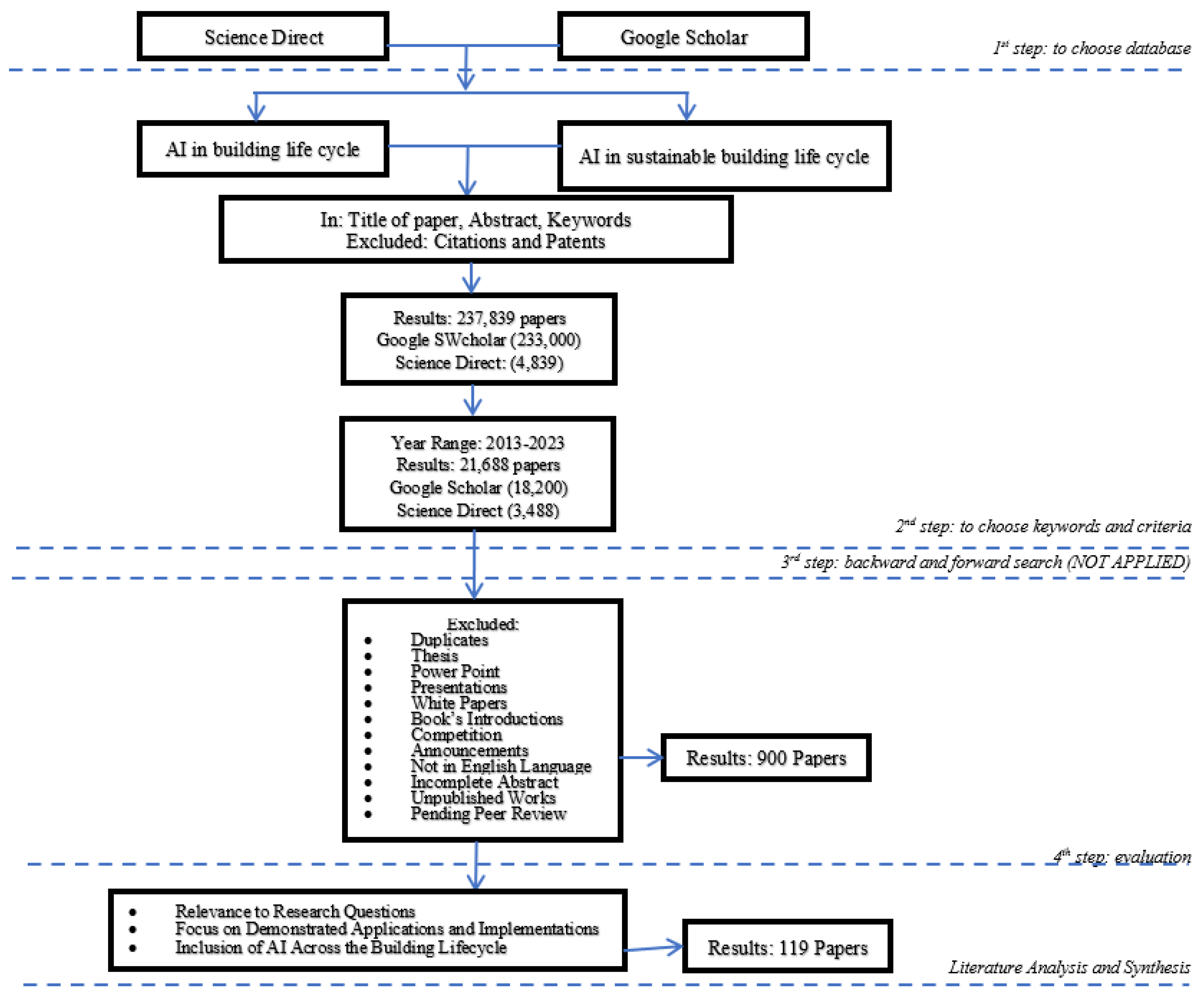
Figure 2.
Distribution of identified literature.
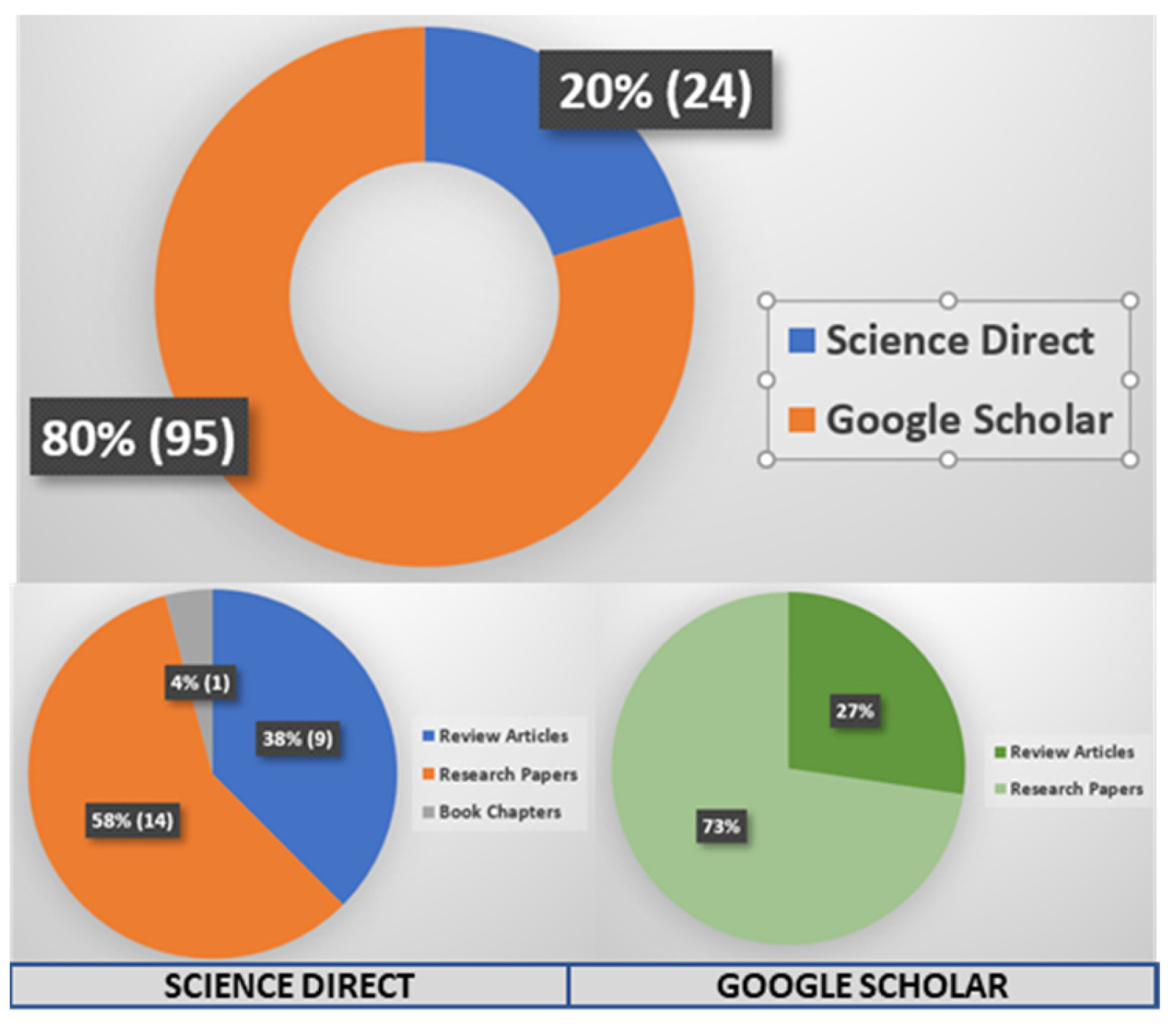
Figure 3.
AI-integrated relationships among various technologies in a building lifecycle [47].
Figure 3.
AI-integrated relationships among various technologies in a building lifecycle [47].
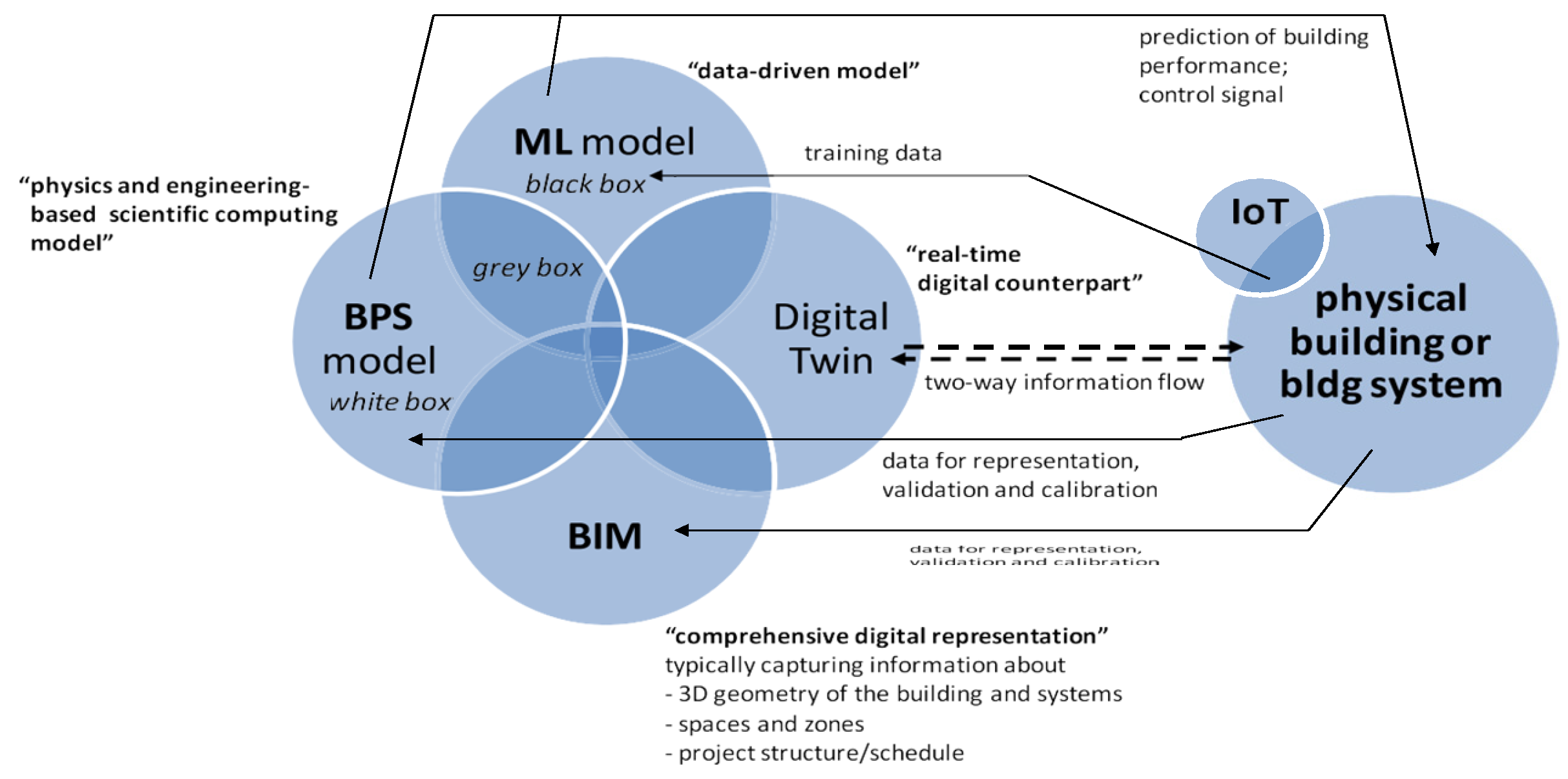

Table 1.
Cooper’s taxonomy applied to the smart city and digital city literature review [16].
Table 1.
Cooper’s taxonomy applied to the smart city and digital city literature review [16].
| Characteristic | Cooper’s options | Author’s choice |
|---|---|---|
| Focus | Type of papers involved (methodological, theoretical, practices, applications, outcomes) | Practices and applications |
| Goal | Integration, criticism, central issue | Central issue |
| Organization | Chronological, conceptual, methodological | methodological |
| Perspective | Neutral, espousal of a position | Neutral |
| Audience | Groups of people whom the review is addressed |
Researchers, practitioners, policy-makers, and stakeholders |
| Coverage | Exhaustive, with selective citation, representative, central, pivotal |
Selective citation |
Table 2.
Major AI technologies and their applications in sustainable building lifecycle. Adopted from [20,58,59].
| AI Technology/Subset | Application |
|---|---|
| Machine learning (ML) - 1 | Big data and data analysis |
| Machine learning (ML) - 2 | Robotics and automation |
| Pattern recognition | Data and system integration |
| Automation | Mobility and wearable |
| Digital twin (DT) | Real-time monitoring and management |
| Internet of things (IoT) | Automated control of building systems and services |
Table 3.
Major AI technologies/Application for sustainable building lifecycle citing their sources in literature.
Table 3.
Major AI technologies/Application for sustainable building lifecycle citing their sources in literature.
| AI Technology/Subset | Application | Purpose | Sources |
|---|---|---|---|
| Machine learning (ML) | Big data and data analysis | Big data and data analytics play a pivotal role in the building industry, fostering sustainability by optimizing energy efficiency, enabling predictive maintenance, supporting lifecycle cost analysis, enhancing occupant comfort, facilitating waste reduction, tracking carbon footprint, and aiding in simulation and design optimization throughout the building lifecycle. | [20,23,34,47,58,59,62,63,66,67,68,69,70,71,73,74,75,76,77,78,79,80,81,82,83,84,85,86] |
| Machine learning (ML) | Robotics and automation | Robotics and automation in the building industry contribute to sustainability by streamlining construction processes, optimizing energy management, enhancing building efficiency, improving maintenance and inspections, fostering smart building systems, facilitating demolition with material recovery, and promoting waste management and recycling. | [20,23,34,58,59,62,63,66,67,69,70,71,73,74,75,77,78,79,80,81,82,83,84,85,86] |
| Pattern recognition | Data and system integration | Data and system integration in the building industry facilitates sustainability by optimizing energy efficiency, enabling smart building automation, supporting predictive maintenance, reducing waste, conducting life cycle assessments, enhancing occupant well-being, fostering collaboration, and ensuring regulatory compliance throughout the building lifecycle. | [20,23,34,58,59,63,65,66,69,70,71,72,73,74,75,77,78,79,80,81,82,83,84,85,86] |
| Automation | Mobility and wearable | Mobility and wearable technologies enable enhanced site safety, emergency response, construction productivity, asset tracking, and data-driven facilities management through capabilities like motion detection, spatio-temporal monitoring, real-time alerts, and remote system controls. | [20,34,47,59,62,63,64,65,66,69,70,73,75,77,78,80,81,84,[20,34,47,59,62–66,69,70,73,75,77,78,80,81,84,] |
| Digital twins (DT) | Real-time monitoring and management | Real-time monitoring and management play a pivotal role in building lifecycle sustainability by optimizing energy efficiency, ensuring occupant comfort, enabling predictive maintenance, conserving water, improving waste management, monitoring occupancy, managing indoor air quality, enhancing security and safety, optimizing space utilization, and reducing the building’s carbon footprint through informed and proactive decision-making. | [20,23,34,47,58,59,62,63,64,65,66,67,68,69,70,71,72,73,74,75,76,77,78,79,80,81,82,84,85,86] |
| Internet of things (IoT) | Automated control of building systems and services | Automated control of building systems and services is instrumental in promoting building lifecycle sustainability by optimizing energy efficiency, implementing demand response strategies, adapting to occupancy patterns, facilitating predictive maintenance, conserving water, maximizing natural light utilization, integrating building management, reducing carbon emissions, incorporating adaptive learning systems, and enhancing user comfort and productivity through informed and automated decision-making processes. | [47,59,62,64,65,66,68,69,71,72,74,76,78,79,82,84,85] |
Table 4.
Positive Influences of Integrating AI with Sustainable Building Lifecycle.
| Benefits |
|---|
| Energy Efficiency Optimization |
| Predictive Maintenance |
| Life cycle Cost Analysis |
| Occupant Comfort and Productivity |
| Waste Reduction and Recycling |
| Carbon Footprint Reduction |
| Simulation and Design Optimization |
Table 5.
Challenges in the application of AI in Sustainable Building Lifecycle.
| Challenges |
|---|
| Initial Implementation Costs |
| Data Security and Privacy Concerns |
| Lack of Standardization |
| Skills Gap |
| Interoperability Issues |
| Ethical Considerations |
| Regulatory Compliance |
Disclaimer/Publisher’s Note: The statements, opinions and data contained in all publications are solely those of the individual author(s) and contributor(s) and not of MDPI and/or the editor(s). MDPI and/or the editor(s) disclaim responsibility for any injury to people or property resulting from any ideas, methods, instructions or products referred to in the content. |
© 2024 by the authors. Licensee MDPI, Basel, Switzerland. This article is an open access article distributed under the terms and conditions of the Creative Commons Attribution (CC BY) license (http://creativecommons.org/licenses/by/4.0/).
Copyright: This open access article is published under a Creative Commons CC BY 4.0 license, which permit the free download, distribution, and reuse, provided that the author and preprint are cited in any reuse.


