

Submitted:
31 May 2024
Posted:
31 May 2024
Read the latest preprint version here
Abstract
Biopolymer gels have gained tremendous potential for therapeutic applications due to their biocompatibility, biodegradability, and ability to adsorb and bind biological fluids, making them attractive for drug delivery and therapy. The versatility of biopolymer gels in theranostic backgrounds, with a focus on integrating imaging features and facilitating real-time monitoring of drug delivery. Different methods of delivery are explored imaging agents into biopolymer gels, including encapsulation, surface functionalization, nanoparticle encapsulation and layer-by-layer assembly techniques. Integration of Agents and Real-Time Monitoring Drug Delivery We summarize the synthesis methods, general properties, and mechanisms of biopolymer gels functionality, demonstrating their broad applications as multimodal systems for imaging-based therapeutics. These techniques not only enable multiple imaging but also provide signal enhancement and imaging a targeted facilitates, increasing the diagnostic accuracy and therapeutic efficacy. In addition, current techniques for incorporating imaging agents into biopolymer gels are discussed, and their role in precise drug delivery and monitoring.
Keywords:
Biopolymer gel
; Real-Time monitoring
; Imaging agent
1. Introduction
Biopolymer gels have gained significant attention in recent years for their potential use in drug delivery platforms and theranostic applications. Biocompatibility and biodegradability are fundamental necessities for biomedical applications, and biopolymeric hydrogels are especially valuable in the organization of medications and theranostics because of their capacity to retain and hold a significant measure of water and natural media [1]. Theranostic viability can be expanded by reorganization drug loading and controlling delivery attributes under specific biological feeling conditions as per the exceptional permeable organization construction of hydrogels in light of biopolymers [1]. Since biopolymers arrive in an extensive variety of miniature/nanogel structures that are great for the vast majority harmless to the ecosystem applications, they are believed to be a decent choice for tending to biocompatibility and biodegradability challenges [2]. The capability of biopolymer-based miniature/nanogels as medication transporters in biomedical applications has been researched; studies have featured the utilization of a few biopolymers in the plan of nanogels and their ebb and flow improvements in drug and biomolecule conveyanc applications [1]. The utilization of miniature/nanogels as medication transporters and the creation processes using regular gums and their subordinates are additionally remembered for the audits [1].
Biopolymer-based nanogels have additionally been researched for their capability to ship meds and biomolecules because of their high retention limit of water and natural liquids [3]. The surveys that are examine the utilization of different biopolymer-based miniatures or nanogels for drug conveyance in biomedical applications. They underline the headway made in epitomizing atoms with different restorative purposes utilizing biopolymer-based nano/microgels, as well as clever ways to deal with amalgamation or potentially functionalization to upgrade their conveyance capacities . In current medication, the rising significance of the union among diagnostics and treatments has prompted the development of the theranostic worldview [4]. This coordinated methodology is focused on effectively connecting indicative capacities with restorative activities, empowering the arrangement of individualized and exact treatments for different problems. Huge commitment is held by theranostic procedures for working on understanding results while limiting secondary effects, as they give continuous information on treatment adequacy and illness movement [4].
As the field of medication goes through a worldview change, theranostics rises above conventional limits among determination and treatment. Utilizing a synergistic methodology that consolidates restorative methodologies coordinated by demonstrative strategies, it gives exact and tweaked patient consideration. Through early ailment ID and constant observing of treatment reaction, doctors might fit treatment techniques to every patient's Biopolymer gels certainly stand out lately for their possible use in drug conveyance stages and theranostic applications. Biocompatibility and biodegradability are vital necessities for biomedical applications, and biopolymeric hydrogels are especially helpful in the organization of medications and theranostics because of their capacity to assimilate and hold a significant measure of water and natural media [5]. Theranostic viability can be expanded by advancing medication stacking and controlling delivery qualities under specific organic excitement conditions as indicated by the exceptional permeable organization design of hydrogels in view of biopolymers [5]. Since biopolymers arrive in an extensive variety of miniature/nanogel structures that are great for the majority harmless to the ecosystem applications, they are believed to be a decent choice for tending to biocompatibility and biodegradability challenges [6]. The capability of biopolymer-based miniature/nanogels as medication transporters in biomedical applications has been examined; studies have featured the utilization of a few biopolymers in the plan of nanogels and their ongoing improvements in drug and biomolecule conveyance applications. The utilization of miniature/nanogels as medication transporters and the creation processes using regular gums and their subordinates are additionally remembered for the surveys [6].
Biopolymer-based nanogels have additionally been explored for their capability to move drugs and biomolecules because of their high ingestion limit of water and natural liquids [3]. The audits that are examine the utilization of different biopolymer-based miniatures and nanogels for drug conveyance in biomedical applications. They underline the headway made in epitomizing particles with different restorative purposes utilizing biopolymer-based nano/microgels, as well as clever ways to deal with combination or potentially functionalization to improve their conveyance abilities [7]. In present day medication, the rising significance of the assembly among diagnostics and treatments has prompted the development of the theranostic worldview. This coordinated methodology is focused on effectively connecting demonstrative abilities with restorative activities, empowering the arrangement of individualized and exact treatments for different problems. Tremendous commitment is held by theranostic strategies for working on quiet results while limiting aftereffects, as they give constant information on treatment viability and sickness movement [8].
Finally, theranostics as a worldview change in the field of medication transcends the conventional limits among determination and treatment. It’s anything but a synergistic methodology combining the remedial methodologies coordinated by demonstrative strategies for giving exact and customized patient consideration. Theranostics provides early sickness distinguishing proof and tries to monitor treatment reaction so many treatment methodologies could be adjusted to patients’ particular necessities. Besides, theranostic approaches may improve helpful outcomes by limiting adverse consequences and improving medication circulation. As a result of their excellent features, including biocompatibility, mechanical qualities that may be readily functionalized, and ease of use, theranostic applications have discovered excellent flexibility in biopolymer gels. These gels, which are created with highly regular, synthetic polymers, can be utilized to create a three-layered network structure capable of holding medical substances and imaging probes. The important point is that drug delivery might be prompted by certain physiological signs or external factors through the fabrication of a bio-polymer gel that exhibits a responsive stimulus. As well, compared to traditional drug delivery systems, their organic biodegradability can significantly reduce the problems of toxicity and accumulating for a long time [9].
Theranostic approaches can also help to improve the outcomes of restorative therapy through diminishing unwanted effects and improving drug delivery. These methods have displayed an exceptional flexibility in biopolymer gels due to their peculiarities such as biocompatibility, easily modifiable mechanical characteristics and user friendliness. These natural or artificial polymer gels can be organized into three-layer network structure capable of retaining therapeutic substances and imaging agents. However, it is important to note that bio-polymeric gels are stimuli-responsive and so can deliver drugs upon particular physiological signals or external stimuli [2].
2. Intersecting Diagnosis with Therapy
The word “theranostics”, which combines the words “therapy” and “diagnostics” signifies a concept that emphasizes on integrating diagnostic capabilities with therapeutic treatments. In most cases, traditional means of diagnosis are used prior to making treatment choices hence there is a systematic approach to patient care with a degree of fragmentation involved. Conversely, theranostics fills this void by delivering therapeutic agents alongside providing timely assessment of treatment efficiency [10]. This integration provides broad knowledge about the progression of illnesses and outcome of treatments, thus making it easy for a clinician to interact with patients. This is because theranostic platforms are able to detect an infection at early stages, follow the progress made in treatment and adjust treatment schedules. The use of diagnostic techniques such as imaging or biomarker analysis enables health care practitioners to understand the nature of a disease in terms of its features, molecular markers, spatial distribution of pathologic lesions. These details thereby assist in selecting and planning treatment procedures that are rational, timely, specific and individualized per patient’s requirements. Furthermore, due to continuous interaction between therapies and diagnostics there is flexibility when choosing various approaches to therapy that lead to decreased side effects and development of resistance therapies [10].
3. Biopolymer Gels as Versatile Platforms
Biopolymer gels have been described as biocompatible, tunable and can be functionalized easily making them ideal for a variety of biomedical applications. The positive features of these materials are due to the fact that they create a three-dimensional structure having high water content which is similar to the living tissues extracellular matrix environment through natural and synthetic polymers. As such, they exhibit improved cellular interactions, adjustable mechanical properties, sustained drug release kinetics and other advantageous traits that resemble those of naturally occurring biological systems [11].
The responsive gelation process is one reason among many others why biopolymer gels are highly versatile. When exposed to environmental conditions like changes in pH, temperature variations, light etc., the gelling state may change reversibly. In effecting-controlled release drug delivery this system has precise control over drug release kinetics [12].
Furthermore, biopolymer gels can be designed specifically for certain types of cells or molecules; Reducing off-target effects therefore enables targeted treatment. Biopolymer gels are used because of their porous nature that allows the incorporation of imaging agents. This means images can be captured and treatment response monitored in real time. Biopolymer-based theranostic platforms can be considered as heterogeneous with no restrictions between diagnosis and treatment due to the direct incorporation of imaging agents into the gel structure, thus opening the door to individualized therapeutic approaches [12].
4. Properties and Characteristics of Biopolymer Gels.
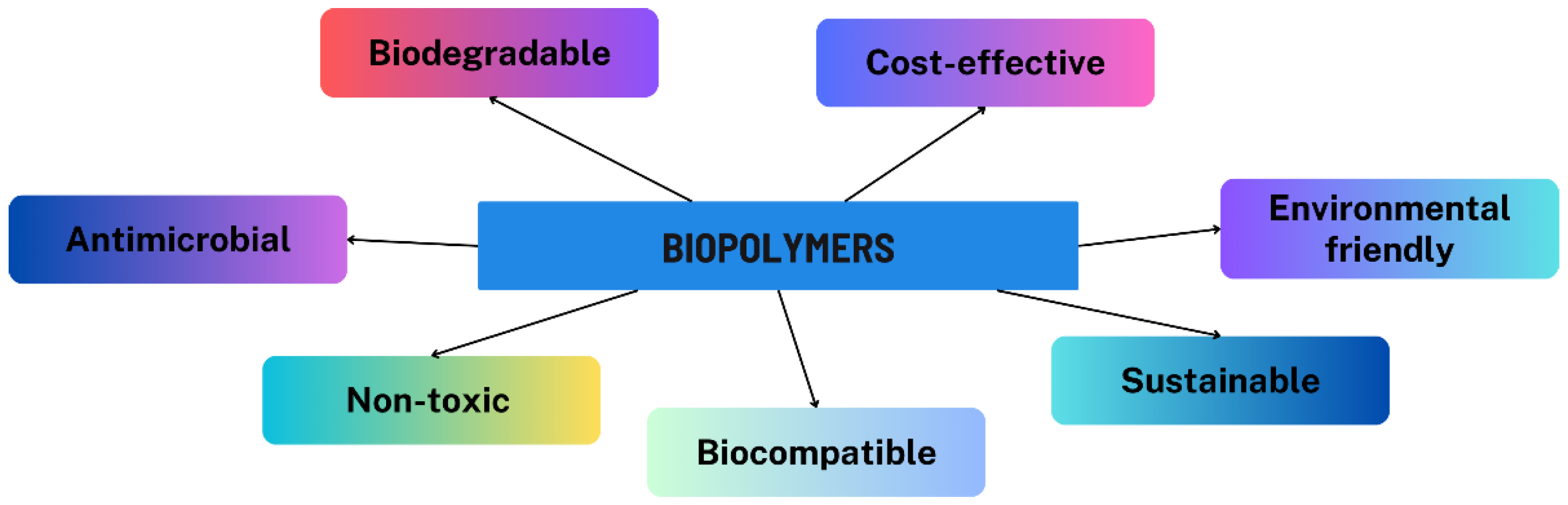
Biopolymer gels are multifunctional materials with unique properties that make them ideal for various biomedical applications such as drug delivery, tissue engineering, theranostics, etc. These gels contain natural or synthetic polymers that can form crosslinked networks for so it offers a variety of options [13]. Natural polymers such as alginate, chitosan, collagen, hyaluronic acid, and gelatin have inherent biocompatibility while their man-made counterparts such as polyethylene glycol (PEG), polyvinyl alcohol (PVA) and poly(N-isopropylacrylamide) also offers adjustable for features such as improved mechanical strength. Some important properties affecting the three-dimensional interface structure of biopolymer gels are mechanical properties, pore size distribution, drug release kinetics Manipulation of parameters such as crosslinking density and polymer concentration can be a variety of factors. These gels respond to external stimuli such as temperature pH, or light and therefore can be reversibly modified [14]. These characteristics make them suitable for targeting as their mechanism of action enhances their drug delivery to be useful in a variety of applications Biodegradability and biocompatibility are important considerations when organisms in biopolymers mimic aspects of the extracellular matrix that support cell adhesion and tissue regeneration. Controlled cell degradation is important for gel breakdown into non-toxic products, which is key to maintaining long-term drug release and reducing side effects Furthermore, the scalable mechanism of biopolymer gels is important because it can mimic native tissue and withstand physiological stress. This flexibility makes them useful for a variety of biomedical applications, including clinical and diagnostics [15].
Figure 1.
Properties of Biopolymer Gels.
5. Imaging Agents in Theranostic Applications
Imaging modalities play an important role in treatment by providing valuable information on disease location, progression, and treatment response. An overview of the imaging techniques is provided, the clinical importance of imaging materials is discussed, and the various imaging materials commonly used in biomedical research and clinical practice [16].
Imaging techniques covered several techniques based on physical principles, such as X-ray, ultrasound, magnetic resonance, fluorescence, and nuclear imaging and these techniques produce detailed images with spatial and temporal resolution high-quality. Each modality has specific advantages and limitations, making it suitable for different applications in theranostics.
X-ray imaging such as radiography and computed tomography (CT) rely on the contrast of X-rays absorbed by tissues to create detailed images of the body This technique is commonly used to detect bone fractures, diagnose and monitor tumors how doctors intervene [17].
Ultrasound imaging uses high-frequency sound waves to create real-time images of organs and tissues in the body. This noninvasive, portable, and radiation-free technique is suitable for a variety of diagnostic and interventional procedures [18].
MRI technology relies on magnetic fields and radio waves to generate contrast images of soft tissue, ideally suited to imaging the brain, spinal cord and musculoskeletal systems, as well as detect tumors and inflammation [19].
Fluorescence imaging uses fluorescent dyes or materials that emit light upon excitation by an external source, enabling the detection of specific molecular targets, biomarkers, or cellular processes with high sensitivity and specificity [20].
Nuclear imaging modalities, such as positron emission tomography (PET) and single-photon emission computed tomography (SPECT) use radioactivity for detailed functional imaging to provide quantitative information on tracer uptake, metabolism, and biological distribution important for molecular analysis and anatomical imaging [20].
Among the therapies, the selection of appropriate imaging agents is important for accurate diagnosis, treatment planning, and monitoring of therapeutic response When different imaging modalities and agents are used, individual exposure intervention can benefit from improved outcomes.

Table 1.
Imaging agent and there applications.
| Imaging Modality | Imaging Agent | Theranostic Application | |
|---|---|---|---|
| X-ray Imaging | Iodine-based contrast agents | Diagnosis of bone fractures, detection of tumors, and monitoring therapeutic interventions | [21] |
| Barium sulfate | Visualization of gastrointestinal tract for diagnosing conditions like ulcers or tumors | ||
| Ultrasound Imaging | Microbubble contrast agents | Assessing blood flow, visualizing organs, and guiding interventional procedures | [22] |
| Contrast-enhanced ultrasound | Imaging liver lesions, assessing vascularity in tumors, and diagnosing cardiovascular conditions | ||
| Magnetic Resonance Imaging (MRI) | Gadolinium-based contrast agents | Imaging brain, spinal cord, and musculoskeletal system, detecting tumors, and inflammatory processes | [19] |
| Superparamagnetic iron oxide nanoparticles (SPIONs) | Targeted drug delivery and imaging of inflammation | ||
| Fluorescence Imaging | Fluorescent dyes | Visualizing specific molecular targets, biomarkers, or cellular processes with high sensitivity | [23] |
| Quantum dots | Multiplexed imaging of molecular targets for personalized medicine | ||
| Nuclear Imaging | Fluorodeoxyglucose (FDG) | Cancer diagnosis and monitoring response to treatment | [24] |
| Technetium-99m labeled agents | Imaging myocardial perfusion and diagnosing bone metastases | ||
| Copper-64 labeled nanoparticles | Imaging and tracking of stem cell therapy |
6. Importance of Imaging Agents in Theranostics
In theranostics, dual roles are served by imaging agents as diagnostic tools and therapeutic agents, enabling the integration of diagnostics and therapeutics into a unified platform. Through the incorporation of imaging agents directly into therapeutic formulations or delivery vehicles, disease progression can be monitored, treatment response assessed, and therapeutic regimens optimized in real time by clinicians [25]. Non-invasive visualization of drug distribution, pharmacokinetics, and pharmacodynamics is facilitated by imaging agents, allowing for personalized treatment strategies tailored to individual patient profiles. Moreover, early detection of treatment resistance, identification of therapeutic targets, and prediction of treatment outcomes are enabled by imaging agents, thereby improving patient outcomes and reducing healthcare costs [26].
7. Types of Imaging Agents Used
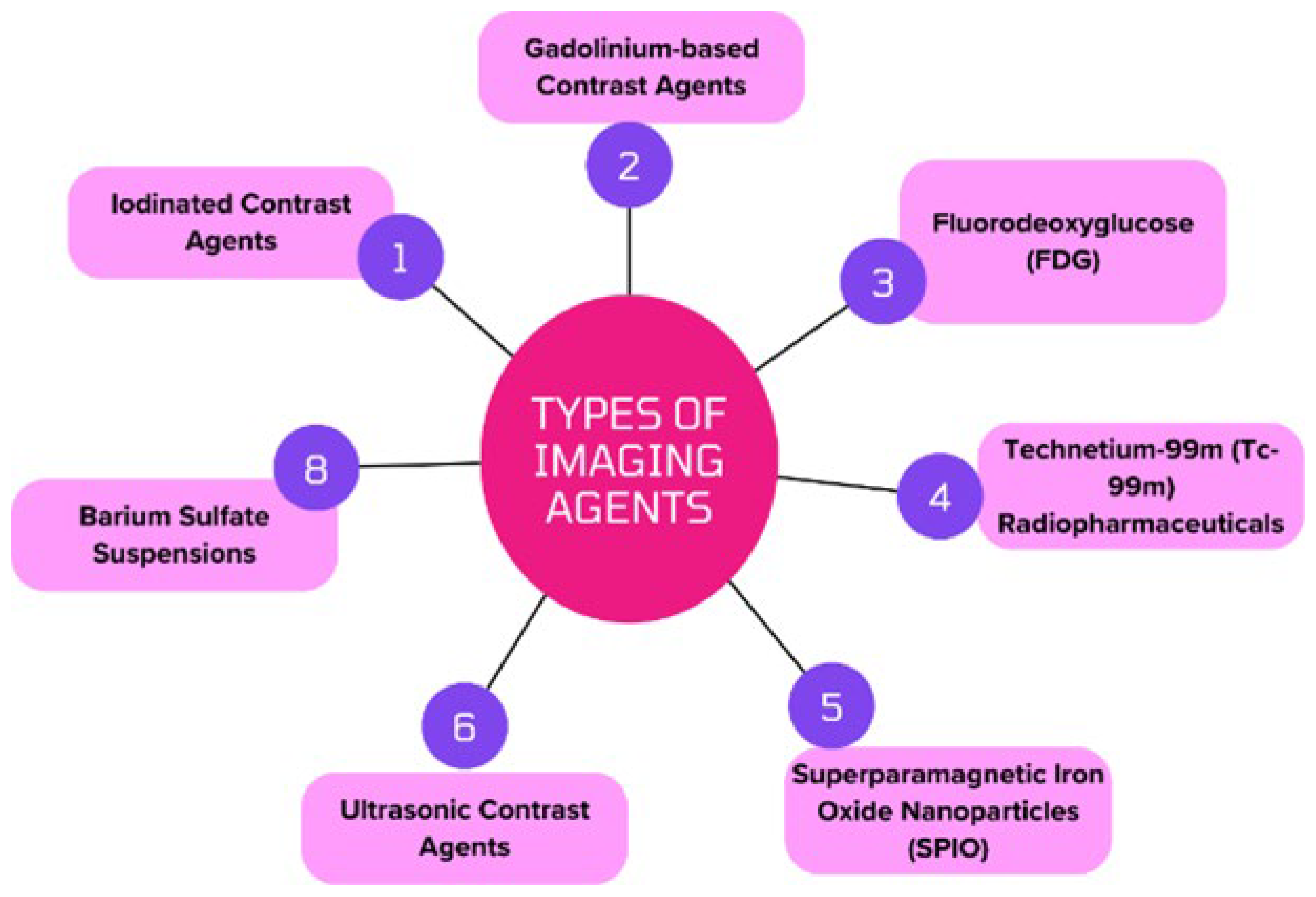
A various imaging agent is available for use in theranostic applications, such as contrast agents, fluorescent dyes and probes, radiotracers, nanoparticles, and molecular probes, each possessing unique properties and applications.
Contrast agents enhance the visibility of anatomical structures or pathological lesions on imaging scans by altering the contrast between tissues. Examples include iodinated contrast agents for X-ray and CT imaging, gadolinium-based contrast agents for MRI, and microbubbles for ultrasound imaging. Fluorescent dyes and probes emit light at specific wavelengths upon excitation by external sources, enabling visualization of molecular targets, cellular processes, and biological interactions [13]. They are commonly used in preclinical research and intraoperative imaging for guiding surgical resection of tumors. Nanoparticles that contain imaging agents such as quantum dots, iron oxide nanoparticles and gold nanoparticles make possible multi-modal imaging and focused drug delivery. They are important as they have more stability, a long time in circulation and can be targeted towards specific sites. Molecular probes have been developed to target disease-specific biomarkers or molecular pathways, thus allowing selective imaging of different diseases. Consequently, they can be tagged with fluorescent dyes, radioactive tracers or MRI contrast agents for substantial results through several imaging methods [20].
Figure 2.
Types of Imaging Agents.
8. Integration of Imaging Agents with Biopolymer Gels
Combining biopolymer gels with diagnostic tools improves diagnosis, therapy and monitoring. Signal strength is improved through strategies which enhance biocompatibility with respect to biomedical applications in safety terms.
Different methods have been developed for incorporating imaging agents inside biopolymer gels, allowing multimodal imaging and monitoring therapeutic interventions in real time:
Encapsulation: During gelation, the imaging agents can be enclosed inside the gel matrix via physical entrapment or chemical conjugation. For example, prior to the gel formation, fluorescent dyes, contrast agents or radiotracers can be mixed with polymer solution to ensure that they are uniformly distributed within the gel matrix [27].
Surface functionalization of biopolymer gels can be modified by targeting ligands or affinity moieties to specifically bind a range of imaging agents to enhance their retention and localization in the gel Supervised.
Table 2.
Examples of biopolymer-based imaging agents for theranostic applications.
| Biopolymer-based imaging agents | Applications | |
|---|---|---|
| Sugar-based biopolymers | These biopolymers have been recognized as attractive materials for developing macromolecule- and nanoparticle-based cancer imaging and therapy. They have been investigated for optical imaging using fluorescence dye-conjugates, nuclear imaging using Technetium 99m labeling for SPECT or Gallium 68 labeling for PET, and MR imaging using Gd-conjugates for generating T1-weighted contrast agents. | [28] |
| Biodegradable biopolymer-based nanoparticles | These nanoparticles are biocompatible, biodegradable, and generally non-toxic, making them suitable for healthcare applications. Examples include liposomes, polymersomes, micelles, polymer constructs, and protein complexes. | [27] |
| Biopolymer-based nanoparticles for cancer theranostics | These nanoparticles have been engineered to bear ligands with high affinity for specific cancer biomarkers, enabling targeted administration and real-time monitoring of treatment responses. They have also been designed to overcome biological barriers, such as the blood-brain barrier, and to facilitate immunomodulation strategies. | [29] |
| Functionalized nanomaterials for broad-spectrum theranostics | These nanomaterials have been developed for biomedical applications, including in vivo ultrasound-switchable fluorescence imaging and targeted delivery of diagnostic or therapeutic agents to tumors . | [13] |
| 68 Ga-labeled biopolymer-based nanoparticles | These nanoparticles have been synthesized and characterized for receptor-targeted PET imaging agents, demonstrating their potential for detecting cancer cells in mouse models of ovarian cancer. | [30] |
| Marine biopolymer for theranostic applications | Marine biopolymers have been explored for their potential in theranostic applications, offering a novel platform for the development of imaging agents and therapeutic delivery systems. | [31] |
These examples illustrate the versatility and potential of biopolymer-based imaging agents for theranostic applications, including their ability to be tailored for specific biomedical applications, their biocompatibility and biodegradability, and their potential for real-time monitoring of treatment responses.
8. Role of Biopolymer Gels in Real-Time Monitoring
A few strategies can be employed in combination with biopolymer gels to improve imaging signals and increase the sensitivity and specificity of imaging modalities:
Combining biopolymer gels with imaging techniques offers a promising approach to improve sensitivity and specificity in medical imaging. Signal enhancement techniques, such as conjugation of signal amplification probes and imaging agents of nanoparticles or enzymes, enable the detection of low-level imaging materials with high sensitivity and resolution Furthermore, many images using biopolymer gels with wavelength/2. techniques are used to obtain and provide coverage information, compensate for individual errors, and even provide accurate analysis f, selective imaging obtained by targeting biopolymer gels with ligands or antibodies a operationalization facilitates accurate localization of infectious lesions and early diagnosis, thereby guiding treatment decisions for better patient outcomes [32].
In theranostic platforms, biocompatibility considerations are most important. In vitro cytotoxicity assessment provides important information about the compatibility of imaging agents and biopolymer gels with cells, guiding the optimization of pharmacological propositions using optimized biopolymer gels to ensure the providing a safe in vivo by surface modification methods and, by degradation of biopolymer gels by phototherapy treatment representative for a period of time. Beneficial substances are released sequentially, where the deleterious substances are non-toxic, and are easily metabolized or eliminated from the body Compliance with regulatory requirements including clinical safety assessment is essential for treatment developing and selling systems to ensure individual safety and efficiency [2].
Biopolymer gels have several compelling features to be employed in real-time tracking of drug administration. First, the crucial advantage is their tunability and stimuli-responsive behavior, which allows their controlled dissolution and disintegration upon external action. They can also readily encapsulate imaging agents within their matrix, which permits monitoring of the release kinetics or in situ distribution within the target area. The use of biopolymer gels provides for on-demand changes in the drug release rate based on physiological conditions or external agents, which also significantly increases treatment selectivity. Moreover, biopolymer gels simultaneously act as reservoirs for sustained release of the drug and carriers for its delivery. Biopolymer gels can further be engineered to possess specific properties, such as injectability, shear-thinning behavior, or mucoadhesive properties to allow for facile minimally invasive administration and localized drug delivery to disease tissue. This allows maximal patient comfort and adherence and minimizes the need for frequent dosing, making them more suitable for chronic or localized diseases [33].
9. Challenges in Conventional Drug Delivery Monitoring
Monitoring drug delivery through traditional techniques is primarily based on indirect measurements with reasonable limitations to quantifying fundamental aspects of drug delivery such as drug concentration in target organs and drug pharmacokinetic activity in a patient’s body. Common drawbacks of conventional methods are the absence of precision, invasive procedures, significant time delay, and poor sensitivity [34].
Spatial resolution with conventional monitoring approaches, such as blood sampling and tissue biopsies, are the most limiting, as they do not provide insight into localized drug distribution or concentration gradients in target tissues. In many cases, invasive procedures such as tissue sampling or catheter placement are required to monitor these techniques. These strategies may result in patient discomfort, the risk of infection, and procedural risks. Furthermore, the timing of the feedback, including drug delivery kinetics, is poor with conventional monitoring approaches. Currently, feedback is frequently obtained long after administration. Therefore, adjusting treatment or optimizing therapeutic work regimens is challenging [35].
10. Applications of Biopolymer Gel in Real Time Monitoring and Advancements
The incorporation of biopolymer gels into real-time monitoring techniques holds immense potential across various fields such as drug delivery, tissue engineering, and regenerative medicine. In targeted cancer therapy, biopolymer-based drug delivery systems enable precise delivery of therapeutic agents to tumor tissues, minimizing systemic toxicity and enabling individualized treatment plans based on real-time monitoring of drug delivery rhythms and tumor response. Moreover, biopolymer gels offer controlled drug release, making them ideal for long-term intervention therapy in chronic diseases like diabetes and heart disease, while also facilitating tissue regeneration and wound healing in regenerative medicine applications [36]. Real-time monitoring of drug release kinetics and tissue remodeling processes enhances therapeutic efficacy and enables customized treatment strategies tailored to individual patient needs.
Recent advancements in biopolymer gel formulations, imaging techniques, and monitoring technologies have propelled the development of next-generation theranostic systems for personalized medicine and healthcare. Hydrogels, nanogels, cryogels, and other emerging gel systems offer versatile platforms for controlled drug delivery, simultaneous imaging, and real-time analytical capabilities[37]. By leveraging the unique properties of these gel systems, researchers can develop innovative pharmaceutical strategies that combine drug delivery, imaging, and real-time monitoring, paving the way for personalized medicine, regenerative medicine, and precision healthcare approaches that optimize therapeutic outcomes for patients [38].
11. Future Outlook and Recommendations
Looking ahead, the future prospects for biopolymer gels in theranostic applications are promising, with continued advances in materials science, imaging technology, and biomedical engineering to realize the potential of biopolymer gels biocompatibility and stability issues in general, to increase imaging resolution and sensitivity, and to clinical interpretation and regulatory considerations It is important to address the major challenges.
12. Conclusions
Biopolymer gels have become highly adaptable platforms for theranostic applications, combining imaging, real-time monitoring, and drug administration into cohesive systems for personalised and precision treatment. These gels, which can include imaging agents, are biocompatible, have customisable characteristics, and are made of natural or synthetic polymers that crosslink to form networks that resemble the extracellular matrix. Imaging agents are included into biopolymer gels to allow for real-time drug delivery tracking, precise therapeutic control, and treatment result optimisation. The development of more advanced biopolymer gel systems with additional functionalities like stimuli responsiveness or self-healing qualities to further improve their therapeutic potential should be the main focus of future research efforts. These systems can be customised to particular biomedical applications.
References
- Jaya B, Brajesh B, Antonella F, Giovanna LD, Amit K. Biopolymer : A Sustainable Material fo[1] Jaya B, Brajesh B, Antonella F, Giovanna LD, Amit K. Biopolymer : A Sustainable Material for Food and Medical Applications. Polymers (Basel) 2022;14:1–22.r Food and Medical Applications. Polymers (Basel) 2022;14:1–22. [CrossRef]
- Mohan A, Santhamoorthy M, Phan TTV, Kim SC. pNIPAm-Based pH and Thermoresponsive Copolymer Hydrogel for Hydrophobic and Hydrophilic Drug Delivery. Gels 2024;10:1–14. [CrossRef]
- Yuan W, Xu J, Yang N, Wang H, Li J, Zhang M; et al. Engineered Dynamic Hydrogel Niches for the Regulation of Redox Homeostasis in Osteoporosis and Degenerative Endocrine Diseases. Gels 2024;10. [CrossRef]
- Clark AH. Biopolymer gels. Curr Opin Colloid Interface Sci 1996;1:712–7. [CrossRef]
- Zhao L, Kim TH, Ahn JC, Kim HW, Kim SY. Highly efficient “theranostics” system based on surface-modified gold nanocarriers for imaging and photodynamic therapy of cancer. J Mater Chem B 2013;1:5806–17. [CrossRef]
- Lammers T, Aime S, Hennink WE, Storm G, Kiessling F. Theranostic nanomedicine. Acc Chem Res 2011;44:1029–38. [CrossRef]
- Ayeldeen MK, Negm AM, El Sawwaf MA. Evaluating the physical characteristics of biopolymer/soil mixtures. Arab J Geosci 2016;9:1–13. [CrossRef]
- Terreno E, Uggeri F, Aime S. Image guided therapy: The advent of theranostic agents. J Control Release 2012;161:328–37. [CrossRef]
- Burkett BJ, Bartlett MPHDJ, Mcgarrah PW, Lewis AR. A Review of Theranostics : Perspectives on Emerging Approaches and Clinical Advancements 2023. [CrossRef]
- Jeelani S, Reddy RCJ, Maheswaran T, Asokan GS. Theranostics: A treasured tailor for tomorrow 2014;6:6–9. [CrossRef]
- Mahmood A, Patel D, Hickson B, Desrochers J, Hu X. Recent Progress in Biopolymer-Based Hydrogel Materials for Biomedical Applications 2022. [CrossRef]
- Mercer IG, Italiano AN, Gazaryan IG, Steiner AB, Kazakov S V. Degradation Kinetics of Disulfide Cross-Linked Microgels : Real-Time Monitoring by Confocal Microscopy 2023. [CrossRef]
- Nanomaterials F. Broad-Spectrum Theranostics and Biomedical Application of 2022.
- Mazuki NF, Saadiah MA, Fuzlin AF, Khan NM, Samsudin AS. Basic Aspects and Properties of Biopolymers. 2023.
- Alaswad SO, Mahmoud AS, Arunachalam P. Recent Advances in Biodegradable Polymers and Their Biological Applications : A Brief Review 2022. [CrossRef]
- Kelkar SS, Reineke TM. Theranostics: Combining imaging and therapy. Bioconjug Chem 2011;22:1879–903. [CrossRef]
- Hsu JC, Nieves LM, Betzer O, Sadan T, Noël PB, Popovtzer R; et al. Nanoparticle contrast agents for X-ray imaging applications. Wiley Interdiscip Rev Nanomedicine Nanobiotechnology 2020;12:1–26. [CrossRef]
- Methachan B, Thanapprapasr K. Polymer-Based Materials in Cancer Treatment: From Therapeutic Carrier and Ultrasound Contrast Agent to Theranostic Applications. Ultrasound Med Biol 2017;43:69–82. [CrossRef]
- Jeong Y, Hwang HS, Na K. Theranostics and contrast agents for magnetic resonance imaging 2018:1–13. [CrossRef]
- Janib SM, Moses AS, MacKay JA. Imaging and drug delivery using theranostic nanoparticles. Adv Drug Deliv Rev 2010;62:1052–63. [CrossRef]
- De La Vega JC, Häfeli UO. Utilization of nanoparticles as X-ray contrast agents for diagnostic imaging applications. Contrast Media Mol Imaging 2015;10:81–95. [CrossRef]
- Perera RH, Hernandez C, Zhou H, Kota P, Burke A, Exner AA. Ultrasound imaging beyond the vasculature with new generation contrast agents. Wiley Interdiscip Rev Nanomedicine Nanobiotechnology 2015;7:593–608. [CrossRef]
- Refaat A, Yap ML, Pietersz G, Walsh APG, Zeller J, del Rosal B; et al. In vivo fluorescence imaging: Success in preclinical imaging paves the way for clinical applications. J Nanobiotechnology 2022;20:1–22. [CrossRef]
- Bourbia N, Mansour K. Use of magic gel for diagnostic nuclear medicine dosimetry. Acta Phys Pol B 2016;47:315–21. [CrossRef]
- Marin JFG, Nunes RF, Coutinho AM, Zaniboni EC, Costa LB, Barbosa FG; et al. Theranostics in nuclear medicine: Emerging and re-emerging integrated imaging and therapies in the era of precision oncology. Radiographics 2020;40:1715–40. [CrossRef]
- Ding H, Wu F. Image guided biodistribution and pharmacokinetic studies of theranostics. Theranostics 2012;2:1040–53. [CrossRef]
- Kučuk N, Primožič M, Knez Ž, Leitgeb M. Sustainable Biodegradable Biopolymer-Based Nanoparticles for Healthcare Applications. Int J Mol Sci 2023;24. [CrossRef]
- Smith EA, Poston WS, Haddock CK, Malone RE. 乳鼠心肌提取 HHS Public Access. Physiol Behav 2016;176:139–48. [CrossRef]
- Bhattacharya T, Preetam S, Ghosh B, Chakrabarti T, Chakrabarti P, Samal SK; et al. Advancement in Biopolymer Assisted Cancer Theranostics. ACS Appl Bio Mater 2023;6:3959–83. [CrossRef]
- Körhegyi Z, Rózsa D, Hajdu I, Bodnár M, Kertész I, Kerekes K; et al. Synthesis of 68Ga-labeled biopolymer-based nanoparticle imaging agents for positron-emission tomography. Anticancer Res 2019;39:2415–27. [CrossRef]
- Jana S, Jana S. Marine Biomaterials: Therapeutic Potential. Mar Biomater Ther Potential 2022:1–392. [CrossRef]
- Stanisz M, Klapiszewski Ł, Jesionowski T. Recent advances in the fabrication and application of biopolymer-based micro- and nanostructures: A comprehensive review. Chem Eng J 2020;397:125409. [CrossRef]
- Altuntaş E, Özkan B, Güngör S, Özsoy Y. Biopolymer-Based Nanogel Approach in Drug Delivery: Basic Concept and Current Developments. Pharmaceutics 2023;15. [CrossRef]
- Hart ML, Do DP, Ansari RA, Rizvi SAA. Journal of Developing Drugs 2013;2:1–7. https://doi.org/10.35841/2329-6631.23.12.220.Citation.
- Laffleur F, Keckeis V. Advances in drug delivery systems: Work in progress still needed? Int J Pharm X 2020;2. [CrossRef]
- Bednarowicz A. Medical Applications 2022.
- Chiu I, Yang T. Biopolymer-based intelligent packaging integrated with natural colourimetric sensors for food safety and sustainability. Anal Sci Adv 2024:1–13. [CrossRef]
- Abdullah, Cai J, Hafeez MA, Wang Q, Farooq S, Huang Q; et al. Biopolymer-based functional films for packaging applications: A review. Front Nutr 2022;9:1–20. [CrossRef]
Disclaimer/Publisher’s Note: The statements, opinions and data contained in all publications are solely those of the individual author(s) and contributor(s) and not of MDPI and/or the editor(s). MDPI and/or the editor(s) disclaim responsibility for any injury to people or property resulting from any ideas, methods, instructions or products referred to in the content. |
© 2024 by the authors. Licensee MDPI, Basel, Switzerland. This article is an open access article distributed under the terms and conditions of the Creative Commons Attribution (CC BY) license (http://creativecommons.org/licenses/by/4.0/).
Copyright: This open access article is published under a Creative Commons CC BY 4.0 license, which permit the free download, distribution, and reuse, provided that the author and preprint are cited in any reuse.