

Submitted:
30 May 2024
Posted:
31 May 2024
You are already at the latest version
Abstract
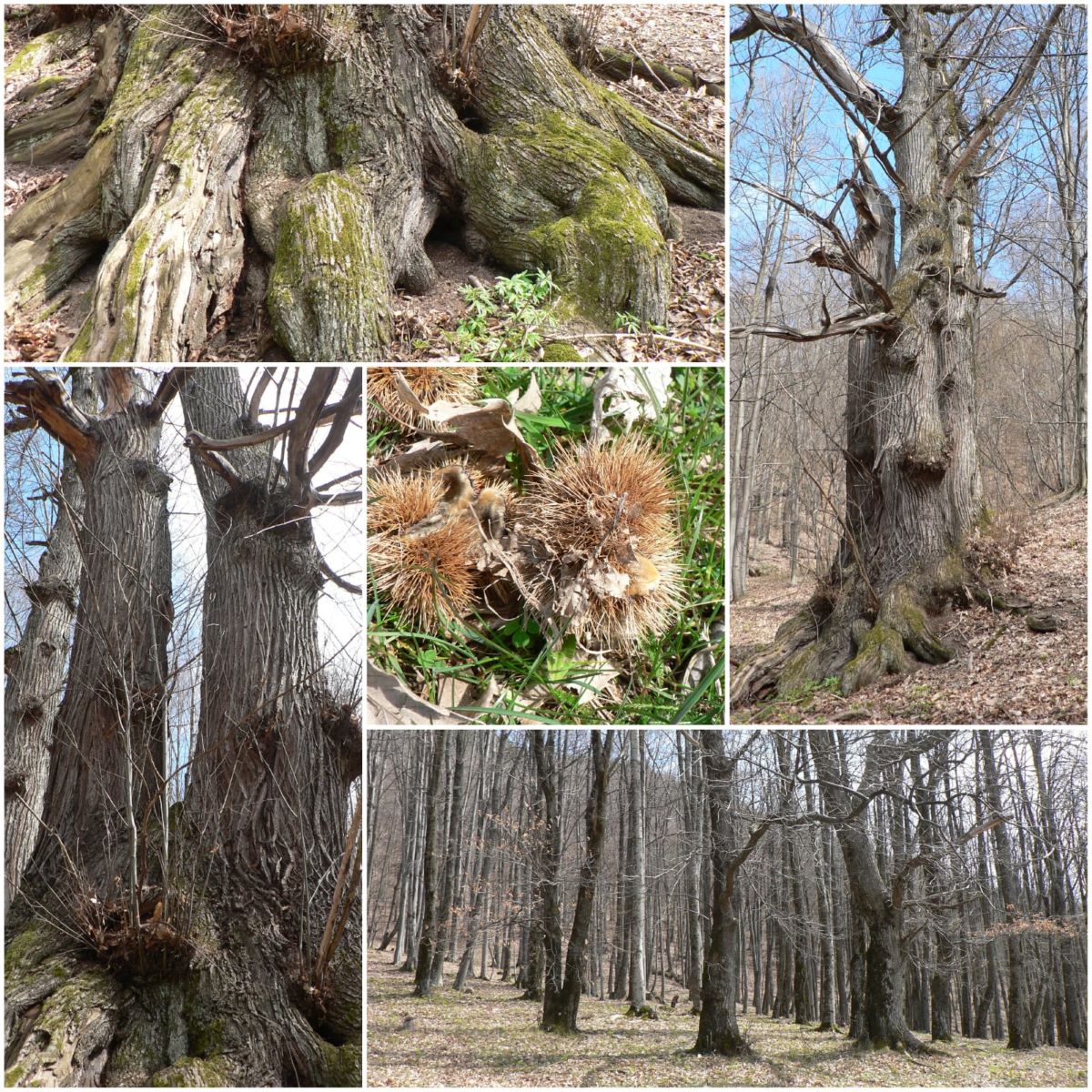
Castanea sativa Mill. is a Mediterranean taxon originating in western Asia and southeastern Eu-rope. This paper presents data on the ecology, chorology and phytocenology of C. sativa species from Oltenia region (Romania) (data from the literature, herbariums, and the field). In the sub-spontaneous flora of Oltenia region, the C. sativa species is found in sheltered resorts in the counties of Gorj (Glogova, Valea Perilor, Tismana, Pocruia, Polovragi, etc.) and Mehedinți (Comăneşti, Baia de Aramă, etc.), on mesobasic soils, balanced from a hydraulic point of view. It was identified in a cultivated state, in few specimens, in the previously mentioned counties and in Vâlcea county, near the monasteries (eg Horezu Monastery). The phytocoenoses where this species grows are rich in southern elements (eg Cornus mas L., Cerasus avium (L.) Moench, Quer-cus dalechampii Ten., Tilia tomentosa Moench etc.). They are included in the association Castaneo-Quercetum Horvat 1938. If we refer to the habitats in Romania, the areas occupied by edible chestnut are included in the R4141 habitat - Daco-Balkan forests of sessile oak (Quercus petraea) and chestnut (C. sativa) with Genista tinctoria - a habitat with a very high conservation value, and according to Natura 2000, forests of C. sativa are included in the 9260 habitats.
Keywords:
ecology
; chorology
; phytocenology
; Castanea sativa
1. Introduction
Castanea sativa is known at European level as the only spontaneous species of Castanea genus [1] and presents a remarkable evolutionary history in relation to other European forest tree species [2]. Its probable center of origin is northeastern Turkey and the Caucasus region [3], although possible Pleistocene glacial refugia have also been reported for southeastern Europe [4]. The present distribution ranges from North-Western Africa (e.g. Morocco) to North-Western Europe (southern England, Belgium) and from south-western Asia (e.g. Turkey) to Eastern Europe (e.g. Romania), the Caucasus (Georgia, Armenia) and the Caspian Sea [5]. In the later Middle Ages (11th to 16th centuries) chestnut became an essential source of food and timber in the Mediterranean and the southern parts of Central Europe [6]. In its cultivated state, it was known for its high-quality wood, for its leaves that were used in empirical medicine, for its antitussive and bacteriostatic effects [7] and especially for its fruits, which were called the "poor man's bread" [8], especially by monks in monastery gardens. Apart from the Insubrian Region in the north of the Italian peninsula, there was no other center of chestnut cultivation in Europe during the Roman period. It is possible that the Romans introduced the idea of systematic cultivation and use of chestnut; however, there is no evidence of systematic chestnut planting [5]. The greatest interest in chestnut management for fruit production most likely developed after the Roman period and can be associated with the socio-economic structures of medieval era when cultures based on chestnut cultivation as a source of subsistence developed [5]. One of the largest known specimens of this species is Castagno dei Cento Cavalli (Hundred Horses Chestnut). The Hundred Horses Chestnut is a monumental tree growing in the Carpineto area, in the municipality of Sant' Alfio, Italy [9]. In Romania, C. sativa is the only species of Castanea genus mentioned in the specialized literature [10-14]. It is recorded in some papers as a wild taxon and with the appearance of spontaneity in Baia Mare and Gorj regions [15]; in the rest of the places where it is specified, it is cultivated only. Chestnut growing areas in Romania cover a total area of 3160 ha distributed on a discontinuous area, consisting of long belts situated on the foothills of the Carpathians, mostly in the western part of Romania, where the moderate-continental climate has a slight Mediterranean influence. Chestnut natural distribution cover two principal centres, namely Maramures, (the hilly foothills of Baia Mare) and Oltenia (subcarpathian hills of Oltenia on the territory of Gorj, Mehedinți and Vâlcea counties) and other several small areas on Southeast of Oriental Carpathians and Northwest and Southwest of Transylvanian plateau [11-14, 16]. Some authors mention this taxon as a cultural relic [14, 17], others as a rare species [11]. There are also a few specimens protected as protected trees: the chestnut in Popești (Gorj county) which seems to be the oldest specimen in Romania (over 500 years old), the one in Budoaiei Hill, north of Tăuții de Sus locality (Maramureș county) and the one from Polovragi commune (Gorj county) [18]. C. sativa is a taxon sensitive to some phytopathogenic agents. In recent years, increased attention has been paid due to an effort to find genotypes tolerant to shell canker (Cryphonectria parasitica (Murr.) Barr). The article provides updated information on the distribution of edible chestnut and presents data on the ecology, chorology and phytocoenology of the species from Oltenia region (Romania) (literature, herbarium, and field data). The data obtained on the distribution of edible chestnut in Oltenia reflect both its ecological adaptability and the importance of human interventions in the conservation and expansion of this valuable species.
2. Materials and Methods
Researched area. This paper analyzes the distribution of C. sativa species in Oltenia. Oltenia is a region located in the southwestern part of Romania (43°40' N lat in the south and 45°35' N lat in the north and 22°-24°53' E long in the west, respectively east) which has a high diversity both in terms of natural conditions and of natural and semi-natural flora and vegetation. From the altitudinal viewpoint, the range is quite high, 3 m in the Danube Alluvial Plain (at the confluence between the Olt and the Danube rivers) and 2519 m Parângul Mare Peak [19]. In this part of the country, we can find all the zones and levels of vegetation, from the level of plain region up to the alpine meadows. The areas occupied by chestnut are cantoned at the level of Subcarpathian depression, where the zonal vegetation is built up by sessile oak forests (Quercus dalechampii or Q. polycarpa), the vegetation formations with the highest floristic diversity among all the forests in Romania.
Climatic data. In Oltenia region, the climate is predominantly continental, with some variations depending on altitude and geographical position. Average temperatures vary by season. During summer, temperatures can often exceed 30°C, while in winter they can drop below 0°C, especially in the higher elevations. Average annual temperatures are generally moderate. Rainfall is generally moderate, with a maximum in May and June. They can vary according to altitude and geographical position, and in some areas, they can be influenced by mountains and local factors.
Methods. The data inserted in this paper are the result of processing information from specialized literature, corroborated with personal data collected from the field and from the main herbariums in the country: Iași (University Herbarium "Alexandru Ioan Cuza"- I), Cluj-Napoca (University Herbarium "Babeş- Bolyai" Cluj-Napoca - CL), Bucharest (Herbarium of the Institute of Biology of the Romanian Academy - BUCA; herbarium of "D. Brândză" Botanical Garden in Bucharest - BUC), Craiova (Herbarium of the University of Craiova - CRA). Acronyms of consulted herbaria are in accordance with Index Herbariorum (Thiers 2022+). Scientific names for the taxa used are according to Plants of the World Online database (POWO 2023) for vascular plants, Index Fungorum for fungal species and EPPO Global Database for pests. In the study of vegetation, the research methods of Central European school, developed by Braun-Blanquet, were used and the association was named after Sanda et al. [20]. During field trips, the current state of vegetation, dynamics in time and space and the successive directions of those surfaces where an attack by phytopathogenic or harmful agents were observed. To establish the floristic composition and the structure of the association, field and laboratory works were carried out. Classification codes for edible chestnut habitats: 9260 (Natura 2000); R4141 [21]; 41.57331 Pre-Carpathian chestnut-sessile oak forest (PAL. HAB 1999). Corolog 2010 program (RoBioAtlas 2023) was used to create surface distribution maps, correlated with average annual temperatures and rainfall.
3. Results and Discussion
3.1. History
According to some authors, the edible chestnut existed in a spontaneous state even before the glaciation, occupying large areas in Romania, but with the cooling of climate it shrunk, remaining in the 2 most important resorts: Tismana (Gorj) and the one near the village of Tăuții de Sus and to Tăuții Magheruș, which is included in the recreational area of Baia Mare city [18]. In Romania, chestnut forests are very rare, its habitat being considered to have a high conservation value [21]. According to Botu [22], there are different opinions regarding the presence of chestnut on the territory of Romania: chestnut has survived from the Tertiary up to now in places sheltered by cold currents; the species was introduced 2000 years ago during the Roman colonization of Dacia; or maybe the chestnut tree was introduced to southern Romania by Greek monks in the 14th century.
In Oltenia, following the research carried out, it appears that, in some areas, edible chestnut is represented by rare specimens, spread through the sessile oak forests (e.g. Glogova, Valea Perilor - Gorj and Comăneşti counties, Baia de Aramă - Mehedinți county), and in others form phytocenoses that can be included in the association Castaneo-Quercetum Horvat I. 1938 (eg Tismana, Pocruia, Polovragi). Few secular copies are currently found in several monasteries in Oltenia (e.g. Polovragi, Horezu, Turnu, etc.). In herbaria in Romania there is material with this species from both cultivated and wild specimens. The oldest herbarium material in Oltenia dates from 1901 and was collected by A. Popovici from Polovragi Hermitage. Evidence is the 3 herbarium sheets from "Alexandru Ioan Cuza" University Herbarium (I): I 7182, I 7183, I 7184. Research on this species can also be found in specialized papers published at the beginning of the 20th century [23-25]. Studies have continued over time especially on the specimens grown for valuable fruits. In some regions of Oltenia it is also cultivated as an ornamental plant, especially for its well-developed foliage and fruits.
3.2. Taxonomy and Biology
C. sativa is a monoecious tree, which can reach up to 30 meters in height and which belongs to Fagaceae family. It has well-developed leaves (up to 25 cm long), oblong-lanceolate, acute, or shortly acuminate, with spiny-toothed edges, glabrous on the upper side and with fine and small hairs on the lower side. The fruits are completely covered by a lignified fruit involucre, provided on the outside with spiny appendages. It is a diploid (2n=24), anemophilic species that blossoms from May to July.
3.3. Habitat and Coenology
C. sativa grows spontaneously at the level of Subcarpathian depression in Oltenia, at altitudes varying from 300 m to 600-700 m (e.g. near Cioclovina Hermitage, upstream of Tismana), being cantoned at the level of sheltered, sunny heights, with high degrees of inclination, on rich and fertile soils, where the climate is sub-Mediterranean, with humid and hot summers, cold winds being almost absent. With reference to the habitat, according to Horvat et al. [26], the most favourable altitudinal range for C. sativa in the Balkan Peninsula is between 600 m and 900 m, corresponding to the growth zone of thermophilous deciduous oaks and the transition into the sub-Mediterranean growth zone, where xerophilous and sclerophyllous species dominate. In Greece, chestnut forests occur across a much wider altitudinal range, indicating that other factors such as soil acidity and microclimatic conditions might be more important in determining their distribution [27].
In Oltenia there are 2 protected areas where C. sativa species is present: Cornetul Pocruiei and Tismana - Pocruia Forest. Regarding the climatic, edaphic and vegetation characteristics of the two areas (Table 1) it is found that there are differences in terms of soils and cenotic environment. Soils are from the category of skeletal ones, which alternate with calcareous substrate, in case of Cornetul Pocruiei reserve and from category of eumesobasic brown, acid brown and luvisols for the surfaces occupied by this species in Tismana - Pocruia Forest protected area. From the analysis of information published in various specialized journals, it appears that this species prefers places near calcareous rocks. Velizarova [28] considers C. sativa to commonly grow on poor sandy to loamy soils on slopes. It avoids calcareous soils, but can be found on limestone substrate in several places in the Caucasus [29].
From the point of view of valuable species that are found in these areas, the situation is different due to climatic conditions, the altitude, and the substrate on which they develop, as follows: in Cornetul Pocruiei area we find rare elements or with a good representation only in the SW part of Romania: Sorbus dacica Borbás, Dictamnus albus L., Sorbus graeca (Spach) Lodd. ex Schauer, Peltaria alliacea Jacq., Tamus communis L., Piptatherum virescens (Trin.) Boiss., Quercus pubescens Willd., Jovibarba heuffelii (Schott) A. et D. Löve, Allium flavum L., Syringa vulgaris L., Cotinus coggygria Scop. and in the reserve "Tismana - Pocruia Forest" the value is given by the secular specimens of C. sativa (about 300-400 years old), next to which we meet the whole procession of species characteristic of sessile oak forests in this part of the country (Table 1).
The classification in the European Biogeographical Region is different for the two protected areas (Table no. 2). These are integral parts of Natura 2000 site: ROSCI 0129 North of Western Gorj.
Analysis of ecosystems within the boundaries of the 2 protected areas involved the correspondence approval of land use categories for the area of interest with the type of ecosystem to which that category belongs. Thus, several types of ecosystems were identified (forest, rocks, praticulture, scrublands), with different spatial weights and representations within the areas of interest (Table 3). These ecosystems are essential for biodiversity and for ecological functions they support.
Forest ecosystems are the most extensive, predominating in mountainous and hilly areas where soil and climate conditions are favourable to tree growth, they provide habitat for wildlife, contribute to soil stability, regulate the microclimate, and are essential for carbon sequestration. Rock ecosystems are narrower (Cornetul Pocruiei) and provide habitat for rare and endemic species, contributing to geological landscape and providing reference points for scientific research. Praticultural ecosystems are spread across open areas, helping to maintain biodiversity, and prevent soil erosion, while scrubland helps restoring the degraded soil and contributes to ecological diversity. Scrublands are often found in transition areas between grasslands and forests and can occupy significant areas in areas of natural regeneration.
Analyzing the floristic composition of Oltenia areas, the presence of acidophilic elements is noted. According to some authors, it is considered that in these places there would be caves with water that would ensure a favourable climate for the development of this species. The forests in which C. sativa grows very well in numerous specimens are assigned to the following cenotaxonomic units: Querco-Fagetea Br.-Bl. & Vlieger 1937 em. Borhidi 1996; Quercetalia roboris R. Tx. 1931; Castaneo-Quercion Soó 1962 em. Soó 1971 - Castaneo-Quercetum Horvat I. 1938, and if we refer to NATURA 2000, we can say that the areas included in the above-mentioned association are related to the habitat "9260 Forests of Castanea sativa". These areas are present within the perimeter of protected natural area "North Gorj West Site – ROSCI0129 (Map 1). It is a widespread forest habitat in sub-Mediterranean areas, present in Romania only insularily in Igniş-Gutâi Mountains, Zarand Mountains, Banat Mountains, Western Hills, Valcan Mountains, Căpăţânii Mountains, Cozia. In Oltenia it is present in Tismana-Pocruia forest and Cornetul Pocruiei. It has as reconnaissance species the C. sativa and Quercus polycarpa, Genista tinctoria, Festuca heterophylla, Hieracium umbellatum, Melampyrum nemorosum, Potentila erecta, Acer campestre and Pteridium aquilinum. In Montenegro, the sweet chestnut grows mainly in the Mediterranean area in the altitudinal belt of 200 to 600 m where it mostly forms mixed forests with oak (Castaneo - Quercetum submediterraneum Wraber) or pure acidophilic chestnut stands growing on dry southern and eastern slopes of mountains Rumija and Orjen [30]. The arboreal layer comprises, besides the dominant species, other sporadic elements that complete the canopy of trees in these forests: Cerasus avium, Populus tremula, Carpinus betulus, Quercus dalechampii, Sorbus torminalis, Tilia platyphyllos, Betula pendula. The presence of Carpinus betulus species attests to the fact that felling takes place in these forests, this species being known as the forest weed, but the felling is on a small scale. In the shrub layer there are species characteristic of this area: Malus sylvestris, Pyrus pyraster, Cornus sanguinea, Crataegus monogyna, Rosa canina, Viburnum opulus, Corylus avellana, Ligustrum vulgare. Among the lianas we mention: Clematis vitalba, Vitis sylvestris or Hedera helix.
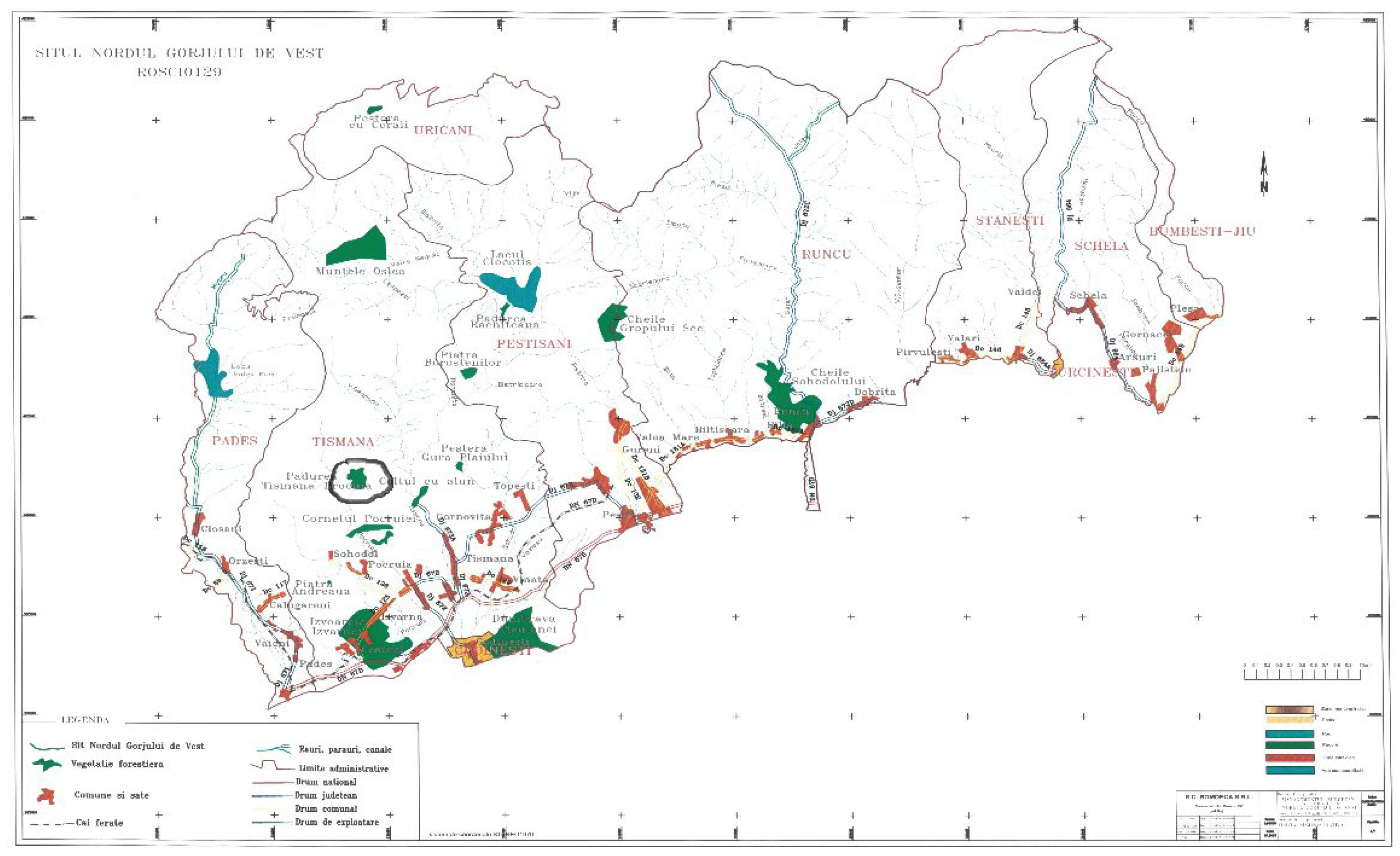
Map 1. Positioning of Tismana-Pocruia Forest reserve within Natura 2000 site - ROSCI0129-Nordul Gorjului de Vest (source - management plan of area “Nordul Gorjului de Vest”).
The grassy carpet has a weak coverage, being represented by a few acidophilic elements: Calamgrostis arundinacea, Genista tinctoria, Luzula luzuloides, Agrostis capillaris. The plants justifying the cenotaxonomic classification of these forests to the cenotaxonomic system shown above are: Quercus dalechampii, Athyrium filix-femina, Carex sylvatica, Festuca drymeia, Cirsium erisithales, Dryopteris filix-mas, Ranunculus polyanthemos, Sedum maximum, Veronica officinalis, Lychnis viscaria pentru Quercetalia roboris și Acer pseudoplatanus, Anemone nemorosa, Asarum europaeum, Galium odoratum, Brachypodium sylvaticum, Campanula persicifolia, Cephalanthera longifolia, Carex pilosa, Dentaria bulbifera, Euphorbia amygdaloides, Gentiana asclepiadea, Geranium phaeum, Impatiens noli-tangere, Mellitis melissophyllum, Mercurialis perennis, Milium effusum, Moehringia trinervia, Stachys sylbatica, Symphytum cordatum, Sanicula europaea, of those characteristic of vegetation class to which these forests are classified.
Regarding the future threats to the ecosystems identified within the perimeter of the 2 protected areas where C. sativa grows, we can say that they will have a weak intensity (Table 4) and these refer to grazing, logging, hunting and tourism. If we also consider the fact that the access to Cornetul Pocruiei area is hampered by the inaccessibility of these places, we can say that future threats could be absent.
However, climate change can have a significant impact on the health and productivity of this species and these can be found in increasing temperatures, drought, changes in rainfall patterns, increasing frequency and severity of extreme events, increasing incidence of diseases and pests. Forests are among the ecosystems that are expected to be most affected by climate change and according to the scenarios made by Erturk & Aricak [31], for the future, it is shown that there will be a significant decrease in the suitable areas of distribution of chestnut populations in Kastamonu caused by the effects of climate change. Using ecological niche modeling approach and Gıraldo & Küçüker [32] suggests that climate change can significantly reduce habitat suitability for C. sativa and this puts a substantial risk to the species, impacting not only ecosystems but also socio-economic aspects related to the chestnut fruit harvesting. Moreover, environmental conditions are strongly influencing the plant diseases, therefore climate changes can also be considered drivers of disease outbreaks [33]. Diseases represent a threat to edible chestnut, and in order to ensure the favourable conservation status to this species, it is necessary to keep these threats to a low level and to eliminate trees affected by Cryphonectria parasitica [34], a disease that can be favoured by climate changes. According to Chira & Bolea [35] Cryphonectria parasitica severely destroyed all mature chestnut stands in Tismana area. C. sativa is found to thrive in specific habitats characterized by temperate climates, well-drained soils, and moderate altitudes. Its cenological characteristics highlight its role in various forest communities, contributing to soil improvement and supporting biodiversity. Conservation and sustainable management practices are essential to protect this valuable species and ensure its continued presence in European forests, including the Oltenia region of Romania.
3.4. Chorology
In Oltenia this species is known in several localities: Tismana, Pocruia, Topești, Boroșteni, Francești, Bâlta, Bâltișoara, Runcu, Dobrița, Vălari, Novaci, Polovraci, Izvarna, Costeni, Turceni, Gornovișa, Gureni, Hobita, Popești, Glogova, Valea Perilor (Gorj county), Cloșani, Padeș, Vălui-Orjești, Mărășești, Comănești, Baia de Aramă, Obârșia-Cloșani (Mehedinti county), Horezu and Turnu monasteries (Vâlcea county) (Maps 2,3). In the specialized literature, it is mentioned from all the high hills and mountainous extensions of Vulcan and Mehedinți Mountains [23].
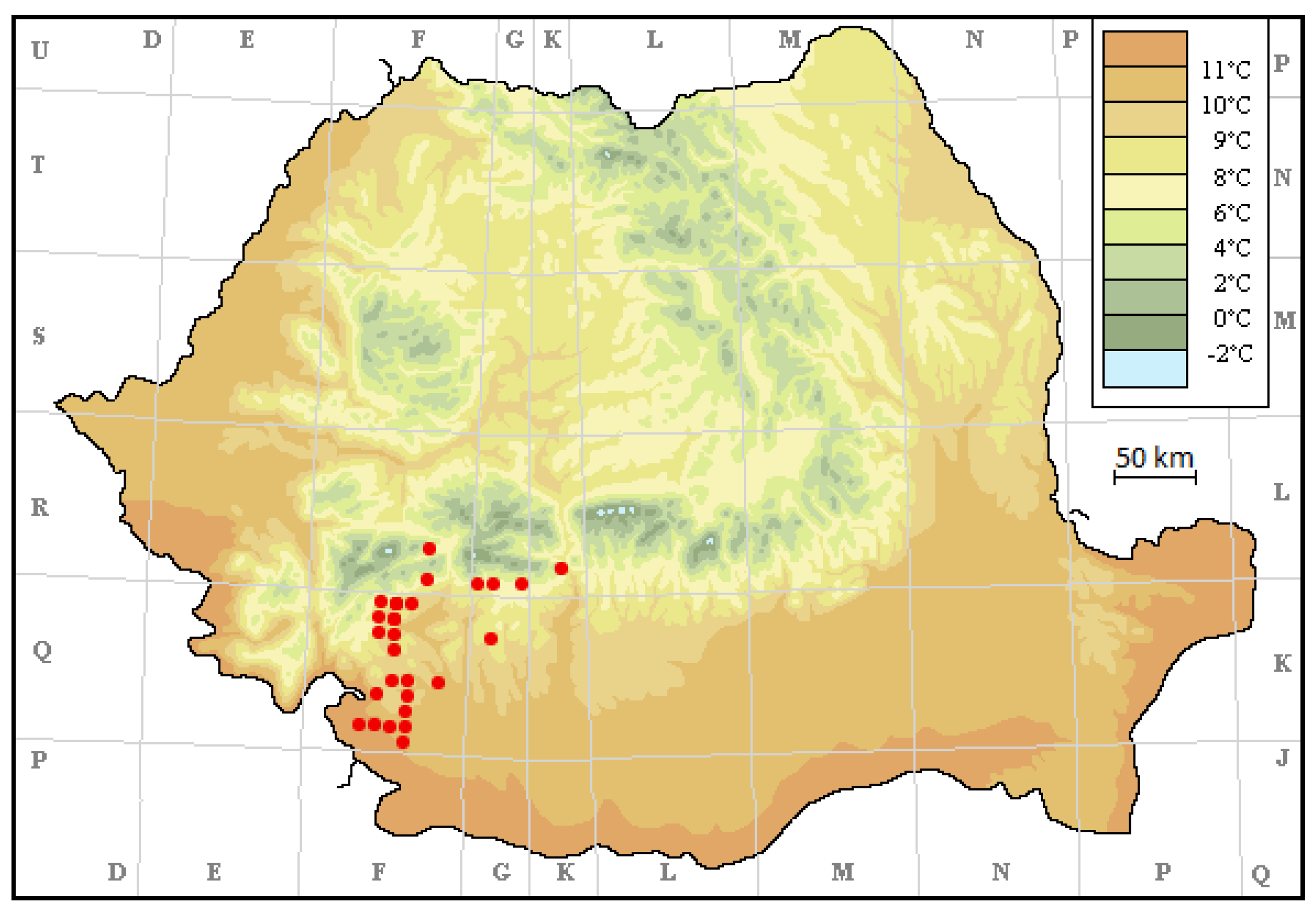
Map 2. Distribution of C. sativa species in Oltenia, corelated with average annual temperatures.
The distribution of C. sativa species in Oltenia is significantly influenced by average annual temperatures, along with other ecological and soil factors (map 2). Average annual temperatures are a crucial factor in the distribution and health of edible chestnut, being located in areas with average temperatures between 8-11ᵒC. Distribution of edible chestnut in Oltenia is closely related to the average annual temperatures, with preferences for hilly and mountainous areas with warm summers and mild winters. According to the literature, chestnut is a moderately thermophilic species well adapted to ecosystems with an annual average temperature between 8–15°C and average monthly temperatures during its vegetative cycle above 6–8°C [36, 37]. Climate changes may negatively influence this distribution, but through adaptation measures and proper management, the conservation and prosperity of edible chestnut in the region can be ensured. Distribution of C. sativa species in Oltenia is influenced not only by average annual temperatures, but also by average annual rainfall. Chestnut survival is related to the combination of temperature and rainfall factors. Rainfall plays an essential role in providing soil moisture, which is necessary for the growth and health of chestnut tree. Edible chestnut prefers well-drained and moist soils. The ideal annual rainfall for this species is between 800- and 1200-mm. Uniform distribution of rainfall throughout the year is crucial for vegetative growth and fruiting of chestnut. Prolonged periods of drought can adversely affect the chestnut, leading to water stress for the trees, which can reduce their productivity and health. According to Conedera et al. [38], chestnuts are very sensitive to summer drought and the lack of rainfall in the warm months is vital for their survival. Other authors agree that average annual rainfall, as well as winter temperatures and rainfall, do impact the distribution of chestnut [39].
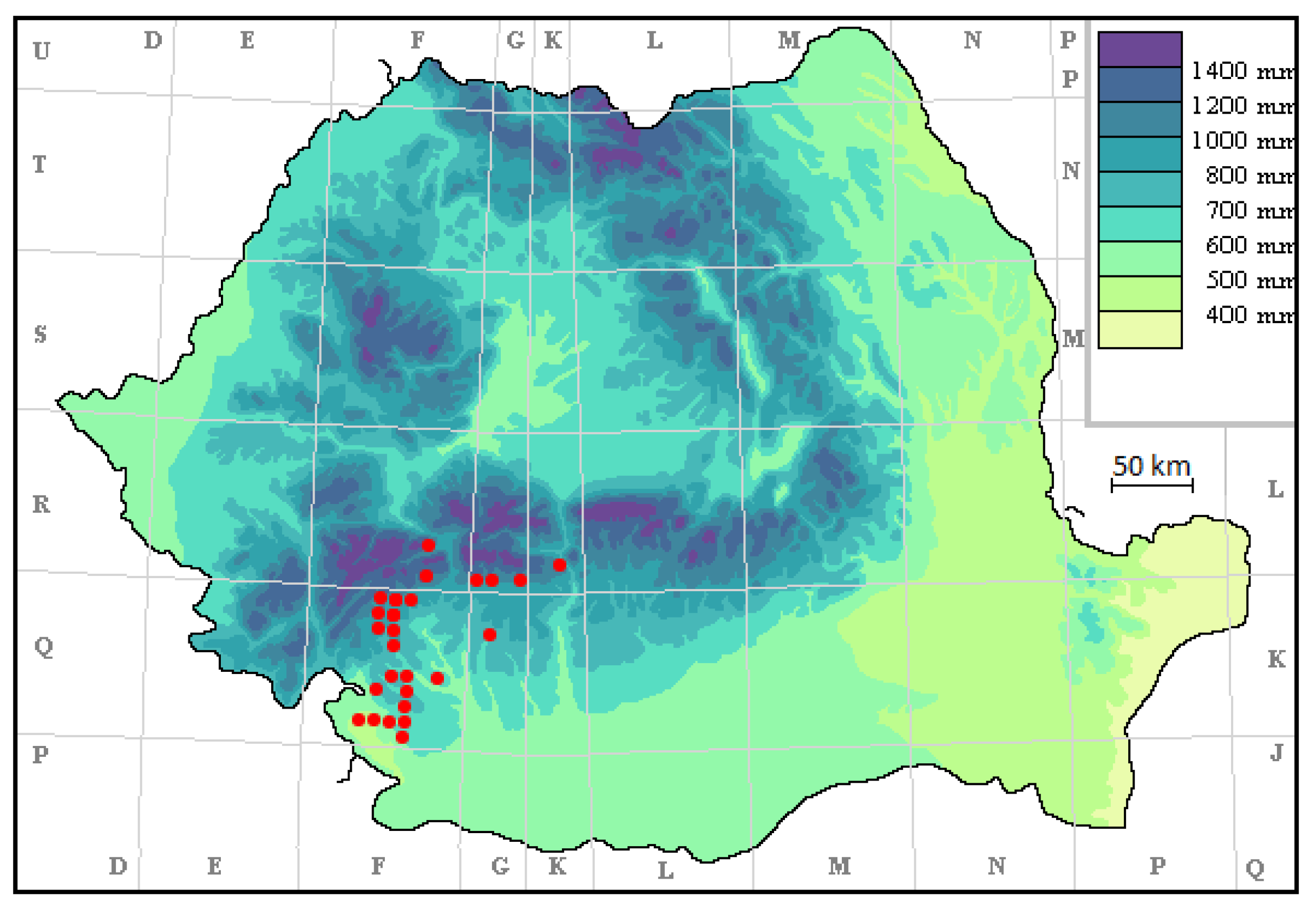
Map 3. Distribution of C. sativa species in Oltenia, correlated with average annual rainfall.
Climate changes, by influencing rainfall patterns, can have a significant impact on the distribution and health of edible chestnut, underlining the need for climate monitoring and adaptation measures to ensure the sustainability of this species. Iamshchikov [40] states that the species requires a minimum of rainfall, fallen during April-July, at least 25% of the annual total, and the trainfall values in that growing period could be a limiting factor for edible chestnut in Portugal. Understanding the environmental requirements and potential impacts of climate change on these ecosystems is crucial for developing effective conservation and management strategies to support the sustainable growth of sweet chestnut trees in the region. From a chorological point of view, in Oltenia, the distribution of the species is favoured by climatic and edaphic conditions specific to the Subcarpathian and hilly areas. Facing the challenges of climate changes and diseases, conservation efforts and sustainable management are essential to protect and maintain this valuable species.
4. Conclusions
In conclusion, we can say that the need to protect these areas with C. sativa in Oltenia is supported on the one hand by the rarity of this plant, as it is protected by the Romanian Law of Fruit Farming No. 348/2003, and by the endemic character of edible chestnut forests. Other reasons why these vegetation formations must be preserved in a favourable condition are related to multiple advantages that this plant offers and those with which it coexists: melliferous (flowers), medicinal (leaves), therapeutic (through rhytidom, flowers, leaves and seeds), touristic (through the diversity of places and the beauty of the landscape), those related to tradition (in Tismana the fruits of this plant are a traditional product).
Author Contributions
Conceptualization, D.R. and S.C.; methodology, D.R. and S.C.; validation, D.R. and S.C.; formal analysis, D.R. and S.C.; investigation, D.R.; resources, D.R.; writing—original draft preparation, D.R. and S.C.; writing—review and editing, D.R. and S.C.; supervision, S.C. All authors have read and agreed to the published version of the manuscript.
Funding
This research received no external funding.
Acknowledgments
Our thoughts of gratitude go to fellow custodians from the main herbariums in the country, for the information they provided: Mihai Pușcaș ("Babeș Bolyai" University, Cluj Napoca), Irina Irimia ("Alexandru Ioan Cuza" University, Iași), Camen-Comănescu Petronela (Botanical Garden "D. Brândză", Bucharest) and Sorin Ștefănuț (Institute of Biology of the Romanian Academy).
Conflicts of Interest
The authors declare no conflicts of interest.
References
- Schwarz, O. Castanea. In Tutin T.G., Heywood V.H., Burges N.A., Valentine D.H. Walters S.M., Webb D.A., Ball P.W., Chater A.O. Flora Europaea. 1964, Volume I. pp. 61.
- Mattioni, C.; Cherubini, M.; Micheli, E.; Villani, F.; Bucci, G. Role of domestication in shaping Castanea sativa genetic variation in Europe. Tree Genet Genomes 2008, 4, 563–574. [Google Scholar] [CrossRef]
- Zohary, D.; Hopf, M. Domestication of plants in the Old World: The origin and spread of cultivated plants in West Asia, Europe and the Nile Valley (No. Ed. 3). Oxford university press. 2000. [Google Scholar]
- Krebs, P.; Conedera, M.; Pradella, M.; Torriani, D.; Felber, M.; Tinner, W. Quaternary refugia of the sweet chestnut (Castanea sativa Mill.): an extended palynological approach. Veg. Hist. Archaeobot, 2004, 13, 145-160.
- Conedera, M.; Tinner, W.; Krebs, P.; de Rigo, D.; Caudullo, G. Castanea sativa in Europe: distribution, habitat, usage and threats. In: San-Miguel-Ayanz, J., de Rigo, D., Caudullo, G., Houston Durrant, T., Mauri, A. (Eds.), European Atlas of Forest Tree Species. Publ. Off. EU, Luxembourg, 2016, pp. e0125e0+.
- Kosňovská, J. The origin, archaeobotany and ethnobotany of sweet chestnut (Castanea sativa Miller) in the Czech Republic. Interdisciplinaria Archaeologica: Natural Sciences in Archaeology, 2013, 4, 163-176.
- Braga, N.; Rodrigues, F.; PP Oliveira, M. B. Castanea sativa by-products: A review on added value and sustainable application. Nat Prod Res 2015, 29(1), 1–18. [Google Scholar] [CrossRef] [PubMed]
- Cristea, V. Plante vasculare: diversitate, sistematică, ecologie și importanță. Presa universitară clujană Cluj Napoca, 2014, 575 pp.
- Pulvirenti, S. Storia, mito e leggenda del castagno (prima che fosse) dei Cento Cavalli. Boll. Accad. Gioenia Sci. Nat. 2011, 44, 27–48. [Google Scholar]
- Săvulescu, Tr.; Nyárády, E.I.; Alexandrescu, L.; Beldie, Al.; Buia, Al.; Georgescu, C.C.; Grințescu, Gh.; Gușuleac, M.; Morariu, I.; Prodan, I.; Țopa, M. Flora României. Volumul I, București Editura Academiei Române 1952, 656 pp.
- Beldie, Al. Flora României. Determinator ilustrat al plantelor vasculare. 406, pag. Vol. I. Edit. Acad. Rom.. Bucureşti, 1977.
- Ciocârlan, V. Flora ilustrată a României. Pteridophyta et Spermatophyta. Edit. Ceres. Bucureşti 2000, 1038 pp.
- Ciocârlan, V. Flora ilustrată a României. Pteridophyta et Spermatophyta. Edit. Ceres. Bucureşti 2009, 1041 pp.
- Sârbu, I.; Ştefan, N.; Oprea, A. Plante vasculare din România. Determinator ilustrat de teren. Editura Victor B Victor, Bucureşti 2013, 1320 pag.
- Beldie, Al. Castanea. In Săvulescu Tr., Nyárády E.I., Alexandrescu L., Beldie Al., Buia Al., Georgescu C.C., Grințescu Gh., Gușuleac M., Morariu I., Prodan I., Țopa M. 1952. Flora României, București. Editura Academie Române Volumul I 1952, pp. 218-219.
- Chira, D.; Bolea, V.; Botu, M.; Giorgi, N.; Juveloiu, E. Sweet chestnut (Castanea sativa Mill.) forest in Romania: Distribution, current state, management and research activities. Revista Silvicultura Cinegetica, 2013, 33, 15–20.
- Cristea, V.; Gafta, D. The Mediterranean floristic element in the flora and vegetation of Romania. Flora Mediterranea 2015, 25, 65–76. [Google Scholar]
- Mohan, Gh.; Ardelean, A.; Georgescu, M. Rezervații și monumente ale naturii din România. Casa de Editură și Comerț Scaiul 1993, 359 pag.
- Vlăduţ, A.; Nikolova, N.; Licurici, M. Influence of climatic conditions on the territorial distribution of the main vegetation zones within Oltenia region, Romania. Olten. Stud. Comun. Stiintele Nat. 2017, 33, 154–164. [Google Scholar]
- Sanda, V.; Öllerer, K.; Burescu, P. Fitocenozele din România. Sintaxonomie, structură, dinamică și evoluție. Edit. ArsDocendi. București 2008, 570 pp.
- Doniță, N. , Biriș I. A. R4141 Păduri daco-balcanice de gorun (Quercus petraea) și castan (Castanea sativa) cu Genista tinctoria. În Habitatele din România. Doniță N. et al. (Eds.). Ed. Tehnică Silvică 2005, 33, 55, 215. [Google Scholar]
- Botu, M. Sweet chestnut situation in Romania. Acta Hortic. 2010, 866, 511–515. [Google Scholar] [CrossRef]
- Ionescu, A.V. Condiţiunile de vegetaţie ale castanului bun (Castanea vesca Gaertn.) la Tismana şi împrejurimi (jud. Gorjiu). An. Olteniei VIII, 1929, 480-486.
- Conea, I. Studiul geografic al castanilor din Oltenia. Bul. Soc. Res. Rom. Geogr., T-L, 1931, 114-144.
- Conea I.; Ionescu A.V. Un răspuns în legătură cu castanul din Oltenia. Bul. Soc. Reg. Rom. Geogr. Buc. 1932, T II: 7I-372.
- Horvat, I.; Clavac, V.; Ellenberg, H. Vegetation Südosteuropas, Stuttgart, 1974, 660 pp.
- Konstantinidis, P.; Tsiourlis, G.; Xofis, P.; Buckley, G. P. Taxonomy and ecology of Castanea sativa Mill. forests in Greece. Plant ecology 2008, 195, 235–256. [Google Scholar] [CrossRef]
- Velizarova, E. Physico-chemical and morphological properties of soils in chestnut (Castanea sativa Mill.) Habitats of Belasitsa Mountain. Silva Balc, 2015, 16, 60–70.
- Nakhutsrishvili, G. The vegetation of Georgia (South Caucasus); Springer: Berlin/Heidelberg, Germany, 2013; ISBN 978-3-642-29914-8. [Google Scholar]
- Mayrhofer, H.; Drescher, A.; Stesevic, D.; Biloviz, P. Lichenized fungi of a chestnut grove in Livari (Rumija, Montenegro). Acta Bot Croat 2013, 72(2), 337–346. [Google Scholar] [CrossRef] [PubMed]
- Erturk, N.; Aricak, B. Potential change of chestnut (Castanea sativa Mill.) distribution areas in Kastamonu due to global climate change. World J Adv Res Rev, 2024, 22(1), 1180-1189.
- Gıraldo, D. C.; Küçüker, D. M. Assessing climate change impacts on the spatial distribution of Castanea sativa Mill. using ecological niche modeling. Anadolu Orman Araştırmaları Dergisi, 2023, 9(2), 170-177.
- Sturrock, R. N.; Frankel, S. J. , Brown, A. V.; Hennon, P. E.; Kliejunas, J. T.; Lewis, K. J.; Woods, A. J. Climate change and forest diseases. Plant Pathol 2011, 60(1), 133–149. [Google Scholar] [CrossRef]
- Merce, O.; Turcu, D.O.; Cântar, I.C.; Cadar, N. Specific management measures for the 9260 habitat – Forest vegetation with Castanea sativa. J Hortic Forestry Biotech 2014, 18(3), 64–66. [Google Scholar]
- Chirea, D.; Bolea, V. 2013. Sweet chestnut forest in Romania. Protecția pădurilor. Anul XVIII, nr. 33: 15-20.
- Gomes-Laranjo, J.; Almeida, P.; Ferreira-Cardoso, J.; Peixoto, F. Ecophysiological characterization of C. sativa trees growing under different altitudes. Acta Hortic. 2009, 844, 119–126. [Google Scholar] [CrossRef]
- Freitas, T. R.; Santos, J. A.; Silva, A. P.; Fraga, H. Influence of climate change on chestnut trees: A review. Plants 2021, 10(7), 1463. [Google Scholar] [CrossRef] [PubMed]
- Conedera, M.; Krebs, P.; Gehring, E.; Wunder, J.; Hülsmann, L.; Abegg, M.; Maringer, J. How Future-Proof Is Sweet Chestnut (Castanea sativa) in a Global Change Context. For. Ecoly Manag. 2021, 494, 119320. [Google Scholar] [CrossRef]
- Metreveli, V.; Kreft, H.; Akobia, I.; Janiashvili, Z.; Nonashvili, Z.; Dzadzamia, L.; Gavashelishvili, A. Potential distribution and suitable habitat for Chestnut (Castanea sativa). Forests 2023, 14(10), 2076. [Google Scholar] [CrossRef]
- Iamshchikov, V. Evaluation of management models in a trial of Castanea sativa Mill. coppice in northern Portugal (Doctoral dissertation, Instituto Politecnico de Braganca (Portugal) 2017.

Table 1.
Climatic and edaphic characteristics of Cornetul Pocruiei and Tismana - Pocruia Forest protected areas.
Table 1.
Climatic and edaphic characteristics of Cornetul Pocruiei and Tismana - Pocruia Forest protected areas.
| Cornetul Pocruiei | Tismana - Pocruia Forest | |
| Category | Category IV IUCN (Management area for habitat/species) | Category IV IUCN (Management area for habitat/species) |
| Coordonates | 45°04′35″N 22°54′15″E | 45°04′21″N 22°55′03″E |
| Area | 70 ha | 51.60 ha |
| Average Altitude | 580 m | 400 m |
| Climate | Temperate continental climate with Mediterranean influences. | Temperate continental climate with Mediterranean influences. |
| Soil type | Skeletal soils alternating with calcareous rocks. | Shallow soils (lithosols, various types of lithic soils) and deep and medium deep soils (brown, eumesobasic, brown acid and luvisols) |
| Important species | Sorbus dacica Borbás, Dictamnus albus L., Sorbus graeca (Spach) Lodd. ex Schauer, Peltaria alliacea Jacq. and other southern elements: Tamus communis L., Piptatherum virescens (Trin.) Boiss., Quercus pubescens Willd., Jovibarba heuffelii (Schott) A. et D. Löve, Allium flavum L., Syringa vulgaris L., Cotinus coggygria Scop. | Secular specimens of Castanea sativa (circa 300-400 years old) |
| Protected area | The reserve protects the arboretum of pubescent oak, smoketree and accompanying flora. | Wooded area of floristic interest, with a protective role for arboreal species of edible chestnut (Castanea sativa). |
Table 2.
Classification of protected areas in the European Biogeographical Region.
| Natural protected area | European Biogeographical Region | Natura 2000 Area (Area Code and Name) |
| Cornetul Pocruiei | Alpine | ROSCI 0129 Nordul Gorjului de Vest |
| Tismana - Pocruia Forest | Continental | ROSCI 0129 Nordul Gorjului de Vest |
Table 3.
Correspondence of land use categories according to Corine Land Cover with ecosystem types for the 2 protected areas.
Table 3.
Correspondence of land use categories according to Corine Land Cover with ecosystem types for the 2 protected areas.
| Corine Land Cover Code | Corine Land Cover Name | Ecosystems | Cornetul Pocruiei | Tismana – Pocruia Forest |
| 313 | Mixed forest | Forestry | x | x |
| 332 | Rocks | Rocks | x | - |
| 321 | Natural grassland | Praticulture | - | x |
| 322 | Meadow with small size shrubs | Praticulture | x | x |
| 324 | Transition area with shrubs | Bushes | x | x |
Table 4.
Threats to elements of conservative interest.
| Activities taking place within the perimeter of protected area |
Threat Code | Threat name | Intensity | Cornetul Pocruiei | Tismana - Pocruia Forest |
|
Grazing |
A.04.02.05 |
Non-intensive grazing in a mixture of animals |
Weak |
x |
x |
|
Forestry exploitation (deforestation, sanitation, etc.) |
B.02.02 B.02.05 |
Cleaning the forest Non-intensive wood production (leaving dead wood / not touching old trees) |
Weak |
- |
x |
| K04.02 | Interspecific relationships of the flora: parasitism |
Weak |
x |
x |
|
| Hunting | - | - | Weak | x | x |
| Tourism | - | - | Weak | x | x |
Disclaimer/Publisher’s Note: The statements, opinions and data contained in all publications are solely those of the individual author(s) and contributor(s) and not of MDPI and/or the editor(s). MDPI and/or the editor(s) disclaim responsibility for any injury to people or property resulting from any ideas, methods, instructions or products referred to in the content. |
© 2024 by the authors. Licensee MDPI, Basel, Switzerland. This article is an open access article distributed under the terms and conditions of the Creative Commons Attribution (CC BY) license (http://creativecommons.org/licenses/by/4.0/).
Copyright: This open access article is published under a Creative Commons CC BY 4.0 license, which permit the free download, distribution, and reuse, provided that the author and preprint are cited in any reuse.


