

Submitted:
27 May 2024
Posted:
27 May 2024
You are already at the latest version
Abstract
Modern building automation systems implement plenty of advanced control and monitoring functions considering various parameters like users’ activity, lighting, temperature changes etc. Moreover, new solutions based on Internet of Things and cloud services are also being developed for smart buildings to ensure comfort of use, user safety, energy efficiency improvements and integration with smart grids and smart city platforms. Such a wide spectrum of technologies and functions requires a new approach in building automation systems design to provide effective way of their implementation and flexibility during operation. At the same time, in the building design and operation industries, tools based on building information modeling and digital twins are being developed. In this paper, the authors discuss development directions and application areas of these solutions, identifying new trends and possibilities of their use in smart homes and buildings. In particular, the focus is on procedures for selecting automation functions, effective integration, and interoperability of building management systems with Internet of Things considering organization of prediction mechanisms and dynamic functional changes in buildings and smart networks. Chosen solutions and functions should consider the requirements from EN ISO 52120 standard and the guidelines defined for the Smart Readiness Indicator.
Keywords:
building information modeling
; digital twin
; building automation and control systems
; internet of things
; energy efficiency
; EN ISO 52120
; smart readiness indicator
1. Introduction
The modern building construction industry is subject to numerous technological, functional, and qualitative changes. In particular in Europe, as a result of the publication of guidelines from various European Commission directives, the technical and functional requirements for new and modernized buildings are changing radically. One of the most important documents is the Energy Performance of Buildings Directive 2018 (EPBD 2018) [1], which determines the directions of changes and efforts to improve the energy efficiency of buildings. Its latest revision emphasizes the importance of building automation and control systems (BACS) in these processes and introduces guidelines for estimating the smart readiness indicator (SRI), which is intended to support building transformation processes. This is particularly important in the context of expansion of infrastructure associated with residential and non-residential buildings. It integrates new devices and systems such as renewable energy sources (RES), electric vehicle charging stations, energy storage and other elements of local energy microgrids. Moreover, the structures of information and telecommunication (ICT) networks as well as fieldbus automation systems installed in buildings are developing. The latest ICT of distributed Internet of Things (IoT) modules are also implemented in various applications, supporting the comfort and convenience of using the increasingly extensive infrastructure [2,3,4].
Therefore, it is necessary to change the approach in the design of buildings, their technical and utility infrastructure, but also building management systems (BMS) using network solutions, IoT, BACS, along with the implementation of energy management mechanisms and enabling the cooperation of buildings with intelligent power grids [5,6]. In this context, the principal challenges may be summarized as follows: (i) the selection of BACS functions and the level of their integration in buildings, (ii) the estimation of the level of advancement of automation systems and smart solutions in buildings, and (iii) the estimation of the potential of smart systems and functions in buildings in terms of improving energy efficiency and their flexibility to support innovative Demand Side Management and Demand Side Response (DSM/DSR) functions. [7,8,9].
1.1. Buildings Smartness and Energy Efficiency Evaluation
These challenges have been undertaken by engineering and research teams for several years [10,11,12,13], but new paths and solutions in this area are still being sought. Their results include, among others, the guidelines of the already mentioned EPBD directive, the EN 15232:2017 standard, replaced by the new EN ISO 52120:2022 [14,15] and the latest SRI index initiative, which are still being developed, modified and, most importantly, verified in case studies [16,17,18]. The guidelines from these documents classify the functions and services of smart systems in building applications, depending on their level of complexity and integration, and provide indicators that enable numerical determination of the level of improvement in energy efficiency and smartness of the applied BACS systems with IoT. Moreover, the EN ISO 52120 standard [15] and the SRI development report [19] define methodologies for calculating the mentioned indicators. It should be emphasized that in both cases simplified and detailed methods are provided for carrying out the procedures for their estimation and calculation. Simplified methods are based on average indicators provided in the standard and report, which allow for a preliminary, rough estimation of the potential energy savings level or SRI percentage, based on collected information about BACS and technical building management (TBM) functions and services, using classification lists of these functions and services specified in the standard and report as appropriate. In turn, in detailed methods, usually multi-stage, average indicators are considered in the initial stage of calculations, but subsequent iterations require knowledge of additional, detailed data describing the specific use of a given building (utility profiles, technical data of specific building infrastructure subsystems, etc.). To provide more precise results actual measurement data is preferred from an existing building, in order to verify selected automation functions, proposed connections, integration, and parametric settings. Hence the great importance of case studies research conducted for various types of buildings, located in different countries and parts of the world, which are the subject of discussion in scientific and technical publications [17,20,21,22]. It is rather obvious that detailed methods are more accurate and provide the possibility of more precise selection of BACS and TBM. However, they are time-consuming (several months) and require the organization of additional measurement functions, along with data collection and processing. Designers of architecture and technological installations of buildings have been struggling with similar problems for many years. To facilitate the work, they use innovative Building Information Modeling (BIM) and Digital Twin (DT) technologies and tools [23,24,25,26,27,28]. Moreover, the advanced distributed control and monitoring networks with IoT nodes are considered as technological platform supporting these solutions.
1.2. Review Approach, Original Contribution and Paper Structure
Bearing these aspects in mind, in this paper the authors provide an overview of BIM and DT methods with the most commonly used tools in the building industry. Their areas of application, the main features that allow them to simplify and increase the accuracy and efficiency of the design, modelling and parametric analysis processes of various systems, installations and complex building structures are analyzed. The review included publications from several bibliographic databases recognized in the construction, electrical engineering, automation, and ICT industries, such as Springer, ScienceDirect, MDPI, IEEE Xplore (journals and conferences) and additionally Taylor and Francis, ACM Digital Library and Wiley Online Library. The selection of publications based on keywords from the area of BIM and DT applications in building design, organization of control systems and improving energy efficiency, such as: BACS, BMS, energy efficiency, comfort, convenience, energy performance, control system, BIM, DT, SRI, smartness, maintenance, facility management (FM), interoperability, design process, internet of things.
The original contribution of this paper focuses on several aspects related to the analysis of the possibilities of using BIM and DT tools in the design and effective use of BACS with IoT elements in buildings. The authors distinguish three areas of original contribution and formulate the following theses:
- The list of BACS functions defined in the EN ISO 52120 standard, and the SRI service guidelines should be used as a framework for the selection and organization of key BIM functions supporting the technical and functional BACS design. Furthermore, these guidelines can be used to optimize DT structures in buildings, particularly as a tool for dynamic and efficient energy management in buildings.
- It is possible to use DT structures in the implementation of the detailed method of calculating SRI and the precise selection of BACS functions with the analysis of the energy efficiency of buildings, for use in the construction of buildings similar to those previously analyzed, and so on.
- Technologies and solutions in the area of generic IoT and fieldbus networks (edge) can be employed as infrastructure for the implementation of DT functions during the operational phase of buildings with BACS and for the more precise selection of BIM model parameters for future building designs with a similar use and purpose.
The rest of this paper is organized as follows. Section 2 provides an overview of the current application areas of BIM and DT techniques and tools, accompanied by an analysis of the key challenges and gaps. Section 3 presents the latest trends and challenges associated with the design and maintenance of buildings using BIM and DT. In section 4, the authors examine the potential of BIM and DT solutions to support BACS with IoT design, construction and operation procedures in buildings. Finally, section 5 presents the conclusions and outlines future work. Table 1 shows the most important abbreviations used in the paper and explains their meaning.
2. BIM and DT Idea and Applications
The building industry has been convinced for many years that BIM is an approach and tool that primarily improves the design processes and effective implementation of modern buildings. The use of digital models of building structures, their installations and system infrastructure facilitate the cooperation of designers and contractors from various industries and helps shorten the time of work while improving the quality of the final product [29,30]. However, the technological progress that has been taking place over the last dozen or so years, both in the area of computer techniques, the development of advanced engineering software, and innovative technologies of building infrastructure systems, has determined the expansion of the areas of BIM applications also during the period of buildings operation. Currently, many industry experts and engineering teams emphasize that BIM can be used at any stage of the life cycle of a building or infrastructure, from design to operation, as indicated in both [31] and [30] and summarized in Figure 1.
According to these research studies, modern building and especially smart building design consists of the following stages where BIM approach can be implemented:
- Planning and design: This stage determines the purpose of the building; its functions and how smart technologies can be integrated. Typically, the following aspects are considered at the design stage: deep analysis of the shape, geometric shape, and appearance of the building to assess the strength and stability of the building components. By designing heating, ventilation, air conditioning (HVAC), plumbing and electrical systems, it guarantees optimal use conditions and energy efficiency. It assesses the environmental and energy impact of a building, allowing it to be minimized. Considering building orientation, window-wall ratio and additional analyses, BIM allows engineers to create buildings that are not only functional and aesthetic, but also sustainable and energy efficient [31].
- Material production and transport: The necessary building materials, including those specific to smart building systems, are manufactured and delivered to the site.
- Construction: This stage involves the physical construction of the facility and the installation and integration of intelligent building technology and systems. BIM implementation at the construction stage includes both monitoring of construction progress and occupational safety and health issues [32].
- Operation and maintenance: Once completed, the building is used. This phase includes regular maintenance and maintenance of both the design itself and the intelligent systems. BIM after construction involves monitoring the functioning of a building, usually with DT, and using the IoT with machine learning (ML) [33]. BIM is also used to evaluate the performance of buildings after construction, including actual energy consumption as well as flexibility to dynamic changes [34].
- Modernization and demolition: Over time, the building may need to be upgraded or upgraded with intelligent systems. Users and facility managers need to introduce new technologies, adapt to changing conditions, regulations, and technical and safety requirements is important [35]. After a very long service life, demolition may be necessary considering the principles of disposal of building and construction materials and their possible recycling [36].
This brief overview shows that multi-threaded support for BIM tools is still developing. A particularly important aspect is the possibility of an integrated approach in the design and management of building infrastructure, which has been raised for many years by engineers and experts in the BACS building automation industry [6,37,38,39]. The development of the BIM implementation concept in the BACS organization is also supported by standards defining automation functions and methods for specific building infrastructure subsystems. All this constitutes a new opening of BIM application possibilities in the above-mentioned design process, but also in the effective and dynamic operation of modern buildings discussed in Section 3.
Another approach and technology that supports the monitoring and effective management of modern buildings is DT. However, it should be noted that this approach is intended to be universal and can be used in many industries and application areas. As indicated in [40,41,42] DT is a technology used in various sectors such as industry, engineering, healthcare, and others. Moreover, it is dynamic in nature, depending on the character of the objects for which the digital replica is created. Modern DTs can work with various types of data, static and dynamic (real-time), thanks to which they enable interactive simulations, prediction of potential threats, development of used scenarios, etc. Therefore, focusing on the potential applications of DT in procedures supporting the implementation of BACS systems, increasing the level of smartness of buildings and the necessary cooperation between the physical and virtual layers, Aheleroff et al. [27] separated three organizational areas of modern DT applications, shown in Figure 2.
The typical DT consists of three major parts corresponding to a different stage or function [27,28]:
- A physical object is an actual object that is modeled by a DT. It can be any physical object, such as an entire city, in extreme examples. The physical object is equipped with every type of sensor and other devices that measure and record data, which are then sent to the digital part of the DT.
- A digital model is created using many techniques, such as 3D modeling, from computer simulations to ML. The digital model contains detailed information about the physical object, its parameters, current state, mode of operation and interdependencies with the environment and users. DTs are divided into three types: machine, product, and process [43,44]. First of them digital machine twins are used to model and simulate machine operations, enabling prediction of failures and optimization of maintenance. The second digital product twins help improve product design and testing by digitally mapping them, and last digital process twins make it easier to identify areas for improvement considering real data as well as predictions based on historical data.
- A cyber data processing system that combines a physical object with its digital model. This system is responsible, among other things, for: collecting and storing sensor data, processing it, updating the digital model in real time. The data processing system may also include ML algorithms that allow prediction of physical object behavior and identification of potential problems, diagnostics, and inspection planning.
Thanks to these elements, the DT approach can be particularly useful in supporting building and infrastructure management procedures during the building's operation period, complementing the solutions and possibilities offered by BIM. Of particular importance here is the nature of DT solutions that use real data from the serviced facility, which predisposes them to cooperate with extensive modules of modern BACS and smart home systems, also in the perspective of integrating IoT solutions.
An important utility aspect of both the above-mentioned BIM and DT approaches is the availability and functional capabilities of utility tools and software packages supporting the organization and operation of BIM and DT tools. The offer of this type of tool package is significant, but in practice, in relation to the building industry, it focuses on several solutions.
CarnotUIBK is MATLAB's new tool for dynamic building simulations that can be used for Digital Twins. It consists of two parts: an object-oriented data management framework and a simulation framework in Simulink. It allows to easily import data from various formats, including gbXML (BIM), Excel and PHPP. Provides efficient simulation and result analysis. It is adapted for "hardware-in-the-loop" applications, development of controllers and internal air quality simulation. It is a valuable tool for civil engineers, HVAC system designers and researchers [45].
Revit is a widely used BIM design software for construction. According to [46] there is a demand for training programs for technicians and engineers on the use of Revit in architectural design (Revit Architecture), installations (Revit MEP) and costing (Revit Costing). The available research and training programs at universities are inadequate. Implementing training programs for mid-level staff can improve the use of BIM technology in construction.
In [47], the building management problem was solved via Autodesk BIM 360 Ops. It allows the manager to add asset data from various sources such as Revit, BIM 360 Field, IoT and spreadsheets. This makes it easy to review documents and models, maintenance checklists, schedules, and history. This approach enables maintenance workers to manage assets and perform maintenance.
According to [48] the Ansys Twin Builder software enables integration with SCADE Display visualization software. This allows Ansys users to observe movements, deformations, and other parameters of a simulated object in a 3D environment in real time. This program allows to visualize complex simulations covering many areas of physics (e.g. mechanics, heat flows, fluid flows) and various engineering disciplines (e.g. mechanics, electronics, control). This approach enables engineers to have a holistic view of the simulation and identify the relationships between the different elements.
When choosing software to create or operate a DT, the user needs to consider their own specific needs, current needs and anticipate future needs. It is necessary to check which functions the software performs and whether it is intuitive to use, which can mean different things to different people. A good example is CarnotUIBK, which is wonderful for energy simulation of buildings, but has a narrower range of applications than other BIM tools such as Revit or BIM 360 Ops. However, Revit, despite its wide range of building element modelling capabilities, is not directly designed to create DTs and requires additional software for simulation and analysis. Similarly, while Autodesk BIM 360 Ops is focused on construction project workflow and is great for managing data throughout an object's lifecycle, it can be too complex and extensive for simple projects. The BIM software market is expected to grow rapidly in the coming years, so more solutions will emerge. It is expected that some will be specifically targeted, and some will have general applications in building automation.
2.1. Development of the BIM and DT Applications – Key Challenegs and Gaps
The actual and potential multitude of applications of BIM and DT tools in the construction industry and the organization of infrastructure in buildings and their surroundings, generates a number of significant challenges. Moreover, the analysis of the literature and research results also indicates several gaps in these areas. They concern a number of issues related mainly to a new approach in effective use of the above-mentioned tools and techniques supporting design procedures, integration and increasing the accuracy of modeling operational processes, considering innovative IoT networks and BACS functions related to the extensive infrastructure of modern, smarter buildings. Figure 3 summarizes the key categories of issues, challenges and gaps discussed in this review paper.
2.1.1. Technical Challenges and Gaps
The integration of BIM and DT is one of the key areas where knowledge and good practices are still lacking as indicated in the papers [23,49,50,51]. According to them, to address this issue it would be necessary to examine in this context the use of open data-sharing standards such as Industry Foundation Classes (IFC) for BIM and cloud-based data-sharing for DT. The authors conclude that all stakeholders should cooperate and establish clear rules on data sharing and management. For example, the BuildingSMART International is an organization that develops IFC standards for BIM. Standardization plays a key role in overcoming many of the challenges of integrating BIM and DT. First of all, it would ensure data consistency and minimize the risk of information loss during transition between different project stages. Moreover, it would increase efficiency, facilitate cooperation and the flow of information, saving time and resources. All these issues are crucial in the context of the application of BIM and DT tools in the structures of distributed fieldbus automation networks, with network nodes with limited computing power and memory resources (edge modules) [11,52,53]. Among the various initiatives in this area, it is worth paying attention to the activities of the Digital Twin Consortium [54]. It develops frameworks and best practices for various DT applications, including standards for data exchange and sharing between different tools. However, all the mentioned initiatives and research and development works are in the implementation, experimental phase and so far, there is currently no single, universally accepted standard for BIM and DT data integration.
Real-time interaction between BIM models and DTs is crucial to ensure data is up-to-date and seamless interaction between different project stakeholders [23]. The benefit of real-time interaction is improved communication, meaning instant information exchange between engineers, designers, and contractors. Access to up-to-date project data makes it easy to make quick and accurate decisions. It also allows to mitigate errors through express punching and problem solving even at the project stage. It avoids costly alterations and delays in construction, so it also carries an economic aspect. All these issues are particularly important in the perspective of using BIM and especially DT in the organization of dynamic energy management platforms and energy media in buildings and related prosumer microgrids [55]. As emphasized by Bortolini et al. [25] the combination and analysis of real-time and historical data for specified building infrastructure allows to conduct an effective strategy to protect, forecast and optimize building energy efficiency. With this approach, the DT can accurately portray real-time operational circumstances and predict future states of building infrastructure elements based on continuously acquired sensing data and their relationship to historical data.
However, maintaining data consistency between BIM and DT can be difficult, especially for large and complex projects. Appropriate technological infrastructure such as a high-speed internet connection and collaboration software is required to ensure smooth interaction. Moreover, it is important to ensure the security and confidentiality of data shared in real time. Development of a data management strategy that determines who has access to the data and how it is updated is necessary as well [28].
2.1.2. Design Challenges and Gaps
Problems can be encountered in integration from the tool design stage onwards. One is the various file formats and data exchange standards used in various BIM software and DT platforms. Developing tools to translate data between different formats should be one of the priorities. Information is lost when data is transferred between stages [51].
Another problem is the detail and space the projects occupy. BIM and DT models that are too detailed can be too heavy and time-consuming to manage. Models that are too detailed may not provide enough information to make decisions. There are serious difficulties in adapting the level of granularity to the needs of a given stage of a project. The solution may be LOD (Level of Development) models, defining levels of detail for BIM models discussed in [55]. This concept is considered in the context of implementing the FM strategy in buildings and direct support for facility managers to address the challenges of information reliability, interoperability and usability, related to the service and operation of building infrastructure [56]. The advancement of this tool could also be considered and used in a DT environment.
In the context of designing building infrastructure and building automation systems supported by BIM and DT tools, attention should also be paid to the problem of fragmentation and granularity resulting from the technical nature of these systems [57]. Modern BACS are distributed in nature, and assuming their integration with IoT solutions, other fieldbus networks and edge level modules [2,10,11,53,58], the granularity will increase, which is a problem and a challenge in building effective BIM, but also in the organization and integration of data acquisition structures for DT discussed in [59].
2.1.3. Organization Challenges and Gaps
Another knowledge gap is the realistic handling of a BIM-DT combined project. Traditional organizational structures may not be adapted to the cooperation and information flow required for the effective use of BIM and DT. In paper [28] Coupra et al. indicate some of the most important gaps and related challenges in striving to implement the marriage of BIM and DT methods and tools supporting the effective operation of smart buildings: (i) lack of standards to unify and integrate tool platforms and data processing, (ii) lack of up-to-date data resulting from lack of communication between various stakeholders, controllers and systems supporting various elements of building infrastructure and (iii) lack of organizational strategies that would take into account all stakeholders, in particular those emerging on the horizon as a result of new requirements and needs of contemporary buildings and their users.
As emphasized by Yang et al. [30] there is still a lack of a sufficient number of diverse case studies analyzing the conditions and application possibilities of BIM and DT in the organization of BACS systems, also with IoT on various facilities. This is particularly important in the context of the implementation of BIM and DT methods in new areas related to FM and the organization of mechanisms and systems supporting the improvement of the energy efficiency of buildings. Moreover, the implementation and maintenance of BIM and DT platforms, especially integrated ones, involves additional costs that companies as well as investors must consider. A careful cost-benefit analysis is required before implementing BIM and DT to ensure that the investment pays off [26,60].
3. BIM and DT – Latest Development Trends and Challenges
Bearing in mind the most important features, application predispositions and gaps identified for the BIM and DT approaches in Section 2, there are many publications in the literature discussing and analyzing their development trends. Considering the subject matter of this paper, the focus is on trends and challenges related to the intelligent building industry, supporting advanced system infrastructure and automation. The advent of these advancements has led to an increasing demand for BACS functions dedicated to supporting various building infrastructure subsystems, along with mechanisms for their effective integration. In order to address this challenge, automation functions are being defined as services to be performed by distributed network systems, including IoT networks, using cloud resources and services [19,53,61,62]. Furthermore, based on this approach, concepts for the organization of buildings as services (BaaS) are being formulated, with the possibility of dynamically shaping functional frameworks, depending on the changing needs of users and the utility nature of such facilities [5,62,63,64,65].
3.1. Desining, Modeling and Control as Services
The dynamic shaping of the usable and functional environment of buildings requires a change in approach to the organization of BMS systems with FM elements. In particular, the implementation of DT structures as technical solutions enabling the effective development of building and BACS functions and services. One of the unobvious trends emerging in the market is Digital Twin as a Service (DTaaS) – a concept of DT models in the cloud. The idea is for customers to use an online platform, paying only for what they use, without having to maintain their own infrastructure. The cloud platform on which the DT tools are stored is made available to users. They send their data to it from BACS devices, BIM models and IoT sensors. The platform is responsible for integrating this data and creating a real object model, for customer use. The DTaaS presents a range of applications, from design and construction to industry. It is a helpful tool when managing buildings, monitoring user comfort and parameters such as energy consumption [66]. Furthermore, its application can also be found and useful during the ordinary maintenance of a building, supporting, and communicating the need for maintenance, anticipating failures and planning repairs [67,68,69,70,71,72]. One of the most important benefits of using the DTaaS is saving time, resources, and money. It has much lower initial costs by not needing to invest in servers and software. The customer does not need to have the expert knowledge that is provided by the service provider and platform [73,74,75]. Moreover, according to Bortolini et al. [76] companies using these services definitely have a competitive advantage through better management and monitoring of their facilities. They can test new solutions in a virtual environment, aiming to accelerate innovation. By optimizing resources and energy consumption, they remain "green companies" and reduce environmental impact. Considering mentioned BaaS frameworks, the DTaaS approach also fits into the development trend of virtualization of BMS ad FM platforms (emerging issues in the BMS 'cloudification' endeavor) and transferring the functions of collecting, processing, and analyzing data from distributed automation and IoT networks to cloud services [77,78,79].
It is important to note that the rapid growing of ICT technology has an impact on the development trends of modern network automation systems, both industrial and building. In the last few years, there has been a fruitful convergence of different technologies, microelectronics and building systems towards an IP-based infrastructure supported by proprietary communication protocols as well as Ethernet and Internet networks. Technological convergence in the management of buildings and smart buildings is accelerating with the increasing deployment of IP-based devices within the IoT. According to [80], different building systems used and still are using different protocols, networks and cable systems. This is obviously inefficient from both an implementation and management perspective. The IoT concept, which is now being used more and more often, will further improve, standardize and extend the functions and scope of BACS services. BMS systems are switched systematically and consistently to IP networks (which also allows remote monitoring of many buildings through the central operations center). The growth of the IoT is being driven by a sharp drop in the cost of advanced sensors, computing power and data storage, while increasing device density (and reducing device size) [11,78]. IoT can support BIM and DT by collecting building status data, monitoring performance, predicting failures, automating tasks, and personalizing the environment. Combined with BIM and DT, IoT can create smarter, more efficient and sustainable buildings [32,81]. In evaluating the potential of BIM methods and tools for this type of application, it is also essential to consider their internal development trends. BIM goes beyond just 3D modeling, now offering tools for construction schedule planning and control (BIM 4D) as well as cost estimation (BIM 5D) [50,75,82]. BIM software is advancing towards "all in one," providing tools for designing not only structures but also plumbing, electrical and HVAC [66].
3.2. Implementation of IoT Paradigm and Data Based Solutions
The basis for each of the aforementioned solutions is data, both resulting from design assumptions and standard requirements, as well as operational data. This includes information on the operating status of building infrastructure subsystems, the intensity of use of rooms and the environmental conditions prevailing there. Furthermore, there have been notable changes in the manner in which these data are acquired and processed for the purpose of utilizing BIM and DT models, in the context of building applications. Now, instead of relying solely on BIM data, engineers and integrators combine it with information from fully distributed IoT sensors, monitoring systems and other sources. This creates a more comprehensive DT, that better reflects the real object and is directly related to BACS and BMS functions. The trend is to enrich the DT with data from different sources (BACS sensors and actuators, smart meters etc.) allowing for better modeling and analysis of reality and facilities as a whole [82,83,84,85]. Furthermore, instead of relying just on traditional methods (periodic monitoring, measurements) DT is used by engineers to create realistic simulations. These virtual experiments predict the future functioning of a building, optimizing its performance in many ways. In addition, they enable testing of new technologies, such as photovoltaic panels or intelligent energy management systems in a secure virtual environment [45,86,87]. Moreover, these virtual copies of buildings can not only simulate how they work, but also assess the impact on the environment. Engineers can test different building materials, heating systems or ventilation solutions in the digital twin to choose the most environmentally friendly ones. In this way, DTs make it possible to design energy-efficient buildings that use less water and emit less pollution [76,86,88].
Making full use of the potential of BIM and DT in the construction industry faces a number of technological and organizational challenges. In [51] Vieira et al. discuss three main data quality factors: completeness, complexity and flexibility, in the context of organizing advanced BIM for various BACS standards: KNX, LonWorks and BACnet. Bering in mind all elements of BACS standardization like communication media with network topology, network variables and data objects as well as functional profiles with logical bindings, the authors analyzed usefulness of BIM concept in advanced BACS and BMS platforms design and integration. Additionally, the paper [30] provides list of the most important research trends/challenges for BIM developments in the context of BACS design and integration support: (i) establishing an open platform for the integration of multiple BACS and smart building technologies, (ii) multidimensional consideration of BIM software standards as well as (iii) data format interoperability with universal data tagging.
Considering these trends, it should be noted that in the area of automation, the lack of system integration, the variety of data formats and the shortage of qualified staff with the right knowledge and skills are the main barriers. Project challenges focus on the problems of data exchange between BIM/DT platforms, the lack of seamless data transition between project stages (from design to operation) and the need to optimize the level of detail of models according to the specificity of the stage. Optimizing organizational structures for efficient BIM/DT use is also a key aspect according to [82]. Once these challenges have been overcome, BIM and DT have a chance to become powerful tools that can significantly increase the efficiency of construction projects, reduce costs, minimize errors, and improve the overall profitability of projects. Therefore, as indicated in [89] BIM and IoT promise a continuous flow of information, but the connectivity between model and reality can be incomplete (e.g. software changes, unlisted parts, software version errors). These drawbacks are also reflected in the world of DT.
In order to enhance the degree of interoperability and integration of system data, a number of engineering and research initiatives have been implemented. The primary focus of these efforts is the development of universal standards for communication and data identification. In the case of BACS, standardization of automation functions and services is also a key objective including implementation and adhering to common standards for data exchange and developing a data management strategy that ensures consistency, security, and availability throughout the project lifecycle. The natural direction is to develop open and accessible BIM and DT platforms, as well as to develop and implement standards with best practices for their use [53,90]. It is necessary to secure adequate funding for the implementation of BIM/DT platforms and to invest in the training and education of employees to increase the number of qualified staff. Moreover, it is important to implement effective management of organizational changes to facilitate the transition to new working methods and to promote culture. open cooperation as well as information exchange between all project participants.
One of the most rapidly developing trends in the context of universalization of communication and data for the integration of BACS, BIM and DT is the implementation of IoT solutions. One of the most significant challenges associated with this implementation is the security of data and the reliability of communication, particularly when utilizing a radio communication medium, such as Wi-Fi. As mentioned in [80,91] the challenges of IoT security include, among other things, the inherent problems of IoT security. There are inherent security vulnerabilities in IoT devices that make it difficult to protect them. In addition, use of vulnerable Internet gateways/concentration points. Gateways and concentration points that collect data from multiple devices can be an attractive target for cyberattacks. Low-complexity devices, or simple IoT devices, often have limited security options. Open environment for interference facilitates physical access and manipulation of hackers. Power supply is limited, which means that low power devices can prevent the use of more complex and effective safety algorithms. It should be noted that IoT devices can be portable and difficult to track, making it difficult to ensure security. Moreover, they are often constantly connected to the network, increasing the risk of being attacked. Additionally, the main advantage of IoT approach the vast number and variety of IoT devices makes it difficult to develop universal security solutions, and the lack of a common IoT security architecture makes communication and data protection difficult [80,92,93].
Finally, it is worth mentioning one of the latest trends in the development of many industries - the idea of using artificial intelligence (AI). It is one of the common trends, not just for industrial and building automation. AI is entering BIM with momentum, offering a range of facilities for designers and engineers. Automates tedious and repetitive tasks such as creating documentation, clash checking and quality control, saving time, resources and money. It analyzes BIM models, suggesting changes to improve performance such as reducing energy consumption. In addition, it generates photorealistic images and 3D videos, making it easier to imagine a project [94,95,96]. One of the benefits of AI in BIM is that it costs less to detect errors early and optimize projects at each stage, generating savings. They support creativity by giving more time to people. And at the same time, they help to create better buildings, aesthetic designs, supporting sustainable development. The AI trend in BIM is in the early stages of development, but its potential is huge. It is worth following its evolution in order to gain a competitive advantage and projects at a completely new level [97,98,99].
4. BIM and DT as Tools to Support BACS Design and Management Processes - Opportunities, Challenges, Research Directions
Considering original contributions defined in Section 1 and the trends and challenges discussed in Section 3, the authors propose expanding the concept of using BIM and DT methods and tools in the area of design, construction and operation of buildings. In particular, they should consider two main development trends in building innovations, aimed at increasing their smartness and comfort of use, while improving energy efficiency, the utilization of RES and readiness for smart grid solutions. An important element of this concept is the required integration of the digital and physical layers, shown in Figure 4.
The authors propose cloud services as an integration platform, also for the implementation of BIM and DT services. When designing BACS and BMS functions based on fieldbus and IoT network modules, it is necessary to refer in BIM to functional blocks and network variables related to specific modules of sensors, actors and available cloud services, enabling the implementation of more advanced functions and data analytics. In turn, at the stage of construction and operation of these systems in the building, hardware and software integration is necessary, allowing the acquisition and use of data from these modules in DT models and mechanisms, in order to develop optimal operating parameters of building infrastructure devices and the effective implementation of predictive models. At the same time, such DT models can support mechanisms for improving the energy efficiency of a building, thanks to the selection of parameters of the BACS and TBM functions, not only during their design, but also during the period of dynamic operational changes.
4.1. Standards, Requirements and Approaches
A novel approach is required, particularly in light of the standards and guidance documents published in recent years that regulate the possibilities and rules for selecting BACS functions and smart services dedicated to buildings. One of the key and generalized standards regulating the principles of using BIM in the organization of building functionality is the ISO 19650:2018 "Organization and digitization of information about buildings and civil engineering works, including building information modelling" [101]. It provides a set of guidelines for the management of a building throughout its life cycle. Moreover, it emphasizes the use of building information modeling as an important tool to improve the use of facilities, the operation of buildings, and the improvement of design processes. This standard contains several sheets covering detailed issues: (i) the flexibility and versatility that characterize the wide range of potential BIM strategies, (ii) the requirements for information management in the context of the delivery phase of assets and the exchange of information within it using BIM, (iii) information management in the form of a management process in the context of the operational phase of assets using BIM, (iv) the detailed process and criteria for decision making when performing an information exchange as specified in the ISO 19650 series to ensure the quality of the resulting Project Information Model or Asset Information Model, and finally, (v) the principles and requirements for security-conscious information management for BIM as well as for the security-conscious management of sensitive information that is acquired, created, processed and stored as part of any other initiative, project, asset, product or service. As the analysis of these issues demonstrates, the implementation of BIM in modern buildings requires advanced technological tools, not only software, but also hardware. Consequently, the authors of the concept of a seamless marriage of BACS technologies, IoT and cloud services propose that this could be a potential platform for the effective design of BACS functions and extended automation networks in buildings, as well as for the organization of FM tasks during its operation [102].
An example of initiatives already undertaken in this area, in particular aimed at the universalization and unification of information about buildings for BIM systems, may be the development of an open standard for formatting COBie (Construction-Operations Building information exchange) information [103,104]. It is a key part of the digital transformation of construction, which improves building management and reduces costs. This open standard provides rules for universal data exchange about the building that underpins the DT. It simplifies data exchange between systems such as BIM, CMMS (Computerized Maintenance Management System), and BMS. Moreover, it provides a good level of data quality and consistency, while allowing faster response during a crash.
However, it should be noted that in the case of BACS, in particular the open standards of KNX, LonWorks and BACnet building automation, standard data objects that are commonly used in the industry are already defined (e.g. SNVT - Standard Network Variable Types for LonWorks and DPT - Data Point Types for KNX). Moreover, for these standards functional profiles have been defined, determining the principles of implementing the most important automation functions, using standardized data types. Therefore, when trying to integrate the BIM and DT environments as tools for the design and maintenance of BACS and BMS, it is necessary to take these standards into account, along with the possibility of developing new, universal semantics. An example is the Haystack project [105] with the idea of standardizing semantic data models and web services with the goal of making it easier to unlock value from the vast quantity of data being generated by the smart devices that permeate homes, buildings, factories, and cities. The main elements of the semantics are tags defined for various kinds of data from BACS and BMS applications including automation, control, energy, HVAC, lighting, and other systems.
4.1.1. BACS and Energy Efficiency Performance
The rapid development of BACS technology in the last 20 years has resulted in the need to systematize not only communication and data transmission standards, but also the automation functions themselves along with the principles of their functional integration. In the first decade of the 2000s, the EN 15232 standard "Energy performance of buildings - Impact of Building Automation, Controls and Building Management" was developed, which was updated several times. His last version from 2017 [14] introduces four categories of BACS, marked with letters from A to D, depending on their impact on a building's energy efficiency as it is shown in Figure 5 [106,107]. It must be noted that these categories differ from the energy efficiency classes of entire buildings, as defined in EN 15217 standard.
As shown in [108] the standard can be used already at the design and prototype stage. The simplified list of control functions with basic indicator calculation method could be used for buildings without detailed information related to BACS and TBM concepts. It allows to optimize and evaluate different design and functional variants. At the construction stage, the building can be used to identify areas where energy consumption can be additionally reduced. On the basis, integrators could consider various variants of temperature and lighting, considering daylight availability, occupancy factors etc. However, as indicated in [109], there is a gap between the assumptions of EN 15232:2017 and the actual performance of BACS. The standard suggests that the higher the level of automation, the greater the energy savings, but the practice shows that users can circumvent these systems to meet their needs, for example by blocking light or presence sensors [5,110]. Users may not be aware of the impact of their actions on energy consumption, so it is important to raise awareness and educate both professionals and ordinary household members. Moreover, case studies for different kinds of buildings are very important and useful, considering not only various use scenarios but different geographical locations of buildings as well. That is a clear application area for BIM during design and construction and for DT during operation of buildings with BACS and BMS.
In 2021, the EN 15232 standard was replaced by the EN ISO 52120 standard [15], which introduced minor changes and sanctioned the importance of the TBM function in BACS systems and advanced BMS scenarios, in particular considering active monitoring and management platforms of local energy networks - microgrids. The EN ISO 52120 applies to the energy performance of buildings with the BACS and TBM functions. According to [111,112] it raises awareness of the benefits and requirements of building automation for energy efficiency in buildings. Moreover, it defines building readiness levels for integration with smart grid systems and provides methods for verifying the potential of BACS functions and installations in the area of improving the energy efficiency of buildings, shown in Figure 6.
The standard defines and describes three verification methods, along with performance indicators for the calculation and comparison methods. All of these methods have the potential to use BIM and DT tools in both the design and verification procedures of BACS and BMS installations. Although the standard considers many factors affecting the energy efficiency of buildings, there are some key elements that are overlooked. The most important are stated in paper [113]. The system presented by Vandenbogaerde et al. considers and analyses the load on the building, user behavior, climatic conditions and maintained temperatures, adapting the operation of the systems to adjust energy consumption to these parameters. In addition, the authors consider technical parameters such as control algorithms and sensor resolution to ensure precise control and optimization of the building operation. The location of the building is being analyzed in order to optimize the use of sunlight and reduce the need for artificial lighting. Moreover, the system considers the ratio of window surface to wall surface, window-wall ratio (WWC) to ensure the right balance between natural light supply and thermal insulation. According to authors, by taking these factors into account, the BIM/DT system can significantly reduce the energy consumption associated with lighting and heating/cooling a building. The omission of these elements may lead to an underestimation or overestimation of the energy saving potential of the building.
4.1.2. BACS and Smartness of Buildings
Based on experience from the implementation of the EN 15232 and EN ISO 52120 standards the Smart Readiness Indicator (SRI) was launched in 2018. First it was included in the Directive of the European Parliament and the Council of the European EPBD 2018. Since then, work has continued, which ended in 2020, resulting in a detailed methodology for assessing the readiness of buildings for intelligent solutions, discussed in detail in technical report [19]. Voluntary implementation by EU countries is currently underway. Importantly, the SRI assesses readiness of buildings to be "smart" rather than current performance or energy efficiency [87,114,115,116,117,118,119]. However, the aforementioned report contains a crucial element: two lists of functions and services of building automation systems, dedicated to various building infrastructure subsystems (domains). For each individual function, several functional levels have been defined and described, relating to the level of advancement of the automation functions – smart services. The lists of functions refer to the lists of control functions described in the EN 15232 and EN ISO 52120 standards but are extended to include functions and services dedicated to the operation of energy management systems. These include, for example, the charging of electric cars, monitoring of energy consumption and power quality, integration of renewable energy sources and energy storage, and support for demand side management and demand side response mechanisms. Consequently, these lists can be employed as a framework for the design of BACS and BMS systems in accordance with the principles of BIM and DT tools. Furthermore, in a manner analogous to the EN ISO 52120 standard, the report delineates three methodologies for calculating the SRI value, presented in Figure 7. The initial two methodologies are based directly on the functional analysis and selection of automation functions/services, while the third methodology is the most precise and necessitates the measurement and analysis of the system already operational within the facility. In this context, it is possible to utilize DT tools as a source of data feedback for the calibration and verification of BACS control parameters.
The accurate and correct assessment of the SRI allows to identify buildings that may be contributing to energy production. This is important during city management, and in addition SRI would be helpful when managing power networks in terms of generation, transmission, and distribution. Public buildings, such as educational institutions, play a special role in this regard.
According to the results of the [114] study and combining the results of analyzes of functional guidelines for BACS systems and their effects in the form of improving energy efficiency and smartness of buildings, the energy efficiency of buildings is inextricably linked to the level of building automation and control systems for the technical systems of a building. The study described by Plienaitis et al. demonstrates the need for parallel and simultaneous consideration of both assessments in order to obtain a more comprehensive assessment of the overall energy performance of the building. Furthermore, the study [120] suggests that the SRI level of a building should be considered in the EPC (Energy Performance Certificate) evaluation. In the future, energy audits could also cover them for 'smart' buildings, and activities related to the modernization of energy systems could be adapted to take account of the modernization of smart systems. Further integration of the SRI into the energy efficiency assessment of buildings is necessary [121]. As shown in Figure 6 and Figure 7, the combined power of DT and BIM can greatly accelerate data collection and analysis and increase the accuracy of computational methods. This will help optimize the design and continuously monitor and improve SRI throughout the building life cycle.
4.2. Perscpective for New Solutions
The DT and SRI can be used to make better decisions, since both are dynamic and can learn. They can cooperate on various stages of a project. DT allows to simulate scenarios and SRI indicates what actions should be taken, contributing to the optimization. DT can be updated in real time as new data arrives, and SRI can adjust its metrics based on changing needs and conditions. Common features of DT and SRI constitute a starting point for further research and development in the area of intelligent systems. The integration of these two novelties opens up new possibilities and opportunities in areas such as modelling and simulation, as it is discussed in [122]. Together, they can contribute to optimizing operational and building management. They are powerful tools that look promising in the context of smarter buildings and cities [17].
For now, the SRI focuses on the technical elements of the building. However, it should be extended to include factors relegated to energy efficiency, user comfort and sustainability. Indicators such as energy consumption, CO2 emissions, user satisfaction and the share of renewable energy sources should be included in the assessment of buildings. With this approach and consideration of the mentioned parameters it should be relatively easy to use BIM solutions, facilitating the organization of more integrated BACS and BMS with developed IoT modules. Furthermore, already at the design stage, it will provide more accurate parameterization of BACS functions and services as a starting point for verification methods with DT applications.
Both SRI and EN ISO 52120 must keep up with new technologies and needs to support the building of energy efficient and sustainable buildings in the digital age. The norm is currently lagging behind new developments in construction, such as BIM and AI. Update is needed to consider their impact on data formatting and coding, which can be a long process. Above all, it should promote and encourage the market to use digital tools to test the energy efficiency of buildings already at the design and construction stage. The standards should support open BACS and IoT standards and data formats so that different programs can communicate with each other freely and, at the same time, facilitate the creation of digital platforms where data on the comfort management, security and the energy efficiency of buildings can be shared.
4.3. Important Challenges and Research Directions
The challenges and development trends of BIM and DT methods and tools were discussed in Section 3. However, considering the conclusions of the discussion from this Section 4, the authors point to the most important challenges and trends in the development of BIM and DT, important in the context of supporting the implementation of BACS function design mechanisms and technical organization of distributed networks with IoT as well as their primary and functional verification at the stage of construction and operation in buildings.
As mentioned earlier, the critical issue for providing broad and multi-threaded integration of BIM and DT software platforms with physical objects of distributed BACS networks with IoT is to ensure high data quality and the reliability of their communication and processing. It is the availability of real data that is the most important factor determining the effectiveness of the use of BIM and DT tools in combination with BACS and BMS technologies, both in the process of their design and operation. The EN ISO 52120 standard and the SRI methodology provide guidelines for the selection of functions, control services and monitoring of buildings, but do not contain any indications regarding preferred technologies. Therefore, an open environment is created for the implementation of various technical solutions in the field of distributed automation networks and IoT. However, as the experience of many years of implementing BACS and BMS systems shows, the best results are achieved by implementing installations based on open, not proprietary, standards [123,124,125]. However, as the experience of many years of implementing BACS and BMS systems shows, the best results are achieved by implementing installations based on open, not proprietary, standards. The authors point out the need to develop new mechanisms for the interoperability of communication protocols and communication media for object-level networks in order to open them to data communication in higher-level networks (Internet), while ensuring a high level of communication security, data coding and maintaining the requirements for the operation of automation modules in the real time regime.
Systematized guidelines for the selection and organization of BACS control functions and services specified in the EN ISO 52120 standard and for SRI represent an optimal set of parameters for implementation in BIM and DT tools. As previously stated, the implementation of these guidelines will not only facilitate the design and operation procedures of buildings but will also allow for the benchmarking and performance tracking of such buildings. In particular, SRI provides a standardized framework for benchmarking and the tracking of the building sustainability index over time. This enables building owners and operators to evaluate the efficacy of BACS and IoT-based initiatives and identify areas for further enhancement. Further support in this area will be provided by the integration of real system installations with DT models, which also enable the prediction of potential control scenarios and the analysis of dynamic changes in building utility parameters. These include variable energy tariffs, changes in load levels of household appliances and the infrastructure of local microgrid networks.
Finally, it is crucial to emphasize the importance of proactive promotion of sustainable practices. This is particularly relevant in the context of the implementation of effective energy management mechanisms at various levels, including the production and distribution of energy, as well as servicing of prosumers at the level of building complexes or individual facilities. Both EN ISO 52120 and SRI promote the implementation of sustainable building management practices by encouraging the integration of IoT technologies and cloud services to optimize energy efficiency, reduce environmental impact and improve user comfort. Consequently, the implementation of these guidelines in BIM tools, which are becoming increasingly prevalent in the design and construction of buildings, will facilitate the dissemination and raise awareness among designers and investors of the implementation of sustainable development mechanisms at the building level.
5. Conclusions
This paper collates current knowledge on the development of BIM and DT techniques and their application areas. The collected information was analyzed in the context of the possibilities of their application in the technologically and functionally developing field of networked building automation systems integrated with IoT solutions. In this review, the authors discuss the directions of development of these solutions, models and solutions, as well as presenting their new trends and possibilities. One of the key aspects of the analysis is the identification of gaps and potential barriers to the development of the concept of synergies between BIM and DT methods in the design, construction and operation of buildings with innovative BACS functions and services. These functions and services are oriented towards increasing building comfort, improving energy efficiency and opening to new dynamic energy and infrastructure management mechanisms.
As these processes are based on standardized guidelines (EN ISO 52120 and SRI), it is possible to describe them in BIM models as well as DT algorithms and patterns and, as a result, realize them using advanced tools for modelling, prediction, monitoring and effective control of automation in buildings. As the authors point out, this is of particular importance at the current time, when building infrastructure is becoming increasingly complex and multi-system. Furthermore, buildings equipped with RES and energy storage are becoming active participants in smart grid systems and the energy market as prosumers. This calls for a change in the approach to the procedures mentioned for the design, construction and operation of buildings, especially those equipped with BACS, BMS with IoT technologies, in order to develop universal and useful tools to support designers, installers and users and maintainers. In this context, the authors formulated the theses of the original contribution concerning the possibilities of effective and constructive use of the EN ISO 52120 standard guidelines and SRI as integral parts of BIM and DT in for contemporary buildings, both newly constructed and retrofitted. To meet the new standards, the market requires tools that accelerate work, allowing smart functions to be proposed. An additional aspect is their operation and monitoring of parameters at every stage of the building's existence. That's why the authors are focusing on a tool that could revolutionize the market and streamline many existing buildings, the DT. In particular, this concerns the technical and functional organization of BACS with distributed IoT networks, supported by cloud services for more accurate models, DT patterns and parametric settings for control and management functions. Finally, the paper develops a conceptual framework for such BIM and DT application areas, identifies challenges and necessary research directions, and outlines perspectives for new technical and tool solutions.
Future work will concentrate on a detailed analysis of the BIM tools and design-simulation environments that are already available, with a view to determining their suitability as platforms for parametric verification of system designs and predictive analyses of automation and monitoring functions of equipment and building infrastructure. A further aspect to be considered is the necessity to ascertain the viability of integrating and utilizing DT models in the conceptualization and effective implementation of dynamic building management mechanisms. In their research and development work, the authors will focus on the development of concepts and technical solutions to automate the processes of selection and implementation of control, monitoring and security functions of buildings with BIM and DT in order to improve their energy efficiency, while complying with the guidelines of the EN ISO 52120 and SRI standard.
Author Contributions
Conceptualization, A.O. and G.W.; methodology, G.W.; validation, A.O.; formal analysis, A.O.; investigation, G.W.; resources, G.W.; writing—original draft preparation, G.W.; writing—review and editing, A.O.; visualization, G.W.; supervision, A.O. All authors have read and agreed to the published version of the manuscript.
Funding
This research received no external funding.
Data Availability Statement
No new data was created or analyzed in this study. Data sharing is not applicable to this article.
Conflicts of Interest
The authors declare no conflicts of interest.
References
- European Parliament Directive (EU) 2018/844 of the European Parliament and the Council on the Energy Performance of Buildings; EU, 2018.
- Yar, H.; Imran, A.S.; Khan, Z.A.; Sajjad, M.; Kastrati, Z. Towards Smart Home Automation Using IoT-Enabled Edge-Computing Paradigm. Sensors 2021, 21, 4932. [Google Scholar] [CrossRef] [PubMed]
- Li, W.; Wang, S. A Fully Distributed Optimal Control Approach for Multi-Zone Dedicated Outdoor Air Systems to Be Implemented in IoT-Enabled Building Automation Networks. Appl Energy 2022, 308, 118408. [Google Scholar] [CrossRef]
- Sheshalani Balasingam; Zapiee, M. K.; Mohana, D. Smart Home Automation System Using IOT. International Journal of Recent Technology and Applied Science 2022, 4, 44–53. [CrossRef]
- Ożadowicz, A. A Hybrid Approach in Design of Building Energy Management System with Smart Readiness Indicator and Building as a Service Concept. Energies (Basel) 2022, 15, 1432. [Google Scholar] [CrossRef]
- Grela, J.; Ozadowicz, A. Building Automation Planning and Design Tool Implementing EN 15 232 BACS Efficiency Classes. In Proceedings of the 2016 IEEE 21st International Conference on Emerging Technologies and Factory Automation (ETFA); IEEE, September 2016; pp. 1–4.
- Ożadowicz, A. A New Concept of Active Demand Side Management for Energy Efficient Prosumer Microgrids with Smart Building Technologies. Energies (Basel) 2017, 10, 1771. [Google Scholar] [CrossRef]
- Azzi, A.; Tabaa, M.; Chegari, B.; Hachimi, H. Balancing Sustainability and Comfort: A Holistic Study of Building Control Strategies That Meet the Global Standards for Efficiency and Thermal Comfort. Sustainability (Switzerland) 2024, 16. [Google Scholar] [CrossRef]
- Afzal, M.; Huang, Q.; Amin, W.; Umer, K.; Raza, A.; Naeem, M. Blockchain Enabled Distributed Demand Side Management in Community Energy System With Smart Homes. IEEE Access 2020, 8, 37428–37439. [Google Scholar] [CrossRef]
- Ali, Z.; Mahmood, A.; Khatoon, S.; Alhakami, W.; Ullah, S.S.; Iqbal, J.; Hussain, S. A Generic Internet of Things (IoT) Middleware for Smart City Applications. Sustainability 2022, 15, 743. [Google Scholar] [CrossRef]
- Ożadowicz, A. Generic IoT for Smart Buildings and Field-Level Automation—Challenges, Threats, Approaches, and Solutions. Computers 2024, 13, 45. [Google Scholar] [CrossRef]
- Felius, L.C.; Hamdy, M.; Dessen, F.; Hrynyszyn, B.D. Upgrading the Smartness of Retrofitting Packages towards Energy-Efficient Residential Buildings in Cold Climate Countries: Two Case Studies. Buildings 2020, 10, 200. [Google Scholar] [CrossRef]
- Vandenbogaerde, L.; Verbeke, S.; Audenaert, A. Optimizing Building Energy Consumption in Office Buildings: A Review of Building Automation and Control Systems and Factors Influencing Energy Savings. Journal of Building Engineering 2023, 76, 107233. [Google Scholar] [CrossRef]
- EN 15232; European Committee for Standarization Energy Performance of Buildings - Impact of Building Automation, Controls and Building Management; Brussels, 2017;
- ISO 52120-1:2021, I. 205 T.C. Energy Performance of Buildings Contribution of Building Automation, Controls and Building Management; Geneva, Switzerland, 2021;
- Fokaides, P.A.; Panteli, C.; Panayidou, A. How Are the Smart Readiness Indicators Expected to Affect the Energy Performance of Buildings: First Evidence and Perspectives. Sustainability 2020, 12, 9496. [Google Scholar] [CrossRef]
- Märzinger, T.; Österreicher, D. Supporting the Smart Readiness Indicator—A Methodology to Integrate A Quantitative Assessment of the Load Shifting Potential of Smart Buildings. Energies (Basel) 2019, 12, 1955. [Google Scholar] [CrossRef]
- Märzinger, T.; Österreicher, D. Extending the Application of the Smart Readiness Indicator—A Methodology for the Quantitative Assessment of the Load Shifting Potential of Smart Districts. Energies (Basel) 2020, 13, 3507. [Google Scholar] [CrossRef]
- Verbeke Stijin; Aerts Dorien; Reynders Glenn; Ma Yixiao; Waide Paul FINAL REPORT ON THE TECHNICAL SUPPORT TO THE DEVELOPMENT OF A SMART READINESS INDICATOR FOR BUILDINGS; 2020.
- Vigna, I.; Pernetti, R.; Pernigotto, G.; Gasparella, A. Analysis of the Building Smart Readiness Indicator Calculation: A Comparative Case-Study with Two Panels of Experts. Energies (Basel) 2020, 13, 2796. [Google Scholar] [CrossRef]
- Ramezani, B. ; Silva, Manuel. G. da; Simões, N. Application of Smart Readiness Indicator for Mediterranean Buildings in Retrofitting Actions. Energy Build 2021, 249, 111173. [Google Scholar] [CrossRef]
- Janhunen, E.; Pulkka, L.; Säynäjoki, A.; Junnila, S. Applicability of the Smart Readiness Indicator for Cold Climate Countries. Buildings 2019, 9. [Google Scholar] [CrossRef]
- Eneyew, D.D.; Capretz, M.A.M.; Bitsuamlak, G.T. Toward Smart-Building Digital Twins: BIM and IoT Data Integration. IEEE Access 2022, 10, 130487–130506. [Google Scholar] [CrossRef]
- Pinarer, O.; Servigne, S. Designing a Novel Smart Home Monitoring Systems with the Integration of BIM and WSN. 2019, 10. [CrossRef]
- Bortolini, R.; Rodrigues, R.; Alavi, H.; Vecchia, L.F.D.; Forcada, N. Digital Twins’ Applications for Building Energy Efficiency: A Review. Energies (Basel) 2022, 15. [Google Scholar] [CrossRef]
- Bertoni, M.; Bertoni, A. Designing Solutions with the Product-Service Systems Digital Twin: What Is Now and What Is Next? Comput Ind 2022, 138. [Google Scholar] [CrossRef]
- Aheleroff, S.; Xu, X.; Zhong, R.Y.; Lu, Y. Digital Twin as a Service (DTaaS) in Industry 4.0: An Architecture Reference Model. Advanced Engineering Informatics 2021, 47. [CrossRef]
- Coupry, C.; Noblecourt, S.; Richard, P.; Baudry, D.; Bigaud, D. BIM-Based Digital Twin and XR Devices to Improve Maintenance Procedures in Smart Buildings: A Literature Review. Applied Sciences 2021, 11, 6810. [Google Scholar] [CrossRef]
- Borrmann, A.; König, M.; Koch, C.; Beetz, J. Building Information Modeling: Why? What? How? In Building Information Modeling; Borrmann André and König, M. and K.C. and B.J., Ed.; Springer International Publishing: Cham, 2018; pp. 1–24. [Google Scholar]
- Yang, A.; Han, M.; Zeng, Q.; Sun, Y. Adopting Building Information Modeling (BIM) for the Development of Smart Buildings: A Review of Enabling Applications and Challenges. Advances in Civil Engineering 2021, 2021. [Google Scholar] [CrossRef]
- Krasny Elma; Klarić Sanela; Korjenić Azra Analysis and Comparison of Environmental Impacts and Cost of Bio-Based House versus Concrete House. J Clean Prod 2017, 161, 968–976. [CrossRef]
- Li, C.Z.; Xue, F.; Li, X.; Hong, J.; Shen, G. An Internet of Things-Enabled BIM Platform for on-Site Assembly Services in Prefabricated Construction. Autom Constr 2018, 89, 146–161. [Google Scholar] [CrossRef]
- Heidari, M.; Allameh, E.; de Vries, B.; Timmermans, H.; Jessurun, J.; Mozaffar, F. Smart-BIM Virtual Prototype Implementation. Autom Constr 2014, 39, 134–144. [Google Scholar] [CrossRef]
- Porwal, A.; Parsamehr, M.; Szostopal, D.; Ruparathna, R.; Hewage, K. The Integration of Building Information Modeling (BIM) and System Dynamic Modeling to Minimize Construction Waste Generation from Change Orders. International Journal of Construction Management 2023, 23, 156–166. [Google Scholar] [CrossRef]
- Altohami, A.B.A.; Haron, N.A.; Ales@Alias, A.H.; Law, T.H. Investigating Approaches of Integrating BIM, IoT, and Facility Management for Renovating Existing Buildings: A Review. Sustainability 2021, 13, 3930. [Google Scholar] [CrossRef]
- Ness, D.; Swift, J.; Ranasinghe, D.; Xing, K.; Soebarto, V. Smart Steel: New Paradigms for the Reuse of Steel Enabled by Digital Tracking and Modelling, Journal of Cleaner Production. J Clean Prod 2014, 1–12. [Google Scholar] [CrossRef]
- Lehmann, M.; Andreas, J.; Mai, T.L.; Kabitzsch, K. Towards a Comprehensive Life Cycle Approach of Building Automation Systems. In Proceedings of the 2017 IEEE 26th International Symposium on Industrial Electronics (ISIE); IEEE, June 2017; pp. 1541–1547.
- Lehmann, M.; Mai, T.L.; Wollschlaeger, B.; Kabitzsch, K. Design Approach for Component-Based Automation Systems Using Exact Cover. In Proceedings of the Proceedings of the 2014 IEEE Emerging Technology and Factory Automation (ETFA); IEEE, September 2014; pp. 1–8.
- Ploennigs, J.; Lehmann, M.; Wollschlaeger, B.; Mai, T.L.; Kabitzsch, K. Multi-Objective Device Selection Approach for Component-Based Automation Systems. In Proceedings of the Proceedings of the 2014 IEEE Emerging Technology and Factory Automation (ETFA); IEEE, September 2014; pp. 1–8.
- Suganya, R.; Buhari, S.M.; Rajaram, S. Different Applications and Importance of Digital Twin. In Digital Twin Technology; Wiley, 2022; pp. 189–203.
- Pavithra, S.; Pavithra, D.; Vanithamani, R.; Justin, J. Digital Twin Applications and Challenges in Healthcare. In Digital Twin Technology; Wiley, 2022; pp. 111–124.
- Vohra, M. Digital Twin in Smart Cities. In Digital Twin Technology; Wiley, 2022; pp. 159–172.
- Universitat Politècnica de Catalunya; IEEE Industrial Electronics Society; Annual IEEE Computer Conference; IEEE International Conference on Emerging Technologies and Factory Automation 19 2014.09.16-19 Barcelona; ETFA 19 2014.09.16-19 Barcelona IEEE [International Conference on] Emerging Technologies and Factory Automation (ETFA), 2014 16-19 Sept. 2014, Barcelona, Spain; ISBN 9781479948451.
- Jiang, Y.; Yin, S.; Li, K.; Luo, H.; Kaynak, O. Industrial Applications of Digital Twins. Philosophical Transactions of the Royal Society A: Mathematical, Physical and Engineering Sciences 2021, 379.
- Siegele, D.; Leonardi, E.; Ochs, F. A New MATLAB Simulink Toolbox for Dynamic Building Simulation with B.I.M. And Hardware in the Loop Compatibility. In Proceedings of the Building Simulation Conference Proceedings; International Building Performance Simulation Association, 2019; Vol. 4, pp. 2651–2658.
- Ebekozien, A.; Aigbavboa, C.; Samsurijan, M.S.; Azazi, N.A.N.; Duru, O.D.S. BIM Implementation for Nigeria’s Polytechnic Built Environment Undergraduates: Challenges and Possible Measures from Stakeholders. Facilities 2024, 42, 70–91. [Google Scholar] [CrossRef]
- Asuzah, Capt. (Arch. ). D.; Diang’a, Prof.S.; Mugwima, Dr.B. The Impact of Maintenance Factors on Sustainability of Green Buildings in Nairobi County, Kenya. International Journal of Soft Computing and Engineering 2020, 10, 51–55. [CrossRef]
- TAO, F.; SUN, X.; CHENG, J.; ZHU, Y.; LIU, W.; WANG, Y.; XU, H.; HU, T.; LIU, X.; LIU, T.; et al. MakeTwin: A Reference Architecture for Digital Twin Software Platform. Chinese Journal of Aeronautics 2024, 37, 1–18. [Google Scholar] [CrossRef]
- Riedelsheimer, T.; Lünnemann, P.; Wehking, S.; Dorfhuber Herausgeber, L.; Samarajiwa, M.; Lindow, K.; Salamon, D.; Stark, R. DIGITAL TWIN READINESS ASSESSMENT EINE STUDIE ZUM DIGITALEN ZWILLING IN DER FERTIGENDEN INDUSTRIE; ISBN 9783945406137.
- Yang, A.; Han, M.; Zeng, Q.; Sun, Y. Adopting Building Information Modeling (BIM) for the Development of Smart Buildings: A Review of Enabling Applications and Challenges. Advances in Civil Engineering 2021, 2021. [Google Scholar] [CrossRef]
- Vieira, R.; Carreira, P.; Domingues, P.; Costa, A.A. Supporting Building Automation Systems in BIM/IFC: Reviewing the Existing Information Gap. Engineering, Construction and Architectural Management 2020, 27, 1357–1375. [Google Scholar] [CrossRef]
- Ali, O.; Ishak, M.K. Bringing Intelligence to IoT Edge: Machine Learning Based Smart City Image Classification Using Microsoft Azure IoT and Custom Vision. J Phys Conf Ser 2020, 1529, 042076. [Google Scholar] [CrossRef]
- Ferrández-Pastor, F.-J.; Mora, H.; Jimeno-Morenilla, A.; Volckaert, B. Deployment of IoT Edge and Fog Computing Technologies to Develop Smart Building Services. Sustainability 2018, 10, 3832. [Google Scholar] [CrossRef]
- Digital Twin Consortium Digital Twin Consortium Available online:. Available online: https://www.digitaltwinconsortium.org/about-us/ (accessed on 8 May 2024).
- Panteli, C.; Kylili, A.; Fokaides, P.A. Building Information Modelling Applications in Smart Buildings: From Design to Commissioning and beyond A Critical Review. J Clean Prod 2020, 265, 121766. [Google Scholar] [CrossRef]
- Alavi, S.H.; Forcada, N. BIM LOD for Facility Management Tasks. In Proceedings of the Proceedings of the European Conference on Computing in Construction; European Council on Computing in Construction (EC3), July 10 2019; pp. 154–163.
- Haase, J.; Zucker, G.; Alahmad, M. Energy Efficient Building Automation: A Survey Paper on Approaches and Technologies for Optimized Building Operation. In Proceedings of the IECON 2014 - 40th Annual Conference of the IEEE Industrial Electronics Society; IEEE, October 2014; pp. 5350–5356. [Google Scholar]
- Parikh, S.; Dave, D.; Patel, R.; Doshi, N. Security and Privacy Issues in Cloud, Fog and Edge Computing. Procedia Comput Sci 2019, 160, 734–739. [Google Scholar] [CrossRef]
- Bilal, K.; Khalid, O.; Erbad, A.; Khan, S.U. Potentials, Trends, and Prospects in Edge Technologies: Fog, Cloudlet, Mobile Edge, and Micro Data Centers. Computer Networks 2018, 130, 94–120. [Google Scholar] [CrossRef]
- Chen, Y.; Wang, X.; Liu, Z.; Cui, J.; Osmani, M.; Demian, P. Exploring Building Information Modeling (BIM) and Internet of Things (IoT) Integration for Sustainable Building. Buildings 2023, 13, 288. [Google Scholar] [CrossRef]
- Engelsgaard, S.; Alexandersen, E.K.; Dallaire, J.; Jradi, M. IBACSA: An Interactive Tool for Building Automation and Control Systems Auditing and Smartness Evaluation. Build Environ 2020, 184, 107240. [Google Scholar] [CrossRef]
- Christopoulos, K.; Antonopoulos, C.; Voros, N.; Orfanoudakis, T. Building Automation Systems in the World of Internet of Things. In Components and Services for IoT Platforms: Paving the Way for IoT Standards; Keramidas, G., Voros, N., Hübner, M., Eds.; Springer International Publishing: Cham, 2017; pp. 355–375 ISBN 978-3-319-42302-9.
- Wildenauer, A.; Basl, J. Building-as-a-Service: The Opportunities of Service-Dominant Logic for Construction. Marketing Science & Inspirations 2022, 17, 41–53. [Google Scholar] [CrossRef]
- Wildenauer, A.; Mbabu, A.; Underwood, J.; Basl, J. Building-as-a-Service: Theoretical Foundations and Conceptual Framework. Buildings 2022, 12, 1594. [Google Scholar] [CrossRef]
- Jung, M.; Weidinger, J.; Kastner, W.; Olivieri, A. Building Automation and Smart Cities: An Integration Approach Based on a Service-Oriented Architecture. In Proceedings of the 2013 27th International Conference on Advanced Information Networking and Applications Workshops; IEEE, March 2013; pp. 1361–1367.
- Coupry, C.; Noblecourt, S.; Richard, P.; Baudry, D.; Bigaud, D. BIM-Based Digital Twin and XR Devices to Improve Maintenance Procedures in Smart Buildings: A Literature Review. Applied Sciences (Switzerland) 2021, 11. [Google Scholar] [CrossRef]
- Rabah, S.; Zacharewicz, G.; Chapurlat, V. Digital Twin for Services (DT4S): Conceptual Strategy. In Proceedings of the IFAC-PapersOnLine; Elsevier B.V., 2022; Vol. 55, pp. 3256–3261.
- Aheleroff, S.; Xu, X.; Zhong, R.Y.; Lu, Y. Digital Twin as a Service (DTaaS) in Industry 4.0: An Architecture Reference Model. Advanced Engineering Informatics 2021, 47. [CrossRef]
- Ferrández-Pastor, F.J.; Mora, H.; Jimeno-Morenilla, A.; Volckaert, B. Deployment of IoT Edge and Fog Computing Technologies to Develop Smart Building Services. Sustainability (Switzerland) 2018, 10. [Google Scholar] [CrossRef]
- Al Faruque, M.A.; Vatanparvar, K. Energy Management-as-a-Service over Fog Computing Platform. IEEE Internet Things J 2016, 3, 161–169. [Google Scholar] [CrossRef]
- IEEE Power & Energy Society; Institute of Electrical and Electronics Engineers ISGT 2015 : Innovative Smart Grid Technologies, North America : February 18-20, Washington, DC.; ISBN 9781479917853.
- Bertoni, M.; Bertoni, A. Designing Solutions with the Product-Service Systems Digital Twin: What Is Now and What Is Next? Comput Ind 2022, 138. [Google Scholar] [CrossRef]
- Haase, J.; Zucker, G.; Alahmad, M. Energy Efficient Building Automation A Survey Paper on Approaches and Technologies for Optimized Building Operation;
- G.L. Bajaj Institute of Technology & Management; Institute of Electrical and Electronics Engineers. Uttar Pradesh Section; Institute of Electrical and Electronics Engineers 2019 2nd International Conference on Power Energy, Environment and Intelligent Control (PEEIC-2019) : 18-19 October 2019, Department of Electrical & Electronics Engineering, G.L. Bajaj Institute of Technology and Management, Greater Noida, India; ISBN 9781728117935.
- Pinarer, O.; Servigne, S. Designing a Novel Smart Home Monitoring Systems with the Integration of BIM and WSN. 2019, 10. [CrossRef]
- Bortolini, R.; Rodrigues, R.; Alavi, H.; Vecchia, L.F.D.; Forcada, N. Digital Twins’ Applications for Building Energy Efficiency: A Review. Energies (Basel) 2022, 15. [Google Scholar] [CrossRef]
- McGibney, A.; Rea, S.; Ploennigs, J. Open BMS - IoT Driven Architecture for the Internet of Buildings. In Proceedings of the IECON 2016 - 42nd Annual Conference of the IEEE Industrial Electronics Society; IEEE, October 2016; pp. 7071–7076.
- Vasilopoulos, V.G.; Dimara, A.; Krinidis, S.; Almpanis, P.; Margaritis, N.; Nikolopoulos, N.; Ioannidis, D.; Tzovaras, D. An IoT M2M Architecture for BMS Using Multiple Connectivity Technologies: A Practical Approach. In Proceedings of the 2021 6th International Conference on Smart and Sustainable Technologies (SpliTech); IEEE, September 8 2021; pp. 1–6.
- Noran, O.; Sota, I.; Bernus, P. Towards Next Generation Building Management Systems. [CrossRef]
- Minoli, D.; Sohraby, K.; Occhiogrosso, B. IoT Considerations, Requirements, and Architectures for Smart Buildings-Energy Optimization and Next-Generation Building Management Systems. IEEE Internet Things J 2017, 4, 269–283. [Google Scholar] [CrossRef]
- Tang, S.; Shelden, D.R.; Eastman, C.M.; Pishdad-Bozorgi, P.; Gao, X. BIM Assisted Building Automation System Information Exchange Using BACnet and IFC. Autom Constr 2020, 110. [Google Scholar] [CrossRef]
- Eneyew, D.D.; Capretz, M.A.M.; Bitsuamlak, G.T. Toward Smart-Building Digital Twins: BIM and IoT Data Integration. IEEE Access 2022, 10, 130487–130506. [Google Scholar] [CrossRef]
- Elayan, H.; Aloqaily, M.; Guizani, M. Digital Twin for Intelligent Context-Aware IoT Healthcare Systems. IEEE Internet Things J 2021, 8, 16749–16757. [Google Scholar] [CrossRef]
- Yu, J.; Kim, M.; Bang, H.C.; Bae, S.H.; Kim, S.J. IoT as a Applications: Cloud-Based Building Management Systems for the Internet of Things. Multimed Tools Appl 2016, 75, 14583–14596. [Google Scholar] [CrossRef]
- García-Monge, M.; Zalba, B.; Casas, R.; Cano, E.; Guillén-Lambea, S.; López-Mesa, B.; Martínez, I. Is IoT Monitoring Key to Improve Building Energy Efficiency? Case Study of a Smart Campus in Spain. Energy Build 2023, 285, 112882. [Google Scholar] [CrossRef]
- Manganelli, M.; Greco, G.; Martirano, L. Design of a New Architecture and Simulation Model for Building Automation Toward Nearly Zero Energy Buildings. IEEE Trans Ind Appl 2019, 55, 6999–7007. [Google Scholar] [CrossRef]
- Pinto, M.C.; Crespi, G.; Dell’Anna, F.; Becchio, C. Combining Energy Dynamic Simulation and Multi-Criteria Analysis for Supporting Investment Decisions on Smart Shading Devices in Office Buildings. Appl Energy 2023, 332, 120470. [Google Scholar] [CrossRef]
- Chevallier, Z.; Finance, B.; Cohen Boulakia, B. A Reference Architecture for Smart Building Digital Twin; 2020;
- Moreno, S.A.; Mahecha, S.D.; Stoll, A.D.; De Sousa Pereira, T.; Deschamps, L.; Bacher, J.P. Virtual Reality Enabled Building-Data Management through the Combination of a Fully Integrated IFC-BIM Model and an IoT-Based Building Management System. In Proceedings of the Building Simulation Conference Proceedings; International Building Performance Simulation Association, 2022; pp. 3262–3267.
- Eneyew, D.D.; Capretz, M.A.M.; Bitsuamlak, G.T. Toward Smart-Building Digital Twins: BIM and IoT Data Integration. IEEE Access 2022, 10, 130487–130506. [Google Scholar] [CrossRef]
- Aswan University. Faculty of Engineering; Institute of Electrical and Electronics Engineers Proceedings of 2019 International Conference on Innovative Trends in Computer Engineering (ITCE) : February 2nd-4th, 2019, Aswan Mövenpick Hotel, Aswan, Egypt.; ISBN 9781538652619.
- Hazra, A.; Rana, P.; Adhikari, M.; Amgoth, T. Fog Computing for Next-Generation Internet of Things: Fundamental, State-of-the-Art and Research Challenges. Comput Sci Rev 2023, 48. [Google Scholar] [CrossRef]
- Almusaylim, Z.A.; Zaman, N. A Review on Smart Home Present State and Challenges: Linked to Context-Awareness Internet of Things (IoT). Wireless Networks 2019, 25, 3193–3204. [Google Scholar] [CrossRef]
- Kawa, B.; Borkowski, P. Integration of Machine Learning Solutions in the Building Automation System. Energies (Basel) 2023, 16, 4504. [Google Scholar] [CrossRef]
- Genkin, M.; McArthur, J.J. B-SMART: A Reference Architecture for Artificially Intelligent Autonomic Smart Buildings. Eng Appl Artif Intell 2023, 121, 106063. [Google Scholar] [CrossRef]
- Panchalingam, R.; Chan, K.C. A State-of-the-Art Review on Artificial Intelligence for Smart Buildings. Intelligent Buildings International 2021, 13, 203–226. [Google Scholar] [CrossRef]
- Panteli, C.; Kylili, A.; Fokaides, P.A. Building Information Modelling Applications in Smart Buildings: From Design to Commissioning and beyond A Critical Review. J Clean Prod 2020, 265. [Google Scholar] [CrossRef]
- Heidari, A.; Peyvastehgar, Y.; Amanzadegan, M. A Systematic Review of the BIM in Construction: From Smart Building Management to Interoperability of BIM & AI. Archit Sci Rev 2024, 67, 237–254. [Google Scholar] [CrossRef]
- Rane, N. Integrating Building Information Modelling (BIM) and Artificial Intelligence (AI) for Smart Construction Schedule, Cost, Quality, and Safety Management: Challenges and Opportunities. SSRN Electronic Journal 2023. [CrossRef]
- Rabah, S.; Zacharewicz, G.; Chapurlat, V. Digital Twin for Services (DT4S): Conceptual Strategy. In Proceedings of the IFAC-PapersOnLine; Elsevier B.V., 2022; Vol. 55, pp. 3256–3261.
- ISO 19650-1:2018 Organization and Digitization of Information about Buildings and Civil Engineering Works, Including Building Information Modelling (BIM); 2018.
- Teicholz, P. Owner BIM for FM Guidelines. In BIM for Facility Managers; 2013; pp. 47–83 ISBN 9781119572633.
- IBM Construction-Operations Building Information Exchange (COBie) Standard Data. Available online: https://www.ibm.com/docs/en/mas-cd/maximo-manage/continuous-delivery?topic=bim-cobie-standard-data (accessed on 20 May 2024).
- East, B. Using COBie. In BIM for Facility Managers; 2013; pp. 107–143 ISBN 9781119572633.
- Project Haystack An Open Source Initiative to Streamline Working with IoT Data Available online:. Available online: https://project-haystack.org (accessed on 20 May 2024).
- Carletti, C.; Piselli, C.; Sciurpi, F. Are Design Strategies for High-Performance Buildings Really Effective? Results from One Year of Monitoring of Indoor Microclimate and Envelope Performance of a Newly Built NZEB House in Central Italy. Energies (Basel) 2024, 17 [CrossRef]
- Azzi, A.; Tabaa, M.; Chegari, B.; Hachimi, H. Balancing Sustainability and Comfort: A Holistic Study of Building Control Strategies That Meet the Global Standards for Efficiency and Thermal Comfort. Sustainability (Switzerland) 2024, 16. [Google Scholar] [CrossRef]
- Flamini, A.; Ciurluini, L.; Loggia, R.; Massaccesi, A.; Moscatiello, C.; Martirano, L. A Prototype of Low-Cost Home Automation System for Energy Savings and Living Comfort. IEEE Trans Ind Appl 2023, 59, 4931–4941. [Google Scholar] [CrossRef]
- Vakalis, D.; Hellwig, R.T.; Schweiker, M.; Gauthier, S. Challenges and Opportunities of Internet-of-Things in Occupant-Centric Building Operations: Towards a Life Cycle Assessment Framework. Curr Opin Environ Sustain 2023, 65, 101383. [Google Scholar] [CrossRef]
- Ozadowicz, A.; Grela, J. Impact of Building Automation Control Systems on Energy Efficiency — University Building Case Study. In Proceedings of the 2017 22nd IEEE International Conference on Emerging Technologies and Factory Automation (ETFA); IEEE, September 2017; pp. 1–8. [Google Scholar]
- Van Dijk, D.; Attia, S. ISO/CEN 52016-3 (2023) Energy performance of buildings - Energy needs for heating and cooling, internal temperatures and sensible and latent heat loads - Part 3: Calculation procedures regarding adaptive building envelope elements; ISO - International Organization for Standardization.
- Albesiano Marizia BACS: Energy Performance and Technical-Economic Analysis of HVAC Technologies; Torino, 2023.
- Vandenbogaerde, L.; Verbeke, S.; Audenaert, A. Optimizing Building Energy Consumption in Office Buildings: A Review of Building Automation and Control Systems and Factors Influencing Energy Savings. Journal of Building Engineering 2023, 76, 107233. [Google Scholar] [CrossRef]
- Plienaitis, G.; Daukšys, M.; Demetriou, E.; Ioannou, B.; Fokaides, P.A.; Seduikyte, L. Evaluation of the Smart Readiness Indicator for Educational Buildings. Buildings 2023, 13. [Google Scholar] [CrossRef]
- Janhunen, E.; Pulkka, L.; Säynäjoki, A.; Junnila, S. Applicability of the Smart Readiness Indicator for Cold Climate Countries. Buildings 2019, 9. [Google Scholar] [CrossRef]
- Fokaides, P.A.; Panteli, C.; Panayidou, A. How Are the Smart Readiness Indicators Expected to Affect the Energy Performance of Buildings: First Evidence and Perspectives. Sustainability (Switzerland) 2020, 12, 1–12. [Google Scholar] [CrossRef]
- Chatzikonstantinidis, K.; Giama, E.; Fokaides, P.A.; Papadopoulos, A.M. Smart Readiness Indicator (SRI) as a Decision-Making Tool for Low Carbon Buildings. Energies (Basel) 2024, 17, 1406. [Google Scholar] [CrossRef]
- Kourgiozou, V.; Shimizu, D.G.; Dowson, M.; Commin, A.; Tang, R.; Rovas, D.; Mumovic, D. A New Method for Estimating the Smart Readiness of Building Stock Data Using Display Energy Certificate Data. Energy Build 2023, 301, 113673. [Google Scholar] [CrossRef]
- Kurnitski Jarek; Hogeling Jaap Smart Readiness Indicator (SRI) for Buildings Not so Smart as Expected. REHVA Journal 2018.
- Koltsios, S.; Fokaides, P.; Georgali, P.-Z.; Tsolakis, A.C.; Chatzipanagiotidou, P.; Klumbytė, E.; Jurelionis, A.; Šeduikytė, L.; Κontopoulos, C.; Malavazos, C.; et al. An Enhanced Framework for Next-Generation Operational Buildings Energy Performance Certificates. Int J Energy Res 2022, 46, 20079–20095. [Google Scholar] [CrossRef]
- Seduikyte, L.; Morsink-Georgali, P.-Z.; Panteli, C.; Chatzipanagiotidou, P.; Stavros, K.; Ioannidis, D.; Stasiulienė, L.; Spudys, P.; Pupeikis, D.; Jurelionis, A.; et al. Next-Generation Energy Performance Certificates, What Novel Implementation Do We Need? CLIMA 2022 conference 2022. [CrossRef]
- Dibowski, H.; Ploennigs, J.; Kabitzsch, K. Automated Design of Building Automation Systems. IEEE Transactions on Industrial Electronics 2010, 57, 3606–3613. [Google Scholar] [CrossRef]
- Merz, H.; Hansemann, T.; Hübner, C. Building Automation; Signals and Communication Technology; Springer International Publishing: Cham, 2018; ISBN 978-3-319-73222-0. [Google Scholar]
- Schraven, M.H.; Droste, K.; Guarnieri Calò Carducci, C.G.C.; Müller, D.; Monti, A. Open-Source Internet of Things Gateways for Building Automation Applications. Journal of Sensor and Actuator Networks 2022, 11, 74. [Google Scholar] [CrossRef]
- Kastner, W.; Kofler, M.; Jung, M.; Gridling, G.; Weidinger, J. Building Automation Systems Integration into the Internet of Things. The IoT6 Approach, Its Realization and Validation. In Proceedings of the Emerging Technology and Factory Automation (ETFA), 2014 IEEE; 2014; pp. 1–9.
Figure 1.
Contemporary, innovative areas of BIM applications.
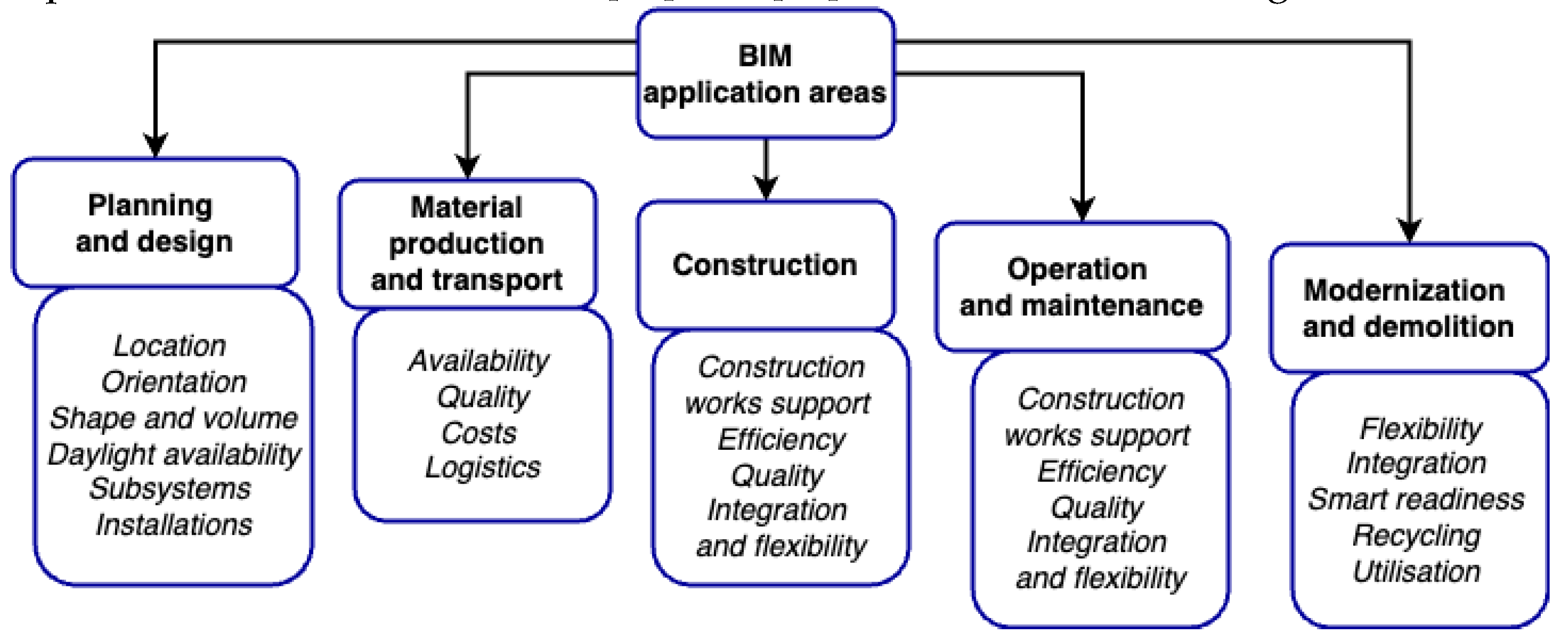
Figure 2.
Digital Twin basic composition.
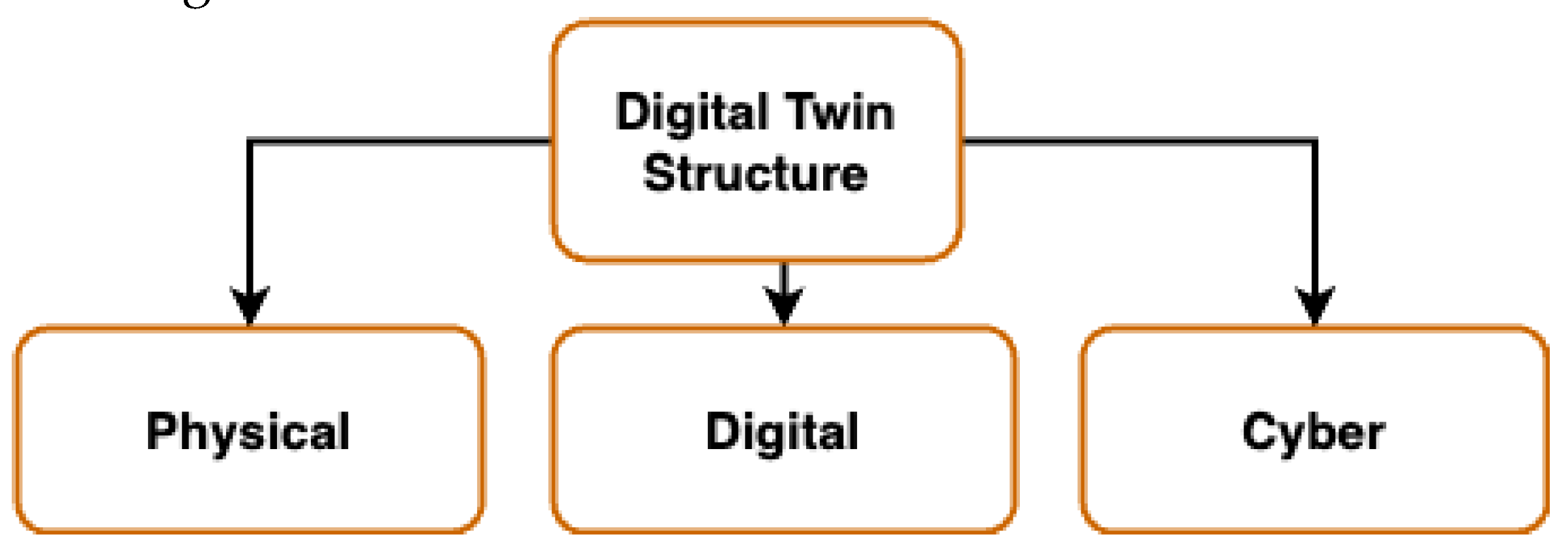
Figure 3.
Key challenges and knowledge gaps for BIM and DT.
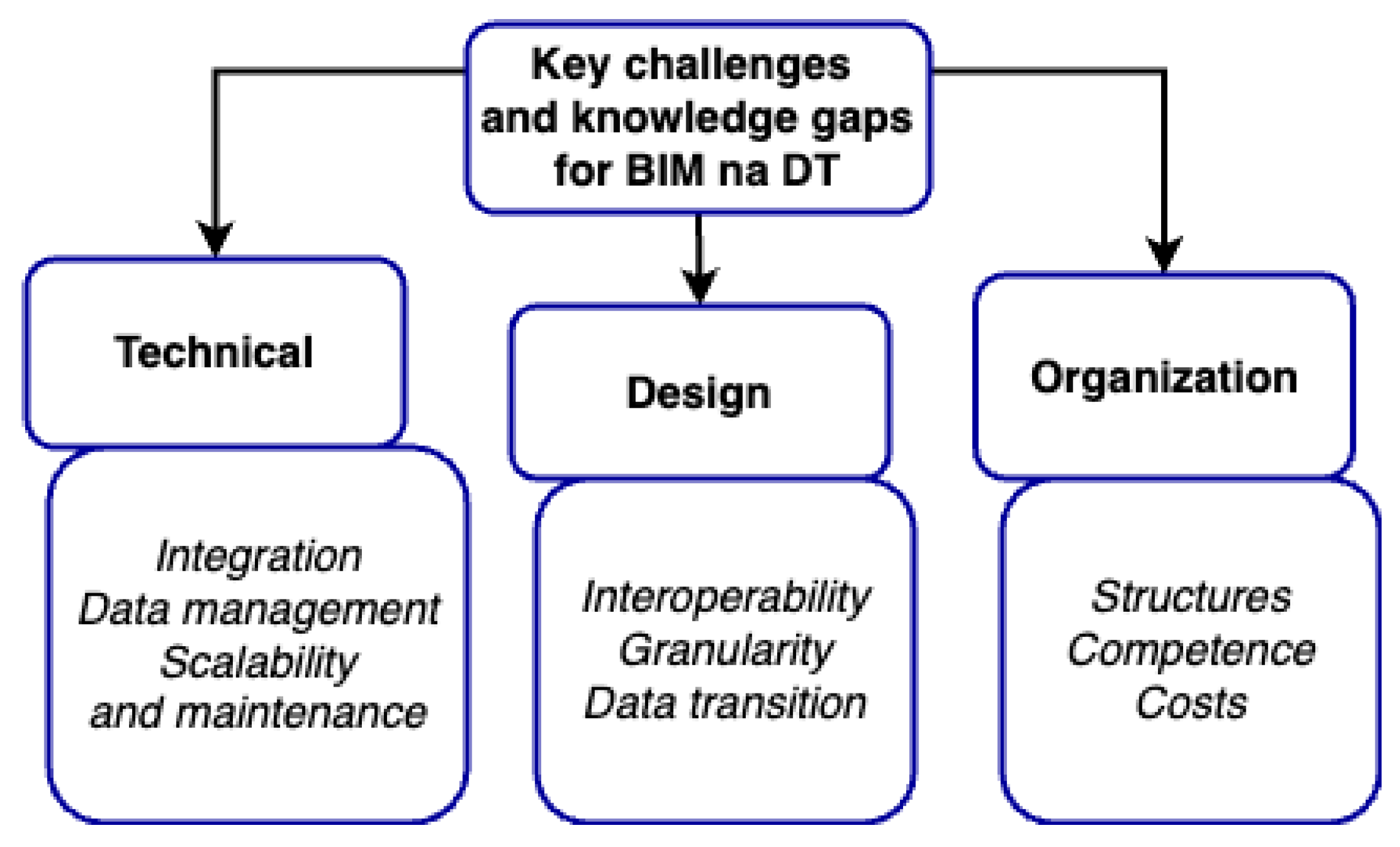
Figure 4.
The concept of an integrated BIM and DT platform with BACS and IoT support in buildings. Based on [26,27,100].
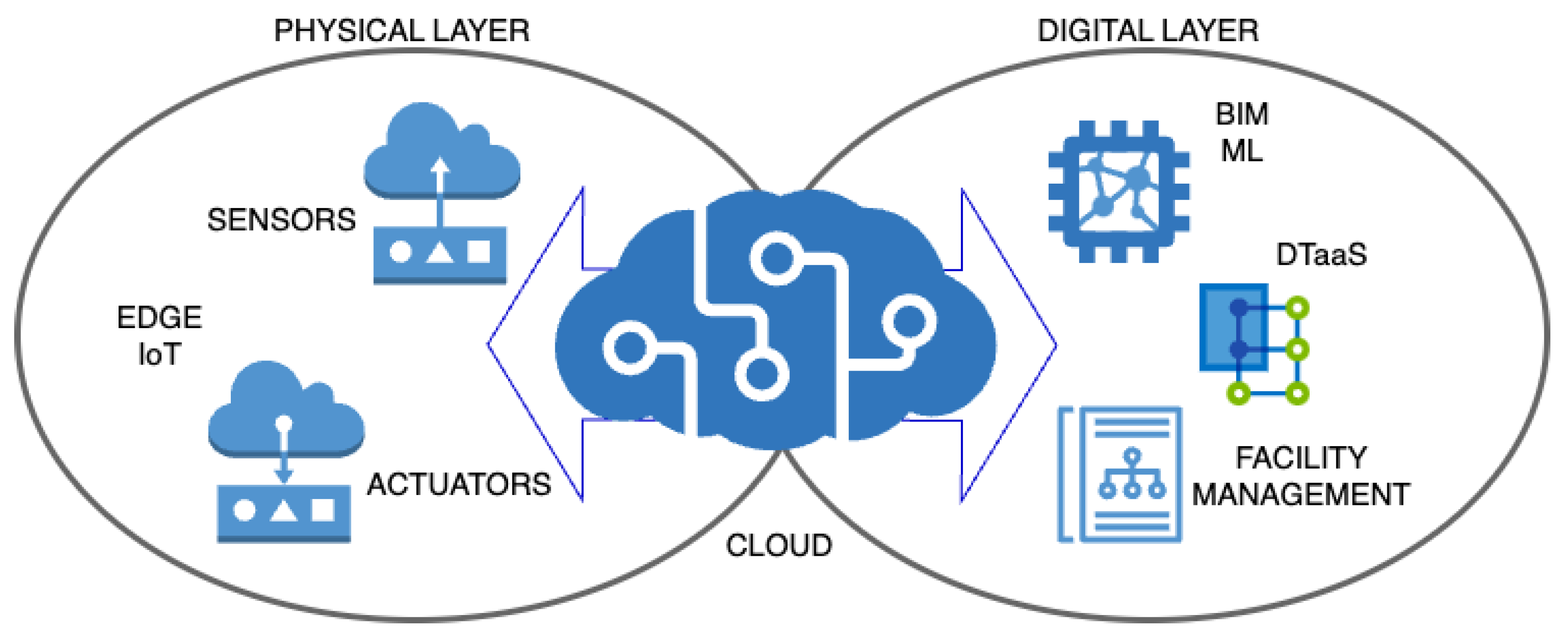
Figure 5.
Categories of building automation systems from EN 15232:2017.
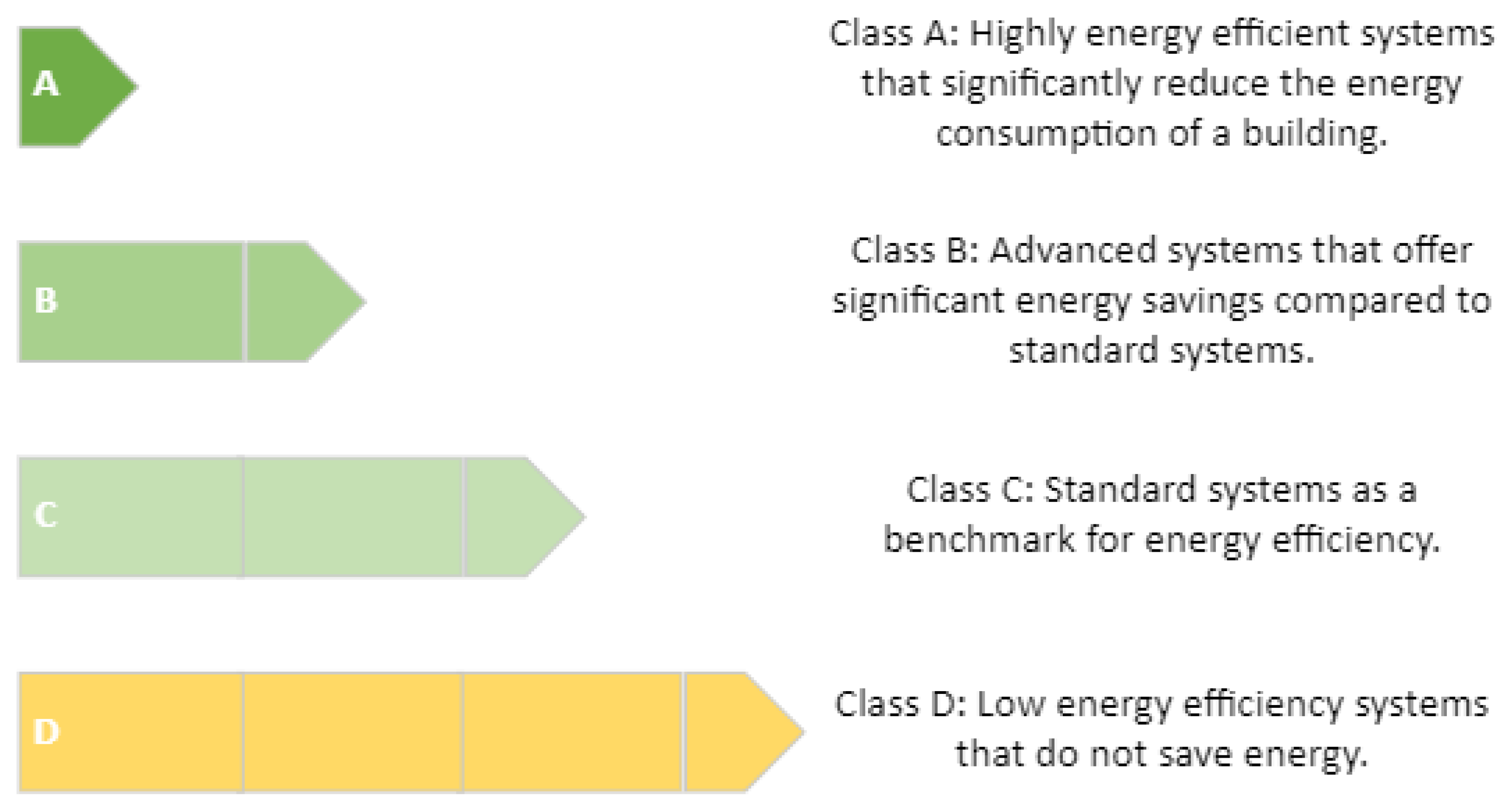
Figure 6.
Energy Performance Verification Methods from EN ISO 52120 with potential BIM and DT application support.
Figure 6.
Energy Performance Verification Methods from EN ISO 52120 with potential BIM and DT application support.
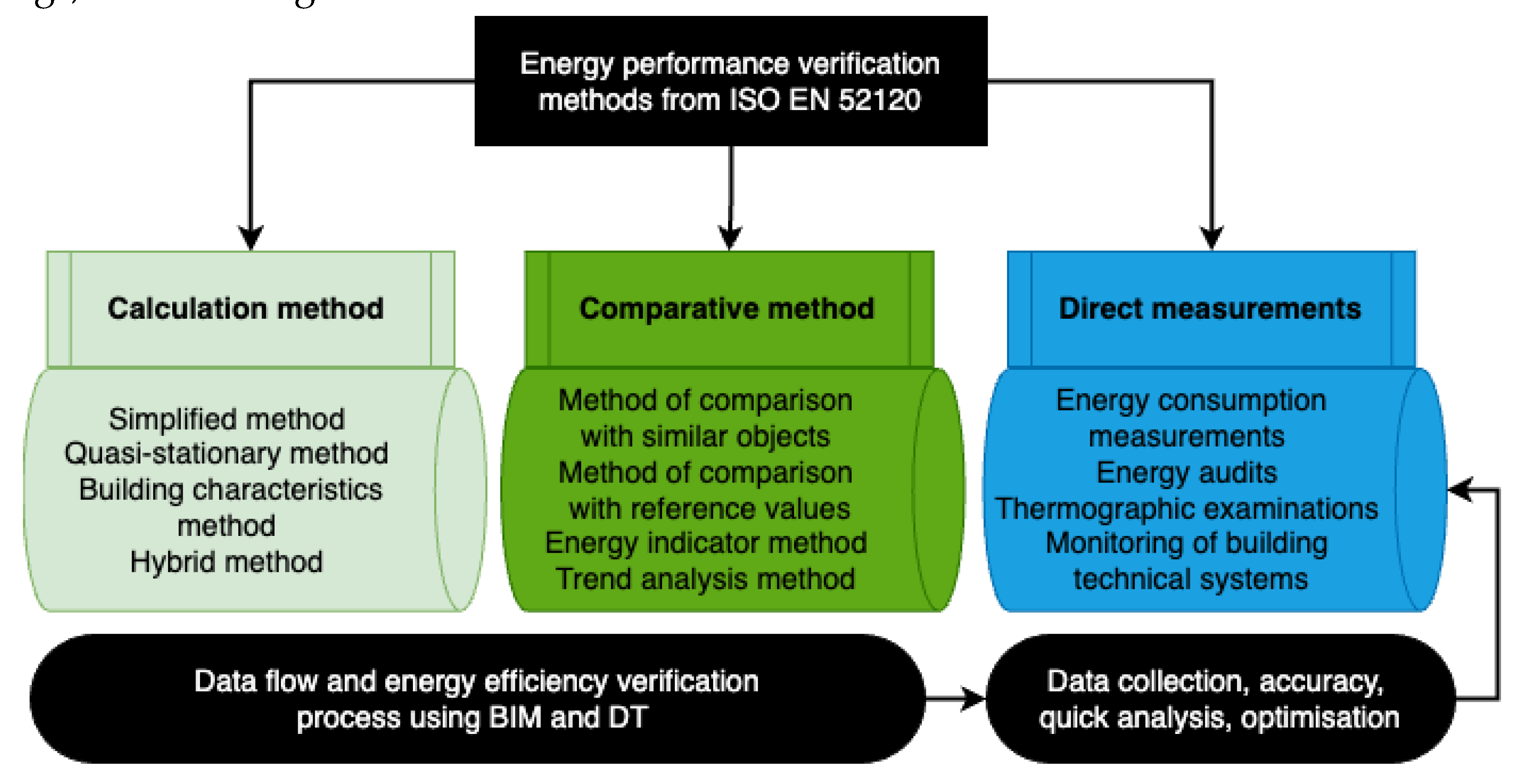
Figure 7.
Three assessment methods for SRI with potential applications for BIM and DT.
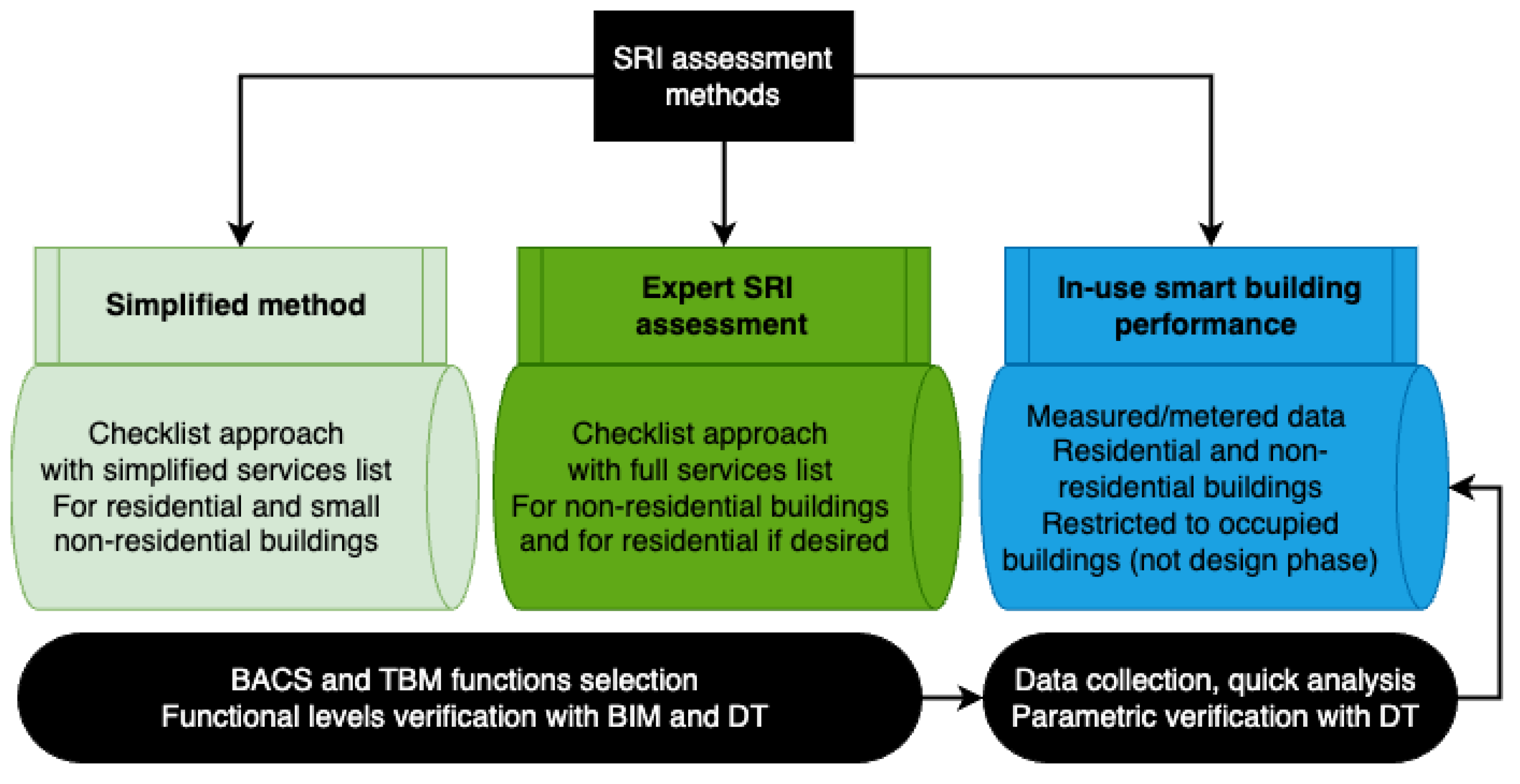

Table 1.
Important abbreviations used to write the article appearing in the text.
| Abbreviation | Extension |
|---|---|
| AI | Artificial Intelligence |
| BaaS | Building as a Service |
| BACS | Building Automation and Control System |
| BAS | Building Automation System |
| BIM | Building Information Modelling |
| BMS | Building Management System |
| CMMS | Computerized Maintenance Management System |
| DSM | Demand Side Management |
| DSR | Demand Side Response |
| DT | Digital Twin |
| DTaaS | Digital Twin as a Service |
| FM | Facility Management |
| HVAC | Heating, Ventilation, Air Conditioning |
| ICT | Information and Communications Technology |
| IFC | Industry Foundation Classes |
| IoT | Internet of Things |
| ML | Machine Learning |
| RES | Renewable Energy Sources |
| SRI | Smart Readiness Indicator |
| TBM | Technical Building Management |
Disclaimer/Publisher’s Note: The statements, opinions and data contained in all publications are solely those of the individual author(s) and contributor(s) and not of MDPI and/or the editor(s). MDPI and/or the editor(s) disclaim responsibility for any injury to people or property resulting from any ideas, methods, instructions or products referred to in the content. |
© 2024 by the authors. Licensee MDPI, Basel, Switzerland. This article is an open access article distributed under the terms and conditions of the Creative Commons Attribution (CC BY) license (http://creativecommons.org/licenses/by/4.0/).
Copyright: This open access article is published under a Creative Commons CC BY 4.0 license, which permit the free download, distribution, and reuse, provided that the author and preprint are cited in any reuse.


