
Submitted:
23 May 2024
Posted:
24 May 2024
You are already at the latest version
Abstract
Abstract: (1) Background: The occurrence of youth aggression has aroused widespread concern, and we would like to explore the reasons for it from both the family and individual sides of the youth. This study constructed a chain mediation model based on Bandura's Social Learning Theory to explore the mechanism of internet gaming disorder and avatar identification in it; (2) Methods: We conducted a randomized survey involving 973 adolescents from various middle schools in China. We used the Harsh Parenting Scale, the Online Gaming Disorder Scale, the Incarnate Identity Scale, and the Buss-Perry Aggression Scale to conduct a randomized survey. Empirical analyses were conducted using SPSS 25.0 and Amos 24.0 software to examine the mediating role of online gaming barriers and avatar identity; (3) Results: There was a two-by-two significant positive correlation between harsh parenting, internet gaming disorder, avatar identification and aggression. The me-diation model between harsh parenting, internet gaming disorder, avatar identification and ag-gression was well fitted ( χ2/df=7.268, GFI=0.961, AGFI=0.923, IFI=0.970, CFI=0.970, TLI=0.951, RMSEA=0.080).; (4) Conclusions: Parental harsh parenting affects adolescent aggression not only through the separate mediating roles of internet gaming disorder and avatar identification, but also through the chain mediating roles of internet gaming disorder and avatar identification.
Keywords:
harsh parenting
; internet gaming disorder
; avatar identification
; aggression
; adolescents
1. Introduction
Aggression refers to an individual's psychological and behavioral tendency to intentionally harm the target of an attack, either directly or indirectly, so that the target suffers a destructive effect[1]. It is one of the most important measurable indicators of adolescent mental health[2]. Behavior triggered by aggression is known as aggressive behavior [1]. Violence triggered by adolescent aggression has been increasing in recent years, which is not only detrimental to the healthy development of adolescents physically and mentally, but also affects the stability of society [3]. The malicious killing of fellow classmates by three junior high school students in Hebei Province, China, has once again attracted widespread attention. Adolescents are in the "psychological weaning period". They are eager to get rid of parental supervision, try to think and solve problems independently, but when faced with some problems, they may be at a loss and become vulnerable to the influence of other people and external factors. According to Bandura's Social Learning Theory [4], observational learning and alternative reinforcement are also important methods for individuals to acquire behavior. The emergence of adolescent aggression is not solely due to a single cause but should be examined from multiple perspectives. Therefore, the focus of this study was on the causes of adolescent aggression. We expect to prevent and reduce adolescent aggressive behavior. Thus, promoting adolescents' physical and mental health
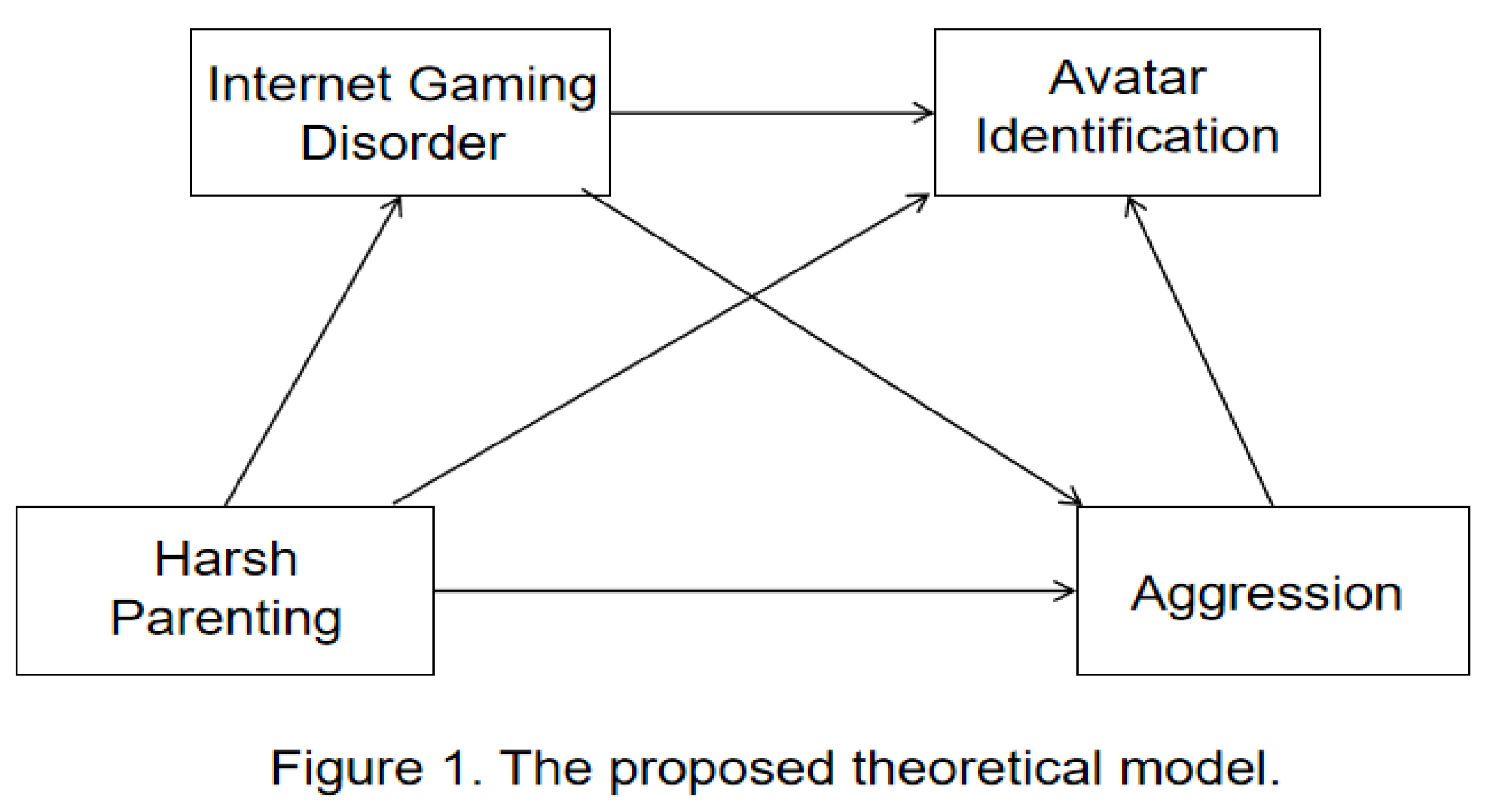
Harsh parenting is a series of aggressive parenting styles that parents use with their children. Including outward physical and verbal aggression as well as psychological aggression and forced control behaviors[5]. Studies have found that harsh parenting is a negative parenting style [6], in which parents' rough treatment can cause children to lack care, resulting in impeded physical, psychological, and socialization development [7–10]. According to Bandura's social learning theory, parenting styles affect adolescents' perceptions, causing them to mentally and behaviorally imitate their parents' thinking and behavioral patterns during interpersonal interactions [11]. Studies have shown that harsh parenting has a more serious impact on adolescents in terms of internalization problems and externalization problems. In terms of internalization problems, individuals perceive being treated roughly by their parents as a painful experience. This experience can cause them to be deeply anxious, wary, and upset for a long period of time. It can also impair their ability to regulate their emotions [12]. This leads to an increased risk of adolescents internalizing aggressive behaviors and developing negative self-perceptions [8,13]. It even leads to negative emotional experiences such as depression and social anxiety in adolescents [14,15]. In terms of "externalization", harsh parenting is not only directly related to aggressive and destructive behaviors in adolescents, but even has an impact on delinquent behavior and substance abuse in adolescents [16,17]. Harsh parenting can lead to adolescents having less control over excessive emotions and excessive behaviors [18]. As a result, adolescents may engage in aggressive behavior when they encounter problems. In the problem of school bullying, which has been widely concerned by society in recent years, the abusive behavior of bullies is also believed to have the reason of imitating parents' problem solving through violence or other rough behaviors [19]. Related studies have shown that there are gender differences in the effects of harsh parenting on adolescents. Specifically, harsh parenting by fathers is associated with aggressive behavior in boys, while harsh parenting by mothers is associated with verbal aggression in both boys and girls [20]. Harsh parenting may make adolescents feel neglected, disrespected, or helpless, impairing the development of individual volitional control, which leads to the acquisition of poor emotion regulation strategies, ease of problem solving in the presence of anger [21], and increase the risk of aggressive behavior. Based on this, the present study proposes Hypothesis 1: Parental harsh parenting is a positive predictor of adolescent aggression.
As one of the most popular recreational activities among teenagers, online games attract teenagers to spend a lot of time and energy to participate in them [22]. According to the 52nd Statistical Report on the Development of the Internet in China, as of June 2023, there were 550 million online game users in China, accounting for 51.0 % of the total number of Internet users[23] . Meanwhile, Zhang 's study also showed that China's adolescents have a serious problem of internet gaming disorder[24]. Internet gaming disorder is a phenomenon of impaired social and psychological functioning due to prolonged addiction to online games [25]. Social Learning Theory states that, family factors are important environmental factors affecting adolescents' internet gaming disorder [26], and parents' behaviors are predictive of adolescents' internet gaming disorder behaviors. Studies have shown that parental harsh parenting can significantly and positively predict adolescent game addiction[27,28] , and adolescents who suffer from parenting styles containing forms of violence such as corporal punishment often gain a sense of achievement and satisfaction from online games, which makes them identify with online games [29], leading to an elevated risk of their internet gaming disorder [30,31]. Adolescents with Internet addiction show higher aggressive tendencies than those without Internet addiction [32], which suggests that Internet game addiction is significantly and positively correlated with aggression in adolescent populations [33,34]. Among them, children addicted to violent video games showed significantly higher aggression than adolescents addicted to other games [35], and the level of violence of video games had a significant positive predictive effect on player aggression [36]. This addiction may have negative psychological and behavioral effects on adolescents, including an increased likelihood of aggressive behavior. The following hypothesis is proposed: H2: Adolescent internet gaming disorder mediates the relationship between harsh parenting and adolescent aggression.
Incarnation identity is a psychological phenomenon in which an individual's self-perception, experience of presence, emotions and attitudes are temporarily altered in the process of using and experiencing a game avatar, based on the evaluation of the similarity between the avatar and the individual, the attraction to the individual and the degree of fulfillment of psychological needs [37]. Incarnations in games often have unique attributes and abilities and allow players to interact with other players through the characters they play [38]. Social Learning Theory suggests that, adolescents who have been in harsh parenting environments for a long period of time may tend to choose avatar characters with more aggressive and conflict-resolving styles, and individuals who identify more with their game avatars will see the avatars as their role models and will learn from and mimic their avatars' behaviors [39]. When adolescents develop a strong identification with their avatars, they may carry the traits and behavioral patterns of the character into real life. If the chosen character has aggressive or violent tendencies, this avatar identification may negatively affect the adolescent's behavior and increase the likelihood of displaying aggressive behavior.Fische et al. showed that in aggressive games, avatars with a higher similarity to the individual caused players to display higher levels of aggression compared to general avatars [40,41]. The following hypothesis is proposed: H3: Adolescent avatar identification mediates the relationship between harsh parenting and adolescent aggression.
Online games have become a way of entertainment and relaxation for many people. However, for some adolescent gamers, online games have become an obstacle in their lives, leading to a great impact on their socialization, study and life in reality. fMRI findings by Ganesh et al. showed that internet gaming disorder and avatar identification were significantly positively correlated [42], and gamers regarded game avatars as familiar animated characters , thus showing higher identification with game avatars and stronger identification with game avatars. Characters and preferentially identify with the game avatars [43], thus showing higher identification and stronger emotional involvement with the game avatars [42]. Compared to non-internet game addicts, internet game addicts have a higher level of identification with game avatars [44], which further deepens their involvement in the virtual world and gaming community [45,46]. Social learning theory suggests that individuals learn by observing and imitating the behavior of others, and if adolescents are surrounded by violent behavior while growing up, they may be inclined to imitate and display similar aggressive behavior. Research has shown that the top online games in terms of number of players, best sellers, and profitability contain aggressive content, especially role-playing games and shooters [47]. Adolescents who are addicted to such online games may be highly identified with the characters in such games, which in turn may exacerbate the effects of violence in these games on adolescents' aggression [48]. The following hypothesis is proposed: H4: internet gaming disorder and avatar identification act as chain mediators between harsh parenting and adolescent aggression.
2. Materials and Methods
Using random sampling method, 985 adolescents in Shandong Province were randomly selected as subjects, and 973 questionnaires were retained after invalid questionnaires were excluded. The effective recovery rate was 98.78%, and the collected data were statistically analyzed by SPSS25.0 and Amos26.0 software.
Assessment of harsh parenting scale (AHPS)
This study used the harsh parenting scale developed by Wang (2017) [20]. The scale is a single dimension with a 5-point scale, "never like this", "seldom like this", "sometimes like this", "sometimes like this", "always like this", and a total of 4 questions, and the higher the total score, the higher the degree of harsh parenting was rated by the adolescents respectively. ", "Often", "Always" are scored from 1 to 5, and there are 4 questions in total. Adolescents evaluated their mothers and fathers separately, and the higher the total score, the more serious the degree of parental harsh parenting was. The Cronbach’s the scale used in this study was found to be 0.875.
Internet Gaming Disorder Scale (IGDS)
In this study, the internet gaming disorder Scale developed by Petry (2014) was used[49], which consists of 9 items and is a single dimension with a 5-point scale, with scores of 1-5 representing "not at all", "not at all", "not at all", "not at all", "not at all", "not at all", "not at all", "not at all", "not at all", "not at all", "not at all", and "at all". "The higher the scale score, the more serious the degree of addiction to online games. The Cronbach’s the scale used in this study was found to be 0.937.
Player-Avatar Identification (PAI)
In this study, we used the Incarnation Identification Scale developed by LI (2013)[50], which is divided into four dimensions, namely, emotional experience during gameplay, concentration during gameplay, positive attitudes toward the incarnation, and the importance of the incarnation to self-identification, and was scored on a 5-point scale, with "not at all conforming" being scored as 1 point, 2 points for "relatively unconformity", 3 points for "somewhat conformity", 4 points for "relatively conformity", and 5 points for "full conformity", for a total of 5 points. " counts 5 points, a total of 15 questions, calculate the total score, the higher the score, the deeper the degree of incarnation identity. The Cronbach’s the scale used in this study was found to be 0.965.
Chinese College Students' Version of Buss-Perry Aggression Questionnaire (CC-BPAQ)
In this study, we used the Buss-Perry aggression scale revised by Lu et al. (2013)[51], which is divided into four subscales, namely hostility subscale, impulsivity subscale, physical aggression subscale, and irritability subscale, with a total of 22 items, and scored using a 5-point scale, with the scores of "very much not in line" "fairly noncompliant," "average," "fairly compliant," and "very compliant," respectively, on a scale of 1-5, with the higher score The higher the score, the more aggressive. The Cronbach’s the scale used in this study was found to be 0.945.
3. Results
In this study, the collected data were collated and analyzed using SPSS 25.0, and Amos 24.0 was used to test for mediating effects, Harman’s single-factor test for common method bias; descriptive analyses of the sample characteristics; and significance tests of the regression coefficients were conducted using Bootstrap (5000 repetitions of the sampling).
3.1. Common Methodological Biases
Since all the questionnaires were used in this study, in order to test the common methodological bias brought by the research methodology, Harman single factor was used to test the research data [52], and all the items of harsh parenting, avatar identification, internet gaming disorder, and aggression were included in the exploratory factor analysis, and a total of 8 factors with the root of characteristics greater than 1 were found in the unrotated exploratory factor analysis results, with the maximum factor variance The explanatory rate was 35.723%, which is less than the 40% threshold; therefore, there was no serious common method bias in this study.
3.2. Descriptive Statistics and Correlations
As shown in Table 1, the mean score of harsh parenting of adolescents is 11.814 with a standard deviation of 4.387, indicating a low level of harsh parenting. The mean score of incarnational identity is 33.731 with a standard deviation of 14.908, indicating that the adolescents have a medium degree of incarnational identity. The mean score of adolescents' internet gaming disorder is 14.262 with a standard deviation of 6.549, indicating a low level of adolescents' internet gaming disorder. The mean score of adolescents' aggression was 43.581 with a standard deviation of 15.886, indicating that adolescents have a moderate level of aggression. There is a two-by-two correlation between the four variables of harsh parenting, avatar identification, internet gaming disorder, and aggressiveness. Among them, harsh parenting was significantly positively correlated with avatar identification (r = 0.305, p < 0.01), harsh parenting and internet gaming disorder (r = 0.414, p < 0.01), harsh parenting and aggression (r = 0.421,p < 0.01), avatar identification and internet gaming disorder (r = 0.544, p < 0.01), avatar identification and aggression were significantly positively correlated (r = 0.461, p < 0.01), and internet gaming disorder was significantly positively correlated with aggression ( r= 0.563, p < 0.01).
3.3. Tests for Mediating Effects
This study used Amos24.0 to construct a structural equation model based on the research hypotheses to analyze the chain mediating role of internet gaming disorder and avatar identification between parental harsh parenting and adolescent aggression .The fit indicators of the model are χ2/df = 7.268, GFI = 0.961, AGFI = 0.923, IFI = 0.970, CFI = 0.970, TLI = 0.951, and RMSEA = 0.080. The metrics generally met the fit criteria and the model fit well.
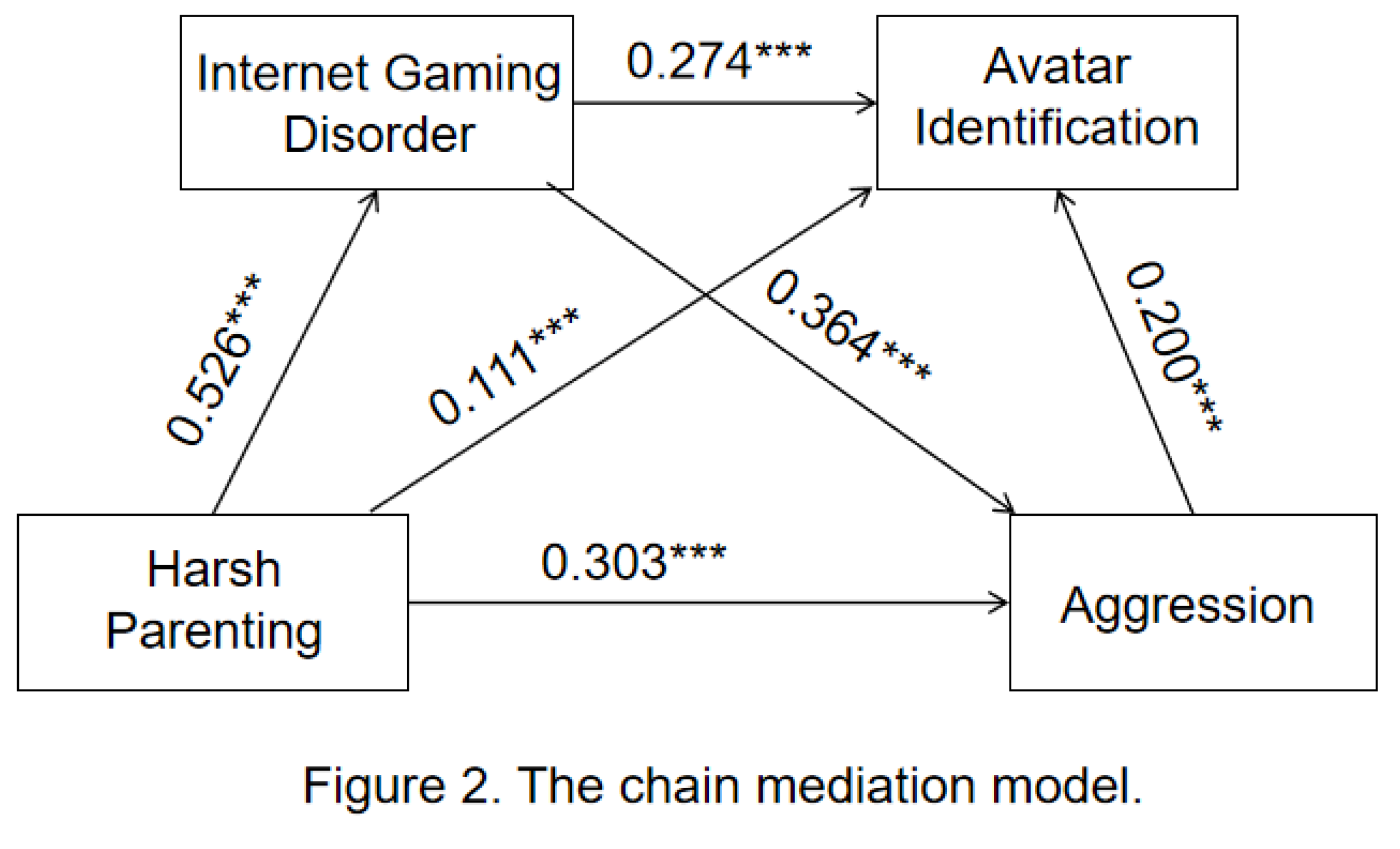
As shown in Figure 2, harsh parenting was a significant predictor of internet gaming disorder (β = 0.526, p < 0.001), internet gaming disorder was a significant positive predictor of aggression (β = 0.364, p < 0.001), parental harsh parenting was a significant positive predictor of incarnational identity (β = 0.111, p < 0.001), and incarnational identity had a significant positive predictive effect on aggression (β = 0.200, p < 0.001), suggesting that harsh parenting plays an indirect role on aggression through avatar identification; internet gaming disorder had a significant positive predictive effect on avatar identification (β = 0.274, p < 0.001), suggesting that harsh parenting can have a positive effect on adolescent aggression through a chain mediation of avatar identification and internet gaming disorder. chain mediation on adolescent aggression; suggesting that parental harsh parenting can have an indirect effect on adolescent aggression through internet gaming disorder; and that harsh parenting has a significant positive predictive effect on avatar identification (β = 0.272, p < 0.001).
The bias-corrected percentile Bootstrap method was used to set up a repeated sampling of 5000 times to analyze 95% confidence intervals for mediation effect tests. The results, as shown in Table 2, showed that the total effect of parental harsh parenting on adolescent aggression was 0.546, with a 95% CI of [0.428, 0.669]; the value of the direct effect between parental harsh parenting and aggression was 0.303, with a 95% CI of [0.061, 0.183], accounting for 55.49% of the total effect. The first indirect effect: parental harsh parenting → internet gaming disorder → adolescent aggression, with an indirect effect of 0.192, 95% CI [0.140, 0.253], accounting for 35.16% of the total effect; the second indirect effect: parental harsh parenting → avatar identification → adolescent aggression, with an indirect effect of 0.022, 95% CI [0.007, 0.042], accounting for 4.03% of the total effect. , accounting for 4.03% of the total effect; the third pathway: parental harsh parenting → internet gaming disorder → avatar identification → adolescent aggression, with an indirect effect of 0.029, 95% CI [0.010, 0.051], accounting for 5.31% of the total effect. The data results showed that the Bootstrap 95% confidence intervals for the total effect of harsh parenting on adolescent aggression, the direct effect, as well as the Bootstrap 95% confidence intervals for the mediating effects of avatar identification and adolescent internet gaming disorder did not contain 0, indicating that the values of these four effects reached the level of significance. In addition, of the three indirect effects, the profile effect of harsh parenting on adolescent aggression through internet gaming disorder was the largest, and adolescent internet gaming disorder and incarnational identity played a partial mediating role in the effect of harsh parenting on adolescent aggression.
4. Discussion
This study focuses on the effects of harsh parenting on adolescent aggression and explores the mechanisms by which internet gaming disorder and avatar identification play a role.
The results of this study indicate that severe parenting styles have a significant positive predictive effect on adolescent aggression. The more severe the parents' harsh parenting style, the higher the adolescents' level of aggression, which validates this study's H1. Harsh parenting in the family environment will increase the risk of individuals developing aggressive behaviors, which is in line with the obsessive-compulsive hypothesis proposed by Petterson (1982). This is consistent with Petterson's (1982) hypothesis that parental harsh parenting and controlling behaviors lead to adolescents' irritability and aggression in the face of parental harsh parenting, and that the cycle may even lead to adolescents' transgressive behaviors. On the one hand, harsh parenting leads to a tense family atmosphere, which puts adolescents in a state of insecurity [12], impairs the development of volitional control [53], and makes adolescents more sensitive to negative evaluative messages from others and threatening stimuli in the environment, leading to an increased risk of internalizing adolescent aggression [54,55]. On the other hand, adolescents who are chronically exposed to harsh parenting not only develop a tendency to attribute hostile intentions to ambiguous social interactions [56,57]. This increases the risk of maladjustment in adolescents. Poor emotion regulation strategies are also learned. Solving problems through aggressive behavioral displays such as expressing anger [58]. Conflict and violence in the family environment may serve as a model for children to learn aggressive behaviors, and they may learn aggressive ways of resolving conflicts by observing and imitating the behaviors of their parents or other family members, which validates social learning theory. The results of this study reaffirm that harsh parenting styles are a direct predictor of adolescent aggressive behavior. The harsher the parenting style adopted by the parents, the more aggressive the adolescents were.
The results of this study suggest that Internet Game Addiction has a significant mediating effect between harsh parenting and adolescent aggressive behavior. Harsh parenting styles can influence adolescent aggression through online gaming disorders, which supports H2. In this study, adolescent internet gaming disorder was positively correlated with both parental harsh parenting and adolescent aggression, which is in line with the results of a previous study by Yu [59]. They found that adolescents who suffer from harsh parenting are unable to obtain basic psychological needs from their parents, and thus turn to online games to obtain psychological fulfillment to alleviate their bad moods. Other scholars' studies also confirm that parenting styles, including corporal punishment and scolding, can cause adolescents' rebelliousness. [24]. Adolescents' minds are still immature and are more vulnerable to the misguidance of online games, especially adolescents who are addicted to violent online games will have a stronger tendency to aggression [60]; most of the individuals who grow up under harsh parenting will also tend to resort to behaviors such as persecution and aggression when solving problems [5], and online games will often be used in such a way that the players will be successful after successfully rewarded accordingly after solving problems, so that they will adopt aggressive ways to solve similar problems when facing them, which is consistent with Skinner's reinforcement theory. This result was confirmed by a related study by He and Li.The view of life of adolescents who have been addicted to online violent games for a long time will be distorted, blurring the boundaries between the real society and the virtual world, and the violent orientation of online games not only increases adolescents' aggressiveness, but also may even lead to adolescents' delinquent behaviors [61], which is also in line with the viewpoints of the social learning theory. Individuals who grow up under the environment of harsh parenting are more likely to be addicted to online games when their basic psychological needs are not met, and under the combined influence of harsh parenting for a long period of time and the worldview of solving problems with violence in online games, adolescents' aggressiveness will be enhanced, and they will be more likely to adopt aggressive solutions when encountering problems. internet gaming disorder is an important way in which parental harsh parenting affects adolescent aggression.
The results of this study indicate that avatar identity is significantly and positively related to both harsh parenting and adolescent aggression. And it mediates the relationship between harsh parenting and adolescent aggression. Harsh parenting influences adolescent aggression through avatar identity, which validates this study's H3.According to Self-Discrepancy Theory [62], individuals who are dissatisfied with their lives have higher levels of level of real-ideal self-discrepancy, and by choosing avatars that are not similar to themselves and have ideal qualities, they can reduce their self-discrepancy by shifting their focus from the unpleasant or unsatisfactory real world to the virtual world that satisfies them [63]. Parental harsh parenting can cause children to develop self-discrepancies and thus be more inclined to build their ideal selves through online gaming, and identifying with a gaming avatar may be a way to reduce gamers' real-ideal self-discrepancies and negative emotions [43,64]. harsh parenting environments can lead to biases in adolescents' social cognition [65], affecting the formation and stabilization of their individual identities. Studies have shown that self-perception has a significant impact on an individual's choice of gaming avatars, and harsh parenting leads children to develop negative self-perception [8].Adolescents with negative self-perception have a lower sense of self-esteem, and when choosing gaming avatars, they are more inclined to choose avatars that are similar to their ideal selves [66]. Incarnate identification causes adolescents to have more emotional involvement with game avatars [42], affects adolescent aggression perceptions and self-concept [48], and amplifies adolescent hostility [67]. As a result, players with high levels of avatar identification exhibit higher levels of aggression [40]. Incarnate identification is an important influence between harsh parenting and adolescent aggression.
The results of this study indicate that there is a significant chain mediation between online gaming disorder and avatar identity between strict parenting and adolescent aggression. Harsh parenting influences adolescent aggression by affecting online gaming disorder and avatar identity, which supports this study's H4. Smahel also showed that online game addicted gamers showed a stronger avatar identification as compared to other gamers [44]. Individuals who identify more strongly with a game avatar for the same game character show characteristics more similar to the avatar [68]. Individuals who are addicted to violent video games, and who themselves display aggressive behavior in reality, incarnate identification amplifies the effects of the online game, resulting in increased aggression [39]. This is consistent with the social learning theory that adolescents who are addicted to online games will be interested in viewing the game characters as their role models and will mimic the behavioral patterns of the game characters, and that adolescents who identify with the aggressive characters will display increased aggression.
Therefore, reducing adolescent aggression can be achieved by changing the original harsh parenting style of parents to a more democratic and warm parenting style, as well as by increasing real-life activities such as peer interactions and teacher-student interactions among adolescents to reduce adolescents' internet gaming disorders and incarnate identity behaviors, which will in turn reduce adolescent aggression.
Limitations
First, it is important to emphasize that these are theoretical ideas and do not mean that every individual will be affected in the same way. Harsh parenting, online gaming addiction, and avatar identification may vary depending on an individual's background, environment, and other factors. In addition, there are other factors that may be associated with aggressive behavior,s such as mental health issues, social environments, and family relationships. Therefore, understanding and preventing aggressive behavior requires a combination of factors, and future research could conduct qualitative studies with comprehensive interventions.
Second, the results of this study on the effects of internet gaming disorder and avatar identification on health are negative, while some studies have shown that both have positive effects on adolescents' healthy development (e.g., good qualities such as friendliness, confidence, etc.). A noteworthy direction for future research might explore the positive effects of internet gaming disorder and avatar identification (e.g., helpful behaviors and promotion of good social interactions).
Finally, the results of this study can only be generalized to adolescents who are of the same ethnicity and have the same cultural background as the subjects of this study; future research could conduct comparative studies with ethnic minority adolescents as the subjects, and could also try to conduct cross-cultural studies for groups of adolescents with different cultural backgrounds.
Author Contributions
Conceptualization, Cao, G., Zhao, Z., Jia, G. and Li, M.; methodology, Zhao, Z. and Jia, G.; software, Li, M.; validation, Zhao, Z., Jia, G. and Li, M.; formal analysis, Li, M.; investigation, Zhao, Z. and Jia, G.; resources, Cao, G.; data curation, Cao, G.; writing—original draft preparation, Cao, G., Zhao, Z. , Jia, G. and Meng, L.; writing—review and editing, Cao, G. and Li, M.; visualization, Zhao, Z. and Jia, G.; supervision, Cao, G. and Li, M.; project administration, Cao, G. All authors have read and agreed to the published version of the manuscript.
Funding
This research received no external funding.
Institutional Review Board Statement
The study was approved by the Institutional Review of the Biomedical Ethics Committee of Jining University (protocol code No: 2024JNXYLL-012 and date of approval 10 January 2024).
Informed Consent Statement
Informed consent was obtained from all subjects involved in the study.
Data Availability Statement
The data used for this study are available from the corresponding author upon reasonable request.
Conflicts of Interest
The authors declare no conflicts of interest.
References
- He, Y.; Li, H.; Feng, L. The Development of High-School students' Aggressiveness. Psychological Development and Education. 2006, (02), 57-63.
- Thomaes, S.; Bushman, B. J.; Stegge, H.; Olthof, T. Trumping shame by blasts of noise: Narcissism, self-esteem, shame, and aggression in young adolescents. Child development. 2008, 79(6), 1792-1801. [CrossRef]
- Cao, X.; Zhang, L. Chain mediating effect of regulatory emotional self-efficacy and self-control between self-esteem and aggressiveness in adolescents.Chinese Mental Health Journal. 2018, (07), 574-579.
- Bandura, A. Social learning theory. Englewood Cliffs, NJ: Prentice Hall. 1976.
- Wang, M.; Du, X.; Zhou, Z. Harsh parenting: Meaning, influential factors and mechanisms. Advances in Psychological Science. 2016, (03), 379-391. [CrossRef]
- Miao, T.; Wang, J.; Song, G. Harsh Parenting and Adolescents' Depression:A Moderated Mediation Model. Chinese Journal of Special Education. 2018, (06), 71-77.
- Shan, Z.; Deng, G.; Li, J.; Li, Y.; Zhang, Y.; Zhao, Q. Correlational analysis of neck/shoulder pain and low back pain with the use of digital products, physical activity and psychological status among adolescents in Shanghai. Plos one. 2013, 8(10), e78109. [CrossRef]
- Cole, D. A.; Martin, N. C.; Sterba, S. K.; Sinclair-McBride, K.; Roeder, K. M.; Zelkowitz. R.; Bilsky, S. A. Peer victimization (and harsh parenting) as developmental correlates of cognitive reactivity, a diathesis for depression. Journal of Abnormal Psychology. 2014, 123(2), 336. [CrossRef]
- Hinnant, J. B.; Erath, S. A.; El-Sheikh, M. Harsh parenting, parasympathetic activity, and development of delinquency and substance use. Journal of abnormal psychology. 2015, 124(1), 137. [CrossRef]
- Surjadi, F. F.; Lorenz, F. O.; Conger, R. D.; Wickrama, K. A. S. Harsh, inconsistent parental discipline and romantic relationships: mediating processes of behavioral problems and ambivalence. Journal of family psychology. 2013, 27(5), 762. [CrossRef]
- Wu, P.; Ma, S.; Fang, Z.; Xu, B.; Liu, H. The Latent Classes of Parenting Style: An Application of Latent Profile Analysis. Studies of Psychology and Behavior. 2016, 14(4), 523.
- Callahan, K. L.; Scaramella, L. V.; Laird, R. D.; Sohr-Preston, S. L. Neighborhood disadvantage as a moderator of the association between harsh parenting and toddler-aged children's internalizing and externalizing problems. Journal of Family Psychology. 2011, 25(1), 68. [CrossRef]
- Pineda, A. Q.; Cole, D. A.; Bruce, A. E. Mother-adolescent interactions and adolescent depressive symptoms: A sequential analysis. Journal of Social and Personal Relationships. 2007, 24(1), 5-19. [CrossRef]
- Knappe, S.; Beesdo, K.; Fehm, L.; Höfler, M.; Lieb, R.; Wittchen, H. U. Do parental psychopathology and unfavorable family environment predict the persistence of social phobia?. Journal of Anxiety Disorders. 2009, 23(7), 986-994. [CrossRef]
- Knappe, S.; Beesdo, K.; Fehm, L.; Lieb, R.; Wittchen, H. U. Associations of familial risk factors with social fears and social phobia: evidence for the continuum hypothesis in social anxiety disorder?. Journal of Neural Transmission. 2009, 116, 639-648. [CrossRef]
- Kim-Spoon, J.; Cicchetti, D.; Rogosch, F. A. A longitudinal study of emotion regulation, emotion lability-negativity, and internalizing symptomatology in maltreated and nonmaltreated children. Child development. 2013, 84(2), 512-527. [CrossRef]
- Lansford, J. E.; Criss, M. M.; Laird, R. D.; Shaw, D. S.; Pettit, G. S.; Bates, J. E.; Dodge, K. A. Reciprocal relations between parents' physical discipline and children's externalizing behavior during middle childhood and adolescence. Development and psychopathology. 2011, 23(1), 225-238. [CrossRef]
- Gustafsson, H. C.; Cox, M. J.; Blair, C. Maternal parenting as a mediator of the relationship between intimate partner violence and effortful control. Journal of Family Psychology. 2012, 26(1), 115. [CrossRef]
- Sun, S.; Shi, Z. The Psychological Factors and Treatment of School Bullying. Journal of East China Normal University(Educational Sciences). 2017, (02), 51-56+119. [CrossRef]
- Wang, M. Harsh parenting and peer acceptance in Chinese early adolescents: Three child aggression subtypes as mediators and child gender as moderator. Child Abuse & Neglect. 2017, 63, 30-40. [CrossRef]
- Brody, G. H.; Yu, T.; Beach, S. R.; Kogan, S. M.; Windle, M.; Philibert, R. A. Harsh parenting and adolescent health: a longitudinal analysis with genetic moderation. Health Psychology. 2014, 33(5), 401. [CrossRef]
- Wei, H.; Zhou, Z.; Tian, Y.; Bao, N. Online Game Addiction:Effects and Mechanisms of Flow Experience. Psychological Development and Education. 2012, (06), 651-657. [CrossRef]
- CHINA INTERNET NETWORK INFORMATION CENTER. (2023). 52nd Statistical Report on Internet Development in China. https://www3.cnnic.cn/n4/2023/0828/c88-10829.html.
- Zhang, Y.; Yu, C.; Zhang, W. Psychosocial and Social Factors of Adolescent's Internet Gaming Disorder. China Journal of Health Psychology. 2017, (07), 1058-1061. [CrossRef]
- Chen, M.; Huang, S.; Chen, Z.; Xu, N.; Hou, X. Relationship between cognitive reappraisal and Internet gaming disorder of adolescents:Mediating role of self-esteem. China Journal of Health Psychology. 2022, (09), 1350-1354. [CrossRef]
- Su, B.; Yu, C.; Zhang, W.; Su, Q.; Zhu, J.; Jiang, Y. Father–child longitudinal relationship: Parental monitoring and Internet gaming disorder in Chinese adolescents. Frontiers in Psychology. 2018, 9, 334311. [CrossRef]
- Qi, D.; Lin, Y.; Liu, Q. Smartphone Addiction out of"Beating" ? TheEffect of Harsh Parenting on Smartphone Addiction of Adolescents. Psychological Development and Education. 2020, (06), 677-685. [CrossRef]
- Wei, H.;Zhu, L.; Chen, W.; Liu, Y.; Zhang, X. Effect Of Harsh Parenting On Smartphone Addiction:From The Perspective Of Experience Avoidance Model. Chinese Journal of Clinical Psychology. 2021, (03), 501-505. [CrossRef]
- Deng, L.; Liu, X.; Tang, Y.; Yang, M.; Li, B. Parental Psychological Control,Autonomous Support and Adolescent lnternet Gaming Disorder:The Mediating Role of Impulsivity. Chinese Mental Health Journal. 2021, (02), 316-322. [CrossRef]
- Bonnaire, C.; Phan, O. Relationships between parental attitudes, family functioning and Internet gaming disorder in adolescents attending school. Psychiatry Research. 2017, 255, 104-110. [CrossRef]
- Lin, Y.; Liu, Q.; Yu, S.; Zhou, Z. The Relationship between Parents Neglect and Online Gaming Addiction among Adolescents: The Mediating Role of Hope and Gender Difference.Psychological Development and Education. 2021, (01), 109-119. [CrossRef]
- Xi, W.; Hu, Y. lnternet Gaming Disorder in Adolescents: Review and Prospect. Chinese Journal of Applied Psychology. 2022, (01),3-19.
- Kim, E. J.; Namkoong, K.; Ku, T.; Kim, S. J. The relationship between online game addiction and aggression, self-control and narcissistic personality traits. European psychiatry. 2008, 23(3), 212-218. [CrossRef]
- Mehroof, M.; Griffiths, M. D. Online gaming addiction: The role of sensation seeking, self-control, neuroticism, aggression, state anxiety, and trait anxiety. Cyberpsychology, behavior, and social networking. 2010, 13(3), 313-316. [CrossRef]
- Li, M.; Niu, Y.; Wen, G. The Influence of Short-time Prosocial Video Games on Aggressive Behaviors of Primary School Children. Chinese Journal of Applied Psychology. 2016, (03),218-226.
- Duan, D.; Zhang, X.; Wei, L.; Zhou, Y.; Liu, C. The lmpact of Violent Media on Aggression——The Role of Normative Belief and Empathy. Psychological Development and Education. 2014, (02), 185-192. [CrossRef]
- Heng, S.; Zhou, Z.; Sun, L. The avatar identification in video games. Advances in Psychological Science. 2017, (09), 1565-1578.
- Lewis, M. L.; Weber, R.; Bowman, N. D. “They may be pixels, but they're MY pixels:” Developing a metric of character attachment in role-playing video games. CyberPsychology & Behavior. 2008, 11(4), 515-518. [CrossRef]
- Gentile, D. A.; Saleem, M.; Anderson, C. A. Public policy and the effects of media violence on children. Social Issues and Policy Review. 2007, 1(1), 15-61. [CrossRef]
- Fischer, P.; Kastenmüller, A.; Greitemeyer, T. Media violence and the self: The impact of personalized gaming characters in aggressive video games on aggressive behavior. Journal of Experimental Social Psychology. 2010, 46(1), 192-195. [CrossRef]
- Hollingdale, J.; Greitemeyer, T. The changing face of aggression: The effect of personalized avatars in a violent video game on levels of aggressive behavior. Journal of Applied Social Psychology. 2013, 43(9), 1862-1868. [CrossRef]
- Ganesh, S.; van Schie, H. T.; de Lange, F. P.; Thompson, E.; Wigboldus, D. H. How the human brain goes virtual: Distinct cortical regions of the person-processing network are involved in self-identification with virtual agents. Cerebral cortex. 2012, 22(7), 1577-1585. [CrossRef]
- Klimmt, C.; Hefner, D.; Vorderer, P. The video game experience as “true” identification: A theory of enjoyable alterations of players’ self-perception. Communication theory. 2009, 19(4), 351-373. [CrossRef]
- Smahel, D.; Blinka, L.; Ledabyl, O. Playing MMORPGs: Connections between addiction and identifying with a character. Cyberpsychology & behavior. 2008, 11(6), 715-718. [CrossRef]
- Soutter, A. R. B.; Hitchens, M. The relationship between character identification and flow state within video games. Computers in human behavior. 2016, 55, 1030-1038. [CrossRef]
- Trepte, S.; Reinecke, L. Avatar creation and video game enjoyment: Effects of life-satisfaction, game competitiveness, and identification with the avatar. Journal of Media Psychology. 2010, 22, 171–184. [CrossRef]
- Anderson, C. A.; Bushman, B. J. Effects of violent video games on aggressive behavior, aggressive cognition, aggressive affect, physiological arousal, and prosocial behavior: A meta-analytic review of the scientific literature. Psychological science. 2001, 12(5), 353-359. [CrossRef]
- Lin, J. H. Identification matters: A moderated mediation model of media interactivity, character identification, and video game violence on aggression. Journal of Communication. 2013, 63(4), 682-702. [CrossRef]
- Petry, N. M.; Rehbein, F.; Gentile, D. A.; Lemmens, J. S.; Rumpf, H. J.; Mößle, T.; Bischof, G.; Tao, R.; Fung, D. S. S.; Borges, G.; Auriacombe, M.; Ibáñez, A. G.; Tam, P.; O'Brien, C. P. An international consensus for assessing internet gaming disorder using the new DSM-5 approach. Addiction. 2014, 109(9), 1399-1406. [CrossRef]
- Li, D. D.; Liau, A. K.; Khoo, A. Player–Avatar Identification in video gaming: Concept and measurement. Computers in human behavior. 2013, 29(1), 257-263. [CrossRef]
- Lv, L.; Takami, K.; Dong, D.; WONG, L. R.; Wang, X. Development of the Chinese College Students' Version of Buss-Perry Aggression Questionnaire. Chinese Mental Health Journal. 2013, (05),378-383.
- Tang, D.; Wen, Z. Statistical Approaches for Testing Common Method Bias:Problems and Suggestions. Journal of Psychological Science. 2020, (01),215-223. [CrossRef]
- Shields, A.; Cicchetti, D. Parental maltreatment and emotion dysregulation as risk factors for bullying and victimization in middle childhood. Journal of clinical child psychology. 2001, 30(3), 349-363. [CrossRef]
- Gulley, L. D.; Oppenheimer, C. W.; Hankin, B. L. Associations among negative parenting, attention bias to anger, and social anxiety among youth. Developmental psychology. 2014, 50(2), 577. [CrossRef]
- Pollak, S. D.; Tolley-Schell, S. A. Selective attention to facial emotion in physically abused children. Journal of abnormal psychology. 2003, 112(3), 323. [CrossRef]
- Chen, X.; French, D. C. (2008). Children's social competence in cultural context. Annu. Rev. Psychol. 59, 591-616. [CrossRef]
- Deardorff, J.; Cham, H.; Gonzales, N. A.; White, R.; Tein, J. Y.; Wong, J. J.; Roosa, M. W. Pubertal timing and Mexican-origin girls’ internalizing and externalizing symptoms: The influence of harsh parenting. Developmental psychology. 2013, 49(9), 1790. [CrossRef]
- Cicchetti, D.; Rogosch, F. A. Adaptive coping under conditions of extreme stress: Multilevel influences on the determinants of resilience in maltreated children. New directions for child and adolescent development. 2009(124), 47-59. [CrossRef]
- Yu, C.; Liu, S.; Wu, T.; Zhang, W. Parental Corporal Punishment and Internet Gaming Disorder among Adolescents: A Moderated Mediation Model. Journal of South China Normal University(Social Science Edition). 2017, (04), 92-98+191.
- Konijn, E. A.; Nije Bijvank, M.; Bushman, B. J. I wish I were a warrior: the role of wishful identification in the effects of violent video games on aggression in adolescent boys. Developmental psychology. 2007, 43(4), 1038. [CrossRef]
- He, H.; Li, J. On the Dispelling Influence of Online Violent Games on Youngsters and lts Countermeasures. Contemporary Youth Research. 2019, (01), 102-108.
- Higgins, E. T. Self-discrepancy: a theory relating self and affect. Psychological review. 1987, 94(3), 319.
- Van Looy, J.; Courtois, C.; De Vocht, M. Player identification in online games: Validation of a scale for measuring identification in MMORPGs. In Proceedings of the 3rd International Conference on Fun and Games. 2010, 126-134. [CrossRef]
- Bessière, K.; Seay, A. F.; Kiesler, S. The ideal elf: Identity exploration in World of Warcraft. Cyberpsychology & behavior. 2007, 10(4), 530-535. [CrossRef]
- Fite, J. E.; Bates, J. E.; Holtzworth-Munroe, A.; Dodge, K. A.; Nay, S. Y.; Pettit, G. S. Social information processing mediates the intergenerational transmission of aggressiveness in romantic relationships. Journal of Family Psychology. 2008, 22(3), 367. [CrossRef]
- Dunn, R. A.; Guadagno, R. E. My avatar and me–Gender and personality predictors of avatar-self discrepancy. Computers in Human Behavior. 2012 ,28(1), 97-106. [CrossRef]
- Williams, K. D. The effects of homophily, identification, and violent video games on players. Mass Communication and Society. 2010, 14(1), 3-24. [CrossRef]
- Konijn, E. A.; Hoorn, J. F. Some like it bad: Testing a model for perceiving and experiencing fictional characters. Media psychology. 2005, 7(2), 107-144. [CrossRef]

Table 1.
Descriptive statistics and correlation analysis (N = 973).
| M | SD | Harsh Parenting | Internet Gaming Disorder | Avatar Identification | Aggression | |
|---|---|---|---|---|---|---|
| Harsh Parenting | 11.814 | 4.387 | ||||
| Internet Gaming Disorder | 33.731 | 14.908 | 0.414** | |||
| Avatar Identification | 14.262 | 6.549 | 0.305** | 0.544** | ||
| Aggression | 43.581 | 15.886 | 0.421** | 0.563** | 0.461** |
Table 2.
The bootstrap confidence intervals and effect sizes of the mediation model. (N =973).
| Estimate | SE | BootLLCI | BootULCI | Efficacy as a percentage of | |
|---|---|---|---|---|---|
| aggregate effect | 0.546 | 0.062 | 0.428 | 0.669 | |
| direct effect | 0.303 | 0.061 | 0.183 | 0.423 | 55.49% |
| ind1:Harsh Parenting - Internet Gaming Disorder- Aggression | 0.192 | 0.029 | 0.14 | 0.253 | 35.17% |
| ind2: Harsh Parenting - Avatar Identification - Aggression | 0.022 | 0.009 | 0.007 | 0.042 | 4.03% |
| ind3: Harsh Parenting - Internet Gaming Disorder -Avatar Identification - Aggression | 0.029 | 0.01 | 0.01 | 0.051 | 5.31% |
Disclaimer/Publisher’s Note: The statements, opinions and data contained in all publications are solely those of the individual author(s) and contributor(s) and not of MDPI and/or the editor(s). MDPI and/or the editor(s) disclaim responsibility for any injury to people or property resulting from any ideas, methods, instructions or products referred to in the content. |
© 2024 by the authors. Licensee MDPI, Basel, Switzerland. This article is an open access article distributed under the terms and conditions of the Creative Commons Attribution (CC BY) license (http://creativecommons.org/licenses/by/4.0/).
Copyright: This open access article is published under a Creative Commons CC BY 4.0 license, which permit the free download, distribution, and reuse, provided that the author and preprint are cited in any reuse.


