
Submitted:
14 May 2024
Posted:
14 May 2024
You are already at the latest version
Abstract
The escalating global demand for clean water has propelled research into sustainable and cost-effective purification methods. Activated carbon (AC) derived from biowaste materials presents an environmentally friendly and economically viable solution for water treatment. This review article provides an extensive overview of the synthesis techniques, characterization methods, and applications of biowaste activated carbon (BAC) for water purification. It discusses the diverse sources of biowaste, such as agricultural residues, food waste, and biomass, and explores various activation methods including physical, chemical, and biological processes. Furthermore, the article examines the adsorption mechanisms, performance factors, regeneration strategies, and emerging trends in BAC synthesis and application. Insights from this review can guide future research endeavors and facilitate the development of sustainable water purification technologies.
Keywords:
Activated carbon
; Biowaste
; water purification
; agri waste
1. Introduction
Water is an indispensable resource for all living organisms, essential for various biological, industrial, and domestic activities [1]. However, rapid urbanization, industrialization, and agricultural practices have led to the contamination of water bodies with pollutants, posing serious threats to human health and ecosystem integrity [2]. The World Health Organization (WHO) estimates that around 2.2 billion people worldwide lack access to safely managed drinking water services, highlighting the urgent need for effective water purification technologies.
Activated carbon (AC) has emerged as one of the most versatile and widely used materials for water treatment due to its exceptional adsorption capacity and versatility [3]. Traditional sources of activated carbon include coal, wood, and coconut shells [4]. However, the increasing focus on sustainability and environmental stewardship has spurred interest in utilizing biowaste materials as alternative sources for AC production [5].
Biowaste, comprising agricultural residues, food waste, and biomass, represents a vast and underutilized resource that can be converted into value-added products such as activated carbon. The conversion of biowaste into activated carbon not only addresses the challenges of waste management and environmental pollution but also offers economic benefits and promotes circular economy principles.
This review article aims to provide a comprehensive overview of the synthesis of biowaste activated carbon (BAC) for water purification. It will delve into the various sources of biowaste, synthesis methods, characterization techniques, adsorption mechanisms, performance factors, applications, regeneration strategies [6], and environmental and economic considerations associated with BAC. Furthermore, it will highlight emerging trends and future directions in BAC research, with the goal of fostering innovation and sustainability in the field of water treatment.
By exploring the synthesis of BAC from biowaste materials, this review seeks to contribute to the development of environmentally friendly, cost-effective, and sustainable solutions for water purification, thereby addressing the global challenges of water scarcity and pollution [7].
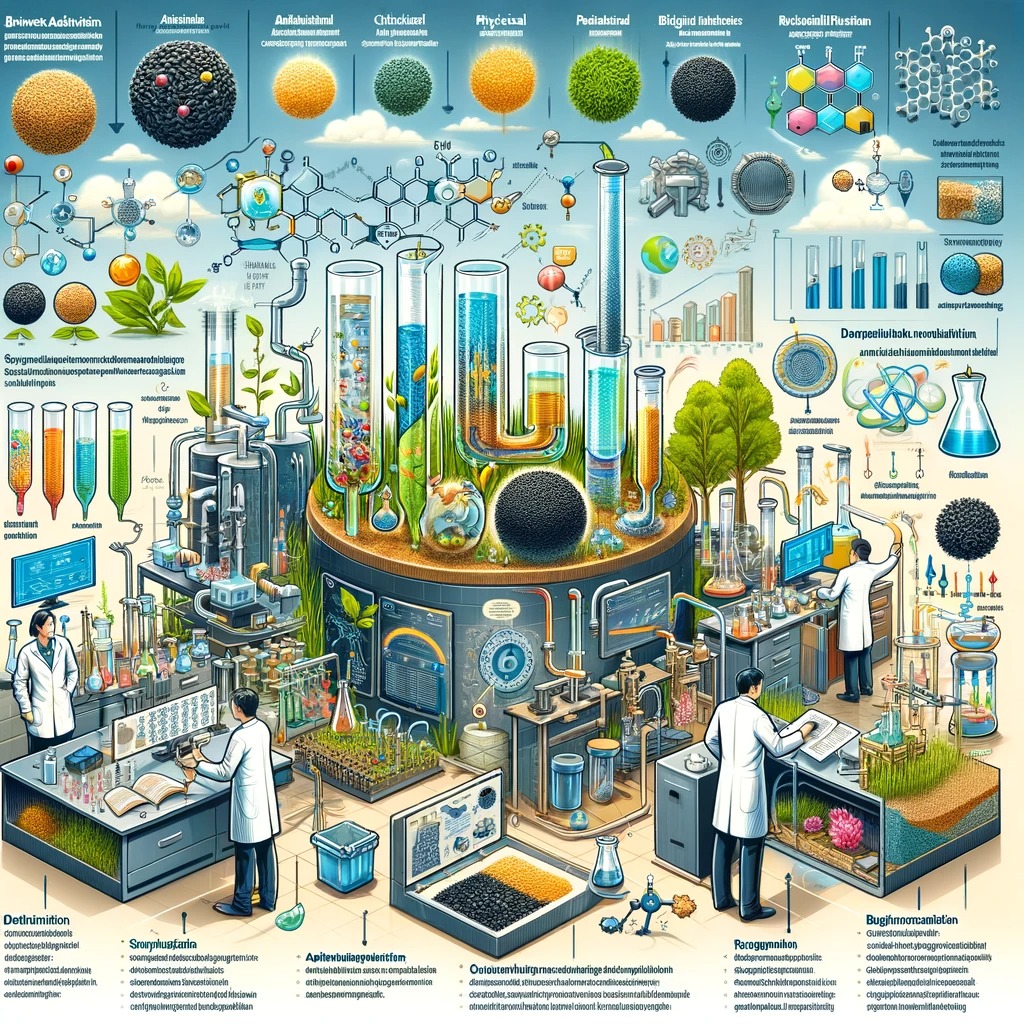
Figure 1.
Graphical abstract.
1.1. Water Pollution and the Need for Purification
Water pollution is a pressing global environmental issue driven by various anthropogenic activities, including industrial discharge, agricultural runoff, improper waste disposal, and urbanization [8]. Contaminants such as heavy metals, organic pollutants, pathogens, and emerging contaminants pose significant threats to human health, aquatic ecosystems, and biodiversity [9].
Industrial activities release a wide range of pollutants into water bodies, including heavy metals such as lead, mercury, cadmium, and chromium [10], as well as organic compounds like pesticides, solvents, and industrial chemicals. These pollutants can persist in the environment for long periods, accumulating in sediments and aquatic organisms, and entering the food chain, thereby posing risks to human health and ecosystem integrity [2,11].
Agricultural runoff, containing fertilizers, pesticides, and animal waste, contributes to nutrient enrichment and eutrophication of water bodies, leading to algal blooms, oxygen depletion, and disruptions in aquatic ecosystems [12]. Excessive nutrient levels can also result in the formation of harmful algal toxins, which pose risks to human and animal health.
Improper waste disposal, including the discharge of untreated sewage and solid waste, contaminates surface water and groundwater with pathogens, nutrients, and organic matter, leading to the spread of waterborne diseases and degradation of water quality. Inadequate sanitation infrastructure and poor waste management practices exacerbate the problem, particularly in developing countries [13].
Urbanization and land development alter natural landscapes, increasing surface runoff and erosion, which transport pollutants from urban areas into water bodies. Stormwater runoff can carry pollutants such as heavy metals, hydrocarbons, and sediment, contributing to the degradation of water quality and habitat loss in receiving waters.
The cumulative impact of these pollution sources has led to the deterioration of water quality worldwide, threatening the availability of safe and clean drinking water for human consumption and jeopardizing aquatic ecosystems and biodiversity [14]. In response to these challenges, there is an urgent need for effective water purification technologies capable of removing a wide range of contaminants and ensuring the provision of safe and sustainable water supplies.
Activated carbon has emerged as a versatile and effective material for water purification, owing to its high surface area, porous structure, and adsorption capacity for a diverse range of pollutants [15]. Traditional sources of activated carbon include coal, wood, and coconut shells. However, the utilization of biowaste materials for activated carbon production offers a sustainable and environmentally friendly alternative, addressing both the challenges of waste management and the need for clean water.
1.2. Role of Activated Carbon in Water Treatment
Activated carbon (AC) is a highly versatile and widely used adsorbent in water treatment due to its exceptional adsorption properties, large surface area, and pore structure. It is capable of removing a wide range of contaminants from water, including organic compounds, inorganic pollutants, and emerging contaminants, making it an essential component of many water purification processes.
- Adsorption Mechanism
The adsorption process involves the physical or chemical attraction of contaminants to the surface of activated carbon [16]. AC possesses a large surface area per unit mass, typically ranging from 500 to 1500 m²/g, providing ample active sites for adsorption [17]. The porous structure of AC, comprising micropores, mesopores, and macropores, enhances the accessibility of contaminants to the active sites, facilitating efficient adsorption.
- 2.
- Removal of Organic Contaminants
AC is highly effective in removing organic pollutants from water, including volatile organic compounds (VOCs), disinfection by-products (DBPs), pharmaceuticals, pesticides, and industrial chemicals. The non-polar nature of organic compounds enables them to be adsorbed onto the hydrophobic surface of activated carbon through van der Waals forces, π-π interactions, and hydrogen bonding [18].
- 3.
- Removal of Inorganic Contaminants
In addition to organic pollutants, AC can adsorb various inorganic contaminants, such as heavy metals, fluoride, arsenic, and nitrates, through ion exchange, complexation, and surface precipitation mechanisms [19]. The presence of functional groups on the surface of activated carbon, such as carboxyl, hydroxyl, and amine groups, facilitates the adsorption of metal ions and other inorganic species [20].
- 4.
- Removal of Emerging Contaminants
AC has demonstrated efficacy in removing emerging contaminants from water, including pharmaceuticals, personal care products, endocrine-disrupting compounds, and microplastics [21]. These contaminants pose challenges due to their low concentrations, diverse chemical structures, and potential health risks. AC’s broad adsorption capacity and versatility make it suitable for mitigating the impact of emerging contaminants on water quality and public health [22].
- 5.
- Regeneration and Reuse
One of the key advantages of activated carbon is its ability to be regenerated and reused multiple times, thereby reducing operational costs and environmental impact [23]. Regeneration involves desorbing adsorbed contaminants from the surface of activated carbon using heat, steam, or chemical agents, restoring its adsorption capacity for subsequent use. Proper regeneration and recycling strategies are essential for maximizing the lifecycle of activated carbon and minimizing waste generation [23].
- 6.
- Synergistic Effects
Activated carbon can be used alone or in combination with other water treatment technologies, such as filtration, coagulation, and membrane processes, to enhance treatment efficiency and address specific water quality challenges [24]. Integrated treatment systems combining AC with complementary technologies can synergistically remove multiple contaminants and improve overall water quality.
1.3. Emergence of Biowaste Activated Carbon (BAC)
In recent years, there has been growing interest in utilizing biowaste materials as alternative sources for the production of activated carbon (AC) for water treatment applications. Biowaste, derived from agricultural residues, food waste, forestry residues, and other biomass sources, represents a vast and renewable resource that can be converted into value-added products, including activated carbon. The emergence of biowaste activated carbon (BAC) reflects the increasing recognition of the environmental, economic, and social benefits associated with sustainable waste management and resource recovery [25].
- Environmental Sustainability The utilization of biowaste for activated carbon production offers several environmental benefits compared to traditional sources such as coal and wood. Biowaste materials are renewable and abundant, reducing the reliance on finite fossil resources and mitigating the environmental impact associated with their extraction and processing [26]. Moreover, converting biowaste into activated carbon can help mitigate greenhouse gas emissions by diverting organic waste from landfills and reducing methane emissions from anaerobic decomposition [27].
- Waste Valorization Biowaste activated carbon represents a form of waste valorization, transforming underutilized biomass residues into high-value products with potential applications in water treatment, air purification, soil remediation, and renewable energy production. By converting biowaste into activated carbon, waste streams that would otherwise be discarded or incinerated can be repurposed into valuable resources, contributing to a circular economy and reducing the environmental burden of waste disposal [28].
- Cost-effectiveness Biowaste materials are often available at low or even negative cost, as they are generated as byproducts of agricultural, forestry, and food processing industries. The utilization of biowaste for activated carbon production can therefore offer cost advantages compared to conventional precursor materials, such as coconut shells or coal, which may incur higher procurement and processing costs [29]. Additionally, the localized availability of biowaste sources can reduce transportation costs and logistical challenges associated with sourcing raw materials.
- Social Impact The production of biowaste activated carbon has the potential to generate socio-economic benefits by creating employment opportunities, particularly in rural and agricultural communities where biowaste materials are abundant. Furthermore, the adoption of sustainable waste management practices, such as biowaste valorization, can contribute to improved public health outcomes by reducing pollution, mitigating environmental contamination, and promoting community resilience [30].
- Technological Innovation The development of innovative processes for the synthesis of biowaste activated carbon has spurred technological advancements in the field of waste-to-resource conversion and sustainable materials engineering [31]. Researchers are exploring novel activation methods, such as pyrolysis, carbonization, and chemical activation, to optimize the production efficiency, adsorption performance, and environmental sustainability of BAC. Additionally, advancements in characterization techniques, such as surface analysis, pore structure characterization, and adsorption kinetics studies, are enhancing our understanding of the physicochemical properties and performance of biowaste-derived activated carbon materials [32].
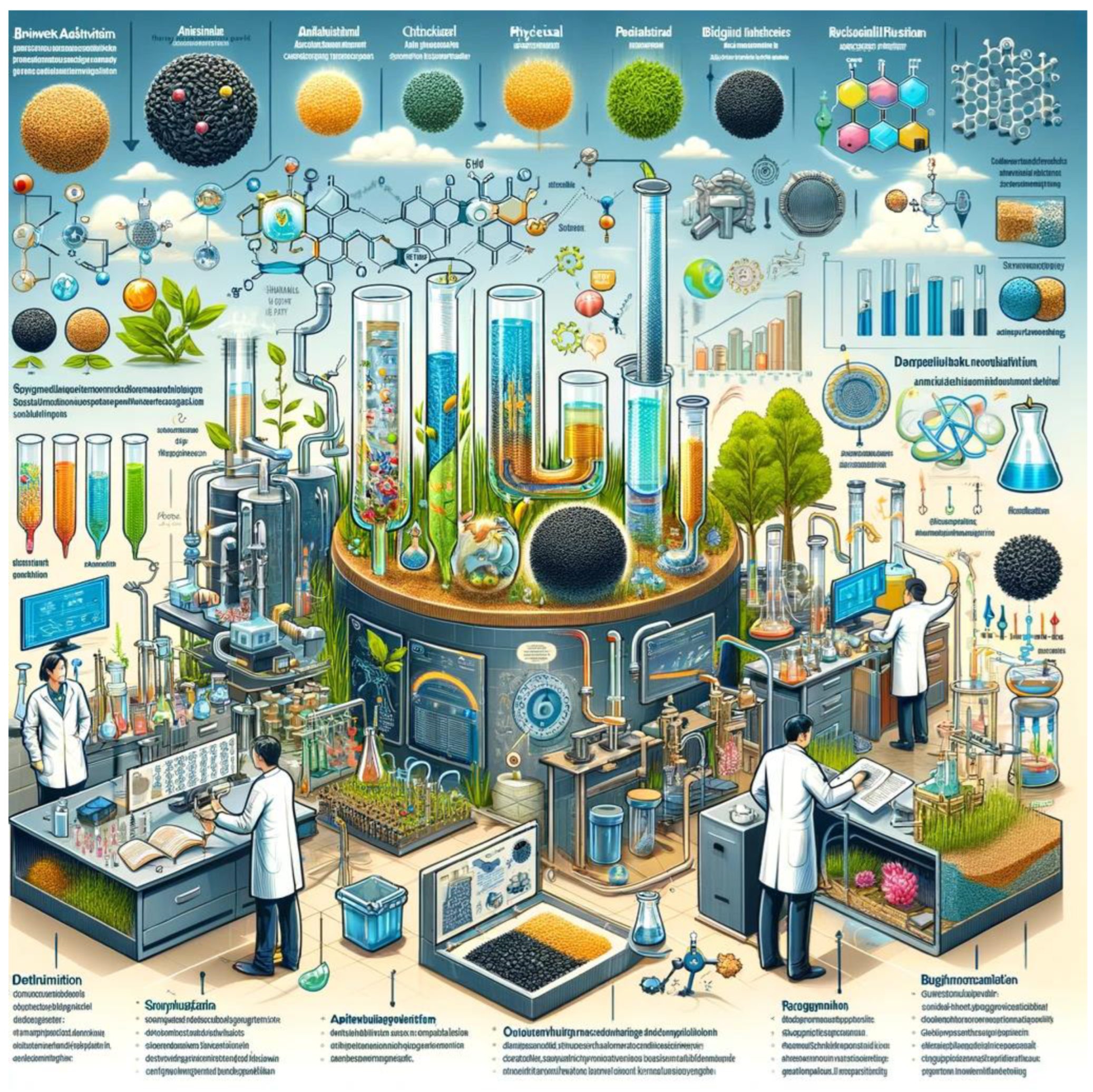
Figure 2.
Water Pollution and the Need for Purification.
1. Sources of Biowaste for AC Synthesis
Biowaste materials, derived from various agricultural, industrial, and municipal sources, serve as abundant and renewable precursors for the synthesis of activated carbon (AC) [32]. The utilization of biowaste for AC production not only addresses the challenges of waste management and environmental pollution but also offers economic benefits and promotes sustainable resource utilization. Below are some common sources of biowaste utilized for AC synthesis.
- Agricultural Residues
Crop Residues Agricultural residues such as rice husks, wheat straw, corn cobs, and sugarcane bagasse are abundant byproducts of crop cultivation and processing. These lignocellulosic materials contain high concentrations of cellulose, hemicellulose, and lignin, which can be converted into activated carbon through pyrolysis and activation processes [33].
Fruit and Vegetable Waste Residual biomass from fruit and vegetable processing industries, including peels, pomace, and seeds, can serve as feedstocks for AC production. These waste materials are rich in organic matter and can be valorized through thermochemical conversion techniques to produce activated carbon with tailored properties for water purification [34].
- 2.
- Food Waste
Organic Waste: Food waste generated from households, restaurants, supermarkets, and food processing facilities represents a significant source of biowaste suitable for AC synthesis. Organic residues such as fruit and vegetable scraps, coffee grounds, and food leftovers can be pyrolyzed or carbonized to produce activated carbon with high surface area and adsorption capacity [35].
Brewery and Distillery Waste Byproducts of brewing and distilling processes, including spent grains, yeast slurry, and distillation residues, contain fermentable sugars, proteins, and organic compounds that can be converted into activated carbon through carbonization and activation processes [36].
- 3.
- Forestry Residues
Wood Waste: Forestry residues such as sawdust, wood chips, bark, and wood shavings are abundant byproducts of timber harvesting and wood processing industries. These lignocellulosic materials can be pyrolyzed or carbonized to produce activated carbon with well-defined pore structures and adsorption properties suitable for water treatment applications [37].
Forest Biomass: Biomass residues from forest management activities, including logging residues, branches, and foliage, can be utilized as feedstocks for AC synthesis. These materials may undergo pretreatment processes such as torrefaction or hydrothermal carbonization to enhance their suitability for activated carbon production [38].
- 4.
- Municipal Solid Waste (MSW)
Green Waste
Organic fraction of municipal solid waste, including yard trimmings, leaves, and grass clippings, can be converted into activated carbon through composting, pyrolysis, or gasification processes. Green waste-derived activated carbon offers a sustainable solution for municipal waste management and environmental remediation [39].
Sewage Sludge
Organic-rich sludge generated from wastewater treatment plants contains valuable organic matter that can be pyrolyzed or carbonized to produce activated carbon. Sewage sludge-derived activated carbon exhibits promising adsorption properties for the removal of organic and inorganic contaminants from water and wastewater streams [40].
- 5.
- Other Biomass Sources
Algal Biomass
Algal biomass derived from wastewater treatment systems, algae cultivation facilities, or natural water bodies can serve as a renewable feedstock for AC synthesis. Algal biomass contains carbohydrates, proteins, and lipids that can be converted into activated carbon with tailored properties for water purification applications [41].
Animal Waste
Organic residues from livestock farming operations, such as manure, poultry litter, and animal bedding, can be processed into activated carbon through pyrolysis or gasification processes. Animal waste-derived activated carbon offers a sustainable solution for nutrient recovery and odor control in agricultural and livestock production systems [42].
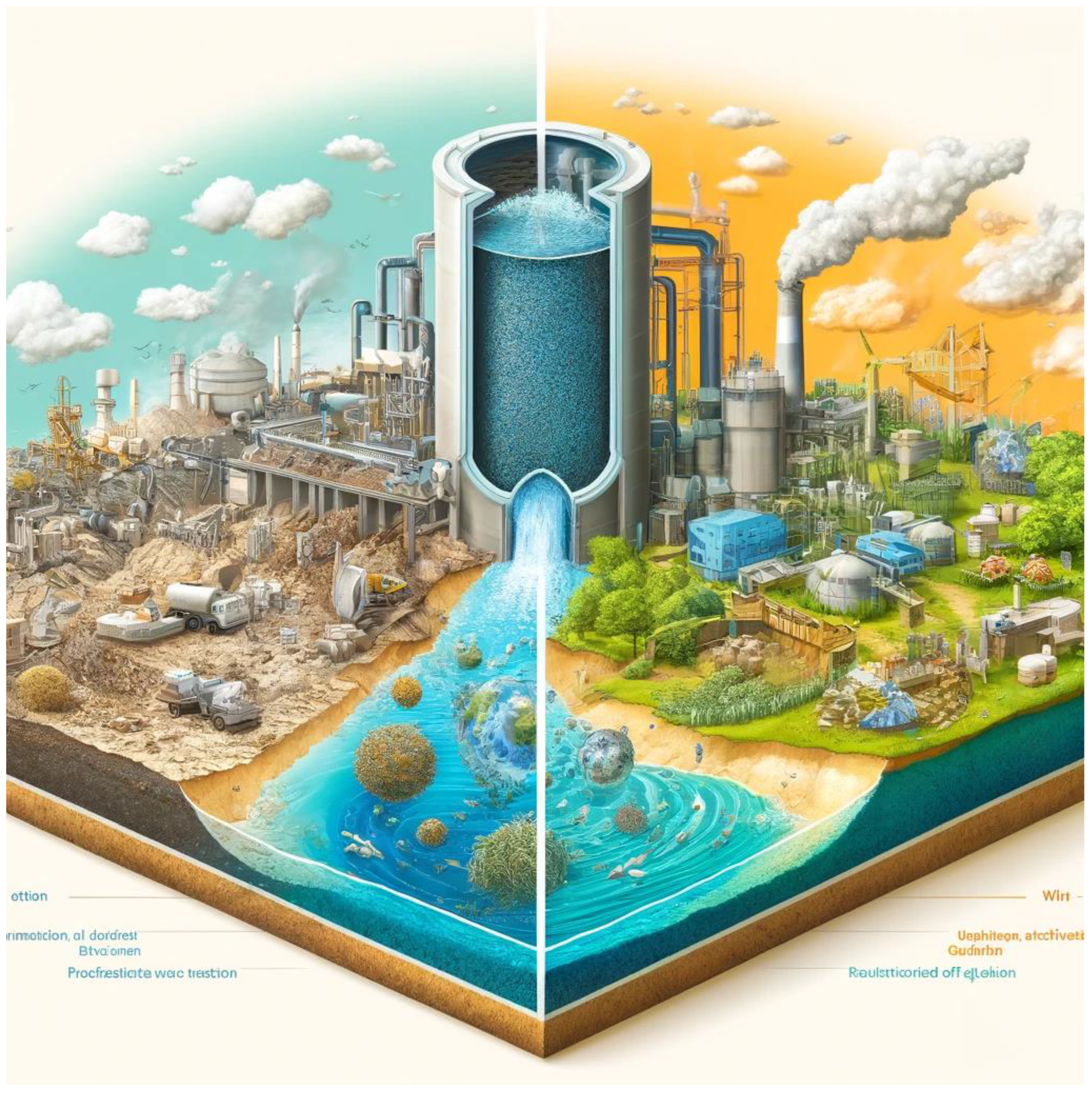
Figure 3.
Sources of Biowaste for AC Synthesis.
3. Synthesis Methods of BAC
3.1. Physical Activation
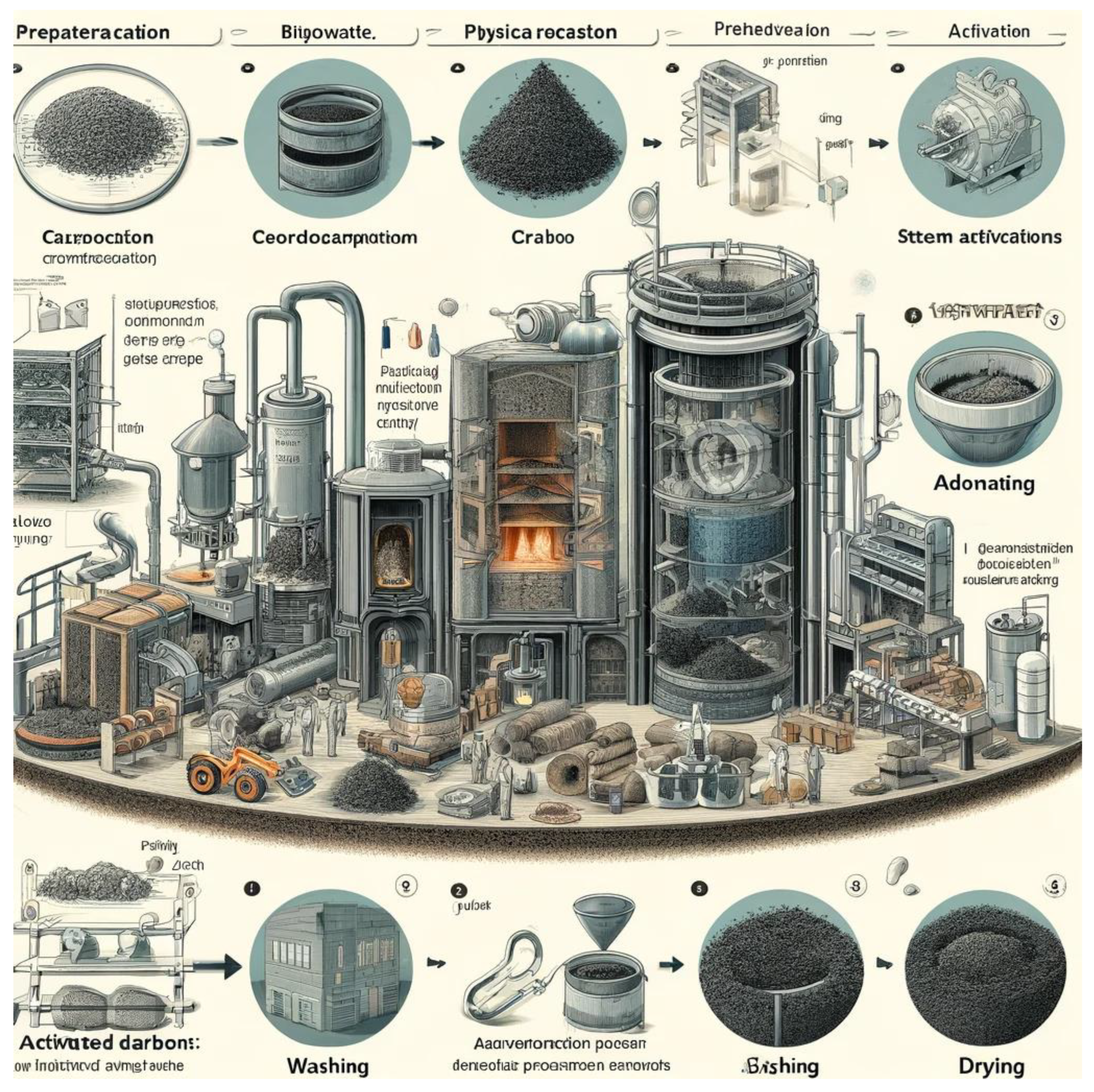
Physical activation is a widely employed method for the production of activated carbon (AC) from biowaste materials. It involves the activation of carbonaceous precursors through the physical process of heat treatment in the absence of oxygen [43], followed by the removal of impurities and the development of a porous structure. Physical activation relies on the controlled decomposition of organic matter and the creation of pore networks within the carbon matrix, resulting in activated carbon with high surface area and adsorption capacity. The key steps involved in the physical activation process include precursor preparation, carbonization, and activation [44].
- Precursor Preparation
Biowaste materials such as agricultural residues, food waste, forestry residues, and municipal solid waste are selected as precursors for activated carbon production. The choice of precursor depends on factors such as availability, composition, and desired properties of the final product [45].
The biowaste precursor is typically dried and ground to a uniform particle size to facilitate carbonization and activation processes. Pretreatment methods such as washing, grinding, and sieving may be employed to remove impurities and enhance the quality of the precursor material [46].
- 2.
- Carbonization
Carbonization is the thermal decomposition of the biowaste precursor in an inert atmosphere, such as nitrogen or argon, at elevated temperatures (typically 500-900°C). During carbonization, organic compounds in the precursor material undergo pyrolysis, leading to the formation of a carbon-rich residue known as char [47].
The carbonization process is carried out in a controlled manner to ensure the removal of volatile components, such as moisture, volatile organic compounds, and tar, while preserving the carbonaceous structure of the precursor material. Slow heating rates and prolonged residence times may be employed to minimize thermal degradation and maximize carbon yield [48].
- 3.
- Activation
The activated carbonization is the process of developing the porous structure and enhancing the adsorption properties of the carbonized material through the introduction of activating agents or physical activation methods [44].
Physical activation involves the exposure of the carbonized precursor to activating agents such as steam, carbon dioxide, or a mixture of gases at high temperatures (typically 800-1000°C). The activating agent reacts with the carbonized material, leading to the removal of carbon atoms and the formation of pores within the carbon matrix [48].
Steam activation is one of the most commonly used methods for physical activation of activated carbon. In this process, carbonized precursor is exposed to steam at high temperatures, causing the carbon to undergo gasification and pore formation [48]. The presence of steam promotes the oxidation of carbon atoms and the release of volatile gases, resulting in the formation of micropores, mesopores, and macropores within the activated carbon structure [49].
The activation process is carefully controlled to optimize the development of pore structure and surface area, as well as to ensure uniform distribution of pores throughout the activated carbon matrix. Parameters such as temperature, residence time, steam flow rate, and activation atmosphere are adjusted to achieve the desired pore size distribution and adsorption properties [49].
- 4.
- Washing and Drying
After activation, the activated carbon is washed with water or acid to remove ash, residual impurities, and activating agents from the surface of the carbon particles. Washing helps to improve the purity and stability of the activated carbon product [50].
The washed activated carbon is then dried to remove moisture and excess water, resulting in a final product with the desired moisture content and physical properties. Drying may be carried out using conventional methods such as air drying or vacuum drying, depending on the specific requirements of the application [51].
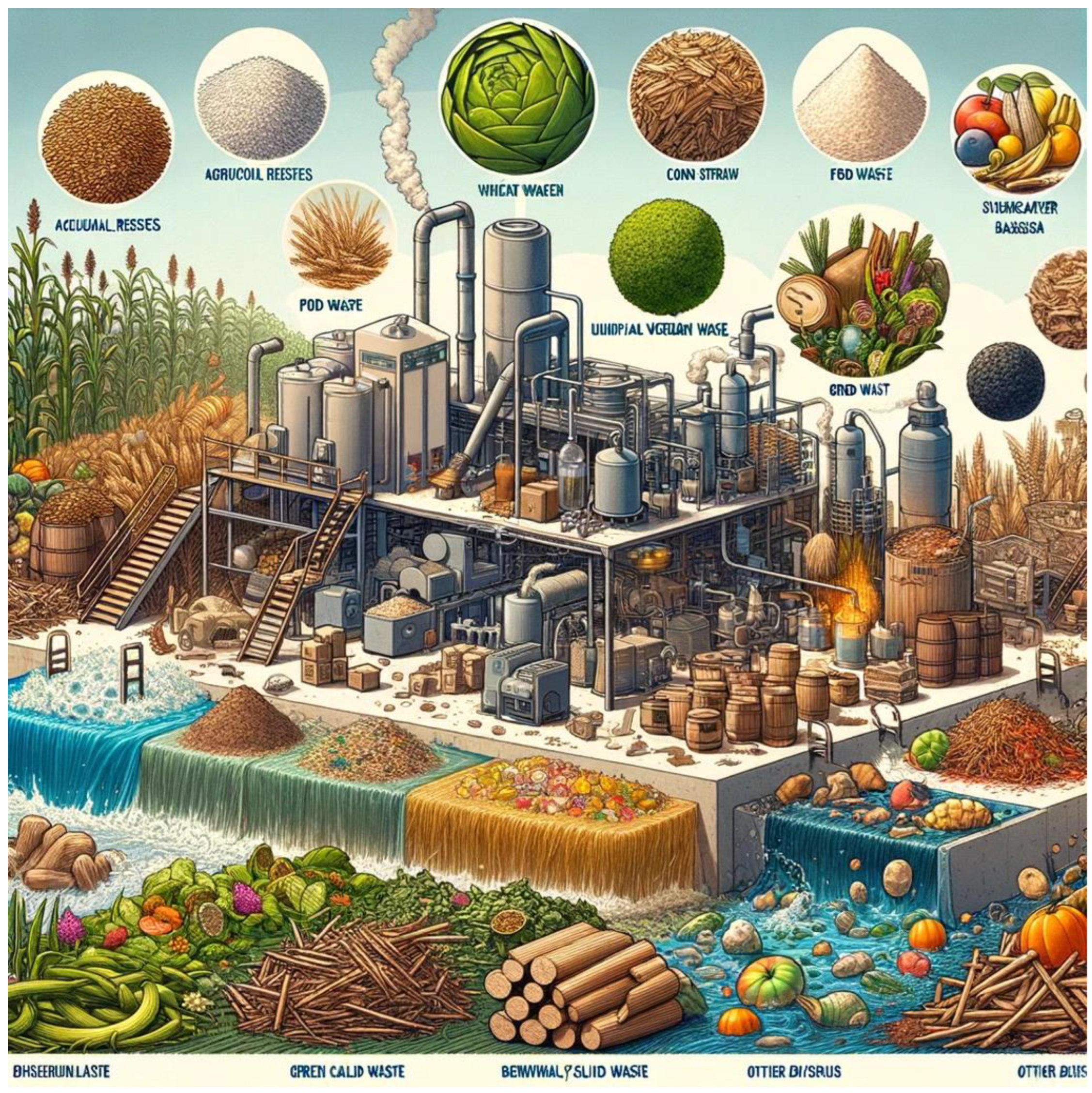
Figure 4.
Physical Activation.
3.2. Chemical Activation
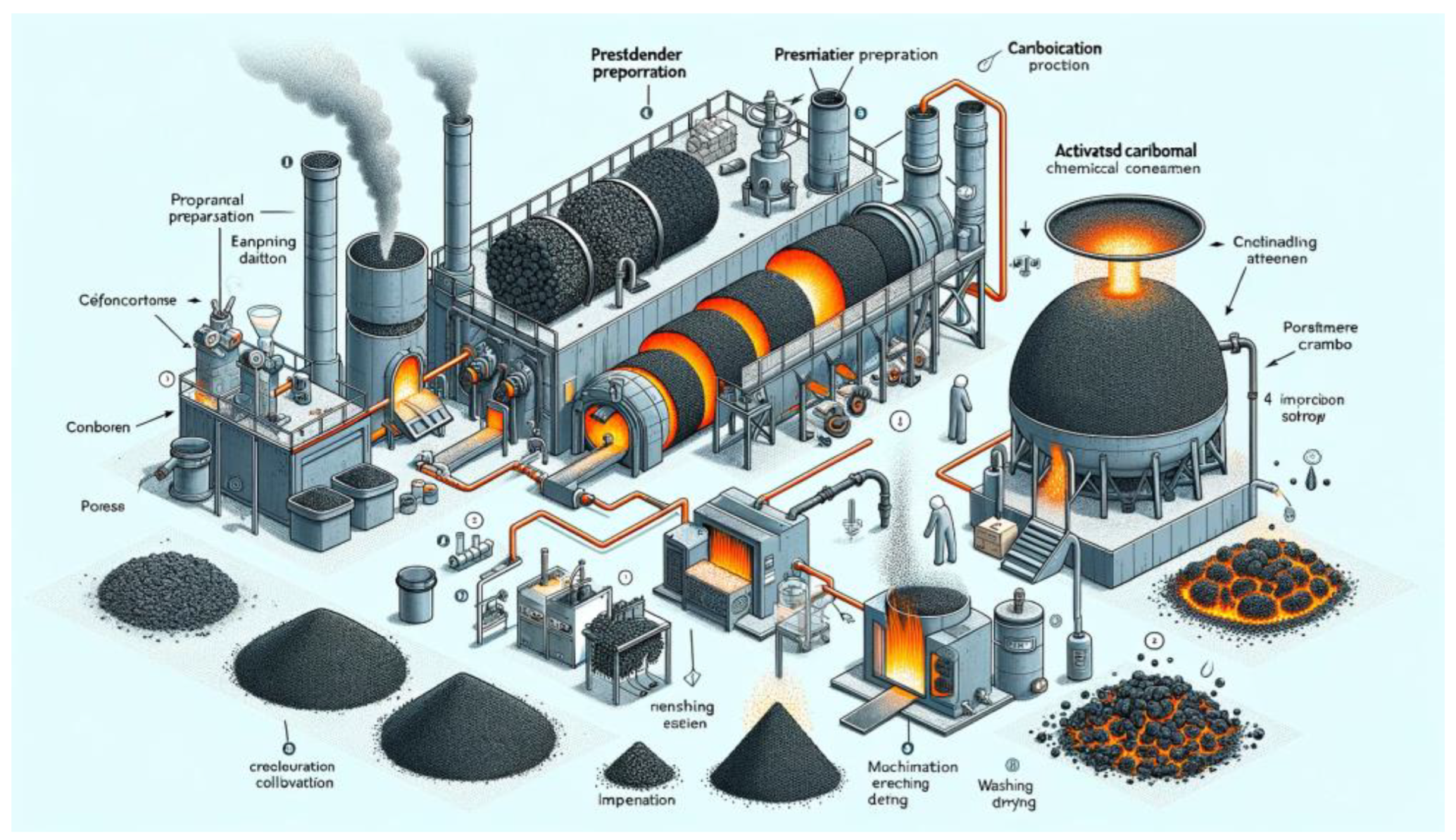
Chemical activation is another widely used method for the production of activated carbon (AC) from biowaste materials [51]. Unlike physical activation, which relies on the physical process of heat treatment, chemical activation involves the use of chemical agents to enhance the development of porosity and adsorption properties in the carbonized precursor [51]. Chemical activation offers several advantages, including shorter activation times, higher activation yields, and the ability to produce activated carbon with tailored pore structures and surface chemistries [52]. The key steps involved in the chemical activation process include precursor preparation, carbonization, impregnation, and activation.
- Precursor Preparation
Biowaste materials such as agricultural residues, food waste, forestry residues, and municipal solid waste are selected as precursors for activated carbon production. The choice of precursor depends on factors such as availability, composition, and desired properties of the final product [53].
The biowaste precursor is typically dried and ground to a uniform particle size to facilitate carbonization and activation processes. Pretreatment methods such as washing, grinding, and sieving may be employed to remove impurities and enhance the quality of the precursor material [53].
- 2.
- Carbonization
Carbonization is the thermal decomposition of the biowaste precursor in an inert atmosphere, such as nitrogen or argon, at elevated temperatures (typically 500-900°C). During carbonization, organic compounds in the precursor material undergo pyrolysis, leading to the formation of a carbon-rich residue known as char [54].
The carbonization process is carried out in a controlled manner to ensure the removal of volatile components, such as moisture, volatile organic compounds, and tar, while preserving the carbonaceous structure of the precursor material. Slow heating rates and prolonged residence times may be employed to minimize thermal degradation and maximize carbon yield [54].
- 3.
- Impregnation
After carbonization, the carbonized precursor is impregnated with a chemical activating agent, typically a strong acid or alkali solution, to enhance the development of porosity and adsorption properties in the activated carbon [55].
The impregnation process involves the immersion or spraying of the carbonized precursor with the activating agent, followed by drying to allow the agent to penetrate into the carbon matrix. Common activating agents include phosphoric acid (H3PO4), potassium hydroxide (KOH), sodium hydroxide (NaOH), and zinc chloride (ZnCl2) [55].
- 4.
- Activation
The impregnated carbonized precursor is then subjected to high temperatures (typically 500-900°C) in an inert atmosphere to activate the carbon and develop its porous structure [56]. During activation, the activating agent reacts with the carbonized material, leading to the removal of carbon atoms and the formation of pores within the carbon matrix [52].
The activation process is carefully controlled to optimize the development of pore structure and surface area, as well as to ensure uniform distribution of pores throughout the activated carbon matrix [57]. Parameters such as temperature, residence time, heating rate, and activation atmosphere are adjusted to achieve the desired pore size distribution and adsorption properties [58].
- 5.
- Washing and Drying
After activation, the activated carbon is washed with water or acid to remove residual impurities, activating agents, and soluble salts from the surface of the carbon particles [44]. Washing helps to improve the purity and stability of the activated carbon product.
The washed activated carbon is then dried to remove moisture and excess water, resulting in a final product with the desired moisture content and physical properties [44]. Drying may be carried out using conventional methods such as air drying or vacuum drying, depending on the specific requirements of the application.
Figure 5.
Chemical Activation.
3.3. Biological Activation
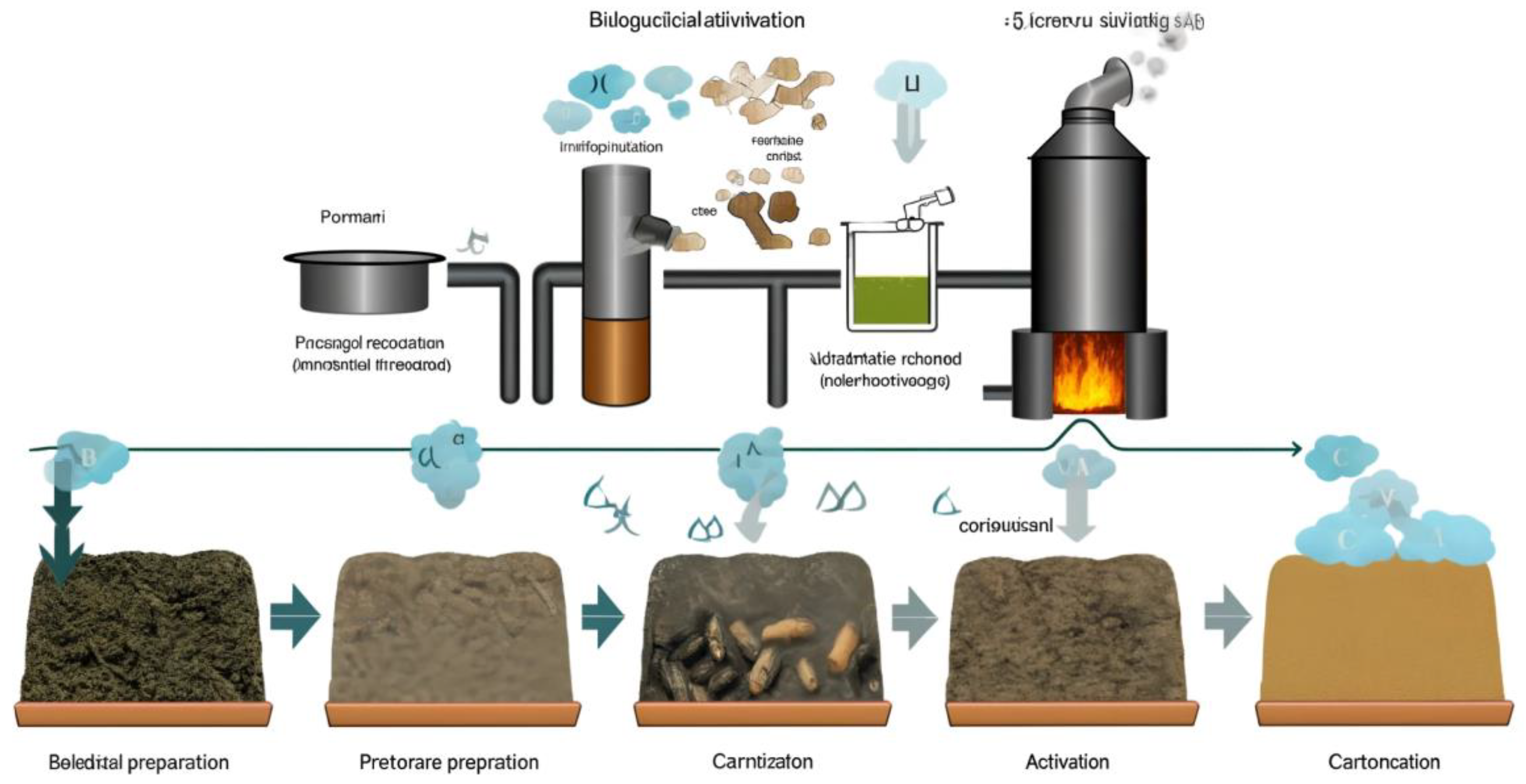
Biological activation, also known as microbial activation or biological carbonization, is an innovative approach for the production of activated carbon (AC) from biowaste materials [59]. Unlike traditional physical and chemical activation methods, biological activation harnesses the metabolic activities of microorganisms to decompose organic matter and enhance the development of porosity and adsorption properties in the carbonized precursor [60]. Biological activation offers several advantages, including environmental sustainability, energy efficiency, and the potential for value-added product generation [61]. The key steps involved in the biological activation process include precursor preparation, bioconversion, carbonization, and activation [59].
- 1.
- Precursor Preparation
Biowaste materials such as agricultural residues, food waste, forestry residues, and municipal solid waste are selected as precursors for activated carbon production [62]. The choice of precursor depends on factors such as availability, composition, and desired properties of the final product [45].
The biowaste precursor is typically dried and ground to a uniform particle size to facilitate subsequent processing steps [43]. Pretreatment methods such as washing, grinding, and sieving may be employed to remove impurities and enhance the quality of the precursor material.
- 2.
- Bioconversion
Bioconversion involves the inoculation of the biowaste precursor with microbial cultures capable of metabolizing organic matter and promoting the decomposition of complex carbonaceous compounds [63]. Microorganisms such as bacteria, fungi, and actinomycetes are commonly used for biological activation due to their ability to produce enzymes that catalyze the breakdown of organic substrates [64].
During bioconversion, microorganisms degrade the organic constituents of the precursor material through enzymatic hydrolysis, fermentation, and respiration processes, leading to the production of carbon-rich residues known as biochar or biocarbon [44].
- 3.
- Carbonization
Carbonization is the thermal treatment of the bioconverted precursor in an inert atmosphere, such as nitrogen or argon, at elevated temperatures (typically 400-800°C) [48]. During carbonization, organic compounds in the precursor material undergo pyrolysis, leading to the formation of a carbonaceous residue with enhanced stability and porosity.
The carbonization process is carried out in a controlled manner to ensure the removal of volatile components, such as moisture, volatile organic compounds, and tar, while preserving the carbonaceous structure of the precursor material [33].
- 4.
- Activation
The carbonized biowaste precursor is then subjected to an activation step to enhance the development of porosity and adsorption properties in the activated carbon [43]. Activation may be achieved through physical or chemical methods, such as steam activation or chemical impregnation, depending on the desired characteristics of the final product [44].
Alternatively, biological activation may continue during the carbonization process, as microbial activity within the carbonaceous matrix can contribute to the generation of porosity and surface area in the activated carbon.
- 5.
- Washing and Drying
After activation, the activated carbon is washed with water or acid to remove residual impurities, microbial biomass, and soluble salts from the surface of the carbon particles. Washing helps to improve the purity and stability of the activated carbon product [65].
The washed activated carbon is then dried to remove moisture and excess water, resulting in a final product with the desired moisture content and physical properties [65]. Drying may be carried out using conventional methods such as air drying or vacuum drying, depending on the specific requirements of the application.
Figure 6.
Biological Activation.
4. Characterization Techniques for BAC
4.1. Surface Area and Pore Structure Analysis
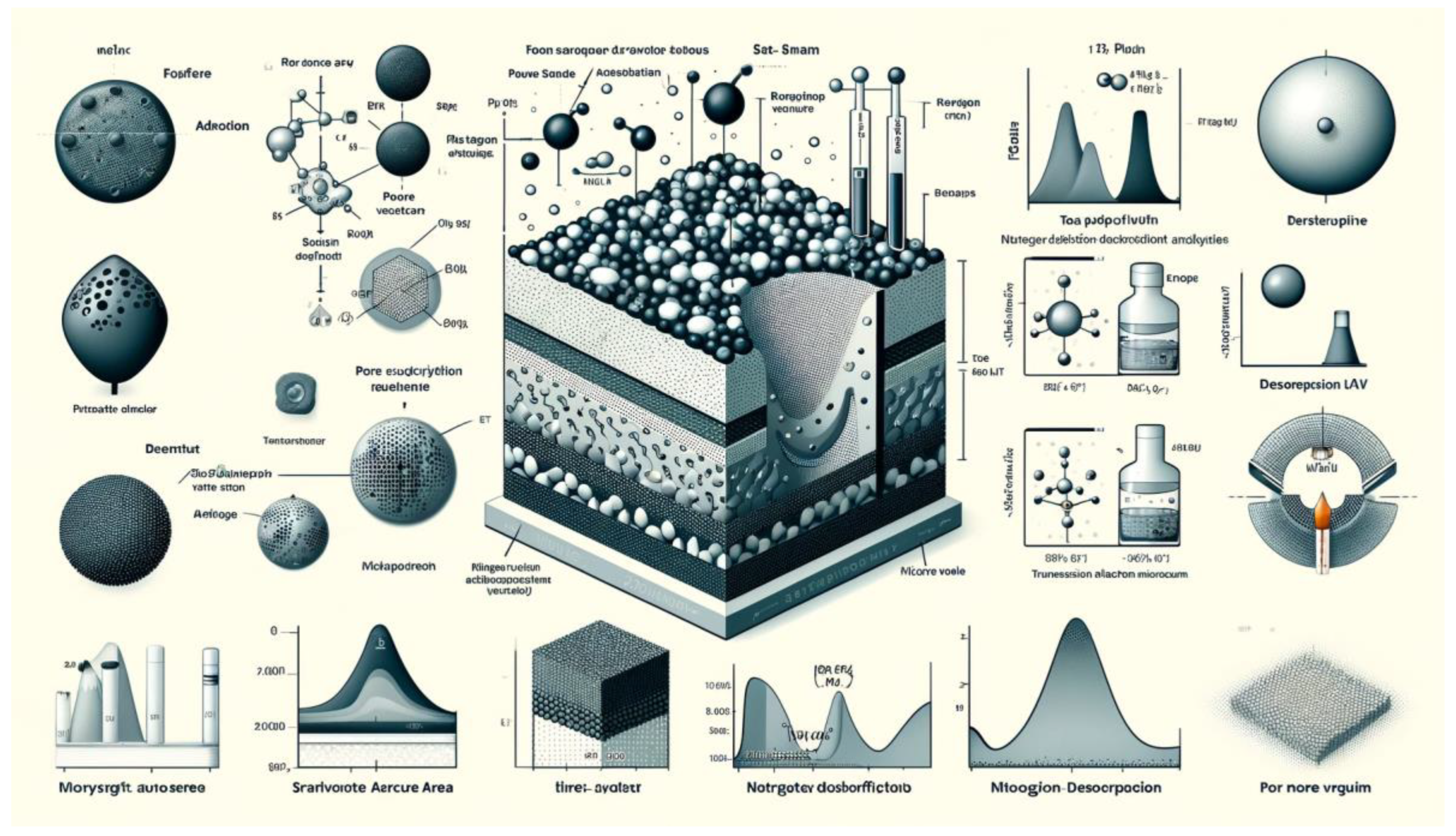
Surface area and pore structure analysis are essential techniques for characterizing the physical properties of activated carbon (AC), including its adsorption capacity, pore size distribution, and surface chemistry [66]. These parameters play a crucial role in determining the performance and effectiveness of activated carbon in various applications, such as water purification, air filtration, and gas adsorption [15]. Several analytical methods are commonly used to assess surface area and pore structure characteristics of activated carbon, including:
- Brunauer-Emmett-Teller (BET) Surface Area Analysis
BET analysis is a widely used method for determining the specific surface area of activated carbon. It is based on the adsorption of a gas molecule, typically nitrogen (N2), onto the surface of the activated carbon at various relative pressures [67].
The BET equation is applied to the adsorption isotherm data to calculate the specific surface area of the activated carbon, expressed in square meters per gram (m²/g) [68]. The surface area provides information about the available surface area for adsorption and correlates with the adsorption capacity of the activated carbon.
- 2.
- Pore Size Distribution Analysis
Pore size distribution analysis provides information about the distribution of pore sizes within the activated carbon, including micropores (<2 nm), mesopores (2-50 nm), and macropores (>50 nm) [69]. Pore size distribution affects the accessibility of adsorption sites and influences the adsorption kinetics and capacity of the activated carbon [70].
Several techniques can be used to analyze pore size distribution, including nitrogen adsorption-desorption isotherms, mercury porosimetry, and gas adsorption methods such as Dubinin-Radushkevich (DR) and Horvath-Kawazoe (HK) models [71].
- 3.
- Nitrogen Adsorption-Desorption Isotherms
Nitrogen adsorption-desorption isotherms are commonly used to characterize the pore structure of activated carbon [72]. The isotherms provide information about the adsorption and desorption behavior of nitrogen gas on the surface of the activated carbon at different relative pressures [73].
Based on the shape of the isotherm and the slope of the adsorption branch, various types of pore structures can be identified, including Type I (microporous), Type II (mesoporous), and Type IV (mesoporous with micropores) isotherms [74].
- 4.
- Micropore Volume and Total Pore Volume
Micropore volume and total pore volume are important parameters for assessing the adsorption capacity of activated carbon [75]. Micropore volume represents the volume of pores with diameters less than 2 nm, while total pore volume includes all pores within the activated carbon structure [76].
Micropore volume can be determined using techniques such as t-plot method, Dubinin-Radushkevich (DR) equation, or Horvath-Kawazoe (HK) method, while total pore volume is calculated from the amount of gas adsorbed at high relative pressures in the nitrogen adsorption-desorption isotherm [77].
- 5.
- Scanning Electron Microscopy (SEM) and Transmission Electron Microscopy (TEM)
SEM and TEM techniques are used to visualize the morphology and microstructure of activated carbon at the nanoscale level [78]. These imaging techniques provide information about the surface morphology, particle size, and pore structure of the activated carbon, complementing the data obtained from surface area and pore size distribution analysis [79].
Figure 7.
Surface Area and Pore Structure Analysis.
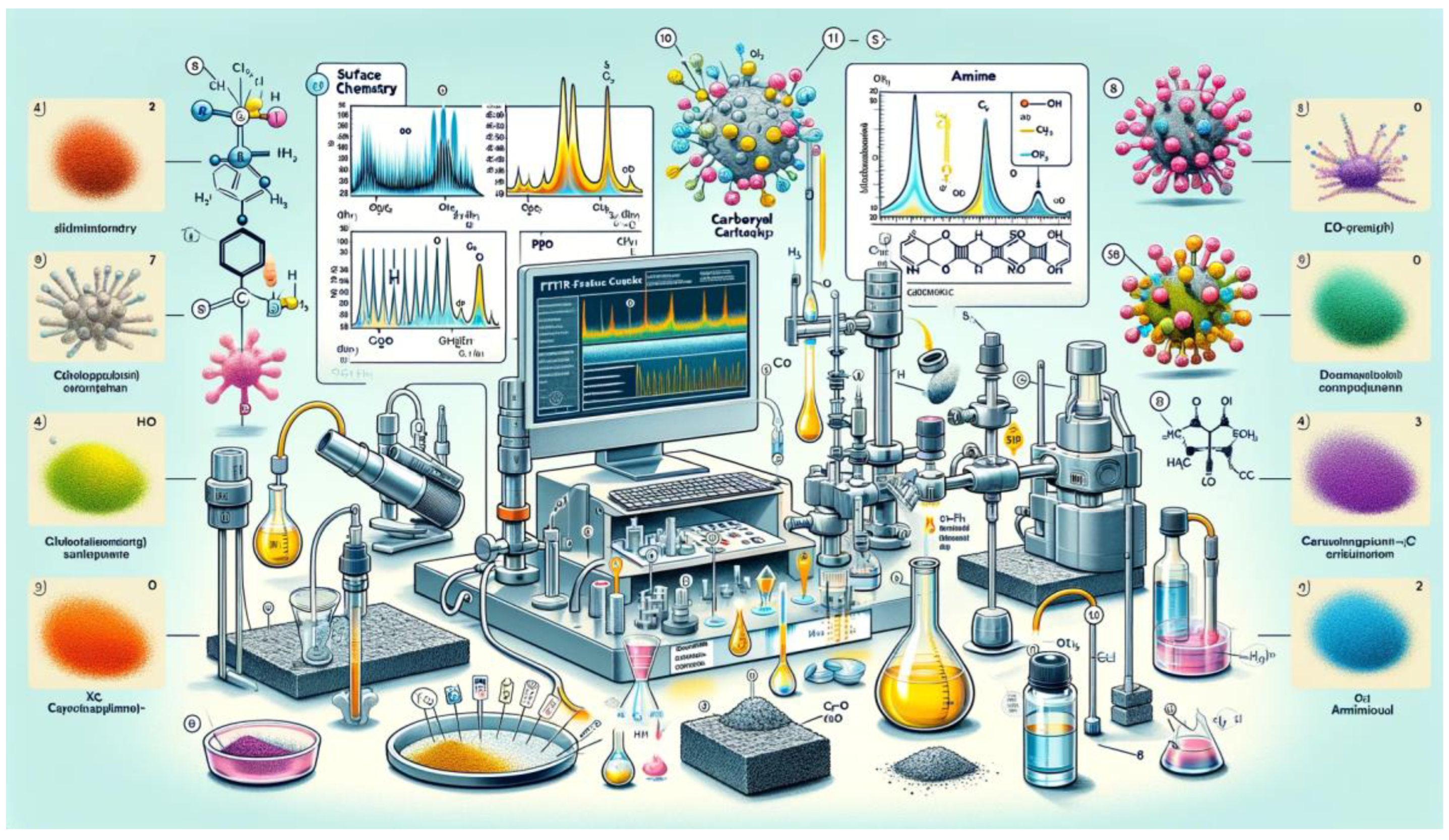
4.2. Surface Chemistry and Functional Groups
Surface chemistry and functional groups play a crucial role in determining the adsorption capacity, selectivity, and reactivity of activated carbon (AC) materials [80]. The presence of specific functional groups on the surface of activated carbon influences its interactions with adsorbates, such as water contaminants, gases, and organic molecules [66]. Surface chemistry analysis provides insights into the nature and distribution of functional groups on the activated carbon surface, enabling researchers to tailor material properties for enhanced adsorption performance and selectivity [81]. Several techniques are commonly used to characterize surface chemistry and functional groups of activated carbon, including:
- Fourier Transform Infrared Spectroscopy (FTIR)
FTIR spectroscopy is a powerful analytical technique used to identify functional groups and chemical bonds present on the surface of activated carbon [82]. It measures the absorption of infrared radiation by functional groups, providing information about the chemical composition and structure of the activated carbon material [83].
FTIR spectra of activated carbon typically show characteristic peaks corresponding to functional groups such as hydroxyl (-OH), carboxyl (-COOH), carbonyl (C=O), ether (C-O-C), and aromatic (C=C) groups [84]. The intensity and position of these peaks can vary depending on the activation method, precursor material, and surface treatment.
- 2.
- Boehm Titration
Boehm titration is a wet chemical method used to quantify the concentration of acidic and basic functional groups on the surface of activated carbon [84]. It involves the titration of activated carbon with a series of acid and base solutions to determine the amount of acidic and basic sites present [85].
Acidic functional groups, such as carboxyl (-COOH), lactone (-C=O), and phenolic (-OH), react with a strong base (e.g., sodium hydroxide) to form salts, while basic functional groups, such as amine (-NH2) and pyridine (-C5H5N), react with a strong acid (e.g., hydrochloric acid) to form salts [86]. The amount of acid or base consumed in the titration corresponds to the concentration of functional groups present.
- 3.
- X-ray Photoelectron Spectroscopy (XPS)
XPS is a surface-sensitive technique used to analyze the elemental composition and chemical state of elements on the surface of activated carbon [87]. It provides information about the oxidation state, bonding environment, and presence of functional groups on the activated carbon surface [88].
XPS spectra of activated carbon typically show peaks corresponding to carbon (C1s), oxygen (O1s), and other elements present in trace amounts [89]. By deconvoluting the C1s peak, different carbon species and functional groups can be identified, such as graphitic carbon, oxygen-containing groups, and surface contaminants [90].
- 4.
- Temperature Programmed Desorption (TPD)
TPD is a technique used to study the desorption behavior of gases from the surface of activated carbon as a function of temperature [91]. It provides information about the strength and distribution of surface functional groups and their interactions with adsorbates [92].
TPD experiments involve heating the activated carbon sample in a controlled atmosphere (e.g., nitrogen or helium) while monitoring the desorption of gases using mass spectrometry or thermal conductivity detection [93]. By analyzing the desorption peaks and kinetics, information about the types and abundance of surface functional groups can be obtained [94].
- 5.
- Elemental Analysis
Elemental analysis techniques, such as elemental combustion analysis or CHN analysis, provide quantitative information about the elemental composition of activated carbon, including carbon, hydrogen, nitrogen, and oxygen content [95]. By comparing the elemental composition with known functional groups, the presence of specific functional groups can be inferred.
Surface chemistry and functional group analysis are essential for understanding the chemical properties and reactivity of activated carbon materials [96]. By characterizing the types and distribution of functional groups on the activated carbon surface, researchers can optimize material synthesis, tailor surface chemistry, and design activated carbon-based adsorbents with enhanced performance for various applications, including water treatment, air purification, and environmental remediation [59].
Figure 8.
Surface Chemistry and Functional Groups.
4.3. Morphological Properties
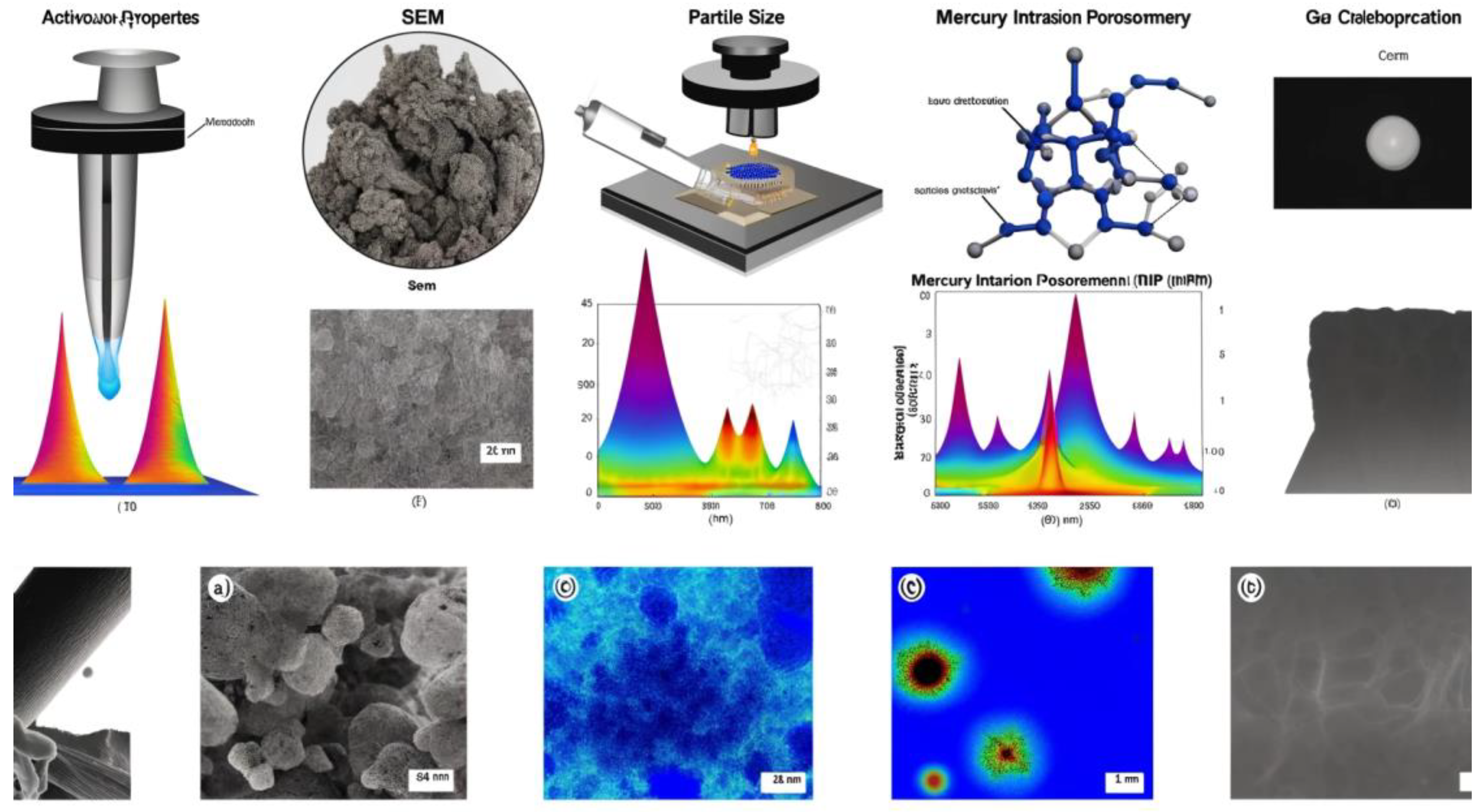
Morphological properties of activated carbon (AC) refer to its physical structure, surface morphology, particle size distribution, and pore structure, which play crucial roles in determining [97], its adsorption capacity, mechanical strength, and overall performance in various applications. Understanding these morphological properties is essential for optimizing AC synthesis methods, tailoring material properties, and designing effective adsorbents for specific applications [98]. Several techniques are commonly used to characterize the morphological properties of activated carbon, including
- Scanning Electron Microscopy (SEM)
SEM is a powerful imaging technique used to visualize the surface morphology, particle size, and microstructure of activated carbon at high magnifications and resolutions [99]. SEM images provide detailed information about the shape, texture, and porosity of activated carbon particles, as well as the distribution of pores and structural defects.
SEM analysis enables researchers to assess the physical integrity, surface roughness, and homogeneity of activated carbon materials [100], which influence their adsorption performance, mechanical stability, and processability.
- 2.
- Transmission Electron Microscopy (TEM)
TEM is an advanced microscopy technique used to examine the internal structure and nanoscale features of activated carbon particles. TEM provides high-resolution images of individual carbon particles, allowing for the visualization of pore structure, crystallinity, and surface defects at the atomic level [101].
TEM analysis provides insights into the formation mechanisms, growth kinetics, and structural properties of activated carbon materials, which are essential for understanding their adsorption behavior, catalytic activity, and electrochemical performance.
- 3.
- Particle Size Analysis
Particle size analysis techniques, such as laser diffraction, sedimentation, and dynamic light scattering, are used to determine the particle size distribution of activated carbon samples. Particle size distribution affects the packing density, flowability, and filtration properties of activated carbon materials.
By measuring the particle size distribution, researchers can optimize synthesis conditions, control material morphology, and tailor particle size for specific applications, such as fluidized bed reactors, packed columns, and filtration media [102].
- 4.
- Mercury Intrusion Porosimetry (MIP)
MIP is a technique used to analyze the pore structure and porosity of activated carbon materials by measuring the intrusion of mercury into the pore network at different pressures. MIP provides information about the distribution of pore sizes, pore volume, and specific surface area of activated carbon.
By analyzing the MIP data, researchers can characterize the mesoporous, microporous, and macroporous structure of activated carbon, which influences its adsorption capacity, diffusion kinetics, and accessibility to adsorbates [103].
- 5.
- Gas Adsorption Techniques
Gas adsorption techniques, such as nitrogen adsorption-desorption isotherms, are used to analyze the surface area, pore volume, and pore size distribution of activated carbon materials. Gas adsorption measurements provide quantitative information about the specific surface area, pore structure, and surface chemistry of activated carbon.
By analyzing the gas adsorption data, researchers can calculate parameters such as BET surface area, total pore volume, and pore size distribution, which are essential for understanding the adsorption behavior, pore accessibility, and textural properties of activated carbon.
Characterizing the morphological properties of activated carbon is essential for optimizing material synthesis, tailoring material properties, and designing adsorbents with enhanced performance for various applications [104], including water treatment, air purification, energy storage, and catalysis. By employing a combination of imaging, particle size analysis, porosity measurements, and gas adsorption techniques, researchers can gain comprehensive insights into the structure-function relationships of activated carbon materials and develop tailored solutions to address specific environmental and industrial challenges.
Figure 9.
Morphological Properties.
5. Adsorption Mechanisms and Performance Factors
5.1. Mechanisms of Adsorption on BAC
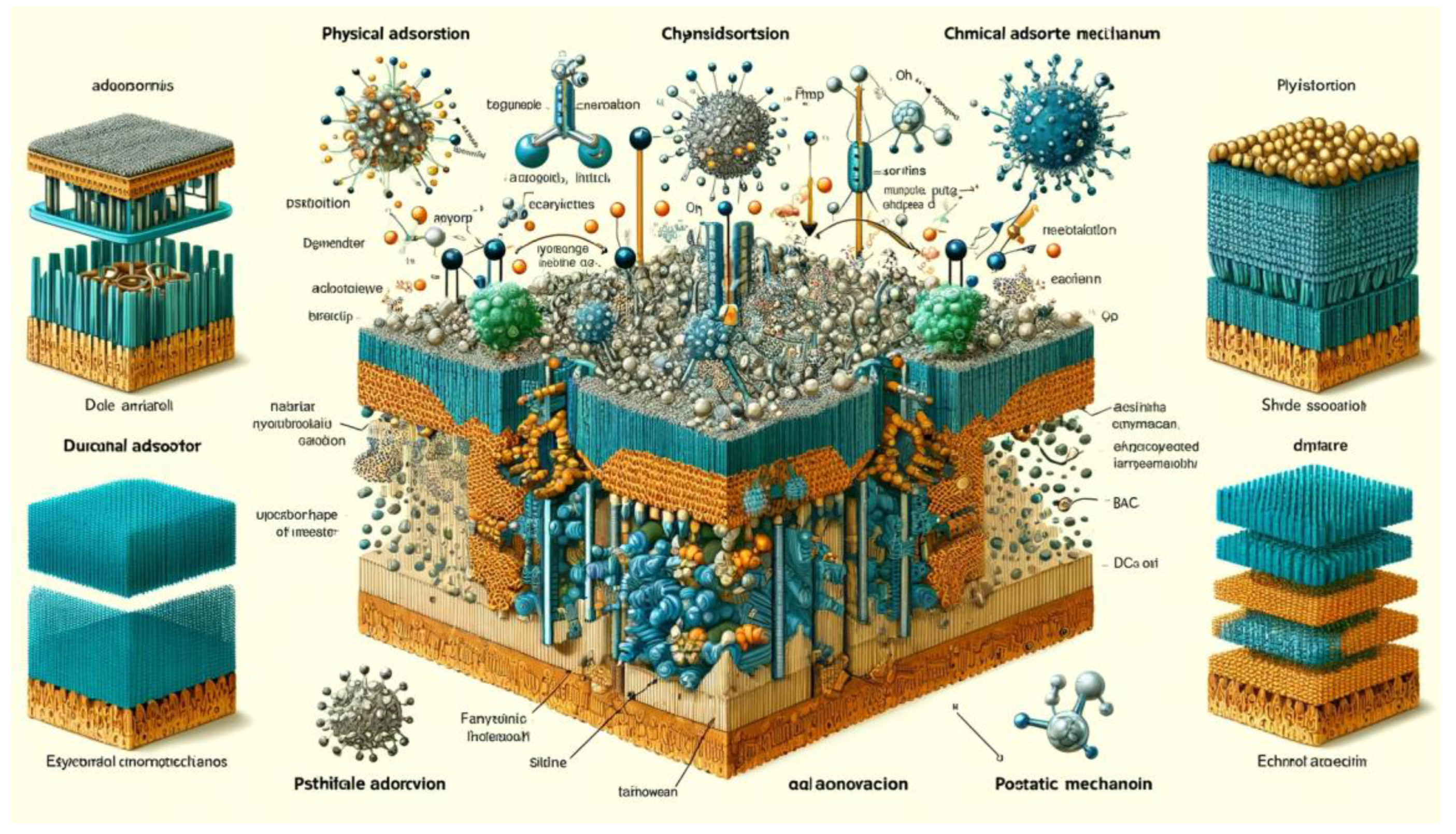
The mechanisms of adsorption on biowaste activated carbon (BAC) involve complex interactions between adsorbate molecules and the porous structure, surface chemistry, and functional groups present on the BAC surface [59]. BAC materials possess a high surface area and a diverse range of pore sizes, which provide numerous adsorption sites for contaminants in water. The mechanisms of adsorption on BAC can be broadly categorized into physical adsorption (physisorption) and chemical adsorption (chemisorption), each of which involves different modes of interaction between adsorbate molecules and the BAC surface.
- Physical Adsorption (Physisorption)
Physical adsorption on BAC is primarily governed by van der Waals forces and involves the accumulation of adsorbate molecules on the surface and within the pores of the BAC material.
Van der Waals forces are weak, non-specific interactions between molecules that arise from induced dipole moments and lead to the formation of a monolayer of adsorbate molecules on the BAC surface [105].
Physical adsorption is reversible and depends on factors such as the surface area, pore size distribution, temperature, and pressure. It is particularly effective for the removal of non-polar or weakly polar contaminants from water, such as organic pollutants, volatile organic compounds (VOCs), and some gases [106].
- 2.
- Chemical Adsorption (Chemisorption)
Chemical adsorption on BAC involves the formation of chemical bonds between adsorbate molecules and functional groups present on the BAC surface, leading to the irreversible removal of contaminants from water.
Functional groups such as hydroxyl (-OH), carboxyl (-COOH), and amine (-NH2) groups on the BAC surface can participate in chemical reactions with adsorbate molecules, forming covalent or ionic bonds.
Chemical adsorption is highly specific and selective, depending on the nature of the functional groups and the chemical properties of the adsorbate molecules [20]. It is particularly effective for the removal of polar or ionic contaminants from water, such as heavy metals, metal ions, and polar organic compounds.
- 3.
- Pore-Filling Mechanism
In addition to surface adsorption, adsorbate molecules may penetrate into the pores of BAC through a pore-filling mechanism, where they are physically entrapped or immobilized within the pore structure of the BAC material.
The pore-filling mechanism is prevalent in mesoporous and macroporous BAC materials, where the pore sizes are large enough to accommodate the size and shape of the adsorbate molecules [107].
The pore-filling mechanism enhances the adsorption capacity and efficiency of BAC materials, particularly for adsorbate molecules with larger molecular sizes or higher molecular weights.
- 4.
- Electrostatic Interactions
Electrostatic interactions between charged functional groups on the BAC surface and charged species in water can also contribute to adsorption processes.
BAC materials with surface functional groups such as carboxyl (-COOH) and amine (-NH2) groups can interact with charged species in water through electrostatic attraction or repulsion, leading to the removal of ions and charged molecules from solution.
The mechanisms of adsorption on BAC are influenced by various factors, including the properties of the adsorbate molecules, the surface chemistry of the BAC material, the pore structure, temperature, pH, and ionic strength of the solution. Understanding these mechanisms is essential for optimizing BAC-based adsorbents and designing efficient water treatment systems for the removal of contaminants from water sources.
Figure 10.
Mechanisms of Adsorption on BAC.
5.2. Influence of Surface Chemistry and Pore Structure
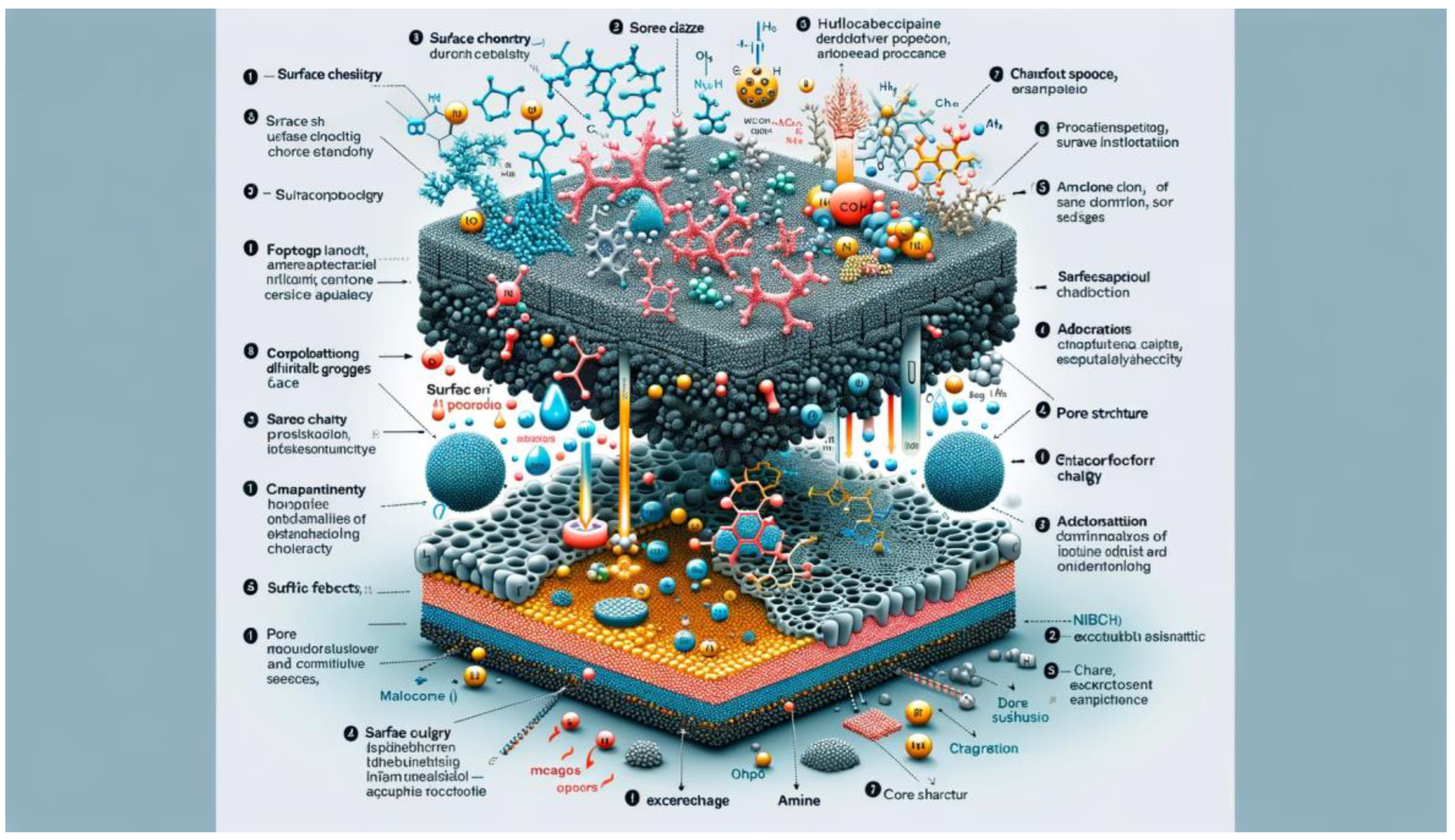
The surface chemistry and pore structure of biowaste activated carbon (BAC) significantly influence its adsorption performance and selectivity for different contaminants in water [59]. The interplay between surface chemistry and pore structure determines the types of adsorbate molecules that can be effectively removed, as well as the adsorption kinetics and capacity of the BAC material. Below are the key influences of surface chemistry and pore structure on the adsorption properties of BAC:
- Surface Chemistry
Functional Groups: The presence of surface functional groups, such as hydroxyl (-OH), carboxyl (-COOH), and amine (-NH2) groups, provides specific sites for adsorption through chemical interactions. Functional groups can participate in hydrogen bonding, ion exchange, and complexation reactions, enhancing the adsorption of polar and ionic contaminants, such as heavy metals, metal ions, and organic pollutants [20].
Surface Charge
The surface charge of BAC, determined by the ionization of functional groups, influences electrostatic interactions with charged species in water. BAC materials with positively charged functional groups (e.g., amine groups) exhibit higher affinity for negatively charged ions, while BAC materials with negatively charged functional groups (e.g., carboxyl groups) preferentially adsorb positively charged ions [108].
Surface Heterogeneity
Variations in surface chemistry and distribution of functional groups contribute to surface heterogeneity, affecting the accessibility of adsorption sites and the adsorption affinity for different contaminants [20]. Heterogeneous surfaces provide a range of adsorption energies and binding sites, enhancing the adsorption capacity and selectivity of BAC for complex mixtures of contaminants.
- 2.
- Pore Structure
Pore Size Distribution
The distribution of pore sizes, including micropores (<2 nm), mesopores (2-50 nm), and macropores (>50 nm), influences the accessibility of adsorbate molecules to the internal surface area of BAC [109]. Micropores provide high surface area and are effective for adsorbing small molecules and gases, while mesopores and macropores facilitate rapid mass transfer and adsorption of larger molecules.
Pore Volume
The total pore volume of BAC determines the amount of adsorbate that can be accommodated within the pore structure. BAC materials with higher pore volumes have greater adsorption capacities and can remove larger quantities of contaminants from water [110].
Pore Connectivity
The connectivity of pores within the BAC structure affects the diffusion of adsorbate molecules through the material. Well-connected pore networks facilitate efficient transport of contaminants to active adsorption sites, enhancing the adsorption kinetics and overall performance of BAC materials [111].
- 3.
- Synergistic Effects
Synergistic interactions between surface chemistry and pore structure amplify the adsorption performance of BAC materials. Functional groups on the BAC surface enhance the adsorption affinity for specific contaminants, while the porous structure provides a high surface area and facilitates mass transfer and diffusion of adsorbate molecules.
Optimal combinations of surface chemistry and pore structure can be tailored to target specific contaminants and optimize the adsorption capacity, selectivity, and efficiency of BAC-based adsorbents for various water treatment applications [112].
Figure 11.
Influence of Surface Chemistry and Pore Structure.
5.3. Factors Affecting Adsorption Performance
The adsorption performance of biowaste activated carbon (BAC) is influenced by various factors that affect the adsorption capacity, kinetics, and efficiency of the material. Understanding these factors is essential for optimizing BAC-based adsorbents and designing effective water treatment systems. Some of the key factors affecting the adsorption performance of BAC include [113].
- Surface Area and Pore Structure
The surface area and pore structure of BAC significantly influence its adsorption capacity and efficiency [114]. Higher surface area and pore volume provide more active sites for adsorption and increase the accessibility of adsorbate molecules to the internal surface of BAC. Micropores, mesopores, and macropores contribute differently to adsorption kinetics and capacity [115], with micropores providing high surface area and preferential adsorption for small molecules, while mesopores and macropores facilitate rapid mass transfer and adsorption of larger molecules.
- 2.
- Surface Chemistry and Functional Groups
The presence of surface functional groups, such as hydroxyl (-OH), carboxyl (-COOH), and amine (-NH2) groups, enhances the adsorption affinity and selectivity of BAC for specific contaminants [116]. Functional groups participate in chemical interactions, including hydrogen bonding, ion exchange, and complexation reactions, leading to enhanced adsorption of polar and ionic contaminants. Surface charge and heterogeneity also influence electrostatic interactions and adsorption behavior on BAC [117].
- 3.
- Adsorbate Characteristics
The physical and chemical properties of the adsorbate molecules, including molecular size, polarity, solubility, and ionic charge, affect their adsorption behavior on BAC. Small, non-polar molecules are typically adsorbed through physical interactions, while larger, polar, or ionic molecules may undergo chemical interactions with surface functional groups. The concentration and composition of adsorbate mixtures also impact competitive adsorption and the overall adsorption performance of BAC [118].
- 4.
- Solution Conditions
Solution pH, temperature, ionic strength, and composition influence adsorption performance by altering the surface charge, solubility, and speciation of adsorbate molecules and the properties of BAC materials. pH-dependent surface charge affects electrostatic interactions and ion exchange processes, while changes in temperature affect adsorption kinetics and thermodynamics [119]. Ionic strength and composition can compete for adsorption sites and affect the distribution of contaminants between solution and adsorbent phases [120].
- 5.
- Contact Time and Agitation
The contact time between BAC and the adsorbate solution, as well as the degree of agitation or mixing, affect adsorption kinetics and equilibrium. Longer contact times and higher agitation speeds promote mass transfer and increase adsorption efficiency by maximizing the interaction between adsorbate molecules and BAC. Kinetic studies are often conducted to determine the optimum contact time required to achieve equilibrium adsorption [120].
- 6.
- Adsorbent Dosage and Particle Size
The dosage and particle size of BAC influence adsorption capacity, kinetics, and process economics. Increasing the BAC dosage increases the number of adsorption sites and enhances adsorption capacity up to a certain point, beyond which no further improvement is observed. Particle size distribution affects mass transfer and diffusion rates, with smaller particles providing higher surface area and faster adsorption kinetics.
- 7.
- Pre-treatment and Regeneration
Pre-treatment methods, such as activation, surface modification, and impregnation, can enhance the surface chemistry and pore structure of BAC, leading to improved adsorption performance [121]. Regeneration techniques, such as thermal desorption, chemical regeneration, and solvent extraction, are used to recover adsorbed contaminants and restore the adsorption capacity of spent BAC materials, extending their service life and reducing operational costs.
By considering these factors and optimizing BAC synthesis, activation, and operation parameters, researchers and engineers can develop tailored BAC-based adsorbents with enhanced adsorption performance for various water treatment applications, including the removal of organic pollutants, heavy metals, disinfection by-products, and emerging contaminants from water sources [122].
Figure 12.
Factors Affecting Adsorption Performance.
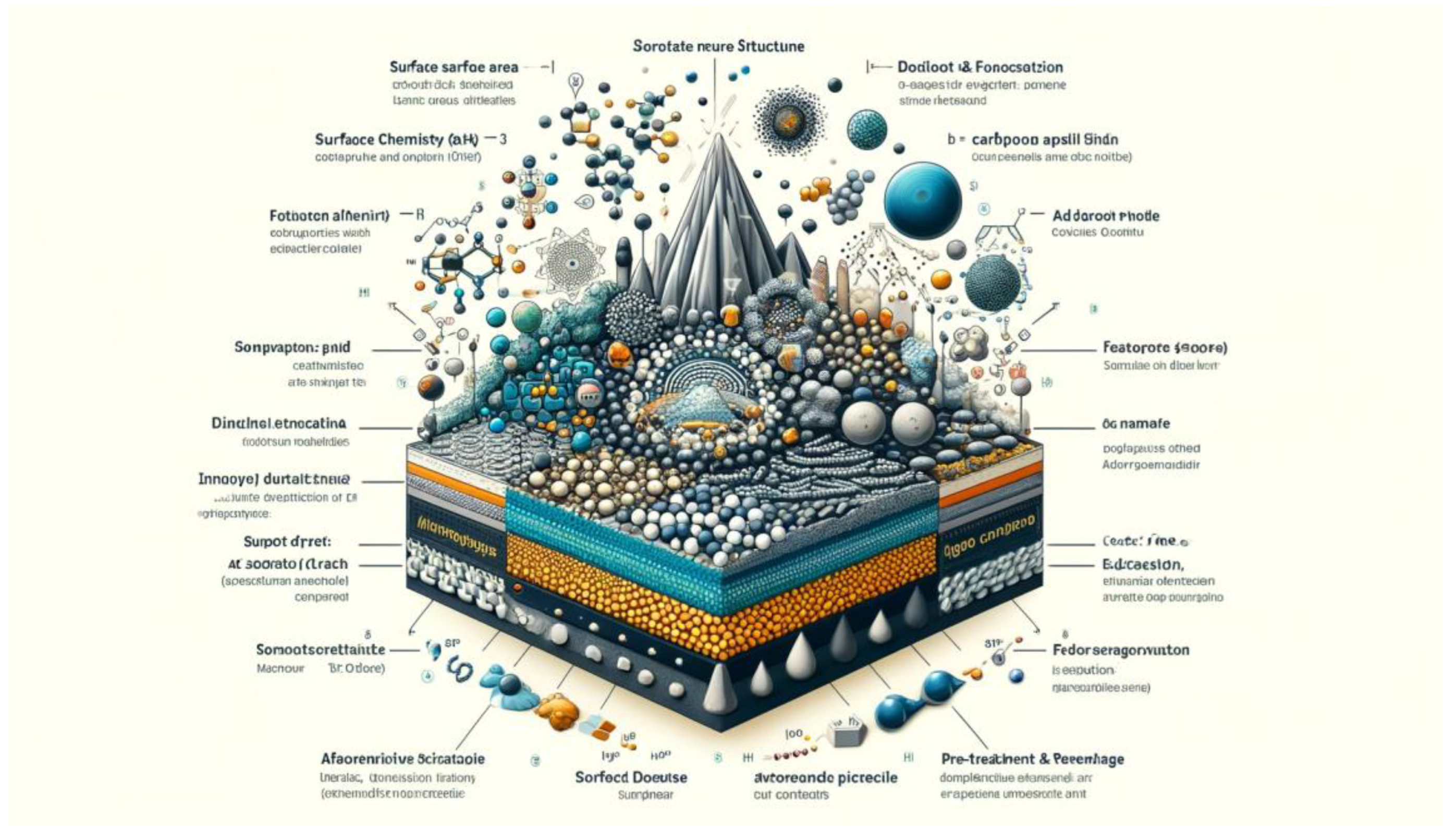
6. Applications of BAC in Water Purification
6.1. Removal of Organic Contaminants
The removal of organic contaminants from water using biowaste activated carbon (BAC) is a widely studied and effective method due to BAC’s high surface area, porous structure, and diverse surface chemistry [23]. BAC materials have demonstrated excellent adsorption capabilities for a broad range of organic contaminants, including volatile organic compounds (VOCs), pharmaceuticals, pesticides, industrial chemicals, and emerging pollutants. Several mechanisms contribute to the removal of organic contaminants by BAC, including physical adsorption, chemical adsorption, and pore-filling mechanisms [123]. Here are some key points regarding the removal of organic contaminants using BAC:
- Physical Adsorption
Physical adsorption involves the accumulation of organic contaminants on the surface and within the pores of BAC through weak van der Waals forces [124]. The high surface area and microporous structure of BAC provide numerous adsorption sites for organic molecules, leading to the formation of a monolayer or multilayer adsorption.
The adsorption of organic contaminants by BAC is influenced by factors such as the molecular size, polarity, solubility, and concentration of the contaminants, as well as the surface area, pore structure, and surface chemistry of the BAC material. Non-polar organic compounds, such as benzene, toluene, and chlorinated solvents, are typically adsorbed more readily than polar or ionic compounds [125].
- 2.
- Chemical Adsorption
Chemical adsorption involves the formation of chemical bonds between organic contaminants and surface functional groups present on BAC, such as hydroxyl (-OH), carboxyl (-COOH), and amine (-NH2) groups. Chemical adsorption reactions include hydrogen bonding, π-π interactions, acid-base interactions, and complexation reactions [126].
Surface functional groups on BAC can undergo reversible or irreversible reactions with organic contaminants, leading to the formation of covalent or ionic bonds. Chemical adsorption is particularly effective for polar, acidic, or basic organic compounds, as well as compounds containing functional groups that can interact with specific surface sites on BAC.
- 3.
- Pore-Filling Mechanism
In addition to surface adsorption, organic contaminants may penetrate into the pores of BAC through a pore-filling mechanism, where they are physically trapped or immobilized within the pore structure of the material [127]. Pore-filling enhances the adsorption capacity and efficiency of BAC for organic contaminants with larger molecular sizes or higher molecular weights.
The pore structure and size distribution of BAC play a crucial role in determining the extent of pore-filling adsorption and the accessibility of organic contaminants to the internal surface area of the material. Microporous BAC materials with high surface area and narrow pore size distribution are particularly effective for adsorbing small organic molecules, while mesoporous and macroporous BAC materials facilitate the adsorption of larger molecules.
- 4.
- Influence of Solution Conditions
Solution pH, temperature, ionic strength, and composition can affect the adsorption of organic contaminants by BAC through changes in the surface charge, solubility, and speciation of contaminants, as well as the properties of BAC materials [123]. pH-dependent surface charge influences electrostatic interactions and ion exchange processes, while changes in temperature affect adsorption kinetics and thermodynamics [119].
Competitive adsorption between organic contaminants and other solutes in water, such as inorganic ions, natural organic matter (NOM), and co-existing pollutants, can influence the overall adsorption performance of BAC and the selectivity for specific contaminants [128].
- 5.
- Regeneration and Reuse
Spent BAC materials can be regenerated and reused through thermal desorption, chemical regeneration, solvent extraction, or biological treatment methods. Regeneration techniques remove adsorbed contaminants from BAC and restore its adsorption capacity, extending its service life and reducing operational costs.
Regeneration efficiency depends on factors such as the nature of the contaminants, the adsorption strength, and the stability of surface functional groups on BAC [129]. Optimizing regeneration conditions and treatment methods is essential for maintaining the adsorption performance and sustainability of BAC-based adsorbents.
Figure 11.
Removal of Organic Contaminants.
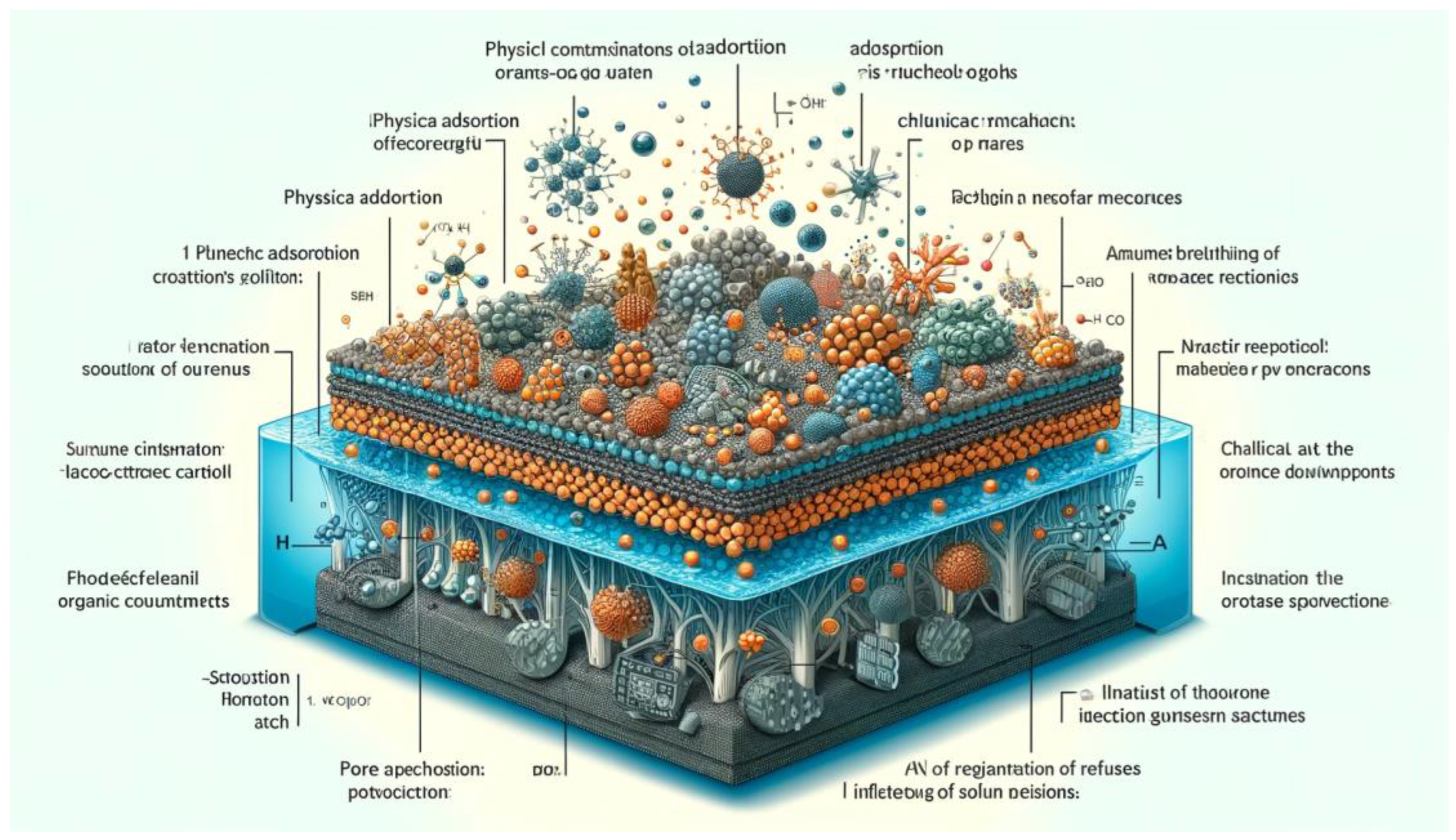
6.2. Removal of Inorganic Contaminants
The removal of inorganic contaminants from water using biowaste activated carbon (BAC) involves various mechanisms, including physical adsorption, chemical adsorption, ion exchange, and surface complexation [130]. BAC materials have demonstrated effectiveness in removing a wide range of inorganic contaminants, including heavy metals, metalloids, ions, and radioactive elements. Here are some key points regarding the removal of inorganic contaminants using BAC:
- Physical Adsorption
Physical adsorption involves the accumulation of inorganic contaminants on the surface and within the pores of BAC through weak van der Waals forces [124]. The high surface area and porous structure of BAC provide numerous adsorption sites for inorganic ions and molecules, leading to the formation of a monolayer or multilayer adsorption.
Physical adsorption is particularly effective for removing inorganic contaminants with low solubility and high affinity for solid surfaces, such as heavy metals and metalloids [131]. The adsorption capacity of BAC for inorganic contaminants depends on factors such as the surface area, pore structure, and surface chemistry of the material, as well as the properties of the contaminants, including their concentration, speciation, and ionic strength.
- 2.
- Chemical Adsorption and Surface Complexation
Chemical adsorption involves the formation of chemical bonds between inorganic contaminants and surface functional groups present on BAC, such as hydroxyl (-OH), carboxyl (-COOH), and amine (-NH2) groups. Chemical adsorption reactions include ion exchange, precipitation, coordination, and surface complexation [126].
Surface functional groups on BAC can undergo reversible or irreversible reactions with inorganic contaminants, leading to the formation of covalent or ionic bonds. Chemical adsorption is particularly effective for removing metal ions, oxyanions, and other inorganic species through complexation and surface coordination reactions [132].
- 3.
- Ion Exchange
Ion exchange involves the exchange of ions between BAC and the surrounding solution, leading to the removal of undesirable ions from water. BAC materials with ion exchange properties can selectively adsorb cations or anions, depending on the surface charge and functional groups present on the material [133].
Ion exchange mechanisms on BAC are influenced by factors such as the pH, ionic strength, and composition of the solution, as well as the nature and concentration of the ions present. Competitive exchange between different ions can affect the selectivity and efficiency of ion exchange processes [134].
- 4.
- Influence of Solution Conditions
Solution pH, temperature, ionic strength, and composition can influence the adsorption of inorganic contaminants by BAC through changes in the surface charge, solubility, and speciation of contaminants, as well as the properties of BAC materials. pH-dependent surface charge influences electrostatic interactions and ion exchange processes, while changes in temperature affect adsorption kinetics and thermodynamics [135].
Competitive adsorption between inorganic contaminants and other solutes in water, such as organic matter, co-existing ions, and competing ligands, can influence the overall adsorption performance of BAC and the selectivity for specific contaminants.
- 5.
- Regeneration and Reuse
Spent BAC materials can be regenerated and reused through various techniques, including thermal desorption, chemical regeneration, solvent extraction, and biological treatment methods. Regeneration removes adsorbed contaminants from BAC and restores its adsorption capacity, extending its service life and reducing operational costs.
Regeneration efficiency depends on factors such as the nature of the contaminants, the adsorption strength, and the stability of surface functional groups on BAC [129]. Optimizing regeneration conditions and treatment methods is essential for maintaining the adsorption performance and sustainability of BAC-based adsorbents.
Figure 12.
Removal of Inorganic Contaminants.
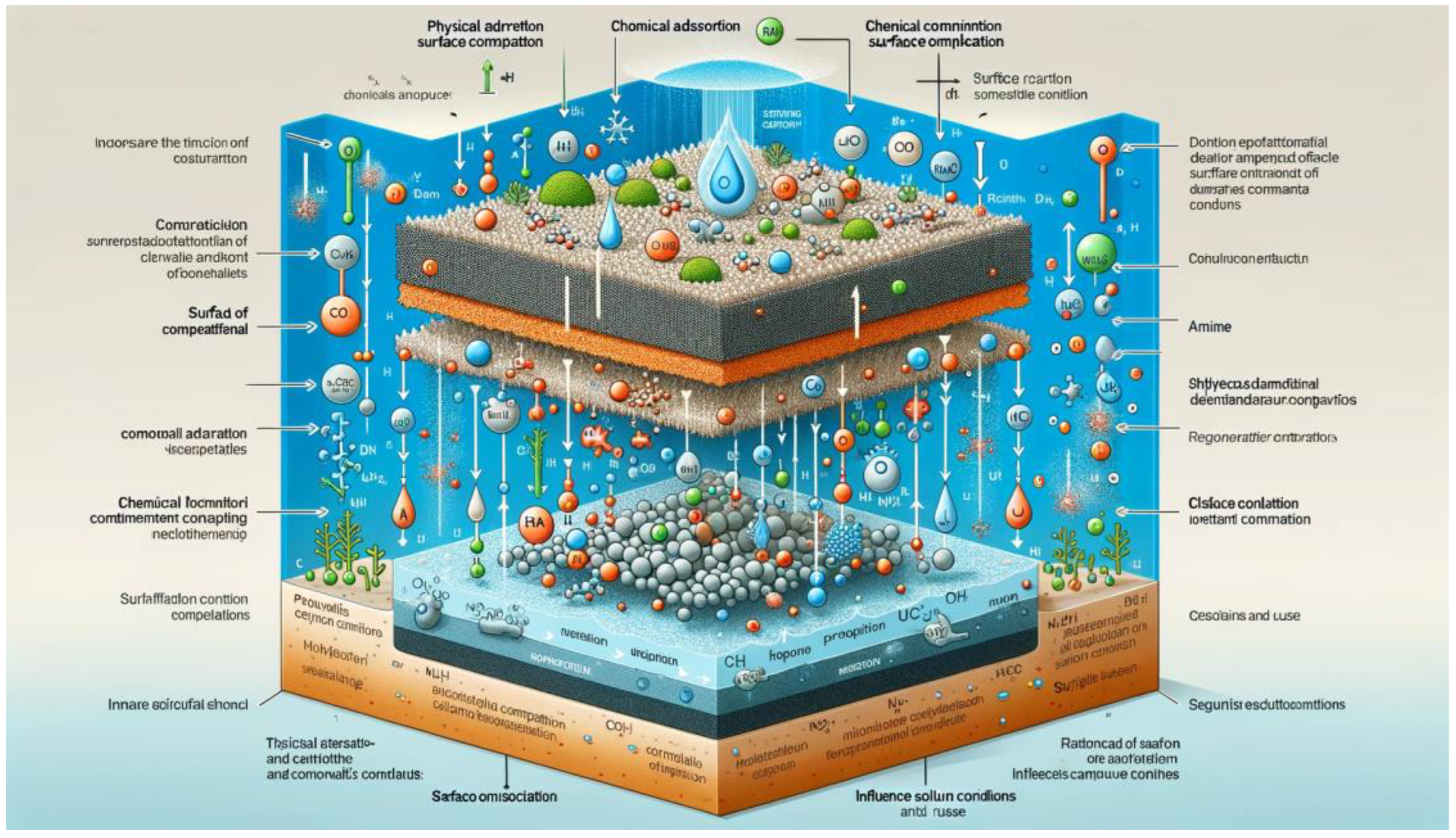
6.3. Removal of Emerging Pollutants
The removal of emerging pollutants from water using biowaste activated carbon (BAC) is an increasingly important application due to the growing concern over the presence of novel contaminants in water sources [136]. Emerging pollutants encompass a diverse range of chemicals, including pharmaceuticals, personal care products, endocrine-disrupting compounds, pesticides, and microplastics, which may pose risks to human health and the environment even at low concentrations. BAC has shown promising potential for the removal of emerging pollutants through various adsorption mechanisms. Here are some key points regarding the removal of emerging pollutants using BAC:
- Adsorption Mechanisms
BAC removes emerging pollutants from water primarily through physical adsorption and chemical adsorption mechanisms [137]. Physical adsorption involves the accumulation of pollutants on the surface and within the pores of BAC through weak van der Waals forces, while chemical adsorption involves the formation of chemical bonds or interactions between pollutants and surface functional groups on BAC.
The adsorption mechanisms depend on the properties of the emerging pollutants, including their molecular size, polarity, solubility, and functional groups, as well as the surface area, pore structure, and surface chemistry of the BAC material [135]. Adsorption selectivity and efficiency can be enhanced by optimizing BAC synthesis, activation, and operation parameters.
- 2.
- Removal of Pharmaceuticals and Personal Care Products (PPCPs)
BAC has demonstrated effective adsorption capabilities for removing pharmaceuticals and personal care products (PPCPs) from water sources [138]. PPCPs are commonly detected in wastewater effluents and surface waters due to their widespread use and incomplete removal by conventional treatment processes.
BAC materials with high surface area and tailored surface chemistry can adsorb a variety of PPCPs, including antibiotics, analgesics, hormones, and personal care product ingredients [139]. The adsorption efficiency depends on factors such as the molecular structure, hydrophobicity, and charge of the PPCPs, as well as the solution conditions and BAC properties.
- 3.
- Removal of Endocrine-Disrupting Compounds (EDCs)
BAC can effectively adsorb endocrine-disrupting compounds (EDCs), which interfere with hormonal systems and may have adverse effects on human health and wildlife. EDCs include synthetic chemicals such as bisphenol A (BPA), phthalates, and alkylphenols, as well as natural hormones and steroid compounds [140].
The adsorption of EDCs by BAC is influenced by factors such as the hydrophobicity, size, and chemical structure of the compounds, as well as the presence of competing solutes and interactions with surface functional groups on BAC [141]. Tailoring BAC properties and optimizing treatment conditions can enhance the removal efficiency of EDCs from water.
- 4.
- Removal of Pesticides and Agrochemicals
BAC is effective in removing pesticides and agrochemicals from water sources, including herbicides, insecticides, fungicides, and their metabolites. Pesticides are frequently detected in agricultural runoff, surface waters, and groundwater, posing risks to aquatic ecosystems and human health.
The adsorption of pesticides by BAC depends on factors such as the chemical structure, polarity, and solubility of the compounds, as well as the surface area, pore size distribution, and surface chemistry of the BAC material [142]. Optimizing BAC properties and treatment conditions can enhance the adsorption capacity and selectivity for specific pesticides.
- 5.
- Removal of Microplastics
BAC has shown potential for removing microplastics from water sources through physical adsorption mechanisms. Microplastics are small plastic particles (<5 mm) that are widely distributed in aquatic environments and pose risks to marine life and human health [143].
BAC materials with microporous and mesoporous structures can adsorb microplastics through mechanical entrapment and surface interactions. The adsorption efficiency depends on factors such as the size, shape, surface charge, and hydrophobicity of the microplastics, as well as the pore size distribution and surface chemistry of the BAC material [144].
- 6.
- Influence of Solution Conditions
Solution pH, temperature, ionic strength, and composition can influence the adsorption of emerging pollutants by BAC through changes in the surface charge, solubility, and speciation of pollutants, as well as the properties of BAC materials [135]. pH-dependent surface charge influences electrostatic interactions and ion exchange processes, while changes in temperature affect adsorption kinetics and thermodynamics.
Competitive adsorption between emerging pollutants and other solutes in water, such as natural organic matter (NOM), co-existing pollutants, and inorganic ions, can influence the overall adsorption performance of BAC and the selectivity for specific pollutants [145].
- 7.
- Regeneration and Reuse
Spent BAC materials can be regenerated and reused through various techniques, including thermal desorption, chemical regeneration, solvent extraction, and biological treatment methods. Regeneration removes adsorbed pollutants from BAC and restores its adsorption capacity, extending its service life and reducing operational costs.
Regeneration efficiency depends on factors such as the nature of the pollutants, the adsorption strength, and the stability of surface functional groups on BAC [129]. Optimizing regeneration conditions and treatment methods is essential for maintaining the adsorption performance and sustainability of BAC-based adsorbents.
Figure 13.
Removal of Emerging Pollutants.
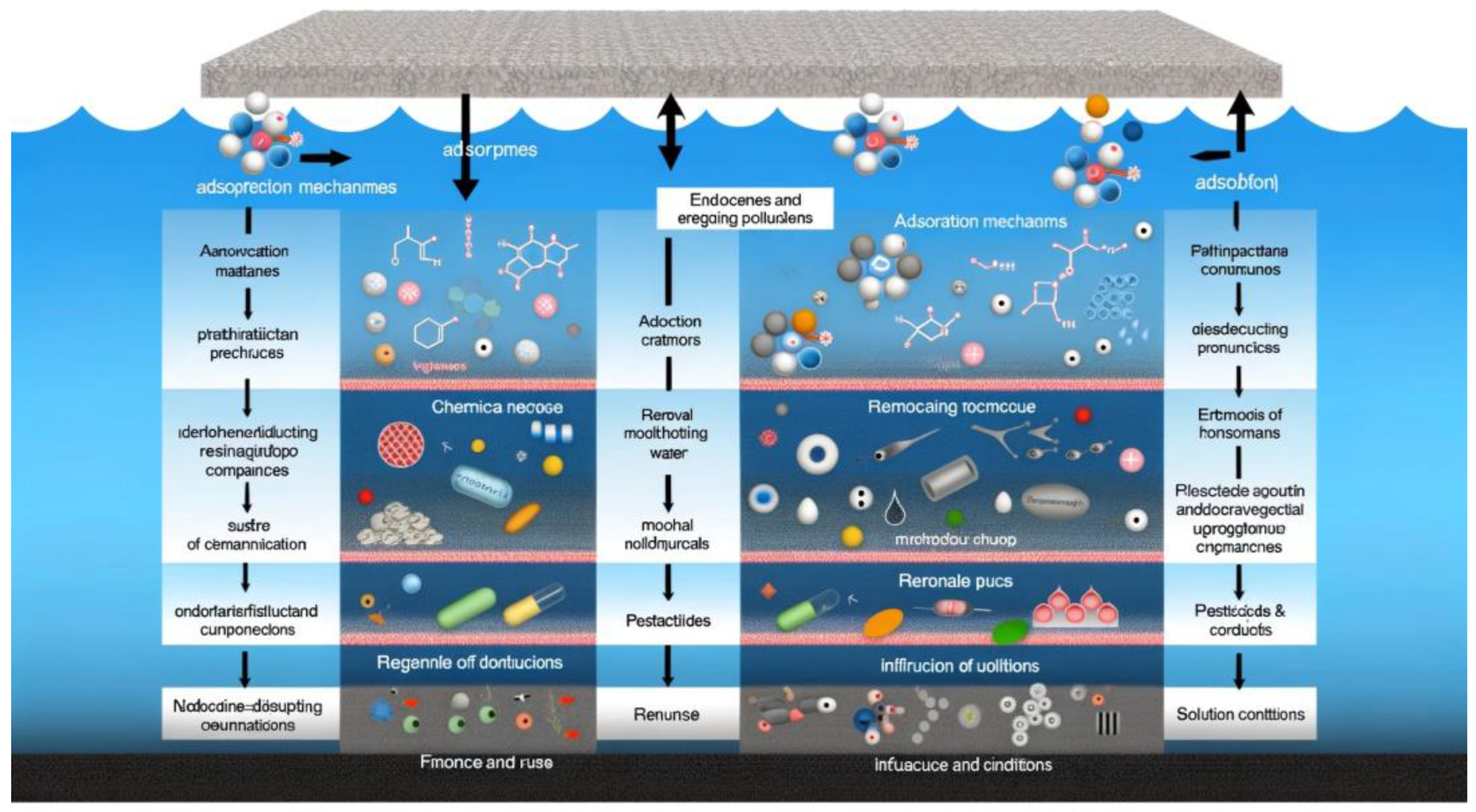
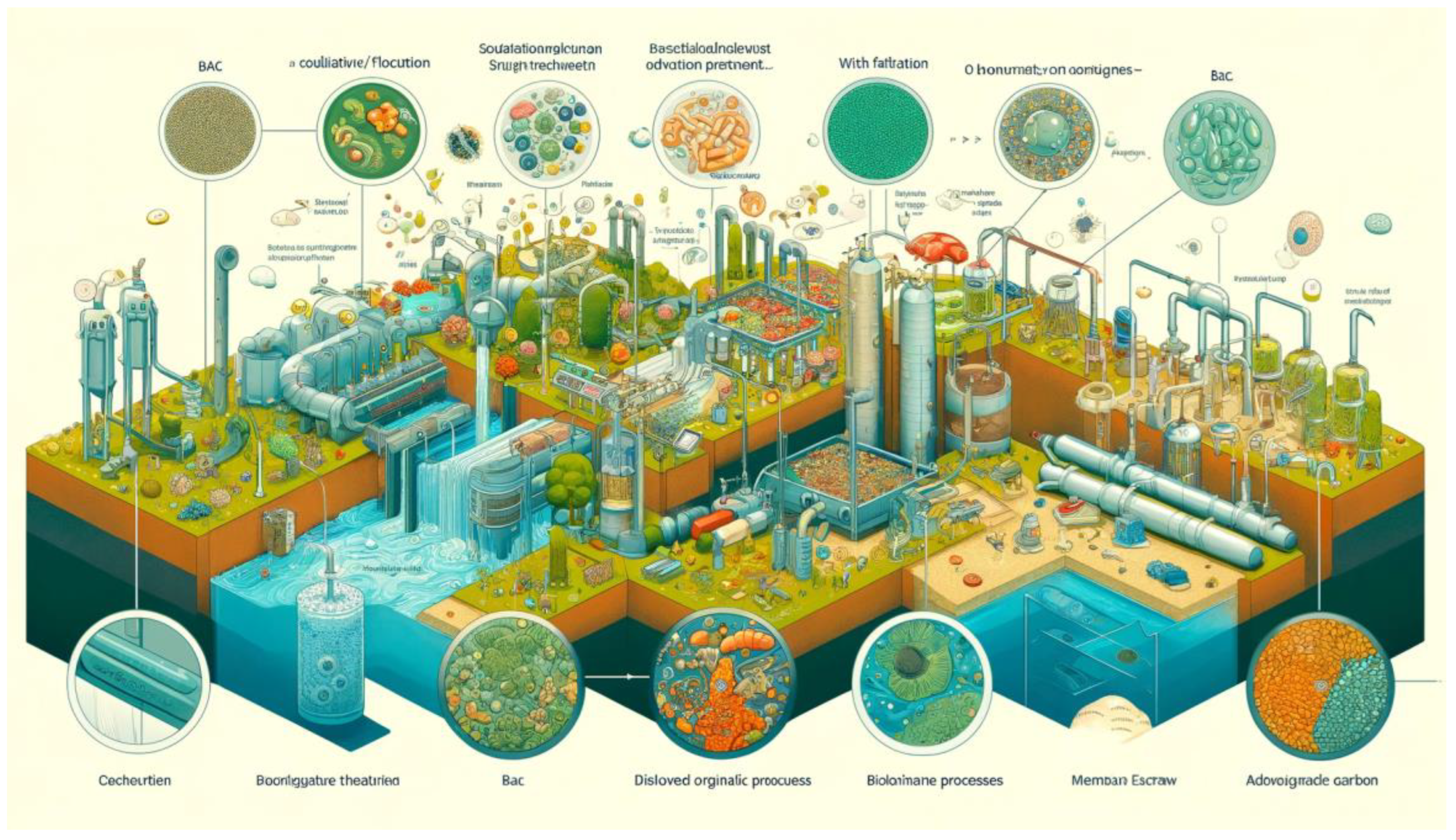
6.4. BAC in Combination with Other Treatment Methods
Biowaste activated carbon (BAC) can be effectively integrated with other treatment methods to enhance the overall efficiency and performance of water treatment systems. Combining BAC with complementary treatment technologies allows for synergistic effects, improved removal efficiencies, and broader contaminant coverage. Several combinations of BAC with other treatment methods have been explored for various water treatment applications. Here are some common combinations:
- BAC with Coagulation/Flocculation:
Coagulation and flocculation processes are commonly used to remove suspended particles, colloids, and organic matter from water by destabilizing and agglomerating contaminants into larger flocs that can be easily removed by sedimentation or filtration [146].
Combining BAC with coagulation/flocculation processes enhances the removal of organic and inorganic contaminants by adsorbing dissolved substances, capturing fine particulates, and providing additional surface area for floc formation.
The pre-treatment of water with coagulants (e.g., aluminum sulfate, ferric chloride) or flocculants (e.g., polymers) helps to reduce the load on BAC and improve the overall efficiency of the treatment system [147].
- 2.
- BAC with Filtration
Filtration processes, such as rapid sand filtration, granular media filtration, and membrane filtration, are used to remove suspended solids, particulate matter, microorganisms, and some dissolved contaminants from water by physical straining, adsorption, and size exclusion.
Integrating BAC into filtration systems as a granular media or adsorptive layer enhances the removal of dissolved organic compounds, disinfection by-products, and trace contaminants that are not effectively removed by conventional filtration media [124].
BAC acts as a secondary barrier, providing additional adsorption capacity and improving the overall treatment efficiency by capturing residual contaminants and reducing breakthrough.
- 3.
- BAC with Oxidation Processes
Oxidation processes, such as ozonation, UV/H2O2, and advanced oxidation processes (AOPs), are used to degrade organic pollutants, disinfect water, and remove recalcitrant compounds by generating reactive oxygen species (ROS) and oxidative radicals.
Combining BAC with oxidation processes enhances the removal of organic contaminants by adsorbing intermediate oxidation by-products, reducing the formation of disinfection by-products (DBPs), and providing quenching sites for ROS [148].
BAC can be used as a polishing step after oxidation processes to remove residual organics and improve water quality before distribution or discharge.
- 4.
- BAC with Biological Treatment
Biological treatment processes, such as activated sludge, biofiltration, and constructed wetlands, utilize microorganisms to degrade organic pollutants, metabolize nutrients, and remove contaminants through biological transformations.
Integrating BAC into biological treatment systems as a biofilm carrier or fixed-bed media enhances the removal of refractory organics, trace contaminants, and micropollutants by providing additional surface area for microbial attachment and adsorption [149].
BAC acts as a biofilm support, promoting microbial growth and activity, while also adsorbing biodegradation intermediates and reducing the release of soluble organics into the effluent.
- 5.
- BAC with Ion Exchange
Ion exchange processes utilize ion exchange resins or media to remove dissolved ions, heavy metals, and trace contaminants from water by exchanging ions between the solid phase and the solution phase.
Combining BAC with ion exchange processes enhances the removal of specific inorganic contaminants, such as heavy metals, metalloids, and radionuclides, by providing additional adsorption sites and complementary mechanisms of removal [150].
BAC can be used as a pre-treatment or post-treatment step in ion exchange systems to remove organic matter, reduce fouling, and extend the service life of ion exchange resins.
- 6.
- BAC with Membrane Processes
Membrane processes, such as reverse osmosis (RO), nanofiltration (NF), and ultrafiltration (UF), are used to remove dissolved ions, particles, microorganisms, and contaminants from water by physical separation based on size, charge, and molecular weight [151].
Integrating BAC with membrane processes as a pre-treatment or post-treatment step enhances the removal of organic foulants, disinfection by-products, and trace contaminants by adsorbing soluble organics, reducing membrane fouling, and improving water quality.
BAC acts as a protective barrier for membranes, reducing fouling and extending membrane lifespan, while also providing additional adsorption capacity for removing contaminants that may pass through the membrane.
- 7.
- BAC with Advanced Treatment Technologies
Advanced treatment technologies, such as electrocoagulation, electrochemical oxidation, and hybrid systems, combine multiple physicochemical and biological processes to achieve superior contaminant removal and water quality improvement [152].
Combining BAC with advanced treatment technologies enables the synergistic effects of adsorption, oxidation, coagulation, and biological degradation, leading to enhanced treatment performance, reduced energy consumption, and improved sustainability.
BAC acts as a versatile adsorbent and catalyst support, facilitating the integration of diverse treatment mechanisms and enhancing the overall efficiency and reliability of advanced treatment systems [153].
Figure 14.
BAC in Combination with Other Treatment Methods.
7. Regeneration and Reuse of BAC
7.1. Regeneration Techniques
Regeneration of spent biowaste activated carbon (BAC) is essential for extending its service life, reducing operational costs, and maintaining adsorption performance. Regeneration techniques aim to remove adsorbed contaminants from BAC and restore its adsorption capacity and efficiency [154]. Several regeneration methods have been developed, each with its advantages, limitations, and applicability to different types of contaminants and BAC materials. Here are some common regeneration techniques for biowaste activated carbon:
- Thermal Desorption:
Thermal desorption involves heating the spent BAC to high temperatures (>500°C) under controlled conditions to volatilize and desorb adsorbed contaminants from the carbon matrix [155].
During thermal desorption, organic contaminants are thermally decomposed or vaporized, while inorganic contaminants may undergo desorption or chemical transformations.
Thermal desorption is effective for removing volatile organic compounds (VOCs), semi-volatile organic compounds (SVOCs), and certain inorganic contaminants, such as mercury and arsenic.
Advantages of thermal desorption include high efficiency, complete regeneration, and minimal generation of secondary waste. However, it requires significant energy input and may lead to the release of harmful emissions if not properly controlled.
- 2.
- Chemical Regeneration
Chemical regeneration involves treating the spent BAC with chemical agents or solutions to desorb or chemically react with adsorbed contaminants and restore the adsorption capacity of the carbon material [156].
Common chemical regeneration agents include acids, bases, oxidizing agents, reducing agents, and complexing agents, depending on the nature of the contaminants and surface chemistry of BAC.
Chemical regeneration can be performed in situ or ex situ, using batch or continuous processes, and may involve multiple regeneration cycles to achieve complete desorption [23].
Chemical regeneration is effective for removing inorganic contaminants, such as heavy metals, metalloids, and ions, as well as certain organic contaminants that can be chemically desorbed or degraded.
Advantages of chemical regeneration include versatility, selectivity, and the ability to tailor regeneration conditions to specific contaminants. However, it may require handling hazardous chemicals, generating secondary waste, and may be less effective for highly stable or refractory contaminants.
- 3.
- Solvent Extraction
Solvent extraction involves washing the spent BAC with organic solvents or aqueous solutions to extract adsorbed contaminants from the carbon pores and surfaces.
Organic solvents, such as alcohols, ketones, and chlorinated hydrocarbons, are commonly used for solvent extraction due to their ability to dissolve organic compounds and facilitate desorption [157].
Aqueous solutions, such as surfactants, chelating agents, or complexing agents, may be used for extracting inorganic contaminants by forming soluble complexes or precipitates.
Solvent extraction is particularly effective for removing non-polar organic compounds, hydrophobic contaminants, and certain polar or ionic contaminants that are soluble in organic solvents or aqueous solutions [158].
Advantages of solvent extraction include mild operating conditions, minimal energy input, and the ability to recover and recycle the extracted contaminants. However, it may require large volumes of solvent, long extraction times, and may be less effective for strongly bound or hydrophilic contaminants.
- 4.
- Biological Treatment
Biological treatment involves using microorganisms to biodegrade adsorbed contaminants or metabolize organic matter on the surface of spent BAC.
Biological regeneration processes may occur naturally in biological filters, biofilm reactors, or constructed wetlands, where microbial activity contributes to the degradation and removal of organic pollutants [159].
Alternatively, ex situ biological treatments may involve inoculating spent BAC with specific microbial cultures or enzymes to enhance biodegradation and accelerate the regeneration process.
Biological treatment is effective for removing biodegradable organic compounds, such as pharmaceuticals, pesticides, and organic acids, as well as reducing the biofouling potential of BAC [124].
Advantages of biological treatment include sustainability, environmental friendliness, and the potential for complete mineralization of organic contaminants. However, it may require longer treatment times, nutrient supplementation, and may be less effective for recalcitrant or toxic contaminants.
- 5.
- Electrochemical Regeneration
Electrochemical regeneration involves applying an electric current or potential to the spent BAC in an electrolytic cell to induce desorption, oxidation, or reduction of adsorbed contaminants.
Electrochemical processes, such as electrooxidation, electrocoagulation, and electro-Fenton oxidation, generate reactive oxygen species (ROS) and electrochemically active species that facilitate contaminant removal [160].
Electrochemical regeneration can be performed in situ or ex situ, using various electrode materials, electrolytes, and operating conditions to optimize desorption and degradation.
Electrochemical regeneration is effective for removing both organic and inorganic contaminants, including persistent pollutants, emerging contaminants, and disinfection by-products [161].
Advantages of electrochemical regeneration include rapid kinetics, selective degradation, and the potential for on-demand treatment. However, it may require specialized equipment, control systems, and monitoring to ensure efficient operation and minimize energy consumption.
- 6.
- Combined Regeneration Techniques
Combined regeneration techniques involve integrating multiple regeneration methods, such as thermal desorption with chemical washing, solvent extraction with biological treatment, or electrochemical oxidation with physical desorption, to enhance the overall regeneration efficiency and address specific challenges.
Combined regeneration approaches leverage the synergistic effects of different treatment mechanisms to optimize contaminant removal, minimize energy consumption, and improve process economics [162].
Advantages of combined regeneration techniques include flexibility, adaptability, and the ability to tailor treatment strategies to the unique characteristics of the spent BAC and the target contaminants. However, it may require complex process design, optimization, and integration of multiple unit operations.
7.2. Challenges and Considerations
While biowaste activated carbon (BAC) holds promise for water purification, several challenges and considerations must be addressed to maximize its effectiveness and applicability in water treatment processes:
- Contaminant Specificity: BAC may exhibit variations in adsorption efficiency and selectivity depending on the type and characteristics of the contaminants present in water [163]. Tailoring BAC properties to specific contaminants and understanding their adsorption mechanisms are crucial for achieving optimal removal efficiency.
- Regeneration Efficiency: The regeneration of spent BAC can be energy-intensive, costly, and may not always fully restore its adsorption capacity. Developing efficient and sustainable regeneration techniques while minimizing environmental impacts and operational costs is essential for the long-term viability of BAC-based water treatment systems [112].
- Water Matrix Interference: The presence of co-existing ions, natural organic matter (NOM), and other dissolved substances in water may compete with target contaminants for adsorption sites on BAC, leading to reduced removal efficiency and breakthrough [164]. Understanding the interactions between BAC and the water matrix is essential for optimizing treatment performance under real-world conditions.
- Long-Term Performance: Assessing the long-term stability and performance of BAC materials under continuous operation is critical for ensuring reliable and sustainable water treatment. Factors such as fouling, aging, pore blockage, and microbial growth on BAC surfaces may affect its adsorption capacity and require periodic monitoring and maintenance [165].
- Scale-Up and Implementation: Scaling up BAC-based water treatment systems from laboratory-scale studies to full-scale applications presents engineering and logistical challenges, including reactor design, flow dynamics, media regeneration, and operational management. Developing scalable and cost-effective treatment solutions that meet regulatory requirements and address site-specific needs is essential for successful implementation [166].
- Environmental Impact: The production, use, and disposal of BAC materials may have environmental implications, including energy consumption, carbon emissions, waste generation, and potential leaching of contaminants. Considering the life cycle impacts of BAC-based water treatment systems and adopting sustainable practices, such as using renewable feedstocks, minimizing waste generation, and promoting recycling and reuse, can mitigate environmental concerns.
- Emerging Contaminants: BAC’s effectiveness in removing emerging contaminants, such as pharmaceuticals, personal care products, microplastics, and nanomaterials, requires further investigation due to their complex physicochemical properties and potential health risks. Monitoring and addressing emerging contaminants in water sources necessitate ongoing research, regulatory updates, and technological advancements to ensure public health and environmental protection [167].
- Technological Advancements: Continual research and development efforts are needed to advance BAC synthesis, activation, modification, and regeneration techniques, as well as to explore novel applications, such as hybrid treatment systems, smart materials, and advanced characterization methods. Leveraging emerging technologies, such as nanotechnology, artificial intelligence, and biotechnology, can enhance the performance, efficiency, and sustainability of BAC-based water treatment solutions.
Figure 15.
Regeneration and Reuse of BAC.
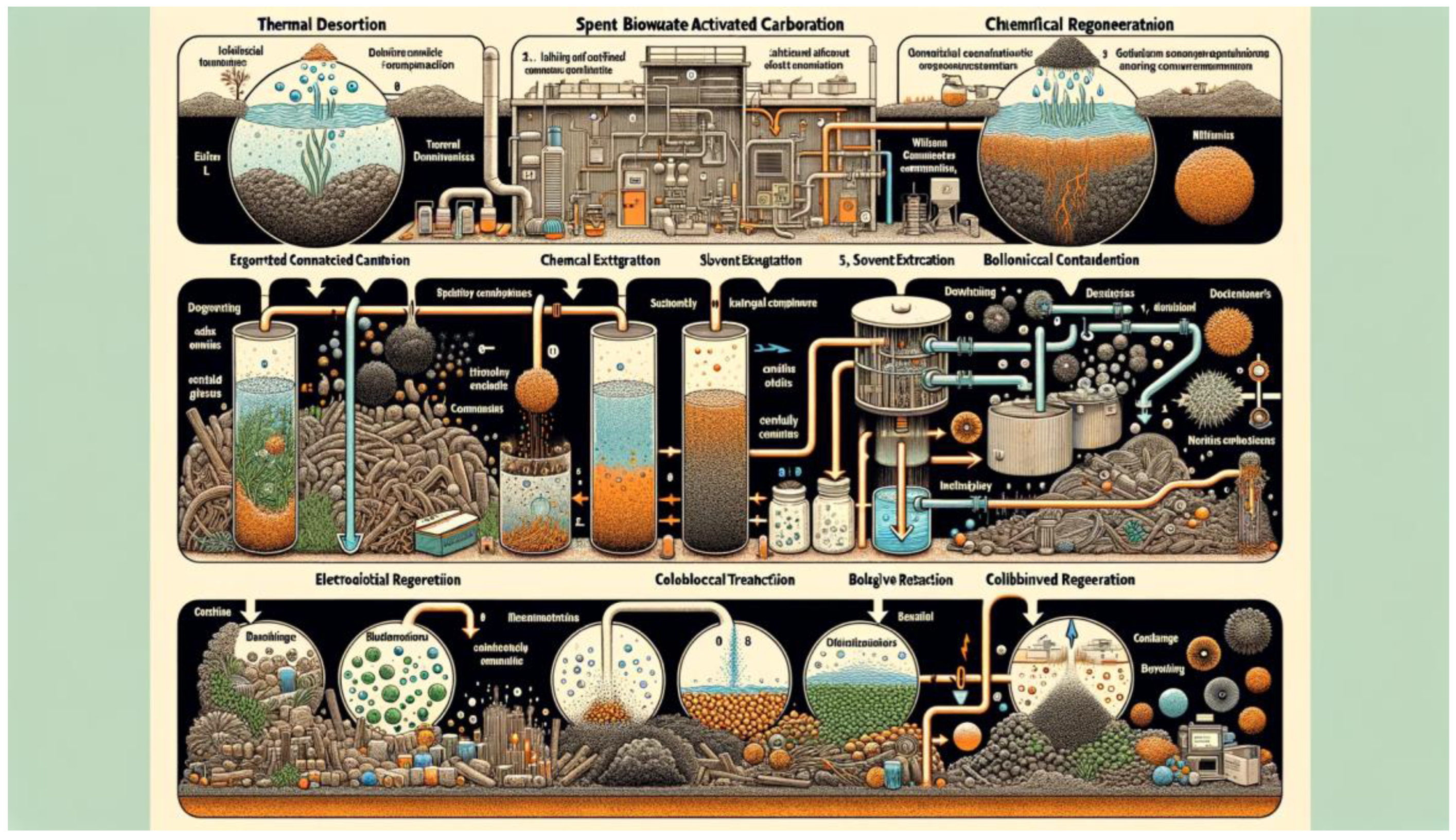
8. Environmental and Economic Considerations
8.1. Sustainability of BAC Production
The sustainability of biowaste activated carbon (BAC) production is a critical consideration for ensuring the environmental and social responsibility of water treatment processes. Several factors contribute to the sustainability of BAC production:
- Feedstock Selection: Utilizing biowaste materials, such as agricultural residues, food waste, forestry by-products, and wastewater sludge, as feedstock for BAC production reduces reliance on virgin resources, minimizes waste generation, and promotes circular economy principles. Selecting locally sourced, abundant, and renewable feedstocks that have low environmental impact and are readily available can enhance the sustainability of BAC production.
- Production Processes: Implementing environmentally friendly and energy-efficient production processes for BAC synthesis, activation, and modification reduces greenhouse gas emissions, energy consumption, and resource depletion [168]. Adopting sustainable manufacturing practices, such as biomass pyrolysis, carbonization, and activation using renewable energy sources, bio-based catalysts, and green solvents, minimizes environmental footprint and enhances process sustainability.
- Waste Management: Proper management of by-products, residues, and emissions generated during BAC production is essential for minimizing environmental pollution and resource depletion [169]. Implementing waste reduction, reuse, recycling, and treatment measures, such as capturing and recycling process gases, recovering valuable by-products, and treating wastewater and solid residues, ensures responsible waste management and reduces environmental impact.
- Life Cycle Assessment (LCA): Conducting life cycle assessments to evaluate the environmental, economic, and social impacts of BAC production from cradle to grave provides insights into its sustainability performance and identifies opportunities for improvement [170]. Considering factors such as raw material sourcing, manufacturing processes, transportation, use phase, and end-of-life disposal enables informed decision-making and promotes sustainable practices throughout the product life cycle.
- Environmental Regulations and Standards: Complying with environmental regulations, standards, and certifications, such as ISO 14001, EMAS, and eco-labeling schemes, ensures regulatory compliance, stakeholder confidence, and market competitiveness [171]. Adhering to environmental best practices, pollution prevention measures, and sustainable development goals fosters accountability, transparency, and continuous improvement in BAC production.
- Social Responsibility: Promoting social responsibility and ethical practices in BAC production involves safeguarding human health, worker safety, and community well-being, as well as respecting indigenous rights, cultural heritage, and local livelihoods [172]. Engaging with stakeholders, fostering partnerships, and investing in social initiatives, such as education, training, and capacity building, fosters inclusive and sustainable development that benefits society as a whole.
- Economic Viability: Ensuring the economic viability and competitiveness of BAC production involves optimizing resource utilization, minimizing production costs, and maximizing value creation. Investing in research and innovation, process optimization, and market diversification enhances product performance, efficiency, and marketability, driving economic growth and long-term sustainability.
8.2. Cost-Effectiveness and Scalability
Ensuring the cost-effectiveness and scalability of biowaste activated carbon (BAC) production is crucial for widespread adoption and implementation in water treatment applications. Several strategies can be employed to enhance cost-effectiveness and scalability:
- Feedstock Optimization: Selecting low-cost and abundant biowaste feedstocks, such as agricultural residues, forestry by-products, and food processing waste, can reduce raw material expenses and minimize production costs [173]. Identifying locally available feedstock sources and establishing strategic partnerships with suppliers enable reliable and cost-efficient feedstock procurement.
- Process Efficiency: Optimizing production processes, including carbonization, activation, impregnation, and post-treatment, improves energy efficiency, resource utilization, and product yield. Implementing process optimization techniques, such as process intensification, heat integration, and automation, reduces production time, energy consumption, and labor costs, enhancing overall process efficiency and cost-effectiveness.
- Scale-Up Strategies: Developing scalable production technologies and manufacturing processes enables efficient production scale-up from laboratory-scale to pilot-scale and commercial-scale operations. Investing in equipment upgrades, production facilities, and infrastructure development facilitates economies of scale, reduces unit costs, and improves production efficiency, making BAC production more cost-effective and scalable [174].
- By-Product Valorization: Exploring opportunities for valorizing by-products, residues, and waste streams generated during BAC production, such as biochar, syngas, bio-oil, and bio-based chemicals, creates additional revenue streams and enhances overall process economics [175]. Implementing by-product recovery, recycling, and utilization strategies maximizes resource efficiency, minimizes waste generation, and improves the sustainability and cost-effectiveness of BAC production.
- Technological Innovation: Investing in research and development (R&D) initiatives to advance BAC synthesis, activation, modification, and regeneration technologies drives technological innovation and process optimization. Leveraging emerging technologies, such as microwave pyrolysis, hydrothermal carbonization, and 3D printing, enhances production efficiency, product quality, and cost competitiveness, positioning BAC as a cost-effective and scalable solution for water treatment [176].
- Market Diversification: Expanding market opportunities and diversifying product applications beyond water treatment, such as air purification, soil remediation, energy storage, and advanced materials, increases demand and revenue potential for BAC products. Identifying niche markets, addressing unmet needs, and developing tailored solutions for specific industries and applications enhance market competitiveness and scalability of BAC production.
- Cost-Benefit Analysis: Conducting comprehensive cost-benefit analyses to evaluate the economic viability and financial feasibility of BAC production projects provides insights into investment returns, payback periods, and profitability metrics [177]. Considering factors such as capital investment, operating costs, revenue generation, and market risks enables informed decision-making and strategic planning for cost-effective and scalable BAC production.
Figure 16.
Environmental and Economic Considerations.
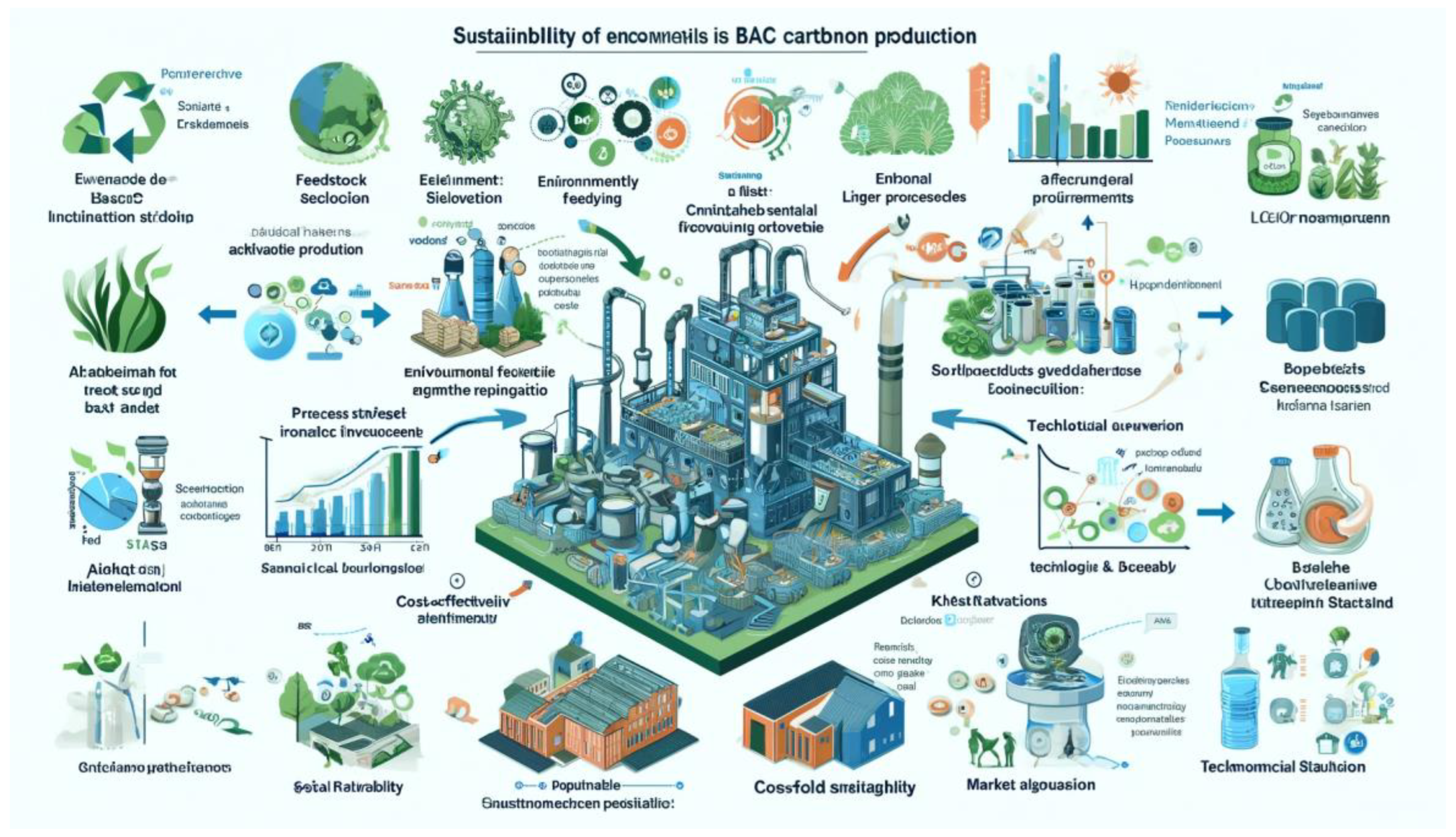
9. Future Directions and Emerging Trends
9.1. Advances in BAC Synthesis Techniques
Advances in biowaste activated carbon (BAC) synthesis techniques have led to the development of innovative methods for producing high-quality BAC with tailored properties and enhanced performance for water treatment applications [177]. These advancements have focused on improving production efficiency, product quality, and sustainability while addressing challenges related to feedstock availability, process scalability, and environmental impact. Here are some notable advances in BAC synthesis techniques:
- Hydrothermal Carbonization (HTC): Hydrothermal carbonization is a promising technique for converting biowaste feedstocks, such as agricultural residues, food waste, and wastewater sludge, into biochar precursor materials through controlled heating in an aqueous environment under elevated temperature and pressure conditions. HTC offers several advantages, including high carbon yield, rapid reaction kinetics, and low energy consumption, making it an efficient and sustainable method for BAC synthesis.
- Microwave Pyrolysis: Microwave pyrolysis is an emerging technique for producing BAC from biowaste feedstocks using microwave irradiation to heat and decompose organic materials into biochar in the absence of oxygen. Microwave heating enables rapid and uniform heating of feedstock particles, leading to shorter processing times, higher carbonization efficiency, and improved product quality compared to conventional pyrolysis methods. Microwave pyrolysis also offers greater control over process parameters, such as temperature, heating rate, and residence time, allowing for the production of BAC with tailored properties and enhanced adsorption performance.
- Solvent-Free Activation: Solvent-free activation methods, such as steam activation and carbon dioxide activation, have gained attention as environmentally friendly alternatives to conventional chemical activation processes for producing BAC. Steam activation involves treating biochar precursor materials with steam at high temperatures to create a highly porous structure with a large surface area, while carbon dioxide activation utilizes carbon dioxide gas as an activating agent to enhance micropore development and surface reactivity. Solvent-free activation methods offer several advantages, including reduced environmental impact, simplified process operation, and improved adsorption properties of BAC products.
- Biomass Blending and Co-Pyrolysis: Biomass blending and co-pyrolysis involve combining multiple biowaste feedstocks with complementary properties to optimize BAC synthesis and product performance. By blending different types of biomass materials, such as agricultural residues, woody biomass, and organic waste, researchers can tailor the chemical composition, pore structure, and surface chemistry of BAC to enhance its adsorption capacity, selectivity, and regeneration efficiency. Co-pyrolysis of biomass blends allows for synergistic interactions between feedstock components, leading to the formation of BAC with unique properties and improved performance for water treatment applications.
- Activation with Sustainable Catalysts: Activation with sustainable catalysts, such as alkali metal salts, phosphoric acid, and bio-derived catalysts, offers an environmentally friendly approach to enhancing the adsorption properties of BAC while minimizing the use of hazardous chemicals. Sustainable catalysts promote the activation of biochar precursor materials by facilitating pore formation, surface functionalization, and chemical activation reactions, resulting in BAC products with enhanced surface area, pore volume, and adsorption capacity. Activation with sustainable catalysts also reduces the environmental footprint of BAC production and contributes to the development of greener and more sustainable water treatment technologies.
- Integration of Additive Manufacturing Technologies: The integration of additive manufacturing technologies, such as 3D printing and extrusion, with BAC synthesis processes enables the precise control of material structure, morphology, and porosity, leading to the production of BAC with custom-designed architectures and optimized performance characteristics. Additive manufacturing allows for the fabrication of complex BAC structures, including hierarchical pore networks, interconnected channels, and functionalized surfaces, which enhance mass transfer, adsorption kinetics, and regeneration efficiency. By leveraging additive manufacturing techniques, researchers can overcome limitations associated with traditional BAC synthesis methods and develop innovative materials with tailored properties for specific water treatment applications.
9.2. Integration of BAC with Novel Purification Technologies
The integration of biowaste activated carbon (BAC) with novel purification technologies offers synergistic benefits and enhanced performance for water treatment applications. By combining BAC with innovative purification techniques, researchers and engineers can overcome limitations associated with traditional treatment methods and address emerging challenges related to water quality, contaminant removal, and resource sustainability. Here are several examples of how BAC can be integrated with novel purification technologies:
- Membrane-BAC Hybrid Systems
Membrane-BAC hybrid systems combine membrane filtration technologies, such as reverse osmosis (RO), nanofiltration (NF), or ultrafiltration (UF), with BAC adsorption for comprehensive water purification.
BAC is integrated as a pre-treatment or post-treatment step in membrane systems to remove organic contaminants, disinfection by-products (DBPs), and trace pollutants that may pass through the membrane.
The combination of membrane filtration and BAC adsorption improves overall treatment efficiency, reduces membrane fouling, extends membrane lifespan, and enhances water quality by removing a wide range of contaminants.
- 2.
- Advanced Oxidation-BAC Hybrid Systems
Advanced oxidation processes (AOPs), such as ozonation, UV/H2O2, and photocatalysis, generate highly reactive radicals and oxidants to degrade organic pollutants in water.
BAC is integrated with AOPs as a polishing step to remove intermediate oxidation products, residual organics, and recalcitrant compounds that may resist oxidation.
The synergy between advanced oxidation and BAC adsorption enhances contaminant removal efficiency, reduces the formation of harmful by-products, and improves overall water quality for safe and reliable drinking water supply.
- 3.
- Electrochemical-BAC Hybrid Systems
Electrochemical technologies, such as electrocoagulation, electrooxidation, and capacitive deionization, utilize electric current or potential to remove contaminants through electrochemical reactions and adsorption.
BAC is incorporated into electrochemical systems as an adsorbent or electrode material to enhance contaminant adsorption, ion exchange, and catalytic degradation.
The combination of electrochemical processes and BAC adsorption provides synergistic effects, such as increased contaminant removal capacity, improved energy efficiency, and reduced operating costs for sustainable water treatment.
- 4.
- Biochar-BAC Composite Materials
Biochar-BAC composite materials combine biochar derived from pyrolysis of biowaste with activated carbon for enhanced adsorption performance and environmental sustainability.
Biochar provides a sustainable and renewable source of carbon, while BAC offers high surface area, porosity, and adsorption capacity for contaminant removal.
The synergistic combination of biochar and BAC in composite materials improves contaminant removal efficiency, promotes carbon sequestration, and reduces greenhouse gas emissions, contributing to environmental protection and resource conservation.
- 5.
- Hybrid Adsorbent-BAC Systems
Hybrid adsorbents, such as metal-organic frameworks (MOFs), graphene-based materials, and functionalized nanoparticles, can be integrated with BAC to enhance adsorption capacity, selectivity, and regeneration properties.
BAC serves as a support material for immobilizing or incorporating hybrid adsorbents, providing structural stability, mechanical strength, and compatibility with water treatment processes.
The integration of hybrid adsorbents with BAC offers synergistic advantages, such as enhanced adsorption kinetics, improved contaminant uptake, and tunable properties for specific water treatment applications.
- 6.
- Smart Materials-BAC Systems
Smart materials, including responsive polymers, molecularly imprinted polymers (MIPs), and stimuli-responsive nanomaterials, can be combined with BAC to create adaptive and self-regulating water treatment systems.
BAC serves as a platform for immobilizing or incorporating smart materials, enabling real-time monitoring, controlled release, and selective adsorption of target contaminants.
The integration of smart materials with BAC provides advanced functionalities, such as selective adsorption under variable conditions, adaptive contaminant removal, and dynamic response to changing water quality parameters.
- 7.
- Hierarchical Structured-BAC Materials
Hierarchical structured materials, such as mesoporous carbons, activated carbon fibers, and carbon nanotube forests, can be synthesized with BAC to enhance mass transfer, diffusion kinetics, and adsorption performance.
BAC serves as a template or precursor for fabricating hierarchical structured materials with tailored pore size distribution, surface chemistry, and morphology.
The integration of hierarchical structured materials with BAC offers advantages, such as improved accessibility of active sites, enhanced adsorption capacity, and reduced diffusion limitations for efficient contaminant removal.
9.3. Application in Wastewater Treatment and Resource Recovery
Biowaste activated carbon (BAC) holds significant potential for application in wastewater treatment and resource recovery processes, offering efficient removal of contaminants and the opportunity for reclaiming valuable resources. Here’s how BAC can be utilized in wastewater treatment and resource recovery:
- Removal of Organic Contaminants
BAC can effectively adsorb a wide range of organic contaminants present in wastewater, including pharmaceuticals, pesticides, industrial chemicals, and organic dyes [178].
By integrating BAC into wastewater treatment systems, such as activated sludge processes, membrane bioreactors, or constructed wetlands, organic pollutants can be efficiently removed, improving effluent quality and meeting regulatory standards for discharge.
- 2.
- Reduction of Nutrient Pollution
BAC can adsorb nutrients, such as nitrogen and phosphorus compounds, which contribute to eutrophication and water quality degradation in aquatic ecosystems.
Incorporating BAC into nutrient removal processes, such as biological nutrient removal (BNR) or tertiary treatment, enhances nutrient removal efficiency, reduces pollutant loading, and mitigates environmental impacts on receiving water bodies.
- 3.
- Recovery of Metals and Nutrients
BAC has the ability to selectively adsorb metals, metalloids, and ions from wastewater streams, offering opportunities for resource recovery and recycling.
After adsorption, metals and nutrients can be desorbed from BAC using appropriate regeneration techniques, such as acid leaching, electrochemical desorption, or phytoremediation, enabling their recovery for reuse or valorization.
- 4.
- Treatment of Industrial Wastewaters
BAC can be employed for treating various types of industrial wastewaters, including those generated from pharmaceutical manufacturing, textile dyeing, electroplating, and food processing.
By tailoring BAC properties and surface chemistry to specific contaminants present in industrial effluents, customized treatment solutions can be developed to meet industry-specific requirements and regulatory standards.
- 5.
- Microbial Contaminant Removal
BAC exhibits antimicrobial properties and can effectively remove pathogens, bacteria, viruses, and protozoa from wastewater through adsorption and inactivation mechanisms [179].
Integrating BAC into disinfection processes, such as UV disinfection, ozonation, or chlorination, enhances microbial removal efficiency, reduces disinfection by-products, and ensures the safety of treated effluent for reuse or discharge.
- 6.
- Odor and Taste Removal
BAC can adsorb volatile organic compounds (VOCs), odor-causing compounds, and taste-related substances present in wastewater, improving water aesthetics and sensory characteristics.
Incorporating BAC into water treatment systems, such as granular activated carbon (GAC) filters or packed bed reactors, effectively removes odorous and taste-impairing compounds, enhancing water quality and consumer satisfaction.
- 7.
- Generation of Value-Added Products
BAC-derived biochar and spent carbon can be valorized for various applications, such as soil amendment, carbon sequestration, renewable energy production, and wastewater treatment media.
By converting BAC residues into value-added products, such as biochar pellets, activated carbon composites, or bio-based adsorbents, additional revenue streams can be generated, promoting circular economy principles and resource sustainability.
Figure 17.
Future Directions and Emerging Trends.
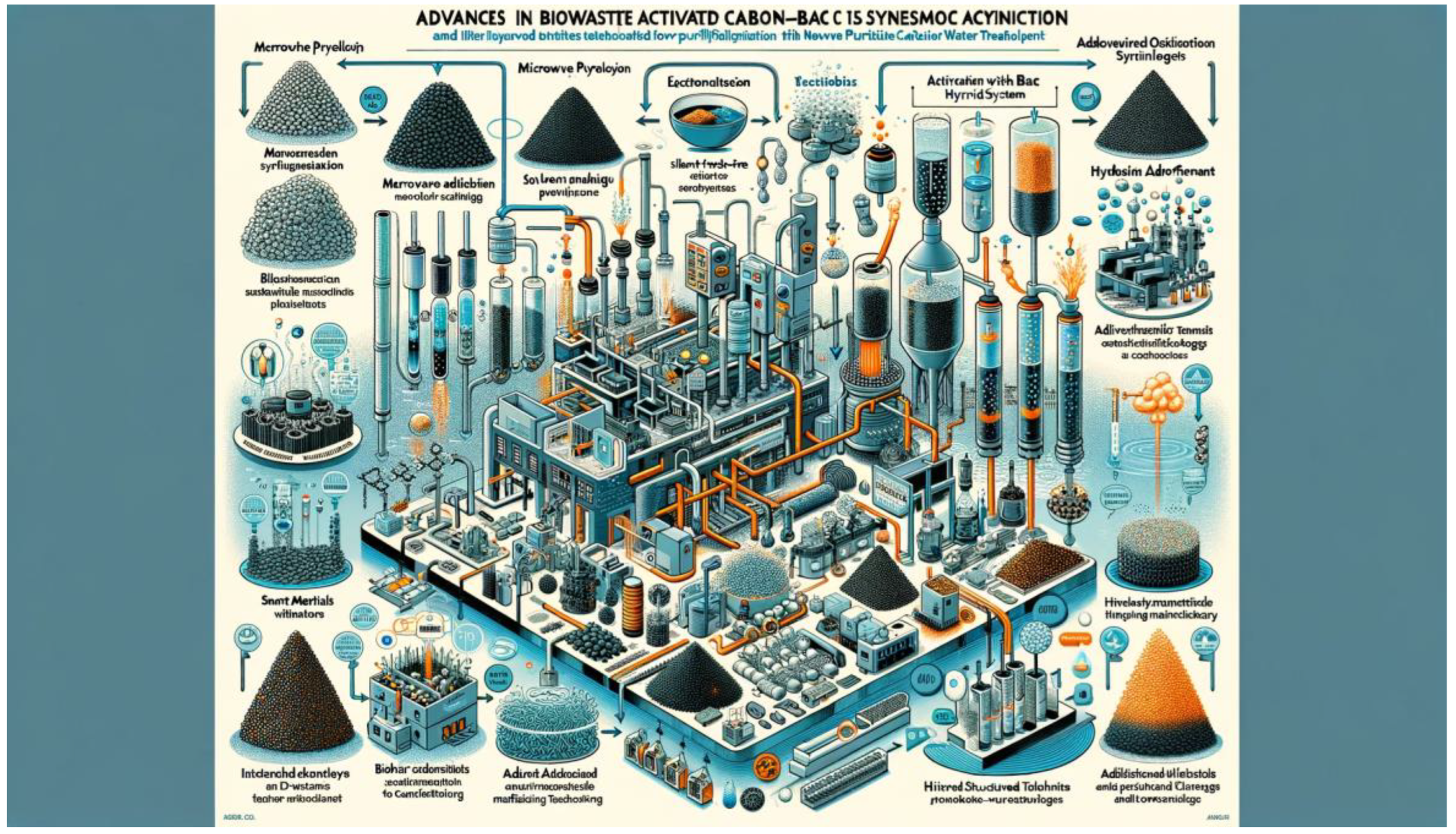
10. Conclusions
In conclusion, biowaste activated carbon (BAC) holds tremendous promise as a versatile and sustainable solution for water purification, wastewater treatment, and resource recovery applications. Through advancements in synthesis techniques, integration with novel purification technologies, and innovative approaches to regeneration and valorization, BAC offers efficient removal of contaminants, reduction of nutrient pollution, treatment of industrial wastewaters, and recovery of valuable resources from wastewater streams.
The emergence of BAC from renewable biowaste feedstocks, such as agricultural residues, food waste, and forestry by-products, not only reduces reliance on virgin resources but also promotes circular economy principles by converting waste into a valuable resource. By optimizing production processes, enhancing adsorption performance, and minimizing environmental impact, BAC production can be made cost-effective, scalable, and environmentally sustainable, ensuring widespread adoption and implementation in water treatment systems.
Furthermore, the integration of BAC with novel purification technologies, such as membrane filtration, advanced oxidation, electrochemical treatment, and smart materials, offers synergistic benefits and enhanced treatment efficiency for addressing complex water quality challenges. By leveraging the strengths of BAC and complementary purification methods, researchers and engineers can develop tailored solutions for specific water treatment needs, whether it be removing organic contaminants, reducing nutrient pollution, treating industrial effluents, or disinfecting microbial pathogens.
Moreover, the valorization of BAC-derived products, such as biochar, activated carbon composites, and value-added materials, presents opportunities for resource recovery, circular economy practices, and sustainable development. By repurposing spent BAC residues into valuable products for soil amendment, carbon sequestration, renewable energy production, and wastewater treatment media, additional economic value can be generated while minimizing waste generation and promoting environmental stewardship.
In essence, biowaste activated carbon represents a paradigm shift in water treatment and resource management, offering a holistic approach to addressing the interconnected challenges of water scarcity, pollution, and resource depletion. By embracing the potential of BAC-based technologies, stakeholders can contribute to achieving global sustainability goals, safeguarding public health, and preserving water resources for future generations. Through collaboration, innovation, and commitment to sustainability, we can harness the power of biowaste activated carbon to create a cleaner, healthier, and more resilient world.
References
- Kılıç, Z., The importance of water and conscious use of water. International Journal of Hydrology, 2020. 4(5): p. 239-241.
- Sonone, S.S., et al., Water contamination by heavy metals and their toxic effect on aquaculture and human health through food Chain. Lett. Appl. NanoBioScience, 2020. 10(2): p. 2148-2166.
- Sweetman, M.J., et al., Activated carbon, carbon nanotubes and graphene: materials and composites for advanced water purification. C, 2017. 3(2): p. 18.
- Fazal-ur-Rehman, M., Methodological trends in preparation of activated carbon from local sources and their impacts on production-a review. Curr Trends chem Eng Process Technol: CTCEPT-101. DOI, 2018. 10.
- Ng, H.S., et al., Recent advances on the sustainable approaches for conversion and reutilization of food wastes to valuable bioproducts. Bioresource technology, 2020. 302: p. 122889.
- Oladoye, P.O., et al., Advancements in adsorption and photodegradation technologies for rhodamine B dye wastewater treatment: Fundamentals, applications, and future directions. Green Chemical Engineering, 2023.
- Bolisetty, S., M. Peydayesh, and R. Mezzenga, Sustainable technologies for water purification from heavy metals: review and analysis. Chemical Society Reviews, 2019. 48(2): p. 463-487.
- Akhtar, N., et al., Various natural and anthropogenic factors responsible for water quality degradation: A review. Water, 2021. 13(19): p. 2660.
- Morin-Crini, N., et al., Emerging contaminants: analysis, aquatic compartments and water pollution. Emerging Contaminants Vol. 1: Occurrence and Impact, 2021: p. 1-111.
- Rahman, Z. and V.P. Singh, The relative impact of toxic heavy metals (THMs)(arsenic (As), cadmium (Cd), chromium (Cr)(VI), mercury (Hg), and lead (Pb)) on the total environment: an overview. Environmental monitoring and assessment, 2019. 191: p. 1-21.
- Islam, M.S. and M. Tanaka, Impacts of pollution on coastal and marine ecosystems including coastal and marine fisheries and approach for management: a review and synthesis. Marine pollution bulletin, 2004. 48(7-8): p. 624-649.
- Rashmi, I., et al., Organic and inorganic fertilizer contaminants in agriculture: Impact on soil and water resources. Contaminants in Agriculture: Sources, Impacts and Management, 2020: p. 3-41.
- Rodić, L. and D.C. Wilson, Resolving governance issues to achieve priority sustainable development goals related to solid waste management in developing countries. Sustainability, 2017. 9(3): p. 404.
- Bashir, I., et al., Concerns and threats of contamination on aquatic ecosystems. Bioremediation and biotechnology: sustainable approaches to pollution degradation, 2020: p. 1-26.
- Reza, M.S., et al., Preparation of activated carbon from biomass and its’ applications in water and gas purification, a review. Arab Journal of Basic and Applied Sciences, 2020. 27(1): p. 208-238.
- Nguyen, D.T., et al., Adsorption process and mechanism of acetaminophen onto commercial activated carbon. Journal of Environmental Chemical Engineering, 2020. 8(6): p. 104408.
- Jawad, A.H., S.H. Mallah, and M.S. Mastuli, Adsorption behavior of methylene blue on acid-treated rubber (Hevea brasiliensis) leaf. Desalin. Water Treat, 2018. 124: p. 297-307.
- Pignatello, J.J., Adsorption of dissolved organic compounds by black carbon. Molecular environmental soil science, 2013: p. 359-385.
- Jadhav, S.V., et al., Arsenic and fluoride contaminated groundwaters: a review of current technologies for contaminants removal. Journal of environmental management, 2015. 162: p. 306-325.
- Yang, X., et al., Surface functional groups of carbon-based adsorbents and their roles in the removal of heavy metals from aqueous solutions: a critical review. Chemical Engineering Journal, 2019. 366: p. 608-621.
- Almeida-Naranjo, C.E., V.H. Guerrero, and C.A. Villamar-Ayala, Emerging contaminants and their removal from aqueous media using conventional/non-conventional adsorbents: a glance at the relationship between materials, processes, and technologies. Water, 2023. 15(8): p. 1626.
- Alipoori, S., et al., Polymer-based devices and remediation strategies for emerging contaminants in water. ACS Applied Polymer Materials, 2021. 3(2): p. 549-577.
- El Gamal, M., et al., Bio-regeneration of activated carbon: A comprehensive review. Separation and Purification Technology, 2018. 197: p. 345-359.
- Chowdhury, Z.K., Activated carbon: solutions for improving water quality. 2013: American Water Works Association.
- Karić, N., et al., Bio-waste valorisation: Agricultural wastes as biosorbents for removal of (in) organic pollutants in wastewater treatment. Chemical Engineering Journal Advances, 2022. 9: p. 100239.
- Igbokwe, V.C., et al., Biochemical biorefinery: A low-cost and non-waste concept for promoting sustainable circular bioeconomy. Journal of Environmental Management, 2022. 305: p. 114333.
- Sánchez, A., et al., Greenhouse gas emissions from organic waste composting. Environmental chemistry letters, 2015. 13: p. 223-238.
- Emenike, E.C., et al., Advancing the circular economy through the thermochemical conversion of waste to biochar: a review on sawdust waste-derived fuel. Biofuels, 2024. 15(4): p. 433-447.
- Shah, H.H., et al., Overview of environmental and economic viability of activated carbons derived from waste biomass for adsorptive water treatment applications. Environmental Science and Pollution Research, 2023: p. 1-26.
- Sharma, H.B., et al., Circular economy approach in solid waste management system to achieve UN-SDGs: Solutions for post-COVID recovery. Science of the Total Environment, 2021. 800: p. 149605.
- Zaman, K., et al., Environmental effects of bio-waste recycling on industrial circular economy and eco-sustainability. Recycling, 2022. 7(4): p. 60.
- Wong, S., et al., Recent advances in applications of activated carbon from biowaste for wastewater treatment: a short review. Journal of Cleaner Production, 2018. 175: p. 361-375.
- Contescu, C.I., et al., Activated carbons derived from high-temperature pyrolysis of lignocellulosic biomass. C, 2018. 4(3): p. 51.
- Zou, R., et al., Biochar: From by-products of agro-industrial lignocellulosic waste to tailored carbon-based catalysts for biomass thermochemical conversions. Chemical Engineering Journal, 2022. 441: p. 135972.
- Patra, B.R., Slow pyrolysis of agro-food waste to produce biochar and activated carbon for adsorption of pollutants from model wastewater. 2021, University of Saskatchewan.
- Umego, E.C. and C. Barry-Ryan, Review of the valorization initiatives of brewing and distilling by-products. Critical Reviews in Food Science and Nutrition, 2023: p. 1-17.
- del Rosario Moreno-Virgen, M., et al., Applications of activated carbons obtained from lignocellulosic materials for the wastewater treatment. Lignocellulosic Precursors Used in the Synthesis of Activated Carbon, 2012: p. 57.
- He, C., et al., Wet torrefaction of biomass for high quality solid fuel production: A review. Renewable and Sustainable Energy Reviews, 2018. 91: p. 259-271.
- Gunarathne, V., et al., Municipal waste biochar for energy and pollution remediation. Green Adsorbents for Pollutant Removal: Innovative materials, 2018: p. 227-252.
- Mu’azu, N.D., et al., Removal of phenolic compounds from water using sewage sludge-based activated carbon adsorption: a review. International journal of environmental research and public health, 2017. 14(10): p. 1094.
- Tsarpali, M., et al., Lipid-extracted algae as a source of biomaterials for algae biorefineries. Algal Research, 2021. 57: p. 102354.
- Mahboubi, A., et al., Waste-derived volatile fatty acids for sustainable ruminant feed supplementation, in Biomass, Biofuels, Biochemicals. 2022, Elsevier. p. 407-430.
- Yahya, M.A., Z. Al-Qodah, and C.Z. Ngah, Agricultural bio-waste materials as potential sustainable precursors used for activated carbon production: A review. Renewable and sustainable energy reviews, 2015. 46: p. 218-235.
- Heidarinejad, Z., et al., Methods for preparation and activation of activated carbon: a review. Environmental Chemistry Letters, 2020. 18: p. 393-415.
- Harish, V., et al., Cutting-edge advances in tailoring size, shape, and functionality of nanoparticles and nanostructures: A review. Journal of the Taiwan Institute of Chemical Engineers, 2023. 149: p. 105010.
- Yap, Y.W., et al., Recent advances in synthesis of graphite from agricultural bio-waste material: A review. Materials, 2023. 16(9): p. 3601.
- Seow, Y.X., et al., A review on biochar production from different biomass wastes by recent carbonization technologies and its sustainable applications. Journal of Environmental Chemical Engineering, 2022. 10(1): p. 107017.
- Gupta, G.K., et al., Excellent supercapacitive performance of graphene quantum dots derived from a bio-waste marigold flower (Tagetes erecta). International Journal of Hydrogen Energy, 2021. 46(77): p. 38416-38424.
- Zhu, R., et al., Analysis of factors influencing pore structure development of agricultural and forestry waste-derived activated carbon for adsorption application in gas and liquid phases: A review. Journal of Environmental Chemical Engineering, 2021. 9(5): p. 105905.
- Muniandy, L., et al., The synthesis and characterization of high purity mixed microporous/mesoporous activated carbon from rice husk using chemical activation with NaOH and KOH. Microporous and Mesoporous Materials, 2014. 197: p. 316-323.
- Gupta, G.K., et al., In situ fabrication of activated carbon from a bio-waste desmostachya bipinnata for the improved supercapacitor performance. Nanoscale research letters, 2021. 16(1): p. 85.
- Gao, Y., et al., Insight into activated carbon from different kinds of chemical activating agents: A review. Science of the Total Environment, 2020. 746: p. 141094.
- Sagar, P., et al., Tagetes erecta as an organic precursor: synthesis of highly fluorescent CQDs for the micromolar tracing of ferric ions in human blood serum. RSC advances, 2021. 11(32): p. 19924-19934.
- Gupta, G.K., et al., Hierarchical NiMn Double Layered/Graphene with Excellent Energy Density for Highly Capacitive Supercapacitors. 2021.
- Gupta, G.K., Development of grapheme Ni Mn layered nanosheets for ultra highSupercapacitance and its performance.
- Feng, J., et al., Polyarylacetylene as a novel graphitizable precursor for fabricating high-density C/C composite via ultra-high pressure impregnation and carbonization. Journal of Materials Science & Technology, 2024. 182: p. 198-209.
- Zhang, Y., et al., Ultra-high surface area and nitrogen-rich porous carbons prepared by a low-temperature activation method with superior gas selective adsorption and outstanding supercapacitance performance. Chemical Engineering Journal, 2019. 355: p. 309-319.
- Wu, F.-c., R.-L. Tseng, and C.-C. Hu, Comparisons of pore properties and adsorption performance of KOH-activated and steam-activated carbons. Microporous and Mesoporous Materials, 2005. 80(1-3): p. 95-106.
- Jha, M.K., et al., Surface modified activated carbons: Sustainable bio-based materials for environmental remediation. Nanomaterials, 2021. 11(11): p. 3140.
- Panahi, H.K.S., et al., A comprehensive review of engineered biochar: production, characteristics, and environmental applications. Journal of cleaner production, 2020. 270: p. 122462.
- Sodhi, A.S., et al., Insights on sustainable approaches for production and applications of value added products. Chemosphere, 2022. 286: p. 131623.
- Ngo, T.C.Q., et al., An insight on Vietnamese bio-waste materials as activated carbon precursors for multiple applications in environmental protection. Open Chemistry, 2022. 20(1): p. 618-626.
- Swetha, T.A., et al., A comprehensive review on techniques used in conversion of biomass into bioeconomy. Sustainable Energy Technologies and Assessments, 2022. 53: p. 102682.
- Sharma, M., P. Dangi, and M. Choudhary, Actinomycetes: source, identification, and their applications. International Journal of Current Microbiology and Applied Sciences, 2014. 3(2): p. 801-832.
- Jjagwe, J., et al., Synthesis and application of granular activated carbon from biomass waste materials for water treatment: A review. Journal of Bioresources and Bioproducts, 2021. 6(4): p. 292-322.
- Li, L., P.A. Quinlivan, and D.R. Knappe, Effects of activated carbon surface chemistry and pore structure on the adsorption of organic contaminants from aqueous solution. Carbon, 2002. 40(12): p. 2085-2100.
- Sudibandriyo, M., et al., Adsorption of methane, nitrogen, carbon dioxide, and their binary mixtures on dry activated carbon at 318.2 K and pressures up to 13.6 MPa. Langmuir, 2003. 19(13): p. 5323-5331.
- Bouchelkia, N., et al., Jujube stones based highly efficient activated carbon for methylene blue adsorption: Kinetics and isotherms modeling, thermodynamics and mechanism study, optimization via response surface methodology and machine learning approaches. Process Safety and Environmental Protection, 2023. 170: p. 513-535.
- Choma, J., J. Jagiello, and M. Jaroniec, Assessing the contribution of micropores and mesopores from nitrogen adsorption on nanoporous carbons: Application to pore size analysis. Carbon, 2021. 183: p. 150-157.
- Pelekani, C. and V.L. Snoeyink, A kinetic and equilibrium study of competitive adsorption between atrazine and Congo red dye on activated carbon: the importance of pore size distribution. Carbon, 2001. 39(1): p. 25-37.
- Shi, K., E.E. Santiso, and K.E. Gubbins, Current advances in characterization of nano-porous materials: Pore size distribution and surface area. Porous Materials: Theory and Its Application for Environmental Remediation, 2021: p. 315-340.
- Nishi, Y. and M. Inagaki, Gas adsorption/desorption isotherm for pore structure characterization, in Materials Science and Engineering of Carbon. 2016, Elsevier. p. 227-247.
- Chen, J.H., et al., Adsorption and desorption of carbon dioxide onto and from activated carbon at high pressures. Industrial & engineering chemistry research, 1997. 36(7): p. 2808-2815.
- Sing, K.S., Adsorption methods for the characterization of porous materials. Advances in colloid and interface science, 1998. 76: p. 3-11.
- Kruk, M., M. Jaroniec, and J. Choma, Comparative analysis of simple and advanced sorption methods for assessment of microporosity in activated carbons. Carbon, 1998. 36(10): p. 1447-1458.
- Stoeckli, F., et al., The comparison of experimental and calculated pore size distributions of activated carbons. Carbon, 2002. 40(3): p. 383-388.
- Far, H.M., et al., Advanced pore characterization and adsorption of light gases over aerogel-derived activated carbon. Microporous and Mesoporous Materials, 2021. 313: p. 110833.
- Liu, X. and Y. Wang, Activated carbon supported nanoscale zero-valent iron composite: aspects of surface structure and composition. Materials Chemistry and Physics, 2019. 222: p. 369-376.
- Alvarez, A., N. Passé-Coutrin, and S. Gaspard, Determination of the textural characteristics of carbon samples using scanning electronic microscopy images: Comparison with mercury porosimetry data. Adsorption, 2013. 19(2): p. 841-850.
- Pereira, M.F.R., et al., Adsorption of dyes on activated carbons: influence of surface chemical groups. Carbon, 2003. 41(4): p. 811-821.
- Dastgheib, S.A., T. Karanfil, and W. Cheng, Tailoring activated carbons for enhanced removal of natural organic matter from natural waters. Carbon, 2004. 42(3): p. 547-557.
- Gómez-Serrano, V., et al., Oxidation of activated carbon by hydrogen peroxide. Study of surface functional groups by FT-ir. Fuel, 1994. 73(3): p. 387-395.
- Fuente, E., et al., Infrared spectroscopy of carbon materials: a quantum chemical study of model compounds. The Journal of physical chemistry B, 2003. 107(26): p. 6350-6359.
- Dandekar, A., R. Baker, and M. Vannice, Characterization of activated carbon, graphitized carbon fibers and synthetic diamond powder using TPD and DRIFTS. Carbon, 1998. 36(12): p. 1821-1831.
- Chen, J.P. and S. Wu, Acid/base-treated activated carbons: characterization of functional groups and metal adsorptive properties. Langmuir, 2004. 20(6): p. 2233-2242.
- Sandler, S.R. and W. Karo, Organic functional group preparations. 2013.
- Park, S.H., et al., Surface and bulk measurements of metals deposited on activated carbon. Chemistry of materials, 1997. 9(1): p. 176-183.
- Biniak, S., et al., The characterization of activated carbons with oxygen and nitrogen surface groups. Carbon, 1997. 35(12): p. 1799-1810.
- Figueiredo, J.L., et al., Modification of the surface chemistry of activated carbons. carbon, 1999. 37(9): p. 1379-1389.
- Liu, S., et al., Oxygen functional groups in graphitic carbon nitride for enhanced photocatalysis. Journal of colloid and interface science, 2016. 468: p. 176-182.
- Hakim, A., et al., Temperature programmed desorption of carbon dioxide for activated carbon supported nickel oxide: The adsorption and desorption studies. Advanced Materials Research, 2015. 1087: p. 45-49.
- Ataman, E., et al., Functional group adsorption on calcite: I. Oxygen containing and nonpolar organic molecules. The Journal of Physical Chemistry C, 2016. 120(30): p. 16586-16596.
- López, D., et al., Low-temperature catalytic adsorption of NO on activated carbon materials. Langmuir, 2007. 23(24): p. 12131-12137.
- Qiu, C., et al., Effects of oxygen-containing functional groups on carbon materials in supercapacitors: A review. Materials & Design, 2023: p. 111952.
- Dittmann, D., et al., Characterization of activated carbons for water treatment using TGA-FTIR for analysis of oxygen-containing functional groups. Applied Water Science, 2022. 12(8): p. 203.
- Carabineiro, S.A., et al., Surface chemistry of activated carbons. Chemical Physics Research Journal, 2011. 4(3/4): p. 291.
- Sun, W., et al., High-performance activated carbons for electrochemical double layer capacitors: Effects of morphology and porous structures. International Journal of Energy Research, 2020. 44(3): p. 1930-1950.
- MiarAlipour, S., et al., TiO2/porous adsorbents: Recent advances and novel applications. Journal of hazardous materials, 2018. 341: p. 404-423.
- Achaw, O.-W., A study of the porosity of activated carbons using the scanning electron microscope, in Scanning electron microscopy. 2012, IntechOpen.
- Ismail, I.M. and P. Pfeifer, Fractal analysis and surface roughness of nonporous carbon fibers and carbon blacks. Langmuir, 1994. 10(5): p. 1532-1538.
- Jurkiewicz, K., M. Pawlyta, and A. Burian, Structure of carbon materials explored by local transmission electron microscopy and global powder diffraction probes. C, 2018. 4(4): p. 68.
- Teimouri, Z., et al., Application of computational fluid dynamics for modeling of Fischer-Tropsch synthesis as a sustainable energy resource in different reactor configurations: A review. Renewable and Sustainable Energy Reviews, 2022. 160: p. 112287.
- Punyapalakul, P., et al., Effects of surface functional groups and porous structures on adsorption and recovery of perfluorinated compounds by inorganic porous silicas. Separation Science and Technology, 2013. 48(5): p. 775-788.
- Feiqiang, G., et al., Characteristics and toxic dye adsorption of magnetic activated carbon prepared from biomass waste by modified one-step synthesis. Colloids and Surfaces A: Physicochemical and Engineering Aspects, 2018. 555: p. 43-54.
- Tautz, F., Structure and bonding of large aromatic molecules on noble metal surfaces: The example of PTCDA. Progress in Surface Science, 2007. 82(9-12): p. 479-520.
- Li, X., et al., Adsorption materials for volatile organic compounds (VOCs) and the key factors for VOCs adsorption process: A review. Separation and Purification Technology, 2020. 235: p. 116213.
- Sing, K., The use of nitrogen adsorption for the characterisation of porous materials. Colloids and Surfaces A: Physicochemical and Engineering Aspects, 2001. 187: p. 3-9.
- Ahmad, S.Z.N., et al., Adsorptive removal of heavy metal ions using graphene-based nanomaterials: Toxicity, roles of functional groups and mechanisms. Chemosphere, 2020. 248: p. 126008.
- Awad, R., et al., Synthesis and characterization of electrospun PAN-based activated carbon nanofibers reinforced with cellulose nanocrystals for adsorption of VOCs. Chemical Engineering Journal, 2021. 410: p. 128412.
- Sirotkin, A.S., L.Y. Koshkina, and K.G. Ippolitov, The BAC-process for treatment of waste water containing non-ionogenic synthetic surfactants. Water Research, 2001. 35(13): p. 3265-3271.
- Wong, K.J., et al., Shining light on carbon aerogel photocatalysts: unlocking the potentials in the quest for revolutionizing solar-to-chemical conversion and environmental remediation. Advanced Functional Materials, 2023. 33(50): p. 2306014.
- Gopalan, J., A. Buthiyappan, and A.A.A. Raman, Insight into metal-impregnated biomass based activated carbon for enhanced carbon dioxide adsorption: A review. Journal of Industrial and Engineering Chemistry, 2022. 113: p. 72-95.
- Aktaş, Ö. and F. Çeçen, Bioregeneration of activated carbon: a review. International Biodeterioration & Biodegradation, 2007. 59(4): p. 257-272.
- Dong, L., et al., Preparation, characterization, and application of macroporous activated carbon (MAC) suitable for the BAC water treatment process. Science of the total environment, 2019. 647: p. 1359-1367.
- Wang, Y., et al., Precise preparation of biomass-based porous carbon with pore structure-dependent VOCs adsorption/desorption performance by bacterial pretreatment and its forming process. Environmental Pollution, 2023. 322: p. 121134.
- Javanbakht, V., S.A. Alavi, and H. Zilouei, Mechanisms of heavy metal removal using microorganisms as biosorbent. Water Science and Technology, 2014. 69(9): p. 1775-1787.
- Jang, M.-H., et al., Elucidating Adsorption Mechanisms of Benzalkonium Chlorides (BACs) on Polypropylene and Polyethylene Terephthalate Microplastics (MPs): Effects of BACs Alkyl Chain Length and MPs Characteristics. Journal of Hazardous Materials, 2024: p. 133765.
- Tefera, D.T., et al., Modeling competitive adsorption of mixtures of volatile organic compounds in a fixed-bed of beaded activated carbon. Environmental science & technology, 2014. 48(9): p. 5108-5117.
- Bayramoglu, G., B. Altintas, and M.Y. Arica, Adsorption kinetics and thermodynamic parameters of cationic dyes from aqueous solutions by using a new strong cation-exchange resin. Chemical Engineering Journal, 2009. 152(2-3): p. 339-346.
- Zhang, Y., et al., Effects of ionic strength on removal of toxic pollutants from aqueous media with multifarious adsorbents: A review. Science of the Total Environment, 2019. 646: p. 265-279.
- Bhatnagar, A., et al., An overview of the modification methods of activated carbon for its water treatment applications. Chemical Engineering Journal, 2013. 219: p. 499-511.
- Rathi, B.S. and P.S. Kumar, Application of adsorption process for effective removal of emerging contaminants from water and wastewater. Environmental Pollution, 2021. 280: p. 116995.
- Peng, X., et al., Amine-functionalized magnetic bamboo-based activated carbon adsorptive removal of ciprofloxacin and norfloxacin: A batch and fixed-bed column study. Bioresource technology, 2018. 249: p. 924-934.
- Korotta-Gamage, S.M. and A. Sathasivan, A review: Potential and challenges of biologically activated carbon to remove natural organic matter in drinking water purification process. Chemosphere, 2017. 167: p. 120-138.
- Moyo, F., et al., Sorption of hydrophobic organic compounds on natural sorbents and organoclays from aqueous and non-aqueous solutions: a mini-review. International Journal of Environmental Research and Public Health, 2014. 11(5): p. 5020-5048.
- Ewis, D., et al., Adsorption of organic water pollutants by clays and clay minerals composites: A comprehensive review. Applied Clay Science, 2022. 229: p. 106686.
- Ayati, A., et al., Insight into the adsorptive removal of ibuprofen using porous carbonaceous materials: A review. Chemosphere, 2023. 323: p. 138241.
- Yang, H., et al., The approaches and prospects for natural organic matter-derived disinfection byproducts control by carbon-based materials in water disinfection progresses. Journal of Cleaner Production, 2021. 311: p. 127799.
- Dong, L., et al., A new function of spent activated carbon in BAC process: Removing heavy metals by ion exchange mechanism. Journal of hazardous materials, 2018. 359: p. 76-84.
- Yaashikaa, P.R., et al., Advances in biosorbents for removal of environmental pollutants: a review on pretreatment, removal mechanism and future outlook. Journal of Hazardous Materials, 2021. 420: p. 126596.
- Zhou, Y.-F. and R.J. Haynes, Sorption of heavy metals by inorganic and organic components of solid wastes: significance to use of wastes as low-cost adsorbents and immobilizing agents. Critical Reviews in Environmental Science and Technology, 2010. 40(11): p. 909-977.
- Gupta, K., et al., Recent advances in adsorptive removal of heavy metal and metalloid ions by metal oxide-based nanomaterials. Coordination Chemistry Reviews, 2021. 445: p. 214100.
- Kumar, S. and S. Jain, History, introduction, and kinetics of ion exchange materials. Journal of chemistry, 2013. 2013.
- Luo, T., S. Abdu, and M. Wessling, Selectivity of ion exchange membranes: A review. Journal of membrane science, 2018. 555: p. 429-454.
- Kim, S., et al., Removal of contaminants of emerging concern by membranes in water and wastewater: A review. Chemical Engineering Journal, 2018. 335: p. 896-914.
- Cukierman, A.L., G.V. Nunell, and P.R. Bonelli, Removal of emerging pollutants from water through adsorption onto carbon-based materials, in Emerging and nanomaterial contaminants in wastewater. 2019, Elsevier. p. 159-213.
- Ahmed, S., et al., Recent developments in physical, biological, chemical, and hybrid treatment techniques for removing emerging contaminants from wastewater. Journal of hazardous materials, 2021. 416: p. 125912.
- Loganathan, P., et al., Treatment trends and combined methods in removing pharmaceuticals and personal care products from wastewater—A review. Membranes, 2023. 13(2): p. 158.
- Reyes, N.J.D., et al., Pharmaceutical and personal care products in different matrices: occurrence, pathways, and treatment processes. Water, 2021. 13(9): p. 1159.
- Gao, X., et al., Environment-friendly removal methods for endocrine disrupting chemicals. Sustainability, 2020. 12(18): p. 7615.
- Wang, S., et al., A review of advances in EDCs and PhACs removal by nanofiltration: Mechanisms, impact factors and the influence of organic matter. Chemical Engineering Journal, 2021. 406: p. 126722.
- Zamri, M.F.M.A., et al., Treatment strategies for enhancing the removal of endocrine-disrupting chemicals in water and wastewater systems. Journal of Water Process Engineering, 2021. 41: p. 102017.
- Yuan, Z., R. Nag, and E. Cummins, Human health concerns regarding microplastics in the aquatic environment-From marine to food systems. Science of The Total Environment, 2022. 823: p. 153730.
- El Batouti, M., N.F. Alharby, and M.M. Elewa, Review of new approaches for fouling mitigation in membrane separation processes in water treatment applications. Separations, 2021. 9(1): p. 1.
- Joseph, L., et al., Removal of contaminants of emerging concern by metal-organic framework nanoadsorbents: A review. Chemical Engineering Journal, 2019. 369: p. 928-946.
- Iwuozor, K.O., Prospects and challenges of using coagulation-flocculation method in the treatment of effluents. Advanced Journal of Chemistry-Section A, 2019. 2(2): p. 105-127.
- Zahrim, A., C. Tizaoui, and N. Hilal, Coagulation with polymers for nanofiltration pre-treatment of highly concentrated dyes: a review. Desalination, 2011. 266(1-3): p. 1-16.
- Mayer, B.K. and D.R. Ryan, Impact on disinfection byproducts using advanced oxidation processes for drinking water treatment. Applications of advanced oxidation processes (AOPs) in drinking water treatment, 2019: p. 345-386.
- Deng, L., et al., Recent advances in attached growth membrane bioreactor systems for wastewater treatment. Science of The Total Environment, 2022. 808: p. 152123.
- Singh, G., et al., A review on the synthesis and applications of nanoporous carbons for the removal of complex chemical contaminants. Bulletin of the Chemical Society of Japan, 2021. 94(4): p. 1232-1257.
- Charcosset, C., Ultrafiltration, microfiltration, nanofiltration and reverse osmosis in integrated membrane processes. Integrated membrane systems and processes, 2016: p. 1-22.
- Das, P.P., M. Sharma, and M.K. Purkait, Recent progress on electrocoagulation process for wastewater treatment: A review. Separation and Purification Technology, 2022. 292: p. 121058.
- He, M., et al., Waste-derived biochar for water pollution control and sustainable development. Nature Reviews Earth & Environment, 2022. 3(7): p. 444-460.
- Liu, C., et al., Comparison of two typical regeneration methods to the spent biological activated carbon in drinking water. Environmental Science and Pollution Research, 2020. 27: p. 16404-16414.
- Ossai, I.C., et al., Remediation of soil and water contaminated with petroleum hydrocarbon: A review. Environmental Technology & Innovation, 2020. 17: p. 100526.
- Larasati, A., G.D. Fowler, and N.J. Graham, Insights into chemical regeneration of activated carbon for water treatment. Journal of Environmental Chemical Engineering, 2021. 9(4): p. 105555.
- Wells, M.J., Principles of extraction and the extraction of semivolatile organics from liquids. Sample preparation techniques in analytical chemistry, 2003. 162: p. 37-138.
- Płotka-Wasylka, J., et al., Extraction with environmentally friendly solvents. TrAC Trends in Analytical Chemistry, 2017. 91: p. 12-25.
- Biswal, B.K. and R. Balasubramanian, Constructed wetlands for reclamation and reuse of wastewater and urban stormwater: A review. Frontiers in Environmental Science, 2022. 10: p. 836289.
- Yakamercan, E., et al., Comprehensive understanding of electrochemical treatment systems combined with biological processes for wastewater remediation. Environmental Pollution, 2023: p. 121680.
- Radjenovic, J. and D.L. Sedlak, Challenges and opportunities for electrochemical processes as next-generation technologies for the treatment of contaminated water. Environmental science & technology, 2015. 49(19): p. 11292-11302.
- Bao, J., et al., Sonoactivated Nanomaterials: A potent armament for wastewater treatment. Ultrasonics Sonochemistry, 2023. 99: p. 106569.
- Cigeroglu, Z., et al., Clay-based nanomaterials and their adsorptive removal efficiency for dyes and antibiotics: a review. Materials Today Sustainability, 2024: p. 100735.
- Loganathan, P., et al., Ozonation/adsorption hybrid treatment system for improved removal of natural organic matter and organic micropollutants from water–A mini review and future perspectives. Chemosphere, 2022. 296: p. 133961.
- Gkotsis, P.K., et al., Fouling issues in membrane bioreactors (MBRs) for wastewater treatment: major mechanisms, prevention and control strategies. Processes, 2014. 2(4): p. 795-866.
- Lord, A.S., P.H. Kobos, and D.J. Borns, Geologic storage of hydrogen: Scaling up to meet city transportation demands. International journal of hydrogen energy, 2014. 39(28): p. 15570-15582.
- Gavrilescu, M., et al., Emerging pollutants in the environment: present and future challenges in biomonitoring, ecological risks and bioremediation. New biotechnology, 2015. 32(1): p. 147-156.
- Adeleye, A.T., et al., Efficient synthesis of bio-based activated carbon (AC) for catalytic systems: A green and sustainable approach. Journal of Industrial and Engineering Chemistry, 2021. 96: p. 59-75.
- Nidheesh, P. and M.S. Kumar, An overview of environmental sustainability in cement and steel production. Journal of cleaner production, 2019. 231: p. 856-871.
- Soares, N., et al., A review on current advances in the energy and environmental performance of buildings towards a more sustainable built environment. Renewable and Sustainable Energy Reviews, 2017. 77: p. 845-860.
- Gbedemah, F.S., Environmental management system (ISO 14001) certification in manufacturing companies in Ghana: prospects and challenges. 2004. Available online: http://www.lumes.lu.se/database/alumni/03.04/theses/gbedemah_francis.pdf.
- Gibson-Graham, J.-K., J. Cameron, and S. Healy, Take back the economy: An ethical guide for transforming our communities. 2013: U of Minnesota Press.
- Lee, J.-Y., S.-E. Lee, and D.-W. Lee, Current status and future prospects of biological routes to bio-based products using raw materials, wastes, and residues as renewable resources. Critical Reviews in Environmental Science and Technology, 2022. 52(14): p. 2453-2509.
- Kosamia, N.M., et al., Perspectives for scale up of biorefineries using biochemical conversion pathways: Technology status, techno-economic, and sustainable approaches. Fuel, 2022. 324: p. 124532.
- Kumar, V., et al., Valorization of Pulp and Paper Industry Waste Streams into Bioenergy and Value-added Products: An Integrated Biorefinery Approach. Renewable Energy, 2024: p. 120566.
- Andrews, R., Carbon Forward: Advanced Markets for Value-Added Products from Coal. 2021.
- Bottero, M., G. Cavana, and F. Dell’Anna, Feasibility analysis of the application of building automation and control system and their interaction with occupant behavior. Energy Efficiency, 2023. 16(8): p. 83.
- Chaukura, N., et al., Biosorbents for the removal of synthetic organics and emerging pollutants: opportunities and challenges for developing countries. Environmental Development, 2016. 19: p. 84-89.
- Maurya, A., M.K. Singh, and S. Kumar, Biofiltration technique for removal of waterborne pathogens, in Waterborne pathogens. 2020, Elsevier. p. 123-141.
Disclaimer/Publisher’s Note: The statements, opinions and data contained in all publications are solely those of the individual author(s) and contributor(s) and not of MDPI and/or the editor(s). MDPI and/or the editor(s) disclaim responsibility for any injury to people or property resulting from any ideas, methods, instructions or products referred to in the content. |
© 2024 by the authors. Licensee MDPI, Basel, Switzerland. This article is an open access article distributed under the terms and conditions of the Creative Commons Attribution (CC BY) license (https://creativecommons.org/licenses/by/4.0/).
Copyright: This open access article is published under a Creative Commons CC BY 4.0 license, which permit the free download, distribution, and reuse, provided that the author and preprint are cited in any reuse.


