

Submitted:
09 May 2024
Posted:
09 May 2024
You are already at the latest version
Abstract
Verticillium dahliae (Vd) and Fusarium oxysporum f. sp. lycopersici (Fol) are two major fungal pathogens that infect tomato plants, causing significant challenges in their control since both pathogens can persist in the soil for several years even in the absence of a host plant and no effective fungicides are available at present. This study investigated the efficacy of two biocontrol formulations, Clonotri and Strepse, against Vd and Fol, and their impact on tomato fruit quality and yield under greenhouse conditions. Pathogenicity experiment demonstrated that the Clonotri formulation, containing Trichoderma and Clonostachys spores, significantly reduced Fusarium wilt disease by 32% compared to the control group. However, in Vd pathogenicity experiment, the formulations did not exhibit disease reduction, although the treatment with Strepse, containing Streptomyces and Pseudomonas microorganisms, resulted in preserved total fruit number when compared to uninfected plants. Analysis of fruit quality attributes revealed no significant differences among the various interventions. Furthermore, Fol infection in the first fruit set significantly increased fruit firmness, while Vd infection resulted in elevated levels of total soluble solids in fruits. These findings demonstrate that the evaluated biocontrol formulations provide a degree of protection against fungal wilt pathogens in tomato plants and can increase yield in greenhouse conditions, while having minimal impact on overall fruit quality attributes.
Keywords:
Tomato
; Verticillium dahliae
; Fusarium oxysporum f. sp. lycopersici
; Trichoderma sp.
; Clonostachys sp.
; Streptomyces sp.
; Pseudomonas sp.
1. Introduction
Verticillium dahliae (Vd) and Fusarium oxysporum (Fox), are two of the most destructive soilborne fungal pathogens that cause wilt diseases of many economically important crops leading to serious economic losses in production, including tomato [1]. Both pathogens infect plants by penetrating the roots, entering the xylem and producing conidia that are transported to other parts of the plant through the xylem [2,3]. The invasion of these pathogens into the xylem vessels results in the plugging of the vessels by fungal and degraded cell wall material, disrupting water transport and causing symptoms that include wilting, yellowing of leaves, stunting, and eventually plant death [4,5,6].
Controlling fungal wilts caused by these pathogens is difficult due to several factors. Firstly, once plants are infected no efficient treatments exist to prevent progression of the disease or cure the infected plants [5,7]. Secondly, both Vd and Fox can form long-lasting survival structures such as microsclerotia and chlamydospores, respectively, which allow them to persist in the soil for several years even in the absence of a susceptible host [8]. Resting structures represent favorable targets for control through soil solarization and chemical fumigation. Nevertheless, limitations in large-scale implementation and the prohibition of chemical fumigants due to concerns surrounding public health and environmental implications render these approaches unsuitable [9]. In addition, the application of pesticides frequently proves inadequate due to limited accessibility within the soil matrix [10]. Several strategies have been developed and implemented for the management of fungal wilts. Crop rotation, soil solarization, the use of resistant cultivars and grafting on resistant rootstocks are commonly employed practices to reduce the incidence of Vd and Fox wilts [11,12,13,14,15]. Another promising strategy for managing fungal wilt pathogens is the utilization of biological control agents (BCA). BCA include various microorganisms, such as certain strains of bacteria or fungi, that can be used to suppress the growth and activity of the pathogens through various mechanisms, including competition for nutrients and space, production of antifungal compounds, induction of systemic resistance in plants, and enhancement of plant growth and vigor [16]. When applied to the rhizosphere or as seed treatments, BCA can establish a protective presence, preventing or reducing the colonization and infection of plant roots by fungal pathogens. Additionally, the use of biological control agents offers several advantages over chemical pesticides, including their environmental friendliness, reduced negative impacts on non-target organisms, and the potential for long-term sustainable disease management [17]. However, the effectiveness of biological control agents can vary depending on factors such as environmental conditions, application methods, and compatibility with other management practices [18]. The efficacy of biocontrol can be influenced by numerous interactions such as variability between plants, fields, and years and often limited efficacy and inconsistent field performance have been reported [19]. Therefore, further research is essential to optimize the use of these biological control agents under different environments and production conditions and integrate them into comprehensive disease management strategies for sustainable agriculture.
This study investigates the effectiveness of two commercially available biocontrol formulations, Clonotri and Strepse (MS BIOTECH), in managing fungal wilt pathogens, Vd and Fol, in tomato plants grown under greenhouse conditions. The primary objective is to evaluate the potential of these formulations to mitigate disease severity caused by these fungal pathogens. Additionally, we aim to assess the impact of the biocontrol treatments on fruit yield and quality.
2. Materials and Methods
2.1. Plant Material and Growth Conditions
Tomato (Solanum lycopersicum) cv. Ailsa Craig (Thompson & Morgan Ltd) was used in the experiments. Seeds were sown directly into 10.5 cm diameter pots, each containing approximately 500 cm3 sterilized peat-based potting substrate (Plantobalt substrate 2, Plantaflor) [7]. The pots were placed in a controlled growth room (25°C; 16 h light, 8 h dark; 65%–70% RH; light intensity 300 μmol m−2 s−1 at pot height) and received watering individually every second day with equal volume of water.
2.2. Biocontrol Formulations
In the present study two biological formulations were evaluated against the fungal wilt pathogens of tomato. The commercial products Clonotri and Strepse (MS BIOTECH) are liquid formulations containing spores of Trichoderma sp., Clonostachys sp., and Glomus sp. and Streptomyces sp., Pseudomonas sp., and Glomus sp., respectively. According to the product labels, the formulations require activation with Nutryaction, an organic fertilizer containing yeast and brown algae extracts (MS BIOTECH), for any effect and cannot be applied directly for plant protection. To achieve this, they were mixed with water and Nutryaction and the mixing ratio was 1 part biocontrol formulation: 13 parts water: 2 parts Nutryaction (v/v). These mixtures were prepared at least 8 hours prior to application on plants.
2.3. Fungal Strains and Inoculum Preparation
The fungal isolates of Vd (race 1 isolate 70V) [20] and Fol (race 1 isolate Fol004) [21] were used in this study. Fungal isolates were cryopreserved as an aqueous 20% glycerol suspension at −80°C. Before being used fungal strains were activated on potato dextrose agar (PDA, Merck) at 25°C for 5 days. For the pathogenicity experiments, conidia were prepared by transferring pieces from the growing edge of the fungal colony of each pathogen in sucrose sodium nitrate (SSN) [22] in Erlenmeyer flasks and incubated in an orbital shaker at 150 rpm in the dark for 5 days. Vd was grown at 22°C and Fol at 25°C. Liquid cultures were passed through cheesecloth to remove mycelia. Suspensions were centrifuged at 10,000 x g, 8°C for 10 min, and resuspended in sterile distilled water (SDW).
2.4. Pathogenicity Experiments in Growth Room
We performed two separate growth room experiments. In the first pathogenicity experiment the two formulations were initially evaluated under growth room conditions against Vd and Fol. The treatments of this experiment were as follows:
(a) Peat: plants grown in peat-based potting substrate only, serving as the control treatment. Peat is a standard choice in plant growth studies investigating disease control as it reflects a scenario where plants are not treated with any additives or biocontrol products,
(b) Strepse: plants grown in Peat that received activated Strepse formulation,
(c) Clonotri: plants grown in Peat that received activated Clonotri formulation,
(d) Mix: plants grown in Peat that received a mixture of activated Strepse and Clonotri formulation.
Application of treatments was performed twice via root drenching, 7 and 14 days after seedling emergence (10 ml/plant in each application). Control plants were root drenched with 10 ml H2O only. Plants were artificially inoculated at the third leaf stage (~20 days after seedling emergence) by root drenching with 20 ml of conidial suspension of Vd or Fol. This method involved pouring the conidial suspension directly onto the root zone of the plants in their pots. Conidial concentration was adjusted to 106 conidia/ml for Vd and 107 conidia/ml for Fol before being applied to the plants. Control plants were mock inoculated with 20 ml sterile distilled water. Plants were arranged in rows and columns in a completely randomized design and were rotated within the growth room every second day before watering. The plants were watered individually every second day with equal volume of water.
Disease severity was calculated by the number of leaves showing typical symptoms (wilting, yellowing and browning of leaves) as a percentage of the total number of leaves of each plant. Symptoms were periodically recorded for 19 days post inoculation (dpi) for both pathogens. Disease ratings were plotted over time to generate disease progress curves. The area under the disease progress curve (AUDPC) was calculated by the trapezoidal integration method [23]. Disease was expressed as a percentage of the maximum possible area for the whole period of the experiment, referred to as relative AUDPC. The experiment was repeated three times with 10 replicates per treatment.
In the second experiment, based on the results of the first pathogenicity experiment, Strepse was evaluated against Vd and Clonotri was evaluated against Fol. In this experiment the efficacy of the products was assessed at three different pathogen concentrations, namely, 106, 105 and 104 conidia/ml. The experimental procedure was performed as described above with the exception of the three different pathogen concentrations. Apart from disease severity, plant height and total biomass of the plants were determined at 22 dpi (the last day of disease symptom monitoring).
2.5. Pathogenicity Experiments in Greenhouse
The efficacy of the biocontrol formulations was also evaluated under greenhouse conditions against Vd and Fol with pathogenicity experiments on tomato plants. This experiment was carried out in a greenhouse at the Agricultural Research Institute (35.140416, 33.383872, Nicosia, Cyprus) during the period from November 1, 2019, to March 10, 2020. The treatments of this experiment were the same as the first pathogenicity experiment in the growth room (described in paragraph 2.4) with 8 replicates per treatment. This experiment represents data collected during a single growing season (November 2019 - March 2020). Tomato plants cv. Ailsa Craig were initially grown in a controlled growth room as described previously (paragraph 2.1) and received the biocontrol treatments via root drenching, 7 and 14 days after seedling emergence (10 ml/plant in each application). Control plants were root drenched with 10 ml H2O only. Plants were transferred to the greenhouse and were artificially inoculated with Vd or Fol at the third leaf stage (~20 days after seedling emergence) by root dipping. Briefly, the plants were removed carefully from their original pots while preserving the root ball. They were then immersed in a tray containing conidial suspension of Vd or Fol adjusted to 106 conidia/ml and 107 conidia/ml, respectively. Each plant remained in the tray for 10 minutes. This immersion method ensured a more thorough exposure of the entire root system to the pathogen inoculum. Control plants were immersed in H2O for 10 minutes. Then the plants were transplanted into 15L pots with 30 cm diameter and filled with 3 Kg of peat-based potting substrate (Plantobalt substrate 2, Plantaflor). The pots were arranged in rows and columns in a completely randomized design and the plants were monitored for disease development and symptoms caused by Vd or Fol infection. Disease severity was assessed based on the percentage of leaves showing typical symptoms, and the Area Under the Disease Progress Curve (AUDPC) was calculated using the trapezoidal integration method as described in detail in section 2.4 [23]. Symptoms were periodically recorded for 52- and 50-days post inoculation (dpi) for Vd and Fol, respectively.
The temperature inside the greenhouse during the experiment ranged between 14°C and 27°C. The temperature control within this range was achieved through appropriate greenhouse control systems (cooling/heating systems, humidity sensors, ventilation fans). In the initial stages of cultivation, the plants were irrigated daily, and as time progressed, they were irrigated every two days according to their water needs (the volume of irrigation water ranged from 600 ml during the establishment stage to 1L during the harvesting stage). This approach prevented excessive water drainage from the pots. Throughout the experiment, the plants were subjected to two additional interventions with the biocontrol formulations at 20 days intervals after pathogen inoculation, by mixing the biocontrol products with the irrigation water. During plant growth, vertical support was provided to the plants using greenhouse trellises, and any lateral shoots were promptly removed upon emergence. The onset of first flowering was observed around 35 days after transplanting the plants in the greenhouse, followed by the appearance of the initial tomato fruits approximately one to two weeks later (around 56 days after transplantation). Fertilization of the plants was applied twice during the entire experiment using Betabio Full organic fertilizer (ED&F Man Liquid Products MLP) mixed with the irrigation water, following the recommendations of the company that provided the biocontrol formulations for this specific greenhouse setup.
2.6. Quantity Attributes
Total number of fruits per plant was recorded for each treatment. Fruit was harvested and the total fresh weight of fruit was determined for each plant using a digital scale with an approximation to 0.01 g. Plant height was measured for each plant at the last day of the experiment (131 days after transplant) as the height above ground where the youngest fully expanded leaf joined the stem. Fresh weight of plants was measured for each plant 131 days after transplant using a digital scale with an approximation to 0.01 g. Number of leaves was counted for each plant 131 days after transplant (including removed, dead or fallen leaves).
2.7. Determination of Quality Attributes
The quality attributes of tomato fruits were determined in tomato fruits as described in previous work [24]. Tomato fruits were harvested from the first two fruit sets, 117 and 131 days after transplantation to 15L pots.
The external fruit color was assessed at two equatorial areas of each fruit using a Konica Minolta CR-400 chromameter (Konica Minolta Sensing, Inc., Osaka, Japan). The equipment was set up for a D65 illuminant and a 10° observer angle. A white standard plate (Y = 94.00, x = 0.3158, y = 0.3322) was used for calibration. The values of L* (lightness), a* (green to red color), and b* (blue to yellow color) were determined for each treatment.
Firmness was evaluated by measuring the maximum penetration force for a 3-mm-diameter steel probe using a TA-XT2 texture analyser (Stable Micro Systems Ltd., Surrey, England). The fruits were placed so that the plunger penetrated the pericarp approximately 1 cm away from their geometric center to a depth of 10 mm at a rate of 5 mm/s. Results were expressed in Newtons (N).
Tomato fruits from each treatment were homogenized in blender and centrifuged in order to obtain a clear juice, Soluble solids content (SSC) was measured with a portable digital refractometer ATAGO Palette PR-32a (Atago Company Ltd., Tokyo, Japan). Titratable acidity (TA) was determined by potentiometric titration with 0.1 mol/L NaOH up to pH 8.2, using 5 mL juice diluted in distilled water until final volume of 50 mL. The measurements were carried out using a DL22 Mettler Toledo titrator (Mettler–Toledo, Inc., Columbus, Ohio, USA) and were expressed as g citric acid L-1.
2.8. Determination Total Phenolic and Total Flavonoid Contents
The phenolic contents of tomato fruits were extracted using ultrasound assisted extraction according with Ochoa-Velasco et al.[25]. Approximately 5 g of tomato pulp were mixed with 20 mL methanol/water (80:20, v/v). The mixture was placed into ultrasound bath for 30 min at 30°C. After extraction, the mixture was centrifugated and the supermenant was collected to determine phenolic and flavonoid contents as well as the antioxidant activity.
The total phenolic contents were estimated using a microplate Folin-Ciocalteu assay. More specific, 50 µL of extracts were mixed with 50 µL of Folin–Ciocalteu reagent (1:5, v/v) and 100 µL of sodium hydroxide solution (0.35 mol/L) in each well. After a period of 3 min, the absorbance of each sample was monitored at 760 nm. A standard curve of gallic acid was prepared and results expressed as mg gallic acid equivalents (GAE)/100 gr tomato fruit.
The total flavonoid contents were also determined with employment of a microplate adopted photometric assay. An aliquot of 25 µL of the sample or standard solution was mixed with 100 µL distilled water and 10 µL of 50 g/L NaNO2. After 5 min, 15 µL of 100 gr/L AlCl3 was added to the mixture. Finally, aliquots of 50 µL of sodium hydroxide solution (1 mol/L) and 50 µL of distilled water were added after 6 min. The mixture was shaken for 30 s in the plate reader prior to absorbance measurements at 510 nm. A standard curve of rutin hydrate was prepared and the results expressed as mg rutin equivalents (RE)/100 gr tomato fruit [26].
2.9. Determination β-Carotene and Lycopene Contents
Sixteen mL of acetone–hexane (4:6) solvent were added to 1 g of tomato pulp and were thoroughly mixed with employment of homogenizer (Ultra – Turrax, IKA T25). When the two phases were separated, an aliquot was taken from the upper phase and the absorbance at 663, 645, 505, and 453 nm was determined. Beta-carotene and lycopene contents were calculated according to the Nagata and Yamashita equations and expressed as mg/L [27].
2.10. Determination of Antioxidant Activity
The 1,1-diphenyl-2-picrylhydrazyl (DPPH) assay was used to measure the scavenging activity of antioxidants against colorful radicals of DPPH. The reaction mixtures consisted of 30 µL of extracts and 200 µL DPPH methanolic solution (0.2 mM). The mixtures were incubated for 30 min; then, the absorbance was read at 515 nm. A standard curve of 6-hydroxy-2,5,7,8-tetramethylchroman-2-carboxylic acid (Trolox) was prepared and results expressed as µmol Trolox equivalent/100 gr tomato fruit.
The antioxidant activity of polar fraction of tomato fruits was also tested using Ferric Reducing Antioxidant Power (FRAP) measurements. More specific, 100 µL of the sample or standard compound were mixed with 180 µL FRAP solution (300 mM acetate buffer at pH 3.6, 10 mM 2,4,6-Tris(2-pyridyl)-s-triazine solution, and 20 mM ferric chloride solution in the ratio of 10:1:1, v/v/v) in 96-well plates. The reaction mixtures in well plates were allowed for 6 min at 37°C and the absorbance was read at 595 nm. A standard curve of iron sulfate (FeSO4) was prepared and results expressed as µmol FeSO4/100 gr tomato fruit [25].
2.11. Statistical Analysis
Statistical analyses were performed using GraphPad Prism 8 for Windows (GraphPad Software, La Jolla, CA, United States). The type of ANOVA used depended on the experimental design:
One-way ANOVA was used for pathogenicity experiments where data were collected from groups with a single factor. Following the ANOVA, Tukey's post-hoc test (P ≤ 0.05) was used for multiple comparisons between groups.
Two-way ANOVA was employed for experiments where data were influenced by two independent factors. In these cases, the interaction effect between the two factors was also assessed. If the interaction was significant, Tukey's post-hoc test with adjustment for multiple comparisons (P ≤ 0.05) was used to identify specific significant differences between groups.
3. Results
3.1. Evaluation of Biocontrol Products against Fungal Wilt Pathogens of Tomato in Controlled Conditions
In this experiment the effect of the biocontrol formulations Clonotri (Trichoderma and Clonostachys-based product) and Strepse (Streptomyces and Pseudomonas-based product) was evaluated against Vd and Fol on tomato plants. Initial symptoms induced by Vd inoculation were observed on the 11th day post-inoculation (dpi). Symptoms of the disease (in the form of wilting followed by yellowing and necrosis of leaves) were recorded until 19 dpi (Figure 1a). The treatment with Strepse resulted in slower disease development and milder symptoms compared to non-treated control plants (plants that received no pathogen or biocontrol formulation application). Similarly, plants treated with Clonotri and the mixture of Clonotri and Strepse (Mix) displayed an intermediate disease severity between the Strepse treatment and the non-treated control plants (Figure 1a). The relative Area Under Disease Progress Curve (AUDPC) [23] values over a 19-day period were 40% lower in Strepse-treated plants (Strepse Vd) compared to the water-treated plants (Peat Vd). However, there were no significant differences in relative AUDPC values among the Strepse-treated (Strepse Vd), Clonotri-treated (Clonotri Vd), and Mix-treated (Mix Vd) plants (Figure 1b).
Peat Vd: Plants grown in peat-based potting substrate (Peat) and inoculated with Vd.
Strepse Vd: Plants grown in Peat, received activated Strepse formulation and inoculated with Vd.
Clonotri Vd: Plants grown in Peat, received activated Clonotri formulation and inoculated with Vd.
Mix Vd: Plants grown in Peat, received activated Strepse and Clonotri formulation and inoculated with Vd.
Peat Fol: Plants grown in Peat and inoculated with Fol.
Strepse Fol: Plants grown in Peat, received activated Strepse formulation and inoculated with Fol.
Clonotri Fol: Plants grown in Peat, received activated Clonotri formulation and inoculated with Fol.
Mix Fol: Plants grown in Peat, received activated Strepse and Clonotri formulation and inoculated with Fol.
Tomato bioassays with Fol revealed initial symptoms at 11 dpi. These symptoms included wilting, chlorosis and yellowing, and were most pronounced on older leaves. The symptoms were recorded until 19 dpi. Plants treated with Clonotri (Clonotri Fol) showed less prominent symptoms and slower disease development compared to the other treatments. At 19 dpi, the Clonotri Fol plants exhibited a disease severity of 21.9%, while those treated with Strepse (Strepse Fol), the Mix (Mix Fol), and water (Peat Fol) displayed disease severities of 46.8%, 33.6%, and 39.3%, respectively (Figure 1c). The relative AUDPC values over 19 days of disease progress were higher in Peat Fol (15.2%), Strepse Fol (16.4%) and Mix Fol plants (14.3%) compared to Clonotri Fol plants (6.0%) (Figure 1d).
3.2. Evaluation of Biocontrol Products against Varied Pathogen Concentrations in Controlled Environment
In light of the results obtained in the previous experiment, the biocontrol products were evaluated against varying concentrations of Vd and Fol. Strepse was subjected to evaluation against a range of concentrations of Vd, while Clonotri underwent assessment against varying concentrations of Fol. The disease progression for both pathogens exhibited a similar pattern as observed in the previous experiment, with initial symptoms appearing at 12 dpi for Vd and 14 dpi for Fol. The symptoms were periodically recorded until 22 dpi (Figure 2a–c and Figure 3a–c). More specifically regarding Vd, AUDPC analysis demonstrated a significant interaction effect indicating that the effectiveness of Strepse in reducing disease severity was depended on the concentration of the pathogen. The interaction plot (Figure S1) revealed that Strepse effect on disease severity changed across the three pathogen concentrations and was more effective at 105 and 106 conidia/ml. Post-hoc analysis comparing disease severity between Strepse treated and control groups at each pathogen concentration level separately revealed that Strepse provided substantial protection to plants at pathogen concentrations of 105 and 106 conidia/ml, whereas the level of protection was not significant at a concentration of 104 conidia/ml (Figure 2d).
Concerning Fol, the analysis of AUDPC showed a significant interaction suggesting that the ability of Clonotri to reduce disease severity was depended on the concentration of the pathogen. As seen in Figure S2 the impact of Clonotri on disease severity varied across the three pathogen concentrations and was more effective at 106 conidia/ml. Post-hoc analysis comparing disease severity between Clonotri treated and control groups at each pathogen concentration level individually showed that Clonotri provided significant protection to plants only at a pathogen concentration of 106 conidia/ml, whereas the level of protection was not significant at concentrations of 104 and 105 conidia/ml (Figure 3d).
In this experiment, the height and fresh weight of plants were also measured. The application of the biocontrol products did not have any significant effect on these parameters, regardless of whether the plants were part of the control group or were inoculated with a pathogen (Figures S3 and S4).
3.3. Evaluation of Biocontrol Products in Greenhouse Conditions
In an attempt to assess the biocontrol products under more practical conditions, pathogenicity experiment was carried out in a greenhouse. In addition to evaluating their efficacy against disease development, the biocontrol products were also analyzed for their impact on fruit yield and quality.
3.3.1. Pathogenicity Experiment
Strepse and Clonotri were subsequently assessed for their effectiveness against Vd and Fol in the greenhouse experiment. This evaluation aimed to determine whether their efficacy remained consistent when challenged by these specific pathogens under different environmental conditions. To ensure a more pronounced and measurable impact of the biocontrol products on disease reduction, the concentration of 106 conidia/ml was selected for both pathogens for the greenhouse experiment. This concentration allowed for a clearer evaluation of the biocontrol products' effectiveness by providing a stronger pathogenic challenge that could be more effectively countered by the biocontrol agents.
In the Vd bioassay the first symptoms were observed at 6 dpi in the form of wilting and chlorosis particularly on older leaves and symptoms were periodically recorded until 52 dpi (Figure 4a). Although the Strepse Vd plants exhibited fewer symptoms at nearly all recorded time points compared to the other interventions, AUDPC analysis revealed that this difference was not significant (Figure 4b).
In the pathogenicity experiment with Fol, initial symptoms of wilting and chlorosis were observed at 11 dpi. Symptom development was then monitored periodically until 50 dpi (Figure 4c). Disease symptoms progressed similarly in the Peat Fol, Strepse Fol, and Mix Fol plants. However, Clonotri Fol plants exhibited fewer symptoms and reduced disease severity at most time points (Figure 4c). For instance, at 22 dpi, Clonotri Fol plants showed a disease incidence of 60%, while the other treatments displayed a disease incidence of approximately 95-100%. Clonotri Fol treatment significantly reduced AUDPC by 32% compared to the Peat Fol, and by 33% and 37% compared to Strepse Fol and the Mix Fol, respectively. However, no significant difference was observed among the latter three treatments (P < 0.05) (Figure 4d).
3.3.2. Plant Growth Traits
In the greenhouse experiment, the effects of Strepse and Clonotri were assessed for plant growth characteristics. Plant height, number of leaves, and plant fresh weight were measured in both control plants and plants infected with Vd and Fol. A two-way ANOVA was performed to analyze the effect of biocontrol application and pathogen inoculation on these parameters. The analysis revealed that there was not a statistically significant interaction between the effects of biocontrol application and pathogen inoculation on plant fresh weight (F = 1.386, P = 0.2304), plant height (F = 0.7782, P = 0.5894) and number of leaves (F = 1.161, P = 0.3355). Simple main effects analysis showed that biocontrol application did not have a statistically significant effect on plant fresh weight (P = 0.2304), plant height (P = 0.5894) and number of leaves (P = 0.3355) whereas pathogen inoculation had a statistically significant effect on plant weight (P = 0.0011) but not on plant height (P = 0.2767) or number of leaves (P = 0.1429). As shown in Figure S5 plant fresh weight was significantly higher in control plants treated with Strepse (Strepse-treated control plants) compared to plants inoculated with the pathogens.
In terms of production characteristics, the total number of fruits, mean fruit fresh weight, and overall productivity (measured as total fresh weight of harvested tomato fruits) were evaluated in both control plants and plants infected with Vd and Fol. Two-way ANOVA analysis showed there was a significant interaction between the effects of biocontrol application and pathogen inoculation only on mean fresh weight (F = 2.544, P = 0.0220) and not on number of fruits (F = 0.6390, P = 0.6989) or productivity (F = 0.7268, P = 0.6286). Simple main effects analysis showed that biocontrol application did not have a statistically significant effect on production characteristics (mean fresh weight, P = 0.0777; fruit number, P = 0.2331; productivity, P = 0.3539) whereas pathogen inoculation had a significant effect on all parameters evaluated (plant weight, P = 0.0011; plant height, P = 0.2767; number of leaves, P = 0.1429). Post-hoc analysis on mean fresh weight showed no significant difference between Clonotri Fol plants compared to the mock-inoculated plants treated with Clonotri (Clonotri-treated control plants), however, in the remaining treatments, the application of biocontrol products did not provide protection against any decline in fruit fresh weight (Figure 5b). Simple effects within pathogen inoculation showed that Strepse Vd treatment did not significantly impact overall fruit number compared to non-infected plants however, none of the other treatments effectively protected against a decline in number of fruits (Figure 5a). Finally, none of the treatments successfully protected overall productivity in plants infected with the pathogens (Figure 5c).
Peat: plants grown in peat-based potting substrate only, serving as the control treatment.
Strepse: plants grown in Peat that received activated Strepse formulation.
Clonotri: plants grown in Peat that received activated Clonotri formulation.
Mix: plants grown in Peat that received a mixture of activated Strepse and Clonotri formulation.
In summary, a significant interaction between biocontrol and pathogen inoculation was only observed for mean fruit weight. Clonotri provided some protection against a decline in mean fruit weight for Fol infection, but overall, neither biocontrol agent significantly improved fruit production characteristics (number of fruits, mean fruit weight, and overall productivity) in plants infected with the pathogens.
3.3.3. Fruit Quality Attributes
The results of fruit firmness were analyzed with two-way ANOVA and showed that there was not a significant interaction between the effects of biocontrol application and pathogen inoculation on the tomatoes of the first (F = 2.092, P = 0.054) and second fruit set (F = 2.399, P = 0.0676). Simple main effects analysis showed that biocontrol application did not have a statistically significant effect on fruit firmness of the first (P = 0.1679) and the second fruit set (P = 0.0654) indicating that the biocontrol products tested in this experiment did not have a direct impact on fruit firmness under the conditions of the study. Conversely, simple main effects analysis showed that pathogen inoculation had a significant effect on both fruit sets (P < 0.001). In Fol-inoculated treatments of the first fruit set, fruit firmness increased compared to the mock-inoculated plants in all treatments. Conversely, fruit firmness remained unaffected in Vd-inoculated plants compared to the mock-inoculated ones (Figure 6). However, this effect was not observed in the samples of the second fruit set (Figure S6).
External fruit color exhibited a similar trend to that observed for fruit firmness. Two-way ANOVA analysis revealed a significant interaction between the effects of biocontrol application and pathogen inoculation on the external color of the tomatoes of the first set but not of those of the second fruit set. In Fol-inoculated treatments a significant increase in lightness (L* values) was observed in the tomatoes of the first set compared to other treatments suggesting that infection of plants with Fol leads to a lighter appearance of the fruit. The values for the parameters a* (red-green color component) and b* (yellow-blue color component) varied among the treatments. In Fol-inoculated plants that were treated with biocontrol products and their mixture, samples showed negative a* values and higher positive b* values, indicating a shift towards green and yellow coloration compared to the other treatments (Table 1). The results for external fruit color, similar to fruit firmness, did not show any significant impact of Fol in the samples of the second fruit set (Table S1). It is also worth mentioning that the application of the biocontrol products and their mixture did not demonstrate any significant effect on the external fruit color in the control plants (Table 1).
The results of soluble solids content (SSC) were analyzed with two-way ANOVA and showed that there was not a significant interaction between the effects of biocontrol application and pathogen inoculation on the SSC of the tomatoes of the first (F = 0.3576, P = 0.8996) and second fruit set (F = 1.349, P = 0.2706). Simple main effects analysis showed that biocontrol application did not have a statistically significant effect on the SSC of the first (P = 0.4331) and the second fruit set (P = 0.8100) indicating that the biocontrol products tested in this experiment did not have a direct impact on fruit firmness under the conditions of the study. Conversely, simple main effects analysis showed that pathogen inoculation had a significant effect on the SSC of both fruit sets (P < 0.001). Simple effects within biocontrol treatment showed that the soluble solids content was increased in all plants inoculated with Vd (Figure 7a,b) suggesting that the Vd infection might enhance certain metabolic processes related to fruit ripening or sugar accumulation. The soluble solids content was not affected in Fol-inoculated plants or plants treated with the biocontrol products (Figure 7).
No significant differences were observed in titratable acidity, total phenolic and total flavonoid contents, β-carotene and lycopene contents, and antioxidant activity (measured using DPPH and FRAP assays) among the different treatments (Figure S7). These data indicate that the application of biocontrol products and the presence of the pathogens (Fol and Vd) did not have a substantial impact on these particular biochemical parameters in the plants that are linked with organoleptic attributes and nutritional value of fruits.
4. Discussion
Building upon the established knowledge of Verticillium dahliae (Vd) and Fusarium oxysporum f. sp. lycopersici (Fol) as detrimental soilborne pathogens for tomato cultivation [1], this study investigated the effectiveness of two biocontrol formulations, Strepse and Clonotri, in managing these pathogens under controlled conditions and greenhouse experiments.
Clonotri, a formulation comprising Trichoderma and Clonostachys microorganisms, exhibited significant protection against Fol in both controlled conditions and the greenhouse, as indicated by reduced disease severity and relative AUDPC values (Figure 1c,d and Figure 4c,d). This is consistent with previous studies that have highlighted the role of Trichoderma and Clonostachys species in suppressing Fol both in controlled conditions and greenhouse environments. Through a sequence of greenhouse experiments, the introduction of non-pathogenic strains of Trichoderma into potting mix resulted in substantial disease control against Fusarium wilt in tomato seedlings, with similarly effective outcomes observed using commercially available biocontrol products containing Trichoderma spp. [28]. Likewise, the effectiveness of Trichoderma asperellum strain T34 against Fol on tomato plants was demonstrated within a controlled environmental chamber experiment, revealing its efficacy across varying iron concentrations and its capacity to significantly reduce Fol populations while safeguarding plants from Fusarium wilt [29]. Another study highlighted the potential of Trichoderma isolates to augment the suppressive capacity of growth media in combating Fusarium wilt of tomato, underscoring their ability to effectively mitigate the disease during the initial phases of plant development [30]. Moreover, Trichoderma asperellum demonstrated robust antifungal activity against Fol, employing mechanisms such as chitinase activity and bioactive compound production, while also stimulating plant growth and fortifying tomato plants' resistance to Fusarium wilt [31]. Additionally, in a growth chamber study, Clonostachys rosea isolate IK726 demonstrated effective control of seed- and soil-borne diseases, such as Fusarium wilt. This effectiveness was particularly evident when roots were pre-inoculated with Clonostachys. This finding highlights its capacity for systemic colonization, extending from roots to stems. [32].
Clonotri, assessed in both growth room and greenhouse experiments, did not demonstrate effectiveness against Vd. Despite the conducted trials, the biocontrol agent did not display significant control over the pathogen in either controlled environments (Figure 1a,b and Figure 4a,b). The efficacy of Trichoderma-based treatments against Vd infections appears to exhibit variable outcomes, as evidenced by the findings from various studies, including our own. In some instances, Trichoderma interventions have demonstrated significant effectiveness in reducing Vd colonization and subsequently improving crop yield. A study conducted over two consecutive years in potato fields demonstrated that the integration of Trichoderma harzianum with other treatments led to a substantial reduction in Vd colonization of stems, resulting in notable increases in potato yield. This trend was consistent across different cultivars, further emphasizing the potential of Trichoderma-based strategies [33]. Conversely, another study exploring Trichoderma virens strains for their ability to induce resistance against Verticillium wilt in cotton plants revealed a more nuanced scenario. While certain strains of T. virens exhibited a significant reduction in disease severity ratings in Verticillium-inoculated plants, indicating a potential for inducing systemic resistance, other aspects of the findings were inconclusive. Concentrations of terpenoid phytoalexins, indicative of a plant's defense response, were not consistently altered by T. virens treatment in Verticillium-inoculated plants. Moreover, the growth-promoting effects of T. virens were evident in the absence of Vd, suggesting a dual role of some Trichoderma strains [34]. These aspects highlight the complexity of the interactions between Trichoderma strains, the target pathogen, and the surrounding environment. The variable outcomes across different studies, including ours, emphasize that the success of Trichoderma-based approaches against Vd is context-dependent. In contrast to Trichoderma, the literature suggests that Clonostachys-based treatments may not be the most suitable option for enhancing biological control of Verticillium wilt. While a few studies have noted the biocontrol impact of Clonostachys on Verticillium wilt, instances of successful in planta biocontrol reports remain scarce. Although certain Clonostachys strains have demonstrated the ability to decrease microsclerotia viability under soil conditions, the literature offers limited accounts of effective in planta biocontrol [35,36,37,38,39].
The Strepse formulation, comprising Streptomyces and Pseudomonas microorganisms, showed efficacy against Vd in controlled conditions (Figure 1a,b) but was less effective in the greenhouse (Figure 4a,b). Diverse Streptomyces species have been extensively investigated for their potential as biological control agents against Verticillium. Four strains isolated from diverse crop rhizospheres were assessed for their antagonistic impact on Vd in cotton, demonstrating biocontrol efficiencies ranging from 19% to 66% under greenhouse conditions, and slightly lower efficiencies between 14% and 51% in field conditions, dependent on application methods [40]. Co-inoculating Arabidopsis thaliana seeds with Vd and Streptomyces lividans 66 effectively suppressed the fungus in soil, leading to reduced Verticillium-induced disease symptoms [41]. In greenhouse experiments with potato, tomato, and strawberry, various Streptomyces species decreased disease incidence and severity [42,43,44,45]. However, the biofungicide Mycostop R based on S. griseovirides K61 did not significantly protect tomato against Vd [46]. In addition to Streptomyces, Pseudomonas spp. show promise as biocontrol agents against various Verticillium-induced diseases in diverse crops, with a substantial volume of data supporting their potential efficacy [42,43,47,48,49,50,51,52,53]. Interestingly, while the results of our study indicated successful disease mitigation in controlled conditions for Strepse formulation, the efficacy was not consistently replicated in the greenhouse experiment which may be attributed to the complex and dynamic environmental factors present in that setting.
In the present study, Strepse did not exhibit effectiveness against Fol. This finding contrasts with previous research highlighting the efficacy of other Streptomyces isolates against this pathogen [39,47,48,49,50]. However, other studies have also reported limitations in the effectiveness of Streptomyces isolates [54,55]. These contrasting results suggest that the success of Streptomyces isolates against Fol may be influenced by various experimental conditions and contexts. Similarly, specific strains of Pseudomonas have been well acknowledged as effective biological control agents against numerous fungal pathogens, including F. oxysporum [56]. Extensive examples can be found in the literature demonstrating various Pseudomonas species safeguarding plants from Fusarium wilt, spanning tomato infections and a variety of other plant hosts [57,58,59,60]. However, it is important to note that not all Pseudomonas strains exhibit effectiveness against Fol [61].
Our results of the pathogenicity experiments, both in growth room and greenhouse, suggest promise for Clonotri as a biocontrol product for mitigating Fol infection. While Strepse did not reach statistical significance, it exhibits a trend towards reducing symptoms for Vd. The difference in efficacy of Strepse against Vd between controlled conditions and the greenhouse experiment can be attributed to several factors. Firstly, the controlled conditions in the initial experiment provided a more controlled and optimized environment for evaluating the biocontrol product. This controlled environment may have allowed for better establishment and performance of Strepse against Vd, resulting in significant protection observed. In contrast, the greenhouse experiment introduced more realistic and complex environmental conditions, including variations in temperature, humidity, and overall plant health. These factors can influence the interaction between the biocontrol product and the pathogen, potentially affecting the efficacy of Strepse. It is important to note that the lack of significant protection observed in the greenhouse experiment does not necessarily imply complete inefficacy of Strepse against Vd. It could indicate that the efficacy of Strepse is influenced by the specific conditions and dynamics of the greenhouse environment. Further investigations under various field conditions and with different cultivars are necessary to better understand the effectiveness of Strepse as a biocontrol agent against Vd.
The present study also investigated the influence of pathogen concentration on biocontrol efficacy. The evaluation of biocontrol products against different pathogen concentrations in a controlled environment provides valuable insights into their efficacy across a range of disease pressures. Building upon the findings from previous experiment, this phase aimed to understand how the biocontrol products Strepse and Clonotri perform when exposed to varying concentrations of Vd and Fol, respectively. In the case of Strepse against Vd, AUDPC analysis indicated significant protection at higher pathogen concentrations (106 and 105 conidia/ml), while its protective effect was not significant at a low concentration (104 conidia/ml) (Figure 2d). Similarly, Clonotri's efficacy against Fol, as revealed by AUDPC analysis, was prominent only at the highest pathogen concentration (106 conidia/ml), with no significant protection observed at lower concentrations (104 and 105 conidia/ml) (Figure 3d). The observed pattern of biocontrol effectiveness by Strepse and Clonotri may be related to the baseline disease severity at lower pathogen concentrations. Since plants without the biocontrol products exhibited relatively low disease severity in these conditions, the impact of these treatments on disease reduction might not have been statistically significant. This suggests that the effectiveness of these biocontrol agents against their respective pathogens depends on the level of inoculum pressure. It has been extensively demonstrated that the severity of fungal wilt disease symptoms correlates with increasing inoculum concentrations. In a pertinent study conducted by Shaw et al. [62], strawberry genotypes previously classified as relatively susceptible, intermediate, and resistant to Verticillium dahliae-induced wilt were inoculated with varying conidial concentrations (104, 105, and 106 conidia/ml). Consistent with our own investigation, their results revealed a proportional increase in overall disease symptoms with rising inoculum concentration. Specifically, the percentages of plants exhibiting stunting or mortality were 6.8%, 32.6%, and 44.9% for the three conidial concentrations, respectively. Furthermore, the study demonstrated that the categories of relative resistance were distinguishable at concentrations of 106 and 105 conidia/ml. However, no clear differentiation was observed at 104 conidia/ml, likely due to the relatively low disease severity at this specific concentration of the pathogen. It's worth mentioning that in our study the assessment of plant height and fresh weight, essential indicators of plant health and growth, revealed that the application of biocontrol products did not have any discernible effect on these parameters, irrespective of whether the plants were part of the control group or were inoculated with a pathogen (Figures S3 and S4). Our results indicate that the protective potential of the biocontrol products is most pronounced when disease pressure is higher, demonstrating the interplay between biocontrol efficacy and baseline disease severity. Furthermore, the negligible impact on plant height and fresh weight emphasizes the lack of adverse effects on plant growth, affirming the potential of these products for sustainable disease management strategies.
In the context of plant growth and productivity, the application of biocontrol products did not significantly affect parameters like plant height, number of leaves, fruit number, and the overall productivity under greenhouse conditions (Figure S5b,c and Figure 5a,c). Interestingly, Clonotri-treated plants infected with Fol displayed no significant difference in mean fresh weight compared to non-treated (Peat) and Clonotri-treated control plants (without Fol infection) (Figure 5b). This suggests a potential protective effect of Clonotri treatment on this fruit yield parameter against Fol infection, which is consistent with the disease severity reduction observed in the pathogenicity experiment (Figure 4d).
The greenhouse experiment also included an evaluation of the influence of the biocontrol products on fruit quality attributes. Interestingly, the application of biocontrol products did not have a substantial impact on parameters such as titratable acidity, total phenolic and flavonoid contents, β-carotene and lycopene contents, and antioxidant activity (Figure S7). However, fruit firmness was increased in the first fruit set in Fol-infected plants compared to mock-inoculated plants, indicating that Fol infection might influence the fruit's ripening process (Figure 6). Similarly, the analysis of external fruit color revealed that Fol infection resulted in a lighter appearance of the fruit and a noticeable shift towards green and yellow coloration (Table 1). These effects are likely a result of Fol's interference with the plant's vascular system, reduced water uptake, induced stress-related metabolic changes, and potential disruption of pigment synthesis pathways. Soluble solids content (SSC) was also influenced by pathogen infection, with Vd-infected plants displaying increased SSC, possibly indicating enhanced metabolic processes related to fruit ripening (Figure 7a,b). Verticillium wilt is known to impact the ripening process in infected plants, particularly in fruit-bearing crops like tomatoes. The induction of ripening in Verticillium-infected plants involves complex interactions between the pathogen and the host plant including the plant stimulation to produce ethylene, a key plant hormone involved in the initiation and acceleration of the ripening process [63].
The results of this study offer valuable insights into the potential of biocontrol formulations to manage fungal wilt pathogens in tomato cultivation. The varied responses observed in different experimental conditions highlight the complexity of biocontrol efficacy, which can be influenced by pathogen specificity, environmental factors, and plant health. Further investigations under diverse field conditions, with different cultivars, and considering broader ecological interactions will be essential to fully harness the potential of these biocontrol strategies. In conclusion, this study provides a step forward in understanding the role of biocontrol products in mitigating the impact of fungal wilt pathogens, offering a sustainable and environmentally friendly approach to disease management in tomato cultivation.
Supplementary Materials
The following supporting information can be downloaded at the website of this paper posted on Preprints.org, Figure S1. Interaction plot showing disease severity on the y-axis and Vd concentration on the x-axis for both the treated (Strepse) and control groups; Figure S2. Interaction plot showing disease severity on the y-axis and Fol concentration on the x-axis for both the treated (Clonotri) and control groups; Figure S3: Growth characteristics in plants treated with biocontrol products and inoculated with varied Vd concentrations in growth room conditions; Figure S4: Growth characteristics in plants treated with biocontrol products and inoculated with varied Fol concentrations in growth room conditions; Figure S5: Growth characteristics in plants treated with biocontrol products and inoculated with the pathogens in greenhouse conditions; Figure S6: Fruit firmness of the second fruit set in plants inoculated with V. dahliae and F. oxysporum f. sp. lycopersici and treated with biocontrol products in the greenhouse experiment; Figure S7: Fruit quality attributes analyzed in two fruit sets of plants inoculated with V. dahliae and F. oxysporum f. sp. lycopersici and treated with biocontrol products in the greenhouse experiment; Table S1: Mean values of color attributes (L*, a*, b*) in tomato fruit of the second fruit set, as affected by the biocontrol products and the pathogens.
Author Contributions
Conceptualization, I.P. and M.-D.T.; methodology, I.P. and V.G.; validation, M.-D.T., I.P. and V.G.; formal analysis, I.P. and V.G.; investigation, G.D., S.P., M.-D.T., L.V. and I.P.; resources, I.P.; data curation, G.D., S.P., M.-D.T. and I.P.; writing—original draft preparation, I.P.; writing—review and editing, I.P., M.-D.T. and V.G.; visualization, I.P.; supervision, I.P. and V.G.; project administration, I.P. All authors have read and agreed to the published version of the manuscript.
Funding
This research received no external funding.
Data Availability Statement
The data presented in this study are available on request from the corresponding author.
Acknowledgments
The authors thank Eleni Kiourtsidou and Apostolos Zavos for their expertise in the maintenance of the greenhouse facilities. The authors would like to acknowledge the support of T.P. Agrobiotech LTD for offering the commercial formulations Clonotri and Strepse. used for experiments.
Conflicts of Interest
The authors declare no conflict of interest.
References
- Larena, I.; Sabuquillo, P.; Melgarejo, P.; De Cal, A. Biocontrol of Fusarium and Verticillium Wilt of Tomato by Penicillium Oxalicum under Greenhouse and Field Conditions. Journal of Phytopathology 2003, 151, 507–512. [Google Scholar] [CrossRef]
- De Jonge, R.; Van Esse, H.P.; Maruthachalam, K.; Bolton, M.D.; Santhanam, P.; Saber, M.K.; Zhang, Z.; Usami, T.; Lievens, B.; Subbarao, K.V.; et al. Tomato Immune Receptor Ve1 Recognizes Effector of Multiple Fungal Pathogens Uncovered by Genome and RNA Sequencing. Proc Natl Acad Sci U S A 2012, 109, 5110–5115. [Google Scholar] [CrossRef]
- Di, X.; Gomila, J.; Takken, F.L.W. Involvement of Salicylic Acid, Ethylene and Jasmonic Acid Signalling Pathways in the Susceptibility of Tomato to Fusarium Oxysporum. Mol Plant Pathol 2017, 18, 1024–1035. [Google Scholar] [CrossRef]
- Wang, M.; Sun, Y.; Sun, G.; Liu, X.; Zhai, L.; Shen, Q.; Guo, S. Water Balance Altered in Cucumber Plants Infected with Fusarium Oxysporum f. Sp. Cucumerinum. Sci Rep 2015, 5. [Google Scholar] [CrossRef]
- Fradin, E.F.; Thomma, B.P.H.J. Physiology and Molecular Aspects of Verticillium Wilt Diseases Caused by V. Dahliae and V. Albo-Atrum. Mol Plant Pathol 2006, 7, 71–86. [Google Scholar] [CrossRef]
- Michielse, C.B.; Rep, M. Pathogen Profile Update: Fusarium Oxysporum. Mol Plant Pathol 2009, 10, 311–324. [Google Scholar] [CrossRef]
- Antoniou, A.; Tsolakidou, M.-D.; Stringlis, I.A.; Pantelides, I.S. Rhizosphere Microbiome Recruited from a Suppressive Compost Improves Plant Fitness and Increases Protection against Vascular Wilt Pathogens of Tomato. Front Plant Sci 2017, 8, 2022. [Google Scholar] [CrossRef]
- Yadeta, K.A.; Thomma, B.P.H.J. The Xylem as Battleground for Plant Hosts and Vascular Wilt Pathogens. Front Plant Sci 2013, 4, 97. [Google Scholar] [CrossRef]
- Pascale, A.; Proietti, S.; Pantelides, I.S.; Stringlis, I.A. Modulation of the Root Microbiome by Plant Molecules: The Basis for Targeted Disease Suppression and Plant Growth Promotion. Front Plant Sci 2020, 10. [Google Scholar] [CrossRef]
- De Coninck, B.; Timmermans, P.; Vos, C.; Cammue, B.P.A.; Kazan, K. What Lies beneath: Belowground Defense Strategies in Plants. Trends Plant Sci 2015, 20, 91–101. [Google Scholar] [CrossRef]
- Subbarao, K.V.; Kabir, Z.; Martin, F.N.; Koike, S.T. Management of Soilborne Diseases in Strawberry Using Vegetable Rotations. Plant Dis 2007, 91, 964–972. [Google Scholar] [CrossRef] [PubMed]
- Song, Y.; Liu, L.; Wang, Y.; Valkenburg, D.J.; Zhang, X.; Zhu, L.; Thomma, B.P.H.J. Transfer of Tomato Immune Receptor Ve1 Confers Ave1-Dependent Verticillium Resistance in Tobacco and Cotton. Plant Biotechnol J 2018, 16, 638–648. [Google Scholar] [CrossRef] [PubMed]
- Saremi, H.; Okhovvat, S.M.; Ashrafi, S.J. Fusarium Diseases as the Main Soil Borne Fungal Pathogen on Plants and Their Control Management with Soil Solarization in Iran. Afr J Biotechnol 2011, 10, 18391–18398. [Google Scholar] [CrossRef]
- Thies, J.A. Grafting for Managing Vegetable Crop Pests. Pest Manag Sci 2021, 77, 4825–4835. [Google Scholar] [CrossRef] [PubMed]
- Saremi, H.; Okhovvat, S.M.; Ashrafi, S.J. Fusarium Diseases as the Main Soil Borne Fungal Pathogen on Plants and Their Control Management with Soil Solarization in Iran. Afr J Biotechnol 2011, 10, 18391–18398. [Google Scholar] [CrossRef]
- Köhl, J.; Kolnaar, R.; Ravensberg, W.J. Mode of Action of Microbial Biological Control Agents against Plant Diseases: Relevance beyond Efficacy. Front Plant Sci 2019, 10. [Google Scholar] [CrossRef] [PubMed]
- van Lenteren, J.C.; Bolckmans, K.; Köhl, J.; Ravensberg, W.J.; Urbaneja, A. Biological Control Using Invertebrates and Microorganisms: Plenty of New Opportunities. BioControl 2018, 63, 39–59. [Google Scholar] [CrossRef]
- Montesinos, E.; Bonaterra, A. Microbial Pesticides. In Encyclopedia of microbiology; Schaechter, M., Ed.; Elsevier: Amsterdam, The Netherlands, 2009; pp. 110–120. [Google Scholar]
- Bonaterra, A.; Badosa, E.; Daranas, N.; Francés, J.; Roselló, G.; Montesinos, E. Bacteria as Biological Control Agents of Plant Diseases. Microorganisms 2022, 10. [Google Scholar] [CrossRef] [PubMed]
- Pantelides, I.S.; Tjamos, S.E.; Paplomatas, E.J. Insights into the Role of Ethylene Perception in Tomato Resistance to Vascular Infection by Verticillium Dahliae. Plant Pathol 2010, 59, 130–138. [Google Scholar] [CrossRef]
- Rep, M.; Meijer, M.; Houterman, P.M.; Van Der Does, H.C.; Cornelissen, B.J.C. Fusarium Oxysporum Evades I-3-Mediated Resistance Without Altering the Matching Avirulence Gene. MPMI 2005, 18, 15–23. [Google Scholar] [CrossRef]
- Sinha, A.K.; Wood, R.K.S. Studies on the Nature of Resistance in Tomato Plants to Verticillium Albo-Atrum. Annals of Applied Biology 1968, 62, 319–327. [Google Scholar] [CrossRef]
- Campbell, C.L.; Madden, L.V. Introduction to Plant Disease Epidemiology; J Wiley & Sons: New York, NY, USA, 1990; 728p. [Google Scholar]
- González-Casado, S.; Martín-Belloso, O.; Elez-Martínez, P.; Soliva-Fortuny, R. Induced Accumulation of Individual Carotenoids and Quality Changes in Tomato Fruits Treated with Pulsed Electric Fields and Stored at Different Post-Treatments Temperatures. Postharvest Biol Technol 2018, 146, 117–123. [Google Scholar] [CrossRef]
- Ochoa-Velasco, C.E.; Valadez-Blanco, R.; Salas-Coronado, R.; Sustaita-Rivera, F.; Hernández-Carlos, B.; García-Ortega, S.; Santos-Sánchez, N.F. Effect of Nitrogen Fertilization and Bacillus Licheniformis Biofertilizer Addition on the Antioxidants Compounds and Antioxidant Activity of Greenhouse Cultivated Tomato Fruits (Solanum Lycopersicum L. Var. Sheva). Sci Hortic 2016, 201, 338–345. [Google Scholar] [CrossRef]
- Goulas, V.; Georgiou, E. Utilization of Carob Fruit as Sources of Phenolic Compounds with Antioxidant Potential: Extraction Optimization and Application in Food Models. Foods 2020, 9. [Google Scholar] [CrossRef]
- Nagata, M.; Yamashita, I. Simple Method for Simultaneous Determination of Chlorophyll and Carotenoids in Tomato Fruit. The Japanese Society for Food Science and Technology 1992, 39, 925–928. [Google Scholar] [CrossRef]
- Larkin, R.P.; Fravel, D.R. Efficacy of Various Fungal and Bacterial Biocontrol Organisms for Control of Fusarium Wilt of Tomato. Plant Dis 1998, 82, 1022–1028. [Google Scholar] [CrossRef]
- Segarra, G.; Casanova, E.; Avilés, M.; Trillas, I. Trichoderma Asperellum Strain T34 Controls Fusarium Wilt Disease in Tomato Plants in Soilless Culture through Competition for Iron. Microb Ecol 2010, 59, 141–149. [Google Scholar] [CrossRef] [PubMed]
- Cotxarrera, L.; Trillas-Gay, M.I.; Steinberg, C.; Alabouvette, C. Use of Sewage Sludge Compost and Trichoderma Asperellum Isolates to Suppress Fusarium Wilt of Tomato. Soil Biol Biochem 2002, 34, 467–476. [Google Scholar] [CrossRef]
- Sehim, A.E.; Hewedy, O.A.; Altammar, K.A.; Alhumaidi, M.S.; Abd Elghaffar, R.Y. Trichoderma Asperellum Empowers Tomato Plants and Suppresses Fusarium Oxysporum through Priming Responses. Front Microbiol 2023, 14. [Google Scholar] [CrossRef]
- Høyer, A.K.; Jørgensen, H.J.L.; Amby, D.B.; Jensen, B. Endophytic Colonization of Tomato Plants by the Biological Control Agent Clonostachys Rosea. Biological and integrated control of plant pathogens IOBC-WPRS Bulletin 2016, 115, 101–106. [Google Scholar]
- Ordentlich, A.; Nachmias, A.; Chet, I. Integrated Control of Vertlcilllum Dah//Ae in Potato by Trichoderma Harzlanum and Captan. Crop Protection 1990, 9, 363–366. [Google Scholar] [CrossRef]
- Hanson, L.E. Plant Pathology & Nematology Reduction of Verticillium Wilt Symptoms in Cotton Following Seed Treatment with Trichoderma Virens; 2000; Vol. 4.
- Varo, A.; Raya-Ortega, M.C.; Trapero, A. Selection and Evaluation of Micro-Organisms for Biocontrol of Verticillium Dahliae in Olive. J Appl Microbiol 2016, 121, 767–777. [Google Scholar] [CrossRef] [PubMed]
- Alström, S. Root-Colonizing Fungi from Oilseed Rape and Their Inhibition of Verticillium Dahliae. Journal of Phytopathology 2000, 148, 417–423. [Google Scholar] [CrossRef]
- Varo, A.; Raya-Ortega, M.C.; Trapero, A. Selection and Evaluation of Micro-Organisms for Biocontrol of Verticillium Dahliae in Olive. J Appl Microbiol 2016, 121, 767–777. [Google Scholar] [CrossRef] [PubMed]
- Deketelaere, S.; Tyvaert, L.; França, S.C.; Hofte, M. Desirable Traits of a Good Biocontrol Agent against Verticillium Wilt. Front Microbiol 2017, 8. [Google Scholar] [CrossRef] [PubMed]
- Keinath, A.P.; Fravel, D.R.; Papavizas, G.C. Potential of Gliocladium Roseum for Biocontrol of Verticillium Dahliae. Phytopathology 1991, 81, 644–648. [Google Scholar] [CrossRef]
- Xue, L.; Xue, Q.; Chen, Q.; Lin, C.; Shen, G.; Zhao, J. Isolation and Evaluation of Rhizosphere Actinomycetes with Potential Application for Biocontrol of Verticillium Wilt of Cotton. Crop Protection 2013, 43, 231–240. [Google Scholar] [CrossRef]
- Meschke, H.; Schrempf, H. Streptomyces Lividans Inhibits the Proliferation of the Fungus Verticillium Dahliae on Seeds and Roots of Arabidopsis Thaliana. Microb Biotechnol 2010, 3, 428–443. [Google Scholar] [CrossRef]
- Berg, G.; Kurze, S.; Buchner, A.; Wellington, E.M.; Smalla, K.; Berg, G.; Kurze, S.; Wellington, E.M.; Buchner, A.; Smalla, K. Successful Strategy for the Selection of New Strawberry-Associated Rhizobacteria Antagonistic to Verticillium Wilt; 2000; Vol. 46.
- Berg, G.; Fritze, A.; Roskot, N.; Smalla, K. Evaluation of Potential Biocontrol Rhizobacteria from Different Host Plants of Verticillium Dahliae Kleb. J Appl Microbiol 2001, 91, 963–971. [Google Scholar] [CrossRef] [PubMed]
- Entry, J.A.; Strasbaugh, C.A.; Sojka, R.E. Wood Chip-Polyacrylamide Medium for Biocontrol Bacteria Decreases Verticillium Dahliae Infection on Potato. Biocontrol Sci Technol 2000, 10, 677–686. [Google Scholar] [CrossRef]
- Cao, P.; Liu, C.; Sun, P.; Fu, X.; Wang, S.; Wu, F.; Wang, X. An Endophytic Streptomyces Sp. Strain DHV3-2 from Diseased Root as a Potential Biocontrol Agent against Verticillium Dahliae and Growth Elicitor in Tomato (Solanum Lycopersicum). Antonie van Leeuwenhoek, International Journal of General and Molecular Microbiology 2016, 109, 1573–1582. [Google Scholar] [CrossRef] [PubMed]
- Minuto, A.; Spadaro, D.; Garibaldi, A.; Gullino, M.L. Control of Soilborne Pathogens of Tomato Using a Commercial Formulation of Streptomyces Griseoviridis and Solarization. Crop Protection 2006, 25, 468–475. [Google Scholar] [CrossRef]
- Leben, S.D.; Wadi, J.A.; Easton, G.D. Ecology and Epidemiology Effects of Pseudomonasfluorescens on Potato Plant Growth and Control of Verticillium Dahliae. Phytopathology 1987, 77, 1592–1595. [Google Scholar] [CrossRef]
- Mercado-Blanco, J.; Rodríguez-Jurado, D.; Hervás, A.; Jiménez-Diaz, R.M. Suppression of Verticillium Wilt in Olive Planting Stocks by Root-Associated Fluorescent Pseudomonas Spp. Biological Control 2004, 30, 474–486. [Google Scholar] [CrossRef]
- Prieto, P.; Navarro-Raya, C.; Valverde-Corredor, A.; Amyotte, S.G.; Dobinson, K.F.; Mercado-Blanco, J. Colonization Process of Olive Tissues by Verticillium Dahliae and Its in Planta Interaction with the Biocontrol Root Endophyte Pseudomonas Fluorescens PICF7. Microb Biotechnol 2009, 2, 499–511. [Google Scholar] [CrossRef] [PubMed]
- Malandraki, I.; Tjamos, S.E.; Pantelides, I.S.; Paplomatas, E.J. Thermal Inactivation of Compost Suppressiveness Implicates Possible Biological Factors in Disease Management. Biological Control 2008, 44. [Google Scholar] [CrossRef]
- Uppal, A.K.; El Hadrami, A.; Adam, L.R.; Tenuta, M.; Daayf, F. Biological Control of Potato Verticillium Wilt under Controlled and Field Conditions Using Selected Bacterial Antagonists and Plant Extracts. Biological Control 2008, 44, 90–100. [Google Scholar] [CrossRef]
- Erdogan, O.; Benlioglu, K. Biological Control of Verticillium Wilt on Cotton by the Use of Fluorescent Pseudomonas Spp. under Field Conditions. Biological Control 2010, 53, 39–45. [Google Scholar] [CrossRef]
- Abuamsha, R.; Salman, M.; Ehlers, R.U. Differential Resistance of Oilseed Rape Cultivars (Brassica Napus Ssp. Oleifera) to Verticillium Longisporum Infection Is Affected by Rhizosphere Colonisation with Antagonistic Bacteria, Serratia Plymuthica and Pseudomonas Chlororaphis. BioControl 2011, 56, 101–112. [Google Scholar] [CrossRef]
- Tewfike, T.A. Biocontrol Activity of Streptomyces Fulvoviolaceus against Fusarium Oxysporum and Rhizoctonia Solani Pathogens of Tomato Plants. Annals Of Agric. Sc., Moshtohor 2000, 38, 1503–1520. [Google Scholar]
- Kanini, G.S.; Katsifas, E.A.; Savvides, A.L.; Karagouni, A.D. Streptomyces Rochei ACTA1551, an Indigenous Greek Isolate Studied as a Potential Biocontrol Agent against Fusarium Oxysporum f.Sp. Lycopersici. Biomed Res Int 2013, 2013. [Google Scholar] [CrossRef]
- Haas, D.; Défago, G. Biological Control of Soil-Borne Pathogens by Fluorescent Pseudomonads. Nat Rev Microbiol 2005, 3, 307–319. [Google Scholar] [CrossRef] [PubMed]
- Scher, F.M.; Baker, R. Mechanism of Biological Control in a Fusarium-Suppressive Soil. Phytopathology 1980, 70, 412–417. [Google Scholar] [CrossRef]
- Toyoda, H.; Hashimoto, H.; Utsumi, R.; Kobayashi, H.; Ouchi, S. Detoxification of Fusaric Acid by a Fusaric Acid-Resistant Mutant of Pseudomonas Solanacearum and Its Application to Biological Control of Fusarium Wilt of Tomato. Phytopathology 1988, 78, 1307–1311. [Google Scholar] [CrossRef]
- van Peer, R.; Niemann, G.J.; Schippers, B. Induced Resistance and Phytoalexin Accumulation in Biological Control of Fusarium Wilt of Carnation by Pseudomonas Sp. Strain WCS417r. Phytopathology 1991, 81, 728–734. [Google Scholar] [CrossRef]
- De Boer, M.; Bom, P.; Kindt, F.; Keurentjes, J.J.B.; Van Der Sluis, I.; Van Loon, L.C.; Bakker, P.A.H.M. Control of Fusarium Wilt of Radish by Combining Pseudomonas Putida Strains That Have Different Disease-Suppressive Mechanisms. Phytopathology 2003, 93, 626–632. [Google Scholar] [CrossRef]
- Lemanceau, P.; Alabouvette, C. Biological Control of Fusarium Diseases by Fluorescent Pseudomonas and Non-Pathogenic Fusarium. Crop Protection 1991, 10, 279–286. [Google Scholar] [CrossRef]
- Shaw, D.V.; Gubler, W.D.; Hansen, J. Field Resistance of California Strawberries to Verticillium Dahliae at Three Conidial Inoculum Concentrations. HortScience 1997, 32, 711–713. [Google Scholar] [CrossRef]
- Tsolakidou, M.-D.; Pantelides, I.; Tzima, A.K.; Kang, S.; Paplomatas, E.J.; Tsaltas, D. Disruption and Overexpression of the Gene Encoding ACC (1-Aminocyclopropane-1-Carboxylic Acid) Deaminase in Soil-Borne Fungal Pathogen Verticillium Dahliae Revealed the Role of ACC as a Potential Regulator of Virulence and Plant Defense. Molecular Plant-Microbe Interactions 2019, 32. [Google Scholar] [CrossRef]
Figure 1.
Pathogenicity experiment in controlled conditions: (a) Disease progress over time on tomato plants infected with Verticillium dahliae; (b) Amount of Verticillium dahliae disease expressed as relative AUDPC; (c) Disease progress over time on tomato plants infected with Fusarium oxysporum f. sp. lycopersici; (d) Amount of Fusarium oxysporum f. sp. lycopersici disease expressed as relative AUDPC. Vertical bars indicate the SE of mean (n = 10 replicates). Different letters indicate significant differences: P < 0.05; one-way ANOVA, Tukey’s test.
Figure 1.
Pathogenicity experiment in controlled conditions: (a) Disease progress over time on tomato plants infected with Verticillium dahliae; (b) Amount of Verticillium dahliae disease expressed as relative AUDPC; (c) Disease progress over time on tomato plants infected with Fusarium oxysporum f. sp. lycopersici; (d) Amount of Fusarium oxysporum f. sp. lycopersici disease expressed as relative AUDPC. Vertical bars indicate the SE of mean (n = 10 replicates). Different letters indicate significant differences: P < 0.05; one-way ANOVA, Tukey’s test.
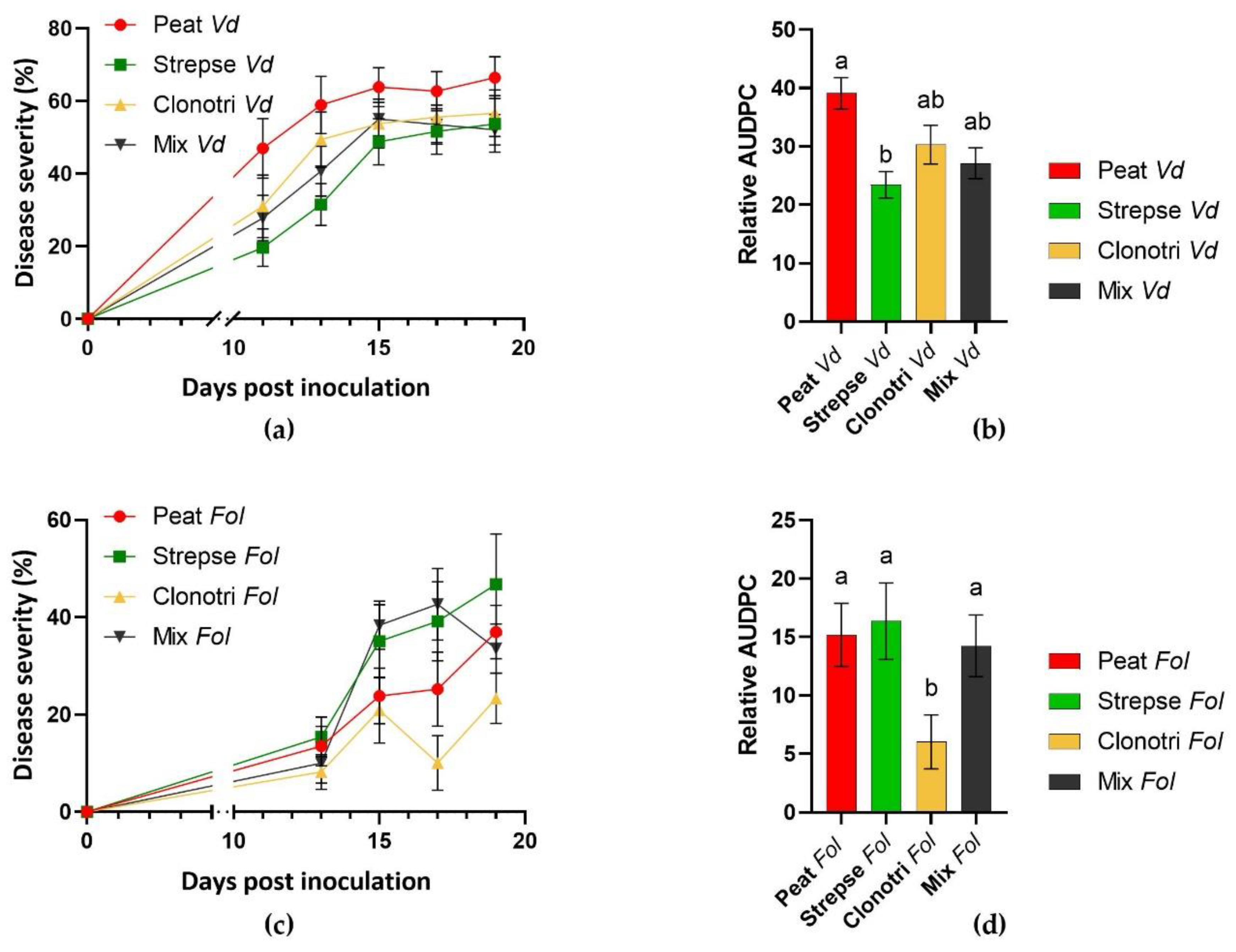
Figure 2.
Pathogenicity experiment against varied pathogen concentrations of Verticillium dahliae (Vd): (a), (b), and (c) Disease progress over time on tomato plants inoculated with 104, 105 and 106 conidia/ml of the pathogen, respectively; (d) Amount of disease expressed as relative AUDPC. Vertical bars indicate the SE of mean (n = 10 replicates). Different letters indicate significant differences: P < 0.05; two-way ANOVA, Tukey’s test.
Figure 2.
Pathogenicity experiment against varied pathogen concentrations of Verticillium dahliae (Vd): (a), (b), and (c) Disease progress over time on tomato plants inoculated with 104, 105 and 106 conidia/ml of the pathogen, respectively; (d) Amount of disease expressed as relative AUDPC. Vertical bars indicate the SE of mean (n = 10 replicates). Different letters indicate significant differences: P < 0.05; two-way ANOVA, Tukey’s test.
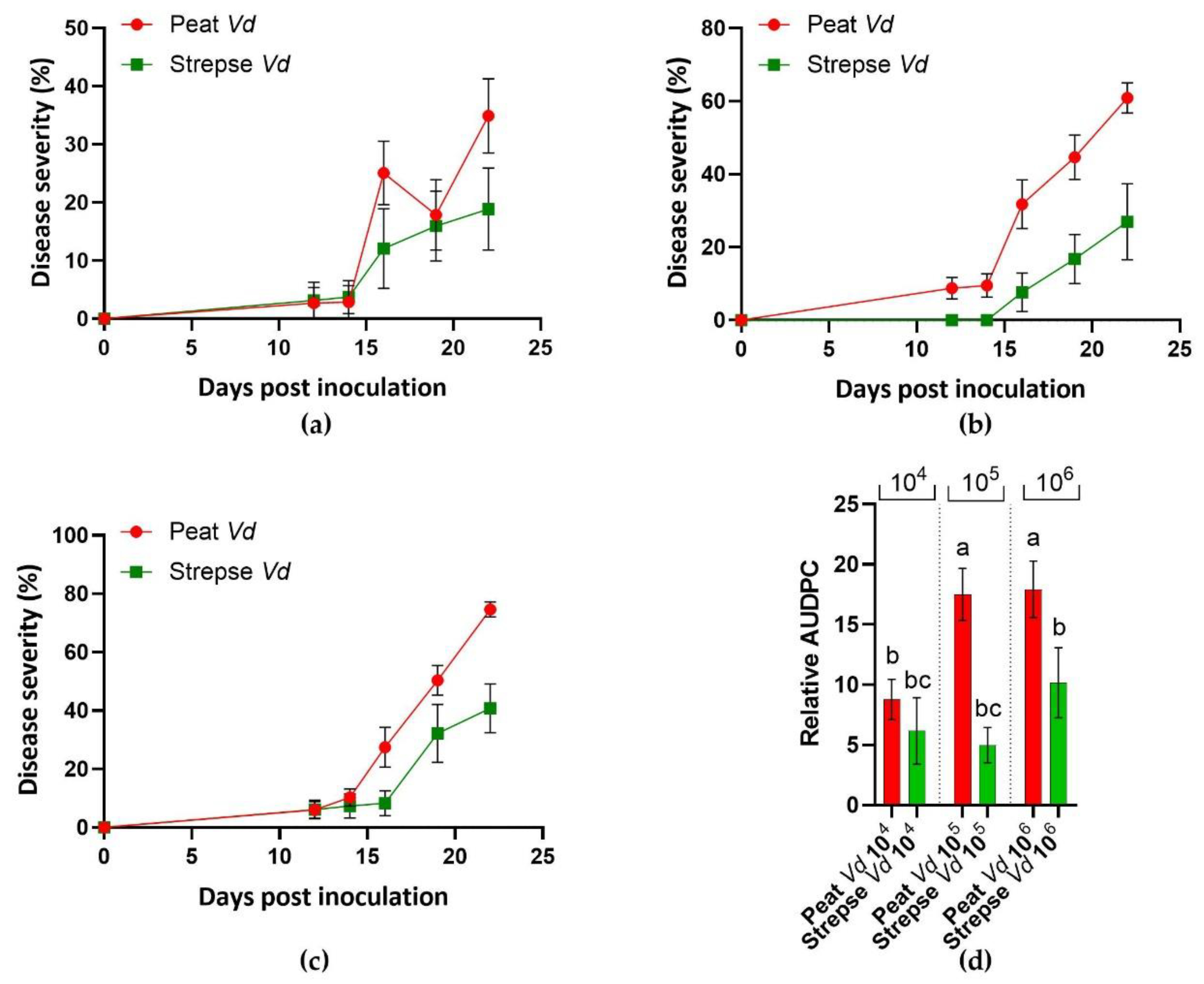
Figure 3.
Pathogenicity experiment against varied pathogen concentrations of Fusarium oxysporum f. sp. lycopersici (Fol): (a), (b), and (c) Disease progress over time on tomato plants inoculated with 104, 105 and 106 conidia/ml of the pathogen, respectively; (d) Amount of disease expressed as relative AUDPC. Vertical bars indicate the SE of mean (n = 10 replicates). Different letters indicate significant differences: P < 0.05; two-way ANOVA, Tukey’s test.
Figure 3.
Pathogenicity experiment against varied pathogen concentrations of Fusarium oxysporum f. sp. lycopersici (Fol): (a), (b), and (c) Disease progress over time on tomato plants inoculated with 104, 105 and 106 conidia/ml of the pathogen, respectively; (d) Amount of disease expressed as relative AUDPC. Vertical bars indicate the SE of mean (n = 10 replicates). Different letters indicate significant differences: P < 0.05; two-way ANOVA, Tukey’s test.
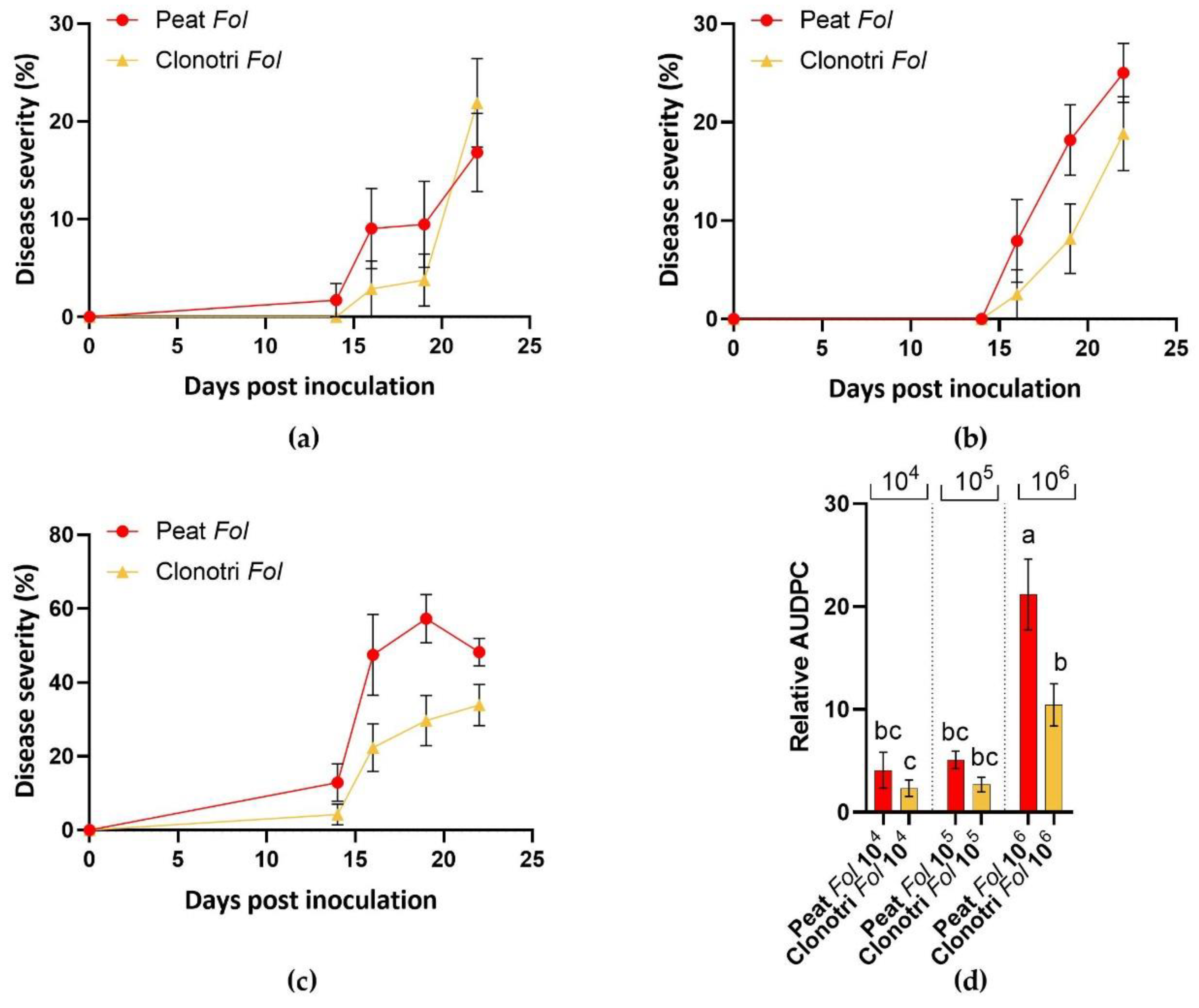
Figure 4.
Pathogenicity experiment in greenhouse conditions: (a) Disease progress over time on tomato plants infected with Verticillium dahliae (Vd); (b) Amount of Vd disease expressed as relative AUDPC; (c) Disease progress over time on tomato plants infected with Fusarium oxysporum f. sp. lycopersici (Fol); (d) Amount of Fol disease expressed as relative AUDPC. Vertical bars indicate the SE of mean (n = 8 replicates). Different letters indicate significant differences: P < 0.05; one-way ANOVA, Tukey’s test. (e) Representative photographs of tomato plants at 50 days post-inoculation with Vd (up) and Fol (down). Plants inoculated with Vd exhibit similar wilting symptoms across all treatments, whereas the Clonotri Fol treatment shows significantly reduced wilting compared to the other Fol treatments.
Figure 4.
Pathogenicity experiment in greenhouse conditions: (a) Disease progress over time on tomato plants infected with Verticillium dahliae (Vd); (b) Amount of Vd disease expressed as relative AUDPC; (c) Disease progress over time on tomato plants infected with Fusarium oxysporum f. sp. lycopersici (Fol); (d) Amount of Fol disease expressed as relative AUDPC. Vertical bars indicate the SE of mean (n = 8 replicates). Different letters indicate significant differences: P < 0.05; one-way ANOVA, Tukey’s test. (e) Representative photographs of tomato plants at 50 days post-inoculation with Vd (up) and Fol (down). Plants inoculated with Vd exhibit similar wilting symptoms across all treatments, whereas the Clonotri Fol treatment shows significantly reduced wilting compared to the other Fol treatments.
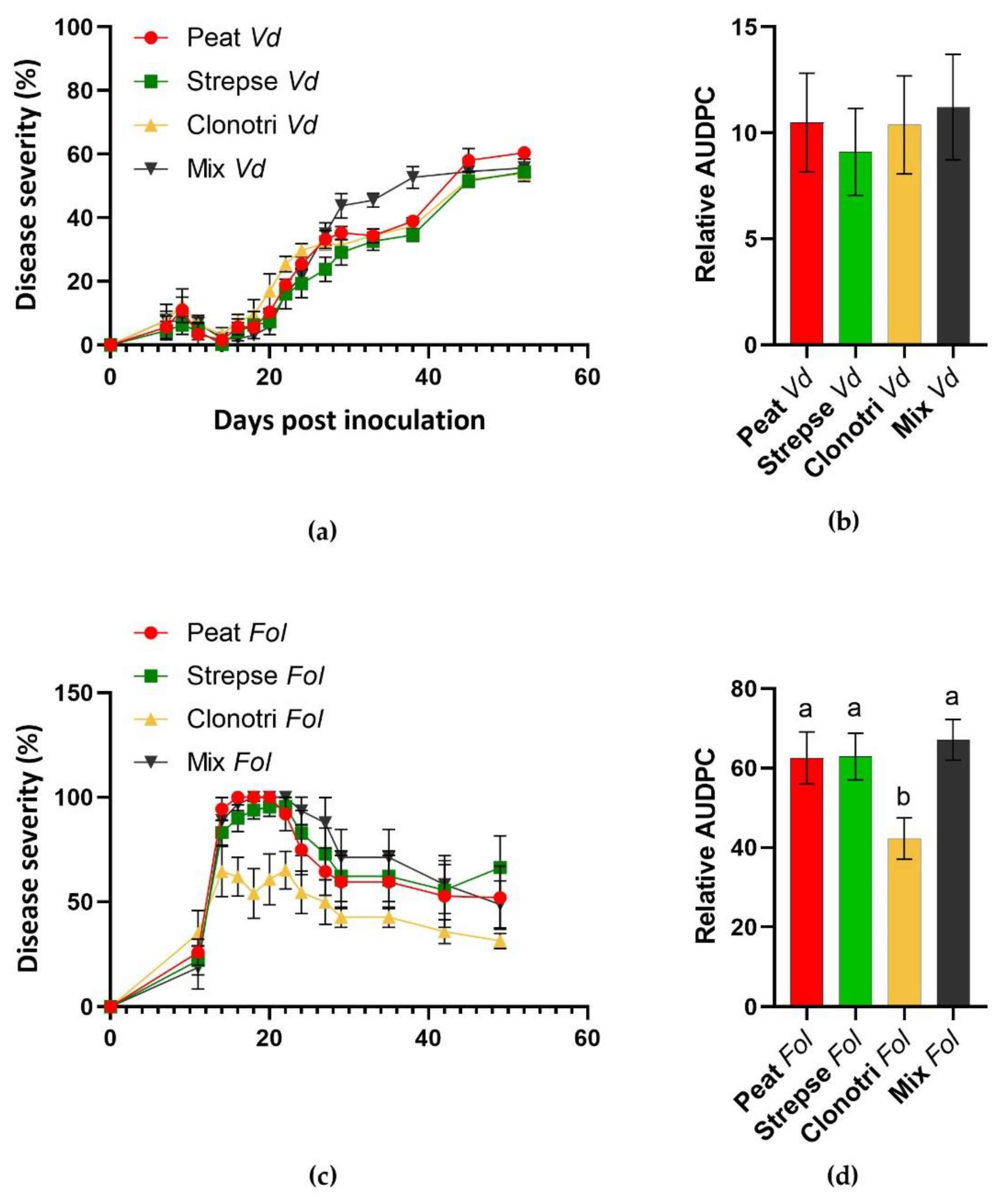
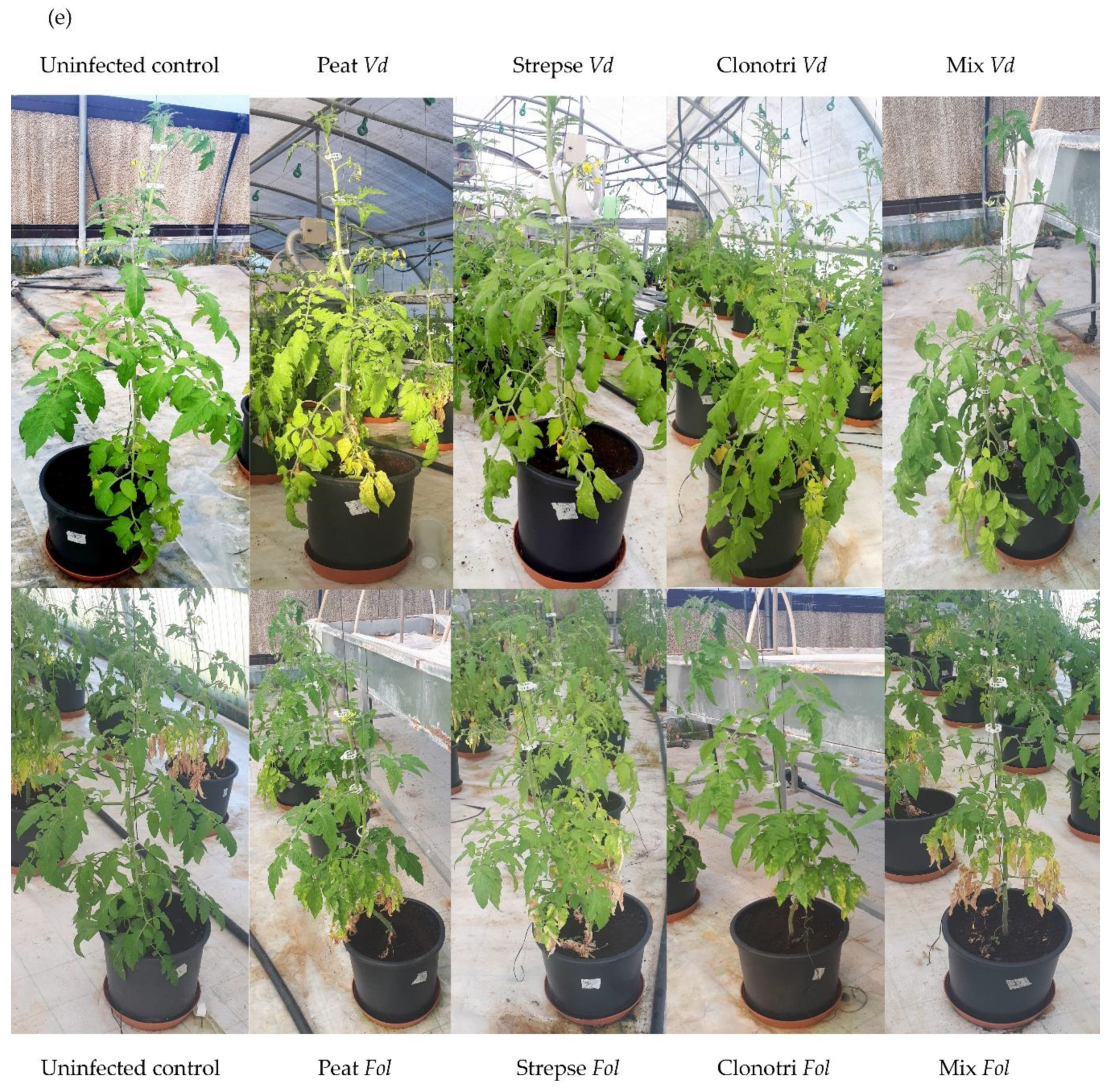
Figure 5.
Production characteristics in greenhouse experiment: (a) Fruits number on F. oxysporum f. sp. lycopersici (Fol) and Verticillium dahliae (Vd) inoculated plants; (b) Mean Fresh Weight on Fol and Vd inoculated plants; (c) Total Productivity (measured as total fresh weight of harvested tomato fruits) on Fol and Vd inoculated plants. Vertical bars indicate the SE of mean (n = 8 replicates). Different letters indicate significant differences: P < 0.05; two-way ANOVA, Tukey’s test.
Figure 5.
Production characteristics in greenhouse experiment: (a) Fruits number on F. oxysporum f. sp. lycopersici (Fol) and Verticillium dahliae (Vd) inoculated plants; (b) Mean Fresh Weight on Fol and Vd inoculated plants; (c) Total Productivity (measured as total fresh weight of harvested tomato fruits) on Fol and Vd inoculated plants. Vertical bars indicate the SE of mean (n = 8 replicates). Different letters indicate significant differences: P < 0.05; two-way ANOVA, Tukey’s test.
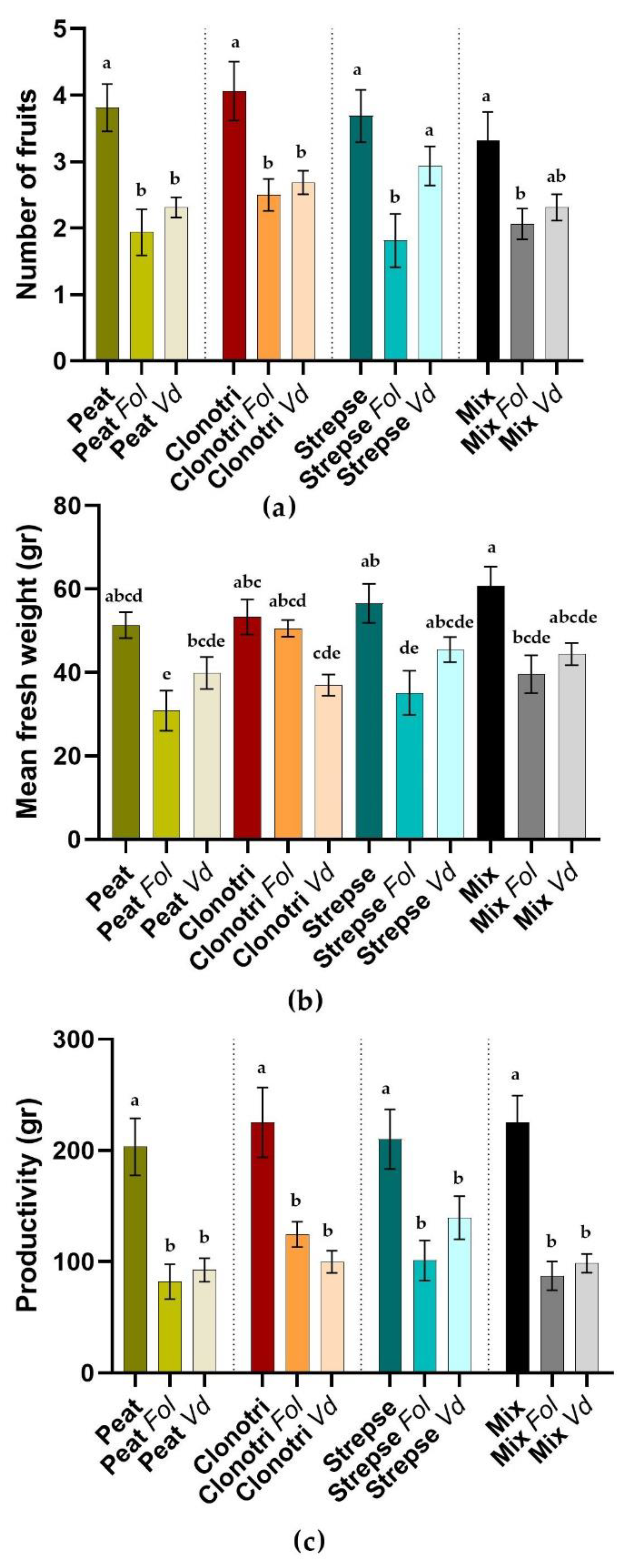
Figure 6.
Fruit firmness of the first fruit set in plants inoculated with V. dahliae and F. oxysporum f. sp. lycopersici and treated with biocontrol products in the greenhouse experiment. Vertical bars indicate the SE of mean. Different letters indicate significant differences: P < 0.05; two-way ANOVA, Tukey’s test.
Figure 6.
Fruit firmness of the first fruit set in plants inoculated with V. dahliae and F. oxysporum f. sp. lycopersici and treated with biocontrol products in the greenhouse experiment. Vertical bars indicate the SE of mean. Different letters indicate significant differences: P < 0.05; two-way ANOVA, Tukey’s test.
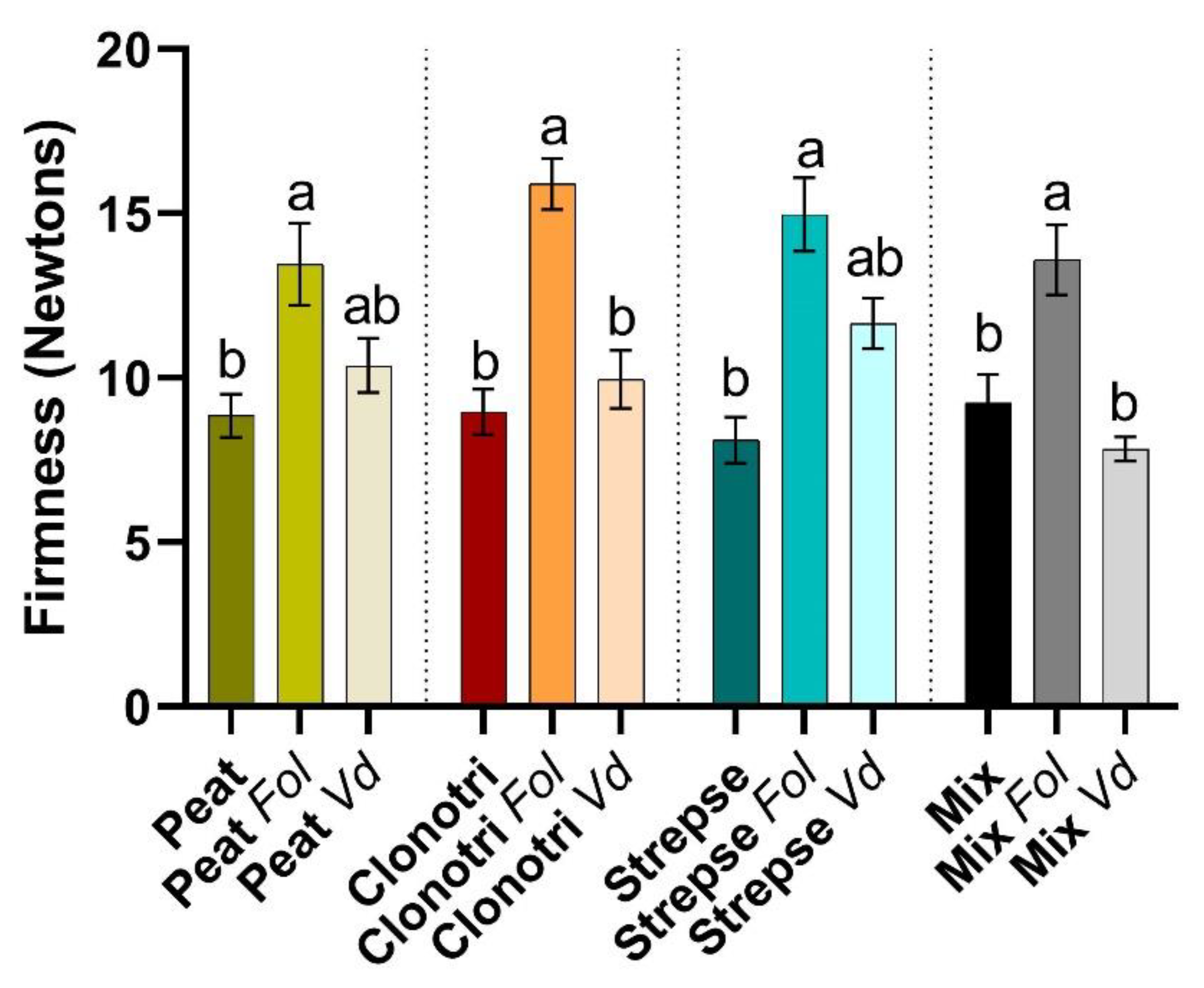
Figure 7.
Soluble solids content (SSC) in the fruits of tomato plants inoculated with V. dahliae and F. oxysporum f. sp. lycopersici and treated with biocontrol products in the greenhouse: (a) SSC of the first fruit set; (b) SSC of the second fruit set. in. Vertical bars indicate the SE of mean. Different letters indicate significant differences: P < 0.05; two-way ANOVA, Tukey’s test.
Figure 7.
Soluble solids content (SSC) in the fruits of tomato plants inoculated with V. dahliae and F. oxysporum f. sp. lycopersici and treated with biocontrol products in the greenhouse: (a) SSC of the first fruit set; (b) SSC of the second fruit set. in. Vertical bars indicate the SE of mean. Different letters indicate significant differences: P < 0.05; two-way ANOVA, Tukey’s test.
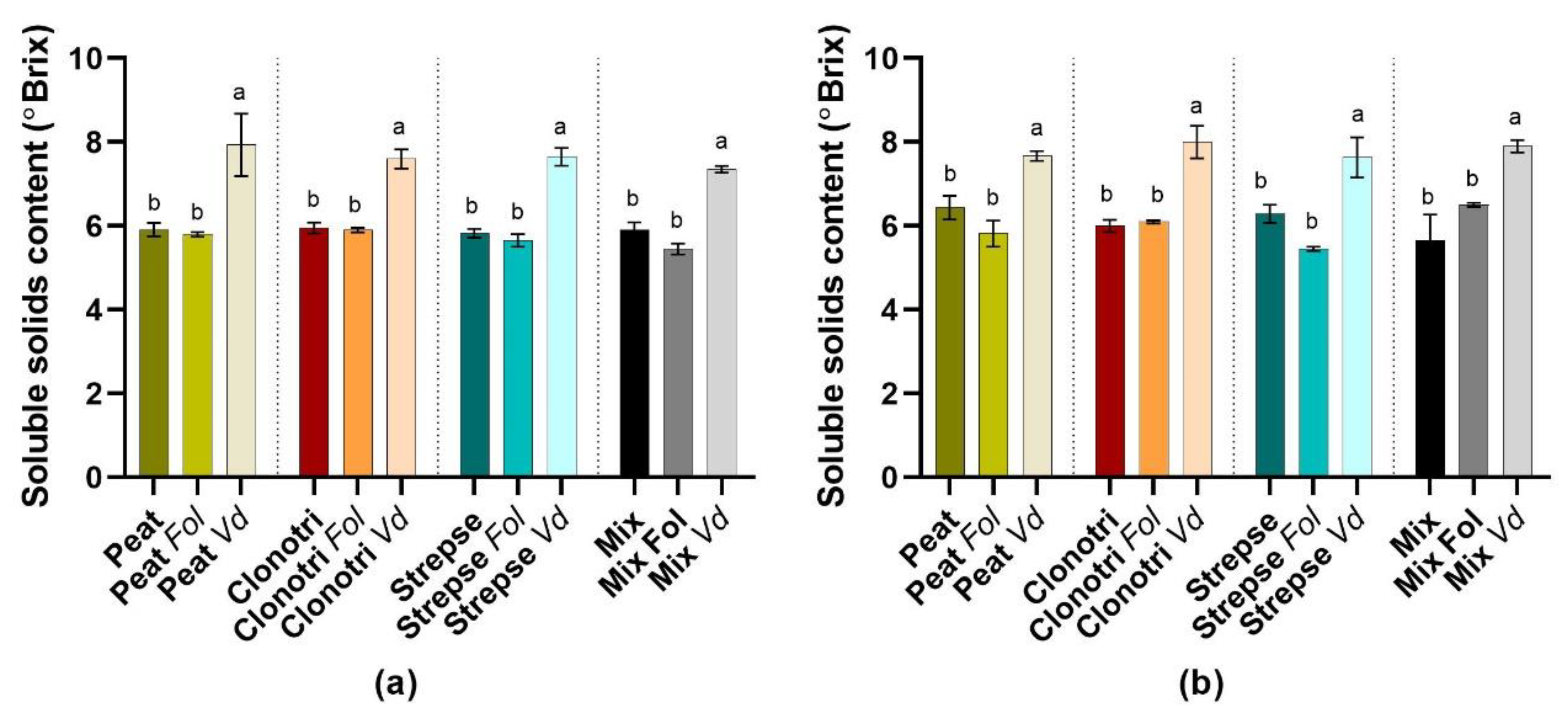

Table 1.
Mean values of color attributes L* (lightness), a* (green to red color), and b* (blue to yellow color) in tomato fruit of the first fruit set, as affected by the biocontrol products and the pathogens.
Table 1.
Mean values of color attributes L* (lightness), a* (green to red color), and b* (blue to yellow color) in tomato fruit of the first fruit set, as affected by the biocontrol products and the pathogens.
| Treatment | L* (lightness) | a* (green to red color) | b* (blue to yellow color) |
| Peat | 41.63 ± 0.79 de | 12.48 ± 1.28 bcd | 20.57 ± 0.46 e |
| Fol | 47.45 ± 1.18 abc | 3.56 ± 3.09 de | 24.68 ± 0.70 abc |
| Vd | 43.66 ± 1.09 bcde | 16.52 ± 1.98 ab | 24.1 ± 0.87 abcd |
| Clonotri | 43.24 ± 0.90 cde | 10.83 ± 1.46 bcd | 21.78 ± 0.43 cde |
| Clonotri Fol | 50.69 ± 0.72 a | -6.72 ± 1.85 f | 25.09 ± 0.35 ab |
| Clonotri Vd | 43.21 ± 1.01 cde | 14.61 ± 2.01 ab | 22.87 ± 0.68 abcde |
| Strepse | 40.79 ± 0.80 de | 15.05 ± 1.39 ab | 21.16 ± 0.47 de |
| Strepse Fol | 51.06 ± 1.20 a | -4.60 ± 2.58 ef | 24.47 ± 0.62 abc |
| Strepse Vd | 45.27 ± 1.20 bcd | 13.07 ± 2.10 bc | 25.07 ± 0.88 ab |
| Mix | 42.30 ± 0.90 de | 12.00 ± 1.50 bcd | 20.94 ± 0.45 e |
| Mix Fol | 48.50 ± 1.65 ab | 4.96 ± 3.45 cd | 25.33 ± 0.84 a |
| Mix Vd | 40.36 ± 0.51 e | 23.17 ± 0.56 a | 22.16 ± 0.63 abc |
Values with different letters within each column are significantly different: P < 0.05; two-way ANOVA, Tukey’s test.
Disclaimer/Publisher’s Note: The statements, opinions and data contained in all publications are solely those of the individual author(s) and contributor(s) and not of MDPI and/or the editor(s). MDPI and/or the editor(s) disclaim responsibility for any injury to people or property resulting from any ideas, methods, instructions or products referred to in the content. |
© 2024 by the authors. Licensee MDPI, Basel, Switzerland. This article is an open access article distributed under the terms and conditions of the Creative Commons Attribution (CC BY) license (http://creativecommons.org/licenses/by/4.0/).
Copyright: This open access article is published under a Creative Commons CC BY 4.0 license, which permit the free download, distribution, and reuse, provided that the author and preprint are cited in any reuse.


