

Submitted:
25 April 2024
Posted:
26 April 2024
You are already at the latest version
Abstract
This paper presents a novel framework for Collaborative Learning Networks (CLNs) in classrooms, aiming to optimize resource utilization and enhance educational services. The study addresses the inefficiencies of traditional education models, particularly the underutilization of computational resources and limited access to specialized software. The proposed framework employs a mix of task-based and random allocation strategies to distribute computational tasks within the CLN, considering each device’s capabilities and task requirements. The findings show significant improvement in resource utilization, facilitated by device-to-device collaboration and task sharing, thus enriching students’ learning experiences. This work contributes to optimizing resource utilization in education, advancing the field of CLNs.
Keywords:
collaborative learning
; device-to-device collaboration
; mobile cloud computing
; personalized learning
; resource optimization
1. Introduction
The traditional education model has struggled for years with the challenge of providing personalized learning experiences and adequate resources for students. This challenge has been exacerbated by the rapid pace of technological change in the digital era. As a result, many students do not receive the benefits of modern technological advances in the education system, particularly those attending under-resourced institutions. This problem has given rise to a new concept of Collaborative Learning Networks (CLNs), which are designed to address these issues by optimizing resource utilization and sharing.
CLNs leverage the power of mobile cloud computing, which allows devices to connect and share computational power and data in real-time. In this model, students’ devices form a network that facilitates the coordination of tasks and the sharing of computation-heavy or specialized software tools. This collaborative approach enhances the quality of educational services by providing access to increased processing power and specialized software for enriched learning experiences.
The emergence of CLNs in educational settings has garnered significant attention from researchers over the past few years, and a number of studies have explored the potential benefits of this model. For instance, one study by [1] proposed a framework for building collaborative e-learning contents in Web 2.0-based e-learning systems, with the aim of enhancing collaborative learning experiences. The authors suggested that a collaborative design-development of e-learning contents as concept maps would be a valuable approach to realizing CLNs’ potential.
Other studies have focused on developing suitable frameworks that can support the implementation of CLNs. For instance, [2] proposed a framework for an educational social network that fosters and enhances collaborative learning among higher education students. The paper suggested that this framework could be implemented in the future as a way of optimizing resource utilization and personalized learning experiences.
Numerous researchers have explored the potential impact of CLNs on education, including a study by [3] that examined how technology-enhanced systems and tools can be used to scaffold collaborative learning. The authors proposed several possible solutions, such as incorporating synchronous or asynchronous communication technologies that could facilitate interaction and learning in virtual environments. The authors suggested that this approach could enhance collaboration, improve communication, and improve learning outcomes for students.
Moreover, different collaborative approaches have been proposed to support CLNs, like the ANTS model [4]. ANTS focus on building a collaborative learning environment that includes services such as course management, assessment management, collaboration, and community resources. The use of such collaborative models can help to foster a sense of community among students, while also facilitating collaboration, peer-to-peer learning, and knowledge sharing.
Despite the growing interest in CLNs, there is still a significant need for further research to investigate the model’s benefits and limitations. One area that requires closer attention is the design of suitable frameworks to support CLNs. For instance, a study by [5] examined the use of a networked environment to support project-based collaborative learning in higher education. The authors proposed a theoretical framework that could be used to explore new ways of collaborative work, while also observing and recording the outcomes of the initiative.
Overall, CLNs offer a promising new approach to addressing the challenges of resource optimization and personalized learning experiences in the traditional educational model. By leveraging mobile cloud computing and collaborative frameworks, this model has the potential to significantly improve learning outcomes for students, particularly those that attend under-resourced institutions. However, there is still considerable work to be done in developing suitable frameworks, exploring scalability issues, and investigating the overall effectiveness of the model in real-world educational settings.
2. Literature Review
Collaborative learning has gained significant attention in recent years as an effective pedagogical approach to enhance the educational experience and promote active learning. The concept of collaborative learning networks (CLNs) has emerged as a promising strategy to leverage the power of collaboration and technology in educational settings. This literature review explores the existing research on CLNs, collaborative learning frameworks, and the role of technology in facilitating collaboration and personalized learning.
Several studies have proposed frameworks for collaborative learning in higher education settings. [2] presents a framework for an educational social network that fosters collaborative learning among students. The framework aims to overcome the limitations of traditional learning environments by leveraging social media and online collaboration tools. Similarly, [6] introduces a web application framework for collaborative learning, emphasizing the importance of a structured approach to facilitate collaboration and knowledge sharing.
The integration of technology has been a key enabler for collaborative learning environments. [7] explores the use of technology to enhance collaborative learning opportunities, particularly for prospective school leaders. [8] describes the development of a collaborative learning environment through technology-enhanced education, highlighting the potential of learning technologies to support enterprise education in higher education institutions.
The burgeoning field of Human-Computer Interaction has recently witnessed the advent of a global online platform designed to foster joint innovation through ideas sharing and collaboration, as elucidated by Jamali et al. (2024). This platform epitomizes the quintessence of Collaborative Learning Networks (CLNs) by transcending geographical and disciplinary boundaries, thereby cultivating a fertile ground for cross-pollination of ideas and cooperative problem-solving. The authors delineate a system that not only facilitates the exchange of ideas but also promotes a culture of collective ingenuity, which is paramount in addressing grand-scale global challenges. The platform’s unique capability to harness the collective intellect of a diverse user base aligns seamlessly with the objectives of our proposed CLN framework, which seeks to optimize resource utilization and enhance educational services through device-to-device collaboration. By integrating such a platform into the educational milieu, we can significantly amplify the efficacy of CLNs, thereby enriching the educational experience and advancing the pedagogical paradigm [9].
The advancement of robotics education at the undergraduate level is crucial for preparing students to meet the demands of modern industries. The work-in-progress paper by Shill et al. (2023) presents a student-centered personalized learning framework designed to advance undergraduate robotics education, particularly in institutions lacking robotics-trained faculty. This innovative approach leverages self-paced, online course materials and a personalized learning server to offer robotics course content remotely, thus addressing the scarcity of qualified professors and the need for specialized hardware. The framework emphasizes student autonomy, as supported by self-determination theory, and aims to resolve accessibility issues by reducing the financial and expertise barriers associated with robotics education. The proposed method aligns with the pedagogical shift towards personalized learning environments, which are increasingly recognized for their potential to enhance student motivation, engagement, and mastery of complex subjects like robotics [10].
In addition to frameworks and technological solutions, researchers have also explored the broader implications of collaborative learning networks. [11] proposes a collaborative learning framework to promote a positive learning culture, emphasizing the importance of effective and integrated learning experiences for students. [12] examines the development of collaborative learning models in the context of the Industrial Era 4.0, highlighting the need for adaptive and collaborative approaches to meet the demands of the modern workforce.
The concept of device-to-device collaboration, as proposed in your paper, aligns with the growing trend of leveraging mobile and cloud computing technologies in educational settings. [13] evaluates the usability of a cloud-based collaborative learning framework, addressing the replication problem in collaborative environments through dynamic programming formulations. This approach can be extended to optimize resource utilization and enhance personalized learning experiences through shared computational tasks among students’ devices.
The advent of cloud computing has revolutionized the landscape of computational resource allocation, particularly within the educational sector. The study by Jamali et al. (2024) presents an innovative framework that harnesses the Salp Swarm Algorithm (SSA) for task scheduling in cloud environments, which aligns with the objectives of Collaborative Learning Networks (CLNs) to optimize resource utilization and enhance educational services. Their research contributes to the field by addressing the task scheduling problem, a critical challenge in cloud computing, through the development of a Modified Salp Swarm Algorithm (MSSA). This algorithm demonstrates superior performance in minimizing task completion times and improving resource distribution efficiency, thereby offering a promising approach for device-to-device collaboration within CLNs. The integration of such intelligent scheduling mechanisms can significantly enrich the learning experience by ensuring optimal use of computational resources and facilitating access to specialized software, which are key concerns in traditional education models. The findings of Jamali et al. (2024) underscore the potential of advanced computational algorithms to advance the capabilities of CLNs, making it a pertinent addition to the literature on collaborative learning frameworks and technology’s role in education [14].
Furthermore, the literature highlights the importance of collaboration and networking in education at various levels. [15] discusses policies encouraging collaboration, such as Education Action Zones aimed at improving schools across local areas of disadvantage, and Networked Learning Communities. [16] explores nurturing global collaboration and networked learning in higher education, emphasizing the role of communities of practice and online interactions.
Several studies have also examined the efficacy of collaborative networks in preparing teachers and supporting professional development. [17] presents the implementation of a collaborative action research network in teacher education, focusing on intercultural education. [18] identifies essential features of effective networks in education, such as deepening learning and fostering collaboration among stakeholders.
Overall, the existing literature underscores the potential of collaborative learning networks, collaborative frameworks, and technology integration to enhance educational experiences, promote personalized learning, and foster collaboration among students, educators, and institutions. Your proposed framework for device-to-device collaboration aligns with these trends and aims to leverage the power of collaboration and shared resources to optimize educational services and enrich learning experiences. Mobile cloud computing has emerged as a powerful tool for distributed computing, enabling tasks to be offloaded from mobile devices to cloud servers. Research in mobile-to-mobile (M2M) computation offloading explores device-to-device collaboration for resource sharing and task distribution [19]. These advancements pave the way for the development of CLNs within the educational domain.
3. Proposed Framework
3.1. Task Distribution Algorithm
The task distribution algorithm in the proposed framework aims to intelligently allocate computational tasks among devices within the Collaborative Learning Network (CLN). This allocation is based on an evaluation of the devices’ capabilities, the requirements of the tasks, and the prevailing network conditions. These factors are critical in ensuring efficient task execution, optimal resource utilization, and enhanced learning experiences.
In addressing the challenges of resource optimization in Collaborative Learning Networks (CLNs), our study draws inspiration from the pioneering work of Jamali et al. (2018) [19]. Their research on Cloud-based Computation Models for Mobile Devices laid the groundwork for optimizing energy consumption in Mobile-to-Mobile (M2M) computation offloading1. This foundational concept is integral to our proposed framework, which seeks to enhance educational experiences through efficient task allocation and device-to-device collaboration within CLNs.
3.1.1. Device Capabilities
Each device within the CLN is unique in terms of its processing power, battery life, and available storage capacity. The algorithm considers these factors to determine the suitability of a device for handling specific computational tasks. Devices with higher processing power and ample storage are prioritized for tasks that demand intensive computation or require significant storage space. Similarly, devices with longer battery life may be preferred for tasks that are expected to run for extended periods.
3.1.2. Task Requirements
The algorithm evaluates the computational demands of each learning task and the specific software required for its execution. Tasks that require specialized software or hardware features are assigned to devices that possess the necessary capabilities. By matching tasks with suitable devices, the algorithm ensures that tasks are completed efficiently and effectively.
3.1.3. Network Conditions
The algorithm takes into account the bandwidth and latency of the device-to-device connections within the CLN. Tasks are assigned to devices based on their connectivity and proximity, minimizing network congestion and latency. Devices with faster and more reliable connections are assigned tasks that require real-time interactions or large data transfers, ensuring smooth task execution and minimizing delays.
3.1.4. Lyapunov Optimization
The algorithm utilizes Lyapunov optimization techniques to balance the trade-off between device capabilities, task requirements, and network conditions. By formulating the task allocation problem as an optimization problem, the algorithm can efficiently allocate tasks to devices, ensuring optimal resource utilization and network performance. Lyapunov optimization allows the algorithm to adapt to changing network conditions and device capabilities, ensuring that tasks are assigned to devices in a way that minimizes energy consumption, reduces latency, and maximizes overall network performance.
3.1.5. Adaptive Task Allocation
The algorithm is designed to adapt dynamically to changing conditions within the CLN. As devices join or leave the network, or as network conditions fluctuate, the algorithm reevaluates task assignments to optimize performance. This adaptability ensures that tasks are always assigned to the most suitable devices, maximizing resource utilization and enhancing the overall learning experience.
3.1.6. Performance Metrics
To evaluate the effectiveness of the task distribution algorithm, several performance metrics can be considered. These metrics may include task completion time, resource utilization efficiency, energy consumption, and network latency. By monitoring these metrics, the algorithm can be fine-tuned to further improve its performance and enhance the overall efficiency of the CLN.
3.2. Algorithm Operation
The task distribution algorithm in the proposed framework operates in a systematic manner to ensure efficient allocation of computational tasks within the CLN. The algorithm consists of four key steps: Task Identification, Device Profiling, Network Assessment, and Task Allocation.
3.2.1. Task Identification
In the first step, each learning task is identified, along with its specific computational requirements and software dependencies. Tasks are categorized based on their complexity, resource demands, and urgency.
3.2.2. Device Profiling
Next, the algorithm profiles the capabilities of each device in the CLN. This profiling includes assessing the processing power, battery life, and available storage capacity of each device. Additionally, the algorithm considers any specialized hardware or software features that may be present in certain devices.
3.2.3. Network Assessment
The algorithm then assesses the network conditions within the CLN, including the bandwidth and latency between devices. This assessment helps determine the optimal assignment of tasks based on the devices’ connectivity and proximity.
3.2.4. Task Allocation
Based on the information gathered from task identification, device profiling, and network assessment, the algorithm dynamically assigns tasks to the most suitable devices in the CLN. Tasks are allocated to devices that can execute them efficiently, taking into account their processing power, storage capacity, and network connectivity. This ensures that overall network performance is optimized, and tasks are completed in a timely manner.
3.3. Scenario Example
Consider a scenario where a CLN is deployed in a classroom environment, consisting of 20 student devices (smartphones or tablets) and a central server. The students are working on a collaborative project that involves running simulations for a physics experiment. The simulations require significant computational power and large storage capacity. 1. Task Identification: The teacher assigns the simulation task to the CLN, specifying the computational requirements and software dependencies of the simulations. 2. Device Profiling: The algorithm profiles each student device, taking into account its processing power, battery life, and available storage capacity. The central server is also profiled, considering its high processing power and ample storage. 3. Network Assessment: The algorithm assesses the network conditions within the CLN, considering the bandwidth and latency between devices. Devices with faster and more reliable connections are identified. 4. Task Allocation: Based on the above factors, the algorithm dynamically assigns the simulation tasks to the most suitable devices in the CLN. The central server is assigned tasks that require high computational power and storage capacity, while student devices are assigned lighter tasks that can be completed efficiently. Tasks are allocated in a way that optimizes overall network performance and ensures that the simulations are completed in a timely manner.
By utilizing the task distribution algorithm, the CLN is able to efficiently allocate computational tasks, ensuring optimal resource utilization and enhancing the learning experience for the students.
3.4. Mathematical Modeling
The task distribution algorithm aims to allocate computational tasks among devices in the Collaborative Learning Network (CLN) based on device capabilities, task requirements, and network conditions. Let D represent the set of devices in the CLN, T represent the set of tasks to be allocated, and N represent the set of device-to-device connections in the CLN.
3.4.1. Device Capabilities
Each device is characterized by its processing power , battery life , and available storage capacity . The algorithm uses these parameters to determine the suitability of a device for handling a specific task.
3.4.2. Task Requirements
Each task has computational demands denoted by and specific software requirements denoted by . The algorithm considers these requirements when assigning tasks to devices, ensuring that tasks are allocated to devices capable of handling them efficiently.
3.4.3. Network Conditions
The algorithm takes into account the bandwidth and latency of the connections between devices . Tasks are assigned to devices based on their connectivity and proximity, minimizing network congestion and latency.
3.4.4. Lyapunov Optimization
The task distribution algorithm can be formulated as an optimization problem using Lyapunov optimization techniques. The objective is to minimize the total energy consumption and maximize the overall network performance. This can be represented as:
subject to:
where is a binary variable indicating whether task t is assigned to device d, and represents the energy consumption of device d.
3.4.5. Adaptive Task Allocation
The algorithm adapts dynamically to changes in the CLN, such as devices joining or leaving the network or changes in network conditions. It reevaluates task assignments to optimize performance, ensuring that tasks are assigned to the most suitable devices.
3.4.6. Performance Metrics
Performance metrics such as task completion time, resource utilization efficiency, energy consumption, and network latency are used to evaluate the effectiveness of the algorithm. Fine-tuning based on these metrics can further improve performance and efficiency.
4. Implementation and Results
We implemented our proposed method in two ways: task-based and Random strategies. The distinction between the Task_Based and Random strategies lies in their respective approaches to task allocation among devices.
The Task_Based strategy is characterized by its methodical allocation process, which considers both the specific requirements of each task and the capabilities of available devices. Using the allocate_task function, this strategy meticulously matches tasks with suitable devices based on considerations such as processing and storage needs, as well as the potential requirement for GPU resources. Tasks are assigned to devices that fulfill their requirements and possess the highest processing power among eligible devices. By prioritizing compatibility between tasks and devices, this strategy is designed to optimize task allocation by leveraging the unique characteristics of each task and device.
On the other hand, the Random strategy adopts a more haphazard approach to task allocation, disregarding the specific requirements of tasks and the capabilities of devices. Through the Random_allocation function, tasks are Randomly assigned to devices, without regard for whether the selected devices can adequately fulfill the tasks’ requirements. This strategy may lead to tasks being allocated to devices that are ill-suited for their needs, potentially resulting in inefficient resource utilization.
In our simulation of the Collaborative Learning Network (CLN) framework, we examined the allocation of tasks to devices based on their processing power, storage capacity, and GPU availability. We used a diverse set of devices, including standard and low-power devices, along with a central server.
Our simulation of the Collaborative Learning Network (CLN) framework provided valuable insights into task allocation and device distribution. The simulation involved 15 devices. We generated 5 Random tasks with varying processing and storage requirements, some of which also required GPU acceleration.
4.1. Device Distribution
Figure 1 illustrates the distribution of devices in the Collaborative Learning Network (CLN). This visualization showcases the distribution of processing power, storage capacity, battery life, connection speed, and GPU availability across the network’s devices. It provides a comprehensive overview of the network’s resources and capabilities.
4.2. Task Allocation Strategies
We evaluated two task allocation strategies within the CLN framework: Task_Based and Random. The allocation results for each strategy are summarized below.
4.2.1. Task_Based Strategy
Figure 2 presents the allocation results for the Task_Based strategy. This strategy involves methodically assigning tasks to devices based on their specific requirements and capabilities. Each task is matched with a suitable device that possesses adequate processing power, storage capacity, and GPU availability. This strategy aims to optimize task allocation by prioritizing compatibility between tasks and devices.
4.2.2. Random Strategy
Figure 3 displays the allocation results for the Random strategy. This strategy involves Randomly assigning tasks to devices without considering their specific requirements. Tasks may be allocated to devices that lack the necessary processing power, storage capacity, or GPU availability, leading to potential inefficiencies in resource utilization.
4.2.3. Comparison with Single Device
We compared our proposed methods (TASK_BASED and RANDOM strategies) with a baseline scenario involving a single device. The comparison results are summarized in Table 1 and visualized in Figure 4.
The Task_Based strategy outperformed both the Random strategy and the single device scenario in terms of total execution time. By systematically allocating tasks to devices based on their requirements and capabilities, the Task_Based strategy achieved the most efficient resource utilization within the CLN framework.
5. Benefits of the Proposed Framework
The proposed framework for Collaborative Learning Networks (CLNs) offers a range of benefits that address key challenges in traditional educational models. These benefits include:
- Efficient Resource Utilization: By dynamically allocating tasks based on the capabilities of each device and the prevailing network conditions, the framework ensures that computational resources are utilized efficiently. Tasks are assigned to devices that can handle them most effectively, optimizing overall performance and reducing resource wastage.
- Energy Consumption Optimization: The framework’s task distribution algorithm minimizes the energy consumption of individual devices by distributing tasks among them. Devices with lower battery levels or limited processing power can be allocated lighter tasks, while devices with higher capabilities can handle more demanding tasks. This approach prolongs battery life and reduces overall energy usage, contributing to sustainability efforts.
- Enhanced Learning Experiences: Through device-to-device collaboration and access to increased processing power and specialized software, the framework enriches the learning experiences of students. For example, students can collaborate on complex projects that require intensive computational resources, such as simulations or data analysis tasks. By leveraging the collective capabilities of the CLN, students can access advanced learning tools and technologies that may not be available on individual devices, enhancing their understanding and retention of course material.
- Personalized Learning: The framework enables personalized learning experiences by tailoring task assignments to individual student needs. For example, students with a particular interest in a certain subject area can be assigned tasks related to that area, allowing them to delve deeper into the topic and explore advanced concepts. Additionally, the framework can adapt to students’ learning styles and preferences, providing them with learning opportunities that are tailored to their individual needs.
- Improved Collaboration: By facilitating device-to-device collaboration, the framework promotes collaboration among students. Students can work together on projects, share resources, and exchange ideas, enhancing their collaborative skills and fostering a sense of community within the classroom.
The proposed framework for CLNs offers a holistic approach to enhancing educational experiences through efficient resource utilization, energy consumption optimization, enhanced learning experiences, personalized learning, and improved collaboration. By leveraging the collective capabilities of devices within the CLN, the framework empowers students and educators to explore new learning paradigms and achieve better educational outcomes.
6. Challenges and Future Research
While Collaborative Learning Networks (CLNs) offer exciting opportunities for enhancing educational experiences, several challenges must be addressed to realize their full potential. One of the primary challenges is the design of efficient and scalable task allocation algorithms. The Task-Based strategy presented in this paper represents a step in the right direction. However, further research is needed to develop more sophisticated algorithms that can dynamically allocate tasks based on real-time data and changing network conditions.
Another challenge is the integration of CLNs into existing educational systems and infrastructure. This requires not only technical expertise but also a deep understanding of pedagogy and learning theory. Future research should focus on developing frameworks and guidelines for integrating CLNs into educational settings, ensuring that they complement traditional teaching methods rather than replace them.
Additionally, the security and privacy of data exchanged in CLNs are major concerns. As CLNs rely on device-to-device communication, ensuring the confidentiality, integrity, and availability of data is crucial. Future research should explore encryption and authentication mechanisms to protect data in transit and at rest and methods for ensuring the security of devices participating in CLNs.
Another important area for future research is the evaluation of CLNs in real educational settings. While simulations provide valuable insights, real-world experiments are essential to validate the effectiveness of CLNs in improving learning outcomes and student engagement. Such studies should not only measure the impact of CLNs on academic performance but also assess their effects on collaboration, creativity, and critical thinking skills.
7. Conclusions
In this paper, we have explored the potential of Collaborative Learning Networks (CLNs) to enhance educational experiences through device-to-device collaboration. The primary aim of this research was to investigate the efficiency of task allocation strategies within CLNs and their impact on resource utilization and learning outcomes.
Our findings reveal that the Task-Based strategy, which carefully matches tasks with suitable devices based on their requirements and capabilities, outperforms the Random strategy and a single-device scenario regarding task allocation efficiency. This suggests a methodical approach to task allocation can significantly improve resource utilization and overall system performance in CLNs.
The implications of these findings are profound for the field of collaborative learning and educational technology. By optimizing task allocation, CLNs can create more engaging and personalized student learning experiences while empowering educators with new pedagogical tools. Furthermore, our research contributes to the growing knowledge on collaborative learning networks and their potential to revolutionize education.
However, it is important to acknowledge the limitations of our study. The simulations were based on a simplified model and may not fully capture the complexities of real-world CLNs. Future research should focus on refining the simulation model and conducting experiments in real CLN environments to validate our findings.
In conclusion, this research highlights the importance of thoughtful task allocation strategies in CLNs and their potential to enhance educational outcomes. By adopting a systematic approach to task allocation, educators and developers can create more efficient and effective collaborative learning environments, ultimately benefiting both students and educators alike.
References
- El Mhouti, A.; Nasseh, A.; Erradi, M.; et al. Enhancing collaborative learning in Web 2.0-based e-learning systems: A design framework for building collaborative e-learning contents. Educ Inf Technol 2017, 22, 2351–2364. [Google Scholar] [CrossRef]
- Alkhathlan, A.A.; Al-Daraiseh, A.A. An Analytical Study of the Use of Social Networks for Collaborative Learning in Higher Education. Int J Modern Education and Computer Science (IJMECS) 2017, 9, 1–13. [Google Scholar] [CrossRef]
- Daradoumis, T.; Caballé, S.; Perez, A.A.J.; Xhafa, F. (Eds.) Technology-enhanced systems and tools for collaborative learning scaffolding; Springer Science & Business Media; Volume 350. [CrossRef]
- Lopez, P.G.; Skarmeta, A.G.; Molla, R.R. ANTS: A new collaborative learning framework. In European Conference on Computer Supported Collaborative Learning; 2001. [Google Scholar]
- Daradoumis, T.; Xhafa, F.; Marquès, J.M. A methodological framework for project-based collaborative learning in a networked environment. Int J Continuing Engineering Education and Life Long Learning 2002, 12, 389–402. [Google Scholar] [CrossRef]
- Turani, A.; Calvo, R.A.; Goodyear, P. An application framework for collaborative learning. In International Conference on Web Engineering; Springer: Berlin, Heidelberg, 2005; pp. 243–251. [Google Scholar] [CrossRef]
- Wasonga, T.A. Using technology to enhance collaborative learning. International Journal of Educational Management 2007, 21, 582–592. [Google Scholar] [CrossRef]
- Harris, R.J. Developing a collaborative learning environment through technology enhanced education (TE3) support. Education+ Training 2008, 50, 674–686. [Google Scholar] [CrossRef]
- Jamali, H.; Dascalu, S.M.; Harris, F.C., Jr. Fostering Joint Innovation: A Global Online Platform for Ideas Sharing and Collaboration. arXiv 2024, arXiv:2402.12718. [Google Scholar] [CrossRef]
- Shill, P.; Wu, R.; Jamali, H.; Hutchins, B.; Dascalu, S.M.; Harris, F.C.; Feil-Seifer, D. WIP: Development of a Student-Centered Personalized Learning Framework to Advance Undergraduate Robotics Education. 2023. [Google Scholar] [CrossRef]
- Willey, K.; Gardner, A. Collaborative learning frameworks to promote a positive learning culture. In 2012 Frontiers in Education Conference Proceedings; IEEE, 2012; pp. 1–6. [Google Scholar] [CrossRef]
- Tjahjono, Tjahjono, et al. The development of collaborative learning in the framework of learning development HE 4.0. International Journal of Science, Technology & Management 2020, 1, 298–305. [CrossRef]
- Shorfuzzaman, M.; Alelaiwi, A.; Masud, M.; Hassan, M.M.; Hossain, M.S. Usability of a cloud-based collaborative learning framework to improve learners’ experience. Computers in Human Behavior 2015, 51, 967–976. [Google Scholar] [CrossRef]
- Jamali, H.; Shill, P.C.; Feil-Seifer, D.; Harris, F.C.; Dascalu, S.M. A Schedule of Duties in the Cloud Space Using a Modified Salp Swarm Algorithm. Internet of Things. Advances in Information and Communication Technology 2024, 62–75. [Google Scholar] [CrossRef]
- Muijs, D.; Ainscow, M.; Chapman, C.; West, M. Collaboration and networking in education. Springer Science & Business Media, 2011. [Google Scholar]
- Cronin, C.; Cochrane, T.; Gordon, A. Nurturing global collaboration and networked learning in higher education. Research in Learning Technology 2016, 24. [Google Scholar] [CrossRef]
- Angelides, P.; Stylianou, T.; Leigh, J. The efficacy of collaborative networks in preparing teachers. European Journal of Teacher Education 2007, 30, 135–149. [Google Scholar] [CrossRef]
- Rincón-Gallardo, S.; Fullan, M. Essential features of effective networks in education. Journal of Professional Capital and Community 2016, 1, 5–22. [Google Scholar] [CrossRef]
- Jamali, H.; Karimi, A.; Haghighizadeh, M. A new method of Cloud-based Computation Model for Mobile Devices: Energy Consumption Optimization in Mobile-to-Mobile Computation Offloading. In Proceedings of the 6th International Conference on Communications and Broadband Networking, Singapore; pp. 32–37. [CrossRef]
Figure 1.
Device Distribution in CLN.
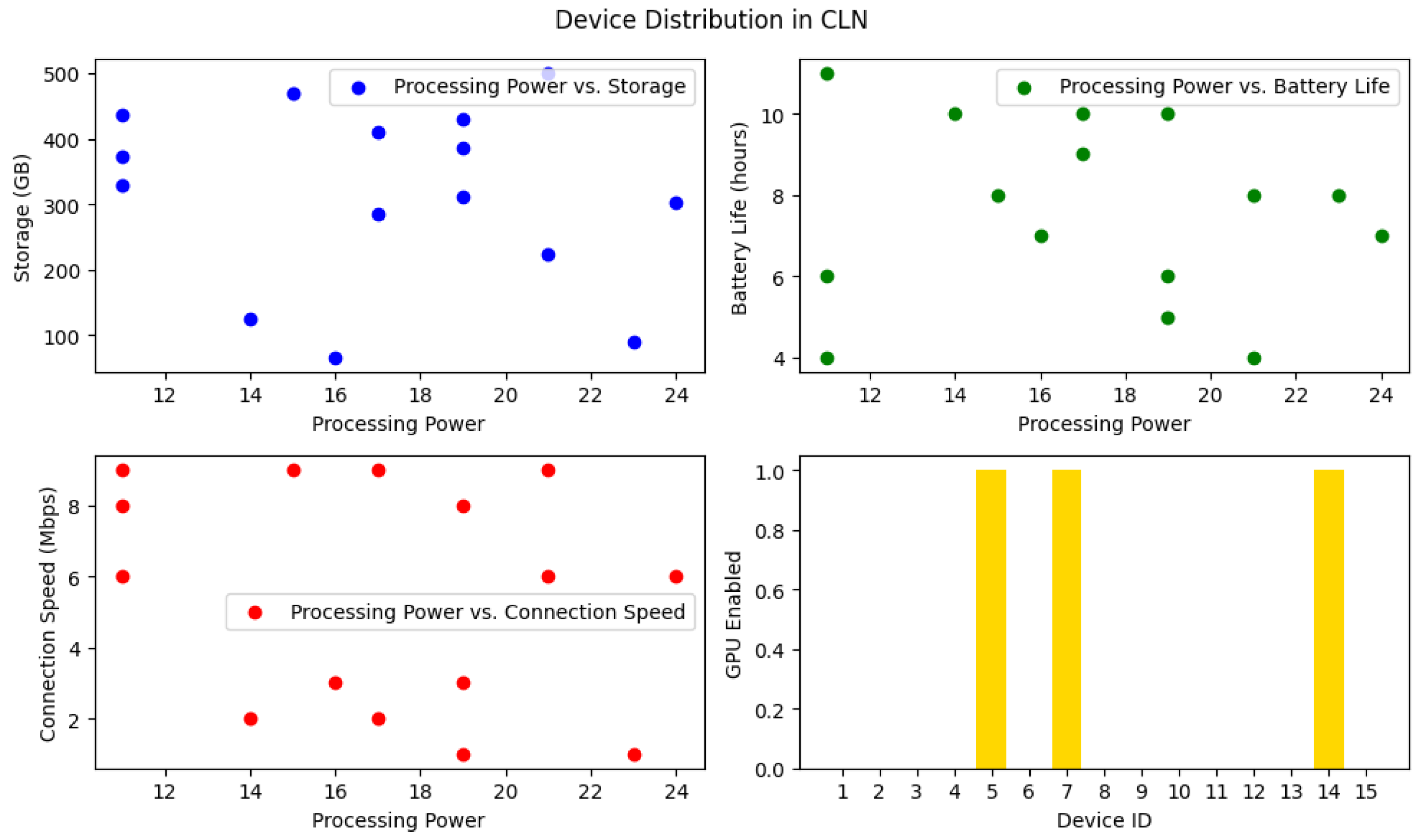
Figure 2.
Task Allocation with Task_Based Strategy.
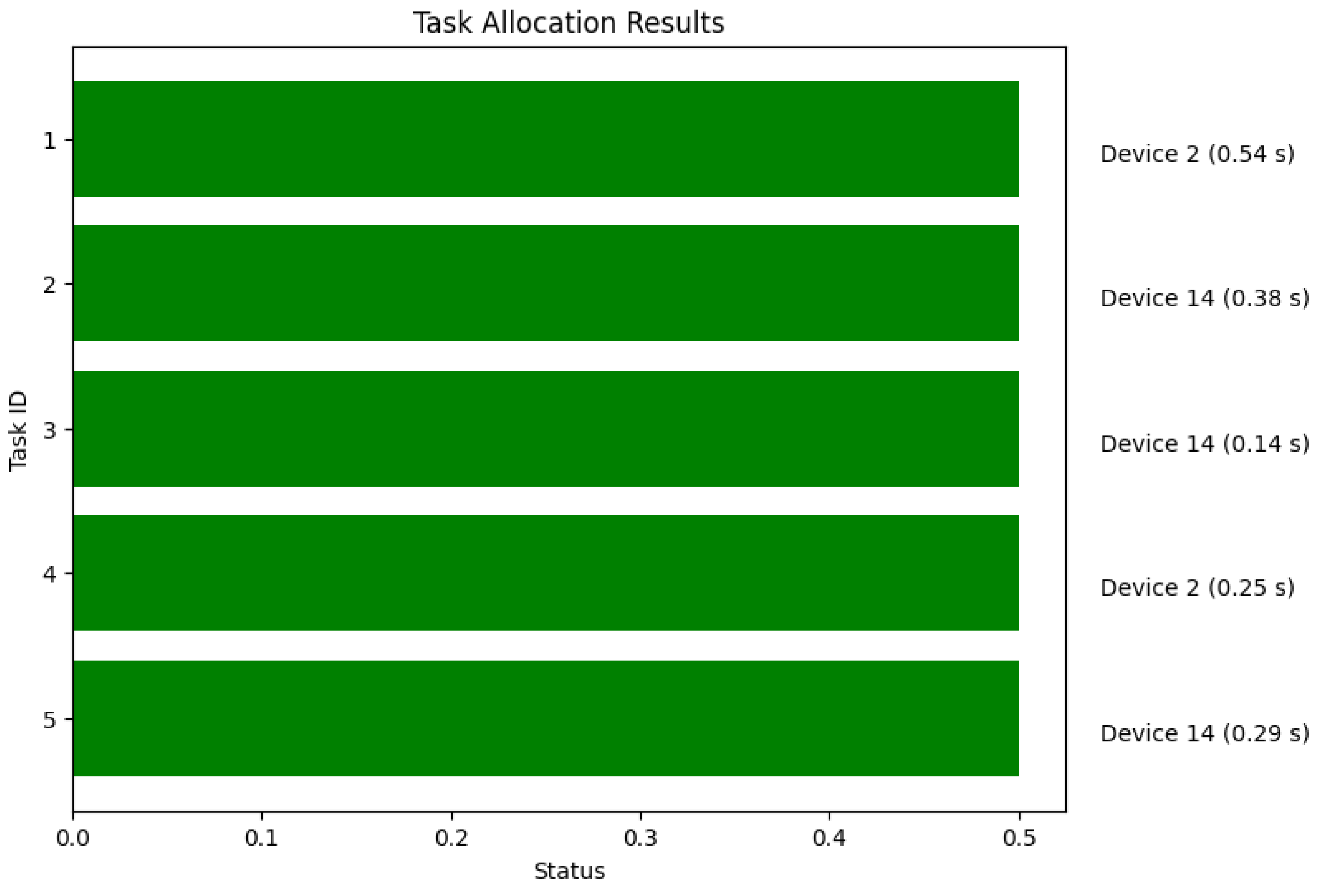
Figure 3.
Task Allocation with Random Strategy.
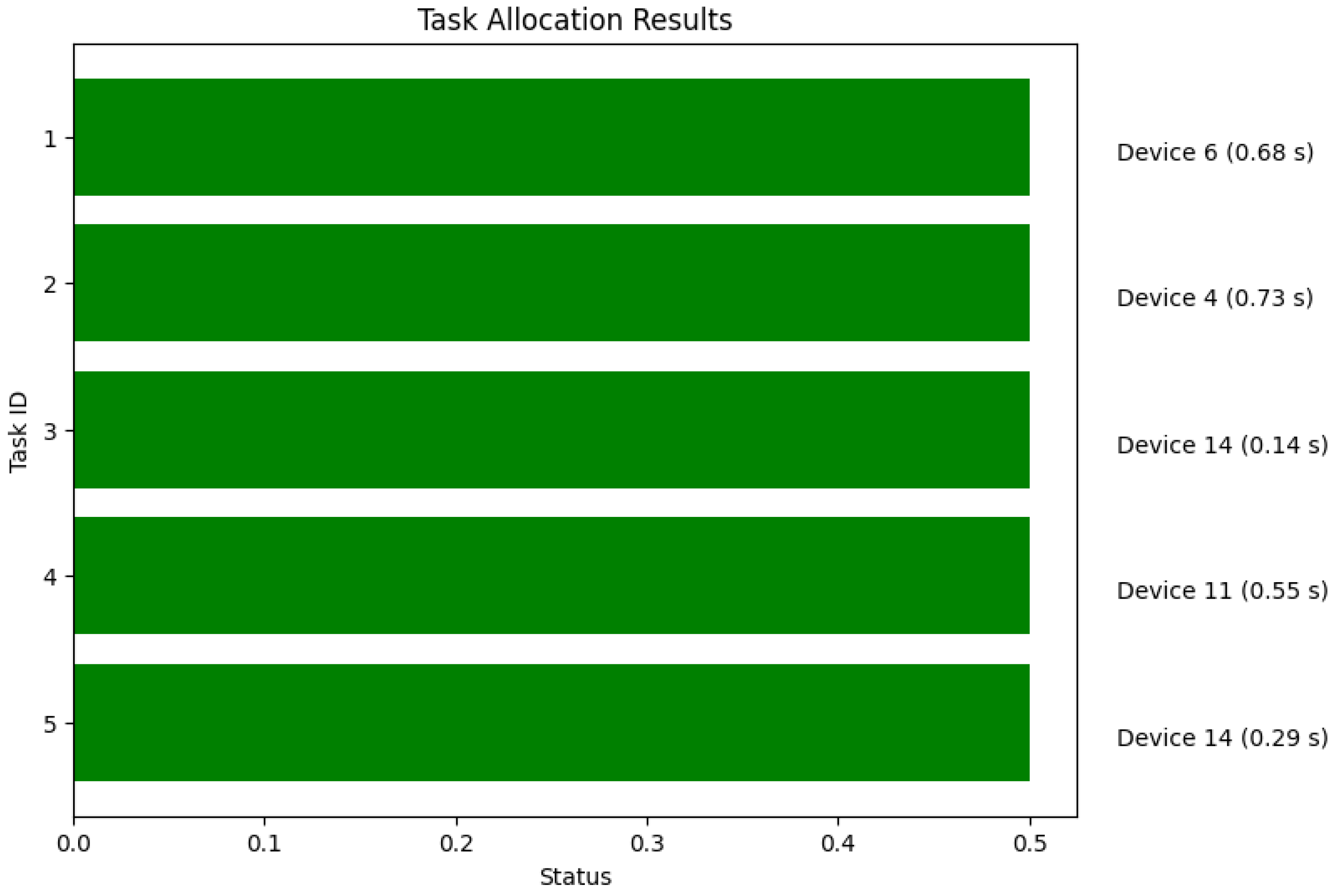
Figure 4.
Comparison of Total Execution Times.
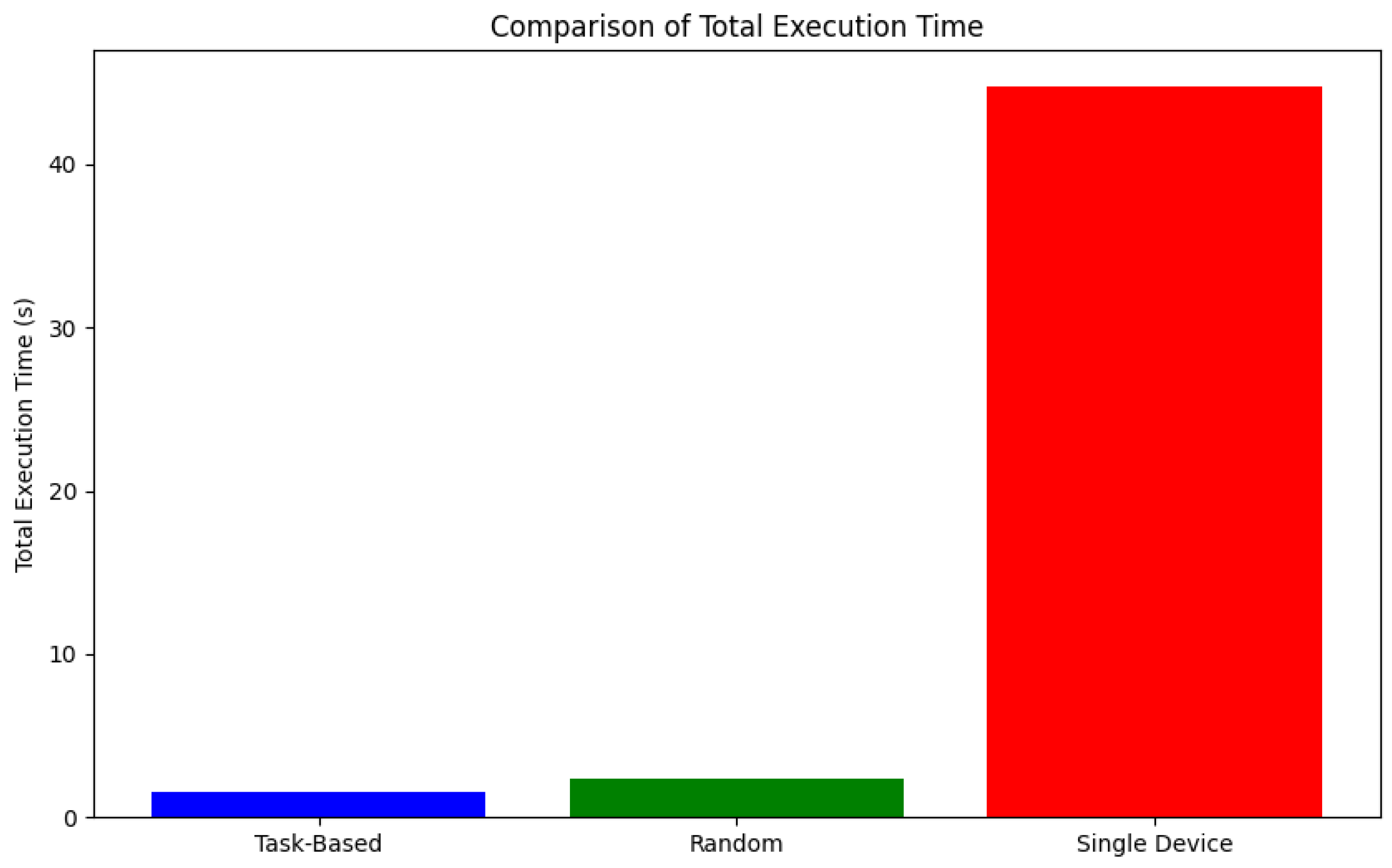

Table 1.
Comparison of Total Execution Times.
| Strategy | Total Execution Time (s) |
|---|---|
| TASK_BASED | 1.60 |
| RANDOM | 2.39 |
| Single Device | 44.74 |
Disclaimer/Publisher’s Note: The statements, opinions and data contained in all publications are solely those of the individual author(s) and contributor(s) and not of MDPI and/or the editor(s). MDPI and/or the editor(s) disclaim responsibility for any injury to people or property resulting from any ideas, methods, instructions or products referred to in the content. |
© 2024 by the authors. Licensee MDPI, Basel, Switzerland. This article is an open access article distributed under the terms and conditions of the Creative Commons Attribution (CC BY) license (http://creativecommons.org/licenses/by/4.0/).
Copyright: This open access article is published under a Creative Commons CC BY 4.0 license, which permit the free download, distribution, and reuse, provided that the author and preprint are cited in any reuse.


