

Submitted:
10 April 2024
Posted:
11 April 2024
You are already at the latest version
Abstract
In the ongoing work, environmentally sound technologies for converting organic wastes into fertilizers, to improve soil sustainability and crop yield have been identified and assessed. Wet wastes were combined with 50% wood sawdust and 50% 50% wet wastes (Compost 1) or (10% Straw + 90% wet wastes) (Compost 2) to produce soil improvers with a balanced level of nutrients and their effectiveness on soil ecosystem functioning have been tested and compared to horse manure (HM) and nitrogen:phosphorous:potassium (NPK) fertilizers. Unfertilized soil was used as control. Soil chemical and biological properties, have been detected after the harvesting of broccoli and red cabbage (90 days from the initial treatments). Three independent experiments have been conducted in open field in a randomized complete block design with three replications (n=9). Results showed that Compost 1 had the highest C/N ratio and CSC, indicating a better humification of wet material. Compost 1 even if contained a minor amount of organic carbon, as well as a less activity of FDA and DHA than Compost 2, was the most effective in improving soil quality, significantly increasing the labile fraction of organic matter, the oxidative enzyme (DHA), microbial biomass and crop yield. Both composts increased crop productivity.
Keywords:
Waste Compost
; Soil fertility
; Broccoli Calabrese
; Red Cabbage
; soil amendments.
1. Introduction
In the face of global challenges such as population growth, climate change, and diminishing agricultural resources, there is an increasing imperative to develop sustainable agricultural practices that simultaneously enhance soil fertility, mitigate waste disposal issues, and reduce environmental impacts [1]. Based on the latest UN projections, the world's population may rise to roughly 8.5 billion by 2030, 9.7 billion by 2050, and could peak around 10.4 billion in the 2080s. Consequently, our yearly food supply needs to sustainably meet the demands of this growing populace [2]. Sustainable agricultural methods offer ways to produce food and other agricultural products with minimal environmental impact. This ensures consistent food access and availability and environment and human health safeguards. Sustainable agriculture is linked to food security, which encompasses consistent food availability, adequate production, affordability, sufficient nutrition in terms of energy, proteins, and micronutrients, safety, and the economic stability to maintain these factors. [3]. It is imperative to identify and analyze well-established approaches aimed at fostering sustainable agriculture, many of which prioritize ecosystem health.
These approaches are characterized by clear principles and encompass environmental, economic, and social objectives. They have evolved as methodological strategies over time, like agroecology and sustainable intensification, or were prioritized from the outset, such as carbon farming.
Composting represents a promising solution, offering a means to recycle organic materials while generating nutrient-rich soil amendments [4]. In essence, composts derived from waste management within the context of the circular economy, such as biowaste, organic waste, and green waste, are considered acceptable for use in organic agriculture under Regulation EU 2021/1165. [5].
This allowance is contingent upon these composts originating from a recognized separate collection system within the respective EU member state and adhering to specified limits for heavy metal content. Compost, when used as a fertilizer or soil conditioner, can significantly enhance soil quality [6,7]. It accomplishes this by improving aeration, optimizing water content, enhancing aggregate stability, and thereby bolstering resistance against erosion. Furthermore, compost enriches the soil with both macro and micronutrients, fostering healthier plant growth, and augments the cation exchange capacity, as demonstrated by Muscolo et al. (2018) [6] and Ghimire et al. (2023). [8]. Activating the soil microbiota and increasing its biomass are additional benefits, although the extent of these effects relies heavily on the quality and quantity of organic matter, as observed by Bonanomi et al., (2020) [9]. and Sunman et al., (2022). [10]. When it comes to the risk of nitrate leaching, composted organic waste is generally considered to pose minimal concerns, as noted by Insam and Merschak in 1997. [11].
This manuscript explores the scientific dimensions of composting through the lens of a specific approach: the utilization of wood sawdust and vegetable wastes as composting materials.
The selection of wood sawdust and vegetable wastes for composting is rooted in their unique compositional characteristics. Wood sawdust, a by-product of various woodworking processes, is recognized for its high carbon content and lignocellulosic structure [12]. This provides an excellent source of carbon, crucial for establishing an optimal carbon-to-nitrogen ratio in the composting process. Additionally, wood sawdust represents for wood industry a waste to be disposal with economic implication. In contrast, vegetable wastes, including kitchen scraps and garden trimmings, contribute nitrogen-rich organic matter. When these materials are co-composted, they hold the potential to create a well-balanced mixture, essential for the efficient decomposition of organic matter [13].
The science of composting hinges upon the microbial-driven biological transformation of organic materials into stabilized organic matter known as humus. This process involves a complex interplay of microorganisms, including bacteria, fungi, actinomycetes, and earthworms, which break down the organic compounds present in the feedstock. In the case of wood sawdust and vegetable waste composting, the intricate lignocellulosic structure of sawdust provides an intriguing substrate for microbial colonization and degradation, leading to the release of carbon and other nutrients. [14].
The resulting compost, characterized by a dark, crumbly texture, not only sequesters carbon but also embodies essential nutrients such as nitrogen, phosphorus, and potassium, as well as micronutrients required for plant growth. Beyond its nutrient content, the compost enhances soil structure, moisture retention, and microbial diversity, ultimately fostering improved soil health and agricultural productivity. Furthermore, this manuscript a part to delve into the scientific aspects of composting management, addressing critical factors such as temperature dynamics, aeration, moisture content, and composting timeframes, explore the effects of compost as fertilizer on broccoli and cabbage growth and yield. Particularly the growth parameters related to the productivity and parameters related to plant performance have been detected and discussed. This manuscript explores the scientific intricacies of this composting method, shedding light on its potential to transform wastes into a valuable resource, mitigate greenhouse gas emissions, and enhance soil fertility and crop yield compelling avenue toward a more sustainable and resilient agricultural future.
2. Materials and Methods
2.1. Feeding Materials
Raw organic materials employed for composting comprised a variety of components and precisely vegetable wastes (like rocket salad, lettuce, cabbage, carrots, and valerian). The two composts have been prepared using different percentage of the vegetable residues. (Table 1)
2.2. Composting Process Setup
Sawdust and vegetable residues, as well as straw and vegetable residues, were carefully deposited into dedicated electric composters and subjected to the composting process. This composting protocol was meticulously replicated three times for each compost mixture. The composting conditions were meticulously controlled as follows: an initial mesophilic phase for 8 days at 29°C, followed by a thermophilic phase lasting 20 days at 50°C. Subsequently, a second mesophilic phase extended for 92 days at 27°C. The temperature increase resulted from the robust microbial activity, facilitated by efficient ventilation within the mixture. This ventilation guaranteed the presence of ample oxygen levels, thereby promoting biological processes while maintaining optimal aerobic conditions, as documented by Liang et al. in 2003. [15] Following this phase, the temperature remained stable at 27°C until the conclusion of the composting cycle. This stability was attributed to reduced microbial activity and a diminishing quantity of organic substrate available for decomposition. The moisture content was diligently upheld at 50%, and the oxygen percentage consistently exceeded 15%. Temperature, moisture, and oxygen levels were vigilantly monitored daily using a probe strategically placed in the center of the composting mass, ensuring they remained within the predefined parameters. Water was added as needed to sustain the 50% moisture level. Daily agitation of the mixtures was performed to guarantee oxygen levels above 15%, thereby promoting the aerobic decomposition of organic matter into stable humus. Comprehensive decomposition and stabilization of the materials were accomplished over a span of 4 months. Subsequently, all compost batches underwent an air-drying process, were finely crushed to pass through a 2mm sieve, and underwent thorough blending to ensure uniformity.
2.3. Chemical Characterization of Composts
The chemical analysis of composts was conducted in accordance with the protocols outlined in the ANPA manual from 2001 [16]. To evaluate the rate of organic matter mineralization, the reduction in organic matter content over time was assessed by using the following equation (Equation 1):
Organic matter loss (%) = [(Initial mass of carbon - Final mass of carbon) / Initial mass of carbon] * 100
The determination of fluorescein 3,6-diacetate hydrolase activity followed the procedure established by Adam and Duncan in 2001. [17]. The results were expressed as mg fluorescein released per gram of dry soil, following Perucci's method from 1992. [18].
Dehydrogenase (DHA) activity was determined as outlined by von Mersi and Schinner in 1991 [19]. The absorbance of the soil filtrate was measured at 490 nm.
Water-soluble phenols (WSP) were detected by extracting soil with water and determining their concentration using the Folin-Ciocalteau reagent, following Box's method from 1983 [20]. Cation exchange capacity (CEC) was determined using an aqueous solution of BaCl2 buffered to pH 7.0 to saturate the soil exchange complex, following Mehlich's method from 1953. [21].
Compost maturity was assessed following the method described by Gariglio et al. in 2002, [22] employing Cucumis sativus L seeds. The Germination Index (GI), which combines measures of relative seed germination (%) and relative root elongation (%), was used to evaluate compost toxicity. This method is particularly sensitive, capable of detecting both low-level and high-level toxicity affecting root growth and germination, respectively. A GI value higher than 60% indicates non-phytotoxicity of the compost, as established by Zucconi et al. in 1981. [23]. The initial wastes and composts underwent chemical characterization following the methodologies outlined in the ANPA manual (2001). [16].
The organic matter mineralization rate was assessed evaluating the loss of organic matter over time Organic matter loss was calculated following the equation (1).
The absorption capacity compost related to Na+ and Cl- ions, has been calculated using the following formula (2):
where:
AC=(Ci−Cf) m×VAC=m(Ci−Cf)×V
- AC: Absorption capacity
- Ci: Initial concentration
- Cf: Final concentration
- m: Sample weight
- V: Volume of the solution (40 ml)
2.4. Soil Characteristics and Treatments
The experiment was carried out in a sandy-loam soil belonging to Cambisol (WRB, 2022) [24] located in Motta San Giovanni, Loc. Liso, Italy (37.9991° N. 15.6999° E). The fertilization experiments consisted of three replicate plots for each condition, each plot measuring 18 m2, and were set up using a single factor randomized complete block design. The soil received a fertilization treatment using the two composts distributed at a depth of 10/15 cm. In each designated plot, composts were incorporated based on organic matter content precisely at rates of 3.1 q/ha for composts, horse manure (HM, 4.3 q/ha) and NPK (20:10:10) at 1.7 q/ha. To maintain consistent moisture levels, plants were regularly irrigated to ensure a water content of 70% of field capacity across all parcels. The experiment was replicated three times. Two different crops have been used to test the effectiveness of the two produced composts, and precisely ramous Calabria broccoli and red cabbage.
The differently treated crops were collected when they reached ripeness level, based on visual characteristics such as size, shape, and colour. Cabbage cultivated with compost 1 matured in a range of 78 days, while those grown with compost 2 maturated in 85 days, with HM in 88 days, with NPK took 90 days to mature. Broccoli was ready to be harvested 70 days after transplanting when cultivated with compost 1, 79 days when cultivated with compost 2, 83 days when grown with NPK and 80 days with HM. Within each plot, for both crops (broccoli and cabbage), 3–4 plants/m2 were planted for each treatment. The spacing between individual plants was set at 40 cm, with 60 cm between rows. Throughout the experiment, the parcels were irrigated to maintain soil moisture at 70% of field capacity. Soil humidity was continuously monitored using a direct-read soil pH/moisture meter - R181 to ensure consistent soil moisture levels in both soil types.
2.5. Soil Analysis
Soils were collected in each parcel at the end of the experiment (90 days), as reported below for the specific crop species and fertilization used. Soils have been air-dried and sieved through a 2 mm sieve for chemical analyses, while fresh soil sieved to 2 mm was used for microbiological analyses. Soil water content was expressed gravimetrically, involving the weighing of a wet soil sample, drying to remove water, and re-weighing the dried soil, with the results expressed as a percentage. Water content was determined at the beginning of the experiment and every 15 days during the entire experiment for all soil treatments. Particle size analysis was carried out by using the method of Bouyoucos (1962) [25]; dry matter (dm) was determined weighting the samples after 24 h at 105 C; pH and EC were measured as reported in Muscolo et al., (2017). [26]; Organic carbon was determined by oxidimetric method following the Walkley Black procedure [27]; total nitrogen was detected by the digestion procedure, using sulfuric acid at temperatures of 380 C following the Kjeldahl method (1883). [28]; The amount of microbial biomass carbon (MBC) was determined by using the chloroform fumigation extraction procedure [29]; with field moist samples (equivalent to 20 g dry wt.). The filtered soil extracts of both fumigated and unfumigated samples were analyzed for soluble organic C using the methods of Walkley and Black. [27]; Microbial biomass C was estimated on the basis of the differences between the organic C extracted from the fumigated soil and that from the unfumigated soil, and an extraction efficiency coefficient of 0.38 was used to convert soluble C into biomass C (Vance et al., 1987). Microbial population was extracted following the method of Insam and Goberna (2004). [30]; Two grams of soil and 30 glass beads were mixed with 20 mL 0.90% NaCl and shaken at 4 °C for 1 h at 12,000 g to separate bacteria from solid particles. The supernatant was used for further dilutions with sterile one-fourth strength Ringer solution so as to standardize the inoculum density. Soil bacterial population was estimated by Waksman (1952) [31]; method using the nutrient agar medium at 105 dilutions. Fungal population was estimated by dilution plate method [32]; using Martin`s Rose Bengal agar medium at 103 dilutions in water. The activities of fluorescein 3,6-diacetate hydrolase (FDA), and dehydrogenase (DHA) as well water-soluble phenol amount, ion concentrations and cationic exchange capacity (CEC) were determined as reported in section 2.3 Three soil samples for each crop, and for each specific fertilization have been collected. All the analyses were performed in triplicates. Thus, for each cultivar and condition n=9
2.6. Crop Growth Assessment
Each cultivar was analyzed for the following growth parameters: plant height (PH) from the soil level to the highest point of the plant, leaf area (LA, cm2) leaf length (LL, cm), leaf width (LW, cm), leaf humidity (LH, %) from the basal leaves to the last open leaf, fruit size in terms of head diameter (HD, cm) and Yield (Tons/hectare). For the estimation of total chlorophyll content, 100 mg leaf tissue was finely ground in liquid nitrogen and suspended in DMSO. The suspension was maintained at 65°C for 30 min. The final volume was adjusted to 10 ml with DMSO and absorbance was recorded at 645 and 663 nm. Total chlorophyll content was calculated as reported in Hiscox and Israelstam (1979). [33];
2.7. Mineral Assay
Cations (Na, K, Ca, Mg) were extracted from seeds and analysed using ion chromatography (DIONEX ICS-1100, Thermo Fisher Scientific Waltham, MA, USA). One g of dry material was ashed at 550 °C for 6 h in a porcelain capsule. The ash was then acidified for 30 min at 100 °C using 1M HCl solution (10 mL). Finally, it was filtered using Whatman 1 and measured using the ion chromatograph with 20 mM methane-sulfonic acid as eluent. Fe concentration was determined using atomic absorption spectrophotometry (model 2380, PerkinElmer Co., Waltham, MA, USA). The amount of each cation was calculated using its own standard curve. P was measured using ion chromatography (DIONEX) and comparing the results with a multi ion cation standard curve (Multi Ion Cation IC standard solution, Specpure®, Dionex) [34]; All solvents and reagents were purchased from Panreac (Barcelona, Spain). Bioconcentration factor (cation or anion in root/cation or anion in soil), bioaccumulation coefficient (cation or anion in leaves/cation or anion in soil) and translocation factor (cation or anion in leaves/ cation or anion in roots) were detected.
2.8. Chlorophyll Fluorescence Imaging
Photosynthetic efficiency of cabbage and broccoli leaves, differently fertilized, was evaluated by using an Imaging PAM Fluorometer (Walz). The chlorophyll fluorescence parameters detected were as follows: Maximum quantum yield of PSII photochemistry (Fv/Fm); Effective quantum yield of PSII photochemistry (Y(II)); Quantum yield of regulated energy dissipation at PSII (Y(NPQ)); Quantum yield of non-regulated energy dissipation at PSII (Y(NO)); Non-photochemical quenching coefficient (NPQ) and Electron transport rate (ETR). the maximum PSII quantum yield (Fv/Fm), photochemical fluorescence quenching (qP), non-photochemical fluorescence quenching (NPQ) and ETR have been evaluated and analysed for the indication they give. Fv/Fm showed the maximum efficiency of energy conversion in PSII. qP indicates the rate of photochemical reactions in the chloroplast electron transport chain in vivo. NPQ indicates the amount of excess energy that was absorbed by chlorophyll but was not used by the electron transport chain and was converted to heat [35], ETR electron transport rate is proportional to the photosynthetic activity and higher value indicates higher carbon fixation activity. These parameters are measured in relative units.
2.9. Statistical Analyses
Data are expressed as means of three analyses for each treatment and three analyses for different compost analyses. Analysis of variance was carried out for all the data sets. One-way ANOVA with Tukey’s Honestly. Significant difference tests were carried out to analyze the effects of fertilizers on each of the various parameters measured; ANOVA and t-test were carried out using XLStat. Effects were significant at p ≤ 0.05. To explore relationships among different fertilizers on soil parameter datasets we analyzed using Principal Component Analysis (PCA) with XLStat.
3. Results
3.1. Compost Properties
The composting procedure underwent three repetitions through independent experiments. The outcomes consistently revealed that each compost derived from these experiments exhibited identical chemical characteristics. This observation strongly indicated that the adopted procedure has been successfully standardized, ensuring reproducibility of results over time. After a 4-month composting period, the analysis revealed noteworthy distinctions between the two composts obtained using the same methodology (refer to Table 2). Both C1 and C2 composts displayed highly alkaline pH levels. C2 exhibited the highest total organic carbon and total nitrogen, while C1 and C2 differed in their C/N ratio (21.57 for C1 and 11.97 for C2). The N-NH4+/N-NO3- ratio was the highest in C2, whereas the ON/TN ratio was significantly greater in C1 than C2 (see Table 2). Despite all composts being nutrient-rich (Figure 1), C2 contained more nutrients than C1 and in particular potassium and magnesium. (Figure 1a) C1 contained the highest amount of NO2 and NO3. Conversely, C2 had the greatest amount of phosphates and sulphates (Figure 1b). Notably, C2 contained eight times more water-soluble phenols (WSP) and concurrently exhibited a greater cation exchange capacity, FDA and DHA activities than C1 (Figure 2). Assessing compost maturity through phytotoxicity, as indicated by the germination index (see Figure 3), revealed that C1 did not exhibit phytotoxicity in watercress and lettuce seed germination. The germination index, measured 6 days post-germination, at 25%, 50%, and 75% compost concentrations, consistently exceeded 80%, classifying it as phytonutrient. These findings align with the overall germination index, ranging from 67.5% to 95%, confirming the non-phytotoxic nature of both composts.
In terms of adsorption capacity for composts, it was observed that all the composts exhibited the ability to adsorb both sodium and chloride, albeit to varying degrees. Notably, C2 demonstrated the highest sodium adsorption capacity, outperforming the other compost. Meanwhile, C1 exhibited optimal sodium removal capacity at 50 mM NaCl, with a subsequent decline in efficiency as the sodium concentration increased (Table 3). Turning attention to chloride adsorption capacity it was observed that all composts possessed the capability to remove chloride ions. As the chloride concentration increased, the adsorption capacity of all composts gradually intensified. Notably, C2 displayed the most significant adsorption capacity for chloride ions, further emphasizing its efficacy in the removal of both sodium and chloride.
3.2. Soil Characteristics
In Table 4 are reported the analysis of the soil at time zero, before starting the different fertilizations. It was an alkaline sandy-loam soil, with 2.37% of organic matter, poor in anions and cations with a CEC of 13 cmol+ kg-1. Bacteria were more abundant than fungi and actinomycetes, as also evidenced by a greater DHA in respect to FDA.
All the fertilizers used (both composts, NPK and HM) affected soil chemical properties in respect to control, excepted for texture that remained unchanged. pH didn’t change with the treatments, instead the EC increased in particular way with the additions of both composts and much more with C2, suggesting an addition of nutrients. Adding composts to the soil, can provide great quantity of nutrients in the form of hydrated salts, helping to increase the percentage of water in the soils.
Pearson correlation coefficient also evidenced synergies between cations and among cations and anions. Shortly potassium was correlated with calcium suggesting a synergism among them and also with anions in particular with sulphate. (Table 5)
PCA analysis demonstrated that C1 and C2 in Red cabbage soil correlated with sulphate, magnesium and potassium, NPK correlated with chloride, CTR with nitrate and HM with the nitrite, phosphate, calcium and sodium. (Figure 4b) The scenario changed in soil with broccoli, C1 and C2 were both correlated with magnesium and sulphate, HM correlated as for Red cabbage with the addition of potassium. (Figure 4a)
Organic carbon was the highest with composts. Total nitrogen was the greatest in NPK treatment. The C/N value was higher in soil fertilized with HM and composts in respect to CTR and NPK. WSP was the lowest in compost treatments while DHA, MBC, Bacteria and actinomycetes were the highest. Fungi and FDA were more abundant in CTR and in soil treated with NPK and HM. (Table 6). PCA analysis evidenced a strong positive correlation between C1 MBC, DHA, CEC, OC and C/N, while C2 correlated better with bacteria, actinomycetes and OC. HM and NPK was instead correlated with FDA, Fungi and WSP. (Figure 5).
Pearson correlation coefficient evidenced a positive, significant correlation between organic matter, MBC, CEC, DHA bacteria and actinomycetes, suggesting that increasing SOM amount increased also the amount of microbial biomass as well as the enzymes belonging to the oxo-reductase category as also demonstrated by the increase in bacteria and actinomycete colonies.

Table 6.
Chemical and biochemical properties of soil located in Motta San Giovanni, 90 days after treatments with the different fertilizers. CTR (Control) soil without fertilizer; NPK= nitrogen:phosphorous:potassium; HM= horse manure; C1 50% wood sawdust + 50% wet wastes, C2 10% Straw 90% wet wastes. WC (water content %), pHH2O in water and pHKCl in potassium chloride; EC=electric conductivity (µS/cm); WSP= water soluble phenols (µg TAE g-1 ds): OC= organic carbon (%); TN= total nitrogen (%); C/N= carbon nitrogen ratio; OM= organic matter (%); MBC= Microbial biomass Carbon (μg C g−1 f.s.); Dehydrogenase (DHA, μg TTF g-1 h-1 d.s.), fluorescein diacetate hydrolase (FDA, μg fluorescein g-1 d.s.), BACT (Bacteria, UFC g-1f.s.), FUN (Fungi (UFC g-1 f.s.), ACT (Actinomycetes, UFC g-1 f.s.), CEC= Cation Exchange Capacity (cmol(+) Kg−1d.s.).
Table 6.
Chemical and biochemical properties of soil located in Motta San Giovanni, 90 days after treatments with the different fertilizers. CTR (Control) soil without fertilizer; NPK= nitrogen:phosphorous:potassium; HM= horse manure; C1 50% wood sawdust + 50% wet wastes, C2 10% Straw 90% wet wastes. WC (water content %), pHH2O in water and pHKCl in potassium chloride; EC=electric conductivity (µS/cm); WSP= water soluble phenols (µg TAE g-1 ds): OC= organic carbon (%); TN= total nitrogen (%); C/N= carbon nitrogen ratio; OM= organic matter (%); MBC= Microbial biomass Carbon (μg C g−1 f.s.); Dehydrogenase (DHA, μg TTF g-1 h-1 d.s.), fluorescein diacetate hydrolase (FDA, μg fluorescein g-1 d.s.), BACT (Bacteria, UFC g-1f.s.), FUN (Fungi (UFC g-1 f.s.), ACT (Actinomycetes, UFC g-1 f.s.), CEC= Cation Exchange Capacity (cmol(+) Kg−1d.s.).
| Soil Cations | CTR | Soil+NPK | Soil +HM | Soil+C1 | Soil +C2 |
| Na+ | 0.124b*± 0.02 | 0.119b± 0.08 | 0.101b± 0.10 | 0.155b± 0.09 | 0.91a± 0.07 |
| K+ | 0.116c± 0.07 | 0.165b± 0.03 | 0.145bc± 0.12 | 0.199a± 0.11 | 0.290a± 0.06 |
| Ca2+ | 0.254b± 0.32 | 0.234b± 0.22 | 0.346b± 0.27 | 0.495b± 0.19 | 3.53a± 0.16 |
| Mg2+ | 0.019a± 0.23 | 0.021a± 0.31 | 0.027a± 0.12 | 0.029a± 0.22 | 0.027a± 0.12 |
| Soil Aniones | CTR | Soil+NPK | Soil +HM | Soil+C1 | Soil +C2 |
| Cl- | 0.222b± 0.23 | 0.206b± 0.34 | 0.208b± 0.21 | 0.310a± 0.07 | 0.298a± 0.02 |
| NO2- | nd | nd | nd | nd | 0.01 |
| NO3- | nd | nd | nd | nd | 0.06 |
| PO43- | nd | nd | nd | nd | 0.003 |
| SO42- | 0.134c± 0.32 | 0.339b± 0.12 | 0.479b± 0.17 | 0.769b± 0.19 | 1.65a± 0.18 |
* Different letters in the same row indicate significant differences (Turkey’s test p ≤0.05). Values are the mean of three replicates (n=15) ± standard deviation.
Table 6.
Cation and anion concentrations (mg/l) detected 90 days after treatments with the different fertilizers. CTR (Control) soil without fertilizer; NPK= nitrogen:phosphorous:potassium; HM= horse manure; C1 50% wood sawdust + 50% wet wastes, C2 10% Straw + 90% wet wastes Na+ (sodium), K+ (potassium), Ca2+ (calcium), Mg2+ (Magnesium), Cl- (Chloide), NO2- (nitrite), NO3- (nitrate), PO43- (phosphate), SO42-(solfate).
Table 6.
Cation and anion concentrations (mg/l) detected 90 days after treatments with the different fertilizers. CTR (Control) soil without fertilizer; NPK= nitrogen:phosphorous:potassium; HM= horse manure; C1 50% wood sawdust + 50% wet wastes, C2 10% Straw + 90% wet wastes Na+ (sodium), K+ (potassium), Ca2+ (calcium), Mg2+ (Magnesium), Cl- (Chloide), NO2- (nitrite), NO3- (nitrate), PO43- (phosphate), SO42-(solfate).
| Soil chemical analyses | CTR | Soil+NPK | Soil +HM | Soil+C1 | Soil +C2 |
| WC (%) | 21.4b ± 0.02 | 22.2b ± 0.01 | 25.6a± 0.03 | 25.2a± 0.01 | 25.5a± 0.01 |
| pH (H2O) | 8.45a ± 0.12 | 8.46a ± 0.02 | 8.47a± 0.05 | 8.44a± 0.05 | 8.41a± 0.01 |
| pH (KCl) | 7.1a ± 0.07 | 7.01a± 0.06 | 6.99a± 0.05 | 6.94a± 0.04 | 6.97a± 0.05 |
| EC | 350c ± 0.23 | 301c± 0.22 | 297c± 0.12 | 530b± 0.17 | 740a± 0.14 |
| OC | 1.78b ± 0.19 | 1.69b± 0.22 | 2.13ab± 0.11 | 2.9a± 0.09 | 3.3a± 0.09 |
| TN | 0.19a ± 0.17 | 0.23a± 0.09 | 0.21a± 0.13 | 0.19a± 0.12 | 0.20a± 0.11 |
| C/N | 9.4b ± 0.15 | 7.39c± 0.15 | 19.1a± 0.16 | 15.2a± 0.11 | 16.5a± 0.14 |
| WSP | 282b ± 0.32 | 320a± 0.52 | 315a± 0.42 | 138c± 1.12 | 170c± 0.92 |
| MBC | 433.3c ± 0.52 | 733b± 0.17 | 798b± 0.42 | 897.33a± 0.52 | 961.4a± 0.32 |
| FDA | 5.14a ± 0.44 | 5.44a± 0.33 | 5.33a± 0.27 | 4.88b± 0.36 | 4.81b± 0.18 |
| DHA | 20.1b ± 0.72 | 22.1b± 0.32 | 24.1b± 0.42 | 32.92a± 0.32 | 38.09a± 0.42 |
| BACT | 1.3*105 c ± 1.42 | 1.1*105c± 2.12 | 1.6*105 c± 3.32 | 5*105 b± 3.13 | 8.3*105a± 2.12 |
| FUN | 4.6*104 a ± 3.12 | 4.46*104 a± 1.42 | 4.6*104 a± 2.62 | 2.7*104 b± 2.11 | 3*104 ± 2.02b |
| ACT | 5.7*104 a ± 2.12 | 3.7*104 b± 4.12 | 6.7*104 a± 1.12 | 1.3*105 c± 3.16 | 1.5*105 c± 2.21 |
| CSC | 16b ± 0.13 | 12c± 0.12 | 19ba± 0.18 | 22 a± 0.11 | 22.9 a± 0.15 |
* Different letters in the same row indicate significant differences (Turkey’s test p ≤0.05). Values are the mean of three replicates (n=15) ± standard deviation.
3.3. Crop Growth Data
In the presence of both composts, red cabbage exhibited a significant augmentation in leaf width, leaf area, leaf length, and plant height compared to control, NPK, and HM treatments. The head fruit diameter, when C1 and C2 were applied, saw an approximate 50% increase compared to the control and a 25% increase compared to HM and NPK. Productivity, measured in tons per hectare, experienced a noteworthy enhancement of 15% compared to NPK and HM in the presence of both composts. Notably, C1 demonstrated the most substantial effect on productivity, boasting a 35% increase compared to the control and a 30% increase compared to HM and NPK. (Table 7)
Similarly, Broccoli Calabrese, when exposed to C1 and C2, exhibited a significant surge in growth. The leaf area tripled in comparison to the control, surpassing NPK and HM by 20%. Productivity, experiencing a fourfold increase compared to the control, surpassed NPK by 40% and HM by 15%. (Table 7)
Chlorophyll (Table 8) data evidenced a greater amount of total chlorophyll and Cha/Chb ratio in broccoli and red cabbage treated with C1 and C2 in respect to CTR, HM and NPK. Regarding the photosynthetic parameters of chlorophyll fluorescence, Fv, Fm, F0, Y(NPQ) were the lowest in broccoli and red cabbage treated with both composts. Conversely, Fv/Fm ratio, Y (NO) and ETR were instead the highest both in broccoli and red cabbage treated with both composts.
The ions were predominantly present in red cabbage and broccoli treated with both composts. Magnesium, calcium, and potassium were the most abundant cations in both crop species treated with composts C1 and C2. (Table 6)
Considering the bioaccumulation factor, red cabbage grown with composts 1 and 2 accumulated more magnesium, calcium, potassium and sulphate in its leaves in respect to the other treatments. Similar results were observed for Broccoli. The best accumulation of ions has been observed in broccoli leaves treated with both composts. (Figure 6)
From PCA emerged that broccoli cultivated with both composts accumulated sulphates, instead HM and NPK more sodium and CTR chloride. (Figure 7b). PCA related to Red cabbage bioaccumulation factors evidenced an accumulation of magnesium and calcium with both composts, NPK and CTR showed an accumulation of Cl and HM of Na and K. (Figure 7a). Chlorophyll a, and the photosynthesis parameters (ETR, Fm/Fv and Y(NO), were mostly expressed in presence of both composts in both crops. HM correlated with total chlorophyll, chlorophyll B, F0, Fm and Fv. No correlation between NPK and parameters linked to photosynthesis activity have been found. (Figure 8)
4. Discussion
Both composts caused significant alterations in soil properties these changes increased EC, and significantly enhanced organic matter content, CEC, and microbial biomass, bacteria and actinomycetes. The observed decrease in phenol content, in compost treated soils compared to the other treatments, suggested that compost may have an impact on soil microorganisms and their metabolic activities. In fact, an increase in bacteria and actinomycetes have been observed as well. The observed significant increase in actinomycetes is of paramount importance due to their critical role in the cycling of organic matter. Actinomycetes serve as a natural barrier against a wide array of plant pathogens within the rhizosphere, effectively suppressing their growth. Moreover, they are adept at breaking down complex polymer mixtures present in deceased plants, animals, and fungi. This breakdown process facilitates the production of a diverse array of extracellular enzymes, which have been shown to significantly benefit crop production, enhancing both yield and health [36,37,38].
Further expanding on their beneficial impact have demonstrated that actinomycetes not only augment the levels of nutrients and organic matter in the soil but also substantially increase the soil microbial biomass. [39] This, in turn, boosts nitrogen availability, a critical component for plant growth, by stimulating the activity of essential nitrogen-metabolizing enzymes. The enhancement of nitrogen availability is particularly noteworthy, as it directly supports the growth and productivity of crops.
The multifaceted benefits of actinomycetes, from pathogen suppression and organic matter decomposition to nutrient enhancement and nitrogen availability, underscore their invaluable contribution to sustainable agriculture. By leveraging the positive roles of actinomycetes, it is possible to advance sustainable food production practices that are both productive and environmentally friendly. This approach not only aims at achieving higher crop yields but also emphasizes biosafety and the preservation of ecological balance, making both composts a cornerstone in the pursuit of global food security and sustainable agricultural development.
These findings are further supported by the data of the Pearson coefficient showing a positive correlation between MBC, organic matter, WC, DHA, and actinomycetes. These results, have been found in both soils as under red cabbage and broccoli, fertilized with both composts. These findings underscore the complex relationship between soil properties and microbial responses to fertilizer treatments. Data obtained are in line with findings of Arunrat et al. [40], showing that over a 5-year period, the application of fertilizer and tillage practices significantly contributed to an augmentation in the diversity and richness of soil bacteria.
The study reveals that both bacterial and actinomycete populations were significantly affected by Compost 2, as demonstrated by PCA analysis (Fig 5). In contrast, Compost 1 was found to have a positive correlation with microbial biomass, water content, cation exchange capacity (CEC), and dehydrogenase activity (DHA). These findings indicate that are the characteristics of each type of compost that, influencing specific soil parameters, enhance or modify soil ecosystem functions.
This research suggests that it is not the inherent soil properties, which remained consistent across different crops in this study, nor the type of crop cultivated that primarily influences soil ecosystem functioning. Instead, the key factor appears to be the raw material chosen for compost production. During the composting process, these raw materials are transformed into various bio-compounds, each possessing distinct specificities that can lead to different effects on the soil ecosystem.
In essence, the study highlights the critical role of compost composition in shaping soil health and functionality. By selecting appropriate compost materials, it is possible to tailor soil conditions to support desired ecosystem functions, thereby optimizing agricultural productivity and sustainability.
Notable changes in enzyme activities have been also observed. However, the correlation pattern between MBC and DHA with the addition of both composts, as shown in the correlation matrix data, highlighted the influence of composts on the oxidative pathways of soil. Notably, HM and NPK did not show any significant relationship with the chemical and biochemical properties associated with soil fertility.
However, the results of this study offer crucial insights into the complex interplay among fertilizers, soil properties, and microbial interactions, which are fundamental for developing knowledgeable soil management strategies and promoting sustainable agricultural practices. By closely monitoring these variables, we can evaluate soil health, microbial function, and nutrient cycling within variously treated soil ecosystems, thereby enhancing environmental stewardship. This approach not only aids in optimizing agricultural output but also in preserving ecological balance, ensuring a sustainable future for farming practices. The changes noted had a beneficial impact on the yield and quality of red cabbage and broccoli. It was found that both yield and quality were linked to the levels of organic matter in the soil, a key factor in soil fertility and functionality. Organic matter contains trace elements vital for the needs of soil microorganisms, enhancing microbial activities. This, in turn, influences the interactions among soil microorganisms, which indirectly affects crop productivity. Such dynamics underscore the critical role of organic matter in supporting agricultural success, highlighting its importance in both soil health and crop performance.
The differences in both crops, grown with both composts, compared to control and the other fertilizers were more evident in parameters related to leaf area, width and length as well as head diameter. These results were supported by photosynthesis parameters and pigments that were increased in composts treated crops than in control and NPK and HM treated crops. Total chlorophyll and chlorophyll a increased in crops grown with composts probably because correlated to a greatest leaf area. The method of chlorophyll fluorometry offers significant insights into the health of photosynthetic systems in plants by measuring the variable fluorescence of photosystem II [41]; Among the photosynthetic parameters, the ratio of variable fluorescence (Fv) to maximal fluorescence (Fm), known as Fv/Fm, serves as the most commonly utilized indicator. This ratio reflects the efficiency of primary light energy conversion and the maximal efficiency of photosystem II (PSII) photochemistry [42,43]; The presence of negative effects on plants of external inputs is indicated by a reduced number of open reaction centers, leading to a decreased Fv/Fm ratio [44,45]; In our study, the lowest Fv/Fm values were observed in control of both crops and in both crops, grown with NPK and HM, indicating significant positive effects of composts on their photosynthetic efficiency. Y(II) that serves as a metric for assessing plant efficiency, denoting the amount of energy utilized by photosystem II (PSII) under consistent photosynthetic lighting conditions, is directly linked to the electron transport rate (ETR) and the plant's ability to assimilate carbon [46] This relationship highlights the critical role of Y(II) in understanding the dynamics of photosynthesis, particularly in how efficiently a plant can convert light energy into chemical energy through PSII, further influencing its growth and productivity by affecting carbon assimilation processes. In the PCA (Principal Component Analysis) of Broccoli and RED Cabbage diagrams, the positioning of C1 and C2 in the right quadrants highlights the particular efficiency of composts on these cultivars. The spatial arrangement in the diagrams clearly illustrates how much weight they have on the photosynthetic efficiency and consequently on crop growth and productivity. NPQ, which stands for Non-Photochemical Quenching, acts as a measure of how plants dissipate excess light energy as heat within the antenna system to prevent photodamage. It is deemed a crucial short-term photoprotective mechanism in higher plants. With composts in both crops, NPQ values were observed to decrease across all cultivars, while increased in control and in NPK treated crops. This suggests that NPK may the cause of an oxidative damage to photosynthetic apparatus of both crops. This interpretation is supported by the total chlorophyll content (TChl) data, which were the lowest in NPK and HM treated crops and in the controls of both crops. Crops treated with compost exhibited enhanced ion uptake, a finding substantiated by bioaccumulation factor data, which indicated that these plants accumulated essential mineral nutrients critical for human health, including magnesium (Mg), calcium, potassium, and sulfate. Current food supply statistics indicate that approximately half of the global population is at risk of dietary deficiencies in calcium (Ca) and Mg, with this figure escalating to over 95% in 16 African countries. The strategy of biofortifying crops with Mg and Ca has been recommended as a means to bolster dietary intakes for humans [47] as well as livestock [48,49]; enhancing overall food system nutrition. Despite their potential benefits, such biofortification practices have not yet been broadly implemented within agricultural production systems.
5. Conclusions
In short, this study has successfully identified and evaluated environmentally friendly technologies for transforming organic wastes into fertilizers, aiming to enhance soil sustainability and crop yields. By comparing two compost formulations (Compost 1 and Compost 2) with horse manure (HM) and synthetic NPK fertilizers, and utilizing unfertilized soil as a control, the research provides compelling evidence on the efficacy of these organic amendments. Despite Compost 1 having a lower organic carbon content and enzyme activity compared to Compost 2, it emerged as the superior soil improver. It significantly increased the labile fraction of organic matter, the activity of oxidative enzymes, microbial biomass, and, importantly, crop yield. These findings underscore the potential of using specific compost formulations, particularly those with a high C/N ratio and effective humification of wet materials, as viable alternatives to conventional fertilizers. This approach not only promises to improve soil health and productivity but also contributes to the broader goal of sustainable agriculture by recycling organic wastes into valuable soil amendments.
Author Contributions
Conceptualization, A.M. (Adele Muscolo), A.M. (Angela Maffia); methodology, F.M. (Federica Marra), Mt.O (Mariateresa Oliva) C.M. (Carmelo Mallamaci) and A.M. (Angela Maffia); software, A.M. (Angela Maffia) and S.B. (Santo Battaglia); validation, A.M. (Adele Muscolo) and C.M. (Carmelo Mallamaci); formal analysis, F.M. (Federica Marra); investigation, M.O.; data curation, F.C.; writing—original draft preparation, A.M. (Adele Muscolo); writing—review and editing, A.M. and A:M.; visualization, A.M. (Adele Muscolo); project administration, A.M. (Adele Muscolo); funding acquisition, A.M. (Adele Muscolo); All authors have read and agreed to the published version of the manuscript..
Funding
Please add: “This research was funded by Calabrian Region, grant number DDL n° 16315 del 13-12-2022, POR CALABRIA FESR-FSE 2014-2020 ASSE I – PROMOZIONE DELLA RICERCA E DELL’INNOVAZIONE”
Data Availability Statement
Suggested Data Availability Statements are available at “https://iris.unirc.it/”.
Conflicts of Interest
The authors declare no conflicts of interest.
References
- Muhie, S.H. Novel approaches and practices to sustainable agriculture. J. Agric. Food Res. 2022, 10, 100446. [Google Scholar] [CrossRef]
- Alexandratos, N.; Bruinsma, J. World Agriculture towards 2030/2050: The 2012 Revision; ESA Working Papers 12-03; Food andAgriculture Organization of the United Nations (FAO): Rome, Italy, 2012; [accessed Apr 05 2024]. [Google Scholar]
- Suman, J.; Rakshit, A.; Ogireddy, S.D.; Singh, S.; Gupta, C.; Chandrakala, J. Microbiome as a key player in sustainable agriculture and human health. Front. Soil Science 2022, 2, 821589. [Google Scholar] [CrossRef]
- Willett, W.C.; Rockström, J.; Loken, B.; Springmann, M.; Lang, T.; Vermeulen, S.J.; Garnett, T.; Tilman, D.; DeClerck, F.; Wood, A.; et al. Food in the Anthropocene: The EAT–Lancet Commission on healthy diets from sustainable food systems. Lancet (Br. Ed.) 2019, 393, 447–492. [Google Scholar] [CrossRef]
- Aexandratos, N.; Bruinsma, J. World Agriculture towards 2030/2050: The 2012 Revision; ESA Working Papers 12-03; Food and Agriculture Organization of the United Nations (FAO): Rome, Italy, 2012. [Google Scholar]
- Hassan, N.; Wahed, N.H.A.E.; Abdelhamid, A.O.; Ashraf, M.; Abdelfattah, E.A. COMPOSTING: AN ECO-FRIENDLY SOLUTION FOR ORGANIC WASTE MANAGEMENT TO MITIGATE THE EFFECTS OF CLIMATE CHANGE. Innovare J. Soc. Sci. 2023, 1–7. [Google Scholar] [CrossRef]
- EU, 2021. Commission implementing regulation (EU) 2021/1165 authorising certain products and substances for use in organic production and establishing their lists. https://eur-lex.europa.eu/eli/reg_impl/2021/1165/oj.
- Muscolo, A.; Papalia, T.; Settineri, G.; Mallamaci, C.; Jeske-Kaczanowska, A. Are raw materials or composting conditions and time that most influence the maturity and/or quality of composts? Comparison of obtained composts on soil properties. J. Clean. Prod. 2018, 195, 93–101. [Google Scholar] [CrossRef]
- Goldan, E.; Nedeff, V.; Bârsan, N.; Culea, M.; Panainte-Lehăduș, M.; Moșneguțu, E.; Tomozei, C.; Chițimuș, D.; Irimia, O. Assessment of Manure Compost Used as Soil Amendment—A review. Processes 2023, 11, 1167. [Google Scholar] [CrossRef]
- Ghimire, S.; Chhetri, B.P.; Shrestha, J. Efficacy of different organic and inorganic nutrient sources on the growth and yield of bitter gourd (Momordica charantia L.). Heliyon 2023, 9, e22135. [Google Scholar] [CrossRef]
- Bonanomi, G.; De Filippis, F.; Zotti, M.; Idbella, M.; Cesarano, G.; Al-Rowaily, S.L.; Abd-ElGawad, A.M. Repeated applications of organic amendments promote beneficial microbiota, improve soil fertility and increase crop yield. Appl. Soil Ecol. (Print) 2020, 156, 103714. [Google Scholar] [CrossRef]
- Hassan, N.; Wahed, N.H.A.E.; Abdelhamid, A.O.; Ashraf, M.; Abdelfattah, E.A. COMPOSTING: AN ECO-FRIENDLY SOLUTION FOR ORGANIC WASTE MANAGEMENT TO MITIGATE THE EFFECTS OF CLIMATE CHANGE. Innovare J. Soc. Sci. 2023, 1–7. [Google Scholar] [CrossRef]
- Mallakpour, S.; Sirous, F.; Hussain, C.M. Sawdust, a versatile, inexpensive, readily available bio-waste: From mother earth to valuable materials for sustainable remediation technologies. Adv. Colloid Interface Sci. 2021, 295, 102492. [Google Scholar] [CrossRef]
- Ayilara, M.S.; Olanrewaju, O.S.; Babalola, O.O.; Odeyemi, O. Waste Management through Composting: Challenges and Potentials. Sustainability 2020, 12, 4456. [Google Scholar] [CrossRef]
- Nemet, F.; Perić, K.; Lončarić, Z. Microbiological activities in the composting process : A review. Columella 2021, 8, 41–53. [Google Scholar] [CrossRef]
- Liang, C.; Das, K.C.; McClendon, R.W. The Influence of Temperature and Moisture Contents Regimes on the Aerobic Microbial Activity of a Biosolids Composting Blend. Bioresour. Technol. 2003, 86, 131–137. [Google Scholar] [CrossRef] [PubMed]
- ANPA-National Agency for Environmental Protection Guidelines. “Methods of Compost Analysis”, Manuals and Guidelines 3/2001; 6334 manuali 3; SPED S.r.l.: Roma, Italy, 2001; ISBN 88-448-0258-9. [Google Scholar]
- Adam, G.; Duncan, H. Development of a sensitive and rapid method for the measurement of total microbial activity using fluorescein diacetate (FDA) in a range of soils. Soil Biol. Biochem. 2001, 33, 943–951. [Google Scholar] [CrossRef]
- Perucci, P. Enzyme activity and microbial biomass in a field soil amended with municipal 460 refuse. Biol. Fert. Soils 1992, 14, 54–60. [Google Scholar] [CrossRef]
- Von Mersi, W.; Schinner, F. An improved and accurate method for determining the dehydrogenase activity of soils with iodonitrotetrazolium chloride. Biol. Fertil. Soils 1991, 11, 216–220. [Google Scholar] [CrossRef]
- Box, J.D. Investigation of the Folin-Ciocalteau phenol reagent for the determination of polyphenolic substances in natural waters. Water Res. 1983, 17, 511–525. [Google Scholar] [CrossRef]
- Mehlich, A. Rapid Determination of Cation and Anion Exchange Properties and pHe of Soils. J. Assoc. Off. Agric. Chem. 1953, 36, 445–457. [Google Scholar] [CrossRef]
- Gariglio, N.; Buyatti, M.; Pilatti, R.A.; Russia, D.E.G.; Acosta, M.R. Use of a germination bioassay to test compost maturity of willow (Salixsp.) sawdust. New Zealand J. Crop Hortic. Sci. 2002, 30, 135–139. [Google Scholar] [CrossRef]
- Zucconi F, Pera A, Forte M, De Bertoldi M (1981b) Evaluating toxicity ofimmature compost. BioCycle 22, 54-57.
- IUSS Working Group WRB. 2022. World Reference Base for Soil Resources. International soil classification system for naming soils and creating legends for soil maps. 4th edition. International Union of Soil Sciences(IUSS), Vienna, Austria.
- Bouyoucos, G.J. Hydrometer method improved for making particle size analysis of soils. Agron. J. 1962, 54, 464–465. [Google Scholar] [CrossRef]
- Muscolo, A.; Settineri, G.; Papalia, T.; Attinà, E.; Basile, C.; Panuccio, M.R. Anaerobic co-digestion of recalcitrant agricultural wastes: Characterizing of biochemical parameters of digestate and its impacts on soil ecosystem. Sci. Total Environ. 2017, 586, 746–752. [Google Scholar] [CrossRef] [PubMed]
- Walkley A, Black IA An examination of the Degtjareff method for determining soil organic matter and a proposed modification of the chromic acid titration method. Soil Sci. 1934, 37, 29–38. [CrossRef]
- Kjeldahl, J. Neue Methode zur Bestimmung des Stickstoff in organishen Kopern. Anal. Chem. 1883, 22, 354–358. [Google Scholar]
- Vance, E.D.; Brookes, P.C.; Jenkinson, D.S. An extraction method for measuring soil microbial biomass C. Soil Biol. Biochem. 1987, 19, 703–707. [Google Scholar] [CrossRef]
- Insam, H.; Goberna, M. Section 4 update: Use of Biolog® for the Community Level Physiological Profiling (CLPP) of environmental samples. In Springer eBooks; 2008; pp 2755–2762. [CrossRef]
- Johnson, L.F.; Curl, E.A. Methods for the Research on Ecology of Soil-Borne Plant Pathogens; Burgess Publishing Co.: Minneapolis, Minnesota, 1972. [Google Scholar]
- Hiscox, J.; Israelstam, G.F. A method for the extraction of chlorophyll from leaf tissue without maceration. Can. J. Bot. (Print) 1979, 57, 1332–1334. [Google Scholar] [CrossRef]
- Anonymous. Recommended practice for chemical analysis by ion chromatography. Austral414 ian Standard AS 3741, Sidney, Australia. 1990.
- Maxwell, K.; Johnson, G.N. Chlorophyll fluorescence—A practical guide. J. Exp. Bot. 2000, 51, 659–668. [Google Scholar] [CrossRef]
- Bhatti, A.A.; Haq, S.; Bhat, R.A. Actinomycetes benefaction role in soil and plant health. Microb. Pathog. 2017, 111, 458–467. [Google Scholar] [CrossRef] [PubMed]
- Charousová, I.; Javoreková, S.; Medo, J.; Schade, R. CHARACTERISTIC OF SELECTED SOIL STREPTOMYCETES WITH ANTIMICROBIAL POTENTIAL AGAINST PHYTOPATHOGENIC MICROORGANISMS. J. Microbiol. Biotechnol. Food Sci. 2016, 5, 64–68. [Google Scholar] [CrossRef]
- Charousová, I.; Medo, J.; Halenárová, E.; Javoreková, S. Antimicrobial and enzymatic activity of actinomycetes isolated from soils of coastal islands. DOAJ (DOAJ Dir. Open Access J.) 2017, 8, 46–51. [Google Scholar] [CrossRef]
- AbdElgawad, H.; Abuelsoud, W.; Madany, M.M.Y.; Selim, S.; Zinta, G.; Mousa, A.S.; Hozzein, W.N. Actinomycetes Enrich Soil Rhizosphere and Improve Seed Quality as well as Productivity of Legumes by Boosting Nitrogen Availability and Metabolism. Biomolecules 2020, 10, 1675. [Google Scholar] [CrossRef]
- Arunrat, N.; Sansupa, C.; Sereenonchai, S.; Hatano, R. Stability of soil bacteria in undisturbed soil and continuous maize cultivation in Northern Thailand. Front. Microbiol. 2023, 14, 1285445. [Google Scholar] [CrossRef] [PubMed]
- Ivanov, D.A.; Bernards, M.A. Chlorophyll fluorescence imaging as a tool to monitor the progress of a root pathogen in a perennial plant. Planta 2015, 243, 263–279. [Google Scholar] [CrossRef]
- Adhikari, K.; Owens, P.R.; Libohova, Z.; Miller, D.M.; Wills, S.; Nemecek, J.L. Assessing soil organic carbon stock of Wisconsin, USA and its fate under future land use and climate change. Sci. Total Environ. 2019, 667, 833–845. [Google Scholar] [CrossRef] [PubMed]
- Hussain, M.I.; Reigosa, M.J. A chlorophyll fluorescence analysis of photosynthetic efficiency, quantum yield and photon energy dissipation in PSII antennae of Lactuca sativa L. leaves exposed to cinnamic acid. Plant Physiol. Biochem. 2011, 49, 1290–1298. [Google Scholar] [CrossRef]
- Moustakas, M.; Bayçu, G.; Gevrek, N.; Moustaka, J.; Csatári, I.; Rognes, S.E. Spatiotemporal heterogeneity of photosystem II function during acclimation to zinc exposure and mineral nutrition changes in the hyperaccumulator Noccaea caerulescens. Environ. Sci. Pollut. Res. Int. 2019, 26, 6613–6624. [Google Scholar] [CrossRef]
- Oxborough, K.; Baker, N.R. Resolving chlorophyll a fluorescence images of photosynthetic efficiency into photochemical and non-photochemical components–calculation of qP and Fv0/Fm0 without measuring Fo0. Photosynth. Res. 1997, 54, 135–142. [Google Scholar] [CrossRef]
- Del Pozo, A.; Pérez, P.P.; Gutiérrez, D.G.; Alonso, A.; Morcuende, R.; Martínez-Carrasco, R. Gas exchange acclimation to elevated CO2 in upper-sunlit and lower-shaded canopy leaves in relation to nitrogen acquisition and partitioning in wheat grown in field chambers. Environ. Exp. Bot. 2007, 59, 371–380. [Google Scholar] [CrossRef]
- White, P.J.; Broadley, M.R. Biofortification of crops with seven mineral elements often lacking in human diets – iron, zinc, copper, calcium, magnesium, selenium and iodine. New Phytologist 2009, 182, 49–84. [Google Scholar] [CrossRef]
- Kumssa, D.B.; Lovatt, J.A.; Graham, N.; Palmer, S.; Hayden, R.; Wilson, L.; Young, S.D.; Lark, R.M.; Penrose, B.; Ander, E.L.; et al. Magnesium biofortification of Italian ryegrass (Lolium multiflorum L.) via agronomy and breeding as a potential way to reduce grass tetany in grazing ruminants. Plant and Soil (Print) 2019, 457, 25–41. [Google Scholar] [CrossRef]
- Penrose, B.; Lovatt, J.A.; Palmer, S.; Thomson, R.; Broadley, M.R. Revisiting variation in leaf magnesium concentrations in forage grasses for improved animal health. Plant and Soil 2020, 457, 43–55. [Google Scholar] [CrossRef]
Figure 1.
Cation concentration (mg/l) (a) and Anion concentration (b) detected in the Compost 1 (50% wood sawdust + 50% wet wastes) and Compost 2 (10% Straw + 90% wet wastes) 120 days after the composting process at the end of the composting process. Different letters indicate significant differences (Turkey’s test p ≤0.05).
Figure 1.
Cation concentration (mg/l) (a) and Anion concentration (b) detected in the Compost 1 (50% wood sawdust + 50% wet wastes) and Compost 2 (10% Straw + 90% wet wastes) 120 days after the composting process at the end of the composting process. Different letters indicate significant differences (Turkey’s test p ≤0.05).
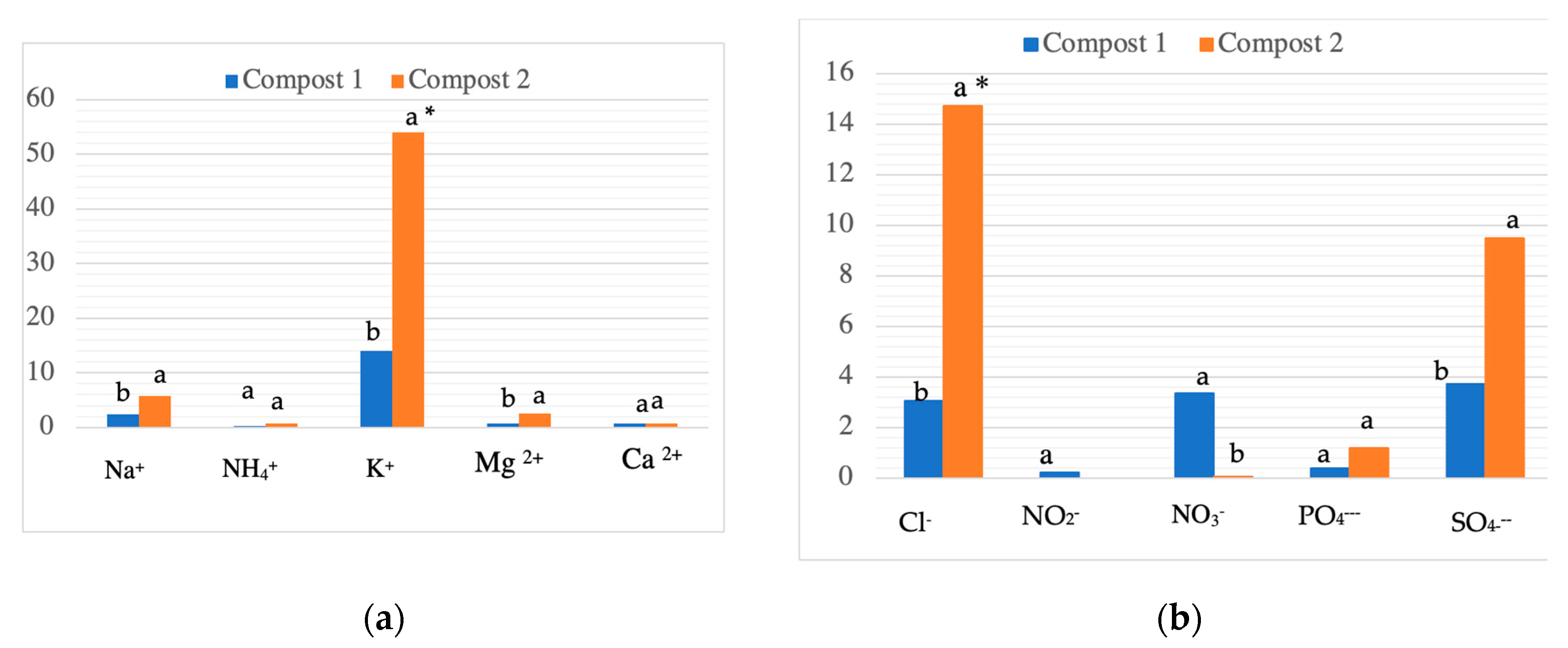
Figure 2.
Fluorescein diacetate hydrolase (FDA, µg fluorescein g-1 d.w.), dehydrogenase (DHA, µg TTF g-1 h-1d.w.), cation exchange capacity (CSC, cmol(+) Kg-1) detected in Compost 1 (50% wood sawdust + 50% wet wastes) and Compost 2 (10% Straw + 90% wet wastes) 120 days after the composting process. Different letters indicate significant differences (Turkey’s test p ≤0.05).
Figure 2.
Fluorescein diacetate hydrolase (FDA, µg fluorescein g-1 d.w.), dehydrogenase (DHA, µg TTF g-1 h-1d.w.), cation exchange capacity (CSC, cmol(+) Kg-1) detected in Compost 1 (50% wood sawdust + 50% wet wastes) and Compost 2 (10% Straw + 90% wet wastes) 120 days after the composting process. Different letters indicate significant differences (Turkey’s test p ≤0.05).
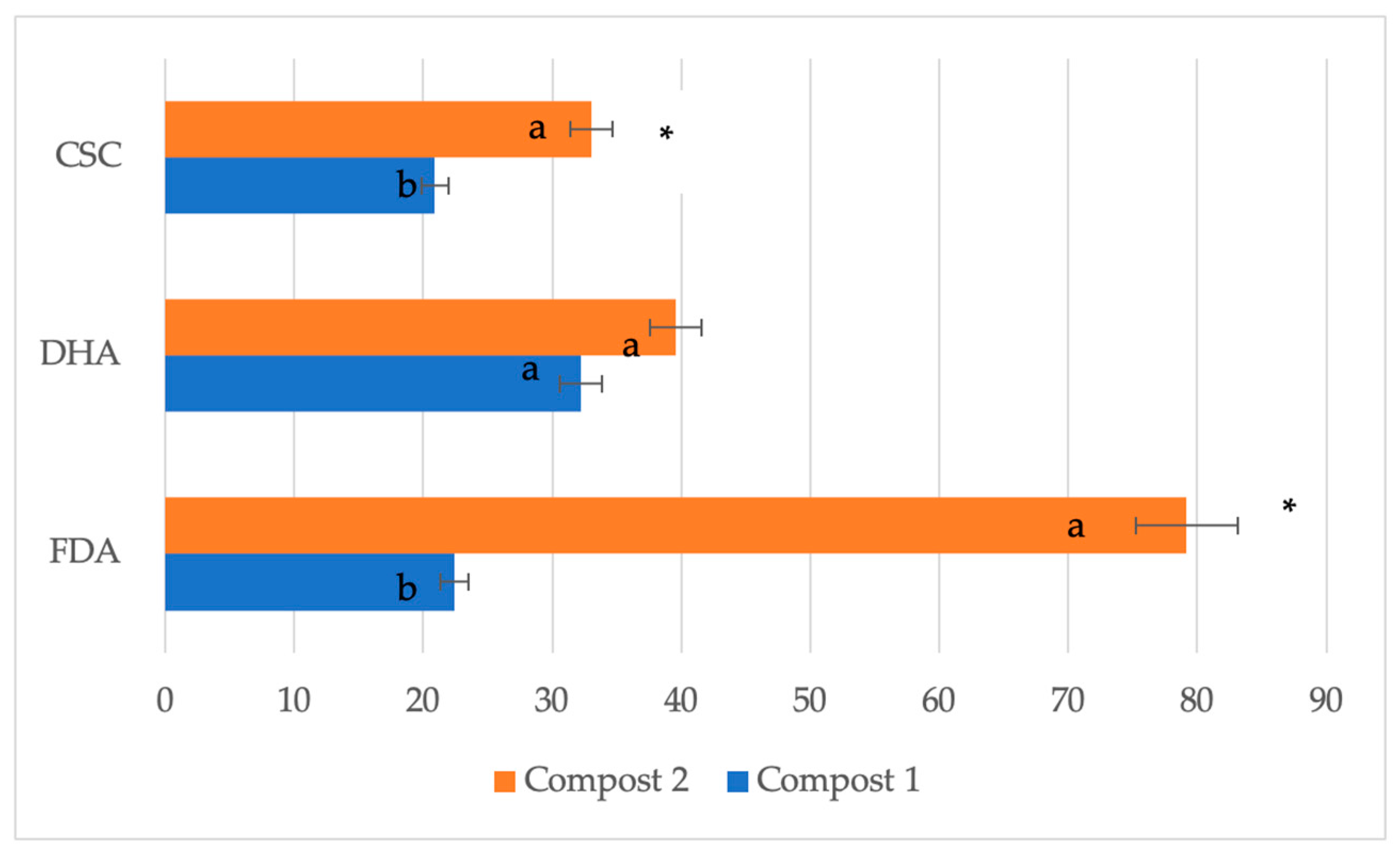
Figure 3.
Germination index in Compost 1 (50% wood sawdust + 50% wet wastes) and Compost 2 (10% Straw + 90% wet wastes) 120 days after the composting process.
Figure 3.
Germination index in Compost 1 (50% wood sawdust + 50% wet wastes) and Compost 2 (10% Straw + 90% wet wastes) 120 days after the composting process.
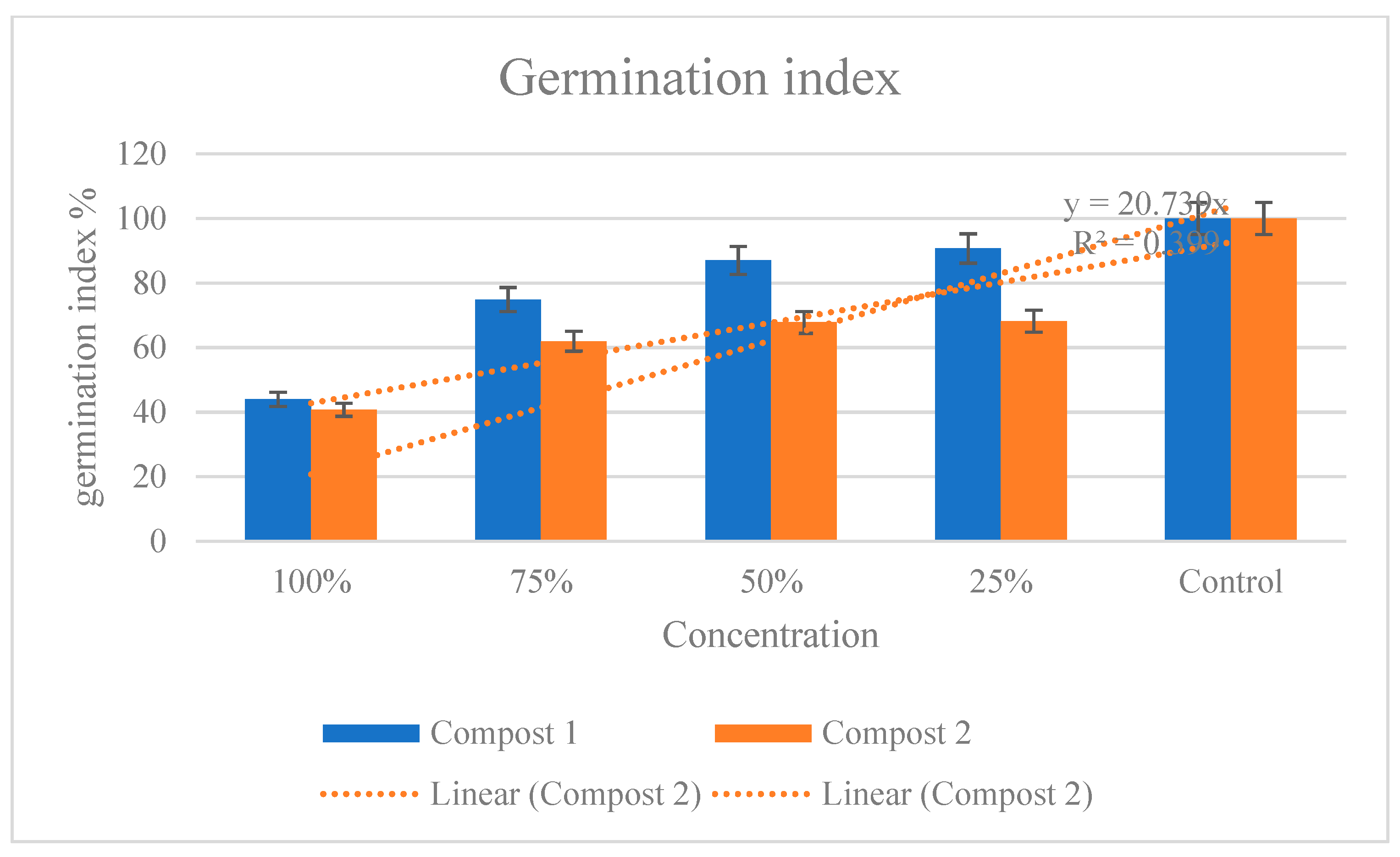
Figure 4.
Principal Component Analyses of Iones and cations soil with broccoli (a) and red cabbage (b). CTR (Control) soil without fertilizer; NPK= nitrogen:phosphorous:potassium; HM= horse manure; C1 50% wood sawdust + 50% wet wastes, C2 10% Straw 90% wet wastes.
Figure 4.
Principal Component Analyses of Iones and cations soil with broccoli (a) and red cabbage (b). CTR (Control) soil without fertilizer; NPK= nitrogen:phosphorous:potassium; HM= horse manure; C1 50% wood sawdust + 50% wet wastes, C2 10% Straw 90% wet wastes.
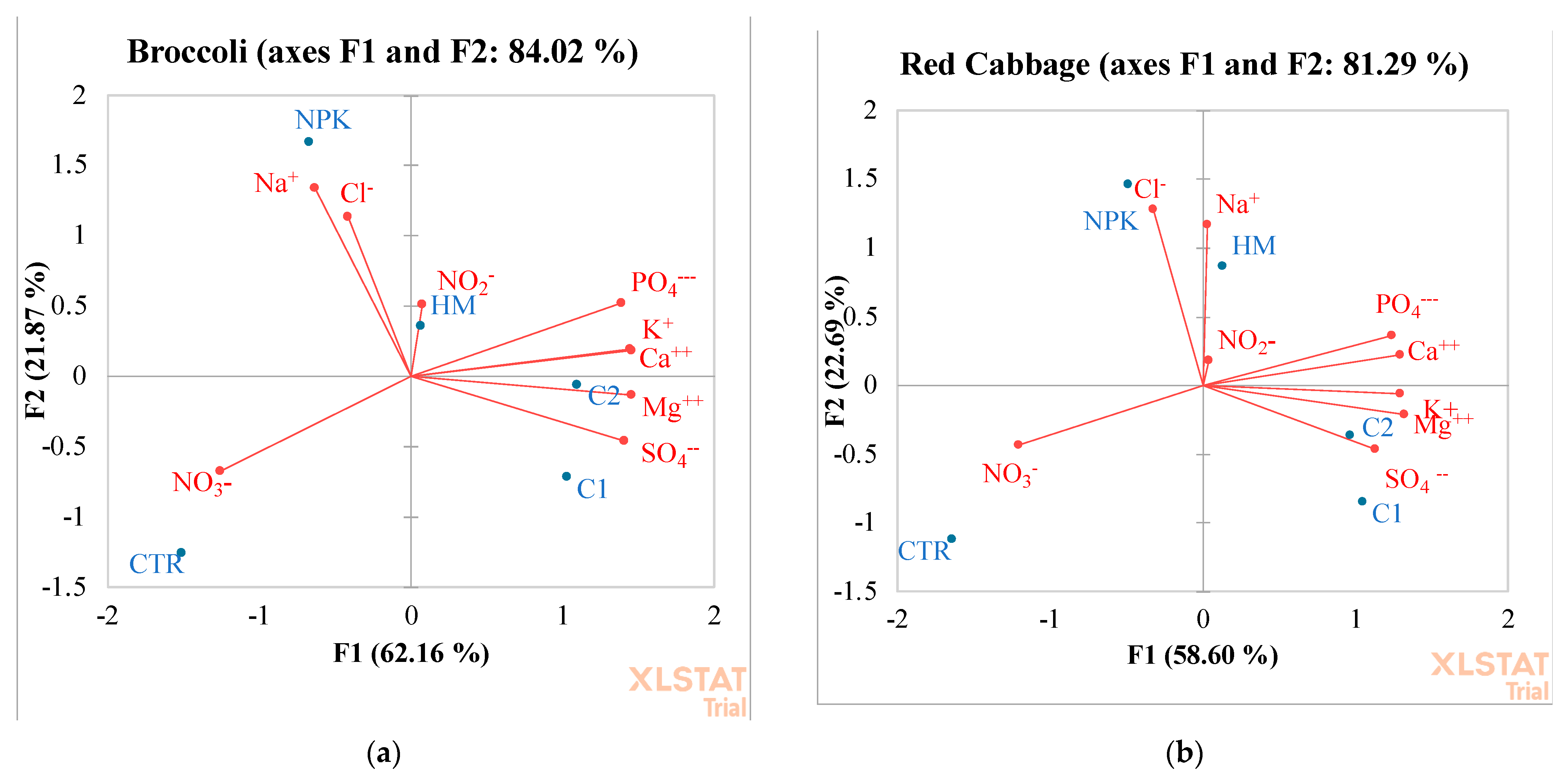
Figure 5.
Principal Component Analyses of chemical and biochemical properties of soil located in Motta San Giovanni before the fertilization. CTR (Control) soil without fertilizer; NPK= nitrogen:phosphorous:potassium; HM= horse manure; C1 50% wood sawdust + 50% wet wastes, C2 10% Straw 90% wet wastes.
Figure 5.
Principal Component Analyses of chemical and biochemical properties of soil located in Motta San Giovanni before the fertilization. CTR (Control) soil without fertilizer; NPK= nitrogen:phosphorous:potassium; HM= horse manure; C1 50% wood sawdust + 50% wet wastes, C2 10% Straw 90% wet wastes.
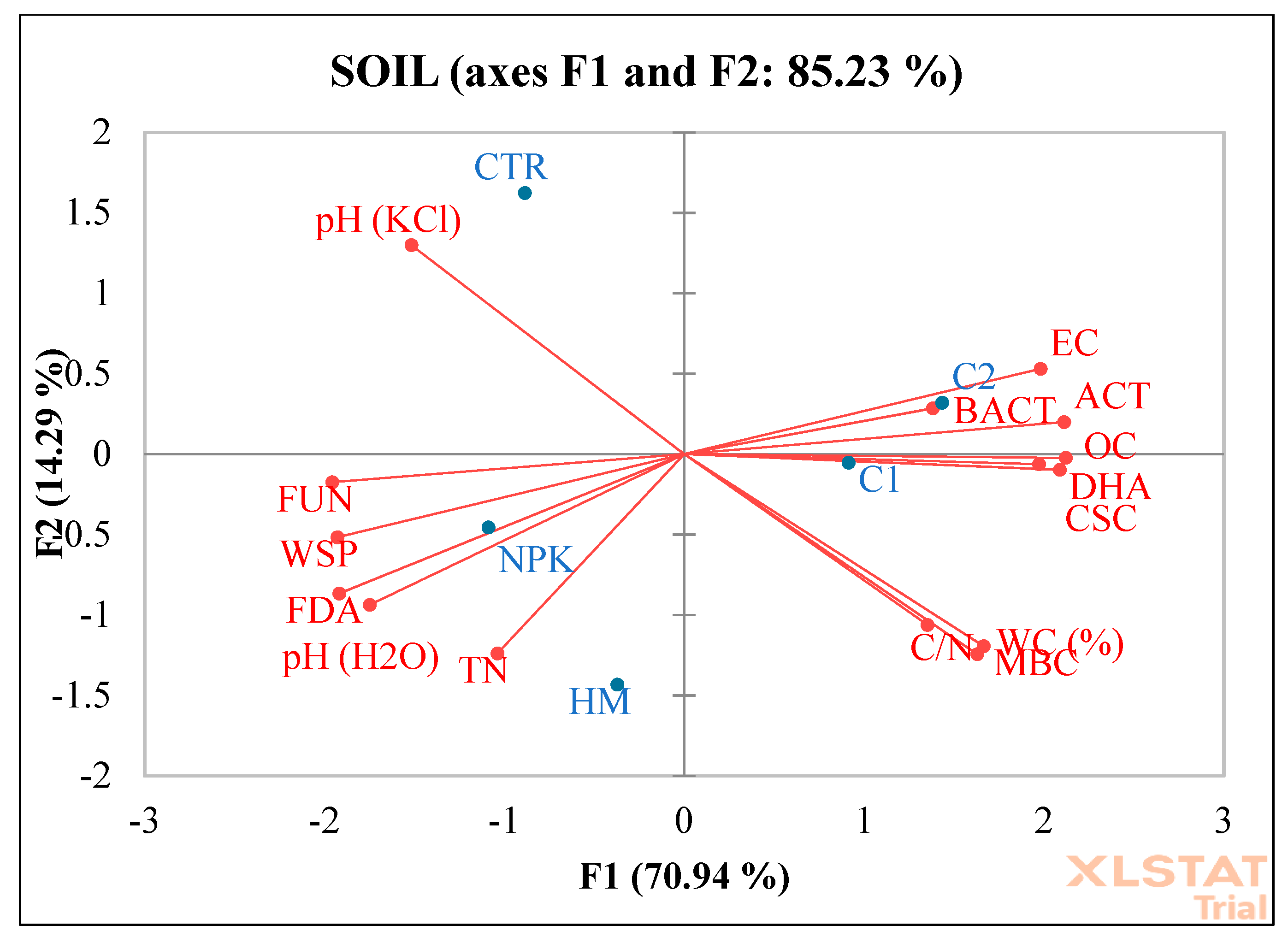
Figure 6.
Bioaccumulation factor of Red cabbage (a) and Broccoli (b) grown in not amended soil (control, CTR), NPK= nitrogen:phosphorous:potassium; HM= horse manure; C1 50% wood sawdust + 50% wet wastes, C2 10% Straw + 90% wet wastes. Values are the mean of three replicates (n=15) with errors standard.
Figure 6.
Bioaccumulation factor of Red cabbage (a) and Broccoli (b) grown in not amended soil (control, CTR), NPK= nitrogen:phosphorous:potassium; HM= horse manure; C1 50% wood sawdust + 50% wet wastes, C2 10% Straw + 90% wet wastes. Values are the mean of three replicates (n=15) with errors standard.
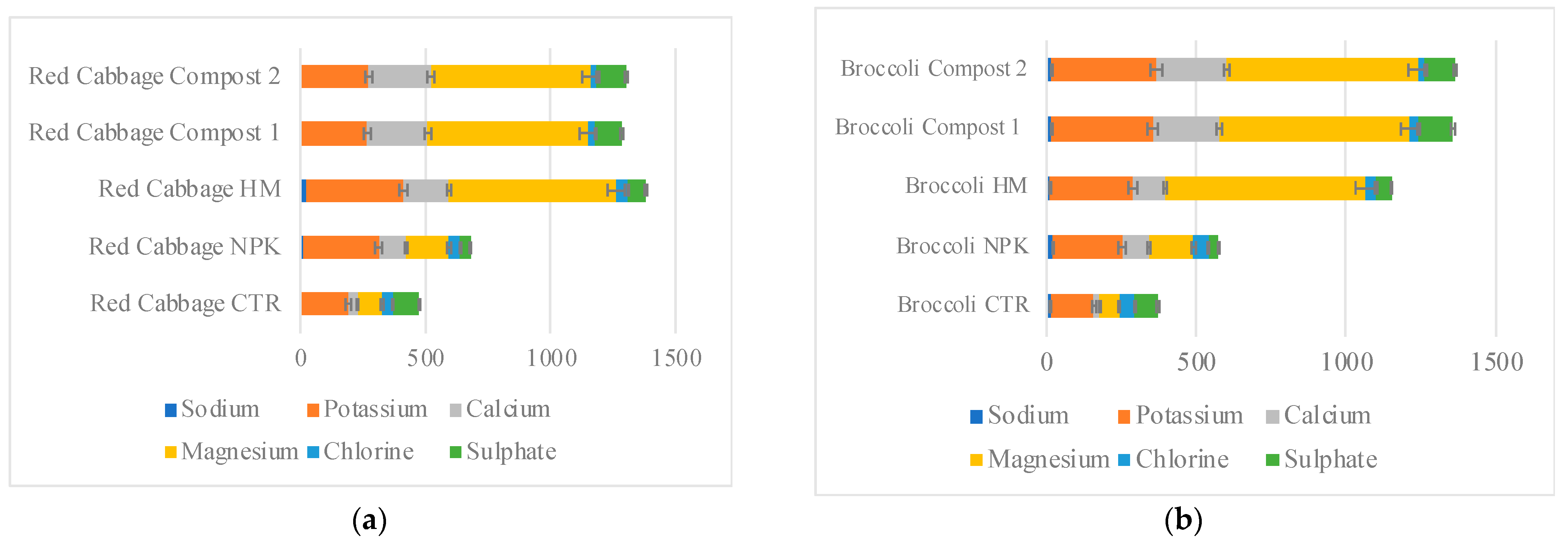
Figure 7.
PCA of iones and cations of Red cabbage (a) and Broccoli (b) grown in not amended soil (control, CTR), NPK= nitrogen:phosphorous:potassium; HM= horse manure; C1 50% wood sawdust + 50% wet wastes, C2 10% Straw + 90% wet wastes.
Figure 7.
PCA of iones and cations of Red cabbage (a) and Broccoli (b) grown in not amended soil (control, CTR), NPK= nitrogen:phosphorous:potassium; HM= horse manure; C1 50% wood sawdust + 50% wet wastes, C2 10% Straw + 90% wet wastes.
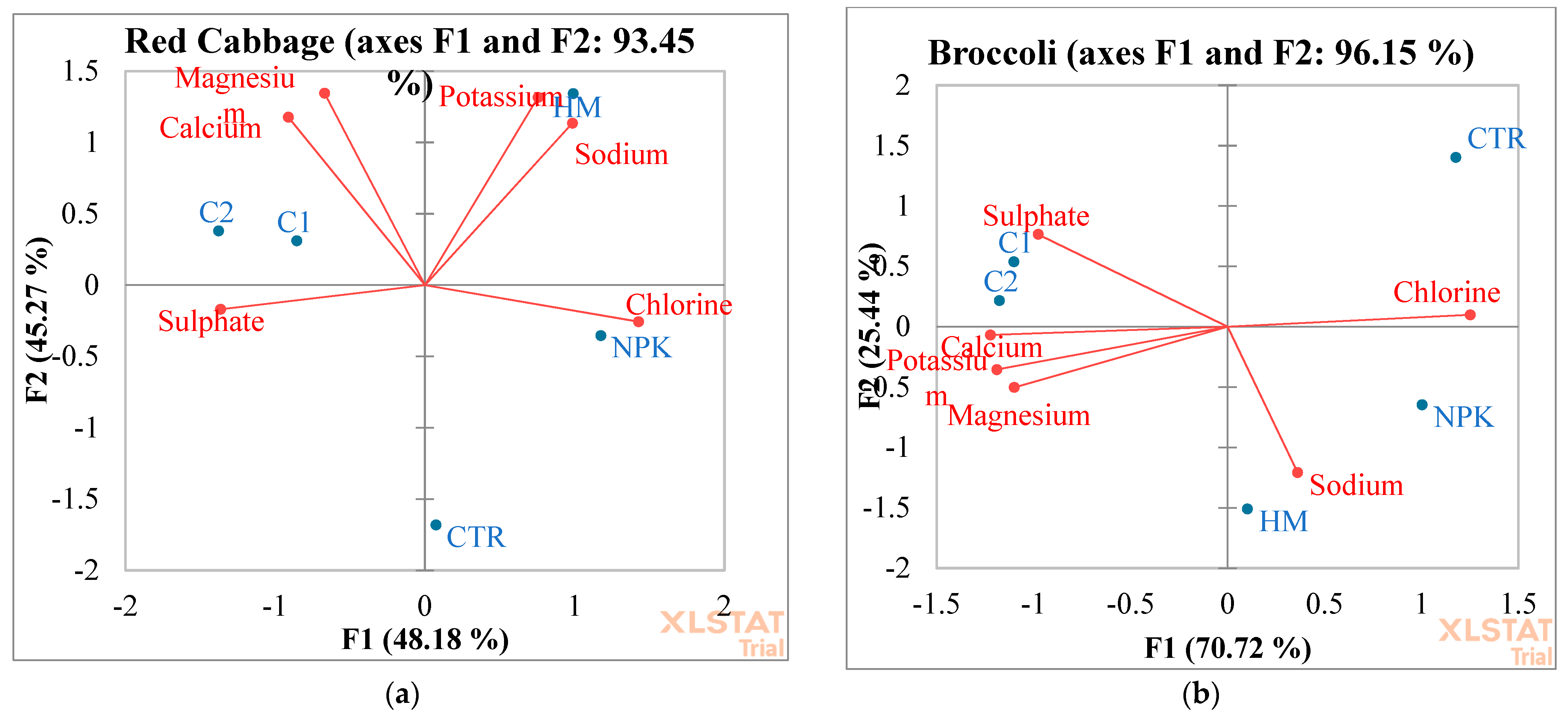
Figure 8.
Principal Component Analyses of Content of chlorophyll a (Chl a, mg 100 g−1FW), chlorophyll b (Chl b, mg 100 g−1FW), total chlorophyll (TChl, mg 100 g−1FW), chlorophyll a/chlorophyll b (Chl a/Chl b) and photosynthetic parameters in leaves of Red cabbage (a) and broccoli (b) grown in not amended soil (control, CTR), NPK= nitrogen:phosphorous:potassium; HM= horse manure; C1 50% wood sawdust + 50% wet wastes, C2 10% Straw + 90% wet wastes.
Figure 8.
Principal Component Analyses of Content of chlorophyll a (Chl a, mg 100 g−1FW), chlorophyll b (Chl b, mg 100 g−1FW), total chlorophyll (TChl, mg 100 g−1FW), chlorophyll a/chlorophyll b (Chl a/Chl b) and photosynthetic parameters in leaves of Red cabbage (a) and broccoli (b) grown in not amended soil (control, CTR), NPK= nitrogen:phosphorous:potassium; HM= horse manure; C1 50% wood sawdust + 50% wet wastes, C2 10% Straw + 90% wet wastes.
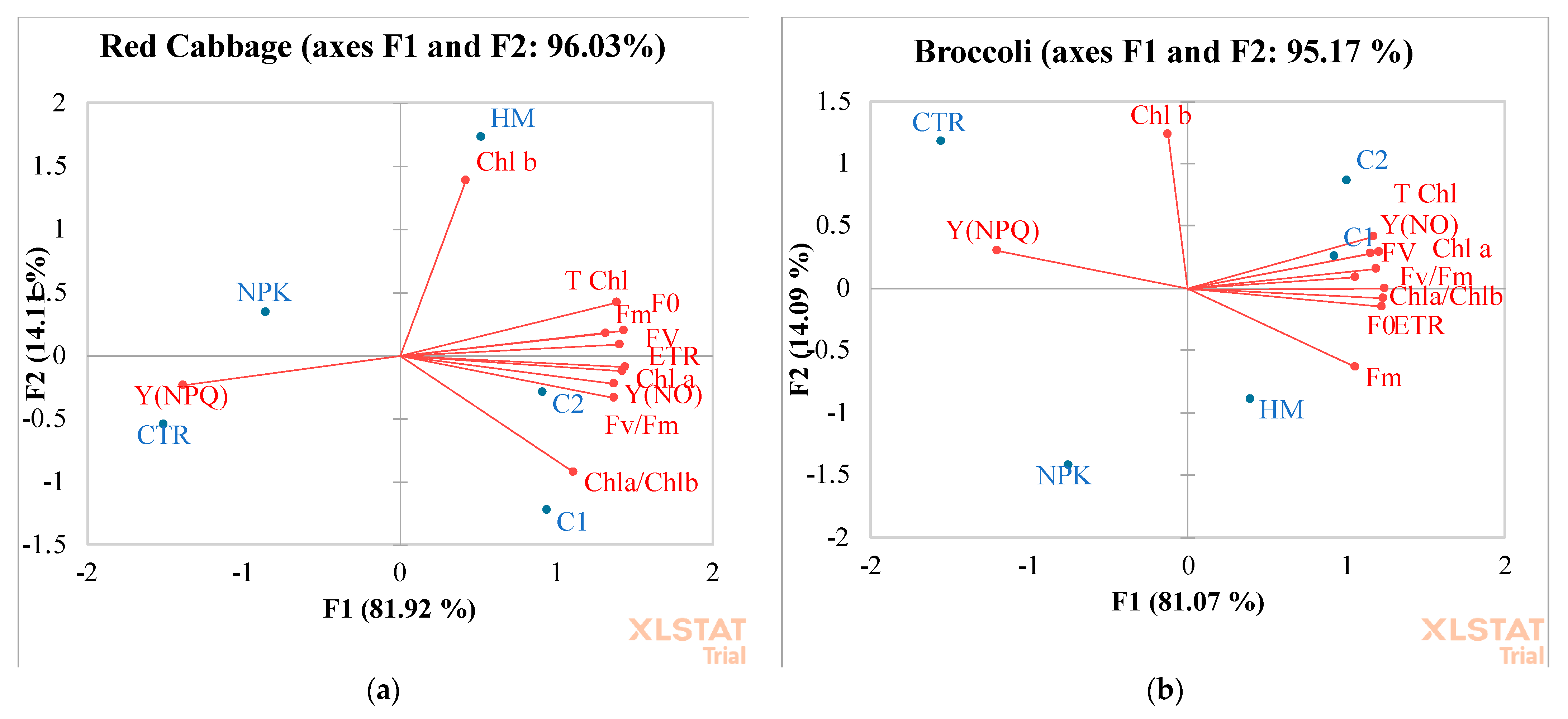
Table 1.
Compostable raw materials of different compost used.
| Compost ID | Compostable raw material |
|---|---|
| Compost 1 (C1) | 50% wood sawdust + 50% wet wastes, such as kitchen and restaurant scraps. |
| Compost 2 (C2) | 10% Straw + 90% wet wastes, such as kitchen and restaurant scraps. |
Table 2.
Physico-chemical properties of the two composts obtained from different raw materials Compost 1 (50% wood sawdust + 50% wet wastes) and Compost 2 (10% Straw + 90% wet wastes) 120 days after the composting process. pH (H2O and KCl); electric conductivity (EC, mS cm⁻¹); water content (WC, %); total organic carbon (TOC, %); Total Nitrogen (TN, %); carbon/nitrogen ratio (C/N); ammonium-nitrogen/nitrate-nitrogen ratio (NH₄⁺-N/NO₃⁻-N); organic nitrogen/total nitrogen ratio (ON/TN, %), Water soluble phenols (WSP µg GAE g-1 d.s). Data are the means of three replicates ± standard deviation.
Table 2.
Physico-chemical properties of the two composts obtained from different raw materials Compost 1 (50% wood sawdust + 50% wet wastes) and Compost 2 (10% Straw + 90% wet wastes) 120 days after the composting process. pH (H2O and KCl); electric conductivity (EC, mS cm⁻¹); water content (WC, %); total organic carbon (TOC, %); Total Nitrogen (TN, %); carbon/nitrogen ratio (C/N); ammonium-nitrogen/nitrate-nitrogen ratio (NH₄⁺-N/NO₃⁻-N); organic nitrogen/total nitrogen ratio (ON/TN, %), Water soluble phenols (WSP µg GAE g-1 d.s). Data are the means of three replicates ± standard deviation.
| Physico-chemical properties | COMPOST 1 | COMPOST 2 |
|---|---|---|
| pHH2O | 9.05 b ± 0.1 very strongly alkaline |
9.90 a ± 0.1 very strongly alkaline |
| pHKCl | 8.39b ± 0.1 | 9.28a ± 0.1 |
| E.C. | 5.01 a ± 0.12 | 5.06a ± 0.11 |
| Water content | 56.8 a ± 2 | 45.9 b ± 1.5 |
| TOC | 16.8 b ± 0.9 | 24.0 a ± 1 |
| TN (%) | 0.78 b ± 0.05 | 2.0 a ± 0.1 |
| C/N | 21.57 a ± 1 | 11.97 b ± 0.9 |
| NH4+-N/NO3-N | 1.30 b ± 0.3 | 2.80 a ± 0.2 |
| ON/TN | 90 a ± 2 | 60 b± 1 |
| WSP | 0.90 b ± 0.05 | 7.03 a ± 0.3 |
Table 3.
The data regarding the absorption capacity of the analyzed compost related to sodium and chloride). Data are the means of three replicates ± standard deviation.
Table 3.
The data regarding the absorption capacity of the analyzed compost related to sodium and chloride). Data are the means of three replicates ± standard deviation.
| 0 mM | 25 mM | 50 mM | 100 mM | 150 mM | |
| ID | Na+ | Na+ | Na+ | Na+ | Na+ |
| C1 | -4.56e ± 0.15 | 8.09d± 0.76 | 12.60c± 0.23 | 53.58b± 0.24 | 93.95a± 1.4 |
| C2 | -3.26e± 0.2 | 88.11d± 0.6 | 109.51c± 0.2 | 243.50a± 0.4 | 212.88b± 1.3 |
| ID | Cl- | Cl- | Cl- | Cl- | Cl- |
| C1 | -5.86e± 0.2 | 53.23d± 0.16 | 120.59c± 1.6 | 138.23b± 1.8 | 367.99a± 3.6 |
| C2 | -4.330e± 0.1 | 87.40d± 0.5 | 124.08c± 0.1 | 311.51b± 0.1 | 461.24a± 0.2 |
Table 4.
Chemical and biochemical properties of soil located in Motta San Giovanni before the fertilization. WC (water content %), pH H2O in water and pHKCl in potassium chloride; EC=electric conductivity (µS/cm); WSP= water soluble phenols (µg TAE g-1 ds): OC= organic carbon (%); TN= total nitrogen (%); C/N= carbon nitrogen ratio; OM= organic matter (%); MBC= Microbial biomass Carbon (μg C g−1 f.s.); Dehydrogenase (DHA, μg TTF g-1 h-1 d.s.), fluorescein diacetate hydrolase (FDA, μg fluorescein g-1 d.s.), BACT (Bacteria, UFC g-1f.s.), FUN (Fungi (UFC g-1 f.s.), ACT (Actinomycetes, UFC g-1 f.s.)CEC= Cation Exchange Capacity (cmol(+) Kg−1d.s.). Data are the means of three replicates ± standard deviation.
Table 4.
Chemical and biochemical properties of soil located in Motta San Giovanni before the fertilization. WC (water content %), pH H2O in water and pHKCl in potassium chloride; EC=electric conductivity (µS/cm); WSP= water soluble phenols (µg TAE g-1 ds): OC= organic carbon (%); TN= total nitrogen (%); C/N= carbon nitrogen ratio; OM= organic matter (%); MBC= Microbial biomass Carbon (μg C g−1 f.s.); Dehydrogenase (DHA, μg TTF g-1 h-1 d.s.), fluorescein diacetate hydrolase (FDA, μg fluorescein g-1 d.s.), BACT (Bacteria, UFC g-1f.s.), FUN (Fungi (UFC g-1 f.s.), ACT (Actinomycetes, UFC g-1 f.s.)CEC= Cation Exchange Capacity (cmol(+) Kg−1d.s.). Data are the means of three replicates ± standard deviation.
| SOIL | |
| Skeleton (%) | 45 ± 0.01 |
| Sandy % | 65± 0.02 |
| Clay % | 23±0.12 |
| Silt % | 12±0.23 |
| Textural Class | Sandy-loam |
| WC | 18± 0.4 |
| pH (H2O) | 8.5±0.32 |
| pH (KCl) | 7.8±0.53 |
| EC | 307.3±12.3 |
| CEC (cmol(+) kg-1) | 16±1.7 |
| OC | 1.37±0.13 |
| TN | 0.19±0.14 |
| C/N | 7.21±0.13 |
| WSP | 276.1±4.5 |
| MBC | 376±8.6 |
| FDA | 2.1 ± 0.12 |
| DHA | 15.11 ± 0.22 |
| BACT | 0.9*105 |
| FUN | 2.6*104 |
| ACT | 2.7*104 |
| Na+ | 0.117 ± 0.32 |
| K+ | 0.100± 0.26 |
| Ca2+ | 0.311 ± 0.06 |
| Mg2+ | 0.011± 0.16 |
| Cl- | 0.222 ± 0.11 |
| NO2- | nd |
| NO3- | nd |
| PO43- | nd |
| SO42- | 0.134 ± 0.11 |
Table 5.
Soil Iones and cations correlation matrix Pearson. Values in bold are different from 0 with a significance level alpha=0.05.
Table 5.
Soil Iones and cations correlation matrix Pearson. Values in bold are different from 0 with a significance level alpha=0.05.
| Variables | Na+ | K+ | Ca2+ | Mg2+ | Cl- | NO2- | NO3- | PO43- | SO42- |
| Na+ | 1 | 0.908 | 0.125 | 0.326 | 0.582 | 0.998 | 0.998 | 0.998 | 0.931 |
| K+ | 0.908 | 1 | 0.408 | 0.582 | 0.759 | 0.893 | 0.893 | 0.893 | 0.980 |
| Ca2+ | 0.125 | 0.408 | 1 | 0.887 | 0.793 | 0.090 | 0.090 | 0.090 | 0.441 |
| Mg2+ | 0.326 | 0.582 | 0.887 | 1 | 0.672 | 0.309 | 0.309 | 0.309 | 0.635 |
| Cl- | 0.582 | 0.759 | 0.793 | 0.672 | 1 | 0.540 | 0.540 | 0.540 | 0.751 |
| NO2- | 0.998 | 0.893 | 0.090 | 0.309 | 0.540 | 1 | 1.000 | 1.000 | 0.921 |
| NO3- | 0.998 | 0.893 | 0.090 | 0.309 | 0.540 | 1.000 | 1 | 1.000 | 0.921 |
| PO43- | 0.998 | 0.893 | 0.090 | 0.309 | 0.540 | 1.000 | 1.000 | 1 | 0.921 |
| SO42- | 0.931 | 0.980 | 0.441 | 0.635 | 0.751 | 0.921 | 0.921 | 0.921 | 1 |
Table 7.
Growth parameters and productivity (tons per hectare) of Red cabbage and Broccoli grown in not amended soil (control, CTR), NPK= nitrogen:phosphorous:potassium; HM= horse manure; C1 50% wood sawdust + 50% wet wastes, C2 10% Straw + 90% wet wastes.
Table 7.
Growth parameters and productivity (tons per hectare) of Red cabbage and Broccoli grown in not amended soil (control, CTR), NPK= nitrogen:phosphorous:potassium; HM= horse manure; C1 50% wood sawdust + 50% wet wastes, C2 10% Straw + 90% wet wastes.
| Red Cabbage | CTR | NPK | HM | C1 | C2 | |
| Leaf humidity | 84a± 0.11 | 84a± 0.62 | 86a± 0.42 | 86a± 0.32 | 85a± 0.46 | |
| Leaf width | 5.7a± 0.56 | 8.8ab± 0.25 | 11a± 0.42 | 14a± 0.15 | 13a± 0.52 | |
| Leaf length | 4.4a± 0.12 | 7.8ab± 0.41 | 10a± 0.68 | 9.5a± 0.42 | 10a± 0.23 | |
| Leaf area | 45c± 0.25 | 65b± 0.42 | 75b± 0.13 | 96a± 0.32 | 91a± 0.15 | |
| Plant height | 20c± 0.125 | 30b± 0.14 | 35b± 0.12 | 43a± 0.12 | 40a± 0.43 | |
| Head diameter | 10b± 1.42 | 12a± 2.32 | 12a± 1.72 | 15a± 2.52 | 15a± 1.52 | |
| Yield | 36b± 1.51 | 42a± 1.42 | 42a± 1.32 | 49a± 2.12 | 47a± 2.32 | |
| Broccoli Calabrese | CTR | NPK | HM | C1 | C2 | |
| Leaf humidity | 84a± 0.15 | 84a± 0.18 | 86a± 0.62 | 86a± 0.43 | 85a± 0.65 | |
| Leaf width | 9a± 3.32 | 12a± 3.44 | 11a± 2.32 | 15a± 2.23 | 14a± 1.12 | |
| Leaf length | 14a± 2.42 | 17a± 3.22 | 18a± 2.12 | 18a± 0.22 | 18a± 0.16 | |
| Leaf area | 70b± 0.29 | 165a± 0.59 | 175a± 0.54 | 196a± 0.44 | 191a± 0.12 | |
| Plant height | 50b± 0.34 | 60b± 0.14 | 65ab± 2.42 | 80a± 2.12 | 75a± 2.32 | |
| Head diameter | 10b± 2.12 | 16a± 2.32 | 15a± 3.10 | 19a± 3.11 | 19a± 3.12 | |
| Yield | 5c± 3.12 | 15b± 4.01 | 19ab± 2.12 | 22a± 4.2 | 21a± 3.11 | |
*Different letters in the same row indicate significant differences (Turkey’s test p ≤0.05). Values are the mean of three replicates (n=15) ± standard deviation.
Table 8.
Content of chlorophyll a (Chl a, mg 100 g−1FW), chlorophyll b (Chl b, mg 100 g−1FW), total chlorophyll (TChl, mg 100 g−1FW), chlorophyll a/chlorophyll b (Chl a/Chl b) and photosynthetic parameters in leaves of Red cabbage and broccoli calabrese.
Table 8.
Content of chlorophyll a (Chl a, mg 100 g−1FW), chlorophyll b (Chl b, mg 100 g−1FW), total chlorophyll (TChl, mg 100 g−1FW), chlorophyll a/chlorophyll b (Chl a/Chl b) and photosynthetic parameters in leaves of Red cabbage and broccoli calabrese.
| Broccoli Calabrese | CTR | NPK | HM | C1 | C2 |
| Chl a | 114b± 0.43 | 120b± 0.12 | 142a± 0.02 | 158a± 0.12 | 167a± 0.19 |
| Chl b | 60a± 2.25 | 54a± 3.11 | 55a± 1.11 | 57a± 1.45 | 59a± 1.24 |
| Chla/Chlb | 1.9b± 1.11 | 2.2b± 1.12 | 2.58a± 1.54 | 2.77a± 1.12 | 2.83a± 1.02 |
| T Chl | 174b± 5.12 | 174b± 4.12 | 197ab± 3.14 | 215a± 4.11 | 226a± 2.12 |
| FV | 0.621b± 0.43 | 0.802ab± 0.22 | 1.004a± 0.12 | 1.007a± 0.52 | 1.107a± 0.23 |
| Fm | 0.939a± 0.65 | 1.077a± 0.21 | 1.423a± 0.22 | 1.222a± 0.61 | 1.343a± 0.36 |
| F0 | 0.293b± 0.02 | 0.384ab± 0.02 | 0.528a± 0.11 | 0.534a± 0.12 | 0.544a± 0.74 |
| Fv/Fm | 0.661a± 0.02 | 0.74a± 0.01 | 0.71a± 0.12 | 0.82a± 0.01 | 0.82a± 0.01 |
| Y(NPQ) | 0.443a± 0.01 | 0.329a± 0.11 | 0.216a± 0.02 | 0.215a± 0.04 | 0.219a± 0.01 |
| Y(NO) | 0.235b± 0.02 | 0.215b± 0.01 | 0.344a± 0.01 | 0.397a± 0.03 | 0.361a± 0.04 |
| ETR | 21.21c± 0.12 | 28.84b± 0.16 | 35.24b± 0.14 | 41.26a± 0.13 | 39.54a± 0.14 |
| Red Cabbage | CTR | NPK | HM | C1 | C2 |
| Chl a | 94a± 0.56 | 100a± 1.52 | 112a± 4.12 | 118a± 4.67 | 117a± 5.12 |
| Chl b | 65a± 3.52 | 69a± 3.15 | 66a± 2.17 | 65a± 2.15 | 69a± 1.21 |
| Chla/Chlb | 1.45a± 0.01 | 1.45a± 0.42 | 1.47a± 0.13 | 1.81a± 0.13 | 1.71a± 0.11 |
| T Chl | 159b± 8.76 | 169a± 8.22 | 178a± 4.62 | 183a± 2.24 | 186a± 4.12 |
| FV | 0.644b± 0.02 | 0.776b± 0.01 | 1.016a± 0.01 | 1.027a± 0.02 | 1.144a± 0.02 |
| Fm | 0.899b± 0.03 | 1.000b± 0.25 | 1.227a± 0.26 | 1.392a± 0.11 | 1.465a± 0.12 |
| F0 | 0.293b± 0.05 | 0.384b± 0.06 | 0.528a± 0.08 | 0.534a± 0.04 | 0.544a± 0.06 |
| Fv/Fm | 0.617a± 0.01 | 0.626a± 0.05 | 0.639a± 0.03 | 0.656a± 0.04 | 0.663a± 0.01 |
| Y(NPQ) | 0.433a± 0.02 | 0.409a± 0.08 | 0.216b± 0.03 | 0.225b± 0.07 | 0.256b± 0.09 |
| Y(NO) | 0.235b± 0.07 | 0.215b± 0.03 | 0.344a± 0.05 | 0.397a± 0.03 | 0.361a± 0.05 |
| ETR | 21.21c± 1.03 | 28.84b± 3.12 | 35.24b± 2.12 | 41.26a± 4.02 | 39.54a± 3.02 |
* Different letters in the same row indicate significant differences (Turkey’s test p ≤0.05). Values are the mean of three replicates (n=15) ± standard deviation.
Disclaimer/Publisher’s Note: The statements, opinions and data contained in all publications are solely those of the individual author(s) and contributor(s) and not of MDPI and/or the editor(s). MDPI and/or the editor(s) disclaim responsibility for any injury to people or property resulting from any ideas, methods, instructions or products referred to in the content. |
© 2024 by the authors. Licensee MDPI, Basel, Switzerland. This article is an open access article distributed under the terms and conditions of the Creative Commons Attribution (CC BY) license (http://creativecommons.org/licenses/by/4.0/).
Copyright: This open access article is published under a Creative Commons CC BY 4.0 license, which permit the free download, distribution, and reuse, provided that the author and preprint are cited in any reuse.


