

Submitted:
29 March 2024
Posted:
01 April 2024
You are already at the latest version
Abstract
The study was conducted to evaluate the agronomic performance, forage yield, and nutritive values of Desho grass varieties under supplementary irrigation at Dambi Dollo University experimental site, Western Ethiopia. Three Desho grass varieties (Areka /DZF#590, Kindu kosha-1/DZF #591, and Kulumsa /DZF #592) were arranged in randomized complete block design (RCBD) with three replications. The CROPWAT 8.0 model, local climate data, forage data, and soil data were used to determine Desho grass water requirements and irrigation schedules. The agronomic parameters, yield, chemical composition, and in vitro digestibility of the feed samples at standardization cut were determined following the standard procedures. The results showed significant differences (p
Keywords:
Desho grass
; Dry matter yield
; In vitro digestibility
; Nutritive value
; Varieties
1. Introduction
Ethiopian livestock population is estimated to be 70 million cattle, 42.9 million sheep, 52.5 million goats, 2.15 million horses, 10.80 million donkeys, 0.38 million mules, and about 8.1 million camels, as well as 57 million poultry [1]. Despite Ethiopian abundant livestock resources and many roles, livestock productivity has remained low and unable to meet the growing demands of the country’s population [2]. Various factors contribute to low productivity in Ethiopia, such as low feed quality, fluctuating seasonal availability of feed, poor genetics, disease, and limited accessibility to inputs and services [3].
Inadequate nutrition and feeding are the major challenges facing livestock production [4]. This is due to climate changes, shrinkage of grazing areas, land tenure, border conflict, weed, and bush encroachment, soil degradation, unavailability of seed for improved forage varieties as reported by Mengistu et al. (2017) [5], as well as other factors such as inadequate management practices, feeding mostly crop residue, and insufficient animal feed preservation practices [4]. The prolonged dry season and the absence of irrigation systems also impose additional challenges to the development and appropriate management of perennial forage crops [6].
Ethiopia has huge potential for forage production through small irrigation in approximately 31% of the country being extremely favorable for growing Desho [7]. Cultivation of improved forage varieties with better management practices and with supplementation of irrigation during the dry season is urgently needed, especially for dairy cattle [8]. Adie and Blummel (2019) [9], pointed out that livestock fed improved forage crops grown through irrigation produce much more milk and meat, improving the diets of both their owners and their consumers.
A total of 75 improved forage varieties, with their full production and utilization packages, have been released to the country’s various agroecologies [10]. MoA (2017) [11] reports that a total of three varieties of Desho grass have been registered for animal feed at the national level. Desho grass is among the improved forage crops in Ethiopia that could play an important role in providing a significant amount of quality forage to both smallholder farmers and intensive livestock systems. It is a highly palatable, nutritious, and fast growing grass characterized by a high leaf to stem ratio and used as silage for dry season feed and performs well at an altitude ranging from 1500 to 2800 m.a.s.l [12,13]. Desho grass has rapid growth and can be harvested frequently, so adopting it can help address feed shortages, particularly during the dry season [14,15]. Desho grass produces between 30 and 110 t/ha biomass per hectare [16]. The Desho grass can produce DMY (30-40 t/ha) without fertilizer application and responds positively to fertilization [13]. The goal of this work was to evaluate the agronomic performance, herbage productivity, and nutritional values of Desho grass varieties (Pennisetum glaucifolium) under supplementary irrigated conditions.
2. Materials and Methods
2.1. Description of the Study Area
The experiment was carried out under supplementary irrigation in 2022 /2023, at the Dambi Dollo University in Efa Galano kebele, Sayo district of Kellem Wollega in Oromia Regional State, Western Ethiopia located 652 km away from Addis Ababa, Ethiopia’s capital city (Figure 1). The area lies at a latitude of 8°50′N and a longitude of 34°76′E with an altitude between 1500-1740 meters above sea level. It has a sub-humid climate with average minimum and maximum annual temperatures of 15 to 28oC, respectively. The area receives an annual rainfall of 850-1200 mm.
2.2. Weather Data
Ten years (2012-2021) of average weather data (rainfall, minimum temperature, maximum temperature, relative humidity, wind speed, and sunshine) of the area were obtained from the Gambella meteorological agency. Accordingly, information on ten years of weather data of the area was provided in Figure 2 below.
2.3. Soil Chemical and Physical Properties of the Study Site
Laboratory analysis of particle size (texture), pH, available phosphorus, total nitrogen, organic carbon, organic matter, and cation exchange capacity for composite soil samples (0–30 cm) collected from the experimental site before planting are shown in Table 1. The soil sample analysis was conducted at Nekemte soil laboratory in 2022.
2.4. Experimental Layout, Design and Treatments
Three Desho grass varieties (Areka /DZF #590, Kulumsa /DZF #592, and Kindu kosha-1 /DZF #591) were evaluated using randomized complete block design (RCBD) with three replications. In order to refine the soil, the land was ploughed and harrowed with oxen, then hoed. The plot size was 9 m2 (3mx×3m) and the spacing between the plot and between blocks was 1m and 1.5m respectively. The SAS software was used for the randomization of the treatments.
The fine root bed plots were prepared before laying out the experimental plots. Desho grass was planted in rows with split roots on well-prepared soil. Vegetative root splits were used for planting Desho grass, with row and plant spacing of 0.5 m and 0.25 m, respectively, as per the recommendation [14]. Fertilizer was applied at a rate of 100 kg/ha NPS and 0.5 kg/ha urea for all experimental units during establishment [17]. At various times throughout the experimental period, Desho grass plots were manually weeded and forage grass growth was promoted through increased soil aeration [18].
2.5. Irrigation System
The scheduling for irrigation using the CROPWAT model was carried out based on historical weather data obtained from the Gambella Meteorological Agency for a period of ten years (2012-2021). The weather data included variables such as rainfall, minimum temperature, maximum temperature, relative humidity, wind speed, and sunshine (Figure 2). In addition to the weather data, other important factors considered in the scheduling process were the soil characteristics of the study area, forage characteristics (such as crop coefficient and root depth), and dates of planting and harvest for the forage crops. The crop coefficient (0.40 initial, 0.71 developmental, 0.89 middle, and 0.72 end phases) and root depth values (0.5m) for Desho grass were used as recommended in the literature [19].
The furrow irrigation method was used, and the irrigation schedule varied during different phases of the forage growth. During the initial and developmental phase, irrigation water was applied at intervals of 3 days. After the developmental phase, irrigation water was applied through furrows at about 5 days intervals until the end of the experimental phase. To measure the amount of water applied, a 3-inch Parshall flume was used to measure discharges according to CROPWAT based on the crop water requirement schedule. During each irrigation water application, the set time and application time were monitored over time. The application time (min) required to irrigate the predetermined amount into each plot was calculated by using the below formula [20].
where: a = area of the plot that was irrigated (in square meters) d = depth of water that was irrigated (in centimeters), q = flow rate of the irrigation system (liters per second)
2.6. Data Collection
2.6.1. Agronomic Parameters
The middle rows were clipped at 8 cm above the ground for sampling to determine agronomic parameters and yields. Data on agronomic parameters were recorded at the standardization cut (105 days) [21].
2.6.1.1. Plants Survival per Plot
In order to determine the survival rate of plants, the number of plants that survived in each plot was counted. This count was then converted into percentages by dividing the number of survived plants by the total number of plants that were initially planted and then multiplying the result by 100.
2.6.1.2. Plant Height
Steel tape/sick meter was used to measure plant height immediately at standardization cut (105 days). The middle two rows were selected from a total of six rows within each plot to measure plant height, excluding the four border rows on each side, and then five plants were randomly selected from the selected rows for plant height measurement and then the average height was determined by calculating the mean height of the five plants.
2.6.1.3. Number of Tillers per Plant
The number of tillers was counted and recorded from randomly selected five plants in the middle row of each plot. This counting was done at standardization cut (105 days). The counts from the five plants were then averaged to obtain a representative value for each plot.
2.6.1.4. Number of Leaves per Tiller
The number of leaves per tiller was counted and recorded from randomly selected ten plants in the middle row of each plot. This counting was done at standardization cut (105 days). The counts from the ten plants were then averaged to obtain a representative value for each plot.
2.6.1.5. Total Number of Leaves per Plant
The total number of leaves per plant was calculated by multiplying the average number of leaves per tiller by the average number of tillers per plant to obtain a representative value for each plot at the standardization cut (105 days).
2.6.1.6. Number of Nodes per Plant
The number of nodes per plant was counted and recorded from randomly selected five plants in the middle row of each plot. This counting was done at standardization cut (105 days). The counts from the five plants were then averaged to obtain a representative value for each plot.
2.6.1.7. Internode Length
Internode lengths were measured with a centimeter ruler from randomly selected five plants in the middle row of each plot at standardization cut (105 days) and an averaged value was calculated.
2.6.1.8. Leaf Length
Leaf length was measured from the base of the collar area to the leaf tip for each plant using a centimeter ruler from randomly selected five plants in the middle row of each plot at standardization cut (105 days) and the mean value was determined.
2.6.1.9. Leaf Width
Leaf width was measured from the central portions of the leaf with a centimeter ruler from randomly selected five plants in the middle row of each plot at standardization cut (105 days) and the mean was obtained.
2.6.1.10. Leaf to Stem Ratio
The leaf to stem ratio was calculated by harvesting plants from randomly chosen middle rows at the standardization cut (105 days). After mixing the harvested plants, samples were taken from each plot, then accurately measured. The fresh leaves and stems of each harvested sample were separated and weighed. The leaf stem ratio was determined by dividing the dry weight of the leaves by the dry weight of the stems after oven drying (65oC for 72 hours) of each leaf and stem sample.
2.6.2. Biomass Yield Determination
All forage per plot of Desho grass was harvested at standardization cut (105 days) [21]. The harvest was carried out manually using a sickle at a stubble height of 8 cm. First, the border rows were removed and two middle rows were harvested to measure the fresh weights. The fresh weight was immediately recorded in the field using a field balance. Fresh subsamples of forage grass were taken from each plot, weighed, and then chopped to a short length of 2-5 cm to determine the dry matter yield. Fresh sample weights were then oven dried at 65oC for 72 hours and dry weight was recorded to estimate dry matter production. The dry matter production is calculated as follows [22]:
where;
TFW: Total Fresh Weight from a plot in kg
DWSs: Dry Weight of the Subsample in grams
HA: Harvested Area (meter square)
FWSs: Fresh Weight of the Subsample in grams
10 = is a constant for the conversion of yields in kg/m2 to t/ha
The dry matter yield (DMY) was multiplied by the CP content (%) of the feed samples to determine the crude protein yield (CPY).
2.6.3. Chemical Composition
Samples of Desho grass at standardization cut (105 days) were taken from each plot and dried in a forced air oven at 65°C for 72 hours and the samples were milled using a Wiley mill to pass through a 1 mm sieve for chemical analysis. The AOAC method (1990) [23] was used to determine DM, ash, and nitrogen. DM content was determined by oven drying at 65oC for 72 hours. Ash was determined by completely burning the feed samples in a muffle furnace at 600°C overnight according to the method of [23]. The residue after burning in a muffle furnace was recorded as the ash component. Total nitrogen (N) was determined by the Kjeldhal procedure [23]. The CP was calculated as nitrogen (N) × 6.25. The method of Van Soest et al. (1991) [24] was used to analyze neutral detergent fiber (NDF), acid detergent fibers (ADF), and acid detergent lignin (ADL). Hemicelluloses were calculated by subtracting ADF from NDF content, while cellulose was determined by subtracting ADL from ADF content. The chemical analysis was undertaken at Holeta Agricultural Research Center.
2.6.4. In Vitro Digestibility Determination
Determination of in vitro dry matter digestibility (IVDMD) was made using all of the samples that were used for chemical analysis. To determine IVDMD, the Tilley and Terry (1963) [25] two-stage rumen inoculates pepsin method was used. Rumen fluid was obtained from three steers with rumen fistulas and transported to the laboratory in a preheated thermos flask at 39oC. Before feeding the animals, rumen fluid was collected in the morning. In order to facilitate microbial digestion, a duplicate sample weighing about 0.5 g each was incubated for 48 hours at 39 °C in a water bath with 30 ml of ruminal fluid. The subsequent phase involved enzymatic digestion using an acidic pepsin solution for an additional 48 hours. Duplicate incubations of blank samples with only buffered rumen fluid were performed for adjustment. The drying of sample residues was done at 60oC for 72 hours. The samples were then ashed to estimate in vitro organic matter digestibility (IVOMD). The in vitro dry matter digestibility (IVDMD) and in vitro organic matter digestibility (IVOMD) analysis were undertaken at Holeta Agricultural Research Center.
IVDMD was calculated [26] as:
In vitro, OM digestibility was calculated as:
where OM = DM- Ash (measure after ignition of feed or residue)
The Metabolizable Energy (ME) content was estimated from IVOMD using the equation [27]:
ME (MJ kg-1 DM) = 0.15 * IVOMD
2.7. Statistical Analysis
Data were subjected to the ANOVA procedure by using the General Linear Model of SAS software (SAS, version 9.3). Significance of differences in treatment means were determined using the least significant difference (LSD) test at 5% significant level or 95 % confidence interval. The model used for data analysis was:-
where,
Yijk= μ + VARi + βk + eijk
Yijk = the response variable
μ = grand mean,
VARi= Varieties (i= Areka /DZF #590, Kulumsa /DZF #592, Kindu kosha-1 /DZF #591),
k = the block effect (k= 1, 2, 3),
eijk = the random error
3. Results and Discussion
3.1. Agronomic Performance of Desho Grass Varieties
The results of the agronomic performance of Desho grass varieties at standardization cut (105 days) are indicated in Table 2. The results indicate that, except for plant height and leaf width per plant, other important agronomic characteristics such as survival rate of plants, number of tillers per plant, number of leaves per tiller, total number of leaves per plant, number of nodes per plant, internode length, leaf length, and leaf to stem ratio varied significantly (p<0.05) among the Desho grass varieties.
3.1.1. Survival Rate of Plants
There was a significant difference (p<0.05) in the survival rate among Desho grass varieties (Figure 3). The higher percentage of survived plants was obtained from Areka /DZF #590 (99.77%) followed by Kulumsa /DZF #592 (98.38%), whereas the lowest survival rate was obtained from Kindu kosha-1 /DZF #591 (96.06%) with an overall mean of 98.06%. The percentage of surviving plants in this study is comparable with the result reported by Wamatu (2021) [28], who observed a 100% survival rate for Desho grass. However, the current result is higher than that reported by Bantihun et al. (2022) [29], who noted that the survival rate of Desho grass was 92.7%. This difference might be due to environmental conditions.
3.1.2. Plant Height
The mean plant height showed no significant difference (p>0.05) among the Desho grass varieties (Table 2). The absence of significant differences in plant height among varieties of Desho grass in the present result aligns with earlier reports noted by several authors (Yirgu et al., 2017; Hidosa and Getaneh, 2021; Kebede et al., 2022) [30,31,32]. Contrary to the current result, significant differences in plant height were also reported among varieties of Desho grass [33,34,35]. Furthermore, the mean plant height (81.64 cm) recorded in the current result was higher than the findings reported by Kefyalew et al. (2020) [36], who observed the mean plant height of Desho grass was 37.19 cm at 90 days of age and 45.43 cm at 150 days of age. This difference in plant height may be due to harvesting age, climate, planting season, soil type and fertility, and fertilizers.
3.1.3. Number of Tillers per Plant
There were significant differences (p<0.05) in the number of tillers per plant among varieties of Desho grass (Table 2). The highest number of tillers per plant was found from Areka /DZF #590 (65.23), which was at par with Kulumsa /DZF #592 (63.57), while the lowest was recorded from Kindu kosha-1 /DZF #591 (55.63) with an overall mean of 61.48. The variation in tiller production per plant in this study might be due to the performance of varieties adaptability to specific environments. This is agreed with the findings reported by Hidosa and Getaneh (2021) [31], who noted significant variations in the number of tillers per plant for similar Desho grass varieties. Conversely to the current result, Wana et al. (2021) [37] reported no significant variation in the number of tillers per plant for similar Desho grass varieties. Moreover, the mean number of tillers per plant recorded in this study was lower compared to the findings of Jabessa et al. (2021) [35] for similar Desho grass varieties. This variation could be attributed to various factors, including soil fertility, weather conditions, season, and management practices.
3.1.4. Number of Leaves per Tiller
There was a significant difference (p<0.05) in the number of leaves per tiller of Desho grass among the tested varieties (Table 2). The highest number of leaves per tiller was obtained from Areka /DZF #590 (13.23) which was insignificant different from Kulumsa /DZF #592 (12.89), while the lowest count was observed from Kindu kosha-1 /DZF #591 (10.94). This might be due to forage genetic makeup difference adaptability to the study area. The overall mean of the number of leaves per tiller in the current result was 12.36. The current result was higher than the findings of Asmare et al. (2018b) [21] who observed that the average number of leaves per tiller of Desho grass was 7.36 at a similar harvest age (105 days) under irrigation in Northwestern Ethiopia. In addition, the present result was higher than the findings of Kefyalew et al. (2020) [36], who noted an average mean of 7.24 leaves per tiller of Desho grass. The variation in the number of leaves per tiller could be attributed to factors such as soil fertility, and weather conditions during the experimental periods.
3.1.5. Total Number of Leaves per Plant
The total number of leaves per plant differed significantly (p<0.05) among varieties of Desho grass (Table 2). The current result showed that Areka /DZF #590 (854.39) produced a higher total number of leaves per plant, which was at par with Kulumsa /DZF #592 (815.35), whereas Kindu kosha-1 /DZF #591 (606.34) was the lowest, with a mean total leaf count of 758.69. This could be due to the different adaptability of the varieties to the study area under the same management conditions. The current result was higher than the result of Asmare et al. (2018b) [21] who reported that the overall mean total number of leaves per plant for Desho grass was 315.56 at a similar harvesting age (105 days) under irrigation in Northwestern Ethiopia. This could be attributed to various factors such as soil fertility, irrigation practices, and climatic conditions.
3.1.6. Number of Nodes per Plant
The number of nodes per plant was significantly different among varieties of Desho grass (p<0.05) (Table 2). The highest number of nodes per plant was recorded from Areka /DZF #590 (13.4), followed by Kulumsa /DZF #592 (12.43), and the lowest was counted from Kindu kosha-1 /DZF #591 (9.55) with an overall mean of 11.79. The present result had higher values than those reported by Kebede et al. (2022) [32], who observed that the number of nodes per plant of similar Desho grass varieties varied from 4.6 to 7.9. These variations between the present and earlier findings might be attributed to the performance of the variety in different environmental conditions.
3.1.7. Internode Length
The result showed that internode length varied significantly (p<0.05) among varieties of Desho grass (Table 2). The highest internode length was measured from Areka /DZF #590 (9.97 cm), followed by Kulumsa /DZF #592) (9.62 cm), while the lowest was measured from Kindu kosha-1 /DZF #591 (8.76 cm) with an overall mean of 9.45 cm. This result was contrary to the report by Kebede et al. (2022) [32], who noted that no significant variation in internode length among varieties of Desho grass, and the mean values were lower than the result obtained in this study. This could be attributed to several factors including the season of the experiment, harvesting age, and altitude.
3.1.8. Leaf Width
The leaf width among varieties of Desho grass did not vary significantly (p>0.05), as shown in Figure 4. Numerically, the largest leaf width was measured from Areka/ DZF #590 (1.68 cm), followed by Kulumsa /DZF #592 (1.62 cm) and Kindu kosha-1 /DZF #591 (1.59 cm) with an overall mean of 1.63 cm. The present result was higher than that reported by Bantihun et al. (2022) [29], who noted that the average leaf width per plant of Desho grass was 1.17 cm. The difference between previous and current reports might be due to altitude, soil fertility and type, and harvesting age.
3.1.9. Leaf Length
Leaf length differed significantly (p<0.05) among Desho grass varieties (Table 2). The longest leaf was measured from Areka /DZF #590 (44.86 cm), which was at par with Kulumsa /DZF #592 (43.32 cm), while the shortest was measured from Kindu kosha-1 /DZF #591 (39.43 cm). The overall mean leaf length was 42.54 cm. The mean values observed in this study were comparable to the mean leaf length of similar Desho grass varieties reported by Jabessa et al. (2021) [35] in the highland and midland areas of the Guji zone of Southern Oromia, Ethiopia. However, the leaf length recorded in the present study was higher than the values reported by Tesfaye et al. (2022) [38] for Desho grass at 90 and 120 harvesting age. This difference might be due to soil fertility, weather conditions, harvesting age, and management conditions.
3.1.10. Leaf to Stem Ratio
The leaf-stem ratio was significantly different among varieties of Desho grass (p<0.05) (Table 2). The highest leaf to stem ratio was obtained from Areka /DZF #590 (0.79), followed by Kulumsa /DZF #592) (0.76), while the lowest was from Kindu kosha-1 /DZF #591 (0.69) with an overall mean of 0.75. Similarly, the significant variation in the leaf to stem ratio among varieties of Desho grass was reported by Kebede et al. (2022) [32] and with a higher mean value than the present result. In contrast to the current result, no significant difference in leaf to stem ratio for similar Desho grass varieties has been reported in various studies [33,35,37]. The present result is lower than the values reported by Hidosa and Getaneh (2021) [31] for the Kindu kosha-1 /DZF #591 (0.90) and Kulumsa /DZF #592 (0.97), but relatively higher than the value for the Areka /DZF #590 (0.72). The inconsistency in leaf to stem ratio between the current result and previous studies on Desho grass varieties may be due to various factors including soil parameters, harvest age, season, and agroecological variations.
The highest dry matter yield was recorded from Areka /DZF #590 (12.64 t/ha), which was at par with Kulumsa /DZF #592 (11.63 t/ha), while Kindu kosha-1 /DZF #591 gave the lowest dry matter yield (9.17 t/ha) (Table 3). The variability in dry matter yield might be due to genetic and yield related components such as the number of tillers per plant, and the total number of leaves per plant. The DMY recorded in the current result of the Areka /DZF #590 was comparable to the mean value of the same variety as the result of Wana et al. (2021) [37], while Kindu kosha-1 /DZF #591 and Kulumsa /DZF #592 were lower than reported by this author. The current dry matter yield was lower than the values reported by previous scholars for similar Desho grass varieties [30,31,33,34,35]. This variation in current and earlier reports could be due to soil fertility, climate conditions, season, harvesting age, and other management practices.
In terms of crude protein yield, the highest yield was obtained from Areka /DZF #590 (1.35 t/ha), followed by Kulumsa /DZF #592 (1.12 t/ha), while Kindu kosha-1 /DZF #591 (0.95 t/ha) gave the lowest CPY with an overall mean 1.14 t/ha (Table 3). Crude protein yield variability depends on dry matter yield accumulation and crude protein content performance of forage. The CPY in the present result was higher than the value reported by Faji et al. (2022) [39] who noted that the crude protein yield of Desho grass was 0.82. This might be due to soil fertility, weather conditions, and management conditions.
3.3. Chemical Composition of Desho Grass Varieties
The results of the chemical composition of Desho grass varieties at standardization cut (105 days) are indicated in Table 4. The result showed that the dry matter, ash, crude protein (CP), neutral detergent fiber (NDF), acid detergent fiber (ADF), acid detergent lignin (ADL), and cellulose showed a significant difference (p<0.05) among Desho grass varieties.
The DM content obtained from Kulumsa /DZF #592 (92.89%) was significantly higher than Areka /DZF #590 (92.15%) and Kindu kosha-1 /DZF #591 (91.44%) (Table 4). The overall mean DM was 92.16%. In contrast to the current result, earlier reports revealed non-significant differences in the dry matter content of similar Desho grass varieties [31,34,35]. The present result was lower than the findings of Kefyalew et al. (2020) [36], who found that the DM content of Desho grass was 94.58%. These differences may be due to climatic conditions, fertilizer, soil fertility, plant densities, and management conditions.
The higher ash content of Desho grass was obtained from Kulumsa /DZF #592 (9.38%), while the lowest was obtained from Kindu kosha-1 /DZF #591 (8.89%) (Table 4). The overall mean ash content was 9.19%. The current ash contents were lower than the previous report for similar Desho grass varieties tested at the midland and highland Guji zone [35]. However, the ash content of Areka /DZF #590 and Kulumsa /DZF #592 is higher than the report by Hidosa et al. (2020) [35], while Kindu kosha-1 /DZF #591 is lower than this author’s report. Such variation might be due to harvesting age and weather conditions.
The higher crude protein content was recorded from Areka /DZF #590 (10.73%), which was at par with Kindu kosha-1 /DZF #591 (10.38%), while significantly lower crude protein content was obtained from Kulumsa /DZF #592 (9.59%) with an overall mean of 10.24% (Table 4). The current CP content result was higher than in previous reports for Desho grass harvested at different ages [21,40]. However, the present result was lower than the report made by Hidosa et al. (2020) [34] who stated that the CP content of Desho grass varieties (Kulumsa /DZF #592 (11.84%), Areka /DZF #590 (14.12%) and Kindu kosha-1 /DZF #591 (13.39%). The variation in crude protein may be due to the environment, sowing season, harvest age, and soil fertility. The current CP content obtained from Desho grass varieties is above the minimum crude protein requirements (7%) for the maintenance of animals and rumen microbes [41]. The present result was under the range of most CP content for tropical pasture species between 7 and 12% for grasses [42]. The present CP result is lower than the recommended CP between 14 and 16% for sustainable production of dairy cattle [43].
The significantly higher (p<0.05) NDF content in the current result was obtained from Kindu kosha-1 /DZF #591 (65.98%) followed by Kulumsa /DZF #592 (64.84%), whereas lower NDF content was recorded from Areka /DZF #590 (63.6%) with an overall mean of 64.81% (Table 4). The overall mean of the current result was comparable with the result of [28], who noted that the NDF content of sole Desho grass was 63.15%. The values obtained for NDF from this study were lower than previously reported values for similar Desho grass varieties grown in Holetta [32]. However, the current result NDF content was higher than the report made by Hidosa and Getaneh (2021) [31] for Kulumsa /DZF #592 (61.52%) and Areka /DZF #590 (60.94%) varieties, while it was comparable for Kindu kosha-1 /DZF #591 (65.67%). This difference in NDF content could be attributed to various factors related to the harvesting age, environment, season, soil fertility, and management practices. The feed that contains 45% to 65% NDF is considered a moderate level of quality, whereas feed containing more than 65% NDF is classified as roughages of low quality [44]. Based on this classification, Kindu kosha-1 /DZF #591 (65.98%) is considered poor-quality feed, whereas Kulumsa /DZF #592 and Areka /DZF #590 can be classified as medium quality. The current values are above the minimal NDF (25–33% DM) needed for lactating cows [43].
The significantly higher (p<0.05) ADF content was obtained from Kindu kosha-1 /DZF #591 (42.08%) followed by Kulumsa /DZF #592 (40.31%), whereas significantly lower ADF was recorded from Areka /DZF #590 (39.39%) (Table 4). The current ADF values were lower than the previous report for similar Desho grass varieties [34,35], but slightly higher than the finding of (Kebede et al., 2022) [32]. Furthermore, the current finding was lower than the report of Asmare et al. (2018b) [21], who noted that the ADF content of Desho grass at 105 days of harvest age was 47.93%. The variability in %ADF content might be attributed to soil fertility and agro-ecology variation. The current result was under the range between 30 to 45% of the majority ADF content for tropical pasture species [45]. Kellems and Church (1998) [46] state that roughages with an ADF content higher than 40% are considered low quality, while those with less than 40% are considered high quality. Based on this classification, Kindu kosha-1 /DZF #591 and Kulumsa /DZF #592 are classified as poor quality, while Areka /DZF #590 can be classified as medium quality. However, the current result was above the minimal ADF (17–21% DM) recommended for lactating cows [43].
The significantly higher (p<0.05) ADL content was obtained from Kulumsa /DZF #592 (6.40%), which was at par with Kindu kosha-1 /DZF #591 (6.23%), while significantly lower ADL was recorded from Areka /DZF #590 (5.69%) (Table 4). The ADL values in this study were lower than the reported values, which ranged from 6.47% to 12.03% and 8.8% to 26.7% in Guji midland and highland areas for similar Desho grass varieties, respectively [35]. However, it was slightly higher than the values reported by Kebede et al. (2022) [32], which ranged from 4.3% to 4.5% for similar Desho grass varieties. This variation might be due to harvesting age, season, soil fertility, climate, and management conditions. Van Soest (1982) [47] found that lignin content above 6% has a negative impact on the digestibility of forage. Based on this, only the Areka /DZF #590 variety had lignin content below this threshold, resulting in less impact on the digestibility of ruminants.
In the current result, the hemicellulose content among varieties of Desho grass was not significantly different (p>0.05) (Table 4). The current hemicellulose of Desho grass varieties ranged from 23.91% to 24.53% with an overall mean of 24.22%. The hemicellulose content of most tropical grasses is 35.4% as reported by Moore and Hatfield, (1994) [48], and therefore, the hemicellulose content of Desho grass in the present result was lower than that of most tropical grasses. On the other hand, cellulose content differed significantly (p<0.05) among Desho grass varieties. The significantly higher cellulose was obtained from Kindu kosha-1 /DZF #591 (35.84%), while significantly lower cellulose was recorded from Areka /DZF #590 (33.69%). Van Soest (1994) [49] also found that the cellulose content of most forage plants accounts for 20 to 40% of DM, confirming the present result.
3.4. In Vitro Digestibility and Metabolizable Energy Content of Desho Grass Varieties
A significant difference (p<0.05) was observed in in vitro dry matter digestibility (IVDMD), in vitro organic matter digestibility (IVOMD), and metabolizable energy (ME) content among Desho grass varieties at standardization cut (105 days) (Table 5).
The highest dry matter digestibility was obtained from Areka /DZF #590 (62.47%), followed by Kulumsa /DZF #592 (58.43%), while the minimum was obtained from Kindu kosha-1 /DZF #591 (58.09%) with an overall mean of 59.66% (Table 5). The present result disagrees with the result of Kebede et al. (2022) [32], who reported that IVDMD among Desho grass varieties showed no significant difference. The present result was lower than the previous report for IVDMD of Kindu kosha-1 /DZF #591 (62.4%) and Kulumsa /DZF #592 (61.5%), but higher than for Areka /DZF #590 (58.0%) [32]. The digestibility of fodder or forages was strongly affected by seasonal variations [50]. The present result lies within the 40-70% IVDMD range for grasses found in tropical and subtropical areas [51]. The current %IVDMD values are above 45%, which is the required level for maintenance cattle in the tropics [52]. However, the present result is lower than the threshold reported by Rivera and Parish (2010) [53], who noted that IVDMD greater than 65% indicates good feeding value, and values below this threshold level result in reduced intake. Therefore, the current result implicates lower voluntary intake.
Regarding IVOMD significant difference (p<0.05) was observed among varieties of Desho grass (Table 5). The highest was obtained from Areka /DZF #590 (60.84%), followed by Kindu kosha-1 /DZF #591 (57.61%), whereas the minimum was obtained from Kulumsa /DZF #592 (55.91%) with the overall mean of 58.12%. This difference could be due to the performance of a variety under the same managemental condition. The present result was comparable with the result of Wamatu (2021) [28] who stated that the IVOMD of sole Desho grass was 58.10%. The current result was lower than the values reported by Chapman (1986) [54] who noted that the IVOMD of tropical grasses ranged from 61.2 to 69.6%. This difference could be due to forage species. The present %IVOMD values were observed above the critical threshold level of 50% required for feeds to be considered as having acceptable digestibility [55].
Regarding metabolizable energy (ME), a significant difference (p<0.05) was observed between Desho grass varieties (Table 5). The maximum ME was recorded from Areka /DZF #590 (9.13 MJ/kg-1) followed by Kindu kosha-1 /DZF #591 (8.64 MJ/kg-1), while the minimum was recorded from Kulumsa /DZF #592 (8.39 MJ/kg-1) with an overall mean 8.72 MJ/kg-1. The current result was relatively comparable with the report of Mengistu (2018), [56], who noted that the ME content of Desho grass was 8.22 MJ/kg-1, and with the result of Wamatu (2021) [28] who stated that the ME content of sole Desho grass was 8.12 MJ/kg-1. The current finding reveals that Kindu kosha-1 /DZF #591 and Kulumsa /DZF #592 are classified as low energy feeds (<9 MJ/kg), whereas Areka /DZF #590 is considered as medium energy (>9 MJ/kg) feed based on the classification reported by Lonsdale (1989) [57] for the ME content of feedstuffs. The current ME values obtained were lower than the acceptable range for cattle, sheep, and some classes of dairy cattle (9.97 - 10.52 MJ/kg DM) [58].
4. Conclusions
All Desho grass varieties performed well at the experimental site, but they varied in terms of several agronomic characteristics, chemical composition, and in vitro digestibility. Areka /DZF #590 and Kulumsa /DZF #592 were superior to Kindu kosha-1 /DZF #591 in terms of their plant height, tiller number per plant, number of leaves per plant, number of nodes per plant, and leaf to stem ratio. Areka /DZF #590 and Kulumsa /DZF #592 highest dry matter yield than Kindu kosha-1 /DZF #591. Higher DM and ash content were recorded from Kulumsa /DZF #592, while higher CP and lowest fiber values were obtained from Areka /DZF #590 at the standardization cut. Based on their high herbage dry matter production potential and nutritive value, two varieties, ArekaDZF /DZF #590 and Kulumsa/DZF #592, were chosen as improved forage varieties suitable for animal feeds in the livestock industry under supplementary irrigation conditions. These varieties have been proposed for additional demonstration and scaling up in the research sites and other areas with comparable agro-ecologies during the dry season.
Author Contributions
Fikre Dereba: Writing—final original draft, Methodology, planting and data collection, Data analysis, Investigation, Conceptualization, follow-up activity during irrigation. Zemene Worku: Guidance in selecting title and bringing me into direction, technical advice, constructive ideas, review and editing, supervision, and valuable suggestions. Diriba Geleti: Guidance, review & editing, laboratory support, supervision, and voluntary assistance in the completion of this study.
Funding
No special funding was provided for this project.
Institutional Review Board Statement
Not applicable.
Informed Consent Statement
Not applicable.
Data Availability Statement
All the data needed to support this study is already included in the manuscript.
Acknowledgments
The authors would like to acknowledge the Oromia Agricultural Research Institute (OARI) for the financial support provided to conduct this experiment.
Conflicts of Interest
The authors declare no competing financial interests or personal relationships that could have influenced the work reported in this paper.
References
- CSA. Agricultural Sample Survey 2020/21 Report on Livestock and Livestock Characteristics. Volume II Statistical Bulletin 589, Addis Ababa, Ethiopia, 2021.
- Duguma, B.; Janssens, G.P.J. Assessment of Livestock Feed Resources and Coping Strategies with Dry Season Feed Scarcity in Mixed Crop–Livestock Farming Systems around the Gilgel Gibe Catchment, Southwest Ethiopia. Sustainability 2021, 13, 10713. [Google Scholar] [CrossRef]
- Mekuriaw, Z. and Harris-Coble, L. Ethiopia’s Livestock Systems: Overview and Areas of Inquiry. 2021.
- Boote, K.J., Adesogan, A.T., Balehegn, M., Duncan, A., Muir, J.P., Dubeux Jr, J.C. and Rios, E.F. Fodder development in sub-Saharan Africa: An introduction. Agron. J. 2022, 114, 1–7. [Google Scholar] [CrossRef]
- Mengistu, A., Kebede, G., Feyissa, F. and Assefa, G. Review on major feed resources in Ethiopia: Conditions, challenges and opportunities. Acad. Res. J. Agric. Sci. Res. 2017, 5, 176–185. [Google Scholar]
- Feyissa, F.; Kebede, G.; Geleti, D.; Assefa, G.; Mengistu, A. Improved Forage Crops Research and Development in Ethiopia: Major Achievements, Challenges and the Way Forward. OMO Int. J. Sci. 2022, 5, 36–69. [Google Scholar] [CrossRef]
- Worqlul, A.W.; Dile, Y.T.; Bezabih, M.; Adie, A.; Srinivasan, R.; Lefore, N.; Clarke, N. Identification of suitable areas for fodder production in Ethiopia. CATENA 2022, 213, 106154. [Google Scholar] [CrossRef]
- Mijena Jibat, D. Effect of NPS Fertilizer and Harvesting Stage on Agronomic Performance and Nutritional Quality of Bracharia Grass under Supplementary Irrigation at Wondogenet, Southern Ethiopia, 2022.
- Adie, A. and Blümmel, M. Irrigated Forages Improve Livestock Productivity and Livelihoods in Ethiopia, 2019.
- Ministry of Agriculture. Plant Variety Release, Protection and Seed Quality Control Directorate, Crop Variety Register Issue No. 24 Addis Ababa, Ethiopia, 2021.
- Ministry of Agriculture. Plant Variety Releasing, Protection and Seed Quality Control Directorate. Crop Variety Register. Issue No. 20. Addis Ababa, 2017.
- Leta, G., Duncan, A.J. and Abdena, A. Desho Grass (Pennisetum pedicellatum) for Livestock Feed, Grazing Land and Soil and Water Management on Small-Scale Farms. NBDC Brief, 2013.
- Wamatu, J. Desho Grass (Pennisetum pedicellatum), a Feed Resource for Mid and High Altitude Regions of Ethiopia, 2016.
- Bedeke, W.; Hidosa, D.; Berhanu, T. Effect of planting space and fertilizer rate on productivity of desho grass (Pennisetum pedicellatum) in Jinka agricultural Research center, Southern Ethiopia. Int. J. Res. Agri. Forestr 2017, 4, 14–19. [Google Scholar]
- Beyene, M.A. Production status, biomass yield under different management practices and nutritional values of desho grass (Pennisetum pedicellatum) in Southern Ethiopia (Doctoral dissertation, Hawassa University), 2021.
- Asmare, B., Demeke, S., Tolemariam, T., Tegegne, F. and Wamatu, J. The potential of desho grass (Pennisetum pedicellatum Trin.) for animal feed and land management practices in Ethiopia: A review. Glob. J. Anim. Sci. Res. 2018.
- Danano, D. Improved grazing land management—Ethiopia. In Liniger H and Critchley W (Eds.), Where the land is greener (pp. 313-316). Bern, Switzerland: WOCAT, 2007.
- Orodho, A. The role and importance of Napier grass in the smallholder dairy industry in Kenya. Food and Agriculture Organization, Rome Retrieved August 2006, 24, 2011. [Google Scholar]
- Mengistu, D.T. Evaluation of Wetting Front Detector to Determine Water Demand, Water and Crop Productivity of Selected Fodder Varities under Supplimental Irrigation (Case Studies in Lemo and Angeacha Areas of SNNP Region), 2015.
- Kandiah, A. Guide for Measurement Op Irrigation Hater USBTG Parshall Flukes and Siphons. 1981.
- Asmare, B., Mekuriaw, Y. and Tekliye, L. Evaluation of desho grass (Pennisetum pedicellatum Trin.) morphology, yield and chemical composition under irrigation in Northwestern Ethiopia. J. Agric. Environ. Int.Dev. 2018.
- Tarawali, S.A. Methods for the Evaluation of Forage Legumes, Grasses and Fodder Trees for Use as Livestock Feed (Vol. 1). ILRI (aka ILCA and ILRAD), 1995.
- AOAC (Association of Analytical Chemists). Official Methods of Analysis, 15th ed.; AOAC Inc.: Arlington, VA, USA, 1990; 1298p. [Google Scholar]
- Van Soest PJ, Roberston JB, Lewis BA. Methods for dietary fiber, neutral detergent fiber, and non starch polysaccharides in relation to animal nutrition. J. Dairy Sci. 1991, 74, 3583–3597. [Google Scholar] [CrossRef]
- Tilley, J.M.A.; Terry, R.A. A two stage technique for in vitro digestion of forage crops. J. Br. Grassl. Soc. 1963, 18, 104–111. [Google Scholar] [CrossRef]
- Jeans, N.; Yolande, J.P. Prediction of digestibility of organic matter and energy in the growing pig from an in vitro method. Anim. Feed. Sci. Technol. 2007, 134, 211–222. [Google Scholar]
- Pinkerton, B. Forage Quality. Clemson University Cooperative Extension Service. Forage Fact Sheet 2. Cooperative Extension Service, Clemson University, 2005.
- Wamatu, J. Farmers’ Participatory Evaluation And Performance Testing of Selected Forage Varieties in Selected Districts of Eastern Amhara Region, Ethiopia (Doctoral dissertation), 2021.
- Bantihun, A.; Asmare, B.; Mekuriaw, Y. Comparative Evaluation of Selected Grass Species for Agronomic Performance, Forage Yield, and Chemical Composition in the Highlands of Ethiopia. Adv. Agric. 2022, 2022, 6974681. [Google Scholar] [CrossRef]
- Yirgu, T., Mengistu, S., Shanku, E. and Ijara, F. Desho grass (Pennisetum. pedicellatum) lines evaluation for herbage yield and quality under irrigation at Wondogenet. Am. -Eurasian J. Agric. Environ. Sci. 2017, 17, 427–431. [Google Scholar]
- Hidosa, D.; Getaneh, D. Evaluation of desho (Pennisetum pedicellatum) grass varieties for dry matter yield and chemical composition under irrigation in two districts of South Omo zone, Southwestern Ethiopia. East Afr. J. Sci. 2021, 15, 71–78. [Google Scholar]
- Kebede, G., Faji, M., Feyissa, F., Mohammed, K., Mengistu, G., Dejene, M., Geleti, D., Assefa, G., Mengistu, S. and Tsegahun, A. Biomass Yield and Chemical Composition of Desho Grass (Pennisetum glaucifolium) Varieties in Central Highlands of Ethiopia. Livestock Research Results 2022; p.461.
- Gadisa, B.; Dinkale, T.; Debela, M. Evaluation of desho grass (Pennisetum pedicellatum Trin) lines for their adaptability at Mechara Research station, Eastern Oromia, Ethiopia. J. Ecol. Nat. Environ. 2019, 11, 26–32. [Google Scholar]
- Hidosa, D.; Kibiret, S.; Belachew, B. Evaluation of Desho (Pennisetum pedicellatum) Grass Varieties for Dry Matter Yield and Chemical Composition in South Omo Zone, South Western Ethiopia. Agric. Res. Technol. 2020, 25, 1–8. [Google Scholar] [CrossRef]
- Jabessa, T.; Bekele, K.; Amare, Z. Evaluation of Desho Grass for Their Agronomic Performances and Nutritive Values in Highland and Midland Areas of Guji Zone, Southern Oromia, Ethiopia. Sci. Res. 2021, 9, 35. [Google Scholar] [CrossRef]
- Kefyalew, A.; Alemu, B.; Tsegaye, A. Effects of Fertilization and Harvesting Age on Yield and Quality of Desho (Pennisetum pedicellatum) Grass Under Irrigation, in Dehana District, Wag Hemra Zone, Ethiopia. Agric. For. Fish. 2020, 9, 113–121. [Google Scholar] [CrossRef]
- Wana, D.; Husen, N.; Abate, D. Evaluation of Desho (Pennisetum pedicellatum Trin) grasses for dry matter yield and nutritive quality for the mid Rift Valley of Oromia at Adami Tulu Agricultural Research Center. J. Sci. Innov. Res. 2021, 10, 49–52. [Google Scholar] [CrossRef]
- Tesfaye, T.; Asmare, B.; Mekuriaw, Y.; Hunegnaw, B. Morphological Characters, Yield, and Chemical Composition Potentials of Desho Grass (Pennisetum glaucifolium H.) Intercropped with Vetch Species in the Highlands of Ethiopia. Adv. Agric. 2022, 2022, 7874717. [Google Scholar] [CrossRef]
- Faji, M.; Kebede, G.; Feyissa, F.; Mohammed, K.; Mengistu, G. Yield, Yield Components, and Nutritive Value of Perennial Forage Grass Grown under Supplementary Irrigation. Adv. Agric. 2022, 2022, 5471533. [Google Scholar] [CrossRef]
- Asmare, B.; Demeke, S.; Tolemariam, T.; Tegegne, F.; Haile, A.; Wamatu, J. Effects of altitude and harvesting dates on morphological characteristics, yield and nutritive value of desho grass ( Pennisetum pedicellatum Trin.) in Ethiopia. Agric. Nat. Resour. 2017, 51, 148–153. [Google Scholar] [CrossRef]
- Minson, D.J. Forage in Ruminant Nutrition; Academic Press: San Diego, CA, USA, 1990. [Google Scholar]
- Aminah, A. and Chen, C.P. Future prospects for fodder and pasture production. Feeding Dairy Cows in the Tropics, Rome: Food and Agriculture Organization, Delhi: Daya Publishing, 1998; pp. 127–141.
- National Research Council Institute. Nutrient Requirements of Dairy Cattle. National Research Council, 519, 2001.
- Rajupreti, C. Nutrient content of feeds and fodder in Nepal. 1st Edition printed by Nirav printing and general order suppliers, Gwarko, Nepal, 2006.
- Jayasinghe, P.; Ramilan, T.; Donaghy, D.J.; Pembleton, K.G.; Barber, D.G. Comparison of Nutritive Values of Tropical Pasture Species Grown in Different Environments, and Implications for Livestock Methane Production: A Meta-Analysis. Animals 2022, 12, 1806. [Google Scholar] [CrossRef] [PubMed]
- Kellems R.O. and D.C. Church. Livestock Feeds & Feeding. (4th edition). PrenticeHall, Inc.: New NJ, USA, 1998; pp. 573.
- Van Soest, P.J. Analytical systems for evaluation of feeds. Nutr. Ecol. Rumin. 1982, 75–94. [Google Scholar]
- Moore, K.J.; Hatfield, R.D. Carbohydrates and forage quality. ForageQual.Eval. Util. 1994, 229–280. [Google Scholar]
- Van Soest, P.J. Nutritional Ecology of Ruminants. 2nd edition. Cornell University Press, London, USA, 1994; p. 476.
- Barry, T.N.; McNabb, W.C. The implications of condensed tannins on the nutritive value of temperate forages fed to ruminants. Br. J. Nutr. 1999, 81, 263–272. [Google Scholar] [CrossRef] [PubMed]
- Van Soest, P.J. and Robertson, J.B. Analysis of forages and fibrous foods. Cornell University, 1985.
- Youngquist, J.B.; Carter, D.C.; Clegg, M.D. Grain and Forage Yield and Stover Quality of Sorghum and Millet in Low Rainfall Environments. Exp. Agric. 1990, 26, 279–286. [Google Scholar] [CrossRef]
- Rivera, J.D.; Parish, J.A. Interpreting Forage and Feed Analysis Reports. 2010.
- Chapman, P.G. Protein Degradation in the Rumen of Sheep Fed Pangola Grass and Siratro Hay. 1986.
- Owen, E.; Jayasuriya, M.C.N. Use of crop residues as animal feeds in developing countries. Res. Dev. Agric. 1989, 6, 129–138. [Google Scholar]
- Mengistu, S.H.I.M.E.L.I.S. Assessment of Forage Production, Feed Resource Utilization and Substitution Effect of Oat-Vetch Forage for Concentrate Mix on Performance of Sheep Fed Desho Grass as a Basal Diet in Damote Gale District of Wolaita Zone, SNNPR (Doctoral Dissertation, Hawassa University), 2018.
- Lonsdale, C. Straights: Raw Materials for Animal Feed Compounders and Farmers. Scholium International, 1989.
- Marie-Madeleine, N.P., D. Kouassi, K.I. Magloire, K. Doulaye, A. Amougou, B Jean, and B. Bassirou. In Vitro Gas Production and Digestibility of Echinochloa Pyramidalis (Chase) Hitchc. and Chase Grown under Constructed Wetland Treating Faecal Sludge as Ruminant Feed. Int. J. Sci. Eng. Res. 2012, 3. [Google Scholar]
Figure 1.
Map of the study area.
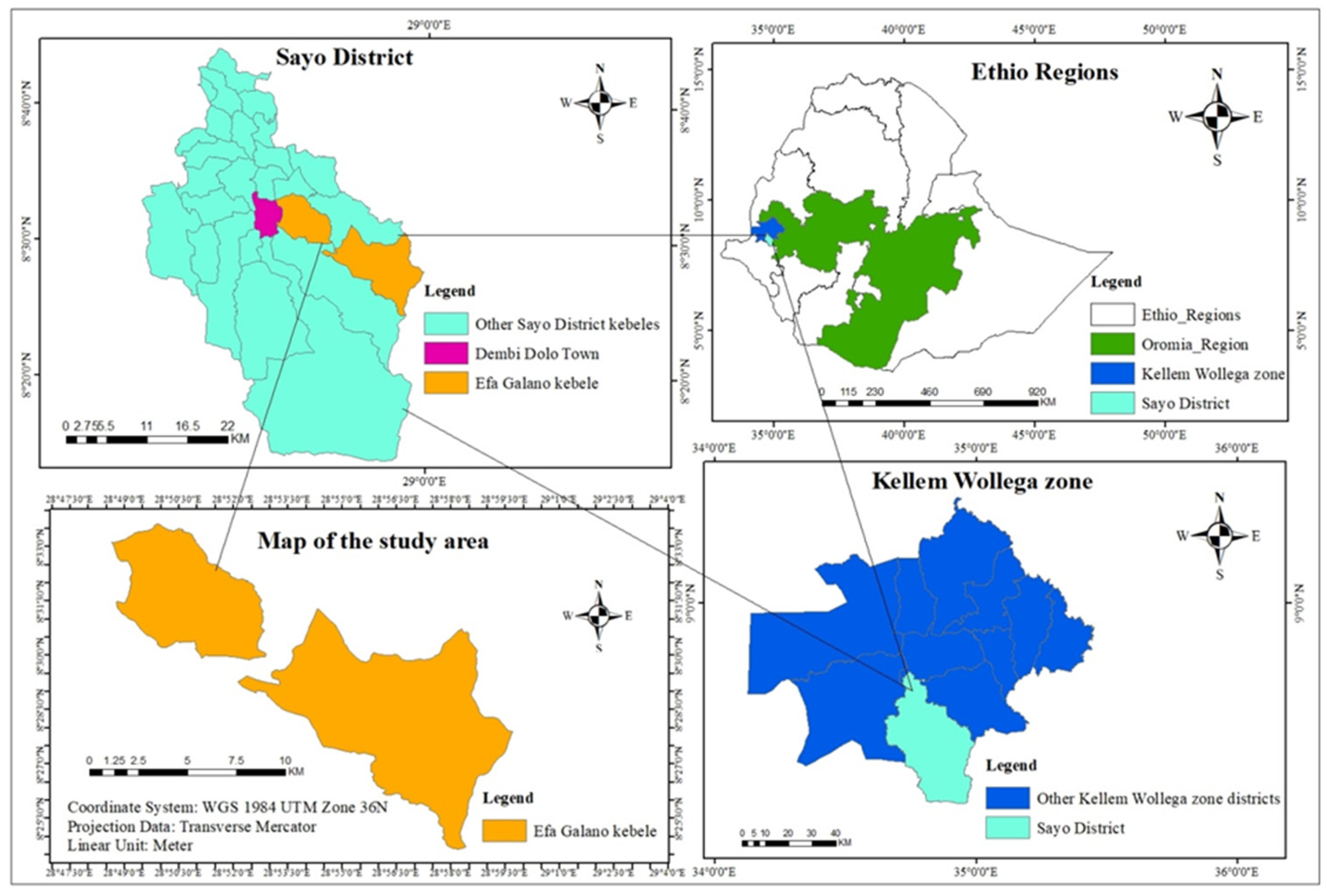
Figure 2.
Ten years’ weather data of the study area Source: Gambella Meteorological Agency.
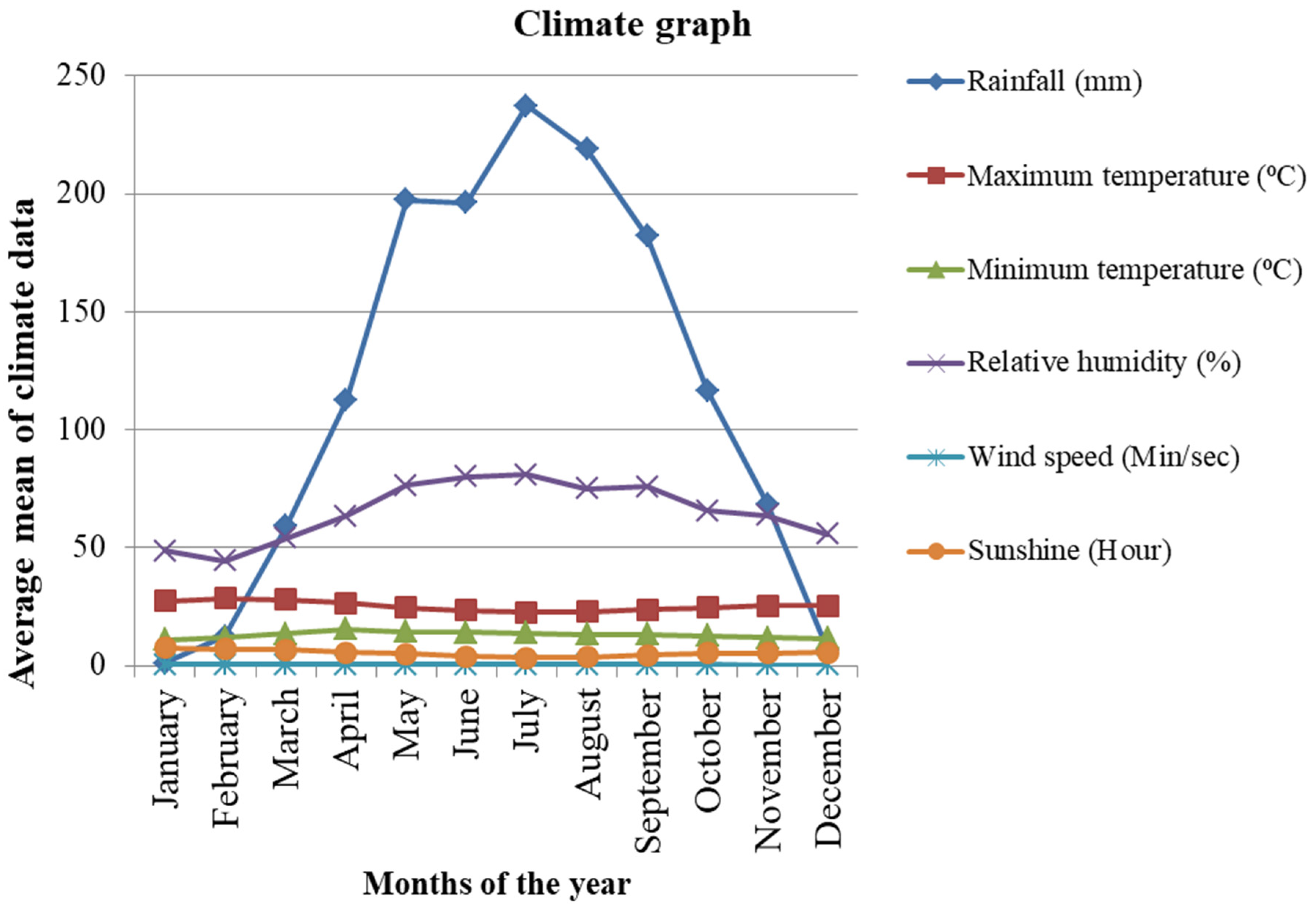
Figure 3.
Survival rate of Desho grass.
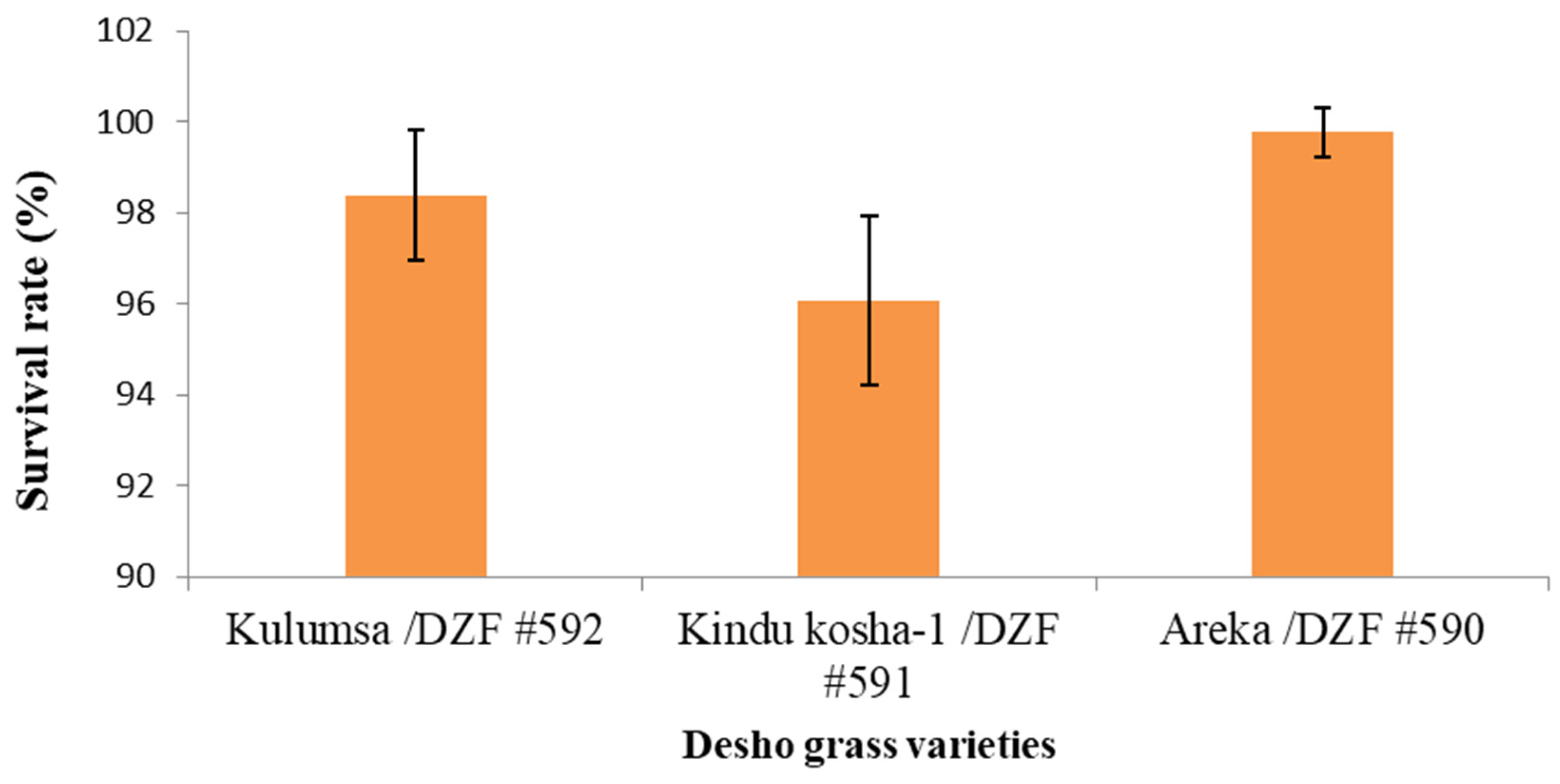
Figure 4.
Leaf width of Desho grass varieties.
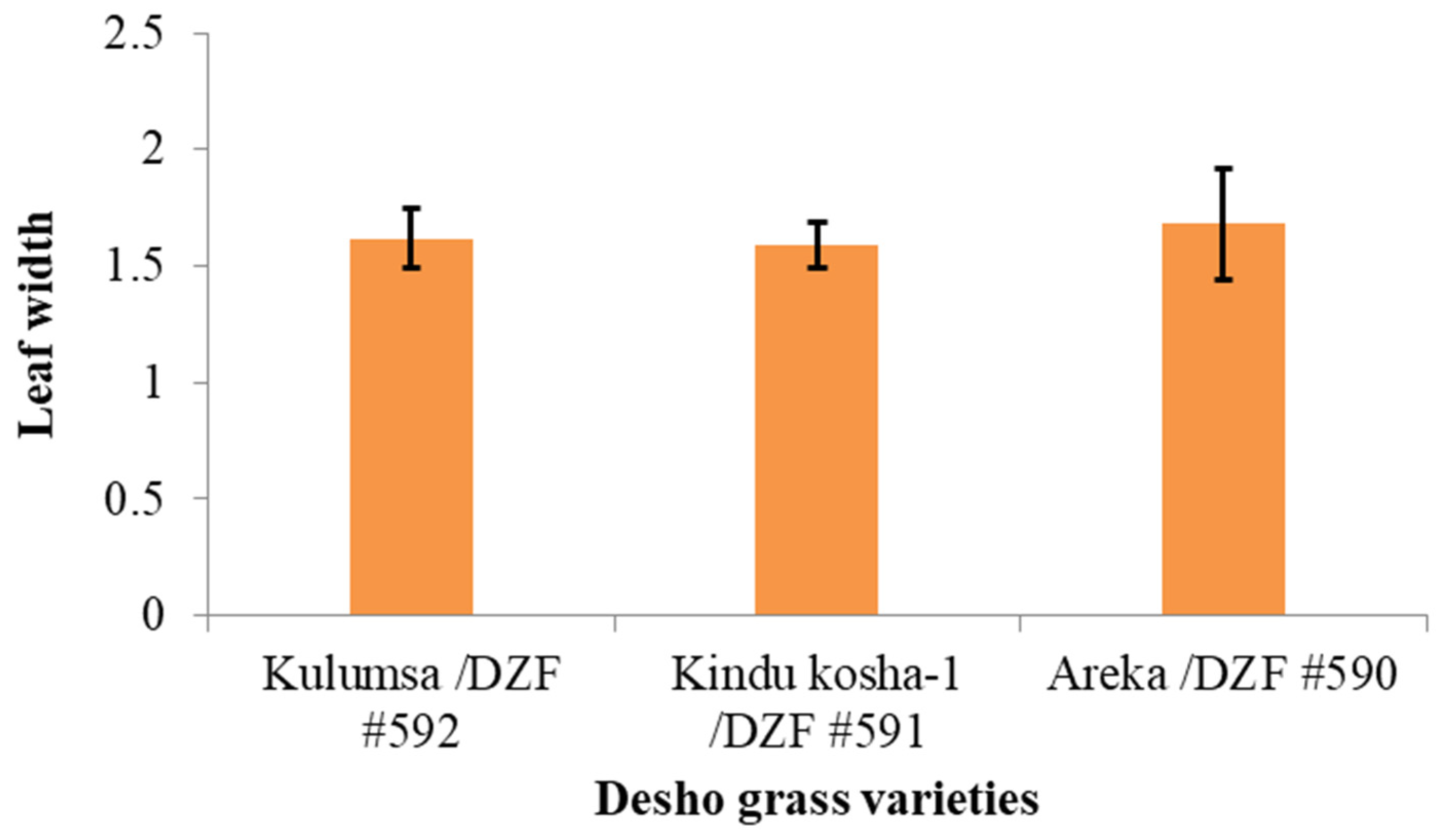

Table 1.
Soil sample analysis results for the experimental site.
| Ser. No | Parameters | Value |
| 1 | pH | 5.79 |
| 2 | OC (%) | 2.61 |
| 3 | OM (%) | 4.49 |
| 4 | P (ppm) | 7.82 |
| 5 | TN (%) | 0.22 |
| 6 | CEC (meg/100g) | 32.06 |
| Soil Texture (%) | ||
| 7 | Clay | 40 |
| 8 | Silt | 29 |
| 9 | Sand | 31 |
| Texture class | ||
| 10 | Clay loam | |
OC=Organic carbon, P=phosphorus, TN=Total Nitrogen, OM=organic matter, CEC=cation exchange capacity.
Table 2.
Morphological characteristics of Desho grass varieties.
| Varieties | Parameters | |||||||
|---|---|---|---|---|---|---|---|---|
| PH (cm) | NTPP (count) | NLPT (count) | TNLPP (count) | NNPP (count) | IL (cm) | LL (cm) | LSR | |
| Areka /DZF #590 | 84.28 | 65.23a | 13.23a | 854.39a | 13.4a | 9.97a | 44.86a | 0.79a |
| KK-1 /DZF #591 | 78.96 | 55.63b | 10.94b | 606.34b | 9.55c | 8.76b | 39.43b | 0.69c |
| Kulumsa /DZF #592 | 81.68 | 63.57a | 12.89a | 815.35a | 12.43b | 9.62ab | 43.32a | 0.76b |
| Overall mean | 81.64 | 61.48 | 12.36 | 758.69 | 11.79 | 9.45 | 42.54 | 0.75 |
| SE | 2.46 | 2.03 | 0.38 | 23.39 | 0.25 | 0.31 | 1.31 | 0.02 |
| p-value | 0.3232 | 0.0048 | 0.0003 | <.0001 | <.0001 | 0.029 | 0.0182 | 0.0043 |
| CV (%) | 10.43 | 11.45 | 10.64 | 10.68 | 7.34 | 11.51 | 10.66 | 9.50 |
a-c Means with different letters in a column are statistically different (p<0.05); KK-1=Kindu kosha-1 /DZF #591; PH=plant height; NTPP=number of tillers per plant; NLPT=number of leaves per tiller; TNLPP=total number of leaves per plant; NNPP=number of nodes per plant; IL=internode length; LL=leaf length; LSR=leaf to stem ratio; cm=centimeters; CV=coefficient variation; SE=standard error3.2. Dry matter and crude protein yields of Desho grass varieties.
Table 3.
Dry matter and crude protein yields of Desho grass varieties.
| Varieties | Parameters | |
|---|---|---|
| DMY (t/ha) | CPY (t/ha) | |
| Areka /DZF #590 | 12.64a | 1.35a |
| Kindu kosha-1 /DZF #591 | 9.17b | 0.95c |
| Kulumsa /DZF #592 | 11.63a | 1.12b |
| Overall mean | 11.15 | 1.14 |
| p-value | <.0001 | <.0001 |
| CV (%) | 11.64 | 12.87 |
| SE | 0.37 | 0.04 |
a-c Means with different letters in a column are statistically different (p<0.05). DMY= dry matter yield; CPY= crude protein yield; CV = coefficient of variation; SE=standard error.
Table 4.
Chemical composition of Desho grass varieties.
| Varieties | Chemical composition (% for DM basis and %DM for others) | |||||||
|---|---|---|---|---|---|---|---|---|
| DM | Ash | CP | NDF | ADF | ADL | Hem | Cell | |
| Areka /DZF #590 | 92.15ab | 9.32a | 10.73a | 63.6c | 39.39c | 5.69b | 24.21 | 33.69b |
| KK-1 /DZF #591 | 91.44b | 8.89b | 10.38a | 65.98a | 42.08a | 6.23a | 23.91 | 35.84a |
| Kulumsa /DZF #592 | 92.89a | 9.38a | 9.59b | 64.84b | 40.31b | 6.40a | 24.53 | 33.91b |
| Overall mean | 92.16 | 9.19 | 10.24 | 64.81 | 40.59 | 6.11 | 24.22 | 34.48 |
| p-value | 0.017 | 0.0346 | <.0001 | <.0001 | <.0001 | 0.0001 | 0.3565 | <.0001 |
| CV (%) | 1.27 | 5.20 | 5.64 | 1.20 | 1.39 | 6.04 | 4.28 | 1.64 |
| SE | 0.34 | 0.14 | 0.17 | 0.22 | 0.16 | 0.11 | 0.29 | 0.16 |
a-c Means with different letters in a column are significantly different (p<0.05); DM = dry matter; CP= crude protein; NDF= neutral detergent fiber; ADF= acid detergent fiber; ADL= acid detergent lignin; Hem = hemicellulose; Cell= cellulose; CV =coefficient of variation; SE=Standard error; KK-1=Kindu kosha-1 /DZF #591.
Table 5.
In vitro digestibility and metabolizable energy of Desho grass varieties.
| Varieties | Parameters | ||
|---|---|---|---|
| IVDMD (%) | IVOMD (%) | ME (MJ/kg-1) | |
| Areka /DZF #590 | 62.47a | 60.84a | 9.13a |
| Kindu Kosha-1 /DZF #591 | 58.09b | 57.61b | 8.64b |
| Kulumsa /DZF #592 | 58.43b | 55.91c | 8.39c |
| Overall mean | 59.66 | 58.12 | 8.72 |
| p-value | <.0001 | <.0001 | <.0001 |
| CV (%) | 1.63 | 3.49 | 3.49 |
| SE | 0.28 | 0.59 | 0.09 |
a-c Means with different letters in a column significantly different (p<0.05); IVDMD= in vitro dry matter digestibility; IVOMD= in vitro organic matter digestibility; ME= metabolizable energy; MJ = mega joule; kg = kilogram; CV = coefficient of variation; SE=standard error.
Disclaimer/Publisher’s Note: The statements, opinions and data contained in all publications are solely those of the individual author(s) and contributor(s) and not of MDPI and/or the editor(s). MDPI and/or the editor(s) disclaim responsibility for any injury to people or property resulting from any ideas, methods, instructions or products referred to in the content. |
© 2024 by the authors. Licensee MDPI, Basel, Switzerland. This article is an open access article distributed under the terms and conditions of the Creative Commons Attribution (CC BY) license (https://creativecommons.org/licenses/by/4.0/).
Copyright: This open access article is published under a Creative Commons CC BY 4.0 license, which permit the free download, distribution, and reuse, provided that the author and preprint are cited in any reuse.


