

Submitted:
18 March 2024
Posted:
21 March 2024
You are already at the latest version
Abstract
With the trend of public infrastructure becoming more sustainable, large multi-purpose sports venues (LMPSVs) have become one of the world's most complex architectural projects and one of the landmark buildings of an international city. LMPSVs will lead the world in sustainable design, construction and operational innovations, and play a crucial role in raising awareness of sustainability around the world. System Thinking (ST), System Dynamics (SD) and Sustainable System Development (SSD) theories are three interrelated concepts that together form a methodological framework for solving complex system problems and driving strategies. The purpose of this study is to examine how LMPSVs can implement environmental, social, governance, and innovation (ESGI) enterprise transformation strategy (ETS) based on a sustainable systems development (SSD) framework. In view of the current global environmental challenges and social responsibility requirements, the motivation of this study is to provide an integrated transformation pathway for LMPSVs to achieve the goal of sustainable development and to contribute to the field of related disciplines. The methodology of this research adopts a combination of literature review and case study analysis, and the theoretical basis is mainly drawn from cutting-edge research in the fields of sustainable development, corporate social responsibility (CSR) and environmental management. Then, by analyzing successful transformation cases in China, we extract data and information to explore the application and effectiveness of these strategies in practice. The results of the study show that by implementing ESGI-based transformation strategy, LMPSVs can not only make significant progress in terms of environmental protection, social responsibility, and governance structure, but also drive long-term corporate growth and competitiveness through innovation. Specifically, these results are realized in terms of increased efficiency in energy use, improved waste management, community involvement and increased stakeholder satisfaction. The study concludes by emphasizing that the SSD-based ESGI Transformation Strategic framework provides a sustainable pathway for LMPSVs. In the future, the extension of this transformation strategy will help a wider range of industry sectors to achieve sustainable development goals, and has wide application potential and far-reaching social significance.
Keywords:
large multi-purposes sports venues (LMPSVs)
; system thinking (ST)
; system dynamics (SD)
; sustainable system development (SSD)
; ESGI (environmental
; social
; governance
; innovation)
; Enterprise Transformation Strategy (ETS)
1. Introduction
Against the backdrop of increasing environmental challenges and social responsibility requirements around the world, Large Multi-Purpose Sports Venues (LMPSVs) are not only centers of athletic competition and entertainment, but are also frontline locations for sustainable practices. With the growing global concern over climate change, resource utilization and social responsibility, there is an urgent need for LMPSVs to transform to meet the new sustainability requirements. The purpose of this study is to investigate how LMPSVs can achieve their sustainability goals through an Environmental, Social, Governance, and Innovation (ESGI) business transformation strategy based on the framework of Sustainable System Development (SSD). This is important to facilitate the transformation of LMPSVs towards a more sustainable business model.
Despite the global consensus on sustainable development, there has been little systematic exploration and practice on how to realize this goal in the specific field of Large Multi-Purpose Sports Venues (LMPSVs). Much of the existing literature focuses on sustainable building design or energy efficiency, and there is a clear knowledge gap on how to integrate environmental, social, governance, and innovation strategies to form a comprehensive framework for transformation. This gap limits the efficiency and effectiveness of decision-making by managers of LMPSVs and policy makers in the face of sustainability challenges.
This study poses a clear research question: how can Large Multi-Purpose Sports Venues (LMPSVs) achieve sustainable development within the framework of SSD through the implementation of the ESGI corporate transformation strategy? To answer this question, we adopted the systems thinking (ST) theory and System Dynamics (SD) methodology, as well as combining case studies, to analyze in-depth the practices and effects of implementing ESGI strategies in LMPSVs.
In exploring the ESGI corporate transformation strategic framework based on SSD for LMPSVs, this study is confronted with a highly complex and multi-dimensional problem domain. This complexity arises from a number of sources, including the fact that LMPSVs involves the integration and implementation of ESGI’s cross-disciplinary knowledge and skills, and the need to continually adapt and update the sustainability strategy in response to dynamic changes in the external environment, such as the social, economic, environmental, and technological changes, and that the implementation of the ESGI transformation strategy involves a wide range of change management within the organization, including the management concepts, the organizational structure, the operational processes, and the corporate culture. Therefore, the management of implementing these changes is itself a complex process.
Given the complexity of the hypothetical structure underlying the SSD-based ESGI enterprise transformation strategic framework for LMPSVs, this study aims to uncover thought-provoking questions under the envisioned research area, rather than proving established assumptions.
The main objectives of this study include understanding and revealing the underlying motives and drivers of the implementation of the SSD-based ESGI transformation strategy in LMPSVs, evaluating the effectiveness of the implementation of the transformation strategy and providing recommendations and insights, as well as proposing practical recommendations and strategic insights for the sustainable development of LMPSVs based on the findings of the study.
The methodology and steps of this study included a literature review of the relevant fields, case studies of representative sports venues, semi-structured interviews with managers, staff and other stakeholders of sports venues, on-site participant observation to gain a more intuitive understanding and perception, and a qualitative data analysis approach to systematically analyze and interpret the data collected.
Through the above qualitative research methodology, this study hopes to provide in-depth insights and practical recommendations for SSD-based ESGI enterprise transformation strategy for LMPSVs to help them better achieve their sustainability goals.
The main contribution of this study lies in the construction of SSD-based ESGI enterprise transformation strategic framework. This also validates the applicability and effectiveness of the framework in the sustainable transformation of large multi-purpose sports venues (LMPSVs) through an empirical study. These results not only provide new research perspectives for academics, but also concrete sustainable development paths and strategies for practitioners.
2. Literature Review and Theoretical Background
In recent years, with the rise of sustainability issues around the world, the operation and management of large multi-purpose sports venues (LMPSVs) have faced the need for transformation. Historically, these LMPSVs have focused mainly on enhancing commercial efficiency and audience experience, with less attention paid to environmental protection and social responsibility. However, with the increasing emphasis on ESG and the Sustainable Development Goals (SDGs), there is a need to change the operation and management mode of the LMPSVs in order to adapt to the new development trend.
Currently, the central issue facing large multi-purpose sports venues (LMPSVs) has shifted to how to ensure economic efficiency while also achieving environmental protection, social responsibility and good governance. Both academics and practitioners are actively exploring effective strategies for integrating ESGI factors into operations management. This change not only responds to the global call for sustainability, but also opens up new paths for the future development of the LMPSVs.
Sustainable system development (SSD) provides the theoretical basis for this study, emphasizing the balanced development of the four dimensions of economy, environment, society and innovation. By analyzing the application of SSD in other industries, this study extends the theory to the operation and management of large multi-purpose sports venues (LMPSVs) to investigate how LMPSVs can achieve sustainable transformation through ESGI strategies.
As an important public facility in the city, a large multi-functional sports stadium not only carries sports events, but also covers multiple functions such as culture, entertainment and social gatherings. Integrating the SSD and ESGI concepts allows for a more holistic view of their performance and potential in terms of environmental protection, social responsibility, governance structures and innovative practice, in order to ensure its sustainable development and at the same time bring more positive impacts to the community. And with the global focus on the Sustainable Development Goals (SDGs), businesses and organizations are increasingly expected to find a balance between environmental protection, social well-being and economic development. By constructing a theoretical framework for the integration of SSD and ESGI, LMPSVs can respond more effectively to these global challenges by contributing to the realization of these goals through their operational and management practices. Constructing a theoretical framework that integrates the concepts of SSD and ESGI is important for enhancing the sustainability of LMPSVs and maximizing their environmental, social and economic values.
The literature review plays a fundamental and critical role in the study of the ESGI enterprise transformation strategic framework for sustainable systems development (SSD) in LMPSVs. The following describes the literature review for this study:
2.1. Literature Review on Systems Thinking and System Dynamics
The Systems Thinking and System Dynamics sections of the literature review are key in the study of the ESGI enterprise transformation strategic framework based on Sustainable Systems Development (SSD) for LMPSVs, as they provide theories and methodologies for understanding and responding to complex sustainability issues.
Systems thinking is a way of understanding complex system behavior, especially when considering sports venues as complex environments with multi-functional, multi-stakeholder interactions. Meadows (2008) emphasizes that systems thinking allows us to identify feedback loops and delays in a system, which is critical to understanding sustainability challenges [1]. Sterman (2000) further states that through systems thinking, it is possible to better understand how environmental, social and economic factors interact over time and how these interactions affect the sustainable performance and strategy development of sports venues [2].
System dynamics is a computer-based simulation methodology for understanding and predicting the behavior of complex systems, especially in the design and evaluation of sustainability strategies. Forrester is a pioneer in system dynamics, proposing the use of models to simulate the dynamics of business and social systems. Forrester (1995) Urban dynamics is the key to enabling national and world dynamics [3]. Forrester (1997) claim industrial dynamics provides a set of principles for the effective modeling of complex systems [4]. Hjorth, P. and Bagheri, A. (2006) illustrate how system dynamics can be used to emphasize its value in developing and evaluating sustainability strategies [5]. In the context of sports stadiums, system dynamics can help managers understand how different decisions affect the environmental and social performance of the stadium and predict the long-term effects of these decisions.
Combining systems thinking and system dynamics can provide a powerful analytical and planning tool for the ESGI transformation of sports stadiums. This combination allows organizations to not only identify sustainability challenges, but also to design, implement and evaluate strategies to address them. By modeling the potential impacts of different strategies, managers can make more informed decisions that will drive the transformation of sports venues into a more sustainable future.
2.2. Literature Review on SSD-Based ESGI Goals and Scope
In the section of the literature review exploring the objectives and scope of SSD-based ESGI for LMPSVs, we provide insights into the application of sustainability in the sports sector, specifically how environmental, social, and governance (ESG) criteria can be integrated into the management and operation of sports venues. The purpose of this section of the literature review is to provide a theoretical and practical basis for SSD-based ESGI enterprise transformation strategies by organizing existing research and practice examples.
Morgan, Bush, and McGee (2021) claim that The United Nations Sustainable Development Goals (SDGs) are hailed as a common language to unite a global commitment towards a change of trajectory regarding social, economic, and environmental development issues. Although not overtly cited within the SDGs or their related targets, sport has been widely accepted and promoted as an enabler of social change and a mechanism through which to strategically map and measure commitments to sustainability [6]. Research by Lucas, S. (2017) suggests that sport facilities have a major environmental impact in addition to a strong public profile and social responsibility. Big facilities over different life cycles use resources like energy, water, and materials; need transport; and have many other environmental, social, and economic impacts [7]. Sustainability has become a core element in the management of sports facilities, covering a wide range of aspects such as energy efficiency, water management, solid waste reduction and social responsibility. These studies highlight the importance of implementing green building standards and operational practices in reducing the environmental impacts of LMPSVs. Kuzmina and Lindemane (2017) claim ESG can be understood as a set of principles for a company’s operations that investors hoping to demonstrate social responsibility apply to screen investment opportunities [8]. Glibo, Misener and Koenigstorfer (2022) aims to explore the consensus-level strategic priorities for sustainable development from the perspective of decision makers in organisation’s responsible for governing international sport and how they cluster within the Framework for Strategic Sustainable Development. The highest ranked item was normative change, in which sustainability is prioritised throughout all organisational strategies and actions. Moreover, planned efforts that are part of a long-term strategy and embedding sustainability requirements at the bidding phase of sport events were considered with high priority [9].
The literature review in this section shows that the integration of ESG criteria into the management and operation of sports facilities plays a key role in promoting sustainable development. Through case studies and theoretical research, we have been able to see the importance of implementing SSD-based ESGI strategies and their potential for realizing environmental protection, social responsibility and good governance. Future research should further explore the implementation process of these strategies and how to overcome the challenges encountered during implementation.
2.3. Literature Review on Enterprise Transformation Strategic Architecture (ETSA)
In the literature review section of constructing a strategic framework for corporate transformation, we focus on different strategies and approaches proposed in existing studies that aim to guide the effective implementation of SSD-based ESGI transformation in LMPSVs. This part of the literature review aims to provide a theoretical basis to help understand the challenges encountered in the process of corporate transformation as well as the strategies to address these challenges.
Müller and Pfleger (2014) illustrate how companies can structure the field of action for the transformation towards sustainability, furthermore, propose a decision model to determine how sustainability actions should be implemented in accordance with the paradigm of value-based management, i.e., considering their economic effects [10]. Thirasakthana and Kiattisin (2021) aims to propose that the sustainable government enterprise architecture framework specifically applies for the national strategic planning in the optimum exercise process and clarity guidance for the information technology organization being able to transform and improve their services for an achievable adaptation efficiency, simplification, cost management, collaboration, shareability, and standardization which accommodate the rapidly changing service usability on digitalization known as “e-Government” [11].
Through an in-depth analysis of the relevant literature, we can conclude that constructing an effective corporate transformation strategy framework is the key to achieving the goal of sustainable sports development. This requires not only clear strategic planning, but also emphasizes cross-departmental cooperation, innovative thinking, and flexibility in adapting to external changes. In addition, a successful transformation strategy should also include staff training and development, as well as the establishment of an effective monitoring and evaluation mechanism to ensure the realization of sustainable development objectives.
2.4. Literature Review on Life Cycle Sustainability assessment (LCSA)
Through an in-depth analysis of the relevant literature, we can conclude that constructing an effective corporate transformation strategy framework is the key to achieving the goal of sustainable sports development. This requires not only clear strategic planning, but also emphasizes cross-departmental cooperation, innovative thinking, and flexibility in adapting to external changes. In addition, a successful transformation strategy should also include staff training and development, as well as the establishment of an effective monitoring and evaluation mechanism to ensure the realization of sustainable development objectives.
Vandenbroucke, et al. (2015) claim current Life Cycle Environmental Assessments generally include maintenance, repair, replacement and operational energy consumption during use, but do not include future refurbishments. Life cycle assessment should be used more frequently as a decision-making tool for designing a sustainable transformation [12]. Francis, et al. (2023) claim this systematic literature review synthesis state-of-the-art stadium design and construction methods and initiatives that can be applied for improved environmental sustainability outcomes. Energy and materials are the most widely focused environmental sustainability categories in stadium design and construction [13]. Russell-Smith and Lepech (2015) cliam building stakeholders cannot easily quantify the environmental impacts of buildings as they accrue during construction. The goal of this work is to demonstrate a method to measure and manage the cradle-to-gate life cycle environmental impacts by linking environmental targets with modern construction management methods, to enable buildings to meet sustainable target values (STV) [14]. Tang, et al. (2022) claim that the construction and operation of large stadiums is an important factor affecting the sustainable development of cities. The stadium sustainability assessment in the pre-design stage directly affects the decision-making of architectural design parameters [15].
Sustainable architecture focuses on creating buildings that are environmentally responsible, socially equitable and economically viable. Sustainable building takes into account the entire life cycle of a building, from construction to operation and eventual demolition, and seeks to minimize environmental impacts and improve human well-being. By analyzing the existing literature in detail, we can see that the application of ESGI principles to the different life cycle stages of a business is crucial for the achievement of sustainable development goals.
2.5. Literature Review on CRISP-DM Life Cycle Assessment
CRISP-DM (Cross-Industry Standard Process for Data Mining) is a widely accepted process model for data mining and knowledge discovery that aims to provide an industry-agnostic approach to guide data analytics projects. In a literature review of the application of the CRISP-DM framework to ESGI’s enterprise transformation strategy, we explored how this process model can be utilized to support corporate decisions and actions in sustainability.
Exenberger and Bucko (2020) claim the basis of the modern marketing of a business entity is to know the behavior of its customers. The main goal of the study is to design a CRISP-DM process model that will enable small businesses to analyze online customers’ behavior [16]. Shi, H. (2015) claim that with the development of the stadium, combined with modern artificial intelligence technology to establish a more scientific and efficient information management system is very practical significance. Based on the decision tree algorithm in artificial intelligence technology, the power system and information management system and the hardware system of the stadium were upgraded [17].
CRISP-DM provides a structured framework to help organizations systematically apply data analytics to support their ESGI transformation strategies. Through every step of the process, from business understanding to deployment, organizations are able to identify and implement sustainability strategies and actions more effectively. This process not only helps to improve environmental and social performance, but also supports the realization of long-term business success and competitive advantage.
2.6. Literature Review on SSD-Based Dynamic Strategic Management and Business Innovation
SSD-based business innovation dynamic management strategies aim to achieve sustainability goals by responding to rapidly changing environmental and social challenges through adaptive management and continuous improvement approaches. In the literature review of dynamic management strategies, we explore different approaches and models that support firms to remain flexible and innovative in their pursuit of sustainability.
Swanson, J. (2002) claims that drawing on engineering control theory and the modern theory of nonlinear dynamical systems, system dynamics often involves the development of formal models and management flight simulators to capture complex dynamics, and to create an environment for learning and policy design [18]. Teece, Pisano and Shuen (1998) claim that the dynamic capabilities framework analyzes the sources and methods of wealth creation and capture by private enterprise firms operating in environments of rapid technological change. The competitive advantage of firms is seen as resting on distinctive processes (ways of coordinating and combining), shaped by the firm’s (specific) asset positions (such as the firm’s portfolio of difficult-to-trade knowledge assets and complementary assets), and the evolution path(s) it has adopted or inherited [19]. Sithole and Wotela (2024) claim to establish the most appropriate framework in innovation and entrepreneurship studies for interpreting anticipated empirical results. This research will detail innovativeness in new business ventures after interrogating the theoretical material and empirical data and information on disruptive innovation and innovative business models [20].
A literature review of SSD-based dynamic management strategies for enterprise innovation reveals a range of approaches and tools that can help organizations remain adaptive and innovative in their pursuit of sustainability. By adopting systems thinking, utilizing sustainability assessment tools, implementing agile and lean methods, promoting innovation and technology integration, and actively engaging multiple stakeholders, organizations can more effectively address sustainability challenges and achieve long-term environmental, social, and economic benefits.
2.7. Literature Review on ESGI Enterprise Organization Architecture
ESGI enterprise organization architecture involves the integration of ESGI principles into the organizational architecture and operations of a business in order to promote sustainable development and long-term value creation. A review of the literature in this area reveals a range of strategies, models, and practices designed to help organizations effectively integrate ESGI principles to address contemporary challenges and opportunities.
Vandevenne, Van Riel and Poels (2023) claim Digital Transformations (DT) play an increasingly important role in academia and business, yet their significant Environmental Footprint (EF) is often overlooked, sidelining their potential for Environmental Sustainability (ES). This paper bridges this gap by integrating ES into the discourse of DT, proposing Green Enterprise Architecture (GREAN) as a method for sustainable transformation [21]. Alves, De Campos and Souza (2016) claim Enterprise Architectures supports the analysis, simulation, automated systems projects, distribution of responsibilities and authorities, aimed at reengineering or improvement of companies processes [22]. Perdana, et al. (2020) claim enterprise requires digital transformation to optimize the role of this technology. Enterprise Architecture is the right tool in implementing digital transformation towards sustainable enterprise. The problem is, sustainability has not been explicitly and systematically addressed within the EA itself. Therefore, we need joint and ongoing efforts to incorporate the concept of sustainability into EA’s [23].
A literature review of ESGI Enterprise Organization architecture reveals the importance of integrating environmental, social, governance and innovation principles to achieve sustainable development. By strengthening environmental and social responsibility, implementing good governance practices, promoting innovation, fostering ESGI-supportive organizational culture and leadership, and enhancing cross-sectoral collaboration and stakeholder engagement, businesses can effectively address social and environmental challenges while promoting economic growth.
2.8. Literature Review on Digital Business Operations and Decision-Making Information Flow System
Digital transformation has become a key strategy for enterprises to improve efficiency and enhance competitiveness. Digitalization has not only changed the way of delivering products and services, but also reshaped the interaction mode and value creation process between enterprises and their customers. By integrating advanced digital technologies such as big data, cloud computing, Internet of Things (IoT) and artificial intelligence (AI), enterprises can realize more efficient operation management and more accurate decision support systems. The development of Decision Support Systems (DSS) has been significantly impacted by the digital revolution, which has enabled organizations to collect, process and analyze large amounts of data to provide valuable insights that support a more efficient and effective decision-making process.
Aldoseri, Al-Khalifa and Hamouda (2024) claim digital transformation systems generate a substantial volume of data, creating opportunities for potential innovation, particularly those driven by artificial intelligence. The work emphasizes the key pillars essential for fostering AI-powered innovation, including monitoring performance measurement to use the power of the present, continuous learning and innovation, data analytics and insights, predictive analytics, and innovative product development [24]. Ducange, et al. (2019) claim a Decision Support System (DSS) is presented, which is able to efficiently support companies and enterprises in managing promotional and marketing campaigns on multiple social media channels. The proposed DSS continuously monitors multiple social channels, by collecting social media users’ comments on promotions, products, and services. Then, through the analysis of these data, the DSS estimates the reputation of brands related to specific companies and provides feedbacks about a digital marketing campaign [25]. Fountas, et al. (2006) claim twenty-one decision-analysis factors were identified to characterize a farm manager’s decision-making process. Then, a general data flow diagram (DFD) was constructed that describes the information flows “from data to decision”. Illustrative examples of the model in the form of DFDs are presented for a strategic, a tactical and an operational decision [26].
Digital business operations and decision-making information flow is an integral part of an organization’s transformation strategy, enabling it to remain competitive in a rapidly changing market environment. Through the effective use of digital technology, enterprises can not only optimize their internal operations, but also enhance customer experience, thus achieving sustainable growth and development.
2.9. Literature Review Conclusions
Reviewing the existing research on large multi-purpose sports venues (LMPSVs) in terms of environmental protection, social responsibility and governance structure, this study found that although there are a number of successful cases of conventional operations, there is still a research gap in terms of a systematic ESGI transformation strategic framework. By analyzing the existing literature, this study points out the innovation of the study and its contribution to fill the knowledge gap in the field. By citing relevant studies, this study highlights the potential and importance of LMPSVs in achieving sustainable development goals.
This study shows that by adopting ESGI transformation strategies, LMPSVs can not only improve their competitiveness, but also have a positive impact on society and the environment. Based on the analysis of the current literature, future research can further explore how to overcome these challenges, such as studying new modes of fundraising, developing new environmental technologies, and establishing multi-stakeholder cooperation mechanisms. In addition, future studies may also extend the perspective to the impact of the transformation of venue services on other areas of the city (e.g., tourism, transportation, commerce, etc.), and how the sustainable transformation of venues can be supported through policy formulation, public-private partnership, and so on.
This study aims to fill this gap in the existing literature by constructing a comprehensive SSD-based ESGI enterprise transformation strategic framework to guide the sustainable development practices of LMPSVs. This framework will take into account the four dimensions of environment, society, governance and innovation, focusing on strategies for corporate organizational restructuring, innovation in governance mechanisms and stakeholder engagement. Additionally, this study will use the CRISP-DM lifecycle assessment model to evaluate the effectiveness of the transformation strategies in a data-driven manner to provide quantitative decision support for sports venue management.
3. Research Methodology
This study applies qualitative research method, a research methodology that explores the motivation and rationale for the SSD-ESGI enterprise transformation strategic framework for large multi-purpose sports venues (LMPSVs). This study belongs to the type of research methodology used in the sports and leisure related service industry, i.e., descriptive research method (DRM) is used to describe the situation, problems, services, and programs in a systematic way to provide the organizational service morphology, organizational management structure, and organizational demand status and outcomes. The descriptive study of LMPSVs is a more comprehensive approach to encompass many different aspects of the phenomenon, which facilitates the understanding of the findings of the SSD-based ESGI enterprise Transformation Strategic Framework. As a tool for pre-exploration, the guiding insights from the descriptive study of LMPSVs are also instructive for strategic decision-making on major projects and future research directions.
3.1. Research Design and Tools
This study utilized a mixed-methods research design and employed qualitative descriptive. First, the theoretical basis and key factors of ESGI enterprise transformation are identified through a literature review. This was followed by in-depth interviews and qualitative data collection to gather practical experiences and perspectives from specific LMPSVs managers and stakeholders. Qualitative research emphasizes the importance of social context in understanding the social world and attempted to reveal the ideas, perceptions and feelings experienced in the interviews. The purpose of this study is to examine the meaning and methodology of qualitative research based on a literature review, to introduce interview models, concepts, use of time periods and techniques, and data interpretation for qualitative research. The objective of this study is to assess the effectiveness of the existing transformation strategies in addressing environmental protection, social responsibility, governance issues and promoting innovation so as to enhance the credibility and validity of the findings.
3.2. Research Subjects
For the study of SSD-based ESGI enterprise transformation strategic framework for LMPSVs, the Kaohsiung Dome is used as a case study in this research. Kaohsiung Dome is a LMPSV located in Kaohsiung City, Taiwan, and is the first modernized integrated stadium in Kaohsiung built under the Dome BOT project in Taiwan. The Kaohsiung Dome is a typical example of the Kaohsiung City Government’s success in utilizing the Public-Private Partnerships (PPP) model to encourage community participation in the public construction of LMPSVs. Public-private partnership (PPP) is a model in which the government public sector combines the strengths of the private sector to build public infrastructure. After the completion of the hardware facilities of the PPP projects, the private sector must inject new business concepts into the management of the projects. PPP can not only reduce the government’s financial and budgetary expenditures, but also enhance the socio-economic outlook, increase employment opportunities and promote district prosperity. The most important thing is to enable the public to enjoy and utilize good and complete public space and facilities, creating a win-win-win situation for the public sector, private enterprises and the public, in order to realize private business and urban development.
As a large-scale multi-functional sports and entertainment complex, the Kaohsiung Dome has a significant role to play in promoting local economic development. The Kaohsiung Dome has not only provided Kaohsiung with a large number of job opportunities, but has also promoted the integration of the local sports, cultural and tourism industries. By hosting international sporting events and cultural activities, the Kaohsiung Dome enhances Kaohsiung City international image and competitiveness, and serves as an important bridge between the local community and the international society.
The motivation for choosing the Kaohsiung Dome as a study subject is mainly based on its potential and challenges in realizing sustainable development. Through an in-depth study of the potential and challenges faced by the Kaohsiung Dome in realizing sustainable development, this study aims to provide illustrative insights and strategies that can serve as references for the sustainable development and transformation of other sports stadiums and similar public facilities.
3.3. Research Framework
The framework of this study is the SSD-ESGI Enterprise Transformation Strategic framework for LMPSVs (Figure 1), which includes establishing SSD-based ESGI goals and scope, constructing ESGI enterprise transformation strategic architecture (ETSA) for LMPSVs, Applying ESGI Enterprise Life Cycle Assessment for LMPSVs, Applying Cross-industry standard process for data mining (CRISP-DM) life cycle assessment (LCA) for LMPSVs, SSD dynamic strategic management and business innovation for LMPSVs, SSD-based ESGI Enterprise Organization Architecture for LMPSVs, application of digital business operations and decision-making information flow system for LMPSVs, implementation and monitoring of SSD-based ESGI-ETSA for LMPSVs, and feedback and optimization of SSD-based ESGI-ETSA for LMPSVs. This study adopts a descriptive research method (DRM), which aims to systematically describe and analyze the process, motivation, challenges, and outcomes of the implementation of the SSD-ESGI-ETSA in LMPSVs.
The SSD-ESGI enterprise transformation strategic framework for LMPSVs is a comprehensive system that aims to guide the stadiums towards sustainable development through the principles of Sustainable System Development (SSD) and the integration of Environmental, Social, Governance, and Innovation (ESGI) enterprise strategies. The following analysis demonstrates the relationship between the key factors, as well as the steps and processes involved in the implementation of the entire framework:
I. Establishing SSD-based ESGI goals and scope
This is the starting point for the implementation of the framework, which involves identifying the long-term goals and specific scope of the transformation. At this stage, the environmental impacts, social responsibility, governance structure and innovation capacity of the sports venues need to be considered together to establish measurable and specific SSD-ESGI targets.
II. Constructing ESGI enterprise transformation strategic architecture (ETSA) for LMPSVs
Design a comprehensive transformation strategic framework based on the identified objectives and scope. This stage requires cross-departmental collaboration and integration of resources to ensure a comprehensive and executable strategy. The strategic framework should include a specific action plan, resource allocation, and timeline.
III. Applying ESGI enterprise life cycle sustainability assessment (LCSA) for LMPSVs
Through the ESGI viewpoints, we assess the current state of an organization’s life cycle, including the maturity and effectiveness of its environmental, social, governance and innovation dimensions. This assessment will help identify the strengths and weaknesses of existing strategies and practices and provide a basis for strategy refinement.
IV. Applying cross-industry standard process for data mining (CRISP-DM) life cycle assessment (LCA) for LMPSVs
The application of cross-industry standard process for data mining (CRISP-DM) as a data acquisition process model in this framework is to evaluate data management and analytical capabilities, to support data-based decision making, and to optimize operations and improve innovation efficiency.
V. SSD dynamic strategic management and business innovation for LMPSVs
Based on the SSD principles, we develop dynamic management strategies to respond to changes in the external environment and internal operational needs. This includes strategies to flexibly adjust resource allocation, respond to market changes, and adopt new technologies.
VI. SSD-based ESGI Enterprise Organization Architecture for LMPSVs
Design and adjust the corporate organizational structure to support the implementation of the ESGI strategy. This may include establishing a dedicated sustainability department, adjusting the allocation of responsibilities, optimizing decision-making processes, etc.
VII. Application of digital business operations and decision-making information flow system for LMPSVs
Optimize business operations and information flow with digital technology to improve efficiency and transparency. This involves digitization of operational processes, establishment of data-driven decision-making mechanisms, and so on.
VIII. Implementation and monitoring of SSD-based ESGI-ETSA for LMPSVs
Putting transformation strategies into practice and evaluating the effectiveness of implementation through continuous monitoring. The monitoring process should cover the tracking of Key Performance Indicators (KPIs) and the timely identification and handling of problems.
IX. feedback and optimization of SSD-based ESGI-ETSA for LMPSVs
Based on monitoring results and external feedback, the transformation strategy is regularly evaluated and optimized. This phase is a continuous feedback process aimed at continually improving the effectiveness and sustainability outcomes of the transformation strategy.
The relationship between the factors is reflected in the fact that together they form a feedback, iterative process. Each segment supports and informs the next, and is influenced by the feedback and adjustments of the subsequent segments. Through such an integrated and dynamic framework, LMPSVs can realize an effective transformation towards sustainability.
Through this series of DDS-ESGI 9 Pillar Strategy steps and processes, an integrated SSD-based ESGI enterprise transformation strategic framework can be constructed, as well as effectively facilitating the environmental, social, governance, and innovation sustainability of LMPSVs. This strategic framework not only provides a comprehensive guide to ESGI assessment and improvement for LMPSVs, but also helps LMPSVs remain competitive and relevant in a modern environment that increasingly emphasizes sustainability.
3.4. Research Analysis
In this study, we systematically analyze the process, motivation, challenges, and outcomes of implementing the SSD-ESGI enterprise transformation strategic framework in LMPSVs. It first analyzes how the LMPSVs developed the SSD-ESGI enterprise transformation strategic Framework, including the initial stages of strategic planning, how to integrate the elements of environment, society, governance, and innovation, and the process of developing a specific action plan. Further describe in detail the specific steps of the strategic framework from planning to implementation, analyze the mechanisms used to monitor progress and evaluate the effectiveness of the strategy implementation, and how the strategy and action plan will be adjusted through periodic review. The following is a detailed description of the research analysis:
3.4.1. Establishing the Goals and Scope of the SSD-Based ESGI Enterprise Transformation Strategic Framework
The sustainable development of the global economy and society calls for the practice of the environmental, social and governance (ESG) principle. [27]. Li, Wang, Sueyoshi and Wang (2021) claim a series of achievements promote the development and maturity of the environmental, social, and governance factors, as well as ESG as a whole, such as the establishment of the ESG evaluation system, the ESG disclosure standards, and the ESG index system. These factors are constantly building a new pattern of sustainable development [27]. Within the Stakeholder Theory and the Corporate Social Responsibility (CSR)–Corporate Social Performance (CSP) framework, our empirical analysis examined the impact of non-financial results (assessed through sustainability indicators) on economic (financial and market) performance in the timespan 2014–2017 [28]. ESG factors are traditionally non-financial or non-material and are usually qualitative in nature, they have a medium- to long-term perspective and are subject to changing regulations and policies. The objectives and scope of ESG factors will vary by industry sector. When establishing the goals and scope of LMPSVs under the SSD-based ESGI transformation strategic architecture, the first step is to define the SSD-based ESGI goals. Establish the environmental, social, governance and innovation sustainability goals that LMPSVs wishes to achieve. Then defining the scope of the assessment, identifying all phases of LMPSVs operations to be covered by the life cycle assessment, and providing a comprehensive assessment of the environmental impacts, socially responsible practices, governance structures and innovation capabilities of current LMPSVs. Furthermore, based on the results of the assessment, identify areas for improvement or strengthening. Setting specific and measurable targets for each focus area, developing detailed action plans, and establishing a monitoring system to track progress and regularly assess the achievement of targets. Based on the monitoring results and feedback, make necessary adjustments and improvements to continually drive the implementation and development of the ESGI strategy. Through these steps, LMPSVs can make substantial progress on the road to sustainable development, not only improving their operational efficiency and market competitiveness, but also contributing to society and the environment.
3.4.2. Constructing Enterprise Transformation Strategic Architecture (ETSA) for LMPSVs
System Dynamics (SD) is a computer-aided strategy analysis and design methodology for dynamic problems arising in complex social, managerial, or ecological systems, i.e., any dynamic system characterized by interdependence, mutual influence, information feedback and circular causality. Constructing a dynamic model to represent the interdependencies between the components of a system allows for a more complete understanding of the past and prediction of the future, which is the use of causal loops.
Management of the enterprise architecture has become increasingly recognized as a crucial part of both business and IT management [29]. A significant number of organizations continually face difficulties in putting strategy into practice and suffer from a lack of structure and transparency in corporate Strategic Management. With the recent wave of innovation forcing organizations to transform, current business models can easily become irrelevant, unresponsive and unprepared. Hendrickx (2015) contend that business architecture practice can contribute substantially to increase the success rate of enterprise transformations through alignment of the need, the approach, and internal context [30]. Enterprise architecture as capabilities, strategic application of capabilities to govern business transformation. Enterprise Architecture is increasingly seen as transcending enterprise-wide IT architecture. In its exalted conceptualization, EA provides the link between strategy and execution and is driven by strategic considerations such as business transformation and business agility [31]. The System Dynamics (SD)-based enterprise transformation strategy architecture is an approach that utilizes system dynamics (SD) to support and guide the decision-making process of an enterprise in the face of significant change. It covers identifying key variables in the internal and external systems of the enterprise, modeling the dynamics of the interactions between these variables, simulating the potential impact of different strategies, and developing and adapting transformation strategies accordingly. System dynamics model (SDM) uses a system dynamics (SD) approach to develop dynamic models that describe the enterprise and its environment. The model should include key stocks (e.g., capital, human resources), flows (e.g., revenues, costs), and feedback loops, validated and calibrated to ensure that the model accurately reflects reality, and adjusted as necessary.
Enterprise architecture (EA) is a means of a high level of abstraction of a business’ levels which helps organise planning and taking better decisions [32]. Strategic enterprise architecture (SEA) is mainly divided into five management-oriented “production, marketing, human resources, research and development, finance,” respectively. With the development of information technology, innovative business management must rely on the support services of digital technology, thus developing the sixth dimension of business management, “information”. Innovative enterprise management strategy is organized in six dimensions: production, marketing, human resources, development, finance, and information. System dynamics (SD)-based enterprise management strategic architecture involves applying the principles and methods of system dynamics (SD) to various dimensions of enterprise management. The goal of this strategic architecture is to develop more effective management strategies and decisions by understanding the interactions and feedback loops between these domains. Through this system dynamics (SD)-based enterprise management strategic architecture, organizations are able to understand the complexity of their operations more comprehensively and dynamically, and develop and implement integrated management strategies more effectively.
The relationship between ESGI and the system dynamics (SD)-based ETSA is reflected in how the system dynamics (SD) approach can be used to guide and optimize enterprise transformation and growth in these areas. ESGI provides specific goals and directions for business transformation, illustrating the focus on the key areas of environment, society, governance and innovation in the transformation process. Then, based on the ESGI objectives, a system dynamics model (SDM) containing relevant variables and feedback loops is constructed. Finally identify positive and negative feedback loops between ESGI domains, such as how environmental improvement measures affect the fulfillment of social responsibility, or how innovation strategies affect corporate governance.
By integrating ESGI into a Systems Dynamics (SD)-based ETSA, organizations are able to more fully understand and respond to the complexity of their operations and effectively develop and implement transformation strategies that promote environmental protection, social responsibility, good governance, and continuous innovation. This approach helps enterprises to pursue economic benefits while also taking into account environmental protection and social responsibility, so as to realize long-term and comprehensive sustainable development. The System Dynamics (SD)-based ETSA for LMPSVs involves utilizing a system dynamics (SD) approach to understand, modelling, simulation, and guide the LMPSVs transformation process (Figure 2).
Innovative business management strategy for LMPSVs, particularly based on a systems dynamics (SD) approach, involving the application of systems dynamics (SD) principles to all aspects of LMPSVs management: customer management, commercial space rental, marketing, human resources, venue capacity and digital support services. Identify long-term goals and strategic directions for LMPSVs, including enhancing the customer experience, optimizing space utilization, enhancing marketing, improving staff efficiency, expanding venue capacity, and developing digital services. Identifying key variables affecting various management areas, such as customer satisfaction, occupancy rates, marketing campaign effectiveness, employee performance, venue usage and use of digital services. Analyze the interactions and feedbacks between these variables, such as how customer satisfaction affects repeat attendance and venue rentals.
Each enterprise function can be used either on its own or as part of the overall architecture. Taking the business customers in the transformation strategic architecture diagram of the following figure as an example, we extend the relationship between the application of SSD business innovation Strategic Management and the customer choice pipeline (CCP) model-based business customer transformation strategic architecture to illustrate the strategic goal of transforming potential business customers into active business customers for LMPSVs (Figure 3).
Taking Kaohsiung Dome as an example, it illustrates how LMPSVs can turn potential business customers into active business customers with strategic objectives, including increasing awareness, building brand image, providing customized solutions, strengthening customer interaction, excellent customer service, customer relationship maintenance, follow-up and feedback, and customer value mining.
The main advantage of using the CCP model is that it provides a clear strategic framework that helps LMPSVs to understand the customer’s consumer decision-making process and the process of guiding customers from awareness to consumption, leading to a more effective marketing strategy. In addition, this approach emphasizes the importance of building long-term relationships with customers to ensure sustained business performance and revenue.
3.4.3. Applying ESGI Enterprise Life Cycle Sustainability assessment (LCSA) for LMPSVs
With the increasing popularity of Environmental, Social, and Governance (ESG) reporting, doubts about the reliability and completeness of ESG disclosures also grow. Those concerns may be alleviated by Life Cycle Assessment (LCA), a widely used approach for a complete and comprehensive evaluation of environmental impacts [33]. Sustainability assessment should encompass all three dimensions (environmental, economic, and social) using a life cycle perspective. The life cycle sustainability assessment (LCSA) hence becomes a more comprehensive and challenging framework to apply for product/services assessment. Life cycle assessment (LCA) is currently the best available method for assessing environmental footprint, whereas life cycle costing (LCC) is used for assessing economic comparisons [34]. In this work, we assessed the impact of environmental protection, social responsibility, corporate governance, and innovation strategy in the case of LMPSVs, covering the entire process of construction, operation, and dismantling of the venue. When undertaking an LCSA, it is important to consider the potential direct and indirect impacts of LMPSVs at all stages of its life cycle and to seek a balance between the various aspects to achieve true sustainability.
Corporate leadership and corporate culture have to be aligned to market realities to ensure the long-term success of a firm. As companies form, grow, and mature, the management of the enterprises also have to evolve through the business lifecycle. What is successful in the introduction stage may not be successful for a mature company [35]. The relationship between LCSA and ESGI for LMPSVs is reflected in the venue’s continued attention and investment in environmental, social, governance and innovation from inception to growth, maturity and even decline. Different life-cycle-based sustainability assessment methods must adopt a harmonized approach in functional unit definitions and use consistent (ideally identical) system boundaries. Zanni S, et al. (2020) claim for the definition of a complete framework, the application of a life cycle thinking lens is required to explore the longitudinal dimension of the impacts and possible indirect effects triggered on environmental, social, and economic levels. The definition of an integrated life cycle sustainability assessment framework is currently an ongoing journey [36]. The ESGI Life Cycle Assessment (ESGI-LCSA) for LMPSVs usually includes four aspects of assessment, including environmental protection, social responsibility, corporate governance and innovation strategy. An ESGI sustainability assessment is conducted for each life cycle stage of the LMPSVs, identifying key impacts and risk points and gathering information related to environmental, social, governance and innovation to ensure that the LMPSVs achieve sustainability throughout its life cycle. Below are the operation rules of the ESGI sustainability assessment for each stage for LMPSVs (Figure 4):
A description of the study of Operation Rules for each stage of ESGI Life Cycle Sustainability Assessment (LCSA) for LMPSVs is as follows:
(1) Founding Stage
I. Environmental LCSA: Evaluates the environmental impacts of the venue’s construction process, including land use, energy consumption, emissions and resource use.
II. Social LCSA: analyzes the impact of the construction phase on the local community, including job creation, community participation and cultural preservation.
III. Governance LCSA: Assesses management and regulatory mechanisms during the construction phase to ensure compliance with relevant regulations and standards.
IV. Innovation LCSA: Considers the adoption of new technologies or methods during the construction phase to reduce environmental impacts and improve efficiency.
(2) Growth Stage
I. Environmental LCSA: Evaluates the energy and resource consumption of the venue during its operation, as well as the related emissions and waste treatment.
II. Social LCSA: Continuously focuses on the social impacts of the venue, including employment opportunities, community involvement and cultural activities.
III. Governance LCSA: Monitor the management and operation of the venue to ensure compliance with corporate governance standards and regulations.
IV. Innovation LCSA: explores the introduction of new technologies or programs during the operational phase to improve performance and reduce environmental impacts.
(3) Maturity Stage
I. Environmental LCSA: Continuously assess the environmental performance of the venue and look for opportunities for improvement, such as energy saving, waste reduction and water management.
II. Social LCSA: Continue to focus on the social impacts of the venue and actively participate in the activities and support of the local community.
III. Governance LCSA: Continue to strengthen corporate governance mechanisms to ensure transparency and compliance.
IV. Innovation LCSA: Continue to pursue innovation to maintain competitiveness and sustainability.
(4) Decline Stage
I. Environmental LCSA: Assesses the environmental impacts of venue closure or reduced operations, including demolition and waste disposal.
II. Social LCSA: Address the impacts of closure on local neighborhoods and job opportunities, and take measures to support social transformation.
III. Governance LCSA: Addressing assets and liabilities and ensuring compliance and transparency.
IV. Innovation LCSA: Consider innovative approaches to minimize environmental and social impacts at the time of venue termination.
(5) Termination stage
I. Environmental LCSA: Evaluates the long-term environmental impacts after the termination of the venue, including land reuse, pollution control and ecological restoration.
II. Social LCSA: focuses on the continued impacts of the termination of the venue on the local community, and supports the redevelopment and transformation of the community.
III. Governance LCSA: Ensure that the final disposition of assets and legal liabilities are appropriately addressed.
IV. Innovation LCSA: to explore innovative ways to promote the legacy and sustainability of the venue’s heritage.
In summary, a life cycle sustainability assessment (LCSA) of LMPSVs should integrate environmental, social, corporate governance and innovation strategies to ensure that the venue achieves sustainability at every stage, minimizes adverse environmental and social impacts, and ensures corporate compliance and long-term growth. In the figure of this study, Kaohsiung Dome is taken as an example. Kaohsiung Dome is in the growth stage of its corporate life cycle, and the slope of the blue curve in this stage is positive and steep, which shows that Kaohsiung Dome grows rapidly and stably. However, experiencing the impact of the COVID-19 outbreak from 2019-2021, which has severely impacted operating performance, including related space utilization and revenues and profits, in FY2020 and FY2021 as a result of the outbreak. Figure 8 shows that the slope of the red curve at this stage is negative and steep, indicating that Kaohsiung Dome’s operation is in a rapid and drastic decline. If the Kaohsiung Dome is to return to positive growth within a short period of time, it is necessary to adopt an innovative business strategic architecture. In other words, LMPSVs need an innovative transformation strategic architecture that meets modern ESGI objectives in order to be sustainable in the midst of volatile climate change, ecological environment and market competition.
3.4.4. CRISP-DM Life Cycle Assessment of LMPSVs
The CRISP-DM (Cross Industry Standard Process for Data Mining) project proposed a comprehensive process model for carrying out data mining projects. The process model is independent of both the industry sector and the technology used [37]. The CRISP-DM is both a methodology and a program model, independent of industry, tools, and applications, that provides a structured approach to solving data-related problems, and is an excellent guide to starting a data mining program. The generic CRISP-DM process model is useful for planning, communication within and outside the project team, and documentation [37]. The purpose of the study is to analyze and forecast the effect of e-commerce promotional activities and sales volume, and improve the scientific and intelligent degree of enterprise management and decision-making through data mining and analysis [38]. The CRISP-DM life cycle can be used by LMPSVs when applying techniques such as data analytics and machine learning for project development and management, collecting data and organizing it for analysis and modeling using the CRISP-DM data mining process. The CRISP-DM life cycle assessment consists of six phases: enterprise understanding, data understanding, data preparation, modelling, model evaluation, and model deployment. LMPSVs can apply this framework to create SSD management models that effectively utilize data to support perpetuity goals. The following describes the steps for applying CRISP-DM to model SSD management (Figure 5):
The benefit of applying CRISP-DM to SSD management modeling is that more accurate and reliable decisions can be driven based on actual data. Continuous improvement of the venue’s sustainability performance is achieved through regular analysis and model updating, which comprehensively analyzes all aspects affecting the venue’s sustainability, including economic, environmental and social factors. By applying CRISP-DM, LMPSVs can build a data-based SSD management model that effectively supports their sustainability goals. This will not only help to improve operational efficiency and reduce costs, but also enhance the positive impact of the venue in terms of ESGI.
3.4.5. SSD Dynamic Strategic Management and Business Innovation for LMPSVs
In seeking to build and sustain competitive advantage, managers need to develop strategies which take account of likely future changes – and which will themselves change in line with circumstances [39]. Kim Warren begins by outlining the problems with a non-dynamic approach to strategy development, and then lays out an initial framework for a fact-based approach that illustrates the way in which managers can understand and control the time path of firm performance. Strategic management dynamics (SMD) is the applied science of system dynamics (SD) on strategic management, and strategic dynamics management (SDM) focuses on the development, implementation, and management of strategy. Strategic dynamics management (SDM) focuses on performance over time, i.e., explaining how business performance has evolved to the present, and how to develop and implement strategies to improve future performance. Performance over time is imperative, building performance over time rather than seeking better rates, setting targets for business performance as well as for public services and voluntary organizations [40]. Strategic dynamics management (SDM) is the process of developing strategic thinking skills and developing strategic plans, managing their implementation and delivering results in a timely manner, and managing performance under uncertain and dynamic business conditions. The ultimate focus of strategy dynamic management (SDM) is to improve performance both qualitatively and quantitatively.
The modern strategic dynamic management (SDM) includes strategic thinking (ST) and dynamic management, which refers to the innovative management way for enterprises to use IT technology resources, organizational resources and management resources to gain competitive advantages. The SSD-based strategy dynamic management framework is a blend of management doctrines and principles designed to guide organizations to achieve sustainability in a changing environment.
SSD-based dynamic management strategy is based on the insights of ESGI and CRISP-DM to develop a flexible and innovative management strategy. Dynamically adjust strategies based on continuous data analysis and market feedback. By combining these doctrines and principles, the SSD-based dynamic management strategic framework aims to illustrate how organizations can better understand and respond to changes in the external environment, and also ensures continuous internal improvement and innovation in order to achieve the goal of long-term sustainability.
By Sustainable Development (SD) we mean such a Development (actions) that aim at improving the quality of life and well-being of both present and future generations without compromising and exhausting the available natural resources and without affecting the environment [41]. Sustainable Systems Development (SSD) theory is a human-centered doctrine and management science methodology that emphasizes systemic leadership actions and industrial innovation practices with a common vision to promote economic development, social well-being, and environmental sustainability in a sustainable and positive way [42]. SSD-based dynamic management strategic framework is an adaptive, flexible, and innovative management approach designed to ensure that organizations continue to thrive in the face of changing environmental and market challenges. SSD-based dynamic management strategy for corporate innovation in LMPSVs has a significant positive impact on the sustainable operation of the venues. It can help LMPSVs realize sustainable development goals (SDGs) and innovative strategies, and improve their competitiveness and long-term development potential. An SSD-based ESGI enterprise transformation strategy is not only a pathway to sustainability for modern LMPSVs, it is also key to improving competitiveness, increasing market appeal and ensuring long-term operational success. Through the implementation of these strategies, LMPSVs are able to excel in environmental protection, social responsibility, good governance and innovation to stay ahead of the curve in today’s fast-changing business and social environment.
3.4.6. SSD-Based ESGI Enterprise Organization Architecture for LMPSVs
This over-riding imperative to improve performance over time is not limited to the strategic management of corporate entities. It applies equally to public service and voluntary organizations, although they may focus on achieving some other quantifiable purpose rather than creating financial value [40]. Rouse, W. B. (2005) outlines a theory of enterprise transformation to guide research on these issues. The theory focuses on why and how transformation happens, as well as ways in which transformation is addressed and pursued in terms of work processes and the architecture of these processes [43]. The way to adopt the principles of corporate sustainability is through the adoption of a sustainability-oriented organizational culture, where enterprise transformation (ET) may involve new value propositions or changes in the internal structure of the enterprise. While more and more directors and executives are recognizing the importance of sustainability to their financial success strategies, enterprises are still struggling to integrate sustainability into their core business practices and overall organizational design. In order for a sustainability strategy to be effective and successful, it must be aligned with a enterprise’s structure, capabilities, and culture [44]. Sustainable business model innovation (SBMI) in large multinational corporations is increasingly perceived as a key driver for competitive advantage and corporate sustainability [45].
Functional parts of organizations also face the requirement to improve performance over time, such as improving service quality, accelerating product development or reducing staff turnover [40]. Implement organizational restructuring to ensure that the organizational structure supports the achievement of ESGI goals, as well as ESGI and SSD-related training and career development for employees. The enterprise’s fulfillment of ESGI metrics requires a synergistic division of labor across multiple departments to ensure the overall management and monitoring of the enterprise’s ESGI performance. LMPSVs can be structured according to ESGI to ensure enterprise sustainability and long-term value creation. The organizational structure of the ESGI Committee can be adapted to the size and needs of specific venues, and close cooperation between the various departments and groups is required to ensure the best overall results in achieving the ESGI objectives. The following is an example of an ESGI-based enterprise sustainability organizational structure for the Kaohsiung Dome (Figure 6):
When LMPSVs are implementing the coordinated operation of various departments of the ESGI enterprise SSD organizational structure, the management should develop clear ESGI goals and strategies, and to ensure that all departments understand the relevance of these goals to their daily work, with cross-departmental cooperation, regular communication and meetings. Conduct performance evaluations of each department’s performance in achieving ESGI goals and provide feedback and coaching, and provide staff training and development opportunities to enhance staff’s ability to implement ESGI strategies. It is through this coordinated operation that LMPSVs are able to effectively implement ESGI strategies and improve overall operational efficiency and sustainability.
3.4.7. Application of Digital Business Operations and Decision-making Information Flow System for LMPSVs
Across many firms spanning different industries and sectors, digital technologies (viewed as combinations of information, computing, communication, and connectivity technologies) are fundamentally transforming business strategies, business processes, firm capabilities, products and services, and key interfirm relationships in extended business networks [46]. Operations management system (OMS) with open e-commerce platform and information technology (IT) facilitation is for business operations and information flow for decision-making in the organization. It establishes an integrated digital platform to support business operations and decision making, ensuring the effectiveness and timeliness of information flow. Business infrastructure has been digitized as the interconnectivity of products, processes and services has increased. In many companies across different industries and sectors, digital technologies are fundamentally changing business strategies, business processes, company capabilities, products and services, and key inter-firm relationships in extended business networks [46]. An open e-commerce platform usually requires diverse products and different types of information technology to support the visual presentation of related tasks, such as writing programs, computer graphics design, processing and editing. Each type of task can be supported simultaneously by a variety of IT teams within or across organizations. As a result, the performance of the teams, as well as the IT support program and operations management, are affected by the workflow of related tasks maintained by other teams, and their own performance affects the success of those related tasks [42]. The decision information flow system identifies decision analysis factors to characterize the decision-making process, and then constructs a generic data flow diagram (DFD) that describes the “data-to-decision” flow of information and provides illustrative examples of models in the form of DFDs for strategic, tactical, and operational decisions [47].
Taking the example of LMPSVs fulfilling the ESGI goal of sustainable development, the application of a digital business operations and decision-making information flow system (Figure 7) to fulfill the ESGI sustainability goals for LMPSVs. Fatimah (2023) proposed a feature-based circular economy e-business model for uplifting environment, social, and governance (ESG) and sustainability performance [48]. E-business service platforms are usually diversified to present knowledge visualization of innovation services and different types of tasks related to IT support, such as environmental protection, social responsibility, corporate governance, and innovation strategy. Each of the SDGs is considered as a type of project task. Applying the theory of dynamic OMS, each type of SD project can be supported simultaneously by various SD departments within or between organizations. As a result, the performance of each department and the IT Support Sustainability program will be affected by the work processes of related tasks maintained by other departments, and the department’s own performance will affect the achievement of those related tasks. Most importantly, the IT sustainability department should ensure not only its ability to fulfill the volume of tasks, but also the quality of sustainability project tasks to meet the needs, as well as the process of strategic e-business and IT consistency.
Nowadays, business IT alignment has become a priority in most large organization. It is a question of aligning the information system on the business strategies of the organization [49]. Strategic Business IT Alignment is one of the main goals to be achieved by implementing Enterprise Architecture (EA) in an organization. Enterprise Architecture (EA) helps organizations define business, information systems, and technology architectures that enable the alignment of business strategies with the IT organization by developing business models, business strategies, business processes, and organizations that are aligned with the infrastructure, applications, and IT organization [50]. There is a correlation between the demand for e-business platform services and the supply of dynamic IT sustainability project management. Open and innovative e-commerce platforms and dynamic operational management systems can be mutually reinforcing. This initiates the feedback structure of the digital business operations and decision-making information flow system, which feeds analyzed data from the dynamic OMS back to the e-commerce service platform, creating a positive feedback relationship. It is a question of aligning the information system on the business strategies of the organization and this step is aimed at increasing the practical value of the information system and makes it a strategic asset for the organization [49].
Overall, utilizing an SSD-based digital business operations and decision-making information flow system to promote and execute ESGI not only improves the sustainability of the LMPSVs, but also improves the venue’s business performance. Through this integrated strategy, LMPSVs can strike a balance between social responsibility, environmental protection and economic performance, further enhancing their competitiveness in the market. 60% of Taiwanese companies implemented digital transformation plans in 2019, and according to the Taiwan Digital Imperative report, knowledge-intensive industries are highly digitized, financial services such as banking and insurance as well as high-tech are the most digitized sectors of the Taiwanese economy, and the public sector is particularly advanced in terms of digitization [51].
3.4.8. Implementation and Monitoring of SSD-Based ESGI Enterprise Transformation Strategic Architecture (ETSA) for LMPSVs
Developing a strategic planning model for developing, monitoring and evaluating digital and perpetual transformation programs in organizations, which aims to provide useful tools for managers and practitioners in the field of digital transformation [52].
The key steps in the implementation and monitoring of SSD-based ESGI-ETSA for LMPSVs include the implementation of the strategy and the monitoring and evaluation of the strategy. Through these steps, LMPSVs are able to effectively implement and monitor SSD-based ESGI transformation strategies to achieve sustainability goals. In the SSD-based ESGI-ETSA for LMPSVs, the key steps for Implementation and monitoring include:
(1) Strategy Implementation: Implement SSD-based ESGI transformation strategies and systems in the venue’s operations, integrate ESGI objectives into the venue’s daily operations and decision-making processes, and develop specific action plans for each ESGI area, such as energy-saving measures, community involvement programs, governance structure improvements, and the application of innovative technologies. Ensure the team’s understanding of and participation in the ESGI objectives through staff training and incentives, encourage staff to practice the strategies in their daily work, and ensure that sufficient resources (e.g., funding, technology, and human resource) are available to support the implementation of the strategies.
(2) Monitoring and Evaluation: Continuously monitor the effectiveness of the implementation through data analysis and numerical results, set key performance indicators (KPIs), and specific performance indicators for each ESGI area, such as reduced carbon emissions, participation in community activities, and specific indicators for governance improvement and innovation strategies. Regularly collect and analyze relevant data, such as energy consumption data, employee and customer satisfaction survey results, to assess the effectiveness of the strategy and the progress of implementation, and then based on the results of the monitoring, make necessary adjustments and improvements to the strategy, in order to ensure that it continues to move towards the goal.
3.4.9. Feedback and Optimization of SSD-Based ESGI Enterprise Transformation Strategic Framework for LMPSVs
Current computer vision systems, especially those using machine learning techniques, require large amounts of data and typically only perform well when dealing with previously seen patterns. As an alternative, cognitive systems use current machine learning algorithms combined with a broad range of task cognitive capabilities. Oliveira et al. (2020) proposed an approach based on the combination of human-computer interaction and knowledge discovery, in which feedback discovers knowledge by enabling the user to interactively explore and recognize useful information so that the system can be continually trained to acquire previously unknown knowledge and generate new insights to improve human decision-making [53]. In the SSD-based ESGI-ETSA for LMPSVs, the key steps for feedback and optimization include:
(1) System Feedback Adjustment: Optimization and adjustment based on system feedback. Regularly review the effectiveness of the implementation of each ESGI strategy, and make necessary adjustments and optimization improvements to the strategy using the evaluation results and feedback collected from employees, customers, and communities.
(2) Update of Technology and Market Trends: Adopt the latest sustainable technology and innovative solutions, such as intelligent energy-saving systems, renewable energy utilization, etc., and update the strategies to maintain competitiveness in accordance with changes in market and industry trends, so as to enable the sports venues to continue to enhance their ability to operate in a sustainable manner and to ensure long-term environmental, social and economic benefits.
By synthesizing and analyzing the above aspects, this study aims to provide in-depth insights that reveal the complexity and dynamics of LMPSVs in the process of implementing the SSD-based ESGI enterprise transformation strategic framework. The results of the analysis can not only help to understand the actual experiences and challenges of the Kaohsiung Dome in the transformation process, but also provide valuable strategic guidance and practical references for other sports stadiums or similar organizations.
4. Findings and Results
The purpose of this study is to examine how large-scale multi-purpose sports venues (LMPSVs) are implementing an environmental, Social, governance and innovation (ESGI) enterprise transformation strategy based on Sustainable Systems Development (SSD). Through a mixed-methods research design combining literature review, data collection and in-depth interviews, this study aims to test the hypothesis that the implementation of ESGI enterprise transformation strategies can effectively contribute to the sustainable development of LMPSVs.
Through Corporate Social Responsibility (CSR) strategies, enterprises assume their responsibilities to society and the environment, including improving the well-being of the community, environmental protection and ethical business practices. The SDGs, developed by the United Nations, are the guiding principles for achieving sustainable development on a global scale, covering 17 goals in three major areas: environmental, social and economic. Instead, the four ESGI constructs focus on a company’s environmental impact, social responsibility, good governance and innovation strategy. The relationship between these three lies in the fact that together they form the overall framework for the sustainable development of the enterprise. CSR strategies are often integrated into the implementation of the ESGI constructs, and the SDGs provide global targets and guidelines for realizing these strategies. Therefore, enterprises can effectively contribute to the realization of SDGs by implementing CSR and following ESGI principles. The following is an example of the Kaohsiung Dome to illustrate that CSR, ESGI, and SDGs combination constitute a comprehensive framework for SSD (Figure 8).
Figure 8.
Kaohsiung Dome’s CSR, ESGI and SDGs combination for SSD Framework. Data source: Drawings from this study. Reference source: Kaohsiung Dome.
Figure 8.
Kaohsiung Dome’s CSR, ESGI and SDGs combination for SSD Framework. Data source: Drawings from this study. Reference source: Kaohsiung Dome.
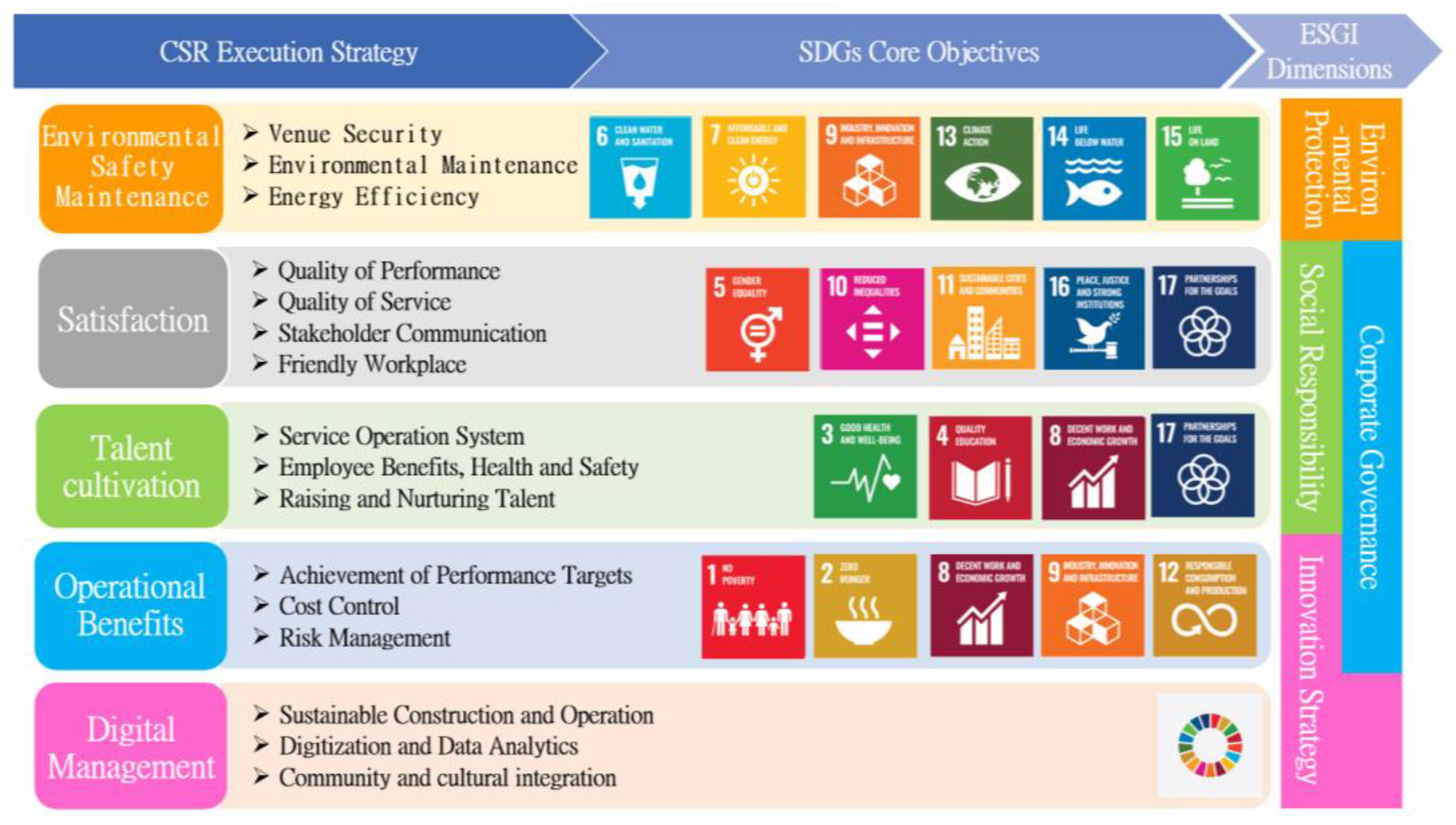
This study takes the Kaohsiung Dome as an example to illustrate that after the management model of sustainable system development-based ESGI enterprise transformation strategic architecture (SSD-based ESGI-ETSA), Kaohsiung Dome’s fulfillment rate of the sustainable development goals (SDGs) in terms of environmental protection, social responsibility, corporate governance, and innovation strategy has been greatly improved, and the performance of the venue has been improved year by year. Although the impact of the COVID-19 epidemic from 2019-2021 has seriously affected the business performance, including the utilization rate of the relevant space, revenue and profit, due to the epidemic in 2020 and 2021, Kaohsiung Dome has continued to adhere to the ESGI’s SDGs by means of SSD-based ESGI-ETSA during this difficult period of the epidemic. Therefore, from FY2022 onwards, the operational and financial data disclosed by the Kaohsiung Dome shows that the performance of the Kaohsiung Dome has a significant improvement trend, and the performance of the venues in FY2023 is even more significant (Figure 9 and Figure 10). In conclusion, the SSD-based ESGI-ETSA for LMPSVs can provide the operational management norms for new domed venues, and help the venues to realize their SDGs and improve their operational performance. In the future, we will be able to provide the operation and management standards for new LMPSVs, especially the Dome, to help venues achieve SDGs and efficient operation and management.
The Kaohsiung Dome, due to its scale and versatility, is capable of significantly contributing to the economic prosperity and community development of the surrounding area, with key factors including: promoting tourism and increased consumption, promoting employment opportunities in the arena and surrounding businesses, promoting infrastructure development and urban regeneration, increasing commercial and property tax revenues, hosting community engagement and cultural and sports events, promoting business and brand integration, and enhancing the city’s international image and attractiveness. branding, and enhancing the city’s international image and attractiveness.
This study additionally analyzes that the Kaohsiung Dome has dramatically boosted the economic prosperity and community development of the surrounding area. In terms of the performance of the real estate market around the Kaohsiung Dome, the price of real estate has risen by 18.5% in the last three years (2021-2023) and 41.7% in the last five years (2018-2023), while the overall increase in the administrative area in the last three years has been only 5.5% (Source: Taiwan Ministry of the Interior’s Real Estate Transaction Register). Data shows that the area around the Kaohsiung Dome is a hot spot for real estate, mainly due to the fact that the Kaohsiung Dome is combined with a sports stadium and a large-scale exhibition venue, which hosts a lot of exhibition opportunities, and also drives the development of the surrounding business district, which is conducive to attracting investment from enterprises. In addition, the Kaohsiung Dome, as a LMPSV, is surrounded by connecting roads and public transportation facilities to facilitate evacuation, making it conveniently accessible. Moreover, the Kaohsiung Dome adopts a comprehensive sports park plan, with large department store annexes to greatly enhance the leisure function, which is quite attractive to the family-oriented homebuying group. Bieze, G. (2021) find fairly local negative house price effects between the start and end of development of new stadiums, and these negative house price effects disappear after the completion of new stadiums and are replaced by positive house price effects up to 1,000 meters, implying an increase in the attractiveness of the neighborhood, the result are largely driven by the type of stadium development.
In conclusion, the fulfillment of ESGI’s sustainable development objectives by LMPSVs can have a positive impact on the operational performance of the venues and improve their competitiveness and long-term development potential. Additionally, when LMPSVs implement the ESGI sustainability goals, the positive impact on operational performance can include increased employee satisfaction and loyalty through the promotion of social responsibility and the creation of inclusive work environments, resulting in increased productivity and reduced turnover. Furthermore, as investors and funding agencies increasingly focus on the sustainability performance of businesses, LMPSVs that implement ESGI goals may be more likely to attract investment and receive financial support. Overall, through the implementation of the ESGI objectives, LMPSVs will not only enhance their operational efficiency and market competitiveness, but also lay a solid foundation for long-term sustainable development.
On the face of it, the experimental results directly support the research hypothesis that LMPSVs can effectively promote their sustainable development through the implementation of ESGI strategies. This means that by adopting this strategic architecture, LMPSV’s managers can realize the dual objectives of economic efficiency and social responsibility, while at the same time enhancing the standard of environmental protection and governance.
In a deeper sense, these findings suggest that, in the face of global sustainability challenges, LMPSVs, as an important part of society, have the ability and should take on greater social responsibility. Through innovation and change, LMPSVs are able to not only improve their sustainability, but also contribute more to their communities and society.
This study systematically analyzes and discusses the application of SSD-based ESGI enterprise transformation strategic architecture in LMPSVs. This not only validates the effectiveness of the ESGI strategy, but also explores its far-reaching implications for the sustainability of LMPSVs. These conclusions provide feasible transformation strategies for LMPSV’s managers, as well as new perspectives and ideas for future research in related fields.
5. Discussion and Implications
5.1. Discussion
The importance of this study lies in the fact that it fills the knowledge gap in the existing literature in this area by providing an in-depth examination of SSD-based ESGI enterprise transformation strategic architecture (ETSA) for large multi-purpose sports venues (LMPSVs). This is in contrast to conventional studies that focus only on economic benefits or a single dimension of sustainability. This study provides a comprehensive framework for transformation by integrating the four dimensions of environment, society, governance and innovation. This is of great significance to the understanding and implementation of sustainable development strategies, not only to promote the expansion of human knowledge of sustainable management, but also to stimulate more researchers to explore this topic in depth.
This study found that by implementing the ESGI strategy, LMPSVs were able to significantly improve their environmental protection capacity, social responsibility, governance transparency and innovation capacity while securing economic benefits. These new findings support the research hypothesis that an integrated ESGI transformation strategy is an effective way to achieve sustainable development. In particular, this study reveals the critical role of innovation in facilitating a sustainable transformation process and the importance of managers in driving this transformation process.
The conclusions of this study are generally consistent with the existing literature on sustainability and CSR, but provide new insights into the specific ways and effects of implementing ESGI strategies. In particular, this study demonstrates in detail how the ESGI strategy works in practice through a case study, which has rarely been reported in previous literature. For unanticipated results, such as challenges in the implementation of certain ESGI dimensions, this study provides possible reasons and points to directions that need to be further explored in future research.
5.2. Implications
This study provides new empirical data for sustainability theory by examining the SSD-based ESGI enterprise transformation strategic architecture (ETSA) for LMPSVs. The findings of the study not only complement existing theories of sustainability, particularly as applied to the specific industry context of sports stadia, but also provide a basis for the construction of new theories. This study emphasizes the importance of the integrated consideration of ESGI dimensions in achieving truly sustainable development, providing new perspectives and ideas for subsequent theoretical studies.
At the practical level, this study has important implications for LMPSV’s managers and policy makers. The ESGI transformation strategic architecture proposed in this study provides specific operational guidelines on how to achieve environmental, social, governance and innovation (ESGI) sustainability in sports LMPSVs. This has practical guiding value in guiding LMPSVs to adjust their operation and management strategies to better meet the challenges of global sustainable development and promote the realization of social responsibility.
In future studies, consideration may be given to adopting a wider range of samples and a more diverse range of data sources to enhance the generalizability and depth of the study. Through the above research implications and recommendations, this study not only provides a contribution to the theoretical and practical field, but also points the way for future research. This is expected to inspire more exploration and practice on the sustainable development of LMPSVs.
6. Conclusions, Limitations and Future Studies/Works
6.1. Conclusions
This study examines how large multi-purpose sports venues (LMPSVs) can implement an ESGI enterprise transformation strategic architecture (ETSA) based on the sustainable systems development (SSD) theory through a comprehensive analysis and empirical research. The results of the study clearly show that by adopting the ESGI framework, LMPSVs are able to achieve environmental protection, enhance social responsibility, strengthen governance transparency, and stimulate innovation while promoting economic efficiency, thereby contributing to the achievement of sustainable development goals.
The significance of this study lies in the fact that it provides a clear guidance on ESGI transformation strategies for LMPSVs, fills a knowledge gap in the existing literature, and provides valuable insights and recommendations for stadium managers, policy makers, and sustainability researchers. Through this study, relevant stakeholders will be able to gain a deeper understanding of how LMPSVs can achieve a balance and integration of their social, economic and environmental objectives through transformation strategies under the current global sustainability challenges. This study also reveals the challenges and constraints encountered during the implementation of the ESGI strategy, such as resource allocation, difficulties in technological innovation, and differences in the understanding of the concept of sustainability among managers and employees. These findings suggest that we need to re-examine the pathways and approaches to sustainable transformation from a number of perspectives. Therefore, future research should further explore how to overcome these challenges and how to utilize new technologies and management concepts to facilitate the sustainable development of LMPSVs.
In summary, this study not only accurately reflects the current status and effectiveness of the implementation of the ESGI corporate transformation strategy based on the development of the SSD sustainability system in LMPSVs, but also points out the challenges in practice and the direction of future research. Through this study, we have come to realize more deeply that achieving sustainable development of LMPSVs requires not only systematic strategic planning and implementation, but also the joint participation and continuous efforts of all stakeholders.
6.2. Limitations
This study encountered several limitations in examining the sustainable system development (SSD)-based ESGI enterprise transformation strategic architecture (ETSA) for LMPSVs. First, limitations in sample selection may have affected the broad applicability of the findings. Despite efforts to ensure a representative sample, due to resource and geographic constraints, this study focuses on sports venues within a specific region and may not be fully representative of other regions or different types of LMPSVs.
Secondly, there are limitations in the data collection methods used in the study. Although relevant data collection and in-depth interviews were used to obtain quantitative and qualitative information, the scope and depth of data collection may have been affected by the response rate and honesty of the participants. In addition, due to time and budget constraints, the sample size was relatively small. This may limit the strength of the statistical analysis and the ability to generalize conclusions.
Finally, due to the complexity and multidimensionality of the topic of this study, the existing literature on the application of ESGI strategies in the field of LMPSVs is relatively limited. This may lead to a degree of reliance on inferences and assumptions rather than a solid theoretical foundation for the theoretical framework and assumptions.
6.3. Future Studies/Works
To address the above research limitations, future studies should first consider, first of all, expanding the sample size and coverage of the study to include sports venues of different districts and of different sizes and types, so as to increase the generalizability and applicability of the findings. The use of probabilistic sampling may be more effective in ensuring the representativeness of the samples and reducing sampling bias. Given the limitations of the existing literature, future research could focus on constructing and validating new theoretical frameworks involving the sustainable transformation of sports stadiums, in particular exploring the interactions and impacts between different ESGI dimensions.
Finally, considering the influence of cultural and geographical factors on sports venue management strategies, future research should examine the adaptability and effectiveness of ESGI strategies in different cultural and economic contexts and how to effectively implement these strategies in these contexts.
By discussing the above research limitations and future work, this study not only honestly presents its limitations, but also provides clear directions and recommendations for future research. This aims to facilitate deeper and wider progress in the sustainable development of LMPSVs.
Author Contributions
M.-R.Y, conceptualization, methodology, investigation, supervision, writing, review and editing; H.-L.C., investigation, project administration, data collection, writing, review and editing; J.-Y.Y., investigation, visualization, writing, review and editing; K.-M.C., investigation, resource, review and editing.
Acknowledgments
We would like to thank Kaohsiung Dome for the opportunity to visit and talk with us and for providing us with detailed information about the company’s articles of incorporation and data.
Conflicts of Interest
The authors declare no conflicts of interest.
Abbreviations
The following abbreviations are used in this manuscript:
| LMPSVs | Large Multi-Purposes Sports Venues |
| ST | System Thinking |
| SD | System Dynamics |
| SSD | Sustainable System Development |
| ESGI | Environmental, Social, Governance, Innovation |
| ETSA | Enterprise Transformation Strategic Architecture |
| LCSA | Life Cycle Sustainability Assessment |
| CRISP-DM | Cross-Industry Standard Process for Data Mining |
References
- Meadows, D. H. (2008). Thinking in systems: A primer. chelsea green publishing.
- Swanson, J. (2002). Business dynamics—systems thinking and modeling for a complex world. Journal of the Operational Research Society, 53(4), 472-473.
- Forrester, J. W. (1995). The beginning of system dynamics. McKinsey Quarterly, 4-17.
- Forrester, J. W. (1997) Industrial Dynamics, Journal of the Operational Research Society, 48:10, 1037-1041, . [CrossRef]
- Hjorth, P. and Bagheri, A. (2006). Navigating towards sustainable development: A system dynamics approach, Futures, Volume 38, Issue 1, 2006, Pages 74-92, ISSN 0016-3287.
- Morgan, H., Bush, A., McGee, D. (2021). The Contribution of Sport to the Sustainable Development Goals: Insights from Commonwealth Games Associations. Volume 9, Issue 2, June 2021, Journal of sport for development.
- Lucas, S., Pinheiro, M. D., & de la Cruz Del Río-Rama, M. (2017). Sustainability Performance in Sport Facilities Management. Sports Management as an Emerging Economic Activity: Trends and Best Practices, 113-138.
- Kuzmina, J. and Lindemane, M. (2017). ESG Investing: new challenges and new opportunities. Vol. 14 (2017): Journal of Business Management.
- Glibo, I.; Misener, L.; Koenigstorfer, J. (2022). Strategic Sustainable Development in International Sport Organisations: A Delphi Study. Sustainability 2022, 14, 9874. [CrossRef]
- Müller, AL., Pfleger, R. (2014). Business transformation towards sustainability. Bus Res 7, 313–350 (2014). [CrossRef]
- Thirasakthana, M.; Kiattisin, S. (2021). Sustainable Government Enterprise Architecture Framework. Sustainability 2021, 13, 879. [CrossRef]
- Vandenbroucke, M.; Galle, W.; De Temmerman, N.; Debacker, W.; Paduart, A. (2015). Using Life Cycle Assessment to Inform Decision-Making for Sustainable Buildings. Buildings 2015, 5, 536-559.
- Francis, A.E.; Webb, M.; Desha, C.; Rundle-Thiele, S.; Caldera, S. (2023). Environmental Sustainability in Stadium Design and Construction: A Systematic Literature Review. Sustainability 2023, 15, 6896. [CrossRef]
- Russell-Smith, S.and Lepech, M. (2015). Cradle-to-gate sustainable target value design: integrating life cycle assessment and construction management for buildings, Journal of Cleaner Production,Volume 100,2015,Pages 107-115, ISSN 0959-6526, . [CrossRef]
- Tang, S.; Fan, Z.; Zong, X.; Zhang, D.; Liu, M. (2022). A Sustainability Evaluation Approach for the Operation Cycle of Stadiums by Integrating Multidimensional Data. Available at SSRN: . [CrossRef]
- Exenberger, E.; Bucko, J. (2020). Analysis of Online Consumer Behavior - Design of CRISP-DM Process Model. ISSN1804-1930, Published in AGRIS on-line Papers in Economics and Informatics, Volume 12, Issue 3, Page Range 13 - 22. [CrossRef]
- Shi, H. (2015). Application of artificial intelligence technology in the information management of sports venues. Revista Ibérica De Sistemas e Tecnologias De Informação, (16B), 150.
- Swanson, J. (2002). Business dynamics—systems thinking and modeling for a complex world. Journal of the Operational Research Society, 53(4), 472-473.
- Teece, D.; Pisano, G.; Shuen, A. (1998). Dynamic capabilities and strategic management. Strategic Management Journal, Vol. 18:7, 509–533 (1997). [CrossRef]
- Sithole, C.; Wotela, K. (2024). A Conceptual Framework for Researching Disruptive Innovation and Innovative Business Models, International Business - New Insights on Changing Scenarios. [CrossRef]
- Vandevenne, N.; Van Riel, J.; Poels, G. (2023). Green Enterprise Architecture (GREAN)—Leveraging EA for Environmentally Sustainable Digital Transformation. Sustainability 2023, 15, 14342. [CrossRef]
- Alves, D. F., De Campos, R., & Souza, F. B. (2016). Sustainable development within enterprise architecture. In Advances in Production Management Systems. Initiatives for a Sustainable World: IFIP WG 5.7 International Conference, APMS 2016, Iguassu Falls, Brazil, September 3-7, 2016, Revised Selected Papers (pp. 552-559). Springer International Publishing.
- Perdana, E. G., Sitohang, B., Sastramihardja, H. S., & Candra, M. Z. C. (2020). A Strategy Framework for Incorporating Sustainability into Enterprise Architecture. In 2020 8th International Conference on Information and Communication Technology (ICoICT) (pp. 1-6). IEEE.
- Aldoseri, A.; Al-Khalifa, K.N.; Hamouda, A.M. (2024). AI-Powered Innovation in Digital Transformation: Key Pillars and Industry Impact. Sustainability 2024, 16, 1790. [CrossRef]
- Ducange, P; Fazzolari, M; Petrocchi, M; Vecchio, M. (2019). An effective Decision Support System for social media listening based on cross-source sentiment analysis models. Engineering Applications of Artificial Intelligence, Volume 78, 2019, Pages 71-85, ISSN 0952-1976, . [CrossRef]
- Fountas, S.; Wulfsohn, D.; Blackmore, B.S.; Jacobsen, H.L.; Pedersen, S.M. (2006). A model of decision-making and information flows for information-intensive agriculture. Agricultural Systems, Volume 87, Issue 2, 2006, Pages 192-210, ISSN 0308-521X, . [CrossRef]
- Li, T.-T.; Wang, K.; Sueyoshi, T.; Wang, D.D. (2021). ESG: Research Progress and Future Prospects. Sustainability 2021, 13, 11663. [CrossRef]
- Taliento, M.; Favino, C.; Netti, A. (2019). Impact of Environmental, Social, and Governance Information on Economic Performance: Evidence of a Corporate ‘Sustainability Advantage’ from Europe. Sustainability 2019, 11, 1738. [CrossRef]
- Simon, D., Fischbach, K., & Schoder, D. (2013). An Exploration of Enterprise Architecture Research. Communications of the Association for Information Systems, 32(1), 1, pp-pp. [CrossRef]
- Hendrickx H., (2015). Business Architect: A Critical Role in Enterprise Transformation. Journal of Enterprise Transformation Volume 5, 2015 - Issue 1. Available online: . [CrossRef]
- Korhonen, J. J., & Molnar, W. A. (2014). Enterprise architecture as capability: Strategic application of competencies to govern enterprise transformation. In 2014 IEEE 16th Conference on Business Informatics (Vol. 1, pp. 175-182). IEEE.
- Kitsios, F. and Kamariotou, M. (2019), “Business strategy modelling based on enterprise architecture: a state of the art review”, Business Process Management Journal, Vol. 25 No. 4, pp. 606-624. [CrossRef]
- Jiang, L., Gu, Y., Yu, W. and Dai, J. (2022). Blockchain-based Life Cycle Assessment System for ESG Reporting. Available at SSRN: https://ssrn.com/abstract=4121907 or . [CrossRef]
- Kalbar P. P. and Das D. (2020). Advancing life cycle sustainability assessment using multiple criteria decision making. In Life Cycle Sustainability Assessment for Decision-Making (pp. 205-224). ISBN:978-0-12-818355-7, 2020 Elsevier Inc. [CrossRef]
- Koplyay, T., Chillingworth, L., and Mitchell, B. (2013). Corporate lifecycles: modelling the dynamics of innovation and its support infrastructure. Technology Innovation Management Review, 3(10).
- Zanni, S., Awere, E., and Bonoli, A. (2020). Life cycle sustainability assessment: An ongoing journey. Life cycle sustainability assessment for decision-making. Pages 57-93, ISBN 9780128183557. [CrossRef]
- Wirth, R. and Hipp, J. (2000). CRISP-DM: Towards a standard process model for data mining. In Proceedings of the 4th international conference on the practical applications of knowledge discovery and data mining (Vol. 1, pp. 29-39).
- Zhang, Y. (2021). Sales forecasting of promotion activities based on the cross-industry standard process for data mining of E-commerce promotional information and support vector regression. Journal of Computers, 32(1), 212-225.
- Warren, K. (2003). The Dynamics of Strategy. Business Strategy Review Volume 10, Issue 3, Pages 1-78, September 1999. Available online: . [CrossRef]
- Warren K. (2008). Strategic Management Dynamics. Published by John Wiley Sons, Ltd. https://www.strategydynamics.com/smd234.
- Biswas, S. S., Ahad, M. A., Nafis, M. T., Alam, M. A., & Biswas, R. (2021). Introducing “α-Sustainable Development” for transforming our world: A proposal for the 2030 agenda. Journal of Cleaner Production, 321, 129030. Available online: . [CrossRef]
- Yan, M. J. (2022). Handbook of Sustainable System Development for Strategic Management and Business Innovation (2nd edition). Published by Industry + Innovation LABoratories (iiLABs), January 2022. ISBN: 978-986-06857-1-8.
- Rouse, W. B. (2005). A Theory of Enterprise Transformation. Systems Engineering Volume 8, Issue 4, Pages 279-295. In book: A Systemic Perspective to Managing Complexity with Enterprise Architecture (pp.99-149). [CrossRef]
- Gutterman A. (2021). Organizational Design for Sustainability.
- Bocken,N. and Geradts, T. (2020). Barriers and drivers to sustainable business model innovation: Organization design and dynamic capabilities, Long Range Planning, Volume 53, Issue 4, 2020, 101950, ISSN 0024-6301, . [CrossRef]
- Bharadwaj, A., El Sawy, O. A., Pavlou, P. A., and Venkatraman, N. V. (2013). Digital Business Strategy: Toward a Next Generation of Insights. MIS Quarterly, vol. 37, no. 2, 2013, pp. 471–82. JSTOR. Published By: Management Information Systems Research Center, University of Minnesota. Available online: http://www.jstor.org/stable/43825919.
- Fountas, S., Wulfsohn, D., Blackmore, B. S., Jacobsen, H. L., and Pedersen, S. M. (2006). A model of decision-making and information flows for information-intensive agriculture. Agricultural Systems 2006, Volume 87, Issue 2, Pages 192-210, ISSN 0308-521X. Available online: . [CrossRef]
- Fatimah, Y. A., Kannan, D., Govindan, K., and Hasibuan, Z. A. (2023). Circular economy e-business model portfolio development for e-business applications: Impacts on ESG and sustainability performance. Journal of Cleaner Production, Volume 415, 2023, 137528, ISSN 0959-6526. Available online: . [CrossRef]
- Doumi, K., Baina, S., and Baina, K. (2013). Strategic Business and IT Alignment: Representation and Evaluation. Journal of Theoretical and Applied Information Technology, 10th January 2013. Vol. 47 No.1, ISSN: 1992-8645, E-ISSN: 1817-3195. Available online: https://www.jatit.org.Escrig-Olmedo E., et al. (2019). Rating the Raters: Evaluating how ESG Rating Agencies Integrate Sustainability Principles.
- Kurniawan, N. B. (2013, November). Enterprise Architecture design for ensuring strategic business IT alignment (integrating SAMM with TOGAF 9.1). In 2013 Joint International Conference on Rural Information & Communication Technology and Electric-Vehicle Technology (rICT & ICeV-T), Bandung, Indonesia, 2013, pp. 1-7, . [CrossRef]
- Yan, M. R., Shajek, A., & Hartmann, E. A. (2023). Digital Work in East Asia. In New Digital Work: Digital Sovereignty at the Workplace (pp. 171-194). Cham: Springer International Publishing. [CrossRef]
- Santarsiero, F. (2023). Developing a strategic planning model for developing, monitoring and evaluating digital transformation initiatives: a soft system approach. Measuring Business Excellence, Vol. 27 No. 3, pp. 449-459, ISSN: 1368-3047. [CrossRef]
- Oliveira, C. S., Sanin, C., and Szczerbicki, E. (2020). Human Feedback and Knowledge Discovery: Towards Cognitive Systems Optimization. Procedia Computer Science, Volume 176, 2020,Pages 3093-3102, ISSN 1877-0509. Available online: . [CrossRef]
Figure 1.
Conceptual Process of the SSD-based ESGI Enterprise Transformation Strategic Framework for LMPSVs. Data source: Drawings from this study.
Figure 1.
Conceptual Process of the SSD-based ESGI Enterprise Transformation Strategic Framework for LMPSVs. Data source: Drawings from this study.
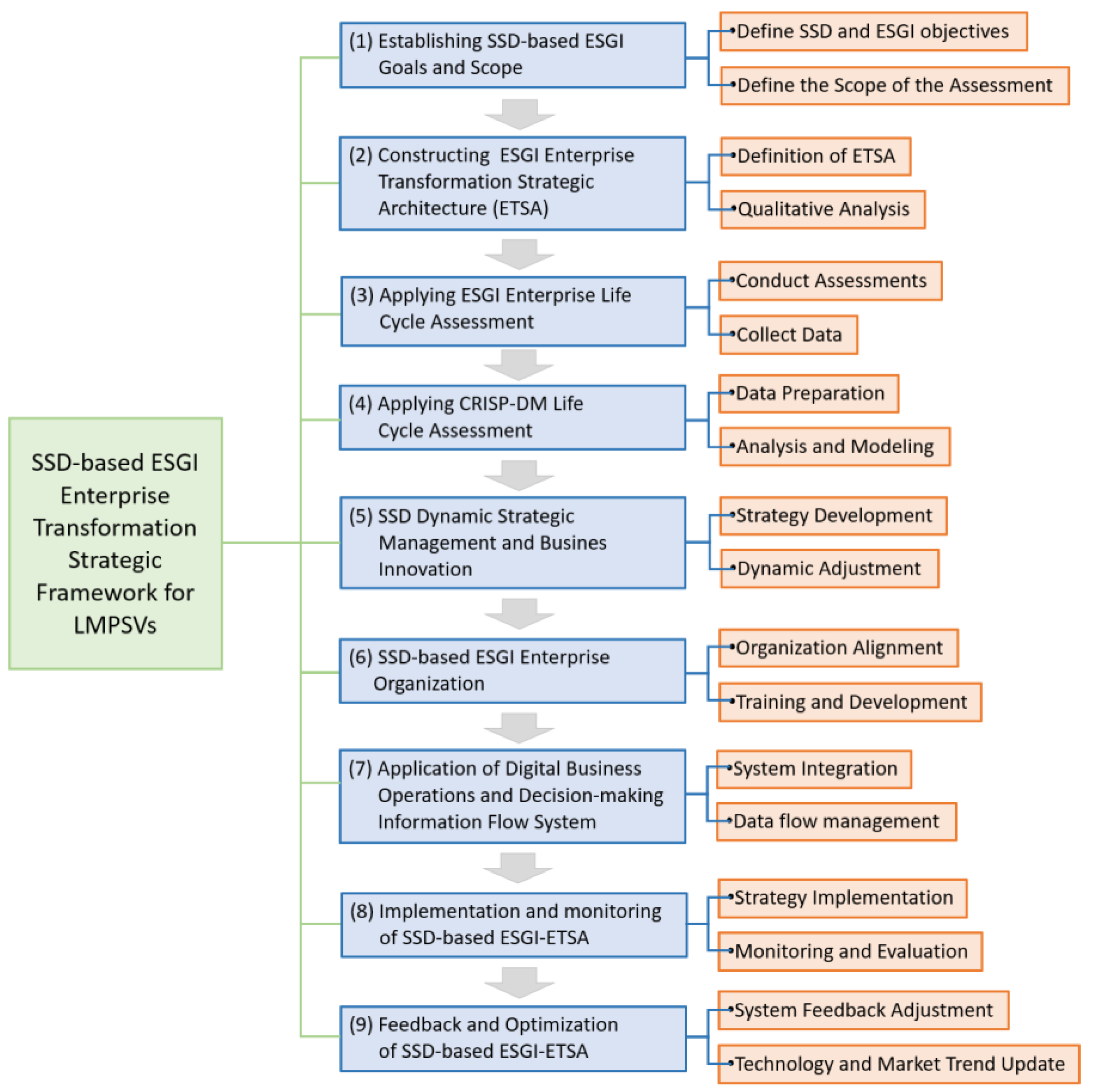
Figure 2.
ESGI Enterprise Transformation Strategic Architecture (ETSA) for LMPSVs. Data source: Drawings from this study. Reference source: Modified from SSD Enterprise Innovation Strategic Management Technology (Min-Ren Yan, 2022).
Figure 2.
ESGI Enterprise Transformation Strategic Architecture (ETSA) for LMPSVs. Data source: Drawings from this study. Reference source: Modified from SSD Enterprise Innovation Strategic Management Technology (Min-Ren Yan, 2022).
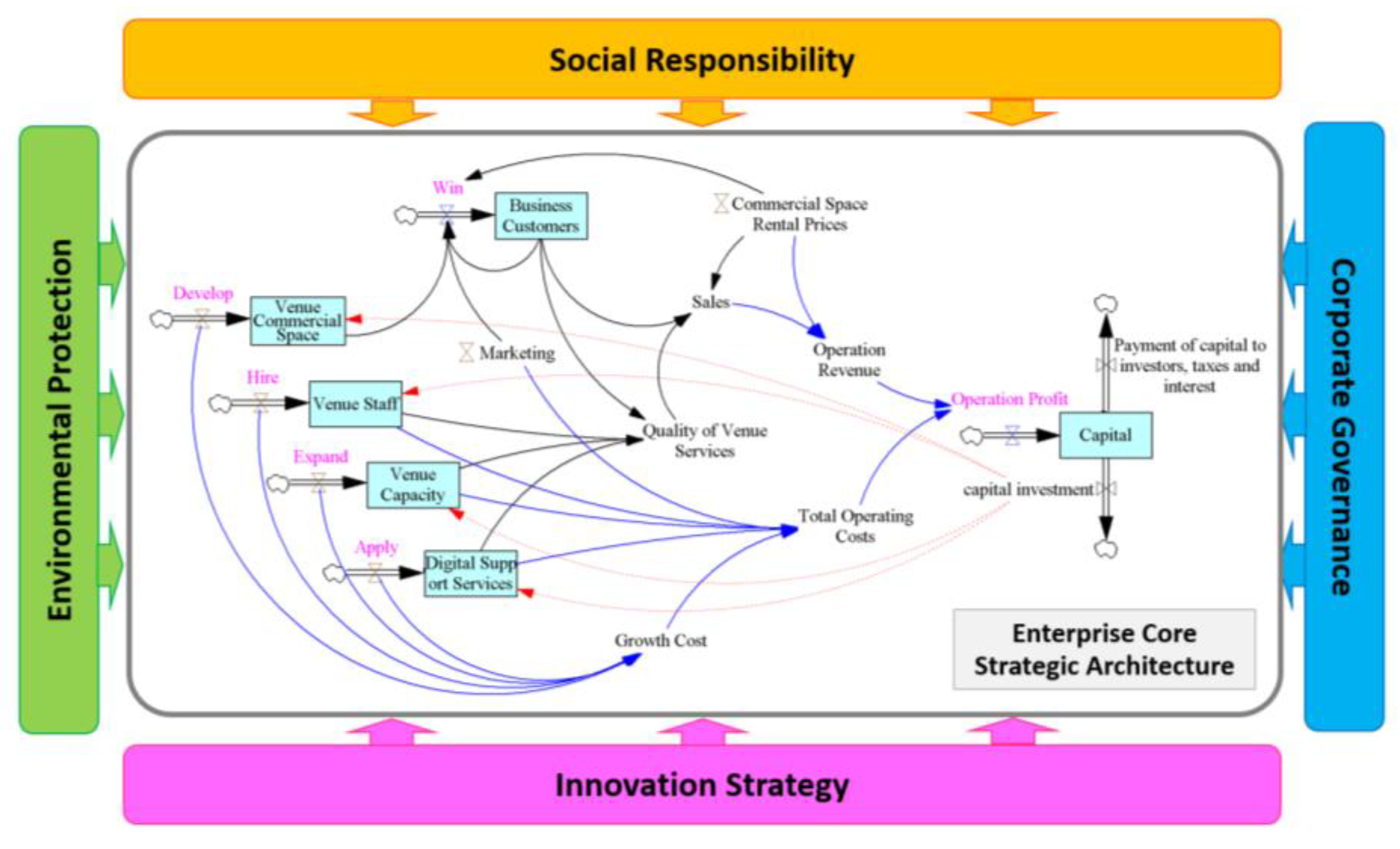
Figure 3.
Transformation strategic Architecture goals for LMPSVs based on the Customer Choice Pipeline (CCP) model for potential business customers. Data source: Drawings from this study.
Figure 3.
Transformation strategic Architecture goals for LMPSVs based on the Customer Choice Pipeline (CCP) model for potential business customers. Data source: Drawings from this study.
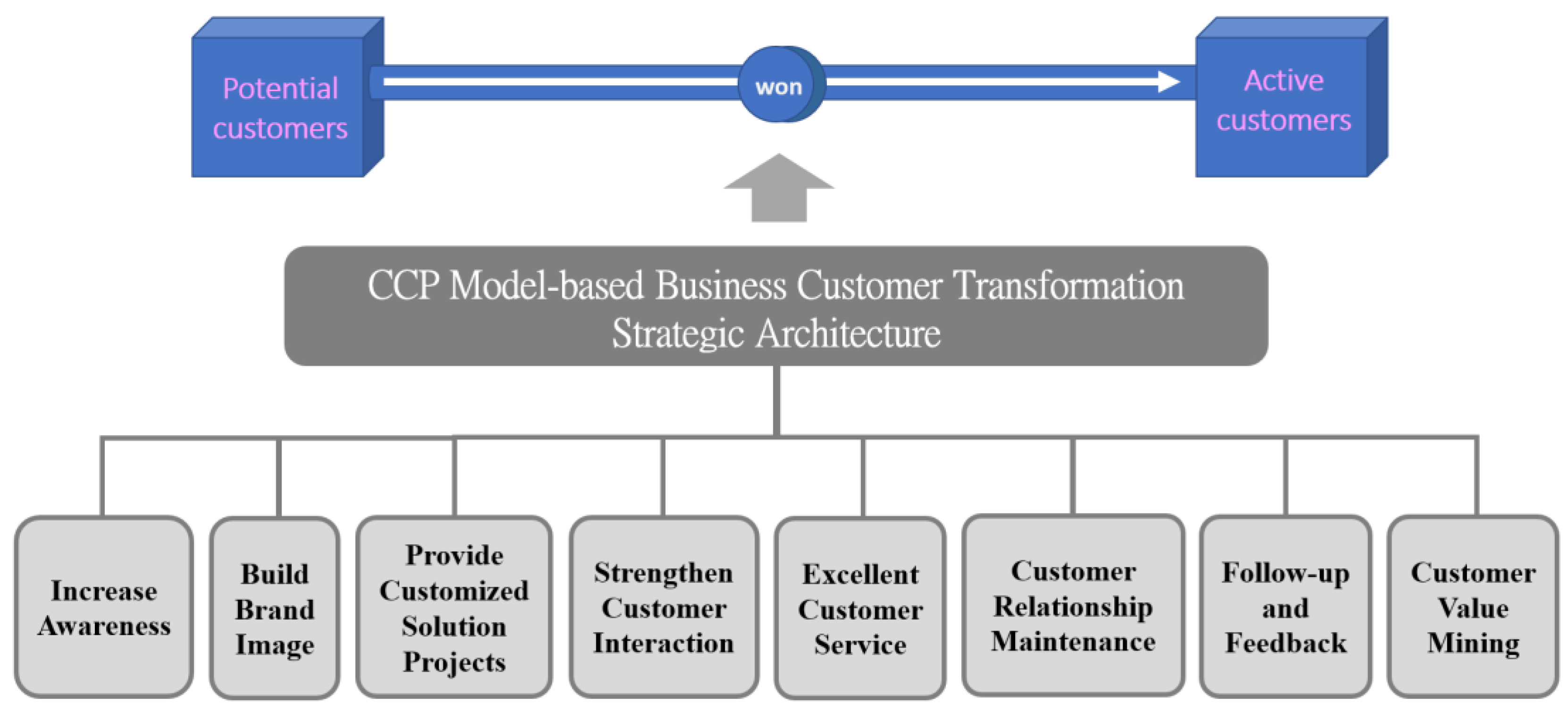
Figure 4.
Operation Rules for each stage of ESGI Life Cycle Sustainability Assessment (LCSA) for LMPSVs. Data source: Drawings from this study. Reference source: Modified from Handbook of Sustainable System Development for Strategic Management and Business Innovation (Yan, M. J., 2022).
Figure 4.
Operation Rules for each stage of ESGI Life Cycle Sustainability Assessment (LCSA) for LMPSVs. Data source: Drawings from this study. Reference source: Modified from Handbook of Sustainable System Development for Strategic Management and Business Innovation (Yan, M. J., 2022).
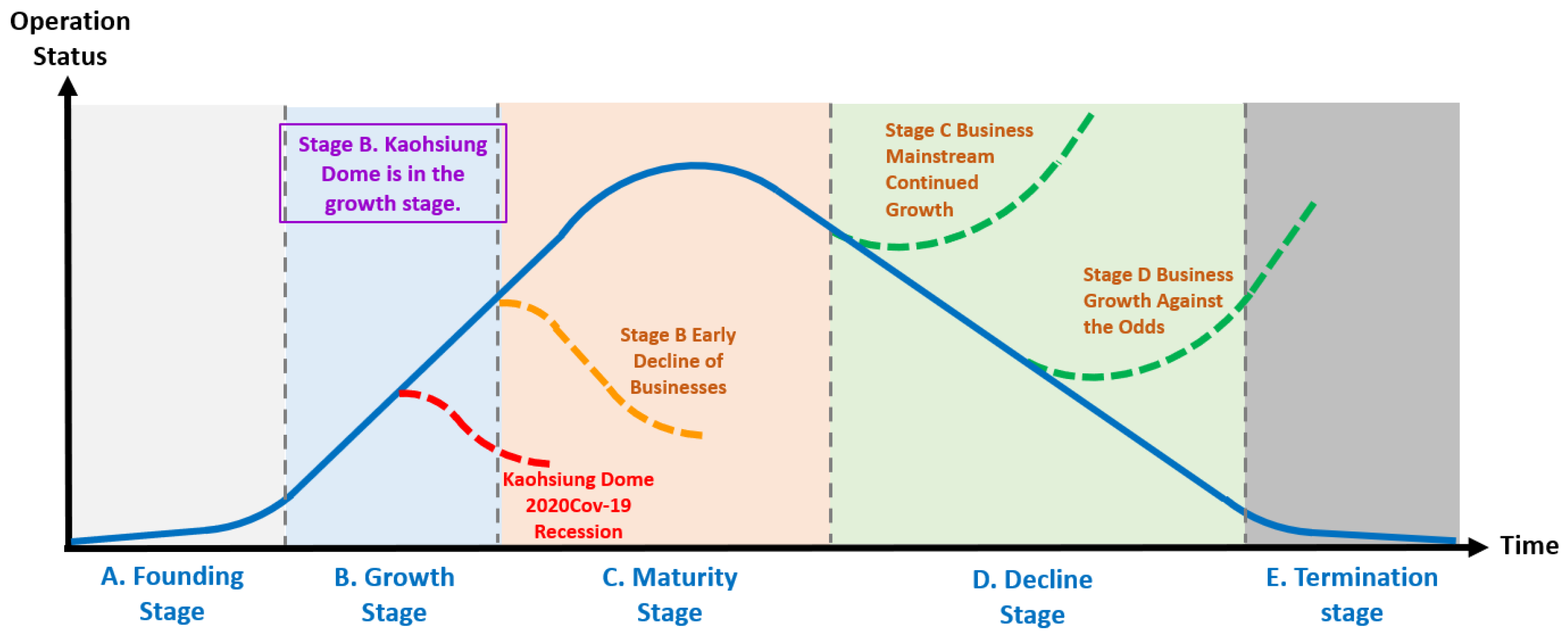
Figure 5.
CRISP-DM Life Cycle Assessment of LMPSVs. Data source: Drawings from this study. Reference source: Modified from Phases of the Current CRISP-DM Process Model for Data Mining, Wirth, R., & Hipp, J. (2000, April).
Figure 5.
CRISP-DM Life Cycle Assessment of LMPSVs. Data source: Drawings from this study. Reference source: Modified from Phases of the Current CRISP-DM Process Model for Data Mining, Wirth, R., & Hipp, J. (2000, April).
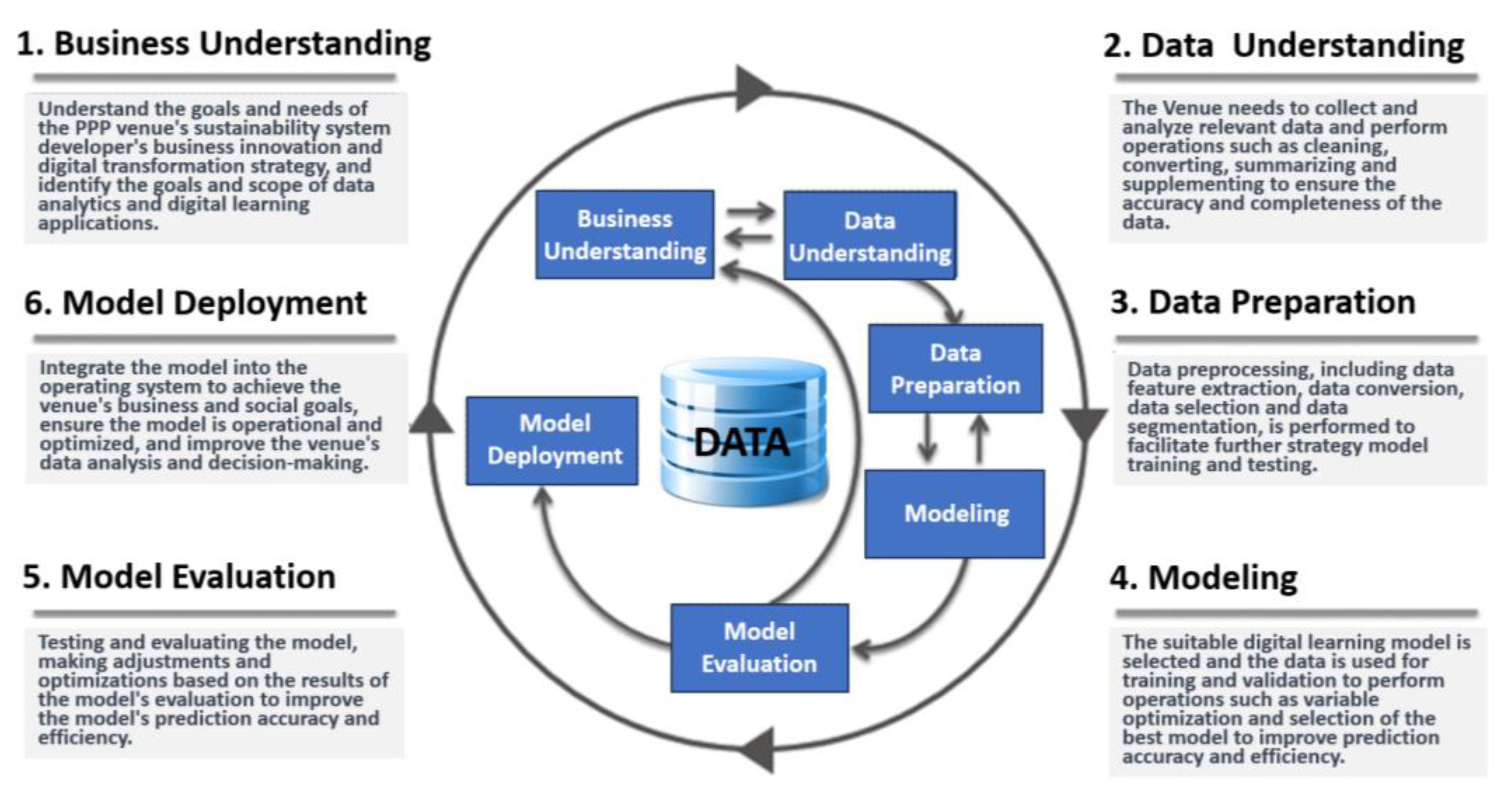
Figure 6.
SSD-based ESGI Enterprise Organization Architecture for Kaohsiung Dome. Data source: Drawings from this study. Reference source: Kaohsiung Dome.
Figure 6.
SSD-based ESGI Enterprise Organization Architecture for Kaohsiung Dome. Data source: Drawings from this study. Reference source: Kaohsiung Dome.
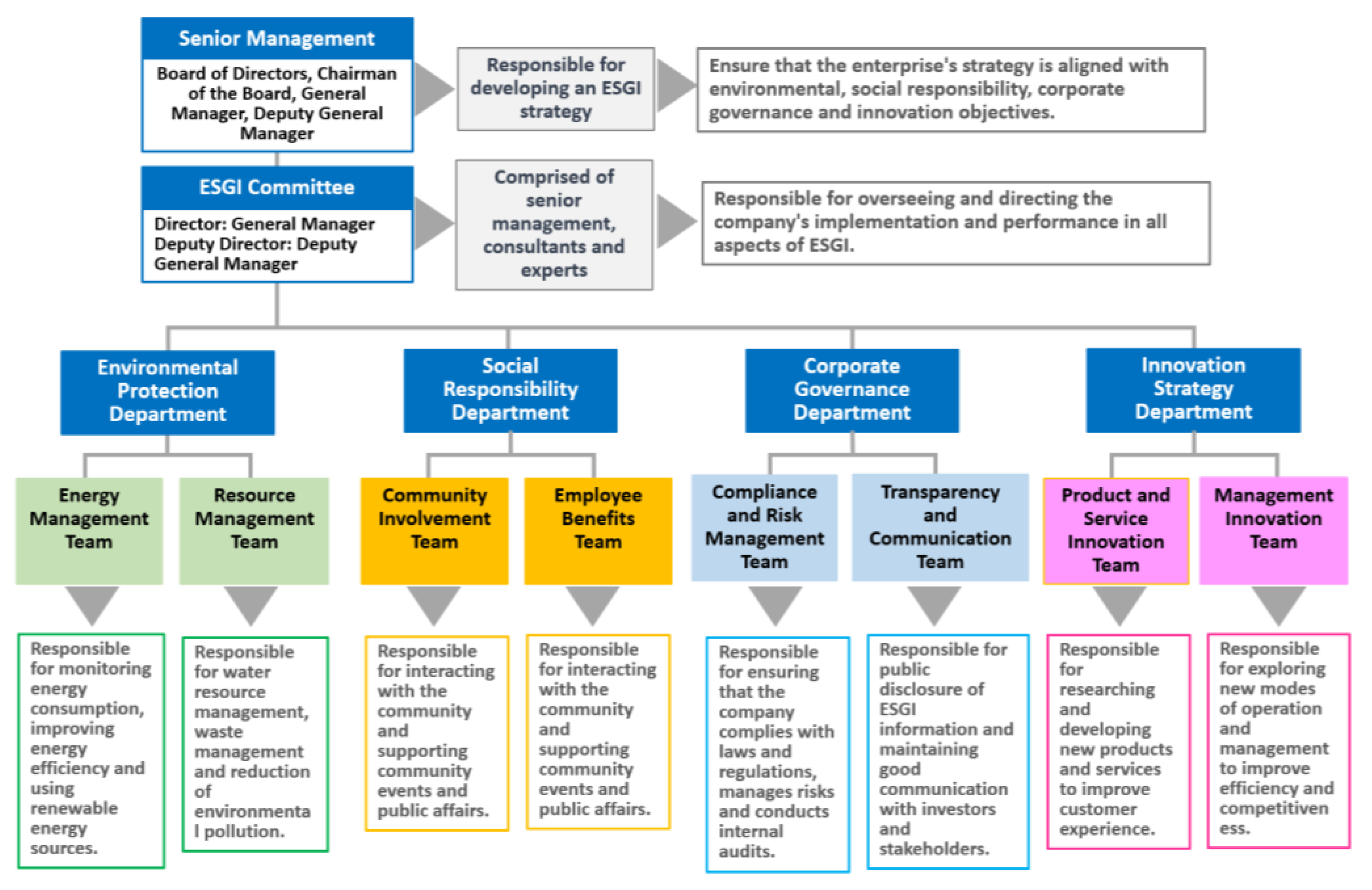
Figure 7.
Digital Business Operation and Decision-Making Information Flow System for LMPSVs. Data source: Drawings from this study. Reference source: Modified from SSD Enterprise Innovation Strategic Management Technology (Yen, M. J., 2022).
Figure 7.
Digital Business Operation and Decision-Making Information Flow System for LMPSVs. Data source: Drawings from this study. Reference source: Modified from SSD Enterprise Innovation Strategic Management Technology (Yen, M. J., 2022).
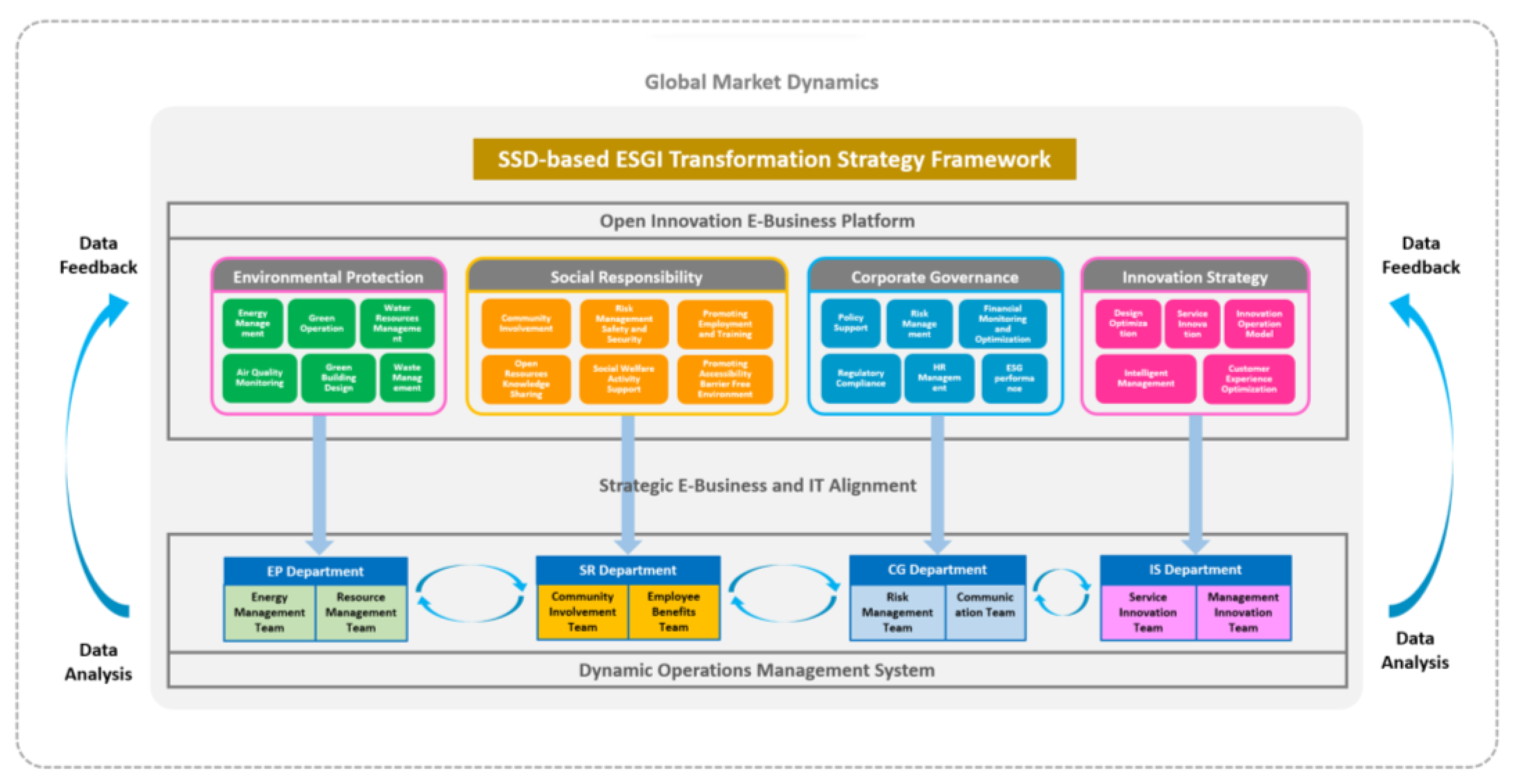
Figure 9.
Kaohsiung Dome Space Utilization Rate, 2012-2023. Data source: Drawings from this study. Reference source: Kaohsiung Dome.
Figure 9.
Kaohsiung Dome Space Utilization Rate, 2012-2023. Data source: Drawings from this study. Reference source: Kaohsiung Dome.
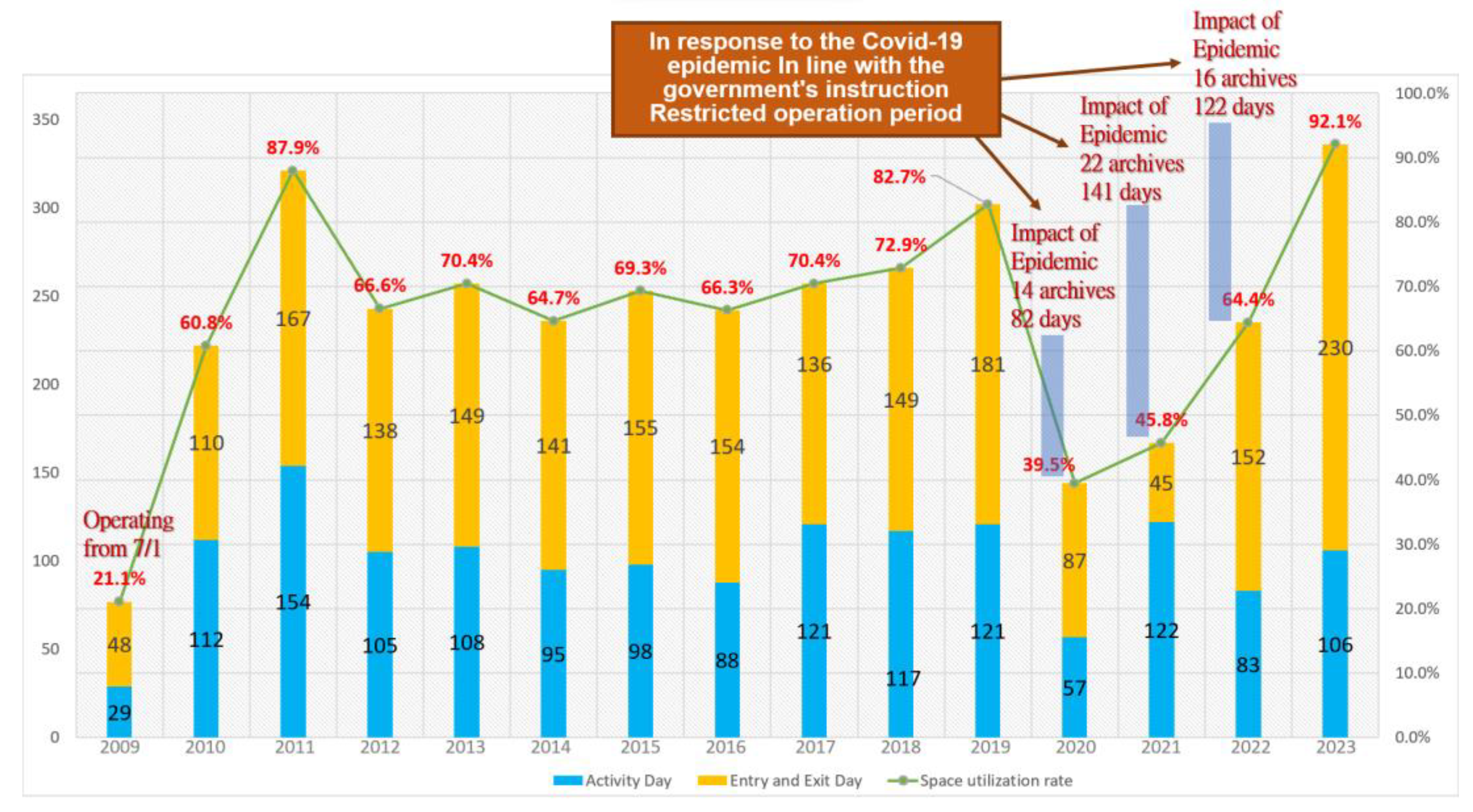
Figure 10.
Kaohsiung Dome Business Composition, 2012-2023. Data source: Drawings from this study. Reference source: Kaohsiung Dome.
Figure 10.
Kaohsiung Dome Business Composition, 2012-2023. Data source: Drawings from this study. Reference source: Kaohsiung Dome.
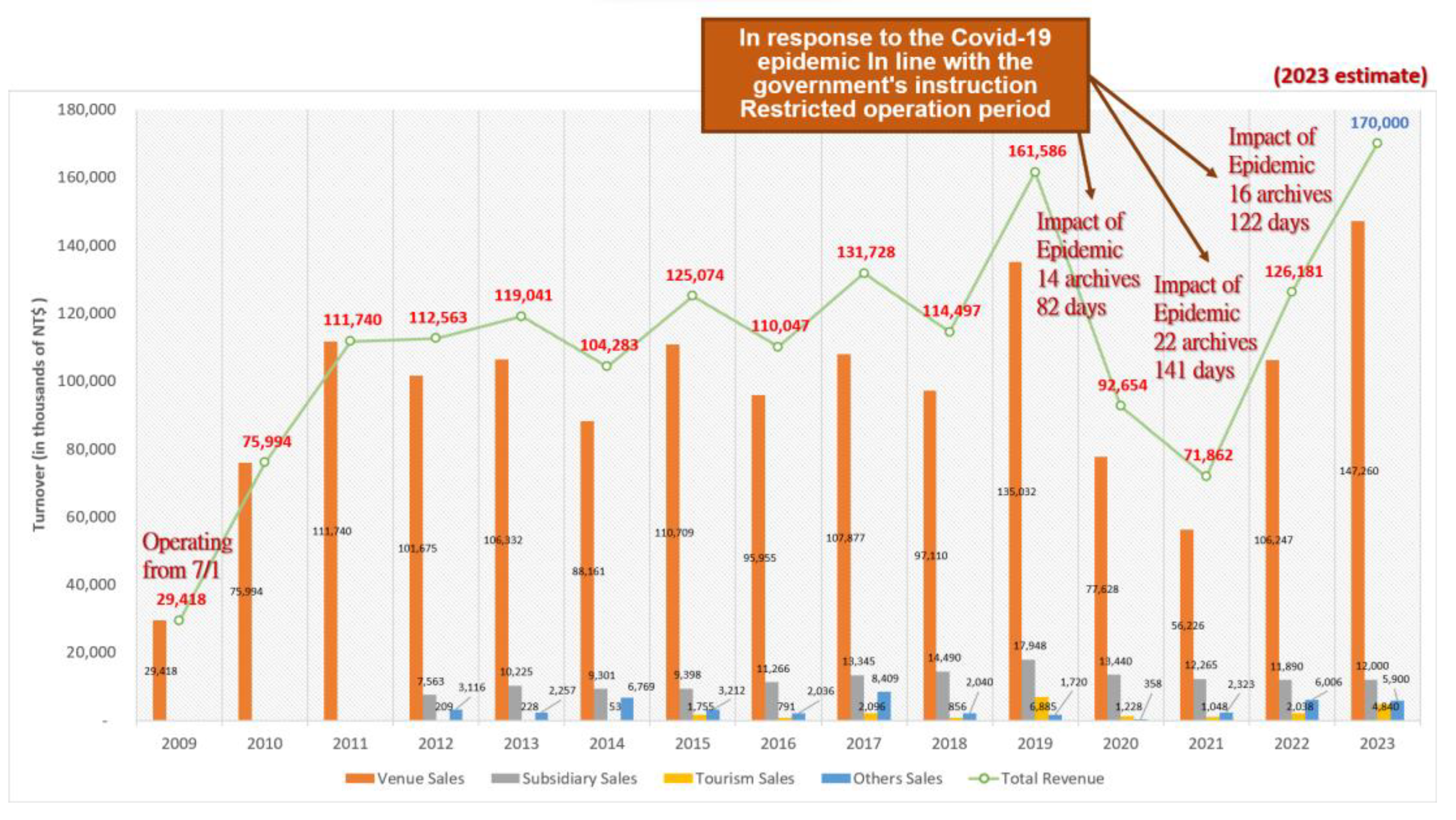
Disclaimer/Publisher’s Note: The statements, opinions and data contained in all publications are solely those of the individual author(s) and contributor(s) and not of MDPI and/or the editor(s). MDPI and/or the editor(s) disclaim responsibility for any injury to people or property resulting from any ideas, methods, instructions or products referred to in the content. |
© 2024 by the authors. Licensee MDPI, Basel, Switzerland. This article is an open access article distributed under the terms and conditions of the Creative Commons Attribution (CC BY) license (http://creativecommons.org/licenses/by/4.0/).
Copyright: This open access article is published under a Creative Commons CC BY 4.0 license, which permit the free download, distribution, and reuse, provided that the author and preprint are cited in any reuse.


