

Submitted:
10 March 2024
Posted:
12 March 2024
You are already at the latest version
Abstract
The purpose of this article is to investigate and analyze the practices of scientific management within the County Departments of Sports and Youth (CDYS) in Romania. Conducted through a comprehensive research endeavor spanning from January to June 2022, the study utilized a standardized questionnaire as its primary instrument for data collection, distributed among CDYS directors. A notable finding from the study indicates that a significant proportion of respondents (44.9%) perceive notable disparities in the normative-functional elements governing the National Sports System in Romania compared to international standards. Moreover, the majority (51%) consistently adhere to regulatory acts, while a substantial portion (69.4%) underscore the importance of strict adherence to internal regulations in strategy formulation. Furthermore, an overwhelming majority (88.9%) acknowledge the substantial influence of available resources on strategy development, with collaboration with authorities primarily occurring through direct communication channels. Respondents prioritize multiple objectives (44.9%), affirm the necessity of various competencies (53.1%), and identify a lack of human and financial resources (59.2%) as the most significant obstacle. Notable achievements highlighted in the study include the improvement of the county's sports performance (53.1%). Respondents also believe that setting clear and realistic objectives (38.8%) is pivotal to enhancing CDYS management, while considerations in formulating strategies emphasize trends in the sports domain (42.9%) and the specific needs of the local sports community (42.9%). Overall, this research contributes to the understanding and promotion of more efficient practices in managing sports and youth departments within Romania's counties.
Keywords:
comprehensive
; meticulous planning
; systematic execution
; regulatory compliance
; internal norms
; resource considerations
; focused approach
; effective management
; challenges
1. Introduction
In contemporary society, the youth market wields considerable influence, navigating a landscape fraught with diverse temptations and negative stimuli. Historically, the quality of sports programs and a sense of belonging were paramount in shaping participation decisions. However, a paradigm shift has occurred, and present-day consumers base their choices on the perceived sport image and the identity of the CDYS (Amzar & Stefanica, 2017). Sports organizations are increasingly expected to play an active role in the community, emphasizing social responsibility, and community esteem has taken precedence over mere program success (Voicu, 2013; Barbu et al., 2022). Yet, despite consumer interest in the social responsibility of sports organizations, vulnerabilities persist due to incomplete information, lack of education among decision-makers, and non-compliance with legislative frameworks (Khan et al., 2020). This shift in focus has led sports organizations to educate consumers on sustainable and responsible consumption, as disparities may arise between consumer expectations and perceived appropriate organizational behavior (Filip et al., 2023). Irresponsible behavior, inadequate feedback mechanisms, and disputes resolution can result in consumer dissatisfaction. Furthermore, some organizations may exaggerate their social or environmental merits (Dehbidi et al., 2022).
Fleancu and Gheorghe's (2024) case study on managerial experience in the CDSY in Romania, underscored the significant impact of managerial experience on organizational performance, setting the stage for our investigation. Previous work by Kaufmann et al. (2017) highlighted the positive association between managerial experience and decision-making quality, further emphasizing the importance of managerial experience.
Wen et al. (2018) explored decision-making management's impact on project management performance, affirming its positive influence. Additionally, compliance with legislative norms and decision-making strategies in organizational management has been studied (Heikkila & Isett, 2004; Akrong et al., 2022). These studies shed light on the complexity of the decision-making process and the role of managerial experience within it.
The significance of teamwork synergy, collaborative relationship quality, and managerial flexibility in adapting to changing circumstances has also been highlighted in the literature (Rosu et al. 2022; Tudor & Bisa, 2016; Stefanica & Rosu, 2018; Bamel et al., 2013).
Yang et al.'s (2014) study on project management's impact on organizational performance emphasized the importance of effective project management practices, aligning with our focus on teamwork synergy and collaborative relationship quality. Zhang et al. (2022) further reinforced the positive association between managerial experience and leadership effectiveness.
Several investigations have explored the impact of project management on organizational performance (Nusari et al., 2018; Anantatmula & Rad, 2018; Mir & Pinnington, 2014). Effective management methods are posited to result in a comprehensive database, contributing to improved satisfaction among young athletes and individuals focused on personal development.
In the dynamic landscape of sports and youth management, effective leadership and strategic decision-making play pivotal roles in driving organizational success. Within CDYS in Romania, the ability of managers to formulate independent strategies is essential for navigating the complexities of the field (Barbu et al., 2022). One significant factor that may influence these managerial perceptions is their educational background (Sobczak et al., 2006). Understanding the interplay between educational attainment and managerial perceptions is crucial for informing educational programs and policy decisions aimed at fostering effective leadership within CDYS (Gumus et al., 2011). The purpose of this article is to investigate and analyze the practices of scientific management within the County Departments of Sports and Youth (CDYS) in Romania. The study aims to provide insights into the perceptions and practices of CDYS directors regarding strategic decision-making processes, resource utilization, and regulatory compliance. Additionally, the research seeks to understand the influence of managers' educational backgrounds on their perceptions of strategic autonomy within CDYS.
Research objectives:
- To examine the perceptions and practices of CDYS directors regarding scientific management principles, including organizational structures, resource utilization, decision-making processes, and collaboration with authorities.
- To assess the extent to which CDYS directors perceive disparities between the normative-functional elements governing the National Sports System in Romania and international standards.
- To investigate the adherence of CDYS directors to regulatory acts and internal regulations in strategy formulation and implementation.
- To analyze the influence of available resources on strategy development within CDYS, and to explore the primary channels of collaboration with authorities.
- To identify the objectives prioritized by CDYS directors in strategy development, as well as the competencies deemed necessary for effective strategic decision-making.
- To identify the main obstacles faced by CDYS directors in strategy formulation and implementation, particularly concerning human and financial resources.
- To highlight notable achievements within CDYS, focusing on improvements in sports performance and increased participation in activities.
- To evaluate the perceived importance of setting clear and realistic objectives for enhancing CDYS management effectiveness.
- To examine the considerations in formulating strategies within CDYS, emphasizing trends in the sports domain and the specific needs of the local sports community.
- To investigate the association between managers' perceptions of their ability to formulate independent strategies within CDYS and their educational background, providing insights into the educational dimensions of leadership within the sports and youth management domain.
The study seeks to contribute to a deeper understanding of the dynamics involved in managerial decision-making within the CDSY. Ultimately, the research aims to provide valuable insights that can inform strategies for enhancing managerial effectiveness and organizational performance in the context of sports and youth programs.
2. Materials and Methods
2.1. Participants
This study engaged directors and executive directors from all 42 CDYS across Romania as its primary participants. The sample included a total of 49 managers recognized for their expertise and experience in the field. These individuals were chosen due to their in-depth knowledge of youth and sports management, ensuring a comprehensive representation of perspectives and insights relevant to the research objectives
2.2. Research Methods
In this study, a methodological system employing practical research methods was utilized, including the documentation method, questionnaire-based survey method.
Through a literature review, qualitative and quantitative scientific analyses of literature-based information were conducted, providing a scientific foundation to formulate questions and further enhance the research method.
A standardized questionnaire was developed within this presented research and addressed to directors formerly affiliated with CDYS in all counties. The questionnaire survey method involved posing questions with the aim of gathering data from a sample of individuals regarding their direct opinions on the research topic. Surveys facilitate the comprehension of issues related to study variables as a whole or in parts.
The chosen research technique, the questionnaire, was created by the undersigned and distributed via email to directors of CDYS. The questionnaire's application process involved several stages: identifying objectives and samples for implementation, scheduling and organizing the questionnaire application, implementing the questionnaire, collecting and analyzing data, and formulating preliminary results and conclusions.
These questionnaires were directed at CDYS directors, individuals authorized and experienced in the field, with the goal of identifying stages and implementation needs of scientific management in their respective domains. The questionnaire comprised closed-ended questions with five response options, addressing aspects such as organization, resources, methods, decision-making, etc., encompassing the internal environment of the CDYS, specialized supersystems, and systems at the same level. Other areas considered included the external macro-environment (political-legal-economic-societal-technical) and external micro-environment (partners, suppliers, competitors, public administration). Data processing and interpretation relied solely on information provided by the investigation's subjects.
Procedures of intervention
The descriptive research was conducted from January to June 2022, and the temporal scheduling of the proposed activities to achieve the established objectives was executed through the development of the Gantt Chart, as presented in the following table.

Table 1.
Gantt Chart.
| Activity | Jan | Feb | March | April | May | June |
| Activity 1. Documentation related to the subject of research in the literature in order to ARGUMENT theoretically and methodologically of the article. | P* | R* | ||||
| 1.1. identification of the bibliographic sources necessary for documentation from national and international literature; | P/R | |||||
| 1.2. comprehensive or partial research of the archives, documenting the information from the records; | P/R | P/R | ||||
| 1.3.summarizing the information circumscribed to the research issue | P | R | ||||
| Activity 2. Carrying out the research on the respondents | P | R | ||||
| 2.1.formulating interrogative statements and questionnaire items; | P/R | |||||
| 2.2. establishing the subjects of the constative study; | P/R | P/R | ||||
| 2.3.carrying out the investigation through questionnaires; | P/R | P/R | ||||
| 2.4. analyzing information, formulating conclusions and producing the research article. | P/R | P/R | P/R |
*P - planned activities, R - executed activities.
The questionnaire consists of 11 questions, including 3 normative function questions gauging compliance with government policies and internal regulations, and 8 questions delving into on-the-ground realities related to the feasibility of implementing and executing a personal strategy within the current normative-legislative framework.
To ensure a seamless survey process, I distributed the questionnaire to participants accompanied by a message elucidating the survey's purpose and significance. Additionally, I provided a brief reassurance regarding the confidentiality of responses and respondents. The questionnaires were administered through Google Forms. Recognizing the busy schedules of the respondents involved in event and competition management, I closely monitored questionnaire completion through phone calls and emails. Following the recording of responses in Forms, I conveyed appreciation for their time and shared the survey results with them.
3. Results and Discussions
Table 2.
Percentage of response options to questionnaire items.
| Questionnaire items. | Percentage of response options (%) | ||||
|---|---|---|---|---|---|
| 1. Are there significant differences between the normative-functional elements governing the operation of the National Sports System in Romania and those identified internationally? | a) | b) | c) | d) | e) |
| 22,4 | 26,5 | 4,1 | 2 | 44,9 | |
| 2. Should the regulatory acts governing government policies in the field be adhered to in the development of one's own strategies? | 51 | 34,7 | 12,2 | 2 | 0 |
| 3. Must the internal regulations of the organization be followed in the development of one's own strategies? | 69,4 | 24,5 | 6,1 | 0 | 0 |
| 4. How do the available resources influence the development of one's own strategies? | 49 | 44,9 | 6,1 | 0 | 0 |
| 5. How is collaboration established with national and local authorities in the development of one's own strategies? | 12,2 | 40,8 | 14,3 | 32,7 | 0 |
| 6. What objectives need to be achieved in the development of one's own strategies? | 22,4 | 26,5 | 4,1 | 2 | 44,9 |
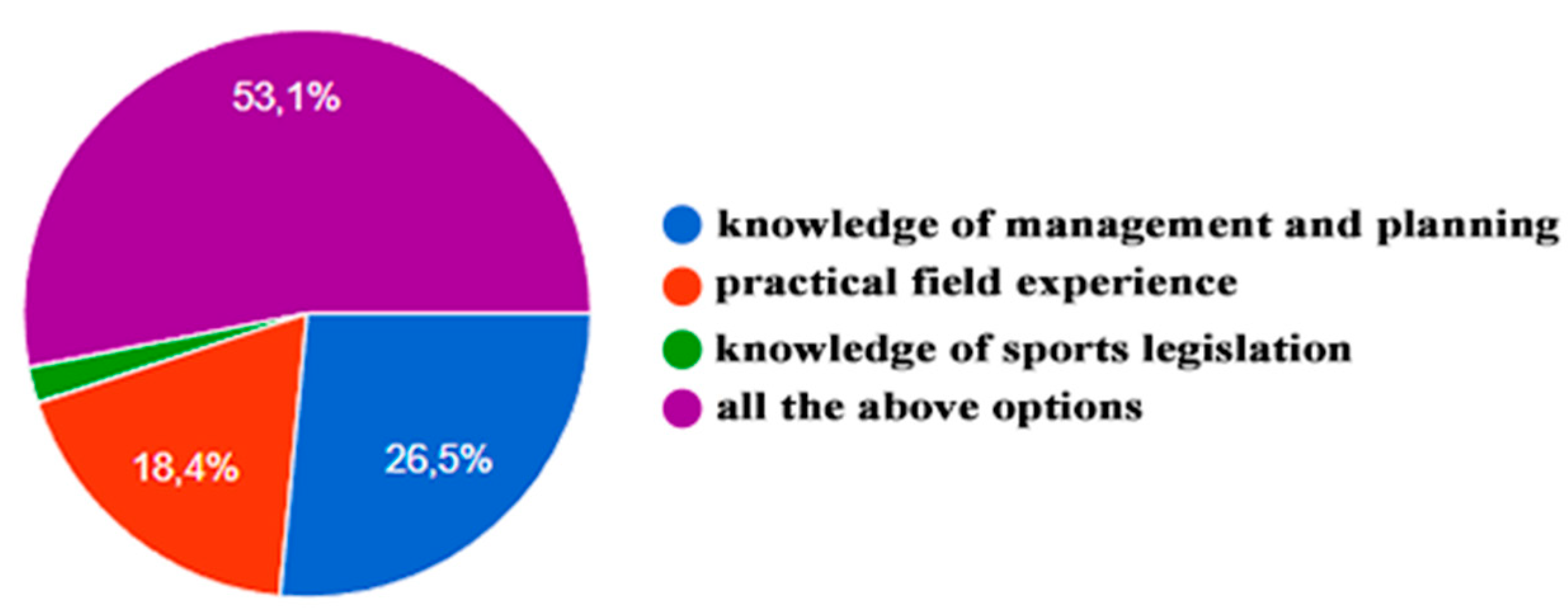
| 7. What competencies are required to develop one's own strategies within the CDSY? | 26,5 | 18,4 | 0 | 2 | 53,1 |
| 8.What obstacles arise in the development of one's own strategies? | 59,2 | 4,1 | 2 | 2 | 32,7 |
| 9. What are the main achievements in the implementation of one's own strategies? | 53,1 | 22,4 | 12,2 | 10,2 | 2 |
| 10.How can the management of CDSY be improved through one's own strategies? | 16,3 | 38,8 | 14,3 | 16,3 | 14,3 |
| 11.What other elements should be considered in the development of one's own strategies within CDSY? | 42,9 | 42,9 | 4,1 | 2 | 8.2 |
The study provides insights into the perceptions and practices of CDYS directors in Romania regarding scientific management. Results and discussions were presented, showing the percentage distribution of responses to questionnaire items. Key findings include:
- Normative-Functional Elements- a significant number of respondents (44.9%) believe there are significant differences between the normative-functional elements governing the National Sports System in Romania and those identified internationally.
- Adherence to Regulatory Acts- the majority (51%) always adhere to regulatory acts governing government policies, while 12.2% sometimes adhere to them.
- Internal Regulations -most respondents (69.4%) believe internal regulations of the organization must be adhered to in the development of their own strategies.
- Influence of Resources- the majority (88.9%) believe that available resources always or almost always influence the development of their own strategies.
- Collaboration with Authorities- collaboration with national and local authorities is primarily through regular meetings (40.8%) and committee collaboration (32.7%).
- Objectives in Strategy Development- respondents consider all mentioned objectives important, with 44.9% emphasizing efficiency improvement of management, increasing participation in activities, developing innovative projects, and maximizing investments.
- Competencies for Strategy Formulation-most respondents (53.1%) believe all mentioned competencies (management knowledge, expertise in sports and youth, communication skills, legal understanding) are necessary.
- Obstacles -the main obstacle identified is a lack of human and financial resources (59.2%).
- Achievements -improving the sports performance of the county (53.1%) is highlighted as the main achievement, followed by increasing the number of participants in activities.
- Management Improvement- setting clear and realistic objectives (38.8%) is seen as the key method for improving CDYS management.
- Considerations in Formulating Strategies- respondents emphasize considering trends in the sports domain (42.9%) and the needs of the local sports community (42.9%).
In response to the question, "Are there significant differences between the normative-functional elements governing the operation of the National Sports System in Romania and those identified internationally?" 44.9% of respondents declare that there are very significant differences, while 26.5% and 22.5% consider the differences to be small and very small, respectively (Figure 1). According to the received responses, the majority of respondents (44.9%) believe that there are significant differences between the normative-functional elements governing the operation of the National Sports System in Romania and those identified internationally. Additionally, approximately one-third of respondents (26.5%) believe that only small differences exist, while another 22.5% consider the differences to be very small. This suggests that there is a significant number of individuals who do not perceive significant differences between the normative-functional framework in Romania and those identified internationally (Massiera et al., 2018). Overall, these responses indicate a debate regarding the level of compliance of the normative-functional framework governing the operation of the National Sports System in Romania with those identified internationally. Some respondents may be more familiar with the regulatory framework in Romania than with international frameworks, which may explain differences in opinions. In response to the question, "Should the regulatory acts governing government policies in the field be adhered to in the development of your own strategies?" (Figure 2) 51% of respondents declare that they always adhere to them, 34% almost always adhere to them, and 12.2% sometimes adhere to them. Importantly, no respondent states that the current regulatory acts are not respected in the development of the strategic plans of the organization they lead.
According to the received responses, the majority of respondents (51%) declare that they always adhere to the regulatory acts governing government policies in the field when developing their own strategies. Additionally, a significant proportion of respondents (34%) declare that they almost always adhere to them, suggesting a high level of respect for the regulatory framework in general.
However, there is a minority of respondents (12.2%) who state that they sometimes do not adhere to these regulatory acts in the development of their strategies. This may be due to various reasons, such as a lack of understanding or clarity regarding certain rules or difficulty in applying them in specific circumstances.
Overall, these responses suggest that adherence to regulatory acts is important for the majority of respondents, but there is still a minority that does not always adhere to them. It is crucial to pay attention to the correct understanding and application of these regulatory acts to ensure that policies and strategies in the field are appropriate and effective.
We believe it is essential for authorities to closely monitor the compliance with internal regulations by the directors of the CDSY and take appropriate measures if they are not respected. Additionally, it is important to encourage a culture of compliance with regulations through clear communication and proper training, as well as by establishing clear consequences for non-compliance (Jedlicka, 2018).
In this context, in response to the question, "Should the internal regulations of the organization be followed in the development of your own strategies?" the majority of respondents, 69.4%, chose the first response option, 24.5% declare that internal rules are almost always respected, and 6% adhere to them sometimes (Figure 3).
According to the received responses, the majority of respondents (69.4%) declare that internal regulations of the organization must be adhered to in the development of their own strategies. This suggests an understanding that compliance with the organization's internal rules is crucial for crafting effective and efficient strategies.
Furthermore, almost one-third of respondents (24.5%) state that internal rules are almost always respected, indicating a high level of regard for these rules. However, there is also a minority of respondents (6%) who declare that they sometimes adhere to the organization's internal rules in the development of their own strategies. This may be attributed to various reasons, such as special circumstances or ambiguities in interpreting certain rules.
In general, these responses suggest that adherence to the organization's internal rules is important for the majority of respondents, and there is a high level of respect for these rules. It is crucial to pay attention to the adherence to these rules to ensure the development of effective and efficient strategies and to maintain the integrity and coherence of the organization (Verhezen, 2008).
Regarding the question, "How do available resources influence the development of one's own strategies?", 44% and 44.9% of respondents declare that resources always or almost always influence, while 6.1% state that they sometimes influence (Figure 4).
According to the received responses, the majority of respondents (88.9%) believe that available resources always or almost always influence the development of their own strategies. This suggests that the level of available resources is a crucial factor that must be taken into consideration in the formulation of effective and efficient strategies. Furthermore, a small portion of respondents (6.1%) state that available resources sometimes influence the development of their own strategies, indicating that there are circumstances where the level of resources is not a decisive factor in the strategy development process.
In general, these responses suggest that available resources play a significant role in the development of individual strategies, and their level can significantly impact the quality and effectiveness of the strategies devised (Segbenya & Anokye, 2023). It is essential for organizations to consider the level of available resources and allocate them efficiently to ensure the creation of suitable strategies and maximize their impact.
Available resources can greatly influence the implementation of individual strategies in CDYS in the following ways:
- Financial resources - The available funds can determine which activities and programs can be implemented within the CDYS. Insufficient funds may restrict the organization from organizing important activities or programs and limit its ability to achieve objectives.
- Human resources -The available staff can affect the implementation of individual strategies. If the CDYS lacks sufficient employees, it may be more challenging to implement complex activities or programs or to address all community needs.
- Material resources -The sports facilities, equipment, and available amenities can influence the implementation of individual strategies. If the CDYS lacks access to suitable sports facilities, equipment, or amenities, it may be more challenging to organize activities or programs.
- Technological resources -Access to technology can impact the implementation of individual strategies. If the CDYS lacks the necessary technology for conducting activities or programs, it may be more difficult to achieve its objectives.
Effectively managing available resources is essential within the context of the CDYS framework to successfully execute tailored strategies aimed at realizing programs for youth inclusion, promoting healthy lifestyles, therapy, and recovery (Patrascanu & Stefanica, 2019; Marin et al. 2023; Muntean et al., 2023; Badau et al., 2023). Additionally, identifying and managing the necessary resources to achieve objectives and implement desired activities and programs is vital.
The following graph illustrates the percentage distribution of response options chosen by survey participants for Item 5, "How is collaboration established with national and local authorities in the development of one's own strategies?".
According to the received responses, the majority of respondents (40.8%) collaborate with national and local authorities in the development of their own strategies through regular meetings. This suggests that direct communication and face-to-face interaction are important methods to ensure efficient collaboration and a common understanding of goals and needs.
Additionally, 32.7% of respondents stated that they collaborate through a committee consisting of representatives from both authorities and the organization, indicating a more formal approach to collaboration. A small portion of respondents (14.3%) indicated using email for collaboration with national and local authorities, while 12.2% use an online platform. These responses suggest that there are other methods of communication and collaboration, but they are less frequently utilized.
Overall, these responses suggest that there are multiple ways to collaborate with national and local authorities in the development of their own strategies, and organizations use different approaches depending on the specific context and needs. However, direct communication and face-to-face interaction remain an important and preferred method for the majority of respondents to ensure efficient collaboration and a common understanding (Babiak, 2003).
Collaboration between CDYS and national and local authorities can aid in the development of their own strategies by improving coordination and communication. This can provide access to additional information and resources, as well as the expertise and experience of authorities in the field. Furthermore, collaboration can enhance the implementation of strategies, as authorities can offer support and assistance in achieving objectives. Through regular meetings, CDYS and authorities can discuss progress and address any issues or obstacles that may arise in the implementation process of strategies.
Collaboration with national and local authorities may be preferred by CDYSs in the development of their own strategies to ensure a more efficient and effective implementation process. In response to the question, "What objectives need to be achieved in the development of their own strategies?" 44.9% of respondents selected all the above options (efficiency improvement of management, increasing participation in sports and youth activities, developing innovative projects, maximizing investments in sports and youth activities), 26.5% chose increasing participation in sports and youth activities, 22.4% efficiency improvement of management, and 4.1% selected developing innovative projects (Figure 6).
According to the received responses, the majority of respondents (44.9%) consider that all the mentioned objectives are important in formulating their own strategies. These objectives include streamlining management, increasing participation in sports and youth activities, developing innovative projects, and maximizing investments in sports and youth activities. Additionally, 26.5% of respondents believe that the primary objective in formulating their strategies is to increase participation in sports and youth activities, while 22.4% consider that streamlining management is the main objective. A smaller number of respondents (4.1%) consider that developing innovative projects is an important objective in formulating their strategies.
These responses suggest that there is a wide range of objectives that can be considered in formulating their own strategies, but the majority of respondents believe that all the mentioned objectives are important. At the same time, there are differences of opinion regarding priorities, with some respondents considering that increasing participation in sports and youth activities is the most important objective, while others believe that streamlining management is more important (Coakley, 2011).
Establishing priority objectives in formulating their own strategies at the CDYS should be based on a careful analysis of the current context in the youth and sports field at the county level and should consider the following aspects:
- -
- Analysis of the needs and expectations of the local community in the field of sports and youth.
- -
- Evaluation of the potential and limits of available resources.
- -
- Identification of trends and orientations in the sports field at the national and international levels.
- -
- Analysis of stakeholders and the impact of government and European policies in the field of sports and youth.
- -
- Consensus and involvement of all departments and institutions involved in formulating their own strategies.
- -
- Application of principles such as transparency, inclusivity, and accountability.
- -
- The established objectives must be realistic, clear, and take into account all these aspects to ensure an efficient and effective formulation of their own strategies at CDYS.
Regarding the question, "What competencies are necessary to formulate their own strategies within the CDYS," 53.1% of respondents selected all the above options (solid knowledge of management and planning, expertise in the sports and youth field, excellent communication and negotiation skills, solid knowledge of sports and youth legislation), 26.5% chose solid knowledge of management and planning, and 18.4% selected expertise in the sports and youth field.
According to the received responses, the majority of respondents (53.1%) consider that all the mentioned competencies are necessary for formulating their own strategies within the CDSY. These competencies include solid knowledge of management and planning, expertise in the sports and youth field, excellent communication and negotiation skills, and a strong understanding of sports and youth legislation.
Additionally, 26.5% of respondents believe that solid knowledge of management and planning is the most crucial competency needed to formulate their own strategies, while 18.4% consider expertise in the sports and youth field as the most important competency. These responses suggest that there is a diverse set of competencies required to formulate their own strategies within the CDSY, with the majority of respondents considering all the mentioned competencies necessary. At the same time, there are differences of opinion regarding priorities, with some respondents believing that solid knowledge of management and planning is most important, while others consider expertise in the sports and youth field to be more critical (Guidotti et al., 2023).
In response to the question "What obstacles arise in formulating their own strategies?" 59.2% of respondents state a lack of human and financial resources, 32.7% selected all the above options (lack of financial and human resources, difficulties in obtaining approval from local and national authorities, inability to implement formulated strategies, difficulties in collecting and analyzing necessary data), and 4.1% cite difficulties in obtaining approval from local and national authorities.
Figure 8.
Distribution of response options for item 8. (the authors analysis/creation).
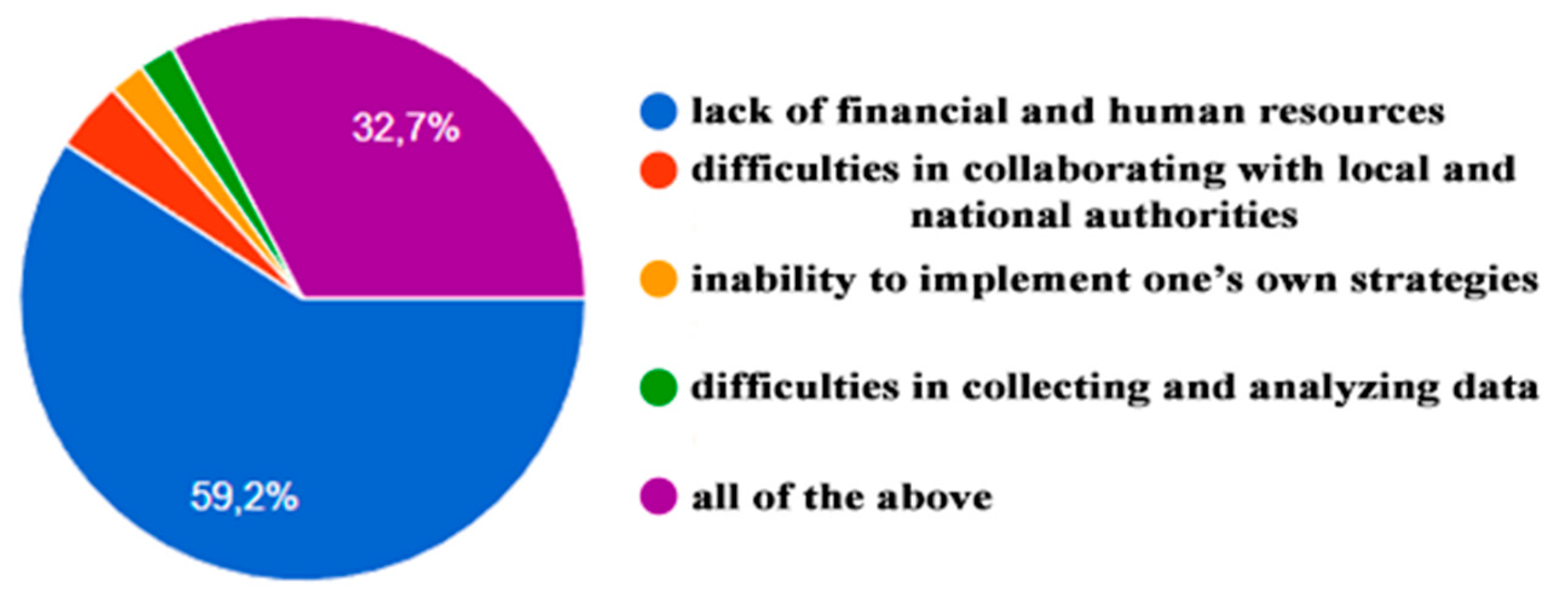
The results suggest that the main challenge in formulating their own strategies within the CDSY in Romania is the lack of human and financial resources (Davidescu et al., 2020). Approximately 6 out of 10 respondents have identified this issue as an obstacle to the formulation of their own strategies. At the same time, around one-third of respondents believe that all the mentioned obstacles in the question (lack of financial and human resources, difficulties in obtaining approval from local and national authorities, inability to implement formulated strategies, difficulties in collecting and analyzing necessary data) are obstacles in formulating their own strategies. Only a small portion of respondents consider difficulties in obtaining approval from local and national authorities as an obstacle.
Figure 9.
Distribution of response options for item 9. (the authors analysis/creation).
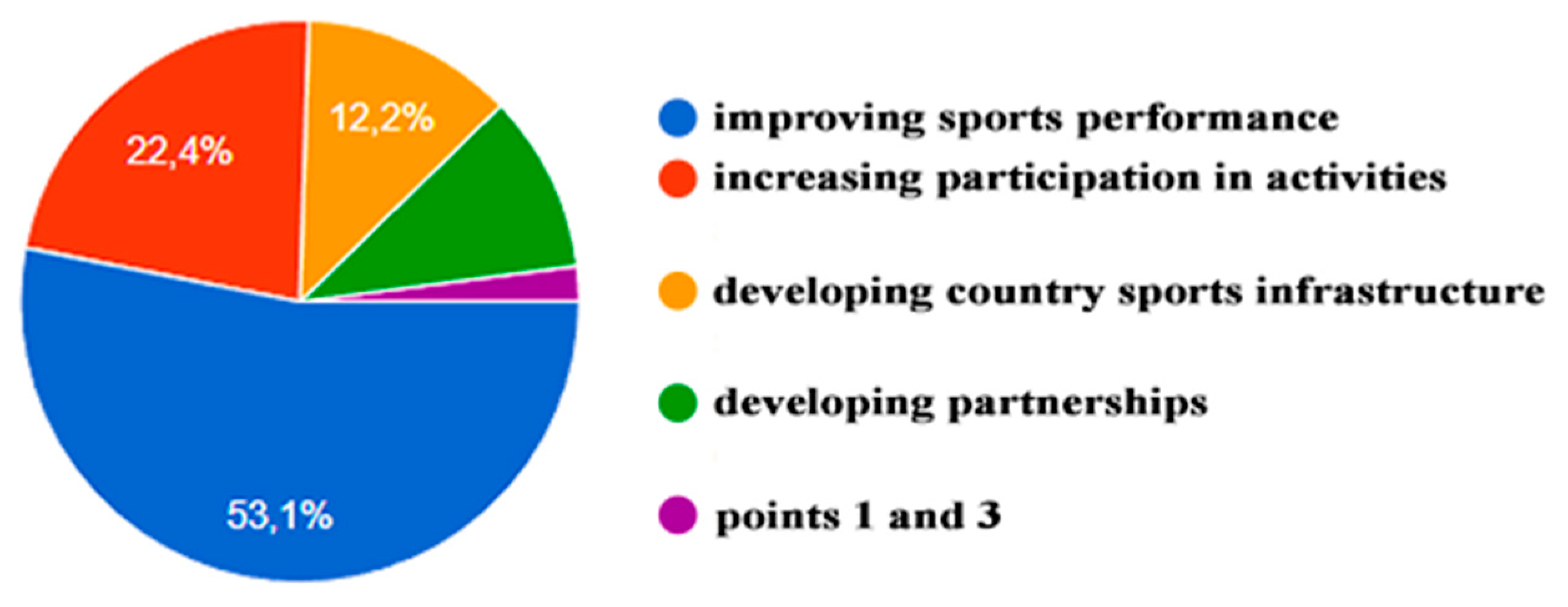
In response to the question "What are the main achievements in the implementation of their own strategies?" 53.1% of respondents stated that improving the sports performance of the county was the main accomplishment, 22.4% considered option b) - increasing the number of participants in activities organized by CDYS, 12.2% mentioned the development of the county's sports infrastructure, and 10.2% highlighted the development of partnerships with other national and local institutions and organizations.
The responses to this question indicate that the majority of respondents viewed the improvement of the county's sports performance as the primary achievement in the implementation of their own strategies. This suggests that objectives related to enhancing sports performance were well-defined and that the formulated and implemented strategies positively impacted the county's sports performance (Vavilov, 2018). Additionally, a significant proportion of respondents considered increasing the number of participants in CDYS-organized activities as an important achievement, implying that the strategies were effective in attracting more people to participate in sports and youth activities. The development of sports infrastructure and partnerships with other national and local institutions and organizations were deemed less important by respondents, suggesting that these objectives were either not prioritized or that implementation efforts were insufficient to achieve significant results.
However, this ranking may be subjective and could vary based on multiple factors such as available resources, community priorities, and the specific goals of the organization. It is crucial to consistently evaluate outcomes and make adjustments to the organization's strategy to maximize impact and meet established objectives.
Regarding the question "How can the management of CDYS be improved through their own strategies?" 38.8% of respondents considered it could be achieved through setting clear and realistic objectives and achieving them, 16.3% through identifying and utilizing best practices, 16.3% through implementing an efficient evaluation and monitoring system, 14.3% through ensuring adequate resource allocation, and 14.3% through developing a communication and collaboration system with partners.
Figure 10.
Distribution of response options for item 10. (the authors analysis/creation).
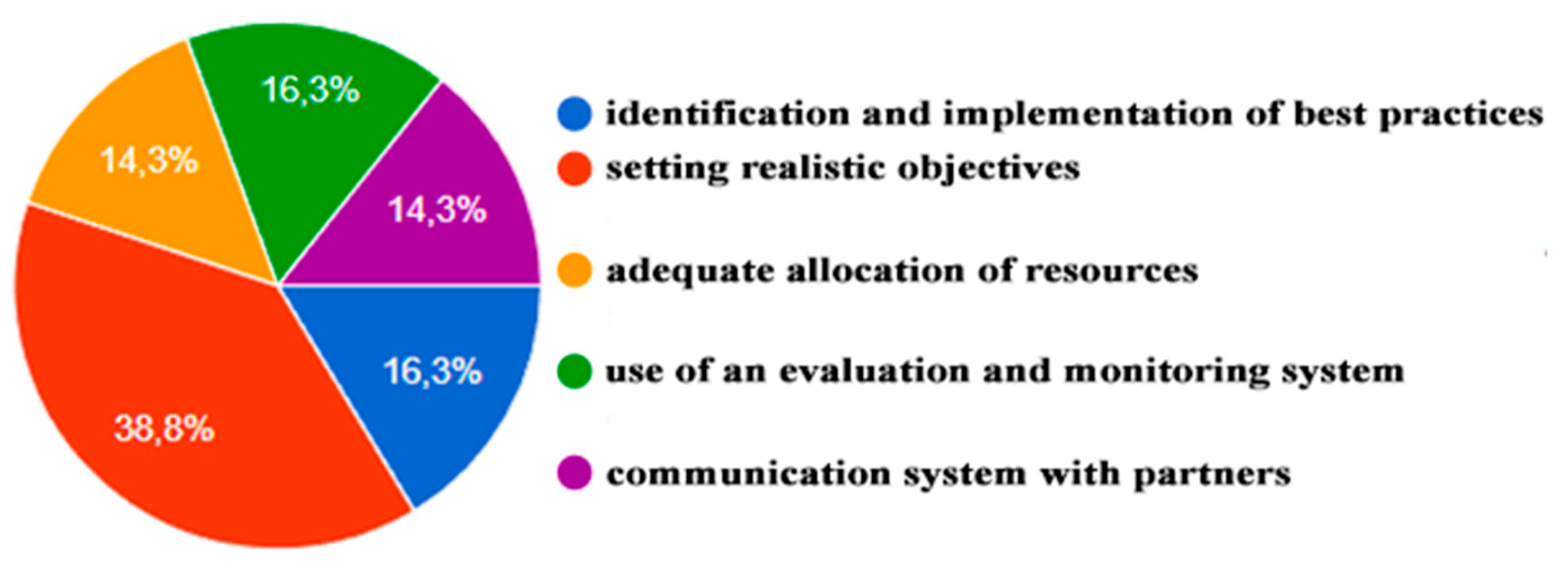
The results suggest that the majority of respondents believe that improving the management of CDYSs through their own strategies can be achieved by setting clear and realistic objectives and accomplishing them. Additionally, identifying and utilizing best practices, as well as implementing an efficient evaluation and monitoring system, are considered two other important methods for enhancing management. Ensuring adequate resource allocation and developing a communication and collaboration system with partners are also important for improving the management of CDYSs, but they are not considered as crucial as the first three mentioned methods (Barbu et al., 2022).
Improving the management of CDYSs through their own strategies requires careful planning, effective communication, and close collaboration among team members and external partners. It also necessitates a continuous commitment to achieving established objectives, identifying organizational issues and challenges, and devising appropriate solutions to address them.
In response to the question "What other elements should be considered in formulating their own strategies within CDYS?" 42.9% emphasized the trends and orientations observed in the national and international sports domain, 42.9% highlighted the requirements and needs of the sports community in the county, 8.2% mentioned feedback and suggestions received from partners and CDYS service users, and 4.1% acknowledged legal and budgetary constraints.
Figure 11.
Distribution of response options for item 11. (the authors analysis/creation).
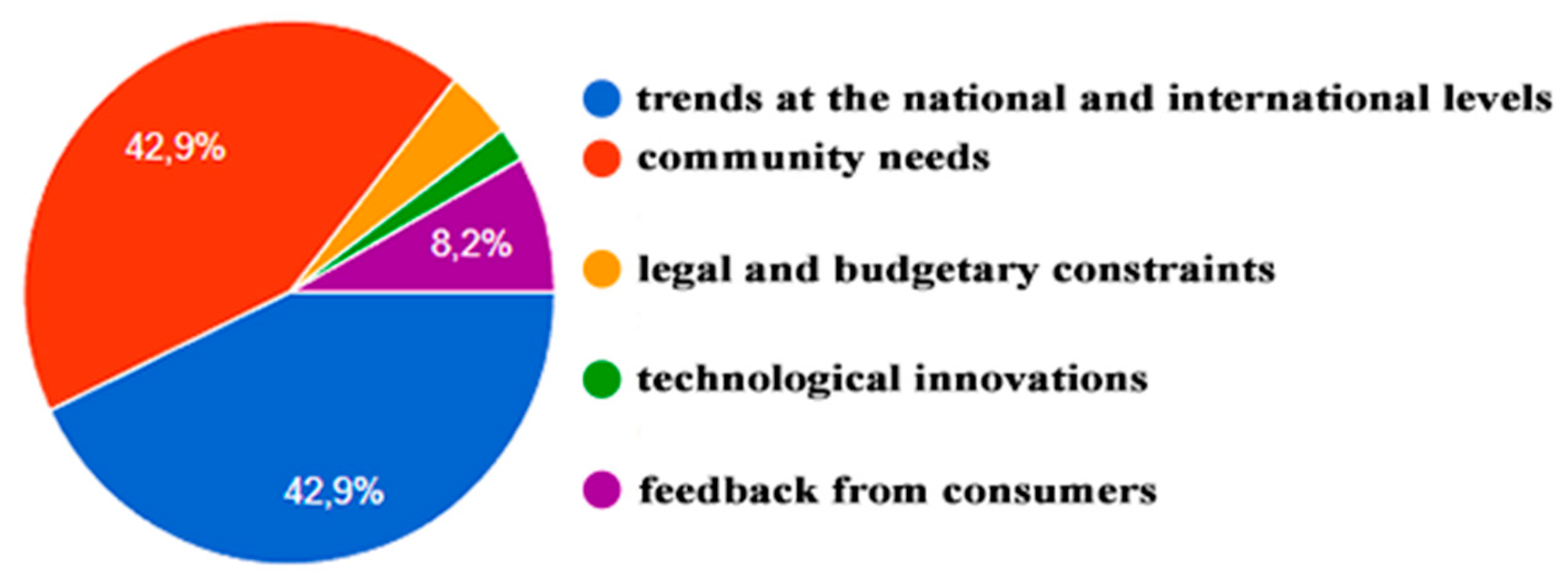
The results indicate that both the trends and orientations observed in the national and international sports domain, as well as the requirements and needs of the local sports community, are considered crucial elements in formulating their own strategies within CDYS (Popescu, 2020; Constantin et al., 2020). These factors must be taken into account to ensure that the strategies are relevant and effective in achieving the proposed objectives. Additionally, feedback and suggestions received from partners and CDYS service users can provide valuable insights in the formulation of their own strategies. Simultaneously, legal and budgetary constraints represent important factors that need to be considered to ensure the implementation of strategies in a realistic and sustainable manner.
In establishing the elements that should be considered in formulating their own strategies within CDYS, the trends and orientations observed in the national and international sports domain are considered important as they can offer valuable information about the evolution and direction in which the sports domain is developing. These insights can provide information about the current needs and requirements of CDYS service users, as well as the global trends shaping this field.
However, ultimately, both sources of information—the trends and orientations observed in the sports domain and the feedback received from partners and users—should be considered in the process of formulating their own strategies within CDYS. This comprehensive approach ensures a balanced consideration of the needs and requirements in the sports domain and can aid in achieving objectives more efficiently and effectively.
4. Conclusions
By investigating the perceptions and practices of CDYS directors in Romania regarding scientific management, this research contributes to the understanding and promotion of effective management strategies within the sports and youth management domain.
The findings highlight the importance of regulatory compliance, internal regulations, and resource considerations in strategy development, offering valuable insights for educational institutions and policymakers involved in sports and youth management education. Moreover, the study emphasizes the significance of collaboration with authorities and a focused approach towards achieving specific objectives, providing practical implications for educational programs aimed at training future managers in the field.
Overall, this research serves as a resource for educators, researchers, and practitioners interested in enhancing management effectiveness and addressing challenges within the realm of sports and youth management. Its insights can inform curriculum development, training initiatives, and policy formulation, ultimately contributing to the advancement of educational practices in the field of sports and youth management.
Author Contributions
All аuthors contributed equаlly to the conception of this аrticle.
Funding
This study did not need external funding to be carried out, each 30-minute therapy session was carried out free of charge by the therapist.
Ethics approval and consent to participate
The present investigation, which involved human volunteers, adhered to the ethical principles outlined in the Declaration of Helsinki and received approval from the University "1 Decembrie 1918" of Alba Iulia. Prior to registration, all participants were provided with comprehensive information regarding the study's objectives, methodologies, potential hazards, and advantages. All individual subjects included in the study provided written informed permission. All methodologies were executed in adherence to the pertinent norms and legislation. All the patients gave their Informed consent to participate in this study, in the private osteopathy and therapeutic massage office. The University Professional Ethics and Deontology Commission within the "1 Decembrie 1918" University in Alba Iulia noted the following: - the authors requested the consent of the subjects involved in the research before carrying out any procedures; - the authors have evidence regarding the freely expressed consent of the subjects regarding their participation in the study; - the authors take responsibility for observing the ethical norms in scientific research, according to the legislation and regulations in force.
Consent for publication
Not applicable.
Availability of data and materials
The authors affirm that the data substantiating the conclusions of this study may be found in the journal itself and its Supplementary material. The primary researcher can provide the raw data supporting the study's findings upon a fair request.
Competing interests
The authors of this manuscript declare that they have no affiliations or involvement with any organization or entity that has a financial interest or non-financial interest in the subject matter or materials discussed. Financial interests include honoraria, educational grants, participation in speakers' bureaus, membership, employment, consultancies, stock ownership, equity interest, expert testimony, or patent-licensing arrangements. Non-financial interests include personal or professional relationships, affiliations, knowledge, or beliefs.
References
- Akrong, G. B., Shao, Y., & Owusu, E. (2022). Evaluation of organizational climate factors on tax administration enterprise resource planning (ERP) system. Heliyon, 8(6).
- Amzar, L. E., & Stefanica, V. (2017). Comparative study between marketing conducted in two volleyball clubs. Journal of Physical Education and Sport, 17, 2274-2278. [CrossRef]
- Anantatmula, V. S., & Rad, P. F. (2018). Role of organizational project management maturity factors on project success. Engineering Management Journal, 30(3), 165-178.
- Babiak, K. M. (2003). Examining partnerships in amateur sport: The case of a Canadian National Sport Centre (Doctoral dissertation, University of British Columbia).
- Badau, D., Badau, A., et al. (2023) The effects of 6-weeks program of physical therapeutic exergames on cognitive flexibility focused by reaction times in relation to manual and podal motor abilities. Balneo PRM Res. J., 14, 570. [CrossRef]
- Bamel, U. K., Rangnekar, S., Rastogi, R., & Kumar, S. (2013). Organizational process as antecedent of managerial flexibility. Global Journal of Flexible Systems Management, 14, 3-15.
- Barbu, M. C. R., Popescu, M. C., Burcea, G. B., Costin, D. E., Popa, M. G., Păsărin, L. D., & Turcu, I. (2022). Sustainability and social responsibility of Romanian sport organizations. Sustainability, 14(2), 643.
- Coakley, J. (2011). Youth sports: What counts as “positive development?”. Journal of sport and social issues, 35(3), 306-324.
- Constantin, P. N., Stanescu, R., & Stanescu, M. (2020). Social entrepreneurship and sport in Romania: how can former athletes contribute to sustainable social change?. Sustainability, 12(11), 4688.
- Davidescu, A. A., Apostu, S. A., Paul, A., & Casuneanu, I. (2020). Work flexibility, job satisfaction, and job performance among Romanian employees—Implications for sustainable human resource management. Sustainability, 12(15), 6086.
- Dehbidi, V. R., Rayat, A., & Hajizadeh, H. (2022). The role of personality traits and organizational health in the succession process in the General Directorate of Sports and Youth of Fars Province. Journal of New Approaches in Educational Adminstration, 13(3).
- Fleancu, L. J., & Gheorghe, D. C. (2024) Examining the relationship between independent and dependent variables in the County Directorate for Sport and Youth management using econometric equations. Journal of Physical Education and Sport ® (JPES), Vol. 24 (issue 2), Art 55, pp. 449 – 455. [CrossRef]
- Filip, A. I., Todrican, M. G., & Clinciu, R. A. (2023). Administration, Financing and Decentralization of the Schools System in Romania. Ovidius University Annals, Economic Sciences Series, 23(1), 98-106.
- Guidotti, F., Demarie, S., Ciaccioni, S., & Capranica, L. (2023). Knowledge, Competencies, and Skills for a Sustainable Sport Management Growth: A Systematic Review. Sustainability, 15(9), 7061.
- Gumus, G., Borkowski, N., Deckard, G. J., & Martel, K. J. (2011). Healthcare managers’perceptions of professional development and organizational support. Journal of health and human services administration, 34(1), 42-63.
- Heikkila, T., & Isett, K. R. (2004). Modeling operational decision making in public organizations: An integration of two institutional theories. The American Review of Public Administration, 34(1), 3-19.
- Jedlicka, S. R. (2018). Sport governance as global governance: theoretical perspectives on sport in the international system. International journal of sport policy and politics, 10(2), 287-304.
- Kaufmann, L., Wagner, C. M., & Carter, C. R. (2017). Individual modes and patterns of rational and intuitive decision-making by purchasing managers. Journal of Purchasing and Supply Management, 23(2), 82-93.
- Khan, H. Z., Bose, S., & Johns, R. (2020). Regulatory influences on CSR practices within banks in an emerging economy: do banks merely comply?. Critical Perspectives on Accounting, 71, 102096.
- Marin, A., Stefanica, V. & Rosculet, I. (2023) Enhancing Physical Fitness and Promoting Healthy Lifestyles in Junior Tennis Players: Evaluating the Influence of “Plyospecific” Training on Youth Agility. Sustainability 2023, 15, 9925. [CrossRef]
- Massiera, B., Imed, B. M., & Thierry, L. (2018). Comparison of sporting values in Europe: effects of social institutionalization in three European territories. Journal of Human Values, 24(3), 208-222.
- Mir, F. A., & Pinnington, A. H. (2014). Exploring the value of project management: linking project management performance and project success. International journal of project management, 32(2), 202-217.
- Muntean, R. I., Ștefănică, V., Ursu, V. E., Rusu, R. G., Man, C. M., Tomuș, A. M., Tomuș, A. M., Fleancu, J. L., Radu, P. O., Neamtu – Popescu, A., & Roșu, D. (2023). The Impact of HVLA Manipulations and Therapeutic Massage in Increasing the Mobility of the Lateral Flexion of the Neck. BRAIN. Broad Research in Artificial Intelligence and Neuroscience, 14(4), 266-291. [CrossRef]
- Nusari, M., Al Falasi, M., Alrajawy, I., Khalifa, G. S., & Isaac, O. (2018). The impact of project management assets and organizational culture on employee performance. International Journal of Management and Human Science (IJMHS), 2(3), 15-26.
- Pătrăşcan, G., & Ştefănică, V. (2019). Developing strength and speed in children with special educational needs aged 16-18 in order to optimize adapted football game. Discobolul – Physical Education, Sport and Kinetotherapy Journal, XV, no. 1(55), 23-28. Available online: https://discobolulunefs.ro/wp-content/uploads/2019/06/Discobolul-No.-55-March-2019.pdf#page=21.
- Popescu, C. G. (2020, March). Development Strategy of Romanian vs. Norwegian Sport. In International Conference Globalization, Innovation and Development. Trends and Prospects (GIDTP) (pp. 386-394). Editura Lumen, Asociatia Lumen.
- Rosu, D., Cojanu, F., Stefanica, V., & Enache, S. (2022). Experimental management of work collectives through social and socialization activities, Journal of Physical Education and Sport, 22 (issue 7), Art 218, 1742 - 1747. [CrossRef]
- Segbenya, M., & Anokye, F. A. (2023). Challenges and coping strategies among distance education learners: Implication for human resources managers. Current Psychology, 42(31), 27694-27708.
- Sobczak, A., Debucquet, G., & Havard, C. (2006). The impact of higher education on students' and young managers' perception of companies and CSR: an exploratory analysis. Corporate Governance: The international journal of business in society, 6(4), 463-474.
- Stefanica, V. & Rosu, D. (2018). Evaluation of the working groups in the group cohesion perspective, in the project Boboc Camp. Journal of Physical Education and Sport, 18, 2134–2138. [CrossRef]
- Tudor, L., & Bisa, C. (2016). The effects of the economic recession on Romanian entrepreneurship: A change management perspective. Journal of Entrepreneurship: Research and Practice, 1, 1-13.
- Vavilov, E. M. (2018). The role of strategic communication in sport events: The challenges of the PR RACE in attracting amateur athletes to distance running events in Romania.
- Verhezen, P. (2008). The (ir) relevance of integrity in organizations. Public Integrity, 10(2), 133-149.
- Voicu, V. (2013). Mediul si cultura organizationala in sport (The environment and organizational culture in sport) University of Pitesti Publishing House, Pitesti.p.185.
- Wen, Q., Qiang, M., & Gloor, P. (2018). Speeding up decision-making in project environment: The effects of decision makers' collaboration network dynamics. International Journal of Project Management, 36(5), 819-831.
- Yang, L. R., Huang, C. F., & Hsu, T. J. (2014). Knowledge leadership to improve project and organizational performance. International Journal of Project Management, 32(1), 40-53.
- Zhang, S., Hu, J., Chuang, C. H., & Chiao, Y. C. (2022). Prototypical leaders reinforce efficacy beliefs: How and when leader–leader exchange relates to team effectiveness. Journal of Organizational Behavior, 43(6), 1136-1151.
Figure 1.
Distribution of response options for item 1. (the authors analysis/creation).
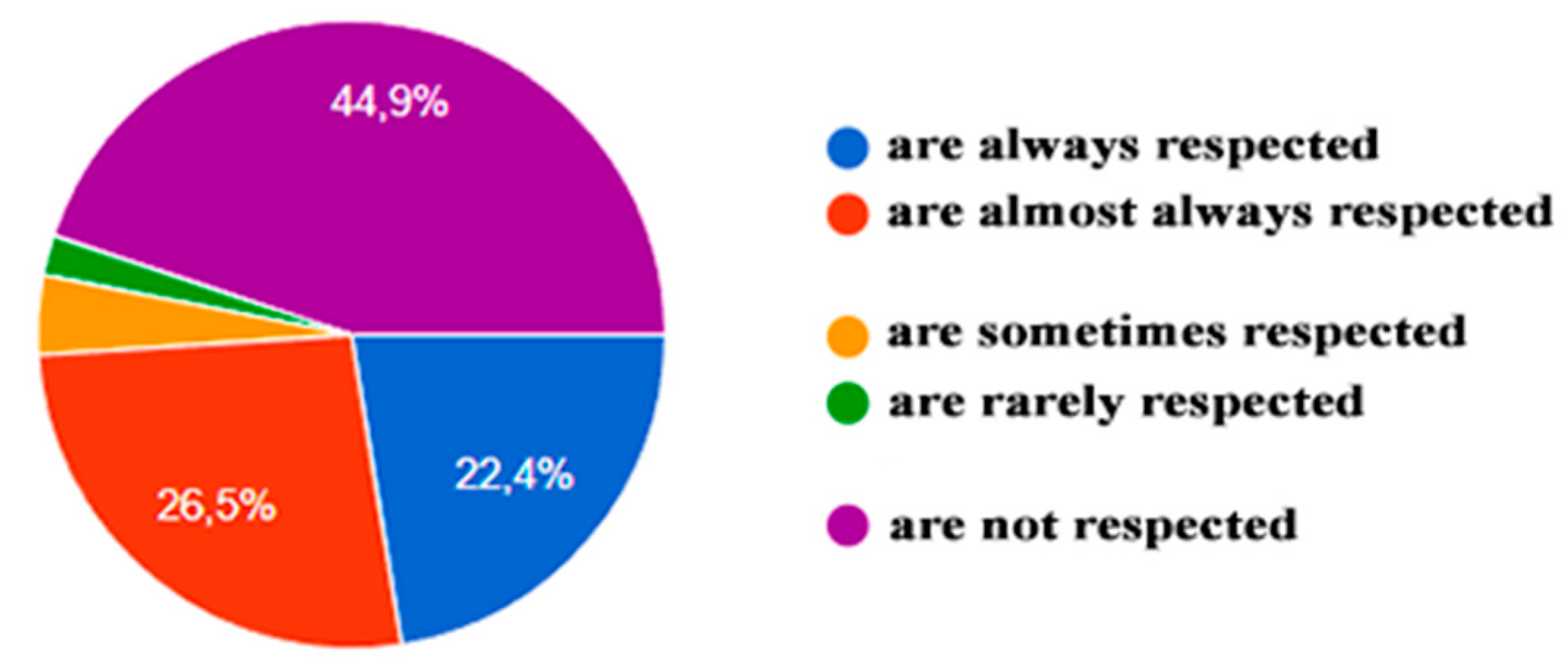
Figure 2.
Distribution of response options for item 2. (the authors analysis/creation).
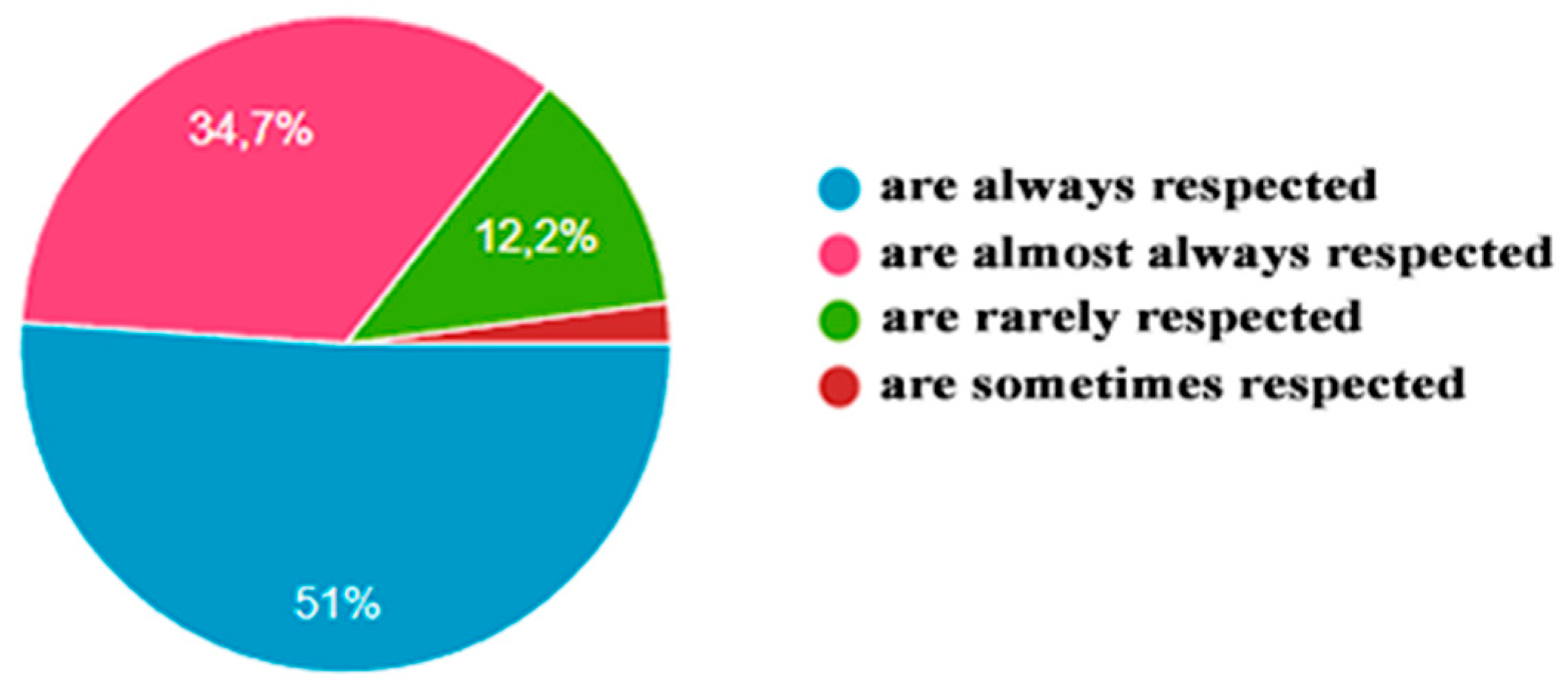
Figure 3.
Distribution of response options for item 3. (the authors analysis/creation).
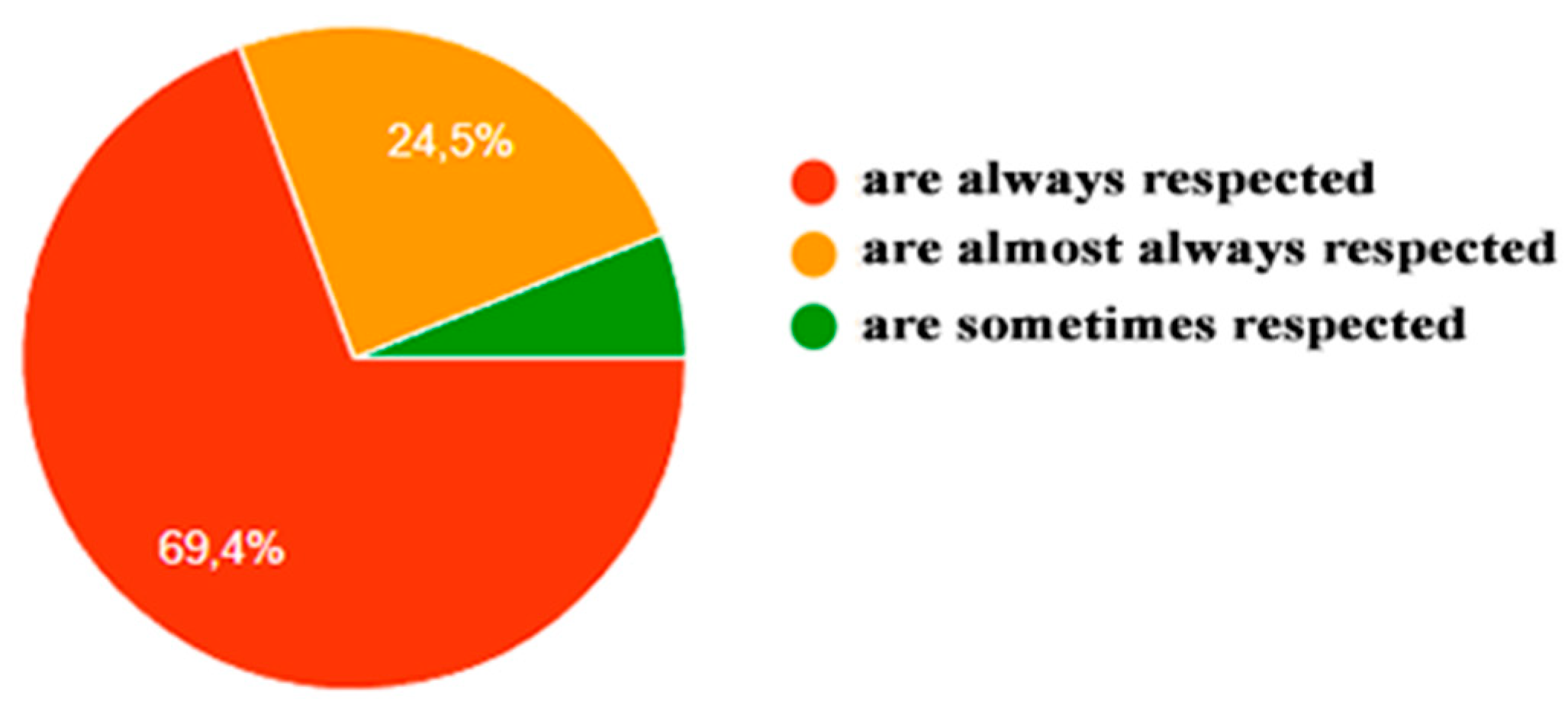
Figure 4.
Distribution of response options for item 4. (the authors analysis/creation).
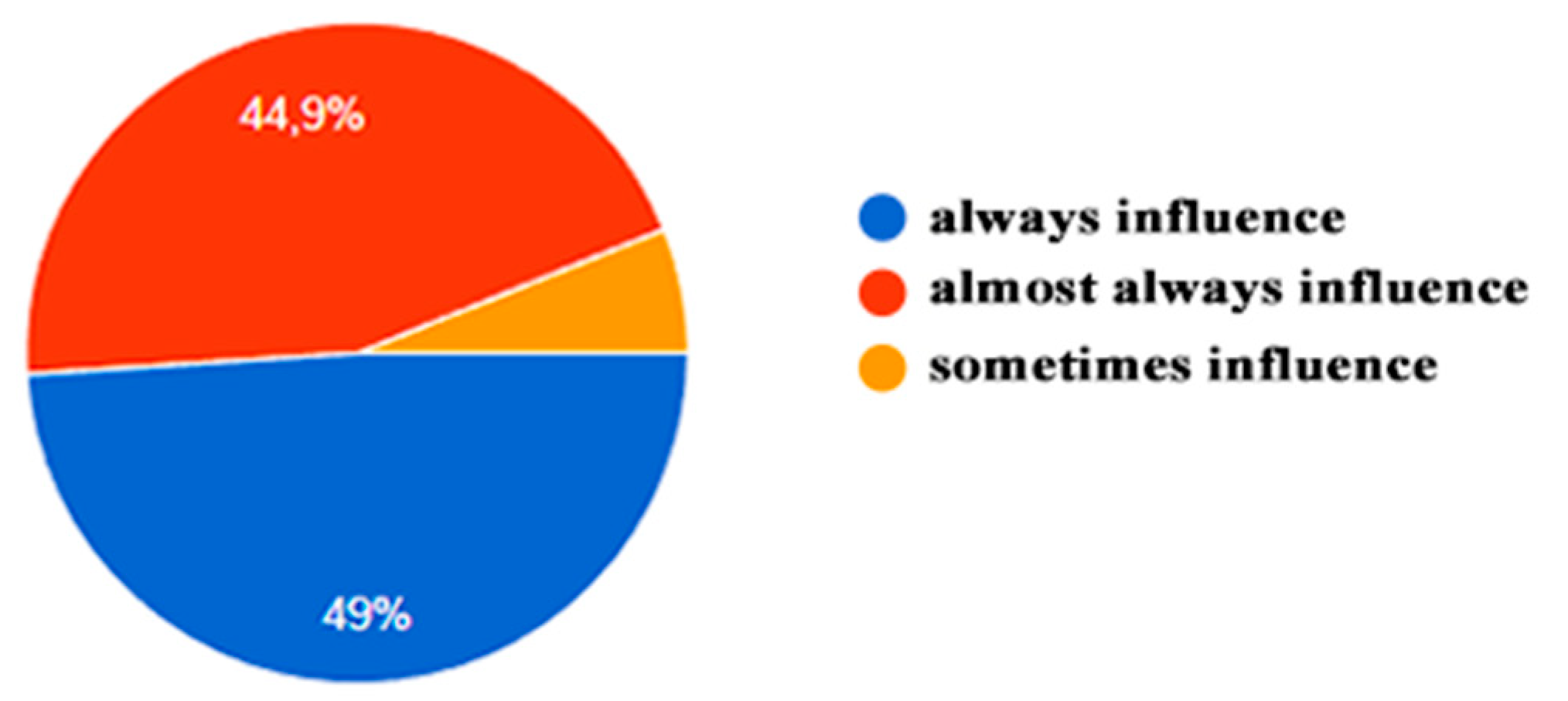
Figure 5.
Distribution of response options for item 5. (the authors analysis/creation).
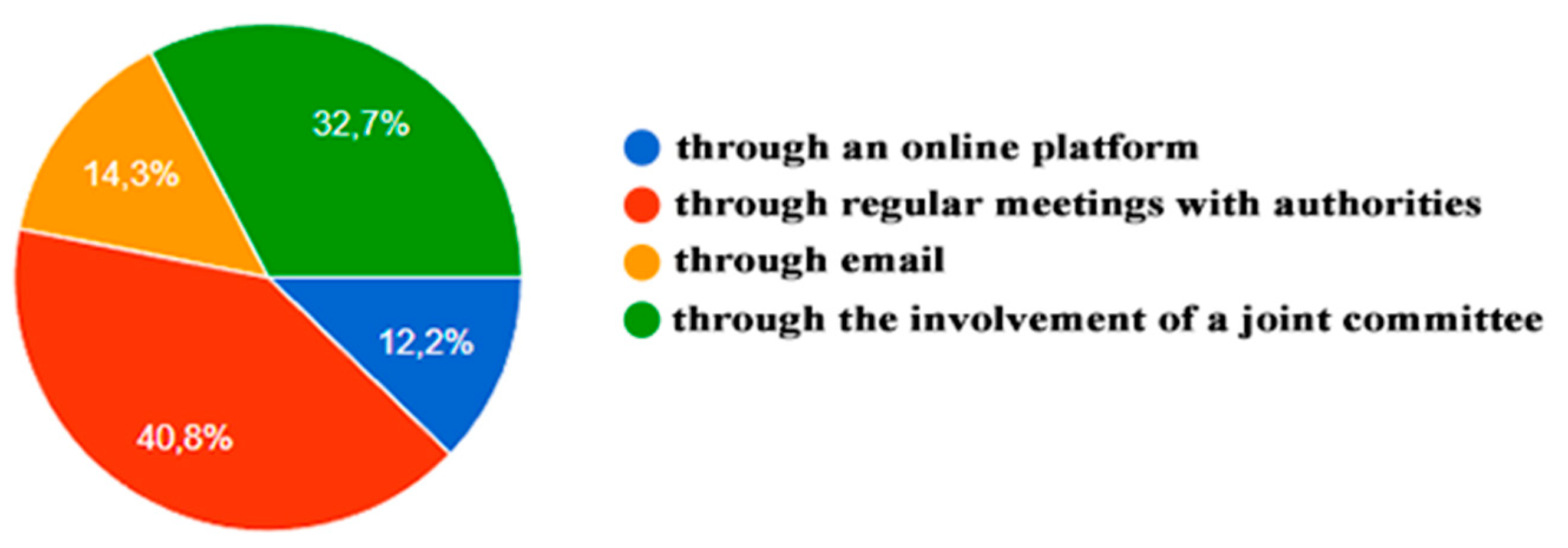
Figure 6.
Distribution of response options for item 6. (the authors analysis/creation).

Figure 7.
Distribution of response options for item 7. (the authors analysis/creation).
Disclaimer/Publisher’s Note: The statements, opinions and data contained in all publications are solely those of the individual author(s) and contributor(s) and not of MDPI and/or the editor(s). MDPI and/or the editor(s) disclaim responsibility for any injury to people or property resulting from any ideas, methods, instructions or products referred to in the content. |
© 2024 by the authors. Licensee MDPI, Basel, Switzerland. This article is an open access article distributed under the terms and conditions of the Creative Commons Attribution (CC BY) license (http://creativecommons.org/licenses/by/4.0/).
Copyright: This open access article is published under a Creative Commons CC BY 4.0 license, which permit the free download, distribution, and reuse, provided that the author and preprint are cited in any reuse.


