

Submitted:
28 February 2024
Posted:
29 February 2024
You are already at the latest version
Abstract
A total of 473 metabolites were identified from 4 sour cherry genotypes using UPLC-TOF-MS. Untargeted metabolomics revealed the dominant chemical groups present in sour cherries. PCA showed that the diversity in sour-cherry metabolites was due to the genotype differences indicating iditol, malic acid, chlorobenzene, 2-mercaptobenzothiazole, and pyroglutamic acid as the predominant contributors. The variable importance in the projection (VIP > 1.0) in partial least-squares–discriminant analysis described 20 biomarker metabolites, representing the cherry metabolome profiles. A heatmap of Pearson’s correlation analysis between the 20 biomarker metabolites and antioxidant activities identified seven antioxidant determinants that displayed the highest correlations with different types of antioxidant activities. This study of correlating metabolomics and antioxidant activities elucidated that the higher nutritional value and biological functions of select sour cherry genotypes can be useful for the development of nutraceutical and functional foods.
Keywords:
sour-cherry
; metabolomics
; antioxidant activity
; biomarker metabolites
; functional foods
1. Introduction
Cherry is a member of the Rosaceae family, belonging to the genus Prunus. Although several Prunus species are identified as cherry, two species- Prunus avium L (sweet cherry) and Prunus cerasus L (sour cherry) are the most common edible species [1]. Sour cherries are mostly processed into value-added products such as jam, juices, cannery products, and alcoholic beverages rather than fresh. Sour cherries are a rich source of polyphenolic compounds associated with antioxidant activity and other health benefits [2]. Consumption of sour cherries helps in treating several health issues such as muscle degeneration [3], heart ailments [4], cancer, diabetes [5], and inflammation [6]. In addition, its juice or concentrate consumption reduces the risk of gout attacks and arthritis, making it an attractive functional food [7]. Fruit phenolic compounds include anthocyanins, the primary determinant of color. Further, the secondary metabolites of phenolic components, such as flavonols, flavonoids, flavones, flavanones, catechin, and epicatechin, are known for their therapeutic properties [8] as well as for mitigating certain cancers [9,10].
According to FAO, sour cherry production in North America was 66,425 tonnes, with 4,236 tonnes of production in Canada [11]. Many sour cherry cultivars cultivated in North America are of European origin [12,13]. In North America, Montmorency is the most common sour cherry cultivar grown commercially [14]. Hence, existing sour cherry breeding programs focus on increasing fruit quality traits such as taste, appearance, nutraceutical value, and production. Nowadays, due to increased interest in the emerging health benefits of fruits, agricultural breeding programs focus more on secondary metabolites [15]. Previously, we analyzed the physicochemical characteristics of a diverse group of sour cherry genotypes [16]. From this work, we selected four sour cherry cultivars - two dark-fleshed and two light-fleshed cultivars- including the standard (Montmorency) for metabolic profiling.
Fruits of sour cherries contain major chemical groups, including sugars such as glucose, organic acids like citric and malic acid, and polyphenolic compounds (phenolic acids, flavonols, flavonoids, and anthocyanins), which could be influenced by genotypes and environment [17].
Although sour cherries are rich in metabolites, to date no comprehensive study analyzing the complete metabolic profile of sour cherries has been reported. Hence, we aimed to explore the metabolic profile of four sour cherry cultivars with diverse genetic background and their cross-correlation with antioxidant activity. This study comprehensively evaluates the type of metabolites, their relative content, accumulation quantity, and bioactivity in sour cherry cultivars. To our knowledge, this is the first detailed report of the metabolomic profile of sour cherry.
2. Results and Discussion
2.1. Quantification of total phenolic, flavonoid, anthocyanin and antioxidant content
The TPC of the dark-flesh cultivars ranged from 2.79-2.82 mg GAE/g FW, while light-flesh flesh genotypes had a range of 1.46-1.98 mg GAE/g FW. Overall, the findings suggest that there is a meaningful and statistically significant difference (p<0.05) in TPC between the two categories of sour cherry genotypes based on flesh color (Figure 1B). The accumulation of TFC followed the same pattern as TPC in the four sour-cherry cultivars. Anthocyanin components account for the red flesh color of sour cherry. As far as TPC and TFC values are concerned, TAC values follow a similar pattern for dark and light-flesh cultivars. The average TAC value for the dark-flesh cultivars ranged between 3.05- 4.85 mg CYN-3-glucoside Eq/g FW, and 0.38-0.94 mg CYN-3-glucoside Eq/ g FW, in the light flesh cultivars. TPC in dark flesh cultivars similar to fruits like blueberry, blackberry, and haskap was higher because of the accumulation of a high amount of phenolic acids- hydroxycinnamic acids, flavonols, and anthocyanin components [1]. The results of the TFC of the present study were much higher than the reported values of Chinese dwarf cherries [15]. Perhaps the genetics of the dwarf cherries as well as the environment they were grown are different than standard sour cherries resulting in the difference.
The antioxidant activity of sour cherry extract is strongly related to the structural activity of the metabolite composition. Thus, the antioxidant potential of the extract measured using different assays would provide the various aspects of scavenging activity [18]. Antioxidant activity assessed by FRAP and ABTS followed the same pattern as observed for total phenolics, flavonoids, and anthocyanin components (Figure 1C).
Dark-flesh cultivars showed two times more antioxidant activity than Montmorency and light-flesh cultivars (V70142). The antioxidant content for the dark-flesh cultivars is approximately two-fold higher than the previously reported results [19] as well as possibly due to higher anthocyanin and total phenolic components [20].
2.2. Untargeted metabolic profiling of selected sour cherry cultivars
473 metabolites (279 in ESI+ mode, 155 in ESI- mode, and 39 in both ESI+ and ESI- mode) were identified in sour cherry cultivars. Metabolite set enrichment analysis (MSEA) was done to identify the primary chemical groups associated with all the 473 identified metabolites representing the significant chemical group's classification of identified metabolite sets (top 25) with enrichment ratio (Figure 2A and 2B). The important groups identified in metabolites were organic acids, organoheterocyclic compounds, benzenoids, carbohydrates, nucleic acids, polyketides, organic oxygen, and nitrogen compounds, and a broad suite of lipid molecules such as fatty acids, prenol lipids, sterol lipids, sphingolipids, glycerolipids, lipids and lipid-like molecules, and glycerophospholipids (Figure 2B).
Chemical composition in fruit or vegetables is largely influenced by the genotype and environmental conditions and sour cherry is no exception to this. Previous studies also indicated that the primary chemical components found in sour cherry were fruit sugars (fructose, glucose, and sucrose), organic acids (malic acid), phenolic acids (5-caffeoylquinic, 3-caffeoylquinic and p-coumaric acids), flavonols (catechin and derivatives, quercetin and kaempferol glycosides), and coloring pigments (anthocyanins) [17]. Further, previous studies also reported a high amount of organic and phenolic acids in dark-flesh cultivars [21].
To get the possible differences in the bioactive components between dark and light flesh cultivars, we performed a multivariate statistical analysis. PCA 2D score plot (Figure 3A) showed a variation of 68.7% and 25.7% in the first (PC1) and second (PC2) principal components, respectively. A clear separation of all the cultivars based on different associated metabolites was observed. All the cultivars deviated from each other and clustered in different groups depending on metabolite similarities. As expected, a close aggregation was observed between dark flesh cultivars (Heiman R and Gorsesmka) and the light flesh cultivars (Montmorency and V70142) showed segregation from the dark flesh cultivars.
Further, the PCA scatter plot analysis suggested that Iditol was the primary metabolite contributing to the Heiman R, and malic acid was the predominant contributor to the Gorsemska. However, Chlorobenzene, 2-mercaptobenzothiazole, and pyroglutamic acid were the dominant donors for the standard variety (Montmorency) (Figure 3B). Despite identifying all the metabolites in the four cultivars, PCA analysis revealed that the difference in sour-cherry metabolites was majorly due to the genotype differences. Our results for the metabolic information of dark flesh cultivars Heiman R and Gorsemska are in correspondence with the results observed for Turkish sour-cherry cultivars [22].
2.3. Biomarker metabolites and their correlation with bioactive components
Partial least square–discriminant analysis (PLS-DA) of sour cherry cultivars was performed among the identified metabolites (473) of dark and light flesh cultivars. This analysis helped to obtain the biomarker metabolites based on variable importance in projection (VIP) scores. PLS-DA analysis of identified metabolites demonstrated a total of 20 biomarkers Iditol, 4-Oxoproline, 3-indoleacrylic acid, Pyroglutamic acid, Glutamic acid, Catechin, Indole, Malic acid, Chlorogenic acid, Gluconic acid, 2,4-Hexadienedial, 2-Oxoglutaric acid, Citric acid, Biochanin A, 3,4-Dihydroxybenzaldehyde, Hydroxybutyric acid, Allysine, Serine, Kaempferol, acetylacrylic acid observed for dark and light flesh sour cherry cultivars with a VIP score of ≥ 1.0. (Figure 4). Most of these biomarker metabolites were similar –either high or low- in their respective groups of dark-flesh or light-flesh cherries. Notable changes to this flesh color-based changes in metabolites are malic acid and 3,4, dihydroxy benzaldehyde which differed within similar flesh-colored cultivars. These biomarker metabolites are predominantly organic acids, phenolic acids, flavonoids, anthocyanins, and amino acids. Previous reports suggested that sour cherry phenolic components mainly contain phenolic acid derivatives- hydroxycinnamic acids, gallic acid, ascorbic acid, citric acid, chlorogenic, neochlorogenic acid, flavonol- catechin, epicatechin, rutin, quercetin, and anthocyanin components- cyanidin glucosides derivatives, kaempferol, and acetylacrylic [23]. Our results suggest this grouping can be tighter than previously reported.
An untargeted metabolomics strategy can be used to identify the metabolome associated with the antioxidant activity present in sour-cherry varieties having different flesh colors. To test this hypothesis, we performed a heat-map analysis of the major compounds identified in sour cherries (Figure 5). The heat map results indicated a better visualization of the dark and light flesh cultivars' metabolite content and antioxidant activity. Based on FRAP and ABTS assays our previous data suggested that the dark flesh cultivars have a higher antioxidant capacity, DPPH assay suggested that one of the dark-colored cultivars-Gorsemska- is comparatively low in antioxidant capacity among the 4 cultivars [16]. This follows the data presented in Fig 1C as well which showed that the DPPH value, as determined by the standard colorimetric process, is indeed the lowest in Gorsemska. It has been observed earlier that sweet cherries that had high malic acid were also exhibiting high DPPH values [24]. This could be because the proton transfer reaction of DPPH+ free radical by a scavenger (A-H) often influenced by organic acids causes a decrease in absorbance and thus lower absorbance for DPPH assay [25]. Further Huang et al., (2022) [26] showed that malic acid applications decreased the DPPH activity in lychee fruits. Together these results suggest that the change in malic acid content could be a factor in the reduced DPPH value in Gorsemska. A more recent study in Chinese cherry [Cerasus pseudocerasus (Lindl.) G.Don], suggested that bitterness in these cherries is a result of mainly limocitrin-7-O-glucoside, with minor effects from eight other compounds [27].
The heatmap generated from the metabolomic analyses showed that the dark-flesh cultivars exhibited relatively higher TPC, TFC, and TAC values. However, TPC was higher than TFC and TAC in both dark-flesh cultivars, which was different from the colorimetric quantification observed earlier [16], where it was shown that TFC was the dominant antioxidant group. The metabolites responsible for the high antioxidant activity in dark-flesh cultivars were biochanin A, allysine, 2, 4-hexadienedial, and acetyl acrylic acid, while, glutamic acid, pyroglutamic acid, and serine seem to control the antioxidant levels in light flesh cultivars (Figure 4). Previous studies also reported that the major flavonoid and phenolic components present in sour cherry include chlorogenic acid, neochlorogenic acid, catechin, epicatechin, and gluconic acid [28].
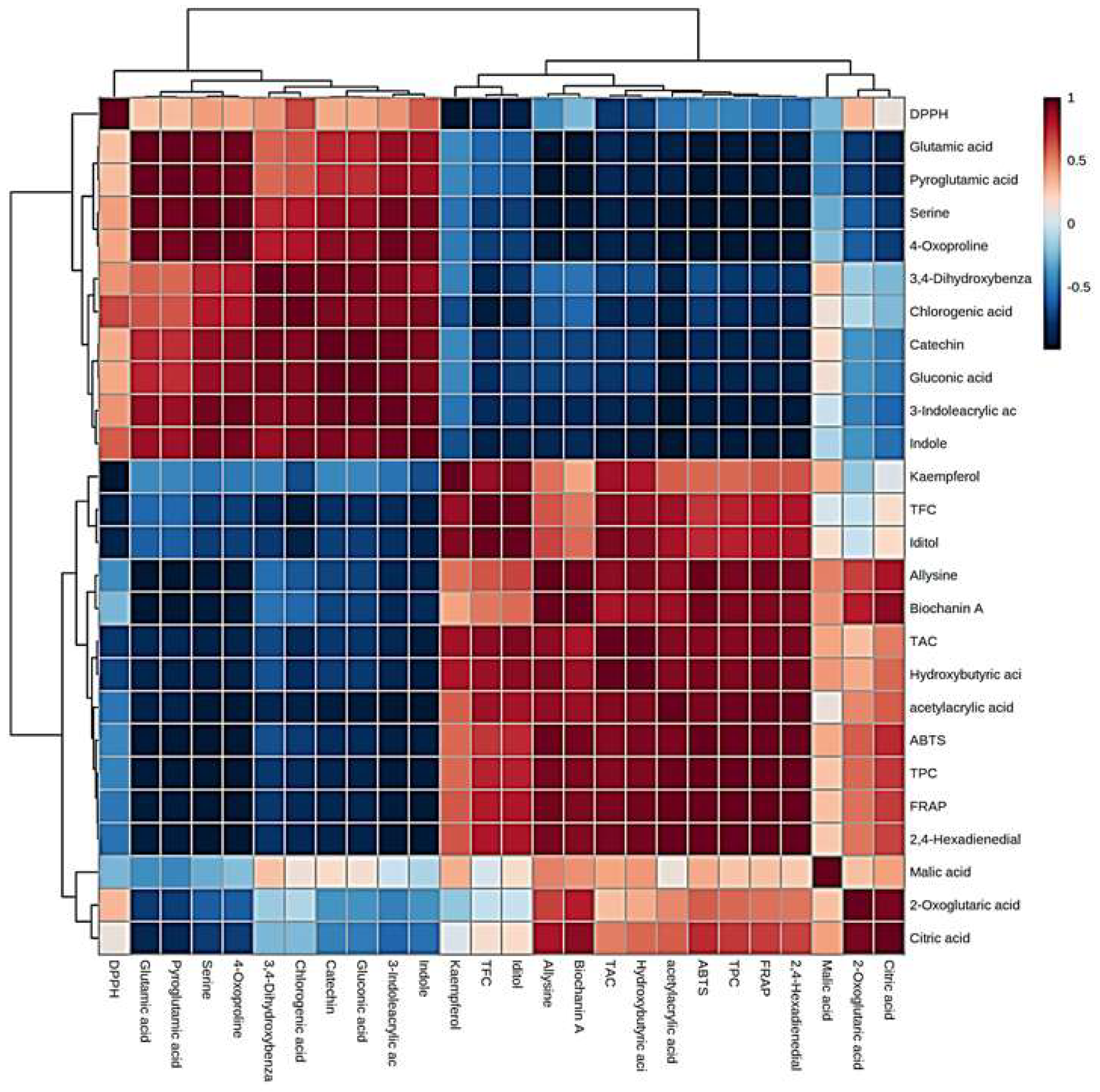
To further elaborate on the metabolites, a heatmap Pearson's correlation analysis was also performed to identify the link between metabolites and antioxidant activity (Figure 5). The red-blue color in the plot corresponds to the higher-lower correlation between the components. The Pearson correlation coefficient cluster analysis also confirmed the antioxidant activity observed earlier by us for total phenolics, anthocyanins, and flavonoids [16].
An elaborate view of Pearson's correlation coefficient among candidate metabolites with antioxidant activity and phenolic components is presented in Figure 6. The results notably revealed 7 metabolites with higher ABTS and FRAP antioxidant possibility, including allysine, biochanin A, hydroxybutyric acid, acetyl acrylic acid, 2,4- hexadienedial, malic acid, and citric acid. In contrast, Indole and chlorogenic acid were highly correlated with DPPH antioxidant activity. Several studies have reported the antioxidant potential of phenolic acids and their derivatives in fruits and vegetables [29]. Antioxidant analyses suggested that the activity occurred in a genotype-specific manner, despite fruit color. Among the evaluated assays antioxidant activity results for the dark flesh cultivars are approximately two-fold higher than the light flesh cultivars, potentially due to higher levels of anthocyanin and total phenolic components [20], [30]. Total phenolic content, total anthocyanins, and total flavonoids exhibited a high correlation (at p<0.05) with FRAP and ABTS, which is consistent with our earlier report [16]. The multi-faceted nature of these mechanisms such as ROS scavenging, chelating metal ions, inducing antioxidant enzymes, etc., underscores the versatility of phenolic acids in combating oxidative stress and highlights their potential health benefits [31]. It's important to note that the specific effects may vary depending on the type of phenolic acid and the biological context in which they are studied. The antioxidant potential for allysine is due to the actions of lysyl oxidase in the extracellular matrix which also plays a key role in the crosslink formation to stabilize collagen and elastin[32]. Biochanin A, an isoflavone present in many plants (e.g., chickpea, red clover, and soybean), is increasingly sought after and potentially could lead to the development of nutraceuticals and pharmaceuticals, largely due to its antioxidant activities [33]. The antioxidant effect of hydroxybutyric acid is by diminishing pro-oxidant oxidative stress markers like reactive oxygen species and enhancing glutathione content resulting in decreased lipid peroxidation [34], acetyl acrylic acid was reported to have antioxidant activities [35]. Malic acid and citric acid are widely distributed in fruit vinegar and exert health benefits such as antioxidant and antimicrobial activities, managing blood glucose, and regulating lipid issues [36]. Contrastingly, Indole revealed a promising antioxidant activity [37]. Chlorogenic acid exhibits many biological properties, including antioxidant and antibacterial activities [38]. Our results suggested that the differences in antioxidant activity between the different cherry cultivars correlated to the accumulation of specific biomarker compounds that differentiate between the dark/light flesh cherry genotypes.
3. Materials and Methods
3.1. Cherry samples
Fully ripe sour-cherry fruits were harvested from 8-year-old trees. Based on previous analysis, four cultivars, including two dark flesh (Heimann R and Gorsemska), and two light flesh (V70142 and Montmorency) (Figure 1A) were used in this study. These varieties were selected based on their physico-chemical properties and antioxidant capacities that we reported earlier [16]. After harvest, the fruit was stored for analysis at –80°C.
3.2. Preparation of cherry extract
Frozen cherry samples were powdered using a cryogenic grinder (Geno grinder, Metuchen, NJ, USA). Approximately 15 g of powdered sample was subjected to solvent extraction in 100 ml methanol, and the mixture was kept for shaking (200 rpm) at room temperature for 24 h in the dark. Then, the extracts were filtered through 0.45µm cellulose fiber P8 grade filter paper (Fisher Scientific, Mississauga, ON, Canada). The obtained filtrate was concentrated using a rotary evaporator (IKA HB10, Cole-Parmar, Mississauga, ON, Canada) at 40°C with an extraction yield of 10g/100 g FW of fruit. Further, the residual solvent in extracts was evaporated in a fume hood to get the concentrated extract. The obtained extracts were stored at 4°C for further analysis.
3.3. Estimation of Total phenolic, flavonoid, anthocyanin and antioxidants
Total phenolic content (TPC) was estimated as described earlier [18]. Total flavonoid content (TFC) was assessed using a colorimetric method with minor modifications [39]. Total anthocyanin content (TAC) was estimated using the pH-differential spectroscopic method [7]. The total antioxidant activity was done using three different assays (ABTS, FRAP, and DPPH). Antioxidant capacity was assessed with ABTS as per the previously published method [41]. The details of the extraction procedures have been described in an earlier report [16].
3.4. Untargeted metabolomics using UPLC-MS.
3.4.1. Metabolite extraction
100 mg of extract was mixed with 80% methanol for 90 s and subjected to ultrasonication at 4°C for 30 min. Sonicated samples were kept at –20°C for 1 h, subjected to vortex for 30 s, and incubated at 4°C for 30 min. All the samples were subjected to centrifugation for 15 minutes at 12,000 rpm and 4°C. From this, 200 μL of the supernatant was mixed with 5 μL of DL-o-chlorophenylalanine (0.14 mg/mL) and transferred to a vial for LC-MS analysis. Samples were subjected to quality control (QC) to ensure they were good for metabolomic analyses.
3.4.2. Metabolomic analysis conditions
Separation of the components was performed by Acquity UPLC (Waters, Milford, MA, U.S.) coupled with Q Exactive MS (Thermo Scientific, Canada) and screened with ESI-MS. The LC system consisted of an Acquity HSS T3 UPLC column (100×2.1mm×1.8 μm) with Acquity UPLC (Waters, Milford, MA, U.S.). The mobile phases used for analysis include 0.05% formic acid in water as solvent A and acetonitrile as solvent B. The gradient elution program used for separation was (0-1 min, 95%A; 1-12 min, 95%-5% A; 12-13.5 min, 5% A; 13.5-13.6 min, 5%-95% A; 13.6-16 min, 95% A) with a flow rate 0.3 ml/min. The column was constantly maintained at 40°C, and the sample manager was set at 4°C. Mass spectrometry parameters used for separation were ESI+: Heater Temp 300°C; Sheath Gas Flow rate, 45 arb; Aux Gas Flow Rate, 15 arb; Sweep Gas Flow Rate, 1 arb; spray voltage, 3.0 kV; Capillary Temp, 350°C; S-Lens RF Level, 30%. ESI–: Heater Temp 300°C, Sheath Gas Flow rate, 45 arb; Aux Gas Flow Rate, 15arb; Sweep Gas Flow Rate, 1 arb; spray voltage, 3.2 kV; Capillary Temp, 350°C; S-Lens RF Level, 60%.
3.4.3. Data processing
The raw data obtained from UPLC/MS was pre-processed for baseline correction, deionization, smoothing, splitting, and deconvolution using Progenesis QI software (Waters). A data matrix composed of retention time, sample description (triplicates of each cherry cultivar), m/z ratio, and abundance was analyzed in MetaboAnalyst 5.0 software.
Further, the raw data was acquired and aligned using Compound Discover (3.0, Thermo, Canada) based on the m/z value and retention times for the ion signals. For multivariate analyses, ions from ESI- and ESI+ were combined and imported into the SIMCA-P program (version 14.1). Multivariate and statistical analyses, such as Partial Least Square-Discriminant Analysis (PLS-DA), Principal Component Analysis (PCA), and heatmap generation were performed with MetaboAnalyst 5.0 software. This approach combines unsupervised (PCA) and supervised (PLS-DA) methods for the visualization, outlier detection, and identification of potential biomarkers in high-dimensional data. The final biomarkers are filtered and confirmed using a combination of VIP values (VIP>1) and statistical tests such as t-test (p < 0.05).
3.4.4. Metabolites identification
After refining the MS spectra data, the most significant metabolites were identified by mass ratio, mass spectra, metabolomics databases, and literature. The identified metabolites were searched in the human metabolome database (HMDB), Tandem mass spectra of metabolites using Metfrag, and Massbank. No standards were used for the identification of components. The pathway map was deciphered using the well-annotated HMDB compounds with pathway libraries and the KEGG database.
3.4.5. Statistical analysis
The bioactive compound analysis was done with three independent extracts. Comparison of all the parameters was performed using pairwise comparison with Tukey’s HSD test at (p ≤ 0.05). One-way or multi-way ANOVA analysis was done using R software with the Agricola package. All the figures were generated using the statistical software GraphPad Prism (Prism 5.01 Inc, La Jolla, CA, USA).
4. Conclusions
Sour cherry has great potential for use as a functional food due to its high antioxidant activity. Untargeted metabolomics identified a total of 473 metabolites of different functional chemical groups like organic acids, phenolics, flavonoids, anthocyanins, amino acids, and sugars. Among the four different cultivars tested, the dark-flesh cultivars had a higher level of bioactive metabolites than the light-flesh cultivars. Further, the metabolic profiling revealed that the chemical composition of sour cherry is predominated by fatty acids, organic acids, benzenoids, polyketides, and organo-heterocyclic compounds. Seven sour-cherry biomarker metabolites (Allysine, biochanin A, hydroxybutyric acid, acetylacrylic acid, 2,4-hexadienedial, Indole, and chlorogenic) are identified to influence the antioxidant activity. The relative content of these biomarkers was found to be significantly higher in dark-flesh cultivars. The results obtained in this study provide insight into the food, pharmaceutical, and nutraceutical industries to develop sour cherry as a functional food. This study will also provide help to plant breeders to develop new genotypes and cultivars with enhanced nutritional potential.
Author Contributions
Prabhjot Kaur: Conceptualization, Methodology development, experimentation, Data curation, Manuscript writing, and data analysis. Darwish G Ahmed: UPLC instrumentation, Manuscript writing, and analysis, data curation, Islam El-Sharkawy: Writing- Review and editing, Idea for correlation studies, Jayasankar Subramanian: Cultivars development, Idea conceptualization, Methodology, Writing- Review and editing. Ashutosh Singh: Supervision, Funding acquisition, Writing- Review, and editing.
Funding
This research did not receive any specific grant from funding agencies in the public, commercial, or for-profit sectors.
Data Availability Statement
Data generated or analyzed during this study are provided in full within the published article.
Acknowledgments
The authors acknowledge the help provided by Vineland Research Innovation Center by maintaining the cherry trees used in this research. PK acknowledges the help provided by fellow graduate students, Chloe Shum and Vidya Venugopal during the collection of fruits used in the study.
Conflicts of Interest
No conflict of interest exists on the personal, financial, or professional level for the submission of this paper that could have influenced the research of this paper.
References
- Nawirska-Olszańska, A.; Kolniak-Ostek, J.; Oziembłowski, M.; Ticha, A.; Hyšpler, R.; Zadak, Z.; Židová, P.; Paprstein, F. Comparison of Old Cherry Cultivars Grown in Czech Republic by Chemical Composition and Bioactive Compounds. Food Chem 2017, 228, 136–142. [Google Scholar] [CrossRef] [PubMed]
- Wang, A.; Li, R.; Ren, L.; Gao, X.; Zhang, Y.; Ma, Z.; Ma, D.; Luo, Y. A Comparative Metabolomics Study of Flavonoids in Sweet Potato with Different Flesh Colors (Ipomoea Batatas (L.) Lam). Food Chem 2018, 260, 124–134. [Google Scholar] [CrossRef] [PubMed]
- Kuehl, K.S. Cherry Juice Targets Antioxidant Potential and Pain Relief. Acute Topics in Sport Nutrition 2012, 59, 86–93. [Google Scholar] [CrossRef]
- Csiki, Z.; Papp-Bata, A.; Czompa, A.; Nagy, A.; Bak, I.; Lekli, I.; Javor, A.; Haines, D.D.; Balla, G.; Tosaki, A. Orally Delivered Sour Cherry Seed Extract (SCSE) Affects Cardiovascular and Hematological Parameters in Humans. Phytotherapy Research 2015, 29, 444–449. [Google Scholar] [CrossRef] [PubMed]
- Mahmoud, F.; Haines, D.; Al-Awadhi, R.; Dashti, A.A.; Al-Awadhi, A.; Ibrahim, B.; Al-Zayer, B.; Juhasz, B.; Tosaki, A. Sour Cherry (Prunus Cerasus) Seed Extract Increases Heme Oxygenase-1 Expression and Decreases Proinflammatory Signaling in Peripheral Blood Human Leukocytes from Rheumatoid Arthritis Patients. Int Immunopharmacol 2014, 20, 188–196. [Google Scholar] [CrossRef]
- Ou, B.; Bosak, K.N.; Brickner, P.R.; Iezzoni, D.G.; Seymour, E.M. Processed Tart Cherry Products—Comparative Phytochemical Content, in Vitro Antioxidant Capacity and in Vitro Anti-inflammatory Activity. J Food Sci 2012, 77, H105–H112. [Google Scholar] [CrossRef] [PubMed]
- Acero, N.; Gradillas, A.; Beltran, M.; García, A.; Muñoz Mingarro, D. Comparison of Phenolic Compounds Profile and Antioxidant Properties of Different Sweet Cherry (Prunus Avium L.) Varieties. Food Chem 2019, 279, 260–271. [Google Scholar] [CrossRef]
- Serra, A.T.; Duarte, R.O.; Bronze, M.R.; Duarte, C.M.M. Identification of Bioactive Response in Traditional Cherries from Portugal. Food Chem 2011, 125, 318–325. [Google Scholar] [CrossRef]
- Galluzzo, P.; Martini, C.; Bulzomi, P.; Leone, S.; Bolli, A.; Pallottini, V.; Marino, M. Quercetin-induced Apoptotic Cascade in Cancer Cells: Antioxidant versus Estrogen Receptor A-dependent Mechanisms. Mol Nutr Food Res 2009, 53, 699–708. [Google Scholar] [CrossRef]
- Khan, W.A.; Hu, H.; Ann Cuin, T.; Hao, Y.; Ji, X.; Wang, J.; Hu, C. Untargeted Metabolomics and Comparative Flavonoid Analysis Reveal the Nutritional Aspects of Pak Choi. Food Chem 2022, 383, 132375. [Google Scholar] [CrossRef]
- FAOSTAT_data_5-26-2020.
- Kappel, S.J.F.; Jayasankar, S.; Kappel, F. Recent Advances in Cherry Breeding. Fruit, vegetables and cereal sciences and biotechnology. Global Science Book 2011, 63–67.
- Jayasankar, S.; Kappel, F. Recent Advances in Cherry Breeding. Fruit, vegetables and cereal sciences and biotechnology. Global Science Book 2011, 63–67.
- Radičević, S.; Cerović, R.; Lukić, M.; Paunović, S.A.; Jevremović, D.; Milenković, S.; Mitrović, M. Selection of Autochthonous Sour Cherry (Prunus Cerasus L.) Genotypes in Feketić Region. Genetika 2012, 44, 285–297. [Google Scholar] [CrossRef]
- Wang, P.; Mu, X.; Du, J.; Gary, Y.; Donghai, G. Flavonoid Content and Radical Scavenging Activity in Fruits of Chinese Dwarf Cherry ( Cerasus Humilis ) Genotypes. J For Res (Harbin) 2018, 29, 55–63. [Google Scholar] [CrossRef]
- Kaur, P.; Morden, K.; Subramanian, J.; Singh, A. Comparative Analysis of Physicochemical Characteristics, Bioactive Components, and Volatile Profile of Sour Cherry ( Prunus Cerasus ). Canadian Journal of Plant Science 2023. [Google Scholar] [CrossRef]
- Sokół-Łe̜towska, A.; Kucharska, A.Z.; Hodun, G.; Gołba, M. Chemical Composition of 21 Cultivars of Sour Cherry (Prunus Cerasus) Fruit Cultivated in Poland. Molecules 2020, 25. [Google Scholar] [CrossRef] [PubMed]
- Das, P.R.; Darwish, A.G.; Ismail, A.; Haikal, A.M.; Gajjar, P.; Balasubramani, S.P.; Sheikh, M.B.; Tsolova, V.; Soliman, K.F.A.; Sherif, S.M.; et al. Diversity in Blueberry Genotypes and Developmental Stages Enables Discrepancy in the Bioactive Compounds, Metabolites, and Cytotoxicity. Food Chem 2022, 374, 131632. [Google Scholar] [CrossRef]
- Ming, G.; Rahr, M.; Hjelmsted, B.; Larsen, E.; Khoo, G.M.; Clausen, M.R.; Pedersen, B.H.; Larsen, E. Bioactivity and Total Phenolic Content of 34 Sour Cherry Cultivars. Journal of Food Composition and Analysis 2011, 24, 772–776. [Google Scholar] [CrossRef]
- Wojdyło, A.; Nowicka, P.; Laskowski, P.; Oszmiański, J. Evaluation of Sour Cherry (Prunus Cerasus L.) Fruits for Their Polyphenol Content, Antioxidant Properties, and Nutritional Components. J Agric Food Chem 2014, 62, 12332–12345. [Google Scholar] [CrossRef]
- Vavoura, M. V.; Badeka, A. V.; Kontakos, S.; Kontominas, M.G. Characterization of Four Popular Sweet Cherry Cultivars Grown in Greece by Volatile Compound and Physicochemical Data Analysis and Sensory Evaluation. Molecules 2015, 20, 1922–1940. [Google Scholar] [CrossRef]
- Toydemir, G.; Capanoglu, E.; Gomez Roldan, M.V.; De Vos, R.C.H.; Boyacioglu, D.; Hall, R.D.; Beekwilder, J. Industrial Processing Effects on Phenolic Compounds in Sour Cherry (Prunus Cerasus L.) Fruit. Food Research International 2013, 53, 218–225. [Google Scholar] [CrossRef]
- Serradilla, M.J.; Hernández, A.; López-Corrales, M.; Ruiz-Moyano, S.; de Guía Córdoba, M.; Martín, A. Composition of the Cherry (Prunus Avium L. and Prunus Cerasus L.; Rosaceae), In Nutritional Composition of Fruit Cultivars, Elsevier Inc., 2015; ISBN 9780124081178.
- Mousavi, M.; Zaiter, A.; Modarressi, A.; Baudelaire, E.; Dicko, A. The Positive Impact of a New Parting Process on Antioxidant Activity, Malic Acid and Phenolic Content of Prunus Avium L., Prunus Persica L. and Prunus Domestica Subsp. Insititia L. Powders. Microchemical Journal 2019, 149. [Google Scholar] [CrossRef]
- Lo Scalzo, R. Organic Acids Influence on DPPH{radical Dot} Scavenging by Ascorbic Acid. Food Chem 2008, 107, 40–43. [Google Scholar] [CrossRef]
- Huang, H.; Wang, L.; Bi, F.; Xiang, X. Combined Application of Malic Acid and Lycopene Maintains Content of Phenols, Antioxidant Activity, and Membrane Integrity to Delay the Pericarp Browning of Litchi Fruit During Storage. Front Nutr 2022, 9. [Google Scholar] [CrossRef]
- Liu, Z.; Wang, H.; Zhang, J.; Chen, Q.; He, W.; Zhang, Y.; Luo, Y.; Tang, H.; Wang, Y.; Wang, X. Comparative Metabolomics Profiling Highlights Unique Color Variation and Bitter Taste Formation of Chinese Cherry Fruits. Food Chem 2024, 439. [Google Scholar] [CrossRef]
- Kopjar, M.; Orsolic, M.; Pilizota, V. Anthocyanins, Phenols, and Antioxidant Activity of Sour Cherry Puree Extracts and Their Stability during Storage. Int J Food Prop 2014, 17, 1393–1405. [Google Scholar] [CrossRef]
- Ballistreri, G.; Continella, A.; Gentile, A.; Amenta, M.; Fabroni, S.; Rapisarda, P. Fruit Quality and Bioactive Compounds Relevant to Human Health of Sweet Cherry (Prunus Avium L.) Cultivars Grown in Italy. Food Chem 2013, 140, 630–638. [Google Scholar] [CrossRef]
- Ming, G.; Rahr, M.; Hjelmsted, B.; Larsen, E. Journal of Food Composition and Analysis Bioactivity and Total Phenolic Content of 34 Sour Cherry Cultivars. Journal of Food Composition and Analysis 2011, 24, 772–776. [Google Scholar] [CrossRef]
- Bernatoniene, J.; Kopustinskiene, D.M. The Role of Catechins in Cellular Responses to Oxidative Stress. Molecules 2018, 23. [Google Scholar] [CrossRef] [PubMed]
- Liu, Y.; Huang, W.; Zhang, C.; Li, C.; Fang, Z.; Zeng, Z.; Hu, B.; Chen, H.; Wu, W.; Wang, T.; et al. Targeted and Untargeted Metabolomic Analyses and Biological Activity of Tibetan Tea. Food Chem 2022, 384. [Google Scholar] [CrossRef] [PubMed]
- Feng, Z.J.; Lai, W.F. Chemical and Biological Properties of Biochanin A and Its Pharmaceutical Applications. Pharmaceutics 2023, 15. [Google Scholar] [CrossRef] [PubMed]
- Majrashi, M.; Altukri, M.; Ramesh, S.; Govindarajulu, M.; Schwartz, J.; Almaghrabi, M.; Smith, F.; Thomas, T.; Suppiramaniam, V.; Moore, T.; et al. β-Hydroxybutyric Acid Attenuates Oxidative Stress and Improves Markers of Mitochondrial Function in the HT-22 Hippocampal Cell Line. J Integr Neurosci 2021, 20, 321–329. [Google Scholar] [CrossRef]
- Nagarajan, S.; Nagarajan, R.; Kumar, J.; Salemme, A.; Togna, A.R.; Saso, L.; Bruno, F. Antioxidant Activity of Synthetic Polymers of Phenolic Compounds. Polymers (Basel) 2020, 12. [Google Scholar] [CrossRef] [PubMed]
- Liu, Q.; Tang, G.Y.; Zhao, C.N.; Gan, R.Y.; Li, H. Bin Antioxidant Activities, Phenolic Profiles, and Organic Acid Contents of Fruit Vinegars. Antioxidants 2019, 8. [Google Scholar] [CrossRef] [PubMed]
- Estevão, M.S.; Carvalho, L.C.; Ribeiro, D.; Couto, D.; Freitas, M.; Gomes, A.; Ferreira, L.M.; Fernandes, E.; Marques, M.M.B. Antioxidant Activity of Unexplored Indole Derivatives: Synthesis and Screening. Eur J Med Chem 2010, 45, 4869–4878. [Google Scholar] [CrossRef]
- Liang, N.; Kitts, D.D. Role of Chlorogenic Acids in Controlling Oxidative and Inflammatory Stress Conditions. Nutrients 2015, 8. [Google Scholar] [CrossRef]
- Arruda, H.S.; Pereira, G.A.; Pastore, G.M. Optimization of Extraction Parameters of Total Phenolics from Annona Crassiflora Mart. (Araticum) Fruits Using Response Surface Methodology. Food Anal Methods 2017, 10, 100–110. [Google Scholar] [CrossRef]
- Martinović, A.; Cavoski, I. The Exploitation of Cornelian Cherry (Cornus Mas L.) Cultivars and Genotypes from Montenegro as a Source of Natural Bioactive Compounds. Food Chem 2020, 318, 126549. [Google Scholar] [CrossRef]
- Kaur, P.; Subramanian, J.; Singh, A. Green Extraction of Bioactive Components from Carrot Industry Waste and Evaluation of Spent Residue as an Energy Source. Sci Rep 2022, 12, 1–16. [Google Scholar] [CrossRef]
Figure 1.
(A) A representative image of Sour cherry cultivars, two dark-colored flesh (Heimann R and Gorsemska), and two light-colored flesh (V70142 and Montmorency). (B) Total phenolic, flavonoid, and anthocyanin contents were determined. (C) Antioxidant activities of cherry cultivars were determined using FRAP, ABTS, and DPPH assays. The experiments were carried out in three biological replicates, and each replicate was repeated three times (n = 9). Data represent the mean values ± SD (n = 3).
Figure 1.
(A) A representative image of Sour cherry cultivars, two dark-colored flesh (Heimann R and Gorsemska), and two light-colored flesh (V70142 and Montmorency). (B) Total phenolic, flavonoid, and anthocyanin contents were determined. (C) Antioxidant activities of cherry cultivars were determined using FRAP, ABTS, and DPPH assays. The experiments were carried out in three biological replicates, and each replicate was repeated three times (n = 9). Data represent the mean values ± SD (n = 3).
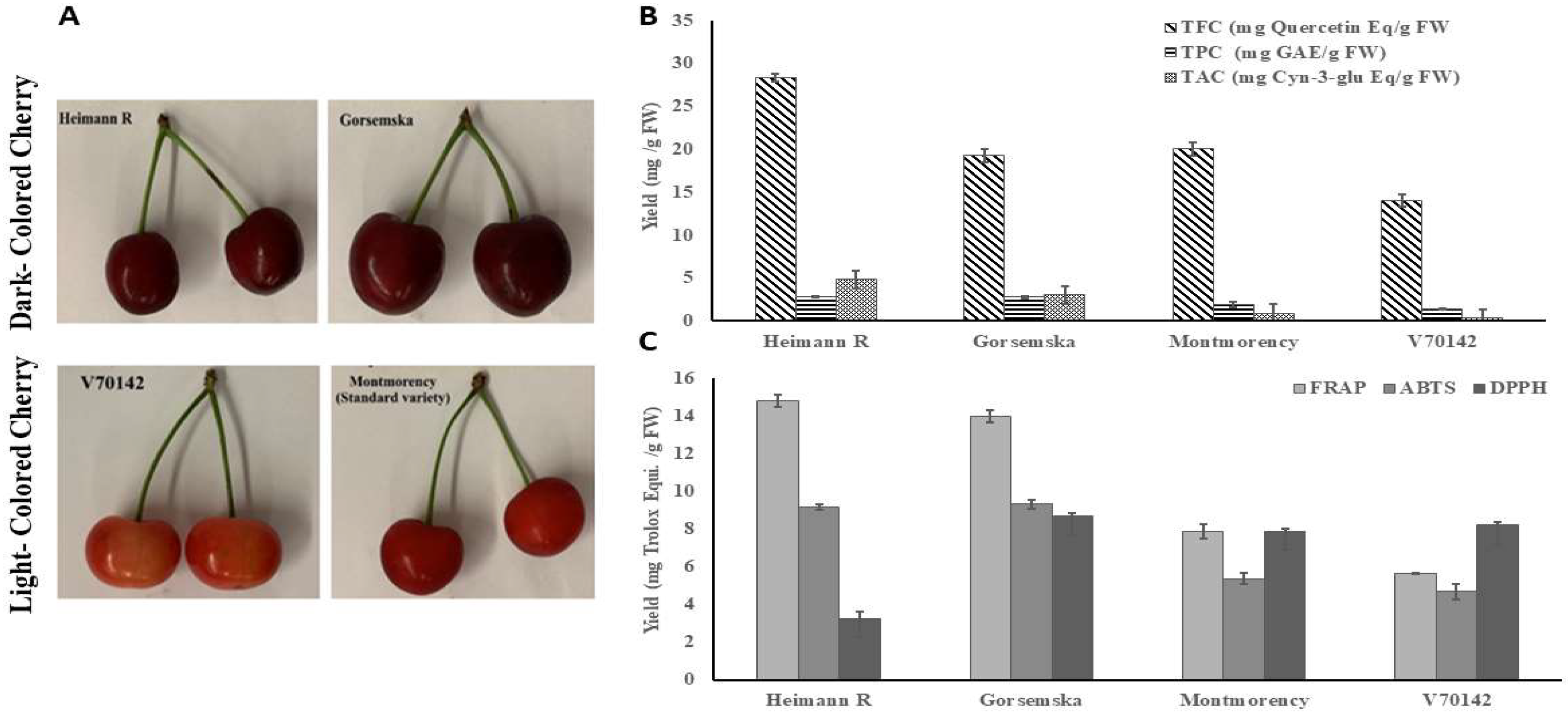
Figure 2.
(A) Bar chart and (B) interactive pie chart of the chemical classification of cherry metabolites using metabolite set enrichment analysis (MSEA). Colors in the bar plot describe the p-value. The red and orange colors signify the high and low values, respectively. The lines indicate the enrichment ratio, which was computed by hits/expected, where hits = observed hits and expected = expected hits. The colors in the interactive pie chart designate each chemical group relative to the total number of compounds.
Figure 2.
(A) Bar chart and (B) interactive pie chart of the chemical classification of cherry metabolites using metabolite set enrichment analysis (MSEA). Colors in the bar plot describe the p-value. The red and orange colors signify the high and low values, respectively. The lines indicate the enrichment ratio, which was computed by hits/expected, where hits = observed hits and expected = expected hits. The colors in the interactive pie chart designate each chemical group relative to the total number of compounds.
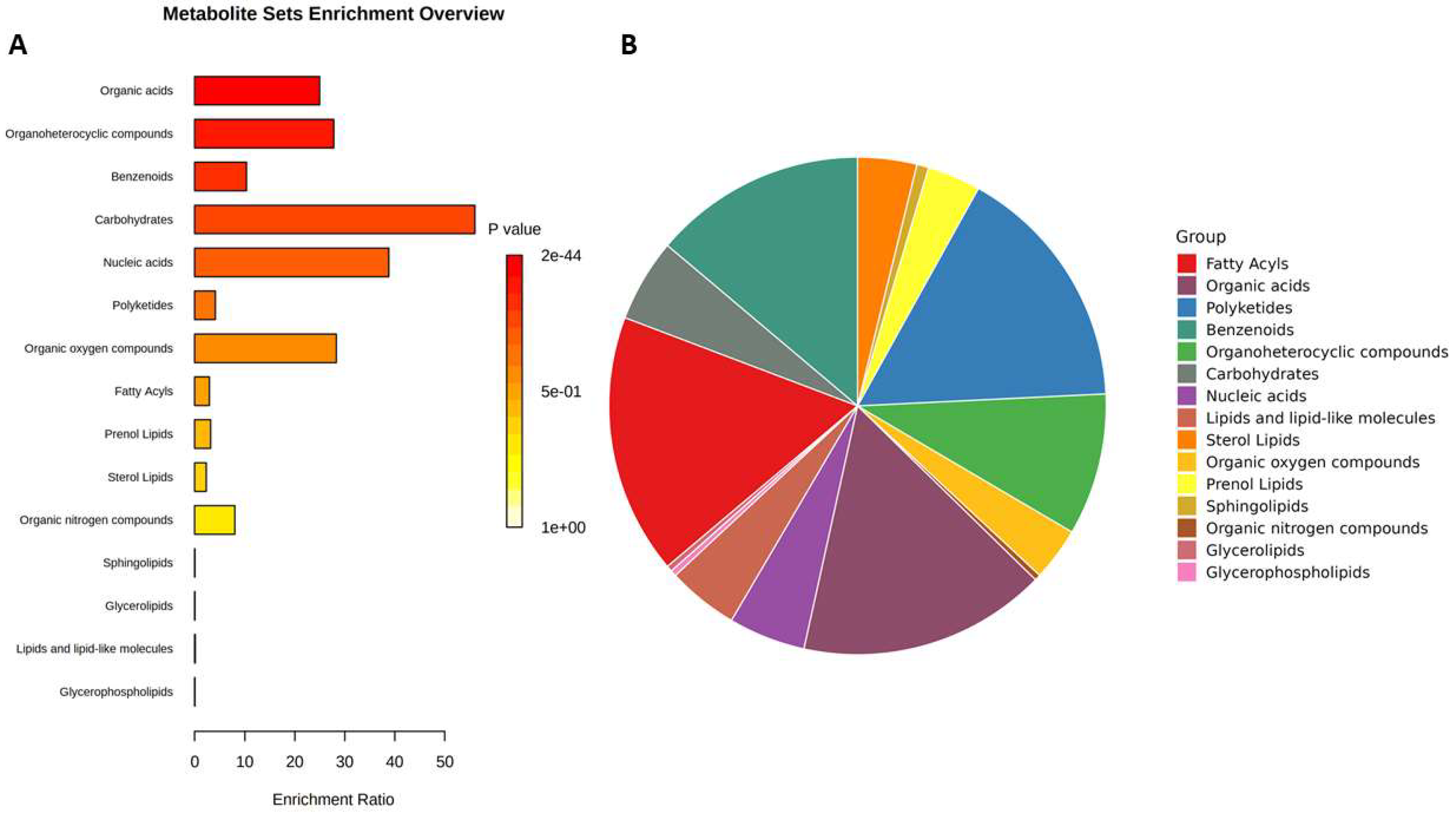
Figure 3.
Principal components analysis (PCA) 2D score plot (A) and biplot (B) of the cherry metabolites. The different short abbreviations in the biplot manifest the scores of the observations (i.e., cherry cultivars). The vectors that point toward the same direction correspond to the variables (i.e., metabolites) with similar response profiles. The red represents GSM_ Gorsemska; green represents HMR_ Heimann R; Purple represents MMR_ Montmorency; blue represents V7X_ V70142.
Figure 3.
Principal components analysis (PCA) 2D score plot (A) and biplot (B) of the cherry metabolites. The different short abbreviations in the biplot manifest the scores of the observations (i.e., cherry cultivars). The vectors that point toward the same direction correspond to the variables (i.e., metabolites) with similar response profiles. The red represents GSM_ Gorsemska; green represents HMR_ Heimann R; Purple represents MMR_ Montmorency; blue represents V7X_ V70142.
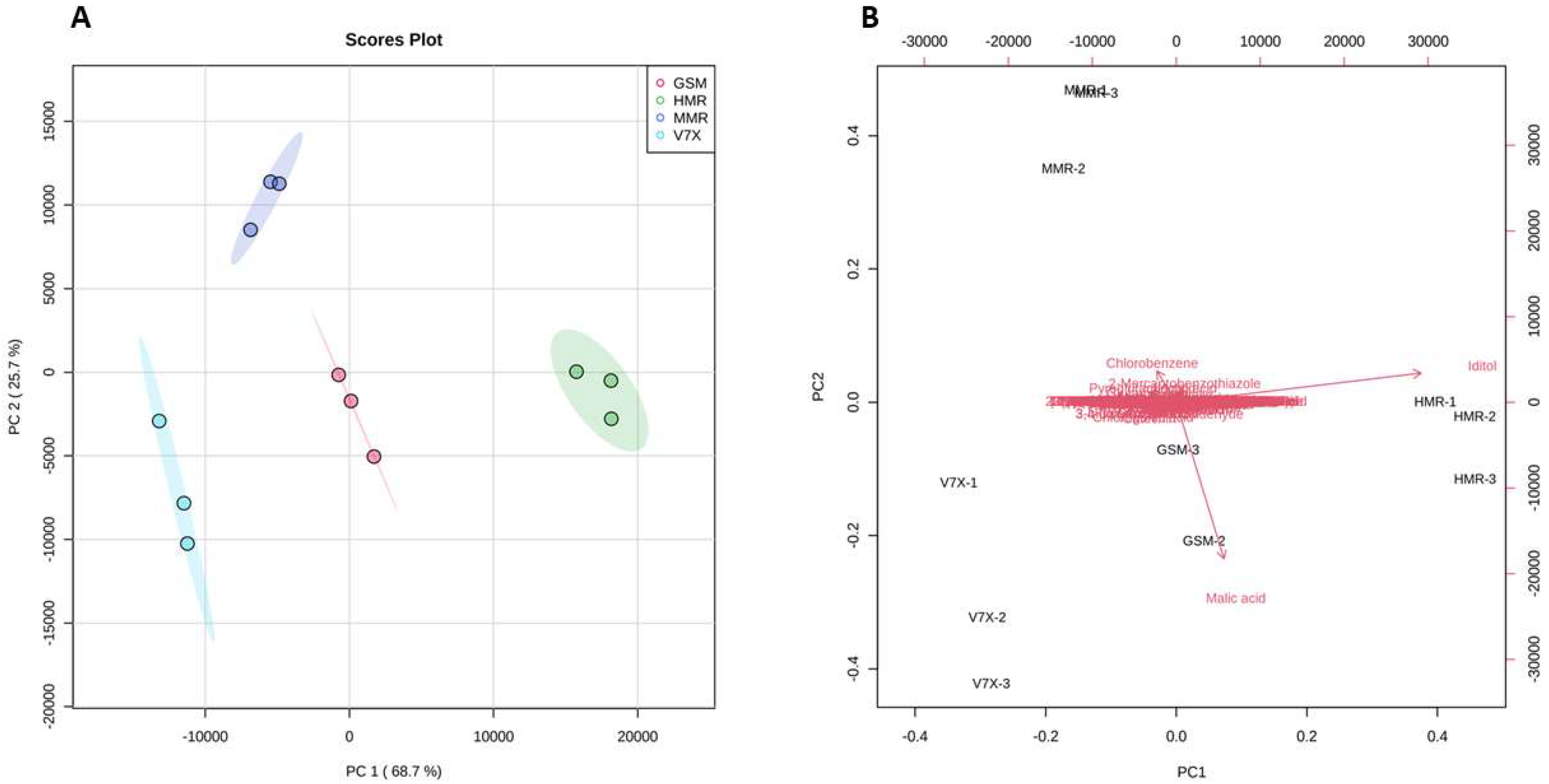
Figure 4.
The weighted sum of absolute regression coefficients (coef.) of candidate metabolites (VIP > 1.0) of cherry cultivars. The colored boxes on the right indicate the relative concentrations of the corresponding metabolite in each group under study.
Figure 4.
The weighted sum of absolute regression coefficients (coef.) of candidate metabolites (VIP > 1.0) of cherry cultivars. The colored boxes on the right indicate the relative concentrations of the corresponding metabolite in each group under study.
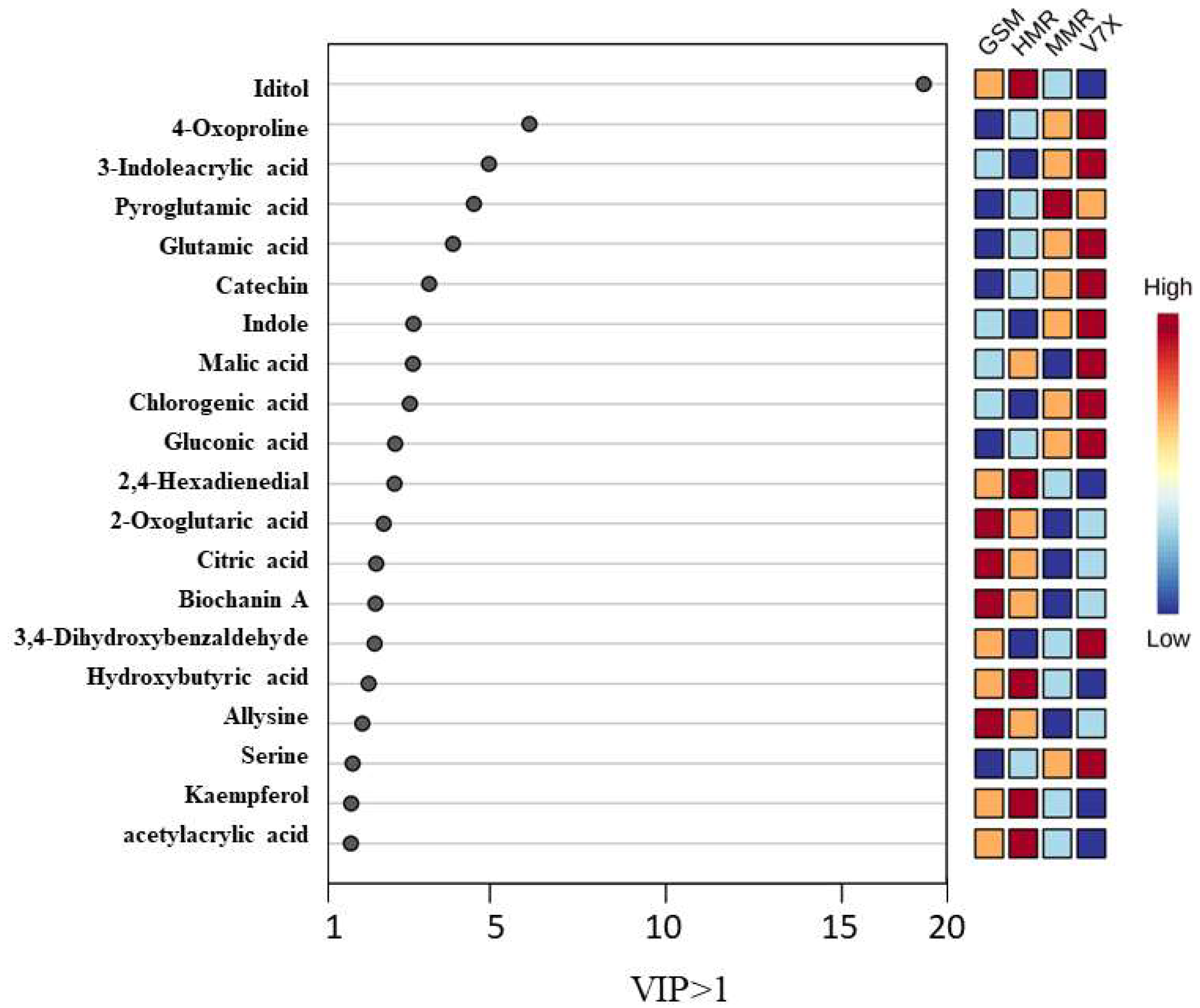
Figure 5.
Heatmap analysis of candidate metabolites (VIP > 1.0) obtained by partial least-squares–discriminant analysis (PLS-DA), total phenolic, flavonoid, anthocyanin, and antioxidant activities of cherry cultivars. Each column refers to the cherry cultivars, and each row indicates the metabolites, TPC, TFC, TAC, and antioxidant activities. The red and blue colors in the plot describe high and low intensities, and the values range from –1 to +1. The higher the red color intensity (from +1 to +2 values), the higher the metabolite contents and antioxidant activities; in contrast, the higher blue color intensity (from –1 to –2 values) represents lower metabolite contents and antioxidant activities. GSM: Gorsemska; HMR: Heimann R; MMR: Montmorency; V7X: V70142.
Figure 5.
Heatmap analysis of candidate metabolites (VIP > 1.0) obtained by partial least-squares–discriminant analysis (PLS-DA), total phenolic, flavonoid, anthocyanin, and antioxidant activities of cherry cultivars. Each column refers to the cherry cultivars, and each row indicates the metabolites, TPC, TFC, TAC, and antioxidant activities. The red and blue colors in the plot describe high and low intensities, and the values range from –1 to +1. The higher the red color intensity (from +1 to +2 values), the higher the metabolite contents and antioxidant activities; in contrast, the higher blue color intensity (from –1 to –2 values) represents lower metabolite contents and antioxidant activities. GSM: Gorsemska; HMR: Heimann R; MMR: Montmorency; V7X: V70142.
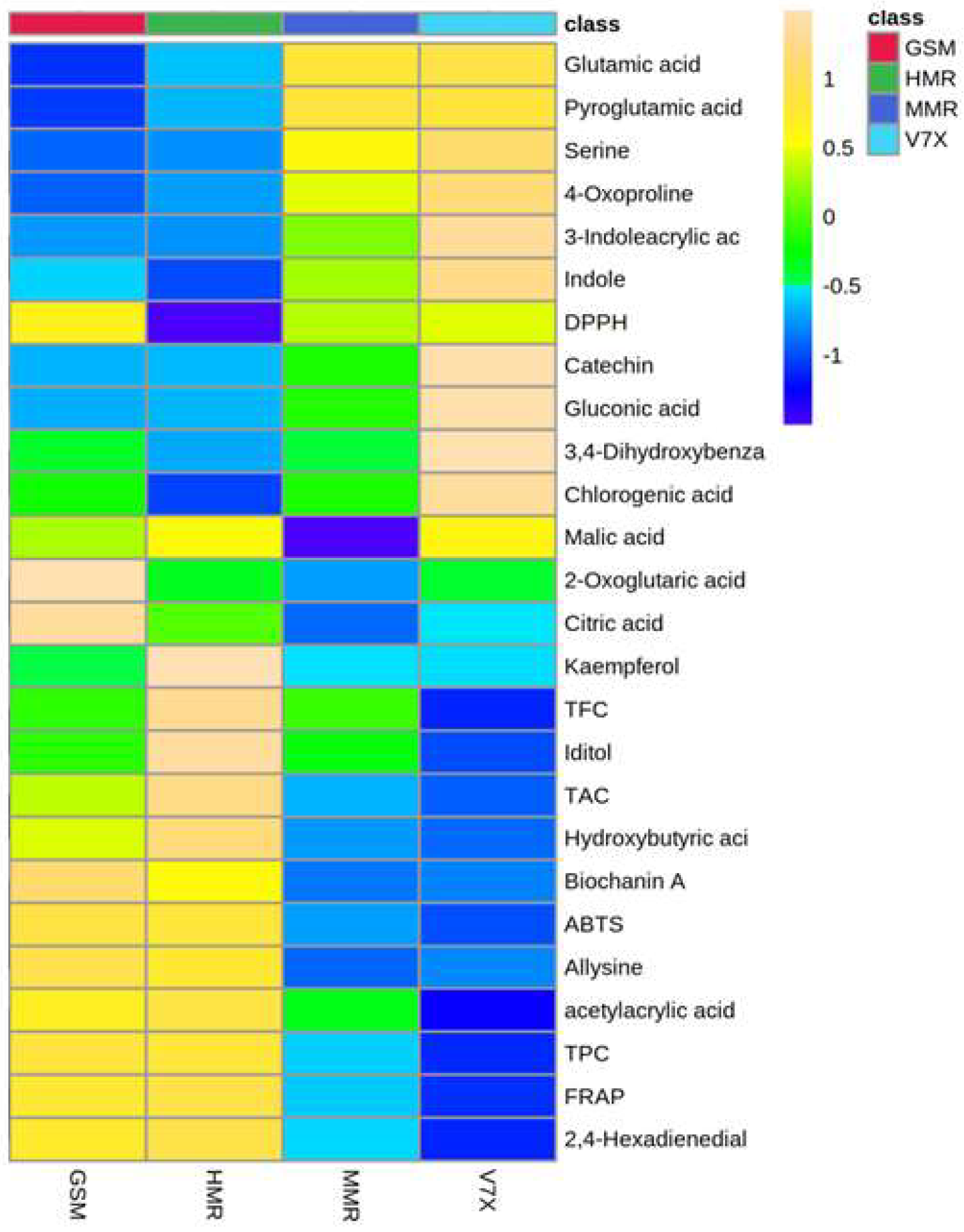
Figure 6.
Heatmap of Pearson correlation between candidate metabolites (VIP > 1.0) with antioxidant activities of cherry cultivars. Correlation values range from –1 to +1. The values close to +1 represent the higher positive correlation, whereas values closer to zero mean there is no linear trend between the variables; values close to –1 represent the negative correlation between variables.
Figure 6.
Heatmap of Pearson correlation between candidate metabolites (VIP > 1.0) with antioxidant activities of cherry cultivars. Correlation values range from –1 to +1. The values close to +1 represent the higher positive correlation, whereas values closer to zero mean there is no linear trend between the variables; values close to –1 represent the negative correlation between variables.
Disclaimer/Publisher’s Note: The statements, opinions and data contained in all publications are solely those of the individual author(s) and contributor(s) and not of MDPI and/or the editor(s). MDPI and/or the editor(s) disclaim responsibility for any injury to people or property resulting from any ideas, methods, instructions or products referred to in the content. |
© 2024 by the authors. Licensee MDPI, Basel, Switzerland. This article is an open access article distributed under the terms and conditions of the Creative Commons Attribution (CC BY) license (http://creativecommons.org/licenses/by/4.0/).
Copyright: This open access article is published under a Creative Commons CC BY 4.0 license, which permit the free download, distribution, and reuse, provided that the author and preprint are cited in any reuse.


