

Submitted:
27 February 2024
Posted:
28 February 2024
You are already at the latest version
Abstract
A Friedmann-Lemaitre-Robertson-Walker space-time model with all curvatures k=0,±1 is explored in f(R,T) gravity. The solutions are obtained via the parametrization of the scale factor that leads to a model transiting from a decelerated universe to an accelerating one. The physical features of the model are discussed and analysed.
Keywords:
f(R
; T) gravity
; dark energy
; scale factor.
1. Introduction
Observational data from Type-Ia supernova (SNe-Ia), the cosmic microwave background (CMB), and baryon acoustic oscillations (BAO) has become a vital pillar in comprehending modern cosmology, where the evidences suggests that the universe has undergone of accelerated expansion twice, viz., early inflation [1,2,3], and late-time acceleration [4,5,6]. The late-time acceleration is supposed to be driven by dark energy (DE) that occupies approximately two-third of the total energy budget of the universe [7,8]. The most widely acknowledged CDM (cold dark matter) model based Einstein’s theory of general relativity (GR) explains the late-time acceleration phenomenon via a cosmological constant (CC), , which is characterized by an equation of state (EoS) parameter [9,10,11].
Though the standard model explains various physical phenomena such as the formation and evolution of the large scale structure in the universe, the early universe, and the abundance of matter and energy [12,13] etc., it experiences setbacks such as the coincidence and fine-tuning problems [14,15]. Due to these setbacks of the CDM model, researchers [16,17] seek other alternatives to explain late-time cosmic acceleration. One way is the modification of the Einstein-Hilbert (EH) gravitational action. Initially, the focus were only on altering the geometrical part of the EH action. In 2011, Harko et. al. [18] through general non-minimal coupling between matter and geometry introduced gravity. Over the years, the theory has gained a lot of interest and has been extensively studied (for details see [19,20] and references therein).
It is also now well known that prior to the current accelerating expansion the universe has undergone through a decelerated phase in the past. However, constructing viable scaling models which allow the universe to transit from decelerating to an accelerating phase is still a challenging task. An alternative is to seek the solutions of the field equations under an assumption which would be consistent with the observed kinematics of the universe. This phenomenon has piqued the interest of many researchers. Some theorist working in this area have attempted to study it by constructing the cosmological models using geometrical parameters, such as a parametrization of the deceleration parameter, Hubble parameter or scale factor which can provide the transition from past deceleration to present acceleration [21,22,23,24]. Most of these models have been studied in homogeneous and isotropic background [25,26,27,28,29,30,31,32,33], but some studies also have been considered in homogeneous but anisotropic background [34,35,36,37,38,39,40].
Considering all curvatures , the present study deals a transit FLRW model in gravity. We consider a deceleration parameter proposed in Ref. [41]. The work is organized as follows. The model and field equations followed by their solutions are presented in Sect. 2. The geometrical behavior of the deceleration parameter is also presented in the same section and the constraints for a physically realistic scenario are obtained therein. The nature of matter is examined therein. As compared to GR, in gravity due to coupling some extra terms appear on the right-hand side of the field equations. These extra terms may be treated as coupled matter or energy which may behave either as perfect fluid or DE. The nature of coupled matter is examined in Sect. 3. The results are summarised in Sect. 5.
2. The Model in Gravity
The spatially homogeneous and isotropic FLRW space-time metric is given as
where , , a is the scale factor, and k represents the geometrical curvature of the universe, i.e., implies a flat universe, a closed universe, and an open universe. We consider the energy-momentum tensor of the matter as
where is the energy density and p is the thermodynamic pressure of the matter. In comoving coordinates, , where is the four-velocity of the fluid that satisfies the condition .
The field equations in gravity with the system of units , are obtained as
where a prime represents the derivative with respect to T. The above equation for , i.e., , where , simplifies to
It is vital to note that in gravity, both the physical quantities and no longer epitomize the effective energy density and pressure as in GR. Indeed, the coupling between matter and gravity adds some additional terms visible on the RHS of the field equations. These additional terms with can be treated as matter, and we term them “coupled matter" or “coupled energy". Therefore, to distinguish the “main" matter from the “coupled" matter or energy, we write and , which represents the coupled matter or energy.
Eqs. (5) and (6) consist of three unknowns, i.e., , and H. Hence, to determine the solution, one extra assumption is required. We have considered the simple parametrization of the scale factor as recently studied in Ref. [41], viz.,
where , , and are arbitrary constants.
The Hubble parameter, gives
Using , where is the present value of a, and z is the redshift, one obtains
The deceleration parameter, in terms of the redshift is becomes
where , here is the present value of deceleration parameter.
Recently, using 51 points data set [42] and 1048 points Pantheon SNe-Ia data set [43] with [44], Mishra and Dua [41] obtained the observational constraints on and p, and reported the best fitted values and with data set and and with Pantheon data set.
Figure 1 plots the deceleration parameter q versus red shift z for the best fitted values mentioned above. We observe that the universe transits from deceleration () to acceleration () at a red shift for data, and for Pantheon data. Also, the present values of deceleration parameter are for data, and for Pantheon data.
Now, the the main objectives of our study are following:
- To determine the matter in the presence of which the model can yield the desired evolution of the universe.
- Examine the role of the additional terms of in these models.
- Compare/distinguish the outcomes from those of Einstein’s gravity.
Using (7) and (8) in (5) and (6), we obtain the energy density and pressure of matter
The vital requirement is now to corroborate that the ad hoc assumption made to find the solutions is consistent to yield a realistic cosmological scenario, viz., the energy density of matter ought to be positive. We note that requires in all the three models, viz., .
Let us examine the behavior of actual matter. The EoS parameter of actual matter gives
Since is a scaling parameter and is just a shifting parameter. The only crucial parameter in this study is p. Therefore, we set and to study the behavior of EoS parameter for the best fitted values ( data) and (Pantheon data). Figure 2 and Figure 3 depict the behavior of matter with and Pantheon data, respectively.
Analytically, we find that for all the three spatial curvature models, at , and as . Therefore, starts with a finite value with the evolution and approaches towards the cosmological constant at late time. Hence, the matter exhibits the unified description of all kind matter, including hard matter (), radiation (), dust (), quintessence (), and a cosmological constant (), in the same order as it is required for the cosmological evolution.
3. The Behavior of Coupled Matter
The energy density and pressure of coupled matter are obtained as
In all the three spatial curvature models we note that the energy density of coupled matter is negative at very early stage of evolution and turns out to be positive after an instance. Since becomes zero at the transition time, it is not worthy to use EoS parameter to study the behavior of coupled matter as would diverge at that instance of time. Alternatively, we study the behavior of coupled matter via the energy conditions which are stated as
- Null Energy Conditions (NEC) :
- Weak Energy Conditions (WEC) : ,
- Strong Energy Conditions (SEC) :
- Dominant Energy Conditions (DEC) :
Figure 4 shows the behavior of energy density for a flat model which shows that the WEC violates at the very early time. We observe the same behavior in closed and open models.
The expression for is obtained as
Since and , the above expression implies for flat and closed models. For , Figure 8 plots which shows that the NEC also holds good for open model.
Further, following is the expression of
Figure 6 and Figure 7, plot with and Pantheon data, respectively. Due to the domination of term at very early evolution starts from a negative value, later on it becomes positive and after attaining a maximum value it starts decreasing and finally approaches towards zero at late time. Hence, the DEC are satisfied except at very early stage of evolution.
Lastly, we have
4. The Behavior of Effective Matter
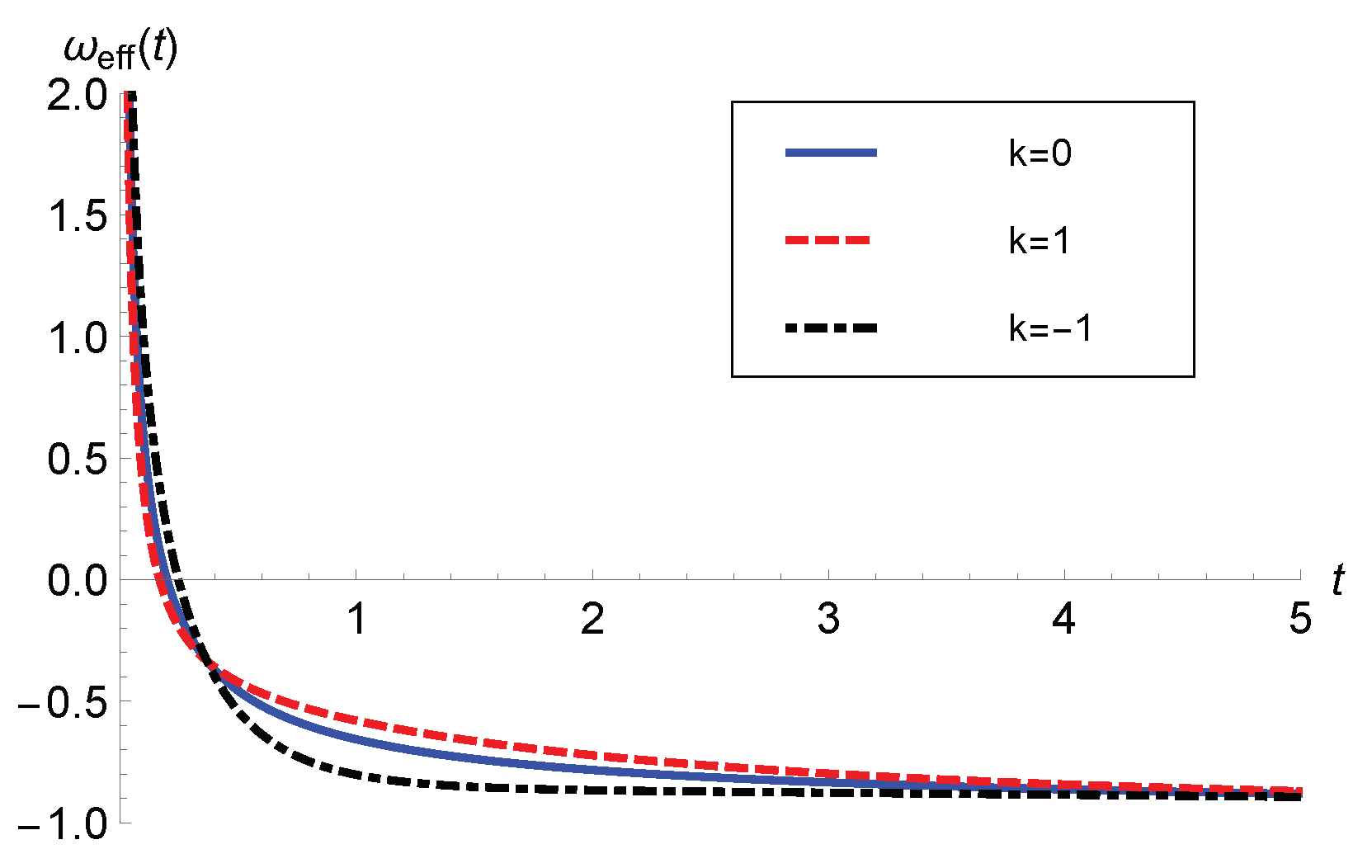
The energy density and pressure of effective matter can be obtained from and which also can be read by Eqs. (11) and (12) with . Similarly, the EoS of effective matter can be read by Eq. (13) with which implies that the behavior of effective matter remains the same as in GR. We note that the effective matter obeys WEC for . The behavior of the effective matter with and Pantheon data is illustrated in Figure 10 and Figure 11, respectively.
5. Conclusion
In this paper, we have studied an FLRW spacetime model filled with a perfect fluid in the framework of gravity, where , for all spatially curved models. In order to find solutions, we have chosen a parametrization of the scale factor, , where , and that yields a deceleration parameter transiting from an early deceleration to a late time acceleration phase. The kinematical dynamics of the model is independent of the theory and is studied earlier in Ref. [41]. To eschew repetition, the kinematical study is not presented in this paper.
The main attributes of the models are as follows:
- A physically realistic cosmological model is possible only for .
- As compared to GR, in gravity due to coupling there are extra terms on the right-hand side of the field equations. These extra terms may be termed as coupled matter which may behave either as perfect fluid or DE.
- The main matter exhibits the characteristics of all kind matter, viz., hard matter (), radiation (), dust (), quintessence (), and a cosmological constant (), in the same order as it is required to depict the cosmic history including the transition from a decelerated to an accelerating universe.
- The coupled matter satisfies the NEC, however, it violates the WEC and the NEC at very early stage of evolution. It also violates the SEC at late times which shows that the coupled matter contributes as quintessence DE. The model explains late time acceleration without including any form of hypothetical exotic matter, indicating that the gravity can be a good alternative to DE.
Author Contributions
Conceptualization, S.J., V.S. and A.B.; methodology, V.S., S.J., and A.B.; software, V.S. and S.J.; validation, V.S. and A.B.; formal analysis, V.S.; data curation, V.S.; writing original draft preparation, S.J.; writing review and editing, V.S. and A.B.; visualization, V.S. and S.J.; supervision, V.S. and A.B.; project administration, A.B.; funding acqui-sition, S.J., and A.B. All authors have read and agreed to the published version of the manuscript.
Funding
This work is based on the research supported wholly/ in part by the National Research Foundation of South Africa (Grant Numbers: 118511).
Institutional Review Board Statement
Not applicable
Informed Consent Statement
Not applicable
Data Availability Statement
Not applicable
Acknowledgments
Not applicable
Conflicts of Interest
The authors declare no conflict of interest. The funders had no role in the design of the study; in the collection, analyses, or interpretation of data; in the writing of the manuscript; or in the decision to publish the results.
Sample Availability
Not applicable
References
- A. H. Guth, Inflationary universe: A possible solution to the horizon and flatness problems, Phys. Rev. 23 (1981) 347.
- A. Albrecht and P. J. Steinhardt, Cosmology for grand unified theories with radiatively induced symmetry breaking, Phys. Rev. Lett. 48 (1982) 1220–1223.
- A. Linde, A new inflationary universe scenario: A possible solution of the horizon, flatness, homogeneity, isotropy and primordial monopole problems, Phys. Lett. B 108 (1982) 389-393.
- A. G. Riess et al., Observational evidence from supernovae for an accelerating universe and a cosmological constant, Astrophy. J. 116 (1998) 1009.
- S. Perlmutter et al., Measurements of Ω and Λ from 42 high-redshift supernovae, Astrophy. J. 517 (1999) 565.
- B. P. Schmidt et al., The high-z supernova search: measuring cosmic deceleration and global curvature of the universe using type Ia supernovae, Astrophy. J. 507 (1998) 46.
- J. A. Frieman, M. S. Turner and D. Huterer, Dark Energy and the accelerating universe, Ann. Rev. Astron. Astrophys. 46 (2008) 385, arXiv:astro-ph/0803.0982.
- E. J. Copeland, M. Sami and S. Tsujikawa, Dynamics of dark energy, Int. J. Mod. Phys. D 15 (2006) 1753–1936, arXiv: hep-th/0603057.
- E. Komatsu et al., Five-year Wilkinson microwave anisotropy probe (WMAP) observations: Cosmological interpretation, Astrophys. J. Suppl. 180 (2009) 330–376, arXiv:astro-ph/0803.0547.
- P. A. R. Ade et al., Planck 2015 results XX. Constraints on inflation, Astron. Astrophys. 594 (2016) A20, arXiv: astro-ph/1502.02114.
- V. Sahni and A. A. Starobinsky, The case for a positive cosmological Lambda-term, Int. J. Mod. Phys. D 9 (2000) 373–444, arXiv: astro-ph/9904398.
- A. Del Popolo, Non-baryonic dark matter in cosmology, AIP Conference Proceedings 1548 (2013) 2-63.
- A. Del Popolo, M. Le Delliou and X. Lee, Correlations in the matter distribution in CLASH galaxy clusters, Phys. Dark Universe 26 (2019) 100342.
- S. Weinberg, The cosmological constant problem, Rev. Mod. Phys. 61 (1989) 1.
- A. V. Astashenok and A. Del Popolo, Cosmological measure with volume averaging and the vacuum energy problem, Class. Quantum Grav. 29 (2012) 085014.
- T. P. Sotiriou and V. Faraoni, f(R) theories of gravity, Rev. Mod. Phys. 82 (2010) 451.
- A. De Felice and S. Tsujikawa, f(R) theories, Living Rev. Relativ. 13 (2010) 1-161.
- T. Harko et al., f(R,T) gravity, Phy. Rev. D 84 (2011) 024020.
- V. Singh and A. Beesham, Plane symmetric model in f(R,T) gravity, Eur. Phys. J. Plus 135 (2020) 1-15.
- V. Singh and A. Beesham, LRS Bianchi I model with constant expansion rate in f(R,T), Astrophys. Space Sci. 13 (2020) 1-161.
- N. Banerjee and S. Das, Acceleration of the universe with a simple trigonometric potential, Gen. Relativ. Gravit. 37 (2005) 1695-1703.
- A. Akarsu and T. Dereli, Cosmological models with linearly varying deceleration parameter, Int. J. Theor. Phys. 51 (2012) 612-621.
- B. Mishra et al., Cosmological models with a hybrid scale factor in an extended gravity theory, Mod. Phys. Lett. A 33 (2018) 1850052.
- A. Pradhan et al., The reconstruction of constant jerk parameter with f(R,T) gravity, J. High Energy Astrophys. 38 (2023) 12-21.
- C. Chawla, R. K. Mishra and A. Pradhan, String cosmological models from early deceleration to current acceleration phase with varying G and Λ, Eur. Phys. J. Plus 127 (2012) 1-16.
- R. K. Mishra and A. Chand, Cosmological models in alternative theory of gravity with bilinear deceleration parameter, Astrophys. Space Sci. 361 (2016) 1-10.
- R. K. Mishra, H. Dua and A. Chand, Bianchi-III cosmological model with BVDP in modified f(R,T) theory, Astrophys. Space Sci. 363 (2018) 1-8.
- R. K. Mishra and H. Dua, Phase transition of cosmological model with statistical techniques, Astrophys. Space Sci. 365 (2020) 1-13.
- R. K. Tiwari and D. Sofuoglu, Quadratically varying deceleration parameter in f(R,T) gravity, Int. J. Geom. Methods Mod. Phys. 17 (2020) 2030003.
- S. D. Katore and S. V. Gore, ΛCDM cosmological models with quintessence in f(R) theory of gravitation, J. Astrophys. Astron. 41 (2020) 12.
- N. Ahmed, M. Fekry and A. A. Shaker, Transition from decelerating to accelerating universe with quadratic equation of state in f(R,T) gravity, NRIAG J. Astron. Geophys. 8 (2019) 198-203.
- R. K. Tiwari, D. Sofuoglu and A. Beesham, FRW universe in f(R,T) gravity, Int. J. Geom. Methods Mod. Phys. 18 (2021) 2150104.
- A. Pradhan, P. Garg and A. Dixit, FRW cosmological models with cosmological constant in f(R,T) theory of gravity, Can. J. Phys. 999 (2021) 741-753.
- A. Pradhan, B. Saha and V. Rikhvitsky, Bianchi type-I transit cosmological models with time dependent gravitational and cosmological constants: reexamined, Indian J. Phys. 89 (2015) 503-513.
- A. K. Yadav, Cosmological constant dominated transit universe from the early deceleration phase to the current acceleration phase in Bianchi-V spacetime, Chin. Phys. Lett. 29 (2012) 079801.
- S. K. Tripathy et al., Cosmological models with a hybrid scale factor, Int. J. Mod. Phys. 30 (2021) 2140005.
- S. Tarai et al., Effect of bulk viscosity in cosmic acceleration, Int. J. Geom. Methods Mod. Phys. 19 (2022) 2250060, arXiv:2102.09045.
- B. Mishra, S. K. Tripathy and S. Tarai, Accelerating models with a hybrid scale factor in extended gravity, J. Astrophys. Astron. 42 (2021) 1-15.
- R. K. Tiwari et al., Anisotropic Cosmological Model in a Modified Theory of Gravitation, Universe 7 (2021) 226.
- S. Jokweni et al., LRS Bianchi-I Transit Cosmological Models in f(R,T) Gravity, Phys. Sci. Forum 7 (2023) 34.
- R. K. Mishra and H. Dua, Evolution of FLRW universe in Brans-Dicke gravity theory, Astrophys. Space Sci. 366 (2021) 1-13.
- J. Magana et al., The Cardassian expansion revisited: constraints from updated Hubble parameter measurements and type Ia supernova data, Mon. Not. R. Astron. Soc. 476 (2018) 1036-1049.
- D. M. Scolnic et al., The complete light-curve sample of spectroscopically confirmed SNe Ia from Pan-STARRS1 and cosmological constraints from the combined pantheon sample, Astrophys. J. 859 (2018) 101.
- E. Macaulay et al., First cosmological results using Type Ia supernovae from the Dark Energy Survey: measurement of the Hubble constant, Mon. Not. R. Astron. Soc. 486 (2019) 2184-2196.
Figure 1.
Deceleration parameter q in terms of redshift z with the best fitted values of p and .
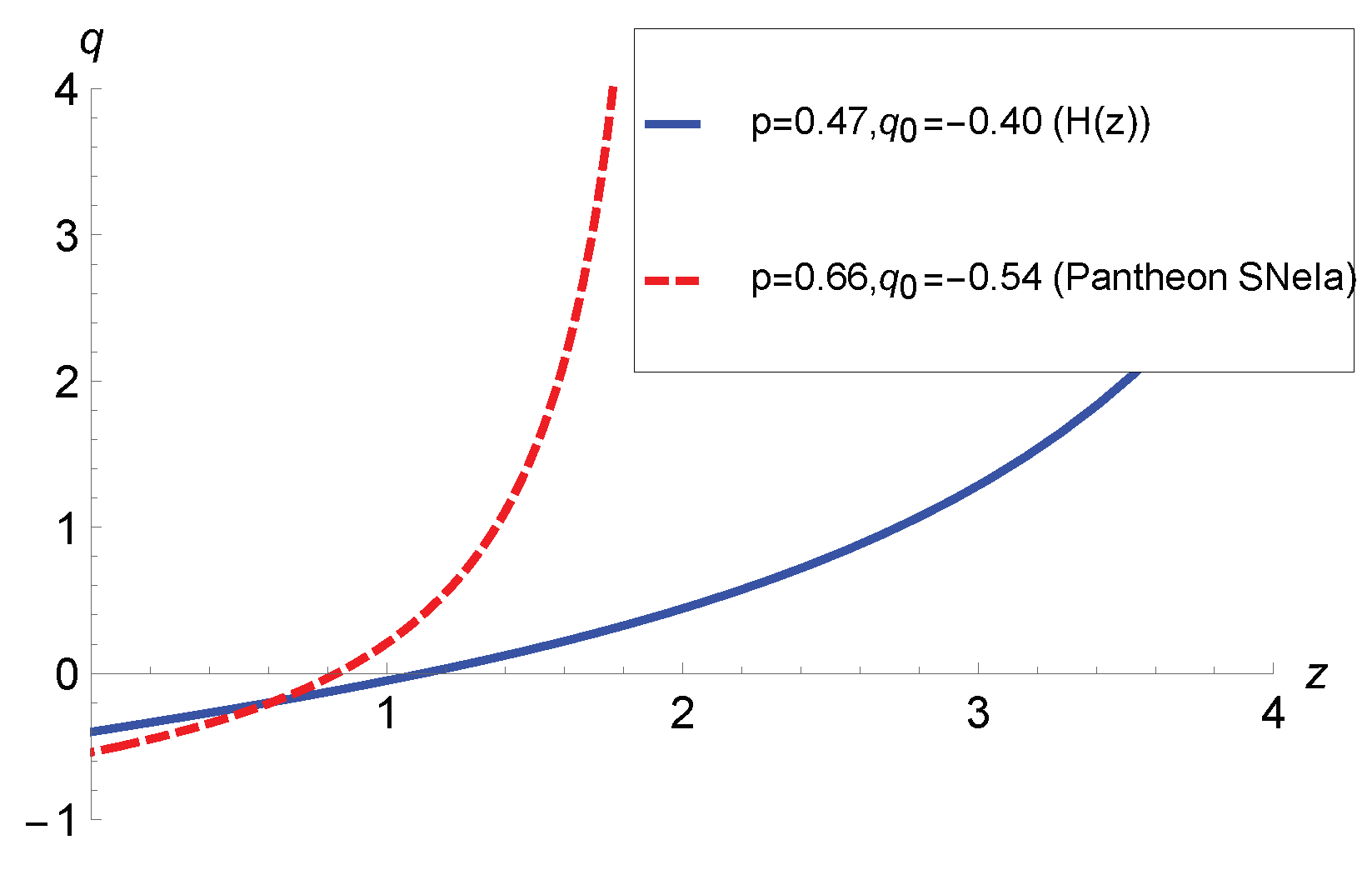
Figure 2.
versust with ( data) and .
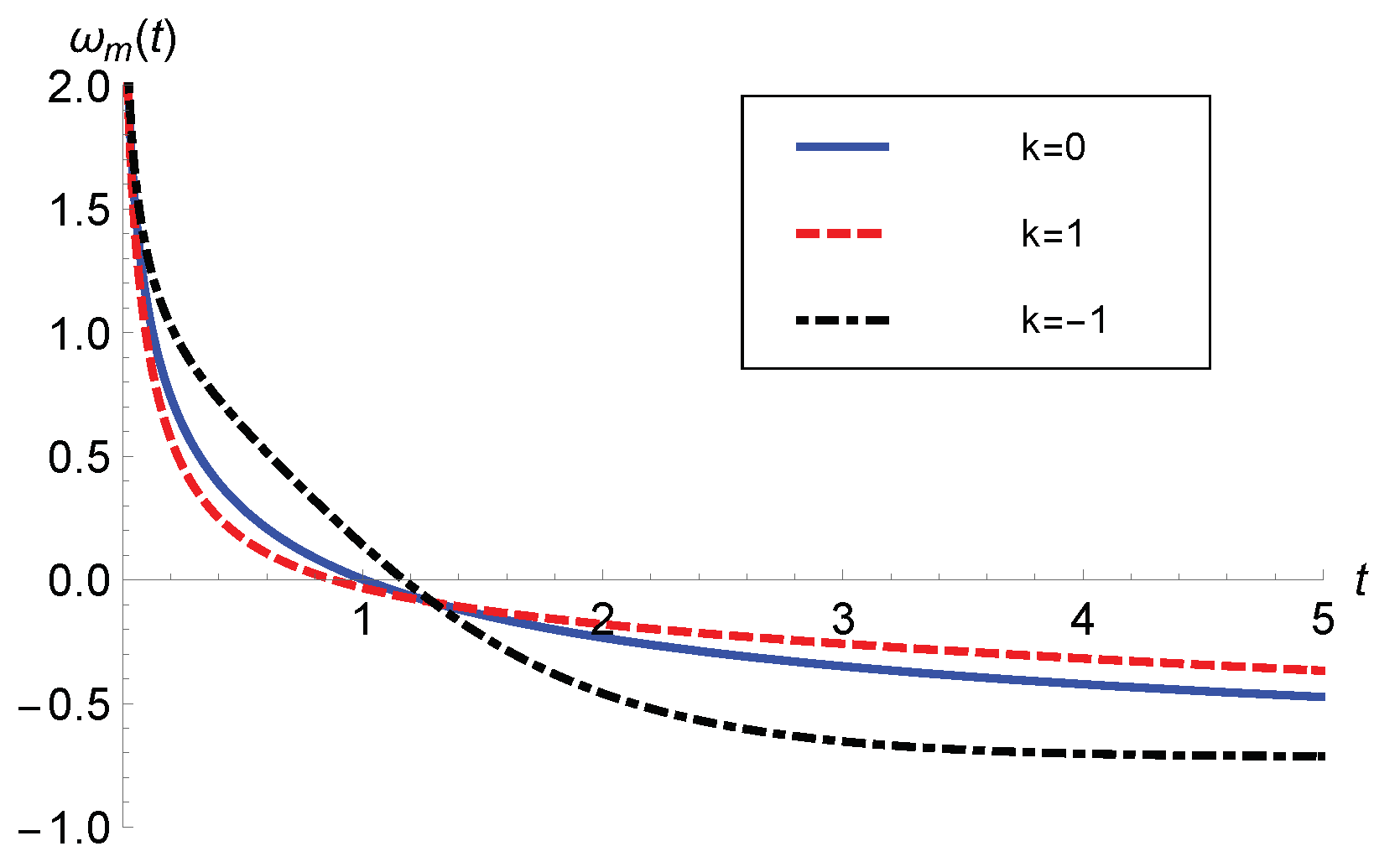
Figure 3.
versust with with (Pantheon data) and .
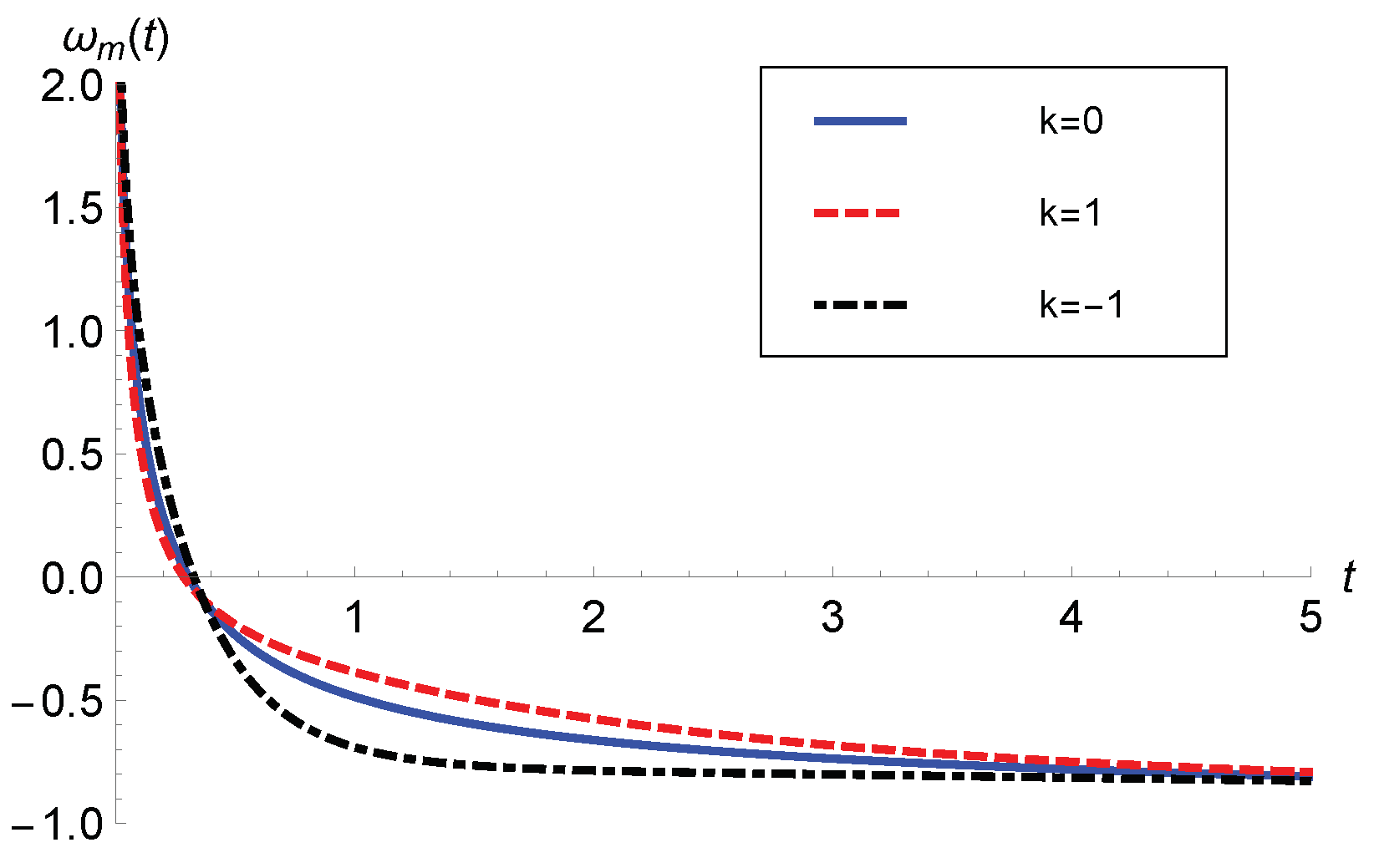
Figure 4.
versust for flat model with ( data), (Pantheon data) and .
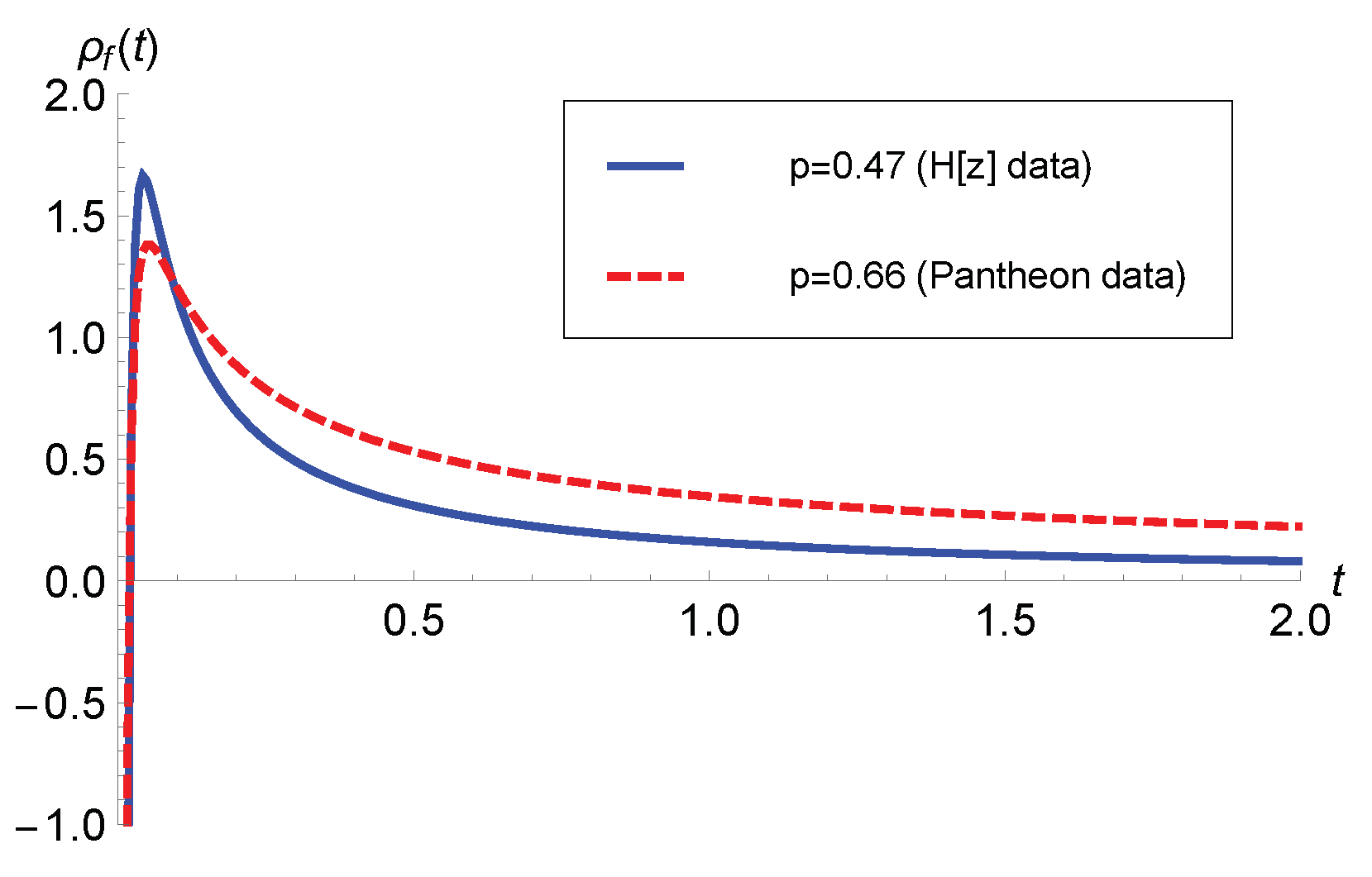
Figure 5.
versust for with .
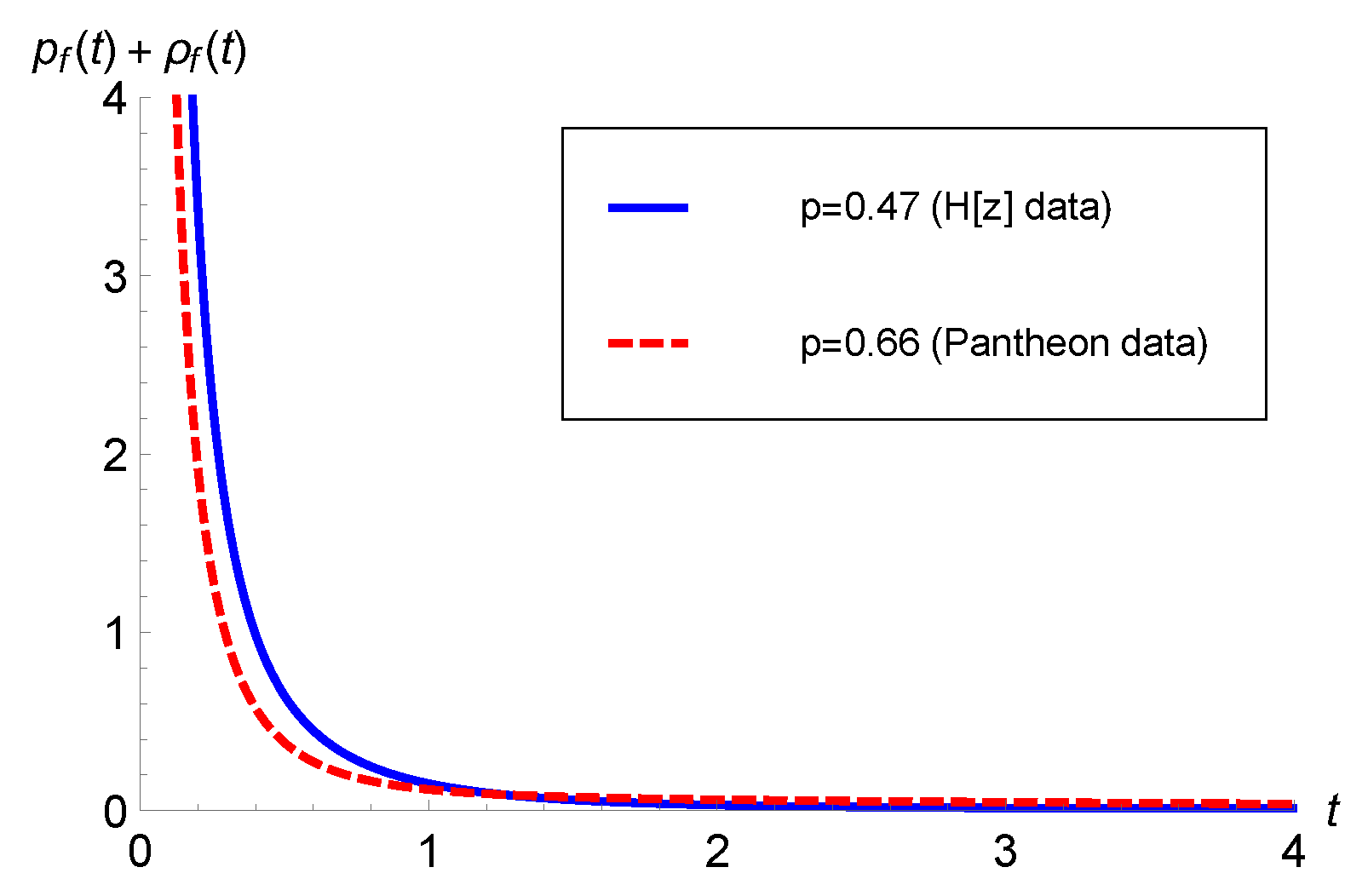
Figure 6.
versust with ( data), and .
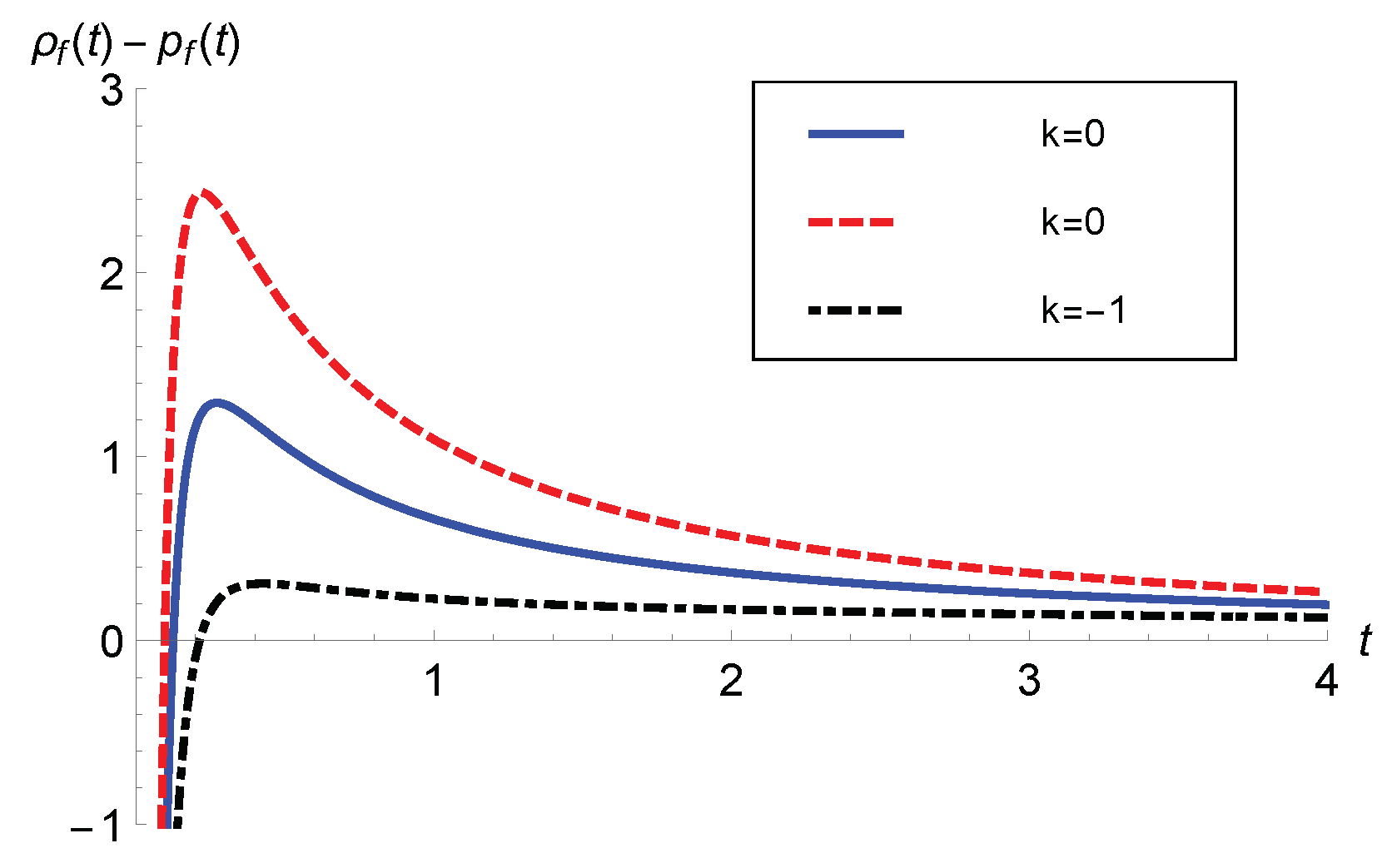
Figure 7.
versust with (Pantheon data) and .
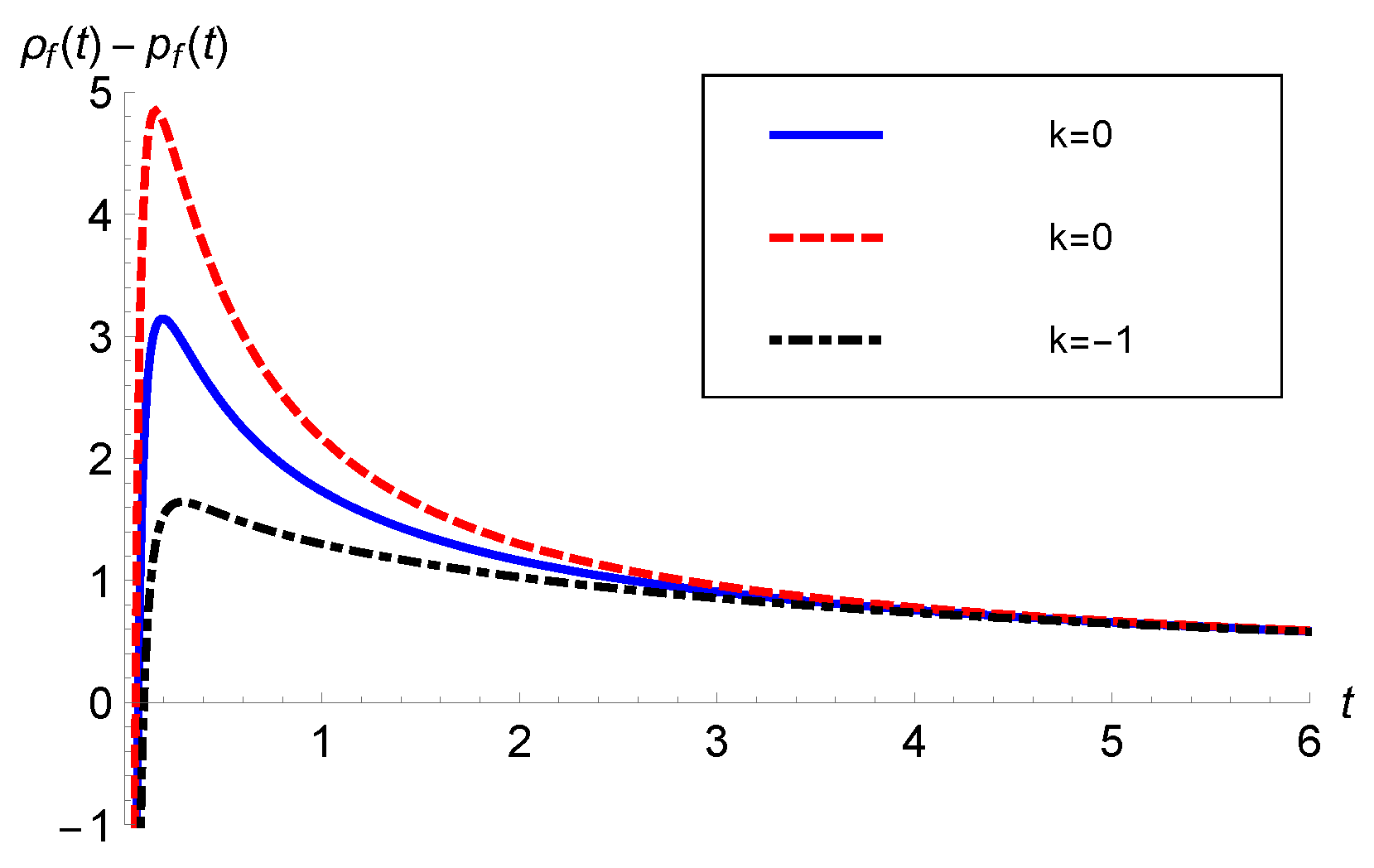
Figure 8.
versust with ( data) and .
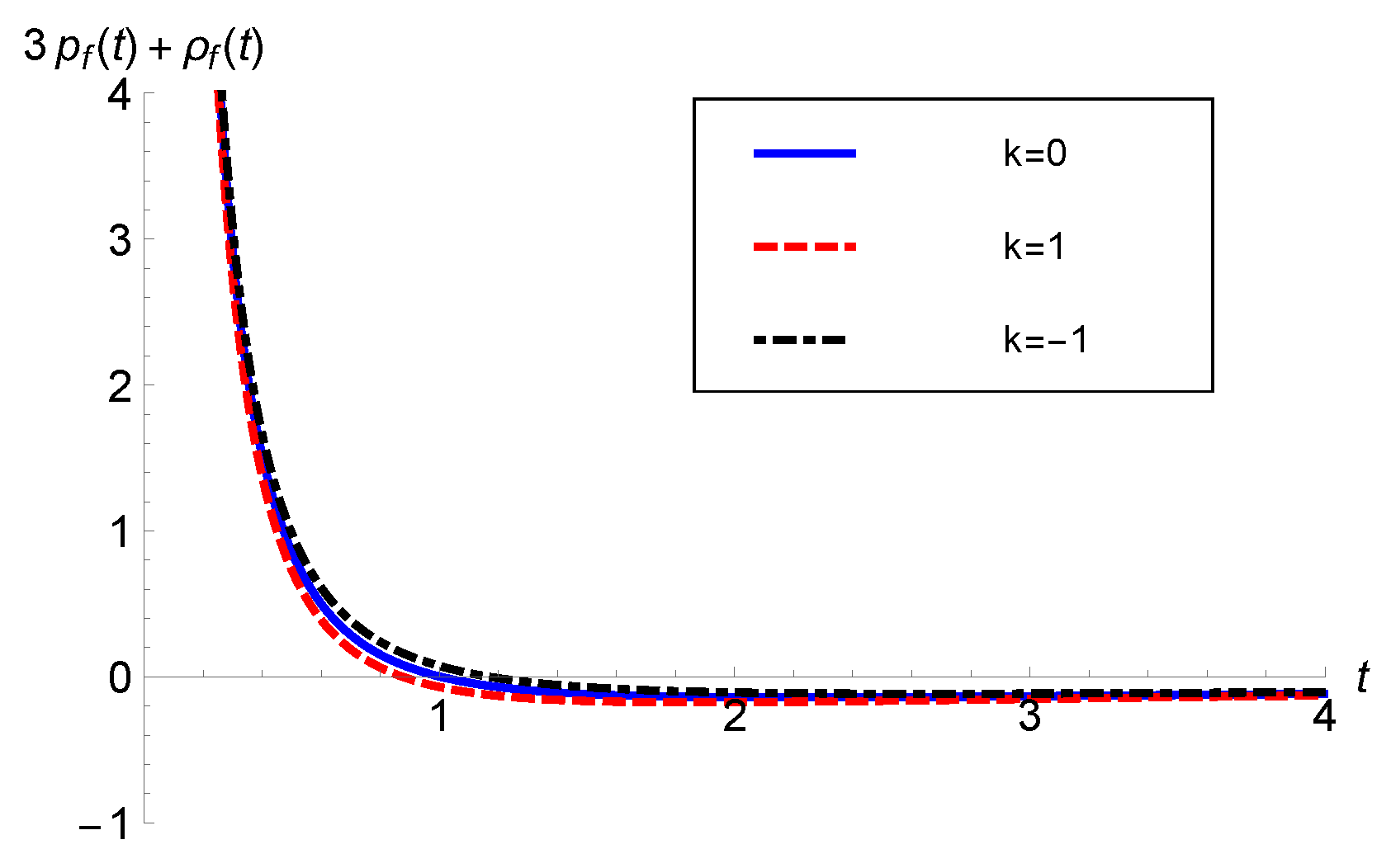
Figure 9.
versust with (Pantheon data) and .
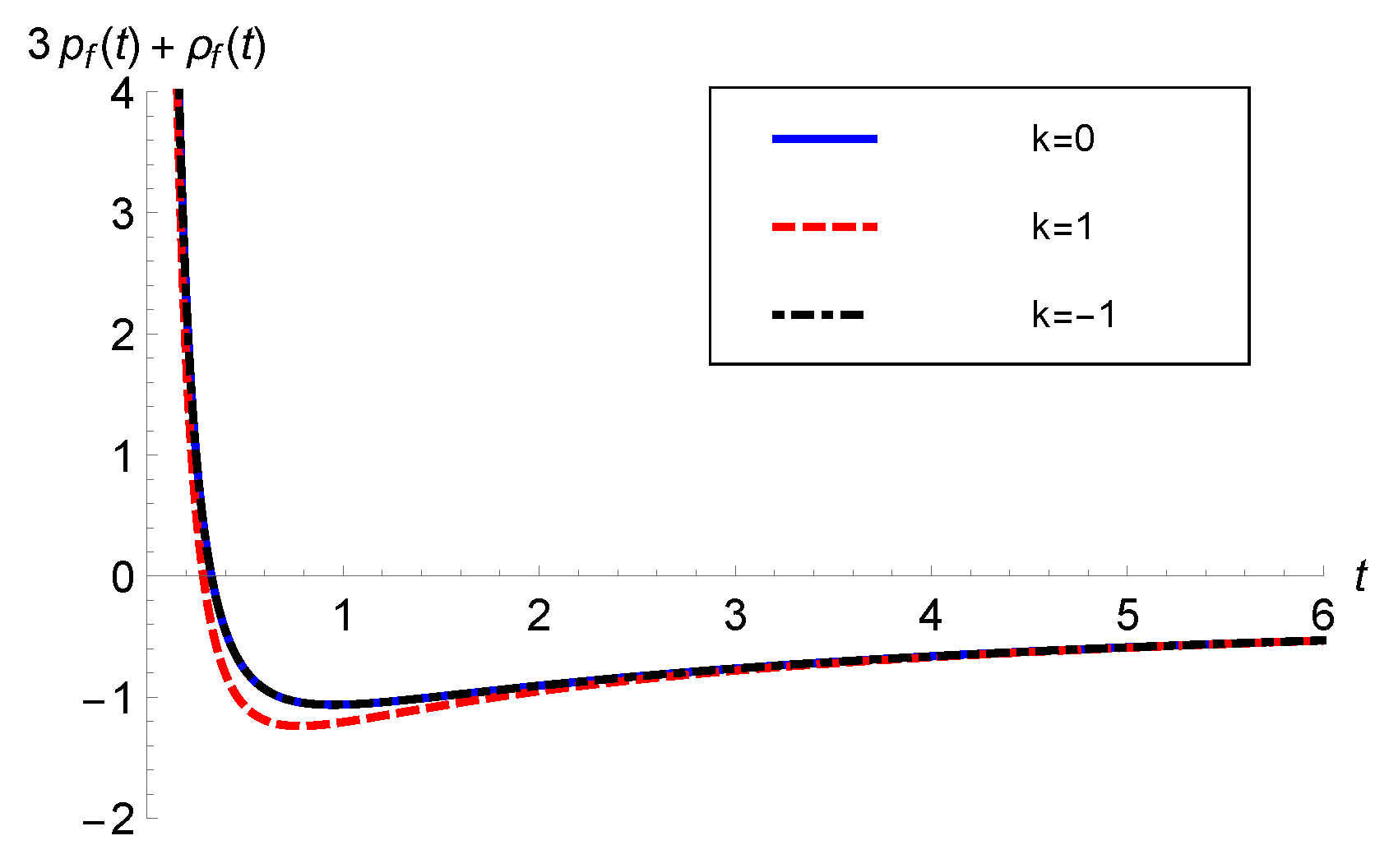
Figure 10.
versust with ( data).
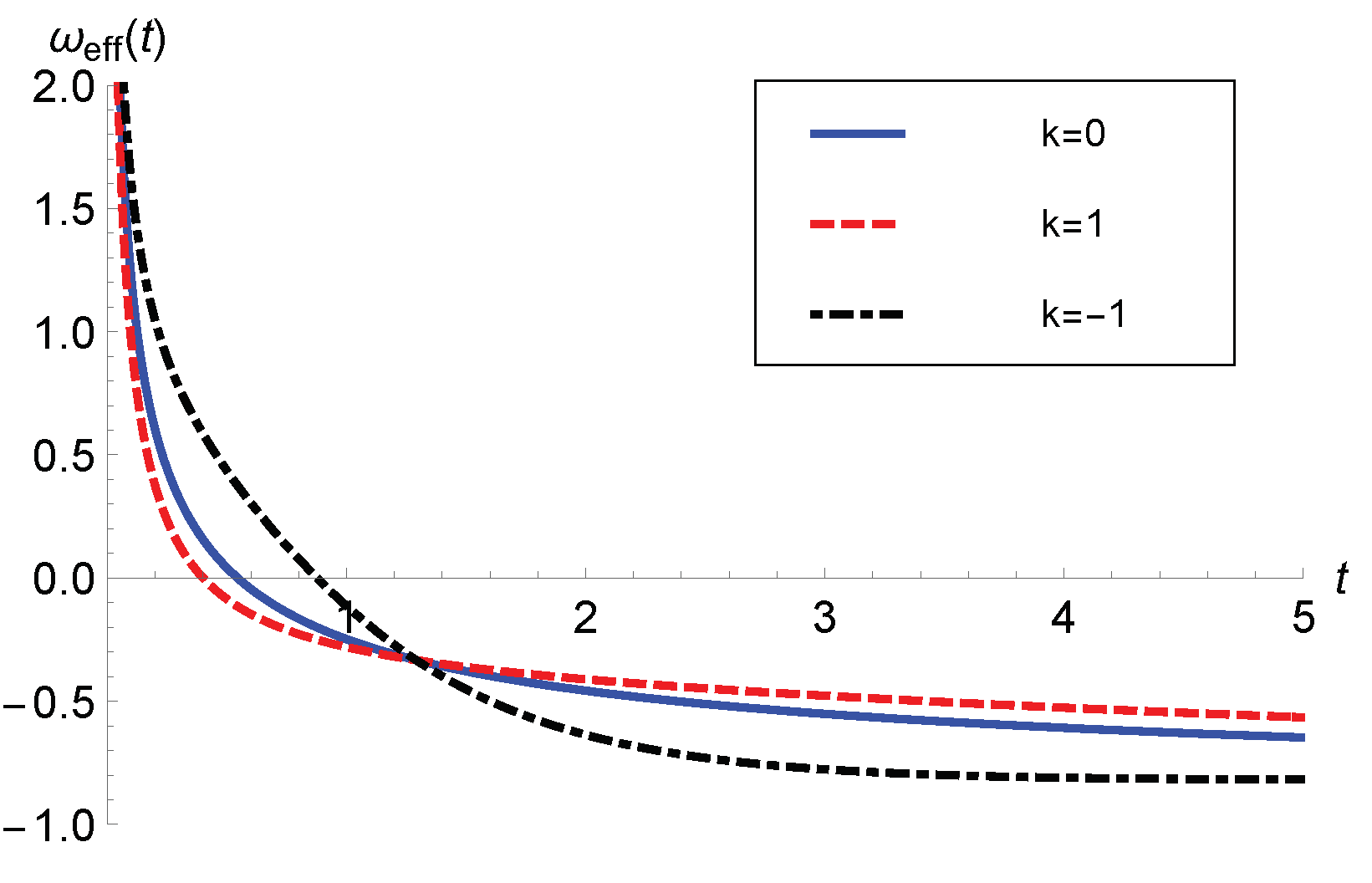
Figure 11.
versust with (Pantheon data).
Disclaimer/Publisher’s Note: The statements, opinions and data contained in all publications are solely those of the individual author(s) and contributor(s) and not of MDPI and/or the editor(s). MDPI and/or the editor(s) disclaim responsibility for any injury to people or property resulting from any ideas, methods, instructions or products referred to in the content. |
© 2024 by the authors. Licensee MDPI, Basel, Switzerland. This article is an open access article distributed under the terms and conditions of the Creative Commons Attribution (CC BY) license (http://creativecommons.org/licenses/by/4.0/).
Copyright: This open access article is published under a Creative Commons CC BY 4.0 license, which permit the free download, distribution, and reuse, provided that the author and preprint are cited in any reuse.


