

Submitted:
23 February 2024
Posted:
23 February 2024
You are already at the latest version
Abstract
This study investigated interactions between sugar-related dietary patterns (DP), personality traits, cognitive-behavioural, and emotional functioning.
The study involved females aged 18-54. Data were collected between the Winter and Spring of 2020/21. The survey was conducted using anonymized questionnaires. The Ten-Item Personality Inventory (TIPI) was used to examine personality traits based on the Big Five Personality Trait Model. Three-Factor Eating Questionnaire (TFEQ) was used to measure eating behaviours: cogni-tive restraint (CR), uncontrolled eating (UE), and emotional eating (EE). The KomPAN question-naire collected the frequency of intake. Dietary patterns (DPs) were derived by principal component analysis (PCA). A logistic regression (OR) was applied to verify the association between the DPs, personality traits, cognitive-behavioural and emotional functioning.
Three DPs were identified: sweet-western (SWDP), pro-healthy (PHDP) and dairy (DDP). Women with high conscientiousness were less likely, by 33%, to adhere to the upper tercile of SWDP and 80% more likely to the upper tercile of PHDP. Elevated CR intensity increased by almost 2-fold (OR: 1.93; p
Keywords:
sweet taste preferences
; diet
; personality traits
1. Introduction
Statistics report that average sugar consumption has increased worldwide, from 20.71 to 22kg per inhabitant per year in the last decade [1]. This trend is also continuing in Poland. Since 2010, annual sugar consumption has increased from 39.9kg to nearly 42kg per capita [2]. Data indicate that WHO's recommendations of a maximum of 10% energy from simple sugars in the diet have been exceeded [3]. Sugar has begun to be seen as an ingredient responsible for the global epidemic of obesity, cardiometabolic diseases and cancers [4,5,6,7,8,9]. Therefore, sugar-related dietary behaviours and sweet taste preferences have started to be widely discussed in the literature [7].
While the influence of sugars on the development of the diseases mentioned above is apparent, the question of what behavioural mechanism leads to the choice of sweet taste as the dominant taste is still a matter of debate. The sugar-related dietary patterns and their direct translation into personality traits have yet to be defined. We do not know if subjects who consume more sugar tend to reduce their consumption of other food groups, how they control their dietary patterns or express their emotions via dietary choices. Our previous manuscript showed that sugar intake might be related to weekdays and weekend days, and young women, in particular, tend to modify it, reflecting the nutritional value of a daily diet [10]. There needs to be papers comprehensively describing the dietary patterns of individuals in the context of sugar consumption and other eating behaviours, including fruits, vegetables, dairy or meat-originating food. Dietary behaviour has increasingly been attributed to personality type and other psychological factors [11,12,13]. Psychodietetics is gaining more popularity. However, despite the growing interest in the relationship between diet and mental health, the literature has not paid attention to possible relationships between sugar intake, personality traits and cognitive-behavioural or emotional functioning. It is essential to learn about these mechanisms.
In health psychology, many studies confirm that an individual's personal resources and personality traits are essential for engaging in health behaviour [14]. The critical role plays stress-type personality, the surrounding emotions, sense of coherence, and self-efficacy [15,16]. Other studies emphasize the importance of internal locus of control, emotional maturity, resilience to stress, autonomy, low levels of anxiety and fear and high self-esteem [17,18]. Some researchers recognize that conscientiousness and agreeableness are associated with health-promoting behaviours, while neuroticism is associated with behaviours that harm health [19]. The critical mechanism underlying such relationships is the generation of positive states by conscientiousness and agreeableness of positive affective states, by neuroticism, while by neuroticism negative affective states affective states [19]. The positive emotions that constitute the principal mechanism conducive to engaging in health-promoting eating behaviours promote health. Findings from other studies indicate the link between sugar consumption, the human brain and human behaviour [7]. A link has been discovered between eating a diet rich in sugar and the occurrence of emotional disorders such as anxiety and depression [11]. Some sources report that personality traits such as neuroticism, extroversion or conscientiousness can influence preference for sweet taste [12]. Studies have shown that personality traits can indeed affect dietary choices, including the type of diet [13]. Individuals marked by neuroticism and alexithymia were likelier to have a low consumption of fruits and vegetables and an increased consumption of sugar and saturated fats [13]. Subjects characterized by neuroticism and extrovertism consumed more sweet and salty foods compared to people with characteristics of conscientiousness [12]. An interesting observation was discovered for people who used stimulants such as alcohol or drugs in excess – in this group, the preference for sweet foods was high [20,21]. The association was stronger for those with a genetic predisposition to alcoholism [20,21]. Unfortunately, none of these studies comprehensively described the dietary patterns of those who prefer sweet taste in their diet and their translation into psychological characteristics.
Given the lack of available information, a study was conducted to analyze sugar-related dietary patterns and personality traits, cognitive-behavioural and emotional functioning as a variable of eating behaviour.
2. Materials and Methods
2.1. The study sample
The characteristics of the study sample are shown in Table 1. The study was conducted among 624 women aged between 18 and 54. Informed consent was obtained from all subjects involved in the study. All procedures followed the ethical standards of the institutional and national research committees and the Helsinki Declaration. The participants consented to participate in the study with a digitally informed consent form. As this study is not a medical experiment, it was exempt from ethical approval from the Poznan University of the Medical Sciences Bioethics Committee according to Polish laws and GCP regulations (decision number: 261 527/20). Data were collected between December 2020 and April 2021 using an anonymous questionnaire. Recruitment was done using the snowball method. The subjects' flowchart through the study is shown in Figure 1.
Most of the sample were aged 18-26 (93%). Over half of women (73%) had a BMI indicating a normal body weight. More than 50% of the respondents admitted to living with their families. The most common place of residence (48%) was a city (>100,000 residents). The vast majority (62%) of the sample had an upper-secondary level of education. Also, the study profile was represented by humanities (34% humanities and psychology), technical (7%) and medical-nutrition (19% and 19%) courses.
2.2. Dietary Patterns (DPs)
The frequency of consumption was recorded using the Lifestyle and Nutrition Knowledge Assessment (KomPAN) [22,23]. The KomPAN questionnaire consists of four sections within which it provides information: (1) Dietary habits, (2) Frequency of food consumption, (3) Views on food and nutrition, and (4) Lifestyle and personal information [22]. The frequency of food intake is shown in Table S1. The responses were converted to daily consumption frequency following the KOMPAN procedure [23]. Dietary indexes were calculated for the established products and product groups, and the result was interpreted using the tercile division recommended previously. Two diet quality scores, namely, the pro-healthy diet index (pHDI-10) and the non-healthy diet index (nHDI-11), were determined using the frequency of food intake [23,24,25]. In addition, the “Sugar Diet Index” (sDI-7), which represents the dietary sugar intake relating to seven food groups, has also been created. All index components are shown in Table 2.
The Dietary patterns (DPs) were derived a posteriori using a principal component analysis (PCA) with a varimax rotation. The input variables were the frequency of consumption of fruits, vegetables, fermented milk drinks, cottage cheese, hard cheese, cured meat, buckwheat, oats, wholegrain pasta, legumes-based foods, white bread and bakery products, butter, fried foods, sweetened beverages, sweets. Other variables taken into account were sDI, nHDI and pHDI. Data on the frequency of food consumption were standardized. The sample size was sufficient to derive the DPs, as the ratio of respondents to input variables was 39:1 (624/16) [26,27].
Three PCA-derived dietary patterns were identified. The sweet-western dietary pattern (SWDP) was loaded heavily by frequently consuming white bread and bakery products, sweetened beverages, candies, cured meat, butter, fried foods, and high sDI and nHDI. A pro-healthy dietary pattern (PHDP) reflected mainly the consumption of vegetables, fruits, legumes-based foods, buckwheat, oats, wholegrain pasta, and high pHDI. The consumption of cottage cheese, fermented milk drinks and hard cheese contributed heavily to the third pattern, the dairy dietary pattern (DDP). All patterns explained 57% of the total variance; the share in variance explanation equalled 25%, 22%, and 10%, respectively, for the first, second, and third patterns. For further analyses, tercile intervals were calculated for each PCA-derived DPs.
2.3. Personality traits, cognitive-behavioural and emotional functioning
The Three-Factor Eating Questionnaire (TFEQ-13) and the Ten-Item Personality Inventory (TIPI) were used to analyze the personality traits and cognitive-behavioural and emotional functioning of the study group [28,29,30]. The TFEQ-13 distinguishes subjects whose behaviour towards diet was characterized by (1) Cognitive restraint of eating (CR) subscale measures behaviours related to restricting the amount or type of food to control weight and body image (questions O1 - O5). Uncontrolled eating (UE) measures the tendency to eat more than usual due to loss of control over eating or uncontrollable feelings of hunger that trigger an overeating attack (questions R1 - R5). Emotional eating (EE) measures episodes of overeating episodes caused by feelings of lowered mood and anxiety (questions E1 - E3) [28]. These three factors reproduce 56.8% of the variability of the entire set of observed variables. Cronbach's coefficient of internal consistency Cronbach's alpha for the whole scale was 0.78; for the subscales, it was 0.78, 0.76 and 0.72. Values are calculated separately for each subscale [28,31].
The TIPI questionnaire was used to measure traits of the five-factor personality model: extraversion, agreeableness, conscientiousness, emotional stability and openness to experience [29]. The TIPI inventory created by Gosling et al. was translated into Polish adaptation by Sorokowska et al. [29,32]. The TIPI-PL consists of 10 statements that examine personality in five dimensions (neuroticism, extraversion, conscientiousness, openness to experience, and agreeableness) according to the five-factor model of personality [33]. The person under examination is asked to respond using the phrase "I perceive myself as a person" to each statement, rating themselves on a Likert scale from 1 (strongly disagree) to 7 (strongly agree). The score is calculated for each dimension separately, calculating the average points awarded to the two relevant statements. The higher the average, the higher the intensity of the personality trait in question [33].
The scores obtained by the respondents in the form of points were divided into terciles. The first tercile indicated a low intensity of the trait, eating behaviour. In contrast, the third tercile stood for high intensity of the trait or eating behaviour.
2.4. Statistical analysis
After considering the confidence level (98%) and the margin of error (5%), the calculated minimum sample size was 543 subjects [34]. All variables were checked for normality using the Kolmogorov–Smirnov test. The χ2 test was used to assess the distribution of categorical variables. Principal component analysis (PCA) was used to isolate dietary patterns (DP). The logistic regression analysis searched for significant correlations between obtained dietary patterns, trait intensity (TIPI), and factors (TFEQ-13). Statistical analysis was performed using Statistica v. 13.3 statistical software (StatSoft Polska Sp. z o.o. 2023. Kit Plus version 5.0.96. www.statsoft.pl [35].
3. Results
3.1. Dietary patterns
Three DPs were identified: “sweet-western DP (SWDP)”, “pro-healthy DP (PHDP)”, and “dairy DP (DDP)”. Table 3. shows the factor loadings of the 16 indicators used to extract the 3 dietary patterns. A high-frequency intake of sugar sources, sweetened beverages, candies, butter, fried foods, cured meat, white bread and bakery products characterized the SWDP. This SWDP was also marked by high nHDI. The PHDP was related to a high-frequency intake of vegetables, legumes-based foods, fruit, buckwheat, oats and wholegrain pasta. This PHDP was also characterized by high pHDI. The DDP was characterized by high-frequency intake of fermented milk drinks, cottage cheese and hard cheese.
Adherence to the sweet-western dietary pattern (SWDP), pro-healthy dietary pattern (PHDP), and its relation to the examined traits are presented in Table 4. The severity of the trait conscientiousness reduced the likelihood of high intake of sources of simple sugars in the diet by 34%. The intensity of behaviour such as cognitive restraint (CR) was found to increase by almost 2 times the probability of high adherence to the SWDP associated with intensification of intake of sources of simple sugars. Moreover, it was found that intensifying a behaviour such as emotional eating (EE) by 37% reduces the chance of high adherence to non-healthy dietary behaviours.
The severity of the conscientiousness trait increased the probability of high consumption of pro-healthy products by as much as 80%. The study showed that the severity of uncontrolled eating (UE) trait increased the likelihood of increased adherence to PHDP by 66%. It was revealed that intensifying behaviour such as cognitive restraint (CR) reduced the probability of high adherence to pro-healthy dietary behaviours by 60%. Moreover, it was found that intensifying a behaviour such as emotional eating (EE) by 47% increased the chance of high adherence to PHDP.
Adherence to the dairy dietary pattern (DDP) and its relation with the examined traits are presented in Table 5. The severity of the trait extraversion reduced the probability of low adherence to the DDP by as much as 33%, while the severity of introversion (low extraversion) reduced the likelihood of high adherence to DDP by 30%.
3.2. Ten-Item Personality Inventory (TIPI) results
The results of the TIPI questionnaire are shown in Table S6. The vast majority of female respondents confirm that they see themselves as extroverted (68%), dependable (72%), open to new experiences (77%), sympathetic (86%) and organized (72%).
More than half of the group experience anxiety (59%), while nearly 60% of the women surveyed do not consider themselves emotionally stable. Moreover, more than half (51%) of the group do not think they are characterized by quietness and reservedness, and nearly 40% of the female respondents think they are uncreative. Most of the group (65%) do not consider themselves quarrelsome.
The intensity of features examined through the TIPI questionnaire is shown in Table S7. A tercile division was performed on the values. The results present that the majority of the group had low levels of agreeableness (40%), conscientiousness (42%), and emotional stability (42%).
Almost half of the group (44%) was characterized by a medium intensity of extraversion. In the case of openness to experiences, there was a fairly even split with a teak advantage for low intensity – 37% of the group.
3.3. Three-Factor Eating Questionnaire (TFEQ-13) results
The interpreted outcomes of the questionnaire are shown in Table S9. Almost half (45%) of the study sample had a low intensity of emotional eating. In the case of uncontrolled eating and cognitive restraint - a medium or high level of the disorder was observed in more than 60% of the respondents.
The adherence to uncontrolled eating (UE), cognitive restraint (CR), emotional eating (EE) and its relation to the examined traits are presented in Table 6. Increased extraversion and agreeableness decreased the probability of low adherence to the UE by 35% and 30%, respectively. The high intensity of conscientiousness increased the chance of high adherence to uncontrolled eating by as much as 74%. Enhanced emotional stability increased the chance of medium adherence to UE by 51%. In comparison, the severity of neuroticism increased the likelihood of low adherence to uncontrolled eating (UE) by as much as 75%. The conscientiousness trait reduced the probability of high adherence to cognitive restraint (CR) by 36%.
Intensified extraversion increased the probability of high adherence to emotional eating (EE) by 76%, while agreeableness increased it by 61%. Conscientiousness and emotional stability successively increased the chance of high adherence to the emotional eating behaviour by almost 3 times and 2 times, respectively. Moreover, increased neuroticism reduced the likelihood of high adherence to emotional eating (EE) by 39%.
4. Discussion
Our study focused on revealing the relationship between sugar-related dietary patterns, personality traits, and cognitive-behavioural and emotional functioning in women. Many findings from our research were noteworthy. We extracted three dietary patterns, where one was associated with an increased tendency to sugar intake and less healthy dietary behaviours and at the same time related to certain personality types. In many ways, dietary choices as human behaviours represent an evolutionary puzzle. We sought to determine whether selected dietary patterns related to specific eating habits might be determined by personality or other psychological traits. Generally speaking, personality traits are good predictors of dietary behaviours.
We discovered that conscientiousness stood out in the analyses. This trait is characterized by a high level of organization, motivation and persistence in pursuing goals [29]. We revealed that women with high conscientiousness had a 34% lower chance of adhering to the SWDP while 80% higher to PHDP. It is worth noting that women with high adherence to SWDP were characterized by high consumption of fried products and generally achieved a high intensity of consumption of non-healthy dietary products (nHDI). Women with PHDP were characterized by high consumption of vegetables and fruits and reached a high intensity of consumption of healthy foods (pHDI).
We believe highly conscientious women pay more attention to selecting products in their daily diet. Perhaps when following a diet - self-imposed or imposed by a specialist -they were more eager and found it easier to follow the recommendations. Likewise, some papers report that personality can influence dietary choices [12,13]. Some authors have even shown that higher conscientiousness may reduce health risk behaviours, which would align with our results [36]. Further research into conscientiousness is required [37].
An interesting correlation was discovered between high adherence to pro-healthy dietary patterns (PHDP) and high intensity of uncontrolled eating (UE) and cognitive restraint (CR). Women with high uncontrolled eating (UE) were 66% more likely to adhere to PHDP, while high CR women were 47% more likely to adhere to this DP. We hypothesize that respondents who maintain a good-quality diet have more restrictive personalities. Similarly, Jeżewska-Zychowicz et al. showed that higher levels of food involvement are associated with healthier dietary behaviour [38]. Declared restrictions in consuming foods high in sugar, fat, and starch were observed in girls in the “fruit and vegetables” dietary patterns by Galinski et al. [39].
Our study found that women with high cognitive restraint (CR) were almost 2-fold more likely to adhere to SWDP. In contrast, the same group was 60% less likely to adhere to PHDP. The inconsistency of this result requires further explanation. Cognitive restraint is the control over food intake, influences body weight and body shape and exerts quantitative and qualitative influence on dietary intake [31]. Dieting for weight control is closely associated with cognitive restraint [40]. We could expect CR women to apply the principles of nutrition correctly. Nothing could be further from the truth in the case of our study. The women in our group likely lacked the necessary knowledge to maintain, for example, a healthy body weight, restricted healthy products and consumed more sweets in the SWDP. As some authors suggest, for cognitive restraint, there is no evidence indicating whether subjects take aspects of diet quality into account and, therefore, may have a greater intake of sweet food [41]. This hypothesis is reinforced by the fact that subjects restricting food intake can result in the adoption of unhealthy dietary habits and the potential development of eating disorders [38].
We also found that women with high emotional eating (EE) were 37% less likely to follow SWDP. Usually, sweets consumption is considered to result from succumbing to emotions. The question then arose about why women with a high EE were less likely to practice SWDP. Research indicates that food choices depend on the emotions accompanying them. In order to make inferences about emotional food choices, it would be necessary to know the range of emotions accompanying the concupation. We know, for example, that individuals selected more sweets and fewer non-sweet foods when primed to feel grateful rather than proud, a positive emotion experienced by attributing a positive outcome to the self [42]. Consumption in subjects with high EE is generally associated with the intake of hyperpalatable energy-dense foods [43]. Making a judgement on the type of food consumed would require a diagnosis of the causes of the emotional state.
Conscientiousness proved to be a crucial trait when analyzing trait severity versus adherence to eating behaviours - uncontrolled eating (UE), cognitive restraint (CR), and emotional eating (EE). Respondents characterized by high conscientiousness were 74% more likely to have high adherence to uncontrolled eating (UE), 36% less likely to have high adherence to cognitive restraint (CR), and almost 3 times more likely to have high adherence to emotional eating (EE). Conscientious people are portrayed as highly organized, self-motivated, and know what they want [29]. They stick persistently to the rules they set [29]. One supposes this accounts for the significant correlation with cognitive restraint (CR). Perhaps women knowing that restricting food is unhealthy for them are less likely to exhibit this behaviour. However, it would be necessary to test women's dietary knowledge in further studies to confirm this conjecture. Women may not want to limit their consumption of various foods because it is some reward or compensation for the day's hardships. Thus, we can assume that the high correlation with emotional eating EE is due to the emotional escape of women characterized by high conscientiousness. The respondents do not limit their food intake. What is more, they consume food while being influenced by negative emotions they feel. Most likely, they cannot control the amount of food they consume - hence the significant correlation with uncontrolled eating (UE).
In our study, we obtained another significant correlation - intensified extraversion increased the chance of high adherence to emotional eating (EE) by as much as 76%. It can be presumed that extroverted individuals characterized by activity, friendliness, talkativeness and sociability are more sensitive to stimuli received from the environment [29]. These individuals seek stimuli and pacing; they experience positive emotions [29]. However, what about when negative stimuli are more abundant, and because of their sensitivity, these individuals succumb to them? Perhaps the result is the correlation we obtained. It is possible that people with intense extrovertedness treated food as a "springboard" and rewarded themselves with food for the accumulation of negative stimuli and emotions.
Individuals marked by agreeableness are characterized by modesty, gentleness, and affection for other people [29]. The sincerity and trust they offer to the world leads us to suppose they may also be characterized by high emotional sensitivity [29]. The supposition would be confirmed by the correlation obtained in the analysis. Respondents characterized by high agreeableness were 61% more likely to have high adherence to emotional eating (EE). Perhaps they were balancing out the emotions that overwhelmed them by consuming food.
One of the significant correlations obtained is exceptionally confusing. According to the analysis results, women characterized by emotional solid stability were almost 2 times more likely to have high adherence to emotional eating (EE). According to the five-factor model of personality, enhanced emotional stability signifies the ability to cope with stress and emotional adjustment, so the result is unclear and requires further analysis [29].
Available research has proven that seasons affect women's diets. [44,45]. It is interesting to wonder whether, in the case of this study, we would obtain different dietary patterns depending on the season in which the respondents' data would be collected and, if so, how many differences we would find. In addition to the impact of the seasons, other factors affecting diet should also be considered. An example of a factor could be the lockdown during COVID-19. Changes in people's diets before and during the lockdown were noted [46]. The diet quality examined in the study was higher during lockdowns than in the periods before [46].
Interestingly, the literature reports that one of the Big Five personality traits of neuroticism was positively associated with depression [47]. It could, therefore, be interesting to determine whether oxidative stress has been proven to be increased in depression [48]. Diet's antioxidant capacity plays a vital role in counteracting oxidative stress [49]. It was demonstrated that antioxidant supplementation has been proven to be associated with improvements in depression and anxiety [50]. Antioxidants are still an area of intense scientific research [51,52]. The question arises - Is it possible to discover a correlation between the antioxidant capacity of the diet and personality traits or eating behaviours under study? It would be interesting to look into this topic in future studies.
Even though the study reached its aims, it had some limitations. First, we recruited a final sample of 624 respondents, internet users, for the study. The survey was based only on selected questionnaires, and the participants self-reported independently via the Internet. It allowed the collection of a limited type of data. However, this is an extensive representative sample size survey that can provide reliable results. Second, the study lacks information about the body composition and nutritional knowledge of the surveyed women and possible correlations regarding these parameters. Moreover, only women could participate in the study, resulting in 112 cases being excluded. Verifying women's nutritional knowledge and body composition, lacking in this case, would prove to be a definite advantage of the study.
Ultimately, understanding the factors that advance and hinder dietary restraint is critical as more consumers face the challenge of improving their health status via dietary modifications. In addition, understanding how to encourage healthy restraint behaviours may help in macro-environmental changes to combat the civilization's diseases. The intensity of the agreeableness and openness to experience did not affect adherence to the extracted DPs. However, significant correlations were observed between the extracted DPs and the severity of the traits of extraversion, emotional stability and conscientiousness. Significant correlations were discovered between SWDP and PHDP and eating behaviours, UE, CR, and EE. In further research, it is worth considering the dietary antioxidant capacity by evaluating the diet in the context of personality traits at risk for depression and checking the nutritional knowledge of female and male respondents.
5. Conclusions
In accordance with the results obtained, the importance of the role of personality, cognitive-behavioural and emotional functioning in women in forming sugar-related dietary patterns becomes very significant. This study sheds new light on the necessity of considering the mentioned psychological aspects in developing effective strategies for improving dietary habits in society.
Although various factors influence dietary choices, our study shows that personality traits and eating behaviours play an essential role, which should be considered when designing effective education and intervention programs. This insight allows us to understand the deeper motivations and mechanisms that drive human dietary choices related to the intake of sugars, the over-consumption of which is one of the leading nutritional errors in the population. Based on the results, there is a need for further research to explore the psychological and neurobiological aspects that influence dietary habits.
Supplementary Materials
The following supporting information can be downloaded at: Preprints.org, Table S1: Intensity of daily consumption of selected product groups; Table S2: The food frequency intake of the study group (n = 624) described in means and medians; Table S3: Mean food frequency intake per day for high, medium and low adherence to the Sweet-western dietary pattern (SWDP); Table S4: Mean food frequency intake per day for high, medium and low adherence to the Pro-healthy dietary pattern (PHDP); Table S5: Mean food frequency intake per day for high, medium and low adherence to the Dairy dietary pattern (DDP); Table S6: TIPI – results; Table S7: TIPI - intensity of features; Table S8: TFEQ-13 - interpreted results.
Author Contributions
Conceptualization, A.G., M.CM; methodology, A.G., M.CM., B.S.; formal analysis, A.G.; investigation, A.G., M.CM.; resources, M.W., data curation, A.G.; writing—original draft preparation, A.G.; writing—review and editing, A.G., M.CM., B.S., M.W.; supervision, M.CM; project administration, M.CM.; funding acquisition, M.CM. All authors have read and agreed to the published version of the manuscript.
Funding
This research received no external funding.
Institutional Review Board Statement
All procedures followed the ethical standards of the institutional and national research committees and the Helsinki Declaration. The participants consented to participate in the study with a digitally informed consent form. As this study is not a medical experiment, it was exempt from ethical approval from the Poznan University of the Medical Sciences Bioethics Committee according to Polish laws and GCP regulations (decision number: 261 527/20).
Informed Consent Statement
Informed consent was obtained from all subjects involved in the study.
Data Availability Statement
The data supporting the conclusions of this article are included within the article and its additional files. The other datasets used and/or analysed during the current study are available from the corresponding author upon reasonable request.
Conflicts of Interest
The authors declare no conflict of interest.
References
- Global Sugar Consumption 2023/24 | Statista Available online: https://www.statista.com/statistics/249681/total-consumption-of-sugar-worldwide/ (accessed on 24 December 2023).
- Statystyczny, G.U. Mały Rocznik Statystyczny Polski / Concise Statistical Yearbook of Poland. 2022.
- WHO Calls on Countries to Reduce Sugars Intake among Adults and Children Available online: https://www.who.int/news/item/04-03-2015-who-calls-on-countries-to-reduce-sugars-intake-among-adults-and-children (accessed on 21 December 2023).
- Lobstein, T.; Jackson-Leach, R.; Powis, J.; Brinsden, H.; Gray, M. World Obesity Atlas 2023. 2023.
- Rippe, J.M.; Angelopoulos, T.J. Sugars, Obesity, and Cardiovascular Disease: Results from Recent Randomized Control Trials. Eur J Nutr 2016, 55, 45–53. [CrossRef]
- Arnone, D.; Chabot, C.; Heba, A.C.; Kökten, T.; Caron, B.; Hansmannel, F.; Dreumont, N.; Ananthakrishnan, A.N.; Quilliot, D.; Peyrin-Biroulet, L. Sugars and Gastrointestinal Health. Clin Gastroenterol Hepatol 2022, 20, 1912-1924.e7. [CrossRef]
- Freeman, C.R.; Zehra, A.; Ramirez, V.; Wiers, C.E.; Volkow, N.D.; Wang, G.J. Impact of Sugar on the Body, Brain, and Behavior. Frontiers in Bioscience - Landmark 2018, 23, 2255–2266. [CrossRef]
- Malik, V.S.; Hu, F.B. The Role of Sugar-Sweetened Beverages in the Global Epidemics of Obesity and Chronic Diseases. Nat Rev Endocrinol 2022, 18, 205. [CrossRef]
- Calcaterra, V.; Cena, H.; Magenes, V.C.; Vincenti, A.; Comola, G.; Beretta, A.; Di Napoli, I.; Zuccotti, G. Sugar-Sweetened Beverages and Metabolic Risk in Children and Adolescents with Obesity: A Narrative Review. Nutrients 2023, 15. [CrossRef]
- Czlapka-Matyasik, M.; Lonnie, M.; Wadolowska, L.; Frelich, A. “Cutting down on Sugar” by Non-Dieting Young Women: An Impact on Diet Quality on Weekdays and the Weekend. Nutrients 2018, 10. [CrossRef]
- Jacques, A.; Chaaya, N.; Beecher, K.; Ali, S.A.; Belmer, A.; Bartlett, S. The Impact of Sugar Consumption on Stress Driven, Emotional and Addictive Behaviors. Neurosci Biobehav Rev 2019, 103, 178–199. [CrossRef]
- Keller, C.; Siegrist, M. Does Personality Influence Eating Styles and Food Choices? Direct and Indirect Effects. Appetite 2015, 84, 128–138. [CrossRef]
- Esposito, C.M.; Ceresa, A.; Buoli, M. The Association Between Personality Traits and Dietary Choices: A Systematic Review. Advances in Nutrition 2021, 12, 1149. [CrossRef]
- Mastenbroek, N.J.J.M.; Jaarsma, A.D.C.; Scherpbier, A.J.J.A.; van Beukelen, P.; Demerouti, E. The Role of Personal Resources in Explaining Well-Being and Performance: A Study among Young Veterinary Professionals. European Journal of Work and Organizational Psychology 2014, 23, 190–202. [CrossRef]
- Nowak, G.; Żelazko, A.; Rogalska, A.; Nowak, D.; Pawlas, K.; Badanie, P.K. Badanie Zachowań Zdrowotnych i Osobowości Typu D Wśród Studentek Dietetyki. Medycyna Ogólna i Nauki o Zdrowiu 2016, 22, 129–134. [CrossRef]
- Posadzki, P.; Stockl, A.; Musonda, P.; Tsouroufli, M. A Mixed-Method Approach to Sense of Coherence, Health Behaviors, Self-Efficacy and Optimism: Towards the Operationalization of Positive Health Attitudes. Scand J Psychol 2010, 51, 246–252. [CrossRef]
- Juczyński, Zygfryd.; Ogińska-Bulik, Nina. Zasoby Osobiste i Społeczne Sprzyjające Zdrowiu Jednostki. 2003.
- Dosedlová, J.; Klimusová, H.; Burešová, I.; Jelínek, M.; Slezáčková, A.; Vašina, L. Optimism and Health-Related Behaviour in Czech University Students and Adults. Procedia Soc Behav Sci 2015, 171, 1051–1059. [CrossRef]
- Sirois, F.M.; Hirsch, J.K. Big Five Traits, Affect Balance and Health Behaviors: A Self-Regulation Resource Perspective. Personality and Individual Differences 2015, 87, 59–64. [CrossRef]
- Kampov-Polevoy, A.B.; Ziedonis, D.; Steinberg, M.L.; Pinsky, I.; Krejci, J.; Eick, C.; Boland, G.; Khalitov, E.; Crews, F.T. Association Between Sweet Preference and Paternal History of Alcoholism in Psychiatric and Substance Abuse Patients. Alcohol Clin Exp Res 2003, 27, 1929–1936. [CrossRef]
- Fortuna, J.L. Sweet Preference, Sugar Addiction and the Familial History of Alcohol Dependence: Shared Neural Pathways and Genes. J Psychoactive Drugs 2010, 42, 147–151. [CrossRef]
- Kowalkowska, J.; Wadolowska, L.; Czarnocinska, J.; Czlapka-Matyasik, M.; Galinski, G.; Jezewska-Zychowicz, M.; Bronkowska, M.; Dlugosz, A.; Loboda, D.; Wyka, J. Reproducibility of a Questionnaire for Dietary Habits, Lifestyle and Nutrition Knowledge Assessment (KomPAN) in Polish Adolescents and Adults. Nutrients 2018, 10. [CrossRef]
- 23. Zespół Behawioralnych Uwarunkowań Żywienia Komitet Nauki o Żywieniu Człowieka Polskiej Akademii Nauk Kwestionariusz Do Badania Poglądów i Zwyczajów Żywieniowych Oraz Procedura Opracowania Danych. Komitet Nauki o Żywieniu Człowieka Polskiej Akademii Nauk 2014, 3–20.
- Bykowska-Derda, A.; Czlapka-Matyasik, M.; Kaluzna, M.; Ruchala, M.; Ziemnicka, K. Diet Quality Scores in Relation to Fatness and Nutritional Knowledge in Women with Polycystic Ovary Syndrome: Case-Control Study. Public Health Nutr 2021, 24, 3389–3398. [CrossRef]
- Bykowska-Derda, A.; Kałużna, M.; Garbacz, A.; Ziemnicka, K.; Ruchała, M.; Czlapka-Matyasik, M. Intake of Low Glycaemic Index Foods but Not Probiotics Is Associated with Atherosclerosis Risk in Women with Polycystic Ovary Syndrome. Life 2023, 13, 799. [CrossRef]
- Rosner: Fundamentals of Biostatistics - Google Scholar Available online: https://scholar.google.com/scholar_lookup?title=Fundamentals+of+Biostatistics&author=Rosner,+B.&publication_year=2011 (accessed on 7 January 2024).
- Peduzzi, P.; Concato, J.; Kemper, E.; Holford, T.R.; Feinstem, A.R. A Simulation Study of the Number of Events per Variable in Logistic Regression Analysis. J Clin Epidemiol 1996, 49, 1373–1379. [CrossRef]
- Dzielska, A.; Mazur, J.; Małkowska-Szkutnik, A.; Kołoło, H. Adaptacja Polskiej Wersji Kwestionariusza Three-Factor Eating Questionnaire (TFEQ-13) Wśród Młodzieży Szkolnej w Badaniach Populacyjnych. Probl Hig Epidemiol 2009, 90, 362–369.
- Sorokowska A., Słowińska A., Zbieg A., Sorokowski P. Polska Adaptacja Testu Ten Item Personality Inventory (TIPI) – TIPI-PL – Wersja Standardowa i Internetowa. Available online: https://www.researchgate.net/publication/270449357_Polska_adaptacja_testu_Ten_Item_Personality_Inventory_TIPI_-_TIPI-PL_-_wersja_standardowa_i_internetowa (accessed on 24 December 2023).
- Dzielska, A.; Mazur, J.; Małkowska-Szkutnik, A.; Kołoło, H. Adaptacja Polskiej Wersji Kwestionariusza Three-Factor Eating Questionnaire (TFEQ-13) Wśród Młodzieży Szkolnej w Badaniach Populacyjnych. Probl Hig Epidemiol 2009, 90, 362–369.
- Stunkard, A.J.; Messick, S. The Three-Factor Eating Questionnaire to Measure Dietary Restraint, Disinhibition and Hunger. J Psychosom Res 1985, 29, 71–83. [CrossRef]
- Gosling, S.D.; Rentfrow, P.J.; Swann, W.B. A Very Brief Measure of the Big-Five Personality Domains. J Res Pers 2003, 37, 504–528. [CrossRef]
- Costa, P.T.; McCrae, R.R. Four Ways Five Factors Are Basic. Personality and Individual Differences 1992, 13, 653–665. [CrossRef]
- Sample Size Calculator Available online: https://www.calculator.net/sample-size-calculator.html?type=1&cl=98&ci=5&pp=50&ps=9479673&x=Calculate (accessed on 21 December 2023).
- StatSoft Polska – Lider w Analityce Danych Available online: https://www.statsoft.pl/ (accessed on 14 December 2023).
- Singh, P. Conscientiousness Moderates the Relationship between Neuroticism and Health-Risk Behaviors among Adolescents. Scandinavian journal of psychology 2022, 63, 256–264. [CrossRef]
- Maćkowska, P.; Basińska, M.A. Osobowościowe Korelaty Zachowań Zdrowotnych u Osób z Cukrzycą Typu 1 i Chorobą Gravesa-Basedowa. 2010, 11, 39–45.
- Jezewska-Zychowicz, M.; Gębski, J.; Kobylińska, M. Food Involvement, Eating Restrictions and Dietary Patterns in Polish Adults: Expected Effects of Their Relationships (LifeStyle Study). Nutrients 2020, Vol. 12, Page 1200 2020, 12, 1200. [CrossRef]
- Galinski, G.; Lonnie, M.; Kowalkowska, J.; Wadolowska, L.; Czarnocinska, J.; Jezewska-Zychowicz, M.; Babicz-Zielinska, E. Self-Reported Dietary Restrictions and Dietary Patterns in Polish Girls: A Short Research Report (GEBaHealth Study). Nutrients 2016, 8. [CrossRef]
- Drapeau, V.; Provencher, V.; Lemieux, S.; Després, J.P.; Bouchard, C.; Tremblay, A. Do 6-y Changes in Eating Behaviors Predict Changes in Body Weight? Results from the Québec Family Study. International journal of obesity and related metabolic disorders : journal of the International Association for the Study of Obesity 2003, 27, 808–814. [CrossRef]
- Giudici, K.V.; Baudry, J.; Méjean, C.; Lairon, D.; Bénard, M.; Hercberg, S.; Bellisle, F.; Kesse-Guyot, E.; Péneau, S. Cognitive Restraint and History of Dieting Are Negatively Associated with Organic Food Consumption in a Large Population-Based Sample of Organic Food Consumers. Nutrients 2019, 11. [CrossRef]
- Schlosser, A.E. The Sweet Taste of Gratitude: Feeling Grateful Increases Choice and Consumption of Sweets. Journal of Consumer Psychology 2015, 25, 561–576. [CrossRef]
- Fuente González, C.E.; Chávez-Servín, J.L.; De La Torre-Carbot, K.; Ronquillo González, D.; Aguilera Barreiro, M.D.L.Á.; Ojeda Navarro, L.R. Relationship between Emotional Eating, Consumption of Hyperpalatable Energy-Dense Foods, and Indicators of Nutritional Status: A Systematic Review. Journal of Obesity 2022, 2022. [CrossRef]
- Człapka-Matyasik, M.; Ast, K. Total Antioxidant Capacity and Its Dietary Sources and Seasonal Variability in Diets of Women with Different Physical Activity Levels. Pol J Food Nutr Sci 2014, 64, 267–276. [CrossRef]
- Czlapka-Matyasik, M.; Gramza-Michalowska, A. The Total Dietary Antioxidant Capacity, Its Seasonal Variability, and Dietary Sources in Cardiovascular Patients. Antioxidants 2023, 12, 292. [CrossRef]
- Pfeifer, D.; Rešetar, J.; Czlapka-Matyasik, M.; Bykowska-Derda, A.; Kolay, E.; Stelcer, B.; Gajdoš Kljusurić, J. Changes in Diet Quality and Its Association with Students’ Mental State during Two COVID-19 Lockdowns in Croatia. Nutrition and health 2023. [CrossRef]
- Lester, D. Depression, Suicidal Ideation and the Big Five Personality Traits. Austin Journal of Psychiatry and Behavioral Sciences 2021, 7. [CrossRef]
- Black, C.N.; Bot, M.; Scheffer, P.G.; Cuijpers, P.; Penninx, B.W.J.H. Is Depression Associated with Increased Oxidative Stress? A Systematic Review and Meta-Analysis. Psychoneuroendocrinology 2015, 51, 164–175. [CrossRef]
- Czlapka-Matyasik, M.; Gut, P. A Preliminary Study Investigating the Effects of Elevated Antioxidant Capacity of Daily Snacks on the Body’s Antioxidant Defences in Patients with CVD. Applied Sciences 2023, Vol. 13, Page 5863 2023, 13, 5863. [CrossRef]
- Wang, H.; Jin, M.; Xie, M.; Yang, Y.; Xue, F.; Li, W.; Zhang, M.; Li, Z.; Li, X.; Jia, N.; et al. Protective Role of Antioxidant Supplementation for Depression and Anxiety: A Meta-Analysis of Randomized Clinical Trials. Journal of Affective Disorders 2023, 323, 264–279. [CrossRef]
- Zujko, M.E.; Waśkiewicz, A.; Witkowska, A.M.; Cicha-Mikołajczyk, A.; Zujko, K.; Drygas, W. Dietary Total Antioxidant Capacity—A New Indicator of Healthy Diet Quality in Cardiovascular Diseases: A Polish Cross-Sectional Study. Nutrients 2022, 14. [CrossRef]
- Zujko, M.E.; Waśkiewicz, A.; Drygas, W.; Cicha-mikołajczyk, A.; Zujko, K.; Szcześniewska, D.; Kozakiewicz, K.; Witkowska, A.M. Dietary Habits and Dietary Antioxidant Intake Are Related to Socioeconomic Status in Polish Adults: A Nationwide Study. Nutrients 2020, 12. [CrossRef]
Figure 1.
The subject flowchart through the study.
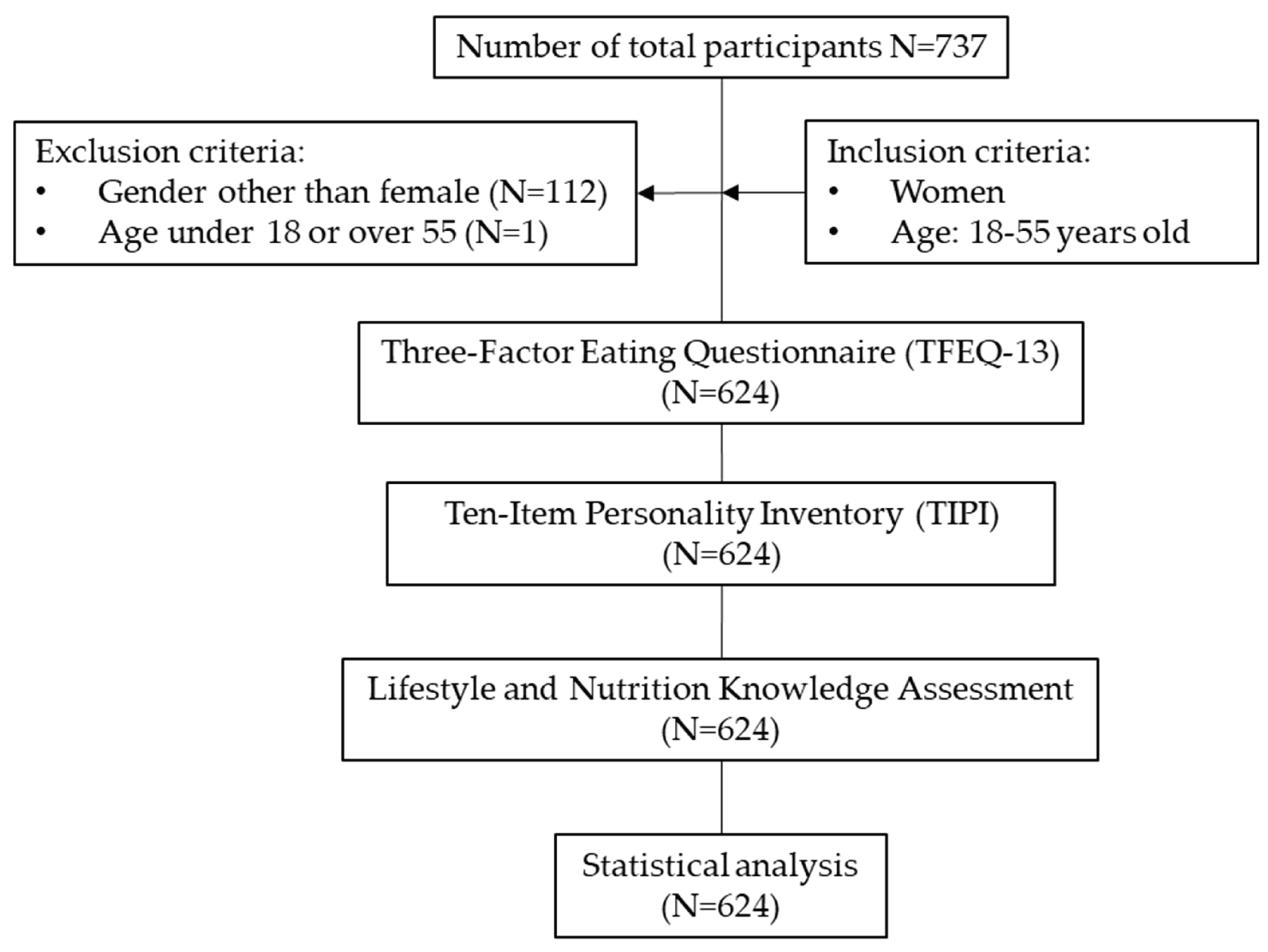

Table 1.
Characteristics of the study sample.
| Variable | Number of total participants N=624 | |||
| Study sample | ||||
| Mean | SD | Min. | Max. | |
| Weight (kg) | 61,0 | 10,3 | 41,0 | 104,0 |
| BMI (kg/m2) | 21,8 | 3,4 | 15,6 | 37,5 |
| Age (years) | 22,7 | 4,5 | 18 | 54 |
| BMI interpretation: | n (%) | |||
| → Underweight (<18,5 kg/m2) | 73 (12) | |||
| → Normal weight (>=18,5 kg/m2 and <25 kg/m2) | 459 (73) | |||
| → Overweight (>=25 kg/m2 and <30kg/m2) | 72 (12) | |||
| → Obesity class I (>=30 kg/m2 and <35kg/m2) | 17 (3) | |||
| → Obesity class II (>=35 kg/m2 and <40kg/m2) | 3 (0) | |||
| → Obesity class III (>=40kg/m2) | 0 (0) | |||
| Education level: | n (%) | |||
| Upper secondary | 388 (62) | |||
| BSc | 186 (30) | |||
| MSc | 50 (8) | |||
| Major of study: | n (%) | |||
| Medical (e.g. medicine, midwifery, physiotherapy and related) | 117 (19) | |||
| Nutrition | 119 (19) | |||
| Food technology | 13 (2) | |||
| Humanities and related | 80 (13) | |||
| Psychology/pedagogy and related | 132 (21) | |||
| Technical (e.g. polytechnics and related) | 42 (7) | |||
| Economics and related | 121 (19) | |||
| Place of residence: | ||||
| City >100,000 inhabitants | 300 (48) | |||
| City 20-100,000 inhabitants | 84 (13) | |||
| City <20,000 inhabitants | 74 (12) | |||
| Village | 166 (27) | |||
| Age: | ||||
| 18-26 (years) | 577 (93) | |||
| 27-35 (years) | 27 (4) | |||
| 36-44 (years) | 12 (2) | |||
| 45-54 (years) | 8 (1) | |||
| Housing: | ||||
| I live with family | 342 (55) | |||
| I live with a partner | 139 (22) | |||
| I live with a roommate | 92 (15) | |||
| I live alone | 51 (8) | |||
Table 2.
Characteristics of dietary indexes (pHDI-10, nHDI-11 and sDI).
| Food Group | Products Included |
| pHDI-10 Pro-Healthy Diet Index |
(1) Wholemeal bread, (2) Buckwheat, oats, whole-wheat pasta, (3) Milk, (4) Fermented milk drinks, (5) Cottage cheese, (6) White meat, (7) Fish, (8) Legume-based foods, (9) Fruits, (10) Vegetables |
| nHDI-11 Non-Healthy Diet Index | (1) White bread and bakery products, (2) White rice, pasta, pasta (3) Fast food, (4) Fried food, (5) Butter, (6) Hard cheese, (7) Red meat, (8) Candies, (9) Sweetened carbonated and non-carbonated drinks, (10) Energy drinks, (11) Alcoholic beverages |
| sDI-7 Sugar diet index |
(1) Fruits, (2) Fruit juices, (3) Candies, (4) Sweetened hot drinks, (5) Sweetened carbonated or non-carbonated beverages, (6) Energy drinks, (7) Alcoholic beverages |
Table 3.
Factor loadings of three dietary patterns (DP): sweet-western (SWDP), pro-healthy (PHDP), and dairy (DDP).
Table 3.
Factor loadings of three dietary patterns (DP): sweet-western (SWDP), pro-healthy (PHDP), and dairy (DDP).
| SWDP | PHDP | DDP | |
| nHDI | 0.94 | -0.07 | 0.22 |
| Vegetables | -0.01 | 0.87 | 0.02 |
| Fruits | 0.12 | 0.88 | 0.01 |
| pHDI | 0.06 | 0.83 | 0.49 |
| Cottage cheese | 0.06 | 0.16 | 0.82 |
| Fermented milk drinks | 0.01 | 0.32 | 0.73 |
| sDI | 0.73 | 0.39 | -0.02 |
| White bread and bakery products | 0.63 | -0.07 | -0.03 |
| Candies | 0.61 | 0.17 | -0.18 |
| Cured meat | 0.61 | -0.14 | 0.26 |
| Butter | 0.59 | -0.12 | 0.18 |
| Legumes-based foods | -0.14 | 0.58 | 0.02 |
| Hard cheese | 0.39 | -0.13 | 0.58 |
| Sweetened beverages | 0.58 | 0.00 | 0.07 |
| Fried foods | 0.54 | -0.13 | 0.00 |
| Buckwheat, oats, wholegrain pasta | -0.21 | 0.53 | 0.34 |
| Factor loads greater than 0.50 are marked. | |||
Table 4.
The adherence to the sweet-western dietary pattern (SWDP), pro-healthy dietary pattern (PHDP) and its relation with the examined features.
Table 4.
The adherence to the sweet-western dietary pattern (SWDP), pro-healthy dietary pattern (PHDP) and its relation with the examined features.
| High Adherence to SWDP | Middle Adherence SWDP | Low Adherence to SWDP | ||||
| n |
OR (CI95%), p |
n |
OR (CI95%), p |
n |
OR (CI95%), p |
|
| Extraversion 3rd tercile |
78 | 1.02 (0.72; 1.45), p = 0.89 |
63 | 0.71 (0.50; 1.02), p = 0.06 |
85 | 1.36 (0.96; 1.91), p = 0.08 |
| Agreeableness 3rd tercile |
108 | 0.86 (0.62; 1.20), p = 0.38 |
107 | 0.97 (0.70; 1.36), p = 0.87 |
116 | 1.19 (0.85; 1.67), p = 0.30 |
| Conscientiousness 3rd tercile |
91 | 0.66 (0.47; 0.93), p = 0.02* |
103 | 1.08 (0.77; 1.52), p = 0.65 |
113 | 1.40 (1.00; 1.97), p = 0.05 |
| Emotional Stability 3rd tercile |
91 | 1.07 (0.76; 1.50), p = 0.71 |
78 | 0.80 (0.56; 1.13), p = 0.20 |
91 | 1.17 (0.83; 1.64), p = 0.37 |
| Openness to Experiences 3rd tercile |
94 | 0.86 (0.62; 1.20), p = 0.37 |
93 | 0.96 (0.69; 1.35), p = 0.82 |
104 | 1.21 (0.87; 1.70), p = 0.26 |
| Uncontrolled Eating (UE) 3rd tercile |
101 | 0.84 (0.60; 1.17), p = 0.30 |
90 | 0.70 (0.50; 0.99), p < 0.05* |
122 | 1.70 (1.21; 2.39), p < 0.01* |
| Cognitive Restraint (CR) 3rd tercile |
118 | 1.93 (1.38; 2.70), p < 0.001* |
106 | 1.59 (1.13; 2.23), p < 0.01* |
55 | 0.30 (0.21; 0.44), p < 0.001* |
| Emotional Eating (EE) 3rd tercile |
101 | 0.63 (0.45; 0.88), p < 0.01* |
113 | 1.07 (0.76; 1.51), p = 0.70 |
127 | 1.51 (1.07; 2.13), p < 0.05* |
| High Adherence to PHDP | Middle Adherence PHDP | Low Adherence to PHDP | ||||
| Extraversion 3rd tercile |
85 | 1.24 (0.88; 1.76), p = 0.21 |
65 | 0.74 (0.52; 1.05), p = 0.09 |
76 | 1.09 (0.77; 1.54), p = 0.64 |
| Agreeableness 3rd tercile |
122 | 1.25 (0.89; 1.75), p = 0.20 |
106 | 0.91 (0.65; 1.28), p = 0.60 |
103 | 0.88 (0.62; 1.23), p = 0.44 |
| Conscientiousness 3rd tercile |
127 | 1.80 (1.28; 2.53), p <0.001* |
90 | 0.72 (0.52; 1.01), p = 0.06 |
90 | 0.77 (0.55; 1.08), p = 0.13 |
| Emotional Stability 3rd tercile |
83 | 0.82 (0.58; 1.15), p = 0.25 |
87 | 1.05 (0.75; 1.48), p = 0.78 |
90 | 1.17 (0.83; 1.65), p = 0.38 |
| Openness to Experiences 3rd tercile |
108 | 1.30 (0.93; 1.81), p = 0.13 |
97 | 1.02 (0.73; 1.43), p = 0.90 |
86 | 0.75 (0.53; 1.05), p = 0.10 |
| Uncontrolled Eating (UE) 3rd tercile |
126 | 1.66 (1.19; 2.34), p < 0.01* |
97 | 0.83 (0.60; 1.17), p = 0.29 |
90 | 0.72 (0.51; 1.01), p = 0.06 |
| Cognitive Restraint (CR) 3rd tercile |
67 | 0.40 (0.28; 0.58), p < 0.001* |
114 | 1.91 (1.36; 2.68), p < 0.001* |
98 | 1.25 (0.89; 1.76), p = 0.19 |
| Emotional Eating (EE) 3rd tercile |
132 | 1.47 (1.04; 2.08), p < 0.05* |
111 | 0.96 (0.68; 1.34), p = 0.79 |
98 | 0.71 (0.50; 1.00), p < 0.05* |
| The p values below the statistical significance threshold are marked with the * p < 0.05. The regression was adjusted by BMI and age of the study participants., | ||||||
Table 5.
The adherence to the dairy dietary pattern (DDP) and its relation with the examined features.
Table 5.
The adherence to the dairy dietary pattern (DDP) and its relation with the examined features.
| High Adherence to DDP | Middle Adherence DDP | Low Adherence to DDP | ||||
| n |
OR (CI95%), p |
n |
OR (CI95%), p |
n |
OR (CI95%), p |
|
| Extraversion 3rd tercile |
86 | 1.32 (0.93; 1.85), p = 0.12 |
78 | 1.12 (0.79; 1.58), p = 0.52 |
62 | 0.67 (0.47; 0.96), p = 0.03* |
| Extraversion 1st tercile (Introversion) |
65 | 0.70 (0.50; 1.00), p < 0.05* |
80 | 1.18 (0.83; 1.66), p = 0.36 |
80 | 1.21 (0.86; 1.71), p = 0.28 |
| Agreeableness 3rd tercile |
109 | 0.89 (0.64; 1.25), p = 0.50 |
111 | 1.06 (0.76; 1.49), p = 0.72 |
111 | 1.06 (0.75; 1.48), p = 0.75 |
| Conscientiousness 3rd tercile |
110 | 1.15 (0.82; 1.62), p = 0.41 |
99 | 0.96 (0.69; 1.35), p = 0.82 |
98 | 0.90 (0.64; 1.26), p = 0.54 |
| Emotional Stability 3rd tercile |
98 | 1.33 (0.94; 1.88), p = 0.10 |
80 | 0.84 (0.59; 1.18), p = 0.32 |
82 | 0.89 (0.63; 1.26), p = 0.51 |
| Emotional Stability 1st tercile (Neuroticism) |
80 | 0.78 (0.55; 1.09), p = 0.15 |
87 | 1.02 (0.73; 1.43), p = 0.92 |
93 | 1.26 (0.90; 1.78), p = 0.18 |
| Openness to Experiences 3rd tercile |
102 | 1.10 (0.79; 1.53), p = 0.59 |
101 | 1.14 (0.81;1.59), p = 0.46 |
88 | 0.80 (0.57; 1.13), p = 0.20 |
| Uncontrolled Eating (UE) 3rd tercile |
107 | NS | 102 | 0.98 (0.70; 1.38), p = 0.91 |
104 | 1.02 (0.73; 1.43), p = 0.90 |
| Restrictive Eating (RE) 3rd tercile |
89 | 0.83 (0.59; 1.16), p = 0.28 |
90 | 0.95 (0.68; 1.33), p = 0.75 |
100 | 1.27 (0.91; 1.78), p = 0.16 |
| Emotional Eating (EE) 3rd tercile |
122 | 1.16 (0.83; 1.63), p = 0.39 |
112 | 1.02 (0.73; 1.43), p = 0.91 |
107 | 0.84 (0.60; 1.19), p = 0.33 |
| The p values below the statistical significance threshold are marked with the * p < 0.05. | ||||||
Table 6.
The adherence to uncontrolled eating (UE), cognitive restraint (CR), emotional eating (EE)and its relation with the examined features.
Table 6.
The adherence to uncontrolled eating (UE), cognitive restraint (CR), emotional eating (EE)and its relation with the examined features.
| High Adherence to UE | Middle Adherence to UE | Low Adherence to UE | ||||
| n |
OR (CI95%), p |
n |
OR (CI95%), p |
n |
OR (CI95%), p |
|
| Extraversion 3rd tercile |
83 | 1.21 (0.85; 1.71), p = 0.29 |
74 |
1.32 (0.92; 1.89), p = 0.13 |
69 | 0.65 (0.46; 0.92), p < 0.05* |
| Agreeableness 3rd tercile |
120 | 1.22 (0.87; 1.71), p = 0.26 |
102 | 1.20 (0.85; 1.71), p = 0.30 |
109 | 0.70 (0.50; 0.98), p < 0.05* |
| Conscientiousness 3rd tercile |
125 | 1.74 (1.23; 2.45), p < 0.01* |
94 | 1.16 (0.82; 1.65), p = 0.40 |
88 | 0.51 (0.37; 0.72), p < 0.001* |
| Emotional Stability 3rd tercile |
99 | 1.36 (0.96; 1.91), p = 0.08 |
88 | 1.51 (1.06; 2.14), p < 0.05* |
73 | 0.51 (0.36; 0.72), p < 0.001* |
| Emotional Stability 1st tercile (Neuroticism) |
80 | 0.81 (0.57; 1.15), p = 0.23 |
63 | 0.66 (0.46; 0.95), p < 0.05* |
117 | 1.75 (1.25; 2.45), p < 0.01* |
| Openness to Experiences 3rd tercile |
100 | 1.08 (0.77; 1.51), p = 0.66 |
80 | 0.87 (0.61; 1.23), p = 0.43 |
111 | 1.05 (0.76; 1.47), p = 0.76 |
| High Adherence to CR | Middle Adherence to CR | Low Adherence to CR | ||||
| Extraversion 3rd tercile |
65 | 1.00 (0.74; 1.35), p = 0.99 |
73 | 0.83 (0.58; 1.17), p = 0.28 |
88 | 1.21 (0.86; 1.69), p = 0.28 |
| Agreeableness 3rd tercile |
92 | 0.91 (0.64; 1.29), p = 0.59 |
118 | 1.06 (0.76; 1.48), p = 0.72 |
121 | 1.03 (0.74; 1.43), p = 0.88 |
| Conscientiousness 3rd tercile |
75 | 0.64 (0.45; 0.92), p < 0.05* |
106 | 0.97 (0.69; 1.35), p = 0.83 |
126 | 1.53 (1.09; 2.14), p < 0.05* |
| Emotional Stability 3rd tercile |
77 | 1.14 (0.80; 1.62), p = 0.48 |
95 | 1.12 (0.80; 1.57), p = 0.51 |
88 | 0.80 (0.57; 1.12), p = 0.19 |
| Openness to Experiences 3rd tercile |
87 | 1.12 (0.79; 1.59), p = 0.53 |
95 | 0.82 (0.59; 1.14), p = 0.23 |
109 | 1.11 (0.80; 1.54), p = 0.54 |
| High Adherence to EE | Middle Adherence to EE | Low Adherence to EE | ||||
| Extraversion 3rd tercile |
91 | 1.76 (1.24; 2.49), p < 0.01* |
51 | 0.98 (0.66; 1.46), p = 0.93 |
84 | 0.61 (0.43; 0.85), p < 0.01* |
| Agreeableness 3rd tercile |
123 | 1.61 (1.13; 2.27), p < 0.01* |
82 | 1.28 (0.87; 1.88), p = 0.21 |
126 | 0.55 (0.40; 0.76), p < 0.001* |
| Conscientiousness 3rd tercile |
133 | 2.75 (1.92; 3.93), p <0.001* |
72 | 1.06 (0.72; 1.55), p = 0.76 |
102 | 0.39 (0.28; 0.55), p < 0.001* |
| Emotional Stability 3rd tercile |
104 | 1.90 (1.34; 2.69), p < 0.001* |
65 | 1.26 (0.86; 1.85), p = 0.24 |
91 | 0.47 (0.33; 0.66), p < 0.001* |
| Emotional Stability 1st tercile (Neuroticism) |
68 | 0.61 (0.42; 0.86), p < 0.01* |
54 | 0.83 (0.56; 1.22), p = 0.35 |
138 | 1.77 (1.28;2.47), p < 0.001* |
| Openness to Experiences 3rd tercile |
84 | 0.75 (0.54; 1.06), p = 0.11 |
70 | 1.17 (0.80; 1.71), p = 0.41 |
137 | 1.14 (0.83; 1.58), p = 0.41 |
The p values below the statistical significance threshold are marked with the * p < 0.05. The regression was adjusted by BMI and age of the study participants,.
Disclaimer/Publisher’s Note: The statements, opinions and data contained in all publications are solely those of the individual author(s) and contributor(s) and not of MDPI and/or the editor(s). MDPI and/or the editor(s) disclaim responsibility for any injury to people or property resulting from any ideas, methods, instructions or products referred to in the content. |
© 2024 by the authors. Licensee MDPI, Basel, Switzerland. This article is an open access article distributed under the terms and conditions of the Creative Commons Attribution (CC BY) license (http://creativecommons.org/licenses/by/4.0/).
Copyright: This open access article is published under a Creative Commons CC BY 4.0 license, which permit the free download, distribution, and reuse, provided that the author and preprint are cited in any reuse.


