

Submitted:
15 January 2024
Posted:
15 January 2024
You are already at the latest version
Abstract
This paper delves into the critical issue of concrete cracks, a common consequence of environmental factors and external forces, and their potential impact on the structural integrity of buildings. Recognizing the urgency of addressing this issue, the concept of self-healing concrete has emerged, aiming to revolutionize the construction industry by autonomously repairing cracks and minimizing the need for labor-intensive and time-consuming manual interventions. The paper employs a bibliographic analysis methodology to comprehensively explore the most significant technologies associated with self-healing concrete, identifying key research countries/regions and prominent research institutions in this field. Through an examination of scholarly articles, the analysis seeks to uncover key themes, technologies, and contributors within the self-healing concrete domain. Insights into the geographical distribution of research efforts and the roles of influential research institutions are provided, shedding light on collaborative networks and knowledge-sharing dynamics that drive innovation in this evolving field.
Keywords:
Concrete Cracks
; Self-Healing Concrete
; Innovative Technologies
; Bibliographic Analysis
; VOSviewer
1. Introduction
Concrete stands as one of the fundamental building materials, providing the structural backbone for countless constructions globally [1,2]. However, its prolonged usage inevitably leads to the development of a myriad of microscopic cracks [3,4]. Left untreated, these cracks have the potential to progressively widen, presenting an escalating threat to the structural integrity of buildings [5,6]. The occurrence of cracks in concrete is a natural consequence of environmental factors, load stresses, and various external forces [7,8]. Over time, these cracks can compromise the durability and safety of structures, prompting the urgent need to address this issue [9,10].
Recognizing the critical importance of tackling concrete cracks, the concept of healing these cracks has emerged as a pivotal area of research and innovation within the construction industry [11,12]. Traditionally, repairing concrete cracks involves labor-intensive and time-consuming processes, incurring significant maintenance costs and exposing structures to potential risks associated with delayed repairs [13,14]. To overcome this challenge, the development of self-healing concrete has gained increasing significance [13,15].
Self-healing concrete is ingeniously designed to autonomously repair cracks, minimizing the need for extensive manual interventions [16]. The rationale behind the development of this innovative material lies in its potential to revolutionize the construction industry by significantly reducing maintenance costs and enhancing the longevity of structures [17]. Through the integration of autonomous healing mechanisms within the concrete matrix, the need for extensive human intervention and prolonged repair times can be substantially diminished, thereby contributing to enhanced structural sustainability [18].
This paper adopts a bibliographic analysis methodology to delve into the most significant technologies associated with self-healing concrete [19]. It aims to identify key research countries/regions and highlight prominent research institutions in this field [20]. The overarching goal is to provide a comprehensive overview of the current state of self-healing concrete technology, drawing insights from existing literature, and shedding light on the critical advancements that have shaped this domain [21].
By scrutinizing a vast array of scholarly articles, this analysis seeks to uncover key themes, technologies, and contributors within the self-healing concrete domain [22]. The geographical distribution of research efforts will be explored, providing insights into countries and regions that have played pivotal roles in advancing self-healing concrete technology [20]. Furthermore, the examination extends to research institutions that have significantly contributed to the development of self-healing concrete technologies [23]. Recognizing the roles of these institutions is crucial for understanding the collaborative networks and knowledge-sharing dynamics that drive innovation in this dynamic field [24].
2. Materials and methods
In 2024, an extensive data collection effort was carried out using the widely recognized bibliographic database, Web of Science, encompassing various subdatabases [25,26]. This deliberate choice was made to guarantee the reliability and extensive utilization of the gathered data. Web of Science was chosen as the primary database due to its esteemed reputation as a trusted resource widely accepted within the academic community, ensuring the credibility of the collected information.
The bibliographic analysis followed the methodology of previous studies with slight modifications [27,28]. For visualizing the results, we utilized the powerful data visualization tool, VOSviewer. The acquired data files were effortlessly imported into VOSviewer, facilitating the adjustment of parameters in alignment with specific analysis goals and diverse data sources. It is worth highlighting that generating maps from web data frequently requires data cleaning procedures to ensure accuracy and reliability.
Unless explicitly mentioned otherwise, the mapping using VOSviewer adhered to the default settings established in previous studies [29,30]. In the keyword study, inclusion criteria required a minimum keyword occurrence of "20." Similarly, for the country study, a minimum of "10" documents from a specific country were deemed necessary for inclusion. Likewise, in the organization study, a minimum of "10" documents from a specific organization underwent analysis. These predefined thresholds ensured that the analysis zeroed in on significant keywords, countries, and organizations, thereby refining the scope and relevance of the findings.
3. Results
During the keyword analysis (Figure 1), our investigation brought to light a diverse array of terms encompassing various research aspects. Noteworthy among these were terms directly related to the mechanical properties of materials, encompassing factors like strength, flexibility, and resilience. The exploration extended to terms associated with durability, addressing the ability of materials to withstand wear, decay, or environmental stress over time.
Permeability emerged as another significant keyword, shedding light on the materials' capacity to allow substances to pass through, a crucial consideration in various engineering and construction applications. Sustainability, a pivotal concept in contemporary research, was also prominent among the identified keywords, reflecting the growing emphasis on environmentally friendly and resource-efficient materials and practices.
Furthermore, our analysis delved into chemical terms that play a crucial role in the composition and behavior of materials. Notable examples included sodium silicate, a compound with diverse applications in construction materials, and calcium carbonate, a fundamental component in various natural and synthetic materials.
In a broader context, our exploration extended to biological terms, adding an interdisciplinary dimension to the keyword spectrum. One noteworthy term in this category was Bacillus subtilis, a bacterium with potential applications in biotechnology and material sciences. This inclusion of biological terms emphasizes the evolving interdisciplinary nature of research in self-healing concrete, where insights from biology can contribute to innovative solutions in material engineering.
In summary, the keyword analysis uncovered a rich tapestry of terms spanning mechanical, chemical, and biological dimensions, reflecting the interdisciplinary nature of self-healing concrete research. This nuanced understanding of diverse research aspects is vital for advancing the field and exploring holistic solutions that integrate insights from various scientific domains.
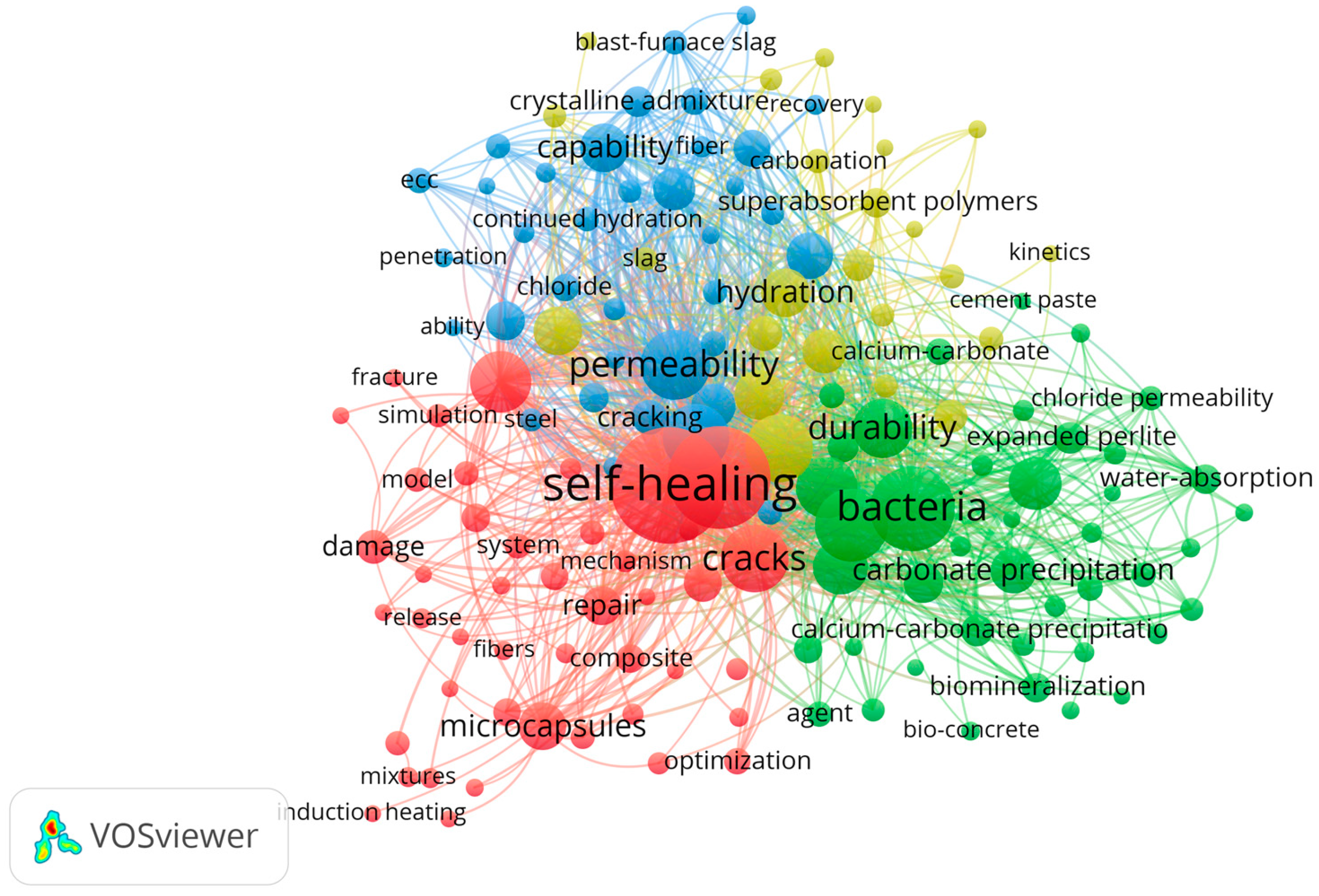
Figure 1.
VOSviewer’s analysis of keywords.
Figure 2 provides a comprehensive analysis of the geographical distribution of research efforts in the realm of self-healing concrete. It is discerned from the analysis that China and the United States stand as pivotal players, occupying central positions in the landscape of self-healing concrete research. These two nations, with their significant contributions and influential roles, underscore their prominence in driving advancements and innovations in this domain.
Beyond the core contributions from China and the United States, the global research map unfolds with a rich tapestry of involvement from various countries across different continents. Russia, Pakistan, Saudi Arabia, Egypt, Iraq, Malaysia, India, Australia, Iran, South Korea, Japan, Indonesia, Germany, Canada, Turkey, France, Belgium, the Netherlands, England, Wales, Sweden, Spain, Italy, Brazil, and many others emerge as active participants, each playing a noteworthy role in the collective pursuit of advancing knowledge in self-healing concrete.
This collaborative engagement on a global scale signifies the interdisciplinary and interconnected nature of research in self-healing concrete. Scholars from diverse nations contribute their expertise, share insights, and engage in cooperative efforts to address the challenges and explore the potentials of self-healing concrete technologies. This collaborative spirit not only enhances the robustness of research outcomes but also reflects the collective commitment of the international academic community to push the boundaries of knowledge in this innovative field.
The collaborative environment fostered by scholars from various countries becomes a catalyst for academic research in self-healing concrete. The exchange of ideas, methodologies, and findings across borders contributes to a more comprehensive understanding of the complexities involved in developing and implementing self-healing concrete solutions. The shared commitment to advancing this technology for the betterment of the construction industry and sustainable infrastructure underscores the global impact of collaborative efforts in the field.
The analysis depicted in Figure 2 showcases the global distribution of contributions in self-healing concrete research, with China and the United States at the forefront. The collective involvement of numerous countries reflects the truly international nature of this scientific endeavor, highlighting the importance of collaborative efforts in pushing the boundaries of knowledge and fostering advancements in the field of self-healing concrete.
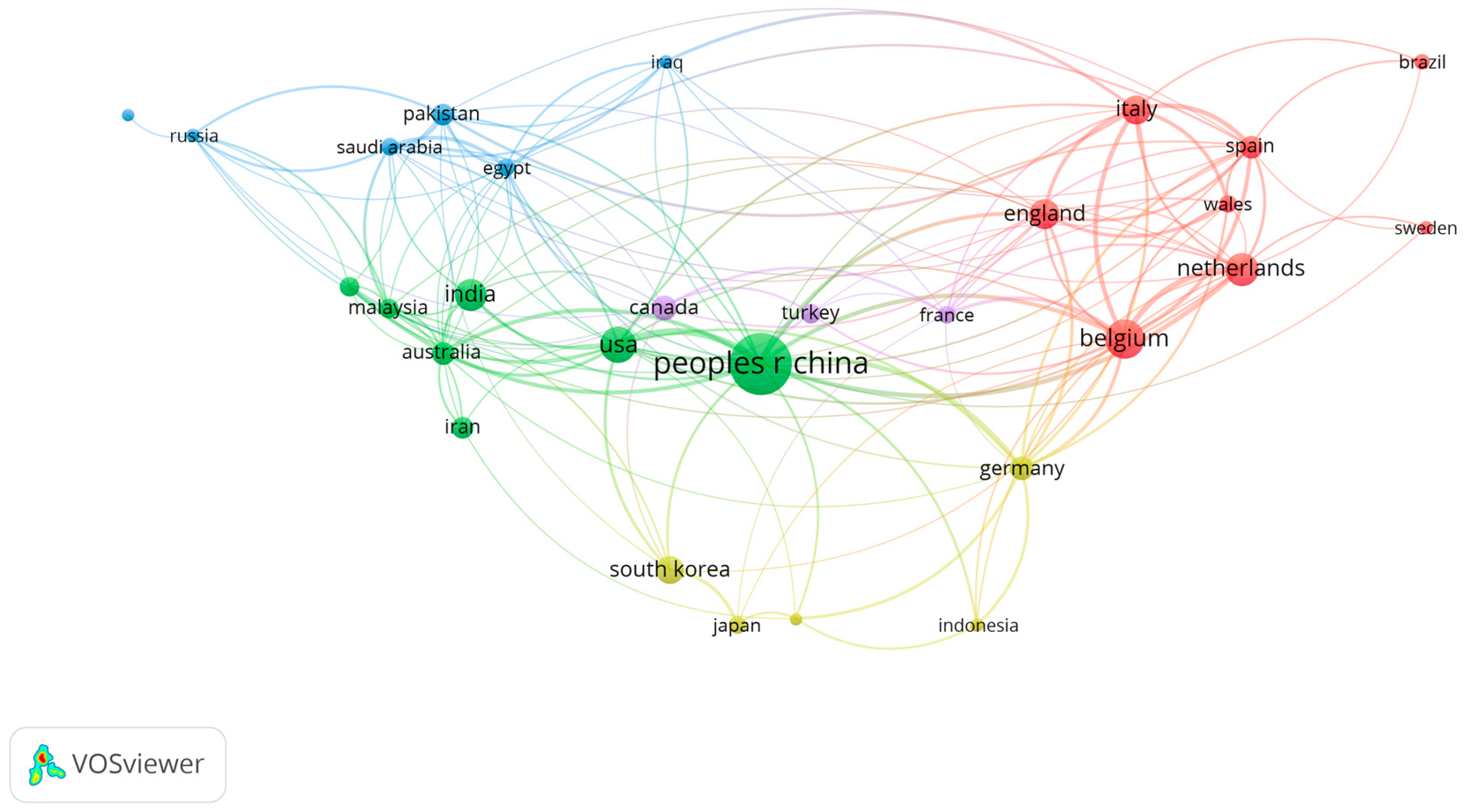
Figure 2.
VOSviewer’s analysis of countries/regions.
Figure 3 illustrates the primary organizations at the forefront of research in self-healing concrete. Among these, pivotal academic institutions include Ghent University and Delft University of Technology. Additionally, significant contributions and crucial roles are observed from prominent organizations such as Southeast University and Tongji University in China, along with Politecnico di Milano.
These core universities and organizations play a central role in advancing knowledge and innovation in the field of self-healing concrete. The collaborative efforts among these entities signify a global network of expertise, with academic institutions from both Western and Eastern regions actively contributing to the collective pursuit of excellence in self-healing concrete research.
The synergy among these organizations reflects a collaborative spirit that transcends geographical boundaries. Through mutual collaboration and knowledge-sharing, these institutions collectively drive advancements in the understanding and implementation of self-healing concrete technologies. The cross-cultural and interdisciplinary nature of these collaborations enriches the research landscape, contributing to the holistic development of self-healing concrete solutions.
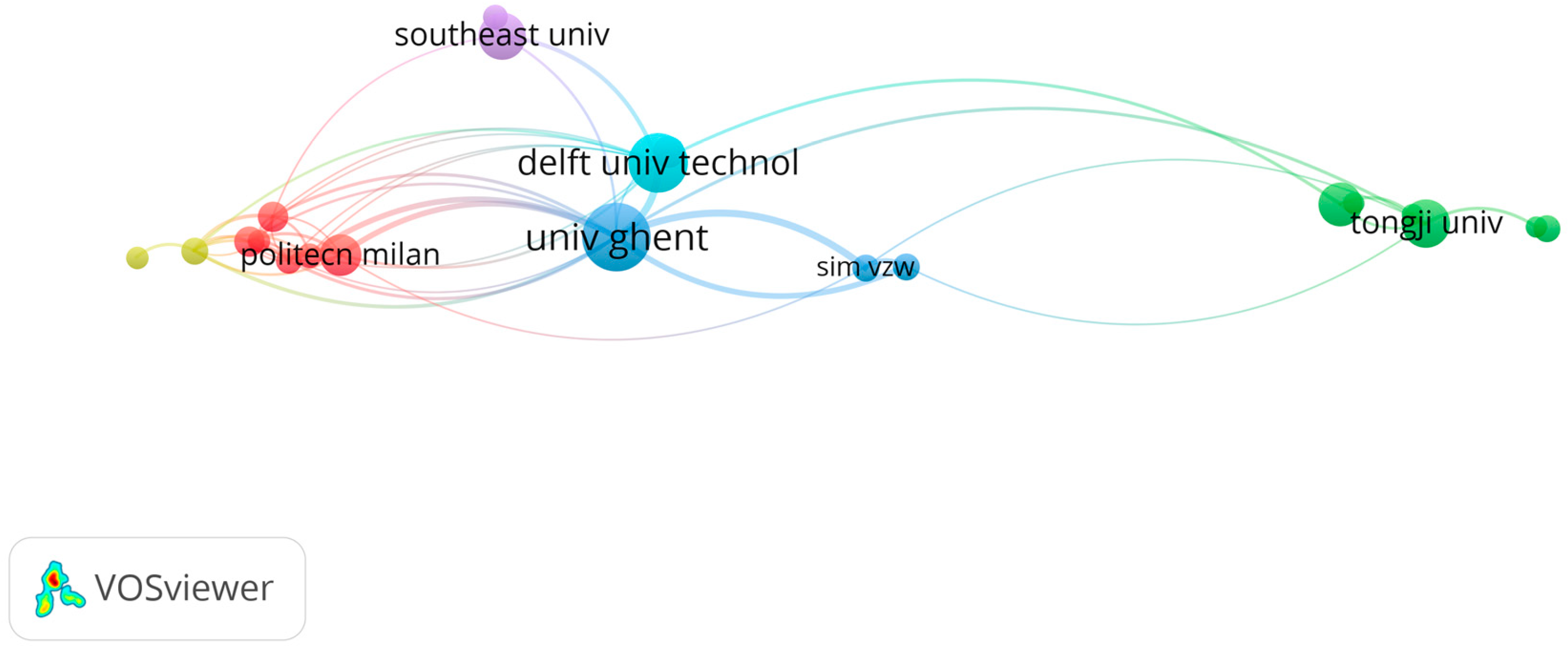
Figure 3.
VOSviewer’s analysis of organizations.
4. Discussion
4.1. Revolutionizing Infrastructure: The Rise of Self-Healing Concrete
The ascendancy of self-healing concrete marks a pivotal trajectory in future research, acknowledging the inherent propensity of concrete to undergo natural cracking over extended periods, with no variant immune to such fissures. Left unmitigated, these cracks invariably widen, posing an impending threat to the structural integrity of buildings [31].
In the realm of concrete healing methods, conventional approaches demand substantial investments in manpower and machinery, incurring significant temporal and financial costs. Over the past years, there has been a discernible surge in the popularity of self-healing concrete as a viable alternative, progressively solidifying its status as a prominent and transformative trend within the construction domain. This paradigm shift stems from the realization that traditional methods, besides being resource-intensive, may inadequately address the long-term durability and safety concerns associated with concrete structures [32].
Consequently, the research and development of self-healing concrete technologies have gained considerable momentum. This burgeoning interest not only reflects a collective desire for more sustainable and cost-effective solutions in the construction industry but also underscores the pressing need for innovations that can proactively address the evolving challenges of infrastructure longevity and safety. The advent of self-healing concrete, with its potential to autonomously repair cracks and enhance the overall resilience of structures, stands poised to revolutionize construction practices, ushering in an era of more durable, efficient, and economically viable building materials [33].
4.2. Bacterial Alchemy: Unveiling the Chemical Evolution of Self-Healing Concrete
Table 1 shows some recent progress in the self-healing concrete. The evolving understanding of self-healing concrete, initially rooted in the chemical mechanisms such as the spontaneous generation of calcium carbonate, has paved the way for significant advancements in the field [34,35]. The recognition of the crucial role played by bacteria, particularly Bacillus, in the self-healing process has prompted researchers to incorporate these microorganisms into concrete, resulting in notable improvements in healing effectiveness. The enhanced compressive and tensile strength, as well as the alteration of bond properties observed with bacterial incorporation, underscore the potential of biological agents in influencing concrete performance [36].
The utilization of genetically modified Bacillus halodurans in concrete crack repair not only demonstrates an innovative approach but also showcases the enhanced productivity of calcium carbonate and the expedited repair process when compared to wild-type bacteria. These findings not only contribute to the practical application of self-healing concrete but also shed light on the significance of bacterial activity in influencing the material properties of engineered cementitious composites (ECC). The observed improvements in compressive and tensile strength, crack patterns, and microscale fracture toughness in bacteria-incorporated ECC emphasize the multifaceted impact of biological agents on concrete performance [37].
The integration of bacteria into concrete, whether through spontaneous mechanisms or deliberate genetic modification, represents a promising avenue for advancing sustainable infrastructure [38]. The established self-healing capabilities, along with the continuous exploration of bacterial contributions, not only align with the goal of reducing maintenance and repair but also hold potential for developing smart and resilient construction materials. As research in this field progresses, it becomes crucial to address challenges, optimize bacterial activity, and bridge knowledge gaps, ultimately paving the way for the widespread implementation of self-healing concrete in real-world applications [39].

Table 1.
Technology and main improvement in self-healing concrete development.
| Technology | Main improvement | Reference |
|---|---|---|
| Strain-hardening cementitious composites (SHCC) with bacterial addition | Bacterial incorporation strengthens concrete; enhances compressive and tensile strength, alters bond properties. | [37] |
| Genetically modified bacteria to repair cracks | Researchers improve concrete crack-repair efficiency using genetically modified Bacillus halodurans, showing enhanced calcium carbonate productivity and shortened repair process compared to wild-type bacteria | [38] |
| Bacterial incorporation in engineered cementitious composites (ECC) | Bacterial incorporation in engineered cementitious composites (ECC) enhances compressive and tensile strength, improves crack patterns, and alters microscale fracture toughness. | [36] |
| Self-healing concrete as a solution for sustainable infrastructure | The article introduces self-healing concrete as a solution for sustainable infrastructure, aiming to reduce maintenance and repair by establishing six robustness criteria to ensure effective self-healing. | [35] |
| Self-healing in concrete via spontaneous formation of calcium carbonate | The well-established phenomenon of self-healing in concrete, observed through the spontaneous formation of calcium carbonate, provides inherent self-sealing abilities to cracked structures, contributing to watertightness and the prolonged service life of infrastructure. | [34] |
4.3. Bio-Innovations in Concrete: Paving the Way for Multi-Functional Structures
Biotechnology, with its extensive applications ranging from pollution removal in water bodies [40,41,42] to the development of microbial fuel cells for electricity generation [43,44,45], is now making inroads into the realm of concrete. The utilization of beneficial bacteria for self-healing concrete stands out as a groundbreaking solution for autonomous repair in concrete structures, showcasing the versatility of biotechnology in addressing challenges in construction materials [38].
Moreover, diverse studies, such as the incorporation of Graphene oxide-titanium dioxide (GO-TiO2), have demonstrated the capacity to achieve self-sterilization surface in concrete [46,47]. This not only elevates the visual appeal of concrete surfaces but also presents a pragmatic solution for reducing maintenance efforts, contributing significantly to the overall sustainability of construction materials [48,49].
As we look ahead, the exploration of multi-functional cement materials emerges as a pivotal direction for the future of the construction industry. Beyond the realm of self-healing properties, researchers are poised to delve into the integration of additional functionalities, encompassing anti-pollution measures, self-cleaning capabilities, and increased durability. This diversified approach aims to make concrete adaptable to a broader range of applications and environmental conditions, fostering ongoing innovation in building materials [50,51].
The progression toward multi-functional concrete aligns seamlessly with the broader trend of adopting intelligent, environmentally friendly, and sustainable construction materials. This trajectory hints at a future where buildings not only exhibit structural strength but also possess inherent capacities for self-maintenance and adaptability, contributing to a landscape of more innovative and resilient construction practices [52,53].
4.4. Future Foundations: Integrating Big Data and Machine Learning for Self-Healing Concrete
In the era of big data and machine learning, the successful application of these technologies in areas such as facial recognition [54,55], autonomous driving [56,57], species distribution prediction [58], and educational outcomes forecasting [59] has become widespread. Looking ahead, the integration of big data and machine learning holds significant potential for the field of self-healing concrete.
By establishing a comprehensive database encompassing various parameters, including the quantities of individual concrete components, types, and amounts of bacteria, as well as tensile and compressive strengths, machine learning algorithms can be employed to uncover intricate relationships between these diverse datasets. This approach allows for the development of predictive models and insights that can guide further enhancements in concrete quality [57]. For instance, it opens the possibility of optimizing the composition of concrete mixtures, bacterial strains, and their respective quantities to achieve superior self-healing capabilities [60].
The marriage of big data and machine learning in the realm of self-healing concrete introduces a data-driven approach to material science, enabling a deeper understanding of the complex interplay between components and their influence on concrete performance. As these technologies continue to advance, their application in optimizing concrete properties showcases a promising avenue for enhancing the resilience and longevity of infrastructure through informed decision-making and precision engineering [61].
5. Conclusion
In conclusion, the exploration of self-healing concrete represents a pivotal research direction that holds significant promise for revolutionizing the construction industry. Its potential to save both time and manpower, in contrast to traditional concrete, underscores its importance in addressing the challenges faced by infrastructure development. The incorporation of microorganisms, such as Bacillus, offers a promising avenue to enhance the performance of self-healing concrete. Looking ahead, the prospects of multi-functional concrete and the integration of machine learning into construction processes emerge as two compelling research directions with vast potential. As we advance into the future, the synergy of these innovative approaches promises to not only enhance the durability and sustainability of our structures but also redefine the landscape of construction technology.
References
- Ranade, R.; Li, V.C.; Stults, M.D.; Rushing, T.S.; Roth, J.; Heard, W.F. Micromechanics of high-strength, high-ductility concrete. ACI Materials Journal 2013, 110, 375. [Google Scholar]
- Li, Y.; Liu, S.; Guan, X. Multitechnique investigation of concrete with coal gangue. Construction and Building Materials 2021, 301, 124114. [Google Scholar] [CrossRef]
- Li, V.C.; Stang, H.; Krenchel, H. Micromechanics of crack bridging in fibre-reinforced concrete. Materials and structures 1993, 26, 486–494. [Google Scholar] [CrossRef]
- Guo, J.; Cui, L.; Wu, J.; Xu, H.; Zhang, Z.; Zhang, Y.; Qin, G.; Meng, Q.; Li, H.; Wang, K. Mineral Additives to Enhance Early-Age Crack Resistance of Concrete under a Large-Temperature-Difference Environment. Applied Sciences 2021, 11, 9338. [Google Scholar] [CrossRef]
- Zhang, J.; Li, V.C. Simulation of crack propagation in fiber-reinforced concrete by fracture mechanics. Cement and Concrete Research 2004, 34, 333–339. [Google Scholar] [CrossRef]
- Bojórquez, J.; Ponce, S.; Ruiz, S.E.; Bojórquez, E.; Reyes-Salazar, A.; Barraza, M.; Chavez, R.; Valenzuela, F.; Leyva, H.; Baca, V. Structural reliability of reinforced concrete buildings under earthquakes and corrosion effects. Engineering Structures 2021, 237, 112161. [Google Scholar] [CrossRef]
- Şahmaran, M.; Li, V.C. Engineered cementitious composites: Can composites be accepted as crack-free concrete? Transportation Research Record 2010, 2164, 1–8. [Google Scholar] [CrossRef]
- Munawar, H.S.; Ullah, F.; Heravi, A.; Thaheem, M.J.; Maqsoom, A. Inspecting buildings using drones and computer vision: A machine learning approach to detect cracks and damages. Drones 2021, 6, 5. [Google Scholar] [CrossRef]
- Li, K.; Li, L. Crack-altered durability properties and performance of structural concretes. Cement and Concrete Research 2019, 124, 105811. [Google Scholar] [CrossRef]
- Golewski, G.L. The phenomenon of cracking in cement concretes and reinforced concrete structures: the mechanism of cracks formation, causes of their initiation, types and places of occurrence, and methods of detection—a review. Buildings 2023, 13, 765. [Google Scholar] [CrossRef]
- Roig-Flores, M.; Serna, P. Concrete early-age crack closing by autogenous healing. Sustainability 2020, 12, 4476. [Google Scholar] [CrossRef]
- Khaliq, W.; Ehsan, M.B. Crack healing in concrete using various bio influenced self-healing techniques. Construction and building materials 2016, 102, 349–357. [Google Scholar] [CrossRef]
- Du, X.; Si, Z.; Qi, D.; Li, Y.; Huang, L.; Zhang, Y.; Gao, Y. Optimization of spore production and activation conditions of concrete crack healing bacteria and research on crack repair effect. Construction and Building Materials 2023, 394, 132140. [Google Scholar] [CrossRef]
- Yalew, T.T.; Kim, K.-S. Automatic quantification of concrete cracks via multistage image filtration and trajectory-based local binarization. Journal of Building Engineering 2023, 77, 107391. [Google Scholar] [CrossRef]
- Wiktor, V.; Jonkers, H.M. Quantification of crack-healing in novel bacteria-based self-healing concrete. Cement and concrete composites 2011, 33, 763–770. [Google Scholar] [CrossRef]
- Valença, J.; Puente, I.; Júlio, E.; González-Jorge, H.; Arias-Sánchez, P. Assessment of cracks on concrete bridges using image processing supported by laser scanning survey. Construction and Building Materials 2017, 146, 668–678. [Google Scholar] [CrossRef]
- Gardner, D.; Lark, R.; Jefferson, T.; Davies, R. A survey on problems encountered in current concrete construction and the potential benefits of self-healing cementitious materials. Case studies in construction materials 2018, 8, 238–247. [Google Scholar] [CrossRef]
- Schlangen, E.; Sangadji, S. Addressing infrastructure durability and sustainability by self healing mechanisms-Recent advances in self healing concrete and asphalt. Procedia Engineering 2013, 54, 39–57. [Google Scholar] [CrossRef]
- Alzard, M.H.; El-Hassan, H.; El-Maaddawy, T.; Alsalami, M.; Abdulrahman, F.; Hassan, A.A. A bibliometric analysis of the studies on self-healing concrete published between 1974 and 2021. Sustainability 2022, 14, 11646. [Google Scholar] [CrossRef]
- He, X.; Amin, M.N.; Khan, K.; Ahmad, W.; Althoey, F.; Vatin, N.I. Self-healing concrete: a scientometric analysis-based review of the research development and scientific mapping. Case Studies in Construction Materials 2022, e01521. [Google Scholar] [CrossRef]
- Alshaeer, H.A.Y.; Irwan, J.M.; Alshalif, A.F.; Al-Fakih, A.; Ewais, D.Y.Z.; Salmi, A.; Alhokabi, A.A. Review on carbonation study of reinforcement concrete incorporating with bacteria as self-healing approach. Materials 2022, 15, 5543. [Google Scholar] [CrossRef] [PubMed]
- De Belie, N.; Gruyaert, E.; Al-Tabbaa, A.; Antonaci, P.; Baera, C.; Bajare, D.; Darquennes, A.; Davies, R.; Ferrara, L.; Jefferson, T. A review of self-healing concrete for damage management of structures. Advanced materials interfaces 2018, 5, 1800074. [Google Scholar] [CrossRef]
- Nguyen, M.-T.; Fernandez, C.A.; Haider, M.M.; Chu, K.-H.; Jian, G.; Nassiri, S.; Zhang, D.; Rousseau, R.; Glezakou, V.-A. Toward Self-Healing Concrete Infrastructure: Review of Experiments and Simulations across Scales. Chemical Reviews 2023. [Google Scholar] [CrossRef] [PubMed]
- Indhumathi, S.; Dinesh, A.; Pichumani, M. Diverse perspectives on self healing ability of Engineered Cement Composite–All-inclusive insight. Construction and Building Materials 2022, 323, 126473. [Google Scholar]
- Pranckutė, R. Web of Science (WoS) and Scopus: The titans of bibliographic information in today’s academic world. Publications 2021, 9, 12. [Google Scholar] [CrossRef]
- Mongeon, P.; Paul-Hus, A. The journal coverage of Web of Science and Scopus: a comparative analysis. Scientometrics 2016, 106, 213–228. [Google Scholar] [CrossRef]
- Chen, S.; Ding, Y. A bibliography study of Shewanella oneidensis biofilm. FEMS Microbiology Ecology 2023, 99, fiad124. [Google Scholar] [CrossRef]
- Chen, S.; Ding, Y. Tackling Heavy Metal Pollution: Evaluating Governance Models and Frameworks. Sustainability 2023, 15, 15863. [Google Scholar] [CrossRef]
- Van Eck, N.; Waltman, L. Software survey: VOSviewer, a computer program for bibliometric mapping. scientometrics 2010, 84, 523–538. [Google Scholar] [CrossRef]
- Wong, D. VOSviewer. Technical Services Quarterly 2018, 35, 219–220. [Google Scholar] [CrossRef]
- Issa, C.A.; Debs, P. Experimental study of epoxy repairing of cracks in concrete. Construction and Building Materials 2007, 21, 157–163. [Google Scholar] [CrossRef]
- Lau, D.; Qiu, Q.; Zhou, A.; Chow, C.L. Long term performance and fire safety aspect of FRP composites used in building structures. Construction and building materials 2016, 126, 573–585. [Google Scholar] [CrossRef]
- Hossain, M.R.; Sultana, R.; Patwary, M.M.; Khunga, N.; Sharma, P.; Shaker, S.J. Self-healing concrete for sustainable buildings. A review. Environmental Chemistry Letters 2022, 1–9. [Google Scholar] [CrossRef]
- Li, V.C.; Yang, E.-H. Self healing in concrete materials. In Self healing materials: an alternative approach to 20 centuries of materials science; Springer: 2007; pp. 161-193.
- Li, V.C.; Herbert, E. Robust self-healing concrete for sustainable infrastructure. Journal of Advanced Concrete Technology 2012, 10, 207–218. [Google Scholar] [CrossRef]
- Zhang, Z.; Ding, Y.; Qian, S. Influence of bacterial incorporation on mechanical properties of engineered cementitious composites (ECC). Construction and Building Materials 2019, 196, 195–203. [Google Scholar] [CrossRef]
- Zhang, Z.; Liu, D.; Ding, Y.; Wang, S. Mechanical performance of strain-hardening cementitious composites (SHCC) with bacterial addition. Journal of Infrastructure Preservation and Resilience 2022, 3, 1–11. [Google Scholar] [CrossRef]
- Zhang, Z.; Weng, Y.; Ding, Y.; Qian, S. Use of genetically modified bacteria to repair cracks in concrete. Materials 2019, 12, 3912. [Google Scholar] [CrossRef] [PubMed]
- Nilimaa, J. Smart materials and technologies for sustainable concrete construction. Developments in the Built Environment 2023, 100177. [Google Scholar] [CrossRef]
- Ding, Y.; Peng, N.; Du, Y.; Ji, L.; Cao, B. Disruption of putrescine biosynthesis in Shewanella oneidensis enhances biofilm cohesiveness and performance in Cr (VI) immobilization. Applied and environmental microbiology 2014, 80, 1498–1506. [Google Scholar] [CrossRef] [PubMed]
- Ding, Y.; Zhou, Y.; Yao, J.; Szymanski, C.; Fredrickson, J.; Shi, L.; Cao, B.; Zhu, Z.; Yu, X.-Y. In situ molecular imaging of the biofilm and its matrix. Analytical chemistry 2016, 88, 11244–11252. [Google Scholar] [CrossRef] [PubMed]
- Ding, Y.; Zhou, Y.; Yao, J.; Xiong, Y.; Zhu, Z.; Yu, X.-Y. Molecular evidence of a toxic effect on a biofilm and its matrix. Analyst 2019, 144, 2498–2503. [Google Scholar] [CrossRef]
- Yang, Y.; Ding, Y.; Hu, Y.; Cao, B.; Rice, S.A.; Kjelleberg, S.; Song, H. Enhancing bidirectional electron transfer of Shewanella oneidensis by a synthetic flavin pathway. ACS synthetic biology 2015, 4, 815–823. [Google Scholar] [CrossRef] [PubMed]
- Zhao, C.-e.; Chen, J.; Ding, Y.; Wang, V.B.; Bao, B.; Kjelleberg, S.; Cao, B.; Loo, S.C.J.; Wang, L.; Huang, W. Chemically functionalized conjugated oligoelectrolyte nanoparticles for enhancement of current generation in microbial fuel cells. ACS Applied Materials & Interfaces 2015, 7, 14501–14505. [Google Scholar]
- Zhao, C.e.; Wu, J.; Ding, Y.; Wang, V.B.; Zhang, Y.; Kjelleberg, S.; Loo, J.S.C.; Cao, B.; Zhang, Q. Hybrid conducting biofilm with built-in bacteria for high-performance microbial fuel cells. ChemElectroChem 2015, 2, 654–658. [Google Scholar] [CrossRef]
- Hamdany, A.H.; Ding, Y.; Qian, S. Graphene-Based TiO2 Cement Composites to Enhance the Antibacterial Effect of Self-Disinfecting Surfaces. Catalysts 2023, 13, 1313. [Google Scholar] [CrossRef]
- Hamdany, A.H.; Ding, Y.; Qian, S. Visible light antibacterial potential of graphene-TiO2 cementitious composites for self-sterilization surface. Journal of Sustainable Cement-Based Materials 2023, 12, 972–982. [Google Scholar] [CrossRef]
- Hamdany, A.H.; Ding, Y.; Qian, S. Cementitious Composite Materials for Self-Sterilization Surfaces. ACI Materials Journal 2022, 119, 197–210. [Google Scholar] [CrossRef]
- Hamdany, A.H.; Ding, Y.; Qian, S. Mechanical and antibacterial behavior of photocatalytic lightweight engineered cementitious composites. Journal of Materials in Civil Engineering 2021, 33, 04021262. [Google Scholar] [CrossRef]
- Loonen, R.C.G.M.; Trčka, M.; Cóstola, D.; Hensen, J.L.M. Climate adaptive building shells: State-of-the-art and future challenges. Renewable and sustainable energy reviews 2013, 25, 483–493. [Google Scholar] [CrossRef]
- Song, G.; Gu, H.; Mo, Y.-L. Smart aggregates: multi-functional sensors for concrete structures—a tutorial and a review. Smart materials and structures 2008, 17, 033001. [Google Scholar] [CrossRef]
- Babenko, M.; Savytskyi, M.; Schmidt, M.; Vilčeková, S.; Kridlova-Burdova, E. Hybrid multi-functional buildings for sustainable development of rural areas. Applied Mechanics and Materials 2019, 887, 311–318. [Google Scholar] [CrossRef]
- Willems, J.J.; Kuitert, L.; Van Buuren, A. Policy integration in urban living labs: Delivering multi-functional blue-green infrastructure in Antwerp, Dordrecht, and Gothenburg. Environmental Policy and Governance 2023, 33, 258–271. [Google Scholar] [CrossRef]
- Coe, J.; Atay, M. Evaluating impact of race in facial recognition across machine learning and deep learning algorithms. Computers 2021, 10, 113. [Google Scholar] [CrossRef]
- Raju, K.; Chinna Rao, B.; Saikumar, K.; Lakshman Pratap, N. An optimal hybrid solution to local and global facial recognition through machine learning. A fusion of artificial intelligence and internet of things for emerging cyber systems 2022, 203–226. [Google Scholar]
- Bachute, M.R.; Subhedar, J.M. Autonomous driving architectures: insights of machine learning and deep learning algorithms. Machine Learning with Applications 2021, 6, 100164. [Google Scholar] [CrossRef]
- Garcia Cuenca, L.; Sanchez-Soriano, J.; Puertas, E.; Fernandez Andres, J.; Aliane, N. Machine learning techniques for undertaking roundabouts in autonomous driving. Sensors 2019, 19, 2386. [Google Scholar] [CrossRef]
- Chen, S.; Ding, Y. Machine Learning and Its Applications in Studying the Geographical Distribution of Ants. Diversity 2022, 14, 706. [Google Scholar] [CrossRef]
- Chen, S.; Ding, Y. A Machine Learning Approach to Predicting Academic Performance in Pennsylvania’s Schools. Social Sciences 2023, 12, 118. [Google Scholar] [CrossRef]
- Huang, X.; Wasouf, M.; Sresakoolchai, J.; Kaewunruen, S. Prediction of healing performance of autogenous healing concrete using machine learning. Materials 2021, 14, 4068. [Google Scholar] [CrossRef]
- Kaswan, K.S.; Dhatterwal, J.S. The Use of Machine Learning for Sustainable and Resilient Buildings. Digital Cities Roadmap: IoT‐Based Architecture and Sustainable Buildings 2021, 1–62. [Google Scholar]
Disclaimer/Publisher’s Note: The statements, opinions and data contained in all publications are solely those of the individual author(s) and contributor(s) and not of MDPI and/or the editor(s). MDPI and/or the editor(s) disclaim responsibility for any injury to people or property resulting from any ideas, methods, instructions or products referred to in the content. |
© 2024 by the authors. Licensee MDPI, Basel, Switzerland. This article is an open access article distributed under the terms and conditions of the Creative Commons Attribution (CC BY) license (http://creativecommons.org/licenses/by/4.0/).
Copyright: This open access article is published under a Creative Commons CC BY 4.0 license, which permit the free download, distribution, and reuse, provided that the author and preprint are cited in any reuse.


