

Submitted:
11 January 2024
Posted:
11 January 2024
You are already at the latest version
Abstract
Flow experience, characterized by deep immersion and complete engagement in a task, is highly recognized for its positive psychological impacts. However, previous studies have been restricted to use a single type of task, and the exploration on its neural correlates has been limited. This study aimed to explore the neural correlates of flow experience with the employment of multifac-eted flow-induction tasks. Six tasks spanning mindfulness, artistic tasks, free recall, and varying levels of Tetris complexity (easy, flow, and hard conditions) were employed to have a relatively complete coverage of the known flow-induction tasks for a better induction of individualized flow experience. Twenty-eight participants were recruited to perform these six tasks, with a sin-gle-channel prefrontal electroencephalography (EEG) recording. Significant positive correlations were observed between the subjective flow scores of individual’s best-flow-experience task and the EEG activities at delta, gamma, and theta bands, peaking at latencies around 2 minutes after task onset. The outcomes of our multiple regression analysis yield a maximum coefficient of de-termination (R²) of 0.279. Our findings report the EEG correlates of flow experience in naturalistic settings and highlight the potential of portable and unobtrusive EEG technology for an objective measurement of flow experience.
Keywords:
flow experience
; singe-channel EEG
; multifaceted tasks
1. Introduction
Flow experience, a subjective state of deep immersion and engagement in a task [1], has been extensively studied, underscoring its significant impact on individual motivation, skills, and performance across various domains. Notably, performance enhancements associated with the flow state have been documented in diverse fields such as artistic expression [2], sports [3], music [4], and education [5]. Within laboratory environments, numerous paradigms have been employed to induce flow, including but not limited to arithmetic tasks [6], sports or physical activities [7,8], video games [9,10], arts [2,11,12], mindfulness or meditation practices [13,14], free recall exercises [15,16], and dual-task paradigms [17,18]. Specifically, the Tetris game is a widely used paradigm to induce flow, known for its simplicity, adjustable difficulty, instant feedback, clear goals, and quantifiable controls [19]. Keller et al. [9] once employed the Tetris game to study flow characteristics under various difficulty levels tailored to individual skills. Mindfulness is closely associated with the state of flow, and multiple studies have shown that mindfulness training can enhance the flow experience [13,14]. Drawing is a relatively accessible way to initiate the flow state and is commonly used in art therapy to facilitate flow [2]. Additionally, coloring games have also been shown to generate flow experiences [11,12]. Recall is also a commonly used method for inducing flow, where participants can exhibit similar emotional responses by recalling past experiences [15,16].
However, traditional methods of assessing flow primarily rely on self-report scales or questionnaires [20,21,22]. These methods are subject to limitations due to their interruptive nature and reliance on personal perceptions, which can be influenced by mood [23], memory [24], and cognitive biases [25], thus constraining the understanding and further application of flow mechanisms. The advent of neuroscience-based measurement techniques for flow could offer promising breakthroughs [26]. Utilizing neuroscientific tools such as EEG and functional near-infrared spectroscopy (fNIRS) [26], we can now measure an individual's neural activities continuously and non-intrusively throughout the immersion in the flow experience. This approach enables an exploration of the neural underpinnings of flow and the development of neuroengineering applications based on flow dynamics.
Investigating the neural correlates of psychological flow is essential for developing neuroscience-based measurement techniques for flow. In the field of positive psychology, extensive research has been conducted, utilizing techniques such as EEG [27], fNIRS [28], and a multi-channel electrodermal measurement device [29] to explore the physiological correlates of positive emotions. While the neuroscience research on flow is still emerging, several studies have already begun to employ various approaches in an attempt to explore its neural basis [26]. Specifically, Ulrich et al. [30] employed functional magnetic resonance imaging combined with a mental arithmetic task, revealing reduced activity in the medial prefrontal cortex during flow state compared with overload and boredom conditions. Utilizing the same arithmetic task, EEG study found higher theta power in frontal electrodes during flow and overload conditions, and increased alpha power during flow compared to boredom [6]. Furthermore, certain studies have employed fNIRS in conjunction with Tetris tasks, revealing increased activity in the prefrontal cortex during the flow condition in contrast to the boredom condition [31,32]. Despite the use of different techniques, these studies seem to indicate that the prefrontal cortex is a pivotal brain region in facilitating the flow experience [33,34]. However, prior research predominantly relied on research-grade equipment, which imposes limitations on the practical application of flow studies.
Recent advancements in neuroscience measurement technologies, particularly the development of portable, lightweight, and low-cost EEG technology is increasingly being applied across various fields, facilitating widespread use and accessibility. In the field of personality psychology, EEG or heart rate data collected by wearable devices could be potentially applied to predict big-five personality traits in the daily life [29,35]. In psychiatry, portable EEG devices, specifically single-channel prefrontal EEG, have been utilized for neurofeedback training in children with ADHD, focusing on individual beta rhythm [36]. Single-channel EEG could also be used to assess the maturation of children’s attention control through the task-related frontal EEG theta/beta ratio [37]. In the realm of the arts, mobile EEG devices have been employed to objectively measure aesthetic preferences in dance appreciation studies [38]. In sports, portable EEG applications may offer an efficient and valid approach for predicting anxiety levels in soccer players, with a focus on the prefrontal region [39]. Furthermore, in educational research, inter-brain coupling analysis [40] combined with single-channel prefrontal EEG has been used to reflect disciplinary differences between subjects like Chinese and Mathematics in real-world classroom learning [41]. The congruence between the neural region targeted by single-electrode prefrontal EEG, a leading-edge technology within the domain of portable EEG systems, and the critical neural substrates implicated in flow experiences [33,34], underscores the potential of single-channel prefrontal EEG as an invaluable instrument for propelling application-focused research in the psychological flow.
The application of portable devices allows for a more diverse exploration of tasks in psychological flow research. Traditionally, laboratory neuroscience studies have often focused on a single-task paradigm for flow induction [30,42,43]. However, relying solely on a single task to induce flow presents inherent limitations, as responses to different paradigms vary due to individual, interindividual, contextual, and cultural factors [44]. Certain paradigms may be more effective than others in inducing flow in specific individuals. To address this variability and enhance the characterization of individualized flow states, we propose employing multiple tasks to induce flow states in each participant, thanks to the portability of our EEG devices that makes measuring flow in multiple paradigms much more convenient. This approach allows for the identification and utilization of the paradigm that induces the strongest flow experience for each individual. By doing so, we aim to capture a more personalized representation of an individual's flow state in our experiments, thus providing a more comprehensive understanding of the flow experience.
The present study aims to explore the neural representation of flow based on prefrontal single channel EEG. A cohort of twenty-eight participants was outfitted with portable EEG devices as they engaged in six distinct flow-induced activities: mindfulness, art-related tasks, free recall, and varying difficulty levels of Tetris (easy, flow, hard condition). Drawing from prior research, we anticipate observing individual variations in tasks for inducing flow. Additionally, we expect to observe significant correlations between the power of specific EEG bands in the prefrontal cortex with the subjectively reported psychological flow during certain intervals. By employing a range of regression models, it is feasible to utilize the five key EEG frequency bands — delta, theta, alpha, beta, and gamma — as predictors for subjective flow experiences.
2. Materials and Methods
2.1. Participants
The study engaged 28 participants (14 males, 14 females; mean age: 20 years, ranging from 18 to 28 years), comprising 9 individuals from China and 19 from Mongolia. 15 participants were from art-related majors. Each participant received a remuneration of 100 RMB per hour. The research received approval from the local ethics committee of Tsinghua University. Informed consent was obtained from all participants prior to the experiments.
2.2. Tasks
There were one resting state condition and six different experimental task conditions that induced flow states in this study, including three different difficulty levels of Tetris games (easy, flow and hard conditions), each lasting around 10 minutes, as well as three other tasks, which were mindfulness, art activities, and free-recall, each lasting around 5 minutes.
In the Tetris game task, we applied three game speeds: slow, medium, and fast, for easy, flow and hard condition, respectively, through following Harmat et al. [10] design that matched difficulty to skill. Specifically, an adaptive 15-minute session determined the baseline speed (Sbalance) for each participant. the speed of flow condition (Sflow) was equal to the speed of balance (Sbalance), the speed of hard condition (Shard) was 2.5 times of the speed of balance (Sbalance), while the speed of easy condition (Seasy) was 0.4 times of the speed of balance (Sbalance). The order of these three conditions were randomized for each individual.
In the mindfulness task, participants were instructed to listen to the audio “Ego Mindfulness 1: Focused Breathing” that guided them how to breath and meditate in the right posture. They engaged in mindfulness training according to the guided instructions in the audio. In the art task, the task was divided into drawing and coloring. This setup took into consideration the participants’ different backgrounds, where those from art-related majors could enter the state of flow through drawing, while participants without an art background might find it challenging to achieve flow due to personal drawing abilities. Therefore, for non-art professionals, a user-friendly coloring game was chosen as an alternative method to induce flow. In the drawing task, each participant was provided with an A4 white paper and a 2B pencil, and he/she was instructed to create freely. In the coloring task, participants used an iPad Air (4th generation) to color a moderately challenging picture in the “Flower Coloring” app. In the free-recall task, participants were guided to recall their previous experiences of being in a state of flow according to the verbal instructions.
At last, to establish a baseline neural state for each participant, we employed a resting state session, following previous studies [45]. This involved instructing participants to remain still for 5 minutes and refrain from engaging in any specific tasks.
2.3. Procedure
The experiment consisted of one adaptive condition, six task conditions, two relaxation conditions, and one resting-state condition. Participants first filled in subject information before conducting an adaptive condition. Afterwards, there was a relaxation condition, followed by three task conditions of different difficulty levels of Tetris games (easy, flow, hard) in random order. After each Tetris game condition, participants were required to report their subjective flow states through a flow questionnaire. When all levels of Tetris games conditions and corresponding questionnaire data collection were completed, another relaxation condition followed. After relaxation, participants were required to conduct mindfulness, art activities, free-recall conditions in random order, and after each, they completed the flow questionnaire. Finally, each participant’s resting-state was recorded. We totally gained six self-reported scores of flow states for six different tasks. In term of the flow questionnaire, it was the Chinese edition of the Short Flow State Scale–2 (S FSS–2) [46] in which nine items were rated on a five-point Likert-scale ranging from 1 (“I completely disagree”) to 5 (“I completely agree”). The workflow is depicted in Figure 1.
2.4. EEG recordings
Participants’ brain signals were recorded at FPz over the forehead using a single-channel headband (CUBand, CUSoft, China) with the NeuroSky EEG biosensor (NeuroSky, USA). The reference electrode was placed on the left ear lobe with a ground at Fp1. ASIC EEG Power at different frequency bands was calculated by the NeuroSky EEG biosensor for every one second. The extracted features are Delta (1~3Hz), Theta (4~7Hz), Alpha (8~12Hz), Beta (13~30Hz), and Gamma (31~50Hz). The EEG data were measured in terms of ASIC EEG power, representing the relative amplitudes of individual EEG bands without a conventional unit [47].
2.5. Data Analysis
In this study, 28 participants engaged in six activities specifically designed to elicit flow states, subsequently rating their subjective flow experiences for each activity. Initially, we performed a validation analysis to examine variations in subjective scores under three Tetris gameplay conditions: easy, flow, and hard, to see whether the objective difficulty level of Tetris can truly reflect subjective flow experiences. Given the interrelated nature of the samples and the non-normal data distribution in the hard Tetris condition, we employed a nonparametric Friedman test, supplemented by a post hoc Nemenyi test, for our analysis.
Furthermore, to identify the condition that most frequently elicited the highest flow scores among participants and most importantly, understand the individual differences of tasks that induces the strongest flow experience, we ranked each participant’s flow scores across the six activities. A higher ranking indicated a stronger flow experience in that particular task. For example, if a participant’s highest flow score was in the art task, this was assigned a rank of 1. The task with the highest frequency of rank 1 scores was deemed the most effective at inducing flow at the group level. Histograms depicting the distribution of flow scores across all ranks were also generated, enabling an analysis of the internal dynamics and interrelations of these distributions and highlighting the variation in flow scores across different ranks.
Prior to the formal EEG analysis, we sought to establish the reliability of our EEG data by replicating existing research findings. The first 240 seconds of EEG data were utilized. We then applied a Wilcoxon signed-rank test to compare the ASIC EEG power in the alpha band during mindfulness versus resting states.
In our formal EEG analysis, we considered individual differences and the temporal dynamics of flow experiences. The EEG data were averaged every 30 seconds across the delta, theta, alpha, beta, and gamma frequency bands under all experimental conditions, following baseline correction.
Our focus was on each participant’s most intense flow experience and its associated brain-behavior relationships. We selected the flow experience with the highest flow score and corresponding neural data for each participant to perform a correlation analysis. For each frequency band, we calculated the Pearson correlation between ASIC EEG power and the subjective flow scores for each of the 8 time segments. A significant correlation in this context may suggest that neural signals effectively represent psychological flow within specific frequency bands and timeframes.
In the final phase of our study, a comprehensive multiple regression analysis was performed to evaluate the predictive capability of EEG power across five frequency bands for estimating the subjective flow score. In our regression model, we partitioned the data into two distinct sets: a training set and a test set. The training set was utilized to develop and train the model, allowing it to learn the underlying patterns and relationships within the data. Subsequently, the test set, comprising data points not used during the training phase, was employed to evaluate the model’s performance. This approach ensured that our model’s predictive accuracy was assessed on previously unseen data, thereby providing a more reliable indication of its generalizability and effectiveness in real-world scenarios. Our analysis employed a diverse array of models, including K-nearest neighbors (KNN), elastic net, random forest, and linear regression. These models were systematically applied to distinct temporal segments, facilitating the computation of R² across various time frames for each respective model.
3. Results
3.1. Individuality of tasks that induces the strongest flow experience.
To investigate whether the objective difficulty level of Tetris gameplay can genuinely reflect subjective flow experiences, we conducted a comparative analysis of subjective flow scores across three different difficulty levels (Figure 2). The mean subjective flow scores for the easy, flow, and hard versions of Tetris gameplay were as follows: easy condition (M = 35.93, SD = 4.26), flow condition (M = 34.71, SD = 5.33), and hard condition (M = 30.96, SD = 6.36), as illustrated in Figure 1. The Friedman test indicated that at least one condition significantly differed from the others (χ² = 21.981, df = 2, p < 0.001). Subsequent post hoc analyses using the Nemenyi test revealed significant differences between the easy and hard conditions (p = .001) and between the flow and hard conditions (p = .002). These findings suggest that participants reported lower subjective flow scores during the hard condition compared to the easy and flow conditions. This replicates previous findings to confirm the effectiveness of our study. However, subjective flow scores during the flow condition are not higher than the easy condition. This outcome presents a deviation from previous research, indicating that the flow condition of Tetris gameplay does not necessarily induce the highest subjective flow experiences when compared to both easy and hard conditions. Therefore, our results suggest that the objective difficulty level may not accurately reflect an individual's subjective flow experience, highlighting the importance of assessing one's best flow performance based on self-reported flow scores rather than relying solely on the objective difficulty level of Tetris gameplay.
Next, we evaluated best flow experiences across six different activities, as determined by self-reported flow ratings. We quantified the frequency of each activity receiving a specific ranking from participants, with higher rankings indicating more intense flow experiences (Figure 3). Regarding activities that most effectively elicited flow (ranked first), 18 participants preferred artistic activities, six favored mindfulness, two were most engaged by an easy version of Tetris, and two found free recall tasks the most absorbing. This suggests that while artistic activities generally have a higher propensity for inducing flow at the group level, there remains considerable individual variation in best flow experiences. In contrast, activities least likely to induce flow (ranked sixth) varied, with 18 participants struggling with Tetris in hard mode, four with free recall tasks, and six with assorted other activities. This diversity in flow-inducing activities across different ranks underscores the significant variability in factors that influence flow intensity among individuals. Essentially, the triggers for high flow states are highly individualized, reinforcing the concept of unique flow experiences. This highlights the importance of recognizing that even the most effective tasks for inducing the strongest flow experiences differ from person to person.
Then, we used histograms to represent the frequency distribution of flow scores across each specified rank (Figure 4). Flow scores across various ranks display a heterogeneous distribution, underscoring the presence of individual variability within each rank. Particularly for rank 1, there is a marked concentration of flow scores on the upper spectrum, but the distribution is not monolithic. Instead, there is a discernible spread across a variety of scores, which reveals a degree of individual variation as opposed to a singular, dominant peak at the highest score. This spread implies that although there is a general inclination towards higher flow scores within rank 1, this is not uniformly the case for all observations or individuals within that category. Consequently, this denotes a heterogeneous array of outcomes within that rank.
3.2. EEG correlates of flow experience
In this research, we initiated our investigation with a comprehensive analysis of data quality to validate the EEG measurements obtained. Figure 4 illustrates a discernible trend: as EEG frequency bands progress from lower (e.g., delta and theta) to higher frequencies (e.g., alpha, beta, and gamma), there is a notable reduction in EEG power. This pattern agrees with prior studies [47]. Moreover, the application of the Wilcoxon signed-rank test revealed a statistically significant disparity between mindfulness and resting state conditions in the alpha band. Specifically, EEG power within the alpha band was significantly higher during mindfulness exercises compared to the resting state (z = -2.459, p = 0.013), a finding depicted in Figure 5. This observation is in line with existing literature [48], where an increase in alpha power during mindfulness practices, relative to resting states, has been consistently reported. The consistency of our findings with those of established studies, particularly in the context of using portable EEG devices, reaffirms the reliability of our data.
In our formal EEG analysis, we have meticulously taken individual variations and the temporal dynamics of the flow experience into account. To this end, we processed the initial 240 seconds of raw EEG data, calculating the average every 30 seconds across the delta, theta, alpha, beta, and gamma frequency bands for each experimental condition, and conducted baseline correction. Our methodology involved selecting the most intense flow experience for each participant, characterized by the highest flow score, along with the corresponding EEG power. We then conducted a detailed analysis, computing the Pearson correlation between the EEG power and the subjective flow scores across each of the eight time segments and for each frequency band. The Pearson correlation analysis uncovered significant correlations between EEG power values in the delta, gamma, and theta frequency bands and subjective flow scores across various temporal segments, as shown in Figure 6. Specifically, for the delta frequency band, there was a notable positive correlation between EEG power values and flow scores in the segments from 121 to 150 seconds (r = 0.46, p = 0.013) and from 151 to 180 seconds (r = 0.39, p = 0.038), suggesting an association of higher delta band activity with enhanced flow experiences during these periods. Regarding the gamma frequency band, a positive correlation emerged in the segment from 151 to 180 seconds (r = 0.39, p = 0.041). This correlation indicates that periods of reported increased flow are associated with heightened gamma band activity, which may reflect more intense cognitive processing or engagement. For the theta frequency band, significant positive correlations with flow scores were evident in three intervals: from 121 to 150 seconds (r = 0.44, p = 0.020), from 151 to 180 seconds (r = 0.49, p = 0.008), and from 211 to 240 seconds (r = 0.42, p = 0.0260). These results imply a steady link between theta band activity and the experience of flow throughout these segments.
3.3. Predictive modeling of flow experiences
Finally, we implemented multiple regression analysis, employing five frequency bands as independent variables and the subjective flow score as the dependent variable. Various models, including KNN, elastic net, random forest, and linear regression, were applied across distinct time segments to calculate R² for varying time frames under each model. In the context of KNN, positive R² values were observed as 0.082, 0.091, and 0.178 for the time intervals of 31–60s, 61–90s, and 211–240s, respectively. Regarding elastic net model, R² values above zero were recorded as 0.048, 0.010, and 0.123 for the time frames of 121–150s, 181–210s, and 211–240s, respectively. In the random forest model, the time intervals of 121–150s, 181–210s, and 211–240s exhibited R² values of 0.279, 0.023, and 0.080, respectively (Table 1).
4. Discussion
Our study first induced psychological flow through Tetris game, revealing insights into the relationship between objective difficulty levels and subjective flow experiences. The findings indicate that subjective flow experience cannot be solely determined by the objective difficulty level of an activity. This deviation from previous research emphasizes the importance of considering subjective scores in flow experiences.
Our analysis of the best flow experiences across six different activities, as reflected in self-reported flow ratings, revealed significant individual variability in the activities that most effectively induce flow. The finding suggests a general trend towards artistic activities in eliciting strong flow experiences at the group level. However, the paradigm that induces the highest flow still differs from person to person. This variability in flow induction can be attributed to individual differences in interests, skills, and psychological or physiological responses to specific tasks. It also suggests that a one-size-fits-all approach to designing activities for flow induction may not be effective and underscores the need for employing multiple paradigms and personalizing activities to understand flow experiences.
Correlation analysis between EEG and behavior data showed that delta, gamma, and theta values positively correlate with flow scores significantly during various time segments. First, in our study, we observed a significant positive correlation between EEG power values in the delta frequency band and subjective flow scores. The results are similar to a study on professional tightrope performance [49], which found higher delta oscillation in the flow condition compared to the stress condition. The functional delta oscillations play a crucial role in synchronizing brain activity with autonomic functions and are key players in various motivational processes, connecting to reward mechanisms, primal defensive responses, and heightened emotional engagement. Knyazev’s research [50,51] further emphasizes the integral role of delta oscillations in cognitive processes, especially those associated with attention and the identification of motivationally significant stimuli. In the context of heightened flow states, characterized by deep absorption and focused motivation toward task goals or rewards, there is an observed increase in delta activity. This heightened delta activity suggests not only a profound emotional connection but also a strong motivation driving individuals during flow experiences. It goes beyond mere absorption in the task, indicating an emotional involvement that contributes significantly to the flow phenomenon. Harmony [52] delves into this aspect by reviewing relevant research and proposing an additional layer to the understanding of sustained delta oscillations. According to Harmony [52], these sustained delta oscillations serve to prevent disruptions that could impact the execution of cognitive tasks. This prevention mechanism operates by potentially regulating the activity of networks that should remain inactive to accomplish the task at hand. Therefore, the increased delta activity observed during high flow states is not only indicative of emotional engagement and focused motivation but also aligns with Harmony [52]’s proposition. This sustained delta activity acts as a safeguard, tuning out irrelevant sensory information and facilitating a deep level of concentration. This intricate mechanism aligns seamlessly with the profound focus and absorption characteristic of flow states, providing a comprehensive perspective on the role of delta oscillations in the cognitive experience.
Second, we also observed a positive correlation within the gamma band. This result contradicts previous research [53], one examining collective flow in a music rhythm game, flow conditions demonstrated lower beta and gamma power in the prefrontal cortex (PFC) compared to no-flow conditions. Our research presents a seemingly contradictory picture to prior findings, possibly due to differing experimental paradigms. As found, gamma waves are frequently linked to advanced cognitive functions, with research such as Jensen [54]’s study demonstrating their connection to attention and working memory. This discrepancy may be attributed to the specific nature of the cognitive tasks, or the experimental settings employed in different studies. For instance, while studies like the one on collective flow in a music rhythm game observed lower gamma power in flow states, these findings might be specific to the social and interactive nature of the task. In contrast, our study, focusing on individual cognitive tasks, might engage different neural mechanisms, thereby eliciting an increase in gamma activity associated with flow. The positive correlation we observed supports the notion that gamma waves are integral to high-level cognitive functions, as suggested by Jensen [54] and others. This is in line with the understanding that gamma activity facilitates complex information processing and neural synchronization, essential for maintaining a state of deep, focused engagement characteristic of flow. Furthermore, the increase in gamma activity could be reflecting the heightened attention, working memory, and sensory integration required during flow states.
Third, we observed a distinct trend within the theta frequency band. Significant positive correlations between theta activity and flow scores were identified at specific intervals. These findings align with observations made by Katahira [6] regarding elevated theta activities during mental arithmetic tasks in flow and cognitive overload conditions, compared to boredom. Previous studies underscore the importance of frontal theta activity in cognitive control [55]. For example, Ishii et al. [56] demonstrated a link between increased frontal theta activity and improved attention and processing efficiency, especially during mentally demanding tasks such as calculations. Our research reveals a dynamic interplay between theta-band activity and the subjective experience of flow, indicating that the flow experience involves higher cognitive control. The alignment of increased theta activity with the subjective experience of flow during these intervals suggests that theta rhythms may serve as neural markers of deep cognitive engagement.
Our study's exploration of the relationship between EEG indicators and subjective flow experiences presents novel insights, particularly regarding the temporal dynamics of flow. The correlation between EEG measurements and subjective flow experiences becomes increasingly pronounced in the middle to later stages of the flow experience, especially in the 151-180 second interval. During this period, we observed a significant positive correlation between delta, gamma, and theta values and subjective flow scores. This finding suggests that EEG indicators possess considerable time specificity in predicting the flow experience. One key observation is that when subjects initially enter the flow state, EEG features may not immediately reflect the subjective flow experience. This could be attributed to the fact that the subjects reported their flow scores post-experimentally, which might not accurately capture their subjective flow state at the onset of the experience. Our results, although not directly comparable with existing literature due to the innovative use of EEG in this context, intuitively align with the expectation that significant flow expression requires a certain duration to manifest. It is important to acknowledge that the specific time window identified for significant flow expression in our study may be unique to the tasks employed and the experimental setup. These results, while pioneering in demonstrating how flow unfolds over time using EEG, await further validation and exploration in future research. Subsequent studies should aim to corroborate our findings, thereby contributing to a more comprehensive understanding of the temporal aspects of flow experiences and the utility of EEG in capturing these dynamics.
In terms of the implications of our multiple regression analysis, we focused on employing EEG frequency bands as predictors for subjective flow scores. This analysis utilized a variety of models, including KNN, elastic net, random forest, and linear regression, applied across distinct temporal segments. R² was calculated for each time frame under these models, revealing insightful patterns. For the KNN model, we observed positive R² values across different time intervals, particularly notable in the later stages (211–240s) with a value of 0.178. elastic net also showed R² values above zero in the later time frames, with the highest value of 0.123 recorded for the 211–240s interval. The rando forest model demonstrated its strongest predictive capacity in the 121–150s interval with an R² of 0.279. These varying R² values across models and time frames reflect the complex and dynamic nature of the neural correlates of flow. The predictive modeling approach employed here opens the possibility for practical applications, particularly in the development of brain-computer interfaces (BCIs) that can measure psychological flow. Such interfaces could have far-reaching implications for enhancing performance and well-being in various settings, such as in education, workplace environments, and therapeutic contexts. The differing predictive powers of the models at various time intervals also highlight the importance of considering the temporal dynamics of flow in the design of such technologies and future research could explore the integration of these models into practical applications. By leveraging the distinctive temporal patterns revealed in our analysis, BCIs could be tailored to detect the onset and progression of flow states, providing real-time feedback and interventions to maintain or enhance these states. This could lead to more personalized and effective approaches in areas where flow is critical to performance and satisfaction.
The research highlights two key aspects. First is the individual variability in flow experiences. This study addresses the individual variability of flow experiences by selecting and analyzing data from tasks that most effectively induce flow in each participant. Such an approach minimizes the impact of individual differences on the accuracy of correlating EEG indicators with subjective flow scores. This individualized methodology is crucial, as it acknowledges that flow is a highly subjective experience, varying significantly from person to person. Second is the temporal dynamics of EEG correlations. The study also focuses on the temporal dynamics between EEG indicators and behavioral measures of flow. We observe a general upward trend in correlations across different frequency bands. However, significant positive correlations are predominantly noted in specific bands during the middle and late stages of the flow experience. This temporal aspect is vital as it suggests that the brain's response in flow states evolves over time and is most pronounced during certain periods.
The results of multiple regression analysis in this study points to promising future applications in the realm of BCIs. By understanding the nuanced relationship between neural activity and the subjective experience of flow, this research paves the way for the development of BCIs that could potentially enhance or optimize flow experiences in various contexts, ranging from education and work to therapeutic settings. Furthermore, predicting psychological flow states using portable EEG devices is also a crucial topic in physiological affective computing. Numerous instances exist where deep learning resolves issues in physiological emotion computation, notably using models like convolutional neural network, long short-term memory, and attentional mechanisms [57,58,59,60]. Specifically, cross-subject EEG emotion recognition [61], and in the context of this paper, the challenging topic of cross-subject flow prediction needs to be addressed. Future work could involve innovative algorithms such as the Contrastive Learning method for Inter-Subject Alignment (CLISA) for cross-subject psychological flow level prediction [62], potentially enhancing flow research applications.
In conclusion, this study has illustrated the feasibility of using a lightweight, portable EEG device for objective, personalized flow measurements in natural task settings, contributing significantly to the field of neuroscientific research on psychological flow. It underscores the potential of portable EEG technology in capturing the complex, dynamic nature of flow experiences, opening new avenues for both scientific inquiry and practical applications. This research also sets a precedent for future studies aiming to explore the intricate interplay between brain activity and subjective psychological states in real-world settings.
Author Contributions
Conceptualization, B.U., F.W, and D.Z.; methodology, B.U., F.W, and D.Z.; formal analysis, Y.H.; investigation, Y.H.,B.U.,S.T.; data curation, Y.H.; writing—original draft preparation, Y.H.,B.U.; writing—review and editing, Y.H.,B.U.,B.L.,D.Z.; visualization, Y.H., B.L.; supervision, B.L., D.Z.; project administration, Y.H.,B.L.,D.Z.; funding acquisition, D.Z. All authors have read and agreed to the published version of the manuscript.
Funding
This work was supported by the Teaching Reform Project of the Instruction Committee of Psychology in Higher Education by the Ministry of Education of China (20222008), the Education Innovation Grants, Tsinghua University (DX05_02), and the Open Project of Anhui Provincial Key Laboratory of Multimodal Cognitive Computation, Anhui University (MMC202001).
Institutional Review Board Statement
The study was approved by the Ethics Committee of Tsinghua University (protocol code 2023-12 and date of approval was 27 July 2023).
Informed Consent Statement
Informed consent was obtained from all subjects involved in the study.
Data Availability Statement
The data used to support the findings of this study are available from the corresponding author upon request.
Conflicts of Interest
The authors declare no conflict of interest. The funders had no role in the design of the study; in the collection, analyses, or interpretation of data; in the writing of the manuscript, or in the decision to publish the results.
References
- Jackson, S.A.; Csikszentmihalyi, M. Flow in Sports; Human Kinetics, 1999.
- Chilton, G. Art Therapy and Flow: A Review of the Literature and Applications. Art Therapy 2013, 30, 64–70. [Google Scholar] [CrossRef]
- Stavrou, N.A.; Jackson, S.A.; Zervas, Y.; Karteroliotis, K. Flow Experience and Athletes’ Performance with Reference to the Orthogonal Model of Flow. The Sport Psychologist 2007, 21, 438–457. [Google Scholar] [CrossRef]
- MacDonald, R.; Byrne, C.; Carlton, L. Creativity and Flow in Musical Composition: An Empirical Investigation. Psychology of Music 2006, 34, 292–306. [Google Scholar] [CrossRef]
- Rossin, D.; Ro, Y.K.; Klein, B.D.; Guo, Y.M. The Effects of Flow on Learning Outcomes in an Online Information Management Cou. Journal of information systems education 2009, 20, 87–98. [Google Scholar]
- Katahira, K.; Yamazaki, Y.; Yamaoka, C.; Ozaki, H.; Nakagawa, S.; Nagata, N. EEG Correlates of the Flow State: A Combination of Increased Frontal Theta and Moderate Frontocentral Alpha Rhythm in the Mental Arithmetic Task. Frontiers in Psychology 2018, 9. [Google Scholar] [CrossRef] [PubMed]
- Wolf, S.; Brölz, E.; Keune, P.M.; Wesa, B.; Hautzinger, M.; Birbaumer, N.; Strehl, U. Motor Skill Failure or Flow-Experience? Functional Brain Asymmetry and Brain Connectivity in Elite and Amateur Table Tennis Players. Biological Psychology 2015, 105, 95–105. [Google Scholar] [CrossRef] [PubMed]
- Wollseiffen, P.; Schneider, S.; Martin, L.A.; Kerhervé, H.A.; Klein, T.; Solomon, C. The Effect of 6 h of Running on Brain Activity, Mood, and Cognitive Performance. Experimental Brain Research 2016, 234, 1829–1836. [Google Scholar] [CrossRef] [PubMed]
- Keller, J.; Bless, H. Flow and Regulatory Compatibility: An Experimental Approach to the Flow Model of Intrinsic Motivation. Personality and Social Psychology Bulletin 2008, 34, 196–209. [Google Scholar] [CrossRef] [PubMed]
- Harmat, L.; de Manzano, Ö.; Theorell, T.; Högman, L.; Fischer, H.; Ullén, F. Physiological Correlates of the Flow Experience during Computer Game Playing. International Journal of Psychophysiology 2015, 97, 1–7. [Google Scholar] [CrossRef]
- Forkosh, J.; Drake, J.E. Coloring Versus Drawing: Effects of Cognitive Demand on Mood Repair, Flow, and Enjoyment. Art Therapy 2017, 34, 75–82. [Google Scholar] [CrossRef]
- Chen, H.; Liu, C.; Chiou, W.-K.; Lin, R. How Flow and Mindfulness Interact with Each Other in Different Types of Mandala Coloring Activities? In Proceedings of the Cross-Cultural Design. Methods, Tools and User Experience: 11th International Conference, CCD 2019, Held as Part of the 21st HCI International Conference, HCII 2019, Orlando, FL, USA, July 26–31, 2019, Proceedings, Part I 21; Springer, 2019; pp. 471–486.
- Chen, J.-H.; Tsai, P.-H.; Lin, Y.-C.; Chen, C.-K.; Chen, C.-Y. Mindfulness Training Enhances Flow State and Mental Health among Baseball Players in Taiwan. Psychology Research and Behavior Management 2018, Volume 12, 15–21. [Google Scholar] [CrossRef]
- Aherne, C.; Moran, A.P.; Lonsdale, C. The Effect of Mindfulness Training on Athletes’ Flow: An Initial Investigation. The Sport Psychologist 2011, 25, 177–189. [Google Scholar] [CrossRef]
- Siedlecka, E.; Denson, T.F. Experimental Methods for Inducing Basic Emotions: A Qualitative Review. Emotion Review 2019, 11, 87–97. [Google Scholar] [CrossRef]
- Ozawa, S. Emotions Induced by Recalling Memories About Interpersonal Stress. Frontiers in Psychology 2021, 12. [Google Scholar] [CrossRef] [PubMed]
- Núñez Castellar, E.P.; Antons, J.; Marinazzo, D.; Van Looy, J. Mapping Attention during Gameplay: Assessment of Behavioral and ERP Markers in an Auditory Oddball Task. Psychophysiology 2019, 56. [Google Scholar] [CrossRef]
- Yun, K.; Doh, S.; Carrus, E.; Wu, D.-A.; Shimojo, S. Neural Correlates of Flow Using Auditory Evoked Potential Suppression. arXiv preprint 2017, arXiv:1711.06967. [Google Scholar]
- Huskey, R.; Craighead, B.; Miller, M.B.; Weber, R. Does Intrinsic Reward Motivate Cognitive Control? A Naturalistic-fMRI Study Based on the Synchronization Theory of Flow. Cognitive, Affective, & Behavioral Neuroscience 2018, 18, 902–924. [Google Scholar] [CrossRef]
- Jackson, S.A.; Marsh, H.W. Development and Validation of a Scale to Measure Optimal Experience: The Flow State Scale. Journal of Sport and Exercise Psychology 1996, 18, 17–35. [Google Scholar] [CrossRef]
- Jackson, S.A.; Eklund, R.C. Assessing Flow in Physical Activity: The Flow State Scale–2 and Dispositional Flow Scale–2. Journal of Sport and Exercise Psychology 2002, 24, 133–150. [Google Scholar] [CrossRef]
- Jackson, S.A.; Martin, A.J.; Eklund, R.C. Long and Short Measures of Flow: The Construct Validity of the FSS-2, DFS-2, and New Brief Counterparts. Journal of Sport and Exercise Psychology 2008, 30, 561–587. [Google Scholar] [CrossRef]
- Schwarz, N.; Clore, G.L. Mood, Misattribution, and Judgments of Well-Being: Informative and Directive Functions of Affective States. Journal of Personality and Social Psychology 1983, 45, 513–523. [Google Scholar] [CrossRef]
- Schwarz, N. Asking Questions about Behavior: Cognition, Communication, and Questionnaire Construction. The American Journal of Evaluation 2001, 22, 127–160. [Google Scholar] [CrossRef]
- Shafer, G.R.; Kahnerman, D.; Slovic, P.; Tversky, A. Judgment Under Uncertainty: Heuristics and Biases. Journal of the American Statistical Association 1984, 79, 223. [Google Scholar] [CrossRef]
- Alameda, C.; Sanabria, D.; Ciria, L.F. The Brain in Flow: A Systematic Review on the Neural Basis of the Flow State. Cortex 2022, 154, 348–364. [Google Scholar] [CrossRef] [PubMed]
- Hu, X.; Yu, J.; Song, M.; Yu, C.; Wang, F.; Sun, P.; Wang, D.; Zhang, D. EEG Correlates of Ten Positive Emotions. Frontiers in Human Neuroscience 2017, 11. [Google Scholar] [CrossRef] [PubMed]
- Hu, X.; Zhuang, C.; Wang, F.; Liu, Y.-J.; Im, C.-H.; Zhang, D. fNIRS Evidence for Recognizably Different Positive Emotions. Frontiers in Human Neuroscience 2019, 13. [Google Scholar] [CrossRef] [PubMed]
- Shui, X.; Chen, Y.; Hu, X.; Wang, F.; Zhang, D. Personality in Daily Life: Multi-Situational Physiological Signals Reflect Big-Five Personality Traits. IEEE Journal of Biomedical and Health Informatics 2023, 27, 2853–2863. [Google Scholar] [CrossRef] [PubMed]
- Ulrich, M.; Keller, J.; Hoenig, K.; Waller, C.; Grön, G. Neural Correlates of Experimentally Induced Flow Experiences. NeuroImage 2014, 86, 194–202. [Google Scholar] [CrossRef] [PubMed]
- de Sampaio Barros, M.F.; Araújo-Moreira, F.M.; Trevelin, L.C.; Radel, R. Flow Experience and the Mobilization of Attentional Resources. Cognitive, Affective, & Behavioral Neuroscience 2018, 18, 810–823. [Google Scholar] [CrossRef]
- Yoshida, K.; Sawamura, D.; Inagaki, Y.; Ogawa, K.; Ikoma, K.; Sakai, S. Brain Activity during the Flow Experience: A Functional near-Infrared Spectroscopy Study. Neuroscience Letters 2014, 573, 30–34. [Google Scholar] [CrossRef]
- Dietrich, A. Neurocognitive Mechanisms Underlying the Experience of Flow. Consciousness and Cognition 2004, 13, 746–761. [Google Scholar] [CrossRef] [PubMed]
- Weber, R.; Tamborini, R.; Westcott-Baker, A.; Kantor, B. Theorizing Flow and Media Enjoyment as Cognitive Synchronization of Attentional and Reward Networks. Communication Theory 2009, 19, 397–422. [Google Scholar] [CrossRef]
- Li, W.; Wu, C.; Hu, X.; Chen, J.; Fu, S.; Wang, F.; Zhang, D. Quantitative Personality Predictions From a Brief EEG Recording. IEEE Transactions on Affective Computing 2022, 13, 1514–1527. [Google Scholar] [CrossRef]
- Hao, Z.; He, C.; Ziqian, Y.; Haotian, L.; Xiaoli, L. Neurofeedback Training for Children with ADHD Using Individual Beta Rhythm. Cognitive Neurodynamics 2022, 16, 1323–1333. [Google Scholar] [CrossRef]
- Chen, J.; Xiao, Y.; Xu, B.; Zhang, D. The Developmental Trajectory of Task-Related Frontal EEG Theta/Beta Ratio in Childhood. Developmental Cognitive Neuroscience 2023, 60, 101233. [Google Scholar] [CrossRef] [PubMed]
- Li, J.; Wu, S.; Zhang, X.; Luo, T.; Li, R.; Zhao, Y.; Liu, B.; Peng, H. Cross-Subject Aesthetic Preference Recognition of Chinese Dance Posture Using EEG. Cognitive Neurodynamics 2023, 17, 311–329. [Google Scholar] [CrossRef] [PubMed]
- Sultanov, M.; İsmailova, K. EEG Rhythms in Prefrontal Cortex as Predictors of Anxiety among Youth Soccer Players. Translational Sports Medicine 2019, 2, 203–208. [Google Scholar] [CrossRef]
- Xu, X.; Kong, Q.; Zhang, D.; Zhang, Y. An Evaluation of Inter-Brain EEG Coupling Methods in Hyperscanning Studies. Cognitive Neurodynamics 2022. [Google Scholar] [CrossRef] [PubMed]
- Chen, J.; Qian, P.; Gao, X.; Li, B.; Zhang, Y.; Zhang, D. Inter-Brain Coupling Reflects Disciplinary Differences in Real-World Classroom Learning. npj Science of Learning 2023, 8, 11. [Google Scholar] [CrossRef]
- de Manzano, Ö.; Theorell, T.; Harmat, L.; Ullén, F. The Psychophysiology of Flow during Piano Playing. Emotion 2010, 10, 301–311. [Google Scholar] [CrossRef]
- Klasen, M.; Weber, R.; Kircher, T.T.J.; Mathiak, K.A.; Mathiak, K. Neural Contributions to Flow Experience during Video Game Playing. Social Cognitive and Affective Neuroscience 2012, 7, 485–495. [Google Scholar] [CrossRef] [PubMed]
- Peifer, C.; Wolters, G.; Harmat, L.; Heutte, J.; Tan, J.; Freire, T.; Tavares, D.; Fonte, C.; Andersen, F.O.; van den Hout, J.; et al. A Scoping Review of Flow Research. Frontiers in Psychology 2022, 13. [Google Scholar] [CrossRef] [PubMed]
- Barry, R.J.; Clarke, A.R.; Johnstone, S.J.; Brown, C.R. EEG Differences in Children between Eyes-Closed and Eyes-Open Resting Conditions. Clinical Neurophysiology 2009, 120, 1806–1811. [Google Scholar] [CrossRef] [PubMed]
- Liu, W. Revision on Chinese Edition of the Short Flow State Scale and the Short Dispositional Flow Scale. China Sport Science 2010, 30, 64–70. [Google Scholar]
- EEG Band Power Values: Units, Amplitudes, and Meaning / Development / Knowledge Base - NeuroSky - Home Page Support. Available online: http://support.neurosky.com/kb/development-2/eeg-band-power-values-units-amplitudes-and-meaning (accessed on 9 January 2024).
- Lomas, T.; Ivtzan, I.; Fu, C.H.Y. A Systematic Review of the Neurophysiology of Mindfulness on EEG Oscillations. Neuroscience & Biobehavioral Reviews 2015, 57, 401–410. [Google Scholar] [CrossRef] [PubMed]
- Leroy, A.; Cheron, G. EEG Dynamics and Neural Generators of Psychological Flow during One Tightrope Performance. Scientific Reports 2020, 10, 12449. [Google Scholar] [CrossRef] [PubMed]
- Knyazev, G.G. Motivation, Emotion, and Their Inhibitory Control Mirrored in Brain Oscillations. Neuroscience & Biobehavioral Reviews 2007, 31, 377–395. [Google Scholar] [CrossRef] [PubMed]
- Knyazev, G.G.; Slobodskoj-Plusnin, J.Y.; Bocharov, A.V. Event-Related Delta and Theta Synchronization during Explicit and Implicit Emotion Processing. Neuroscience 2009, 164, 1588–1600. [Google Scholar] [CrossRef] [PubMed]
- Harmony, T. The Functional Significance of Delta Oscillations in Cognitive Processing. Frontiers in Integrative Neuroscience 2013, 7. [Google Scholar] [CrossRef]
- Shehata, M.; Cheng, M.; Leung, A.; Tsuchiya, N.; Wu, D.-A.; Tseng, C.; Nakauchi, S.; Shimojo, S. Team Flow Is a Unique Brain State Associated with Enhanced Information Integration and Interbrain Synchrony. eneuro 2021, 8, ENEURO.0133-21.2021. [Google Scholar] [CrossRef]
- Jensen, O.; Kaiser, J.; Lachaux, J.-P. Human Gamma-Frequency Oscillations Associated with Attention and Memory. Trends in Neurosciences 2007, 30, 317–324. [Google Scholar] [CrossRef] [PubMed]
- Cavanagh, J.F.; Frank, M.J. Frontal Theta as a Mechanism for Cognitive Control. Trends in Cognitive Sciences 2014, 18, 414–421. [Google Scholar] [CrossRef] [PubMed]
- Ishii, R.; Canuet, L.; Ishihara, T.; Aoki, Y.; Ikeda, S.; Hata, M.; Katsimichas, T.; Gunji, A.; Takahashi, H.; Nakahachi, T.; et al. Frontal Midline Theta Rhythm and Gamma Power Changes during Focused Attention on Mental Calculation: An MEG Beamformer Analysis. Frontiers in Human Neuroscience 2014, 8. [Google Scholar] [CrossRef] [PubMed]
- Salama, E.S.; A.El-Khoribi, R.; E.Shoman, M.; A.Wahby, M. EEG-Based Emotion Recognition Using 3D Convolutional Neural Networks. International Journal of Advanced Computer Science and Applications 2018, 9. [Google Scholar] [CrossRef]
- Chakravarthi, B.; Ng, S.-C.; Ezilarasan, M.R.; Leung, M.-F. EEG-Based Emotion Recognition Using Hybrid CNN and LSTM Classification. Frontiers in Computational Neuroscience 2022, 16. [Google Scholar] [CrossRef] [PubMed]
- Alhagry, S.; Aly, A.; A., R. Emotion Recognition Based on EEG Using LSTM Recurrent Neural Network. International Journal of Advanced Computer Science and Applications 2017, 8. [CrossRef]
- Tao, W.; Li, C.; Song, R.; Cheng, J.; Liu, Y.; Wan, F.; Chen, X. EEG-Based Emotion Recognition via Channel-Wise Attention and Self Attention. IEEE Transactions on Affective Computing 2023, 14, 382–393. [Google Scholar] [CrossRef]
- Hu, X.; Chen, J.; Wang, F.; Zhang, D. Ten Challenges for EEG-Based Affective Computing. Brain Science Advances 2019, 5, 1–20. [Google Scholar] [CrossRef]
- Shen, X.; Liu, X.; Hu, X.; Zhang, D.; Song, S. Contrastive Learning of Subject-Invariant EEG Representations for Cross-Subject Emotion Recognition. IEEE Transactions on Affective Computing 2023, 14, 2496–2511. [Google Scholar] [CrossRef]
Figure 1.
Procedure of conducting multifaceted flow tasks.
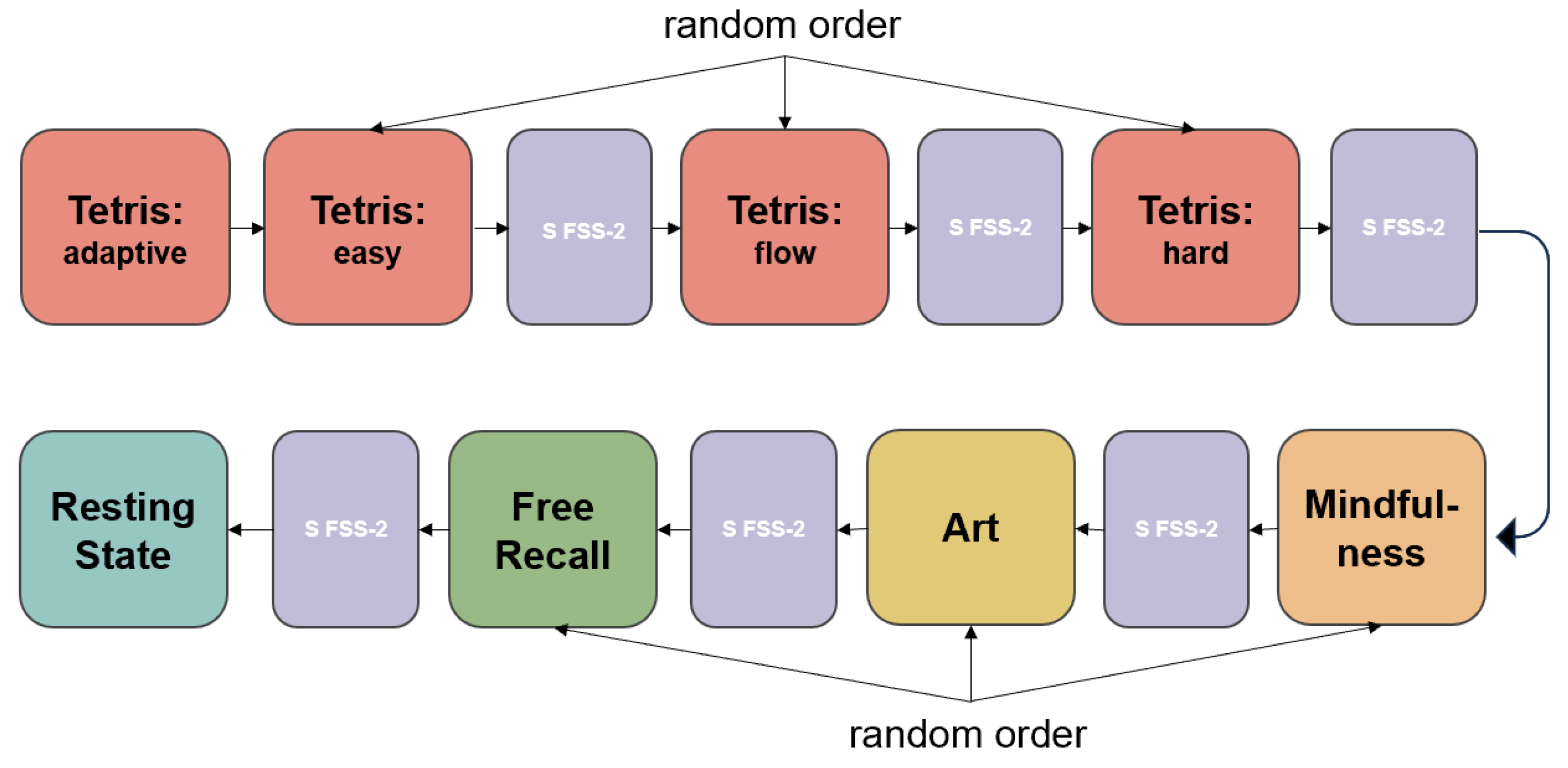
Figure 2.
Comparison of subjective flow scores among three conditions of Tetris.
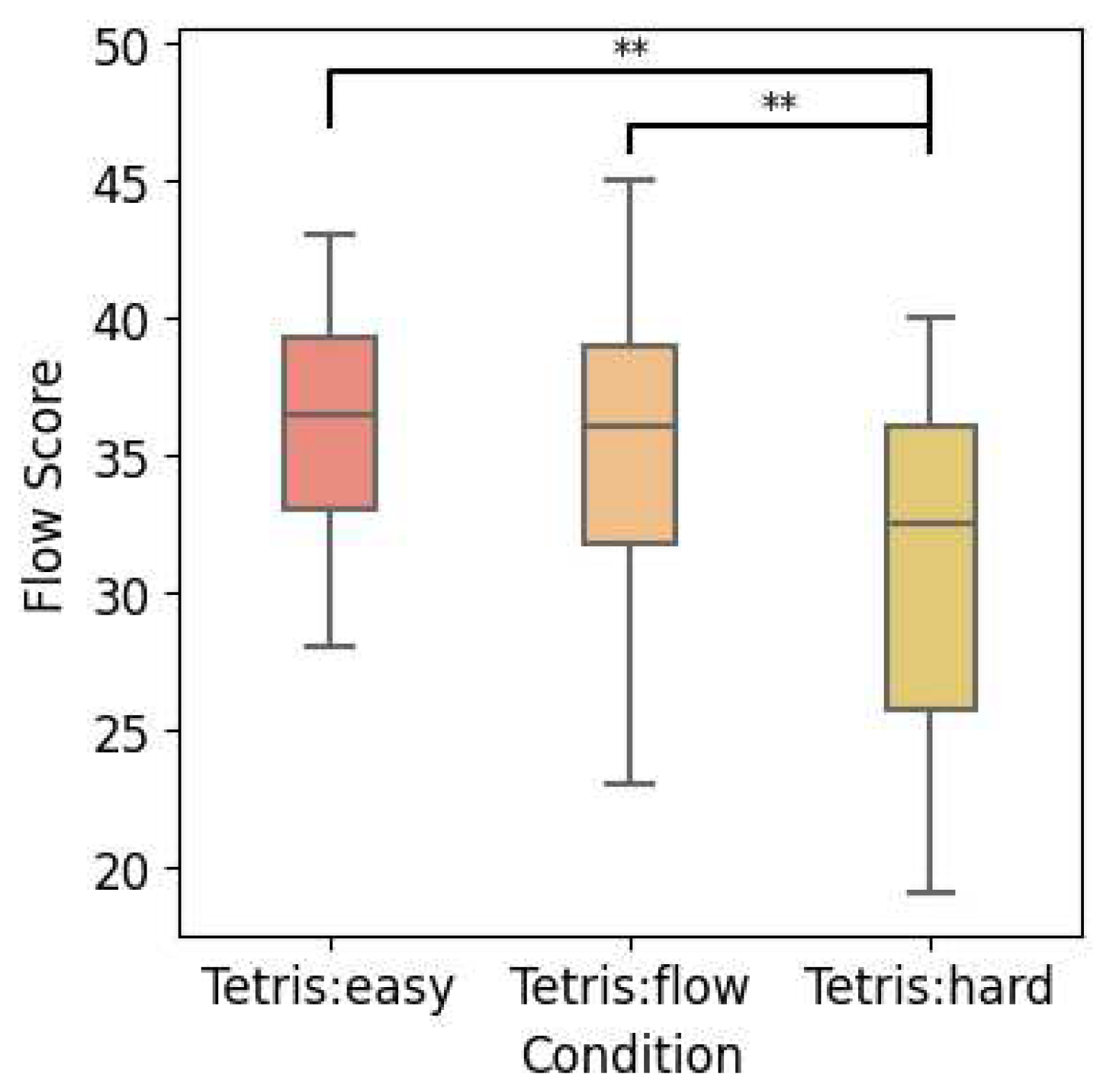
Figure 3.
Rank distribution of subjective flow score by condition. This rank distribution shows how many times each condition was assigned a particular rank by the participants. Each color represents a different rank, and the height of the color segment shows how many participants assigned that rank to the condition.
Figure 3.
Rank distribution of subjective flow score by condition. This rank distribution shows how many times each condition was assigned a particular rank by the participants. Each color represents a different rank, and the height of the color segment shows how many participants assigned that rank to the condition.
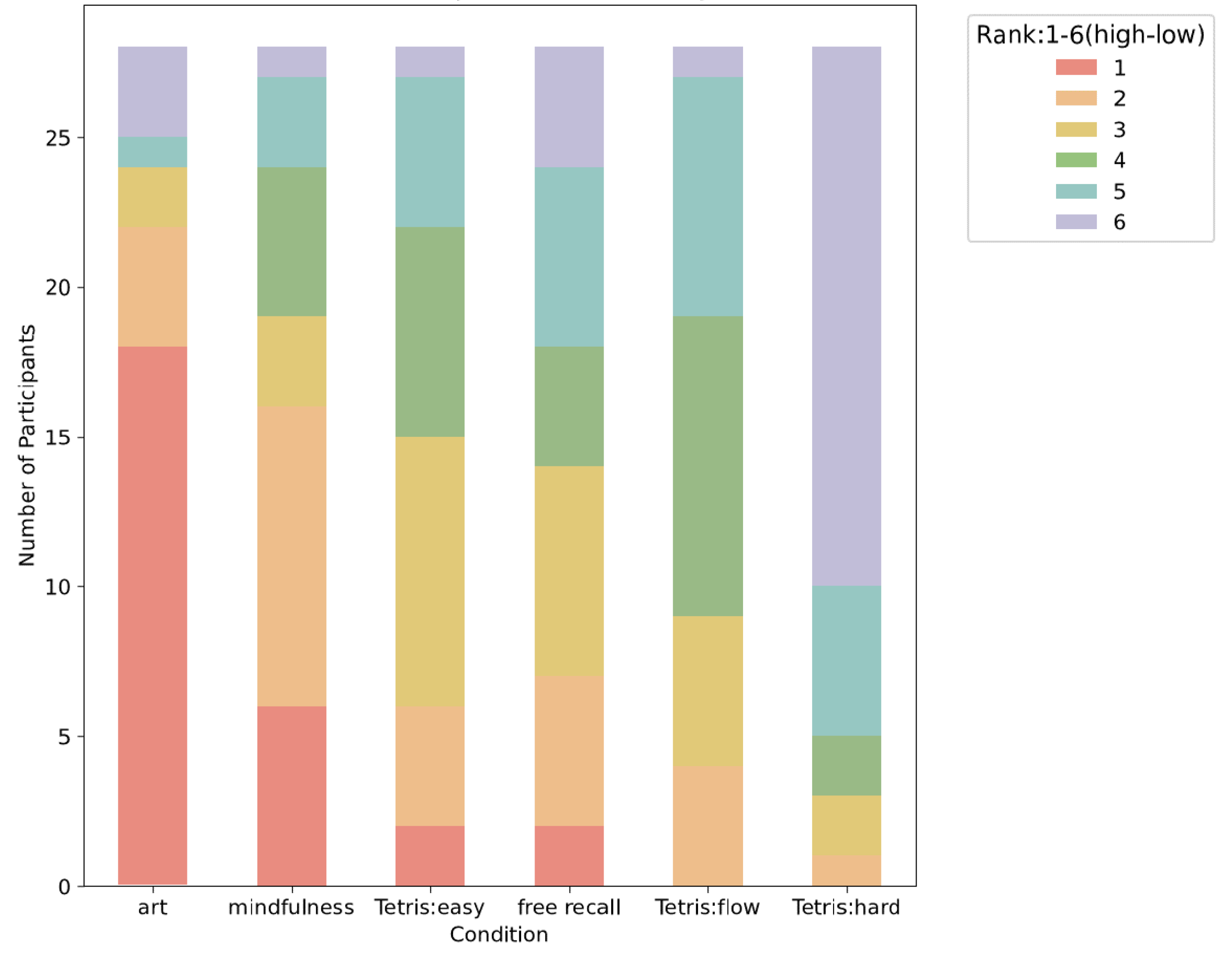
Figure 4.
Flow score distribution by different ranks. This presents a series of six histograms, each correlating to a distinct rank, numbered from 1 to 6. The horizontal axis (x-axis) of each histogram delineates the flow scores, while the vertical axis (y-axis) quantifies the frequency of these scores.
Figure 4.
Flow score distribution by different ranks. This presents a series of six histograms, each correlating to a distinct rank, numbered from 1 to 6. The horizontal axis (x-axis) of each histogram delineates the flow scores, while the vertical axis (y-axis) quantifies the frequency of these scores.
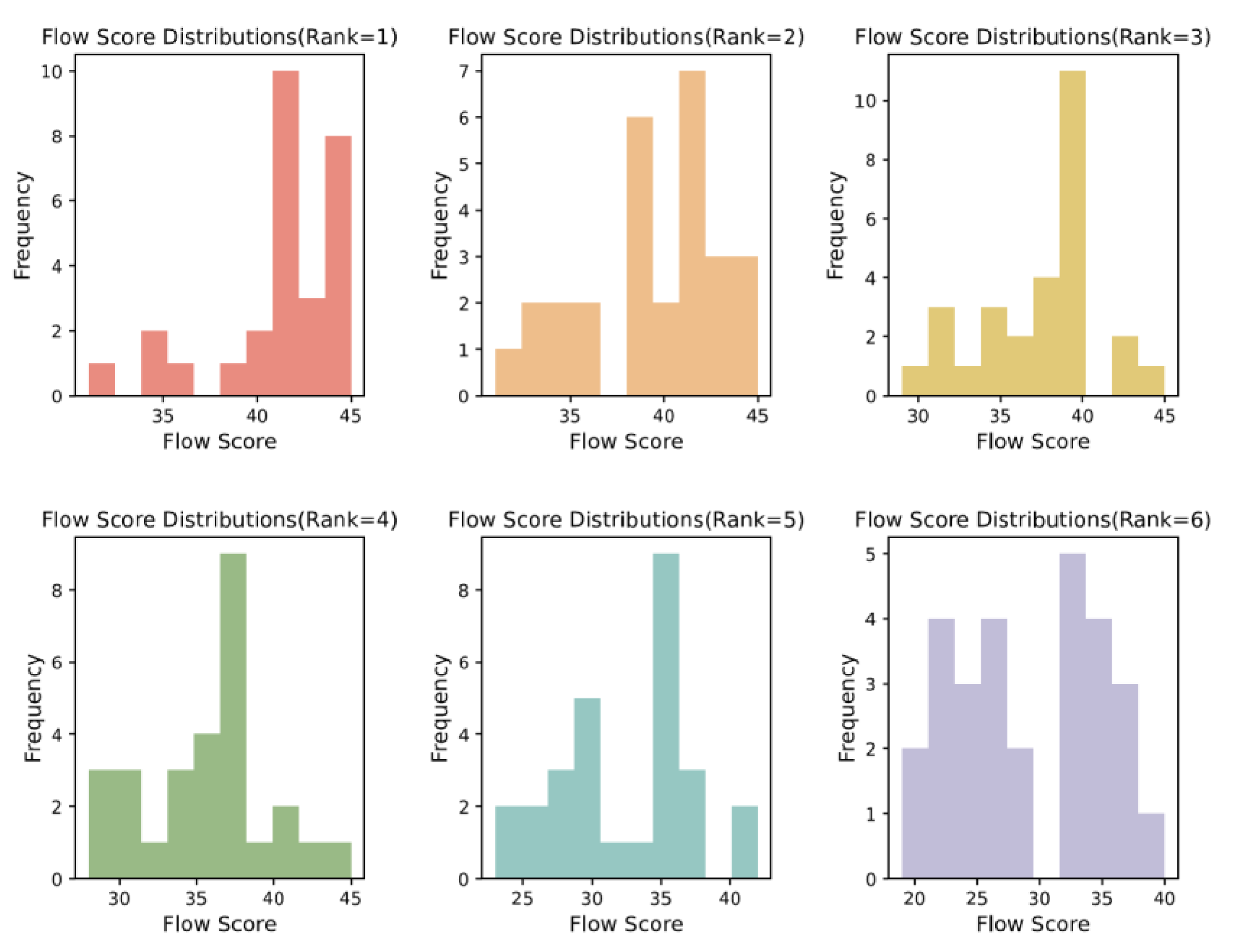
Figure 5.
Comparison of EEG power in different frequency bands between mindfulness and resting state condition.
Figure 5.
Comparison of EEG power in different frequency bands between mindfulness and resting state condition.
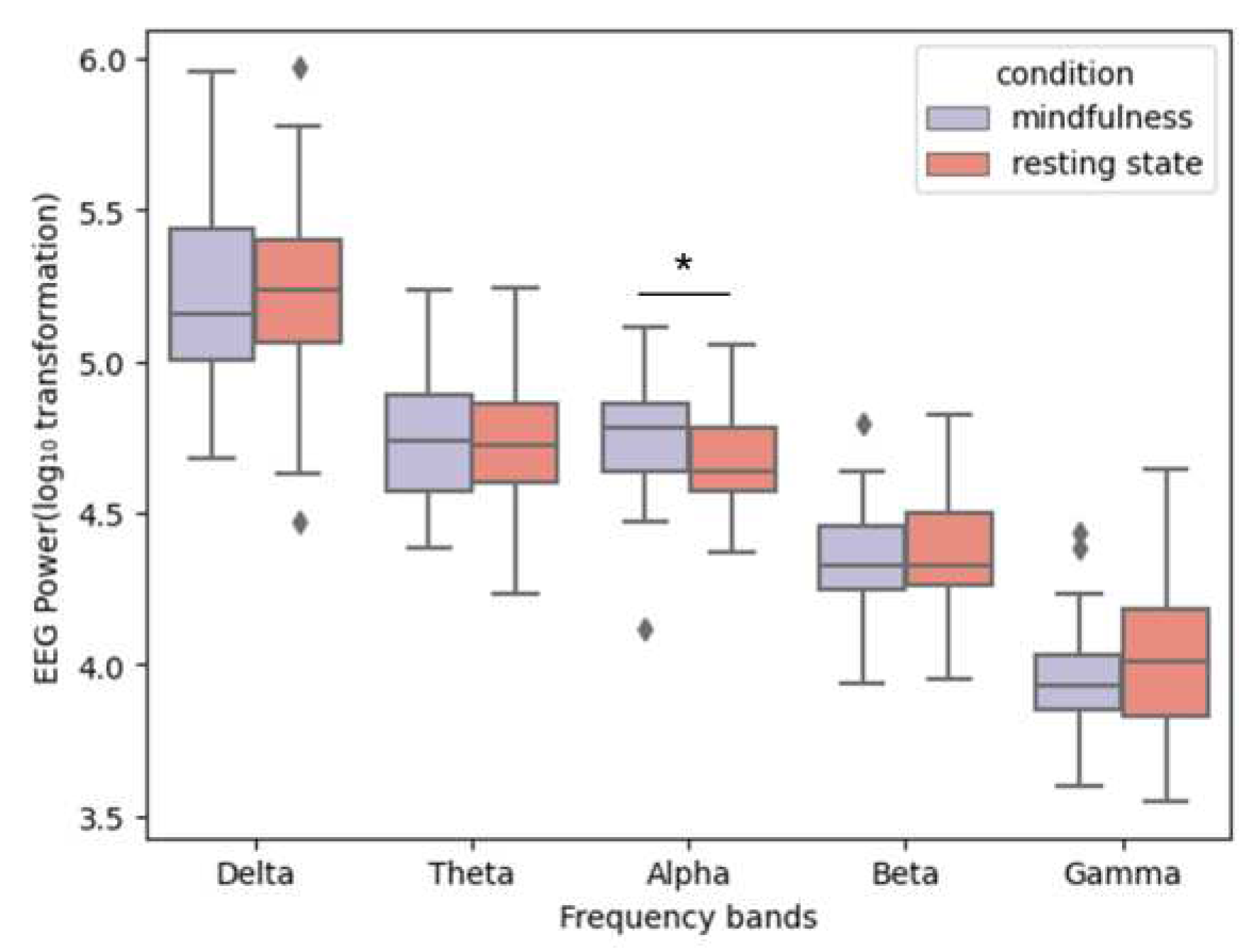
Figure 6.
Correlation between five frequency bands (a) Delta, (b)Theta, (c)Alpha, (d) Beta, (e) Gamma, and subjective flow score.
Figure 6.
Correlation between five frequency bands (a) Delta, (b)Theta, (c)Alpha, (d) Beta, (e) Gamma, and subjective flow score.
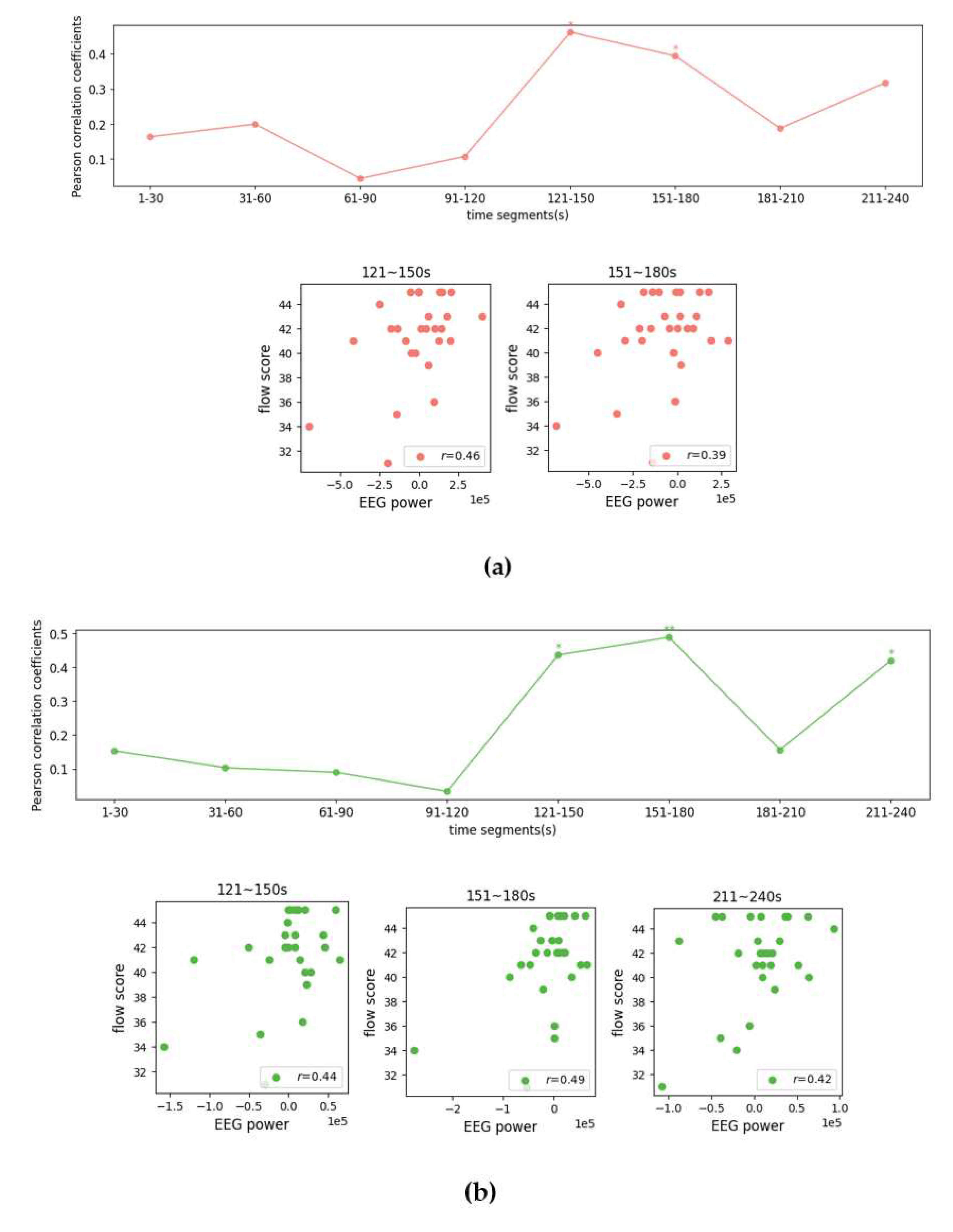
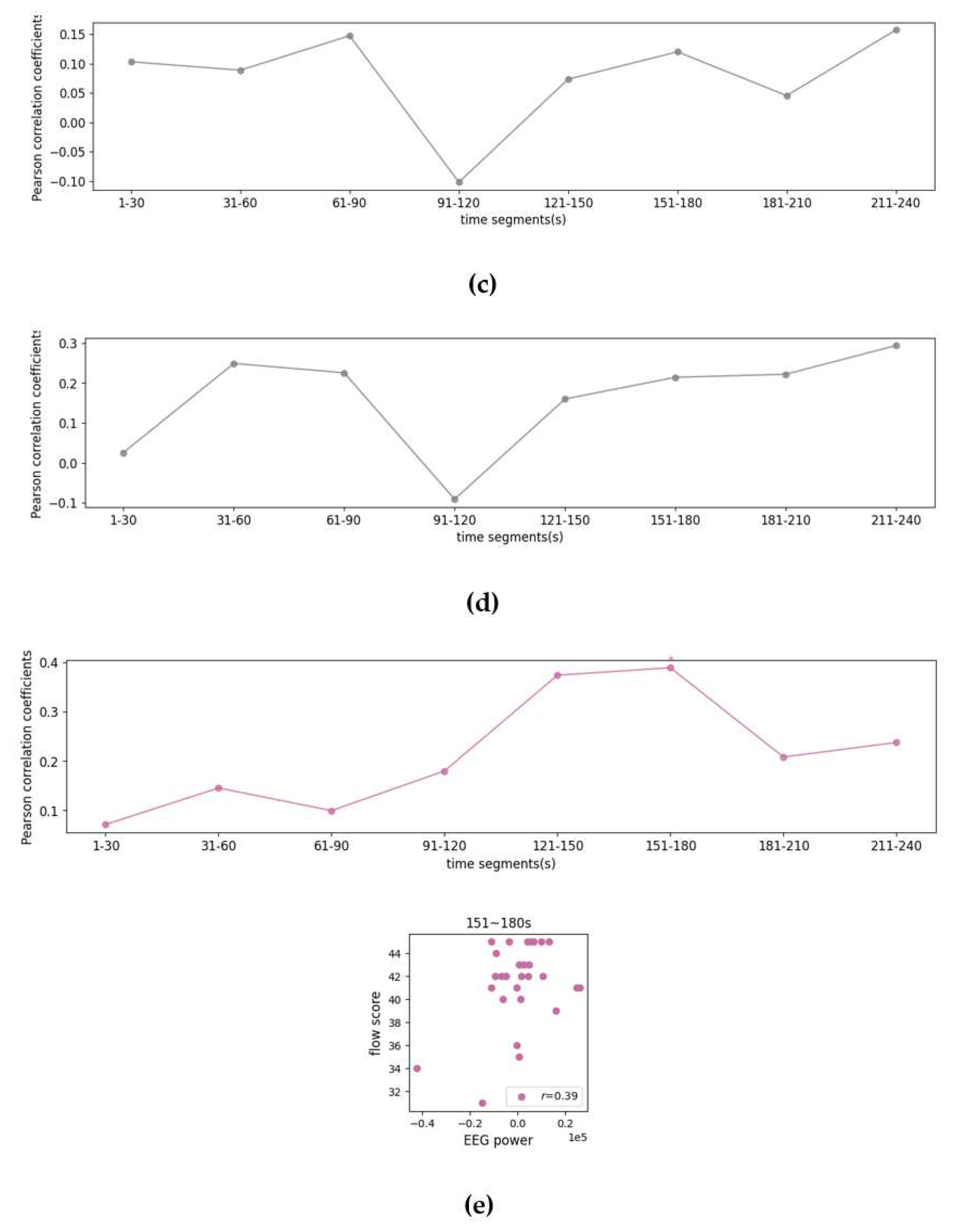

Table 1.
coefficient of determination (R²) for eight time frames under each model.
| KNN | ElasticNet | RandomForest | Linear | |
|---|---|---|---|---|
| 1~30s | -0.425 | -0.199 | -0.165 | -0.716 |
| 31~60s | 0.082 | -0.028 | -0.187 | -1.229 |
| 61~90s | 0.091 | -0.091 | -0.411 | -0.321 |
| 91~120s | -0.387 | -0.093 | -0.474 | -0.952 |
| 121~150s | -0.227 | 0.048 | 0.279 | -0.113 |
| 151~180s | -0.497 | 0.010 | -0.339 | -0.091 |
| 181~210s | -0.127 | -0.430 | 0.023 | -1.282 |
| 211~240s | 0.178 | 0.123 | 0.080 | -0.059 |
Disclaimer/Publisher’s Note: The statements, opinions and data contained in all publications are solely those of the individual author(s) and contributor(s) and not of MDPI and/or the editor(s). MDPI and/or the editor(s) disclaim responsibility for any injury to people or property resulting from any ideas, methods, instructions or products referred to in the content. |
© 2024 by the authors. Licensee MDPI, Basel, Switzerland. This article is an open access article distributed under the terms and conditions of the Creative Commons Attribution (CC BY) license (http://creativecommons.org/licenses/by/4.0/).
Copyright: This open access article is published under a Creative Commons CC BY 4.0 license, which permit the free download, distribution, and reuse, provided that the author and preprint are cited in any reuse.


