

Submitted:
27 December 2023
Posted:
27 December 2023
You are already at the latest version
Abstract
Biodiesel is one of the most popular biofuels as it is a promising substitute of the conventional diesel fuel, but for now it cannot be used as a stand-alone fuel due to its low oxidative stability. For this reason, the last years there have been efforts for its upgrading through the partial hydrogenation of the fatty acid methyl esters (FAMEs) that biodiesel consists of. This procedure succeeds in resolving the problem of low oxidative stability, but in some cases a new problem arises as the non-selective hydrogenation is deteriorating the fuel’s cold flow properties, which are crucial for its operation without damaging the vehicle’s engine. More specifically, the problem of deteriorated cold flow properties is caused by the formation of trans-monounsaturated FAMEs and fully saturated FAMEs while the hydrogenation reaction is taking place. The hydrogenated biodiesels are preferred to contain more cis-monounsaturated FAMEs, because these are considered to have the best combination between high oxidative stability and good cold flow properties. As a result, various systems and methods have been tested in order to achieve a selective partial hydrogenation of biodiesel’s FAMEs. In this review article, the catalytic systems and methods that stood out in various researches are presented and the factors that lead to the best possible outcome are investigated and discussed.
Keywords:
Biodiesel
; catalytic upgrading
; partial hydrogenation
; selective hydrogenation
; FAMEs
; H-FAMEs
1. Introduction
The need that has emerged in recent decades to reduce dependence on fossil fuels due to their environmental impact has led to an increased interest in the development of biofuels (biodiesel, bio-oil, bio-jet fuel, etc.) [1,2,3,4]. One of the biofuels that stands out is biodiesel and is considered as a potential alternative fuel to conventional diesel, because of its many advantages, such as zero contribution to carbon dioxide increase, higher cetane number, lower carbon monoxide and unburned hydrocarbon emission and in addition, it is biodegradable and less toxic [2,5,6,7,8,9,10,11]. However, it has noteworthy disadvantages that limit its wider application and at present, it can only be used in mixtures with conventional diesel [12]. These disadvantages are its low oxidative stability (OS) and poor cold flow properties [10,11]. These fuel properties depend on the fatty acid methyl esters (FAMEs) of which biodiesel is composed, and in particular depend on their degree of unsaturation [3,10,13,14]. The more polyunsaturated FAMEs the fuel contains, the better its cold flow properties are, but it has lower oxidative stability [7,12,15], resulting in the production of ketones, aldehydes, acids and peroxides during storage due to oxidation, which are undesirable products as they degrade the properties of the fuel [3,5,6]. In contrast, the higher the percentage of saturated FAMEs in biodiesel, the higher the oxidative stability, but the worse the cold flow properties. [6,13,16,17], leading to vehicle engine problems [5]. The FAMEs considered as the best compromise between satisfactory cold flow properties and high oxidative stability are cis-monounsaturated FAMEs [18].
When biodiesel is produced, its FAMEs consist of the corresponding fatty acids of the oils and fats used as feedstock [10,16,19,20]. Thus, the fuel is composed of a mixture of polyunsaturated, monounsaturated and saturated FAMEs in such proportions that it cannot be used as a fuel itself, but as blends with conventional diesel. Therefore, in order for biodiesel to be used to a greater extent, an upgrade is necessary.
The upgrading of biodiesel is done through the partial hydrogenation of polyunsaturated FAMEs [17,21], with as much selectivity as possible towards cis-monounsaturated, in order to obtain the highest possible oxidative stability and at the same time to maintain as much as possible the good cold flow properties. The hydrogenation process can be done by two methods that differ in the way of hydrogen supply. The most common is that the hydrogen is supplied directly as molecular hydrogen in gaseous form, while the other way is that the hydrogen is supplied by a compound that acts as a donor during the reaction and is called catalytic transfer hydrogenation [5,22]. Achieving the ideal result through partial hydrogenation presents challenges. During the hydrogenation of polyunsaturated FAMEs, the monounsaturated FAMEs present in biodiesel are also hydrogenated [23]; so there is a risk of creating biodiesel with a large amount of saturated FAMEs, which will not have the desired properties. Then, in parallel with hydrogenation, the isomerization of cis-monounsaturated FAMEs into their trans isomers occurs, which degrade the quality of the fuel by giving them sub-standard cold flow properties [16,24]. The extent to which these undesirable reactions take place depends significantly on the catalytic system used and the conditions chosen to carry out hydrogenation. Thus, for the successful upgrading of biodiesel, it is necessary to find a catalytic system and conditions that not only hydrogenate polyunsaturated FAMEs to cis-monounsaturated FAMEs, but at the same time do not favor isomerization and complete hydrogenation.
The catalysts for upgrading biodiesel are mostly metal particles supported on porous materials consisting of carbon, silicon or aluminum. The metals most commonly met in catalytic systems are Pd, Pt and Ni, while there are few reports of attempted upgrading using metals, such as Rh, Cu. However, despite all the development and research in the field of biodiesel upgrading, there is still a need to find more effective catalysts to enable biodiesel use either in blends with conventional diesel in higher proportions or as a stand-alone fuel without posing any risk to the vehicle engine. Therefore, the current systematic review will present the factors that influence the hydrogenation outcome of biodiesel from the perspective of the catalytic system and the reaction conditions and highlight those that lead closer to the desired outcome. In addition, a separate section of this review summarizes the partial hydrogenation of biodiesel using a biphasic aqueous/organic catalyst system, a green method that has the advantages of easy recovery and reuse of the catalyst, and reducing the use of organic solvents [25,26,27,28].
2. Method
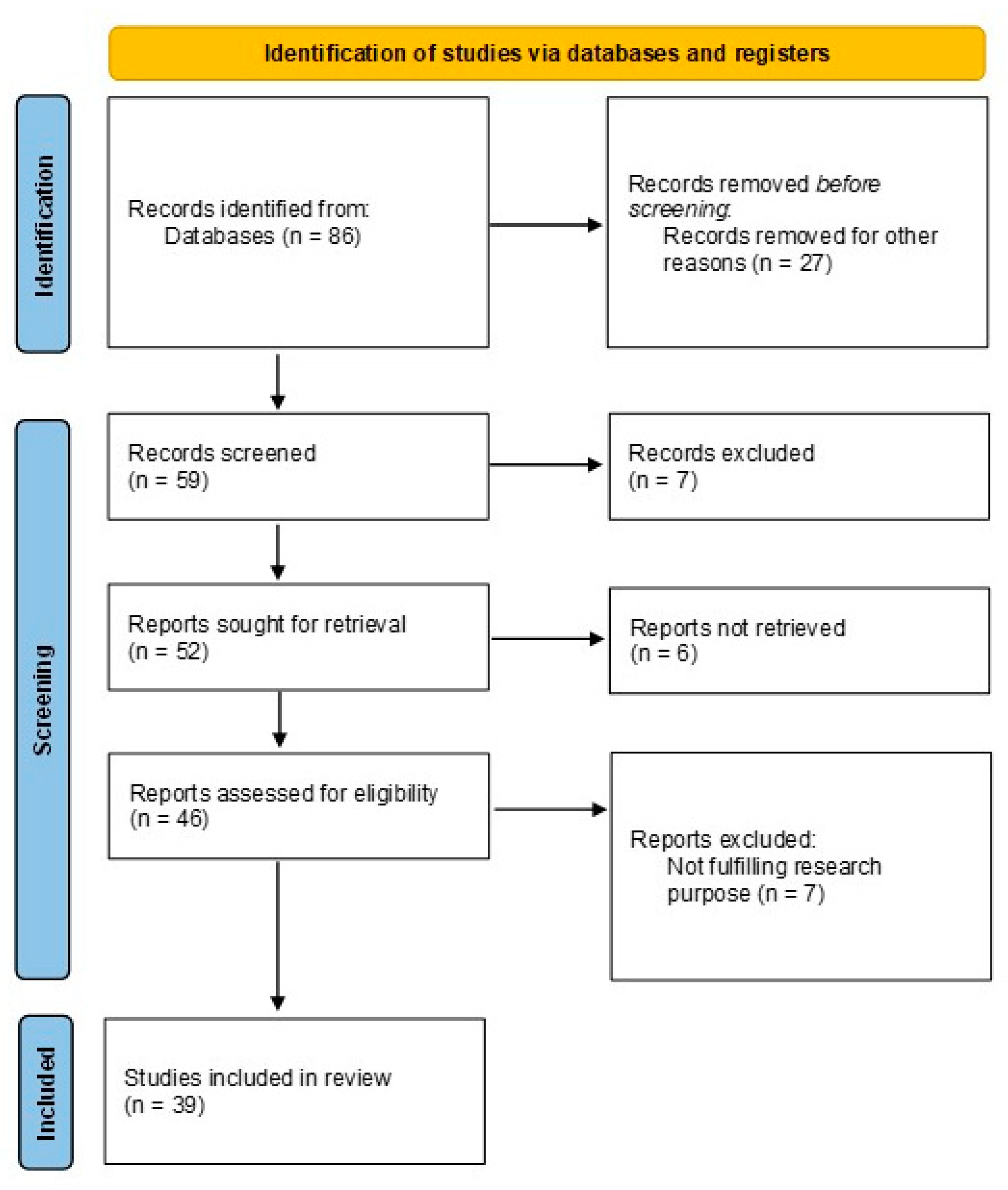
The Preferred Reporting Items for Systematic Reviews and Meta-Analyses (PRISMA) [29] protocol was followed to conduct this systematic review (Fig. 1). The Scopus database was used to find the literature and the search was conducted from July 1, 2023 to August 1, 2023 by searching for articles’ titles, abstracts, keywords with the keywords 'partial AND biodiesel AND hydrogenation', without filtering for the publication dates of the articles. The total search results were 86 articles, of which 27 were removed before screening, because they had an irrelevant title from the review’s topic. Of the 59 articles left for screening, 7 were excluded because it was obvious from the abstract that they did not deal with the partial hydrogenation of biodiesel FAMEs, while an attempt was made to retrieve the remaining 52. Of these 52, 6 could not be retrieved, because they were not accessible. Finally, of the 46 remaining articles 7 were rejected, because their data was not fulfilling the research purpose.
Figure 1.
Preferred Reporting Items for Systematic Reviews and Meta-Analyses (PRISMA) flow diagram for the systematic review.
Figure 1.
Preferred Reporting Items for Systematic Reviews and Meta-Analyses (PRISMA) flow diagram for the systematic review.
3. Results and discussion
Table 1 summarizes key data derived from studies in which catalytic upgrading of biodiesel was carried out. In several studies, more than one catalyst was examined. Nevertheless, only the catalyst that was the most effective was listed in Table 1.
3.1. Catalytic system
3.1.1. Heterogeneous catalytic system
Most catalytic systems designed so far consist of metal particles supported on solid supports, with the metals most commonly tested being Pd, Pt, and Ni. In studies conducted using catalysts of these three metals and comparing them in terms of their activity and selectivity, Pd has emerged as the most active among the three, while Ni is the least active [8,13,14]. In addition, Pd was also reported to be the one that leads to a greater extent to the isomerization of cis-monounsaturated FAMEs to trans isomers [14,42]. As for Pt, it has been observed that it favors the complete hydrogenation of FAMEs, resulting in the production of biodiesel with higher amounts of saturated FAMEs [13,14]. Due to the above, Pd is of great interest as a catalyst for the partial hydrogenation of biodiesel.
Apart from the type of metal, the activity and selectivity of the catalyst are influenced by the size of the metal particles on the surface of the support. Numwong et al. [16] reported that tri- and di-unsaturated FAMEs interact with the metal particle surface more strongly than monounsaturated ones due to the presence of more double bonds. In the same study, it was found that the catalyst with the smallest particle size had the highest selectivity for cis-monounsaturated FAMEs, while as the size increased the activity increased, but the selectivity decreased. These results are in agreement with those of other studies which report that larger particles increase activity but promote more the isomerization of cis-monounsaturated isomers to trans [8,13]. Numwong et al. [16] explained these observations by proposing that larger particles have a larger planar surface with which FAMEs can interact more strongly, resulting in increased activity on the one hand, but on the other hand, monounsaturated FAMEs also interact more with the catalyst and favor isomerization and production of saturated products. Furthermore, the activity of the catalyst is also related to the distribution of the metal particles on the surface of the support, as it has been reported that catalysts with a higher dispersion of metal particles exhibited higher activity [13,14,21,45].
In addition, a parameter that plays an important role in both the activity of the system and the selectivity of the reaction, again influencing the interaction that is being developed between the unsaturated FAMEs and the catalyst, is the acidity of its surface. Thus, there are reports that catalysts with a more acidic nature exhibit greater activity [30,34,41]. Thunyaratchatanon et al. [7], in a study where Pd/Zr-SBA-15 catalysts were used with different amounts of Zr in order to study how its presence would affect the catalyst performance, observed that all of them were more active than the simple Pd/SBA-15 catalyst and this was attributed to the increase in acidity of the catalysts due to the presence of Zr. Also, interestingly, up to the Zr/Si=0.07 ratio, as the amount of Zr increased, the activity increased, while afterward, a decrease was observed due to the development of such strong interactions that adsorbed FAMEs did not desorb, and as a result, they reduced the accessibility to other FAMEs. In addition, the increase in Zr also increased the amount of monounsaturated trans isomers in the final product. These results are consistent with the findings of Chen et al. [45] that catalysts with moderately and strongly acidic nature led to lower selectivity towards cis isomers compared to the weakly acidic catalyst. Similarly, in experiments using modified Pd-Mg/SiO2 and Pt-Mg/SiO2 catalysts, which exhibited a more basic nature compared to plain Pd/SiO2 and Pt/SiO2, it was found that Mg-modified catalysts exhibited higher activity and higher selectivity for cis-monounsaturated FAMEs [8]. This improvement was attributed to the increase in electron density induced by the presence of Mg, resulting in a weaker interaction of already hydrogenated FAMEs with the catalyst, easier desorption and no isomerization of cis to trans isomers taking place. In contrast, in a study using Pd-Ca/SiO2, Pd-Na/SiO2 and Pd-Ba/SiO2 catalysts, which also increased the basic character of the catalyst, it was observed that compared to the simple Pd/SiO2, Pd-Ca/SiO2 and Pd-Na/SiO2 catalysts had significantly lower activity, while Pd-Ba/SiO2 showed higher activity and also the highest selectivity towards the formation of trans-monounsaturated FAMEs [18]. This difference in results was due to the difference in the number of base particles around the Pd particles, as while these elements differ in atomic weight, in all cases, the catalysts had 4 %wt of base metal. Thus, in the case of Na and Ca, the effect of the bases was so strong that the interaction of the FAMEs with the catalyst was reduced to the point where the activity of the respective catalysts was reduced. On the other hand, the amount of Ba used was appropriate so that the basicity of the catalyst was increased to such an extent that it would serve the desorption of the hydrogenated FAMEs without hindering the adsorption of the remaining FAMEs, thus increasing the activity of the catalyst. Therefore, it is evident that in order to create an efficient catalytic system, it is necessary to study its acidic or basic nature and modify it, if necessary, to achieve the optimal substrate-catalyst interaction.
In addition, the result of partial hydrogenation is influenced by the morphology of the support carrier. Numwong et al. [31], studying the effect of SiO2 pore size using Pd/SiO2 catalysts, observed that small and large pore sizes had lower activity than intermediate ones but increased selectivity towards cis-monounsaturated FAMEs. The explanation given for these results was that the different pore size affected the probability of contact of FAMEs with the active sites. Specifically, they reported that the existence of small pores prevented the FAMEs from accessing the active sites located within them, resulting in FAMEs contacting only the active sites located on the outer surface of the catalyst, thus limiting the activity. In the cases of intermediate and large-size pores, FAME molecules could enter, but the probability of contacting a catalytic center was lower as the size increased, resulting in the difference observed. The effect of support morphology was also reported by Phumpradit et al. [41] comparing the non-porous Ni/Electrospun Silica Fiber catalyst with the porous Ni/porous silica ball. From the results, it was found that the fibrous catalyst showed higher activity and higher selectivity for cis-monounsaturated FAMEs. This observation was attributed to the higher accessibility offered by the non-porous morphology of the fibrous catalyst (also, the fibrous catalyst possessed a more acidic nature, which enhanced its activity). Therefore, in order to lead the partial hydrogenation to the desired outcome, the morphology of the support carrier is something that needs to be studied.
3.1.2. Reaction conditions in heterogeneous catalytic systems
Many studies have investigated how reaction conditions affect the outcome of biodiesel upgrading, so it is worth mentioning what the effects of changing each hydrogenation parameter are.
First of all, the parameter for which there are most reports is temperature. All studies agreed that an increase in temperature favors the isomerization of cis-monounsaturated FAMEs into trans [8,37,39,40,41,42] because the formation of trans isomers is thermodynamically favored [8,39]. Moreover, it has often been reported that higher temperature leads to greater conversion to fully saturated FAMEs [37,40,42] and that it increases the reaction’s speed [39,40]. Therefore, in order to obtain the highest possible quality biodiesel, the hydrogenation reaction should be carried out at the lowest possible temperature.
Pressure is another parameter that affects the result of hydrogenation. Numwong et al. [42] reported that increasing the pressure increased the conversion of polyunsaturated FAMEs, but at the same time, the amount of trans-monounsaturated FAMEs increased. These findings are similar to those found by Phumpradit et al. [41], according to which higher pressure led to an increase in trans-monounsaturated and fully hydrogenated FAMEs in biodiesel. Furthermore, in the case of Zhu et al. [40], it has only been reported that increasing pressure led to a higher reaction rate, while Thunyaratchatanon et al. [13] reported that by increasing the pressure while decreasing the temperature, the isomerization of cis to trans isomers occurs at a lower rate.
Then, of interest is the effect of the solvent. In most cases, no solvent is used, but Quaranta and Cornacchia [37] tested n-heptane as a solvent and, using a commercial Pd/C catalyst, successfully carried out the hydrogenation of a mixture of FAMEs under very mild conditions. In particular, they observed that compared to the tests without solvent or using MeOH, DMC, and THF as solvents, hydrogenation with n-heptane was faster and cis to trans isomerization to a lesser extent. The effectiveness of n-heptane as a solvent was also shown in a study again by Quaranta et al. [38], in which using n-heptane, the reaction was faster, and a higher quality biodiesel was obtained compared to the solvent-free test. This effect of n-heptane was attributed to its low viscosity and its weak interaction with the catalyst, thanks to which it did not hinder the access of the reactants to it.
3.1.3. Resistance and deactivation of heterogeneous catalyst
During biodiesel upgrading, the main threat to catalysts is sulfur species, which adsorb to them and deactivate them [13,21,35,43]. In addition to the gradual poisoning, however, the adsorption of sulfur compounds also results in a decrease in selectivity for cismonounsaturated FAMEs [21]. Thunyaratchatanon et al. [13] reported that catalysts with large-sized metal particles on their surface are deactivated faster than those with small-sized particles. A possible solution to address this problem was proposed by Mochizuki et al. [35], who found that by simultaneously adding molecular oxygen during the reaction, the catalyst is regenerated in situ by removing the deactivating impurities.
3.1.4. Biphasic aqueous/organic system catalytic system
For the partial hydrogenation of biodiesel, the biphasic catalytic systems tested are of aqueous/organic phases. The aqueous phase contains an organometallic catalyst, while the organic phase consists of the FAMEs destined for partial hydrogenation. Such a system has the advantage of the easy and quantitative recovery of the catalyst by simple two-phase separation, thanks to the non-miscibility of the aqueous/organic phase, and therefore easy catalyst reuse [25,26,48].
The organometallic catalysts used consist of a metal that acts as the catalytic center and ligands assembled around it. The common catalyst used in two-phase catalysis studies was Rh/TPPTS [25,26,47,48], while tests have also been performed with Ru, Pd, Pt catalytic metals with TPPTS ligand [26,48], as well as systems with metal Pd and ligands TPPTS, EDTANa4, DTPPA, BPhDS [26]. According to Stathis et al. [48], who investigated the partial hydrogenation of methyl esters derived from linseed oil using Rh/TPPTS, Pd/TPPTS, and Pt/TPPTS catalysts, the Rh catalyst showed the highest catalytic activity and the highest selectivity towards the formation of fully saturated FAMEs. Pd catalyst showed the highest conversion to monounsaturated FAMEs and the highest formation of trans-monosaturated FAMEs. On the other hand, Pt catalyst showed the lowest activity and by far the lowest selectivity for the formation of trans-monosaturated and fully saturated FAMEs. At the same time, in comparison of two-phase catalytic partial hydrogenation with heterogeneous one, partial hydrogenation with Pt/Al2O3 catalyst was also tested, and the results showed that the heterogeneous catalyst had higher activity but favored to a much greater extent the production of fully saturated FAMEs. Thus, the Pt/TPPTS catalyst seems attractive due to its significant selectivity towards the desired product, but it has the disadvantage that it decomposes more easily than the others, forming metallic Pt, the presence of which increases the formation of fully saturated FAMEs.
Bouriazos et al. [26], in their research, tested different types of ligands in a biphasic system with Pd as catalytic metal. In particular, they compared the ligand TPPTS, which is the common ligand used in partial biphasic hydrogenation, with the nitrogenous ligands EDTANa4, DTPPA, and BPhDS, all of which gave the system higher activity than TPPTS, with BPhDS achieving the highest activity.
Along with the choice of the organometallic catalyst, the following parameters play an important role in the efficiency of the two-phase catalysis: the presence of surfactants, pH, the use of an organic solvent, the molar ratio of ligands/(catalytic metal), the molar ratio of C=C units/(catalytic metal), temperature and pressure.
Starting from the presence of surfactants, this is important to prevent the catalyst from decomposing and forming metal aggregate [26]. However, in the partial hydrogenation of FAMEs the addition of surfactants is not required if the feedstock already contains surfactants, as for example in various vegetable oils lecithin [25,47]. In addition, for different feedstocks there is a different optimum pH for the reaction to take place. For instance, there are reports that by changing the pH from neutral to acidic in the partial hydrogenation of FAMEs derived from sunflower oil, the activity increased [25,47], while in the partial hydrogenation of FAMEs derived from linseed oil, the highest activity was seen, when the reaction was carried out at neutral pH [25]. Furthermore, the organic solvent parameter is also dependent on the feedstock. Bouriazos et al. [47] reported that the partial hydrogenation of FAMEs derived from sunflower oil had no significant difference whether an organic solvent was used or not. Whereas in the case of FAMEs derived from linseed oil, several organic solvents were used, and the one that gave the highest activity in the system was the diethyl ether.
The molecular ratio of ligands/(catalytic metal) seems to have a triple role in the catalytic system by affecting its activity, selectivity, and protection against decomposition. In particular, it reduces the activity of the system as it increases [25,48] and reduces its selectivity for trans-monosaturated FAMEs [48]. Stathis et al. [48] suggested a possible explanation for this observation, attributing it to the increased competition that arises between ligand and substrate for coordination around the catalytic center, when the amount of free ligand molecules increases. It is also reported that in Pt/TPPTS catalyst, decomposition was prevented when the ligand/(catalytic metal) molar ratio was above a threshold [48]. Then, increasing the molar ratio of C=C units/(catalytic metal) increases the activity and selectivity of the system [25,26,47,48]. The proposed explanation for this is that stereochemical hindrance is created around the catalytic center. Finally, temperature and pressure are two important factors that act in the same way as in the conventional partial hydrogenation discussed earlier. That is, increasing these parameters increases the speed of the reaction but favors the formation of undesirable products [25,48].
It is also important to note that all of the two-phase systems used for the partial hydrogenation of FAMEs, with the exception of the Pt/TPPTS catalyst, were robust, did not decompose, remained in the aqueous phase and when reused in continuous catalytic cycles, showed the same levels of activity [25,26,47].
3.2. Partial hydrogenation methods
3.2.1. Conventional partial hydrogenation
By the phrase conventional partial hydrogenation in this article, is meant the hydrogenation of biodiesel carried out using a heterogeneous catalyst and supplying the hydrogen required for the reaction in gaseous form as molecular H2. As shown in Table 1, the aforementioned is the most common process that has been applied so far for the partial hydrogenation of biodiesel. Since there is a large number of experiments in this method, some subcategories can be distinguished according to their metal, support, or other characteristics.
The first subcategory is that of Ni catalysts. Simple Ni catalysts have the lowest activity (for example, NiMo/C and Ni/C [12,36]) and do not reach such conversion levels that significant upgrading can be achieved. However, with some modifications, such as the use of different support, they have the potential to be significantly improved as shown by the investigations of Zhu et al. [40] and Phumpradit et al. [41], who used Ni/Betonite and Ni/Electrospun silica fiber catalysts respectively and were able to achieve conversions of 75% and 71.3%.
The next subcategory of this method is Pd catalysts, which have emerged as the most active and have prevailed as the most effective in most studies (Table 1). Since a large number of different Pd catalysts have been used, they can also be divided into subcategories.
Starting from Pd catalysts with silicate support (such as SiO2, SBA-15, MCM-41), it is observed that these catalysts achieve high conversions leading to high oxidative stabilities, completing the main objective of biodiesel upgrading. Nevertheless, these catalysts do not have a high enough selectivity not to significantly degrade the cold flow properties of the feedstock. As a result, the cold flow properties of a biodiesel, which is close to the specification limits, may be deteriorated to the point where it is unsuitable for use after the partial hydrogenation process.
Then, there are Pd catalysts with a carbon support. These catalysts reach high conversions and high oxidative stability, like the silica-supported catalysts. Moreover, they do not have such a high selectivity, in order to not alter biodiesel’s cold flow properties after the upgrading process.
Then, of interest are Pd catalysts, to which a metal such as Ba or Mg has been added in order to give the catalyst surface a more basic character, so that it has the appropriate electron density that will provide the best possible interaction with FAMEs. Such catalysts were created by Thunyaratchatanon et al. [8] and Thunyaratchatanon et al. [18] and had increased selectivity, thus achieving both objectives of biodiesel upgrading, increasing oxidative stability without significant deterioration of cold flow properties.
3.2.2. Catalytic transfer hydrogenation
Catalytic transfer hydrogenation differs from conventional partial hydrogenation in the way the hydrogen necessary for the reaction is supplied. The hydrogen instead of being supplied as pure molecular hydrogen H2 in gaseous form, it is supplied through compounds that act as hydrogen donors [22,39]. Usual hydrogen donors are formates, formic acid and alcohols. In particular, of the alcohols, those preferred are the secondary ones as they are the most active [22].
This different way of hydrogen transfer offers economic and practical advantages to the method. This happens because it does not require the use of expensive and explosive pure hydrogen gas and does not require so many safety measures for the storage and transportation of the compounds used as hydrogen donors [22,39]. Moreover, this method has economic advantages, as Ni catalysts are cheaper than catalysts of noble metals such as Pd and Pt. Finally, it is important to mention that partial hydrogenation by this method occurs under mild conditions (atmospheric pressure and relatively low temperatures) [22,39].
3.2.3. Simultaneous transesterification and partial hydrogenation under supercritical methanol
As its name suggests, in this process, the production of biodiesel through transesterification reaction and its upgrading through partial hydrogenation, under supercritical conditions for methanol and in the presence of a catalyst suitable for hydrogenation, occur simultaneously. An important feature of this method is that it does not require the supply of hydrogen to the reaction mixture, since methanol plays a dual role under supercritical conditions and in the presence of a catalyst. Apart from being a reactant in the transesterification reaction, it also acts as a hydrogen donor due to its decomposition, without this having a negative effect on the yield of the reaction [19,33,34]. According to Lee et al. [34], in addition to methanol, the glycerol produced by the transesterification reaction decomposes and also acts as a hydrogen donor, which is positive as it reduces the amount of glycerol obtained in the final mixture after the completion of the reaction.
It is interesting to note that, as shown in Table 1, with this method the biodiesel obtained has improved oxidative stability and has no significant difference in its cold flow properties compared to non-hydrogenated biodiesel. Therefore, via this method, the production of good quality biodiesel can be achieved in one step. A negative aspect of this method is that the temperature used is close to the decomposition temperature of FAMEs [19,33,34] and therefore there is a risk of product loss if not handled correctly.
3.2.4. Partial hydrogenation in biphasic aqueous/organic system
With this method, partial hydrogenation occurs in biphasic aqueous/organic catalytic systems, in the aqueous phase of which the catalyst is located, while the FAMEs of biodiesel are in the organic phase. A very important feature of this method is the quantitative recovery of the catalyst with simple two-phase separation and its recyclability for continuous catalytic cycles without significantly reducing its activity and selectivity [25,47,48]. It is also worth mentioning the combination of high catalytic activity and selectivity that these systems offer when operated under appropriate conditions, resulting in very short time to produce desired products. For instance, Bouriazos et al. [26] used organometallic catalyst Pd/BPhDS in a two-phase system achieving TOF 71 300 h-1 and in just 5 min the amount of monounsaturated FAMEs had increased from 22.5 mol% to 78.4 mol% in biodiesel derived from soybean oil.
4. Conclusions
The catalytic upgrading of biodiesel is a challenging issue as while it has the potential to solve the drawback of biodiesel’s low oxidative stability, it can generate another one, the poor cold flow properties that also make the fuel unsuitable. However, several methods have been investigated and successful upgrading of biodiesel has been carried out. Specifically, simultaneous transesterification and partial hydrogenation under supercritical methanol proved to be a promising method as the biodiesel obtained not only had improved oxidative stability but also uncompromised cold flow properties. Furthermore, partial hydrogenation in a biphasic aqueous/organic system is an interesting approach for biodiesel upgrading, due to its high TOF and the convenient recovery of the catalysts used. Thus, further research on these unconventional methods would be interesting in order to investigate their potential.
Author Contributions
Conceptualization, N.K.; methodology, N.K.; validation, N.K. and E.E.; formal analysis, A.P. and N.K.; investigation, A.P. and E.E.; resources, A.P.; data curation, A.P., E.E. and N.K.; writing—original draft preparation, A.P. and N.K.; writing—review and editing, N.K.; visualization, A.P.; supervision, N.K.; project administration, N.K.; funding acquisition, N.K. All authors have read and agreed to the published version of the manuscript.
Funding
This research was carried out and funded in the context of the project “Support for International Actions of the International Hellenic University”, (MIS 5154651), under the call for proposals “Support for International Actions of MSc in Oil & Gas Technology of the International Hellenic University”. The project is co-financed by Greece and the European Union (European Social Fund- ESF) by the Operational Programme Human Resources Development, Education and Lifelong Learning 2014-2020.
Data Availability Statement
Data sharing is not applicable to this article.
Acknowledgments
The MSc Program in Oil and Gas Technology of the Department of Chemistry is gratefully acknowledged for its administrative and technical support.
Conflicts of Interest
The authors declare no conflict of interest. The funders had no role in the design of the study; in the collection, analyses, or interpretation of data; in the writing of the manuscript; or in the decision to publish the results.
Nomenclature
| BMIM-NTf2 | 1-butyl-3-methylimdazolium bis(trifluoromethylsulfonyl)imide |
| BPhDS | Bathophenanthrolinedisulfonic acid disodium salt |
| CFPP | Cold Filter Plugging Point |
| CN | Cetane Number |
| CP | Cloud Point |
| DBD | Dielectric-Barrier Discharge |
| DTPPA | Diethylenetriaminepentakis(methyl-phosphonic acid) |
| EDTANa4 | Ethylenediaminetetraacetic acid tetrasodium salt |
| FAMEs | Fatty Acid Methyl Esters |
| H-FAMEs | Hydrogenated Fatty Acid Methyl Esters |
| ImS3-12 | 3-(1-dodecyl-3-imidazolio)propanesulfonate |
| IV | Iodine Value |
| MCM-41 | Mobil Composition of Matter No. 41 |
| OS | Oxidative Stability |
| PP | Pour Point |
| SBA-15 | Santa Barbara Amorphous-15 |
| TOF | Turn Over Frequency |
| TPPTS | Triphenylphosphinetrisulfonic acid trisodium salt |
References
- Zhang, L.; Xin, Z.; Liu, Z.; Wei, G.; Li, Z.; Ou, Y. Mechanistic Study of the Catalytic Transfer Hydrogenation of Biodiesel Catalyzed by Raney-Ni under Microwave Heating. Renewable Energy 2020, 147, 695–704. [CrossRef]
- Poyadji, K.; Stylianou, M.; Agapiou, A.; Kallis, C.; Kokkinos, N. Determination of Quality Properties of Low-Grade Biodiesel and Its Heating Oil Blends. Environments - MDPI 2018, 5, 1–16. [CrossRef]
- Emmanouilidou, E.; Lazaridou, A.; Mitkidou, S.; Kokkinos, N.C. Biodiesel Production from Edible and Non-Edible Biomasses and Its Characterization. E3S Web Conf. 2023, 436, 04003. [CrossRef]
- Emmanouilidou, E.; Mitkidou, S.; Agapiou, A.; Kokkinos, N.C. Solid Waste Biomass as a Potential Feedstock for Producing Sustainable Aviation Fuel: A Systematic Review. Renewable Energy 2023, 206, 897–907. [CrossRef]
- Adu-Mensah, D.; Mei, D.; Zuo, L.; Zhang, Q.; Wang, J. A Review on Partial Hydrogenation of Biodiesel and Its Influence on Fuel Properties. Fuel 2019, 251, 660–668. [CrossRef]
- Nikolaou, N.; Papadopoulos, C.E.; Lazaridou, A.; Koutsoumba, A.; Bouriazos, A.; Papadogianakis, G. Partial Hydrogenation of Methyl Esters of Sunflower Oil Catalyzed by Highly Active Rhodium Sulfonated Triphenylphosphite Complexes. Catalysis Communications 2009, 10, 451–455. [CrossRef]
- Thunyaratchatanon, C.; Luengnaruemitchai, A.; Chollacoop, N.; Chen, S.-Y.; Yoshimura, Y. Catalytic Hydrogenation of Soybean Oil-Derived Fatty Acid Methyl Esters over Pd Supported on Zr-SBA-15 with Various Zr Loading Levels for Enhanced Oxidative Stability. Fuel Processing Technology 2018, 179, 422–435. [CrossRef]
- Thunyaratchatanon, C.; Jitjamnong, J.; Luengnaruemitchai, A.; Numwong, N.; Chollacoop, N.; Yoshimura, Y. Influence of Mg Modifier on Cis-Trans Selectivity in Partial Hydrogenation of Biodiesel Using Different Metal Types. Applied Catalysis A: General 2016, 520, 170–177. [CrossRef]
- Moser, B.R.; Haas, M.J.; Winkler, J.K.; Jackson, M.A.; Erhan, S.Z.; List, G.R. Evaluation of Partially Hydrogenated Methyl Esters of Soybean Oil as Biodiesel. European Journal of Lipid Science and Technology 2007, 109, 17–24. [CrossRef]
- Papadopoulos, C.E.; Lazaridou, A.; Koutsoumba, A.; Kokkinos, N.; Christoforidis, A.; Nikolaou, N. Optimization of Cotton Seed Biodiesel Quality (Critical Properties) through Modification of Its FAME Composition by Highly Selective Homogeneous Hydrogenation. Bioresource Technology 2010, 101, 1812–1819. [CrossRef]
- Kokkinos, N.; Lazaridou, A.; Stamatis, N.; Orfanidis, S.; Mitropoulos, A.C.; Christoforidis, A.; Nikolaou, N. Biodiesel Production from Selected Microalgae Strains and Determination of Its Properties and Combustion Specific Characteristics. Journal of Engineering Science and Technology Review 2015, 8, 1–6. [CrossRef]
- Pratama, D.F.; Susanto, B.H.; Ramayeni, E. Application of Modified Microwave Polyol Process Method on NiMo/C Nanoparticle Catalyst Preparation for Hydrogenated Biodiesel Production.; 2018; Vol. 105.
- Thunyaratchatanon, C.; Luengnaruemitchai, A.; Chollacoop, N.; Yoshimura, Y. Catalytic Upgrading of Soybean Oil Methyl Esters by Partial Hydrogenation Using Pd Catalysts. Fuel 2016, 163, 8–16. [CrossRef]
- Numwong, N.; Luengnaruemitchai, A.; Chollacoop, N.; Yoshimura, Y. Effect of Metal Type on Partial Hydrogenation of Rapeseed Oil-Derived FAME. JAOCS, Journal of the American Oil Chemists’ Society 2013, 90, 1431–1438. [CrossRef]
- Erenturk, S.; Korkut, Ö. Effectiveness of Activated Mistalea (Viscum Album L.) as a Heterogeneous Catalyst for Biodiesel Partial Hydrogenation. Renewable Energy 2018, 117, 374–379. [CrossRef]
- Numwong, N.; Prabnasak, P.; Prayoonpunratn, P.; Triphatthanaphong, P.; Thunyaratchatanon, C.; Mochizuki, T.; Chen, S.-Y.; Luengnaruemitchai, A.; Sooknoi, T. Effect of Pd Particle Size on Activity and Cis-Trans Selectivity in Partial Hydrogenation of Soybean Oil-Derived FAMEs over Pd/SiO2 Catalysts. Fuel Processing Technology 2020, 203. [CrossRef]
- Liu, W.; Lu, G. Partial Hydrogenation of Sunflower Oil-Derived Fames Catalyzed by the Efficient and Recyclable Palladium Nanoparticles in Polyethylene Glycol. Journal of Oleo Science 2017, 66, 1161–1168. [CrossRef]
- Thunyaratchatanon, C.; Luengnaruemitchai, A.; Jitjamnong, J.; Chollacoop, N.; Chen, S.-Y.; Yoshimura, Y. Influence of Alkaline and Alkaline Earth Metal Promoters on the Catalytic Performance of Pd- M /SiO2 (M = Na, Ca, or Ba) Catalysts in the Partial Hydrogenation of Soybean Oil-Derived Biodiesel for Oxidative Stability Improvement. Energy and Fuels 2018, 32, 9744–9755. [CrossRef]
- Shin, H.-Y.; Ryu, J.-H.; Bae, S.-Y.; Kim, Y.C. Biodiesel Production from Highly Unsaturated Feedstock via Simultaneous Transesterification and Partial Hydrogenation in Supercritical Methanol. Journal of Supercritical Fluids 2013, 82, 251–255. [CrossRef]
- Kokkinos, N.; Theochari, G.; Emmanouilidou, E.; Angelova, D.; Toteva, V.; Lazaridou, A.; Mitkidou, S. Biodiesel Production from High Free Fatty Acid Byproduct of Bioethanol Production Process.; 2022; Vol. 1123.
- Chen, S.-Y.; Attanatho, L.; Chang, A.; Laosombut, T.; Nishi, M.; Mochizuki, T.; Takagi, H.; Yang, C.-M.; Abe, Y.; Toba, M.; et al. Profiling and Catalytic Upgrading of Commercial Palm Oil-Derived Biodiesel Fuels for High-Blend Fuels. Catalysis Today 2019, 332, 122–131. [CrossRef]
- Wei, G.; Liu, Z.; Zhang, L.; Li, Z. Catalytic Upgrading of Jatropha Oil Biodiesel by Partial Hydrogenation Using Raney-Ni as Catalyst under Microwave Heating. Energy Conversion and Management 2018, 163, 208–218. [CrossRef]
- ZHAO, W.; HUA, C.; ZHANG, X.; QI, X.; TANONGKIAT, K.; WANG, J. Study of Selective Hydrogenation of Biodiesel in a DBD Plasma Reactor. Plasma Sci. Technol. 2021, 23, 095506. [CrossRef]
- Souza, B.S.; Pinho, D.M.M.; Leopoldino, E.C.; Suarez, P.A.Z.; Nome, F. Selective Partial Biodiesel Hydrogenation Using Highly Active Supported Palladium Nanoparticles in Imidazolium-Based Ionic Liquid. Applied Catalysis A: General 2012, 433–434, 109–114. [CrossRef]
- Bouriazos, A.; Sotiriou, S.; Vangelis, C.; Papadogianakis, G. Catalytic Conversions in Green Aqueous Media: Part 4. Selective Hydrogenation of Polyunsaturated Methyl Esters of Vegetable Oils for Upgrading Biodiesel. Journal of Organometallic Chemistry 2010, 695, 327–337. [CrossRef]
- Bouriazos, A.; Vasiliou, C.; Tsichla, A.; Papadogianakis, G. Catalytic Conversions in Green Aqueous Media. Part 8: Partial and Full Hydrogenation of Renewable Methyl Esters of Vegetable Oils. Catalysis Today 2015, 247, 20–32. [CrossRef]
- Kokkinos, N.C. Modeling and Simulation of Biphasic Catalytic Hydrogenation of a Hydroformylated Fuel. International Journal of Hydrogen Energy 2021, 46, 19731–19736. [CrossRef]
- Kokkinos, N.C. Alternative Refinery Process of Fuel Catalytic Upgrade in Aqueous Media. Energy, Environment, and Sustainability 2022, 59–76. [CrossRef]
- Page, M.J.; McKenzie, J.E.; Bossuyt, P.M.; Boutron, I.; Hoffmann, T.C.; Mulrow, C.D.; Shamseer, L.; Tetzlaff, J.M.; Akl, E.A.; Brennan, S.E.; et al. The PRISMA 2020 Statement: An Updated Guideline for Reporting Systematic Reviews. Systematic Reviews 2021, 10, 89. [CrossRef]
- Udomsap, P.; Meesiri, S.; Chollacoop, N.; Eiad-Ua, A. Biomass Nanoporous Carbon-Supported Pd Catalysts for Partial Hydrogenation of Biodiesel: Effects of Surface Chemistry on Pd Particle Size and Catalytic Performance. Nanomaterials 2021, 11. [CrossRef]
- Numwong, N.; Luengnaruemitchai, A.; Chollacoop, N.; Yoshimura, Y. Effect of SiO2 Pore Size on Partial Hydrogenation of Rapeseed Oil-Derived FAMEs. Applied Catalysis A: General 2012, 441–442, 72–78. [CrossRef]
- Wadumesthrige, K.; Salley, S.O.; Ng, K.Y.S. Effects of Partial Hydrogenation, Epoxidation, and Hydroxylation on the Fuel Properties of Fatty Acid Methyl Esters. Fuel Processing Technology 2009, 90, 1292–1299. [CrossRef]
- Lee, H.-S.; Lee, J.; Seo, H.; Kang, H.; Kim, D.H.; Lee, Y.-W. Evaluation of Pd/ZSM-5 Catalyst for Simultaneous Reaction of Transesterification and Partial Catalytic Transfer Hydrogenation of Soybean Oil under Supercritical Methanol. Fuel Processing Technology 2021, 218. [CrossRef]
- Lee, H.-S.; Seo, H.; Kim, D.; Lee, Y.-W. One-Pot Supercritical Transesterification and Partial Hydrogenation of Soybean Oil in the Presence of Pd/Al2O3 or Cu or Ni Catalyst without H2. Journal of Supercritical Fluids 2020, 156. [CrossRef]
- Mochizuki, T.; Abe, Y.; Chen, S.-Y.; Toba, M.; Yoshimura, Y. Oxygen-Assisted Hydrogenation of Jatropha-Oil-Derived Biodiesel Fuel over an Alumina-Supported Palladium Catalyst To Produce Hydrotreated Fatty Acid Methyl Esters for High-Blend Fuels. ChemCatChem 2017, 9, 2633–2637. [CrossRef]
- Ramayeni, E.; Susanto, B.H.; Pratama, D.F. Palm H-FAME Production through Partially Hydrogenation Using Nickel/Carbon Catalyst to Increase Oxidation Stability.; 2018; Vol. 156.
- Quaranta, E.; Cornacchia, D. Partial Hydrogenation of a C18:3-Rich FAME Mixture over Pd/C. Renewable Energy 2020, 157, 33–42. [CrossRef]
- Quaranta, E.; Dibenedetto, A.; Colucci, A.; Cornacchia, D. Partial Hydrogenation of FAMEs with High Content of C18:2 Dienes. Selective Hydrogenation of Tobacco Seed Oil-Derived Biodiesel. Fuel 2022, 326. [CrossRef]
- Xin, Z.; Wei, G.; Zhang, L.; Gao, L.; Li, Z.; Zhao, W. Partial Hydrogenation of Fatty Acid Methyl Esters under Mild Conditions Using Sodium Borohydride as Hydrogen Donor. Fuel 2021, 299. [CrossRef]
- Zhu, T.; Zhang, L.; Li, Z.; Wei, G.; Xin, Z.; Xiong, D.; Ou, Z. Partial Hydrogenation of Jatropha Oil Biodiesel Catalyzed by Nickel/Bentonite Catalyst. Waste and Biomass Valorization 2021, 12, 465–474. [CrossRef]
- Phumpradit, S.; Reubroycharoen, P.; Kuchonthara, P.; Ngamcharussrivichai, C.; Hinchiranan, N. Partial Hydrogenation of Palm Oil-Derived Biodiesel over Ni/Electrospun Silica Fiber Catalysts. Catalysts 2020, 10, 1–16. [CrossRef]
- Numwong, N.; Luengnaruemitchai, A.; Chollacoop, N.; Yoshimura, Y. Partial Hydrogenation of Polyunsaturated Fatty Acid Methyl Esters over Pd/Activated Carbon: Effect of Type of Reactor. Chemical Engineering Journal 2012, 210, 173–181. [CrossRef]
- Na Rungsi, A.; Luengnaruemitchai, A.; Chollacoop, N.; Chen, S.-Y.; Mochizuki, T.; Takagi, H.; Yoshimura, Y. Preparation of MCM-41-Supported Pd–Pt Catalysts with Enhanced Activity and Sulfur Resistance for Partial Hydrogenation of Soybean Oil-Derived Biodiesel Fuel. Applied Catalysis A: General 2020, 590, 117351. [CrossRef]
- Falk, O.; Meyer-Pittroff, R. The Effect of Fatty Acid Composition on Biodiesel Oxidative Stability. European Journal of Lipid Science and Technology 2004, 106, 837–843. [CrossRef]
- Chen, S.-Y.; Attanatho, L.; Mochizuki, T.; Abe, Y.; Toba, M.; Yoshimura, Y.; Kumpidet, C.; Somwonhsa, P.; Lao-ubol, S. Upgrading of Palm Biodiesel Fuel over Supported Palladium Catalysts. Comptes Rendus Chimie 2016, 19, 1166–1173. [CrossRef]
- Chen, S.-Y.; Chang, A.; Rungsi, A.N.; Attanatho, L.; Chang, C.-L.; Pan, J.-H.; Suemanotham, A.; Mochizuki, T.; Takagi, H.; Yang, C.-M.; et al. Superficial Pd Nanoparticles Supported on Carbonaceous SBA-15 as Efficient Hydrotreating Catalyst for Upgrading Biodiesel Fuel. Applied Catalysis A: General 2020, 602, 117707. [CrossRef]
- Bouriazos, A.; Mouratidis, K.; Psaroudakis, N.; Papadogianakis, G. Catalytic Conversions in Aqueous Media. Part 2. A Novel and Highly Efficient Biphasic Hydrogenation of Renewable Methyl Esters of Linseed and Sunflower Oils to High Quality Biodiesel Employing Rh/TPPTS Complexes. Catalysis Letters 2008, 121, 158–164. [CrossRef]
- Stathis, P.; Stavroulaki, D.; Kaika, N.; Krommyda, K.; Papadogianakis, G. Low Trans-Isomers Formation in the Aqueous-Phase Pt/TPPTS-Catalyzed Partial Hydrogenation of Methyl Esters of Linseed Oil. Applied Catalysis B: Environmental 2017, 209, 579–590. [CrossRef]

Table 1.
Studies investigating the catalytic partial hydrogenation of biodiesel.
| Feedstock | Method/ Catalyst | Reaction conditions | Upgrade | Highlights | Ref. | ||
|---|---|---|---|---|---|---|---|
| Biodiesel derived from Kemiri Sunan oil | Partial hydrogenation/ NiMo/C nanocrystal catalyst Catalyst/oil mass ratio: 1% |
Batch reactor Temperature: 110 °C Pressure: 4 bar Stirring rate: 800 rpm Time: 3 h |
Conversion of polyunsaturated FAMEs: 20.41% Selectivity to monounsaturated FAMEs: 8.87% |
Low activity and selectivity at operating conditions | [12] | ||
| Soybean oil | Simultaneous transesterification and partial hydrogenation under supercritical methanol/Cu in powder form Catalyst/oil mass ratio: 10% |
Stainless steel autoclave Temperature: 320 °C Pressure: 20 MPa Stirring rate: 1000 rpm Time: 0.5 h Methanol/oil molar ratio: 45:1 |
OS (h): 8.5 (4.6) IV (g/100g): 78 (121.3) CN: 59.4 (47.5) CFPP (°C): -1.5 (-3.1) |
Production and upgrade of biodiesel were achieved in a single step |
[19] | ||
| Biodiesel derived from palm oil | Partial hydrogenation/ Pd/C (biomass nanoporous carbon) activated with H3 PO 4 Catalyst/oil mass ratio: 0,1% |
Semi-batch reactor Temperature: 80 °C Pressure: 0.5 MPa Stirring rate: 700 rpm Time: 0.75 h |
Conversion of polyunsaturated FAME: 90% Selectivity to monounsaturated FAME: 84% OS (h): 65 (13) CP (°C): 16 (14) |
Low-cost nanoporous carbon from cattail flower proved to be an effective catalyst support | [30] | ||
| Biodiesel derived from soybean oil | Partial hydrogenation/ Pd/Zr-SBA-15 (Zr/Si=0.07) Catalyst/oil mass ratio: 0.75% |
Semi-batch reactor Temperature: 100 °C Pressure: 4 bar Time: 2h |
Conversion of polyunsaturated FAME: 80% after 1.8 h OS (h): 53 (2) CP (°C): 7 (2) PP (°C): 3 (0) |
The presence of Zr in catalyst's surface increased its activity | [7] | ||
| Biodiesel derived from jatropha oil | Catalytic transfer hydrogenation (CTH)/ Raney-Ni Catalyst dosage: 8 %wt |
Microwave chemical reactor Temperature: 85 °C Stirring rate: 400 rpm Time: 0.83 h Hydrogen donor: isopropyl alcohol 24 g |
Mass conversion ratio of 18:2 FAME: 91.98 %wt Selectivity to monounsaturated FAMEs: 63% IV (g/100g): 70.21 (97.08) |
Microwave heating increased activity and selectivity of CTH | [22] | ||
| Biodiesel derived from soybean oil | Partial hydrogenation/ Pd/SiO2 (Q30) Catalyst/oil mass ratio: 1% |
batch reactor Temperature: 120 °C Pressure: 4 bar Stirring rate: 1000 rpm Time: 2.5 h |
OS (h): 30.4 (1.4) CP (°C): 6 (1) |
Pd catalyst proved more suitable for the partial hydrogenation than Pt and Ni catalysts | [13] | ||
| Biodiesel derived from rapeseed oil | Partial hydrogenation/ Pd/SiO2 (Q30) 0.3 g catalyst 180 ml biodiesel |
Semi-batch reactor Temperature: 80 °C Pressure: 0.3 MPa Stirring rate: 1000 rpm Time: 1 h |
Conversion of polyunsaturated FAME: 91.6% OS (h): 39 (1.9) CP (°C): 11 (-3) PP (°C): 5 (-11) |
Pd catalyst proved more suitable for the partial hydrogenation than Pt and Ni catalysts | [14] | ||
| Biodiesel derived from soybean oil | Partial hydrogenation/ Pd/MCM-41 Catalyst/oil mass ratio: 0.5% |
Semi-batch reactor Temperature: 100 °C Pressure: 0.4 MPa Stirring rate: 500 rpm Time: 4 h |
Conversion of polyunsaturated FAME: 93.4 Selectivity to cis-monounsaturated FAME: 55.2% OS (h): 11.71 (1.94) CP (°C): 15 (4) |
Catalysts with small particle sizes presented higher selectivity | [16] | ||
| Biodiesel derived from rapeseed oil | Partial hydrogenation/ Pd/SiO2 (Q30) Catalyst/oil mass ratio: 0.2% |
Semi-batch reactor Temperature: 80 °C Pressure: 0.3 MPa Stirring rate: 1000 rpm Time: 1 h |
OS (h): 38.98 (1.89) CP (°C): 11 (-3) PP (°C): 5 (-11) |
Non porous and microporous supports improved the selectivity | [31] | ||
| Biodiesel derived from poultry fat | Hydrogenation/ 4%wt Pd/C catalyst B113W from Sigma Aldrich Catalyst/oil mass ratio: 3.9% |
Laboratory reactor model Parr 4575 Temperature: 120 °C Pressure: 4 atm Time: 2 h |
OS (h): 11.8 (0.71) CN: 58.4 (47.3) |
The hydrogenated product was unsuitable for cold weather conditions | [32] | ||
| Soybean oil | Simultaneous transesterification and catalytic transfer hydrogenation (CTH) under supercritical methanol/ 0.5%wt Pd/ZSM-5 Catalyst/oil mass ratio: 0.05% |
Batch reactor Temperature: 300 °C Pressure: 10 MPa Horizontal shaking: 0.85 Hz Time: 0.5 h Methanol/oil molar ratio: 45:1 |
OS (h): 8 (4.6) CN: 60.5 (50) CFPP (°C): -4.1 (-3.8) |
High-quality biodiesel was obtained in a single step and a short time | [33] | ||
| Biodiesel derived from soybean oil | Partial hydrogenation/ Pd-Ba/SiO2 Catalyst/oil mass ratio: 1% |
Semi-batch reactor Temperature: 80 °C Pressure: 4 bar Stirring rate: 500 rpm Time: 4 h |
OS (h): 11.8 (2.2) CP (°C): 5.3 (4) PP (°C): 0 (-2) |
Catalyst with proper basicity presented higher activity | [18] | ||
| Biodiesel derived from soybean oil | Partial hydrogenation/ Pd-Mg/SiO2 Catalyst/oil mass ratio: 1% |
Batch reactor Temperature: 80 °C Pressure: 4 bar Stirring rate: 1000 rpm Time: 4 h |
OS (h): 11 (2) CP (°C): 10 (7) CFPP (°C): -2 (-6) |
Catalysts with higher basicity presented higher selectivity | [8] | ||
| Soybean oil | Simultaneous transesterification and partial hydrogenation under supercritical methanol, without the use of H2 gas/ Cu Catalyst/oil mass ratio: 10% |
Batch reactor Temperature: 300 °C Pressure: 20 MPa Horizontal shaking: 0.85 Hz Time: 0.5 h Methanol/oil molar ratio: 45:1 |
OS (h): 6.3 (4.6) CN: 66.1 (50.6) CFPP (°C): -3.9 (-4.6) |
High-quality biodiesel was obtained in a single step |
[34] | ||
| Biodiesel derived from jatropha oil | Oxygen-assisted hydrogenation/ Pd/γ-Al2O3 | Up-flow fixed bed reactor Temperature: 100 °C Pressure: 0.5 MPa Time: 2 h |
Conversion of polyunsaturated FAME: 89% OS (h): 13.2 (0.8) PP (°C): 13 (3) |
Co-feeding of O2 the reduced the deactivation rate Drawback: not economically feasible method |
[35] | ||
| Biodiesel derived from palm oil | Partial hydrogenation/ Ni/C Catalyst/oil mass ratio: 5% |
Batch reactor Temperature: 120 °C Pressure: 6 bar Stirring rate: 200 rpm Time: 2.5 h |
Yield of monounsaturated FAME: 9.87% Selectivity to monounsaturated FAME: 10.58 OS (h): 10.3 (9.75) IV (g/100g): 82.38 (91.78) CN: 55.59 (52.51) |
Low activity and selectivity | [36] | ||
| Biodiesel model from pure compounds | Partial hydrogenation/ 5.7%wt Pd/C commercial catalyst 50 mg Catalyst 1 ml FAME mixture |
Schlenck tube Temperature: 50 °C Pressure: 1 atm Time: 1 h Solvent: 5 ml n-heptane |
Conversion of polyunsaturated FAME: 82.9% Yield of monounsaturated FAME: 81.1% Selectivity to monounsaturated FAME: 97.8% Selectivity to cis-monounsaturated FAME: 51.5% |
Successful partial hydrogenation was achieved under uncommon mild conditions using n-heptane as solvent | [37] | ||
| Biodiesel derived from tobacco seed oil | Partial hydrogenation/ 5.7%wt Pd/C commercial catalyst |
Schlenck tube Temperature: 15 °C Pressure: 0.1 MPa Stirring rate: 300 rpm Time: 1 h Solvent: 5 ml n-heptane |
Conversion of 18:2-FAME: 97% Yield of monounsaturated FAME: 91.3% Selectivity to monounsaturated FAME: 94.1% Selectivity to cis-monounsaturated FAME: 43% OS (h): 61.8 (4.3) IV (g/100g): 82.9 (145.6) CN: 55 (40.8) CP (°C): -2.8 (-2.7) PP (°C): -9.8 (-9.8) CFPP (°C): -6.4 (-12.4) |
Successful partial hydrogenation was achieved under uncommon mild conditions using n-heptane as solvent | [38] | ||
| Biodiesel model from pure compounds | Catalytic transfer hydrogenation using NaBH4 as hydrogen donor/ Ni-La-B Catalyst/oil mass ratio: 10 %wt |
Three-neck glass flask Temperature: 85 °C Time: 2.5 h Hydrogen donor: 1.14 g NaBH 4 |
Conversion of 18:2-FAME: 95.4% OS (h): 35.3 (4.1) IV (g/100g): 76.1 (151.9) |
NaBH4 is an effective hydrogen donor for CTH process | [39] | ||
| Biodiesel derived from jatropha oil | Partial hydrogenation/ Ni/ Bentonite Catalyst/oil mass ratio: 3.33 %wt |
Temperature: 200 °C Pressure: 0.3 MPa Stirring rate: 400 rpm Time: 1 h |
Conversion of 18:2-FAME: 75% OS (h): 18 (6.5) CP (°C): 0.8 (0.8) CFPP (°C): 10 (-3.5) |
The catalyst did not show any decrease in its activity after 5 reuses | [40] | ||
| Biodiesel derived from palm oil | Partial hydrogenation/ 30%wt Ni/Electrospun silica fiber 0.4 g catalyst |
Continuous fixed bed reactor Temperature: 140 °C Pressure: 1 bar Time 4 h Biodiesel feed rate: 0.44 g min-1 |
Conversion of 18:2-FAME: 71.3% OS (h): 23 (16) PP (°C): 20 (16) FP (°C): 184 (184) |
The catalyst is not stable enough for commercial application | [41] | ||
| Commercial biodiesel | Partial hydrogenation/ Pd/activated carbon Catalyst/oil mass ratio: 1.5% |
Semi-batch reactor Temperature: 120 °C Pressure: 0.4 MPa Stirring rate: 500 rpm Time: 1.5 h |
Conversion of polyunsaturated-FAME: 94.5% OS (h): 32.5 (1.49) CP (°C): 23 (16) PP (°C): 22 (16) |
Hydrogenation in batch type reactor was more selective than in continuous flow-type reactor | [42] | ||
| Biodiesel derived from soybean oil | Partial hydrogenation/ in situ sulfur poisoned Pd-Pt/MCM-41(1:1) Catalyst/oil mass ratio: 1% |
Semi-batch reactor Temperature: 100 °C Pressure: 0.4 MPa Stirring rate: 500 rpm Time: 4 h Additional sulphur content: 2 ppm |
OS (h): 65 (0.6) CP (°C): 7 (2) |
Bimetallic Pd-Pt (1:1) catalyst was more active than Pd and Pt catalysts. Poisoned Pd-Pt/MCM-41(1:1), catalyst presented higher selectivity. |
[43] | ||
| Biodiesel derived from soybean oil | Partial hydrogenation/ Pd/ Pd/ImS3-12@Al2O3 in BMIM-NTf2 ionic liquid 1.3 μmol Pd 6 mL biodiesel |
Stainless steel autoclave Temperature: 27 °C Pressure: 75 atm Stirring rate: 500 rpm Time: 4 h 1 mL BMIM-NTf2 |
OS (h): 28 (<1) | The catalyst was obtained easily and showed good recyclability due to phase separation between ionic liquids and the hydrogenated products | [24] | ||
| a) Biodiesel derived from used cooking oils and b) Biodiesel derived from fats from rendering plants |
Hydrogenation/ Nickel catalyst B113W from Degussa Ni content: 0.4 %wt Hydrogen content: 5 %wt |
Laboratory autoclave Temperature: 180 °C Pressure: 400 kPa Time: a) 2 h and b) 3 h |
OS (h): a) 93.6 (3.9) and b) 35.3 (1.3) |
Hydrogenation increased biodiesel's oxidative stability | [44] | ||
| Biodiesel derived from palm oil | Partial hydrogenation/ 0.5wt% Pd/SBA-15 | Fixed bed reactor Temperature: 100 °C Pressure: 0.3 MPa TOS: 28 h 0.37 g min-1 biodiesel |
Conversion of poly-FAME: 36.4% Selectivity to cis-monounsaturated FAME: 86.4% OS (h): 27.9 (19.4) CP (°C): 13 (12) PP (°C): 12 (12) |
Catalyst with high metal dispersion, weak acidity framework, and fast molecular diffusion presented higher activity and selectivity | [45] | ||
| Biodiesel derived from palm oil | Partial hydrogenation/ 1%wt Pd/SBA-15 Catalyst/oil mass ratio: 0.3% |
Batch reactor Temperature: 80 °C Pressure: 0.5 MPa Stirring rate: 1000 rpm |
OS (h): 28 (5.1) CP (°C): 17 (13) PP (°C): 16 (13) |
Catalyst with higher Pd particle dispersion and well-ordered pore channels exhibited higher activity and tolerance to impurities | [21] | ||
| Biodiesel derived from soybean oil | Partial hydrogenation using DBD plasma reactor/ Raney-Nickel Catalyst/oil mass ratio: 3% |
DBD plasma reactor Biodiesel Temperature: 25 °C Pressure: 0.1 MPa Time: 1.5 h Circulation flow rate: 40 mL/min Working Voltage: 17.68 kV |
Conversion of poly-unsaturated FAME: 57.04% Selectivity to mono-unsaturated FAME: 77.75% |
Successful biodiesel upgrade took place under room temperature and atmospheric pressure in DBD plasma reactor | [23] | ||
| Biodiesel derived from palm oil | Partial hydrogenation/ Pd/SBA-15 Pd/oil mass ratio: 6.67*10 -5 |
Batch type reaction system Temperature: 80 °C Pressure: 0.5 MPa Stirring rate: 1000 rpm |
Conversion of polyunsaturated FAME: 90% after 0.3 h | The Pd/SBA-15 prepared catalyst presented higher activity and selectivity than the commercial Pd/C catalyst | [46] | ||
| Biodiesel derived from linseed oil | Partial hydrogenation in biphasic aqueous/organic system / Rh/TPPTS TPPTS/Rh molar ratio: 4 C=C/Rh molar ratio: 500 |
Autoclave Temperature: 80 °C Pressure: 10 bar Stirring rate: 770-850 rpm Time: 2 h |
Selectivity to mono-unsaturated FAME: 79.8% | Easy catalyst by simple two -phase separation. Activity remained at the same level after consecutive runs | [47] | ||
| Biodiesel derived from soybean oil | Partial hydrogenation in biphasic aqueous/organic system / Rh/TPPTS TPPTS/Rh molar ratio: 5 C=C/Rh molar ratio: 2500 |
Autoclave Temperature: 120 °C Pressure: 10 bar Stirring rate: 770 rpm Time: 0.17 h |
Increase of monounsaturated FAME (mol%): 68.6 (26.6) | Activity and selectivity remained at the same levels after three consecutive runs | [25] | ||
| Biodiesel derived from soybean oil | Partial hydrogenation in biphasic aqueous/organic system / Pd/BPhDS BPhDS/Pd molar ratio: 1 C=C/Pd molar ratio: 10 000 |
Autoclave Temperature: 120 °C Pressure: 20 bar Stirring rate: 620-850 rpm Time: 0.08 h |
Selectivity to monoun-saturated FAME: 78.4% | The use of water-soluble nitrogen containing ligands increased the catalytic activity | [26] | ||
| FAMEs mixture derived from linseed oil | Partial hydrogenation in biphasic aqueous/organic system / Pt/TPPTS TPPTS/Pt molar ratio: 12 C=C/Pt molar ratio: 1000 |
Autoclave Temperature: 60 °C Pressure: 30 bar Stirring rate: 700 rpm Time: 0.33 h |
IV: 85 (202) | Very low selectivity to trans-monounsaturated FAMEs and saturated FAMEs. Drawback: the catalyst decomposes |
[48] | ||
* Values in parentheses are the initial values of biodiesel properties before hydrogenation. In case of simultaneous transesterification and partial hydrogenation, the values in parentheses are the values of the properties of the biodiesel produced under the same conditions, but not hydrogenated.
Disclaimer/Publisher’s Note: The statements, opinions and data contained in all publications are solely those of the individual author(s) and contributor(s) and not of MDPI and/or the editor(s). MDPI and/or the editor(s) disclaim responsibility for any injury to people or property resulting from any ideas, methods, instructions or products referred to in the content. |
© 2023 by the authors. Licensee MDPI, Basel, Switzerland. This article is an open access article distributed under the terms and conditions of the Creative Commons Attribution (CC BY) license (http://creativecommons.org/licenses/by/4.0/).
Copyright: This open access article is published under a Creative Commons CC BY 4.0 license, which permit the free download, distribution, and reuse, provided that the author and preprint are cited in any reuse.


