

Submitted:
12 December 2023
Posted:
13 December 2023
You are already at the latest version
Abstract
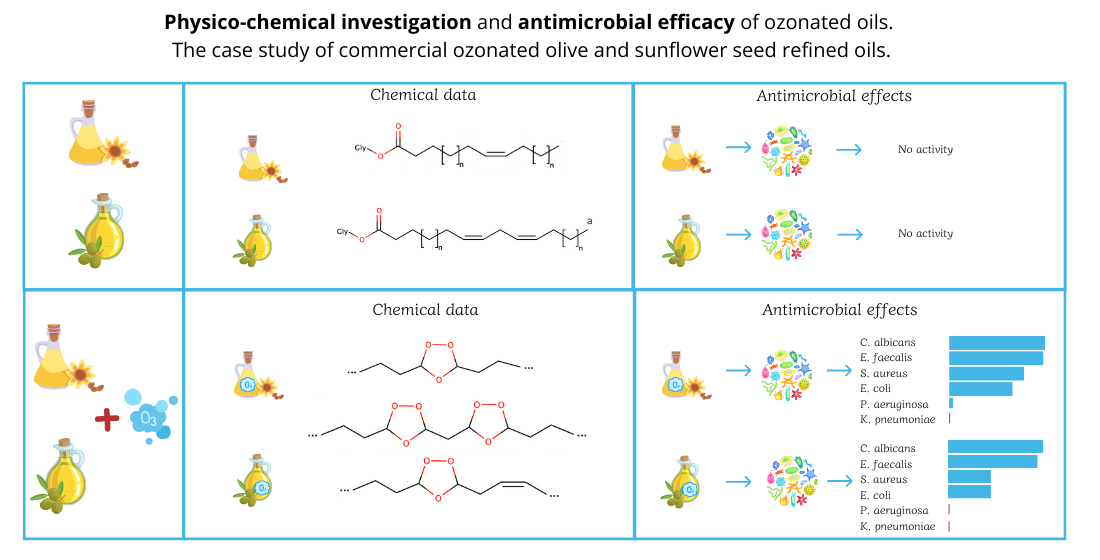
Drug-resistance represents one of the great plagues of our time worldwide, largely limiting the treatment of common infections, and accounting for the urge in the development of new antibiotics or other alternative approaches. Noteworthy, the indiscriminate use of antibiotics is mostly responsible for the selection of mutations that confer drug-resistance to microbes. Recently, beyond molecules of natural origin and synthetic ones studied to tackle microbial infections, ozone is raising interest for its unique biological properties, in particular when dissolved in natural oils. In fact, ozonated oils have been reported to act in a non-specific way on microorganisms hindering the acquisition of advantageous mutations resulting in resistance. Here, we focused on comparing the antimicrobial effect of two different types of ozonated oils over a panel of opportunistic and pathogenic microbes. Ozonated olive (OOO) and sunflower seeds (OSO) oils were preliminarily characterized by chemico-physical investigation and tested by in-vitro experiments. Candida albicans, Enterococcus faecalis, Staphylococcus aureus, Klebsiella pneumoniae, Pseudomonas aeruginosa and Escherichia coli have been challenged with different ozonated oils concentrations to evaluate their antimicrobial profile by agar diffusion and broth dilution methods. Cytotoxicity was also evaluated in keratinocytes and endothelial cells. Overall, our results revealed that both OOO and OSO showed a potent microbicidal effect especially against C. albicans (IC50 = OOO: 0.3 mg/mL and OSO: 0.2 mg/mL) and E. faecalis (IC50 = OOO: 0.4 mg/mL and OSO: 2.8 mg/mL) albeit exerting a certain effect also against S. aureus and E. coli. Moreover, both OOO and OSO do not yield any relevant cytotoxic effect at the active concentrations in both cell lines indicating that these ozonated oils are not toxic for mammalian cells despite exerting a potent antimicrobial effect on specific microorganisms. Therefore, OOO and OSO may be considered to integrate standard therapies in the treatment of common infections, likely overcoming drug resistance issues.
Keywords:
ozone
; olive oil
; sunflower oil
; antimicrobial
; ozonides
1. Introduction
Infectious diseases abide to pose a significant global threat, as proved by the current emergence of highly transmissible pathogens such as SARS-CoV2, liable for more than half a billion confirmed cases and more than 6 million deaths worldwide [1]. Although airborne transmission represents a highly effective route for the spread of a large number of pathogens behind contagious diseases (e.g., COVID-19, common colds, influenza, tuberculosis), indirect and vehicle transmission (i.e., via fomites and human interactions) depict a further crucial transmission way. Moreover, the emergence and spread of drug-resistant pathogens that largely limit the treatment of common infections - accounting for the urge in the development of new antibiotics or other alternatives as reported by WHO [2] - has been calculated to likely cause more than 10 million deaths worldwide within the 2050 if no new effective therapies are implemented [3]. Noteworthy, bacteria belonging to the ESKAPEE group that exhibit multidrug resistance and virulence (Enterococcus faecium, Staphylococcus aureus, Klebsiella pneumoniae, Acinetobacter baumannii, Pseudomonas aeruginosa, Enterobacter spp and Escherichia coli) are of particular importance being responsible for infections related to multi- and pan-drug resistance that are difficult or not treatable with existing antimicrobials, deserving the epithet “superbugs” [2]. In this context, personal hygiene measures are the first strategy against the spread of microorganisms within communities such as schools and hospitals and among the various available options, the daily use of detergents and sanitizers is certainly the most important which include alcohol or quaternary ammonium-based compounds. Despite their effectiveness, their use has been widely demonstrated to correlate with variable degree of skin damage likely due to long-term use [4,5,6]. Recently, beyond synthetic and natural origin molecules studied to tackle microbial infections, ozone - a potent oxidant - is recently raising interest. Ozone presents unique biological properties that justify its frequent use in removing chemical micro-pollutants [7], inactivating bacteria through highly reactive radicals production [8,9,10,11,12]. Moreover, it can be applied in medical treatments (e.g., external ulcers, skin lesions, arterial circulatory disorders and fungal infections) due to its antimicrobial [13,14,15,16,17,18,19], viral inactivation [20,21], antihypoxic, analgesic and immunostimulating effects [22,23,24,25,26,27,28]. Nevertheless, ozone can be harmful when inhaled and should be used according to regulations and precautions to avoid inadvertent exposure [29], beyond that it can be applied in different ways depending on the pathology to be treated [30]. It is rapidly perishable with a half-life of about 1 hour at room temperature resulting in spontaneous oxygen gas formation [31,32]. It is difficult to use topically when diluted in water [33], but it can be dissolved in an oily medium, lending a wide range antimicrobial activity to the oil tackling microorganisms without providing cell or tissue damage. In this scenario, our study aims to compare two different ozonated refined oils (from olive and sunflower seed, respectively) to evaluate their specific antimicrobial efficacy over a panel of opportunistic and pathogenic microbes among Gram positive, Gram negative and fungi, typically present in the human skin and responsible for common infections. Among the panel of microorganisms we examined, catalase and oxidase positive microbes with great adaptability were also included. We focused our studies on evaluating the antimicrobial effect of the ozonated oil on these microorganisms and whether this effect may differ with the vegetable oil used. Cytotoxicity was also evaluated in keratinocytes (HaCaT) and endothelial (Vero) cells by viability assay.
2. Results
2.1. Thermogravimetric analysis and Differential Scanning Calorimetry.
TG curves in the N2 atmosphere for sunflower seed oil (SO) before and after being ozonated (OSO) are shown in Figure 1. SO showed only a mass loss in the range between 300 and 480 °C, while OSO presented two mass losses, as confirmed by the related dTG curves. The first mass loss is visible in the temperature range 100 - 200 °C related to the decomposition of ozonides obtained after ozonation of SO, while a second one is observed in between 300 and 480 °C due to complete decomposition of SO. TG results are confirmed by DSC thermograms of OSO that show an exothermic peak centered at 157 °C typical of ozonated oils (Figure 3) [34]. It is attributed to degradation followed by decomposition of ozonides, with a thermal decomposition enthalpy (ΔH) of -306 J/g. A similar behavior was also observed for the olive oil (OO) and ozonated olive oil (OOO). In fact, while only a mass loss in the range between 300 and 500 °C was visible in the thermograph of OO, two mass losses in the ranges of 100-200 °C and 300-500 °C respectively, were evident for the OOO (Figure 2). The DSC thermogram of OOO showed an exothermic peak centered at 151°C (Figure 3) with a thermal decomposition enthalpy (ΔH) of -361 J/g.
2.2. Nuclear Magnetic Resonance Spectroscopy
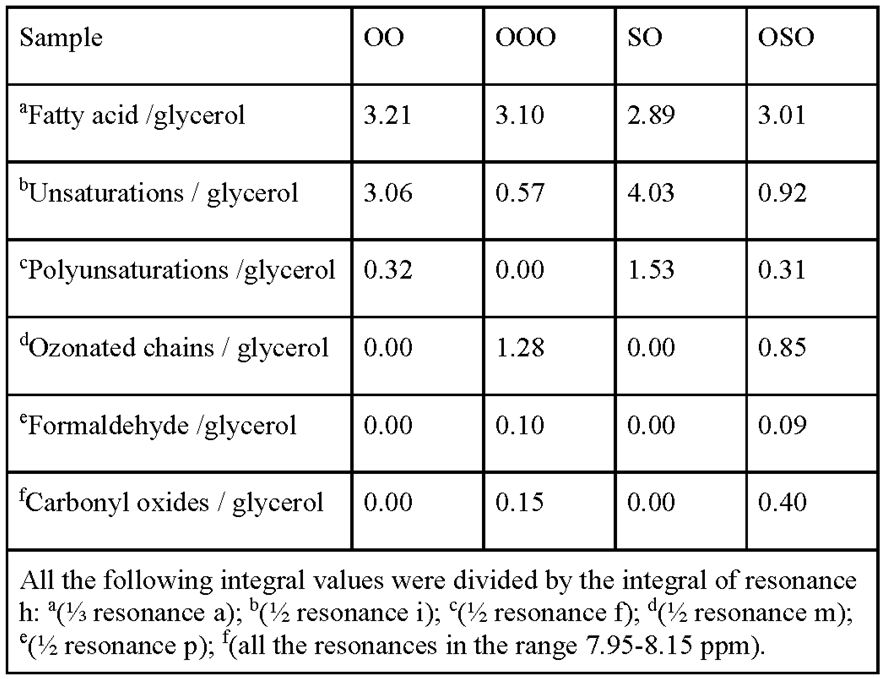
The stack plot of the 1H spectra of the two refined oils, namely olive and sunflower seed, before and after ozonation is shown in Figure 4, together with the Lewis structure of the typical oil components and of their ozonation products. The intensity of the resonances d, f, and i, which are characteristics of fatty acid unsaturations, resulted to be dramatically decreased by ozonation. In fact, a number of new resonances of significant intensity appeared in the two spectra after ozonation. In particular, on the basis of literature data [34], resonance j could be assigned to the β-methylene groups of newly formed 1,2,4-trioxolane rings. The resonance k could be assigned to the 𝛼-methylene groups of a single 1,2,4-trioxolane ring, while it is worth noting that 𝛼-methylene groups between two consecutive oxolane rings were expected at higher frequency (2.0-2.1 ppm). Only in the case of OSO an extremely low signal was observed and possibly attributed to the latter. Conversely, the resonance l was quite visible in the spectrum of both OOO and OSO, which was assigned to the single methylene group separating one 1,2,4-trioxolane ring and one unreacted double bond. These observations indicated that the reaction of ozone with polyunsaturated fatty acid rarely produced more than a single oxolane ring per fatty acid chain. This was bolstered by the absence of the resonance due to oxolane methine protons located on the side of one adjacent oxolane ring (ca. 5.40 ppm). In fact, resonance n was quite visible in the spectrum of OSO and this was attributable to the olefinic protons next to one 1,2,4-trioxolane ring. Finally, the two resonances m’ and m’’ are due to all the oxolane methine protons but those located on the side of adjacent oxolane rings. The products of the ozonation reported in Figure 4 are due to the formation of a primary 1,2,3-trioxolane, which spontaneously decomposes into a carbonyl oxide and a carbonyl compound that finally react forming the 1,2,4-trioxolane ring [35]. However, it is also possible that the two intermediates are further degraded to formaldehyde (SDBS n. 9410; https://sdbs.db.aist.go.jp/sdbs/cgi-bin/cre_index.cgi) and formic acid (SDBS n. 10523), whose resonances are clearly visible in Figure 4 with label p and o, respectively. By expanding the region of the latter, especially in the case of OSO, other resonances could be observed, which are possibly attributed to different carbonyl oxides. Integration of the resonances allowed us also to retrieve quantitative information to compare the two ozonated oils in detail. Table 2 shows the results. This semi-quantitative information bolstered the above-mentioned differences between the two oils. The triacylglycerols appeared to be intact, with 3 chains per glycerol unit, either before and after ozonation. The average number of unsaturations was larger in the SO than OO, and decreased dramatically due to ozonation by about the same extent. Polyunsaturations were more abundant in SO than in OO. After ozonation, the number of chains with one 1,2,4-trioxolane ring was slightly larger for OOO than OSO, and this was reflected by the significantly larger number of carbonyl oxides found in the OSO with respect to OOO. Moreover, this can explain the slightly higher ΔH value of OOO compared to OSO obtained by the DSC analysis. The amount of formaldehyde per glycerol was virtually the same.

Table 1.
Physicochemical characteristics* of ozonated olive and sunflower oils.
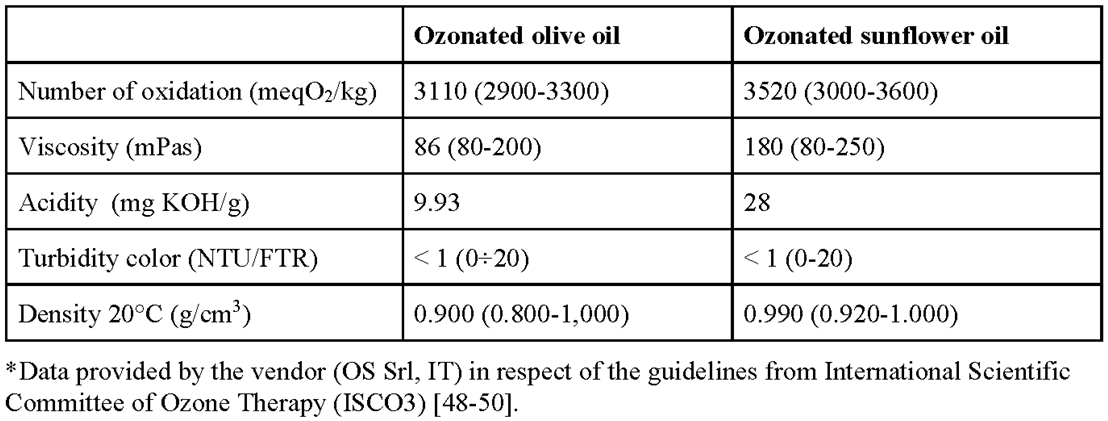 |
Table 2.
The ratio between the integral of selected 1H NMR resonances.
 |
2.3. Cytotoxicity
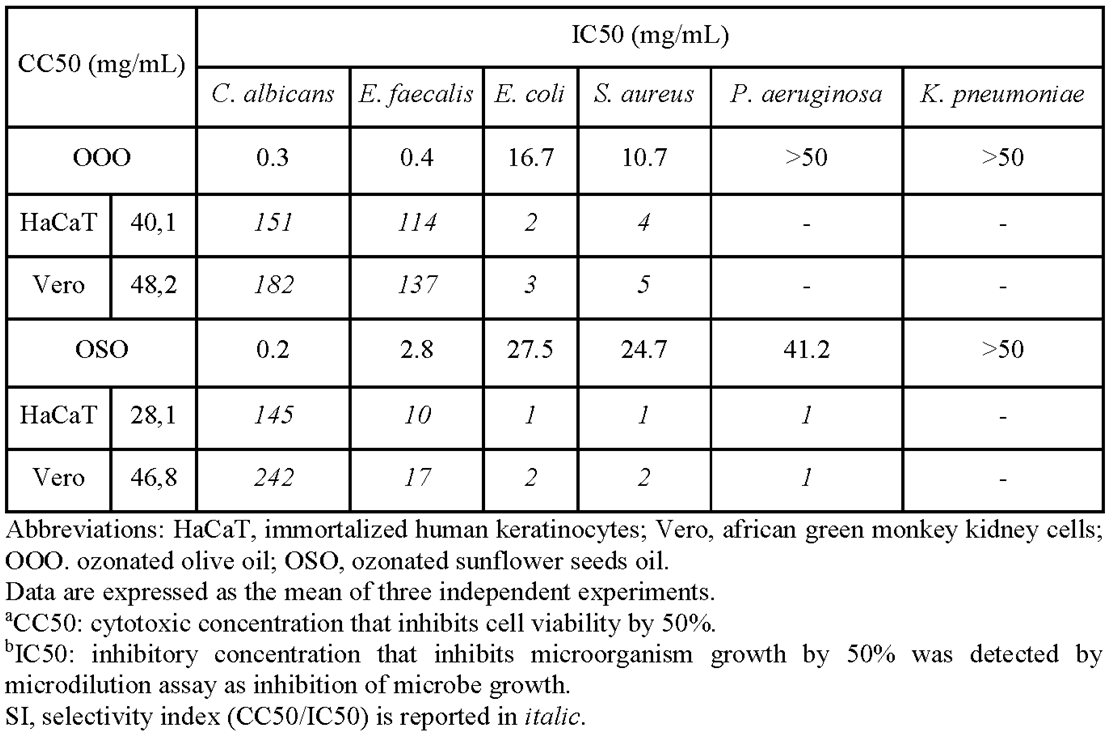
Over a 24 h treatment, OOO and OSO do not exert any cytotoxic effect at the active concentrations in both cell lines tested, as obtained by MTT assay. Nevertheless, high concentrations of OOO (CC50 = 48 mg/mL) and OSO (CC50 = 46 mg/mL) showed to be toxic for Vero cells. On the other hand, HaCaT cells showed to be slightly more susceptible to OSO (CC50 = 28 mg/mL) than OOO (CC50 = 40 mg/mL) (Figure 5 and Table 3).
Table 3.
Cytotoxic activity (CC), inhibitory concentration (IC) and selectivity index (SI) detection of ozonated oils after treatment.
Table 3.
Cytotoxic activity (CC), inhibitory concentration (IC) and selectivity index (SI) detection of ozonated oils after treatment.
 |
2.4. Antimicrobial effect
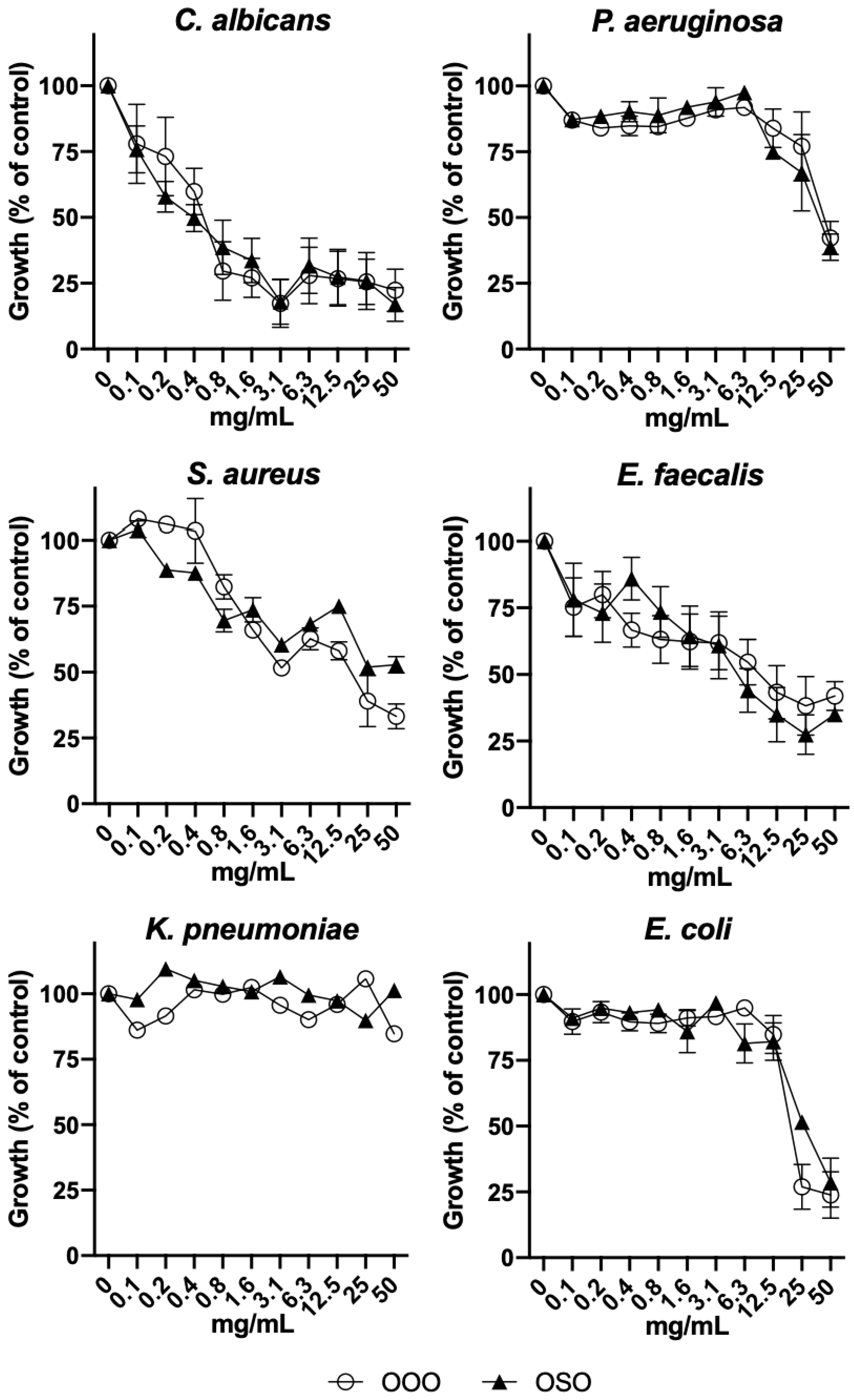
Preliminary experiments with non-ozonated refined oils (SO and OO) revealed the absence of any antibacterial activity (data not shown) accounting for its assessment exerted by the ozonated ones. As shown in Figure 6, the agar diffusion test revealed that C. albicans and E. faecalis were the most susceptible to ozonated oils, among the panel of microbes we tested. In particular, the most evident inhibition was observed for C. albicans, even at low concentrations with best results obtained with OSO (0.3 mg). Analogously, E. faecalis showed to be more inhibited by OSO than OOO (1.25 vs 5 mg). Interestingly, S. aureus showed a sharp susceptibility to OSO (0.6 mg), whereas it appeared resistant to OOO. In addition, also E. coli showed inhibition halos, albeit quickly reducing its activity by dilution, starting from 10 to 2.5 mg of OSO and OOO. Finally, K. pneumoniae and P. aeruginosa did not show any susceptibility profile to ozonated oils by the agar diffusion assay (Figure 6). Moreover, regarding the MIC determination by broth microdilution method, we observed high interference of the oils with the optical density in the absence of microbe in particular at the concentration range of 3.1-25 mg/mL, resulting in the impossibility to evaluate the MIC (see Supplementary). Therefore, we rather opted to evaluate the bactericidal activity obtaining more reliable and repeatable data, and the IC50 for each ozonated oils were determined. Although both OOO and OSO did not show relevant inhibitory effect against P. aeruginosa (OOO: >50 mg/mL; OSO: 41.2 mg/mL) and K. pneumoniae (OOO: >50 mg/mL; OSO: >50 mg/mL) at any tested concentrations as expected, a bactericidal activity was observed against E. coli (OOO: 16.7 mg/mL; OSO: 27.5 mg/mL) and S. aureus (OOO: 10.7 mg/mL; OSO: 24.7 mg/mL). Interestingly, the most outperforming results were obtained for both ozonated oils against C. albicans (OOO: 0.3 mg/mL; OSO: 0.2 mg/mL) and E. faecalis (OOO: 0.4 mg/mL, OSO: 2.8 mg/mL). However, significant growth inhibition was observed for concentrations lower than the IC50 values (Table 3 and Figure 7). Overall, our results suggest that ozonated oils exert antimicrobial activity against common bacteria and fungi responsible for major skin and nosocomial infections with a negligible toxicity for mammalian cells at the effective doses. In particular, our results indicate both ozonated oils to be very promising and safe molecules against C. albicans showing a very high selectivity index (SI) equal to 151 (OOO) and 145 (OSO) in keratinocytes, 182 (OOO) and 242 (OSO) in epithelial cells. Interestingly, the SI against E. faecalis was far higher for OOO (114 in HaCat and 137 in Vero) than for OSO (10 in HaCat and 17 in Vero). On the other hand, relevant effect against P. aeruginosa (OSO: 1) and K. pneumoniae were not observed, however SI were obtained for both E. coli in HaCat (OOO: 2 and OSO: 1) and Vero (OOO: 3 and OSO: 2) as well as for S. aureus in HaCat (OOO: 4 and OSO: 1) and in Vero (OOO: 5 and OSO: 2), albeit much lower compared to C. albicans and E. faecalis (Table 3).
3. Discussion
Sunflower seed and olive oils are two common products widely used in the culinary, cosmetic and pharmaceutical fields, obtained from the processing of sunflower seeds and pressing of olives, respectively. They mostly differ in the fatty acid composition. Sunflower seed oil presents a high portion of the polyunsaturated fat linoleic acid (48-74 %) and less content of the monounsaturated fat oleic acid (14-39 %), while olive oil contains a high oleic acid amount (65-85 %) [36]. Recently, they have been chosen as substrates for the ozonation process after a refining of the raw oils, to obtain highly effective antimicrobial products, due to the formation of oxygenated compounds [34,37,38,39]. Refining is a necessary treatment of these vegetable oils that will be used in the culinary, cosmetic and pharmaceutical application, to remove free fatty acids, unsaponifiable matters, waxes, pigments, solid impurities or pollution from storage, transport and processing of the oil, which have a negative impact on the oil quality and stability [40]. During the ozonation process of the refined oils, the reaction of ozone with the carbon-carbon double bonds of the unsaturated fatty acids occurs, giving rise to the formation of ozonides, different types of peroxide species and aldehydes, responsible of the wide antimicrobial activity of the ozonated oils [34,38]. We selected commercial refined sunflower seed (SO) and olive (OO) oils to study their antimicrobial activity after ozonation. This process yields two products, namely, OSO and OOO, both showing a change in the color as well as an increased viscosity of 180 and 86 mPa·s (ozonated oil technical sheets, supporting information), respectively. The successful ozonation of the two refined oils was firstly shown by the analytical studies performed by the vendor, which showed an important increase in the oxidation number (meqO2/Kg) of the ozonated oils as reported in Table 1. Thermal analysis and the NMR characterization further confirmed the change in the chemical composition of SO and OO after ozonation treatment. All the resonances due to the triacylglycerols expected for vegetable oils were identified. The resonance assignment and their relative intensities confirmed that monounsaturated fatty acids were the major fraction of OO, while polyunsaturated chains were much more abundant in the SO, in agreement with the data sheets provided by the vendor (ozonated oil technical sheets, supporting information). After ozonation, the intensity of the resonances characteristics of fatty acid unsaturations, resulted to be dramatically decreased, suggesting that ozone was not merely present in the oil in the form of micro bubbles, but reacted with the fatty acid chain unsaturations, giving rise to the formation of the chemical species likely responsible of the antimicrobial activity. Ozonated oils have been studied in vivo and in vitro for their antimicrobial activity with promising results in inhibiting the growth of bacteria and fungi, suggesting their potential use as antimicrobial agents particularly interesting for topical applications. In fact, several in vivo studies have demonstrated their efficacy in healing severe skin lesions caused by S. aureus and MRSA, with limited side effects and costs [41]. Sechi et al. investigated the antimicrobial activity of ozonated sunflower oil against various pathogens including S. aureus, E. faecalis, E. faecium, S. pyogenes, E. coli, P. aeruginosa and different species of Mycobacterium reporting a valuable activity against all the microorganisms tested [39,41,42]. This antibacterial activity has been confirmed by Serio et al. in both Gram-negative and Gram-positive bacteria, as well as against parasites [41,42]. Additionally, in vitro studies have shown a potent bactericidal effect of ozonated oils against cutaneous infections determining a sharp reduction in the bacterial load of methicillin-sensitive S. aureus and MRSA [42,43]. Therefore, further research into the characteristics of ozonated oil and its ozonation process may optimize and improve antimicrobial therapy, potentially offering a valuable treatment option in dermatology and other medical fields. Here, we focused on comparing the antimicrobial effect of two different types of refined ozonated oils over a panel of opportunistic and pathogenic microbes that cause common infections, namely C. albicans, E. faecalis, S. aureus, K. pneumoniae, P. aeruginosa and E. coli. Differently from other studies, in our experimental conditions, OOO and OSO showed a potent microbicidal effect especially against C. albicans and E. faecalis. However, although relevant effect was not observed for K. pneumoniae and P. aeruginosa, our results are in line with previous studies showing some susceptibility of E. coli and S. aureus when challenged with ozonated oils. In addition, to verify how effective and safe OOO and OSO treatment would be in vivo, we calculated the selectivity index (SI) by the ratio of the cytotoxic concentration (CC50) in keratinocytes and endothelial cells over the inhibitory concentration (IC50) (Table 3). Overall, our results indicate that these ozonated oils are not toxic for mammalian cells and exert potent antimicrobial effects on specific microorganisms. In particular, our results indicate both OOO (SI: 151-182) and OSO (SI: 145-242) to be very promising against C. albicans. Noteworthy, the SI was far higher for OOO (SI: 114-137) than OSO (SI: 10-17) against E. faecalis. SI were also obtained for both E. coli (OOO: 2-3; OSO: 1-2) and S. aureus (OOO: 4-5; OSO: 1-2) albeit much lower compared to C. albicans and E. faecalis (Table 3). These results reinforce previous findings suggesting that they may be considered to complement standard therapies in the treatment of common infections, in particular mycosis, possibly overcoming drug resistance issues due to the non-specific mechanisms of peculiar action of ozone.
4. Materials and Methods
4.1. Materials
Ozonated olive oil (Pure Oil 100% olio di oliva ozonizzato) and ozonated sunflower oil (Pure Sun 100% ozonized sunflower oil) were kindly provided by OS Srl (Pesaro, PU, Italia). The respective physico-chemical characteristics of the ozonated oils are reported in Table 1 (ozonated oil technical sheets, supporting information). Chloroform-d (99.8 atom % D, 0.03 % (v/v) TMS for the Nuclear Magnetic Resonance Spectroscopy was purchased by Sigma-Aldrich.
4.2. Physico-chemical characterization of Ozonated Oils
4.2.1. Thermal Characterization and Differential Scanning Calorimetry
A PerkinElmer STA6000 instrument was used to carry out simultaneous Thermogravimetric (TGA) and Differential Scanning Calorimetry (DSC) analysis under nitrogen atmosphere (40 mL min−1). 4 mg of sample were placed in an alumina crucible using a micropipette, and measurements were performed in the temperature range of 25−500 °C (heating rate: 10 °C min−1; temperature accuracy: ±1 °C). Each analysis was carried out in triplicate.
4.2.2. Nuclear Magnetic Resonance Spectroscopy (NMR)
1H-NMR spectra were recorded at 27 °C on a Bruker Avance III HD 600 (Bruker, Billerica, MA, USA) operating at a 1H frequency of 600.134 MHz. A few drops of the oil were inserted in a 5 mm NMR tube and dispersed with 600 μL of CDCl3. The samples were always protected from light by wrapping the vials and NMR tubes with aluminum film before inserting the tube in the spectrometer. 1H spectra were acquired with 8 transients, 3.17 μs (30°) hard pulse, 40.0 s relaxation delay, 2.7 s acquisition time, and a spectral width of 12.019 kHz. The residual CHCl3 resonance was used to calibrate the ppm scale (7.26 ppm from trimethylsilane, iNMR software V6.4.5, Mestrelab Research S. L.).
4.3. Cell viability assay
Immortalized human keratinocytes (HaCaT) and african green monkey kidney (Vero) cells (ATCC collection, USA) were grown in Dulbecco’s modified Eagle’s medium (DMEM; Corning®, USA) supplemented with 10% Fetal Bovine Serum (FBS), 1% penicillin/streptomycin and incubated at 37 °C with 100% humidity and 5% CO2. Cells were seeded in 96-well plates at a density of 7.5 × 10³ cells/well and after 24 h of incubation, were exposed for 24 h to ozonated oils at different concentrations (from 50 to 0.1 mg/mL). Cell viability was assessed by adding 450 μM MTT [3(4,5-dimethylthiazolyl-2)-2,5-diphenyltetrazolium bromide] (Sigma Aldrich, USA) to each well [44]. After 2-3 h the formazan crystals were dissolved in DMSO and the solution absorption measured at 570 nm with a microplate reader (Tecan Infinite 200, Switzerland). All the experiments were repeated at least three times and in triplicate. The results are presented as percent of cell viability of untreated cells (control).
4.4. Microbial strains and culture conditions
The bacterial and fungal strains were purchased from ATCC. Staphylococcus aureus (ATCC 25923) and Pseudomonas aeruginosa (ATCC 27853) were cultured in Tryptic Soy Broth (TSB), Escherichia coli (ATCC 25922) was cultured in Lennox Broth (LB), Enterococcus faecalis (ATCC 29212) and Klebsiella pneumoniae (ATCC 13883) were cultured in Nutrient Broth (NB) and Candida albicans (ATCC 10231) in Sabouraud Broth (SB). All the culture media were purchased from Condalab Italia. The stock cultures were stored at −80 °C in the appropriate broth with 20% glycerol. For each strain, a growth curve was preliminarily performed, and the standard suspension was determined (5x10⁷ CFU/mL for all bacteria and 5x10⁶ CFU/mL for C. albicans) to minimize the variation in experimental conditions and ensure reproducible experimental data. During the experiments the strains were incubated at 37 °C with shaking (200 rpm) for 24 h (48 h for K. pneumoniae and E. faecalis).
4.5. Antimicrobial activity
Microorganisms were challenged with different ozonated oils concentrations obtained by two-fold serial dilutions in dimethyl sulfoxide (DMSO; Sigma Aldrich, USA), which was used as a negative control, to evaluate the antimicrobial resistance/susceptibility by agar diffusion [45] and broth microdilution methods.
4.5.1 Agar Diffusion Test (Kirby-Bauer): For each strain, 15 mL of Mueller Hinton (MH) agarized medium (Sabouraud Agar for C. albicans) heated up at 55 °C was added to a 90 mm Petri dish, and after agar solidification 50 μL from the standardized suspensions of each strain were inoculated onto the agar plate using a sterile swab. Blank sterile paper disks (5 mm in diameter) were laid on each Petri dish [46] and soaked with 20 μL of the ozonated oil samples, resulting in final concentrations ranging from 10 to 0.04 mg. After 24-48 h of incubation at 37 °C, plates were checked and photographed and the inhibitory activity was recorded by the presence of the inhibition halo.
4.5.2 Broth Dilution Tests: Minimum inhibitory concentration (MIC) and minimum bactericidal concentration (MBC) were assessed in sterile 96-well plates (Thermo Fisher Scientific) by the micro-dilution method following CLSI procedures [47]. Each well was poured with 200 μL of standardized microbial suspension and 5% (v/v) of different concentrations of ozonated oil samples reaching the final concentrations ranging from 50 to 0.1 mg/mL. Untreated microbes were the control group. The cultures were incubated at 37 °C for 24-48 h and OD600 was measured with a microplate reader (Tecan Infinite 200, Switzerland). Thereafter, 10 μL collected from each well were seeded in a new plate with fresh medium (200 μL /well) to determine the lowest concentration that demonstrates a consistent growth reduction (MBC) after 24-48 h of incubation when compared to untreated control assessed by OD600 with a microplate reader (Tecan Infinite 200, Switzerland).
4.6. Statistics
Statistical analysis was performed with GraphPad Prism 8 software (GraphPad Software, Inc., La Jolla, CA, USA). All data were expressed as the means ± standard errors of the means (SEM) from at least three independent experiments in triplicate and analyzed by the unpaired Student’s t test or analysis of variance (ANOVA), and post hoc test when required, or by Mann-Whitney U test. Data were considered significant when p < 0.05.
5. Conclusions
Our study investigated the physico-chemical properties and antimicrobial activity of two commercial ozonated sunflower and olive oils, against C. albicans, E. faecalis, S. aureus, K. pneumoniae, P. aeruginosa and E. coli. Both ozonated oils exhibited high microbicidal effect against C. albicans and E. faecalis, while resulted active also against S. aureus and E. coli. Moreover, cell viability assay showed no cytotoxicity in keratinocytes and endothelial cells. These results make the two oils studied promising for a wide range of applications in medicine and healthcare, including antimicrobial therapy as well as integration of standard therapies in the treatment of common infections, likely overcoming drug resistance issues. The treatment of vegetable oils with ozone creates a reservoir of antimicrobial species active against diverse microorganisms. In this scenario further studies will be run on the delivery of the two ozonated oils by different pharmaceutical formulations.
Supplementary Materials
The following supporting information can be downloaded at the website of this paper posted on Preprints.org.
Author Contributions
SP, FA, MAS, AS, GE and AM: substantial contribution to the conception; SP, SV, MAS, AS, GE, FA and AM: analysis and interpretation of data; SP, ID, MAS, AS: performing experiments; FA, AM, AS, MAS and SP: draft writing; FA, AS, MAS, GE and AM: revising critically for important intellectual content and funding. All authors provide approval for publication of the content and agree to be accountable for all aspects of the work in ensuring that questions related to the accuracy or integrity of any part of the work are appropriately investigated and resolved.
Funding
The present work has been supported by EU funding within the NextGenerationEU-MUR PNRR Extended Partnership initiative on Emerging Infectious Diseases (Project no. PE00000007, INF-ACT and by Sardegna Ricerche, Programma Incentivo Ricerca SR4CoViD 2020.
Acknowledgments
The authors would like to thank Bianca Maria Manzin for her contribution in the revision of the English language. Dr. Sandrina Lampis and the CeSAR (Centro Servizi di Ateneo per la Ricerca) of the University of Cagliari are acknowledged for the NMR measurements.
Conflicts of Interest
The authors declare that the research was conducted in the absence of any commercial or financial relationships that could be construed as a potential conflict of interest.
References
- WHO. Coronavirus (COVID-19) Dashboard. Availabe online: https://covid19.who.int.
- WHO. WHO publishes list of bacteria for which new antibiotics are urgently needed. Availabe online: https://www.who.int/news/item/27-02-2017-who-publishes-list-of-bacteria-for-which-new-antibiotics-are-urgently-needed.
- de Kraker, M.E.; Stewardson, A.J.; Harbarth, S. Will 10 Million People Die a Year due to Antimicrobial Resistance by 2050? PLoS Med 2016, 13, e1002184. [Google Scholar] [CrossRef] [PubMed]
- Ahmed, Z.H.; Agarwal, K.; Sarkar, R. Hand Dermatitis: A Comprehensive Review with Special Emphasis on COVID-19 Pandemic. Indian J Dermatol 2021, 66, 508–519. [Google Scholar] [CrossRef]
- Rundle, C.W.; Presley, C.L.; Militello, M.; Barber, C.; Powell, D.L.; Jacob, S.E.; Atwater, A.R.; Watsky, K.L.; Yu, J.; Dunnick, C.A. Hand hygiene during COVID-19: Recommendations from the American Contact Dermatitis Society. J Am Acad Dermatol 2020, 83, 1730–1737. [Google Scholar] [CrossRef] [PubMed]
- Tasar, R.; Wiegand, C.; Elsner, P. How irritant are n-propanol and isopropanol? - A systematic review. Contact Dermatitis 2021, 84, 1–14. [Google Scholar] [CrossRef] [PubMed]
- Lee, Y.; von Gunten, U. Oxidative transformation of micropollutants during municipal wastewater treatment: comparison of kinetic aspects of selective (chlorine, chlorine dioxide, ferrate VI, and ozone) and non-selective oxidants (hydroxyl radical). Water Res 2010, 44, 555–566. [Google Scholar] [CrossRef]
- Dodd, M.C. Potential impacts of disinfection processes on elimination and deactivation of antibiotic resistance genes during water and wastewater treatment. J Environ Monit 2012, 14, 1754–1771. [Google Scholar] [CrossRef] [PubMed]
- Hollender, J.; Zimmermann, S.G.; Koepke, S.; Krauss, M.; McArdell, C.S.; Ort, C.; Singer, H.; von Gunten, U.; Siegrist, H. Elimination of organic micropollutants in a municipal wastewater treatment plant upgraded with a full-scale post-ozonation followed by sand filtration. Environ Sci Technol 2009, 43, 7862–7869. [Google Scholar] [CrossRef] [PubMed]
- Luddeke, F.; Hess, S.; Gallert, C.; Winter, J.; Gude, H.; Loffler, H. Removal of total and antibiotic resistant bacteria in advanced wastewater treatment by ozonation in combination with different filtering techniques. Water Res 2015, 69, 243–251. [Google Scholar] [CrossRef] [PubMed]
- Zhuang, Y.; Ren, H.; Geng, J.; Zhang, Y.; Zhang, Y.; Ding, L.; Xu, K. Inactivation of antibiotic resistance genes in municipal wastewater by chlorination, ultraviolet, and ozonation disinfection. Environ Sci Pollut Res Int 2015, 22, 7037–7044. [Google Scholar] [CrossRef]
- Zimmermann, S.G.; Wittenwiler, M.; Hollender, J.; Krauss, M.; Ort, C.; Siegrist, H.; von Gunten, U. Kinetic assessment and modeling of an ozonation step for full-scale municipal wastewater treatment: micropollutant oxidation, by-product formation and disinfection. Water Res 2011, 45, 605–617. [Google Scholar] [CrossRef]
- Al-Saadi, H.; Potapova, I.; Rochford, E.T.; Moriarty, T.F.; Messmer, P. Ozonated saline shows activity against planktonic and biofilm growing Staphylococcus aureus in vitro: a potential irrigant for infected wounds. Int Wound J 2016, 13, 936–942. [Google Scholar] [CrossRef] [PubMed]
- Ibanez-Cervantes, G.; Cruz-Cruz, C.; Duran-Manuel, E.M.; Loyola-Cruz, M.A.; Cureno-Diaz, M.A.; Castro-Escarpulli, G.; Lugo-Zamudio, G.E.; Rojo-Gutierrez, M.I.; Razo-Blanco Hernandez, D.M.; Lopez-Ornelas, A.; et al. Disinfection efficacy of ozone on ESKAPE bacteria biofilms: Potential use in difficult-to-access medical devices. Am J Infect Control 2023, 51, 11–17. [Google Scholar] [CrossRef]
- Komanapalli, I.R.; Lau, B.H. Inactivation of bacteriophage lambda, Escherichia coli, and Candida albicans by ozone. Appl Microbiol Biotechnol 1998, 49, 766–769. [Google Scholar] [CrossRef] [PubMed]
- Monzillo, V.; Lallitto, F.; Russo, A.; Poggio, C.; Scribante, A.; Arciola, C.R.; Bertuccio, F.R.; Colombo, M. Ozonized Gel Against Four Candida Species: A Pilot Study and Clinical Perspectives. Materials (Basel) 2020, 13. [Google Scholar] [CrossRef]
- Piletic, K.; Kovac, B.; Percic, M.; Zigon, J.; Broznic, D.; Karleusa, L.; Lucic Blagojevic, S.; Oder, M.; Gobin, I. Disinfecting Action of Gaseous Ozone on OXA-48-Producing Klebsiella pneumoniae Biofilm In Vitro. Int J Environ Res Public Health 2022, 19. [Google Scholar] [CrossRef]
- Skorup, P.; Fransson, A.; Gustavsson, J.; Sjoholm, J.; Rundgren, H.; Ozenci, V.; Wong, A.Y.W.; Karlsson, T.; Svensen, C.; Gunther, M. Evaluation of an extracorporeal ozone-based bactericide system for the treatment of Escherichia coli sepsis. Intensive Care Med Exp 2022, 10, 14. [Google Scholar] [CrossRef] [PubMed]
- Zanardi, I.; Borrelli, E.; Valacchi, G.; Travagli, V.; Bocci, V. Ozone: A Multifaceted Molecule with Unexpected Therapeutic Activity. Curr Med Chem 2016, 23, 304–314. [Google Scholar] [CrossRef] [PubMed]
- Blanchard, E.L.; Lawrence, J.D.; Noble, J.A.; Xu, M.; Joo, T.; Ng, N.L.; Schmidt, B.E.; Santangelo, P.J.; Finn, M.G. Enveloped Virus Inactivation on Personal Protective Equipment by Exposure to Ozone. medRxiv 2020, 10.1101/2020.05.23.20111435. [CrossRef]
- Cattel, F.; Giordano, S.; Bertiond, C.; Lupia, T.; Corcione, S.; Scaldaferri, M.; Angelone, L.; De Rosa, F.G. Ozone therapy in COVID-19: A narrative review. Virus Res 2021, 291, 198207. [Google Scholar] [CrossRef]
- Clavo, B.; Santana-Rodriguez, N.; Llontop, P.; Gutierrez, D.; Suarez, G.; Lopez, L.; Rovira, G.; Martinez-Sanchez, G.; Gonzalez, E.; Jorge, I.J.; et al. Ozone Therapy as Adjuvant for Cancer Treatment: Is Further Research Warranted? Evid Based Complement Alternat Med 2018, 2018, 7931849. [Google Scholar] [CrossRef]
- de Sire, A.; Agostini, F.; Lippi, L.; Mangone, M.; Marchese, S.; Cisari, C.; Bernetti, A.; Invernizzi, M. Oxygen-Ozone Therapy in the Rehabilitation Field: State of the Art on Mechanisms of Action, Safety and Effectiveness in Patients with Musculoskeletal Disorders. Biomolecules 2021, 11. [Google Scholar] [CrossRef]
- Izadi, M.; Cegolon, L.; Javanbakht, M.; Sarafzadeh, A.; Abolghasemi, H.; Alishiri, G.; Zhao, S.; Einollahi, B.; Kashaki, M.; Jonaidi-Jafari, N.; et al. Ozone therapy for the treatment of COVID-19 pneumonia: A scoping review. Int Immunopharmacol 2021, 92, 107307. [Google Scholar] [CrossRef] [PubMed]
- Juchniewicz, H.; Lubkowska, A. Oxygen-Ozone (O(2)-O(3)) Therapy in Peripheral Arterial Disease (PAD): A Review Study. Ther Clin Risk Manag 2020, 16, 579–594. [Google Scholar] [CrossRef] [PubMed]
- Muto, M.; Giurazza, F.; Silva, R.P.; Guarnieri, G. Rational approach, technique and selection criteria treating lumbar disk herniations by oxygen-ozone therapy. Interv Neuroradiol 2016, 22, 736–740. [Google Scholar] [CrossRef] [PubMed]
- Rowen, R.J.; Robins, H. Ozone Therapy for Complex Regional Pain Syndrome: Review and Case Report. Curr Pain Headache Rep 2019, 23, 41. [Google Scholar] [CrossRef] [PubMed]
- Scassellati, C.; Galoforo, A.C.; Bonvicini, C.; Esposito, C.; Ricevuti, G. Ozone: a natural bioactive molecule with antioxidant property as potential new strategy in aging and in neurodegenerative disorders. Ageing Res Rev 2020, 63, 101138. [Google Scholar] [CrossRef] [PubMed]
- CDC. Ozone Availabe online: [WHO, 2021 #7] (accessed on.
- (ISCO), I.S.C.o.O.T. Madrid Declaration on Ozone Therapy. Availabe online: https://ozonewithoutborders.ngo/wp-content/uploads/2021/04/2020-Madrid-Declaration.pdf.
- Kumar, A.; Bali, K.; Singh, S.; Naja, M.; Mishra, A.K. Estimates of reactive trace gases (NMVOCs, CO and NOx) and their ozone forming potentials during forest fire over Southern Himalayan region. Atmospheric Research 2019, 227, 41–51. [Google Scholar] [CrossRef]
- Moureu, F.; Violleau, F.; Ali Haimoud-Lekhal, D. Influence of Storage Temperature on the Composition and the Antibacterial Activity of Ozonized Sunflower Oil. Ozone: Science & Engineering 2016, 38, 143–149. [Google Scholar] [CrossRef]
- Santos, L.; Silva, E.S.D.; Oliveira, F.O.; Rodrigues, L.A.P.; Neves, P.R.F.; Meira, C.S.; Moreira, G.A.F.; Lobato, G.M.; Nascimento, C.; Gerhardt, M.; et al. Ozonized Water in Microbial Control: Analysis of the Stability, In Vitro Biocidal Potential, and Cytotoxicity. Biology (Basel) 2021, 10. [Google Scholar] [CrossRef]
- Rodrigues de Almeida Kogawa, N.; José de Arruda, E.; Micheletti, A.C.; de Fatima Cepa Matos, M.; Silva de Oliveira, L.C.; Pires de Lima, D.; Pereira Carvalho, N.C.; Dias de Oliveira, P.; de Castro Cunha, M.; Ojeda, M.; et al. Synthesis, characterization, thermal behavior, and biological activity of ozonides from vegetable oils. RSC Advances 2015, 5, 65427–65436. [Google Scholar] [CrossRef]
- Ugazio, E.; Tullio, V.; Binello, A.; Tagliapietra, S.; Dosio, F. Ozonated Oils as Antimicrobial Systems in Topical Applications. Their Characterization, Current Applications, and Advances in Improved Delivery Techniques. Molecules 2020, 25. [Google Scholar] [CrossRef]
- Frank D. Gunstone; John L. Harwood; Padley, F.B. The Lipid Handbook, Occurrence and characteristics of oils and fats, Second Edition ed.; Press, C., Ed.
- Cho, K.H.; Kang, D.J.; Nam, H.S.; Kim, J.H.; Kim, S.Y.; Lee, J.O.; Kim, B.J. Ozonated Sunflower Oil Exerted Protective Effect for Embryo and Cell Survival via Potent Reduction Power and Antioxidant Activity in HDL with Strong Antimicrobial Activity. Antioxidants (Basel) 2021, 10. [Google Scholar] [CrossRef] [PubMed]
- Rodrigues de Almeida Kogawa, N.; Beatriz, A.; Micheletti, A.C.; José de Arruda, E. Ozonized vegetable oils and therapeutic properties: A review. Orbital - The Electronic Journal of Chemistry 2013, 4. [Google Scholar] [CrossRef]
- Sechi, L.A.; Lezcano, I.; Nunez, N.; Espim, M.; Dupre, I.; Pinna, A.; Molicotti, P.; Fadda, G.; Zanetti, S. Antibacterial activity of ozonized sunflower oil (Oleozon). J Appl Microbiol 2001, 90, 279–284. [Google Scholar] [CrossRef]
- Gharby, S. Refining Vegetable Oils: Chemical and Physical Refining. ScientificWorldJournal 2022, 2022, 6627013. [Google Scholar] [CrossRef]
- Silva, V.; Peirone, C.; Capita, R.; Alonso-Calleja, C.; Marques-Magallanes, J.A.; Pires, I.; Maltez, L.; Pereira, J.E.; Igrejas, G.; Poeta, P. Topical Application of Ozonated Oils for the Treatment of MRSA Skin Infection in an Animal Model of Infected Ulcer. Biology 2021, 10. [Google Scholar] [CrossRef] [PubMed]
- Song, M.; Zeng, Q.; Xiang, Y.; Gao, L.; Huang, J.; Huang, J.; Wu, K.; Lu, J. The antibacterial effect of topical ozone on the treatment of MRSA skin infection. Mol Med Rep 2018, 17, 2449–2455. [Google Scholar] [CrossRef] [PubMed]
- Grandi, G.; Cavallo, R.; Zanotto, E.; Cipriani, R.; Panico, C.; Protti, R.; Scapagnini, G.; Davinelli, S.; Costagliola, C. In vitro antimicrobial activity of ozonated oil in liposome eyedrop against multidrug-resistant bacteria. Open Med (Wars) 2022, 17, 1057–1063. [Google Scholar] [CrossRef]
- Angius, F.; Floris, A. Liposomes and MTT cell viability assay: an incompatible affair. Toxicol In Vitro 2015, 29, 314–319. [Google Scholar] [CrossRef] [PubMed]
- Barry, A.L.; Thornsberry, C.; Badal, R.E.; Baker, C.N.; Jones, R.N.; Gerlach, E.H. Piperacillin susceptibility tests by the single-disk agar diffusion technique. Antimicrob Agents Chemother 1979, 16, 378–385. [Google Scholar] [CrossRef]
- Montevecchi, M.; Dorigo, A.; Cricca, M.; Checchi, L. Comparison of the antibacterial activity of an ozonated oil with chlorhexidine digluconate and povidone-iodine. A disk diffusion test. New Microbiol 2013, 36, 289–302. [Google Scholar]
- Mushtaq, S.; Warner, M.; Johnson, A.P.; Livermore, D.M. Activity of dalbavancin against staphylococci and streptococci, assessed by BSAC and NCCLS agar dilution methods. J Antimicrob Chemother 2004, 54, 617–620. [Google Scholar] [CrossRef] [PubMed]
- (ISCO), I.S.C.o.O.T. ISCO3/LAB/00/04 Physico-chemical characterization of ozonized oil. Peroxide Value. Availabe online: https://ozonewithoutborders.ngo/wp-content/uploads/2021/04/2020-Madrid-Declaration.pdf.
- (ISCO), I.S.C.o.O.T. ISCO3/LAB/00/03 Physico-chemical characterization of ozonized oil. Iodine Value. Availabe online: https://isco3.org/wp-content/uploads/2017/03/ISCO3-LAB-00-03-IV-Iodine-Value-V1.pdf.
- (ISCO), I.S.C.o.O.T. ISCO3/LAB/00/02 Physico-chemical characterization of ozonized oil. Acid Values. Availabe online: https://isco3.org/wp-content/uploads/2017/03/ISCO3-LAB-00-02-Acid-Values-V1.pdf.
Figure 1.
TGA thermograms (thick line) and related DTG (dotted line) of SO (red curve) and OSO (blue curve) measured under the N2 atmosphere.
Figure 1.
TGA thermograms (thick line) and related DTG (dotted line) of SO (red curve) and OSO (blue curve) measured under the N2 atmosphere.
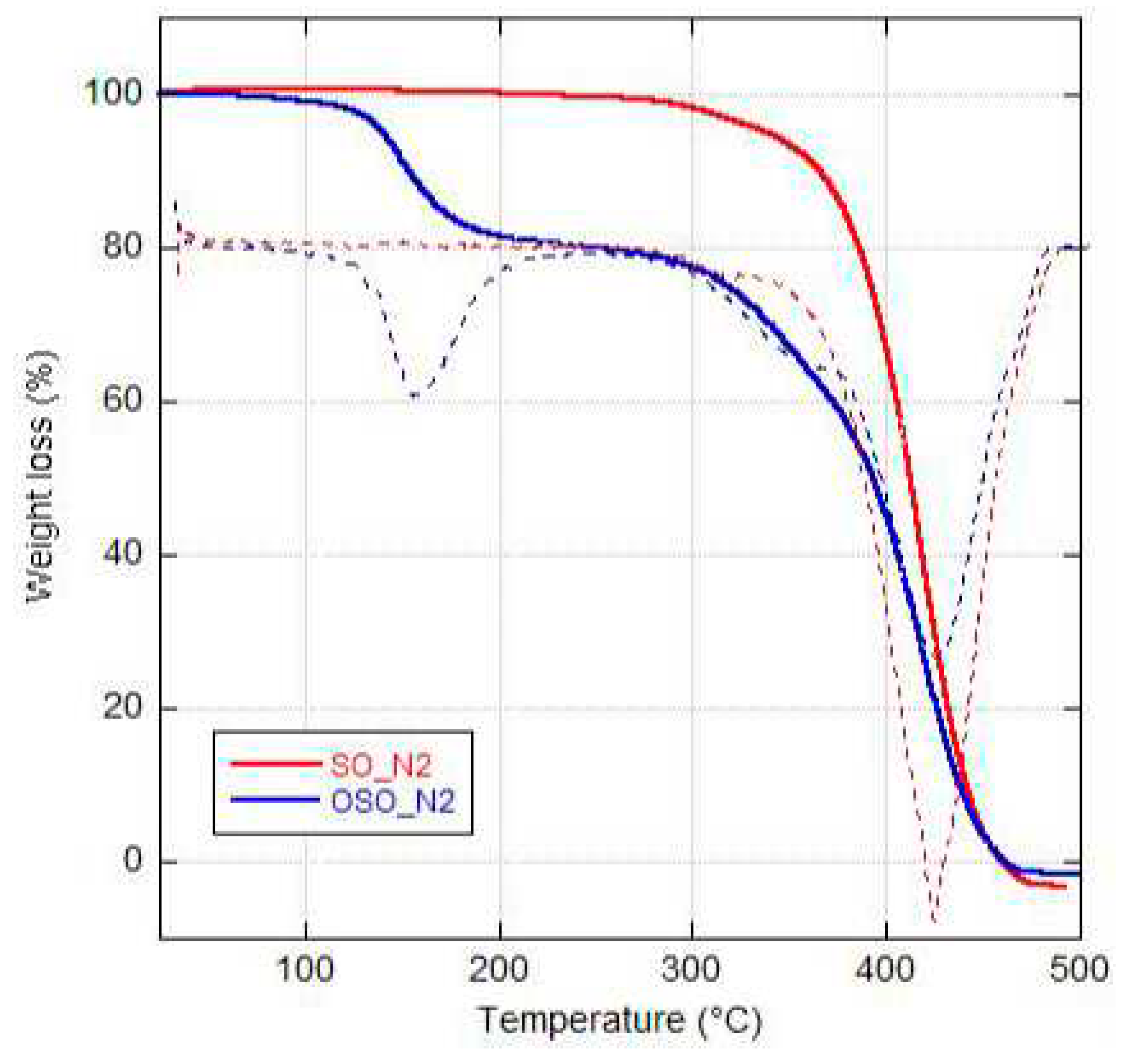
Figure 2.
TGA thermograms (thick line) and related DTG (dotted line) of OO (red curve) and OOO (blue curve) measured under the N2 atmosphere.
Figure 2.
TGA thermograms (thick line) and related DTG (dotted line) of OO (red curve) and OOO (blue curve) measured under the N2 atmosphere.
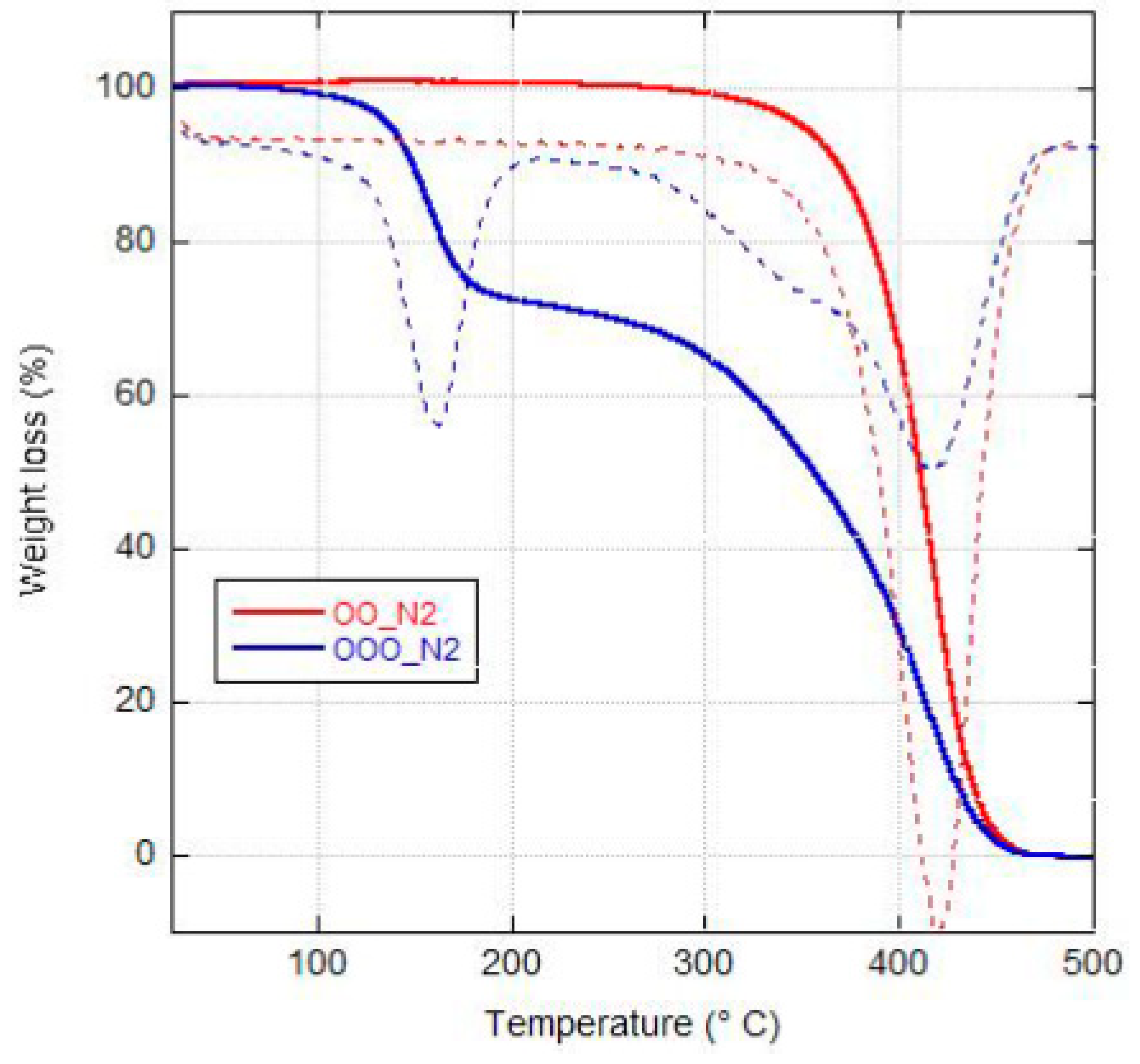
Figure 3.
DSC thermograms of OOO (red curve) and OSO (blue curve).
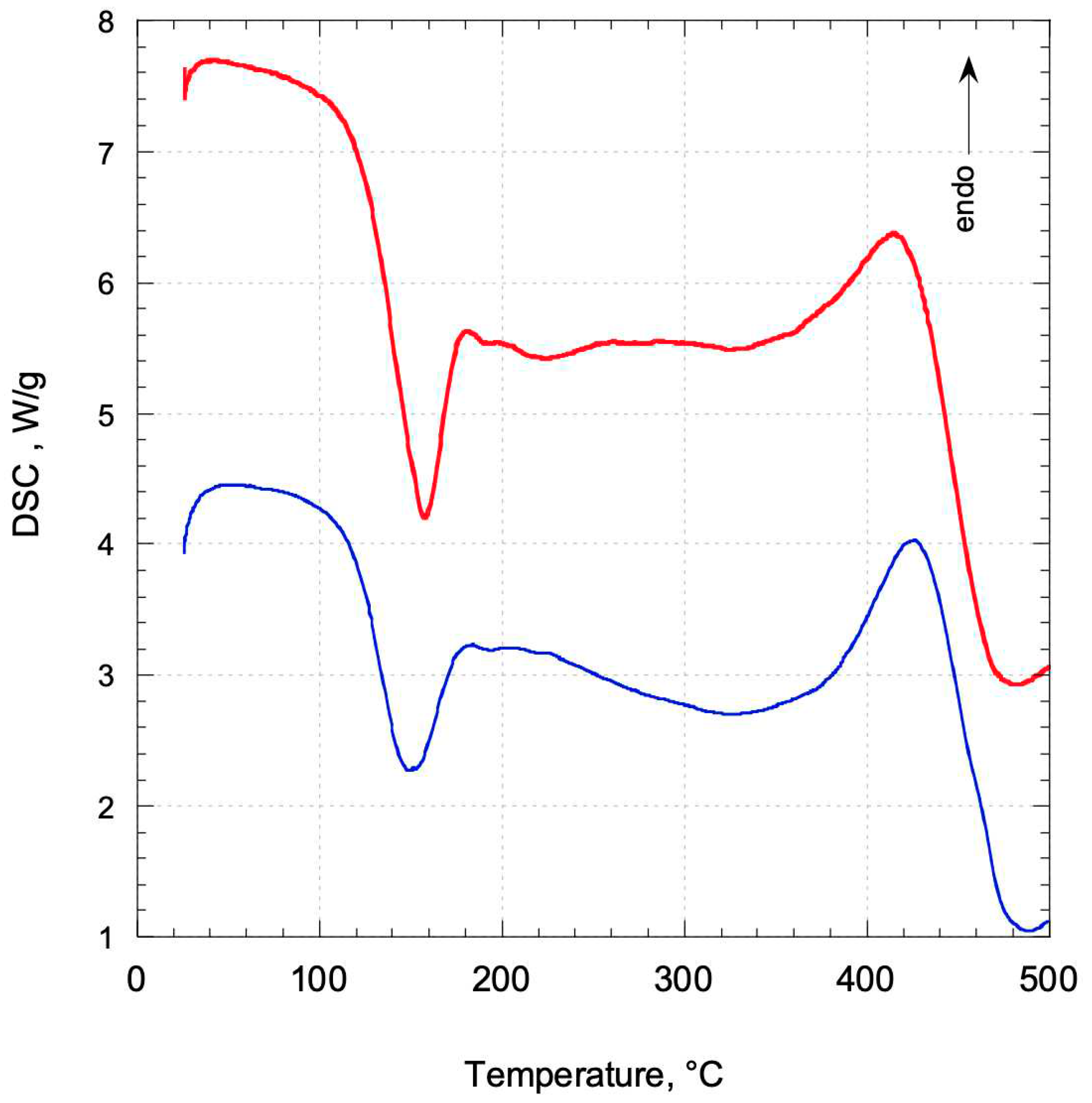
Figure 4.
The 1H-NMR stack plot of the refined olive oil (OO) and sunflower seed oil (SO) and the corresponding ozonated oils, OOO and OSO, respectively. Lower case letters are used to label the main resonances in the spectra. The ones already present in the refined oils are reported along the bottom side, while those that appeared after ozonation are reported along the top side of the plot. The asterisk is used to label the residual CHCl3 resonance. The region around 8 ppm is expanded in the left bottom corner of the figure. The Lewis structures (H atoms are not shown for clarity) of the typical vegetable oil components and of the identified ozonation products are shown together with lower case letters to indicate resonance assignments. The label ‘x’ is used to indicate missing (or very low) resonances.
Figure 4.
The 1H-NMR stack plot of the refined olive oil (OO) and sunflower seed oil (SO) and the corresponding ozonated oils, OOO and OSO, respectively. Lower case letters are used to label the main resonances in the spectra. The ones already present in the refined oils are reported along the bottom side, while those that appeared after ozonation are reported along the top side of the plot. The asterisk is used to label the residual CHCl3 resonance. The region around 8 ppm is expanded in the left bottom corner of the figure. The Lewis structures (H atoms are not shown for clarity) of the typical vegetable oil components and of the identified ozonation products are shown together with lower case letters to indicate resonance assignments. The label ‘x’ is used to indicate missing (or very low) resonances.
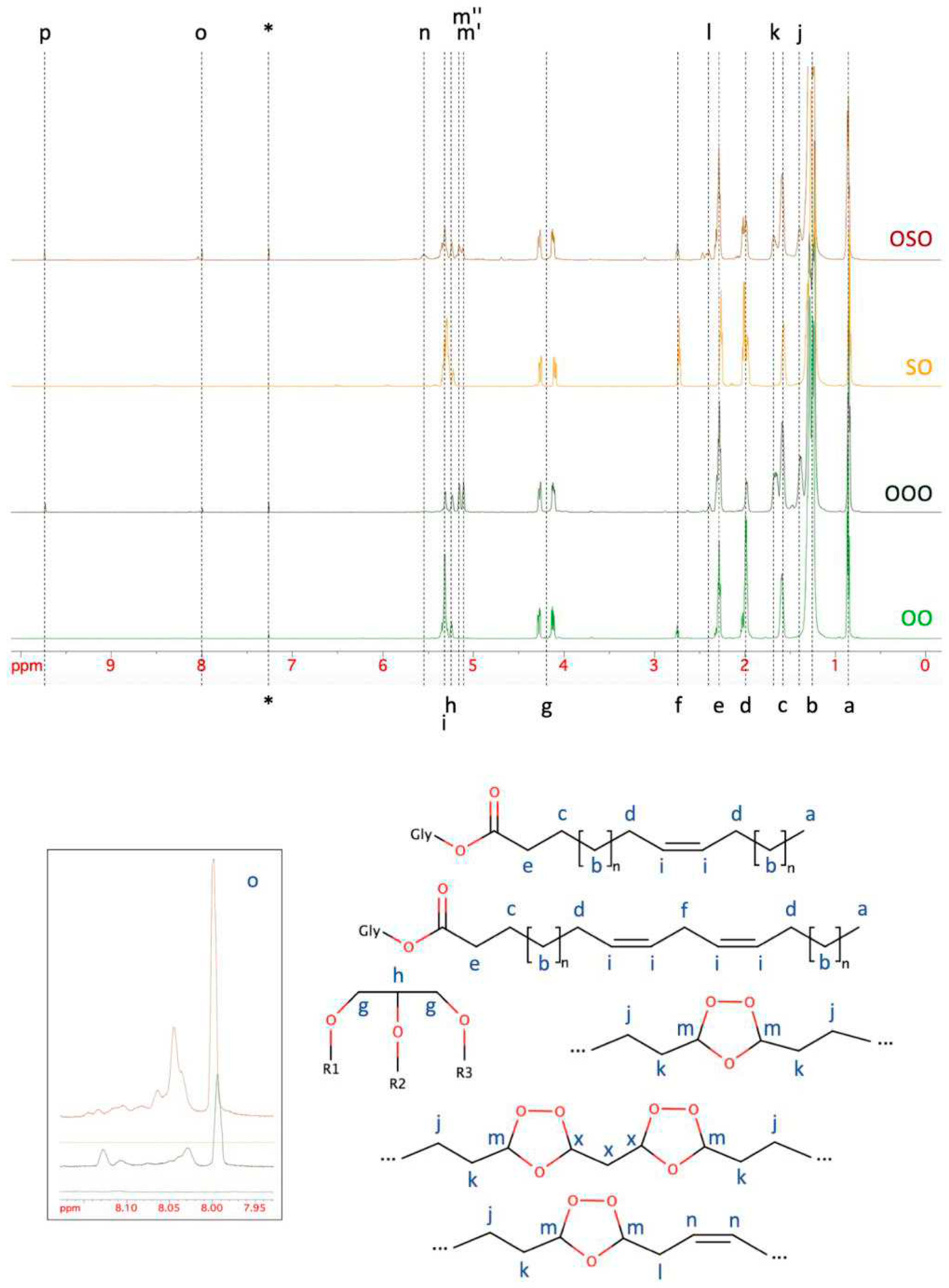
Figure 5.
Cell viability of keratinocytes (HaCat) and epithelial (Vero) cells after 24 h treatment with ozonated olive (OOO) and sunflower (OSO) oils assessed by MTT assay. Data are expressed as the means ± standard errors of the means (SEM) in percentage of the untreated control. Above each graph are reported the p value vs control. ****, p<0.0001; ns, not significant.
Figure 5.
Cell viability of keratinocytes (HaCat) and epithelial (Vero) cells after 24 h treatment with ozonated olive (OOO) and sunflower (OSO) oils assessed by MTT assay. Data are expressed as the means ± standard errors of the means (SEM) in percentage of the untreated control. Above each graph are reported the p value vs control. ****, p<0.0001; ns, not significant.
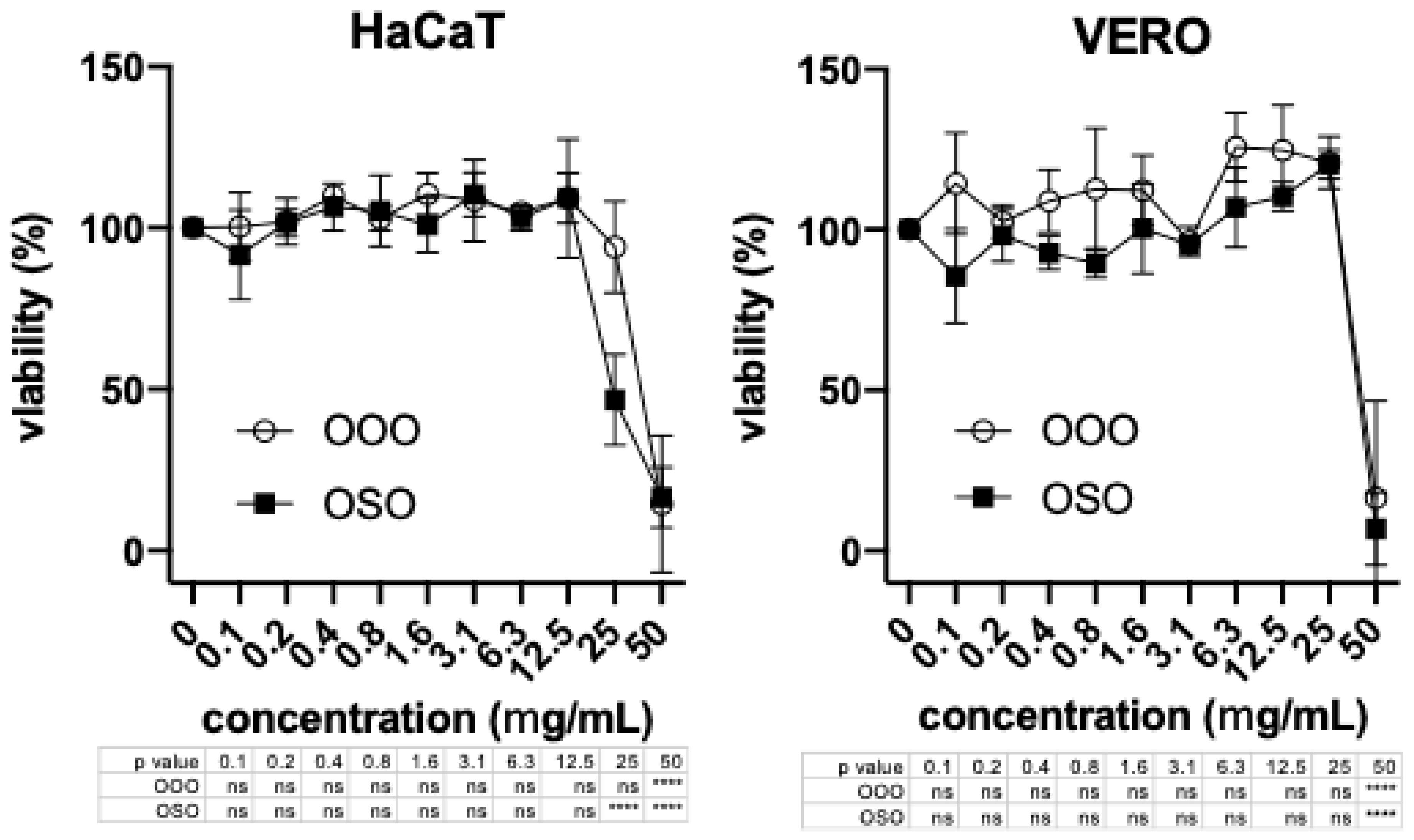
Figure 6.
Sensibility profile to OOO and OSO against all the microbes assessed by Kirby Bauer agar diffusion method (A). Different concentrations (10, 5, 2.5, 1.25, 0.62 and 0.31 mg) of ozonated oils were reported together with the negative control (DMSO) and the diameters of the inhibition halos (B).
Figure 6.
Sensibility profile to OOO and OSO against all the microbes assessed by Kirby Bauer agar diffusion method (A). Different concentrations (10, 5, 2.5, 1.25, 0.62 and 0.31 mg) of ozonated oils were reported together with the negative control (DMSO) and the diameters of the inhibition halos (B).
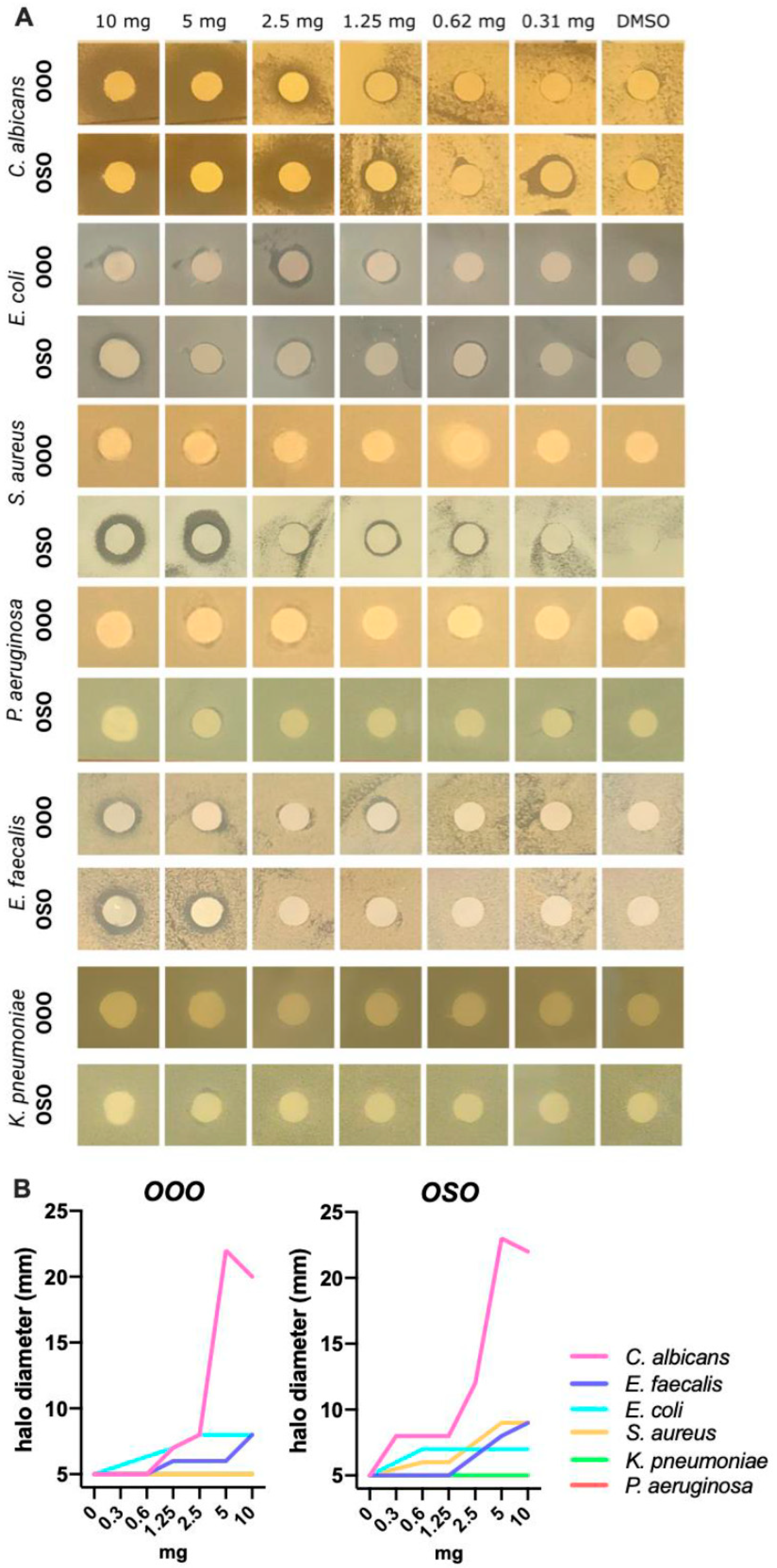
Figure 7.
Bactericidal effect after 24 h treatment with ozonated olive (OOO) and sunflower (OSO) oils assessed by microdilution assay. Data are expressed as the means ± standard errors of the means (SEM) of the control’s growth in percentage.
Figure 7.
Bactericidal effect after 24 h treatment with ozonated olive (OOO) and sunflower (OSO) oils assessed by microdilution assay. Data are expressed as the means ± standard errors of the means (SEM) of the control’s growth in percentage.
Disclaimer/Publisher’s Note: The statements, opinions and data contained in all publications are solely those of the individual author(s) and contributor(s) and not of MDPI and/or the editor(s). MDPI and/or the editor(s) disclaim responsibility for any injury to people or property resulting from any ideas, methods, instructions or products referred to in the content. |
© 2023 by the authors. Licensee MDPI, Basel, Switzerland. This article is an open access article distributed under the terms and conditions of the Creative Commons Attribution (CC BY) license (http://creativecommons.org/licenses/by/4.0/).
Copyright: This open access article is published under a Creative Commons CC BY 4.0 license, which permit the free download, distribution, and reuse, provided that the author and preprint are cited in any reuse.


