

Submitted:
22 June 2024
Posted:
24 June 2024
You are already at the latest version
Abstract
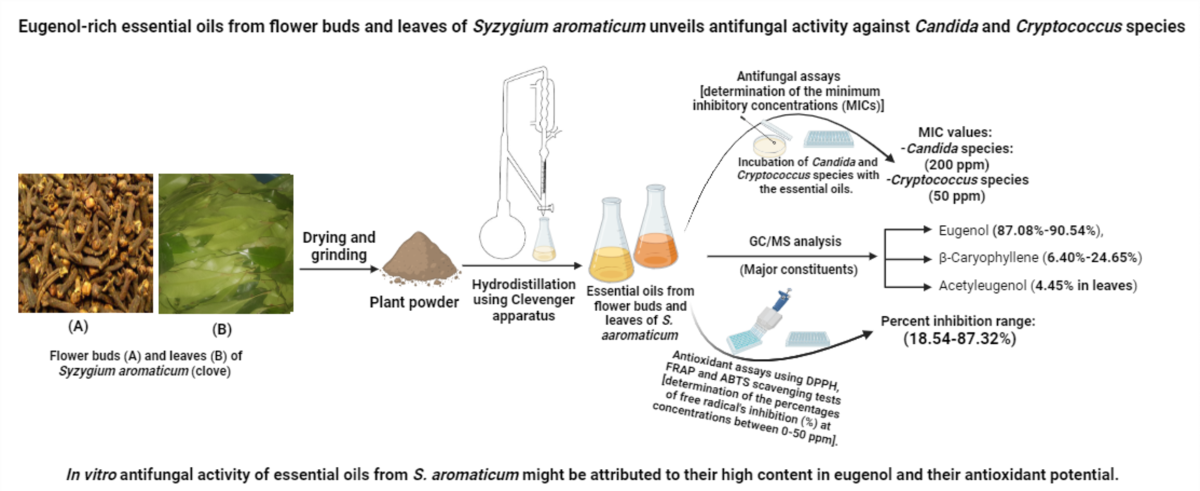
Plants from the Myrtaceae family are well known to contain considerable amounts of volatile compounds, ranging from oxygenated monoterpenes to hydrogenated sesquiterpenes, and others, which exhibit antimicrobial activity. One such plant includes Syzygium aromaticum that has been extensively used to treat a number of disorders, including bacterial and fungal infections. Thus, the scientific validation of the essential oil (EO) of Syzygium aromaticum vis-à-vis Candida and Cryptococcus species is valuable. To this end, the present study sought to investigate the antifungal activity of EO from S. aromaticum (clove) leaves and flower buds against Candida and Cryptococcus species. The antioxidant activity of S. aromaticum’s essential oils is also elucidated. The EO was extracted from fresh leaves and floral buds of S. aromaticum using a Clevenger-type apparatus. The as-prepared essential oils were further evaluated for antifungal activity against Candida and Cryptococcus species using a microdilution method. The phytochemical analysis of the EOs was assessed by gas chromatography/mass spectrometry (GC-MS). Antioxidant activities of the EOs were evaluated using standard methods. As a result, the GC-MS analysis revealed the presence of volatile compounds, such as eugenol (87.08%), β-caryophyllene (6.40%) and acetyleugenol (4.45%) as the major constituents of EO from the flower buds ; and eugenol (90.54%) and β-caryophyllene (24.65%) as the major components of the leaf’s EO. The eugenol-rich essential oils exhibited significant antifungal effects against Candida species (common MIC value: 200 ppm) and Cryptococcus neoformans (MIC value: 50 ppm), as well as antioxidant activity. Overall, essential oils of S. aromaticum demonstrated an-tioxidant and antifungal effects, thus validating the ethnopharmacological use of this plant in the treatment of fungal infections. However, antifungal mechanisms of action, in-depth toxicity and in vivo experiments, and pharmacokinetics are warranted to support the use of this plant in ethnomedicine.
Keywords:
Syzygium aromaticum
; Antifungal activity
; GC-MS analysis
; Essential oil
; Volatile compounds
1. Introduction
Caused by pathogenic microbes, infectious diseases are diseases that are responsible for high levels of mortality, heavy burdens of disability and serious global repercussions [1]. These diseases are accountable for over 17 millions deaths each year [2]. Fungal diseases are among the most serious infectious diseases, especially when caused by Candida and Cryptococcus species among others [3]. Current estimates of fungal disease incidence and mortality are unspecific ; however about 1 565 000 people suffer from different forms of candidiasis each year, thus causing over 995 000 deaths (63·6%) [4]. Patients suffering from cancer and HIV infection or experiencing immunosuppressive drug therapy are more vulnerable to diseases caused by opportunistic pathogenic fungi [3]. C. neoformans infections are scarce among people who have healthy immune systems; however, these diseases affect people under immunocompromised conditions. There are an estimated 152,000 cases of cryptococcal meningitis occurring worldwide annually, resulting in nearly 112,000 deaths [5]. Accumulated evidence has shown that Candida species are the primary cause of intrusive fungal infections [6,7]. There are an estimated 72.8 cases of candidemia per million inhabitants each year, and this prevalence exceeds that of invasive mucormycosis and aspergillosis [8].
Oxidative stress has intricately been involved in a number of pathological conditions, including fungal infections [9]. In fact, upon entering the host system, C. albicans cells induce an overproduction of reactive oxygen species that are generated by the host phagocytes neutrophils and macrophages [10,11]. Therapy of fungal diseases pertains to multifaceted approaches depending on the intensity of the infection, the specific pathogen involved, and the response to initial therapeutic measures [12]. For instance, voriconazole is considered as the first-line treatment for fungal infections because of its efficacy vis-à-vis a broad spectrum of fungi [12]. Amphotericin B and natamycin are other potent antifungal agents, which are often used topically. Other antifungal drugs include the azoles’ family, such as itraconazole and ketoconazole, among others. However, the use of these medications is sometimes limited because of toxicity concerns [12,13]. Thus, there is a pressing need to search for effective treatments against fungal diseases, especially those caused by Candida and Cryptococcus species. According to the literature information, numerous medicinal plants have been used to traditionally treat candidiases, notably Sansevieria dawei, Piliostigma thonningii, Momordica foetida, Clerodendrum umbellatum, Hallea rubrostipulata and Khaya anthotheca [14]. Syzygium aromaticum is another plant that is widely used in ethnomedicine to overcome a number of disease conditions, such as burns and wounds, flatulence, bowel, liver and stomach disorders [15]. Commonly termed as cloves, this plant species is also used in Indian and Chinese traditional medicine as a stimulating agent and pain reliever [15]. Different organs of S. aromaticum are used by indigenous people in tropical Asia to treat tuberculosis, malaria and cholera, whereas in the Americas, the plant is used for the treatment of Candida, bacterial and protozoan infections [16]. The EO of this plant is also used to relieve toothache and other tooth infections. Despite the extensive use of this plant in ethnomedicine, a few modern pharmacological studies have evaluated its complete ethnopharmacological uses. In a paper published by Rana et al. [17], the essential oil of S. aromaticum inhibited the growth of several fungal strains, including Mucor and Aspergillus species, F. moniliforme, F. oxysporum, Microsporum gypseum, and Trichophyton rubrum [17]. In 2015, Aguilar-Gonzalez et al. reported the antifungal activity of essential oils of clove (S. aromaticum) against Botrytis cinerea, a grey mold, which is highly detrimental to fruits (strawberries) and vegetables [18]. The inhibitory effects of various extracts (methanol, ethyl acetate, n-hexane, and diethyl ether extracts) [19], petroleum ether, dichloromethane, acetone, and ethanol extracts [20] from S. aromaticum flower bugs against several strains of Candida are well documented. However, the inhibitory effects of the essential oil of Syzygium aromaticum flower bugs on Candida and Cryptococcus species are yet to be fully investigated. Thus, the scientific validation of EOs from leaves and flower buds vis-à-vis Candida and Cryptococcus species is valuable.
Henceforth, the present study sought to investigate the antifungal activity of essential oil from Syzygium aromaticum (clove) leaves and flower buds on Candida and Cryptococcus species. The antioxidant activity of S. aromaticum’s essential oil is also elucidated.
2. Materials and Methods
2.1. Material
2.1.1. Plant Material
Leaves and flower buds of Syzygium aromaticum (Figure 1) were harvested from the Motomo farm, located at the Penja municipality in the Littoral Region of Cameroon. The plant organs were further identified at the National Herbarium of Cameroon in Yaounde, Cameroon, where a specimen was deposited under voucher number 2008SKR/CAM.
2.1.2. Fungal Strains
The fungal strains used in this study included five yeast strains, such as four Candida species (C. albicans, C. krusei, C. glabrata and C. tropicalis) and one Cryptococcus species (Cryptococcus neoformans), which were acquired from the Laboratory of Biochemistry of the University of Douala, Cameroon. The fungal strains were cultured using potato dextrose agar, supplemented with chloramphenicol.
2.2. Methods
2.2.1. Extraction of the Essential Oil
The EO was extracted from fresh leaves and floral buds of S. aromaticum using a Clevenger-type apparatus. Briefly, the collected plant material was washed and then chopped. Next, 1 kg of fresh leaves or 200g of floral buds from S. aromaticum were introduced separately into round bottom flasks containing each 3 L of distilled water. Afterward, the mixture was boiled for a period of 6 h. During this process, the vapor generated from the boiling underwent condensation to afford 2 phases, with the superior phase consisting of the EO, which was collected separately for flower buds and leaves. The water contained in the essential oil was then dried using anhydrous sodium sulfate. The obtained oils were further weighed, and the yield of each oil was calculated and bottled in a tinted glass 60 mL bottle and refrigerated at 4 °C. The yield (Y) of the essential oils was expressed in percentage and was calculated using the following formula :
Y = (Me/Mp) × 100 where Y = yield of essential oil in percentage ; Me = mass of essential oil in grams ; Mp = mass of plant organs in grams.
2.2.2. GC-MS Analysis of Essential Oils from Flower Buds and Leaves of S. aromaticum
The essential oils were analyzed by gas chromatography (GC) on a Varian CP-3380 GC along with a flame ionization detector fitted with a fused silica capillary column (30 m × 0.25 mm coated with DB5 (methylsilicon), film thickness 0.25 μm), with temperature ranging from 50 to 200 °C at 5 °C/min, injector and detector temperature set at 200 °C with N2 as the carrier gas (flow rate: 1 mL/min); followed by gas chromatography coupled with mass spectrometry (GC-MS), which was conducted using a Hewlett-Packard apparatus equipped with an HP1 fused silica column (30 m × 0.25 mm, film thickness 0.25 μm), interfaced with a quadrupole detector (GC-quadrupole MS system, model 5970). For GC-MS, the column temperature was programmed from 70° to 200 °C at 10 °C/min, with injector temperature set at 200 °C. Helium was used as the carrier gas at a flow rate of 0.6 mL/min, and the mass spectrometer was operated at 70 eV [21]. The linear retention indices of the compounds were relatively determined by the retention times of a series of n-alkanes, and the percentage compositions were obtained from electronic integration measurements, without taking into consideration the relative response factors [21,22]. After analysis by GC/GC-MS, the identification of different constituents of the essential oil was confirmed by a comparison of retention times and mass spectra with known values reported across the literature [21,23].
For each compound identified, the retention index (Kovats retention index, KI) was calculated using the following formula :
KI = Kovats retention index
Tr (Cn) = retention time of alkane at n atoms of carbons
Tr (Cn + 1) = retention time of alkane at (n + 1) atoms of carbons
Tr (x) = retention time for compound x
2.2.3. Antifungal Activity
a. Preparation of microbial inocula
The suspensions of selected fungi were prepared from 48 hours old fungal cultures, which were under incubation at 37°C on Sabouraud Dextrose Agar medium. Thus, two to three colonies of each microorganism were collected under sterile conditions (with a bec bunsen flamme) using a platinum loop and added to 10 mL of normal saline (NaCl 0.9%) and then homogenized to obtain a turbidity equivalent to 0.5 Mc Farland (1,5.108 CFU/mL) as recommended by the « Comité de l’antibiogramme de la société française de microbiologie » [24]. The bacterial suspension was further diluted 20 times using Sabouraud Dextrose Broth (SDB) to adjust the number of fungal colonies to approximately 1,5x10⁴ CFU/ml.
b. Preparation of solutions
b.1. Preparation of essential oils
The as-prepared essential oils were added to dimethylsulfoxide (DMSO) solution (1:9; v/v) to achieve a final concentration of 103000 ppm. This solution was further diluted using the SDB medium to yield test concentrations of 12800 ppm and 3200 ppm, the latter being considered as the concentration in the first well of the microplate [24].
b.2. Preparation of the sterility control
To verify whether as-prepared essential oils are free of germs, the sterility control was assessed by inoculating a few microliters of stock solutions of essential oils onto the SDA (agar), followed by an incubation at 37°C for 24-48 hrs.
c. Determination of minimum inhibitory concentrations (MICs) and minimum fungicidal concentrations (MFCs)
c.1. Determination of minimum inhibitory concentrations
Herein, the tests were performed in duplicate in sterile 96-well microtiter plates using a microdilution method. Briefly, 100 µl of SBD was dispensed into the wells, then 100 µl of the as-prepared essential oils, positive controls and DMSO were added into the first line wells. From these wells, 100 µL were withdrawn and dispensed into the second line wells, followed by a serial dilution of geometric sequence of 2 in the remaining wells to achieve the following concentrations : 25, 50, 100, 200, 400, 800, 1600 and 3200 ppm. After dilution, 100 µL of inoculum were added into all wells. The plates were then covered with parafilm under aseptic conditions and incubated at 37°C for 48 hours. Three controls were considered viz. sterile control (SBD only), negative control (SBD and inoculum as well as SDB, DMSO and inoculum) and positive control (SBD, inoculum and antifungal drug/ fluconazole or ketoconazole). After the incubation period, the presence or absence of fungal growth was determined visually.
c.2. Determination of the minimum fungicidal concentrations
To determine the fungistatic or fungicidal nature of the test samples, their minimum fungicidal concentrations (MFCs) were evaluated by subculturing fungal preparations withdrawn from the microplates initially used for the determination of MICs. To this end, 10 µl of each well showing no visible growth were transferred on SDA medium. After 48 hours’ incubation at 37°C, the absence of renewed growth was considered as indicative of a fungicidal action, whereas resumed growth indicated a fungistatic effect [24]. The minimum fungicidal concentration (MFC) corresponds to the lowest concentration of test substance capable of killing more than 99.9% of the initial fungal cells after 24 to 48 hours incubation at 37°C. From the MFC and MIC values, the ratio of MFC/MIC was calculated to conclude about the antifungal orientation of the essential oils prepared from flower buds and leaves of S. aromaticum.
2.3. Antioxidant Activity
2.3.1. 1,1-. Diphenyl-2-Picryl Hydrazyl (DPPH) Radical Scavenging Assay
DPPH assay was used to assess the radical scavenging potential of the most promising extracts. From a stock solution of 100 µg/ml of each essential oil, a range of concentrations was prepared by dilutions of order 2 to achieve final concentrations between 50 to 1.56 ppm. Briefly, 100 µL of each test solution were added to 1 mL of methanolic solution of DPPH (40 mg/L). The negative control consisted of a mixture of 1 mL of methanolic solution of DPPH with 100 µL of methanol. After incubation of the as-prepared solutions for 60 min in the dark at room temperature, absorbance was measured using a spectrophotometer (BIOBASE, 9 Gangxing road, High-tech Zone, Jinan, Shandong, China) at 517 nm against the blank (methanolic solution of DPPH). Each test was repeated three times. The inhibition percentages, which were calculated from the optical densities, were used to express the median scavenging concentrations (SC50s) using GraphPad Prism 8.0.1. Software, then EC50 (efficiency concentration) and AP (antiradical power) were deducted using the following formulae:
Inhibition%=(ODcontrol-ODtest)/ODcontrol×100; EC50=SC50/([DPPH•]); AP=1/EC50
Where CE50 is the concentration of extract that scavenges ½ mole of DPPH and [DPPH●] is the concentration of DPPH●.
2.3.2. ABTS Radical Scavenging Assay
ABTS assay was performed according to the method described by Re et al. [25]. The ABTS cation radical was generated by mixing equal volumes of 2.45 mM solution of potassium persulphate (K2S2O8) and a stock solution of 7 mM ABTS. The prepared solution was kept for 16 hours at room temperature in the dark before use. This solution was further diluted with ethanol to obtain absorbance between 0.7 and 0.8 at 734 nm. Next, 990 μl of the freshly prepared solution was added to 10 μl of essential oil (concentration range : 50 to 1.56 ppm) or ascorbic acid (positive control) diluted to different concentrations and the absorbance was measured at 734 nm after 6 min of incubation using a spectrophotometer (BIOBASE, 9 Gangxing road, High-tech Zone, Jinan, Shandong, China). Each test was repeated three times. The inhibition percentages, which were calculated from the optical densities, were used to express the median scavenging concentrations (SC50s) using GraphPad Prism 8.0.1. software.
2.3.3. Ferric Reducing Antioxidant Power Assay (FRAP)
The FRAP assay was also used to determine the antioxidant power of the essential oils from flower buds and leaves of S. aromaticum as per a previously reported protocol [26]. In brief, 0.05 mL of each essential oil’s solution or BHT (positive control) (range of concentrations : 50 to 1.56 ppm) was added to 1 mL of phosphate buffer (0.2M, pH : 6.6) and 1 mL of potassium hexacyanoferrate [K3Fe (CN)6] (10 g/L). The preparation was subsequently heated to 50°C in a water bath for 20 minutes. Next, 1 mL of trichloroacetic acid (100 g/L) was added and the mixture was centrifuged for 10 minutes at 3000 rpm. Afterward, 1 mL of the obtained supernatant was mixed with 1 mL of distilled water and 0.2 ml ferric chloride [FeCl3] (1g/l). The absorbance of the preparation was subsequently measured at 700 nm against the blank (negative control) using a spectrophotometer (BIOBASE, 9 Gangxing road, High-tech Zone, Jinan, Shandong, China). Each test was repeated three times. For each essential oil or BHT, the curve of the absorbance was plotted against different concentrations of the essential oil or BHT (reference antioxidant agent). To conclude about the iron-reducing power of test sample, the curves of experimental set up were compared with those of BHT, the positive control, thus predicting effective antioxidant action when curves derived from essential oils are above the curve of the reference antioxidant BHT [27,28].
2.3.4. Statistical Analysis
Data were reported as mean and standard deviation (SD) values obtained from a minimum of three determinations. Data were analysed by ANOVA (Analysis of Variance) using STATGRAPHICS Centurion XV version 20.0 software (Old Tavern Rd, The Plains, VA 20198, United States). The Kruskal-Wallis test (non-parametric test) was used to compare the data, which were further presented in the form of tables, graphs and curves. The significance threshold was set at a probability value of less than 5%.
3. Results
3.1.1. Yields of Extraction
The yields of extraction of essential oils from flower buds and leaves were found to be 11.13% and 1.28%, respectively. The oils appeared as liquid, light yellow, and spicy in odour.
3.1.2. Chemical Composition of the Essential Oils
The chemical composition of the essential oils from the flower buds and leaves of Syzygium aromaticum was analysed by GC on a Varian CP-3380 column. As a result, two chromatograms were obtained as indicated in Figure 2A,B. Analysis of these chromatograms (2A & 2B) enabled the calculation of the Kovats indices which helped to obtain a preliminary (partial) characterization of the oils.
Gas chromatography was then coupled with mass spectrometry (GC/MS) for further characterization of the oils. As a result, spectra from mass analysis provided more details regarding the major compounds found in flower buds and leaves of Syzygium aromaticum as shown in Figure 3.
Data obtained from the chromatograms (spectra) (Figure 3A–E) and the Kovats indices (Table 1) were confronted with the literature data [29] to characterize the essential oils from flower buds and leaves of S. aromaticum. As a result, the flower buds’ essential oil was found to contain oxygenated monoterpenes, such as eugenol (87.08%), phenol-2-methoxy-3-(2propenyl) (1.19%), acetyleugenol (4.45%), and hydrogenated sesquiterpenes like β-caryophyllene (0.88%) and humulene (6.40%) as the major constituents. The essential oil of S. aromaticum leaves was dominated by eugenol (90.54%), β-caryophyllene (8.42%) and humulene (1.04%) (Table 1).
3.1.3. Antifungal Activity
To evaluate the antifungal activity of the essential oils of S. aromaticum flower buds and leaves, minimum inhibitory concentrations (MICs) and minimum fungicidal concentrations (MFCs) were determined. Thus, the incubation of different fungal strains with the essential oils from S. aromaticum flower buds and leaves afforded a common MIC value of 200 ppm against almost all the Candida species tested, whereas the MIC value against Cryptococcus neoformans was found to be 50 ppm for both the essential oils (Table 2). The fractions MFC/MIC were calculated and were found to be 2 (Table 2) in almost all the fungal strains tested, suggesting a fungicidal orientation of both the essential oils from S. aromaticum flower buds and leaves.
3.1.4. Antioxidant activity
a. DPPH assay
Table 3 summarizes the percentages of DPPH free radicals scavenged by the essential oils at various concentrations (1.56, 3.13, 6.25, 12.5, 25, and 50 ppm). The percentages of free radicals scavenged by the EOs varied from 18.54 to 67.37% and from 24.29 to 83.86% for the essential oil of S. aromaticum flower buds and leaves, respectively, vs butylhydroxytoluene (percentage of DPPH scavenged : 8.04 to 52.98%), the positive control used (Table 3).
After plotting the percentages of DPPH free radicals scavenged versus concentrations, the median free radical scavenging concentrations (SC50s) were obtained as 4.5, 22.5 and 44.5 ppm for S. aromaticum flower buds and leaves, and the positive control butylhydroxytoluene, respectively (Table 4, Figure 4). The values of the antiradical power were obtained as 4.44×10⁻⁴, 2.22×10⁻³ and 2.24×10⁻⁴ mol/g for essential oils of S. aromaticum flower buds and leaves, and the positive control butylhydroxytoluene, respectively (Table 4).
b. ABTSassay
The incubation of the essential oils with free radicals of ABTS (ABTS+) for 60 mins led to a significant decrease in the free radicals of ABTS, thus revealing inhibition percentages of 87.32% and 85.08% for essential oils of S. aromaticum flower buds and leaves, respectively at 50 ppm, vs BHT (56.03% at 125 ppm) (Table 5). After plotting the values of concentrations of essential oils versus percentages of inhibition of the free radicals ABTS+, the median concentration values (IC50s) were found to be 4.09 and 18.18 ppm for essential oils of S. aromaticum flower buds and leaves, respectively (Figure 5A). Moreover, BHT, the positive control, afforded IC50 value of 103.7 ppm (Figure 5B). The percentages of inhibition were as high as 85% at the concentrations of 50 ppm for the essential oils and 300 ppm for the positive control BHT (Figure 5A,B).
c. FRAP test
In this experiment, there was no significant difference between the negative control versus the experimental treatments as there was no color change (green) after the incubation period irrespective of the concentrations considered. However, the reduction of state III iron (Fe3+) to state II iron (Fe2+) was proportional to the increase in S. aromaticum EOs and BHT concentrations. Thus, the values of optical densities were plotted versus concentrations of test samples (Figure 6). Although non-significant, the essential oils from S. aromaticum flower buds and leaves revealed antioxidant potential by reducing state III iron (Fe3+) to state II iron (Fe2+) in the FRAP assay.
4. Discussion
This study aims to investigate the antifungal activity of the essential oils of Syzygium aromaticum flower buds and leaves. The essential oils were obtained by distillation of flower buds and leaves of S. aromaticum. The as-prepared essential oils were obtained as yellowish oily substances with a spicy odour and yields of 11.13% and 1.28%, respectively. The essential oil obtained from S. aromaticum flower buds, which were harvested from Benin by Houari et al. [30] and from Algeria by Atmani and Baira [31] revealed almost similar yields of extraction (10.60% and 9.66%, respectively). By contrast, Alitonou et al. [32] obtained very low yields of extraction (0.18% and 3.4%) for S. aromaticum flower buds collected in Benin and Algeria, respectively [32,33], inferring that the composition of the essential from S. aromaticum flower buds may significantly vary depending on the site and season of plant collection. The yield of extraction of S. aromaticum leaves was slightly improved compared to the results obtained by Hellal et al. [34] and Gomez et al. [35] (yields: 0.70% and 2.2% respectively). The GC-MS analysis of the essential oils from S. aromaticum flower buds and leaves revealed five and three major constituents, respectively. The flower buds’ EO was dominated by eugenol (87.08%) followed by β-caryophyllene (6.40%) and acetyleugenol (4.45%), whereas the leaf’s EO revealed dominance of eugenol (90.54%) and β-caryophyllene (8.42%). As already discussed, these results are consistent with those obtained from EOs of S. aromaticum samples collected in Madagascar, Indonesia and Zanzibar [eugenol (72.08 to 82.36%), β-caryophyllene (11.65 to 19.53%), and eugenol acetate (84.61 to 21.32%); [36]). By contrast, other researchers [33] obtained a different composition [eugenol (87.62%), β-caryophyllene (5.88%) and β-bisabolene (4.41%)] of the essential oil of S. aromaticum harvested in different locations. Irrespective of the site of plant collection and the discrepancy in the chemical composition of the essential oil from S. aromaticum, there is a high dominance of eugenol (>70%). The as-prepared essential oils were further assayed for their inhibitory potential toward selected fungal pathogens viz. Candida spp. and C. neoformans. As a result, essential oil from S. aromaticum flower buds and leaves inhibited the growth of C. albicans, C. glabrata, C. tropicalis, and C. krusei with a common MIC value of 200 ppm, whereas the value of MIC obtained against C. neoformans was found to be 50 ppm. The observed antifungal activity might be mainly attributed to the high content of the essential oils in eugenol. This monoterpene has already been reported for its antifungal potential [37,38], which is attributed to the accumulation of this compound in the phospholipid bilayer as a result of its lipophilic nature, and the disruption of the fungal membrane [37]. Eugenol alters the fluidity and permeability of fungal membranes and impedes the function of important membrane-bound enzymes or proteins [37]. Recently, the antifungal potential of eugenol was also revealed in fungi other than Candida and C. neoformans (Trichophyton rubrum; Percentages of inhibition: 50% and 100% at the concentrations of 87.5 and 750 μg/ml, respectively) [39]. Eugenol was also found to eradicate biofilms generated by Candida albicans [40]. β-Caryophyllene, which was the second major constituent of the essential oils from S. aromaticum, was previously reported for its antifungal potential [41]. The low molecular weight of β-caryophyllene and its hydrophobic nature facilitates its entry across the fungal membrane to inhibit the growth of fungi [42]. It has also been reported that the antimicrobial activity of an essential oil can be attributed to its chemical composition, the most active compounds being aldehydes, phenols, and alcohols [43]. Calculated values for MFC/MIC ratios revealed that the essential oils had a fungicidal orientation against all the strains tested, as the values were found to be less than 4. Although there is a lack of information detailing the clear understanding of the antifungal mechanism of action of eugenol, the inhibition of biofilm formation [44] and candidal adhesion [40], cell membrane disruption [45], alteration of membrane fluidity and permeability [46] leading to cytoplasmic leakage [47] and mature biofilm viability by eugenol have been documented.
Upon DPPH scavenging test, the essential oils from S. aromaticum flower buds and leaves revealed median scavenging concentrations (SC50s) of 22.5 ×10⁻³ g/l and 4.5×10⁻³ g/l, respectively, vs. BHT (44.5×10⁻³ g/l). A number of authors have found almost similar results while working on the same plant but collected from different locations [33,48]. The antiradical scavenging potential was attributed to the abundance of S. aromaticum in monoterpenes, such as eugenol [48]. In ABTS assay, the essential oils of S. aromaticum flower buds and leaves (concentration range: 1.56-50 ppm) scavenged the free radicals of ABTS, yielding inhibition percentages ranging from 27.18 to 87.32% and from 4.18 to 85.08%, respectively, vs BHT (percent inhibition: 21.83-88.39% at concentrations ranging from 31.25 to 1000 ppm). The essential oils from S. aromaticum flower buds and leaves revealed antioxidant potential by reducing state III iron (Fe3+) to state II iron (Fe2+) in the FRAP assay. The observed antioxidant activity of the essential oils of S. aromaticum might be attributed to the presence of volatile compounds in leaves [eugenol, β-caryophyllene and humulene] and flower buds [eugenol, acetyleugenol, phenol-2-methoxy-3-(2-propenyl), β-caryophyllene and humulene] of this plant species. A number of studies have demonstrated the antioxidant potential of eugenol [49,50,51,52]. The antioxidant potential of S. aromaticum could be mostly attributed to the presence of eugenol, the major compound in this plant as evidenced by the GC-MS analysis. The oxidative stress has intricately been involved in the pathogenesis of several disorders, including fungal diseases [53]. Moreover, yeast cells that grows in an aerobic environment are susceptible to reactive oxygen species [hydrogen peroxide (H2O2), hydroxyl radical (OH) and superoxide anion (O2−)], which can damage all biomolecules to cause cell death [53,54]. Because of the diversity of fungi in the environment, several fungal infections regularly affect most people without adverse reactions; however, the weakening of the immune system can cause the fungi to overgrow and cause symptoms [55]. Nutritional antioxidants can aid the immune system to inhibit the growth of a number of fungi thereby overcoming fungal symptoms [56]. Consequently, the antioxidant nature of the essential oils from S. aromaticum might have aided in inhibiting the fungal growth. The antioxidant potential of S. aromaticum might have in part contributed to its antifungal activity.
The essential oils of S. aromaticum flower buds and leaves that exhibited antioxidant activity and inhibited the growth of Candida species and Cryptococcus neoformans can be prospected as a starting point for the discovery of effective antifungal agents. Nevertheless, the mechanistic basis of the antifungal action, in-depth toxicity experiments and pharmacokinetics of S. aromaticum are desired for the successful use of this plant to treat fungal symptoms.
5. Conclusions
The essential oils of Syzygium aromaticum flower buds and leaves, which were obtained by distillation and analyzed by GC-MS were further screened for antifungal effect against four Candida species and Cryptococcus neoformans, as well as antioxidant activity through standard methods. As a result, the GC-MS analysis revealed the presence of volatile compounds, such as eugenol (87.08%), β-caryophyllene (6.40%) and acetyleugenol (4.45%) as the major constituents of the EO from the flower buds; and eugenol (90.54%) and β-caryophyllene (24.65%) as the major components of the leaf EO. Noteworthy, essential oils of S. aromaticum flower buds and leaves were highly dominated by the monoterpene eugenol. The eugenol-rich essential oils exhibited significant antifungal activity against Candida species (common MIC value: 200 ppm) and Cryptococcus neoformans (MIC value: 50 ppm). The EOs of S. aromaticum demonstrated antioxidant activity upon DPPH, ABTS and FRAP assays, thus revealing the implication of this plant in reducing oxidative damage.
Overall, essential oils of S. aromaticum demonstrated antioxidant and antifungal effects, thus validating the ethnopharmacological use of this plant in the treatment of fungal infections. However, the mechanistic basis of the antifungal action, in depth toxicity and in vivo experiments, and pharmacokinetics are warranted to support the use of this plant in ethnomedicine.
Author Contributions
Conceptualization, B.P.K., F.N., and P.M.J.D.; methodology, E.J.M., L.A.N., and P.K.L.; software, E.J.M., L.A.N., and P.K.L.; validation, B.P.K., F.N., and P.M.J.D.; formal analysis, E.J.M., L.A.N., and P.K.L.; investigation, E.J.M., L.A.N., and P.K.L.; resources, B.P.K., F.N., and P.M.J.D.; data curation, E.J.M., L.A.N., and P.K.L.; writing—original draft preparation, E.J.M., and L.A.N.; writing—review and editing, B.P.K., and F.N.; visualization, B.P.K., and P.M.J.D.; supervision, B.P.K., F.N., and P.M.J.D.; project administration, B.P.K., F.N., and P.M.J.D.; funding acquisition, B.P.K., F.N., and P.M.J.D. All authors have read and agreed to the published version of the manuscript.
Funding
This research received no external funding.
Institutional Review Board Statement
Not applicable.
Informed Consent Statement
Not applicable.
Data Availability Statement
Data is available from the corresponding author upon reasonable request.
Acknowledgments
Authors thank the Cameroon National Herbarium (Yaounde, Cameroon) for the identification of the plant.
Conflicts of Interest
The authors declare no conflicts of interest.
References
- The World Health Organization (WHO), 2024. Infectious diseases. Available online: https://www.emro.who.int/health-topics/infectious-diseases/index.html (accessed on 30 April 2024).
- The world Health Organization (WHO), 2014. “Rapport sur les maladies infectieuses et Stratégie pour la médecine traditionnelle pour 2014-2023, Organisation Mondiale de la Santé: Genève.” 2014. P.1-72.
- Zhang, Z.; Bills, G.F.; An, Z. Advances in the treatment of invasive fungal disease. PLoS Pathog. 2023, 19, e1011322. [Google Scholar] [CrossRef] [PubMed]
- Denning, D.W. Global incidence and mortality of severe fungal disease - Author’s reply. Lancet Infect Dis. 2024, 24, e269. [Google Scholar] [CrossRef] [PubMed]
- Rajasingham, R.; Govender, N.P.; Jordan, A.; Loyse, A.; Shroufi, A.; Denning, D.W.; Meya, D.B.; Chiller, T.M.; Boulware, D.R. The global burden of HIV-associated cryptococcal infection in adults in 2020: A modelling analysis. Lancet Infect Dis. 2022, 22, 1748–1755. [Google Scholar] [CrossRef] [PubMed]
- Azie, N.; Neofytos, D.; Pfaller, M.; Meier-Kriesche, H.U.; Quan, S.P.; Horn, D. The PATH (Prospective Antifungal Therapy) Alliance® registry and invasive fungal infections: Update 2012. Diagn Microbiol Infect Dis. 2012, 73, 293–300. [Google Scholar] [CrossRef] [PubMed]
- Montagna, M.T.; Caggiano, G.; Lovero, G.; De Giglio, O.; Coretti, C.; Cuna, T.; Iatta, R.; Giglio, M.; Dalfino, L.; Bruno, F.; Puntillo, F. Epidemiology of invasive fungal infections in the intensive care unit: Results of a multicenter Italian survey (AURORA Project). Infection 2013, 41, 645–653. [Google Scholar] [CrossRef] [PubMed]
- Guinea, J. Global trends in the distribution of Candida species causing candidemia. Clin Microbiol Infect 2014, 20, 5–10. [Google Scholar] [CrossRef] [PubMed]
- Komalapriya, C.; Kaloriti, D.; Tillmann, A.T.; Yin, Z.; Herrero-de-Dios, C.; Jacobsen, M.D.; Belmonte, R.C.; Cameron, G.; Haynes, K.; Grebogi, C.; de Moura, A.P.; Gow, N.A.; Thiel, M.; Quinn, J.; Brown, A.J.; Romano, M.C. Integrative model of oxidative stress adaptation in the fungal pathogen Candida albicans. PLoS ONE. 2015, 10, e0137750. [Google Scholar] [CrossRef] [PubMed]
- Dantas, A. da S.; Day, A.; Ikeh, M.; Kos, I.; Achan, B.; Quinn, J. Oxidative stress responses in the human fungal pathogen, Candida albicans. Biomolecules. 2015, 5, 142–165. [Google Scholar] [CrossRef] [PubMed]
- Cui, Y.; Wang, D.; Nobile, C.J.; Dong, D.; Ni, Q.; Su, T.; Jiang, C.; Peng, Y. Systematic identification and characterization of five transcription factors mediating the oxidative stress response in Candida albicans. Microb Pathog. 2024, 187, 106507. [Google Scholar] [CrossRef] [PubMed]
- Ghenciu, L.A.; Faur, A.C.; Bolintineanu, S.L.; Salavat, M.C.; Maghiari, A.L. Recent advances in diagnosis and treatment approaches in fungal keratitis: A narrative review. Microorganisms 2024, 12, 161. [Google Scholar] [CrossRef] [PubMed]
- Ramakrishnan, T.; Constantinou, M.; Jhanji, V.; Vajpayee, R.B. Factors Affecting Treatment Outcomes With Voriconazole in Cases with Fungal Keratitis. Cornea 2013, 32, 445–449. [Google Scholar] [CrossRef] [PubMed]
- Akwongo, B.; Katuura, E.; Nsubuga, A.M.; Tugume, P.; Andama, M.; Anywar, G.; Namaganda, M.; Asimwe, S.; Kakudidi, E.K. Ethnobotanical study of medicinal plants utilized in the management of candidiasis in Northern Uganda. Trop Med Health 2022, 50, 78. [Google Scholar] [CrossRef] [PubMed]
- Batiha, G.E.S.; Beshbishy, A.A.; Tayebwa, D.S.; Shaheen, M.H.; Yokoyama, N.; Igarashi, I. Inhibitory effects of Syzygium aromaticum and Camellia sinensis methanolic extracts on the growth of Babesia and Theileria parasites. Ticks Tick. Borne Dis. 2019, 10, 949–958. [Google Scholar] [CrossRef] [PubMed]
- Bhowmik, D.; Kumar, K.S.; Yadav, A.; Srivastava, S.; Paswan, S.; Dutta, A.S. Recent trends in Indian traditional herbs Syzygium aromaticum and its health benefits. J Pharmaco Phytochem. 2012, 1, 13–23. [Google Scholar]
- Rana, I.S.; Rana, A.S.; Rajak, R.C. Evaluation of antifungal activity in essential oil of the Syzygium aromaticum (L.) by extraction, purification and analysis of its main component eugenol. Braz J Microbiol. 2011, 42, 1269–1277. [Google Scholar] [CrossRef] [PubMed]
- Aguilar-Gonzalez, A.E.; Palou, E.; Lopez-Malo, A. Antifungal activity of essential oils of clove (Syzygium aromaticum) and/or mustard (Brassica nigra) in vapor phase against grey mold (Botrytis cinerea) in strawberries. Innov Food Sci Emerg Technol. 2015, 32, 181–185. [Google Scholar] [CrossRef]
- Yassin, M.T.; Mostafa, A.AF.; Al-Askar, A.A. In vitro anticandidal potency of Syzygium aromaticum (clove) extracts against vaginal candidiasis. BMC Complement Med Ther 2020, 20, 25. [Google Scholar] [CrossRef] [PubMed]
- Mostafa, A.A.-F.; Yassin, M.T.; Al–Askar, A.A.; Al-Otibi, F.O. Phytochemical analysis, antiproliferative and antifungal activities of different Syzygium aromaticum solvent extracts. Journal of King Saud University-Science. 2022, 35, 1–7. [Google Scholar] [CrossRef]
- Mahizan, N.A.; Yang, S.K.; Moo, C.L.; Song, A.A.; Chong, C.M.; Chong, C.W.; Abushelaibi, A.; Lim, S.E.; Lai, K.S. Terpene derivatives as a potential agent against antimicrobial resistance (AMR) pathogens. Molecules 2019, 24, 2631. [Google Scholar] [CrossRef] [PubMed]
- Arbab, I.A.; Abdul, A.B.; Aspollah, M.; Abdullah, R.; Abdelwahab, S.I.; Ibrahim, M.Y.; Ali, L.Z. A review of traditional uses, phytochemical and pharmacological aspects of selected members of Clausena genus (Rutaceae). J Med Plant Res. 2012, 6, 5107–5118. [Google Scholar] [CrossRef]
- da Silva, L.Y.S.; Paulo, C.L.R.; Moura, T.F.; Alves, D.S.; Pessoa, R.T.; Araújo, I.M.; de Morais Oliveira-Tintino, C.D.; Tintino, S.R.; Nonato, C.F.A.; da Costa, J.G.M.; et al. Antibacterial activity of the essential oil of Piper tuberculatum Jacq. Fruits against multidrug-resistant strains: Inhibition of efflux pumps and β-Lactamase. Plants 2023, 12, 2377. [Google Scholar] [CrossRef] [PubMed]
- CA-SFM « Comité de l’antibiogramme de la societé francaise de microbiologie » (CA-SFM) Recommendations of 2010.
- Re, R.; Pellegrini, N.; Proteggente, A.; Pannala, A.; Yang, M.; Rice-Evans, C. Antioxidant activity applying an improved ABTS radical cation decolorization assay. Free Radic Biol Med. 1999, 26, 1231–1237. [Google Scholar] [CrossRef] [PubMed]
- Oyaizu, M. Studies on products of browning reactions: Antioxidative activities of product of browning reaction prepared from glucosamine. Jpn. J. Nutr. 1986, 44, 307–315. [Google Scholar] [CrossRef]
- Kanoun, K. « Contribution à l’étude phytochimique et activité antioxydante des extraits de Myrtus communis L. (Rayhane) de la région de Tlemcen (Honaine). Mémoire de Master en Biologie. » « Université Aboubekr belkaid tlemcen. » 2011, 30-48p.
- Ladoh Didong, S.D.; Nyegue, M.A.; Djembissi Talla, R.P.; Lenta Ndjakou, B.; Mpondo, E.; Yinyang, J.; Wansi, J.D. Activité antioxydante des extraits méthanolique de Phragmentera capitata sur Citrus sinensis. J. Appl. Biosci. 2014, 84, 7636–7643. [Google Scholar] [CrossRef]
- Desmares, C.; Delerme, C.; Laurent, A. « Recommandations relatives aux critères de qualité des huiles essentielles ». 2008, 18.
- Houari, A.D.E. “Effet prophylactique de l’administration d’un extrait de Syzygium aromaticum (clou de girofle) chez les rats wistar en croissance intoxique au plomb et au manganèse. Etude biochimique, histologique et neurocomportementale.” “Thèse de Doctorat en biologie. Université d’Oran Ahmed ben Bella”. 2015. https://dspace.univ-oran1.dz/handle/123456789/2218.
- Atmani, H.; Baira, K. “Mise en évidence de l’activité antibactérienne et antifongique et l’étude des caractères Physico-chimique de l’huile essentielle du clou de girofle Syzygium aromaticum” L. 2015, 88p.
- Alitonou, G.; Tchobo, F.; Avlessi, F.; Yehouenou, B.; Yedomonhan, P.; Koudoro, A.; Menut, C.; Sohounhloue, D.K. Chemical and biological investigations of Syzygium aromaticum L. essential oil from Benin. Int. J. Biol. Chem. Sci. 2012, 6, 1360–1367. [Google Scholar] [CrossRef]
- Mekemzeu, F.P. “Activités antioxydante et antifongique de Theobroma cacao (beurre de cacao) et de l’huile essentielle de Eugenia caryophyllata (clous de girofle) vis-à-vis de : Microsporum gypseum, Trichophyton rubrum et Trichophyton tonsurans.” Dissertation submitted for the Award of Master in Biochemistry at University of Douala, Cameroon. 2015, 20–26.
- Hellal, Z. “Contribution à l’étude des propriétés antibactériennes et antioxydantes de certaines huiles essentielles extraites des Citrus: Application sur la sardine (Sardina pilchardus). Mémoire de magistère, Faculté des Sciences Biologiques et des Sciences Agronomiques, Université Mouloud Mammeri de Tizi-Ouzou.” 2011, 78p.
- Gomez Hammer, K.A.; Carson, C.F.; Riley, T.V. Antimicrobial activity of essential oils and other plant extracts. J Appl Microbiol 1999, 86, 985–990. [Google Scholar] [CrossRef] [PubMed]
- Razafimamonjison, G.; Jahiel, M.; Duclos, T.; Ramanoelina, P.; Fawbush, F. Bud, leaf and stem essential oil composition of Syzygium aromaticum from Madagascar, Indonesia and Zanzibar. Int. J. Basic Appl. Sci. 2014, 3, 224–233. [Google Scholar] [CrossRef]
- Didehdar, M.; Chegini, Z.; Shariati, A. Eugenol: A novel therapeutic agent for the inhibition of Candida species infection. Front Pharmacol. 2022, 13, 872127. [Google Scholar] [CrossRef] [PubMed]
- Olea, A.F.; Bravo, A.; Martínez, R.; Thomas, M.; Sedan, C.; Espinoza, L.; Zambrano, E.; Carvajal, D.; Silva-Moreno, E.; Carrasco, H. Antifungal activity of eugenol derivatives against Botrytis cinerea. Molecules 2019, 24, 1239. [Google Scholar] [CrossRef] [PubMed]
- Aliabasi, S.; Shams-Ghahfarokhi, M.; Razzaghi-Abyaneh, M. 2023. Eugenol effectively inhibits Trichophyton rubrum growth via affecting ergosterol synthesis, keratinase activity, and SUB3 gene expression. J Herb Med 2023, 42. [Google Scholar] [CrossRef]
- He, M.; Du, M.; Fan, M.; Bian, Z. In vitro activity of eugenol against Candida albicans biofilms. Mycopathologia. 2007, 163, 137–143. [Google Scholar] [CrossRef] [PubMed]
- Selestino Neta, M.C.; Vittorazzi, C.; Guimarães, A.C.; Martins, J.D.; Fronza, M.; Endringer, D.C.; Scherer, R. Effects of β-caryophyllene and Murraya paniculata essential oil in the murine hepatoma cells and in the bacteria and fungi 24-h time-kill curve studies. Pharm Biol. 2017, 55, 190–197. [Google Scholar] [CrossRef] [PubMed]
- Antonio Carlos, N.S.; Selene, M.d.M.; Elnatan, B.d.S.; Maria Rose, J.R.A.; Hélcio, S.d.S.; Carolina, S.d.P.C.; Halisson, A.d.S.; Raquel, O.d.S.F. Antifungal and antioxidant activities of Vernonia chalybaea Mart. ex DC. essential oil and their major constituent β-caryophyllene. Braz Arch Biol Technol 2020, 63. [Google Scholar] [CrossRef]
- Pibiri, M.C. “Assainissement microbiologique de l’air et des systèmes de ventilation au moyen d’huiles essentielles”. “Thèse de Doctorat.” “Polytechniques Fédérale de Lausanne”. 2005, 177–180.
- Khan, M.S.; Ahmad, I. 2012. Antibiofilm activity of certain phytocompounds and their synergy with fluconazole against Candida albicans biofilms. J Antimicrob Chemother 2012, 67, 618–621. [Google Scholar] [CrossRef] [PubMed]
- Konuk, H.B.; Ergüden, B. Phenolic -OH group is crucial for the antifungal activity of terpenoids via disruption of cell membrane integrity. Folia Microbiol (Praha) 2020, 65, 775–783. [Google Scholar] [CrossRef] [PubMed]
- Sikkema, J.; de Bont, J.A.; Poolman, B. Mechanisms of membrane toxicity of hydrocarbons. Microbiol Rev 1995, 59, 201–222. [Google Scholar] [CrossRef] [PubMed]
- Chami, N.; Bennis, S.; Chami, F.; Aboussekhra, A.; Remmal, A. Study of anticandidal activity of carvacrol and eugenol in vitro and in vivo. Oral Microbiol Immunol 2005, 20, 106–111. [Google Scholar] [CrossRef] [PubMed]
- Al-Aamri, M.S.; Al-Abousi, N.M.; Al-Jabri, S.S.; Alam, T.; Khan, S.A. Chemical composition and in-vitro antioxidant and antimicrobial activity of the essential oil of Citrus aurantifolia L. leaves grown in Eastern Oman. J Taibah Univ Med Sci. 2018, 13, 108–112. [Google Scholar] [CrossRef] [PubMed]
- Nagababu, E.; Rifkind, J.M.; Boindala, S.; Nakka, L. Assessment of antioxidant activity of eugenol in vitro and in vivo. Methods Mol Biol. 2010, 610, 165–180. [Google Scholar] [CrossRef] [PubMed]
- Gülçin, İ. Antioxidant activity of eugenol: A structure-activity relationship study. J Med Food 2011, 14, 975–985. [Google Scholar] [CrossRef] [PubMed]
- Candido Júnior, J.R.; Romeiro, L.A.S.; Marinho, E.S.; Monteiro, N.K.V.; de Lima-Neto, P. Antioxidant activity of eugenol and its acetyl and nitroderivatives: The role of quinone intermediates-a DFT approach of DPPH test. J Mol Model 2022, 28, 133. [Google Scholar] [CrossRef] [PubMed]
- Orlo, E.; Nerín, C.; Lavorgna, M.; Wrona, M.; Russo, C.; Stanzione, M.; Nugnes, R.; Isidori, M. Antioxidant activity of coatings containing eugenol for flexible aluminium foils to preserve food shelf-life. Food Packaging Shelf Life 2023, 39, 1–9. [Google Scholar] [CrossRef]
- Shahina, Z.; Ndlovu, E.; Persaud, O.; Sultana, T.; Dahms, T.E.S. Candida albicans reactive oxygen species (ROS)-dependent lethality and ROS-independent hyphal and biofilm inhibition by eugenol and citral. Microbiol Spectr. 2022, 10, e0318322. [Google Scholar] [CrossRef] [PubMed]
- Imlay, J.A. . Pathways of oxidative damage. Annu Rev Microbiol 2003, 57, 395–418. [Google Scholar] [CrossRef] [PubMed]
- Basaranoglu, S.T.; Cekic, S.; Kirhan, E.; Dirican, M.; Kilic, S.S. 2021. Oxidative stress in common variable immunodeficiency. Eur J Inflamm 2021, 19, 1–8. [Google Scholar] [CrossRef]
- Harbige, L.S.; Gershwin, M.E. Antioxidant Nutrition and Immunity. In: Gershwin, M.E., Nestel, P., Keen, C.L. (eds) Handbook of Nutrition and Immunity. Humana Press, Totowa, 2004, NJ. [CrossRef]
Figure 1.
Flower buds (A) and leaves (B) from Syzygium aromaticum (clove) (photo by L. A. N., Penja, Cameroon).
Figure 1.
Flower buds (A) and leaves (B) from Syzygium aromaticum (clove) (photo by L. A. N., Penja, Cameroon).
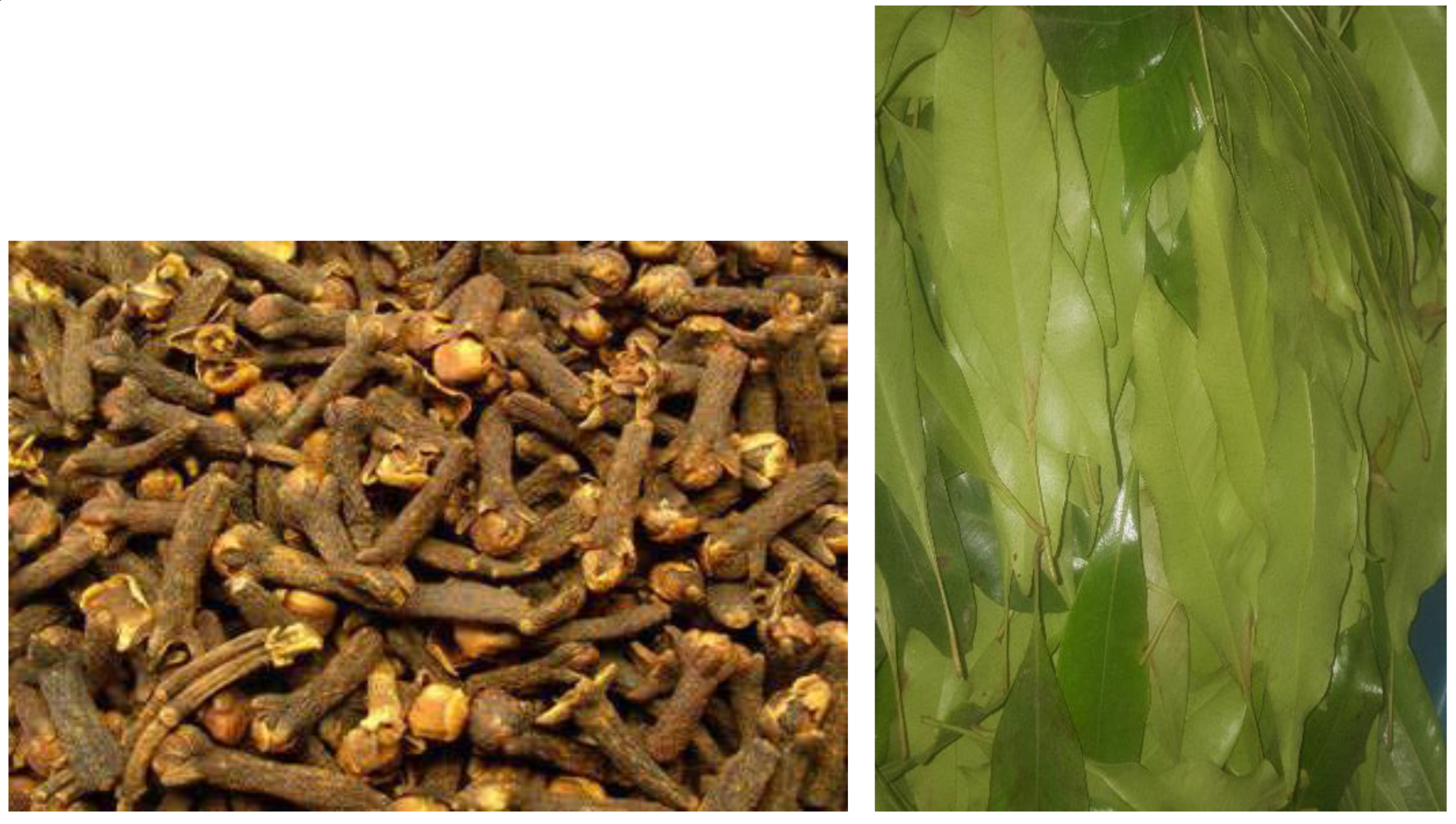
Figure 2.
Chromatograms of the essential oil from flower buds (A) and leaves (B) obtained from the GC analysis.
Figure 2.
Chromatograms of the essential oil from flower buds (A) and leaves (B) obtained from the GC analysis.
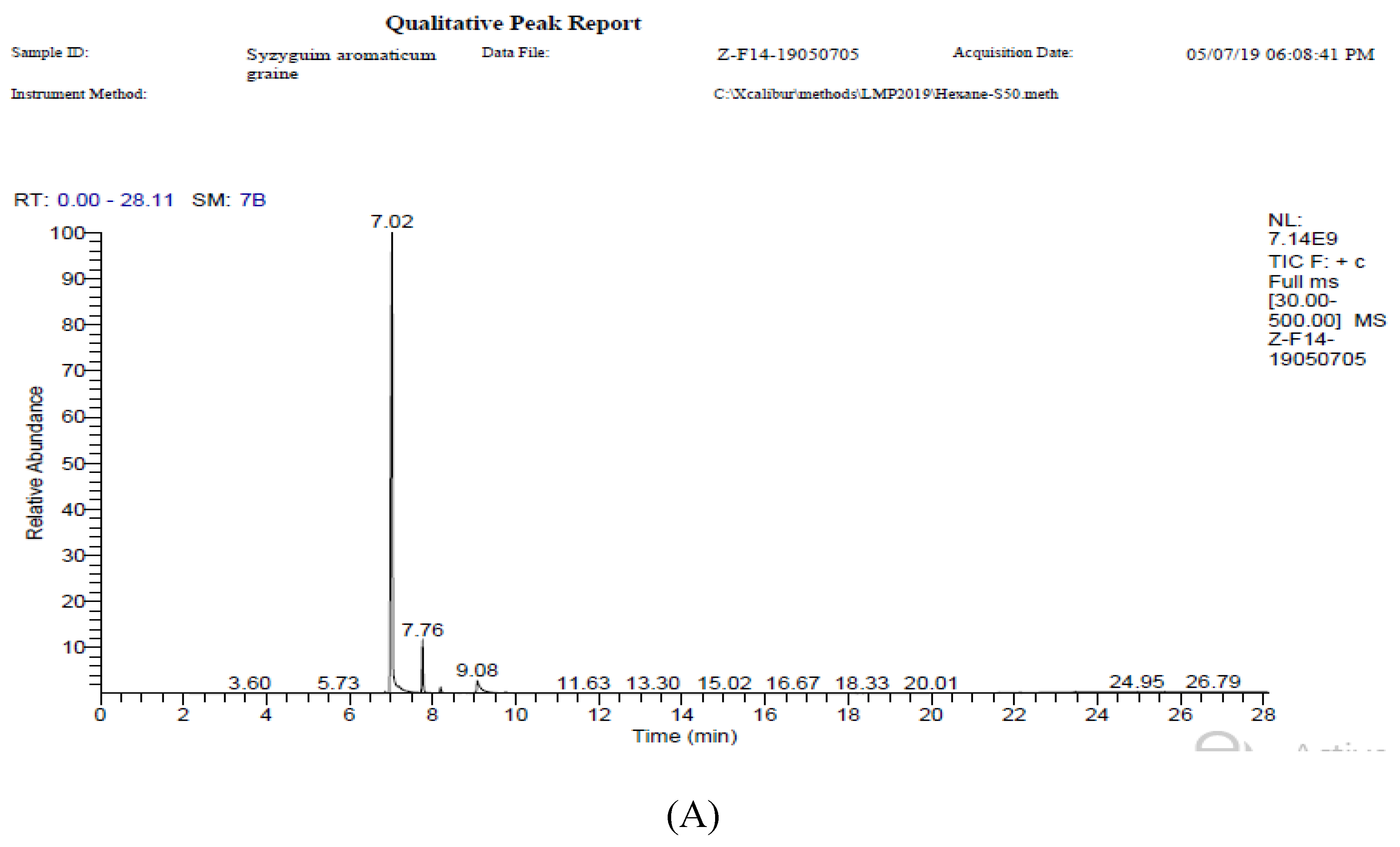
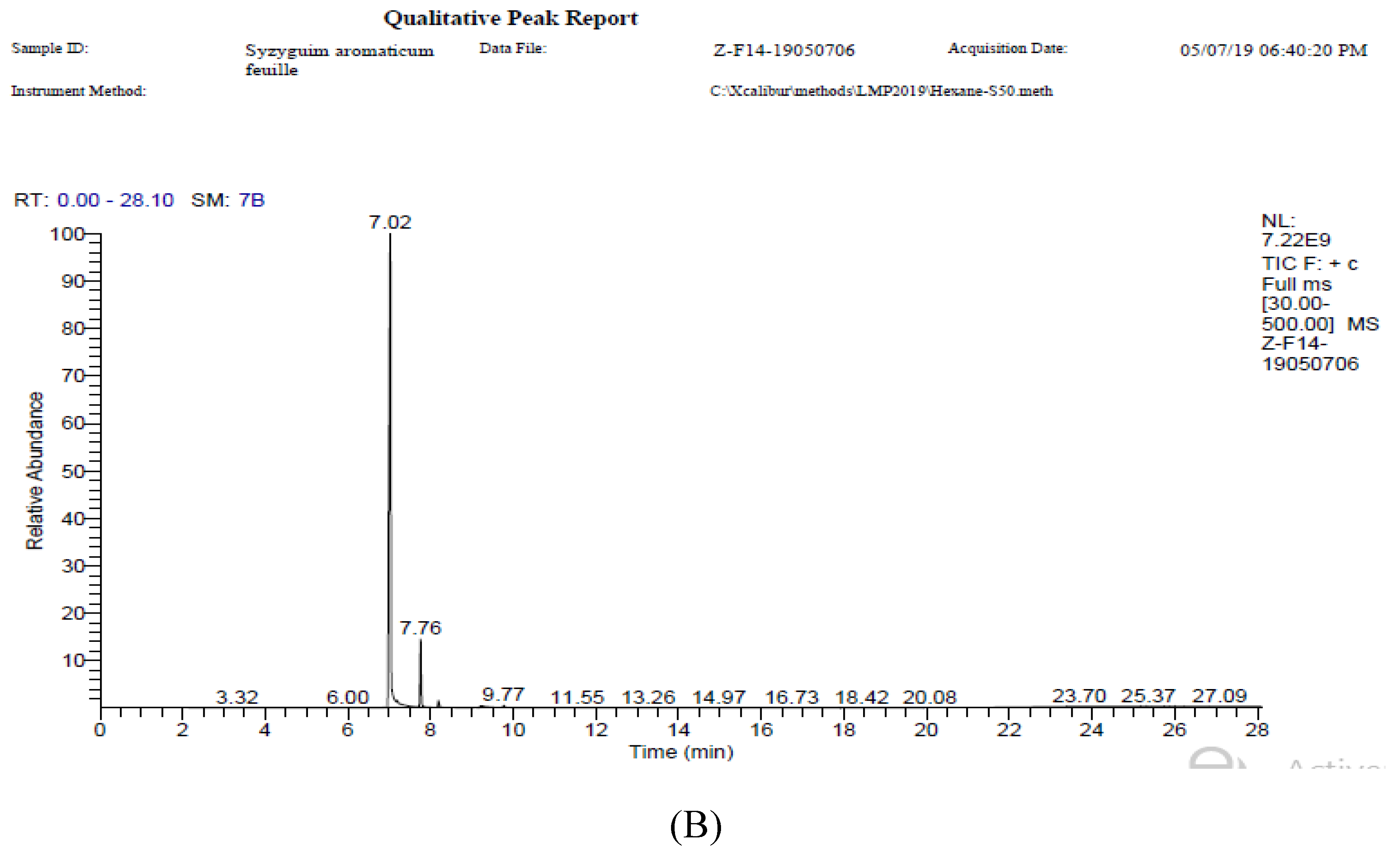
Figure 3.
Mass spectra and chemical structures of major compounds of essential oils from flower buds (A, B, C, D & E) and leaves (B & E) of S. aromaticum.
Figure 3.
Mass spectra and chemical structures of major compounds of essential oils from flower buds (A, B, C, D & E) and leaves (B & E) of S. aromaticum.
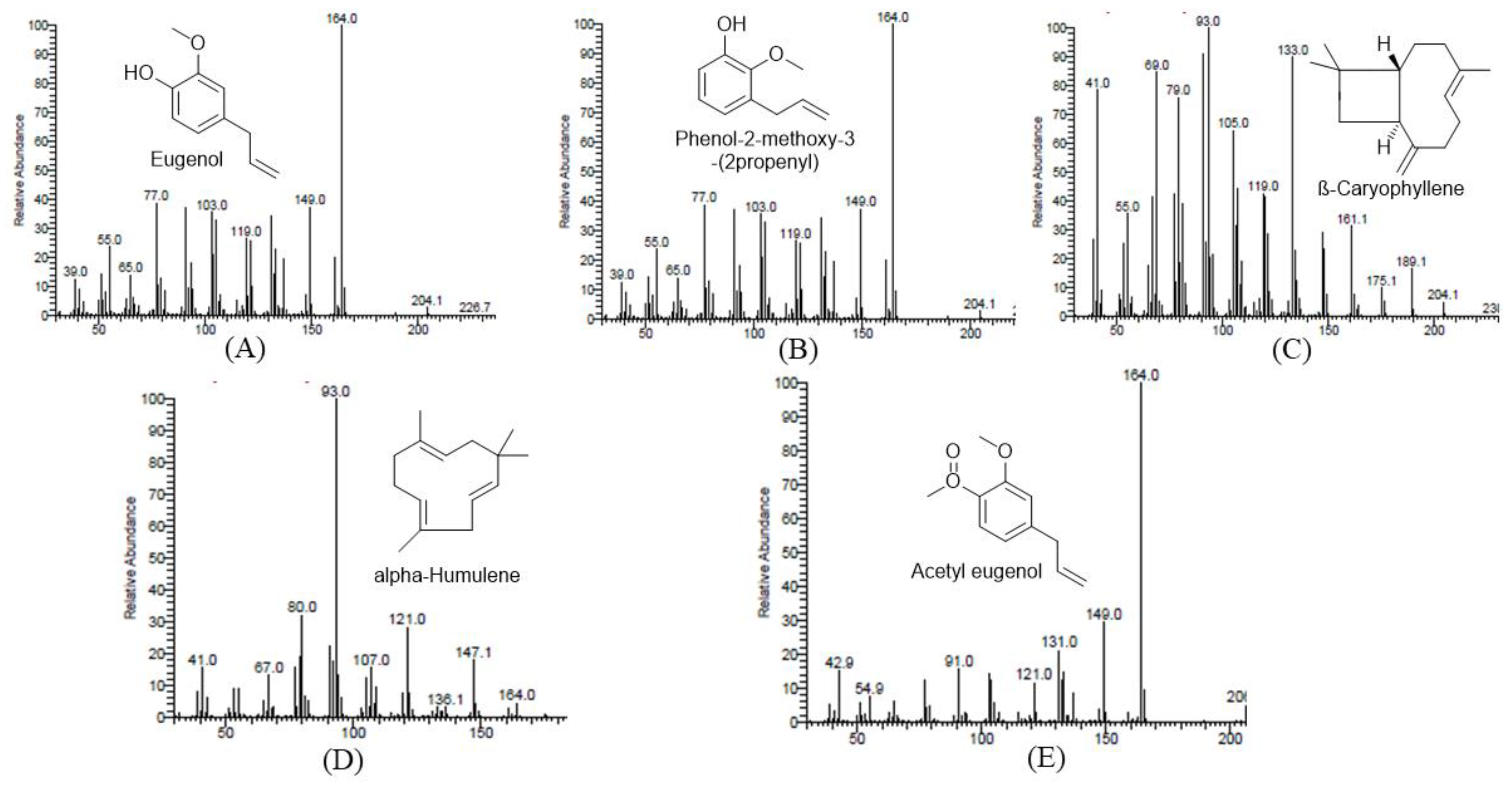
Figure 4.
Percentages of DPPH free radicals scavenged versus concentrations of essential oils of S. aromaticum flower buds and leaves, and the positive control butylhydroxytoluene.
Figure 4.
Percentages of DPPH free radicals scavenged versus concentrations of essential oils of S. aromaticum flower buds and leaves, and the positive control butylhydroxytoluene.
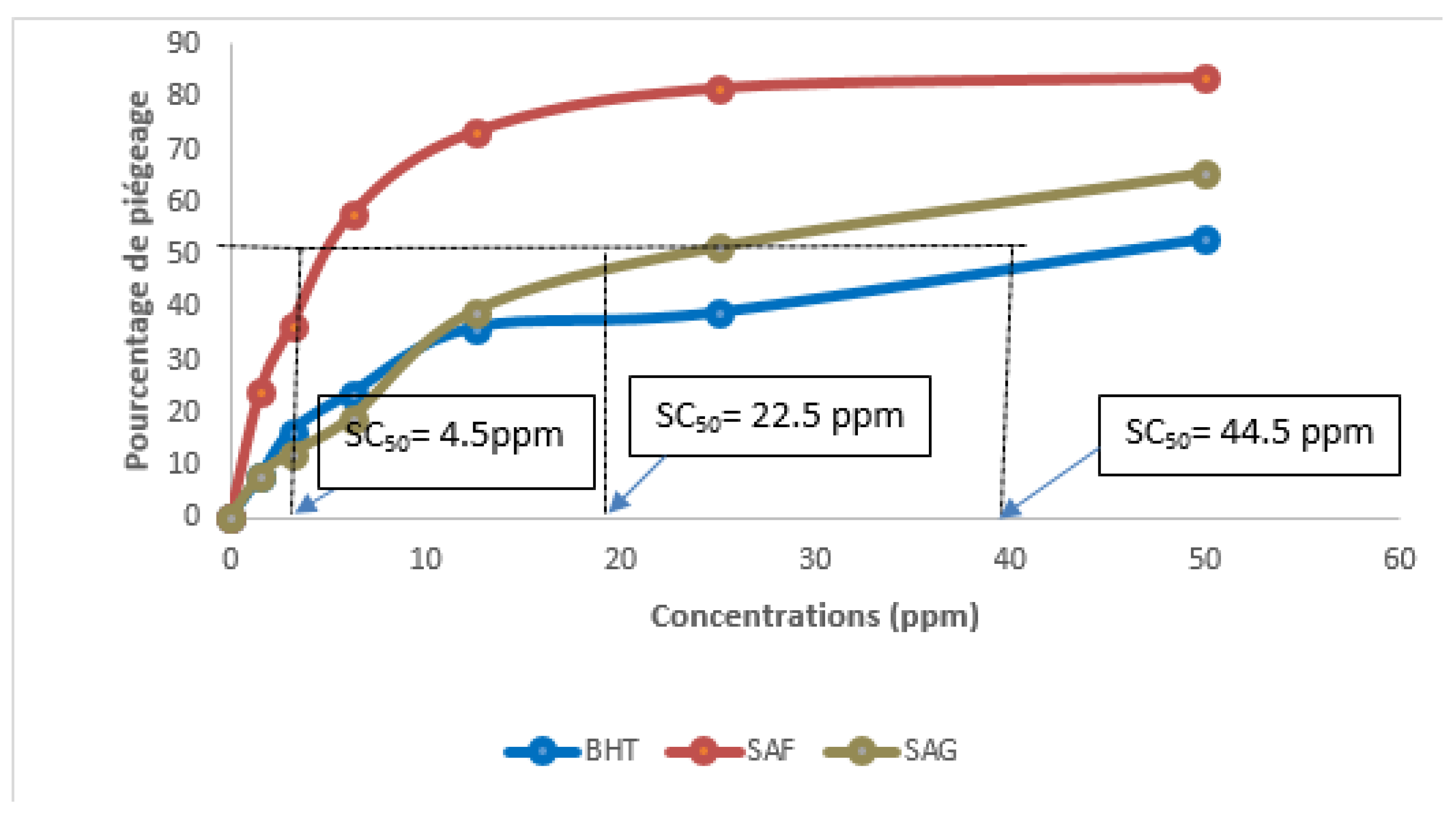
Figure 5.
Percentages of inhibition of ABTS+ free radicals versus concentrations of essential oils of S. aromaticum flower buds and leaves (A) and BHT (B). BHT: Butylhydroxytoluene; SAG: Essential oil from S. aromaticum flower buds; SAF: Essential oil from S. aromaticum leaves.
Figure 5.
Percentages of inhibition of ABTS+ free radicals versus concentrations of essential oils of S. aromaticum flower buds and leaves (A) and BHT (B). BHT: Butylhydroxytoluene; SAG: Essential oil from S. aromaticum flower buds; SAF: Essential oil from S. aromaticum leaves.
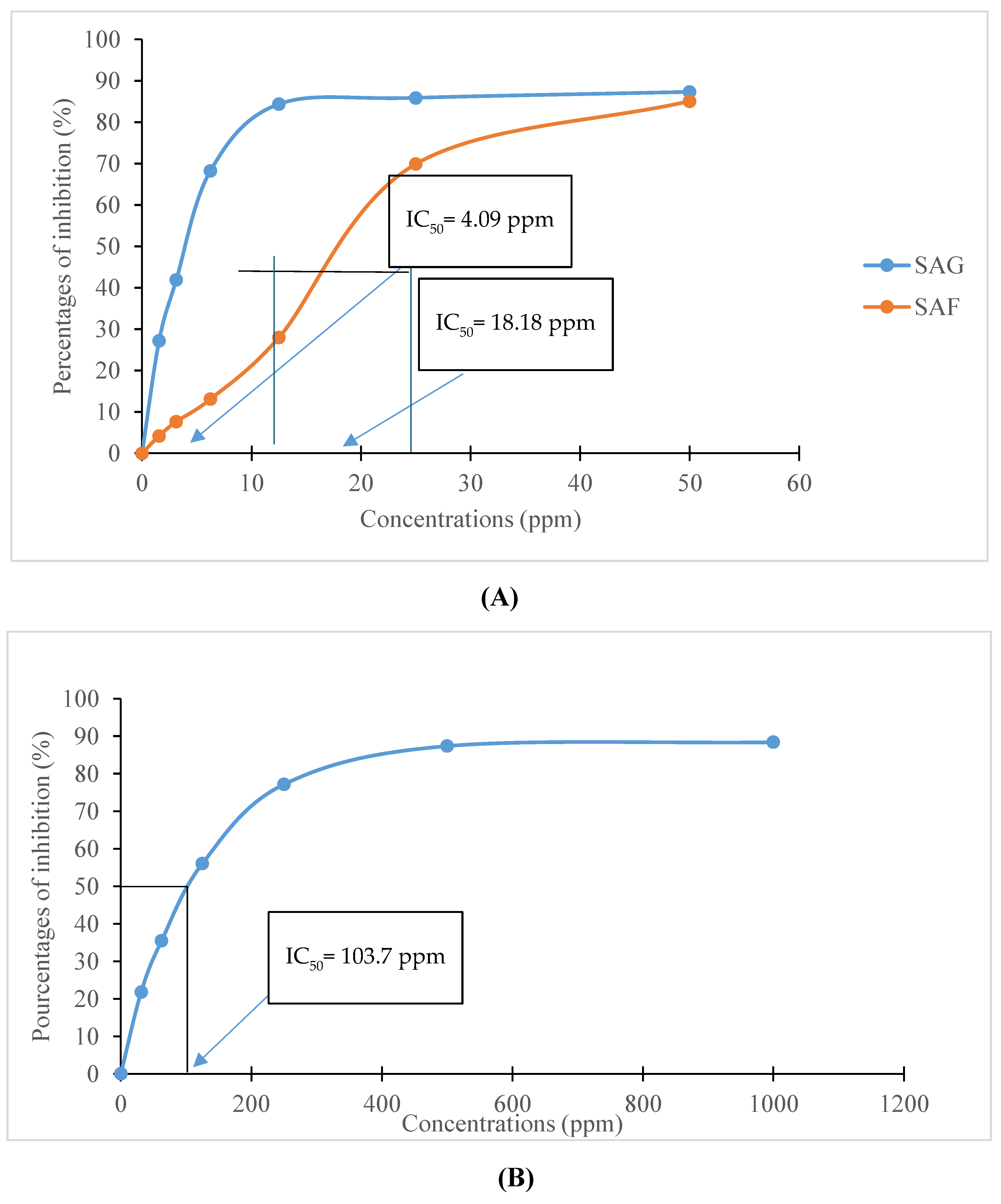
Figure 6.
Graphical representation of optical densities versus concentrations of essential oils from S. aromaticum flower buds (blue color) and leaves (orange color), and BHT (grey color) in FRAP assay. EOs: Essential oils; SAG: Essential oil from S. aromaticum flower buds; SAF: Essential oil from S. aromaticum leaves.
Figure 6.
Graphical representation of optical densities versus concentrations of essential oils from S. aromaticum flower buds (blue color) and leaves (orange color), and BHT (grey color) in FRAP assay. EOs: Essential oils; SAG: Essential oil from S. aromaticum flower buds; SAF: Essential oil from S. aromaticum leaves.
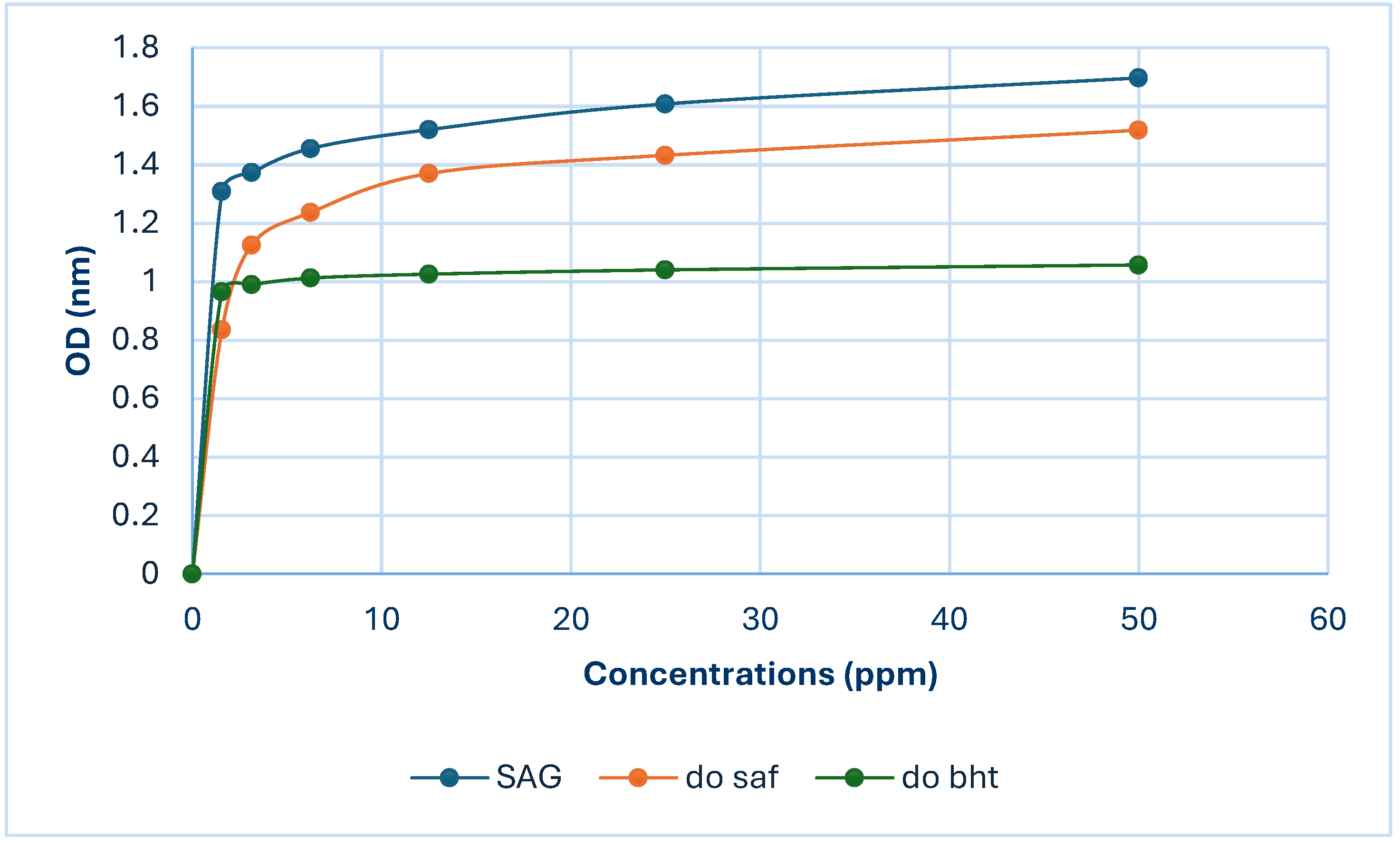

Table 1.
Chemical composition of the essential oils from Syzygium aromaticum flower buds and leaves.
Table 1.
Chemical composition of the essential oils from Syzygium aromaticum flower buds and leaves.
| Syzygium aromaticum | ||||||
| KI | Compounds |
Flower buds (%) |
Leaves (%) |
|||
| Oxygenated monoterpenes | ||||||
| 92.72 | 90.54 | |||||
| 989 | Eugenol | 87.08 | 90.54 | |||
| 995 | Phenol-2-methoxy-3-(2-propenyl) | 1.19 | - | |||
| 1047 | Acetyleugenol | 4.45 | - | |||
| Hydrogenated sesquiterpenes | ||||||
| 7.28 | 9.46 | |||||
| 1012 | β-Caryophyllene | 6.40 | 8.42 | |||
| 1023 | Humulene | 0.88 | 1.04 | |||
KI: Kovats retention index.
Table 2.
Minimum inhibitory concentrations (MICs) and minimum fungicidal concentrations (MFCs).
| (EOFB) | (EOL) | Fluconazole | Ketoconazole | |||||
| Fungal strains | MIC (ppm) | MFC(ppm) | MFC/MIC | MIC (ppm) | MFC (ppm) | MFC/MIC | MIC(ppm) | MIC (ppm) |
| C. albicans | 200 | 400 | 2 | 200 | 400 | 2 | 800 | 25 |
| C. glabrata | 200 | 400 | 2 | 200 | 400 | 2 | 0 | 50 |
| C. tropicalis | 200 | 200 | 1 | 200 | 400 | 2 | 1600 | 50 |
| C. krusei | 200 | 400 | 2 | 200 | 400 | 2 | 0 | 100 |
| Cryptococcus neoformans | 50 | 100 | 2 | 50 | 100 | 2 | 100 | 25 |
EOFB: Essential oil from S. aromaticum flower buds; EOL: Essential oil from S. aromaticum leaves.
Table 3.
Percentages of DPPH free radicals scavenged by the essential oils of Syzygium aromaticum flower buds and leaves.
Table 3.
Percentages of DPPH free radicals scavenged by the essential oils of Syzygium aromaticum flower buds and leaves.
| Concentrations (ppm) | 1.56 | 3.13 | 6.25 | 12.5 | 25 | 50 |
| EOs/ BHT | Percentages of free radicals scavenged by the EOs (%) | |||||
| EOFB | 18.54 ± 0,96a | 25.56 ± 1.19b | 32.41 ± 0.63c | 42.03 ± 0.20d | 49.27 ± 1.18e | 67.37 ± 0.31f |
| EOL | 24.29 ± 1.04a | 38.05 ± 1.42b | 57.95 ± 0.43c | 74.56 ± 0.94d | 81.80 ± 0.84e | 83.86 ± 0.94f |
| BHT | 8.04 ± 0.26a | 16.73 ± 0.30b | 25.10 ± 0.45c | 35.12 ± 0.91d | 38.99 ± 0.89e | 52.98 ± 0.79f |
BHT: Butylhydroxytoluene; EOs: Essential oils; EOFB: Essential oil from S. aromaticum flower buds; EOL: Essential oil from S. aromaticum leaves. The lettres a, b, c, d, e et f are assigned to values that are significantly different at p < 0.05, compared to the value obtained for the negative control.
Table 4.
Median scavenging concentrations (SC50), effective concentration 50 (CE50) and antioxidant power (AP) of S. aromaticum essential oils following DPPH assay.
Table 4.
Median scavenging concentrations (SC50), effective concentration 50 (CE50) and antioxidant power (AP) of S. aromaticum essential oils following DPPH assay.
| Essential oils/BHT | SC50 (g/l) | CE50 (g /mol) | AP(mol/g) |
| EOFB | 22.5x10⁻³ | 2.25×10³ | 4.44×10⁻⁴ |
| EOL | 4.5x10⁻³ | 4.5×10² | 2.22×10⁻³ |
| BHT | 44.510-3 | 4.45×10³ | 2.24×10⁻⁴ |
BHT: Butylhydroxytoluene; EOFB: Essential oil from S. aromaticum flower buds; EOL: Essential oil from S. aromaticum leaves.
Table 5.
Percentages of inhibition of ABTS+ by the essential oils of S. aromaticum flower buds and leaves at various concentrations.
Table 5.
Percentages of inhibition of ABTS+ by the essential oils of S. aromaticum flower buds and leaves at various concentrations.
| Concentrations (ppm) | 1.56 | 3.13 | 6.25 | 12.5 | 25 | 50 |
| ABTS test | Percentages of inhibition (%) | |||||
| EOFB | 27.18 ± 1.70a | 41.91 ± 0.38b | 68.27 ± 1.49c | 84.36 ± 1.39d | 85.88 ± 0.71d | 87.32 ± 0.21e |
| EOL | 4.18 ± 0.43a | 7.65 ± 0.62b | 13.10 ± 1.04c | 27.98 ± 1.25d | 69.89 ± 1.94e | 85.08 ± 0.21f |
| Concentrations (ppm) | 31.25 | 62.25 | 125 | 250 | 500 | 1000 |
| BHT | 21.83 ± 0.58a | 35.50 ± 1.27b | 56.03 ± 1.36c | 77.16 ± 1.31d | 87.37 ± 1.35e | 88.39 ± 0.06e |
BHT: Butylhydroxytoluene; EOFB: Essential oil from S. aromaticum flower buds; EOL: Essential oil from S. aromaticum leaves. Values are presented as percentages ± SD (Standard Deviation). The letters a, b, c, d, e and f denote significant differences between values at p < 0.05.
Disclaimer/Publisher’s Note: The statements, opinions and data contained in all publications are solely those of the individual author(s) and contributor(s) and not of MDPI and/or the editor(s). MDPI and/or the editor(s) disclaim responsibility for any injury to people or property resulting from any ideas, methods, instructions or products referred to in the content. |
© 2024 by the authors. Licensee MDPI, Basel, Switzerland. This article is an open access article distributed under the terms and conditions of the Creative Commons Attribution (CC BY) license (http://creativecommons.org/licenses/by/4.0/).
Copyright: This open access article is published under a Creative Commons CC BY 4.0 license, which permit the free download, distribution, and reuse, provided that the author and preprint are cited in any reuse.


