
Submitted:
05 December 2023
Posted:
07 December 2023
You are already at the latest version
Abstract
In order to reveal the frost heaving mechanism of void water behind the lining of high-speed railway tunnels in cold regions,the voids were first classified according to the positional relationship between voids and waterproof panels,and then the water supply and discharge conditions of different types of voids were investigated,then the influence of the excretion conditions on the frost heave force was experimentally studied. Based on these conditions,circular wedge-shaped and flying saucer-shaped void freezing models were established to analyze the evolution process of accumulated water frost heave. Then,according to the relative position of the excretion channel and the void,the excretion coefficient was introduced,and the calculation method of the frost heaving force of the voided water was proposed,and the influencing factors and laws of the frost-heave force were revealed. The results are shown as follows: 1) The blockage of the excretion channel will lead to the generation of frost heaving force; 2) The freezing and thawing process of the water within the cavity develops from the thinnest part of the void edge to the thicker part,and the process of frost heave-thaw,water replenishment-re-freeze heave of the water within the cavity leads to greater and greater frost heave force; 3) The frost-heaving force of the water within cavity is controlled by the void height and the position of the excretion channel. The larger the cavity height is or the closer the excretion channel is to the bottom surface of the void,the greater the frost-heave force is.
Keywords:
High-speed railway tunnel in cold regions
; lining void
; stagnant water
; excretion coefficient
; frost heaving force
1. Introduction
High-speed rail tunnels in cold areas are a special type of tunnel that are very difficult to construct, operate and maintain. Due to the obvious piston wind effect in high-speed rail tunnels, the temperature fluctuations in high-speed rail tunnels in cold areas are more severe [1]. The length and extreme value of the negative temperature section are significantly longer than those of ordinary railway tunnels and highway tunnels. In addition, high-speed rail tunnels are faster and safer to drive. The requirements are better, and the problem of freezing damage to tunnels in cold regions is more complex and harmful. The main manifestations of frost damage to tunnels in cold regions include ice accumulation on the tunnel bed, ice hanging on the lining, surface peeling, cracking and loss of blocks, etc. [2]. The harm of collapse is particularly serious. Understanding the mechanism of frost heaving force caused by water accumulation in the backing and establishing its calculation and analysis model are the key prerequisites for the prevention and control of this type of frost damage.
The accumulation of water in the cavity of the lining arch is restricted in drainage during the freezing process, and the volume expands to generate frost heave force [3]. Therefore, the formation and magnitude of the frost heave force are related to the size and shape of the cavity, water drainage conditions and temperature. The positive and negative fluctuation processes are directly related, their formation mechanism and mechanical model are extremely complex, and relevant research is still lacking [4,5]. Current research on frost heave due to water accumulation in the lining mainly focuses on the damage mechanism of the lining structure caused by frost heave force. There is a lack of in-depth understanding of the formation mechanism and magnitude of the frost heave force, and most of them use empirical or idealized hypothetical models. For example, Fan Lei [6] used the semi-formula and semi-empirical method of "elastic equivalent coefficient method" to calculate the magnitude of the frost heave force of water accumulated between the lining structure and the surrounding rock. Wang Yawei [7] targeted a specific circumferential elongated cavity and simplified the lining structure into a semi-circular arch model constrained by hinge supports and elastic fixed ends, and conducted a quantitative analysis of the frost heave force behind the lining.
In view of the above limitations in the research on the frost heaving of tunnel linings in cold regions, this paper uses numerical simulation methods to study different types of voids and frost heaving in combination with the location and morphological characteristics of void formation in the lining arch and the supply and discharge conditions of groundwater. The evolution characteristics of frost heave can be studied to study the formation conditions of frost heave force, and then establish a calculation model of frost heave force to provide support for research on frost heave prevention and control.
2. Lining Void form and Water Temperature Conditions
2.1. Lining Void Form
The reasons for the formation of voids in the secondary lining of tunnels are very complex [8], which mainly include: the excavation contour surface or the surface of the primary support is uneven, and the waterproof board is laid to form a cavity; the margin of the waterproof layer is insufficient, and the waterproof board cannot adhere to the surface of the primary support. [9]; The workability of concrete is poor, the density of lining steel bars is too high, the pumping pressure is insufficient, and the concrete cannot flow to the edge of the formwork [10]; The dry shrinkage of concrete and the influence of the longitudinal slope of the tunnel [11].
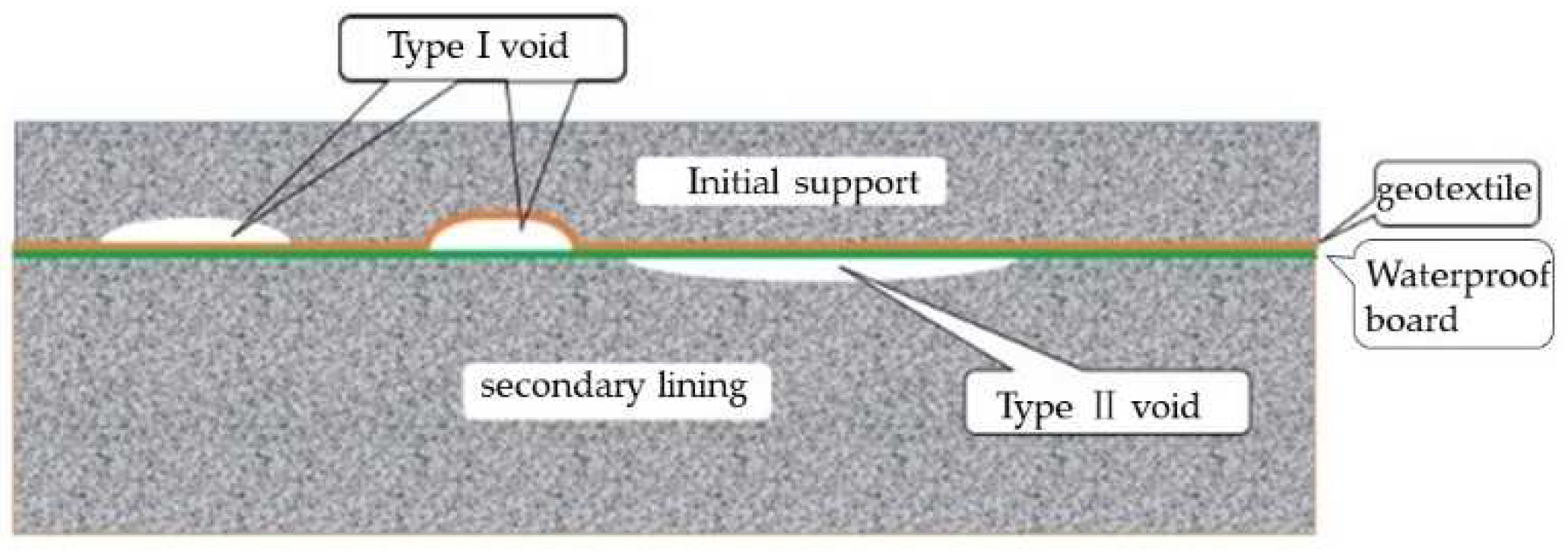
Figure 1.
Void classification behind the lining.
2.2. Conditions for Supply and Discharge of Empty Accumulated Water behind the Lining
For Type I voids, because it is located outside the waterproof layer, the supply and discharge channels of groundwater are open, and groundwater can penetrate from any direction of the voids, leaving the voids in a state of water accumulation; when the water inside the voids freezes and expands At this time, part of the accumulated water will be discharged along the drainage channel.
For type II hollowing, it is located inside the waterproof layer, and the supply and discharge channels of groundwater are fixed. The groundwater must pass through the waterproof layer through specific channels before it can flow into the hollowed cavity; when the water in the hollow freezes and expands, If the supply and discharge channels are not frozen, part of the accumulated water will also be discharged; if the channels are frozen first, the accumulated water in the cavity cannot be discharged, and the frost heave of the water body will cause a large frost heave force [12,13]. Therefore, the magnitude of the frost-heaving force of voided water is closely related to the freezing time of the excretion channel.
2.3. Short-Period Fluctuation Model of Lining Surface Temperature
In this study, the temperature field monitoring work of high-speed railway tunnels in cold areas was carried out based on the Harbin to Mudanjiang high-speed railway, and the Hufengling Tunnel and Zhishan Tunnel, which had the highest altitude on the line, were selected for monitoring. In previous studies, the sine function with an annual cycle has been widely used to express tunnel temperature changes, and has been used as a temperature load or boundary condition in model tests and numerical simulations, such as Hongfu Tunnel [14] and Galongla Tunnel [15] all use the temperature load function in the form of equation (1).
However, continuous measured results of the temperature field show that the diurnal temperature fluctuations caused by the alternation of day and night are very significant and widespread [16,17,18]. In on-site measurements, when the temperature difference in a day reaches more than 10°C, it is considered that the temperature change on that day has obvious short-period temperature fluctuation characteristics. The temperature fluctuations at the entrance and exit of the Hufengling Tunnel reached 90 times in half a year, and the entrance and exit of the Zhishan Tunnel The temperature fluctuated 130 times in half a year.
Therefore, a sine function with a daily period is used to characterize the short-period fluctuations of the tunnel temperature field, as shown in Equation (2).
In the formula: t is time, h; Tb is the amplitude of short-period temperature change, ℃; Tmb is the daily average temperature, ℃; is the daily initial phase, rad.
3. Simulation Analysis of the Formation Mechanism and Evolution Process of Frost Heave Force
3.1. Effect of Excretion Conditions on Frost Heave Force
In order to explore the freezing process of the voided water behind the lining and the formation mechanism of frost heave force, a frost heave test of voided water behind the lining was carried out. The test model is composed of two concrete specimens with dimensions of 0.4 m × 0.4 m × 0.2 m, and the size of the hollow cavity is set to 0.2 m × 0.2 m × 0.1 m, as shown in Figure 2. A temperature sensor is embedded in the model to monitor whether the water in the cavity is frozen; a film pressure sensor is also installed to test the frost heave force.
Set the test conditions according to the tunnel emptying form, that is:
Working condition 1: During the freezing process of type I emptying water, the water supply and discharge channels do not freeze;
Working condition 2: During the freezing process of type II emptying water, the water supply and drainage channels are frozen first, and the water body in the model freezes later.
By freezing the bottom of the specimen, it was found that: in working condition 1, the freezing process of the water body in the cavity develops from the bottom upward, and the frost heave force in the cavity is almost zero; in working condition 2, the freezing process of the water body in the cavity Also developing upward from the bottom of the cavity, a large frost heave force is generated in the cavity, with the average pressure reaching 0.16 MPa.
3.2. Frost-Heaving Mechanism of Voided Water behind Lining under Short-Period Fluctuation Conditions
- 1)
- Numerical simulation plan
This article uses FLUENT simulation software and based on the Solidification/Melting model to analyze the process of freezing of the dewatered water behind the lining under the condition of short-period fluctuations in lining surface temperature. Considering that tunnel vault voids often occur at the highest point of each mold lining near the end formwork, and the void cavities formed by concrete pouring are mostly circular wedge and flying saucer shapes, circular wedge and flying saucer shaped void models were established.
- ①
- Boundary conditions
According to the monitoring results of the tunnel temperature field, considering the situation where the short-period temperature amplitude of the tunnel reaches 15 ℃ under extreme conditions, the short-period fluctuation function of T0=-5+15×sin(2πt/24+φ) is used as the temperature loading on the lining surface function, the lining surface adopts a convective boundary.
- ②
- Supply and excretion conditions
Based on the supply and discharge conditions of groundwater, two working conditions of top channel and lateral channel are designed. As shown in Figure 3 and Figure 4, the left side shows the shape of the hollow cavity, and the right side shows the location of the supply and excretion channels. In the x-y cross-sectional view of Figure 6, the drainage channel is located at the top of the hollow cavity, which corresponds to the working conditions in which water seeps into the cavity after the waterproof panel on the tunnel vault is damaged; in the y-z cross-section of Figure 3 and Figure 4, the drainage channel is located on the side of the cavity, corresponding to the tunnel arch waist and other parts. Water seepage, water seepage enters the vault cavity along the waterproof board.
- ③
- Grid and parameters
The concrete and water-filled cavity within the void range of the vault are selected as the research object. The longitudinal length of the circular wedge-shaped and flying saucer-shaped voids is 2.0 m, and the maximum height of the void is 20 cm. The parameters selected for simulation are shown in Table 1.
- 2)
- Freezing and thawing analysis of empty accumulated water
- ①
- Freezing process of water inside the void
Figure 5 and Figure 6 show the freezing process of water accumulation in circular wedge-shaped voids and flying saucer-shaped voids in the tunnel lining respectively.
It can be seen from Figure 5 that during the cooling process, the freezing of the voided water behind the lining starts from the edge of the voided cavity and develops from the thinnest part of the voided cavity to the thicker part; during the freezing process, the freezing of the voided water at the side of the voided cavity The excretory channels (y-z cross-section) freeze first, and the channels at the top of the void freeze last (x-y cross-section).
It can be seen from Figure 6 that the freezing process of the voided water behind the lining also starts from the edge of the voided cavity and develops from the thinnest part of the voided cavity to the thicker part; during the freezing process, the freezing process is located at the side of the voided cavity (x-y cross-sectional view ) and the excretory channels at the top (y-z section view) are frozen first.
In general, the freezing sequence of water in the cavity is related to the height of the cavity and has nothing to do with temperature fluctuations. The smaller the thickness of the water body in the cavity, the easier it is for the water body to freeze. Under short-period fluctuation conditions, temperature fluctuations only affect the freezing rate of water and have no effect on the sequence of frozen parts.
- ②
- Melting process of water inside the void
Under short-period fluctuation conditions, when a positive temperature occurs in the lining structure, the ice formed starts to melt from the thinnest part, and then develops to the thicker part. This is the same as the freezing development process, that is, the ice that freezes first when cooling. place, it is also the first to melt when the temperature rises, as shown in Figure 7.
- ③
- The formation mechanism of frost heave force within the void
For Type I voiding, the freeze-thaw cycle basically does not produce frost heave force. Since the hollowed-out top surface is the initial support, it can be considered that the entire top surface is a drainage channel. Under the condition of short-term temperature fluctuations, whether it is freezing or thawing, the groundwater supply and drainage channels will remain open, and frost heaving will basically not occur. force.
For type II voiding, the frost-heaving force in the cavity will gradually increase under freeze-thaw cycles. Since the top surface of the hollow is a waterproof layer, the water accumulated in it is the seepage of groundwater flowing through the contact surface of the lining and waterproof layer into the hollow cavity. The groundwater infiltration channels are located at the edge of the hollow cavity, where the thickness of the water body in the cavity is the largest. Thin, it is the first part to be frozen during the freezing process. Therefore, under the condition of short-term temperature fluctuations, when the temperature drops and freezes, the drainage channel freezes first, causing frost heaving force in the cavity; when the temperature rises and melts, the drainage channel melts first, and the cavity volume increases due to frost heaving of accumulated water, and the new water body along the channel into the cavity. When freezing again, the excretion channel is also frozen first, causing frost heaving force in the cavity and causing the cavity volume to increase again. That is, under the condition of short-term temperature fluctuations, the water body in the cavity will undergo a cyclic process of frost heaving - melting, water supply - and then frost heaving. This will lead to the frost heaving force of the structure under the conditions of short-term temperature fluctuations gradually increasing, and lining cracks will occur., or even blockage, collapse and other diseases.
4. Calculation and Analysis Model of Frost Heave Force
After the formation mechanism and evolution process of frost heave force are obtained through numerical simulation, a more widely applicable frost heave force calculation method should be proposed, that is, an analytical model that considers the calculation and analysis of frost heave force under different drainage conditions.
4.1. Frost Heave Force Calculation Model
At present, the frost-heaving force of local water-retaining cavities is mostly calculated by referring to the theoretical definition of the tunnel’s overall freeze-thaw circle. The field test frost heave force ranges from 0.06 to 0.30 MPa [19], and the frost heave force calculated analytically can reach more than 10 MPa [20]. The results of the two are quite different. There is currently no reliable basis for calculating the frost-heaving force due to the freezing of trapped water behind the tunnel lining.
Some scholars have conducted research on the frost heave force of the local water storage space around the tunnel [21]. Based on the cavity caused by the uneven early excavation surface of the tunnel, a frost heave force calculation model considering the elastic resistance of the lining has been proposed. On this basis, Fan Lei et al. [6] modified and re-derived the original local water frost heave model by considering the elastic resistance of ice body deformation, as shown in Figure 8. This model uses three series-connected springs to simulate the deformation of the cavity after the frost heave force is generated, so that point O does not shift, sets the deformation coordination conditions for the simultaneous displacement of the surrounding rock and lining structure after the frost heave, and derives the frost heave force. Calculation formula:
In the formula: α is the frost heave rate of ice; t is the thickness of the cavity, m; Kr is the elastic resistance coefficient of the surrounding rock, MPa/m; K1 is the elastic resistance coefficient of the lining, MPa/m; *Ki is the elastic resistance coefficient of the ice, MPa/m.
However, the above models all ignore the freezing process of water in the cavity and the supply and discharge conditions of groundwater during freezing. They believe that the water-retaining cavity is closed, which is different from the actual situation. Therefore, a frost heave force that considers the discharge conditions of the empty cavity is proposed. Computational model. Since tunnel vault voids often occur at the highest point of each mold lining near the end formwork, and the void cavities formed by concrete pouring are mostly circular wedge-shaped, the frost heave force is calculated based on the circular wedge voids.
4.2. Frost-Heaving Force of Circular Wedge-Shaped Voiding without Considering Drainage Conditions
Assuming that the surrounding rock has the same properties and the gravity of the lining and surrounding rock is not considered, the water storage space is formulated as a circular wedge shape. Referring to the calculation model in Figure 9, first calculate the frost heave force caused by the voided water without considering drainage conditions.
According to the local deformation theory, under the action of unit frost heave force, the deformation displacement value of the surrounding rock is:
The deformation displacement value of the lining is:
Since the frost heave forces acting on the lining structure and surrounding rock are the same:
Let,
The calculation formula for the volume expansion of water in the cavity is:
In the formula, Vv is the cavity volume or the volume of water in the cavity.
Now assume that the outer radius of the lining is r0, the maximum height of the lining void is , the plane angle at the corresponding position is the void length, z0, the center of the arc of the tunnel arch is the origin, and the longitudinal direction of the tunnel is the z-axis to establish a coordinate system. Its spatial model is as follows As shown in Figure 10.
The geometric equation of the cavity boundary curve is:
Then the volume of the cavity:
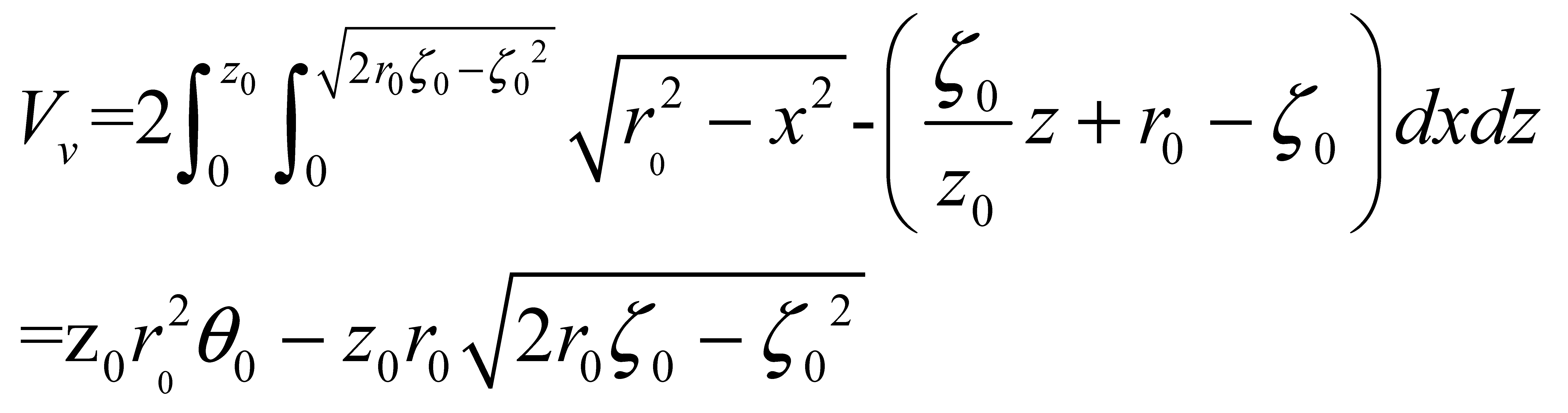
In the formula,
Cavity bottom area:
Cavity top surface area:
The amount of expansion caused by the freezing of water is equal to the volume deformation of surrounding rock and lining, that is:
Combining equations (9)-(15), the deformation value of the lining under unit frost heave force is:
The frost heaving force on the lining structure is:
Class IV surrounding rock conditions were selected for calculation, the outer radius r0 of the lining was taken to be 6.81 m, and the frost heave rate α was taken to be 9%. The elastic resistance coefficient of the surrounding rock is taken according to the "Railway Tunnel Design Code" [22]. As shown in Table 2, the elastic resistance coefficient of the lining is 75 MPa/m, and the elastic resistance coefficient of the ice body is 50 MPa/m [23].
4.3. Considering the Frost Heaving Force of Circular Wedge Hollowing under Drainage Conditions
When there is a groundwater drainage channel in the cavity, part of the groundwater is extruded and discharged during the frost heaving process of the water body in the cavity, and then the drainage channel is frozen, and the remaining water body freezes and heaves to generate frost heave force. The volume of discharged water is mainly related to the location of the drainage channel and the shape of the cavity. The frost heave force when there is a drainage channel is analyzed using a circular wedge-shaped cavity. As shown in Figure 11, the height of the emptying cavity is , and the drainage channel is located in the range of 0~. The water body freezes from the bottom of the cavity. As the freezing front moves upward, the drainage channel is frozen, and the water body in the cavity cannot be drained, resulting in Frost heave force is generated.
Select the instantaneous state, the height of the freezing front and the excretion channel are the same, and when they are located at , the excretion channel freezes. When there is an excretion channel, the frost heave force in the cavity is P-, let:
In the formula, is the discharge coefficient. When the water body in the cavity frost heaves, the ratio of the frost heave force when there is water discharge to the frost heave force when there is no discharge is determined according to the relative position of the discharge channel and the void.
When the water body below the drainage channel is frozen, the volume of water body that will generate frost heave force during the subsequent freezing process is:
At this time, the drainage channel has frozen. According to the calculation results of (4-14), the frost heave force generated by the remaining water body is:
Comprehensive equations (17), (18), and (23) show that:
When =0, that is, when the volume of water discharged during the freezing process is 0, the frost heave force . When , the volume of discharged water is equal to the volume of water expanded when freezing, and the frost heave force . The values of the excretion channel at different positions of the cavity height are obtained. During actual engineering use, the value can be determined by referring to the relative position of the excretion channel and the emptying cavity, as shown in Table 3. The graph of the relationship between the excretion coefficient and excretion channel position is shown in Figure 12.
It can be seen from the figure that the magnitude of the frost heave force is directly related to the location of the excretion channel. When the excretion channel is located at the top of the void, the water in the cavity is squeezed out during the freezing process, and there is basically no frost heave force in the cavity; when the excretion channel is located at the bottom edge of the void, the excretion channel is frozen first during the freezing process, and the void The cavity becomes a closed space, and a large frost heave force will be generated in the cavity; both the discharge coefficient and the frost heave force decrease as the distance between the discharge channel and the hollow bottom increases.
5. Conclusions
- (1)
- Based on the positional relationship between voids and waterproof panels, two types of void definitions are proposed, and the water temperature conditions of voids are revealed. That is, type I voiding with open drainage conditions is located on the outside of the waterproof board; type II voiding is located on the inside of the waterproofing board with semi-open drainage conditions; and the short-period fluctuation characteristics of the tunnel temperature are characterized by a sinusoidal function with a daily period.
- (2)
- Experiments combined with numerical simulations analyzed and summarized the formation mechanism and evolution process of the frost heaving force of deconcentrated water. Through experiments, the influence of different drainage conditions on frost heave force was found. On this basis, short-period fluctuations in temperature were considered, and the circular wedge-shaped and flying saucer-shaped voiding models were proposed. Through numerical simulation, it was found that the freezing and melting of voided water all started from the voiding The thinnest part of the edge develops towards the thicker part. During the freezing process of devoured water, type I devacuation will not produce frost heave force, while type II devacuation will produce greater frost heave force due to the freezing of the drainage channel. The process of frost heaving-melting, water replenishment-re-frost heaving of Type II devacuated water causes the frost heaving force to become larger and larger.
- (3)
- According to the relative position of the drainage channel and the void, the drainage coefficient is introduced, and an analytical model for the calculation and analysis of frost heave force is proposed. Taking the ratio of the frost heave force when there is water discharge and the frost heave force when there is no discharge as the discharge coefficient, it is found that the closer the discharge channel is to the relative position of the hollow bottom, the greater the discharge coefficient and the greater the frost heave force.
References
- Pan, H.Y.; Li, H.; Zhang, T.S.; Laghari, A.A.; Zhang, Z.T.; Yuan, Y.P.; Qian, B. A Portable Renewable Wind Energy Harvesting System Integrated S-rotor and H-rotor for Self-Powered Applications in High-Speed Railway Tunnels. Energy Conversion and Management 2019, 196, 56–68. [Google Scholar] [CrossRef]
- Li, Y.S.; Chen, S.G. Analytical Solution of Frost Heave Force for Noncircular Tunnels in Cold Region. Chinese Journal of Theoretical and Applied Mechanics 2019, 196, 56–68. [Google Scholar]
- Wu, H.B. A Research on Frost Heaveforce and Temperature Field Inside Long Road Tunnels in Cold Are. Master’s Thesis, Southwest Jiaotong University, Chengdu, China, 2015. [Google Scholar]
- He, B.G.; Liu, E.R.; Zhang, Z.Q.; Zhang, Y. Failure Modes of Highway Tunnel with Voids Behind the Lining Roof. Tunnelling and Underground Space Technology 2021, 117, 104147. [Google Scholar] [CrossRef]
- Zi, H.; Ding, Z.D.; Ji, X.F.; Liu, Z.C.; Shi, C.H. Effect of Voids On the Seismic Vulnerability of Mountain Tunnel. Soil Dynamics and Earthquake Engineering 2021, 148, 106833. [Google Scholar] [CrossRef]
- Fan, L.; Zeng, Y.H.; H, C.; Cheng, X.H. Magnitude and Distribution of Frost Heave Force for Cold Region Strong Rock Tunnels. China Railway Science 2007, 28, 44–49. [Google Scholar]
- Wang, Y.W.; Zheng, J.Y. Study of Simplified Mechanical Models of Frost-Heaving of Water Behind Highway Tunnel Lining and Its Error Analysi. Tunnel Construction 2018, 38, 104–109. [Google Scholar]
- Yang, J.; Gong, L. Research on Remediation Techniques for Insufficient Lining Thickness of Voided Arch Roof in Operational Tunnels. Highway 2022, 67, 321–329. [Google Scholar]
- Du, P.L. Discussion on Causes, Remediation and Precautionary Measures for Unseen Voids in the Secondary Linings of High-speed Railway Tunnel. Railway Construction Technology 2019, 306, 101–104. [Google Scholar]
- Zhou, X.H.; Ren, X.C.; Ye, X.Q.; Tao, L.L.; Zeng, Y.H.; Liu, X.R. Temperature field and anti-freezing system for cold-region tunnels through rock with high geotemperatures. Tunnelling and Underground Space Technology 2021, 111, 103843. [Google Scholar] [CrossRef]
- Ding, Z.D.; Wen, J.C.; Ji, X.F.; Ren, Z.H.; Zhang, S. Experimental Investigation of the Mechanical Behavior of NC Linings in consideration of Voids and Lining Thinning. Advances in Civil Engineering 2020, 2020, 1–14. [Google Scholar] [CrossRef]
- Liu, H.Y.; Yuan, X.P.; Xie, T.C. A damage model for frost heaving pressure in circular rock tunnel under freezing-thawing cycles. Tunnelling and Underground Space Technology 2019, 83, 401–408. [Google Scholar] [CrossRef]
- Gao, Y.; Jiang, Y.J.; Li, B. Estimation of effect of voids on frequency response of mountain tunnel lining based on microtremor method. Tunnelling and Underground Space Technology 2014, 42, 184–194. [Google Scholar] [CrossRef]
- Wu, Y.M.; Li, W.B.; Fu, H.L.; Liu, M.J. Numerical simulation of freeze-thaw in short period of secondary lining at tunnel transition section in seasonal frozen area. Chinese Journal of Geotechnical Engineering 2017, 39, 1930–1935. [Google Scholar]
- Tan, X.J.; Chen, W.Z.; Yang, D.S.; Dai, Y.H.; Wu, G.J.; Yang, J.P.; Yu, H.D.; Tian, H.M.; Zhao, W.S. Study on the influence of airflow on the temperature of the surrounding rock in a cold region tunnel and its application to insulation layer design. Applied Thermal Engineering 2014, 67, 320–334. [Google Scholar] [CrossRef]
- Xu, P.; Wu, Y.M.; Wang, Z.J.; Huang, L. Distribution Laws of Freeze-Thaw Cycles and Unsaturated Concrete Experiments in Cold-Region Tunnels. Cold Regions Science and Technology 2020, 172, 102981–102985. [Google Scholar]
- Wu, Y.M.; Xu, P.; Huang, L.; Cai, Z.Y.; Hu, K.X. Progressive deterioration of tunnel lining in seasonal freezing zone and its engineering influence. J. Chang. Univ. (Nat. Sci. Ed.) 2021, 41, 63–72. [Google Scholar]
- Xu, P.; Wu, Y.M.; Huang, L.; Zhang, K. Study on the Progressive Deterioration of Tunnel Lining Structures in Cold Regions Experiencing Freeze–Thaw Cycles. Applied Sciences 2021, 11, 5903. [Google Scholar] [CrossRef]
- Feng, Q.; Jiang, B.S. Analytical Calculation on Temperature Field of Tunnels in Cold Region by Laplace Integral Transform. Journal of Mining & Safety Engineering 2012, 29, 391–395. [Google Scholar]
- Feng, Q.; Jiang, B.S. Analytical method for insulation layer thickness of highway tunnels with multilayer dielectric in cold regions. Chinese Journal of Geotechnical Engineering 2014, 36, 1879–1887. [Google Scholar]
- Wang, J.Y.; Hu, Y.F. A Discussion on Frost Heave Force Acting on Tunnel Lining. Journal of Railway Engineering Society 2004, 87–93. [Google Scholar]
- TB10003-2016; Code for Design of Railway Tunnel. State Railway Administration: Beijing, China, 2016.
- Zhang, Z.D.; Wang, L. Discussion on the design of tunnels in high elevation and bitter cold region. Modern Tunnelling Technology 2004, 41, 6. [Google Scholar]
Figure 2.
Frost heave test model for water accumulation in cavity.
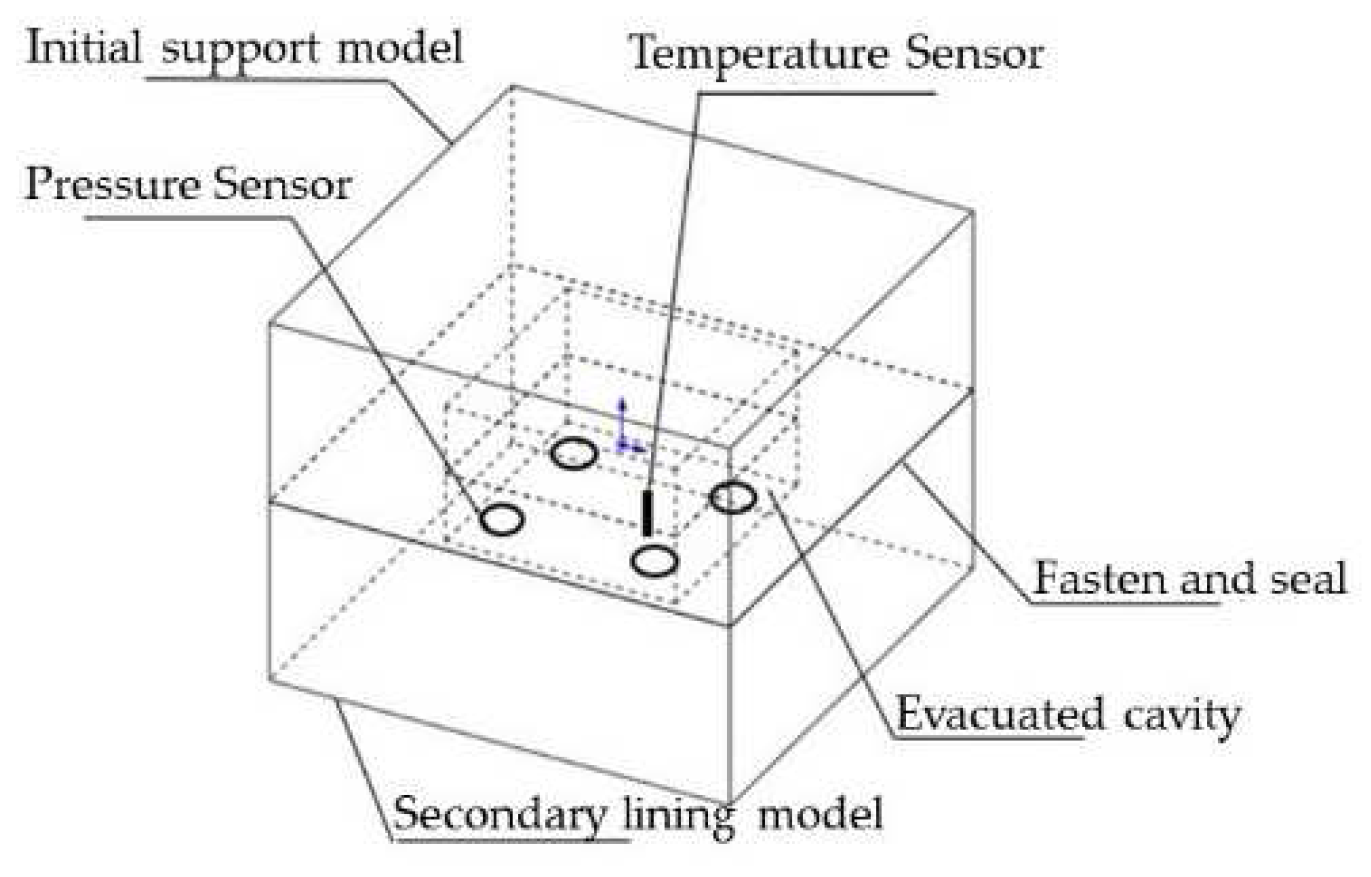
Figure 3.
Replenishment and discharge conditions for accumulated water in the circular wedge-shaped cavity.
Figure 3.
Replenishment and discharge conditions for accumulated water in the circular wedge-shaped cavity.
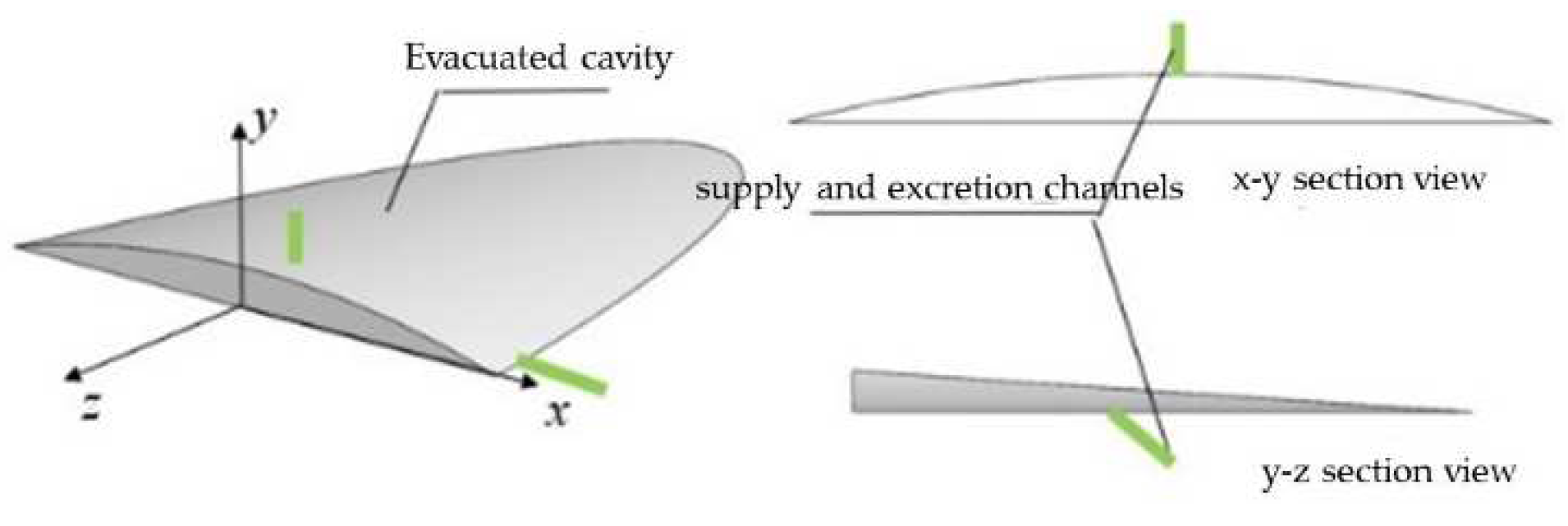
Figure 4.
Replenishment and discharge conditions of water accumulation in the flying saucer-shaped cavity.
Figure 4.
Replenishment and discharge conditions of water accumulation in the flying saucer-shaped cavity.

Figure 5.
Freezing process of circular wedge-shaped cavity.
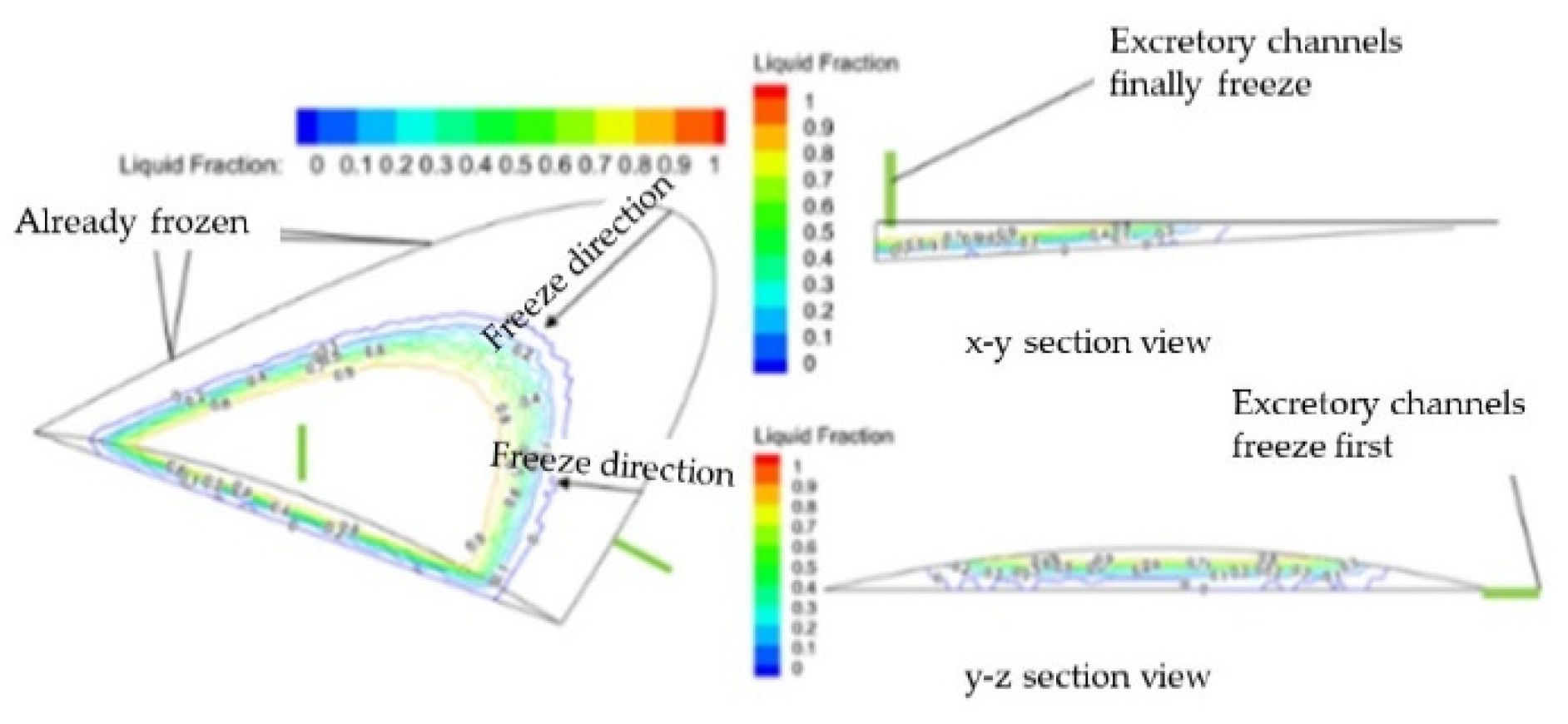
Figure 6.
Freezing process of flying saucer-shaped cavity.
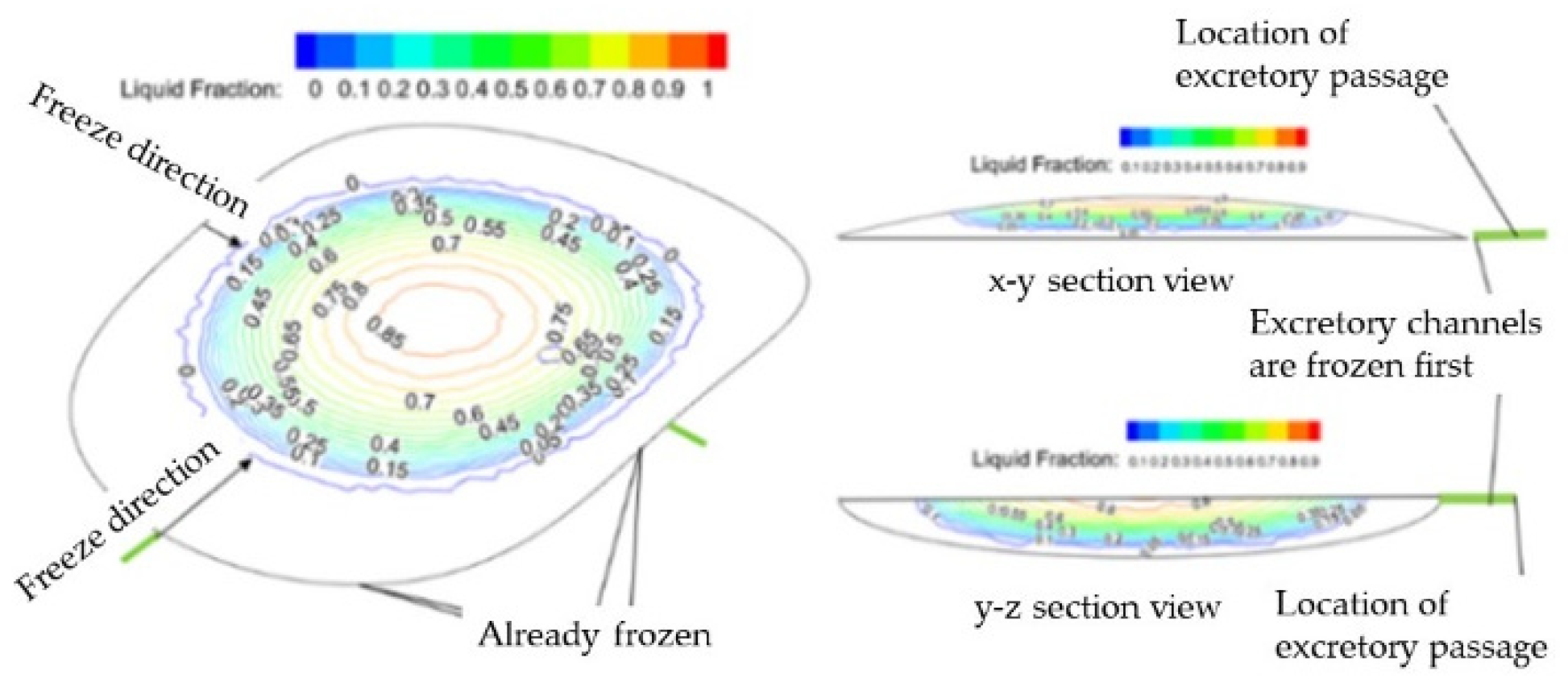
Figure 7.
The melting process of ice in the empty cavity.
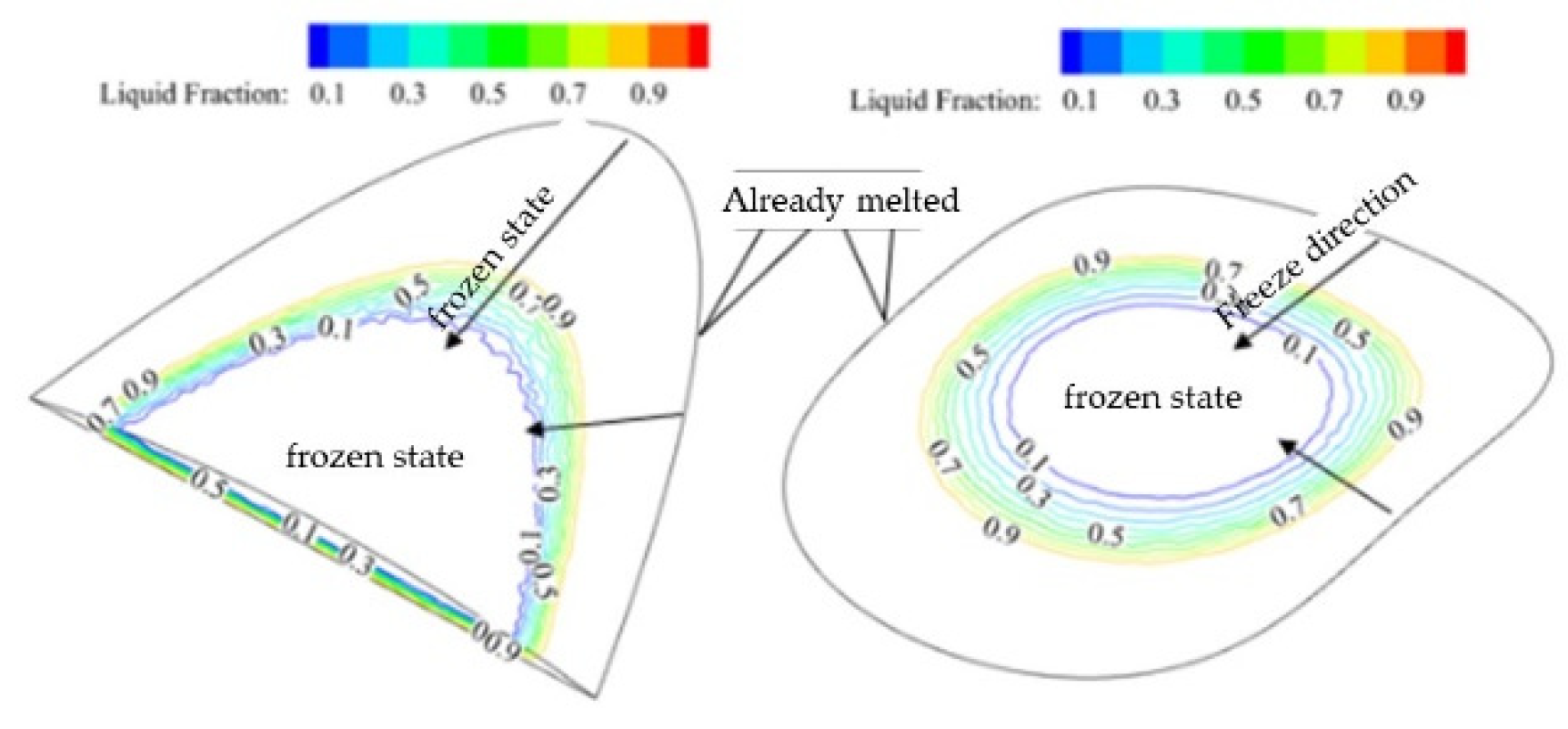
Figure 8.
Calculation model of frost heaving force.
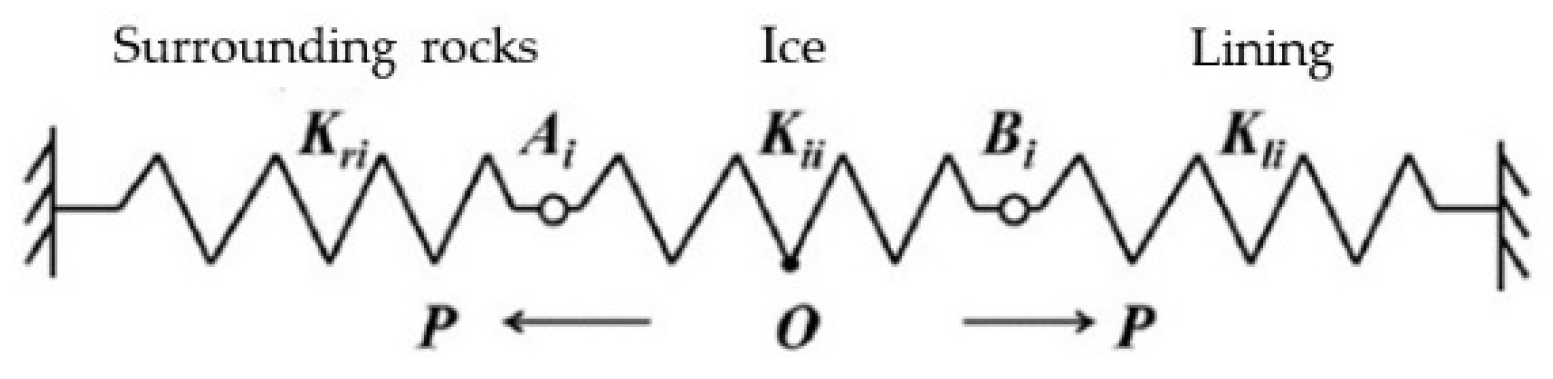
Figure 9.
Cross-sectional view of the void position.
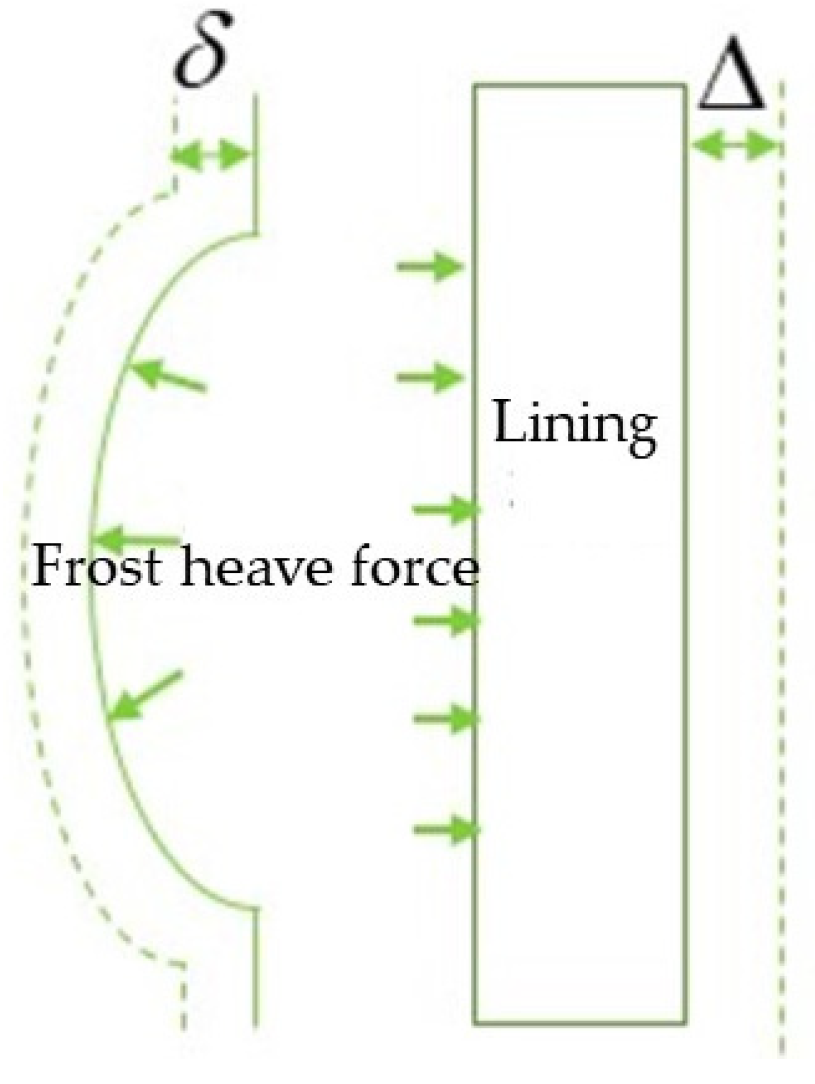
Figure 10.
Calculation Model of Frost Heave Force in circular wedge-shaped cavity.
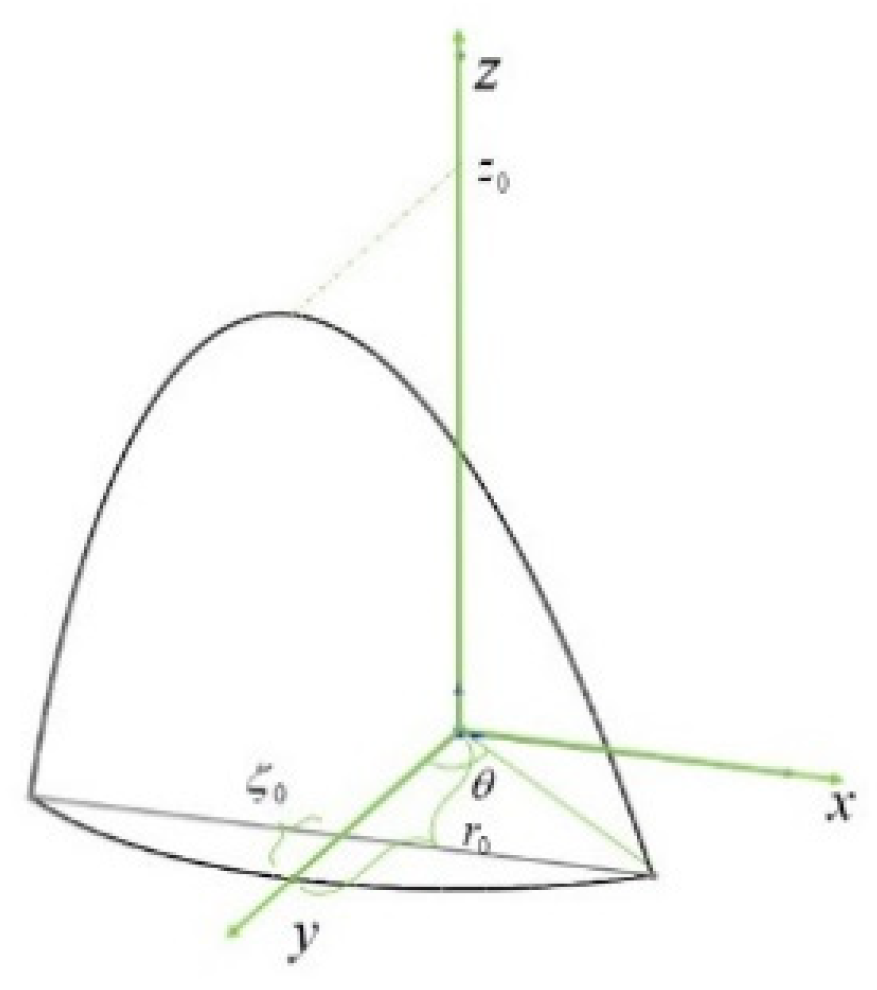
Figure 11.
Calculation Model of Frost Heave Force in circular wedge-shaped cavity.
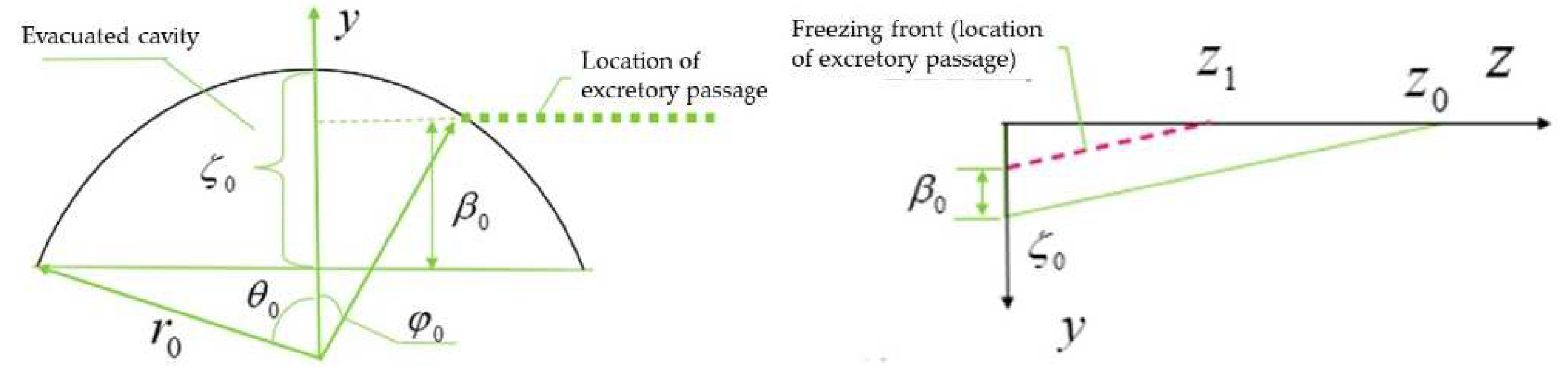
Figure 12.
Value curve of groundwater excretion coefficient.
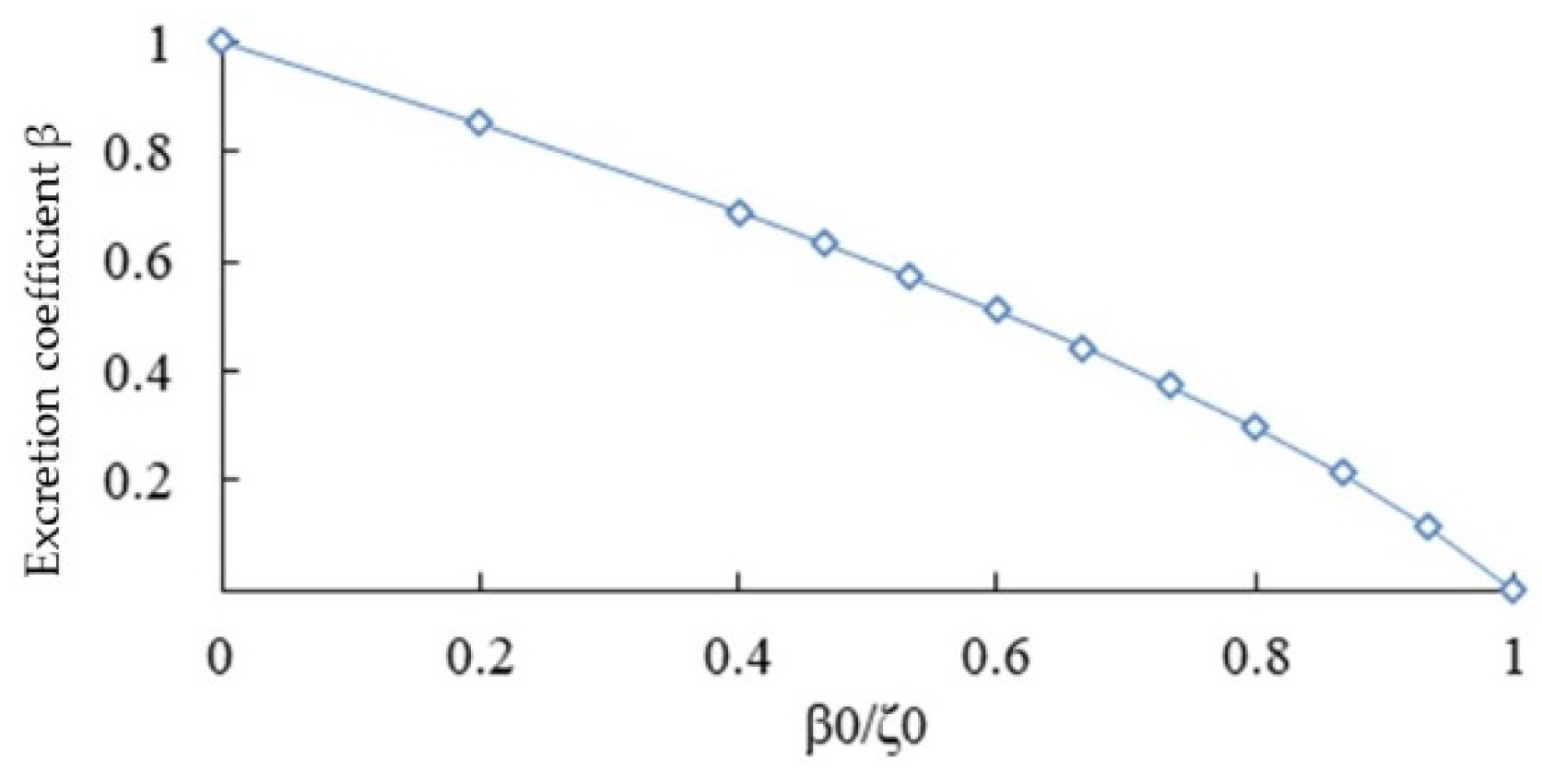

Table 1.
Simulation parameters.
| Parameter | Unit | Material name | |
| Water | Concrete | ||
| Density | kg/m3 | 998.2 | 2400 |
| Specific heat capacity | J/(kg·℃) | 4183 | 970 |
| Thermal Conductivity | W/(m·℃) | 0.60 | 1.28 |
| Viscosity | kg/(m·s) | 0.001 | — |
| Enthalpy | J/(kg·mol) | -2.58e8 | — |
| Heat of fusion | J/kg | 798 | — |
| Solid phase temperature | ℃ | -3 | — |
| Liquidus temperature | ℃ | 2 | — |
Note: "—" means does not exist.
Table 2.
Elastic resistance coefficient of surrounding rock at all levels.
| Surrounding rock grade | I | II | III | IV | V |
|---|---|---|---|---|---|
| Elastic resistance coefficient | 1800-2800 | 1200-1800 | 500-1200 | 200-500 | 100-200 |
Table 3.
Elastic resistance coefficient of surrounding rock at all levels.
| 0 | 0.2 | 0.4 | 0.47 | 0.53 | 0.6 | 0.67 | 0.73 | 0.8 | 0.87 | 0.93 | 1 | |
| 1 | 0.85 | 0.69 | 0.63 | 0.57 | 0.51 | 0.44 | 0.37 | 0.3 | 0.21 | 0.12 | 0 |
Disclaimer/Publisher’s Note: The statements, opinions and data contained in all publications are solely those of the individual author(s) and contributor(s) and not of MDPI and/or the editor(s). MDPI and/or the editor(s) disclaim responsibility for any injury to people or property resulting from any ideas, methods, instructions or products referred to in the content. |
© 2023 by the authors. Licensee MDPI, Basel, Switzerland. This article is an open access article distributed under the terms and conditions of the Creative Commons Attribution (CC BY) license (http://creativecommons.org/licenses/by/4.0/).
Copyright: This open access article is published under a Creative Commons CC BY 4.0 license, which permit the free download, distribution, and reuse, provided that the author and preprint are cited in any reuse.


