

Submitted:
17 November 2023
Posted:
22 November 2023
You are already at the latest version
Abstract
There is a growing demand and use of herbal cosmetics for skin purposes due to their perceived safety when applied to the skin. Three Cassipourea species commonly known as “ummemezi” are used interchangeable by women in rural areas of Eastern Cape and KwaZulu-Natal provinces to treat hypermelanosis as well as sun protection. We conducted a phytochemical comparison of three Cassipourea species; C. flanaganii, C. gummiflua and C. malosana by LC-MS/MS analysis in negative mode. The results obtained from the LC-MS/MS yielded a total number of twenty-four compounds of different chemical classes, including fatty acids, steroids, di- and tri-terpenoids, flavonoids, phenolic acids were detected, and eighteen among them were tentatively identified. Despite the recent popularity of modern cosmetic products, it is clear that plants continue to play an important role in the local cosmetics industry in South Africa's Eastern Cape and KwaZulu-Natal community provinces. The findings of this study suggest that an alternative treatment for hyper-melanosis disorders should be developed further. The residual wild plant stocks are insufficient to meet commercial needs, thus, encouraging their sustainable use is a means of harnessing the conservation of these plants. Indigenous communities should be supported in the commercialization which could be linked to the rural economic development.
Keywords:
medicinal plants
; tyrosinase inhibition
; melanin inhibition
; hypermelanosis
; cosmetics
; skin lightening
1. Introduction
As global acceptance grows, the use of medicinal plants to treat a variety of human diseases is no longer considered an antiquated practice, this may be attributed to their assumed safety, efficacy, affordability, and absence of side effects [1,2,3]. According to The World Health Organisation, about 80% of the world’s population living in impoverished countries depend on the use of medicinal plants as a source of primary health care for treating and preventing various diseases and disorders [4]. It is estimated that 60-90% of the African population uses natural medicinal plants to treat ailments, owing to the availability and affordability of these medicines in comparison to popular or conventional biomedicines [5,6,7]. Due to its geographic location, Africa is a very hot country with daytime ambient temperatures that often exceed 35 o C [8]. In South Africa, levels of ambient solar (UVR) throughout most of the year are high (Figure 1) with the UV Index (UVI) being frequently extreme (11+ or > 6400 Jm-2/day). Thus, some plants are used for photoprotection as well as complexion enhancers [9,10,11,12].
Likewise, in South Africa, medicinal plants or traditional remedies are culturally and economically important resources for a large proportion of South Africa’s population [11,13,14]. South Africa accounts for 9% of the higher plants worldwide due to its rich cultural biodiversity, with over 30,000 plant species currently used by over 200,000 traditional healers in the prevention, treatment, and cure, of many diseases and skin disorders [1,15,16,17]. About 80% of the entire population in South Africa, particularly those who dwell in rural areas, adopt the use of medicinal plants in various forms as medicines for the maintenance of their health [2]. Some plants are used cosmetically to maintain healthy skin, such as improving skin complexion, skin lightening, depigmentation, UV protection, sunburn treatment, treating various skin conditions such as breakouts, spot removal, and thus healing, restoring and skin moisturizing [18,19,20]. Previous surveys have revealed the bark is the most frequently used part of the plant, [10,14,18].
2. Results
Three cassipourea species commonly known as “ummemezi obomvu” or “umqonga” are used interchangeably by women in rural areas of Eastern Cape and KwaZulu-Natal provinces to treat hypermelanosis as well as sun protection.
The species were identified as follows:
- Specimen 2: NH0151949-0, Cassipourea malosana (Baker) Alston (Figure 2).
- Specimen 1:NH0151948-0, Cassipourea gummiflua Tul. verticillata (N.E.Br.) J. Lewis (Figure 3).
- Specimen 3: NH0151950-0, Cassipourea gummiflua Tul. verticillata (N.E.Br.) J. Lewis.
- Specimen 4. NH0151951-0, Cassipourea flanaganii (Schinz) Alston.
The results obtained from the LC-MS/MS yielded a total number of twenty-four compounds of different chemical classes, including fatty acids, steroids, di- and tri-terpenoids, flavonoids, phenolic acids were detected, and eighteen among them were tentatively identified (as summarized in Table 1). The identified compounds of the three methanolic extracts were based on their structure and molecular mass with a degree of similarity. Also, it has been predicted based on the compound structure reported in the previous reports with characteristic fragmentation patterns using a mass bank and a Sci-finder database.
The first eluted compound was identified as hexose/glucose with a mass of 215 m/z at 0.99 min which was already reported by (Sans et al., 2017) appeared in two plant extracts, along with lynoside (551 m/z), methyl linoleate (293 m/z), cassipourol (293 m/z), decahydroretinol (295 m/z) and emodin 6,8-dimethylether (297 m/z) which eluted at 4.83, 8.06, 9.53, 10.10 and 10.63 min respectively. Lupeol eluted at 3.02 min and its derivative lupeol sterate (4.25 min) were identified with mass of 425 m/z and 691 m/z respectively [22,23,25]. Flavonoids such as isorhamnetin-3-O-rhamnoside (461 m/z), mahaunnin B (543 m/z), and tricin (329 m/z) eluted at 3.21, 5.53 and 6.98 respectively. Some of the compounds were terpenoids such as ent-atis-16-en-19-oic acid and ent-kaur-16-en-19-oic acid eluted at 8.49 and 12.35 min with mass 337 m/z and 309 respectively. According to literature, azelaic acid [37,38] and tricin [39,40] were reported to inhibit tyrosinase significantly.
3. Discussion
In this study, we identified three Cassipourea species commonly used for hypermelanosis as well as sun protection in the rural arrears of the Eastern Cape and KwaZulu-Natal. Although the traditional names of the species are used interchangeably, they are different, however, they possess similar skin-lightening properties.
C. flanaganii is a small scarce tree that occurs in forest patches between King William’s Town and southern KwaZulu-Natal in South Africa, used as a skin-lightening agent [1], [41]. Its ground stem bark is mixed with water to form a paste and applied by black African females to their faces to enhance their beauty, it is known to clear blemishes, improve complexion, and lighten skin tone [12,19].
A recent study investigated the invivo toxicity of C. flanaganii. Both acute and sub-acute toxicity in Wistar rats were investigated. After the study period, after oral treatment with C. flanaganii stem bark extracts, acute or subacute toxicity symptoms were absent in Wistar rats at the levels administered. LC-MS chemical profiling of the total extract identified eleven (11) compounds as the major chemical constituents [1]. It is well known that mercury-containing skin-lightening products can be absorbed through the skin and cause end-organ damage and that topical steroids can suppress the HPA axis after prolonged use [42,43]. As a result, it is critical to determine whether any topical treatment can cause systemic side effects by administering it orally and observing any systemic end-organ uptake. The oral exposure of laboratory animals to high doses of the test plant extract aids in determining potential hazards to humans who are accidentally exposed to much higher doses. In this study, it was determined that C. flanaganii extracts were non-toxic.
Cassipourea malosana is an evergreen tall tree distributed throughout African countries and used as a skin-lightening agent [27,44]. C. malosana is also reported to be closely related to, and often confused with, C. flanaganii Schinz (Alston) (Rhizophoraceae). Recently, C. malosana crude stem bark collected from Kenya was studied for its effects on tyrosinase. Eleven isolated compounds from the crude stem bark of C. malosana were studied for their cytotoxicity against a human ovarian cell line. Most of the test compounds showed no or weak cytotoxic activity. The isolated compounds showed little cytotoxicity against human ovarian cell line TOV21G, but the methyl derivatives of favan dimers exhibited higher activity than the parent compounds. Results from this study suggested that C. malosana bark is a potentially promising natural resource in the search for new bioactive agents [44].
Cassipourea gummiflua Tul. Verticillata is a small to large-size tree with dense foliage, dark brown to grey bark, and greenish-cream-coloured flowers, that grows up to 25 m tall [45]. It is a close relative of C. gerradi, and is mostly found in the coastal forests of Northern Zululand [46]. Rondo [47] reported that stem bark of the plant is said to be used as an alternative to C. malosana as skin lightener and to treat skin ailments and sunburn. Also used for protection from evil spirits. No conclusive studies have been carried out on the chemical substances present in this plant species. However, a few phenolic compounds [46,48,49], organosulphur compounds [50] and alkaloids [45,51] have been identified as leaf constituents.
The harvesting and trade of plant material from rural communities for medicinal purposes has been and continues to be a contentious issue, especially in terms of biodiversity conservation [14]. Over-exploitation of plants for medicinal purposes for commercial trade endangers the survival of many species, as it is a stem bark that is harvested destructively, this results in death through ring barking of individual trees (Figure 2). hence conservation regulations and programs must be implemented. Increased public awareness would aid in the abolition of prejudices against medicinal plant production [1,12,14].
Figure 5.
Illustration of the stem bark harvesting has the potential to destroy the plant (original image supplied by NM).
Figure 5.
Illustration of the stem bark harvesting has the potential to destroy the plant (original image supplied by NM).
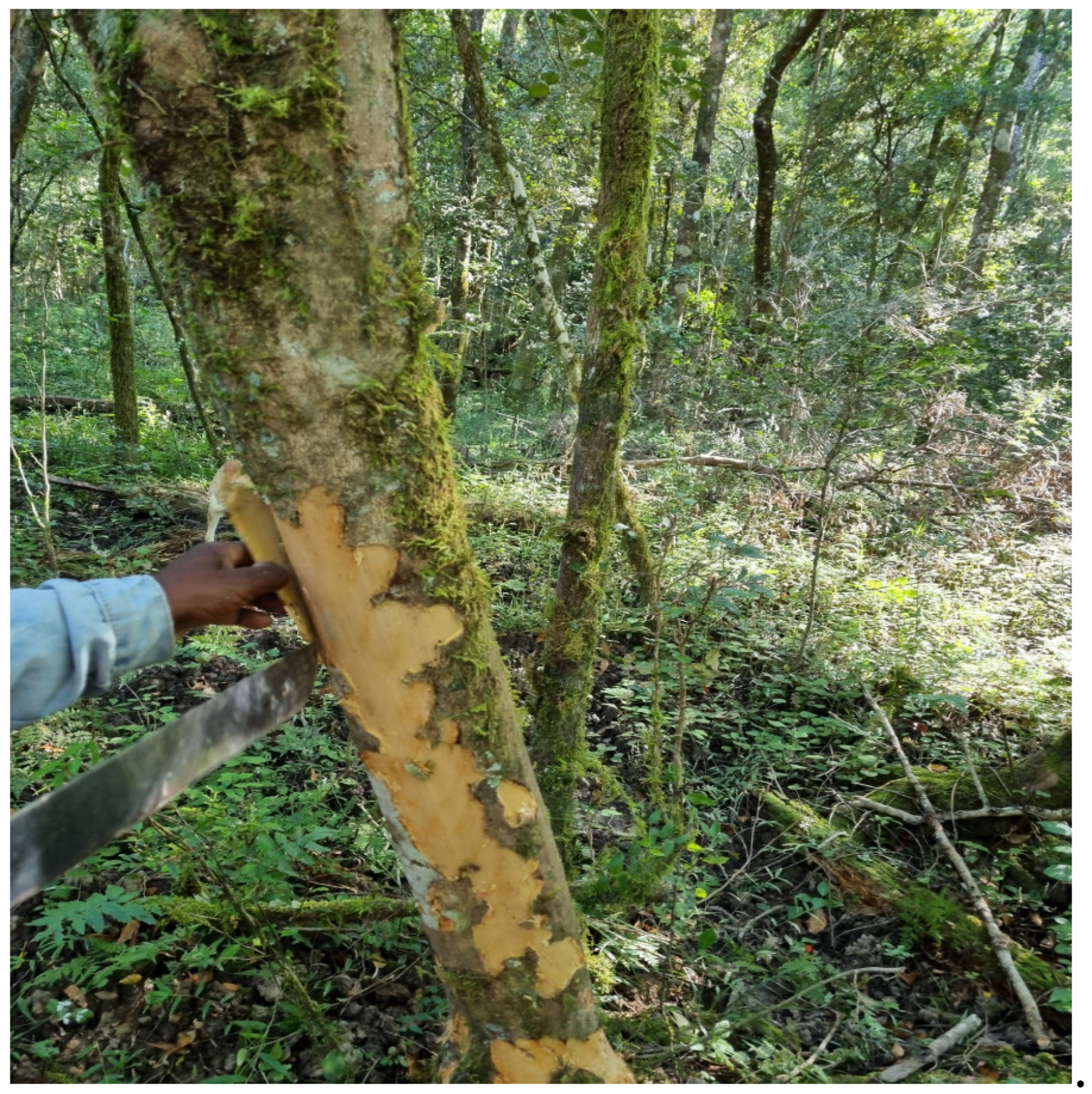
Hence, an understanding of their conservation status is important for guiding conservation policy development and action, contextualizing community-based natural resource management, and rural livelihood strategies. Short-term socio-economic gains are frequently prioritized over the long-term sustainability of both resources and traditional medicinal practices [15,18,20].
There is a growing demand and use of herbal cosmetics for skin purposes due to their perceived safety, formulation stability, efficacy, and rapid metabolism when applied to the skin [18]. According to ethnobotanical literature, topical application is the most commonly used mode of application because it ensures direct and immediate contact of the specific botanical compounds with the site of action [12,13,14,18]. Despite the recent popularity of modern cosmetic products, it is clear that plants continue to play an important role in the local cosmetics industry in South Africa’s Eastern Cape and KwaZulu-Natal community provinces. As a result, encouraging their sustainable use is a means of harnessing the conservation of these plants while also contributing to the local economy.
4. Materials and Methods
4.1. Identification of plant material
Using purposive sampling, knowledge holders were identified from the bus rank markets in King Williams Town and Bizana. Informants were knowledge holders and informal traders, who harvested the crude stems of the plants and sold them in the nearest marketplace, usually at a bus rank (image). The informants accompanied the researchers to the natural forests to identify various plant species that were used for complexion enhancement.
Figure 6.
A marketplace in Mbizana at the bus rank used by informal traders to sell various plant parts for different ailments and disorders (original image supplied by NM).
Figure 6.
A marketplace in Mbizana at the bus rank used by informal traders to sell various plant parts for different ailments and disorders (original image supplied by NM).
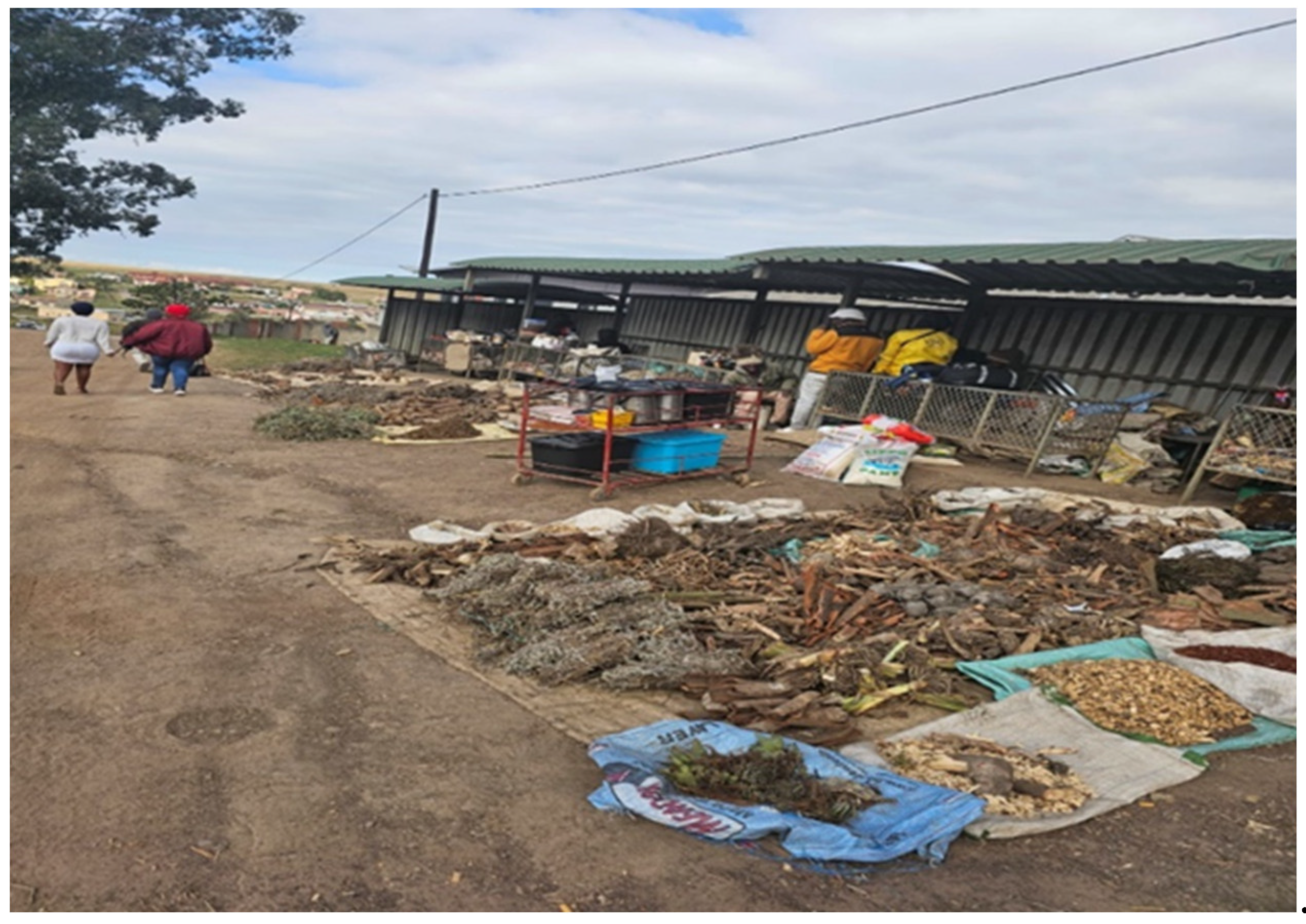
The crude stem is sold in two ways, as grounded/powdered or as crude bark. The plants were initially identified using their common names. Informal traders were predominantly elderly black men and women including traditional healers.
4.2. Herbarium specimen preparation
Identified plant specimens were collected and mounted on herbarium sheets using glue and masking tape. Collected plant specimens were validated by the ethnobotanist, Professor Neil Crouch, from the South African National Biodiversity Institute (SANBI) and later deposited into the Botanic Gardens Herbarium, Durban, and received voucher specimens. The first three specimens were collected from the KwaMadiba location, Bizana, while the 4th was collected from Pirie Forests in King Williams Town.
4.3. Preparation of the plant extracts
The crude stem bark was air dried under the shade, soaked into methanol, prepared into a paste, and then dried to powder as previously described by Mpofana et al., 2023 [1].
4.3. LCMS equipment and chemical reagents
To estimate the antityrosinase efficacy of the plant material. Liquid chromatography mass spectrometry (LC-MS) Analysis. A Waters Synapt G2 Quadrupole time-of-flight (QTOF) mass spectrometer (MS) connected to a Waters Acquity ultra-performance liquid chromatograph (UPLC) (Waters, Milford, MA, USA) was used for the LC-MS analysis. Electrospray ionization was used in negative mode with a cone voltage of 15V, desolvation temperature of 275 °C, desolvation gas at 650 L/h, and the rest of the MS settings optimized for best resolution and sensitivity. The specific negative ionization modes (m/z [M-H]- or [M+Cl]-) were used to analyze the compounds.
5. Conclusions
Three plant species belonging to the Rhizophoraceae families were identified and documented as being used for skin lightening and UV protection cosmetic purposes among the Xhosa and Zulu women in the Eastern Cape from Bizana as well as King Williams Town. The LC–MS/MS analysis showed that the three studied Cassipourea extracts were found to contain compounds that have anti-tyrosinase activity and consequently, it can be said that the anti-tyrosinase effect is due to the presence of these compounds, either as synergy or as individuals.
Medicinal plants continue to play an important role in the local cosmetics industry; therefore, their long-term use as well as large-scale cultivation as part of a formal Biodiversity Management Plan for this species should be encouraged. Given South Africa’s high unemployment and widespread poverty, we believe that indigenous communities should be assisted in the commercialization and related job creation associated with the economic development of the country’s flora.
Author Contributions
Conceptualization, N.M..; methodology, N.M. and MY.; formal analysis, N.M., M.Y. and A.H.; investigation, N.M. and M.Y.; resources, N.G.; writing—original draft preparation, N.M. and M.Y.; writing—review and editing, N.M., A.H., N.G. and N.C.D.; supervision, A.H. and N.C.D.; funding acquisition, N.G. All authors have read and agreed to the published version of the manuscript.
Funding
This research was supported by the National Research Foundation of South Africa (Grant Number: 138179), the HWSETA bursary and the Durban University of Technology Seed Funding grant.
Institutional Review Board Statement
The study was conducted following the Declaration of Helsinki as such, ethical approval was obtained through the University of KwaZulu-Natal Biomedical Research Ethics Committee (UKZN BREC BREC/00002721/2021) before commencing of the study. The local Chiefs and the tribunal committees from both sites granted permission for the study. A letter from the tribal authority granted permission to collect the plant materials as was required to obtain a licence regarding trees in natural forests a plant collecting permit, which was issued by Department of Forestry, Fisheries and Environment, Bisho, Eastern Cape ((DFFE) (12/11/1/7A (JD)).
Informed Consent Statement
Permission from the office of the local chief was requested before the commencement of the survey. Written informed consent was obtained from the participants before the interview process indicating their willingness to participate in the study. On the questionnaires, all personal information was kept confidential and was stored according to UKZN information storing policy.
Data Availability Statement
All data is included in the manuscript.
Acknowledgments
We would like to acknowledge the University of Stellenbosch lab for allowing us to use their LC-MC equipment. We also thank the knowledge holders for assisting us with plant identification and collection of plants material.
Conflicts of Interest
The authors declare no conflict of interest.
References
- Mpofana, N.; Chipangura, J.K.; Paulse, M.; Yalo, M.; Gqaleni, N.; Nxumalo, C.T.; Dlova, N.C.; Hussein, A.A.; Crouch, N.R. An Investigation into the Acute and Subacute Toxicity of Extracts of Cassipourea flanaganii Stem Bark In Vivo. Plants 2023, 12, 2281. [Google Scholar] [CrossRef] [PubMed]
- Balogun, F.O.; Ashafa, A.O.T. A review of plants used in South African traditional medicine for the management and treatment of hypertension. Planta medica 2019, 85, 312–334. [Google Scholar] [CrossRef] [PubMed]
- Jordan, S.A.; Cunningham, D.G.; Marles, R.J. Assessment of herbal medicinal products: challenges, and opportunities to increase the knowledge base for safety assessment. Toxicology and applied pharmacology 2010, 243, 198–216. [Google Scholar] [CrossRef] [PubMed]
- Organization, W.H. WHO guidelines on safety monitoring of herbal medicines in pharmacovigilance systems. World Health Organization, 2004; ISBN 9241592214. [Google Scholar]
- Thring, T.; Weitz, F. Medicinal plant use in the Bredasdorp/Elim region of the Southern Overberg in the Western Cape Province of South Africa. Journal of ethnopharmacology 2006, 103, 261–275. [Google Scholar] [CrossRef] [PubMed]
- Oguntibeju, O.O. Medicinal plants and their effects on diabetic wound healing. Veterinary world 2019, 12, 653. [Google Scholar] [CrossRef]
- Anywar, G.; Kakudidi, E.; Byamukama, R.; Mukonzo, J.; Schubert, A.; Oryem-Origa, H. Indigenous traditional knowledge of medicinal plants used by herbalists in treating opportunistic infections among people living with HIV/AIDS in Uganda. Journal of ethnopharmacology 2020, 246, 112205. [Google Scholar] [CrossRef] [PubMed]
- Lucas, R.M.; Norval, M.; Wright, C.Y. Solar ultraviolet radiation in Africa: a systematic review and critical evaluation of the health risks and use of photoprotection. Photochemical & Photobiological Sciences 2016, 15, 10–23. [Google Scholar]
- Afolayan, A.J.; Grierson, D.S.; Mbeng, W.O. Ethnobotanical survey of medicinal plants used in the management of skin disorders among the Xhosa communities of the Amathole District, Eastern Cape, South Africa. Journal of ethnopharmacology 2014, 153, 220–232. [Google Scholar] [CrossRef] [PubMed]
- Bhat, R. Plants of Xhosa people in the Transkei region of Eastern Cape (South Africa) with major pharmacological and therapeutic properties. Journal of Medicinal Plants Research 2013, 7, 1474–1480. [Google Scholar]
- Dlova, N.C.; Ollengo, M.A. Traditional and ethnobotanical dermatology practices in Africa. Clinics in Dermatology 2018, 36, 353–362. [Google Scholar] [CrossRef]
- Langat, M.K.; Dlova, N.C.; Mulcahy-Ryan, L.E.; Schwikkard, S.L.; Opara, E.I.; Crouch, N.R.; Hiles, J.D.; Mulholland, D.A. The effect of isolates from Cassipourea flanaganii (Schinz) alston, a plant used as a skin lightning agent, on melanin production and tyrosinase inhibition. Journal of Ethnopharmacology 2021, 264, 113272. [Google Scholar] [CrossRef] [PubMed]
- Mhlongo, L.; Van Wyk, B.-E. Zulu medicinal ethnobotany: New records from the Amandawe area of KwaZulu-Natal, South Africa. South African Journal of Botany 2019, 122, 266–290. [Google Scholar] [CrossRef]
- Thibane, V.; Ndhlala, A.; Abdelgadir, H.; Finnie, J.; Van Staden, J. The cosmetic potential of plants from the Eastern Cape Province traditionally used for skincare and beauty. South African Journal of Botany 2019, 122, 475–483. [Google Scholar] [CrossRef]
- Buwa-Komoren, L.V.; Mayekiso, B.; Mhinana, Z.; Adeniran, A.L. An ethnobotanical and ethnomedicinal survey of traditionally used medicinal plants in Seymour, South Africa: An attempt toward digitization and preservation of ethnic knowledge. Pharmacognosy Magazine 2019, 15, 115–123. [Google Scholar] [CrossRef]
- Street, R.; Stirk, W.; Van Staden, J. South African traditional medicinal plant trade—challenges in regulating quality, safety and efficacy. Journal of Ethnopharmacology 2008, 119, 705–710. [Google Scholar] [CrossRef]
- Mander, M.; Ntuli, L.; Diederichs, N.; Mavundla, K. Economics of the traditional medicine trade in South Africa care delivery. South African health review 2007, 2007, 189–196. [Google Scholar]
- Mwinga, J.; Makhaga, N.; Aremu, A.; Otang-Mbeng, W. Botanicals used for cosmetic purposes by Xhosa women in the Eastern Cape, South Africa. South African Journal of Botany 2019, 126, 4–10. [Google Scholar] [CrossRef]
- Lall, N.; Kishore, N. Are plants used for skin care in South Africa fully explored? Journal of ethnopharmacology 2014, 153, 61–84. [Google Scholar] [CrossRef] [PubMed]
- Moyo, M.; Aremu, A.O.; Van Staden, J. Medicinal plants: An invaluable, dwindling resource in sub-Saharan Africa. Journal of Ethnopharmacology 2015, 174, 595–606. [Google Scholar] [CrossRef]
- Sans, M.; et al. Metabolic markers and statistical prediction of serous ovarian cancer aggressiveness by ambient ionization mass spectrometry imaging. Cancer research 2017, 77, 2903–2913. [Google Scholar] [CrossRef]
- Abdullahi, S.; Musa, A.; Abdullahi, M.; Sule, M.; Sani, Y. Isolation of Lupeol from the Stem-bark of Lonchocarpus sericeus (Papilionaceae). Scholars Acad J Biosci 2013, 1, 18–19. [Google Scholar]
- Mo, S.; Dong, L.; Hurst, W.J.; van Breemen, R.B. Quantitative analysis of phytosterols in edible oils using APCI liquid chromatography–tandem mass spectrometry. Lipids 2013, 48, 949–956. [Google Scholar] [CrossRef] [PubMed]
- Chen, A.; Gu, N.; Pei, J.; Su, E.; Duan, X.; Cao, F.; Zhao, L. Synthesis of isorhamnetin-3-O-rhamnoside by a three-enzyme (rhamnosyltransferase, glycine max sucrose synthase, UDP-rhamnose synthase) cascade using a UDP-rhamnose regeneration system. Molecules 2019, 24, 3042. [Google Scholar] [CrossRef] [PubMed]
- Magalhães, C.G.; Duarte, L.P.; Mussel, W.d.N.; Ruiz, A.L.T.G.; Shiozawa, L.; Carvalho, J.E.d.; Trindade, I.C.; Vieira, S.A. Lupeol and its esters: NMR, powder XRD data and in vitro evaluation of cancer cell growth. Brazilian Journal of Pharmaceutical Sciences 2018, 53. [Google Scholar]
- Kokpol, U.; Chavasiri, W.; Chittawong, V.; Bruce, M.; Cunningham, G.; Miles, D.H. Long chain aliphatic alcohols and saturated carboxylic acids from heartwood of Rhizophora apiculata. Phytochemistry 1993, 33, 1129–1131. [Google Scholar] [CrossRef]
- Nishiyama, Y.; Noda, Y.; Nakatani, N.; Shitan, N.; Sudo, T.; Kato, A.; Chalo Mutiso, P.B. Structure of constituents isolated from the bark of Cassipourea malosana and their cytotoxicity against a human ovarian cell line. Journal of Natural Medicines 2019, 73, 289–296. [Google Scholar] [CrossRef]
- Garelnabi, M.; Litvinov, D.; Parthasarathy, S. Evaluation of a gas chromatography method for azelaic acid determination in selected biological samples. North American Journal of Medical Sciences 2010, 2, 397. [Google Scholar] [CrossRef] [PubMed]
- Bao, S.; Ding, Y.; Deng, Z.; Proksch, P.; Lin, W. Rhyncosides A—F, phenolic constituents from the Chinese mangrove plant Bruguiera sexangula var. rhynchopetala. Chemical and Pharmaceutical Bulletin 2007, 55, 1175–1180. [Google Scholar] [CrossRef] [PubMed]
- Dem’yanov, P.; Malo, N.; Petrosyan, V. An investigation of the composition of an ethereal extract of the fruit stones of Anisophyllea laurina. Chemistry of Natural Compounds 1984, 20, 609–611. [Google Scholar] [CrossRef]
- Theofilopoulos, S.; et al. Cholestenoic acids regulate motor neuron survival via liver X receptors. The Journal of clinical investigation 2014, 124, 4829–4842. [Google Scholar] [CrossRef]
- Chaturvedula, V.P.; Norris, A.; Miller, J.S.; Ratovoson, F.; Andriantsiferana, R.; Rasamison, V.E.; Kingston, D.G. Cytotoxic Diterpenes from Cassipourea m adagascariensis from the Madagascar Rainforest. Journal of natural products 2006, 69, 287–289. [Google Scholar] [CrossRef] [PubMed]
- Manojlović, I.; Bogdanović-Dusanović, G.; Gritsanapan, W.; Manojlović, N. Isolation and identification of anthraquinones of Caloplaca cerina and Cassia tora. Chemical Papers 2006, 60, 466–468. [Google Scholar] [CrossRef]
- Shan, L.; Wu, Y.; Yuan, L.; Zhang, Y.; Xu, Y.; Li, Y. Rapid screening of Chemical constituents in Rhizoma anemarrhenae by UPLC-Q-TOF/MS combined with data postprocessing techniques. Evidence-Based Complementary and Alternative Medicine 2017, 2017. [Google Scholar] [CrossRef] [PubMed]
- Seo, C.-S.; Shin, H.-K. Ultra-Performance Liquid Chromatography with Tandem Mass Spectrometry for Simultaneous Analysis of 22 Analytes of Oncheong-Eum, a Traditional Korean Herbal Formula. Processes 2023, 11, 2906. [Google Scholar] [CrossRef]
- Abdel Ghani, A.E.; Al-Saleem, M.S.; Abdel-Mageed, W.M.; AbouZeid, E.M.; Mahmoud, M.Y.; Abdallah, R.H. UPLC-ESI-MS/MS Profiling and Cytotoxic, Antioxidant, Anti-Inflammatory, Antidiabetic, and Antiobesity Activities of the Non-Polar Fractions of Salvia hispanica L. Aerial Parts. Plants 2023, 12, 1062. [Google Scholar] [CrossRef] [PubMed]
- Kircik, L.H. Efficacy and safety of azelaic acid (AzA) gel 15% in the treatment of post-inflammatory hyperpigmentation and acne: a 16-week, baseline-controlled study. Journal of drugs in dermatology: JDD 2011, 10, 586–590. [Google Scholar]
- Breathnach, A. Melanin hyperpigmentation of skin: melasma, topical treatment with azelaic acid, and other therapies. Cutis 1996, 57, 36–45. [Google Scholar] [PubMed]
- El-Nashar, H.A.; El-Din, M.I.G.; Hritcu, L.; Eldahshan, O.A. Insights on the inhibitory power of flavonoids on tyrosinase activity: A survey from 2016 to 2021. Molecules 2021, 26, 7546. [Google Scholar] [CrossRef] [PubMed]
- Mu, Y.; Li, L.; Hu, S.-Q. Molecular inhibitory mechanism of tricin on tyrosinase. Spectrochimica Acta Part A: Molecular and Biomolecular Spectroscopy 2013, 107, 235–240. [Google Scholar] [CrossRef]
- Cocks, M.; Dold, A. The informal trade of Cassipourea flanaganii as a cosmetic in South Africa. In Ethnobiology and Biocultural Diversity: Proceedings of the 7th International Congress of Ethnobiology; pp. 412-431.
- Chan, T.Y. Inorganic mercury poisoning associated with skin-lightening cosmetic products. Clinical toxicology 2011, 49, 886–891. [Google Scholar] [CrossRef]
- Nieman, L.K. Consequences of systemic absorption of topical glucocorticoids. Journal of the American Academy of Dermatology 2011, 65, 250–252. [Google Scholar] [CrossRef] [PubMed]
- Nishiyama, Y.; Noda, Y.; Nakatani, N.; Shitan, N.; Sudo, T.; Kato, A.; Chalo Mutiso, P.B. Structure of constituents isolated from the bark of Cassipourea malosana and their cytotoxicity against a human ovarian cell line. Journal of natural medicines 2019, 73, 289–296. [Google Scholar] [CrossRef] [PubMed]
- Kato, A.; Ichimaru, M.; Matsukawa, M.; Moriyasu, M.; Fukuoka, N.; Kishida, K.; Ogeto, J.O.; Juma, F.D. Studies on unused medicinal resources in Africa, occurrence of sulfur compounds in Cassipourea genus in Kenya. Journal of African Studies 1989, 34, 1–8. [Google Scholar] [CrossRef]
- Drewes, S.E.; Taylor, C.W. Methylated A-type proanthocyanidins and related metabolites from Cassipourea gummiflua. Phytochemistry 1994, 37, 551–555. [Google Scholar] [CrossRef] [PubMed]
- Rondo, M. Phytochemical and biological studies on some South African plants used in traditional medicine for skin hyperpigmentation. 2017.
- Wright, W.G.; Warren, F.L. Rhizophoraceae alkaloids. Part I. Four sulphur-containing bases from Cassipourea spp. Journal of the Chemical Society 1967, 283–284. [Google Scholar] [CrossRef] [PubMed]
- Drewes, S.E.; Taylor, C.W.; Cunningham, A.B. (+)-Afzelechin 3-rhamnoside from Cassipourea gerrardii. Phytochemistry 1994, 31, 1073–1075. [Google Scholar] [CrossRef]
- Williams, V.L.; Raimondo, D.; Crouch, N.R.; Cunningham, A.B.; Scott-Shaw, C.R.; Lotter, M.; Ngwenya, A.M. Cassipourea malosana (Baker) Alston. National Assessment: Red List of South African Plants. 2014, Version, .1580-27.
- Cooks, R.G.; Warren, F.L.; Williams, D.H. Rhizophoraceae alkaloids. Part III. Cassipourine. Journal of the Chemical Society C 1967, Organic, 286–288. [Google Scholar] [CrossRef]
Figure 1.
Mean ambient UVB of the highest month (a) and mean ambient UVB of the lowest month over the continents of Africa and Europe (b) [8].
Figure 1.
Mean ambient UVB of the highest month (a) and mean ambient UVB of the lowest month over the continents of Africa and Europe (b) [8].

Figure 2.
Cassipourea malosana (original image supplied by MN).
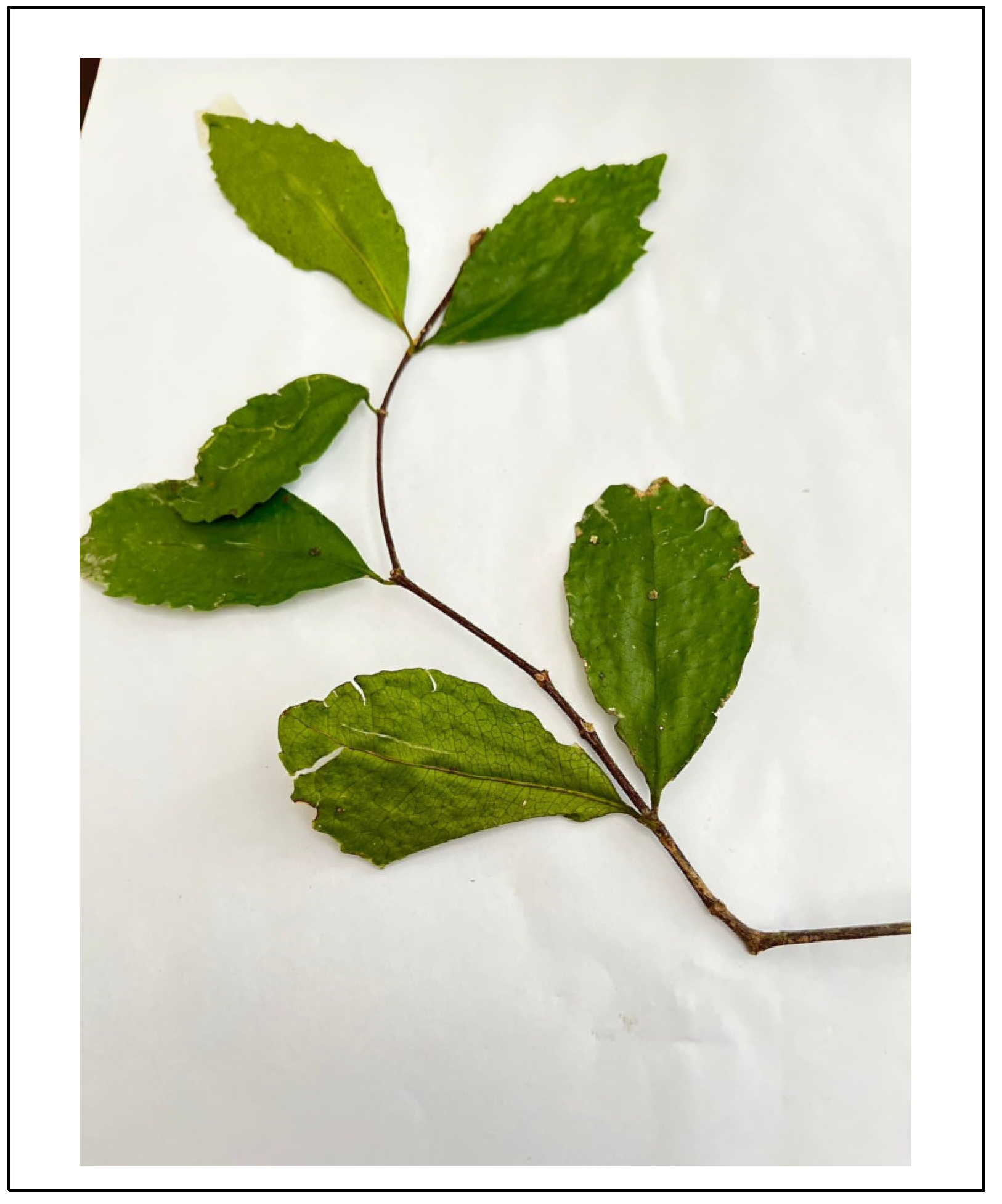
Figure 3.
Cassipourea gummiflua var. verticillata (original image supplied by MN).
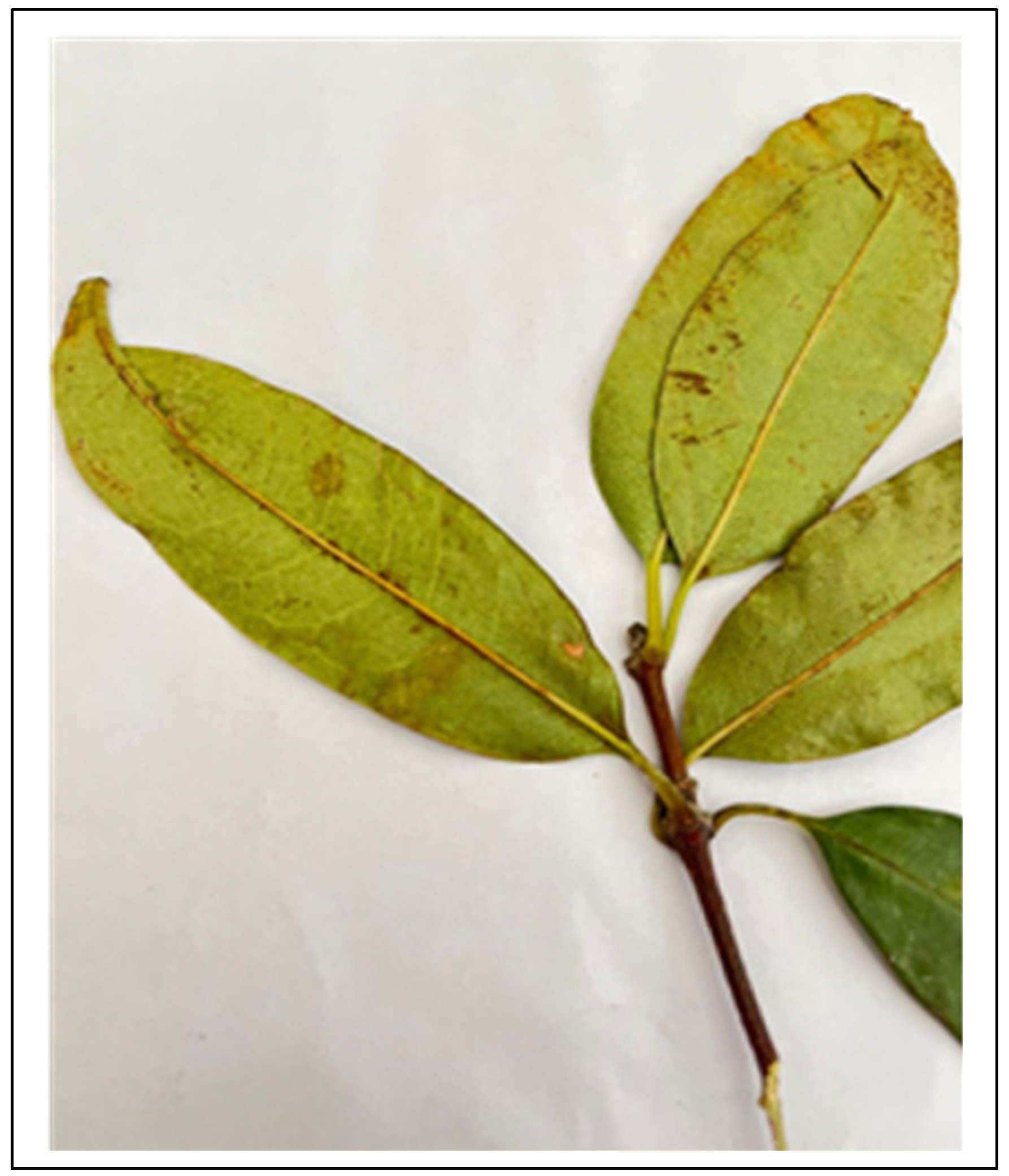
Figure 4.
Compound elucidated from the 3 cassipourea species.
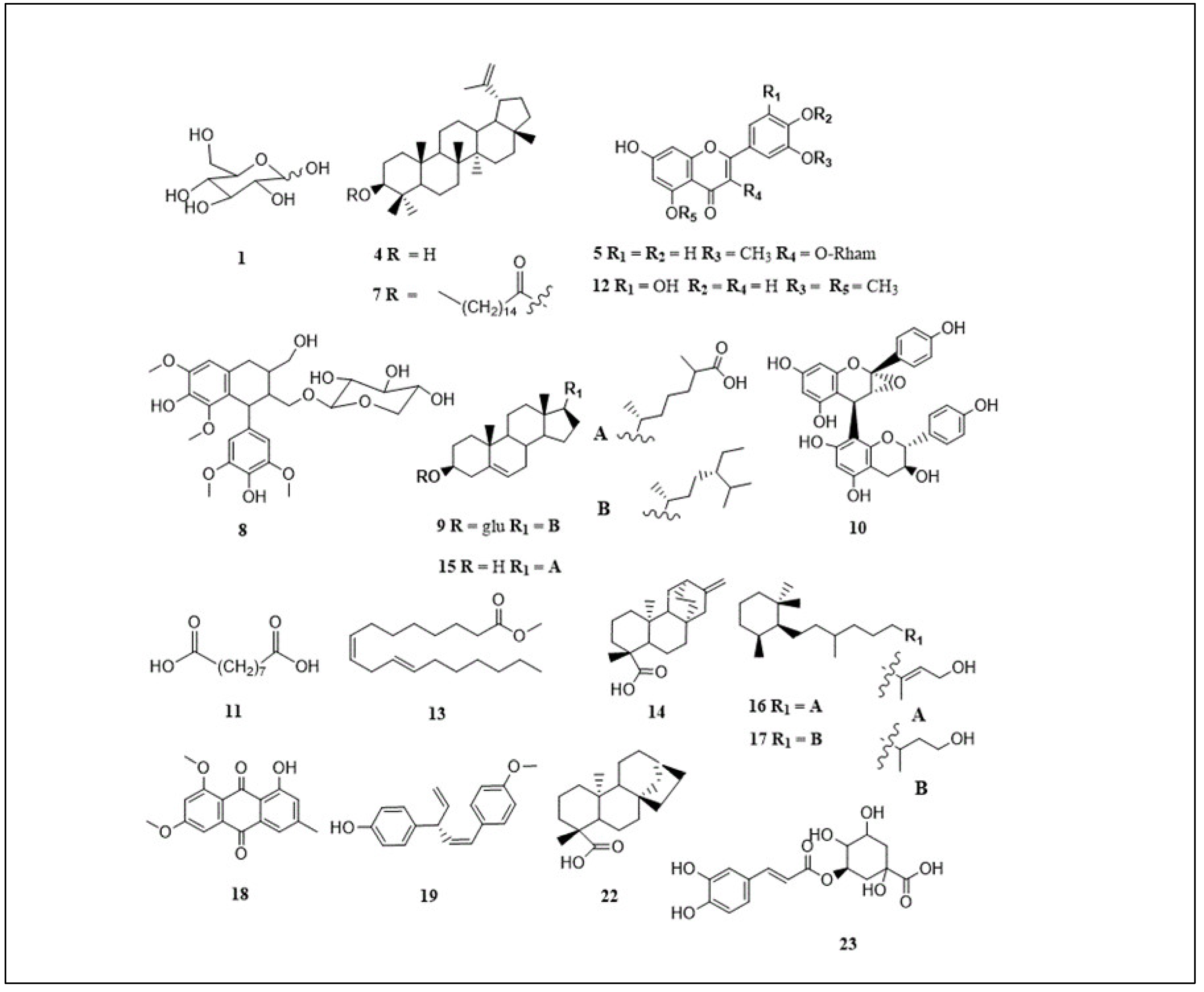

Table 1.
Phytochemical comparison of three Cassipourea species, C. flanaganii, C. gummiflua and C. malosana by LC-MS/MS analysis in negative mode.
Table 1.
Phytochemical comparison of three Cassipourea species, C. flanaganii, C. gummiflua and C. malosana by LC-MS/MS analysis in negative mode.
| Peak | Proposed compound | m/z | tR (min) | [M-H]- | Molecular formula | C. flanaganii | C. gummiflua | C. malosana | Ref |
|---|---|---|---|---|---|---|---|---|---|
| 1 | Hexose/glucose | 215.033 | 0.99 | [M+Cl]- | C6H12O | + | - | + | [21] |
| 2 | Unknown | 194.1 | 1.15 | [M-H]- | Unknown | - | + | - | - |
| 3 | Unknown | 341.1 | 1.21 | [M-H]- | Unknown | - | + | - | - |
| 4 | Lupeol | 425.075 | 3.02 | [M-H]- | C30H50O | + | + | + | [22,23] |
| 5 | Isorhamnetin-3-O-rhamnoside | 461.129 | 3.21 | [M-H]- | C22H22O11 | + | - | - | [24] |
| 6 | Unknown | 252.014 | 3.55 | [M-H]- | Unknown | + | - | + | - |
| 7 | Lupeol stearate | 691.202 | 4.25 | [M-H]- | C48H84O2 | - | - | + | [25] |
| 8 | Lynoside | 551.202 | 4.83 | [M-H]- | C27H36O12 | + | + | - | [12] |
| 9 | Sitosterol glycoside | 575.103 | 5.53 | [M-H]- | C35H60O6 | - | - | + | [26] |
| 11 | Azelaic acid | 187.097 | 5.62 | [M-H]- | C9H16O4 | + | + | + | [28] |
| 12 | Tricin | 329.232 | 6.98 | [M-H]- | C17H14O7 | + | + | + | [29] |
| 13 | Methyl linoliate | 293.138 | 8.06 | [M-H]- | C19H34O2 | + | - | + | [30] |
| 14 | ent-atis-16-en-19-oic acid | 337.1 | 8.49 | [M+Cl]- | C30H24O10 | - | + | - | [12] |
| 15 | Cholestenoic acid | 415.103 | 9.09 | [M-H]- | C27H44O3 | - | + | - | [31] |
| 16 | Cassipourol | 293.211 | 9.53 | [M-H]- | C20H38O | + | - | + | [32] |
| 17 | Decahydroretinol | 295.228 | 10.10 | [M-H]- | C20H40O | + | - | + | [32] |
| 18 | Emodin 6,8-dimethyl ether | 297.242 | 10.63 | [M-H]- | C17H14O5 | + | - | + | [33] |
| 19 | Ellisinin A | 265.1 | 11.32 | [M-H]- | C18H18O2 | - | + | - | [34] |
| 20 | Unknown | 311.2 | 11.48 | [M-H]- | Unknown | - | + | - | - |
| 21 | Unknown | 327.256 | 11.63 | [M-H]- | Unknown | + | - | - | - |
| 22 | ent-kaur-16-en-19-oic acid | 309.2 | 12.35 | [M+Cl]- | C19H30O | - | + | - | [12] |
| 23 | Chlorogenic acid | 353.2 | 12.76 | [M-H]- | C16H18O9 | - | + | - | [35,36] |
| 24 | Unknown | 397.2 | 12.91 | [M-H]- | Unknown | - | + | - | - |
Disclaimer/Publisher’s Note: The statements, opinions and data contained in all publications are solely those of the individual author(s) and contributor(s) and not of MDPI and/or the editor(s). MDPI and/or the editor(s) disclaim responsibility for any injury to people or property resulting from any ideas, methods, instructions or products referred to in the content. |
© 2023 by the authors. Licensee MDPI, Basel, Switzerland. This article is an open access article distributed under the terms and conditions of the Creative Commons Attribution (CC BY) license (http://creativecommons.org/licenses/by/4.0/).
Copyright: This open access article is published under a Creative Commons CC BY 4.0 license, which permit the free download, distribution, and reuse, provided that the author and preprint are cited in any reuse.


