
Submitted:
15 November 2023
Posted:
16 November 2023
You are already at the latest version
Abstract
Territory space is an ecological resource carrier and place for human development. Human activities and ecological systems are the basis of ecological product supply. Promoting territory spatial protection and governance by improving the ecological products supply is very important. In this study, we established an ecological products supply capacity evaluation index system involving three types of ecological products, i.e., ecological environmental products, ecological material products, and ecological cultural products. For the case of the Beijing-Tianjin-Hebei region, we comprehensively used principal component analysis, equivalent factor method, and entropy method to evaluate the supply capacity of the ecological products from 2011 to 2021. Then, we analyzed the spatio-temporal pattern combining the natural breakpoint and quantile classification methods and analyzed the obstacle factors using the obstacle degree model of ecological supply. The results show that the supply capacity of different ecological product in each city are closely related to ecological resource endowment. The supply capacity of ecological products exhibited an upward trend, with the highest ecological environmental products supply, relatively smaller ecological material product supply, and the largest growth rate for ecological cultural product supply. The supply capacity of different ecological products varied across cities over time and displayed noticeable spatial differentiation. The main obstacle factors included eco-land, eco-tourism, eco-leisure, park green space, and fishery products, although there were variations among cities. Finally, based on the level, spatial-temporal pattern, and obstacle factors of ecological product supply, we proposed strategies for territory spatial protection and governance from the perspectives of integrated protection of elements, structural regulation, and systematic governance. The results reflected the ecological functional heterogeneity of territory space, which can provide spatial planning guidance for sustainable development.
Keywords:
territory space
; ecological products
; integrated protection
; systematic governance
1. Introduction
Many social challenges humans face are closely related to the scarcity of available land resources and the contradiction between land supply and demand, such as food security and ecological damage [1]. Territory spatial planning helps improve land quality and land use efficiency [2] and is considered an essential tool for achieving global sustainable development [3]. With the progress of the Global Land Project (GLP), conducting territory spatial planning from the standpoint of social-ecological interactions, such as providing ecosystem services, has become a focal topic [4]. Territory space refers to the regional space under national sovereignty and jurisdictional rights. It is the carrier of ecological resources and the place for human production and living. Territory spatial protection and governance help coordinate human development activities, protecting ecological resources and becoming the fundamental basis for various land resource development [5]. Ecosystem services can reflect the ecological functions of territory space, but the ecological function damage caused by human over-exploitation has affected ecosystem services [6]. Therefore, ecosystem services should be incorporated into territory spatial protection and governance to protect ecological resources and achieve human well-being.
The concept of ecological products was initially introduced by China in 2010 as an enhanced iteration of the notion of ecosystem services, and its primary objective was to address the protection and governance challenges related to territory space [7]. Human activities and ecological systems are the basis of ecological product supply. Promoting territory spatial protection and governance by improving the ecological products supply is very important. China has adopted holistic and systematic thinking to organically combine the original economic social development and land use planning, forming a "multiple planning in one" territory space planning [5]. The Guidelines for Pilot Work on the Value Realization Mechanism of Ecological Products in the Field of Natural Resources issued by China in 2021 explicitly state that evaluate the ecological products evaluation and promote the ecological products supply in territory spatial planning. In view of this, ecological product supply provides a powerful perspective for territory spatial protection and governance and can serve as a research carrier for land resource allocation and spatial interest coordination, further promoting high-quality development. The Beijing-Tianjin-Hebei Coordinated Development Strategy plays a leading and exemplary role in coordinating the development of land and ecological environment in China. It is necessary to evaluate and analyze the ecological product supply capacity in the Beijing-Tianjin-Hebei region to discuss the protection and governance strategy of the territory space.
Previous studies have focused on improving the ecosystem services to guide territory spatial protection and governance, but there has been relatively little research on ecological product supply. By exploring the role of ecosystem services in multiple urban planning documents, it was found that incorporating ecosystem services into territory space planning helped protect the environment and meet the needs of various stakeholders [8,9]. Interviews of the values of local authorities and stakeholders regarding the inclusion of ecosystem services in spatial planning indicated that people generally recognize its usefulness [10,11]. Some scholars have quantified and predicted the benefits of incorporating ecosystem services into land use governance [12], green infrastructure planning [13], and biodiversity protection [15]. The effectiveness of land conservation policies, such as ecological compensation and restoration, has been evaluated. Spatial assessment and planning have been conducted by mapping ecosystem services' demand, flow, and capacity [16]. Although previous research has confirmed ecosystem services have theoretical and practical support in territory space planning, the application of territory space supply in territory spatial protection and governance was unclear. Implementing territory space supply in territory spatial protection and governance lacked pre-planning and overall planning [17]. It is necessary to explore the basic evaluations, development directions, target indicators, and spatial guidance of ecological product supply. In addition, there are many ways to promote territory spatial protection and governance through ecological product supply, such as managing natural resource assets [18], spatial zoning classification for territory space regulation [19], and ecological restoration of territory space [20].
For territory space planning in China, it is urgent to clarify the connotation and classification of ecological product supply, connect with the needs of territory spatial planning, and play a role in territory spatial protection and governance. Internationally, ecological products are defined similarly to ecosystem services, which pertain to the environmental conditions and benefits that ecosystems provide and sustain for human survival and development [21]. In China, ecological products denote ecosystems' products and services for human well-being [22]. While scholars have different perspectives on ecological products, it is generally understood as a term encompassing the products and services arising from the interaction between natural ecology and human society, ultimately leading to improving human well-being. Many researchers have classified ecological products from different perspectives: according to the degree of human social participation, ecological products were divided into natural element products, natural attribute products, ecological derivative products, and ecological label products [23]. According to the social needs of humans, ecological products were categorized into public, quasi-public, and commercial ecological products [24]. Based on their ecological attributes, ecological products were further divided into material products, ecological regulation service products, and cultural service products [25].
The ecological products supply capacity refers to the ecosystem's ability to provide ecological products and services within a defined time and space range [26], and there is no unified understanding and standards for its evaluation indicators and methods. The most representative indicator systems include the system constructed by Costanza [27], which consists of 17 categories, such as climate and gas regulation. The Millennium Ecosystem Assessment report proposes four categories: provisioning, regulating, supporting, and cultural services [28]. The Common International Classification of Ecosystem Goods and Services (CICES) classified it into material supply, regulation, and cultural services [29]. Some scholars have established an indicator selection framework comprising ecological service attributes, functions, and services [30]. Currently, the assessment of ecological products can be measured in terms of functional and value quantity. Functional quantity represents the quantity of ecological products formed by ecosystem functions, such as food production, water supply, pollution purification, soil conservation, and tourist numbers. It is intuitive and concrete, but due to different units of measurement, it is difficult to add up the output and service of different ecosystem products. Value assessment methods are the earliest and relatively mature, which include the equivalent factor method [27], the direct market valuation method [31], and the contingent valuation method [32]. The direct and contingent market valuation methods determine the value of ecosystem services by considering market prices that reflect different human preferences. The equivalent factor method utilizes an ecosystem service values equivalent table to combine various land ecosystem service functions and the area of different ecosystem types, thereby obtaining the total service value of the research area. In China, the equivalent factor method is extensively used, particularly in land use cover change assessments. The studies above have provided crucial theoretical support for establishing evaluation indicators and methods for assessing the ecological product supply capacity.
So far, research on how ecological product supply promotes territory spatial protection and governance has made substantial progress, but there are also some shortcomings: (1) the research on territory spatial protection and governance from the perspective of ecological product supply is still in the exploratory stage. (2) The quantitative indicators and evaluation methods for ecological product supply capacity must be improved. So, we developed an evaluation index system for the ecological product supply capacity to address these two issues. By utilizing data from 13 cities in the Beijing-Tianjin-Hebei region spanning from 2011 to 2021, we quantified the level, spatial-temporal pattern, and obstacle degree of ecological product supply capacity. We found that the supply capacity of ecological products showed an increasing trend; different types of ecological products varied across cities and over time, exhibiting noticeable spatial differentiation. Obstacle factors affecting supply capacity included eco-land, eco-tourism, eco-leisure, park green space, and fishery products, although there were variations among cities. Then, we analyzed the strategy to promote territory spatial protection and governance from the perspectives of integrated protection of elements, structural regulation, and systematic governance. The research has the following significance: (1) identifying the differences in each category's ecological product supply capacity in the Beijing-Tianjin-Hebei region. (2) proposing strategies for territory spatial protection and governance from the ecological product supply perspective expanded the territorial space planning research perspective. (3) providing China's example for global sustainable development, especially providing spatial planning guidance for sustainable development in regions with a spatial imbalance between ecological resources and economic development.
The rest of the structure is as follows. Section 2 introduces the research area, data sources, and the workflow of processing ecological products supply indicators and data, then presents the index system and methods. Section 3 analyzes the results. Section 4 discusses the Strategies for territory spatial protection and governance to enhance the ecological products supply capacity. Section 5 presents the research conclusions.
2. Materials and Methods
To explore the strategy of promoting territory spatial protection and governance based on ecological product supply, we chose the Beijing-Tianjin-Hebei (BTH) region as the study area and introduced the data source. Then, we discussed the processing flow of ecological product supply capacity for achieving territory spatial protection and governance, further constructed the ecological product supply capacity evaluation index system, and introduced the research methods.
2.1. Research Area and Data Sources
2.1.1. Overview of Research Area
The Beijing-Tianjin-Hebei (BTH) region (36°03'~42°40'N, 113°27'~119°50'E) comprises Beijing, Tianjin, and cities in Hebei Province, i.e., Shijiazhuang, Baoding, Tangshan, Langfang, Qinhuangdao, Zhangjiakou, Chengde, Cangzhou, Handan, Xingtai, and Hengshui. The BTH region spans 219,000 square kilometers, equivalent to 2.28% of China's total land area. As of 2022, the region's permanent population accounted for 7.77% of the overall population of mainland China. There are significant differences in development within the BTH region in 2022, with Beijing and Tianjin accounting for 13.24% of the BTH area but 32.34% of the permanent population and 57.75% of the GDP. According to the third national land resource survey of China., the forest, grassland, wetland, and water area in Hebei Province reached 9,086,300 hectares, accounting for 85.99% of the total in the BTH region, so Hebei served as an ecological shelter for Beijing and Tianjin. Based on the 2022 land cover map of the BTH region, it was described as shown in Figure 1. The region has diverse ecosystem types, with land cover transitioning from forests and grasslands in the northwest mountainous areas to farmland and urban areas in the southeast. It is necessary to focus on improving the supply of ecological products to promote territory space protection and governance to promote the use of ecological resources and territory space in the BTH region.
The coordinated development of territory space and the collaborative protection of ecological resources in the BTH region have attracted much attention. The BTH region faces prominent contradictions between territory space development and ecological construction. Obvious regional differences in land resources and ecological system quality [33]. Urban expansion and population growth have degraded the ecological system, significantly impacting territory spatial protection and governance. Investing in ecological construction in the northwest mountainous area has resulted in relatively high opportunity costs for economic development[34]. The northwestern mountainous areas of the BTH region provide clean air and high-quality water sources for the southeastern plain areas, which mainly produce agricultural products. Significant differences exist in the types of ecological products supplied between the regions. However, Beijing, Tianjin, and Hebei are connected by mountains and rivers, and the development of land and resources is interdependent with protecting ecological resources and the environment. The BTH region must balance and strengthen the differentiated ecological products supply while considering regional development and protection. Therefore, it is an ideal region for studying territory spatial protection and governance from the perspective of ecological product supply.
2.1.2. Data Source
This study used land grid data and ecological and socio-economic statistical data from 2011 to 2021 (Table 1). The land cover dataset is obtained from the website (https://doi.org/10.5281/zenodo.5816591 (accessed on 17 August 2023)). This dataset is the first annual land cover dataset derived from Landsat in China (CLCD), with a resolution of 30m×30m, with higher temporal and spatial resolution than other datasets [35]. Prices of various agricultural products, unit area yield, and sowing area data for soil safety and biodiversity value accounting were obtained from the Territory Compilation of Agricultural Cost and Income. Other data sources include the annual China Urban Statistical Yearbook, Beijing Statistical Yearbook, Tianjin Statistical Yearbook, and Hebei Statistical Yearbook; Beijing, Tianjin, and Hebei ecological environment bulletins.
2.2. Analysis of Ecological Product Supply Capacity for Achieving Territory Spatial Protection and Governance
To evaluate ecological product supply, we should handle the evaluation indicators and data of ecological product supply capacity and select appropriate research methods (Figure 2). Considering that ecological products possess the attributes of being public, quasi-public, and commercial [24,36] and combining the ecological, production, and living functions of territory spatial development [37,38], the ecological products can be divided into three aspects,i.e., ecological environmental products, ecological material products, and ecological cultural products. The three aspects are the fundamental basis for constructing the evaluation index system in this study. Using collected remote sensing data and statistical data, principal component analysis, equivalent factor method, entropy value method, and obstacle degree model are used to calculate the scores and obstacle factors of the ecological products supply capacity. Further, analyzing the scores and obstacle factors of each type. Research methods will help analyze supply capacity results from four aspects: comprehensive level, spatial-temporal pattern, dominant category, and obstacle factors. The results analysis will help propose territory spatial protection and governance strategies in response to the ecological product supply capacity index, spatial heterogeneity pattern, and obstacle factors.
2.3. Index System of Ecological Products Supply Capacity
Based on the three classifications of ecological products mentioned above and following scientific rigor, systematic approach, and operational feasibility principles, we constructed an evaluation indicator system for ecological product supply capacity (Table 2). This indicator system reflected the foundation of ecosystem services and considered the influence of human society. Ecological environmental products include natural environmental elements such as air, water sources, and soil, as well as human survival basic elements such as biodiversity, ecological land use, and per capita cropland. Ecological material products include organic agricultural products and ecological energy products produced under human participation. Due to the uneven distribution of ecological energy and the lack of large-scale development and utilization, ecological energy indicators are not included in the calculation. Ecological cultural products include ecological space culture and tourism and leisure culture products. Ecological space culture mainly refers to the spatial carrier required for landscape beautification, physical fitness, and ecological education, which can be characterized by the greening rate of built-up areas, the area of park green space, and the forest coverage rate. Ecological and cultural products refer to tourism and leisure products developed in suburban areas based on natural and semi-natural ecological environments, mainly manifested as ecological tourism and ecological leisure, characterized by tourism and entertainment income.
2.4. Research Methods of Ecological Products Supply Capacity
To analyze the level, spatial-temporal pattern, and obstacle factors of ecological product supply capacity, we described the methods for level evaluation, spatial heterogeneity analysis, and obstacle degree.
2.4.1. Level Evaluation Methods of Ecological Products Supply Capacity
First, we explained the data calculation methods for the overall level of air, soil conservation value, biodiversity value, the overall level of water, and land area. Based on the indicator index value we calculated in the indicator system, we calculated each city's ecological products supply capacity in 2011-2021 using the entropy method in the BTH.
(1) Calculate the Overall Level of Air using Principal Component Analysis
The overall air index represents fresh air. Six indicators are selected based on the national environmental air quality measurement indicators and the national carbon neutrality and peak carbon emissions targets, i.e., the proportion of days with air quality index above level two, PM2.5, PM10, SO2 concentration, NO2 concentration, and CO2 emissions. The indicators have both positive and negative directions, and there is a correlation between the indicators. Principal component analysis can recombine many correlated original factors into a new set of mutually independent comprehensive indicators to replace the original ones while retaining as much information as possible from the original variables, thus reducing dimensionality [39]. KMO test and Barlett sphericity test are conducted on the data, and it is found that KMO is 0.756 and Sig is 0. Therefore, Principal Component Analysis is conducted on each city's air quality characterization indicators of each city to obtain a comprehensive air quality index. A main component is identified by calculating the eigenvalues and eigenvectors, and each city's overall air index F is calculated according to Equations (1)-(2). Where ωin represents the weight of each variable in the principal component, θi represents the variable coefficients in the component matrix, and γi represents the eigenvalues corresponding to the principal component.
(2) Calculate Soil Safety Value and Biodiversity Value using the Equivalent Factor Method
The equivalent factor method has several advantages, including abundant data availability and low data requirements. In this study, we consulted the equivalent factor table developed by Xie Gaodi [40], which was based on the research of Costanza et al. [30]. Since equivalent factors for ecosystem services vary across regions, we established an equivalent factor table, which was done by comparing the grain yield per unit area in the research area to the national grain yield per unit area [41]. To account for price fluctuations over the years, we used the average grain yield per unit area from 2011 to 2021 and the average grain price in 2021 to estimate the economic value of grain yield per unit area during the research period [42]. The correction coefficient and value calculation are presented in Equations (3)-(5), where β represents the correction coefficient over the years, k denotes the grain yield per unit area in the BTH region (kg/ha), and K represents the grain yield per unit area nationwide (ha/kg). The calculated correction coefficient is 0.84. Using the actual land cover types and correction coefficients in the BTH region, we determined the equivalent values of safe soil and biodiversity per unit area, as shown in Table 3. ESV refers to the monetary value of ecosystem services in the study area (yuan). "i" represents the land use types, "Ai" represents the area of land-use type i (hectares), and "USVi" represents the ecosystem service value per unit the area of land-use type i. "S" denotes the sum of rice, wheat, and corn prices in the BTH region (yuan/kg), while "A" represents the total cultivation area for the three agricultural products (in hectares). Therefore, "S/A" signifies the economic value of grain production per unit area (in yuan/hectare). "Fi" is the correction factor for land-use type i. 1/7 indicates that the unit area ecosystem service value is 1/7 of the unit area output value of the main grain crops in the study area that year [43]. Through calculations, the economic value of one standard equivalent in the BTH region was determined to be 2116.57 yuan/hectare.
(3) Calculate the Overall Level of Water and Land Area Index
Clean water sources were mainly characterized by water quantity and water quality. The calculation was based on the proportion of water supply and monitoring of rivers and lakes reaching level three or above. After standardizing the data of these two indicators, they were equally weighted, and the overall water level was obtained using a simple linear weighting method. The ecological land area consists of forest, grassland, and water wetland areas, which reflect the stability and sustainability of natural ecosystems. Ecological land and cropland area data were calculated and extracted from the land cover dataset mentioned above using ArcGIS 10.8.
(4) Calculate Ecological Product Supply Capacity Using Entropy Method
The weights of indicators for determining the ecological products supply capacity were calculated using the entropy method, which is objective and determines the information carried by entropy by calculating the degree of data dispersion [44]. To compare the ecological product supply capacity in different years, a time variable was included in the study to make the analysis results more scientifically reasonable. First, the indicators were set and standardized. Let there be h years, m cities, and n indicators. Xλij represents the value of the j indicator of the i city in the λ year. The extreme value method was used to normalize each indicator [45], transforming the indicator values to a range of 0-1, and the standardized values are denoted as X'λij.
Next, calculate the proportion Pλij of the i city in the j indicator of the λ year and calculate the information entropy value Ej of the j indicator. The smaller the information entropy, the greater the data dispersion and information content, indicating a greater impact of the indicator on the evaluation results.
Then, determined the weight Wj.
Finally, the ecological product supply capacity index was calculated. The evaluation index results were multiplied by 10 for ease of analysis.
2.4.2. Spatial Heterogeneity of Ecological Products Supply Capacity
A combination of the natural breakpoint and the quantile classification methods in ArcGIS software was used to analyze the spatial heterogeneity of ecological product supply. The natural breakpoint method uses clustering thinking to classify evaluation subjects based on the similarity of their data results, grouping evaluation subjects with similar results and forming natural breakpoints between evaluation subjects with larger differences [44]. The quantile classification method sorts data from largest to smallest and assigns an equal amount of data to each class, ensuring an equal number of values in each category, which helps in understanding the differences between evaluation subjects and identifying outliers. The quantile classification method may place evaluation subjects with similar data in adjacent classes or place evaluation subjects with large differences in the same class. However, the natural breakpoint method effectively solves this problem, so the effective combination of these two classification methods helps in appropriately classifying and grouping evaluation subjects and analyzing the spatial differences and clustering characteristics among evaluation subjects.
2.4.3. Obstacle Factors of Ecological Products Supply Capacity
The Obstacle Degree Model was used to identify the obstacle factors of ecological product supply capacity, which helps formulate strategies for territory spatial protection and governance [46]. This study used the Index Deviation Degree (LEPλij), Factor Contribution Degree (UEPλij), and Obstacle Degree (PEPλij) to diagnose the obstacles and their impact on the ecological products supply in each city [45]. The calculation results were multiplied by 100% to reflect the proportionate relationship of each indicator's influence, as shown in the formula:
X'λij represents each indicator's standardized value, and Wj represents the corresponding weight of the indicator, which was obtained using the entropy value method mentioned earlier. LEPλij represents the difference between a single indicator and the maximum target. UEPλij represents the contribution of each single factor to the overall target. PEPλij represents the impact of a single indicator on the supply of ecological products, with a higher value indicating a greater constraint on the supply.
3. Results Analysis
This study combined existing research on ecological product classification and territory spatial functionality to establish an evaluation index system for ecological product supply capacity. We have used the entropy method, the natural breaking points, the quantile classification method, and the barrier degree model to obtain the level of ecological product supply capacity, spatial and temporal patterns, and obstacle factors in the BTH region. These results analysis provide a foundation for proposing territory spatial protection and governance strategies in terms of level, spatio-temporal pattern, and issues.
3.1. Level Analysis of Ecological Products Supply Capacity
The ecological products supply capacity index of the BTH region from 2011 to 2021 was calculated based on the entropy method (Table 4). Over the past 11 years, the overall ecological product supply capacity index has shown an upward trend (from 1.592 to 2.387), with a growth of 49.94%. The median of ecological product supply capacity was in 2016 (1.941), and the increase from 2016 to 2021 (0.446) was significantly greater than the increase from 2011 to 2016 (0.349), indicating that the speed of capacity improvement has gradually increased. The ecological environmental products index was the largest among the three classification indexes, showing an upward trend with a small growth rate. Since the 21st century, particularly after introducing the BTH coordinated development strategy in 2014, the BTH region has greatly emphasized ecological construction and environmental protection. As a result, notable progress has been made in enhancing the ecological environment [47]. The ecological material products index was relatively small, showing a fluctuating upward trend with the lowest growth rate. Ecological material products had a smaller weight in evaluating ecological product supply capacity, as they were commercially oriented. The output value of agricultural, forestry, animal husbandry, and fishery products remained relatively stable. The ecological cultural products index has the largest growth rate, especially from 2016 to 2021, with an increase of 38.42%. There has been a high emphasis on ecological and cultural construction in recent years, and the tourism economy has been booming, leading to a rapid increase in the supply capacity of ecological culture products.
3.2. Spacio-temporal Pattern Variations of Ecological Products Supply Capacity
3.2.1. Time Change Analysis
From 2011 to 2021, the ecological product supply in the BTH region continued to increase, but the trends varied (Figure 3). In terms of overall ecological products supply, except for Tianjin, the ecological products index of other cities has improved, indicating the continuous protection and governance of the production-living-ecological spatial pattern of each city under the background of national ecological civilization construction. Land use changes often significantly impact the natural ecological environment [48]. Given the enduring stability of land coverage and terrain in different cities, the availability of ecological environment products in each city can be relatively consistent. The speed of improvement in Hengshui, Xingtai, and Handan from 2016 to 2021 has been faster, influenced by the industrial reform and resource utilization improvement in Hebei Province. In terms of ecological material products, the supply in Shijiazhuang has decreased from 2016 to 2021, while the supply in Langfang has remained unchanged. Other cities have shown an upward trend, especially Tangshan, with the largest increase in supply, indicating that the construction of rural infrastructure, such as agricultural mechanization, has contributed to improving agricultural productivity. In terms of ecological cultural products, due to the impact of the COVID-19 pandemic in 2020, Tianjin's tourism revenue has significantly decreased compared to before, but other cities have shown a good recovery in the tourism economy in 2021, maintaining a stable and upward trend.
3.2.2. Spatial Change Analysis
The BTH region has a clear spatial distribution pattern of ecological product supply capacity. Combining the natural break point classification and the quantile classification method in ArcGIS software, the ecological products supply level in different years was divided into three categories: low supply area, general supply area, and high supply area (Figure 4). First of all, the overall ecological product supply shows an upward trend, with noticeable spatial differences. The northern Yanshan Mountain and Taihang Mountain regions had a large supply capacity, while the southern and southeastern plain areas had a relatively small supply capacity. From 2011 to 2021, Zhangjiakou City was upgraded from a general supply area to a high supply capacity area, and Baoding City was upgraded from a low supply capacity area to a medium supply capacity area. The regions with high supply capacity gradually increased, while the regions with low supply capacity gradually decreased. The spatial differences of the three supply capacities were obvious; each has different characteristics. The spatial pattern of ecological environmental products supply capacity was aligned with the overall supply capacity of ecological products, while the spatial patterns of supply capacity of ecological material products and ecological cultural products were inconsistent with the spatial pattern of entirety. Over time, Beijing has become a high-supply area for ecological environmental products, and Shijiazhuang and Qinhuangdao have become medium-supply areas for ecological environmental products. In terms of ecological material product supply, from 2011 to 2021, Tianjin, Baoding, and Cangzhou transitioned from a medium supply area to a high supply area. In terms of ecological cultural product supply, Tianjin, Shijiazhuang, and Baoding became high-supply areas from 2011 to 2021.
In the past decade, the BTH region has strengthened the construction of ecological civilization. The northern mountainous areas served as ecological environment support and water conservation functional areas, continuously consolidating the "Three-North Shelter Forest" and "Returning Farmland to Forest and Grassland" projects. The forest area in Chengde, Zhangjiakou, Beijing, and Baoding has increased significantly [49]. The provincial capital, Shijiazhuang, and the important tourist city, Qinhuangdao, have vigorously promoted the governance and protection of the ecological environment and significantly improved the air and water quality. Tangshan had a high agricultural production capacity, Tianjin had a high forestry and fishery output value, and Baoding had a high forestry and animal husbandry production capacity. These three cities had a higher supply capacity of ecological material products. Hengshui and Langfang had a relatively small land area, a large industrial land area, and an obvious expansion of residential land, resulting in a relatively lower ecological material product supply capacity. Beijing and Tianjin had many parks, green spaces, and nature reserves, with abundant tourism, ecological leisure, and entertainment resources. The joint hosting of the 2022 Winter Olympics by Beijing and Zhangjiakou has further promoted improving ecological environment quality and the construction of ecological culture. Shijiazhuang actively promoted the construction of an ecological environment and infrastructure. Baoding has rich natural landscape resources and historical and cultural heritage, and the construction of Xiong'an New Area has promoted the construction of ecological culture.
3.3 Obstacle Factors of Ecological Products Supply Capacity
The obstacle degree of ecological product supply in the BTH region from 2011 to 2021 was calculated using the obstacle degree model. The study found that the obstacle degree of ecological environmental products, ecological material products, and ecological cultural products were around 36%, 25%, and 39%, respectively. The obstacle factors of ecological culture were prominent, indicating that the ecological space and ecological leisure in the BTH region were relatively low. Beijing and Tianjin have large populations, and the demand for agricultural and forestry products has constantly increased, which has gradually increased the obstacle degree of ecological environmental products and ecological material products. Tangshan has been experiencing a continuous decrease in ecological land, resulting in a higher obstacle degree for ecological environmental products. Despite having a large amount of forest and grassland, Chengde and Zhangjiakou had higher obstacle degrees in ecological material products and ecological cultural products because they had weak development in animal husbandry due to the restricted construction in the national main functional areas and the lack of urban green space construction. Cities located in the southeastern plain area had relatively less eco-land, and the development of ecological tourism was relatively poor, especially in cities such as Langfang, Cangzhou, Hengshui, Xingtai, and Handan, where the obstacle degree for ecological environmental products and ecological cultural products was higher.
Based on the obstacle degree of various indicators in different years, the ranking of obstacle factors for ecological product supply was relatively stable. The cumulative effect of the top 10 obstacle factors was above 90%, and the cumulative impact of the top 5 was above 50%. They were fishery products, park green space, eco-leisure, eco-tourism, and ecological land, among which the obstacle degree for ecological land was increasing. Because the BTH region has a short coastline and a small water area, resulting in low fishery production capacity. Due to natural and economic factors, there was insufficient construction of urban green space and a low level of development in ecological leisure products. Due to high population density and increasing urbanization, the availability of ecological land was becoming increasingly limited.
Figure 5 shows the top 5 obstacle factors affecting the ecological product supply in each city in 2011 and 2021. The obstacle factors restricting Beijing included fishery products (X10), eco-land (X5), and biodiversity (X4), which have changed to include soil safety (X3) and per capita cropland (X6) in the past ten years. The obstacle factors restricting Tianjin, such as eco-land (X5), biodiversity (X4), eco-tourism (X14), and eco-leisure (X15), have remained relatively stable, with the addition of soil safety (X3) replaced the factor of park green space (X12) in the past ten years. The main obstacle factors in Shijiazhuang, Qinhuangdao, Baoding, Langfang, Cangzhou, Xingtai, and Handan included fishery products (X10), park green space (X12), eco-leisure (X15), eco-tourism (X14), and eco-land (X5). Among them, the obstacle factors of eco-land (X5) in Qinhuangdao, Shijiazhuang, Cangzhou, Hengshui, and Handan have been increasing year by year; the obstacle factors of biodiversity (X4) in Cangzhou have also been growing year by year. The main obstacle factors in Tangshan were park green space (X12), eco-leisure (X15), eco-tourism (X14), eco-land (X5), and biodiversity (X4); the obstacle factors in Chengde and Zhangjiakou were relatively stable, including fishery products (X10), park green space (X12), eco-leisure (X15), eco-tourism (X14), and forestry products (X8).
4. Strategies for Territory Spatial Protection and Governance to Enhance the Ecological Products Supply Capacity
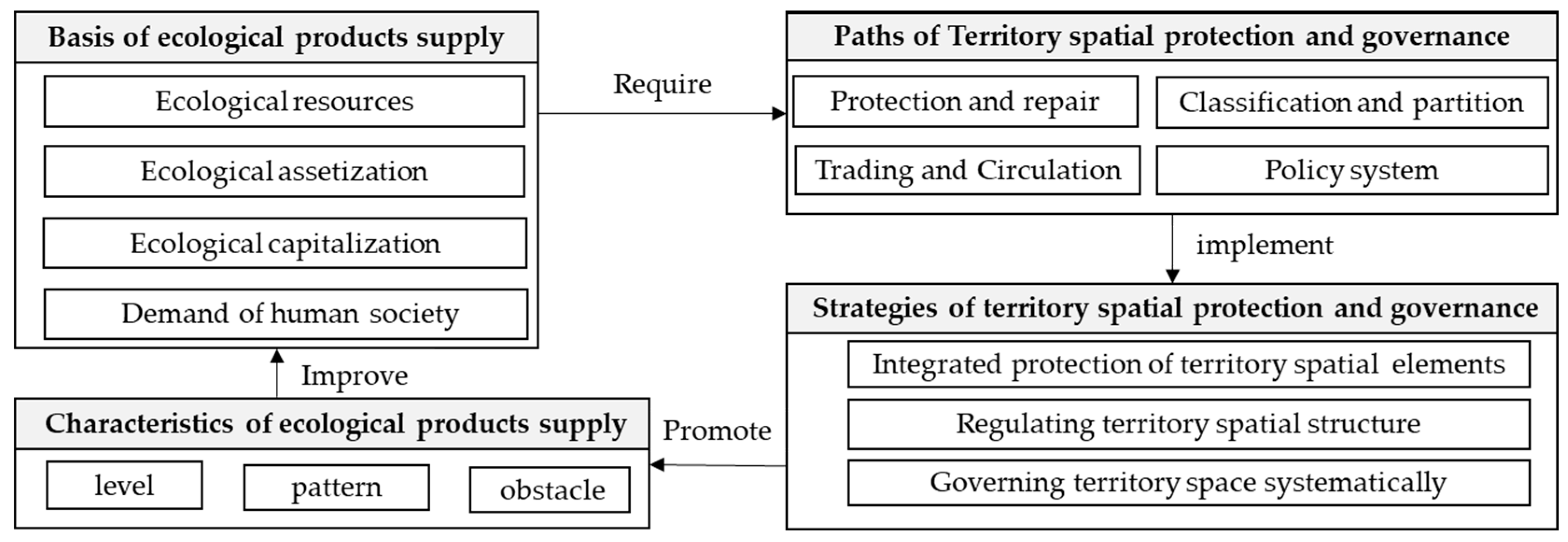
Ecological products are based on natural resources and shaped by human society, with the territory space acting as the platform for natural resources and human development (Figure 7). The objective is to increase the availability of ecological products to safeguard and manage the territory space. Natural resources are the fundamental components of ecological product supply, possessing characteristics of resources, assets, and capital. The key to ensuring a steady supply of ecological products lies in the responsible preservation and utilization of natural resources, encouraging the transformation of ecology into valuable assets and capital to fulfill the requirements of human society. In the ecological products supply, the protection and management of territory space reflect the asset management thinking of natural resources, providing the following protection and management paths: protecting and restoring natural resources, classifying and zoning the management of ecological resources, providing a space for trade circulation, and implementing safeguard policies. These path implementation requirements include integrated protection of elements, structural regulation, and systematic governance. The interaction between human society and the ecological environment creates different types of functional spaces [50], and the characteristics of the ecological products as a product of human and biological joint action on the ecosystem reflect the utilization of territorial space elements, functional structure, and system status [51]. Therefore, it is possible to enhance the level of supply capacity, spatio-temporal pattern, and obstacle factors of ecological products and construct strategies for protecting and governing territory space from the three aspects of integrated protection of elements, structural regulation, and system governance.
Figure 6.
Analysis for territory spatial protection and governance based on ecological products supply.
Figure 6.
Analysis for territory spatial protection and governance based on ecological products supply.
4.1. Integrated Protection of Territorial Spatial Elements for Enhancing the Ecological Products Supply Capacity Level
The integrated protection of territory spatial elements considers the ecosystem of mountains, rivers, forests, fields, lakes, grasslands, and deserts as a whole. It requires relying on each city's advantages of ecological product elements endowment to maintain and enhance the regional ecological system. The endowment of ecological elements determines the foundation and characteristics of ecological product supply, with wind and water serving as natural media that connect various ecological elements. Therefore, the BTH region should rely on the endowment of ecological elements such as forest land, grassland, and cropland to plan and design integrated protection based on production products such as fresh air, organic agricultural products, natural ecology, and landscape culture.
The characteristic elements of ecological product supply in the BTH region are located at the Yanshan and Taihang Mountain areas, involving Zhangjiakou and Chengde; the grassland area in the northwest of Zhangjiakou; the ecological tourism area of Beijing and Tianjin; the ecological agriculture area of Beijing Tianjin, and Tangshan; the western regions of Shijiazhuang, Xingtai, and Handan; the mountainous and hilly ecological transition zones in the western parts of Handan and Hengshui; as well as the agricultural ecological zone in the North China Plain [52]. Chengde and Zhangjiakou cities should develop ecological tourism and animal husbandry based on natural ecosystems such as forests and grasslands, forming several forest parks and grassland parks as nature reserves [53]. Important ecological tourism areas such as Beijing, Tianjin, and Shijiazhuang should ensure the supply of ecological land, such as forest areas and wetlands, and improve the ecological environment to guarantee the conditions for ecological tourism. Tangshan, Cangzhou, Hengshui, Xingtai, and Handan should make use of a large amount of cropland and agricultural products to develop eco-agriculture and agricultural tourism. In ecologically excessive hilly areas, both oasis protection and farmland protection and afforestation should be considered, forming mixed vegetation to ensure the sustainable development of agricultural ecological obstacles [54].
4.2. Regulation of Territory Spatial Structure based on Differentiated Parrern of Ecological Products Supply Capacity
Disorderly use of territory space structure can lead to conflicts between land use patterns and ecological functions [55]. We should rely on the differences in ecological product supply types in each city and layout production, living, and ecological space according to the structure regulation of territory space function. The division of "three spaces" and three ecological product categories coincide, but in this study, production space aims at agricultural production and food security, living space involves maintaining residents' living environment and leisure, and ecological space aims at maintaining ecological system stability. Regions such as Cangzhou, Hengshui, Xingtai, and Handan, which have a higher concentration of agricultural production, should prioritize the protection of permanent basic farmland. They should also make full use of the advantages of flat and contiguous land, promote mechanized agricultural production, and utilize the scientific and technological expertise and talent advantages of Beijing and Tianjin. There should be a shift in the development focus of major agricultural product areas toward providing high-tech and high-quality ecological materials. Living space is mainly located in the southeast plain area, including Beijing, Tianjin, Langfang, Shijiazhuang, and other metropolitan areas. We should promote urban public green space and infrastructure construction. Ecological space is mainly located in Chengde and Zhangjiakou, and we should strictly abide by ecological protection [50].
The problem of mismatch between ecological product supply and demand is widespread. We should explore cross-regional circulation and trading models of ecological products to regulate the structure of territory space [34]. Regions with advantages in ecological product supply are usually dominated by mountains and plateaus, with low population density and small consumption of ecological products. Most areas in the BTH region are plain areas, where population density and demand for construction land are large, inevitably leading to insufficient ecological product supply. These problems inevitably promote the existence of cross-regional ecological product supply. Cities in the northern part of the BTH region, such as Chengde and Zhangjiakou, are regions with advantages in ecological environmental product supply compared to cities in the southern part. The ecological product value should be calculated, and compensation standards should be determined. Beijing and Tianjin, along with other areas benefiting from fresh air and clean water sources, should pay compensation fees or compensate the areas supplying ecological products through ecological taxation. Tangshan, Cangzhou, and Hengshui, with advantages in ecological material products supply, can improve market transaction prices by adopting ecological labeling certification methods or promoting the sale of local green products through green procurement and policy subsidies, transferring the ecological protection costs and other additional costs in product production to the consumer area.
4.3. Systematic Governance of Territory Space for Addressing the Ecological Products Supply Capacity Obstacle Factors
The ecological product supply obstacle factors in the BTH region are the basis for the governance of the territory spatial system, which helps to form a global and specific system governance plan. The ecological cultural products in the BTH region face the greatest obstacles. Essential factors hindering development include fishery products, park green space, eco-leisure, eco-tourism, and eco-land. So, Ecological construction should be strengthened throughout the region, with overall planning for native vegetation and traditional village ecological landscapes, to promote the transformation and realization of the value of ecological spaces and eco-leisure resources[52].
In addition, Each city should strengthen actions such as greening land and space, environmental governance, restoration of mines, and returning cultivated land to forests, grass, and water. As well as enhance the reclamation and remediation of land while increasing the area of ecological land and urban park green spaces. For example, Beijing, Tianjin, and Tangshan should strengthen mountain restoration and afforestation, protect water areas and wetlands, and develop ecological agriculture; Chengde and Zhangjiakou should deepen the governance of sand and dust sources in the Beijing-Tianjin region, expand green spaces, and carry out projects such as mountain closure and afforestation of barren mountains to increase the area of urban park green spaces; Shijiazhuang and Qinhuangdao should rely on the beautiful natural environment to construct park green spaces and improve the quantity and quality of forests; Baoding, Handan, and Xingtai should focus on the restoration of mountain coverage, and continue to prevent soil erosion and vegetation destruction; Langfang, Hengshui, and Cangzhou should be highly vigilant against non-food production and occupation of cropland, and carry out urban ecosystem integration governance[54].
5. Conclusions
Previous studies have emphasized the guiding role of ecosystem services in land resource development, but these studies have paid less attention to ecological products or have not explored territory protection and governance strategies based on the ecological product supply. This study combined the characteristics of ecological products and the ecological, productive, and living functions of territory space to construct an evaluation index system for the ecological products supply capacity. Taking the BTH region as an example to comprehensively apply principal component analysis, equivalent factor method, and entropy value method to evaluate the supply capacity from 2011 to 2021. Furthermore, the study analyzed the spatio-temporal patterns of ecological product supply using the natural breaking point method and quantile classification method and analyzed obstacle factors using the obstacle degree model. Finally, based on the level, pattern, and obstacle factors of ecological product supply, we proposed suggestions for territory spatial protection and governance from the aspects of integrated protection of elements, structural regulation, and systematic governance.
The main findings are as follows: (1) The overall supply capacity of ecological products in the BTH region showed an increase in 2011-2021. The highest availability was ecological environmental products, while ecological material products had relatively lower availability. The category with the highest growth rate was ecological cultural products. (2) The availability of ecological products in different cities of the BTH region has been consistently increasing from 2011 to 2021, but the trends of different categories of ecological product supply capacity varied over time. There were significant spatial differences and prominent regional advantages. (3) The supply of ecological cultural products directly impacts the overall supply capacity of ecological products, and the obstacle factors to the ecological product supply were relatively stable, mainly concentrated in factors such as eco-land, eco-tourism, eco-leisure, park green spaces, and fishery products There were specific differences in these factors among different cities.
Based on the analysis of the ecological product supply capacity level, pattern, and barrier factors, it is necessary to propose policy recommendations for territory spatial protection and governance from the aspects of integrated protection of elements, structural regulation, and system governance. (1) The integrated protection of territory spatial elements requires relying on the advantages of ecological product elements endowment in each city to improve the regional ecological product supply. (2) Based on the variations in the types of ecological product supply in each city, the ecological space should be planned according to the idea of optimizing the overall structure of land space function. The optimization of territory space structure can be based on providing material production, cultural life, and ecological environment functions. (3) The BTH region should strengthen the construction of ecological culture, plan the ecological landscape of native vegetation and traditional villages as a whole, and promote the value of beautiful ecological spaces and ecological leisure cultural resources. Each city should also explore differentiated system governance strategies based on its barrier factors.
This study expanded previous research on ecological products and established an evaluation index system for ecological products that considered the ecological function of the territory space. We also proposed territory spatial protection and governance strategies from the perspective of ecological product supply. This study helps to improve territory spatial planning from the perspective of ecological environment protection. It provides references for ecological product supply and territory spatial planning in China and offers optimized strategies for land resource allocation and spatial coordinated development for sustainable development in some regions. However, various evaluation methods exist for ecological product supply, and territory spatial protection and governance have complexity. On the one hand, ecological product classification, value accounting, and the realization of value transformation can all affect the evaluation results of ecological product supply. Different indicators and methods may lead to different evaluation results. On the other hand, there may be inconsistencies between ecological product supply and territory spatial protection and governance behaviors due to the incomplete economic rationality of ecological product suppliers when facing complex economic and social information. Therefore, in future research, (1)we should further explore the comprehensive set of indicators and corresponding accurate calculation methods. (2) to strengthen the analysis of ecological product demand and the analysis of incentives for ecological product supply in ecological product supply analysis. (3) it is also important to delve into the cognition and behaviour of ecological product suppliers and territory spatial protection and governance entities, seeking a balance and consistency between product suppliers and territory spatial protection and governance entities.
Author Contributions
Project administration, W.P.; writing—original draft preparation, X.Y.; data curation, Y.S.; writing—review and editing, Z.S.; supervision, W.P. All authors have read and agreed to the published version of the manuscript.
Funding
This research was funded by the Beijing Social Science Foundation Major project, "Research on building an ecological civilization system", grant number 19ZDA03.
Institutional Review Board Statement
Not applicable.
Informed Consent Statement
Not applicable.
Data Availability Statement
All data and models generated or used in the research process of this paper are presented and explained in the body of the article.
Conflicts of Interest
The authors declare no conflicts of interest.
References
- Gao, L.; Bryan, B.A. Finding Pathways to National-Scale Land-Sector Sustainability. Nature 2017, 544, 217–222. [Google Scholar] [CrossRef] [PubMed]
- Remøy, H.; Street, E. ' The Dynamics of "Post-Crisis" Spatial Planning: A Comparative Study of Office Conversion Policies in England and The Netherlands. Land Use Policy 2018, 77, 811–820. [Google Scholar] [CrossRef]
- Persson, C. Deliberation or Doctrine? Land Use and Spatial Planning for Sustainable Development in Sweden. Land Use Policy 2013, 34, 301–313. [Google Scholar] [CrossRef]
- Turner, B.L.; Lambin, E.F.; Verburg, P.H. From Land-Use/Land-Cover to Land System Science. Ambio 2021. [CrossRef] [PubMed]
- The State Council of the People's Republic of China. Opinions of the Central Committee of the Communist Party of China and the State Council on the Establishment of National Territory Spatial Planning System and Supervision of Its Implementation. Available online: http://www.gov.cn/zhengce/2019-05/23/content_5394187.htm (accessed on 4 May 2021).
- Harris, L.R.; Defeo, O. Sandy Shore Ecosystem Services, Ecological Infrastructure, and Bundles: New Insights and Perspectives. Ecosyst. Serv. 2022, 57, 101477. [Google Scholar] [CrossRef]
- Fan, J.; Sun, W.; Zhou, K.; Chen, D. Major Function Oriented Zone: New Method of Spatial Regulation for Reshaping Regional Development Pattern in China. Chin. Geogr. Sci. 2012, 22, 196–209. [Google Scholar] [CrossRef]
- Woodruff, S.C.; BenDor, T.K. Ecosystem Services in Urban Planning: Comparative Paradigms and Guidelines for High Quality Plans. Landsc. Urban. Plan. 2016, 152, 90–100. [Google Scholar] [CrossRef]
- Hansen, R.; Frantzeskaki, N.; McPhearson, T.; Rall, E.; Kabisch, N.; Kaczorowska, A.; Kain, J.-H.; Artmann, M.; Pauleit, S. The Uptake of the Ecosystem Services Concept in Planning Discourses of European and American Cities. Ecosyst. Serv. 2015, 12, 228–246. [Google Scholar] [CrossRef]
- Hauck, J.; Görg, C.; Varjopuro, R.; Ratamäki, O.; Jax, K. Benefits and Limitations of the Ecosystem Services Concept in Environmental Policy and Decision Making: Some Stakeholder Perspectives. Environ. Sci. Policy. 2013, 25, 13–21. [Google Scholar] [CrossRef]
- Beery, T.; Stålhammar, S.; Jönsson, K.I.; Wamsler, C.; Bramryd, T.; Brink, E.; Ekelund, N.; Johansson, M.; Palo, T.; Schubert, P. Perceptions of the Ecosystem Services Concept: Opportunities and Challenges in the Swedish Municipal Context. Ecosyst. Serv. 2016, 17, 123–130. [Google Scholar] [CrossRef]
- Zorrilla-Miras, P.; Palomo, I.; Gómez-Baggethun, E.; Martín-López, B.; Lomas, P.L.; Montes, C. Effects of Land-Use Change on Wetland Ecosystem Services: A Case Study in the Doñana Marshes (SW Spain). Landsc. Urban. Plan. 2014, 122, 160–174. [Google Scholar] [CrossRef]
- Vallecillo, S.; Polce, C.; Barbosa, A.; Perpiña Castillo, C.; Vandecasteele, I.; Rusch, G.M.; Maes, J. Spatial Alternatives for Green Infrastructure Planning across the EU: An Ecosystem Service Perspective. Landsc. Urban. Plan. 2018, 174, 41–54. [Google Scholar] [CrossRef]
- Plummer, M.L. Assessing Benefit Transfer for the Valuation of Ecosystem Services. Frontiers in Ecol & Environ 2009, 7, 38–45. [Google Scholar]
- Marchese, D.; Reynolds, E.; Bates, M.E.; Morgan, H.; Clark, S.S.; Linkov, I. Resilience and Sustainability: Similarities and Differences in Environmental Management Applications. Sci. Total. Environ. 2018, 613–614, 1275–1283. [Google Scholar] [CrossRef] [PubMed]
- Perschke, M.J.; Harris, L.R.; Sink, K.J.; Lombard, A.T. Using Ecological Infrastructure to Comprehensively Map Ecosystem Service Demand, Flow and Capacity for Spatial Assessment and Planning. Ecosyst. Serv. 2023, 62, 101536. [Google Scholar] [CrossRef]
- Li, L.; Fan, Z.; Xiong, K.; Shen, H.; Guo, Q.; Dan, W.; Li, R. Current Situation and Prospects of the Studies of Ecological Industries and Ecological Products in Eco-Fragile Areas. Environ. Res. 2021, 201, 111613. [Google Scholar] [CrossRef] [PubMed]
- Zhou, J.; Xiong, K.; Wang, Q.; Tang, J.; Lin, L. A Review of Ecological Assets and Ecological Products Supply: Implications for the Karst Rocky Desertification Control. IJERPH 2022, 19, 10168. [Google Scholar] [CrossRef] [PubMed]
- Song, R.; Hu, Y.; Li, M. Chinese Pattern of Urban Development Quality Assessment: A Perspective Based on National Territory Spatial Planning Initiatives. Land. (Basel). 2021, 10, 773. [Google Scholar] [CrossRef]
- Lv, T.; Zeng, C.; Lin, C.; Liu, W.; Cheng, Y.; Li, Y. Towards an Integrated Approach for Land Spatial Ecological Restoration Zoning Based on Ecosystem Health Assessment. Ecol. Indic. 2023, 147, 110016. [Google Scholar] [CrossRef]
- Costanza, R.; de Groot, R.; Braat, L.; Kubiszewski, I.; Fioramonti, L.; Sutton, P.; Farber, S.; Grasso, M. Twenty Years of Ecosystem Services: How Far Have We Come and How Far Do We Still Need to Go? Ecosyst. Serv. 2017, 28, 1–16. [Google Scholar] [CrossRef]
- Wong, C.P.; Jiang, B.; Kinzig, A.P.; Lee, K.N.; Ouyang, Z. Linking Ecosystem Characteristics to Final Ecosystem Services for Public Policy. Ecol Lett 2014, 18, 108–118. [Google Scholar] [CrossRef] [PubMed]
- Shi, Y.; Zhou, C.; Wang, R.; Xu, W. Measuring China's Regional Ecological Development through "EcoDP.". Ecol. Indic. 2012, 15, 253–262. [Google Scholar] [CrossRef]
- Wang, N.; Xu, C.; Kong, F. Value Realization and Protection and governance paths of Forest Ecological Products—Case Study from Zhejiang Province, China. IJERPH 2022, 19, 7538. [Google Scholar] [CrossRef]
- Zhang, Y.; Ma, Z.; Sun, M.; Song, J.; Yang, Y.; Li, Q.; Jing, Y. Quantitatively Evaluating the Ecological Product Value of Nine Provinces in the Yellow River Basin from the Perspective of the Dual-Carbon Strategy. Land. (Basel). 2023, 12, 516. [Google Scholar] [CrossRef]
- Schröter, M.; Barton, D.N.; Remme, R.P.; Hein, L. Accounting for Capacity and Flow of Ecosystem Services: A Conceptual Model and a Case Study for Telemark, Norway. Ecol. Indic. 2014, 36, 539–551. [Google Scholar] [CrossRef]
- Costanza, R.; d’Arge, R.; de Groot, R.; Farber, S.; Grasso, M.; Hannon, B.; Limburg, K.; Naeem, S.; O’Neill, R.V.; Paruelo, J.; et al. The Value of the World's Ecosystem Services and Natural Capital. Nature 1997, 387, 253–260. [Google Scholar] [CrossRef]
- Millennium Ecosystem Assessment (MEA). Ecosystems and Human Well-Being: Synthesis. Isterritory Press.2005.
- Ouyang, Z.; Song, C.; Zheng, H.; Polasky, S.; Xiao, Y.; Bateman, I.J.; Liu, J.; Ruckelshaus, M.; Shi, F.; Xiao, Y.; et al. Using Gross Ecosystem Product (GEP) to Value Nature in Decision Making. Proc Natl Acad Sci USA 2020, 117, 14593–14601. [Google Scholar] [CrossRef]
- van Oudenhoven, A.P.E.; Petz, K.; Alkemade, R.; Hein, L.; de Groot, R.S. Framework for Systematic Indicator Selection to Assess Effects of Land Management on Ecosystem Services. Ecol. Indic. 2012, 21, 110–122. [Google Scholar] [CrossRef]
- de Groot, R.; Brander, L.; van der Ploeg, S.; Costanza, R.; Bernard, F.; Braat, L.; Christie, M.; Crossman, N.; Ghermandi, A.; Hein, L.; et al. Global Estimates of the Value of Ecosystems and Their Services in Monetary Units. Ecosyst. Serv. 2012, 1, 50–61. [Google Scholar] [CrossRef]
- Hein, L.; van Koppen, K.; de Groot, R.S.; van Ierland, E.C. Spatial Scales, Stakeholders and the Valuation of Ecosystem Services. Ecol. Econ. 2006, 57, 209–228. [Google Scholar] [CrossRef]
- Peng, W.; Sun, Y.; Li, Y.; Yuchi, X. An Evaluation and Promotion Strategy of Green Land Use Benefits in China: A Case Study of the Beijing–Tianjin–Hebei Region. Land. (Basel). 2022, 11, 1158. [Google Scholar] [CrossRef]
- Chen, Y.; Zhai, Y.; Gao, J. Spatial Patterns in Ecosystem Services Supply and Demand in the Jing-Jin-Ji Region, China. J. Clean. Prod. 2022, 361, 132177. [Google Scholar] [CrossRef]
- Yang, J.; Huang, X. The 30 m Annual Land Cover Dataset and Its Dynamics in China from 1990 to 2019. Earth Syst. Sci. Data 2021, 13, 3907–3925. [Google Scholar] [CrossRef]
- Farley, J.; Costanza, R. Payments for Ecosystem Services: From Local to Global. Ecol. Econ. 2010, 69, 2060–2068. [Google Scholar] [CrossRef]
- Yang, Y.; Ren, X.; Yan, J. Trade-Offs or Synergies? Identifying Dynamic Land Use Functions and Their Interrelations at the Grid Scale in Urban Agglomeration. Cities 2023, 140, 104384. [Google Scholar]
- Fu, J.; Bu, Z.; Jiang, D.; Lin, G.; Li, X. Sustainable Land Use Diagnosis Based on the Perspective of Production–Living–Ecological Spaces in China. Land Use Policy 2022, 122, 106386. [Google Scholar] [CrossRef]
- Biggs, R.; Schlüter, M.; Biggs, D.; Bohensky, E.L.; BurnSilver, S.; Cundill, G.; Dakos, V.; Daw, T.M.; Evans, L.S.; Kotschy, K.; et al. Toward Principles for Enhancing the Resilience of Ecosystem Services. Annu. Rev. Environ. Resour. 2012, 37, 421–448. [Google Scholar] [CrossRef]
- Xie, G.; Zhang, C.; Zhen, L.; Zhang, L. Dynamic Changes in the Value of China's Ecosystem Services. Ecosyst. Serv. 2017, 26, 146–154. [Google Scholar] [CrossRef]
- Ming, L.; Chang, J.; Li, C.; Chen, Y.; Li, C. Spatial-Temporal Patterns of Ecosystem Services Supply-Demand and Influencing Factors: A Case Study of Resource-Based Cities in the Yellow River Basin, China. IJERPH 2022, 19, 16100. [Google Scholar] [CrossRef]
- Xie, H.; Zhu, Z.; Li, Z. Spatial Divergence Analysis of Ecosystem Service Value in Hilly Mountainous Areas: A Case Study of Ruijin City. Land. (Basel). 2022, 11, 768. [Google Scholar] [CrossRef]
- Xie, G.D.; Lu, C.X.; Long, Y.F.; Zheng, D. ; Li SC; Ecological assets valuation in the Tibetan Plateau. J. Nat. Resour. 2003, 2, 189–196. (In Chinese) [Google Scholar]
- Xu, H.; Jia, A.; Song, X.; Bai, Y. Suitability Evaluation of Carrying Capacity and Utilization Patterns on Tidal Flats of Bohai Rim in China. J. Environ. Manag. 2022, 319, 115688. [Google Scholar] [CrossRef] [PubMed]
- Guo, D.; Wang, D.; Zhong, X.; Yang, Y.; Jiang, L. Spatiotemporal Changes of Land Ecological Security and Its Obstacle Indicators Diagnosis in the Beijing–Tianjin–Hebei Region. Land. (Basel). 2021, 10, 706. [Google Scholar] [CrossRef]
- Wei, L.; Zhang, Y.; Wang, L.; Cheng, Z.; Wu, X. Obstacle Indicators Diagnosis and Advantage Functions Zoning Optimization Based on "Production-Living-Ecological" Functions of National Territory Space in Jilin Province. Sustainability 2022, 14, 4215. [Google Scholar] [CrossRef]
- Han, H.; Guo, L.; Zhang, J.; Zhang, K.; Cui, N. Spatiotemporal Analysis of the Coordination of Economic Development, Resource Utilization, and Environmental Quality in the Beijing-Tianjin-Hebei Urban Agglomeration. Ecol. Indic. 2021, 127, 107724. [Google Scholar] [CrossRef]
- Yang, Y. Evolution of Habitat Quality and Association with Land-Use Changes in Mountainous Areas: A Case Study of the Taihang Mountains in Hebei Province, China. Ecol. Indic. 2021, 129, 107967. [Google Scholar] [CrossRef]
- Wang, Z.; Liang, L.; Sun, Z.; Wang, X. Spatiotemporal Differentiation and the Factors Influencing Urbanization and Ecological Environment Synergistic Effects within the Beijing-Tianjin-Hebei Urban Agglomeration. J. Environ. Manag. 2019, 243, 227–239. [Google Scholar] [CrossRef] [PubMed]
- Yang, Y.; Bao, W.; Liu, Y. Coupling Coordination Analysis of Rural Production-Living-Ecological Space in the Beijing-Tianjin-Hebei Region. Ecol. Indic. 2020, 117, 106512. [Google Scholar] [CrossRef]
- Smith, A.; Yee, S.H.; Russell, M.; Awkerman, J.; Fisher, W.S. Linking Ecosystem Service Supply to Stakeholder Concerns on Both Land and Sea: An Example from Guánica Bay Watershed, Puerto Rico. Ecol. Indic. 2017, 74, 371–383. [Google Scholar] [CrossRef]
- Zhou, W.; Xi, Y.; Zhai, L.; Li, C.; Li, J.; Hou, W. Zoning for Spatial Conservation and Restoration Based on Ecosystem Services in Highly Urbanized Region: A Case Study in Beijing-Tianjin-Hebei, China. Land. (Basel). 2023, 12, 733. [Google Scholar] [CrossRef]
- Bao, C.; Wang, H.; Sun, S. Comprehensive Simulation of Resources and Environment Carrying Capacity for Urban Agglomeration: A System Dynamics Approach. Ecol. Indic. 2022, 138, 108874. [Google Scholar] [CrossRef]
- Wu, F.; Wang, X.; Ren, Y. Urbanization's Impacts on Ecosystem Health Dynamics in the Beijing-Tianjin-Hebei Region, China. IJERPH 2021, 18, 918. [Google Scholar] [CrossRef] [PubMed]
- Pacione, M. Private Profit, Public Interest and Land Use Planning—A Conflict Interpretation of Residential Development Pressure in Glasgow's Rural–Urban Fringe. Land Use Policy 2013, 32, 61–77. [Google Scholar] [CrossRef]
Figure 1.
The location and territory use pattern of the BTH region in2022.
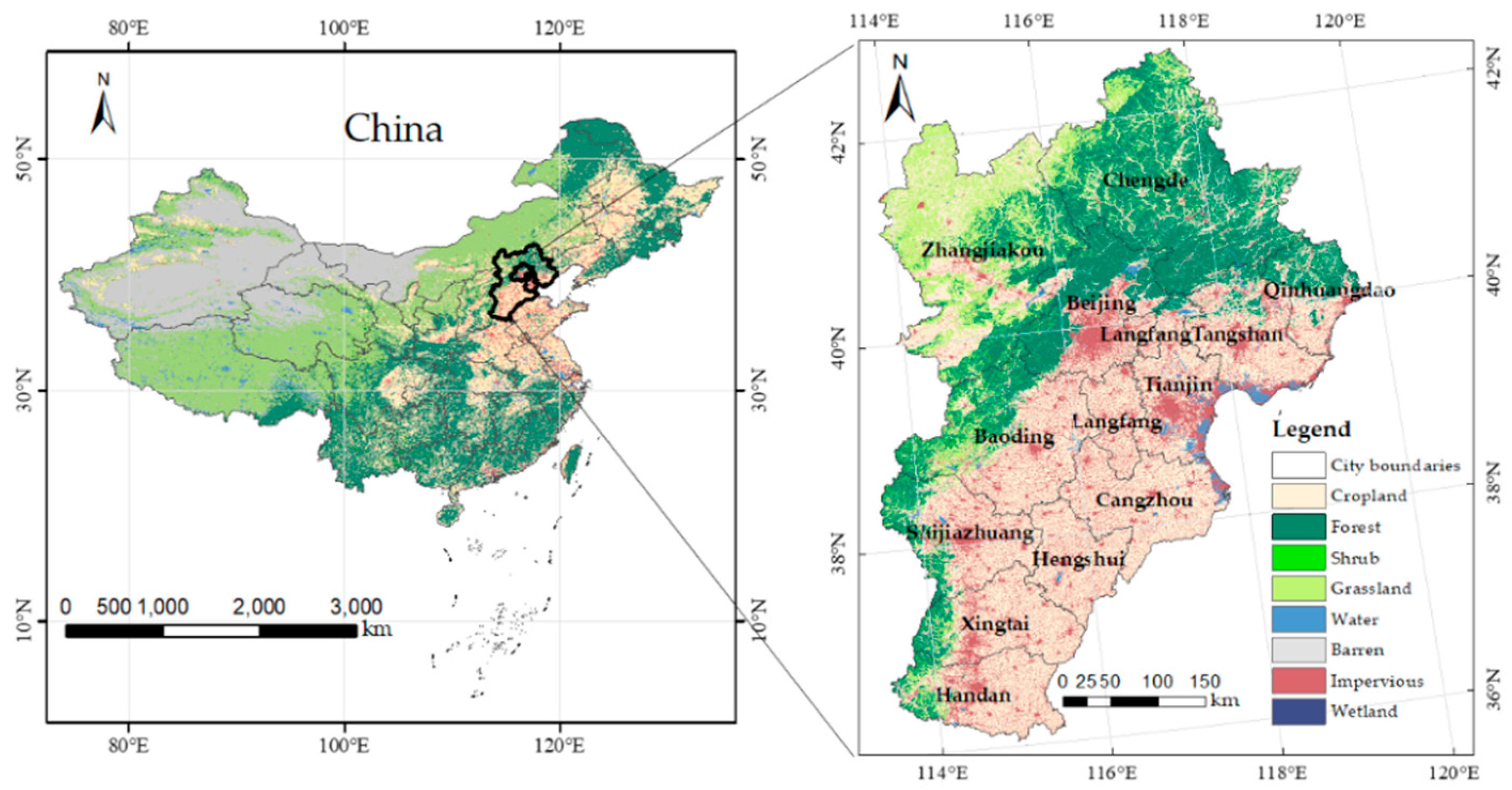
Figure 2.
Workflow of analyzing ecological products supply for achieving territory spatial protection and governance.
Figure 2.
Workflow of analyzing ecological products supply for achieving territory spatial protection and governance.
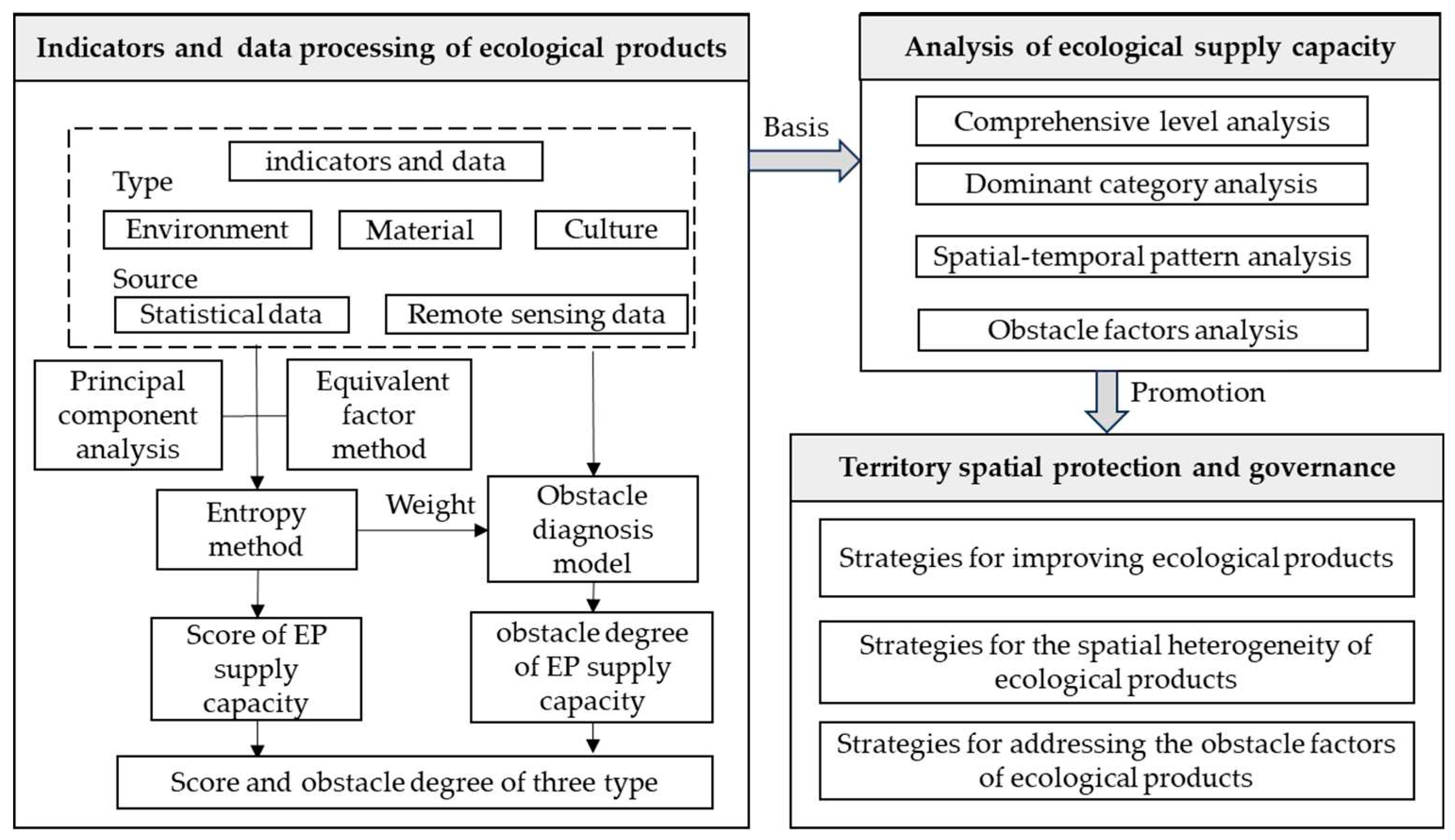
Figure 3.
Time changes in the ecological products supply of the cities in the BTH.
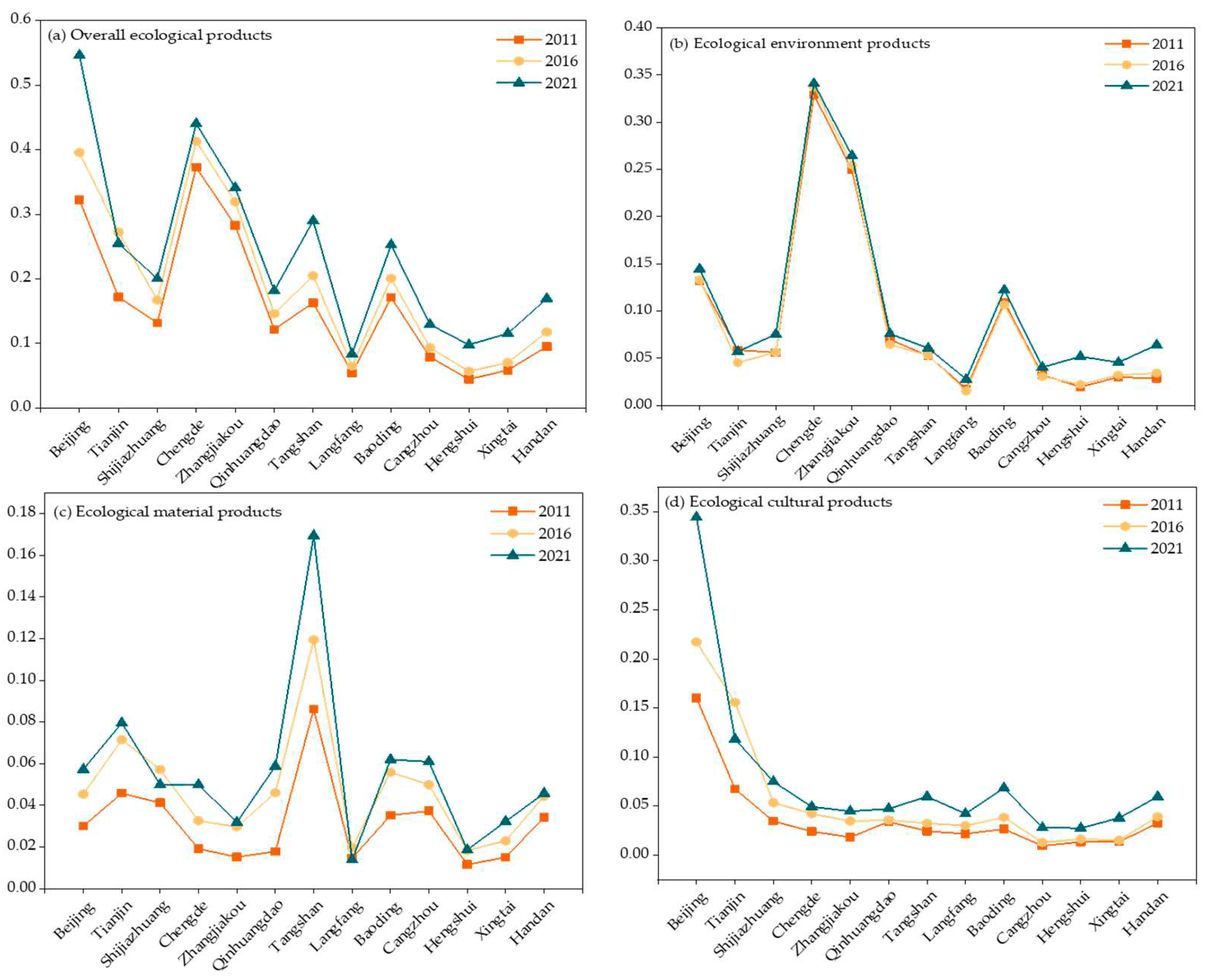
Figure 4.
Spatial differentiation pattern of ecological products supply capacity in BTH. Note: "OEP" represents the overall ecological products, "EEP" represents the ecological environmental products, "EMP" represents the ecological material products, and "ECP" represents the ecological cultural products.
Figure 4.
Spatial differentiation pattern of ecological products supply capacity in BTH. Note: "OEP" represents the overall ecological products, "EEP" represents the ecological environmental products, "EMP" represents the ecological material products, and "ECP" represents the ecological cultural products.
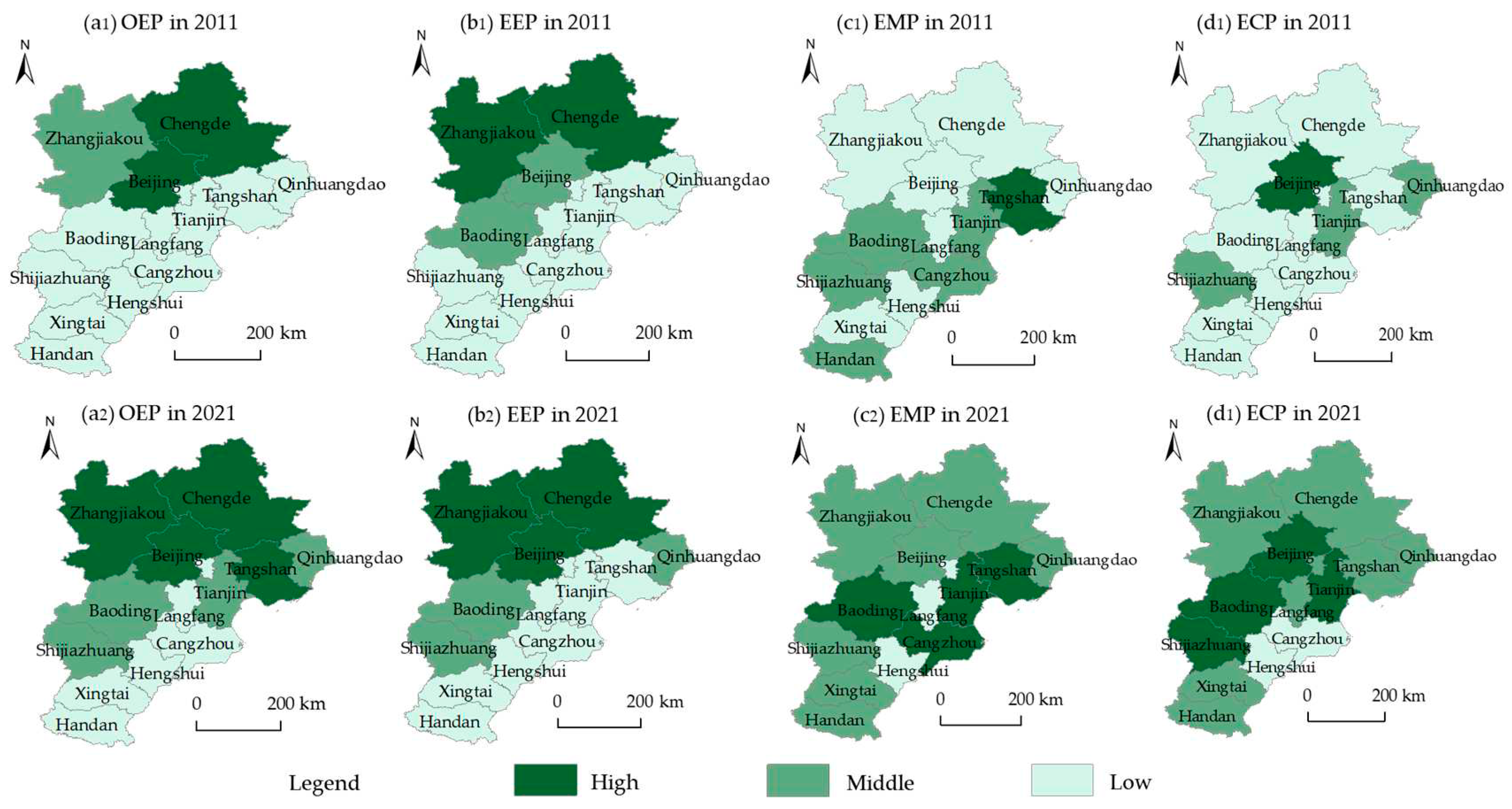
Figure 5.
Top 5 obstacle factors of ecological products supply of cities in the BTH region.
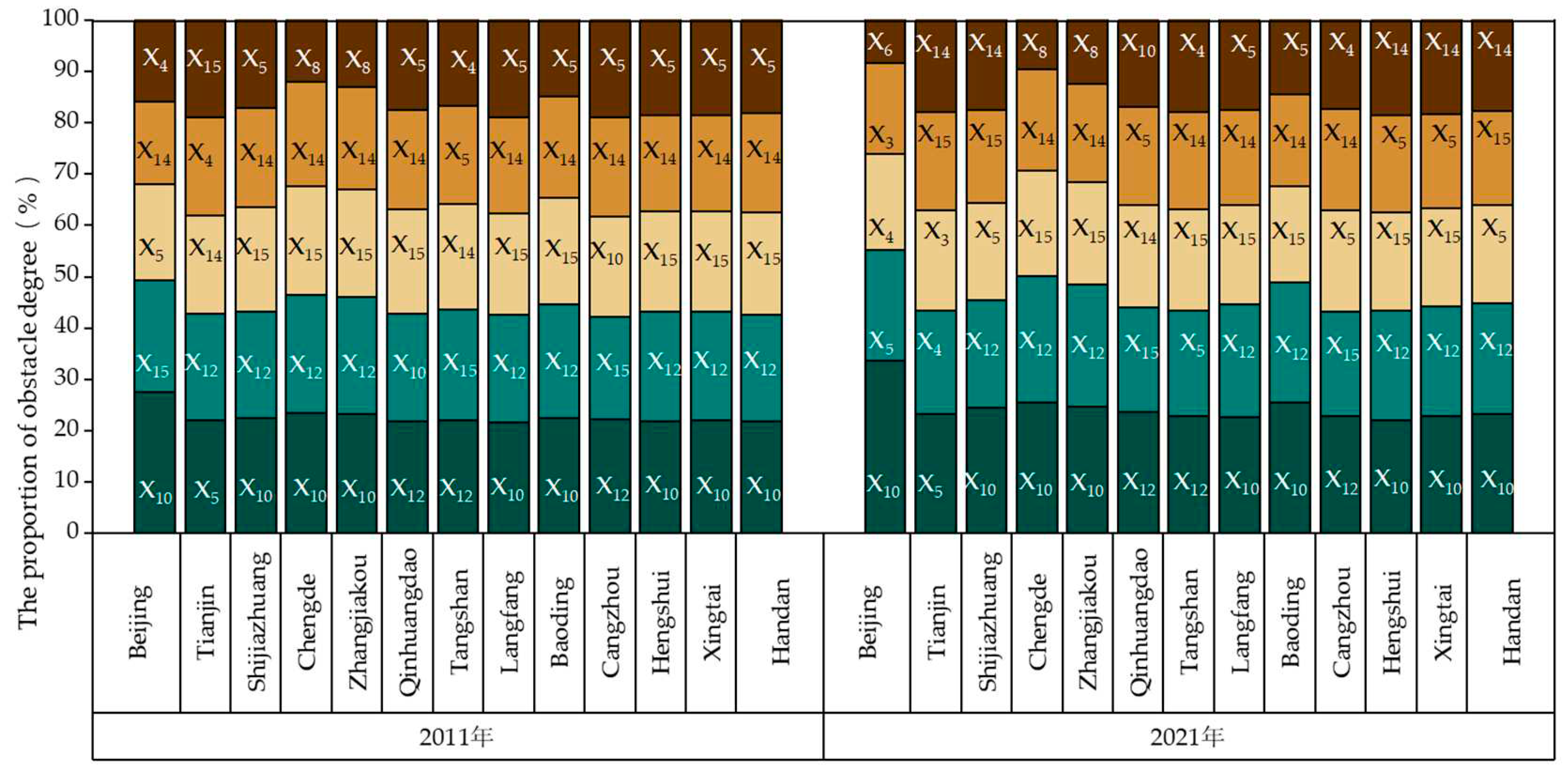

Table 1.
Dataset source information.
| Data Source | Data format | Data support organization |
|---|---|---|
| The 30m annual China land cover dataset (CLCD) 2011-2022 | Raster data | Wuhan University |
| Statistical Yearbook of the provinces in the BTH region China Urban Statistical Yearbook National Compilation of Cost and Benefit of Agricultural Products |
Numerical data | National Bureau of Statistics of the People's Republic of China |
| Ecological Environment Bulletin of provinces and cities in the BTH region | Numerical data | Ecological Environment Bureau of provinces and cities in the BTH region |
Table 2.
Evaluation index system and weight of ecological products supply capacity in BTH.
| Target layer | Criterion Layer | Factor layer | Index layer | Weight | Direction | |
|---|---|---|---|---|---|---|
| Ecological product | Ecological environmental products | X1 Fresh air X2 Clean water X3 Safe soil |
The overall level of air | 0.0191 | + | |
| The overall level of water | 0.0513 | + | ||||
| Soil conservation value(CNY) | 0.0885 | + | ||||
| X4 Biodiversity X5 Eco-land X6 Per capita cropland |
Biodiversity value(CNY) | 0.0933 | + | |||
| Ecological land area (hectares) | 0.1054 | + | ||||
| Cultivated area per capita (square meters/person) |
0.0303 | + | ||||
| Ecological material products | X7 Agricultural products X8 Forestry products X9 Animal husbandry products X10 Fishery products |
Output value of agricultural products (CNY) | 0.0249 | + | ||
| Output value of forest products (CNY) | 0.0722 | + | ||||
| Output value of animal husbandry products (CNY) |
0.0227 | + | ||||
| Output value of fishery products (CNY) | 0.1232 | + | ||||
| Biomass energy Wind energy Solar energy Hydro energy |
Biomass energy output value | \ | + | |||
| Wind energy output value | \ | + | ||||
| Solar energy output value | \ | + | ||||
| Hydroenergy output value | \ | + | ||||
| Ecological cultural products | X11 Greening of the built-up area X12 Park green space X13 Forest cover |
Greening rate of built-up areas (%) | 0.0171 | + | ||
| Area of park green space (ha) | 0.1216 | + | ||||
| Forest coverage (%) | 0.0150 | + | ||||
| X14 Eco-tourism X15 Eco-leisure |
Tourist excursion income (CNY) | 0.1060 | + | |||
| Tourist entertainment income(CNY) | 0.1100 | + | ||||
Note: "+" represents the positive indicators, respectively. "CNY" is the unit of measurement for China's legal currency.
Table 3.
Equivalent value of safe soils and biodiversity per unit area in BTH.
| Type | Cropland | Woodland | Grassland | Water | Wetland | Bare land |
|---|---|---|---|---|---|---|
| Soil safety | 0.437 | 1.949 | 1.235 | 0.781 | 1.940 | 0.017 |
| Biodiversity | 0.143 | 1.781 | 1.126 | 2.142 | 6.611 | 0.017 |
Table 4.
Time change of ecological products supply capacity in the BTH from 2011 to 2021.
| Index | Year | ||||||||||
|---|---|---|---|---|---|---|---|---|---|---|---|
| Type | 2011 | 2012 | 2013 | 2014 | 2015 | 2016 | 2017 | 2018 | 2019 | 2020 | 2021 |
| OEP | 1.591 | 1.646 | 1.715 | 1.788 | 1.787 | 1.941 | 1.999 | 2.149 | 2.287 | 2.117 | 2.386 |
| EEP | 0.912 | 0.900 | 0.888 | 0.882 | 0.890 | 0.913 | 0.926 | 0.947 | 0.974 | 1.028 | 1.055 |
| EMP | 0.310 | 0.370 | 0.429 | 0.461 | 0.452 | 0.471 | 0.416 | 0.476 | 0.489 | 0.543 | 0.561 |
| ECP | 0.369 | 0.376 | 0.398 | 0.445 | 0.445 | 0.556 | 0.658 | 0.727 | 0.824 | 0.545 | 0.770 |
Note: "OEP" represents the overall ecological products, "EEP" represents the ecological environmental products, "EMP" represents the ecological material products, and "ECP" represents the overall cultural products.
Disclaimer/Publisher’s Note: The statements, opinions and data contained in all publications are solely those of the individual author(s) and contributor(s) and not of MDPI and/or the editor(s). MDPI and/or the editor(s) disclaim responsibility for any injury to people or property resulting from any ideas, methods, instructions or products referred to in the content. |
© 2023 by the authors. Licensee MDPI, Basel, Switzerland. This article is an open access article distributed under the terms and conditions of the Creative Commons Attribution (CC BY) license (http://creativecommons.org/licenses/by/4.0/).
Copyright: This open access article is published under a Creative Commons CC BY 4.0 license, which permit the free download, distribution, and reuse, provided that the author and preprint are cited in any reuse.


