
Submitted:
23 January 2024
Posted:
25 January 2024
You are already at the latest version
Abstract
Exploring the spatio-temporal differentiation characteristics and coupling coordination relationship of the composite ecosystem of urban agglomerations is of great significance for promoting the synergistic development and integration construction of urban agglomerations. This paper is based on LUCC data, DEM, temperature, precipitation and other multi-source data, taking the central Yunnan urban agglomeration as an example. The entropy weight method is first used to determine the comprehensive weights to evaluate the regional economic and social development level. Then, the InVEST (Integrated Valuation of Ecosystem Services and Trade-offs)model was used to quantitatively calculate and analyze the spatial and temporal evolution characteristics of the four ecosystem services, including water conservation, soil conservation, carbon sequestration services, and habitat quality. The coupling coordination model was used to quantitatively analyze the evolution of the coupling coordination of the composite ecosystems in the central Yunnan urban agglomeration during the period of 2010-2020, and to reveal its development law. The results show the following: ①During the study period, the socio-economic subsystems in central Yunnan urban agglomeration demonstrated an outward radiative growth from Kunming City, marked by underdeveloped sub-centers and prevalent low-level areas. ②Trends in ecosystem services varied, with water and soil conservation showing fluctuating increases, carbon sequestration remaining stable, and habitat quality declining. The integrated ecosystem services critically important zone is mainly located in the northeastern region and southwestern edge of the study area. ③Economic, social and ecological subsystems are highly coupled, with consistent overall development trends and strong interactions. ④The increase in the degree of harmonization amounted to 7.82%, with lagging subsystems varying in different degree of harmonization subregions. The study can provide a scientific basis for urban agglomerations to formulate scientific and reasonable development policies, promoting regional sustainable development and optimizing the spatial pattern of the national territory.
Keywords:
Composite Ecosystem
; Central Yunnan Urban Agglomeration
; Ecosystem Services
; Coupling Coordination Degree
; Spatio-temporal Differentiation Characteristics
1. Introduction
Social, economic and natural elements together constitute a composite ecosystem on which human beings depend for their survival and development[1]. Natural subsystems are defined as the natural conditions on which human beings depend for their survival and reproduction. Economic subsystems are the purposeful human activities of production, distribution, and consumption. The social subsystem consists of human perceptions, institutions and culture. Wang et al. proposed that human society is a composite ecosystem dominated by human behavior, supported by the natural environment, with resource flow as the lifeblood and social system as the channel[2]. The economic subsystem plays a pivotal role in steering the overall system and the mediating interactions between the subsystems. Human productive activities contribute to the circulation of matter, the dissemination of information, the flow of energy, the development of technology and the growth of value. The social subsystem supports the economic subsystem by providing public resources. Its results are shared not only in the local region, but also throughout the Earth’s biosphere, ultimately contributing to human development and social advancement. Meanwhile, the natural subsystem underpins the economic and social subsystems with its natural resources. The three subsystems are interconnected through the flow of energy, matter and information to form a higher level coupled system[3]. Composite ecosystem theory provides an important foundation for the study of complex human-land systems. Only by realizing their coordinated development and forming a virtuous circle can we ensure the long-term stable development of the social system, which is of great guiding significance to the realization of sustainable development[4].
Currently, the theory of composite ecosystems has been widely applied to many fields such as human habitat[5], natural sciences[6], and social management[7]. As ecosystem services are closely related to human well-being, the coupled relationship between urban economic and social development and the ecological environment has become a central issue in regional development research. Research on the coupling and coordination of multiple elements and systems has become an important part of China’s regional development research. Thematically, more research is focused on the coupling and coordination between the ecological environment and the two systems of economy[8,9,10] and society[11] and the three systems of economy, society and ecology[12,13]. Methodologically, scholars have mostly used entropy weight method[14], coupling coordination degree model[15] and other methods to measure the degree of coupling coordination between systems. Geographically, the scope of inquiry encompasses large scales such as the whole country[16] and the central region[17], the provincial (municipal) level in Fujian[18], Jiangsu[19], Jilin[20], and Chongqing[21], and at the level of urban agglomerations such as the Beijing-Tianjin-Hebei, the Yangtze River Delta[22], the Pearl River Delta[23], and the Central Plains[24,25]. However, current research is still lacking. Firstly, for highland mountainous areas with a unique geographical location and significant spatial differences in resource allocation, insufficient attention has been paid to the coupled and coordinated development of economic, social and natural systems. Secondly, traditional studies on regional ecosystem states often rely on single statistical approaches. The natural characteristics of the ecosystem may therefore be neglected, making the assessment results not a true reflection of the actual ecological state of the region.
The central Yunnan-China urban agglomeration is one of the 19 major urban agglomerations supported by the national strategy[26]. It is located in the convergence zone of several important national strategies, such as "One Belt, One Road", "Yangtze River Economic Belt" and "New Land and Sea Corridor in the West", and serves as a crucial gateway to South Asia and Southeast Asia. However, despite the region’s rapid economic development, the region faces marked disparities in urbanization levels among its cities and towns, coupled with suboptimal infrastructure connectivity. Concurrently, rapid economic development has brought about changes in land-use patterns and pressure on the ecological environment, with problems such as over-exploitation and irrational use of natural resources, declining biodiversity and fragmentation of ecosystems. Such imbalances between economic and social advancement and ecological environment pose a threat to the region’s sustainable development. This paper starts from the perspective of the mutual influence of the three systems of economy, society and nature, constructs the evaluation index system from multiple dimensions, and quantitatively measures the development status of the economic-social-natural system through the entropy value method and the InVEST model. Furthermore, the coupling coordination degree model was utilized to study the interactive coupling relationship of the composite ecosystem. In order to reveal the spatial and temporal distribution patterns and co-evolutionary mechanisms of the composite ecosystems of the central Yunnan urban agglomeration in the context of fragile habitats and fragmented land use. The ultimate objective is to provide scientific reference and basis for the ecological protection and sustainable development of urbanization in the region.
2. Materials and Methods
2.1. Overview of the Study Area
The central Yunnan urban agglomeration, a pivotal urban cluster in central Yunnan Province, is positioned south of Dianchi Lake, and geographical coordinates from 24°26´N to 37°38´N and from 98°55´E to 105°55´E (Figure 1). It includes all of Kunming City, Chuxiong Prefecture, Yuxi City, Qujing City, and the northern part of Honghe Prefecture in Yunnan Province, covering 49 counties and districts, with a total area of about 25,000 square kilometers.
The city cluster stands out as the most intensively developed region in Yunnan Province, boasting robust economic connections, an advanced transportation network, a solid development foundation, and significant potential for future growth. Kunming City, as the centerpiece, is at the forefront of developing modern service sectors, high-tech industries, and tourism. Surrounding cities like Qujing City and Yuxi are also critical to the province’s economic surge, contributing significantly through mineral resources, agriculture, and tourism sectors.
The region’s high-altitude, mountainous landscape endows it with abundant natural resources and a rich biodiversity, further enhancing its economic and ecological value. It is not only a key urban cluster in Southwest China but also serves as a vital corridor linking the region with Southeast Asia. Its strategic location and dynamic development play an instrumental role in fostering regional and national progress.
2.2. Data Sources
The main data sources in this paper include economic and social data, basic geographic data and meteorological data. Economic and social data cover information on industry, population, income and urban construction. These data are mainly from the China Statistical Yearbook, Yunnan Statistical Yearbook, Yunnan City Yearbook, as well as statistical yearbooks and statistical bulletins of cities and states. The basic geographic data cover critical elements such as road networks, river systems, and administrative boundaries of districts and counties, and are procured from the National Center for Basic Information, ensuring accuracy and relevance. Meteorological data, including indicators of temperature, precipitation, and water pressure, were obtained from the National Weather Science Data Center. Specific data sources are detailed in the table.
2.3. Construction of Indicator System and Determination of Weights
The composite ecosystem of urban agglomeration is a unity of ecological functions jointly combined by human society, economic activities and natural conditions. A critical factor influencing urban agglomeration development is the coordination between the scale and pace of economic and social progress and the level of ecosystem services. Among the evaluation indicators, the economic subsystem is centered on the material and energy metabolic activities of human beings, which are mainly measured through the three dimensions of economic development, structure and vitality (see Table 1). The social subsystem, on the other hand, is centered on human beings, with special emphasis on their basic needs, and mainly covers the three organic components of living standards, infrastructure and public services. The natural subsystem is based on the ecosystems that support human existence. Utilizing the InVEST model, four key ecosystem services: water retention, soil conservation, carbon sequestration services, and habitat quality was assessed. Considering the diverse scales, magnitudes, and attributes of the collected data, this study will employ necessary standardization techniques. Subsequently, the indicator weights will be determined by the entropy method.
2.4. Methods for Assessing the Level of Development of Subsystems
2.4.1. Methodology for Assessing the Level of Economic and Social Development
The Composite Development Index (CDI) is often calculated from the standardized values and weights of the indicators [27], using the following formula.
In this formula, a represents the subsystem; represents the comprehensive development index of the subsystem; represents the evaluation index of each subsystem, and represents the number of evaluation indexes of the subsystem; represents the year; represents the region; represents the weight of the indexes; represents the standardized value of the indexes; , , and represent the comprehensive development indexes of the economic subsystem, the social subsystem, and the ecological subsystem, respectively; and represents the comprehensive development index of the composite system. , , represent the degree of importance of the three subsystems to the development of the region, and in this study, taking into account that the three subsystems are of equal importance, it is taken that the input = = = 1/3.
2.4.2. Methodology for Evaluating the Level of Ecological Services of Natural Subsystems
- Water conservation services
The formula for calculating water conservation services is based on the water yield module of the InVEST model. The model takes into account several factors such as topography, climate, soil layer thickness, and permeability[28]. The formula is as follows:
In the formula, represents the annual water production of land use type in grid (mm); represents the annual actual evapotranspiration of land use type in grid(mm); and represents the average annual precipitation of grid (mm).
- 2.
- Soil conservation services
The soil conservation model was calculated using a modified generalized soil loss equation. Th formula is as follows:
In the formula, represents soil retention (t‧hm-2‧a-1); represents rainfall erosivity (MJ‧mm‧hm-2‧h-1‧a-1); represents soil erodibility (t‧hm2‧h‧hm-2‧MJ-1‧mm-1); represents slope and slope length factors obtained by DEM; represents vegetation cover and management factor; and represents the engineering measures factor. represents the vegetation cover and management factor; represents the engineering measures factor.
- 3.
- Carbon sequestration services
Carbon stocks are a measure of the capacity of terrestrial ecosystems to sequester carbon[29]. The formula is as follows:
The total carbon stock, , represents the carbon stock per unit area in t ‧ hm-2 ‧ a-1. represents the carbon stock in above-ground material, represents the carbon stock in below-ground material,represents the density of organic matter in the soil, and represents the carbon stock in dead leaves and leaves, all of which are in t ‧ hm-2 ‧ a-1.
- 4.
- Habitat quality
The HQ (Habitat Quality) module of the InVEST model is based on the degree of sensitivity of each landscape type in the study area and the resulting habitat quality when it is threatened by external threats. Results ranged from 0 - 1, with values proportional to the level of habitat quality[30]. The formula is as follows:
In the formula, represents the habitat quality of a single raster when the habitat or land use type is ; represents the habitat suitability when the habitat or land use type is; represents the weighted average of the threat levels of raster cell when the habitat or land use type is; represents the half-saturation parameter, which is taken to be 1/2 of the maximum value of ; and represents the normalization constant, which is taken to be 2.5.
In the formula, represents the weighted average of the total threat level of grid ; represents a specific threat factor; represents all the rasters on the raster layer of the threat factor ; represents the set of phases on the raster layer of the threat factor ; represents the normalized threat weight, which ranges from 0 to 1; and represents the source of a rasterused to determine whether a raster is a source of the threat factor; represents the distance function between the habitat class and the threat factor; represents the level of accessibility of the threat source to grid under the relevant state of environmental protection; represents the sensitivity to the threat factorwhen the habitat or land use type is .
- 5.
- Integrated ecosystem services
The coefficient of variation method was used to construct the regional ecosystem services composite index, and the geometric mean method was used for the raster cells[31]. The formula is as follows:
In the formula, represents the ecosystem services of the th grid cell; represents the original value of the th ecosystem service on the th grid cell in the region; represents the normalized value of the th ecosystem service on the th grid cell in the region; represents the average of the normalized value of the th ecosystem service on the th grid cell; and is the main ecosystem service type.
2.4.3. Coupling Coordination Model
Coupling is a concept in physics used to describe the mutual influences, constraints, synergies, and amplifications between two or more systems or modes of motion through the exchange of matter, energy, and information[32]. The degree of coupling quantifies the degree of ordering of the system as a whole and the strength of the interactions between the subsystems. The formula for calculating the coupling degree is as follows:
In the formula, represents the degree of coupling; represents the comprehensive development score of each subsystem; represents the comprehensive development score of the composite ecosystem; represents the coefficient to be determined, which represents the relative importance of the three subsystems of economy, society and nature. In this paper, it is argued that a composite ecosystem is an ecological functional unity composed of economic, social and natural factors that are interrelated and interact with each other. In order to carry out a cross-sectional comparison of the actual situation of the subsystems in different cities and states, this study assigns the same coefficients to be determined to each system based on the control variables, which is more conducive to analyzing and comparing. Based on the results of related research[33,34], the degree of coordination D was categorized into 10 intervals (Table 3). Also, the lowest scoring of the three subsystems - economic, social and ecological - was defined as the lagging subsystem. In order to harmonize the calculations, the values of the three coefficients to be determined were set to 1/3 in this study.
3. Results
3.1. Characteristics of Economic-Social-Ecological Subsystem Development Chronology
3.1.1. Characteristics of Economic Subsystem Development Chronology
The economic subsystem of the central Yunnan urban agglomeration has exhibited a fluctuating yet overall upward growth trend over the past decade, where the score grows from 0.3825 in 2010 to 0.4463 in 2020, an increase of 16.7%. However, this growth has not been uniform across the region, with significant disparities observed among the cities within the agglomeration. Chuxiong Prefecture experienced the most rapid development within this period, recording an impressive growth rate of 118.1%. Despite this remarkable progress, it remains behind the other four cities and prefectures in terms of overall developmental level. Yuxi City had the next highest growth rate of 44.1%. In contrast, Qujing City experienced a decline in its economic development, with its subsystem score falling from 0.2554 in 2010 to 0.1770 in 2020.Meanwhile, both Kunming City and Honghe Prefecture experienced relatively modest growth rates, each below 15 percent. This variation in growth rates across different cities and prefectures highlights the uneven economic development within the central Yunnan urban agglomeration, reflecting a complex landscape of regional economic dynamics.
As shown in Figure 2, there is a tendency for the development gaps in the economic subsystems of the cities and states in the urban agglomerations to become smaller. In terms of the overall distribution pattern, Kunming City, as the provincial capital and only megacity, has become the high ground for the economic development of the city cluster. The urban agglomerations are characterized by a relatively homogeneous hierarchy of economic development, with an absence of fully developed sub-centers and a widespread presence of low-development regions. Kunming City is going through a stage of polarized development, and its limited economic impact on neighboring areas contribute to uneven regional economic growth and a insufficient agglomeration effect. This scenario hinders the formation of a mutually reinforcing development pattern across the city cluster. Therefore, in order to make the whole city cluster develop in a long term and healthy way, the economic development mode should choose the balanced development instead of the leader-driven mode of Kunming City. This strategy is expected to evolve into a "pyramid-like" city scale structure within the cluster.
In addition, the rapid development of the central Yunnan urban agglomeration has been significantly influenced by the extensive export of local commodities and the overall domestic economic climate since 2010. Since the Belt and Road Initiative was proposed in 2013, Yunnan Province has become an active participant in the strategy. It has actively participated in the construction of the China-Central South Peninsula International Economic Cooperation Corridor and the Bangladesh-China-India-Myanmar Economic Corridor, and is building a radiation center for South Asia, Southeast Asia and the Indian Ocean region with the support of the State. The central Yunnan urban agglomeration is well-positioned to become a key growth area in the Belt and Road Initiative, supported by multiple policies.
Nonetheless, the region faces challenges in transitioning from resource-dependent industries to strategic emerging sectors, with the evolution of an effective regional economic growth model still pending. In order to realize this transformation, central Yunnan must integrate more effectively into the vast domestic market and establish strong connections with South Asia, Southeast Asia, and the Indian Ocean Rim. By stimulating industrial innovation, open cooperation and regional influence, central Yunnan is poised to become a key driver for high-quality economic development in western China.
3.1.2. Characteristics of Social Subsystem Development Chronology
robust infrastructure and public services play an important role in population agglomeration and economic growth. This principle is evident in the central Yunnan urban agglomeration, where has a score of 0.4043 in 2010, which grows to 0.5094 in 2020, with an overall upward trend. Social subsystem scores increased in all cities and states except Qujing City. In particular, Chuxiong Prefecture grew from 0.1321 in 2010 to 0.4426 in 2020, marking an impressive increase of 235%. Both Kunming City and Yuxi City had growth rates of more than 15 percent. On the other hand, Honghe Prefecture shows a fluctuating pattern, initially showing an increase followed by a subsequent decrease.
As shown in Figure 3, in the central Yunnan urban agglomeration, the social subsystem shows less disparity across its municipalities and states compared to the economic subsystem. Regionally, Kunming City remains the highest scoring city, yet it still has considerable potential for enhancing its comprehensive urban service capacity. The other four cities and states in the agglomeration record roughly equivalent scores, each falling below 0.65. The problem of low levels of development in these areas, uneven hierarchical structures and inadequate regional development remains significant. Improvements in educational quality within the region have a catalytic effect on nurturing excellent human resources, thereby enriching the local talent pool. This enrichment is key to elevating the quality of the workforce in the urban agglomeration and facilitating the efficient movement of economic factors. However, due to various limitations such as geographical location, transportation infrastructure, economic base, and limited innovation capabilities, the central Yunnan urban agglomeration still lags behind other Chinese urban clusters in socio-economic development. Therefore, upgrading the spatial aggregation and overall capacity of this city cluster is a critical objective. The implementation of a "strong provincial capitals" strategy can fully utilize the influence and driving effect of provincial capitals. Strengthening the synergistic development and integration process between Kunming City and its neighboring counties (including cities and districts) is pivotal. This approach aims to establish a city cluster characterized by concentrated resources, complementary advantages, efficient transportation, and elevated openness. Such strategic developments can propel the central Yunnan urban agglomeration towards a more dynamic and integrated urban future.
3.1.3. Characteristics of Natural Subsystem Development Chronology
(i) Water conservation services
As shown in Figure 4, temporally, the average multi-year unit water yield of the urban agglomeration in central Yunnan was 8,438.134 mm. Water production has gradually increased overall, showing a fluctuating upward trend. Among them, the peak in water production was observed in 2015, while 2010 marked the lowest value in this period. Spatially, the amount of water production in the urban agglomeration of central Yunnan gradually increases from southwest to northeast. Moreover, a significant spatial differentiation pattern emerges, with higher water production typically found in upstream areas compared to downstream areas. This spatial distribution indicates a clear and distinct gradient in water yield across the region, highlighting a clear pattern of spatial differentiation.
In terms of the influencing mechanism, the water conservation capacity of the urban agglomeration in central Yunnan is affected by a combination of factors. with topographic relief being a significant contributor. Topographic relief is an important factor, as the flow of rivers on the surface gradually slows down due to changes in topography. This results in a longer time for the soil to absorb water after the runoff passes over the surface, increasing the amount of time the soil is in contact with the water, which promotes water production and water-holding capacity. In the southern part of the Yuanjiang River Basin, its forest area is extensive and vertically structured. The degree of high-density vegetation cover fills in the difference between the widely distributed evergreen broadleaf and deciduous broadleaf forests in terms of their ability to contain rice soils, resulting in a high level of water retention. In the central part of the study area, the widespread distribution of sclerophyllous broadleaf forests and scrubs together serve to trap rainwater. It also separates the forest from urban settlements and rural cultivation areas, effectively reducing the negative impact of human activities on forested areas[36]. Although the north-eastern cultivated area has a slightly lower water yield and high agricultural activity, it is highly urbanized and has a lower water-holding capacity. However, in recent years, a variety of soil and water conservation measures have been implemented to enhance the protection of the top soil layer of cultivated land, which provides abundant organic matter, and thus the water-holding capacity of the region has increased in 2020. Overall, areas with high water-holding capacity are primarily located in the northeastern cultivated lands and the southern forests, while the low-holding sites are mainly located in the central built-up area and the northwestern woodland-scrub complex. A notable case is the Panlong River Basin within Kunming City, where water retention is more limited. This limitation is due to the area has less soil cover in the lower bedding, lower vegetation cover, and most of the area has been replaced by urban construction land, which is unable to effectively intercept and infiltrate precipitation. These findings highlight the complex and diverse dynamics of water conservation in the central Yunnan urban agglomeration and are important for customizing regional water management strategies.
(ii) Soil conservation services
As shown in Figure 5, in terms of temporal change, between 2010 and 2020, the overall soil conservation function shows an increasing and then decreasing trend. The lowest soil retention was in 2010, with an average as low as 7.3 x 10⁹ tons, and the highest was in 2015, with an average as high as 9.8 x 10⁹ tons. This fluctuation is likely attributable to the rapid urbanization process during this period. In terms of spatial distribution, the soil retention in the central Yunnan urban agglomeration in 2010, 2015 and 2020 shows the characteristics of high in the southwest and low in the central and northern parts of the country. The areas with the highest values were predominantly in the southwestern and northern parts of the study area, characterized by dense woodland coverage, higher altitudes, steep slopes, and favorable vegetation conditions. The broad-leaved evergreen and deciduous forests in these regions effectively reduce soil erosion. In contrast, the low value areas are clustered mainly in the central urban construction sites and rural farming areas. These regions are generally flatter and lower in elevation, with frequent human activity impacting them. Despite the implementation of relevant measures, actual soil erosion and loss are difficult to avoid, and the capacity for soil and water conservation has declined significantly.
In terms of the influencing mechanism, the decline in soil conservation function observed between 2015 and 2020 in the central Yunnan urban agglomeration is primarily attributed to the impacts of rapid urbanization. This includes factors such as increasing population density, expansion of construction areas, growth of bare land zones, and a notable reduction in wetland spaces. Among the various land use and cover types, soil retention is significantly higher in forested land than in other types, croplands and grasslands also contribute positively to soil conservation. Focusing on soil erosion, both the total volume and per unit area soil loss are considerably higher on bare lands compared to other land types. Bare ground is more susceptible to rainfall and other physical erosion because it lacks the buffering effect of cover such as vegetation and lawns. As a result, its soil loss is also greater than other land types with vegetative cover, which contributes to the lower soil retention in 2010.
(iii) Carbon sequestration services
As shown in Figure 6, in terms of temporal changes, the carbon stock per unit area of the urban agglomeration in central Yunnan was 36.935 965t/Km2, 36.916 427t/Km2 and 36.694 762t/Km2 in 2010, 2015 and 2020, respectively, which remained relatively stable. In terms of spatial distribution, the pattern of carbon storage capacity during this period consistently exhibited a trend of being "higher in the surrounding areas and lower in the central region". The spatial distribution of carbon storage remained stable throughout the study period, with no significant shifts or alterations observed. The disparity in carbon stock between areas with high and low values was not pronounced. The high-value areas are mainly located in Yuxi, Chuxiong Prefecture and Qujing City, while the low-value areas are mainly located in Kunming City and Honghe Prefecture.
In terms of the impact mechanism, between 2010 and 2015, the central Yunnan urban agglomeration witnessed an expansion in built-up land area, but concurrently, initiatives like farmland reforestation led to an increase in forested areas, resulting in relatively stable carbon stocks. Carbon sequestration is richer in forested land and cropland, and very low in bare land, built-up land, and watersheds. Areas with limited woodland and grassland, particularly cultivated lands, have a relatively weak absorptive capacity of carbon sinks and are unable to fully absorb the emitted carbon, resulting in partial carbon loss. From 2015 to 2020, Rapid urbanization, modernization, industrialization and socio-economic development contributed to a decrease in forested land, slightly diminishing the region’s carbon sequestration capacity. The central area, particularly urban construction land in Kunming City and its environs with lesser forest and grassland coverage, presents an extensive low carbon storage area. Conversely, the peripheral areas of municipalities, further from urban and rural influences and benefiting from a more favorable natural environment, exhibited higher carbon stocks. For example, carbon stocks are higher in the southwestern region, mainly because of better vegetation cover and relatively less human intervention, and carbon emitted from carbon sources can largely be absorbed and fixed. This indicates the significant impact of vegetation condition and human activities on carbon stocks.
(iv) Habitat quality
As shown in Figure 6, in terms of temporal changes, the habitat quality index of the central Yunnan urban agglomeration declined slightly between 2010 and 2020, with an average value of 0.00561. Overall, habitat quality remained moderately high but declined, by 7.9%. Notably, the period between 2015 and 2020 saw a more pronounced decline, at 5.7%. In terms of spatial distribution, the habitat quality coefficient of this urban agglomeration shows a spatial distribution characteristic of high in the southwest, high in the northeast and low in the central region. The central area’s limited natural vegetation cover, coupled with its proximity to urban and rural settlements characterized by intense human activity, contributes to its comparatively poorer habitat quality. In contrast, the area of dense woodland to the southwest has excellent ecological indicators for the natural growth of all types of organisms. Additionally, efforts to conserve woodlands and grasslands in the eastern and northern regions have positively influenced habitat quality levels in these areas.
In terms of impact mechanisms, between 2010 and 2020, the level of destruction of natural habitats increased in watershed areas with intensive human activities. Reduced regional vegetation cover, increased fragmentation of terrain, and elevated levels of soil erosion have led to a decline in habitat conditions in the central region. Conversely, with the construction of forestry reserves and the widespread implementation of policies such as farmland back into forests key nature reserves have been better maintained. Its low level of anthropogenic disturbance has led to improved habitat conditions in the southern woodlands, contributing to an overall positive shift in habitat quality. Among the various land types assessed, woodland and grassland perform well on various environmental indicators. While cropland fell slightly short in terms of the habitat quality index when compared to woodlands and grasslands, it still maintained a moderate rating and played an essential role in the ecosystem’s functioning through daily crop-related activities. Due to the relatively low percentage of watershed area in the watershed, the corresponding habitat quality index is significantly lower than the other three. Therefore, the focus should be on the protection and restoration of woodlands and grasslands, as these efforts have the potential to significantly enhance the overall habitat quality within the studied watershed.
(v) Integrated ecosystem services
In order to delineate the importance level of ecosystem service functions in the central Yunnan urban agglomeration, the results of InVEST modeling were normalized and spatially quantified using ArcGIS, and rating of integrated ecosystem services for 2010, 2015 and 2020.
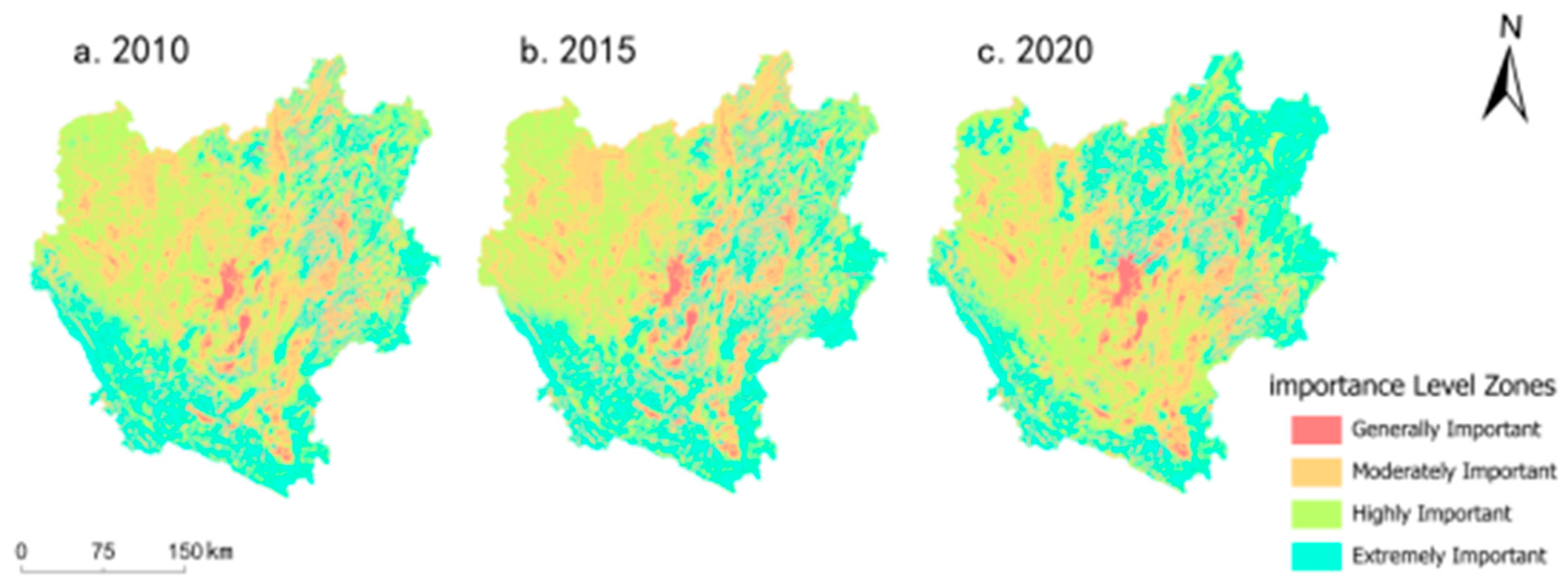
Figure 8.
Ecosystem service function importance level zones.
By observing the spatial distribution characteristics of each sub-area as depicted in Figure 10, it can be seen that the zone of extremely important ecosystem service function is mainly distributed in the southwestern periphery and northeastern region of the study area. These areas are characterized by extensive forested and grassland areas, have a high abundant vegetation cover that serves as an effective carbon sink and a source of water retention. At the same time, efforts to protect natural resources in these regions should be strengthened. Existing ecological protection measures are utilized to strengthen the supply capacity of ecosystem services in order to eliminate behaviors such as deforestation and pollution of water sources, which in turn serve as an ecological barrier to protect the ecosystem of the Yunnan-Guizhou Plateau.
The highly important and moderately important areas are located primarily situated in the northwestern and southwestern portions of the study area, characterized primarily by woodland, cropland, and building land. Within these zones, it is imperative to implement strict measures for environmental pollution control. Furthermore, it is necessary to exercise strict control over the expansion of urban development to mitigate its encroachment on cropland, forested areas, and other vital ecological lands. In addition, it is necessary to improve the utilization rate of construction land development per unit area, realize intensive and economical land use, and reduce the impact of unreasonable human activities on the region[37].
The generally important areas are primarily concentrated within the central region of of the study area, characterized predominantly by cropland, construction land, and water bodies. These regions exhibit low vegetation cover and experience relatively high levels of anthropogenic disturbances. They represent pivotal zones for pollution prevention and control. In addition to the strict regulation of urban expansion and the enhancement of efficient construction land utilization, it is imperative to extend protective measures to safeguard water and wetland ecosystems. There is a need to effectively protect water sources and quality and to reduce the disturbance of these areas by human activities.
3.2. Coupling and Coordination Relationships in Composite Ecosystems
3.2.1. Status of Development of Coupling in Composite Ecosystems
The composite ecosystem coupling within the central Yunnan urban agglomeration was 0.9418 in 2000 and exhibited an increase to 0.9492 by 2020. Both values indicate a high level of coupling within the system. Furthermore, as shown in Table 4, the coupling degree values of the composite ecosystems in each prefecture and city are all greater than 0.9. This result shows that the overall development trend of the three subsystems, economy, society and nature, is consistent in the development process of the central Yunnan urban agglomeration. It highlights the close interplay and interaction among these systems. However, the composite ecosystem coupling for the year 2010 recorded a slight decline at 0.9412 when compared to the 2000 figure. This decline shows that there is a difference in the rate of development of the subsystems, resulting in a minor reduction in the overall coherence of the composite system.
The coupled developmental changes in the relationship between the economy, society and nature are shown in Table 5. Changes in the two-by-two relationships of the three subsystems were largely consistent with the trend of changes in the coupling of the composite ecosystem. Between 2010 and 2015, the economy and nature displayed the least coupling, signifying a decline in harmony within the interplay among the economy, society, and nature. From 2015 to 2020, in the process of a general increase in the harmonization of economic, social and ecological relations, the degree of harmonization of the coupling between the economy and society and between society and nature is higher than that of the coupling between the economy and nature.
3.2.2. Characteristics of Spatial and Temporal Variability of Coordination in Composite Ecosystems
The coupling degree can measure the orderliness of the overall structure of the system and the strength of the interactions between subsystems, but it cannot fully reveal the nature of the coupling. Therefore, the degree of coordination is introduced as a comprehensive indicator to assess the coupling relationships and developmental levels more comprehensively.
As shown in Figure 9, in 2010, the mean value of the coupling coordination degree within the composite ecosystem of the central Yunnan urban agglomeration stood at 0.5934. By 2020, this figure had risen to 0.6398, marking an overall increase of 7.82%. Notably, in 2020, all five cities and prefectures exhibited coupling harmonization within the range of 0.5 to 0.8. Specifically, Chuxiong Prefecture and Qujing City demonstrate low levels of harmonization, whereas Yuxi and Honghe Prefecture reach barely coordinated levels. Kunming City represents the sole region achieving an intermediate level of coordination.
As the main core area for the development of the urban agglomeration, Kunming City has a robust industrial base and dense population distribution. It plays a pivotal role in driving the urbanization, industrialization, informatization, and innovative development of the central Yunnan urban agglomeration. However, the high-density development pattern within Kunming City’s central city has engendered a range of complex challenges, including traffic congestion, environmental degradation, the concentration of industries, and the depletion of limited land resources. Moreover, the expansion of construction land and population growth have led to a significant reduction in arable land. These problems have triggered the "barrel effect" of the sustainable development resource system in central Yunnan, adversely impacting the overall sustainability of the urban agglomeration. While the economic and social subsystems have driven high levels of composite ecological coupling coordination within Kunming City, it is crucial to address the imbalance between rapid economic growth and ecological preservation in the region. Future development strategies should prioritize green ecological principles, optimize the energy structure, and underscore the protection and management of the ecological environment. Such measures are essential for promoting the coordinated development of the economy, society, and ecology.
Yuxi City, second only to Kunming City in terms of coordination, has a similar ecological subsystem with Kunming City. It shows the traditional urbanization development model faces increasing pressure and contradictions during the urban development process. Yuxi concentrates the ecologically sensitive areas of three lakes and one sea, and assumes important ecosystem service functions. Consequently, future efforts should strictly adhere to regulations aimed at safeguarding these sensitive areas, such as Fuxian Lake, Xingyun Lake, Qilu Lake, and Yangzong Sea[38]. These regulations should prohibit the placement of highly polluting industrial enterprises within the watershed and impose strict limits on the Anning City and construction of new industrial parks. The central Yunnan urban agglomeration primarily exhibits two types of coordination degrees: ’barely coordinated’ and ’primary coordination.’ Its internal structure and external scale are an important reflection of the overall condition and degree of development of the region. Among the barely coordinated and primary coordinated regions, the combined development scores of the economic and ecological subsystems are generally similar, except for Chuxiong Prefecture which possesses a lower economic development score. In all regions, the ecological subsystem consistently scores the lowest. In Chuxiong Prefecture and Qujing City, the towns experience relatively lower economic development and quality of life, with limited resource utilization intensity. Consequently, the economic and social development has not yet significantly impacted the ecological environment in these areas, resulting in relatively higher ecological subsystem scores. In future development endeavors, these regions should leverage their ecological and cultural advantages to stimulate the growth of green industries and enhance collaboration with neighboring regions. Such efforts will help bridge the economic development gap and elevate the overall urban development standard.
Honghe Prefecture, situated adjacent to the national border, with a strategic position for facilitating border-related development and trade. In the future, the development of border trade should be actively promoted and its integration into the national external development strategy should be accelerated[39].
A more in-depth analysis of subsystem status and coupling reveals that the primary factor influencing the degree of coordination is the relatively low score in integrated development, particularly within the economic and ecological subsystems. Consequently, achieving high-quality urban agglomeration development hinges on several key strategies. In terms of economic development, it is imperative to establish a robust and regionally distinctive industrial platform while enhancing the overall capacity of our cities. Additionally, guiding the systematic migration of the agricultural population is crucial. Apart from Kunming City, the core city, there remains a big disparity between the level of economic and social development in other cities within the urban agglomeration and that of more developed urban agglomerations in China. Thus, concerted efforts are still required to bridge this gap by improving infrastructure and public service levels.
4. Discussion
Ecosystems serve as the foundation for economic development and are essential for societal survival. Given the regional disparities in natural conditions and resource endowments, human activities must be carried out within the natural carrying capacity to ensure sustainability. According to the theory of coupled coordination, the three subsystems - economic, social and ecological - influence and constrain each other. The ecological coupling relationships and interaction mechanisms among these subsystems across dimensions like time, space, quantity, structure, and order determine the development and succession direction of the composite ecosystem. The development and synergistic evolutionary characteristics of subsystems within composite ecosystems are currently focal points in the realm of human-land relationship research. In this study, the spatial and temporal evolution characteristics of ecosystem services and the classification of their importance levels are investigated from the urban agglomeration scale using the InVEST model. This approach complements traditional comprehensive index evaluation methods and provides valuable guidance for policymakers and decision-makers in optimizing urban spatial layouts, while pursuing socially, economically, and environmentally sustainable management objectives. In calculating economic and social subsystem scores, this study uses international standards, national averages, and reference values from planning City documents instead of the traditional method of taking the extremes, making the results more objective. Located in the southwestern border region of China, the central Yunnan urban agglomeration lags behind most other urban agglomerations in the country in terms of development. As a result, its overall economic and social development scores are generally low, except for Kunming City. The key to assessing coordination is to explore the external scale and internal ordering of the composite system. Coupling analysis and identification of lagging subsystems are essential preliminary tasks. When analyzing the coupling of geographical systems of human-land relations, it is essential to replace aggregate indicators with per capita indicators to better emphasize the quality and effectiveness of development. Moreover, the central Yunnan urban agglomeration is situated in the Yunnan-Guizhou Plateau region, characterized by complex topography, diverse ecosystems, and obvious variations in ecosystem service values. Therefore, multiple sources of data should be used and analyzed based on raster cells to highlight the natural characteristics of ecosystems.
Based on the findings, the study makes the following recommendations: As an important economic center in southwest China, the central Yunnan urban agglomeration should increase the construction of agriculture and industry, promote the development of service industry, increase the proportion of tertiary industry, and promote the optimization of industrial structure. In areas where the economic subsystems are lagging, emphasis should be placed on advancing industrial transformation and upgrading. This can be achieved by bolstering scientific research funding, promoting the smart transformation of traditional industries, and nurturing specialized high-technology sectors, thereby stimulating regional economic growth[40]. In addition, given the region’s unique geological characteristics and pronounced seasonal rainfall, extreme disasters are frequent. In the process of rational planning City for economic development, the path of synergistic development of multiple ecosystem services should be explored in the light of changes in local climatic conditions in order to reduce losses caused by disasters. In ecologically fragile areas, it is imperative to reduce human economic activities. Additionally, we must elevate local residents’ awareness of soil and water conservation and environmental protection. These efforts are vital for achieving the dual objectives of ecological preservation and high-quality development within the central Yunnan urban agglomeration.
5. Conclusions
(1) From 2010 to 2020, both the economic and social subsystems in the central Yunnan urban agglomeration exhibited an overall upward trajectory. In terms of spatial distribution, they displayed a pattern of outward expansion, radiating from the core city of Kunming City. Nevertheless, low-level areas still exist in large numbers, especially in Chuxiong Prefecture. The overall level of the social subsystem is better than that of the economic subsystem, but the lack of sub-centers and the uneven development of the municipalities and states are more evident.
(2) From 2010 to 2020, water conservation and soil conservation services in the central Yunnan urban agglomeration experienced fluctuating trends of increasing and then decreasing. Carbon sequestration services remained relatively stable, whereas habitat quality services showed a declining trend.
(3) From 2010 to 2020, the coupling degree of the composite ecosystem within the central Yunnan urban agglomeration consistently exceeded 0.8, signifying a high level of overall coupling. The interactions between economic, social and ecological subsystems are strong and significant. Changes in the two-by-two relationships of the three subsystems were largely consistent with the trend of changes in the coupling of the composite ecosystem.
(4) From 2010 to 2020, he coupling and coordination degree of the composite ecosystem in the central Yunnan urban agglomeration showed an overall upward trend. Only Kunming City achieved an intermediate barely coordinated status, and barely coordinated and primary coordinated are the main types of urban agglomeration coordination. The lagging subsystems are mainly the economic and ecological subsystems.
References
- Costanza, R.; d’Arge, R.; de Groot, R.; Farber, S.; Grasso, M.; Hannon, B.; Limburg, K.; Naeem, S.; O’Neill, R.V.; Paruelo, J.; et al. The value of the world’s ecosystem services and natural capital. Nature 1997, 387, 253–260. [Google Scholar] [CrossRef]
- Ma, S.; Wang, R. Social Economic Natural Composite Ecosystem. Acta Ecologica Sinica 1984, 1–9. [Google Scholar]
- Zhao, J.; Shi, D. A Framework of China’s High-quality Economic Development. Research on Economics and Management 2019, 40, 15–31. [Google Scholar]
- Jiang, T.; Yuan, J. An Analyzing M odel System on Population, Resources, Environment and Economics. Systems Engineering-Theory & Practice. 2002, 67-72.
- Lin, Y.; Yang, P. Research on Rural Human Settlement Environment Based on Composite Ecosystem Theory. Spatial Governance for High-Quality Development: Proceedings of the 2021 China Urban Planning Annual Conference 2021, 16, 1419–1428. [Google Scholar]
- Ma, H.; Yang, J.; Li, Z. Evolution and Driving Mechanism of Temporal and Spatial Patterns of Regulation Services of Urban Complex Ecosystem in Taiyuan. Scientia Geographica Sinica 2021, 41, 463–472. [Google Scholar]
- Ding, K; Han, X. Rural landscape planning in hilly areas based on complex ecosystem theory. Ecology and Environmental Sciences 2018, 27, 1335–1342. [Google Scholar]
- Zhou, C. Feng, X. Analysis and Forecast of Coupling Coordination Development among the Regional Economy-Ecological Environment-Tourism Industry —A Case Study of Provinces Along the Yangtze Economic Zone. ECONOMIC GEOGRAPHY 2016, 36, 186–193. [Google Scholar]
- Wang, S.; Fang, C.; Wang, Y. Quantitative investigation of the interactive coupling relationship between urbanization and eco-environment. Acta Ecologica Sinica 2015, 35, 2244–2254. [Google Scholar]
- Fang, C.; Zhou, C. Theoretical analysis of interactive coupled effects between urbanization and eco-environment in mega-urban agglomerations. Acta Ecologica Sinica 2016, 71, 531–550. [Google Scholar] [CrossRef]
- Yi, P.; Fang, S. Coupling Coordination Between the Socio-Economic Benefits and Eco-Environmental Benefits of the Songshan Global Geopark. Resources Science 2014, 36, 206–216. [Google Scholar]
- Ni, W. The Coupling and Coordination Relationship and Their Spatial Pattern of Urban Land Use Economic, Social and Ecological Benefits of Cities in Three Largest Urban Agglomerations in China. Urban Development Studies 2016, 23, 69–77. [Google Scholar]
- Liu, Y.; Yang, P. Coupling Coordination Degree of Regional Forest Ecological-Nature-Economy-Society Complex System: a Case Study in Changsha. Scientia Silvae Sinicae 2023, 59, 139–146. [Google Scholar]
- Li, T.; Liao, P. Urbanization Quality over Time and Space as Well as Coupling Coordination of Land, Population and Industrialization in Chongqing. Economic Geography 2015, 35, 65–71. [Google Scholar]
- Li, H.; Yuan, Y. Assessment of Regional Green Finance and Coupled Coordinated Development of the Ecological Environment. Statistics & Decision 2019, 35, 161–164. [Google Scholar]
- Liu, Y.; Li, R. Analysis of Coupling Degrees of Urbanization and Ecological Environment in China. Journal of Natural Resources 2005, 105–112. [Google Scholar]
- Liu, F.; Xu, H. Analysis on Spatial- temporal Coupling Coordinate Degree among Population, Land and Economy Urbanization: Based on China Provincial Panel Data. Urban Development Studies 2014, 21, 7–11. [Google Scholar]
- Hu, X.; Hong, W. Coupling Degrees of Land Ecosystem Services and Urbanization of Fuzhou City. Scientia Geographica Sinica 2013, 33, 1216–1223. [Google Scholar]
- Shan, W.; Jin, X. “Production-Living-Ecological” Function Evaluation and Coupling Coordination Analysis of Land Use in Jiangsu Province. Resources and Environment in the Yangtze Basin 2019, 28, 1541–1551. [Google Scholar]
- Cong, X.; Huang, Y. Spatial and Temporal Evolution of Coupled Coordination Degree of Ecotourism and Tourism Environment of Jilin Province. Scientia Geographica Sinica 2019, 39, 496–505. [Google Scholar]
- Zhang, Y.; Yang, Q. An analysis of coupling between the bearing capacity of the ecological environment and the quality of new urbanization in Chongqing. Acta Ecologica Sinica 2016, 71, 817–828. [Google Scholar]
- Sun, H.; Huang, Z. The Spatial Characteristics and Drive Mechanism of Coupling Relationship between Urbanization and Eco-Environment in the Pan Yangtze River Delta. Economic Geography 2017, 37, 163–170. [Google Scholar]
- Wang, S.; Cui, Z. Coupling relationship between urbanization and ecological resilience in the Pearl River Delta. Acta Geographica Sinica 2021, 76, 973–991. [Google Scholar] [CrossRef]
- Zhang, P.; Yang, D. The Coupled Coordination Relationship between Land Urbanization and Population Urbanization—A Case Study of the Central Plains Economic Region. Economic Geography 2017, 37, 145–154. [Google Scholar]
- Chen, Y.; Tian, W. The Coupled Relationship and Spatial Differences between Population Urbanization and Land Urbanization: A Case Study of the Central Plains Urban Agglomeration. Ecological Economy 2019, 35, 104–110. [Google Scholar]
- Lin, Y.; Zhao, J. Identification of Territory Space Pattern and Spatio-temporal Evolution Analysis of Urban Agglomeration in Central Yunnan. Transactions of the Chinese Society for Agricultural Machinery 2019, 50, 176–191. [Google Scholar]
- Zhang, R.; Jiao, H. Coupling and Coordinating Between Economic Development and Ecological Environment in the Pan Yangtze River Delta. Resources and Environment in the Yangtze Basin 2015, 24, 719–727. [Google Scholar]
- Pan, T.; Wu, S. otemporal variation of water source supply service in Three Rivers Source Area of China based on InVEST model. Chinese Journal of Applied Ecology. 2013, 24, 183-189. [CrossRef]
- Liu, G.; Li, G. Study on change in carbon storage and its spatial pattern in Mata Watershed from 1999 to 2016 based on InVEST model. Arid Zone Research 2021, 38, 267–274. [Google Scholar]
- Zhang, X.; Zhou, J. Analysis on spatial and temporal changes of regional habitat quality based on the spatial pattern reconstruction of land use. Acta Geographica Sinica 2020, 75, 160–178. [Google Scholar]
- Pan, X.; Shi, P. Ecological risk assessment and identification of priority areas for management and control based on the perspective of ecosystem services equilibrium: A case study of Lanzhou. Acta Scientiae Circumstantiae 2020, 40, 724–733. [Google Scholar]
- Yang, L.; Zhang, X. Coupling coordination and interaction between urbanization and eco-environment in ChengYu urban agglomeration, China. Chinese Journal of Applied Ecology 2021, 32, 993–1004. [Google Scholar]
- Zhang, N.; Yang, X. Research on the coupling coordination of water-energy-food system and its temporal and spatial characteristics. China Environmental Science 2022, 42, 4444–4456. [Google Scholar]
- Jiang, L.; Bai, L. Coupling and Coordinating Degrees of Provincial Economy, Resources and Environment in China. Journal of Natural Resources 2017, 32, 788–799. [Google Scholar]
- Liang, S.; Liu, Y. The Belt and Road and Development of Marginal Growth Centers in Yunnan Province. Journal of Boundary and Ocean Studies 2022, 7, 84–98. [Google Scholar]
- Wang, X. Evolution of Ecosystem Services of Weihe River Basin in ShaanXi Qinling Mountain based on InVEST Model. Master, Northwest University, Xi’an City, Shaanxi Province, 2022.
- Yu, H.; Wang, Y. Spatio-temporal variations of ecosystem service value and its spatial heterogeneity mechanism in the Dongjiang River Basin, China. Chinese Journal of Applied Ecology 2023, 34, 2498–2506. [Google Scholar] [CrossRef] [PubMed]
- Yang, L.; Liu, F. Study on temporal and spatial evolution of production-living-ecological space in central Yunnan urban agglomeration based on LUCC. Shanghai Land & Resources 2023, 44, 28–35. [Google Scholar]
- Xiang, D.; Jiang, X. Economic Development of Urban Agglomeration in Central.
Figure 1.
Study area scope.
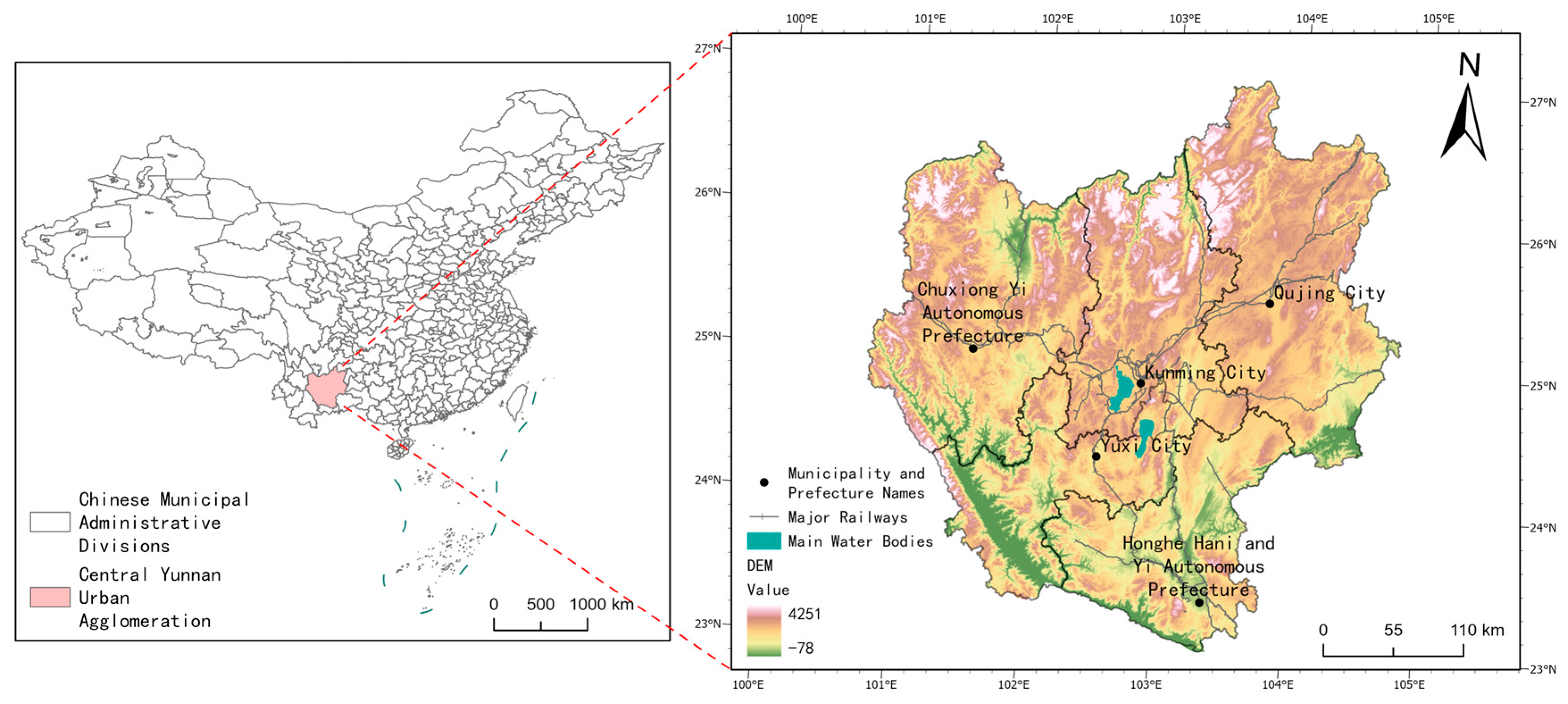
Figure 2.
Economic subsystem scores for the central Yunnan urban agglomeration, in 2000, 2015, and 2020.
Figure 2.
Economic subsystem scores for the central Yunnan urban agglomeration, in 2000, 2015, and 2020.
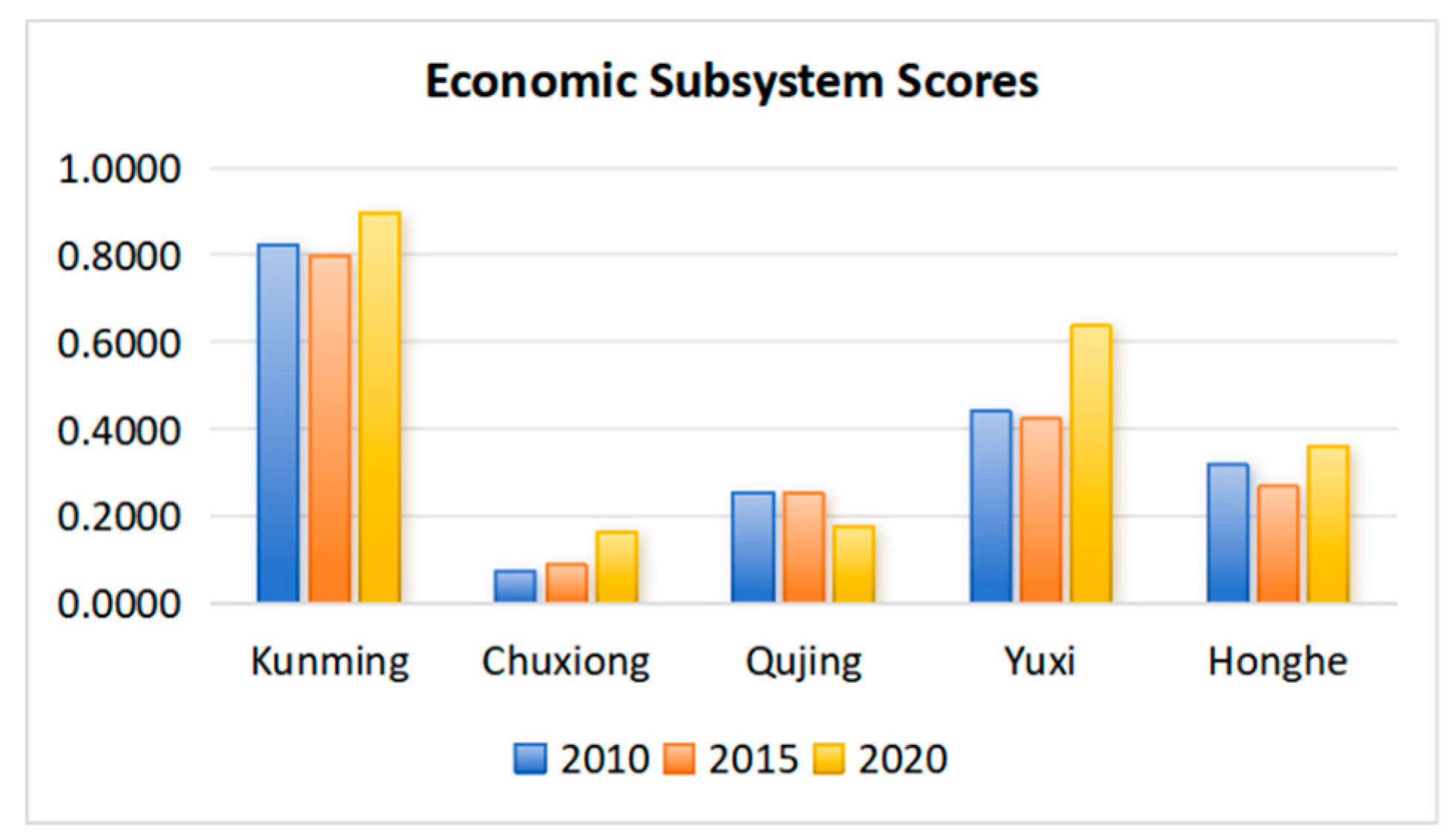
Figure 3.
Social subsystem scores for the central Yunnan urban agglomeration, in 2000, 2015, and 2020.
Figure 3.
Social subsystem scores for the central Yunnan urban agglomeration, in 2000, 2015, and 2020.
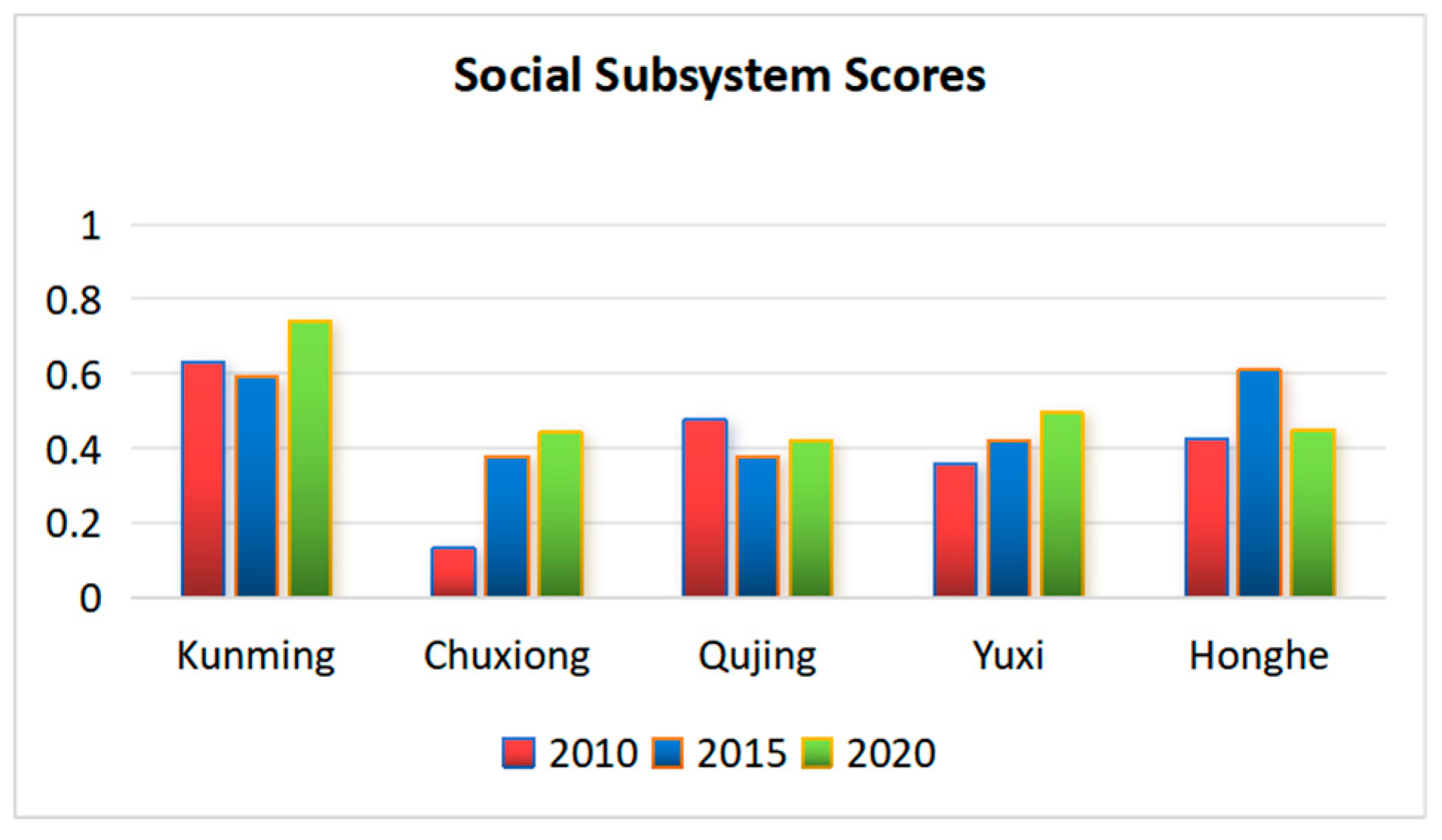
Figure 4.
Grading of water conservation services in the central Yunnan urban agglomeration, 2000, 2015, 2020.
Figure 4.
Grading of water conservation services in the central Yunnan urban agglomeration, 2000, 2015, 2020.
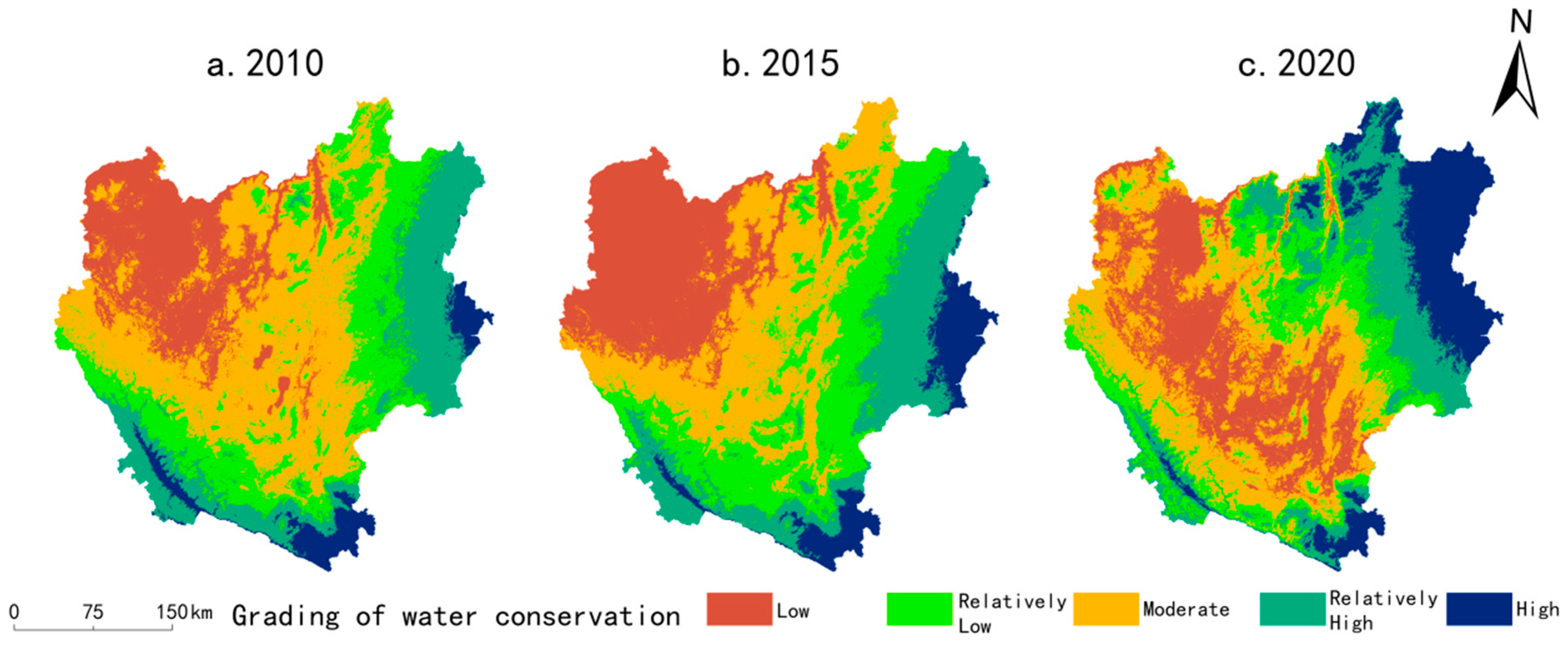
Figure 5.
Grading of soil conservation services in the central Yunnan urban agglomeration, 2000, 2015, 2020.
Figure 5.
Grading of soil conservation services in the central Yunnan urban agglomeration, 2000, 2015, 2020.
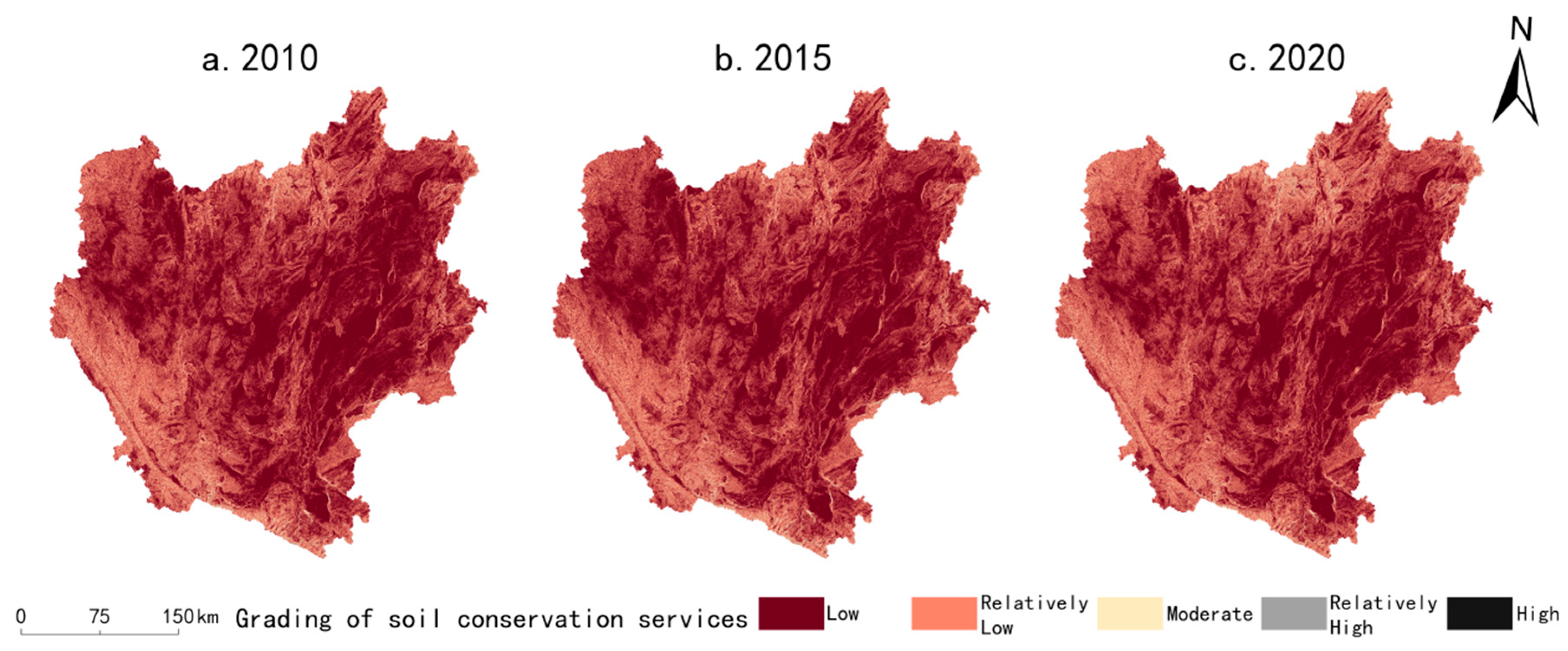
Figure 6.
Grading of carbon sequestration services in the central Yunnan urban agglomeration, 2000, 2015 and 2020.
Figure 6.
Grading of carbon sequestration services in the central Yunnan urban agglomeration, 2000, 2015 and 2020.
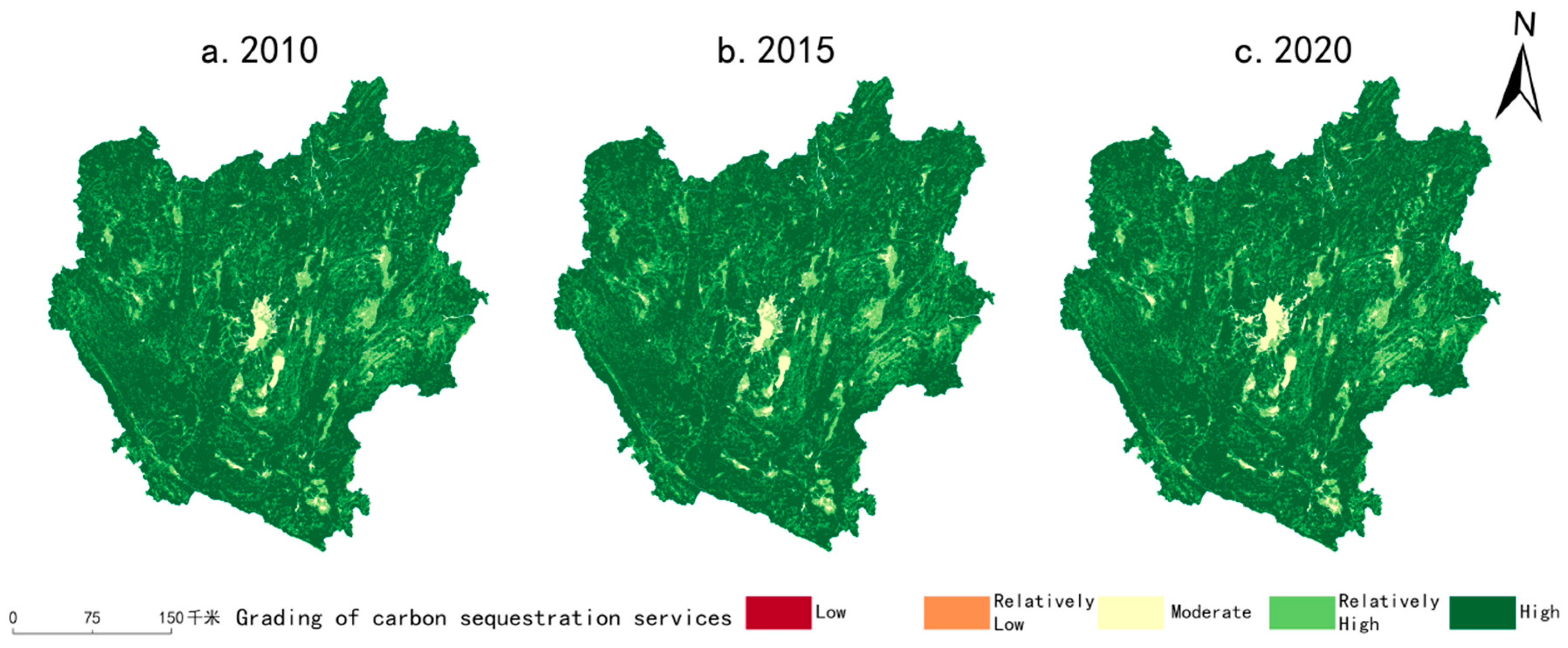
Figure 7.
Grading of Habitat Quality in the central Yunnan urban agglomeration, 2000, 2015, 2020.

Figure 9.
Degree of coupling coordination among states and cities in the central Yunnan urban agglomeration.
Figure 9.
Degree of coupling coordination among states and cities in the central Yunnan urban agglomeration.
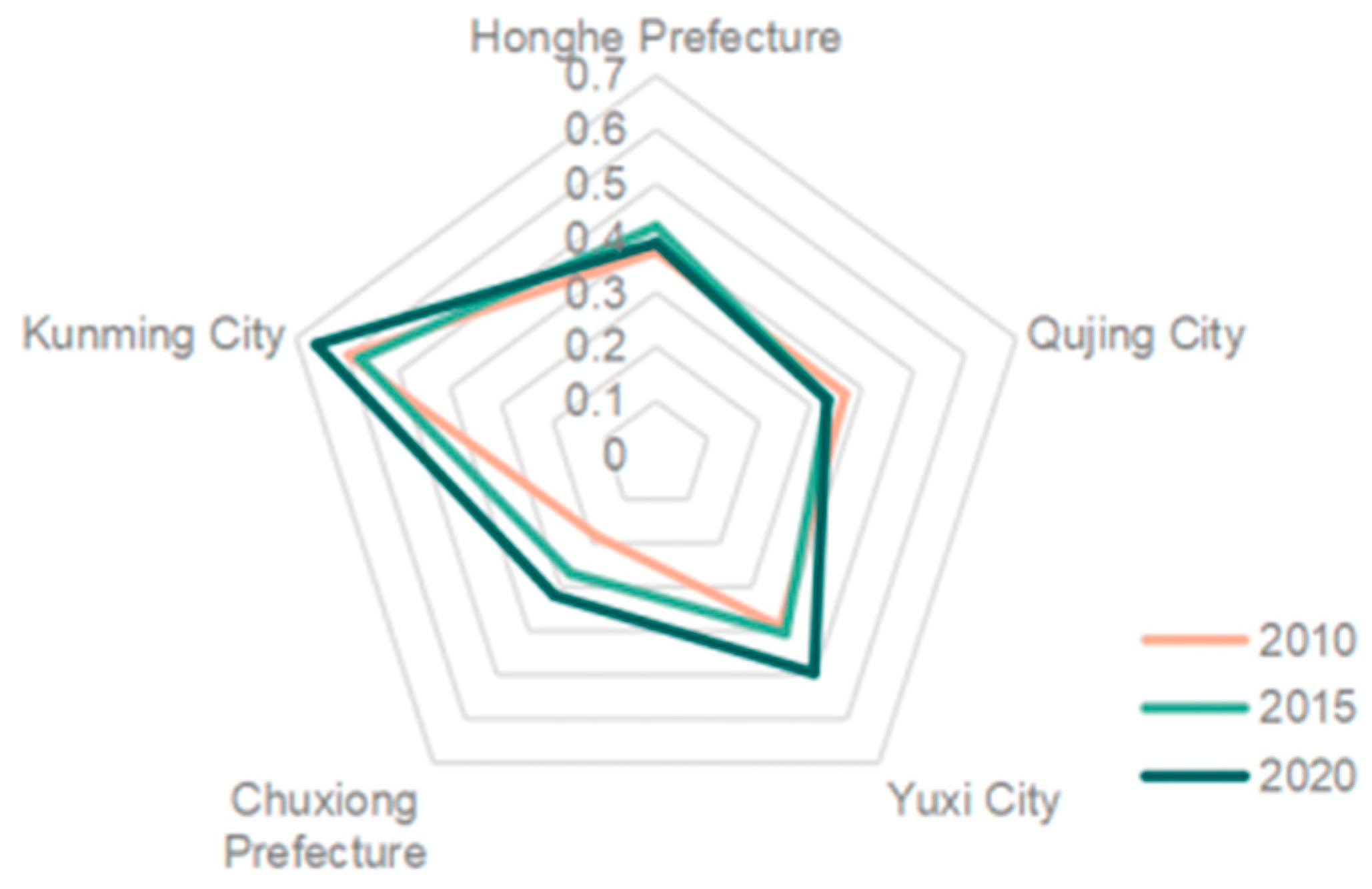

Table 1.
Key data and their access routes, pre-processing.
| Data | Source | Preprocessing |
|---|---|---|
| Meteorological data such as temperature, precipitation, actual water pressure, etc. | Weather Science Data Center (http://data.cma.cn) | To account for inter-annual fluctuations in the data, local annual average meteorological data were selected for the calculations. |
| Potential evapotranspiration | Annual mean potential evapotranspiration was calculated using the Modified-Hargreaves method with refined interpolation. | |
| DEM data | Geospatial Data Cloud (https://www.gscloud.cn) | The ASTER GDEM 30m resolution data of the urban agglomeration in central Yunnan were obtained and cropped and spliced by ArcGIS. The watershed boundary was obtained by ArcGIS hydrological analysis. |
| Soil depth data, soil type data, and other soil data such as organic carbon content | Earth System Science Data Sharing Platform, Cold and Arid Regions Science Data Center, China Soil Dataset Based on World Soil Database | PAWC and saturated hydraulic conductivity were calculated using soil properties from the SPAW Hydrology model. |
| Land use data | Center for Resource and Environmental Sciences and Data, Chinese Academy of Sciences (http://www.resdc.cn) | The time span is 2000, 2015 and 2020, and the resolution is 100 m × 100 m. After data processing and with reference to the national county-level land use status classification system, a land use classification map of the urban agglomeration in central Yunnan was generated. |
Table 2.
Assessment Indicator System for Urban Composite Ecosystem.
| Target Level | System Level | Criterion Level | Indicator Level | Unit | Attribute | Weight |
| Urban Composite Ecosystem | Economic Subsystem | Economic Development | Per Capita GDP | Yuan | + | 0.1101 |
| Per Capita Disposable Income | Yuan | + | 0.1107 | |||
| Per Capita Local Fiscal Revenue | Yuan | + | 0.1100 | |||
| Per Capita Fixed Asset Investment | Ten thousand yuan | + | 0.1100 | |||
| Economic Structure | The Proportion of the Secondary Sector in GDP | % | + | 0.1121 | ||
| The Proportion of the Tertiary Sector in GDP | % | + | 0.1123 | |||
| Economic Vitality | Fiscal Self-Sufficiency Ratio | % | + | 0.1100 | ||
| Per Capita Retail Sales of Consumer Goods | Yuan per person | + | 0.1100 | |||
| Total Social Labor Productivity | Yuan per person | + | 0.1108 | |||
| Social Subsystem | Population Factors | Permanent Resident Population | people | + | 0.0910 | |
| Natural Population Growth Rate | ‰ | + | 0.0919 | |||
| Living Standards | Average Wages of Urban Non-profit Unit Employees | Yuan | + | 0.0909 | ||
| Per Capita Net Income of Rural Residents | People per square kilometer | + | 0.0910 | |||
| Registered Urban Unemployment Rate | % | - | 0.0917 | |||
| Infrastructure | Per Capita Road Area | m² | + | 0.0850 | ||
| International Internet Coverage Rate | % | + | 0.0912 | |||
| Gas Penetration Rate | % | + | 0.0925 | |||
| Public Services | Number of Teachers per Ten Thousand People | People | + | 0.0900 | ||
| Number of Health Facilities per Ten Thousand People | Count | + | 0.0900 | |||
| Comprehensive Social Health Insurance Coverage Rate | % | + | 0.0900 | |||
| Natural Subsystem | Water Conservation | Annual Water Production | mm | + | 0.2078 | |
| Soil Conservation | Soil Conservation Quantity | t‧hm-2‧a-1 | + | 0.2301 | ||
| Carbon Sequestration Services | Carbon Storage per Unit Area | t‧hm-2‧a-1 | + | 0.3313 | ||
| Habitat Quality | Habitat Quality | + | 0.4328 |
Table 3.
Criteria for evaluating the level of coherence.
| serial number | 1 | 2 | 3 | 4 | 5 | 6 | 7 | 8 | 9 | 10 |
|---|---|---|---|---|---|---|---|---|---|---|
| main class | Dysfunctional recession class | transition class | Coordinated development class | |||||||
| Coordination Degree | 0-0.09 | 0.1-0.19 | 0.2-0.29 | 0.3-0.39 | 0.4-0.49 | 0.5-0.59 | 0.6-0.69 | 0.7-0.79 | 0.8-0.89 | 0.9-1.00 |
| Coordination Degree Level | extreme disorder | severe disorder | intermediate disorder | mild disorder | on the verge of becoming disordered | Barely coordination | Primary coordination | intermediate coordination | good coordination | High-quality coordination |
Table 4.
The coupling degree of composite ecosystems in various prefectures and cities in 2010, 2015, and 2020.
Table 4.
The coupling degree of composite ecosystems in various prefectures and cities in 2010, 2015, and 2020.
| Coupling Degree | 2010 | 2015 | 2020 |
|---|---|---|---|
| Kunming City | 0.9368 | 0.9426 | 0.9264 |
| Chuxiong Prefecture | 0.8145 | 0.8362 | 0.9199 |
| Yuxi City | 0.9958 | 0.9983 | 0.9729 |
| Qujing City | 0.9687 | 0.9833 | 0.9323 |
| Honghe Prefecture | 0.9929 | 0.9453 | 0.9947 |
Table 5.
The coupling degree between subsystems in various prefectures and cities in 2010, 2015, and 2020.
Table 5.
The coupling degree between subsystems in various prefectures and cities in 2010, 2015, and 2020.
| 2010 | 2015 | 2020 | |||||||
|---|---|---|---|---|---|---|---|---|---|
| Subsystem Pairwise Coupling Degree | Economic-Social | Social-Natural | Economic-Natural | Economic-Social | Social-Natural | Economic-Natural | Economic-Social | Social-Natural | Economic-Natural |
| Kunming City | 0.9913 | 0.9524 | 0.8702 | 0.9889 | 0.9630 | 0.8728 | 0.9954 | 0.9317 | 0.8748 |
| Chuxiong Prefecture | 0.9600 | 0.8928 | 0.8841 | 0.7832 | 0.9984 | 0.9184 | 0.8859 | 0.9937 | 0.9029 |
| Yuxi City | 0.9943 | 0.9997 | 0.8921 | 0.9999 | 0.9982 | 0.8898 | 0.9921 | 0.9868 | 0.8823 |
| Qujing City | 0.9534 | 0.9922 | 0.8977 | 0.9803 | 0.9999 | 0.8949 | 0.9133 | 0.9997 | 0.9200 |
| Honghe Prefecture | 0.9896 | 0.9986 | 0.8967 | 0.9213 | 0.9754 | 0.9137 | 0.9938 | 0.9946 | 0.8861 |
Table 6.
Coupling coordination of the central Yunnan urban agglomeration in 2020.
| Region | Coordination Degree | Coordination Degree Level | Lagging Subsystem |
|---|---|---|---|
| Kunming City City | 0.7824 | Intermediate coordination | Natural Subsystem |
| Chuxiong Prefecture Prefecture | 0.5419 | Barely coordination | Economic Subsystem |
| Yuxi City | 0.6947 | Primary coordination | Natural Subsystem |
| Qujing City City | 0.5564 | Barely coordination | Economic Subsystem |
| Honghe Prefecture Prefecture | 0.6235 | Primary coordination | Economic Subsystem |
Disclaimer/Publisher’s Note: The statements, opinions and data contained in all publications are solely those of the individual author(s) and contributor(s) and not of MDPI and/or the editor(s). MDPI and/or the editor(s) disclaim responsibility for any injury to people or property resulting from any ideas, methods, instructions or products referred to in the content. |
© 2024 by the authors. Licensee MDPI, Basel, Switzerland. This article is an open access article distributed under the terms and conditions of the Creative Commons Attribution (CC BY) license (http://creativecommons.org/licenses/by/4.0/).
Copyright: This open access article is published under a Creative Commons CC BY 4.0 license, which permit the free download, distribution, and reuse, provided that the author and preprint are cited in any reuse.


