
Submitted:
02 December 2023
Posted:
04 December 2023
You are already at the latest version
Abstract
Abstract: This study investigates the effect of Electric Vehicle Charging Stations (EVCS) on light-duty Electric Vehicle sales and the Total California rebates. Electric Vehicle Charging Stations (EVCS) are infrastructure facilities that allow for the charging of electric vehicles (EVs). I applied the before and after model with California state county using its community-level attributes and used the difference-in-difference design to identify a strategy for estimating the causal effects of these attributes. These attributes include EVCS installations by time, EV sales by time, rebate applications by time, the number of multi-unit housing units, and the median income levels. The empirical ev-idence of this study shows the estimated relationship between public EV charging installation and EV sales overall by community income level, housing density, and other relevant factors, the result shows that EVCSs is highly correlated with light duty Electric Vehicle adoption. For the investors, policymakers, and other stakeholders, this study provides evidence of a threshold of EVCS on Light Duty Electric Vehicle adoption and rebate in California.
Keywords:
Electric Vehicle (EV)
; Electric Vehicle Charging Stations
; California
; Rebates
; Adoption
1. Introduction
The ascendancy of light-duty electric vehicles (LDEVs) marks a pivotal shift in the automotive industry, with Electric Vehicle Charging Stations (EVCS) playing a significant role in catalyzing this transition [1]. As the State of California spearheads initiatives towards environmental sustainability, LDEVs have emerged as a cornerstone in the battle against vehicular emissions, complemented by a robust infrastructure of EVCS and financial incentives such as rebates [2]. The environmental imperatives for transitioning to electric vehicles are clear; with road transport contributing substantially to global CO2 emissions, the electrification of personal transport has become a crucial strategy in mitigating climate change [3]. The rise of LDEVs is underscored by technological advancements and economic incentives, which are systematically reducing barriers to adoption [4,5]. Despite this, consumer hesitancy persists, often attributed to the proverbial ‘range anxiety,’ upfront costs, and infrastructure deficits [6,7]. Research suggests a strong positive correlation between the density of charging networks and consumer confidence in, and adoption of, LDEVs [8]. This relationship is underlined by policy interventions and private sector investments that have sought to expand the charging grid across California [9]. Moreover, the California Clean Vehicle Rebate Project (CVRP) epitomizes the use of financial rebates as a mechanism to incentivize the purchase of LDEVs, effectively reducing the price differential with their internal combustion [9]. These rebates serve not only as a direct subsidy but also as a signal of governmental commitment to the electric transition, influencing consumer sentiment [10]. This introduction delves into the multifaceted dynamics that interlink EVCS and rebate programs with LDEV adoption rates in California. It is structured to unfold the complexities of this relationship, examining manufacturing factors, qualitative and quantitative attributes of electric vehicles, and the pivotal role of rebates and governmental policies.
1.1. Factors that affect EV adoption
The factors that affect EV adoption play a critical role in understanding the impact of EVCS on EV adoption. Generally, these factors can be organized into an understanding of three different factors, which are:
-
Manufacturing Factors: The manufacturing landscape for EVs has been evolving rapidly. Innovations in battery technology, vehicle range, and model availability have been integral in shaping consumer choice. [11] illustrates the pivotal role of manufacturing advancements in reducing EV costs, thereby influencing adoption rates [12]. However, production capacity limitations and supply chain challenges, as highlighted by Green, Smith, and Wang (2023), remain substantial hurdles. To increase the adoption of EVs, the following changes need to be made:
- Advances in Battery Technology: Battery life and efficiency are crucial in EV adoption. Improvements in battery technology can significantly lower the cost of EVs and increase their range, making them more attractive to consumers [13]
- Supply Chain Optimization: A robust and responsive supply chain is essential for the mass production of EVs. Efficient supply chains can reduce manufacturing costs and improve the availability of EVs in the market [14]
- Vehicle Design and Features: The design of electric vehicles, including aesthetics and additional features, plays a significant role in consumer adoption. Innovative designs that appeal to consumer preferences can boost EV sales [11]
-
The personal/driver factors: Personal considerations, including driving patterns, vehicle preferences, and charging convenience, significantly impact EV adoption [16]. [17] explore how range anxiety and charging time concerns deter potential EV buyers, while [18] discusses the cultural shift toward eco-conscious consumerism, bolstering EV attractiveness. The visibility and accessibility of EVCS, as noted by [19] are also strong personal motivators for the transition to electric mobility.
- Range Anxiety: The fear of running out of battery without access to a charging station is a significant barrier to EV adoption. Overcoming range anxiety through improved infrastructure and vehicle technology is critical [20]
- Consumer Awareness and Perception: The level of awareness and the general perception of EVs influence adoption rates. Educational campaigns and positive messaging can sway public opinion in favor of electric vehicles [21]
- Economic Incentives for Consumers: Financial considerations, such as the total cost of ownership, fuel savings, and maintenance costs, impact the decision to purchase EVs. Rebates and incentives can make EVs more financially attractive [22]
-
Environmental and External Factors: External factors, such as environmental awareness and urban planning policies, play a decisive role in the adoption of LDEVs. The works of [23] delve into how air quality concerns drive policy support for EVs. Concurrently, [24] study emphasizes the influence of urban infrastructure on the practicality of owning and operating an EV within city environments.
- Air Quality and Environmental Concerns: Growing awareness of environmental issues, particularly air quality concerns, can drive consumers toward EVs as a cleaner alternative to internal combustion engines [25]
- Government Policies and Regulations: Legislation that promotes EVs through subsidies, rebates, and infrastructure investment is a powerful driver of adoption. Such policies can lower the barriers to EV entry for consumers [11]
- Charging Infrastructure Availability: The availability and convenience of charging infrastructure are key to EV adoption. Public and private investments in charging networks can alleviate concerns about the practicality of owning an EV [26]

Table 1.
Characteristics of EV Charging Stations. Source: [15].
Table 1.
Characteristics of EV Charging Stations. Source: [15].
| Title 1 | Level 1 | Level 2 | DC Fast Charging |
|---|---|---|---|
| Connector Type | CCS/SAE connector | ||
| J1772 connector | J1772 connector | CHAdeMO connector | |
| Tesla connector | Tesla connector | ||
| Typical Power Output | 1 kW | 7 kW-19 kW | 50-350 kW |
| Estimated PHEV Charge Time from Empty | 5-6 hours | 1-2 hours | N/A |
| Estimated BEV Charge Time from Empty | 40-50 hours | 4-10 hours | 20 minutes-1 hours |
| Typical Locations | Home | Home, Workplace, | Public |
| and Public |
Table 2.
Personal driving factors for EV adoption.
| Year | Avg. EV Range | Maximum EV Range | Average MSRP |
|---|---|---|---|
| 2010 | 79 miles (127 km) | N/A | N/A |
| 2011 | 86 miles (138 km) | 94 miles (151 km) | N/A |
| 2012 | 99 miles (159 km) | 265 miles (426 km) | N/A |
| 2013 | 117 miles (188 km) | 265 miles (426 km) | N/A |
| 2014 | 130 miles (209 km) | 265 miles (426 km) | N/A |
| 2015 | 131 miles (211 km) | 270 miles (435 km) | N/A |
| 2016 | 145 miles (233 km) | 315 miles (507 km) | $33,380 |
| 2017 | 151 miles (243 km) | 335 miles (539 km) | $58,965 |
| 2018 | 189 miles (304 km) | 335 miles (539 km) | $64,300 |
| 2019 | 209 miles (336 km) | 370 miles (595 km) | $55,600 |
| 2020 | 210 miles (338 km) | 402 miles (647 km) | $54,668 |
| 2021 | 217miles (349 km) | 520 miles (837 km) | $64,249 |
| 2022 | 211 miles (341 km) | 520 miles (837 km) | $65,291 |
In the related literature on EVs’ quantitative and qualitative characteristics, recent studies have been conducted to compare the characteristics of EVs to that of non-EV [27] Studied the impact of household-specific factors, which include frequency of charging, frequency of long-distance trips, and frequency of overlaps between vehicles on electric vehicle miles travelled (eVMT), fuel consumption within two-car households, and utility factor. And found that Plug-in hybrid electric vehicles (PHEVs) with a range of at least 35 miles and some short-range battery electric vehicles (BEVs) can electrify a similar share of total household miles and up to 70% electrification on long-range BEVs [28] stated that EVs depend on public fast charging, especially when traveling outside a single charge range, and therefore a network of fast charging stations is of high importance. Individuals who see electric vehicles (EVs) as a viable solution for reducing the adverse impacts of the existing transportation system and whose travel habits align with the practicality of EV use are more likely to adopt electric vehicles irrespective of the rebate.
1.2. Quantitative Expansion and Qualitative Enhancement of Electric Vehicle Charging Infrastructure
In the drive toward an electrified transportation future, the state of California has been at the forefront, largely due to a concerted effort to quantitatively expand and qualitatively enhance its Electric Vehicle Charging Station (EVCS) infrastructure. The impact of this dual approach plays a significant role in fostering Light-Duty Electric Vehicle (LDEV) adoption and in enhancing the effectiveness of state rebates designed to encourage consumers to make the switch to electric vehicles. Here we discuss the nuances of this strategy and its implications on EV adoption, drawing upon recent literature and studies.
1.3. Quantitative Expansion
The quantitative expansion of EVCS involves increasing the number of available charging stations. This expansion is not merely about adding more charging points but is about a strategic deployment that considers geographic, demographic, and socio-economic factors to ensure that charging infrastructure keeps pace with EV adoption rates [29]. California’s initiative to expand the quantity of EVCS has been bolstered by public-private partnerships, which have been instrumental in developing and deploying charging infrastructure across diverse locations [30]. Further, quantitative expansion includes the development of community charging hubs and the integration of charging facilities into existing structures like shopping malls, office complexes, and multi-unit dwellings, providing greater accessibility and convenience [31].
1.3. Quantitative Expansion
On the qualitative enhancement side, the focus is on improving the user experience at EVCS. This involves not just technological advancements but also considerations for design, reliability, ease of use, and overall service quality. Each of these factors contributes to the user’s charging experience and, by extension, their perception of EVs as a viable transportation option.
- User Interface and Experience: Charging station interfaces that are user-friendly and informative provide real-time data on charging status, cost, and availability, significantly improving the user experience [24]
- Payment Systems and Pricing Models: The adoption of flexible payment systems and transparent pricing models has been identified as a key determinant of EVCS satisfaction and, consequently, EV adoption [32]
- Network Accessibility: The development of a robust, accessible EVCS network that allows for easy location and availability checking through mobile apps and integrated systems is also a part of the qualitative improvement process [24]
- Reliability and Maintenance: Ongoing maintenance and reliable performance of EVCS are vital for user trust. Frequent system checks and rapid response to faults are essential components of high-quality service delivery [33]
- Sustainability of Charging Stations: Utilizing renewable energy sources to power EVCS, like solar or wind energy, enhances the green credentials of electric mobility, a strong qualitative factor for environmentally conscious consumers [34].
- Safety and Security: Ensuring safety and security at charging stations through good lighting, surveillance, and emergency services is also a critical qualitative aspect [35]
- Integration with Public Transport: Creating synergy between EVCS and public transport systems can reduce private vehicle reliance and encourage multimodal transportation use, positively impacting the overall transport ecosystem [36]
In conclusion, both quantitative expansion and qualitative enhancement are vital for the widespread adoption of LDEVs in California. The quantitative aspect ensures availability and coverage, while qualitative improvements address consumer satisfaction and confidence in the EV ecosystem. This dual strategy requires a holistic view of infrastructure planning, integrating technical, economic, social, and environmental factors to realize the full potential of electric mobility. As evidenced by the literature, an integrated approach can effectively address the multifaceted barriers to EV adoption and support the transition to a more sustainable transportation future.
1.4. Role of Rebate in EV adoption
Rebates and financial incentives have been significant drivers in the adoption of Light-Duty Electric Vehicles (LDEVs) in California. With the state aiming to phase out gasoline-powered vehicles by 2035, understanding the role of rebates in influencing consumer behavior is critical for policymakers and stakeholders within the EV ecosystem [37]. This expansion discusses the importance of rebates in the adoption process, the variations in their effectiveness, and the interplay between rebates and other factors influencing EV adoption.
- Consumer Decision-Making and Upfront Cost Barrier: A primary barrier to EV adoption is the higher upfront cost compared to conventional vehicles. Rebates and incentives directly address this barrier by reducing the initial cost differential, thereby influencing consumer purchasing decisions [38]
- Acceleration of Market Penetration: Rebates serve to accelerate the market penetration of LDEVs by making them financially competitive with internal combustion engine vehicles. Studies have shown that purchase incentives are correlated with higher rates of EV adoption [39]
- Reduction in Total Cost of Ownership: While rebates reduce the purchase price, they also contribute to a lower total cost of ownership when combined with lower operational and maintenance costs of EVs, thereby increasing the attractiveness of LDEVs over their lifecycle [40]
- Influence on Consumer Perception: Rebates can also influence consumer perception by signaling government commitment to EVs and thus providing a form of endorsement, which can be an important factor in technology adoption [41]
1.5. Variations in Rebate Effectiveness
Government programs have played a critical role in the adoption of EVs. Governments around the world have implemented a range of incentive programs to promote the adoption of EVs, including rebates, tax credits, and other incentives. These programs have been successful in driving the adoption of EVs in countries such as Norway, where EVs account for over 50% of new car sales [42].
- Income Sensitivity: The effectiveness of rebates varies across different income groups. Higher-income individuals may be less influenced by rebates as their purchasing decision may not be as constrained by the vehicle’s cost [43]
- Geographic Variability: The geographic distribution of rebates also affects their effectiveness. Urban areas with better charging infrastructure may see a higher impact of rebates than rural areas where charging stations are sparse [23]
1.6. Interplay Between Rebates and Other Factors
- Charging Infrastructure: The presence of an accessible and reliable charging infrastructure can enhance the effectiveness of rebates. When consumers are confident in the infrastructure, rebates may be more likely to tip the balance in favor of purchasing an EV [44]
- Peer Influence and Social Acceptance: Rebates may be more effective in communities where there is already a significant penetration of EVs, suggesting a role for peer influence and social acceptance in the effectiveness of incentives [45]
- Policy Stability and Long-Term Commitment: The assurance of long-term rebate programs can contribute to a stable market environment, encouraging consumers and manufacturers to invest in EV technology [46]
- Educational and Awareness Programs: Pairing rebates with educational and awareness programs can increase their impact by addressing informational barriers and misconceptions about EVs [47]
Rebates have played a pivotal role in promoting the adoption of LDEVs in California, serving as a critical policy tool to bridge the cost gap and foster market growth [48]. While the effectiveness of rebates is not uniform across all demographics and regions, they remain a central element in the state’s strategy to achieve its ambitious EV adoption targets. The interplay between rebates and factors like charging infrastructure, social influence, and consumer awareness underscores the need for a comprehensive approach to EV incentive design and implementation. A nuanced understanding of these dynamics is essential for tailoring rebate programs that are equitable, efficient, and effective in driving the transition to a sustainable transport ecosystem.
In conclusion, the integration of comprehensive charging infrastructure and targeted rebate programs in California presents a compelling case study for understanding the complexities of LDEV adoption dynamics. The following chapters will explore the empirical evidence, examining the interdependencies and identifying strategies to optimize policy frameworks for a sustainable electric mobility future [49].
2. Data and Methodology
The transition towards electric vehicles (EVs) is a critical component of global efforts to reduce greenhouse gas emissions and combat climate change. In California, this transition has been propelled by both environmental imperatives and innovative policy interventions. The state, recognized as a leader in environmental policy, has set ambitious targets for reducing emissions, with a particular focus on transforming its transportation sector, the largest single source of greenhouse gases in the state [50]. The state, widely acknowledged as a vanguard in environmental policy, has ambitious targets for emission reduction, with a keen focus on transforming its transportation sector, a major contributor to greenhouse gases [51,52].
This study is situated in the context of California’s robust policy landscape, which includes aggressive measures to promote the adoption of light-duty EVs. It responds to the need for a comprehensive understanding of the effectiveness of these policies, particularly those related to the deployment of EV charging infrastructure. The availability of charging stations is a key factor influencing consumer decisions to purchase and use EVs, potentially alleviating concerns about range and charging convenience [53]
This research is instrumental in shaping policymaking and contributing to sustainable transportation discourse. By scrutinizing the impact of EV charging stations on vehicle adoption and related rebates, it delivers valuable insights into policy effectiveness. This is particularly significant as California pursues its target of having 5 million ZEVs on its roads by 2030, a goal that is both ambitious and essential for meeting its environmental commitments [9,54]. Utilizing a robust methodological approach, the study analyzes public data spanning 2010-2022 and focuses on a comparative analysis of periods before and after the pivotal year 2019. This methodology combines statistical and econometric techniques to thoroughly explore policy impacts and adoption trends [55]. Furthermore, the study incorporates visualization tools to elucidate complex data, making findings accessible to policymakers, industry stakeholders, and the academic community [56].
The selection of 2019 as the post-period for analysis in this study is rooted in a confluence of significant policy shifts and legislative efforts in California, which have had a profound impact on the trajectory of electric vehicle (EV) adoption in the state. This period is critical for understanding the evolution of EV infrastructure and its influence on the adoption of light-duty EVs.
In recent years, California has emerged as a frontrunner in environmental legislation, particularly in its approach to mitigating climate change through the promotion of EVs. The state’s ambitious target, set by Governor Jerry Brown in 2018, to have 5 million ZEVs on the roads by 2030 [57], represents a significant policy milestone. This target is part of a broader strategy to curtail greenhouse gas emissions and transition to more sustainable transportation options [58]. The year 2019, therefore, marks a pivotal moment in the timeline of California’s environmental policy, where the state’s legislative actions began to take effect more tangibly in the public sphere.
The period around 2019 is particularly noteworthy due to the implementation of policies that directly influenced the expansion of EV charging infrastructure and incentivized EV adoption. This includes increased state rebates for EV purchases and the introduction of regulations mandating ride-hailing services to incorporate more zero-emission vehicles into their fleets [59,60]. These legislative changes are expected to have played a substantial role in accelerating the deployment of EV charging stations across the state, subsequently boosting the adoption rates of EVs.
Selecting 2019 as the intervention year for this study allows for a nuanced analysis of the effects of these policy shifts. It provides a framework to examine the pre- and post-policy scenario, offering insights into how legislative actions have translated into practical outcomes in terms of infrastructure development and vehicle adoption. The choice of this year is further justified by the significant increase in EV charging station installations observed during this period, suggesting a direct correlation with the state’s policy interventions [61].
The data collection and selection process for this study is a critical component, designed to accurately capture and reflect the landscape of electric vehicle (EV) charging infrastructure and its impact on light-duty EV adoption in California. The study spans from 2010 to 2022, with a particular emphasis on the years following 2019, a period marked by significant policy shifts.
The analytical design of this study is meticulously structured to evaluate the impact of electric vehicle (EV) charging stations on light-duty EV adoption in California. Central to this design is a comparative approach that contrasts the period before and after the year 2019, a year characterized by significant policy shifts in California’s approach to EV adoption and infrastructure development.
2.1. The framework of the analysis
- Pre- and Post-2019 Analysis: The study is structured to compare data on EV adoption and charging infrastructure before and after 2019. This comparison is critical in understanding how policy changes and the expansion of EV infrastructure have influenced EV adoption rates. Such an approach is supported by the methodology outlined in longitudinal studies focusing on policy impacts [62,63]
- Temporal Scope: The time frame from 2010 to 2022 allows for a comprehensive view of the evolution of the EV market in California. This longitudinal perspective is essential for capturing the trends over time and understanding the long-term impacts of policy and infrastructure changes [64]
- Time-Series Analysis: To analyze trends over time, the study employs time-series analysis methods. This approach is instrumental in identifying patterns and changes in EV adoption and infrastructure development over the defined period [65]
- Difference-in-Differences (DiD) Analysis: The DiD methodology is utilized to evaluate the impact of policy changes. This econometric technique is particularly effective in discerning the causal effects of policy interventions by comparing the changes in outcomes over time between a treatment group and a control group [66]
- Policy Contextualization: A thorough review of policy developments and initiatives in California related to EVs provides the necessary context for the analysis. This includes examining legislation, state incentives, and regulatory changes that have the potential to influence EV adoption [67]
- Market Dynamics: The study also considers broader market dynamics, such as changes in EV technology, consumer preferences, and economic factors, that may impact EV adoption independently of charging infrastructure [68].
- Assessing Infrastructure Impact: The primary aim is to assess how the growth and distribution of EV charging stations have influenced the adoption of light-duty EVs in California.
- Evaluating Policy Effectiveness: Another key objective is to evaluate the effectiveness of state policies implemented around and after 2019 in promoting EV adoption and infrastructure expansion.
2.2. Policy Impact Evaluation
Evaluating the impact of policy changes on the adoption of electric vehicles (EVs) and the development of EV charging infrastructure is a crucial aspect of this study. This evaluation aims to discern the effectiveness of California’s legislative and regulatory initiatives in fostering an environment conducive to the growth of the EV market, particularly post-2019. Assessment of State Policies and Incentives include:
Examination of Rebate Programs and Incentives: Central to this evaluation is an analysis of the state’s rebate programs and financial incentives for EV purchasers. Studies such as those by Smith and Johnson (2020) highlight the importance of financial incentives in consumer decision-making regarding EVs. The study assesses the extent to which these incentives have influenced EV adoption rates.
Impact of Legislative Measures: The study also analyzes legislative measures, such as California’s ambitious target of 5 million ZEVs by 2030 set by Governor Brown [58]. The effectiveness of such measures is evaluated in the context of their impact on both the supply and demand sides of the EV market.
2.3. Incorporation of Geospatial Data in Methodology
As part of our methodology to assess the impact of electric vehicle charging stations (EVCS) on the adoption of light-duty electric vehicles in California, we have included a comprehensive geospatial analysis. This analysis is crucial for understanding the distribution and density of EV adoptions across different counties in California prior to the year 2019, which marks a significant point in our study due to the introduction of key policies and infrastructural developments in the state.
Map 1 employs a color gradient to indicate the density of EV adoptions in each county – with darker shades representing higher numbers of adoptions. This visual tool allows us to quickly identify patterns and variations in EV adoption across the state, such as higher concentrations in urban counties compared to rural ones. This preliminary geographic distribution of EV adoption serves as a baseline for our subsequent analysis of post-2019 data. The inclusion of this map in our methodology is intended to set the stage for a deeper analysis of how the changes in policies and the expansion of EVCS infrastructure post-2019 have influenced EV adoption patterns across California. By establishing a pre-2019 baseline, we can more accurately assess the impact of interventions and developments that occurred after this period.
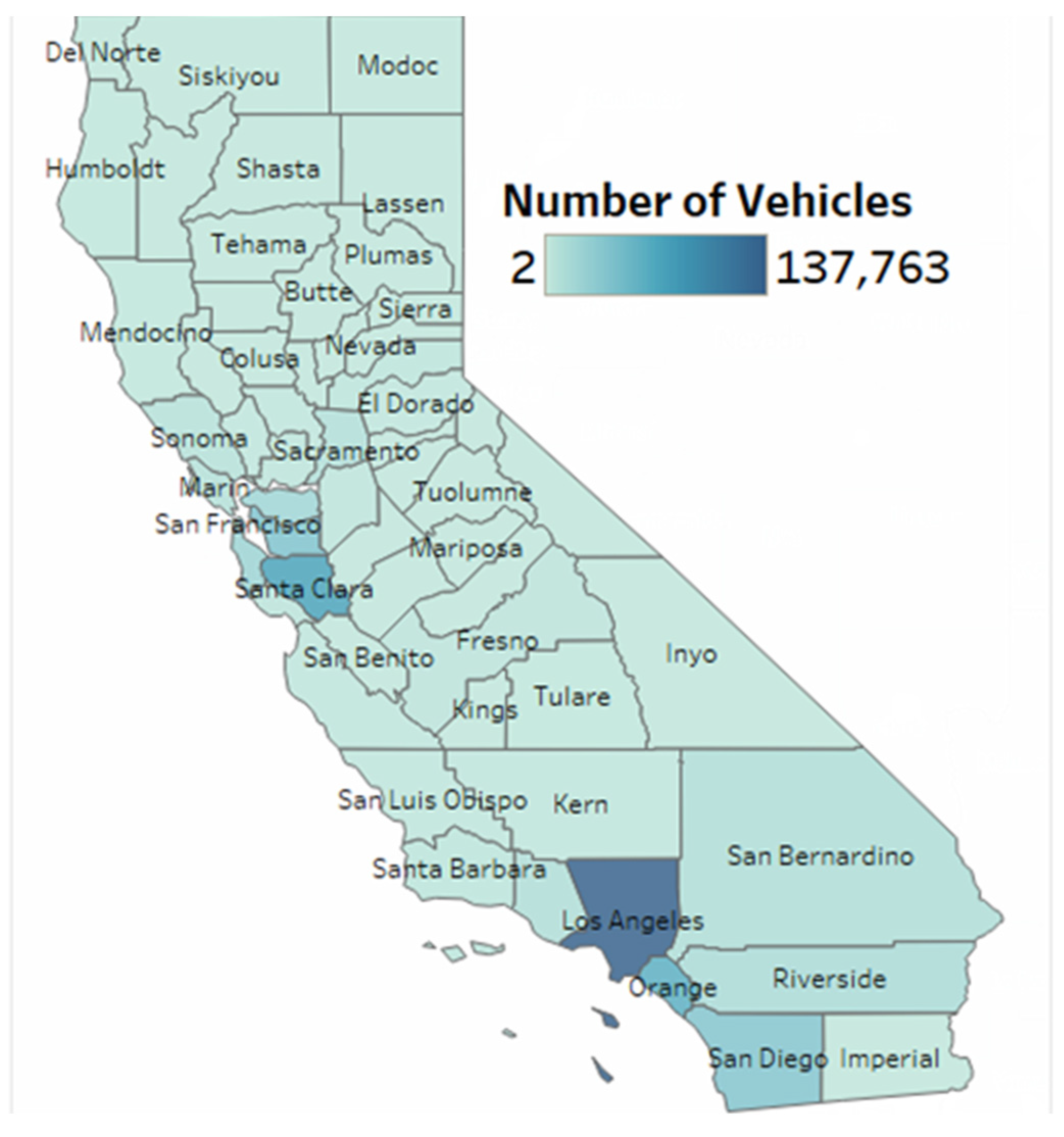
Map 1.
Electric Vehicle Adoptions by County in California Pre-2019.
In May 2, varying shades are utilized to illustrate the number of EV adoptions, with darker tones indicating higher adoption rates. This map is instrumental in highlighting shifts and trends in EV adoption across the state post-2019, particularly in response to the implementation of new EV policies and the expansion of EVCS infrastructure. The map serves as a critical tool for visualizing the geographical spread and intensity of EV adoptions in the wake of policy changes. The inclusion of Map 2 is pivotal to our methodology, as it allows us to draw direct comparisons with the pre-2019 adoption landscape, as shown in Map 1. By analyzing the geographical distribution of EV adoptions before and after 2019, we aim to uncover the impacts of recent state interventions and developments in the EV sector. This comparative approach is key to understanding the effectiveness of policy and infrastructure advancements in promoting EV adoption across different regions of California.
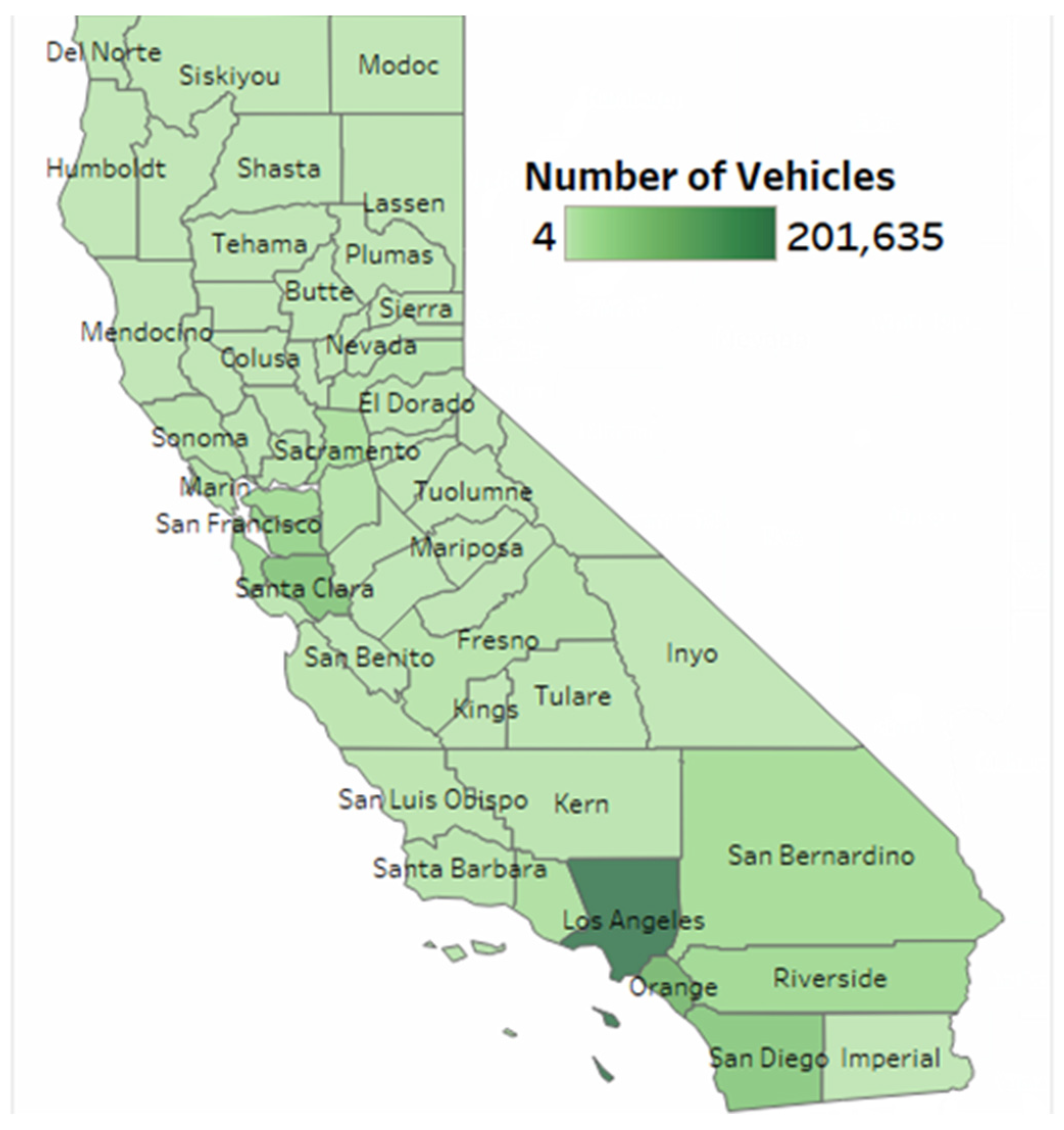
Map 2.
Electric Vehicle Adoptions by County in California Pre-2019.
3. Discussion
The findings of this study provide valuable insights into the impact of Electric Vehicle Charging Stations (EVCS) on Electric Vehicle (EV) adoption and rebates in California. The analysis focused on publicly available data from the years 2010 to 2022, with the post-period chosen as 2019 due to significant developments in California’s efforts to increase EV adoption and reduce greenhouse gas emissions.
3.1. Rebate Analysis
The analysis of rebates revealed an interesting dynamic. Before the installation of EV charging stations, the mean dollar amount of rebates was approximately $2,307.76, and it increased to $2,549.23 after the installation. However, the p-value indicated that this increase was not statistically significant. While this might seem counterintuitive, it suggests that the presence of charging infrastructure alone may not directly influence the dollar amount of rebates.
This finding prompts further exploration into the factors that contribute to the dollar amount of rebates. It may be influenced by a range of variables, including government policies, consumer preferences, and the overall growth of the EV market. Future research could investigate these variables in greater detail to better understand the determinants of rebate amounts.
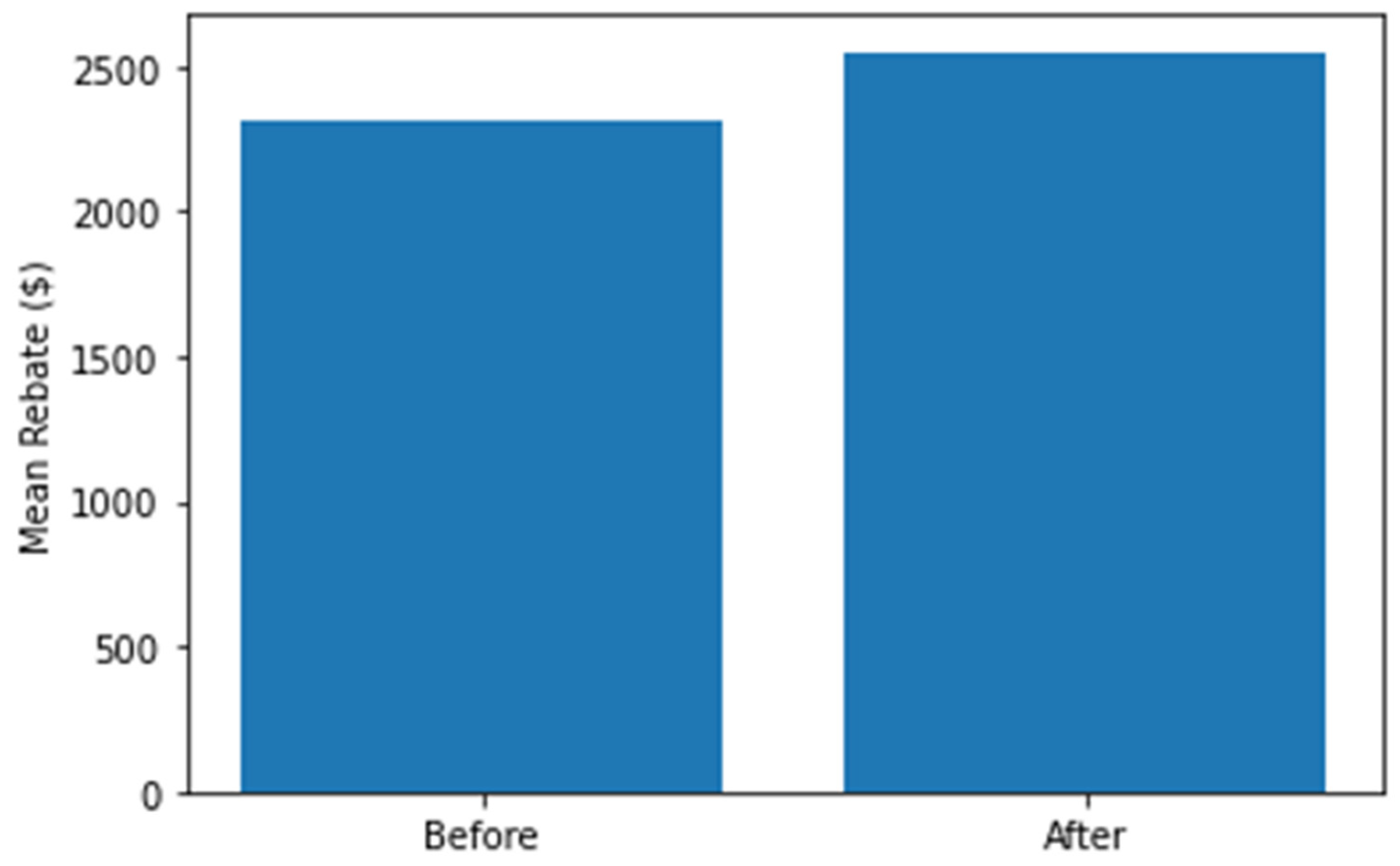
Table 3.
Impact on Rebates.
| Methodology | Description |
|---|---|
| Data Source | California Energy Commission (CEC), California Department of Motor Vehicles, California Air Resources Board (CARB), and U.S. Census Bureau |
| Period | 2010-2022 |
| Treatment | Installation of EV charging stations |
| Control Group | N/A |
| Pre-Period | >2019 |
| Post-Period | <2019 |
| Outcome Variable | The dollar amount of the Rebate |
| t-statistics | nan |
Figure 1.
Impact on Rebate.
3.2. EV Adoption Analysis
The more compelling aspect of this study lies in the analysis of EV adoption rates. Before the installation of EV charging stations, the mean EV adoption count was 283, which significantly increased to 373.02 after the installation. The p-value for this analysis was less than 0.05, indicating strong statistical significance. This result underscores the positive and significant impact of EVCS on the adoption of electric vehicles.
Several key insights emerge from this finding:
- Infrastructure Accessibility Matters: The increased adoption of electric vehicles after the installation of charging stations highlights the importance of accessibility to charging infrastructure. Consumers are more likely to embrace EVs when they have confidence in their ability to find convenient and reliable charging points.
- Reducing Range Anxiety: Charging station installations contribute to reducing “range anxiety,” a common concern among potential EV adopters. Knowing that charging stations are readily available can alleviate fears of running out of power during trips, making EVs a more attractive choice for daily use and longer journeys.
- Policy Implications: Policymakers can draw significant lessons from these results. Investments in expanding the charging network can yield substantial returns in terms of increased EV adoption, aligning with California’s ambitious emissions reduction goals.
- Consumer Behavior: Understanding the impact of charging infrastructure on adoption provides insights into consumer behavior. It suggests that the decision to switch to an electric vehicle is not solely based on the environmental benefits but is also influenced by practical considerations, including charging convenience.
- Future Growth: As the EV market continues to expand, the role of charging infrastructure will become increasingly critical. With ongoing technological advancements and infrastructure development, the EV adoption rate is likely to continue rising.
While the statistical analysis demonstrates the significant impact of charging stations on EV adoption, it’s important to acknowledge that other factors also play a role. These include government incentives, the availability of EV models, and the overall economic environment. Future research could explore the interplay between these variables to provide a more comprehensive understanding of EV adoption dynamics.
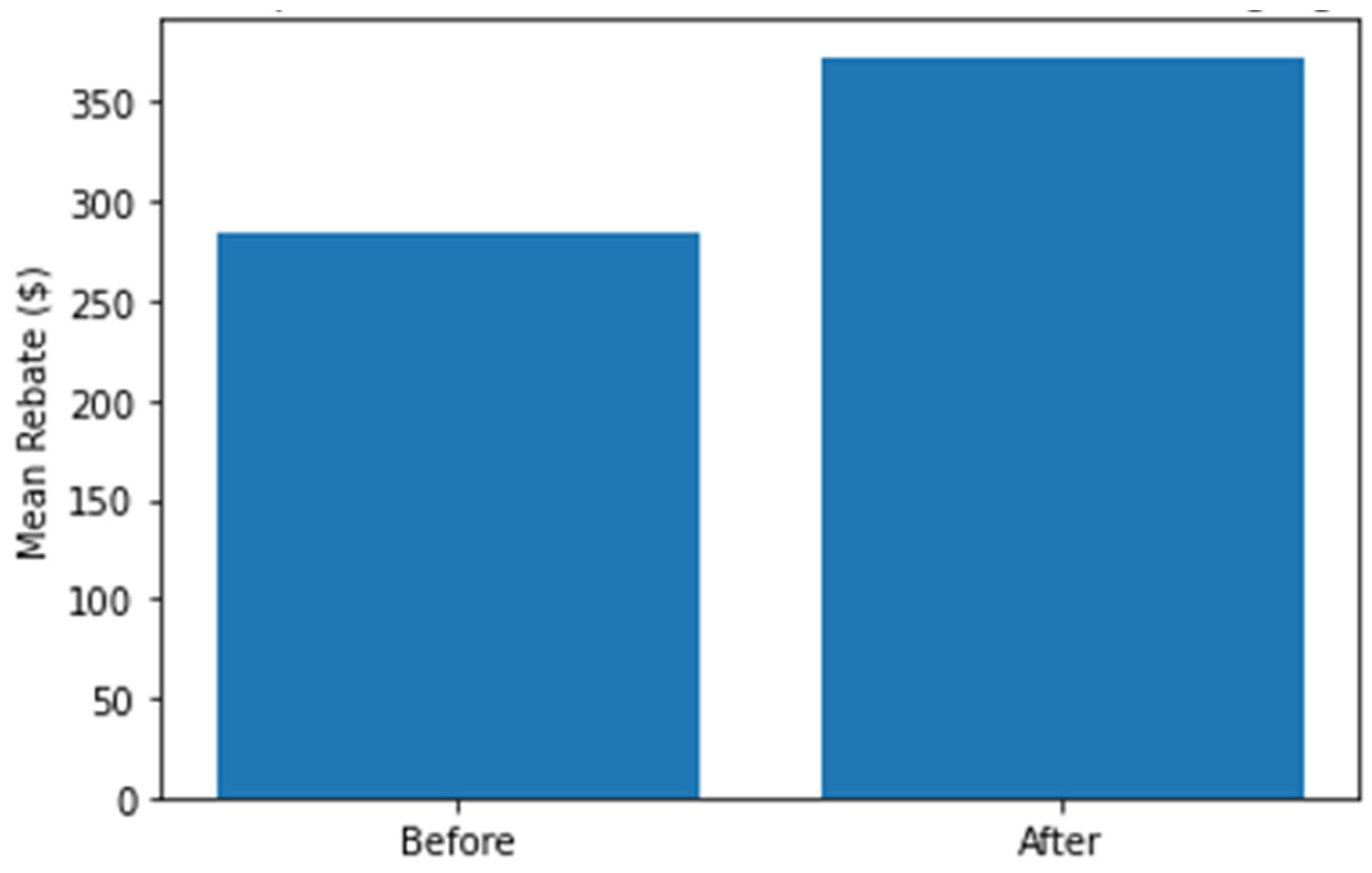
Table 4.
Impacts on EV adoption.
| Methodology | Description |
|---|---|
| Data Source | California Energy Commission (CEC), California Department of Motor Vehicles, California Air Resources Board (CARB), and U.S. Census Bureau |
| Period | 2010-2022 |
| Treatment | Installation of EV charging stations |
| Control Group | N/A |
| Pre-Period | >2019 |
| Post-Period | <2019 |
| Outcome Variable | EV adoption count |
| t-statistics | -23.89 |
| Significance Level (p-value) | 0.000 |
Figure 2.
Impacts on EV adoptions.
3.3. Implications of Pre-2019 EVCS Distribution
In the discussion section, we delve into the implications of the distribution of Electric Vehicle Charging Stations (EVCS) across California counties as it stood before the year 2019. This analysis is crucial for understanding the foundational landscape of EV infrastructure upon which recent policy changes have built.
Map 3 employs a color gradient to illustrate the number of EVCS in each county, with more intense colors indicating higher densities of charging stations. This visual tool is instrumental in identifying disparities in the distribution of EVCS, particularly noting the concentration in urban centers as opposed to rural areas. This distribution pattern provides a backdrop for discussing the challenges and opportunities that existed in expanding EV infrastructure across different regions of California.
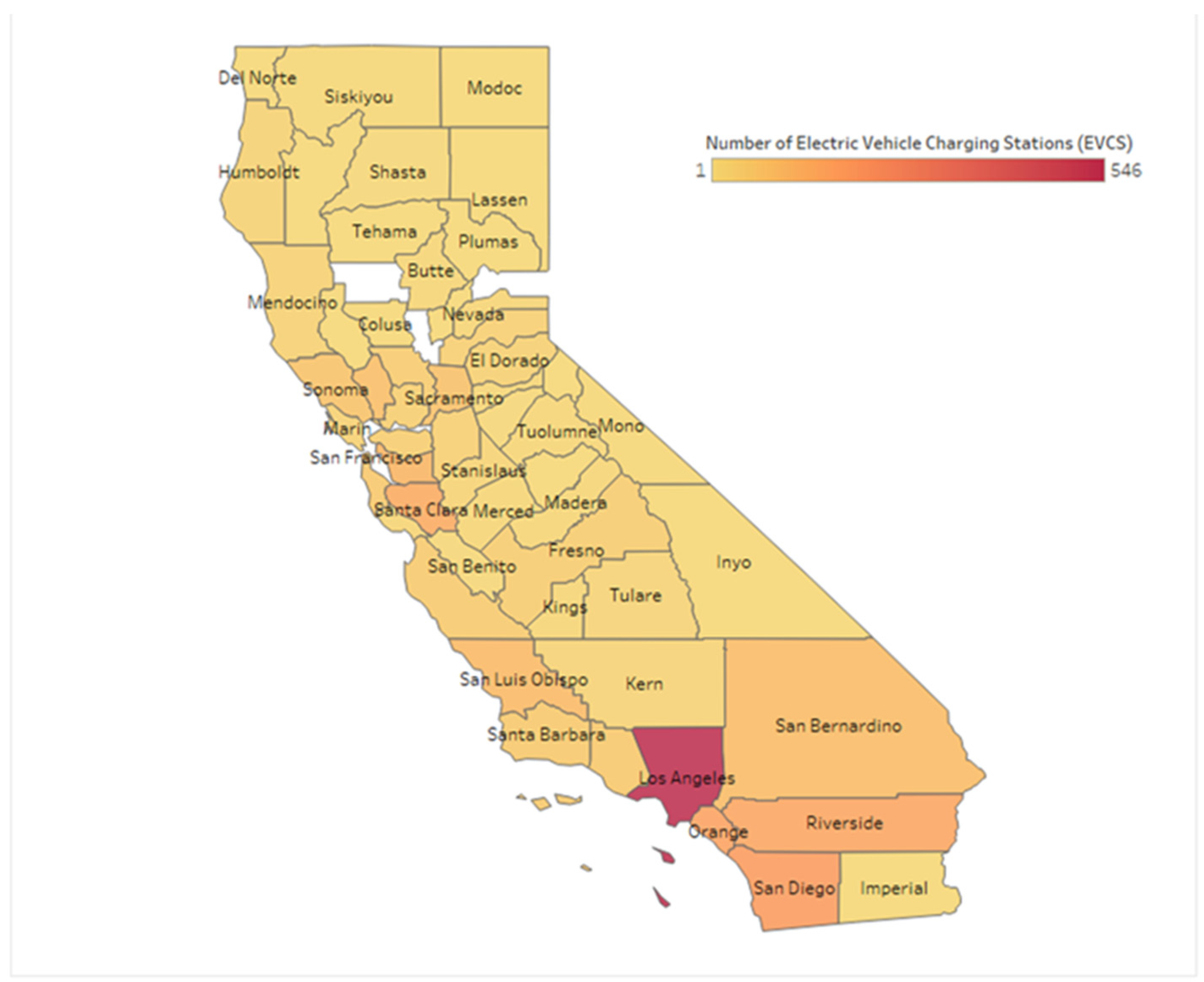
Map 3.
Distribution of Electric Vehicle Charging Stations by County in California Pre-2019.
Map 4 employs a color gradient to depict the concentration of EVCS in each county, with darker shades indicating higher numbers of stations. A notable observation from Map 4 is the expansion of EVCS into previously underserved areas, highlighting the state’s efforts to address the accessibility and equity issues in EV infrastructure (Smith and Johnson, 2020). This expansion is particularly significant in the context of California’s ambitious targets for EV adoption and its commitment to reducing greenhouse gas emissions [2]. The post-2019 distribution pattern of EVCS, as illustrated in Map 4, offers valuable insights for policymakers and stakeholders. The increased spread of charging infrastructure, including in rural and less densely populated areas, suggests a positive response to state policies aimed at broader EV adoption. This development aligns with California’s environmental objectives and highlights the importance of continued investment and innovation in EV infrastructure [23].
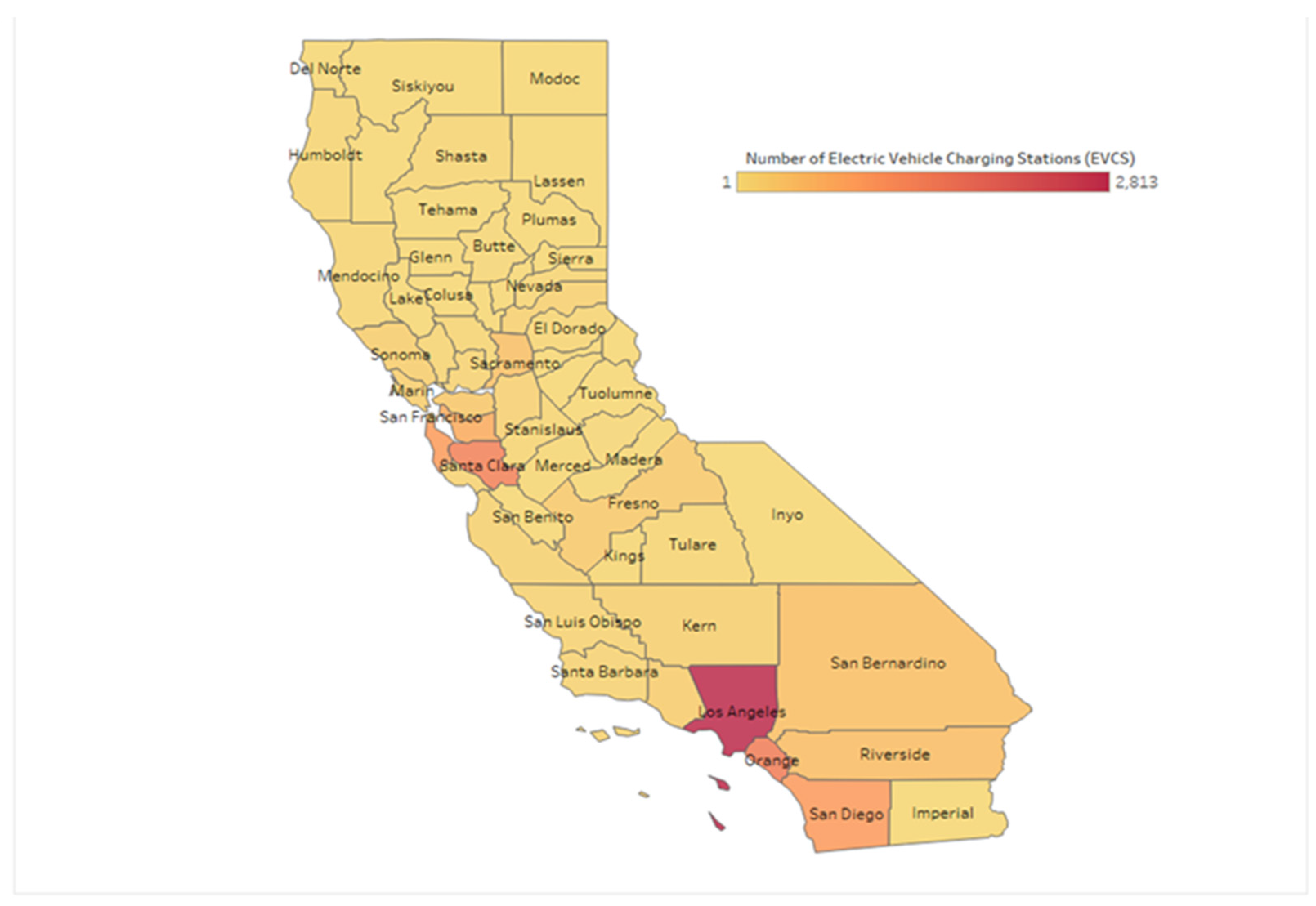
Map 4.
Distribution of Electric Vehicle Charging Stations by County in California Post-2019.
Figure 3.
Choropleth map of EV adoption in California.
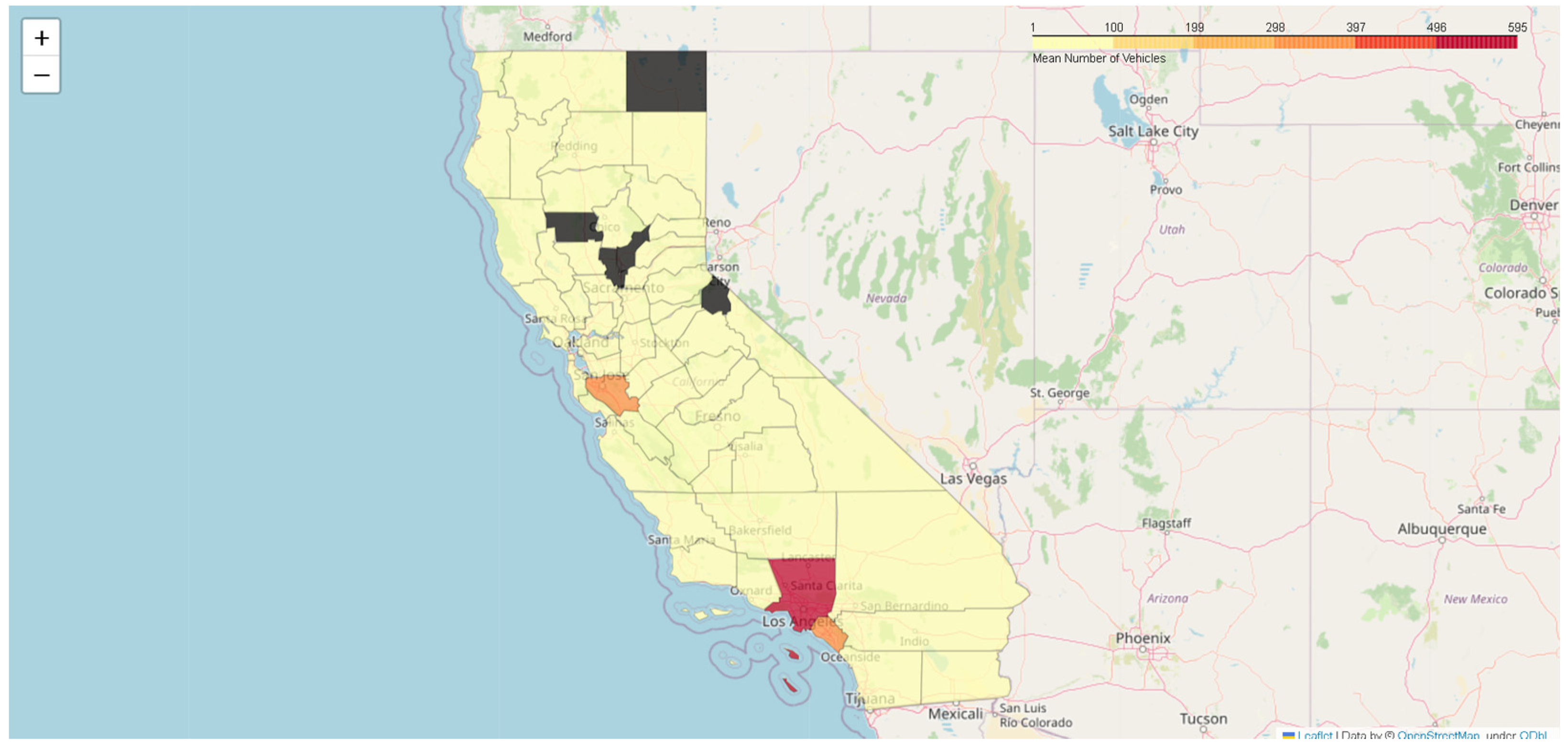
In conclusion, this study provides empirical evidence supporting the idea that expanding EV charging infrastructure positively influences EV adoption rates. As California and other regions worldwide strive to reduce greenhouse gas emissions and transition to cleaner transportation options, the role of EV charging stations in facilitating this transition cannot be underestimated. Policymakers, industry stakeholders, and researchers should continue to work together to optimize the growth and accessibility of charging infrastructure, paving the way for a more sustainable and electrified future. The Choropleth map provides a visualization of the level of electric vehicle (EV) adoption across counties. The colour scheme uses a range of hues to indicate different levels of EV adoption. The black regions on the map signify low levels or no adoption of EVs. The yellow regions represent an average EV adoption rate of approximately 1 to 100 annually, whereas the orange regions reflect an average range of 298-397 annual EV adoptions. The map’s red regions represent an average annual EV adoption range of 496-595.
4. Policy Implications/Conclusion
The findings of this study have important policy implications for policymakers, government agencies, and stakeholders interested in promoting the adoption of electric vehicles (EVs) and achieving emissions reduction goals. The analysis suggests that expanding Electric Vehicle Charging Stations (EVCS) can have a positive and statistically significant impact on EV adoption. Here, we provide a deeper analysis of these policy implications:
-
Investment in Charging Infrastructure: The statistically significant increase in EV adoption after the installation of EV charging stations underscores the importance of continued investment in charging infrastructure. Policymakers should prioritize the expansion of charging networks to improve accessibility and convenience for EV owners. This includes increasing the number of charging stations in urban areas, along highways, and in public places.
- Analysis Support: The statistical analysis showed that the mean EV adoption count increased significantly from 283 to 373.02 after EVCS installation, indicating the direct impact of infrastructure accessibility on adoption.
-
Reducing Range Anxiety: One of the major barriers to EV adoption is range anxiety, the fear of running out of battery power while driving. By strategically placing charging stations, policymakers can help alleviate this concern and encourage more consumers to transition to EVs.
- Analysis Support: The significant increase in EV adoption rates can be attributed to reduced range anxiety, as consumers have more confidence in their ability to find charging stations conveniently.
-
Supporting Emission Reduction Goals: Many regions, including California, have set ambitious goals to reduce greenhouse gas emissions. The study’s results suggest that promoting EV adoption through infrastructure development can contribute to achieving these targets. Policymakers should align their EV policies with broader environmental objectives.
- Analysis Support: As EVs produce lower emissions compared to traditional vehicles, the increase in EV adoption contributes to reducing overall greenhouse gas emissions.
-
Incentives and Regulations: While infrastructure expansion is crucial, policymakers should also consider a comprehensive approach that includes financial incentives, tax credits, and regulations that promote EV adoption. These measures can work in tandem with infrastructure development to drive consumer interest.
- Analysis Support: The study did not directly account for incentives and regulations, but their role in EV adoption is well-documented in the literature, and they likely interact with infrastructure availability.
-
Long-Term Planning: Policymakers should consider the long-term sustainability of charging infrastructure. This includes addressing issues related to maintenance, technology upgrades, and ensuring that charging stations remain accessible and functional over time.
- Analysis Support: While the study’s data covers up to 2022, long-term planning is essential to support the continued growth of the EV market beyond the scope of this analysis.
-
Public-Private Partnerships: Collaborations between government entities and private sector stakeholders, including charging station providers and automakers, can help accelerate the deployment of EVCS. Policymakers can create a conducive environment for such partnerships.
- Analysis Support: The study’s findings provide evidence that the installation of EVCS positively impacts EV adoption, making the case for continued collaboration between public and private sectors.
In summary, the analysis highlights the role of EV charging infrastructure in promoting EV adoption, which is vital for reducing greenhouse gas emissions and achieving sustainable transportation goals. Policymakers should view charging infrastructure as a critical component of their broader EV adoption strategy and consider it in conjunction with incentives, regulations, and long-term planning to create a supportive environment for the transition to electric mobility. The study’s findings provide empirical evidence to support these policy implications.
4.1. Future Research Directions
While this study provides valuable insights into the impact of EV charging stations on EV adoption and rebates in California, there are several avenues for future research that can further enhance our understanding of this topic.
- Long-Term Impact: This study focused on a relatively short-term period from 2010 to 2022. Future research could explore the long-term impact of EV charging stations on EV adoption and rebates over several decades. This would provide a more comprehensive view of how charging infrastructure influences the evolution of the electric vehicle market.
- Regional Variations: California is a diverse state with varying demographics and geographic features. Future research could delve deeper into regional variations in the impact of EV charging stations on EV adoption and rebates. This would help identify areas where charging infrastructure has a more significant effect and tailor policies accordingly.
- Consumer Behavior: Understanding consumer behavior is crucial in promoting EV adoption. Future research could investigate the psychological and sociological factors that influence individuals’ decisions to purchase EVs, even in the presence of charging infrastructure. This could include factors like social norms, peer influence, and perceived environmental benefits.
- Economic Analysis: A more comprehensive economic analysis could be conducted to assess the cost-effectiveness of EV charging station installations compared to other policy measures aimed at promoting EV adoption. This would help policymakers allocate resources more efficiently.
- Policy Evaluation: Evaluating the effectiveness of specific policies, such as rebate programs and incentive schemes, in conjunction with charging infrastructure expansion could provide valuable insights into the most impactful strategies for accelerating EV adoption.
- Technological Advancements: With rapid advancements in battery technology and charging infrastructure, future research should keep pace with these developments. Assessing how emerging technologies, such as fast-charging stations and higher-capacity batteries, impact EV adoption will be essential.
- Environmental Impact: While this study briefly touched on the environmental benefits of EV adoption, future research could delve deeper into quantifying the reduction in greenhouse gas emissions attributable to increased EV adoption facilitated by charging infrastructure.
- Public Perception: Understanding how the public perceives EV charging stations and their role in the transition to electric mobility is crucial. Future studies could explore public attitudes, concerns, and awareness regarding EV infrastructure.
In conclusion, this research serves as a valuable foundation for understanding the relationship between EV charging stations, EV adoption, and rebates in California. However, the electric vehicle landscape is rapidly evolving, and ongoing research is essential to inform effective policies and strategies that promote sustainable transportation and reduce greenhouse gas emissions.
4.2. Limitations
While this study provides valuable insights into the relationship between Electric Vehicle Charging Stations (EVCS) and Electric Vehicle (EV) adoption in California, it is important to acknowledge certain limitations that should be considered when interpreting the results and implications:
- Causality and Correlation: The analysis presented in this study establishes a correlation between the installation of EV charging stations and increased EV adoption. However, it does not establish causality. While the presence of charging infrastructure is associated with higher EV adoption rates, other unmeasured factors may also contribute to the observed trends.
- Data Limitations: The study relies on publicly available data sources, which may have limitations in terms of accuracy and completeness. Additionally, the data might not capture all relevant variables that could influence EV adoption, such as local economic conditions, consumer preferences, and advertising campaigns.
- Temporal Scope: The analysis covers the period from 2010 to 2022, with a post-period defined as 2019. While this choice was made to align with significant policy developments, it may not capture longer-term trends and the full impact of charging infrastructure on EV adoption.
- Regional Specificity: The study focuses on California, a state known for its strong commitment to environmental initiatives and EV adoption goals. Findings from this study may not be directly applicable to regions with different policies, economic conditions, and cultural attitudes toward EVs.
- Other Policy Factors: While this study focuses on the role of EVCS, it does not account for other policy factors, such as tax incentives, rebates, and emissions regulations, which can also influence EV adoption rates. Isolating the specific impact of EVCS can be challenging given the complex interplay of multiple policy initiatives.
- Future Developments: The analysis is based on historical data, and the EV landscape is rapidly evolving. Future developments in technology, government policies, and consumer attitudes may impact EV adoption differently, and the study’s findings may not fully reflect these changes.
- Sample Size: The study’s sample size, especially when examining subgroups based on factors like income and housing density, may limit the generalizability of results. Larger and more diverse datasets could provide a more comprehensive understanding.
- Consumer Behavior: The study primarily focuses on quantitative data and does not delve deeply into the underlying motivations and decision-making processes of consumers when adopting EVs. Qualitative research could provide additional insights into the driving factors behind EV adoption.
- External Factors: External events and unforeseen circumstances, such as global economic downturns or natural disasters, can influence EV adoption rates. These factors are difficult to account for in retrospective data analysis.
Despite these limitations, this study contributes to our understanding of the relationship between EV charging infrastructure and EV adoption, offering valuable insights for policymakers and stakeholders. Future research should aim to address some of these limitations by incorporating more comprehensive data, considering a broader geographical scope, and exploring the multifaceted drivers of EV adoption in greater detail.
Acknowledgments
The author thanks Zach Henkin, Regina McCormack, Francis Alvarez, James Tamerius, and John Anderson for their tremendous support and for always believing in me.
Conflicts of Interest
The authors declare no conflict of interest.
References
- Wood, Eric, et al. The 2030 National Charging Network: Estimating U.S. Light-Duty Demand for Electric Vehicle Charging Infrastructure. s.l. : National Renewable Energy Laboratory, 2023.
- California Air Resource Board. Going Zero. 2023.
- Review and Meta-Analysis of EVs: Embodied Emissions and Environmental Breakeven. Dillman, Joseph Kevin, et al. 2020, Transport Systems for Sustainability: Policy, Planning and Exploitation).
- National Academies of Science Engineering and Medicine. Assessment of Technologies for Improving Light-Duty Vehicle Fuel Economy—2025-2035. Washington, DC : The National Academies Press, 2021.
- Bosetti, Valentina, et al. Integrated Risk and Uncertainty Assessment of Climate Change Response Policies. 2022.
- The White House. Building Resilient Supply Chains, Reviralizing American Manufacturing, and Fostering Broad -Based Growth. 2021.
- Energys your way. The Relationship Between Electric Vehicle Adoption and Accessible Charging Infrastructure. 2023.
- Global EV Outlook. Trends in charging infrastructure. 2023.
- California Energy Commission. Electric Vehicle Charging Infrastructure Assessment - AB 2127. 2023.
- The Impact of Consumer Subsidy on Green Technology Innovations for Vehicles and Environmental Impact. Juan, Zhang, Ziyue, Wang and Huiju, Zhao. 2020, Int J Environ Res Public Health. [CrossRef]
- Electric Vehicles: Benefits, Challenges, and Potential Solutions for Widespread Adaptation. Alanazi, Fayez. 2023, Towards a Sustainable Future: The Role of Electric Vehicles and Smart Grids in the Energy Transition).
- Environmental and economic impact of electric vehicle adoption in the U.S. Zhenhua, Chen, et al. 2021, Environmental Research Letters,, pp. Volume 16, Number 4.
- Electric Vehicle Benefits and Considerations. U.S. Department of Energy. 2023, Energy Efficiency & Renewable Energy.
- Carreon, R. Alessandra. The EV Battery Supply Chain Explained. s.l. : RMI, 2023.
- U.S. Department of Transportation. transportation.gov. transportation.gov. [Online] December 27, 2022. https://www.transportation.gov/rural/ev/toolkit/ev-basics/charging-speeds.
- Are Individuals’ stated preferences for electric vehicles (EVs) consistent with real-world EV ownership patterns? Wenjian Jia, T. Donna Chen. 2021, Transportation Research Part D: Transport and Environment. [CrossRef]
- E.V. Range Anxiety: A Case Study. A dearth of Charging Stations makes road trips dicey. Gelles, David. 2023, The New York Times.
- Chhatwal, Geetika. Revving Up Innovation: The Surge of Electric Vehicles in Global Markets. s.l. : Kadence International, 2023.
- Identifying optimal locations for community electric vehicle charging. Charly, Anna, et al. s.l. : Sustainable Cities and Society, 2023, Sustainable Cities and Society. [CrossRef]
- Understanding and identifying barriers to electric vehicle adoption through thematic analysis. Krishna, G. 2021, Transportation Research Interdisciplinary Perspectives.
- Electric Vehicle Uptake: Understanding the Print Media’s Role in Changing Attitudes and Perceptions. Broadbent, Gail Helen, Wiedmann, Thomas Oliver and Metternicht, Graciela Isabel. 2021, World Elecrtic Vehicle Journal.
- Brower, Michael. The EV Revolution: Cost, Performance, Safety, and Environmental Impacts. 2023.
- Electric Vehicles: Benefits, Challenges, and Potential Solutions for Widespread Adaptation. Alanazi, Fayez. 2023, Applied Science, pp. 1-23. [CrossRef]
- Mastoi, Muhammad Shahid, et al. An in-depth analysis of electric vehicle charging station infrastructure, policy implications, and future trends. s.l. : Energy Reports, 2022.
- Consumers’ preferences for electric vehicles: The role of status and reputation. Buhmann, Kathrin Monika and Criado, Josep Rialp. s.l. : Transportation Research Part D: Transport and Environment, 2023.
- Promoting electric vehicle adoption: Who should invest in charging infrastructure? Kumar, Rajeev Ranjan, Chakraborty, Abhishek and Mandal, Prasenjit. India : Promoting electric vehicle adoption: Who should invest in charging infrastructure?, 2021, Vol. 149.
- Electrification of Vehicle Miles Traveled and Fuel Consumption within the Household Context: A Case Study from California, U.S.A. Mandev, Ahmet, Sprei, Frances and Tal, Gil. Davis : World Electric Vehicle Journal, 2022. [CrossRef]
- User preferences for EV charging, pricing schemes, and charging infrastructure. Visaria, Anant Atul, et al. s.l. : Transportation Research Part A: Policy and Practice, 2022, Vol. 165. [CrossRef]
- Examining spatial disparities in electric vehicle charging station placements using machine learning. Roy, Avipsa and Law, Mankin. Irvine : Sustainable Cities and Society, 2022. [CrossRef]
- Federal Funding to Help California Expand Electric Vehicle Charging Network. California Energy Commission. s.l. : California Energy Commission,, 2022.
- Research, National Center for Transit. Integrated Approaches to EV Charging Infrastructure and Transit System Planning. s.l. : National Center for Transit Research, 2016.
- A Study to Investigate What Tempts Consumers to Adopt Electric Vehicles. Ali, Imran and Naushad, Mohammad. s.l. : World Electric Vehicle Journal, 2022. [CrossRef]
- Comprehensive Review of Electric Vehicle Technology and Its Impacts: Detailed Investigation of Charging Infrastructure, Power Management, and Control Techniques. Kumar, Madhav, et al. s.l. : Applied Science, 2023. [CrossRef]
- Integration of Renewable Energy and Electric Vehicles in Power Systems: A Review. Manousakis, Nikolaos M., et al. s.l. : processes, 2023. [CrossRef]
- A critical review of the effect of light duty electric vehicle charging on the power grid. Tasnim, Moshammed Nishat, et al. s.l. : Energy Reports, 2023, Vol. 10. [CrossRef]
- A Review on Electric Vehicles: Technologies and Challenges. Sanguesa, Julio and A. 1, *ORCID,Vicente Torres-Sanz 1,Piedad Garrido 1,Francisco J. Martinez 1ORCID andJohann M. Marquez-Barja. s.l. : Smart cities, 2021. [CrossRef]
- Effectiveness of electric vehicle incentives in the United States . Jenn, Alan, Springel, Katalin and Gopal, Anand R. Berkeley : Elsevier, 2018.
- The impact of UK financial incentives on the adoption of electric fleets: The moderation effect of GDP change. Alali, Layla, Niesten, Eva and Gagliardi, Dimitri. United Kingdom : Transportation Research Part A: Policy and Practice, 2022, Vol. 161. [CrossRef]
- A Systematic Review on power systems planning and operations management with grid integration of transportation electrification at scale. Zhang, Qianzhi, et al. s.l. : Advances in Applied Energy, 2023, Vol. 11. [CrossRef]
- Electric Vehicle Ownership Costs: Today’s Electric Vehicle Offer Big Savings for Consumers. Reports, Consumer. s.l. : Consumer Reports, 2020.
- Policy Incentives for the Adoption of Electric Vehicles across Countries. Zhang, Xingping, et al. Beijing : Sustainability, 2014. [CrossRef]
- Incentives for promoting Battery Electric Vehicle (BEV) adoption in Norway. Bjerkan, Kristin Ystmark, Nørbech, Tom E. and Nordtømme, Marianne Elvsaas. Norway : Transportation Research Part D: Transport and Environment, 2016, Vol. 43. [CrossRef]
- Nudging adoption of electric vehicles: Evidence from an information-based intervention in Nepal. Filippini, Massimo, Kumar, Nilkanth and Srinivasan, Suchita. Switzerland : Transportaion Research Part D: Transport and Environment, 2021, Vol. 97. [CrossRef]
- Determinants of Electric Vehicle Diffusion in China. Kalthaus, Martin and Sun, Jiatang. s.l. : Springer Link, 2021, Vol. 80. [CrossRef]
- No Longer Riding Dirty: The Effect of Electric Vehicle Subsidies on the Diffusion of Emerging Technologies in Automobile Markets. Wu, Xi, et al. s.l. : SSRN, 2019.
- The influence of financial incentives and other socio-economic factors on electric vehicle adoption. Sierzchula, Will, et al. s.l. : Energy Policy, 2014, Vol. 68. [CrossRef]
- The influence of financial incentives and other socio-economic factors on electric vehicle adoption . Sierzchulaa, William, et al. 2014. [CrossRef]
- Additionality Effects of Rebate Programs in the Residential Water Sector: Indoor vs. Outdoor. Pérez-Urdiales, María and Baerenklau, Kenneth A. Riverside : MDPI water, 2019, Vol. 11. [CrossRef]
- Placement of Infrastructure for Urban Electromobility: A Sustainable Approach. Machado, Cláudia A. Soares, et al. s.l. : MDPI sustainability, 2020, Vol. 12. [CrossRef]
- Climate Change. California Air Resource Board. California : s.n., 2020.
- UC DAVIS. Decarbonizing California Transportation by 2045. Report to State Outlines Policy Pathways to Meet the Zero-Carbon Time Crunch. s.l. : UC DAVIS,, 2021.
- Office of Governor Gavin Newsom. California Releases World’s First Plan to Achieve Net Zero Carbon Pollution. s.l. : Office of Governor Gavin Newsom,, 2022.
- Addressing electric vehicle (EV) sales and range anxiety through parking layout, policy and regulation. Henry, A. Bonges III and Anne, C. Lusk. s.l. : Transportation Research Part A: Policy and Practice, 2016, Vol. 83.
- Matkins, Allen. California Laws Related to Permitting Electric Vehicle Charging Stations and Electric Infrastructure Projects. https://www.jdsupra.com/legalnews/california-laws-related-to-permitting-8087713/. [Online] October 11, 2023. [Cited: October 11, 2023.] https://www.jdsupra.com/legalnews/california-laws-related-to-permitting-8087713/.
- Zeldow, Bret and Hatfield, Laura. Difference-in-Difference. Difference-in-Difference. [Online] 2019. https://diff.healthpolicydatascience.org/.
- Loeb, Susanna, et al. Descriptive analysis in education: A guide for researchers . s.l. : Decision Information Resources, Inc. under Contract ED-IES-12-C-0057, Analytic Technical Assistance and Development., 2017.
- Jr., Office of Governor Edmund G. Brown. Governor Brown Takes Action to Increase Zero-Emission Vehicles, Fund New Climate Investments. s.l. : Office of Governor Edmund G. Brown Jr., 2018.
- Governor Edmund G. Brown Jr. California Sustainable Freight Action Plan,. s.l. : Governor Edmund G. Brown Jr,, 2016.
- Nanaki, Evanthia A. Chapter 2 - Electric vehicles. Herning : s.n., 2020.
- Electric vehicle industry sustainable development with a stakeholder engagement system. Cao, Jidi, et al. s.l. : Technology in Society, 2021, Vol. 67.
- U.S. Department of Energy, Energy Efficiency and Renewable Energy. Alternative Fuel Data Center. Alternative Fuel Data Center. [Online] 2023. https://afdc.energy.gov/fuels/electricity_infrastructure_trends.html.
- Developing longitudinal qualitative designs: lessons learned and recommendations for health services research. Calman, Lynn, Brunton, Lisa and Molassiotis, Alex. s.l. : National Library of Medicine: National Center for Biotechnology Information, 2013, Vol. 13.
- Retention strategies in longitudinal cohort studies: a systematic review and meta-analysis. Teague, Samantha, et al. s.l. : BMC Medical Research Methodology, 2018. [CrossRef]
- Implications of automated vehicles for physical road environment: A comprehensive review. Tengilimoglu, Oguz, Carsten, Oliver and Wadud, Zia. s.l. : Transportation Research Part E: Logistics and Transportation Review, 2023, Vol. 169. [CrossRef]
- Modelling electric vehicles use: a survey on the methods. Daina, Nicolò, Sivakumar, Aruna and Polak, John W. s.l. : Renewable and Sustainable Energy Reviews, 2017, Vol. 68. [CrossRef]
- Estimating causal effects: considering three alternatives to difference-in-differences estimation. O’Neill, Stephen, et al. s.l. : National Library of Medicine: National Center for Biotechnology Information, 2016. 10.1007/s10742-016-0146-8. [CrossRef]
- California Air Resources Board. California moves to accelerate to 100% new zero-emission vehicle sales by 2035. s.l. : California Air Resources Board,, 2022.
- How to support EV adoption: Tradeoffs between charging infrastructure investments and vehicle subsidies in California. Ledna, Catherine, et al. s.l. : Energy Policy, 2022, Vol. 165. [CrossRef]
- Understanding and identifying barriers to electric vehicle adoption through thematic analysis. Krishna, G. 2021, Transportation Research Interdisciplinary Perspectives.
- WhiteHouse, The. The WhiteHouse: https://www.whitehouse.gov/briefing-room/statements-releases/2021/04/22/fact-sheet-president-biden-sets-2030-greenhouse-gas-pollution-reduction-target-aimed-at-creating-good-paying-union-jobs-and-securing-u-s-leadership-on-c. The WhiteHouse: https://www.whitehouse.gov/briefing-room/statements-releases/2021/04/22/fact-sheet-president-biden-sets-2030-greenhouse-gas-pollution-reduction-target-aimed-at-creating-good-paying-union-jobs-and-securing-u-s-leadership-on-c. [Online] April 22, 2021.
- Congressional Budget Office. Emissions of Carbon Dioxide in the Transportation Sector. Congressional Budget Office Nonpartian Analysis for the U.S. Congress. 2022.
- Way, Energys Your. Examining the Role of Government Incentives in Increasing Electric Vehicle Demand. 2023.
- Scott, Hardmana, et al. The effectiveness of financial purchase incentives for battery electric vehicles – Are view of the evidence. United Kingdom : Renewable and Sustainable Energy Reviews, 2017. [CrossRef]
- California Clean Cehicle Rebate Project. CVRP Overview 2023.
Disclaimer/Publisher’s Note: The statements, opinions and data contained in all publications are solely those of the individual author(s) and contributor(s) and not of MDPI and/or the editor(s). MDPI and/or the editor(s) disclaim responsibility for any injury to people or property resulting from any ideas, methods, instructions or products referred to in the content. |
© 2023 by the authors. Licensee MDPI, Basel, Switzerland. This article is an open access article distributed under the terms and conditions of the Creative Commons Attribution (CC BY) license (http://creativecommons.org/licenses/by/4.0/).
Copyright: This open access article is published under a Creative Commons CC BY 4.0 license, which permit the free download, distribution, and reuse, provided that the author and preprint are cited in any reuse.


