

Submitted:
24 October 2023
Posted:
25 October 2023
You are already at the latest version
Abstract
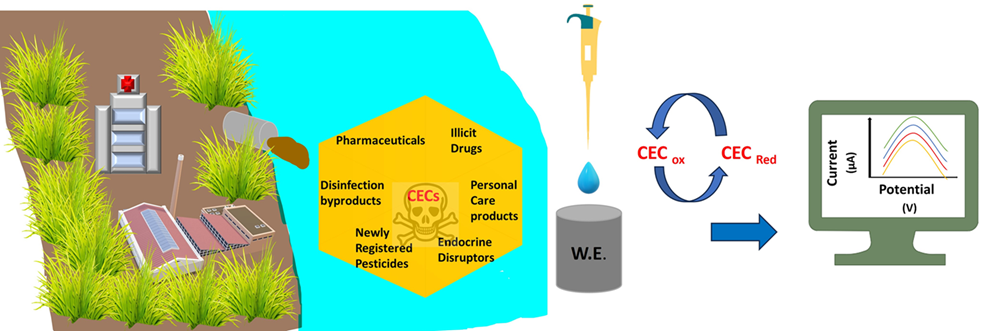
Contaminants of Emerging Concern (CECs), a new category of contaminants in limelight, is a major issue of global concern. The pervasive nature of CECs and its harmful effects, such as cancer, reproductive disorders, neurotoxicity etc., make the situation alarming. The perilous nature of CECs lies in the fact that even very small concentration of CECs can cause great impacts on living beings. It also has a nature of bioaccumulation. Thus, it is the ultimate need to have efficient sensors for detection of CECs to ensure safe living environment. Electrochemical sensors are an efficient platform for CEC detection as they are highly selective, sensitive, stable, reproducible, and prompt, and can detect very low concentrations of analyte. Major classes of CECs are pharmaceuticals, illicit drugs, personal care products, endocrine disruptors, newly registered pesticides, and disinfection by-products. This review focusses on CECs, including their sources and pathways, health effects caused by them, and electrochemical sensors as reported in literatures under each category for the detection of major CECs.
Keywords:
contaminants of emerging concern
; electrochemical sensors
1. Introduction
Population booming and the ever-increasing demands of products and facilities have induced the massive growth of industries and production. With industrialization and technological advancements, pollution of natural resources has become much evident on air, water, and soil. Unheard diseases are being reported along with new chemicals getting added to the list of harmful contaminants.
Contaminants of Emerging Concern (CECs), Emerging Contaminants (ECs), Persistent Organic Pollutants (POPs), Persistent Bioaccumulative toxic (PBT) are some of the novel terms that have recently attracted much attention. Contaminant of Emerging Concern (CEC) was defined by Diamond et al. as a chemical for which there are increasing concerns regarding its potential risks to humans and ecological systems, including endocrine disruption and neurotoxicity [1]. Sauve et al. defined CECs as naturally occurring, manufactured or manmade chemicals or materials which have now been discovered or are suspected to be present in various environmental compartments and whose toxicity or persistence is likely to alter the metabolism of a living being significantly [2]. To solve the ambiguity between emerging contaminants (EC) and CECs, ECs are those contaminants which have appeared recently. It is more of a relative term as those contaminants regarded as ECs a decade ago may longer be one in the presence. However, CECs are contaminants which have been in environment for a while but concerns are raised recently. Also, a well-known, already regulated contaminants may reattain the emerging position when new information about the contaminant emerges and regulations need to be revised [3]. At times, ECs and CECs are used interchangeably. Pharmaceuticals, personal care products (PCPs), endocrine disruptors (EDs), illicit Drugs, newly registered pesticides, and disinfection by-products (DBPs) are commonly reported CECs.
Although CECs have been polluting the ecosystem for a long time, the amounts and types of CECs have shown a tremendous increase in the past 50 years [4]. CECs are identified at very low concentrations of ng/L to µg/L in surface water, waste water, and drinking water [5]. However, the nature of bioaccumulation of CECs makes the scenario alarming. Bioaccumulation is the build-up of CECs in an organism. Some mixtures of CECs bioaccumulated are more toxic than single CECs [6]. Unlike conventional pollutants, CECs are rarely globally regulated and another risk related to CECs is associated with endocrine disruption [7], carcinogenicity [8], neurotoxicity and genotoxicity [9]. Traditional water treatment methods, like activated carbon treatment and reverse osmosis, failed to remove CECs from water [10]. Thus, it is very important to develop an efficient technique to sense CECs and provide safe food and drinking water. Electrochemical sensors, which can detect analytes at a very low concentration like picomolar range, are a better option for CEC detection as they are present in very low concentrations in environment. Also, electrochemical sensors are a cost-effective option while being rapid to detect CECs [11]. Electrochemical sensors provide a sensitive, selective, and effective platform to detect CECs in water, food, and serum samples. This review aims to explain about CECs, their sources, toxic effects of different CEC classes, and electrochemical sensors developed for the detection of these CECs.
2. Sources and Toxicity of Contaminants of Emerging Concern (CECs)
Industrial wastewater, agriculture/ livestock runoff, household and hospital effluents are the major sources of CECs, whereas water and soil are the sinks of CECs. The primary sources of CECs include ineffective waste water treatment plants, industrial waste water, agriculture and livestock runoff, hospital and domestic effluents [12]. Pharmaceuticals, personal care products, pesticides are the common CECs found in industrial effluents. Pesticides used to improve crop productivity are the common CEC found in agriculture runoff. Livestock runoff include pharmaceuticals and steroid hormones used in livestock. Hospital and domestic effluents might contain pharmaceuticals, endocrine disruptors and disinfection by-products [13]. Depending on the physicochemical properties of CECs, they seep into the soil, pollute ground water or adsorb into the soil thus contaminate the soil and ground water. Some other CECs get discharged into surface water, leading to surface water contamination [14]. Plants are the major transporters of CECs as they are the primary producers in the food chain [15]. From plants, they get transferred to higher trophic levels and may lead to bioaccumulation.
Unfortunately, CECs have become an integral part of our daily lives. Unregulated use of pharmaceuticals and personal care products have resulted in release of large number of CECs. Unchecked use of insecticides and pesticides to improve crop yield have added to the situation. Rebellious use of illicit drugs has also increased. They can cause reproductive damage, endocrine disorders [16], allergies, neurotoxicity, bioaccumulation effects, growth inhibition effects, hormone interference, disrupted physiological process, increased cancer risks, affected metabolism, transport and synthesis of endogenous hormones and specific receptors [17], and biochemical toxicity to invertebrates, amphibians and fish [18]. Major classes of CECs, representative compounds, sources, and effects are shown in Table 1.
With the increasing awareness of the toxicity of CECs hidden in our daily use products, its detection is also growing importance. EPA has developed criteria to assess and manage the risks of CECs in aquatic environment due to its extensive use, chemical persistence, consequences in nature and concerns of public [19]. Safe drinking water act (SDWT), toxic substance control act (TSCA), comprehensive environmental response, compensation and liability act (CERCIA), and clean water act (CWA) rose the interest of authorities to address the CECs issue [20]. CECs may be present in very low concentrations, but can cause serious effects on living beings and nature [21]. For example, fluoxetine at a concentration of 546 ng/L can be fatal to aquatic species [22] and ibuprofen at a minimum concentration of 250 ng/L can cause endocrine disruptions to aquatic species [23]. Therefore, a quick, selective, and sensitive method is necessary for the detection of CECs.

Table 1.
Classes of CECs, their sources and toxic effects.
| Classes of CECs | Description/ Categories |
Representative Compounds |
Sources | Effects |
|---|---|---|---|---|
| Pharmaceuticals | Anti-inflammatories, analgesics, antibiotics, antidepressants, Lipid lowering agents, antihistamines, β-blockers |
Diclofenac, Norfloxacin, Acetylsalicylic acid, sodium salicylate, oxaprozin, ibuprofen, indomethacin, Acetaminophen, Carbamazepine, Promethazine hydrochloride, Norfloxacin |
Over the counter (OTC) Pharmaceuticals, Prescribed Pharmaceuticals | Cancer, liver and kidney failure [34], neurotoxicity, cardiovascular risks, Drug induced hepatoxicity [35] |
| Illicit Drugs | Non-prescribed Drugs | Cocaine, Morphine, Codeine, Amphetamine, MDMA, 6-acetylmorphine | Psychotropic drugs | Neurotoxic effects [53], Hypertension [54], low blood pressure, Respiratory problems [56], coma [64] |
| Personal Care Products (PCPs) | Cosmetics, Daily care products and fragrances, plasticizers, synthetic musks, UV-filters, preservatives | Methyl paraben, Ethyl paraben, Triclosan, Vanillin,Triclosan | Toothpastes, Lotions, fragrances, cosmetics, soaps, shampoos | Endocrine effects, reproductive malfunctions [67], Contact dermatitis, breast cancer [69], affects CNS [76] |
| Endocrine Disrupting Chemicals (EDCs) | Bisphenols (BPs), polychlorinated biphenyls (PCBs), phthalate esters, alkylphenols, natural and synthetic estrogens | BPA, BPS, Diethylstilbestrol, Estradiol,Phthalates |
Chemicals used as solvents or lubricants, their by-products, plasticizers, electronic materials | Reproductive issues, neurological damages, cardiovascular diseases, diabetes [84], fertility defects, sexual abnormalities, cancer [96] |
| Newly Registered Pesticides | New pesticide or chemicals or different uses of existing chemicals | Imidacloprid (IDP), Thiamethoxam (TMX), | Pesticides used to improve the crop yield | Cancer, Effects on immune system, reproductive system, respiratory system [101] |
| Disinfection By-products (DBPs) |
Chlorates, chlorites, bromates, Trihalomethanes (THMs) and Haloacetic acids (HAAs) | Chlorites, bromates, Trichloroacetic acid (TCAA), Trichloroacetamide (TCAM) |
Disinfectants react with organic matter or manmade contaminants during water disinfection | Genotoxicity, carcinogenicity [114], Acquired methemoglobinemia [115], Cancer, reproductive defects [121] |
3. Electrochemical sensors for detection of CECS
Electrochemical sensor is an efficient technique for CEC sensing. Conventional methods, such as liquid chromatography [24], inductively coupled plasma mass spectroscopy (ICP-MS) [25], atomic absorption spectroscopy (AAS), atomic emission spectroscopy (AES) [26], atomic fluorescence spectroscopy [27] and inductively coupled plasma-optical emission spectrometry (ICP-OES) [28], are quite expensive, time consuming, and highly skilled professionals demanding. Compared to conventional techniques, electrochemical methods are more sensitive, selective, stable, portable, and economical, and allow simultaneous detection of multiple analytes and environmentally benign [29]. Voltammetry is the most commonly used electrochemical technique to detect CECs. Voltammetric techniques measure current with corresponding variation in potential [30]. Linear sweep voltammetry (LSV), cyclic voltammetry (CV), differential pulse voltammetry (DPV), anodic stripping voltammetry (ASV), differential pulse anodic stripping voltammetry (DPASV), square wave anodic stripping voltammetry (SWASV), and linear sweep anodic stripping voltammetry (LSASV) are the subclasses of voltammetric technique based on the mode of voltage variation [31].
3.1. Electrochemical sensors for detection of Pharmaceuticals
Pharmaceuticals are one of the most widely occurring CECs. Pharmaceuticals are substances that are used for therapeutic, preventive, and diagnostic purposes and do not include the recreational drugs like cocaine [32]. Anti-inflammatories, analgesics, antibiotics, antiepileptics, antidepressants, lipid lowering agents, antihistamines, β-blockers belong to the class of pharmaceuticals [33,34]. The presence and distribution of pharmaceuticals have become an issue of major concern [35,36]. The global medicine usage achieved 4.5 trillion doses by 2020, when half of the world population consumed >1 dose/person/day of drugs [37].
Pharmaceutical products have contaminated water sources, soil, and sediments [38]. They have the nature of persistent contaminants, which are resistant to completely degrade [39]. This leads to pollution of water resources and soil, thus harming the aquatic life and other organisms. Presence of pharmaceuticals in soil can affect the biological balance in soil [40] and thus threaten the food safety [41]. Pharmaceutical products in aquatic environment have caused health effects, like cancer, liver, or kidney failure [42]. “Drug induced hepatoxicity” implies liver damage driven by drugs, which can directly or indirectly damage liver cells, which is a vital organ for carbohydrate, protein and fat metabolism, detoxification, drug transformation, bile secretion, and vitamin storage [43]. Therefore, a number of electrochemical sensors have been developed for detection of pharmaceutical products.
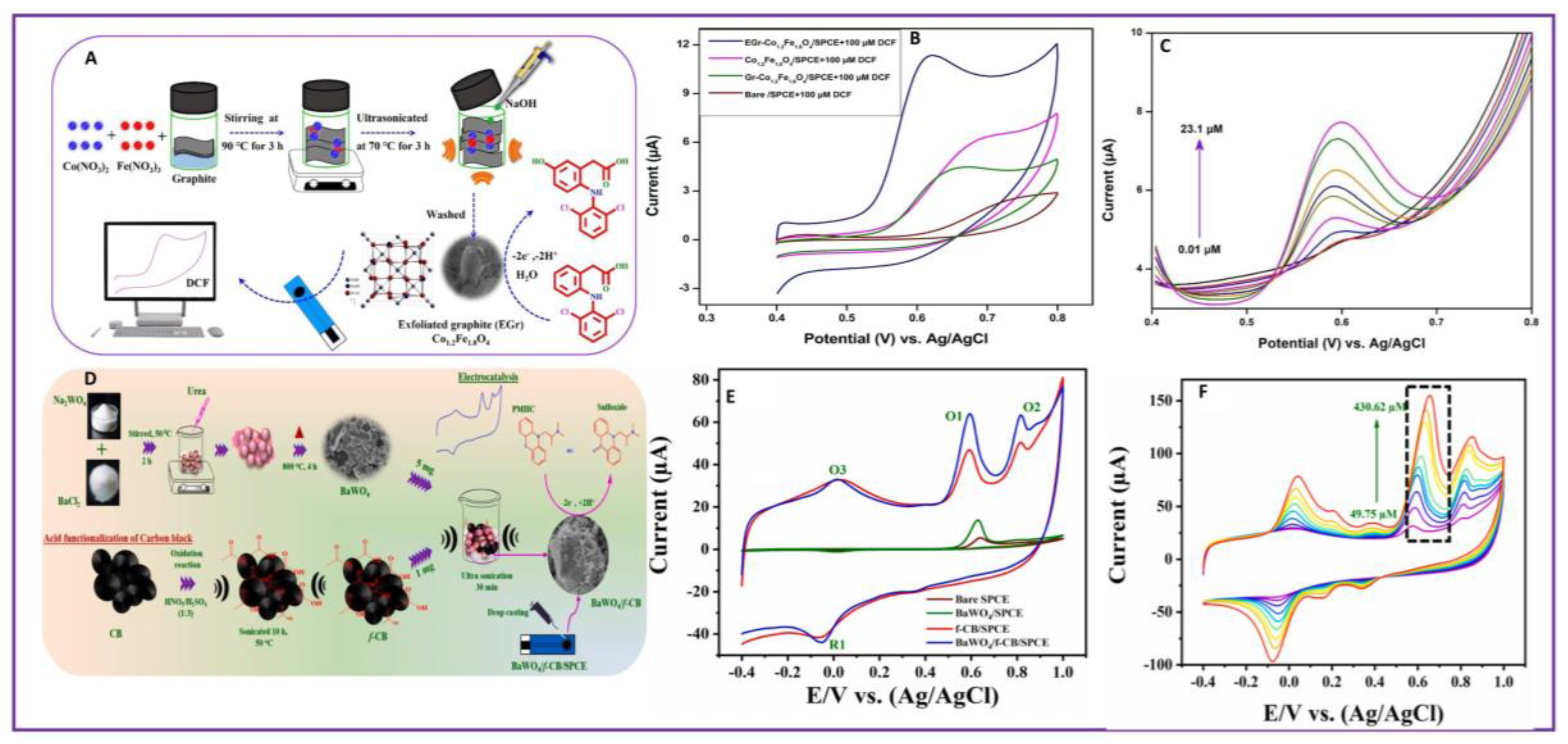
Acetaminophen[N-(4-hydroxyphenyl)acetamide], commonly known as paracetamol (PA), is a painkiller used to reduce fever and pain worldwide. Excess use of PA can affect liver and kidney. Spinel vanadium nano ferrite (VFe2O4) modified GCE was developed for electrochemical sensing of PA in pharmaceutical and biological samples with a limit of detection of 8.20 nM [44]. Simultaneous femtomolar detection of PA, Diclofenac [2-[2-(2,6-dichloroanilino)phenyl]acetic acid,(DIC)], and Orphenadrine[(RS)-N,N-Dimethyl-2-[(2-methylphenyl)-phenyl-methoxy]-ethanamine (ORP)] was achieved using COOH-CNTs/ZnO/NH2-CNTs modified on GCE, where ZnO nanoparticles were trapped in between the COOH-CNT and NH2-CNT [45]. DIC, an antihistamine, may affect central nervous system and ORP, an antirheumatic drug, can cause heart attack. 46.8, 78, and 60 fM, respectively, were the limit of detection of PA, DIC, and ORP by COOH-CNTs/ZnO/NH2-CNTs/GCE. Detection of DIC in human urine samples was reported using exfoliated graphene supported cobalt ferrite (EGr-Co1.2Fe1.8O4) modified SPCE, synthesized by an ultrasonication method as shown in Figure 1(a) [46]. EGr-Co1.2Fe1.8O4/SPCE outperformed Co1.2Fe1.8O4/SPCE, Gr-Co1.2Fe1.8O4, and bare SPCE in CV analysis for detection of DIC as shown in Figure 1(b). With increase in concentration of DIC, the peak current value also increases (Figure 1(c)) in DPV analysis and shows a linear relationship between concentration of analyte and current value from which a limit of detection of 1 nM and sensitivity of 1.059 μA μM-1 cm-2 were deciphered. Copper-aluminium layered double hydroxide homogeneously dispersed over oxidized graphitic carbon nitride modified GCE (oxidized g-C3N4 /Cu-Al LDH/GCE) was fabricated for the detection of diclofenac sodium (DS). Due to the combined effect of oxidized g-C3N4 and Cu-Al LDH, a good electrochemical response for DS oxidation and enhanced current was obtained. The sensor could achieve a detection limit of 0.38 μM and linear range of 0.5–60 μM using DPV technique [47].
Ibuprofen [(RS)-2-(4-(2-methylpropyl)phenyl)propanoic acid, (IBU)] is the third highly consumed non-steroidal anti-inflammatory drug used to relieve pain, arthritis, and inflammatory diseases. Over dose of IBU can raise the risk of heart attack and due to its antiplatelet outcome, it is known as blood- thinning drug. For the detection of IBU, copper tellurate (Cu3TeO6) with a 3D-stone like morphology was developed by a wet-chemical method [48]. Cu3TeO6/GCE reported a detection limit of 0.017 µM and linear range of 0.02–5 μM and 9–246 μM. Nitrofurazone [(2E)-2-[(5-Nitro-2-furyl)methylene]hydrazine carboxamide, (NZ)] is an antibiotic used to treat ulcers, bladder cancer, skin inflammation, and gastrointestinal infections. NZ has genotoxic, mutagenic, and carcinogenic effects. Sulfur doped graphitic carbon nitride with copper tungstate hollow spheres (Sg–C3N4/CuWO4) was synthesized by ultrasonic method [49]. S/g–C3N4/CuWO4/GCE exhibits a detection limit of 3 nM and sensitivity of 1.24 µAµM-1cm-2 towards detection of NZ in human urine and serum samples. Norfloxacin [1-ethyl-6-fluoro-4-oxo-7-piperazin-1-yl-1H-quinoline- 3-carboxylic acid (NFX)] is a fluoroquinolone used to treat human and veterinary infections. NFX can disrupt the endocrine of aquatic organisms. CaCuSi4O10/GCE was developed for the detection of NFX. The inter layer spaces of layered silicate structure offered suitable adsorption sites. In order to improve conductivity, MnO2 was also added. The sensor showed a detection limit of 0.0046 μM and linear range of 0.01–0.55 and 0.55–82.1 µM [50].
Naproxen sodium (NAP) and Sumatriptan (SUM) are drugs which have shown anti-viral effects against COVID-19. NAP [(+)-(S)- 2-(6-methoxynaphthalene-2-yl) propanoic acid] is used to relieve pain and rheumatic disorders. Overdose of NAP can lead to kidney or liver disease. SUM [1-[3-(2-dimethyl aminoethyl)-1 H-indol-5-yl]-N-methylmethanesulfonamide] is a tryptamine-based medicine used to treat migraine headaches. SUM overdose can narrow blood vessels leading to heart issues like heart attack. Auxillary use of NAP and SUM are associated with serotonin syndrome. Multiwalled carbon nanotube decorated with ZnO, NiO, and Fe3O4 nanoparticles on glassy carbon electrode (GCE) (ZnO/NiO/Fe3O4/MWCNTs) was developed for the detection of NAP and SUM with a detection limit of 3 nM and 2 nM, respectively [51]. The high electrical conductivity and electroactive surface area of the composite improved the electrooxidation of NAP and SUM. The linear range of detection were 4.00 nM to 350.00 μM for NAP and from 6.00 nM to 380.00 μM for SUM. Yet another electrode developed for the simultaneous detection of NAP and SUM was a carbon paste electrode modified with peony like CuO-Tb3+ nanostructure (P-L CuO: Tb3+ NS/CPE) [52]. P-L CuO: Tb3+ NS/CPE gave a linear range of 0.01-800 μM and 0.01–700 μM and detection limit of 3.3 nM and 2.7 nM for detection of SUM and NAP.
Vortioxetine (VOR) (1-[2-(2,4-dimethyl-phenylsulfanyl)-phenyl]-piperazine- hydrobromide) is an antidepressant used in the treatment of major depressive disorder. VOR is associated with sexual dysfunction, liver injury, anxiolytic like behavior in children, histopathological damage, nausea and vomiting [53]. Vortioxetine (VOR) detection was made possible using an electrochemical sensor based on gold nanoparticles/graphene (AuNPs@GRP) modification on GCE [54]. AuNPs@GRP synthesized by a one pot method enhanced the sensitivity of the sensor for selective detection of VOR. The electrochemical sensor could detect VOR at a detection limit of 50 nM and linear range of 0.1–1.0 and 1.0–6.0 μM in pharmaceutical samples. Promathazine hydrochloride (PMHC) [(N, N-dimethyl-1-phenothiazin-10-yl-propan-2-amine hydrochloride) is another drug commonly prescribed for mental illness. PMHC overdose is related to cardiac problems and reproductive dysfunction, which can be fatal. A hybrid of barium tungstate with functionalized carbon black modified on SPCE (BaWO4/f-CB/SPCE) was fabricated for the detection of PMHC [55]. BaWO4/f-CB was synthesized by co-precipitation followed by ultrasonication method and then drop casted on SPCE for PMHC sensing as shown in Figure 1(D). As compared to bare SPCE, BaWO4/SPCE and f-CB/SPCE, BaWO4/f-CB/SPC gave better oxidation and reduction peak currents (Figure 1(E)) and the efficiency of the electrode for PMHC sensing was proved. A detection limit of 29 nM was inferred from the DPV analysis with increase in concentration of PMHC (Figure 1(F)) and the resulting linear graph of current and concentration. Carbamazepine (CBZ) [5H-dibenzo [b,f]azepine-5-carboxamide] is an anticonvulsant medicine used for treatment of bipolar disease, mental disorder, and post-traumatic stress disorder. Growing awareness about the toxicity of CBZ is due to the harmful consequences like neurotoxicity. Gadolinium vanadate nanostructure decorated on functionalized carbon nanofiber on glassy carbon electrode (GdVO4/f-CNF/GCE) was developed for the detection of CBZ in pharmaceuticals and human urine samples [56]. The synergistic effect between GdVO4 and f-CNF enhanced the electrochemical performance of the sensor. The detection limit of 0.0018 μM and linear range of 0.01–157 μM were achieved using the electrochemical sensor for CBZ detection.
Figure 1.
Scheme of fabrication of (A) EGr-Co1.2Fe1.8O4/SPCE (D) BaWO4/f-CB/SPCE; Comparison of CVs of different electrode for detection of (B) DIC (D) PMHC (C) DPV of EGr-Co1.2Fe1.8O4/SPCE for detection of DIC at different concentrations; (E) CV of BaWO4/f-CB/SPCE for detection of PMHC at different concentrations.
Figure 1.
Scheme of fabrication of (A) EGr-Co1.2Fe1.8O4/SPCE (D) BaWO4/f-CB/SPCE; Comparison of CVs of different electrode for detection of (B) DIC (D) PMHC (C) DPV of EGr-Co1.2Fe1.8O4/SPCE for detection of DIC at different concentrations; (E) CV of BaWO4/f-CB/SPCE for detection of PMHC at different concentrations.
3.2. Electrochemical sensors for detection of illicit drugs
Illicit drugs are non-prescribed drugs or psychotropic substances [57]. International Drug Control Conventions prohibit the production, sale, and use of illicit drugs [58]. Cocaine, benzoylecgonine, morphine, codein, 6-acetylmorphine, methadone, amphetamine, methamphetamine, and 3,4-methylenedioxyamphetamine are common illicit drugs. According to World Drug Report 2023 launched by the UN Office on Drugs and Crime (UNODC), over 296 million people used drugs in 2021, which accounts to be 23 percentage greater than the previous decade. The number of people suffering from drug disorders shot up to 39.5 million, with 45 per cent increase over 10 years [59]. These drugs are consumed by means of ingestion, inhalation, absorption, injection, smoking, dissolution under tongue or skin patching. Due to the stimulus that these drugs provide, people use them even though they are dangerous and become addicted to these drugs. These drugs affect both mentally and physically. Driving Under Influence of Drugs (DUID) has led to many road accidents [60]. Drug-assisted sexual harassment is another issue of major concern. The misuse of illicit drugs can have severe neurotoxic effects [61].
Cocaine (Methyl (1R,2R,3S,5S)-3-benzoyloxy-8-methyl-8-azabicyclo [3.2.1] octane-2-carboxylate) is a Central Nervous System (CNS) stimulant. Risks associated with cocaine include hypertension, altered mental status, seizure, chest pain, headache, neurological defects, corneal ulceration and vision loss, HIV, and hepatitis [62]. Octahedral palladium doped cobaltite composite modified GCE (Oh-Pd2+: Co3O4-C/GCE) was fabricated for cocaine detection in biological specimens [63]. Oh-Pd2+: Co3O4-C composite was synthesized by hydrothermal method. The large surface area and higher electrocatalytic activity of the composite gave a detection limit of 1.3 nM and linear range of 0.01 μM–900.0 μM.
Morphine is an opioid used to relieve moderate to severe pain in cancer patients. Like other opioids, morphine also cause addiction, low blood pressure, and respiratory problems [64]. Polydopamine-functionalized multiwalled carbon nanotube modified GCE (PDA-f-MWCNT/GCE) was used for the detection of morphine [65]. The PDA-f-MWCNT catalyst has raised the electrochemical activity for morphine oxidation. The detection limit obtained using this sensor was 0.06 µM and linear range of detection of morphine in human plasma and urine samples was 0.075–75.0 μM.
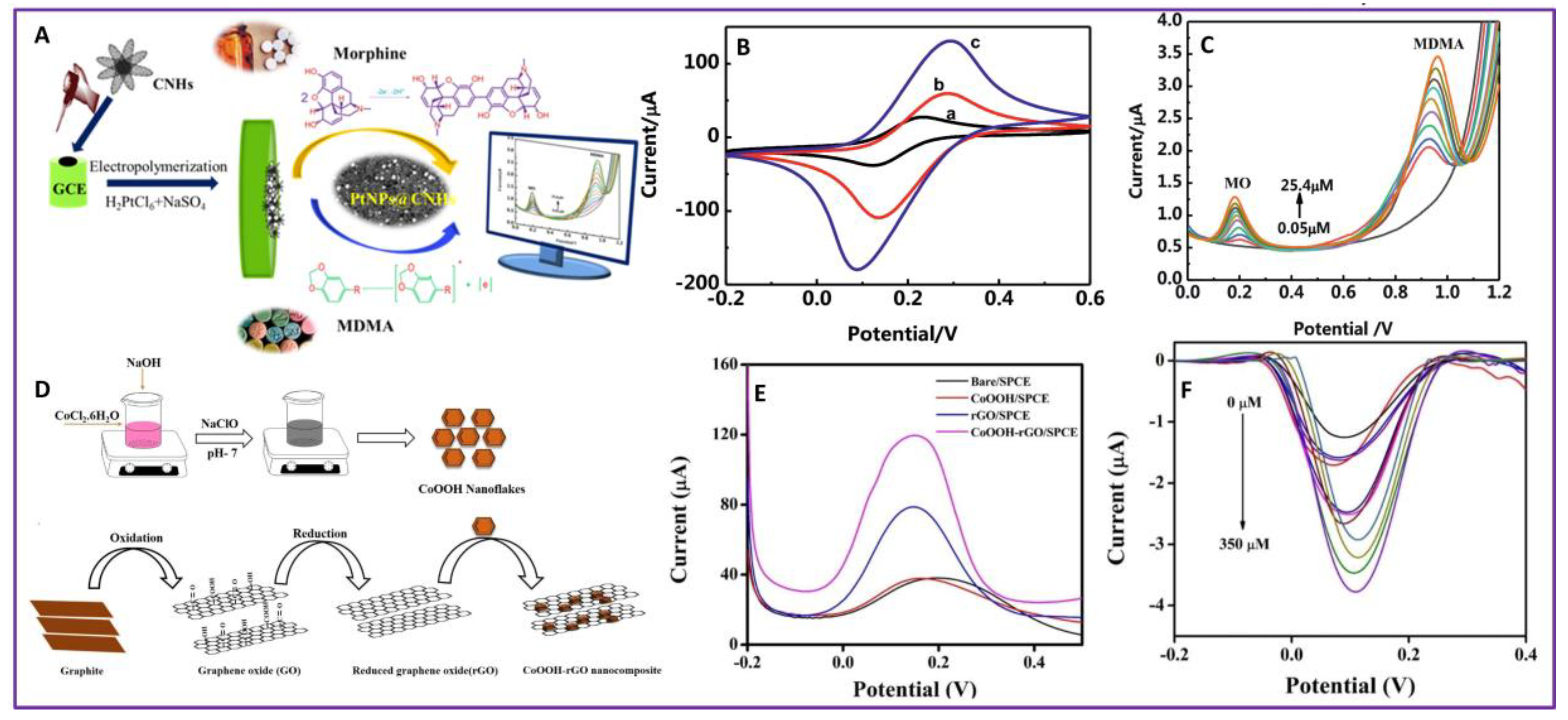
Amphetamine-type stimulant (ATS) is a group of synthetic drugs, chemically derived from β- phenethylamine, that stimulates the central nervous system. Amphetamine (A), methamphetamine (MA), 3,4- methylenedioxyamphetamine (MDA), 3,4-methylenedioxymethamphetamine (MDMA), and 3,4-methylenedioxyamphetamine (MDEA, MDE or “Eve”) are the common drugs in this category [66]. MDMA is a psychoactive recreational hallucinogenic abuse drug used worldwide. Long term effects of MDMA include kidney failure, hepatoxicity, decreased immunity [67]. An electrochemical sensor was developed for the simultaneous detection of morphine and MDMA simultaneously using carbon nanohorns-chitosan decorated with Pt nanoparticles (CNH-CHI@PtNPs) [68]. Schematic representation of the electrode fabrication for sensing morphine and MDMA is given in Figure 2(A). CNH-CHI@PtNPs/GCE showed a better catalytic performance than CNH-CHI/GCE and bare GCE [Figure 2(B)]. A linear range of 0.05-25.4 µM and detection limit of 0.02 µmol/L and 0.018 µmol/L were obtained using DPV analysis [Figure 2(C)] for detection of morphine and MDMA, respectively. MDEA has similar effects as that of MDMA. Fast, on-site detection of MDEA was made possible with an electrochemical sensor using carbon-screen printed electrode(C-SPE) which yielded a detection limit of 0.03 μmol L −1 and linear range of 2.5 to 30.0 μmol L−1 [69].
Oxycodone [14-hydroxy-7,8dihydrocodeinone, OXY] and codeine [7,8-didehydro-4,5-epoxy-3-methoxy-17methylmorphinan-6-ol monohydrate, COD] belong to the class of opiod analgesics used for pain relief. The use of opiod analgesics is controversial due to issues like dependence, tolerance, addiction, and abuse [70]. CoFe2O4 modified carbon paste electrode was used for the detection of OXY and COD simultaneously in human plasma and urine samples [71]. The enhanced electrocatalytic activity of the modified electrode provided a good platform for oxidation of OXY and COD. The sensor yielded a detection limit of 0.050 μmol L−1 for OXY and 0.02 μmol L−1 for COD. Clonazepam (CNZ), (5-(2-Chlorophenyl)-1, 3-dihydro-7-nitro-2H- 1, 4-benzodiazepin-2-one), also known as Klonopin, belongs to the group of benzodiazepines. CNZ is used for the treatment of seizure, anxiety, insomnia, and amnesia. CNZ is misused criminally and recreationally. It can cause impaired coordination, distress, and coma [72]. A hybrid nanocomposite of cobalt oxyhydroxide nanoflakes and rGO nanosheet as the support (CoOOH/r-GO) was used for detection of CNZ [73]. The synthesis scheme of CoOOH nanoflakes and CoOOH-rGO nanocomposite is given in Figure 2(D). CoOOH/r-GO/SPCE outperformed r-GO/SPCE, CoOOH/ SPCE and bare SPCE, which is evident from the DPV curve as shown in Figure 2(E). CoOOH/r-GO/SPCE was used to analyze CNZ by DPV technique with variation in CNZ concentration of [Figure 2(F)], giving a linear relationship between current signal and CNZ concentration. From this, the detection limit was found to be 38 nM and the sensor performed well in the linear range of 0-350 µM. Five illicit drugs, including cocaine, heroin, MDMA, 4-chloro-alpha-pyrrolidinovalerophenone, and ketamine, were detected simultaneously with SDS functionalized SPE with square-wave adsorptive stripping voltammetry (SWAdSV) [74]. The SDS adsorbed at the electrode surface provided adsorption sites for illicit drugs and hence improved the electrochemical output. The sensor yielded a detection limit of 0.7 µM, 1.8 µM,0.9 µM,1.6 µM, and 1.1 µM for cocaine, heroin, MDMA, Cl-PVP, and ketamine, respectively.
Figure 2.
Scheme of fabrication of (A) CNH-CHI@PtNPs/GCE (D) CoOOH/r-GO/SPCE; (B) Com parison of CVs of different electrodes for detection of MO and MDMA; (C) DPV of CNH-CHI@PtNPs/GCE at different concentrations of MO and MDMA (E) Comparison of DPVs of different electrodes for detection of CNZ; (F) DPV of CoOOH/r-GO/SPCE at different concentrations CNZ.
Figure 2.
Scheme of fabrication of (A) CNH-CHI@PtNPs/GCE (D) CoOOH/r-GO/SPCE; (B) Com parison of CVs of different electrodes for detection of MO and MDMA; (C) DPV of CNH-CHI@PtNPs/GCE at different concentrations of MO and MDMA (E) Comparison of DPVs of different electrodes for detection of CNZ; (F) DPV of CoOOH/r-GO/SPCE at different concentrations CNZ.
3.3. Electrochemical sensors for detection of Personal Care Products (PCPs)
PCPs are an important category of CECs. PCPs include a number of chemicals used in cosmetics and daily care products including UV-filters, fragrances, plasticizers and preservatives. PCPs are detected in aquatic environment worldwide [75]. Since PCPs are mostly used on human epidermis, they have a higher chance to spread through the atmosphere. PCPs may cause endocrine effects, bioaccumulate in aquatic organisms, cause antibiotic resistance, reproductive malfunctions such as reduction in semen quality or changes in normal development of male genitals [76].
Parabens (alkyl-p-hydroxybenzoates) are the commonly used antimicrobial preservative used in cosmetics, toiletries, pharmaceuticals and food to increase the shelf life of products. Benzyl, butyl, ethyl, isobutyl, isopropyl, methyl, and propyl parabens are the common parabens in use. Of these, methyl paraben and propyl parabens are commonly used in cosmetics. Methyl parabens can cause allergic contact dermatitis and breast cancer [77]. Two electrochemical sensors based on gold nanoparticles decorated over activated carbon modified pencil graphite electrode (AuNPs@AC/PGE) and gold nanoparticles decorated over graphene oxide modified pencil graphite electrode (AuNPs@GO/PGE) were developed and their ability to sense methyl paraben in cosmetic samples were compared [78]. AuNPs@GO/PGE showed a better performance by giving a low detection limit of 2.02 μM against the 2.17 μM given by AuNPs@AC/PGE. Zinc oxide nanoparticles of different morphologies-ZnO nanowires (ZA 8), nanocuboids(ZA 10) and nanospheres (ZA 12) were synthesized by varying the pH and their sensitivity towards detection of methylparaben were compared[79]. GCE/ZA 8 exhibited better performance than GCE/ZA 10 and GCE/ZA12 towards methyl paraben detection. GCE/ZA 8 demonstrated a linear range of 0.02–0.12 mM and detection limit of 7.25 µM. The electrode also proved to be an attractive candidate for antifouling applications.
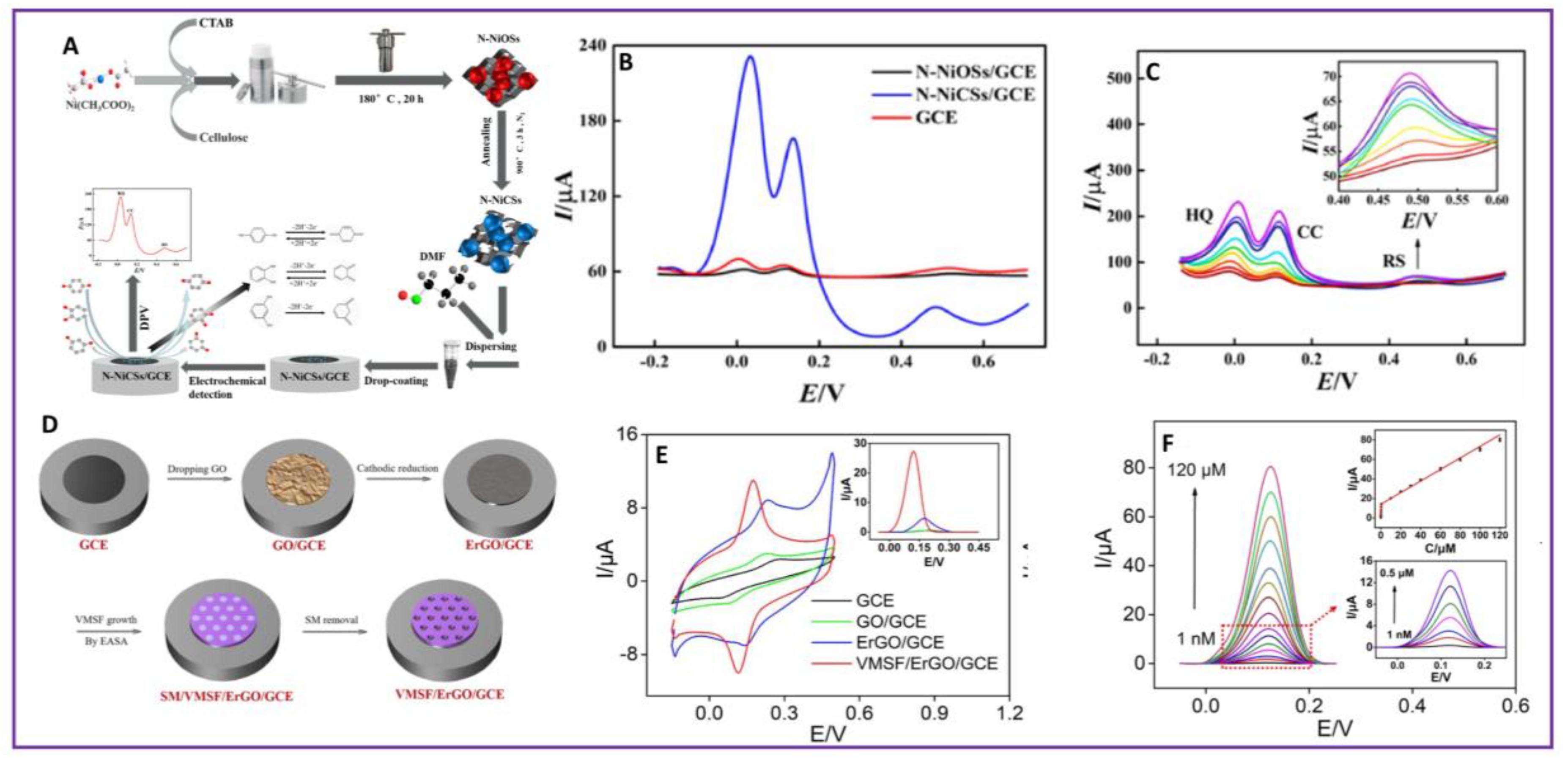
Dihydroxybenzenes have two hydroxyl groups (-OH) on the benzene ring. The three structural isomers of dihydroxybenzene are 1,2-dihydroxybenzene (catechol, CC), 1,3- dihydroxybenzene (resorcinol, RS), and 1,4- dihydroxybenzene (hydroquinone, HQ). They are widely used in cosmetics, especially in whitening creams and hair dyes. They are associated with carcinogenesis, allergies, and DNA damage [80]. Nitrogen doped nickel carbide spheres (N-NiCSs) were synthesized by varying the type of surfactant, surfactant-to-Ni molar ratio, reaction temperature, and reaction time [81]. Scheme for synthesis of N-NiCS with its fabrication over GCE and electrochemical detection of CC, RS, and HQ is shown in Figure 3(A). On comparison of the electrochemical activity of bare GCE, N-doped nickel oxide spheres/GCE (N-NiOS/GCE) and N-NiCS/GCE, N-NiCS/GCE appeared to have better sensitivity for detection of HQ, CC, and RS from the DPV analysis as shown in Figure 3(B). The DPV analysis with increase in concentration of the three dihydroxybenzene isomers exhibited an increase in peak current value (Figure 3(C)). A linear relationship was established between the concentration of the HQ, CC, and RS and current value. The detection limits of HQ, CC, and RS were inferred from the graph as 0.00152 µM, 0.015 µM, and 0.24 µM, respectively, and linear range of detection as 0.005-100 µM, 0.05-200 µM, and 5-500 µM for HQ, CC, and RS, respectively.
Tert-butylhydroquinone (TBHQ) is a synthetic phenolic antioxidant used as an additive to prevent the oxidation of food, cosmetic, oil, and fats during storage and processing. TBHQ overuse can lead to stomach, DNA and liver damage. GCE modified with MnO2 electrodeposited on electrochemically reduced graphene oxide (MnO2/ERGO/GCE) was developed for the detection of TBHQ [82]. The sensor has demonstrated a linear range of 1-50 µM and 100-300 µM and detection limit of 0.8 µM. Vertically-ordered mesoporous silica films were fabricated on graphene (VMSF/ErGO/GCE) for electrochemical detection of TBHQ in cosmetics and edible oils [83]. GO was reduced by cathodic reduction and vertically-ordered mesoporous silica films were grown over ErGO by electrochemical assisted self-assembly (EASA) method as shown in Figure 3(D). The electrochemical performance of VMSF/ErGO/GCE was better than bare GCE, ErGO/GCE, and GO/GCE, which was evident from the CV curves (Figure 3(E)). Using DPV technique, VMSF/ErGO/GCE could detect TBHQ at a detection limit of 0.23 nM and linear range of 0.001–0.5 and 0.5–120µM using DPV technique (Figure 3(F)). Another electrochemical sensor based on ZnO/ZnNi2O4 @porous carbon@covalent-organic framework (ZnO/ZnNi2O4 @porous carbon@COFTM) was constructed for the detection of paracetamol and TBHQ [84]. The formed core-shell ZnO/ZnNi2O4 @porous carbon@COFTM nanocomposite had an active ZnO/ZnNi2O4@porous carbon as the core and porous N, O-rich COFTM as the shell. The detection limit for paracetamol and TBHQ was 12 nM and 15.95 nM, respectively.
Ultraviolet filters are considered as CECs. They are found in PCPs and industrial products like plastics, paints, rubber, etc. which require photo degradation protection. With the rising awareness of the skin cancer and photoaging associated with sun radiation, the use of sun protection factor (SPF) has become inevitable. However, the organic ultra-violet filter (UVF) tends to bioaccumulate and thus get transferred to the offspring. They also show damaging effects on central nervous system and reproductive organs [85]. Oxybenzone and octocrylene are two commonly used UV filters. 2-hydroxy-4-methoxybenzophenone (oxybenzone/benzophenone-3 or BP3) and octocrylene (2-Ethylhexyl 2-cyano-3,3-diphenylprop-2-enoate, OC) were simultaneously detected using SPCE [86]. The electrochemical sensor could sense BP3 at a detection limit of 1.9µmolL-1 and OC at a limit of detection of 4.1 µmolL-1.
Triclosan (2,4,40-trichloro-20-hydroxydiphenyl ether, TCS) is an antibacterial agent used widely in toothpaste, soaps, detergents, deodorants, sanitizers, and cleansers [87]. TCS can prevent fatty acid formation and damage chlorophyll in algae. On exposure to light, TCS break down releasing chlorophenols and low chlorinated dioxins, which are poisonous [88]. A ternary nanocomposite of rGO modified porous Cu-benzene tricarboxylic acid metal organic framework (Cu-BTC MOF) decorated NiCo bimetallic nanoparticle modified GCE was fabricated for the detection of TCS [89]. High electrical conductivity of rGO, greater surface area of Cu-BTC MOF, and the electrocatalytic nature of NiCo bimetallic nanoparticles resulted in a low detection limit of 0.23×10⁻¹² M and linear range of 49 × 10−6 M to 0.39 × 10⁻¹² M.
Vanillin (4-hydroxy-3-methoxybenzaldehyde) is an aromatic compound used as a fragrance constituent used in cosmetics and as a food additive in chocolates, ice creams, and beverages. Synthetic vanilla, if consumed in unchecked quantities, can cause headaches, nausea and may affect kidney functions [90]. Manganese dioxide nanowire functionalized reduced graphene oxide modified GCE (MnO2NWs-rGO/GCE) was effective for detection of vanillin [91]. The unique electrochemical properties of r-GO and MnO2 NWs resulted in significant improvement in oxidation peak of vanillin. The sensor could yield a detection limit of 6 nM and linear ranges of 0.01–20 μM and 20–100 μM from SDLSV curve.
Figure 3.
Scheme of fabrication of (A) N-NiCS/GCE (D) VMSF/ErGO/GCE; Comparison of (B)DPVs of different electrodes for detection of HQ, CC, and RS; (E) CVs of different electrodes for detection of TBHQ; DPV curves of (C) N-NiCS/GCE at different concentrations of HQ, CC and RS; (F) VMSF/ErGO/GCE at different concentrations of TBHQ.
Figure 3.
Scheme of fabrication of (A) N-NiCS/GCE (D) VMSF/ErGO/GCE; Comparison of (B)DPVs of different electrodes for detection of HQ, CC, and RS; (E) CVs of different electrodes for detection of TBHQ; DPV curves of (C) N-NiCS/GCE at different concentrations of HQ, CC and RS; (F) VMSF/ErGO/GCE at different concentrations of TBHQ.
3.4. Electrochemical sensors for detection of Endocrine Disrupting Chemicals (EDCs)
According to WHO, Endocrine disrupting chemicals (EDCs) are exogenous substances that can interfere with human and animal endocrine systems and thus adversely affect organisms and even their progeny [92]. Bisphenols (BPs), polychlorinated biphenyls (PCBs), phthalate esters, alkylphenols, natural and synthetic estrogens are common EDCs as reported. Even minute concentration of EDCs in water can have acute health impacts on living organisms. Reproductive issues, neurological damages, cardiovascular diseases, diabetes and many other diseases may be caused by the exposure to EDCs [93].
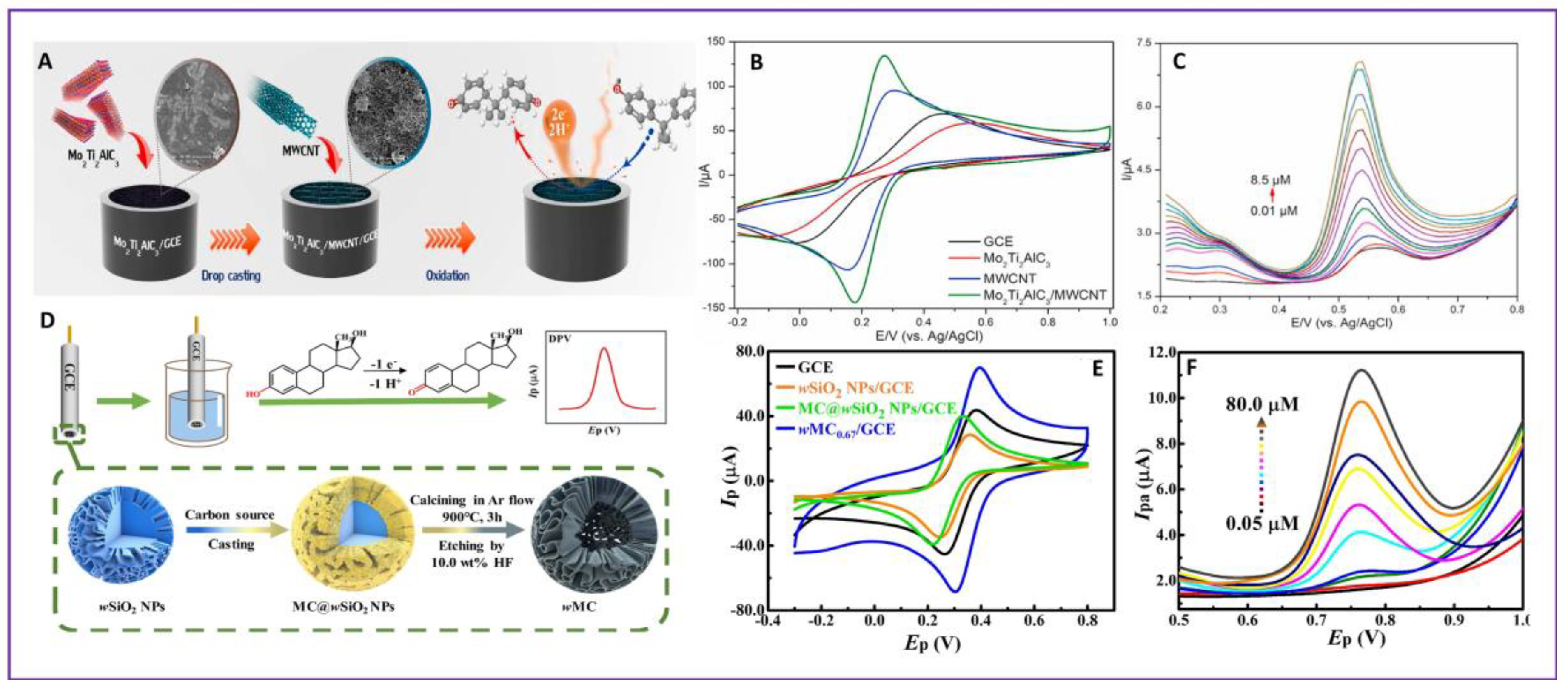
Bisphenol A (4,4'-(propane-2,2-diyl) diphenol, BPA) is a component widely used in plastics, baby bottles, storage containers, and epoxy coatings in metal cans. BPA belongs to the class of EDCs and can lead to reproductive issues, infertility, early puberty, cardiovascular diseases, cancer, neurological and metabolic diseases. Nanocomposite of MAX phase material, Mo2Ti2AlC3 with MWCNT (Mo2Ti2AlC3/MWCNT) was synthesized for sensing BPA in milk pack, plastic bottle, and metal cans [94]. The schematic representation of the detection mechanism is given in Figure 4(A). The synergistic effects of Mo2Ti2AlC3 and MWCNT improved the electrocatalytic activity of the electrode compared to Mo2Ti2AlC3/GCE and MWCNT/GCE as depicted by the CV curves in Figure 4(B). With the use of DPV technique, Mo2Ti2AlC3/MWCNT/GCE was used for sensing BPA by increasing the concentration of BPA as shown in Figure 4(C). Then, a linear relationship was obtained for concentration of BPA and current value, from which a limit of detection of 2.7 nM and linear range of 0.01–8.50 μM were figured out. Recently, another electrochemical sensor using a composite of 2-dimensional layered titanium carbide ((Ti3C2Tx) MXene with V2O5 modified GCE was fabricated for the detection of BPA [95]. DPV technique exhibited a detection limit of 87 nM and linear range of 414 nM-31.2 μM for BPA sensing. Bisphenol S (Bis(4-hydroxyphenyl) sulfone, BPS) is similar in structure to BPA, except for the sulfone (SO2) group present in the central linker instead of dimethylmethylene group (C(CH3)2) as in the case of BPA. BPS is often used as a substitute for BPA. BPS also shows adverse effect on reproductive health, heart, and neurobehaviors. Due to similarities in structure and health effects, BPA and BPS need to be determined simultaneously. A highly porous covalent organic framework, CTpPa-2 modified GCE was constructed for the simultaneous detection of BPA and BPS in bottle samples [96]. The sensor could detect BPA and BPS at a detection limit of 0.02 µM and 0.09 µM and linear range of 0.1-50 µM and 0.5-50 µM, respectively. Dimethyl bisphenol A (2,2-bis(4-hydroxy-3-toluene), DM-BPA), is another EDC, which has similar adverse effects. Simultaneous detection of BPA and DM-BPA was reported with SPCE modified with a composite of Pt nanoparticles modified on single-walled carbon nanotube (Pt@ SWCNT), MXene (Ti3C2), and graphene oxide (GO) (Pt@SWCNTs-Ti3C2-rGO/SPCE) [97]. The detection limit for of BPA and DM-BPA obtained with DPV technique were 2.8 nmolL-1 and 3 nmolL-1 respectively. Tetrabromobisphenol A (4,4′-(Propane-2,2-diyl) bis(2,6-dibromophenol), TBBPA) is another EDC. A conductive composite of carboxylic carbon nanotube and cobalt imidazole framework (CNTs@ZIF-67) modified on acetylene black electrode (CNTs@ZIF-67/ABE) was developed for TBBPA detection and the composite showed excellent adsorption capacity for TBBPA detection [98]. The excellent adsorption capacity of the composite resulted in a low detection limit of 4.23 nmolL-1 and linear range of 0.01–1.5 µmolL-1.
Bisphenol F (4,4′-Methylenediphenol, BPF), structural analogue of BPA, is used as an alternative for BPA in the market. BPF has the potency to cause fertility defects and adverse effects on brain development in mammals, and deplete glutathione levels in humans, resulting in an increased oxidative stress to raise cancer incidences [99]. An electrochemical sensor with carbon paste electrode modified with zinc oxide reduced graphene oxide and cetyltrimethylammonium bromide (ZnO/G/CTAB/MPCE) was used to detect BPF in water samples, human body fluids, and canned drinks [100]. BPF was recognized with DPV technique and it yielded a detection limit of 0.06 µM and linear range of 0.5-10 µM.
BPSIP(4-(4-isopropoxy-benzenesulfonyl)-phenol) was introduced as an alternative dye developer to BPS. BPSIP also has endocrine disrupting effects, such as estrogenicity and antiandrogenicity [101]. BPSIP sensing in river water samples was implemented by a nanocomposite of graphitic carbon nitride and copper coordinated dithiooxamide metal organic framework modified on GCE (g-C3N4/Cu-DTO MOF/GCE) [102]. A detection limit of 0.02 μM and sensitivity of 0.5675 μAμM-1cm−2 was achieved using the sensor with DPV technique. Recently, another electrochemical sensor based on graphene modified SPCE (g-C3N4@GN/SPCE) was developed for the detection of BPSIP [103]. g-C3N4@GN/SPCE showed a good electrochemical response to BPSIP oxidation due to the synergistic effect of g- C3N4 and GN/SPCE. The sensor offered a detection limit of 0.02 ± 0.01 μM and linear ranges of 1–100 μM and 100–1000 μM.
o-phenylphenol (OPP) and butylparaben (BP) are endocrine disrupting chemicals. Mn2O3 with various morphologies, including spherical, dumbbell-like, cubic, and ellipsoidal (S-Mn2O3, D- Mn2O3, C- Mn2O3, E- Mn2O3), were synthesized and their activity towards OPP and BP sensing were evaluated [104]. Of these, E- Mn2O3 showed a better performance. In order to improve the performance of the sensor, a GO-wrapped E-Mn2O3 modified GCE was developed (E-Mn2O3@GO/GCE), which yielded a detection limit of 0.63 nM and 0.88 nM for OPP and BP, respectively.
17α-Ethinylestradiol (EE2) is a synthetic hormone used widely as contraceptives, for the treatment of menopausal and postmenopausal syndrome, breast cancer in postmenopausal women. However, higher amount of EE2 intake can cause sexual abnormalities, decrease fertility, and cause cancer [105]. Carbon black supported palladium nanoparticles (CB/Pd NPs) were synthesized for the electrochemical detection of EE2 [106].The synergistic effect of CB and Pd NPs enhanced the electrooxidation of EE2. The detection limit attained with CB/PdNPs/GCE was 81 nmolL-1 and linear range of 0.5-119µmolL-1. 17 β-estradiol (17 β-E2) is a natural steroid hormone existing in mammals. Side effects of 17 β-E2 include endocrine disorders, cancer, obesity, diabetes, and neurological disorders [107]. Wrinkled mesoporous carbon synthesized from wrinkled silicon nanoparticle as a sacrificial template with modified GCE (wMC0.67/GCE) was used for the detection of 17 β-E2 [108]. The step-by-step procedure for synthesis of wMC/GCE and the mechanism for detection of 17 β-E2is given in Figure 4(D). wMC0.67/GCE was demonstrated to have a better electrocatalytic activity and electron transfer compared to bare GCE and other modified electrodes as shown in the CV curves of Figure 4(E). With increase in concentration of 17 β-E2 added, the peak current value showed an increase in Figure 4(F). From the linear relationship drawn between the concentration of 17 β-E2 and current value, a detection limit of 8.3 nM and linear ranges of 0.05-10 and 10-80 µM by increasing the concentration of 17 β-E2 in real samples, such as milk and river water, were accomplished using the sensor. Diethylstilbestrol (DES) is another hormone that has similar side effects as 17 β-E2. An electrochemical sensor for the simultaneous analysis of 17 β-E2 and DES using Fe3O4-doped nanoporous carbon (Fe3O4-NC) synthesized by carbonization of Fe-porous coordination polymer (Fe-PCP) was developed [109]. The strong adsorptive and catalytic performance of Fe3O4-NC granted a detection limit of 4.6 nmolL-1 and 4.9 nmolL-1, and linear range of 0.01-12µmolL-1 and 0.01-20 µmolL-1 for sensing DES and 17 β-E2.
Figure 4.
Scheme of fabrication of (A) Mo2Ti2AlC3/MWCNT/GCE(D) wMC/GCE; Comparison of CVs of different electrodes for detection of (B) BPA, (E)17 β-E2; DPVs of (C) Mo2Ti2AlC3/MWCNT/GCE at different concentrations of BPA(F) wMC/GCE at different concentrations of 17 β-E2.
Figure 4.
Scheme of fabrication of (A) Mo2Ti2AlC3/MWCNT/GCE(D) wMC/GCE; Comparison of CVs of different electrodes for detection of (B) BPA, (E)17 β-E2; DPVs of (C) Mo2Ti2AlC3/MWCNT/GCE at different concentrations of BPA(F) wMC/GCE at different concentrations of 17 β-E2.
3.5. Electrochemical sensors for detection of Newly Registered Pesticides (NRPs)
Pesticides are a group of chemicals and microorganisms for the eradication of insects, fungi, weeds, and bacteria [110]. Different classes of pesticides include organophosphates, organochlorines, carbamates, pyrethrin, neonicotinoids, sulfonylureas, and triazines. Newly registered pesticides are new pesticide chemicals or different use of the existing chemicals as pesticide. In order to cater with the demands of food production worldwide, the agriculture sector is largely dependent on pesticides. Even though pesticides increase the crop, vegetable, and fruit yields to several folds, the havoc they cause is matter of serious concern. Soil and water contamination, bioaccumulation, carcinogenic effects, damage to immune system, reproductive system, nervous system, and respiratory system are the dangerous impacts of the use of pesticides [111].
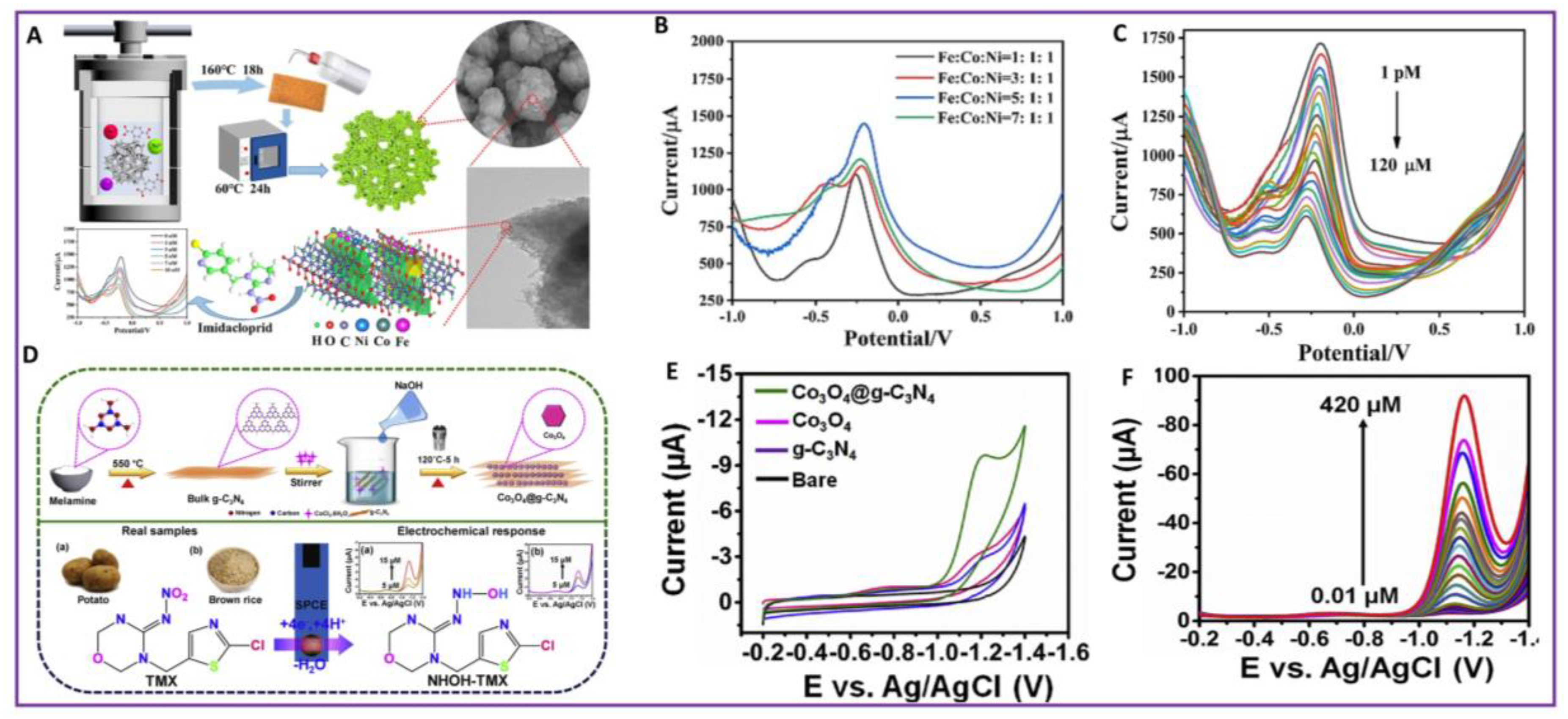
Neonicotinoids is a group of pesticides which are highly effective against insects. Imidacloprid (IDP), thiamethoxam (TMX), and dinotefuran (DNF) are common neonicotinoid pesticides. IDP[1-(6-chloro-3-pyridymethyl)-N-nitroimidazolidin-2-ylideneamine] is a neonicotinoid pesticide. IDP binds irreversibly to the nicotinic acetylcholine receptors which are responsible for the functioning of central nervous system. This hinders the neural transmission, eventually leading to the paralysis and then the death of the insect [112]. IDP may also cause liver failure and affect neural tissue development in infants and cancer [113]. An electrochemical sensor for the detection of IDP using Ag nanoparticles deposited on mesoporous carbon and naturally extracted hematite ore (Ag@Meso-C/Hematite Ore) nanocomposite resulted in a detection limit of 0.257 μM [114]. An organic/inorganic composite of f-MWCNT/EDTA integrated electrochemical sensor was used for the detection of IDP [115]. This electrochemical sensor provided a detection limit of 3.1 × 10⁻³ pM. Tungsten sulfide (WS2) nanosheets were fabricated for the detection of IDP in water and soil samples [116]. Fast electron transfer on WS2 nanosheets resulted in electrochemical reduction of the aromatic nitro group in IDP at a detection limit of 0.28 µM and linear range of 10-90 µM. A hydrothermally synthesized Fe-rich FeCoNi-MOF in-situ modified nickel foam working electrode was utilized for sensing IDP [117] as shown in Figure 5(A). An optimized ratio of Fe:Co:Ni (5:1:1) exhibited a better electrocatalytic activity for detection of IDP in Figure 5 (B). The exposed rich active sites in Fe-rich FeCoNi-MOF resulted in a low detection limit of 0.04 pmol/L and linear range of 1–1.2×10⁸ pmol/L using DPV technique as shown in Figure 5(C).
TMX[(3-[(2-chloro-5-thiazolyl)methyl]tetrahydro-5-methyl-N-nitro-4H-1,3,5-oxadiazine-4-imine] is a neonicotinoid pesticide. The food safety authority in European countries has restricted the range of TMX in agronomy products as 0.02 mg/kg to 5.0 mg/kg [118]. A composite of hydrothermally synthesized cobalt oxide in graphitic carbon nitride (Co3O4@g-C3N4NC) was used for sensing TMX [119] in Figure 5(D). Due to the large electroactive surface area and faster electron transfer offered by the composite, Co3O4@g-C3N4/SPCE showed better electrocatalytic performance compared to Co3O4/SPCE, g-C3N4/SPCE, and bare SPCE as shown by CV analysis in Figure 5(E). DPV techniques showed a detection limit of 4.9 nM and linear range of 0.01–420 µM in Figure 5(F). Fe2O3@g-C3N4@Schiff base modified GCE synthesized by a calcination method was used for sensing TMX [120]. Fe2O3@g-C3N4@MSB/GCE provided a detection limit of 0.137 µM and linear range of 0.01-200 µM for sensing TMX in real samples, like potato, rice, and river water. Another electrochemical sensor was fabricated with three-dimensional nitrogen doped macro-meso-microporous carbon composite derived from nitrogen doped Cu-MOF using PVP(N/Cu–HPC) for simultaneous detection of neonicotinoids, such as IDP, TMX, and DNF [121]. Mass and charge transport between neonicotinoid analyte molecules and Cu nanoparticles and carbon atoms improved the electrocatalytic performance of N/Cu–HPC/GCE towards detection of IDP, TMX, and DNF. N/Cu–HPC/GCE provided a detection limit of 0.026 μM for IDP, 0.062 μM for TMX, and 0.01 μM for DNF and linear ranges of 0.5–60 μM for both IDP and DNF, 1–60 μM for TMX. Another electrochemical sensor using MOF-derived N-doped octahedral NiCu nanoporous carbon composite modified GCE (N/NiCu@C/GCE) was developed for the detection of neonicotinoids IDP, TMX, and DNF [122]. The porous carbon structure and NiCu nanoalloy improved the diffusion between electrolyte and active site enhancing the electrocatalytic performance of N/NiCu@C/GCE. Using DPV technique, detection limit and linear ranges for sensing IDP, TMX, and DNF were found out to be 0.017, 0.007, and 0.001 μM and 0.5–60, 1–60, and 0.5–60 μM, respectively.
Figure 5.
Scheme of fabrication of (A) FeCoNi-MOFs (D) Co3O4@g-C3N4NC; (B) Comparison of DPV of different electrodes of FeCoNi-MOFs for detection of IDP; (C) DPV curve of Nickel foam/Fe-rich FeCoNi-MOF at different concentrations of IDP; (E) CVs of different electrodes for detection of TMX; (F) Co3O4@g-C3N4/SPCE at different concentrations of TMX.
Figure 5.
Scheme of fabrication of (A) FeCoNi-MOFs (D) Co3O4@g-C3N4NC; (B) Comparison of DPV of different electrodes of FeCoNi-MOFs for detection of IDP; (C) DPV curve of Nickel foam/Fe-rich FeCoNi-MOF at different concentrations of IDP; (E) CVs of different electrodes for detection of TMX; (F) Co3O4@g-C3N4/SPCE at different concentrations of TMX.
3.6. Electrochemical sensors for detection of disinfection by-products (DBPs)
Drinking water disinfection to ensure safe drinking water was one of the greatest achievements of the past century. However,, the by-products of the process are highly toxic. Disinfection by-products (DBPs) are formed when disinfectants like chlorine, ozone, chlorine dioxide, or chloramines, react with naturally occurring organic matter, man-made contaminants, bromide, and iodide during drinking water production [123]. DBPs are associated with genotoxicity and carcinogenicity [124]. Chlorates, chlorites, bromates, trihalomethanes (THMs) and haloacetic acids (HAAs) are common DBPs found in drinking water.
Chlorine and its oxides are the most common and cost-effective option for drinking water disinfection. Use of ClO2- may cause acquired methemoglobinemia, which has a life-threatening potential by reducing the oxygen capacity of haemoglobin [125]. WHO and EPA regulated the concentration of ClO2- should not exceed above 0.2 mg/L [126]. Fe3O4 nanoparticles synthesized by surfactant assisted hydrolysis of optimized amounts of Fe2+ and Fe3+ ions modified on CPE was used for electrochemical sensing of ClO2- [127]. The sensor could detect ClO2- ions in aqueous medium. The practical applicability of the sensor was tested in tap water and bottle water samples. The sensor showed a detection limit of 8.6 nM. Another electrochemical sensor with carbon black modified SPCE was used as the working electrode (CB-SPCE) for detection of ClO2- [128]. The sensor could detect ClO2- at a limit of detection of 0.01 ppm and linear range of 0.05-20 ppm. The sensor was found to be effective in sensing ClO2- in swimming pool water samples.
Bromate (BrO3-) is also a by-product of ozonation and chlorination disinfection process. Potassium bromate (KBrO3) is used as an oxidizing agent in baking industry. Bromate is classified as a B2 carcinogen. USEPA and WHO has recommended 10 µg/L as the maximum acceptable concentration of BrO3- in drinking water [129]. For the detection of BrO3-, a nanocomposite of electrochemically polymerized poly(aniline-co-o-aminophenol), ERGO, and Pd (PANOA/ERGO/Pd) with a caterpillar like structure modified GCE was integrated [130]. The sensor produced a detection limit of 1 µM and linear range of 4-840 µM for BrO3- detection. The sensor performed well in drinking water and river water samples. A lamellar MXene, Ti3C2Tx modified GCE was fabricated for BrO3- in drinking water samples [131]. Figure 6(A) shows the fabrication of the working electrode by GCE and the electrochemical detection of BrO3-.The electrochemical activity of MXene for BrO3- detection was confirmed with comparison of CV of bare GCE, GCE/Graphene, and GCE/MXene as shown in Figure 6(B). MXene as a sensing platform electrocatalytically augmented the reduction of BrO3-, which resulted in a detection limit of 41 nM and linear range of 50 nM – 5 µM. The detection limit and linear ranges for BrO3- detection was obtained from the DPV curve of increasing concentration of BrO3- as given in Figure 6(C). The practical applicability of the MXene sensor was also tested in domestic tap water.
Trichloroacetic acid (TCAA) is a kind of haloacetic acid (HAA). TCAA is associated with carcinogenicity, reproductive defects, and mutagenicity [132]. Combining the redox activity of iron phthalocyanine (PcFe) and high surface area and absorbability of ZIF-8, an efficient electrochemical sensor (PcFe@ZIF-8) for TCAA sensing was developed [133]. The sensor exhibited a detection limit of 1.89 nM. The sensor also showed good performance in real samples, such as tap water and swimming pool water samples. Haloacetamides (HAM) is a class of DBPs. Although the concentration of HAM is lower than THMs and HAAs, their cytotoxic and genotoxic effects are double fold [134]. Trichloroacetamide (TCAM), a HAM, was electrochemically detected with a heterostructure of triangular Ag nanoprism@MoS2 nanosheet (AgNPR@MoS2/GCE) [135]. Schematics of electrochemical detection of TCAM on AgNPR@MoS2/GCE is given in Figure 6(D). The supremacy of AgNPR@MoS2/GCE for electrochemical detection of TCAM can be clearly seen from SWV curves of bare GCE, AgNPR /GCE, MoS2/GCE, and AgNPR@MoS2/GCE. The reduction peak current was better compared to other electrodes as shown in Figure 6(E). Quantitative detection of TCAM was done using DPV technique. With increase in concentration of the analyte TCAM added, the peak current value also increased as shown in Figure 6(F). Due to dechlorination reaction of TCAM catalyzed by AgNPR and accelerated by the H+ absorption by S atoms in MoS2 nanosheets, the sensor could provide a detection limit of 0.17 µM and linear ranges of 0.5 - 10 μM and 10 - 80 μM. The applicability of the sensor in TCAM detection in drinking water samples was also demonstrated. Table 2 summarizes the comparison of merits of electrochemical sensors for detection of different classes of CECs as discussed in the review.
Figure 6.
Scheme of electrochemical detection of (A) BrO3- at Ti3C2Tx/GCE (D) TCAM at AgNPR@MoS2/GCE; Comparison of (B) CVs of different electrodes for detection of BrO3- (E) SWVs of different electrodes for detection of TCAM; (C) DPV of Ti3C2Tx/GCE at different concentrations of BrO3-; (F) SWV of AgNPR@MoS2/GCE at different concentrations of TCAM.
Figure 6.
Scheme of electrochemical detection of (A) BrO3- at Ti3C2Tx/GCE (D) TCAM at AgNPR@MoS2/GCE; Comparison of (B) CVs of different electrodes for detection of BrO3- (E) SWVs of different electrodes for detection of TCAM; (C) DPV of Ti3C2Tx/GCE at different concentrations of BrO3-; (F) SWV of AgNPR@MoS2/GCE at different concentrations of TCAM.
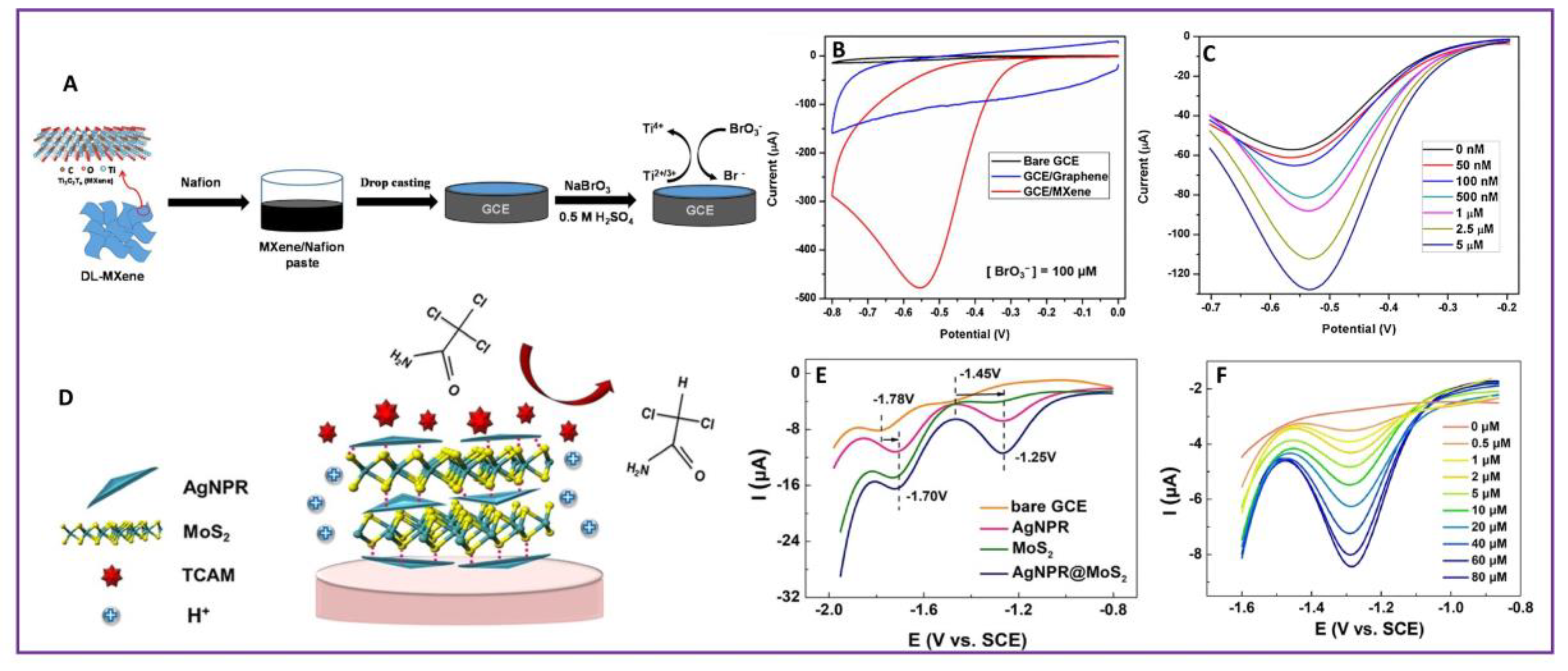
Table 2.
Comparison of merit of electrochemical sensors of different classes of CECs.
| Sl.No | CEC class | Analyte | Modified Electrode | LOD | Linear Range | Ref. |
|---|---|---|---|---|---|---|
| 1. | Pharmaceuticals | PA | VFe2O4/GCE | 8.20 nM | 0.05 – 12.3 µM | 44 |
| 2. | Pharmaceuticals | PA DIC ORP |
COOH-CNTs/ZnO/NH2-CNTs/GCE | 46.8 fM 78 fM 60 fM |
25pM-0.5 µM 75pM-1.5 µM 75pM-1.5 µM |
45 |
| 3. | Pharmaceuticals | DIC | EGr-Co1.2Fe1.8O4/SPCE | 1nM | 0.01–23.1 µM | 46 |
| 4. | Pharmaceuticals | DS | oxidized g-C3N4 /Cu-Al LDH/GCE | 0.38 μM | 0.5–60 μM | 47 |
| 5. | Pharmaceuticals | IBU | Cu3TeO6/GCE | 0.017µM | 0.02–5 μM and 9–246 μM | 48 |
| 6. | Pharmaceuticals | NZ | Sg–C3N4/CuWO4 | 3 nM | 0.005 μM-877 μM | 49 |
| 7. | Pharmaceuticals | NFX | CaCuSi4O10/GCE | 0.0046 μM | 0.01–0.55 and 0.55–82.1 µM | 50 |
| 8. | Pharmaceuticals | NAP SUM |
ZnO/NiO/Fe3O4/MWCNTs | 3 nM 2 nM |
4.00 nM to 350.00 μM 6.00 nM to 380.00 μM |
51 |
| 9. | Pharmaceuticals | SUM NAP |
P- L CuO: Tb3+ NS/CPE | 3.3 nM 2.7 nM | 0.01-800 μM 0.01–700 μM |
52 |
| 10. | Pharmaceuticals | VOR | AuNPs@GRP/GCE | 50 nM | 0.1–1.0 and 1.0–6.0 μM | 54 |
| 11. | Pharmaceuticals | PMHC | BaWO4/f-CB/SPCE | 29 nM | 0.03–234.74 μM and 274.73–1314.73 μM |
55 |
| 12. | Pharmaceuticals | CBZ | GdVO4/f-CNF/GCE | 0.0018 μM | 0.01–157 μM | 56 |
| 13. | Illicit Drugs | Cocaine | Oh-Pd2+: Co3O4-C/GCE | 1.3 nM | 0.01 μM–900.0 μM | 63 |
| 14. | Illicit Drugs | Morphine | PDA-f-MWCNT/GCE | 0.06 µM | 0.075–75.0 μM | 65 |
| 15. | Illicit Drugs | Morphine MDMA |
CNH-CHI@PtNPs/GCE | 0.02 µM 0.018 µM |
0.05-25.4µM | 68 |
| 16. | Illicit Drugs | MDEA | C-SPE | 0.03 μM | 2.5 to 30.0 µM | 69 |
| 17. | Illicit Drugs | OXY COD |
CoFe2O4/C-SPE | 0.050 μM 0.02 μM |
0.06–38 µM | 71 |
| 18. | Illicit Drugs | CNZ | CoOOH/r-GO/SPCE | 38 nM | 0-350 µM | 73 |
| 19. | Illicit Drugs | Cocaine heroin MDMA Cl-PVP ketamine |
SDS-SPE | 0.7 µM 1.8 µM 0.9 µM 1.6 µM 1.1 µM |
1-30 µM 2.5–30 µM 1–30 µM 2.5–30 µM 2.5–30 µM |
74 |
| 20. | PCPs | Methyl paraben | AuNPs@GO/PGE | 2.02 μM | 0.030-1 mM | 78 |
| 21. | PCPs | Methyl paraben | GCE/ZA 8 | 7.25 µM | 0.02–0.12 mM | 79 |
| 22. | PCPs | HQ CC RS |
N-NiCS/GCE | 0.0015 µM 0.015 µM 0.24 µM |
0.005-100 µM 0.05-200 µM 5-500 µM |
81 |
| 23. | PCPs | TBHQ | MnO2/ERGO/GCE | 0.8 µM | 1-50 µM and 100-300 µM |
82 |
| 24. | PCPs | TBHQ | VMSF/ErGO/GCE | 0.23 nM | 0.001–0.5 and 0.5–120µM |
83 |
| 25. | PCPs | TBHQ | ZnO/ZnNi2O4 @porous carbon@COFTM | 15.95 nM | 47.85 nM-130 μM | 84 |
| 26. | PCPs | BP3 OC |
SPE | 1.9 µM 4.1 µM |
6–200 μM 11–300 μM |
86 |
| 27. | PCPs | TCS | rGO/Cu-BTCMOF/NiCo/GCE | 0.23pM | 0.39 pM-49 μM | 89 |
| 28. | PCPs | Vanillin | MnO2NWs-rGO/GCE | 6nM | 0.01–20 μM and 20–100 μM |
90 |
| 29. | EDCs | BPA | Mo2Ti2AlC3/MWCNT/GCE | 2.7nM | 0.01–8.50 μM | 94 |
| 30. | EDCs | BPA | Ti3C2Tx/V2O5/GCE | 87nM | 414 nM-31.2 μM | 95 |
| 31. | EDCs | BPA BPS |
CTpPa-2/GCE | 0.02 µM 0.09 µM | 0.1-50 µM 0.5-50 µM |
96 |
| 32. | EDCs | BPA DM-BPA |
Pt@SWCNTs-Ti3C2-rGO/SPCE | 2.8 nM 3 nM |
0.006-7.4 μM | 97 |
| 33. | EDCs | TBBPA | CNTs@ZIF-67/PFDA/AB | 4.23 nM | 0.01–1.5µM | 98 |
| 34. | EDCs | BPF | ZnO/G/CTAB/MPCE | 0.06µM | 0.5-10 µM | 100 |
| 35. | EDCs | BPSIP | g-C3N4/Cu-DTO MOF/GCE | 0.02 μM | 0.04–1.10 µM | 102 |
| 36. | EDCs | BPSIP | g-C3N4@GN/SPCE | 0.02 ± 0.01 μM | 1–100 μM and 100–1000 μM |
103 |
| 37. | EDCs | OPP BP |
E-Mn2O3@GO/GCE | 0.63 nM 0.88 nM | 0.002-20 μM 0.003-24 μM |
104 |
| 38. | EDCs | EE2 | CB/Pd NPs/GCE | 81 nM | 0.5-119µM | 106 |
| 39. | EDCs | 17 β-E2 | wMC0.67/GCE | 8.3 nM | 0.05-10 and 10-80 µM | 108 |
| 40. | EDCs | DES 17 β-E2 |
Fe3O4-NC/GCE | 4.6 nM 4.9 nM |
0.01-12 µM 0.01-20 µM |
109 |
| 41. | NRPs | IDP | Ag@Meso-C/Hematite Ore/GCE | 0.257 μM | 10.80–195.50 μM | 114 |
| 42. | NRPs | IDP | f-MWCNT/EDTA/SPCE | 3.1 × 10⁻³ pM | 0.001–0.05 nM, 0.001–0.04 μM 0.001 nM-0.04 mM |
115 |
| 43. | NRPs | IDP | WS2/GCE | 0.28 μM | 10−90 µM | 116 |
| 44. | NRPs | IDP | Nickel foam/Fe-rich FeCoNi-MOF |
0.04 pM | 1–1.2 × 10⁸ pM | 117 |
| 45. | NRPs | TMX | Co3O4@g-C3N4/SPCE | 0.0049 µM | 0.1–420 µM | 119 |
| 46. | NRPs | TMX | Fe2O3@gC3N4@MSB/GCE | 0.137 µM | 0.01-200 µM | 120 |
| 47. | NRPs | IDP TMX DNF |
N/Cu–HPC/GCE | 0.026 μM 0.062 μM 0.01 μM |
0.5–60 μM 1–60 μM 0.5–60 μM |
121 |
| 48. | NRPs | IDP TMX DNF |
N/NiCu@C/GCE | 0.017 μM 0.007 μM 0.001 μM | 0.5–60 μM 1–60 μM 0.5–60 μM |
122 |
| 49. | DBPs | ClO2- | Fe3O4/CPE | 8.6 nM | 1–10 μM, 20–100 μM | 127 |
| 50. | DBPs | ClO2- | CB-SPCE | 0.01 ppm | 0.05-20 ppm | 128 |
| 51. | DBPs | BrO3- | PANOA/ERGO/Pd/GCE | 1 µM | 4-840 µM | 130 |
| 52. | DBPs | BrO3- | Ti3C2Tx/GCE | 41 nM | 50 nM – 5 µM | 131 |
| 53. | DBPs | TCAA | PcFe@ZIF-8/GCE | 1.89 nM | 0.02 - 1 μM | 133 |
| 54. | DBPs | TCAM | AgNPR@MoS2/GCE | 0.17 µM | 0.5- 10 μM and 10- 80 μM. |
135 |
5. Conclusions and Future Perspectives
CECs are so toxic that presence of very minute quantities can have adverse effects on the health of living beings. Since the wastewater treatment fails to remove CECs, they continue to exist in drinking water, enter the body of living organisms, bioaccumulate and is hazardous. Electrochemical sensors help in monitoring these CECs in real samples both qualitatively and quantitively and thus ensure safety in food and drinking water. Therefore, a number of electrochemical sensors have been developed for CEC detection in real samples. Electrochemical sensors are developed for detection of pharmaceuticals, PCPs, illicit drugs, EDCs, pesticides, and DBPs.
Already known CECs should be detected and if found above the regulatory limits of international agencies, like WHO and EPA, proper action must be taken to prevent their noxious effects. More efficient electrochemical sensors must be developed for the simultaneous detection of CECs which can be present together because combinations of some CECs can be more toxic than their individual presence. Such combinations must be monitored with a single electrochemical sensor. Also, there is a number of CECs for which there are no reports of electrochemical sensors available, which needs to be properly identified. Sensors should be developed for the sensitive and selective detection of those CECs. Although the number of chemicals classified under CEC is increasing, there are a number of chemicals which are still left unidentified as CECs as their harmful effects are unknown. Such toxic chemicals need to be screened and their use needs to be regulated.
Acknowledgments
The authors wish to thank the financial support from the National Science and Technology Council (NSTC) in Taiwan under contract number NSTC-108-2221-E-035-054-MY3.
References
- Diamond, J.M.; Latimer, H.A.; Munkittrick, K.R.; Thornton, K.W.; Bartell, S.M.; Kidd, K.A. Prioritizing contaminants of emerging concern for ecological screening assessments. Environ Toxicol Chem 2011, 30, 2385–2394. [Google Scholar] [CrossRef]
- Sauvé, S.; Desrosiers, M. A review of what is an emerging contaminant. Chem. Cent. J. 2014, 8, 15. [Google Scholar] [CrossRef]
- Singh, P; Hussain, C; Rajkhowa, S. Management of contaminants of Emerging Concern in Environment; Elsevier: Amsterdam, The Netherlands, 2021. [Google Scholar]
- Naidu, R.; Biswas, B.; Willett, I.R.; Cribb, J.; Singh, B.K.; Nathanail, C.P.; Coulon, F.; Semple, K. ; Jones, K; Barclay, A., Ed.; et al. Chemical pollution: A growing peril and potential catastrophic risk to humanity. Environ. Int. 2021, 1, 106616. [Google Scholar]
- K’oreje, K.; Okoth, M.; Langenhove, H.; Demeestere, K. Occurrence and treatment of contaminants of emerging concern in the African aquatic environment: Literature review and a look ahead. J. Environ. Manag. 2020, 254, 109752. [Google Scholar] [CrossRef]
- Nilsen, E.; Smalling, K.L.; Ahrens, L.; Gros, M.; Miglioranza, K.S.; Picó, Y.; Schoenfuss, H.L. Critical review: Grand challenges in assessing the adverse effects of contaminants of emerging concern on aquatic food webs. Environ. Toxicol. Chem. 2019, 38, 46–60. [Google Scholar] [CrossRef]
- Meador, J; Yeh, A; Young, G; Gallagher, E. Contaminants of emerging concern in a large temperate estuary. Environ. Pollut. 2016, 213, 254–267. [Google Scholar] [CrossRef]
- Temkin, A.; Hocevar, B.; Andrews, D.; Naidenko, O.; Kamendulis, L. Application of the key characteristics of carcinogens to per and polyfluoroalkyl substances. Int. J. Environ. Res. Public Health. 2020, 17, 1668. [Google Scholar] [CrossRef]
- Maddela, N.; Ramakrishnan, B.; Dueñas-Rivadeneira, A.; Venkateswarlu, K.; Megharaj, M. Chemicals/materials of emerging concern in farmlands: sources, crop uptake and potential human health risks. Environ. Sci.: Processes Impacts, 2022; 24, 2217–2236. [Google Scholar]
- Salimi, M.; Esrafili, A.; Gholami, M.; Jafari, A.; Kalantary, R.; Farzadkia, M.; Kermani, M.; Sobhi, H.R. Contaminants of emerging concern: A review of new approach in AOP technologies. Environ. Monit. Assess. 2017, 189, 414. [Google Scholar] [CrossRef]
- Baranwal, J.; Barse, B.; Gatto, G.; Broncova, G.; Kumar, A. Electrochemical Sensors and Their Applications: A Review. Chemosensors. 2022, 10, 363. [Google Scholar] [CrossRef]
- Yadav, D.; Rangabhashiyam, S.; Verma, P.; Singh, P.; Devi, P.; Kumar, P.; Hussain, C.; Gaurav, G.; Kumar, K. Environmental and health impacts of contaminants of emerging concerns: Recent treatment challenges and approaches. Chemosphere 2021, 272, 129492. [Google Scholar] [CrossRef]
- Barbosa, M.; Moreira, N.; Ribeiro, A.; Pereira, M.; Silva, A. Occurrence and removal of organic micropollutants: an overview of the watch list of EU Decision 2015/495. Water Res. 2016, 94, 257–279. [Google Scholar] [CrossRef]
- Starling, M.; Amorim, C.; Leão, M. Occurrence, control and fate of contaminants of emerging concern in environmental compartments in Brazil. J. Hazard. Mater. 2019, 372, 17–36. [Google Scholar] [CrossRef]
- Ferronato, N.; Torretta, V. Waste mismanagement in developing countries: a review of global issues. Int. J. Environ. Res. Public Health 2019, 16, 1060. [Google Scholar] [CrossRef]
- Brausch, J.; Rand, G. A review of personal care products in the aquatic environment: Environmental concentrations and toxicity. Chemosphere. 2011, 82, 1518–1532. [Google Scholar] [CrossRef]
- Yang, Y.; Ok, Y.; Kim, K.; Kwon, E.; Tsang, Y. Occurrences and removal of pharmaceuticals and personal care products (PPCPs) in drinking water and water/sewage treatment plants: A review. Sci. Total Environ. 2017, 596–597, 303-320.
- Wang, H.; Xi, X.; Xu, L.; Jin, M.; Zhao, W.; Liu, H. Ecotoxicological effects, environmental fate and risks of pharmaceutical and personal care products in the water environment: A review, Sci. Total Environ. 2021, 788. [Google Scholar] [CrossRef]
- WHITE PAPER AQUATIC LIFE CRITERIA FOR CONTAMINANTS OF EMERGING CONCERN PART I GENERAL CHALLENGES AND RECOMMENDATIONS. Prepared by the OW/ORD Emerging Contaminants Workgroup. 03 June 2008.
- Contaminants of Emerging Concern Under the Clean Water Act. Congressional Research Service. 2021.
- Rahman, N.; Choong, C.; Pichiah, S.; Nah, I.; Kim, J.; Oh, S.; Yoon, Y.; Choi, E.; Jang, M. Recent advances in the TiO2 based photoreactors for removing contaminants of emerging concern in water. Sep. Purif. Technol. 2023, 304. [Google Scholar] [CrossRef]
- Henry, T.B.; Black, M.C. Acute and Chronic Toxicity of Fluoxetine (Selective Serotonin Reuptake Inhibitor) in Western Mosquitofish. Arch Environ Contam Toxicol 2008, 54, 325–330. [Google Scholar] [CrossRef]
- 23. Chopra, S; Kumar, D. Ibuprofen as an emerging organic contaminant in environment, distribution and remediation. Heliyon 2020, 6.
- Corr, J.J.; Larsen, E.H. Arsenic speciation by liquid chromatography coupled with ionspray tandem mass spectrometry. J. Anal. Atomic Spectrom. 1996, 11, 1215–1224. [Google Scholar] [CrossRef]
- Gong, T.; Liu, J.; Liu, X.; Liu, J.; Xiang, J.; Wu, Y. A sensitive and selective platform based on CdTe QDs in the presence of L-cysteine for detection of silver, mercury, and copper ions in water and various drinks. Food Chem. 2016, 213, 306–312. [Google Scholar] [CrossRef]
- Bings, N.H.; Bogaerts, A.; Broekaert, J. Atomic spectroscopy: A review. Anal. Chem. 2006, 78, 3917–3946. [Google Scholar] [CrossRef]
- Sharma, V.; Saini, A.; Mobin, S. Multicolour fluorescent carbon nanoparticle probes for live cell imaging and dual palladium and mercury sensors. J. Mater. Chem. B 2016, 4, 2466–2476. [Google Scholar] [CrossRef] [PubMed]
- Losev, V.; Buyko, O.; Trofimchuk, A.; Zuy, O. Silica sequentially modified with polyhexamethylene guanidine and arsenazo I for preconcentration and ICPOES determination of metals in natural waters. Micro Chem. J. 2015, 123, 84–89. [Google Scholar] [CrossRef]
- Karimi-Maleh, H.; Karimi, F.; Alizadeh, M.; Sanati, A. Electrochemical sensors, a bright future in the fabrication of portable kits in analytical systems. Chem. Rec. 2020, 20, 682–692. [Google Scholar] [CrossRef]
- Pletcher, D.; Greff, R.; Peat, R.; Peter, L.; Robinson, J. Instrumental Methods in Electrochemistry, 1st ed.; Woodhead Publishing: Cambridge, UK, 2001; pp. 18–228. [Google Scholar]
- Sawan, S.; Maalouf, R.; Errachid, A; Renault, N. Metal and metal oxide nanoparticles in the voltammetric detection of heavy metals: A review. TrAC 2020, 131, 116014. [Google Scholar] [CrossRef]
- Beek, T.; Weber, F.; Bergmann, A.; Hickmann, S.; Ebert, I.; Hein, A.; Küster, A. Pharmaceuticals in the environment—Global occurrences and perspectives. Environ Toxicol Chem. 2015. [Google Scholar]
- Petrovic, M.; Perez, S.; Barcelo, D. , second ed., 2013. In Analysis, removal, effects and risk of pharmaceuticals in the water cycle: occurrence and transformation in the environment, 2nd ed.; Elsevier: Kidlington, UK, 2013. [Google Scholar]
- Patel, M.; Kumar, R.; Kishor, K.; Mlsna, T.; Pittman, C.; Mohan, D. Pharmaceuticals of emerging concern in aquatic systems: chemistry, occurrence, effects, and removal methods. Chem. Rev. 2019, 119, 3510–3673. [Google Scholar] [CrossRef]
- Hawash, H.; Moneer, A.; Galhoum, A.; Elgarahy, A.; Mohamed, W.; Mahmoud, S.M; El-Seedi, H.; Gaballah, M.; Mubarak, M.; Nour, F.; Attia, N. Occurrence and spatial distribution of pharmaceuticals and personal care products (PPCPs) in the aquatic environment, their characteristics, and adopted legislations. JWPE 2023, 52. [Google Scholar] [CrossRef]
- Kot-Wasik, A.; Jakimska, A.; Śliwka-Kaszyńska, M. Occurrence and seasonal variations of 25 pharmaceutical residues in wastewater and drinking water treatment plants. Environ Monit Assess 2016, 188, 661. [Google Scholar] [CrossRef]
- Evans, R. Global medicine use in 2020. In Nursing Standard, IMS Institute for Healthcare Informatics; 2014. [Google Scholar]
- Xu, M.; Huang, H.; Li, N.; Li, F.; Wang, D.; Luo, Q. Occurrence and ecological risk of pharmaceuticals and personal care products (PPCPs) and pesticides in typical surface watersheds, China. Ecotoxicol. Environ. Saf. 2019, 175, 289–298. [Google Scholar] [CrossRef] [PubMed]
- Nguyen, M.; Lin, C.; Nguyen, H.; Hung, N.; La, D.; Nguyen, X.; Chang, S.; Jin, C.W; Nguyen, D. Occurrence, fate, and potential risk of pharmaceutical pollutants in agriculture: Challenges and environmentally friendly solutions. Sci. Total Environ. 2023, 899. [Google Scholar] [CrossRef] [PubMed]
- Lin, K.; Gan, J. Sorption and degradation of wastewater-associated non-steroidal anti-inflammatory drugs and antibiotics in soils. Chemosphere 2011, 83. [Google Scholar] [CrossRef] [PubMed]
- Brambilla, G.; Testa, C. Food safety/food security aspects related to the environmental release of pharmaceuticals. Chemosphere 2014, 115. [Google Scholar] [CrossRef]
- Zwiener, C. Occurrence and analysis of pharmaceuticals and their transformation products in drinking water treatment. Anal. Bioanal. Chem. 2007, 387, 1159–1162. [Google Scholar] [CrossRef]
- Pandit, A.; Tarun Sachdeva, T.; Bafna, P. Drug-Induced Hepatotoxicity: A Review. J. Appl. Pharm. Sci. 2012, 2, 233–243. [Google Scholar] [CrossRef]
- Hussain, S.; Sadiq, I.; Baig, J.; Sadiq, F.; Shahbaz, M.; Solangi, I.; Idrees, M.; Saeed, S.; Riaz, S.; Naseem, S. Synthesis and characterization of vanadium ferrites, electrochemical sensing of acetaminophen in biological fluids and pharmaceutical samples. Ceram. Int. 2023, 49, 8165–8171. [Google Scholar] [CrossRef]
- Kokab, T.; Shah, A.; Khan, M.; Arshad, M.; Nisar, J.; Ashiq, M.; Zia, M. Simultaneous femtomolar detection of paracetamol, diclofenac, and orphenadrine using a carbon nanotube/zinc oxide nanoparticle-based electrochemical sensor. ACS Appl. Nano Mater 2021, 4, 4699–4712. [Google Scholar] [CrossRef]
- Sundaresan, P.; Lee, T. Facile synthesis of exfoliated graphite-supported cobalt ferrite (Co1.2Fe1.8O4) nanocomposite for the electrochemical detection of diclofenac. Microchem. J. 2022, 181, 107777. [Google Scholar] [CrossRef]
- Singh, A.; Gautam, R.; Agrahari, S.; Tiwari, I. Oxidized g-C3N4 decorated with Cu–Al layered double hydroxide as a sustainable electrochemical sensing material for quantification of diclofenac. Mater. Chem. Phys. 2023, 294, 127002. [Google Scholar] [CrossRef]
- Mutharania, B.; Rajakumarana, R.; Chena, S.; Ranganathan, P.; Chena, T.; Farrajd, D.; Alid, M.; Al-Hemaidd, F. Facile synthesis of 3D stone-like copper tellurate (Cu3TeO6) as a new platform for anti-inflammatory drug ibuprofen sensor in human blood serum and urine samples. Microchem. J. 2020, 159, 105378. [Google Scholar] [CrossRef]
- Anupriya, J.; Rajakumaran, R.; Chen, S.; Karthik, R.; Kumar, J.; Shim, J.; Shafi, P.; Lee, J. Raspberry-like CuWO4 hollow spheres anchored on sulfur-doped g-C3N4 composite: An efficient electrocatalyst for selective electrochemical detection of antibiotic drug nitrofurazone. Chemosphere 2022, 296, 133997. [Google Scholar] [CrossRef] [PubMed]
- Muungani, G.; Zyl, W. A CaCuSi4O10/GCE electrochemical sensor for detection of norfloxacin in pharmaceutical formulations. RSC Adv. 2023, 13, 12799. [Google Scholar] [CrossRef] [PubMed]
- Ghanavati, M.; Tadayon, F.; Basiryanmahabadi, A.; Fard, N.; Smiley, E. Design of new sensing layer based on ZnO/NiO/Fe3O4/MWCNTs nanocomposite for simultaneous electrochemical determination of Naproxen and Sumatriptan. J. Pharm. Biomed. Anal. 2023, 223, 115091. [Google Scholar] [CrossRef] [PubMed]
- Taherizadeh, M.; Jahani, S.; Moradalizadeh, M.; Foroughi, M. Carbon paste modified with peony-like CuO: Tb3+ nanostructures for the simultaneous determination of sumatriptan and naproxen in biological and pharmaceutical samples. ChemistrySelect 2023, 8, e202203152. [Google Scholar] [CrossRef]
- Hong, X.; Zhang, L.; Zha, J. Toxicity of waterborne vortioxetine, a new antidepressant, in non-target aquatic organisms: from wonder to concern drugs? Environ. Pollut. 2022, 304. [Google Scholar] [CrossRef] [PubMed]
- Ateş, A.; Era, E.; Çelikkan, H.; Nevin Erk, N. The fabrication of a highly sensitive electrochemical sensor based on AuNPs@graphene nanocomposite: Application to the determination of antidepressant vortioxetine. Microchem. J. 2019, 148, 306–312. [Google Scholar] [CrossRef]
- Muthukutty, B.; Vivekanandan, A.; Chen, S.; Sivakumar, M.; Chen, S. Designing hybrid barium tungstate on functionalized carbon black as electrode modifier for low potential detection of antihistamine drug promethazine hydrochloride. Compos. B. Eng. 2021, 215, 108789. [Google Scholar] [CrossRef]
- Mariyappan, V.; Sundaresan, R.; Chen, S.; Ramachandran, R. Ultrasensitive electrochemical sensor for the detection of carbamazepine based on gadolinium vanadate nanostructure decorated functionalized carbon nanofiber nanocomposite. Chemosphere 2022, 307, 135803. [Google Scholar] [CrossRef]
- Yadav, M.; Short, M.; Aryal, R.; Gerber, C.; Akker, B.; Sain, C. Occurrence of illicit drugs in water and wastewater and their removal during wastewater treatment. Water Res. 2017, 124, 713–727. [Google Scholar] [CrossRef]
- The International Drug Control Conventions. United Nations Office on Drugs and Crime Vienna; United Nations: United Nations, 2013. [Google Scholar]
- UNODC World Drug Report 2023 warns of converging crises as illicit drug markets continue to expand. PRESS RELEASE.
- Anzar, N.; Suleman, S.; Parvez, S.; Narang, J. A review on Illicit drugs and biosensing advances for its rapid detection. Process Biochem 2022, 113, 113–124. [Google Scholar] [CrossRef]
- Narang, J.; Singhal, C.; Khanuja, M.; Mathur, A.; Jain, A.; Pundir, C. S. Hydrothermally synthesized zinc oxide nanorods incorporated on lab-on-paper device for electrochemical detection of recreational drug. Artif. Cells Nanomed. Biotechnol. 2018, 46, 1586–1593. [Google Scholar] [CrossRef]
- Richards, J.; Le, J. Cocaine Toxicity. [Updated 2023 Jun 8]. In StatPearls [Internet]; StatPearls Publishing: Treasure Island, FL, USA, 2023. [Google Scholar]
- Oveili, E.; Jahani, S.; Tayari, O.; Jahanara, A.; Fazli, Z.; Aramesh-Boroujeni, Z.; Rashidi, S.; Baravati, N.; Foroughi, M. An electrochemical sensor based on octahedral composite modified glassy carbon electrode for voltametric detection of cocaine. Electroanalysis 2023, 35, e202200432. [Google Scholar] [CrossRef]
- Garrido, J.; Delerue-Matos, C.; Borges, F.; Macedo, T.; Oliveira-Brett, A. Electrochemical analysis of opiates - an overview, Anal. Lett. 2004, 37, 831–844. [Google Scholar]
- Sabeti, M.; Ensafi, A.A.; Rezaei, B. Polydopamine-modified MWCNTs-glassy carbon electrode, a selective electrochemical morphine sensor. Electroanalysis 2021, 33, 2286–2295. [Google Scholar] [CrossRef]
- United Nations Office on Drugs and Crime (UNODC) AmphetAmine Type Stimulants in Latin America, United Nations, 2014.
- Winnie, J.W.; Wells, P. Reduced 3,4-Methylenedioxymethamphetamine (MDMA, Ecstasy)-Initiated Oxidative DNA Damage and Neurodegeneration in Prostaglandin H Synthase-1 Knockout Mice. ACS Chem. Neurosci. 2010, 1, 366–380. [Google Scholar]
- Zhang, R.; Fu, K.; Zou, F.; Bai, H.; Zhang, G.; Liang, F.; Liu, Q. Highly sensitive electrochemical sensor based on Pt nanoparticles/carbon nanohorns for simultaneous determination of morphine and MDMA in biological samples. Electrochim. Acta 2021, 370, 137803. [Google Scholar] [CrossRef]
- Novais, A.; Arantes, L.; Almeida, E.; Rocha, R.; Lima, C.; Melo, L.; Richter, E.; Munoz, R.; Santos, W.; Silva, R. Fast on-site screening of 3,4-methylenedioxyethylamphetamine (MDEA) in forensic samples using carbon screen-printed electrode and square wave voltammetry. Electrochim. Acta 2022, 403, 139599. [Google Scholar] [CrossRef]
- Gonzales, G.; Portenoy, R. Selection of analgesic therapies in rheumatoidarthritis: the role of opioid medications, Arthr. Carc. Res. 1993, 6, 223–228. [Google Scholar]
- Afkhami, A.; Gomar, F.; Madrakian, T. CoFe2O4 nanoparticles modified carbon paste electrode for simultaneous detection of oxycodone and codeine in human plasma and urine. Sens. Actuators B Chem. 2016, 233, 263–271. [Google Scholar] [CrossRef]
- Londborg, P.; Smith, W.; Glaudin, V.; Painter, J. Short-term cotherapy with clonazepam and fluoxetine: anxiety, sleep disturbance and core symptoms of depression. J. Affect. Disord. 2000, 61, 73–79. [Google Scholar] [CrossRef] [PubMed]
- Garima, Abhay Sachdev, Ishita Matai. An electrochemical sensor based on cobalt oxyhydroxide nanoflakes/reduced graphene oxide nanocomposite for detection of illicit drug-clonazepam. J. Electroanal. Chem. 2022, 919, 116537. [CrossRef]
- Parrilla, M.; Joosten, F.; Wael, K. Enhanced electrochemical detection of illicit drugs in oral fluid by the use of surfactant-mediated solution. Sens. Actuators B Chem. 2021, 348, 130659. [Google Scholar] [CrossRef]
- Shen, J.; Ding, T.; Zhang, M. Analytical techniques and challenges for removal of pharmaceuticals and personal care products in water. In Pharmaceuticals and Personal Care Products: Waste Management and Treatment Technology; Prasad, M., Vithanage, M., Kapley, A., Eds.; Elsevier Inc.: Amsterdam, The Netherlands, 2019; pp. 239–257. [Google Scholar]
- Brausch, J.; Rand, G. A review of personal care products in the aquatic environment: Environmental concentrations and toxicity. Chemosphere 2011, 82, 1518–1532. [Google Scholar] [CrossRef] [PubMed]
- Gotter, A. What You Should Know Before Using That Product That Contains Methylparaben, 2018.
- Malarat, N.; Oin, W.; Kanjana, K.; Makkliang, F.; Siaj, M.; Poorahong, S. Electrochemical platform based on activated carbon/graphene oxide-gold nanoparticle composites for the electrochemical sensing of methylparaben in cosmetic samples Microchem. J. 2023, 188, 108473. [Google Scholar] [CrossRef]
- Javaid, S.; Lee, J.; Sofianos, M.; Douglas-Moore, Z.; Damien, W.M.; Arrigan, D.; Silvester, D. Zinc Oxide Nanoparticles as Antifouling Materials for the Electrochemical Detection of Methylparaben. ChemElectroChem 2021, 8, 187–194. [Google Scholar] [CrossRef]
- Matsumoto, M.; Todo, H.; Akiyama, T.; Hirata-Koizumi, M.; Sugibayashi, K.; Ikarashi, Y.; Ono, A.; Hirose, A.; Yokoyama, K. Risk assessment of skin lightning cosmetics containing hydroquinone, Regul. Toxicol. Pharmacol. 2016, 81, 128–135. [Google Scholar]
- Feng, Y.; Li, Y.; Tong, Y.; Cui, C.; Li, X. Bang-Ce. Simultaneous determination of dihydroxybenzene isomers in cosmetics by synthesis of nitrogen-doped nickel carbide spheres and construction of ultrasensitive electrochemical sensor. Anal. Chim. Acta 2021, 1176, 338768. [Google Scholar] [CrossRef] [PubMed]
- Cao, W.; Wang, Y.; Zhuang, Q.; Wang, L.; Ni, Y. Developing an electrochemical sensor for the detection of tertbutylhydroquinone. Sens. Actuators B Chem. 2019, 293, 321–328. [Google Scholar] [CrossRef]
- Yan, F.; Wang, M.; Jin, Q.; Zhou, H.; Xie, L.; Tang, H.; Liu, J. Vertically-ordered mesoporous silica films on graphene for anti-fouling electrochemical detection of tert-butylhydroquinone in cosmetics and edible oils. J. Electroanal. Chem. 2021, 881, 114969. [Google Scholar] [CrossRef]
- Luo, Y.; Yang, Y.; Wang, L.; Wang, L.; Chen, S. An ultrafine ZnO/ZnNi2O4@porous carbon@covalent-organic framework for electrochemical detection of paracetamol and tert-butyl hydroquinone. J. Alloys Compd. 2022, 906, 164369. [Google Scholar] [CrossRef]
- Schlumpf, M.; Schmid, P.; Durrer, S.; Conscience, M.; Maerkel, K.; Henseler, M.; Gruetter, M.; Herzog, I.; Reolon, S.; Ceccatelli, R.; Faass, O.; Stutz, E.; Jarry, H.; Wuttke, W.; Lichtensteiger, W. Endocrine activity and developmental toxicity of cosmetic UV filters – an update. Toxicology 2004, 205, 113–122. [Google Scholar] [CrossRef]
- Sunyera, A.; González-Navarroa, A.; Pau Serra-Roigb, M.; Serranoa, N.; Díaz-Cruzb, M.; Díaz-Cruz, J. First application of carbon-based screen-printed electrodes for the voltammetric determination of the organic UV filters oxybenzone and octocrylene. Talanta 2019, 196, 381–388. [Google Scholar] [CrossRef] [PubMed]
- Xin, X.; Huang, G.; An, C.; Feng, R. Interactive toxicity of triclosan and nano-TiO2 to green alga Eremosphaera viridis in Lake Erie: A new perspective based on Fourier transform infrared spectromicroscopy and synchrotron-based X-ray fluorescence imaging, Environ. Sci. Technol. 2019, 53, 9884–9894. [Google Scholar] [CrossRef] [PubMed]
- Feng, S.; Wei, X.; Zhong, L.; Li, J. A novel molecularly imprinted photoelectrochemical sensor based on g-C3N4-AuNPs for the highly sensitive and selective detection of triclosan. Electroanalysis 2018, 30, 320–327. [Google Scholar] [CrossRef]
- Sahoo, S.; Barik, B.; Maji, B.; Nayak, P.; Behera, N.; Dash, P. A redox accessible Cu-BTC metal organic framework-based nanocomposite for selective and sensitive electrochemical sensing of Triclosan in real sample. J. Electroanal. Chem. 2023, 943, 117589. [Google Scholar] [CrossRef]
- Yardım, Y.; Gülcan, M.; Sentürk, Z. Determination of vanillin in commercial food product by adsorptive stripping voltammetry using a boron-doped diamond electrode. Food Chem 2013, 141, 1821–1827. [Google Scholar] [CrossRef] [PubMed]
- Tian, Y.; Deng, P.; Wu, Y.; Liu, J.; Li, J.; Li, G.; He, Q. High sensitive voltammetric sensor for nanomolarity vanillin detection in food samples via manganese dioxide nanowires hybridized electrode. Microchem. J. 2020, 157, 104885. [Google Scholar] [CrossRef]
- Combarnous, Y. Endocrine Disruptor Compounds (EDCs) and agriculture: The case of pesticides. C. R. Biol. 2017, 340, 406–409. [Google Scholar] [CrossRef] [PubMed]
- Ismanto, A.; Hadibarata, T.; Kristanti, R.; Maslukah, L.; Safinatunnajah, N.; Kusumastuti, W. Endocrine disrupting chemicals (EDCs) in environmental matrices: Occurrence, fate, health impact, physio-chemical and bioremediation technology, Environ. Pollut. 2022, 302, 119061. [Google Scholar] [CrossRef] [PubMed]
- Sanko, V.; Senocak, A.; Tümay, S.; Orooji, Y.; Demirbas, E.; Khataee, A. An electrochemical sensor for detection of trace-level endocrine disruptor bisphenol A using Mo2Ti2AlC3 MAX phase/MWCNT composite modified electrode. Environ. Res. 2022, 212, 113071. [Google Scholar] [CrossRef] [PubMed]
- Thukkaram, M.; Chakravorty, A.; Mini, A.; Ramesh, K.; Grace, A.; Raghavan, V. Titanium carbide MXene and V2O5 composite-based electrochemical sensor for detection of bisphenol A. Microchem. J. 2023, 193, 109004. [Google Scholar] [CrossRef]
- Pang, Y.; Huang, Y.; Wang, L.; Shen, X.; Wang, Y. Determination of bisphenol A and bisphenol S by a covalent organic framework electrochemical sensor. Environ. Pollut. 2020, 263, 114616. [Google Scholar] [CrossRef]
- Qu, G.; Zhang, Y.; Zhou, J.; Tang, H.; Ji, W.; Yan, Z.; Pan, K.; Ning, P. Simultaneous electrochemical detection of dimethyl bisphenol A and bisphenol A using a novel Pt@SWCNTs-MXene-rGO modified screen-printed sensor. Chemosphere 2023, 337, 139315. [Google Scholar] [CrossRef]
- Zhou, T.; Zhao, X.; Xu, Y.; Tao, Y.; Luo, D.; Hu, L.; Jing, T.; Zhou, Y.; Wang, P.; Mei, S. Electrochemical determination of tetrabromobisphenol A in water samples based on a carbon nanotubes@zeolitic imidazole framework-67 modified electrode. RSC Adv. 2020, 10, 2123. [Google Scholar] [CrossRef]
- Maćczak, A.; Cyrkler, M.; Bukowska, B.; Michalowicz, J. Bisphenol A, bisphenol S, bisphenol F, and bisphenol AF induce different oxidative stress and damage in human red blood cells (invitro study), Toxicol. In Vitro 2017, 41, 143–149. [Google Scholar] [CrossRef]
- Manasa, G.; Mascarenhasa, R.; Satpati, A.; Basavaraja, B.; Kumar, S. An electrochemical Bisphenol F sensor based on ZnO/G nano composite and CTAB surface modified carbon paste electrode architecture. Colloids Surf. B: Biointerfaces 2018, 170, 144–151. [Google Scholar] [CrossRef]
- Lee, J.; Park, N.; Kho, Y.; Ji, K. Effects of 4-Hydroxyphenyl 4- Isoprooxyphenylsulfone (BPSIP) exposure on reproduction and endocrine system of Zebrafish, Environ. Sci. Technol. 2018, 52, 1506–1513. [Google Scholar] [CrossRef]
- Singh, A.; Jaiswal, N.; Gautam, R.; Tiwari, I. Development of g-C3N4/Cu-DTO MOF nanocomposite based electrochemical sensor towards sensitive determination of an endocrine disruptor BPSIP. J. Electroanal. Chem. 2021, 887, 115170. [Google Scholar] [CrossRef]
- Singh, A.; Agrahari, S.; Gautam, R.; Tiwari, I. Fabrication of a novel screen-printed carbon electrode based disposable sensor for sensitive determination of an endocrine disruptor BPSIP in environmental and biological matrices. Microchem. J. 2023, 193, 109031. [Google Scholar] [CrossRef]
- Sun, J.; Xu, L.; Shi, Z.; Zhao, Q.; Wang, H.; Gan, T. Morphology-tunable hollow Mn2O3 nanostructures: highly efficient electrocatalysts and their electrochemical sensing for phenolic endocrine disruptors via toughening of graphene oxide. Sensors & Actuators: B. Chemical 2021, 327, 128889. [Google Scholar]
- Adeel, M.; Song, X.; Wang, Y.; Francis, D.; Yang, Y. Environmental impact of estrogens on human, animal and plant life: A critical review. Environ. Int. 2017, 99, 107–119. [Google Scholar] [CrossRef]
- Fernandes, J.; Fernandes, J.; Bernardino, C.; Mahler, C.; Braz, B; Santelli, R.; Cincotto, F. A New Electrochemical Sensor Based on Carbon Black Modified With Palladium Nanoparticles for Direct Determination of 17α-Ethinylestradiol in Real Samples. Electroanalysis 2022, 34, 863–871. [Google Scholar] [CrossRef]
- Du, X.; Dai, L.; Jiang, D.; Li, H.; Hao, N.; You, T.; Mao, H.; Wang, K. Gold nanorods plasmon-enhanced photoelectrochemical aptasensing based on hematite/N-doped graphene films for ultrasensitive analysis of 17 β-estradiol. Biosens. Bioelectron. 2017, 91, 706–713. [Google Scholar] [CrossRef] [PubMed]
- Xie, P.; Liu, Z.; Huang, S.; Chen, J.; Yan, Y.; Li, N.; Zhang, M.; Jin, M.; Shui, L. A sensitive electrochemical sensor based on wrinkled mesoporous carbon nanomaterials for rapid and reliable assay of 17 β-estradiol. Electrochim. Acta. 2022, 408, 139960. [Google Scholar] [CrossRef]
- Chen, X.; Shi, Z.; Hu, Y.; Xiao, X.; Gong, K.; Li, G. A novel electrochemical sensor based on Fe3O4-doped nanoporous carbon for simultaneous determination of diethylstilbestrol and 17β-estradiol in toner. Talanta. 2018, 188, 81–90. [Google Scholar] [CrossRef]
- Jayaraj, R.; Megha, P.; Sreedev, P. Organochlorine pesticides, their toxic effects on living organisms and their fate in the environment. Interdiscip. Toxicol. 2016, 9, 90–100. [Google Scholar] [CrossRef]
- Ali, S.; Ullah, M.I.; Sajjad, A.; Shakeel, Q.; Hussain, A. Environmental and health effects of pesticide residues. In Sustainable Agriculture Reviews 48. Sustainable Agriculture Reviews; Inamuddin Ahamed, M.I., Lichtfouse, E., Eds.; Springer: Cham, 2021; Volume 48, pp. 311–336. [Google Scholar]
- Xie, W.; Ju, Y.; Zhang, J.; Yang, Y.; Zeng, Y.; Wang, H.; Li, L. Highly Sensitive and Specific Determination of Imidacloprid Pesticide by a Novel Fe3O4@SiO2@MIPIL Fluorescent Sensor. Anal. Chim. Acta. 2022, 1195, 339449. [Google Scholar] [CrossRef] [PubMed]
- Mahai, G.; Wan, Y.; Xia, W.; Wang, A.; Qian, X.; Li, Y.; Xu, S. Exposure assessment of neonicotinoid insecticides and their metabolites in Chinese women during pregnancy: A longitudinal study. Sci. Total Environ. 2022, 818. [Google Scholar] [CrossRef]
- Rashed, M.; Faisal, M.; Alsareii, S.; Alsaiari, M.; Jalalah, M.; Harraz, F. Highly sensitive and selective electrochemical sensor for detecting imidacloprid pesticide using novel silver nanoparticles/mesoporous carbon/hematite ore ternary nanocomposite. J. Environ. Chem. Eng. 2022, 10, 108364. [Google Scholar] [CrossRef]
- Suresh, I.; Nesakumar, N.; Jegadeesan, G.; Jeyaprakash, B.; Rayappan, J.; Kulandaiswamy, A. Real-time detection of imidacloprid residues in water using f-MWCNT/EDTA as energetically suitable electrode interface. Anal. Chim. Acta. 2022, 1235, 340560. [Google Scholar] [CrossRef] [PubMed]
- Haritha, V.; Sarath Kumar, S.; Rakhi, R. WS2-nanosheet-modified electrodes as an efficient electrochemical sensing platform for the nonenzymatic detection of the insecticide imidacloprid. ACS Omega 2023, 8, 8695–8702. [Google Scholar] [CrossRef] [PubMed]
- Shu, H.; Lai, T.; Yang, Z.; Xiao, X.; Chen, X.; Wang, Y. High sensitivity electrochemical detection of ultra-trace imidacloprid in fruits and vegetables using a Fe-rich FeCoNi-MOF. Food Chem. 2023, 408, 135221. [Google Scholar] [CrossRef]
- Xie, T.; Zhang, M.; Chen, P.; Zhao, H.; Yang, X.; Yao, L.; Zhang, H.; Dong, A.; Wang, J.; Wang, Z. A facile molecularly imprinted electrochemical sensor based on graphene: application to the selective determination of thiamethoxam in grain. RSC Adv. 2017, 7, 38884–38894. [Google Scholar] [CrossRef]
- Ganesamurthi, J.; Keerthi, M.; Chen, S.; Shanmugam, R. Electrochemical detection of thiamethoxam in food samples based on Co3O4 nanoparticle@graphitic carbon nitride composite. Ecotoxicology and Environmental Safety. 2020, 189, 110035. [Google Scholar] [CrossRef]
- Kapoor, A.; Rajput, J. A prompt electrochemical monitoring platform for sensitive and selective determination of thiamethoxam using Fe2O3@g-C3N4@MSB composite modified glassy carbon electrode. J. Food Compos. Anal. 2023, 115, 105033. [Google Scholar] [CrossRef]
- Wang, Q.; Zhangsun, H.; Zhao, Y.; Zhuang, Y.; Xu, Z.; Bu, T.; Li, R.; Wang, L. Macro-meso-microporous carbon composite derived from hydrophilic metal-organic framework as high-performance electrochemical sensor for neonicotinoid determination. J. Hazard. Mater. 2021, 411, 125122. [Google Scholar] [CrossRef]
- Zhangsun, H.; Wang, Q.; Xu, Z.; Wang, J.; Wang, X.; Zhao, Y.; Zhang, H.; Zhao, S.; Li, L.; Li, Z.; Wang, L. NiCu nanoalloy embedded in N-doped porous carbon composite as superior electrochemical sensor for neonicotinoid determination. Food Chem. 2022, 384, 132607. [Google Scholar] [CrossRef] [PubMed]
- Plewa, M.; Wagner, E.D. Charting a new path to resolve the adverse health effects of DBPs. In Recent Advances in Disinfection By- Products; ACS Symposium Series; American Chemical Society: Washington, DC, USA, 2015; Volume 1190, pp. 3–23. [Google Scholar]
- Richardson, S.D.; Plewa, M.J.; Wagner, E.D.; Schoeny, R.; Demarini, D.M. Occurrence, genotoxicity, and carcinogenicity of regulated and emerging disinfection by-products in drinking water: a review and roadmap for research. Mutat. Res. Rev. Mutat. Res. 2007, 636, 178–242. [Google Scholar] [CrossRef] [PubMed]
- Ash-Bernal, R.; Wise, R.; Wright, S. Acquired methemoglobinemia a retrospective series of 138 cases at 2 teaching hospitals. Medicine (Baltimore) 2004, 83, 265–273. [Google Scholar] [CrossRef] [PubMed]
- F, Edition, Guidelines for drinking-water quality. WHO Chron. 2011, 38, 335–336.
- Al-Zahrani, E.; Soomro, M.; Bashami, R.; Rehman, A.; Danish, E.; Ismaila, I.; Aslam, M.; Hameed, A. Fabrication and performance of magnetite (Fe3O4) modified carbon paste electrode for the electrochemical detection of chlorite ions in aqueous medium. J. Environ. Chem. Eng. 2016, 4, 4330–4341. [Google Scholar] [CrossRef]
- Tomei, M.; Marcoccio, E.; Neagu, D.; Moscone, D.; Arduini, F. A miniaturized carbon black-based electrochemical sensor for chlorine dioxide detection in swimming pool water. Electroanalysis 2020, 32, 986–991. [Google Scholar] [CrossRef]
- World Health Organization. Guidelines for Drinking-Water Quality; World Health Organization: Geneva, Switzerland, 1993. [Google Scholar]
- Zhanga, Y.; Wen, F.; Jiang, Y.; Wang, L.; Zhou, C.; Wang, H. Layer-by-layer construction of caterpillar-like reduced grapheneoxide–poly(aniline-co-o-aminophenol)–Pd nanofiber on glassycarbon electrode and its application as a bromate sensor. Electrochim. Acta. 2014, 115, 504–510. [Google Scholar] [CrossRef]
- Rasheed, P.; Pandey, R.; Rasool, K.; Mahmoud, K. Ultra-sensitive electrocatalytic detection of bromate in drinking water based on Nafion/Ti3C2Tx (MXene) modified glassy carbon electrode. Sens. Actuators B Chem. 2018, 265, 652–659. [Google Scholar] [CrossRef]
- Trichloroacetic Acid in Drinking-water. Guidelines for drinking-water quality, 2004.
- Zeng, Z.; Fang, X.; Miao, W.; Liu, Y.; Maiyalagan, T.; Mao, S. Electrochemically sensing of trichloroacetic acid with iron (II) phthalocyanine and Zn-based metal organic framework nanocomposites. ACS Sens. 2019, 4, 1934–1941. [Google Scholar] [CrossRef] [PubMed]
- Plewa, M.; Wagner, E.; Muellner, M.; Hsu Richardson, K.S.D. Comparative mammalian cell toxicity of N-DBPs and C-DBPs. In Occurrence, formation, health effects and control of disinfection by-products in drinking water; Karanfil, T., Krasner, S.W., Westerhoff, P., Xie, Y., Eds.; American Chemical Society: Washington DC, USA, 2008; pp. 50. [Google Scholar]
- Fang, X.; Zeng, Z.; Li, Q.; Liu, Y.; Chu, W.; Maiyalagan, T.; Mao, S. Ultrasensitive detection of disinfection byproduct trichloroacetamide in drinking water with Ag nanoprism@MoS2 heterostructure-based electrochemical sensor. Sens. Actuators B Chem. 2021, 332, 129526. [Google Scholar] [CrossRef]
Disclaimer/Publisher’s Note: The statements, opinions and data contained in all publications are solely those of the individual author(s) and contributor(s) and not of MDPI and/or the editor(s). MDPI and/or the editor(s) disclaim responsibility for any injury to people or property resulting from any ideas, methods, instructions or products referred to in the content. |
© 2023 by the authors. Licensee MDPI, Basel, Switzerland. This article is an open access article distributed under the terms and conditions of the Creative Commons Attribution (CC BY) license (http://creativecommons.org/licenses/by/4.0/).
Copyright: This open access article is published under a Creative Commons CC BY 4.0 license, which permit the free download, distribution, and reuse, provided that the author and preprint are cited in any reuse.


