

Submitted:
20 October 2023
Posted:
20 October 2023
You are already at the latest version
Abstract
The objective of this work is to evaluate and compare the levels of bioactive compounds in basil leaves (Ocimum basilicum), fresh and after thermal drying processing freeze-dried, using methodological procedures that follow internationally recommended and accepted standards. Fresh basil leaves had 9.50 -63.3 mg/100g (vitamin C), 1.8 -3.9 mg EAG/g (total polyphenols), 0.73-1.78 mg/g (flavonoids), 2287.8-1003,8 μg/100g (chlorophyll a), 2606-2287 μg/100g (chlorophyll b), 16.71-20.6 (total carotenoids).Regarding color, there was variation in the parameters L*, a* and b* of the dry sample, but maintained the tendency towards green e (a+) and yellow (b-). Infrared analysis (FTIR) demonstrated the presence of functional groups related to cellulose, hemicellulose and lignin, confirmed by micrography (SEM) with visualization of plant parenchyma residues and fiber bundles. Thermogravimetry (TG/DTG) shows stability in the range of 234 °C, showing more intense mass loss at 294.6 °C. Given the data, it is possible to infer that basil is little affected by freeze-drying, with few changes in bioactive compounds, chemical groups and with good thermal stability. Thus, the application of the freeze-drying technique is a viable alternative to the commercialization of basil leaves, prolonging their useful life and increasing the forms of food applications.
Keywords:
Phytochemical compounds
; Ocimum basilicum
; food drying
1. Introduction
In recent decades, Brazil and the world have been undergoing major social, cultural, economic, demographic and technological transformations that result in changes in the health status and pattern of food consumption of the population, characterizing a process called epidemiological transition. In this scenario, the exacerbated intake of ultra-processed foods, which have high levels of preservatives, sodium, sugar, saturated fats and several other substances, has been considered one of the risk factors that directly contributes to the increase in the rates of chronic non-transmissible diseases (CNCD) such as type 2 diabetes mellitus, cardiovascular diseases, obesity and systemic arterial hypertension [1,2,3]. NCDs constitute seven of the ten main causes of death in the world, with cardiovascular diseases being the main causes of mortality [4].
In view of the influence that diet can have on the development of CNCDs, functional foods have gained prominence for their bioactive properties that have beneficial physiological and metabolic effects on the human body. Plants considered aromatic herbs have levels of bioactive compounds that act in the prevention of various systemic and neurodegenerative diseases, neoplasms and inflammatory processes according to the various researches developed in recent decades [5,6,7]. Therefore, it is observed that aromatic herbs can act as functional foods and nutraceuticals, due to their bioactive properties acting by reducing the risk of health problems, and consequently, conferring/improving health and well-being [8].
The present study highlights the aromatic herb known as basil (Ocimum basilicum L.), also known as great basil or basil from the Amazon, which is cultivated in many countries where the climate is favorable [9]. Different parts of basil can be used, including the roots, stem, flowers and seeds, however it is popularly known for its green leaves that have a variety of shapes and colorful flowers. The leaves are commonly consumed in dried or fresh form, which contain high levels of essential oils, flavonoids and phenolic acids that are potent antioxidants, anti-inflammatory, antibacterial and antiviral [10].
Several factors can change this composition of nutrients and the bioactive properties of foods such as edaphoclimatic characteristics, species, form of cultivation, harvesting and thermal processing [11]. Another point of change is the drying processes, one of the most beneficial to products is lyophilization, which consists of freezing the product and, after that, dehydration by the sublimation process, which promotes the reduction of water content and, therefore, the minimization of the occurrence of most of the reactions that provoke the degradation of the product. Freeze-drying is considered one of the best drying methods, since it maintains the nutritional and organoleptic properties of the food [12].
Therefore, it is observed that in addition to the intention of preserving food, it is important to observe the effects and changes that the freeze-drying process can generate on the levels of bioactive compounds in the leaves of basil from the Amazon. Thus, this research aims to analyze the bioactive compounds, the thermogravimetric and spectroscopic profile and the morphological pattern of basil leaves (Ocimum basilicum) from the Amazon.
2. Materials and Methods
2.1. Preparation of the Sample
The samples of manjericão (Ocimum basilicum) in nature were obtained at the Ver-o-Peso market located in the Municipality of Belém, State of Pará, Brazil (geographic coordinates: latitude:-1.4648490 and longitude:-48.4564202). Subsequently, they were transported in low-density polyethylene (PEBD) plastic bags, being stored in the Food Science Laboratory of the Faculty of Nutrition of the Federal University of Pará, at a temperature of 25 °C. The leaves are selected and the caules removed. After that, the leaves are washed carefully and individually in running water and sanitized in containers with water and sodium hypochlorite with a dilution of 200 ppm (part per thousand) for 15 minutes, and finally washed again in running water and dried at temperature atmosphere.
2.2. Biometric Characterization of the Leaves
The biometric characterization was performed according to the analytical methods of the Association of Official Analytical Chemists (1992) [13]. A sample of 50 leaves was manually defined, as they were individually weighed on a semi-analytical balance (Bel brand and model L303i) and sized using the following parameters: longitudinal and transversal compression.
2.3. Freeze-Drying Process and Physical Analyzes
After sanitization, part of the basil leaves fresh were dried by lyophilization (Liotop SL 404 SOLAB) for 48 hours and ground in a Reffinox mill (model TE650 Willye). Next, water activity analysis of fresh basil leaves (FBL) and fresh basil leaves (FBL) and post freeze-drying (FDL) was carried out through direct measurement, in triplicate, in the Labmaster–aw neo Series 3TE instrument from Novasina, with internal control temperature at 25 °C; The moisture content was verified following the methodology of Instituto Adolfo Lutz-IAL no. 934.06 (2016) [14]; To determine the pH, method number 981.12 of the Association of Official Analytical (AOAC, 2010) [15] was used, measured with a bench pH meter (Nova Orgânica-model PA200); The analysis of Total Titratable Acidity was performed according to the norms expressed by AIL (1985) [16], and the results were expressed in percentage (%) of citric acid (100 g-1).
2.4. Analyses of Bioactive Compounds
Extract Preparation
The extracts were prepared from lyophilized samples in ultrasound (Solid Steel São Paulo, Brazil) and the powdered samples were suspended in a 70% (w/v) ethanol solution. After sonication at a frequency of 20 kHz for 10 min at 20 °C, the material was subsequently centrifuged (Sigma 6-15H model) at 3.900 rpm for 15 min. To obtain the crude extract, the supernatant was recovered, filtered, and concentrated in a rotary evaporator, Laborota 4000 model (Heidolph, Schwabach, Germany), under low pressure and controlled temperature (40 ± 5 °C). The extracts were stored in amber glass vials, added with nitrogen gas (N2), hermetically closed and stored at -18 °C until the moment of analysis.
2.4.1. Ascorbic Acid Content (AA)
Determined by titration by the reduction of 2,6-dichlorophenol-indophenol (DCFI) compound by ascorbic acid AOAC (1997) [19]. The freeze-dried (5 g) were diluted with 40 mL of a 4% aqueous oxalic acid solution and mixed for 30 min at 3.900 rpm on a magnetic stirrer (Solab brand, model SL-91/3) in a dark room and then vacuum filtered. The filtered component was titrated with the addition of the 2,6-dichlorophenol-indophenol solution until a pink color persisted. L-ascorbic acid was used to prepare the standard solution (0.5 mg/mL), and the concentration was calculated by comparison to the standard and expressed in mg/100 g of fresh mass.
2.4.2. Flavonoid Content
The flavonoid content was analyzed following the assay reported by Francis (1982) using a UV–Vis spectrophotometer (model UV-1800, Shimadzu, Tokyo, Japan) at a wavelength of 374 nm. W were extracted from 1ml with 30 mL of 95% ethanol/1.5 M HCl (85:15, v/v) mixed for 15 min at 3.900 rpm on a magnetic stirrer (Solab, model SL-91/3). The extract was transferred to a 50 mL volumetric flask, completing the volume with ethanol–HCl (1.5 M) and stored for 12 h at 4 °C (Francis, 1982). After filtration, the absorbance was measured in a UV–vis spectrophotometer (model UV-1800, Shimadzu, Tokyo, Japan) at a wavelength of 374 nm. The total flavonoid content was determined by applying the Lambert–Beer law and was calculated as mg/100 g using the following formula:
where A374 is the absorbance in the diluted sample and E1%cm, 374 is the value factor (76.6) of molar absorptivity for the acid-ethanol solvent measured in a 1 cm cell at 374 nm at a concentration of 1% (w/v).
2.4.3. Total Phenolic Compounds
Were determined using the Folin-Ciocalteu assay as reported by Aliakbarian et al. (2011) and were measured at 725 nm using a UV–Vis spectrophotometer (UV-1800, Shimadzu, Tokyo, Japan). The TPC results were standardized against gallic acid equivalents per 100 g (mg GAE/100 g). The method was based on the linear equation Y = 0.0017X, where Y is mg GAE/100 g oil and X is the read absorbance, with R2 = 0.9966.
2.4.4. Antioxidant Activity Was Evaluated Using the ABTS [2,2’-Azinobis 3-Ethylbenzthiazoline-6-Sulfonic Acid] Radical Scavenging Methodology (Rufino et al., 2010).
The absorbance was measured at 734 nm using a UV–Vis spectrophotometer (UV-1800, Shimadzu, Tokyo, Japan). The antioxidant capacity was calculated in triplicate against a calibration curve of ethanolic solutions of known Trolox concentrations. The determination was based on the linear equation Y = -0.3364X + 0.6239 (R² = 0.997).
2.4.5. Carotenóides
The total carotenoid content was quantified by the method proposed by Godoy and Rodriguez-Amaya (1994) [18], submitted to reading in a UV-Vis spectrophotometer (Kasuaki, model IL-592) at 450 nm. The calculation of the total carotenoid content was performed using the specific molar absorptivity coefficient for β-carotene in petroleum ether ( (Davies, 1976) and the results were expressed in mg /100 g of the sample.
where, CT = total carotenoid content (μg/100 g); Abs = absorption at 450 nm; F = dilution factor (dimensionless); V = extract volume before dilution (mL); M = sample mass (g) and 2592 = coefficient of molar absorptivity of β-carotene in petroleum ether.
2.4.5.1. Clorophyll Content
The percentage of chlorophyll was determined by the Lichtenthaler method (Lichtenthaler, 1987) [17]; an aliquot (1 g) of leaves was macerated with 10 mL acetone solution (80%) (v/v) until all pigmentation was extracted and then centrifuged at 4,000 rpm for 10 min (Sigma model 6-15H). The supernatant was transferred to a 25 mL volumetric flask. The volume was completed with acetone solution (80%) (v/v). Absorbance readings were performed using a UV–Vis spectrophotometer (UV-1,800, Shimadzu, Tokyo, Japan) with 647 nm and 663 nm wavelengths. P.A. Acetone was used as a negative control. Each sample was analyzed in triplicate. The results were expressed in mg of chlorophyll by 100 g of sample. The analysis of chlorophyll a and b contents were obtained according to the equations.
Chlorophyll Contents a (μg/g) = -0,999A663 + 0,989A645
Chlorophyll Contents b (μg/g) = -0,328A663 + 1,77A645
2.5. Instrumental Color
The instrumental color parameters were analyzed in a digital colorimeter (Chroma Meter CR-300, Konica Minolta, Tokyo, Japan) using the CIELAB the following operating conditions: diffuse lighting/0° viewing angle and D65 light source. System to assess the chromaticity coordinates (L* for luminosity, a* for red color intensity, b* for yellow color intensity). The chromaticity (C*) and the Hue angle (h°) were calculated according to McLellan et al. (1995).
2.6. Fourier Transform Infrared Spectroscopy (FT-IR)
Fourier transform infrared spectroscopy (FT-IR) analyses were carried out using a Perkin Elmer spectrometer, Frontier 98737 model (Waltham, MA, USA) at ambient temperature in the 4000 – 400 cm-1 range. The spectra were registered by averaging 40 scans with a resolution of 4 cm−1 in transmission mode. The sample were analyzed as potassium bromide (KBr) disks.
2.7. Thermogravimetric Analysis
Thermogravimetric analysis (TG) was used to investigate the thermal stability of lyophilized leaves under an air atmosphere in a TA instrument, model Q-500 (New Castle, DE, USA). Approximately 10 mg of sample was heated from 25 °C to 700 °C at a rate of 10 °C/min. Derived thermogravimetric curves (DTG) were used to measure and compare peak temperatures.
2.8. Morphological Analysis by Scanning Electron Microscopy
The lyophilized samples were deposited in a sample holder with the aid of a carbon tape and metallized with Au/Pd using a metallizer, model SC7620 (Quorum Technologies, Lewes, United Kingdom). Metallization was performed for 2 min with a current of 5 mA. Electromicrographs were obtained using a scanning electron microscope, model VEGA 3 (Tescan, Cranberry Township, PA, USA), with an electron beam current of 85-90 μA and an accelerating voltage of 10.0 kV. The micrometer scales were designed under the same optical conditions.
2.9. Statistical Analysis
The results of physical analyzes and bioactive compounds were performed in triplicate (mean ± standard deviation) and submitted to the Statistica software version 7.0 (Statistica, 2000).
3. Results and Discussion
3.1. Biometric Analysis of Leaves Fresh
Leaves are plant organs that interact with various environmental factors and have essential functions for the proper development of plants, including capturing sunlight to carry out the photochemical process of obtaining energy (photosynthesis) and promoting gas exchange with the atmosphere, sweating and breathing [22]. Figure 1 presents the leaf biometric parameters such as weight, transverse and longitudinal length of the basil sample in the present study.
The mean weight found was 0.39 g (±0.184), with a longitudinal length of 7.08 cm (±0.877) and a transverse length of 4.47 cm (±0.872). Significant dispersion was observed in the standard deviation values between the longitudinal and transversal length averages, inferring that the leaves have varied sizes.
In the study by Prinsi et al. (2020) [23], which analyzed some varieties of Ocimum basilicum, including the classic Italian (green), grown in pots under greenhouse conditions, an average weight of 0.53 g was obtained for the green variety, being greater than obtained in the current search. This may be related to the fact that there are anatomical differences between the varieties and the cultivation method, since the basil in the cited study was exposed to a source of controlled sunlight and the one in the present study to direct sunlight in the field. This type of production directly influences the weight (fresh mass) and size of the leaves of Ocimum basilicum, given that there is a better control of solar radiation and, consequently, optimization of photosynthetic and metabolic processes, providing greater growth and development of the plants that are cultivated in this field. type of system [24].
Edaphoclimatic factors such as the availability of incident solar radiation can result in anatomical and ultrastructural variations, which demonstrates that this species has phenotypic plasticity, that is, the ability to change its morphology and physiology according to the environmental conditions in which it is exposed [25].
3.2. Evaluation of the Physical Characteristics
Table 1 shows the values obtained in the evaluation of the physicochemical characteristics of the fresh basil leaves (FBL) and post freeze-drying (FDL).
When analyzing the water activity parameter of the FBL, a value of 0.98 was verified, which is much higher than that of the FDL, which presented 0.33. The available water content in aerial parts of plants, such as leaves, is very high because it plays a number of important roles in plant physiology, such as serving as a basic substrate for photosynthesis.
The drying of aromatic herbs fresh is widely used to increase the quality and stability of these foods. According to research by Silva et al. (2016) [26] who carried out a physical-chemical analysis of the leaves after the drying process of Plectranthus barbatus Andrews (known as “Brazilian boldo”), which is a vegetable from the same family as basil (Lamiaceae), observed an aw of 0.324, being similar to the value obtained from the present research, which highlights the influence of this process on the water content present in the vegetables that undergo this processing.
It is noted that the FBL have a high susceptibility to chemical and microbiological alterations in relation to the FDL, since they presented aw >0.80. Therefore, dehydration is a good tool for the conservation of aromatic herbs because it removes the free water present in plant tissues, reducing their perishability, speed of enzymatic reactions, growth and development of deteriorating and pathogenic microorganisms [27].
The FBL Humidity result obtained in the present research was 87.9%, which was similar to the values observed in the research by Soares et al. (2021) which carried out the U% analysis of different spices of the Lamiaceae family fresh and dehydrated, including basil, Rosemary (Rosmarinus officinalis), mint (Mentha Spicata) and oregano (Origanum vulgare) which presented U% fresh of 85.45%, 73.90%, 91.03% and 88.36%, respectively. These spicy herbs, including basil, have a high moisture content, which is one of the extrinsic factors that influence the sensory quality, composition, stability and conservation of food.
In the study by Martino et al. (2022) [28] who evaluated the influence of drying on the quality of the aerial parts of Ocimum basilicum, including the convective heating oven for 24 hours at 50 °C, a post-drying U% of 10.52% was observed, this being greater than that obtained in the present study, which was 5.2%. This inequality of values may be related to the drying temperature, in which the one in the present study was 55 °C, proving to be more efficient in removing the free water present in the sample.
Regarding pH, a value of 6.89 was verified for the FBL sample and 6.64 for FDL, demonstrating that both are in the pH range close to neutrality. The study by Henrique et al. (2017) [29] who analyzed fresh organic basil leaves found a pH value of 6.43, which is within the range of neutrality, which corroborates the finding of the present study. It is observed that drying did not significantly impact the pH, since herbs such as basil are naturally framed in the pH range close to neutrality.
The ATT values obtained in the FBL sample were 0.160 g/100g citric acid and in the FDL sample were 2.078 g/100g citric acid, demonstrating that drying increased the content of organic acids present in the dried sample. This fact can be explained by the decrease in water content and the respective concentration of acids present.
3.3. Bioactive Compounds
The Table 2 expresses the values of bioactive compounds: chlorophyll a and b, vitamin C, total polyphenols, flavonoids and antioxidant activity obtained in the studied samples.
The chl a and b values obtained in the analyzes of pigments present in Ocimum basilicum in the FBL sample were 2287.8 μg/100g and 2607.4 μg/100g, respectively. In the FDL sample, values of chl a 1003.8μg/100g and chl b 2287.8 μg/100g were obtained. Note that the chlorophyll contents were higher in the FBL sample, with the chlorophyll b content being greater than that of a in both samples, confirming that the chl b is less unstable to temperature elevation than the chl a.
Chlorophyll (Chl) is a pigment widely used by industry as a natural dye in the production of cosmetics and food. In addition, it is considered an important factor for acceptance and acquisition of vegetables by consumers, given that the green color is widely used as a quality parameter both for fresh edible vegetables and for dry spices [30,31,32].
Regarding the vitamin C content, it was possible to observe that the FBL sample (95.0 mg/100g) has a higher vitamin C content compared to the FDL (63.3 mg/100g). Comparing with the research by Othman et al. (2021) [33], analyzed several compounds, such as ascorbic acid, in microgreens of fresh samples of green basil (Ocimum basilicum L.), red basil (Ocimum basilicum ‘Purpurascens’), grown in a climatic chamber. Ascorbic contents of 65.68 mg/100g, 105.87 mg/100g were observed, respectively. Similar values to the current research, small variations can be explained by the particularity of the samples since microgreens are smaller plants already developed, diversity of species analyzed and methodology used for quantification (use of metaphosphoric acid and high performance liquid chromatography - HPLC).
According to Pham et al. (2018) [34] ascorbic acid is a vitamin subject to oxidative degradation when prolongedly exposed to factors such as heat, light, among others, where the enzyme ascorbate oxidase released from cell membranes is ruptured during the drying process.
As can be seen, the levels of total polyphenols present in FBL (1.8 mg EAG/g) were lower than those found in FDL (3.9 mg EAG/g). In the research by Prinsi (2020) [35] the leaves fresh of three different varieties of O. basilicum showed levels of phenolic compounds of 5.57 mg GAE g−1 in the classic Italian cultivar, 7.11 mg GAE g−1 in the cultivar red rubin and 6.07 mg GAE g−1 in dark opal, these results are higher than those found in the present research. This difference can be explained by the conditions of cultivation in a greenhouse (which offers better conditions for leaf development), disparity in the morphology of the varieties studied and the state of maturation, since the leaves in the cited research were harvested in the vegetative phase (characterized by explosive growth), since the stage of development may be one of the factors that affect the content of phenolic compounds [35].
Thus, it was noticed that in the present work, drying increased the bioaccessibility of the total polyphenols in the FDL compared to the levels present in the FBL, this fact may have occurred due to the influence of the use of freeze-drying on the plant structures of the FDL sample, which may have enabled the release of these compounds into the extracellular environment and allowed the extraction of higher levels in the sample. Thus, ingestion of dehydrated basil proves to be a good way of ingesting polyphenols, since these are important antioxidant and anti-inflammatory agents.
Regarding the flavonoid contents, the FDL sample (1.78 mg GAE/g) showed a higher content than the FBL sample (0,73 mg GAE/g). Several recent studies described in the scientific literature demonstrate that Ocimum and its species have significant antioxidant and anti-inflammatory activities due to their high levels of polyphenols and flavonoids [30,33,36,37]. Research by Anusmith et al. (2020) [38] which aimed to evaluate the phytochemical composition and antioxidant, anti-inflammatory, anticancer and genoprotective properties of extracts of different species of Ocimum (dry) extracted by ultrasound-assisted methods, it was observed total flavonoid contents of 66 .2 mg GAE/g, 65.7 mg GAE/g, 54.3 mg GAE/g, 54.7 mg GAE/g, 55.2 mg GAE/g and 65.6 mg GAE/g for O. gratisssimum, O. basilicum, O., canum, O. kilimandscharicum, O. tenuiflorum and O. citriodorum, respectively.
These findings differ from those found in the present study, both due to the difference in the extraction method, as well as due to edaphic factors and the variety of species studied. Another study carried out by Ullaha et al. (2022) [37] evaluated the flavonoid content in methanolic extracts (obtained by the cold extraction method) of O. sanctum, which presented 2.016 mg/g and O. basilicum 2.034 mg/g, emphasizing the presence of considerable levels of flavonoids in the extracts of these basil species.
Comparing the FBL and FDL samples, it was found that freeze-drying increased the flavonoid content by approximately 6.75%. This result can be justified by the fact that these compounds are present mainly in the aerial parts of plants, such as leaves, which, when applied to drying methods on the raw material, cause changes in the structural integrity of the cellular matrix, breakdown of plant tissues and reduction of water content by mass transfer which, consequently, can increase the concentration of these compounds [39].
As for the potential antioxidant activity, the fresh sample showed an average of 11.75 (µg/ml) and in the freeze-dried sample 17.35 (µg /ml), showing that drying by freeze-dried which uses low temperatures, based on the sublimation process concentrate the antioxidant activity expressed in the ABTS radical. When compared with the studies by Baskaran et al. (2023) [40] with different extracts of Indian basil dried in hot air, showed values of 12.4 and 16.5 μg/ml. with values close to the fresh material evaluated in this research, but lower than the lyophilized material, added to the fact that this research did not produce its extracts with organic solvents, maintaining the principles of green chemistry.
Looking at the carotenoid data in Table 3 and comparing it with the studies by Cvitković et al. (2021) [40] who analyzed the antioxidant properties and pigments of dried herbs considered condiments and medicinals in the Mediterranean, their TC contents 9.68 mg 100 g−1, 9.43 mg 100 g−1, 14.24 mg 100 g−1, 9.26 mg 100 g−1, 6.02 mg 100 g−1 for Myrtus communis L., Pistacia lentiscus L., Thymus vulgaris L., Salvia officinalis L. and Laurus nobilis L., respectively are lower current research, demonstrating that basil is a good source of carotenoids in the diet, especially when consumed in dehydrated form.
3.4. Analysis of Colorimetric Variation
The color parameters and their variations imposed by freeze-drying are shown in Table 3.
According to the results observed in Table 3, all values of color coordinates of the FDL sample changed in comparison with the FBL sample. It was found that the color coordinate L* showed a decrease, going from 34.05 in the FBL to 23.10 in the FDL, demonstrating that there was a darkening of the raw material. Regarding the a* coordinate, the result was negative for both samples, demonstrating a tendency towards green coloration, since they are leaves, and it was also verified that convection caused a reduction in this parameter due to the possible action on the pigments (chlorophyll) . The b* coordinate, on the other hand, showed positive values indicating the prevalence of the yellow hue to the detriment of the blue color, with a significant reduction in the FDL sample.
The results of the C* coordinate were 26.40 and 13.44, for the FBL and FDL samples, respectively. It is inferred that the FBL sample demonstrating that the purity or intensity of the color of this sample is greater compared to the FDL sample, meaning that the leaves fresh have greater saturation (which is directly linked to the concentration of the coloring element and represents an attribute quantitative for intensity.), that is, they are brighter and more vivid in human visual perception, compared to the dehydrated sample that presented a darker tone.
Regarding the total color difference, it was observed that the FDL sample suffered a color loss of 18.257 (ΔE*), inferring that the application of lyophilization on basil causes significant color changes. Therefore, this alteration can influence the moment of acquisition of the dry product, since the consumer generally associates greater palatability with foods with brighter and brighter colors to the detriment of darker and less bright foods [43].
3.5. Analysis of Chemical Clusters by Fourier Transform Infrared Spectroscopy (FTIR)
The FTIR spectrum due to analytical requirements can only be performed on properly dried material. Therefore, chemical groups are presented only in the FDL sample (shown in Figure 2). The application of this tool allows obtaining information related to functional chemical groups and their vibrational states according to interactions and changes in the structure and composition of materials [44].
The chemical groups presented in the broadest spectral bands between 3299 cm-1 to 1387 cm-1 are related to stretching vibrations of -OH groups present in water and cellulose membranes [45,46,47]. The presence of the band at 2930cm-1 and 1387 cm-1 may be related to CH2 bending in hemicellulose and CH vibrations, which commonly appear in carbohydrates and lignans present in large amounts in leafy materials, such as basil [45]. These findings may be related to the presence of fibers in the material, reinforcing the functional aspects of freeze-dried basil leaves.
Comparing the data from this research with powdered jambú leaves [48] and taioba leaves under thermal processing [47] it is possible to notice the similarities of chemical constituents based on high intensity bands at 3400 cm-1 and 1063 cm-1, related to spectral vibrations of chemical groups common to plant materials, without losses related to processing and drying, these bands being associated with the presence of constituent material of cellulose, hemicellulose, lignin, and organic acids, constituents of carbohydrate groups, with prevalence in fibrous materials. These data are similar to the findings of the present research.
Another parameter of great relevance evaluated is the behavior of the basil leaf when subjected to a progressive increase in temperature, shown in Figure 3.
The results show the behavior of the basil leaf when imposed a progressive increase in temperature. The TGA and DTG curves (Figure 3) show the thermal events of the samples between 41.2 to 700 °C and their first derivative (DTG) which is a mathematical tool used in conjunction with TGA to obtain more accurate information about events imposed by the increase in temperature in the samples.
The thermograms obtained for basil leaves showed two stages of mass decomposition, respectively. The first event evidenced by the TGA curves close to 100 °C corresponds to weight loss due to water evaporation (sample dehydration). The most prominent mass loss occurred during the second thermal stage, evidenced by the TGA curve at a temperature range of 234 °C with a maximum peak at 294.6 ºC, which may be related to the beginning of the thermal decomposition of carbohydrates, proteins and vegetable fibers. with intense losses, until almost the entire consumption of the sample close to 550 to 600 ºC probably resulting only inorganic compounds such as minerals.
3.6. Morphological Analysis
Figure 4 presents an overview of the granules resulting from the drying of the basil leaf powder.
Observing the structures, the presence of unstructured plant membranes is verified, with the presence of plant parenchyma residues, guided by structures similar to chloroplast residues, with irregular rounded, elliptical formats with wrinkled surfaces. It is possible to verify on the side of the micrographs structures in laminar format, with formations in the form of parallel bundles of vegetable fibers, this junction of membrane residue granules and fibrous formations may indicate the junction of functional functions to human metabolic processes, similar to those of fibers resistant [49,50].
5. Conclusions
The freeze-dried basil leaves presented physical characteristics with low water activity, humidity and pH, which points to a reduction in their perishability in relation to fresh leaves, demonstrating that the drying method is an important tool to increase their shelf life.
The freeze-dried process did not cause intense degradation of compounds such as chlorophyll a and b, vitamin C and increased the levels of phenolic compounds, flavonoids and carotenoids. Only the colorimetry showed alterations in the leaves fresh in relation to the freeze-dried sample, where they presented greater luminosity, tendency towards green and yellow when compared to the dried sample.
Regarding the FTIR spectrum analysis, which pointed to the presence of constituent material of cellulose, hemicellulose, lignin and organic acids, demonstrating the presence of fibers in the sample. In the morphological analysis, it was possible to observe the formation of parallel bundles of vegetable fibers, which may indicate the combination of nutritional and functional functions of the fibers present in the raw material. The thermogravimetric behavior shows stability in the temperature range suitable for most working conditions in the food industry.
Thus, it was found that both fresh leaves and leaves processed by freeze-dried are potential sources of bioactive compounds. The application of freeze-drying method adds greater durability and high resistance to degradation. Finally, the consumption of both forms is recommended as an alternative for prevention, reducing the risk of developing CNCDs and maintaining body homeostasis.
Author Contributions
Conceptualization, O. V.; methodology, R. V.; C. B. software, O. V.; validation; formal analysis, O. V.; J. V.; R. V.; B. E. investigation, O. V..; J. V.; R. V.; C. B.; data curation, C. B.; writing—original draft preparation, O. V.; writing—review and editing, O. V. All authors have read and agreed to the published version of the manuscript.
Funding
This research did not receive any specific grant from funding agencies in the public, commercial, or not-for-profit sectors.
Data Availability Statement
Not Applicable.
Acknowledgments
We would like to thank the Dean of Undergraduate Education for sending the Program and Qualification of Undergraduate Education (Subprogram to Support the Infrastructure of Undergraduate Teaching and Basic, Technical and Technological Education Laboratories) of the Federal University of Pará.
Conflicts of Interest
The authors declare no conflict of interest.
References
- Ministério da economia (brasil). Pesquisa de orçamentos familiares 2017-2018: análise do consumo alimentar pessoal no Brasil. Rio de janeiro, RS: Ministério da economia, 2018. 114 p. Disponível em: https://biblioteca.ibge.gov.br/visualizacao/livros/liv101742.pdf?. Acesso em: 19 de mar. de 2022.
- Oliveira, A. S. TRANSIÇÃO DEMOGRÁFICA, TRANSIÇÃO EPIDEMIOLÓGICA E ENVELHECIMENTO POPULACIONAL NO BRASIL. Hygeia. 2019, 15, 15,69–79. [Google Scholar] [CrossRef]
- Barros, D. M.; Silva, A.P.F.; Moura, D.F.; Barros, M.V.C.; Pereira, A.B. S, Melo M.A.; Silva, A.L. B. Influência da transição alimentar e nutricional sobre o aumento da prevalência de doenças crônicas não transmissíveis / The influence of food and nutritional transition on the increase in the prevalence of chronic non-communicable diseases. Braz. J. Dev. 2021, 7, 74647–64. [Google Scholar]
- OMS revela as principais causas de morte em todo o mundo entre 2000 e 2019. NAÇÕES UNIDAS NO BRASIL,2019. Disponivel em: <ttps://brasil.un.org/pt-br/104646-oms-revela-principais-causas-de-morte-e-incapacidade-em-todo-o-mundo-entre-2000-e-2019>. Acesso em: 03/ 03/ 2022.
- Cheng, B.; Ping, J.; Jingjing, C.; Yumeng, J.; Li, D.; Bao, W.; Liu, B.; Norde, W.; Li, Y. The delivery of sensitive food bioactive ingredients: Absorption mechanisms, influencing factors, encapsulation techniques and evaluation models. Food Res. Int. 2019, 120, 130–40. [Google Scholar] [CrossRef]
- Mohammed, A.B.A. ; Yagi,S.; Tzanova, T.;Schohn, H.; Abdelgadir, H.; Stefanucci,A.; Mollica, A.; Fawzimahomoodally, M.; Adlan, T.; Zengini, G. Chemical profile, antiproliferative, antioxidant and enzyme inhibuition activities of Ocimum basilicum L. and Pulicaria undulata (L.) C.A. Mey. Grown in Sudan. S. Afr. J. Bot. 2020; 132, 403–409. [Google Scholar] [CrossRef]
- Teofilović, B.; Grujić-Letić, N.; Karadžić, M.; Kovačević, S.; Podunavac-Kuzmanović, S.; Gligorić, E.; Gadzuríc, S. Analysis of functional ingredients and composition of Ocimum basilicum. S. Afr. J. of Bot. 2021, 141, 227–34. [Google Scholar] [CrossRef]
- Kumar, A. , Mosa, K.A.; Ji, L.; Kage, U.; Dhokane, D.; Karre, S.; Madalageri, D.; Pathania, N.. Metabolomics-assisted biotechnological interventions for developing plant-based functional foods and nutraceuticals. Crit Rev Food Sci and Nutr. 2017; 21, 1791–807. [Google Scholar] [CrossRef]
- Srivastava, S.; Lal, R.K.; Maurya, R.; Mishra, A.; Yadav, A.K.; Pandey, G.; Rout, P. K.; Chanotiya, C. S. Chemical diversity of essential oil among basil genotypes (Ocimum viride Willd.) across the years. Ind Crops Prod. 2021; 173, 114153. [Google Scholar] [CrossRef]
- Dharsono, H.D.A.; Putri, S.A.; Kurnia, D.; Dudi, D.; Satari, M.H. Ocimum Species: A Review on Chemical Constituents and Antibacterial Activity. Molecules. 2022, 26, 27–6350. [Google Scholar] [CrossRef]
- Gavrić, T.; Jurković, J.; Gadžo, D.; Čengić, L.; Sijahović, E.; Bašić, F. Fertilizer effect on some basil bioactive compounds and yield. Cienc Agrotec. 2021, 45, 3121. [Google Scholar] [CrossRef]
- Grández-Yoplac, D.E.; Mori-Mestanza, D.; Muñóz-Astecker, L.D.; Cayo-Colca, I.S.; Castro-Alayo, E.M. Kinetics Drying of Blackberry Bagasse and Degradation of Anthocyanins and Bioactive Properties. Antioxidants, 5: 10, 2021; 10, 548. [Google Scholar] [CrossRef]
- Association of Official Analytical Chemists- OAC (1992). Handbook off chemical analysis (12th ed.). Washington DC: AOAC.
- ASSOCIATION OF OFFICIAL ANALYTICAL CHEMISTS. Official Methods of Analysis. 16. ed., Virginia, 2016. AOAC.
- Association of Official Analytical Chemistry. Official Methods of Analysis of the Associationof Official Analytical Chemistry. 18th ed. Washington (DC): Gaithersburg; 2010. 1094p.
- IAL. Instituto Adolfo Lutz. Normas analíticas do Instituto Adolfo Lutz: métodos químicos e físicos para análise de alimentos. São Paulo: IMESP; 1985. 533 p.
- <monospace></monospace>Nagata, M.; Yamashita, I. Simple Method for Simultaneous Determination of Chlorophyll and Carotenoids in Tomato Fruit. Nippon Shokuhin Kogyo Gakkaishi. 2022, 39, 925–8. [Google Scholar]
- Rodriguez-Amaya, D.B. A guide to carotenoid analysis in foods. Washington: ILSI Press; 2001. 64.
- Association of Official Analytical Chemists- OAC. Official methods of analysis of the OAAC. Washington, 1997. P.16-17. (V.2).
- Aliakbarian, B.; Casazza, A. A, Perego, P. Valorization of olive oil solid waste using high pressure–high temperature reactor. Food Chem, 2011; 128, 704–10. [Google Scholar] [CrossRef]
- <monospace></monospace>Lees, D. H, Francis, F.J. Standardization of pigment analyses in cranberries. HortScience. 1972, 7, 83–4. [Google Scholar]
- Du, F.; Guan, C.; Jiao, Y. Molecular Mechanisms of Leaf Morphogenesis. Mol Plant. 2018, 11, 1117–34. [Google Scholar] [CrossRef]
- Prinsi, B.; Morgutti, S.; Negrini, N.; Faoro, F.; Espen, L. Insight into Composition of Bioactive Phenolic Compounds in Leaves and Flowers of Green and Purple Basil. Plants, 2019; 23, 22. [Google Scholar] [CrossRef]
- Sipos, L.; Balázs, L.; Székely, G.; Jung, A.; Sárosi, S.; Radácsi, P.; . Optimization of basil (Ocimum basilicum, L. ) production in LED light environments – a review. Sci. Hortic. 2021, 289, 110486. [Google Scholar] [CrossRef]
- Fernandes, V.F; Bezerra, L. A.; Mielke, M.S.; Silva, D. C, Costa, L.C.B. Anatomia e ultraestrutura foliar de Ocimum gratissimum sob diferentes níveis de radiação luminosa. Cienc Rural. 2014, 44, 1037–42. [Google Scholar] [CrossRef]
- Silva, C.F. G, Mendes, M.P.; Almeida, V.V.; Michels, R.N.; Sakanaka, L.S.; Tonin, L.T.D. Parâmetros de qualidade físico-químicos e avaliação da atividade antioxidante de folhas de Plectranthus barbatus Andr. (Lamiaceae) submetidas a diferentes processos de secagem. Rev. Braz. de Plantas Medicinais. 2016, 18, 48–56. [Google Scholar] [CrossRef]
- Tafese Awulachew, M. Understanding Basics of Wheat Grain and Flour Quality. Jher. 2020, 6, 10. [Google Scholar] [CrossRef]
- De Martino, L.; Caputo, L.; Amato, G,; Iannone, M. ; Barba, A.A.; De Feo, V. Postharvest Microwave Drying of Basil (Ocimum basilicum L.): The Influence of Treatments on the Quality of Dried Products. Foods. 2022, 11, 1029. [Google Scholar] [CrossRef]
- Alves, H.V; Pacheco, F.L.; dos Reis, N.C. Análise físico-química e antioxidante de manjericão (ocimum basilicum l.) Orgânico. Reinpec. 2017, 3, 85–97. [Google Scholar] [CrossRef]
- Vieira, C.B.S.; Orlanda, J.F.F. Atividade antioxidante e fotoprotetora do extrato etanólico de Ocimum gratissimum L. (alfavaca, Lamiaceae). Rev. Cuba de Plantas Med. 2018, 23, 3. [Google Scholar]
- Thamkaew, G.; Sjöholm, I.; Galindo, F.G. A review of drying methods for improving the quality of dried herbs. Critic Rev Food Scienc Nutr. 2020, 61, 1–24. [Google Scholar] [CrossRef]
- Sikorska-Zimny,K. ; Lisiecki, P.; Gonciarz, W.; Szemraj, M.; Ambroziak, M.; Suska, O.; Turkot, O.; Stanowska, M.; Rustkowski, K.; Chmiela, M.; Mielicki, W. Influence of Agronomic Practice on Total Phenols, Carotenoids, Chlorophylls Content, and Biological Activities in Dry Herbs Water Macerates. Molecules. 2021, 26, 1047. [Google Scholar] [CrossRef]
- Othman, A.J.; Vodorezova, E.S.; Mardini, M.; Hanana, M.B. Dataset for the content of bioactive components and phytonutrients of (Ocimum basilicum and Brassica rapa) microgreens. Data in Brief. 2022, 40, 107737. [Google Scholar] [CrossRef]
- Pham, N.D.; Martens, W.; Karim, M.A.; Joardder, M.U.H. Nutritional quality of heat-sensitive food materials in intermittent microwave convective drying. Food Nutr Res. 2018, 62. [Google Scholar] [CrossRef]
- Prinsi, B.; Morgutti, S.; Negrini, N.; Faoro. ;, Espen, L. Insight into Composition of Bioactive Phenolic Compounds in Leaves and Flowers of Green and Purple Basil. Plants. 2019, 9, 22. [Google Scholar] [CrossRef]
- Turgay, Ö.; Esen, Y. Antioxidant, total phenolic, ascorbic acid and color changes of Ocimum bacilicum L. by sun and microwave drying. Food Health. 2020, 6, 110–6. [Google Scholar] [CrossRef]
- Ullah, S.; Rauf, N.; Hussain, A.; Sheikh, I.A.; Farooq, M. HPLC profile of phenolic acids and flavonoids of Ocimum sanctum and O. basilicum. IJPBP. 2022, 2, 205–9. [Google Scholar] [CrossRef]
- Anusmitha, K.M.; Aruna, M.; Job, J.T.; Narayanankutty, A. Pb B, Rajagopal R.; Barceló, A.A.D. Phytochemical analysis, antioxidant, anti-inflammatory, anti-genotoxic, and anticancer activities of different Ocimum plant extracts prepared by ultrasound-assisted method. Physiol. Mol. Plant Pathol. 2022, 117, 101746. [Google Scholar] [CrossRef]
- Zhao, C.; Liu, Y.; Lai, S.; Cao, H.; Guan, Y.; San Cheang, W.; Liu, B.; Zhao, K.; Miao, H.; Riviera, C.; Capanoglu, E.; Xio, J. Effects of domestic cooking process on the chemical and biological properties of dietary phytochemicals. Trends Food Sci Tech. 2019, 85, 55–66. [Google Scholar] [CrossRef]
- Baskaran, K.; Safana, A.; Namitha, V.; Abishek, M.; Dinesh Raja, S. ; Sijo Henry, Haseera, N. ; Varghese, S. In vitro free radical scavenging and antioxidant effect of ocimum basilicum. Int J Pharm Sci Rev, 2023, 25, 163–169. [Google Scholar] [CrossRef]
- Cvitković, D.; Lisica, P.; Zorić, Z.; Repajić, M.; Pedisić, S.; Dragović-Uzelac, V.; Balbino, S. Composition and Antioxidant Properties of Pigments of Mediterranean Herbs and Spices as Affected by Different Extraction Methods. Foods. 2021, 10, 2477. [Google Scholar] [CrossRef]
- Colle, I.J.P.; Lemmens, L.; Knockaert, G.; Van Loey, A.; Hendrickx, M. Carotene Degradation and Isomerization during Thermal Processing: A Review on the Kinetic Aspects. Crit Rev Food Sci Nutr. 2015, 56, 1844–55. [Google Scholar] [CrossRef]
- Cano-Chauca, M.N.; Lima, W.J.N.; Brandi, I.V.; Vieira, C.R.; Rodrigues, D.S.; Lima, J.P. Bispo, N. F.; Souza, D.M.B. Parâmetros técnicos do processo de secagem de pimentão (Capsicum annuum L.) / Technical parameters of the bell pepper drying process (Capsicum annuum L.). BJD, 2021; 7, 105156–105163. [Google Scholar] [CrossRef]
- Vadiveloo, M.; Principato, L.; Morwitz, V.; Mattei, J. Sensory variety in shape and color influences fruit and vegetable intake, liking, and purchase intentions in some subsets of adults: A randomized pilot experiment. Food Qual Pref. 2019, 71, 301–10. [Google Scholar] [CrossRef]
- Ramos, A. S, Verçosa, R.M.; Teixeira, S.M.L.; Teixeira-costa, B.E. Calcium oxalate content from two Amazonian amilaceous roots and the functional properties of their isolated starches. Food Sci Technol. 2020, 40, 705–11. [Google Scholar] [CrossRef]
- Najeeb, M.I.; Sultan, M.T.H. Structural Health Monitoring: Sensing Device Technology in Recent Industrial Applications. In Structural Health Monitoring System for Synthetic, Hybrid and Natural Fiber Composites; Springer: Singapore, 2020. [Google Scholar]
- Santos, O.V.; Cunha, N.S.R.; Duarte, S. P.A.; Soares, S. D.; Costa, R.S.; Mendes, P.M.; Martins, M.G.; Nascimento, F.C.A.; Figueira, M.S.; Teixeira-Costa, B.E. Determination of bioactive compounds obtained by the green extraction of taioba leaves (Xanthosoma taioba) on hydrothermal processing. Food Sci. Technol, 2022, 42, e22422. [Google Scholar] [CrossRef]
- Santos, O.V.; Soares, S.D.; Vieira, E.L.S.; Martins, M.G.; Nascimento, F.C.; Teixeira-Costa, B.E. Physicochemical properties and bioactive composition of the lyophilized Acmella oleracea powder. J. Food Process. 2021, 26, 45. [Google Scholar] [CrossRef]
- Cruz, G.L.; Machado, P.P.; Andrade, G.C.; Louzada, M.L.C. Alimentos ultraprocessados e o consumo de fibras alimentares no Brasil. Cien Saude Colet. 2021, 26, 4153–61. [Google Scholar] [CrossRef]
- Jefferson, A.; Adolphus, K. The Effects of Intact Cereal Grain Fibers, Including Wheat Bran on the Gut Microbiota Composition of Healthy Adults: A Systematic Review. Front Nutr. 2019, 6–33. [Google Scholar] [CrossRef]
- Tosh, S.M.; Bordenave, N. Emerging science on benefits of whole grain oat and barley and their soluble dietary fibers for heart health, glycemic response, and gut microbiota. Nutr. Rev. 2020, 30 (Supplement_1), 78–Supplement_1. [Google Scholar] [CrossRef]
Figure 1.
Biometric characterization of fresh basil leaves. * Results expressed as mean ± standard deviation.
Figure 1.
Biometric characterization of fresh basil leaves. * Results expressed as mean ± standard deviation.
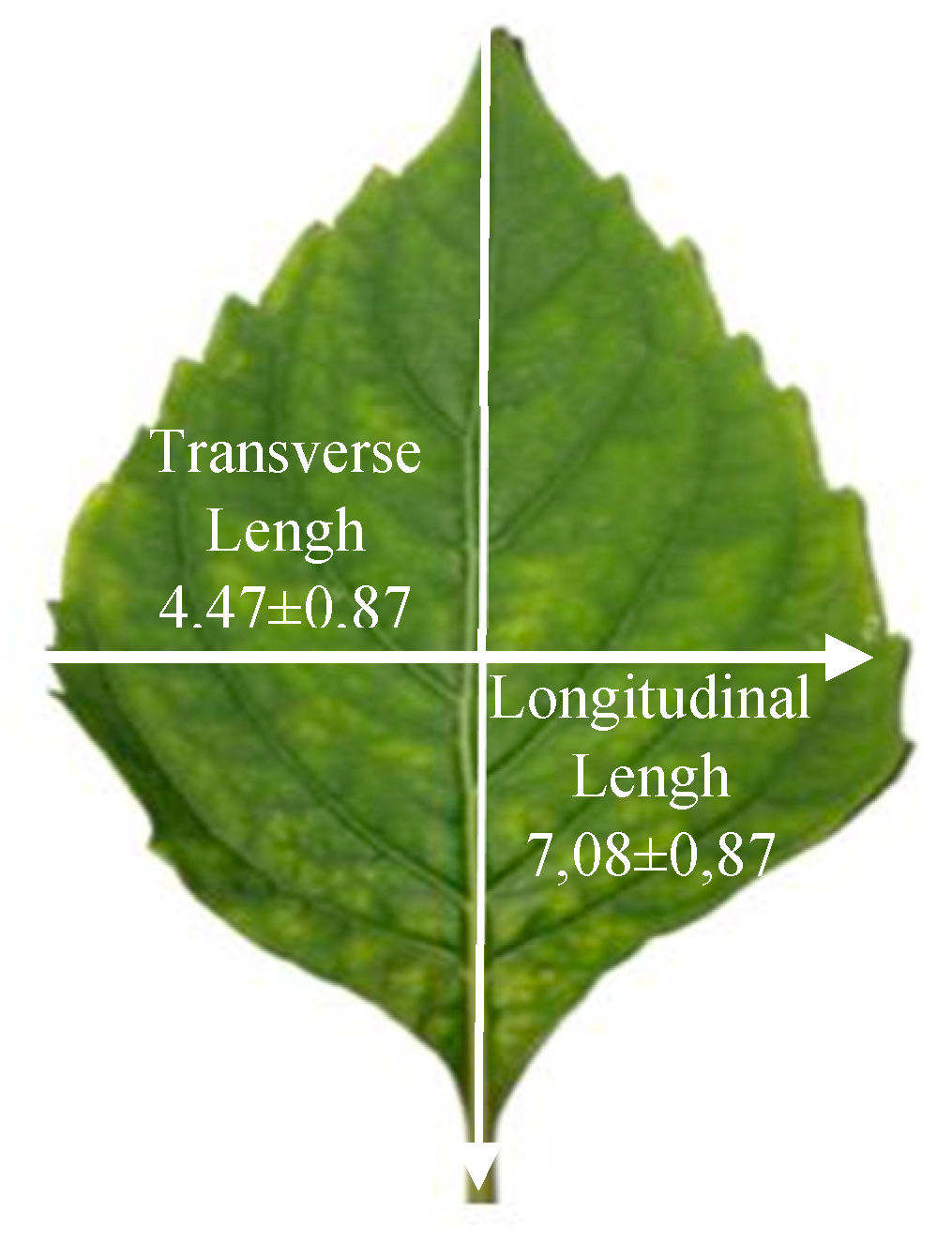
Figure 2.
FTIR pattern of the FMS sample.
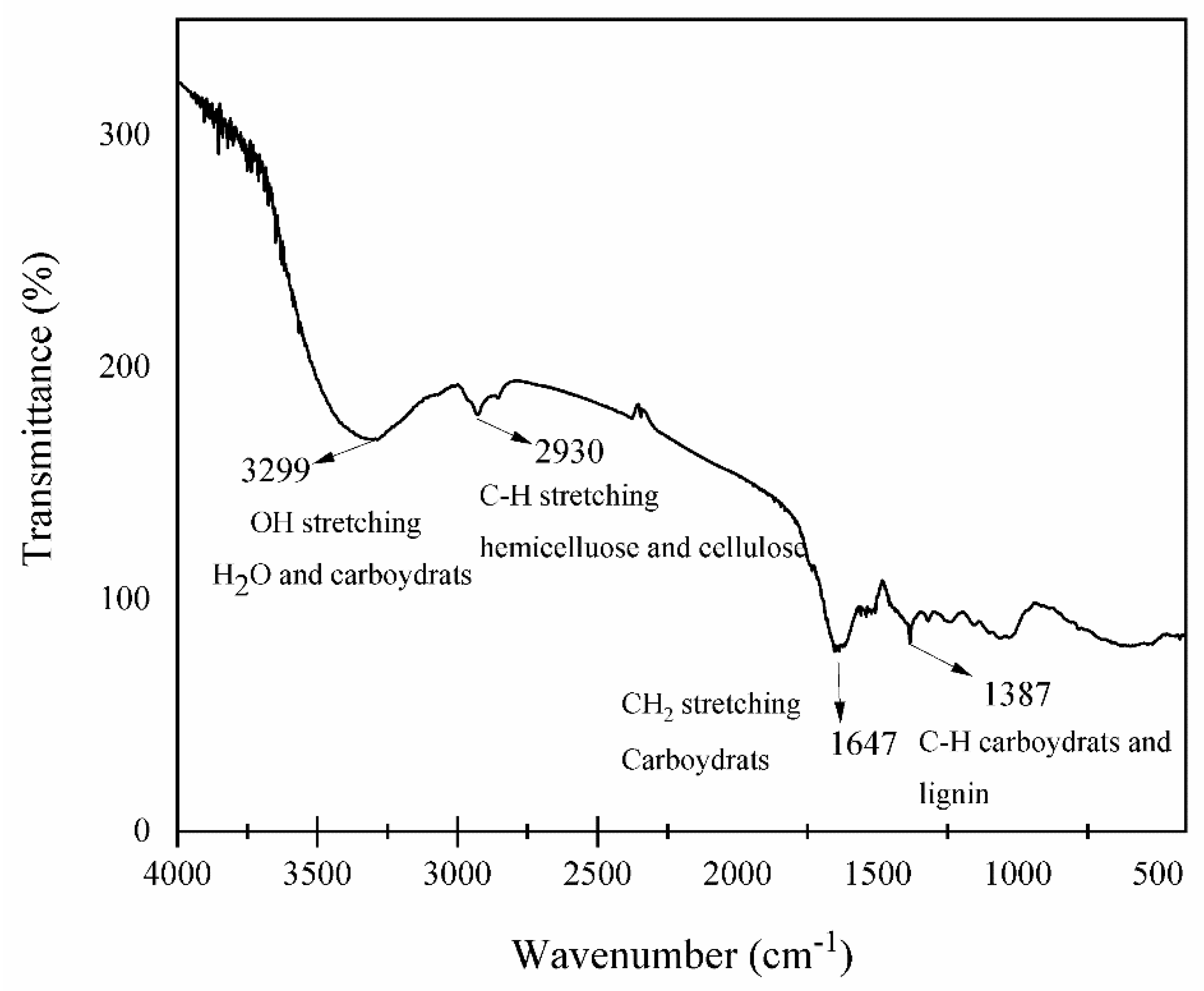
Figure 3.
Shows the thermal behavior of basil leaves.
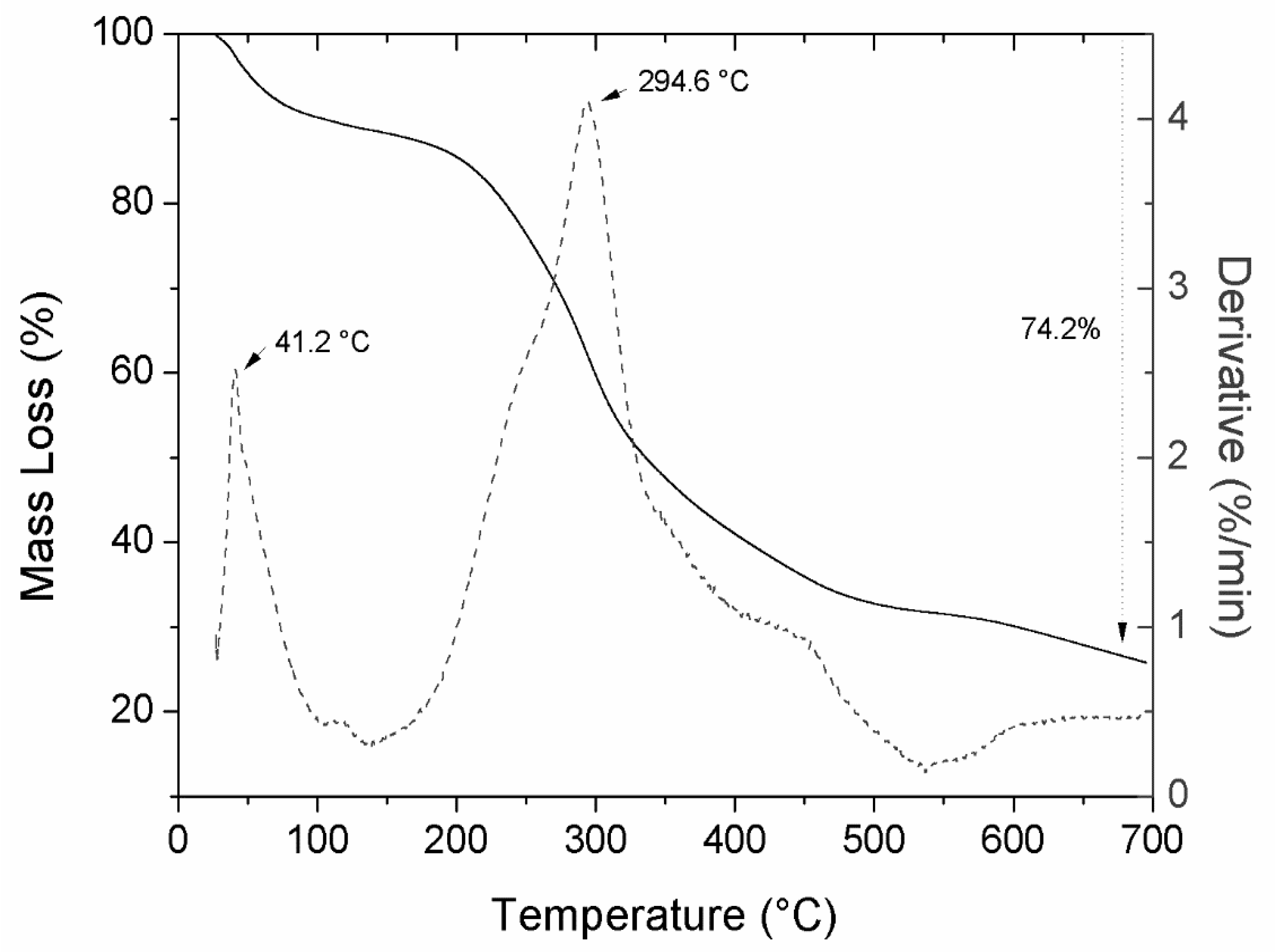
Figure 4.
Structure of basil powder granules.
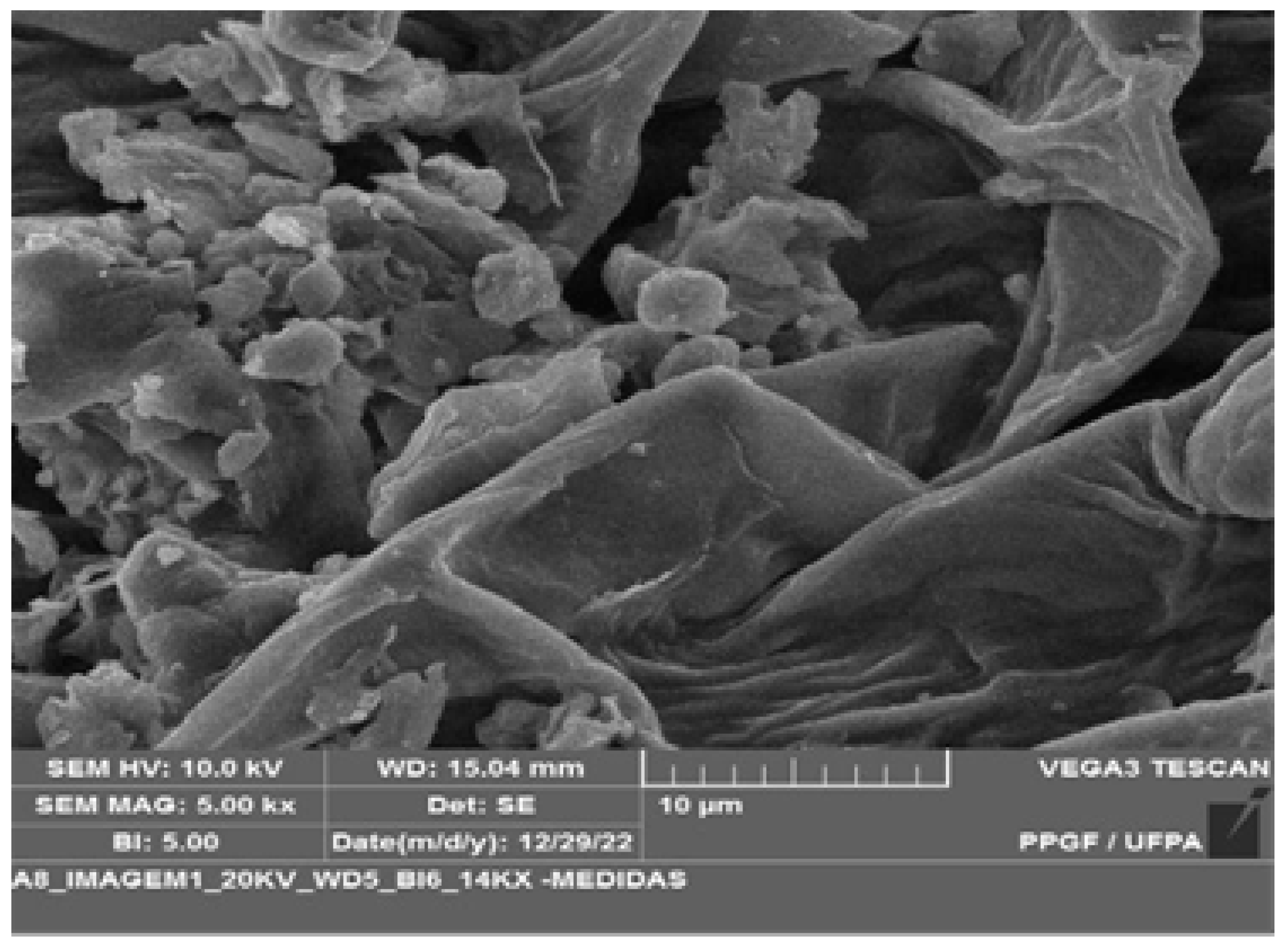

Table 1.
Physicochemical characteristics of the (FBL) and (FDL).
| Basil | Water Activity | Humidity (U%) | pH | ATT (g/100g cítric acid) |
|---|---|---|---|---|
| FBL | 0. 98±0.0004 | 87.9±0,388 | 6.89±0.105 | 0.160±0.064 |
| FDL | 0.33±0.001 | 5.2±0,568 | 6.64±0.043 | 2.078±0.036 |
Results expressed as mean ± standard deviation. Analysis performed in triplicate.
Table 2.
Bioactive compounds in (FBL) and (FDL).
| Bioactive compound | FBL | FDL |
|---|---|---|
| chlorophyll a (μg/100g) | 2287.8±0.02 | 1003.8±0.03 |
| chlorophyll b (μg/100g) | 2607.4±0.23 | 2287.8±0.02 |
| Vitamin C (mg/100g) | 95.0±0.50 | 63.30±0.70 |
| total polyphenols (mg EAG/g) | 1.80±0.01 | 3.90±0.57 |
| Flavonoids (mg GAE/g) | 0.73±1.20 | 1.78±0.01 |
| antioxidant activity (µg TE/g) | 9.75±1.30 | 12.35±1.07 |
| Totais Carotenóids (mg/100g) | 16.71±0.92 | 20.60±0.97 |
Results expressed as mean ± standard deviation. Analysis performed in triplicate.
Table 3.
Colorimetric analysis of fresh (FBL) and freeze-drying (FDL) basil leaves.
| Parameters | FBL | FDL |
|---|---|---|
| ΔL* | 34.05±5.052 | 23.10±0.890 |
| Δa* | -14.95±1.490 | -3.22±0.058 |
| Δb* | 21.76±2.393 | 13.05±0.270 |
| ΔC* | 26.40 | 13.44 |
| ΔE* | 18.57 | |
Results expressed as mean ± standard deviation. Analysis obtained in triplicate. L*= Luminosity or brightness; a*= green color coordinate (negative a*); b*= color coordinate yellow (b* positive); C*= chroma ΔE*= Total color difference.
Disclaimer/Publisher’s Note: The statements, opinions and data contained in all publications are solely those of the individual author(s) and contributor(s) and not of MDPI and/or the editor(s). MDPI and/or the editor(s) disclaim responsibility for any injury to people or property resulting from any ideas, methods, instructions or products referred to in the content. |
© 2023 by the authors. Licensee MDPI, Basel, Switzerland. This article is an open access article distributed under the terms and conditions of the Creative Commons Attribution (CC BY) license (http://creativecommons.org/licenses/by/4.0/).
Copyright: This open access article is published under a Creative Commons CC BY 4.0 license, which permit the free download, distribution, and reuse, provided that the author and preprint are cited in any reuse.


