

Submitted:
07 October 2023
Posted:
07 October 2023
You are already at the latest version
Abstract
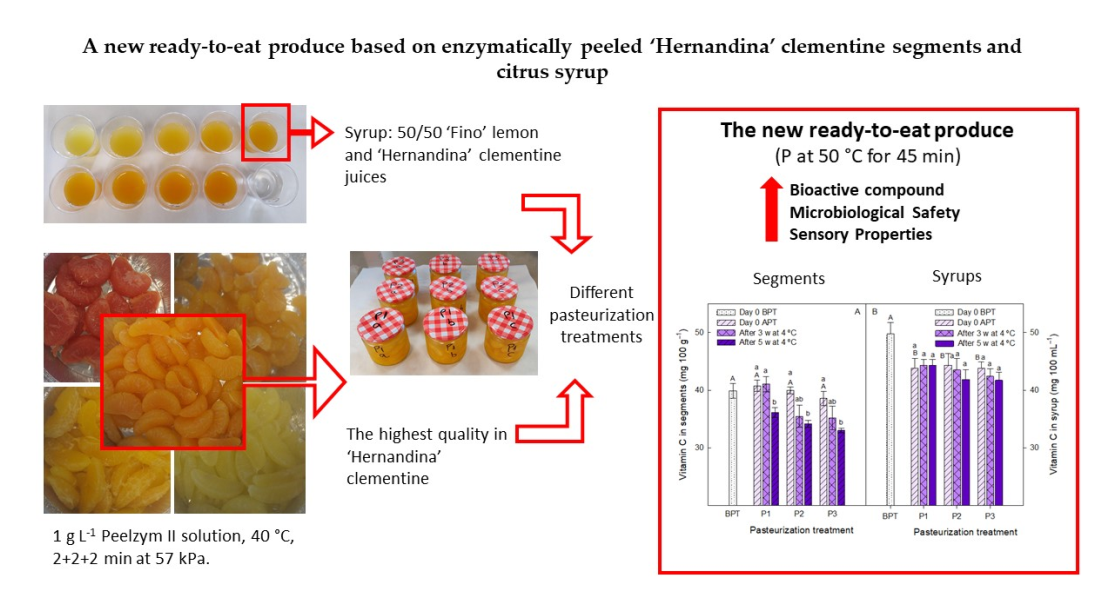
Ready-to-eat fresh fruit have an increasing presence in international markets due to its convenience and health benefits. However, these produces are highly perishable and efficient technologies to increase their shelf life are needed. In the present research, different citrus fruit species and cultivars from organic farming were assayed to obtain enzymatically citrus segments. The best results in terms of segment quality were observed for ‘Hernandina’ clementine which was chosen to make a new ready-to-eat produce based on peeled citrus segments packaged in glass jars with slight syrup made on citrus juice and organic sugar cane. The most appreciated syrup was those containing 50-50 (v/v) of ‘Fino’ lemon juice and ‘Hernandina’ clementine based on the sensory scores given by the panellists. In addition, different pasteurization treatments were assayed to preserve the new produce safety and nutritional and sensory quality properties during storage at cold temperature. Results showed that pasteurization treatment at 50 °C for 45 min could be enough to avoid microbial contamination with mesophilic and psychrophilic aerobic bacteria or yeast and mould and to maintain sensory properties until five weeks of storage at 4 °C. In addition, only a 10 % reduction of vitamin C was observed from fresh segments or syrup until the end of storage period, showing that the new ready-to-eat produce would conserve high bioactive compound content and health benefits after pasteurization and prolonged cold storage.
Keywords:
enzymatic peeling
; citrus segments
; sensory properties
; vitamin C
; pasteurisation
1. Introduction
Diets rich in fruit and vegetables have been proved to have health benefits by reducing the risk of suffering from degenerative diseases [1,2]. In particular, the health beneficial effects of citrus fruits have been attributed mainly to ascorbic acid and flavonoids, such as naringenin and naringin [3,4]. In recent times, changes in life style have led to an increased consumers’ demand for ready-to-eat fruit products to satisfy their requirements for balanced and healthy diets [5]. In this sense, minimally processed fresh fruits, which are washed, peeled, cut, packaged and ready-to-eat have an increasing presence in international markets as they provide multiple advantages for the consumers, such as saving time or being ease of use [6]. In addition, they can be used to encourage children and adolescents to increase the fruit and vegetable content in their diets since they are attractive, already peeled and cut and easy to eat [7]. However, these products are highly perishable having a short shelf life even under cold storage and different technologies have been used to retard their perishability, such as heat treatments, modified atmosphere packaging (MAP), edible coating, high pressure, gamma or ultraviolet radiation or electrolyzed water, among others [6,8,9]. Oher kind of ready-to-eat vegetable products are cooked or precooked fruits or vegetables, to which a mild heat treatment (pasteurization) has been applied, after washing, slicing, chopping or shredding into 100% usable product, so that they adapt to new consumers’ needs, since they are kept refrigerated and are ready for consumption directly or after a simple regeneration [10]. On the other hand, consumption of organic food is continuously increasing in the last years, due to social concern regarding environmental and economic problems presented by the intense productive activity of the agro-industrial sector [11].
Conventional industrial processes used for citrus peeling consist of the manual or mechanical separation of the rind and the subsequent chemical degradation of the remaining albedo and segment membranes. Faced with this method, enzymatic peeling consists of fruit peeling with enzymatic preparation containing natural cell walls hydrolases. Enzymatic peeling has certain advantages as compared with conventional one, such as improving yield and quality of the fruit obtained, maintaining the fruit original flavour and texture and reducing water consumption and contaminants, making this method a more sustainable and eco-friendlier alternative than the traditional process [12,13,14,15]. For instance, segments from ‘Cadenera’, a traditional orange cultivar, were obtained by enzymatic peeling and packaged in micro-perforated films (with nonselective permeability) made on polypropylene and segment quality and microbiological safety were maintained for 7 days of storage at 4 °C [12]. Similar results were reported by Barrios et al. [16] in enzymatically peeled ‘Valencia’ orange segments packaged in non-perforated polypropylene bags. However, the storage of peeled citrus segments on these modified atmosphere packages has some limitations, namely the use of plastic films with the associated problems of environmental pollution and the short shelf life of the ready-to-eat produce. Thus, new technologies are needed to preserve these products for longer period while avoiding environmental concerns, which could be the use of thermal treatments to increase the microbiological safety and the storage in glass jars as eco-friendlier package.
Consumers usually judge the quality of ready-to-eat products based on their appearance and freshness at the time of purchase. Therefore, the heat treatments performed on these products must guarantee food safety, apart from consumer satisfaction in terms of texture and flavour [8,17,18]. The most common treatment to control pathogen growth in ready-to-eat fruit and vegetable produces is pasteurization, applied alone or together with other techniques, such as modified atmosphere, refrigeration or other innovative technologies [8,19]. Pasteurization operates at temperatures below 100 °C, usually ranging from 40 to 60 °C, by treatments with hot air or immersion in hot water for different periods depending on the volume of the fruit product, leading to increase the useful life while minimally altering the product quality [20,21]. However, although these treatments are useful to ensure the food safety, the application of heat to fresh products, under inadequate conditions, can cause serious quality deterioration such as colour and texture degradation, or vitamin loss [8,22]. Thus, appropriate selection of the optimal heat treatment is needed in order to maintain the best sensory properties and the general quality for the ready-to-eat fruit.
Thus, the main goal of this research was to obtain a ready-to-eat new produce composed of enzymatically peeled organic citrus and slight syrup and packaged in glass jars. Firstly, five citrus fruit species and cultivars were assayed to obtain enzymatically peeled citrus fruit segments with good sensory properties. Then, different syrups were made with nine mixtures of lemon and clementine juices and tested for their sensory properties. Finally, the new ready-to-eat produce, based on peeled citrus segments packaged in glass jars with an appropriate slight syrup, was submitted to different pasteurization treatments to find out the most suitable to preserve its microbiological safety and nutritional and sensory quality properties during storage at cold temperature.
2. Materials and Methods
2.1. Plant material
Citrus fruits, 'Navel' sweet orange (Citrus sinensis (L.) Osbeck); 'Hernadina' clementine (Citrus x clementine); ‘Orogrande’ clementine (Citrus x clementine); 'Star Ruby' grapefruit (Citrus paradisi Mcfad) and 'Fino' lemon (Citrus limon (L.) Osbeck), were harvested from a commercial field bellowing to ECO-CITRIC company (Orihuela, Alicante, Spain). All the citrus species and cultivars were in close plots under similar environmental factors and agronomic conditions and grown under organic farming production system.
2.2. Enzymatic peeling of citrus cultivars
Thirty fruits from each citrus cultivar, harvested at commercial ripening stage and without external damages, were selected and they were rolled over a 1 m2 wood plate provided with cylindrical metal spikes (5 mm long, 1 mm in diameter and with 10 mm of separation) in order to homogeneously perforate the fruit surface [13,23]. Then, lots of 10 fruits were immersed in a water bath at 40 °C for 30 min to ensure that in internal fruit tissues reach this temperature. Thereafter, fruit were transferred to a vacuum tank containing 9 L of 1 g L-1 Peelzym II solution (Novo Nordisk Fermemt Ltd; Dittingen, Switzerland), a commercial pectolytic product with pectinase and polygalacturonase activities, produced by Aspergillus niger, at 40 °C and three vacuum pulses of two min at 57 kPa were applied. Fruit were left in the peeling solution for 10, 20 or 30 min incubation times at atmospheric pressure and 40 °C. The peeling efficiency was independently evaluated, after the different incubation times, by five judges (each one evaluated two fruit) by assessing the following parameters according to Pretel et al. [13]: Percentage of no attacked albedo by the enzymatic solution; easiness of skin removing (albedo plus flavedo), from very easy (5) to very difficult (1); easiness of segment separation, from very easy (5) to very difficult (1); segment firmness, from high (5) to low (1); percentage of viable segments (segments without defects) and global acceptance in percentage. The experiment was replicate three times. The most suitable citrus cultivar (‘Hernandina’ clementine) and incubation time (10 min) to obtain high quality segments according to the results of this experiment were selected to make a new ready-to-eat minimally processed food product based on citrus segments in light sugar syrup and its organoleptic and microbial quality traits were evaluated during storage at 4 °C.
2.3. Sugar syrups
Nine different syrups were made with ‘Hernandina’ clementine (HCJ) and ‘Fino’ lemon juices (FLJ) in different proportions, from 10 to 90 %. Juices were obtained with a manual juicer from fruit harvested at commercial ripening stage from the plot grown under organic farming commented in 2.1 section. The initial °Brix levels of the juice mixtures were measured and then, cane sugar from organic farming, purchased to Rincón del Segura S.L. company (Elche de la Sierra, Albacete, Spain), was added to obtain a light syrup with 14 °Brix, in order to comply with the light syrup specifications regulated by Real Decreto 2420/1978 [24]. These syrups were evaluated by a sensory panel composed of 10 semi-trained adult judges (5 female and 5 male), aged 25-50, in a laboratory of sensory analyses provided with an individual cabin for each panellist. Judges assessed the following quality traits by giving scores from 0 (do not like at all) to 10 (like very much): Colour, odour, sweetness, aroma, oeverall impression and purchase intention. Scores for sourness ranged from 0 (no sourness) to 10 (extremely sourness). Experiment was replicate three times.
2.4. Elaboration of the ready-to-eat ‘Henandina’ clementine segments in syrup
Glass jars of 250 mL were filled with 150 g of enzymatically peeled ‘Hernandina’ clementine segments (obtained as indicated above) and 80 mL of syrup composed of FLJ and HCJ (50:50 v:v, selected according to the results of the sensory panel) and they were hermetically closed with a metal lid. Then, jars were submitted to three pasteurization processes, according to Food and Drug Administration’ recommendations and previous reports [20]: 50 °C for 45 min (P1), 65 °C for 30 min (P2) and 70 °C for 15 min. Three jars from each pasteurization process were taken after pasteurization (Day 0) and after 20 and 35 days of storage at 4 °C for analytical determinations. The whole experiment was replicate three times.
2.5. Total soluble solids, pH, titratable acidity and vitamin C measures
Total soluble solids were measured in duplicate in each sample of citrus segments and syrup by using a digital refractometer (Atago PR-101, Atago Co. Ltd., Tokyo, Japan) and results were expressed as °Brix. Titratable acidity and pH were also measured in duplicate in each sample of segments and syrup by titration of 1 mL of juice (diluted in 25 mL of distilled water) up to pH 8.1 with an automatic titration system (785 DMP Titrino, Metrohm, Herisau, Switzerland). Results were expressed as g citric acid equivalent per 100 g or 100 mL of segments or juice, respectively. Vitamin C content in segments and syrup was measured by a redox titration reaction with iodine following the method of Ciancaglini et al. [25] and results were expressed as mg 100 g-1 fresh weight or mg 100 mL-1 of juice, respectively.
2.6. Microbiological and sensory analysis of the new ready-to-eat produce
Microbiological analysis was performed according to Sanchez-Bel et al. [12] and ISO-2001 [26]. Briefly, 10 g of segments or 10 mL of syrup were homogenized into a sterile stomacher bag containing 90 mL of 0.1 % peptone (Merk, Spain) for 90 s. Appropriate dilutions were made and mesophilic aerobic bacteria were measured after incubation on Plate Count Agar (PCA, Oxoid, Spain) at 35±2 °C for 48 h. Psychrophilic aerobic bacteria were counted after incubation on the same PCA at 4± 1 °C for 5-15 days. Finally, yeast and moulds were counted after incubation on Rose-Bengal Chloranphenicol Agar plates (Oxoid, Spain) at 25±2 °C for 5 days. Three replicate samples were used and results are expressed as log colony forming units per gram (log CFU g-1).
Sensory analysis was carried out by a panel of 10 semi-trained adults, as described previously in 2.3 section. Each panellist was served with one segment from each sample to evaluate colour, odour, acidity, sweetness, aroma, texture and overall impression on a ranked hedonic scale from 1 (not like at all) to 9 (like very much), according to Sanchez-Bel et al. [12]. Panellists were served also with one manually-peeled segment of freshly fruit for which the maximum scores were given for comparative purposes with segments of the new ready-to-eat produce.
2.7. Statistical analysis
Results are presented as mean±SD of three independent experiments or replicates. Data were subjected to analysis of variance (ANOVA) and the Tukey’s test was used for mean comparisons to examine if differences were significant at p<0.05. All analyses were performed with SPSS software package version 11.0 for Windows.
3. Results and discussion
3.1. Effect of incubation time on quality scores of citrus peeled segments
In the present experiment, Peelzym II was used to obtain fruit segments from different fruit species and cultivars, which was proved to have higher peeling activity for citrus fruit as compared with other enzymatic solutions [14]. This enzymatic peeling solution was applied in three pulses of two min under vacuum pressure and different subsequent periods of incubation were assayed because they have a great impact on the quality of the obtained segments depending on the citrus fruit species and cultivar [12,13,14,27]. The best results in terms of percentage of viable segments and global segment acceptation were obtained for ‘Hernandina’ clementine, with values close to 100% for both parameters and without significant differences among incubation times (Table 1). In addition, the maxima scores (5) were given for easiness of skin removing and easiness of segment separation, independently of the incubation time, while segment firmness decreased significantly (p<0.05) as increased the incubation time. Thus, for obtaining good quality segment of ‘Hernandina’ clementine by enzymatic peeling, in the assayed experimental conditions, an incubation time of 10 min could be enough. High percentages of viable segment and global acceptance were also obtained for ‘Orogrande’ clementine, although 20 min of incubation time were needed to reach the highest scores for easiness of skin removing and segment separation. However, with this incubation time segment firmness decreased significantly (p<0.05) with respect to 10 min treatment (Table 1). For ‘Navel’ orange, the scores for all the measured parameters (except for no-attacked albedo) increased significantly (p<0.05) with the incubation time and the highest values were reached with 30 min treatment (Table 1). These results could be due to the presence of a navel in the fruit apical end of this orange cultivar which makes that the needed time for the enzymatic solution to diffuse into the internal fruit tissues was higher.
For ‘Fino’ lemon, an incubation time of 30 min was also needed to obtain the highest scores for all the assessed sensory parameters. In addition, it is worth noting that a high percentage of no attacked albedo (≈25 %) was found with 10 min of incubation time, although it decreased as increased the incubation time and the entire fruit albedo was attacked by the enzymatic solution with 30 min of incubation time (Table 1). These results are attributed to the elongated shape of this lemon cultivar [28], which made difficult the homogeneous skin perforation when fruit were rolled over the spiked wood plate, mainly at the two terminal ends of fruit. On the contrary, the percentage of no attacked albedo in ‘Star Ruby’ grapefruit ranged from 14 to 25 % without a clear effect of the incubation time. In addition, none of the assayed incubation times led to reach the highest scores for easiness of skin removing or segment separation as compared with other citrus fruit species or cultivars. Moreover, the percentages of viable segments and global acceptance decreased with incubation time, with values for the last parameter of ≈75, 78 and 65% for 10, 20 and 30 min, respectively (Table 1). Thus, to obtain segments of high-quality traits from this citrus cultivar longer vacuum pulses or a high number of them would be needed, but not an incubation time increase, since a significant softening of the segment was observed from 10 to 30 min of incubation in the present experimental conditions. The difficulty of obtaining enzymatically peeled segments from this citrus species could be attributed to the fact that it has a tough peel that is closely adhered to the inner fruit segments [29], which would limit the proper diffusion of the peeling solution.
Taking into account these results, and the visual appearance of the segments obtained from the different citrus species and cultivars (Figure 1), the ‘Hernandina’ clementine was chosen to make a new ready to-eat produce based on citrus segments (obtained by enzymatic peeling with Peelzym II solution, applied at 1 g L-1 by three vacuum pulses of two min and a subsequent incubation time of 10 min) in a slight syrup.
3.2. Selection of syrup to elaborate the new ready-to-eat clementine segment produce
Syrup serves as an ideal preservation method for many ready to-eat fruits and vegetables. According to the Spanish Real Decreto 2420/1978 (modified by Read Decreto 176/2013) [24] aimed to regulate the elaboration of canned vegetables, fruit in syrups are defined as products obtained from whole fruits, halves, segments, strips, cubes, slices or segments, to which a covering syrup has been added. In addition, these products will be classified according to their sugar content in the final product, considering the light syrup as those having 14 to 17 °Brix. In the present experiment, different mixtures of ‘Fino’ lemon (FLJ) and ‘Hernandina’ clementine (HCJ) juices were made to elaborate slight syrups with the addition of cane sugar from organic farming up to final values of 14 °Brix. Tap water with the addition of sugar cane up to 14 °Brix was used as control. The visual aspect of the different syrups obtained with the juice mixtures after the addition of sugar cane is shown in Figure 2.
Values of °Brix for the FLJ-HCJ mixtures increased significantly (p<0.05) as decreased the lemon/clementine juice ratio, ranging from ≈9 to ≈11 for 90% FLJ/10% HCJ and 10% FLJ/90% HCJ, respectively. The amount of sugar needed to be added to reach a 14 °Brix value was significantly reduced as the percentage of HCJ increased (Table 2). Significant (p<0.05) increases in pH and decreases in TA were also observed in the syrups as decreased the proportion of lemon juice, with TA values of 5.26±0.04 and 1.49±0.11 g 100 mL-1 for syrups containing 90 and 10 % of FLJ, respectively (Table 2).
A sensory analysis was performed with the obtained syrups to evaluate colour, sourness, sweetness, aroma, overall impression and purchase intention. Panellists gave higher scores for colour to the syrups with higher content of HCJ (Table 3). This could be due to the fact that these mixtures have a similar colour to commercial orange juices, while the mixtures with a higher percentage of lemon juice with respect to clementine juice presented less attractive colours. Scores for sourness decreased as did the content of FLJ in the syrups, as expected. However, sweetness scores increased significantly from 1.50±0.18 for syrup composed of 90% FLJ and 10%HCJ to 7.63±0.32 for syrup made with 10% FLJ and 90% HCJ (Table 3), in spite of the fact that all the syrups had similar °Brix levels, that is to say, a similar sugar concentration. This could be attributed to the fact that sensorial human appreciation for sweetness and flavour depends on the TA/TSS ratio more than the levels of TSS itself [30]. Thus, syrups with a relatively high of FLJ would be more appreciate by the sensorial panel that the lower sourness ones. With respect to aroma scores, values ranged from 3.88 to 6.55, with the highest values being found for syrup samples containing 40-60% proportions of FLJ or HCJ, in which characteristic aroma of lemon and clementine were detected in a balanced way (Table 3). Finally, for overall impression and purchase intention, scores given by panellist increased significantly (p<0.05) as did the percentage of HCJ in the syrups up to 40% FLJ and 60% HCJ and then, decreased in syrups with higher HCJ content (Table 3). Thus, the syrup made of 50%FLJ+50%HCJ was selected to elaborate the ready to-eat produce with ‘Hernandina’ clementine segments, since it had a good overall acceptance by the judges, giving balanced scores for all the evaluated sensory parameters.
3.3. Effect of pasteurization processes on syrups and segments quality traits during storage
The ready-to-eat produce composed of enzymatically peeled segments of ‘Hernadina’ clementine and the 50% FLJ+50% HCJ was submitted to three different pasteurization treatments and its quality parameters and microbial safety were evaluated during storage at 4 °C for 5 weeks. Concentrations of organic acids and sugars of citrus fruit and juices are usually used as physico-chemical quality indicators, although their values are depending on several factors, such as cultivar, growing conditions, environmental factors and fruit maturation, among others [17,31]. Syrup and segment pH values were lower than 4.6 before and after the pasteurization treatments (Figure 3), which is the limiting threshold for bacteria growing [32]. Then, all the pasteurization treatments would be useful to ensure food safety of the new ready-to-eat produce. Values of pH in ‘Hernandine’ clementine segments was 3.85±0.03 before the pasteurization process and decreased significantly to ≈ 3.2 after pasteurization without significant differences among pasteurization treatments. These pH values were maintained at similar levels (p>0.05) during the storage at 4 °C (Figure 3A). For syrup, pH before pasteurization was 2.99±0.01 and increased significantly (p<0.05) after pasteurization, although no significant differences were observed among pasteurization treatments or storage time (Figure 3B). An opposite trend was observed for TA, that is to say, significant increases (p<0.05) immediately after pasteurization in segments (from 0.80±0.06 to ≈0.31 g 100 g-1) and significant decreases (p<0.05) in syrup (from 2.74±0.15 to ≈1.70 g 100 mL-1), independently of the pasteurization treatment applied (Figure 4). In addition, significant changes (p<0.05) in TA were also observed during storage, with increases of 12, 17 and 19 % for P1, P2 and P3 pasteurization treatments, respectively, in segments, while in syrup 13, 14 and 18 % decreases, respectively, were found (Figure 4).
Significant changes (p<0.05) were also observed in TSS after pasteurization treatments, either in segments as in syrup, from 8.9 to 11 °Brix in segments (Figure 5A) and from 14 to 10.6-10.9 °Brix in syrup (Figure 5B). However, values of TSS were maintained at similar levels (p>0.05) during storage in both, segments and syrup (Figure 5A and B). Results show that pasteurization treatments led to a diffusion of organic acids and sugars from syrup to clementine segments leading to increases in TSS and TA in segments and decreases in syrup, these changes being higher immediately after pasteurization than over the whole storage time for five weeks. In addition, a decrease in TA in juice during storage could have per se occurred since it is a general trend observed for citrus juices [33,34].
Vitamin C concentration in fresh segments was 39.90±1.25 mg 100 g-1 and similar values were observed after the pasteurization processes. However, decreases in vitamin C content were observed during storage in all segment samples, which were significant (p<0.05) after 35 days of cold storage as compared with data immediately after pasteurization (Figure 6A). On the contrary, vitamin C concentration in syrup was 49.76±1.98 mg 100 mL-1 before pasteurization and a significant (p<0.05) decrease, ca. 12%, was observed after pasteurization, while no changes occurred during the whole storage period (Figure 6B). Vitamin C, which is found at high concentration in citrus fruit, is an essential vitamin for human being with important effects on improving immune system leading to reduce the risk of suffering from several diseases, such as heart disease, infectious illness and several kinds of cancer among others [3,35]. Apart from vitamin C, citrus fruit content a wide range of other antioxidant bioactive compounds, mainly carotenoids and phenolics, which differ qualitatively and quantitatively depending on fruit species and cultivars and all together are responsible for their health beneficial properties [3,36,37]. In ‘Fino’ lemon fruits, increases in total phenolic content during cold storage have been reported, while decreases were found in ascorbic acid concentration [38,39]. Accordingly, 30% loses in ascorbic acid have been reported in ‘Satsuma’ mandarin fruit after 35 days of storage at 4 °C [40] and 25% loses in manually obtained segments after 9 days of cold storage in low density polyethylene bags [41]. On the other hand, pasteurization process impacts quality and nutritional components as well as antioxidant compounds of vegetable products, with general reductions depending on the used temperature and time ranges [20]. For instance, thermal pasteurization (at 70 °C for 30 s) of orange juice decreased 25-30 % of total phenolic, flavonoid, anthocyanin and carotenoid concentrations immediately after pasteurization and during subsequent cold storage for 35 days [42]. In ‘Nagpur’ mandarin, juice pasteurization at 65 or 75 °C for 10-35 min led to 30 % reduction in vitamin C content [34]. Accordingly, Cheng et al. [33] reported that after thermal pasteurization of mandarin juice at 90 °C for 30 s ca. 12 % losses of vitamin C content occurred, due to oxidative reactions, and 40 and 60 % losses for carotenoids and phenolics, respectively. Moreover, pasteurization of orange juice for 20 s at 90 °C, which is the normal commercial practice, let to 50 % of vitamin C losses after 5 weeks of storage [43]. Degradation of vitamin C and phenolics, including anthocyanins, is a general event during juice pasteurization and has been described as a first-order model, during heating at 80, 90 or 100 °C for 6 to 22 min, in oranges, lemons, grapefruits and strawberries [44,45,46]. However, it is worth noting that, in the present experiment, losses of vitamin C for syrup and segments were lower than those found in the previous papers, showing that the pasteurization process selected for this new ready-to-eat produce was optimum to preserve this antioxidant and valuable compound.
3.3. Sensorial and microbiological quality
‘Hernandina’ clementine, a hybrid between tangerine (Citrus reticulata Blanco) and sweet orange (Citrus sinensis (L.) Osbeck), is a citrus fruit very appreciated by consumers due to its high-quality traits, such as taste, aroma and nutritive and antioxidant compounds [47]. Pasteurization treatments affected significantly (p<0.05) scores for sensorial parameters, with higher values for P1 as compared with P2 and P3, except for odour and sweetness (Table 4). In samples for P1 treatments, significant (p<0.05) increases occurred in odour scores after 21 days of storage while no changes were observed in samples for P2 and P3. Scores given for panellist to segment colour were also significantly higher for P1 treatment than for P2 and P3 ones, at day 0 and after 21 and 35 days of storage, although no significant changes in colour were observed during storage (Table 4). Acidity, sweetness and aroma sensorial parameters were evaluated only at day 0 for safety reasons, because the judges needed to eat the segments to evaluate them and after 21 or 35 days of storage, microbial analysis should be performed previously to ensure the safety of this food produce. Nevertheless, these parameters obtained significant (p<0.05) higher scores for P1 pasteurization treatments than for P2 and P3. Scores for texture were significantly (p<0.05) affected by pasteurization treatments, with values of 6.50±0.23 for P1, 4.50±0.37 for P2 and 3.50±0.20 for P3 immediately after the pasteurization process (Table 4). Increases in scores for texture were found during storage, although they were significant (p<0.05) only for samples of the P1 treatment. Finally, scores for overall impression were significantly (p<0.05) higher for samples of the P1 treatment as compared with P2 and P3, at day 0 after pasteurization as well as after 21 and 35 days of storage (Table 4). During storage, the scores for overall impression of P1 samples increased significantly (p<0.05), reaching values of 8.02±0.20 after 35 days of storage, while the increases were not significant in samples of P2 and P3 treatments (Table 4).
The new ready-to-eat produce was tested for microbiological quality by measuring mesophilic aerobic bacteria, psychrophilic aerobic bacteria and yeast and mould in segments and syrup after pasteurization treatments and after 3 and 5 weeks of storage. Results showed that no microbial contamination occurred either in segments or in syrup during the whole storage time, since microbial count was null for mesophilic and psychrophilic bacteria as well as for yeast and mould. Thus, P1 pasteurization treatment (45 min at 50 °C) could be enough to ensure the microbiological safety of both, syrup and segments, in this ready-to-eat produce [20]. Moreover, this new produce conserved safety and high nutritive and organoleptic properties until the end of storage and could be a good alternative for satisfying consumers’ demands of convenient and healthy foods from local and organic food produces [5,6,48].
5. Conclusions
The highest segment quality obtained for enzymatic peeling was observed for ‘Hernandina’ clementine, which was chosen to make a new ready-to-eat produce based on these segments packaged in glass jars with a slight syrup made of 50%FLJ and 50%HCJ and added sugar cane until 14 °Brix. This syrup was selected based on the sensory scores given by the panellists as comparing with syrups made with 10-90% combinations of fruit both juices. Thereafter, different pasteurization treatments were assayed and results showed that a pasteurization treatment at 50 °C for 45 min could be enough to avoid mesophilic and psychrophilic aerobic bacteria or yeast and mould contamination and to maintain sensory properties until 35 days of storage at 4 °C. In addition, only a 10 % reduction of vitamin C was observed from fresh citrus segments fruits or syrup until the end of storage period. Thus, this new ready-to-eat produce would be safe and conserve high sensory properties, bioactive compound content and health benefits after pasteurization and prolonged cold storage at least until seven weeks.
Author Contributions
Conceptualization, M.T.P and M.S.; methodology, J.P.L. and H.M.D-M.; formal analysis, M.T.P., M.S. and H.M.D-M.; investigation, M.T.P., H.M.D-M and M.S.; writing—original draft preparation, M.T.P..; writing—review and editing, M.T.P, H.M.D-M. and M.S..; All authors have read and agreed to the published version of the manuscript.
Funding
This research received no external funding from commercial or public agencies. University Miguel Hernández (UMH) funded publishing fees and laboratory equipment.
Institutional Review Board Statement
All procedures involving sensory panel were approved by the Ethics Committee of the University Miguel Hernández (reference DBA.MPP.01.21) and the study was performed following the guidelines provided in the Declaration of Helsinki. Informed consent was obtained from all the judges.
Data Availability Statement
The data presented in this study are available upon request from the corresponding author.
Acknowledgments
We thanks to the panellists, to the Miguel Hernández University for facilities and publishing fees and to Anthony Nicolson for manuscript English correction.
Conflicts of Interest
The authors declare no conflict of interest.
References
- Li, W.; Chen, H.; Xu, B.; Wang, Y.; Zhang, C.; Cao, Y.; Xing, X. Research progress on classification, sources and functions of dietary polyphenols for prevention and treatment of chronic diseases. J. Future Foods. 2023, 3, 289–305. [Google Scholar] [CrossRef]
- Tomé-Carneiro, J.; Visioli, F. Plant-based diets reduce blood pressure: A systematic review of recent evidence. Current Hypertension Reports, 2023, 25, 127–150. [Google Scholar] [CrossRef] [PubMed]
- Zahr, S.; Zahr, R.; El Hajj, R.; Khalil, M. Phytochemistry and biological activities of Citrus sinensis and Citrus limon: an update. J. Herb. Med. 2023, 41, 100737. [Google Scholar] [CrossRef]
- Adetunji, J.A.; Fasae, K.D.; Awe, A.I.; Paimo, O.K.; Adenoke, A.M.; Akintunde, J.K.; Sekhoacha, M.P. The protective roles of citrus flavonoids, naringenin, and naringin on endothelial cell dysfunction in diseases. Heliyon 2023, 9. [Google Scholar] [CrossRef] [PubMed]
- Degreef, F. Convenience foods, as portrayed by a consumer organisation. Test-Aankoop/Test-Achats (1960–1995). Appetite 2015, 94, 26–33. [Google Scholar] [CrossRef] [PubMed]
- De Corato, U. Improving the shelf-life and quality of fresh and minimally-processed fruits and vegetables for a modern food industry: A comprehensive critical review from the traditional technologies into the most promising advancements. Crit. Rev. Food Sci. Nutr. 2019, 60, 940–975. [Google Scholar] [CrossRef]
- Wansink, B.; Just, D.R.; Hanks, A.S.; Smith, L.E. Pre-sliced fruit in school cafeterias: children's selection and intake. Am. J. Prev. Med. 2013, 44, 477–480. [Google Scholar] [CrossRef]
- Ferreira-Gomes, B.A.F.; Alexandre, A.C.S.; de Andrade, G.A.V.; Zanzini, A.P.; Araújo de Barros, H.E.; Dos-Santos Ferraz e Silva, M.L.; Costa, P.A.; Boas, E.V.D.B.V. Recent advances in processing and preservation of minimally processed fruits and vegetables: A review. Part 2: Physical methods and global market outlook. In Food Che. Adv.; 2023; Volume 2, p. 100304. [Google Scholar] [CrossRef]
- Lacivita, V.; Incoronato, A.L.; Conte, A.; Nobile, M.A.D. Pomegranate peel powder as a food preservative in fruit salad: A sustainable approach. Foods, 2021, 10, 1359. [Google Scholar] [CrossRef]
- Alarcón-Flores, M.I.; Hernández-Sánchez, F.; Romero-González, R.; Plaza-Balaños, P.; Martínez-Vidal, J.L.; Garrido-Frenich, A. Determination of several families of phytochemicals in different pre-cooked convenience vegetables: Effect of lifetime and cooking. Int. J. Food Sci. Nutr. 2014, 65, 791–796. [Google Scholar] [CrossRef]
- González, N.; Marquès, M.; Nadal, M.; Domingo, J. Occurrence of environmental pollutants in foodstuffs: A review of organic vs. conventional food. Food Chem. Toxicol. 2019, 125, 370–375. [Google Scholar] [CrossRef]
- Sánchez-Bel, P.; Egea, I.; Serrano, M.; Romojaro, A.; Pretel, M.T. Obtaining and storage of ready-to-use segments from traditional orange obtained by enzymatic peeling. Food Sci Technol Int. 2012, 18, 63–72. [Google Scholar] [CrossRef]
- Pretel, M. T.; Botella, M. A.; Amorós, A.; Serrano, M.; Egea, I.; Romojaro, F. Obtaining fruit segments from a traditional orange variety (Citrus sinensis (L.). Osbeck cv. Sangrina) by enzymatic peeling. Eur. Food Res. Technol. 2007, 225, 783–788. [Google Scholar] [CrossRef]
- Pretel, M.T.; Sánchez-Bel, P.; Egea, I.; Romojaro, F. Chapter 6: Enzymatic peeling of citrus fruits. In Enzymes in Fruit and Vegetable Processing: Chemistry and Engineering Applications, 1º ed.; A. Bayindirle, A., Ed.; CRC Press: FL. Boca Raton, 2010; pp. 145–174. [Google Scholar]
- Pieroni, V.; Ottaviano, F.G.; Gabilondo, J.; Budde, C.; Andres, S.; Garitta, L. Enzymatic peeling: first advance on the development of the flavor sensory profile of Navel oranges. Idesia 2021, 39, 43–48. [Google Scholar] [CrossRef]
- Barrios, S.; De Aceredo, A.; Chao, G.; de Armas, V.; Ares, G.; Martín, A.; Soubes, M.; Lema, P. Passive modified atmosphere packaging extends shelf life of enzymatically and vacuum-peeled ready-to-eat Valencia orange segments. J. Food Qual. 2014, 37, 135–147. [Google Scholar] [CrossRef]
- Rico, D.; Martin-Diana, A.B.; Barat, J.M.; Barry-Ryan, C. Extending and measuring the quality of fresh-cut fruit and vegetables: A review. Trends Food Sci Techn. 2007, 18, 373–386. [Google Scholar] [CrossRef]
- Castro-Ibañez, I.; Gil, M.; Allende, A. Ready-to-eat vegetables: Current problems and potential solutions to reduce microbial risk in the production chain. LWT - Food Sci. Technol. 2017, 85, 284–292. [Google Scholar] [CrossRef]
- Ahmad, S.; Ahmad, M.; Maqbool, M.; Dar, B.N.; Greiner, R.; Roohinejad, S. Microbiological contamination of ready-to-eat vegetable salads in developing countries and potential solutions in the supply chain to control microbial pathogens. Food Control 2018, 85, 235–244. [Google Scholar] [CrossRef]
- Peng, J.; Tang, J.; Barrett, D.M.; Sablani, S.S.; Anderson, N.; Powers, J.R. Thermal pasteurization of ready-to-eat foods and vegetables: Critical factors for process design and effects on quality. Crit. Rev. Food Sci. Nutr. 2017, 57, 2970–2995. [Google Scholar] [CrossRef]
- Leneveu-Jenvrin, C.; Charles, F.; Barba, F.J.; Remize, F. Role of biological control agents and physical treatments in maintaining the quality of fresh and minimally-processed fruit and vegetables. Crit. Rev. Food Sci. Nutr. 2019, 19, 1–19. [Google Scholar] [CrossRef]
- Aamir, M.; Ovissipour, M.; Sablani, S.; Rasco, B. Predicting the quality of pasteurized vegetables using kinetic models: A review. Int. J. Food Sci. 2013, 271271. [Google Scholar] [CrossRef]
- Pretel, M.T.; Fernández, P.S.; Martínez, A.; Romojaro, F. Modelling design of cuts for enzymatic peeling of mandarin and optimization of different parameters of the process. Z. Lebensm. Unters. Forsch. 1998, 207, 322–327. [Google Scholar] [CrossRef]
- Real Decreto 2420/1978, de 2 de junio, por el que se aprueba la Reglamentación Técnico-Sanitaria para la elaboración y venta de conservas vegetales. Boletín Oficial del Estado. Madrid, 12 de octubre de 1978, núm. 244, pp. 23702- 23707.
- Ciancaglini, P.; Santos, H.; Daghastanli, K. ;Thedei, G, Using a classical method of vitamin C quantification as a tool for discussion of its role in the body. Biochem. Mol. Biol. Educ. 2001, 29, 110–114. [Google Scholar] [CrossRef]
- ISO 2001. ISO 17410:2001. International Organization for Standardization, Microbiology of food and animal feeding stuffs — Horizontal method for the enumeration of psychrotrophic micro-organisms. https://www.iso.org/standard/30649.html.
- Pretel, M.T.; Amorós, A.; Botella, M.A.; Serrano, M. ¸ Romojaro, F. Study of albedo and carpelar membrane degradation for further application in enzymatic peeling of citrus fruits. J. Sci. Food Agric. 2005, 85, 86–90. [Google Scholar] [CrossRef]
- Martínez-Hernández, G.; Artés-Hernández, F.; Gómez, P.; Bretó, J.; Orihuel-Iranzo, B.; Artés, F. Postharvest treatments to control physiological and pathological disorders in lemon fruit. Food Packag. Shelf Life 2017, 14, 34–39. [Google Scholar] [CrossRef]
- Prakash, S.; Singhal, R.S.; Kulkarni, P.R. Enzymic peeling of Indian grapefruit (Citrus paradisi). J. Sci. Food Agric. 2001, 81, 1440–1442. [Google Scholar] [CrossRef]
- Hosseini, Y.; Khankahdani, H.H.; Rezazadeh, R. Improving yield and fruit quality of ‘Siyahoo’ mandarin (Citrus reticulata) by foliar application of nitrogen and harvest time. Int. J. Hortic. Sci. Technol. 2021, 8, 247–258. [Google Scholar] [CrossRef]
- Newell-McGloughlin, M. Nutritionally improved agricultural crops. Plant Physiol. 2008, 147, 939–953. [Google Scholar] [CrossRef] [PubMed]
- Breidt, F. BufferCapacity3 an interactive GUI program for modelling food ingredient buffering and pH. SoftwareX 2023, 22, 101351. [Google Scholar] [CrossRef]
- Cheng, C.-X.; Jia, M.; Gui, Y.; Ma, Y. Comparison of the effects of novel processing technologies and conventional thermal pasteurisation on the nutritional quality and aroma of Mandarin (Citrus unshiu) juice. Innov. Food Sci. Emerg. Technol. 2020, 64, 102425. [Google Scholar] [CrossRef]
- Pareek, S. , Paliwal, R.; Mukherjee, S. Effect of juice extraction methods and processing temperature-time on juice quality of Nagpur mandarin (Citrus reticulata Blanco) during storage. J. Food Sci. Technol. 2011, 48, 197–203. [Google Scholar] [CrossRef]
- Naidu, K.A. Vitamin C in human health and disease is still a mystery? An overview. Nutr. J. 2013, 2, 7. [Google Scholar] [CrossRef] [PubMed]
- Ballistreri, G.; Fabroni, S.; Romeo, F.V.; Timpanaro, N.; Amenta, M.; Rapisarda, P. Anthocyanins and Other Polyphenols in Citrus Genus: Biosynthesis, Chemical Profile, and Biological Activity. R.R. Watson (Ed.), Polyphenols in Plants (Second Edition): Isolation, Purification and Extract Preparation, Academic Press, San Diego, CA (2019), pp. 191-215. [CrossRef]
- Liu, S.; Lou, Y.; Li, Y.; Zhang, J.; Li, P.; Yang, B.; Gu, Q. Review of phytochemical and nutritional characteristics and food applications of Citrus L. fruits. Front. Nutr. 2022, 9, 968604. [Google Scholar] [CrossRef] [PubMed]
- Badiche-El Hallali, F.; Valverde, J.M.; García-Pastor, M.E.; Serrano, M.; Castillo, S.; Valero, D. Melatonin postharvest treatment in leafy ‘Fino’ lemon maintains quality and bioactive compounds. Foods 2023, 12, 2979. [Google Scholar] [CrossRef] [PubMed]
- Serna-Escolano, V.; Martínez-Romero, D.; Giménez, M.J.; Serrano, M.; García-Martínez, S.; Valero, D.; Valverde, J.M.; Zapata, P.J. Enhancing antioxidant systems by preharvest treatments with methyl jasmonate and salicylic acid leads to maintain lemon quality during cold storage. Food Chem. 2021, 338, 128044. [Google Scholar] [CrossRef] [PubMed]
- Bang, I.H.; Kim, Y.E; Min, S.C. Preservation of mandarins using a microbial decontamination system integrating calcium oxide solution washing, modified atmosphere packaging, and dielectric barrier discharge cold plasma treatment. Food Packag. Shelf Life. 2021, 29, 100682. [Google Scholar] [CrossRef]
- Shen, Y.; Sun, Y.; Qiao, L.; Chen, J.; Liu, D.; Ye, X. Effect of UV-C treatments on phenolic compounds and antioxidant capacity of minimally processed Satsuma mandarin during refrigerated storage. Postharvest Biol. Technol. 2013, 76, 50–57. [Google Scholar] [CrossRef]
- Vieira, F.N.; Lourenço, S.; Fidalgo, L.G.; Santos, S.A.O.; Silvestre, A.J.D.; Jerónimo, E.; Saraiva, J.A. Long-term effect on bioactive components and antioxidant activity of thermal and high-pressure pasteurization of orange juice. Molecules 2018, 23. [Google Scholar] [CrossRef] [PubMed]
- Cortés, C.; Esteve, M. J.; Frígola, A. Effect of refrigerated storage on ascorbic acid content of orange juice treated by pulsed electric fields and thermal pasteurization. Eur. Food Res. Technol. 2008, 227, 629–635. [Google Scholar] [CrossRef]
- Njoku, P. C.; Ayuk, A. A.; Okoye, C. V. Temperature effects on vitamin C content in citrus fruits. Pakistan J. Nutr. 2011, 10, 1168–1169. [Google Scholar] [CrossRef]
- Danişman, G.; Arslan, E.; Tokulucu, A. K. Kinetic analysis of anthocyanin degradation and polymeric colour formation in grape juice during heating. Czech J. Food Sci. 2015, 33, 103–108. [Google Scholar] [CrossRef]
- Nhan, M.T.; Quyen, D.K. Effects of heating process on kinetic degradation of anthocyanin and vitamin C on hardness and sensory value of strawberry soft candy. Acta Sci. Pol. Technol. Aliment. 2023, 22, 227–236. [Google Scholar] [CrossRef]
- Fabroni, S.; Romeo, F.; Rapisarda, P. Chapter 7: Nutritional Composition of Clementine (Citrus x clementina) Cultivars. In Nutritional Composition of Fruit Cultivars, 1ª ed.; M. S.J. Simmonds; V.R. Preedy.; Eds.; Academic Press, Londres, Reino Unido, 2015; pp.149-172.
- Dejgård, J.; Christensen, T.; Denver, S.; Ditlevsen, K.; Lassen, J.; Teuber, R. Heterogeneity in consumers' perceptions and demand for local (organic) food products. Food Qual. Prefer. 2019, 73, 255–265. [Google Scholar] [CrossRef]
Figure 1.
Photographs showing the visual appearance of the citrus segments obtained by enzymatic peeling with the best incubation time for each of them: 10 min for ‘Star Ruby’ grape fruit and ‘Hernandina’ clementine, 20 min for ‘Orogrande’ clementine and 30 min for ‘Fino’ lemon and ‘Navel’ orange.
Figure 1.
Photographs showing the visual appearance of the citrus segments obtained by enzymatic peeling with the best incubation time for each of them: 10 min for ‘Star Ruby’ grape fruit and ‘Hernandina’ clementine, 20 min for ‘Orogrande’ clementine and 30 min for ‘Fino’ lemon and ‘Navel’ orange.
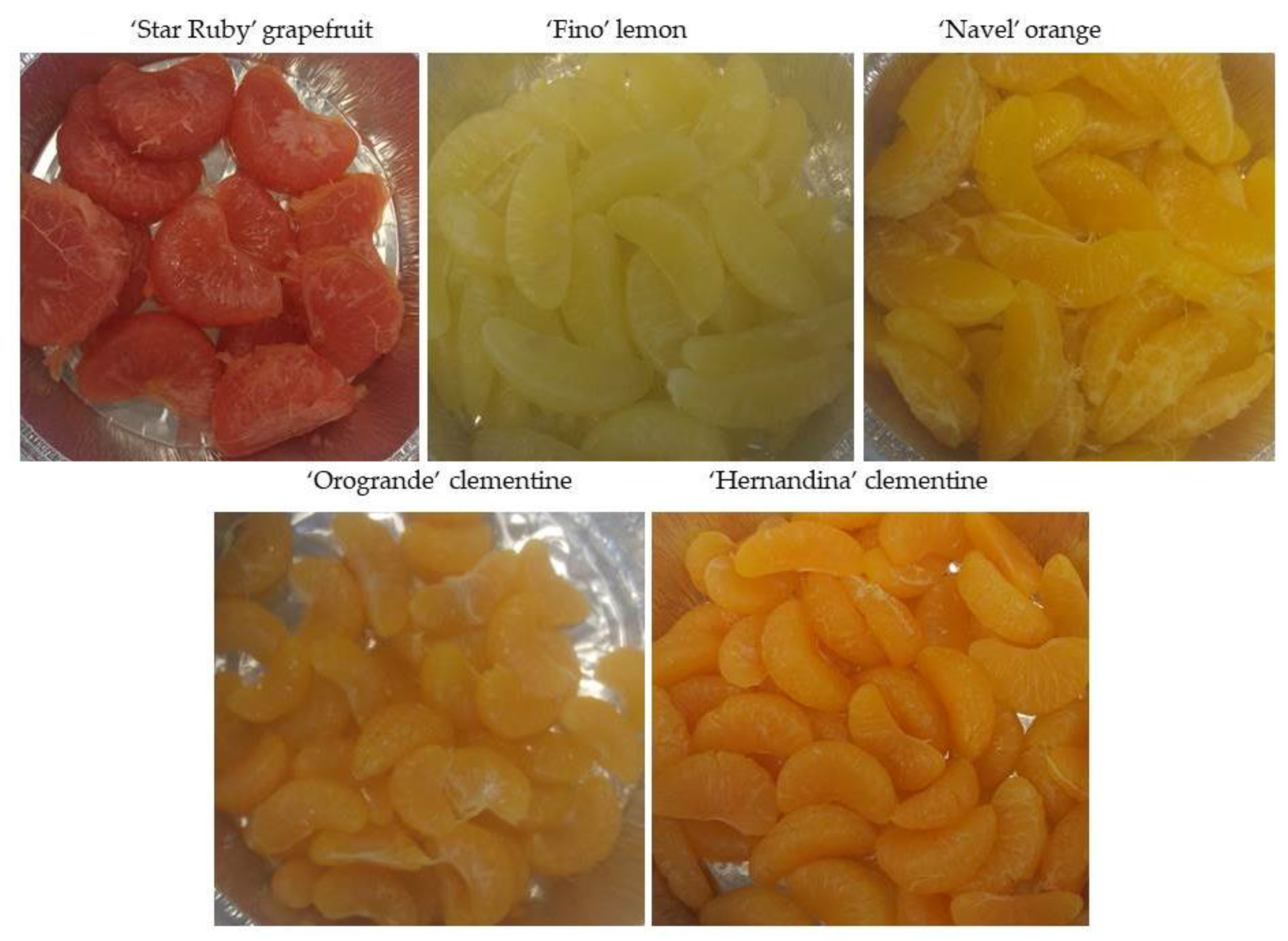
Figure 2.
Photographs showing the visual appearance of the syrups made with different amount of ‘Fino’ lemon (FLJ) and ‘Hernandina’ clementine (HCJ) juices. 1: 90% FLJ/10% HCJ, 2: 80% FLJ /20% HCJ, 3: 70% FLJ /30% HCJ, 4: 60% FLJ /40% HCJ, 5: 50% FLJ /50% HCJ, 6: 40% FLJ /60% HCJ, 7: 30% FLJ /70% HCJ, 8: 20% FLJ /80 % HCJ, 9: 10% FLJ /90% HCJ and 10: tap water with sugar cane up to 14 °Brix (control).
Figure 2.
Photographs showing the visual appearance of the syrups made with different amount of ‘Fino’ lemon (FLJ) and ‘Hernandina’ clementine (HCJ) juices. 1: 90% FLJ/10% HCJ, 2: 80% FLJ /20% HCJ, 3: 70% FLJ /30% HCJ, 4: 60% FLJ /40% HCJ, 5: 50% FLJ /50% HCJ, 6: 40% FLJ /60% HCJ, 7: 30% FLJ /70% HCJ, 8: 20% FLJ /80 % HCJ, 9: 10% FLJ /90% HCJ and 10: tap water with sugar cane up to 14 °Brix (control).
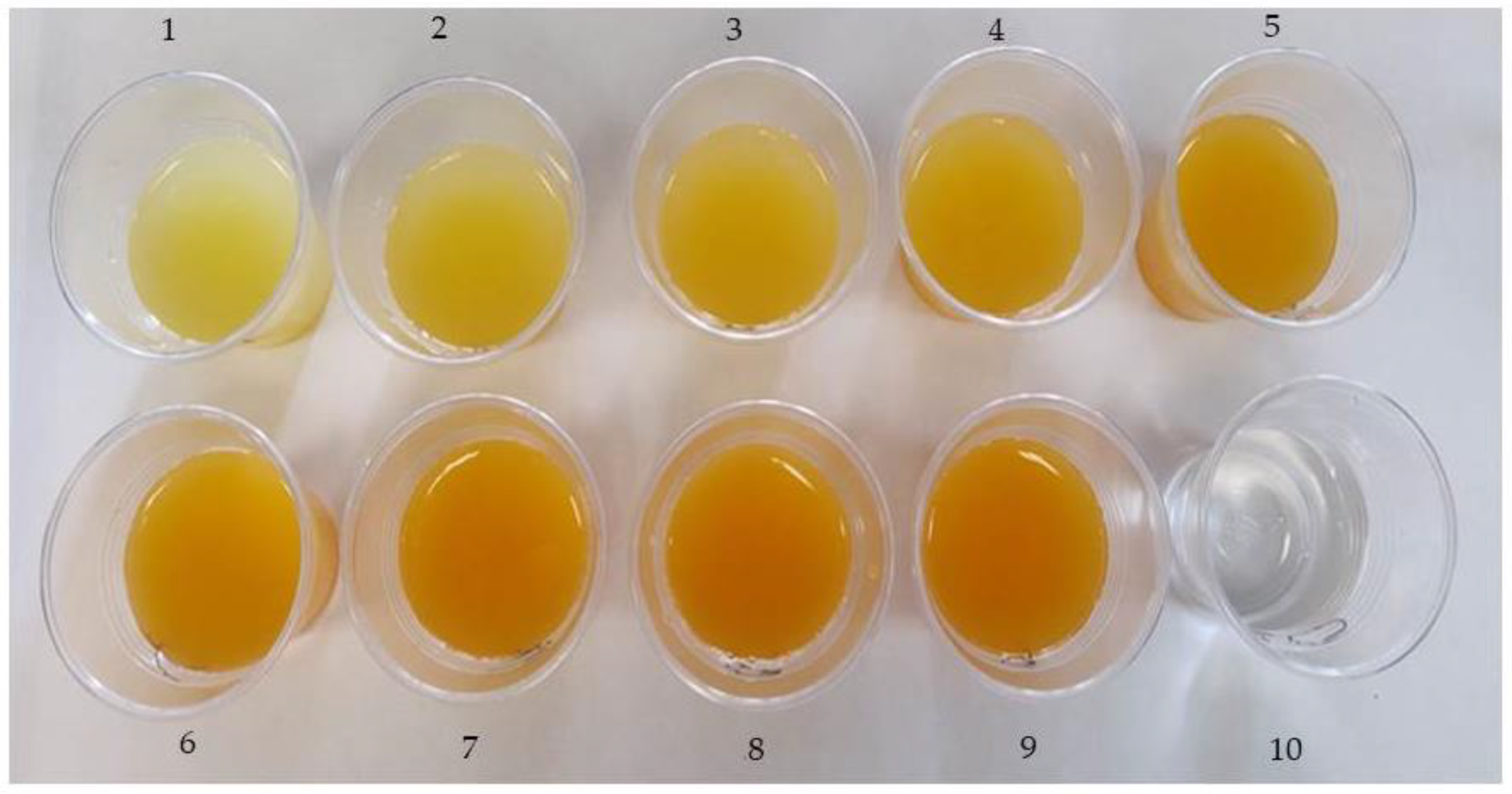
Figure 3.
Values of pH in segment (A) and syrups (B) at day 0 before pasteurization treatments (BPT), at day 0 after pasteurization treatments (APT) and after 3 weeks (3 w) and 5 weeks (5 w) of storage at 4 °C. Pasteurization treatments: P1, 45 min at 50 °C; P2, 30 min at 65 °C and P3, 15 min at 70 °C. Data are the mean±SD of three independent experiments. Different capital letters show significant differences (p<0.05) between samples after and before pasteurization treatments and different lower-case letters show significant differences during storage for each pasteurization treatment.
Figure 3.
Values of pH in segment (A) and syrups (B) at day 0 before pasteurization treatments (BPT), at day 0 after pasteurization treatments (APT) and after 3 weeks (3 w) and 5 weeks (5 w) of storage at 4 °C. Pasteurization treatments: P1, 45 min at 50 °C; P2, 30 min at 65 °C and P3, 15 min at 70 °C. Data are the mean±SD of three independent experiments. Different capital letters show significant differences (p<0.05) between samples after and before pasteurization treatments and different lower-case letters show significant differences during storage for each pasteurization treatment.
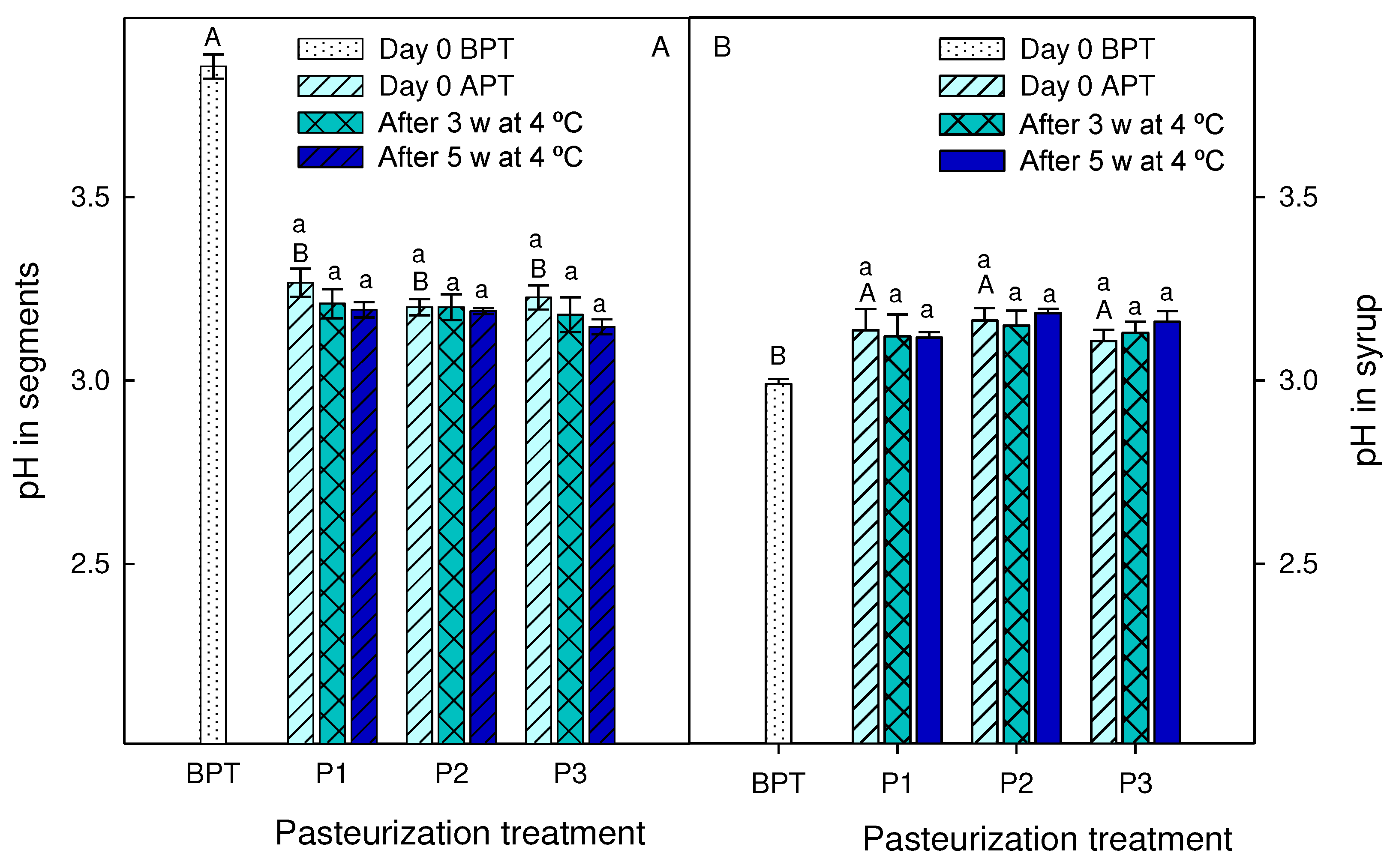
Figure 4.
Titratable acidity in segment (A) and syrups (B) at day 0 before pasteurization treatments (BPT), at day 0 after pasteurization treatments (APT) and after 3 weeks (3 w) and 5 weeks (5 w) of storage at 4 °C. Pasteurization treatments: P1, 45 min at 50 °C; P2, 30 min at 65 °C and P3, 15 min at 70 °C. Data are the mean±SD of three independent experiments. Different capital letters show significant differences (p<0.05) between samples after and before pasteurization treatments and different lower-case letters show significant differences during storage for each pasteurization treatment.
Figure 4.
Titratable acidity in segment (A) and syrups (B) at day 0 before pasteurization treatments (BPT), at day 0 after pasteurization treatments (APT) and after 3 weeks (3 w) and 5 weeks (5 w) of storage at 4 °C. Pasteurization treatments: P1, 45 min at 50 °C; P2, 30 min at 65 °C and P3, 15 min at 70 °C. Data are the mean±SD of three independent experiments. Different capital letters show significant differences (p<0.05) between samples after and before pasteurization treatments and different lower-case letters show significant differences during storage for each pasteurization treatment.
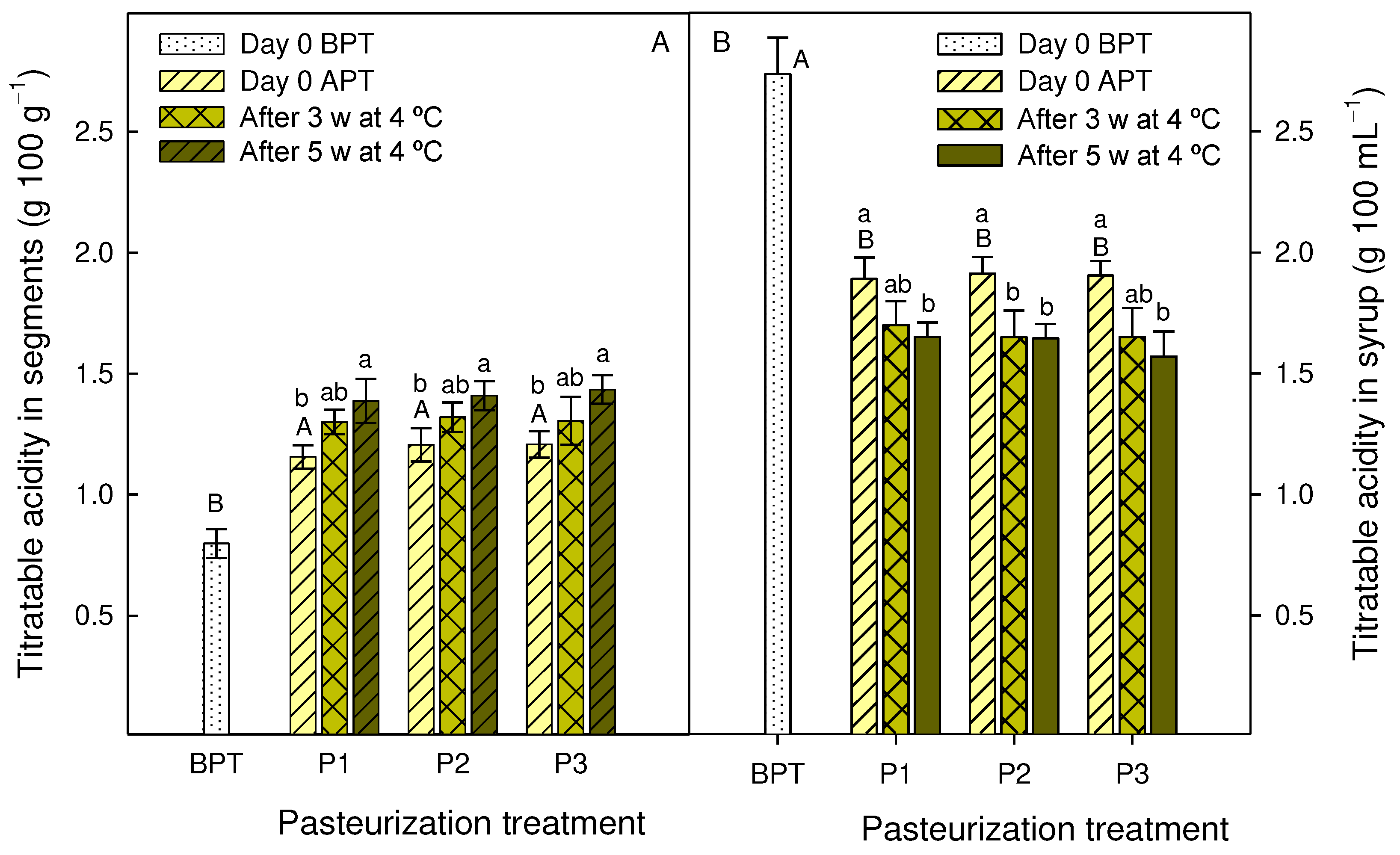
Figure 5.
Total soluble solid concentration in segment (A) and syrups (B) at day 0 before pasteurization treatments (BPT), at day 0 after pasteurization treatments (APT) and after 3 weeks (3 w) and 5 weeks (5 w) of storage at 4 °C. Pasteurization treatments: P1, 45 min at 50 °C; P2, 30 min at 65 °C and P3, 15 min at 70 °C. Data are the mean±SD of three independent experiments. Different capital letters show significant differences (p<0.05) between samples after and before pasteurization treatments and different lower-case letters show significant differences during storage for each pasteurization treatment.
Figure 5.
Total soluble solid concentration in segment (A) and syrups (B) at day 0 before pasteurization treatments (BPT), at day 0 after pasteurization treatments (APT) and after 3 weeks (3 w) and 5 weeks (5 w) of storage at 4 °C. Pasteurization treatments: P1, 45 min at 50 °C; P2, 30 min at 65 °C and P3, 15 min at 70 °C. Data are the mean±SD of three independent experiments. Different capital letters show significant differences (p<0.05) between samples after and before pasteurization treatments and different lower-case letters show significant differences during storage for each pasteurization treatment.
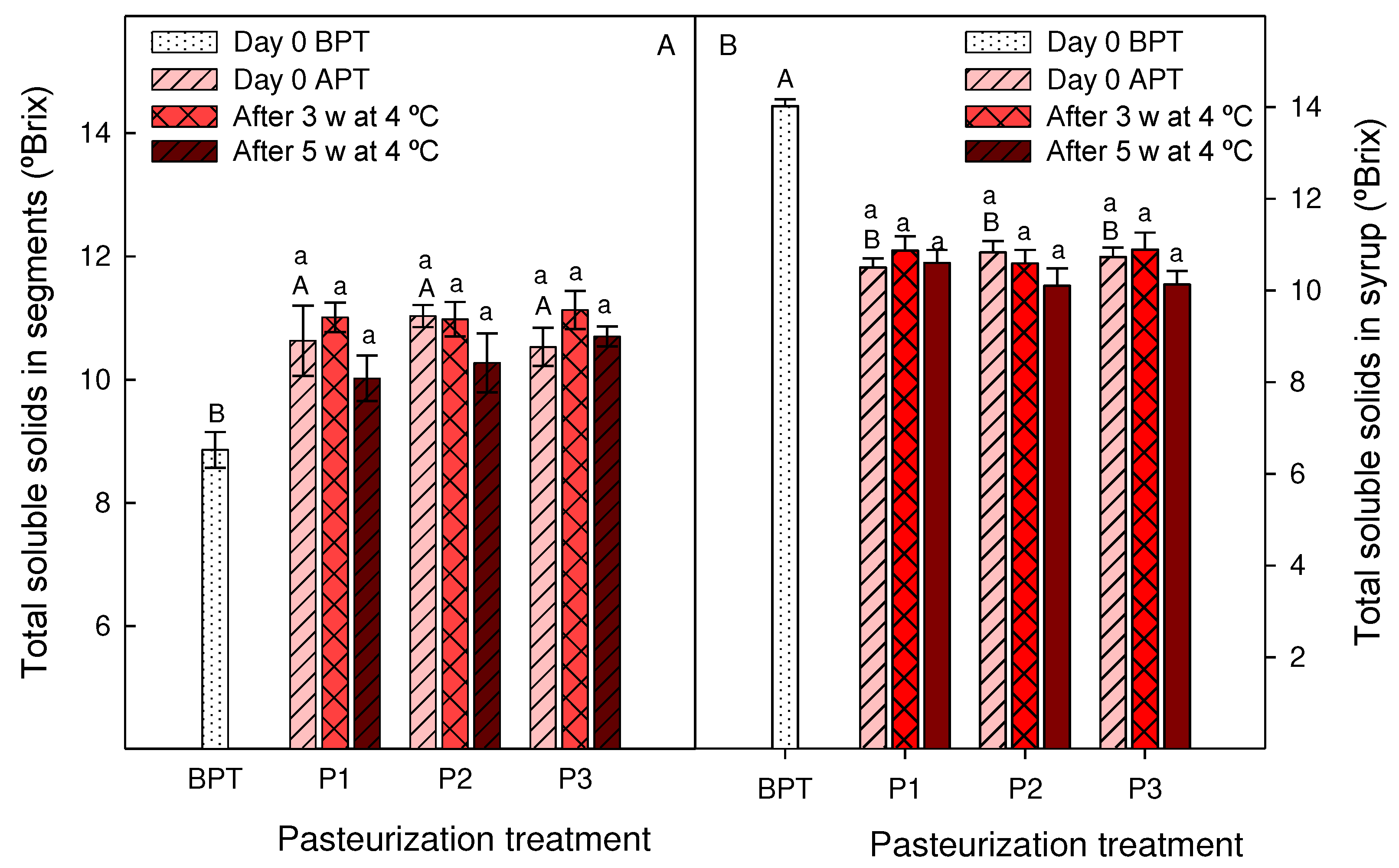
Figure 6.
Vitamin C concentration in segment (A) and syrups (B) at day 0 before pasteurization treatments (BPT), at day 0 after pasteurization treatments (APT) and after 3 weeks (3 w) and 5 weeks (5 w) of storage at 4 °C. Pasteurization treatments: P1, 45 min at 50 °C; P2, 30 min at 65 °C and P3, 15 min at 70 °C. Data are the mean±SD of three independent experiments. Different capital letters show significant differences (p<0.05) between samples after and before pasteurization treatments and different lower-case letters show significant differences during storage for each pasteurization treatment.
Figure 6.
Vitamin C concentration in segment (A) and syrups (B) at day 0 before pasteurization treatments (BPT), at day 0 after pasteurization treatments (APT) and after 3 weeks (3 w) and 5 weeks (5 w) of storage at 4 °C. Pasteurization treatments: P1, 45 min at 50 °C; P2, 30 min at 65 °C and P3, 15 min at 70 °C. Data are the mean±SD of three independent experiments. Different capital letters show significant differences (p<0.05) between samples after and before pasteurization treatments and different lower-case letters show significant differences during storage for each pasteurization treatment.
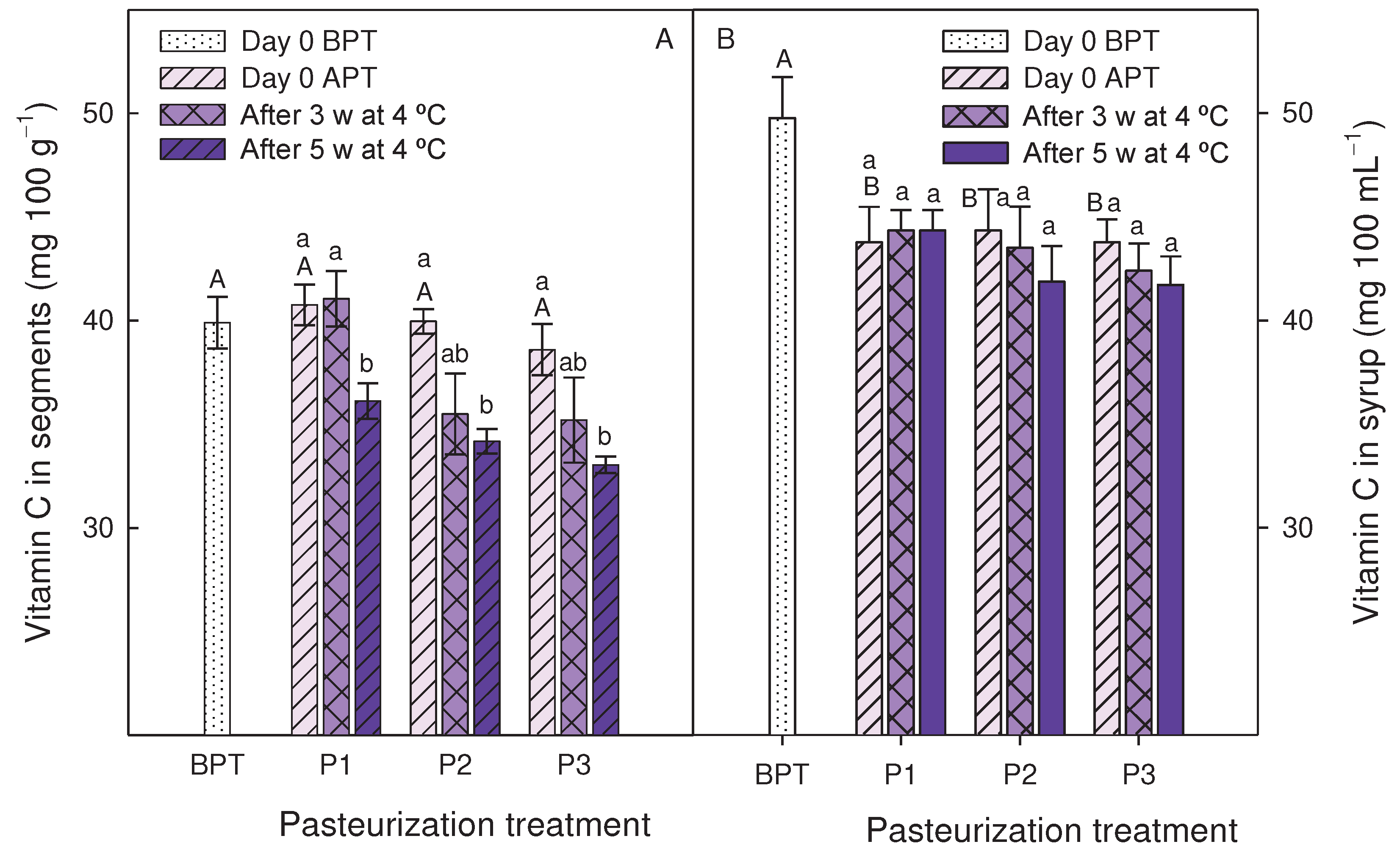

Table 1.
Effect of incubation time on easiness of segment separation, easiness of skin removing and segment firmness (assigned values from 0 to 5) and percentages of no attacked albedo, viable segments and global acceptance of the segments obtained for enzymatic peeling of different citrus fruit cultivars.
Table 1.
Effect of incubation time on easiness of segment separation, easiness of skin removing and segment firmness (assigned values from 0 to 5) and percentages of no attacked albedo, viable segments and global acceptance of the segments obtained for enzymatic peeling of different citrus fruit cultivars.
| Citrus cultivar | Incubation time (min) | No attacked albedo (%) | Easiness of skin removing | Easiness of segment separation | Segment firmness | Viable segments (%) | Global acceptance (%) |
|---|---|---|---|---|---|---|---|
| ‘Star Ruby’ grapefruit | 10 20 30 |
16.01±1.74 b 25.25±1.32 a 14.18±1.63 b |
2.61±0.29 c 3.09±0.33 b 4.22±0.20 a |
2.01±0.63 b 2.29±0.40 b 4.41±0.49 a |
4.02±0.23a 3.64±0.13b 3.09±0.29c |
80.01±3.21 a 84.27±4.02 a 73.04±3.61 b |
75.01±3.16 a 78.17±3.16 a 65.02±2.78 b |
| ‘Fino’ lemon | 10 20 30 |
24.08±2.53 a 7.37±0.78 b 0 c |
3.61±0.49 c 4.42±0.80 b 5±0 a |
3.42±0.49 c 4.27±0.98 b 5±0 a |
3.82±0.40c 4.41±0.49b 5±0 a |
82.04±2.48 b 86.25±2.40 b 98.01±4.02 a |
83.24±2.48 b 84.38±4.20 b 98.09±4.21 a |
| ‘Navel’ orange | 10 20 30 |
3.02±0.45 a 0 b 0 b |
4.40±0.19 b 4.30±0.24 b 5±0 a |
4.41±0.29 b 4.77±0.40 b 5±0 a |
3.44±0.29c 4.01±0 b 5±0 a |
83.27±3.04 c 90.05±3.16 b 100±0 a |
85.01±2.47 c 90.87±2.05 b 100±0 a |
| ‘Orogrande’ clementine | 10 20 30 |
0 0 0 |
4.41±0.19 b 5±0 a 5±0 a |
2.81±2.31 b 5±0 a 5±0 a |
5±0 a 3.80±0.17b 3.01±0.14c |
100±0 a 93.14±3.12 b 73.02±3.78 c |
96.34±2.21 a 95.31±3.12 a 73.06±3.16 b |
| ‘Hernandina’ clementine | 10 20 30 |
0 0 0 |
5±0 a 5±0 a 5±0 a |
5±0 a 5±0 a 5±0 a |
5±0 a 4.62±0.25b 4.03±0.17c |
100±0 a 100±0 a 97.07±1. 24 a |
98.21±1.74 a 97.36±1.45 a 96.24±2.74 a |
Data are the mean±SD of three independent experiments. Different letters show significant differences among treatments.
Table 2.
Percentages of ‘Fino’ lemon juice (FLJ) and ‘Hernandina’ clementine juice (HCJ) used to make the syrup, initial total soluble solids (TSS, °Brix) of the juice mixture, amount of sugar added (g 100 mL-1) to reach a final value of 14 °Brix in the syrup and pH and titratable acidity (TA g 100 mL-1) in the obtained syrup.
Table 2.
Percentages of ‘Fino’ lemon juice (FLJ) and ‘Hernandina’ clementine juice (HCJ) used to make the syrup, initial total soluble solids (TSS, °Brix) of the juice mixture, amount of sugar added (g 100 mL-1) to reach a final value of 14 °Brix in the syrup and pH and titratable acidity (TA g 100 mL-1) in the obtained syrup.
| FLJ and HCJ percentages |
Initial TSS (°Brix) | Sugar added (g 100 mL-1) |
pH of the syrups | TA (g 100 mL-1) of the syrups |
| 90% FLJ/10% HCJ | 9.12±0.12 f | 5.71±0.31a | 2.24±0.35 d | 5.26±0.04 a |
| 80% FLJ /20% HCJ | 9.43±0.19 ef | 5.12±0.23 ab | 2.71±0.28 c | 4.85±0.10 b |
| 70% FLJ /30% HCJ | 9.74±0.23 de | 4.75±0.21 bc | 2.75±0.19 c | 4.37±0.06 c |
| 60% FLJ /40% HCJ | 9.96±0.27 cde | 4.51±0.17 ce | 2.84±0.32 bc | 4.01±0.08 d |
| 50% FLJ /50% HCJ | 10.31±0.29 bcd | 4.36±0.15 ce | 2.88±0.23 bc | 3.30±0.13 e |
| 40% FLJ /60% HCJ | 10.53±0.33 bc | 4.21±0.11 ef | 2.93±0.15 ab | 2.92±0.08 f |
| 30% FLJ /70% HCJ | 10.71±0.28 ab | 4.09±0.09 efg | 2.99±0.16 ab | 2.44±0.09 g |
| 20% FLJ /80 % HCJ | 10.87±0.29 ab | 3.79±0.11 fgh | 3.10±0.10 a | 1.91±0.08 h |
| 10% FLJ /90% HCJ | 11.12±0.27a | 3.61±0.12 g | 3.30±0.25a | 1.49±0.11 i |
| Control b | 0 | 18.5 | - | - |
* Data are the mean±SD of three independent experiments. Different letters show significant differences among juice mixtures or syrups.
Table 3.
Sensory analysis scores for the syrups made on different percentages of ‘Fino’ lemon juice (FLJ) and ‘Hernandina’ clementine juice (HCJ). Tap water with added sugar up to 14 °Brix was used as control.
Table 3.
Sensory analysis scores for the syrups made on different percentages of ‘Fino’ lemon juice (FLJ) and ‘Hernandina’ clementine juice (HCJ). Tap water with added sugar up to 14 °Brix was used as control.
| Syrups (%FLJ/%HCJ) |
Colour | Sourness | Sweetness | Aroma | Overall impression | Purchase intention |
| 90% FLJ /10%HCJ | 4.88±0.28 f | 9.75±0.20 a | 1.50±0.18 h | 5.00±0.40 b | 3.75±0.30 d | 3.75±0.32 c |
| 80% FLJ /20% HCJ | 5.00±0.19 f | 9.38±0.34 ab | 1.63±0.13 h | 5.13±0.56 b | 3.38±0.20 d | 3.63±0.27 c |
| 70% FLJ /30% HCJ | 5.63±0.23 e | 8.62±0.38 b | 2.75±0.31 g | 4.90±0.42 b | 4.63±0.23 c | 3.88±0.22 c |
| 60% FLJ /40% HCJ | 5.63±0.27 e | 7.38±0.24 c | 3.13±0.27 g | 5.63±0.32 ab | 6.35±0.20 a | 5.13±0.26 b |
| 50% FLJ /50% HCJ | 7.00±0.16 d | 6.63±0.23 d | 4.13±0.14 f | 6.55±0.43 a | 6.53±0.15 a | 6.25±0.15 a |
| 40% FLJ /60% HCJ | 7.50±0.22 c | 6.38±0.19 e | 4.88±0.28 e | 5.88±0.52 ab | 6.88±0.22 a | 6.38±0.15 a |
| 30% FLJ /70% HCJ | 8.00±0.16 b | 5.25±0.29 f | 6.00±0.17 d | 5.13±0.37 b | 6.63±0.29 a | 5.13±0.04 b |
| 20% FLJ /80% HCJ | 8.88±0.29 a | 4.13±0.16 g | 6.63±0.22 c | 4.38±0.24 bc | 5.38±0.32 b | 5.38±0.11 b |
| 10% FLJ /90% HCJ | 9.38±0.21a | 3.13±0.22 h | 7.63±0.32 b | 3.88±0.26c | 5.50±0.28 b | 5.63±0.26 b |
| Control | 5.00±0.25 f | 0 i | 9.50±0.27 a | 1.13±0.11d | 2.63±0.11 e | 2.63±0.08 d |
* Data are the mean±SD of three independent experiments. Different letters show significant differences among syrups.
Table 4.
Sensory scores for ‘Hernandina’ clementine segments of the ready-to-eat produce as affected by pasteurization treatment (P1, 45 min at 50 °C; P2, 30 min at 65 °C and P3, 15 min at 70 °C) and storage time at 4 °C.
Table 4.
Sensory scores for ‘Hernandina’ clementine segments of the ready-to-eat produce as affected by pasteurization treatment (P1, 45 min at 50 °C; P2, 30 min at 65 °C and P3, 15 min at 70 °C) and storage time at 4 °C.
| Storage time and pasteurization treatment | Odour | Colour | Acidity | Sweetness | Aroma | Texture | Overall impression |
| Day 0 P1 | 6.50±0.32aB | 8.00±0.23aA | 7.25±0.49a | 5.31±0.24 a | 5.50±0.17a | 6.50±0.23aB | 6.25±0.26aB |
| Day 0 P2 | 6.10±0.22aA | 7.25±0.28bA | 6.75±0.36a | 5.62±0.62a | 4.75±0.36b | 4.50±0.37bA | 5.25±0.36bA |
| Day 0 P3 | 6.25±0.86aA | 7.00±0.41bA | 6.65±0.44a | 5.28±0.47a | 4.50±0.50b | 3.50±0.20cA | 5.03±0.24bA |
| 21 Days 4°C P1 | 7.25±0.23aA | 8.25±0.43aA | - | - | - | 7.00±0.27aAB | 7.75±0.34aA |
| 21 Days 4°C P2 | 6.75±0.37abA | 7.00±0.4bA | - | - | - | 4.75±0.28bA | 5.75±0.28bA |
| 21 Days 4°C P3 | 6.50±0.32bA | 6.75±0.49bA | - | - | - | 4.00±0.24cA | 5.50±0.17bA |
| 35 Days 4°C P1 | 7.50±0.3aA | 8.50±0.37aA | - | - | - | 7.30±0.35aA | 8.02±0.20aA |
| 35 Days 4°C P2 | 6.25±0.28bA | 6.75±0.36bA | - | - | - | 4.75±0.28bA | 5.70±0.25bA |
| 35 Days 4°C P3 | 6.75±0.25bA | 6.50±0.55bA | - | - | - | 3.75±0.36cA | 5.51±0.19bA |
Data are the mean±SD of three replicates. Different lower-case letters show significant differences among pasteurization treatments at p<0.05 for each sampling date and different capital letters show significant differences at p<0.05 for each treatment along storage time.
Disclaimer/Publisher’s Note: The statements, opinions and data contained in all publications are solely those of the individual author(s) and contributor(s) and not of MDPI and/or the editor(s). MDPI and/or the editor(s) disclaim responsibility for any injury to people or property resulting from any ideas, methods, instructions or products referred to in the content. |
© 2023 by the authors. Licensee MDPI, Basel, Switzerland. This article is an open access article distributed under the terms and conditions of the Creative Commons Attribution (CC BY) license (http://creativecommons.org/licenses/by/4.0/).
Copyright: This open access article is published under a Creative Commons CC BY 4.0 license, which permit the free download, distribution, and reuse, provided that the author and preprint are cited in any reuse.


