

Submitted:
19 September 2023
Posted:
20 September 2023
You are already at the latest version
Abstract
Dye-containing effluent generated in textile industries is polluting and complex wastewater. It should be managed adequately before the final destination. The up-flow anaerobic blanket (UASB) reactor application is an eco-friendly and cost-competitive treatment. The present study briefly reviews the UASB application for dye wastewater valorization. Bioenergy and clean water production potential during dye-containing wastewater treatment are emphasized to promote resource recovery in textile industries. Efficiencies of color and chemical oxygen demand of 50–97% and 60–90% are reported in bench-scale UASB studies. A biogas yield of 0.36–36.04 L d-1 in UASB, which treats dye-containing effluents, is documented. Bioenergy production and water reuse allow environmental and economic benefits. However, data on full-scale UASB treating dye wastewater are missing. Besides, studies on combined systems integrating membrane processes, such as ultrafiltration and nanofiltration, and pretreatment of wastewater and sludge for improvements in biogas production might realize the complete potential for resource recovery of UASB technology.
Keywords:
Biogas
; Dye-containing wastewater
; Resource recovery
; Sludge
; UASB reactors
; Water reuse
1. Introduction
Dye-containing wastewater discharged from textile industries poses a significant environmental challenge. Among the several concerns, colored effluents impair plant photosynthesis and reduce light penetration and oxygen levels in aquatic ecosystems. It may also be lethal for marine life due to the presence of metals and chlorine in synthetic dyes [1]. Therefore, dye wastewater should be preferentially treated using eco-friendly technologies. In this context, biotreatments are cost-competitive, give total mineralization or non-hazardous byproducts, and consume less water than physical and oxidative methods [2].
Biotreatments occur under aerobic or anaerobic conditions, as the products of aerobic treatment are biomass, CO2, and H2O. In contrast, the main product of anaerobic treatment is biogas (composed of CH4 and CO2 in varying compositions). Combinations of anaerobic and aerobic systems are implemented on a full scale for dye wastewater purification. The up-flow anaerobic sludge blanket (UASB) reactor is a promising anaerobic wastewater treatment technology for high-strength wastewater like dye-containing effluents [3].
UASB’s compact design and low cost own several applications, such as brewing and beverage, distilleries, food, pulp and paper, food processing, chemical industries, landfill leachate, and textile effluents [4,5]. A full-scale 1800 m3 d-1 UASB treating sewage wastewater was monitored for 35 weeks. Organic matter removal was higher than 90%, and biogas yield was estimated at 0.2 m3 per kg of chemical oxygen demand (COD) removed [6]. For textile wastewater, a two-phase pilot UASB reactor was tested. A maximum COD removal of 88.5% was recorded in the methanogenic reactor with biogas production of 0.312 m3 d-1 [7].
Recently, investigators have examined the factors affecting the UASB reactor’s performance, conventional configuration, and derivatives [3]. Some parts of our previous work discussed treatability findings of UASB in textile wastewater purification [8]. However, research has not yet analyzed this cost-effective technology, focusing on energy and water recovery. Given the global energy crisis and rising water demand, bioenergy production and water reuse during wastewater treatment are fundamental to achieving sustainability [9].
This paper provides a short overview of UASB reactors for the valorization of dye wastewater. It introduces the aspects of UASB reactors and the operating conditions employed for effective dye removal. Next, it delves into the potential of bioenergy and clean water production, emphasizing their role in promoting resource recovery in textile industries. In this context, knowledge gaps and research opportunities are identified.
2. Up-flow anaerobic sludge blanket reactors
The UASB reactor, also known as a three-phase separator, allows the reactor to separate mixtures of gas, water, and sludge under conditions of high turbulence. During the UASB treatment, the wastewater passes through a bed of expanded sludge containing a high biomass concentration (up to 80 g L-1) [10]. The peristaltic pump pumps the influent into the UASB reactor from the bottom. It moves upwards, coming into contact with the biomass in the sludge bed and then moving upwards [11,12]. The typical height-diameter ratio of UASB reactors ranges from 0.2 to 0.5 [13]. A 3-phase separator (Gas-Liquid-Solid, GLS) above the sludge blanket separates the GLS mixture. It, therefore, allows fluid and gas to exit the UASB reactor [14]. After treatment, the treated water is collected by the collection system through several drains distributed throughout the discharge area up to the main drain provided on the periphery of the reactor. The biogas generated is drained, and it contains mainly CH4, followed by CO2 and traces of other compounds [15]. Figure 1 presents a 3D-designed UASB reactor for wastewater treatment and biogas production.
The successful adoption of this technology depended on establishing a dense granular sludge bed within the UASB reactors. The efficacy of these reactors in wastewater treatment is ascribed to forming a compact sludge bed in the lower region of the bioreactor. This granular biomass presents as a densely aggregated microbial consortium characterized by its condensed architecture and expansive specific surface area, thereby facilitating the adsorption and biotransformation of contaminants. In contrast, developing anaerobic granular sludge requires 2 to 8 months, leading to an extended initiation phase for the bioreactor—a notable challenge inherent to UASB technology [16]. Hulshoff Pol et al. [17] thoroughly examined theories on sludge granulation within UASB reactors, ultimately discerning the pivotal role of incorporating inert support particles in conjunction with operational conditions in the genesis of granular sludge. Despite substantial investigative efforts, mechanisms governing the formation of anaerobic granules remain elusive. Besides long reactor start-up, gas leakage, and corrosion-related issues require periodic monitoring and maintenance for effective treatment outcomes [18].
3. Mechanisms and influencing parameters in textile decolorization in UASB reactors
The dye removal process in UASB reactors involves two main mechanisms: abiotic adsorption and biotic biodegradation. The adsorption mechanism, facilitated by sludge granules, plays a significant role in decolorization. On the other hand, biodegradation occurs under anaerobic conditions and primarily focuses on azo dyes’ biochemistry [19]. The primary degradation mechanism involves the cleavage of the azo bond (–N=N–) by extracellular azoreductase enzymes, which transfer four electrons (reducing equivalents) (Equation 1). The generated hydrazo intermediates undergo reductive cleavage, resulting in uncolored aromatic amines as byproducts, as shown in Equation 2 [20].
Where R1 and R2 are aryls or heteroaryl groups.
The anaerobic process is divided into four steps: hydrolysis, acidogenesis, acetogenesis, and methanogenesis. In the three former acid fermentation steps, fermentative bacteria hydrolyzed and metabolized organic macromolecules and converted them to carbon dioxide, hydrogen, and acetic acid. Later, acetic acid, carbon dioxide, and hydrogen are converted to carbon dioxide and methane by methanogenic archaeans [21].
Biodecolourisation under anaerobic conditions necessitates supplementary organic C-sources, as dye-reducing microbial consortia cannot utilize the dye as a growth substrate. Fermentative bacteria and hydrogenotrophic methanogens primarily carry out dye reduction. Noteworthy among the microorganisms involved in anaerobic biodecolourisation are Methanosarcina archaea, Clostridium, Enterococcus, Pseudomonas, Bacillus, Aeromonas, Enterococcus, Desulfovibrio, and Desulfomicrobium bacteria. [8].
Dye structure and concentration, electron donors and redox mediators, pH, temperature regime, hydraulic retention time (HRT), and organic loading rate (OLR) are the primary influence parameters governing dye removal in UASB reactors (Table 1).
In sum, complex dye structures can hinder their biomineralization. Therefore, monitoring the dye level in wastewater before initiating the anaerobic process is essential. Pretreatment may be necessary to reduce dye concentration. C-source and redox mediators are commonly added to the UASB reactor to expedite kinetic reactions. Temperature, pH, OLR, and HRT influence microbial activity and UASB performance. For optimal results, operating the UASB reactor at 30°C and 40°C, with HRT ranging from 5 to 20 hours, and an OLR of 2 to 15 kg COD m-3 d-1 is recommended. To mitigate the harmful impacts of high OLR, adopting a feed mode in an intermittent regime and employing internal effluent recirculation can be effective strategies for UASB operations [37].
4. Dye wastewater treatment in UASB reactors
In decolorization studies, color and COD are commonly employed as monitoring parameters to evaluate the performance of UASB reactors. Table 2 presents the data on dye removal using UASB reactors, as reported in the recent literature from 2018 to 2022. The results demonstrate a range of color removal efficiencies from 50% to 97% and COD removal efficiencies from 60% to 90%. All the reported findings are based on lab-scale investigations, necessitating further full-scale research to validate the outcomes in full-scale plants.
Bahia et al. [43] used an integrated UASB-shallow pound system in continuous feeding, achieving color and COD removal rates of 50% and 80%. Saleem et al. [45] combined UASB with a sequencing batch reactor (SBR) in an intermittent regime, resulting in higher removal rates of 87.7% for color and 90.4% for COD. These studies highlight how the feeding mode can significantly impact UASB efficiency. Saleem et al. noted that during non-feeding periods, anaerobic microorganisms can better withstand dye toxicity and effectively handle changes in temperature, HRT, and OLR. This insight suggests that optimizing the feeding strategy can improve UASB performance in dye wastewater treatment.
However, anaerobic treatment alone may not fully break down dye byproducts such as polyaromatic amines. As in those studies, aerobic systems were integrated with UASB to address this issue. Aerobes can utilize oxygen and introduce hydroxyl groups into polyaromatic compounds at aerobic conditions. This step is essential in facilitating subsequent biodegradation pathways. Consequently, the aerobic process acts as a polishing step, effectively completing the mineralization of intermediates that arise from the anaerobic bio-transformation. This completion occurs through hydroxylation or cleavage of the ring using oxidative enzymes such as laccase, phenoloxidase, and peroxidase [46].
In another work, Carvalho et al. [42] proposed using a microaerated UASB reactor to effectively remove Direct Black 22 azo dye. The UASB reactor was aerated in the upper part with a low oxygen concentration (0.18±0.05 mg O2 L-1) to facilitate the mineralization of amines generated during the anaerobic process. As a result, the removal of COD and color ranged from 59% to 78%. Besides, the treated effluent from the microaerated reactor was 16 times less toxic than that of conventional UASB, indicating the effectiveness of the microaeration method in removing anaerobic metabolites.
5. Dye wastewater valorization
Add-value product extraction from dye industry wastes has been investigated, and a comprehensive review of resource recovery of colored effluents was recently published [47]. Dye wastewater management for bioenergy, water reuse, and sludge valorization is explored in the present section (Figure 2). We cover the UASB application for bioenergy and water reuse, which, to date, are the most realistic strategies for practical applications.
5.1. Bioenergy production
Anaerobic technology offers a dual advantage of degrading dye pollutants in wastewater while also serving as a significant source of clean energy. Dye-containing wastewaters are rich in organic chemicals. The organic load is converted into biogas in UASB reactors. Biogas consists of methane (up to 75%), carbon dioxide (up to 50%), and hydrogen (up to 5%) with small amounts of water vapor, dinitrogen, hydrogen sulfide, ammonia, and siloxanes. As a result, biogas possesses a high calorific value and can be directed for thermal and/or electrical energy production [48].
The dual potential of anaerobic technology helps in wastewater valorization and contributes to sustainable energy production [49]. Katal et al. [50] conducted experiments using a lab-scale UASB reactor to treat textile effluent and measure the biogas production yield. They achieved maximum biogas productivity of 36 L per day at an HRT of 50 hours, with a biomethane content of 79%. Other bench-scale studies reported biomethane production rates ranging from 0.36 to 2.7 L per day [36,51,52] (Table 3).
Industrial treatment facilities have a high energy demand [53]; thus, UASB technology offers opportunities for reducing treatment costs while treating wastewater. Gadow and Li [41] showed that the UASB technology could be extended to full-scale applications for 2-Naphthol red removal with a bioenergy recovery of 139.6 MJ per m3 of effluent. A maximum methane yield of 13.3 mmol CH4 g-1 COD d−1 was obtained at an HRT of 6 h. In another work from the same research group, a similar methane yield of 13.18±0.64 CH4 g-1 COD was recorded during the treatment of synthetic dye wastewater [54]. Apart from bioenergy recovery and related economic benefits, reducing greenhouse gas emissions is expected and could help boost the C-neutrality of wastewater treatment plants. Moreover, lower excess sludge is discharged from UASB reactors [55].
On the other hand, energy recovery from dye effluents can be hampered, given the dye’s low biodegradability and/or high effluent salinity. Pretreatments like advanced oxidation processes, ultraviolet (UV) photodegradation, and chemical coagulation were investigated to improve dye biodegradability [56,57]. UV pretreatment improved biogas production 2.7-fold compared with non-pretreated effluent and increased methane yield in anaerobic digestion (AD) of methylene blue [56].
A recent review analyzed landfill leachate pretreatment methods coupled with AD to enhance biogas production [58]. Landfill leachate, as dye effluent, is a complex and inhibitory wastewater for anaerobic processes [58,59,60]. Because of its recalcitrance, biotreatments necessitate employing other techniques to complement and support the AD. The work concluded that electrochemical systems and photocatalysis are promising due to their performance and cost-effectiveness. Studies on dye wastewater pretreatments are scarce, and research is necessary to close existing knowledge gaps in this area. This might foster AD and UASB utilization for dye wastewater valorization in full-scale applications.
5.2. Reclaimed water
The dye industries consume a high amount of water, and consequently, a high waste volume is discharged [61]. To solve such issues, water recovery for reuse in textile industries might allow environmental and economic benefits. However, the UASB technology must be integrated to produce clean water for recycling. Therefore, a treatment train is required. An integrated system comprising reverse osmosis (RO), electrochemical oxidation, and electrodialysis was investigated. It demonstrated feasibility for large applications [62]. This system could produce 0.97 tons of clean water at 24.7 kWh per m3 of dye wastewater. However, high energy demand can make this integrated process less competitive.
Recent studies have analyzed driven-pressure membrane processes such as ultrafiltration (NF) and nanofiltration (UF), demonstrating the ability of these techniques to produce reclaimed water [63,64]. Hybrid bio-oxidation and NF processes performed well in removing soluble dyes and surfactants. They could significantly reclaim water from textile wastewater [64]. In this work, the authors highlighted that integrating both treatments to produce recycled water is needed, corroborating the necessity of combining recovering technologies. In another research, Erkanli et al. [63] analyzed different configurations of the two-stage UF process for recovering water from real dye wastewater. Two-stage UF using membranes of molecular-weight cut off of 2 kDa produced high-quality water to an extent that allows reuse in fabric dyeing. As estimated 200 – 400 liters of water per kg of fabric, water recovery could promote significant economic savings. Also, the UF method is economical and less energy-intensive than other membranes like NF and RO [18]. Thus, it can be a potential candidate to be integrated with UASB technology aiming to produce clean water.
5.3. Sludge valorization
The excess sludge from UASB reactors requires dewatering, drying, stabilization, and/or disinfection for the final destination [65]. The dye sludge contains toxic chemicals, so its proper treatment must be guaranteed. Efforts have been made to recover add-value products from dye sludge (e.g., dyes, energy, salts, metals, and nutrients) [66], representing an exciting opportunity for economic savings and more sustainable operation in textile industries.
AD of textile dye sludge has been extensively studied. In this case, sludge pretreatment to enhance organics solubilization and maximize biogas production is particularly important. Some pretreatments, such as thermal and alkaline, showed improvements in the AD performance of textile dyeing sludge. However, pretreated sludge did not perform as well in biomethane potential tests as expected it was [67,68]. In recent work, anaerobic co-digestion (coAD) using food waste as a co-substrate was evaluated with thermally pretreated digestate [69]. The biomethane yield increased by 20 to 40%. Besides, this work performed an energy balance. It showed that the electricity produced by biogas could satisfy the electric consumption of the wastewater treatment facility and the coAD system with 57.69% and 41.78%, respectively.
Apart from using AD for sludge valorization, thermochemical processes were investigated. Yildirir and Ballice [70] treated textile biological sludges via hydrothermal gasification to produce fuel gas. The calorific value of the produced fuel gas was 24.3 MJ/Nm3 after gasification (30 min of time reaction). Hydrothermal gasification is promising to convert wet sludge into clean fuel gas with high caloric value without any drying process. More research in thermochemical methods, including pyrolysis and torrefaction, might contribute to dye sludge valorization.
6. Conclusions
This work reviewed studies on UASB reactors for dye wastewater valorization. UASB reactors offer a dual advantage of degrading dye pollutants in wastewater while also serving as a significant source of bioenergy. Color and COD removal efficiencies of 50–97% and 60–90% are reported in bench-scale studies. A biogas yield of 0.36–36.04 L d-1 in UASB, which treats dye-containing effluents, is reported. The successful adoption of this technology depended on establishing a dense granular sludge bed. Therefore, mechanisms of sludge granulation and control methods to reduce the start-up of UASB reactors should be developed. Integrating UASB with membrane processes (e.g., UF and NF) and pretreatment methods of dye wastewater and sludge are the most promising routes for dye waste valorization. Future studies on these combined systems are recommended. Moreover, the techno-economic evaluation of biogas and water production while treating real dye-containing wastewater in full-scale applications is critical to promoting UASB technology in dye industries.
Author Contributions
Conceptualization, RA; methodology, RA; validation, RA and CSG; formal analysis, RA and CSG; investigation, RA and CSG; data curation, RA and CSG; writing—original draft preparation, RA; writing—review and editing, RA and CSG All authors have read and agreed to the published version of the manuscript.
Funding
This research received no external funding.
Data Availability Statement
The data used to support this study are included within the article.
Conflicts of Interest
The authors declare no conflict of interest.
References
- Holkar, CR; Jadhav, AJ; Pinjari, D.V.; Mahamuni, N.M.; Pandit, A.B. A Critical Review on Textile Wastewater Treatments: Possible Approaches. J. Environ. Manage. 2016, 182, 351–366. [CrossRef] [PubMed]
- Al-Tohamy, R.; Ali, S.S.; Li, F.; Okasha, K.M.; Mahmoud, Y.A.G.; Elsamahy, T.; Jiao, H.; Fu, Y.; Sun, J. A Critical Review on the Treatment of Dye-Containing Wastewater: Ecotoxicological and Health Concerns of Textile Dyes and Possible Remediation Approaches for Environmental Safety. Ecotoxicol. Environ. Saf. 2022, 231, 113160. [Google Scholar] [CrossRef] [PubMed]
- Mariraj Mohan, S.; Swathi, T. A Review on Upflow Anaerobic Sludge Blanket Reactor: Factors Affecting Performance, Modification of Configuration and Its Derivatives. Water Environ. Res. 2022, 94, 1–27. [Google Scholar] [CrossRef] [PubMed]
- Pereira Silva, T.; Guimarães de Oliveira, M.; Marques Mourão, J.M.; Bezerra dos Santos, A.; Lopes Pereira, E. Monte Carlo-Based Model for Estimating Methane Generation Potential and Electric Energy Recovery in Swine Wastewater Treated in UASB Systems. J. Water Process Eng. 2023, 51, 103399. [Google Scholar] [CrossRef]
- Alcaraz-Ibarra, S.; Mier-Quiroga, M.A.; Esparza-Soto, M.; Lucero-Chávez, M.; Fall, C. Treatment of Chocolate-Processing Industry Wastewater in a Low-Temperature Pilot-Scale UASB: Reactor Performance and in-Situ Biogas Use for Bioenergy Recovery. Biomass and Bioenergy 2020, 142, 105786. [Google Scholar] [CrossRef]
- Arthur, P.M.A.; Konaté, Y.; Sawadogo, B.; Sagoe, G.; Dwumfour-Asare, B.; Ahmed, I.; Williams, M.N.V. Performance Evaluation of a Full-Scale Upflow Anaerobic Sludge Blanket Reactor Coupled with Trickling Filters for Municipal Wastewater Treatment in a Developing Country. Heliyon 2022, 8, e10129. [Google Scholar] [CrossRef]
- Senthilkumar, M.; Gnanapragasam, G.; Arutchelvan, V.; Nagarajan, S. Treatment of Textile Dyeing Wastewater Using Two-Phase Pilot Plant UASB Reactor with Sago Wastewater as Co-Substrate. Chem. Eng. J. 2011, 166, 10–14. [Google Scholar] [CrossRef]
- de Almeida, R.; de Souza Guimarães, C. Up-Flow Anaerobic Sludge Blanket Reactors in Dye Removal: Mechanisms, Influence Factors, and Performance. In; 2022; pp. 201–227 ISBN 9789811905452.
- Muduli, M.; Chanchpara, A.; Choudhary, M.; Saravaia, H.; Haldar, S.; Ray, S. Critical Review on Sustainable Bioreactors for Wastewater Treatment and Water Reuse. Sustain. Water Resour. Manag. 2022, 8, 159. [Google Scholar] [CrossRef]
- van Lier, J.B.; van der Zee, F.P.; Frijters, CTMJ; Ersahin, M.E. Celebrating 40 Years Anaerobic Sludge Bed Reactors for Industrial Wastewater Treatment. Rev. Environ. Sci. Bio/Technology 2015, 14, 681–702. [CrossRef]
- Haugen, F.; Bakke, R.; Lie, B.; Hovland, J.; Vasdal, K. Optimal Design and Operation of a UASB Reactor for Dairy Cattle Manure. Comput. Electron. Agric. 2015, 111, 203–213. [Google Scholar] [CrossRef]
- Li, H.; Han, K.; Li, Z.; Zhang, J.; Li, H.; Huang, Y.; Shen, L.; Li, Q.; Wang, Y. Performance, Granule Conductivity and Microbial Community Analysis of Upflow Anaerobic Sludge Blanket (UASB) Reactors from Mesophilic to Thermophilic Operation. Biochem. Eng. J. 2018, 133, 59–65. [Google Scholar] [CrossRef]
- Mainardis, M.; Buttazzoni, M.; Goi, D. Up-Flow Anaerobic Sludge Blanket (Uasb) Technology for Energy Recovery: A Review on State-of-the-Art and Recent Technological Advances. Bioengineering 2020, 7. [Google Scholar] [CrossRef] [PubMed]
- Shinde, R.; Hackula, A.; O’Shea, R.; Barth, S.; Murphy, J.D.; Wall, D.M. Demand-Driven Biogas Production from Upflow Anaerobic Sludge Blanket (UASB) Reactors to Balance the Power Grid. Bioresour. Technol. 2023, 385, 129364. [Google Scholar] [CrossRef] [PubMed]
- Mirmohamadsadeghi, S.; Karimi, K.; Tabatabaei, M.; Aghbashlo, M. Biogas Production from Food Wastes: A Review on Recent Developments and Future Perspectives. Bioresour. Technol. Reports 2019, 7, 100202. [Google Scholar] [CrossRef]
- Liu, Y.; Xu, H.-L.; Yang, S.-F.; Tay, J.-H. Mechanisms and Models for Anaerobic Granulation in Upflow Anaerobic Sludge Blanket Reactor. Water Res. 2003, 37, 661–673. [Google Scholar] [CrossRef]
- Hulshoff Pol, L.W.; de Castro Lopes, S.I.; Lettinga, G.; Lens, P.N.L. Anaerobic Sludge Granulation. Water Res. 2004, 38, 1376–1389. [Google Scholar] [CrossRef]
- Jahan, N.; Tahmid, M.; Shoronika, A.Z.; Fariha, A.; Roy, H.; Pervez, M.N.; Cai, Y.; Naddeo, V.; Islam, M.S. A Comprehensive Review on the Sustainable Treatment of Textile Wastewater: Zero Liquid Discharge and Resource Recovery Perspectives. Sustain. 2022, 14, 1–38. [Google Scholar] [CrossRef]
- Gonzalez-Gutierrez, L. V.; Escamilla-Silva, E.M. Reactive Red Azo Dye Degradation in a UASB Bioreactor: Mechanism and Kinetics. Eng. Life Sci. 2009, 9, 311–316. [Google Scholar] [CrossRef]
- Singh, K.; Arora, S. Removal of Synthetic Textile Dyes From Wastewaters: A Critical Review on Present Treatment Technologies. Crit. Rev. Environ. Sci. Technol. 2011, 41, 807–878. [Google Scholar] [CrossRef]
- Volschan Junior, I.; de Almeida, R.; Cammarota, M.C. A Review of Sludge Pretreatment Methods and Co-Digestion to Boost Biogas Production and Energy Self-Sufficiency in Wastewater Treatment Plants. J. Water Process Eng. 2021, 40, 101857. [Google Scholar] [CrossRef]
- Dai, R.; Chen, X.; Luo, Y.; Ma, P.; Ni, S.; Xiang, X.; Li, G. Inhibitory Effect and Mechanism of Azo Dyes on Anaerobic Methanogenic Wastewater Treatment: Can Redox Mediator Remediate the Inhibition? Water Res. 2016, 104, 408–417. [Google Scholar] [CrossRef] [PubMed]
- Amaral, F.M.; Kato, M.T.; Florêncio, L.; Gavazza, S. Color, Organic Matter and Sulfate Removal from Textile Effluents by Anaerobic and Aerobic Processes. Bioresour. Technol. 2014, 163, 364–369. [Google Scholar] [CrossRef] [PubMed]
- Field, JA; Cervantes, F.J.; van der Zee, F.P.; Lettinga, G. Role of Quinones in the Biodegradation of Priority Pollutants: A Review. Water Sci. Technol. 2000, 42, 215–222. [CrossRef]
- Cervantes, F.J.; Garcia-Espinosa, A.; Moreno-Reynosa, M.A.; Rangel-Mendez, J.R. Immobilized Redox Mediators on Anion Exchange Resins and Their Role on the Reductive Decolorization of Azo Dyes. Environ. Sci. Technol. 2010, 44, 1747–1753. [Google Scholar] [CrossRef] [PubMed]
- Baêta, B.E.L.; Aquino, S.F.; Silva, S.Q.; Rabelo, C.A. Anaerobic Degradation of Azo Dye Drimaren Blue HFRL in UASB Reactor in the Presence of Yeast Extract a Source of Carbon and Redox Mediator. Biodegradation 2012, 23, 199–208. [Google Scholar] [CrossRef]
- dos Santos, A.B.; Traverse, J.; Cervantes, F.J.; van Lier, J.B. Enhancing the Electron Transfer Capacity and Subsequent Color Removal in Bioreactors by Applying Thermophilic Anaerobic Treatment and Redox Mediators. Biotechnol. Bioeng. 2005, 89, 42–52. [Google Scholar] [CrossRef]
- Garcia, J.-L.; Patel, B.K.C.; Ollivier, B. Taxonomic, Phylogenetic, and Ecological Diversity of Methanogenic Archaea. Anaerobe 2000, 6, 205–226. [Google Scholar] [CrossRef]
- Chen, Y.; Feng, L.; Li, H.; Wang, Y.; Chen, G.; Zhang, Q. Biodegradation and Detoxification of Direct Black G Textile Dye by a Newly Isolated Thermophilic Microflora. Bioresour. Technol. 2018, 250, 650–657. [Google Scholar] [CrossRef]
- Samuchiwal, S.; Gola, D.; Malik, A. Decolourization of Textile Effluent Using Native Microbial Consortium Enriched from Textile Industry Effluent. J. Hazard. Mater. 2021, 402, 123835. [Google Scholar] [CrossRef]
- Karatas, M.; Dursun, S. ; Argun, ME The Decolorization of Azo Dye Reactive Black 5 in a Sequential Anaerobic-Aerobic System. Ekoloji 2010, 19, 15–23. [Google Scholar]
- Ryue, J.; Lin, L.; Kakar, F.L.; Elbeshbishy, E.; Al-Mamun, A.; Dhar, B.R. A Critical Review of Conventional and Emerging Methods for Improving Process Stability in Thermophilic Anaerobic Digestion. Energy Sustain. Dev. 2020, 54, 72–84. [Google Scholar] [CrossRef]
- Liu, T.; Schnürer, A.; Björkmalm, J.; Willquist, K.; Kreuger, E. Diversity and Abundance of Microbial Communities in UASB Reactors during Methane Production from Hydrolyzed Wheat Straw and Lucerne. Microorganisms 2020, 8, 1394. [Google Scholar] [CrossRef] [PubMed]
- Daud, MK; Rizvi, H. ; Akram, M.F.; Ali, S.; Rizwan, M.; Nafees, M.; Jin, Z.S. Review of Upflow Anaerobic Sludge Blanket Reactor Technology: Effect of Different Parameters and Developments for Domestic Wastewater Treatment. J. Chem. 2018, 2018, 1–13. [Google Scholar] [CrossRef]
- Amaral, F.M.; Florêncio, L.; Kato, M.T.; Santa-Cruz, P.A.; Gavazza, S. Hydraulic Retention Time Influence on Azo Dye and Sulfate Removal during the Sequential Anaerobic–Aerobic Treatment of Real Textile Wastewater. Water Sci. Technol. 2017, 76, 3319–3327. [Google Scholar] [CrossRef]
- Işik, M.; Sponza, D.T. Effects of Alkalinity and Co-Substrate on the Performance of an Upflow Anaerobic Sludge Blanket (UASB) Reactor through Decolorization of Congo Red Azo Dye. Bioresour. Technol. 2005, 96, 633–643. [Google Scholar] [CrossRef]
- Haider, A.; Khan, S.J.; Nawaz, M.S.; Saleem, M.U. Effect of Intermittent Operation of Lab-Scale Upflow Anaerobic Sludge Blanket (UASB) Reactor on Textile Wastewater Treatment. Desalin. WATER Treat. 2018, 136, 120–130. [Google Scholar] [CrossRef]
- de Barros, A.N.; da Silva, M.E.R.; Firmino, P.I.M.; de Vasconcelos, E.A.F.; dos Santos, A.B. Impact of Microaeration and the Redox Mediator Anthraquinone-2,6-Disulfonate on Azo Dye Reduction and By-Products Degradation. CLEAN - Soil, Air, Water 2018, 46, 1700518. [Google Scholar] [CrossRef]
- Bahia, M.; Passos, F.; Adarme, O.F.H.; Aquino, S.F.; Silva, S.Q. Anaerobic-Aerobic Combined System for the Biological Treatment of Azo Dye Solution Using Residual Yeast. Water Environ. Res. 2018, 90, 729–737. [Google Scholar] [CrossRef]
- Fazal, S.; Huang, S.; Zhang, Y.; Ullah, Z.; Ali, A.; Xu, H. Biological Treatment of Red Bronze Dye through Anaerobic Process. Arab. J. Geosci. 2019, 12, 415. [Google Scholar] [CrossRef]
- Gadow, S.I.; Li, Y.-Y. Development of an Integrated Anaerobic/Aerobic Bioreactor for Biodegradation of Recalcitrant Azo Dye and Bioenergy Recovery: HRT Effects and Functional Resilience. Bioresour. Technol. Reports 2020, 9, 100388. [Google Scholar] [CrossRef]
- Carvalho, J.R.S.; Amaral, F.M.; Florencio, L.; Kato, M.T.; Delforno, T.P.; Gavazza, S. Microaerated UASB Reactor Treating Textile Wastewater: The Core Microbiome and Removal of Azo Dye Direct Black 22. Chemosphere 2020, 242, 125157. [Google Scholar] [CrossRef] [PubMed]
- Bahia, M.; Borges, T.A.; Passos, F.; Aquino, S.F. de; Silva, S. de Q. Evaluation of a Combined System Based on an Upflow Anaerobic Sludge Blanket Reactor (UASB) and Shallow Polishing Pond (SPP) for Textile Effluent Treatment. Brazilian Arch. Biol. Technol. 2020, 63, 1–8. [Google Scholar] [CrossRef]
- Malik, R.A.; Vistanty, H.; Suhardi, S.H. Performance of Anaerobic Co-Digestion with Honey Processing Wastewater as Co-Substrate for Treating Synthetic Wastewater Containing Commercial Anthraquinone Dye Remazol Blue RSP: Effect of C:N Ratio and HRT. Bioresour. Technol. Reports 2022, 19, 101157. [Google Scholar] [CrossRef]
- Saleem, M.U.; Khan, S.J.; Shahzad, H.M.A. ; Zeshan Performance Evaluation of Integrated Anaerobic and Aerobic Reactors for Treatment of Real Textile Wastewater. Int. J. Environ. Sci. Technol. 2022, 19, 10325–10336. [Google Scholar] [CrossRef]
- Albahnasawi, A.; Yüksel, E.; Gürbulak, E.; Duyum, F. Fate of Aromatic Amines through Decolorization of Real Textile Wastewater under Anoxic-Aerobic Membrane Bioreactor. J. Environ. Chem. Eng. 2020, 8, 104226. [Google Scholar] [CrossRef]
- Varjani, S.; Rakholiya, P.; Shindhal, T.; Shah, A. V.; Ngo, H.H. Trends in Dye Industry Effluent Treatment and Recovery of Value Added Products. J. Water Process Eng. 2021, 39, 101734. [Google Scholar] [CrossRef]
- Pavičić, J.; Novak Mavar, K.; Brkić, V.; Simon, K. Biogas and Biomethane Production and Usage: Technology Development, Advantages and Challenges in Europe. Energies 2022, 15, 2940. [Google Scholar] [CrossRef]
- Ampese, L.C.; Sganzerla, W.G.; Di Domenico Ziero, H.; Mudhoo, A.; Martins, G.; Forster-Carneiro, T. Research Progress, Trends, and Updates on Anaerobic Digestion Technology: A Bibliometric Analysis. J. Clean. Prod. 2022, 331, 130004. [Google Scholar] [CrossRef]
- Katal, R.; Zare, H.; Rastegar, SO; Mavaddat, P.; Darzi, GN Removal of Dye and Chemical Oxygen Demand (COD) Reduction from Textile Industrial Wastewater Using Hybrid Bioreactors. Environ. Eng. Manag. J. 2014, 13, 43–50. [CrossRef]
- Işik, M.; Sponza, D.T. Anaerobic/Aerobic Sequential Treatment of a Cotton Textile Mill Wastewater. J. Chem. Technol. Biotechnol. 2004, 79, 1268–1274. [Google Scholar] [CrossRef]
- Işik, M. Efficiency of Simulated Textile Wastewater Decolorization Process Based on the Methanogenic Activity of Upflow Anaerobic Sludge Blanket Reactor in Salt Inhibition Condition. Enzyme Microb. Technol. 2004, 35, 399–404. [Google Scholar] [CrossRef]
- Chrispim, M.C.; Scholz, M.; Nolasco, M.A. Biogas Recovery for Sustainable Cities: A Critical Review of Enhancement Techniques and Key Local Conditions for Implementation. Sustain. Cities Soc. 2021, 72, 103033. [Google Scholar] [CrossRef]
- Gadow, S.I.; Estrada, A.L.; Li, Y.-Y. Characterization and Potential of Two Different Anaerobic Mixed Microflora for Bioenergy Recovery and Decolorization of Textile Wastewater: Effect of C/N Ratio, Dye Concentration and PH. Bioresour. Technol. Reports 2022, 17, 100886. [Google Scholar] [CrossRef]
- Wei, J.; Hao, X.; van Loosdrecht, M.C.M.; Li, J. Feasibility Analysis of Anaerobic Digestion of Excess Sludge Enhanced by Iron: A Review. Renew. Sustain. Energy Rev. 2018, 89, 16–26. [Google Scholar] [CrossRef]
- Apollo, S.; Onyango, M.S.; Ochieng, A. Integrated UV Photodegradation and Anaerobic Digestion of Textile Dye for Efficient Biogas Production Using Zeolite. Chem. Eng. J. 2014, 245, 241–247. [Google Scholar] [CrossRef]
- Mo, J.; Hwang, J.-E.; Jegal, J.; Kim, J. Pretreatment of a Dyeing Wastewater Using Chemical Coagulants. Dye. Pigment. 2007, 72, 240–245. [Google Scholar] [CrossRef]
- Anjum, M.; Anees, M.; Qadeer, S.; Khalid, A.; Kumar, R.; Barakat, M.A. A Recent Progress in the Leachate Pretreatment Methods Coupled with Anaerobic Digestion for Enhanced Biogas Production: Feasibility, Trends, and Techno-Economic Evaluation. Int. J. Mol. Sci. 2023, 24, 763. [Google Scholar] [CrossRef]
- de Almeida, R.; Porto, R.F.; Quintaes, B.R.; Bila, D.M.; Lavagnolo, M.C.; Campos, J.C. A Review on Membrane Concentrate Management from Landfill Leachate Treatment Plants: The Relevance of Resource Recovery to Close the Leachate Treatment Loop. Waste Manag. Res. 2023, 41, 264–284. [Google Scholar] [CrossRef]
- de Almeida, R.; Pimenta de Oliveira, T.J.; Maurício Gouvea, R.; Carbonelli Campos, J. Technical and Economic Aspects of a Sequential MF + NF + Zeolite System Treating Landfill Leachate. J. Environ. Sci. Heal. Part A 2022, 0, 1–10. [Google Scholar] [CrossRef]
- Shindhal, T.; Rakholiya, P.; Varjani, S.; Pandey, A.; Ngo, H.H.; Guo, W.; Ng, HY; Taherzadeh, M.J. A Critical Review on Advances in the Practices and Perspectives for the Treatment of Dye Industry Wastewater. Bioengineered 2021, 12, 70–87. [CrossRef]
- Yao, J.; Wen, D.; Shen, J.; Wang, J. Zero Discharge Process for Dyeing Wastewater Treatment. J. Water Process Eng. 2016, 11, 98–103. [Google Scholar] [CrossRef]
- Erkanlı, M.; Yilmaz, L.; Çulfaz-Emecen, P.Z.; Yetis, U. Brackish Water Recovery from Reactive Dyeing Wastewater via Ultrafiltration. J. Clean. Prod. 2017, 165, 1204–1214. [Google Scholar] [CrossRef]
- Khosravi, A.; Karimi, M.; Ebrahimi, H.; Fallah, N. Sequencing Batch Reactor/Nanofiltration Hybrid Method for Water Recovery from Textile Wastewater Contained Phthalocyanine Dye and Anionic Surfactant. J. Environ. Chem. Eng. 2020, 8, 103701. [Google Scholar] [CrossRef]
- Cieślik, B.M.; Namieśnik, J.; Konieczka, P. Review of Sewage Sludge Management: Standards, Regulations and Analytical Methods. J. Clean. Prod. 2015, 90, 1–15. [Google Scholar] [CrossRef]
- Bratina, B.; Šorgo, A.; Kramberger, J.; Ajdnik, U.; Zemljič, L.F.; Ekart, J.; Šafarič, R. From Municipal/Industrial Wastewater Sludge and FOG to Fertilizer: A Proposal for Economic Sustainable Sludge Management. J. Environ. Manage. 2016, 183, 1009–1025. [Google Scholar] [CrossRef]
- Xiang, X.; Chen, X.; Dai, R.; Luo, Y.; Ma, P.; Ni, S.; Ma, C. Anaerobic Digestion of Recalcitrant Textile Dyeing Sludge with Alternative Pretreatment Strategies. Bioresour. Technol. 2016, 222, 252–260. [Google Scholar] [CrossRef]
- Chen, X.; Xiang, X.; Dai, R.; Wang, Y.; Ma, P. Effect of Low Temperature of Thermal Pretreatment on Anaerobic Digestion of Textile Dyeing Sludge. Bioresour. Technol. 2017, 243, 426–432. [Google Scholar] [CrossRef]
- Zhou, W.; Tuersun, N.; Zhang, Y.; Wang, Y.; Cheng, C.; Chen, X. Optimization and System Energy Balance Analysis of Anaerobic Co-Digestion Process of Pretreated Textile Dyeing Sludge and Food Waste. J. Environ. Chem. Eng. 2021, 9, 106855. [Google Scholar] [CrossRef]
- Yildirir, E.; Ballice, L. Supercritical Water Gasification of Wet Sludge from Biological Treatment of Textile and Leather Industrial Wastewater. J. Supercrit. Fluids 2019, 146, 100–106. [Google Scholar] [CrossRef]
Figure 1.
UASB Reactor in 3D designed for effluent treatment and biogas production.
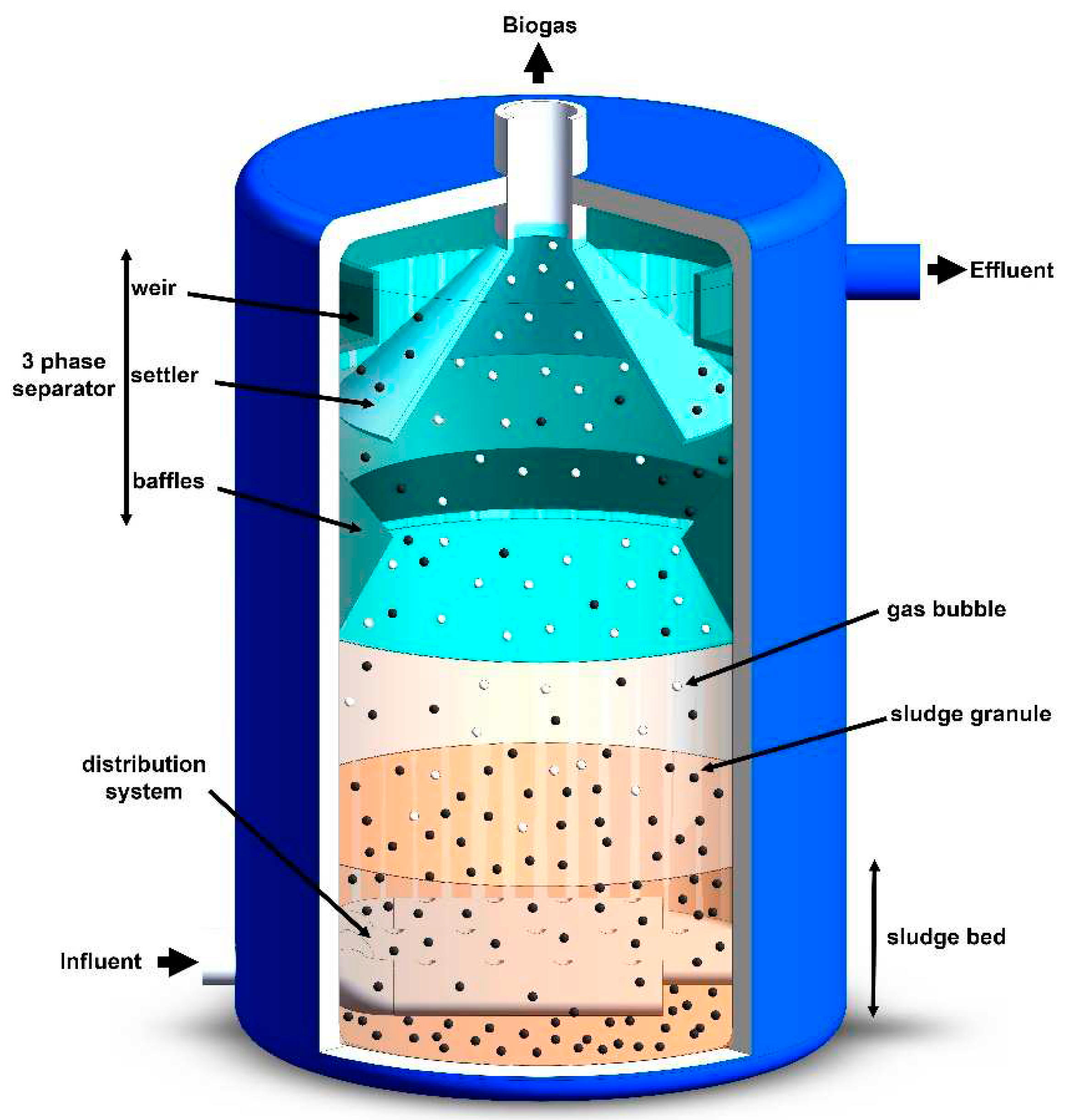
Figure 2.
Dye wastewater valorization for sustainability in textile industries.
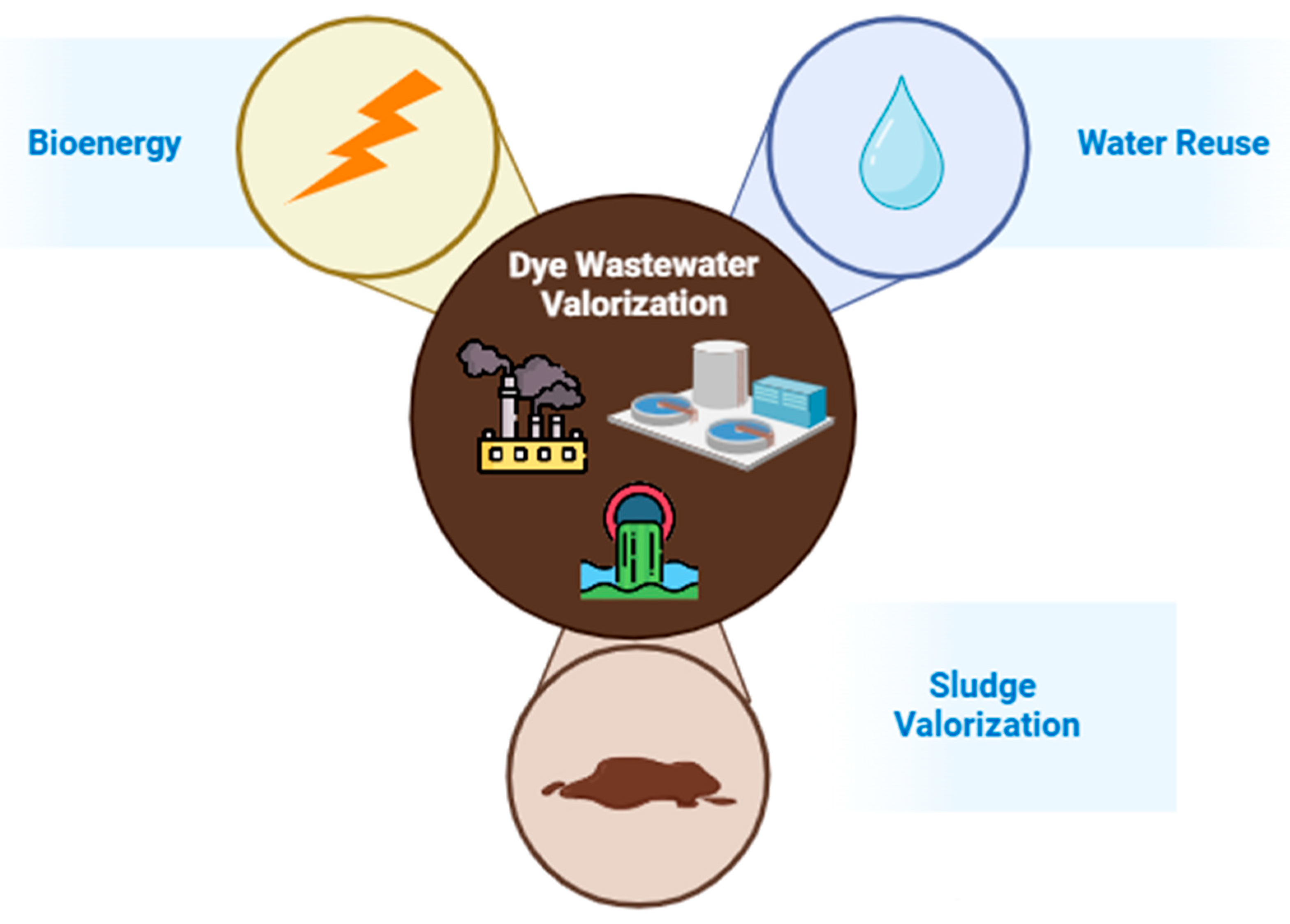

Table 1.
Influencing parameters in dye decolorization in UASB reactors.
| Influencing parameters | Main aspects | Main findings | Reference |
|---|---|---|---|
| Dye structure and concentration |
|
|
[22,23] |
| Electron donors and redox mediators |
|
|
[24,25,26,27] |
| pH |
|
|
[28,29] |
| Temperature |
|
|
[27,30] |
| Organic loading rate (OLR.) |
|
|
[31,32,33] |
| Hydraulic retention time (HRT.) |
|
|
[34,35,36] |
Table 2.
Studies on UASB reactors in dye removal mapped from the last five years (2018 – 2022).
| Scheme | Scale | UASB reactor conditions | Dye compounds | Treatability results | Reference | |||
|---|---|---|---|---|---|---|---|---|
| Type | Name | Concentration/ Amount | Color | COD | ||||
| UASB reactor | Lab | Continuous mode, 27ºC, HRT 24 h, OLR* | Azo dye | Reactive Red 2 | 50 mg L-1 | 51% | 89% | [38] |
| UASB reactor + Activated sludge process | Lab | Continuous mode, 16ºC – 29ºC, HRT 24h, OLR* | Azo dye | Yellow Gold Remazol | 50 mg L-1 | 85% | 67–88% | [39] |
| UASB reactor + shallow polishing pond | Lab | Continuous mode, 16ºC – 29ºC, HRT 24h, OLR* | Azo dye | Yellow Gold Remazol | 50 mg L-1 | 85% | 67–88% | [39] |
| UASB reactor | Lab | Continuous mode, temperature*, TRH 24h, OLR* | Azo dye | Red Bronze | 40–325 mg L-1 | 75–94% | 60–91% | [40] |
| UASB reactor + Aerated bioreactor | Lab | Continuous mode, 37±1 ºC, H.R.T. 6h, OLR 12.97 kg C.O.D. m-3 d-1 | Azo dye | 2-Naphthol Red | 0.1 g L-1 | 96% | 85.6% | [41] |
| UASB reactor + microaerated UASB reactor | Lab | Continuous mode, 25.0±1.4ºC, HRT*, OLR 1.27–1.50 kg m-3 d-1 | Azo dye | Direct Black 22 | 0.6 mM | 70– 78% | 67– 72% | [42] |
| UASB reactor + shallow polishing pond | Lab | Continuous mode, 16–29ºC, HRT 24 h, OLR* | − | Real textile wastewater | − | 50% | 80% | [43] |
| UASB reactor | Lab | Continuous mode, 27 – 29ºC, HRT 24 h, OLR 6.20 kg COD m-3 d-1 | Simulated wastewater containing Remazol blue RSP | 12.5 mg L-1 | 97.37±3.62% | 76.69±2.83% | [44] | |
| UASB reactor + SBR | Lab | Intermitent mode, 35ºC, HRT 48 h, OLR 0.74 – 0.90 kg COD m-3 d-1 | Real textile wastewater | − | 87.7% | 90.4% | [45] | |
Note: *, Data not available. COD = Chemical oxygen demand, UASB = Up-flow anaerobic sludge blanket, HRT = Hydraulic retention time, OLR = Organic loading rate, and SBR = Sequencing batch reactor.
Table 3.
Biogas production treating dye wastewater in UASB reactors.
| Scheme | UASB reactor conditions | Dye compound | Biogas production | Reference |
| UASB reactor | Temperature of 37ºC, H.R.T. 20h, OLR 3.86 kg C.O.D. m-3 d-1 | Azo dye mixture: Reactive Black 5, Direct Red 28, Direct Black 38, Direct Brown 2, and Direct Yellow 12 (250 mg L-1) | 2.26 L d-1 (70%CH4, v/v) | [52] |
| UASB + CSTR reactor | Temperature of 37ºC. HRT 3 – 30h, OLR 2 – 15 kg COD m-3 d-1 | Real textile wastewater | 0.36 – 0.94 L d-1 | [51] |
| UASB reactor | Temperature of 37ºC, HRT 18.3h, OLR 0.286 kg m-3 d-1 | Red Congo azo dye (100 mg L-1) | 2.0 – 2.7 L d-1 | [36] |
| UASB reactor | Temperature of 33ºC, H.R.T. 50h, O.L.R. 12 kg C.O.D. m-3 d-1 | Real textile wastewater | 36.04 L d-1 (79%CH4, v/v) | [50] |
| UASB reactor + aerobic system | Temperature of 37±1ºC, H.R.T. 6h, OLR 12.97 kg C.O.D. m-3 d-1 | 2-Naphthol Red (100 mg L-1) | 3.86 L CH4 m-3 d-1 | [41] |
Disclaimer/Publisher’s Note: The statements, opinions and data contained in all publications are solely those of the individual author(s) and contributor(s) and not of MDPI and/or the editor(s). MDPI and/or the editor(s) disclaim responsibility for any injury to people or property resulting from any ideas, methods, instructions or products referred to in the content. |
© 2023 by the authors. Licensee MDPI, Basel, Switzerland. This article is an open access article distributed under the terms and conditions of the Creative Commons Attribution (CC BY) license (https://creativecommons.org/licenses/by/4.0/).
Copyright: This open access article is published under a Creative Commons CC BY 4.0 license, which permit the free download, distribution, and reuse, provided that the author and preprint are cited in any reuse.


