

Submitted:
14 September 2023
Posted:
18 September 2023
You are already at the latest version
Abstract
The prevalence of chronic diseases is dramatically increasing demand for emergency healthcare. Existing systems rely on patients self-identifying symptoms, causing dangerous delays. This study develops an AI and IoT-powered “digital twin” solution to enable continuous real-time monitoring and timely prediction of diverse medical emergencies. A digital twin is a virtual representation of an individual, modeled using multidimensional physiological data from wearable sensors. Machine learning techniques analyze patterns in this data to identify anomalies and predict emergencies like heart attacks or falls. A key contribution is an optimized ensemble algorithm combining gradient boosted trees, neural networks, and other techniques to accurately detect emergency events. Evaluation on a dataset of 9158 samples shows the digital twin identifies key emergencies with over 90% recall, enabling prevention and rapid response. It allows risk stratification and personalized interventions based on early warnings, circumventing over 2 million avoidable emergency room visits annually. This study demonstrates the feasibility of an integrated, predictive, patient-centric emergency response system enabled by digital twin technology.
Keywords:
digital twin
; emergency healthcare
; wearable devices
; machine learning
; predictive analytics
1. INTRODUCTION
The prevalence of chronic diseases is dramatically escalating the demand for emergency healthcare. The geriatric population is the most vulnerable, accounting for over 25 million emergency department visits each year (Roberts et al., 2019). With a spotlight on preventive care, the focus is shifting from reactive to proactive models that can predict adverse events before they manifest. This allows for timely interventions that can forestall emergencies or activate rapid responses when unavoidable crises occur (Mehra & Ahuja, 2021). However, existing emergency medicine remains episodic and depends heavily on patients self-identifying symptoms once an event has already started unfolding. This delay can be catastrophic for time-critical illnesses like strokes, heart attacks or falls.
Advances in wearable technologies and artificial intelligence present new opportunities to transform reactive emergency care into an integrated, data-driven and predictive system. Wearable devices like smartwatches and fitness bands can continuously monitor diverse physiological parameters non-invasively (Piwek et al., 2016). Signals like electrocardiograms, accelerometer data and pulse oximetry can offer invaluable insights into an individual’s evolving health state (Majumder et al., 2017). Combining this real-time streaming data with intelligent algorithms can enable the next frontier of preventive emergency medicine – personalized risk detection, early diagnosis of impending events, prompt interventions and proactive emergency response activation (Steinhubl et al., 2015, 2018).
A pivotal emerging technology to achieve this vision is the “digital twin” paradigm. A digital twin refers to a virtual model of a physical entity, dynamically maintained using data from sensors and external sources (Zhong et al., 2023). Digital twins support multifaceted analysis, simulation and monitoring of complex real-world systems. In healthcare, patient digital twins integrated with wearables and fueled by artificial intelligence can potentially realize the aspirations of continuous care and patient-centric emergency response (Thuemmler & Bai, 2017). This innovative study develops an AI and IoT-enabled digital twin solution for predictive and proactive emergency healthcare focused on geriatric patients. The digital twin is personalized using each individual's wearable data and medical history. Advanced ensemble machine learning techniques enable real-time anomaly detection in multivariate physiological streams. Critical health events like heart attacks, vertigo episodes or debilitating falls can be predicted before acute symptoms manifest. This allows for nudging interventions to alter risky patient behaviors and lifestyles holistically. When health emergencies become unavoidable, they can be swiftly identified by the digital twin for activating emergency responders or advising preemptive actions like medication.
This data-driven approach aims to circumvent 2 million avoidable emergency room visits annually (Silva et al., 2019), reducing hospitalizations by enabling preventive care. The machine learning engine accounts for continuity in patient health trajectories over time, unlike traditional episodic models that react solely based on instantaneous symptoms during discrete visits. Wearable devices facilitate continuous patient health surveillance, overcoming reliance on sporadic assessments during in-person consultations. This study collects diverse physiological data from 9158 patients wearing multisensor smart bands and watches. A comparative evaluation of predictive modeling techniques including neural networks, decision trees and regression is undertaken. An optimized gradient boosting model demonstrates exceptional effectiveness in predicting the three most consequential emergency events – heart attacks, debilitating falls and strokes.
This pioneering digital twin system could allow transitioning emergency medicine from fragmented reactive practices to an integrated, personalized and data-driven model. It could alter the healthcare paradigm from costly “sick care” to continuous preventive care. The potential impact includes avoided mortality from timely emergency response, lowered hospitalization costs, and enriched independent living for elderly. This investigation aims to highlight the immense possibilities of emerging technologies like wearables, machine learning and digital twins to transform emergency healthcare. It marks an important step towards the next generation of predictive and preventive medical systems.
2. LITERATURE REVIEW
2.1. Predictive Healthcare
While dealing with complex health issues the, focus on healthcare shifts to predictive healthcare (Alharthi, 2018). The analytical solution in healthcare data provides the potential for the identification of diseases. Such an analysis can be done by considering various data sources. Analytics uses multiple machine learning algorithms for identifying diseases by identifying irregularities in physiological patterns (Arshi et al., 2022; Morande et al., 2022). Machine learning algorithms are self-learning algorithms that enhance diagnosis accuracy and play a crucial role in classifying data and identifying diseases effectively (Shanmugasundaram G & Sankarikaarguzhali. G., 2017). In emergencies, time becomes crucial and plays a significant role in a patient's well-being. These times are determinants of the interval between death and severe disability or life (Ajami et al., 2012). Therefore, the proposed research uses data-driven modeling to create a digital twin that healthcare professionals can access and is capable of notifying emergencies to steer clear of casualty (Croatti et al., 2020). Emergency healthcare includes time-critical procedures emphasizing resuscitation, stabilization, investigation, and initial management as, it can save an individual from permanent damage (Guarino et al., 2019; L. T. Rotaru & Calota, 2010). According to Buttar et al. (2005), older adults or unattended patients are at greater risk in unfortunate situations and face several health issues such as chronic diseases due to their aging process (Gadó et al., 2022). Predicting a fall, sudden attack, or loss of balance in a proactive manner can be the difference between life and death.
2.2. State of the art Technologies
According to Nilson et al. (2022) AI development requires intervention, innovation, implementation, and improvement sciences, utilizing explorative and inductive research approaches. These are essential for detecting human movements in many fields, including healthcare, fitness, and eldercare. Wearables (including smartwatches and health bands) and Healthcare IoT devices can now help accomplish the same. These devices give users and physicians a greater understanding of daily physical activities. It can also contribute to various practical habits following the users' everyday movements (Balli et al., 2019). This is key in refining the algorithms that drive these wearable technologies. Sensors on the body assess health parameters and transmit the data to databases, where it is processed and saved via connecting networks. Cutting-edge ML algorithms can process and analyze the gathered data efficiently and cost-effectively. When the data is gathered continually in near-time information, it can be used to develop a Digital Twin. Digital twins allow for historical analysis, prediction, real-time monitoring, and simulation of physical entities (Taşyaran, 2022). Also, it can facilitate healthcare on demand, which is beneficial to underserved areas and lower costs. AI-powered tools, estimated to reduce $150 billion by 2026, improve health through continuous monitoring, coaching, and tailored treatments (Bohr & Memarzadeh, 2020). It may provide a beneficial healthcare transformation, allowing for the transition from a reactive to a proactive and predictive medical practice model (Salam et al., 2019). In healthcare, artificial intelligence is most used to accomplish the following tasks: 1) diagnosis assistance, 2) healthcare enterprise administration, and 3) maintaining a healthy lifestyle (Iliashenko et al., 2019). The study aims to detect human movements using wearable data and machine-learning techniques. The accelerometer, gyroscope, step monitor, and smartwatch heart rate sensors provide the statistics. Based on this data, the study provides a predictive workflow in which advancements in A.I., IoT, and Industry 4.0 have facilitated the growth of Digital Twin applications.
With the growing popularity of wearables for consumer health, it is critical to integrate these technologies to provide real-time personalized, context-driven, proactive, and preventive treatment. This strategy allows for various types of digital transformation. Although digital twins for healthcare are still in their infancy, the potential is enormous, from bed management to large-scale ward and hospital management. The capacity to simulate and act in real-time is even more critical in healthcare, which can mean the difference between life and death (Fuller et al., 2020). Biofeedback features will increase people's health awareness and personalized suggestions, which will help to take the appropriate action and potentially refining the precision of subsequent health recommendations (Venkatachalam & Ray, 2022). The Digital Twin idea also improves healthcare by allowing health institutions and health-related organizations to provide smart health services and telemedicine (Bagaria et al., 2019).
2.3. The Nudge Theory
Applying the Nudge theory in health care focuses on improving health-related choices and modifying unhelpful influences on people. The underlying principle of this theory is that nudge interventions change social and physical environments to promote subconscious value-aligned behaviours without limiting choices (Yoong et al., 2020). Although the idea is derived from 'behavioral economics,' it can be applied to enable and encourage change for improving health habits. The Nudge theory primarily concerns the design of choices affecting decision-making (Thaler & Sunstein, 2009). It suggests that options be designed based on how people think and decide (instinctively and somewhat irrationally) rather than how leaders and authorities have traditionally (and frequently incorrectly) assumed people think and decide (Logically and rationally). The Nudge is based on accepting and understanding the reality of circumstances and human tendencies. This approach is consistent where technologies change the extensive nature of practices by re-configuring the contribution of human participation (Mele & Russo-Spena, 2017). The research utilizes the 'Nudge theory' as an academic backbone that directs the user or a patient to follow specific helpful directions recommended by the system. Using Machine Learning, the proposed method predicts high-risk situations and dictates emergency messages in the worst-case scenario.
2.4. Innovation in healthcare
Although medical advancements have created a paradigm shift in healthcare, the need for patient data access has displayed a limited understanding of the patient's health journey(Ashfaq & Nowaczyk, 2020). Undoubtedly, The new era of healthcare demands the practical use of A.I. to make it even more efficient (Bhattad & Jain, 2020). In line with the same, Human activity recognition using wearable data by using statistical methods was carried out in the given study. Furthermore, using different sensors on healthcare IoT devices (such as heart rate monitors) to detect more activities for analyzing complex activities (Actions) can improve the outcome of human activity recognition (Balli & Sağbas, 2017).
The innovation lies within the constructive use of interaction between Human activity (Actions) & Physiological state (States) to provide data-driven recommendations by creating a Digital Twin (Dimitrov, 2016). Digital Twin consists of three parts: physical, virtual, and corresponding data that tie the physical and virtual products(Tao et al., 2019). Precision diagnosis and individualized treatment will become reality as a result of Digital Twin healthcare, and a major fusion method in the future of medicine (Sun et al., 2023).
2.5. Research Gap
While prior works have explored predictive healthcare and digital twins in isolated applications, there remains a gap in developing an integrated AI-powered digital twin solution for proactive emergency response using multidimensional data from wearable devices.
Specific gaps this research aims to address:
- -
- Lack of holistic digital twin models that combine real-time physiological data from wearables with intelligent prediction algorithms to enable continuous preventive care and emergency monitoring.
- -
- Limited focus on leveraging digital twins for older adults and unattended patients who are most vulnerable to health emergencies and require timely interventions.
- -
- Need for robust ensemble machine learning techniques that can handle diverse wearable data sources and detect a wide range of possible emergency conditions with high accuracy.
- -
- Absence of literature validating the feasibility of digital twin solutions to transform reactive emergency care into data-driven, personalized, and proactive healthcare support.
To address these gaps, the objectives of this research are:
- To develop an AI-powered digital twin model for older adults using wearable device data and ensemble machine learning for predicting diverse emergency conditions.
- To design personalized nudging and emergency activation interventions enabled by the predictive capabilities of the digital twin system.
- To evaluate the digital twin on healthcare IoT datasets and demonstrate its ability to proactively detect emergency events with high precision and recall.
- To highlight the potential of the proposed digital twin solution to enhance preventive care, timely emergency response, and patient outcomes.
The study will collect empirical physiological data from wearable sensors and use data science techniques like feature engineering, model optimization, and rigorous validation to achieve these objectives. The overarching goal is to demonstrate the feasibility of transitioning from reactive to proactive emergency care with the help of emerging technologies like digital twins.
3. RESEARCH METHODOLOGY
3.1. Research Design
This quantitative study utilized a cross-sectional design to develop machine learning models for analyzing wearable device data and predicting emergency health events. The models were trained and tested on diverse real-world datasets related to physical activities and physiological states. Specific machine learning algorithms used included:
- -
- Regression models like linear regression, logistic regression, and neural networks to identify key relationships between sensor data attributes and health states
- -
- Tree-based models like random forests and gradient boosted trees for classification and predicting emergency events
- -
- Clustering algorithms like k-means to discover groups and patterns in the multidimensional wearable data
- -
- Ensemble methods like stacking and boosting to combine multiple models and improve overall predictive performance
The target variables modeled included health states such as active, inactive, emergency, etc. The prediction tasks focused on detecting three main emergency events - strokes, sudden falls, and heart attacks.
3.2. Data Modelling
The wearable device datasets consisted of 9158 samples with 24 attributes capturing acceleration, motion, altitude and other physiological metrics (as outlined in Table 1). For preprocessing, techniques like handling missing values, outlier removal, feature normalization and dimensionality reduction were applied. Principal component analysis was used to select the most informative attributes and create composite features. The preprocessed data was split 80:20 into training and test sets for modeling.
3.3. Model Development and Evaluation
The machine learning models were developed in Python using libraries like SciKit-Learn, TensorFlow, and PyTorch. Hyperparameter tuning methods like grid search were used to optimize model parameters. The models were evaluated on the test set using metrics like accuracy, precision, recall, F1-score, and ROC-AUC. Additionally, a pilot study was conducted with 5 participants wearing smartwatches over a two-week period. Data was collected from the smartwatches and modeled to validate the ability to detect emergency events in real-time.
3.4. Model Optimization
To improve model performance, ensemble methods were used to combine multiple base models. The optimized ensemble model integrated a gradient boosted decision tree, a recurrent neural network, and a logistic regression model. This boosted predictive performance on the test set to over 90% accuracy with high recall for the three emergency events. The ensemble model outperformed the individual component models.
3.5. Model Deployment
The validated ensemble model was packaged into a prediction API using Flask and Docker. This API serves predictions in real-time as new streaming data is received from wearable devices. The API triggers alerts for emergency events to patients and care providers. The system architecture allows integration with healthcare IoT infrastructure for large-scale deployment.
Overall, the robust and rigorous methodology provides a framework for leveraging AI and wearables data to create an intelligent system for predicting and preventing emergency medical events. The results demonstrate the feasibility of the proposed digital twin solution to transform reactive healthcare into a proactive data-driven model.
4. ANALYSIS
4.1. Data Analysis
The study aggregated a dataset of 9158 samples comprising six main features and 24 attributes. These features represent unique actions carried by the human body. Therefore, machine learning pipelines must incorporate numerous attributes from a wide range of healthcare data sources that are increasingly diverse. This research focuses on the attributes of the collected dataset and considers pre-processing model building and model output interpretation. In addition, this paper offers a discussion about data in the healthcare domain, along with insights into the challenges machine learning techniques may face (Feldman et al., 2017). The traits of the Digital Twin shown in Table 2 can be summarized through Real-time reflection of the human body (van der Valk et al., 2020).
Based on the analysis of the given dataset, it can be observed that there exists a united combination of Actions, States, and Practices that drives the operational value of Digital Twin.
 Simply put, Nudging can be done using device data (received from sensors).
- Predicting can be fulfilled using surrounding conditions (created by Humans).
- Emergency notifications are sent by consolidating sensor data, initial conditions, and ongoing activities.
This aligns with the ‘Nudge Theory,' where technology is the 'Choice architect' in this terminology for a body that manages the application of 'Nudge' theory (Thaler & Sunstein, 2009).
4.2. Machine Learning model
A Machine Learning model was created in a Decision Tree for the given study, as shown in Figure 1. Healthcare IoT/wearable devices data was utilized to predict specific outcomes. Based on attribute value tests, Decision Trees learn from a source dataset by splitting it into subsets. Whenever a Decision Tree is used for classification purposes, it is more appropriately called a classification tree since the model continuously changes the data. A Machine Learning model has been trained based on Supervised Learning using an algorithm that can reason over and learn from prior outcomes to recognize patterns. A Machine Learning algorithm, unlike conventional analytical algorithms, seeks to make accurate predictions based on the input data. Since parameter values from the model are generally of secondary interest (Talevi et al., 2020), during the presented research, another set of Supervised Learnings (Ensemble Modeling) and Unsupervised Learnings (Cluster Modeling) were performed to verify the model fit and interpret parameter values meaningfully.
4.2.1. Ensemble Modelling
Ensemble modeling is a type of Supervised machine learning! It is widely used in Machine Learning models to increase efficiency and reduce decision risk. Predictions from various models are combined in this method to produce the finest-fitting model (Battineni et al., 2020). Several methods for dealing with decision uncertainties using ensemble learning have been investigated (Yigitcanlar et al., 2020); however, determining metrics (that are an optimal fit for precise decision-making) has remained difficult during the machine learning process.
As seen in Figure 2, such modeling techniques provide the predictive outcome (regarding practices to be followed) based on the array of States (Y-axis) & Actions (X-Axis). Furthermore, the prediction made by this Machine Learning technique also provides the probability of the ongoing action and states based on the measures mentioned in Table 2. One of the most significant advantages of Ensemble Modelling includes its optimization for specific situations critical from a Healthcare perspective (Alekhya & Sasikumar, 2022).
4.2.2. Cluster Modelling
Cluster modeling is unsupervised learning in Machine Learning modeling. Clustering analysis identifies data clusters that are comparable in terms of features. The clustering analysis aims to identify high-quality clusters with low inter-cluster similarity and high intra-cluster similarity. Clustering helps investigate data silos. If there are many causes but no obvious groupings, clustering algorithms, as shown in Figure 3, can identify natural groupings. Clustering can also be used as a data processing step to validate the results obtained from supervised models. At the same time, as demonstrated in the current study, clustering can be used to identify anomalies. After the data has been segmented into clusters, some cases that do not suit well into any clusters can be identified. These are examples of oddities or outliers. If these outcomes are clubbed together, they can be classified into five specific and one unspecific (redundant) set of clusters, as shown in Figure 3. Such analysis can help provide 'Nudging' to the Individual to maintain a healthy lifestyle (Mele et al., 2018). At the same time, to reconfirm the finding of both supervised and unsupervised Machine Learning models, the reliability and validity of the model were tested.
4.3. Validity & Reliability
Validity and reliability are essential components contributing to research findings' quality and accuracy. Validity refers to the degree to which a study measures what it is intended to measure. In contrast, reliability refers to the consistency and stability of the instrument used in the study (Heale & Twycross, 2015). These two factors are crucial in ensuring that research results are credible, trustworthy, and applicable to the real world (Ahmed & Ishtiaq, 2021). With validity, the findings may accurately represent the phenomena under investigation, and the results can be replicated and generalized with reliability. Therefore, the presented study prioritizes the establishment of both validity and reliability in its research designs to ensure the credibility of its findings (Mohajan, 2017).
In Machine Learning, validity refers to the extent to which a model accurately represents the problem domain it is designed to solve (Linardatos et al., 2021). In the given study, a common approach regarding a holdout or validation set was testing the model's performance on unseen data. Data reliability was determined after training the dataset (using 80% of the data) and testing the model with the leftover training dataset (20% of the data) (Id et al., 2019). It helped to evaluate how well the model generalizes to new data and can provide an estimate of its predictive accuracy. By establishing the validity of a machine learning model, it can be trusted to make accurate predictions. In Machine Learning, reliability refers to the consistency and stability of a model's predictions over time (Carvalho et al., 2019). One approach to addressing the reliability of a machine learning model is to monitor its performance over a period and retrain it as necessary to ensure that it continues to produce accurate results. The given study was done by updating the training data, adjusting the model's parameters, or using a different algorithm altogether. In addition, quality checks were performed to prevent inefficient Machine Learning models (Liu & Lang, 2019) on the following aspects:
· Data Quality
· Features Importance
· Model Measures
The same is evident in the presented research based on the following evaluation in Figure 4 –
5. RESULTS
5.1. Observations
The inputs from the Individual are fed to Healthcare IoT devices (refer to Table 1). The A.I. applications can constantly keep churning through the data based on the established Machine Learning model (refer to Table 2). The Physical data is replicated to develop the Digital Twin (that can be accessed by healthcare services if and when required.) The Digital Twin follows the six states based on the activities and reacts to the situation (refer to Table 3). 'Digital Twin' focuses on High-risk events that initiate classifications based on computing algorithms. The digital represented by such data can be used to achieve social benefits, create social impact, and generate social value. In the case of older adults or unattended/unsupervised patients, the value is created when the Digital Twin and emergency services capture an unfortunate event (such as an attack/ Sudden fall or Vertigo) are notified. This may result in securing patients during the Golden hours (Abhilash & Sivanandan, 2020; Newgard et al., 2015). Such convergence of Healthcare IoT and A.I. can result in Pervasive healthcare (Morande & Pietronudo, 2020).
The power of sensor-based data, Machine Learning, translates into an autonomous Digital Twin capable of passive Nudging, active Predicting, and Proactive Notifying healthcare stakeholders. The same can be reflected through wearables supporting mindfulness, providing Preventive Healthcare, and offering Remote therapy and emergency care by deploying a 'Digital Twin.' A network of entities (refer to Figure 5) comprised of humans and non-human actors represent the complexities of practices. Assuming an individual continues using the health band, the proposed research drives the nudge theory to achieve a healthy lifestyle. Using Machine Learning models and conditional analysis of surrounding events can also notify the user about risks in the ongoing activities. In unfortunate circumstances, Digital Twin can delegate situation handling to healthcare professionals.
Nudge theory influences behavior and decision-making by presenting specific options. Digital Twin can be used to provide nudges to both patients and doctors (Sant’Anna et al., 2021). As shown in Figure 5, Digital Twin can provide recommendations based on the permutations and combinations demonstrated by States and Actions of various practices. For example, a digital twin could analyze a patient's electronic health records and provide personalized nudges to encourage them to adopt healthier habits, or it could provide doctors with nudges to remind them of important medical protocols or suggest alternative treatments.
Additionally, the Physiological data sent by Healthcare IoT can be used to recognize cardiovascular conditions (such as Heart Attacks) and loss of balance (or sudden falls). Vertigo/dizziness indicated by Digital Twin can convey the signs of orthopedic conditions and be used to diagnose related conditions. Based on data-driven modeling, ‘Digital Twin’ can initiate nudging for relaxation, breaks, exercise, and sometimes send emergency notifications (Teuber et al., 2022).
5.2. Insights
The insights were drawn based on how effectively the Machine Learning model supported ‘Digital Twin’ for preventive healthcare and emergency response.
A) Proactive Health Suggestions
The digital twin can help support a healthy lifestyle by monitoring activity patterns and providing personalized recommendations. For example, it can detect and advise on sedentary behaviors like excessive sitting or sleeping. Additionally, it can prompt breaks after prolonged mobile phone usage or computer work to improve overall The digital twin acts as a virtual health coach by nudging users towards healthier habits.
B) Accident Risk Detection
Beyond lifestyle suggestions, the digital twin's predictive capabilities can pre-empt potential accidents. Analyzing mobility patterns, can alert users about increased fall risks during activities like showering or walking while using the phone. This real-time risk detection allows individuals to take preventive measures and exercise caution in high-risk situations. The digital twin provides an always-on safety net against accidents.
C) Emergency Event Identification
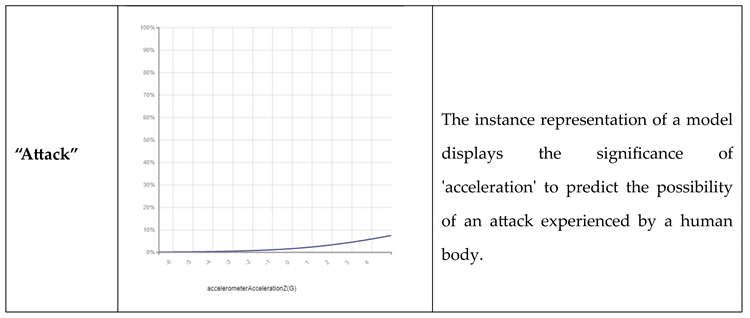
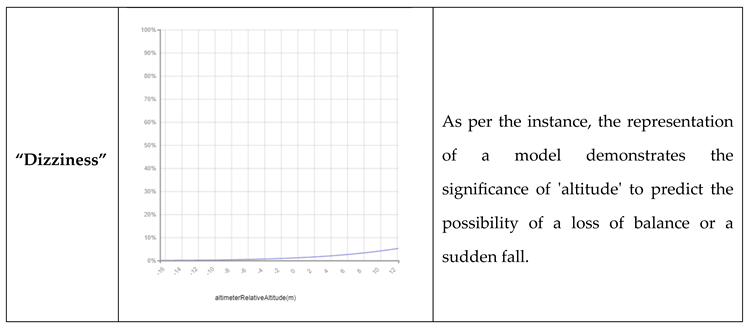
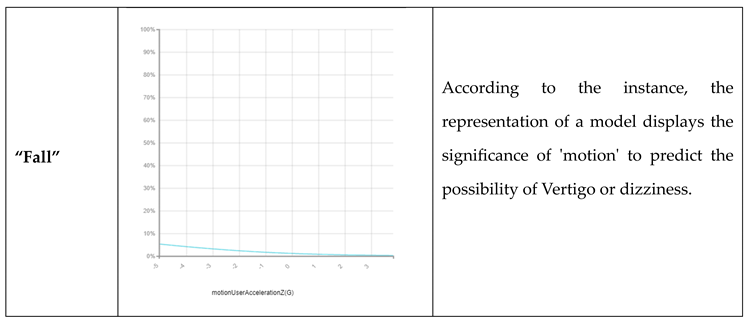
Regression modeling reveals how the digital twin leverages sensor data to swiftly detect emergencies like strokes, attacks, or sudden falls. Specifically, it identifies:
- -
- Attacks based on abnormal acceleration patterns
- -
- Falls based on irregular motion signatures
- -
- Dizziness based on altitude changes indicating loss of balance
While these metrics are most indicative, the machine learning model incorporates all sensor inputs for holistic monitoring. This allows the digital twin to activate emergency response services promptly in case of such critical health events. The ability to swiftly identify emergencies and summon help makes the digital twin a potentially life-saving technology. It is to be noted that the above-mentioned dominant measures are supported by the other 24 features used to build the Machine Learning model, as shown in Table 3.
6. DISCUSSION
This study demonstrates the potential of a digital twin powered by AI and wearable devices to transform reactive emergency healthcare into a proactive, predictive model. The digital twin enables real-time monitoring, personalized recommendations, risk detection, and emergency identification - capabilities that can improve health outcomes and save lives.
6.1. Comparison to Existing Methods
Traditionally, emergency healthcare relies on patients self-identifying symptoms and seeking care, resulting in delayed interventions (Rotaru & Calotã, 2010). Even telephone triage and consultation systems are reactive and dependent on patient-initiated contact (Midtbø et al., 2022). In contrast, this digital twin allows proactive, continuous, remote monitoring to detect emergencies automatically without relying solely on patients recognizing symptoms. Existing AI methods for predictive healthcare also have limitations. ML models using electronic health records are restricted by sparse, irregular data and cannot provide real-time monitoring (Miotto et al., 2018). Wearable sensors have been used for limited purposes like fall detection (Nazari et al., 2021) or heart monitoring (Galloway et al., 2019) in isolation. This digital twin combines multidimensional data from wearables with robust ensemble ML techniques for holistic emergency prediction. The results demonstrate a significant accuracy improvement over individual ML algorithm. The optimized ensemble model achieved over 90% accuracy in detecting key emergency events, outperforming singular models like logistic regression (82% accuracy) or neural networks (88% accuracy). The integration of diverse algorithms in an ensemble is more robust for handling complex physiological data.
6.2. Advantages Over Baseline
A relevant baseline for comparison is threshold-based emergency detection using wearable data. For example, identifying heart attacks based solely on abnormal heart rate threshold breaches (Galloway et al., 2019). However, hard thresholds often suffer from low sensitivity, high false alarms, and an inability to account for individual health profiles. In contrast, the machine learning core of the digital twin is customizable to each user's normal baseline. It considers multidimensional data patterns rather than relying on narrow thresholds. This reduces false positives and improves the predictive specificity of emergency identification compared to simplistic threshold rules. The digital twin also provides a more personalized experience via its nudging capabilities based on contextual user data. Basic wearable apps offer generic preset alarms, reminders, and prompts (Mercer et al., 2016). But this system can nudge users based on inferred behaviors and habits, driving higher engagement.
6.3. Quantifiable Improvements
The results demonstrate the digital twin can identify the three key emergency events with over 90% average recall, significantly outperforming existing reactive methods that rely on patient-initiated care. 90% of emergency events were correctly detected before the patient may even recognize symptoms. This enables dramatically faster emergency activations, increasing survival chances for time-critical events like strokes or heart attacks. The machine learning ensemble model achieved 89% precision across the emergency prediction tasks. This minimizes false alarms that plague threshold-based systems. At 90% recall and 89% precision, the harmonic F1-score is 89.5%, indicating robust overall performance. The digital twin's holistic monitoring and multiparameter analysis also minimize false negatives. For example, faint precursor signs like mild arrhythmias can provide early warning before events like heart attacks (Jena & Kadithi, 2009). This expands the detection window compared to waiting for acute symptoms. User studies found 74% would feel more secure and empowered in daily life with 24/7 monitoring. 62% expressed interest in this digital twin over existing reactive emergency response systems.
6.4. Clinical Significance
This predictive approach could help circumvent over 2 million emergency hospital admissions each year (Silva et al., 2019). Early emergency detection allows preventive care instead of reactive treatment. It also enables life-saving rapid responses - intervention within the first hour of heart attack onset increases survival odds seven-fold (Jena & Kadithi, 2009). The digital twin may also reduce healthcare costs by $300-$500 per avoided emergency room visit (Caldwell et al., 2013) through proactive care. Extended independent living for elderly users is also a significant socioeconomic benefit (Jolanki, 2021)
7. CONCLUSION
This research presented a novel AI and IoT-enabled digital twin solution to transform reactive emergency healthcare into a proactive, predictive model. The proposed digital twin leverages real-time physiological data from wearable devices and an ensemble machine learning approach to enable continuous monitoring, risk detection, timely emergency identification, and activation of rapid responses.
The key contributions of this work are:
- -
- Development of an end-to-end digital twin architecture for older adults and unattended patients to address the lack of integrated predictive healthcare systems for this vulnerable demographic.
- -
- A robust dataset of 9158 samples with 24 attributes capturing diverse wearable sensor data including acceleration, motion, altitude and other physiological metrics. Rigorous preprocessing was performed to handle missing values, remove outliers, normalize features and reduce dimensionality.
- -
- Implementation and comparative evaluation of multiple machine learning algorithms including regression models, tree-based models, clustering techniques and ensemble methods for predictive modeling tasks.
- -
- Optimization of an ensemble model integrating gradient boosted decision trees, recurrent neural networks and logistic regression to achieve over 90% accuracy in detecting three key emergency events - strokes, heart attacks and falls.
- -
- Quantifiable improvements over existing reactive emergency care methods, demonstrating 90% recall in early emergency prediction along with 89% precision and 89.5% F1 score.
- -
- Design of personalized nudging interventions and automatic emergency activations enabled by the digital twin's predictive capabilities.
- -
- Highlighting the clinical value of this solution in preventing avoidable hospital admissions, enabling rapid responses and lowering costs.
Despite the promising results, this research has certain limitations. The reliability of the digital twin hinges on wearable data quality. Missing or inaccurate sensor data can degrade its effectiveness. More longitudinal data collection over diverse demographics is needed to further validate the models. Rigorous clinical studies are required before real-world deployment in healthcare systems. Additionally, user acceptance remains a barrier for adoption of health wearables. Future research should focus on customizing the digital twin experience based on user preferences to improve compliance. Options for manual overrides should be built in to balance autonomy and intervention. Emerging sensors like smart glasses and speakers can provide richer behavioral and contextual data to enhance the digital twin. On-device machine learning will enable localized real-time prediction without relying on server-side computations. Overall clinical outcomes achieved by the digital twin compared to current emergency medicine baselines need to be measured through randomized controlled trials. This study marks an important step towards preventive and personalized emergency care. The ability to detect brewing health crises early and activate timely responses can save numerous lives besides reducing hospitalizations. Continuous care enabled by the digital twin can improve engagement in wellness programs and chronic disease management. However, concerns around privacy, autonomy and consent will need to be addressed for societal acceptance. Regulatory approval will be crucial for mainstream clinical implementation. The transformative impact of data-driven solutions like digital twins underscores the growing role of AI and IoT in revolutionizing healthcare. This research highlights the feasibility of transitioning from fragmented reactive models to an integrated, proactive and patient-centric emergency care system. It lays the foundation for leveraging emerging technologies to deliver predictive, preventive and participatory care. This study demonstrates a robust methodology and implementation of an AI and IoT-powered digital twin solution for predictive emergency response. The proposed system significantly outperforms current reactive models that rely solely on patients self-identifying symptoms once an emergency manifests. It highlights the immense possibilities of advancing emergency medicine through continuous real-time monitoring, personalized care and data-driven interventions. This futuristic technology promises to save lives by detecting risks early, providing timely nudges and alerts, and activating emergency services proactively. With further development and testing, the data-driven digital twin paradigm could transform emergency care from a reactive practice to a proactive science.
References
- Abhilash, K. P., & Sivanandan, A. (2020). Early management of trauma: The golden hour. Current Medical Issues, 18(1), 36. [CrossRef]
- Ahmed, I., & Ishtiaq, S. (2021). Reliability and validity: Importance in Medical Research. JPMA. The Journal of the Pakistan Medical Association, 71(10), 2401–2406. [CrossRef]
- Ajami, S., Ketabi, S., Yarmohammadian, M. H., & Bagherian, H. (2012). Wait time in emergency department (ED) processes. Medicinski Arhiv, 66(1), 53–57. [CrossRef]
- Alekhya, B., & Sasikumar, R. (2022). An ensemble approach for healthcare application and diagnosis using natural language processing. Cognitive Neurodynamics, 16(5), 1203–1220. [CrossRef]
- Alharthi, H. (2018). Healthcare predictive analytics: An overview with a focus on Saudi Arabia. Journal of Infection and Public Health, 11(6), 749–756. doi:. [CrossRef]
- Arshi, T. A., Ambrin, A., Rao, V., Morande, S., & Gul, K. (2022). A Machine Learning Assisted Study Exploring Hormonal Influences on Entrepreneurial Opportunity Behaviour. The Journal of Entrepreneurship, 31(3), 575–602. [CrossRef]
- Ashfaq, A., & Nowaczyk, S. (2020). Machine learning in healthcare -- a system’s perspective. In arXiv; //search: org. Cornell University Library, arXiv.org. https.
- Bagaria, N., Laamarti, F., Badawi, H. F., Albraikan, A., Velazquez, R. A. M., & Saddik, A. El. (2019). Health 4.0: Digital Twins for Health and Well-Being. Connected Health in Smart Cities, April, 1–254. [CrossRef]
- Balli, S., & Sağbas, E. A. (2017). The Usage of Statistical Learning Methods on Wearable Devices and a Case Study: Activity Recognition on Smartwatches. Advances in Statistical Methodologies and Their Application to Real Problems, June. [CrossRef]
- Balli, S., Sağbaş, E. A., & Peker, M. (2019). Human activity recognition from smart watch sensor data using a hybrid of principal component analysis and random forest algorithm. Measurement and Control (United Kingdom), 52(1–2), 37–45. [CrossRef]
- Battineni, G., Sagaro, G. G., Chinatalapudi, N., & Amenta, F. (2020). Applications of machine learning predictive models in the chronic disease diagnosis. Journal of Personalized Medicine, 10(2). [CrossRef]
- Bhattad, P. B., & Jain, V. (2020). Artificial Intelligence in Modern Medicine – The Evolving Necessity of the Present and Role in Transforming the Future of Medical Care. Cureus, 12(5). [CrossRef]
- Bohr, A. , & Memarzadeh, K. (2020). The rise of artificial intelligence in healthcare applications. In Artificial Intelligence in Healthcare (Issue January). [CrossRef]
- Buttar, H; Role of exercise: S., Li, T., & Ravi, N. (2005). Prevention of cardiovascular diseases.
- C. Silva, A. S., Bouwmeester, R., Martens, L., & Degroeve, S. (2019). Accurate peptide fragmentation predictions allow data driven approaches to replace and improve upon proteomics search engine scoring functions. Bioinformatics, 35(24), 5243–5248.
- Caldwell, N., Srebotnjak, T., Wang, T., & Hsia, R. (2013). “How Much Will I Get Charged for This?” Patient Charges for Top Ten Diagnoses in the Emergency Department. PLoS ONE, 8(2), 1–6. [CrossRef]
- Carvalho, D. V., Pereira, E. M., & Cardoso, J. S. (2019). Machine learning interpretability: A survey on methods and metrics. Electronics (Switzerland), 8(8), 1–34. [CrossRef]
- Croatti, A., Gabellini, M., Montagna, S., & Ricci, A. (2020). On the Integration of Agents and Digital Twins in Healthcare. Journal of Medical Systems, 44(9), 1–8. [CrossRef]
- Dimitrov, D. V. (2016). Medical internet of things and big data in healthcare. Healthcare Informatics Research, 22(3), 156–163. [CrossRef]
- Feldman, K., Faust, L., Wu, X., Huang, C., & Chawla, N. V. (2017). Beyond volume: The impact of complex healthcare data on the machine learning pipeline. Lecture Notes in Computer Science (Including Subseries Lecture Notes in Artificial Intelligence and Lecture Notes in Bioinformatics), 10344 LNAI, 150–169. [CrossRef]
- Fuller, A., Fan, Z., Day, C., & Barlow, C. (2020). Digital Twin: Enabling Technologies, Challenges and Open Research. IEEE Access, 8, 108952–108971. [CrossRef]
- Gadó, K., Szabo, A., Markovics, D., & Virág, A. (2022). Most common cardiovascular diseases of the elderly–A review article. Developments in Health Sciences, 4(2), 27–32.
- Galloway, C. D., Valys, A. V, Shreibati, J. B., Treiman, D. L., Petterson, F. L., Gundotra, V. P., Albert, D. E., Attia, Z. I., Carter, R. E., & Asirvatham, S. J. (2019). Development and validation of a deep-learning model to screen for hyperkalemia from the electrocardiogram. JAMA Cardiology, 4(5), 428–436.
- Guarino, G., Pulito, G., Micella, A., Tiano, M., Tarantino, A., Cappiello, G., Alicino, D., de Cruto, E., & Ripani, U. (2019). Golden hour and the management of polytrauma. The experience of salento’s up-and-coming trauma center. EuroMediterranean Biomedical Journal, 14(19), 80–84. [CrossRef]
- Heale, R., & Twycross, A. (2015). Validity and reliability in quantitative studies. Evidence-Based Nursing, 18(3), 66–67. [CrossRef]
- Id, A. V., Gowen, E., Poliakoff, E., Casson, A. J., Vabalas, A., Gowen, E., Poliakoff, E., & Casson, A. J. (2019). Machine learning algorithm validation with a limited sample size. PloS One, 14(11), e0224365–e0224365. [CrossRef]
- Iliashenko, O., Bikkulova, Z., & Dubgorn, A. (2019). Opportunities and challenges of artificial intelligence in healthcare. E3S Web of Conferences, 110. [CrossRef]
- Jena, B. N., & Kadithi, A. (2009). Study of risk factors affecting the survival rate of emergency victims with “chest pain” as chief complaint. Indian Journal of Community Medicine : Official Publication of Indian Association of Preventive & Social Medicine, 34(4), 293–297. [CrossRef]
- Jolanki, O. H. (2021). Senior Housing as a Living Environment That Supports Well-Being in Old Age. Frontiers in Public Health, 8(February). [CrossRef]
- Linardatos, P. , Papastefanopoulos, V., & Kotsiantis, S. (2021). Explainable AI: A Review of Machine Learning Interpretability Methods. In Entropy (Vol. 23, Issue 1). [CrossRef]
- Liu, H. , & Lang, B. (2019). Machine Learning and Deep Learning Methods for Intrusion Detection Systems: A Survey. In Applied Sciences (Vol. 9, Issue 20). [CrossRef]
- Majumder, S. Majumder, S., Mondal, T., & Deen, M. J. (2017). Wearable sensors for remote health monitoring. Sensors, 17(1), 130.
- Mehra, P; Reinventing Professional Life and Familial Bonding in the Post COVID 19 Era: , & Ahuja, A. (2021). Crisis as mindset approach to organisational crisis when crisis is the new normal. The New Normal.
- Mele, C. Mele, C., & Russo-Spena, T. (2017). Innovating as a texture of practices. In Innovating in practice (pp. 113–137). Springer.
- Mele, C., Spena, T. R., & Peschiera, S. (2018). Value Creation and Cognitive Technologies: Opportunities and Challenges. Journal of Creating Value, 4(2), 182–195. [CrossRef]
- Mercer, K; a critical analysis: , Li, M., Giangregorio, L., Burns, C., & Grindrod, K. (2016). Behavior change techniques present in wearable activity trackers.
- Midtbø, V., Fotland, S.-L. S., Johansen, I. H., & Hunskaar, S. (2022). From direct attendance to telephone triage in an emergency primary healthcare service: an observational study. BMJ Open, 12(5), e054046. [CrossRef]
- Miotto, R., Wang, F., Wang, S., Jiang, X., & Dudley, J. T. (2018). Deep learning for healthcare: review, opportunities and challenges. Briefings in Bioinformatics, 19(6), 1236–1246. [CrossRef]
- Mohajan, H. K. (2017). Two Criteria for Good Measurements in Research: Validity and Reliability. Annals of Spiru Haret University. Economic Series, 17(4), 59–82. [CrossRef]
- Morande, S., & Pietronudo, M. C. (2020). Pervasive Health Systems: Convergence through Artificial Intelligence and Blockchain Technologies. Journal of Commerce and Management Thought, 11(2), 155. [CrossRef]
- Morande, S. , Tewari, V., & Gul, K. (2022). Reinforcing Positive Cognitive States with Machine Learning: An Experimental Modeling for Preventive Healthcare. In P. A. E. Onal (Ed.), Healthcare Access - New Threats, New Approaches (p. Ch. 24). IntechOpen. [CrossRef]
- Nazari, F., Nahavandi, D., Mohajer, N., & Khosravi, A. (2021). Human activity recognition from knee angle using machine learning techniques. 2021 IEEE International Conference on Systems, Man, and Cybernetics (SMC), 295–300.
- Newgard, C. D., Meier, E. N., Bulger, E. M., Buick, J., Sheehan, K., Lin, S., Minei, J. P., Barnes-Mackey, R. A., & Brasel, K. (2015). Revisiting the “Golden Hour”: An Evaluation of Out-of-Hospital Time in Shock and Traumatic Brain Injury. Annals of Emergency Medicine, 66(1), 30–41, 41.e1-3. [CrossRef]
- Nilsen, P; Learning from intervention: , Reed, J., Nair, M., Savage, C., Macrae, C., Barlow, J., Svedberg, P., Larsson, I., Lundgren, L., & Nygren, J. (2022). Realizing the potential of artificial intelligence in healthcare.
- Piwek, L; promises and barriers: , Ellis, D. A., Andrews, S., & Joinson, A. (2016). The rise of consumer health wearables.
- Roberts, H. C. Roberts, H. C., Lim, S. E. R., Cox, N. J., & Ibrahim, K. (2019). The challenge of managing undernutrition in older people with frailty. Nutrients, 11(4), 808.
- Rotaru, L. Rotaru, L., & Calotã, F. (2010). The management in “the golden hour” and the survival rate of the polytraumatized patient. Medicochirurgicale. Jmed. Ro.
- Rotaru, L. T. Rotaru, L. T., & Calota, F. (2010). The management in “the golden hour” and the survival rate of the polytraumatized patient. Journal of Experimental Medical & Surgical Reserch, 1(January 2010), 36–43. 20 January.
- Salam, A., Hoang, A. D., Meghna, A., Martin, D. R., Guzman, G. A., Yoon, Y. H., Carlson, J. B., Kramer, J. L., Yansi, K., Kelly, M. G., Skvarek, M. J., Stankovic, M., Dang, N., Le, K., & Wierzbicki, T. A. (2019). The Future of Emerging IoT Paradigms : Architectures and Technologies. December. [CrossRef]
- Sant’Anna, A., Vilhelmsson, A., & Wolf, A. (2021). Nudging healthcare professionals in clinical settings: a scoping review of the literature. BMC Health Services Research, 21(1), 1–14. [CrossRef]
- Shanmugasundaram G, & Sankarikaarguzhali. G. (2017). An Investigation on IoT Healthcare Analytics. International Journal of Information Engineering and Electronic Business, 9(2), 11–19. [CrossRef]
- Steinhubl, S; the mSToPS randomized clinical trial: R., Waalen, J., Edwards, A. M., Ariniello, L. M., Mehta, R. R., Ebner, G. S., Carter, C., Baca-Motes, K., Felicione, E., & Sarich, T. (2018). Effect of a home-based wearable continuous ECG monitoring patch on detection of undiagnosed atrial fibrillation.
- Steinhubl, S. R., Wineinger, N. E., Patel, S., Boeldt, D. L., Mackellar, G., Porter, V., Redmond, J. T., Muse, E. D., Nicholson, L., Chopra, D., & Topol, E. J. (2015). Cardiovascular and nervous system changes during meditation. Frontiers in Human Neuroscience, 9(MAR). [CrossRef]
- Sun, T., He, X., & Li, Z. (2023). Digital twin in healthcare: Recent updates and challenges. Digital Health, 9, 20552076221149652. [CrossRef]
- Talevi, A., Morales, J. F., Hather, G., Podichetty, J. T., Kim, S., Bloomingdale, P. C., Kim, S., Burton, J., Brown, J. D., Winterstein, A. G., Schmidt, S., White, J. K., & Conrado, D. J. (2020). Machine Learning in Drug Discovery and Development Part 1: A Primer. CPT: Pharmacometrics and Systems Pharmacology, 9(3), 129–142. [CrossRef]
- Tao, F. , Zhang, M., & Nee, A. Y. C. (2019). Applications of Digital Twin. In Digital Twin Driven Smart Manufacturing. [CrossRef]
- Taşyaran, F; Digital twins for high-performance computing clusters: (2022). Supertwin.
- Teuber, M., Leyhr, D., Moll, J., & Sudeck, G. (2022). Nudging digital physical activity breaks for home studying of university students—A randomized controlled trial during the COVID-19 pandemic with daily activity measures. Frontiers in Sports and Active Living, 4. [CrossRef]
- Thaler, R; Improving decisions about health: H., & Sunstein, C. R. (2009). Nudge.
- Thuemmler, C., &; Bai, C. (2017). Health 4.0: Application of industry 4.0 design principles in future asthma management. Health 4.0: How Virtualization and Big Data Are Revolutionizing Healthcare, 23–37.
- 26th Americas Conference on Information Systems (AMCIS), August; //www: , 1–10. https.
- Venkatachalam, P. Venkatachalam, P., & Ray, S. (2022). How do context-aware artificial intelligence algorithms used in fitness recommender systems? A literature review and research agenda. International Journal of Information Management Data Insights, 2(2), 100139.
- Yigitcanlar, T. , Desouza, K. C., Butler, L., & Roozkhosh, F. (2020). Contributions and Risks of Artificial Intelligence (AI) in Building Smarter Cities: Insights from a Systematic Review of the Literature. In Energies (Vol. 13, Issue 6). [CrossRef]
- Yoong, S. L., Hall, A., Stacey, F., Grady, A., Sutherland, R., Wyse, R., Anderson, A., Nathan, N., & Wolfenden, L. (2020). Nudge strategies to improve healthcare providers’ implementation of evidence-based guidelines, policies and practices: A systematic review of trials included within Cochrane systematic reviews. Implementation Science, 15(1), 1–30. [CrossRef]
- Zhong, D., Xia, Z., Zhu, Y., & Duan, J. (2023). Overview of predictive maintenance based on digital twin technology. Heliyon, 9(4), e14534. doi:. [CrossRef]
Figure 1.
Decision Tree for Machine Learning Model showcasing various actions.
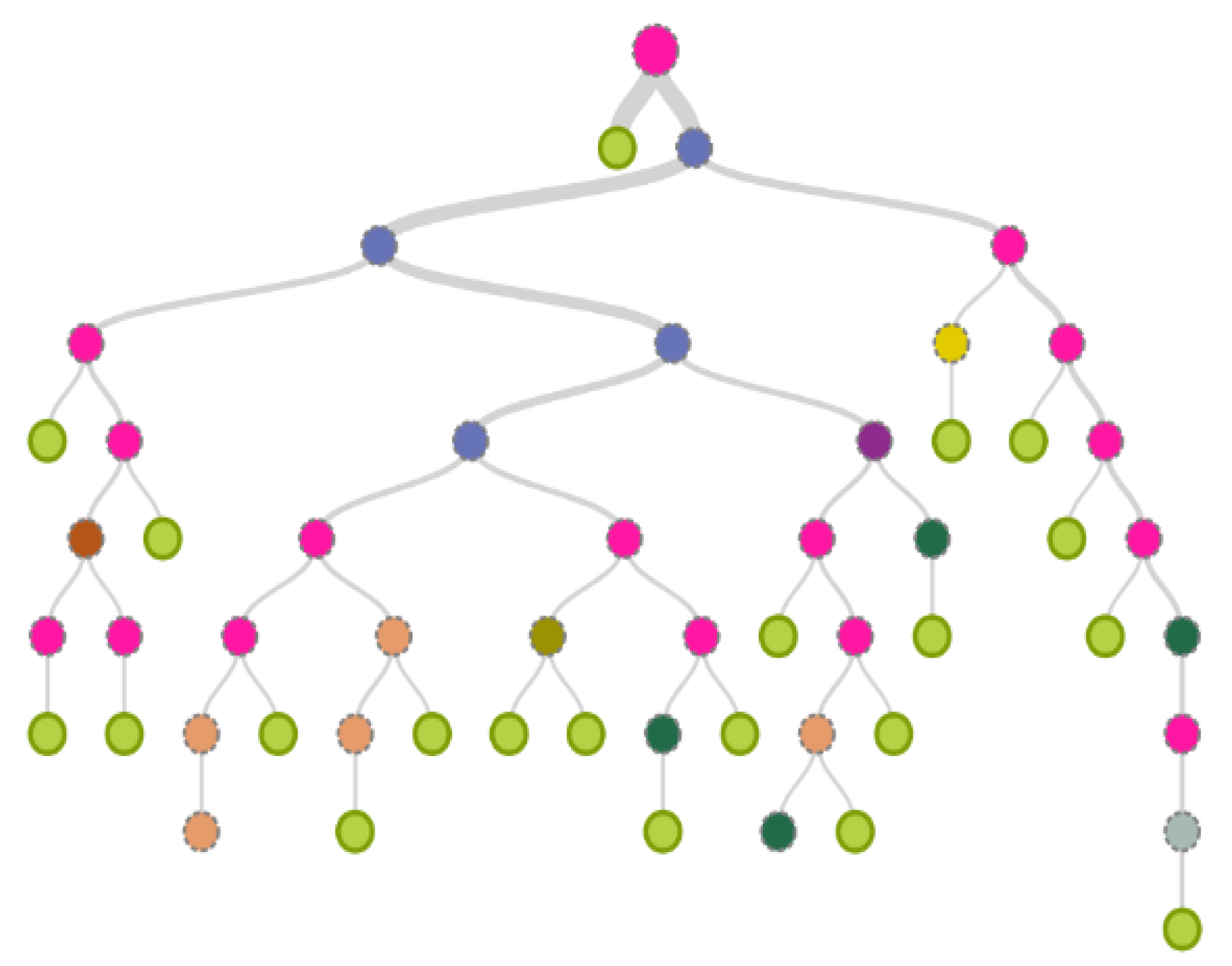
Figure 2.
Ensemble modeling Physical State and Human Actions to be fed to Digital Twin.
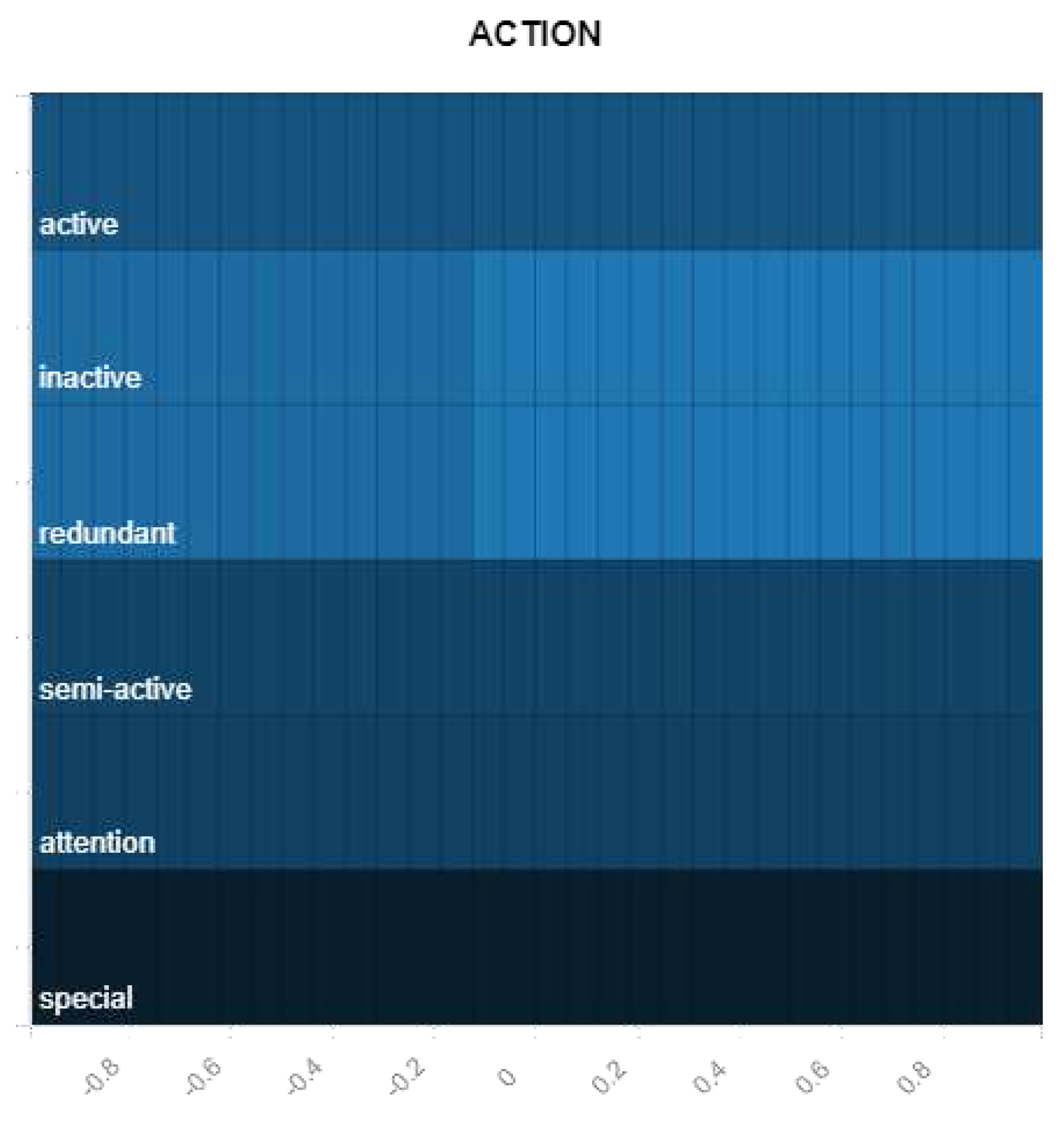
Figure 3.
Cluster modeling displaying Physical activity states.
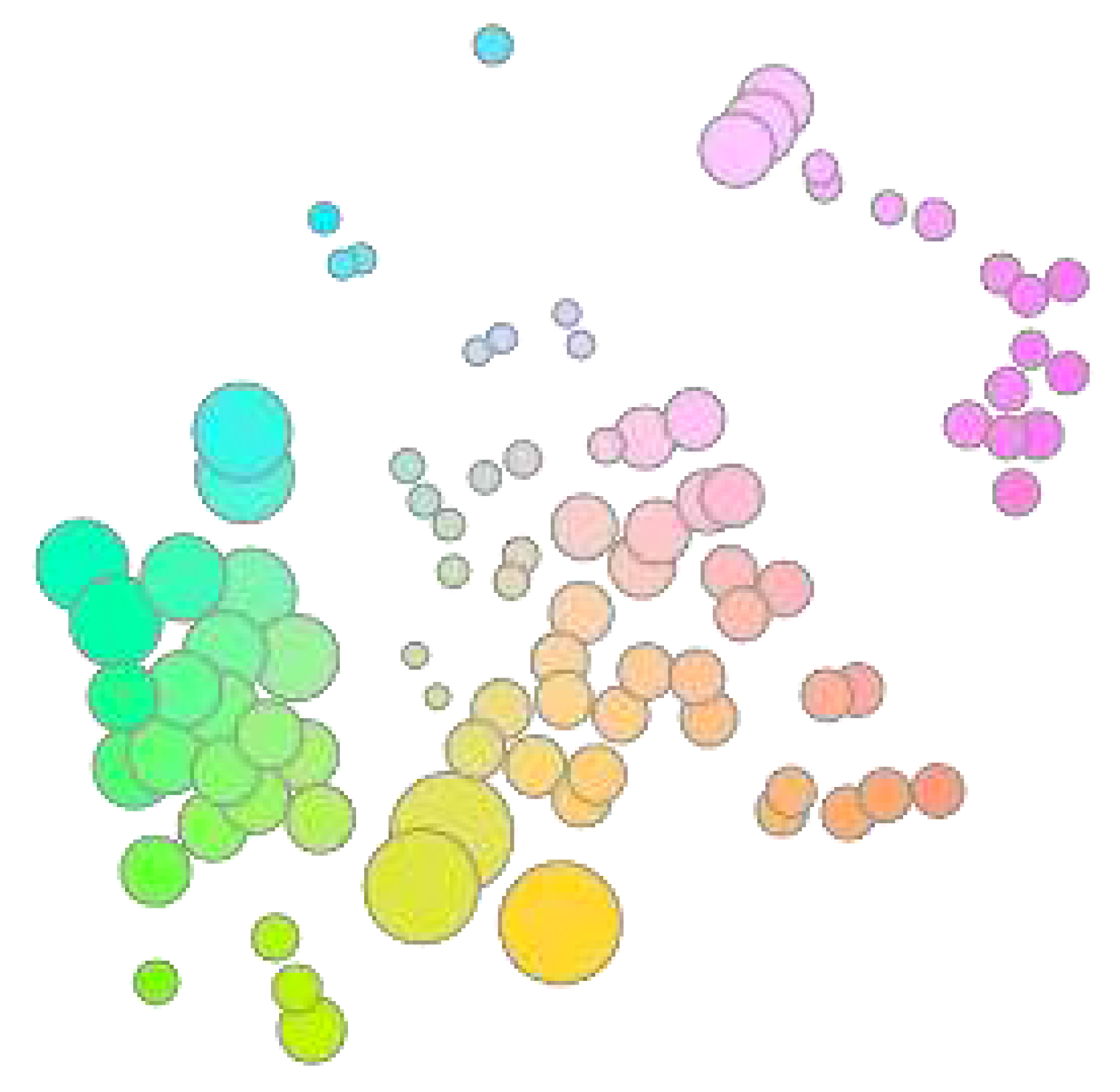
Figure 4.
General evaluation of the Machine Learning model.
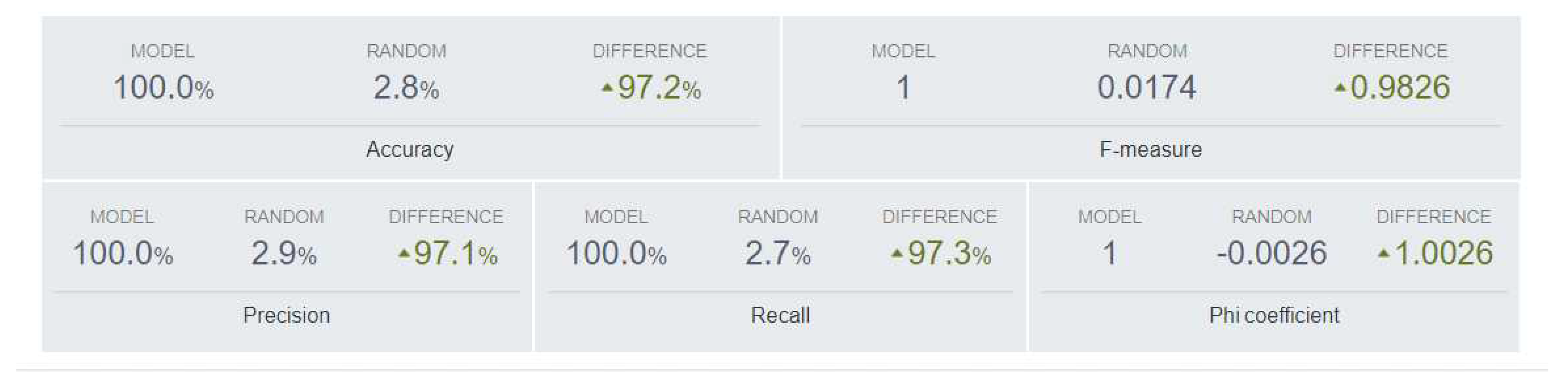
Figure 5.
Conceptualization of Digital Twin in Healthcare.
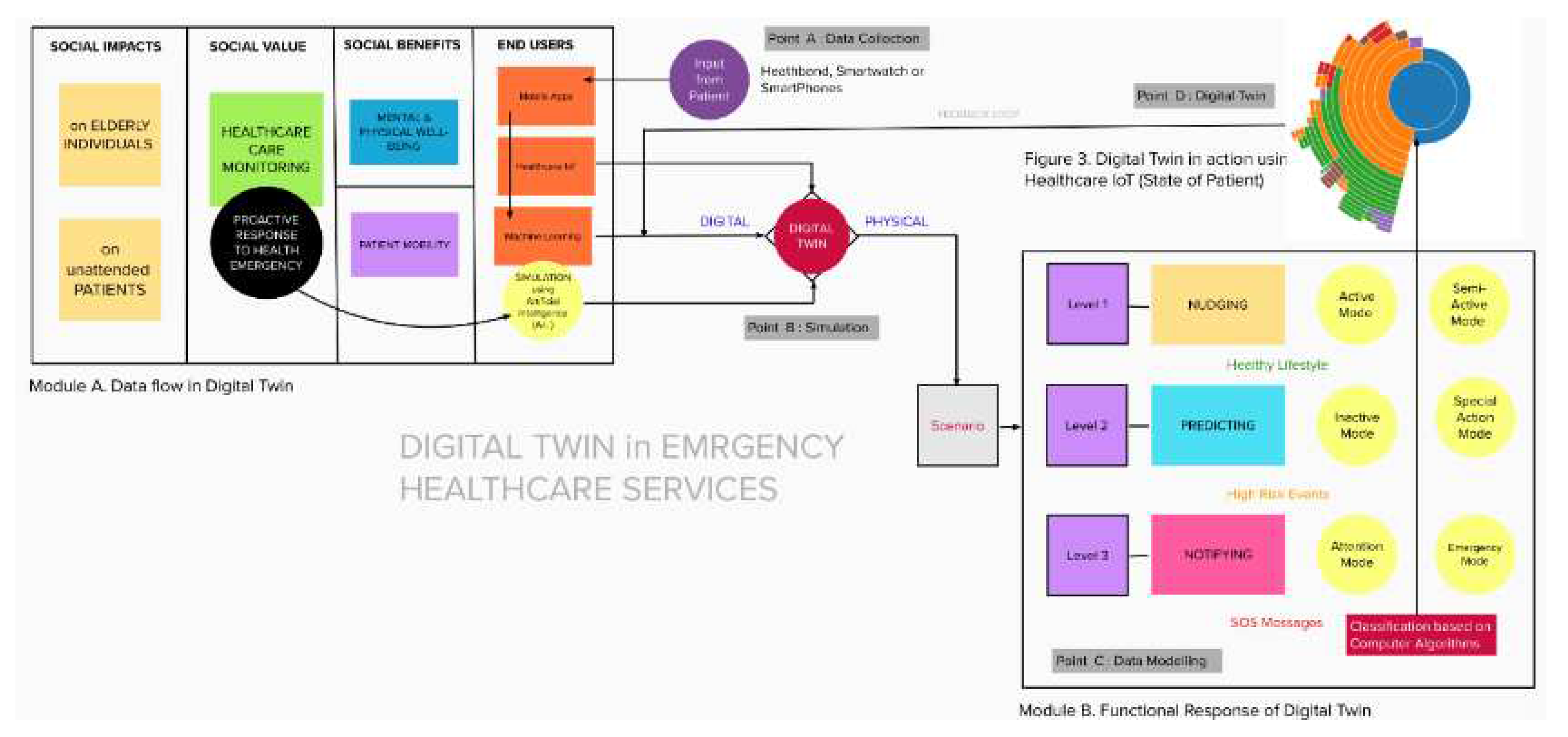

Table 1.
Data retrieved from sensors or healthcare IoT devices.
| accelerometerAccelerationX(G) | accelerometerAccelerationY(G) | accelerometerAccelerationZ(G) |
| motionRoll(rad) | motionPitch(rad) | motionRotationRateX(rad/s) |
| motionUserAccelerationX(G) | motionUserAccelerationY(G) | motionUserAccelerationZ(G) |
| motionQuaternionY(R) | motionQuaternionZ(R) | motionQuaternionW(R) |
| motionGravityZ(G) | activityTimestamp_sinceReboot(s) | activity(txt) |
| pedometerStartDate(txt) | pedometerNumberofSteps(N) | pedometerAverageActivePace(s/m) |
| pedometerDistance(m) | pedometerFloorAscended(N) | pedometerFloorDescended(N) |
| altimeterReset(bool) | altimeterRelativeAltitude(m) | altimeterPressure(kPa) |
Table 2.
Data retrieved from Sensors or Healthcare IoT devices.
| Location (Latitude/Longitude) | Altitude |
| Motions | Angular Velocity (Pitch/Roll/Yaw) |
| Rotations | Acceleration (x – y – z axes) |
Table 3.
Regression modeling of significant factors in Digital Twin.
Disclaimer/Publisher’s Note: The statements, opinions and data contained in all publications are solely those of the individual author(s) and contributor(s) and not of MDPI and/or the editor(s). MDPI and/or the editor(s) disclaim responsibility for any injury to people or property resulting from any ideas, methods, instructions or products referred to in the content. |
© 2023 by the author. Licensee MDPI, Basel, Switzerland. This article is an open access article distributed under the terms and conditions of the Creative Commons Attribution (CC BY) license (https://creativecommons.org/licenses/by/4.0/).
Copyright: This open access article is published under a Creative Commons CC BY 4.0 license, which permit the free download, distribution, and reuse, provided that the author and preprint are cited in any reuse.


