

Submitted:
10 September 2023
Posted:
12 September 2023
You are already at the latest version
Abstract
Plastic materials have revolutionized modern life, particularly in the domain of food packaging, owing to their versatility, lightweight nature, and ease of processing. However, the environmental ramifications of non-degradable plastics have raised concerns. Polylactic acid (PLA), derived from renewable sources, presents a sustainable alternative due to its biodegradability and exceptional barrier, mechanical, and safety properties. Nevertheless, the high UV transmittance of PLA limits its use for photosensitive food and pharmaceutical packaging, where UV radiation can lead to nutritional loss and spoilage. Various methods have been explored to enhance the UV-blocking capabilities of PLA, including the integration of inorganic nanoparticles and surface coatings. Despite advancements, these approaches often compromise the inherent transparency of PLA. Incorporating large conjugated groups can maintain transparency but introduces additional challenges. This paper reviews modification methods to enhance PLA's UV-barrier properties and anticipates its expanded utility in food and drug packaging, promoting UV resistance and diversifying PLA's applications.
Keywords:
biodegradable plastics
; renewable resources
; polylactic acid (PLA)
; UV-barrier properties
; photosensitive packaging
1. Introduction
The remarkable growth in the utilization of plastic materials has revolutionized modern society, enhancing convenience and efficiency across various sectors, particularly in food packaging. The undeniable advantages of plastics, such as their flexibility, lightweight nature, and ease of production, have led to their ubiquitous presence in daily life. However, this widespread reliance on plastics comes at a significant cost, as the environmental repercussions of nondegradable plastics loom large. Plastic pollution, stemming from inadequate waste management, inefficient recycling practices, and the persistence of traditional plastics in the ecosystem, poses an urgent global concern. The production, usage, and disposal of plastics collectively contribute to a complex web of environmental issues, spanning land, water, and air. As plastic waste accumulates in landfills, litters landscapes, and contaminates oceans, the need for sustainable solutions has become more pressing than ever before.[1]
Non-degradable plastics, primarily derived from petroleum-based resources, present a considerable challenge due to their resistance to natural degradation processes. These plastics persist in the environment for centuries, contributing to environmental degradation, endangering wildlife, and compromising delicate ecosystems. The cumulative impact of these plastics necessitates an urgent transition to more environmentally friendly alternatives. The concept of degradable plastics has emerged as a potential remedy for plastic pollution. By designing plastics that can break down into non-harmful components, the burden of long-lasting waste can be mitigated. Degradable plastics encompass various categories, including photodegradable, biodegradable, and light-biodegradable. These materials offer the promise of reducing the environmental footprint associated with plastics. Polylactic acid (PLA), an innovative and sustainable biodegradable plastic, stands as a beacon of hope amid the plastic pollution crisis. Derived from renewable resources, such as corn starch, PLA offers a compelling alternative to conventional plastics. PLA possesses exceptional properties that make it an attractive candidate for a wide range of applications. Its rapid degradation into water and carbon dioxide, without leaving harmful residues, aligns with the principles of environmental responsibility. Beyond its biodegradability, PLA boasts impressive barrier properties, mechanical strength, and compatibility with food safety standards.[2] This combination of attributes positions PLA as a versatile material with the potential to transform various industries. As the negative externalities of traditional plastics become increasingly evident, PLA emerges as a valuable tool in the pursuit of sustainable development.
The domain of food packaging presents a fertile ground for PLA's application and impact. With food safety and environmental concerns taking center stage, PLA emerges as an ideal material for modern food packaging solutions. Its biodegradability, biocompatibility, and potential to replace conventional plastic packaging materials make it an attractive choice. Beyond meeting functional requirements, PLA aligns with the growing preference for eco-friendly packaging options [3]. It serves as a primary packaging material for various food products and beverages, offering the crucial advantage of minimizing ecological harm. The intersection of PLA's characteristics with the evolving demands of the food packaging industry underscores its potential to revolutionize this space [4]. Ultraviolet (UV) radiation holds a pivotal role in food preservation and sterilization processes. However, this radiation can also be a double-edged sword, as it can trigger photooxidation reactions in photosensitive components of food and pharmaceuticals. The consequences of ultraviolet radiation-induced photolysis during food preservation and sterilization can have significant implications for both the nutritional value and quality of the food. Firstly, the susceptibility of certain nutrients to oxidation under ultraviolet radiation can result in substantial nutrient loss. Particularly, easily oxidizable nutrients such as vitamin C and vitamin A can rapidly decompose when exposed to ultraviolet radiation, leading to a reduction in the overall nutritional content of the food. It is vital to recognize that prolonged exposure to UV radiation during food preservation processes can potentially compromise the food's nutritional value. Secondly, the impact of ultraviolet radiation on the quality of food should not be overlooked. The photooxidation reactions triggered by UV radiation can greatly affect various components in food, including pigments, proteins, and fats. This can result in changes in the food's taste, color, and texture. Browning, brittleness, and oxidation are common issues arising from UV radiation exposure, causing a noticeable deterioration in the overall quality of the food. Lastly, it is important to acknowledge the bactericidal properties of ultraviolet radiation. UV radiation is widely utilized for its ability to inactivate bacteria and microorganisms present in food. The radiation effectively disrupts the DNA structure of these microorganisms, rendering them unable to reproduce and survive. However, careful consideration must be given to the intensity and duration of UV radiation, as excessive exposure can potentially compromise food quality and nutritional integrity. In conclusion, ultraviolet radiation can have significant implications for food preservation and sterilization. The potential consequences include nutrient loss, compromised food quality, and bacterial inactivation. Striking the right balance between UV radiation exposure and its beneficial effects is crucial in order to maximize food safety and quality. The optical resistance of PLA has been studied. It is found that PLA has almost no ultraviolet transmission in the lower UV-c band (190 ~ 220 nm). However, at 225 nm, the amount of ultraviolet light transmitted by PLA increases significantly. At 250 nanometers, 85% of ultraviolet light is transmitted. At 300 nanometers, 95% of ultraviolet light is transmitted. Therefore, although UV-C is not transmitted, almost all UV-B and UV-A light passes through the film. Because of this, PLA faces challenges in the field of packaging [5]. The potential consequences of UV-induced degradation, including nutritional losses and reduced product quality, underscore the importance of addressing this limitation. To unlock PLA's full potential in photosensitive packaging, innovative approaches are required to enhance its UV-barrier properties without compromising its transparency.
The quest for enhancing the UV-barrier properties of PLA has spurred the development of innovative methods. One avenue involves the incorporation of UV-blocking additives during the manufacturing process, effectively reducing the penetration of harmful UV radiation [6]. Another approach entails the design of multilayer packaging structures, where a dedicated UV-blocking layer adds an extra layer of protection. These strategies expand the applicability of PLA to a broader range of packaging requirements while safeguarding the integrity of packaged contents. In parallel, researchers have explored the incorporation of inorganic nanoparticles directly into the PLA matrix or the application of specialized coatings to modify its UV behavior. For example, TiO2 is selected as an additive to improve the UV resistance of the polymer. TiO2 has good ultraviolet resistance, as an ultraviolet additive, due to its own excellent photocatalytic performance, it usually promotes the catalytic degradation of organic polymers, so the advantages of PLA degradability are fully guaranteed [7]. While effective in bolstering UV resistance, these methods often compromise PLA's inherent transparency, limiting their widespread adoption. Alternatively, introducing large conjugated groups offers a promising route to absorbing UV light while maintaining material transparency. At the same time, through the introduction of conjugated groups of renewable resources such as lignin, tannin and aloin to give PLA UV blocking function, more renewable PLA materials can be maintained, ensuring the environmental advantages of PLA. However, this approach demands a careful balance between UV absorption, material safety, and potential migration of organic matter. This paper offers a comprehensive review of UV enhancement strategies for PLA and envisions its potential in food and pharmaceutical packaging. By augmenting PLA's UV resistance, we aim to broaden its scope of application, fostering its integration across diverse industries.
2. Inorganic Nanoparticles for UV Protection in Polymer Films
2.1. Titanium Dioxide-based and Titanate-based Materials
Titanium dioxide (TiO2), recognized for its inertness, non-toxicity, affordability, high refractive index, and effective ultraviolet (UV) light absorption, emerges as a promising candidate for improving PLA's UV resistance [8]. The integration of TiO2 within PLA matrices has garnered significant attention.
A research effort led by Man Changzhen showcased the integration of anatase titanium dioxide (A-TiO2) and rutile titanium dioxide (R-TiO2) into PLA matrices. Utilizing spin coating for thin films and extrusion injection for thick films, PLA/A- TiO2 and PLA/R-TiO2 composites were prepared [9]. The findings unveiled significant enhancement in the UV resistance of PLA with both A-TiO2 and R-TiO2, particularly evident in the case of thin films. Moreover, the composite materials demonstrated commendable shading effects, minimizing amplitude attenuation upon UV exposure. However, a challenge emerged with anatase TiO2's sensitivity to air and water, resulting in photocatalysis and material instability.To address this, strategies like surface modification and stabilizer incorporation were explored, aiming to bolster UV stability and prolong the composite materials' service life. These efforts strive to harness the UV-blocking potential of PLA/ TiO2 composites for applications in packaging sensitive products like food and medicine.
Table 1 provides a comprehensive overview of the UV protection enhancements achieved through the integration of different forms of titanium dioxide (TiO2) into polylactic acid (PLA) films. It highlights the effects on UV resistance, stability considerations, shading effects, application suitability, advantages, considerations, and future outlook for each type of composite [9].
- Enhancing Compatibility: Overcoming PLA- TiO2 Challenges
Despite promising results, compatibility issues between TiO2 nanoparticles and PLA have been observed, leading to compromised physical properties of PLA, such as transparency, barrier attributes, and mechanical strength [10]. Counteracting this challenge, researchers investigated diverse approaches. Surface modifications, like coupling agents and compatibilizers, aimed to improve the dispersion and interaction of TiO2 nanoparticles within the PLA matrix, seeking to minimize adverse impacts while maximizing UV-blocking efficiency. Advancements in nanotechnology, exemplified by core-shell structures where TiO2 nanoparticles are enveloped with a polymer shell, address these compatibility hurdles [11]. This innovative strategy enhances compatibility and dispersibility within the PLA matrix, leading to optimal UV-blocking effectiveness without sacrificing transparency, barrier properties, or mechanical strength.
- Hydrophobic Modification for Enhanced Compatibility
Naerin Baek's team also proposed hydrophobic modification using oleic acid to enhance compatibility between TiO2 nanoparticles and PLA [10]. The binding of oleic acid to TiO2 surfaces improved dispersion within the PLA matrix, resulting in stable nanoparticle incorporation. This modification led to reduced oxygen permeability, water vapor permeability, and enhanced flexibility compared to pure PLA. Moreover, the UV absorption capacity of the composite improved, resulting in higher UVB protection. This advancement, however, showed lower effective light absorption in UVA and visible light regions. The hydrophobic modification with oleic acid not only improves compatibility but also enhances UV protection and barrier properties.
- Alternative Titanate Materials and Surface Modification
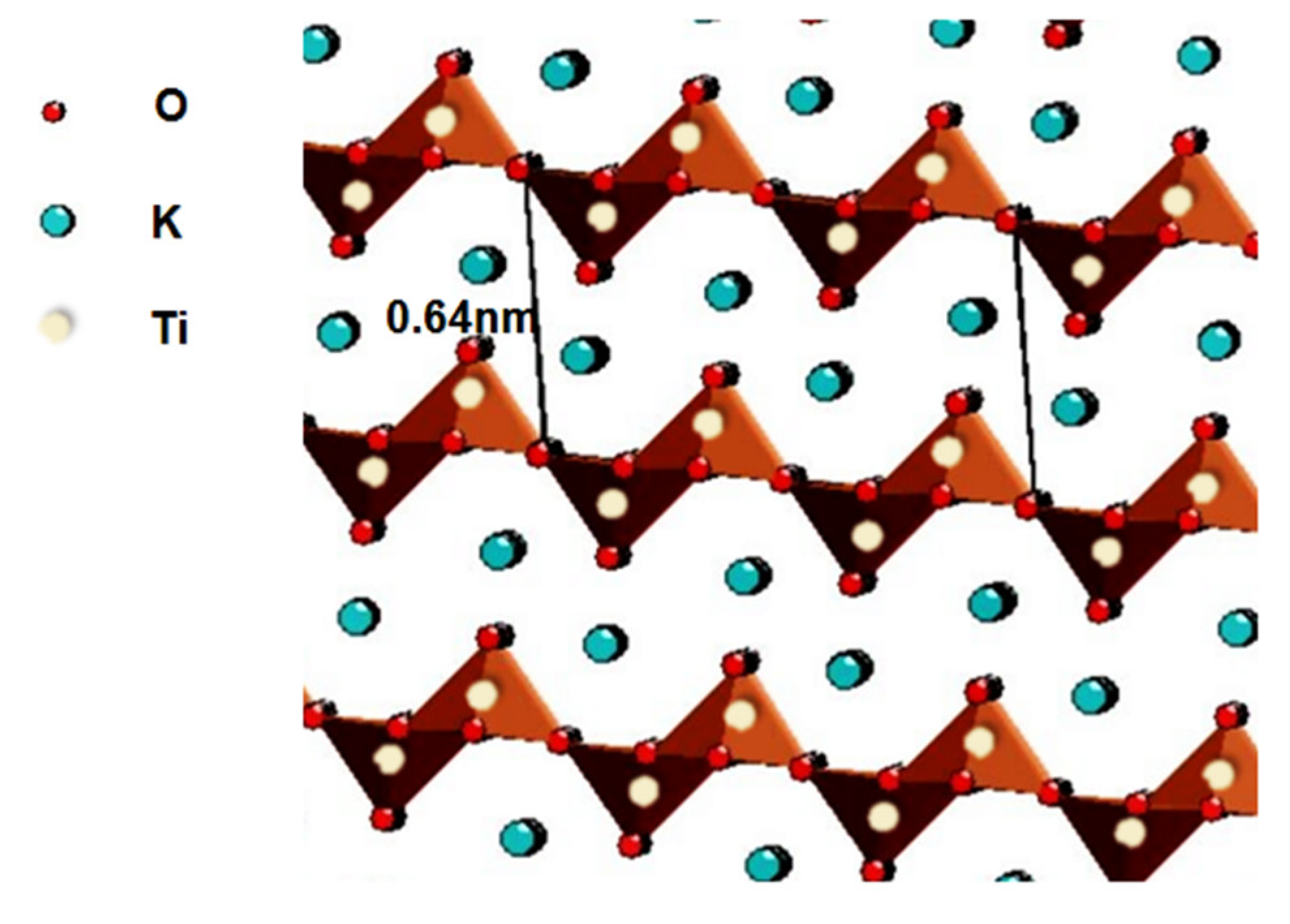
Moreover, recent research has extended beyond conventional TiO2 materials to explore alternative titanate compounds. H. Attori's research team achieved the transformation of layered titanate K2Ti2O5 into a novel titanate nanostructure material. This material exhibits a distinctive microporous titanate nanofiber structure, characterized by one-dimensional multi-microchannels. This novel material efficiently absorbs UV light while maintaining minimal catalytic activity. Its exceptionally low refractive index addresses TiO2's limitations by promoting transparency in composites, making it suitable for applications where clarity is paramount [11]. By employing alternative titanate materials and optimizing their incorporation into PLA, researchers aim to enhance UV blocking capabilities while preserving mechanical, optical, and barrier properties.
Figure 1.
Crystal structure of K2Ti2O5 (gray spheres represent interlayer K ions). Adapted with permission from ref [11]. Copyright 2014 H. Hattori.
Figure 1.
Crystal structure of K2Ti2O5 (gray spheres represent interlayer K ions). Adapted with permission from ref [11]. Copyright 2014 H. Hattori.
The integration of titanium dioxide (TiO2) nanoparticles into polylactic acid (PLA) matrices holds promise for enhancing UV-blocking properties. While challenges persist, including compatibility issues and stability concerns with anatase TiO2, innovative strategies such as surface modification, core-shell structures, and alternative titanate materials are being explored. These efforts aim to achieve a delicate balance between UV protection, transparency, and mechanical properties. The resulting PLA/TiO2 composites exhibit potential for a wide range of UV-sensitive applications, particularly in industries like food and medicine packaging, where UV protection is paramount while maintaining material integrity.
2.2. Cerium Oxide (CeO2)-based Materials
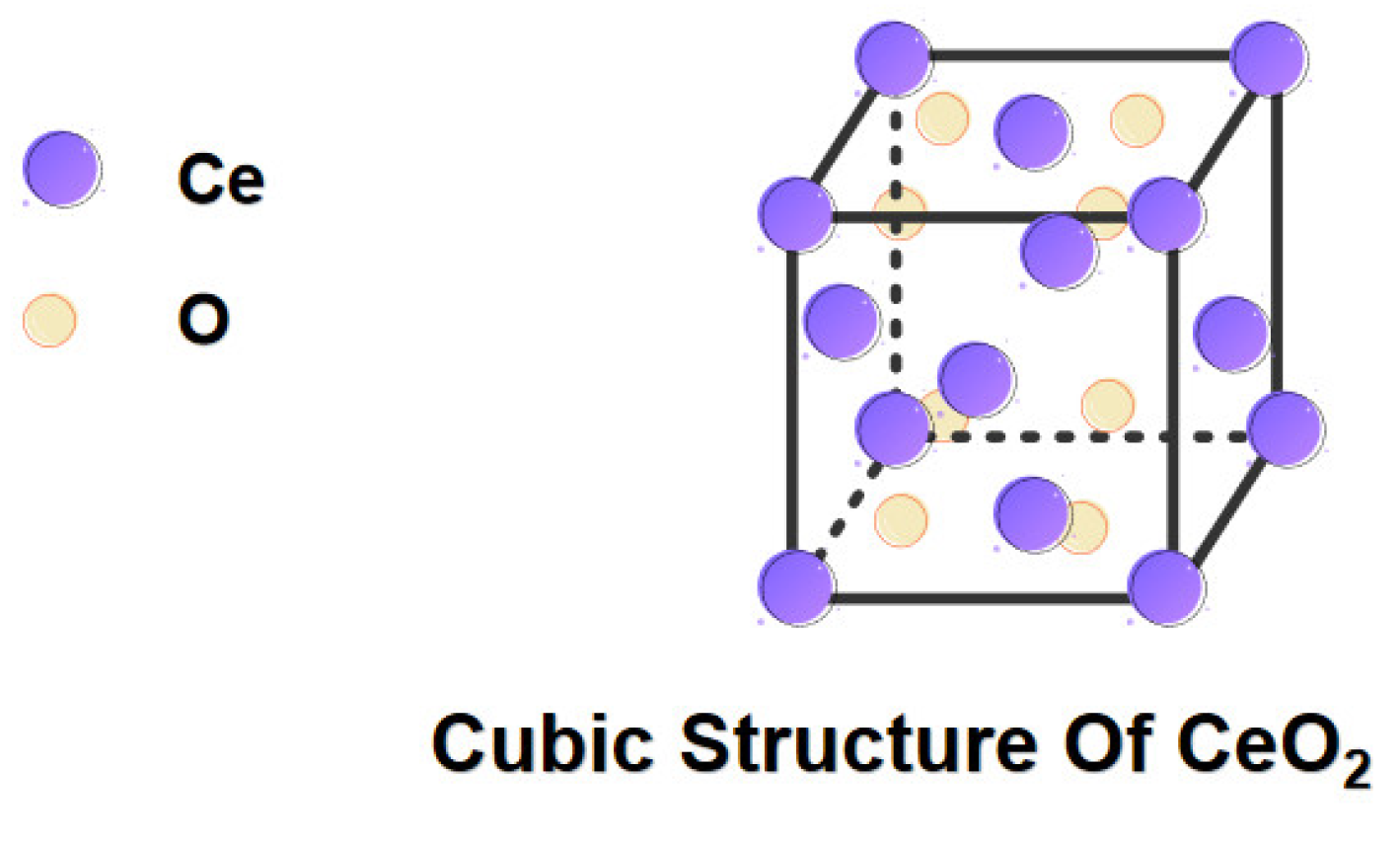
Cerium oxide (CeO2) is a highly significant and abundant rare earth material, esteemed for its exceptional physical and chemical attributes. Its stable face-centered cubic fluorite crystal structure has garnered substantial attention in recent times. Notably, research has illuminated CeO2's ability to influence the optical properties of plastic films by altering the reaction rate of the film's wallpaper.[12] Incorporating CeO2 into polymer nanocomposites, such as polyvinyl alcohol (PVA), presents an avenue to tune the refractive index and reduce the absorption edge, thereby enhancing optical characteristics. Notably, CeO2 exhibits impressive UV absorbing and protecting capabilities, making it desirable for UV-sensitive applications in various sectors, including packaging, construction, and healthcare. The unique capacity of CeO2 to effectively absorb and block harmful ultraviolet radiation positions it as a valuable resource for materials necessitating stringent UV protection.[13] Combining CeO2 with polymer matrices presents a compelling prospect for achieving augmented UV protection, improved optical performance, and overall material properties. This synergy has driven extensive research into incorporating CeO2 into diverse polymeric systems, with the aim of harnessing its exceptional attributes to craft advanced materials boasting heightened UV blocking capabilities.
Figure 2.
Cubic structure of CeO2.Adapted with permission from ref [14]. Copyright 2023 Mohanapriya.
Figure 2.
Cubic structure of CeO2.Adapted with permission from ref [14]. Copyright 2023 Mohanapriya.
- Mechanism of UV Blocking by CeO2
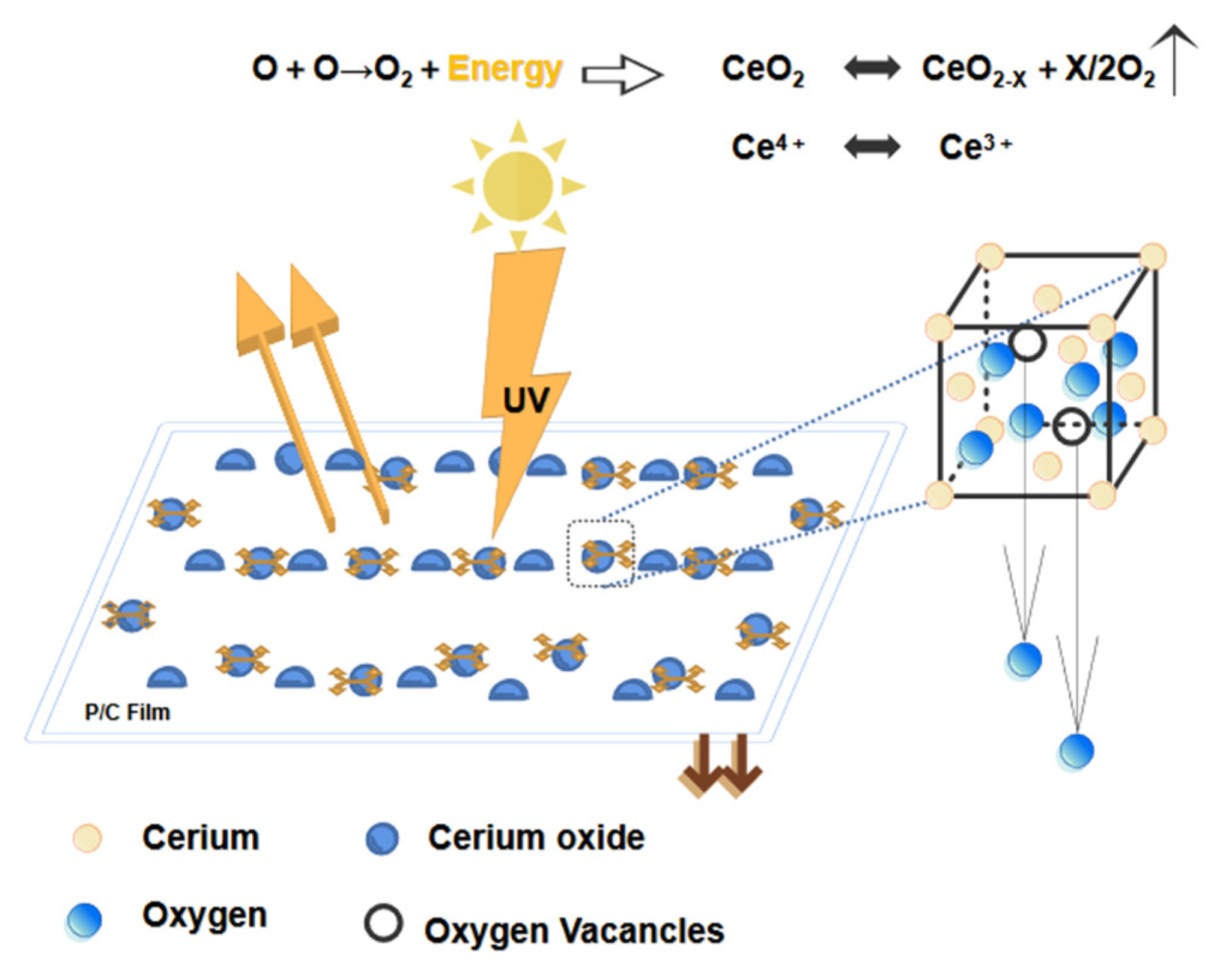
By leveraging the unique properties of CeO2, researchers have overcome the limitations associated with other additives like TiO2. The enhanced compatibility and interaction between CeO2 and PLA lay the foundation for the development of advanced UV-blocking materials boasting improved mechanical properties [15]. This development holds immense potential across diverse industries, from packaging to electronics, where reliable UV protection is imperative. The UV blocking mechanism of CeO2 is attributed to its fluorite structure. Cerium dioxide (CeO2) exhibits spontaneous hypoxia, leading to reversible valence state transitions between Ce3+ and Ce4+ [16,17]. This transition generates unstable oxygen vacancies that facilitate the absorption and conversion of UV light into heat. CeO2 functions by absorbing a portion of UV radiation while scattering and reflecting the rest, effectively blocking UV penetration through the PLA film. This dual action underscores the effectiveness of CeO2 in providing long-term UV protection.
- Superior Compatibility and Enhanced Properties
In the context of enhancing UV protection, the integration of cerium oxide (CeO2) into polylactic acid (PLA) matrices has shown considerable promise. Yincai Wu's research team embarked on a study exploring PLA/CeO2 blends, specifically targeting UV blocking enhancements [15]. In their experiment, a PLA/ CeO2 blend was prepared with a defined mass ratio, leading to the creation of a UV-blocking polylactic acid material. The resultant film, obtained through a hot-pressing process, demonstrated significant reductions in UV light transmittance with increasing PLA content. In comparison to traditional anti-UV additives like titanium dioxide (TiO2) modified with PLA, the compatibility between CeO2 and PLA emerges as superior. This compatibility is attributed to the interaction between CeO2 and PLA, facilitated by oxygen bridges, notably involving carboxyl groups. This interaction mechanism strengthens the adhesion between components, ensuring the film's integrity and mechanical properties are preserved. Furthermore, the improved compatibility allows for optimized dispersion of CeO2 nanoparticles within the PLA matrix, preventing aggregation and enhancing overall film performance.
- Mechanical Properties and UV Blocking Efficiency
The study's findings revealed that the incorporation of 2% PLA resulted in a notable decrease in UV light transmittance to 0.47%. Additionally, the mechanical properties of the PLA/CeO2 blend were evaluated, indicating increased tensile strength and elongation at break compared to pure PLA [15]. These results highlighted a substantial reduction in UV light transmittance, a noteworthy enhancement in tensile strength, and a significant increase in elongation at break, signifying the blend's improved UV blocking efficiency and mechanical integrity.
Figure 3.
The anti-UV transmission mechanism diagram of PLA/CeO2 film. Adapted with permission from ref [12]. Copyright 2021 S. Aziz, E.
Figure 3.
The anti-UV transmission mechanism diagram of PLA/CeO2 film. Adapted with permission from ref [12]. Copyright 2021 S. Aziz, E.
3. Organic Compounds for UV Protection in Polymer Films
There are two main ideas to improve the UV blocking performance of PLA, one is to reflect UV light by introducing inorganic materials, and the other is to use conjugated groups in organic compounds to absorb UV light and give PLA UV blocking property. Among them, the use of lignin and other renewable resources to improve the UV blocking performance of PLA, compared with the use of inorganic nanoparticles, to a greater extent to maintain the advantages of polylactic acid renewable, has advantages in environmental protection. Therefore, with the increase of people's attention to environmental protection, more and more people are looking for more efficient renewable organic compounds to give PLA UV blocking properties.Therefore, in addition to the well-established domain of inorganic nanoparticles, the exploration of organic compounds as UV-absorbing agents has emerged as a promising avenue in UV protection research [18]. These compounds, when thoughtfully integrated into polymer matrices through copolymerization, exhibit the potential to revolutionize UV-blocking strategies. Among these organic compounds, hydroxy-benzophenone UV stabilizers have garnered particular attention due to their remarkable efficacy in absorbing and blocking harmful UV radiation.Table 2 provides a comprehensive overview of each material type's advantages, considerations, and potential applications in enhancing UV protection within polymer films.
- Lignin-Derived Additives: Lignin, a UV-absorbing material, can enhance UV protection but may cause compatibility issues with PLA. The synthesized TP-G-lignin improves UV shielding and maintains tensile strength. However, stress concentration points need addressing.
- Tannins: Tannin-derived chelates effectively block UV radiation and act as crosslinking agents, but their hyperbranched structure can reduce PLA chain mobility and cause coloration.
- Hydroxyl Alkylated Tannic Acid: mTA and h-mTA provide strong UV blocking with excellent PLA compatibility. Color change in composite material needs consideration.
- Aloe-Derived UV-Resistant PLA: Synthesized PLA material with inherent UV protection through the ESIPT process offers transparency and UV shielding, with ongoing research to optimize mechanical properties and stability.
- Regenerated Cellulose Fiber: CMF reinforcement improves UV protection and barrier properties, though transparency reduction should be balanced against enhanced mechanical properties.
3.1. Lignin-Derived Additives for UV Protection
The rich aromatic ring structure of lignin makes it an effective UV absorber. To improve The exploitation of lignin, a ubiquitous and intricate natural polymer, for its inherent ability to absorb ultraviolet (UV) light has garnered substantial interest. The aromatic ring structure within lignin imparts exceptional UV-absorbing properties, positioning it as a potential game-changer in UV protection strategies for polymer matrices. However, the translation of this potential into practical applications is not devoid of challenges, particularly regarding compatibility and mechanical integrity.[14]
The mechanism behind lignin's UV-absorbing prowess resides in the conjugated structure of its aromatic rings, allowing for efficient dissipation of UV radiation energy. In recent research pursuits, attention has turned to enhancing lignin's compatibility with polymer matrices, ultimately optimizing its UV-blocking capabilities. An innovative approach in this realm is the development of TP-G-lignin, achieved through grafting polymerization (Figure 4). The researchers first dissolved PEPA first in dimethylformamide (DMF). Then, TMI was added to the solution and continued to react at 50 ° C for 4 h. After the reaction, the reaction mixture is poured into distilled water to precipitate and filter, and TP is obtained. Next, NaCl was added to a single-neck flask containing DMF, stirred, lignin was added after NaCl was completely dissolved, stirred and slowly heated to 50°C. Then the pre-designed TP was dripped into the solution, and H2O2 was added. After being kept at 50℃ for 24 h, the mixture was slowly poured into the overdiluted HCl solution to stop the grafting reaction. After the precipitation was filtered and washed and dried, the target product TP-G-lignin was obtained. This advanced additive is engineered to address the often-troublesome compatibility issues between lignin and polymer matrices. Through covalent bonding between lignin and a phosphorous/nitrogen-containing vinyl monomer (TP), TP-G-lignin establishes a robust interface with the polymer matrix.
The rich aromatic ring structure in lignin makes it highly capable of absorbing ultraviolet (UV) light, thereby imparting excellent UV shielding properties. As a result, lignin has gained significant attention for its potential as a UV-absorbing additive. To enhance its functionality, a multifunctional lignin-derived additive, known as TP-G-lignin, was synthesized through the grafting polymerization of a phosphorous/nitrogen-containing vinyl monomer (TP) with lignin. When lignin alone is used as an additive, poor interface adhesion between lignin and the polylactic acid (PLA) matrix can result in the formation of micro-cracks during the tensile process. This, in turn, leads to a reduction in mechanical strength. However, the TP-G-lignin developed by the research team effectively addresses this issue. The TP-G-lignin not only exhibits excellent UV shielding properties for PLA but also ensures the preservation of tensile strength due to its good compatibility with the PLA matrix. Moreover, the addition of TP-G-lignin does not significantly compromise the transparency of the PLA material. Nevertheless, during the tensile test, the presence of some clumps of TP-G-lignin acts as stress concentration points, leading to the formation of microcracks. Consequently, the fracture strain of the material is reduced. This highlights the need to improve the dispersion of TP-G-lignin within the PLA matrix to mitigate such stress concentration effects. Further research is focused on optimizing the TP-G-lignin synthesis process and enhancing its dispersion in the PLA matrix. This will help minimize the formation of stress concentration points and improve the overall mechanical properties of the material. Additionally, investigations into the impact of TP-G-lignin on the long-term stability and performance of PLA-based products are ongoing. The development of TP-G-lignin as a UV-absorbing additive offers great potential for expanding the range of applications for PLA materials. Its compatibility with PLA, combined with its UV shielding properties, makes it a valuable choice for industries such as packaging, textiles, and electronics, where UV protection is essential. Continued research in this area holds promise for the development of innovative and sustainable materials with improved UV shielding capabilities and mechanical performance [19].
While TP-G-lignin represents a significant advancement, critical examination reveals that challenges remain. The composite's mechanical behavior is notably affected by the uniform dispersion of TP-G-lignin within the polymer matrix. The aggregation of TP-G-lignin clusters can lead to the creation of stress concentration points during mechanical processes, ultimately undermining the composite's full mechanical potential [18]. This calls for an in-depth exploration of strategies to achieve homogenous distribution and effective stress transfer mechanisms within the material.
The road ahead for lignin-derived UV protection additives involves targeted research endeavors. The optimization of TP-G-lignin synthesis processes and its dispersion within the polymer matrix must be prioritized to minimize stress concentration effects. This optimization could encompass innovative strategies to mitigate clustering and to ensure that TP-G-lignin acts as a consistent reinforcing agent throughout the composite material. Moreover, the long-term stability and performance of TP-G-lignin within diverse polymer matrices necessitate thorough investigation to gauge its potential for industrial-scale applications. Looking beyond the immediate challenges, the incorporation of lignin-based additives into polymer matrices offers the dual advantage of enhanced UV protection and sustainable material sourcing. As the scientific community grapples with issues related to compatibility and mechanical behavior, the overarching aim remains the creation of UV-resistant materials that preserve mechanical integrity. This pursuit aligns seamlessly with the broader sustainability goals of materials science, contributing to the development of environmentally conscious solutions.
In conclusion, the incorporation of lignin-derived additives into polymer matrices for UV protection is an intricate journey, characterized by the interplay of scientific innovation, engineering optimization, and sustainable material design. The advent of TP-G-lignin represents a pivotal step, yet its full potential hinges on addressing existing challenges and charting future research paths. As advancements in UV protection technology continue, the marriage of lignin's UV-absorbing capability and polymer matrices holds the promise of resilient and sustainable UV-resistant materials with profound implications across industries.Top of Form
Bottom of Form
3.2. Tannins as UV Absorbers and Crosslinking Agents
Tannins, aromatic compounds abundant in biological sources, have emerged as intriguing candidates for enhancing ultraviolet (UV) shielding capabilities in polylactic acid (PLA) materials [20,21]. However, their application presents a complex interplay between UV protection enhancement and mechanical property modulation due to their dual role as UV absorbers and potential crosslinking agents. The incorporation of tannins into PLA matrices capitalizes on their inherent ability to form chelates, reinforcing the UV shielding properties of the resulting composite materials [22]. Through the formation of chelates, such as the tannin-Fe3+ complex (TAFe) (Figure 5), UV absorption capacity spanning the 250-350 nm range is achieved. The chelate's aromatic ring undergoes a π→π* transition upon UV irradiation, enabling effective UVA and UVB radiation absorption. Current research has elucidated the correlation between TAFe concentration and UV-blocking efficacy, demonstrating that higher TAFe content enhances UV protection.
However, the integration of tannins into PLA matrices introduces certain challenges. While TAFe acts as a potent UV absorber, its hyperbranched structure simultaneously exerts physical crosslinking effects on the PLA polymer chains. This crosslinking imparts rigidity to the polymer matrix, impacting its mechanical properties, particularly elongation at break.[23] Furthermore, the characteristic dark blue coloration of tannin chelates poses aesthetic limitations in applications where color uniformity is paramount. Future research endeavors should focus on addressing the dual role of tannins to maximize their UV protection potential while minimizing the adverse impact on mechanical properties. Strategies to fine-tune the balance between UV absorption and flexibility restoration hold promise. Exploring modified tannins or surface treatments to mitigate the crosslinking effect could yield PLA composites with improved mechanical integrity. Additionally, advancements in color modulation techniques may alleviate the coloration drawback, expanding the range of potential applications.
Moreover, the interplay between UV protection and mechanical integrity remains a central theme in tannin-based UV absorbers. The challenge lies in devising methodologies to strike an optimal equilibrium between enhanced UV shielding and preserved mechanical properties. By innovatively modifying tannin structures or incorporating them at specific concentrations, researchers can potentially surmount the current limitations and engineer PLA composites that excel in both UV protection and mechanical performance. Whereas, aesthetic considerations in tannin-based UV-absorbing PLA materials are of significance, particularly in applications where coloration is a determining factor. While the coloration effect is currently a limiting factor, innovative strategies to mitigate or leverage this phenomenon can unlock new application domains. Future exploration in material design and processing could lead to tannin-based composites that offer both effective UV protection and aesthetic versatility.
To sum up, tannins have unveiled a captivating dual role as UV absorbers and potential crosslinking agents in PLA composites. As research advances, a nuanced understanding of tannin behavior within the polymer matrix is crucial. The pursuit of optimized formulation strategies, mechanical property enhancement techniques, and color modulation methods will collectively drive the integration of tannins into UV-protective PLA materials. Balancing UV shielding, mechanical performance, and aesthetics presents a multifaceted challenge, but one that promises innovative solutions with applications across diverse industries.
Top of Form
3.3. Hydroxyl Alkylated Tannic Acid for Enhanced UV Protection
Hydroxyl alkylated tannic acid (mTA) and its highly grafted counterpart (h-mTA) have emerged as intriguing contenders in the pursuit of enhancing ultraviolet (UV) protection within polylactic acid (PLA) materials. Their synthesis and integration showcase an exquisite balance between UV shielding efficacy, PLA compatibility, and the challenge of coloration.
Xuhui Zhang's team developed a novel approach to enhance the UV-blocking properties of polylactic acid (PLA) by designing hydroxyl alkylated tannic acid (TA), known as mTA, with grafted isopropyl alcohol oligomers.[24] The mTA was synthesized based on TA molecules, which possess 25 active phenolic hydroxyl groups. The hydroxyl alkylated mTA, particularly the highly grafted mTA variant (h-mTA), demonstrated excellent compatibility with PLA due to the strong affinity and hydrogen bond interface between the isopropyl alcohol oligomers and PLA. To assess the UV-blocking properties of PLA and h-mTA composites, the team conducted experiments. The results revealed that the PLA/h-mTA composite films effectively blocked UV radiation, while maintaining higher transmittance in the visible region compared to pure PLA films (Figure 6). When incorporating 5 wt% h-mTA, the transmittance at 300 nm significantly decreased from 90.12% to 31.89%, while the transmittance at 550 nm only slightly decreased from 91.87% to 90.54%. Notably, the addition of 20 wt% h-mTA further reduced the transmittance at 300nm to 2.74%, while maintaining a high transmittance of 84.35% at 550nm. This highlights the remarkable UV shielding performance and excellent transparency achieved by the PLA/h-mTA composite films. These findings demonstrate the potential of hydroxyl alkylated TA, particularly the highly grafted h-mTA, as an effective UV absorber and compatibilizer for PLA. The incorporation of h-mTA into PLA matrix not only enhances the UV-blocking capabilities of the composite but also preserves its optical transparency in the visible range. This makes the PLA/h-mTA composite films highly desirable for applications in industries such as packaging, where UV radiation protection and visual clarity are crucial. The synthesis of mTA and h-mTA revolves around augmenting the inherent UV-absorbing capabilities of tannic acid by introducing isopropyl alcohol oligomers. This strategic integration capitalizes on the strong affinity and hydrogen bond interface between the isopropyl alcohol moieties and the PLA matrix. This, in turn, facilitates a harmonious incorporation of mTA and h-mTA into PLA materials, rendering them compatible additives.
However, the advancement of h-mTA as a UV-absorbing additive is not devoid of challenges. The introduction of h-mTA, while enhancing UV protection, may lead to the coloration of the resulting composite material. This color change poses limitations, particularly in applications where color uniformity is pivotal. Addressing this challenge represents an essential area for further exploration and optimization. The synergy between UV protection and PLA compatibility exhibited by mTA and h-mTA presents exciting prospects for a range of industries. Their compatibility-driven integration into PLA materials could be harnessed in various sectors, such as packaging, textiles, and electronics, where UV shielding and transparency are imperative. Research aimed at mitigating the coloration issue could unlock even broader applications, thus maximizing the potential of these compounds.
Moreover, the journey of mTA and h-mTA in enhancing UV protection is a dynamic endeavor that requires striking a delicate balance between UV absorption, compatibility, and coloration. Navigating these intricacies demands not only a thorough understanding of material science but also innovative strategies for material design. Future research efforts should be channeled towards refining the formulation and optimizing the concentration of these derivatives to fine-tune their UV protection and coloration aspects. Besides, mTA and h-mTA's compatibility-driven UV protection offers a promising avenue for advancing UV-resistant materials. The ability to simultaneously enhance UV shielding and maintain transparency opens avenues for their deployment in industries where both factors are paramount.[24]As research delves deeper into overcoming the coloration challenge, the potential for these derivatives to redefine UV protection in diverse applications becomes increasingly evident.
In conclusion, hydroxyl alkylated tannic acid derivatives, particularly mTA and h-mTA, have demonstrated their mettle in the realm of UV protection enhancement within PLA materials. Their journey is characterized by a harmonious interplay between UV shielding, compatibility, and coloration. As these compounds continue to evolve, their role in delivering multifaceted UV protection while addressing coloration challenges holds great promise. The scientific community's concerted efforts towards optimizing these derivatives could usher in a new era of UV-resistant materials with wide-ranging applicability.
Top of Form
Bottom of Form
3.4. Aloe-Derived UV-Resistant PLA Material
In the quest for UV protection innovation, a remarkable breakthrough has emerged: the synthesis of UV-resistant polylactic acid (PLA) material by ingeniously incorporating the UV-absorbing prowess of aloin, a compound extracted from aloe leaves. This pioneering approach marks a significant stride towards UV protection, leveraging the intrinsic mechanisms of nature to create a material with exceptional UV-blocking capabilities and versatile applications. At the heart of this innovation lies the incorporation of aloin, a natural UV-protective compound, into the PLA matrix. Aloin's UV-absorbing group is adept at harnessing ultraviolet radiation and efficiently dissipating its energy through the excited state intramolecular proton transfer (ESIPT) process.[25],[26] This strategic integration imbues the PLA material with the unique ability to absorb and neutralize harmful UV radiation, thereby safeguarding against its detrimental effects.
Aloin, an extract of aloe leaf, is a UV-protective intramolecular hydrogen-bonded hydroxy-anthraquinone derivative whose excited state intramolecular proton transfer (ESIPT) can absorb harmful ultraviolet radiation and dissipate harmless thermal energy through very rapid internal conversion (Figure 7).
Mengyao Wang et al. developed a novel UV-resistant polylactic acid (PLA) material by synthesizing it through the ring-opening polymerization of L-lactide, utilizing aloin as an initiator.[27] They added an appropriate amount of Sn(Oct)2/THF solution and aloin (cetyl alcohol) into the polymerization tube filled with argon gas, vacuumed it and sealed it with an alcohol burner. The tubes are then placed in an oil bath at 135°C and stirred. When the reactant melts, the reaction stops after 5 hours. After cooling, the product is dissolved in chloroform, and then the solution is dropped into the stirred ethanol to precipitate. Then it is washed with ethanol until there is no UV absorption signal of aloin in the eluent, and finally vacuum drying. Then, a sample of lactide was obtained.This unique approach allowed for the connection of the UV-absorbing group of aloin to the polymer chain, resulting in a material with inherent UV protection properties that do not migrate. The newly synthesized polylactide material exhibits similar ultraviolet light absorption and emission characteristics as aloin itself. Moreover, it possesses a significant Stokes shift, enabling the dissipation of ultraviolet radiation energy through the excited state intramolecular proton transfer (ESIPT) process. This exceptional property allows the aloin group to maintain structural stability under ultraviolet light exposure and effectively function over an extended period. Importantly, the incorporation of aloin as a UV-absorbing group does not compromise the transmission of visible light through the material. As a result, the transparency of the polylactic acid film material remains intact, ensuring its suitability for applications where optical clarity is paramount. This innovative UV-resistant PLA material holds promise for various industries, such as packaging, where protection against UV radiation is necessary. Its ability to absorb and dissipate UV radiation through the ESIPT process enables prolonged and efficient UV protection, enhancing the durability and stability of products made from this material.
While the aloe-derived PLA material presents a breakthrough in UV protection, the journey is not devoid of areas for refinement. Exploring avenues to further optimize the integration of aloin and enhance its dispersion within the PLA matrix holds promise for improving the material's overall performance.[28] Addressing this aspect could unlock even greater UV protection efficiency. The emergence of the aloe-derived UV-resistant PLA material signifies a convergence of scientific innovation and natural inspiration. As research continues to unravel the intricacies of the ESIPT process and the interaction between aloin and PLA, opportunities for fine-tuning and optimizing the material's properties abound. The future outlook revolves around harnessing this potential to create a new generation of UV-resistant materials with improved performance and expanded applications.
The synthesis of UV-resistant PLA material through the infusion of aloin epitomizes the harmony between scientific ingenuity and nature's design. The material's ability to emulate and enhance nature's UV protection mechanisms underscores the transformative power of biomimicry in material science. As researchers delve deeper into the mechanics of ESIPT and material formulation, the possibilities for innovation become boundless. This novel approach unlocks a world of opportunities, where transparency, UV protection, and versatile applications converge. The ongoing journey to optimize and harness the potential of this material presents a vibrant avenue for further advancements in UV-resistant materials, ushering in a future where the union of nature and science creates sustainable and innovative solutions.
Top of Form
Bottom of Form
3.5. Reinforcing PLA with Regenerated Cellulose Fiber
In the realm of enhancing PLA materials, an innovative avenue emerges with the incorporation of regenerated cellulose fiber, specifically cellulose microfibers (CMF). This strategic union aims not only to fortify mechanical properties but also to elevate UV protection capabilities, offering a multifaceted approach to material enhancement. The driving force behind this advancement is the utilization of CMF as a reinforcement material within the PLA composite matrix. CMF, with its inherent strength and unique structure, intertwines with PLA to create a synergistic composite material. Inherent properties of CMF, such as its composition and microstructure, contribute to the enhancement of both mechanical strength and UV protection capabilities of the PLA composite.
However, the active hydroxyl group of cellulose fiber can form intramolecular and intermolecular hydrogen bonds, which reduces the dispersion ability of cellulose fiber in polylactic acid, resulting in poor mechanical properties and barrier properties of the composite.[29],[30] To improve its compatibility problem rabaharan Graceraj Ponnusamy team choose CMFs extracted from cotton fiber as reinforcing materials. Cotton wool is a short cotton fiber (1.32 mm long), their surface contains about 0.5-1 wt.% of natural wax, which makes cellulose fibers hydrophobic and enhances the dispersion of CMF in PLA.[31] Using cotton yarn as raw material, the team prepared composite fiber by ball milling method. The control film and composite film were prepared by solvent casting method. They dried PLA pellets and cotton brocade in an oven at 55°C for 48 hours to evaporate the absorbed water, then added the dried polylactic acid pellets to DCM solvent and mixed them at room temperature until dissolved. Secondly, CMF and PEG were added to completely dissolved PLA solution, after mixing and degassing, the solution was poured into a glass petri dish, the petri dish was covered with aluminum foil, and DCM was slowly evaporated at room temperature in the hood. After drying, the film was removed from the petri dish 24 hours later, and stored in a 50%RH dryer for more than 48 hours, then characterization studies could be carried out.The results show that CMF has strong interfacial adhesion in PLA polymer matrix and good compatibility with polylactic acid. The introduction of CMF not only improves the UV blocking properties of polylactic acid, but also improves the tensile properties and water vapor blocking properties (Table 3) [32]. Compared with tannin, CMF can effectively improve the tensile properties of polylactic acid, but there is still a problem that it can reduce the transparency of polylactic acid.
While the incorporation of CMF yields commendable improvements in mechanical and UV protection properties, a careful balance is necessary. The enhanced mechanical strength achieved through CMF infusion can inadvertently lead to a reduction in material transparency. This trade-off necessitates a thorough assessment of the intended application, where mechanical strength and UV protection are weighed against transparency requirements.[33]
The ongoing research journey in the realm of CMF-reinforced PLA materials rests upon achieving an optimal equilibrium between enhanced mechanical properties, UV protection, and transparency. Fine-tuning the concentration and dispersion of CMF within the PLA matrix holds promise for mitigating transparency challenges while preserving the material's newfound strengths. As investigations evolve, the future horizon of CMF-reinforced PLA materials appears bright. The dynamic balance between mechanical reinforcement, UV protection, and transparency hinges upon meticulous formulation and material engineering. Future research will delve deeper into unraveling the intricacies of CMF-PLA interactions, optimizing processing techniques, and broadening the material's scope of applications. The integration of CMF as a reinforcement material within PLA composites reshapes the landscape of material science. The pursuit of enhanced mechanical properties and UV protection through such bio-based reinforcements is a testament to sustainability and innovation. As research endeavors advance, the potential for creating tailored CMF-PLA materials for specific industries gains prominence, underscoring the transformative power of strategic material combinations.[33]
The collaboration between natural cellulose fibers and engineered PLA encapsulates the essence of sustainable materials evolution. Through harnessing nature's building blocks, researchers are driving the development of advanced materials that stand resilient against UV radiation while upholding mechanical integrity. This journey harmonizes technological innovation with ecological consciousness, laying the groundwork for versatile and environmentally friendly solutions. The integration of regenerated cellulose fiber, CMF, into PLA materials marks a pivotal chapter in UV protection and mechanical enhancement. As research advancements converge with real-world applications, the profound impact of synergistic material combinations emerges. The path forward lies in striking a harmonious balance between transparency, strength, and UV resistance, ushering in a new era of reinforced materials that embody the essence of innovation, sustainability, and functionality.
4. Pioneering Advances in UV Protection for Polylactic Acid
4.1. Exploring the Landscape of UV Protection Enhancement
The quest to enhance the ultraviolet (UV) protection properties of polylactic acid (PLA) materials has sparked a multifaceted journey encompassing inorganic nanoparticles and bio-based organic compounds. While inorganic nanoparticles, notably titanium dioxide (TiO2), have been a focal point, the horizon of research is expanding to embrace alternative materials like zinc oxide, poised to carve new pathways in UV protection.
4.2. Inorganic Nanoparticles: Diversification and Evolution
The realm of inorganic nanoparticles has witnessed substantial exploration, with TiO2 emerging as a prominent player. However, the ongoing pursuit of UV protection is expected to shift towards innovative inorganic materials such as zinc oxide.[34] This transition is fueled by the pursuit of sustainable solutions that transcend the limitations of traditional inorganic options.
4.3. Bio-Based Organic Compounds: A Sustainable Revolution
In an era of heightened environmental consciousness, the adoption of bio-based organic compounds to enhance PLA's UV shielding capabilities is gaining traction. Prominent contenders, including lignin, tannic acid, and aloin, exhibit both enhanced UV protection and compatibility with PLA, marking a significant stride towards sustainable UV protection technology.[35],[36],[37]
4.4. Navigating Coloration and Application Realms
While the incorporation of bio-based compounds yields promising UV protection benefits, the challenge of potential coloration of composite materials arises. The distinct blue hue introduced by tannin chelates and the sandy brown shade resulting from hydroxyl alkylated tannic acid (h-mTA) underscore the importance of tailoring material properties to specific application requirements. The implications of enhanced UV protection extend far beyond packaging, finding resonance in medical and textile domains. The development of UV-resistant PLA films and UV-protective polylactic acid cotton fabrics presents novel opportunities in medicine and textiles, setting the stage for innovative applications in these fields.[38]
5. Conclusions
The journey towards augmenting UV protection in PLA materials unfolds as a testament to the dynamic nature of materials science. The transition from conventional inorganic nanoparticles to sustainable bio-based compounds reflects a broader shift towards holistic and environmentally conscious solutions. The utilization of established bio-based materials like lignin, tannin, and cellulose offers a promising avenue to address current limitations. By harnessing the inherent properties of these materials, researchers aim to overcome challenges while elevating PLA's UV barrier capabilities. The pursuit of optimal UV protection propels researchers to explore novel biomolecules with exceptional performance attributes. Aloe emodin[28] and riboflavin[39] exemplify such biomolecules, offering the potential to bolster UV protection through advanced polymerization techniques. By strategically incorporating these biomolecules, researchers aspire to not only enhance UV protection but also maintain transparency and mechanical strength.[40],[41] Amid the tapestry of UV protection methodologies explored, the journey toward UV-enhanced PLA materials holds the promise of greater depths. As sustainability, innovation, and performance intersect, researchers are uniquely positioned to redefine material landscapes, providing industries and environments with robust and advanced UV-protected PLA materials that transcend traditional boundaries.
Author Contributions
Conceptualization, Ran, X and Qu, Y.; methodology, Ran, X.; validation, Shen, Y., Cui, B. and Wang, Y.; formal analysis, Qu, Y.; investigation, Shen, Y.; resources, Li, Y.,; writing—original draft preparation, Ran, X.; writing—review and editing, Cui, B., and Wang, Y.; visualization, Qu, Y.; supervision, Li, Y.; project administration, Li, Y. All authors have read and agreed to the published version of the manuscript.
Funding
This research was funded by Enerstay Sustainability Pte Ltd (Singapore) Grant Call (Call 1/2023) _GHG (Project ID SCU-001), Singapore.
Data Availability Statement
The data that support the findings of this study are available from the corresponding author upon reasonable request.
Conflicts of Interest
All authors declare no Competing Financial or Non-Financial Interests.
References
- Zhang, Y.; Jia, W. Analysis of improved measures for controlling white pollution in China. China Resource Recycling 2023, 41, 126–128. [Google Scholar] [CrossRef]
- Wang, H.; Wang, H.; Zhao, Y.; et al. Recent Advances in Biomass-Based Polylactic Acid Material Modification. Plastics Industry 2022, 50, 17–22. [Google Scholar] [CrossRef]
- Wang, W. Current Status and Trends of Development of Degradable Plastics. Petrochemical Applications 2023, 42, 10–14. [Google Scholar] [CrossRef]
- Xu, M.; Xia, L.; Shu, Y. Recent Research Progress in Polylactic Acid Degradable Plastic Food Packaging. Science and Wealth, 2020, (15), 333.
- Auras, R.; Harte, B.; Selke, S. An Overview of Polylactides as Packaging Materials. Macromol. Biosci. 2004, 4, 835–864. [Google Scholar] [CrossRef]
- Xia, C.; Liu, S.; Cui, B.; et al. In situ synthesis of zinc oxide/selenium composite for UV blocker application. International journal of applied ceramic technology 2022, 19, 2437–2449. [Google Scholar] [CrossRef]
- You, D.; Bai, Y.; Li, Z. Study on the performance of phenylsiloxane modified TiO2 in the UV resistance of polyphenylene sulfide. Journal of Polymer Science 2022, 53, 673–682. [Google Scholar]
- Gumiero, M.; Peressini, D.; Pizzariello, A.; et al. Effect of TiO2 photocatalytic activity in a HDPE-based food packaging on the structural and microbiological stability of a short-ripened cheese. Food Chemistry 2013, 138, 1633–1640. [Google Scholar] [CrossRef]
- Man, C.; Zhang, C.; Liu, Y.; et al. Poly(lactic acid)/titanium dioxide composites: Preparation and performance under ultraviolet irradiation. Polymer Degradation and Stability 2012, 97, 856–862. [Google Scholar] [CrossRef]
- Baek, N.; Kim, Y.T.; Marcy, J.E.; et al. Physical properties of nanocomposite polylactic acid films prepared with oleic acid modified titanium dioxide. Food Packaging and Shelf Life 2018, 17, 30–38. [Google Scholar] [CrossRef]
- Hattori, H.; Ide, Y.; Sano, T. Microporous titanate nanofibers for highly efficient UV-protective transparent coating. Journal of Materials Chemistry A 2014, 2, 16381–16388. [Google Scholar] [CrossRef]
- Aziz, S.; Dannoun, E.; Tahir, D.; et al. Synthesis of PVA/CeO2 based nanocomposites with tuned refractive index and reduced absorption edge: structural and optical studies. Materials 2021, 14, 1570. [Google Scholar] [CrossRef]
- Singh, H.; Kumar, S.; Bamne, J.; et al. Analyzing the synthesis of various inorganic nanoparticles and their role in UV-shielding. Materials Today Proceedings 2021, 46, 5607–5618. [Google Scholar] [CrossRef]
- Mohanapriya, S.; Priyadharshini, P.; Shobika, P.A. Effect of Co dopant on structural, optical, and magnetic properties of CeO2 quantum dots. J Aust Ceram Soc 2023, 59, 459–480. [Google Scholar] [CrossRef]
- Wu, Y.; Lin, X.; Chen, L.; et al. Preparation a skin disease UV protection polylactic acid film and crystallinity, mechanical properties characterization. Materials Today Communications 2022. [Google Scholar] [CrossRef]
- Younis, A.; Chu, D.; Kaneti, Y.V.; et al. Tuning the surface oxygen concentration of {111} surrounded ceria nanocrystals for enhanced photocatalytic activities. Nanoscale 2015, 8, 378–387. [Google Scholar] [CrossRef]
- Paola, L.; Sergio, V. Structure, morphology and reducibility of epitaxial cerium oxide ultrathin films and nanostructures. Materials 2015, 8, 5818–5833. [Google Scholar] [CrossRef]
- Zhao, Y.; Dan, Y. Synthesis and characterization of a polymerizable benzophenone derivative and its application in styrenic polymers as UV-stabilizer. European Polymer Journal 2007, 43, 4541–4551. [Google Scholar] [CrossRef]
- Yang, H.; Shi, B.; Xue, Y.; et al. Molecularly engineered lignin-derived additives enable fire-retardant, UV-shielding, and mechanically strong polylactide biocomposites. Biomacromolecules 2021, 22, 1432–1444. [Google Scholar] [CrossRef]
- Arbenz, A.; Av´erous, L. Oxyalkylation of gambier tannin—synthesis and characterization of ensuing biobased polyols. Industrial Crops and Products 2015, 67, 295–304. [Google Scholar] [CrossRef]
- Arbenz, A.; Av´erous, L. Chemical modification of tannins to elaborate aromatic biobased macromolecular architectures. Green Chem 2015, 17, 2626–46. [Google Scholar] [CrossRef]
- Tawiah, B.; Zhou, Y.; Yuen, R.K.K.; et al. Microporous boron based intumescent macrocycle flame retardant for poly(lactic acid) with excellent UV protection. Chemical Engineering Journal 2020, 402, 126209. [Google Scholar] [CrossRef]
- Zhou, Y.Y.; Tawiah, B.; Noor, N.; et al. A facile and sustainable approach for simultaneously flame retarded, UV protective and reinforced poly(lactic acid) composites using fully bio-based complexing couples. Composites Part B: Engineering 2021, 215, 108833–108843. [Google Scholar] [CrossRef]
- Zhang, X.; et al. Designing Strong, Tough, Fluorescent, and UV-Shielding PLA Materials by Incorporating a Phenolic Compound-Based Multifunctional Modifier. ACS Applied Materials & Interfaces 2023, 15, 17268–17278. [Google Scholar]
- Nagaoka, S.-I.; Fujii, A.; Hino, M.; et al. UV Protection and Singlet Oxygen Quenching Activity of Aloesaponarin I. Journal of Physical Chemistry B 2007, 111, 13116–13123. [Google Scholar] [CrossRef]
- Nagaoka, S.-I.; Ohara, K.; Takei, M.; et al. UV Protection and Singlet-oxygen Quenching Activity of Intramolecularly Hydrogen-bonded Hydroxyanthraquinone Derivatives Found in Aloe. Journal of Photochemistry and Photobiology A: Chemistry 2011, 225, 106–112. [Google Scholar] [CrossRef]
- Wang, M.Y.; Shen, Y.F.; Jiang, L.; Huang, Y.; & Dan, Y.; & Dan, Y. Polylactide materials with ultraviolet filtering function by introducing natural compound. Polymer-Plastics Technology and Materials 2021, 60, 1098–1105. [Google Scholar] [CrossRef]
- Li, P.F.; Jiang, L.; Huang, Y.; Dan, Y. Research on the Development Status and Trends of Degradable Plastics. Acta Polymerica Sinica 1–11.
- Lee, W.D.; Im, S.S.; Lim, H.-M.; Kim, K.-J. Preparation and properties of layered double hydroxide/poly(ethylene terephthalate) nanocomposites by direct melt compounding. Polymer 2006, 47, 1364. [Google Scholar] [CrossRef]
- Mathew, A.P.; Oksman, K.; Sain, M. The effect of morphology and chemical characteristics of cellulose reinforcements on the crystallinity of polylactic acid. Journal of Applied Polymer Science 2006, 101, 300. [Google Scholar] [CrossRef]
- Church, J.S.; Woodhead, A.L. Cotton Fibers: Characteristics, Uses and Performance. Nova Science 2017. [Google Scholar]
- Ponnusamy, P.G.; Sharma, S.; & Mani, S.; & Mani, S. Cotton noil based cellulose microfibers reinforced polylactic acid composite films for improved water vapor and ultraviolet light barrier properties. Journal of Applied Polymer Science 2022, 139, e52329. [Google Scholar] [CrossRef]
- Ponnusamy, P.G.; Sharma, S.; Mani, S. Cotton noil based cellulose microfibers reinforced polylactic acid composite films for improved water vapor and ultraviolet light barrier properties. 2022.
- Shankar, S.; Wang, L.-F.; Rhim, J.-W. Incorporation of zinc oxide nanoparticles improved the mechanical, water vapor barrier, UV-light barrier, and antibacterial properties of PLA-based nanocomposite films. Materials Science and Engineering: C 2018, 93, 289–298. [Google Scholar] [CrossRef] [PubMed]
- Boarino, A.; Schreier, A.; Leterrier, Y.; Klok, H.-A. Uniformly Dispersed Poly(lactic acid)-Grafted Lignin Nanoparticles Enhance Antioxidant Activity and UV-Barrier Properties of Poly(lactic acid) Packaging Films. ACS Applied Polymer Materials 2022, 4, 4808–4817. [Google Scholar] [CrossRef] [PubMed]
- Zhang, N.; Zhao, M.; Liu, G.; et al. Alkylated lignin with graft copolymerization for enhancing toughness of PLA. Journal of Materials Science 2022, 57, 8687–8700. [Google Scholar] [CrossRef]
- Long, S.; Zhong, L.; Lin, X.; et al. Preparation of formyl cellulose and its enhancement effect on the mechanical and barrier properties of polylactic acid films. International Journal of Biological Macromolecules 2021, 172, 82–92. [Google Scholar] [CrossRef]
- Xiao, Y.C.; Liu, S.Q.; Wu, G.H.; et al. Preparation and Properties of UV-blocking Polylactic Acid/Cotton Fabric. Shanghai Textile Science & Technology 2016, 44, 27–30. [Google Scholar]
- Orsuwan, A.; Kwon, S.; Bumbudsanpharoke, N.; Ko, S. Novel LDPE-riboflavin composite film with dual function of broad-spectrum light barrier and antimicrobial activity. Food Control 2019, 100, 176–182. [Google Scholar] [CrossRef]
- Liu, R.; Dai, L.; Hu, L.; et al. Fabrication of high-performance poly (L-lactic acid)/lignin-graft-poly (D-lactic acid) stereocomplex films. Materials Science and Engineering C 2017, 397–403. [Google Scholar] [CrossRef]
- Iyer, S.N.; Behary, N.; Nierstrasz, V.; et al. Study of photoluminescence property on cellulosic fabric using multifunctional biomaterials riboflavin and its derivative Flavin mononucleotide. Scientific Reports 2019, 9, 8696. [Google Scholar] [CrossRef]
Figure 4.
Synthesis of TP-G-lignin. Adapted with permission from ref [19]. Copyright 2021 Yang, H.
Figure 4.
Synthesis of TP-G-lignin. Adapted with permission from ref [19]. Copyright 2021 Yang, H.
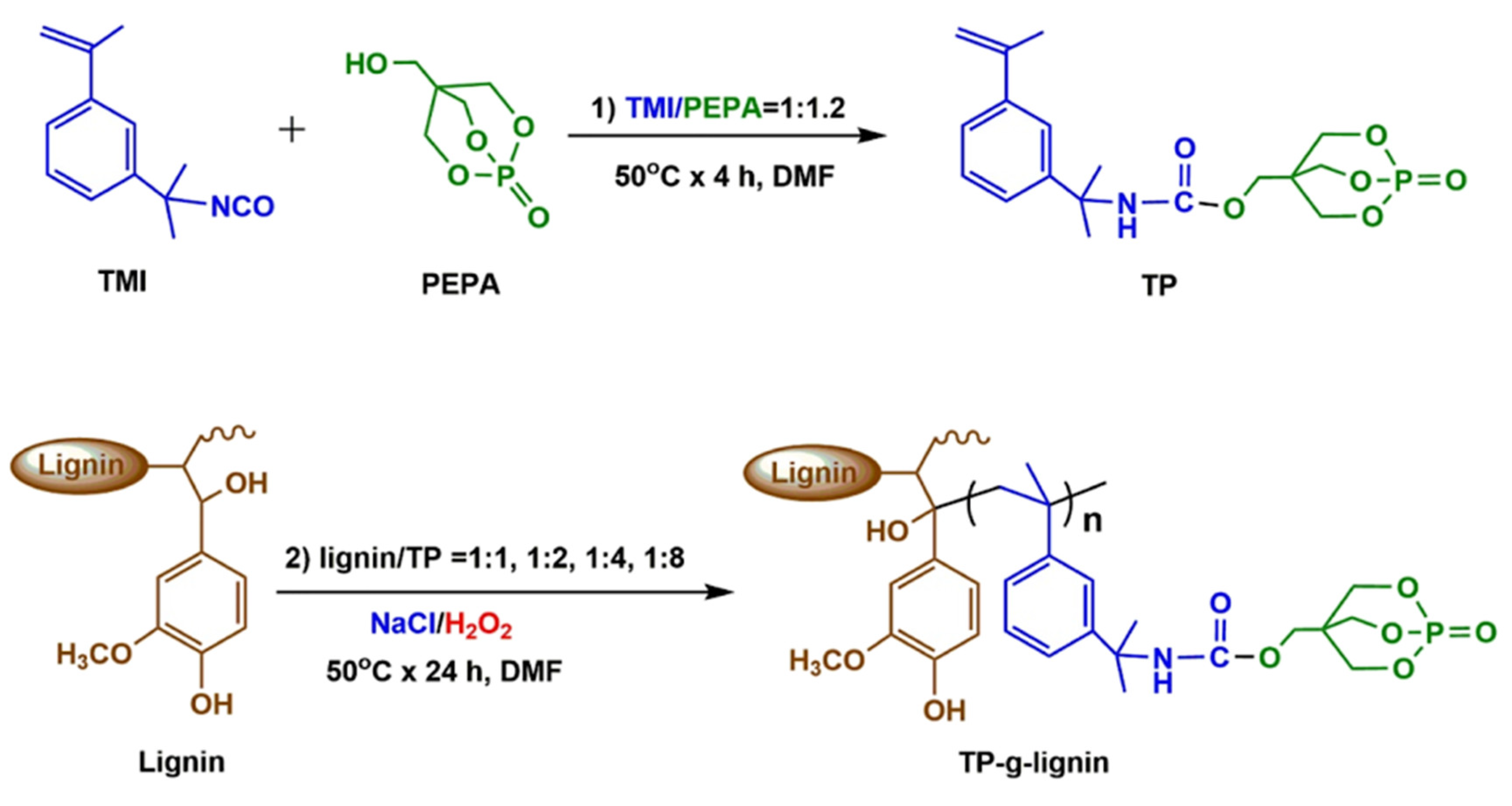
Figure 5.
Synthesis of TAFe chelates. Adapted with permission from ref [18]. Copyright 2021 Zhou, Y. Y.
Figure 5.
Synthesis of TAFe chelates. Adapted with permission from ref [18]. Copyright 2021 Zhou, Y. Y.
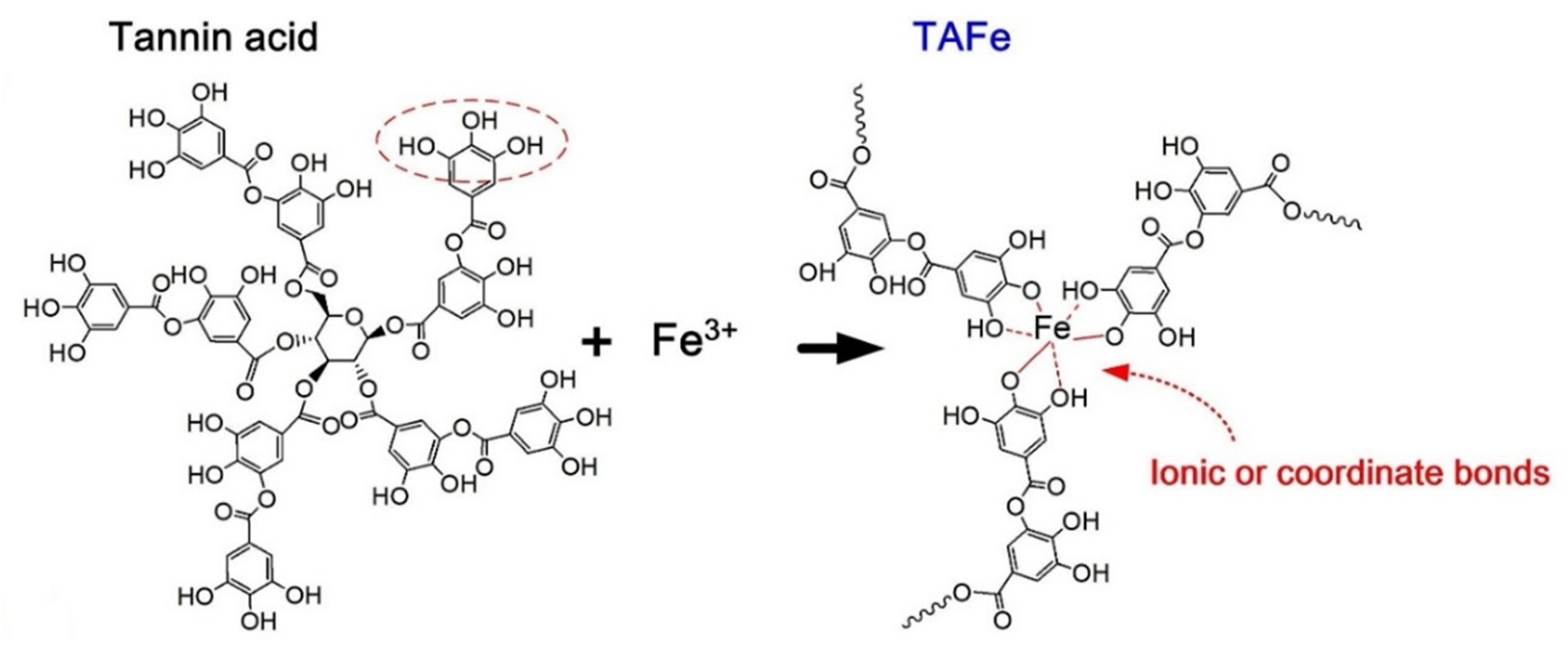
Figure 6.
(a) UV−vis absorption spectra of the THF solution of TA and mTAs at 0.01 mg/mL; the UV−vis transmittance spectra, (b) and images, (c) of neat PLA and PLA/h-mTA films with various h-mTA contents. Adapted with permission from ref [24]. Copyright 2013 Zhang, X., et al.
Figure 6.
(a) UV−vis absorption spectra of the THF solution of TA and mTAs at 0.01 mg/mL; the UV−vis transmittance spectra, (b) and images, (c) of neat PLA and PLA/h-mTA films with various h-mTA contents. Adapted with permission from ref [24]. Copyright 2013 Zhang, X., et al.

Figure 7.
ESIPT of aloin I (3, 8-dihydroxy-1-methyl-9, 10-dioxy-9, 10-dihydroanthracene 2 carboxylate methyl ester). Adapted with permission from ref [25]. Copyright 2007 Nagaoka, S.-I.
Figure 7.
ESIPT of aloin I (3, 8-dihydroxy-1-methyl-9, 10-dioxy-9, 10-dihydroanthracene 2 carboxylate methyl ester). Adapted with permission from ref [25]. Copyright 2007 Nagaoka, S.-I.
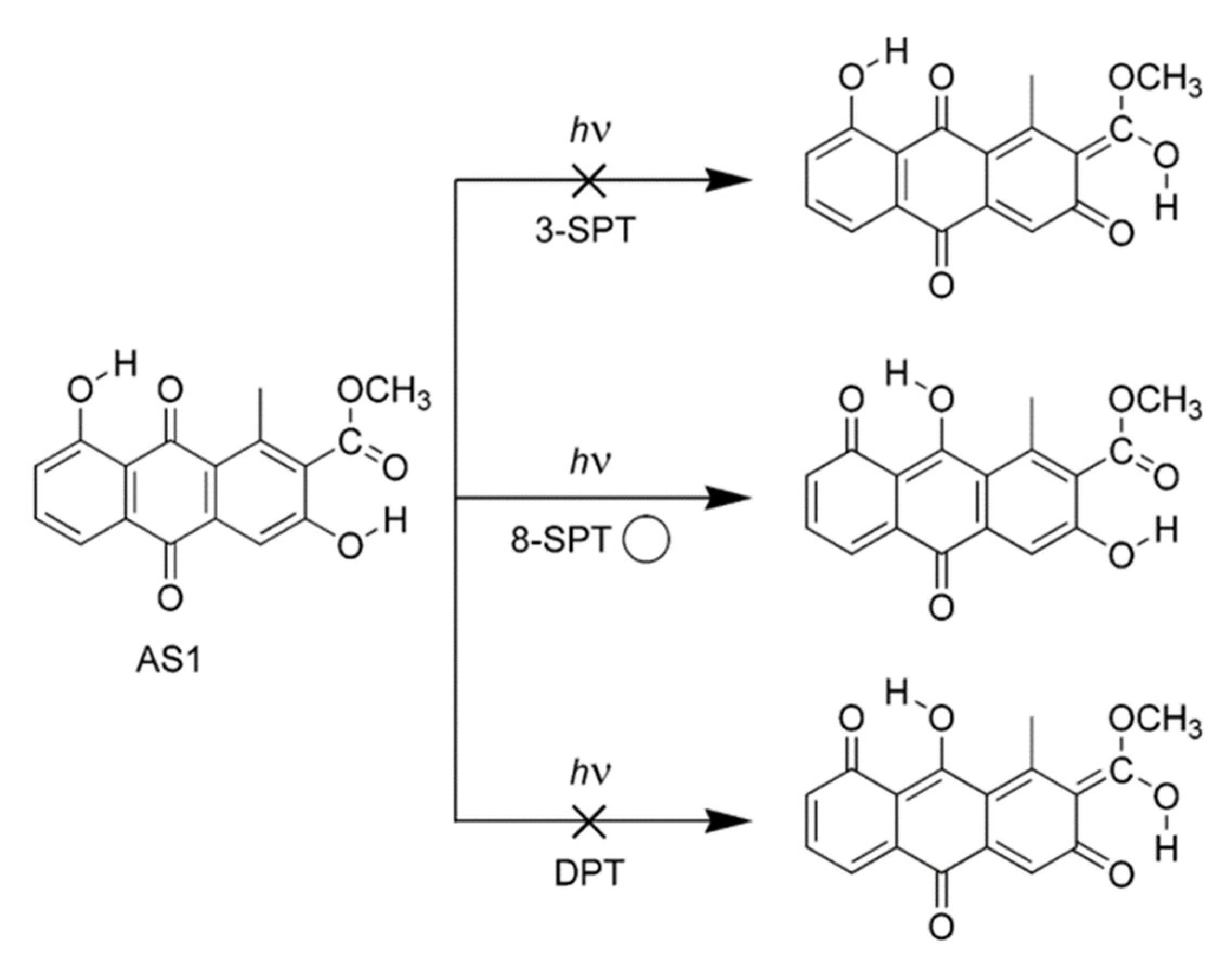

Table 1.
UV protection enhancements achieved through the integration of different forms of titanium dioxide (TiO2) into polylactic acid (PLA) films [9].
Table 1.
UV protection enhancements achieved through the integration of different forms of titanium dioxide (TiO2) into polylactic acid (PLA) films [9].
| Composite Material | Effect on UV Resistance in PLA Films | Stability Considerations | Shading Effects |
|---|---|---|---|
| PLA/A-TiO2 | Effective in enhancing UV resistance, particularly in thick films. | Susceptible to photocatalysis under UV light when in contact with air or water. | Provides shielding against harmful UV radiation. |
| PLA/R-TiO2 | Demonstrates UV resistance enhancement in both thick and thin films. | N/A | Thick-Film: Effective shading against UV radiation. |
| Thin Film: Efficient UV protection for contents. |
Table 2.
Organic compound’s advantages, considerations, and potential applications in enhancing UV protection within polymer films.
Table 2.
Organic compound’s advantages, considerations, and potential applications in enhancing UV protection within polymer films.
| Material Type | Advantages | Considerations | Application |
|---|---|---|---|
| Lignin-Derived Additives |
|
|
Enhancing UV protection while maintaining tensile strength. |
| Tannins |
|
|
Enhancing UV protection and tensile properties. |
| Hydroxyl Alkylated Tannic Acid |
|
Color change in composite material may affect its applicability. | Enhancing UV protection without compromising transparency. |
| Aloe-Derived UV-Resistant PLA | Synthesized PLA material with inherent UV protection through ESIPT process. | Further optimization needed for mechanical properties and long-term stability. | Providing UV protection alongside transparency. |
| Regenerated Cellulose Fiber | CMF reinforcement improves UV blocking and barrier properties. | Reduction in transparency due to CMF presence. | Enhancing UV protection with improved mechanical properties. |
Table 3.
Light transmittance of PLA and CMF-PLA composite films at 600, 400 and 233 nm wavelengths.
| Wavelength (nm) | Transmittance (%) | ||||
|---|---|---|---|---|---|
| 0CMF | 1CMF | 3CMF | 5CMF | 10CMF | |
| 600 | 90.13 | 69.67 | 62.54 | 46.55 | 31.41 |
| 400 | 86.51 | 51.04 | 44.80 | 31.93 | 21.84 |
| 233 | 0.74 | 0.11 | 0.49 | 0.31 | 0.34 |
Disclaimer/Publisher’s Note: The statements, opinions and data contained in all publications are solely those of the individual author(s) and contributor(s) and not of MDPI and/or the editor(s). MDPI and/or the editor(s) disclaim responsibility for any injury to people or property resulting from any ideas, methods, instructions or products referred to in the content. |
© 2023 by the authors. Licensee MDPI, Basel, Switzerland. This article is an open access article distributed under the terms and conditions of the Creative Commons Attribution (CC BY) license (http://creativecommons.org/licenses/by/4.0/).
Copyright: This open access article is published under a Creative Commons CC BY 4.0 license, which permit the free download, distribution, and reuse, provided that the author and preprint are cited in any reuse.


