

Submitted:
08 September 2023
Posted:
11 September 2023
Read the latest preprint version here
Abstract
The effects of the climate crisis are affecting ecosystems at different scales and magnitudes. This paper focuses on a massive Mediterranean mussel die-off observed along the middle Italian Adriatic coast in the summer of 2022. We considered the possible environmental causes of this phenomenon and carried out a climatic analysis of the last decades and in detail of recent summers. We performed field surveys in different locations along a 16 Km coastal stretch (from Martinsicuro (TE) on the South, to Grottammare (AP) on the North). The study area includes two marine Sites of Community Importance under the European Natura 2000 network. The mussels die-off has in-terested practically all the natural mussel-beds colonizing the study area. Mussels are sessile fil-ter-feeding organisms inhabiting the intertidal zone, therefore, are highly exposed to variations in environmental conditions such as temperature and nutrient load. We discuss the possible causes of this die-off, proposing that high temperature and the scarce availability of food acted simulta-neously as stress factors, generating local unsustainable living conditions for this species.
Keywords:
Mussel die-off
; food availability
; marine heatwaves
; Adriatic Sea
; climatic crisis
; synergistic effect.
1. Introduction
The climate crisis is a global threat to species, biodiversity, and ecosystems that affects individual organisms and the way they interact with other organisms and their habitats, altering ecosystem structure and functions [1]. In this regard, the Intergovernmental Panel on Climate Change claims that the rapid global warming over the past few decades has had consequences for weather, climate, ecosystems, human society, and the economy [2]. The impacts of the climate crisis are widespread but not uniform over time and space, as the responses of species and habitats vary according to their relative vulnerability, degree of exposure, sensitivity, and capacity to adapt [3-6]. The climate crisis affects not only the average temperature but also the duration, magnitude, and frequency of extreme events such as droughts, forest fires, and heat waves [7]. This synergy implies strong pressures on ecosystems, reducing their resilience [8].
On a global scale, recent decades have seen several high-impact marine heatwaves (MHWs) (anomalously warm water events) [9], that can affect local environmental dynamics. Significant events were observed in the northern Mediterranean Sea in 2003 [10,11], in Australia (west coast) in 2011 [12], in the northwestern Atlantic Ocean in 2012 [13], in the north-eastern Pacific Ocean between 2013 and 2015 [14,15], off South East Australia in 2015/16 [16] and across Northern Australia in 2016 [17]. MHWs can generate significant impacts on ecological communities, such as the loss of kelp forests [18], coral bleaching [19], reduction of surface chlorophyll levels (Bond et al., 2015), mass mortality of marine invertebrates [20,21] and changes in distribution and structure of species and communities respectively [20,18,22].
Based on their characteristics, the Mediterranean regions, including the Adriatic ones, are considered hot spots of climate crisis [23]. In particular, the Adriatic ecosystems suffer the combined effect of climate change in the Northern Hemisphere and local climate variations [24]. The Adriatic Sea is a basin into which most of the rivers of northern and central Italy flow and which communicates with the Mediterranean Sea only through the Otranto channel (just 70 km wide); therefore, it could be considered an important example of a marine system strongly and dynamically influenced by both anthropic pressures led by rivers, and climate conditions [25-30]. A number of MHW events have been reported in the Adriatic Sea [31]. However, there is no report regarding the latest MHW events, nor even their potential association with mass mortality events (MMEs) of marine organisms.
The aim of this work was to analyze the potential causes and the ecological consequences of an MME of the Mediterranean mussel (Mytilus galloprovincialis) observed along the Piceno Adriatic coast (Marche Region, central Italy) at the end of the summer of 2022. Specifically, we integrated a climatological analysis with observational data in order to explore the potential relationship between MHW and mussel MME. It is worth mentioning that in the Mediterranean Sea, M. galloprovincialis is ecological and economic importance [32-34]. As far as we know, this report is the first observation of a mussel MME within this coastal area, in which there are two marine Sites of Community Importance (SCI) and three mussel farms.
2. Materials and Methods
2.1. Study area
The study area extends for about 16 km along the coast of the middle Adriatic, locally known as the Piceno coast (Figure 1). The climate has warm and moderately stormy summer, fresh winter with rare snowfall and mild and humid equinoctial season; the precipitation evidenced an absolute maximum in autumn and a slight secondary maximum in the month of May [35]. Summers are not usually too dry. The rainfall regime is bimodal - sublittoral adriatic and the annual rainfall and temperatures average (1997-2022), are 593 mm and 15.7°C respectively [36]. The wave regime is mostly characterized by storms from NNE to ESE. The tides are very low, with average amplitudes around 0.4-0.5 m with a maximum of around 0.75 m.
The investigated area is characterized by shallow sandy bottoms that slowly degrade towards the open sea (medium deep of about -4.5 mt at 300 mt from the coast). Continuity solutions of this type of bottom are represented by artificial reefs (linear barriers placed to defend the coast against marine erosion) and by a natural reef of about 7 hectares, which is included in the boundaries of the SCI IT534022 "Costa del Piceno - San Nicola a mare" [37]. These hard substrates are here usually and strongly colonized by mussel beds (i.e., Mytilus galloprovincialis), which perform various ecosystem functions such as the increase of the substrate three-dimensional complexity (ecosystem engineering function), the control of seston abundance in the water column by filtration (control particle abundance function), the transfer of organic matter and nutrients from the water column to the seabed through the production of biodeposits such as feces and pseudofeces (benthic-pelagic coupling and nutrient cycling function), the removal of waste from the water (bioremediation function) or being a food resource for marine organisms (feeding function) [34,38-40]. The observation sites insist on the following reef environments: Site 1, Grottammare, in the Marine Site of Community Importance (4761502N, 408104E) (natural reef); Site 2, San Benedetto del Tronto harbor (4756933N, 409848E) (artificial reef); Sites 3, San Benedetto del Tronto beach (4754238N, 409930E) (artificial reef); Site 4, Martinsicuro beach (4746627N, 412413E) (artificial reef) (Figure 1).
Moreover, a mussel farm faces the town of San Benedetto del Tronto, about three nautical miles from the coast; two others are located just south and north of the study area.
2.2. Observations
For all observation sites, the pre and post-summer 2022 status was detected by authors’ direct observations; for sites 1 and 3 the changes are also documented by photos. Moreover, about Site 1, there is a detailed description of the pre-summer 2022 condition [32,34] since it is included in the SCI-IT534022. Direct interviews with mussels’ farmers were conducted to quantify the loss of productivity.
2.3. Climatic data
In order to analyze the possible causes of the massive death of Mytilus galloprovincialis observed within the study area, we carried out an analysis of the available climatic data. In detail, on the basis of the ecological characteristics of this species, the climatic signal was characterized by focusing on air and sea temperature (time trend and heat waves) and precipitation/flow rivers.
Validated and analyzed meteo-marine data related to the measuring station of San Benedetto del Tronto (4756389N, 409228E) with a variable time step between 10 and 60 minutes according to the 2008 World Meteorological Organization guide [41] have been recovered from the dedicated website of marine weather observations of ISPRA [42]. This signal is homogeneous and almost continuous (except for very short recording gaps) and the data were analyzed from 1 January 2011. Evidently, this dataset is not a sufficiently extended historical series to supply statistically meaningful indications on the climatic course of the main marine weather features (12 complete years) but it falls anyway in a temporal phase in which the climatic crisis in existence is evidencing its greater effects in terms of thermodynamic variations of the Adriatic basin. Finally, we paid particular attention to both the climatic conditions of the last summers (2022-2019) and those of the summers of 2017 and 2015 in which the other two heat waves occurred.
3. Results
3.1. Climatic data analysis
The historical series relating to thermal parameters for water and air, for a total of more than 1.2 mln of numerical data (period 2011-2022), was analyzed in detail. A rather significant thermal increase of the sea surface temperature (SST), quantifiable at about 0.37°C and therefore in line with the indications deriving from the 17th Report on the climate in Italy of the “Higher Institute for Environmental Protection and Research” [43], highlights these data. The air temperature recorded in San Benedetto del Tronto during the same period evidenced an increase of about 1.08°C. In order to analyze summer temperature variations of the sea, Figure 2 shows the hourly details of July and August for the last few years.
In the 2022 year, the observed threshold of the SST of 29°C was continuously exceeded from 24th of July to the 10th of August, therefore for 17 days and the maximum temperature detected was 30.6°C on the 6th of August. However, comparing this intense wave of sea heat with the signals of recent years, it is evident that thermal values of the SST higher than 29°C are recurrent in the study area during the summer season. The highest absolute temperature values of the limited series were recorded in the summer of 2017 and precisely on the 5th of August, with 31.2°C; during this year, the SST above 29°C extended from day 1 to 14 of August, therefore less extensive than in 2022. In the summer of 2015, the maximum temperature of 31°C was detected on July 24th, and the period with SST>29°C extended from July 19th to August 15th, for 25 days (in this period the SST drops below 29°C for two days).
The status of the sea waters of the study area depends not only on the conditions at the mesoscale (basin of Tronto and Aso rivers) but especially on what happens in the upper Adriatic basin, where the main Italian rivers (in terms of water flow: Po, Adige, and Brenta) flow their freshwater; indeed, a dominant sea current from north to south, runs along the Italian Adriatic coast, transporting southward the runoff.
Analyzing the data of the above-cited ISPRA Report [43], it is possible to observe that the flow rates of the aforementioned rivers and especially the rainfall that occurred in the catchment areas of the Po and the Adige were extremely low even in the first half of the year, due to a long phase of climatic drought, extended temporally from December 2021 and lasted until July 2022; moreover, this phase was also characterized by a strong nivometric deficit on the Alpine and Apennine mountains. The negative anomalies related to the first 6 months of the 2021-22 meteorological years were about 55% in the regions of Piemonte and Valle d'Aosta and about 50% in Lombardy and Tridentine Venice (in northern Italy).
The Po River reached the absolute minimum of the last 200 years during 2022, with a flow of 104 mc/sec on the 24th of July (hydrometric station of Ferrara-Pontelagoscuro) (Figure 3); other exceptional dry periods for the Po River were in June 2022 with a range of 303 mc/sec, in June 2006 with 320 mc/sec, in June 2005 with 444 mc/sec and in June 2003 with 521 mc/sec [44].
In addition, during the summer of 2017, there was a slightly lower negative anomaly of winter and spring precipitation than in 2022 but the hydrological data of the flows of the Po in spring and summer were characterized by values much higher than those of 2022. Regarding the summer 2015, we observe that the first half of the year is characterized by rainfall around the average of the last thirty years, with moderate snowfall in the sectors of the central and eastern Alps and alpine river flows were significantly higher than in 2022 [44].
3.2. Field observation of mussel MME
In the present study, we recorded a massive absence of Mediterranean mussel beds on rocky substrates that were almost completely covered before the summer 2022 (Figure 4). This phenomenon was observed after the heat wave hit the central Adriatic coast in July-August 2022, when water temperatures reached 30.6°C and remained above 29°C for 17 days (24th July - 10th August) (Figure 2). The drop in mussel production recorded in the farms located in front of the study area three nautical miles from the coast, was around 30%.
4. Discussion
4.1. Climatic data
The air thermal increase of about 1.08°C recorded in San Benedetto del Tronto harbor station, during the 2011-2022 timespan, is confirmed by the data recorded in the nearby harbors of Ancona and Ortona, respectively 1.27°C and 1.22 °C. At meso-scale level we can observe a strong acceleration of climate forcing. The increase of 0.37°C of the SST, in the same period, is comparable to the data acquired from satellite observations within the Copernicus Marine Environment Monitoring Service (CMEMS) project - Mediterranean SST [45] and with those acquired directly in the Croatian surface waters of the Central Adriatic Sea [23]. These authors highlighted two fundamental points: i) contrary to what happened in the previous 20 years, the period after 2005 would be characterized by a constant increasing thermometric trend (about 0.04ºC/year) without cooling or breaking phases, ii) there is a change in the width of the seasonal cycle, characterized by a sharp increase in the uptrend of SST in summer (about 0.056°C/year), and a slowdown in winter (~0.029°C/ year). The increase in SST on the eastern coast of the Adriatic Sea, with a total increase exceeding 1°C between 1979 to 2015, was also shown by [46] and [47]. The seasonal variability changes could affect the SST trend during solstice seasons - with summers warmer than the winters - and could amplify the effects of the sea heat waves in terms of frequency, magnitude, and duration, with negative impacts on marine ecosystems as a consequence.
The 2022 sea heat wave resulted from the high air temperatures recorded at the end of June along the middle and upper Adriatic Italian coast. The month of July has been indeed the hottest of the last 50 years [48]. These sea heat waves confirm a trend of increasing temperatures in the Mediterranean basin in the last twenty years [31].
The reduced river runoff is another crucial aspect that characterized the Central Adriatic waters during 2022. The Po River is the largest Italian river and the main contributor to the nutrient load in the central northern Adriatic waters [26]. In summer, the typical flow of the Po River falls below the range of 550 and 700 mc/sec. Interestingly, the slowest flow (i.e. 104 mc/sec) was recorded exactly in July 2022 [44]. In 2022, the fluvial regime of the Po River (Figure 3) and, simultaneously, of the Adige, Piave and Brenta rivers, which are normally of the nivo-glacial type, showed a typical Mediterranean regime, with a slight maximum in winter and a slight recovery in the flow rate in May. This regime was due to the rapid melting of the very scarce residual snowpack present on the Alpine chain, and a strong summarizing minimum in summer.
4.2. Mussels MME
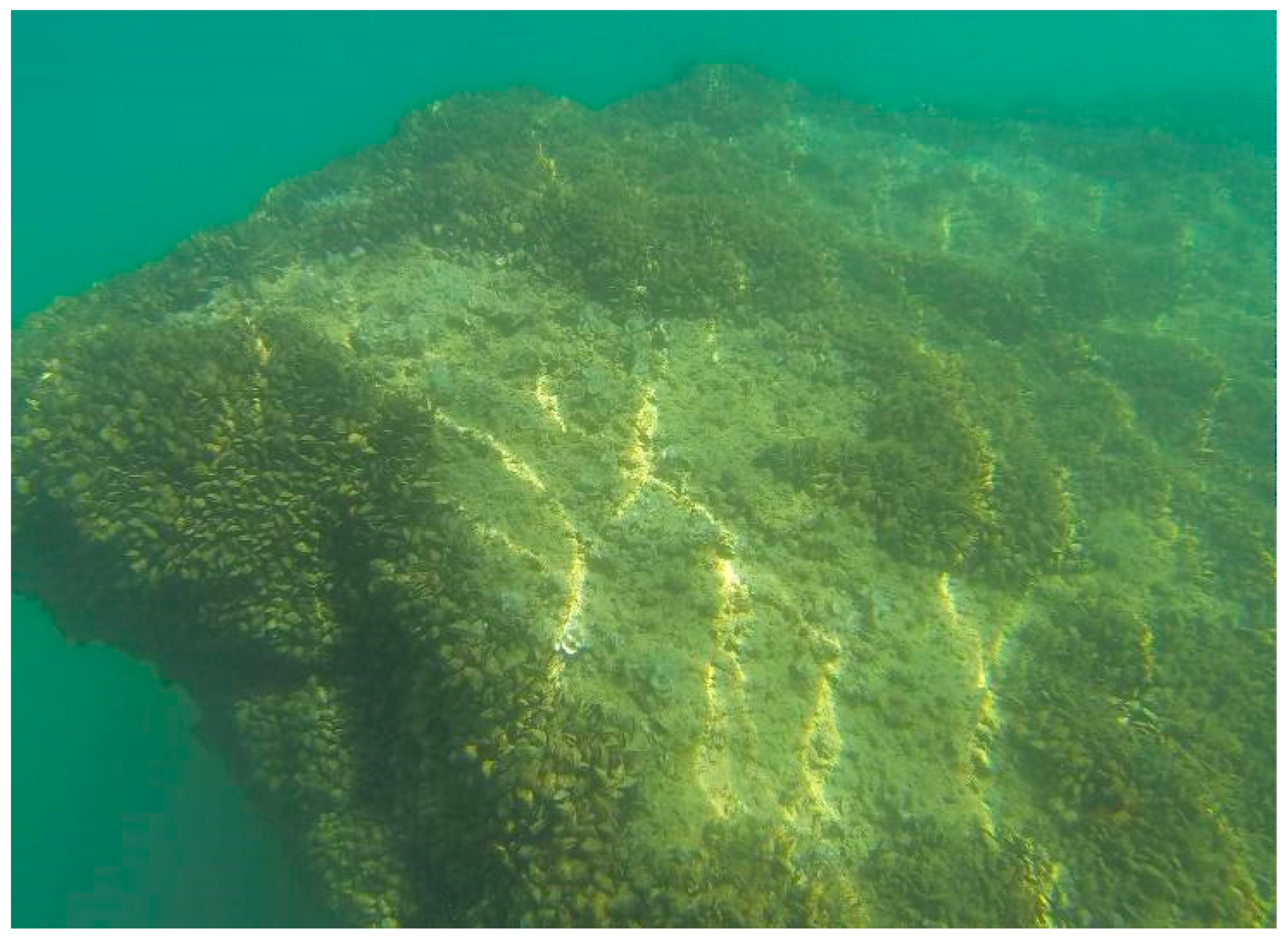
The disappearance of the mussels bed observed in the study area is not attributable to phenomena of predation or illegal fishing (Figure 5), as it is widespread throughout the investigated area and is totalitarian in the observation sites.
Our findings align with previous studies demonstrating that HMWs correlate with MMEs in the Mediterranean Sea [21,49]. However, there is still limited knowledge of this association in the Adriatic Sea area. In the Northwestern Mediterranean Sea, mortality incidence between 20% and 100% was registered according to MHW duration ranging from 25 to 50 days [50]. This finding suggests the existence of high variability in the level of mortality impact for similar MHWs and demonstrates the need to consider further factors in analyzing the relationship between heat exposure conditions and MMEs. Among others, these factors include the ecological memory of the recurrence of MHWs over the same geographic areas [51], and potential species or populations-related differences [52,53]. For instance, benthic organisms colonizing intertidal zones, such as M. galloprovincialis, are exposed to a variety of harsh marine and terrestrial conditions that could affect their survival. Indeed [54] demonstrated that the Mediterranean mussel exposed to a low food load and high temperatures (30ºC) had a survival of 33%, while individuals exposed to the same thermal conditions but with a high food load had a survival of 57%.
Previous experimental studies focusing on measuring the death levels of M. galloprovincialis in response to increasing temperature showed that individuals exposed to 30ºC reached a 40% mortality after 10 days of exposure, peaking at 100% on the 12th day [55]. Indeed, [56,57] identified a temperature of 24–25°C as an upper limit for optimal physiological processes, indicating that Mediterranean mussels inhabiting natural populations already live close to their thermal acclimation limits. Physiological parameters that may contribute to increased animal stress include the heart rate. [58] observed that increasing temperatures promote the rise of heartbeats until a certain critical temperature, after which the heart rate drops. Therefore, the effects of the climate crisis are challenging their physiological limits, making these bivalves particularly vulnerable to extreme thermal variations, especially considering that rocky intertidal coasts are one of the most thermally variable and stressful habitats [59,60].
Another aspect to consider for both natural and farmed mussel populations is the status of the byssus. Byssal threads are composed of extracellular proteinaceous (collagenous) fibers and are synthesized along the mussel's foot starting from a mussel foot protein [61]. The byssus' role includes preventing dislodgement of the bivalve in harsh hydrodynamic conditions, resisting mobile competitors, and competing for space [62]. Environmental conditions like the warming of waters and ocean acidification may alter byssal production processes causing a reduction in strength, stiffness, and extension [62-64]. [65] further demonstrated that in Mytilus coruscus the byssus may be highly susceptible to the adverse effects of ocean warming because the expression of mussel foot protein genes was affected by elevated temperature, leading to a risk of dislodgement at high sea temperature (up to 27°C). Similarly, [66] found that in M. galloprovincialis, the attachment strength was negatively correlated with sea surface temperature.
One further consequence of the increased ocean warming is decreased marine productivity [67]. [68] have suggested that depending on the timing of phytoplankton blooms, marine bivalves may face periods of limited food availability and elevated temperatures, especially in the high intertidal zone. These authors indeed recorded a decrease in the enzyme kinetics with a controlled increase of water temperature in the Mediterranean mussels in anoxia or normoxia conditions. Interestingly, the authors found that food availability can buffer the detrimental effects of harsh environmental conditions.
Our observations also show that during the summer of 2022, the study area experienced a dry period (i.e. strong nivometric deficit in winter, low rainfall in springer, and an absolute minimum of rivers’ flow in springer and summer), which resulted in a low concentration of nutrients released into the sea by rivers. In fact, local mussel farmers estimated a reduction of 30% in their productivity in this period. We thus hypothesize that the mussel MMEs observed in our study are due to a vicious cycle of heat stressors (i.e. MHW) which increased the metabolic rate, and to the low nutrient availability, which did not meet the metabolic demand. Indeed, heatwaves with temperatures reaching 31ºC also occurred in the summer seasons of 2015 and 2017. However, the Po River runoffs during the spring and summer of these years were characterized by values much higher than those of 2022 [44], and as consequence, neither mussel MMEs nor mussel bed reduction were observed in the same study area, during our monthly surveys.
5. Conclusions
Based on our field observation in the study area, climatic data analysis, and also considering previous findings on M. galloprovincialis’ tolerance under certain stress conditions, we suggest that the MME observed in summer 2022 was likely due to prolonged anomalously warm water combined with reduced nutrient supply. These findings clearly indicate that the Adriatic Sea is undergoing an evident acceleration of climate change impact, whose socio-ecological implications need to be addressed.
Probably, M. galloprovincialis from our study area lives in a defined range of summer temperatures and food availability; the knowledge of the climatic conditions that led to the observed massive die-off can represent an important contribution both to the monitoring of ecosystems and the management of mussel farms. The consequences of this stressor combination (i.e., MHW and low nutrient load) on mussel farms are extremely different to what is possible to observe in natural settlements because the good farming practices adopted by farmers (e.g., anticipating the sale of the product before the hottest periods and using fine knit socks (even in cotton), can reduce the damage in certain periods allowing production to resume. On the contrary, climate crisis-driven alterations of natural habitats can be dramatic and require a longer time to restore, with the risk that once altered, natural habitat can reassemble itself with components and structures different from the initial condition.
Considering that these extreme climatological events will probably intensify [69], our preliminary analysis stresses the need for adopting specific mitigation and restoration measures in order to improve the management of marine natural ecosystems and fisheries.
Author Contributions
Conceptualization, L.B. and F.A.P.; formal analysis, L.B., M.F.; investigation, L.B., M.C. and P.C.; methodology, L.B., M.C., M.F. and P.C.; software, L.B. and M.F.; Data Curation, L.B., M.C.; supervision, L.B. and F.A.P.; visualization, L.B. and P.C.; Writing – Original Draft Preparation, L.B., M.C., P.C. and F.A.P.; writing-review and editing, L.B., M.C. and F.A.P. All authors have read and agreed to the published version of the manuscript.
Funding
This research received no external funding.
Data Availability Statement
The data presented in this study are available on request from the corresponding author. The data are not publicly available as they are partly owned by local governments.
Acknowledgments
We would like to thank the “Autorità di bacino distrettuale fiume Po” for the historical flows of the Po River data provided. Moreover, we would also like to thank the manager of local mussel farms, Mr. Silvio d’Apice for both the mussel productivity of 2022 data provided and for the sharing his experience on mussel farming and techniques used.
Conflicts of Interest
The authors declare no conflict of interest.
References
- Díaz, S.; Settele, J.; Brondizio, E.; Ngo, H.T.; Guèze, M.; Agard, J.; Arneth, A.; Balvanera, P.; Brauman, K.A.; Butchart, S.H.M. Summary for Policymakers of the Global Assessment Report on Biodiversity and Ecosystem Services of the Intergovernmental Science-policy Platform on Biodiversity and Ecosystem Services. Secretariat of the Intergovernmental Science-Policy Platform on Biodiversity and Ecosystem Services 2019, Bonn, Germany, 39.
- Shukla, P.R.; Skea, J.; Calvo Buendia, E.; Masson-Delmotte, V.; Pörtner, H.O.; Special report - Climate change and land. Intergovernmental Panel on Climate Change 2019. Available online: https://www.ipcc.ch/report/srccl/ (accessed on 20 October 2022).
- Beever, E.A.; O’Leary, J.; Mengelt, C.; West, J.M.; Julius, S.; Green, N.; Managness, D.; Petes, L.E.; Stein, B.A.; Nicotra, A.B.; et al. Improving conservation outcomes with a new paradigm for understanding species’ fundamental and realized adaptive capacity. Conserv. Lett. 2016, 9, 131–137. [Google Scholar] [CrossRef]
- Foden, W.B.; Young, B.E. IUCN SSC Guidelines for Assessing Species’ Vulnerability to Climate Change. Version 1.0. Occasional Paper of the IUCN Species Survival Commission No. 59. Cambridge, UK and Gland, Switzerland, 2016; 114. [CrossRef]
- Glick, P.; Stein, B.A.; Edelson, N.A. Scanning the Conservation Horizon: A Guide to Climate Change Vulnerability Assessment. National Wildlife Federation, Washington, DC, 2011; 168.
- Kovach, R.P.; Dunham, J.B.; Al-Chokhachy, R.; Snyder, C.D.; Letcher, B.H.; Young, J.A.; Beever, E.A.; Pederson, G.T.; Lynch, A.J.; Hitt, N.P.; et al. An integrated framework for ecological drought across riverscapes of North America. Bioscience 2019, 69, 418–431. [Google Scholar] [CrossRef]
- Jay, A.; Reidmiller, D.R.; Avery, C.W.; Barrie, D.; DeAngelo, B.J. 2018. Impacts, Risks, and Adaptation in the United States: Fourth National Climate Assessment, Volume. II. U.S. Global Change Research Program, Washington, D.C., USA, pp. 33–71..
- Malhi, Y.; Franklin, J.; Seddon, N.; Solan, M.; Turner, M. G.; Field, C. B.; Knowlton, N. Climate change and ecosystems: Threats, opportunities and solutions. Philos. Trans. Royal Soc. A 2020, 375, 20190104. [Google Scholar] [CrossRef] [PubMed]
- Hobday, A.J.; Oliver, E.C.; Gupta, A.S.; Benthuysen, J.A.; Burrows, M.T.; Donat, M.G.; Holbrook, N.J; Moore, P.J.; Thomsen, M.S.; Wernberg, T.; et. al. Categorizing and naming marine heatwaves. Oceanogr. 2018, 31, 162–173. [Google Scholar] [CrossRef]
- Sparnocchia, S.; Schiano, M. E.; Picco, P.; Bozzano, R.; Cappelletti, A. The anomalous warming of summer 2003 in the surface layer of the Central Ligurian Sea (Western Mediterranean). Ann. Geophys. 2006, 24, 443–452. [Google Scholar] [CrossRef]
- Olita, A.; Sorgente, R.; Ribotti, A.; Natale, S.; Gaberšek, S. Effects of the 2003 European heatwave on the Central Mediterranean Sea surface layer: a numerical simulation. Ocean Sci. 2006, 3, 85–125. [Google Scholar]
- Pearce, A.F.; Feng, M. The rise and fall of the ‘marine heat wave’ off Western Australia during the summer of 2010/11. J. Mar. Syst. 2013, 112, 139–156. [Google Scholar] [CrossRef]
- Chen, K.; Gawarkiewicz, G.G.; Lentz, S.J.; Bane, J.M. Diagnosing the warming of the Northeastern US Coastal Ocean in 2012: a linkage between the atmospheric jet stream variability and ocean response. J. Geophys. Res. Oceans 2014, 119, 218–227. [Google Scholar] [CrossRef]
- Bond, N.A.; Cronin, M.F.; Freeland, H.; Mantua, N. Causes and impacts of the 2014 warm anomaly in the NE Pacific. Geophys. Res. Lett. 2015, 42, 3414–3420. [Google Scholar] [CrossRef]
- Di Lorenzo, E.; Mantua, N. Multi-year persistence of the 2014/15 North Pacific marine heatwave. Nat. Clim. Change 2016, 6, 1042–1047. [Google Scholar] [CrossRef]
- Oliver, E.C.J.; Donat, M.G.; Burrows, M.T.; Moore, P.J.; Smale, D.A.; Alexander, L.V.; Benthuysen, J.A.; Feng, M.; Gupta, A.S.; Hobday, A.J.; et. al. Longer and more frequent marine heatwaves over the past century. Nat. Commun. 2018, 9, 1324. [Google Scholar] [CrossRef] [PubMed]
- Benthuysen, J.A. , Oliver, E.C.J., Feng, M., Marshall, A.G. Extreme marine warming across tropical Australia during austral summer 2015-16. J. Geophys. Res. Oceans 2018, 123, 1301–1326. [Google Scholar] [CrossRef]
- Wernberg, T.; Bennett, S.; Babcock, R.C.; De Bettignies, T.; Cure, K.; Depczynski, M.; Dufois, F.; Fromont, J.; Fulton, C.J.; Hovey, R.K. et al. Climate-driven regime shift of a temperate marine ecosystem. Science 2016, 353, 169–172. [Google Scholar] [CrossRef] [PubMed]
- Hughes, T.P.; Kerry, J.; Álvarez-Noriega, M.; Álvarez-Romero, J.G.; Anderson, K.D.; Baird, A.H.; Badcock, R.C.; Beger, M.; Bellwood, D.R.; et al. Global warming and recurrent mass bleaching of corals. Nature 2017, 543, 373–377. [Google Scholar] [CrossRef]
- Oliver, E.; Benthuysen, J.; Bindoff, N.; Hobday, A.J.; Holbrook, N.J.; Mundy, C.N.; Perkins-Kirkpatrick, S.E. The unprecedented 2015/16 Tasman Sea marine heatwave. Nat. Commun. 2017, 8, 16101. [Google Scholar] [CrossRef] [PubMed]
- Garrabou, J.; Coma, R.; Bensossan, N.; Bally, M. , Chevaldonné, P.; Cigliano, M.; Diaz, D.; Harmelin, J.G.; Gambi, M.C.; Kersting, D.K.; et al. Mass mortality in Northwestern Mediterranean rocky benthic communities: effects of the 2003 heat wave. Glob. Chang. Biol. 2009, 15, 1090–1103. [Google Scholar] [CrossRef]
- Cavole, L.M.; Demko, A.M.; Diner, R.E.; Giddings, A.; Koester, I.; Pagniello, C.M.L.S.; Paulsen, M.L.; Ramirez-Valdez, A.; Schwenck, S.M.; Yen, N.K.; et al. Biological impacts of the 2013--2015 warm-water anomaly in the Northeast Pacific: winners, losers, and the future. Oceanography 2016, 29, 273–285. [Google Scholar] [CrossRef]
- Bonacci, O.; Bonacci, D.; Patekar, M.; Pola, M. Increasing Trends in Air and Sea Surface Temperature in the Central Adriatic Sea (Croatia). J. Mar. Sci. Eng. 2021, 9, 358. [Google Scholar] [CrossRef]
- Grbec, B.; Morović, M.; Matić, F.; Ninčević Gladan, Ž.; Marasović, I.; Vidjak, O.; Bojanić, N.; čikes Keć, V.; Zorica, B.; Kusplić, G. et al. Climate regime shifts and multi-decadal variability of the Adriatic Sea pelagic ecosystem. Acta Adriat. 2015, 56, 47–66. [Google Scholar]
- Grilli, F.; Accoroni, S.; Acri, F.; Bernardi Aubry, F.; Bergami, C.; Cabrini, M.; Campanelli, A.; Giani, M.; Guicciardi, S.; Marini, M.; et al. Seasonal and Interannual Trends of Oceanographic Parameters over 40 Years in the Northern Adriatic Sea in Relation to Nutrient Loadings Using the EMODnet Chemistry Data Portal. Water 2020, 12, 2280. [Google Scholar] [CrossRef]
- Penna, N.; Cappellacci, S.; Ricci, F. The influence of the Po River discharge on phytoplankton bloom dynamics along the coastline of Pesaro (Italy) in the Adriatic Sea. Mar. Poll. Bull. 2004, 48, 321–326. [Google Scholar] [CrossRef] [PubMed]
- Schiano, M.E.; Sparnocchia, S.; Cappa, C.; Bozzano, R. An analysis of the climate variability over the Mediterranean Sea by means of the surface water vapour density. Int. J. Climatol. 2005, 25, 1731–1748. [Google Scholar] [CrossRef]
- Grbec, B. , Morović, M., Beg Paklar, G., Kušpilić, G., Matijević, S., Matić, F., Gladan, Ž. The relationship between the atmospheric variability and productivity in the adriatic Sea area. J. Mar. Biol. Assoc. U.K. 2009, 89, 1549–1558. [Google Scholar] [CrossRef]
- Giani, M.; Djakovac, T.; Degobbis, D.; Cozzi, S.; Solidoro, C.; Umani, S.F. Recent changes in the marine ecosystems of the northern Adriatic Sea. Estuar. Coast. Shelf Sci. 2012, 115, 1–13. [Google Scholar] [CrossRef]
- Djakovac, T.; Supić, N.; Bernardi Aubry, F.; Degobbis, D.; Giani, M. Mechanisms of hypoxia frequency changes in the northern Adriatic Sea during the period 1972–2012. J. Mar. Syst. 2015, 141, 179–189. [Google Scholar] [CrossRef]
- Juza, M.; Fernández-Mora, À.; Tintoré, J. Sub-Regional Marine Heat Waves in the Mediterranean Sea from Observations: Long-Term Surface Changes, Sub-Surface and Coastal Responses. Front. Mar. Sci. 2022, 9, 785771. [Google Scholar] [CrossRef]
- Cerrano, C.; Pica, D.; Di Camillo, C.; Bastari, A.; Torsani, F. Caratterizzazione biocenotica e restituzione cartografica per l’individuazione di habitat e specie di interesse comunitario lungo la costa marchigiana. Regione Marche, Ancona, Italy, 2014; pp. 55.
- Gazeau, F.; Alliouane, S.; Bock, C.; Bramanti, L.; López Correa, M.; Gentile, M.; Hirse, T.L.; Portner, H.O.; Ziveri, P. Impact of ocean acidification and warming on the Mediterranean mussel (Mytilus galloprovincialis). Front. Mar. Sci. 2014, 1, 62. [Google Scholar] [CrossRef]
- Bracchetti, L.; Capriotti, M. Le Formazioni a Reff della costa Picena (The reff formations of the Piceno coast, central Italy). Studi Costieri 2021, 30, 83–92. [Google Scholar]
- Pesaresi, S.; Biondi, E.; Casavecchia, S. Bioclimates of Italy. J. Maps 2017, 13, 955–960. [Google Scholar] [CrossRef]
- Fazzini, M.; Beltrando, G.; Billi, P. Intense rainfalls and flooding problems in the beach resort of San Benedetto del Tronto, Adriatic Sea, Central Italy. Proc. 3°GEOMED 2013, Antalya Turkey, 10-14 june; Ibrahim Athalay and Recept EYE, 128-131.
- Council Directive 92/43/EEC of 21 May 1992 on the conservation of natural habitats and of wild fauna and flora. Available online: http://eur-lex.europa.eu/legal-content/EN/TXT/PDF/?uri=CELEX:31992L0043 (accessed on 15 September 2022).
- Dame, R.F., Kenneth, M.J. Ecology of marine bivalves: an ecosystem approach. CRC Press, Taylor & Francis, Boca Raton, FL, US, 2011; pp. 284.
- Ward, J.E.; Shumway, S.E. Separating the grain from the chaff: particle selection in suspension-and deposit-feeding bivalves. J. Exp. Mar. Biol. Ecol. 2004, 300, 83–130. [Google Scholar]
- Broszeit, S.; Hattam, C.; Beaumont, N. Bioremediation of waste under ocean acidification: Reviewing the role of Mytilus edulis. Mar. Poll. Bull. 2016, 103, 5–14. [Google Scholar] [CrossRef] [PubMed]
- WMO (World Meteorological Organization), 2008. Guide to Meteorological Instruments and Methods of Observation - No.8 (Seventh edition). Available online: https://www.weather.gov/media/epz/mesonet/CWOP-WMO8.pdf.
- National tide gauge network of ISPRA (Istituto Superiore per la Protezione e la Ricerca Ambientale). Available online: https://mareografico.it/?session=0S71809491267K766873MJG&syslng=ita&sysmen=-1&sysind=-1&syssub=-1&sysfnt=0&code=STAZ&idst=1W (accessed on 20 June 2023).
- ISPRA (Istituto Superiore per la Protezione e la Ricerca Ambientale), 2021. Gli indicatori del Clima in Italia nel 2021 Anno XVII - Stato dell’ambiente 98/2022. In italian, available only in electronic format at. Available online: https://www.isprambiente.gov.it/files2022/pubblicazioni/stato-ambiente/rapporto_clima_2021.pdf.
- ARPAE, 2023. Agenzia Regionale Protezione Ambientale Emilia Romagna. Data reserved.
- Pisano, A.; Marullo, S.; Artale, V.; Falcini, F.; Yang, C.; Leonelli, F.E.; Santoleri, R.; Buongiorno Nardelli, B. New Evidence of Mediterranean Climate Change and Variability from Sea Surface Temperature Observations. Remote Sens. 2020, 12, 132. [Google Scholar] [CrossRef]
- Šolić, M.; Grbec, B.; Matić, F.; Šantić, D.; Šestanović, S.; Gladan, Ž.N.; Bojanić, N.; Ordulj, M.; Jozić, S.; Vrdoljak, A. Spatio-temporal reproducibility of the microbial food web structure associated with the change in temperature: Long-term observations in the Adriatic Sea. Oceanography 2018, 161, 87–101. [Google Scholar] [CrossRef]
- Grbec, B.; Matić, F. Beg Paklar, G.; Morović, M.; Popović, R.; Vilibić, I. Long-Term Trends, Variability and Extremes of In Situ Sea Surface Temperature Measured Along the Eastern Adriatic Coast and its Relationship to Hemispheric Processes. Pure Aappl. Geophys. 2018, 175, 4031–4046. [Google Scholar] [CrossRef]
- Fazzini, M.; Fiore, A.; Sammartino, G. Preliminary analysis of climate data and geo-hydrological instability that affected the island of Ischia on November 26, 2022. Geologia dell’Ambiente 2023, 1/2023 ISSN 1591-5352; 12-25.
- Cerrano, C.; Bavestrello, G.; Bianchi, C.N.; Cattaneo-Vietti, R.; Bava, S.; Morganti, C.; Morri, C.; Picco, P.; Sara, G.; Schiaparelli, S. et al. Catastrophic mass-mortality episode of gorgonians and other organisms in the Ligurian Sea (North-Western Mediterranean), summer 1999. Ecol. Lett. 2000, 3, 284–293. [Google Scholar] [CrossRef]
- Garrabou, J.; Gómez-Gras, D.; Medrano, A.; Cerrano, C.; Ponti, M.; Schlegel, R.; Bensoussan, N.; Turicchia, E; Sini, M. ; Gerovasileiou, V.; et al. Marine heatwaves drive recurrent mass mortalities in the Mediterranean Sea. Glob. Chang. Biol. 2022, 28, 5708–5725. [Google Scholar] [CrossRef]
- Turner, M. G.; Calder, W. J.; Cumming, G. S.; Hughes, T. P.; Jentsch, A.; LaDeau, S.L.; Lenton, T.M.; Shuman, B.N.; Turetsky, M.R.; Ratajczak, M.; et al. Climate change, ecosystems and abrupt change: Science priorities. Philos. Trans. Royal Soc. B 2020, 375, 20190105. [Google Scholar] [CrossRef]
- Pagès-Escolà, M.; Hereu, B.; Garrabou, J.; Montero-Serra, I.; Gori, A.; Gómez-Gras, D.; Figuerola, B.; Linares, C. Divergent responses to warming of two common co-occurring Mediterranean bryozoan. Sci. Rep. 2018, 8, 17455. [Google Scholar] [CrossRef]
- Gómez-Gras, D.; Linares, C.; de Caralt, S.; Cebrian, E.; Frleta-Valić, M.; Montero-Serra, I.; Pagès-Escolà, M.; López-Sendino, P.; Garrabou, J. Response diversity in Mediterranean coralligenous assemblages facing climate change: Insights from a multi-specific thermotolerance experiment. Ecol. Evol. 2019, 9, 4168–4180. [Google Scholar] [CrossRef]
- Schneider, K. R.; Van Thiel, L. E.; Helmuth, B. Interactive effects of food availability and aerial body temperature on the survival of two intertidal Mytilus species. J. Therm. Biol. 2010, 35, 161–166. [Google Scholar] [CrossRef]
- Feidantsis, K.; Giantsis, I. A.; Vratsistas, A.; Makri, S.; Pappa, A. Z.; Drosopoulou, E.; Anestis, A.; Mavridou, E.; Exadactylos, A.; Vafidis, D.; et. al. Correlation between intermediary metabolism, Hsp gene expression, and oxidative stress-related proteins in long-term thermal-stressed Mytilus galloprovincialis. Am. J. Physiol. Regul. Integr. Comp. Physiol. 2020, 319, 264–281. [Google Scholar] [CrossRef] [PubMed]
- Anestis, A.; Lazou, A.; Portner, H O. ; Michaelidis, B. Behavioral, metabolic, and molecular stress responses of marine bivalve Mytilus galloprovincialis during long-term acclimation at increasing ambient temperature. Am. J. Physiol. Regul. Integr. Comp. Physiol 2007, 293, R911–21. [Google Scholar] [CrossRef]
- Anestis, A.; Pörtner, H.O.; Karagiannis, D.; Angelidis, P.; Staikou, A.; Michelidis, B. Response of Mytilus galloprovincialis (L.) to increasing seawater temperature and to marteliosis: metabolic and physiological parameters. Comp. Biochem.Physiol. Part A Mol. Integr. Physiol. 2010, 156, 57–66. [Google Scholar] [CrossRef] [PubMed]
- Brady, C.E.; Somero, G.N. Following the heart: temperature and salinity effects on heart rate in native and invasive species of blue mussels (genus Mytilus). J. Exp. Biol. 2006, 209, 2554–2566. [Google Scholar] [CrossRef]
- Somero, G.N. Thermal Physiology and Vertical Zonation of Intertidal Animals: Optima, Limits, and Costs of Living. Integrative and Comp. Biol. 2002, 42, 780–789. [Google Scholar] [CrossRef]
- Harley, C.D. Tidal dynamics, topographic orientation, and temperature-mediated mass mortalities on rocky shores. Mar. Ecol. Prog. Ser. 2008, 371, 37–46. [Google Scholar] [CrossRef]
- Priemel, T.; Degtyar, E.; Dean, M.; Harrington, M.J. Rapid self-assembly of complex biomolecular architectures during mussel byssus biofabrication. Nat. Commun. 2017, 8, 14539. [Google Scholar] [CrossRef] [PubMed]
- Carrington, E.; Waite, J.H.; Sarà, G.; Sebens, K.P. Mussels as a Model System for Integrative Ecomechanics. Annu. Rev. Mar. Sci. 2015, 7, 443–469. [Google Scholar] [CrossRef] [PubMed]
- Lachance, A.A.; Myrand, B.; Tremblay, R.; Koutitonsky, V.; Carrington, E. Biotic and abiotic factors influencing attachment strength of blue mussels Mytilus edulis in suspended culture. Aquat. Biol. 2008, 2, 119–129. [Google Scholar] [CrossRef]
- O’Donnell, M.J.; George, M.N.; Carrington, E. Mussel byssus attachment weakened by ocean acidification. Nat. Clim. Change 2013, 3, 587–590. [Google Scholar] [CrossRef]
- Li, Y.F.; Yang, X.Y.; Cheng, Z.Y.; Wang, L.Y.; Wang, W.X.; Liang, X.; Yang, J.L. Near-future levels of ocean temperature weaken the byssus production and performance of the mussel Mytilus coruscus. Sci. Total Environ. 2020, 1, 139347. [Google Scholar] [CrossRef] [PubMed]
- Zardi, G.I.; McQuaid, C.D.; Nicastro, K.R. Balancing survival and reproduction: seasonality of wave action, attachment strength and reproductive output in indigenous Perna perna and invasive Mytilus galloprovincialis mussels. Mar. Ecol. Prog. Ser. 2007, 334, 155–163. [Google Scholar] [CrossRef]
- Watson, W.G.; Margarita, E.C.; Ginoux, P.; O'Reilly, J.E.; Casey, N.W. Ocean primary production and climate: Global decadal changes. Geophys. Res. Lett. 2003, 30, 1809. [Google Scholar] [CrossRef]
- Parisi, M.G.; Mauro, M.; Sarà, G.; Cammarata, M. Temperature increases, hypoxia, and changes in food availability affect immunological biomarkers in the marine mussel Mytilus galloprovincialis. J. Comp. Physiol. B 2017, 187, 1117–1126. [Google Scholar] [CrossRef]
- Stocker, T.F.; Qin, D.; Plattner, G.K.; Tignor, M.; Allen, S.K.; Boschung, J.; Nauels, A.; Xia, Y.; Bex, V.; Midgley, P.M. Climate Change 2013: The Physical Science Basis. Contribution of Working Group 1 to the Fifth Assessment Report of the Intergovernmental Panel on Climate Change. Cambridge University Press, Cambridge, UK and New York, USA, 2013, pp. 1523.
Figure 1.
Sites where the massive mussel die-off was observed during summer 2022. 1: Grottammare natural reef; 2: San Benedetto del Tronto harbor; 3: San Benedetto del Tronto artificial barriers; 4: Martinsicuro artificial barriers. Photos by Google Earth.
Figure 1.
Sites where the massive mussel die-off was observed during summer 2022. 1: Grottammare natural reef; 2: San Benedetto del Tronto harbor; 3: San Benedetto del Tronto artificial barriers; 4: Martinsicuro artificial barriers. Photos by Google Earth.
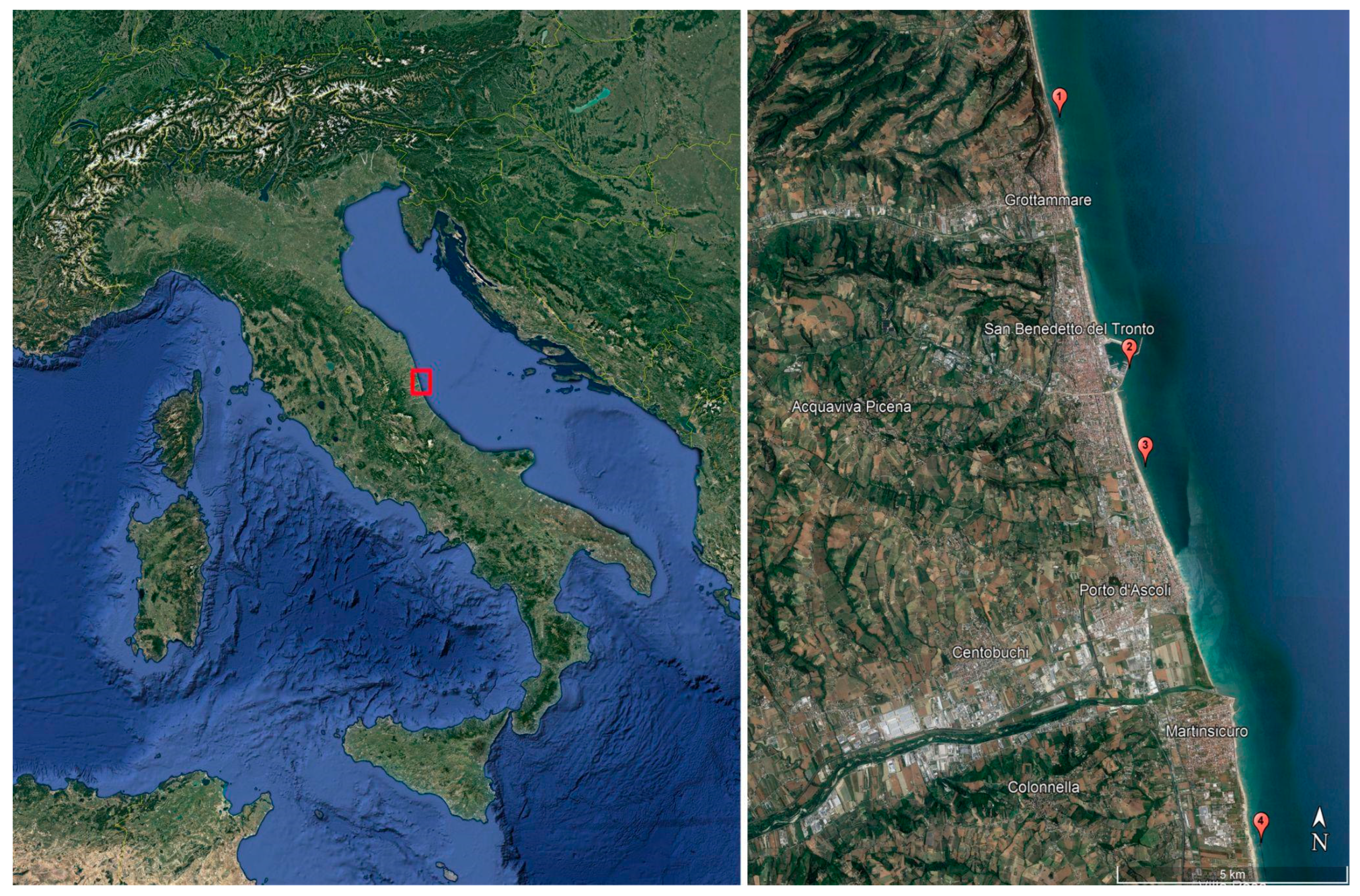
Figure 2.
Hourly temperature referring to the period July1 - August 31 for the last 4 summer seasons and for the 2015 and 2017 summer seasons; on the y-axes the day and time of the temperature reading (dd.h) (data source [42]).
Figure 2.
Hourly temperature referring to the period July1 - August 31 for the last 4 summer seasons and for the 2015 and 2017 summer seasons; on the y-axes the day and time of the temperature reading (dd.h) (data source [42]).
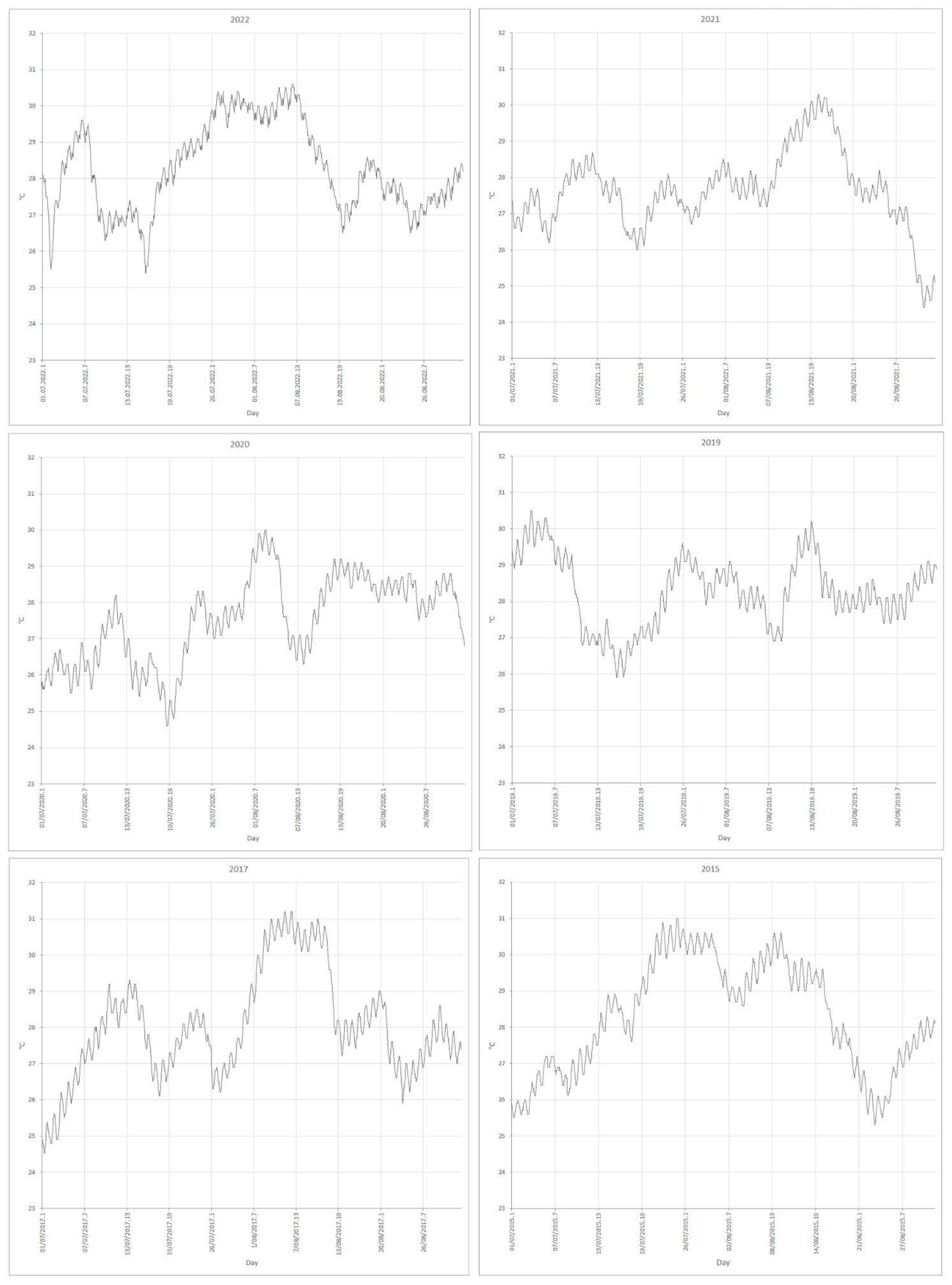
Figure 3.
Flow river comparison between the year 2022 and two previous periods, at Pontelagoscuro (FE) station (data source [44]).
Figure 3.
Flow river comparison between the year 2022 and two previous periods, at Pontelagoscuro (FE) station (data source [44]).
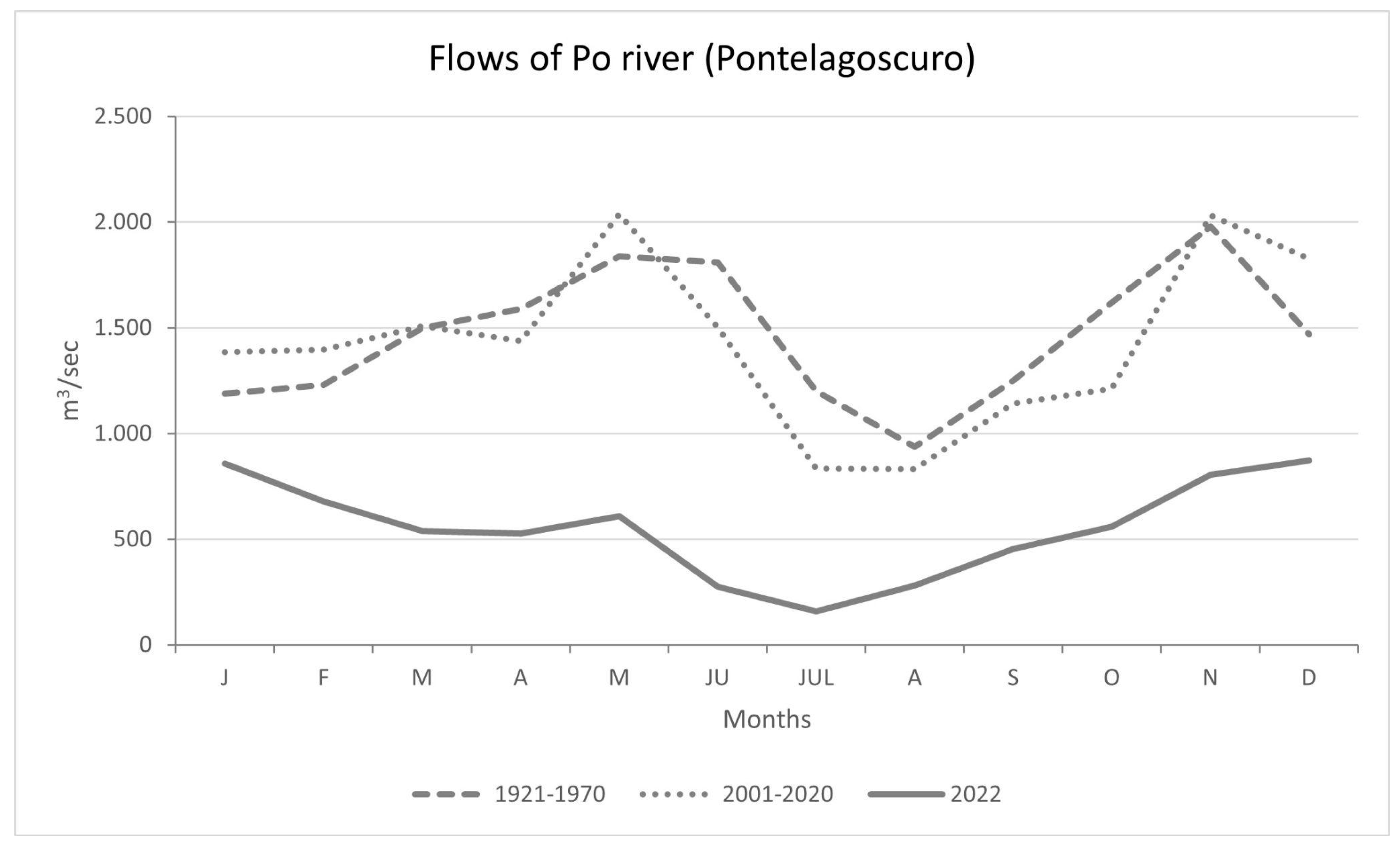
Figure 4.
Pre and post-MHW coverage of the mussel beds. 1a and 1b, Site 1 before (September 2020) and after (October 2022) summer 2022, respectively; 3a and 3b, Site 3 before (October 2016) and after (October 2022) summer 2022, respectively.
Figure 4.
Pre and post-MHW coverage of the mussel beds. 1a and 1b, Site 1 before (September 2020) and after (October 2022) summer 2022, respectively; 3a and 3b, Site 3 before (October 2016) and after (October 2022) summer 2022, respectively.
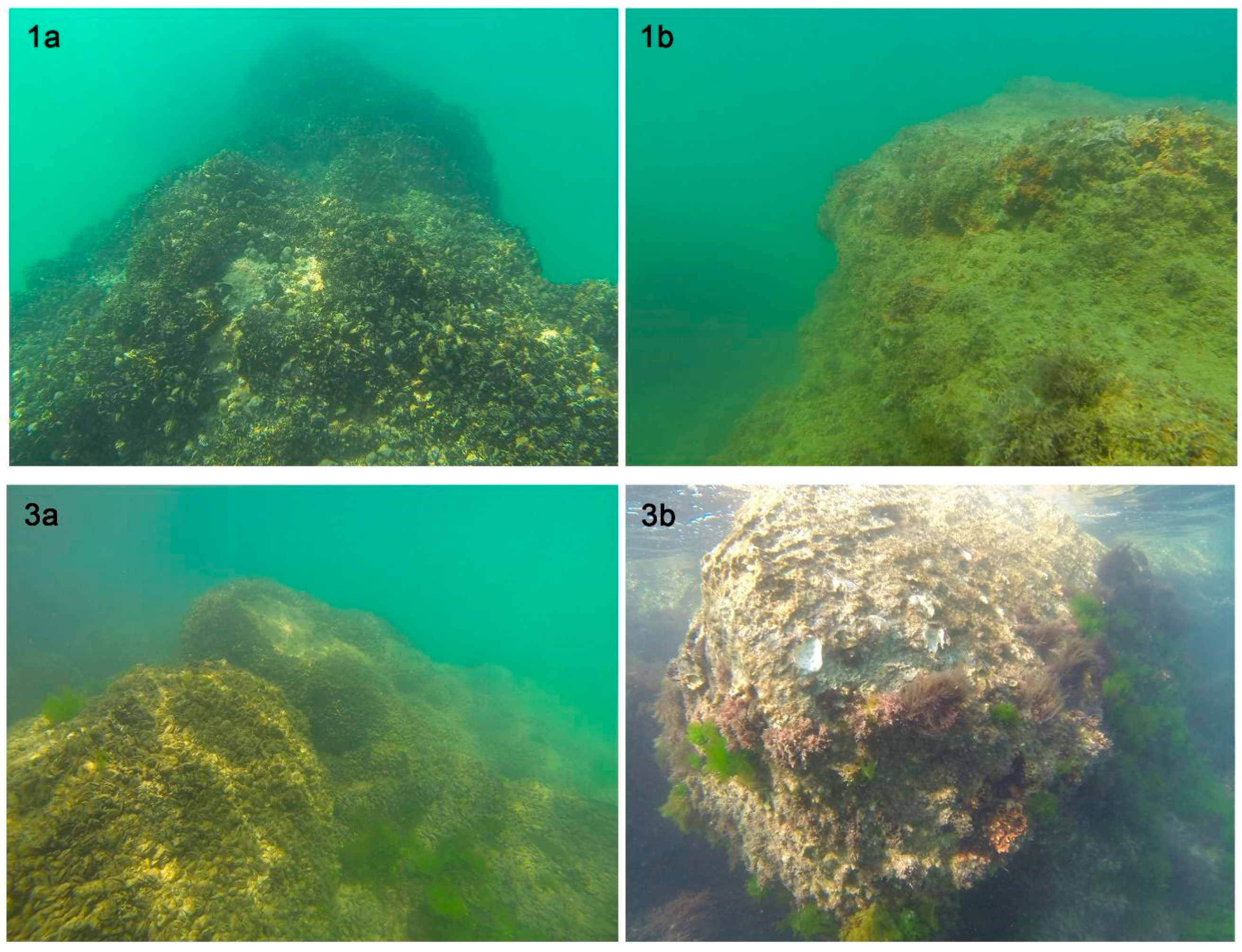
Figure 5.
Effects of illegal mussel removal resulting in localized holes in the dense cover of mussels (photo of Grottammare Site1, June 2020); note the difference with photos 1b and 3b of Figure 4 in which the absence of mussels is total.
Figure 5.
Effects of illegal mussel removal resulting in localized holes in the dense cover of mussels (photo of Grottammare Site1, June 2020); note the difference with photos 1b and 3b of Figure 4 in which the absence of mussels is total.
Disclaimer/Publisher’s Note: The statements, opinions and data contained in all publications are solely those of the individual author(s) and contributor(s) and not of MDPI and/or the editor(s). MDPI and/or the editor(s) disclaim responsibility for any injury to people or property resulting from any ideas, methods, instructions or products referred to in the content. |
© 2023 by the authors. Licensee MDPI, Basel, Switzerland. This article is an open access article distributed under the terms and conditions of the Creative Commons Attribution (CC BY) license (http://creativecommons.org/licenses/by/4.0/).
Copyright: This open access article is published under a Creative Commons CC BY 4.0 license, which permit the free download, distribution, and reuse, provided that the author and preprint are cited in any reuse.


