

Submitted:
03 September 2023
Posted:
05 September 2023
You are already at the latest version
Abstract
Background: There is a significant role for mind in health and disease. Subjective well-being (SWB) is an important indicator of a person’s psychological status beyond the traditional anxiety and depression. Shell and core (S&C) model of SWB is new modular framework has placeholders for various forms of positive feeling that can be adopted as an assessment tool in clinical settings.Method: 416 subjects recruited using social media platforms to complete an anonymous online survey probing into their demographic information, financial status, several well-being attributes, and personality traits. The obtained information was analyzed and the factors that most closely correlated with the sense of overall SWB were included in the model.Results: Overall, 73% of the subjects indicated that they are happy and the overall sense of SWB did not depend on gender or household income. Only those psychological traits with significant correlation with SWB were used to construct the proposed S&C model. The model comprises three main components—the shell of happiness that represents experiential happiness, i.e., positive feelings as a result of one’s experiences with their environment. The core of happiness represents inner happiness. The interface layer, between the shell and core of happiness consists of a set of coping and defense mechanisms that protects the core of happiness denoted as a happiness suit of armor (HSOA).Conclusion: The S&C model is a comprehensive model of SWB that is used as a framework to capture various aspects of happiness under a unifying umbrella. It can thus be used as an assessment tools at both personal and population level. It could also be adopted to identify the personality traits and coping mechanisms that are important for the overall sense of well-being, which could then be targeted as a part of psychological interventions aimed at individuals with different medical conditions.
Keywords:
Subjective Wellbeing
; Happiness
; Happiness Model
1. Introduction
The model of brain−gut axis
clearly explains the close relationship between the psychological well-being
and gut function and health. Several studies have shown the role of stress in
the pathogenesis of not only functional but also inflammatory bowel disorders
(Farhadi et al., 2005). Furthermore, presence of common psychological disturbances
such as depression and anxiety has long been seen as a key indicator of
psychological problems. However, other psychological conditions including
subjective well-being (SWB) could play a role in overall health and general
well-being, gastrointestinal health in particular (Farhadi et al., 2018). In
fact, SWB has been shown to influence the individual propensity for anxiety and
depression (Farhadi, 2018), as well as to affect physical health (Janson-Bjerklie et al., 1992; Kageyama et al., 2019; Olsson et al.,
2013). This broad influence of SWB has been shown to be
independent of traditional measures of anxiety and depression (Farhadi et al.,
2018). Consequently, in this manuscript, a new model of SWB that is easy to
understand and can thus be used to assess the overall SWB is proposed with the
aim of extending the application of this important psychological indicator
beyond field of positive psychology into the field of medicine.
This effort was motivated by the
fact that, despite well-established links between mind and body, developing
interventions that specifically target SWB is challenging, as this multifaceted
concept is difficult to measure. The issue stems from the lack of universal
definition of happiness, as well as the fact that what truly makes us happy
varies considerably based on personality traits, culture, religion, place of
living, social norms, and individual belief system. As a subjective feeling
that is abstract in nature, happiness can be conceived as a wide range of
positive emotional feelings, as well as contentment with one’s life situation
and satisfaction with status quo, which are collectively denoted as
subjective well-being. Still, there is presently no unified method for
measuring SWB and overall level of contentment with life (Diener, 2000; Hervas
& Vazquez, 2013; Linton et
al., 2016; Ryan & Deci,
2001; Ryff, 1989; Topp et al., 2015). As a result, in extant studies, a variety
of questionnaires have been used to gather the data based on which the most
relevant factors that contribute to the sense of well-being would be
potentially identified. Accordingly, the survey respondents are asked to rate
their life satisfaction, success and sense of financial security, as well as
respond to questions that would determine their personal and psychological
traits such as optimism, confidence, and trust. The obtained findings are used
to complement the assessment of overall well-being at the population level
(Helliwell et al., 2012; Koivumaa-Honkanen et al., 2005; Lyubomirsky, S.,
Sheldon, K. M., & Schkade, D., 2005); Zautra & Hempel, 1984) or to design behavioral and cognitive interventions aimed at
improving individuals’ overall well-being (Hogan et al., 2016; Keyes & Annas, 2009).
The S&C model of SWB was developed to bridge this gap in extant research. It is a
modular model that serves as framework and placeholder for various forms of
positive emotions and SWB comprising three main components. The shell of
happiness represents experiential happiness, i.e., a positive feeling as a
result of one’s experience with the surrounding environment. The core of
happiness represents inner happiness. The third component is a interface layer
between the shell and core of happiness that consists of a set of coping and
defense mechanisms that protect the core of happiness and is thus denoted as
happiness suit of armor (HSOA). By positioning the
factors that determine SWB within these three layers, the goal is to lay the
groundwork for understanding the reach of happiness beyond traditional
psychology condition of anxiety and depression and amend that beyond field of
positive psychology to clinical medical ailments.
2. Materials and Methods
2.1. Subjects and Recruitment
Prior to commencing the study,
approval was obtained from the Memorial Care Foundation Institutional Review
Board (MHS#713-17). Some of the data used in the construction of the model was
already published as part of paper on the role of SWB in IBS (Farhadi et al.,
2018). Information was obtained by administering an online survey to 421 individuals,
416 of whom completed it (92% of this final sample lived in the United States).
The questionnaire was designed to ensure participant anonymity and only adults
(i.e., those aged 18 years and above) were eligible for participation.
2.2. Questionnaire
As shown in Table 1, in addition to eliciting demographic
information (such as age, gender, level of education, occupation, household
income, household size, and country of residence), the questionnaire included a
series of questions probing into the respondents’ overall subjective well-being
as well as a wide variety of psychological attributes. Prior to commencing the
data collection, the face validity of all questions was established by
two
experts and the instrument was pilot
tested on a subset of participants for practicality and feasibility (not
counted as study subjects). In addition, internal consistency was assessed by
deliberately including questions with overlapping themes. The Cronbach’s
a
lpha for these questions was in the
0.64−0.71 range, indicating good internal consistency in the responses.
2.3. Missing Data Management
While every attempt was made to minimize instances of missing data by properly planning the study, limiting the length of the questionnaire, and avoiding overly detailed questions, 13.9% of the questions relating to well-being attributes were left unanswered. As no pattern could be observed in this missing data, it was deemed to meet the “missing at random” assumption. Accordingly, list-wise deletion was adopted for handling the missing values.
2.4. Statistical Methods
All gathered data was analyzed using the SPSS V.23 commercial software (IBM New York, USA). For direct comparisons between two variables, the Mann-Whitney U test, chi-squared test of independence, or a t-test of independence was used as appropriate. On the other hand, to characterize the relationships among various variables of interest, Kruskal−Wallis test and binary logistic regression were conducted, with p ≤ .05 indicating statistical significance.
3. Results
The age and gender distribution of the study sample are shown in Figure 1. Further analyses of the demographic data revealed that 53% of the participants are married, while 18% are divorced, and 22% never married. Moreover, most of the respondents are educated to the college degree level (Figure 2) or above and have annual household income in the $25,000−75,000 range (Figure 3). In terms of ethnicity, at 68%, white Americans predominated, followed by Asian Americans (15%), Latinos (11%), and African Americans (2%), while the remaining 4% comprised of other races or preferred not to disclose.
The analyses of survey responses related to the overall happiness indicate that 73% of the sample are generally happy or very happy all the time, while 18% of the participants are neither happy, nor unhappy, and 9% are unhappy or very unhappy (Figure 4). Yet, as shown in Table 1, the overall SWB was not dependent on gender or household income, while all but one of the well-being attributes correlate with SWB based on the non-parametric test results (Spearman correlation). Therefore, linear models were developed to identify a subset of well-being attributes that could be used effectively as a proxy for the SWB. The findings indicated that optimism, living in peace, feeling respected, a sense of being successful, and feeling loved were most closely associated with SWB, with an overall accuracy of 68%. However, only a few of these variables retained their significance when incorporated into a univariate model, as shown in Table 1.
3.1. The Shell & Core Model of SWB – An Overview
The S&C model of SWB is a comprehensive model based on a combination of eudaimonic and hedonistic perspectives. It considers a wide range of happy feelings affected by external circumstances in the shell of happiness (such as achievements, satisfaction of needs, and engagement in physical and mental activities) as well as core of happiness (supplying inner happiness), and an interface layer linking the shell and core of happiness (named HSOA) involving psychological characteristics pertaining to coping and defense mechanisms (Figure 5). Such a modular framework allows any possible future expansion or adjustment to the model to ensure that it remains responsive to the changing social reality. Moreover, as the model variables are based on current data obtained from this preliminary research and can be modified and rearranged based on more complementary larger studies and be applied in a variety of clinical settings.
In its development, SWB was conceptualized as a multitude of subjective experiences that can only be expressed through words. Therefore, it was assumed that, based on the theory of linguistic relativity, one’s worldview and overall perception of one’s external environment is influenced by the structure of their primary language. This issue is further compounded by the fact that happiness is difficult to describe precisely, as it is often equated with joy, pleasure, exhilaration, bliss, contentedness, delight, felicity, enjoyment, and satisfaction, even though each of these sensations is a distinct phenomenon. Thus, to avoid any ambiguity, in the S&C model, specific words were assigned to different contexts that may give rise to happy feelings. Even though this assignment could be considered arbitrary, it was necessary for defining different forms of happy feeling related to various physical, mental, social, and spiritual experiences. Moreover, providing a common terminology makes the discussion of various real-life applications of SWB much easier. Therefore, the S&C model not only provides a framework for defining various forms of happy feelings, it also provides insight into the interactions among these factors that give rise to SWB.
3.2. The Shell (Experiential Happiness)
In the S&C model, any form of happy feeling that is a result of experiences with the surrounding world is considered to be situated within the shell of happiness. These experiences are categorized under three main domains, namely achievement-based happiness (joy), need-based happiness (satisfaction), and activity-based happiness (excitement). All forms of experiential happiness are time bound and result in generation of happy moments. However, the durability of each happy feeling is highly variable depending on the type of experience (Figure 6).
3.3. The Structure of the Shell
Joy (Achievement-Based Happiness). Achievement-based happiness is the happy feeling associated with “having what one wants when one wants it,” whether it is a simple experience such as a bite of delicious food or a profound life-altering achievement. This form of happy feeling is further subdivided into three main subcategories of pleasure, enjoyment, and gratification.
Pleasure. Pleasure is the most well-known and common type of joy as it arises Pleasure is one of the earliest forms of happy feeling that is inseparable from human being. The happy feeling of pleasure is the result of simple sensory experiences such as taste, smell, vision, hearing, touch, or a complex combination of these sensory inputs, such as eating a meal or a sexual act. Pleasure is the most primitive form of happy feeling and human as well as animal brains are hardwired to receive pleasure since birth. As a result, the desire to repeat the pleasurable activities may lead to habit formation or even addiction.
Enjoyment. Enjoyment is a form of joy that can be experienced only after acquiring intellectual and interpersonal skills and by partaking in social interactions. As it places greater demand on one’s cognition, enjoyment engages thinking and learning, as well as communication skills. Hanging out with a friend, reading a book or a poem, watching a movie, and having a pleasant conversation are all examples of enjoyment. Enjoyment provides a deeper and more meaningful sense of happy feeling in comparison with pleasure which only entails simple engagement of our senses. The happy feeling associated with enjoyment is more durable than pleasure since it strikes the chord harder with one’s true self. Moreover, it does not require external input, as positive emotions can be experienced through meditation. In particular, mindful meditation, which requires an individual to refrain from any physical or mental activities, and to eliminate all social and environmental inputs, gives rise to thought-less moments that can be experienced as pure happiness. This practice is not only one of the best methods to diffuse stress by allowing the mind to reboot itself but also provides the opportunity for the practicing individual to be present in the moment. Even though the happy feeling associated with enjoyment is more amenable to reasoning, people can make a habit of enjoyable activities or fall prey to addiction.
Gratification. Gratification is a form of joy that stems from the approval and appreciation of others, which can range from a simple verbal compliment for a good deed to a widespread recognition for receiving a lifetime achievement or award. This form of experiential happiness is typically sought by those with more extensive social interactions and greater intellectual capabilities who derive their happiness from that of others. These individuals typically engage in activities that benefit their community, work on building a better world, or strive to make a meaningful difference in the life of others. As gratification is the highest level of joy, the happy feeling associated with this form of achievement-based happiness is the most durable. The impact of experiencing a meaningful gratification is usually life-changing due to which this experience is far more memorable than other forms of experiential happiness.
While this simple subdivision is rooted in empirical evidence, it is not easy to categorize most of the real-life experiences into one of the aforementioned achievement-based types. For example, the experience of going out for dinner with a friend could result in a mixture of pleasure derived from eating a good food, enjoyment of socializing with a friend, and gratification arising from the friend’s appreciation. Indeed, as shown in Figure 7, most of the daily routine activities can give rise to a mixture of different forms of achievement-based happiness.
Satisfaction (Need-Based Happiness). Satisfaction as a form of happy feeling in response to one’s needs is the other form of experiential happiness that starts at birth. The need-based happiness peaks when the need is met. We experience such satisfaction on a daily basis as the pleasant feeling of satiety after a period of hunger or the sense of relief after going to the bathroom after a long travel. In the S&C model, however, satisfaction also extends to the positive emotions associated with fulfilling an obligation.
Excitement (Activity-Based Happiness). Excitement is yet another form of experiential happiness that is associated with activities, desired physical or mental activities in particular. An extreme form of excitement arises when the individual is fully committed and involved in a creative activity that matches their skills and knowledge, giving rise to the concept of “state of flow” (Csikszentmihalyi, 2013). Many believe that state of flow is the ultimate form of happiness, which can be attained with or without having a set goal. For example, activities such as playing an instrument, playing a game, or doing exercise could all have positive effects on the individual and result in a happy feeling. When engaging in these activities provides thought-less moments away from the surrounding distractions, they can also provide a means for diffusing stress.
3.4. The Core (Inner Happiness)
Contentment. The core of happiness in the S&C model of SWB is the source of inner happiness, i.e., it is not the result of a direct contact and experiences with the surrounding world and does not necessitate achievement, activity, or fulfillment of a need. Accordingly, as shown in Figure 8, it is denoted as “contentment.” Therefore, the core of happiness serves as the foundation for the shell of happiness, providing a base for the accumulation of happy moments. Therefore, one’s happiness could be considered as a sum of inner happiness provided by the core and experiential happiness offered by the shell (Figure 9). As several factors influence the inner happiness such as genetics/heredity, upbringing, culture, religion, education, and past experiences, it is also denoted as an endogenous happiness (Dfarhud et al., 2014).
3.5. The Interface between the Core and the Shell of Happiness
Happiness Suit of Armor (HSOA)
The interface between the shell and core of happiness acts as a layer of coping and defense mechanisms that mitigates the untoward effects of life’s challenges on one’s core of happiness. This interface is composed of a set of psychological traits and is metaphorically called happiness suit of armor (HSOA) as its goal is protecting and maintaining the inner happiness. The HSOA analogy also explains why the integrity of any system in general depends on the strength of its components, given that an armor is only as strong as its weakest piece [Achilles’ heel]. The ten major pieces of HSOA include:
- Helmet as a symbol of knowledge & optimism
- Chest as a symbol of love
- Abdomen as a symbol of management
- Back as a symbol of health and fitness
- Right hand as a symbol of trust & flexibility
- Left hand as a symbol of support for others
- Right foot as a symbol of freedom
- Left foot as a symbol of peace
- Shield as a symbol of confidence
- Sword as a symbol of justice & forgiveness
While all HSOA elements are beneficial, their relative importance will vary depending on the individual’s set of values, culture, and beliefs. In addition, some individuals naturally have more strengths toward some of the listed traits and may choose to address the traits that may benefit from fortification.
3.6. The Characteristics of the Shell and Core of Happiness
Experiential Happiness Subtypes Overlapping Each Other. As shown in Figure 10, a happy feeling that could be categorized as achievement-based happiness could also be interpreted as the activity-based or need-based form of happiness.
Experiential Happiness is Timestamped. Being time-bound is another common feature of various forms of experiential happiness, as the happy feelings typically start around or even before the event, peak during the experience, and gradually diminish over time (Figure 6). This temporary nature of experiential happiness allows us to create happy moments (Nawijn, 2011).
Experiential Happiness Effect Decreases Over Time. The happy feeling associated with any form of experiential happiness diminishes with repeated experiences as a result of habituation.
Experiential Happiness is Habit Forming. Most forms of experiential happiness (such as pleasure, enjoyment, gratification, or excitement) can lead to habit formation, as preserving the happy momentum or striving to repeatedly induce the same happy feeling is a natural response to positive experiences and a habit can turn into an obsession and/or addiction. In fact, addiction is a result of transforming an achievement- or activity-based happiness into a need-based happiness. This may explain why these activities turn into need and obligation and can take priority over any other forms of joy or excitement (Farhadi, 2019).
Experiential Happiness can be Bought. Money can buy various forms of experiential happiness and provide abundance of happy moments. Money can fulfill the basic needs and thus bring satisfaction, Money can also boost achievement-based happiness, as it can be utilized to provide pleasure, support enjoyment, or even gratification. Money can also be used to induce the state of flow, as it can free one from the everyday mundane routine and allow time to be spent partaking in fully immersive and motivating activities.
Given the above, it is not surprising that following money is seen as synonymous with following the American dream. Yet, in practice, the link between one’s overall happiness and household income is not substantiated by the available evidence (Farhadi et al., 2018; David et al., 2000). Based on the S&C model of SWB, money can contribute positively to the shell of happiness, but it does not influence the overall happiness since it can neither boost internal happiness nor buy contentment.
The Inner Happiness is Stable. In contrast to the experiential happiness, the core of happiness is relatively stable over time. Nonetheless, fluctuations can occur in the inner happiness as a result of interactions with the shell and the HSOA, as explained below.
The Shell and the Core of Happiness are Interconnected. Even though, the shell and the core of happiness are represented as distinct entities in the S&C model of SWB, they interact both directly and through the HSOA. For example, encounters with the external world can influence one’s family dynamics, social environment, and financial status, as well as several aspects of HSOA, thus impacting the inner happiness. Likewise, the core of happiness can influence how an individual interacts with the environment and responds to everyday experiences, thereby causing changes to their shell of happiness.
The Core of Happiness Modifies the Shell. One clear example of the modification of the shell of happiness by the core is “acquired happiness” which stands in contrast to achievement-based happiness. As noted previously, achievement-based happiness is the result of getting what one wants when one wants it. However, this is rarely possible in practice, due to which acquired happiness (also known as synthetic, simulated, or virtual happiness) is what most individuals actually experience (Gilbert, 2006). Unlike natural or true happiness, acquired happiness is a coping mechanism akin to acquired taste, which means “Something that a person dislikes at first, but that starts to like after a while.”[i] Thus, in the S&C model of SWB, acquired happiness is defined as a positive feeling associated with wanting what one has, after one has attained it.
At first glance, acquired happiness may seem to be nothing but a result of flexibility or adaptation to an undesired situation. However, the fundamental distinction between these concepts is that, unlike flexibility and adaptation, where the individual tolerates an unwanted situation while still is fully aware of flaws and weaknesses of the situation, with acquired happiness allows an individual to appreciate the positive aspects of the situation so that even the flaws can be seen as strengths. A further difference stems from the fact that, despite flexibility and adaptation, an individual remains willing to terminate the unfavorable situation if the opportunity arises. Conversely, with maturation of acquired happiness, individual becomes truly happy with the way things are and will not be looking to change the situation. At this stage, the acquired happiness is indistinguishable from achievement-based happiness. Acquired happiness could therefore fill the void of experiential happiness by compensating for life’s imperfections and shortcomings (Figure 11). This may explain why the most affluent nations are not the happiest ones, and why the level of happiness is not significantly different among individuals despite great differences in their achievements such as the level of education, extent of success, and/or income (Helliwell et al., 2012).
The Shell of Happiness Modifies the Core. As one progresses through life, one’s perspectives changes as a result of one’s experiences. However, the same approach can be adopted to modify negative worldviews or attitudes, as is done as a part of behavioral and cognitive therapy. In the S&C model of SWB, this interaction is represented as an impact of positive experiences on the personality traits comprising the HSOA or even the inner happiness, allowing an individual to cope better with negative experiences. For example, temporary achievement-based happiness such as taking a vacation can have much longer effect on the overall happiness beyond the happy moments it offers (Nawijn, 2011).
The Cumulative Properties of Positive Affect. Ample body of evidence shows that positive affect has a cumulative beneficial influence on the general SWB and success in life (Lyubomirsky, S., King, L., & Diener, E. (2005). Collective effect of positive emotions is also the basis for broaden-and-build theory of happiness (Fredrickson, 2004). Accordingly, the S&C model of SWB postulates that the core of happiness can be expanded with frequent positive reinforcement of the shell of happiness, helping the individual weather the life experiences associated with negative affect. The model further predicts that the effect of frequently adopting positive attitude also has the capacity to strengthen the HSOA and its buffering action to mitigate the negative effect of negative life experiences.
3.7. The S&C Model of SWB in Comparison with Other Models
Many believe that happiness is the ultimate goal is life (Diener, 2000), even though a recent study did not support this notion (Farhadi et al., 2017). Nonetheless, as happiness is very important to most individuals, numerous attempts have been made to create a unifying model for defining and understanding happiness. These models incorporate a variety of internal and external factors that have been shown to play role in one’s positive emotions and happiness. Among the internal factors, inherited personality attributes, upbringing and childhood experiences, as well as the effect of experiences later in life on the person’s characteristics, are widely recognized as the main drivers of SWB. Some authors go as far as to claim that almost half of an individual’s happiness can be attributed to their genetic background (Lyubomirsky, S., Sheldon, K. M., & Schkade, D., 2005). Among the external factors, activities, social engagement, relationships, mindfulness, as well as some personality characteristics such as optimism, are typically cited as modifiers of overall happiness and SWB (Brown & Ryan, 2003; Diener & Seligman, 2002; Green et al., 2006; Seligman et al., 2005; Sheldon & Lyubomirsky, 2006). These findings suggest that many aspects of happiness/SWB can be modified using cognitive and behavioral interventions (Lyubomirsky, S., Sheldon, K. M., & Schkade, D., 2005; Sin & Lyubomirsky, 2009). Accordingly, the S&C model incorporates several factors affecting SWB, and its application could augment our understanding of various aspects of happiness and their interactions. This model could also be used as the basis for psychological interventions to enhance the overall SWB in healthy individuals as well as those suffering from various medical conditions.
To compare S&C model with several currently utilized models of SWB a brief overview of historic and current models of SWB are presented to highlight their similarities and dissimilarities.
3.8. The Historic Foundation of Happiness
The idea of happiness as a reflection of fate and good luck is nearly as old as humanity, and this link is reflected in the origin of the word “happiness” in English, as its stem hap- means happening and good luck. The first documented non-religious, simple but fundamental framework of happiness may be attributed to the father of Western philosophy, Socrates (470 BC). Based on his interpretation, happiness could be attained only if one followed a set of principles such as Courage, Moderation, Justice, and Wisdom that were universally-accepted virtues regardless of culture, religion, or time. In fact, Socrates’ fundamental interpretation of happiness is the framework of happiness in major religions, and in particular the Catholic tradition of Cardinal Virtues. This understanding of happiness was in a sharp contrast with a view of that predominated in the Roman Empire which was based on the pursuit of pleasure. While this hedonistic tradition is not a typical model in a scientific sense, it posits that happiness is a result of increasing pleasure and decreasing pain. This attitude could be considered as the basis for Western lifestyle where the immediate pleasure of life achievement and avoidance of negative affect is seen as a measure of one’s life satisfaction (Argyle et al., 1999).
Eudaimonic tradition, credited to Aristotle, is an alternative to these worldviews, as it defines happiness as having a good life. According to Aristotle, although virtues and their exercise are important in achieving happiness, it cannot be attained without health, wealth, and beauty.
Still, owing to the strong influence of religion, throughout the history, the interpretation of happiness in most societies has evolved around religious beliefs. In particular, in most traditional major religions, submission is promoted as a means of attaining greater happiness, which explains why, in general, religious people tend to be happier (Popova & Otrachshenko, 2015). While the association between happiness and practicing religious rituals such as attending the church has been observed in some studies (Ferriss, 2002) but not in others (Lewis et al., 2000), the sense that one can entrust their destiny to a benevolent higher being tends to bring benefits to religious individuals irrespective of their faith. Accordingly, prayers that are inseparable part of religious practice promote hope, trust, peace, and loyalty.
Even though Buddhism is not considered a true religion, it builds its philosophical worldview on the foundation of happiness. In particular, it is based on the notion of nirvana—a state of everlasting peace and happiness—which can be attained by overcoming all forms of craving. This perspective is in direct contrast to the Greek hedonic and eudaimonic traditions according to which happiness is achieved through worldly experiences and activities. In Buddhism, focusing inward through meditation is the primary means for achieving a happy state, as confirmed by the findings of several recent studies (Shultz & Ryan, 2015).
The S&C model of SWB aligns well with the postulates of both eudaimonic and hedonistic tradition, as it promotes the idea of striving for virtues (the core of happiness) and pursuing worldly pleasures (the shell of happiness) as the path to happiness. The S&C model of SWB also shares many aspects of happiness with Buddhism, such as the separation of experiential happiness and inner happiness. However, in the S&C model, different forms of experiential happiness are recognized, rather than being subsumed under the umbrella of need-based happiness as is the case in Buddhism. Moreover, whereas Buddhism mainly focuses on peace as the mainstay of inner happiness, in the S&C model, peace is only one of the pieces of the HSOA that protect the overall contentment.
3.9. Happiness in the 20th Century
Maslow’s Hierarchy of Needs
According to Maslow’s theory of human motivation, we are driven by five basic categories of needs (Maslow, 1943) with different levels of importance, whereby physiological needs must be satisfied first before we become concerned with our safety, sense of love and belonging, and esteem, culminating in self-actualization. According to this hierarchy of needs, when the needs at the lower level of the pyramid are met, the needs at the next level become the focus of attention, resulting in a constant pursuit of need fulfillment which leads to personal improvement. While it is argued that very few can achieve self-actualization, once they reach their full potential, they are expected to feel true happiness due to having a clear sense of right and wrong (Inglehart et al., 2008).
When examined alongside the Maslow’s model, it is evident that the S&C model of SWB features many of its aspects. In particular, several needs in Maslow’s model overlap with achievement-based happiness while the need for love, safety, and esteem corresponds to several components of the HSOA. Likewise, some aspects of self-actualization resonate with the state of flow characterizing activity-based happiness. However, some disparities are also apparent, as Maslow’s model purports that one must ascend the pyramid across all levels without omitting any of the five stages. This view is widely criticized, as it also implies that individuals at certain levels of hierarchy cannot regress to the lower tiers, while in practice it is conceivable that sudden changes in one’s circumstances would induce such a decline. Moreover, even those rare individuals that manage to achieve self-actualization will likely develop a new set of needs from lover levels, pulling them down from pyramid’s apex.
A further distinction arises from the focus on needs in Maslow’s model, even though humans have other motivations, described by Farhadi (2019) as a blend of obligations and options explained by the “duality of reason.” This practical perspective is embedded in the S&C model of SWB as various aspects of shell of happiness, to reflect the fact that accomplishing a task could result in a mixed feeling of joy and satisfaction.
3.10. From Happiness to Well-being
In the mid-20th century, academic focus shifted from personal and subjective feeling of happiness toward more objective measures of happy feeling and happy living, ironically giving rise to the term subjective well-being (SWB). According to this new perspective, SWB, rather than some abstract notion of happiness, is the main objective in life, and can be attained by acquiring a combination of cognitive and behavioral attributes such as infrequent negative affect, frequent positive affect, and various aspects of physical life satisfaction such as health, relationships, and work (Argyle et al., 1999; Diener, 1984, 1994, 2000; Lyubomirsky, S., Sheldon, K. M., & Schkade, D., 2005; Pressman & Cohen, 2005). These views are reflected in numerous scales and measures of happiness and SWB that are in use today. Most of these instruments are devised not as a model of happiness but as a research tool that can be used to measure happiness in surveys or population-based studies. One of the pioneers of this interpretation, Thomas, subdivided happiness into three main domains of pleasure corresponding to hedonistic happiness, satisfaction as the depiction of life welfare, and well-being as the interpretation of overall life quality (Thomas, 1968). This framework was subsequently adopted to develop measures for assessing overall life satisfaction, such as the Satisfaction With Life Scale (SWLS) (Benditt, 1974; Diener et al., 1985; Shin & Johnson, 1978) and better life index (Adler & Seligman, 2016).
These and similar scales evaluate individuals’ perspective on a wide range of topics, including economy and prosperity (Diener, 2000). Accordingly, further development of these models allows further distinction of well-being as a result of relieving materialistic needs (satisfaction and convenience) versus psychological needs (contentment) (Diener et al., 2010). Therefore, it is not surprising that some scholars argue that SWB models are actually measuring the happiness that is aligned with eudaimonic perspective (Hone et al., 2014; Keyes, 2006; Ryff, 1989; Seligman, 2011) as well as hedonic perspectives (Huta & Ryan, 2010; Ryff & Boylan, 2016).
The initial framework developed by Thomas and its subsequent modifications align with various aspects of the S&C model of SWB. For example, pleasure and the materialistic aspects of well-being incorporated into SWLS resonate with the shell, while the psychological needs echo several aspects of the core of happiness in the S&C model.
3.11. Newer Models of Happiness
Positive Psychology
Positive psychology is often portrayed as a psychological study of positive mental attributes and strengths (Sheldon & King, 2001) or advancement in understanding of the psychology of happy feeling. However, some of its aspects can be traced to the perspective of happiness presented by Aristotle (Ryan & Deci, 2001) or Buddhist teachings (Lama & Cutler, 2008). It is believed that Maslow first coined the term “positive psychology” but most of the credit should be given to Martin Seligman who defined well-being as feeling good as a result of having purpose in life, meaningful relationships, and significant accomplishments (Seligman, 2004)
The problem with the definition of happiness adopted in positive psychology is the lack of objective measures of happiness, as most of the studies in this domain are based on self-assessment, which is prone to bias. In addition, as life satisfaction is an important factor in one’s sense of happiness (Achor, 2010; Argyle, 2001; David et al., 2013), in more recently developed models, happiness is conceived as a sum of positive emotions and life satisfaction (Pietro et al., 2014).
The broad nature of coverage of variables that are used in describing positive psychology, are key elements of the shell as well as the core of happiness in the S&C model of SWB. However, the comprehensive nature of the variables and clear classification of them in S&C model makes the understanding and approach to SWB easier and allow easier adoption of the model for general medical conditions.
3.12. The Hedonic and Eudaimonic Motives for Activities (HEMA)
The Hedonic and Eudaimonic Motives for Activities (HEMA) model purports that happiness can be attained through hedonic seeking of pleasure and relaxation and eudaimonic pursuit of meaning in life (Asano et al., 2020). Accordingly, the pursuit of happiness is the primary motive for one’s daily activities which could be either purely hedonistic or eudaimonic, or a mixture of the two (Bujacz et al., 2014). These HEMA principles were incorporated by Carrero et al. (2022) into a mathematical model reflecting the dynamics of these two motives, which is also closely related to “The Duality of Reason” model proposed by Farhadi (2019).
At first glance, several aspects of the HEMA model resonate with the S&C model of SWB. In particular, the hedonistic aspects of happiness could be equated to the shell of happiness, while the eudaimonic component could be considered similar to the core of happiness. However, many distinct features of the shell and core of happiness in the S&C model are generally absent from the HEMA framework.
3.13. Subjective Well-being (SWB) Homeostasis Model
This model is one of the few that put emphasis on a set of psychological traits as the defense and coping mechanisms as the dominant component of happiness that can offset the deleterious effect of undesired life experiences and outcomes (Cummins et al., 2002). It purports that a homeostasis of external factors countered with endogenous factors is needed to maintain happiness (Yeom & Yang, 2019)
The main similarity between the SWB Homeostasis Model and the S&C model lies in the HSOA that acts as a buffer system to mitigate any adverse life experiences on inner happiness. However, it only considers external factors a negative component in homeostasis and present the defense mechanism as internal factors that counter the external factor. While in the S&C model many factors of the shell of happiness are positive and inner happiness is distinct from the coping mechanisms that needs to be protected by the HSOA.
3.14. Broaden-and-build Theory
This model is also based on the premise that positive emotions can act as a buffer to dampen negative life experiences and outcomes (Fredrickson, 2004), which resonates with the HSOA in the S&C model of SWB.
3.15. State of Flow
State of flow provides a different perspective of happiness and SWB by defining an optimal experience that is achieved only when an individual is engaged in a meaningful and appropriately challenging activity, as this immersion results in inner peace and harmony, whereby the consciousness aligns with the goals and the psychic energy is focused on achieving those goals. While a person is in a state of flow, life has a meaning, and the quality of life is optimized (Csikszentmihalyi, 2013). In this state, the individual has clarity and knows exactly what is needed from one moment to the next. Many believe that state of flow is the ultimate form of happiness and, as successive goals can always be set, there would be always an opportunity to maintain the desired happiness level. Although the definition of meaningful activity varies across individuals and cultures, it is assumed that state of flow can be achieved in sports (Hills & Argyle, 1998), by taking part in leisure activities (Ateca-Amestoy et al., 2008; Spiers & Walker, 2009), by playing an instrument (Laukka, 2007), and generally by engaging in something that can result in full immersion in the task.
In the S&C model of SWB, the happiness as a result of physical or mental activities is an important part of the shell of happiness, which resonates with the aforementioned arguments. In fact, the deep happiness associated with activities can easily permeate from the shell of happiness into the core of happiness with positive impact on the HSOA properties.
3.16. Problems with Models of Happiness
Besides the elusive nature of the happy feeling, there are several factors that make understanding and measuring happiness challenging. First, most of the currently available measures of happiness and SWB rely on subjective conceptualizations and self-assessments, making it difficult to correlate more objective life circumstances such as financial status with one’s perception of well-being. As a result, researchers have long called for a life satisfaction model that comprises many heterogeneous factors impacting SWB (Diener, 1994).
The second issue stems from the wide span of factors that are involved in SWB, as each model or assessment tool tends to focus on a small set of factors influencing SWB. As a result, the findings reflect different aspects of SWB rather than one’s overall well-being. For example, some models focus on economic aspects (Juster & Stafford, 1985), while others examine level of activities (Csikszentmihalyi, 2013; Lemon et al., 1972), coping mechanisms (Brickman & Campbell, 1971; Michalos, 2014), life achievements/success (Emmons, 1986; Omodei & Wearing, 1990), or life events (Headey & Wearing, 1989).
The assessment of SWB is also rendered difficult by the temporary nature of the happy feeling, which would thus act as a confounder in any assessment. For this reason, when the Bradburn scale was initially introduced in 1969, the assessment inquired about happy feeling stemming from a particular experience within the span of four weeks (Bradburn, 1969). However, more recent evidence indicates that such a long interval between an inducement of happy feeling and data collection can affect the reliability and reproducibility of the gathered information (Lyubomirsky & Lepper, 1999)
3.17. Shortcomings of the S&C Model of SWB
The S&C model of SWB was proposed in this work as a framework that encompasses several aspects of happiness and presents them in a modular format, allowing any further revisions to be made. Even though this model covers a wide range of the attributes of well-being, it is possible that several other important factors or psychological traits been overlooked and could be added in the future through larger studies.
The study covered over 80questions in the survey related to the respondents’ well-being, coping mechanisms, and psychological characteristics. Fourteen precents of the survey questions remained unanswered and managed as missing data. it is acknowledged that this large number and the method adopted for handling missing data could have inadvertently affected the interpretation of results.
Due to the nature of an online survey, it usually attracts educated individuals that are adept at using modern technology. As a result, the findings reported here cannot be generalized beyond this specific group of individuals and would need to be verified through large-scale studies with much more diverse samples.
Another issue that is typical for psychological research relying on self-reported data is a response bias. Even though the questionnaire was completely anonymous, it is not uncommon for participants to give what they believe as socially acceptable answer rather than a truthful one. While this issue was mitigated by including different questions covering the same topic and the internal consistency of the responses was high, further studies with larger samples are still needed in order to validate the questionnaire used in this work.
It should also be noted that, as this study was exploratory in nature, the abundance of variables considered in model development could have resulted in an inflated type I error. However, based on the magnitude of the correlation among the factors, the chance of type I error is less than 0.001 in the majority of the variables.
Finally, since the S&C model of SWB is envisaged as a comprehensive model that encompasses many SWB components. While being comprehensive is one of the strength of the S&C model, it can also be seen as a drawback or impractical for those aiming to study a particular aspect of SWB. In such cases, already available models that only measure specific factors may be more useful (Boehm et al., 2011; Weytens et al., 2014).
4. Conclusion
The role of mind in overall health and disease is incontrovertible. The close connection of mind through the brain−gut axis clearly explains the correlation between one’s mental state and gastrointestinal disease. However, other psychological conditions beyond anxiety and depression that are commonly in focus in this context could also be important in overall health and may give rise to a variety of medical ailments. Using a simplified model as a framework for several aspects of subjective well-being, including hedonism, eudaimonism, positive emotions, hereditary factors, life satisfaction, and sense of overall well-being in an organized manner could rectify this shortcoming. It is thus hoped that the application of the S&C model of SWB presented a practical model that could be used and amended to various medical conditions and extends the use of SWB beyond the realm of positive psychology. The S&C model of SWB provides a modular structure for various factors that are important in one’s SWB. In particular, HSOA consisting of psychological traits can be the focus for possible psychological intervention to improve one’s coping capacity in various relevant medical conditions.
[i]Cambridge Advanced Learner’s Dictionary & Thesaurus, 4th edition (New York: Cambridge University Press, 2017).
References
- Achor, S. (2010). The Happiness Advantage: The Seven Principles of Positive Psychology That Fuel Success and Performance at Work (1st ed.). Broadway Books.
- Adler, A., & Seligman, M. E. (2016). Using wellbeing for public policy: Theory, measurement, and recommendations. International Journal of Wellbeing, 6(1). 1-35. [CrossRef]
- Argyle, M. (2001). The Psychology of Happiness (2nd ed.). Routledge.
- Argyle, M. (1999). Causes and correlates of happiness. In D. Kahneman, E. Diener, & N. Schwarz (Eds.), Well-being: The foundations of hedonic psychology (pp. 353–373). Russell Sage Foundation.
- Asano, R., Igarashi, T., & Tsukamoto, S. (2020). The hedonic and eudaimonic motives for activities: Measurement invariance and psychometric properties in an adult Japanese sample. Frontiers in Psychology, 10(11), 1220−1227. [CrossRef]
- Ateca-Amestoy, V., Serrano-del-Rosal, R., & Vera-Toscano, E. (2008). The leisure experience. The Journal of Socio-Economics, 37(1), 64–78.
- Benditt, T. (1974). Happiness. Philosophical Studies, 25, 1–20. [CrossRef]
- Boehm, J. K., Lyubomirsky, S., & Sheldon, K. M. (2011). A longitudinal experimental study comparing the effectiveness of happiness-enhancing strategies in Anglo Americans and Asian Americans. Cognition and Emotion, 25, 1263–1272. [CrossRef]
- Bradburn, N. M. (1969). The structure of psychological well-being. Aldine.
- Brickman, P., & Campbell, D. T. (1971). Hedonic relativism and planning the good society. In M. H. Appley (Ed.), Adaptation-level theory (pp. 287−305). Academic Press.
- Brown, K. W., & Ryan, R. M. (2003). The benefits of being present: Mindfulness and its role in psychological well-being. Journal of Personality and Social Psychology, 84(4), 822–848.
- Bujacz, A., Vitters, J., Huta, V., & Kaczmarek, L. D. (2014). Measuring hedonia and eudaimonia as motives for activities: Cross-national investigation through traditional and Bayesian structural equation modeling. Frontiers in Psychology, 5(8). 1-10.
- Carrero, G., Makin, J., & Malinowski, P. A. (2022). Mathematical model for the dynamics of happiness. Mathematical Biosciences and Engineering, 19(2), 2002−2029. [CrossRef]
- Csikszentmihalyi, M. (2013). Flow: The psychology of happiness. Random House.
- Cummins, R. A., Gullone, E., & Lau, A. L. D. (2002). A model of subjective well-being homeostasis: The role of personality. In E. Gullone & R. A. Cummins (Eds.), The Universality of Subjective Wellbeing Indicators. Social Indicators Research Series (Vol. 16, pp. 07−46). Springer, Dordrecht. [CrossRef]
- David, S. A., Boniwell, I., & Ayers, A. C. (2013). The Oxford Handbook of Happiness (1st ed.). Oxford Library of Psychology, Oxford University Press.
- Dfarhud, D., Malmir, M., & Khanahmadi, M. (2014). Happiness & health: The biological factors − Systematic review article. Iranian Journal of Public Health, 43(11), 1468−1477.
- Diener, E. (2000). Subjective well-being. The science of happiness and a proposal for a national index. American Psychologist, 55(1), 34−43.
- Diener, E. (1994). Assessing subjective well-being: Progress and opportunities. Social Indicators Research, 31, 103–157.
- Diener, E. (1984). Subjective well-being. Psychological Bulletin, 95, 542–575. [CrossRef]
- Diener, E., Emmons, R. A., Larsen, R. J., & Griffin, S. (1985). The Satisfaction With Life Scale. Journal of Personality Assessment, 49(1), 71−75. [CrossRef]
- Diener, E., Ng, W., Harter, J., & Arora, R. (2010). Wealth and happiness across the world: Material prosperity predicts life evaluation, whereas psychosocial prosperity predicts positive feeling. Journal of Personality and Social Psychology, 99(1), 52−61. [CrossRef]
- Diener, E., & Seligman, M. (2002). Very happy people. Psychological Science, 13, 81–84.
- Emmons, R. A. (1986). Personal strivings: An approach to personality and subjective well-being. Journal of Personality and Social Psychology, 51(5), 1058–1068. [CrossRef]
- Farhadi, A. (2019). Is happiness overrated? The duality of reasons behind our actions. International Journal of Health Science & Medical Research, 3(2), 63−68.
- Farhadi, A. (2018). Exploring the self-reported well-being attributes in anxiety and depression. Open Science Journal of Psychology, 5(3), 28−37.
- Farhadi, A., Banton, D., & Keefer, L. (2018). Connecting our gut feeling and how our gut feels: The role of well-being attributes in Irritable Bowel Syndrome. Journal of Neurogastroenterology and Motility, 24(2). 289-298.
- Farhadi, A., Keshavarzian, A., Van de Kar, L. D., Jakate, S., Domm, A., Zhang, L., Shaikh, M., Banan, A., & Fields, J. Z. (2005). Heightened responses to stressors in patients with inflammatory bowel disease. American Journal of Gastroenterology, 100(8), 1796−1804.
- Farhadi A, Mobarhan S. (2017). The Factors Involved in the Sense of Subjective Wellbeing (A Survey of 250 Subjects). World Journal of Social Science, 4(1), 14-21. [CrossRef]
- Ferriss, A. L. (2002). Religion and the quality of life. Journal of Happiness Studies, 3, 199–215. [CrossRef]
- Fredrickson, B. L. (2004). The broaden-and-build theory of positive emotions. Philosophical Transactions of the Royal Society B: Biological Sciences, 359(1449), 1367−1378. [CrossRef]
- Gilbert, D. (2006). Stumbling on happiness. Alfred A. Knopf.
- Green, L. S., Oades, L. G., & Grant, A. M. (2006). Cognitive-behavioral, solution-focused life coaching: Enhancing goal striving, well-being, and hope. The Journal of Positive Psychology, 1(3), 142–149.
- Headey, B., & Wearing, A. (1989). Personality, life events, and subjective well-being: Toward a dynamic equilibrium model. Journal of Personality and Social Psychology, 57(4), 731–739. [CrossRef]
- Helliwell, J., Layard, R., & Sachs, J. (eds.) (2012). World Happiness Report. The Earth Institute, Columbia University.
- Hervas, G., & Vazquez, C. (2013). Construction and validation of a measure of integrative well-being in seven languages: The Pemberton Happiness Index. Health and Quality of Life Outcomes, 11, 66−79.
- Hills, P., & Argyle, M. (1998). Positive moods derived from leisure and their relationship to happiness and personality. Personality and Individual Differences, 25(3), 523–535.
- Hogan MJ, Leyden KM, Conway R, Goldberg A, Walsh D, McKenna-Plumley PE. (2016). Happiness and health across the lifespan in five major cities: The impact of place and government performance. Social Science and Medicine, 162, 168−176.
- Hone, L. C., Jarden, A., Schofield, G., & Duncan, S. (2014). Measuring flourishing: The impact of operational definitions on the prevalence of high levels of wellbeing. International Journal of Wellbeing, 4, 62–90. [CrossRef]
- Huta, V., & Ryan, R. M. (2010). Pursuing pleasure or virtue: The differential and overlapping well-being benefits of hedonic and eudaimonic motives. Journal of Happiness Studies, 11, 735–762. [CrossRef]
- Inglehart, R., Foa, R., Peterson, C., & Welzel, C. (2008). Development, freedom, and rising happiness: A global perspective (1981–2007). Perspectives on Psychological Science, 3, 264–285. [CrossRef]
- Janson-Bjerklie, S., Ferketich, S., Benner, P., & Becker, G. (1992). Clinical markers of asthma severity and risk: Importance of subjective as well as objective factors. Heart and Lung, 21(3), 265−272.
- Juster, F. T., & Stafford, F. P. (1991). The allocation of time: Empirical findings, behavioral models, and problems of measurement. Journal of Economic Literature, 29(2), 471–522.
- Kageyama, G., Onishi, A., Ueda, Y., Naka, I., Tsuda, K., Okano, T., Akashi, K., Nishimura, K., Sendo, S., Saegusa, J., & Morinobu, A. (2019). Subjective well-being among rheumatoid arthritis patients. International Journal of Rheumatic Diseases, 22(10), 1863−1870. [CrossRef]
- Keyes, C. L. M. (2006). Subjective well-being in mental health and human development research worldwide: An introduction. Social Indicators Research, 77, 1–10. [CrossRef]
- Keyes, C. L., & Annas, J. (2009). Feeling good and functioning well: Distinctive concepts in ancient philosophy and contemporary science. Journal of Positive Psychology, 4, 197−201.
- Koivumaa-Honkanen H, Kaprio J, Honkanen RJ, Viinamäki H, Koskenvuo M. (2005). The stability of life satisfaction in a 15-year follow-up of adult Finns healthy at baseline. BMC Psychiatry, 5, 4−12.
- Lama, D., & Cutler, H. (2008). The art of happiness: A handbook for living. Penguin.
- Laukka, P. (2007). Uses of music and psychological well-being among the elderly. Journal of Happiness Studies, 8(2), 215–241.
- Lemon, B. W., Begtson, V. L., Peterson, J. A. (1972). An exploration of the activity theory of aging: Activity types and life satisfaction among in-movers to a retirement community. Journal of Gerontology, 27, 511−523.
- Lewis, C. A., Maltby, J., & Burkinshaw, S. (2000). Religion and happiness: Still no association. Journal of Beliefs & Values, 21(2), 233−236. [CrossRef]
- Linton, M. J., Dieppe, P., & Medina-Lara, A. (2016). Review of 99 self-report measures for assessing well-being in adults: Exploring dimensions of well-being and developments over time. British Medical Journal, 6, 1−16.
- Lyubomirsky, S., King, L., & Diener, E. (2005). The benefits of frequent positive affect: Does happiness lead to success? Psychological Bulletin, 131, 803−855.
- Lyubomirsky, S., & Lepper, H. S. (1999). A measure of subjective happiness: Preliminary reliability and construct validation. Social Indicators Research, 46, 137–155. [CrossRef]
- Lyubomirsky, S., Sheldon, K. M., & Schkade, D. (2005). Pursuing happiness: The architecture of sustainable change. Review of General Psychology, 9(2), 111–131.
- Maslow, A. H. (1943). A theory of human motivation. Psychological Review, 50(4), 370–396.
- Michalos, A. C. (2014). Multiple Discrepancies Theory (MDT). In A. C. Michalos (Ed.), Encyclopedia of Quality of Life and Well-Being Research (pp. 4203-4206). Springer, Dordrecht. [CrossRef]
- Nawijn, J. (2011). Happiness through vacationing: Just a temporary boost or long-term benefits? Journal of Happiness Studies, 12, 651−665.
- Olsson, A., Hasselgren, M., Hagquist, C., & Janson, S. (2013). The association between medical conditions and gender, well-being, psychosomatic complaints as well as school adaptability. Acta Paediatrica, 102(5), 550−555. [CrossRef]
- Omodei, M. M., & Wearing, A. J. (1990). Need satisfaction and involvement in personal projects: Toward an integrative model of subjective well-being. Journal of Personality and Social Psychology, 59(4), 762–769. [CrossRef]
- Pietro, C., Silvia, S., & Giuseppe, R. (2014). The pursuit of happiness measurement: a psychometric model based on psychophysiological correlates. TheScientificWorldJournal, 2014, 139128. [CrossRef]
- Popova, O., & Otrachshenko, V. (2021). Religion and happiness. In K. F. Zimmermann (Ed.), Handbook of Labor, Human Resources and Population Economics (pp. 1-20). Springer, Cham. [CrossRef]
- Pressman, S. D., & Cohen, S. (2005). Does positive affect influence health? Psychological Bulletin, 131, 925−971. [CrossRef]
- Ryan, R. M., & Deci, E. L. (2001). On happiness and human potentials: A review of research on hedonic and eudaimonic well-being. Annual Review of Psychology, 52, 141–166. [CrossRef]
- Ryff, C. D. (1989). Happiness is everything, or is it? Explorations on the meaning of psychological well-being. Journal of Personality and Social Psychology, 57, 1069−1081.
- Ryff, C. D., & Boylan, J. M. (2016). Linking happiness to health: Comparisons between hedonic and eudaimonic well-being. In Luigino Bruni & Pier Luigi Porta (Eds.), Handbook of Research Methods and Applications in Happiness and Quality of Life (pp. 53-70). Edward Elgar Publishing Limited.
- Seligman, M. E. P. (2011). Flourish: A Visionary New Understanding of Happiness and Well-Being. Free Press.
- Seligman, M. E. (2004). Authentic Happiness: Using the New Positive Psychology to Realize Your Potential for Lasting Fulfillment. Simon and Schuster.
- Seligman, M., Steen, T. A., Park, N., & Peterson, C. (2005). Positive psychology progress. American Psychologist, 60(5), 410–421.
- Sheldon, K. M., & King, L. (2001). Why positive psychology is necessary. American Psychologist, 56, 216–217. [CrossRef]
- Sheldon, K. M., & Lyubomirsky, S. (2006). Achieving sustainable gains in happiness: Change your actions, not your circumstances. Journal of Happiness Studies, 7(1), 55–86.
- Shin, D. C., & Johnson, D. M. (1978). Avowed happiness as an overall assessment of the quality of life. Social 203 Indicators Research, 5(4), 475−492.
- Shultz, P. P., & Ryan, R. M. (2015). The ‘why,’ ‘what,’ and ‘how’ of healthy self-regulation: Mindfulness and well-being from a self-determination theory perspective. In B.D. Ostafin et al. (Eds.), Handbook of Mindfulness and Self-Regulation (pp. 81–94). Springer. [CrossRef]
- Sin, N. L., & Lyubomirsky, S. (2009). Enhancing well-being and alleviating depressive symptoms with positive psychology interventions: A practice-friendly meta-analysis. Journal of Clinical Psychology, 65, 467–487. [CrossRef]
- Spiers, A., & Walker, G. J. (2009). The effects of ethnicity and leisure satisfaction on happiness, peacefulness, and quality of life. Leisure Sciences, 31(1), 84–99.
- Thomas, D. (1968). Happiness. Philosophical Quarterly, 18, 97–113.
- Topp, C. W., Østergaard, S. D., Søndergaard, S., & Bech, P. (2015). The WHO-5 Well-Being Index: a systematic review of the literature. Psychotherapy and psychosomatics, 84(3), 167–176. [CrossRef]
- Weytens, F., Luminet, O., Verhofstadt, L. L., & Mikolajczak, M. (2014). An integrative theory-driven positive emotion regulation intervention. PLoS ONE, 9, e95677. [CrossRef]
- Yeom, M., & Yang S. (2019). A structural equation model for happiness in mothers with young children. Journal of Korean Academy of Nursing, 49(3), 241−253. [CrossRef]
- Zautra, A., & Hempel, A. (1984). Subjective well-being and physical health: A narrative literature review with suggestions for future research. International Journal of Aging and Human Development, 19, 91−110.
Figure 1.
The age and gender distribution of our subjects.
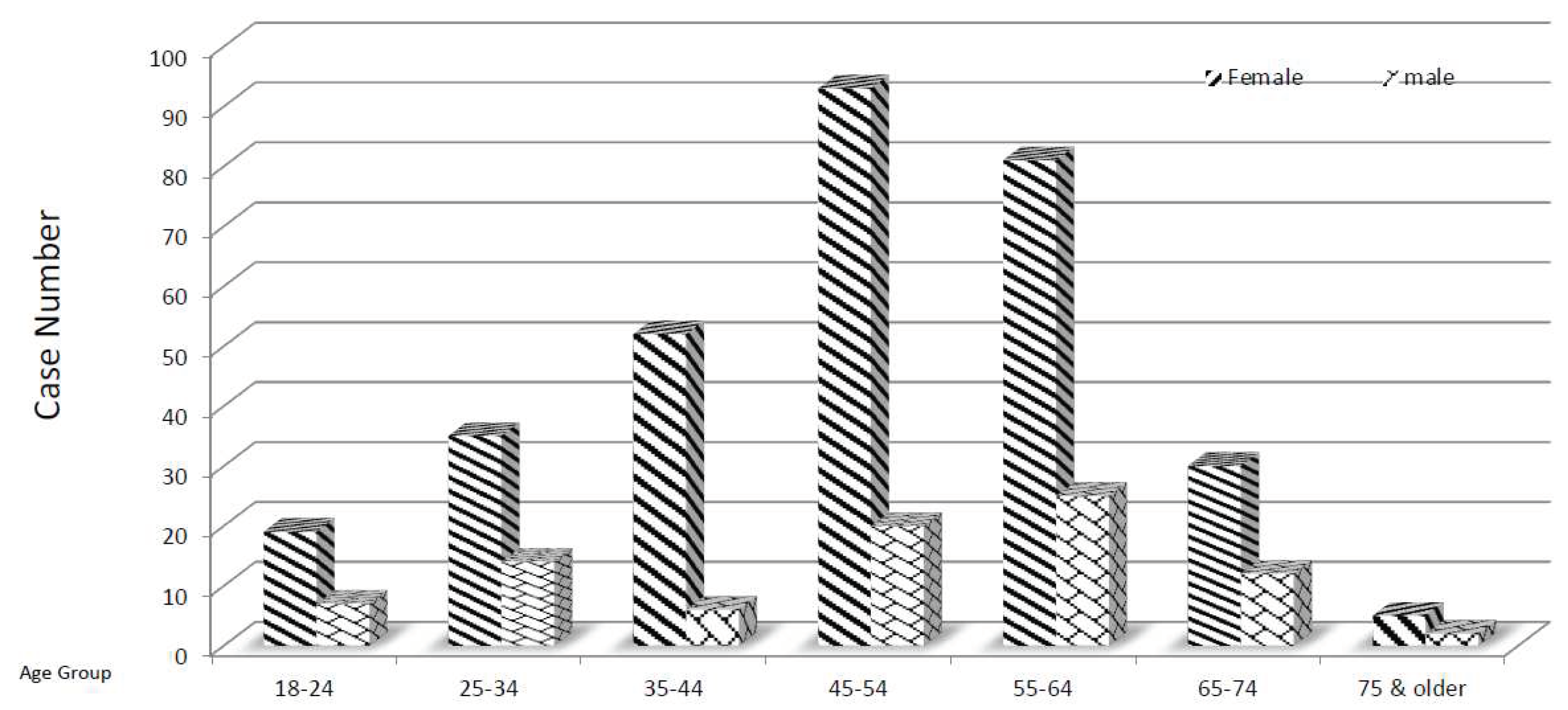
Figure 2.
The education level distribution of the subjects.
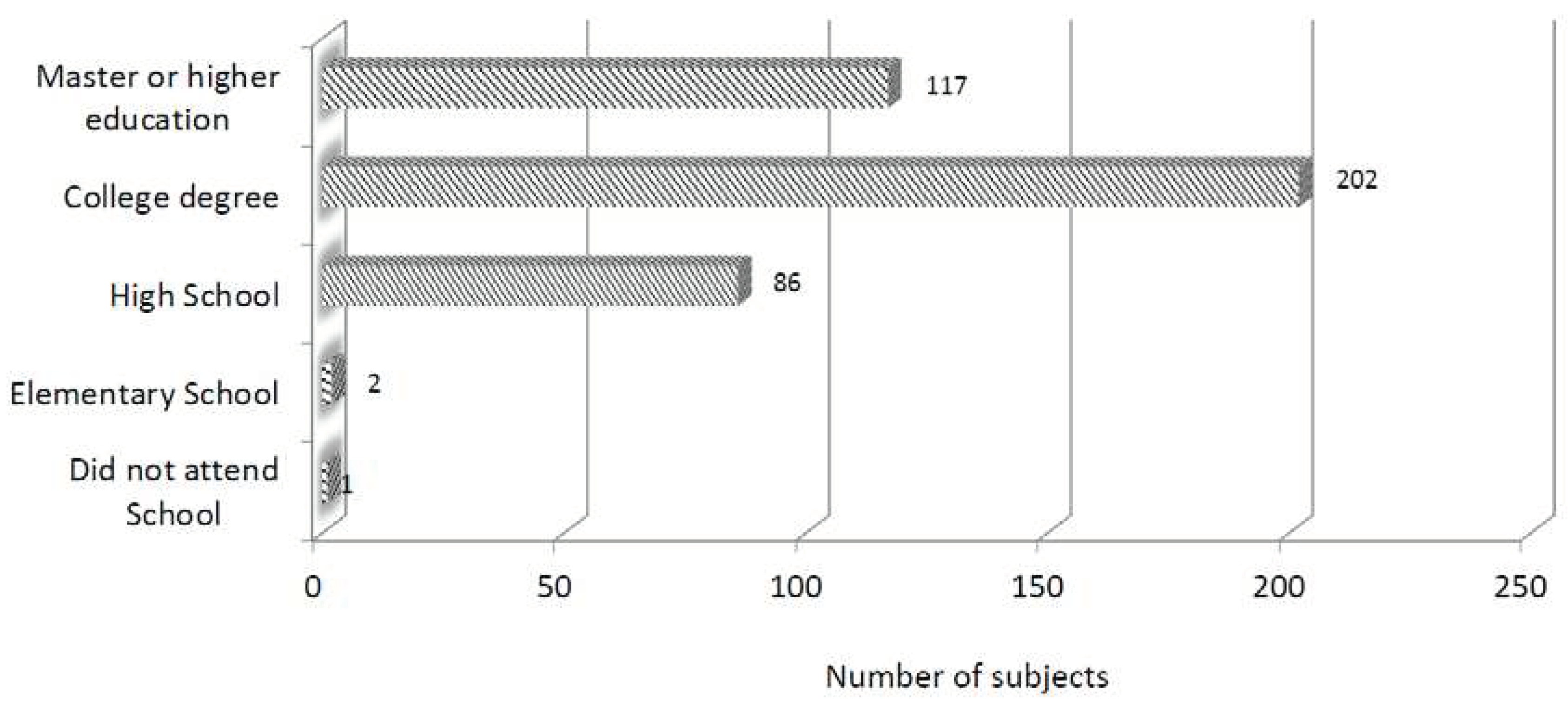
Figure 3.
The distribution of household income in the subjects.
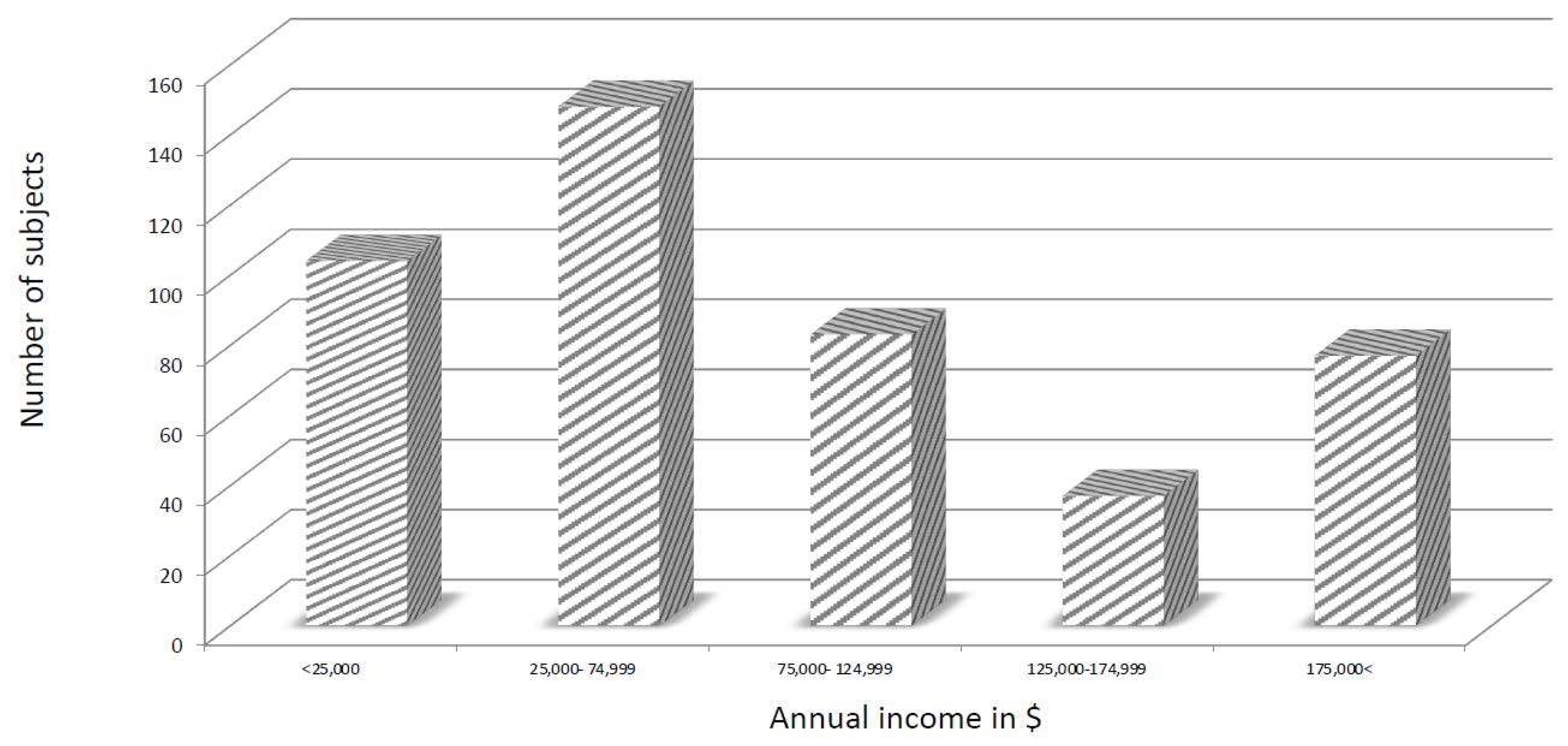
Figure 4.
The distribution of household income in the subjects.
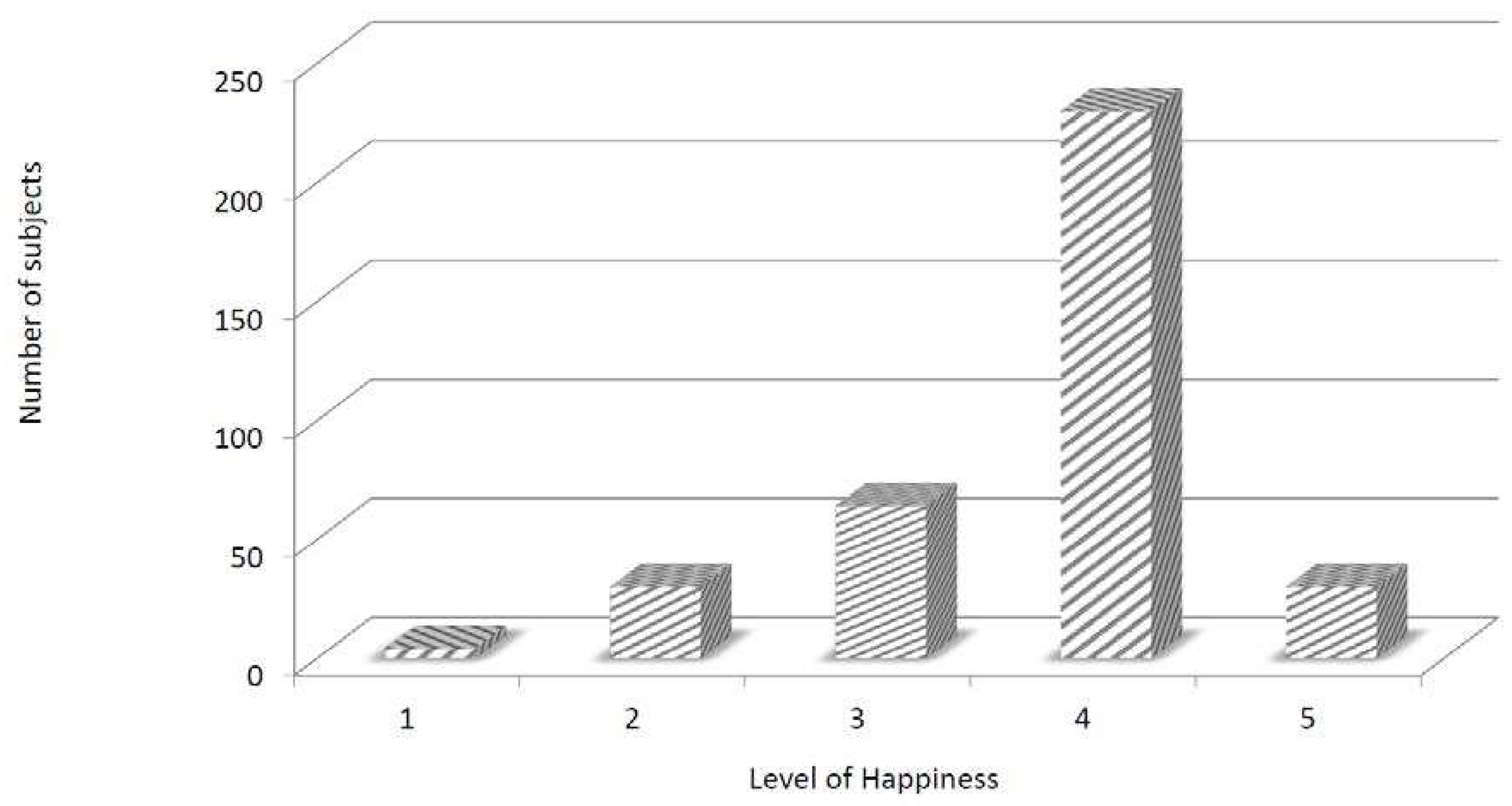
Figure 5.
Shell and Core Model of SWB.
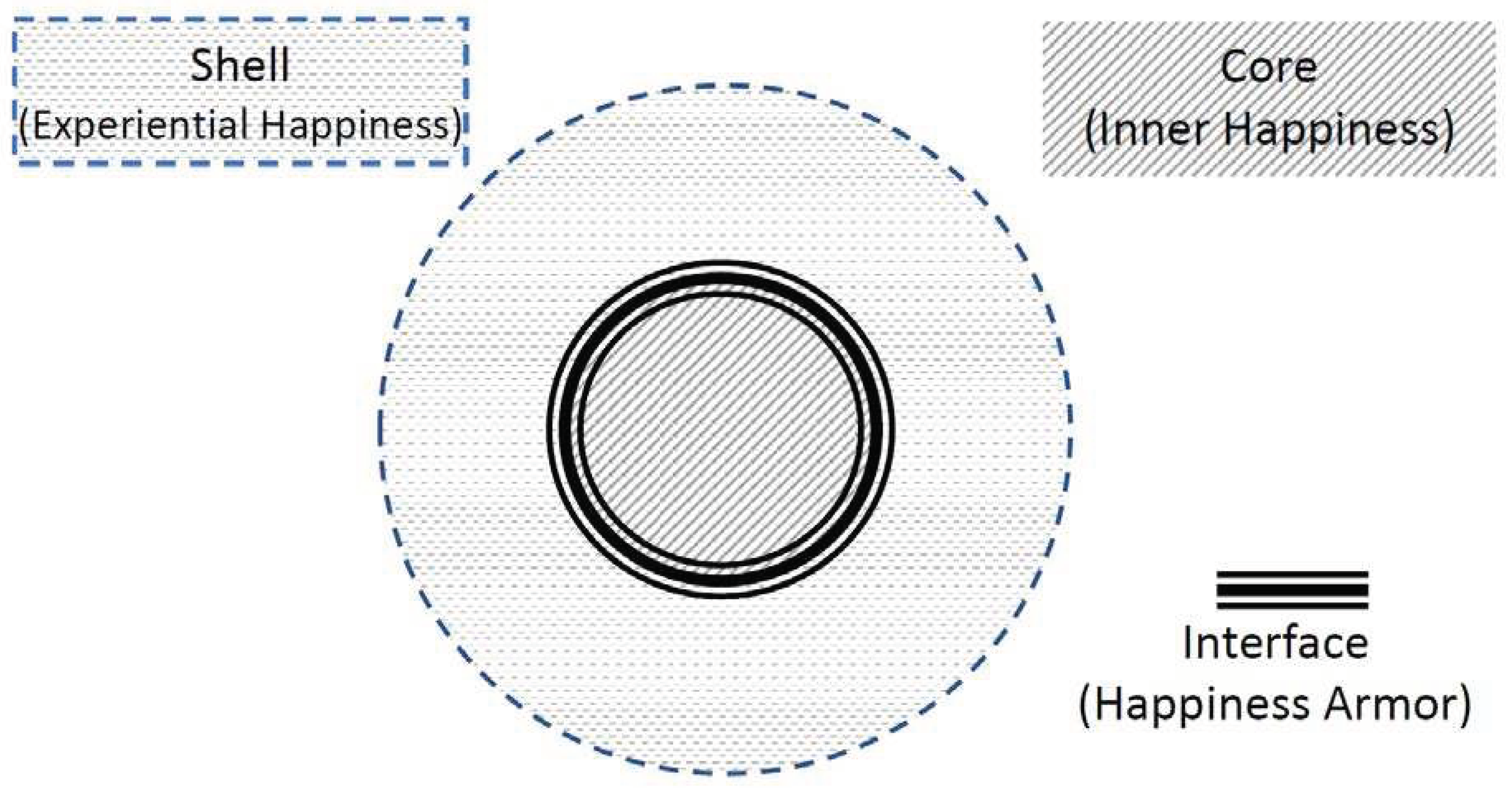
Figure 6.
Time-Bound Experiential Happiness.
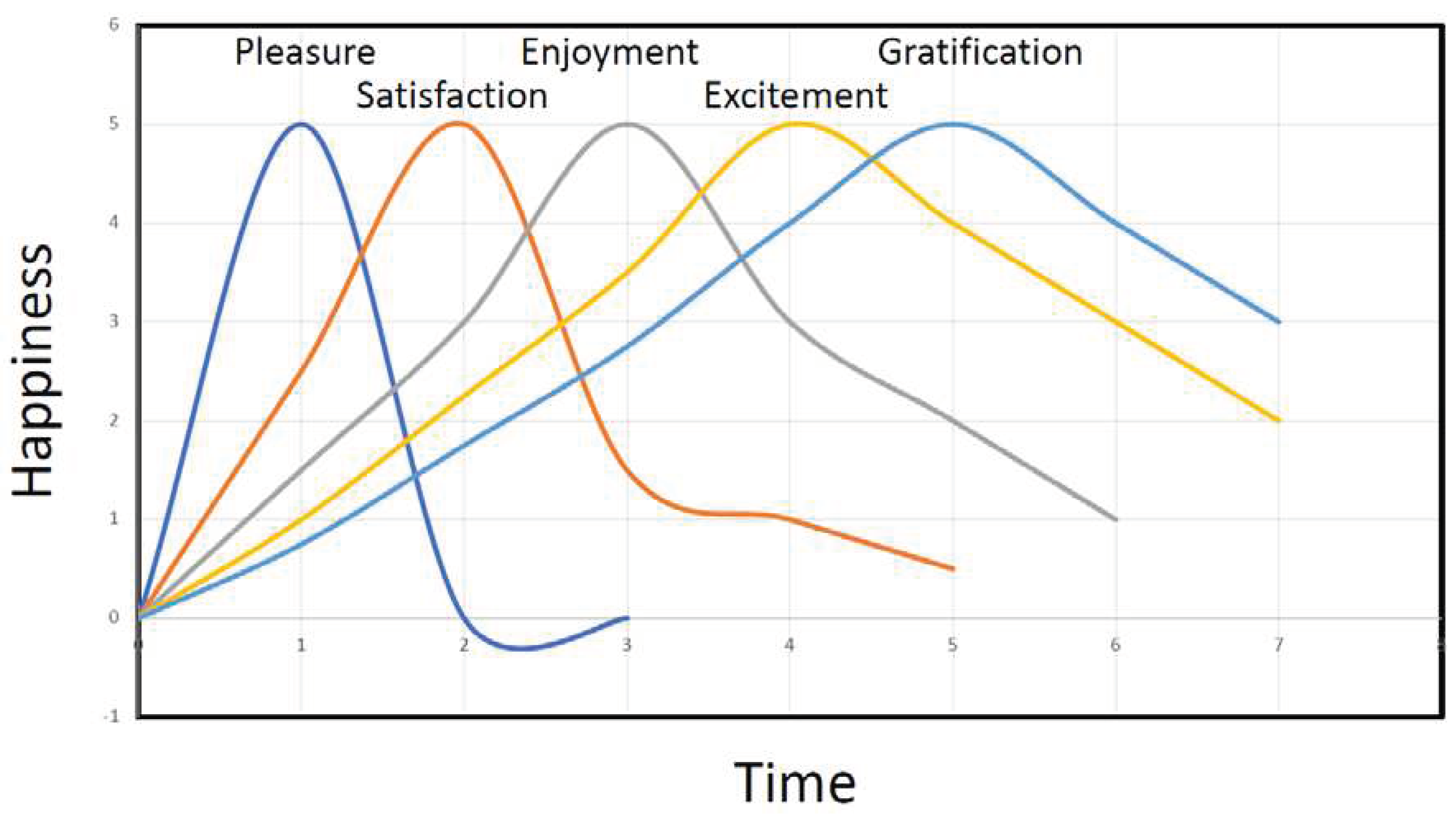
Figure 7.
Achievement-Based Happiness Triangle.
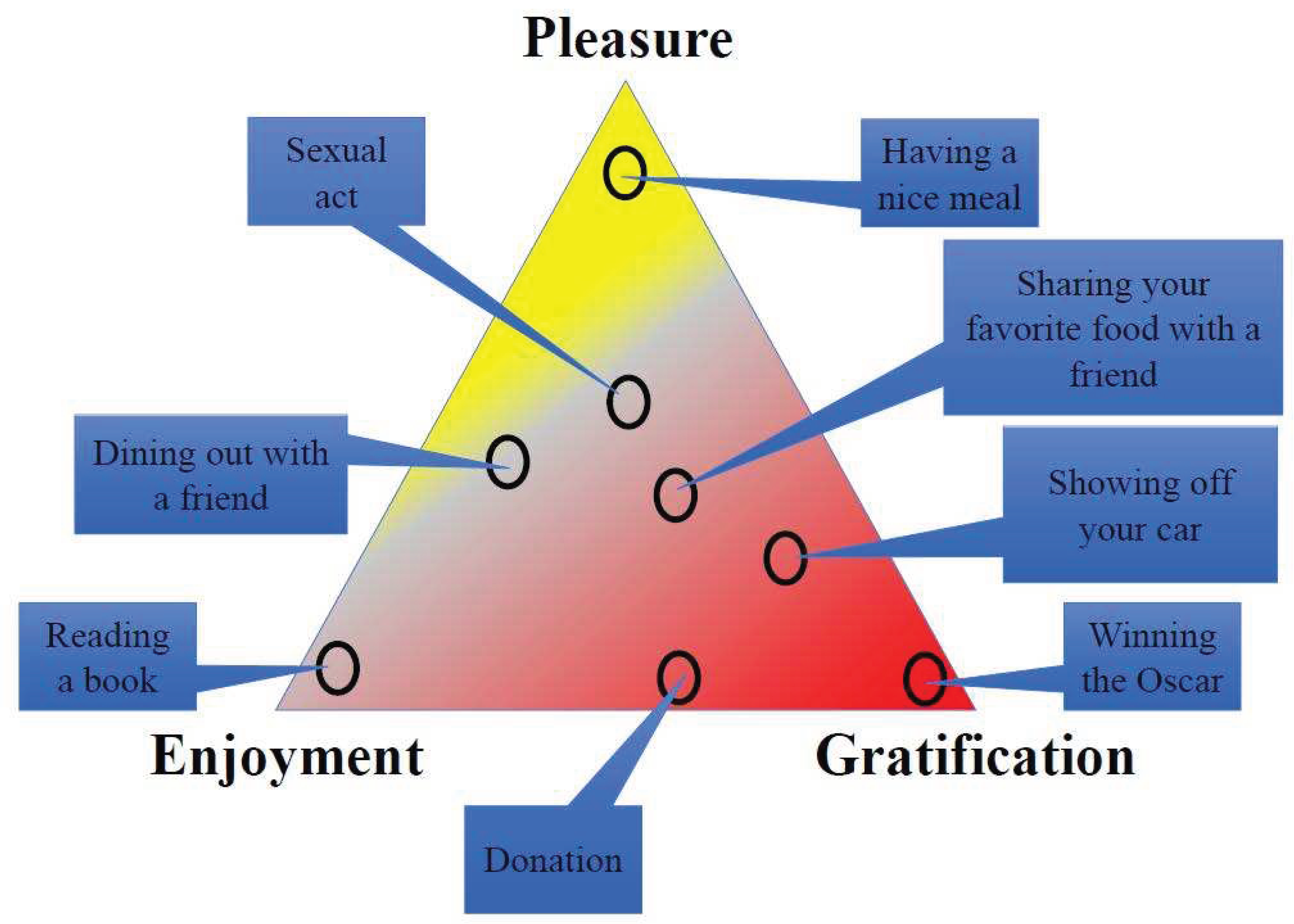
Figure 8.
Defining Various Forms of Happiness.
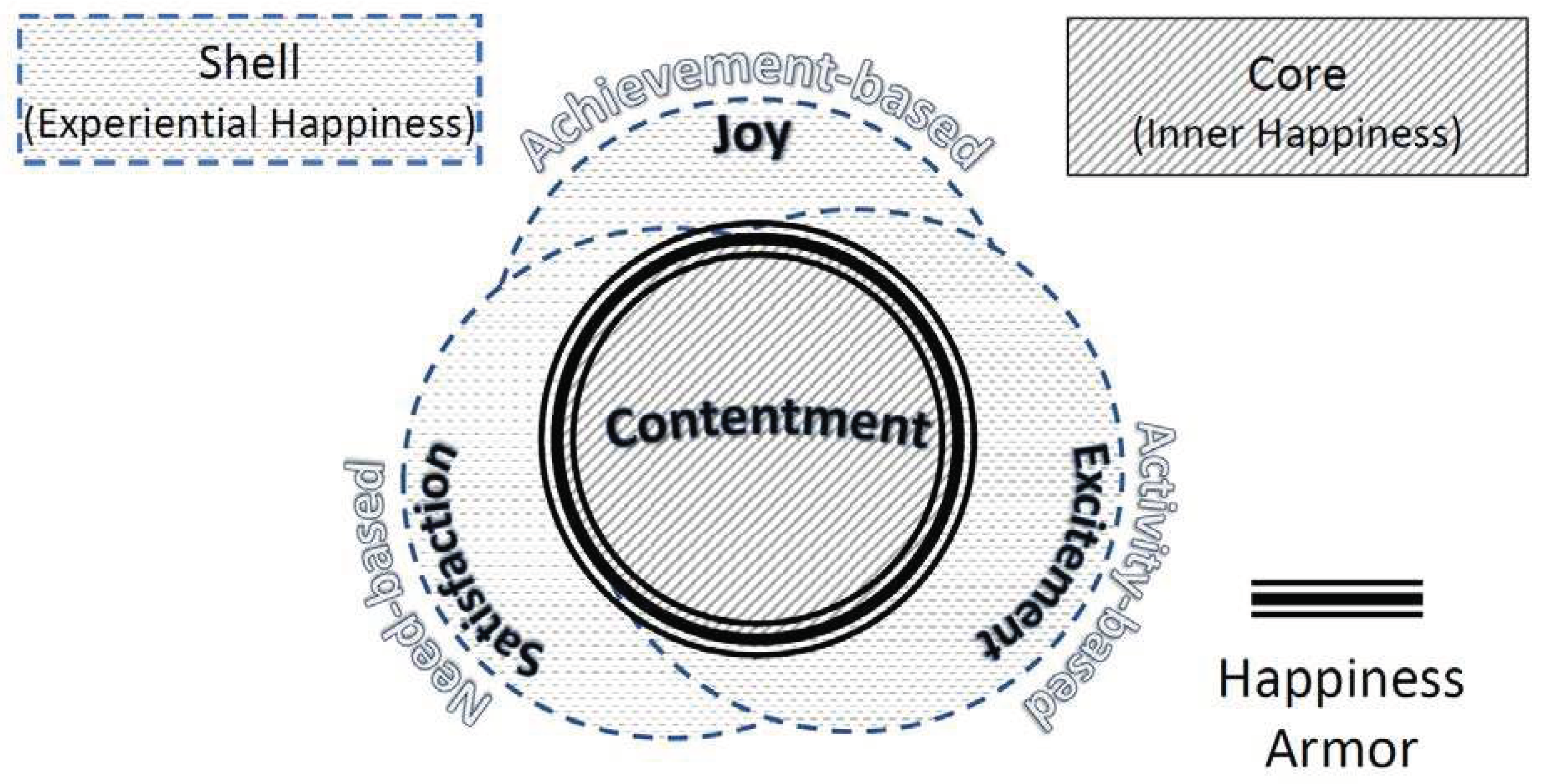
Figure 9.
Overall Level of Happiness.
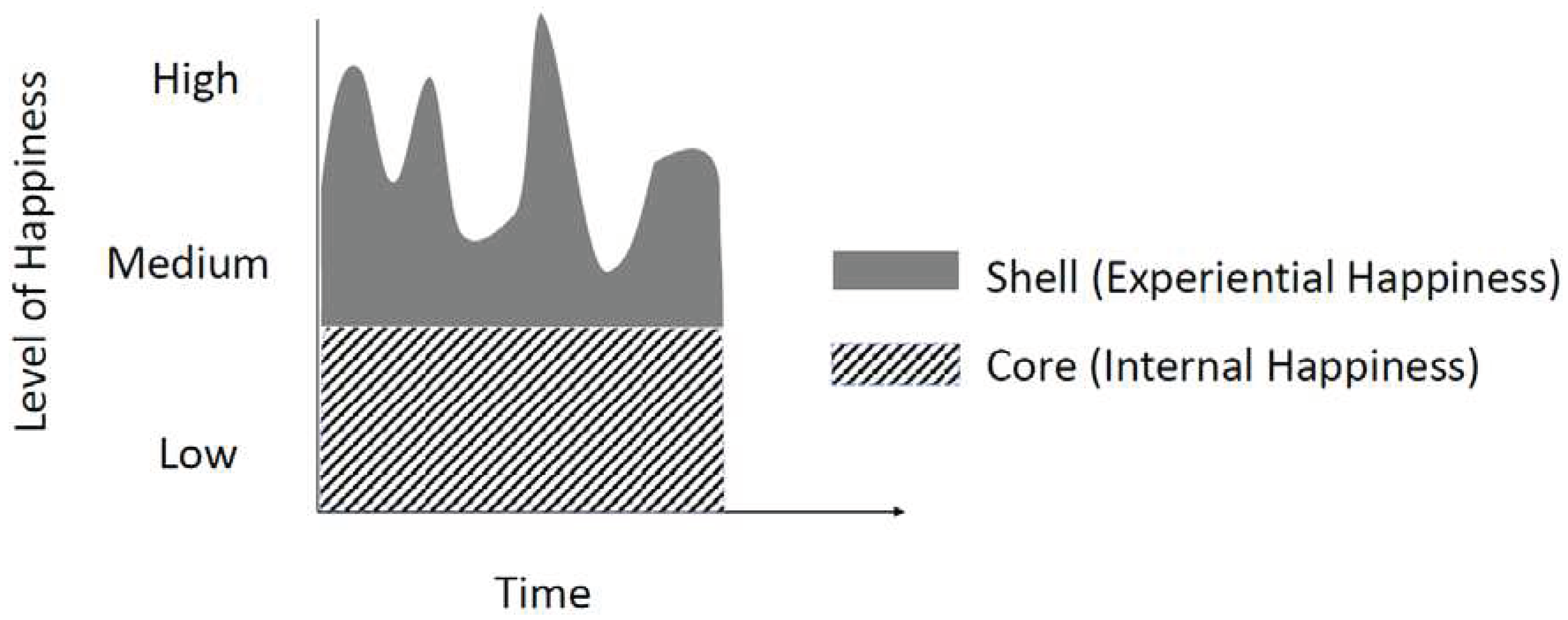
Figure 10.
Overlapping Experiential Happiness.
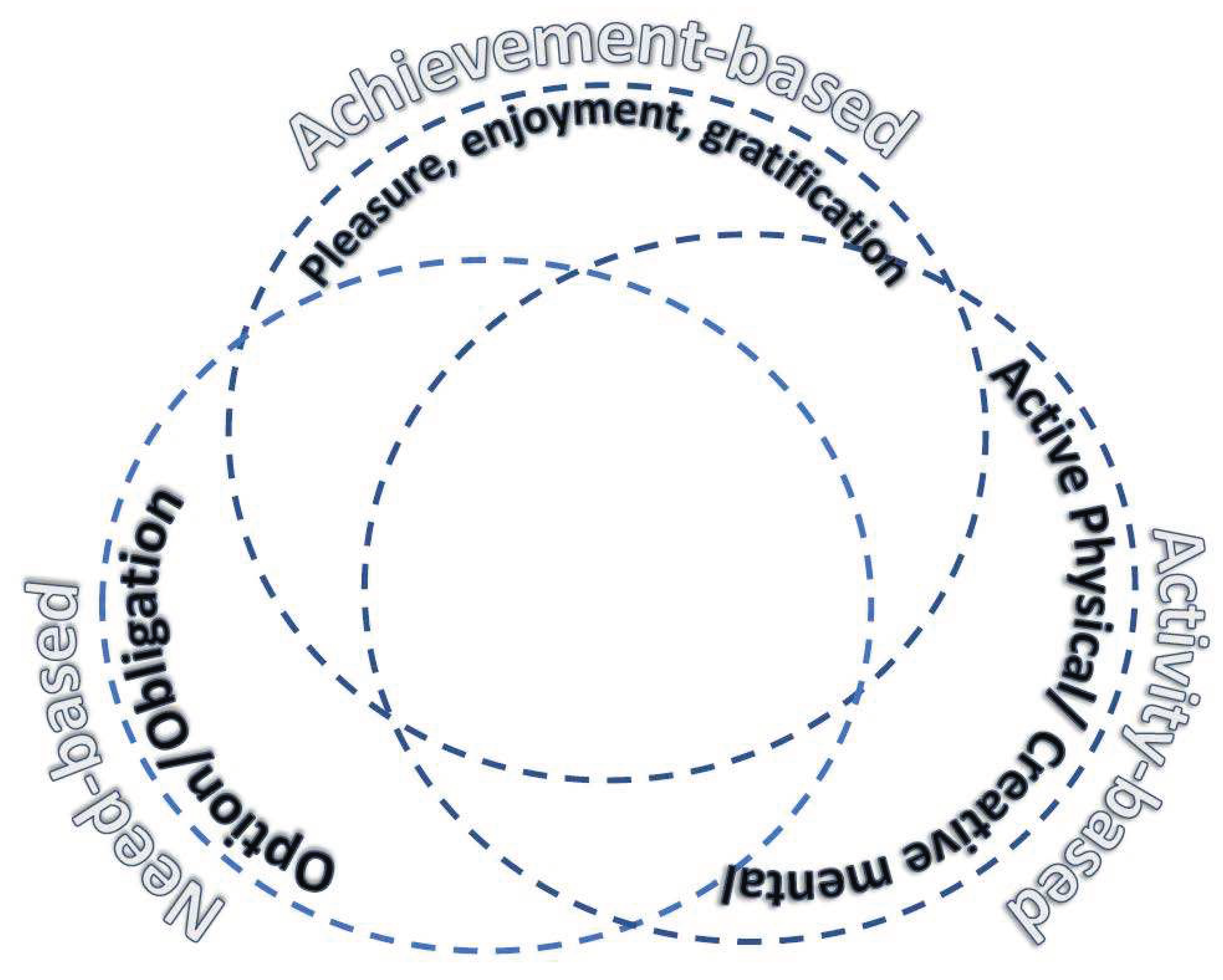
Figure 11.
Overall Level of Happiness.
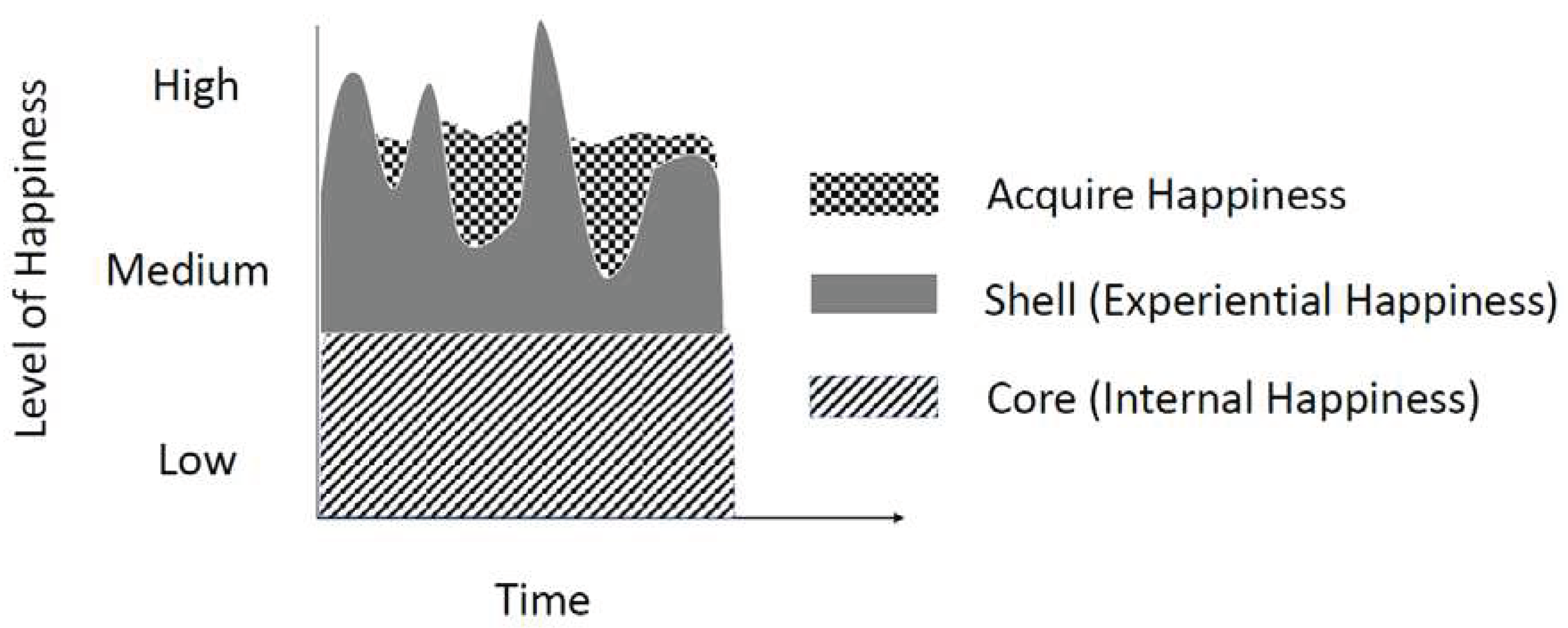

Table 1.
The average score, 95% confidence interval of the well-being attribute scores, and the correlations between well-being attributes with SWB when each variable is correlated individually or as a part of univariate modeling. Happiness Suit of Armor (HSOA), Need-based Happiness (NBH), Achievement-based Happiness (ABH), Activity-based happiness (ACBH) core of happiness (COH).
Table 1.
The average score, 95% confidence interval of the well-being attribute scores, and the correlations between well-being attributes with SWB when each variable is correlated individually or as a part of univariate modeling. Happiness Suit of Armor (HSOA), Need-based Happiness (NBH), Achievement-based Happiness (ABH), Activity-based happiness (ACBH) core of happiness (COH).
| Well-being Attribute | S&C Model | Score average | Score range | SWB correlation | Univariate model |
| Flexibility | HSOA | 3.70* | 3.61−3.79 | r = 0.21, P <.001 | P=0.535 |
| Confidence | HSOA | 3.43* | 3.33−3.53 | r = 0.44, P<.001 | P<0.001 |
| Sense of financial security | NBH/ABH/COH/HSOA | 2.76* | 2.64−2.89 | r = 0.29, P<.001 | P=0.030 |
| Feeling loved | HSOA | 3.87* | 3.77−3.97 | r = 0.45, P<.001 | P<0.001 |
| Having someone to love | HSOA | 4.05* | 3.95−4.15 | r = 0.33, P<.001 | P=0.643 |
| Feeling healthy and fit | HSOA | 2.96* | 2.85−3.06 | r = 0.35, P<.001 | P<0.001 |
| Believe in faith | COH/HSOA | 3.09* | 2.95−3.23 | r = 0.20, P<.001 | P<0.001 |
| Being generous | HSOA | 3.13* | 3.02−3.24 | r = 0.11, P=.037 | P=0.748 |
| Having a passion in life | SAC/ABH | 3.28* | 3.17−3.38 | r = 0.30, P<.001 | P<0.001 |
| Being supportive of others | HSOA | 4.14* | 4.06−4.22 | r = 0.15, P=.003 | P=0.050 |
| Having a desirable job | ACBH | 3.90* | 3.81−4.00 | r = 0.40, P<.001 | P<0.001 |
| Sense of independence | HSOA | 3.84* | 3.73−3.94 | r = 0.38, P<.001 | P<0.001 |
| Having adequate education | ACBH/ABH/COH | 3.79* | 3.69−3.88 | r = 0.26, P<.001 | P=0.022 |
| Having adequate leisure | ABH/HSOA | 3.58* | 3.49−3.67 | r = 0.16, P=.004 | P=0.282 |
| Being respected | ABH | 3.76* | 3.67−3.85 | r = 0.47, P<.001 | P<0.001 |
| Feeling appreciated for their talent | HSOA | 3.60* | 3.51−3.69 | r = 0.44, P<.001 | P<0.001 |
| Having adequate pleasure | ABH | 3.36* | 3.27−3.44 | r = 0.51, P<.001 | P<0.001 |
| Being attractive | ABH/COH | 3.38* | 3.30−3.46 | r = 0.35, P<.001 | P<0.001 |
| Being forgiving | HSOA | 3.73* | 3.64−3.83 | r = 0.27, P<.001 | P=0.370 |
| Feeling accepted by others | NBH/ABH/COH | 3.96* | 3.88−4.04 | r = 0.46, P<.001 | P=0.117 |
| Living in peace | HSOA | 3.59* | 3.50−3.67 | r = 0.58, P<.001 | P<0.001 |
| Managing life properly | HSOA | 3.38* | 3.29−3.47 | r = 0.50, P<.001 | P<0.001 |
| Being optimistic | HSOA | 3.73* | 3.65−3.82 | r = 0.52, P<.001 | P<0.001 |
| Being able to trust others | HSOA | 3.80* | 3.71−3.90 | r = 0.30, P<.001 | P=0.016 |
| Believe in fairness in life | HSOA | 3.12* | 3.02−3.21 | r = 0.37, P<.001 | P=0,863 |
| Being grateful | HSOA | 4.26* | 4.18−4.34 | r = 0.37, P<.001 | P=0.002 |
| Embracing challenges in life | ACBH | 3.53* | 3.44−3.62 | r = 0.31, P<.001 | P=0.031 |
| Being successful | ABH/HSOA | 3.53* | 3.44−3.63 | r = 0.51, P<.001 | P<0.001 |
| Excess regret from the past | COH | 3.31* | 3.21−3.40 | r = 0.37, P<.001 | P=0.226 |
| Feeling closure with death | COH | 3.09 | 2.93−3.25 | r = 0.03, P=.615 | P=0.020 |
| Overall happiness with life | 3.70 | 3.62−3.79 |
Note: * indicates a significant correlation of a particular attribute with the SWB.
Disclaimer/Publisher’s Note: The statements, opinions and data contained in all publications are solely those of the individual author(s) and contributor(s) and not of MDPI and/or the editor(s). MDPI and/or the editor(s) disclaim responsibility for any injury to people or property resulting from any ideas, methods, instructions or products referred to in the content. |
© 2023 by the author. Licensee MDPI, Basel, Switzerland. This article is an open access article distributed under the terms and conditions of the Creative Commons Attribution (CC BY) license (https://creativecommons.org/licenses/by/4.0/).
Copyright: This open access article is published under a Creative Commons CC BY 4.0 license, which permit the free download, distribution, and reuse, provided that the author and preprint are cited in any reuse.


