
Submitted:
29 August 2023
Posted:
29 August 2023
You are already at the latest version
Abstract
Heat using behavior has a large impact on in heating energy in heat metering system, and therefore a better understanding can assist in behavior guidance to reduce energy. To understand the current situation of indoor thermal environment and heat using behavior for heat metering households in northern China, including adjusting heating end valves and operating windows, 30 households were measured and surveyed. The factors influencing heat using behavior, including outdoor and indoor environmental parameters and time of the day, were analyzed. The results are :1) Thermal neutral temperature for heat metering households is relatively high, up to 24.5℃; 2) The heat using behavior of households is lack of rationality: low proportion of active households; high indoor temperature setting; more frequency of window opening. Improving indoor comfort is the main reason for households to adjust the heating end valve, and only 7.15% of households have considered the economic benefits brought by adjusting the valve. " Thermostat control valve does not work" is the main reason for households without adjustment; 3) Time of the day and indoor temperature affect active households’ willingness to adjusting heating end valve. Time of the day, indoor temperature and outdoor temperature have impacts on opening window during heating period.
Keywords:
Heat metering
; Heat using behavior
; Thermal comfort
; Heating end valve
; Operating window
1. Introduction
The space heating demand reduction has attracted growing attention in the society under the background of energy shortage and global warming[1]. Buildings consume approximately 40% of the total end use, resulting in more than 35% of society's total greenhouse gas production. Urban heating energy account for over 20% of total buildings energy demand [2]. Consequently, reduction of the heating energy in buildings is instrumental to the efforts of reducing energy and carbon of the society.
Occupant behavior has a significant impact on space heating energy in heat metering system [3]. Heat metering affects heat using behavior of users through heat metering equipment, corresponding management and pricing policies to reduce heating energy [4]. In 1976, the Economic Commission for Europe proposed to implement heat metering for new buildings and existing buildings. Then Germany, Denmark, Finland, France et.al began to implement heat metering. In recent years, the European Union has released two important instructions, including the Energy End-use Efficiency [5] and Energy Services Directive (2006/32/EC) [6]. Heat metering in China began in the 1990s. In the past decade, a series of policies, regulations and technical standards have been launched to promote heat metering. Table 1 summaries the main regulations and standards on heat metering, and two of them were considered to be milestones [7]. One was the Guidance on the Pilot Work of Urban Heating System Reform issued in 2003. It marked supervision of heating metering and charging by Ministry of Housing and Urban-Rural Development. The other was the Code for Acceptance of Energy Efficient Building Construction implemented in 2007 [8], in which indoor temperature control devices and heating meters must be installed mandatorily. With the introduction of these policies, heat metering has gained popularity in many countries.
In heat metering system, users can adjust freely indoor temperature through thermostatic valves. As occupant behavior varies significantly between individuals, heating energy consumption of buildings may vary greatly [9]. Rathouse K.et al [10] have found that there was great variation in the use of heating controls between English households. Seligman et al. [11] investigated energy consumption in 28 identical town houses and found that the largest variation in energy consumption was two to one. Furthermore, the energy consumption of the houses depended significantly on the occupants. In order to understand the current situation of heating energy in heat metering system, many scholars have carried out researching. For example, Terés-Zubiaga J et.al have concluded that heating energy could be reduced 15%~20% though implementing individual metering and charging in the building [12], Calise F et.al have found that 64% reduction could be reached in heat metering system when it operated for many hours per day [13]. However, contrary to popular belief, Shipworth M et.al have proposed that the use of thermostatic valves might not reduce average maximum temperature in living room, and short the duration of operation for heating, and resulting in heating energy consumption not to be reduced [14].Andersen et al. [9] have considered that if the occupants can adjust the temperature set-points, higher heating energy consumption may be resulted. Therefore, whether heat metering can reduce heating energy is closely related to heat using behavior.
The factors influencing heat using behavior consist of metering devices, environmental factors [15,16,17], building and system characteristics (local, age, size of dwelling, room type and so on) [18,19,20], occupant characteristics (age, gender [21], income, education level of occupant[22,23,24]), and other factors (awareness and energy price) [25]. For example, low flow rate of heat water in the pipes and an inaccurate installation of heating meters leaded to a doubtful energy bill, which reduced the enthusiasm of residents to save heat [26,27]. Andersen et al. proposed that there was a strong correlation between the heating on and the outdoor temperature [9]. For building characteristics, Hansen AR .et al proposed the heat transfer coefficient of the envelope affected heating indoor temperature setpoint [28]. The building with higher heat transfer coefficient had lower the indoor temperature setpoint due to the warmer the occupants wearing. Oreszczyn T et.al have found that there was a correlation between heat using behavior and room type [20]. The mean temperature of living rooms was higher than kitchens and bedrooms [29]. The required indoor temperature in winter correlated with age, gender, culture/race, education level of users. The children and elderly seemed to prefer higher indoor temperature setpoint [21,22]. Karjalainen S et.al proposed that men were more active to adjust thermostatic valves than women. In addition, Bao XU et.al have proposed that the users’ attitudes toward heat metering was key to successful retrofit of heat metering [31].
Great achievements have been made in application effects of heat metering and factors influencing heat using behavior for heat metering households. However, the following research gaps still exist. Firstly, the application effect of heat metering is closely related to indoor temperature. However, there are few studies on indoor thermal environment with heat metering system. Secondly, heating is charged according to quantity of heat, but researcher rarely study whether the cost of heating will affect the residents’ thermal comfort temperature. Thirdly, there is a lack of research on the effect of indoor thermal environment parameters on heat using behavior. This study aims to measure and survey current situation of indoor thermal environment and heat using behavior (adjusting heating end and operating windows) for heat metering households. The factors influencing heat using behavior have been also analyzed based on measured and surveyed data. It is of great significance to improve the thermal comfort of indoor environment for heat metering system and to promote the development of heat metering heating in China.
2. Research Methodology
To measure and survey indoor thermal environment, heat using behavior and thermal comfort of heat metering households, the methodology with combining field measurement and survey are adopted in the paper. Figure 1 shows the flow chart of the methodology. The participants are 20 heat metering households at China-Singapore Tianjin Eco-City and 10 households at Qinhuangdao and the measurements were carried out from 11/Dec/2020 to 11/Jan/2021 and 1/Dec/2022 to 16/Dec/2022, respectively. China-Singapore Tianjin Eco-city and Qinhuangdao are coastal cities with maritime climate. The seasons are distinctive. The annual average temperature of the two regions is about 11 °C.
2.1. Field measurement
The field measurement parameters mainly include outdoor environmental parameters (outdoor temperature and relative humidity), indoor environmental parameters (indoor temperature and relative humidity), and window state. The measurement instruments include magnetic switching recorder, temperature recorder and temperature and humidity recorder.
Magnetic switching recorder and magnet were placed at the window to monitor the open/closed status with 2 mins data collection interval (Figure 2a). It was recorded as “1” by magnetic switching recorder when the distance between the two devices exceeded 30mm, the window was supposed to be open. On the contrary, window was considered closed, “0” was recorded when the distance between two devices was less than 30mm. Therefore, two devices were installed under the closed state of the window to accurately measure the window state, and their distance was set within 30mm. Every window in master bedroom, guest bedroom, living room for dwelling was measured.
The sensor probes of temperature recorders were also placed at the window to monitor window open/closed (Figure 2b). The sampling time was also set at 2 minutes. Unlike magnetic switching recorders, the temperature recorders could not directly record the opening or closing state of window, but record the temperature near the window. The window state was manually determined. When the temperature suddenly dropped 2℃ or more, the window was considered to be open. On the contrary, when the temperature suddenly rose 2℃ or more, the window was considered to be closed.
Indoor environmental parameters (indoor temperature and humidity) were recorded by temperature and humidity recorder, at 5 min intervals (Figure 2c). The recorders were placed in living room at a height of 1.2 m, and was more than 1 m away from any window.
For outdoor environmental parameters, hourly observation data of Chinese surface weather stations of National Meteorological Science Data Center Network were adopted, and the nearest Meteorological Station Tianjin Tanggu station (platform number: 54623) and Qinhuangdao station (platform number: 54449) were selected. The extracted climatic elements included hourly outdoor temperature and relative humidity.
2.2. Survey
The purpose of survey is to understand thermal comfort of heat metering households, determine the state and time of adjusting heating end valve and the time of operating windows, which supplemented with the field measurement. Therefore, the questionnaire included three aspects:1) behavior of adjusting heating end valve; 2) behavior of operating windows; and 3) thermal comfort. Table 2 provides description of the questionnaire variables. The first two aspects of the questionnaire adopted open approach without providing the answer options. The respondents filled in questionnaire according to their own heat using behavior. For example, the question "What time do your adjust heating end valve today? " was developed in first aspects of the questionnaire. The third aspect, including thermal comfort, thermal sensation, environment acceptance, adopted closed approach with providing the answer options. For thermal comfort, 5 level thermal comfort index in ASHRAE was adopted. The thermal sensation was evaluated using seven indicators which represented the respondents’ thermal response (cold and thermal sensation). Relevant scales are shown in Table 2. In addition, since thermal comfort and thermal sensation are related to respondents’ clothing at the moment, the question “what are you dressing now” was also set in the questionnaire. The plain language was used to descript questions as far as possible, and professional terms were avoided as much as possible to ensure the validity of the questionnaire on the quantity and quality. At the same time, 15 questionnaires were tested in a residential community in Beijing, and preliminary feedback was obtained to form the final questionnaire.
Questionnaires were sent through the questionnaire star at 9 p.m. every day (11/Dec/2020 to 11/Jan/2021 and 1/Dec/2022 to 16/Dec/2022). 413 questionnaires were collected, and 386 of them were valid.
3. Results and analysis
3.1. Indoor thermal environment
3.1.1. Indoor thermal environment distribution
The statistical results of indoor temperature for 30 households during measurement period are shown in Figure 3. The indoor temperature is concentrated range 23℃ ~28℃, accounting for 78.87%. Figure 4 shows the curve of indoor temperature for a household during 14/Dec/2020 to 17/Dec/2020. It is found that indoor temperature fluctuates with the fluctuation of outdoor temperature, and it has a certain delay. The indoor temperature is above 25℃, and even the highest temperature reaches 27.38℃ without opening window in all four days. It is higher than the design temperature of 20℃ specified in the Design Standard for Heating, Ventilation and Air Conditioning of Civil Buildings [32]. This indicates that heat metering does not make households to reduce their indoor temperatures.
High indoor temperature leads to households wearing lighter clothes in winter. The thermal resistance of different clothes is shown in Table 3 [33]. According to Table 3, the distribution characteristics of clothing thermal resistance for respondents during heating period in northern China can be obtained, as shown in Figure 5. It has been found that the clothing thermal resistance of respondents ranges from 0.36 clo to 1.37clo. Clothing thermal resistance less than 0.75 accounts for 51.17%. It is less than the standard clothing thermal resistance in ASHRAE Standard 55-2017 [34].
3.1.2. Satisfaction with thermal comfort
Subjective sensation voting reflects real feelings of the respondents for the indoor thermal environment. The voting results of subjective sensation, including thermal comfort, thermal sensation and acceptability of the indoor environment, are shown in Figure 6. The samples with thermal comfort voting values 0 account for 83.30%. The samples with thermal sensation voting values -1, 0and 1 account for 16.73%, 73.87% and 8.42%, respectively, accounting for 99.02% of the total number of samples. The samples with voting values of acceptability of the indoor environment 0 (moderate), 1 (just acceptable), 2 (acceptable) and 3 (very acceptable) account for 45.51%, 11.72%, 29.25% and 5.90%, respectively, accounting for 92.38% of the total samples. It shows that most respondents can accept the indoor thermal environment.
3.1.3. Acceptable temperature range
MTSV(Mean Thermal Sensation Vote)is adopted to describe the respondents’ thermal sensation。Mean thermal sensation are obtained by temperature frequency. The specific steps are as follows: According to the distribution range of the indoor temperature (18℃~3℃), MTSV of all the respondents are calculated by taking ±0.5℃ of operating temperature as range. Operating temperature and the corresponding average thermal sensation votes are shown in Figure 7. The relationship between MTSV and operating temperature is regressed using Originlab Origin 2019b (Figure 7). The result is shown as equation (1). The determination coefficient R2 is 0.75, indicating that the regression equation has a high fitting degree. The result shows MTSV is positively related with the indoor temperature. Similar equation has been drawn in the referent [36].
When the average thermal sensation index is 0, the operating temperature is considered as thermal neutral operating temperature, which indicates that occupants feel neither cold nor hot. Therefore, assuming MHSV=0, thermal neutral operating temperature can be calculated using equation (1), that is 24.8℃, which is higher than the indoor design temperature 20℃ of central heating in China. Familiarity with PMV, the acceptable temperature range for 90% heat metering households can be obtained through assuming MHSV=[-0.5, 0.5], that is [20.3℃, 29.4℃]. The acceptable temperature range to households is wide, but lowest temperature and highest temperature are relatively high. Relevant studies have shown that the thermal neutral temperature of non-heat metering households in Beijing was 23.1℃, and the acceptable temperature range was [18.9℃, 27.3℃] [33]. The thermal neutral temperature of residential buildings in Harbin was 21.5℃, and the acceptable lowest operating temperature for 80% residents was 18℃ [35]. Therefore, compared to non-heat metering households, the thermal neutral operating temperature of heat metering households is not reduced as heat metering charges. On the contrary, indoor thermal comfort temperature increase, which indicate that residents pay more attention to comfort with the improvement of people’s living standards.
3.2. Adjusting heating end valve
Figure 8 shows the statistical results of adjusting heating end valve. It is found that the proportion of days for adjusting heating end valve is low (Figure 8a). Among 386 valid questionnaires collected, only 119 have adjusted heating end valve, as shown in the Fi. 8a. According to the statistics of 30 households, it is found that only 14 households have adjusted the heating end valve, accounting for 46.67%. The proportion of households adjusting heating end valve is relatively low, as shown in the Figure 8b. Among the 14 households with adjustment, 9 households adjust heating end valve frequently, which adjust the indoor thermostatic valve, and the adjustment times are greater than 12, as shown in Figure 9. The others adjust the valve in the pipe well in the stairwell, which adjust only once during the measurement period. Improving indoor comfort is the main reason for households to adjust heating end valve, accounting for 78.57% (Figure 10a), and a lower percentage of households have considered the economic benefits brought by adjusting the valve. 53.37% of households do not adjust heating valves, “Poor thermostat valve” is the main reason of not adjusting heating end valve for heat households, accounting for 62.50%. (Figure 10b) 18.75% of households do not know how to adjust.
According to the frequency of adjusting heating end valve, households in northern China can be classed into three categories, namely: I type of negative households (never adjustment), these households have no adjustment heating end valve in the heating season. II type of general households (once to two times during heating period). III type of active households (twelve times or more during heating period). For 30 measurement households, the proportion of negative, general and active households are 53.33%, 16.67%and 30.00%, respectively. It is low to proportion of active households.
Variation affecting adjusting heating end valve depends on many factors ranging from socioeconomic attributes, environmental factors and residential characteristics and so on. It becomes more important to further investigate which factors affect adjusting heat end valve for active households. The stepwise regression method is adopted to establish this fact. The measurement parameters, including time of the day, outdoor temperature, outdoor wind speed, indoor temperature and relative humidity is analyzed. Since time is not a numerical variable, the time of a day is divided into four stages, that is, T=1 ( 6:00~8:30), T=2 (8:30~17:00), T=3 (17:00~23:00) and T=4 (23:00~6:00). The results of the stepwise regression are shown in Table 4. B is the regression coefficient, and its absolute value directly reflects the influence of the independent variable on the dependent variable. That is, B>0 means that the independent variable has a positive impact on the adjustment heating end valves, while B<0 means that it has a negative impact. Beta is standardized regression coefficient; t is the result of hypothesis testing on B/Beta; Sig is the significant level. When Sig<0.05, the predictive variable is considered to be significant.
The significance of the time of the day and indoor temperature on adjusting the heating end valve for active households is less than 0.05, and the significance of the others are all greater than 0.05. These indicates that time of the day and indoor temperature have significant influence on adjust heating end valve for active households, while the other three parameters have no significant influence on active households to adjust heating end valve. As the indoor temperature increases, the active households have a greater possibility to adjust the heating end valve. The maximum probability time adjusting the valve for active households is the fourth time of the day (6:00 ~ 8:30). Active households have lowest possibility to adjust heating end valve at the time 23:00~6:00.
Correlation between adjusting temperature amplitudeand two variables (time of the day T and indoor temperature before adjustment t) is linearly regressed using SPSS. The results are shown as equation (2). It is obtained that the critical temperature of adjusting heating end valve for active households is 24.52℃, 23.71℃, 22.90℃, 22.10℃ in the 1,2,3,4 the time of the day, respectively. When the indoor temperature is higher than the critical temperature, the households turn down heating end valve, and the indoor temperature can be reduced. On the contrary, the households turn up heating end valve. For example, assuming indoor temperature is 26℃ at the fourth time of the day, temperature can be reduced 1.65℃.
3.3. Operating windows
Figure 11 shows the statistical results of opening window for households. It is found that 75% households have opened windows in measurement period. The proportion of window opening is higher. Figure 12 shows number of households with different average duration of opening window every day. It shows that the number of households with average opening window duration every day more than 3.5 is 6, accounting for 20 %. The duration of window opening for some households was long.
In addition, the duration of window opening for living room is the longest, duration for the master bedroom is the second, and it has the shortest duration of the window opening for the guest bedroom. It shows that the function of the room is the important factors affecting the window operating. The windows opening state of living room for ten households are shown in Figure 13. Duration of opening windows are different for different households during heating period in winter. It shows that households’ preference is an important factor affecting the window operating. Yang J et.al also proposed that residents’ window opening was closely related to their personal preference [36].
The stepwise regression method is adopted to analyze the influence of measurement parameters on operating window, including time of the day, outdoor temperature, indoor temperature and relative humidity before opening window. The results are shown in Table 5. It has shown that time of the day, outdoor temperature and indoor temperature before opening window have significant influence on households opening window. Outdoor temperature and indoor temperature are positively correlated with window opening. That is to say, the probability of opening window for households increases with the outdoor and indoor temperature increasing. The maximum probability time opening window is the fourth time of the day (6:00 ~ 8:30). Households have lowest possibility opening window at the time 23:00~6:00.
5. Discussion
5.1. Indoor thermal environment
According to the results of survey and measurement, the indoor temperature of households is higher than the design temperature 20℃ [32]. It could be seen that the indoor temperature of room is greater than 25℃ when the windows are closed, and even the highest temperature reaches 27.38℃ (4.4 section). One of the main reasons for higher indoor temperature may be excessive heating load. According to the referent [32], the additional load generated by the heat transferring between rooms should be considered for heat metering rooms, but the additional amount should not exceed 50%. However, it is found that households could not adjust heating end valve in the filed measurement, resulting in heat transferring between rooms less. Therefore, the design heat load is excessive, and indoor temperature is higher than the design temperature. The second reason may be high comfort requirement. With the improvement of people’s living standards, residents pay more attention to comfort. Residents wear less clothing, which thermal resistance is less than in ASHRAE55-2017 standard 1. Thermal neutral temperature is required high, up to 24.8℃ according to 3.1.3 sector.
5.2. Heat using behavior
Only 40% of the households measured adjust frequently heating end valve. The proportion of active households is low. This may be related to the fact that households have formed certain heat usage habits under the traditional heating system. Indoor temperature is set high for active households according to 3.1.1. The purpose of implementing heat metering is reducing heating energy through lower the indoor temperature setpoint or heating end valve downsized or closed. However, it is difficult to achieve the aim due to low proportion of adjusting heating end valve and higher the indoor temperature setpoint. In addition, according to the results from the measurement, 75% households open the windows in winter, and the duration of window opening for some households is long (more than 3.5 hours), which lead to a serious waste of heating energy. High indoor temperature is one of reason to open window for residents according 3.3. Therefore, it is very necessary to improve the scientific and rational heat using behavior, closing the window in winter, reducing the indoor temperature, and shorting the time of heating (when no one at home). Only this can highlight the advantages of energy saving for heat metering.
5.2. Heating meters propaganda
Heat metering in China has been implemented more than a decade. Lots of policies and regulation of the state have been implemented, and most of the northern cities have also introduced methods for prices and charging of heat metering. However, according to the survey results, 18.75% of heat households do not know how to adjust, which is also one of main reasons that residents do not adjust the heating end valve. This indicates that the influence and radiation of propaganda for heating departments and social mass media is far from enough. Improving the understanding of heat metering can improve the willingness to adjust heating end valve for residents [31]. Therefore, it is necessary to strengthen publicity and guidance on information related to heat metering. This helps to improve the understanding of heat metering and increase the enthusiasm of households to adjust the heating end valve.
5.3. Thermostat valve
Most of homes in the study cannot adjust freely indoor temperature because of the dated facility, where 62.5% households expressed that the thermostat valves have poor adjustment function in extensive survey. The main reason may be the non-standard installation of the thermostat valves and the quality of heating water, resulting in the blockage of the thermostat valves. This makes the policies and regulations issued by the state become paper articles. Therefore, it is necessary to strength the supervision of the relevant department, set up specific and operable rules to ensure the actual availability of heating meters.
6. Conclusions
The field measurement and survey have been carried out to study heat using behavior in residential buildings in northern China. 30 households were selected as a case study in this research. The following conclusions are drawn:
- 1)
- Indoor temperature is higher than the design temperature 20℃. Thermal neutral temperature for heat metering households is high, up to 24.8℃. The acceptable temperature range is 20.3℃~29.4℃.
- 2)
- The heat using behavior is lack of rationality. The proportion of active households is low. Indoor temperature is set high for active households. The window opening phenomenon of households is obvious during heating period, 75% households measured open their windows.
- 3)
- Active households with high indoor temperature have high probability of adjusting end valve. At the time 6:00~8:30, active households are willing to adjust the valve. High indoor temperature and outdoor temperature cause the opening window behavior of households. The probability of opening window is high at the time period of 6:00~8:30.
Acknowledgements
This study was supported by the Science and Technology Project of HeBei Education Department (QN2023143).
References
- Ürge-Vorsatz D, Cabeza LF, Serrano S, Barreneche C, Petrichenko K. Heating and cooling energy trends and drivers in buildings. Renew Sustain Energy Rev 2015, 41, 85–98. [Google Scholar] [CrossRef]
- Yang T, Pan Y, Yang Y, Lin M, Qin B, Xu P, et al. CO2 emissions in China’s building sector through 2050: A scenario analysis based on a bottom-up model. Energy 2017, 128, 208–23. [Google Scholar] [CrossRef]
- Al-Mumin A, Khattab O, Sridhar G. Occupants’ behavior and activity patterns influencing the energy consumption in the Kuwaiti residences. Energy Build 2003, 35, 549–59. [Google Scholar] [CrossRef]
- Fabi V, Andersen RV, Corgnati SP. Influence of occupant’s heating set-point preferences on indoor environmental quality and heating demand in residential buildings. HVAC R Res 2013, 19, 635–45. [Google Scholar]
- European Parliament, 2006. Directive 2006/32/EC. Off. J. Eur. Union.
- European Parliament, 2012. Directive 2012/27/EU. Off. J. Eur. Union.
- Yuan S, Xu W, Liu Y. Research of heat metering development situation and application effect evaluation model in China. Energy Policy 2016, 88, 329–42. [Google Scholar] [CrossRef]
- GB 50411-2007. The Code for Acceptance of Energy Efficient Building Construction. Beijing: China building industry press, 2007.
- Andersen RV, Toftum J, Andersen KK, Olesen BW. Survey of occupant behaviour and control of indoor environment in Danish dwellings. Energy Build 2009, 41, 11–6. [Google Scholar] [CrossRef]
- Rathouse K., Young B. RPDH15: Use of domestic heating controls, Defra’s Market Transformation.
- Programme.
- Seligman C, Darly J.M.,. Becker L.J, Behavioral approaches to residential energy conservation.
- Energy and buildings 1 (1977/78) 325–337.
- Terés-Zubiaga J, Pérez-Iribarren E, González-Pino I, Sala JM. Effects of individual metering and charging of heating and domestic hot water on energy consumption of buildings in temperate climates. Energy Convers Manag 2018, 171, 491–506. [Google Scholar] [CrossRef]
- Calise F, Cappiello F, D’Agostino D, Vicidomini M. Heat metering for residential buildings: A novel approach through dynamic simulations for the calculation of energy and economic savings. Energy 2021, 234, 121204. [Google Scholar] [CrossRef]
- Shipworth M, Firth SK, Gentry MI, Wright AJ, Shipworth DT, Lomas KJ. Central heating thermostat settings and timing: Building demographics. Build Res Inf 2010, 38, 50–69. [Google Scholar] [CrossRef]
- Wei S, Jones R, De Wilde P. Driving factors for occupant-controlled space heating in residential buildings. Energy Build 2014, 70, 36–44. [Google Scholar] [CrossRef]
- French LJ, Camilleri MJ, Isaacs NP, Pollard AR. Temperatures and heating energy in New Zealand houses from a nationally representative study-HEEP. Energy Build 2007, 39, 770–82. [Google Scholar] [CrossRef]
- Fabi V, Andersen RV, Corgnati S, Olesen BW. Occupants’ window opening behaviour: A literature review of factors influencing occupant behaviour and models. Build Environ 2012, 58, 188–98. [Google Scholar] [CrossRef]
- Journal TS, Journal TS. Energy Consumption for Space Heating : A Discrete-Continuous Approach Author ( s ): Runa Nesbakken Source : The Scandinavian Journal of Economics, Vol. 103, No. 1 ( Mar., 2001 ), pp. 165-184 Published by : Wiley on behalf of The Scandinavian Journal 2016, 103, 165–84.
- Schuler A, Weber C, Fahl U. Energy consumption for space heating of West-German households: Empirical evidence, scenario projections and policy implications. Energy Policy 2000, 28, 877–94. [Google Scholar] [CrossRef]
- Oreszczyn T, Hong SH, Ridley I, Wilkinson P. Determinants of winter indoor temperatures in low income households in England. Energy Build 2006, 38, 245–52. [Google Scholar] [CrossRef]
- Karjalainen, S. Gender differences in thermal comfort and use of thermostats in everyday thermal environments. Build Environ 2007, 42, 1594–603. [Google Scholar] [CrossRef]
- Xu B, Fu L, Di H. Field investigation on consumer behavior and hydraulic performance of a district heating system in Tianjin, China. Build Environ 2009, 44, 249–59. [Google Scholar] [CrossRef]
- Kelly S, Shipworth M, Shipworth D, Gentry M, Wright A, Pollitt M, et al. Predicting the diversity of internal temperatures from the English residential sector using panel methods. Appl Energy 2013, 102, 601–21. [Google Scholar] [CrossRef]
- Occupants’ behaviour_ determinants and__e¡ects on residential heating consumption.pdf n.d.
- Wilhite H, Nakagami H, Masuda T, Yamaga Y, Haneda H. A cross-cultural analysis of household energy use behaviour in Japan and Norway. Energy Policy 1996, 24, 795–803. [Google Scholar] [CrossRef]
- Ficco G, Celenza L, Dell’Isola M, Vigo P. Experimental comparison of residential heat accounting systems at critical conditions. Energy Build 2016, 130, 477–87. [Google Scholar] [CrossRef]
- Dell’Isola M, Ficco G, Arpino F, Cortellessa G, Canale L. A novel model for the evaluation of heat accounting systems reliability in residential buildings. Energy Build 2017, 150, 281–93. [Google Scholar] [CrossRef]
- Hansen AR, Gram-Hanssen K, Knudsen HN. How building design and technologies influence heat-related habits. Build Res Inf 2018, 46, 83–98. [Google Scholar] [CrossRef]
- Summerfield AJ, Lowe RJ, Bruhns HR, Caeiro JA, Steadman JP, Oreszczyn T. Milton Keynes Energy Park revisited: Changes in internal temperatures and energy usage. Energy Build 2007, 39, 783–91. [Google Scholar] [CrossRef]
- Sardianou, E. Estimating space heating determinants: An analysis of Greek households. Energy Build 2008, 40, 1084–93. [Google Scholar] [CrossRef]
- Bao XU, Lin FU, Hong DI. Investigation and Analysis on Consumers Dynamic Behavior in Heat - metering System 2007.
- GB50736-2012. The Design Standard for Heating, Ventilation and Air Conditioning of Civil Buildings. Beijing: China building industry press, 2012.
- Teng, S. Study on energy saving optimization of rural dwellings in cold region of Northeast China. Harbin:Harbin Institute of Technology,2018.
- ASHRAE.Thermal enviromental condition for huamn occupancy: ASHRAE Standard 55-2017.Atlanta: ASHRAE inc,2017, 4-25.
- Zhao W, Le L. Field study on thermal comfort of residents in Harbin city in winter 2002. Journal of Harbin Institute of Technology, 2002; 500–504.
- Jian Yang,Tian Ye, Kun Li. Research on occupant window opening behavior based on Logistic regression and Average Bayesian network, 2020, 50, 135–140+121.
Figure 1.
The flow chart of the methodology.
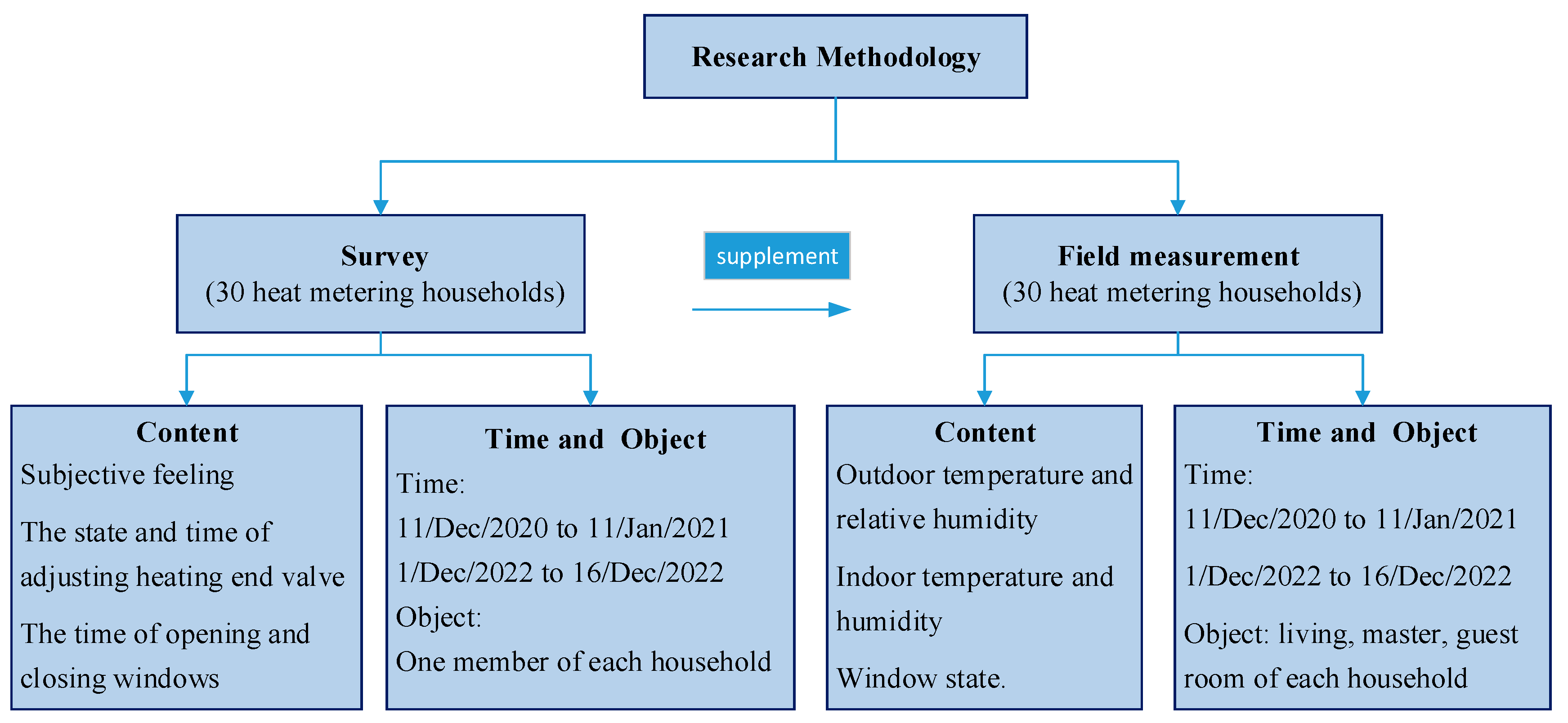
Figure 2.
Layout of the measurement instrument.
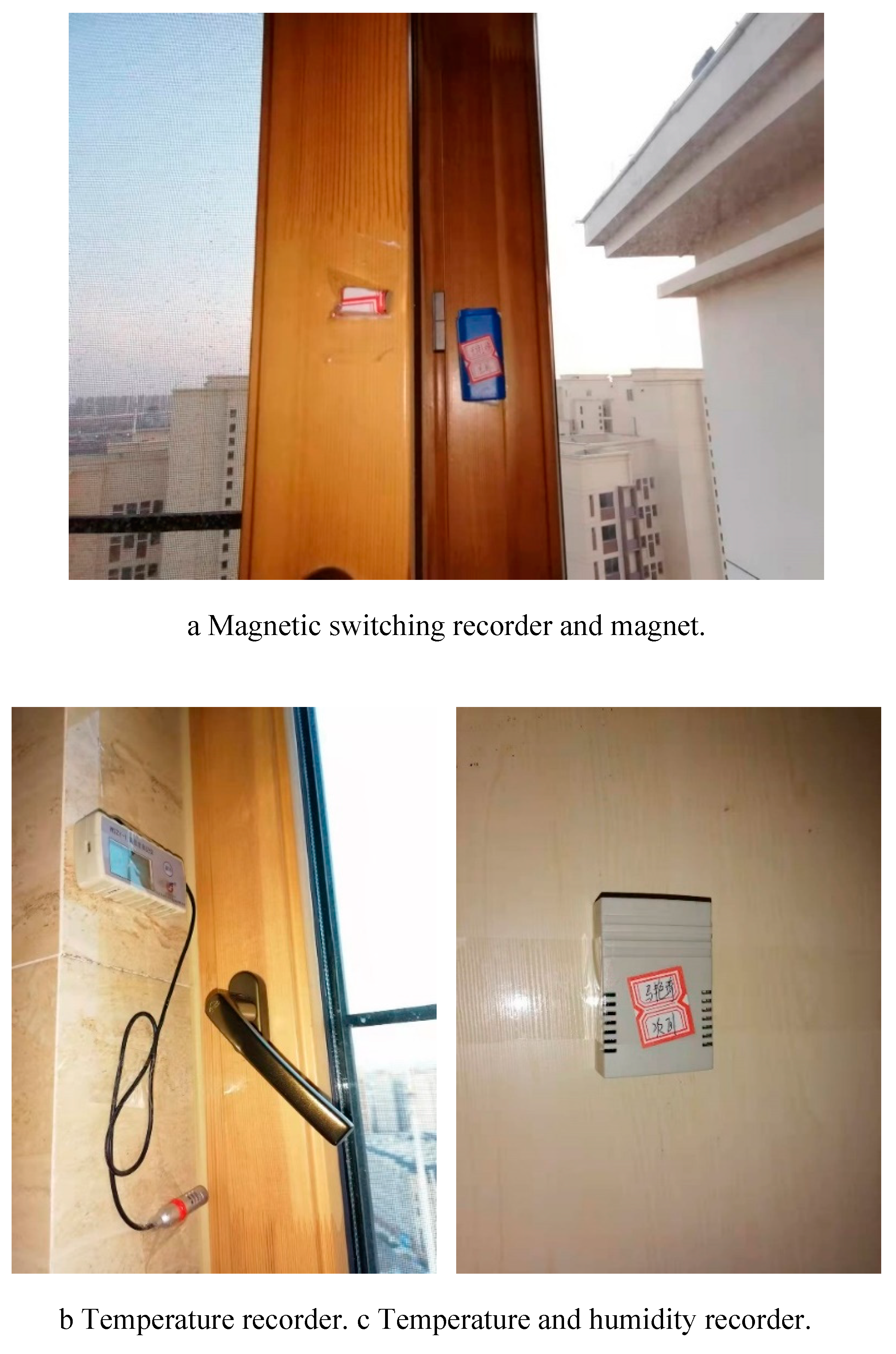
Figure 3.
The distribution of thermal environment.
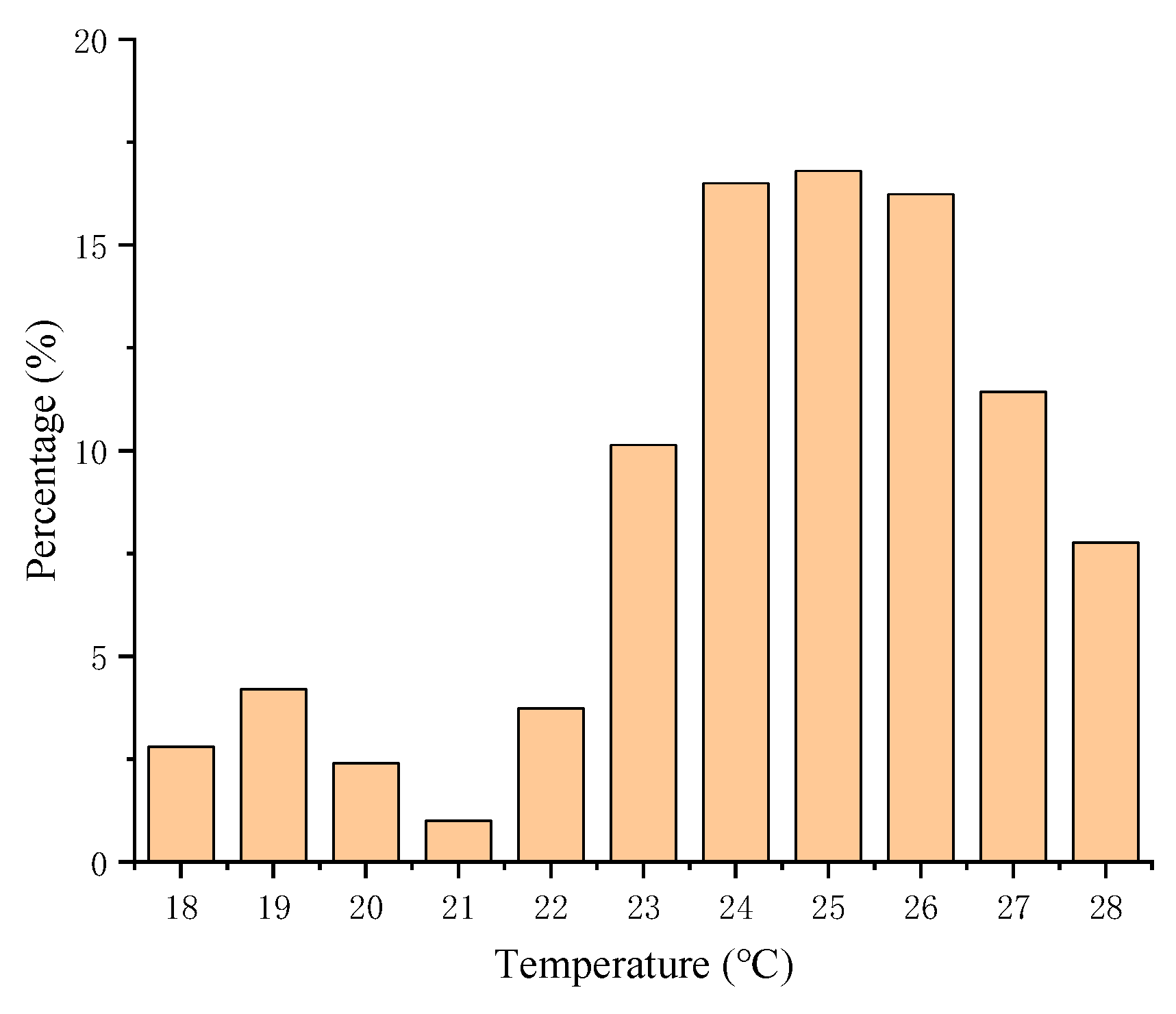
Figure 4.
The profile of indoor temperature.
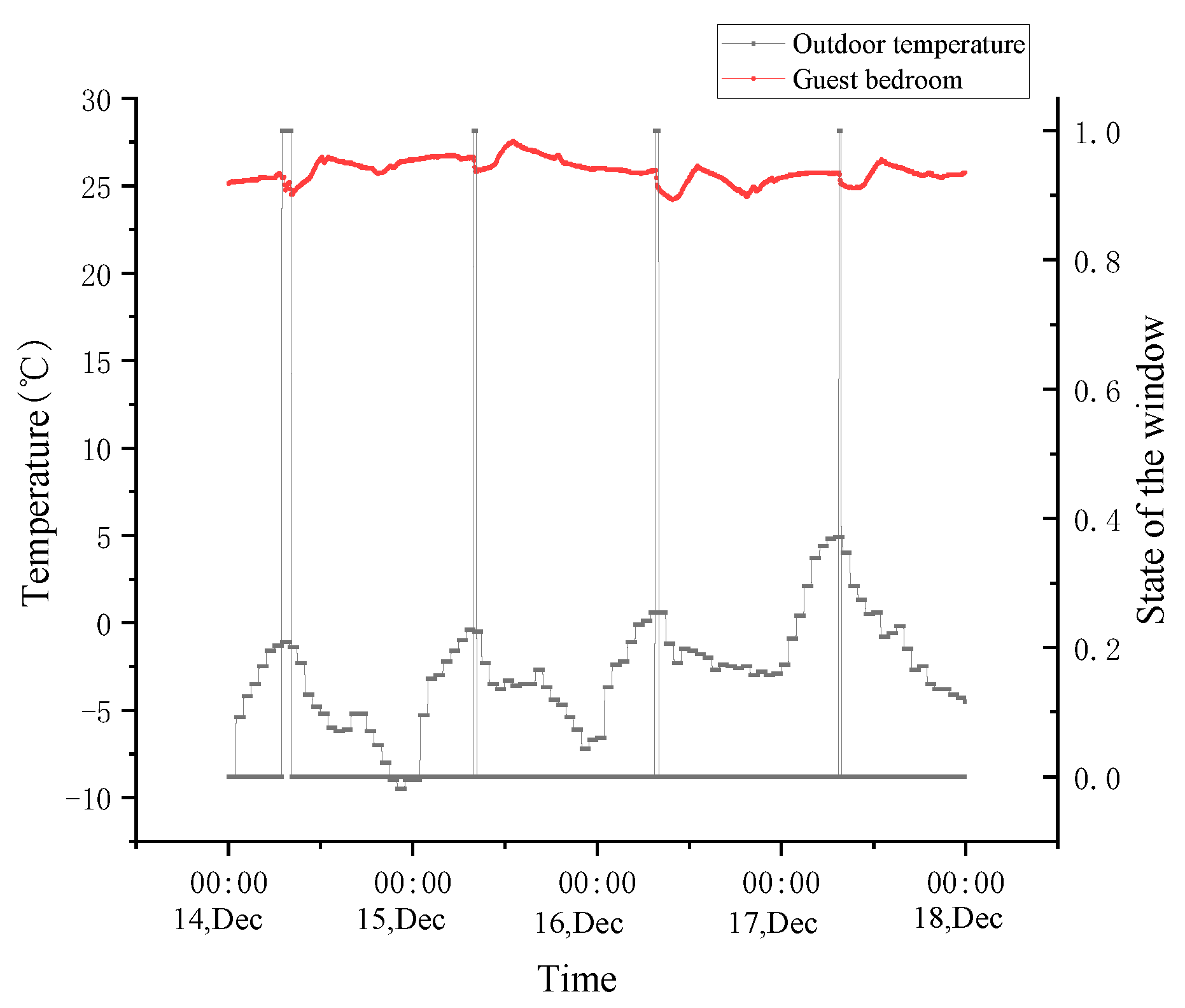
Figure 5.
The distribution of clothing thermal resistance.
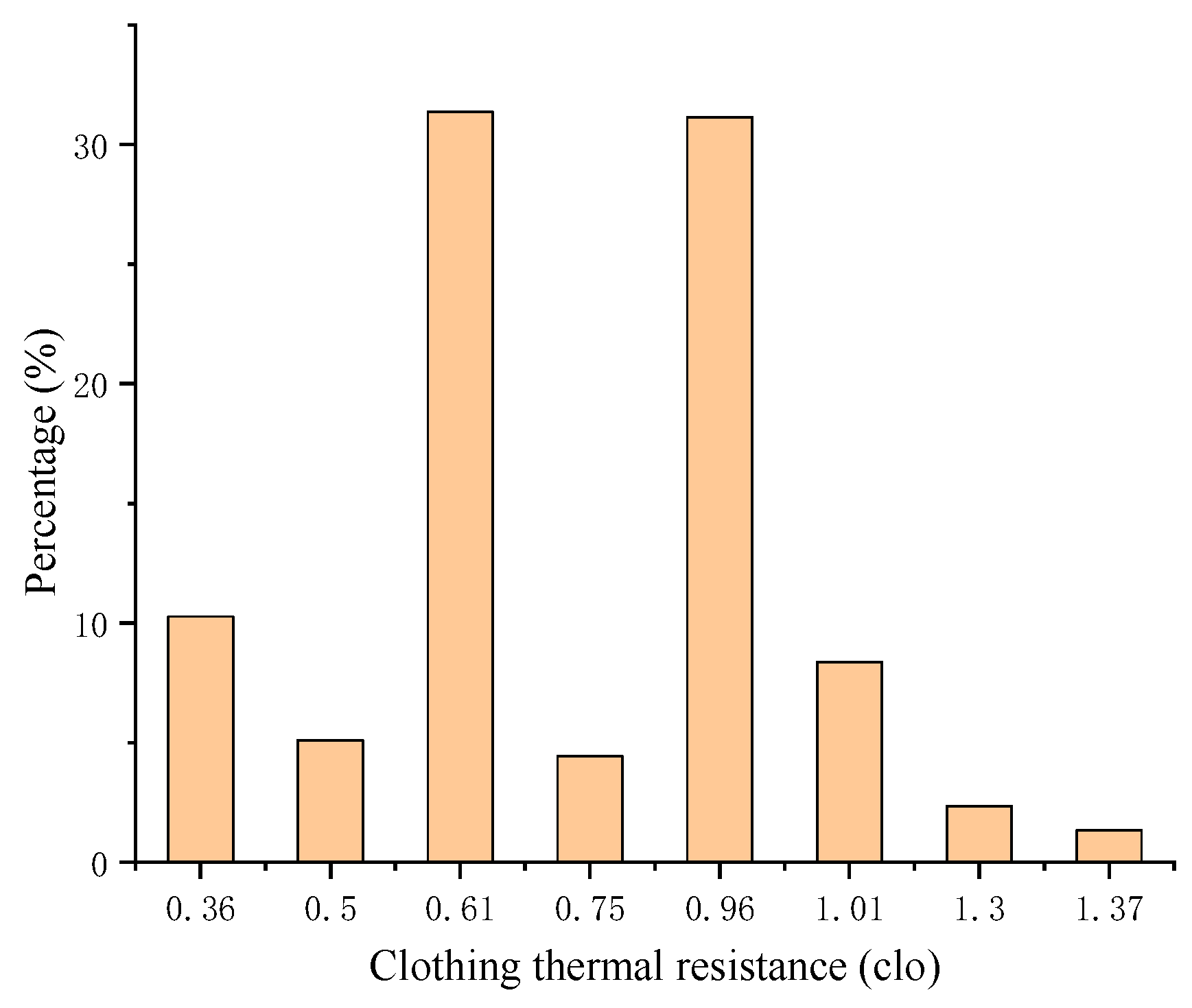
Figure 6.
Subjective sensation voting of thermal metering households.
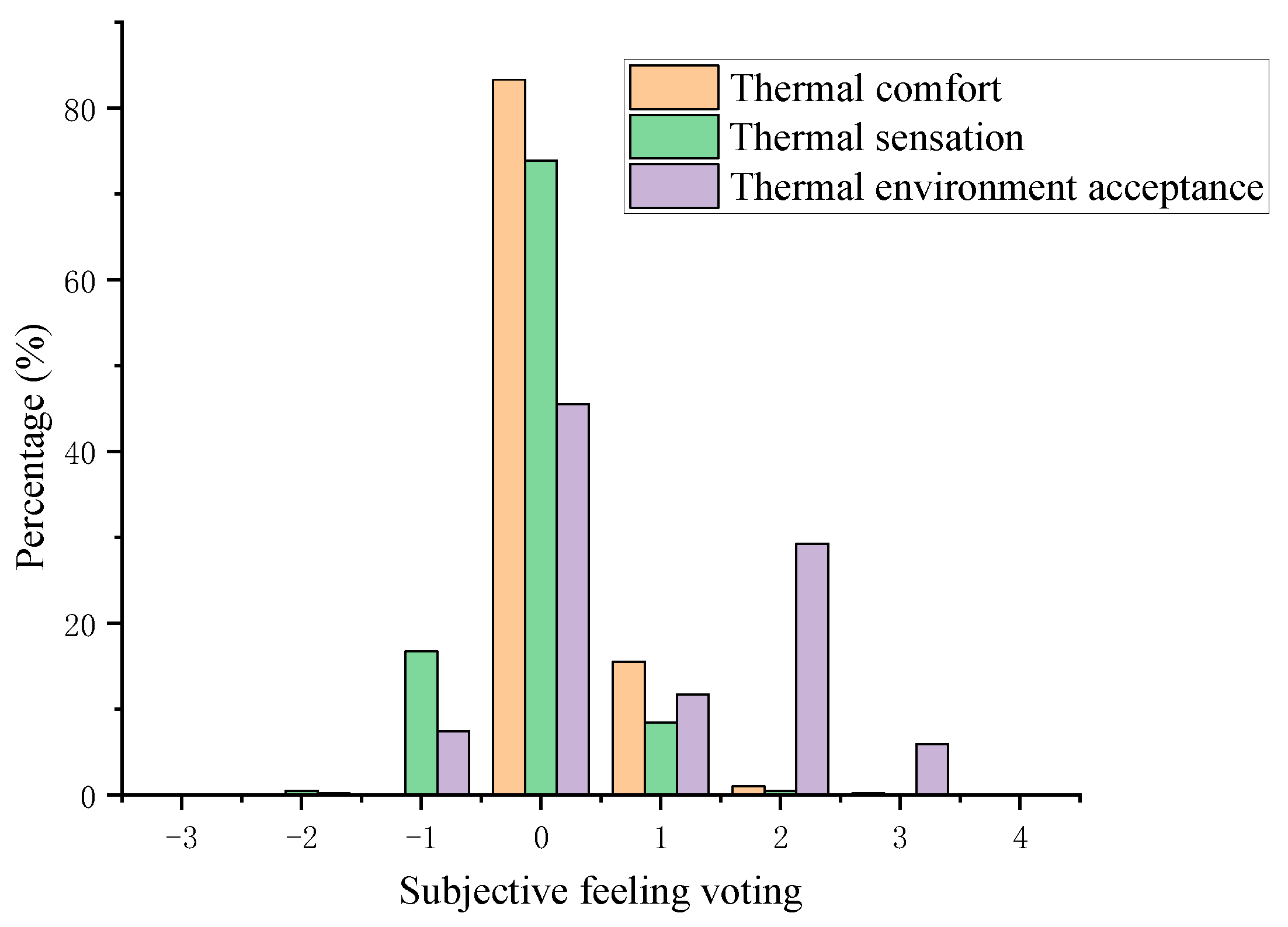
Figure 7.
Regression curve of MTSV and operating temperature.
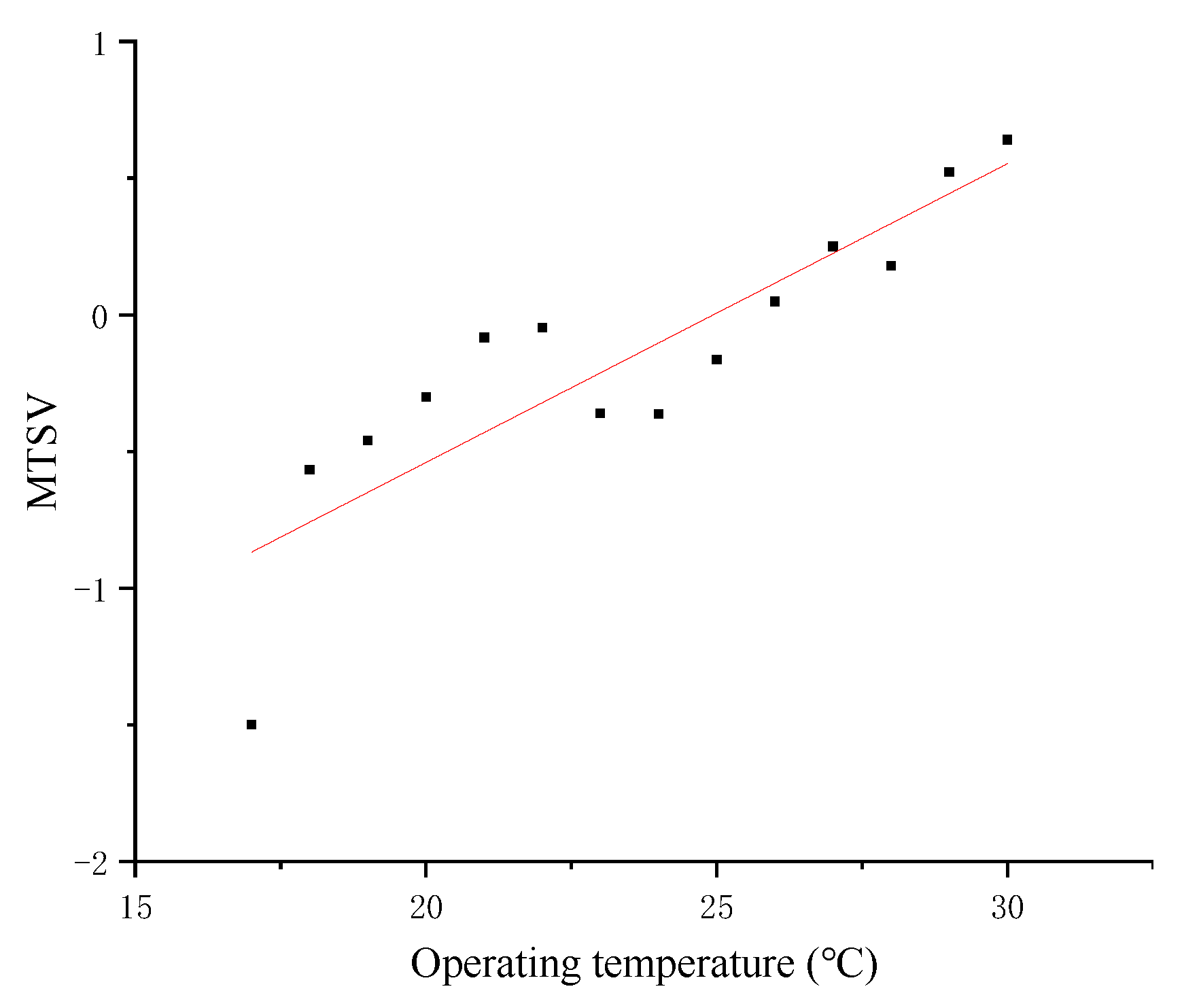
Figure 8.
The proportion of days and households for adjusting heating end valve.
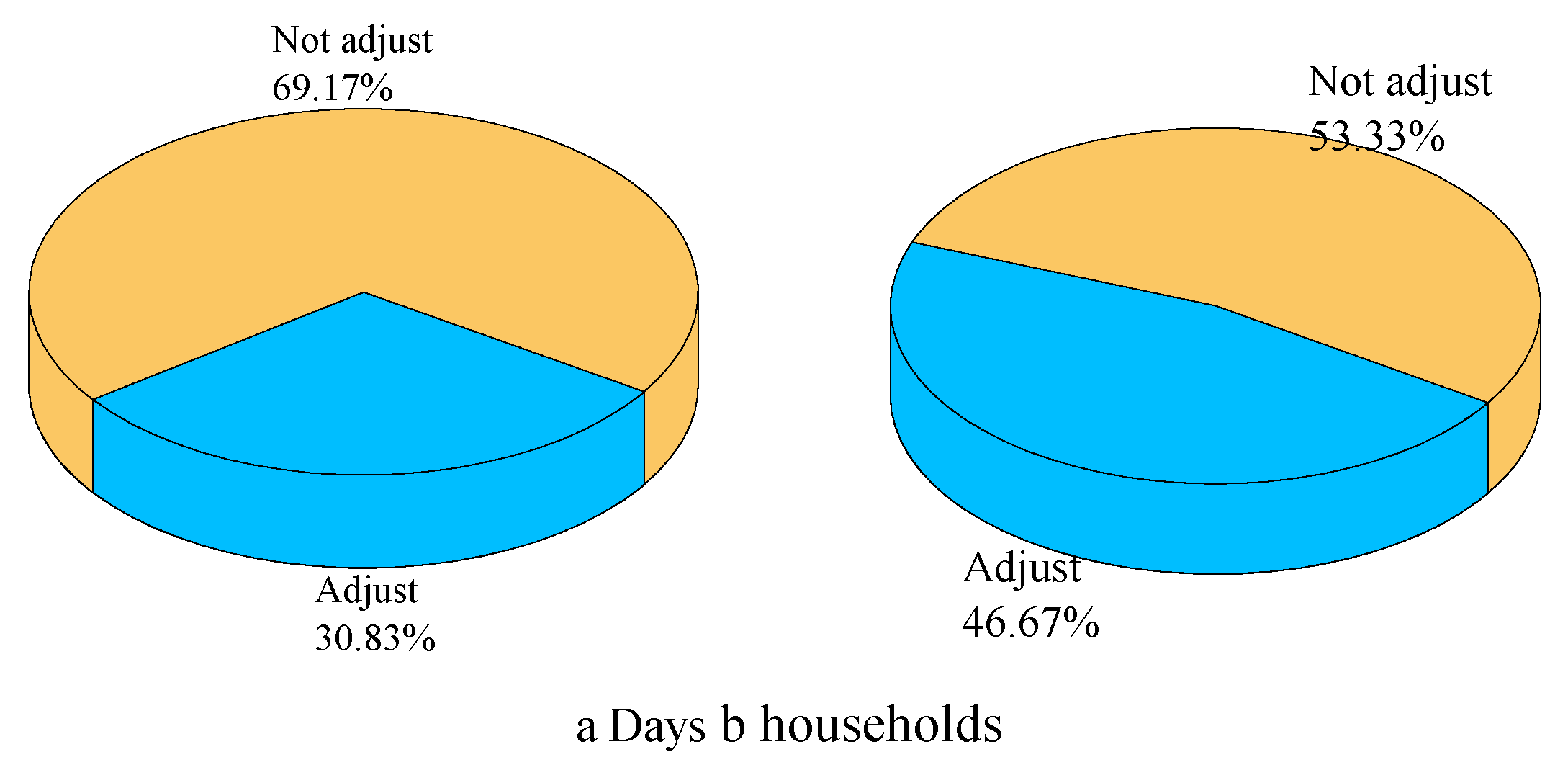
Figure 9.
The proportion of adjusting end valve.
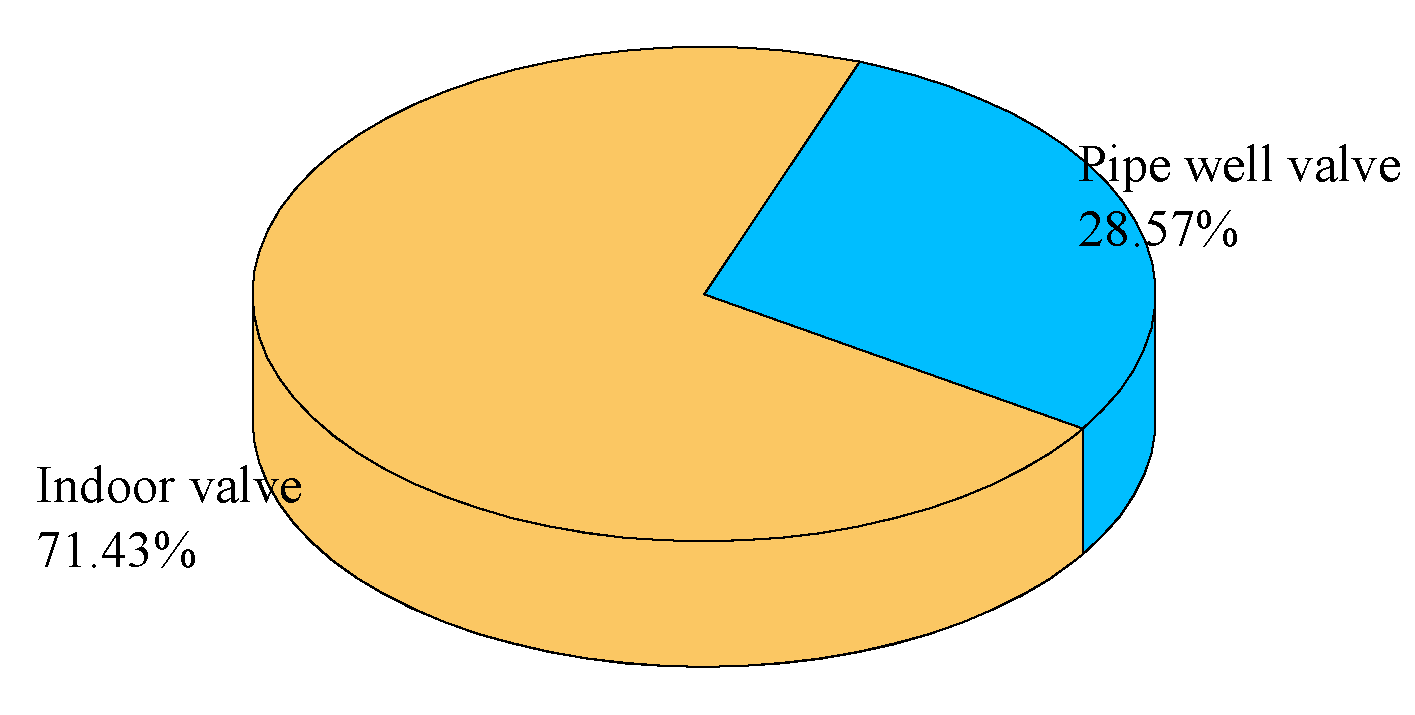
Figure 10.
The reason for adjusting end valve and no adjusting.
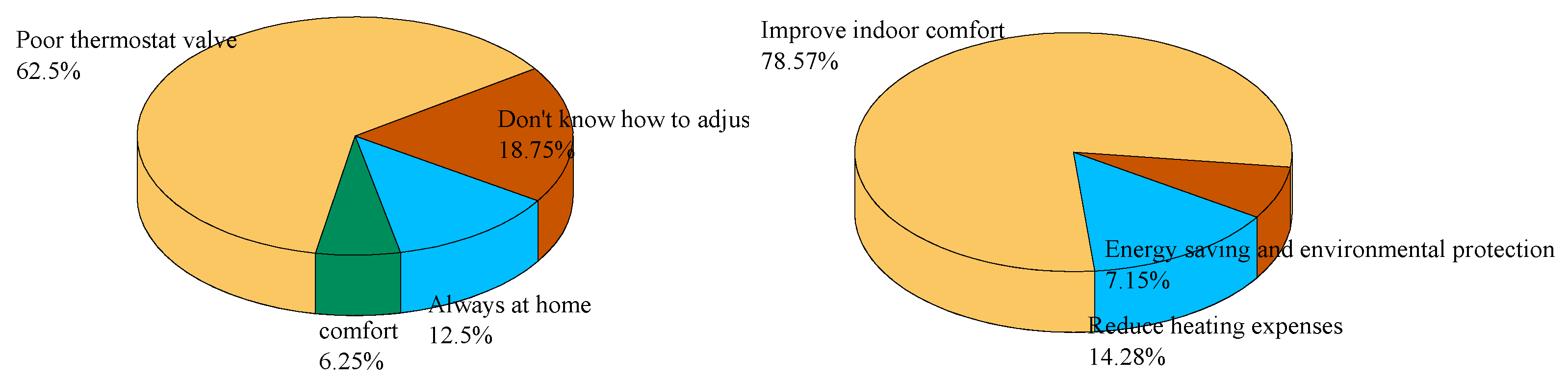
Figure 11.
The proportion of opening window.
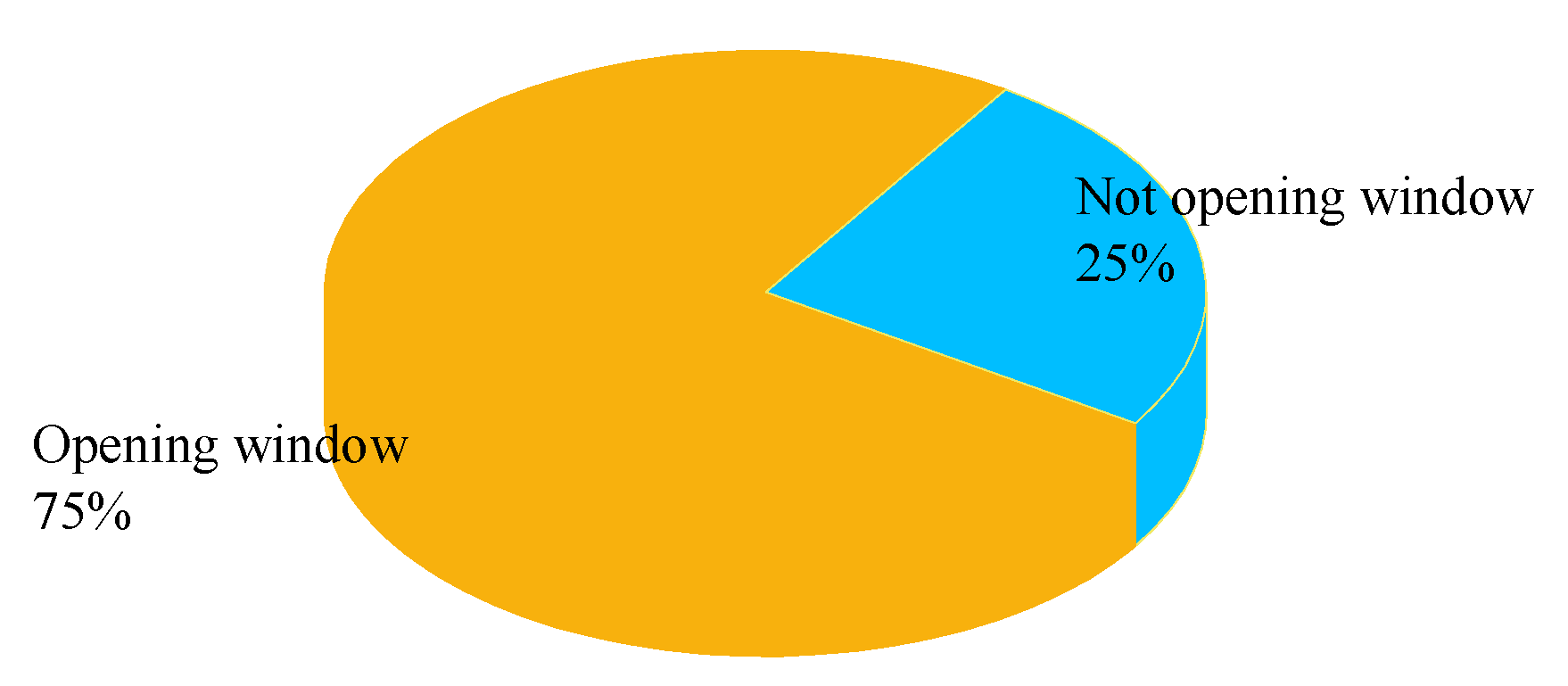
Figure 12.
The number of households with different opening window duration.
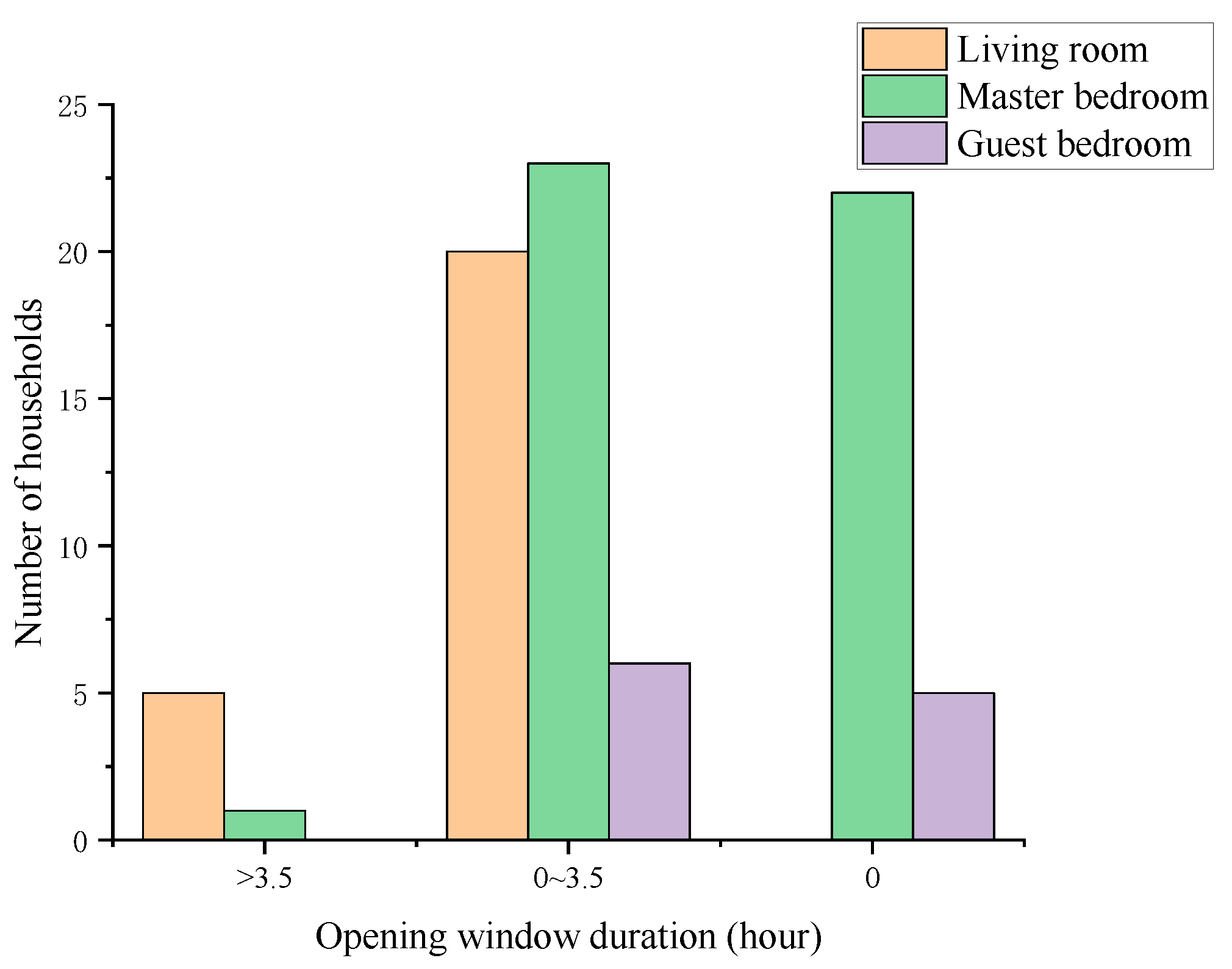
Figure 13.
State of the window opening for living bedroom.
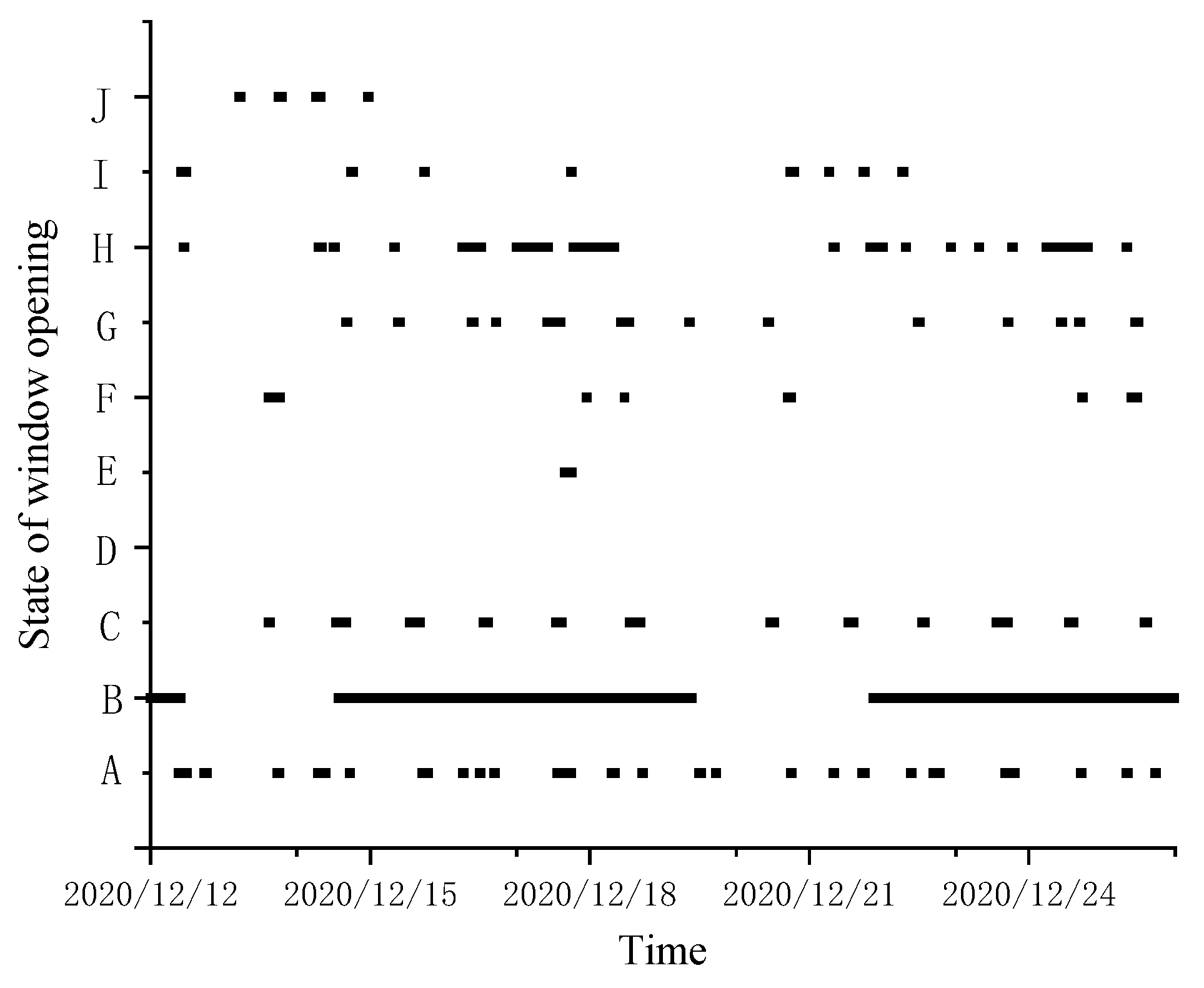

Table 1.
Regulations and technical standards for heat metering.
| Time | Content | Regulations and Technical standards |
|---|---|---|
| 1995 | Planning the installation of heat meters | The 9th Five-year Plan and 2010 Plan for Building Energy Conservation of the Ministry of Construction |
| 1999 | Room temperature regulation is suggested when designed | Code for Residential Building Design GB50096-1999 |
| 1999 | Implement temperature regulation and heat metering device for new building | Provisions on the administration of energy conservation in civil buildings |
| 2003 | Gradually implement charging by heat metering | Guidance on the Pilot Work of Urban Heating System Reform |
| 2007 | Indoor temperature control devices and thermal control metering devices must be installed mandatorily | Code for Acceptance of Energy Efficient Building Construction |
| 2008 | The energy saving retrofit of heating system should be carried out synchronously with the retrofit of heat metering | Technical Guidelines for Heating Metering and Energy Saving Renovation of Existing Residential Buildings in Northern Heating Area |
| 2008 | Formulating measures for the administration of heating metering in civil buildings | Measures for The Administration of Heating Metering in Civil Buildings |
| 2008 | The heat metering design of new buildings and the retrofit of existing buildings are stipulated | Technical Guidelines for Heating Metering |
Table 2.
The description for the questionnaire.
| No | Variable | Descriptive | scales | |
|---|---|---|---|---|
| 1 | Behavior of adjusting heating end valve | The indoor temperature setpoint in this morning | ||
| 2 | The time for adjusting heating end valve | |||
| 3 | Indoor temperature after adjusting heating end valve | |||
| 4 | Behavior of window operating | Time of opening window for master bedroom | ||
| 5 | Time of opening window for living room | |||
| 6 | Time of opening window for guest bedroom | |||
| 7 | Thermal comfort | |||
| 8 | Thermal sensation | Very cold | -3 | |
| 9 | Cold | -2 | ||
| 10 | Slightly cold | -1 | ||
| 11 | Moderate | 0 | ||
| 12 | Slightly hot | 1 | ||
| 13 | Hot | 2 | ||
| 14 | Very hot | 3 | ||
| 15 | Thermal comfort | Comfortable | 0 | |
| 16 | Slightly uncomfortable | 1 | ||
| 17 | Uncomfortable | 2 | ||
| Very uncomfortable | 3 | |||
| 18 | Intolerable | 4 | ||
| 19 | Thermal environment acceptance | Very unreceptive | -3 | |
| 20 | Unreceptive | -2 | ||
| Slightly unreceptive | -1 | |||
| 21 | Moderate | 0 | ||
| 22 | Just acceptive | 1 | ||
| 23 | acceptive | 2 | ||
| 24 | Very acceptive | 3 |
Table 3.
The thermal resistance of different clothes.
| Clothing | Thermal resistance(clo) | Clothing | Thermal resistance(clo) |
|---|---|---|---|
| Pants, short-sleeved shirts, socks, shoes | 0.57 | Shorts, short-sleeved shirts, shoes socks | 0.36 |
| Pants, long-sleeved shirts, shoes and socks | 0.61 | Long-sleeved overalls, T-shirts, shoes and socks | 0.72 |
| Jackets, pants, long-sleeved shirts, socks | 0.96 | Long-sleeved overalls, long-sleeved shirts, shoes and socks | 0.89 |
| Jackets, vests, trousers, long-sleeved shirts, socks | 1.14 | Insulated work clothes, long Johns, shoes and socks | 1.37 |
| Trousers, long-sleeved shirts, long-sleeved sweaters, shoes and socks | 1.30 | Long sleeved sweatshirts, sweatpants, shoes and socks | 0.74 |
| Knee-length skirt, short-sleeved shirt, sandals | 0.54 | Full pyjamas, slippers, no socks | 0.96 |
| Long skirts, long sleeved shirts, jackets, | 1.1 |
Table 4.
The results of the stepwise regression for adjusting heating end valve.
| Factors | B | Beta | t | Sig | |
|---|---|---|---|---|---|
| Constant | -4.46 | -7.34 | 0.00 | ||
| Indoor temperature before adjustment | 0.19 | 0.61 | 7.06 | 0.00 | |
| Time period | 0.13 | 0.26 | 2.97 | 0.00 | |
| Outdoor temperature | - | 0.05 | 0.43 | 0.67 | |
| Outdoor wind speed | - | 0.11 | 1.08 | 0.28 | |
| Indoor relative humidity | - | -0.10 | -1.24 | 0.22 |
Note: B is the regression coefficient; Beta is standardized regression coefficient; t is the result of hypothesis testing on B/Beta; Sig is the significant level.
Table 5.
The results of the stepwise regression for operating windows.
| Variable | B | Beta | t | Sig |
|---|---|---|---|---|
| Constant | 0.03 | 3.41 | 0.00 | |
| Outdoor temperature | 0.02 | 0.15 | 14.08 | 0.00 |
| Time period | 0.19 | 0.39 | 35.70 | 0.00 |
| Indoor temperature before opening window | 0.03 | 3.41 | 0.00 | |
| Indoor relative humidity | - | -0.01 | -0.76 | 0.34 |
Disclaimer/Publisher’s Note: The statements, opinions and data contained in all publications are solely those of the individual author(s) and contributor(s) and not of MDPI and/or the editor(s). MDPI and/or the editor(s) disclaim responsibility for any injury to people or property resulting from any ideas, methods, instructions or products referred to in the content. |
© 2023 by the authors. Licensee MDPI, Basel, Switzerland. This article is an open access article distributed under the terms and conditions of the Creative Commons Attribution (CC BY) license (https://creativecommons.org/licenses/by/4.0/).
Copyright: This open access article is published under a Creative Commons CC BY 4.0 license, which permit the free download, distribution, and reuse, provided that the author and preprint are cited in any reuse.


