

Submitted:
25 August 2023
Posted:
29 August 2023
You are already at the latest version
Abstract
Graphene-based nanoparticles possess remarkable physiochemical properties, making them promising for diverse applications in biomedicine, agriculture, food, and industrial applications. These nanoparticles have also been used in the fight against COVID-19. Human and environmental exposure to graphene-based nanomaterials is increasing at an unprecedented rate. However, there is still a huge knowledge gap regarding its safety in clinical applications. The topic remains controversial; although several routes of degradation exist, the cytotoxicity of graphene-based nanoparticles has been demonstrated. Various factors that can influence the cytotoxicity of graphene-based materials are discussed. This review summarizes the physiochemical properties of graphene-based materials and critically examines the possible effects of graphene-based nanoparticles on the molecular level and adverse health outcomes. While oxidative stress-mediated cell damage has been proposed as a primary cytotoxicity mechanism for graphene-based materials, various in vivo biodistribution and cytotoxicity mechanisms are also highlighted. Therefore, this review of the literature provides an overview of the cytotoxicity of GBMs and raises concerns about their widespread application with potential hazardous consequences on the environment and human health.
Keywords:
nanoparticles
; graphene
; graphene oxide
; cytotoxicity
1. Introduction
Nanotechnology is a very fast growing industry, with the main market prospects being the use of engineered nanoparticles (NPs) for medicine, food, agriculture, computers and conductors [1], causing increased human exposure. Nanomedicine is the application of nanomaterials in medicine, which are used in vectors, biosensors, diagnostics, and drug and gene delivery [2,3]. Nanomaterials consist of NPs with dimensions <100 nm [4]. Nanomaterials, such as metals, nonmetals, metal oxides, lipids, and polymers, are scientifically engineered for various applications. The emergence of nanomaterials in recent years has rapidly transformed the scientific landscape in fields as diverse as aerospace, military, and medicine [5].
Graphene and graphene-based materials (GBMs) for healthcare applications are among the fastest growing fields of science and technology. As the thinnest, strongest, and stiffest material, virtually indestructible, graphene and its chemical derivatives are a form of carbon in a very thin monolayer atomic sheet, arranged in a 2D honeycomb lattice, with small lateral dimensions and a large surface area [6,7]. Graphene-based nanoparticles (GBNPs) exhibit unique antibacterial and antiviral properties, because of their small size, large surface area, targetability, and stimulus-responsive characteristics. Various reviews and research studies have appeared in the scientific literature on the possible contribution of GBNPs as theranostic agents in the global fight against COVID-19 [5,8-19]. Graphene-based textiles, air filter systems, personal protective equipment (PPE), face masks, hand sanitizers, vaccines, antiviral surfaces and coatings have been proposed or developed to control the epidemiological spread of COVID-19, as well as to develop environmental biosensors and other diagnostic techniques [4,8-13,20-23]. Furthermore, various NPs, such as iron, zinc, copper oxide, silver, and GBNPs, are added to DNA and mRNA delivery systems in preclinical research due to their unique antiviral properties [4,7,24-26]. Due to its unique physiochemical properties, graphene oxide (GO) is an attractive and popular material for DNA and RNA delivery and detection, where its interactions are based on electrostatic forces and π-π stacking [27]. GBNPs have been proposed to be engineered to directly target SARS-CoV-2 [9,23]. GBNPs have also been used for extracorporeal perfusion of cytokines from the blood circulation to prevent sepsis [5].
Unfortunately, even at very low doses, GBNPs can have significant harmful biological impacts that occur through multiple mechanisms, with their cytotoxicity profile highly unpredictable [28-43]. Therefore, nanomedicine may be seen as a double-edged sword. Although there are many concerns about possible toxicity and increased risk of particle aggregation, GBNPs have proven to be effective in improving the efficacy of many drugs; act as a nanodrug to inhibit viral attachment, fusion, replication, and infection; or they can suppress the pro-inflammatory cascade following viral infection [44]. However, there are several reports where GBNPs are associated with mutagenicity, tumorgenicity, free radical production, and penetration into the brain [28,32,35,36,44]. The toxicity would be related to the size and dose of the NP, the route of administration, biodistribution, and biodegradability [5]. It is clear that more research is needed to seriously assess the potential toxicological effects of GBNPs and NPs in general [45-47]. According to a 2018 review, only 250 (1.3%) out of a total of 19 000 publications on GBMs reported any toxicity data, while only 70 (0.4% of total) included in vivo toxicity data [48]. Furthermore, large-scale sophisticated production processes and intellectual property rights of GBNPs can increase their price and conceal their widespread usage [1].
In this review, we summarize the physiochemical properties of GBMs and our current understanding of their cytotoxicity mechanisms. The aim is to provide an overview of the cytotoxicity of GBMs and to raise concerns about their widespread application with potential hazardous effects on the environment and human health.
2. Graphene-based materials
GBMs could include monolayer graphene, few-layer graphene, ultrathin graphite, graphene quantum dots, graphene nanosheets (GNSs) and graphene nanoribbons [2,49]. GBMs can also be classified as zero-dimensional (0D) fullerenes, one-dimensional (1D) carbon nanotubes (CNTs), 2D graphene, GO, and reduced graphene oxide (rGO), as well as their doped and functionalized derivatives [50].
GBNPs are not homogeneous and vary in number, lateral dimension, surface chemistry, defect density, or quality of individual graphene sheets, composition and purity [51]. The planar system of graphene exhibits unique physiochemical properties, predominantly related to its high electronic and thermal conductivity [52]. To improve mechanical strength, GBNPs are ideal nanofillers for polymeric hydrogels, due to their large surface area, flat structure, water dispersibility and biocompatibility, in addition to the intrinsically excellent thermal stability, thermal and electrical conductivity, optical, magnetic, electrochemical, photothermal, photoluminescent, and mechanical properties of graphene [6,53,54]. These superior properties make graphene and its derivatives ideal for many biomedical applications, such as anticancer therapy, nanomedicine, drug, gene and protein delivery, antimicrobial agents, biological imaging, molecular biosensors, bioengineering, biotechnology, organic electronics, memory applications, and tissue engineering [2,3,55-57] (Figure 1).
Nanographene oxide (nGO) is the most popular graphene-based nanofiller due to its good dispersion capacity in water, which is a vital factor for the construction of hydrogels [56]. GO is obtained from graphite powder by oxidative exfoliation using strong oxidants and acids. Due to these harsh synthetic procedures, GO possesses defects in its hybridized sp2 orbitals, with consequently diverse functional groups, such as epoxy, phenolic, hydroxyl, carbonyl, and carboxylic groups. These oxygen-containing functional groups of GO make it highly reactive with reduced size, while aiding its dispersion in aqueous solutions and miscibility with hydrophilic polymer chains in hydrogels, making it ideal for drug and gene delivery or tissue engineering [58]. GO exhibits hydrophilic edges with oxygenated functional groups and a hydrophobic basal plane, enabling its multiple molecular interactions with various molecules, optimizing drug and gene loading [7].
Therefore, the main reasons for adding functionalized GO, such as polyethylene glycol (PEG)-nGO, to hydrogels would be their reliable aqueous dispersibility and colloidal stability, enhanced molecular adsorption, increased gene / drug loading capacity, allowing sustained drug release, and improved electrical and thermal conductivity [7,56,59], in addition to their efficacy against various microbes and viruses [9,24]. nGO is often modified with PEG to improve mechanical properties and stability [27,53,56].
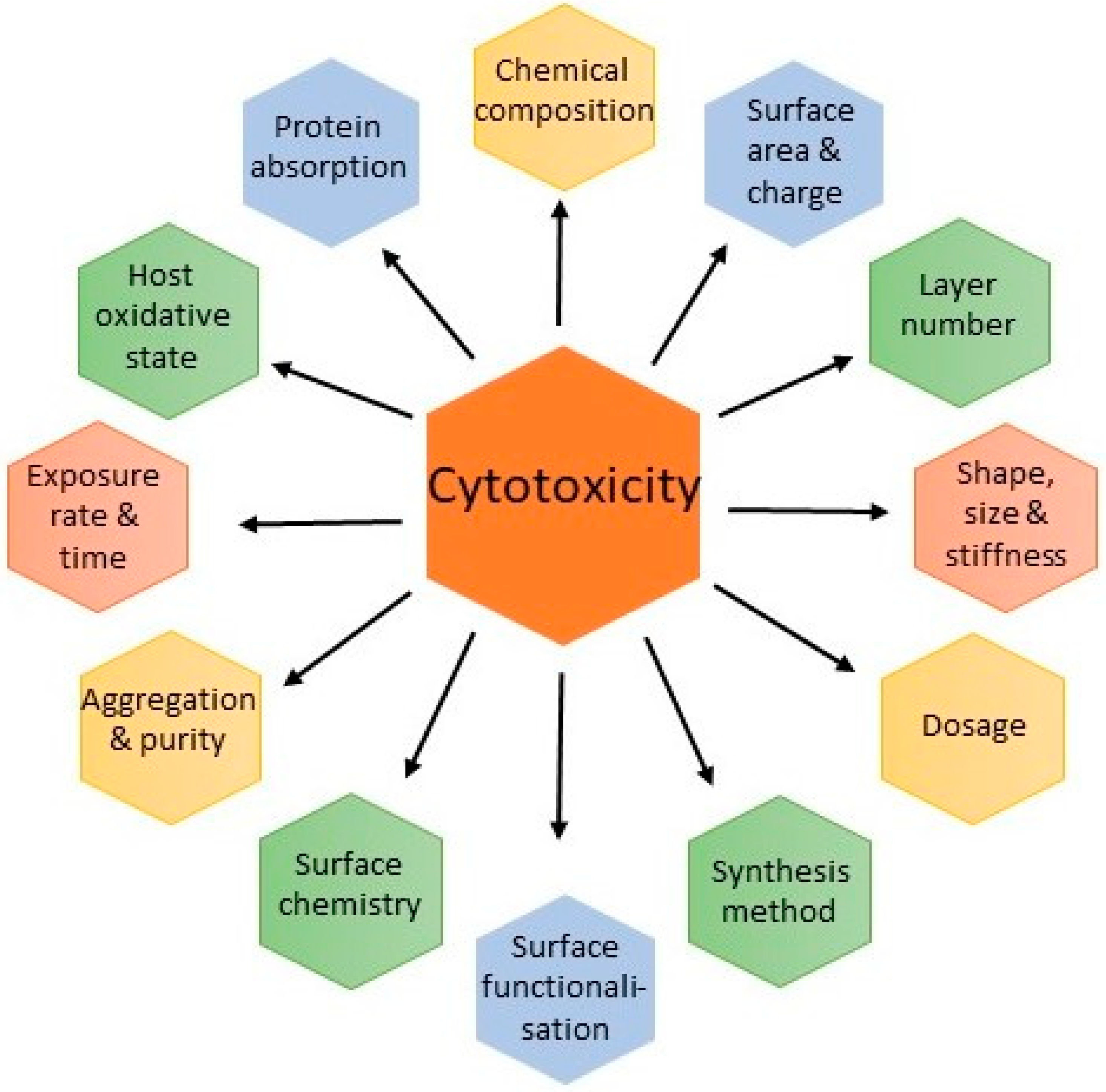
Although GBNPs have been used for many biomedical applications, their biocompatibility and toxicity remain controversial, affecting clinical translation [49,59,60]. Potential cytotoxicity and biocompatibility of graphene nanomaterials are determined by factors such as surface area and charge, layer number, shape, dosage, morphology, lateral dimension, stiffness, synthetic synthesis method, surface functionalization, surface chemistry, purity, aggregations, dispersion state, exposure route and time, oxidative state of the host, cell-type specific, protein adsorption and experimental setup [7,14,51,55,56,59] (Figure 2).
Some of the known underlying toxicity mechanisms of GBNPs include physical destruction, oxidative stress, DNA damage, inflammatory responses, bioaccumulation, apoptosis, autophagy, and necrosis [49]. Graphene nanoribbons can mechanically damage cell membranes, stimulate the production of reactive oxygen species (ROS), fragment DNA and produce aberrations of the chromosomes [49,60]. Administration of PEG-nGO can cause tissue destruction and promote various diseases, such as atherosclerosis, rheumatoid arthritis, heart disease, cancer, and neurodegenerative diseases, while GBNP-induced ROS could cause oxidative stress in multiple organs, for example the brain, heart, and kidneys [61].
The debate continues on the possible toxicological effects of GBNPs, where some studies indicate no risk [62], while others confirmed that GBNPs are cytotoxic and may cause adverse effects in exposed individuals [49,63-65]. There are several reasons for the conflicting results obtained from the safety studies. Although the section below mainly focuses on GBNPs, it mostly applies to NPs in general too:
1) GO is not a single structure with fixed properties. Synthesis, manufacturing, and functionalization result in great variability in the morphological characteristics and physiochemical properties of GBNP end products, which can contain unreacted and residual chemicals, metals, and other impurities, apart from carbon [49,51,58,66]. GO contaminated with manganese is known to be cytotoxic, by reducing metabolic activity and causing membrane injury, while graphene prepared by Hummer's method may contain chlorate and nitrate anions, also affecting its physiological and toxicological properties [67];
2) in silico or in vitro studies cannot be accurately extrapolated to the reality in vivo - seen that graphene oxide nanoparticles (GONPs) can interact with proteins and change their conformation and activity, and they can also interact with reagents used in toxicity tests, even though some studies do not show any dependence on culture medium. It could be expected that interaction with cell media can change the stability of GONPs and its transport properties, when determining their biodistribution in living organisms [67]. Most in vitro toxicological studies have focused on direct interactions between nanomaterials and biological components or cells, while entrapment of GO in hydrogel matrices would minimize the prompt and direct toxic effects of GO in vivo on cells [7]. Furthermore, analysis and conclusions obtained under static in vitro conditions cannot be accurately translated directly to infer the hematological properties of GBMs in dynamic in vivo environments [66]. In addition, the culture medium used in in vitro studies cannot compare with the complex in vivo reality, where various enzymes, amino acids, vitamins, and minerals facilitate the plethora gene and signaling reactions;
3) the different research groups and diverse cellular or animal models used, as well as variation in the GBMs used;
4) different ways of exposure, administration and entry paths, different tissue distribution and excretion, as well as various cell uptake patterns and locations [49];
5) there are no current standardized methods for assessing the immunotoxicity of NPs on the immune system [63];
6) GBMs in colloid form may interact with physiological media resulting in aggregation and flocculation of the suspension [51];
7) the physical interaction of GBNPs with cell membranes is one of the major causes of graphene cytotoxicity. Differences in cell surface charge will determine whether hydrophilic GO is internalized by nonphagocytic cells or not [49]. An intact, negatively charged sulfated GL would repel hydrophilic GO. However, during inflammation and reduced sulfation, shedding of the GL components could be expected, with more available cationic binding sites exposed on the cell surface, enabling NPs to be more easily taken up by scavenger receptors. Most of the NP and graphene safety studies mainly consider the hydrophobicity of the cell membrane, but do not take into account the effect of the negatively charged intact sulfated GL, and the phenomenon of undersulfation or a degraded GL due to the shedding of glycosaminoglycans, especially during inflammatory conditions [68];
8) in addition to the hydrophobicity of GBNPs that plays a role in its interaction with the lipid bilayer of cells, surface energy may be modified in vivo by the formation of a protein corona on the surface, modifying the membrane response to GBNPs [56];
9) a distinction should be drawn between scenarios where mechanical stress or shear forces may be an additional factor to cell destruction, compared to spontaneous membrane incorporation alone [56];
10) most studies, such as hemocompatibility and hemotoxicity assessments, have been carried out only over a short period. Therefore, the long-term in vivo hematological effects of GBNPs are therefore still largely unknown or poorly understood [66]. Furthermore, NP metabolism and excretion of NPs are long-term processes and the long-term accumulation and toxicity of GBMs in different tissues remain unknown [49].
11) Since GO is not a distinct structure with static properties [58], it makes standardization of research challenging. Although many investigations are not directly comparable, there is an urgent need for standardized protocols and systematic approaches to assess the biocompatibility and cytotoxicity of GBMs [66].
Furthermore, it is not clear whether conflicting reports regarding the interaction of GBNPs with cells are due to the specific NP used, synthesis residues, or exposure conditions. Most GBNPs are difficult to label with fluorescent dyes and to discern in TEM and quenche fluorescence, making uptake studies challenging. GBNPs must first be coated with protein to be visible in confocal microscopes. Therefore, uptake is reported to depend on surface coating, particle size, cell type, and exposure time. TEM images may show particles in the cytoplasm and small amounts in the cell nucleus, as well as signs of autophagy. Currently, confocal Raman spectroscopy seems to be the most promising method for the detection and measurement in cells, allowing the detection of very low concentrations of GBNPs [67]. Nonetheless, graphene has intrinsic photoluminescence properties [27,59,69,70], which makes it easier to establish the presence of GBNPs by dark field optical microscopy [71].
3. Safety Concerns
Lalwani et al. and Ou et al. extensively reviewed the cytotoxicity of GBMs [49,60]. However, several in vitro and in vivo studies have been performed over the years to assess the potential risks of GBMs and NPs in general.
3.1. Adsorption, distribution and excretion
GBNPs can enter the human body through inhalation, ingestion, dermal penetration, injection, or implantation for biomedical applications [56]. The extent and severity of GBNP-caused toxicity would depend mainly on the route of entry and the duration of exposure in the human body [51]. Due to their small nanosize, GBNPs can enter organs by crossing various barrier systems, such as the blood-air barrier, blood-testis barrier, blood-brain barrier, and blood–placental barrier [49,51].
It has been suggested that protein-coated GBNPs with different sizes are taken up by distinct mechanisms. It has been observed that CNTs and functionalized graphene flakes passed through the cell membrane and accumulated in the region of the perinuclear, without any observation of membrane destabilization [72,73]. Graphene quantum dots probably penetrate cell membranes directly, rather than through energy-dependent pathways [65,74]. Where small particles are taken up mainly by clathrin-mediated endocytosis, larger NPs and protein-coated GONPs are internalized by a combination of both clathrin-mediated endocytosis and phagocytosis [49,59,67].
3.2. Membrane and Cellular Damage
The antimicrobial properties of GBNPs can be attributed to ROS generation, damage to pathogen cell membranes, and interference with microbial or viral metabolic activity [15,75]. Potent hydrophobic interactions of GBNPs with cell membranes can result in the morphological extension of the filopodial and cytoskeletal dysfunction of F-actin. GO and its derivatives can dramatically decrease the expression of differential genes responsible for structure and function, such as regulation of the actin cytoskeleton, focal adhesion, and endocytosis [49]. Furthermore, the size of the graphene flake and the degree of glycocalyx (GL) sulfation of the pathogen membrane were shown to influence the antimicrobial activity of functionalized graphene materials [14].
The intrinsic antimicrobial properties of GBNPs have been ascribed to the fact that they act as nanoknives due to their sharp edges, leading to physical destruction of the lipid bilayer and oxidative stress, and direct adhesion to bacterial or viral membranes [5,7,15,49-51,75]. Therefore, the sharpened edges of GBNPs can act as ‘blades’, inserting and cutting through cell membranes [76]. Therefore, the basis for GO-induced cytotoxicity is attributed to the cutting and extraction of membrane phospholipid chains from cell membranes [77]. The loss of integrity of the bacterial membrane intensifies with increasing concentrations of GO, confirmed by increased release of lactose dehydrogenase in culture medium [78]. However, if GBNPs have such a destructive effect on microbial cells, these same toxic effects can be expected in mammalian eukaryotic cells [7]. In murine studies, macrophages and neutrophils have been found to undergo unusual morphological changes upon contact with GONPs [49,79]. After being internalized, GO caused cytotoxicity in macrophages by accumulating in the cell cytoplasm, perinuclear space, and nucleus. This was achieved by increasing intracellular ROS, depleting the mitochondrial membrane potential, and activating the mitochondrial apoptosis pathway [49].
In addition, GO has been investigated mainly for biosensing, as a matrix to immobilize several enzymes, such as glucose oxidase, horseradish peroxidase, and hemoglobin. GO was demonstrated to inhibit the activity of chymotrypsin [80]. Therefore, GBMs may up- or down-regulate, or inhibit, various enzymes, affecting their activity and/or stability. Kaloudis et al. demonstrated that less negatively charged enzymes are more likely to be deactivated through their interaction with GO [81]. The specific effects that GBNPs may have on active biomolecules, such as enzymes and proteins, need further research.
3.3. Oxidative Stress
GBNP-induced oxidative stress is one of the main causes of cytotoxicity, which can be attributed to GBNP-cellular interactions and ROS generation [60]. It was demonstrated that even at very low concentrations, GONPs can generate ROS [67]. After exposure to GONPs, the activity of SOD and glutathione (GSH) peroxidases decreased in a dose-dependent manner [49]. As with mercury, GO has a high affinity for sulfur, or SH groups in molecules, during the redox process, acting as a catalyst in oxidative desulfurization reactions and subsequently affecting many cellular processes [82-84]. Moreover, ROS levels will deplete GSH, in addition to GSH being deactivated by GO [56,85]. There is also the possibility that GO can transform to rGO in vivo through direct interaction with organisms, oxygen, and other biomolecules [51].
3.4. Inflammation
Through triggered inflammatory responses and ROS, GBNPs can cause cell death through autophagy and necrosis, as well as apoptosis through damage to the plasma membrane [49,51,86]. It was shown that rGO caused apoptosis even at low doses and at an early time point, triggered by the death receptor and the canonical mitochondrial pathway [87]. Ma et al. demonstrated that GO can bind to TLRs and activate the NF-қB signaling pathway in cells [60,88], where the autophagy pathway is related to phagocytosis by TLR signaling in macrophages [89].
Algadi et al. found that GONPs caused up-regulation of IL-6, macrophage inflammatory protein (MIP)-1α, MIP-1β and MIP-2, at much lower concentrations of GONP than those required to cause cytotoxicity [63]. It has also been shown that in primary and immortalized macrophages, GONPs may stimulate the secretion of Th1/Th2 cytokines, such as IL-1a, IL-6, IL-10, TNFα, and granulocyte-macrophage colony-stimulating factor, as well as chemokines such as MCP-1, MIP-1a, MIP-1β, and RANTES [90,91]. While cytokines mainly modulate macrophage functions and cell surface marker expression (autocrine effects), chemokines play a role in recruiting circulating monocytes to tissues (paracrine and endocrine effects) [92].
3.5. Aggregation
GBNPs have an intrinsic tendency to aggregate [50]. They may initiate protein aggregation at physiological pH, causing the induction of unfolded, amorphous protein-NP complexes, followed by large protein clusters. The conformational changes of proteins initiated by GBNPs are very likely to further catalyze the formation of aggregated species and their extension [93]. To prevent the aggregation of GNS in the aqueous phase, GO and iron oxides are combined to form magnetic GO [3]. The magnetic properties of GO per se are very diverse, since the atomic composition of GO is not stoichiometric and one can expect sample-to-sample variability, depending on the starting graphite material and method of production, the presence of other metals and the degree of oxidation [57,94]. The magnetic potential of NPs is important. Uniquely formulated magnetic NPs can be guided through the body through a system of external magnets to facilitate increased drug concentration, for example, in the tumor environment [95].
3.6. Environmental Exposure
In biomedicine, there are a broad scope and numerous advantages of using GBNPs in many different applications, such as cancer, photonics or plasmonics, electronics, sensors, catalysis, drug and gene delivery, controlled stem cells, and DNA sequencing or CRISPR technology [9,18,50,59,63,96]. However, the possible cytotoxic and genotoxic effects on humans and the environment need serious consideration, and more research is needed before safe clinical application of these materials would be possible. When nanotechnology is used as the delivery vehicle for drugs and genes, the side effects on normal healthy cells, other than the target cells, should be taken into account. GBNP interactions have been demonstrated with various essential biological molecules, including small molecules and ion adsorption, DNA and RNA interactions, catalysis of oxidative reactions, as well as protein and lipid interactions [49].
GBNPs have the potential for widespread human exposure, as they are used not only in the medical sciences, but also in agriculture, industrial applications, and the food industry [60,63,97]. Several routes of exposure are possible, although inhalation is considered the most likely route of exposure and also the most studied of all routes [48]. It is well established that GBNPs are used in geoengineering to seed clouds [98,99], which will pollute the air with GBNPs. Also, the most concerning is the possible intranasal ingestion or insufflation of NPs through proposed aerosol spray vaccines [100], as well as experimental intranasal vaccination against influenza with a GBNP complex [101]. Various commercial GBNP-impregnated face masks were used in the global fight against COVID-19 [11,13,102]. Although the continuous wear of activated carbon masks has been established to pose a higher risk of fiber-like microplastic inhalation [103], the risk of inhaling GBNPs from masks has not been researched extensively. However, inhaled GNS can easily penetrate the tracheobronchial airways and then travel down to the lower lung airways, where it destroys the ultrastructure and biophysical properties of the pulmonary epithelial GL layer [28,49,67], therefore, the first line of innate host defense [68]. GO was demonstrated to disrupt the alveolar-capillary barrier, allowing inflammatory cells to infiltrate the lungs, thus stimulating the release of pro-inflammatory cytokines, resulting in epithelioid granulomas, interstitial inflammation, and lung fibrosis [104-106]. GBNPs caused inflammation and remained in the lung on day 90 after a single intratracheal instillation [107], and even translocated to the lung lymph nodes after inhalation [108].
Although GO derivatives had no, or rather finite, intestinal adsorption in adult mice after oral administration and were rapidly excreted [49,109], low-dose GO caused serious damage to the gastrointestinal tract in the offspring after maternal mice drank a suspension of GO. A low-dose GO that does not agglomerate, could easily attach to the surface of the gastrointestinal epithelial cells and cause destruction through its abundant sharp edges [110]. Wu et al. found in a study that prolonged exposure to GO leads to significant primary (intestine) and secondary (neurons and reproductive) organ damage. GO induced the loss of intestinal villi and translocated into the intestinal walls, causing a hyperpermeable intestinal barrier [111]. Bantun reviewed the significant impact of ingesting GBMs on altering the composition, diversity, and function of the gut microbiome [37]. They found that it led to enteric disorders, with numerous pathological changes resulting in colitis, lysosomal dysfunction, inflammation, shortened colon, resorbed embryo, retardation in skeletal development, low fetus weight, fetal mortality and inflammatory bowel disease. The increased use of GBMs in the food system [42] and as fertilizers [112], as well as the proposed use in clothing [11] and hygiene products [113], remains concerning.
Because nanomaterials offer a new range of very unique properties that are commercially exploitable, engineered NP development and production have increased very rapidly over the last few decades. Of note, most nanomaterial experts are from various engineering professions, and although much research in biomedicine has looked into the biocompatibility of these materials, it was mostly done from a drug development perspective, while not enough in-depth in vivo studies have been performed to ascertain the impact it has on human health at the cellular and molecular level.
4. Degradation of Graphene-Based Nanomaterials
More research on the environmental fate and biodegradation of GBMs is needed, as their environmental and health impacts are still largely unknown. This lack of current understanding should motivate research into the breakdown of GBMs in order to address potential environmental toxicity and health hazards.
Humic acid or Shilajit is known to be excellent antidotes to GBNPs [67], by mitigating its acute toxicity by regulating the translocation and metabolic fluxes of GBNPs in vivo [114-116]. Humic acid was found to increase disordered structure and surface negative charges and reduce GBNP aggregation [117-119]. Through immune modulation and reduction of oxidative stress, humic acid also exhibits potent antiviral, antioxidant, and anticarcinogenic properties [120,121]. Rozhina et al. found that the joint application of GO and kaolin nanoclay reduced the negative cytotoxic effects of graphene by almost 20% [122]. Although Bentonite nanoclay is also recommended as an antidote to graphene-induced cytotoxicity, Di Ianni et al. demonstrated in vitro that pristine Bentonite induced pro-inflammatory responses in alveolar epithelial cells (A549) [123].
Several mechanisms exist by which biological systems degrade GBMs, particularly GO. Human eosinophils produce an enzyme known as eosinophil peroxidase (EPO) in the presence of low concentrations of hydrogen peroxide (H2O2) and sodium bromide (NaBr); EPO can degrade GO [124]. Another enzyme produced by neutrophils in the presence of low concentrations of H2O2 is myeloperoxidase (MPO), which can also degrade GO sheets [100,123]. Given the roles of human eosinophils and neutrophils, the degradation of GO can be thought to be immune mediated. Still, much is unknown about GBNPs in the human body. H2O2 is involved in various redox signal transduction pathways. It is known to exert DNA damage, while aggregated GO sheets did not degrade in the presence of H2O2 [123]. Kotchey et al. established that horseradish peroxidase can create holes in GO sheets [125], while nitric oxide (NO) can also degrade GO [126].
On the production side, functionalization of GO with the compounds coumarin and catechol increases the efficiency of biodegradation [127]. In the environmental context, GO can be degraded by light [128] and specific bacteria, such as Labrys sp. WJW [129], which are also capable of degrading C60, or Buckminsterfullerene [130]. Furthermore, GO can be degraded by adding FeCl3, H2O2 and UV light after ultrasonification and acidification, which presents a promising means of removing GO from wastewater [131].
5. Conclusion
Graphite is a well-researched natural carbon allotrope; however, graphene, GO, and rGO are man-made materials with yet unknown effects on biological systems [50]. Until recently, the health effects associated with the use of GBNPs have been studied in vitro at the cellular level and in short-term animal models, but the long-term systemic effects in vivo in humans are largely unknown, as well as the complex signaling pathways that regulate GBNP toxicity [49].
Surprisingly, the commercialization of NP-based therapeutics is increasing considerably with a rise in the number of available products on the market, especially in the field of cancer therapy. The NPs include polymeric carriers, lipid-based vehicles, metallic NPs, and GBNPs. Today, GBMs are produced on a large scale and have found niche applications in many biomedical technologies. In 2018 it was already predicted that the GBM market could reach millions of dollars by 2020, with concerns expressed regarding the release of NP and GBM wastes into the environment [51,56,67], with associated health risks [132].
However, less than 10% of these NP-based products are translated into clinical applications. To date, GBNPs, as nanoadjuvants and for drug delivery, have mostly been used in preclinical research. The application of GBNPs is at this stage a very promising, but clinically ineffective, experimental therapy, with a long way to go before translational research will be conducted. Therefore, even though it has been championed as the nanomaterial of the future, up to 2019, none of the GBNP applications have been approved for clinical trials and various scientists have expressed concern about the lack of sufficient in vivo studies on the toxicology of NPs and GBMs that are used for biomedical applications [13,14,51,63,133,134]. Therefore, it would be important to critically evaluate the potential short- and long-term health risks and toxicity hazards of GBNPs after acute, subacute, and chronic exposures and by using more long-term in vivo models (small and large animals). However, it is concerning that the application of advanced nanomaterials and GBNPs in future diagnostics, vaccines, and antiviral therapies is given priority over current preparedness strategies in clinical settings against viruses [18].
With carbon-based graphene being hailed as a ‘wonder material’ and the graphene industry booming, driven by several large initiatives, such as the NIH’s BRAIN and the European Graphene Flagship, it must be seen to what extent GBNPs deliver in nanomedicine the great promise so often espoused, with environmental risks and long-term health adverse effects still difficult to assess. CNTs became the first GBNP to be added to the Swedish non-profit organization SIN (‘Substitute It Now’) list, which attracted attention to the future of sustainable nanotechnology [135]. The reason for inclusion in the SIN list was that GBNPs were suspected of causing cancer, damaging fertility, and / or the unborn child, and show limited degradation in the environment [136].
Author Contributions
Conceptualization, H.N.dP. & M.H.; writing - original draft preparation, H.N.dP.; writing - review and editing, H.N.dP. & M.H; visualization, H.N.dP. All authors have read and agreed to the published version of the manuscript.
Funding
This research did not receive external funding.
Institutional Review Board Statement
Not applicable.
Informed Consent Statement
Not applicable.
Data Availability Statement
Not applicable.
Acknowledgments
We thank Maggie Zhou for sharing her knowledge on the biodegradation of graphene-based materials.
Conflicts of Interest
The authors declare that they have no conflict of interest.
Abbreviations
carbon nanotube (CNT); glutathione (GSH); glycocalyx (GL); graphene-based materials (GBMs); graphene-based nanoparticles (GBNPs); graphene oxide (GO); graphene oxide nanoparticle (GONP); nanographene oxide (nGO); nanoparticles (NPs); polyethylene glycol (PEG); reactive oxygen species (ROS); reduced graphene oxide (rGO)
References
- Sharma, A.; Kontodimas, K.; Bosmann, M. Nanomedicine: A Diagnostic and Therapeutic Approach to COVID-19. Frontiers in Medicine 2021, 8. https://doi.org/10.3389/fmed.2021.648005. [CrossRef]
- Han, X.-M.; Zheng, K.-W.; Wang, R.-L.; Yue, S.-F.; Chen, J.; Zhao, Z.-W.; Song, F.; Su, Y.; Ma, Q. Functionalization and optimization-strategy of graphene oxide-based nanomaterials for gene and drug delivery. Am J Transl Res 2020, 12, 1515-1534.
- He, Y.; Yi, C.; Zhang, X.; Zhao, W.; Yu, D. Magnetic graphene oxide: Synthesis approaches, physicochemical characteristics, and biomedical applications. TrAC Trends in Analytical Chemistry 2021, 136, 116191. https://doi.org/10.1016/j.trac.2021.116191. [CrossRef]
- Singh, P.; Singh, D.; Sa, P.; Mohapatra, P.; Khuntia, A.; K Sahoo, S. Insights from nanotechnology in COVID-19: prevention, detection, therapy and immunomodulation. Nanomedicine (London, England) 2021, 16, 1219-1235. https://doi.org/10.2217/nnm-2021-0004. [CrossRef]
- Tavakol, S.; Zahmatkeshan, M.; Mohammadinejad, R.; Mehrzadi, S.; Joghataei, M.T.; Alavijeh, M.S.; Seifalian, A. The role of nanotechnology in current COVID-19 outbreak. Heliyon 2021, 7, e06841. https://doi.org/10.1016/j.heliyon.2021.e06841. [CrossRef]
- Wang, M.; Gustafsson, O.J.R.; Siddiqui, G.; Javed, I.; Kelly, H.G.; Blin, T.; Yin, H.; Kent, S.J.; Creek, D.J.; Kempe, K.; et al. Human plasma proteome association and cytotoxicity of nano-graphene oxide grafted with stealth polyethylene glycol and poly(2-ethyl-2-oxazoline). Nanoscale 2018, 10, 10863-10875. https://doi.org/10.1039/c8nr00835c. [CrossRef]
- Yi, J.; Choe, G.; Park, J.; Lee, J.Y. Graphene oxide-incorporated hydrogels for biomedical applications. Polymer Journal 2020, 52, 823-837. https://doi.org/10.1038/s41428-020-0350-9. [CrossRef]
- Alphandéry, E. Nano dimensions/adjuvants in COVID-19 vaccines. Journal of Materials Chemistry B 2022, 10, 1520-1552. https://doi.org/10.1039/d1tb02408f. [CrossRef]
- Srivastava, A.K.; Dwivedi, N.; Dhand, C.; Khan, R.; Sathish, N.; Gupta, M.K.; Kumar, R.; Kumar, S. Potential of graphene-based materials to combat COVID-19: properties, perspectives, and prospects. Mater Today Chem 2020, 18, 100385-100385. https://doi.org/10.1016/j.mtchem.2020.100385. [CrossRef]
- Kumar Raghav, P.; Mohanty, S. Are graphene and graphene-derived products capable of preventing COVID-19 infection? Med. Hypotheses 2020, 144, 110031. https://doi.org/10.1016/j.mehy.2020.110031. [CrossRef]
- Albaz, A.A.; Rafeeq, M.M.; Sain, Z.M.; Almutairi, W.A.; Alamri, A.S.; Aloufi, A.H.; Almalki, W.H.; Tarique, M. Nanotechnology-based approaches in the fight against SARS-CoV-2. AIMS Microbiology 2021, 7, 368-398. https://doi.org/10.3934/microbiol.2021023. [CrossRef]
- Khedri, M.; Maleki, R.; Dahri, M.; Sadeghi, M.M.; Rezvantalab, S.; Santos, H.A.; Shahbazi, M.-A. Engineering of 2D nanomaterials to trap and kill SARS-CoV-2: a new insight from multi-microsecond atomistic simulations. Drug Delivery and Translational Research 2022, 12, 1408-1422. https://doi.org/10.1007/s13346-021-01054-w. [CrossRef]
- Gholizadeh, O.; Yasamineh, S.; Amini, P.; Afkhami, H.; Delarampour, A.; Akbarzadeh, S.; Karimi Matloub, R.; Zahedi, M.; Hosseini, P.; Hajiesmaeili, M.; et al. Therapeutic and diagnostic applications of nanoparticles in the management of COVID-19: a comprehensive overview. Virol J. 2022, 19. https://doi.org/10.1186/s12985-022-01935-7. [CrossRef]
- Seifi, T.; Reza Kamali, A. Antiviral performance of graphene-based materials with emphasis on COVID-19: A review. Med Drug Discov 2021, 11, 100099. https://doi.org/10.1016/j.medidd.2021.100099. [CrossRef]
- Gupta, I.; Azizighannad, S.; Farinas, E.T.; Mitra, S. Antiviral properties of select carbon nanostructures and their functionalized analogs. Materials Today Communications 2021, 29, 102743. https://doi.org/10.1016/j.mtcomm.2021.102743. [CrossRef]
- Mohammadi, S.; Esmailpour, M.; Mohammadi, M. Chloroquine drug and Graphene complex for treatment of COVID-19. 2020. https://doi.org/10.21203/rs.3.rs-29418/v1. [CrossRef]
- Zeng, C.; Hou, X.; Bohmer, M.; Dong, Y. Advances of nanomaterials-based strategies for fighting against COVID-19. VIEW 2021, 2, 20200180. https://doi.org/10.1002/viw.20200180. [CrossRef]
- Kim, E.; Lim, E.-K.; Park, G.; Park, C.; Lim, J.-W.; Lee, H.; Na, W.; Yeom, M.; Kim, J.; Song, D.; et al. Advanced Nanomaterials for Preparedness Against (Re-)Emerging Viral Diseases. Advanced Materials 2021, 33, 2005927. https://doi.org/10.1002/adma.202005927. [CrossRef]
- Reina, G.; Iglesias, D.; Samorì, P.; Bianco, A. Graphene: A Disruptive Opportunity for COVID-19 and Future Pandemics? Advanced Materials 2021, 33, 2007847. https://doi.org/10.1002/adma.202007847. [CrossRef]
- Xu, L.; Xiang, J.; Liu, Y.; Xu, J.; Luo, Y.; Feng, L.; Liu, Z.; Peng, R. Functionalized graphene oxide serves as a novel vaccine nano-adjuvant for robust stimulation of cellular immunity. Nanoscale 2016, 8, 3785-3795. https://doi.org/10.1039/c5nr09208f. [CrossRef]
- Chintagunta, A.D.; M, S.K.; Nalluru, S.; N. S, S.K. Nanotechnology: an emerging approach to combat COVID-19. Emergent Materials 2021, 4, 119-130. https://doi.org/10.1007/s42247-021-00178-6. [CrossRef]
- Daxiang, C.; Ang, G.; Hui, L.; Jing, T.; Xueling, L.; Qi, S. Nano coronavirus recombinant vaccine taking graphene oxide as carrier. Patent CN112220919A. Shanghai National Engineering Research Center for Nanotechnology Co Ltd. 2020, CN112220919A, 1-10.
- Zhou, Q.; Gu, H.; Sun, S.; Zhang, Y.; Hou, Y.; Li, C.; Zhao, Y.; Ma, P.; Lv, L.; Aji, S.; et al. Large-Sized Graphene Oxide Nanosheets Increase DC-T-Cell Synaptic Contact and the Efficacy of DC Vaccines against SARS-CoV-2. Adv Mater 2021, 33, e2102528. https://doi.org/10.1002/adma.202102528. [CrossRef]
- Jihad, M.A.; Noori, F.T.M.; Jabir, M.S.; Albukhaty, S.; Almalki, F.A.; Alyamani, A.A. Polyethylene Glycol Functionalized Graphene Oxide Nanoparticles Loaded with Nigella sativa Extract: A Smart Antibacterial Therapeutic Drug Delivery System. Molecules 2021, 26, 3067. https://doi.org/10.3390/molecules26113067. [CrossRef]
- Kawai, F. Biodegradation of Polyethers (Polyethylene Glycol, Polypropylene Glycol, Polytetramethylene glycol, and Others). In Biopolymers Online.
- Łoczechin, A.; Séron, K.; Barras, A.; Giovanelli, E.; Belouzard, S.; Chen, Y.-T.; Metzler-Nolte, N.; Boukherroub, R.; Dubuisson, J.; Szunerits, S. Functional Carbon Quantum Dots as Medical Countermeasures to Human Coronavirus. ACS Applied Materials & Interfaces 2019, 11, 42964-42974. https://doi.org/10.1021/acsami.9b15032. [CrossRef]
- Kitko, K.E.; Zhang, Q. Graphene-Based Nanomaterials: From Production to Integration With Modern Tools in Neuroscience. Front. Syst. Neurosci. 2019, 13. https://doi.org/10.3389/fnsys.2019.00026. [CrossRef]
- Chatterjee, N.; Yang, J.; Choi, J. Differential genotoxic and epigenotoxic effects of graphene family nanomaterials (GFNs) in human bronchial epithelial cells. Mutation Research/Genetic Toxicology and Environmental Mutagenesis 2016, 798-799, 1-10. https://doi.org/10.1016/j.mrgentox.2016.01.006. [CrossRef]
- Xiaoli, F.; Qiyue, C.; Weihong, G.; Yaqing, Z.; Chen, H.; Junrong, W.; Longquan, S. Toxicology data of graphene-family nanomaterials: an update. Arch. Toxicol. 2020, 94, 1915-1939. https://doi.org/10.1007/s00204-020-02717-2. [CrossRef]
- Chen, L.; Li, J.; Chen, Z.; Gu, Z.; Yan, L.; Zhao, F.; Zhang, A. Toxicological Evaluation of Graphene-Family Nanomaterials. J Nanosci Nanotechnol 2020, 20, 1993-2006. https://doi.org/10.1166/jnn.2020.17364. [CrossRef]
- Sanchez, V.C.; Jachak, A.; Hurt, R.H.; Kane, A.B. Biological Interactions of Graphene-Family Nanomaterials: An Interdisciplinary Review. Chem. Res. Toxicol. 2012, 25, 15-34. https://doi.org/10.1021/tx200339h. [CrossRef]
- Ban, G.; Hou, Y.; Shen, Z.; Jia, J.; Chai, L.; Ma, C. Potential Biomedical Limitations of Graphene Nanomaterials. Int J Nanomedicine 2023, 18, 1695-1708. https://doi.org/10.2147/ijn.S402954. [CrossRef]
- Chiticaru, E.A.; Ionita, M. Graphene toxicity and future perspectives in healthcare and biomedicine. FlatChem 2022, 35, 100417. https://doi.org/10.1016/j.flatc.2022.100417. [CrossRef]
- Lazăr, A.-I.; Aghasoleimani, K.; Semertsidou, A.; Vyas, J.; Roșca, A.-L.; Ficai, D.; Ficai, A. Graphene-Related Nanomaterials for Biomedical Applications. Nanomaterials 2023, 13, 1092. https://doi.org/10.3390/nano13061092. [CrossRef]
- Rudnytska, O.V.; Kulish, Y.V.; Khita, O.O.; Minchenko, D.O.; Tsymbal, D.O.; Viletska, Y.M.; Sliusar, M.Y.; Trufanova, D.D.; Minchenko, O.H. Exposure to nanographene oxide induces gene expression dysregulation in normal human astrocytes. Endocr. Regul. 2022, 56, 216-226. https://doi.org/10.2478/enr-2022-0023. [CrossRef]
- Aguado-Henche, S.; Escudero, M.L.; García-Alonso, M.C.; Lozano-Puerto, R.M.; Clemente De Arriba, C. Biological Responses in the Blood and Organs of Rats to Intraperitoneal Inoculation of Graphene and Graphene Oxide. Materials 2022, 15, 2898. https://doi.org/10.3390/ma15082898. [CrossRef]
- Bantun, F.; Singh, R.; Alkhanani, M.F.; Almalki, A.H.; Alshammary, F.; Khan, S.; Haque, S.; Srivastava, M. Gut microbiome interactions with graphene based nanomaterials: Challenges and opportunities. Sci. Total Environ. 2022, 830, 154789. https://doi.org/10.1016/j.scitotenv.2022.154789. [CrossRef]
- Jin, L.; Dou, T.-T.; Chen, J.-Y.; Duan, M.-X.; Zhen, Q.; Wu, H.-Z.; Zhao, Y.-L. Sublethal toxicity of graphene oxide in Caenorhabditis elegans under multi-generational exposure. Ecotoxicol. Environ. Saf. 2022, 229, 113064. https://doi.org/10.1016/j.ecoenv.2021.113064. [CrossRef]
- Cao, Y.; Xiao, W.; Li, S.; Qiu, D. A comparative study of toxicity of graphdiyne and graphene oxide to human umbilical vein endothelial cells. J. Appl. Toxicol. 2021, 41, 2021-2030. https://doi.org/10.1002/jat.4182. [CrossRef]
- Zhang, Y.; Duan, X.; Bai, L.; Quan, X. Effects of nanomaterials on metal toxicity: Case study of graphene family on Cd. Ecotoxicol. Environ. Saf. 2020, 194, 110448. https://doi.org/10.1016/j.ecoenv.2020.110448. [CrossRef]
- Wu, K.; Zhou, Q.; Ouyang, S. Direct and Indirect Genotoxicity of Graphene Family Nanomaterials on DNA—A Review. Nanomaterials 2021, 11, 2889. https://doi.org/10.3390/nano11112889. [CrossRef]
- Guo, X.; Mei, N. Assessment of the toxic potential of graphene family nanomaterials. Journal of Food and Drug Analysis 2014, 22, 105-115. https://doi.org/10.1016/j.jfda.2014.01.009. [CrossRef]
- Ding, X.; Pu, Y.; Tang, M.; Zhang, T. Environmental and health effects of graphene-family nanomaterials: Potential release pathways, transformation, environmental fate and health risks. Nano Today 2022, 42, 101379. https://doi.org/10.1016/j.nantod.2022.101379. [CrossRef]
- Mitchell, M.J.; Billingsley, M.M.; Haley, R.M.; Wechsler, M.E.; Peppas, N.A.; Langer, R. Engineering precision nanoparticles for drug delivery. Nature Reviews Drug Discovery 2021, 20, 101-124. https://doi.org/10.1038/s41573-020-0090-8. [CrossRef]
- Facciolà, A.; Visalli, G.; Laganà, P.; La Fauci, V.; Squeri, R.; Pellicanò, G.F.; Nunnari, G.; Trovato, M.; Di Pietro, A. The new era of vaccines: the "nanovaccinology". Eur. Rev. Med. Pharmacol. Sci. 2019, 23, 7163-7182. https://doi.org/10.26355/eurrev_201908_18763. [CrossRef]
- Hou, X.; Zaks, T.; Langer, R.; Dong, Y. Lipid nanoparticles for mRNA delivery. Nature Reviews Materials 2021, 6, 1078-1094. https://doi.org/10.1038/s41578-021-00358-0. [CrossRef]
- du Preez, H.N.; Lin, J.; Maguire, G.E.M.; Aldous, C.; Kruger, H.G. COVID-19 Vaccine Adverse Events: Evaluating the Pathophysiology from an Undersulfated and Degraded Glycocalyx Perspective. ESS Open Archive 2023. https://doi.org/10.22541/essoar.169203072.26336613/v1. [CrossRef]
- Pelin, M.; Sosa, S.; Prato, M.; Tubaro, A. Occupational exposure to graphene based nanomaterials: risk assessment. Nanoscale 2018, 10, 15894-15903. https://doi.org/10.1039/c8nr04950e. [CrossRef]
- Ou, L.; Song, B.; Liang, H.; Liu, J.; Feng, X.; Deng, B.; Sun, T.; Shao, L. Toxicity of graphene-family nanoparticles: a general review of the origins and mechanisms. Part. Fibre Toxicol. 2016, 13, 57. https://doi.org/10.1186/s12989-016-0168-y. [CrossRef]
- Plachá, D.; Jampilek, J. Graphenic Materials for Biomedical Applications. Nanomaterials 2019, 9, 1758. https://doi.org/10.3390/nano9121758. [CrossRef]
- Dasari Shareena, T.P.; McShan, D.; Dasmahapatra, A.K.; Tchounwou, P.B. A Review on Graphene-Based Nanomaterials in Biomedical Applications and Risks in Environment and Health. Nano-Micro Letters 2018, 10. https://doi.org/10.1007/s40820-018-0206-4. [CrossRef]
- Eda, G.; Fanchini, G.; Chhowalla, M. Large-area ultrathin films of reduced graphene oxide as a transparent and flexible electronic material. Nature Nanotechnology 2008, 3, 270-274. https://doi.org/10.1038/nnano.2008.83. [CrossRef]
- Kausar, A. Evolving scientific aptitude of poly(ethylene glycol) filled with carbonaceous nanofillers. Journal of Plastic Film & Sheeting 2021, 37, 490-509. https://doi.org/10.1177/8756087921999094. [CrossRef]
- Gao, A.; Chen, S.; Zhao, S.; Zhang, G.; Cui, J.; Yan, Y. The interaction between N,N-dimethylacrylamide and pristine graphene and its role in fabricating a strong nanocomposite hydrogel. Journal of Materials Science 2020, 55, 7652-7664. https://doi.org/10.1007/s10853-020-04542-5. [CrossRef]
- Phan, L.M.T.; Vo, T.A.T.; Hoang, T.X.; Cho, S. Graphene Integrated Hydrogels Based Biomaterials in Photothermal Biomedicine. Nanomaterials 2021, 11, 906. https://doi.org/10.3390/nano11040906. [CrossRef]
- Ghawanmeh, A.A.; Ali, G.A.M.; Algarni, H.; Sarkar, S.M.; Chong, K.F. Graphene oxide-based hydrogels as a nanocarrier for anticancer drug delivery. Nano Research 2019, 12, 973-990. https://doi.org/10.1007/s12274-019-2300-4. [CrossRef]
- Tang, T.; Liu, F.; Liu, Y.; Li, X.; Xu, Q.; Feng, Q.; Tang, N.; Du, Y. Identifying the magnetic properties of graphene oxide. Appl. Phys. Lett. 2014, 104, 123104. https://doi.org/10.1063/1.4869827. [CrossRef]
- Ženata, O.; Vrzalová, A.; Bachleda, P.; Janečková, J.; Panáček, A.; Kvítek, L.; Vrzal, R. The effect of graphene oxide on signalling of xenobiotic receptors involved in biotransformation. Chemosphere 2020, 253, 126753. https://doi.org/10.1016/j.chemosphere.2020.126753. [CrossRef]
- Tufano, I.; Vecchione, R.; Netti, P.A. Methods to Scale Down Graphene Oxide Size and Size Implication in Anti-cancer Applications. Frontiers in Bioengineering and Biotechnology 2020, 8. https://doi.org/10.3389/fbioe.2020.613280. [CrossRef]
- Lalwani, G.; D'Agati, M.; Khan, A.M.; Sitharaman, B. Toxicology of graphene-based nanomaterials. Advanced Drug Delivery Reviews 2016, 105, 109-144. https://doi.org/10.1016/j.addr.2016.04.028. [CrossRef]
- Ain, Q.T.; Haq, S.H.; Alshammari, A.; Al-Mutlaq, M.A.; Anjum, M.N. The systemic effect of PEG-nGO-induced oxidative stress in vivo in a rodent model. Beilstein Journal of Nanotechnology 2019, 10, 901-911. https://doi.org/10.3762/bjnano.10.91. [CrossRef]
- Arvidsson, R.; Boholm, M.; Johansson, M.; De Montoya, M.L. “Just Carbon”: Ideas About Graphene Risks by Graphene Researchers and Innovation Advisors. NanoEthics 2018, 12, 199-210. https://doi.org/10.1007/s11569-018-0324-y. [CrossRef]
- Algadi, H.E. Effects of Graphene Oxide Nanoparticles on the Immune System Biomarkers Produced by RAW 264.7. University of the Western Cape, Cape Town, South Africa, 2019.
- Singh, S.K.; Singh, M.K.; Kulkarni, P.P.; Sonkar, V.K.; Grácio, J.J.A.; Dash, D. Amine-Modified Graphene: Thrombo-Protective Safer Alternative to Graphene Oxide for Biomedical Applications. ACS Nano 2012, 6, 2731-2740. https://doi.org/10.1021/nn300172t. [CrossRef]
- Peng, G.T.; He, Y.; Zhao, M.; Yu, T.Y.; Qin, Y.; Lin, S.J. Differential effects of metal oxide nanoparticles on zebrafish embryos and developing larvae. Environmental Science-Nano 2018, 5, 1200-1207. https://doi.org/10.1039/c8en00190a. [CrossRef]
- Kenry. Understanding the hemotoxicity of graphene nanomaterials through their interactions with blood proteins and cells. Journal of Materials Research 2018, 33, 44-57. https://doi.org/10.1557/jmr.2017.388. [CrossRef]
- Ahlinder, L.; Henych, J.; Lindström, S.W.; Ekstrand-Hammarström, B.; Stengl, V.; Österlund, L. Graphene oxide nanoparticle attachment and its toxicity on living lung epithelial cells. RSC Advances 2015, 5, 59447-59457. https://doi.org/10.1039/c5ra09351a. [CrossRef]
- du Preez, H.N.; Aldous, C.; Hayden, M.R.; Kruger, H.G.; Lin, J. Pathogenesis of COVID-19 described through the lens of an undersulfated and degraded epithelial and endothelial glycocalyx. FASEB J. 2022, 36, e22052. https://doi.org/10.1096/fj.202101100RR. [CrossRef]
- Nirmal, N.K.; Awasthi, K.K.; John, P.J. Effects of Nano-Graphene Oxide on Testis, Epididymis and Fertility of Wistar Rats. Basic Clin. Pharmacol. Toxicol. 2017, 121, 202-210. https://doi.org/10.1111/bcpt.12782. [CrossRef]
- Jović, D.; Jaćević, V.; Kuča, K.; Borišev, I.; Mrdjanovic, J.; Petrovic, D.; Seke, M.; Djordjevic, A. The Puzzling Potential of Carbon Nanomaterials: General Properties, Application, and Toxicity. Nanomaterials 2020, 10, 1508. https://doi.org/10.3390/nano10081508. [CrossRef]
- Giovannini, F.; Benzi, R.; Gianpaolo, P. Darkfield microscope analysis of the blood of 1086 symptomatic subjeccts after vaccination with two types of mRNA vaccines; 2022; pp. 1-73.
- Kostarelos, K.; Lacerda, L.; Pastorin, G.; Wu, W.; Wieckowski, S.; Luangsivilay, J.; Godefroy, S.; Pantarotto, D.; Briand, J.P.; Muller, S.; et al. Cellular uptake of functionalized carbon nanotubes is independent of functional group and cell type. Nat Nanotechnol 2007, 2, 108-113. https://doi.org/10.1038/nnano.2006.209. [CrossRef]
- Sasidharan, A.; Panchakarla, L.S.; Chandran, P.; Menon, D.; Nair, S.; Rao, C.N.R.; Koyakutty, M. Differential nano-bio interactions and toxicity effects of pristine versus functionalized graphene. Nanoscale 2011, 3, 2461-2464. https://doi.org/10.1039/C1NR10172B. [CrossRef]
- Wang, D.; Zhu, L.; Chen, J.-F.; Dai, L. Can graphene quantum dots cause DNA damage in cells? Nanoscale 2015, 7, 9894-9901. https://doi.org/10.1039/C5NR01734C. [CrossRef]
- Hashemi, E.; Akhavan, O.; Shamsara, M.; Valimehr, S.; Rahighi, R. DNA and RNA extractions from eukaryotic and prokaryotic cells by graphene nanoplatelets. RSC Advances 2014, 4, 60720-60728. https://doi.org/10.1039/C4RA11458B. [CrossRef]
- Palmieri, V.; Carmela Lauriola, M.; Ciasca, G.; Conti, C.; De Spirito, M.; Papi, M. The graphene oxide contradictory effects against human pathogens. Nanotechnology 2017, 28, 152001. https://doi.org/10.1088/1361-6528/aa6150. [CrossRef]
- Chong, Y.; Ge, C.; Yang, Z.; Garate, J.A.; Gu, Z.; Weber, J.K.; Liu, J.; Zhou, R. Reduced Cytotoxicity of Graphene Nanosheets Mediated by Blood-Protein Coating. ACS Nano 2015, 9, 5713-5724. https://doi.org/10.1021/nn5066606. [CrossRef]
- Pulingam, T.; Thong, K.L.; Ali, M.E.; Appaturi, J.N.; Dinshaw, I.J.; Ong, Z.Y.; Leo, B.F. Graphene oxide exhibits differential mechanistic action towards Gram-positive and Gram-negative bacteria. Colloids and Surfaces B: Biointerfaces 2019, 181, 6-15. https://doi.org/10.1016/j.colsurfb.2019.05.023. [CrossRef]
- Mukherjee, S.P.; Lazzaretto, B.; Hultenby, K.; Newman, L.; Rodrigues, A.F.; Lozano, N.; Kostarelos, K.; Malmberg, P.; Fadeel, B. Graphene Oxide Elicits Membrane Lipid Changes and Neutrophil Extracellular Trap Formation. Chem 2018, 4, 334-358. https://doi.org/10.1016/j.chempr.2017.12.017. [CrossRef]
- Jin, L.; Yang, K.; Yao, K.; Zhang, S.; Tao, H.; Lee, S.-T.; Liu, Z.; Peng, R. Functionalized Graphene Oxide in Enzyme Engineering: A Selective Modulator for Enzyme Activity and Thermostability. ACS Nano 2012, 6, 4864-4875. https://doi.org/10.1021/nn300217z. [CrossRef]
- Kaloudis, N.; Zygouri, P.; Chalmpes, N.; Spyrou, K.; Gournis, D.; Pavlidis, I.V. Effect of Graphite Oxide on the Catalytic Behavior of (S)-Selective Amine Transaminases. Frontiers in Catalysis 2022, 1. https://doi.org/10.3389/fctls.2021.803850. [CrossRef]
- Nam, K.-H.; Kim, K.; Kim, S.G.; Lee, H.S.; Jung, H.; Yu, J.; Jang, S.G.; Ku, B.-C.; Moon, B.; You, N.-H. Sustainable production of reduced graphene oxide using elemental sulfur for multifunctional composites. Composites Part B: Engineering 2019, 176, 107236. https://doi.org/10.1016/j.compositesb.2019.107236. [CrossRef]
- Gu, Q.; Wen, G.; Ding, Y.; Wu, K.-H.; Chen, C.; Su, D. Reduced graphene oxide: a metal-free catalyst for aerobic oxidative desulfurization. Green Chem. 2017, 19, 1175-1181. https://doi.org/10.1039/C6GC02894B. [CrossRef]
- du Preez, H.N.; Aldous, C.; Kruger, H.G.; Johnson, L. N-Acetylcysteine and Other Sulfur-Donors as a Preventative and Adjunct Therapy for COVID-19. Advances in Pharmacological and Pharmaceutical Sciences 2022, 2022, 4555490. https://doi.org/10.1155/2022/4555490. [CrossRef]
- Ma, B.; Guo, S.; Nishina, Y.; Bianco, A. Reaction between Graphene Oxide and Intracellular Glutathione Affects Cell Viability and Proliferation. ACS Applied Materials & Interfaces 2021, 13, 3528-3535. https://doi.org/10.1021/acsami.0c17523. [CrossRef]
- Terada, T.; Kulkarni, J.A.; Huynh, A.; Tam, Y.Y.C.; Cullis, P. Protective Effect of Edaravone against Cationic Lipid-Mediated Oxidative Stress and Apoptosis. Biol. Pharm. Bull. 2021, 44, 144-149. https://doi.org/10.1248/bpb.b20-00679. [CrossRef]
- Chatterjee, N.; Eom, H.-J.; Choi, J. A systems toxicology approach to the surface functionality control of graphene–cell interactions. Biomaterials 2014, 35, 1109-1127. https://doi.org/10.1016/j.biomaterials.2013.09.108. [CrossRef]
- Ma, J.; Liu, R.; Wang, X.; Liu, Q.; Chen, Y.; Valle, R.P.; Zuo, Y.Y.; Xia, T.; Liu, S. Crucial Role of Lateral Size for Graphene Oxide in Activating Macrophages and Stimulating Pro-inflammatory Responses in Cells and Animals. ACS Nano 2015, 9, 10498-10515. https://doi.org/10.1021/acsnano.5b04751. [CrossRef]
- Sanjuan, M.A.; Dillon, C.P.; Tait, S.W.; Moshiach, S.; Dorsey, F.; Connell, S.; Komatsu, M.; Tanaka, K.; Cleveland, J.L.; Withoff, S.; et al. Toll-like receptor signalling in macrophages links the autophagy pathway to phagocytosis. Nature 2007, 450, 1253-1257. https://doi.org/10.1038/nature06421. [CrossRef]
- Zhou, H.; Zhao, K.; Li, W.; Yang, N.; Liu, Y.; Chen, C.; Wei, T. The interactions between pristine graphene and macrophages and the production of cytokines/chemokines via TLR- and NF-κB-related signaling pathways. Biomaterials 2012, 33, 6933-6942. https://doi.org/10.1016/j.biomaterials.2012.06.064. [CrossRef]
- Riley, J.K.; Takeda, K.; Akira, S.; Schreiber, R.D. Interleukin-10 receptor signaling through the JAK-STAT pathway. Requirement for two distinct receptor-derived signals for anti-inflammatory action. J. Biol. Chem. 1999, 274, 16513-16521. https://doi.org/10.1074/jbc.274.23.16513. [CrossRef]
- Li, Y.; Bi, X.; Wang, S.; Zhan, Y.; Liu, H.-Y.; Mai, Y.-W.; Liao, C.; Lu, Z.; Liao, Y. Core-shell structured polyethylene glycol functionalized graphene for energy-storage polymer dielectrics: Combined mechanical and dielectric performances. Composites Science and Technology 2020, 199, 108341. https://doi.org/10.1016/j.compscitech.2020.108341. [CrossRef]
- Falahati, M.; Attar, F.; Sharifi, M.; Haertlé, T.; Berret, J.-F.; Khan, R.H.; Saboury, A.A. A health concern regarding the protein corona, aggregation and disaggregation. Biochimica et Biophysica Acta (BBA) - General Subjects 2019, 1863, 971-991. https://doi.org/10.1016/j.bbagen.2019.02.012. [CrossRef]
- Sarkar, S.K.; Raul, K.K.; Pradhan, S.S.; Basu, S.; Nayak, A. Magnetic properties of graphite oxide and reduced graphene oxide. Physica E: Low-dimensional Systems and Nanostructures 2014, 64, 78-82. https://doi.org/10.1016/j.physe.2014.07.014. [CrossRef]
- Alexiou, C.; Jurgons, R.; Schmid, R.J.; Bergemann, C.; Henke, J.; Erhardt, W.; Huenges, E.; Parak, F. Magnetic drug targeting--biodistribution of the magnetic carrier and the chemotherapeutic agent mitoxantrone after locoregional cancer treatment. J. Drug Target. 2003, 11, 139-149. https://doi.org/10.1080/1061186031000150791. [CrossRef]
- Bardhan, N.M.; Jansen, P.; Belcher, A.M. Graphene, Carbon Nanotube and Plasmonic Nanosensors for Detection of Viral Pathogens: Opportunities for Rapid Testing in Pandemics like COVID-19. Frontiers in Nanotechnology 2021, 3. https://doi.org/10.3389/fnano.2021.733126. [CrossRef]
- Rauscher, H.; Rasmussen, K.; Sokull-Klüttgen, B. Regulatory Aspects of Nanomaterials in the EU. Chemie Ingenieur Technik 2017, 89, 224-231. https://doi.org/10.1002/cite.201600076. [CrossRef]
- Joghataei, M.; Ostovari, F.; Atabakhsh, S.; Tobeiha, N. Heterogeneous Ice Nucleation by Graphene Nanoparticles. Sci. Rep. 2020, 10. https://doi.org/10.1038/s41598-020-66714-2. [CrossRef]
- Zou, L.; Liang, H. 3d reduced graphene oxide/sio 2 composite for ice nucleation. Patent US 2022/0002159 A1. 2020.
- Waltz, E. How nasal-spray vaccines could change the pandemic. Available online: https://www.nature.com/articles/d41586-022-02824-3 (accessed on 07 November ).
- Dong, C.; Wang, Y.; Gonzalez, G.X.; Ma, Y.; Song, Y.; Wang, S.; Kang, S.-M.; Compans, R.W.; Wang, B.-Z. Intranasal vaccination with influenza HA/GO-PEI nanoparticles provides immune protection against homo- and heterologous strains. Proceedings of the National Academy of Sciences 2021, 118, e2024998118, https://doi.org/10.1073/pnas.2024998118. [CrossRef]
- Mamamoor. FDA Registered Graphene Face Mask. Available online: https://www.mamamoor.com/products/fda-registered-graphene-mask?variant=32234398220375 (accessed on 17 March).
- Li, L.; Zhao, X.; Li, Z.; Song, K. COVID-19: Performance study of microplastic inhalation risk posed by wearing masks. J. Hazard. Mater. 2021, 411, 124955. https://doi.org/10.1016/j.jhazmat.2020.124955. [CrossRef]
- Dervin, S.; Murphy, J.; Aviles, R.; Pillai, S.C.; Garvey, M. An in vitro cytotoxicity assessment of graphene nanosheets on alveolar cells. Applied Surface Science 2018, 434, 1274-1284. https://doi.org/10.1016/j.apsusc.2017.11.217. [CrossRef]
- Wang, K.; Ruan, J.; Song, H.; Zhang, J.; Wo, Y.; Guo, S.; Cui, D. Biocompatibility of Graphene Oxide. Nanoscale Res Lett 2010, 6, 8. https://doi.org/10.1007/s11671-010-9751-6. [CrossRef]
- Su, W.C.; Ku, B.K.; Kulkarni, P.; Cheng, Y.S. Deposition of graphene nanomaterial aerosols in human upper airways. J. Occup. Environ. Hyg. 2016, 13, 48-59. https://doi.org/10.1080/15459624.2015.1076162. [CrossRef]
- Zhang, X.; Yin, J.; Peng, C.; Hu, W.; Zhu, Z.; Li, W.; Fan, C.; Huang, Q. Distribution and biocompatibility studies of graphene oxide in mice after intravenous administration. Carbon 2011, 49, 986-995. https://doi.org/10.1016/j.carbon.2010.11.005. [CrossRef]
- Kim, J.K.; Shin, J.H.; Lee, J.S.; Hwang, J.H.; Lee, J.H.; Baek, J.E.; Kim, T.G.; Kim, B.W.; Kim, J.S.; Lee, G.H.; et al. 28-Day inhalation toxicity of graphene nanoplatelets in Sprague-Dawley rats. Nanotoxicology 2016, 10, 891-901. https://doi.org/10.3109/17435390.2015.1133865. [CrossRef]
- Mao, L.; Hu, M.; Pan, B.; Xie, Y.; Petersen, E.J. Biodistribution and toxicity of radio-labeled few layer graphene in mice after intratracheal instillation. Part. Fibre Toxicol. 2016, 13, 7. https://doi.org/10.1186/s12989-016-0120-1. [CrossRef]
- Fu, C.; Liu, T.; Li, L.; Liu, H.; Liang, Q.; Meng, X. Effects of graphene oxide on the development of offspring mice in lactation period. Biomaterials 2015, 40, 23-31. https://doi.org/10.1016/j.biomaterials.2014.11.014. [CrossRef]
- Wu, Q.; Yin, L.; Li, X.; Tang, M.; Zhang, T.; Wang, D. Contributions of altered permeability of intestinal barrier and defecation behavior to toxicity formation from graphene oxide in nematode Caenorhabditis elegans. Nanoscale 2013, 5, 9934-9943. https://doi.org/10.1039/C3NR02084C. [CrossRef]
- Hein, T. One atom thick – The top four most promising uses of graphene in agriculture. Available online: https://www.futurefarming.com/article/one-atom-thick-the-top-four-most-promising-uses-of-graphene-in-agriculture (accessed on 09 November ).
- Anthony, S. Bill Gates funds creation of thin, light, impenetrable graphene condoms. Available online: https://www.extremetech.com/extreme/171417-bill-gates-funds-creation-of-thin-light-impenetrable-graphene-condoms (accessed on 19 November).
- Zhang, Y.; Meng, T.; Shi, L.; Guo, X.; Si, X.; Yang, R.; Quan, X. The effects of humic acid on the toxicity of graphene oxide to Scenedesmus obliquus and Daphnia magna. Sci. Total Environ. 2018, 649. https://doi.org/10.1016/j.scitotenv.2018.08.280. [CrossRef]
- Fadeel, B.; Bussy, C.; Merino, S.; Vázquez, E.; Flahaut, E.; Mouchet, F.; Evariste, L.; Gauthier, L.; Koivisto, A.J.; Vogel, U.; et al. Safety Assessment of Graphene-Based Materials: Focus on Human Health and the Environment. ACS Nano 2018, 12, 10582-10620. https://doi.org/10.1021/acsnano.8b04758. [CrossRef]
- Tang, W.; Zeng, G.; Gong, J.; Liang, J.; Xu, P.; Zhang, C.; Huang, B. Impact of humic/fulvic acid on the removal of heavy metals from aqueous solutions using nanomaterials: A review. Sci. Total Environ. 2014, 468-469, 1014–1027. https://doi.org/10.1016/j.scitotenv.2013.09.044. [CrossRef]
- Hu, X.; Mu, L.; Kang, J.; Lu, K.; Zhou, R.; Zhou, Q. Humic Acid Acts as a Natural Antidote of Graphene by Regulating Nanomaterial Translocation and Metabolic Fluxes in Vivo. Environ. Sci. Technol. 2014, 48, 6919-6927. https://doi.org/10.1021/es5012548. [CrossRef]
- Tombácz, E.; Tóth, I.Y.; Kovács, K.; Illés, E.; Szekeres, M.; Barna, B.; Csicsor, A.; Szabó, T. Striking analogies and dissimilarities between graphene oxides and humic acids: pH-dependent charging and colloidal stability. J. Mol. Liq. 2020, 306, 112948. https://doi.org/10.1016/j.molliq.2020.112948. [CrossRef]
- Chen, Y.; Ren, C.; Ouyang, S.; Hu, X.; Zhou, Q. Mitigation in Multiple Effects of Graphene Oxide Toxicity in Zebrafish Embryogenesis Driven by Humic Acid. Environ. Sci. Technol. 2015, 49, 10147-10154. https://doi.org/10.1021/acs.est.5b02220. [CrossRef]
- Hafez, M.; Popov, A.I.; Zelenkov, V.N.; Teplyakova, T.V.; Rashad, M. Humic substances as an environmental- friendly organic wastes potentially help as natural anti-virus to inhibit COVID-19. Science Archives 2020, 1, 53-60. https://doi.org/10.47587/SA.2020.1202. [CrossRef]
- Koul, D.; Khosla, J.K.; Manhas, R.S.; Chander, D.; Chaubey, A. COVID-19 prevention and management: Potential applications of humic substances. JIMCR 2021, 2, 61-68. https://doi.org/10.38205/imcr.020261. [CrossRef]
- Rozhina, E.; Batasheva, S.; Danilushkina, A.; Kryuchkova, M.; Gomzikova, M.; Cherednichenko, Y.; Nigamatzyanova, L.; Akhatova, F.; Fakhrullin, R. Kaolin alleviates the toxicity of graphene oxide for mammalian cells. MedChemComm 2019, 10, 1457-1464. https://doi.org/10.1039/c8md00633d. [CrossRef]
- Di Ianni, E.; Møller, P.; Vogel, U.B.; Jacobsen, N.R. Pro-inflammatory response and genotoxicity caused by clay and graphene nanomaterials in A549 and THP-1 cells. Mutation Research/Genetic Toxicology and Environmental Mutagenesis 2021, 872, 503405. https://doi.org/10.1016/j.mrgentox.2021.503405. [CrossRef]
- Kurapati, R.; Martìn, C.; Palermo, V.; Nishina, Y.; Bianco, A. Biodegradation of Graphene Materials Catalyzed by Human Eosinophil Peroxidase. Faraday Discuss. 2021, 227, 189–203. https://doi.org/10.1039/c9fd00094a. [CrossRef]
- Kotchey, G.P.; Allen, B.L.; Vedala, H.; Yanamala, N.; Kapralov, A.A.; Tyurina, Y.Y.; Klein-Seetharaman, J.; Kagan, V.E.; Star, A. The Enzymatic Oxidation of Graphene Oxide. ACS Nano 2011, 5, 2098-2108. https://doi.org/10.1021/nn103265h. [CrossRef]
- Peng, G.F.; Montenegro, M.M.; Ntola, C.N.; Vranic, S.; Kostarelos, K.; Vogt, C.; S. Toprak, M.; Duan, T.; Leifer, K.; Bräutigam, L.; et al. Nitric Oxide-Dependent Biodegradation of Graphene Oxide Reduces Inflammation in the Gastrointestinal Tract. Nanoscale 2020, 12, 16730–16737. https://doi.org/10.1039/D0NR03675G. [CrossRef]
- Kurapati, R.; Bonachera, F.; Russier, J.; Sureshbabu, A.R.; Ménard-Moyon, C.; Kostarelos, K.; Bianco, A. Covalent Chemical Functionalization Enhances the Biodegradation of Graphene Oxide. 2D Mater. 2017, 5, 015020. https://doi.org/10.1088/2053-1583/aa8f0a. [CrossRef]
- Hou, W.-C.; Henderson, W.M.; Chowdhury, I.; Goodwin, D.G.; Chang, X.; Martin, S.; Fairbrother, D.H.; Bouchard, D.; Zepp, R.G. The Contribution of Indirect Photolysis to the Degradation of Graphene Oxide in Sunlight. Carbon 2016, 110, 426–437. https://doi.org/10.1016/j.carbon.2016.09.013. [CrossRef]
- Qu, Y.; Wang, J.; Ma, Q.; Shen, W.; Pei, X.; You, S.; Yin, Q.; Li, X. A Novel Environmental Fate of Graphene Oxide: Biodegradation by a Bacterium Labrys Sp. WJW to Support Growth. Water Research 2018, 143, 260–269. https://doi.org/10.1016/j.watres.2018.03.070. [CrossRef]
- Wang, J.; Ma, Q.; Zhang, Z.; Diko, C.S.; Qu, Y. Biogenic Fenton-like Reaction Involvement in Aerobic Degradation of C60 by Labrys Sp. WJW. Environmental Pollution 2021, 272, 115300. https://doi.org/10.1016/j.envpol.2020.115300. [CrossRef]
- Zhang, C.-Z.; Li, T.; Yuan, Y.; Xu, J. An Efficient and Environment-Friendly Method of Removing Graphene Oxide in Wastewater and Its Degradation Mechanisms. Chemosphere 2016, 153, 531–540. https://doi.org/10.1016/j.chemosphere.2016.03.094. [CrossRef]
- Li, M.; Zhu, J.; Wang, M.; Fang, H.; Zhu, G.; Wang, Q. Exposure to graphene oxide at environmental concentrations induces thyroid endocrine disruption and lipid metabolic disturbance in Xenopus laevis. Chemosphere 2019, 236, 124834. https://doi.org/10.1016/j.chemosphere.2019.124834. [CrossRef]
- Ahn, M.; Song, J.; Hong, B.H. Facile Synthesis of N-Doped Graphene Quantum Dots as Novel Transfection Agents for mRNA and pDNA. Nanomaterials 2021, 11, 2816. https://doi.org/10.3390/nano11112816. [CrossRef]
- Mukherjee, S.; Bytesnikova, Z.; Ashrafi, A.M.; Adam, V.; Richtera, L. Graphene Oxide as a Nanocarrier for Biochemical Molecules: Current Understanding and Trends. Processes 2020, 8, 1636. https://doi.org/10.3390/pr8121636. [CrossRef]
- Huang, S.; Li, S.; Liu, Y.; Ghalandari, B.; Hao, L.; Huang, C.; Su, W.; Ke, Y.; Cui, D.; Zhi, X.; et al. Encountering and Wrestling: Neutrophils Recognize and Defensively Degrade Graphene Oxide. Adv Healthc Mater 2022, 11, e2102439. https://doi.org/10.1002/adhm.202102439. [CrossRef]
- Chemsec. Carbon nanotubes. Available online: https://sinsearch.chemsec.org/chemical/308068-56-6 (accessed on 17 March).
Figure 1.
The various biomedical applications of graphene-based materials .
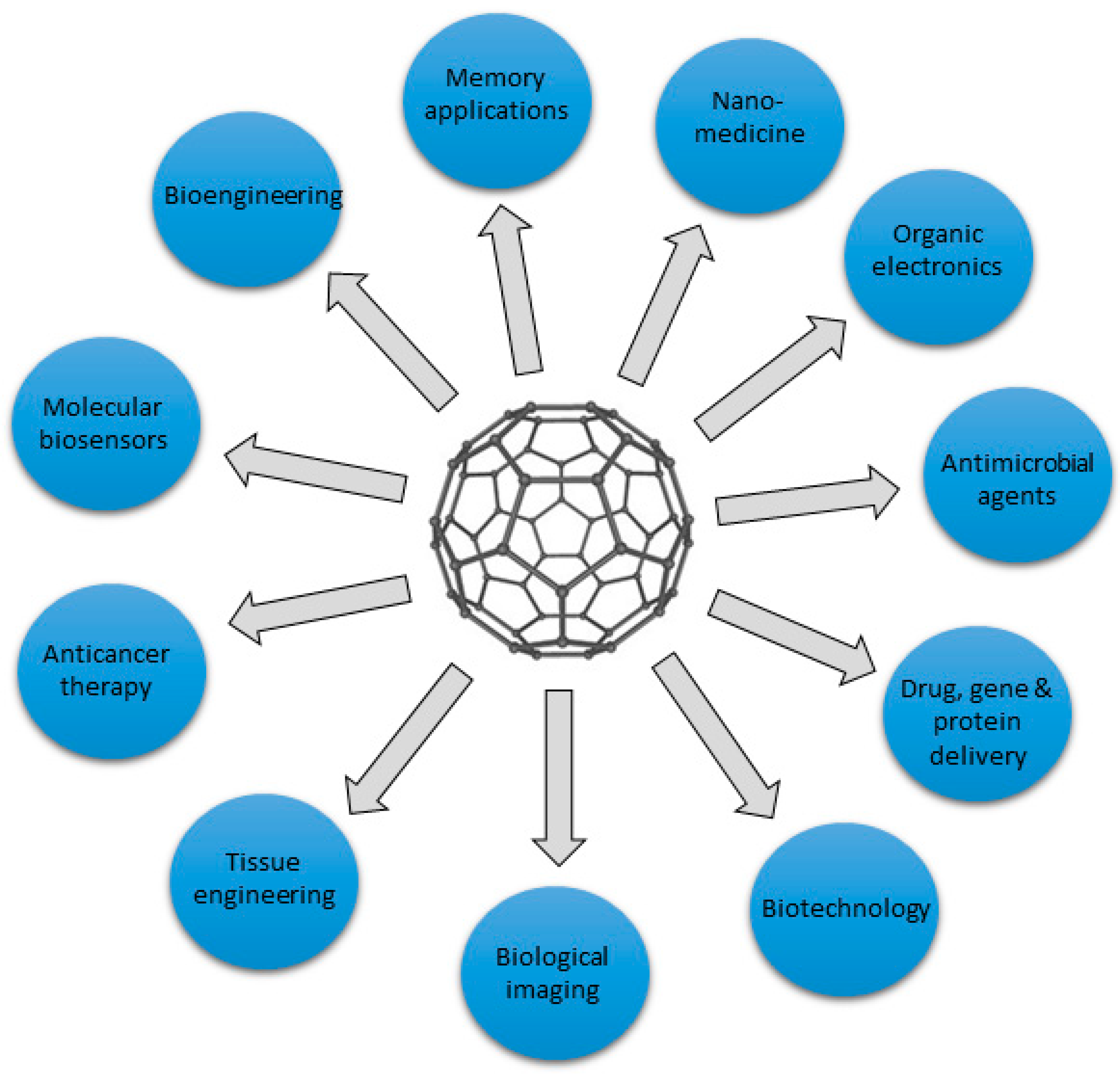
Figure 2.
Various factors determine the potential cytotoxicity and biocompatibility of graphene-based nanomaterials.
Figure 2.
Various factors determine the potential cytotoxicity and biocompatibility of graphene-based nanomaterials.
Disclaimer/Publisher’s Note: The statements, opinions and data contained in all publications are solely those of the individual author(s) and contributor(s) and not of MDPI and/or the editor(s). MDPI and/or the editor(s) disclaim responsibility for any injury to people or property resulting from any ideas, methods, instructions or products referred to in the content. |
© 2023 by the authors. Licensee MDPI, Basel, Switzerland. This article is an open access article distributed under the terms and conditions of the Creative Commons Attribution (CC BY) license (http://creativecommons.org/licenses/by/4.0/).
Copyright: This open access article is published under a Creative Commons CC BY 4.0 license, which permit the free download, distribution, and reuse, provided that the author and preprint are cited in any reuse.


