

Submitted:
19 August 2023
Posted:
23 August 2023
You are already at the latest version
Abstract
Diabetes mellitus, a metabolic disorder that is persistent in nature, is identified by an elevated concentration of glucose in the bloodstream. The disease has become a major public health problem, affecting millions of people globally, and is associated with significant morbidity and mortality. The increasing prevalence of diabetes and the lack of effective therapeutic interventions have led to the exploration of alternative and complementary forms of therapy, including ethnomedicine. Ethnomedicine is the study of traditional medical systems and the medicinal plants used by Indigenous communities. In other words, Ethnomedicine refers to the traditional medical practices and beliefs of a particular cultural or ethnic group. The most popular example of traditional medicine is the use of Aloe vera for the treatment of various diseases such as sunburn, cuts, burns, hypertension, diabetes, and jaundice for thousands of years [1]. In recent years, there has been increasing interest in the potential role of ethnomedicine in the management of diabetes, given its widespread use in many communities and its potential to offer cost-effective and culturally acceptable treatment options. It encompasses a range of traditional healing practices, including herbalism, acupuncture, and massage therapy. Despite the inconsistencies, there is growing evidence to suggest that certain ethnomedical practices may be effective in the management of diabetes [2,3]. For example, several studies have shown that certain herbal remedies, such as cinnamon, ginseng, and bitter melon, may have potential benefits in terms of improving glucose control and reducing the risk of complications associated with diabetes. Evidence-based ethnomedicine is an approach that applies scientific principles and methods to evaluate the efficacy and safety of traditional medical practices. This approach is crucial in the development of effective and safe ways to treat diabetes. To date, there have been numerous studies conducted to examine the efficacy and safety of various ethnomedical interventions for diabetes, including herbal remedies, dietary changes, and physical activity [4]. However, it is important to note that not all ethnomedical interventions for diabetes have been thoroughly evaluated, and many remain unproven. Furthermore, some interventions may be associated with significant risks, particularly in terms of drug interactions and adverse effects. As such, it is crucial that any ethnomedical interventions for diabetes be carefully evaluated using rigorous scientific methods and that patients be advised to consult with their healthcare provider before using any such interventions. It is important to note that the results of these studies have been mixed, with some showing promising results, while others have failed to demonstrate significant benefits. In this chapter, the evidence-based current state of ethnomedicine for diabetes was reviewed. We first provide an overview of diabetes and its pathophysiology, followed by a discussion of traditional medicinal practices used to treat the disease. We then present a systematic review of the scientific literature on the use of ethnomedicine for diabetes, focusing on herbal remedies and dietary interventions. Our review found that several medicinal plants offered promising results to treat all types of diabetes. For example, Gymnema sylvestre, a traditional Indian herb, has been shown to reduce blood glucose levels and improve insulin sensitivity [5]. Additionally, the use of bitter melon (Momordica charantia) has been shown to reduce fasting blood glucose levels and improve glucose tolerance in individuals with type 2 diabetes [6]. Another important aspect of ethnomedicine for diabetes is the use of dietary interventions [7]. Traditional diets, such as the Mediterranean diet, have been shown to have beneficial particularly in terms of improving glycaemic control, reducing the risk of cardiovascular disease, and insulin sensitivity [8]. Additionally, the use of low-carbohydrate diets, such as the ketogenic diet, has been shown to improve glycaemic control in individuals with type 2 diabetes [9]. Traditional medicine has a long history of treating the symptoms and managing the condition. However, the efficacy and safety of these traditional practices have not always been scientifically tested, and there is a lack of standardization and regulation in the production and use of traditional remedies for diabetes. This creates a challenge for healthcare providers and patients, who need to ensure that the treatments they use are safe and effective. Additionally, there is a need for further research to understand the mechanisms by which traditional remedies may be effective in managing diabetes and to determine the optimal dosage and administration methods [9]. Finally, it is also important to understand that the use of traditional remedies may interact with conventional medications, leading to adverse effects; for example, the use of Chinese traditional medicine, known as “herb ginseng,” for the treatment of various health conditions, including diabetes sometimes cause the side effect such as dizziness, confusion, and fainting while interacting with the anti-diabetic medications [10]. Therefore, it is important to approach the use of ethnomedicine for diabetes with caution and under the guidance of a qualified healthcare professional. In conclusion, evidence-based ethnomedicine offers a promising approach to the treatment of diabetes. While further research is needed to fully understand the mechanisms and safety of these interventions, the results to date suggest that traditional remedies and dietary interventions have the potential to be effective in the management of this disease. However, it is important to approach the use of ethnomedicine for diabetes with caution and under the guidance of a qualified healthcare professional and to continue to conduct rigorous scientific research to fully understand the benefits and risks associated with these interventions.
Keywords:
Diabetes mellitus
; Ethnomedicine
; Herbal remedies
; Dietary interventions
; Evidence-based review
1. Introduction
Ethnomedicine is the study of the cultural knowledge and traditional practices of different ethnic groups regarding health and disease over centuries. It encompasses various aspects of traditional medicine, such as the beliefs, values, norms, symbols, rituals, and therapies that shape the understanding and management of health problems in each society [11]. It also includes the use of natural substances, such as plants and animals, that have bioactive properties and are employed for healing purposes. It is an important source of information for understanding the diversity and complexity of human health and illness across cultures and contexts. It also reveals how people perceive, interpret and cope with their health issues in relation to their social, environmental, spiritual, and historical circumstances. Ethnomedicine also provides insights into the local ecological knowledge and practices that sustain the health and well-being of people and their environments [11].
To simplify the study of Ethnomedicine history, it can categorise into the following sections: i) Ancient Civilizations and Traditional Healing Systems such as a) In ancient India over five thousand years ago, a holistic healing of traditional system of medicine was originated, latter known as Ayurveda, based on the concept of balance among five elements (ether, air, water, fire, and earth) and three doshas (vata, pitta and kapha) that govern the physiology and psychological functions of the body [12]. Ayurvedic texts, such as the Charaka Samhita and Sushruta Samhita, discuss diabetes-like symptoms and propose herbal formulations and lifestyle modifications for managing the condition. Ayurveda uses various herbs, minerals, metals, and animal products to treat diabetes, such as turmeric, fenugreek, bitter gourd, neem, gymnema and shilajit [12]. b) Traditional Chinese Medicine, dating back more than 2,500 years, incorporates various therapeutic modalities such as acupuncture, herbal medicine, and dietary practices. TCM emphasizes restoring the balance of vital energy (qi) and recognizes diabetes as a condition related to imbalances in bodily systems [13]. c) The historical records from ancient Egypt reveal the use of natural substances like fenugreek, aloe vera, and myrrh to treat symptoms resembling diabetes. The Ebers Papyrus, an Egyptian medical document dating to 1550 BCE, contains references to diabetes and recommends plant-based remedies [14]. ii) Indigenous Medicinal Practices such as a) a diverse system of medicine practised by various indigenous tribes in North America, based on the concept of harmony among spirit, mind and body and respect for nature. The various native American tribes possess a long history of ethnomedicine for diabetes management [15]. For instance, the Ojibwa tribe in North America used a blend of herbs, including blueberry leaves, to lower blood sugar levels. The Cherokee tribe utilized the bark of the black gum tree as an antidiabetic remedy [15]. b) In addition, Aboriginal cultures in Australia also have traditionally relied on medicinal plants like Gymnema Sylvestre, which has hypoglycemic properties, for managing diabetes. The Pintupi people in Central Australia also employed the use of desert raisins (Solanum centrale) to control blood sugar levels [16]. c) Furthermore, in many African countries, traditional healers have employed a wide range of plant-based remedies for diabetes treatment. Bitter melon (Momordica charantia) and African bush mango (Irvingia gabonensis) are among the commonly used plants due to their hypoglycemic effects [17]. iii) Modern Ethnomedicine Practices such as countries like Indonesia, Malaysia, and the Philippines have a rich heritage of ethnomedicine practices [18]. For instance, the leaves of the insulin plant (Costus igneus) have been used in traditional Indonesian medicine to regulate blood sugar levels. Furthermore, traditional remedies in South America involve the use of plants like yacon (Smallanthus sonchifolius) and stevia (Stevia rebaudiana) to manage diabetes. These plants have a natural sweetness and are known for their hypoglycemic effects [18].
Figure 1.
Pictorial view origin and sustainability of ethnomedicines.
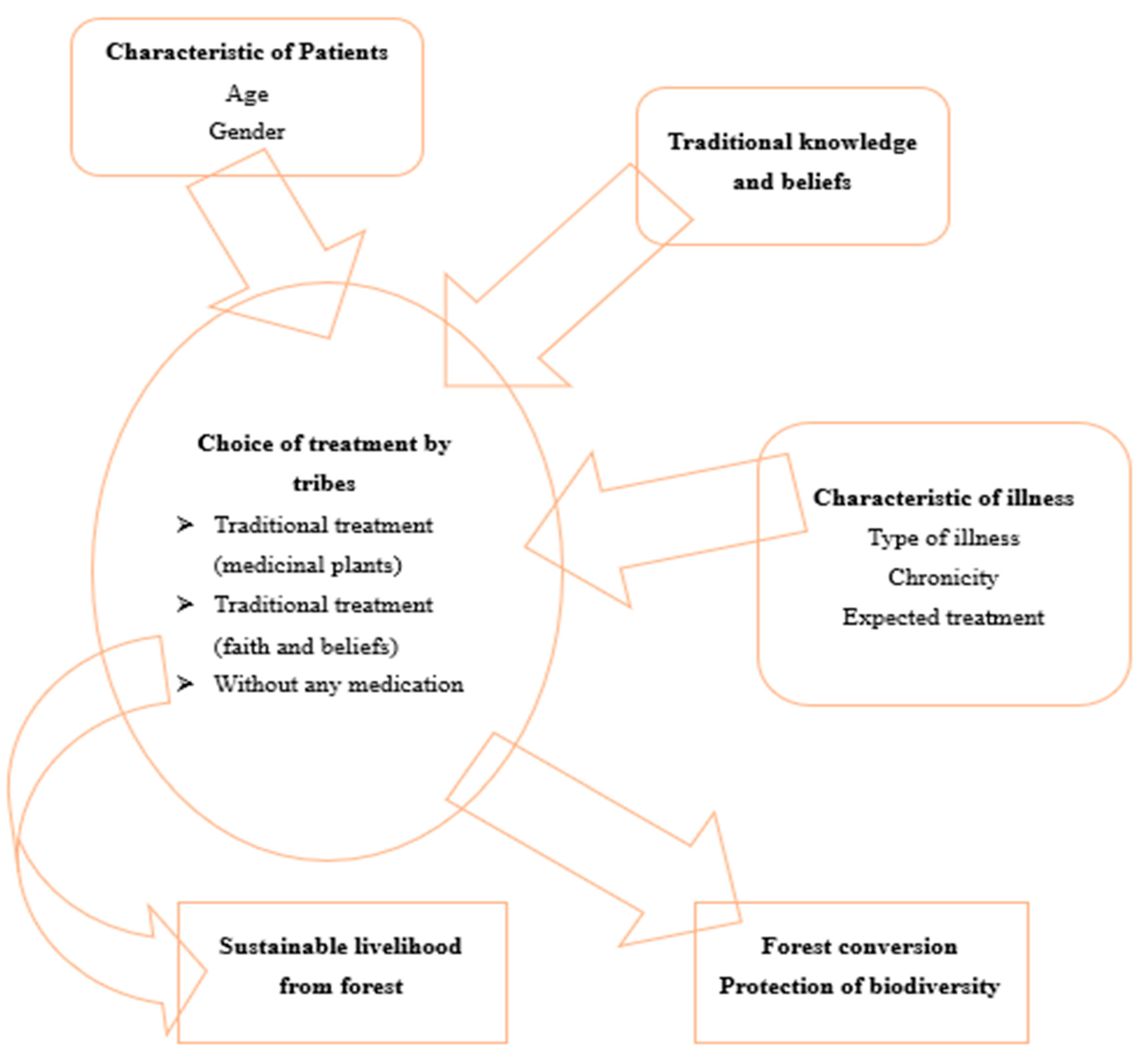
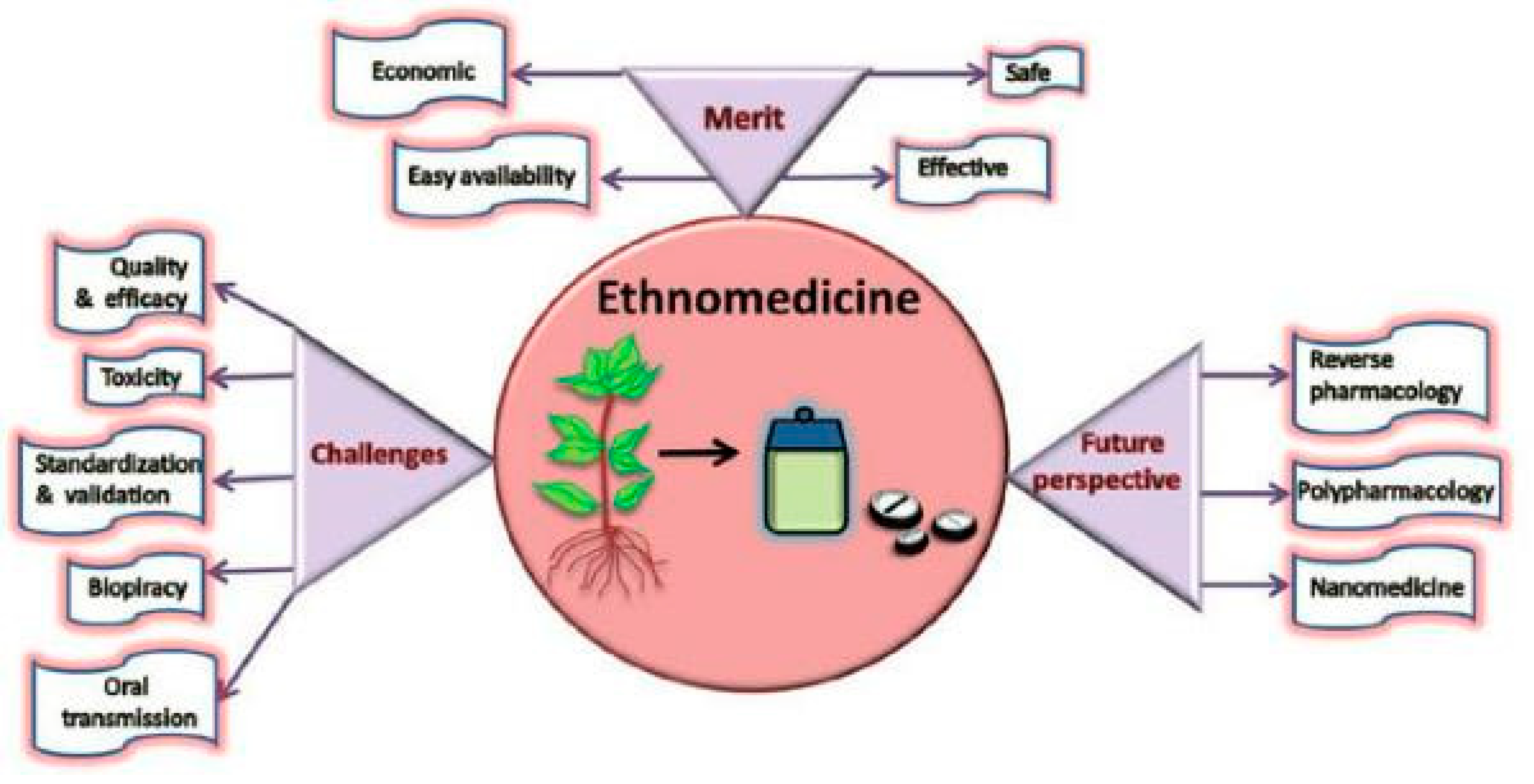
Ethnomedicine can offer several advantages over conventional therapeutic interventions, such as being more accessible, affordable, and acceptable to the people; being more holistic, personalized, and culturally sensitive; being more preventive, promotive, and empowering; and being more compatible with the local ecology and biodiversity [19]. One of the main focuses of ethnomedicine is the study of traditional medical systems, which are coherent and comprehensive sets of concepts, theories and methods that guide the diagnosis, prevention, and treatment of health problems in a specific culture. Traditional medical systems are based on empirical observations, experiential learning, oral transmission, and practical application of health knowledge over generations [20]. Traditional medical systems vary widely in their scope, content, structure, and function, depending on the cultural and ecological context in which they operate. Another major focus of ethnomedicine is the study of medicinal plants, which are plants that have pharmacological effects and are used for therapeutic purposes by various ethnic groups[21,22,23]. Medicinal plants are an integral part of many traditional medical systems, as they provide accessible, affordable, and effective remedies for a range of health conditions. Medicinal plants are also a valuable resource for drug discovery, as they contain numerous chemical compounds that have potential biological activities and can serve as leads for developing new pharmaceuticals [20]. However, ethnomedicine for diabetes not only encompasses plant-based remedies but also incorporates cultural and spiritual beliefs. Traditional healing practices often involve rituals, ceremonies, and community support systems, which play a crucial role in holistic diabetes management. It also faces other challenges and risks, such as lack of scientific validation, standardization, and regulation; lack of integration and collaboration with the mainstream health system; lack of protection and preservation of the indigenous knowledge and resources; and potential adverse effects or interactions with other therapies [20]. The chapter will discuss the historical sources, concepts, methods, and practices of ethnomedicine for diabetes; the identification, classification, and uses of medicinal plants for diabetes; the challenges and opportunities for ethnomedicine for diabetes in the context of modern medicine; and the prospects for ethnomedicine for diabetes research and development.
2. Diabetes Mellitus (DM)
2.1. Introduction
WHO reports that diabetes has become a major global public health challenge affecting millions of people. From 1980 to 2014, diabetic peoples have increased approx. 108 million at a very faster rate in low-income (like Afghanistan) and middle-income nations (like India, and Nigeria) compared to high-income nations (like the USA and Canada) [24]. In 2019, diabetes is directly involved in 1.5 million deaths whereas 460 000 deaths were recorded due to kidney disease with diabetes as a comorbidity [24]. The Greek physician Aretaeus of Cappadocia named the condition diabetes in the second century AD, meaning “siphon” or “flowing through.” Later, the term mellitus was added by the English physician Thomas Willis in the 17th century, meaning “honeyed” or “sweet”. Diabetes mellitus is a prevalent and chronic endocrine disorder that affects the metabolism of carbohydrates, leading to persistent hyperglycemia (high blood sugar levels) [24]. Hyperglycemia can cause acute and long-term complications that impair the life-quality and increase mortality risks. Some of the acute complications include diabetic ketoacidosis, hyperosmolar hyperglycemic state, and hypoglycaemia. Some of the long-term complications bring in macrovascular diseases (like stroke, and peripheral arterial and coronary heart disease), microvascular diseases (such as diabetic retinopathy, nephropathy, and neuropathy) and diabetic foot ulcers [24].
2.2. Type of Diabetes
Figure 2.
No. of adult between age 20-79 with diabetes worldwide. (Source: IDF Diabetes Atlas 2019 [150].)
Figure 2.
No. of adult between age 20-79 with diabetes worldwide. (Source: IDF Diabetes Atlas 2019 [150].)
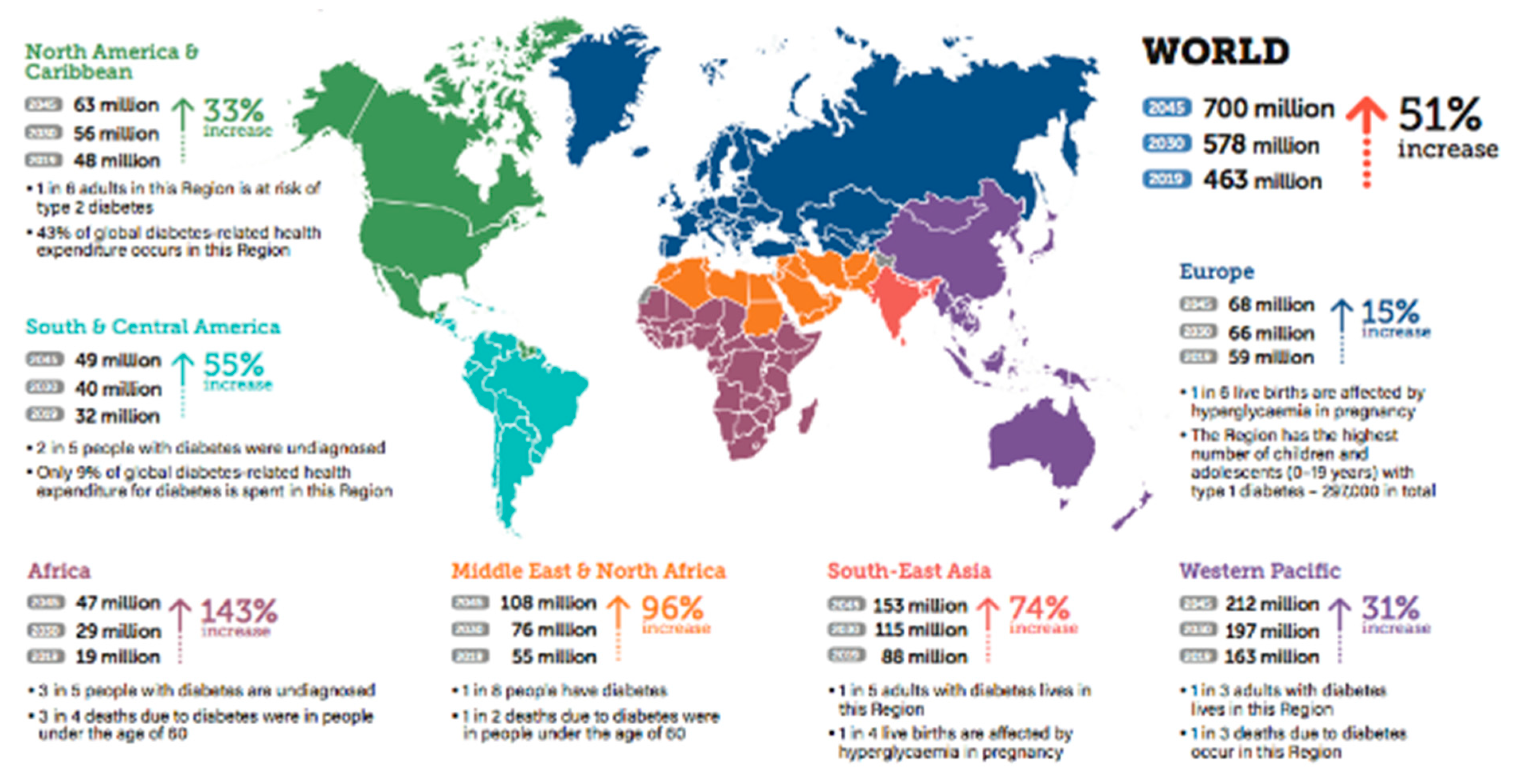
Mainly two types of diabetes were found: type 1 (T1DM) and 2 (T2DM).
2.2.1. Type 1 diabetes
In T1DM, our immune system mistakenly recognises the pancreatic beta cells as foreign elements, therefore attacking and destroying it, and resulting in an absolute deficiency of insulin. This causes glucose to accumulate in the blood and spill into the urine, leading to symptoms like urination, increased thirst, hunger, fatigue, weight loss, and ketone formation [25]. As a result, patients have an absolute insulin deficiency and require exogenous insulin therapy for survival. Type 1 diabetes mellitus usually manifests in childhood but it also report at any age of life. The exact aetiology of T1DM is still unknown, but some environmental and genetic factors are involved [25].
2.2.2. Type 2 diabetes
In type 2 diabetes, the cells become resistant to the action of insulin, meaning that they do not respond properly to the signals that insulin sends. This causes a relative deficiency of insulin, as the pancreas tries to compensate by producing more insulin but cannot keep up with the demand [24]. This also causes glucose to build up in the blood and urine, leading to symptoms similar to type 1 diabetes, but usually milder and slower in onset. Type 2 diabetes mellitus is more common in adults, especially those who have a diabetic family history, are physically inactive, and are overweight[26,27,28,29]. However, type 2 diabetes is also increasing in kids and youths due to the rising prevalence of obesity and sedentary lifestyles [30]. By manging our lifestyle like diet, weight loss, and exercise, as well as oral medications that lower blood sugar levels by different mechanisms, type 2 diabetes can be managed too. Sometime T2DM patients also require insulin injections if oral medications are insufficient or contraindicated. Other factors that can affect the mechanism of diabetes include genetic mutations, diseases of the pancreas or other endocrine organs, infections, drugs or chemicals, pregnancy, ageing, and stress [30]. These factors can influence the production or action of insulin or alter the metabolism or demand of glucose by the cells. Besides T1DM and T2DM, other diabetic forms are also found such as gestational diabetes, which occurs in pregnancy and usually disappears after delivery, but the chance of T2DM development in the future for both the mother and the child is increased; prediabetes, which is a state of high blood sugar levels that do not qualify as DM, but the chance of T2DM development are again increased with its complications if left untreated; and other specific types of diabetes mellitus that are caused by genetic defects, diseases of the pancreas or other endocrine organs, infections, drugs or chemicals [31].
2.3. Pathology of diabetes
The main mechanism of diabetes is the dysfunction of insulin, a hormone that regulates the uptake and utilization of glucose by the cells. The pancreas secretes insulin from its beta cells into the blood when blood glucose levels are elevated. Insulin binds to specific receptors on the cell surface and activates a cascade of signals that allow glucose entry into the cell and later utilised as energy or gathered as glycogen or fat [32]. Glucose transporter (GLUT) and hexokinase (HK) are two key proteins involved in the uptake and metabolism of glucose by the cells. GLUT belongs to the membrane-bound proteins family and facilitates glucose transport through passive diffusion across the cell membrane. Glucose-6-phosphate is produced from glucose by the enzyme HK through a phosphorylation reaction which is the first step of glycolysis and other metabolic pathways [33]. GLUT and HK work together to regulate the flux of glucose into the cells according to their energy needs and availability. There are several isoforms of GLUT and HK that have different tissue distribution and functional regulation. For example, Skeletal muscle and adipose tissue are the main tissues for insulin-induced glucose uptake and they express GLUT4 and HKII predominantly [34]. A signal transduction pathway is activated when insulin interacts with its receptor on the cell surface, which facilitates the movement of GLUT4 from intracellular compartments to the plasma membrane, where it enhances the entry of glucose into the cell [35]. Insulin also enhances the activity and expression of HKII, which increases the phosphorylation of glucose and prevents its back diffusion out of the cell [35].

Table 1.
Classification of HK Function and Glucose Transporter by Tissue-Specific Distribution and Regulation [35].
Table 1.
Classification of HK Function and Glucose Transporter by Tissue-Specific Distribution and Regulation [35].
| Organ | HK computer | Glucose transporter | Classification | ||
|---|---|---|---|---|---|
| Erythrocyte | HK I | GLUT1 | Glucose-dependent | ||
| Brain | HK-I | GLUT1 | Glucose-dependent | ||
| GK beta-cell | HK IV B (glucokinase) | GLUT2 | Glucose-sensor | ||
| Liver | HK IV L | GLUT2 | Glucose-sensor | ||
| Kidney | ----- | GLUT3 symporter | Sodium-dependent | ||
| Gut | ----- | GLUT3 symporter | Sodium-dependent | ||
| Muscle | HK II | GLUT4 | Insulin-dependent | ||
| Adipocyte | HK II | GLUT4 | Insulin-dependent | ||
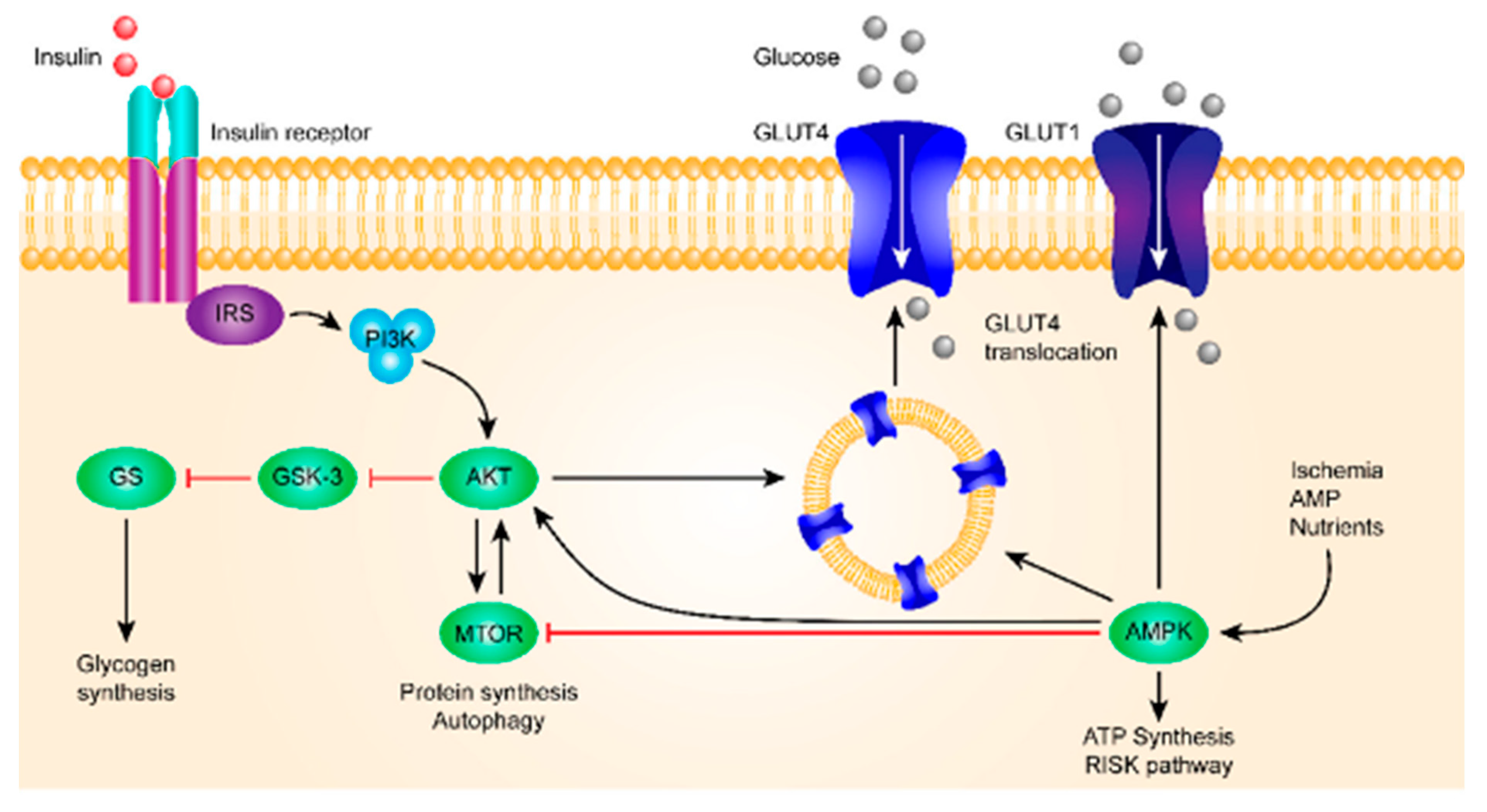
Figure 3.
The insulin signalling pathway is depicted in this figure. The metabolic functions of insulin are mediated by the insulin receptor, which binds insulin and poses kinase activity of tyrosine-protein. Resultant the downstream effectors like IRS-1 and PI3K, open for insulin binding. The p85 regulatory subunit of PI3K can be directly bound by the insulin receptor, resulting in the production of PIP3, or indirectly activated by phosphorylation, leading to the AKT activation. Subsequently, GSK-3β activity is inhibited by AKT phosphorylation at the Ser9 site. This signalling pathway, PI3K/AKT/GSK-3β, is involved in transducing insulin signals, and insulin regulates and modulates GSK-3β in this pathway, which is related to the control of glycogen synthesis. (Source: This has been taken from a published paper by Borros et al., 2019 [33]).
Figure 3.
The insulin signalling pathway is depicted in this figure. The metabolic functions of insulin are mediated by the insulin receptor, which binds insulin and poses kinase activity of tyrosine-protein. Resultant the downstream effectors like IRS-1 and PI3K, open for insulin binding. The p85 regulatory subunit of PI3K can be directly bound by the insulin receptor, resulting in the production of PIP3, or indirectly activated by phosphorylation, leading to the AKT activation. Subsequently, GSK-3β activity is inhibited by AKT phosphorylation at the Ser9 site. This signalling pathway, PI3K/AKT/GSK-3β, is involved in transducing insulin signals, and insulin regulates and modulates GSK-3β in this pathway, which is related to the control of glycogen synthesis. (Source: This has been taken from a published paper by Borros et al., 2019 [33]).
The role of GLUT and HK in diabetes is crucial. The absolute lack of insulin results from the autoimmune destruction of the pancreatic beta cells in type 1 diabetes, and impairs the translocation of GLUT4 and the activity of HKII in muscle and adipose tissue, resulting in reduced glucose uptake and utilization [33]. In type 2 diabetes, the insulin resistance of the cells reduces the responsiveness of GLUT4 and HK-II to insulin stimulation, resulting in impaired glucose uptake and utilization. Both types of diabetes cause glucose to accumulate in the blood and urine, leading to various acute and chronic complications that affect multiple organs and tissues. Therefore, targeting GLUT and HK for diabetes management is a promising strategy that aims to enhance glucose uptake and metabolism by the cells and lower blood glucose levels [34]. Several natural compounds derived from food sources have been shown to modulate the expression or activity of GLUT and HK by different mechanisms, such as stimulating insulin secretion, enhancing insulin sensitivity, inhibiting glucose absorption or production, or increasing glucose excretion. Some examples include bitter melon, fenugreek, ginseng, cinnamon, garlic, ginger, turmeric, aloe vera, nopal, berberine, and ethnomedicine [35]. Moreover, raised blood glucose levels accounted for about 20% of cardiovascular deaths. The current treatment options for diabetes mellitus include pharmacological agents that lower blood glucose levels by stimulating insulin secretion, enhancing insulin sensitivity, inhibiting glucose absorption or production, or increasing glucose excretion. However, these drugs have limitations such as adverse effects, contraindications, interactions, cost, and poor adherence. Moreover, some patients may not achieve adequate glycaemic control or may develop drug resistance over time. Therefore, there is a need for discovering new and alternative treatments for diabetes mellitus that are safe, effective, accessible, and affordable [36].
3. Traditional Medicinal Practices for Diabetes
Many people with diabetes rely on conventional medicine to manage their condition, such as oral hypoglycaemic agents or insulin injections. However, some people also use Traditional Medicine (TM) as a complementary or alternative approach to treat diabetes. TM can have various benefits for people with diabetes, such as improving blood glucose control, reducing oxidative stress and inflammation, enhancing insulin sensitivity and secretion, and preventing or delaying complications [37]. However, TM can also have potential risks, such as adverse effects, interactions with conventional drugs, contamination, misidentification, or inappropriate use. Therefore, it is important to understand the different types of TM practices for diabetes and their evidence of effectiveness and safety There is a growing interest in the potential role of ethnomedicine in the management of diabetes among researchers, practitioners, and patients. Some of the common TM practices for diabetes are herbalism, acupuncture, massage therapy, and diet [38,39]:
3.1. Ethnomedicinal plants (Herbalism)
Ethnomedicinal plants are plants or plant parts that are used for medicinal purposes based on traditional knowledge or experience [40]. Ethnomedicinal plants can be prepared in various forms such as teas, decoctions, infusions, tinctures, capsules, tablets, powders, syrups, oils, creams, or ointments. Ethnomedicinal plants can contain multiple active ingredients that may have synergistic or antagonistic effects on the body. Herbalism is one of the most widely used TM practices for diabetes. Ethnomedicinal plants are one of the most widely used ethnomedicine practices for diabetes where various parts of plants are used as drugs [40].
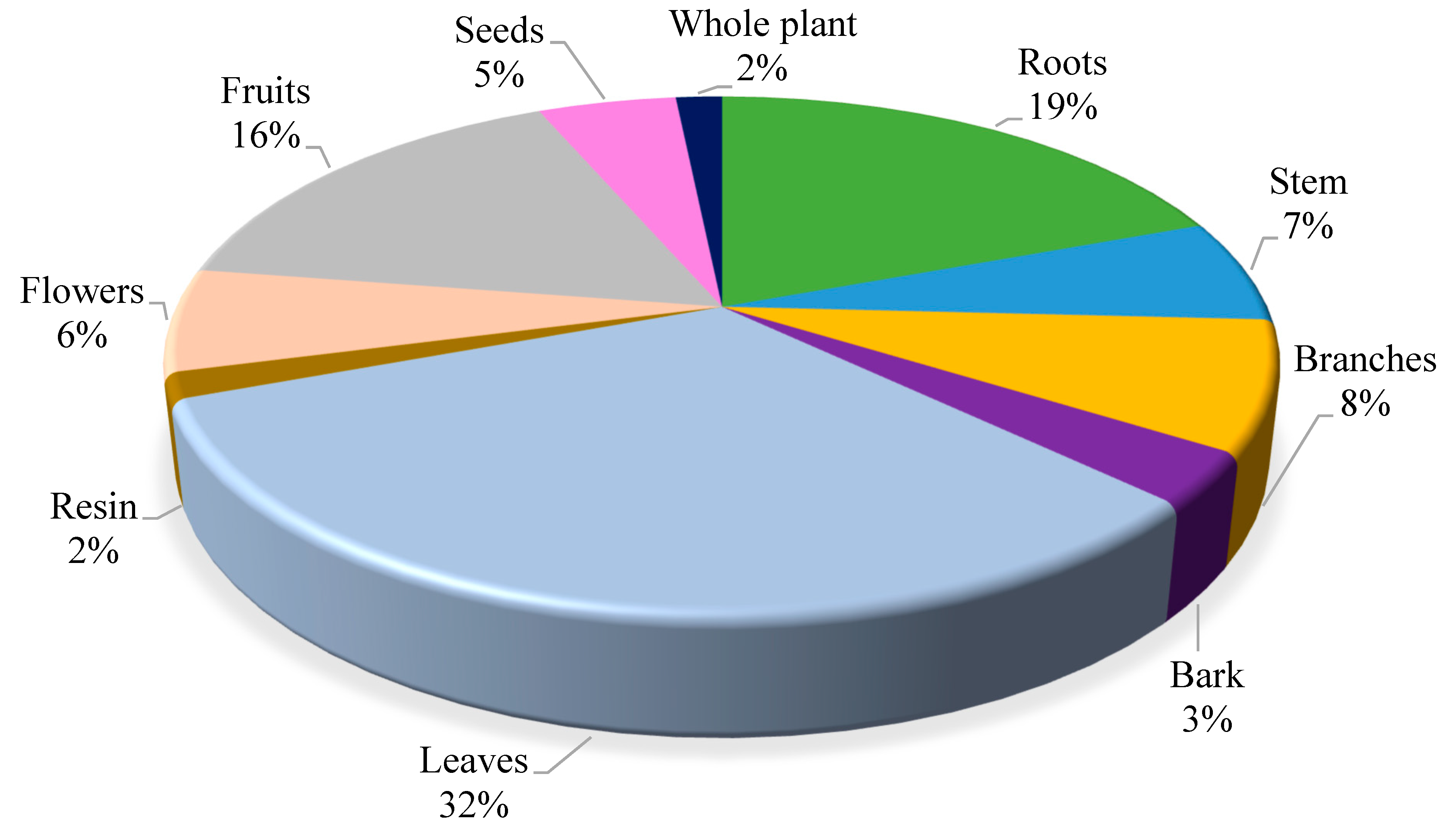
Figure 4.
Status of plant parts used as ethnomedicines, source: Pervaiz et al., 2018 [45].
Figure 4.
Status of plant parts used as ethnomedicines, source: Pervaiz et al., 2018 [45].
According to a cross-sectional study conducted in Tanzania [19], 67.2% of diabetic patients managed their diabetes using traditional medicines and practices. The accessibility and availability of TM and the high conventional treatment cost were some of the reasons for using traditional medicines. The evidence of effectiveness and safety of herbal medicines for diabetes varies depending on the type of quality dosage preparation and duration of use of the herbal products[41,42,43]. Some herbal medicines may have beneficial effects on blood glucose control lipid profile insulin resistance or oxidative stress in animal studies or human trials. For example, between December 2013 and June 2014, conducted a study to examine the utilization of traditional medicinal practices (TMPs), including their types, frequencies, reasons, and modes, among community members randomly selected for the study [44]. A total of 481 adults participated in the study, of whom 45 individuals (9.4%) were diagnosed with diabetes. Among those with diabetes, the prevalence of TMP use was found to be 77.1% (95% CI 58.5–89.0%), and the concurrent use of TMPs and biomedicines was reported by 37.6% of participants (95% CI 20.5–58.4%). Many individuals specifically utilized TMPs for the treatment of diabetes, accounting for 40.3% of participants (95% CI 20.5–63.9%). Various plants based TMPs were identified for the management of diabetes, namely Cymbopogon Citrullus, Moringa oleifera, Aloe vera, Hagenia abyssinica, Clausena anisata, Artimisia afra, Cajanus cajan, and Persea americana. However, some herbal medicines may also have adverse effects such as gastrointestinal disturbances allergic reactions hypoglycaemia or hepatotoxicity. Moreover, some herbal medicines may interact with conventional drugs or other herbal products potentiating or antagonizing their effects [44].
Table 2.
List important medicinal plant families with at least two species used as ethnomedicine, source: Pervaiz et al., 2018 [45].
Table 2.
List important medicinal plant families with at least two species used as ethnomedicine, source: Pervaiz et al., 2018 [45].
| S. No | Family | No. of species |
|---|---|---|
| 1 | Apiaceae | 2 |
| 2 | Asteraceae | 9 |
| 3 | Boraginaceae | 2 |
| 4 | Brassicaceae | 2 |
| 5 | Brassicaceae | 2 |
| 6 | Caprifoliaceae | 2 |
| 7 | Curpessaceae | 2 |
| 8 | Euphorbiaceae | 2 |
| 9 | Fumariaceae | 2 |
| 10 | Lamiaceae | 4 |
| 11 | Pinaceae | 4 |
| 12 | Ranunculaceae | 5 |
| 13 | Rosaceae | 3 |
| 14 | Rubiaceae | 2 |
| 15 | Solanaceae | 3 |
3.2. Acupuncture
Acupuncture is a form of TM that originated in Indian and China more than 2000 years ago. It involves the insertion of fine needles into specific points on the body called acupoints which are believed to correspond to different organs or systems in the body [39]. Acupuncture aims to restore the balance of qi (vital energy) and blood flow in the body thus promoting health and healing. Acupuncture has been used for various conditions such as pain nausea anxiety depression and diabetes. Acupuncture may have various mechanisms of action on the body such as stimulating nerve endings releasing endorphins modulating neurotransmitters regulating hormones or influencing immune function. Acupuncture may have beneficial effects on people with diabetes by improving blood glucose control insulin sensitivity beta-cell function or lipid profile [44]. Acupuncture may also reduce diabetic complications such as neuropathy retinopathy or nephropathy by improving nerve conduction velocity visual acuity or renal function. Moreover, acupuncture may improve quality of life or psychological well-being by reducing stress depression or anxiety in people with diabetes [44]. The evidence of the effectiveness and safety of acupuncture for diabetes varies depending on the type of quality frequency duration location or combination of acupuncture techniques used in different studies[46,47,48,49]. Some studies have shown positive results of acupuncture on glycaemic control or diabetic complications compared to placebo sham acupuncture or conventional treatment. However, some studies have shown no significant difference or inconsistent results of acupuncture on diabetes outcomes. Therefore, more high-quality randomized controlled trials are needed to confirm the efficacy and safety of acupuncture for diabetes [39]. It is generally considered safe when performed by a trained acupuncturist using sterile needles. However, some minor adverse events may occur such as bleeding bruising infection pain dizziness or fainting. Moreover, some serious adverse events may occur rarely such as pneumothorax cardiac tamponade nerve damage or organ injury [44]. Therefore, it is important to consult with a qualified health care provider before undergoing acupuncture for diabetes.
Table 3.
Acupuncture types and point and their effects on diabetes management.
| Acupuncture types and points | Effect on diabetes |
|---|---|
| Wrist-ankle acupuncture | Reduce pain caused by diabetic neuropathy |
| Electroacupuncture | Lower blood glucose levels, increase insulin sensitivity and improve pancreatic islet function |
| Herbal acupuncture | Enhance the effects of anti-diabetic medication, such as metformin |
| ST36 (Zusanli) | Improves blood glucose levels, insulin levels and glucose tolerance |
| SP6 (Sanyinjiao) | Improves blood glucose levels, insulin levels and glucose tolerance |
| LI11 (Quchi) | Improves blood glucose management, weight loss and insulin resistance |
| LI4 (Hegu) | Improves blood glucose management, weight loss and insulin resistance |
| ST25 (Tianshu) | Improves blood glucose management and weight loss |
| ST40 (Fenglong) | Improves blood glucose management and weight loss |
3.3. Massage Therapy
Massage therapy is a form of TM that involves manipulating soft tissues of the body such as muscles, tendons, ligaments, fascia, skin, or joints using various techniques such as stroking, kneading, tapping, friction, vibration, compression, or stretching. Massage therapy aims to enhance physical, mental, emotional, or spiritual well-being by improving blood circulation, lymphatic drainage, muscle relaxation, pain relief, stress reduction, mood enhancement, or immune function [50]. Massage therapy has been used for various disease conditions such as pain, inflammation, injury, stress, anxiety, depression, insomnia, headache, migraine, fibromyalgia, chronic fatigue syndrome, asthma, arthritis, osteoporosis, hypertension, cardiovascular disease, cancer, HIV/AIDS, dementia, Alzheimer’s disease, Parkinson’s disease, multiple sclerosis, autism spectrum disorder, attention deficit hyperactivity disorder, post-traumatic stress disorder, and diabetes. Massage therapy has beneficial effects on people with diabetes by improving blood glucose control, insulin sensitivity, beta-cell function, or lipid profile [13]. Massage therapy also reduces diabetic complications such as neuropathy, retinopathy, or nephropathy by improving nerve conduction velocity, visual acuity, or renal function. The evidence of the effectiveness and safety of massage therapy for diabetes varies depending on the type of quality dosage preparation and duration of use of the massage techniques. Some studies have shown positive results of massage therapy on glycaemic control or diabetic complications compared to placebo sham massage or conventional treatment as mentioned in table 4 [51,52]. However, some studies have shown no significant difference or inconsistent results of massage therapy on diabetes outcomes. Therefore, more high-quality randomized controlled trials are needed to confirm the efficacy and safety of massage therapy for diabetes. Massage therapy is generally considered safe when performed by a trained massage therapist using appropriate hygiene and precautions. However, some minor adverse events may occur such as soreness bruising swelling allergic reactions or skin irritation. Moreover, some serious adverse events may occur rarely such as infection bleeding nerve damage or organ injury. Therefore, it is important to consult with a qualified health care provider before receiving massage therapy for diabetes [51].
Table 4.
Type of massage and their effect on diabetes patients.
| Type of massage | Effects on diabetes treatments |
|---|---|
| Swedish massage | Lower blood glucose levels [53] |
| Connective tissue massage | Improve circulation in the lower limbs and slow the progression of the peripheral arterial disease [51] |
| Thai foot massage | Improve range of motion, ability to stand up, and foot sensation [53] |
| Other types of foot massage | Increase balance and mobility [53] |
| Traditional Chinese massage | Improve neuropathy symptoms [52] |
| Abdominal massage | Regulate muscle, pancreatic, and inflammatory factors, and islet function to improve disorders of lipid and glucose metabolism [54] |
| Massage at the site of insulin injection | Lower levels of blood glucose and enhance action of serum insulin in type 1 diabetes patients [52] |
3.4. Dietary interventions for diabetes prevention
Diet is an integral part of the ethnomedicinal treatment of diabetes mellitus. Diet plays a vital role in the prevention, management, and control of diabetes mellitus by influencing blood glucose levels, insulin sensitivity, body weight, and cardiovascular risk factors. It influences the bioavailability, efficacy, and safety of ethnomedicinal plants for diabetes mellitus by modulating their absorption, distribution, metabolism, and excretion. Diet can also affect the prevention, management, and control of diabetes mellitus by influencing blood glucose levels, body weight, and cardiovascular risk factors. Dietary recommendations for ethnomedicinal treatment of diabetes mellitus vary depending on the type, severity, and duration of diabetes mellitus, as well as the individual’s age, gender, ethnicity, lifestyle, and comorbidities. A balanced diet consisting of low glycaemic index foods, high fibre foods, moderate fat intake, limited sugar intake, and adequate hydration is recommended for people with diabetes mellitus who use ethnomedicinal plants for their treatment and further details of ethno-diet are given in upcoming below sections.
4. Evidence-based Ethnomedicine for Diabetes
Evidence-based ethnomedicine is the application of scientific methods and standards to evaluate the safety, efficacy, and mechanisms of action of ethnomedicinal plants and products. Evidence-based ethnomedicine aims to combine current medical practices and ancient science to develop new therapeutic approaches that are safe and effective for various diseases and disorders [55]. Ethnomedicine offers a rich diversity of medicinal plants that have been traditionally used for managing diabetes across different cultures and regions. These plants may contain bioactive compounds that can modulate various pathways involved in glucose metabolism and insulin signalling. It identifies novel antidiabetic agents from natural sources that can be further developed into new drugs or nutraceuticals. Ethnomedicine can also provide holistic and personalized care that considers the physical, mental, social, and spiritual aspects of the patients. Moreover, ethnomedicine can be more affordable, accessible, and acceptable than conventional medicine for many people, especially in developing countries. It also contributes to the preservation and promotion of the cultural heritage and biodiversity of different regions [55,56]. Ethnomedicine has various applications, challenges and future perspectives which will be discussed in the upcoming sections. Ethnomedicine has some advantages over allopathic medicine in terms of being more natural, holistic, and personalized than synthetic drugs that may have side effects or contraindications. It is more affordable, accessible, and acceptable than expensive drugs that may not be available or suitable for some people or regions. Ethnomedicines are more compatible with the cultural beliefs and preferences of some patients who may prefer traditional remedies over modern ones and are more diverse and flexible than standard drugs that may not work for everyone or every situation [40]. Despite its vast application, it also has some limitations such as it may not be effective against deadly diseases. Furthermore, it may not be scientifically validated or standardized and may have adverse effects or interactions with other drugs or treatments. It may be endangered by the loss of biodiversity, displacement of tribal communities, urbanization, and acculturation. It may face legal, ethical, and cultural challenges in terms of intellectual property rights, biopiracy, informed consent, and cultural sensitivity [57]. Some case study examples that proved drawbacks of ethnomedicine are i) According to a study, ethnomedicine is a type of intercultural health programme and found that despite some positive outcomes, there were also many challenges and limitations in implementing intercultural health programs. Some of these were: lack of political will and institutional support; insufficient funding and human resources; inadequate training and supervision of health workers; poor coordination and communication among stakeholders; low quality and availability of ethnomedicines; and cultural barriers and conflicts between different health systems [58]. ii) Another study documented that the traditional healers were facing several problems such as depletion and degradation of medicinal plants due to overexploitation, habitat loss, and climate change; loss of indigenous knowledge due to migration, modernization, and education; lack of recognition and regulation of their practices by the government; and competition and mistrust from the allopathic practitioners [59]. Overall, ethnomedicine for diabetes cannot be considered a substitute for current allopathic medicine but rather as a complement or an alternative depending on the individual needs and circumstances of each patient. Ethnomedicine for diabetes should be used with caution and under the guidance of qualified professionals who can monitor its effects and interactions with other medications or therapies.
Figure 5.
Summary of evidence based ethnomedicine.
5. Herbal Remedies for Diabetes1
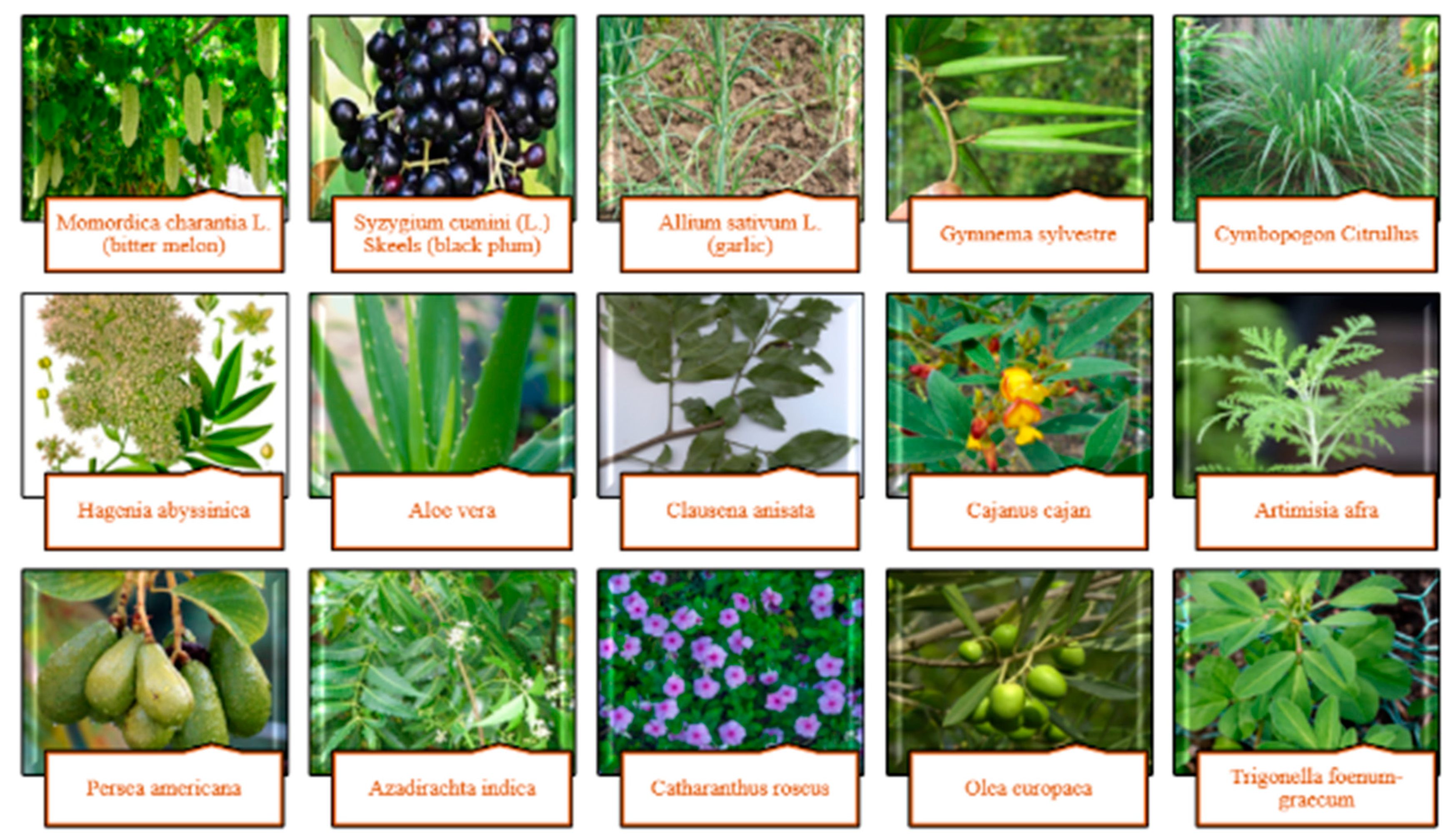
Medicinal plants are a rich source of bioactive compounds that can modulate different pathways involved in glucose metabolism, insulin secretion or action, oxidative stress, inflammation, and angiogenesis. Medicinal plants can also provide synergistic effects, enhance the efficacy of conventional drugs, or reduce their side effects [60]. Several medicinal plants have been investigated for their antidiabetic properties using various experimental models and clinical trials. Some of these plants have shown promising results for treating diabetes and its complications. A systematic review of ethnomedicinal plants for diabetes reported 2004 plant species belonging to 1112 genera and 197 families among the 92 countries. Some of the most commonly used plants include Momordica charantia (bitter gourd), Syzygium cumini (black plum), Allium sativum (garlic), Azadirachta indica (neem), Catharanthus roseus (periwinkle), Olea europaea (olive), Trigonella foenum-graecum (fenugreek), Gymnema Sylvestre (gurmar), Aloe vera and Allium cepa (onion) [61]. These plants have been shown to possess various antidiabetic properties such as stimulating insulin secretion, enhancing glucose uptake, inhibiting glucose absorption and production, and modulating inflammatory pathways and antioxidant activity. Several bioactive compounds have been isolated and identified from these plants, such as alkaloids, flavonoids, terpenoids, saponins, glycosides and phenolic acids [62].
There are some limitations too on the use of herbal remedies. There is no clear evidence that herbal treatments or vitamin and mineral supplements will benefit people with diabetes unless they have underlying deficiencies [63]. Many studies on herbs and diabetes are of low quality, have small sample sizes, or have conflicting results. Some herbs and supplements may cause adverse effects. For example, Cinnamon may interact with blood thinners or increase the risk of liver damage if taken with other medications that affect the liver. Some herbs and supplements may interfere with the absorption, metabolism, or effectiveness of other drugs that people with diabetes take. For example, bitter melon may enhance the effect of insulin or oral hypoglycemic agents and cause hypoglycemia [63]. Several case studies show that ethnomedicines are restricted in their use. A case report of a 63-year-old woman who developed severe hypoglycemia after taking a Chinese herbal medicine containing ginseng and astragalus for 3 months. She was taking metformin and glipizide for her type 2 diabetes. The herbal medicine was found to contain a high amount of ginsenosides, which may have potentiated the effect of her medications. Similarly, another case report of a 54-year-old woman who developed acute kidney injury after taking a herbal tea containing licorice root for 2 weeks. She was taking insulin glargine and lispro for her type 1 diabetes. The tea was found to contain a high amount of glycyrrhizin, which is a natural compound in liquorice root that may cause sodium retention, potassium depletion, hypertension, and renal dysfunction [63].
Despite the limitation and restricted use of methenamine for debates, here are some of the ethnomedicinal plant and their use are described:
5.1. Momordica charantia L. (bitter melon)
This plant is widely used in Asia, Africa, and Latin America to treat diabetes. It contains several bioactive compounds such as momordicoside, karaviloside, cucurbitacin, charantin, charantoside, flavonoids, phenolic acids, saponins, alkaloids, and glucosinolates that can lower blood glucose levels by inhibiting intestinal glucose absorption, stimulating insulin secretion, enhancing glucose uptake in peripheral tissues, or modulating hepatic glucose production [64]. Several clinical trials have shown that M. charantia can enhance glucose and lipid metabolism in T2DM. It also has properties like hypoglycemic, antioxidant, anti-inflammatory, and immunomodulatory effects and is used to treat various health conditions such as malnutrition, hypertension, and anaemia [65,66].
5.2. Syzygium cumini (L.) Skeels (black plum)
This plant is also known as black plum or jamun and is widely cultivated in tropical and subtropical regions such as India, China, Brazil, and other countries to treat diabetes. It contains several bioactive compounds such as cuminoside, anthocyanins, ellagic acid, gallic acid, myricetin, quercetin, kaempferol, and tannins that can lower blood glucose levels by inhibiting α-glucosidase activity, enhancing insulin secretion or action, reducing oxidative stress or inflammation, or modulating hepatic glucose production. Several clinical trials have shown that S. cumini can improve glycemic control and lipid profile in patients with T2DM. Syzygium fruit, seeds, bark, and leaves have been used for various ailments such as diarrhea dysentery infection and diabetes. Syzygium contains anthocyanins ellagic acid gallic acid and tannins that may have antidiabetic antimicrobial and antioxidant properties [67,68].
5.3. Allium sativum L. (garlic)
Garlic is another name for this plant, which originates from Central Asia and northeastern Iran. Garlic bulbs have been used for various diseases such as hypertension hyperlipidemia infection and diabetes [69]. Garlic contains organosulfur compounds such as allicin ajoene and diallyl disulfide that have hypoglycemic antihypertensive antilipidemic and antimicrobial effects. It contains S-allyl cysteine sulfoxide (SAC), which improves glycemic control by increasing insulin secretion, reducing hepatic gluconeogenesis, and enhancing peripheral glucose uptake. It also contains several bioactive compounds like allicin, diallyl trisulfide (DATS), diallyl disulfide (DADS), and ajoene [68]. This plant is used by many cuisines and folk medicines to treat various diseases including diabetes [70].
5.4. Gymnema Sylvestre
It is a woody climber from India and Africa which belongs to the Asclepiadaceae family. It is commonly known as gurmar or meshashringi, which means “sugar destroyer” in Sanskrit. The leaves of G. sylvestre contain several bioactive compounds such as gymnemic acids, gurmarin, gymnemasaponins, and flavonoids [61]. Various pharmacological effects have been reported for these compounds, such as; i) Inhibiting the intestinal absorption of glucose and sucrose by interfering with the brush border enzymes. ii) Stimulating the pancreatic β-cells function and regeneration by increasing the insulin genes expression and enhancing insulin secretion. iii) Enhancing insulin sensitivity and glucose uptake in peripheral tissues by activating the insulin receptor and GLUT4 translocation [71]. iv) Reducing hepatic glucose production by inhibiting gluconeogenic enzymes and enhancing glycogen synthesis [72]. v) Reducing oxidative stress and inflammation by scavenging free radicals and modulating cytokine levels. vi) Preventing or delaying diabetic complications such as nephropathy, retinopathy, neuropathy, and cardiomyopathy by improving renal function, protecting the retinal cells, restoring the nerve conduction velocity, and reducing lipid peroxidation. Several clinical trials have evaluated the efficacy and safety of G. sylvestre extracts or tablets in patients with T1DM or T2DM. The results have shown that G. sylvestre can significantly reduce fasting blood glucose, postprandial blood glucose, haemoglobin A1C, serum lipids, body weight, and medication requirements in diabetic patients. The adverse effects reported were mild and transient such as gastrointestinal discomfort, hypoglycemia, headache, and dizziness [73]. However, some limitations of these trials include small sample size, short duration, lack of standardization of G. sylvestre preparations, and lack of long-term follow-up [72,73].
Figure 6.
Pictorial view of all described medicinal plants.
5.5. Cymbopogon Citrullus
Lemongrass is another name for this plant, which is commonly grown in tropical and subtropical regions. Lemongrass has been used for various ailments such as fever, pain, infection, and diabetes. Lemongrass contains essential oils that may have antidiabetic, antimicrobial, and antifungal properties [74,75].
5.6. Hagenia abyssinica
5.7. Aloe vera
This plant is native to Africa and Asia and has been used for various skin conditions such as burns, wounds, eczema, and psoriasis. Aloe gel contains polysaccharides, sterols, lectins, and anthraquinones that may have hypoglycemic, anti-inflammatory, wound-healing, and laxative effects. It also contains chrysalides that can improve glycemic control by increasing insulin secretion, reducing hepatic gluconeogenesis, and enhancing peripheral glucose uptake [78].
5.8. Clausena anisata
This plant is also known as the African wild orange and is found in tropical Africa. Clausena leaves and roots have been used for various disorders such as fever, malaria, cough, and diabetes. Clausena contains coumarins, flavonoids, and terpenoids that may have antidiabetic, antimalarial, and antitussive effects [79,80].
5.9. Cajanus cajan
This plant is also known as pigeon peas and is widely cultivated in tropical and subtropical regions. Pigeon pea seeds are rich in protein, fibre, and minerals and have been used as a staple food in many countries. Pigeon pea leaves and flowers have been used for various conditions such as anaemia, inflammation, infection, and diabetes. Pigeon pea contains flavonoids, phenolic acids, and saponins that may have hypoglycemic, antioxidant, anti-inflammatory, and antimicrobial effects [81,82].
5.10. Artemisia afra
This plant is also known as African wormwood and is native to Africa and Asia. Artemisia leaves have been used for various diseases such as fever, malaria, asthma, and diabetes. Artemisia contains sesquiterpene lactones that may have antidiabetic antimalarial antiasthmatic and antipyretic effects [83,84].
5.11. Persea americana
This plant is also known as avocado and is native to Central America and Mexico. Avocado fruit is rich in monounsaturated fatty acids vitamins minerals and antioxidants and has been used as a nutritious food in many cultures. The avocado seed has been used for various ailments such as diarrhea dysentery inflammation and diabetes. Avocado seed contains phenolic compounds alkaloids saponins and flavonoids that may have hypoglycemic antidiarrheal anti-inflammatory and antioxidant effects [85,86].
5.12. Azadirachta indica
This plant is also known as neem and is native to India and other parts of South Asia. Neem leaves bark seeds and oil have been used for various disorders such as skin diseases worms’ fever and diabetes. Neem contains limonoids such as azadirachtin nimbin and salannin that have antidiabetic antiparasitic antipyretic and anti-inflammatory effects. By stimulating the secretion of insulin, enhancing the uptake of glucose, and reducing the absorption of glucose, limonoids have antidiabetic effects. [87,88].
5.13. Catharanthus roseus
This plant is also known as Madagascar periwinkle or vinca and is native to Madagascar. Catharanthus leaves flowers and roots have been used for various conditions such as cancer hypertension menstrual disorders and diabetes. Catharanthus contains alkaloids such as vincristine vinblastine ajmalicine and serpentine that have antidiabetic anticancer antihypertensive and antispasmodic effects. It also contains other alkaloids such as vindoline, vindolidine, vindolicine and vindolinine that lower blood glucose levels by inhibiting the α-glucosidase enzyme and enhancing insulin sensitivity [89,90].
5.14. Olea europaea
This plant is also known as olive and is native to the Mediterranean region. Olive fruit, oil leaves, and bark have been used for various health benefits such as cardiovascular protection anti-inflammatory action wound healing and diabetes [91]. Olive contains phenolic compounds such as oleuropein hydroxytyrosol tyrosol and oleanolic acid that have hypoglycemic antioxidant anti-inflammatory and wound-healing effects. Oleuropein and oleanolic acid improve glycemic control by increasing insulin secretion, reducing hepatic gluconeogenesis and enhancing peripheral glucose uptake [92,93].
5.15. Trigonella foenum-graecum
This plant is also known as fenugreek and is native to western Asia southern Europe and northern Africa. Fenugreek seeds, leaves, and sprouts have been used for various purposes such as food spice lactation enhancement weight loss and diabetes. Fenugreek contains flavone C-glycosides such as nicotinic acid, choline, lecithin, vitamins, minerals, amino acids, fibres, volatile oils, steroids, alkaloids, flavonoids, tannins, phenols, glycosides, lipids, proteins, carbohydrates, fats, enzymes, hormones, etc. The flavone C-glycosides like vicenin-1, isoschaftoside, and schaftoside reduce blood glucose levels by inhibiting α-amylase and α-glucosidase enzymes and enhancing insulin sensitivity [94,95].
6. Dietary Interventions for Diabetes
According to scientific communication, a diet is defined as “the kinds and amounts of food available to or eaten by an individual, group, or population” [96]. whereas “the habitual frequency and combination of various foods and beverages in diets, and their proportions, quantities, or diversity” is the definition of a dietary pattern [97]. A meta-analysis of RCTs, which stands for randomized controlled trials, showed lower T2DM risk with various dietary patterns, except low-GI, than control diets [98]. However, these patterns had inconsistent effects on glycemic control and risk factors for cardiovascular in diabetic people. Recent RCTs found no evidence of the superiority of any dietary pattern for improving glycemia, body weight, blood pressure, or lipid profile in diabetic people [99]. Thus, personalized dietary advice based on preferences, culture, and metabolic goals may be better than a single dietary pattern for all diabetic people.
6.1. Traditional diets for diabetes
Traditional diets are dietary patterns that reflect the food habits and preferences of different cultures and regions [100]. Some traditional diets examples are the Asian diet, the Mediterranean diet, the Nordic diet, and the Native American diet. All four diets have demonstrated improvement in blood glucose control and reduction in T2DM and the risk of its complications [100].
6.1.1. Examples of key traditional types
6.1.1.1. The Mediterranean diet:
It is a dietary pattern that displays the food choice, habits, and preferences of the countries bordering the Mediterranean Sea. It is exemplified through the high consumption of vegetables, fruits, nuts, whole grains, olive oil, legumes, fish, and moderate wine intake. It uses healthy fats, like avocado oil, canola oil, and nut oils. It incorporates herbs and spices for flavour and health benefits [100,101].
6.1.1.2. The Asian diet
It is a dietary pattern that reflects the food habits and preferences of various countries in Asia. It is characterized by high consumption of rice or noodles, vegetables, soy products (such as tofu and tempeh), fish or seafood, fruits, tea, and a moderate intake of meat and dairy. It limits processed foods, refined grains, added sugars, and trans fats. It uses healthy fats, such as sesame oil, peanut oil, coconut oil, and fish oil [102,103]. It also incorporates herbs and spices for flavour and health benefits.
6.1.1.3. The Nordic diet:
It is a dietary pattern that reflects the food habits and preferences of the Nordic countries, such as Norway, Denmark, and Iceland. It is characterized by high consumption of whole grains (especially oats, rye, and barley), vegetables (specifically root vegetables), fruits (particularly berries) [104], fatty fish (such as mackerel, salmon, sardines, and tuna), legumes, and low-fat dairy (such as Skyr yogurt). It also includes moderate amounts of eggs, game meat (such as venison, rabbit, and bison), and wine. It limits processed foods, refined grains, added sugars, and trans fats. It uses healthy fats, such as canola oil, olive oil, avocado oil, and nut oils. As above both diaries patter, also incorporates herbs and spices for flavour and health benefits [105,106].
6.1.1.4. The Native American diet:
It is a dietary pattern that reflects the food habits and preferences of Native American communities across the United States. It is characterized by high consumption of corn, beans, squash, fruits, and grains. These foods are also known as the “three sisters” because they grow well together and provide complementary nutrients. The Native American diet also includes moderate amounts of wild game (such as deer, elk, bison, and turkey), fish (such as salmon, trout, and herring), eggs, nuts, seeds, and berries. It limits processed foods, refined grains, added sugars, and trans fats. It uses healthy fats, such as sunflower oil, corn oil, walnut oil and flaxseed oil [107,108]. Like all diet patterns, it also incorporates herbs and spices for flavour and health benefits.
6.1.2. Some common features of these traditional diets are -
- ⇒
- Emphasize plant-based foods, like vegetables, fruits, nuts, whole grains, seeds, etc.
- ⇒
- Incorporate moderate portions of animal-based foods, such as poultry, fish, lean meats, eggs, and dairy.
- ⇒
- Limit processed foods, refined grains, added sugars, and trans fats.
- ⇒
- Use healthy fats, like canola oil, olive oil, avocado oil, and nut oils.
- ⇒
- Incorporate spices and herbs for flavour and health benefits.
6.1.3. The benefits of the traditional diets are [101,104,105,106,107,108,109,110] -
- ⇒
- Abundant in omega-3 fatty acids from nuts and fish which can lower triglyceride levels improve blood vessel function lower blood pressure and prevent or reduce insulin resistance.
- ⇒
- Rich in fibre which can slow down the digestion and absorption of carbohydrates lower blood sugar spikes after meals improve insulin sensitivity lower cholesterol levels and promote satiety.
- ⇒
- Rich in antioxidants phytochemicals and micronutrients which can protect against oxidative stress inflammation and cellular damage caused by high blood sugar levels.
- ⇒
- Moderate in protein from plant and animal sources which can help preserve muscle mass increase metabolic rate regulate appetite hormones and prevent or delay the onset of diabetic kidney disease.
6.1.4. Traditional dietary interventions for different populations and settings
Dietary interventions for people with diabetes should be tailored to their individual needs, preferences, cultural background, socioeconomic status, and environmental context. Diabetes management requires personalized nutrition therapy from a registered dietitian nutritionist or a diabetes self-management education program with nutrition education [106]. No universal diet exists for diabetes. Some of the factors that may influence the choice and implementation of dietary interventions are -
6.1.4.2. Age
Older adults with diabetes may have different nutritional needs and goals than younger adults. They may require more protein to prevent sarcopenia, more calcium and vitamin D to prevent osteoporosis, more fluid to prevent dehydration, or more fibre to prevent constipation. They may also have comorbidities, cognitive impairment, functional limitations, or social isolation that affect their dietary intake and adherence [111]. Therefore, older adults with diabetes may need more individualized and flexible dietary interventions that consider their nutritional status, comorbidities, medications, and quality of life.
6.1.4.3. Ethnicity
People with diabetes from different ethnic backgrounds may have different dietary patterns, preferences, beliefs, and traditions that influence their food choices and behaviours. They may also have different genetic and environmental factors that affect their metabolic responses and risk of complications [112]. Therefore, dietary interventions for people with diabetes from diverse ethnic groups should be culturally appropriate and sensitive to their specific needs and preferences.
6.1.4.4. Pregnancy
Women with gestational diabetes or pre-existing diabetes who become pregnant have special nutritional needs and challenges. They need to balance their energy and nutrient requirements for fetal growth and development with their glycaemic control and prevention of maternal complications. They may also experience nausea, vomiting, food aversions, or cravings that affect their dietary intake and adherence [111]. Therefore, dietary interventions for pregnant women with diabetes should be individualized and monitored by a dietitian nutritionist.
6.1.4.1. Socioeconomic status
People with diabetes from low socioeconomic status may face barriers to accessing healthy foods, such as limited availability, affordability, or transportation. They may also have limited health literacy, education, or skills to make informed dietary decisions and changes. Therefore, dietary interventions for people with diabetes from low socioeconomic status should address these barriers and provide practical and feasible solutions that are tailored to their resources and circumstances [113].
6.1.4.5. Environmental context
People with diabetes may encounter various environmental influences that affect their dietary behaviours, such as social norms, peer pressure, media messages, food marketing, or food policies. They may also have different opportunities and challenges to access and consume healthy foods in different settings, such as home, school, work, or community [111,113]. Therefore, dietary interventions for people with diabetes should consider the environmental context and provide strategies to cope with or modify the environmental factors that facilitate or hinder healthy eating.
6.2. Examples of evidence-based ethno-diets
6.2.1. Macronutrient’s diet
‘Macros’ are the nutrients that provide you with energy and are often referred to as macronutrients that include carbohydrates, protein, and fat. They have the food components that your body requires to sustain its structures and systems. The optimal proportions of macronutrients for people with diabetes are also controversial. The American Diabetes Association (ADA) recommends that macronutrient allocation should be personalized based on metabolic objectives, existing eating habits, and preferences. However, some general principles can be derived from the evidence [114]. For carbohydrate intake, the quality (type and source) rather than the quantity may be more important for glycemic control. Whole grains, fruits, vegetables, legumes, and dairy products are preferable sources of carbohydrates than refined grains, added sugars, and processed foods. For protein intake, the ADA recommends that diabetic people should adhere to the same recommendations as the general public: 10-35% of total daily energy intake. However, some studies have suggested that higher protein intake may have beneficial effects in diabetic people on weight loss, glycemia, appetite regulation, and cardiovascular risk factors. An RCT meta-analysis uncovered that rich-protein diets (>20% of total energy intake) reduced HbA1c, fasting glucose, triglycerides, and blood pressure in T2DM people compared to lower-protein diets (<20% of total energy intake) [115,116]. However, the long-term efficacy and safety of these diets for diabetic people are uncertain, especially for those with renal impairment or cardiovascular disease. For fat intake, the ADA suggests that diabetic people should restrict saturated fat consumption to <10% of total energy intake and minimize trans-fat intake. The quality and type of fat may be more important than the quantity for cardiovascular health. Lipid profile and inflammation in diabetic people have been improved by monounsaturated fatty acids (MUFAs) and polyunsaturated fatty acids (PUFAs), especially omega-3 fatty acids. A meta-analysis of RCTs found that replacing saturated fat or carbohydrate with MUFAs or PUFAs improved HbA1c, fasting insulin, and HDL (high-density-lipoproteins) cholesterol in T2DM people [116]. However, the optimal ratio of MUFAs to PUFAs and the balance between omega-3 and omega-6 fatty acids are still unclear.
6.2.2. Micronutrients diets
Micronutrients are vitamins and minerals that are essential for various metabolic processes and physiological functions. People with diabetes may have increased requirements or losses of certain micronutrients due to hyperglycemia, oxidative stress, inflammation, or medication use [117]. However, the evidence for routine supplementation of micronutrients for people with diabetes is limited and inconclusive. The ADA recommends that people with diabetes should obtain micronutrients from natural food sources or fortified foods and avoid supplementation unless there is a clear deficiency or increased risk. Some of the micronutrients that have been studied in relation to diabetes outcomes are –
6.2.2.1. Magnesium:
It is involved in glucose metabolism, insulin secretion, and insulin action. Low magnesium intake or status is correlated with a bigger risk of T2DM and impaired glycemic control. Mg supplementation improved insulin sensitivity and fasting glucose in diabetic people or at diabetic risk [117,118]. However, the optimal dose, duration, and form of magnesium supplementation are uncertain.
6.2.2.2. Zinc:
It is needed for the synthesis, storage, and secretion of insulin, as well as the function of insulin receptors. Zn deficiency impairs glucose metabolism and increases oxidative stress and inflammation and Zn supplementation reduced fasting glucose, HbA1c, and triglycerides in people with diabetes [117,119]. However, the effects of zinc supplementation on insulin resistance and other cardiovascular risk factors were inconsistent.
6.2.2.3. Chromium:
It is a cofactor for insulin action and may enhance glucose uptake and metabolism. Cr deficiency impairs glucose tolerance and increases insulin requirements and Cr supplementation improve fasting glucose and HbA1c in people with diabetes [114]. However, the effects of chromium supplementation on insulin sensitivity and lipid profile were variable.
6.2.2.4. Vitamin D:
It is involved in calcium homeostasis, bone health, immune function, and inflammation. Vitamin D deficiency impairs insulin secretion and action, increases insulin resistance, and promotes beta-cell dysfunction and its supplementation improves fasting glucose and insulin resistance in people with diabetes or at risk of diabetes [118]. However, the effects of vitamin D supplementation on HbA1c and cardiovascular outcomes were unclear.
6.2.2.5. Vitamin B12,
It is essential for the synthesis of DNA, RNA, and myelin. Vitamin B12 deficiency causes megaloblastic anaemia, peripheral neuropathy, cognitive impairment, and cardiovascular disease. People with diabetes may have an increased risk of vitamin B12 deficiency due to dietary restrictions, malabsorption, or the use of metformin. A meta-analysis showed metformin use linked to lower vitamin B12 levels and higher deficiency risk in T2DM [118,120]. However, the clinical significance of these findings and the benefits of routine screening or supplementation of vitamin B12 for people with diabetes are uncertain.
6.2.3. Low-carbohydrate diets
Low-carbohydrate diets are dietary patterns that restrict the intake of carbohydrates, such as grains, starchy vegetables, fruits, and sugars [121]. Instead, they emphasize foods that are high in protein and fat, such as meat, eggs, cheese, nuts, and oils. There are different types of low-carbohydrate diets, such as the diet of ketogenic, low-carb high-fat (LCHF), Atkins diet, and low-carb Mediterranean [109]. The allowed carbohydrate amount varies depending on the type of diet but generally ranges from 20 to 150 grams per day. It has potential benefits for diabetes management and prevention. One of the main factors that influence blood sugar levels is the amount and type of carbohydrates consumed. Glucose is produced from carbohydrates breakdown, which raises blood sugar levels and enters the bloodstream. Reducing carbohydrate intake can reduce sugar levels in the blood and resultant reduced for-insulin needs/medication [122]. Some studies have also reported that low-carbohydrate diets can lead to lower blood pressure, weight loss, lower cholesterol levels, and lower inflammation. These effects can help reduce the risk of diabetes-related complications and cardiovascular disease. However, low-carbohydrate diets are not suitable for everyone and may have some drawbacks or risks. Some people may experience side effects such as fatigue, headache, nausea, constipation, bad breath, muscle cramps, or nutrient deficiencies [123]. It is difficult to follow in the long term or may not provide enough variety or enjoyment. Moreover, some studies have suggested that very low-carbohydrate diets (<50 grams per day) may increase the risk of diabetic ketoacidosis (DKA), a serious condition that happens when too many ketones (acids) produce in our body due to a lack of insulin [122,123]. Therefore, people with diabetes who want to follow a low-carbohydrate diet should consult their doctor or dietitian before starting and monitor their blood sugar and ketone levels regularly.
6.2.4. Other dietary factors that influence diabetes outcomes are
6.2.4.1. Fibre:
It is the indigestible part of plant foods that can be classified into soluble or insoluble types. Fibre slows down gastric emptying, reduces postprandial glucose absorption, lower cholesterol levels, and increases satiety. Increasing dietary fibre intake improves fasting glucose, HbA1c, and body weight in T2DM. The ADA recommends that diabetic people ought to eat at least fourteen grams of fibre per thousand kcal per day [124,125].
6.2.4.2. Alcohol:
It can affect blood glucose levels and insulin action in various ways, depending on the amount and type of alcohol consumed, the presence or absence of food, and the use of medications. Glycemia and cardiovascular risk factors in diabetic people may benefit from moderate alcohol intake (up to one drink and two drinks daily for women and men respectively) [126,127]. However, excessive alcohol intake can cause hypoglycemia, hyperglycemia, weight gain, liver damage, and other complications. The ADA advises alcoholic diabetic people to do it in moderation and with food.
6.2.4.3. Non-nutritive sweeteners (NNS):
NNS are substances that provide sweetness without adding calories or carbohydrates. They include artificial sweeteners (such as aspartame, saccharin, sucralose, and acesulfame potassium) and natural sweeteners (such as stevia, monk fruit, and erythritol). NNS help reduce calorie and carbohydrate intake and promote weight loss or maintenance in people with diabetes [128,129]. However, the evidence for their effects on glycemia and long-term health outcomes is limited and inconsistent. The ADA says that NNS are usually safe for diabetic people when consumed within the FDA-set acceptable daily intake levels.
7. Challenges and their reason
Natural remedies, known as ethnomedicine, are often perceived as safer, better, and more effective than synthetic drugs because they are believed to be closer to nature and free of harmful chemicals. However, this perception is not always accurate or supported by scientific evidence. In fact, natural remedies can have serious safety concerns, adverse effects, interactions, and limitations that need to be carefully considered before using them [130]. Therefore, Despite the promising potential of ethnomedicine for diabetes, there are some limitations and challenges that need to be addressed before it can be widely adopted in clinical practice which have been listed in the following bullet points [130,131,132,133,134,135,136].
7.1. Lack of standardization
Ethnomedicinal products lack standardization and quality control, leading to potential safety, efficacy, and consistency issues. It also lacks standardized methods for identification, authentication, extraction, and analysis of plant materials, leading to variability in quality, potency, purity, and dosage [137,138].
7.2. Contamination
Natural remedies can be contaminated with substances like pesticides, heavy metals, or microbes, posing health risks. For example, some Ayurvedic herbal products in the US have been found to contain harmful substances [139].
7.3. Lack of regulation
7.4. Variability
Natural remedies can vary in composition, quality, potency, and purity due to factors like sourcing, harvesting, processing, and storage conditions. This variability can affect their efficacy and safety [140].
7.5. Lack of methodology
7.6. Adverse effects
7.7. Interactions
Natural remedies can interact with medications, supplements, or foods, altering their effects or causing adverse reactions. Awareness of potential interactions is necessary for safe usage [130].
7.8. Limitations
7.9. Lack of evidence
7.10. Insufficient scientific evidence
7.11. Inadequate clinical trials
Ethnomedicine for diabetes lacks sufficient clinical trials and studies due to factors such as lack of funding, regulation, collaboration, and appropriate methodology and tools [148].
7.12. Limited availability and accessibility
7.13. Ethical concerns
The traditional knowledge of ethnomedicinal plants is held by indigenous communities, raising ethical issues regarding intellectual property rights, benefit-sharing, and informed consent. Respecting and addressing these concerns is crucial. Ethnomedicine also lacks standardized methods, guidelines, and ethical/legal frameworks for production, processing, quality control, and clinical trials[146,148].
7.14. Cultural barriers and prejudices
7.15. Lack of funding and collaboration
8. Future direction to use of ethnomedicine for Diabetes
Despite the various challenge, ethnomedicine for diabetes has a bright future as it offers a complementary or alternative option for the prevention and treatment of this chronic condition. However, more rigorous research is needed to establish its scientific validity, safety and effectiveness in comparison with conventional medicine. Moreover, more efforts are needed to conserve the biodiversity of ethnomedicinal plants and protect the rights of traditional healers who possess valuable knowledge of their uses [146]. In the upcoming research programme and development, researchers should focus on; Rigorous mechanistic studies that can uncover the molecular and cellular mechanisms underlying the antidiabetic effects of ethnomedicine. Translational research based on biomarkers [149] and endpoints that can measure the effects and outcomes of ethnomedicine for diabetes in clinical settings would bridge the gap between basic science and clinical practice to provide evidence-based recommendations and guidelines for the appropriate use of ethnomedicine for diabetes. This can help identify new targets and pathways for therapeutic intervention. Moreover, mechanistic studies should use standardized methods and tools for the identification, characterization and quantification of the active ingredients and metabolites of ethnomedicine [137]. Holistic approaches combining different disciplines and methods such as pharmacology, biochemistry, genomics, proteomics, metabolomics, and systems biology can help understand the complex interactions between ethnomedicine and the body systems. Standardizing the production, processing, and quality control of ethnomedicine ensures consistency and reliability [140]. Rigorous safety studies are needed to monitor adverse effects, interactions, contamination, and variability of ethnomedicine. Testing ethnomedicine in human trials can validate its efficacy and safety for diabetes management, bridging the gap between basic science and clinical practice which will compare it with placebo or conventional treatments. Ethnomedicine should be regulated and monitored to ensure its quality and safety for human consumption. Following best practices and guidelines is crucial and the research on natural remedies can determine their clinical effectiveness for various health conditions, providing evidence-based recommendations and guidelines [148]. Furthermore, more collaboration and communication are needed among different stakeholders to promote awareness, education, and integration of ethnomedicine with conventional medicine for diabetes care.
9. Conclusion
The following are some of the key conclusions that are derived from this study The following are some of the key conclusions that are derived from this chapter:
-

- Ethnomedicine is a valuable source of knowledge and medicine for the treatment of diabetes mellitus, a chronic metabolic disorder with complex pathogenesis and varied presentation.
-
- It comprises the traditional use of plants and natural products for treating diabetes mellitus, which has been practised for centuries by different cultures and regions around the world.
-
- Glucose metabolism is influenced by ethnomedicine through various mechanisms, such as reducing absorption and production of glucose in the gut and liver respectively, increasing utilization in muscles and adipose tissues, and stimulating insulin secretion.
-
- Ethnomedicine may also have beneficial effects on other aspects of diabetes mellitus, such as oxidative stress, inflammation, lipid profile, and complications.
-
- Several ethnomedicinal plants and natural products have been evaluated in clinical trials for their efficacy and safety in treating diabetes mellitus, such as bitter melon, fenugreek, ginseng, cinnamon, garlic, ginger, turmeric, aloe vera, nopal, berberine, and ethnomedicine.
-
- Various ethnomedicinal plants and natural products contain antidiabetic compounds that work through different mechanisms, such as momordicoside, karaviloside, cucurbitacin, charantin, charantoside, cuminoside, S-allyl cysteine sulfoxide, limonoids, vindoline, vindolidine, vindolicine, vindolinine, oleuropein, oleanolic acid, vicenin-1, isoschaftoside, schaftoside, gymnemosides, gymnemagenin, pregnane glycosides and chysalodin.
-
- Low-carbohydrate diets restrict carbohydrate intake and emphasize protein and fat sources and thus show potential benefits for diabetes management and prevention by lowering blood sugar levels and reducing the need for insulin or medication. However, it is not suitable for everyone and may have some drawbacks or risks.
-
- However, despite the promising results of ethnomedicine in treating diabetes mellitus, there are still many challenges and limitations that need to be addressed before they can be widely accepted and used in clinical practice.
-
- Some of these challenges include the lack of standardization, quality control, pharmacokinetic and pharmacodynamic data, dose-response relationship, long-term safety and efficacy data, biomarker evaluation, patient compliance, regulatory approval, and intellectual property rights.
-
- Therefore, more rigorous and comprehensive research is needed to validate the ethnomedicinal plants and natural products for diabetes mellitus and to explore their mechanisms of action, optimal dosage, potential interactions, adverse effects and cost-effectiveness.
Author Contributions
VR was responsible for manuscript conceptualization, writing - original draft, ethical approvals, consent, and sample collection. VC participated in writing - review & editing. PY contributed to manuscript writing, formatting, revision and communication with all authors.
Funding
This research was unfunded by any public, commercial, or not-for-profit agencies.
Ethical Approval and Consent to Participate
Not applicable.
Consent for publication
All authors consented to manuscript publication.
Availability of data and materials
Data and materials are available upon request.
Acknowledgements
Not applicable.
Competing interests
The authors report no conflicts of interest. Author 1 declared no conflict of interest. Author 2 declared no conflict of interest. Author 3 declared no conflict of interest.
Guarantor
The article’s full responsibility lies with PY, who is the corresponding author and the third author in the list.
Annexure 1.
List of plant species and their ethnomedicinal uses. (This table has been taken from a published paper by Pervaiz et al., 2018 [45] and all the corresponding references and citations are available on that paper)
| S. No. | Local Name | Taxon Name | Family | Part(s) Used | Ethnomedicinal Uses | Altitude Range; Flowering Phenology |
| 1. | Aal | Viscum album | Loranthaceae | Whole plant | Laxative And Fractures | 1000-700m. Flowering: Sept- Dec. |
| 2. | Alua | Solanumtuberosum | Solanaceae | tuber | Burns On The External Body Parts And Tightly Fastened With A Woollen Cloth. | 1600-2500, March-April |
| 3. | Anjeer | Ficus carica | Moraceae | Stem, milky | Insect Bite and Warts. Birth Rate Control, Latex, Fruit Pulp | 5,420m Flowering: May-August. |
| 4. | Bann Hulla | Tussilago farfara | Asteraceae | Leaves | Astringent, Emollient, Expectorant, Stimulant and Tonic | 2800-3800 m. Flowering: January-April. |
| 5. | Banwangun | Podophyllum hexandrum | Berberidaceae | leaves and roots | Skin Diseases, Gastric Problem | 2400-4500 m. Flowering: May-August. |
| 6. | Bazarbang | Hyoscyamus niger | Solanaceae | Seed | Tooth Ache | 2100-3300 m. Flowering: May-September |
| 7. | Bhang | Cannabis sativa | Cannabaceae | Leaves, seeds | Ear-Ache, Blood Purifier, Scabies | 2000-2500m Flowering: May-July |
| 8. | Bhuz | Betula utilis | Betulaceae | bark | Antiseptic | 4000-4,500m Flowering: April-May. |
| 9. | Bithur | Juniperus communis | Curpessaceae | Leaves | Rheumatism | 1800-3600 m. Flowering: April-May. |
| 10. | Brag Kund | Ziziphus mauritiana | Rhamnaceae | Leaves | Skin rashes | 1300-1800m; Flowering: April-May |
| 11. | Brand | Phytolacca acinosa | Phytolaccaceae | Root | Narcotic Effect, Sedative | 1500-3000m. Flowering: June-Sept. |
| 12. | Bunufsha | Viola odorata | Violaceae | Leaves, | Seeds And Flowers Respiratory Problems | 1800-2600m; Flowering: May-July |
| 13. | Chad | Pinus roxburghii | Pinaceae | Seeds and gums | General Weakness After Child Birth | 600-2300 m Flowering: March-June |
| 14. | Chella lubbar | Atropa acuminata | Solanaceae | Roots and leaves | Cough and Antispasmodic | 1800-3040 m. Flowering: June-July. |
| 15. | Choora | Angelica glauca | Apiaceae | Root | Vomiting | 1800-3700 m. Flowering: June-August |
| 16. | Daan kul | Punica granatum | Punicaceae | Seed | Jaundice and Anaemia | 2000 m-2500m Flowering: Jan–Feb |
| 17. | Daduejaid | Aquilegia fragrans | Ranunculaceae | Flowers | Indigestion | 2400-3600 m. Flowering: June-August. |
| 18. | Daech | Vitis vinifera | Vitaceae | Leaves | Skin Rashes, Sores, Eruptions | 1700-2100m; Flowering: April-May |
| 19. | Dand jari | Rhodiola himalensis | Crassulaceae | bark | Infection Of Teeth | 3300-4800 m. Flowering: June-August. |
| 20. | Danival | Coriandrum sativum | Apiaceae | Seeds | Hair Fall | 500-800m Flowering: April-May. |
| 21. | Danthiveer | Salix wallichiana | Salicaceae | Leaves | Fever, Head Ache, General Body Pain | 1900-2400, Flowering: April-June |
| 22. | Daraunm | Cynodon dactylon | Poaceae | Whole plant | Common Cold | 2600m Flowering: Aug -Oct. |
| 23. | Datur | Datura stramonium | Solanaceae | Seeds | Rheumatism, Frost Bite, Toothache, Tonic | 50-2200m Flowering: July-Sept. |
| 24. | Desibangara | Gentiana kurroo | Gentianaceae | Root | Stomach-ache and Urinary Infections | 1800-2700 m. Flowering: August-October |
| 25. | Divdar | Cedrus deodara | Pinaceae | Stem, Bark | Skin Rashes and External Ulcers | 1,500–3,200 m Flowering: May-July. |
| 26. | Doan kul | Juglans regia | Juglandaceae | Leaf, Bark | Tooth Infection, Scrofula, Rickets And Leucorrhoea | 3,000-4,000 m Flowering: March -April |
| 27. | Gautheer | Dryopteris sp | Pteridaceae | Aerial portion | Cure Kidney and Gall Stones. | 1600-2000 |
| 28. | Gulab | Rosa webbiana | Rosaceae | Flowers | Cough and Colds. | 1500 m - 4000 m. Flowering: May-July |
| 29. | Guri-dud/ Harbi | Euphorbia wallichii | Euphorbiaceae | Stem, leaves, latex | Skin Diseases | 2200-4100 m. Flowering: May-August. |
| 30. | Gurisochol, Gandi booti | Euphorbia helioscopia | Euphorbiaceae | Seeds, roots and latex | Abdominal Cramps, Cholera And Eruptions | 300-1800 m. Flowering: April-June. |
| 31. | Hand | Taraxacum officinale | Asteraceae | Roots | Back Pain, Common Cold, Chest Infection | 1600-2400, Flowering: May-July |
| 32. | Hapat makei | Arisaema jacquemontiana | Araceae | Rhizome | Muscular Strength and Skin Infections | 582 m. - 3819 m Flowering: November -February |
| 33. | Hapatfal | Sambaucus wightiana | Caprifoliaceae | Root | Leaves Chest Congestion, Boils | 1500-3600m. Flowering: June-July. |
| 34. | Jandi | Indigofera heterantha | Leguminosae | Leaves | Internal Body Disorders | 1500-3000 m. Flowering: May-June. |
| 35. | Jangli dodal | Gnaphalium affine | Asteraceae | Leaves | Antiperiodic, Antitussive, Expectorant and Febrifuge | 1200-3000 m. Flowering: Feb-Oct. |
| 36. | Jawand | Thymus serpyllum | Lamiaceae | Leaves, Seeds | Skin Eruptions; (Alopecia). Seed Powder Is Given To Children Against Worm Infection. | 1800-2300, Flowering: May-July |
| 37. | Kaenak | Triticum aestivum L. | Poaceae | Seeds | For The Treatment Of Worms | 1600-1900, Flowering: March-April |
| 38. | Kah Zaban | Arnebia benthamii | Boraginaceae | Rhizome | Common Cold, Cough, Fever, Blood Purifier | 1300-4500 m Flowering: May-July. |
| 39. | Kashkhas | Papaver somniferum | Papaveraceae | Fruit Dry | Cough, Diarrhoea | 585- 2056m Flowering: April-June |
| 40. | Kauri booti | Ajuga bracteosa | Lamiaceae | Stem, leaves | Ulcer, Colic and Jaundice | 1000-1500m. Flowering: March-December |
| 41. | Kawdach | Berberis lyceum | Berberidaceae | Roots | Indigestion, Constipation | 900-2900 m Flowering: March-June |
| 42. | Kazal-Handh | Cichorium intybus | Asteraceae | Root | Rheumatism Sore Throat, Jaundice, | 4000-5000 metres. Flowering: June- Sept. |
| 43. | Kim | Morina longifolia | Dipsacaceae | Roots | Insecticide | 3000-4000 m. Flowering: June-September |
| 44. | Kour | Picrorhiza kurrooa | Scrophulariaceae | Roots, Rhizome | Fever, Appetizer | 3300-4300 m. Flowering: June-August |
| 45. | Kown | Sambucus wightiana | Sambucaceae | roots, leaves and | Diuretic, Purgative | 1300-4500 m : Flowering: May –Nov. |
| 46. | Kraeth | Dioscorea deltoidei | Discoreaceae | Leaf | ophthalmic Infections, Urinary Infections | 450-3100 m. Flowering: May-July. |
| 47. | Kukliporte | Cuscuta | Cuscutaceae | Whole Plant | Joint Pains, Wound Healing and Falling Of Hairs | 1400 m Flowering: Dec - Feb |
| 48. | Kulhak | Nasturtium officinale | Brassicaceae | Leaf | Stomachic | 1500-4000m. Flowering: April-June. |
| 49. | kulmanch | Viburnum grandiflorum | Caprifoliaceae | Seed | Typhoid, Whooping Cough | 2700-3600 m. Flowering: April-May. |
| 50. | kulwauth | Prunella vulgaris | Lamiaceae | flower | Headache, Fever, Muscular Pain | 1600-1900m Flowering:June-July |
| 51. | kuth | Saussurea costus | Asteraceae | Rhizome | Joint Pain, Back Pain, Sole Ulcers, Dysentery, Fever, Urinary Problems | 2000-3300 m. Flowering: July-August. |
| 52. | Loothar | Galium aparine | Rubiaceae | Leaves | Jaundice, Antiseptic | 3500 m. Flowering: March-July. |
| 53. | Losdhi | Stellaria media | Caryophyllaceae | Seed | Skin Infection, Allergy | 1500-2500, Flowering: April-Sept. |
| 54. | Mazarmund | Iris kashmiriana | Iridaceae | Whole plant | Joint Pains | 1500-1800 m. Flowering: April-June |
| 55. | Meth | Trigonella foenum- graecum | Fabaceae | Seeds | Back Pain | 1300-1400m. Flowering: Jan- Apr. |
| 56. | Mongol | Senecio grandiflorus | Asteraceae | Leaves, flowers | Dermatitis, Stomach-ache | 1200 -4100 m Flowering: March-Sept. |
| 57. | Neelaan | Hackelia uncinatum | Boraginaceae | Flowers | Expectorant, Healing Wounds, Treating Tumours | 2700-4200 m. Flowering: June-August. |
| 58. | Nuner | Portulaca oleracea | Portulacaceae | leaves | For Liver Inflammation, Cough, Extract Of Whole Plant Is Taken. For Burns Crushed Plant Is Applied On Affected Area | 2000-2800 m. Flowering: March-June |
| 59. | Obej | Rumex acetosa | Fabaceae | For Stomach Problems, Whole Plant Is Eaten As Vegetable. For sting of nettles, leaves are rubbed on affected part to get relief. | 2100-4100 m Flowering: April-June | |
| 60. | Paewakh | Aconitum heterophyllum | Ranunculacea, | Root | Antidote For Snake Bites, To Treat Headache and Cough. | 2,400–4,500 m Flowering: April-May |
| 61. | Pahal gassesh | Achillea millefolium Berguer | Asteraceae | Rhizome, | Leaves Headache, Cough, Tooth Ache | 1050-3600 m. Flowering: Sept-Oct |
| 62. | Pahal-laish | Cardamine impatiens | Brassicaceae | Whole plant | Asthma, Hay Fever | 1500-4000 m. Flowering: May-July. |
| 63. | Pambechalan | Rheum emodi | Polygonaceae | Leaves | Rheumatic Pain, Wounds, Dislocated Joints, Boils | 2500-3500, June-August |
| 64. | Parglas | Asparagus officinalis | Liliaceae | whole plant, root | Toothache, Rheumatism, Female Infertility | 1,500–3,200 m Flowering: April –July |
| 65. | Phughood | Arctium lappa | Asteraceae | Leaves, root | Skin Disease, Boils, Body Pain | 2100-3700 m, Flowering: July-September. |
| 66. | Poshkar | Lamium album | Lamiaceae | Whole plant, leaves, flowers | Cough, Metrorrhagia | 1500-3700 m Flowering: April-July. |
| 67. | Pugsley, Shahtaur | Fumaria indica | Fumariaceae | Whole plan | Dyspepsia, Rheumatism | 2400 m. Flowering: April-May. |
| 68. | Rubes | Rubia cordifolia | Rubiaceae | Roots | Stomach-ache, Jaundice | 300-2800 m. Flowering: June-August. |
| 69. | Sal | Abies pindrow | Pinaceae | Bark | Rheumatism | 2100-3600 m. Flowering: April-May. |
| 70. | Sangi-harb | Corydalis govaniana | Fumariaceae | leaves | Respiratory Disorders, Chest Infections, Asthma | 2400-4800m. Flowering: May-August. |
| 71. | Shoonkar | Geum elatum | Rosaceae | Root | Astringent, Dysentery and Diarrhoea | 3500--5400 m. Flowering: June-August. |
| 72. | Soi | Urtica dioica | Urticaceae | Leaves and Roots | Rheumatism | 1000-2500 m. Flowering: Aug-Sept. |
| 73. | Sotal | Malva sylvestris | Malvaceae | seeds | Cough, Fever, Eye Sight | 2500-3500 m Flowering: April-June |
| 74. | Sozposh | Lavatera kashmiriana | Malvaceae | Flower | Mumps, Skin Irritation In Pregnant Women | 1500-3200m Flowering: July – Sept. |
| 75. | Srub | Anemone obtusiloba | Ranunculaceae | Seeds | Rheumatism | 2100-4300 m. Flowering: May-July. |
| 76. | Tethwan | Artemisia absinthium | Asteraceae | Leaves | Obesity, Diabetes, Liver Infection | 1,500-2,100 m. Flowering: June onwards |
| 77. | Tilla | Aconitum violaceum | Ranunculaceae | Root | Antidote for Snake Bites | 3600-4800 m. Flowering: July-September. |
| 78. | Trul | Impatiens glandulifera | Balsaminaceae | Leaves | Skin Burn, Joint Pain | July to August 1800–3200 meters |
| 79. | Tsok-tsen | Oxalis corniculata | Oxalidaceae ion, Diarrhoea | Whole plant, leaves. | Toothache, Convulsions, Blood Purification | 500-800m Flowering: April-June. |
| 80. | Uzmposh | Androsace rotundifolia | Primulaceae | Rhizome | Cataract | 1500-3600 m. Flowering: June-July. |
| 81. | Vangogil | Nepeta raphanorhiza | Lamiaceae | Whole plant, | Dysentery, Toothache | 1300-1500m Flowering: Jun-Sept. |
| 82. | Via-gander | Acorus calamus | Acoraceae | Rhizome | Stomachic, Diarrhoea, Cough, Swellings, Joint Pain and Piles | 1600-2800.Flowering: July-September |
| 83. | Wantamook | Verbascum Thapsus | Scrophulariaceae | Flowers and stem | Cough, Pneumonia | 2500-4500 m. Flowering: June-Aug. |
| 84. | Zakhmi hayat | Berginia ligulate | Saxifragaceae | leaves and roots | Intestine Complaints and Stomach Ulcers | 1800-4300m. Flowering: March-July. |
| 85. | Caltha alba | Ranunculaceae | Leaves | Pain And Cramps, For Menstrual Disorders | 2400-4000 m. Flowering: May-August. | |
| 86. | Juniperus recurve | Curpessaceae | Leaves | Rheumatism Insecticide | 3,000-4,000m Flowering: May-June. |
References
- Lans, C.A. Ethnomedicines used in Trinidad and Tobago for urinary problems and diabetes mellitus. J Ethnobiol Ethnomed 2006, 2. [Google Scholar] [CrossRef]
- Kumar, M.; Rawat, S.; Nagar, B.; Kumar, A.; Pala, N.A.; Bhat, J.A.; et al. Implementation of the Use of Ethnomedicinal Plants for Curing Diseases in the Indian Himalayas and Its Role in Sustainability of Livelihoods and Socioeconomic Development. Int J Environ Res Public Health 2021, 18, 1–26. [Google Scholar] [CrossRef] [PubMed]
- Diliarosta, S.; Sari, M.P.; Ramadhani, R.; Efendi, A.; Diliarosta, S.; Sari, M.P.; et al. Ethnomedicine Study on Medicinal Plants Used by Communities in West Sumatera, Indonesia. Natural Medicinal Plants 2021. [CrossRef]
- Marín-Peñalver, J.J.; Martín-Timón, I.; Sevillano-Collantes, C.; del Cañizo-Gómez, F.J. Update on the treatment of type 2 diabetes mellitus. World J Diabetes 2016, 7, 354. [Google Scholar] [CrossRef]
- Tiwari, P.; Ahmad, K.; Hassan Baig, M. Gymnema sylvestre for Diabetes: From Traditional Herb to Future’s Therapeutic. Curr Pharm Des 2017, 23, 1667–1676. [Google Scholar] [CrossRef] [PubMed]
- Liu, Z.; Gong, J.; Huang, W.; Lu, F.; Dong, H. The Effect of Momordica charantia in the Treatment of Diabetes Mellitus: A Review. Evid Based Complement Alternat Med 2021, 2021. [Google Scholar] [CrossRef]
- Salis, S.; Virmani, A.; Priyambada, L.; Mohan, M.; Hansda, K.; de Beaufort, C. ‘Old Is Gold’: How Traditional Indian Dietary Practices Can Support Pediatric Diabetes Management. Nutrients 2021, 13. [Google Scholar] [CrossRef]
- Gray, A.; Threlkeld, R.J. Nutritional Recommendations for Individuals with Diabetes. Diabetologia 2019, 54. [Google Scholar]
- Ley, S.H.; Hamdy, O.; Mohan, V.; Hu, F.B. Prevention and Management of Type 2 Diabetes: Dietary Components and Nutritional Strategies. Lancet 2014, 383, 1999. [Google Scholar] [CrossRef]
- Lee, I.S.; Kang, K.S.; Kim, S.Y. Panax ginseng Pharmacopuncture: Current Status of the Research and Future Challenges. Biomolecules 2020, 10. [Google Scholar] [CrossRef]
- Sen, S.; Chakraborty, R.; De, B. Indian Traditional Medicinal Systems, Herbal Medicine, and Diabetes. Diabetes Mellitus in 21st Century 2016, 125–151. [Google Scholar] [CrossRef]
- Shi, Y.; Zhang, C.; Li, X. Traditional medicine in India. Journal of Traditional Chinese Medical Sciences 2021, 8, S51–5. [Google Scholar] [CrossRef]
- Fu, Q.; Yang, H.; Zhang, L.; Liu, Y.; Li, X.; Dai, M.; et al. Traditional Chinese medicine foot bath combined with acupoint massage for the treatment of diabetic peripheral neuropathy: A systematic review and meta-analysis of 31 RCTs. Diabetes Metab Res Rev 2020, 36. [Google Scholar] [CrossRef] [PubMed]
- Metwaly, A.M.; Ghoneim, M.M.; Eissa, I.H.; Elsehemy, I.A.; Mostafa, A.E.; Hegazy, M.M.; et al. Traditional ancient Egyptian medicine: A review. Saudi J Biol Sci 2021, 28, 5823. [Google Scholar] [CrossRef] [PubMed]
- Redvers, N.; Blondin, B. Traditional Indigenous medicine in North America: A scoping review. PLoS One 2020, 15, e0237531. [Google Scholar] [CrossRef] [PubMed]
- Gall, A.; Butler, T.L.; Lawler, S.; Garvey, G. Traditional, complementary and integrative medicine use among Indigenous peoples with diabetes in Australia, Canada, New Zealand and the United States. Aust N Z J Public Health 2021, 45, 664–671. [Google Scholar] [CrossRef]
- Chetty, L.; Govender, N.; Reddy, P. Traditional Medicine Use among Type 2 Diabetes Patients in KZN. Adv Public Health 2022, 2022. [Google Scholar] [CrossRef]
- Johnson, R.; Fiddler, T.; Pirozek, J.; Gordon, J.; Sodhi, S.; Poirier, J.; et al. Traditional Medicine and Type 2 Diabetes in First Nations Patients. Can J Diabetes 2022, 46, 53–59. [Google Scholar] [CrossRef]
- Kasole, R.; Martin, H.D.; Kimiywe, J. Traditional Medicine and Its Role in the Management of Diabetes Mellitus: “Patients’’ and Herbalists’ Perspectives. Evid Based Complement Alternat Med 2019, 2019. [Google Scholar] [CrossRef]
- Kirmayer, L.J. The Cultural Diversity of Healing: Meaning, Metaphor,and Mechanism. Heart Views 2013, 14, 39. [Google Scholar] [CrossRef]
- Chandra, V.; Arpita, K.; Yadav, P.; Raghuvanshi, V.; Yadav, A.; Prajapati, S. Environmental Biotechnology for Medical Waste Management: A Review of Current Practices and Future Directions. Preprint 2023. [CrossRef]
- Chandra, V.; Arpita, K.; Yadav, P.; Raghuvanshi, V.; Yadav, A.; Prajapati, S. Environmental Biotechnology for Medical Waste Management: A Review of Current Practices and Future Directions. Annals of Advanced Biomedical Sciences 2023, 6, 1–9. [Google Scholar] [CrossRef]
- Chandra V, Kumari A, Srivastava N, Yadav P, Raghuvanshi V, Rahul, et al. Comprehensive Overview of Role of Environmental Biotechnology in Reduction of Medical Waste. International Advance Journal of Engineering, Science and Management 2022, 17, 112–118. [CrossRef]
- Zhu S, Hu J, McCoy TP, li G, Zhu J, Lei M, et al. Socioeconomic Status and the Prevalence of Type 2 Diabetes Among Adults in Northwest China. Diabetes Educ 2015, 41, 599–608. [CrossRef]
- Vargas, E.; Nandhakumar, P.; Ding, S.; Saha, T.; Wang, J. Insulin detection in diabetes mellitus: challenges and new prospects. Nat Rev Endocrinol 2023. [CrossRef]
- Yadav P, Chandra V, Raghuvanshi V, Yadav A, Yadav A, Ali S, et al. Interferons for Covid-19, A Literature Review on Their Therapeutic Potential, Clinical Data and Challenges. Preprint 2023. [CrossRef]
- Raghuvanshi, V.; Yadav, P. Recent Advances in Alzheimer’s Disease Treatment. National Conference on Frontiers in Environment, Health and Biosciences, Kanpur: 2019, p. 84–84. [CrossRef]
- Yadav, P. Challenges & Solutions for Recent Advancements in Multi-Drugs Resistance Tuberculosis: A Review. Microbiol Insights 2023, 16, 1–9. [Google Scholar] [CrossRef]
- Yadav, P.; Yadav, A. Interferon Production and Potentiality as a therapeutic drug for SARS-CoV-2. Adv Pharmacoepidemiol Drug Saf 2023, 12, 1–5. [Google Scholar] [CrossRef]
- Uusitupa M, Khan TA, Viguiliouk E, Kahleova H, Rivellese AA, Hermansen K, et al. Prevention of Type 2 Diabetes by Lifestyle Changes: A Systematic Review and Meta-Analysis. Nutrients 2019, 11. [CrossRef] [PubMed]
- Davies MJ, D’Alessio DA, Fradkin J, Kernan WN, Mathieu C, Mingrone G, et al. Management of hyperglycaemia in type 2 diabetes, 2018. A consensus report by the American Diabetes Association (ADA) and the European Association for the Study of Diabetes (EASD). Diabetologia 2018, 61, 2461–2498. [CrossRef] [PubMed]
- Hall, C.; Yu, H.; Choi, E. Insulin receptor endocytosis in the pathophysiology of insulin resistance. Experimental & Molecular Medicine 2020, 52, 911–920. [Google Scholar] [CrossRef]
- Arneth, B.; Arneth, R.; Shams, M. Metabolomics of Type 1 and Type 2 Diabetes. International Journal of Molecular Sciences 2019, 20, 2467. [Google Scholar] [CrossRef] [PubMed]
- Han L, Qu Q, Aydin D, Panova O, Robertson MJ, Xu Y, et al. Structure and mechanism of the SGLT family of glucose transporters. Nature 2021, 601, 274–279. [CrossRef] [PubMed]
- Solis-Herrera, C.; Triplitt, C.; Cersosimo, E.; DeFronzo, R.A. Pathogenesis of Type 2 Diabetes Mellitus 2021.
- Tsapas A, Avgerinos I, Karagiannis T, Malandris K, Manolopoulos A, Andreadis P, et al. Comparative Effectiveness of Glucose-Lowering Drugs for Type 2 Diabetes: A Systematic Review and Network Meta-analysis. Ann Intern Med 2020, 173, 278–287. [CrossRef] [PubMed]
- Ojha A, Ojha U, Ojha H, Chandrashekar A, Mohammed R, Trivedi R, et al. Role of AYUSH Therapies in Modern Medicine: A Qualitative Study to Explore the Awareness and Attitudes of Doctors Towards the Utilization of Alternate System of Medicine for Diabetes Mellitus. Int J Gen Med 2020, 13, 1–8. [CrossRef] [PubMed]
- Pandey, A.; Tripathi, P.; Pandey, R.; Srivatava, R.; Goswami, S. Alternative therapies useful in the management of diabetes: A systematic review. J Pharm Bioallied Sci 2011, 3, 504. [Google Scholar] [CrossRef]
- Chen, C.; Liu, J.; Sun, M.; Liu, W.; Han, J.; Wang, H. Acupuncture for type 2 diabetes mellitus: A systematic review and meta-analysis of randomized controlled trials. Complement Ther Clin Pract 2019, 36, 100–112. [Google Scholar] [CrossRef]
- Aumeeruddy, M.Z.; Mahomoodally, M.F. Ethnomedicinal Plants for the Management of Diabetes Worldwide: A Systematic Review. Curr Med Chem 2021, 28, 4670–4693. [Google Scholar] [CrossRef]
- Pramod Y, Vishal C, Vikas R, Amarjeet Y, Adhishree Y, Samim A, et al. Interferons as a Potential Therapeutic Drug for COVID-19, A Literature Review of Mechanisms, Current Clinical Trials, and Challenges. Journal of Community Medicine and Health Solutions 2023, 4, 048–056. [CrossRef]
- Chandra, D.r.V.; Ashraf Dr (Mohd ), T.; Yadav, P.; Raghuvanshi, M.r.V. Gene Expression Profiles of Knee Osteoarthritis Patients and Healthy Controls: A Microarray Analysis Study. Preprint -SSRN 2023. [Google Scholar] [CrossRef]
- Yadav A, Tripathi VM, Ali S, Yadav A, Raghuvanshi V, Khan S, et al. Waste-to-Hydrogen: A Sustainable Solution for Energy Generation and Waste Management in Nepal. Int J Res Appl Sci Eng Technol 2023, 11, 358–368. [CrossRef]
- Lunyera J, Wang D, Maro V, Karia F, Boyd D, Omolo J, et al. Traditional medicine practices among community members with diabetes mellitus in Northern Tanzania: An ethnomedical survey. BMC Complement Altern Med 2016, 16, 1–12. [CrossRef]
- Hospitals, P.; Athar Parwez, I.; Afsahul Kalam, I. Ethnomedicinal practices of Kashmir Valley: A Review. J Pharmacogn Phytochem 2018, 7, 278–284. [Google Scholar]
- Raghuvanshi, V.; Yadav, P.; Ali, S. Interferon production by Viral, Bacterial & Yeast system: A comparative overview in 2023. Int Immunopharmacol 2023, 120. [Google Scholar] [CrossRef] [PubMed]
- Yadav, P. Production of Polyclonal Antibody in The Rabbit (Oryctolagus Cuniculus), Its Isolation & Quantification. master’s thesis, Chhatrapati Shahu Ji Maharaj University Kanpur, 2021. [Google Scholar] [CrossRef]
- Chandra V, Arpita K, Yadav P, Raghuvanshi V, Yadav A, Ali S, et al. Recombinant Laccase: A Promising Tool for Industrial Effluent Bioremediation. Preprint 2023. [CrossRef]
- Chandra V, Srivastava N, Kumari A, Yadav P, Raghuvanshi V, Rahul. Recent Development in Production Optimization of Recombinant Laccase Enzymes for Successful Bioremediation of Industrial Effluent: A Review. International Advance Journal of Engineering, Science and Management 2021, 15, 68–74. [CrossRef]
- Silva, N.C.M.; Chaves, É.C.L.; Carvalho, E.C.; Carvalho, L.C.; Iunes, D.H. Effect of Foot Reflexology on Capillary Blood Glucose, Tissue Temperature, and Plantar Pressure of Individuals With Diabetes Mellitus (Type 2): A Pilot Study. J Chiropr Med 2018, 17, 182–189. [Google Scholar] [CrossRef] [PubMed]
- mahluji kamran. The Effect of Massage on Diabetes and its Complications: A Systematic Review. 2019. [Google Scholar]
- Ezzo, J.; Donner, T.; Nickols, D.; Cox, M. Is massage useful in the management of diabetes: a systematic review. 2001. [Google Scholar]
- Chatchawan, U.; Eungpinichpong, W.; Plandee, P.; Yamauchi, J. Effects of thai foot massage on balance performance in diabetic patients with peripheral neuropathy: a randomized parallel-controlled trial. Med Sci Monit Basic Res 2015, 21, 68–75. [Google Scholar] [CrossRef] [PubMed]
- Xie Y, Huan MT, Sang JJ, Luo SS, Kong XT, Xie ZY, et al. Clinical Effect of Abdominal Massage Therapy on Blood Glucose and Intestinal Microbiota in Patients with Type 2 Diabetes. Oxid Med Cell Longev 2022, 2022. [CrossRef]
- Ofuegbe, O.; Adedapo, A. Ethnomedicinal survey of some plants used for the treatment of diabetes in Ibadan, Nigeria. Asian J Med Sci 2015, 6, 36–40. [Google Scholar] [CrossRef]
- Elmi GR, Anum K, Saleem K, Fareed R, Noreen S, Wei H, et al. Evaluation of clinical trials of ethnomedicine used for the treatment of diabetes: A systematic review. Front Pharmacol 2023, 14, 822. [CrossRef] [PubMed]
- Tripathi, S. Ethnomedicine and Future Challenges. Global Journal of Archaeology & Anthropology 2019, 10. [Google Scholar] [CrossRef]
- Mignone, J.; Bartlett, J.; O’Neil, J.; Orchard, T. Best practices in intercultural health: Five case studies in Latin America. J Ethnobiol Ethnomed 2007, 3, 1–11. [Google Scholar] [CrossRef] [PubMed]
- Kunwar, R.M.; Nepal, B.K.; Kshhetri, H.B.; Rai, S.K.; Bussmann, R.W. Ethnomedicine in Himalaya: A case study from Dolpa, Humla, Jumla and Mustang districts of Nepal. J Ethnobiol Ethnomed 2006, 2, 1–6. [Google Scholar] [CrossRef] [PubMed]
- Siddique Z, Shad N, Shah GM, Naeem A, Yali L, Hasnain M, et al. Exploration of ethnomedicinal plants and their practices in human and livestock healthcare in Haripur District, Khyber Pakhtunkhwa, Pakistan. J Ethnobiol Ethnomed 2021, 17, 1–22. [CrossRef]
- Bindu, J.; Narendhirakannan, R.T. Role of medicinal plants in the management of diabetes mellitus: a review. 3 Biotech 2019, 9. [Google Scholar] [CrossRef]
- Singh J, Dhupper R, Sharma S, Jindal T. TRADITIONAL KNOWLEDGE ON ETHNOMEDICINAL PLANTS AMONG LOCAL PEOPLE OF SARAIN RANGE, CHOPAL FOREST DIVISION, HIMACHAL PRADESH, INDIA. 2020, 20, 5643–5652.
- Kumar, S.; Mittal, A.; Babu, D.; Mittal, A. Herbal Medicines for Diabetes Management and its Secondary Complications. Curr Diabetes Rev 2021, 17, 437–456. [Google Scholar] [CrossRef]
- Leung, L.; Birtwhistle, R.; Kotecha, J.; Hannah, S.; Cuthbertson, S. Anti-diabetic and hypoglycaemic effects of Momordica charantia (bitter melon): a mini review. British Journal of Nutrition 2009, 102, 1703–1708. [Google Scholar] [CrossRef]
- Li Z, Xia A, Li S, Yang G, Jin W, Zhang M, et al. The Pharmacological Properties and Therapeutic Use of Bitter Melon (Momordica charantia L.). Curr Pharmacol Rep 2020, 6, 103–109. [CrossRef]
- Fang, E.F.; Froetscher, L.; Scheibye-Knudsen, M.; Bohr, V.A.; Wong, J.H.; Ng, T.B. Emerging Antitumor Activities of the Bitter Melon (Momordica charantia). Curr Protein Pept Sci 2019, 20, 296–301. [Google Scholar] [CrossRef] [PubMed]
- Ayyanar, M.; Subash-Babu, P. Syzygium cumini (L.) Skeels: a review of its phytochemical constituents and traditional uses. Asian Pac J Trop Biomed 2012, 2, 240–246. [Google Scholar] [CrossRef] [PubMed]
- Santos CA, Almeida FA, Quecán BXV, Pereira PAP, Gandra KMB, Cunha LR, et al. Bioactive Properties of Syzygium cumini (L.) Skeels Pulp and Seed Phenolic Extracts. Front Microbiol 2020, 11, 990. [CrossRef] [PubMed]
- Tudu CK, Dutta T, Ghorai M, Biswas P, Samanta D, Oleksak P, et al. Traditional uses, phytochemistry, pharmacology and toxicology of garlic (Allium sativum), a storehouse of diverse phytochemicals: A review of research from the last decade focusing on health and nutritional implications. Front Nutr 2022, 9, 2258. [CrossRef] [PubMed]
- Tesfaye, A. Revealing the Therapeutic Uses of Garlic (Allium sativum) and Its Potential for Drug Discovery. The Scientific World Journal 2021, 2021. [Google Scholar] [CrossRef]
- Arumugam, G.; Manjula, P.; Paari, N. A review: Anti diabetic medicinal plants used for diabetes mellitus. Journal of Acute Disease 2013, 2, 196–200. [Google Scholar] [CrossRef]
- Jamadagni P, Pawar S, Jamadagni S, Gautam M, Gaidhani S, Prasad GP, et al. Recent Updates in Research on Gymnema sylvestre. Pharmacogn Rev 2021, 15, 128–133. [CrossRef]
- Tiwari, P.; Mishra, B.N.; Sangwan, N.S. Phytochemical and Pharmacological Properties of Gymnema sylvestre: An Important Medicinal Plant. 2014. [Google Scholar] [CrossRef]
- Shah, G.; Shri, R.; Panchal, V.; Sharma, N.; Singh, B.; Mann, A.S. Scientific basis for the therapeutic use of Cymbopogon citratus, stapf (Lemon grass). J Adv Pharm Technol Res 2011, 2, 3. [Google Scholar] [CrossRef]
- Tibenda, J.J.; Yi, Q.; Wang, X.; Zhao, Q. Review of phytomedicine, phytochemistry, ethnopharmacology, toxicology, and pharmacological activities of Cymbopogon genus. Front Pharmacol 2022, 13, 3388. [Google Scholar] [CrossRef]
- Assefa, B.; Glatzel, G.; Buchmann, C. Ethnomedicinal uses of Hagenia abyssinica (Bruce) J.F. Gmel. among rural communities of Ethiopia. J Ethnobiol Ethnomed 2010, 6, 1–10. [Google Scholar] [CrossRef] [PubMed]
- Abebe, G.; Birhanu, G. A comparative study on antibacterial effects of Hagenia abyssinica oil extracted from different parts of the plant using different solvents against two selected and standardized human pathogens. Afr J Microbiol Res 2019, 13, 99–105. [Google Scholar] [CrossRef]
- Sánchez, M.; González-Burgos, E.; Iglesias, I.; Gómez-Serranillos, M.P. Pharmacological Update Properties of Aloe Vera and its Major Active Constituents. Molecules 2020, 25. [Google Scholar] [CrossRef] [PubMed]
- Macdonald, N.; Lechaba, T.; Schutte, P.J.; Hay, L.; Böhmer, L.; Megandran Govender, M. Journal of Medicinal Plants Research The effects of an aqueous leaf extract of Clausena anisata (Willd.) Hook.f.ex Benth. on blood pressure, urine output, angiotensin II levels and cardiac parameters in spontaneously hypertensive rats 2016, 10, 425–434. [Google Scholar] [CrossRef]
- Thomford, K.P.; Yorke, J.; Thomford, A.K.; Amponsah, I.K. A formulation of Clausena anisata (Willd.) Hook. f. Ex Benth and Cassia sieberiana DC. alleviates the symptoms associated with osteoarthritis: a single-blind, randomised controlled trial of a traditional Ghanaian remedy. Clinical Phytoscience 2021, 7, 1–12. [Google Scholar] [CrossRef]
- Pal, D.; Mishra, P.; Sachan, N.; Ghosh, A. Biological activities and medicinal properties of Cajanus cajan (L) Millsp. J Adv Pharm Technol Res 2011, 2, 207–214. [Google Scholar] [CrossRef]
- Dey, J.; Saha, R.; Debnath, P.; Sinha, R.K. Comparative studies on some biochemical parameters of Cajanus scarabaeoides (L.) Thouars and Cajanus cajan (L.). Millsp 2017. [Google Scholar] [CrossRef]
- Liu, N.Q.; Van der Kooy, F.; Verpoorte, R. Artemisia afra: A potential flagship for African medicinal plants? South African Journal of Botany 2009, 75, 185–195. [Google Scholar] [CrossRef]
- Bora, K.S.; Sharma, A. The Genus Artemisia: A Comprehensive Review. Https://DoiOrg/103109/138802092010497815 2011, 49, 101–109. [Google Scholar] [CrossRef]
- Tcheghebe, T. O.; Nyamen, L. D.; Tatong, N. F.; Seukep, A. J. ETHNOBOTANICAL USES, PHYTOCHEMICAL AND PHARMACOLOGICAL PROFILES, AND TOXICITY OF PERSEA AMERICANA MILL. : AN OVERVIEW. Archives 2016, 3, 213–221. [Google Scholar]
- Kupnik, K.; Primožič, M.; Kokol, V.; Knez, Ž.; Leitgeb, M. Enzymatic, Antioxidant, and Antimicrobial Activities of Bioactive Compounds from Avocado (Persea americana L.) Seeds. Plants 2023, 12, 1201. [Google Scholar] [CrossRef] [PubMed]
- Islas JF, Acosta E, G-Buentello Z, Delgado-Gallegos JL, Moreno-Treviño MG, Escalante B, et al. An overview of Neem (Azadirachta indica) and its potential impact on health. J Funct Foods 2020, 74, 104171. [CrossRef]
- Sanaul Moin, M.; Inam Siddiqui Assistant Professor, J.; Aftab Alam, M.; Khatoon, F.; Khan, S.; Inam Siddiqui, J.; et al. Ethnomedicinal potential of widely used plant Azadirachta indica, A. Juss: A comprehensive review. The Journal of Phytopharmacology 2021, 10, 456–467. [Google Scholar] [CrossRef]
- Pham HNT, Vuong Q Van, Bowyer MC, Scarlett CJ. Phytochemicals Derived from Catharanthus roseus and Their Health Benefits. Technologies 2020, 8, 80. [CrossRef]
- Kumar, S.; Singh, B.; Singh, R. Catharanthus roseus (L.) G. Don: A review of its ethnobotany, phytochemistry, ethnopharmacology and toxicities. J Ethnopharmacol 2022, 284. [Google Scholar] [CrossRef]
- Mehmood, A.; Murtaza, G. Phenolic contents, antimicrobial and antioxidant activity of Olea ferruginea Royle (Oleaceae). BMC Complement Altern Med 2018, 18, 1–6. [Google Scholar] [CrossRef]
- Hashmi, M.A.; Khan, A.; Hanif, M.; Farooq, U.; Perveen, S. Traditional Uses, Phytochemistry, and Pharmacology of Olea europaea (Olive). Evid Based Complement Alternat Med 2015, 2015. [Google Scholar] [CrossRef]
- Lulekal, E.; Asfaw, Z.; Kelbessa, E.; Van Damme, P. Ethnomedicinal study of plants used for human ailments in Ankober District, North Shewa Zone, Amhara Region, Ethiopia. J Ethnobiol Ethnomed 2013, 9, 1–13. [Google Scholar] [CrossRef]
- Singh, N.; Yadav, S.S.; Kumar, S.; Narashiman, B. Ethnopharmacological, phytochemical and clinical studies on Fenugreek (Trigonella foenum-graecum L. ). Food Biosci 2022, 46, 101546. [Google Scholar] [CrossRef]
- Visuvanathan, T.; Than, L.T.L.; Stanslas, J.; Chew, S.Y.; Vellasamy, S. Revisiting Trigonella foenum-graecum L.: Pharmacology and Therapeutic Potentialities. Plants (Basel) 2022, 11. [Google Scholar] [CrossRef]
- Healthy diet n.d. Available online: https://www.who.int/news-room/fact-sheets/detail/healthy-diet (accessed on 25 May 2023).
- Ćatović, A.; Ćatović, A. Dietary Patterns. Recent Updates in Eating Disorders 2022. [CrossRef]
- Glycemic Index and Diabetes - GI Diet, GI Foods & Benefits of Low GI n.d. Available online: https://www.diabetes.co.uk/diet/glycaemic-index-diet-and-diabetes.html (accessed on 25 May 2023).
- Moses, R.G.; Barker, M.; Winter, M.; Petocz, P.; Brand-Miller, J.C. Can a Low–Glycemic Index Diet Reduce the Need for Insulin in Gestational Diabetes Mellitus? A randomized trial. Diabetes Care 2009, 32, 996–1000. [Google Scholar] [CrossRef]
- Sproesser G, Ruby MB, Arbit N, Akotia CS, Alvarenga MDS, Bhangaokar R, et al. Understanding traditional and modern eating: The TEP10 framework. BMC Public Health 2019, 19, 1–14. [CrossRef]
- Sidiq, F.F.; Coles, D.; Hubbard, C.; Clark, B.; Frewer, L.J. The Role of Traditional Diets in Promoting Food Security for Indigenous Peoples in Low- and Middle-Income Countries: A Systematic Review. IOP Conf Ser Earth Environ Sci 2022, 978, 012001. [Google Scholar] [CrossRef]
- (2) (PDF) TRADITIONAL FOODS OF INDIA n.d. Available online: https://www.researchgate.net/publication/330533824_TRADITIONAL_FOODS_OF_INDIA?channel=doi&linkId=5c46b6c6299bf12be3d9fb30&showFulltext=true (accessed on 26 May 2023).
- Gokhale, J.S.; Lele, S.S.; Ananthanarayan, L. Indian Traditional Foods and Diets: Combining Traditional Wisdom with Modern Science of Nutraceuticals and Functional Foods. Nutrition, Food and Diet in Ageing and Longevity 2021, 357–392. [Google Scholar] [CrossRef]
- Huber, H.; Stoffel-Wagner, B.; Coenen, M.; Weinhold, L.; Schmid, M.; Stehle, P.; Simon, M. C. 251-OR: Impact of Vegetarian and the Nordic Diet on Glucose Metabolism: A Human Intervention Study. Diabetes 2021, 70. [Google Scholar] [CrossRef]
- Tertsunen, H.M.; Hantunen, S.; Tuomainen, T.P.; Virtanen, J.K. Adherence to a healthy Nordic diet and risk of type 2 diabetes among men: the Kuopio Ischaemic Heart Disease Risk Factor Study. Eur J Nutr 2021, 60, 3927. [Google Scholar] [CrossRef]
- Kanerva, N.; Rissanen, H.; Knekt, P.; Havulinna, A.S.; Eriksson, J.G.; Männistö, S. The healthy Nordic diet and incidence of Type 2 Diabetes — 10-year follow-up. Diabetes Res Clin Pract 2014, 106, e34–7. [Google Scholar] [CrossRef]
- Population NRC (US) C on, Sandefur GD, Rindfuss RR, Cohen B. Diabetes Mellitus in Native Americans: The Problem and Its Implications 1996.
- Patchell, B.; Edwards, K. The Role of Traditional Foods in Diabetes Prevention and Management among Native Americans. Curr Nutr Rep 2014, 3, 340–344. [Google Scholar] [CrossRef]
- Magnusdottir, O.K.; Gunnarsdottir, I.; Birgisdóttir, B.E. Dietary guidelines in type 2 diabetes: the Nordic diet or the ketogenic diet? Curr Opin Endocrinol Diabetes Obes 2017, 24, 315–319. [Google Scholar] [CrossRef]
- Sproesser G, Ruby MB, Arbit N, Akotia CS, Alvarenga MDS, Bhangaokar R, et al. Understanding traditional and modern eating: The TEP10 framework. BMC Public Health 2019, 19, 1–14. [CrossRef] [PubMed]
- Forouhi, N.G.; Misra, A.; Mohan, V.; Taylor, R.; Yancy, W. Dietary and nutritional approaches for prevention and management of type 2 diabetes. BMJ 2018, 361. [Google Scholar] [CrossRef] [PubMed]
- Hopkins, S.E.; Orr, E.; Boyer, B.B.; Thompson, B. Culturally adapting an evidence-based intervention to promote a healthy diet and lifestyle for Yup’ik Alaska native communities. Int J Circumpolar Health 2023, 82. [Google Scholar] [CrossRef]
- Subhan, F.B.; Fernando, D.N.; Thorlakson, J.; Chan, C.B. Dietary Interventions for Type 2 Diabetes in South Asian Populations—A Systematic Review. Curr Nutr Rep 2023, 12, 39–55. [Google Scholar] [CrossRef]
- Evert AB, Boucher JL, Cypress M, Dunbar SA, Franz MJ, Mayer-Davis EJ, et al. Nutrition Therapy Recommendations for the Management of Adults With Diabetes. Diabetes Care 2013, 36, 3821–3842. [CrossRef] [PubMed]
- Koloverou, E.; Panagiotakos, D.B. Macronutrient Composition and Management of Non-Insulin-Dependent Diabetes Mellitus (NIDDM): A New Paradigm for Individualized Nutritional Therapy in Diabetes Patients. Rev Diabet Stud 2016, 13, 6. [Google Scholar] [CrossRef]
- Wheeler ML, Dunbar SA, Jaacks LM, Karmally W, Mayer-Davis EJ, Wylie-Rosett J, et al. Macronutrients, Food Groups, and Eating Patterns in the Management of DiabetesA systematic review of the literature, 2010. Diabetes Care 2012, 35, 434–445. [CrossRef]
- Chehade, J.M.; Sheikh-Ali, M.; Mooradian, A.D. The Role of Micronutrients in Managing Diabetes. Diabetes Spectrum 2009, 22, 214–218. [Google Scholar] [CrossRef]
- Chehade, J.M.; Sheikh-Ali, M.; Mooradian, A.D. Select Vitamins and Minerals in the Management of Diabetes. Diabetes Spectrum 2001, 14, 133–148. [Google Scholar] [CrossRef]
- Wylie-Rosett, J.; Hu, F.B. Nutritional Strategies for Prevention and Management of Diabetes: Consensus and Uncertainties. Diabetes Care 2019, 42, 727–730. [Google Scholar] [CrossRef]
- Mooradian, A.D.; Morley, J.E. Micronutrient status in diabetes mellitus. Am J Clin Nutr 1987, 45, 877–895. [Google Scholar] [CrossRef] [PubMed]
- Chao, Y.-S.; Butcher, R. Low Carbohydrate Diets for Diabetes: A Review of the Clinical Effectiveness and Guidelines. Low Carbohydrate Diets for Diabetes: A Review of the Clinical Effectiveness and Guidelines. 2019, 1–32. [Google Scholar]
- Murdoch, C.; Unwin, D.; Cavan, D.; Cucuzzella, M.; Patel, M. Adapting diabetes medication for low carbohydrate management of type 2 diabetes: a practical guide. British Journal of General Practice 2019, 69, 360–361. [Google Scholar] [CrossRef] [PubMed]
- Hall, R.M.; Strong, A.P.; Krebs, J.D. Importance of low carbohydrate diets in diabetes management. Nutr Diet Suppl 2016, 9. [Google Scholar] [CrossRef]
- Reynolds, A.N.; Akerman, A.P.; Mann, J. Dietary fibre and whole grains in diabetes management: Systematic review and meta-analyses. PLoS Med 2020, 17, e1003053. [Google Scholar] [CrossRef]
- Saboo B, Misra A, Kalra S, Mohan V, Aravind SR, Joshi S, et al. Role and importance of high fiber in diabetes management in India. Diabetes & Metabolic Syndrome: Clinical Research & Reviews 2022, 16, 102480. [CrossRef]
- Alcohol and Diabetes | ADA n.d. Available online: https://diabetes.org/healthy-living/medication-treatments/alcohol-diabetes (accessed on 26 May 2023).
- van de Wiel, A. Diabetes mellitus and alcohol. Diabetes Metab Res Rev 2004, 20, 263–267. [Google Scholar] [CrossRef]
- Daher, M.I.; Matta, J.M.; Abdel Nour, A.M. Non-nutritive sweeteners and type 2 diabetes: Should we ring the bell? Diabetes Res Clin Pract 2019, 155. [Google Scholar] [CrossRef]
- Manavalan, D.; Shubrook, C.; Young, C.F. Consumption of Non-nutritive Sweeteners and Risk for Type 2 Diabetes: What Do We Know, and Not? Curr Diab Rep 2021, 21. [Google Scholar] [CrossRef]
- Jana, K.; Ghosh, D.; Debidas Ghosh, A. ETHNOMEDICINE IN DIABETES MANAGEMENT: A REVIEW. World J Pharm Res 2014, 3. [Google Scholar]
- Capehorn M, Polonsky WH, Edelman S, Belton A, Down S, Gamerman V, et al. Challenges faced by physicians when discussing the Type 2 diabetes diagnosis with patients: insights from a cross-national study (IntroDia®). Diabetic Medicine 2017, 34, 1100–1107. [CrossRef]
- Kutob, R.M.; Bormanis, J.; Crago, M.; Harris, J.M.; Senf, J.; Shisslak, C.M. Cultural competence education for practicing physicians: Lessons in cultural humility, nonjudgmental behaviors, and health beliefs elicitation. Journal of Continuing Education in the Health Professions 2013, 33, 164–173. [Google Scholar] [CrossRef]
- Al Slamah, T.; Nicholl, B.I.; Alslail, F.Y.; Harris, L.; Melville, C.A.; Kinnear, D. Cultural adaptation of self-management of type 2 diabetes in Saudi Arabia (qualitative study). PLoS One 2020, 15. [Google Scholar] [CrossRef] [PubMed]
- Jang, M.; Johnson, C.M.; D’Eramo-Melkus, G.; Vorderstrasse, A.A. Participation of Racial and Ethnic Minorities in Technology-Based Interventions to Self-Manage Type 2 Diabetes: A Scoping Review. Journal of Transcultural Nursing 2018, 29, 292–307. [Google Scholar] [CrossRef] [PubMed]
- Finucane, M.L.; McMullen, C.K. Making diabetes self-management education culturally relevant for filipino Americans in Hawaii. Diabetes Educator 2008, 34, 841–853. [Google Scholar] [CrossRef] [PubMed]
- Blonde, L. Current challenges in diabetes management. Clin Cornerstone 2005, 7 Suppl 3, S6. [Google Scholar] [CrossRef]
- Folashade, O.; Omoregie, H.; Ochogu, P. Standardization of herbal medicines-A review. Int J Biodivers Conserv 2012, 4, 101–112. [Google Scholar] [CrossRef]
- Saper RB, Kales SN, Paquin J, Burns MJ, Eisenberg DM, Davis RB, et al. Heavy Metal Content of Ayurvedic Herbal Medicine Products. JAMA 2004, 292, 2868–2873. [CrossRef]
- Mikulski, M.A.; Wichman, M.D.; Simmons, D.L.; Pham, A.N.; Clottey, V.; Fuortes, L.J. Toxic metals in ayurvedic preparations from a public health lead poisoning cluster investigation. Int J Occup Environ Health 2017, 23, 187. [Google Scholar] [CrossRef]
- Balekundri, A.; Mannur, V. Quality control of the traditional herbs and herbal products: a review. Future Journal of Pharmaceutical Sciences 2020 6, 1 2020, 6, 1–9. [Google Scholar] [CrossRef]
- Cox, G.F. The art and science of choosing efficacy endpoints for rare disease clinical trials. Am J Med Genet A 2018, 176, 759–772. [Google Scholar] [CrossRef] [PubMed]
- Natural Doesn’t Necessarily Mean Safer, or Better | NCCIH n.d. Available online: https://www.nccih.nih.gov/health/know-science/natural-doesnt-mean-better (accessed on 27 May 2023).
- Toxic, Not Healthy: Surprising Liver Dangers of Herbal Products | Everyday Health n.d. Available online: https://www.everydayhealth.com/news/toxic-not-healthy-surprising-liver-dangers-herbal-products/ (accessed on 27 May 2023).
- David, S.; Cunningham, R. Echinacea for the prevention and treatment of upper respiratory tract infections: A systematic review and meta-analysis. Complement Ther Med 2019, 44, 18–26. [Google Scholar] [CrossRef] [PubMed]
- Shah, S.A.; Sander, S.; White, C.M.; Rinaldi, M.; Coleman, C.I. Evaluation of echinacea for the prevention and treatment of the common cold: a meta-analysis. Lancet Infect Dis 2007, 7, 473–480. [Google Scholar] [CrossRef] [PubMed]
- Karimi, A.; Majlesi, M.; Rafieian-Kopaei, M. Herbal versus synthetic drugs; beliefs and facts. J Nephropharmacol 2015, 4, 27. [Google Scholar] [PubMed]
- Jahromi, B.; Pirvulescu, I.; Candido, K.D.; Knezevic, N.N. Herbal Medicine for Pain Management: Efficacy and Drug Interactions. Pharmaceutics 2021, 13, 1–43. [Google Scholar] [CrossRef]
- Firenzuoli, F.; Gori, L. Herbal Medicine Today: Clinical and Research Issues. Evid Based Complement Alternat Med 2007, 4, 37. [Google Scholar] [CrossRef]
- Focus On Biomarkers Research | National Institute of Neurological Disorders and Stroke n.d. Available online: https://www.ninds.nih.gov/current-research/focus-tools-topics/focus-biomarkers-research (accessed on 27 May 2023).
- 1*WzEZ-Eb8Y0VT8iMM3pSTpA.png (1049×555) n.d. Available online: https://miro.medium.com/v2/resize:fit:1400/1*WzEZ-Eb8Y0VT8iMM3pSTpA.png (accessed on 25 May 2023).
| 1 |
Note: Apart from these described, there are other medicinal plant are also used an ethnomedicines and therefore a details list of ethnomedicinal plant is given in Annexure 1.
|
Disclaimer/Publisher’s Note: The statements, opinions and data contained in all publications are solely those of the individual author(s) and contributor(s) and not of MDPI and/or the editor(s). MDPI and/or the editor(s) disclaim responsibility for any injury to people or property resulting from any ideas, methods, instructions or products referred to in the content. |
© 2023 by the authors. Licensee MDPI, Basel, Switzerland. This article is an open access article distributed under the terms and conditions of the Creative Commons Attribution (CC BY) license (http://creativecommons.org/licenses/by/4.0/).
Copyright: This open access article is published under a Creative Commons CC BY 4.0 license, which permit the free download, distribution, and reuse, provided that the author and preprint are cited in any reuse.


