
Submitted:
26 July 2023
Posted:
07 August 2023
You are already at the latest version
Abstract
The current regeneration mode of public space in the old city of Guangzhou is ineffective, thus necessitating supplementation with a more systematic methodology. The “plug-in design” targets sustainable regeneration while preserving the overall urban texture and context, i.e., has little impact on the spatial qualities of the old city. The ultimate goal is to activate the public space of the old city of Guangzhou point-to-area through the insertion of various plug-ins. In this study, the methodology is applied to Xudi Gaodi Street, the core area of the old city of Guangzhou, to explore its effects on sustainability. The internal public space is isolated and supplied with rigid and flexible plug-ins from multiple dimensions, which not only improves the spatial environment but also injects new urban formats. This work provides a specific solution for regeneration in Guangzhou’s old city while enhancing empirical knowledge of the plug-in design to support urban regeneration theory and further practical development.
Keywords:
old city regeneration
; sustainability
; plug-in design
; public space
; Xudi-Gaodijie area
1. Introduction
1.1. Topic source
The effective, sustainable regeneration of old city spaces is the key to rectifying issues with urban environments, reviving their public areas, and inheriting their cultural contexts while preserving them for future generations.
There are presently many design methods in use for regeneration in Guangzhou’s old city, including large-scale demolition and unscientific construction projects for the purposes of expansion. This is an unsustainable development model. Small-scale, progressive regeneration without unified planning is also possible, but creates insurmountable obstacles for the survival and development of old cities[14]. “Urban acupuncture” also may be enacted targeting the specific characteristics of different regions[11]. This method is somewhat more effective, but seems to lack universal tools to solve urban problems.
In this context, the current regeneration of Guangzhou’s old city requires supplementation with another method to complement the existing urban regeneration process. A new methodology targeted to old city spaces that retains the advantages of current urban regeneration methods must be specific to ongoing projects and have a certain degree of sustainability[6].
1.2. Research object
1.2.1. Social and economic conditions
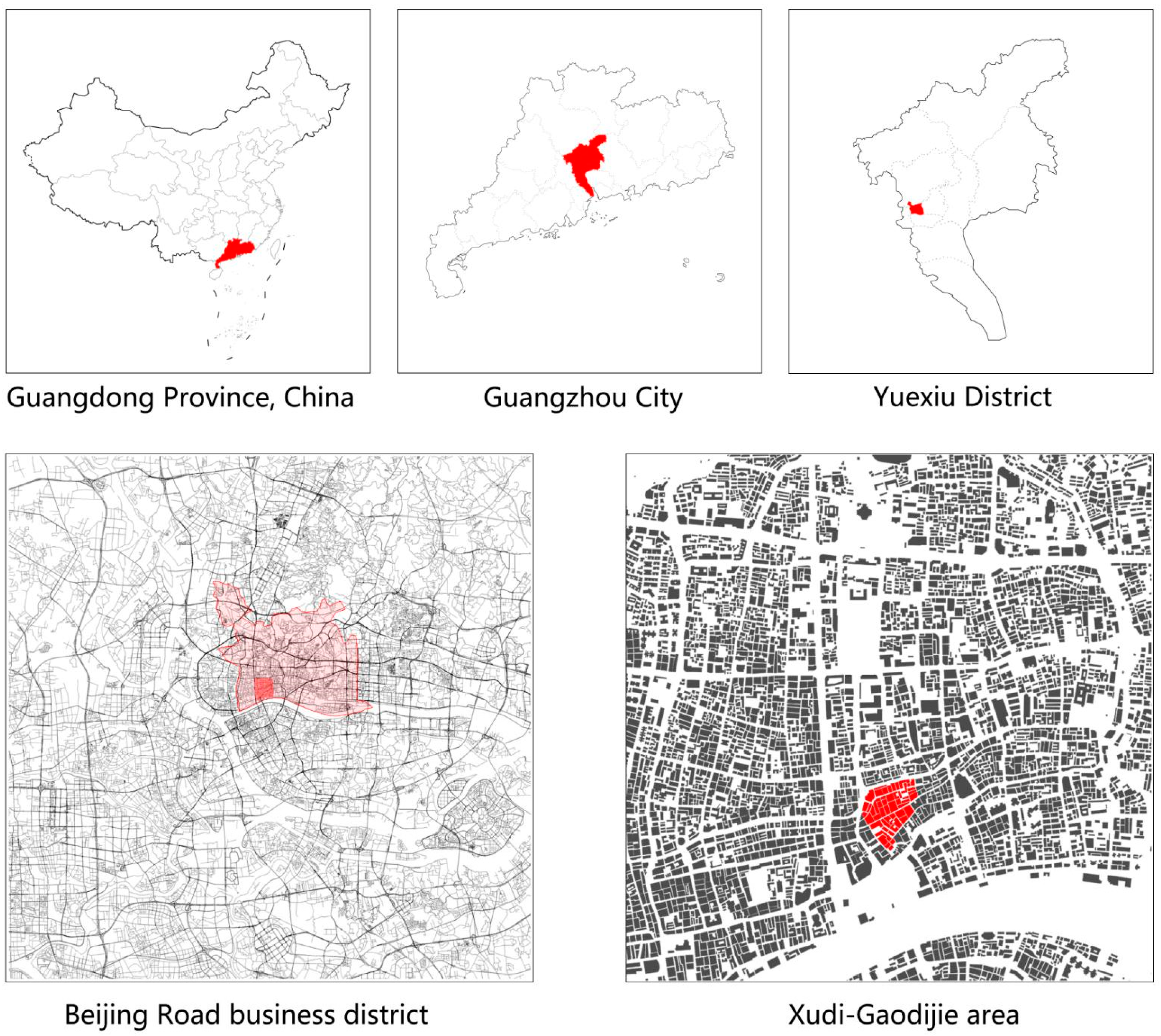
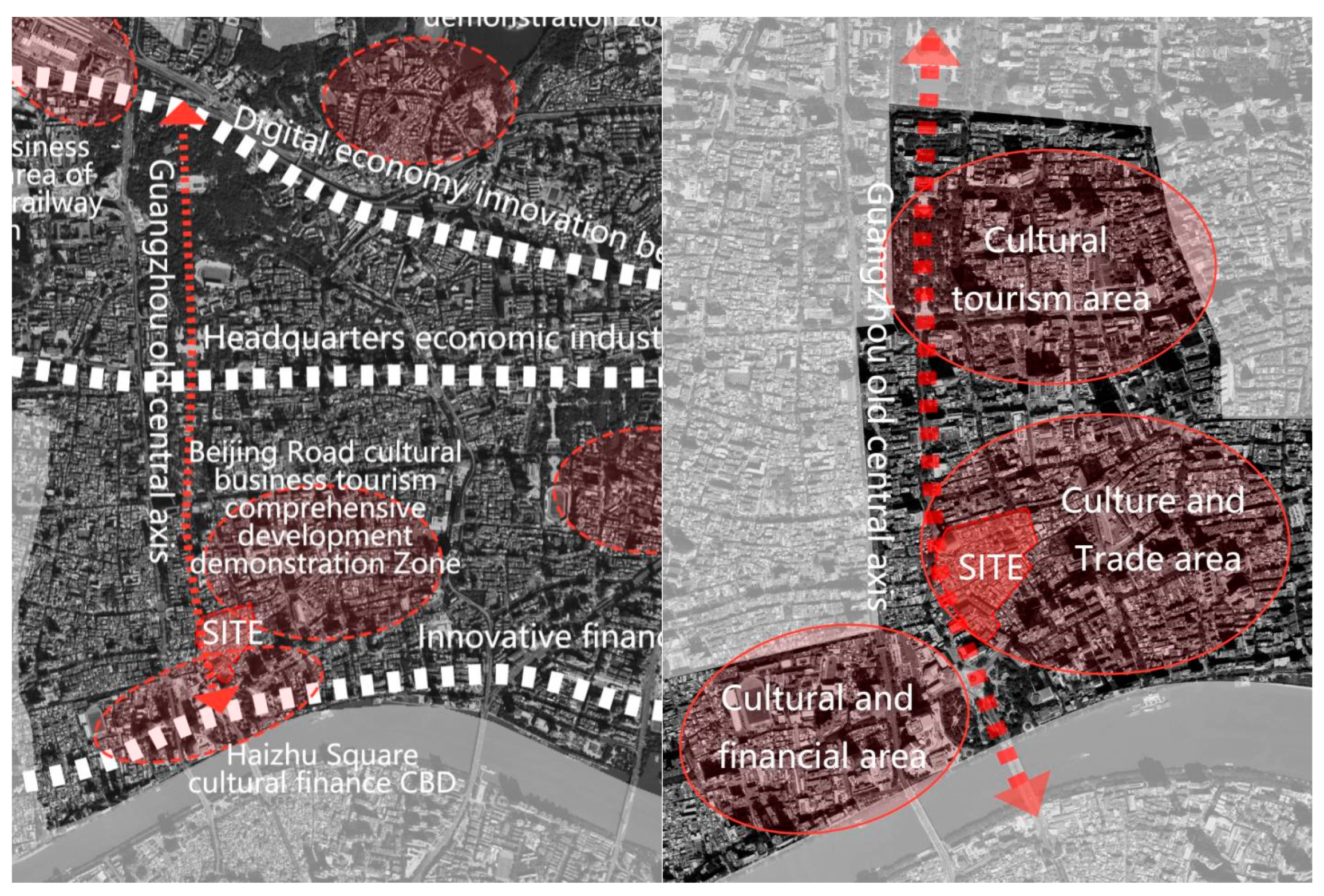
Our study area, Xudi-Gaodijie, covers an area of about 78,000 square meters in Yuexiu District, Guangzhou (Figure 1). It is located in the old central axis of Guangzhou and has a favorable geographical location, strong surrounding supporting facilities, and a well-established business and tourism atmosphere.
Figure 1-1.
Location of Xudi-Gaodijie area.
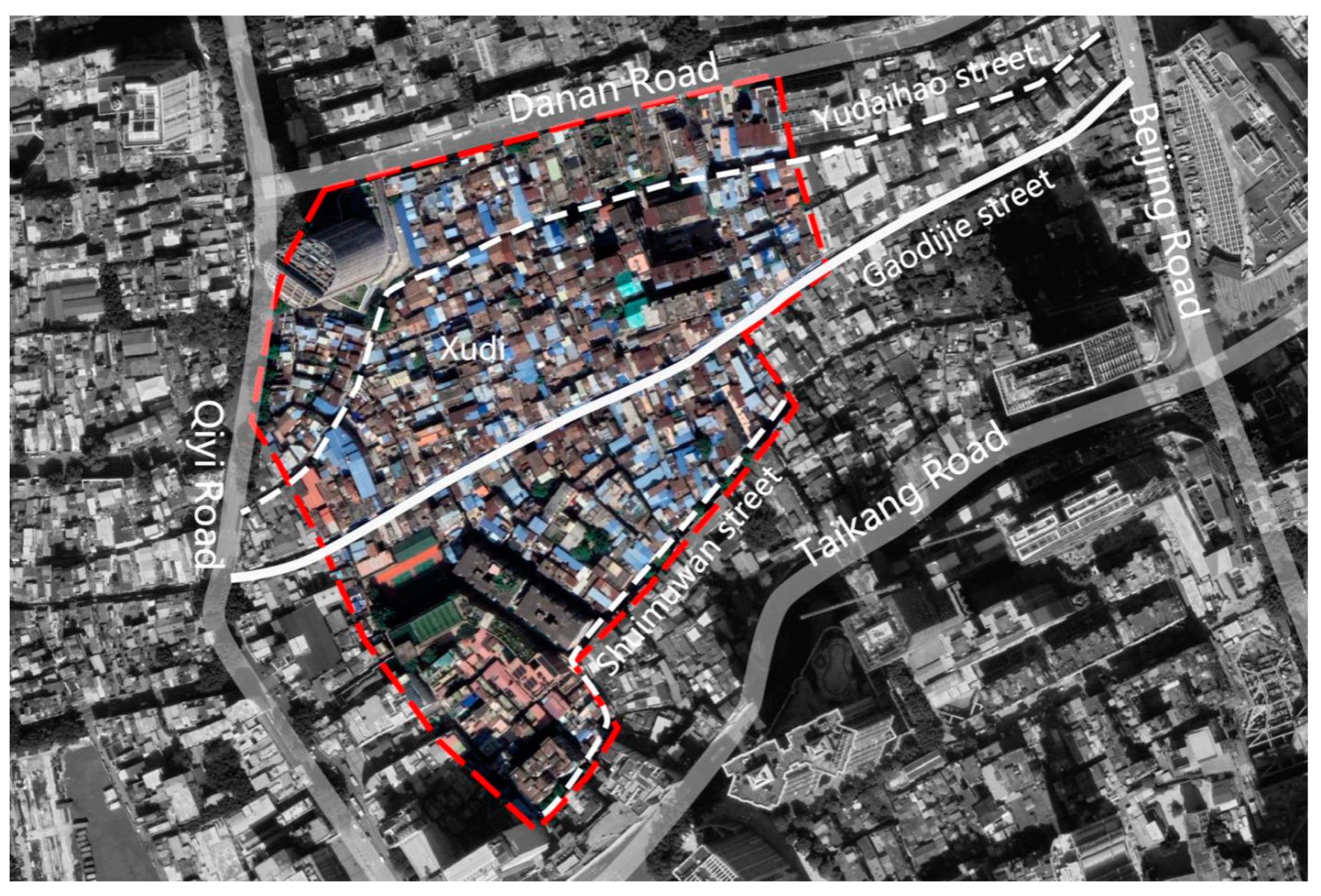
Xudi-Gaodijie contains a large number of historical buildings and cultural protection units. However, at present, the texture and public spaces of the area have deteriorated significantly (Figure 2).
Figure 1-2.
City map of Xudi-Gaodijie area in 2022.
The transportation and storage of goods in Xudi-Gaodije have brought noise, pollution, congestion, fire hazards, and public security problems creating a serious decline in the quality of life on the block. Population loss has grown severely as a result.
1.2.2. Internal environment
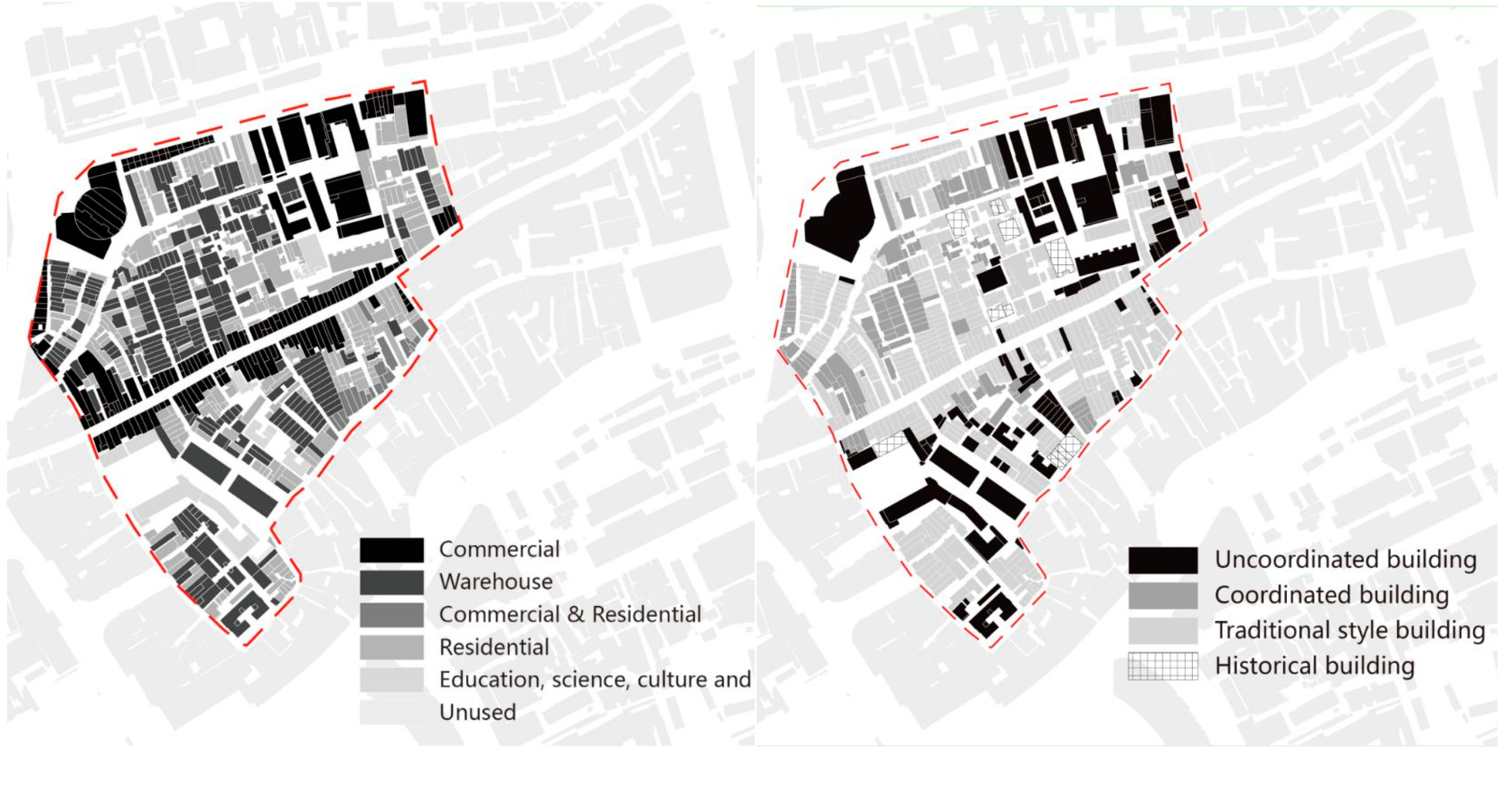
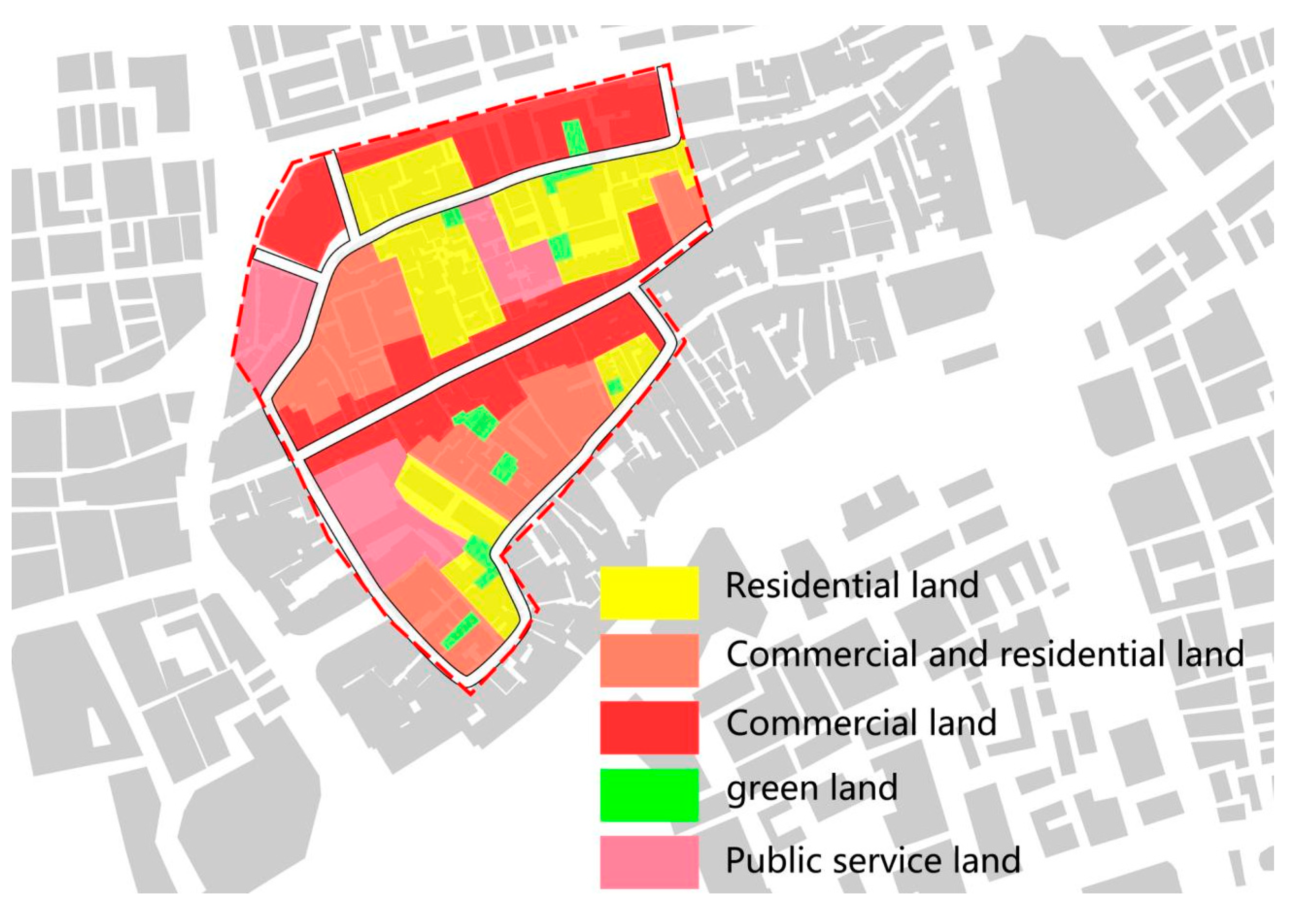
In the past 20 years, the wholesale and retail industry in Xudi-Gaodijie area has grown significantly and residential functions have been gradually replaced by warehousing[17]; warehouses are distributed in a chaotic manner throughout the area without obvious zoning. Business functions are mainly concentrated in Gaodi Street and Danan Road. The functional pattern of buildings on the block is clear and includes many historical buildings. However, several of these structures are not in harmony with the historical features of the area and need to be transformed (Figure 3).
Figure 1-3.
Analysis of land functions and architectural styles.
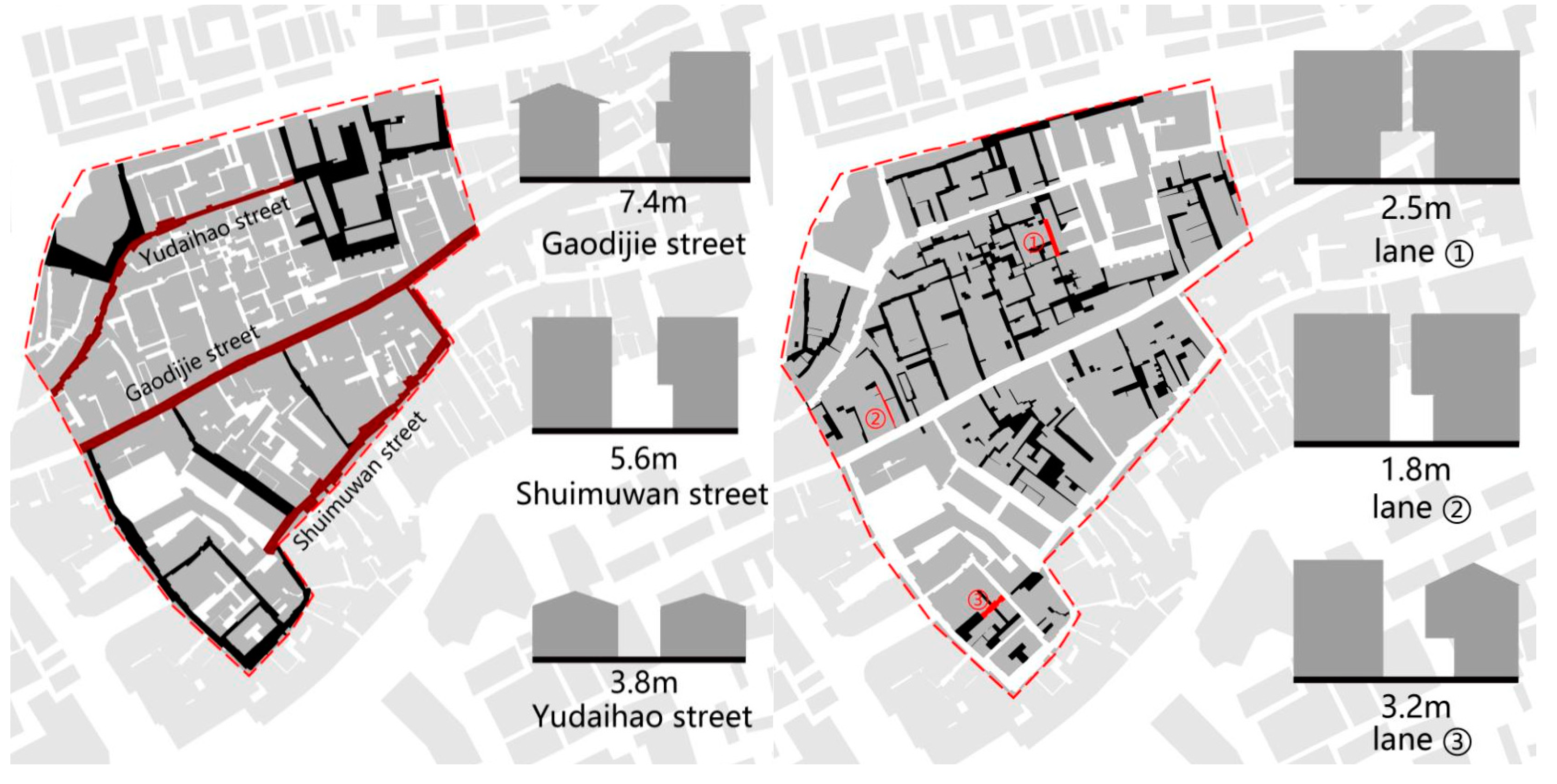
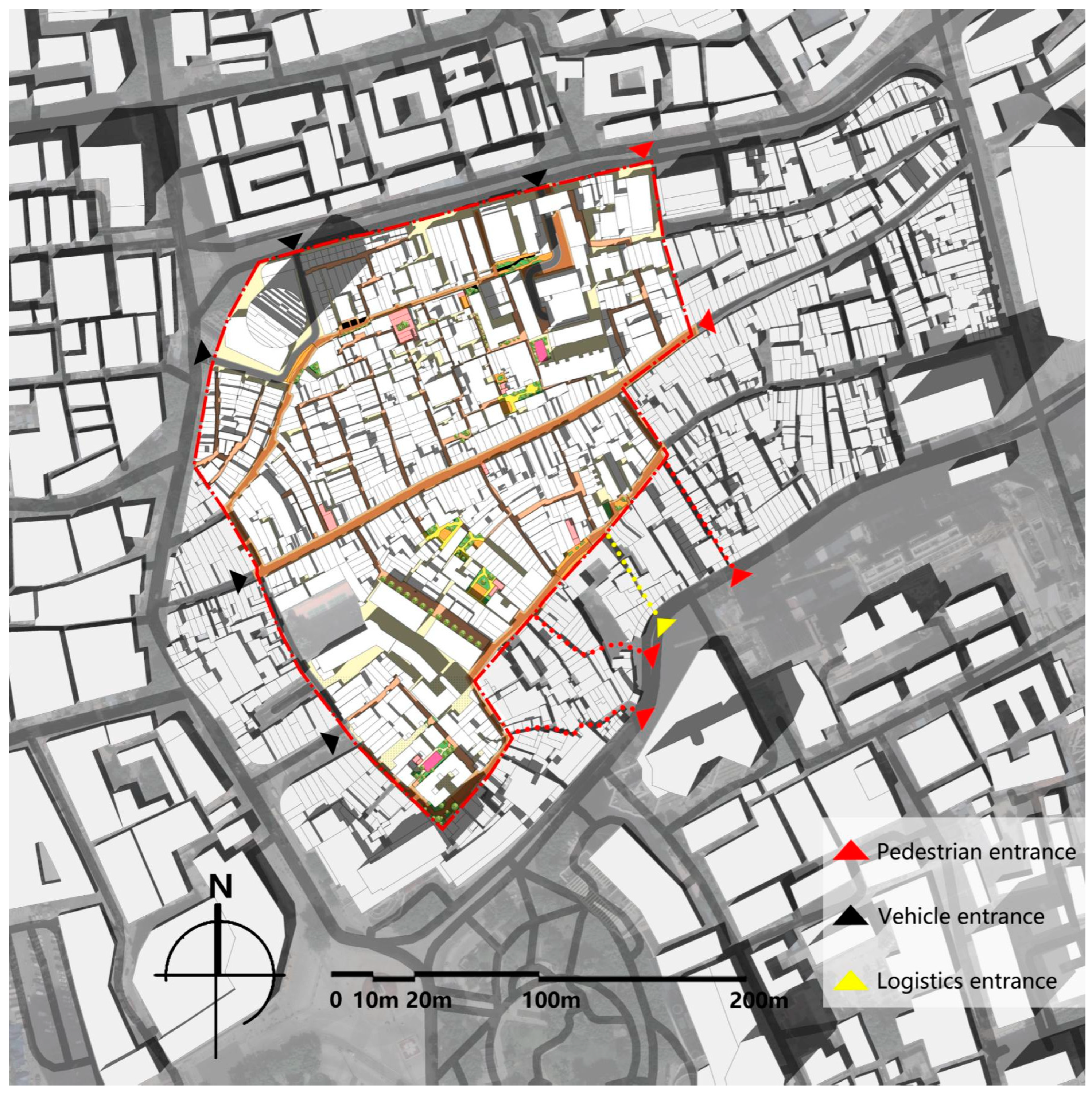
The internal road network of the site is complex and mainly centers on Gaodi Street, Yudaihao Street, and Shuimuwan Street as its basic structure. Gaudi Street is the main commercial street from which many smaller streets and alleys extend internally (Figure 4). Most of these roads are only open to pedestrian and non-motor vehicle traffic, but the mixed flow is a serious problem. The phenomenon of disorderly construction has led to poor connections among streets and lanes, further increasing the traffic burden of the block.
Figure 1-4.
Streets and lanes of Xudi-Gaodijie area.
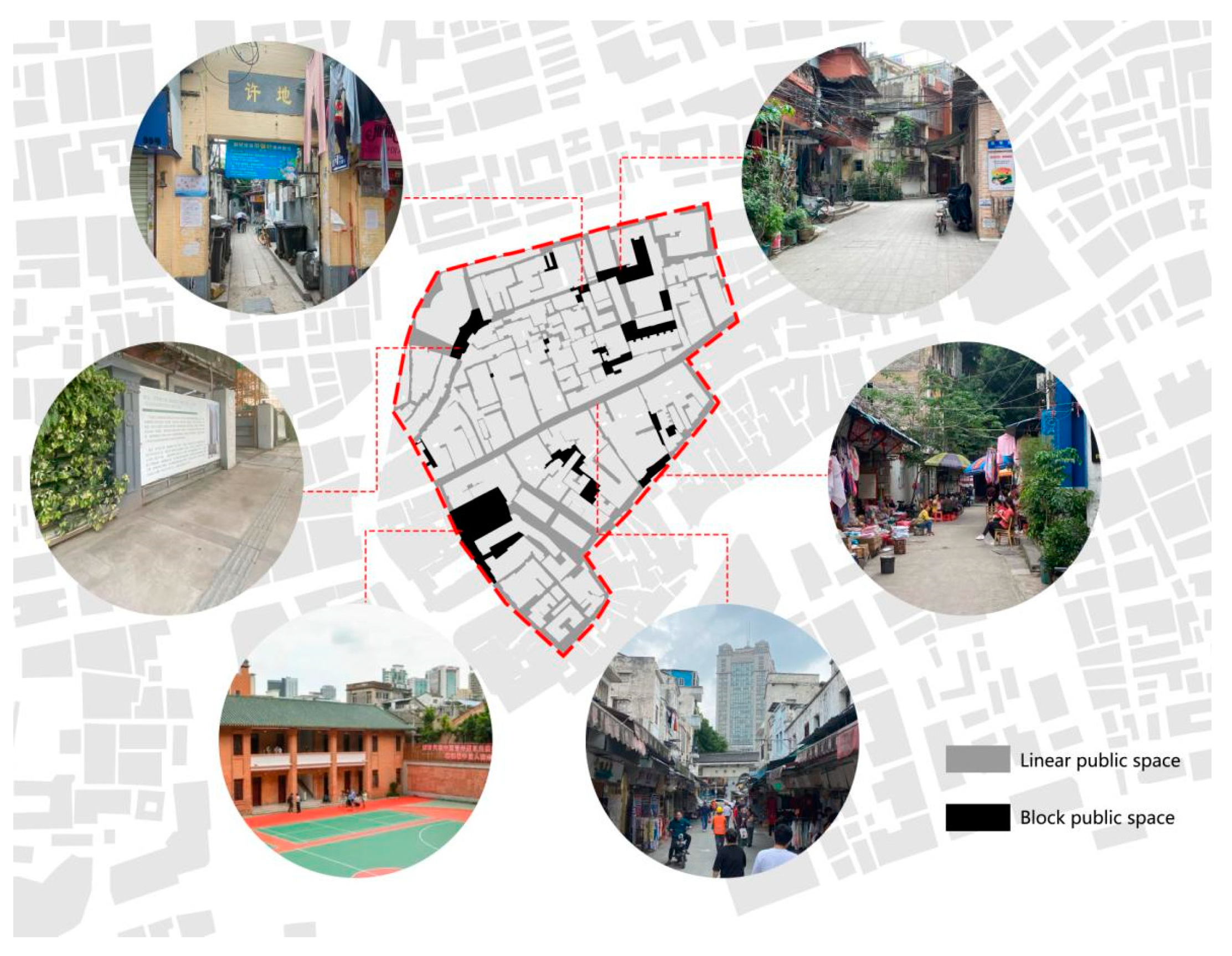
The existing public spaces in Xudi-Gaodijie area are mostly streets and alleys, school playgrounds, and open spaces between buildings. There is a lack of pocket parks or small green land squares to supplement these activity spaces (Figure 5).
Figure 1-5.
Analysis of existing public space.
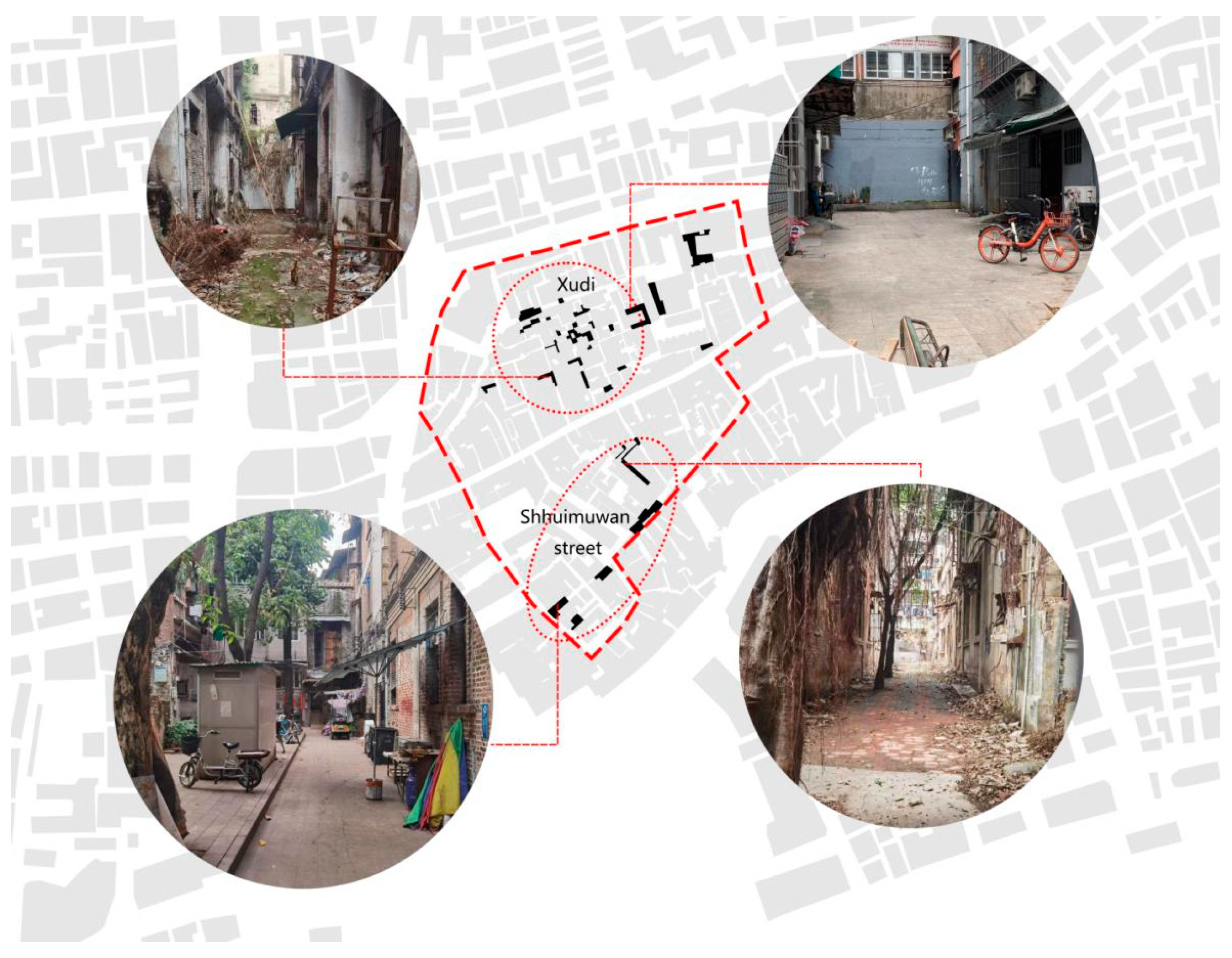
Several “lost” spaces are distributed in the Xudi community and on Shuimuwan Street, close to historical buildings or crowded points (Figure 6). These lost spaces have not been fully utilized and are public spaces with significant development potential.
The key to solving the local decline problem is to improve the style and features of public spaces and to regenerate the business formats in the area. These problems require careful attention to old city regeneration in terms of preserving the original style of the block, improving the living environment, and attracting more residents.
Figure 1-6.
Analysis of lost spaces.
1.3. Development opportunities for old city
1.3.1. Plug-in methodology
The insertion of “plug-ins” is a sustainable methodology that causes relatively little damage to the city and can be traced back to Roman modes of urban planning[9]. New urban plug-ins are inserted into the existing urban background to allow the system to continue on its current space-time trajectory.
A large number of urban regeneration concepts were put forward in the two decades following World War II. Peter Cook put forward the “plug-in city” concept; similar, small-scale and progressive urban regeneration models such as “urban catalyst” and “urban acupuncture” then gradually emerged. Headed by Peter Cook, the Archigram group was founded at the Architecture Association in 1960. Archigram sought the use of advanced technologies to resolve problems with social flow, dynamic changes, and urban development.
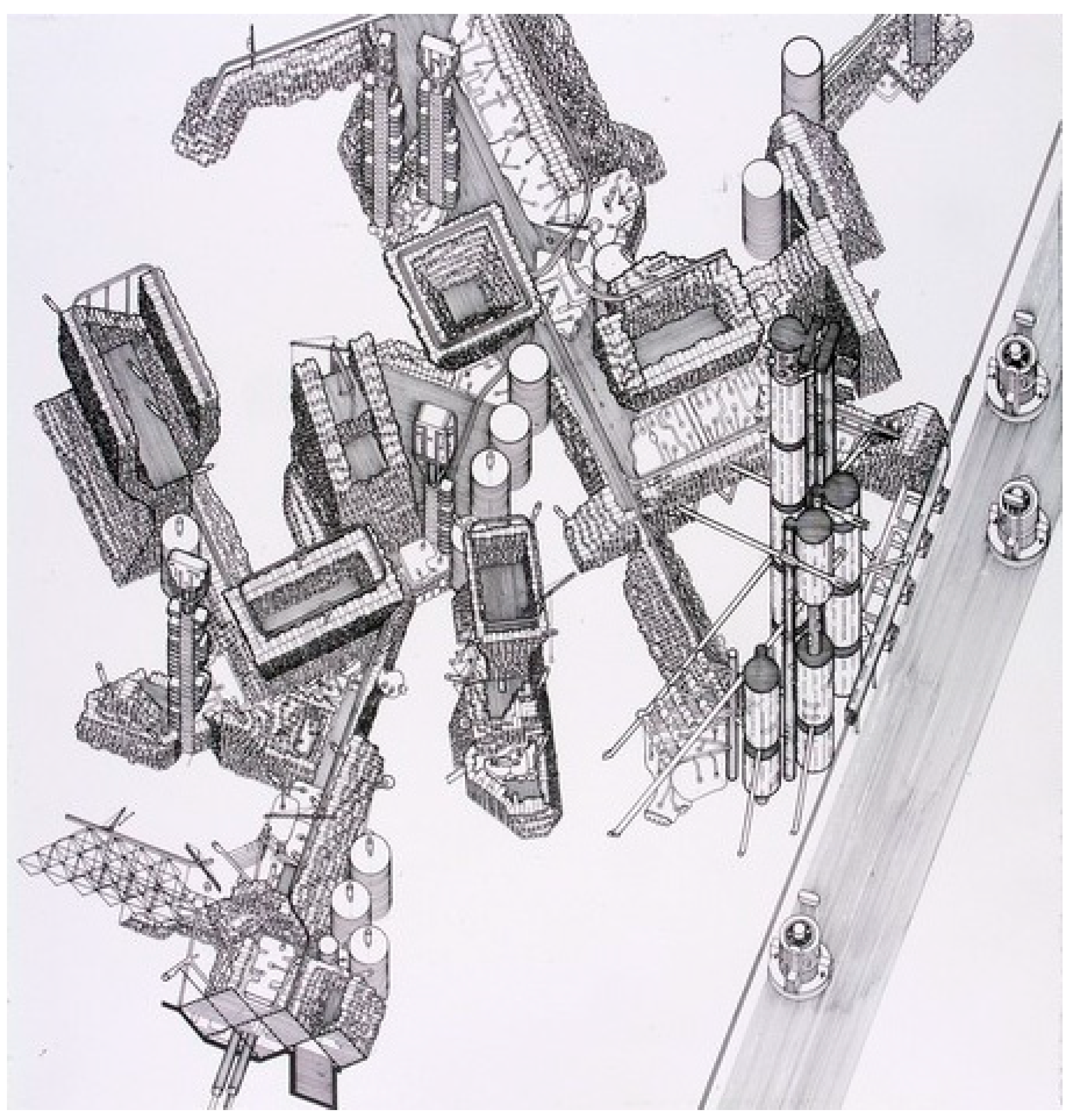
In the mainstream academic view, the plug-in city completion scheme in the general sense includes a modular mobile metal cabin as the basic component (Figure 7). Mobile communities of different sizes can be disassembled and reorganized according to population size using this basic unit, then “inserted” into the “megastructure of concrete” of the central infrastructure according to different needs[8].
Figure 1-7.
Plug-in city completion scheme (www.archdaily.cn).
Figure 1-7.
Plug-in city completion scheme (www.archdaily.cn).
The plug-in city is not actually a city per se, but a giant structure that serves the purposes of sustainable development. Housing, transportation, and other basic services in the plug-in city are propelled by giant machinery. Components can be pulled out and plugged in by hoisting equipment every 20 years. In this way, people, machinery, buildings, and various facilities required by the city are deployed in the same artificial system with high mobility, integrity, and standardization. When dramatic changes in production and life or a technological “leap forward” occur, residential and other various structures in the city can be updated in a sustainable manner.
The design concept of the plug-in city is still of critical significance in today’s society. Advancements in technology and productivity allow designs that once existed only in fantasy to be put into practice. Previous iterations of modular and organic regeneration theory can also provide workable guidance and inspiration for current designs. In 2005, Jon Lang proposed the “embedded” urban design concept under which the plug-in city is defined based on typology; the design and implementation of infrastructure projects catalyzes spatial intervention[7]. The embedded city seems to be an exploration of the plug-in-design urban regeneration model in the West.
The plug-in design concept provides an attractive new methodology for urban regeneration and a reversal of the traditional role of infrastructure in the city. Especially when dealing with the relationship between a new entity (plug-in) and original urban structure (infrastructure) in the process of old-city regeneration, making full use of the variability and catalysis of the plug-in and strategically inserting new elements allows for planned, gradual regeneration of the city[4].
Further, the plug-in design concept is not only applicable to future urban design but is also consistent with the regeneration of old cities. It embodies the strategic and diverse characteristics of urban regeneration goals, as well as the principles of cautious, small-scale, and specific regeneration and transformation. Therefore, the plug-in design can effectively revitalize old city areas with minimal impact as a mode of sustainable point-to-area development.
1.3.2. Small-scale, gradual-as-value orientation
“Urban repair” is a development concept that aligns with Chinese values. Alongside many decades of rapid expansion and development in China, old urban areas have faced the decline and shrinkage of various functions, the accelerated destruction of urban style and the decline of people’s quality of life. Urban repair is enacted to improve urban facilities and restore townscapes by using abandoned land, increase public and green space, improve travel conditions, transform old buildings, and protect historical and cultural resources[5].
The urban repair process involves systematically combing various elements in the urban space to move towards a new “organic order” through prudent and organic urban regeneration[12]. Small-scale and gradual repairs (e.g., to decaying functions and spaces) are enacted according to local conditions as a “supplement” to the existing city infrastructure. This includes supplying and/or increasing various public functions that have become missing or were omitted in the urban development process[14].
“Micro” regeneration has micro scale, micro input, and micro entry point characteristics. Its regeneration object is idle public space in the city, including small-scale locations such as squares and parks. The basic investment of micro regeneration is relatively low, which gives the practice itself a low access threshold and allows for various forms of cooperation. The entry point may begin with a temporary strategy for small-scale functional improvement[10].
Urban repair and micro regeneration theories are applicable to old cities in China. As discussed below, we used these theories as a guide to find micro spaces in our study area that can be targeted for small-scale transformation and improvement[16].
2. Case Study
2.1. Solution of school - rigid plug-in design
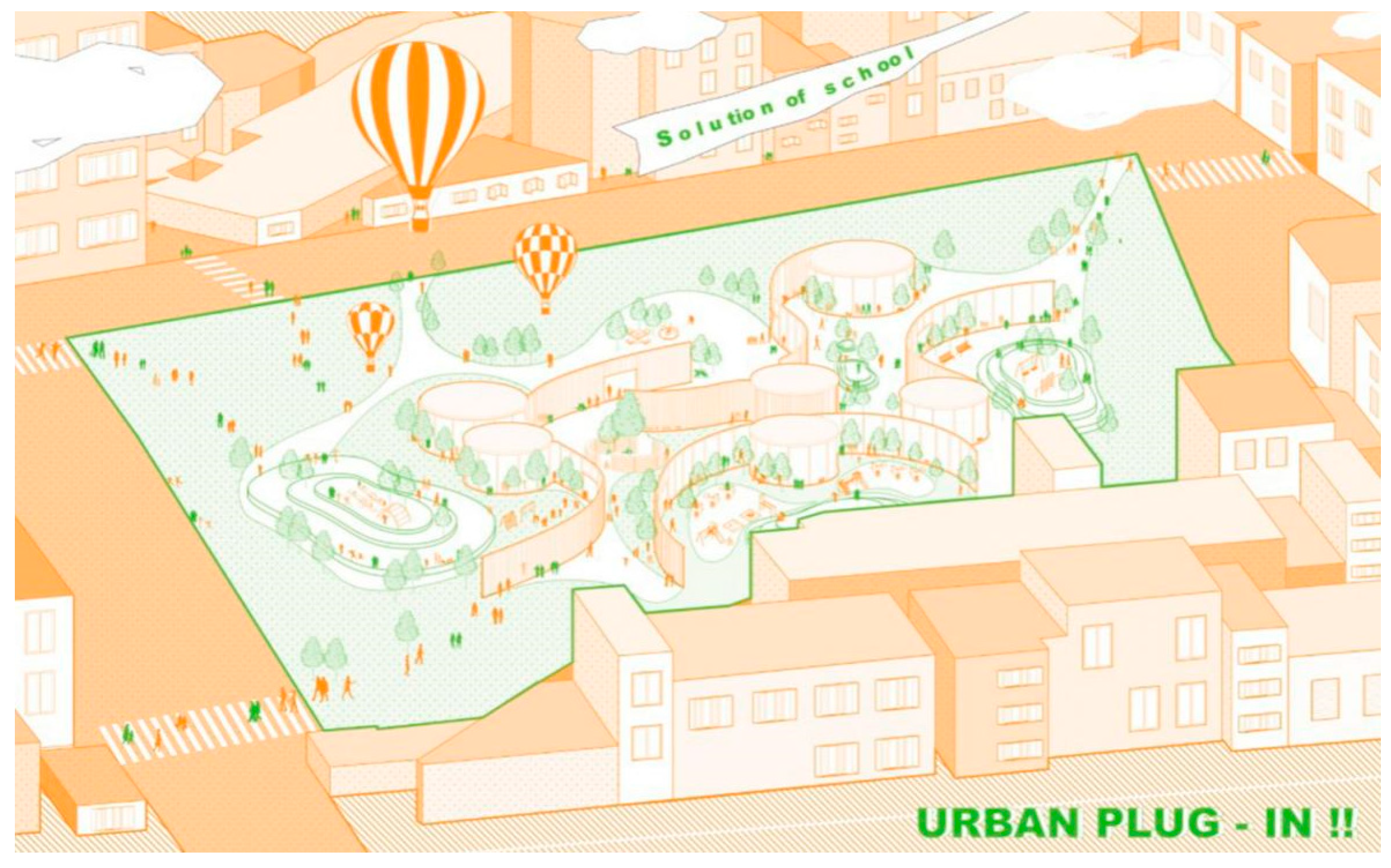
“Solution of school” is a new educational space system (Figure 2-1) wherein individuals can select types of plug-ins together with their neighbors through social networks to spontaneously construct a school. With its universal design features, this plug-in is adaptable to the characteristics of the street and gives priority to local children.
City plug-ins bring local residents together. Through a space composed of plug-ins, citizens grow to know and communicate with each other, strengthening the relationships (i.e., the social network) in the region. Plug-in methods can be used to insert solid structures such as buildings, infrastructures, or public spaces into the original city space by means of new construction or transformation, thus catalyzing the urban regeneration process. The insertion of a solid structure is not a short-term process, making it a “rigid” plug-in design component.
Figure 2-1.
Solution of school urban plug-in (www.youfab.info)
Figure 2-1.
Solution of school urban plug-in (www.youfab.info)
2.2. Cultural center - flexible plug-in design
The cultural center plug-in takes leisure and entertainment as its business formats, and the center itself as the received spatial element (Figure 2-2). It is a machine that catalyzes social interactions and adapts well to changing cultural and social conditions within its time and place[18].
Figure 2-2.
Cultural center (awards.re-thinkingthefuture.com)
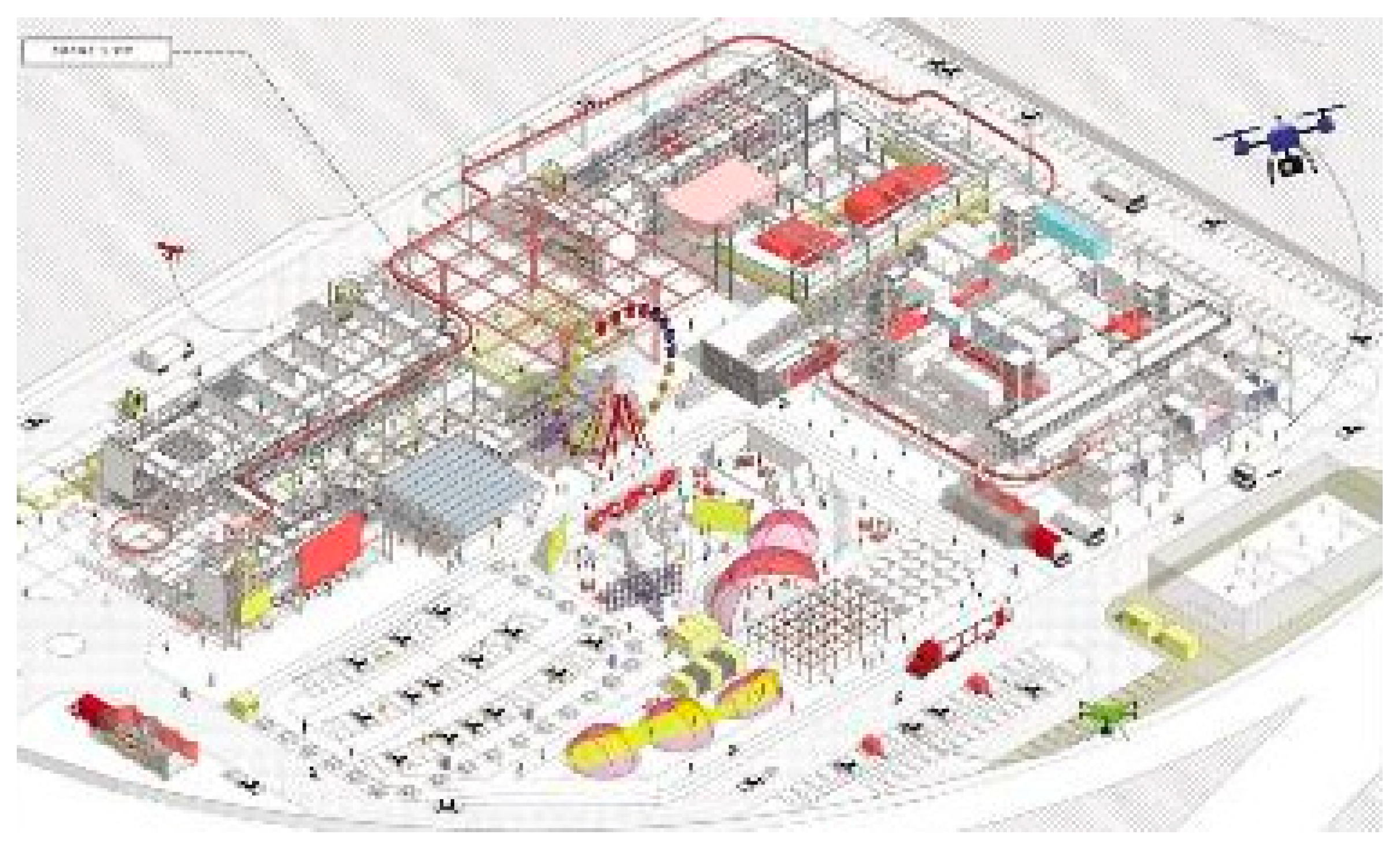
The function of the cultural center changes with demand, allowing a variety of (uncertain) uses in adapting to changes in space, culture, society, and other aspects of the city. In the process of plug-in insertion, disassembly, and reassembly, an improvisational building with continuous activities is generated in the urban space[18]. The cultural center can initiate or modify existing cultural and social facilities. The scale and number of plug-ins depends on the dynamic needs of users and the increase in passenger traffic; the center generates more activities and business opportunities, thereby adding more complex layers to the system.
The conceptual design of the cultural center continues the spatial structure of the original building and does not require large-scale demolition or reconstruction of the building itself. The design mainly involves inserting new business formats and functions to activate the urban vitality of the region. This design method is flexible, as the plug-in can convert one function to another swiftly and at low cost; changes can be made with relative ease in the short term.
2.3. Urban public space system - multiple plug-in design
The old city area of Beijing is very dense and lacks sustainable spaces. Much of the public space is occupied by illegal buildings[19]. This has a certain danger and worsens the quality of the urban environment. Therefore, designers propose to meet people’s needs through informal facilities. In this type of plug-in design, designers find inspiration in the sharing economy (Figure 2-3). The urban space is changed by creating shared, prefabricated units (plug-ins).
Figure 2-3.
Urban Plugins in action (urbanresearchtable.com)
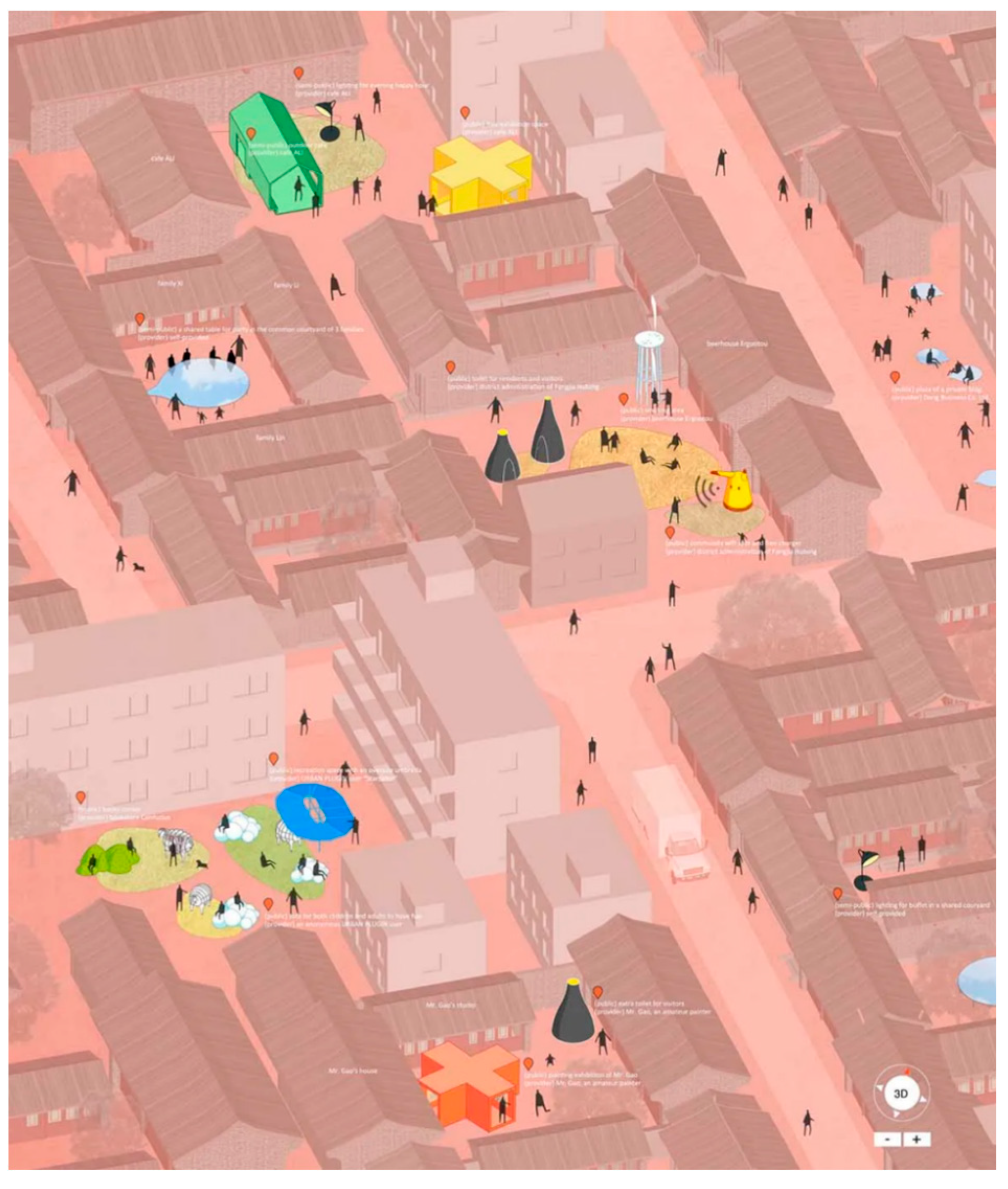
Users can design their own public spaces with prefabricated units via the Internet. The service team will provide various urban plug-ins[19]. Users can view all plug-ins installed in the city on a real-time map and determine accordingly whether the space can be effectively shared. New public spaces can be established bit-by-bit to form a new urban system. The conceptual design of Beijing public space not only includes plug-ins of new physical structures, but also plug-ins of new business functions. Activating the urban vitality of the region through the comprehensive insertion of rigid and flexible plug-ins is a multiple plug-in design.
3. Methodology
3.1. Plug-in design
Based on the plug-in city concept, the theories of urban repair and micro regeneration, and several recent cases of old-city regeneration, we developed a new plug-in methodology in this study. New elements (plug-ins) are inserted into the original environment which can be combined into a unified system to revitalize the old city. This catalyzes the design of the surrounding environment as well.
The plug-in methodology falls under the design framework of “planned and prudent small-scale progressive regeneration”. Its values mainly include a cautious attitude toward urban regeneration and organic development of the city without damaging the urban infrastructure. Micro structures are developed with flow continuity while maintaining the integrity of the main structures of the city. Old and new urban spaces are integrated as the original urban ecosystem is activated with new plug-ins.
3.2. Elements of plug-in design
The plug-in type can be flexibly selected for urban regeneration according to the specific situation of any project. Inserting entities such as buildings, streets, and squares into the urban space is a rigid plug-in design. Inserting new business formats into the original physical space and replacing certain functions is a flexible plug-in design. Either type of design involves inserting plug-ins into a receiving device (“socket”) in the urban space for the synchronous updating of the physical space and the economic activities that take place therein (Figures 3-1, 3-2).
Figure 3-1.
Socket schematic diagram
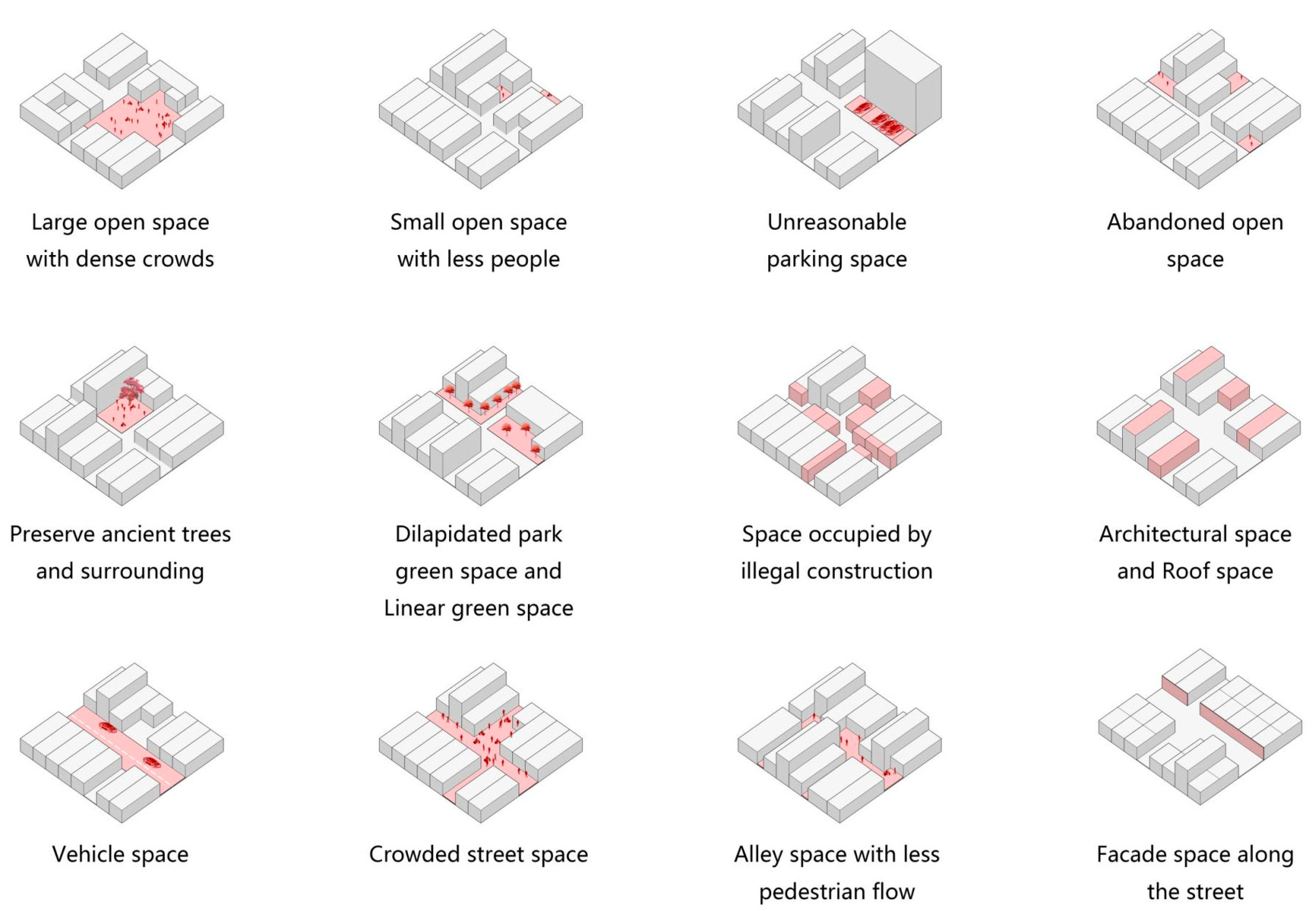
Figure 3-2.
Plug-in schematic diagram
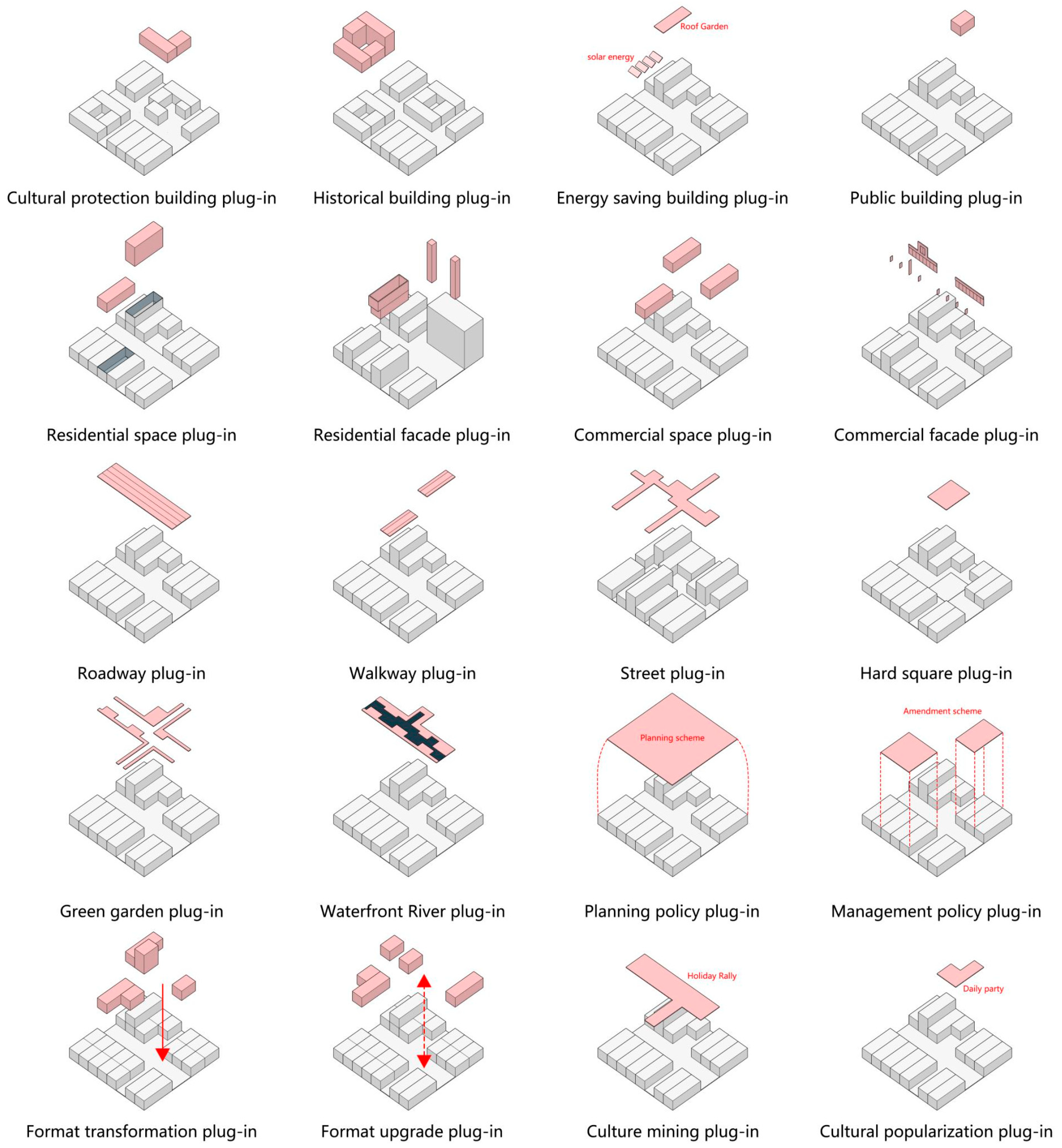
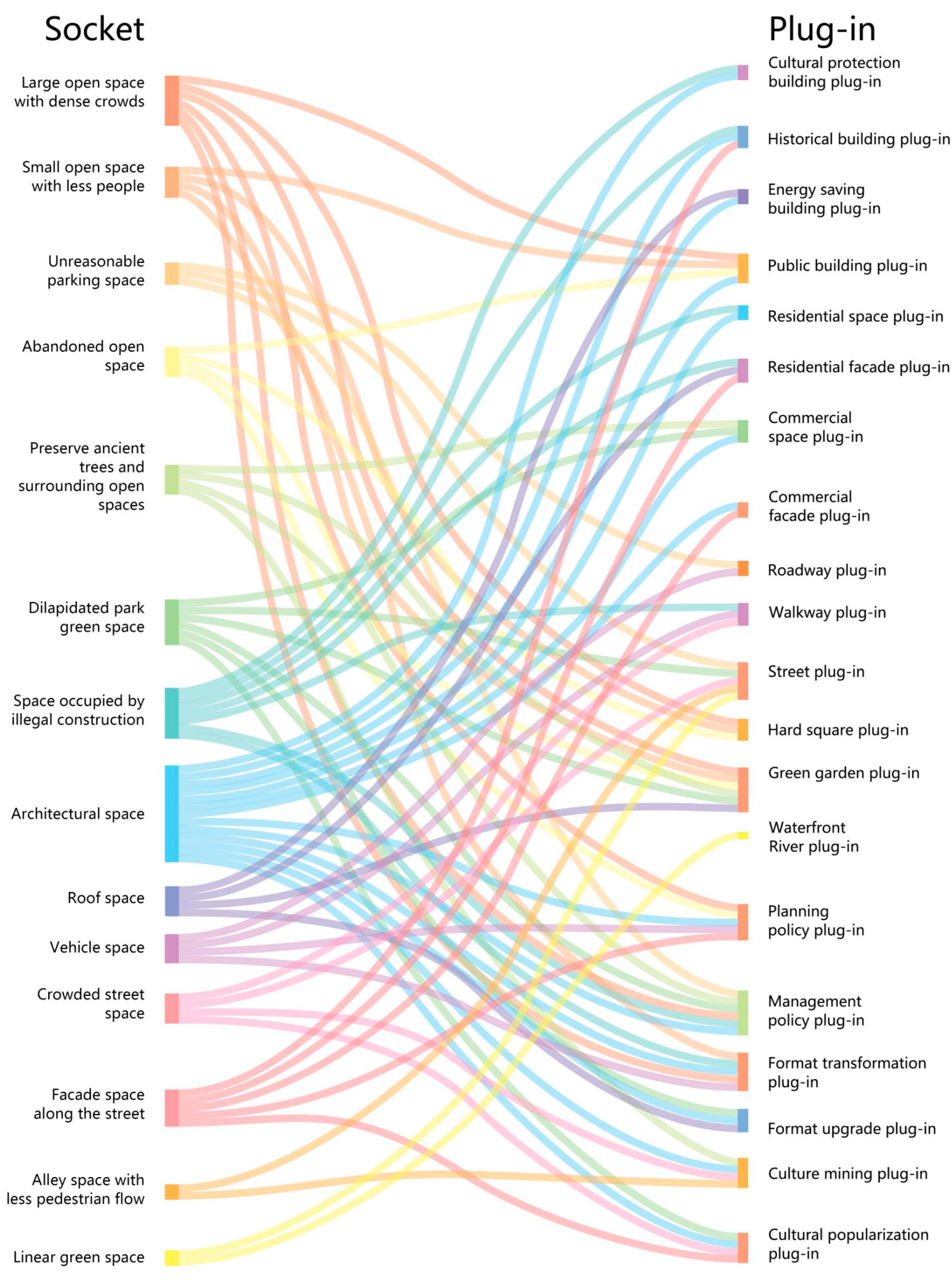
A detailed matching list can be developed based on the above (Figure 3-3, 3-4). Designers can follow the specific categories in the list, adhere to universal matching principles, and select specific plug-ins for combination, usage, or replacement in different design projects accordingly (Figure 3-5).
Figure 3-3.
Socket match list
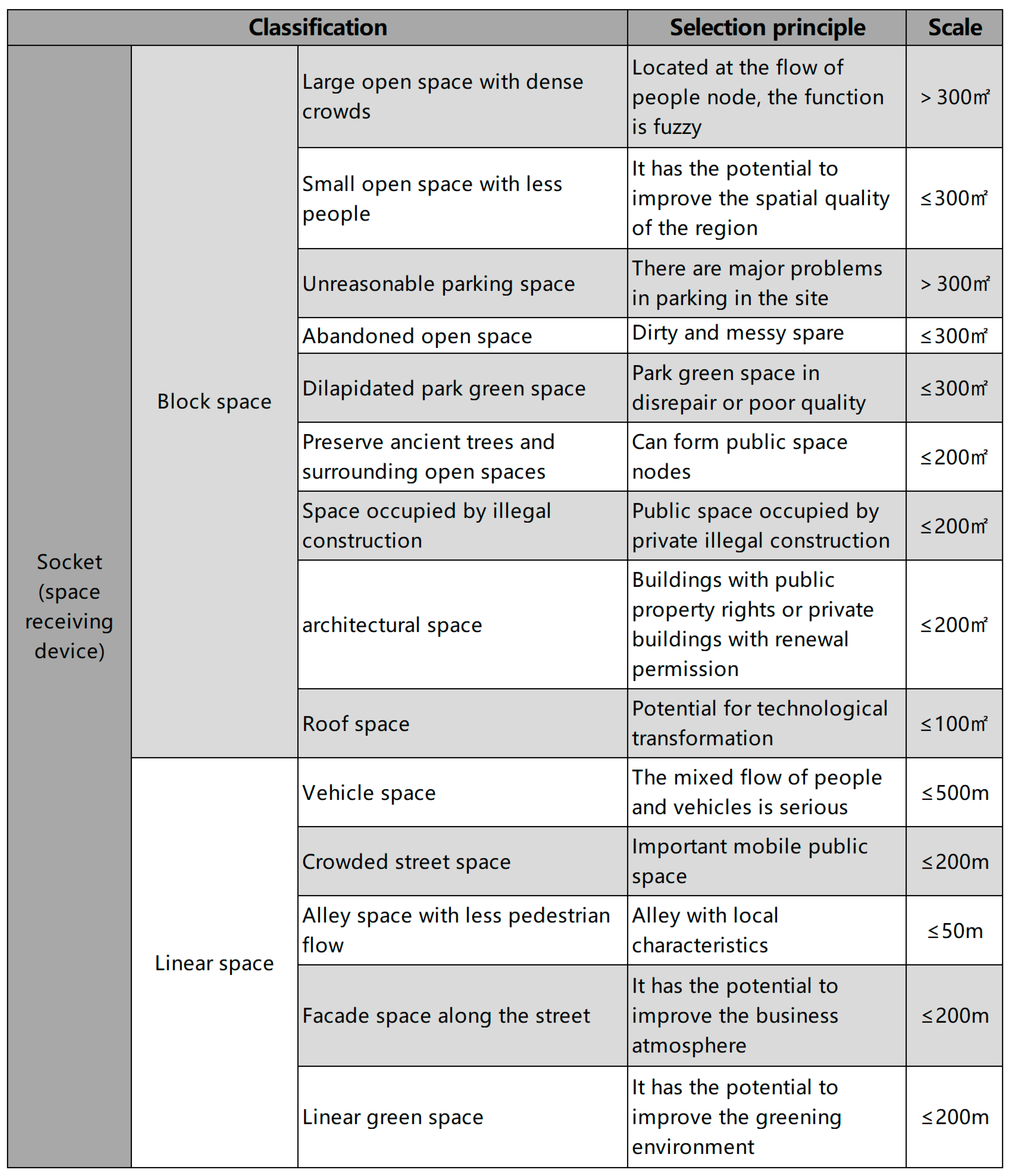
Figure 3-4.
Plug-in match list
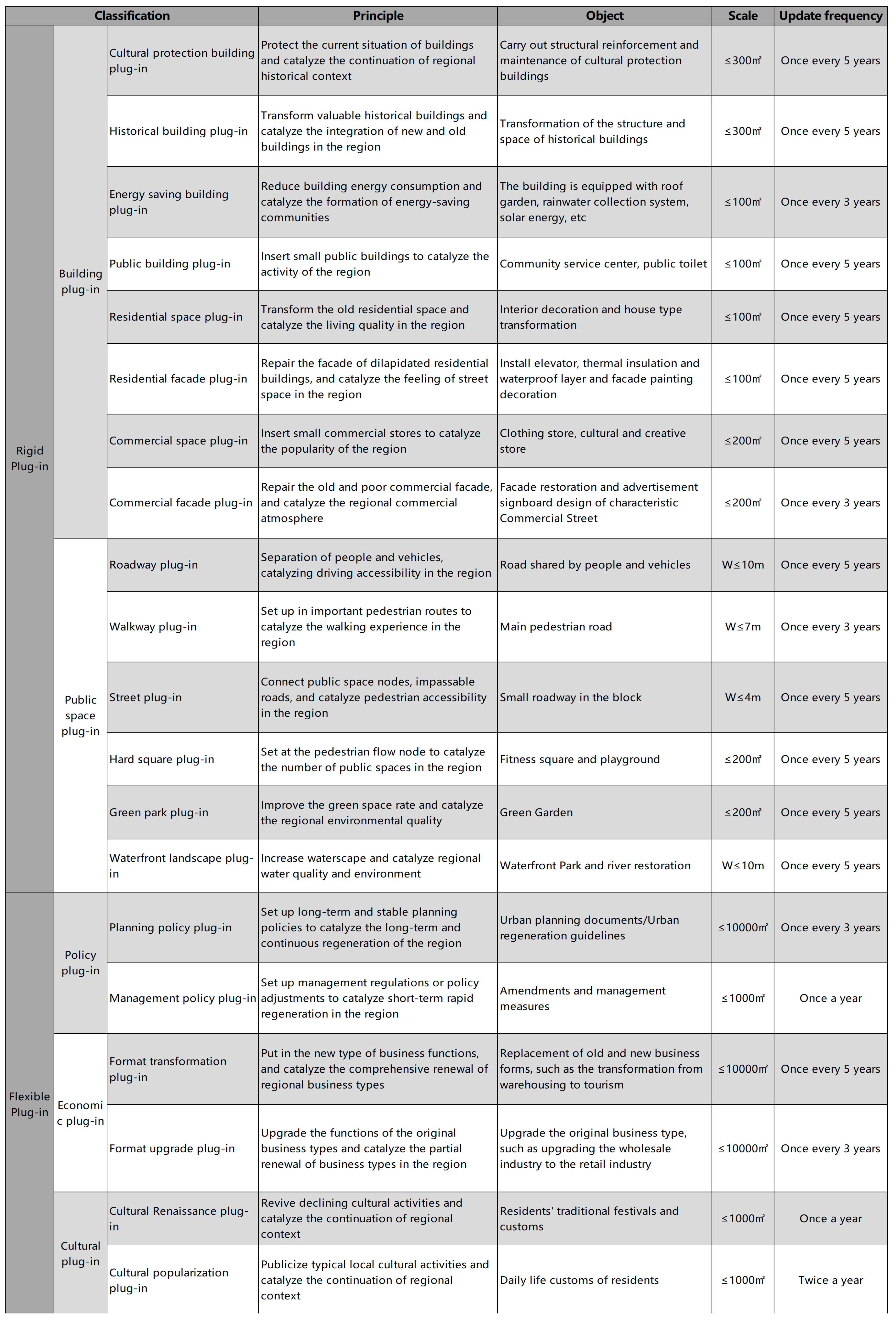
Figure 3-5.
Connection between socket and plug-in
3.3. Application mode of plug-in design
The plug-in design methodology is applied for urban regeneration to control and strengthen the texture that embodies the spirit of the city. This can be achieved by preserving the texture, strengthening loose texture, repairing lost texture, and/or creating a new texture for the area. The plug-in design must adhere to five main principles. First, it is necessary to fully understand the context and spirit of the area. Second, the function of the plug-in must be controllable. The design of plug-ins must be strategic and the impact of plug-ins must be predictable. Finally, the insertion of each plug-in must be based on the revival of the whole historical district.
In practice, rigid and flexible plug-ins may be combined or used alternately. In other words, a node of urban regeneration may not only require rigid plug-ins to regenerate the form of the city but also need flexible plug-ins to update the business formats to enrich the economic and social environments of surrounding blocks. The usage period of rigid plug-ins is longer; new flexible plug-ins can be inserted in rigid plug-ins as time goes on. Flexible plug-ins may also be replaced with rigid plug-ins as external structures age and the needs of citizens change over time. This replaceable organic update feature makes the fault tolerance rate of plug-ins higher and more sustainable.
There must be a period of observation after the plug-in is inserted. The risk that the plug-in does not satisfy expectations is fairly low owing to the small scale of the plug-in modules. If a newly tried module fails its intended purposes, the consequences are not excessively damaging and the change can be reversed with relative ease and low cost.
3.4. Mechanism of plug-in design
The plug-in concept is similar to the concept of a catalyst in the context of chemistry. Wayne Atton and Donn Logan defined “urban catalysts” as strategically inserting new elements to stimulate urban vitality and bring sustainable development around the project. The plug-in has a catalytic effect in attracting new business formats and citizens to the block as a form of point-to-area urban regeneration[2]. The plug-in itself does not damage or interfere with the urban spatial structure.
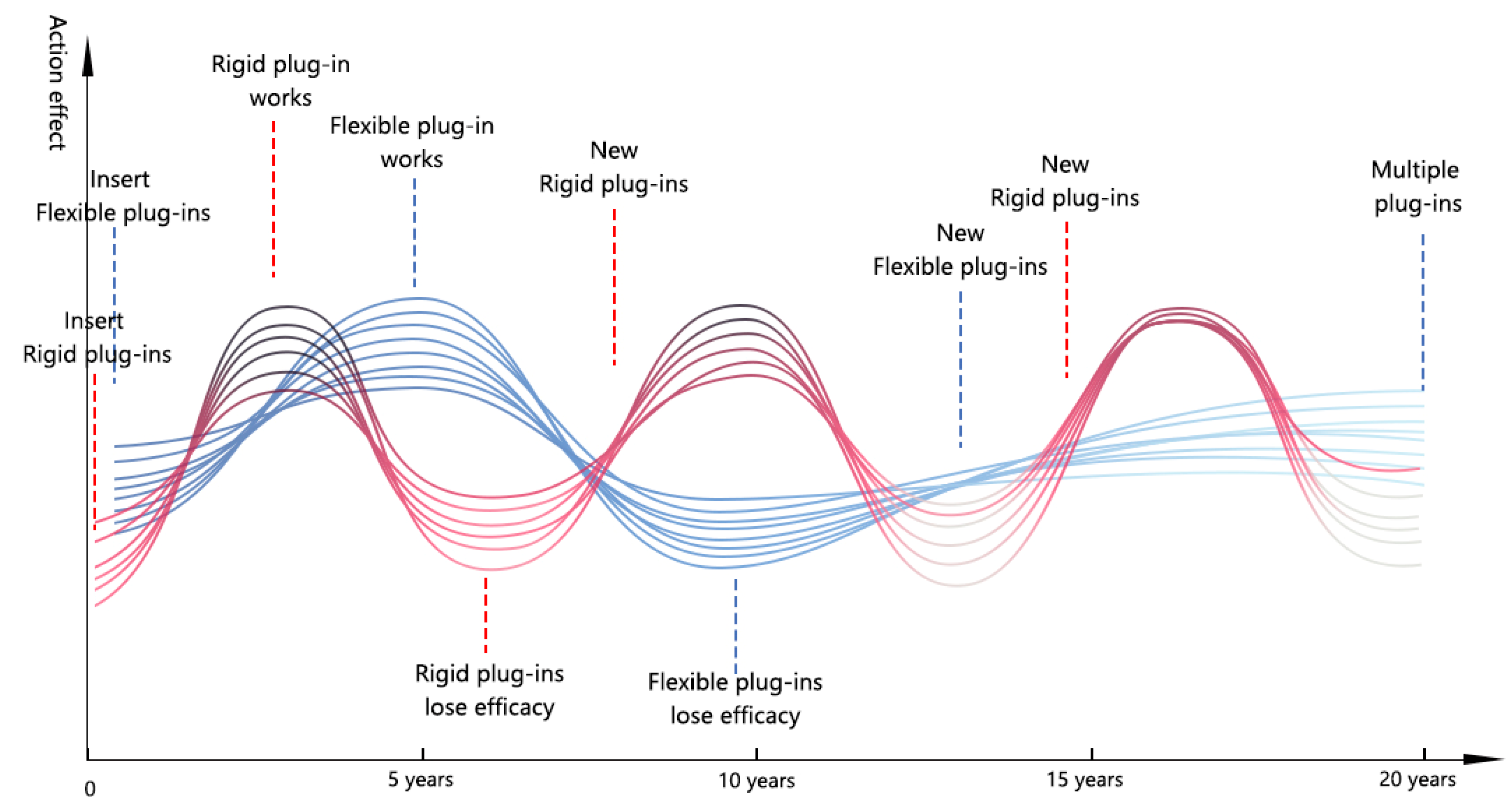
Further, the plug-in is replaceable – it is not static after it is inserted into a node. Over time, the business formats and context in the area change and directly affect whether the catalytic effect of plug-ins continues to be satisfactory. A plug-in may become inapplicable to a node space and need to be replaced (Figure 3-6).
Figure 3-6.
Replaceability of plug-ins.
The surrounding environment must be taken into account when injecting a plug-in into its particular urban space[13]. Certain historical buildings’ plug-ins are designed with the same original materials and traditional form. New buildings’ plug-ins may be designed with innovations in materials and by integrating old and new materials. Plug-ins in the BIM Technology Environment have assembly technicality. By simulating and analyzing the performance of the urban space (e.g., sunshine duration, thermal environment, wind environment, etc.) combined with rapid modular prefabrication characteristics, the accuracy of the design and its construction efficiency can be improved.
4. Design Scheme
4.1. Multiple analysis
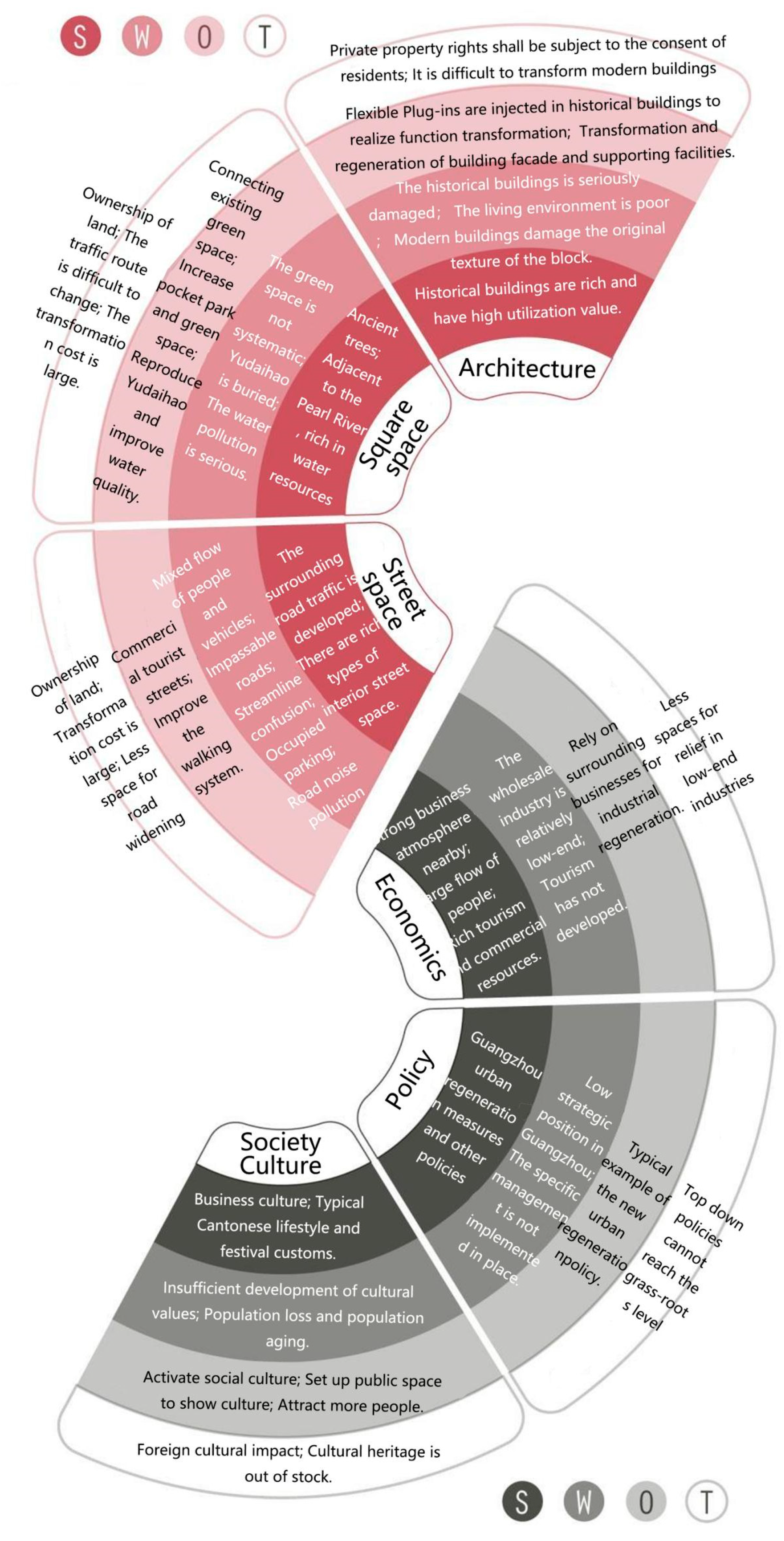
A lack of public space and decline in functional formats are the main reasons why Xudi-Gaodijie area has fallen into disrepair and disuse, as-evidenced by the SWOT analysis shown in Figure 5-1.
Figure 4-1.
SWOT analysis of Xudi-Gaodijie area.
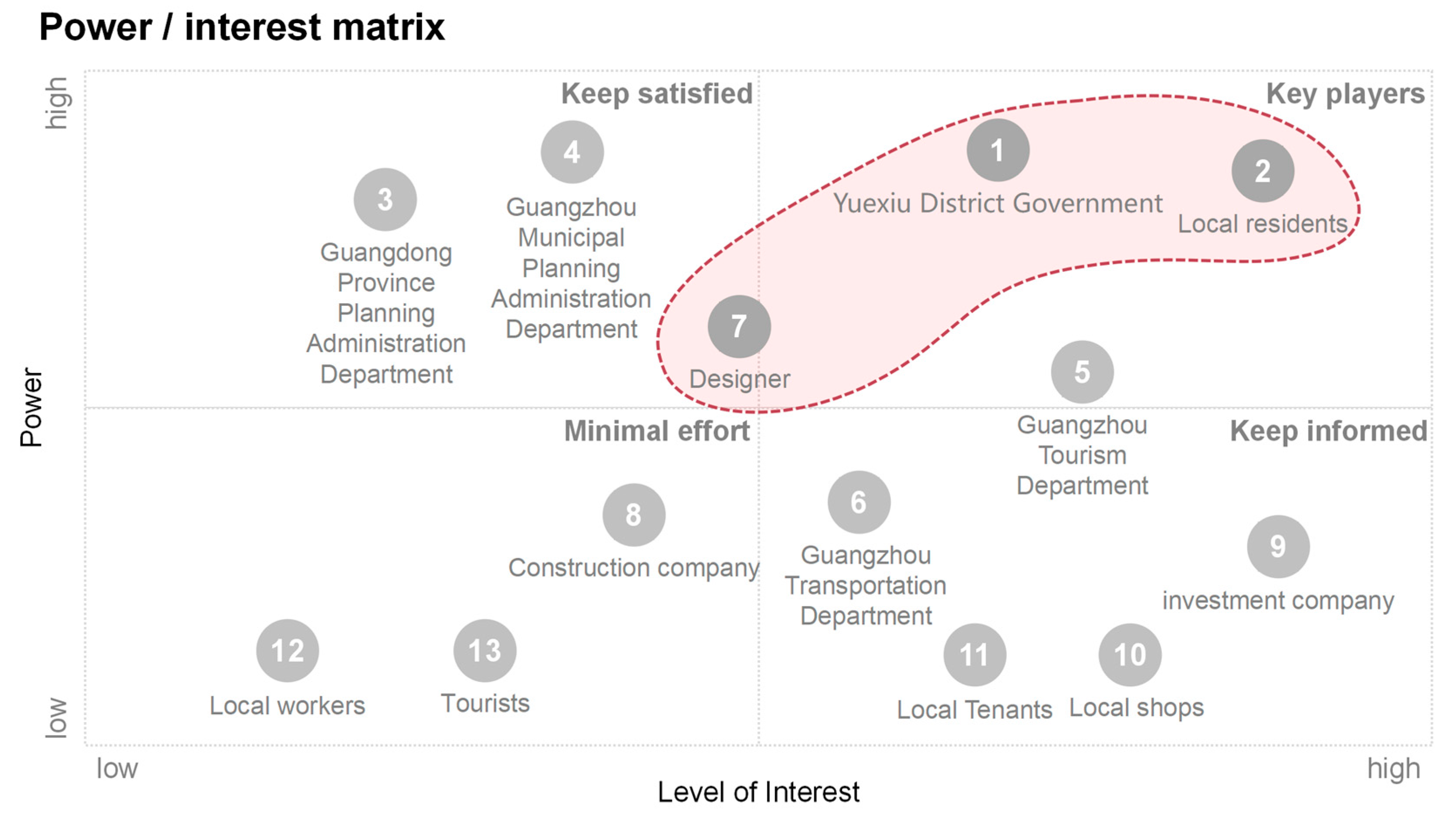
Our stakeholder analysis of the Xudi-Gaodijie area, as shown in Figure 5-2, reveals that local residents and the government are the core groups which designers need to serve. The fundamental goal of the project is to improve the quality of life of residents and promote effective construction and development of the city.
Figure 4-2.
Power/interest matrix of Xudi-Gaodijie area
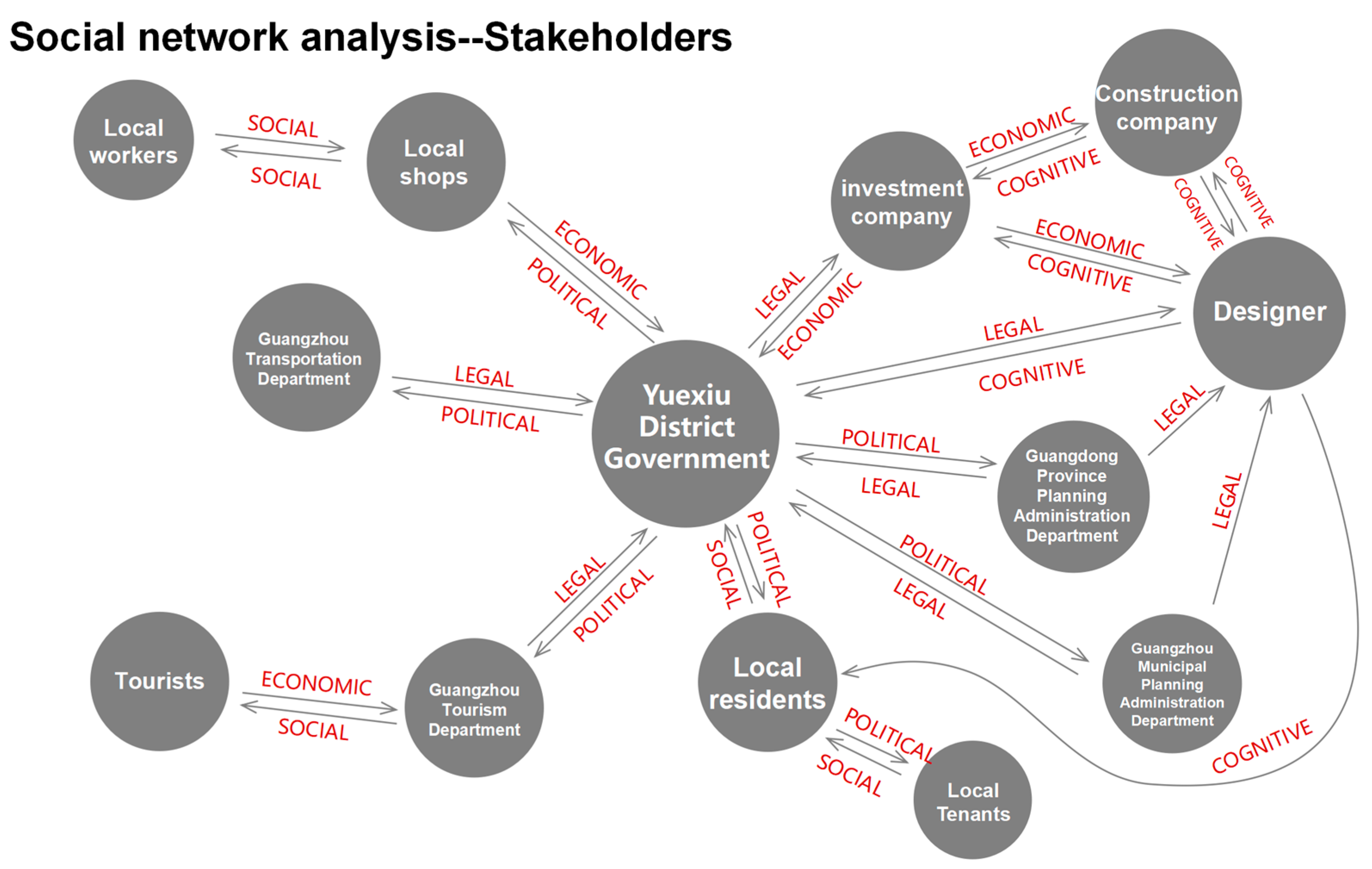
The social network analysis (SNA) concept emphasizes social interconnectivity and relationships between stakeholders in the network (Figure 5-3). SNA analysis was conducted here to determine which node’s actors are important and which participants are most closely related. According to the results of SNA, designers can identify local government agencies and residents who will be serviced in the design process while maintaining contact with stakeholders as necessary.
Figure 4-3.
Social network of Xudi-Gaodijie area
As per the above analysis and thermal diagram, Gaodijie Street and the Xudi community are the two most important nodes as far as citizens of the study area (Figure 5-4). These nodes may include commercial street space, community activity space, and community public service buildings, among other facilities.
Figure 4-4.
Power/interest matrix of Xudi-Gaodijie area
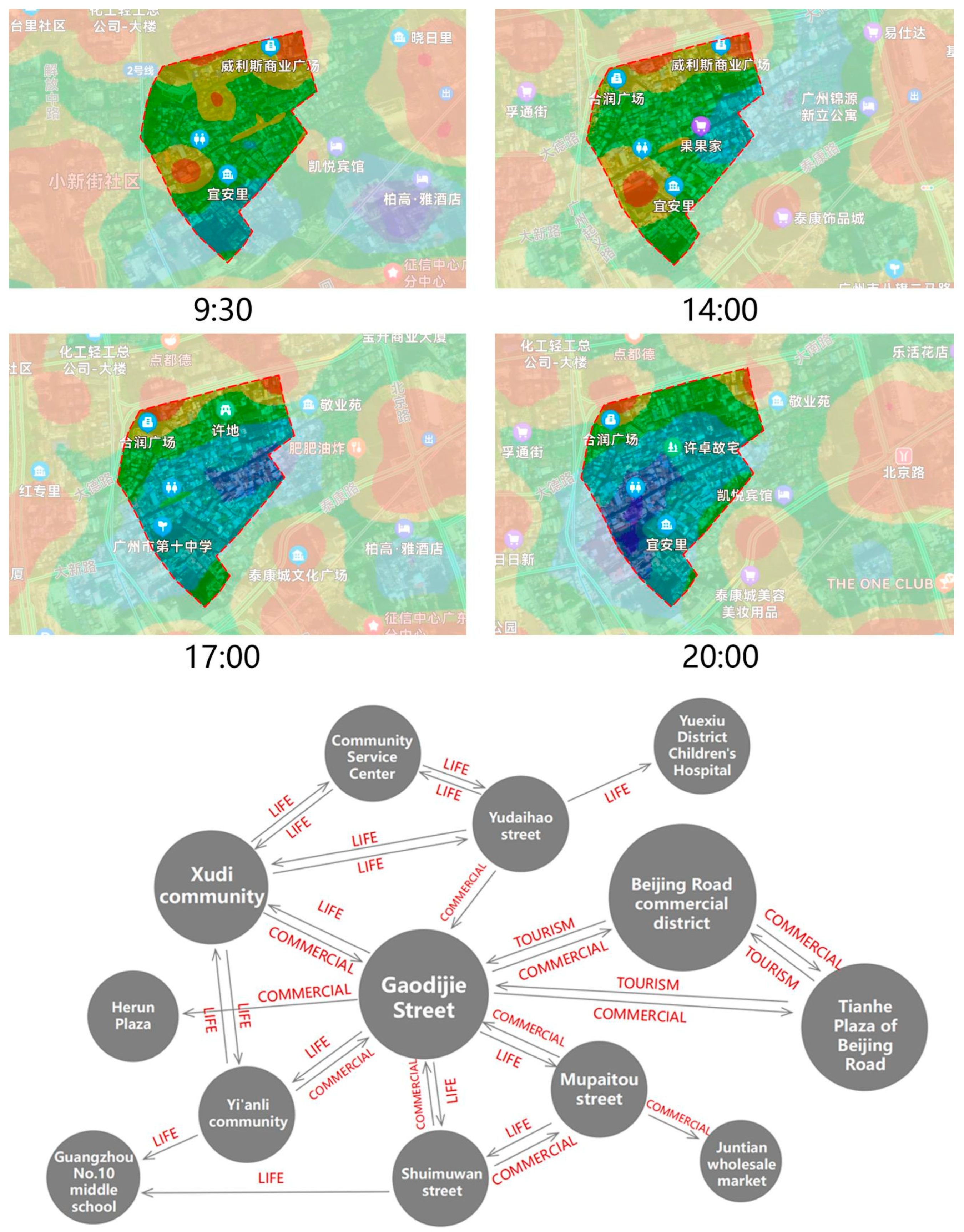
The nodes to be designed next were determined based on the above analysis. The Xudi community and Gaodi Street are the two core areas; the Shuimuwan community and other small blocks are secondary areas.
4.2. Flexible plug-ins serve macro spatial structure planning
We extracted flexible plug-ins relevant to policy to determine the strategic development positioning of the Xudi-Gaodijie area. The planning policy plug-in “1” comes from the 14th five year plan of Yuexiu District, Guangzhou[1]. The planning policy plug-in “2” comes from the second batch of National Demonstration Pedestrian Street[3] documents of the Ministry of Commerce (Figure 5-5).
Figure 4-5.
Policy plug-ins 1 and 2
The overall development direction of Xudi-Gaodijie area can be controlled through the above two policy plug-ins. The meso and micro levels of the design are further promoted under this framework. The flexible economic plug-in of land function distribution was extracted from the regulatory plan of Yuexiu District; this updated plug-in retains the layout of the existing economic structure and continues the original functions and business formats (Figure 5-6).
Figure 4-6.
New flexible economic plug-in
The strategic positioning and land use function of Xudi-Gaodijie were determined based on the above flexible plug-ins, which also have guiding significance for the design of meso and micro structures.
4.3. Rigid plug-ins guide meso spatial structure design
At the meso design level, rigid plug-ins are inserted into sockets to play a catalytic role. These plug-ins guide the urban structure design and create guidelines to activate the Xudi-Gaodijie area at multiple points for the purposes of regeneration. The meso-level design also plays a guiding role in the micro-level design. The meso-level master plan is shown in Figure 5-7.
Figure 4-7.
Master plan
The meso-level design of Xudi-Gaodijie primarily targets the overall structure of the public space system. The existing system and socket type are determined before new public spaces and plug-ins are inserted to resolve the problem of insufficient activity space in the area. Plug-ins are designed to regenerate the system as well as to catalyze the regeneration. Meso-level plug-ins are rigid, not flexible.
Public-space plug-ins are inserted into the block and linear space receiving device (Figure 5-8). The roads are connected in a manner that separates pedestrians from motor vehicle traffic. The design of the road network system improves public facilities and attracts people to the area. Thus, these plug-ins increase the number and quality of public spaces in the block while connecting previously isolated public spaces.
Figure 4-8.
Public-space plug-ins

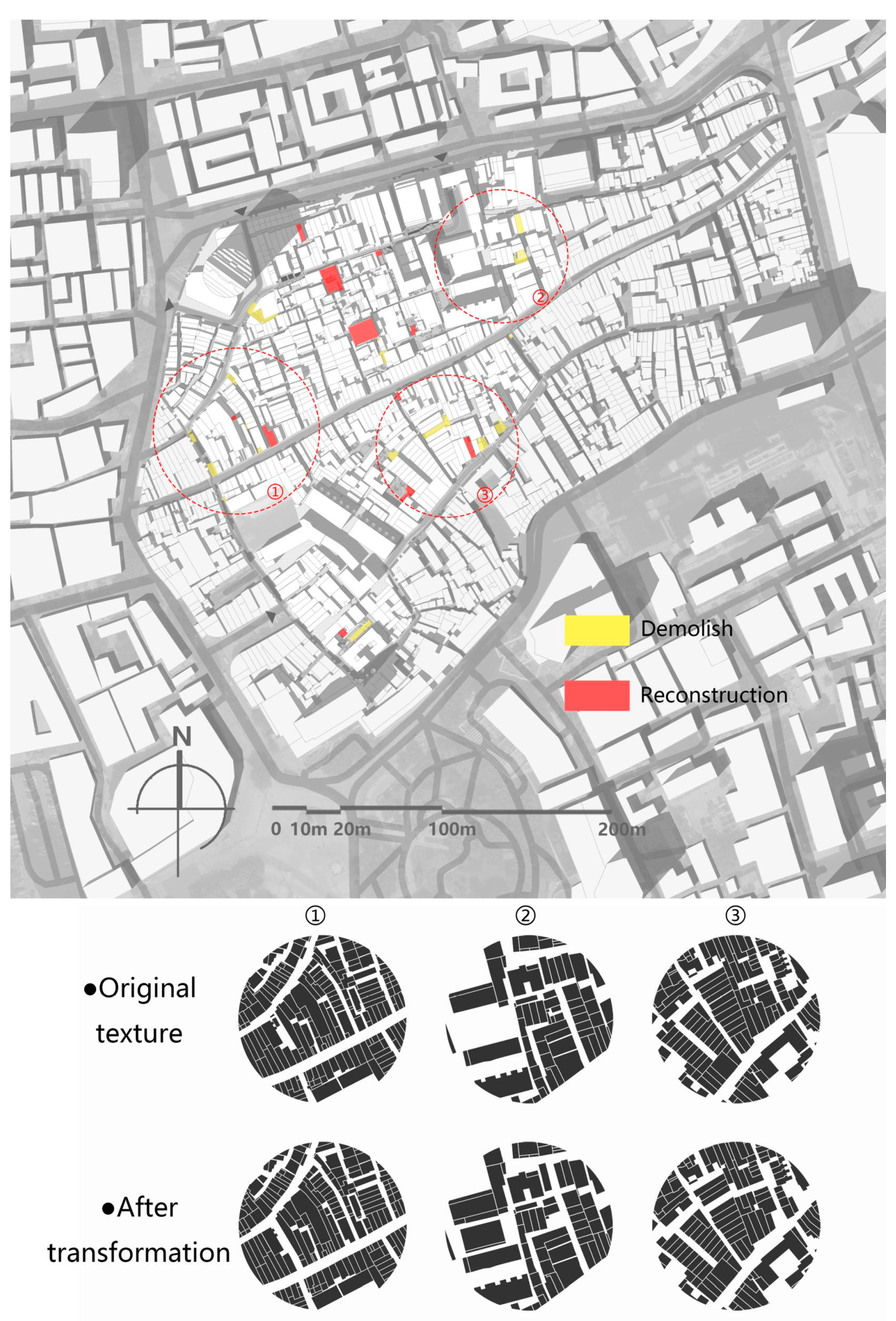
The building-space plug-in targets public, historical, and private structures that are allowed to be transformed. Its main function is to catalyze demolition, transformation, or new construction in the building space system. The texture of the city is improved after these plug-ins are inserted (Figure 5-9). The Xudi-Gaodijie area will become an urban block with historical and cultural atmosphere as well as a modern commercial atmosphere. The regenerated buildings will attract residents, businesses, and tourists.
Figure 4-9.
Building space plug-ins
4.4. Multiple plug-ins participate in micro-space regeneration
In the micro-structure design of Xudi-Gaodijie area, smaller-scale plug-ins play an important role. Whether rigid or flexible, their proper design is essential. The participation of multiple plug-ins jointly catalyzes the urban regeneration of the block. Street intersections reflect how different plug-ins assist in regenerating the regional road network system. In the three main streets of our study area, intersections with different characteristics are designed for the purposes of commerce (Figures 5-10, 5-11).
Figure 4-10.
Plug-ins for main streets
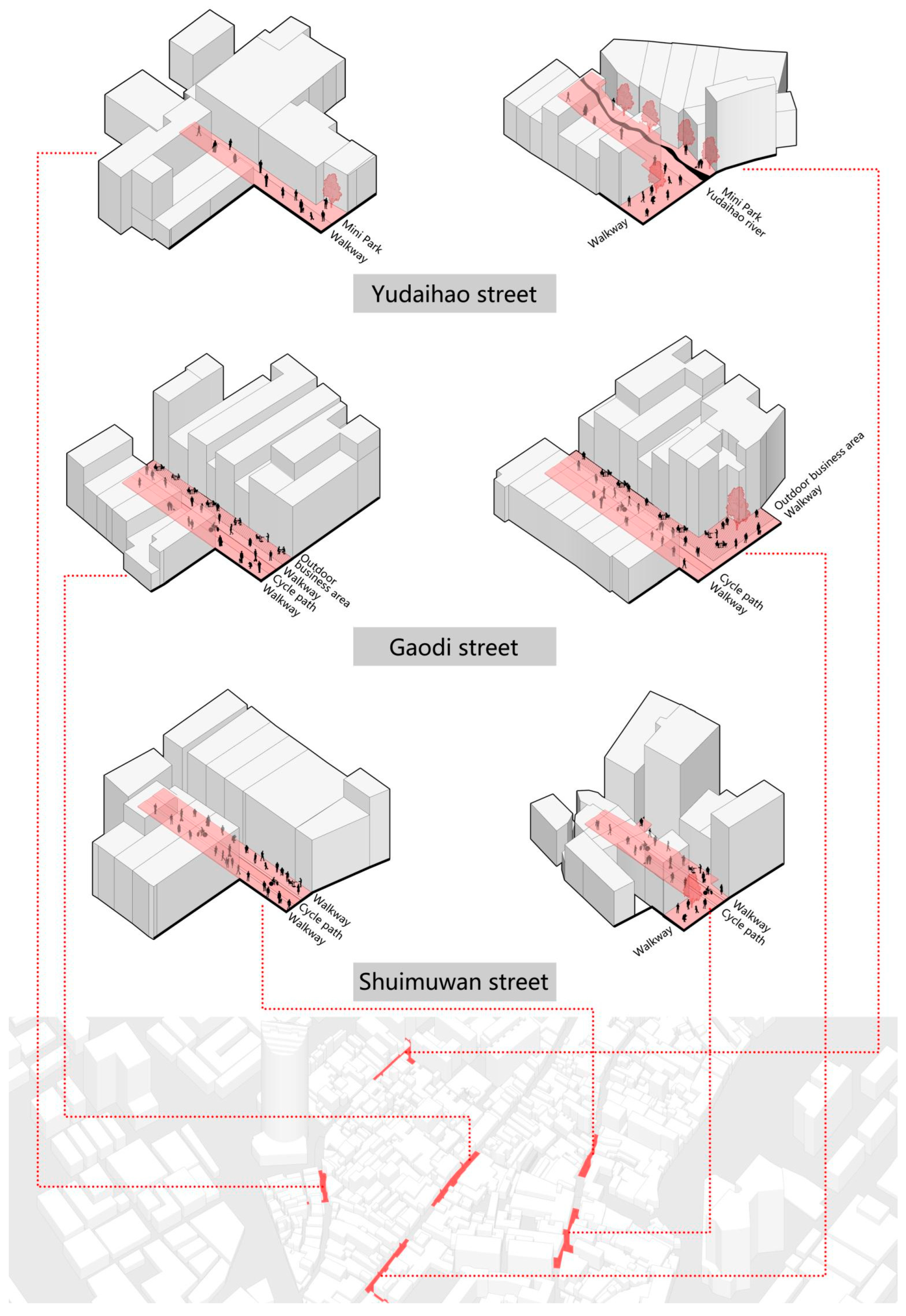
Figure 4-11.
Road intersection

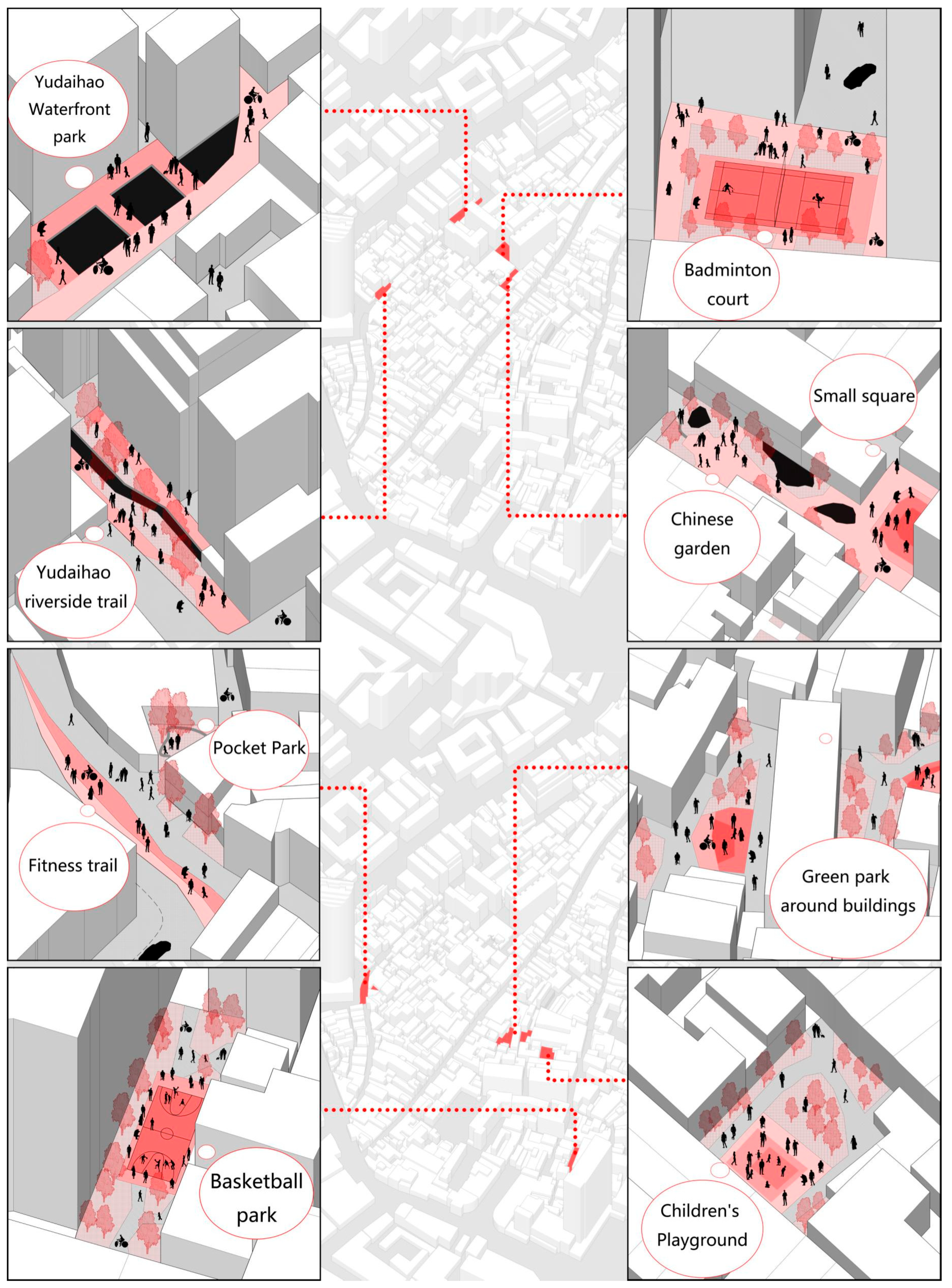
Certain plug-ins are also inserted according to different functions of public-space sockets such as pocket parks, squares, and playgrounds. These rigid plug-ins catalyze the improvement in quality of the artificial environment (Figure 5-12).
Figure 4-12.
Plug-ins for main public activity spaces
Building-space plug-ins can also be inserted for revitalization and catalysis of the urban space (Figure 5-13). These plug-ins preserve the original urban texture after insertion to building sockets.
Figure 4-13.
Building plug-ins

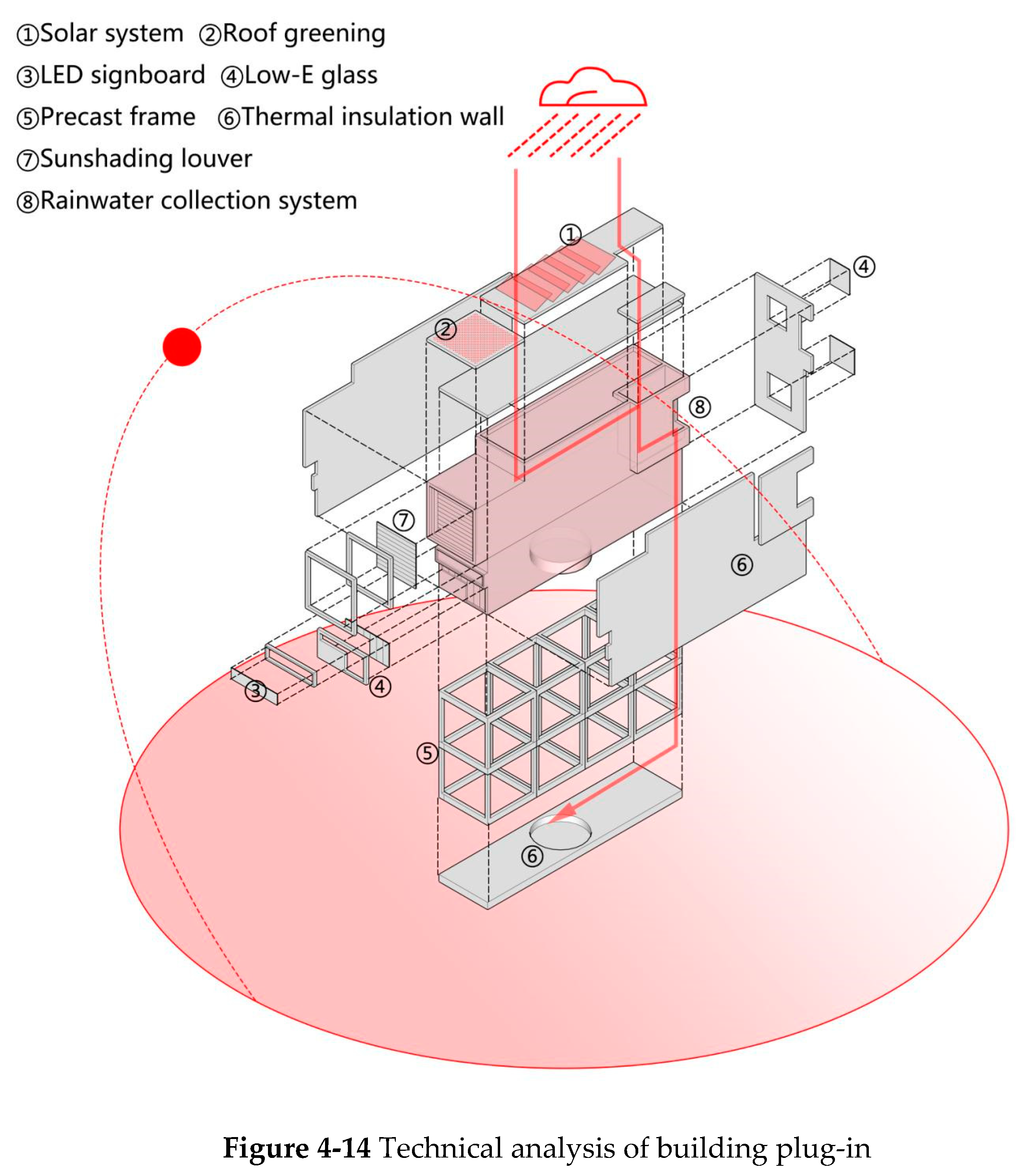
Building plug-ins have a certain level of technicality. The construction and energy-savings of a prefabricated house plug-in, for example, must be fully considered in the design process. The new housing module creates a model for living in the community and gradually catalyzes the regeneration and transformation of other old houses (Figure 5-14).
Figure 4-14.
Technical analysis of building plug-in
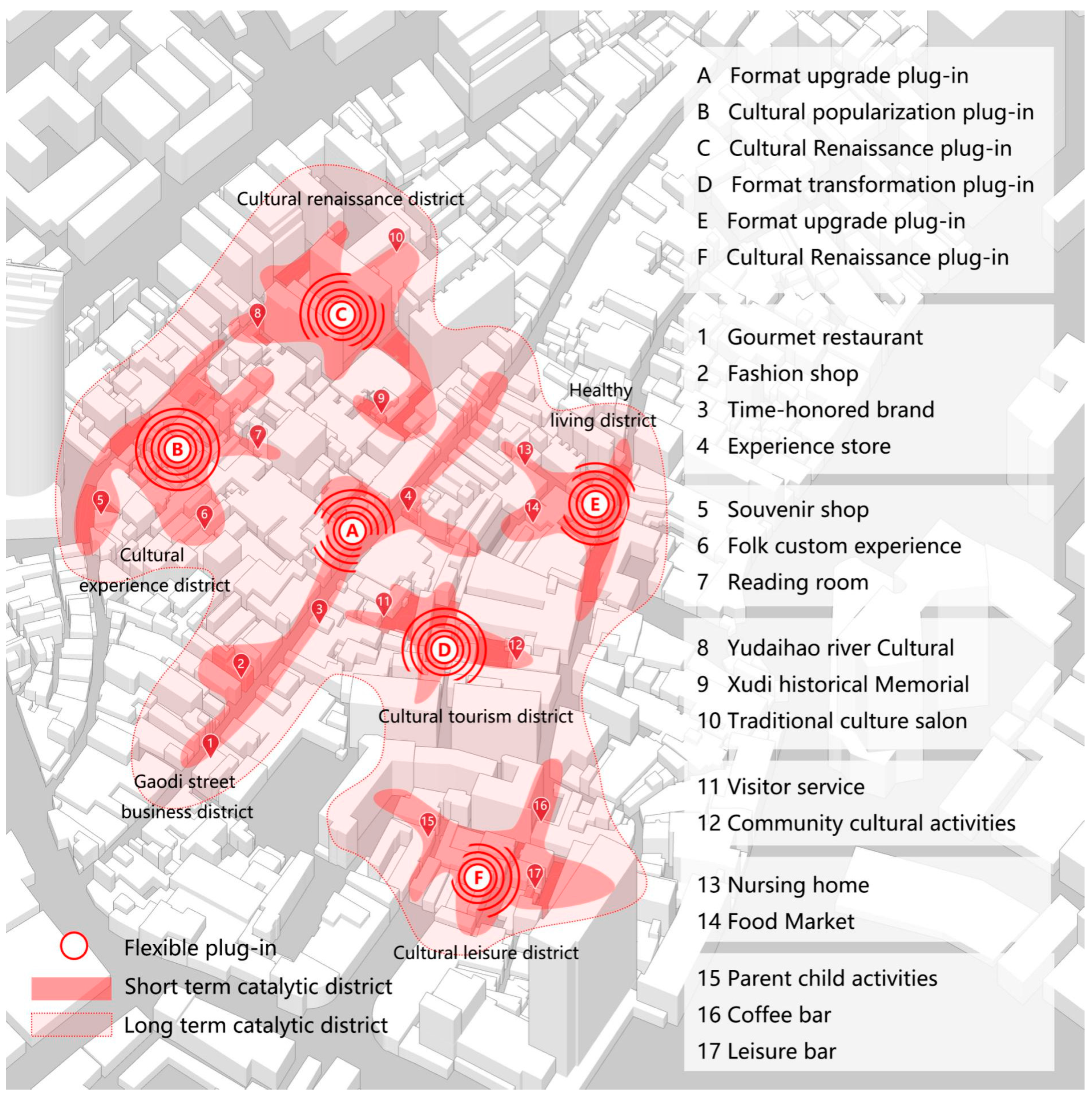
At the micro level, in addition to inserting rigid plug-ins to catalyze the regeneration of urban spaces, flexible plug-ins can be inserted to catalyze the regeneration of urban formats and contexts (Figure 5-15). Flexible plug-ins not only provide the structure and functions necessary for residents’ lives, but also make cities more dynamic. Flexible plug-ins would allow the Xudi-Gaodijie area to be transformed into a functional, pleasing business and leisure area.
Figure 4-15.
Flexible plug-ins
5. Conclusion
A plug-in design methodology was developed in this study with public space in Xudi-Gaodijie as the starting point. The design complements the old city regeneration model of Guangzhou. The proposed plug-in design uses a generalized toolset; its elements can be classified according to their rigidity, flexibility, and receiving device (socket), which is detailed yet universal. The plug-ins that are inserted into sockets catalyze the urban regeneration of the whole area by their different attributes. Thus, our methodology is widely applicable though it was designed to complement the existing urban regeneration methods in Guangzhou.
The plug-ins are sustainable and can be integrated into the urban space at various points in time. Urban regeneration is a dynamic, complex process. As time goes on, the space and context of the city inevitably change. Replaceable plug-ins allow for a point-to-area regeneration mode. The modular design simplifies the process, reduces costs, and allows for organic regeneration[15]. Accordingly, this methodology would enhance the survival and further development of the old city in Guangzhou.
The plug-in design also combines the advantages of urban repair and micro regeneration. The urban space and context of a block in Guangzhou’s old city which has declining industrial structures can be reorganized from macro to micro level. Public-space sockets in this representative block in Guangzhou were identified and supplied with rigid and flexible plug-ins to sustainably revitalize the entire area (Figure 6-1).
Figure 5-1.
Explosion analysis diagram of plug-in design
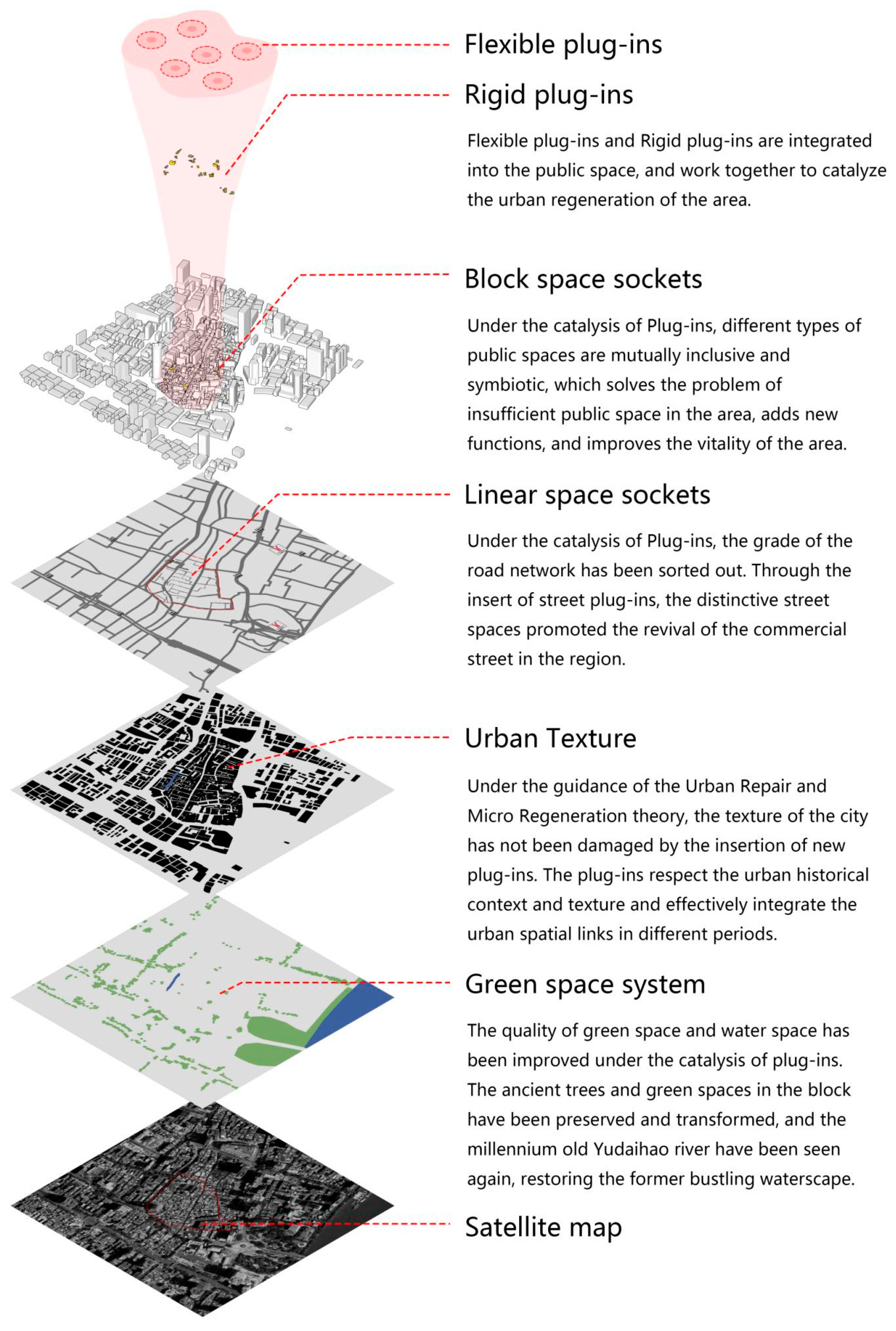
The proposed plug-in design was not developed expressly as a solution, but rather to express a vision for future urban regeneration in Guangzhou. In the future, we hope that designers will utilize advanced science and technology, carefully preserve the historical context of the area, and realize people-oriented urban regeneration.
Conflict of interest statement
All authors disclosed no relevant relationships. These authors own all intellectual property rights to this article and there are no intellectual property disputes.
References
- Bai Y. (2021). Leading public houses, overall transformation, and bidding for the transformation of Gaodi Street started. Retrieved from http://www.xxsb.com/content/2021-06/13/content_152612.html. Accessed June 13, 2021.
- Balvociene V., Zaleckis K. (2021). Cultural urban catalysts as meaning of the city. Architecture and urban planning, 47 (1), 18-28. [CrossRef]
- Chen. S. (2022). Research on the Design Strategy of Micro Renewal and Reconstruction of Old Urban Communities -- Taking the Reconstruction of Baimahu Street Area as an Example. INTERNATIONAL DEVELOPMENT COOPERATION, 22, 91-93. [CrossRef]
- Deborah A. B. (2006). Archigram: architecture without architecture. The Art Book, 13(2):56-57. [CrossRef]
- Du J. ( 2017). Guangzhou: historic district protection plan released. Retrieved from http://design.yuanlin.com/HTML/Article/2017-1/Yuanlin_Design_19253.HTML. Accessed August 25, 2021.
- Feng H,B., Luo Z.Z. (2022). Research on the Improvement of Street Space in Old Districts under the Background of Urban Micro Renewal: A Case Study of Fengyuan Community in Guangzhou. ANHUI ARCHITECTURE, 29(11):7-9. [CrossRef]
- Hespanhol L., Tomitsch M. (2019). Power to the People: Hacking the City with Plug-In Interfaces for Community Engagement. The Hackable City, 25-50. [CrossRef]
- Hu T.J. (2018 ). Transformation of Urban Villages in Urban Organic Renewal. SHANXI ARCHITECTURE, 44(23):25-26. [CrossRef]
- Jacobs J. (2016). The Death and Life of Great American Cities. Vintage. [CrossRef]
- Li H.X., Hao W. Y., Wan S. (2021) Exploration of Agrochemical Space in Old Urban Residential Areas from the Perspective of Micro Renewal: A Case Study of Tianjin Fengfengli Community Renovation Design. 18(27):7-9. [CrossRef]
- Li S.Q. (2018) Urban Plugin: A Public Space Making and Sharing System. Retrieved from https://urbanresearchtable.com/urban-plugin-a-public-space-making-and-sharing-system/. Accessed July 16, 2020.
- Liu M.H., Li C.H. (2022). Research on the Renewal Method of Urban Villages Based on "Urban Plugins" -- Taking Donghu Village in Wuhan City as an Example. URBANISM AND ARCHITECTURE, 19(20):35-37+83. [CrossRef]
- Liu W.J. (2021). Study on the Renewal Strategy of Urban Villages in Shenzhen under the Concept of Urban Renovation -- Taking Sungang Village as an Example. Architecture & Culture, 207(06), 126-128. [CrossRef]
- Lu M. (2022). Discussion on the Morphological Evolution of Old City Blocks in Guangzhou Based on the Theory of Morphological Regionalization. HUAZHONG ARCHITECTURE, 40(03):87-92. [CrossRef]
- Nikhil Anand Kalambe.(2020). Architecture that Responds to CHANGE: A Social Plug-in. Retrieved from https://awards.re-thinkingthefuture.com/rtf-awards-2020-winners/architecture-that-responds-to-change-a-social-plug-in-nikhil-anand-kalambe/. Accessed February 15, 2021.
- Qi L. (2018). STUDY ON THE ORIGIN, DEVELOPMENT AND EXISTING CASES OF ‘MEGASTRUCTURE’ UNDER THE DOMAIN OF ARCHITECTURE IN WESTERN COUNTRIES FROM THE END OF 1950’S TO THE MID OF 1970’S. Southeast University. [CrossRef]
- Sun Y.H., Hu W., Shi X.X. (2020). Dual Dimension Analysis of “Plug-in” Repair in Urban regeneration. Chinese Landscape Architecture, 36 (11): 57-61. [CrossRef]
- Wen C., Yang X.H., Wen J.G., et al. (2017). Research on the organic regeneration mode of urban villages based on “urban acupuncture”. Urban Development Studies, 24 (11), 43-50. [CrossRef]
- Yan H., Li P.T., Cao J. (2019 ). Analysis on the Transformation and Utilization of Historic Buildings in the Process of Urbanization——Case Study of Suochengli Neighborhood Library. ARCHITECTURE & CULTURE, 01: 89-90. [CrossRef]
Disclaimer/Publisher’s Note: The statements, opinions and data contained in all publications are solely those of the individual author(s) and contributor(s) and not of MDPI and/or the editor(s). MDPI and/or the editor(s) disclaim responsibility for any injury to people or property resulting from any ideas, methods, instructions or products referred to in the content. |
© 2023 by the authors. Licensee MDPI, Basel, Switzerland. This article is an open access article distributed under the terms and conditions of the Creative Commons Attribution (CC BY) license (http://creativecommons.org/licenses/by/4.0/).
Copyright: This open access article is published under a Creative Commons CC BY 4.0 license, which permit the free download, distribution, and reuse, provided that the author and preprint are cited in any reuse.


